

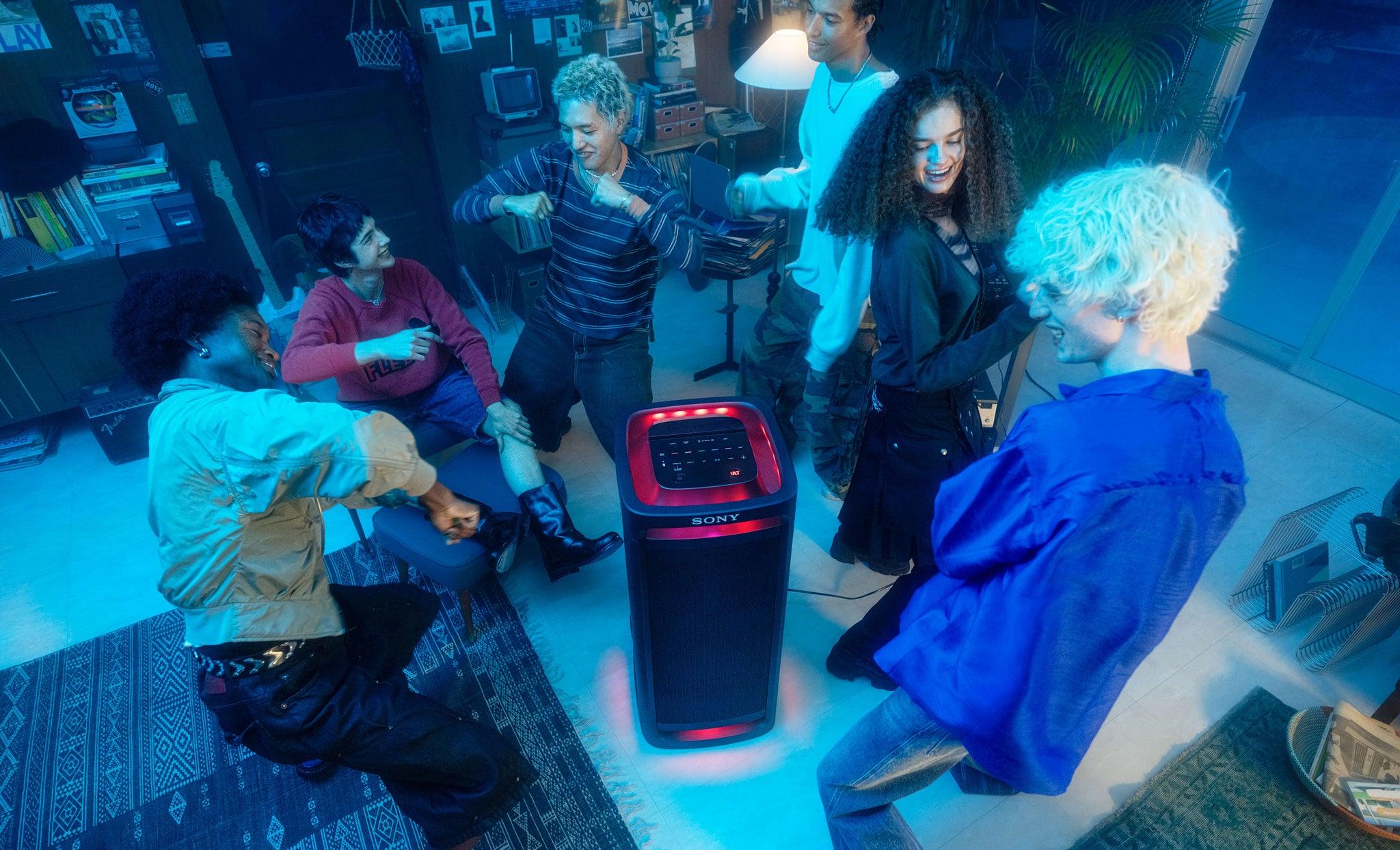
Party speakers have evolved dramatically from simple boom boxes into sophisticated audio powerhouses that can transform any gathering into a memorable event. These aren't your typical bookshelf speakers – they're purpose-built entertainment machines designed to pump out massive volume, shake floors with deep bass, and keep the energy high whether you're hosting a backyard barbecue or an indoor dance party.
The party speaker market has exploded in recent years as people seek high-quality audio experiences for their gatherings. Unlike traditional home audio equipment that prioritizes accuracy and detail, party speakers focus on impact, volume, and fun features that enhance social experiences. They need to fill large spaces with sound, cut through crowd noise, and deliver the kind of bass that makes dance music truly feel alive.
When evaluating party speakers, several key factors separate the great from the mediocre. Maximum volume capability determines whether a speaker can energize a large gathering or leave guests straining to hear the music. Bass performance – specifically how deep and powerful the low frequencies extend – makes the difference between background music and music that moves people. Portability affects whether you can bring the party anywhere or stay confined to locations with power outlets. Build quality and weather resistance determine if your investment will survive real-world party conditions. Finally, connectivity options and party features like lighting effects and karaoke support can elevate a simple music session into an interactive entertainment experience.
Today, we're examining two compelling options that represent different philosophies in party speaker design: the Sony ULT Tower 9AC and the JBL PartyBox Stage 320. Released in 2025 and 2024 respectively, these speakers showcase the latest thinking in high-performance party audio, but they take remarkably different approaches to solving the same problem.
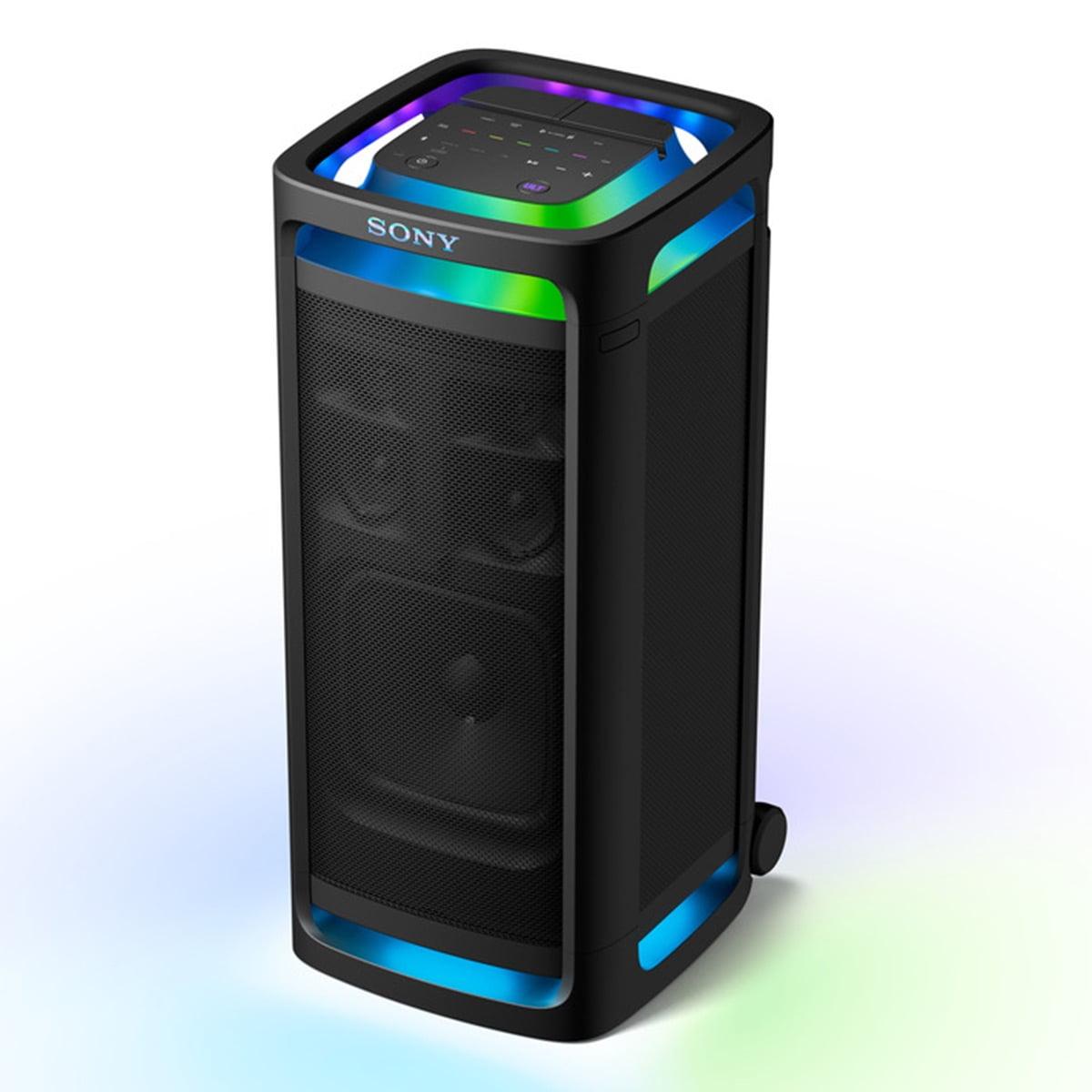
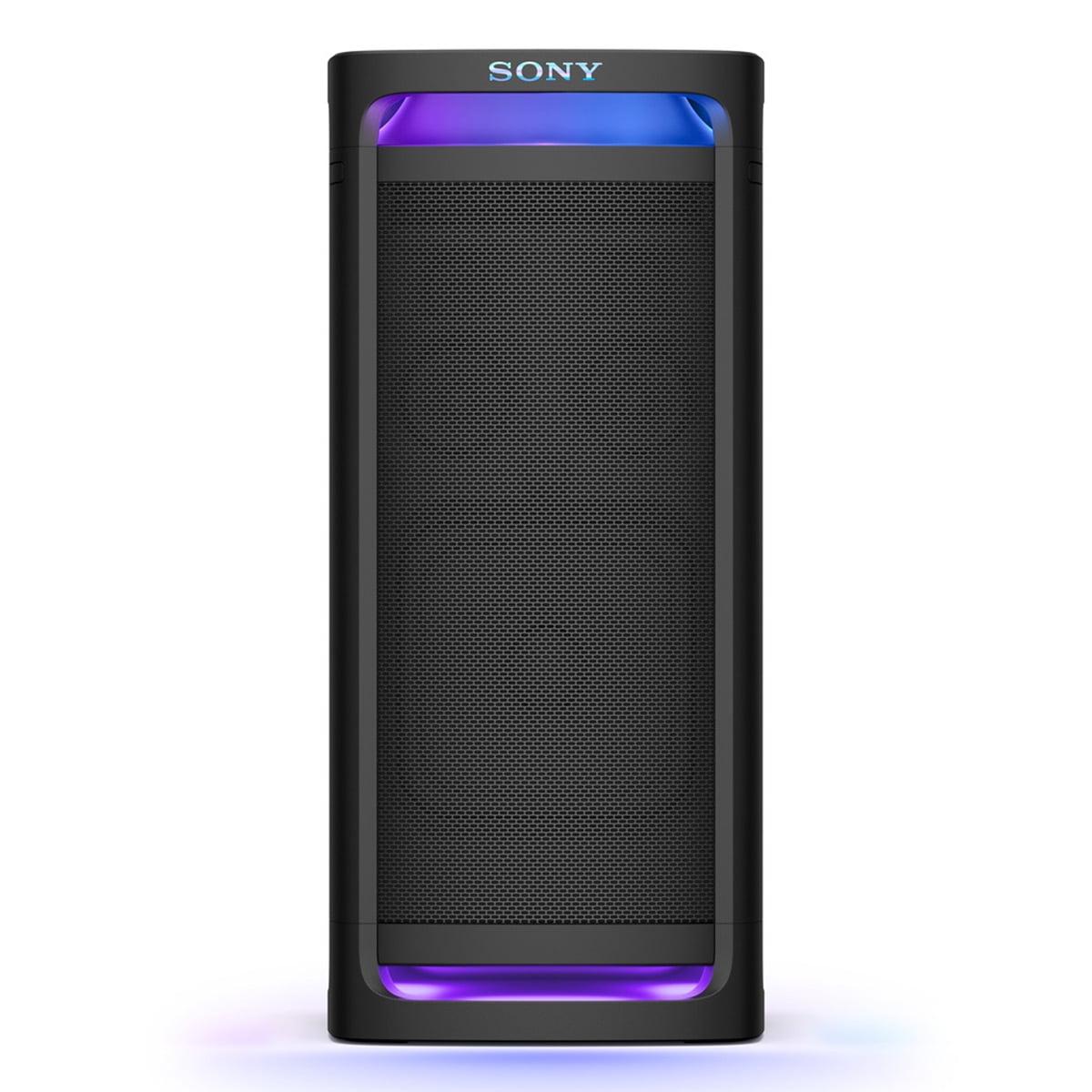
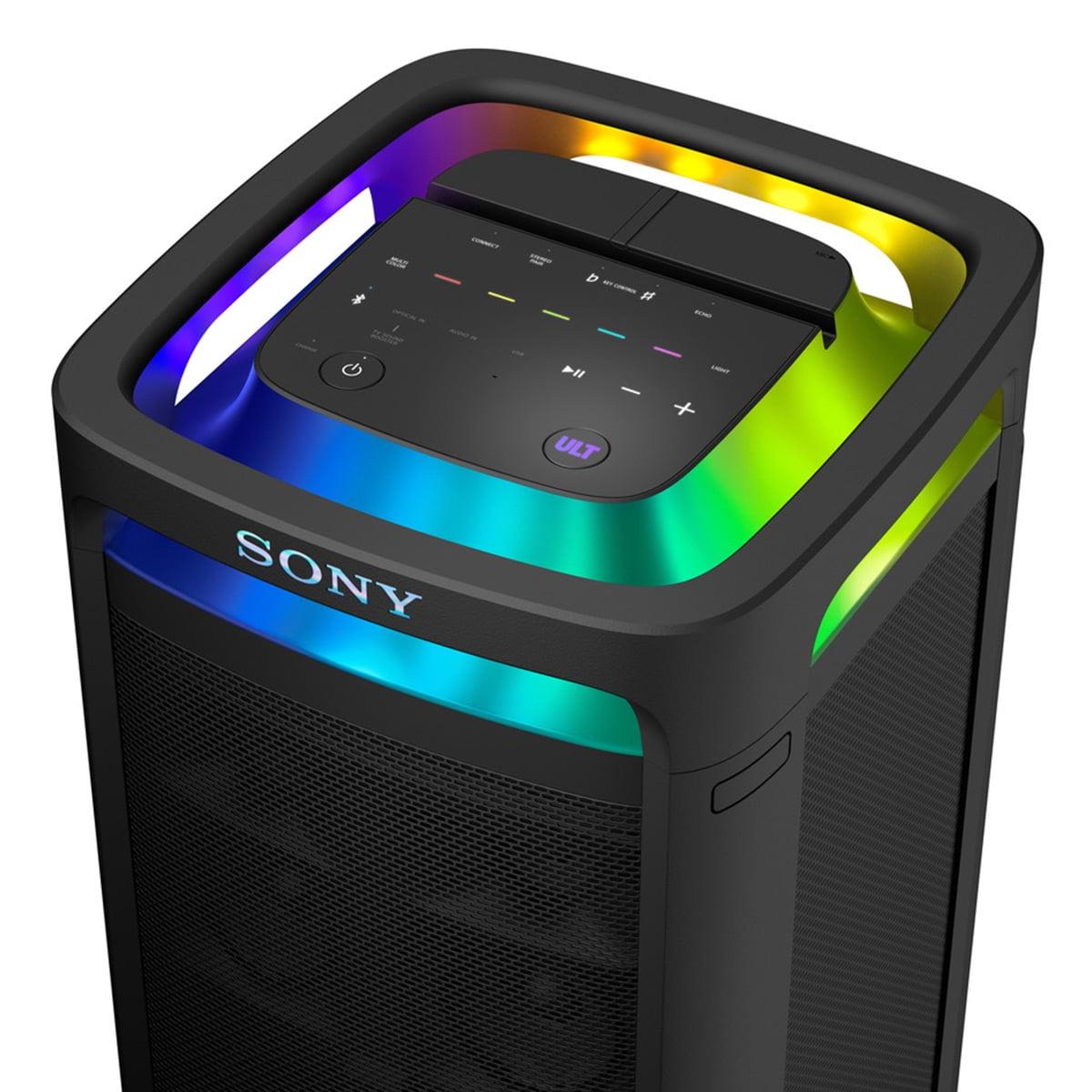
The Sony ULT Tower 9AC represents Sony's flagship approach to party audio – a towering monument to bass that prioritizes absolute acoustic performance over portability. This 2025 release builds on Sony's X-Balanced Speaker technology, which uses uniquely shaped drivers to maximize sound output while minimizing distortion. At nearly three feet tall and weighing over 60 pounds, this isn't a speaker you casually move around. Instead, it's designed to be the permanent centerpiece of your entertainment setup, demanding AC power but delivering the kind of deep, room-filling bass that smaller speakers simply cannot match.
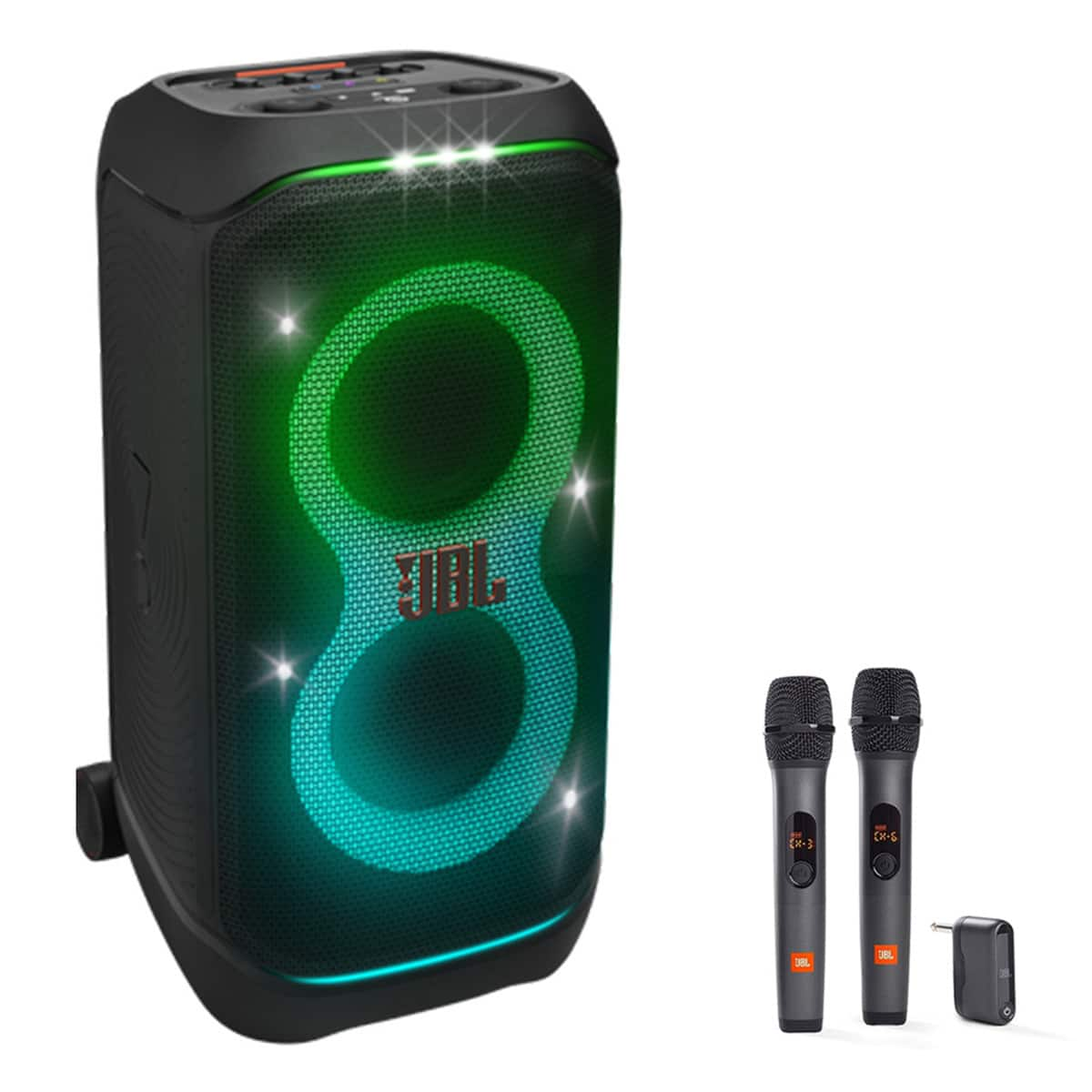
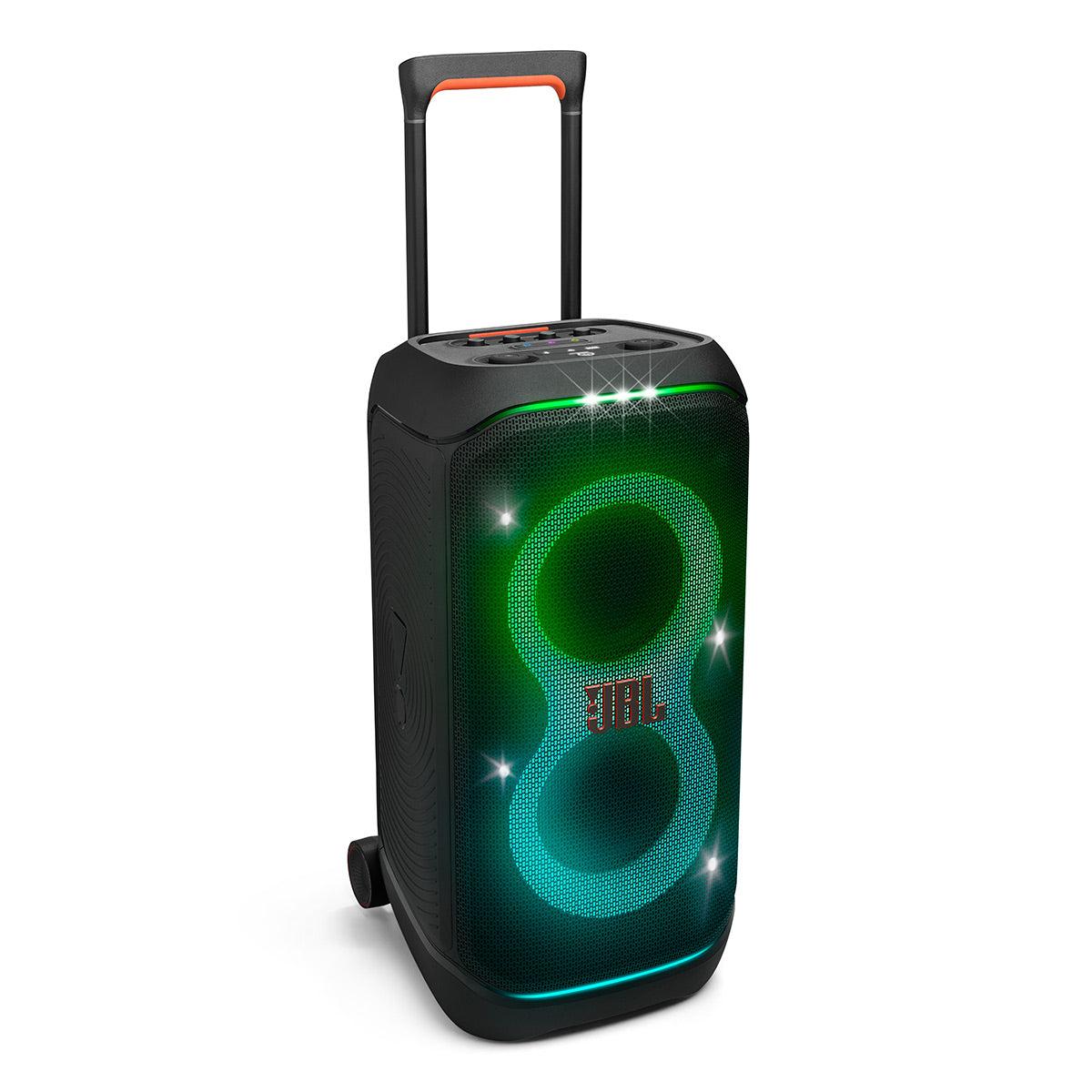
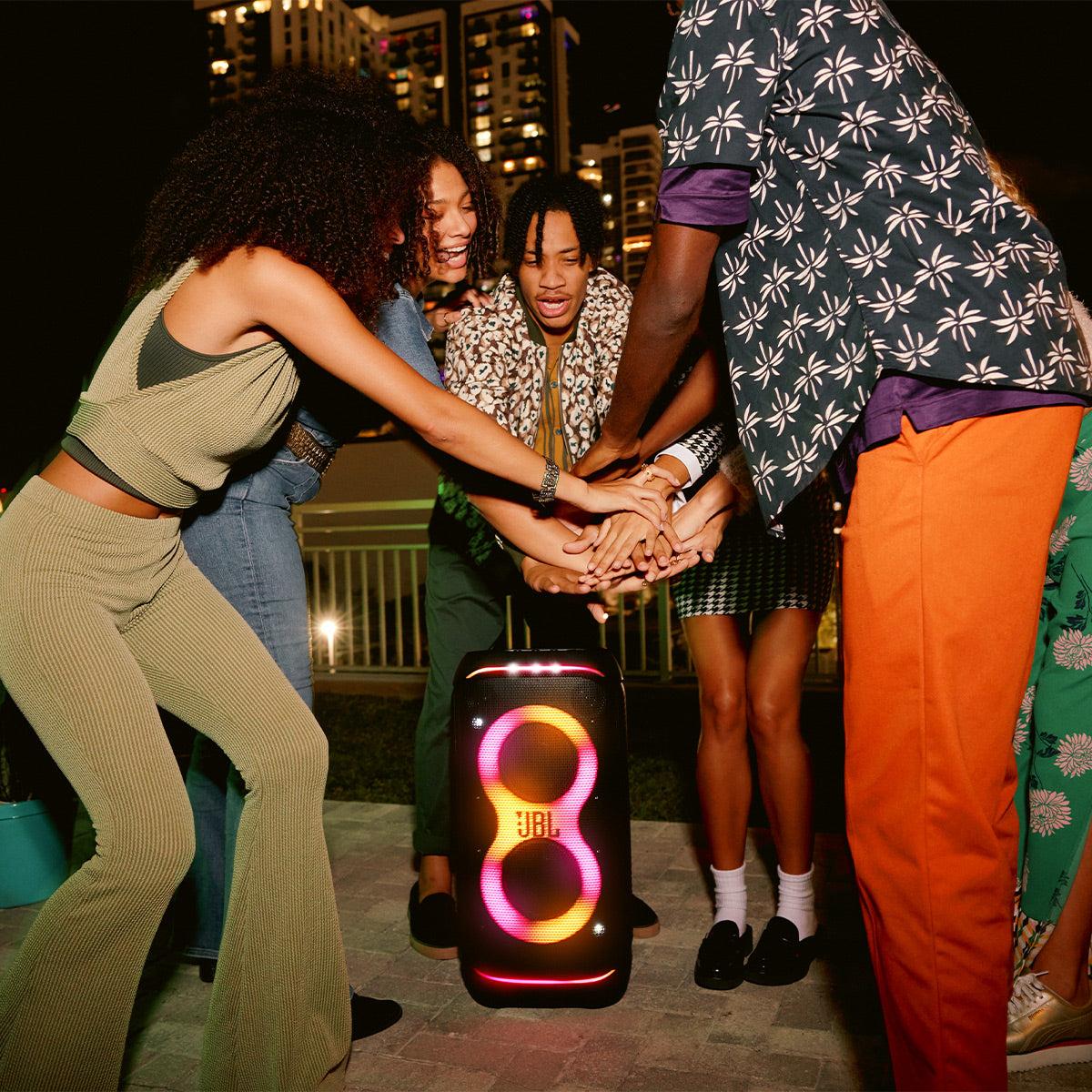
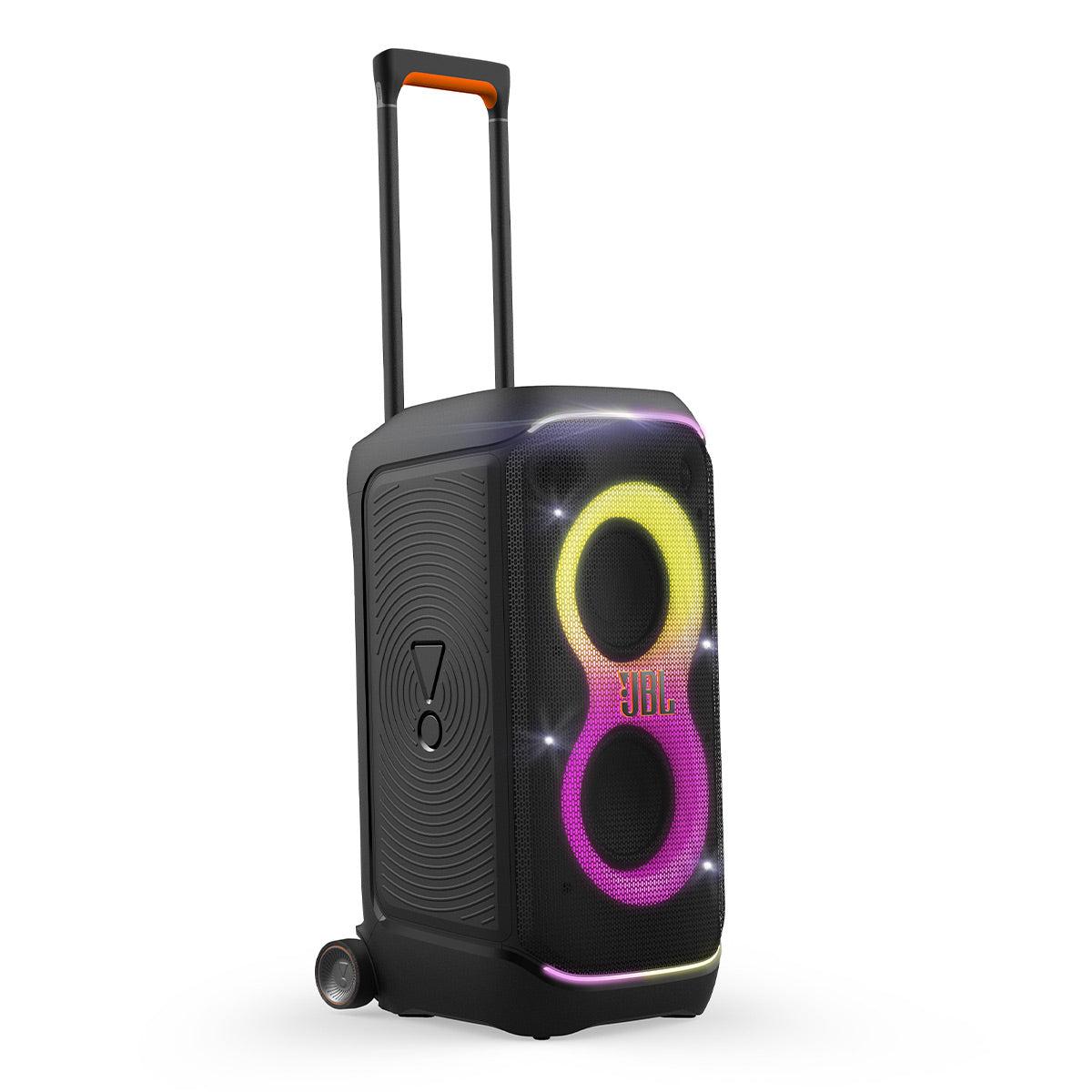
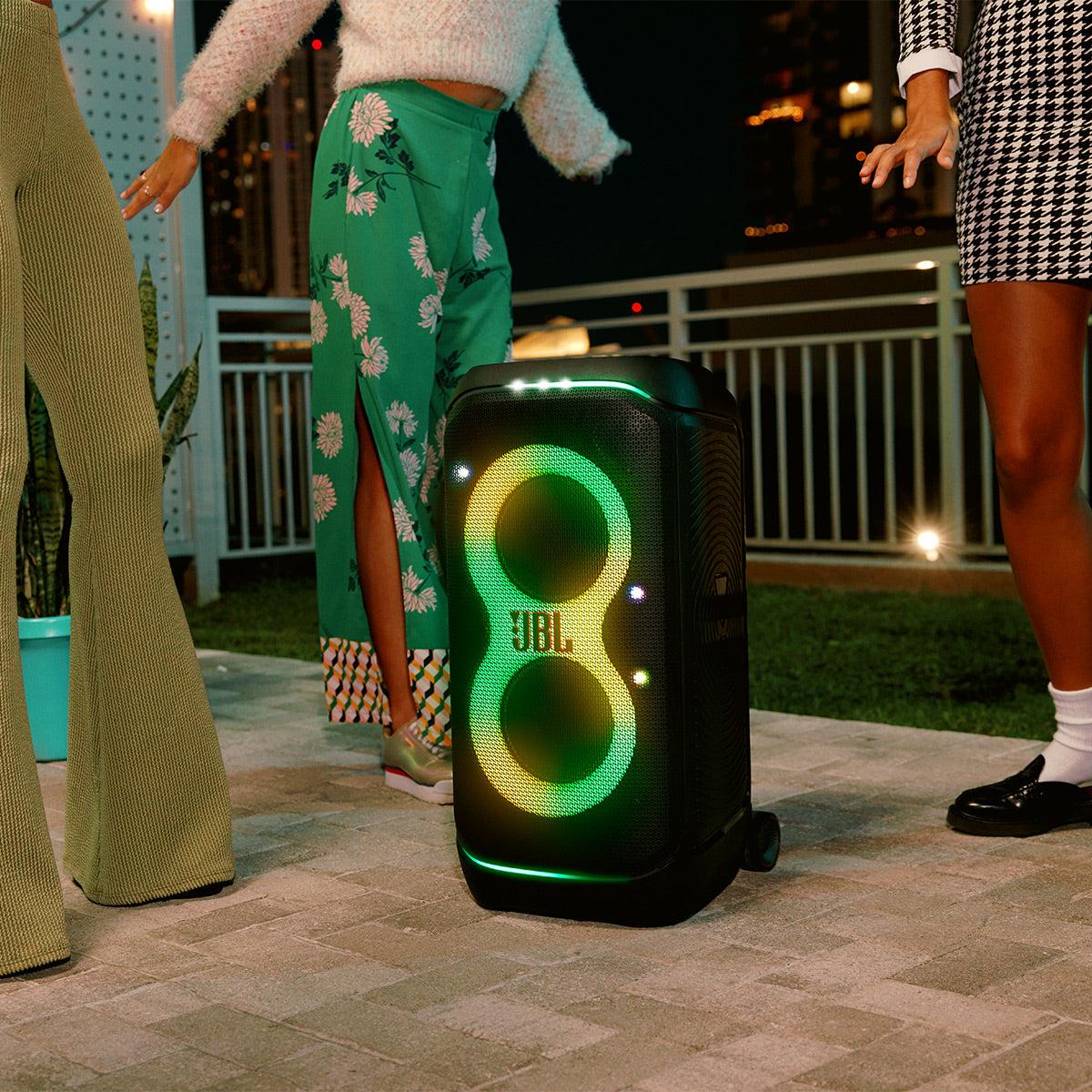
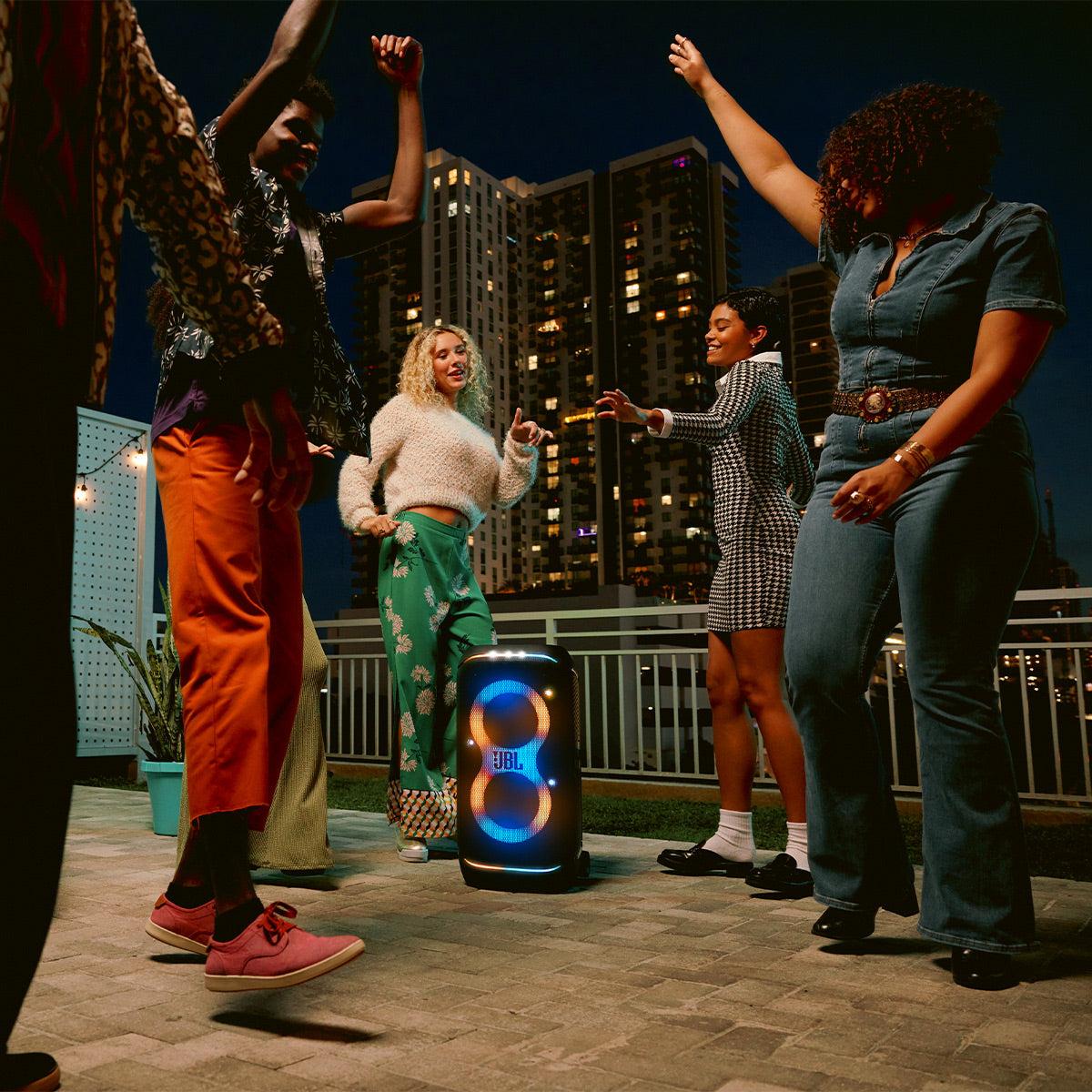
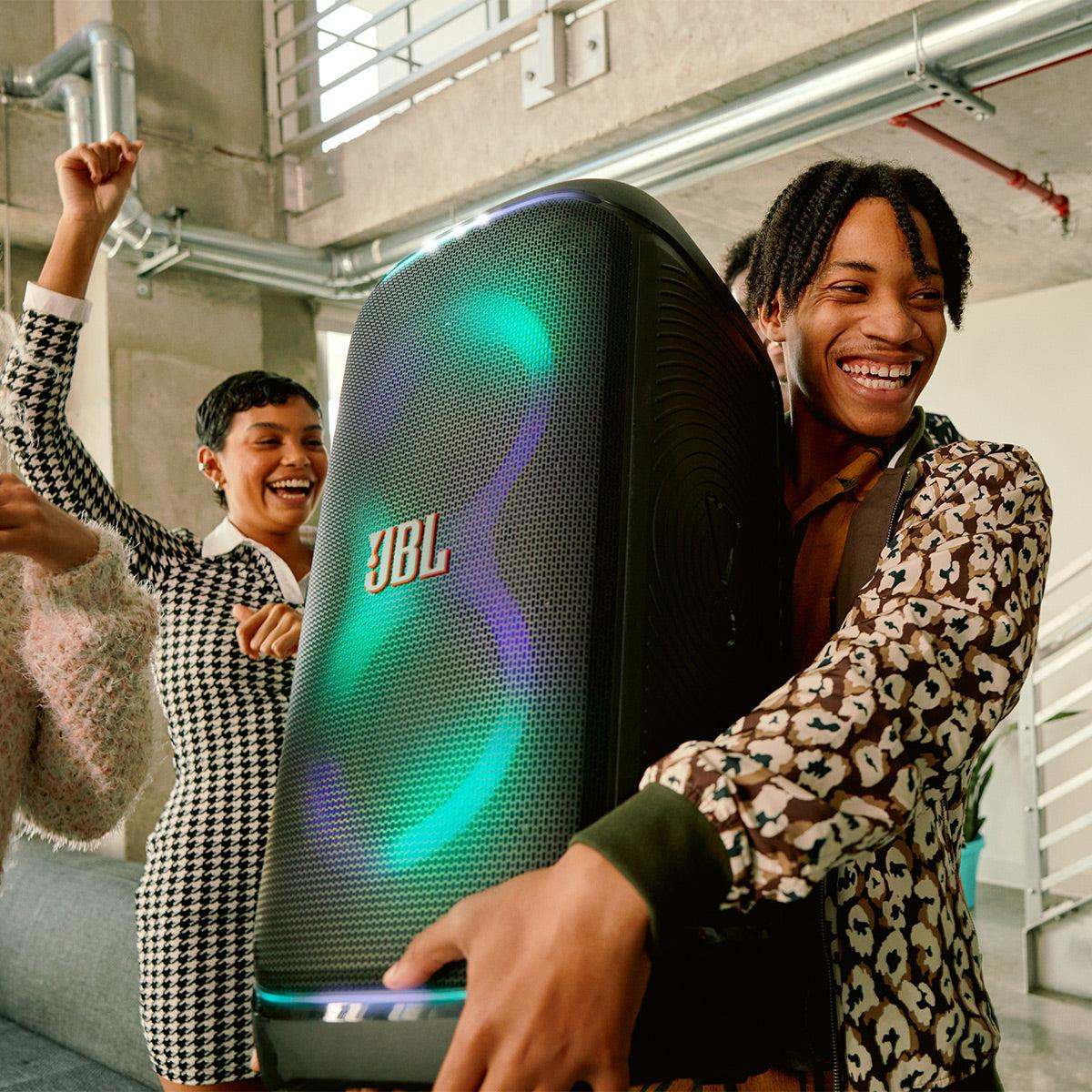
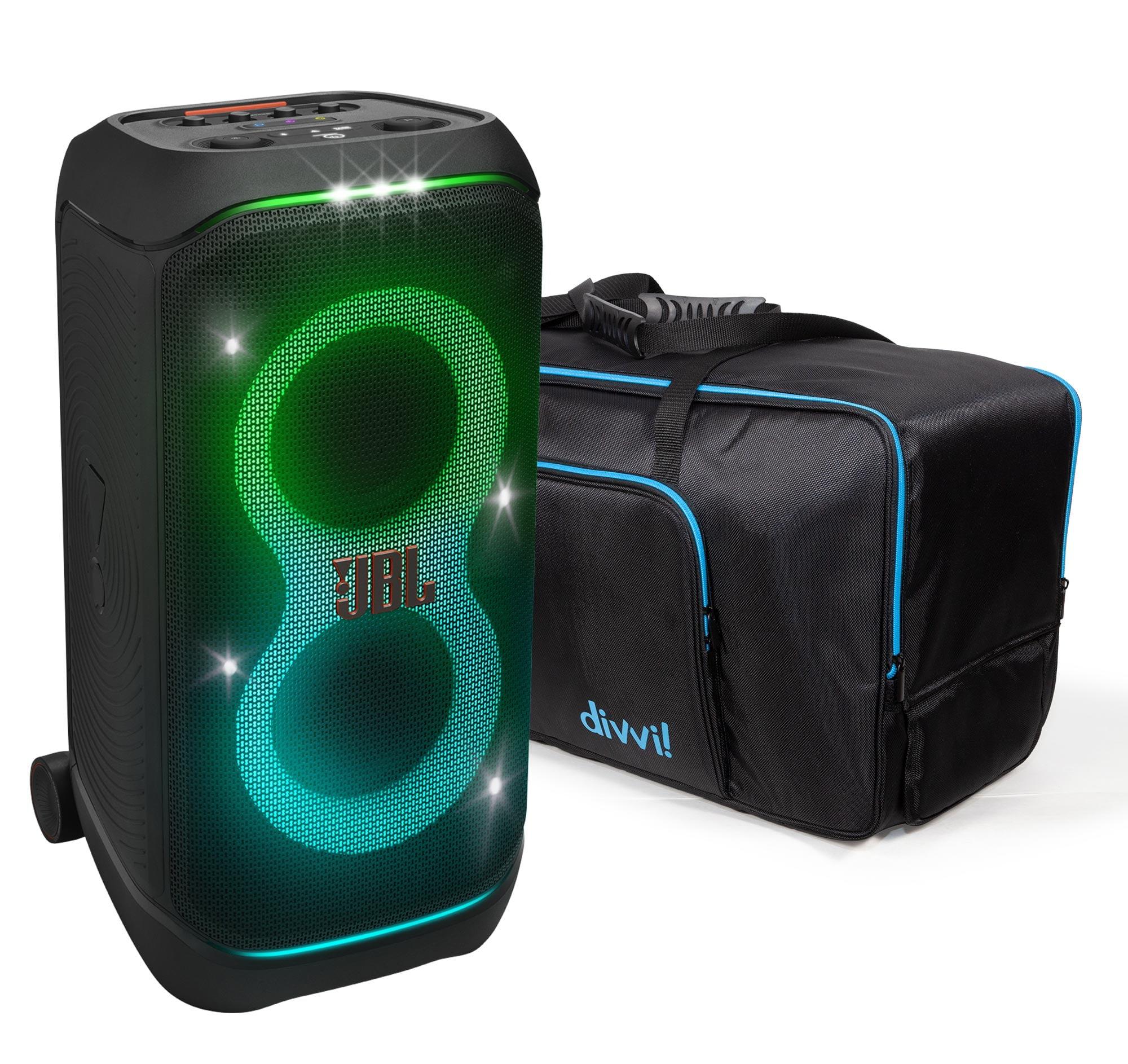
The JBL PartyBox Stage 320, launched in 2024, takes a more balanced approach that prioritizes versatility and real-world usability. JBL has a long history in professional audio, and that experience shows in this speaker's focus on clean, loud output across all frequencies rather than pure bass dominance. Weighing roughly half as much as the Sony and featuring a removable battery system, the PartyBox Stage 320 represents JBL's philosophy that great party audio should be able to go anywhere the party goes.
These different approaches create fascinating trade-offs that affect everything from sound quality to practical usability, making the choice between them heavily dependent on how and where you plan to use your speaker.
When it comes to party speakers, raw output capability matters more than almost any other specification. A speaker that can't fill your space with clear, undistorted sound at party volumes is essentially useless, regardless of its other features. Both speakers excel here, but in different ways that reveal their design philosophies.
The Sony ULT Tower 9AC achieves its impressive output through sheer driver size and quantity. Its centerpiece is a massive 320mm (roughly 12.6-inch) woofer that uses Sony's X-Balanced technology. This isn't just marketing speak – the X-Balanced design uses an almost square diaphragm instead of the traditional circular shape found in most speakers. This unconventional geometry increases the surface area that moves air, allowing the driver to produce more sound pressure and deeper bass with less distortion than similarly sized conventional drivers.
Supporting this large woofer are two 120mm midrange drivers and four separate tweeters – high-frequency drivers responsible for crisp details and clarity. The tweet arrangement is particularly clever: two face forward for direct sound, while two fire backward to create Sony's "360° Party Sound" effect. This means the Sony ULT Tower 9AC doesn't just throw sound in one direction like a traditional speaker; it fills the entire room with audio, creating a more immersive experience where guests don't need to position themselves directly in front of the speaker to hear clearly.
The JBL PartyBox Stage 320 takes a more conventional but highly refined approach. Its 240 watts RMS (Root Mean Square – a measure of continuous power output) comes from dual 6.5-inch woofers working in tandem with a pair of 25mm dome tweeters. While this might sound less impressive on paper compared to Sony's monster woofer, JBL's professional audio heritage shows in how efficiently these drivers work together. The result is a speaker that can actually achieve slightly higher peak volumes than the Sony – reaching approximately 110 dB compared to the Sony's 108 dB – while maintaining better clarity at maximum output levels.
What makes this particularly impressive is that decibel measurements are logarithmic, meaning the difference between 108 and 110 dB represents a noticeable increase in perceived volume. However, peak volume isn't everything. The Sony ULT Tower 9AC compensates for its slightly lower peak output with significantly more impactful bass response that creates a more physical, engaging listening experience at moderate to high volumes.
Both speakers handle dynamic music well – meaning they can reproduce the sudden volume changes in modern electronic music and hip-hop without compression or distortion. This capability separates quality party speakers from cheaper alternatives that might sound acceptable at moderate volumes but fall apart when pushed hard.
If volume is the foundation of party audio, bass performance is undoubtedly its soul. The ability to reproduce deep, impactful low frequencies transforms music from something you simply hear into something you feel throughout your body. This is where the philosophical differences between our two contenders become most apparent.
The Sony ULT Tower 9AC is uncompromisingly bass-focused, and it shows in every aspect of its design. That massive 320mm woofer can reproduce frequencies down to approximately 25 Hz – well below the range of human hearing but definitely within the range of human feeling. To put this in perspective, the lowest note on a standard piano is about 27 Hz, meaning this speaker can reproduce fundamental frequencies that most audio equipment simply ignores.
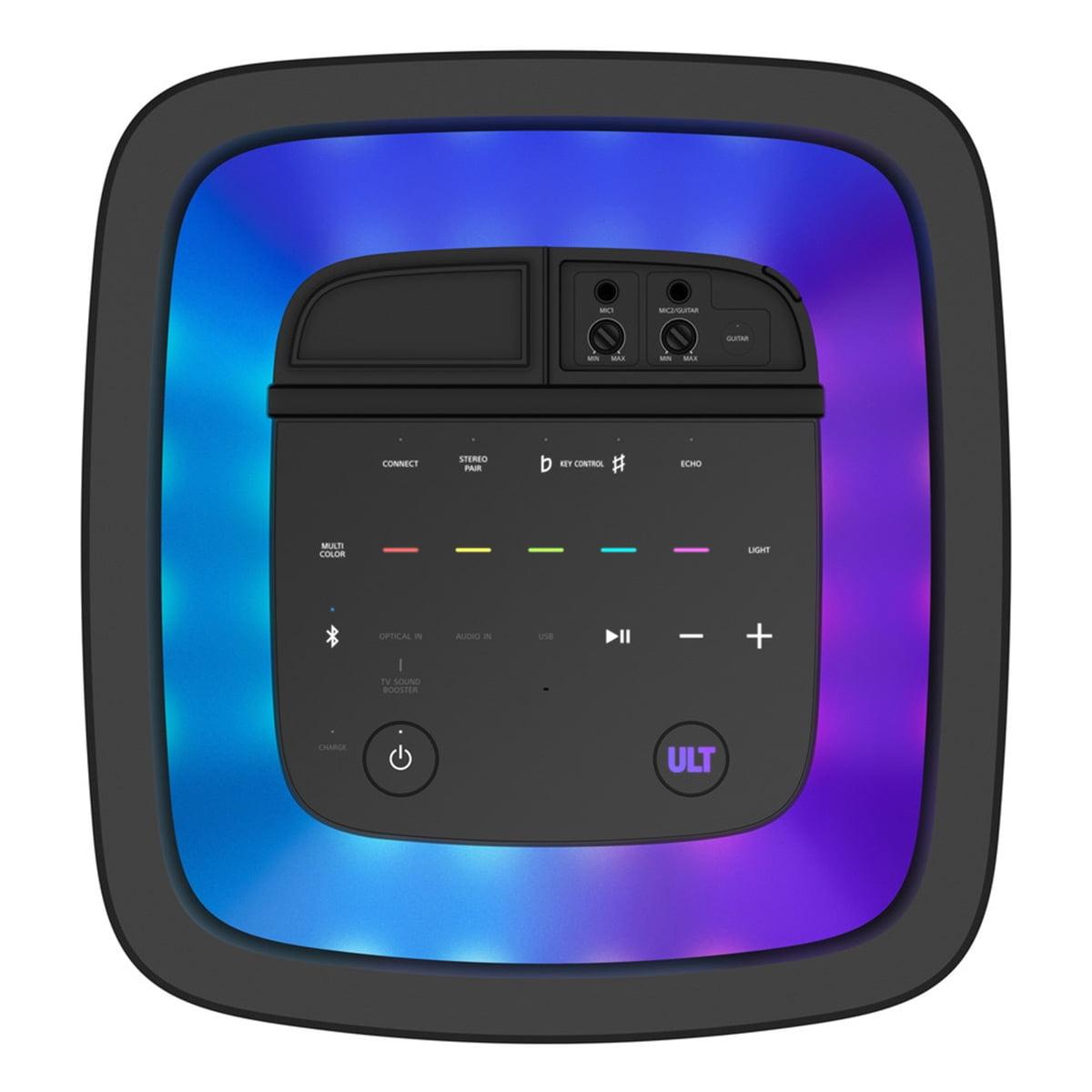
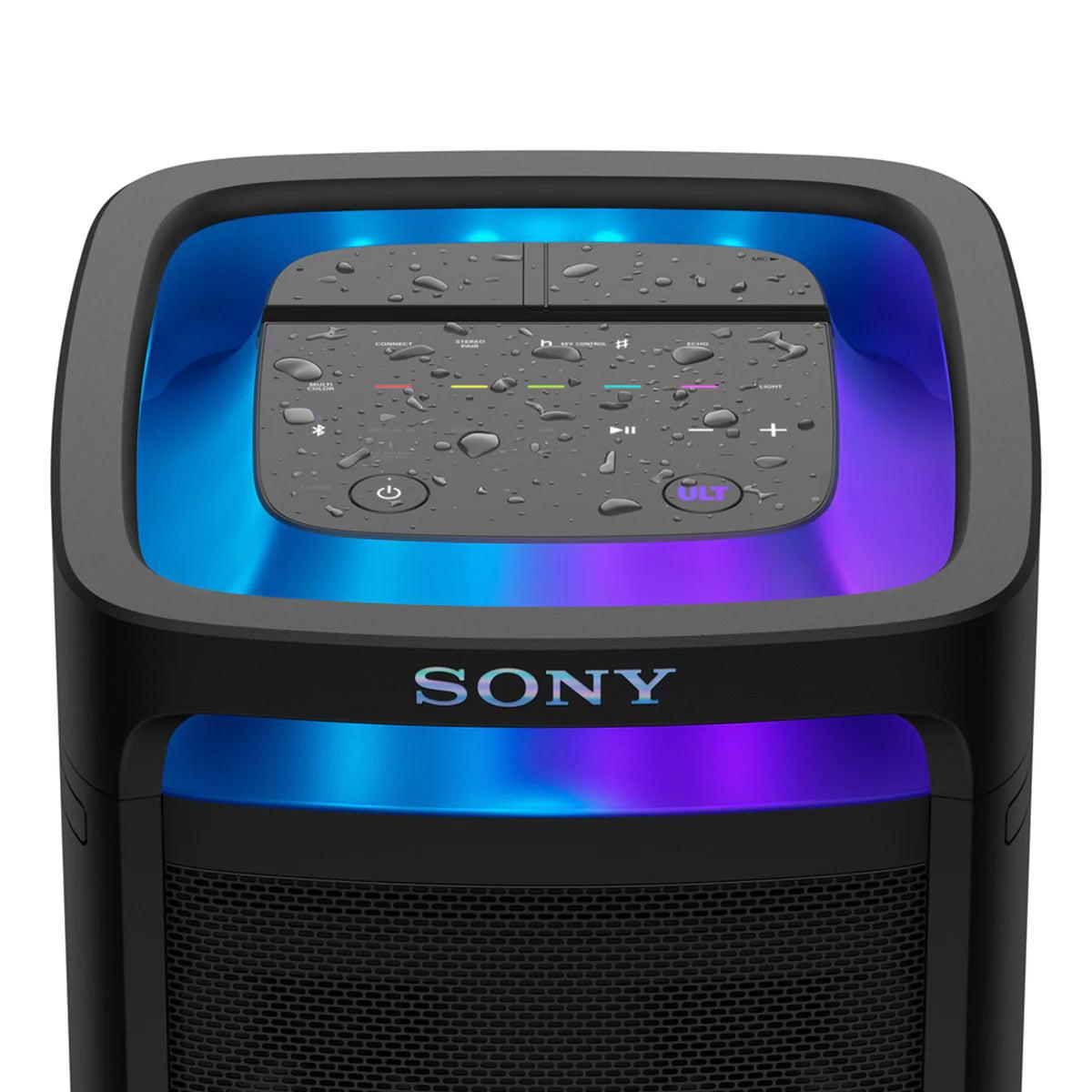
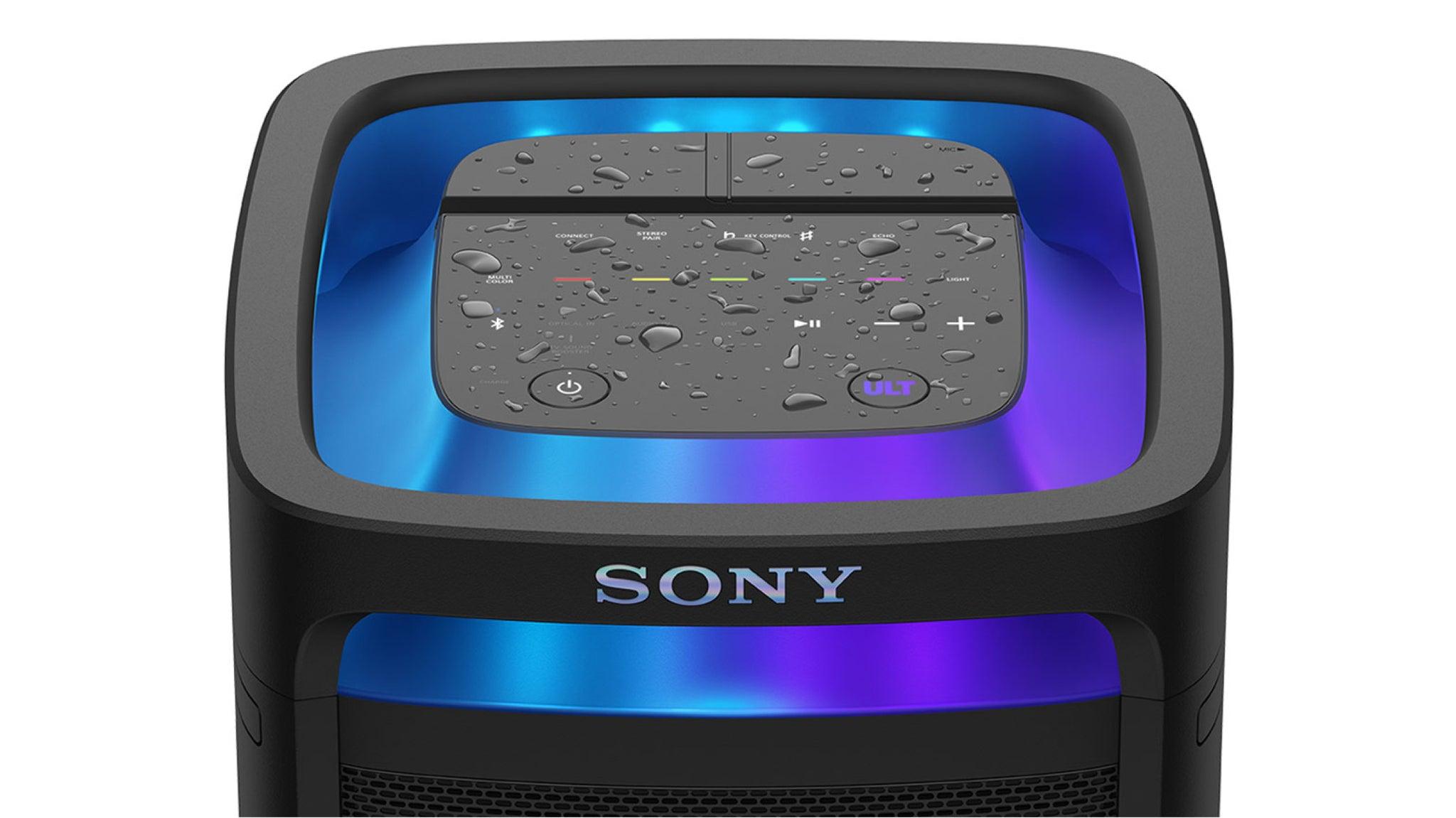
Sony enhances this natural bass capability with their ULT technology, which provides two distinct bass boost modes accessible via a prominent button on the speaker's control panel. ULT1 mode emphasizes the deepest frequencies for maximum room-shaking impact, while ULT2 mode focuses on the punchy mid-bass frequencies that make kick drums and bass lines cut through mix noise. This isn't subtle equalization – activating ULT mode creates a dramatically more aggressive, physical sound that can literally shake objects off tables in smaller rooms.
The JBL PartyBox Stage 320 approaches bass differently, focusing on the 50-70 Hz range where most modern music's bass content actually lives. While it can't reach as deep as the Sony, it reproduces this crucial frequency range with exceptional clarity and control. The dual 6.5-inch woofers work together to create fast, accurate bass response that doesn't overshadow other frequencies. This approach means bass lines remain distinct and musical rather than becoming a overwhelming rumble.
JBL includes their own AI Sound Boost technology, which analyzes incoming audio in real-time to optimize bass output while preventing distortion. This smart processing means the PartyBox Stage 320 can maintain clean, punchy bass even at high volumes where other speakers might start to sound muddy or compressed.
For electronic music, hip-hop, and modern pop where deep bass is crucial to the genre's impact, the Sony ULT Tower 9AC provides a more visceral, club-like experience. For mixed playlists that include rock, jazz, acoustic music, or vocal-heavy content, the JBL PartyBox Stage 320's more balanced approach ensures all elements of the music remain clear and engaging.
The bass performance difference becomes especially pronounced in different room acoustics. The Sony's deep bass extension means it can energize large, open spaces but might overwhelm smaller rooms or spaces with hard surfaces that amplify low frequencies. The JBL's more controlled bass response adapts better to various room sizes and acoustic conditions.
Perhaps no factor differentiates these speakers more dramatically than their approach to portability. This isn't simply about weight – it's about fundamental design philosophy and the trade-offs between maximum performance and real-world flexibility.
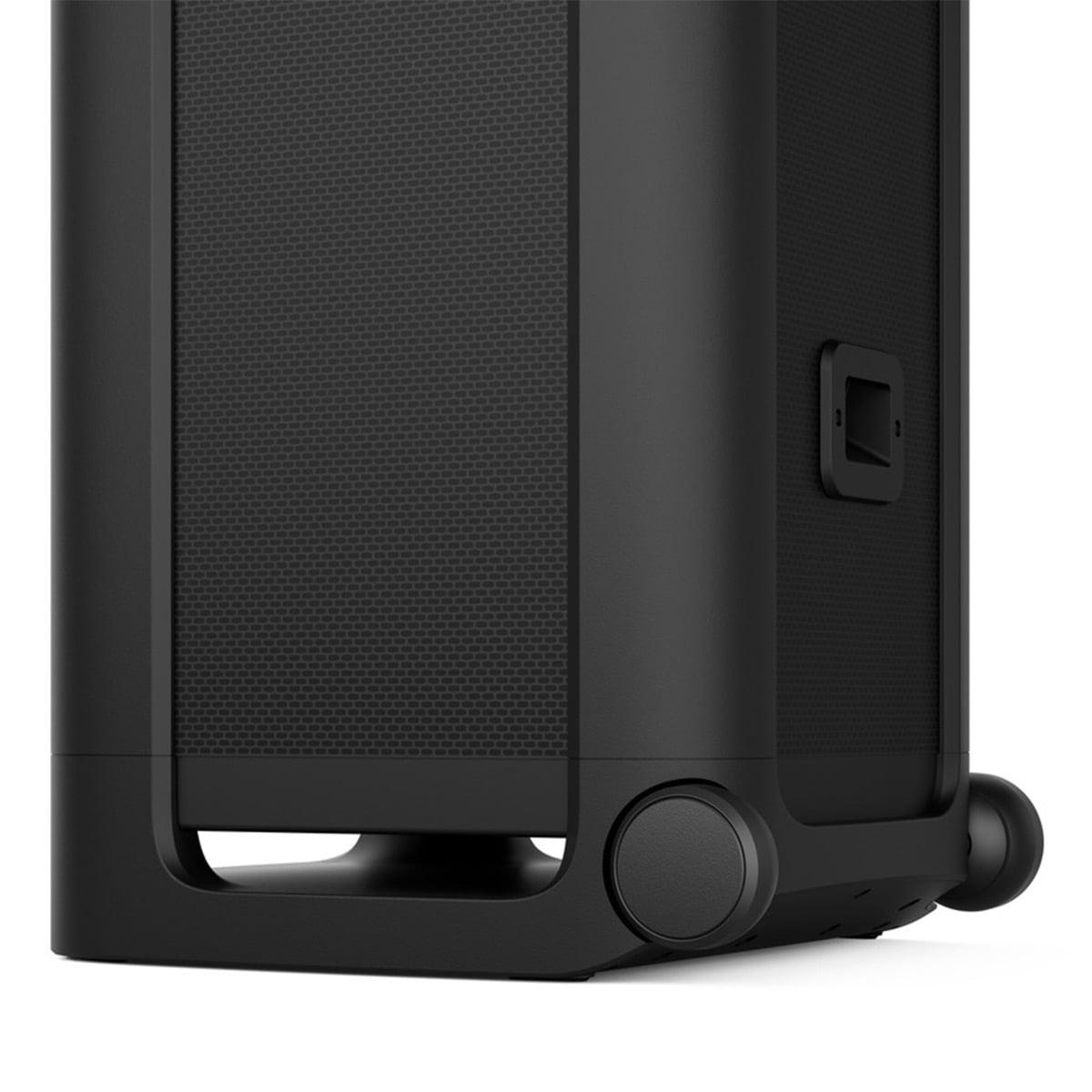
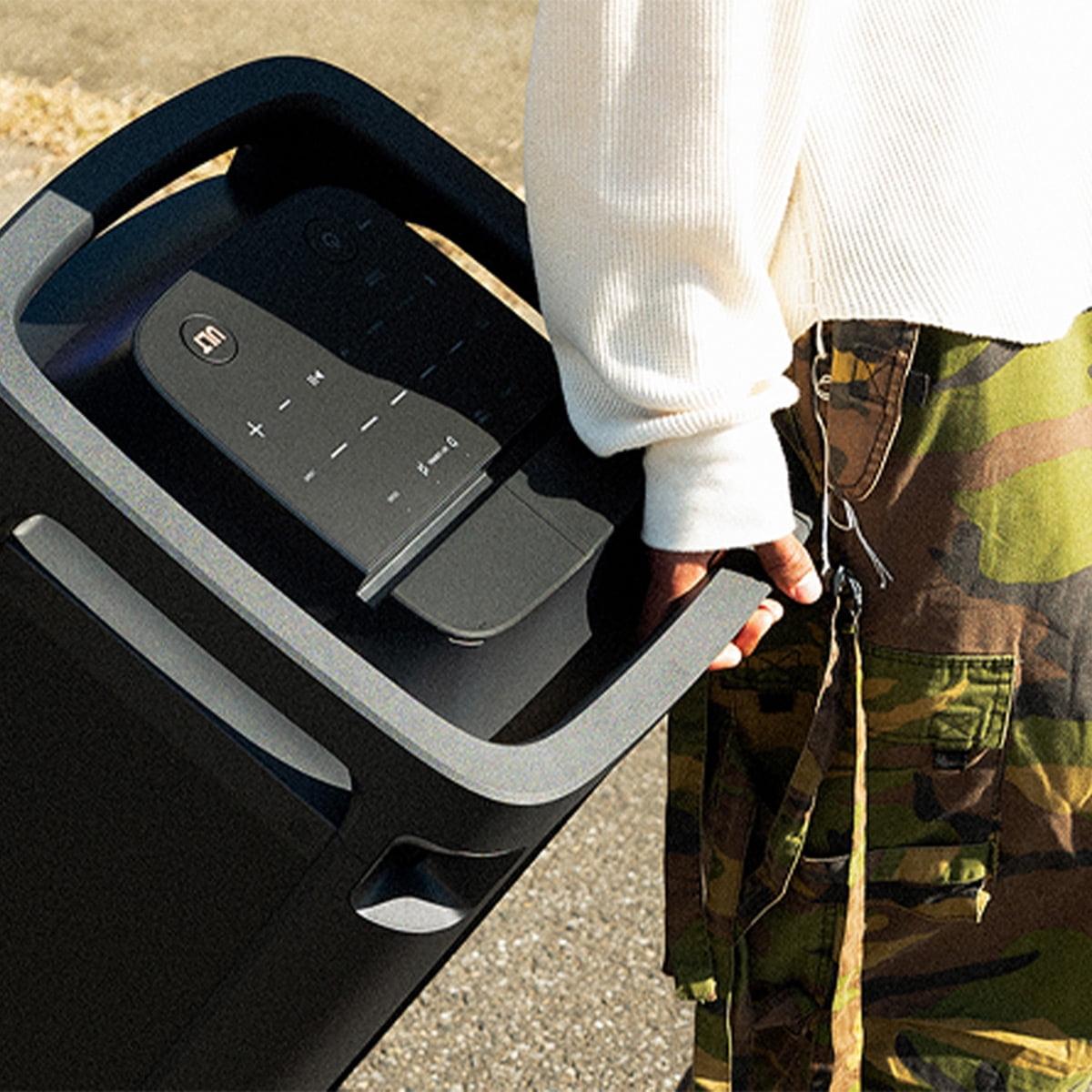
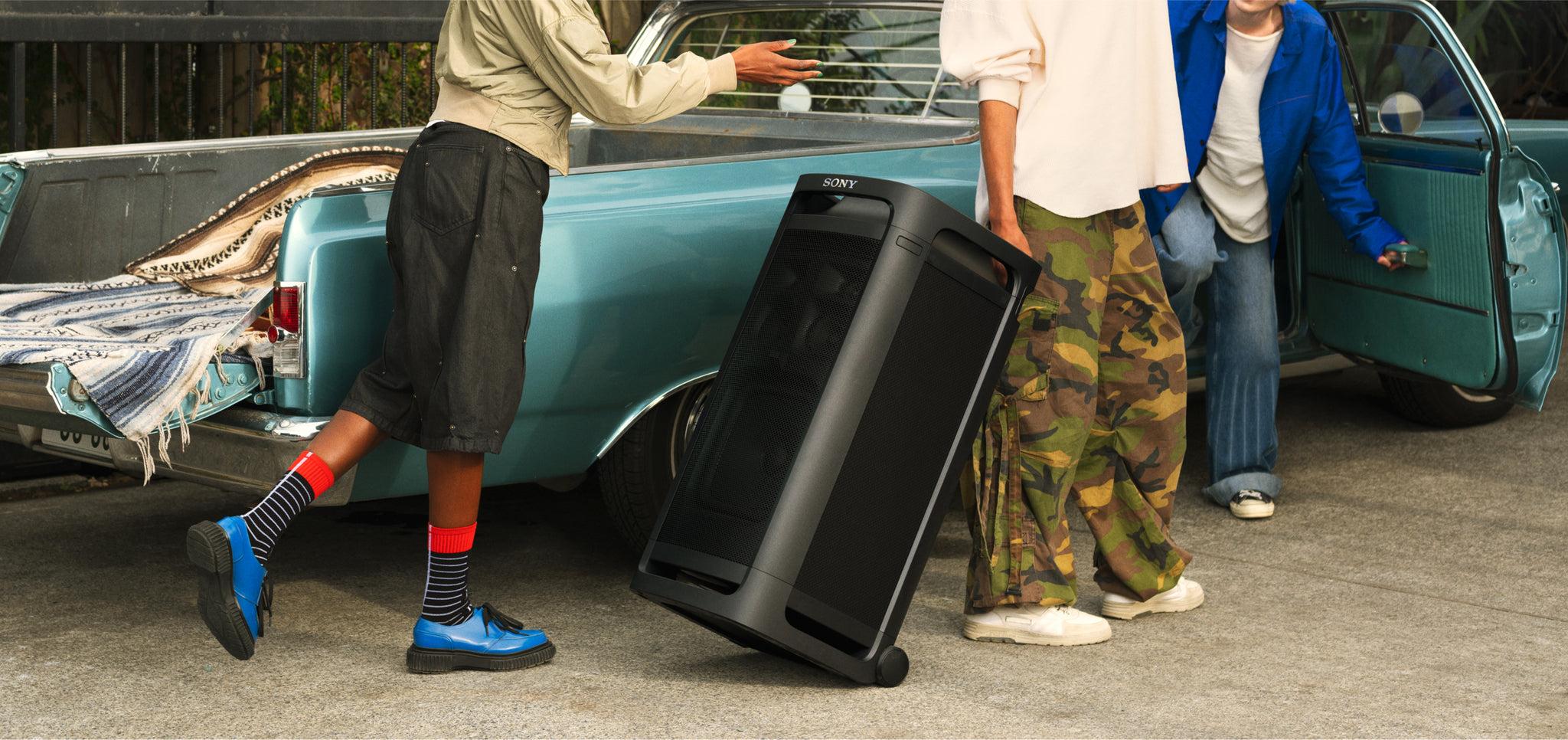
The Sony ULT Tower 9AC makes no pretense about portability. At 28.5 kilograms (nearly 63 pounds) and standing 91 centimeters tall, this is essentially a piece of furniture that happens to play music. Sony includes wheels and a handle to help with positioning, but this speaker is fundamentally designed for stationary use. More critically, it requires AC power to operate – there's no battery option whatsoever.
This AC-only design choice reflects Sony's commitment to maximum acoustic performance. Battery-powered speakers face inherent limitations in peak output and sustained performance because battery voltage drops as charge depletes, and battery weight/size constraints limit the power supplies and amplifier designs engineers can implement. By requiring wall power, the Sony ULT Tower 9AC can maintain consistent, full-power output indefinitely while supporting features like optical digital inputs that consume more power than typical Bluetooth-only speakers.
The JBL PartyBox Stage 320 represents the opposite philosophy – that great party audio should be able to follow you wherever the party leads. At roughly 36 pounds, it's still substantial but genuinely portable for most users. More importantly, its removable battery system provides up to 18 hours of operation at moderate volumes, with fast charging that delivers two hours of playback from just 10 minutes of charging.
JBL's battery innovation goes beyond simple portability. The removable design means you can swap in a fresh battery for extended events, or easily replace the battery when it eventually degrades after years of use. This addresses one of the biggest long-term issues with battery-powered electronics – obsolescence when the internal battery fails.
The portability difference creates cascading effects on usability. The Sony ULT Tower 9AC works brilliantly for house parties, permanent outdoor installations with electrical access, or home theater enhancement where it stays in one location. The JBL PartyBox Stage 320 excels for beach parties, camping trips, tailgating, or any situation where electrical access is limited or where you need to move between multiple locations in a single day.
Weather resistance further emphasizes these different use cases. The Sony ULT Tower 9AC offers only splash resistance on its control panel, suitable for indoor parties where drinks might spill but not designed for outdoor weather exposure. The JBL PartyBox Stage 320 carries an IPX4 rating, meaning it can handle splashing water from any direction – perfect for poolside parties or events where light rain might threaten.
Modern party speakers need to connect seamlessly with various audio sources while offering expansion possibilities for larger events. Both speakers excel in connectivity, but their different approaches reveal their intended use cases.
The Sony ULT Tower 9AC offers the most comprehensive input selection, reflecting its role as a permanent entertainment hub. Beyond standard Bluetooth 5.3 and auxiliary inputs, it includes an optical digital input specifically designed for TV integration. This optical connection, using a fiber optic cable, delivers higher audio quality than Bluetooth while enabling Sony's TV Sound Booster mode, which uses the speaker's rear-firing tweeters to create a wider soundstage for movie and TV audio.
For musicians and karaoke enthusiasts, the Sony ULT Tower 9AC provides dual 6.35mm (quarter-inch) inputs with individual volume controls for microphones or guitars. These aren't simple pass-through connections – Sony includes dedicated processing for echo effects, key control for pitch adjustment, and even fold-out holders to store microphones when not in use. This level of karaoke integration transforms the speaker into a complete entertainment system.
Sony's Party Connect technology enables linking up to 100 compatible speakers wirelessly, creating massive synchronized sound systems for large events. While most users won't approach that limit, the ability to add even one additional speaker significantly expands coverage and impact.
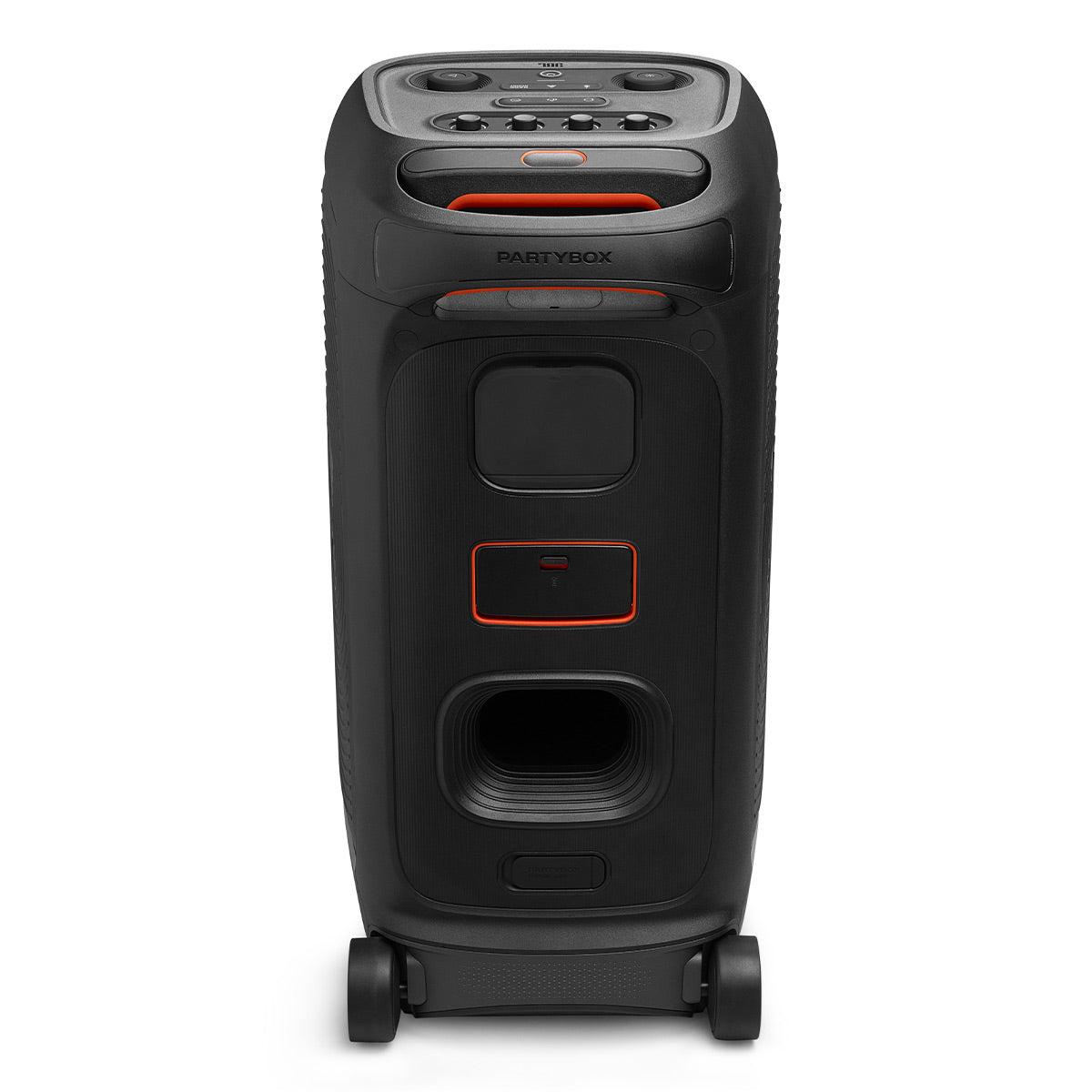
The JBL PartyBox Stage 320 focuses on practical connectivity that enhances portability and flexibility. Its Bluetooth 5.4 support includes multipoint connectivity, allowing two devices to remain connected simultaneously – useful when multiple people want to share DJ duties. The inclusion of both wireless input via Bluetooth and wired line-out connections means you can use this speaker as part of a larger wired system, daisy-chaining additional speakers without relying on wireless synchronization that might suffer in crowded RF environments.
JBL's Auracast support represents newer Bluetooth technology that enables more efficient multi-speaker setups with lower latency – important for applications where audio and visual elements need precise timing coordination.
Both speakers integrate with smartphone apps for advanced control. Sony's Sound Connect app provides extensive customization including 10-band equalizer adjustment, DJ sound effects, and lighting control. JBL's PartyBox app offers similar features with a focus on real-time audio processing and preset management.
The connectivity differences highlight each speaker's strengths: Sony's comprehensive inputs and TV integration make it ideal for permanent installations where multiple audio sources connect regularly, while JBL's focus on efficient wireless connectivity and system expansion supports its portable mission.
Party speakers have evolved beyond simple audio reproduction to become complete entertainment platforms, and both contenders offer impressive feature sets that enhance social experiences.
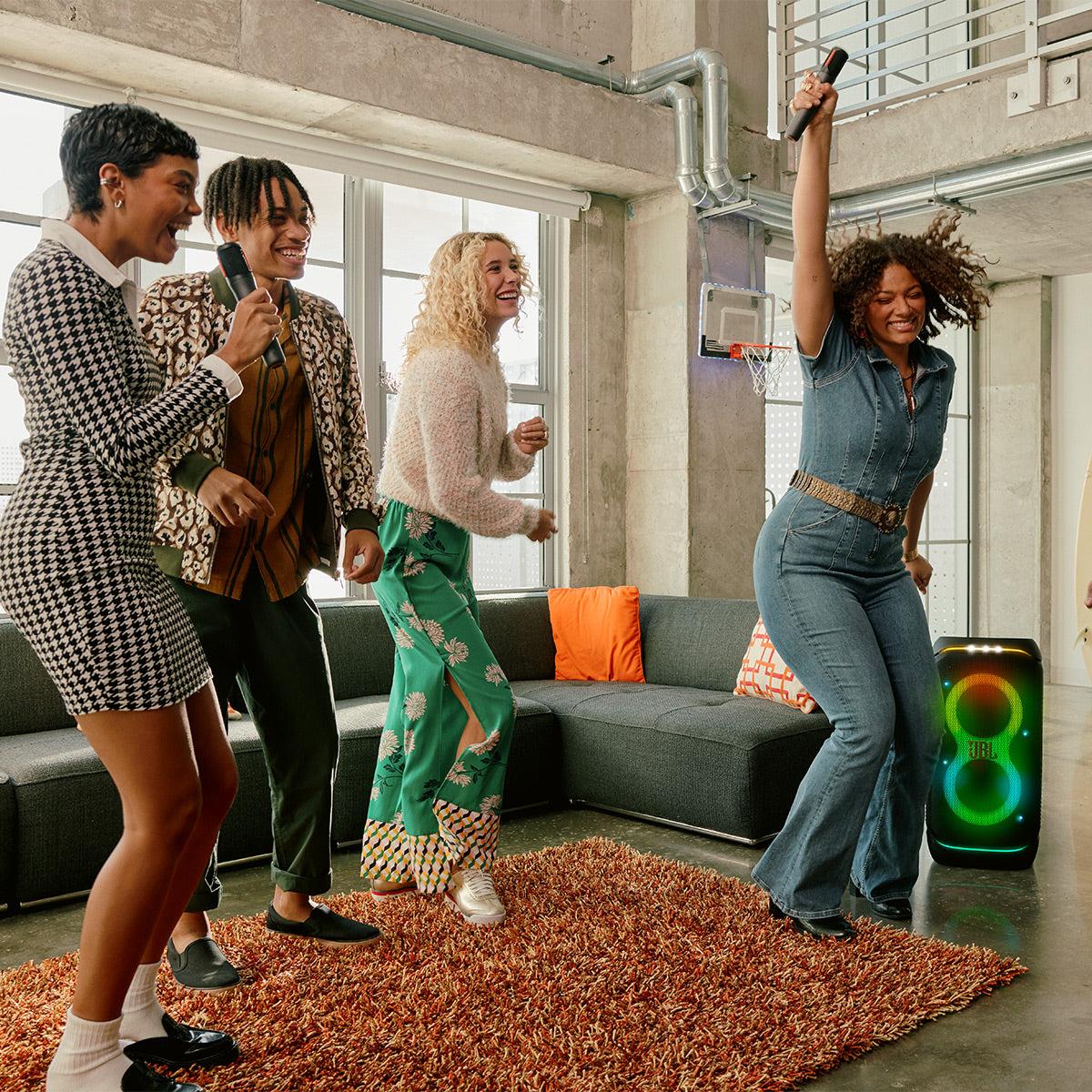
The Sony ULT Tower 9AC takes karaoke particularly seriously, with features that rival dedicated karaoke systems. Its dual microphone inputs include individual volume and echo controls, while the key control feature allows pitch adjustment to match singers' vocal ranges – crucial for making karaoke accessible to participants with different vocal abilities. The inclusion of physical microphone holders integrated into the speaker's design shows Sony's attention to practical karaoke hosting needs.
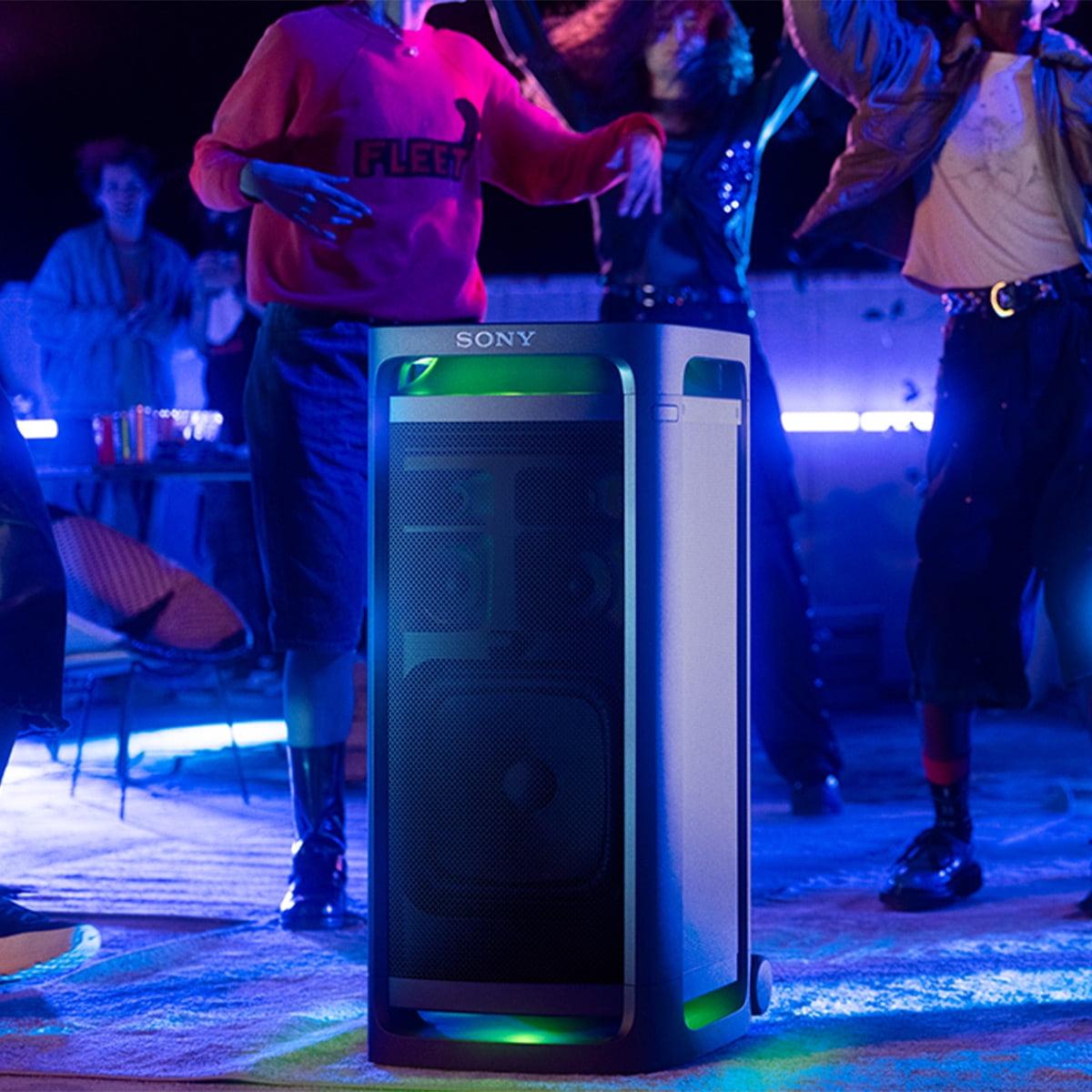
Sony's 360° party lighting system synchronizes with music automatically, using the audio signal to drive lighting effects that pulse, strobe, and change colors in time with the beat. The lighting extends around the entire speaker circumference, creating ambient room lighting rather than just forward-facing effects. Through the smartphone app, users can customize lighting patterns, adjust intensity, or disable lighting entirely to preserve battery life – though since this speaker requires AC power, battery conservation isn't a concern.
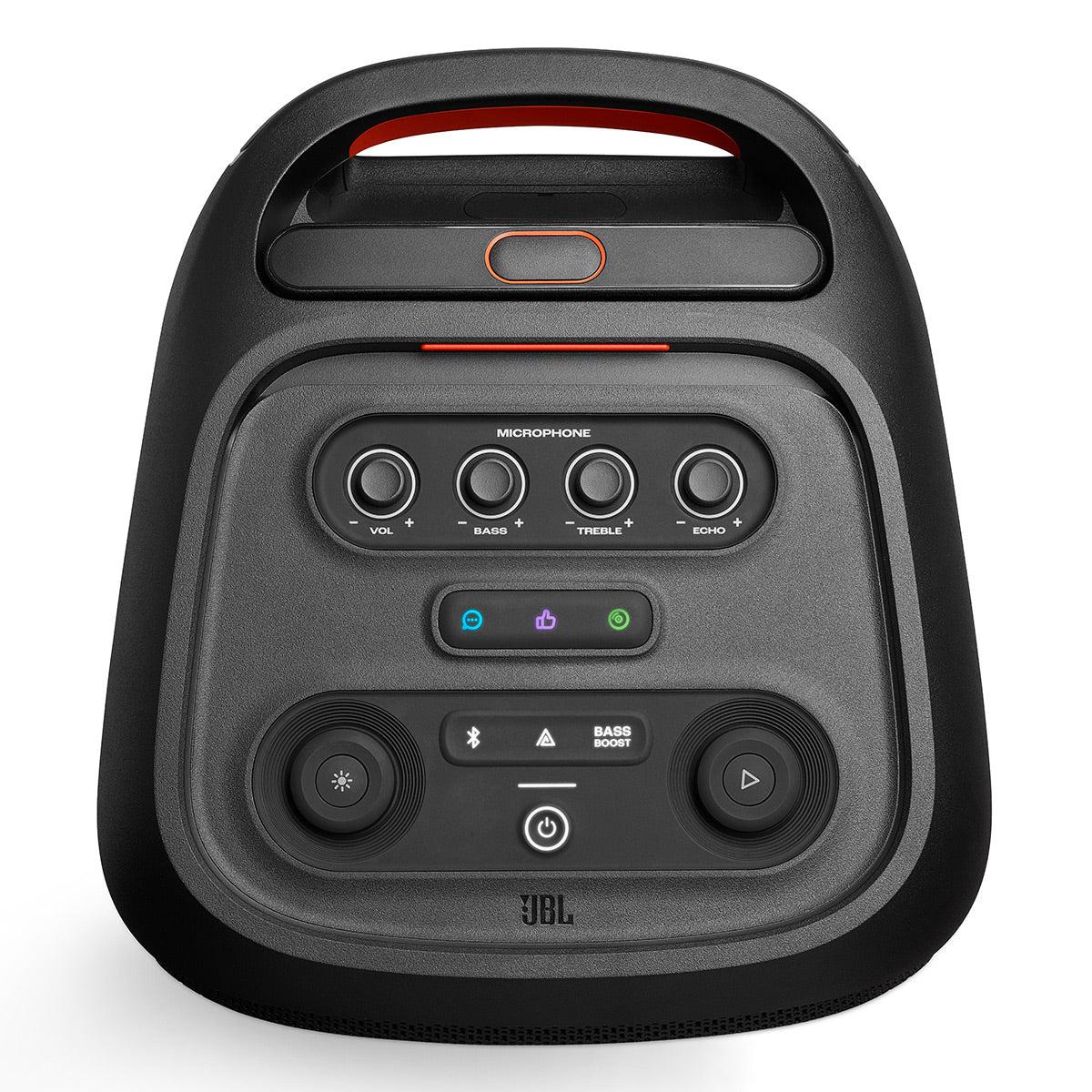
The JBL PartyBox Stage 320 includes similar karaoke support with dual inputs and app-controlled effects, though without the dedicated physical microphone storage or advanced key control features of the Sony. Where JBL differentiates itself is in the intelligence of its audio processing. The AI Sound Boost technology continuously analyzes incoming audio to optimize sound quality automatically, adjusting EQ settings and limiting distortion without user intervention.
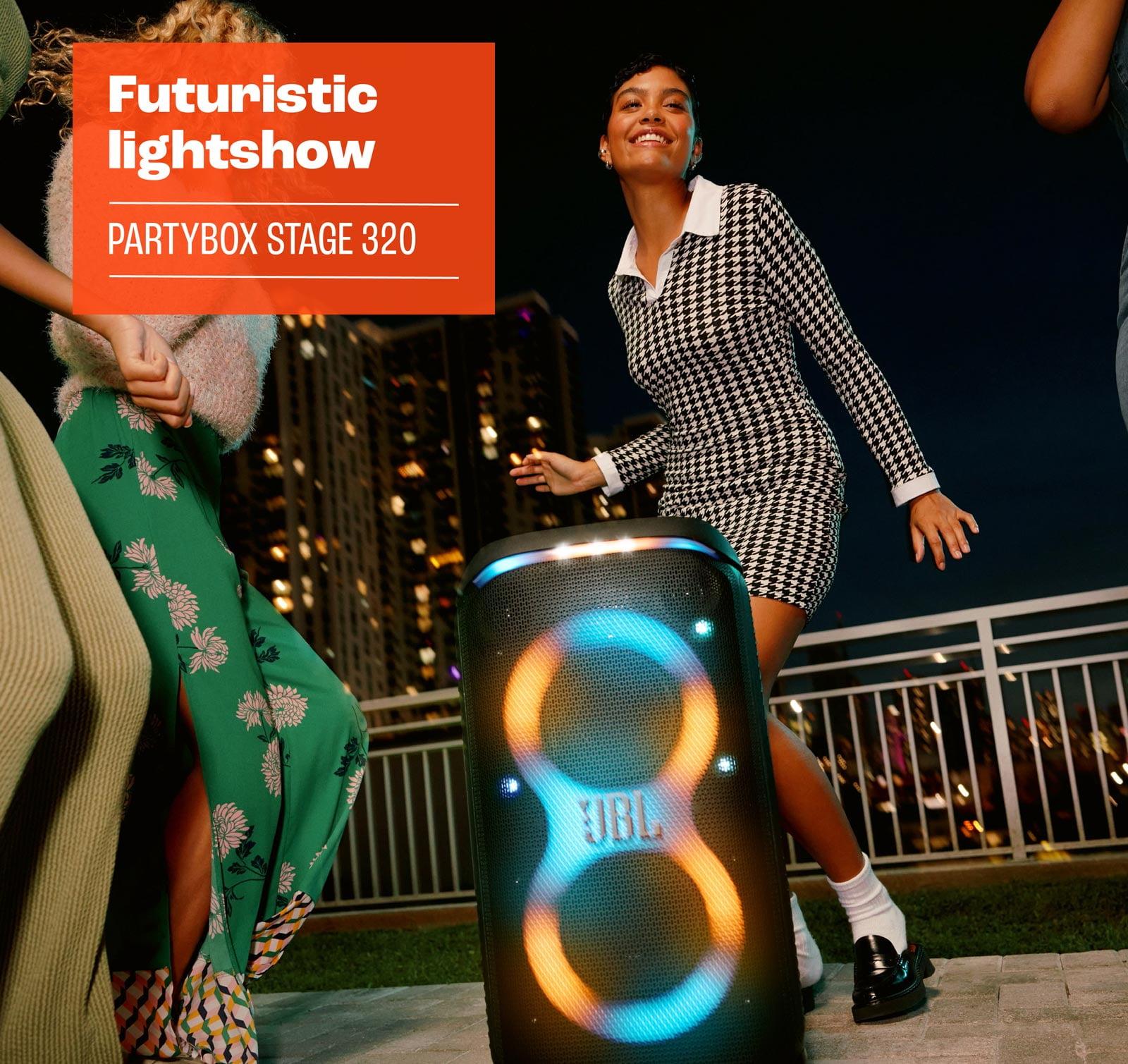
JBL's integrated light show offers "starry lights, cool light trails, and strobe effects" that sync with music, creating an engaging visual experience. The lighting can be customized through the app or disabled entirely to extend battery life during portable use.
Both speakers support their respective multi-speaker ecosystems, but with different philosophies. Sony's Party Connect can link up to 100 speakers for massive installations, while JBL's approach focuses on smaller, more manageable multi-speaker setups that maintain audio quality and synchronization.
The entertainment feature differences reflect each speaker's primary use case: Sony's comprehensive karaoke features and permanent lighting installation suit fixed party locations, while JBL's intelligent audio processing and battery-conscious lighting design support portable entertainment scenarios.
While both speakers excel at parties, their home theater potential deserves consideration, especially for users seeking multi-purpose audio solutions.
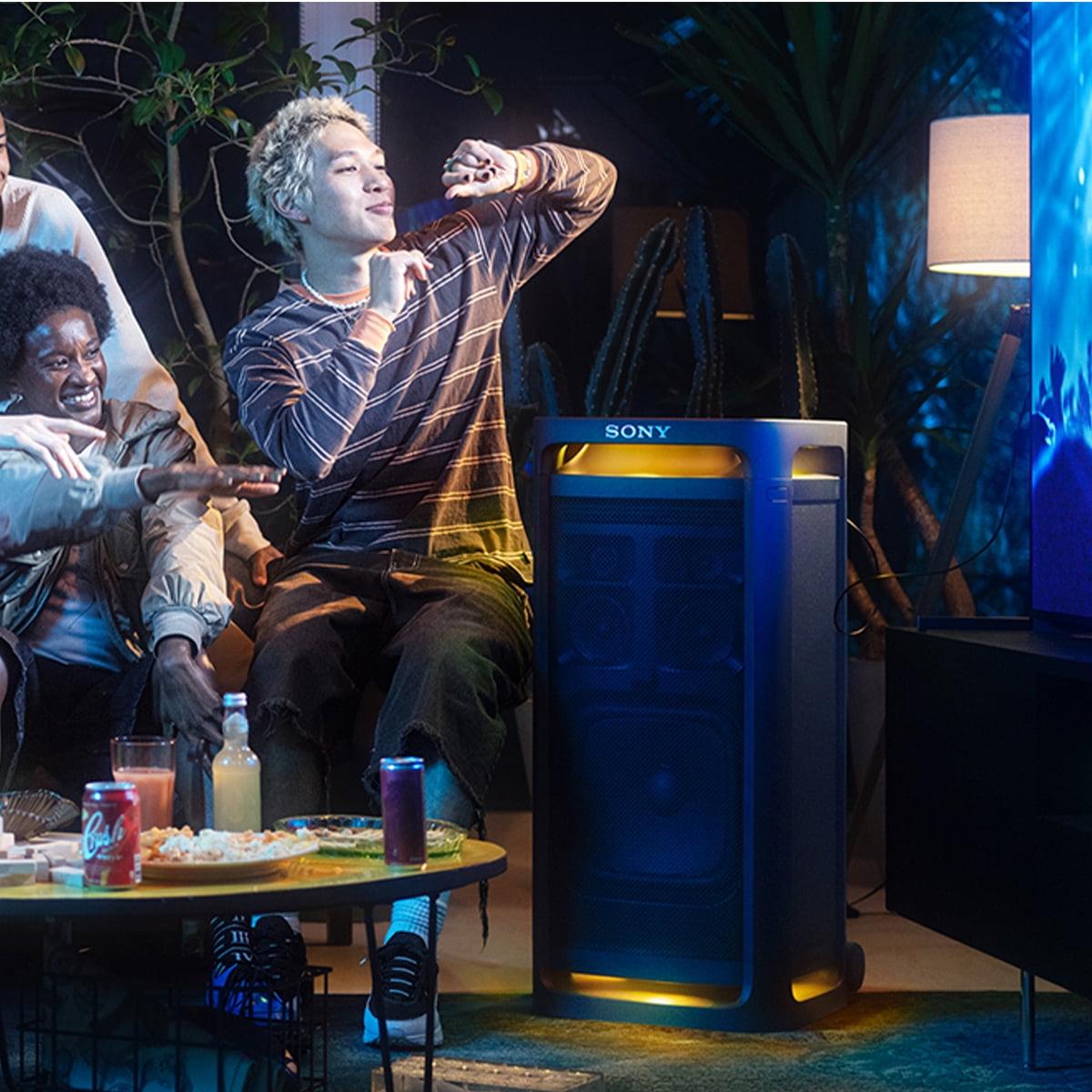
The Sony ULT Tower 9AC particularly excels in home theater applications thanks to its optical digital input and TV Sound Booster mode. Unlike Bluetooth connections that can introduce audio delay, the optical input provides perfect audio synchronization with video content. The TV Sound Booster mode uses the speaker's rear-firing tweeters to create a wider soundstage, bouncing audio off side walls to simulate surround sound effects.
For action movies, the Sony's deep bass extension and ULT boost modes create genuine cinematic impact. Explosions, gunfire, and dramatic music soundtracks gain physical presence that typical TV speakers or soundbars cannot match. The large woofer reproduces the sub-bass frequencies that make movie soundtracks truly immersive.
However, the Sony's bass-heavy tuning might not suit all movie content. Dialogue-heavy dramas or comedies might sound overly warm or boomy, particularly in smaller rooms where the deep bass becomes overwhelming.
The JBL PartyBox Stage 320 offers more balanced performance for mixed home theater content. Its controlled frequency response ensures dialogue remains clear while still providing adequate bass impact for action sequences. The more compact size fits better in typical living rooms, and the battery operation means it can serve portable outdoor movie nights without requiring extension cords.
For dedicated home theater use, neither speaker replaces a proper surround sound system, but both offer significant upgrades over TV speakers while maintaining party capabilities for when entertaining duties call.
At the time of writing, these speakers occupy different price tiers that reflect their distinct design philosophies and target markets. The Sony ULT Tower 9AC commands a premium price that positions it as a flagship party speaker, while the JBL PartyBox Stage 320 offers more accessible pricing for its feature set.
The Sony justifies its higher cost through several premium elements: the massive custom woofer with X-Balanced technology, comprehensive karaoke features with professional-grade controls, TV integration capabilities, and the ability to create massive synchronized speaker networks. For users who prioritize maximum bass impact and plan to use the speaker primarily in fixed locations with AC power, the performance advantages can justify the price premium.
The JBL PartyBox Stage 320 delivers exceptional value by focusing resources on core party speaker essentials: clean, powerful audio output, true portability with battery operation, weather resistance, and intelligent audio processing. The lower price point makes high-quality party audio accessible to more users while still delivering performance that competes with significantly more expensive alternatives.
When considering total cost of ownership, the Sony's AC-only operation eliminates future battery replacement costs but limits venue flexibility. The JBL's battery system adds long-term replacement considerations but provides immediate value through venue independence.
Both speakers offer strong value propositions within their respective market segments, making the choice more about matching features to specific needs rather than finding an obvious winner on pure price-to-performance metrics.
The 2024-2025 release timeline for these speakers reflects significant advances in party speaker technology compared to previous generations. Both benefit from improved Bluetooth implementations with better range, lower latency, and enhanced multi-device support compared to speakers from just a few years ago.
Sony's X-Balanced driver technology, while not entirely new to 2025, reaches new levels of implementation in the ULT Tower 9AC. The company's refinement of this non-circular driver geometry continues improving efficiency and output while reducing distortion – addressing historical criticisms that party speakers sacrifice audio quality for volume.
JBL's AI Sound Boost represents newer thinking in real-time audio processing, using computational power that wasn't practical in portable speakers until recent advances in efficient processing chips. This technology addresses one of party speakers' biggest challenges: maintaining audio quality across varying volume levels and musical content.
The focus on app integration and customization reflects the broader trend toward smartphone-controlled audio systems. Both speakers offer significantly more user control and personalization than previous generations, allowing users to tailor performance to specific rooms, musical preferences, and usage scenarios.
Battery technology improvements, particularly in the JBL PartyBox Stage 320's removable battery system, represent substantial advances over earlier portable speakers that often suffered from poor battery life, slow charging, and expensive replacement costs when batteries eventually failed.
After extensive research and evaluation of user and expert opinions, the choice between these exceptional speakers ultimately depends on how and where you plan to use them most frequently.
Choose the Sony ULT Tower 9AC if you're seeking the ultimate bass experience for indoor parties, have consistent AC power access, and value comprehensive karaoke features. This speaker excels for users who host regular house parties, want to enhance their home theater setup, or plan to create large synchronized speaker systems for special events. The deeper bass extension and room-filling 360° sound create more visceral, club-like experiences that justify the premium price for bass enthusiasts.
The Sony makes particular sense for permanent or semi-permanent installations where the speaker stays in one primary location. Its TV integration capabilities add value for users seeking multi-purpose audio solutions, while the professional-grade karaoke features appeal to serious entertainment hosts.
Choose the JBL PartyBox Stage 320 if portability, versatility, and weather resistance matter more than maximum bass depth. This speaker suits users who take their parties to various locations, enjoy outdoor entertaining, or need the flexibility of battery operation. The more balanced frequency response works better for diverse musical tastes and mixed party playlists.
The JBL represents the better value for most users, offering impressive performance at a more accessible price while maintaining true portability. Its weather resistance and intelligent audio processing create a more worry-free ownership experience for varied usage scenarios.
For mixed-use scenarios where both portability and maximum performance matter, consider your primary use case. If 70% of your usage involves indoor parties with AC power access, the Sony's performance advantages outweigh its portability limitations. If you frequently entertain outdoors or need venue flexibility, the JBL's balanced approach serves you better in the long run.
Both speakers represent excellent implementations of their respective philosophies, making this choice more about matching capabilities to lifestyle rather than finding an objectively superior product. The party speaker market benefits from this diversity of approaches, ensuring great options exist whether you prioritize maximum acoustic impact or maximum versatility.
| Sony ULT Tower 9AC | JBL PartyBox Stage 320 |
|---|---|
| Power Source - Critical for venue flexibility and maximum output | |
| AC-powered only (unlimited runtime, consistent peak power) | Battery or AC powered (up to 18 hours portable, removable battery) |
| Weight & Portability - Determines if you can take it anywhere | |
| 28.5 kg (63 lbs) with wheels and handle (stationary powerhouse) | 16.5 kg (36 lbs) with telescopic handle and wheels (truly portable) |
| Maximum Volume Output - How loud your party can get | |
| ~108 dB peak (massive room-filling sound) | ~110 dB peak (slightly louder with cleaner output at max volume) |
| Bass Extension - How deep and physical the bass feels | |
| Down to ~25 Hz (room-shaking sub-bass, club-like impact) | 50-70 Hz range (punchy, controlled bass without overwhelming) |
| Driver Configuration - What creates the sound | |
| 1x 320mm woofer, 2x 120mm midrange, 4x tweeters (360° sound) | 2x 6.5" woofers, 2x 25mm tweeters (balanced dual-driver system) |
| Weather Resistance - Protection for outdoor parties | |
| Splash-resistant control panel only (indoor focused) | IPX4 splashproof throughout (poolside and light rain safe) |
| Karaoke Features - How well it handles singing and performance | |
| Professional setup: dual inputs, echo effects, key control, mic holders | Standard karaoke: dual inputs with app-controlled effects |
| TV Integration - Home theater enhancement capabilities | |
| Optical input with TV Sound Booster mode (seamless connection) | Standard audio inputs only (no dedicated TV features) |
| Multi-Speaker Connectivity - Expanding your sound system | |
| Party Connect up to 100 speakers (massive event capability) | Auracast and line-out for smaller multi-speaker setups |
| App Control & Customization - Fine-tuning your sound | |
| Sony Sound Connect: 10-band EQ, DJ effects, lighting control | JBL PartyBox app: AI Sound Boost, 5-band EQ, presets |
| Lighting Effects - Visual party enhancement | |
| 360° party lights sync with music (room ambient lighting) | Integrated light show with starry effects and strobes |
| Audio Processing - Maintaining quality at high volumes | |
| ULT bass boost modes (ULT1/ULT2 for different bass styles) | AI Sound Boost (real-time optimization prevents distortion) |
| Best Use Cases - Where each speaker truly excels | |
| Indoor bass enthusiasts, home theater, permanent installations | Outdoor events, portable parties, balanced music listening |
The JBL PartyBox Stage 320 is significantly better for outdoor events due to its battery operation (up to 18 hours) and IPX4 splashproof rating. The Sony ULT Tower 9AC requires AC power and only has splash-resistant controls, making it unsuitable for most outdoor venues without electrical access.
The Sony ULT Tower 9AC delivers much deeper bass, extending down to 25 Hz with its massive 320mm woofer and ULT boost modes for room-shaking impact. The JBL PartyBox Stage 320 focuses on the 50-70 Hz range with more controlled, balanced bass that won't overwhelm other frequencies.
The JBL PartyBox Stage 320 is far more portable at 16.5 kg (36 lbs) with battery operation, while the Sony ULT Tower 9AC weighs 28.5 kg (63 lbs) and requires wall power. The JBL's telescopic handle and wheels make it genuinely transportable for different venues.
The Sony ULT Tower 9AC excels for home theater with its optical input and TV Sound Booster mode that creates wider soundstage effects. The JBL PartyBox Stage 320 can connect via Bluetooth or aux cable but lacks dedicated TV features and may introduce audio delay.
The JBL PartyBox Stage 320 achieves slightly higher peak volumes around 110 dB compared to the Sony ULT Tower 9AC's 108 dB. However, the Sony creates more physical impact through its deeper bass extension, making it feel more powerful at moderate to high volumes.
The Sony ULT Tower 9AC offers superior karaoke with professional features including key control for pitch adjustment, individual echo controls, and built-in microphone holders. The JBL PartyBox Stage 320 provides basic karaoke functionality with dual inputs and app-controlled effects.
The JBL PartyBox Stage 320 typically offers better value with lower pricing while delivering excellent performance, true portability, and weather resistance. The Sony ULT Tower 9AC costs more but justifies the premium with deeper bass, TV integration, and comprehensive karaoke features.
Both speakers support multi-speaker setups but differently. The Sony ULT Tower 9AC uses Party Connect to link up to 100 compatible speakers wirelessly. The JBL PartyBox Stage 320 supports smaller networks through Auracast and wired connections via its line-out port.
The Sony ULT Tower 9AC excels with bass-heavy music like electronic, hip-hop, and dance music due to its deep bass extension. The JBL PartyBox Stage 320 handles diverse genres better with its balanced frequency response, making vocals and instruments clearer across rock, pop, and acoustic music.
Only the JBL PartyBox Stage 320 has a battery, providing up to 18 hours of playback with fast charging (10 minutes for 2 hours of use) and a removable battery design. The Sony ULT Tower 9AC requires constant AC power but never runs out during use.
The Sony ULT Tower 9AC typically performs better for indoor house parties with its 360-degree sound distribution, deeper bass that energizes rooms, and comprehensive party features. The JBL PartyBox Stage 320 works well indoors but shines when you need the flexibility to move between locations.
The JBL PartyBox Stage 320 offers IPX4 splashproof protection throughout the entire speaker, suitable for poolside parties or light rain. The Sony ULT Tower 9AC only has splash-resistant controls and is designed primarily for indoor use or covered outdoor areas.
We've done our best to create useful and informative comparisons to help you decide what product to buy. Our research uses advanced automated methods to create this comparison and perfection is not possible - please contact us for corrections or questions. These are the sites we've researched in the creation of this article: stereoguide.com - videoandaudiocenter.com - bestbuy.com - electronics.sony.com - rtings.com - youtube.com - hindustantimes.com - helpguide.sony.net - soundguys.com - sony.com - youtube.com - bestbuy.com - youtube.com - youtube.com - youtube.com - shopjetson.com - youtube.com - sony.com - sonyworld.co.za - sony.com - stereoguide.com - soundguys.com - rtings.com - soundguys.com - soundguys.com - rtings.com - jbl.com - youtube.com - youtube.com - youtube.com - youtube.com - rtings.com - 9to5toys.com - versus.com - cdw.com - jbl.com - projectorscreenstore.com - projectorscreen.com - ro.harmanaudio.com - jbl.co.nz - bestbuy.com - youtube.com

Privacy Policy
Terms and Conditions - Affiliate Policy
Home Security
© Copyright 2008-2026.
11816 Inwood Rd #1211, Dallas, TX 75244