

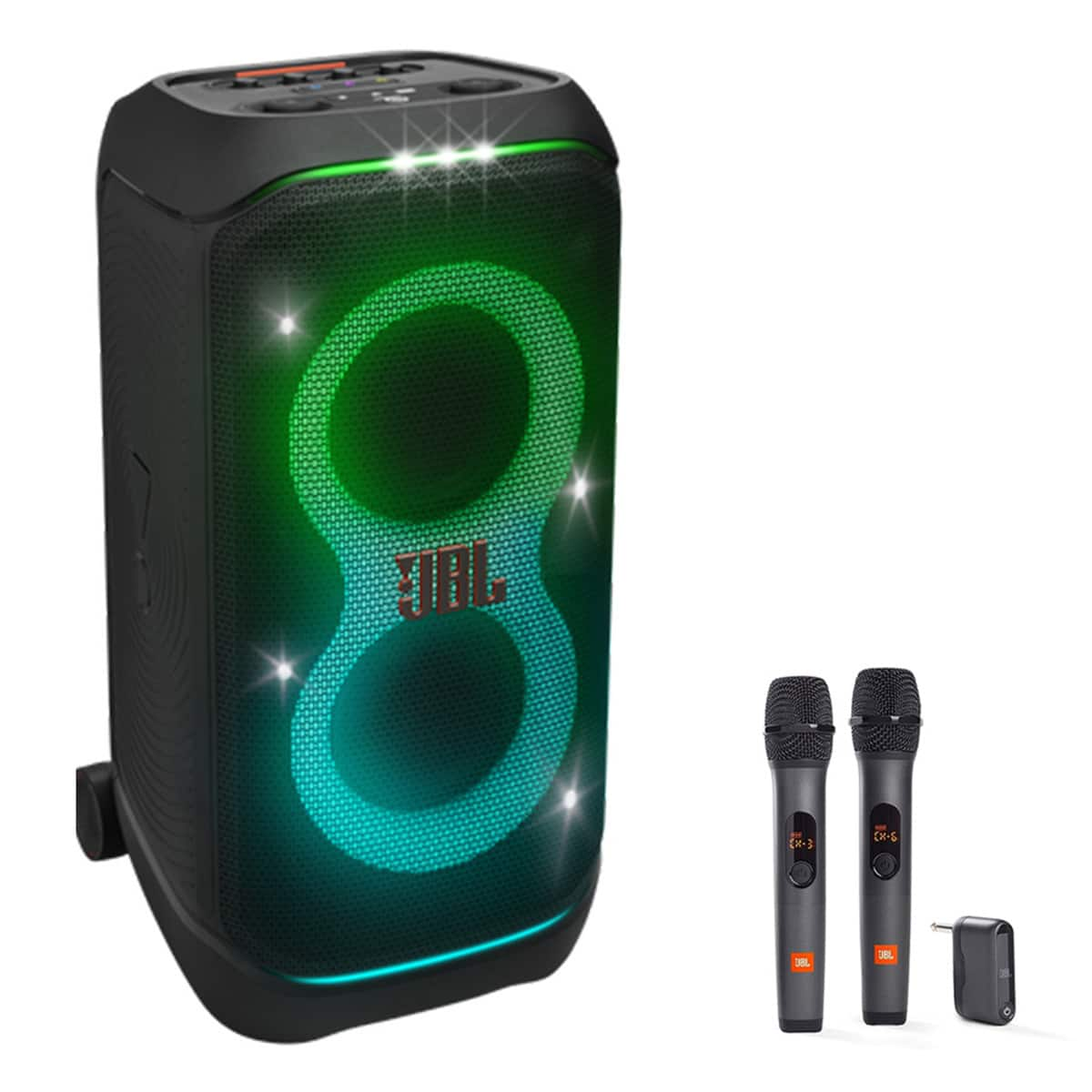
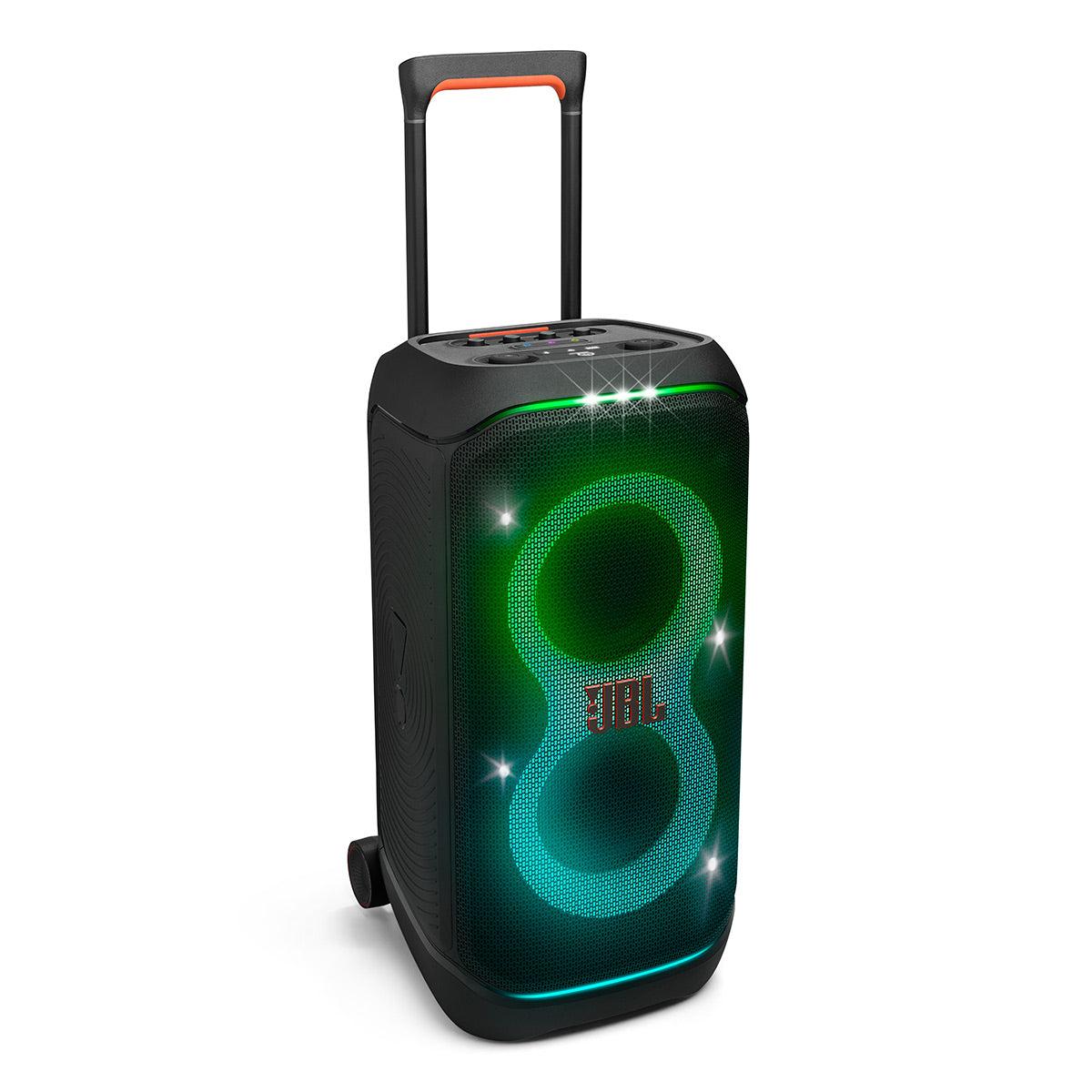
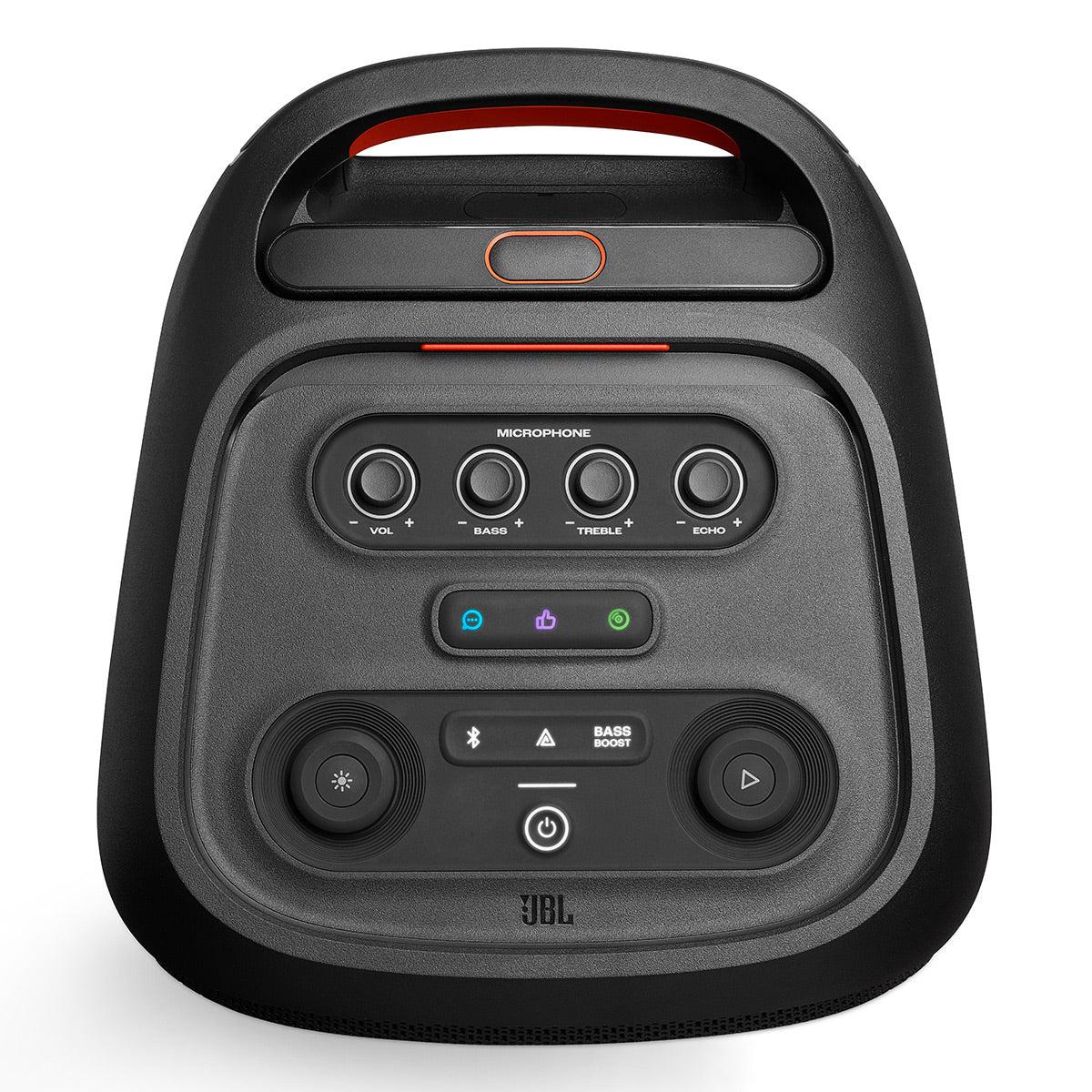
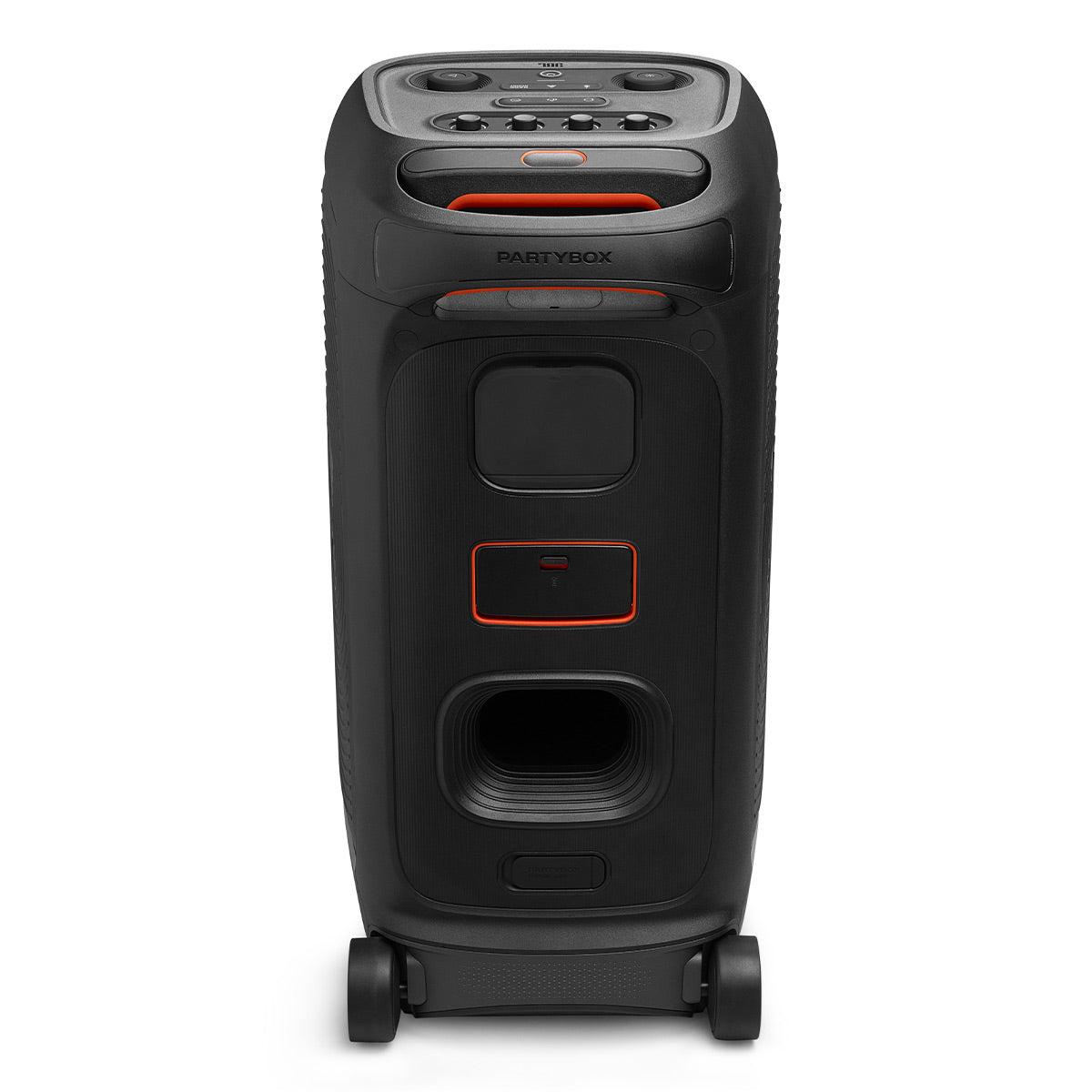
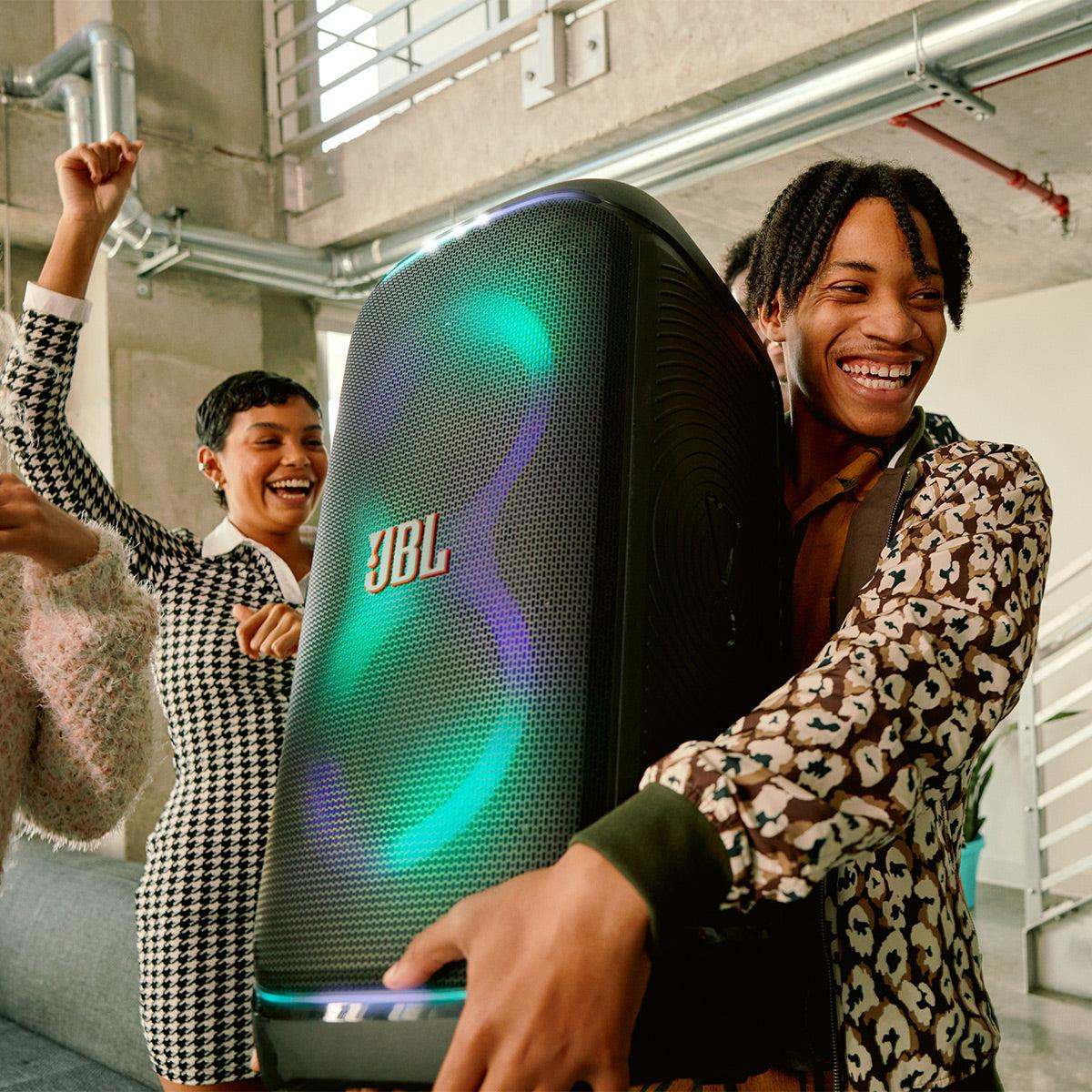
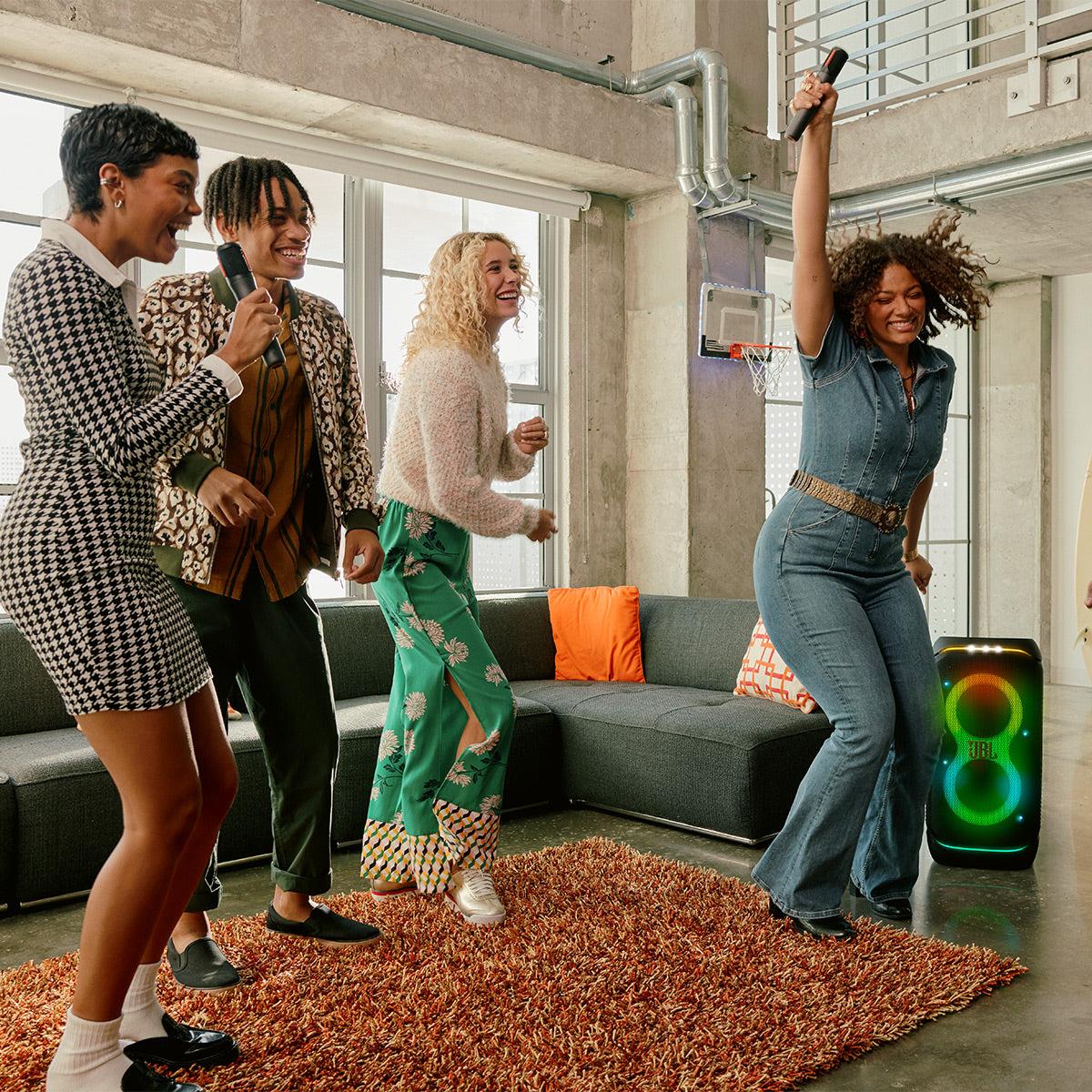
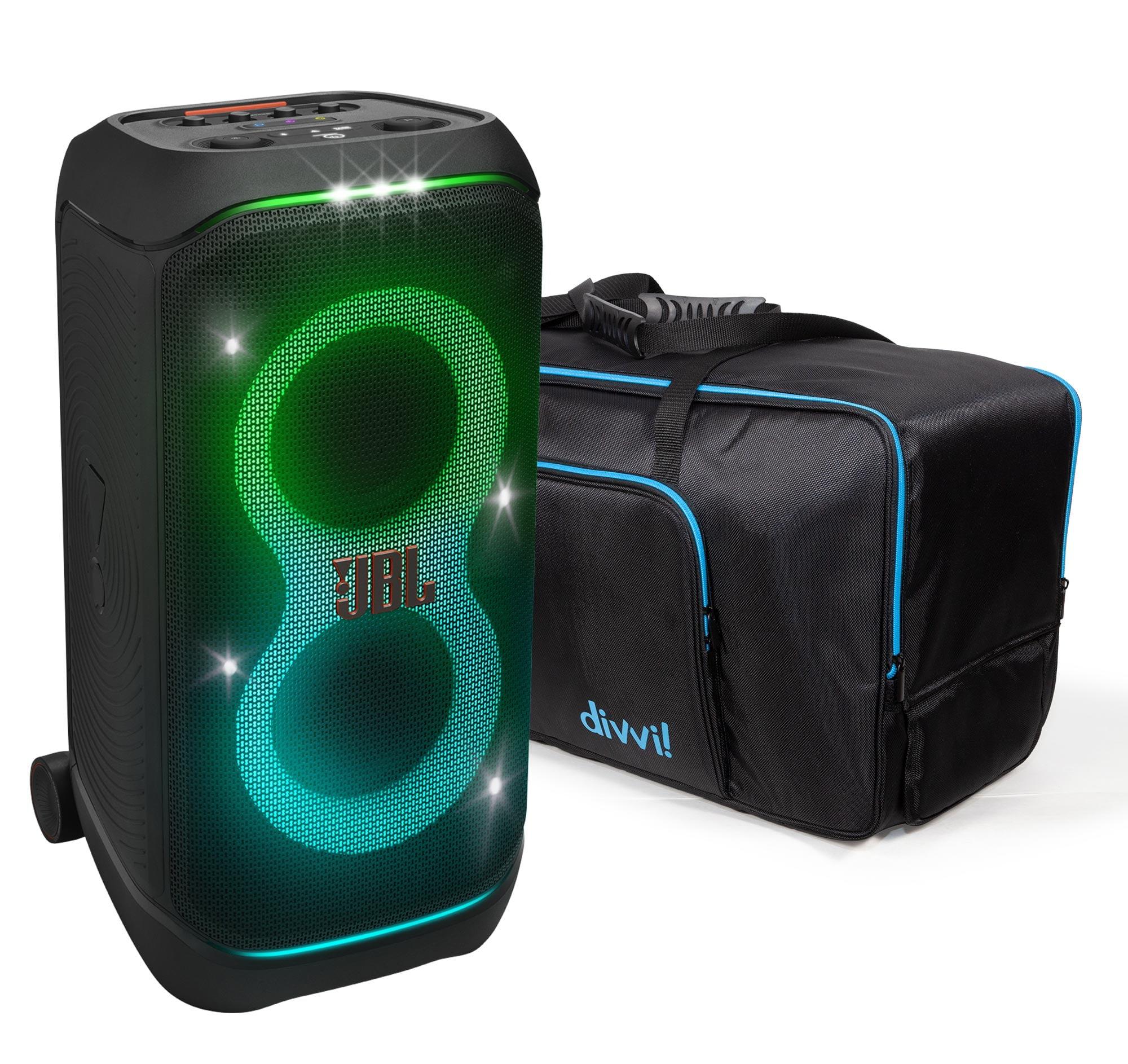
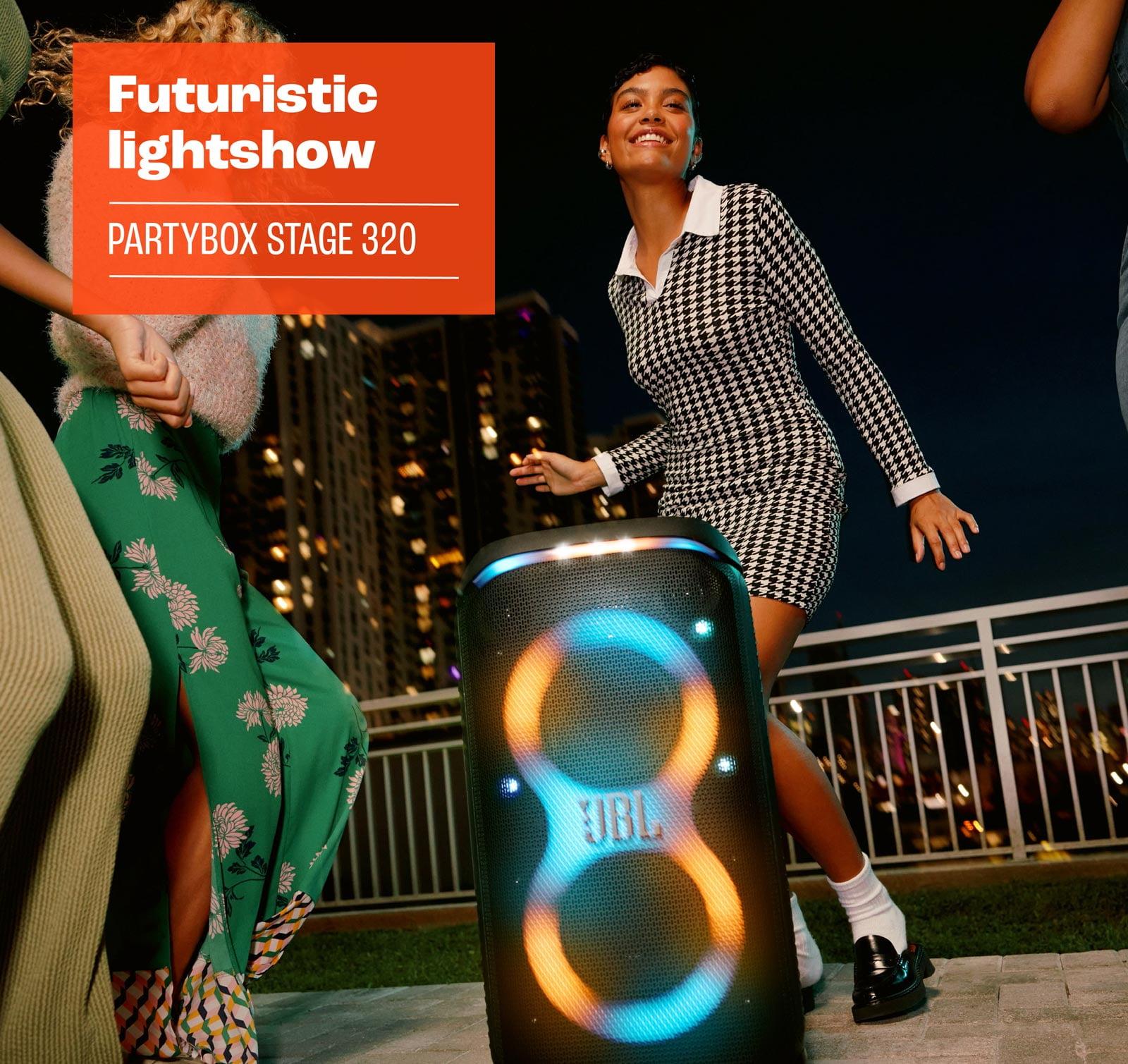
When it comes to throwing unforgettable parties, your choice of speaker can make or break the experience. The Sony SRS-XV900 and JBL PartyBox Stage 320 represent two compelling but different approaches to portable party audio. Both promise to fill your space with room-shaking sound, but they achieve this goal in distinctly different ways.
At the time of writing, these speakers sit in different price tiers, with the Sony SRS-XV900 commanding a significant premium over the JBL PartyBox Stage 320. This price difference reflects more than just brand positioning—it represents fundamentally different philosophies about what makes a great party speaker.
Large portable party speakers occupy a unique space in the audio world. Unlike bookshelf speakers designed for critical listening or compact Bluetooth speakers meant for personal use, party speakers prioritize several key characteristics that matter when you're trying to energize a crowd.
Maximum volume output sits at the top of most buyers' lists. Measured in decibels (dB), this determines how loud a speaker can get before distortion makes the sound unpleasant. For reference, normal conversation occurs around 60 dB, while a lawn mower produces about 90 dB. Quality party speakers should reach well over 100 dB to fill large spaces and compete with ambient noise from conversations and activities.
Bass response matters enormously because deep, punchy low frequencies create the physical sensation that gets people moving. This is measured in Hertz (Hz)—lower numbers mean deeper bass. Human hearing typically extends down to 20 Hz, though most people feel bass more than they hear it below 40 Hz.
Battery life becomes critical when you're away from power outlets. Real-world battery performance often differs significantly from advertised claims, especially when you factor in volume levels, lighting effects, and bass boost features that drain power faster.
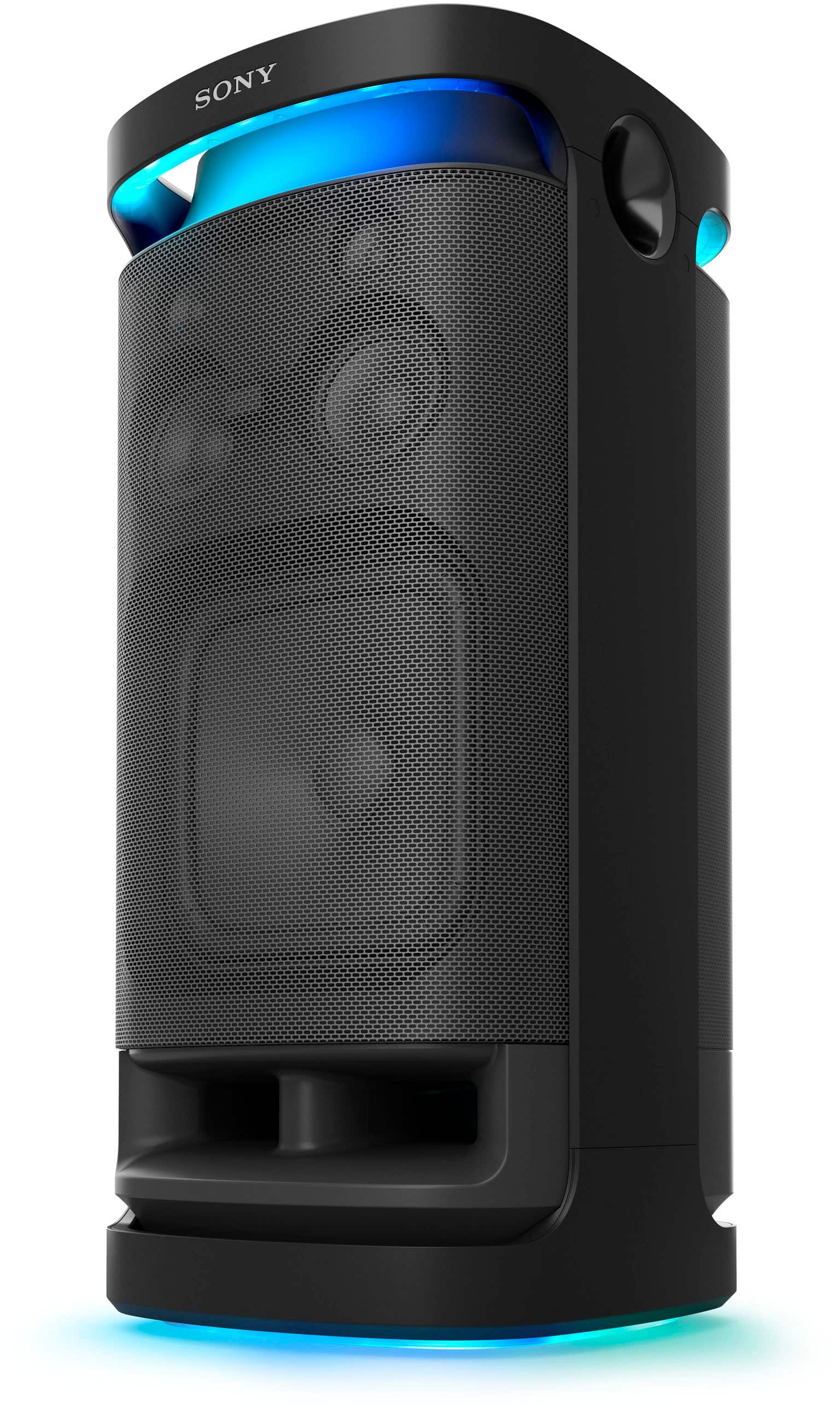
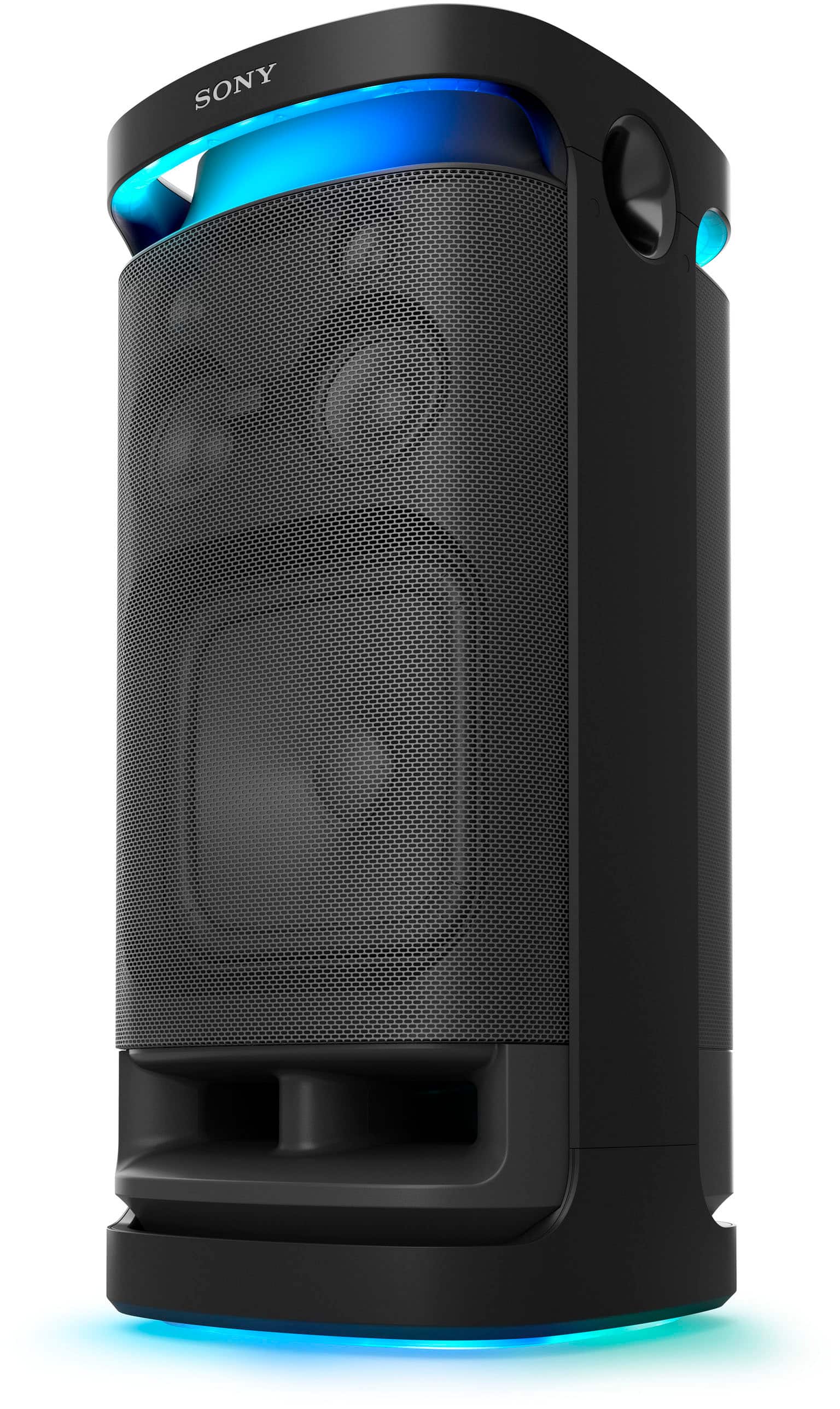
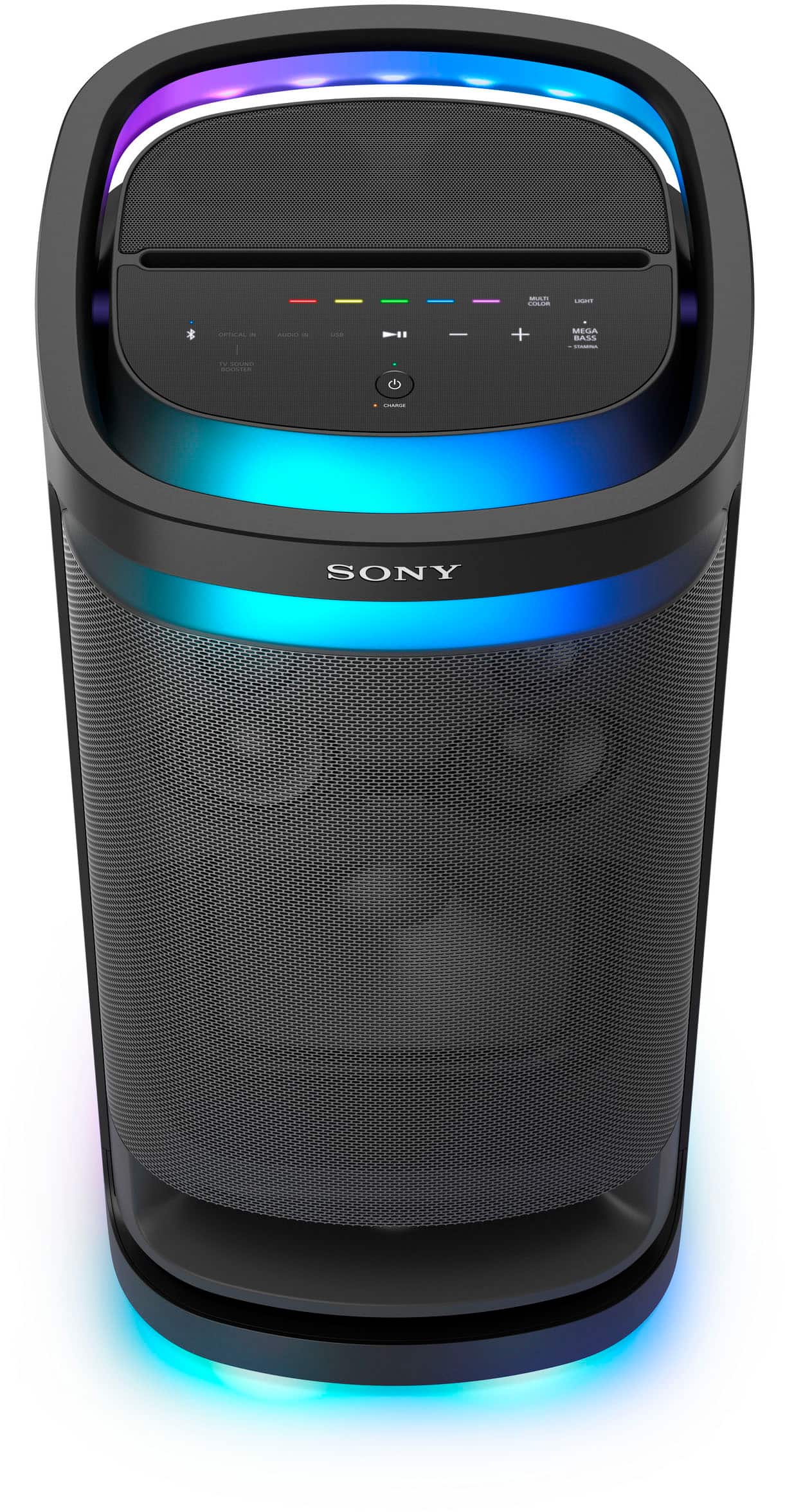
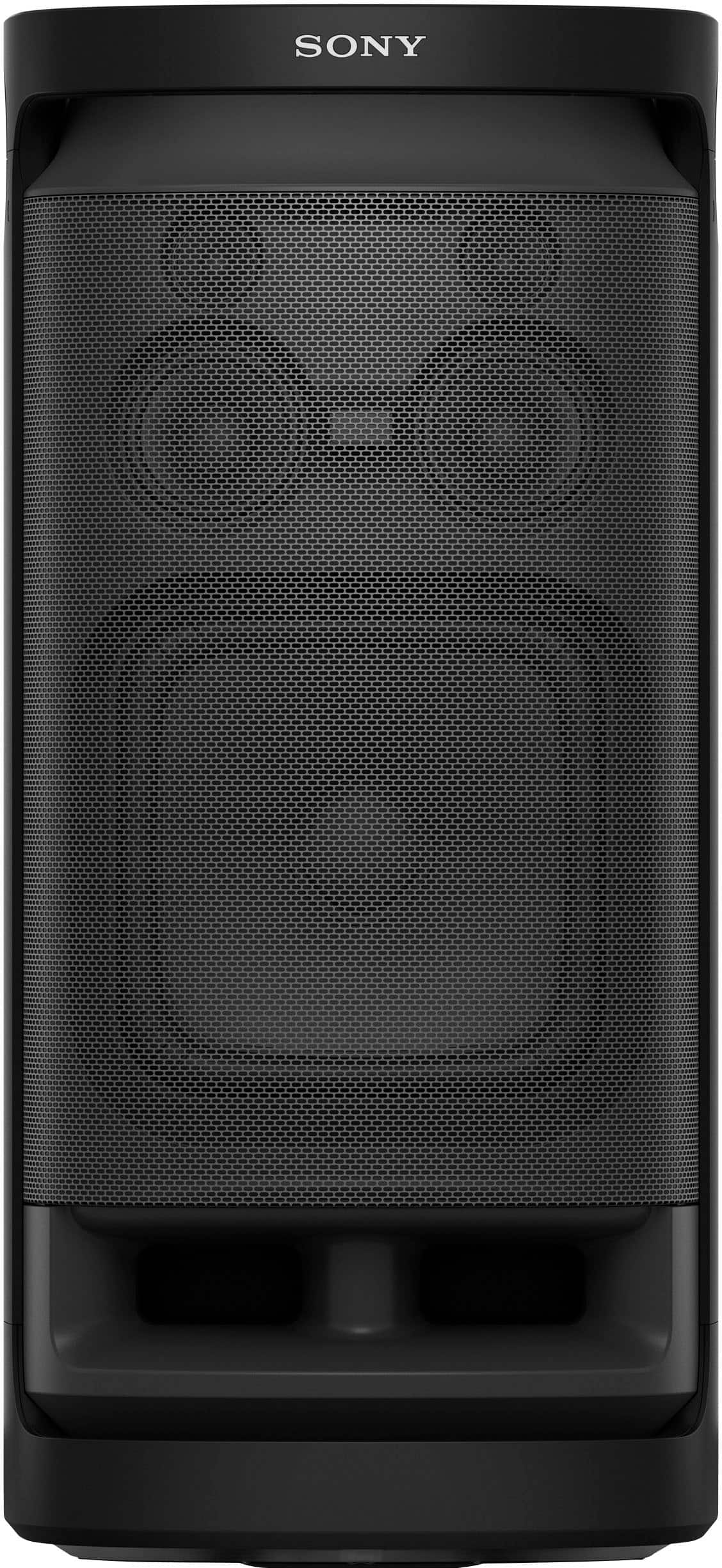
The Sony SRS-XV900, released in 2022, represents Sony's flagship approach to portable party audio. It embodies the company's emphasis on balanced, high-quality sound reproduction scaled up for large gatherings. Think of it as a studio monitor that decided to become a party animal—maintaining audio integrity while adding the features people expect from party speakers.
The JBL PartyBox Stage 320, launched in 2024, showcases JBL's more recent thinking about what modern party speakers should deliver. It embraces a philosophy of maximum impact and user convenience, incorporating newer technologies like Bluetooth 5.4 and AI-driven sound optimization that weren't available when the Sony was designed.
This two-year gap matters more than you might expect. Audio technology, particularly in wireless connectivity and battery management, has advanced considerably. The JBL benefits from these improvements, while the Sony represents the peak of what was possible with 2022 technology.
The most fundamental difference between these speakers lies in their approach to sound reproduction, and this difference shapes everything else about how they perform.
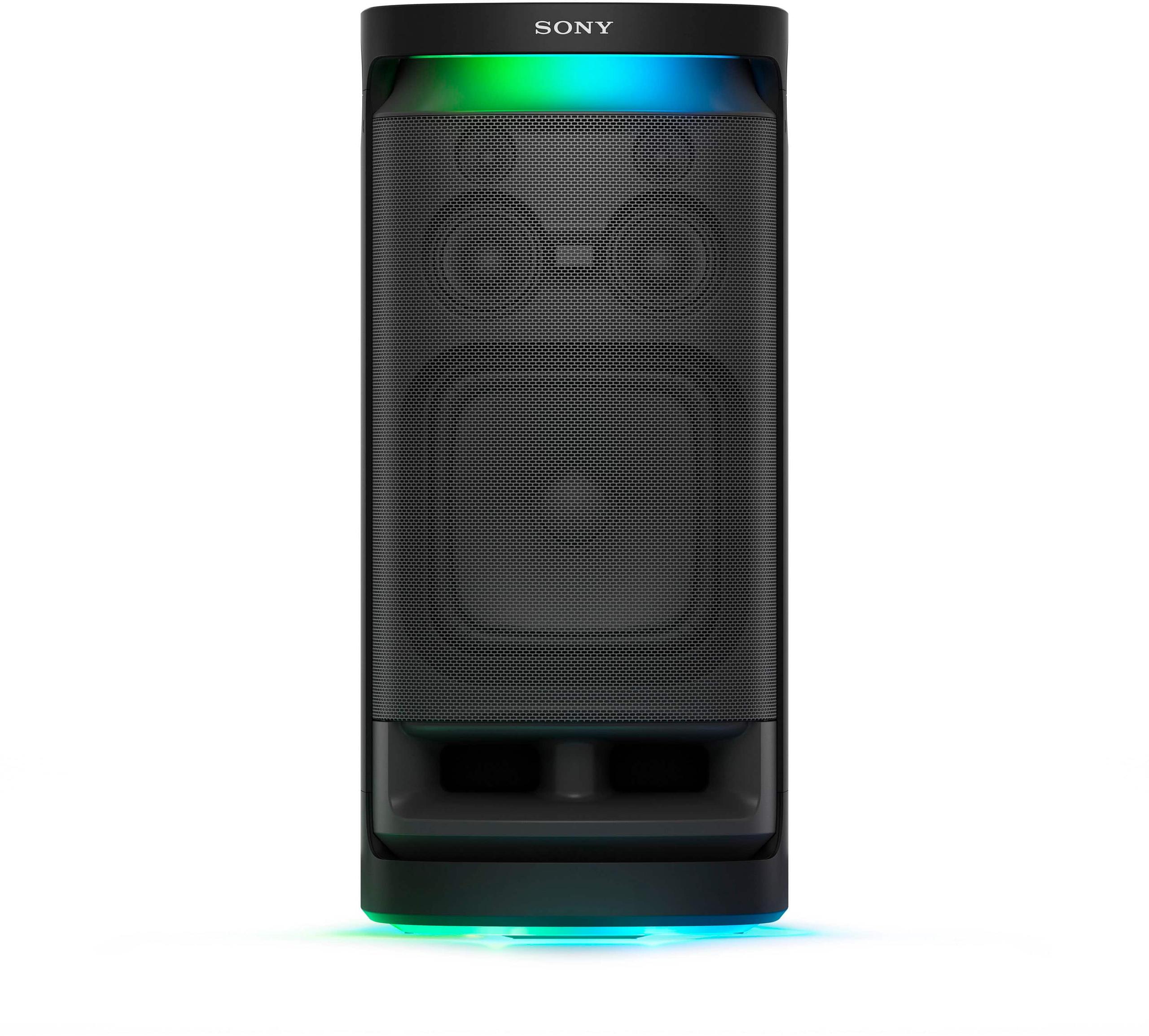
The Sony SRS-XV900 employs what's called a stereo configuration, meaning it has separate left and right channels like a traditional audio system. This creates genuine stereo imaging—the ability to hear instruments and vocals positioned across a soundstage rather than coming from a single point. It's the difference between watching a movie in surround sound versus listening through a single speaker.
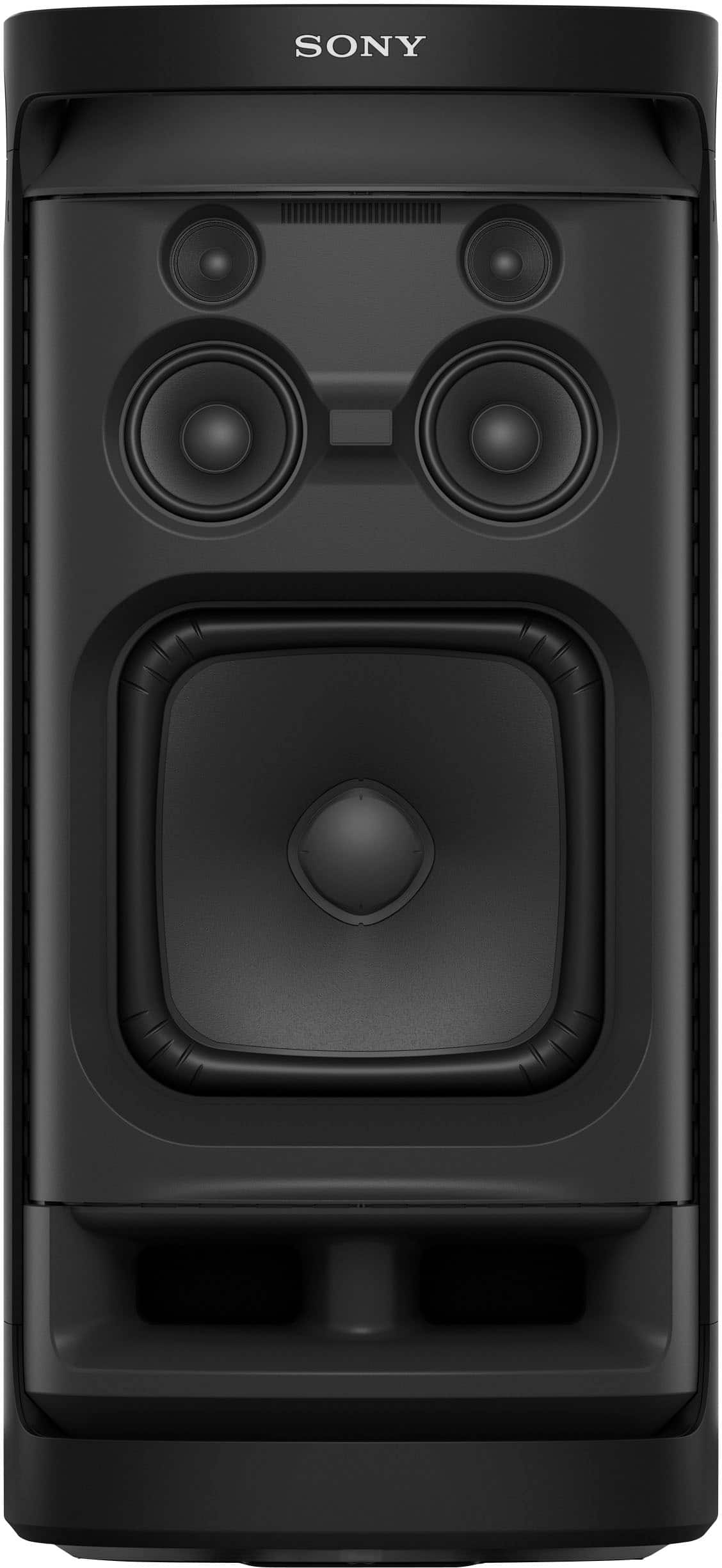
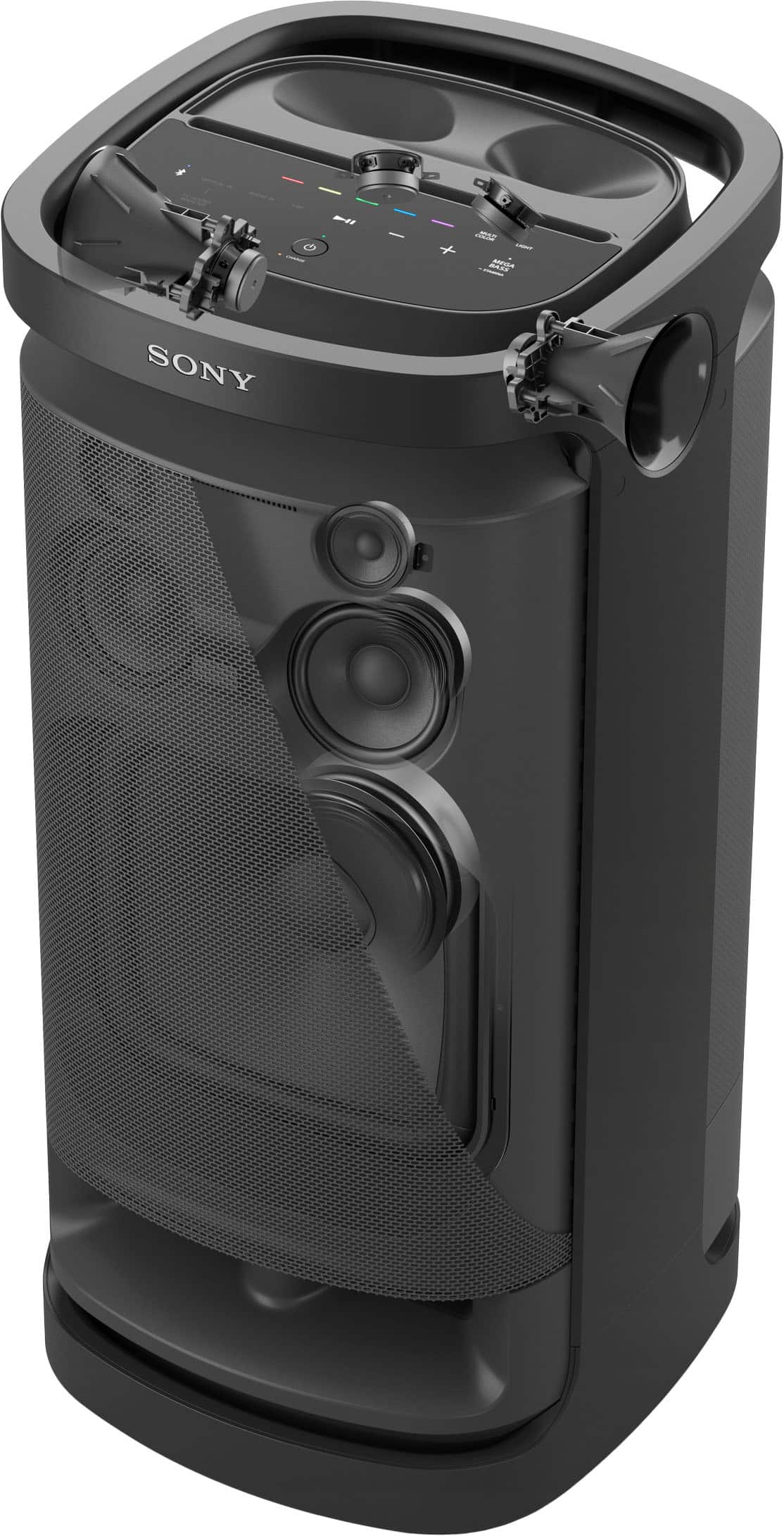
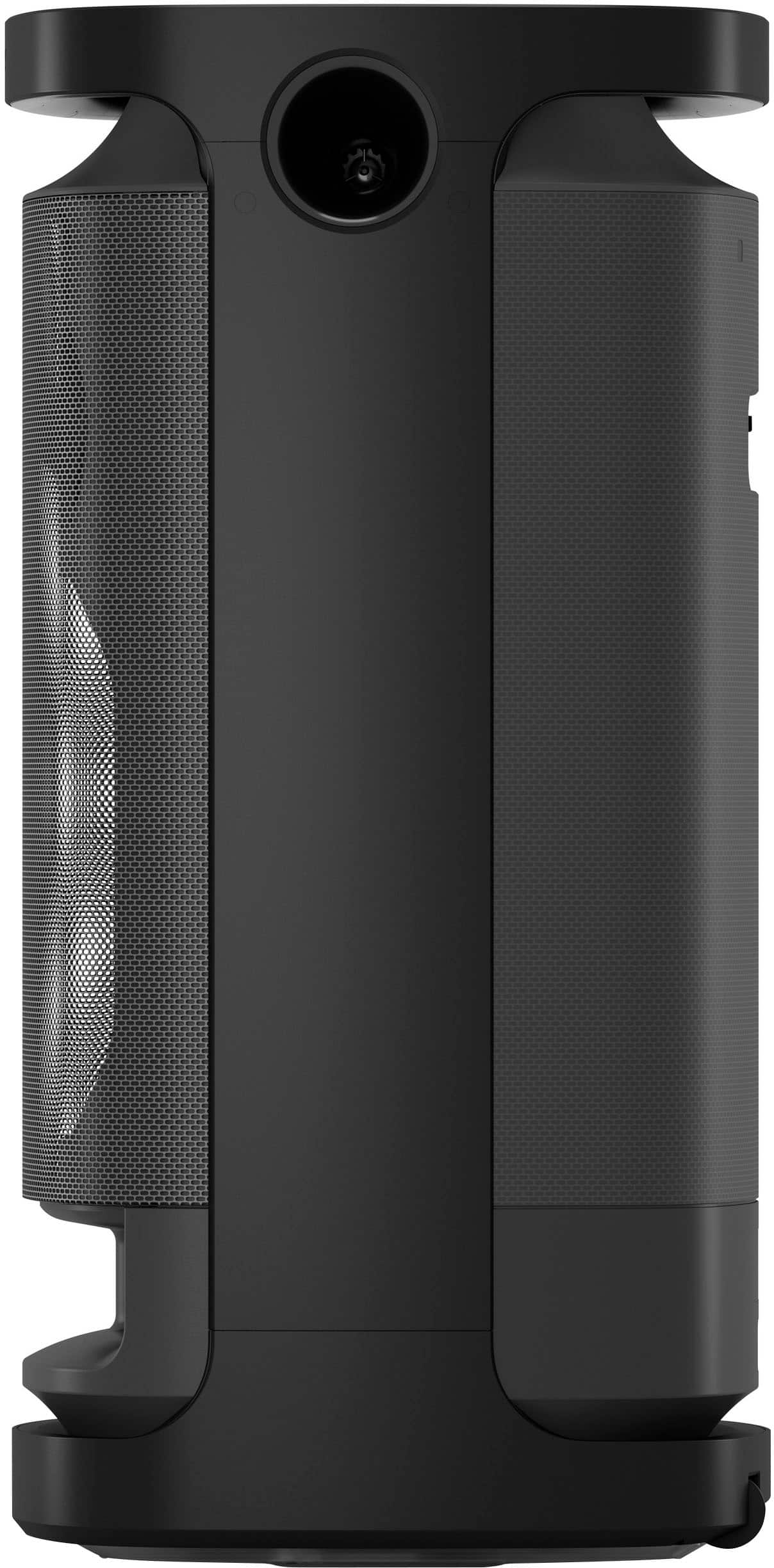
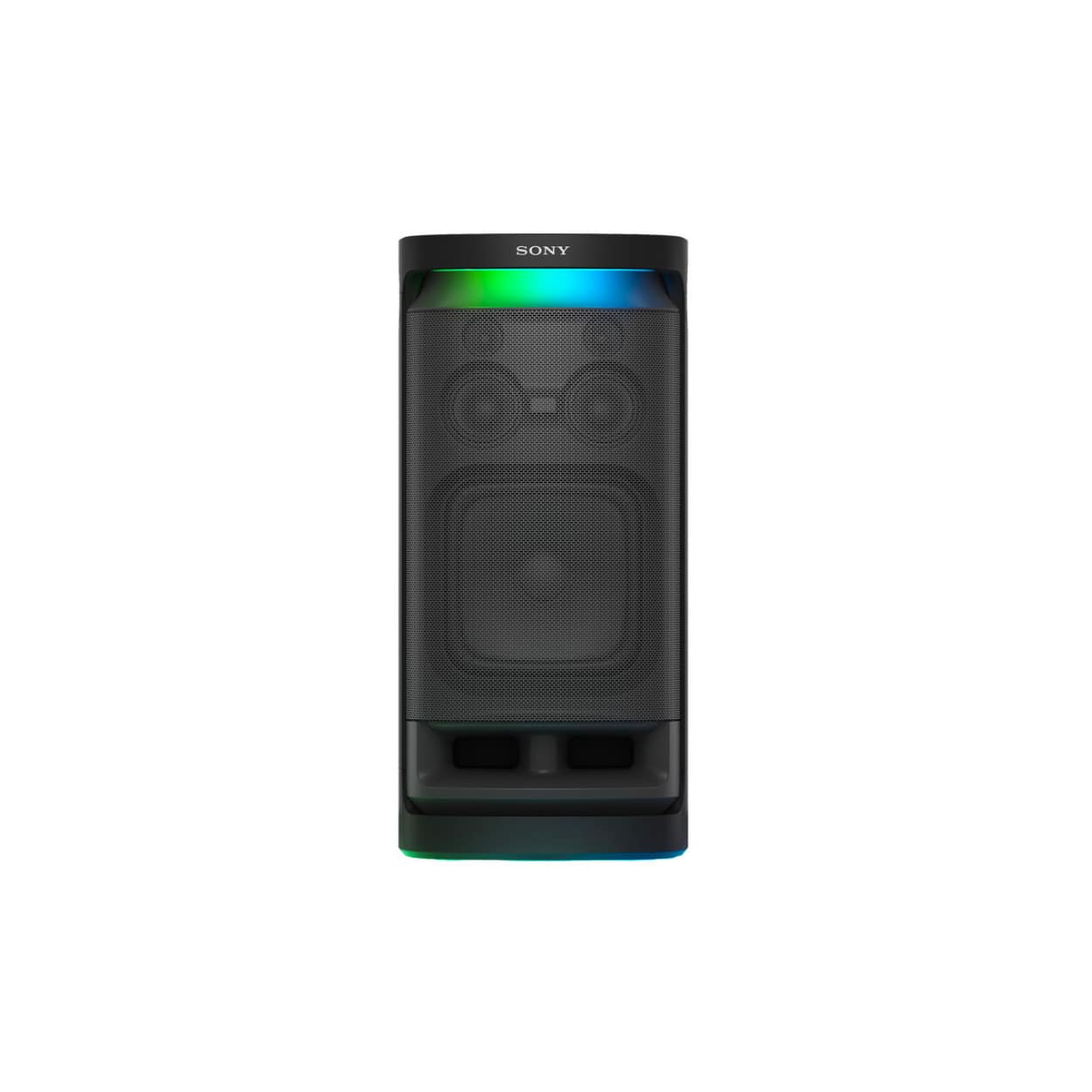
Sony achieves this through six strategically placed tweeters (the small drivers that handle high frequencies) arranged around the speaker cabinet. Two 50mm tweeters face forward, while four 40mm tweeters point toward the sides and rear. This omnidirectional design means the speaker projects sound in all directions rather than just forward, which helps fill spaces more evenly.
The heart of the system is a massive 12.6-inch X-Balanced woofer. This isn't just marketing speak—the X-Balanced design uses a rectangular diaphragm instead of the traditional circular one. This shape allows for more surface area in the same space, theoretically producing more air movement and deeper bass while reducing distortion.
Our research into user and expert reviews consistently highlights the Sony SRS-XV900's superior mid-range clarity. This is the frequency range where most vocals and many instruments live, and getting it right is crucial for music that sounds natural rather than artificially enhanced. The Sony's frequency response extends down to 20 Hz, matching the theoretical limit of human hearing.
The JBL PartyBox Stage 320 takes a different approach, prioritizing maximum impact over audiophile precision. It uses a mono configuration, meaning all sound comes from a single channel. While this eliminates stereo imaging, it allows JBL to focus all their engineering on pure volume and bass impact.
The speaker features two 6.5-inch woofers working together, plus dual tweeters. This configuration can't match the Sony's omnidirectional coverage, but it concentrates energy more effectively in the forward direction. When you need to cut through crowd noise or fill a large outdoor space, this focused approach often works better than dispersed sound.
JBL's secret weapon is their AI Sound Boost technology, introduced in 2024. This system analyzes the incoming audio signal in real-time, automatically adjusting frequencies to maximize clarity and impact while preventing distortion. It's essentially having a sound engineer constantly tweaking the EQ to optimize whatever you're playing.
The JBL's frequency response starts at 40 Hz—higher than the Sony—but user reports suggest it often sounds bassier in practice. This apparent contradiction comes down to tuning philosophy. JBL emphasizes the upper bass frequencies (40-80 Hz) that create punch and impact, while Sony provides deeper extension that you feel more than hear.
Maximum volume output reveals a clear winner. Based on our research of independent measurements, the JBL PartyBox Stage 320 reaches approximately 112.9 dB compared to the Sony SRS-XV900's 104.9-106 dB. This 6-8 dB difference is substantial—decibels use a logarithmic scale, so this represents roughly twice the perceived loudness.
The JBL achieves this through its 240W RMS (Root Mean Square) power output. RMS represents continuous power delivery, not peak bursts, making it a more reliable indicator of real-world performance. Sony doesn't publish RMS specifications for the XV900, listing only 100W power consumption, which makes direct comparison difficult but suggests significantly lower output power.
This volume advantage makes the JBL PartyBox Stage 320 better suited for truly large gatherings or outdoor spaces where sound needs to carry far distances. The Sony SRS-XV900 still gets plenty loud for most situations, but when you absolutely need maximum volume, JBL delivers.
Battery performance represents another area where these speakers take different approaches to solving the same problem.
The Sony SRS-XV900 advertises 25 hours of playback, while the JBL PartyBox Stage 320 claims 18 hours. However, real-world usage tells a different story. Based on user reports, both speakers deliver significantly less time when used at party volumes (70%+ volume) with lighting effects active.
Under these realistic conditions, the Sony typically provides around 10 hours of use, while the JBL delivers approximately 7 hours. The Sony's advantage comes from its larger internal battery and more efficient power management, despite powering six tweeters and omnidirectional sound projection.
But here's where JBL's 2024 design shows its modern thinking: the PartyBox Stage 320 features a completely removable, swappable battery system. You can purchase additional battery packs and hot-swap them when one runs low, essentially providing unlimited runtime. This solves the fundamental limitation of fixed-battery speakers—when the power runs out, the party stops.
The JBL also includes a 10-minute quick charge feature that provides two hours of playback, perfect for those moments when you realize the battery is low just as guests arrive.
Despite both being "portable," these speakers challenge the definition of the term. The physics of moving air to produce loud, deep bass requires substantial drivers and amplification, which means weight and size.
The Sony SRS-XV900 tips the scales at 58.6 pounds and measures over 34 inches tall. It includes wheels and handles, but moving it feels more like relocating furniture than carrying a speaker. The substantial weight contributes to its sound quality—mass helps control vibrations and cabinet resonance—but limits true portability.
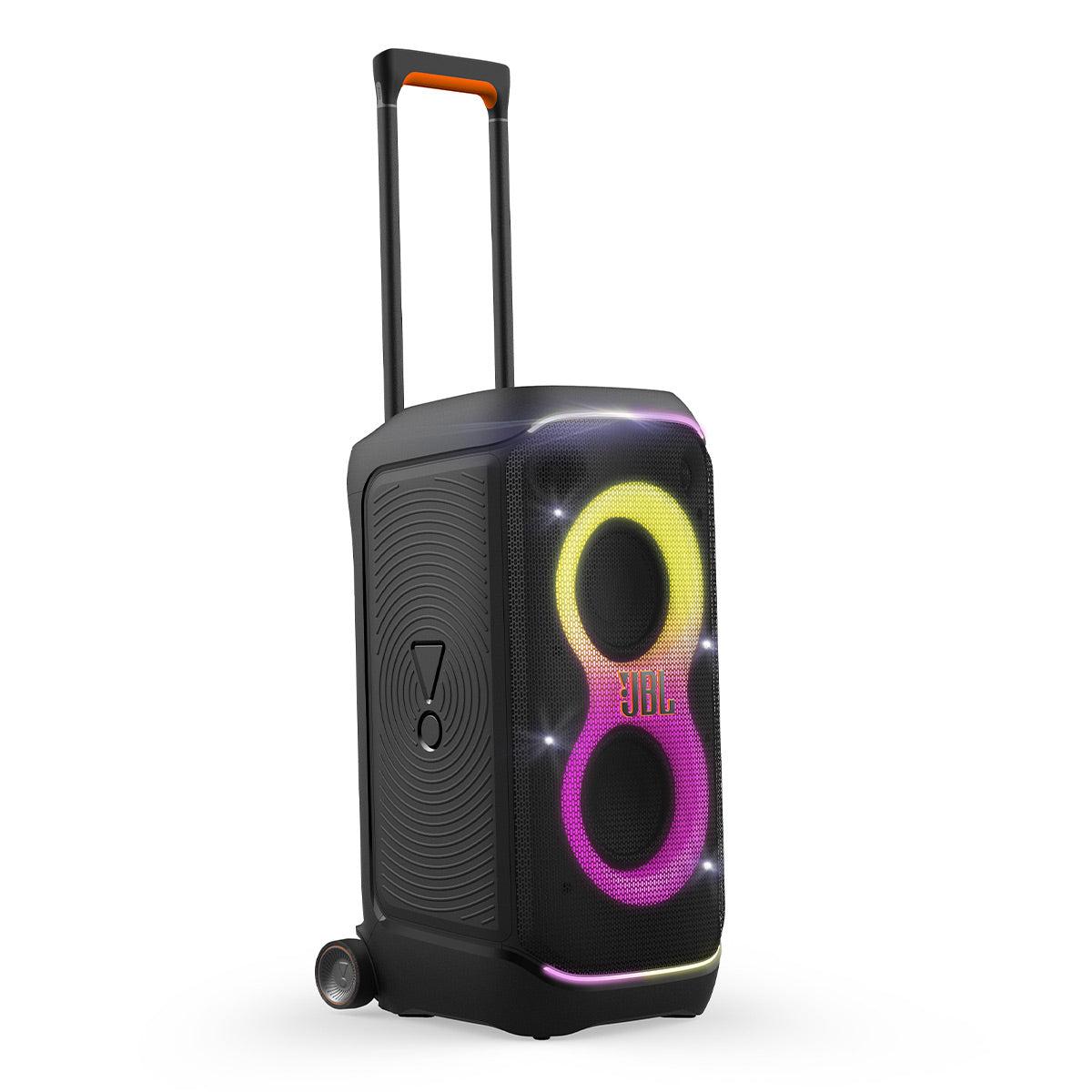
The JBL PartyBox Stage 320 weighs 36.4 pounds, representing a 38% weight reduction that makes a meaningful difference in real-world use. At this weight, two people can reasonably carry it when necessary, while the Sony really requires its wheels for any movement. JBL also includes a telescopic handle that extends for easier pulling, showing thoughtful attention to the user experience.
More importantly, the JBL features IPX4 water resistance, meaning it can handle splashes, light rain, and poolside use. The Sony SRS-XV900 lacks any official water protection rating, limiting it to indoor or covered outdoor use. For actual pool parties or beach gatherings, this difference is decisive.
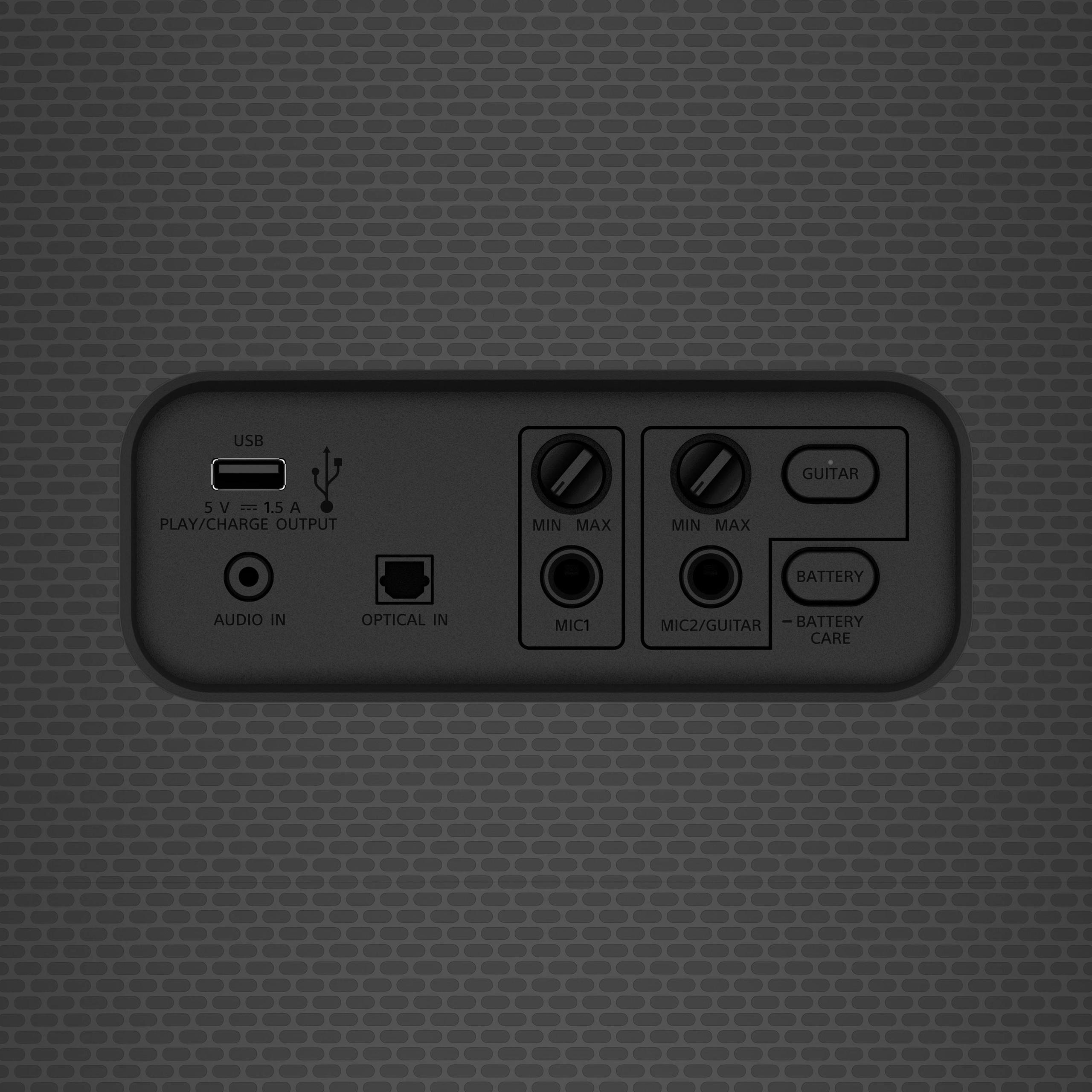
Both speakers include the standard complement of party features—microphone inputs, guitar inputs, and USB ports for music playback. However, they differ in their approach to connectivity and special features.
The Sony SRS-XV900 includes an optical digital input, a feature rare in portable speakers. This allows direct connection to TVs, gaming consoles, or other digital audio sources, potentially transforming the speaker into a substantial home theater upgrade. When connected optically, the speaker bypasses the TV's typically poor built-in speakers entirely.
Sony also supports LDAC, a high-resolution Bluetooth codec that transmits three times more data than standard Bluetooth. While most people won't hear the difference with compressed music files, LDAC can improve sound quality with high-resolution audio sources.
The JBL PartyBox Stage 320 features Bluetooth 5.4, the newest standard that offers improved power efficiency and connection stability. It also supports Auracast, a emerging technology that allows multiple speakers to connect wirelessly without the traditional limitations of older pairing systems.
Interestingly, the JBL includes a basic 3.5mm auxiliary input that the Sony lacks—sometimes the simplest connections matter most when someone wants to plug in an older device quickly.
The Sony SRS-XV900's optical input opens up intriguing possibilities beyond parties. Connected to a TV or projector, it can dramatically improve home entertainment audio. Most TVs have weak built-in speakers, and adding a single powerful speaker often provides more impact than a basic soundbar.
The Sony's stereo configuration and balanced sound signature make it surprisingly effective for movies and TV shows, not just music. The omnidirectional tweeters help create a more immersive soundfield than typical forward-firing speakers, while the massive woofer adds the deep bass that makes action scenes visceral.
This versatility justifies the Sony's higher price for some users. Instead of buying separate party and home theater audio solutions, the XV900 can serve both roles effectively. The JBL PartyBox Stage 320 can certainly connect to TVs via Bluetooth, but lacks the direct digital connection and stereo imaging that make the Sony more suitable for serious home theater use.
Both speakers include lighting systems synchronized to the music, but they approach this feature differently.
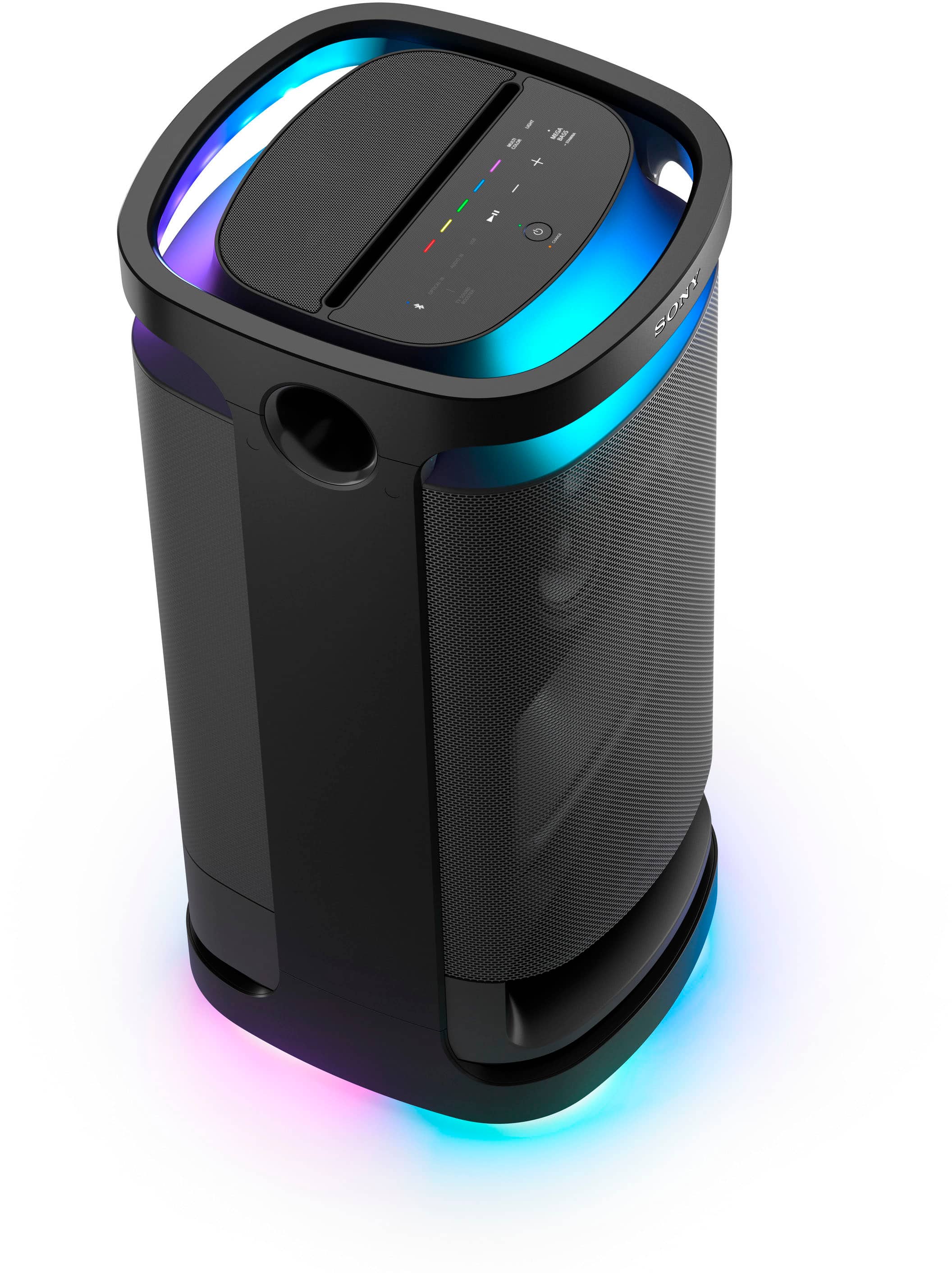
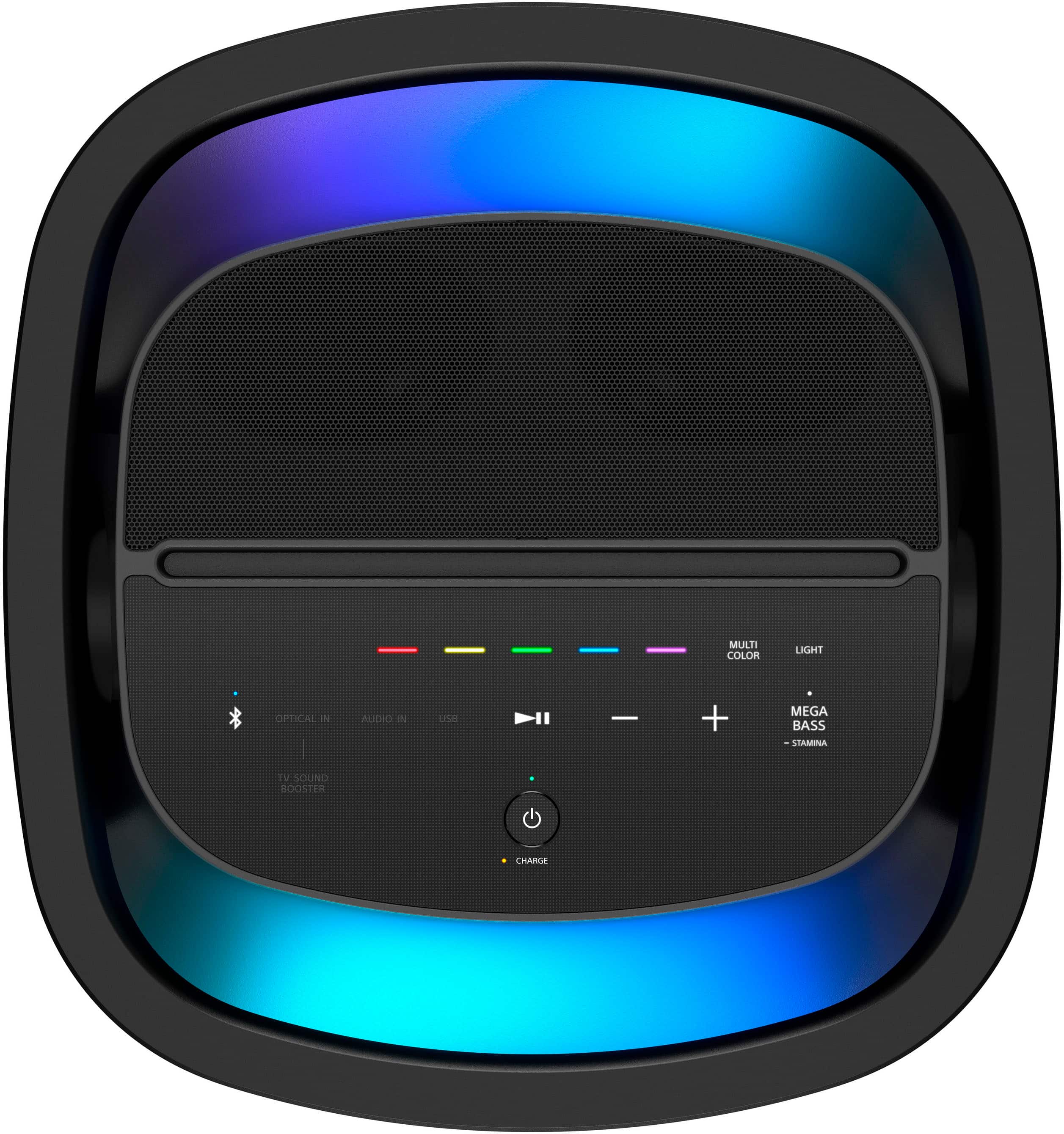
The Sony SRS-XV900 features dual LED rings—one at the top and one at the bottom—plus lighting underneath the handles. The effects are more subtle and ambient, complementing the music rather than overwhelming it. This matches Sony's overall philosophy of balanced, refined performance.
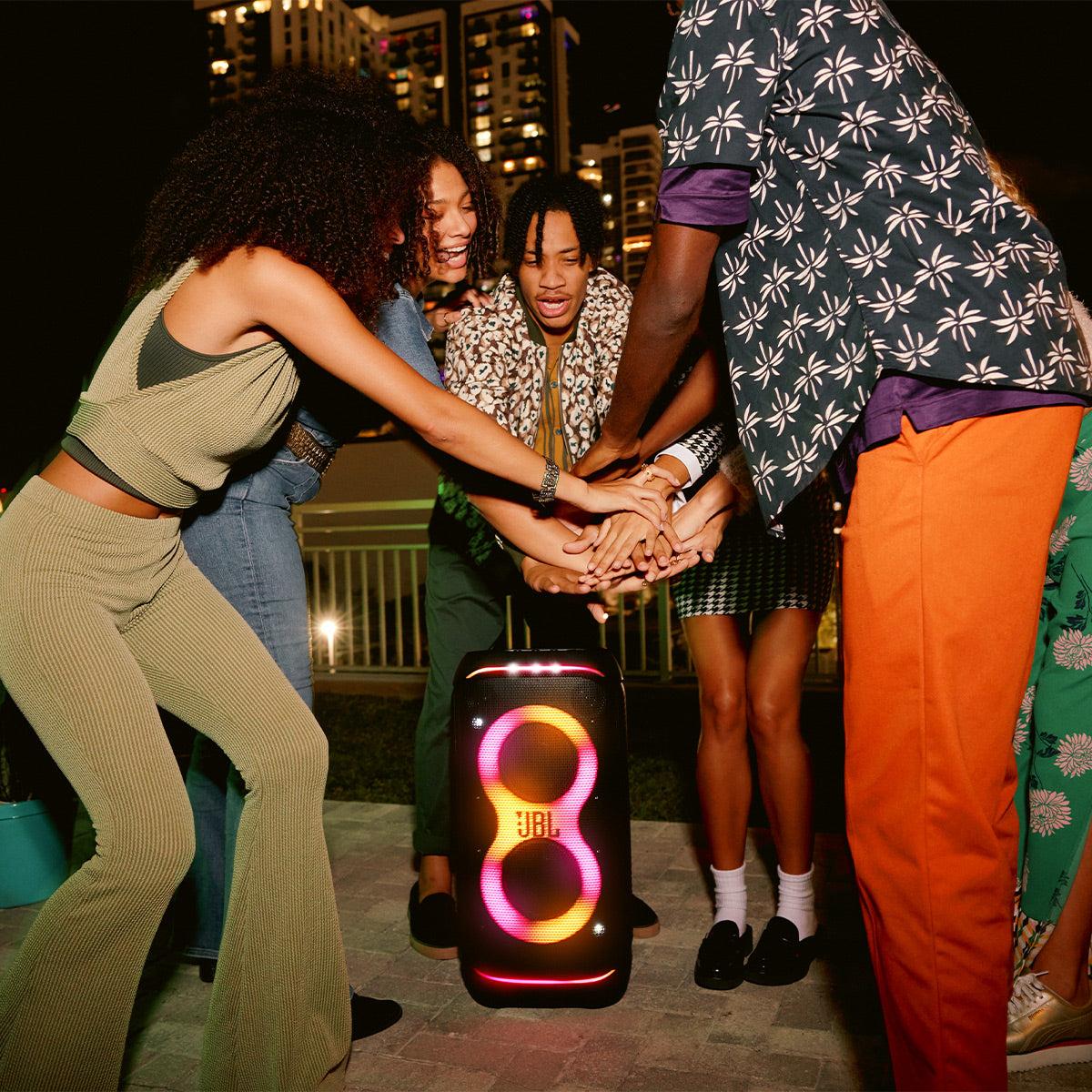
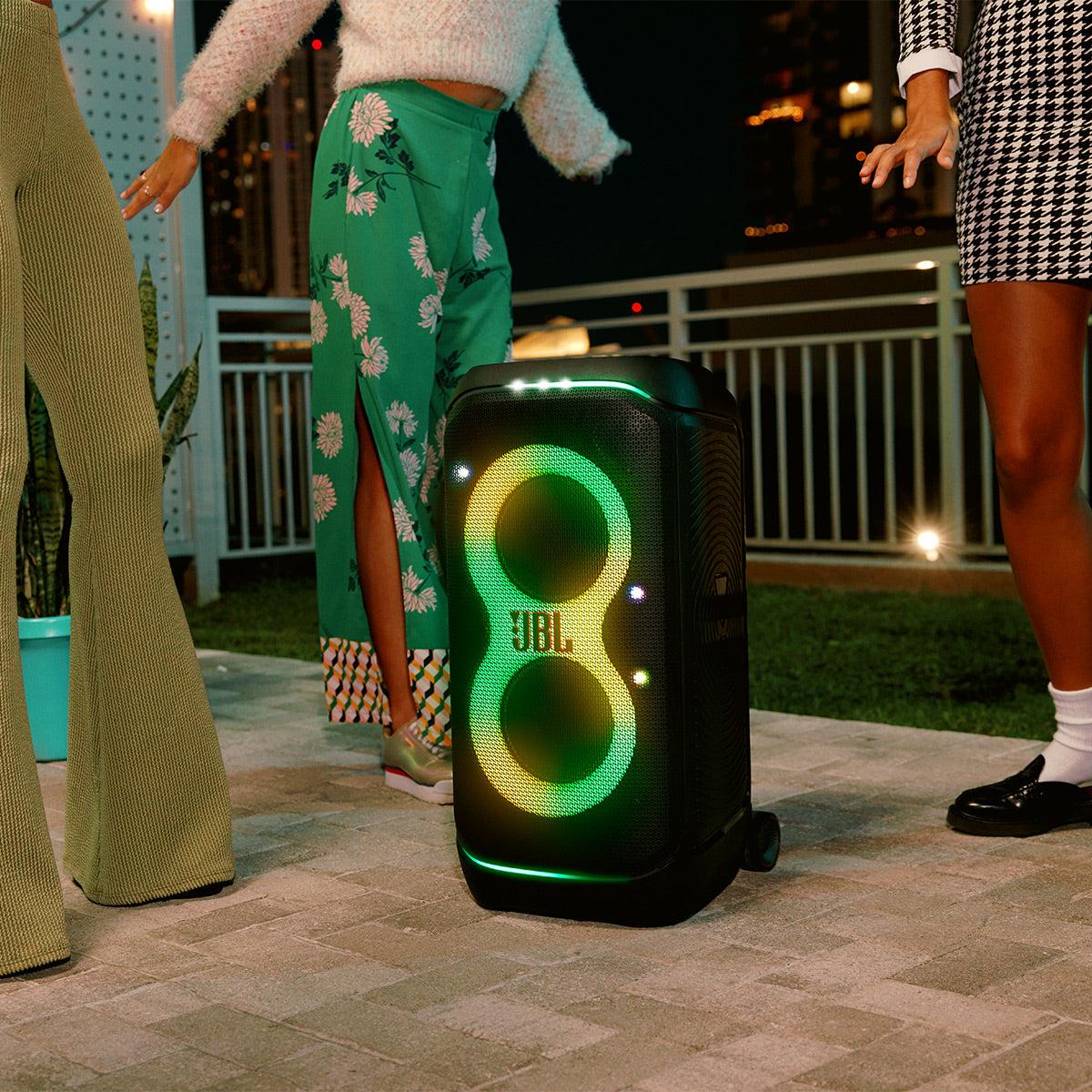
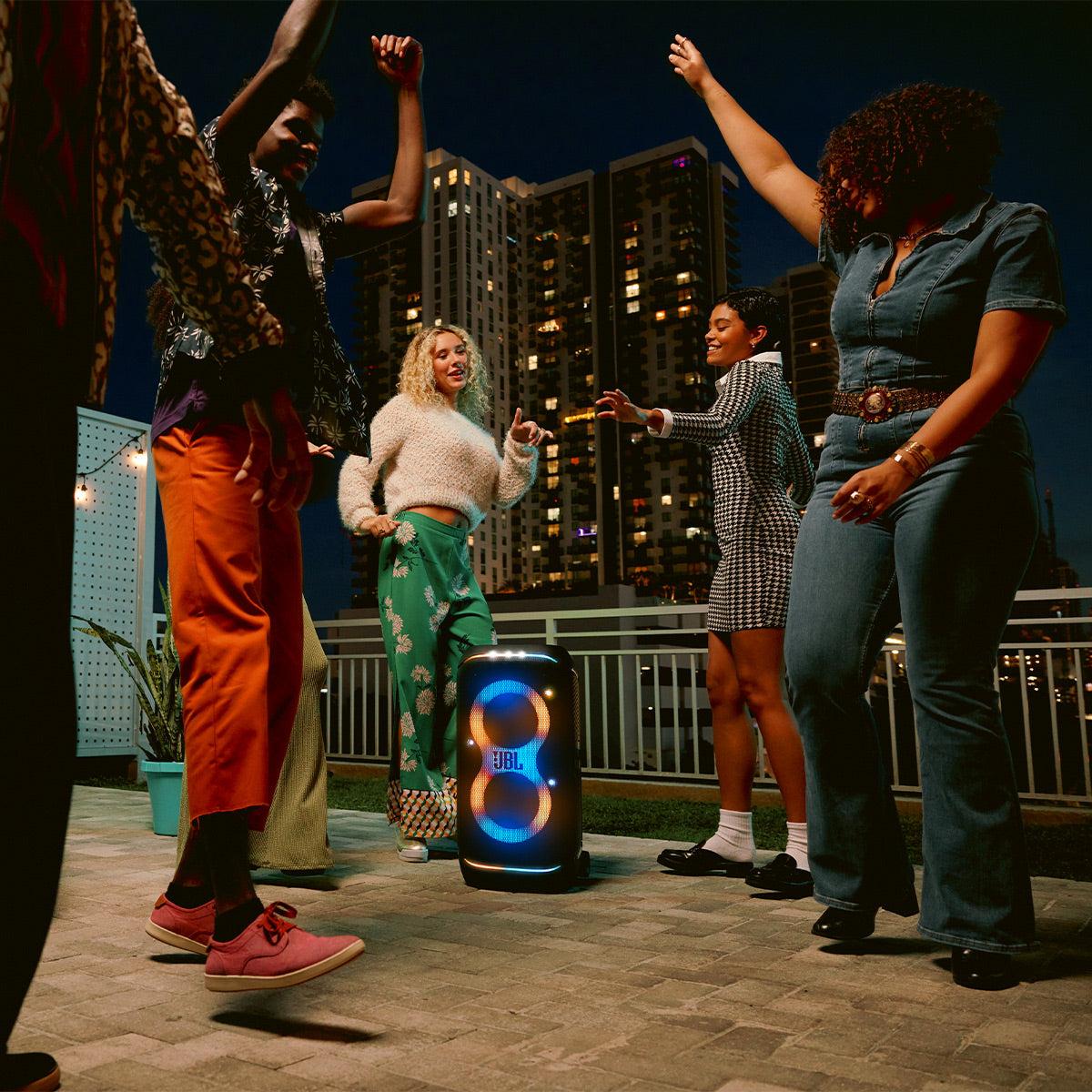
The JBL PartyBox Stage 320 goes bigger with multiple lighting elements: two LED rings, two LED strips, and eleven white strobe LEDs. The effects are more dramatic and varied, including "starry lights" and "light trails" that create genuine visual spectacle. For parties where atmosphere matters as much as sound, JBL's more elaborate lighting system provides better value.
Both systems can be controlled through smartphone apps and turned off to save battery life when desired.
The decision between these speakers ultimately depends on your priorities and use cases.
Choose the Sony SRS-XV900 if you value sound quality over everything else. Its balanced frequency response, stereo imaging, and superior mid-range clarity make it the better choice for music appreciation, even at party volumes. The optical input adds genuine versatility for home theater use, potentially eliminating the need for separate audio equipment. If you primarily host indoor parties or have covered outdoor spaces, and your budget allows for the premium pricing, the Sony delivers a more refined overall experience.
The Sony SRS-XV900 also makes sense for longer events where maximum battery life matters more than swappable batteries. Its 25% longer runtime can mean the difference between music lasting through an entire gathering or needing to find power outlets.
Choose the JBL PartyBox Stage 320 if maximum impact and practical convenience matter more than audiophile precision. It's significantly louder, more portable, weather-resistant, and includes modern connectivity features. The swappable battery system provides unlimited runtime potential that fixed-battery speakers can't match.
The JBL represents better value for most party scenarios. Its combination of high output, reasonable portability, weather protection, and lower price makes it the logical choice for outdoor gatherings, pool parties, or any situation where pure volume and convenience outweigh sound refinement.
Both speakers excel in their respective approaches, but they serve different audiences. The Sony SRS-XV900 is the audiophile's party speaker—more expensive but offering superior sound balance and unique features like home theater integration. The JBL PartyBox Stage 320 is the practical party speaker—louder, more convenient, weather-resistant, and significantly less expensive while still delivering impressive performance.
Your choice should align with whether you prioritize audio refinement and versatility (Sony) or maximum impact and practical convenience (JBL). There's no wrong answer, only the right speaker for your specific needs and preferences.
| Sony SRS-XV900 | JBL PartyBox Stage 320 |
|---|---|
| Maximum Volume Output - Critical for filling large spaces and competing with ambient noise | |
| 104.9-106 dB (loud enough for most gatherings) | 112.9 dB (significantly louder, better for very large events) |
| Speaker Configuration - Affects sound quality and spatial audio | |
| Stereo (2.0) with omnidirectional 6-tweeter design | Mono (1.0) with focused forward projection |
| Power Output - Determines sustained volume capability | |
| ~100W power consumption (RMS not specified) | 240W RMS (higher sustained output power) |
| Bass Extension - Lower frequencies create more physical impact | |
| 20 Hz (extends to theoretical human hearing limit) | 40 Hz (focuses on punchy mid-bass frequencies) |
| Battery Life - Real-world usage at party volumes with lights | |
| ~10 hours at 70% volume (25 hours advertised) | ~7 hours at 70% volume (18 hours advertised) |
| Battery System - Affects long-term usability | |
| Fixed internal battery (cannot be swapped) | Swappable battery system (unlimited runtime potential) |
| Weight & Portability - Important for frequent transport | |
| 58.6 lbs / 26.6 kg (requires wheels for movement) | 36.4 lbs / 16.5 kg (38% lighter, more manageable) |
| Weather Protection - Essential for outdoor use | |
| No official IP rating (indoor/covered outdoor only) | IPX4 splash resistance (poolside and light rain safe) |
| Bluetooth Version - Affects connection quality and efficiency | |
| Bluetooth 5.2 with LDAC high-res codec | Bluetooth 5.4 with improved efficiency and Auracast |
| Unique Connectivity - Special features that differentiate the speakers | |
| Optical digital input (direct TV/home theater connection) | 3.5mm aux input + AI Sound Boost technology |
| Multi-Speaker Linking - For larger sound systems | |
| Party Connect (connects multiple Sony speakers) | Auracast (next-generation wireless multi-speaker tech) |
| Lighting System - Visual entertainment value | |
| Dual LED rings (subtle ambient effects) | 2 LED rings + 2 LED strips + 11 strobe LEDs (dramatic effects) |
| Sound Signature - Overall audio character and quality | |
| Balanced, neutral with superior mid-range clarity | Bright with emphasized bass and treble for maximum impact |
| Release Year - Affects available technology | |
| 2022 (established technology, proven reliability) | 2024 (newest features and improved efficiency) |
The JBL PartyBox Stage 320 is significantly louder than the Sony SRS-XV900. The JBL reaches approximately 112.9 dB maximum output compared to the Sony's 104.9-106 dB. This 6-8 dB difference represents roughly twice the perceived loudness, making the JBL PartyBox Stage 320 better for very large outdoor gatherings or events where maximum volume is essential.
The Sony SRS-XV900 offers longer battery life with 25 hours advertised versus 18 hours for the JBL PartyBox Stage 320. In real-world use at party volumes with lighting effects, expect around 10 hours from the Sony and 7 hours from the JBL. However, the JBL PartyBox Stage 320 features a unique swappable battery system that allows unlimited runtime with additional battery packs.
The Sony SRS-XV900 delivers superior sound quality with a more balanced, neutral sound signature and better mid-range clarity. Its stereo configuration and omnidirectional six-tweeter design create genuine stereo imaging and more natural sound reproduction. The JBL PartyBox Stage 320 prioritizes impact over precision with a brighter sound signature designed for maximum party impact rather than audiophile listening.
Yes, but the Sony SRS-XV900 is much better suited for home theater applications. It includes an optical digital input for direct TV connection, stereo sound configuration, and balanced audio that works well for movies and TV shows. The JBL PartyBox Stage 320 can connect via Bluetooth but lacks the direct digital connection and stereo imaging that make the Sony SRS-XV900 more effective for serious home entertainment.
The JBL PartyBox Stage 320 is significantly more portable, weighing 36.4 lbs compared to the Sony SRS-XV900's 58.6 lbs. The JBL includes a telescopic handle and better wheel design, while also offering IPX4 water resistance for outdoor use. The Sony requires its wheels for any movement and lacks weather protection, making the JBL PartyBox Stage 320 the clear winner for portability.
Both speakers support multi-speaker wireless connection but use different technologies. The Sony SRS-XV900 uses Party Connect to link multiple Sony speakers together. The JBL PartyBox Stage 320 features newer Auracast technology for next-generation wireless multi-speaker pairing. Both systems allow you to create larger sound systems by connecting multiple compatible speakers.
Bass performance depends on your preference. The Sony SRS-XV900 extends down to 20 Hz for deeper bass that you feel more than hear, while the JBL PartyBox Stage 320 starts at 40 Hz but emphasizes punchy mid-bass frequencies. User reports suggest the JBL often sounds bassier in practice due to its tuning, and its rear-firing port allows bass amplification when placed against walls, unlike the Sony SRS-XV900's front-firing design.
Yes, both the Sony SRS-XV900 and JBL PartyBox Stage 320 include microphone and guitar inputs with independent volume controls. Both support karaoke functionality through their respective smartphone apps, with echo effects and EQ controls. The JBL PartyBox Stage 320 adds AI Sound Boost technology that automatically optimizes audio quality for live performances.
The JBL PartyBox Stage 320 offers significantly better value, typically costing considerably less than the Sony SRS-XV900 while delivering higher maximum volume, modern Bluetooth 5.4, weather resistance, and swappable batteries. The Sony justifies its premium with superior sound quality, longer single-session battery life, and unique features like optical input, making value dependent on your specific priorities.
The JBL PartyBox Stage 320 offers more elaborate lighting with two LED rings, two LED strips, and eleven white strobe LEDs creating dramatic effects like "starry lights" and "light trails." The Sony SRS-XV900 features more subtle dual LED rings with ambient lighting effects. For parties where visual impact matters, the JBL PartyBox Stage 320 provides more spectacular lighting displays.
The JBL PartyBox Stage 320 is definitively better for outdoor parties. It offers IPX4 water resistance for poolside use and light rain protection, while the Sony SRS-XV900 has no weather protection rating. The JBL is also significantly lighter and more portable, plus its higher maximum volume helps overcome outdoor ambient noise and wind that can diminish sound projection.
The JBL PartyBox Stage 320 features newer Bluetooth 5.4 with improved power efficiency and connection stability, plus support for Auracast multi-speaker technology. The Sony SRS-XV900 uses Bluetooth 5.2 but includes LDAC high-resolution codec support that transmits three times more audio data for potentially better sound quality with compatible devices. Both offer reliable wireless performance, with the JBL PartyBox Stage 320 having more modern connectivity standards.
We've done our best to create useful and informative comparisons to help you decide what product to buy. Our research uses advanced automated methods to create this comparison and perfection is not possible - please contact us for corrections or questions. These are the sites we've researched in the creation of this article: bestbuy.com - youtube.com - crutchfield.com - versus.com - youtube.com - versus.com - youtube.com - comparisontabl.es - tech.hindustantimes.com - youtube.com - electronics.sony.com - youtube.com - crutchfield.com - centresdirect.co.uk - sony-asia.com - nikktech.com - sony.com - youtube.com - reliancedigital.in - sonyworld.ae - sony.com - shopjetson.com - bestbuy.com - versus.com - stereoguide.com - soundguys.com - rtings.com - soundguys.com - soundguys.com - rtings.com - jbl.com - youtube.com - youtube.com - youtube.com - youtube.com - rtings.com - 9to5toys.com - versus.com - cdw.com - jbl.com - projectorscreenstore.com - projectorscreen.com - ro.harmanaudio.com - jbl.co.nz - bestbuy.com - youtube.com

Privacy Policy
Terms and Conditions - Affiliate Policy
Home Security
© Copyright 2008-2026.
11816 Inwood Rd #1211, Dallas, TX 75244