

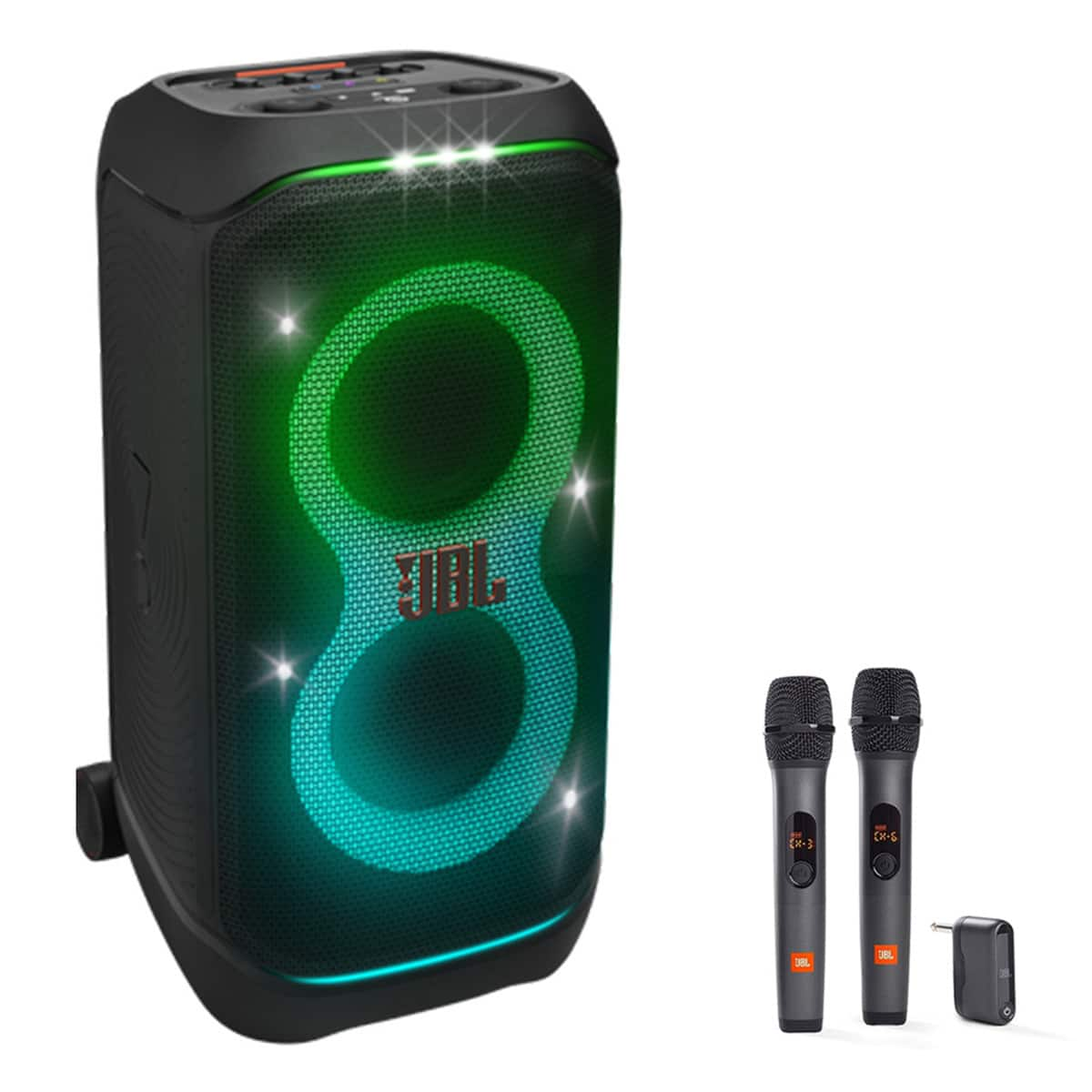
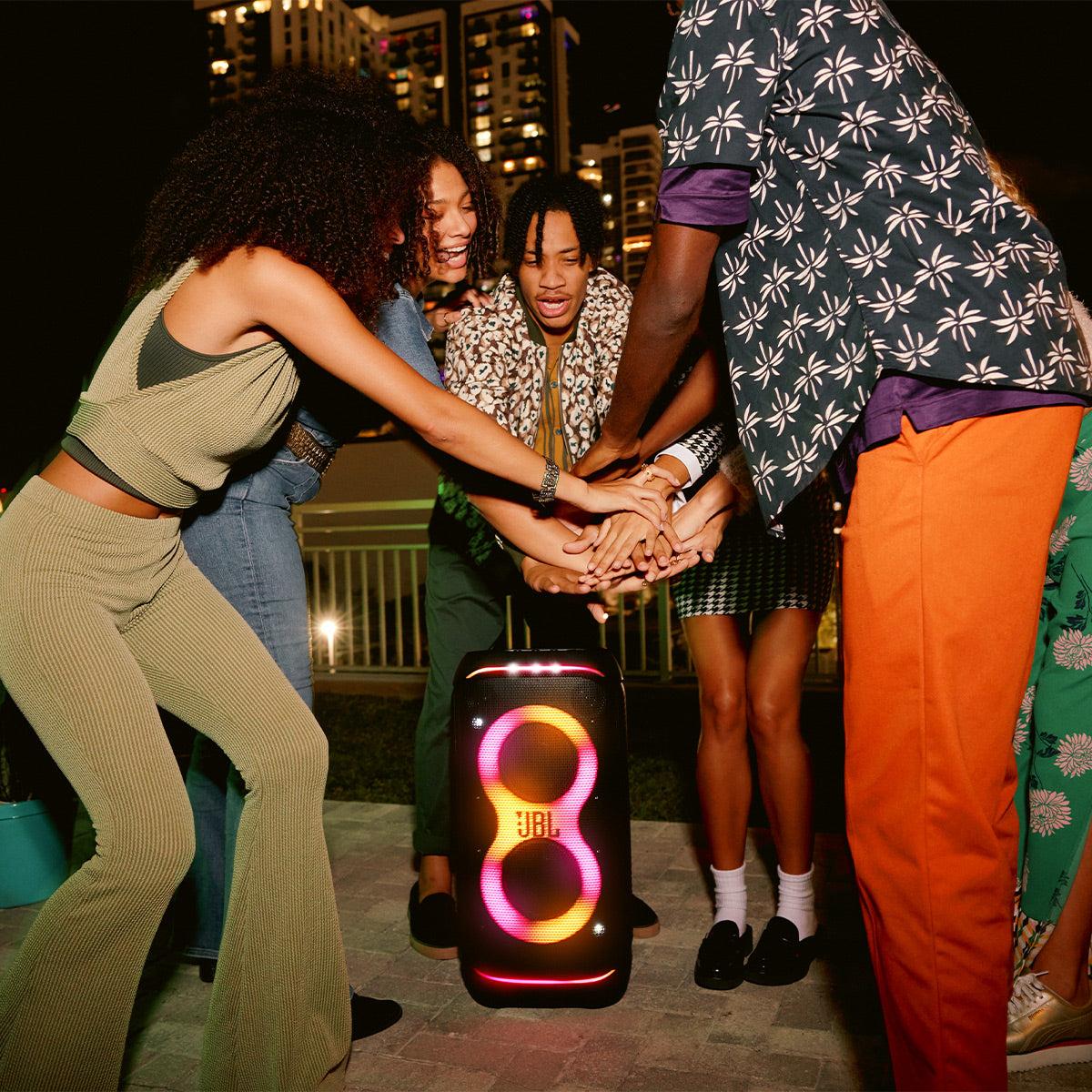
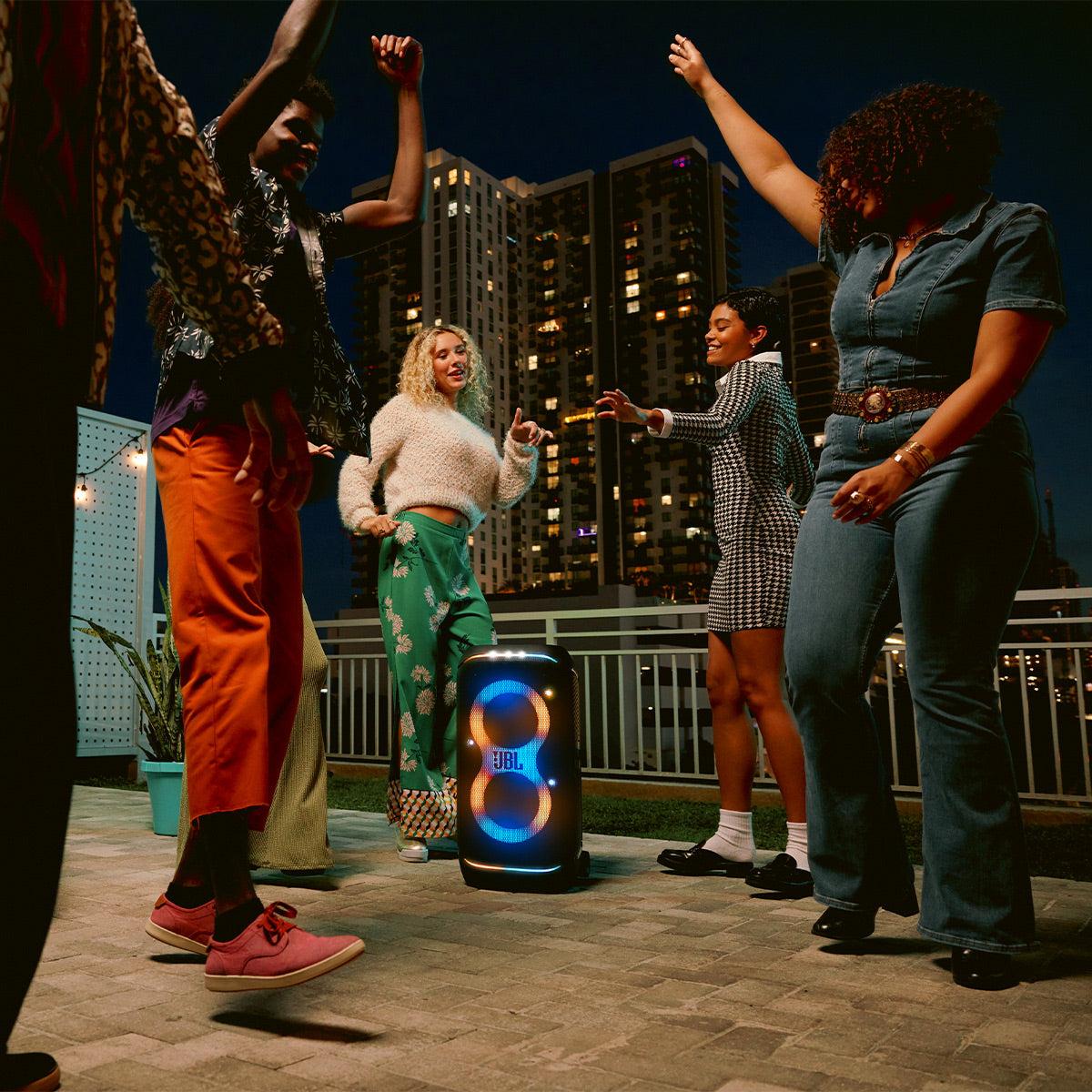
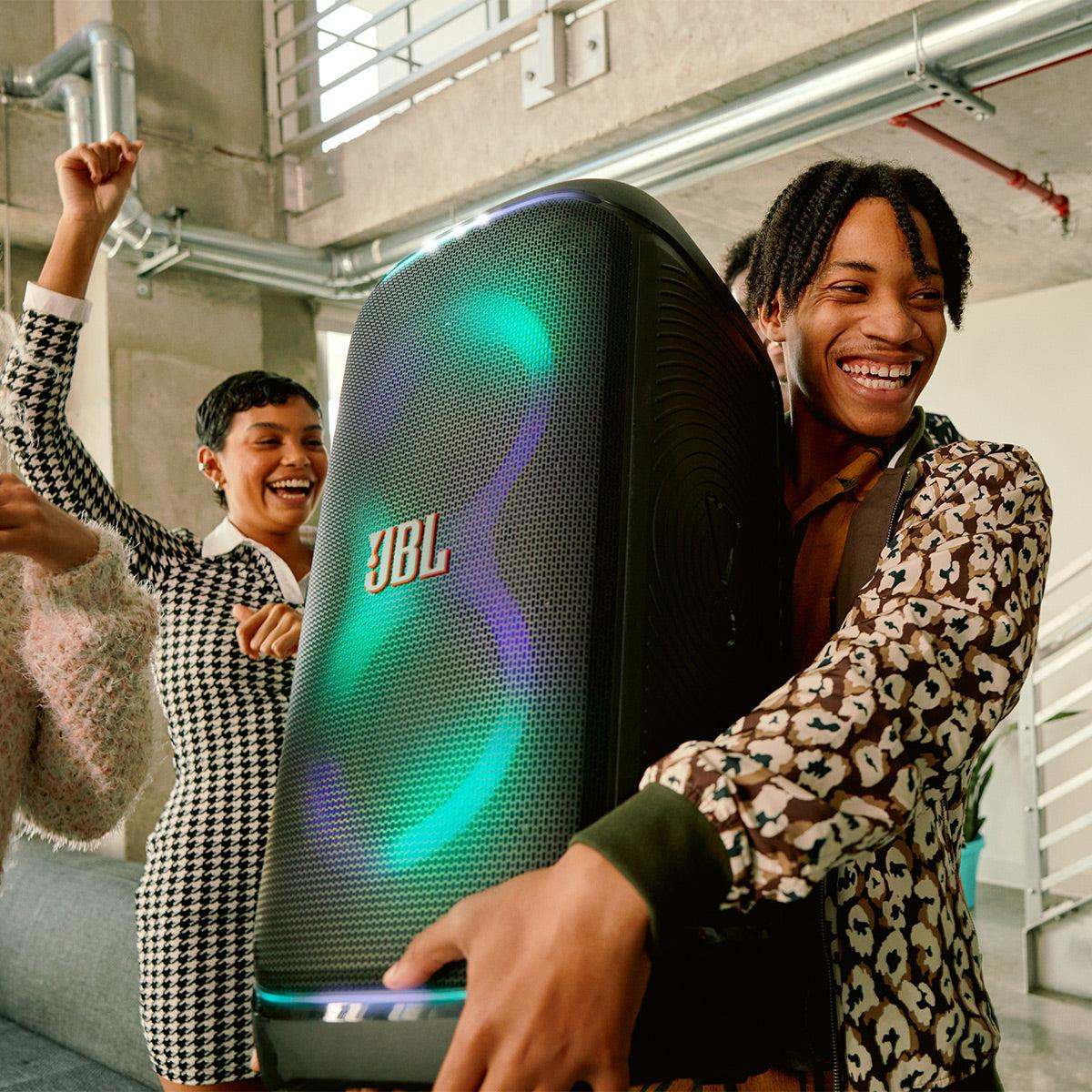
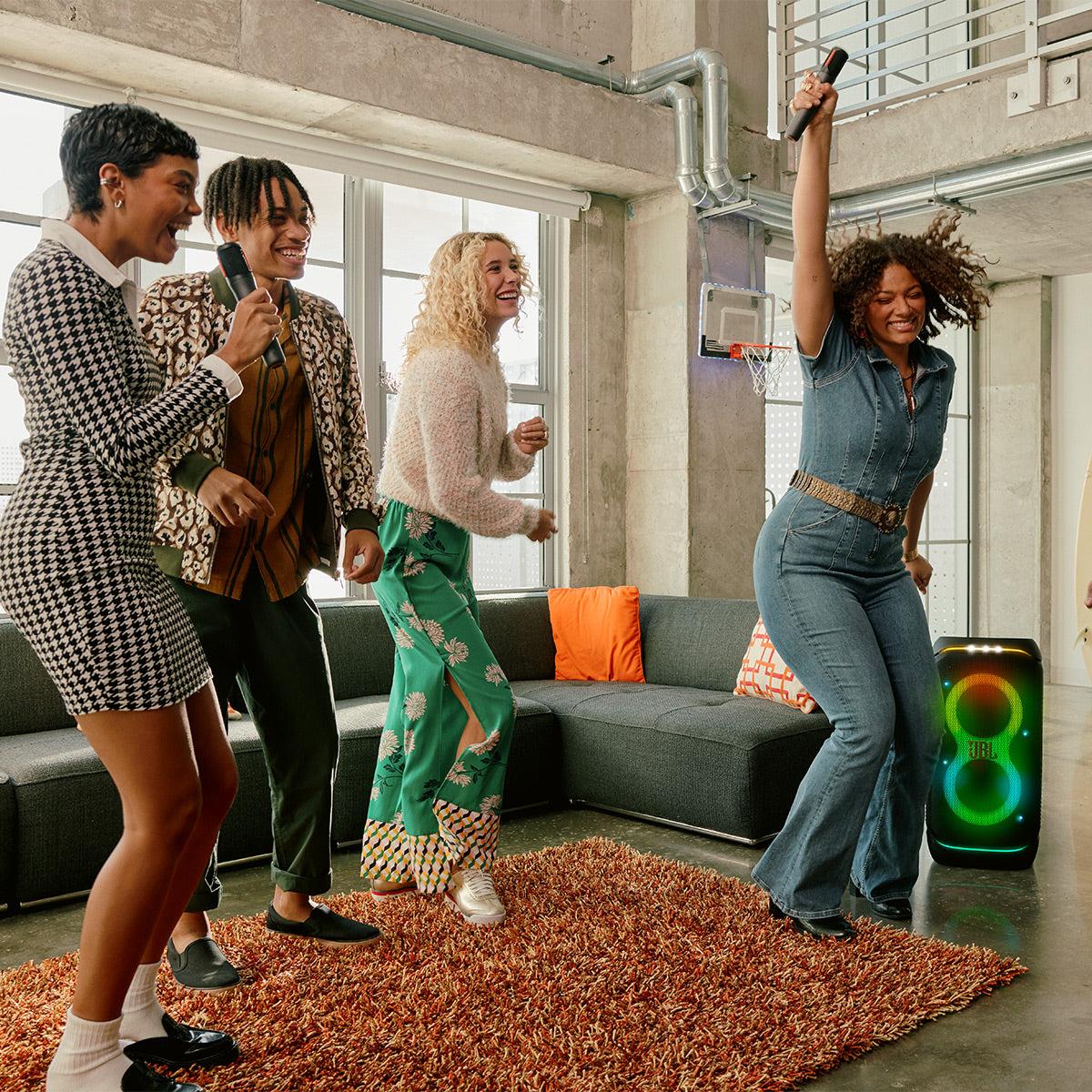
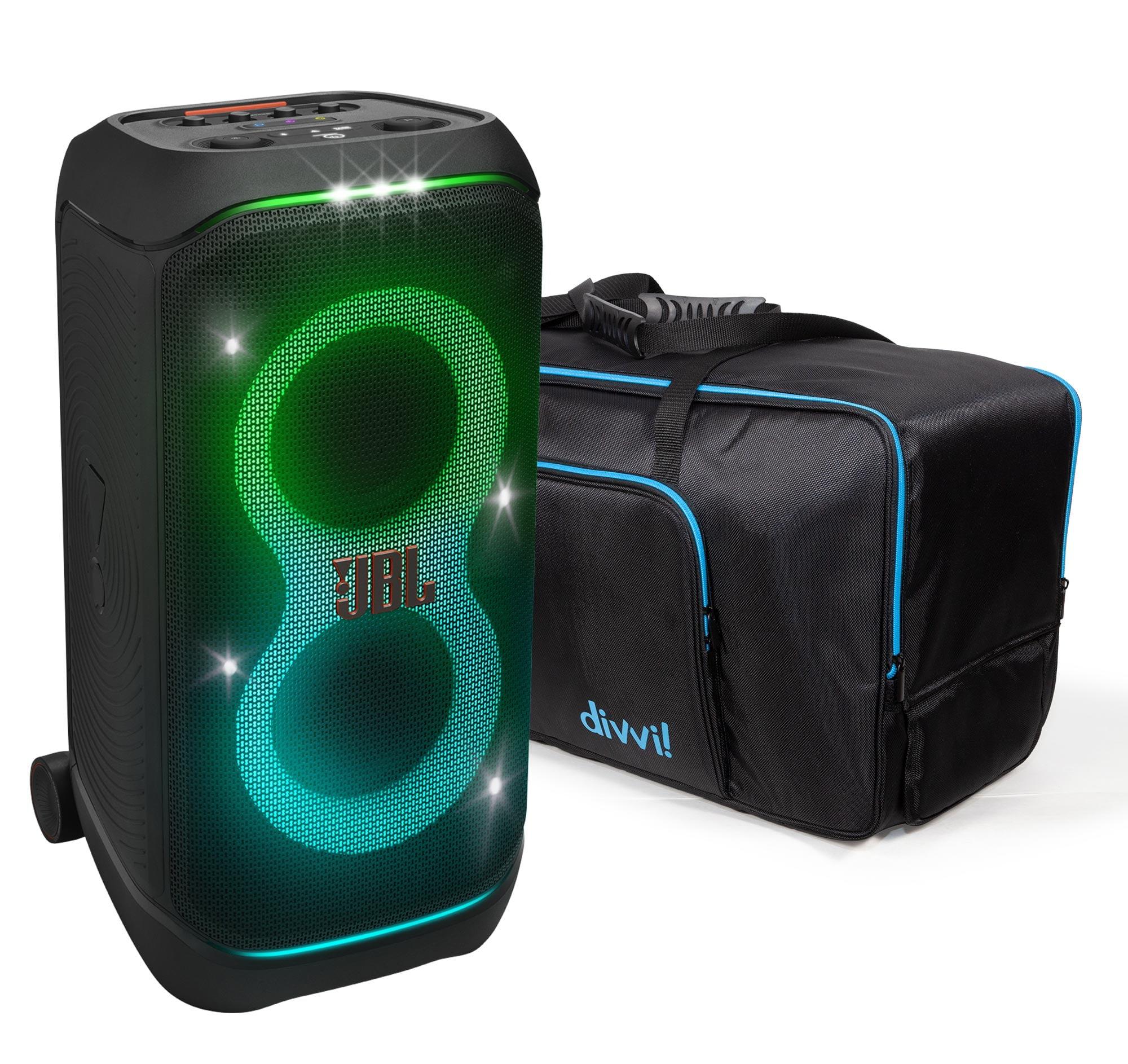
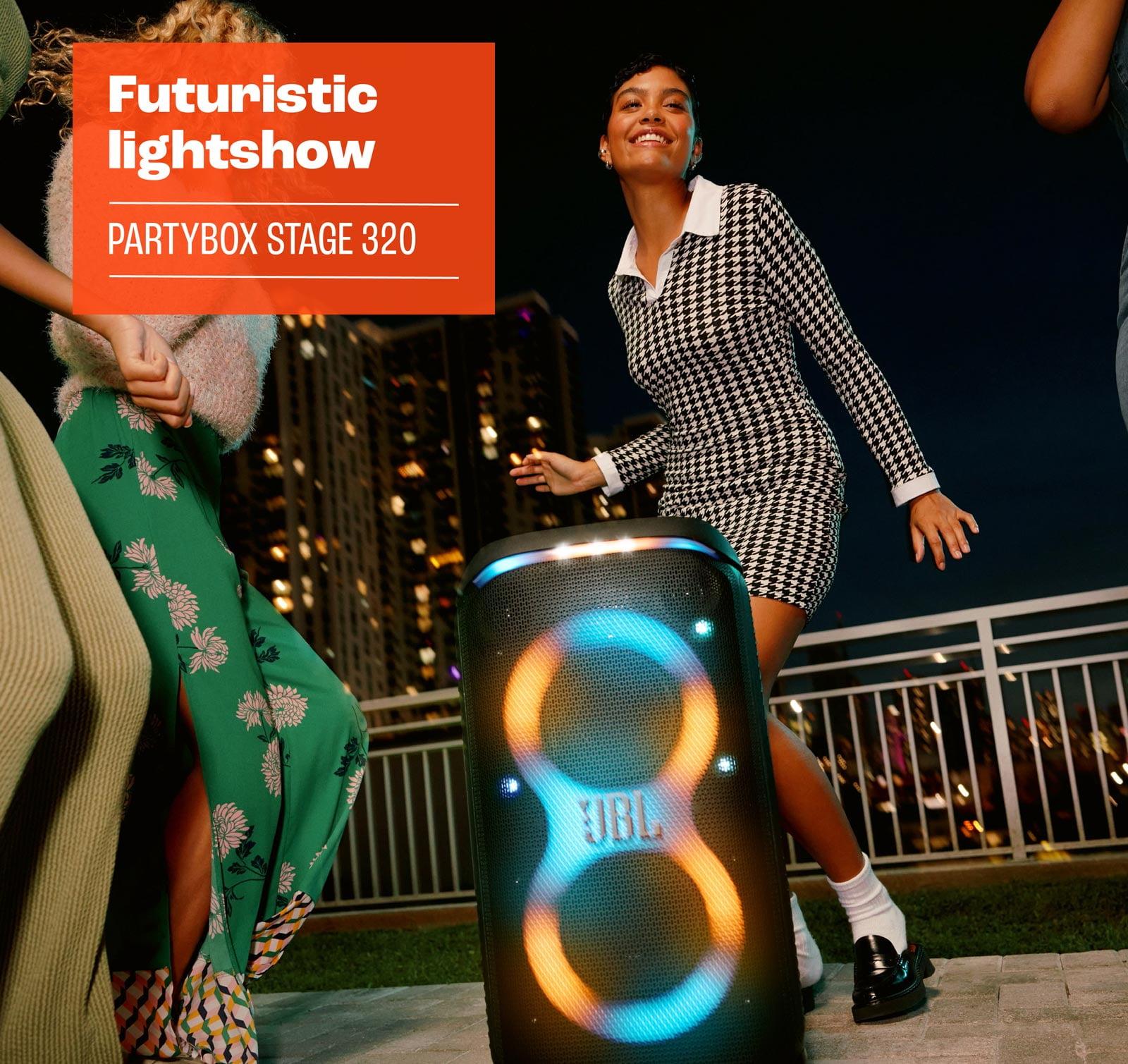
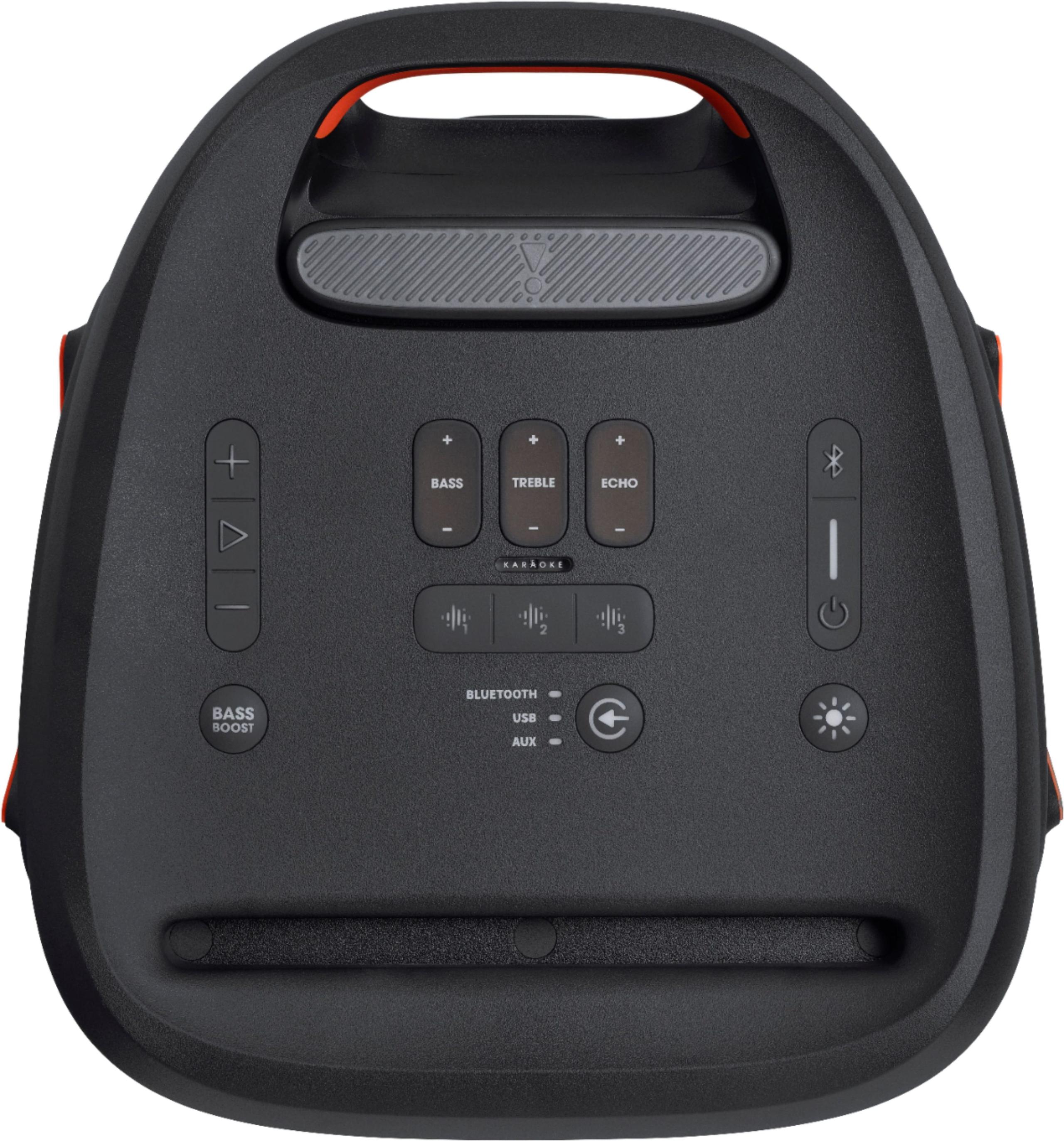
When it comes to portable party speakers, JBL's PartyBox lineup has dominated backyard gatherings and beach parties for years. But with two compelling options—the newer Stage 320 and the established PartyBox 310—choosing the right one isn't straightforward. Both speakers promise earth-shaking bass and party-ready features, but they take notably different approaches to delivering the goods.
Before diving into the specifics, let's establish what separates party speakers from regular Bluetooth speakers. These aren't designed for critical listening in your living room—they're built to pump out serious volume in challenging outdoor environments where wind, open space, and background noise work against you.
The most crucial factor is maximum volume output, measured in decibels (dB). Every 3 dB increase represents roughly double the perceived loudness, making small differences in measurements translate to major real-world impact. Bass response matters enormously too, since deep low frequencies create the physical sensation that gets people moving. Battery life becomes critical when you're hours away from the nearest outlet, and durability features like water resistance protect your investment during unpredictable outdoor conditions.
Party speakers also need practical conveniences that home audio gear skips: wheels for transport, microphone inputs for karaoke, LED lighting for atmosphere, and robust app control for managing everything from a distance. The best models balance raw acoustic performance with these party-specific features while remaining portable enough for regular use.
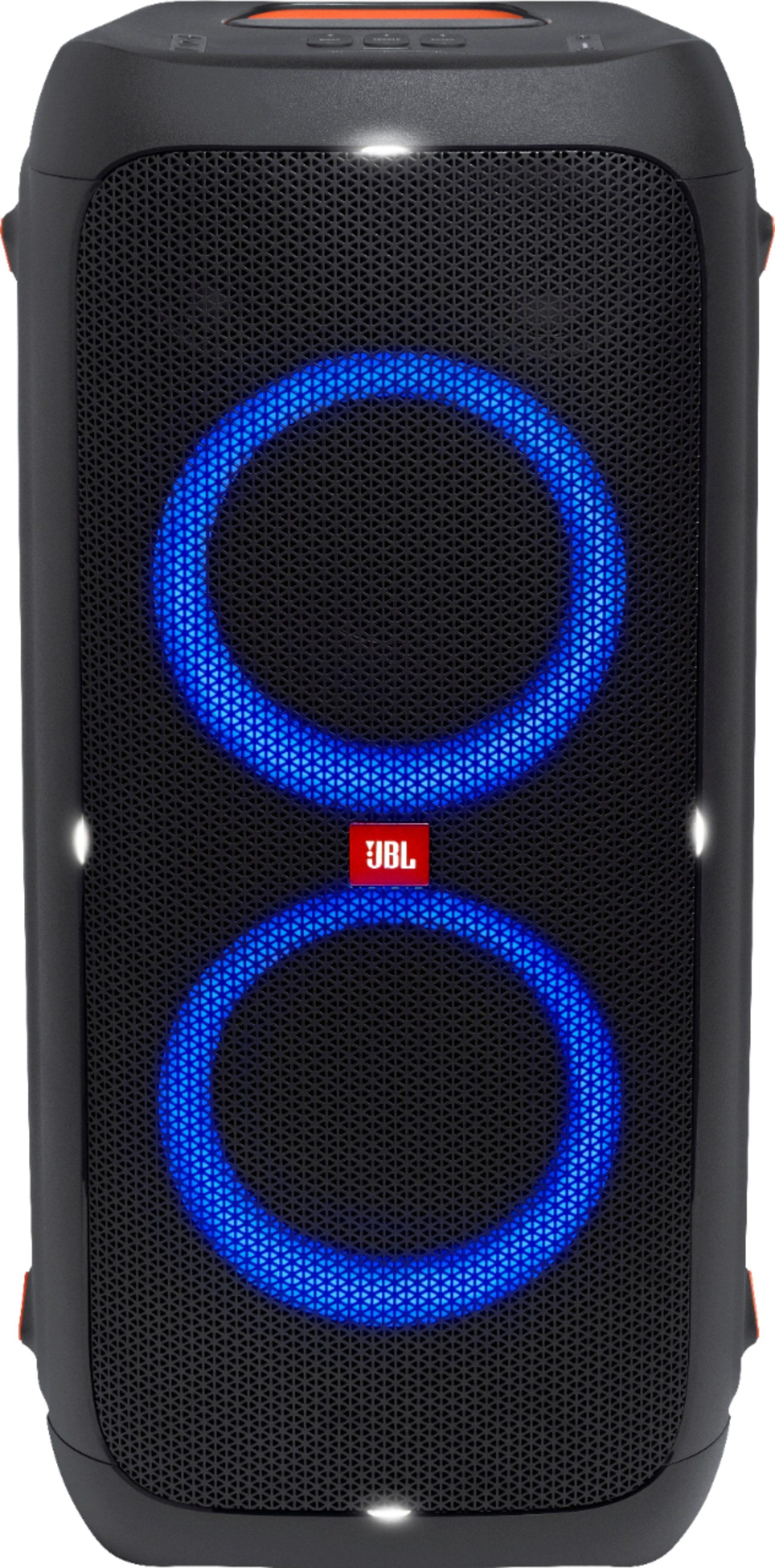
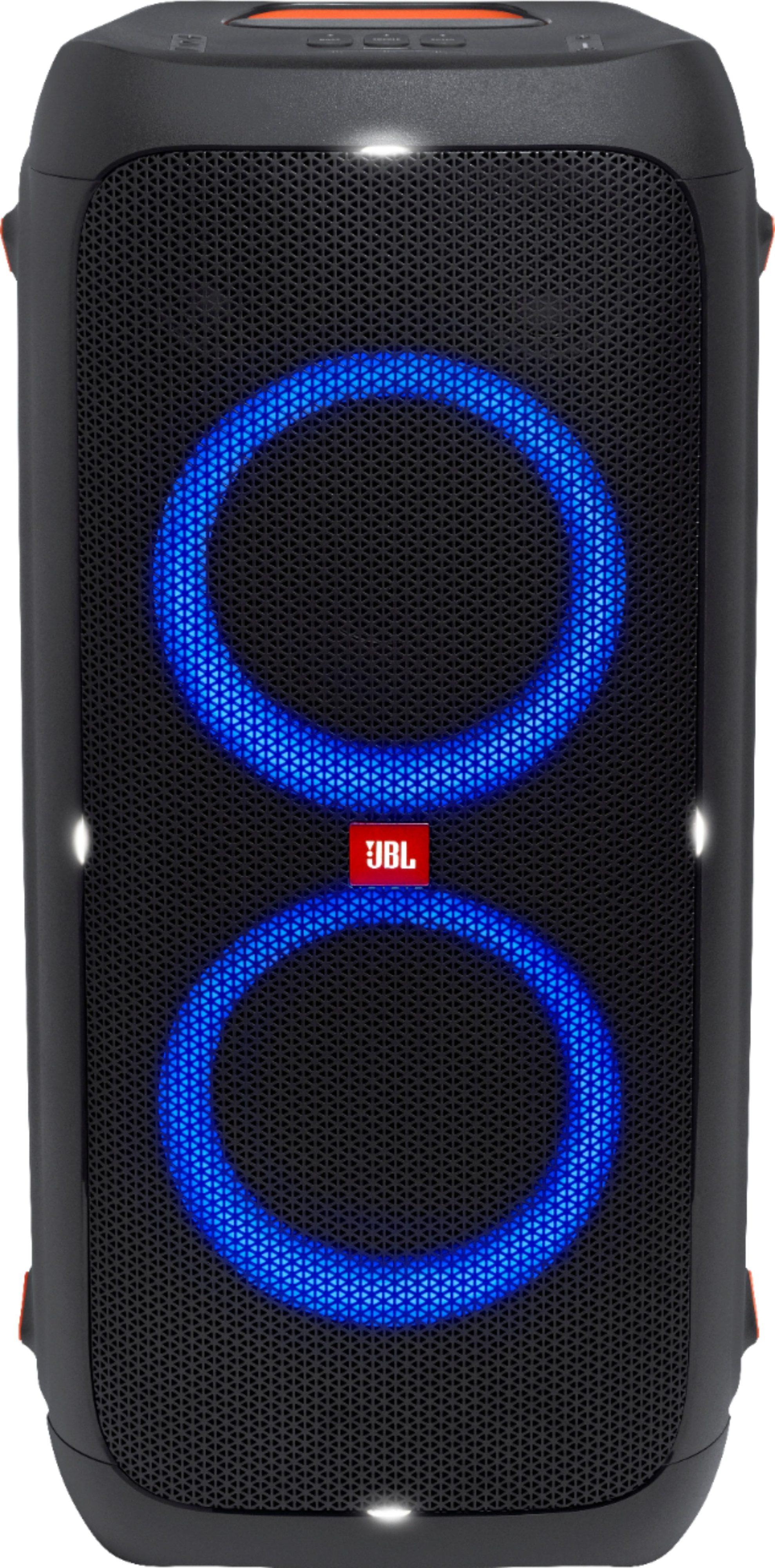
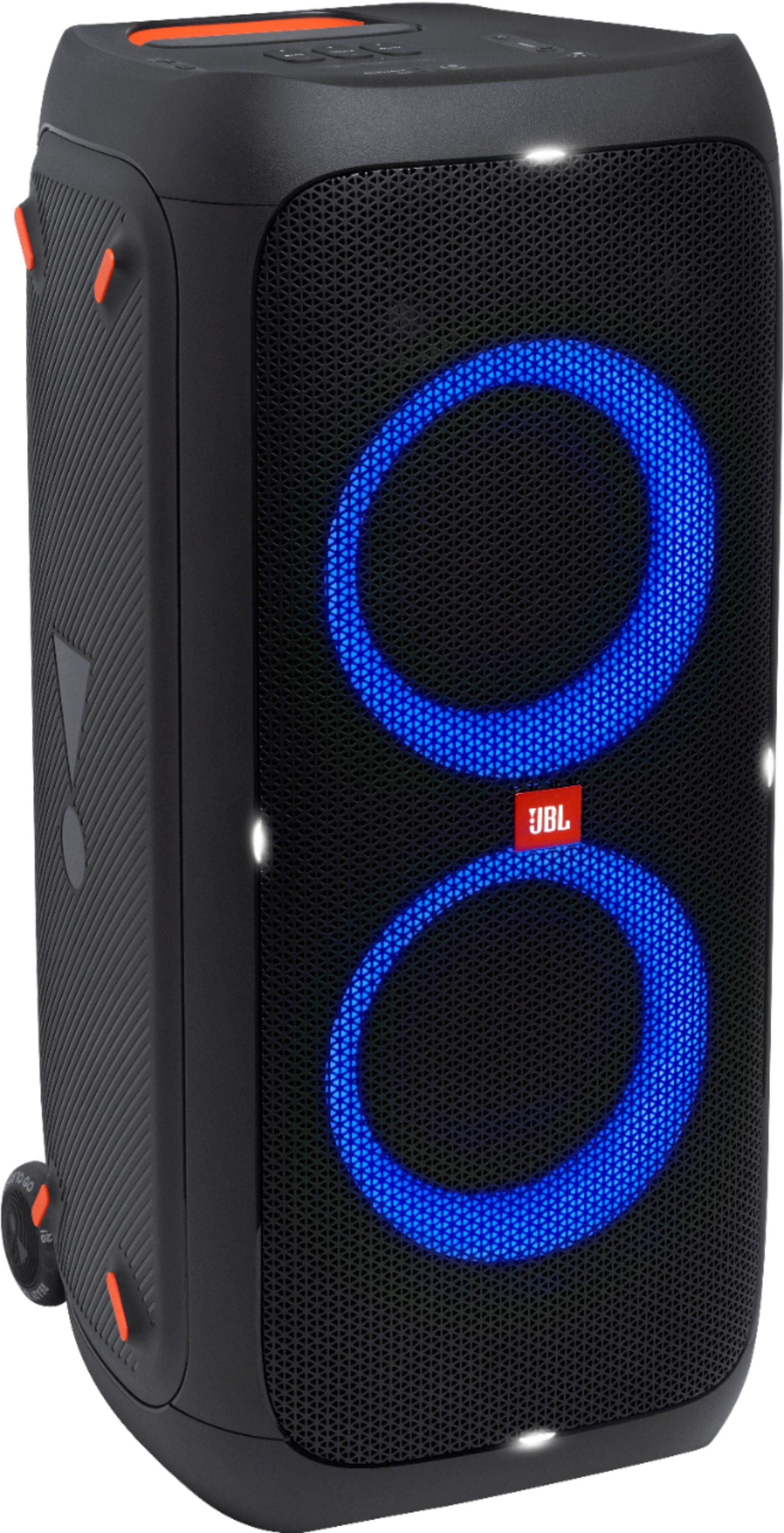
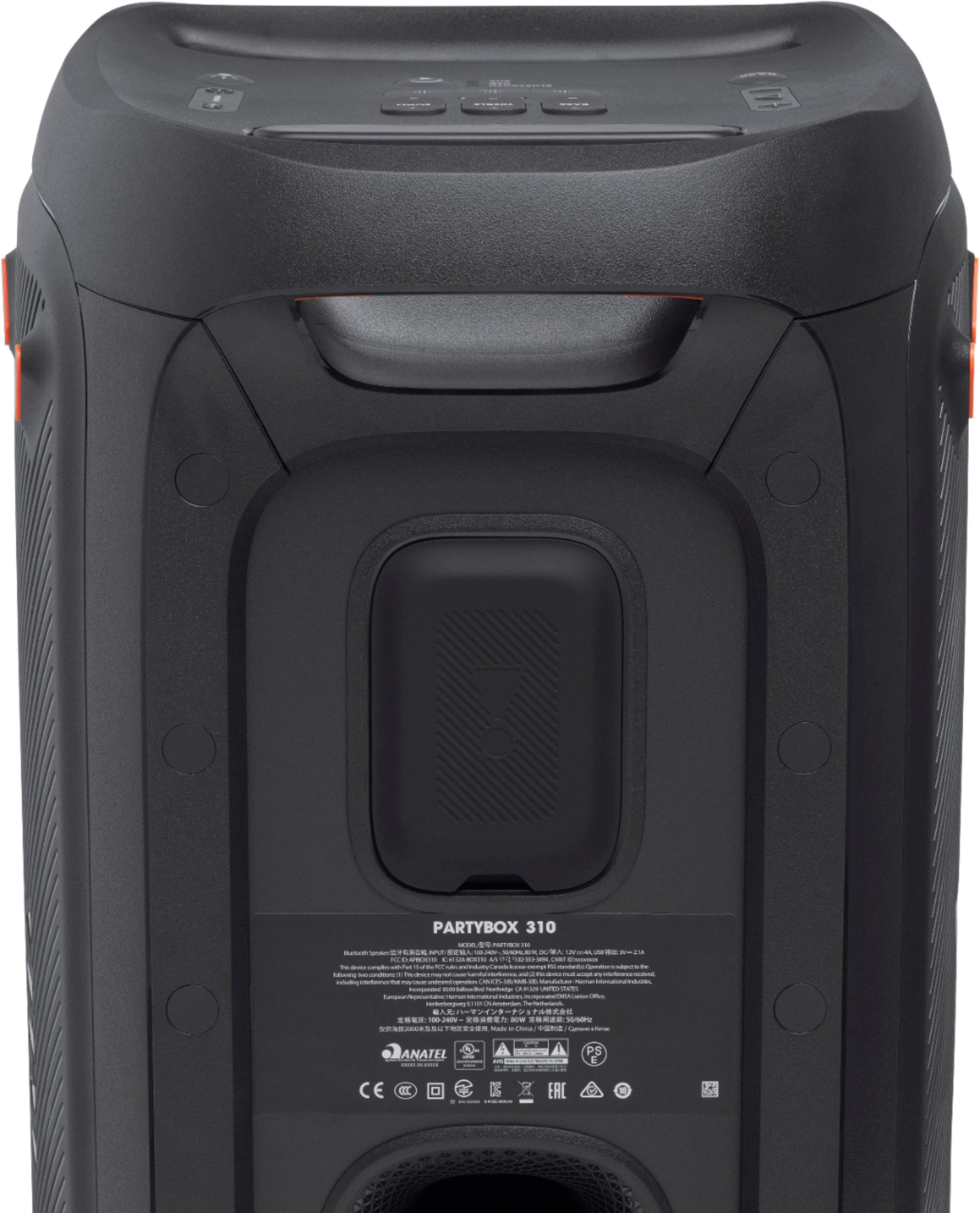
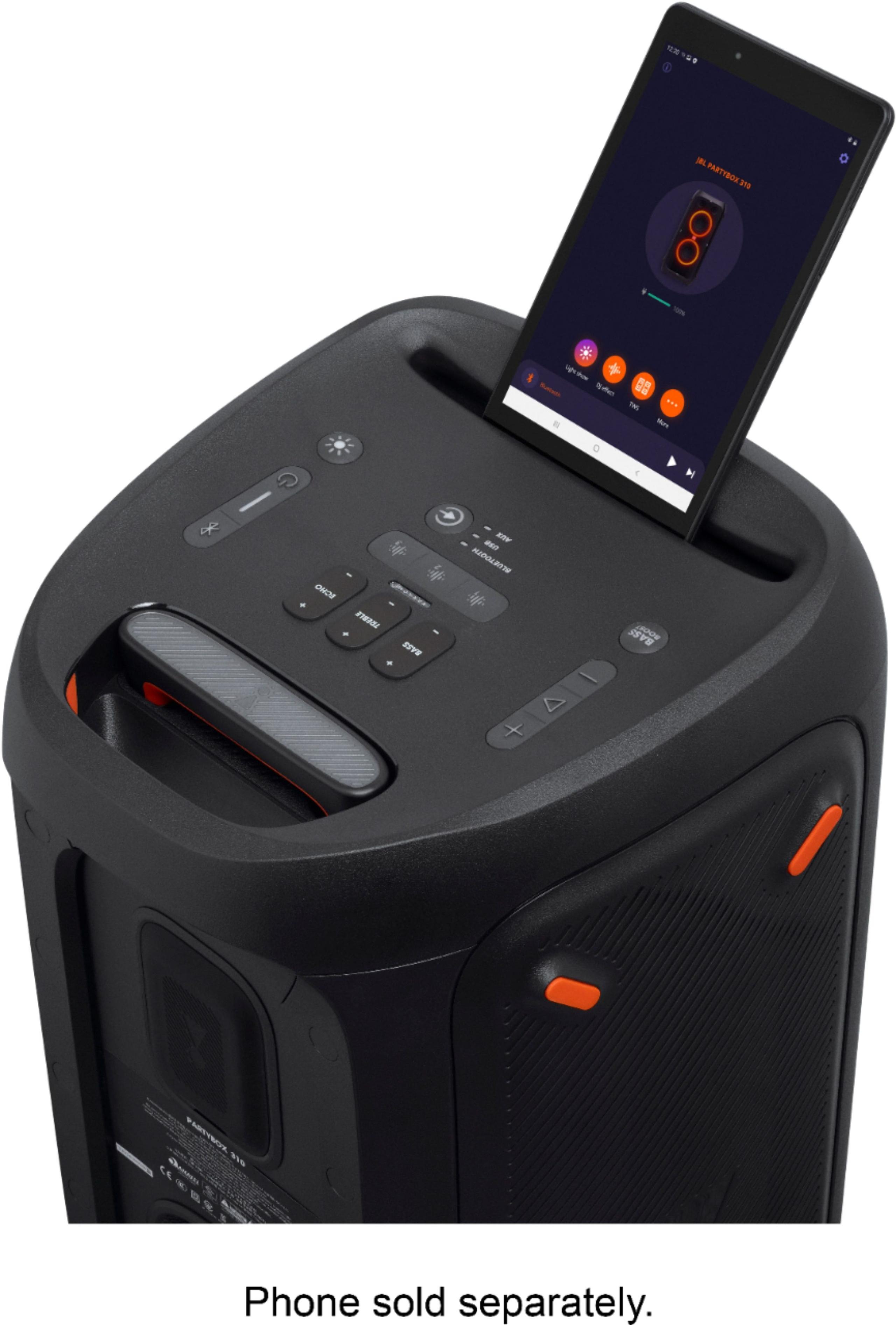
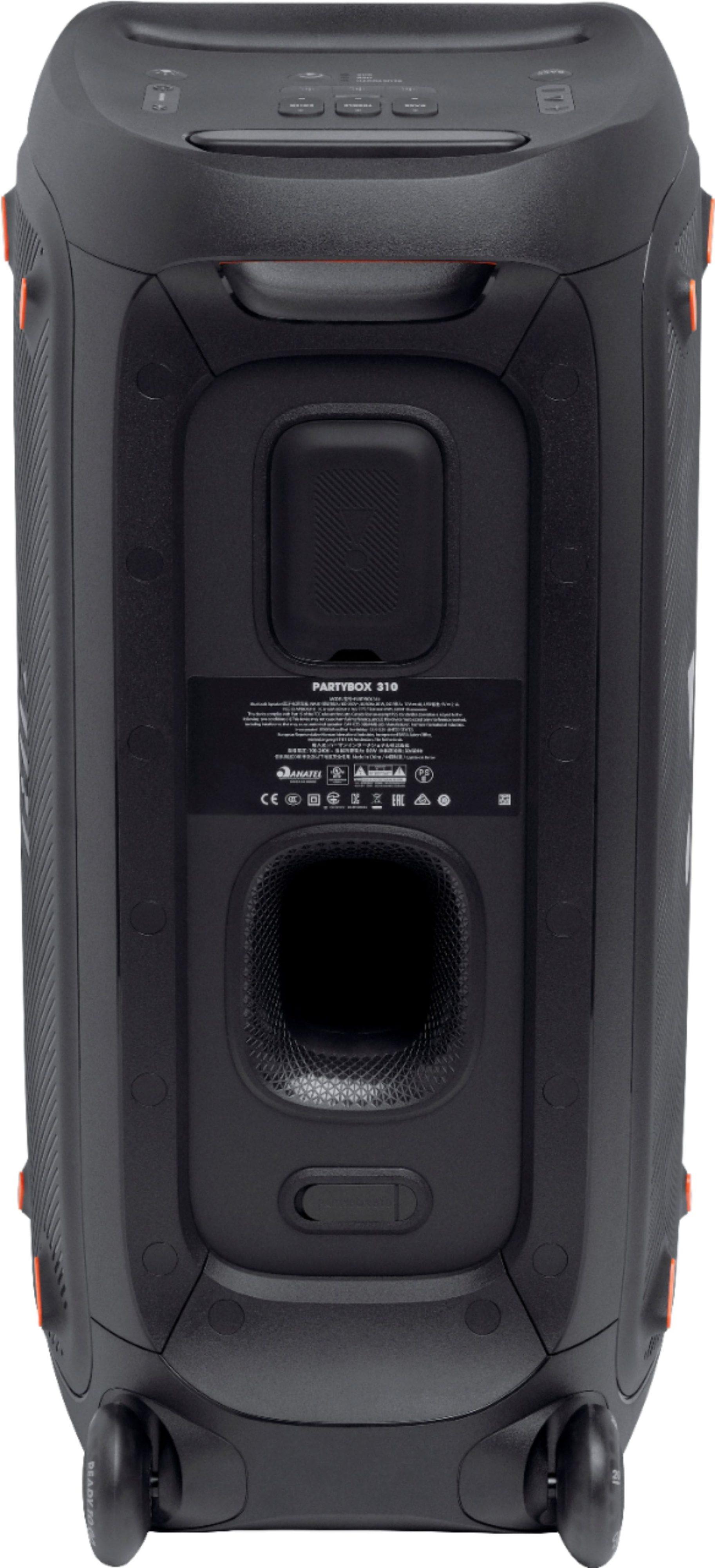
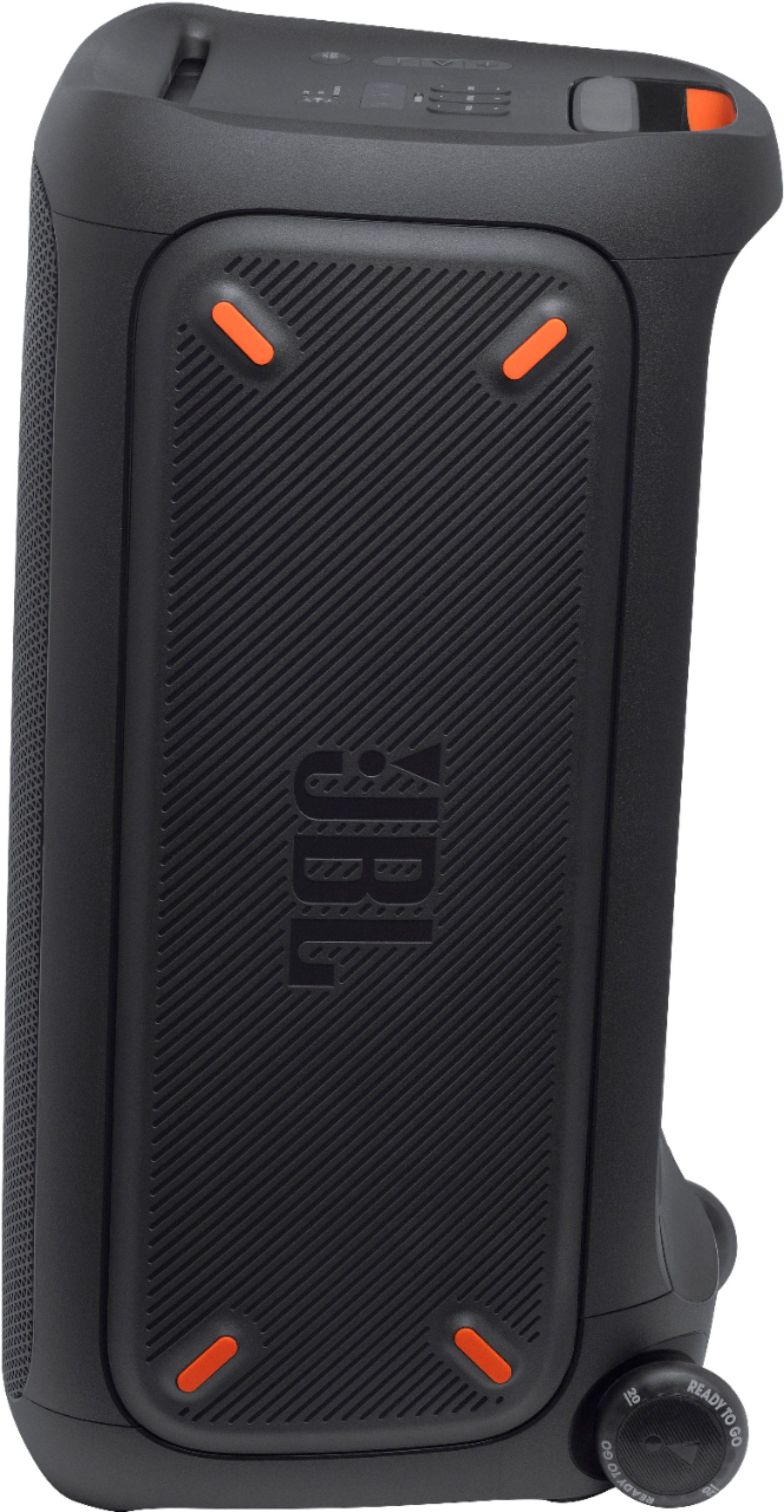
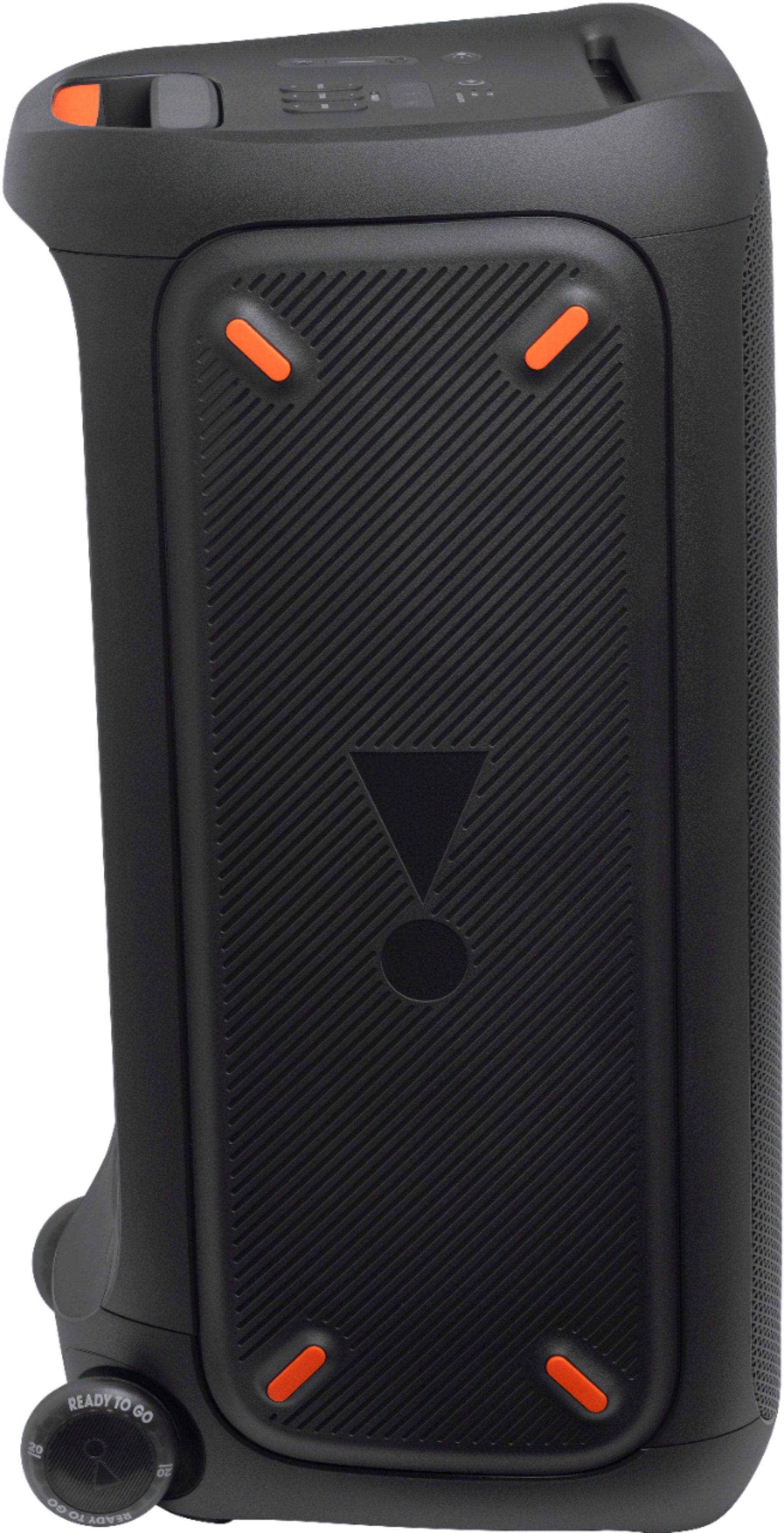
The PartyBox 310 launched in 2020 as JBL's flagship portable party speaker, establishing the template with dual 6.5-inch woofers, 240 watts of power, and the company's signature LED light show. It quickly became a favorite for its punchy bass response and reliable performance, earning a reputation as one of the most dependable options in its class.
Four years later, JBL released the Stage 320 in 2024, not as a direct replacement but as an evolution. The company learned from user feedback and technological advances, addressing the 310's biggest limitations while refining its strengths. The Stage 320 incorporates AI-powered sound optimization, swappable battery technology, and significantly improved portability—all while maintaining the same 240-watt power rating that made the original successful.
This generational leap reflects broader trends in portable audio: smarter processing, more sustainable design through replaceable components, and enhanced user interfaces that make complex features more accessible.
Both speakers claim identical 240-watt RMS output, but this specification tells only part of the story. RMS (Root Mean Square) measures continuous power handling rather than peak output, but real-world loudness depends on how efficiently speakers convert that power into sound pressure.
Our research into professional measurements reveals a significant gap: the Stage 320 reaches approximately 107.4 dB maximum output compared to the 310's 100.5 dB. That 7 dB difference represents roughly four times the acoustic power—a massive improvement that translates directly to filling larger spaces and competing with more background noise.
This performance gap likely stems from the Stage 320's AI Sound Boost technology, which analyzes incoming audio in real-time and optimizes the speaker's output to minimize distortion while maximizing volume. Traditional speakers hit physical limits where increasing volume creates harsh distortion, but AI processing can push closer to those limits safely by adjusting frequency response and dynamics on the fly.
Bass performance reveals the speakers' different personalities most clearly. The PartyBox 310 delivers what many users describe as "punchier" bass with more emphasis in the mid-bass frequencies (roughly 80-200 Hz) that create immediate impact. This tuning makes kick drums and bass lines feel more prominent, creating that classic "thumping" party sound that cuts through crowd noise.
The Stage 320 takes a more sophisticated approach with its extended frequency response reaching down to 40 Hz compared to the 310's 45 Hz limit. Those extra 5 Hz might seem minor, but they represent the difference between feeling bass and just hearing it. The Stage 320's AI processing also provides better control at high volumes, reducing the compression that makes bass sound muddy when you crank things up.
For electronic music, hip-hop, and modern pop—genres that rely heavily on sub-bass frequencies—the Stage 320's deeper extension provides more authentic reproduction. The 310's warmer, punchier character might actually sound better with rock, country, or older recordings that weren't mixed with extreme low-end in mind.
Party speakers face unique challenges because they need to sound good at whisper-quiet levels for intimate gatherings and ear-splitting volumes for large crowds. The 310 maintains better tonal balance at moderate volumes, with less compression artifacts that can make music sound squashed or lifeless.
However, the Stage 320's AI processing shines at higher volumes where the 310 starts struggling. User reports consistently mention that the Stage 320 stays cleaner and more detailed when pushed hard, while the 310 can sound harsh or fatiguing during extended high-volume sessions. This makes the Stage 320 better suited for situations where you'll be running at or near maximum volume for hours.
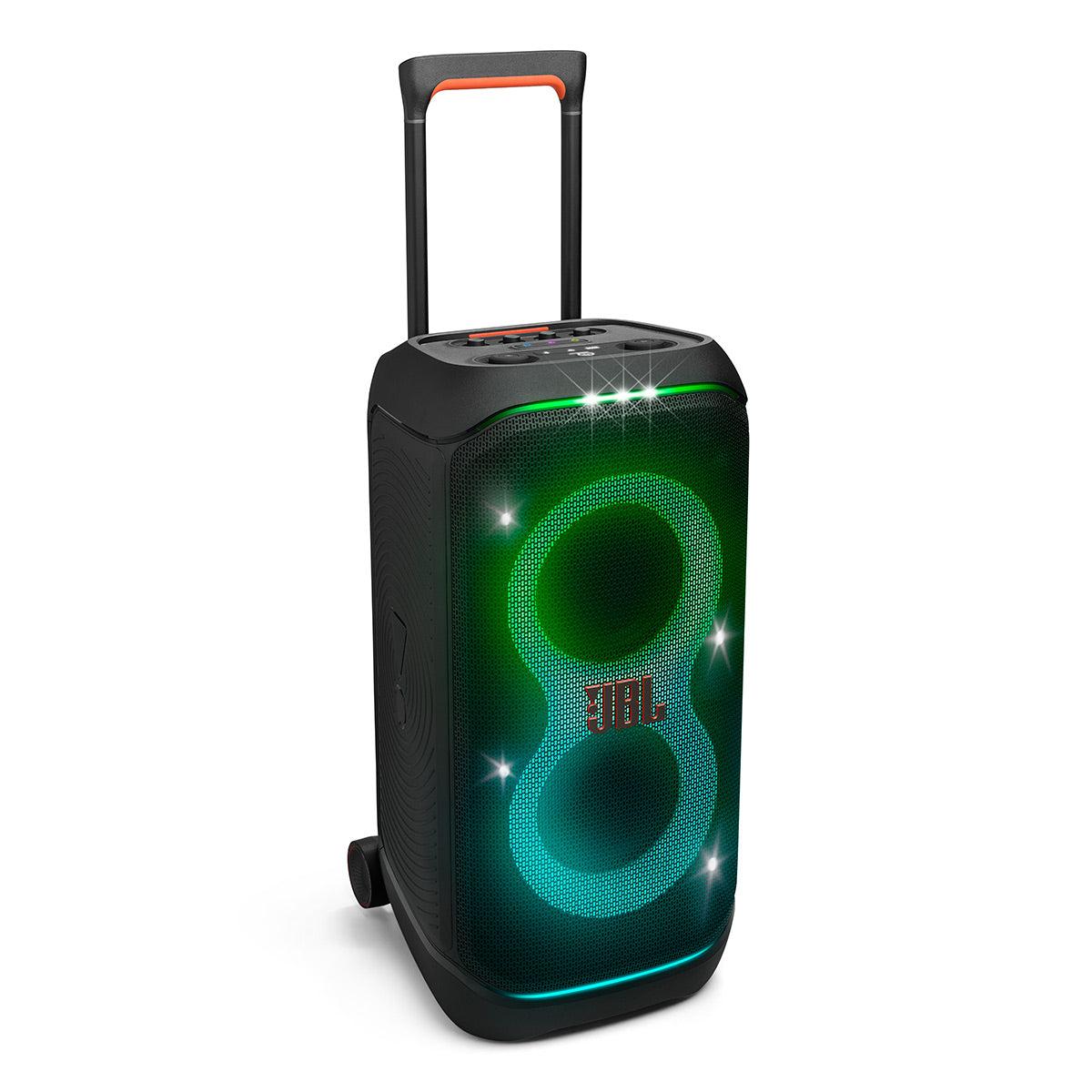
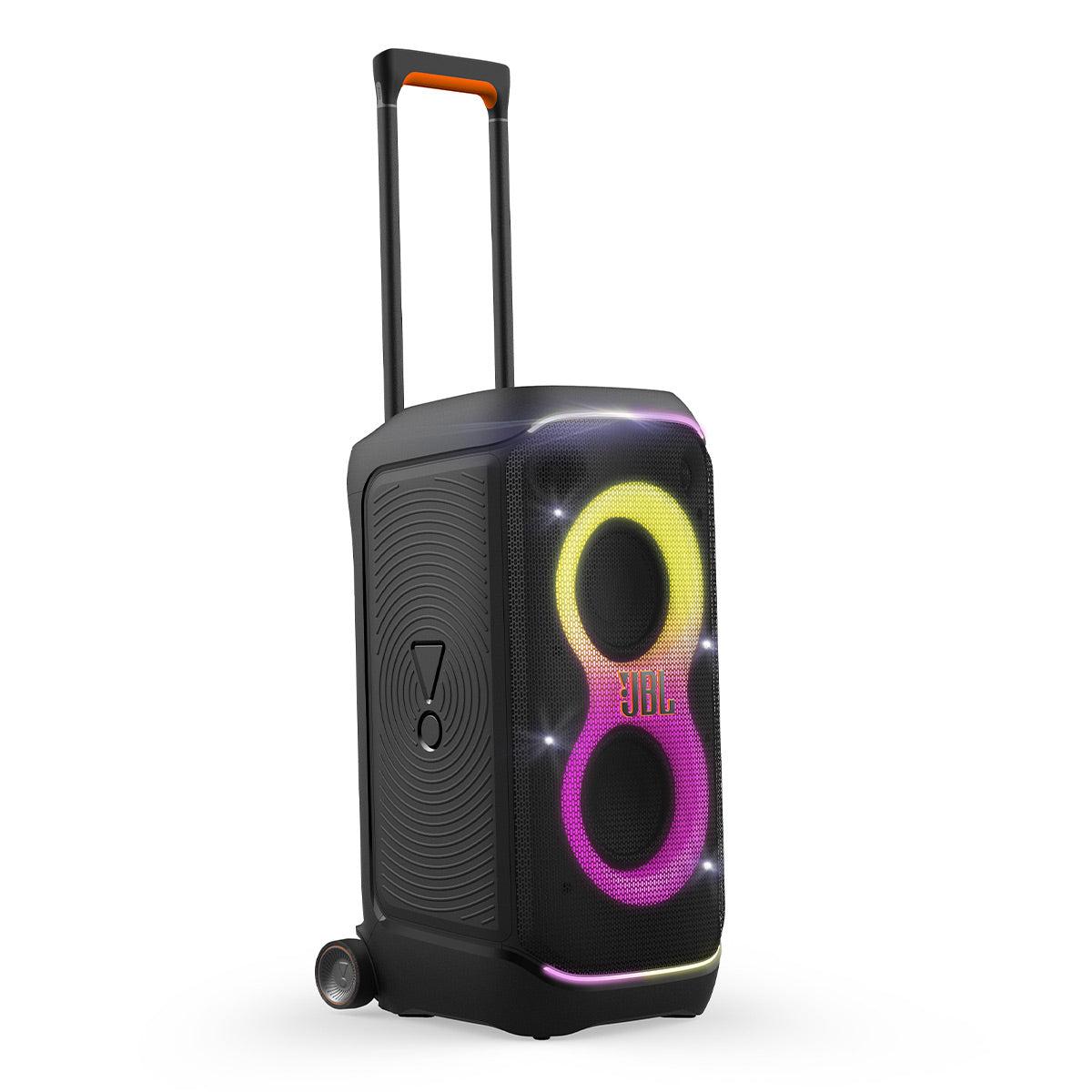
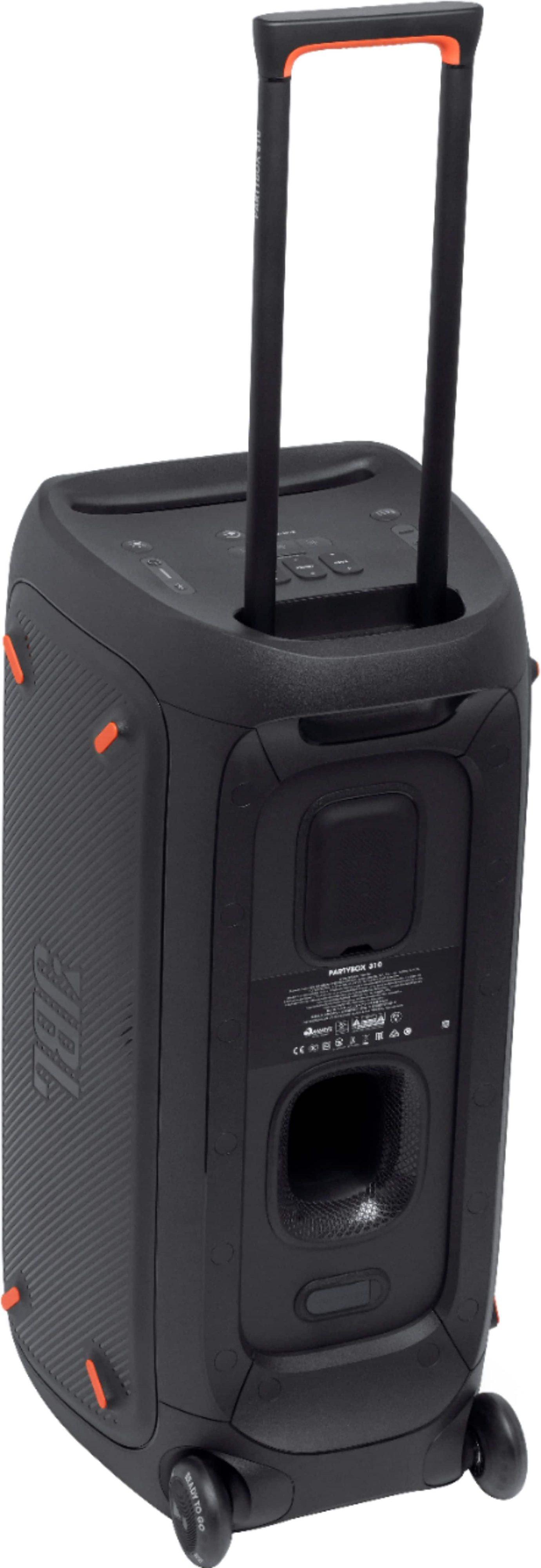
Despite weighing in at 36+ pounds, both speakers prioritize portability through thoughtful design choices. The Stage 320 edges ahead with a 1-kilogram weight reduction (16.5 kg vs. 17.42 kg) and significantly improved mobility features.
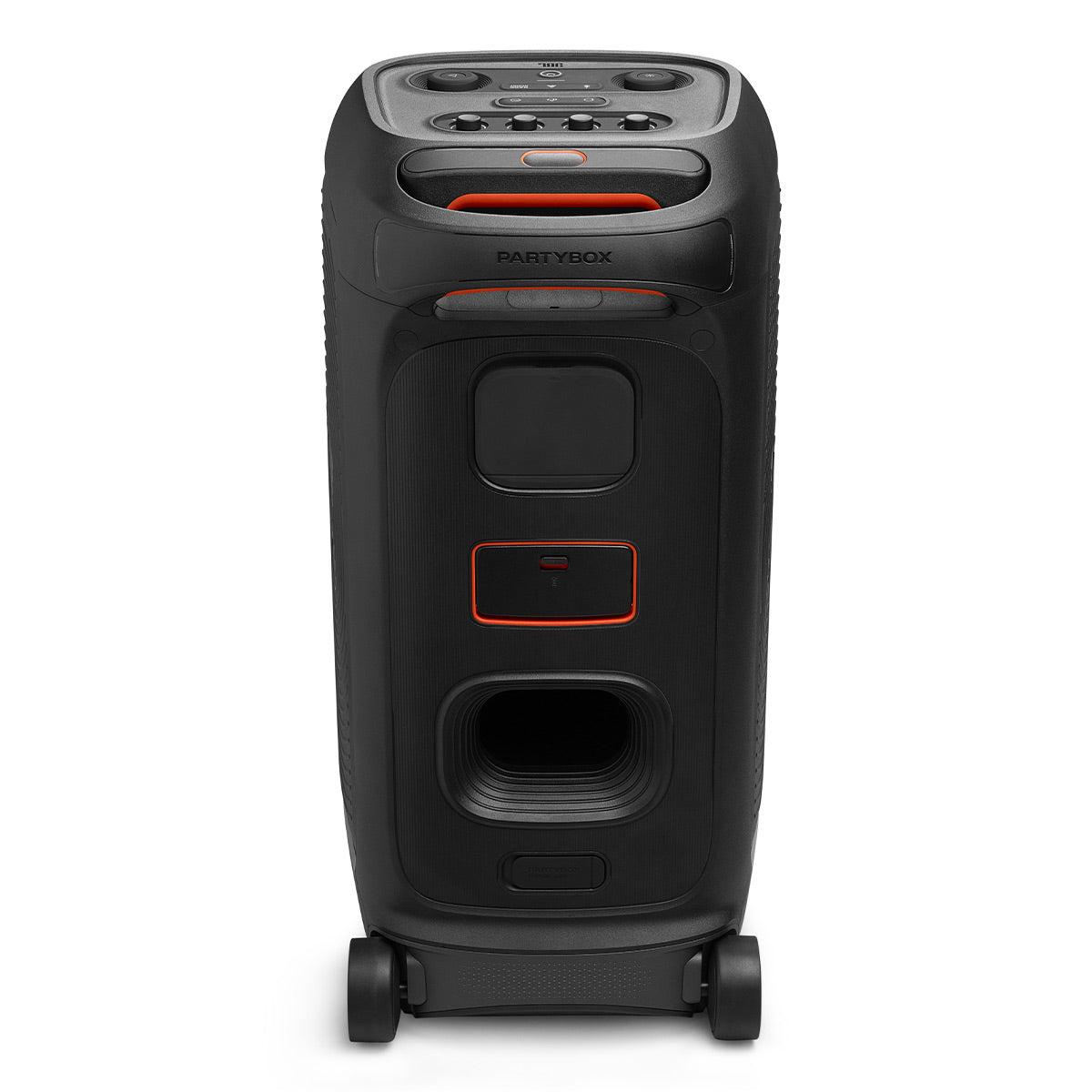
The Stage 320's enhanced telescopic handle extends higher and locks more securely, reducing the awkward hunched-over posture that makes wheeling heavy speakers uncomfortable. More importantly, it features wider, sturdier wheels that roll more smoothly over uneven surfaces like grass, gravel, or sand. Anyone who's wrestled a party speaker across a beach or through a park will appreciate these seemingly minor improvements.
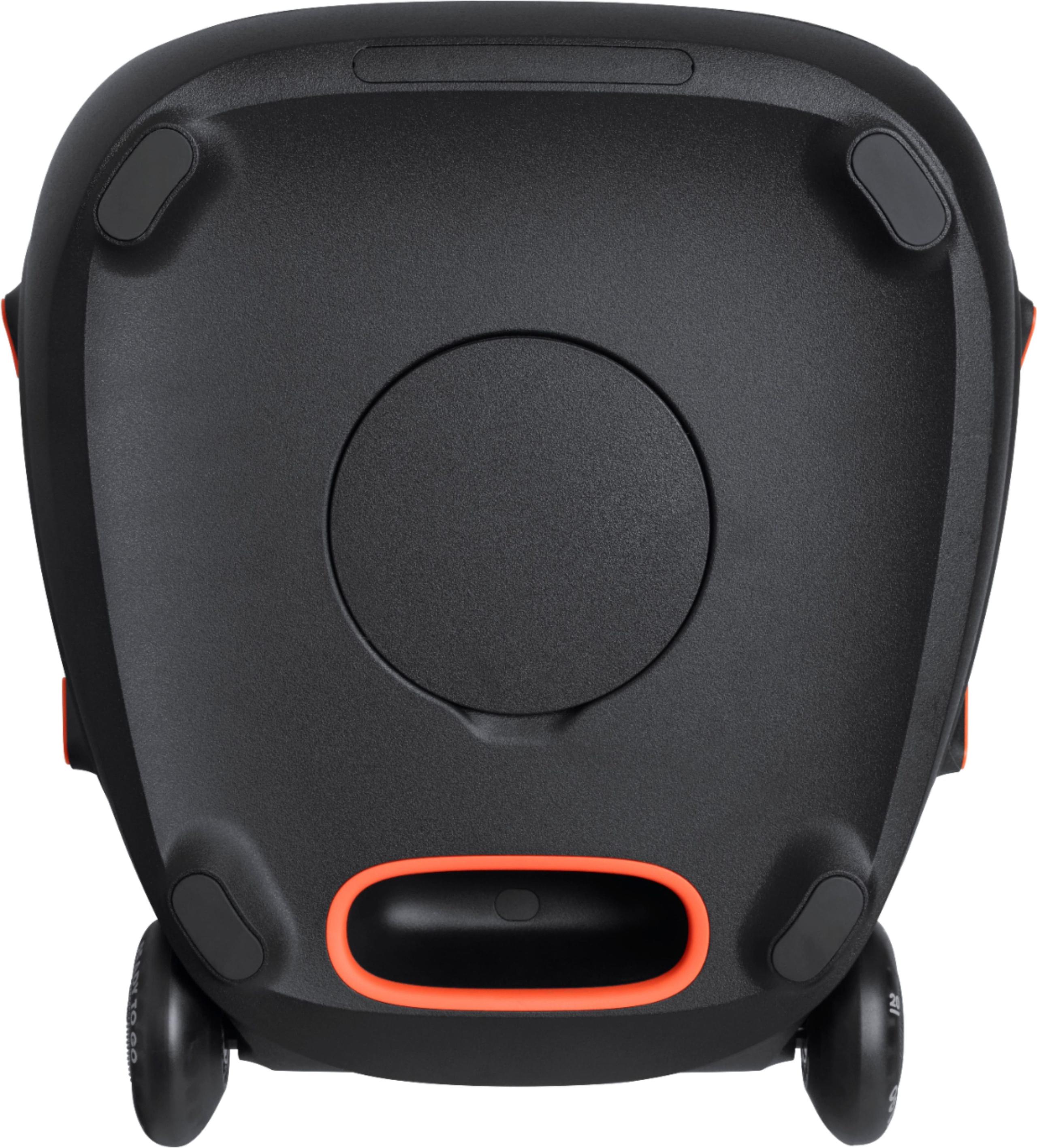
The PartyBox 310 includes rubber protective pads on its bottom surface, allowing safe placement on its side when floor space is limited. The Stage 320 omits these pads, requiring more careful handling to avoid scratches when repositioning. This design choice reflects different priorities: the 310 emphasizes durability and flexibility, while the Stage 320 focuses on optimized upright operation.
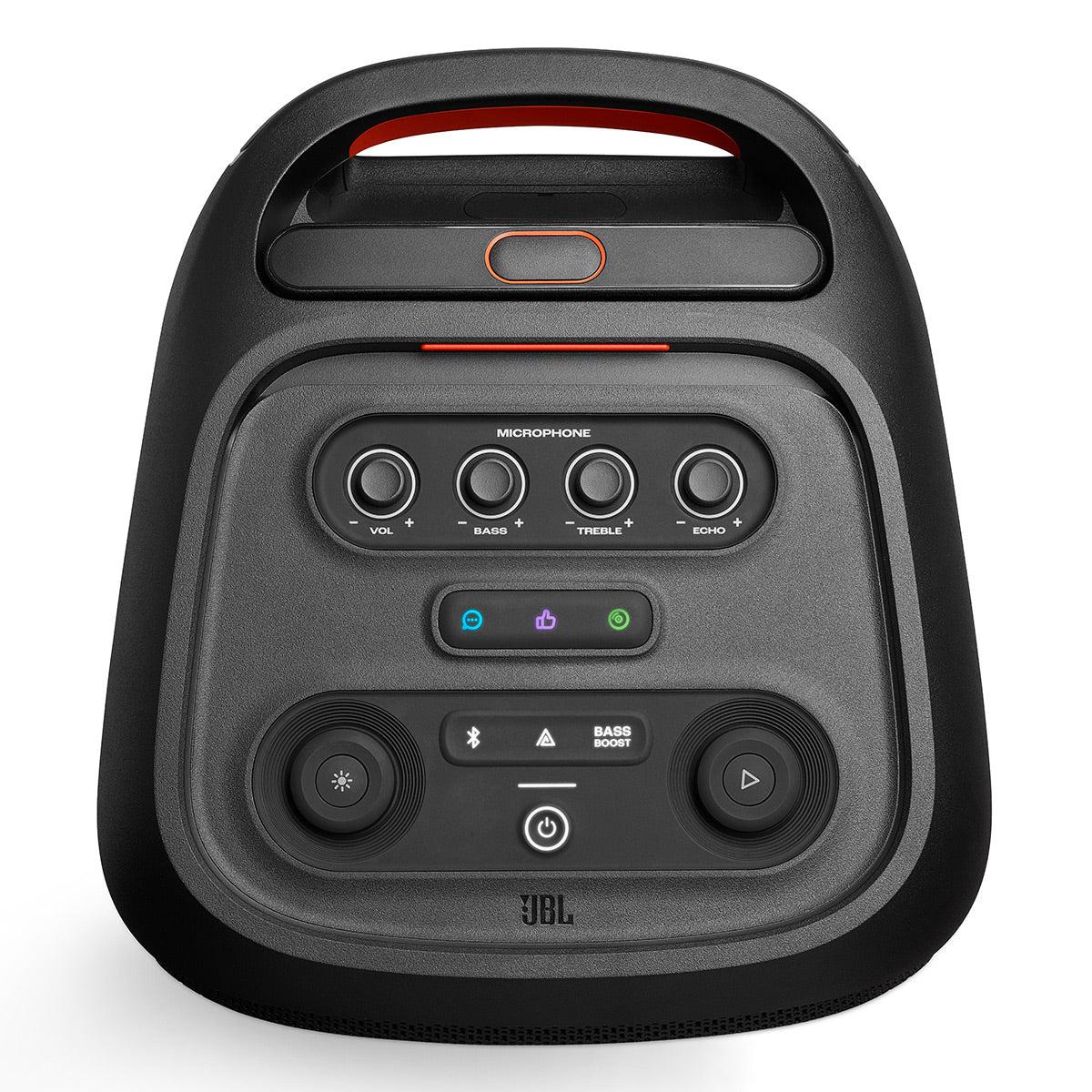
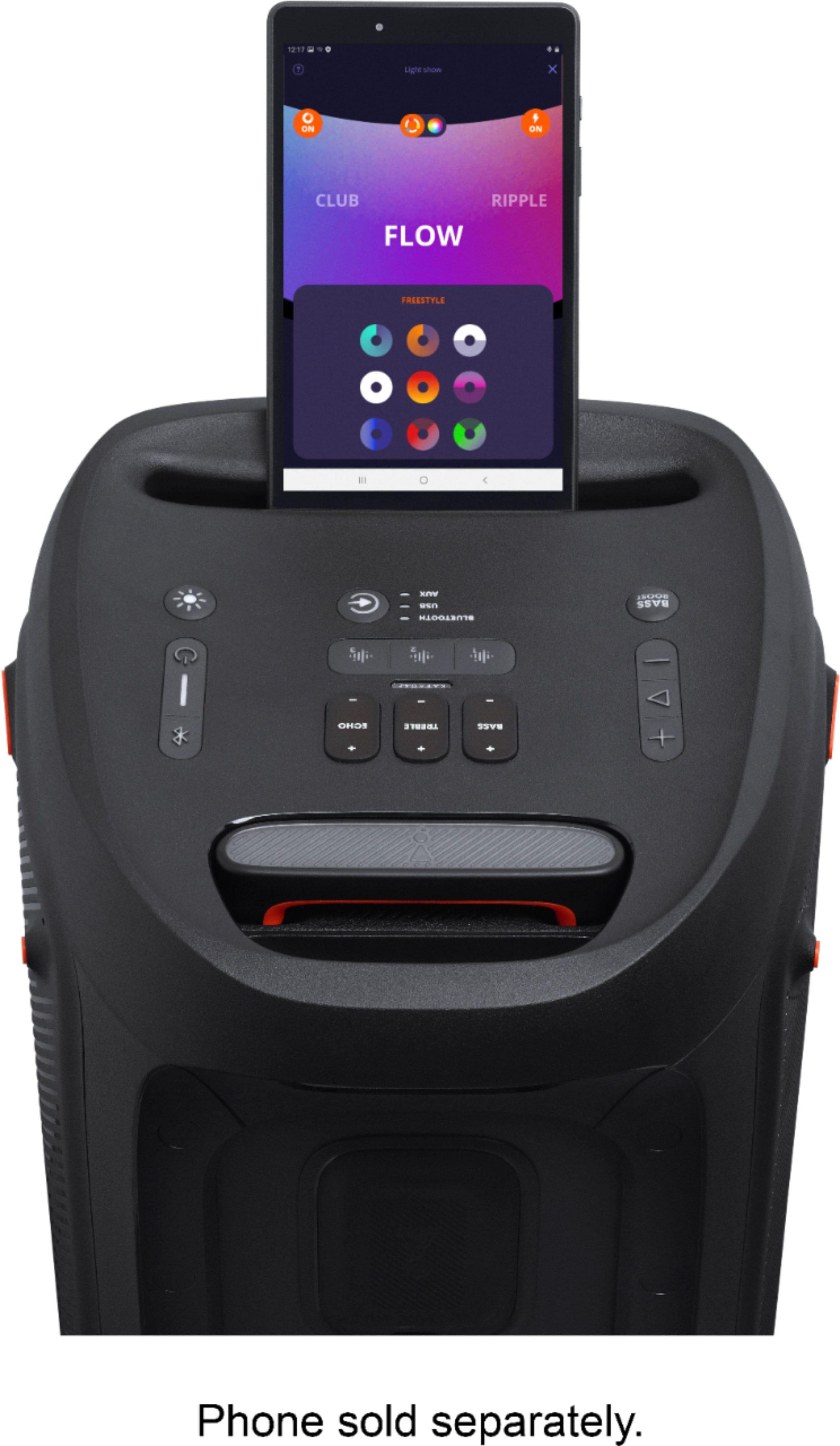
The user interface differences reveal deeper design philosophies. The 310 relies entirely on backlit buttons for all controls, which provide clear visual feedback but require precise pressing and can be difficult to locate in dark party environments.
The Stage 320 introduces physical knobs for volume and lighting control on the top panel, combined with strategic button placement. Knobs offer several advantages: they provide tactile feedback without looking, allow rapid adjustment across their full range, and won't accidentally trigger when bumped. During actual party use, when you're trying to adjust volume while managing other tasks in dim lighting, these interface improvements prove invaluable.
The battery systems represent the most fundamental difference between these speakers. The PartyBox 310 uses a traditional fixed 72Wh lithium-ion battery that's integrated into the speaker's chassis. This approach prioritizes simplicity and cost-effectiveness but creates long-term limitations.
The Stage 320 pioneered JBL's modular battery system with a removable 68Wh pack that slides out for replacement or swapping. Despite the slightly smaller capacity, both speakers promise identical 18-hour runtime under typical conditions, suggesting more efficient power management in the newer model.
The removable battery system transforms how you can use the Stage 320. Extended outdoor events, multi-day camping trips, or commercial applications become practical when you can swap in fresh batteries without downtime. Professional DJs and event organizers particularly benefit from this flexibility, as running out of power mid-event becomes virtually impossible with spare batteries on hand.
Battery degradation affects all lithium-ion powered devices over time, typically reducing capacity by 20% after 2-3 years of regular use. With the 310, this degradation means shorter runtime and eventual expensive repair or replacement. The Stage 320's swappable system treats battery wear as routine maintenance rather than a death sentence for the entire speaker.
The Stage 320 also charges faster (3 hours vs. 3.5 hours) and boots instantly when plugged in, while the 310 requires several seconds to power up. These improvements reflect refined power management throughout the newer design.
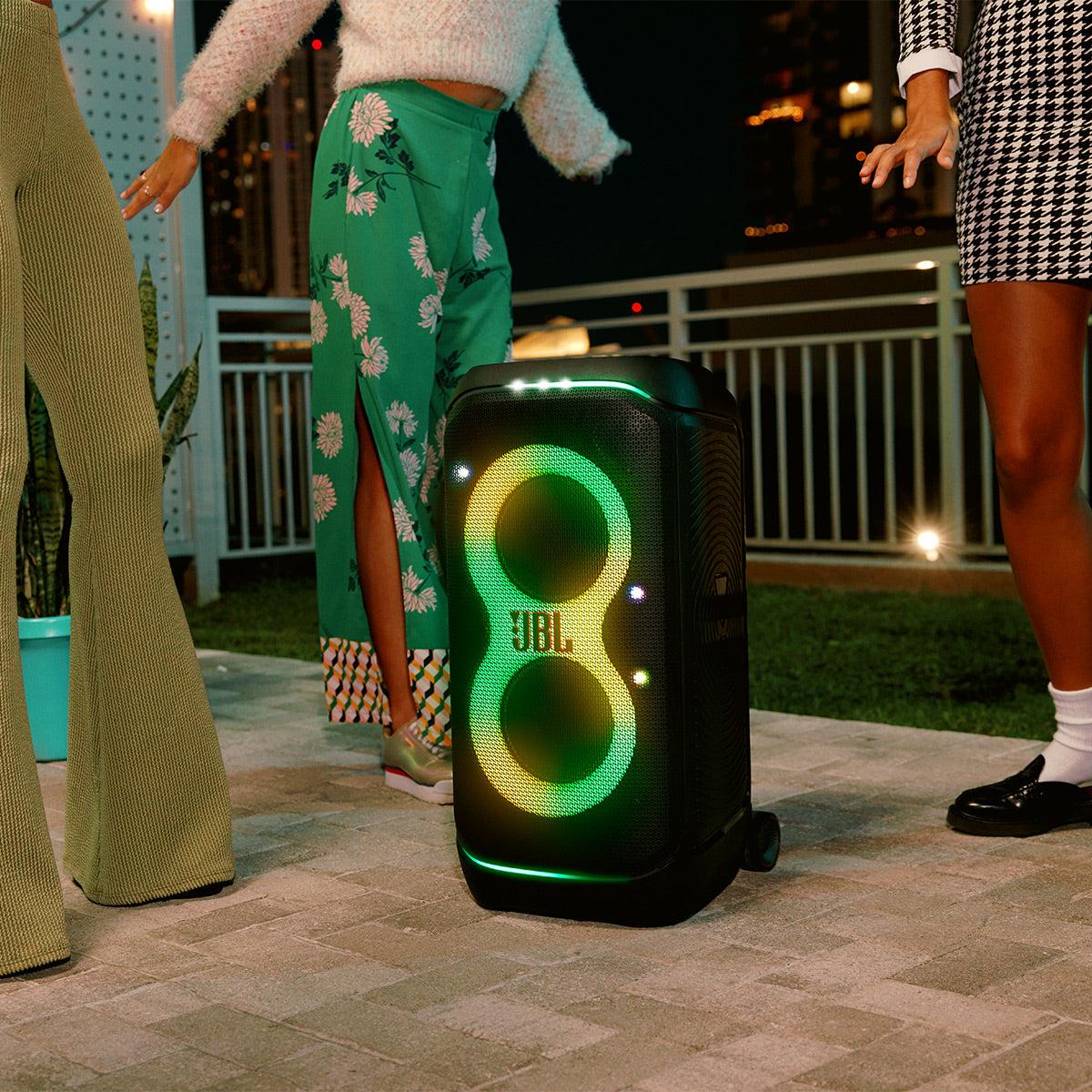
Both speakers feature synchronized LED light shows, but the Stage 320 represents a significant evolution in visual design. Where the 310 uses 4 white strobe lights and 2 LED rings for accent lighting, the Stage 320 employs 11 white strobes and 2 full LED strips that create a unified lighting display around the speaker's midsection.
The Stage 320's lighting appears more cohesive and visually impressive, with better synchronization to music and more dramatic effects. The additional LED elements allow for more complex patterns and smoother color transitions. While lighting might seem secondary to audio performance, it significantly enhances the party atmosphere and can be the deciding factor for users who prioritize visual impact.
The Stage 320 incorporates Bluetooth 5.4 compared to the 310's 5.1 version, providing better connection stability, lower latency, and improved range. The newer Bluetooth standard also enables Auracast compatibility, allowing wireless connection to multiple compatible speakers for expanded coverage without the timing issues that plague traditional wireless speaker pairing.
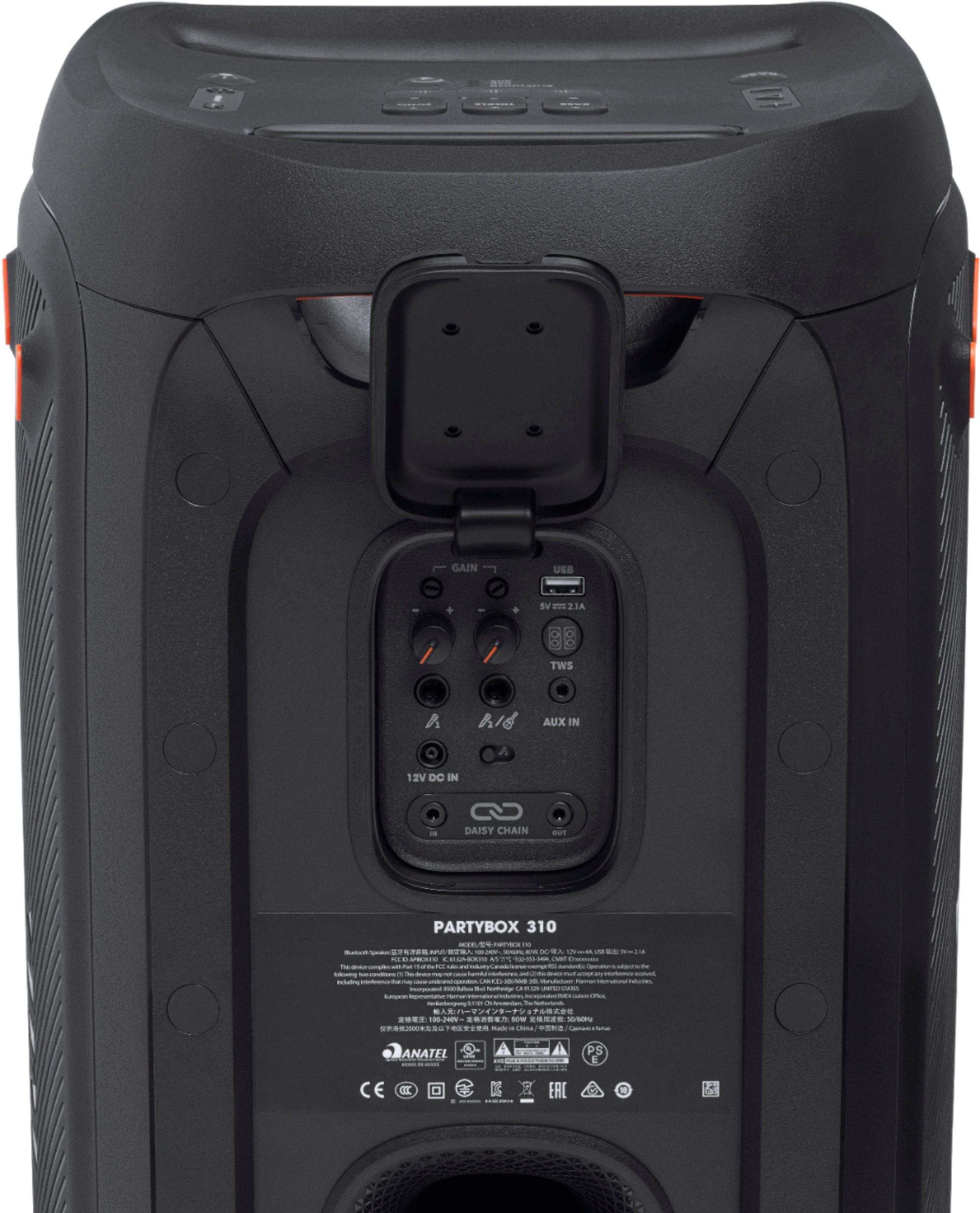
However, the 310 retains a 3.5mm auxiliary output that the Stage 320 eliminates. This output allows daisy-chaining to additional speakers or connecting recording equipment—potentially important for users who need analog audio routing or want to integrate with existing sound systems.
Both speakers include dual TRS inputs for microphones and instruments, making them suitable for karaoke, small performances, or public speaking. The input quality and processing are similar, but the Stage 320's improved microphone EQ controls make it easier to dial in good vocal sound without using the app.
At the time of writing, the Stage 320 commands a modest premium over the 310—typically $50-75 more depending on retailer promotions. This price difference is relatively small in the context of speakers that often retail for $500-600, making the newer model's additional features quite accessible.
The long-term value equation strongly favors the Stage 320 due to its replaceable battery system. Battery replacement services for the 310 typically cost $200-300 when available, often approaching half the speaker's original price. For the Stage 320, replacement batteries cost significantly less and can be swapped by users without technical expertise.
Heavy users who run their speakers regularly will see the Stage 320's superior efficiency and battery flexibility pay dividends within 2-3 years. Even casual users benefit from knowing their investment won't become obsolete due to battery degradation.
The PartyBox 310 remains compelling for specific use cases. Users who prioritize the warmer, punchier bass character for rock and pop music might prefer its sound signature. The auxiliary output makes it better suited for integration with existing audio equipment, and the protective bottom pads provide more flexibility for placement in tight spaces.
The 310 also benefits from four years of real-world testing and refinement. Firmware updates have addressed early issues, and the design's reliability is proven. For users who want maximum confidence in their purchase and don't need bleeding-edge features, this maturity provides value.
While neither speaker is designed primarily for home theater use, both can serve as powerful wireless speakers for movie watching or gaming. The Stage 320's improved volume capability and cleaner high-frequency response make it better suited for dialog clarity and soundtrack dynamics.
However, both speakers exhibit limited directivity—they sound best when you're positioned directly in front of them. For home theater use, this means careful placement is crucial, and neither speaker will fill a room with consistent sound the way dedicated home audio equipment would.
The Stage 320's faster Bluetooth connection and lower latency make it more practical for video content, where audio delay can ruin the viewing experience. The 310's auxiliary input provides an alternative wired connection that eliminates Bluetooth latency entirely, making it potentially better for users who plan regular home theater integration.
After extensive evaluation of user feedback, professional reviews, and technical specifications, the Stage 320 emerges as the better choice for most buyers. Its combination of higher volume output, improved portability, swappable battery system, and enhanced lighting justifies the modest price premium for anyone who plans regular use.
You need maximum volume for large outdoor gatherings, frequently transport your speaker, value long-term battery flexibility, or want the latest features and future-proofing. The Stage 320 particularly suits event professionals, heavy users, and anyone who prioritizes maximum performance and convenience.
Budget constraints make the price difference meaningful, you prefer the warmer bass character, need the auxiliary output for equipment integration, or want the security of a proven, mature design. The 310 remains excellent for casual users who prioritize immediate value over cutting-edge features.
The Stage 320 represents JBL's current thinking on portable party speakers, incorporating four years of user feedback and technological advancement. While the 310 continues serving users well, the newer model's advantages in volume, portability, and battery flexibility make it the smarter long-term investment for most party enthusiasts.
For users who demand maximum value and performance from their portable speaker investment, the Stage 320's combination of raw capability and practical improvements justifies choosing the newer technology. The removable battery system alone provides enough long-term value to offset the initial price difference, while the improved sound output ensures your parties will never lack for volume or impact.
| JBL PartyBox Stage 320 | JBL PartyBox 310 |
|---|---|
| Maximum Volume Output - Most critical for outdoor parties and large spaces | |
| 107.4 dB (significantly louder, fills tennis court-sized areas) | 100.5 dB (adequate for most backyard gatherings) |
| Battery System - Major long-term value consideration | |
| Removable 68Wh battery, swappable for unlimited runtime | Fixed 72Wh battery, non-replaceable when it degrades |
| Frequency Response - Determines bass depth and overall sound range | |
| 40Hz-20kHz (deeper bass extension, more sub-bass impact) | 45Hz-20kHz (slightly less deep bass, warmer mid-bass punch) |
| Portability Features - Important for frequent transport | |
| Enhanced telescopic handle, wider wheels, 16.5kg weight | Standard telescopic handle, basic wheels, 17.4kg weight |
| Control Interface - Affects ease of use during parties | |
| Physical knobs for volume/lights plus buttons | All button controls with backlight |
| LED Lighting System - Visual impact for party atmosphere | |
| 11 white strobes + 2 LED strips (unified, dramatic display) | 4 white strobes + 2 LED rings (simpler, adequate lighting) |
| Bluetooth Technology - Connection quality and features | |
| 5.4 with Auracast multi-speaker pairing capability | 5.1 standard connectivity |
| Audio Processing - Sound optimization technology | |
| AI Sound Boost (real-time audio optimization) | Traditional fixed processing |
| Charging Speed - Downtime between uses | |
| 3 hours to full charge, instant boot when plugged in | 3.5 hours to full charge, slower boot time |
| Audio Connectivity - Integration with other equipment | |
| 3.5mm aux input, dual mic/guitar inputs, no aux output | 3.5mm aux input and output, dual mic/guitar inputs |
| Protective Features - Durability for different placements | |
| No bottom padding (upright use only) | Rubber bottom pads (can safely lay on side) |
| Release Generation - Technology maturity consideration | |
| 2024 release (latest features, newer technology) | 2020 release (proven reliability, 4 years of refinement) |
The JBL PartyBox Stage 320 is significantly louder than the PartyBox 310, reaching 107.4 dB compared to 100.5 dB. This 7-decibel difference represents roughly four times more acoustic power, making the Stage 320 better for large outdoor spaces and crowds.
Both deliver powerful bass, but they differ in character. The PartyBox 310 has punchier, warmer bass that's more prominent in the mid-bass range. The Stage 320 extends deeper (40Hz vs 45Hz) with more controlled, refined bass response thanks to AI processing.
We've done our best to create useful and informative comparisons to help you decide what product to buy. Our research uses advanced automated methods to create this comparison and perfection is not possible - please contact us for corrections or questions. These are the sites we've researched in the creation of this article: stereoguide.com - soundguys.com - rtings.com - soundguys.com - soundguys.com - rtings.com - jbl.com - youtube.com - youtube.com - youtube.com - youtube.com - rtings.com - 9to5toys.com - versus.com - cdw.com - jbl.com - projectorscreenstore.com - projectorscreen.com - ro.harmanaudio.com - jbl.co.nz - bestbuy.com - youtube.com - rtings.com - comparisontabl.es - crutchfield.com - youtube.com - bestbuy.com - rtings.com - youtube.com - versus.com - youtube.com - youtube.com - jbl.com - youtube.com - crutchfield.com - manuals.plus - in.jbl.com - jbl.com.tw - mm.jbl.com - bestbuy.com - jbl.com - onward.ph - youtube.com - manuals.plus - harmanaudio.com - support.jbl.com - youtube.com - kh.jbl.com - bestbuy.com

Privacy Policy
Terms and Conditions - Affiliate Policy
Home Security
© Copyright 2008-2026.
11816 Inwood Rd #1211, Dallas, TX 75244