


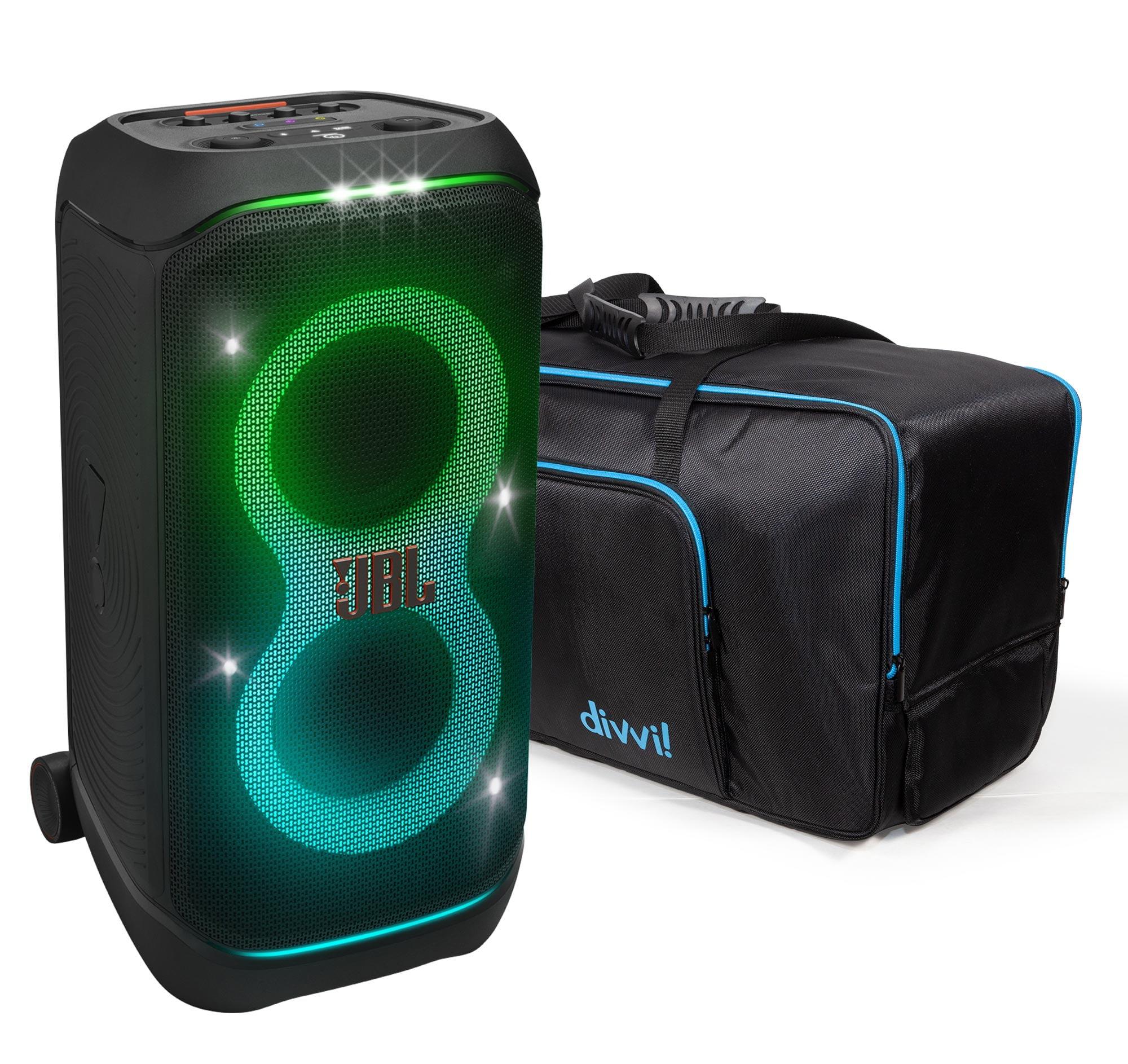
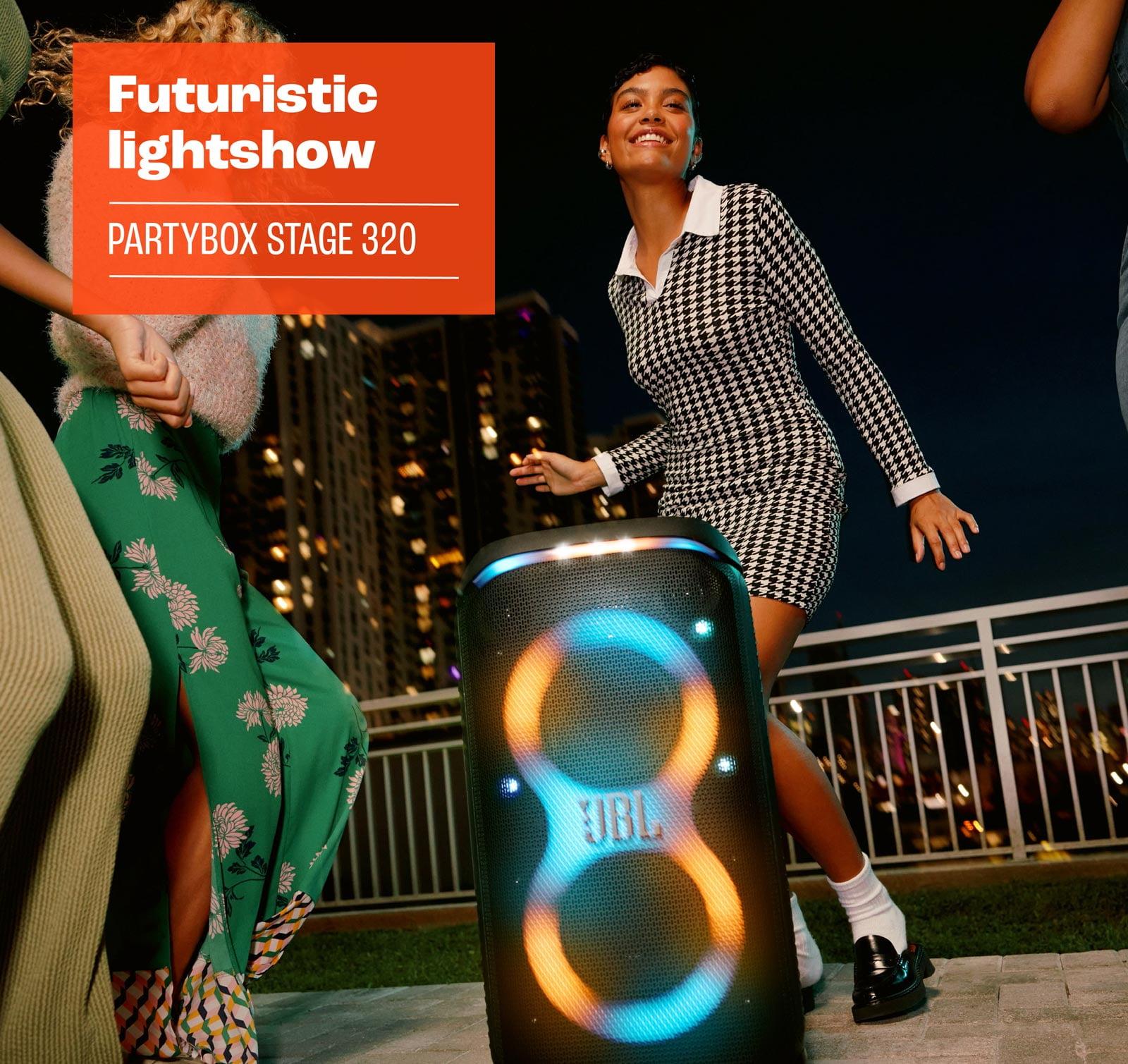
When you're planning a party or just want to fill your space with serious sound, JBL's PartyBox lineup offers some compelling options. But with speakers ranging from compact grab-and-go units to rolling behemoths, choosing the right one can be tricky. Today, we're diving deep into two popular models: the JBL PartyBox Encore Essential and the JBL PartyBox Stage 320. Both promise to bring the party, but they take very different approaches to getting there.
Before we jump into the specifics, let's talk about what makes party speakers unique. Unlike bookshelf speakers designed for critical listening or portable speakers meant for personal use, party speakers are built around one core mission: getting people moving. They prioritize high volume output, punchy bass that you can feel in your chest, and visual flair through synchronized light shows.
The key specs that matter most in party speakers are power output (measured in watts RMS, which tells you how much continuous power the speaker can handle), frequency response (the range of sounds from deep bass to high treble), battery life for untethered use, and maximum sound pressure level (SPL) – essentially how loud they can get before distorting.
Modern party speakers also pack features like Bluetooth connectivity, microphone inputs for karaoke, and smartphone apps for customizing sound and lighting. The PartyBox Encore Essential and Stage 320 both deliver on these basics but target completely different use cases.
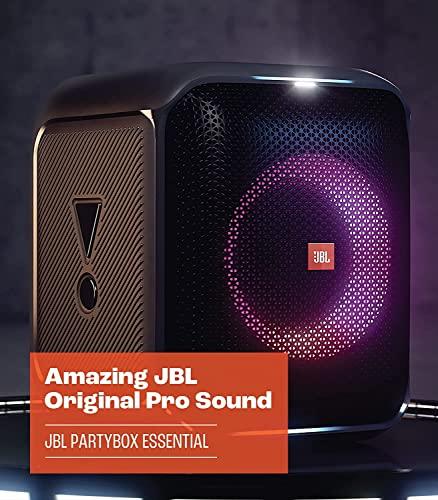
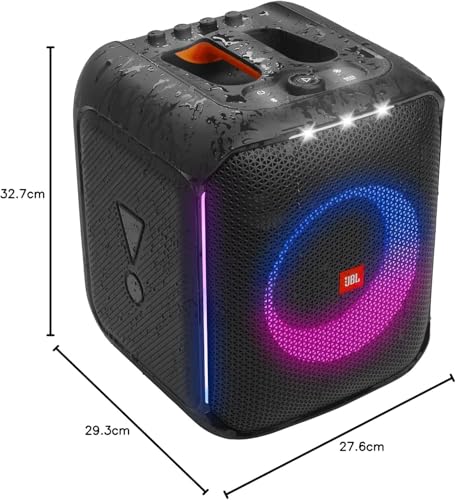
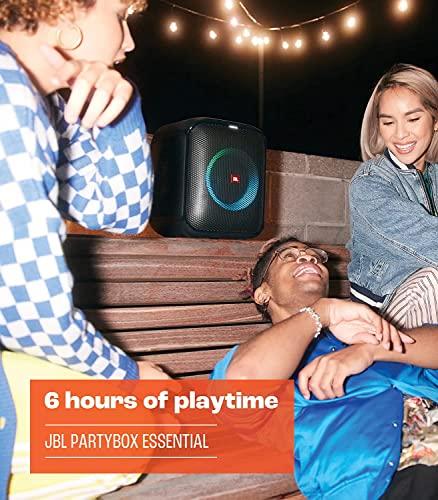
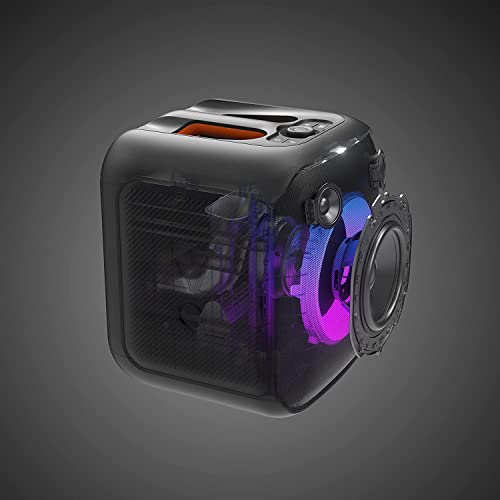
The JBL PartyBox Encore Essential, released in 2022, represents JBL's compact approach to party audio. At just 13 pounds with a built-in handle, it's designed for people who want serious sound without the commitment of a massive speaker. Think college dorm rooms, backyard barbecues, or beach trips where you need something that won't break your back to carry.
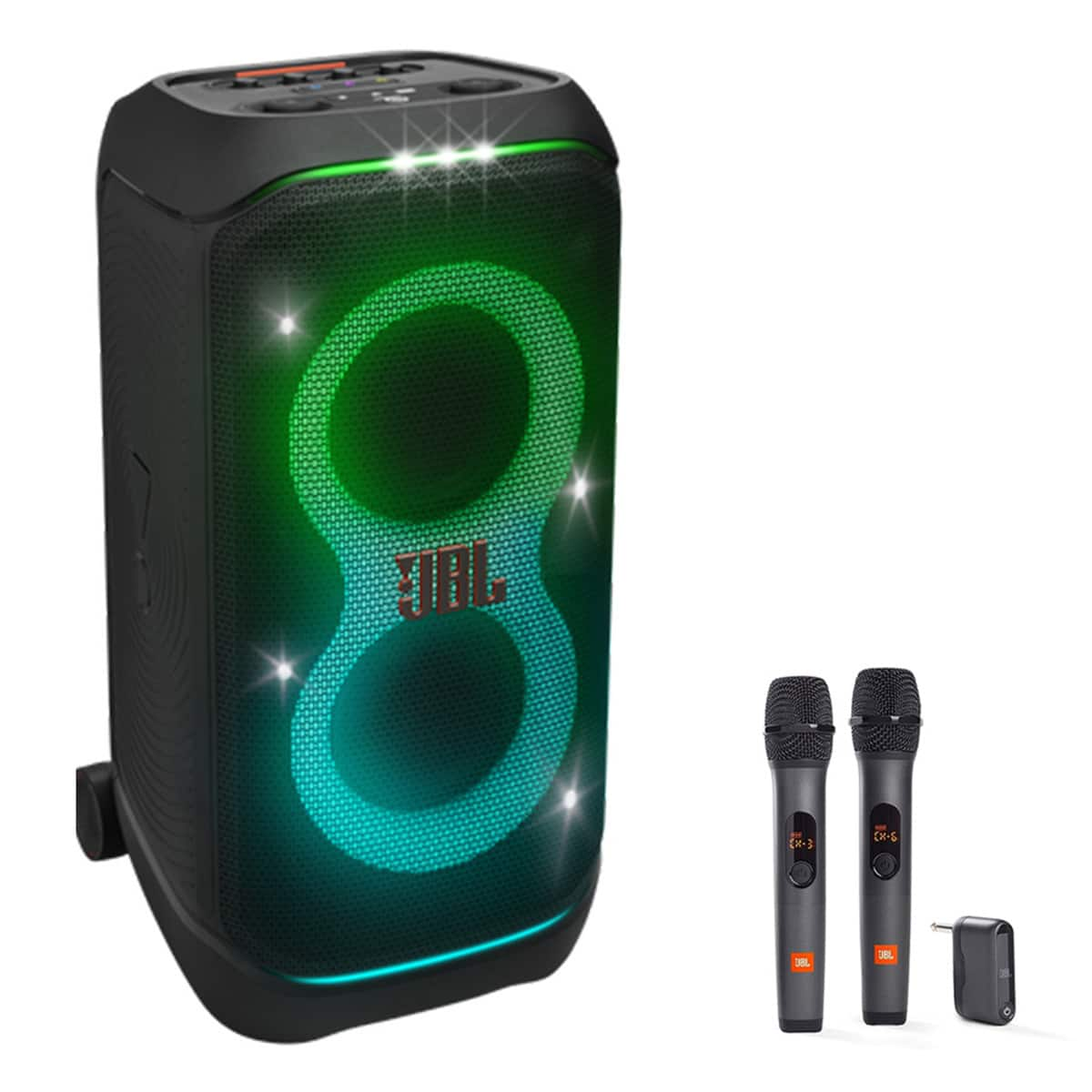
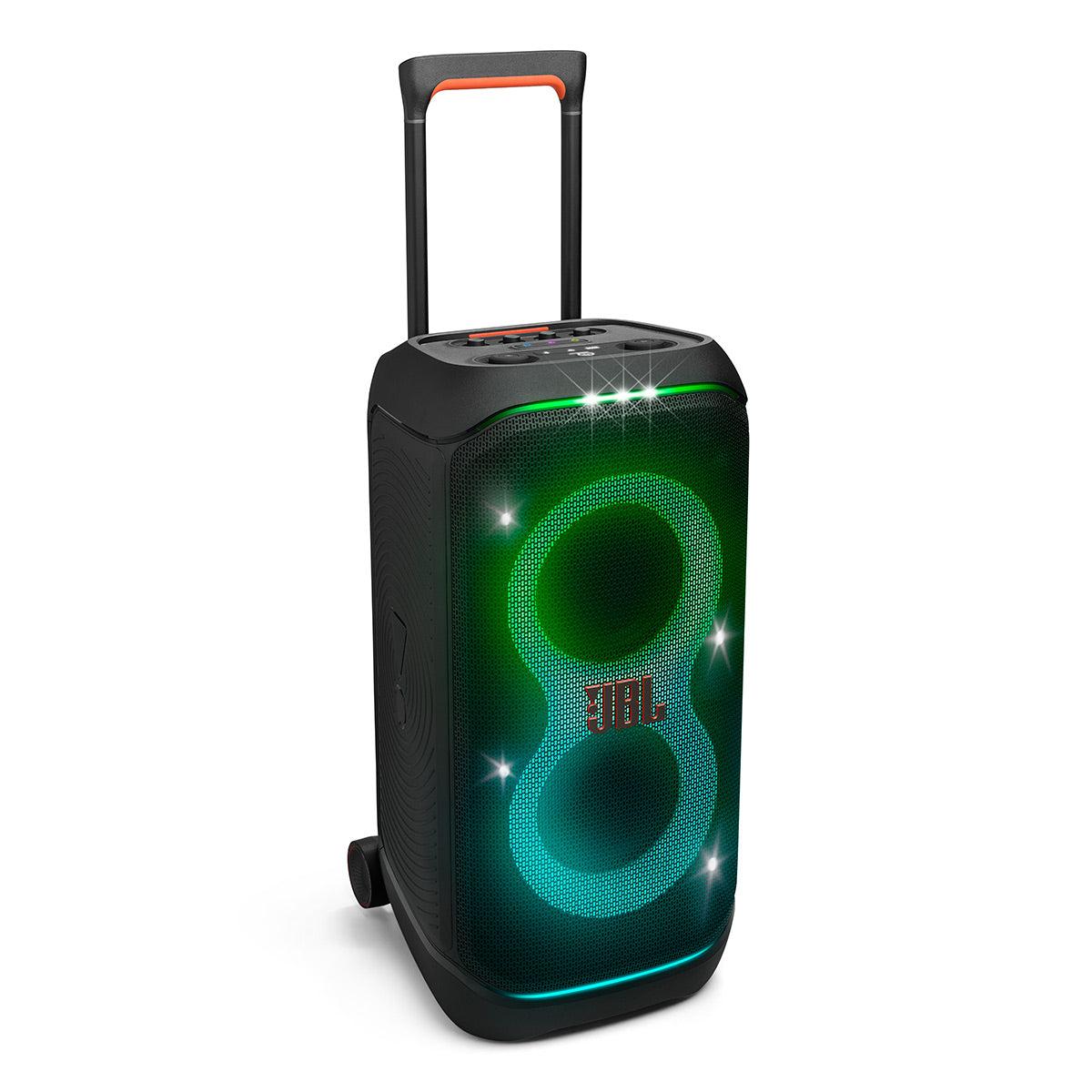
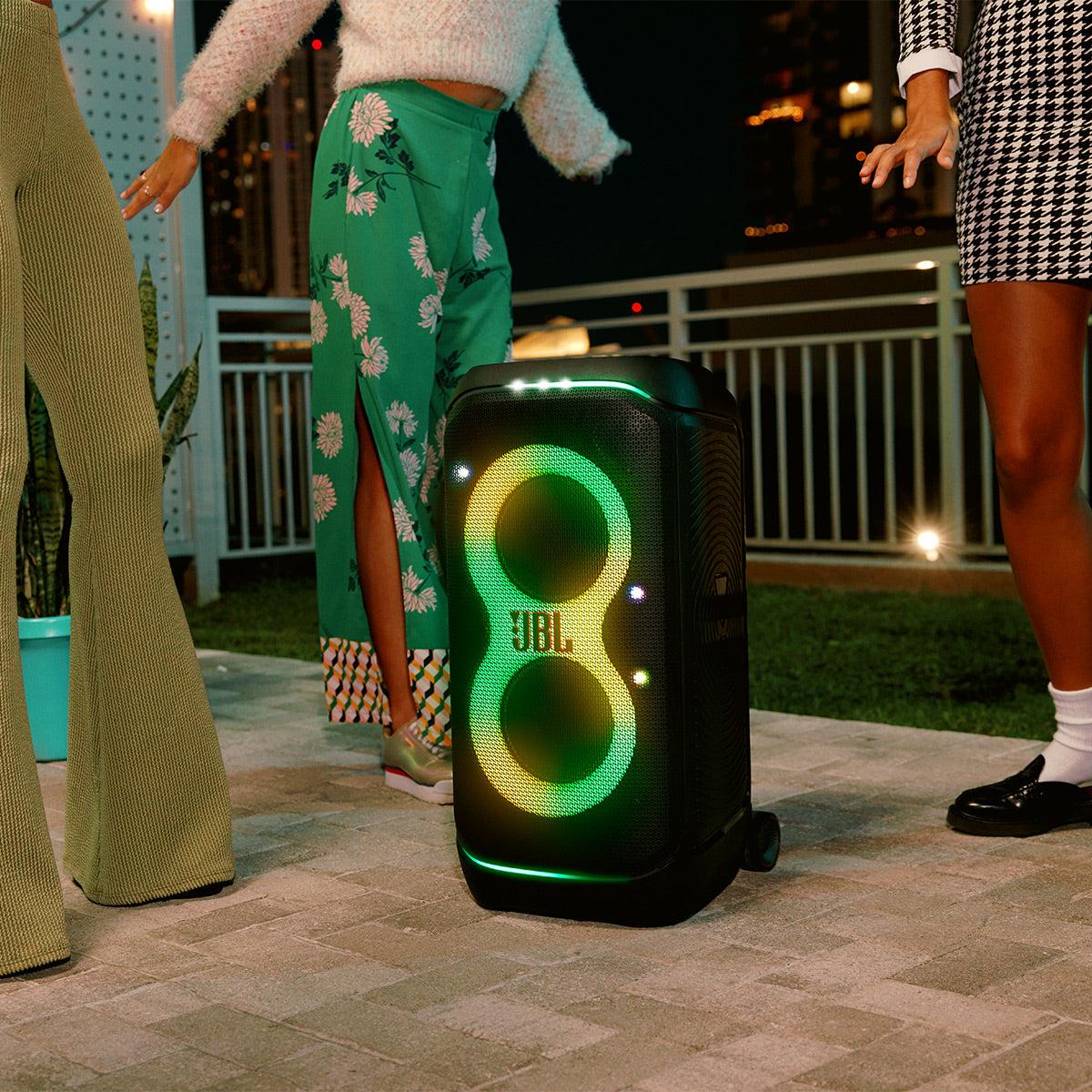
The JBL PartyBox Stage 320, launched in 2024, takes the opposite approach. At 36 pounds with wheels and a telescoping handle, it's built for events where maximum impact matters more than easy transport. This is JBL's answer to "what if we made a speaker that could handle a block party or outdoor wedding?"
The two-year gap between releases shows in the technology. The Stage 320 benefits from newer Bluetooth 5.4 (versus 5.1 in the Encore Essential), improved battery chemistry, and JBL's latest "AI Sound Boost" processing that analyzes audio in real-time to optimize sound quality.
Here's where the differences become dramatic. The Encore Essential delivers 100 watts RMS through a single 5.25-inch woofer and dual tweeters. The Stage 320 nearly doubles that with 240 watts RMS powered by dual 6.5-inch woofers and matching tweeters.
But raw power numbers only tell part of the story. RMS (Root Mean Square) refers to continuous power output – the amount of power a speaker can handle consistently without damage, unlike peak power ratings that represent short bursts. In real-world terms, the Stage 320's 240W RMS means it can sustain much higher volumes without the compression and distortion that plague smaller speakers when pushed hard.
From our research into user experiences and professional reviews, this power difference translates to dramatically different coverage areas. The Encore Essential excels in medium-sized rooms and can handle outdoor gatherings of 15-20 people comfortably. Push it beyond that, and you'll notice the sound becomes strained at higher volumes, particularly in the bass frequencies where that single woofer starts working overtime.
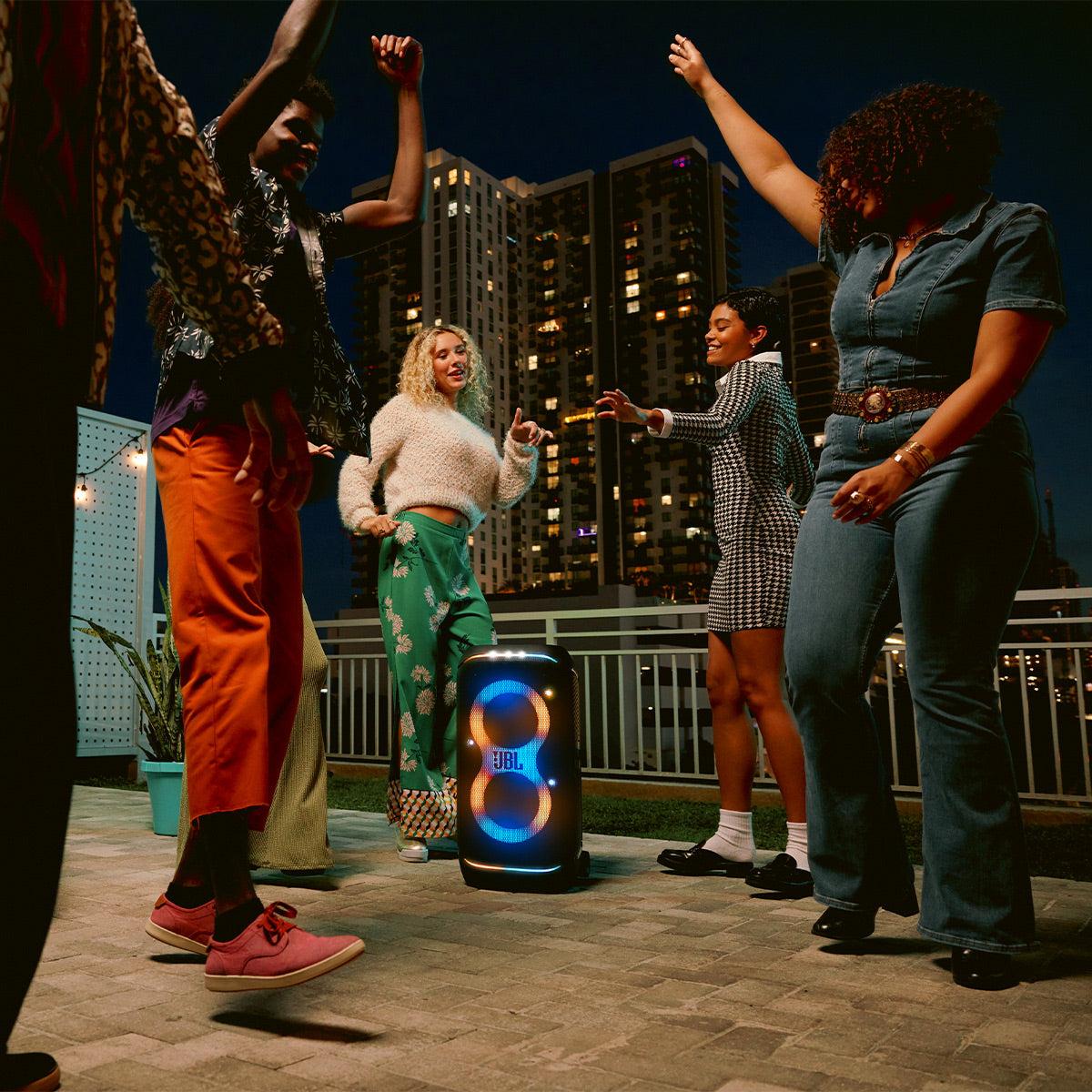
The Stage 320, by contrast, can legitimately fill large outdoor spaces. JBL claims it can handle "tennis court-sized" areas, and based on measured output levels reaching 95dB at over 8 feet away, that's not marketing hyperbole. Those dual 6.5-inch woofers work together to move serious air, creating the kind of chest-thumping bass that gets people moving without the distortion you'd hear from a smaller speaker trying to match that output.
Volume is important, but how do these speakers actually sound? Both use JBL's "Original Pro Sound" tuning, which emphasizes punchy bass and clear highs – perfect for modern pop, hip-hop, and electronic music where you want that kick drum to hit hard.
The Encore Essential actually has some advantages here. With less raw power to manage, it maintains better composure at moderate volumes. The sound signature is well-balanced, and the bass response, while not earth-shaking, is tight and controlled. The single woofer design also means better phase coherence – all the bass frequencies arrive at your ears at the same time, creating a more focused soundstage.
However, the Stage 320's dual-woofer configuration brings its own benefits. Having two drivers handling bass duties means each one works less hard, reducing distortion even at high volumes. The wider spacing between drivers also creates better bass distribution throughout the listening area – no more "sweet spots" where the bass sounds perfect while other areas sound thin.
Both speakers offer app-controlled 5-band EQ (equalizer), letting you adjust five different frequency ranges to taste. This is crucial because party speakers often need different tuning depending on their environment. Outdoor use typically benefits from boosted bass and treble to compensate for the lack of room boundaries, while indoor use might require bass reduction to prevent overwhelming smaller spaces.
Here's where the Stage 320 delivers its most compelling advantage. The Encore Essential provides up to 6 hours of playback, which sounds reasonable until you actually try to run a party on battery power. In practice, that means about 4-5 hours of realistic use at party volumes with the light show active – barely enough for a typical evening gathering.
The Stage 320 changes the game entirely with up to 18 hours of battery life. This isn't just a incremental improvement; it's the difference between constantly worrying about power management and forgetting the speaker even has a battery. More importantly, the Stage 320 features a removable battery system – something almost unheard of in consumer speakers. This means you can buy spare batteries for truly unlimited runtime, or replace the battery years down the line when it inevitably degrades.
The fast charging capabilities differ significantly too. While the Encore Essential requires 3.5 hours for a full charge, the Stage 320 charges completely in just over 3 hours despite having nearly double the battery capacity. Even better, a 10-minute quick charge on the Stage 320 provides 2 hours of playback – perfect for those "oh no, I forgot to charge it" moments right before guests arrive.
Both speakers handle the basics well: Bluetooth connectivity, USB playback, and auxiliary inputs. But the Stage 320 adds professional-grade features that set it apart from typical consumer speakers.
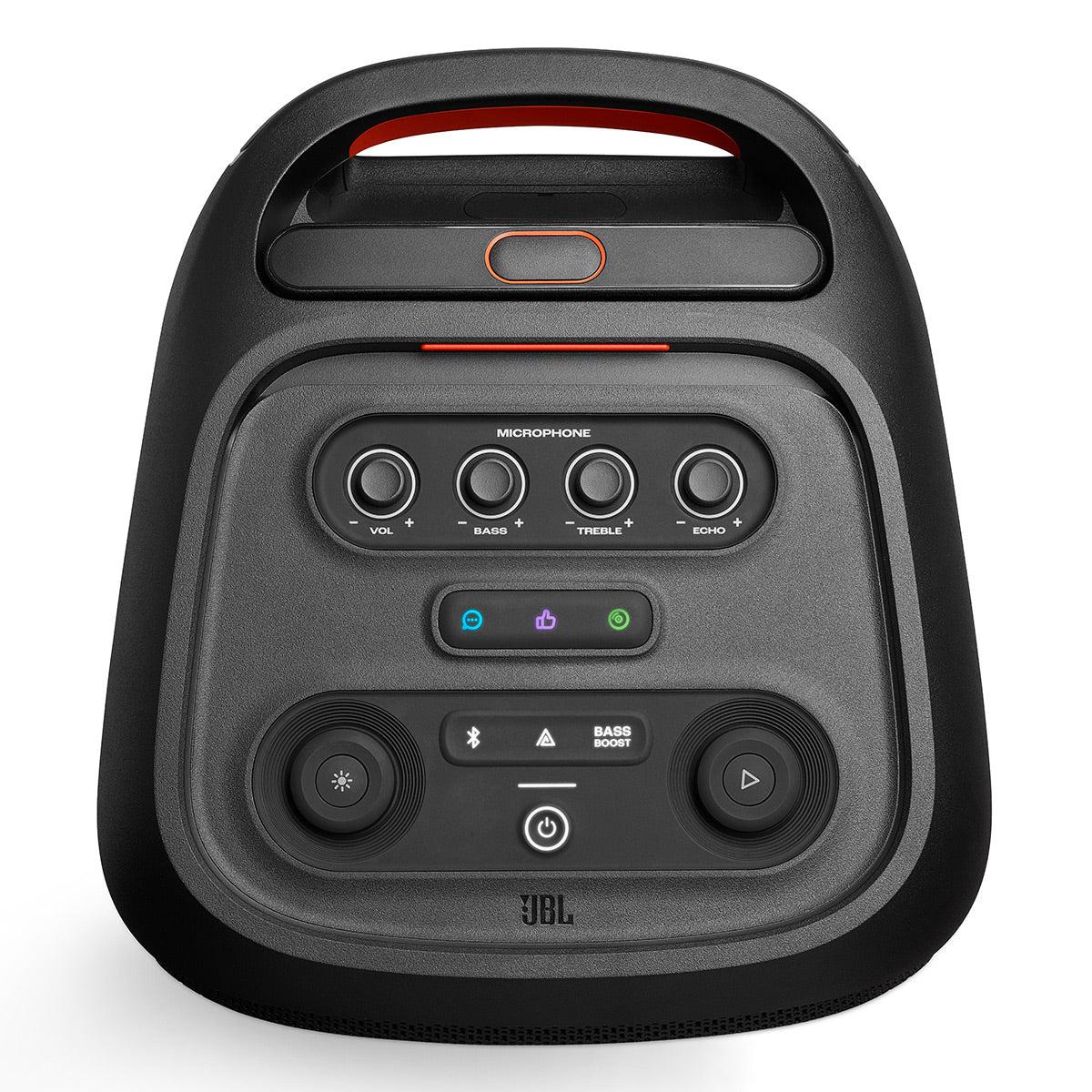
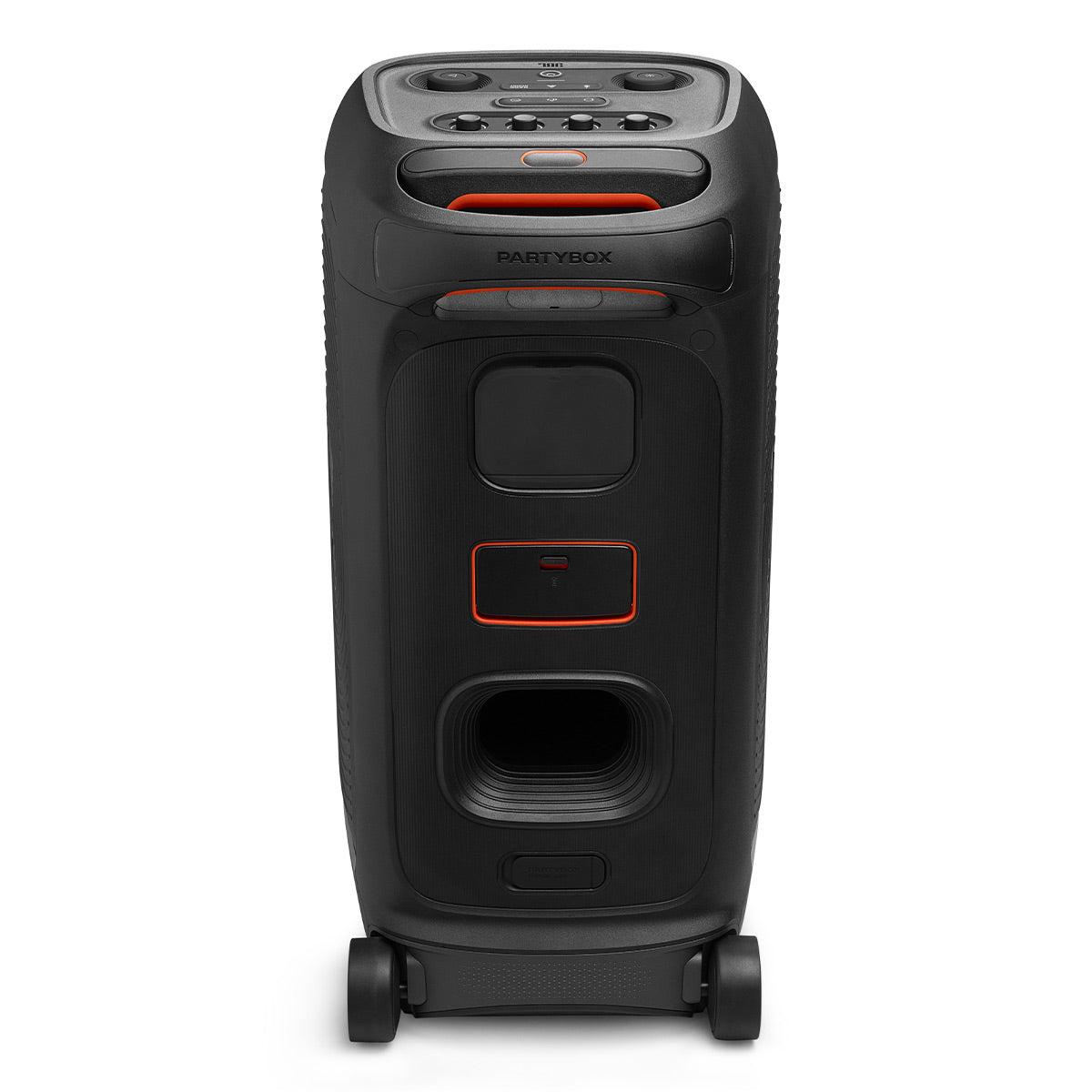
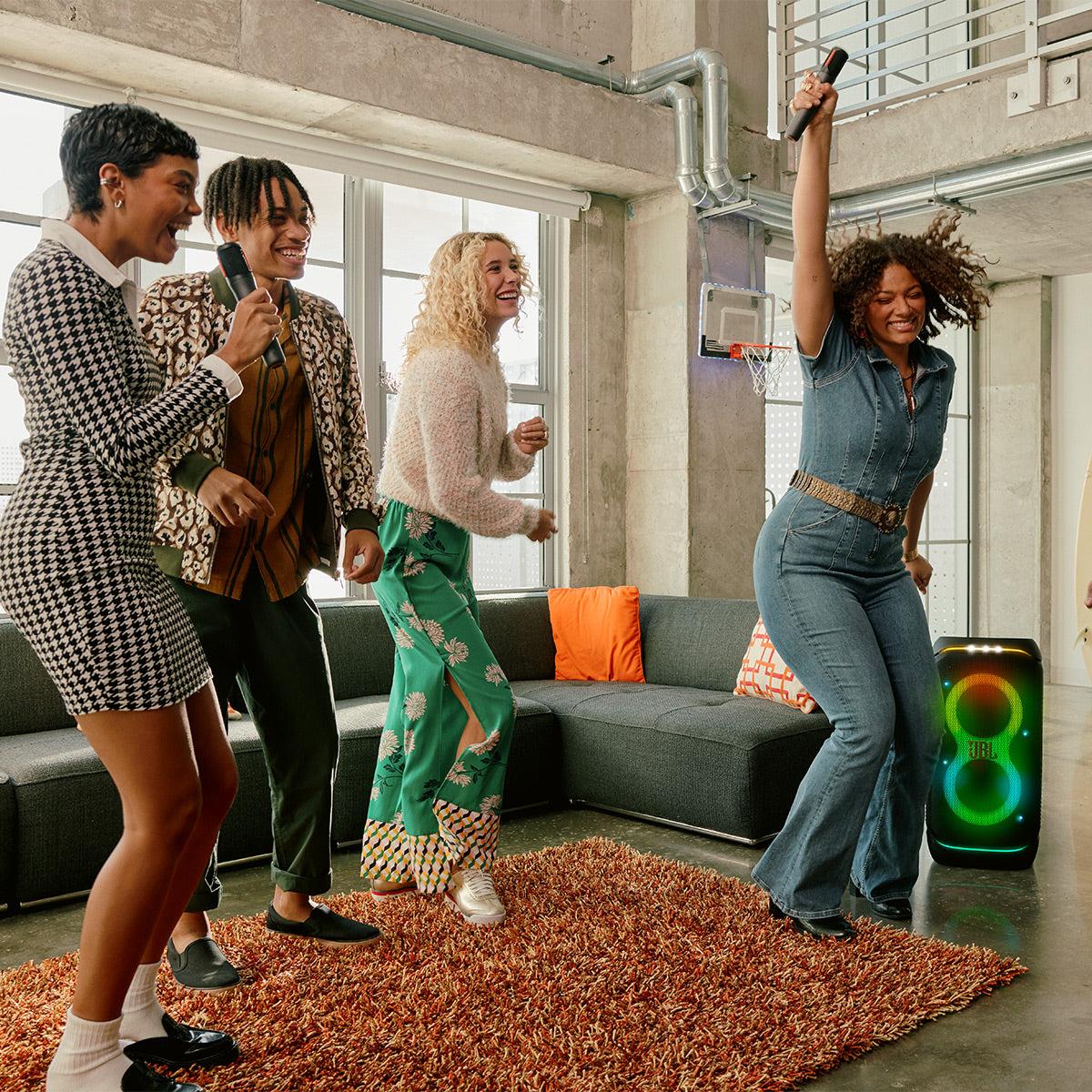
The dual microphone inputs with independent gain controls mean you can run karaoke for two people simultaneously, or use one mic for announcements while keeping a wireless mic system connected to the second input. The dedicated guitar input transforms the Stage 320 into a legitimate practice amp for musicians – something the Encore Essential can't match with its single microphone input.
Auracast support in the Stage 320 represents the latest in wireless audio technology, allowing you to connect multiple compatible speakers wirelessly without the traditional Bluetooth limitations. The Encore Essential offers "True Wireless Stereo" pairing, but only between two identical units, and the connection isn't as robust as Auracast.
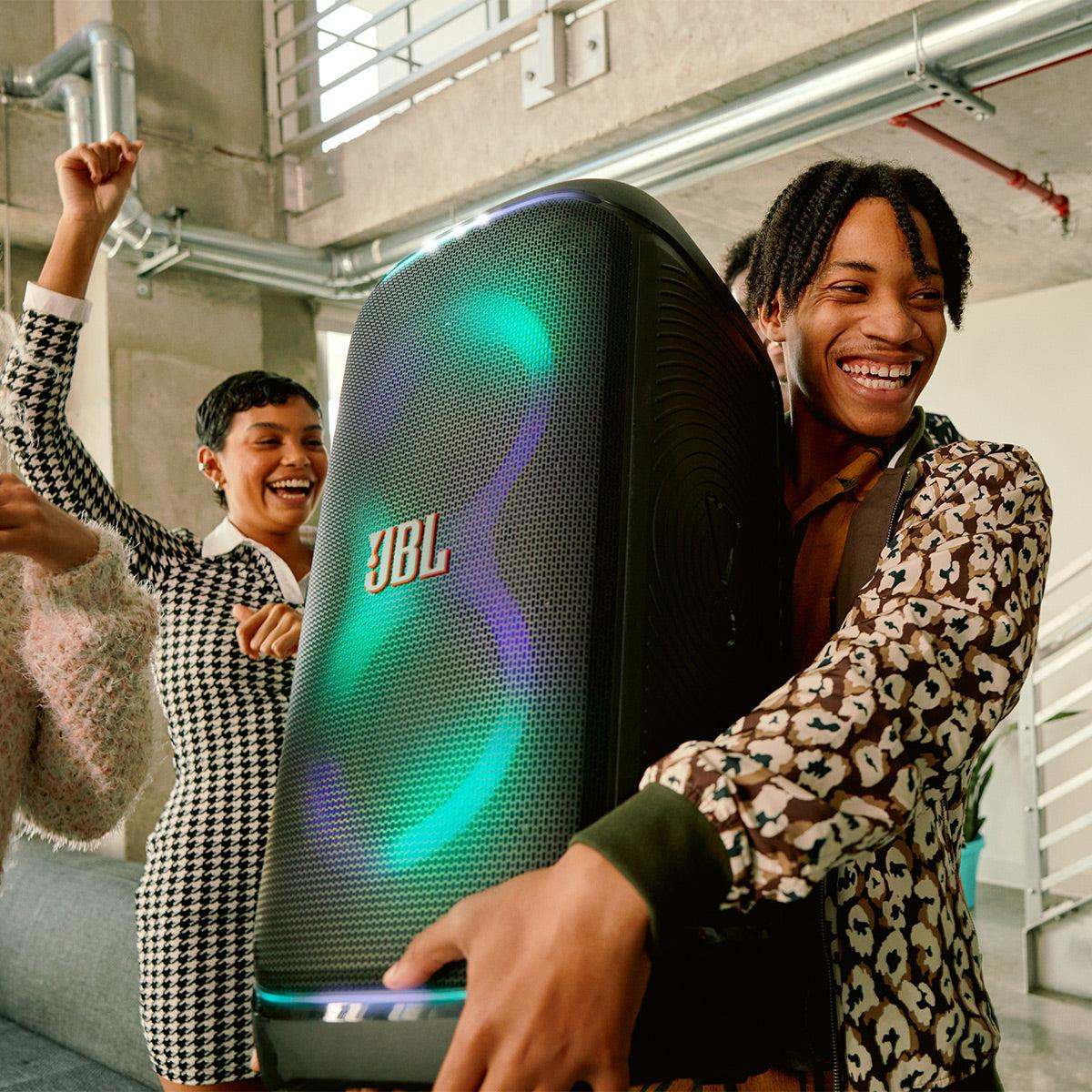
This is where personal priorities become crucial. The Encore Essential weighs just 13 pounds and features a comfortable carry handle. One person can easily transport it anywhere – up stairs, to the beach, between rooms during a house party. The compact size means it fits in car trunks, overhead bins, and tight storage spaces.
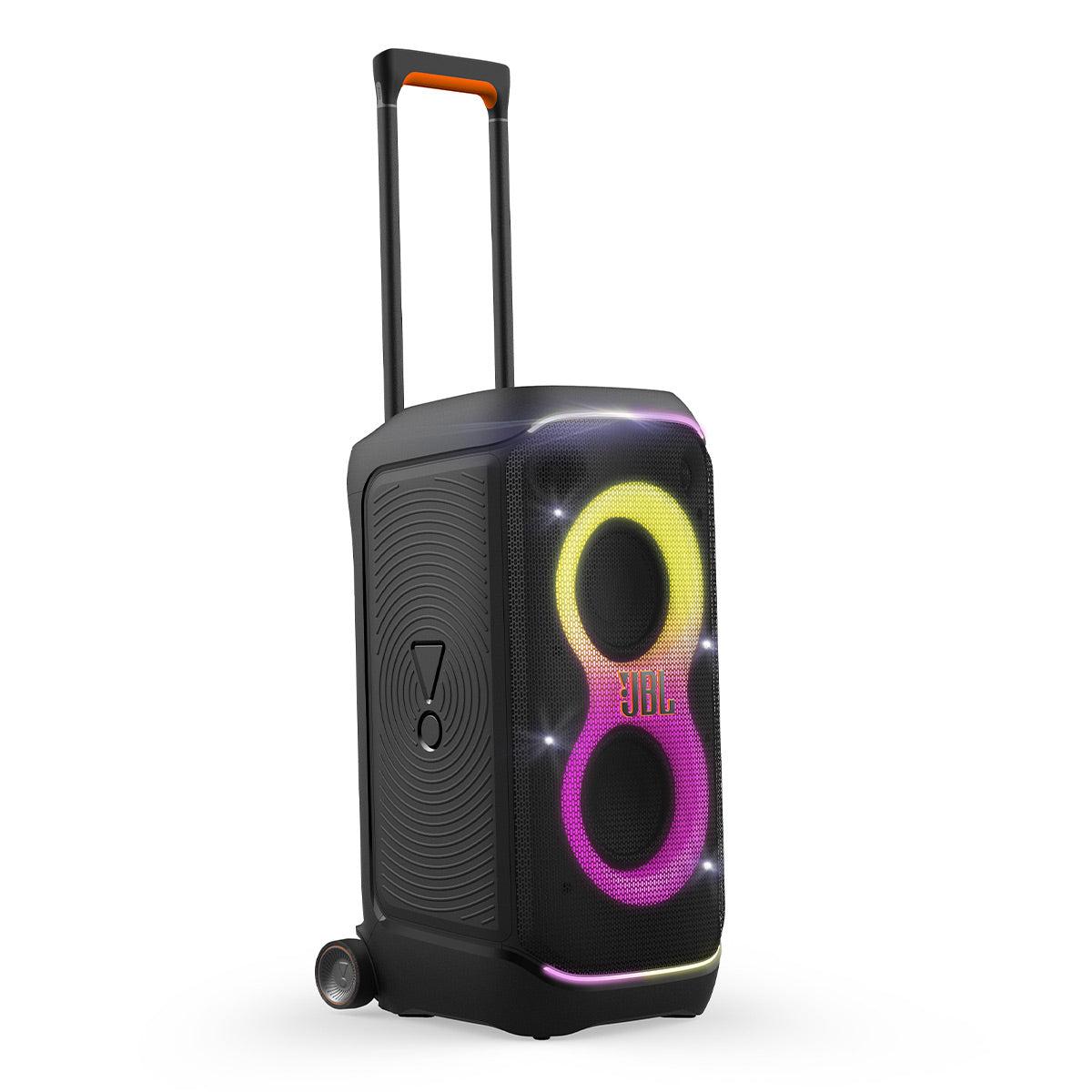
The Stage 320 at 36 pounds requires a different approach. JBL solved the weight issue with sturdy wheels and a telescoping handle that extends to a comfortable pulling height. Rolling it across flat surfaces is effortless, but stairs become a two-person job, and fitting it in smaller cars requires planning.
From a practical standpoint, the Encore Essential's portability advantage extends beyond just moving the speaker. Its smaller footprint means it works better in bedrooms, dorm rooms, and other spaces where a large speaker would dominate the room visually and acoustically.
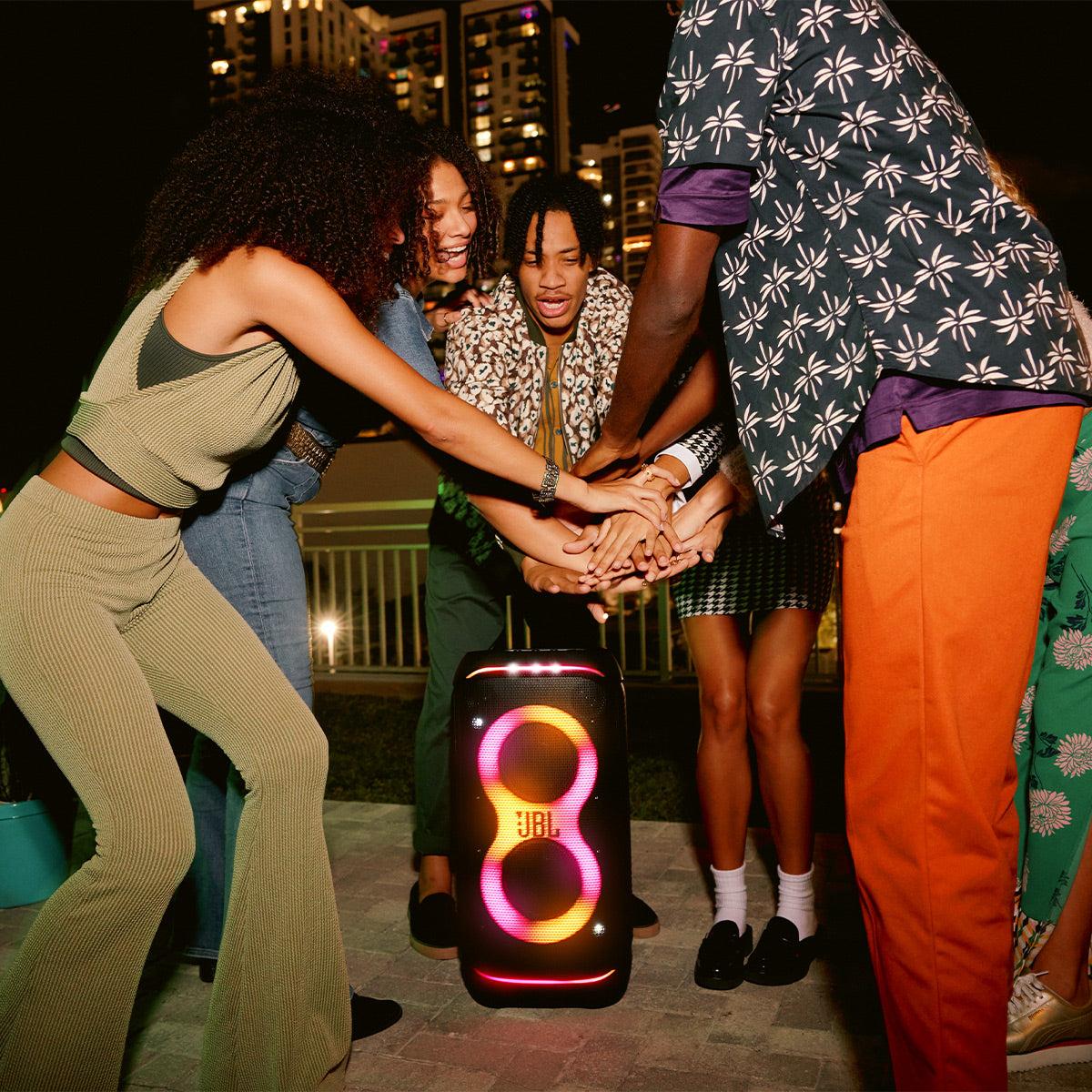
Both speakers feature RGB LED light shows that sync to music, but the Stage 320 offers more sophisticated effects. The "adaptive lightshow" includes multiple lighting zones with different patterns – starry effects, light trails, and strobe effects that create a more immersive visual experience.
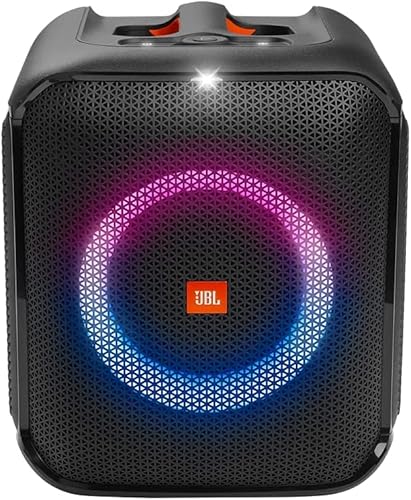
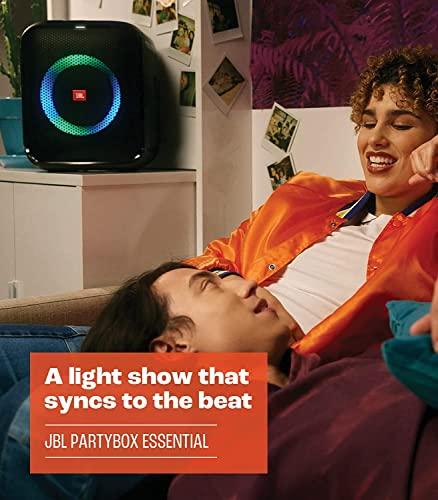
The Encore Essential's light show focuses on a circular LED ring with coordinated effects. While less complex than the Stage 320, it's still effective at creating ambiance and significantly better than speakers without any lighting effects.
Both apps offer extensive customization, letting you choose colors, adjust brightness, and sync multiple speakers' light shows. The lighting systems are surprisingly important for party atmosphere – they transform a simple speaker into an entertainment centerpiece that draws people together.
Both speakers carry IPX4 ratings, meaning they can handle splashes and light rain but aren't submersible. This is adequate for poolside use and outdoor parties where you might encounter unexpected weather, but neither speaker is truly ruggedized for harsh conditions.
The larger size and more robust construction of the Stage 320 does provide some inherent durability advantages. The wheels and telescoping handle are built to withstand regular transport, while the Encore Essential's smaller components might be more susceptible to damage from drops or impacts.
At the time of writing, the Stage 320 costs roughly twice as much as the Encore Essential. This might seem steep until you break down what you're getting: 2.4 times the power, three times the battery life, professional inputs, and substantially better build quality.
The Encore Essential offers excellent value in the under-$400 category, delivering surprisingly good sound quality and party features at a price point that doesn't require major budget considerations. It's the kind of speaker you can buy on impulse and not regret.
The Stage 320 requires more investment but delivers proportionally better value for users who need its capabilities. The replaceable battery alone adds significant long-term value, potentially extending the speaker's useful life by several years compared to speakers with sealed battery packs.
Neither speaker is designed primarily for home theater use, but both can serve double duty for casual TV watching. The Encore Essential works well as a TV speaker upgrade in bedrooms or small living rooms, providing much better dialogue clarity and music reproduction than built-in TV speakers.
The Stage 320 brings enough power and bass response to enhance movie watching in larger rooms, though its party-focused tuning means it's not ideal for critical dialogue or subtle soundtracks. The microphone inputs could be useful for home karaoke setups or video conferencing in larger rooms.
The JBL PartyBox Encore Essential excels as the all-around party speaker for most people. Its combination of good sound quality, genuine portability, and reasonable pricing makes it the safe choice for college students, apartment dwellers, and casual entertainers who want serious sound without serious commitment.
Choose the Encore Essential if you're hosting parties under 25 people, need something you can easily transport, or want great party sound without stretching your budget. It's particularly smart for people who might buy two speakers eventually – paired Encore Essentials can fill larger spaces while maintaining that crucial portability advantage.
The JBL PartyBox Stage 320 is for people who've outgrown smaller speakers or know they need maximum impact from day one. Its combination of massive battery life, professional features, and legitimate high-volume capabilities makes it worth the premium for serious entertainers, DJs, and anyone hosting large outdoor events regularly.
Pick the Stage 320 if you regularly host gatherings over 25 people, need all-day battery life, want professional audio inputs, or if you're buying one speaker to handle every situation. It's also the smart choice if you're considering this as a long-term investment – that replaceable battery and robust build quality suggest it'll be serving parties for many years to come.
Both speakers represent JBL's understanding of what makes a great party speaker, just at different scales. The Encore Essential proves you don't need to sacrifice portability for party-worthy sound, while the Stage 320 shows what's possible when you prioritize performance over everything else. Your choice ultimately comes down to matching the speaker to your typical party size, transport needs, and budget flexibility.
| JBL PartyBox Encore Essential | JBL PartyBox Stage 320 |
|---|---|
| Power Output - Determines maximum volume and bass impact | |
| 100W RMS (good for 15-20 people) | 240W RMS (handles 50+ people easily) |
| Weight & Portability - Critical for transport and storage | |
| 5.9kg (13 lbs) with carry handle (one-person portable) | 16.5kg (36 lbs) with wheels and telescoping handle (rolling transport) |
| Battery Life - Most important for untethered parties | |
| Up to 6 hours (4-5 hours realistic at party volumes) | Up to 18 hours (all-day events, replaceable battery) |
| Speaker Configuration - Affects sound quality and bass depth | |
| 1 x 5.25" woofer, 2 x 1.75" tweeters | 2 x 6.5" woofers, 2 x 1" dome tweeters |
| Microphone Inputs - Essential for karaoke and announcements | |
| Single mic input with basic controls | Dual mic inputs with independent gain controls plus guitar input |
| Bluetooth Version - Impacts connection stability and range | |
| Bluetooth 5.1 (good connectivity) | Bluetooth 5.4 (better range and multi-device support) |
| Charging Time - How long you wait between parties | |
| 3.5 hours full charge | 3 hours full charge, 10-minute quick charge for 2 hours playback |
| Multi-Speaker Pairing - For bigger sound coverage | |
| True Wireless Stereo (pairs with second Encore Essential) | Auracast wireless chaining (connects multiple compatible speakers) |
| Light Show - Visual party enhancement | |
| RGB ring light with beat sync | Adaptive lightshow with starry lights, trails, and strobe effects |
| Weather Resistance - Outdoor party protection | |
| IPX4 splash-proof (poolside safe) | IPX4 splash-proof (same protection level) |
| Release Year - Technology generation | |
| 2022 (proven technology) | 2024 (latest features and improvements) |
| Best Use Cases - Who should buy each | |
| Small-medium parties, dorms, frequent transport, budget-conscious | Large parties, semi-professional use, all-day events, maximum impact |
The JBL PartyBox Stage 320 is significantly better for large parties, delivering 240W of power compared to the JBL PartyBox Encore Essential's 100W output. The Stage 320 can handle gatherings of 50+ people and fill tennis court-sized outdoor areas, while the Encore Essential works best for groups under 25 people.
The JBL PartyBox Stage 320 offers dramatically better battery life with up to 18 hours of playback versus just 6 hours from the JBL PartyBox Encore Essential. At realistic party volumes, expect about 4-5 hours from the Encore Essential and 15+ hours from the Stage 320, making it much better for all-day events.
The JBL PartyBox Encore Essential is much more portable at just 13 pounds with a carry handle, making it easy for one person to transport anywhere. The JBL PartyBox Stage 320 weighs 36 pounds but includes wheels and a telescoping handle for rolling transport, though it requires more planning for stairs and smaller vehicles.
Both speakers support microphone input, but the JBL PartyBox Stage 320 is superior with dual microphone inputs and independent gain controls, plus a dedicated guitar input. The JBL PartyBox Encore Essential has a single microphone input that's adequate for basic karaoke but less flexible for multiple performers.
The JBL PartyBox Encore Essential offers excellent value under $400 for most users who need portable party sound. However, the JBL PartyBox Stage 320 provides better price-to-performance ratio with 2.4x more power, 3x longer battery life, and professional features for roughly double the cost.
The JBL PartyBox Stage 320 delivers significantly deeper and more powerful bass through dual 6.5-inch woofers versus the Encore Essential's single 5.25-inch woofer. Both offer JBL's signature sound tuning, but the Stage 320 maintains better sound quality at high volumes without distortion.
Neither speaker is designed primarily for home theater, but the JBL PartyBox Encore Essential works well as a TV speaker upgrade in bedrooms or small rooms. The JBL PartyBox Stage 320 can enhance movie watching in larger spaces, though both are optimized for party music rather than dialogue clarity.
The JBL PartyBox Stage 320 offers superior connectivity with Bluetooth 5.4, Auracast multi-speaker pairing, and multiple professional inputs. The JBL PartyBox Encore Essential includes Bluetooth 5.1 and True Wireless Stereo pairing, which is adequate for basic use but less advanced than the Stage 320's options.
The JBL PartyBox Encore Essential requires 3.5 hours for a full charge, while the JBL PartyBox Stage 320 charges completely in just over 3 hours despite having much larger battery capacity. The Stage 320 also offers 10-minute quick charging for 2 hours of playback.
Both the JBL PartyBox Encore Essential and JBL PartyBox Stage 320 feature identical IPX4 splash-proof ratings, making them equally suitable for poolside and light rain exposure. However, the Stage 320's higher power output and longer battery life make it more practical for large outdoor events.
Yes, both support multi-speaker setups but use different technologies. The JBL PartyBox Encore Essential uses True Wireless Stereo to pair with a second identical unit, while the JBL PartyBox Stage 320 supports Auracast technology for connecting multiple compatible speakers with better reliability and range.
Beginners should typically choose the JBL PartyBox Encore Essential for its easier portability, lower cost, and simpler operation. However, if you regularly host large gatherings or want a long-term investment, the JBL PartyBox Stage 320 offers significantly better performance and features that justify the higher price for serious party hosts.
We've done our best to create useful and informative comparisons to help you decide what product to buy. Our research uses advanced automated methods to create this comparison and perfection is not possible - please contact us for corrections or questions. These are the sites we've researched in the creation of this article: bestbuy.com - rtings.com - rtings.com - youtube.com - popsci.com - youtube.com - soundguys.com - audioadvice.com - youtube.com - versus.com - youtube.com - hometechnologyreview.com - jbl.com - bhphotovideo.com - hometechnologyreview.com - global.jbl.com - youtube.com - in.jbl.com - therevolverclub.com - harmanaudio.in - jbl.com.my - jbl.com.ar - jbl.com - pcrichard.com - kh.jbl.com - youtube.com - uclastore.com - bhphotovideo.com - creativeaudio.net - youtube.com - stereoguide.com - soundguys.com - rtings.com - soundguys.com - soundguys.com - rtings.com - jbl.com - youtube.com - youtube.com - youtube.com - youtube.com - rtings.com - 9to5toys.com - versus.com - cdw.com - jbl.com - projectorscreenstore.com - projectorscreen.com - ro.harmanaudio.com - jbl.co.nz - bestbuy.com - youtube.com

Privacy Policy
Terms and Conditions - Affiliate Policy
Home Security
© Copyright 2008-2026.
11816 Inwood Rd #1211, Dallas, TX 75244