

When you're planning a backyard barbecue, beach party, or outdoor wedding, regular Bluetooth speakers just don't cut it. You need something that can fill massive spaces with sound, survive spills and weather, and keep the party going all night long. That's where portable party speakers come in—a specialized category of audio equipment designed to bring concert-level sound to wherever you are.
Unlike your typical desktop speakers or even premium home audio systems, portable party speakers prioritize maximum volume output, extended battery life, and rugged construction over the nuanced sound quality that audiophiles obsess over. Think of them as the pickup trucks of the speaker world: they're built for utility and performance in challenging conditions, not necessarily to impress in a quiet living room.
The two speakers we're comparing today—the Soundboks Go and the JBL PartyBox Stage 320—represent two different philosophies in this space. Released in 2022 and continuing JBL's recent PartyBox redesign respectively, both have evolved significantly from their predecessors with improved battery technology, better connectivity, and refined audio engineering.
Before diving into specifics, it's worth understanding what makes these speakers special. Traditional portable speakers top out around 100 decibels (dB), which sounds plenty loud until you're trying to fill a tennis court-sized area or compete with crowd noise. Party speakers routinely exceed 120 dB—the difference is dramatic. To put this in perspective, every 10 dB increase represents roughly a doubling of perceived loudness, so we're talking about speakers that are genuinely 2-4 times louder than premium portable Bluetooth speakers.
The trade-offs are significant though. These speakers are heavy (typically 20-40 pounds), expensive, and optimized for high-energy music rather than delicate acoustic performances. They're designed for electronic music, hip-hop, rock, and pop—genres that benefit from powerful bass and crisp highs. If you primarily listen to jazz, classical, or acoustic music, you'll probably prefer a high-quality bookshelf speaker system for home use.
Battery life becomes crucial at this scale because these speakers consume serious power. While a typical Bluetooth speaker might run 8-12 hours, party speakers need to sustain much higher volumes for extended periods. The best models now offer 15-40+ hours of runtime, often with swappable or fast-charging battery systems.
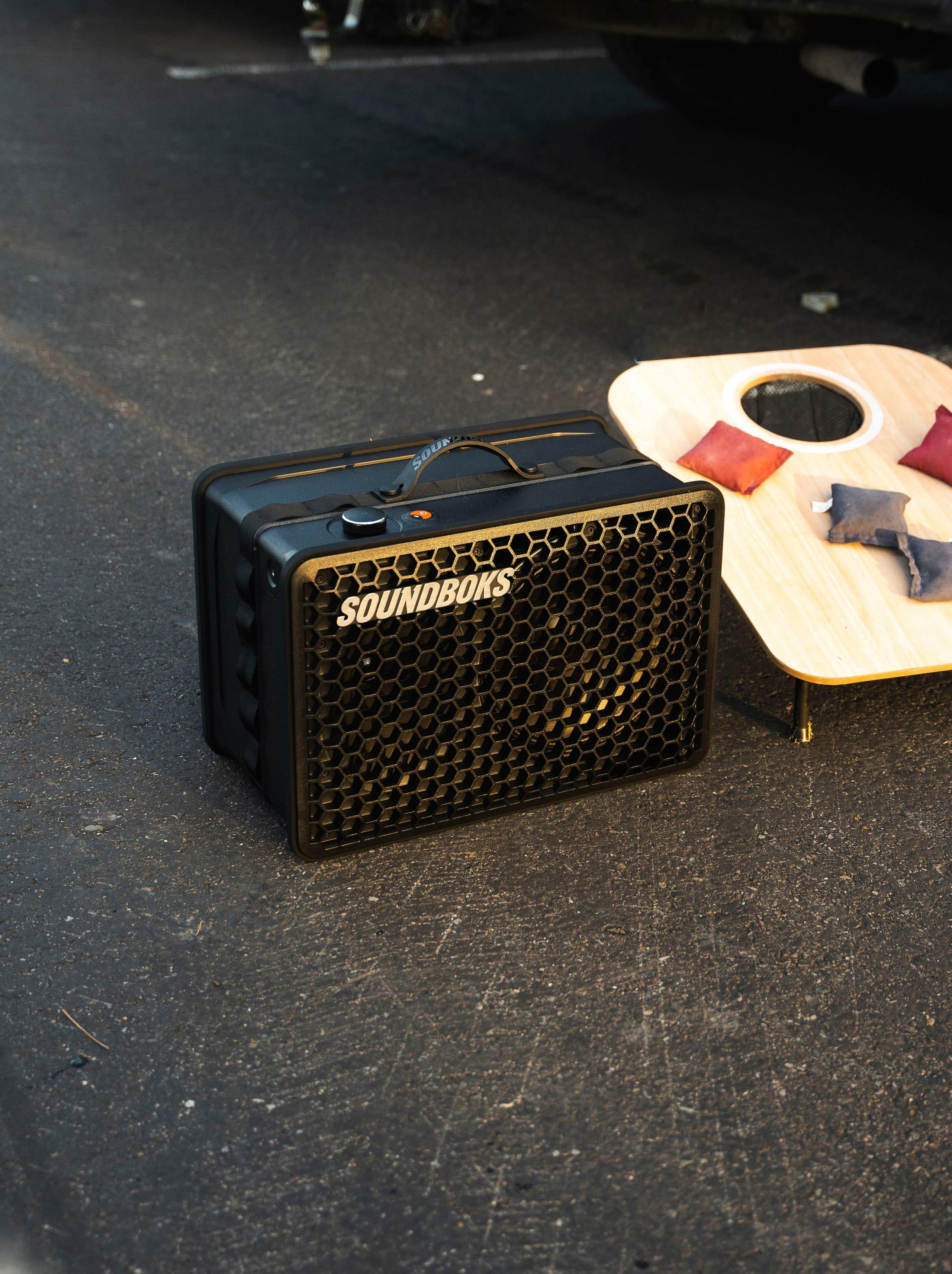
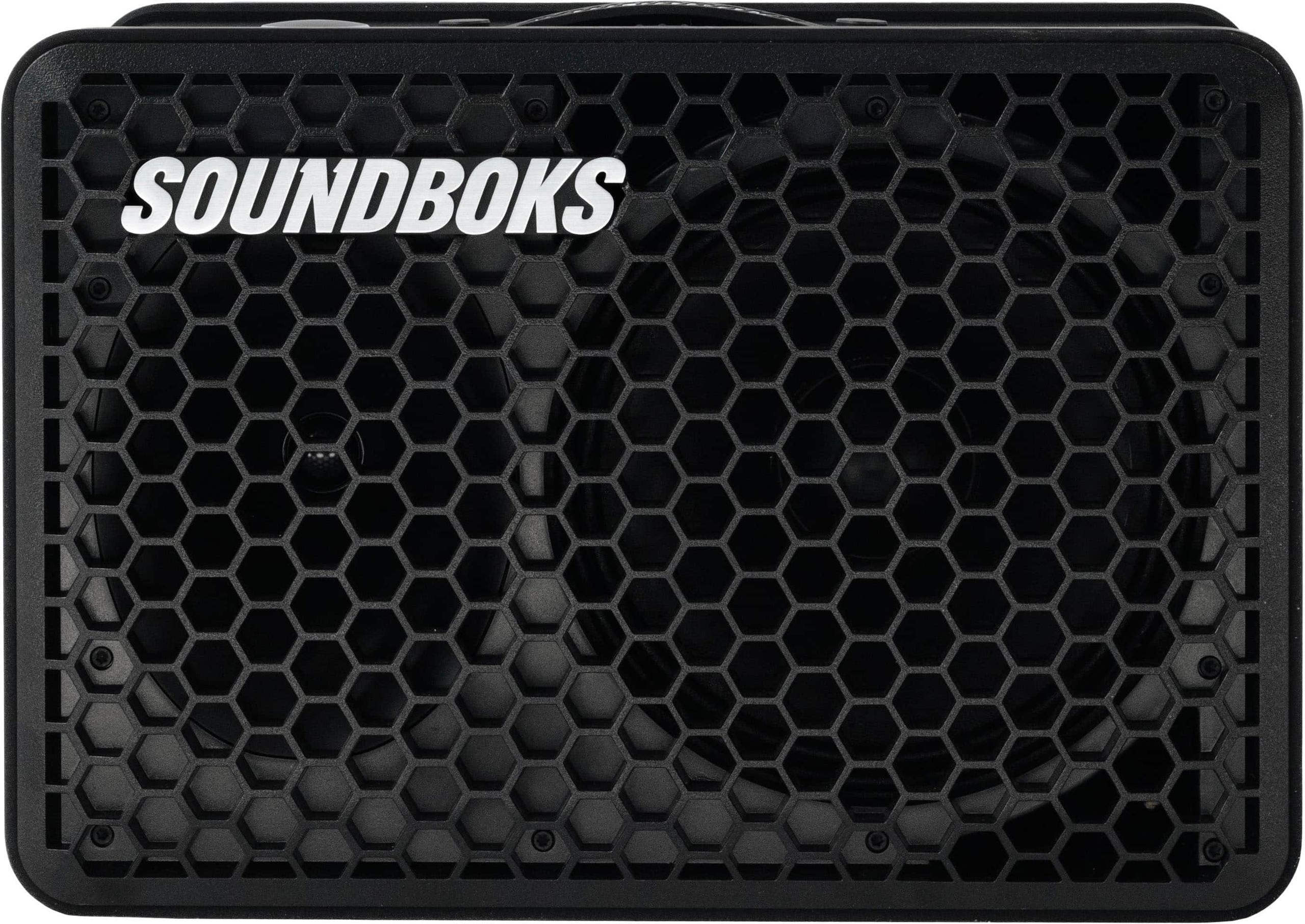
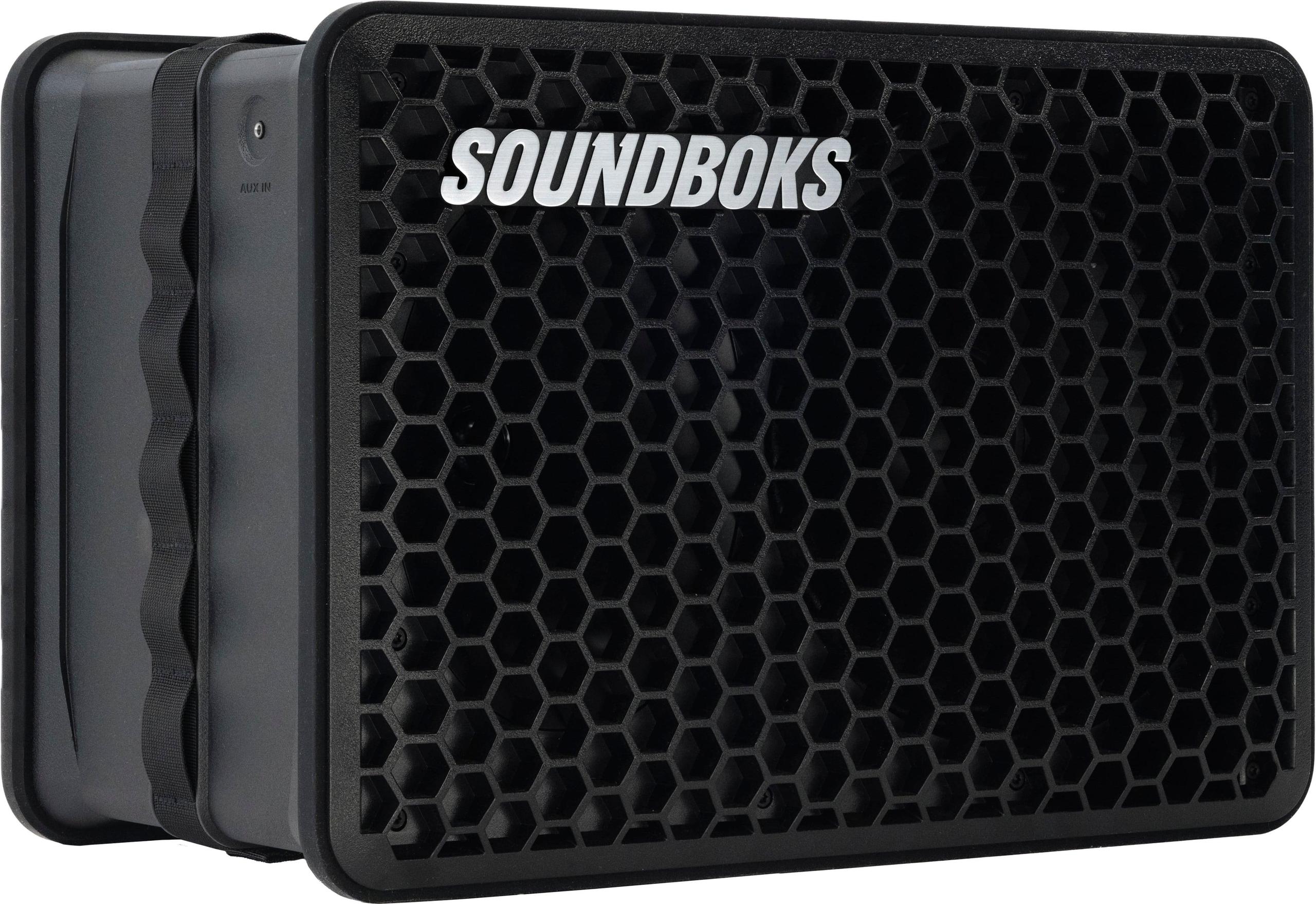
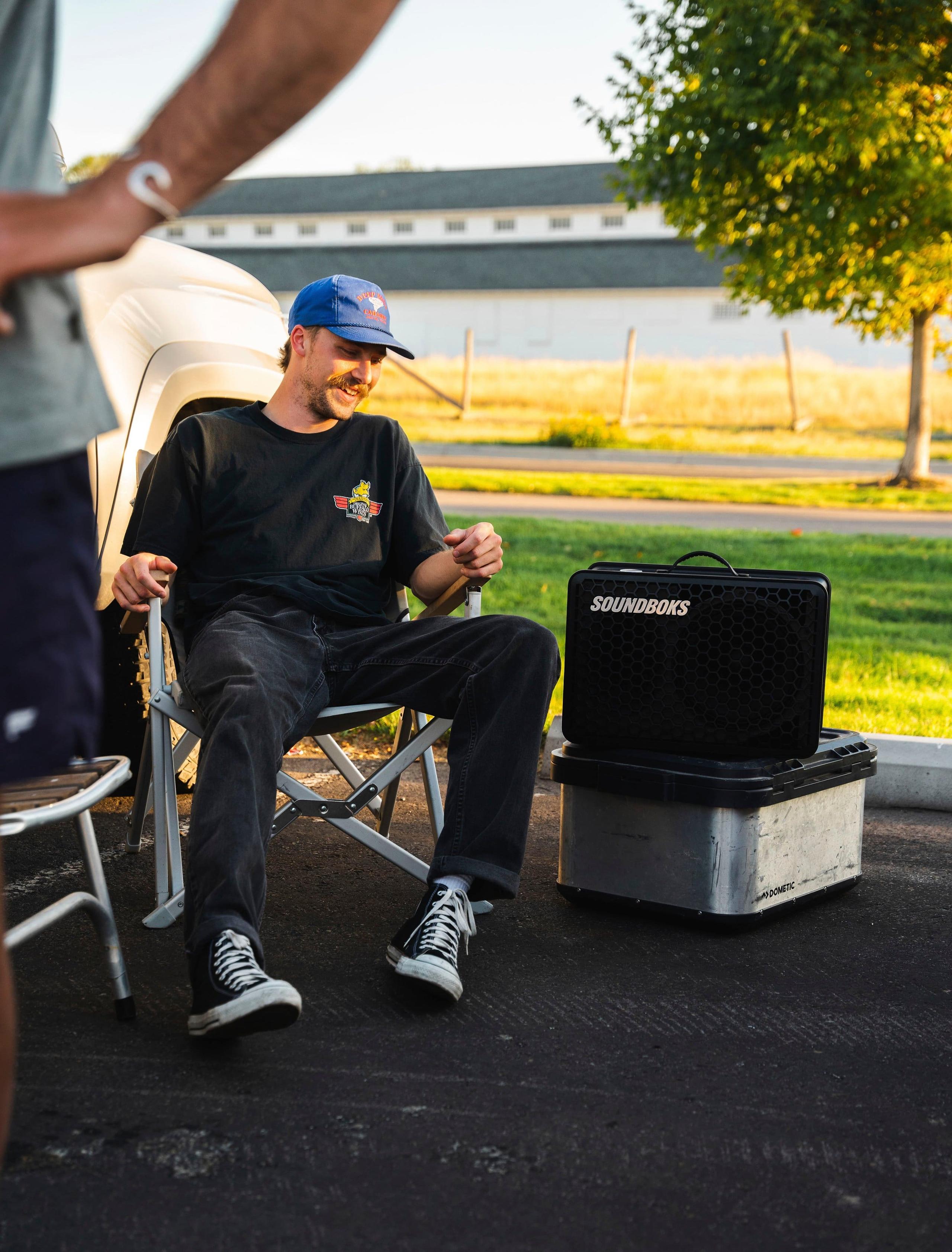
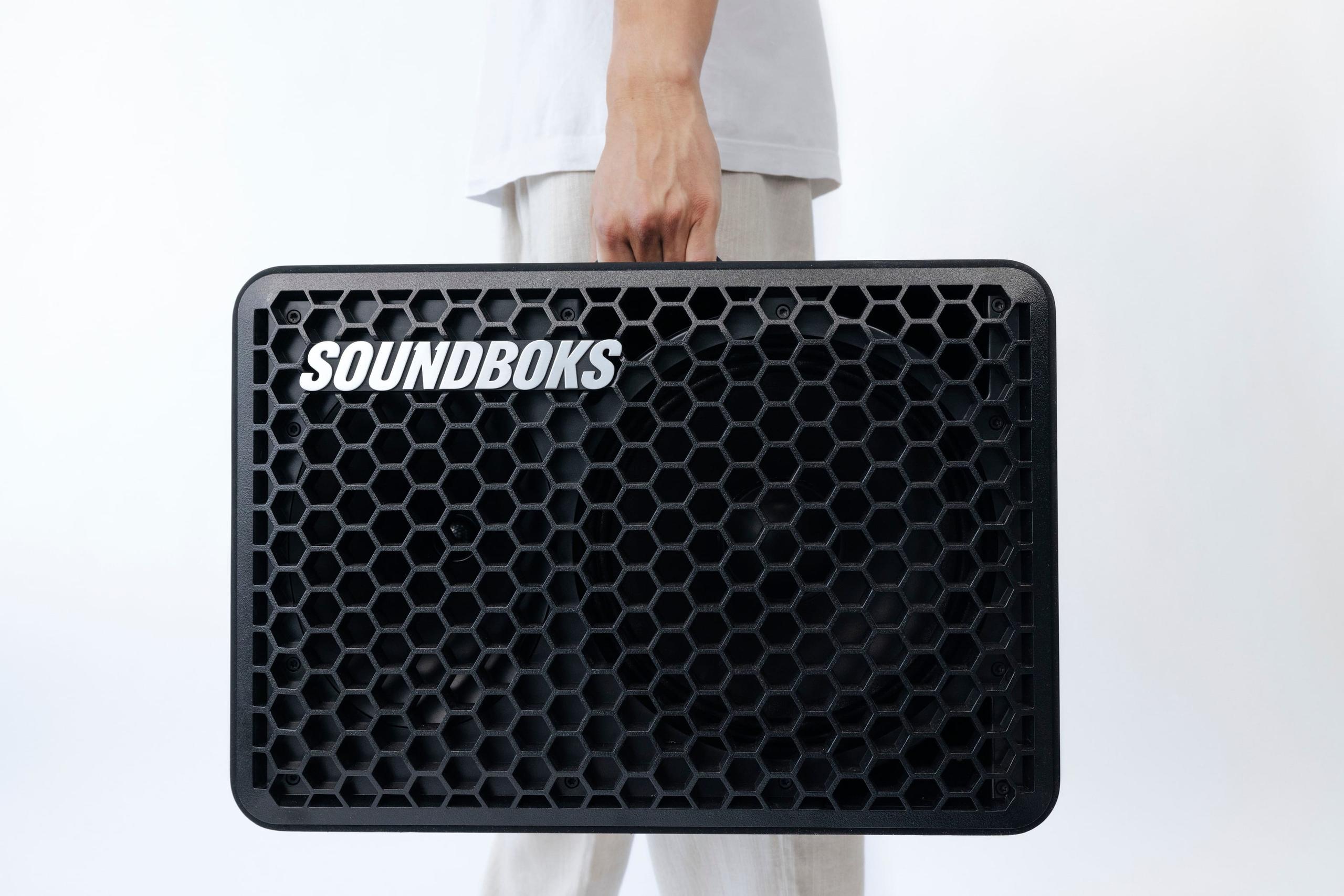
The Soundboks Go represents the company's more compact offering, though "compact" is relative in this category. At 20 pounds, it's still a substantial piece of equipment, but significantly lighter than typical party speakers. Soundboks built their reputation on virtually indestructible speakers that could survive military-style abuse while delivering concert-level volume.
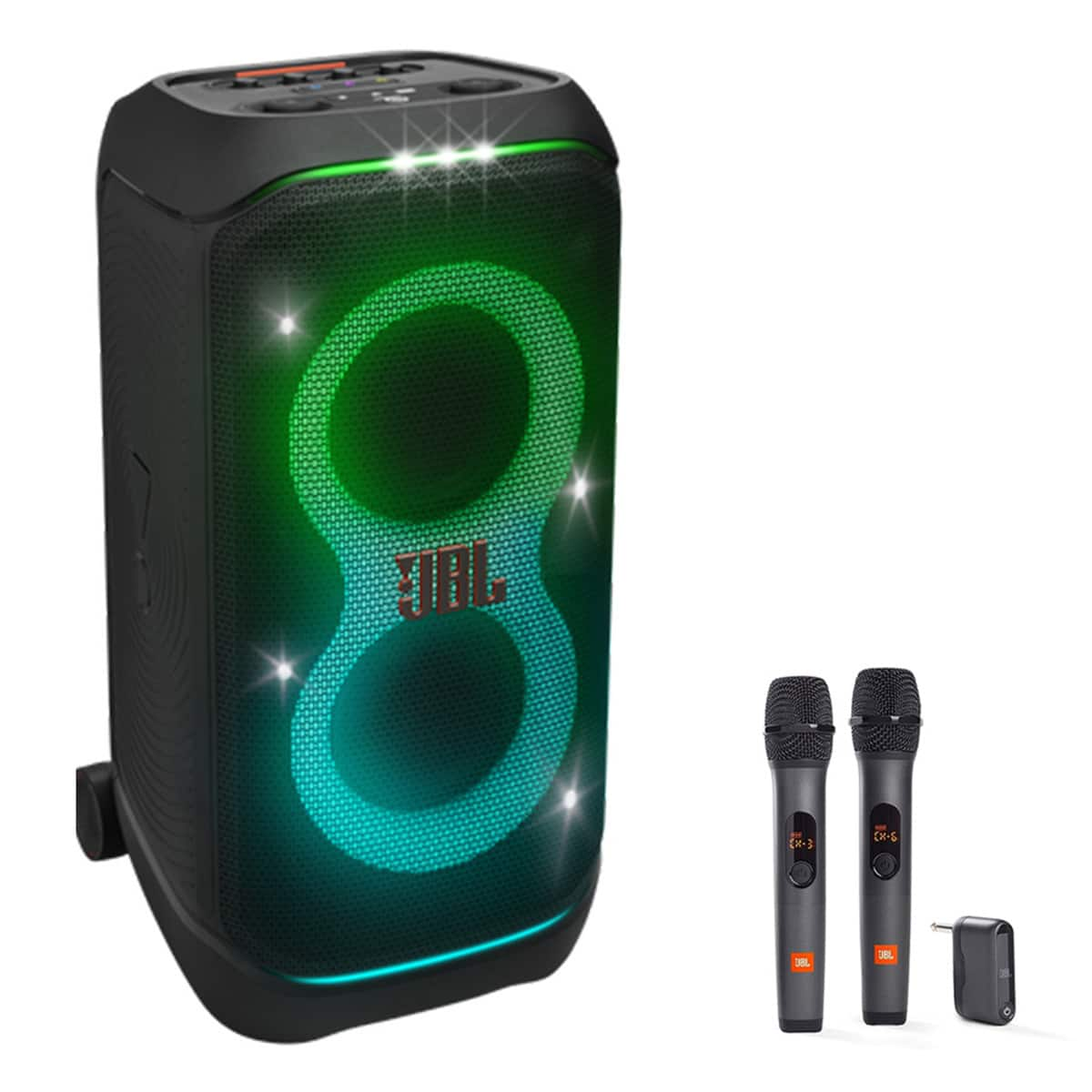
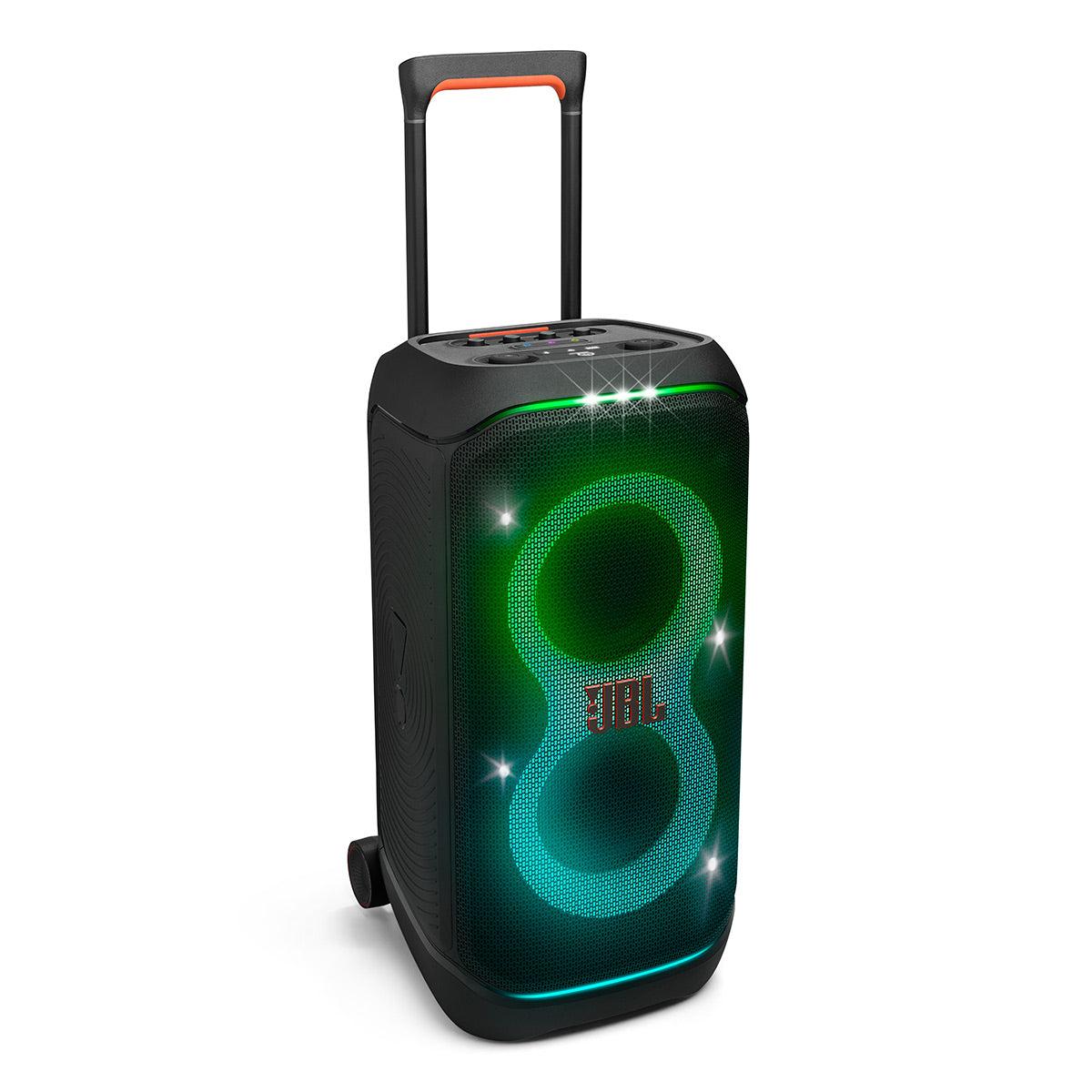
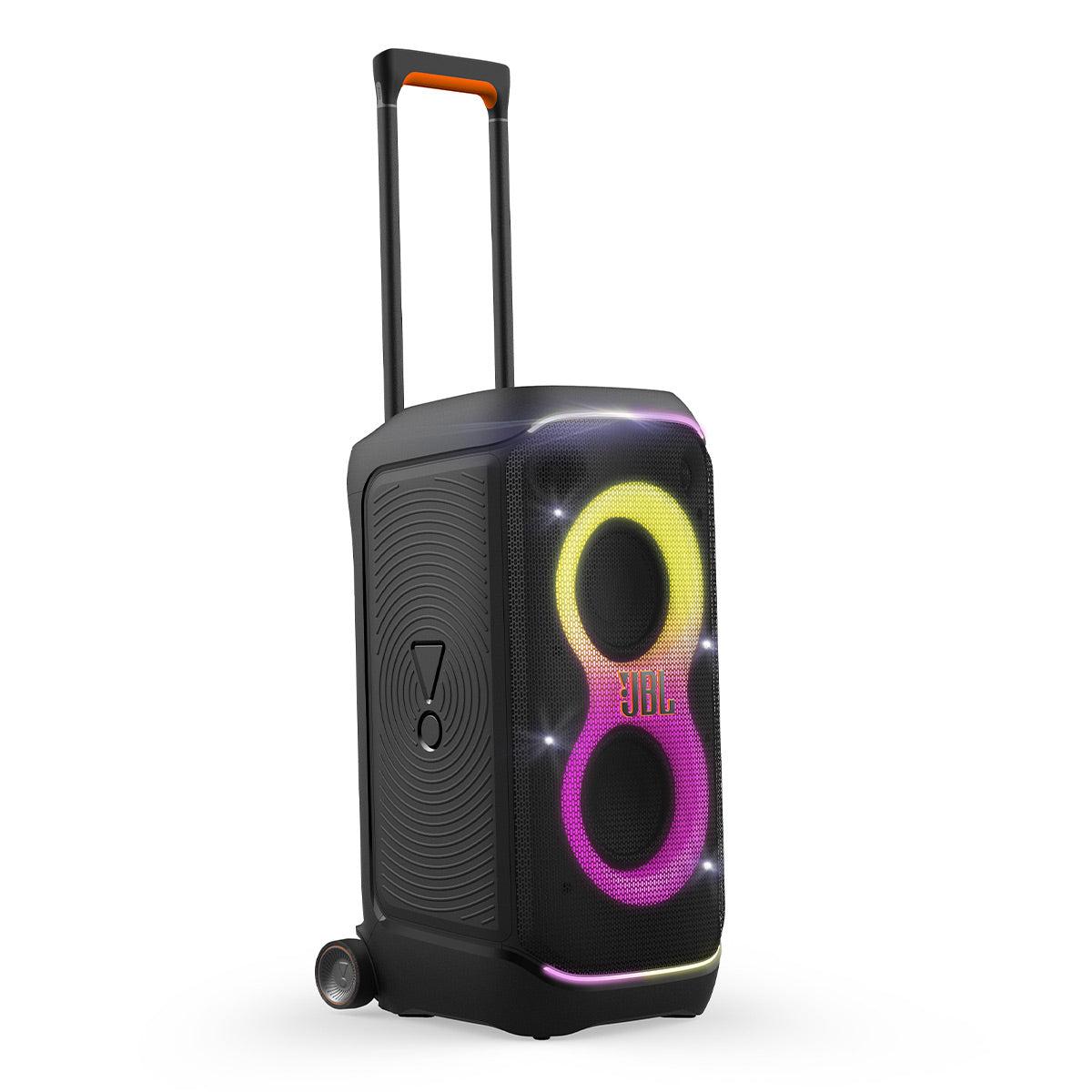
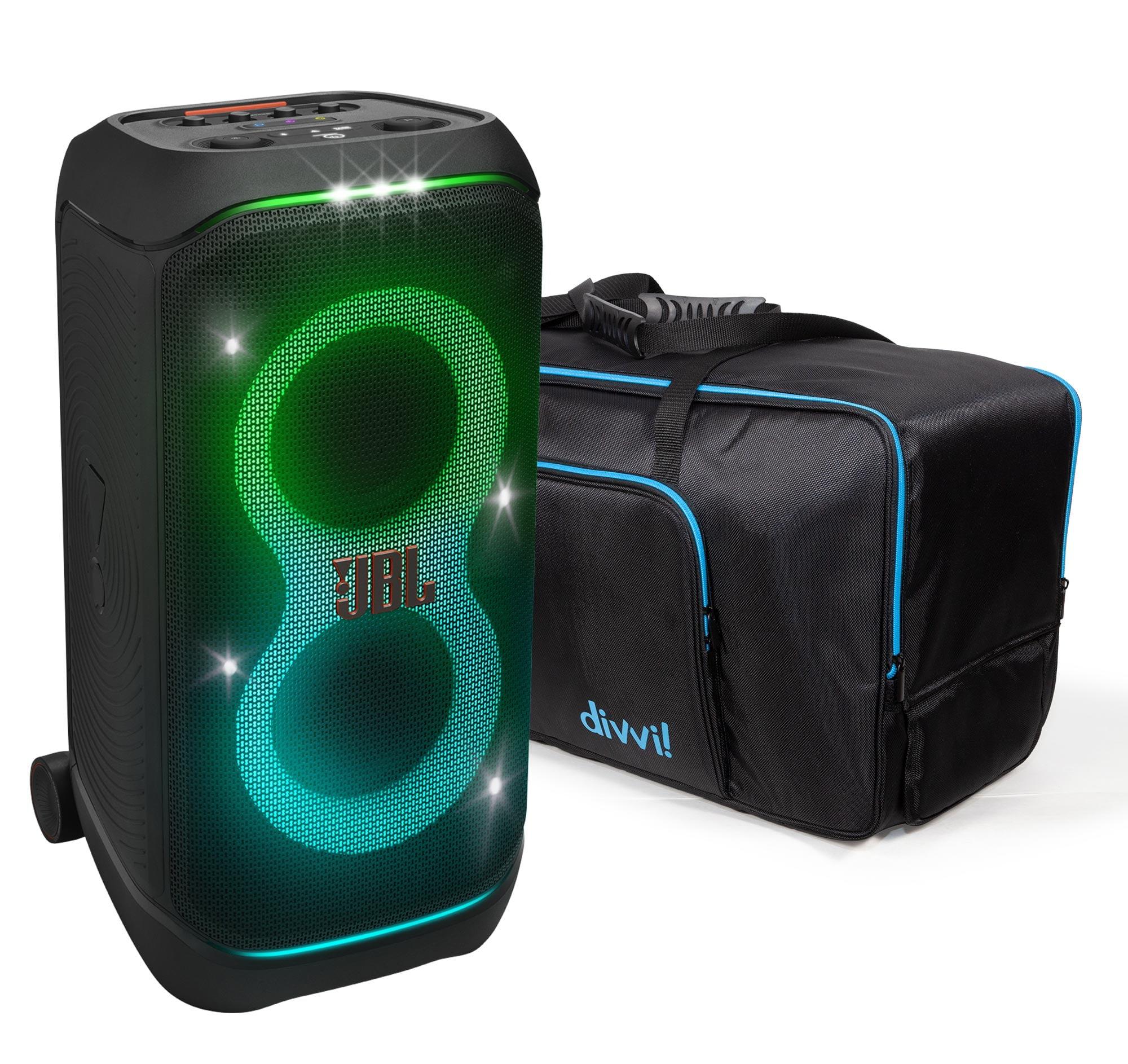
The JBL PartyBox Stage 320, meanwhile, embodies JBL's entertainment-focused approach. At 36 pounds with built-in wheels and a telescoping handle, it's designed more like portable DJ equipment than a traditional speaker. JBL redesigned their PartyBox line in recent years to add features like integrated light shows, microphone inputs, and comprehensive app control.
Both represent significant evolution from earlier generation party speakers, incorporating modern technologies like advanced Class-D amplification (which converts electrical power to sound more efficiently), sophisticated digital signal processing (DSP) for sound optimization, and low-latency wireless networking for multi-speaker setups.
When evaluating party speakers, maximum volume output is arguably the single most important specification. This is where the Soundboks Go makes its strongest case, delivering a peak output of 121 dB from its compact 20-pound frame. That's genuinely impressive engineering—most speakers this size struggle to exceed 110 dB without significant distortion.
The secret lies in Soundboks' use of Merus Audio eximo amplifier technology, a sophisticated Class-D amplification system that maintains clean power delivery even at extreme volumes. Class-D amplifiers work by rapidly switching the power supply on and off thousands of times per second, creating a highly efficient system that generates less heat and distortion than traditional amplifier designs.
The JBL PartyBox Stage 320 takes a different approach, focusing on raw power rather than efficiency. With 240 watts RMS (continuous power) versus the Soundboks' 144 watts, the JBL theoretically should be louder. However, maximum volume depends on more than just power—speaker efficiency, cabinet design, and amplifier quality all play crucial roles. Based on professional reviews and user consensus, both speakers achieve similar maximum volumes in practice, with the Soundboks maintaining slightly better clarity at peak output.
For context, 121 dB is loud enough to be heard clearly over crowd noise at outdoor events. It's approaching the threshold where extended exposure becomes potentially harmful to hearing, so both speakers include built-in limiting to prevent damage. In practical terms, either speaker can fill a large backyard, small park, or medium-sized venue with sound.
The difference becomes apparent in how they maintain sound quality at high volumes. The Soundboks Go employs advanced DSP processing and temperature monitoring to prevent driver damage, while the JBL PartyBox Stage 320 uses AI Sound Boost—a real-time audio analysis system that automatically adjusts the signal to reduce distortion and maximize bass output.
Here's where personal preference and intended use case become crucial. The Soundboks Go uses what's called a "V-shaped" frequency response—strong bass, recessed midrange, and prominent treble. This creates an exciting, energetic sound that makes electronic music and hip-hop absolutely thump, but can make vocals sound distant or harsh.
The speaker's mono configuration (single-channel audio) means you're not getting true stereo separation, though you can pair two units via the mobile app for proper left-right imaging. The 10-inch woofer delivers serious low-end impact, while the 1-inch silk dome tweeter handles the highs with reasonable detail. Three front-firing bass ports reinforce the low frequencies, though this design means you can't place the speaker against a wall to boost bass response.
The JBL PartyBox Stage 320 offers a more balanced approach with dual 6.5-inch woofers and twin 25mm dome tweeters in a proper stereo configuration. The sound signature is less aggressive than the Soundboks but more versatile across different music genres. The 5-band equalizer available through JBL's app allows significant customization, with presets optimized for different scenarios including a specific karaoke mode.
JBL's AI Sound Boost technology deserves special mention—it continuously analyzes the incoming audio signal and makes real-time adjustments to prevent distortion while maximizing bass output. This is particularly effective with dynamic music that has sudden volume changes or heavy bass drops.
Neither speaker will satisfy audiophiles seeking reference-quality sound reproduction. These are party speakers, optimized for energy and impact rather than nuanced detail retrieval. However, within their intended use case, both deliver impressive performance that far exceeds typical Bluetooth speakers.
Battery life represents perhaps the biggest practical difference between these speakers. The Soundboks Go achieves an industry-leading 40 hours of playback at moderate volumes, dropping to about 10 hours at maximum output. More importantly, it features a truly swappable battery system—you can hot-swap batteries without interrupting playback, enabling theoretically unlimited runtime with spare batteries.
The battery itself is a 99.84Wh lithium iron phosphate (LiFePO4) unit, chosen for its durability and safety characteristics. LiFePO4 batteries handle temperature extremes better than standard lithium-ion batteries and are less prone to thermal runaway (catching fire). The battery also includes a USB-C port that can charge other devices when the speaker is off, essentially functioning as a massive power bank.
Charging is handled via USB-C with support for up to 65-watt power delivery, though you'll need to purchase the appropriate charger separately. Importantly, you can play music while charging, even at full volume—a feature many competitors lack.
The JBL PartyBox Stage 320 offers respectable but not exceptional battery performance with 18 hours of typical playback. JBL's quick-charge system provides 2 hours of playback from just 10 minutes of charging, which is genuinely useful for emergency situations. The battery is also replaceable, representing an improvement over earlier JBL PartyBox models, though it requires powering down the speaker for battery swaps.
For most casual users, 18 hours is plenty for typical parties or events. However, if you're planning multi-day festivals, camping trips, or professional events where downtime isn't acceptable, the Soundboks Go's battery system offers significant advantages.
Construction quality reflects each company's target market. The Soundboks Go features what can only be described as military-grade construction. The cabinet combines ABS plastic and polycarbonate with a substantial silicone rubber bumper system designed to handle drops, impacts, and general abuse. The IP65 rating means it's completely dustproof and can handle heavy rain or pool splashes, though it's not designed for submersion.
The build quality feels almost excessive for typical consumer use. The cabinet could probably survive being dropped from a significant height or run over by a car—Soundboks deliberately targets customers who need speakers that can survive extreme conditions like construction sites, military deployments, or serious outdoor adventures.
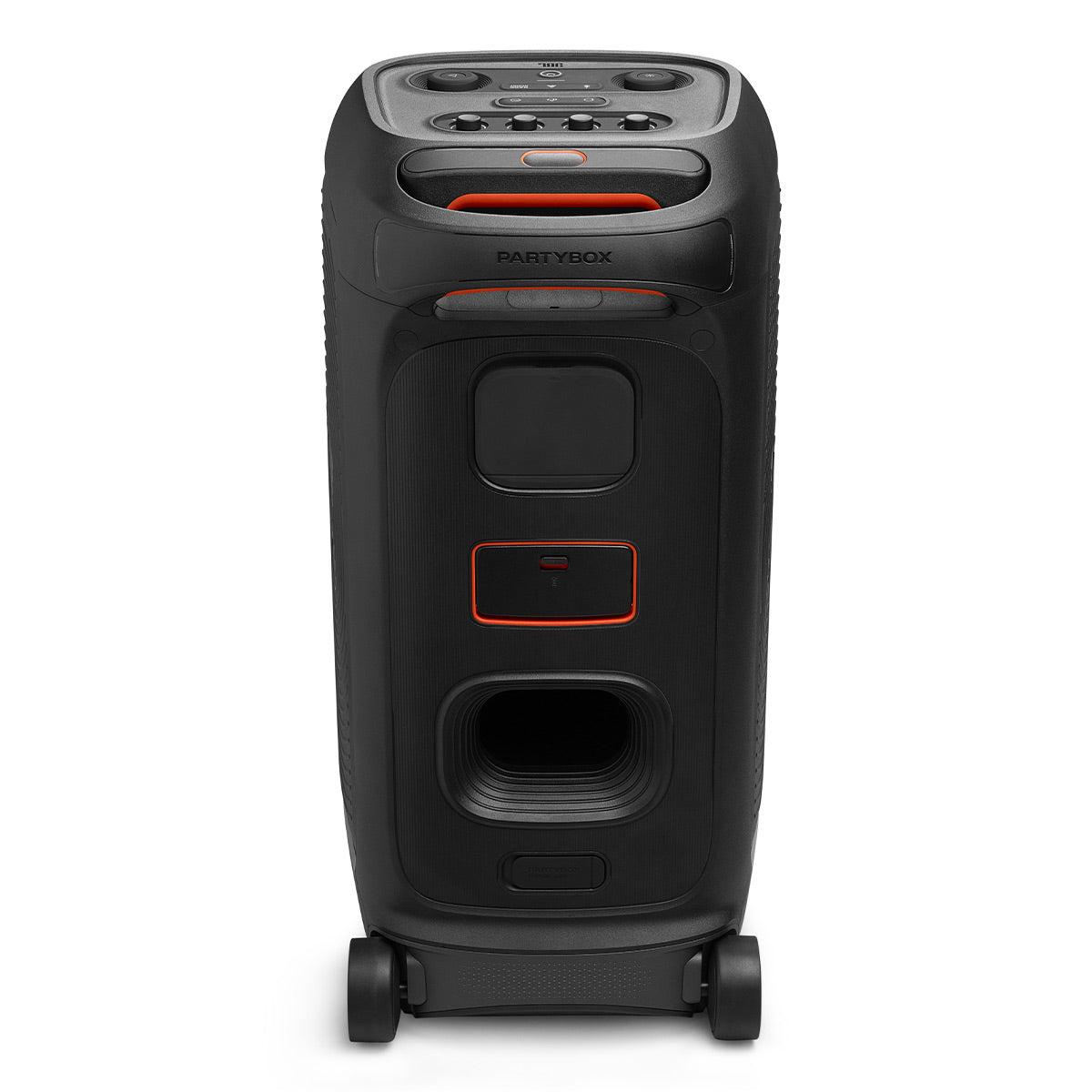
The JBL PartyBox Stage 320 takes a more practical approach with IPX4 splash resistance. It'll handle pool parties and light rain but isn't designed for sandstorms or being hosed down. The construction emphasizes portability with a telescoping handle and wide, sturdy wheels that make the 36-pound speaker manageable to move around venues.
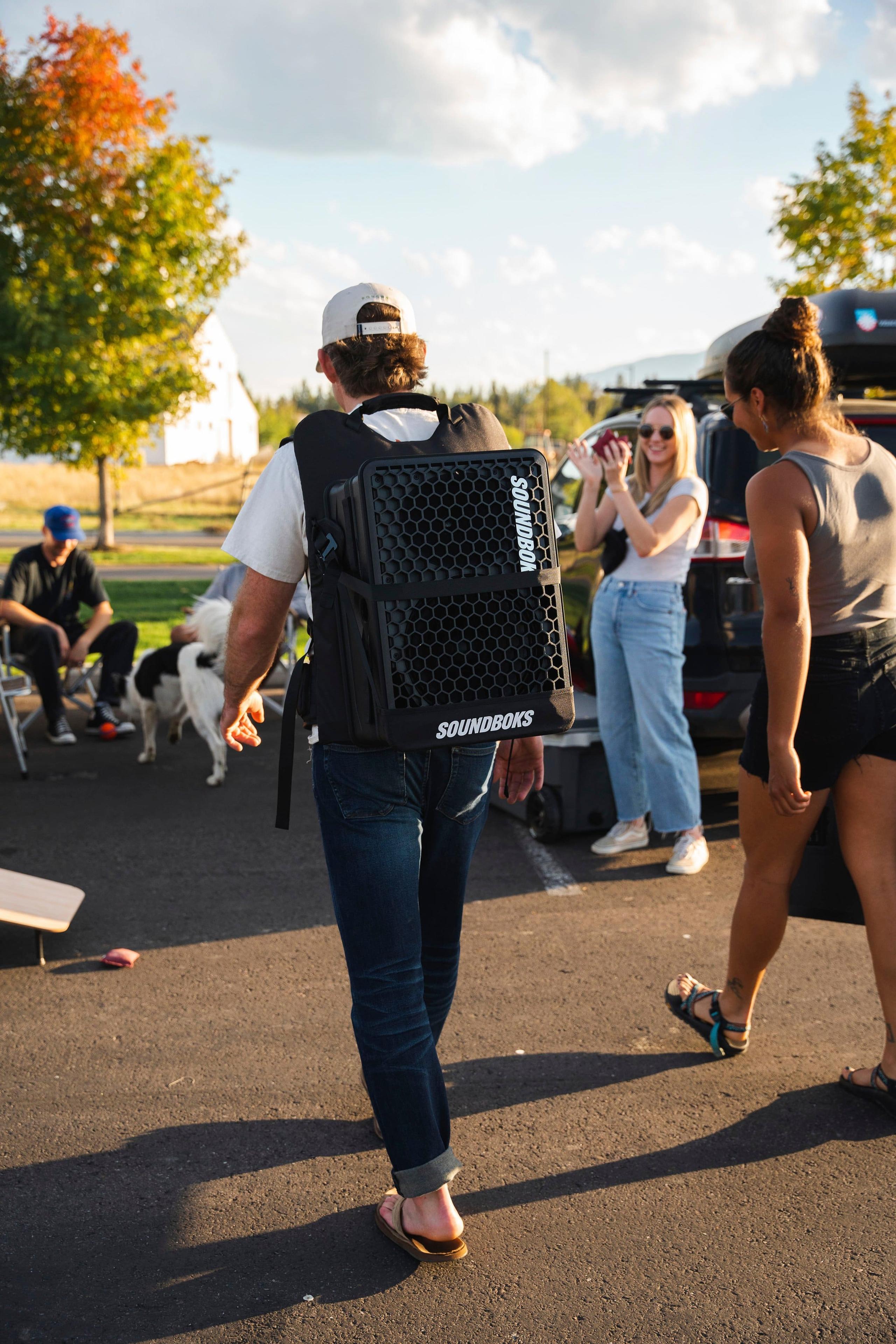
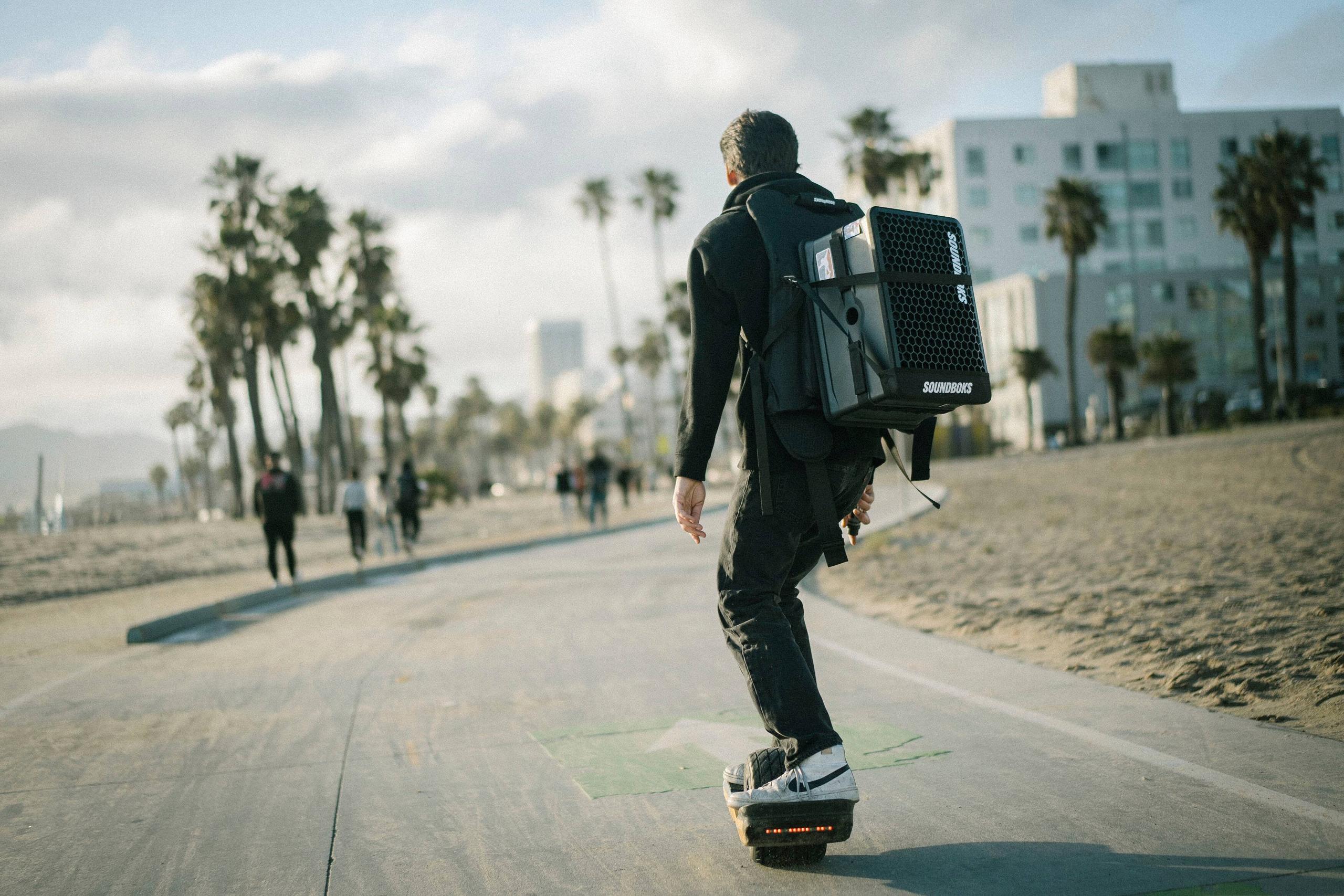
Both speakers include mounting options—the Soundboks Go has a reinforced tripod mount and MOLLE strap attachment points (a military-style modular system), while the JBL focuses on standard tripod mounting and venue-appropriate setup options.
Modern party speakers need to handle multiple audio sources and connect to other speakers for larger events. The Soundboks Go supports Bluetooth 5.0 plus a 3.5mm auxiliary input, keeping things simple but reliable. The real innovation is TeamUP technology, which uses SKAA wireless protocol to connect up to 5 Soundboks speakers with ultra-low latency.
SKAA (Sustainable Key Audio Architecture) represents a significant technical advantage for professional applications. Unlike standard Bluetooth, which can have 100+ millisecond delays between speakers, SKAA maintains synchronization tight enough for live performance monitoring. You can create true stereo pairs or larger arrays without the audio timing issues that plague most wireless speaker systems.
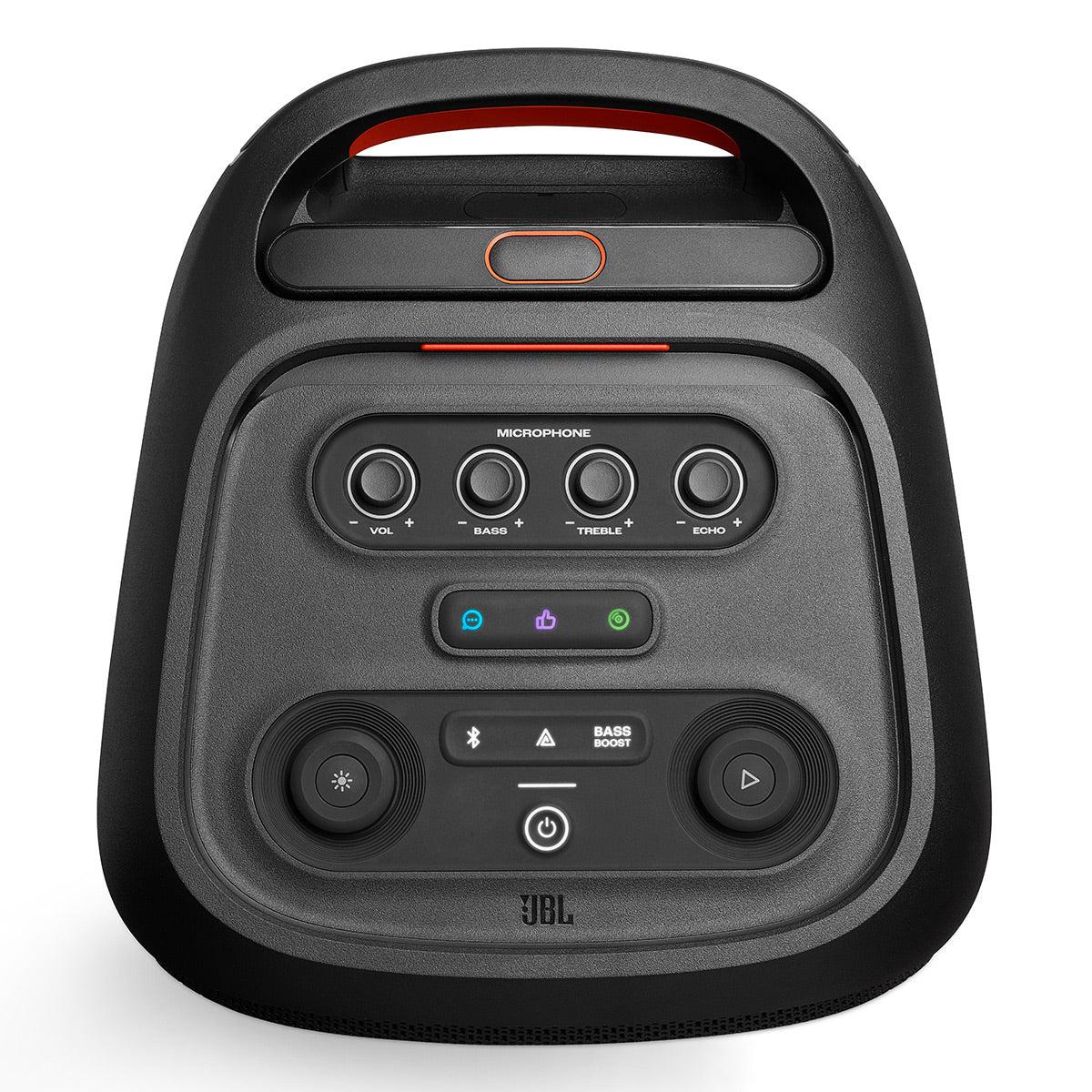
The JBL PartyBox Stage 320 offers more input variety with dual microphone/guitar inputs featuring independent gain controls, plus support for Auracast—a newer Bluetooth standard for multi-device audio sharing. The microphone inputs are properly designed with phantom power and EQ optimization for karaoke and live performance.
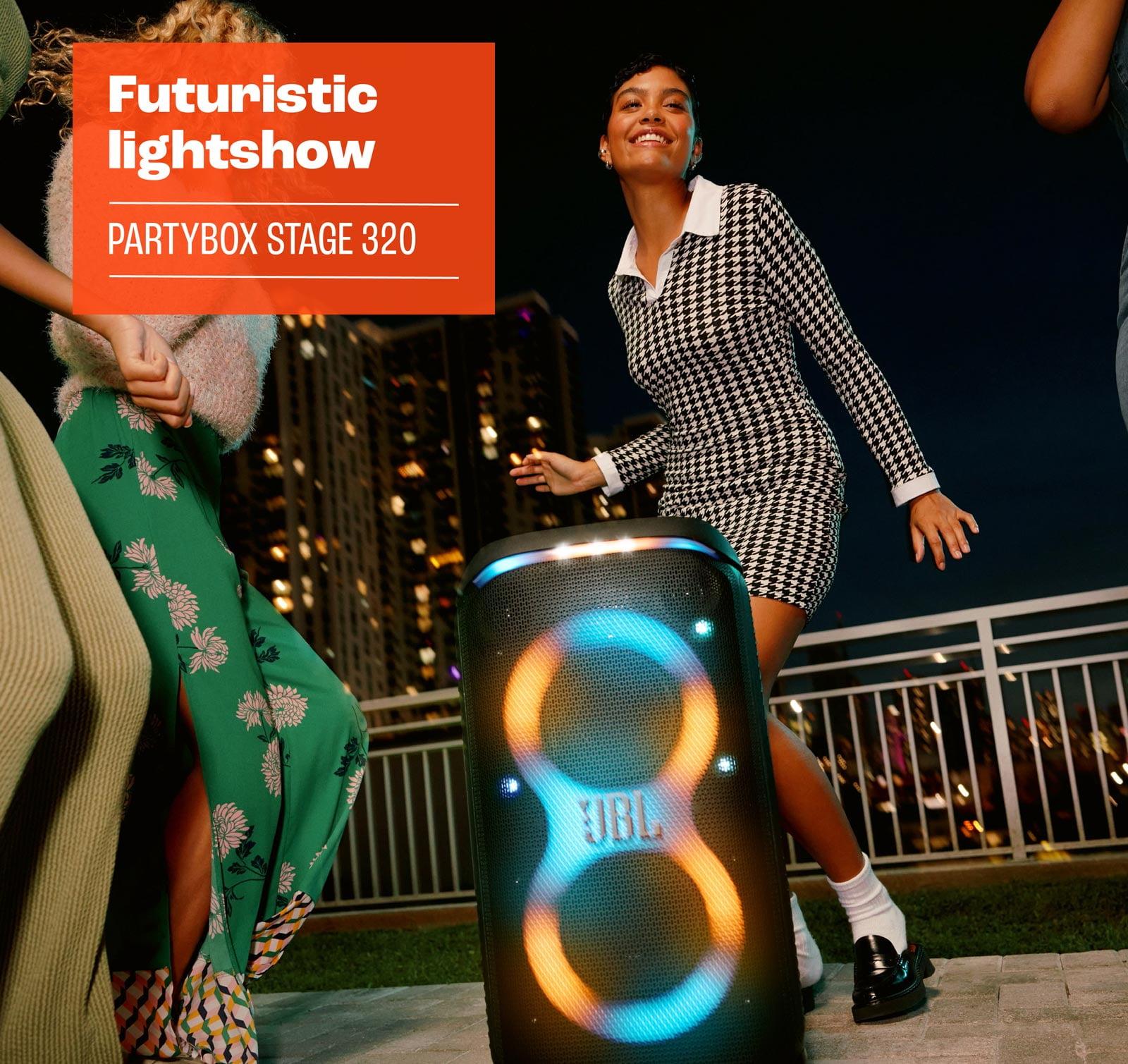
JBL's app provides extensive control over sound profiles, EQ settings, and the integrated light show. The light system includes multiple patterns, colors, and effects that sync to music rhythm—it's genuinely entertaining rather than just decorative.
This is where the philosophies truly diverge. The Soundboks Go focuses purely on audio performance with minimal extra features. You get three sound modes (Indoor, Power, Bass Boost) selectable through the mobile app, plus basic wireless speaker pairing functionality. The approach is utilitarian—maximum audio performance with minimum complexity.
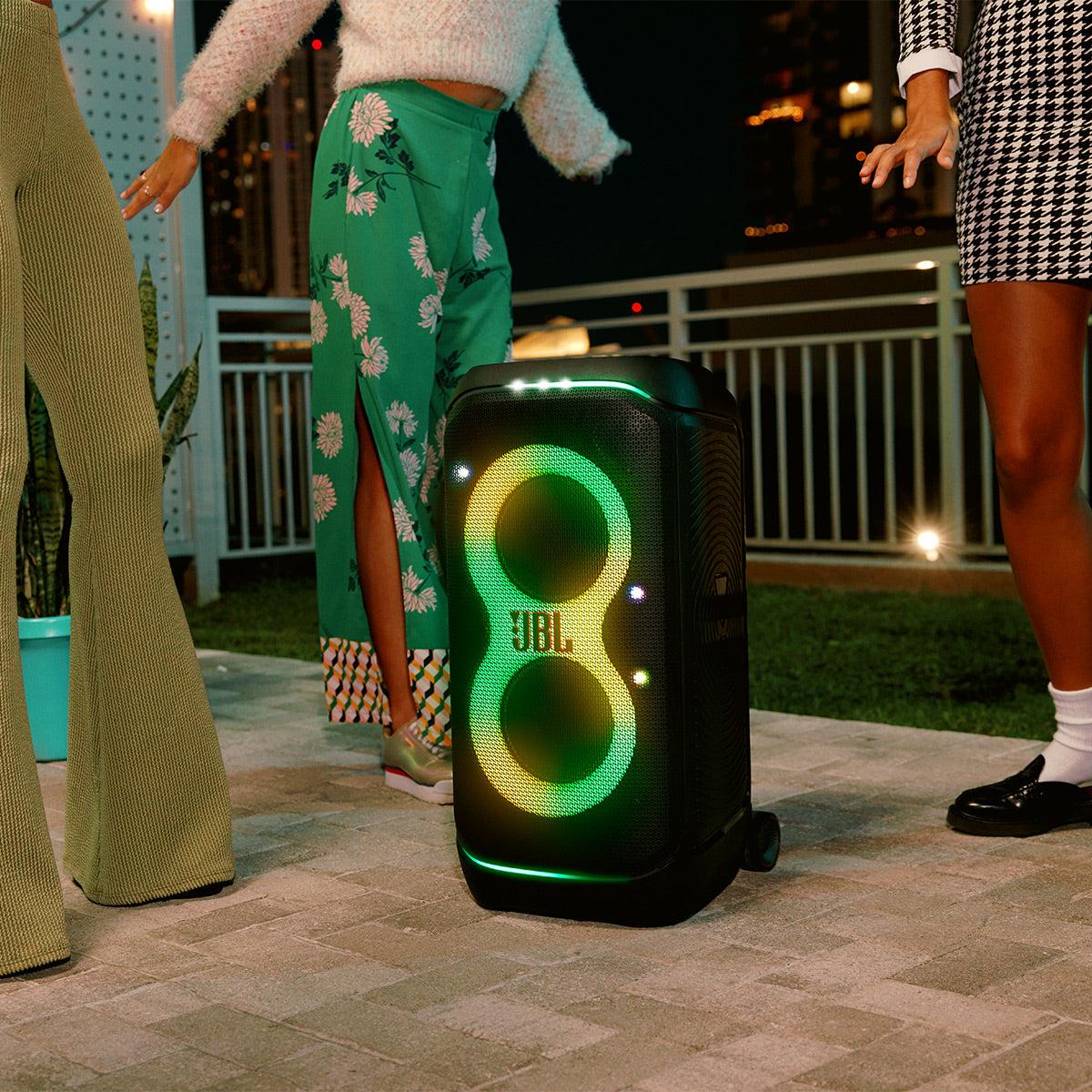
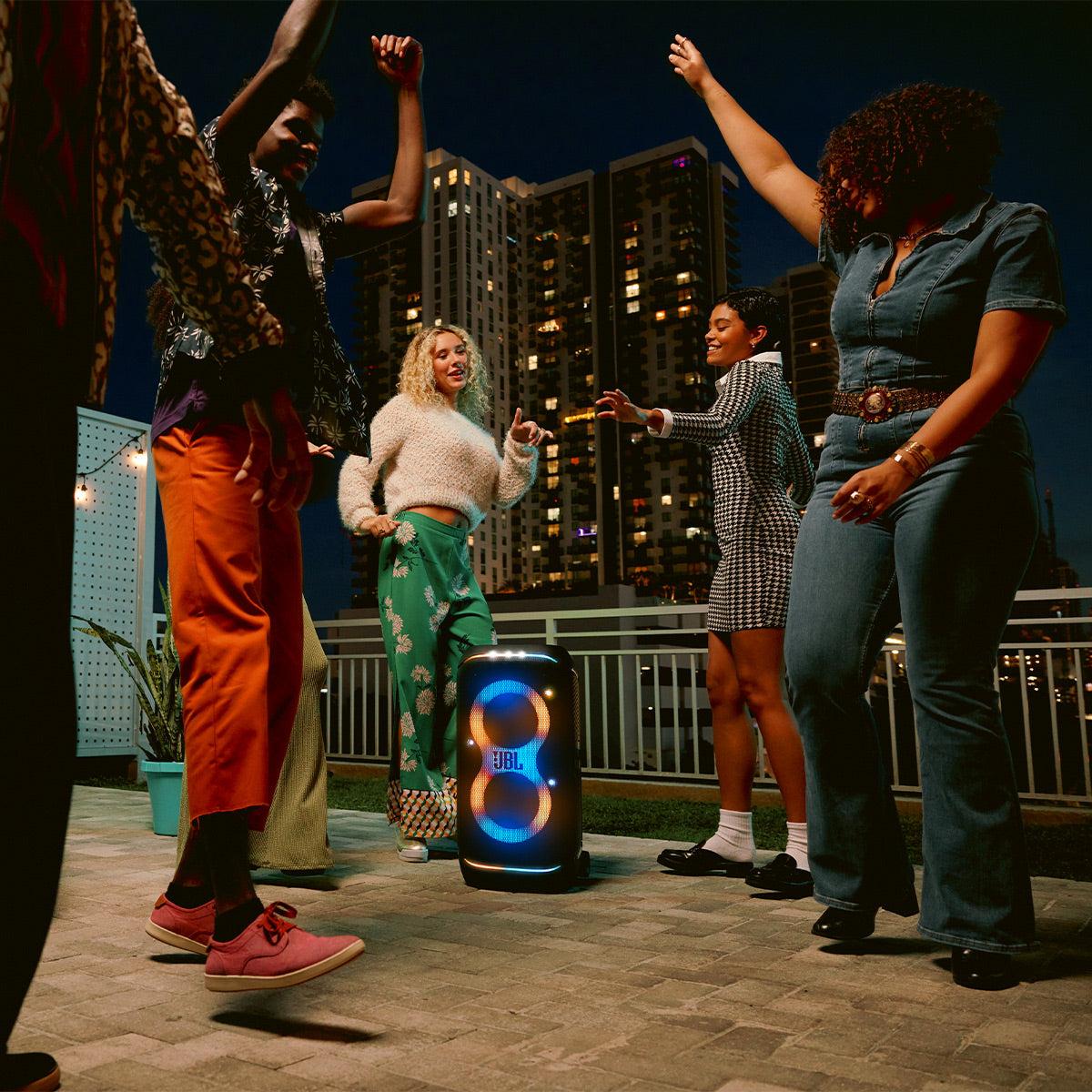
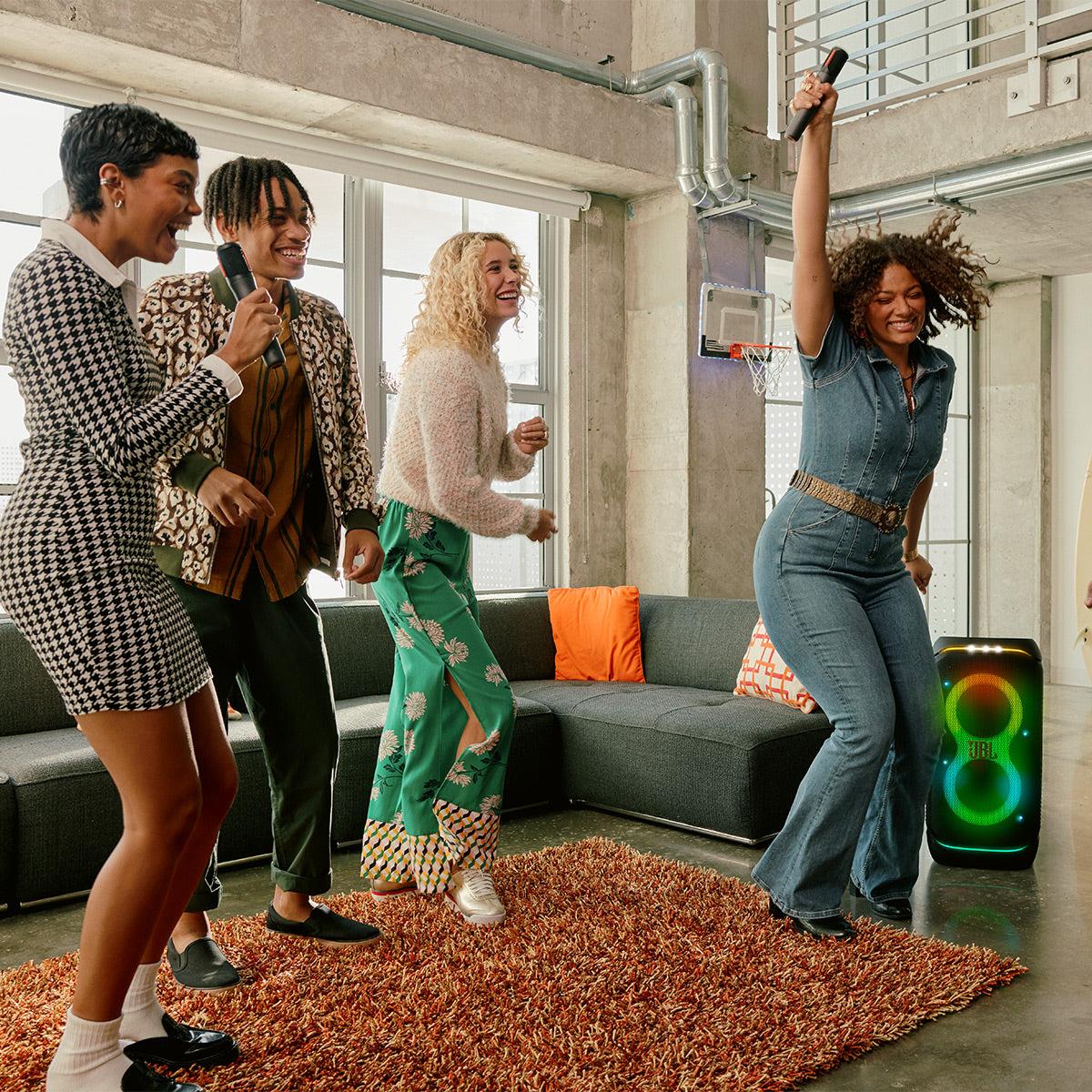
The JBL PartyBox Stage 320 embraces its role as entertainment equipment. The integrated light show includes starry lights, light trails, and strobe effects that genuinely enhance party atmosphere. The dual microphone inputs support karaoke with dedicated EQ tuning and echo effects. DJ sound effects and beat-synced lighting create a complete party experience.
For home theater use, neither speaker is particularly well-suited. Both lack the precise imaging and neutral frequency response needed for movie dialogue and sound effects. However, if you're looking to add serious bass impact to an existing home theater system, either could work as a supplementary subwoofer, though dedicated home theater subwoofers would be more appropriate.
At the time of writing, both speakers command premium prices reflecting their specialized nature and build quality. The Soundboks Go typically costs more upfront but offers exceptional durability and battery performance that could reduce long-term ownership costs. The swappable battery system means the speaker remains useful even as batteries age, and the military-grade construction suggests it will outlast most alternatives.
The JBL PartyBox Stage 320 generally offers more features per dollar with its light show, microphone inputs, and entertainment-focused design. For users who want a complete party solution rather than just a speaker, JBL provides better immediate value.
Professional reviews consistently highlight the Soundboks Go's exceptional build quality and industry-leading battery life, while noting its aggressive sound signature isn't suitable for all music types. The JBL PartyBox Stage 320 receives praise for its balanced feature set and more versatile sound, though some reviewers note it can sound harsh at extreme volumes.
User feedback emphasizes reliability for both speakers, with minimal reports of significant failures. The Soundboks community particularly appreciates the battery swapping capability and extreme durability, while JBL users value the entertainment features and brand reliability.
Choose the Soundboks Go if you need maximum durability, exceptional battery life, and don't mind paying premium pricing for specialized performance. It's ideal for camping, beach parties, construction sites, outdoor adventures, or professional applications where reliability is crucial. The aggressive sound signature works best with electronic music, hip-hop, and high-energy genres.
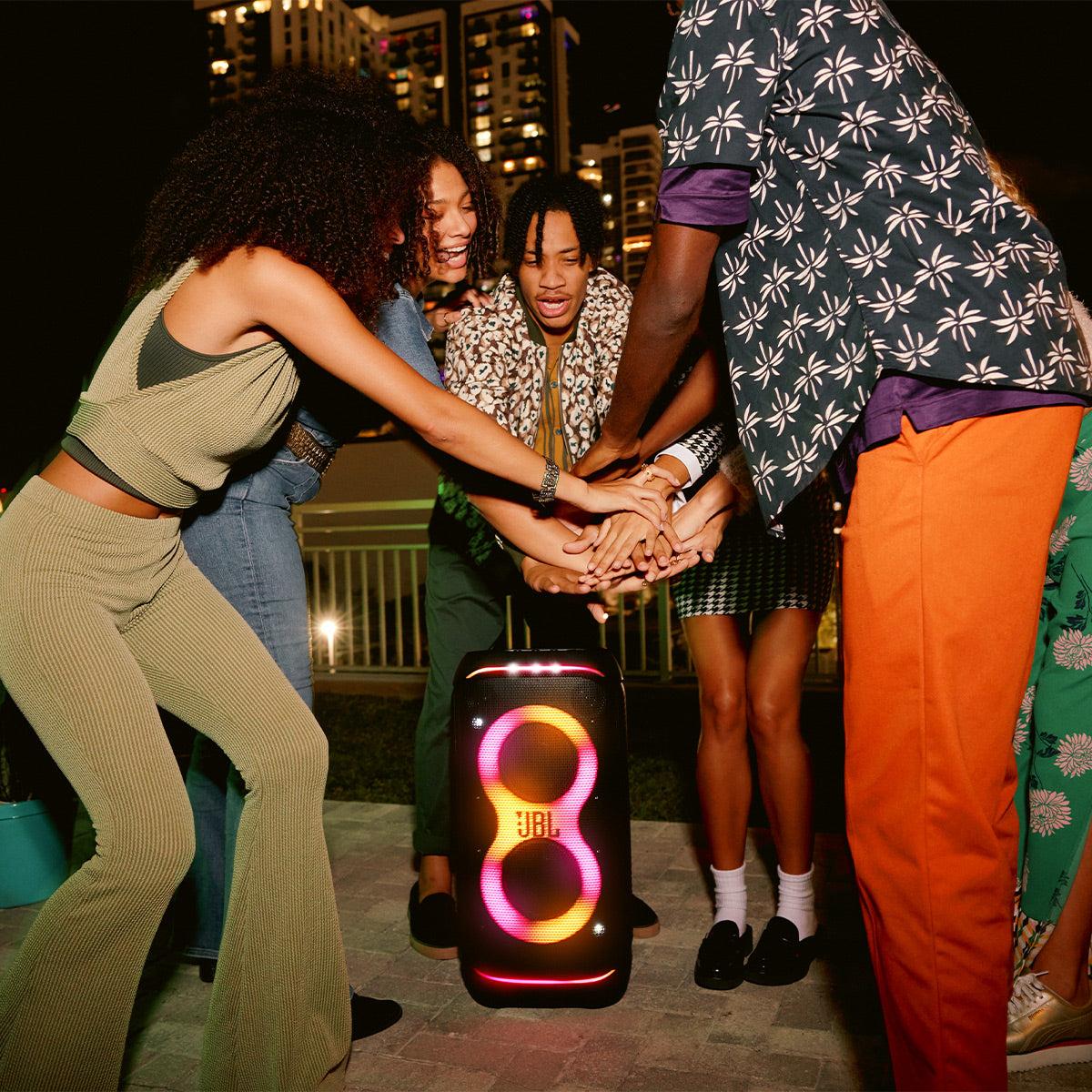
The JBL PartyBox Stage 320 makes more sense for typical party and entertainment use, especially if you plan to do karaoke, need microphone inputs, or want the full light show experience. Its more balanced sound works better with diverse music collections, and the wheeled design makes it practical for venue use.
For most users, the JBL represents better overall value with its complete entertainment package. However, if you prioritize maximum volume, extreme durability, or exceptional battery life, the Soundboks justifies its premium positioning. Neither is a compromise—they're both excellent speakers designed for different priorities within the same broad category.
The decision ultimately comes down to whether you want a nearly indestructible audio tool (Soundboks) or a complete party entertainment system (JBL). Both will deliver the loud, energetic sound that makes outdoor events memorable, but they'll do it in distinctly different ways.
| Soundboks Go | JBL PartyBox Stage 320 |
|---|---|
| Maximum Volume - Critical for outdoor events and large spaces | |
| 121 dB peak (exceptionally loud for 20 lb weight) | 240W RMS (similar loudness, better bass extension) |
| Battery Life - Determines event duration without power access | |
| 40 hours mid-volume, 10 hours max volume | 18 hours typical use |
| Battery System - Affects long-term usability and event flexibility | |
| Hot-swappable batteries, play while charging | Replaceable battery, 10-min quick charge for 2 hours |
| Weather Resistance - Important for outdoor reliability | |
| IP65 (dustproof + water resistant) | IPX4 (splash-proof only) |
| Build Quality - Impacts durability and total cost of ownership | |
| Military-grade ABS/polycarbonate with rubber bumpers | Party-ready construction, not extreme-duty |
| Weight & Portability - Affects transport ease | |
| 20 lbs with handle and strap options | 36 lbs with telescopic handle and wheels |
| Audio Configuration - Impacts sound quality and stereo imaging | |
| Mono speaker with aggressive V-shaped tuning | True stereo with balanced frequency response |
| Entertainment Features - Value for party and karaoke use | |
| Basic audio-focused design | Integrated light show, dual mic inputs, DJ effects |
| Multi-Speaker Connectivity - Important for larger events | |
| TeamUP with ultra-low latency SKAA (up to 5 speakers) | Auracast and wired daisy-chaining |
| App Control - Affects customization and ease of use | |
| Basic sound profiles and speaker pairing | Comprehensive EQ, light control, and effects |
| Input Options - Determines source flexibility | |
| Bluetooth 5.0 + 3.5mm AUX | Bluetooth 5.4 + dual mic/guitar inputs + 3.5mm |
| Target Use Case - Best applications for each speaker | |
| Extreme durability needs, multi-day events, audiophile bass | Parties, karaoke, venues needing entertainment features |
Both speakers achieve similar maximum volumes despite different approaches. The Soundboks Go delivers 121 dB peak output from its compact 20-pound frame, while the JBL PartyBox Stage 320 uses 240W RMS power with dual woofers. In real-world use, both speakers can fill large outdoor spaces effectively, with the Soundboks Go maintaining slightly better clarity at maximum volume due to its advanced Class-D amplification.
The Soundboks Go offers exceptional battery life with up to 40 hours at moderate volume and 10 hours at maximum output. The JBL PartyBox Stage 320 provides 18 hours of typical playback. The key advantage of the Soundboks Go is its hot-swappable battery system, allowing unlimited runtime with spare batteries, while the JBL PartyBox Stage 320 offers convenient 10-minute quick charging for 2 hours of playback.
The Soundboks Go excels for outdoor use with its IP65 rating (dustproof and water-resistant), military-grade construction, and exceptional battery life. The JBL PartyBox Stage 320 is splash-proof (IPX4) but better suited for covered outdoor areas or venues. For beach parties, camping, or harsh outdoor conditions, the Soundboks Go is the clear winner.
Yes, both speakers support multi-speaker setups. The Soundboks Go uses TeamUP technology with SKAA wireless protocol to connect up to 5 speakers with ultra-low latency, ideal for professional applications. The JBL PartyBox Stage 320 supports Auracast and wired daisy-chaining for multi-speaker connections, with better integration into JBL's broader ecosystem.
The JBL PartyBox Stage 320 offers more balanced sound with true stereo separation and works well across various music genres. The Soundboks Go has an aggressive V-shaped frequency response optimized for electronic music and hip-hop. The JBL includes a 5-band equalizer for customization, while the Soundboks Go focuses on maximum impact and clarity.
The JBL PartyBox Stage 320 is specifically designed for karaoke with dual microphone/guitar inputs, dedicated gain controls, and karaoke-optimized EQ settings. The Soundboks Go lacks microphone inputs and focuses purely on audio playback. For karaoke and live performance, the JBL PartyBox Stage 320 is the only viable option.
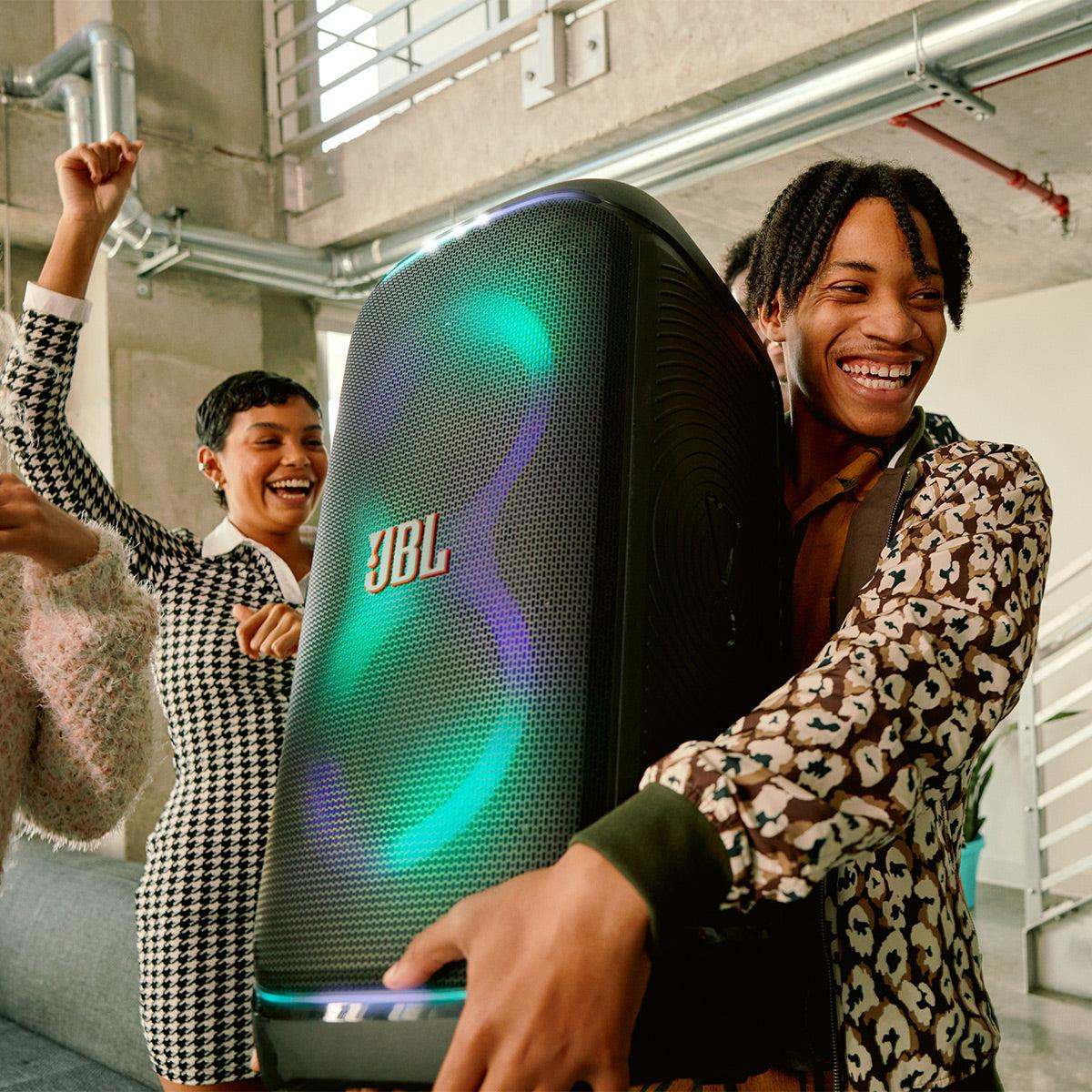
The Soundboks Go weighs 20 pounds with a built-in handle and optional carry strap, making it truly portable for hiking or camping. The JBL PartyBox Stage 320 weighs 36 pounds but includes a telescopic handle and wheels, making it easier to transport around venues despite the extra weight. Choose the Soundboks Go for carry-anywhere portability or the JBL for venue transport.
The JBL PartyBox Stage 320 typically offers more features per dollar with its integrated light show, microphone inputs, and entertainment features. The Soundboks Go commands a premium for its exceptional durability and battery performance. The JBL provides better immediate value for most users, while the Soundboks Go offers better long-term value for demanding applications.
Neither speaker is optimized for home theater use. Both prioritize high-volume party sound over the precise imaging and neutral frequency response needed for movies. However, either could serve as a powerful subwoofer supplement to an existing home theater system, though dedicated home theater subwoofers would be more appropriate for serious movie watching.
The Soundboks Go offers superior durability with military-grade construction, IP65 weatherproofing, and drop-resistant design suitable for extreme conditions. The JBL PartyBox Stage 320 features IPX4 splash resistance adequate for typical party use but isn't designed for harsh environments. For maximum durability, the Soundboks Go is unmatched in this category.
The JBL PartyBox Stage 320 provides comprehensive app control including 5-band EQ, light show customization, DJ effects, and karaoke features. The Soundboks Go offers a simpler app focused on sound profiles, speaker pairing, and basic controls. The JBL wins for users wanting extensive customization, while the Soundboks Go appeals to those preferring simplicity.
For professional events, choose based on your priorities: the Soundboks Go for maximum reliability, exceptional battery life, and ultra-low latency multi-speaker networking ideal for live sound reinforcement. The JBL PartyBox Stage 320 for entertainment events requiring microphone inputs, light shows, and venue-friendly transport. The Soundboks Go suits technical applications, while the JBL PartyBox Stage 320 excels at entertainment events.
We've done our best to create useful and informative comparisons to help you decide what product to buy. Our research uses advanced automated methods to create this comparison and perfection is not possible - please contact us for corrections or questions. These are the sites we've researched in the creation of this article: bestbuy.com - beachaudio.com - youtube.com - crutchfield.com - digitaldjtips.com - comparisontabl.es - eftm.com - sweetwater.com - bestbuy.com - compsource.com - sweetwater.com - store.djtechtools.com - youtube.com - scheels.com - soundboks.com - connection.com - scheels.com - skaastore.com - thomannmusic.com - soundboks.eu - gearjunkie.com - stereoguide.com - soundguys.com - rtings.com - soundguys.com - soundguys.com - rtings.com - jbl.com - youtube.com - youtube.com - youtube.com - youtube.com - rtings.com - 9to5toys.com - versus.com - cdw.com - jbl.com - projectorscreenstore.com - projectorscreen.com - ro.harmanaudio.com - jbl.co.nz - bestbuy.com - youtube.com

Privacy Policy
Terms and Conditions - Affiliate Policy
Home Security
© Copyright 2008-2026.
11816 Inwood Rd #1211, Dallas, TX 75244