

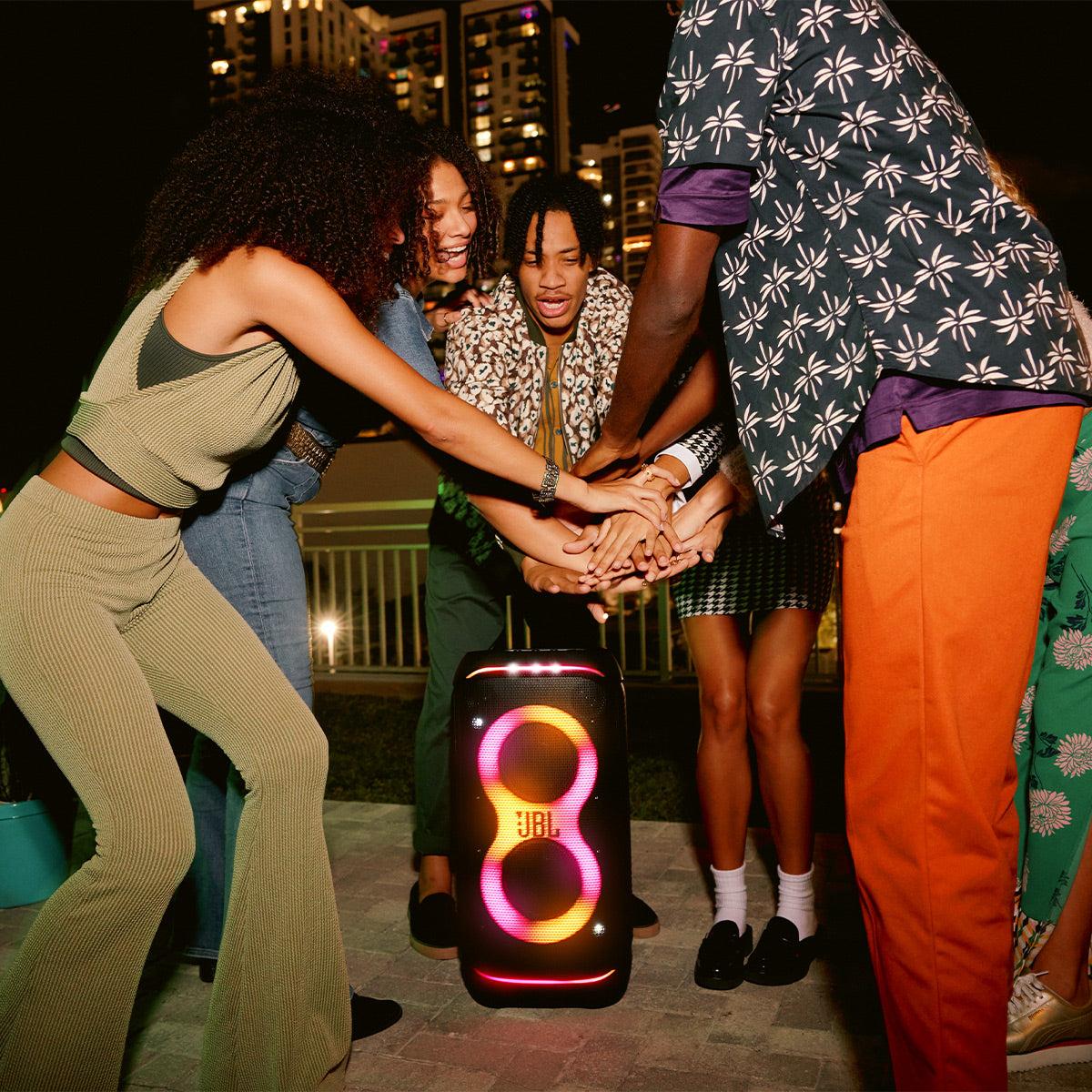
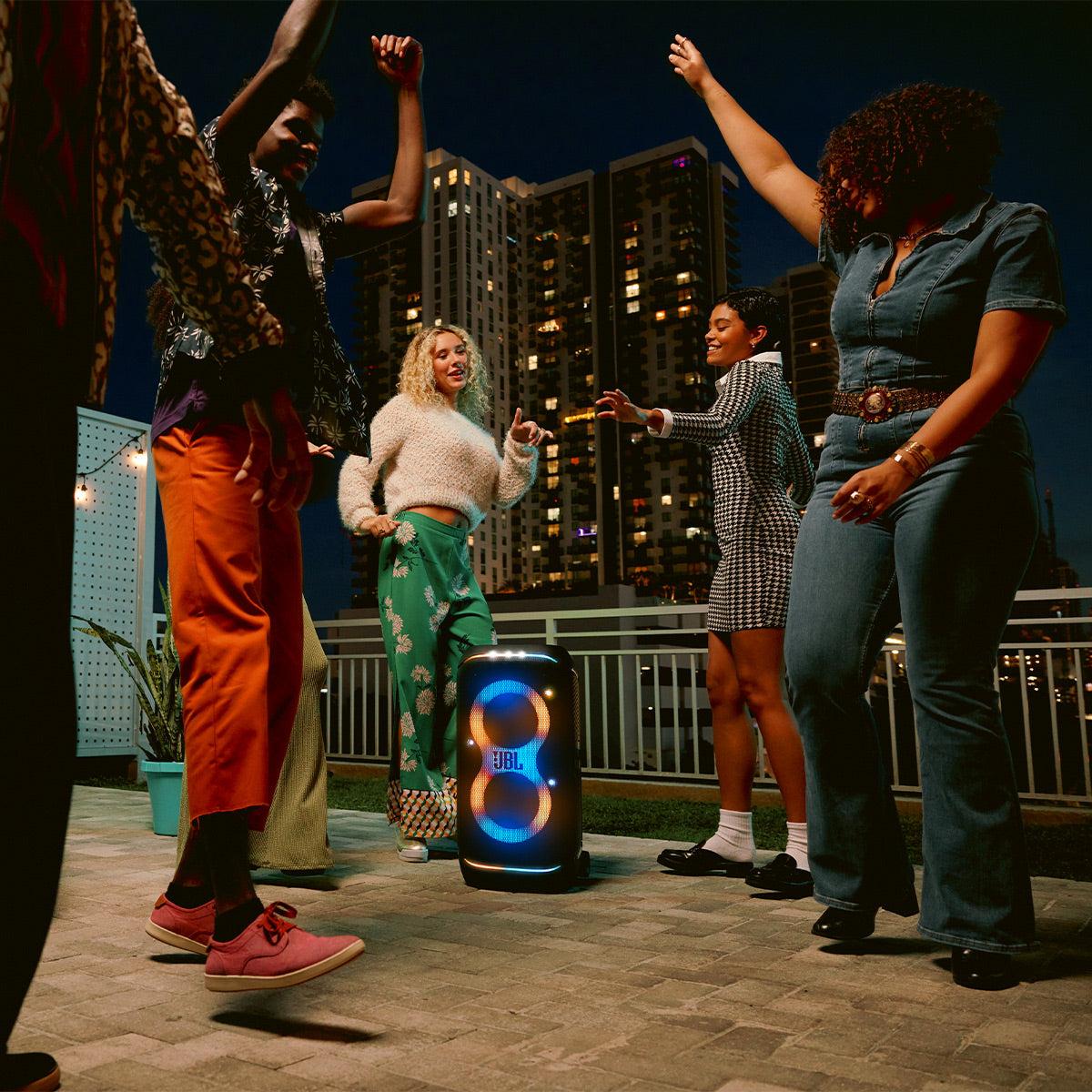
When it comes to hosting memorable gatherings, your speaker choice can make or break the vibe. Party speakers have evolved dramatically from the basic boom boxes of the past, now offering powerful amplification, long-lasting batteries, and features that would have seemed like science fiction just a decade ago. Today we're comparing two speakers that represent very different philosophies in this space: the JBL PartyBox Stage 320 and the Marshall Bromley 750.
At the time of writing, these speakers sit at opposite ends of the party speaker pricing spectrum. The JBL PartyBox Stage 320 positions itself as the accessible powerhouse, while the Marshall Bromley 750 commands roughly double the price with premium features and build quality. But price alone doesn't tell the whole story—each speaker excels in different scenarios, and understanding these differences will help you choose the right one for your needs.
Party speakers aren't designed for critical listening the way audiophile bookshelf speakers are. Instead, they prioritize specific characteristics that matter when you're trying to energize a crowd or fill outdoor spaces with sound. The most important factors include maximum volume output (measured in decibels or dB), battery life for portable use, and frequency response that emphasizes bass impact over midrange subtlety.
Weather resistance has also become crucial as these speakers increasingly venture outdoors. The IP rating system tells you how well a device handles dust and water—IP54 means protection against dust and water splashes from any direction, while IPX4 offers splash protection but no dust rating. Both the JBL PartyBox Stage 320 and Marshall Bromley 750 offer weather protection, though at different levels.
Another key consideration is connectivity flexibility. Modern party speakers need to handle everything from Bluetooth streaming to live microphone inputs, and the best models include features like Auracast (a technology that lets multiple compatible speakers play the same audio wirelessly) and professional audio connections.
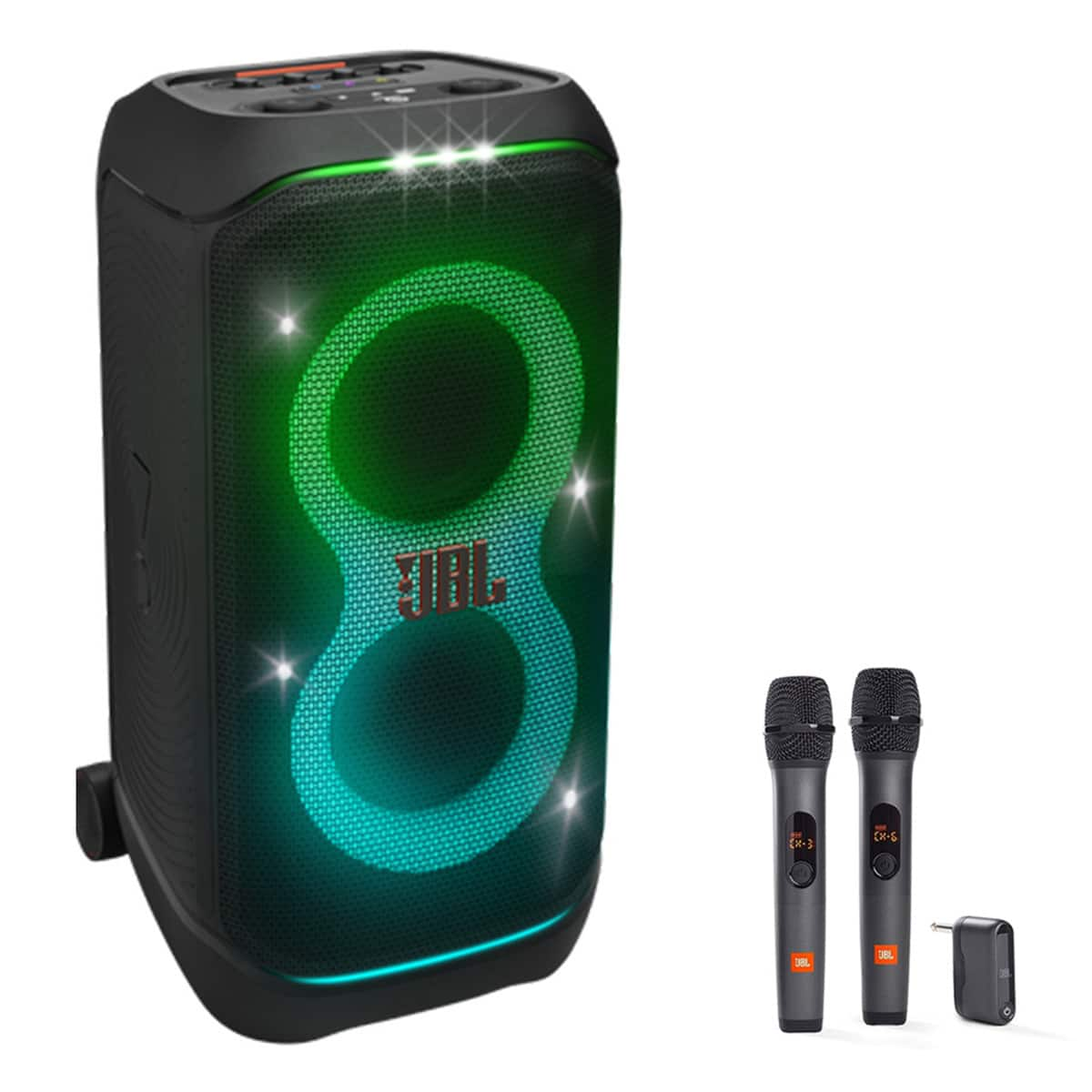
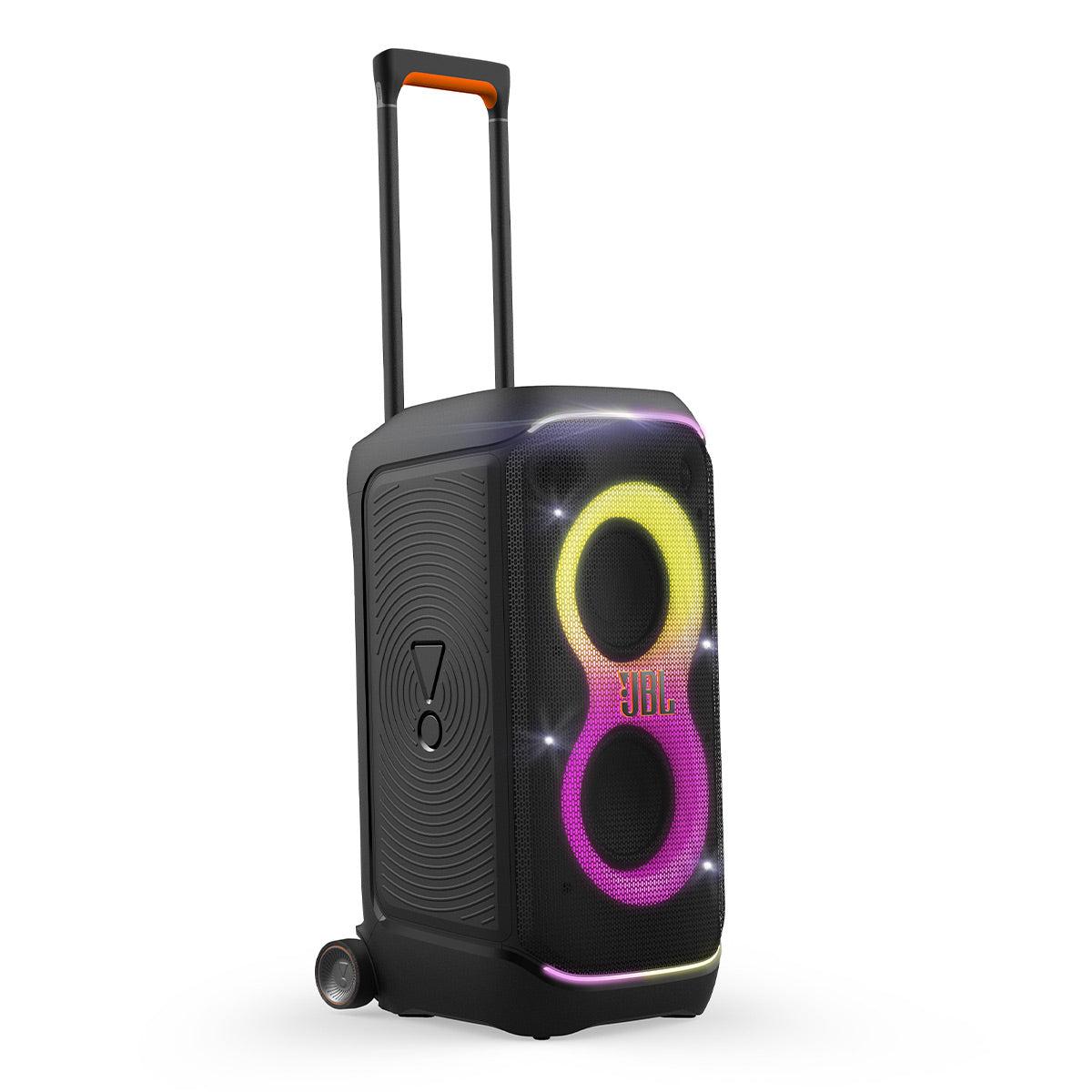
Released in 2024, the JBL PartyBox Stage 320 represents JBL's continued refinement of their party speaker formula. JBL has been dominating this category for years, and the Stage 320 incorporates lessons learned from previous generations while adding modern conveniences like swappable batteries and improved Bluetooth connectivity.
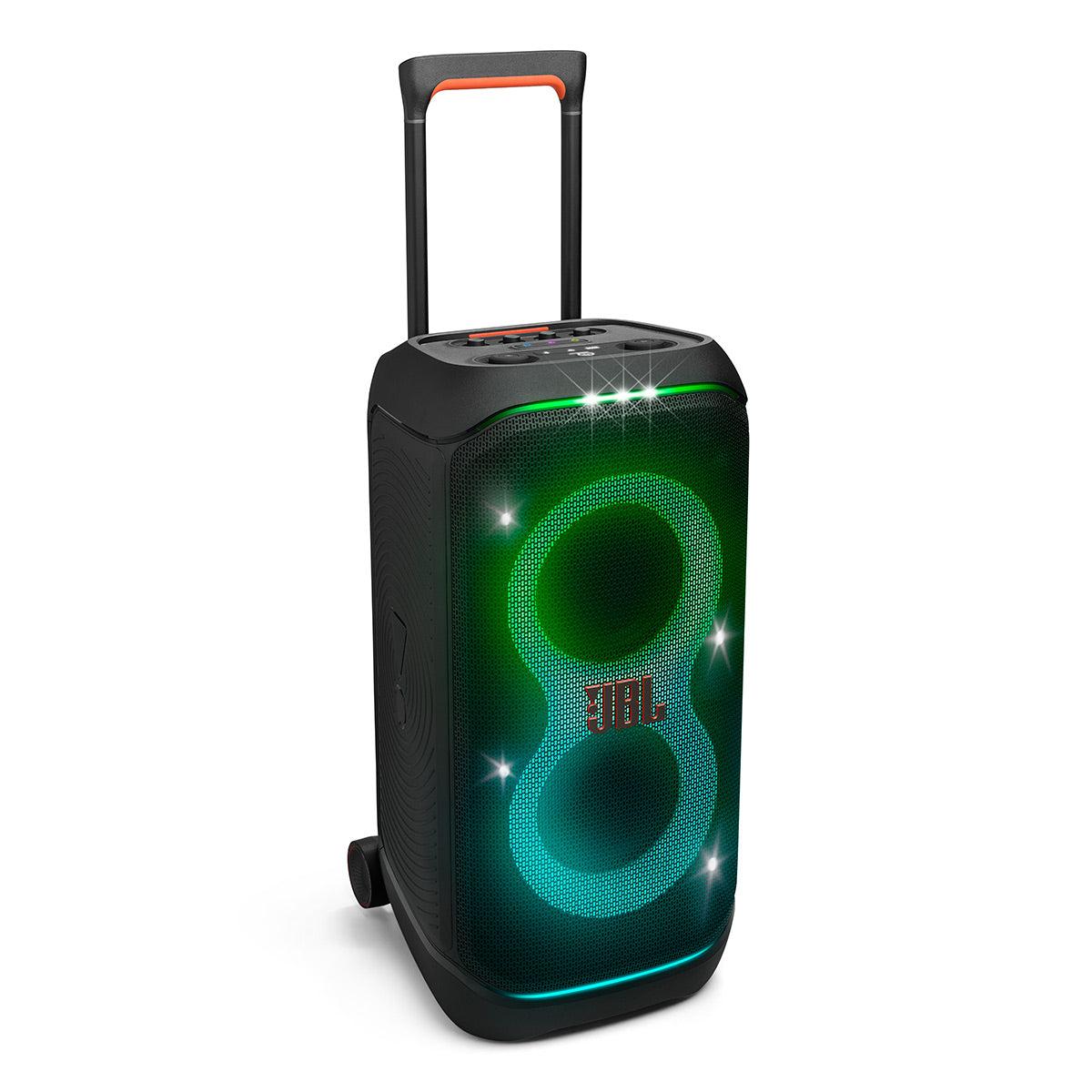
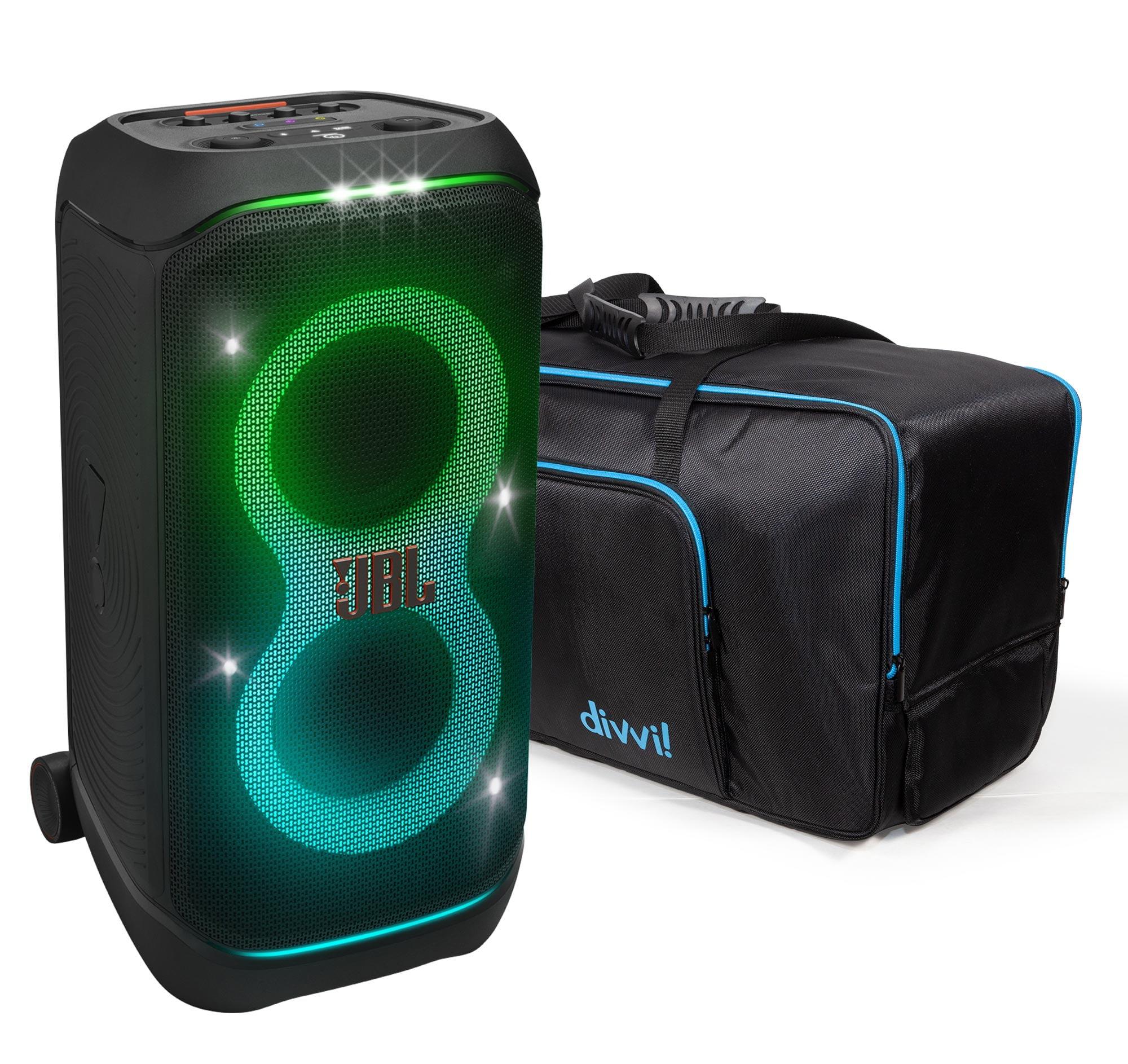
The heart of the Stage 320 is its driver configuration: two 6.5-inch woofers paired with dual 1-inch dome tweeters. This setup delivers 240 watts RMS (Root Mean Square, which indicates continuous power output rather than peak bursts) through a front-firing design that concentrates energy forward toward your audience. The woofers handle the low-frequency content that gives dance music its punch, while the tweeters reproduce the crisp highs that keep vocals clear even at high volumes.
JBL's AI Sound Boost technology deserves special mention here. This system analyzes incoming audio in real-time and dynamically adjusts the speaker's response to prevent distortion while maximizing perceived loudness. When you're pushing the Stage 320 hard at an outdoor barbecue, AI Sound Boost helps maintain clarity that would otherwise get lost in compression and clipping.
The bass response on the JBL PartyBox Stage 320 is particularly impressive for its price point. Our research into professional reviews reveals consistent praise for its ability to deliver impactful low-end without the muddiness that plagues cheaper party speakers. The 40Hz-20kHz frequency response means it can reproduce the deep bass fundamentals in electronic music while extending high enough to capture the sparkle in cymbals and vocal harmonics.
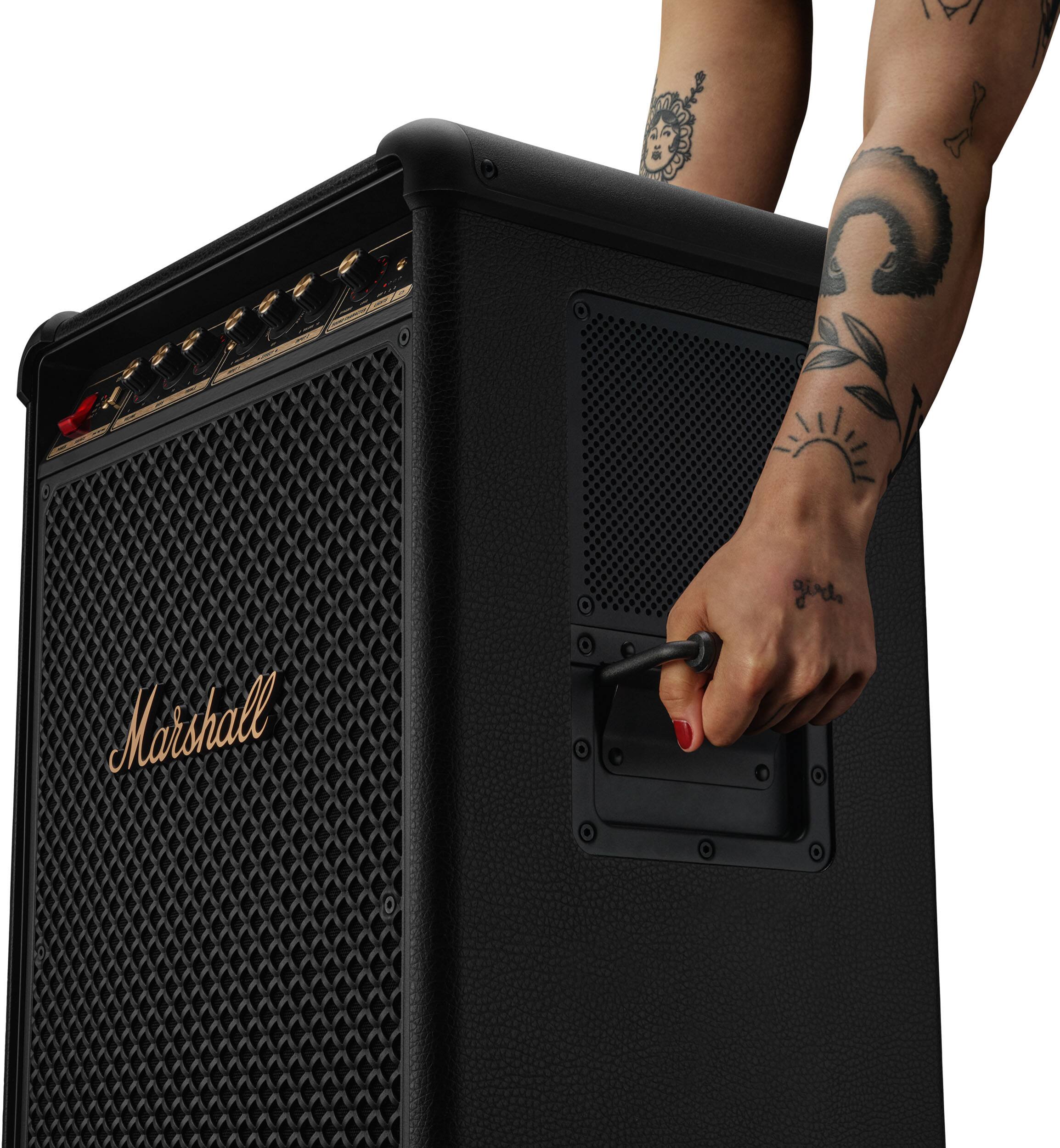
The Marshall Bromley 750, launched in 2024, marks Marshall's serious entry into the party speaker market. Known primarily for their iconic guitar amplifiers, Marshall brought their expertise in professional audio to create something quite different from typical party speakers.
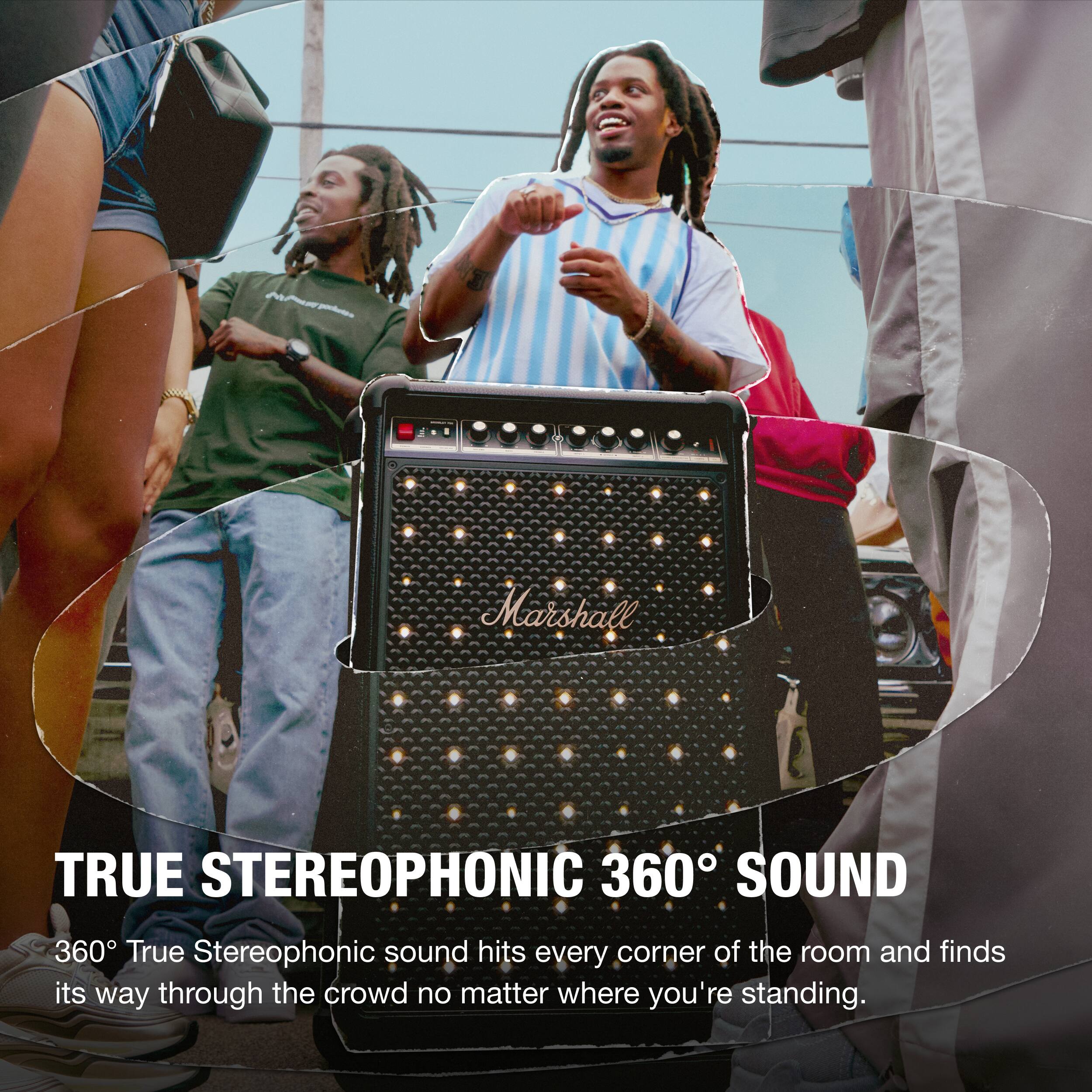
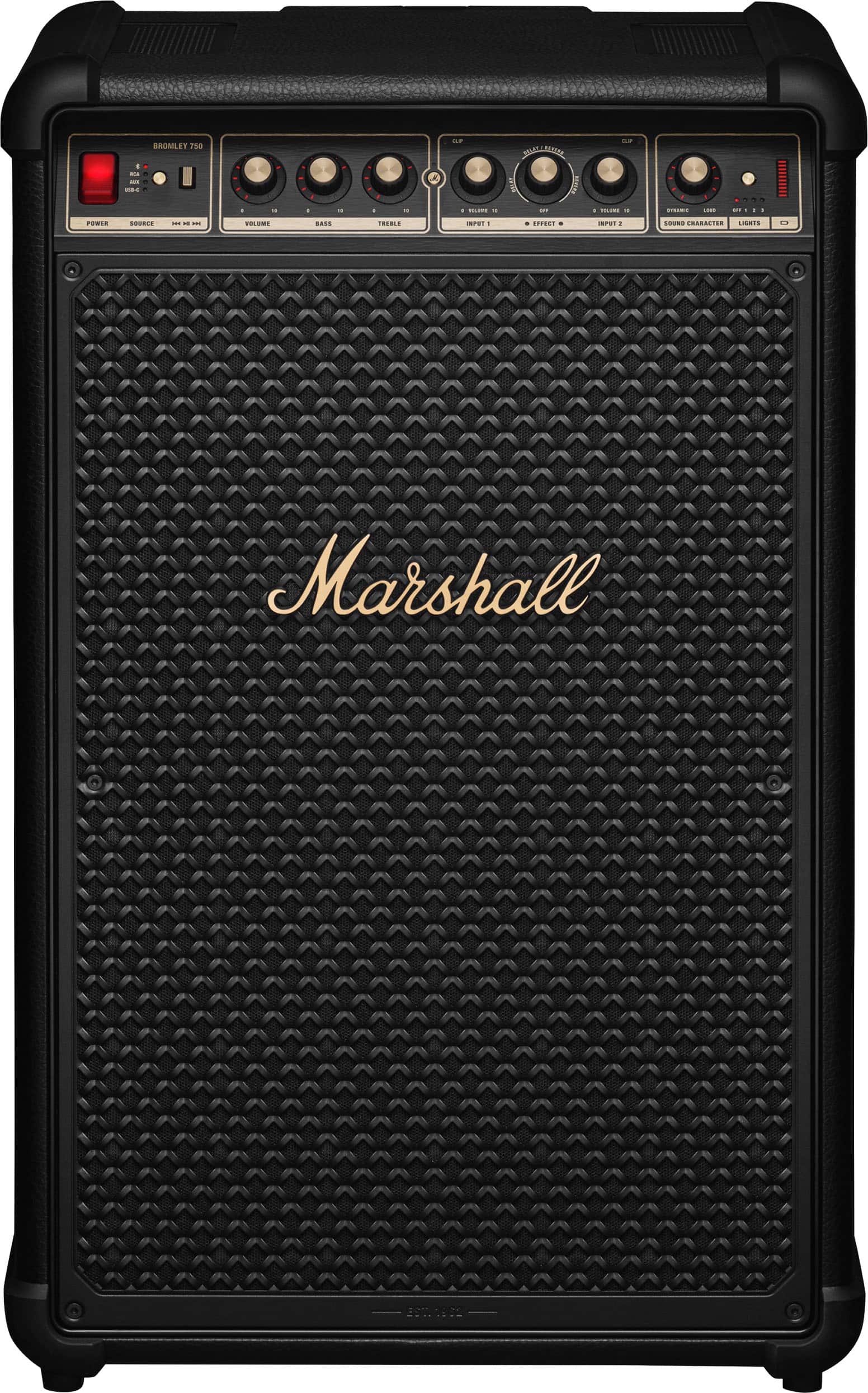
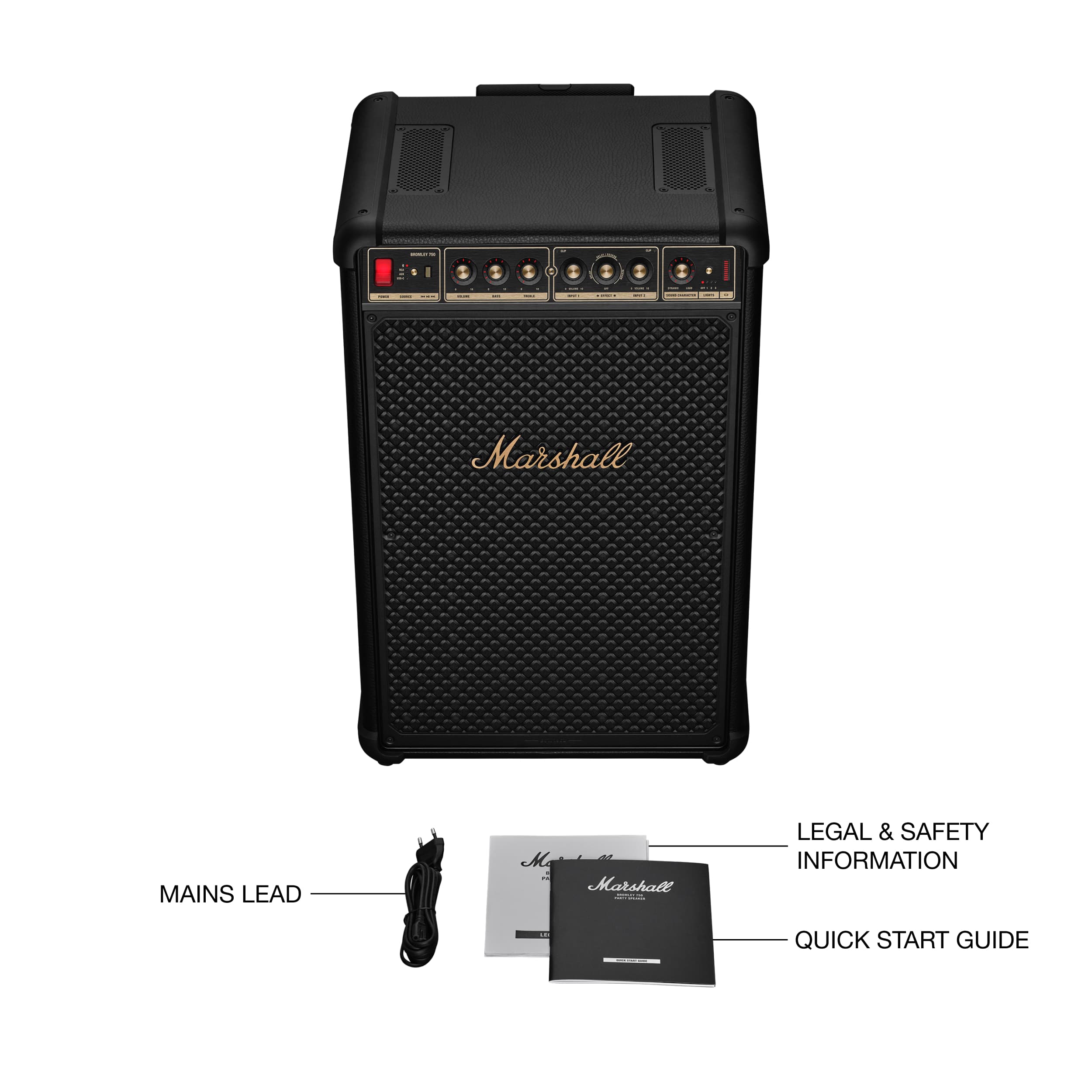
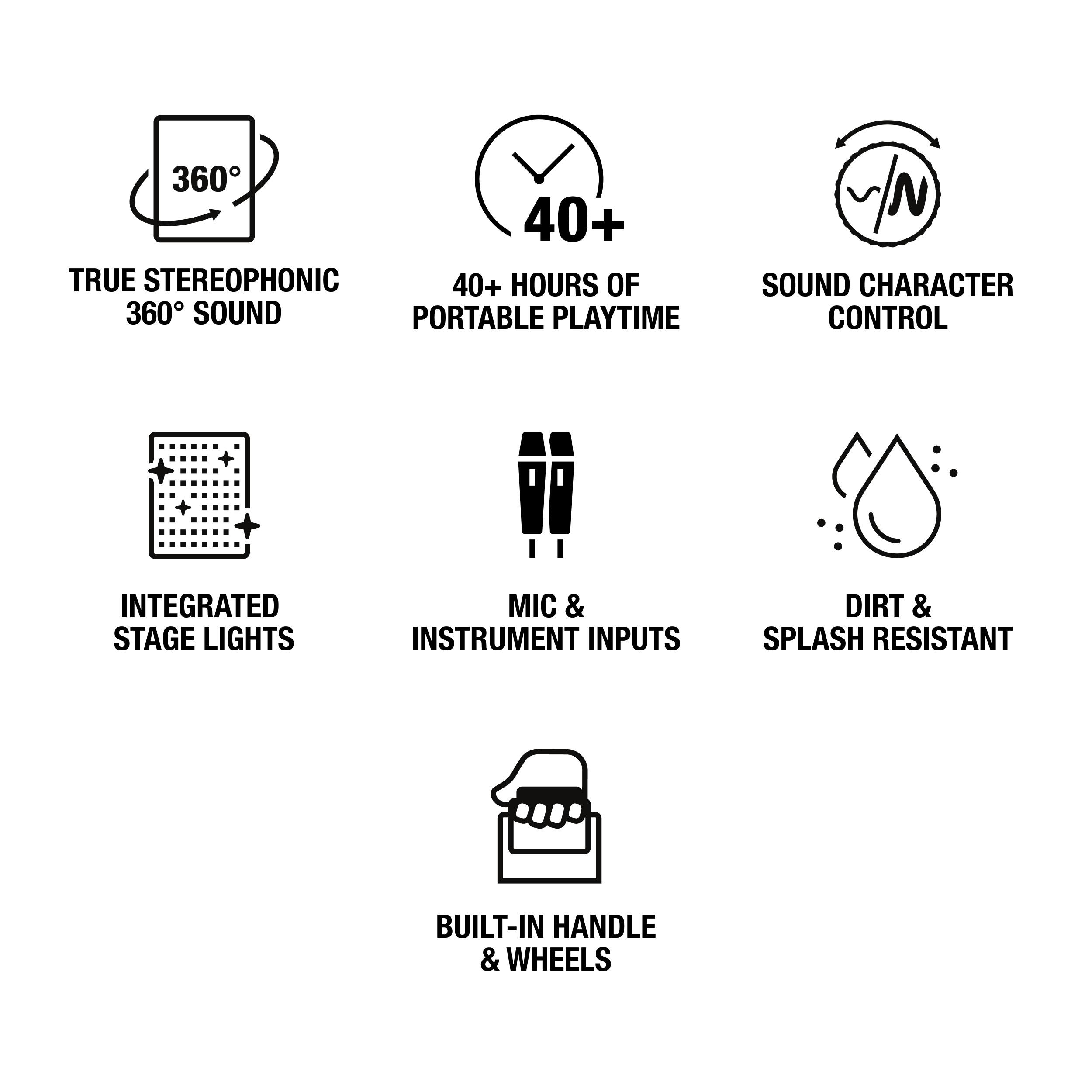
The most striking technical difference is the Bromley 750's 360-degree "True Stereophonic" sound system. Instead of firing all drivers forward like the JBL, Marshall distributes eight drivers around the cabinet: two 10-inch woofers, two 5.25-inch mid-range drivers, and four tweeters positioned on different faces of the enclosure. This creates omnidirectional coverage where people standing behind or beside the speaker hear nearly the same sound as those in front.
This approach has real practical benefits. At a backyard party, guests naturally spread around the space rather than congregating in front of a single speaker. The Marshall's 360-degree design ensures everyone gets good sound regardless of where they're standing or sitting.
The Marshall Bromley 750 also employs a closed-box (sealed) cabinet design rather than the ported enclosures common in party speakers. Ported designs use a precisely tuned opening to enhance bass response, but they can sound "boomy" or uncontrolled at high volumes. Marshall's sealed approach provides tighter, more accurate bass reproduction, though it requires more power to achieve the same low-frequency output.
Battery technology represents perhaps the biggest advancement in portable speakers over the past few years. Both speakers feature removable batteries—a significant upgrade from older models with permanently installed cells that eventually degraded and couldn't be replaced.
The JBL PartyBox Stage 320 delivers 18 hours of continuous playback, which covers most single-day events comfortably. Its quick-charge capability provides two hours of runtime from just 10 minutes of charging, which can save a party when you forgot to charge overnight.
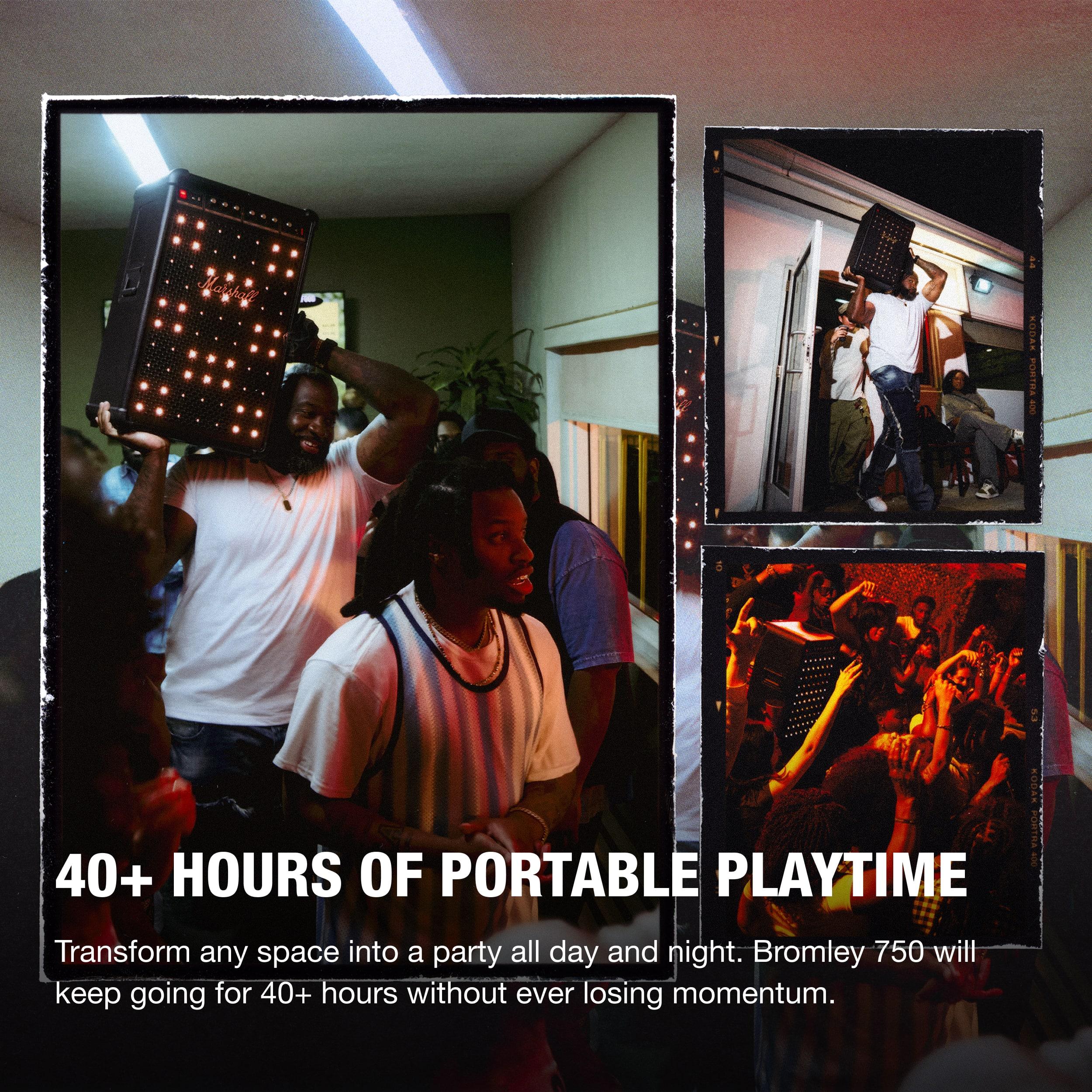
But the Marshall Bromley 750 truly stands out with its marathon 40+ hour battery life. This isn't just a marketing number—it fundamentally changes how you can use the speaker. Weekend camping trips, multi-day festivals, or back-to-back events become possible without worrying about power access. The battery also functions as a power bank, letting you charge phones and other devices through its USB-C port.
Both speakers support swappable batteries, meaning you can purchase backup units for theoretically unlimited runtime. However, the Marshall's exceptional endurance reduces the practical need for multiple batteries in most scenarios.
Here's where things get interesting. Based on our analysis of professional reviews and user feedback, these speakers sound quite different despite both being designed for parties.
The JBL PartyBox Stage 320 follows the traditional party speaker playbook with a bass-forward sound signature. It emphasizes the frequency ranges that make dance music exciting—punchy mid-bass around 100-200Hz and solid sub-bass extension below 50Hz. When playing hip-hop, electronic dance music, or pop, the JBL delivers the chest-thumping impact that gets people moving.
Professional reviewers consistently note that the Stage 320 maintains its character even when pushed to high volumes. This is crucial for outdoor use where you're competing with ambient noise and the natural sound absorption of open spaces. The speaker's frequency response remains relatively balanced even at party volumes, preventing the harsh, fatiguing sound that cheaper speakers develop when overdriven.
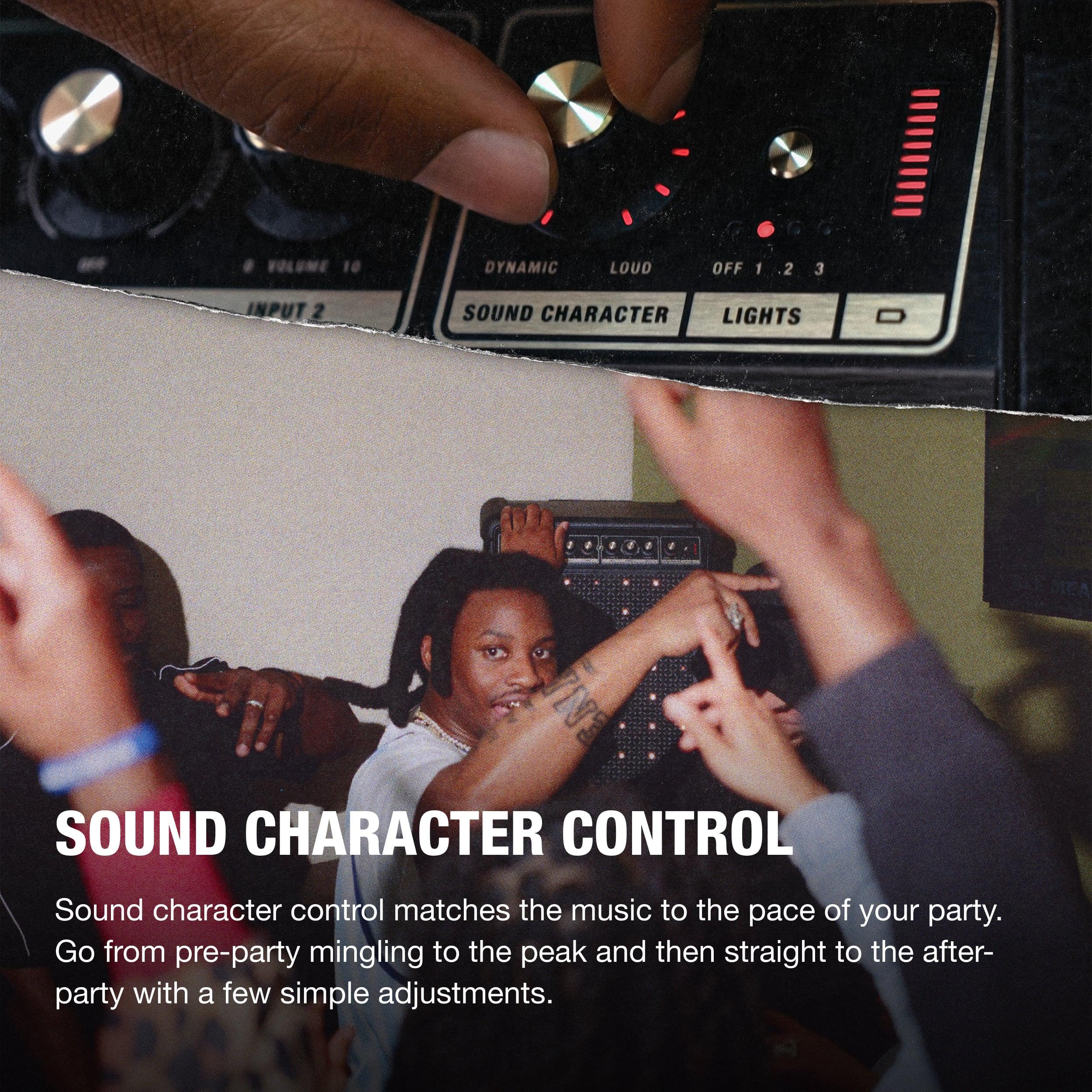
The Marshall Bromley 750 takes a more sophisticated approach. Its sound signature is notably more balanced across the frequency spectrum, with particular attention paid to midrange clarity. This makes it excellent for genres like rock, folk, and jazz where vocal intelligibility and instrument separation matter. The closed-box design contributes to tighter, more controlled bass that doesn't overwhelm other frequencies.
However, this sophistication comes with trade-offs. Several reviews note that while the Marshall sounds excellent at moderate volumes, it doesn't maintain the same excitement when pushed to maximum output for large outdoor gatherings. The balanced approach that works so well for critical listening can sound somewhat restrained compared to the JBL's energetic presentation at party volumes.
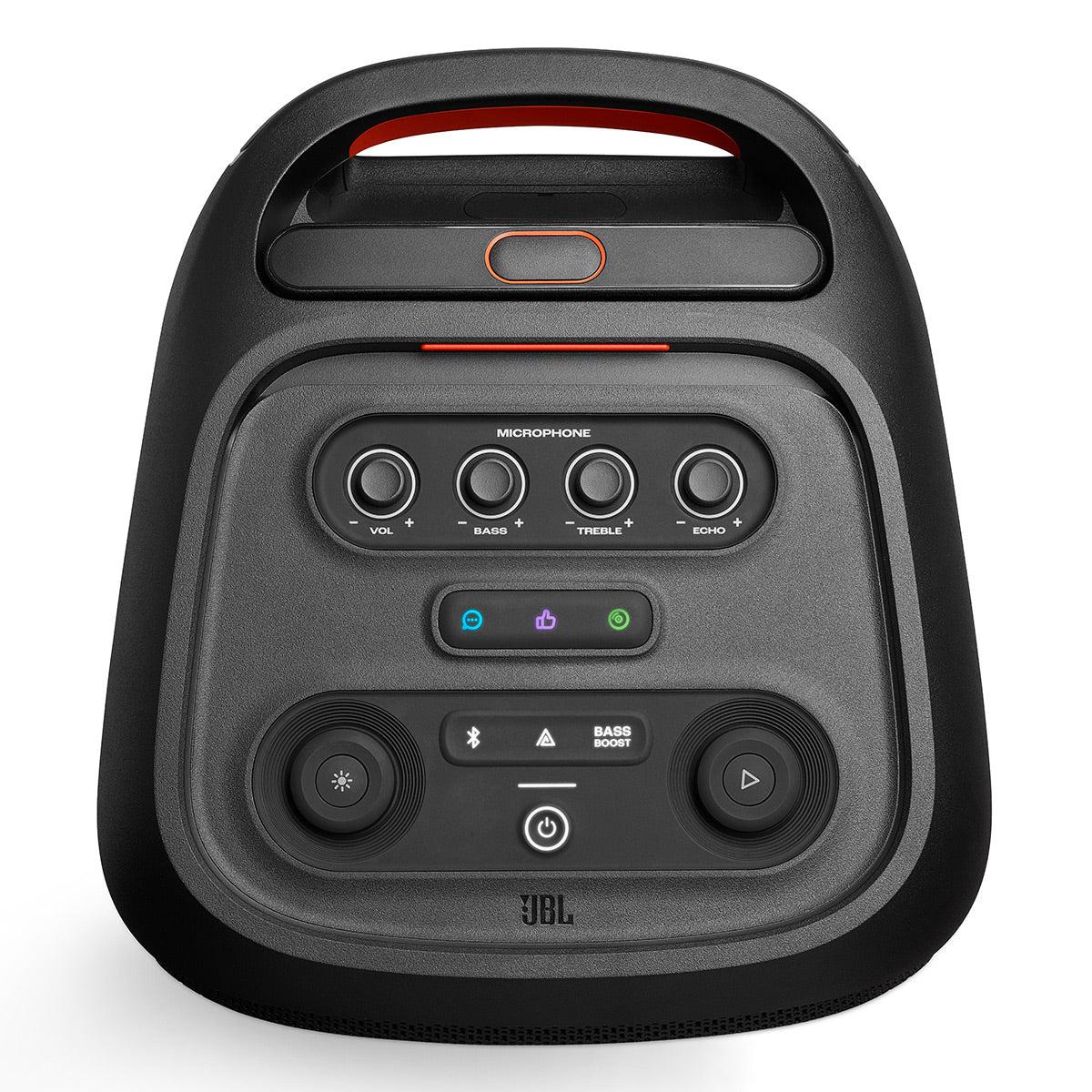
The connectivity options reveal each speaker's intended audience clearly. The JBL PartyBox Stage 320 includes the basics: Bluetooth 5.4 with Auracast support, a 3.5mm auxiliary input, and dual microphone inputs with basic echo effects. These cover typical party needs—streaming music from phones, connecting a DJ mixer, or adding karaoke capabilities.
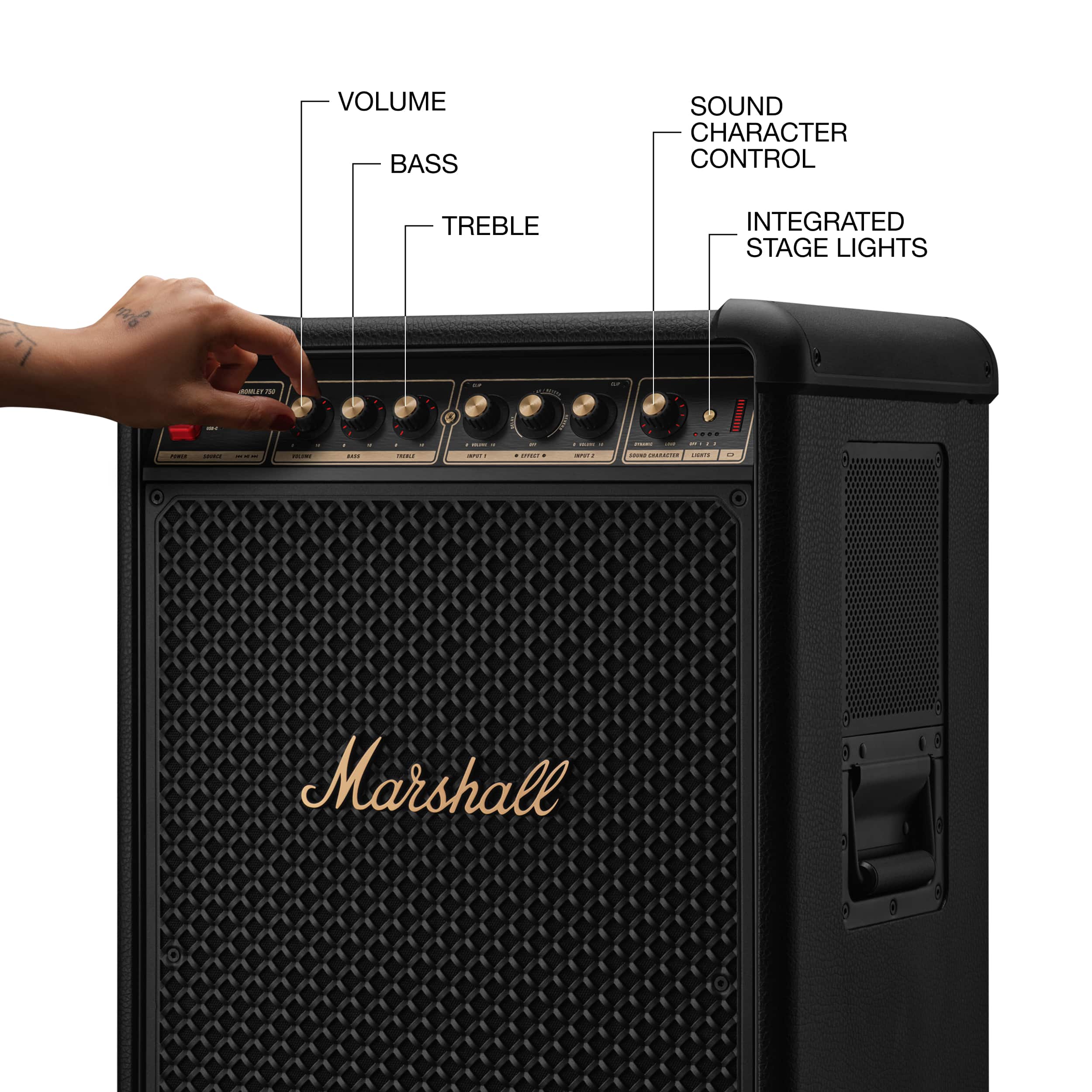
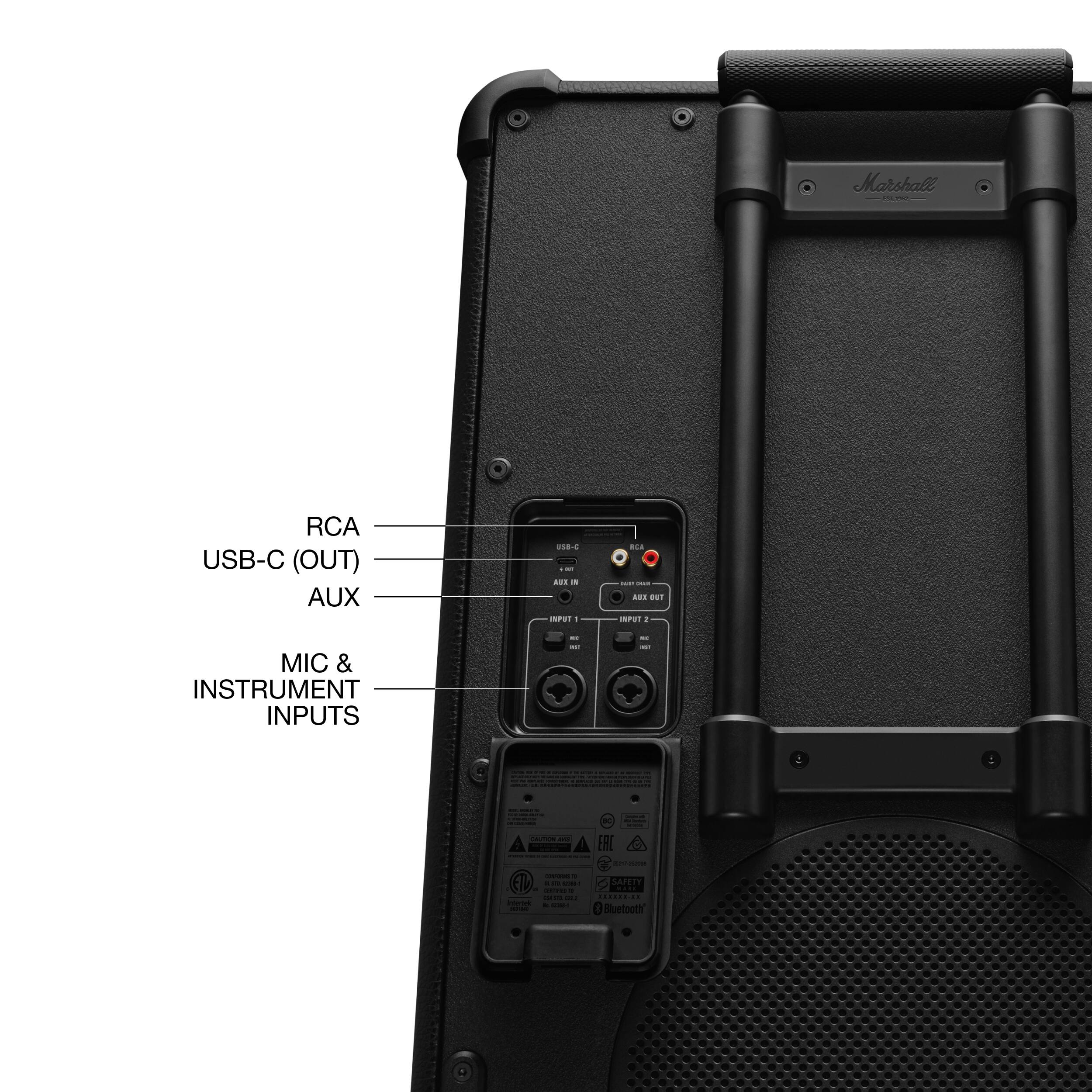
The Marshall Bromley 750 goes much further into professional territory. Its dual XLR/quarter-inch combo jacks accept both microphones and instruments like guitars or keyboards. The onboard effects processing includes reverb and delay, essentially providing a small mixing console's capabilities. RCA inputs accommodate DJ equipment or CD players, while separate USB-C ports handle audio input and device charging simultaneously.
These professional features make the Marshall genuinely useful for live performance scenarios. A solo acoustic guitarist could connect directly and perform with backing tracks, or a small band could run multiple microphones through the speaker's built-in mixer. The JBL, while capable of basic microphone amplification, doesn't provide this level of professional functionality.
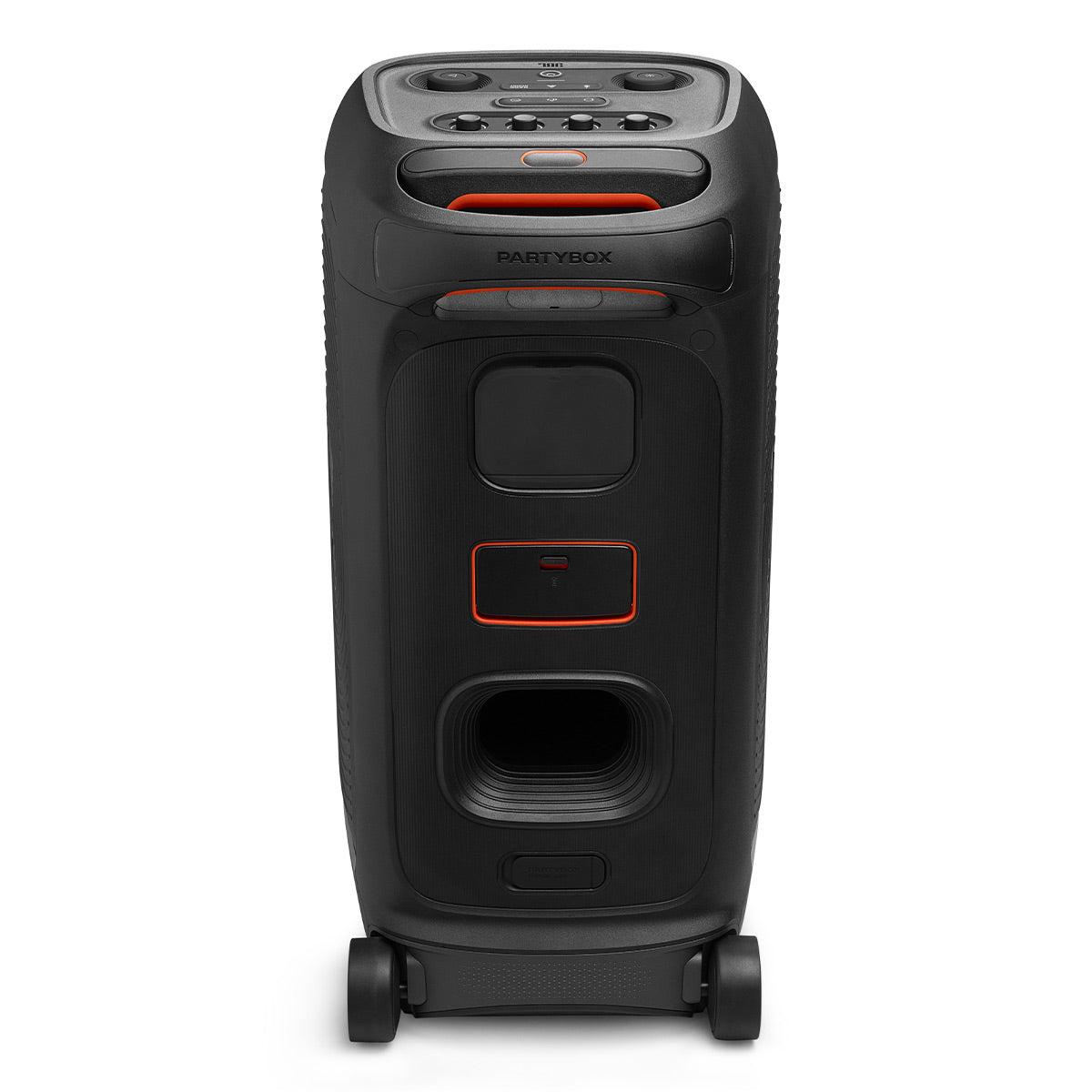
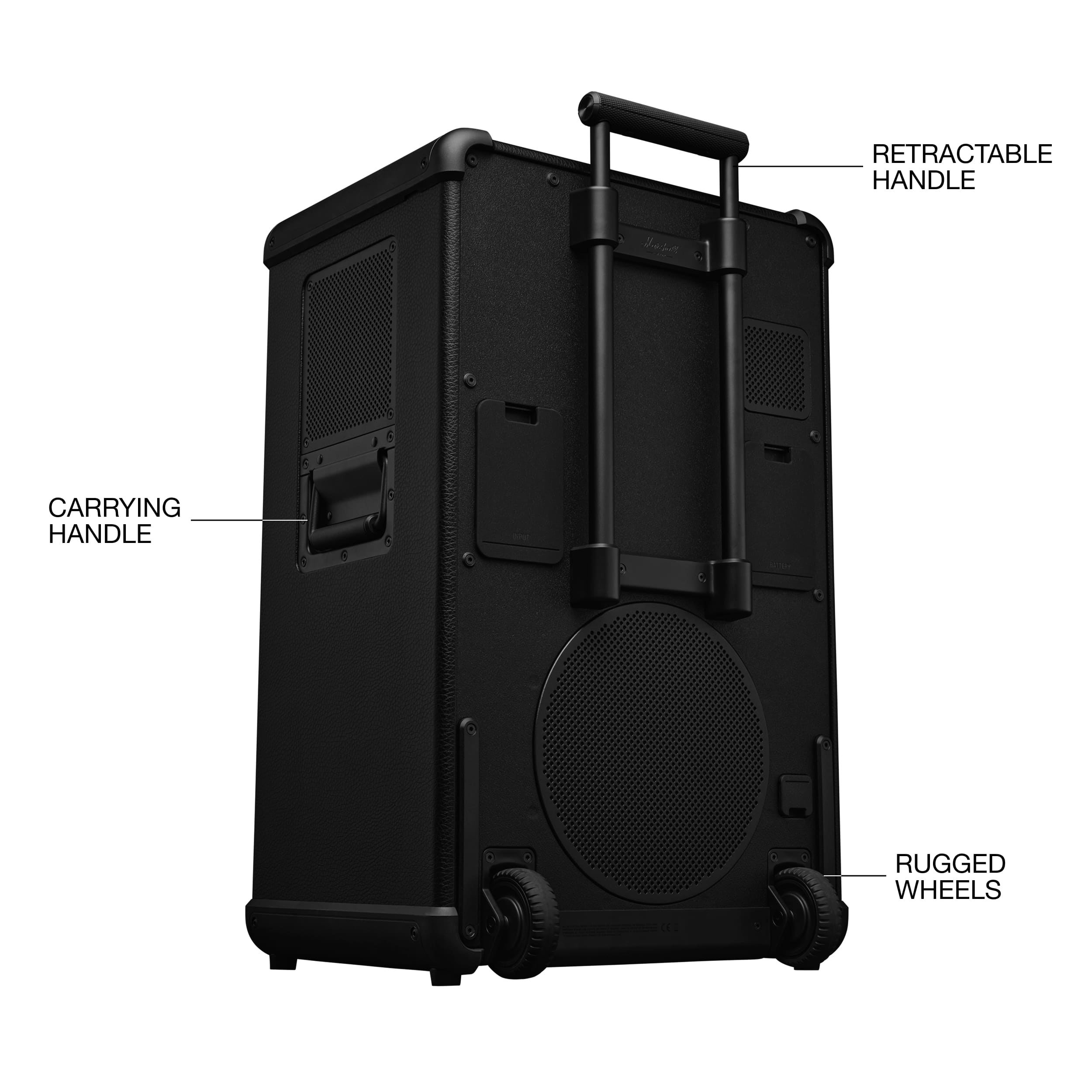
Both speakers acknowledge that party environments can be rough on equipment. The JBL PartyBox Stage 320 features IPX4 splash protection and a design that incorporates recycled materials, reflecting growing environmental consciousness in consumer electronics. At 16.5 kilograms, it's hefty but manageable, with a telescopic handle and wheels that make transport practical.
The Marshall Bromley 750 ups the ante with IP54 rating, providing protection against both dust and water splashes from any direction. Its construction feels distinctly premium, with brushed metal control panels, water-based PU leather wrapping, and the classic Marshall aesthetic that looks at home in both backyard parties and professional venues. The trade-off is significantly more weight—nearly 24 kilograms—though the included wheels and handle system help manage the bulk.
Marshall also includes a drainage system in the driver design, allowing water to escape if it gets inside rather than pooling and causing damage. This attention to detail reflects the speaker's higher price point and professional aspirations.
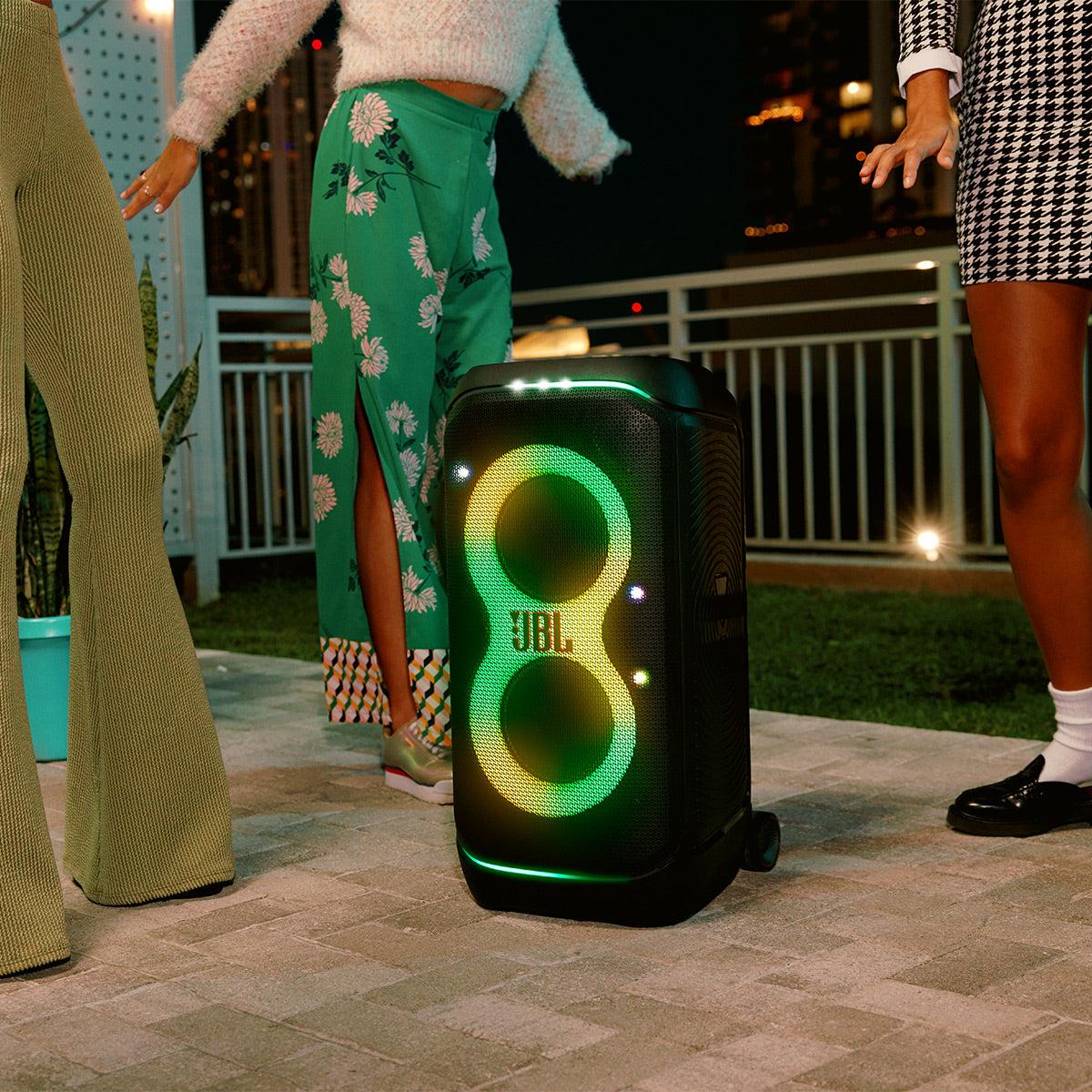
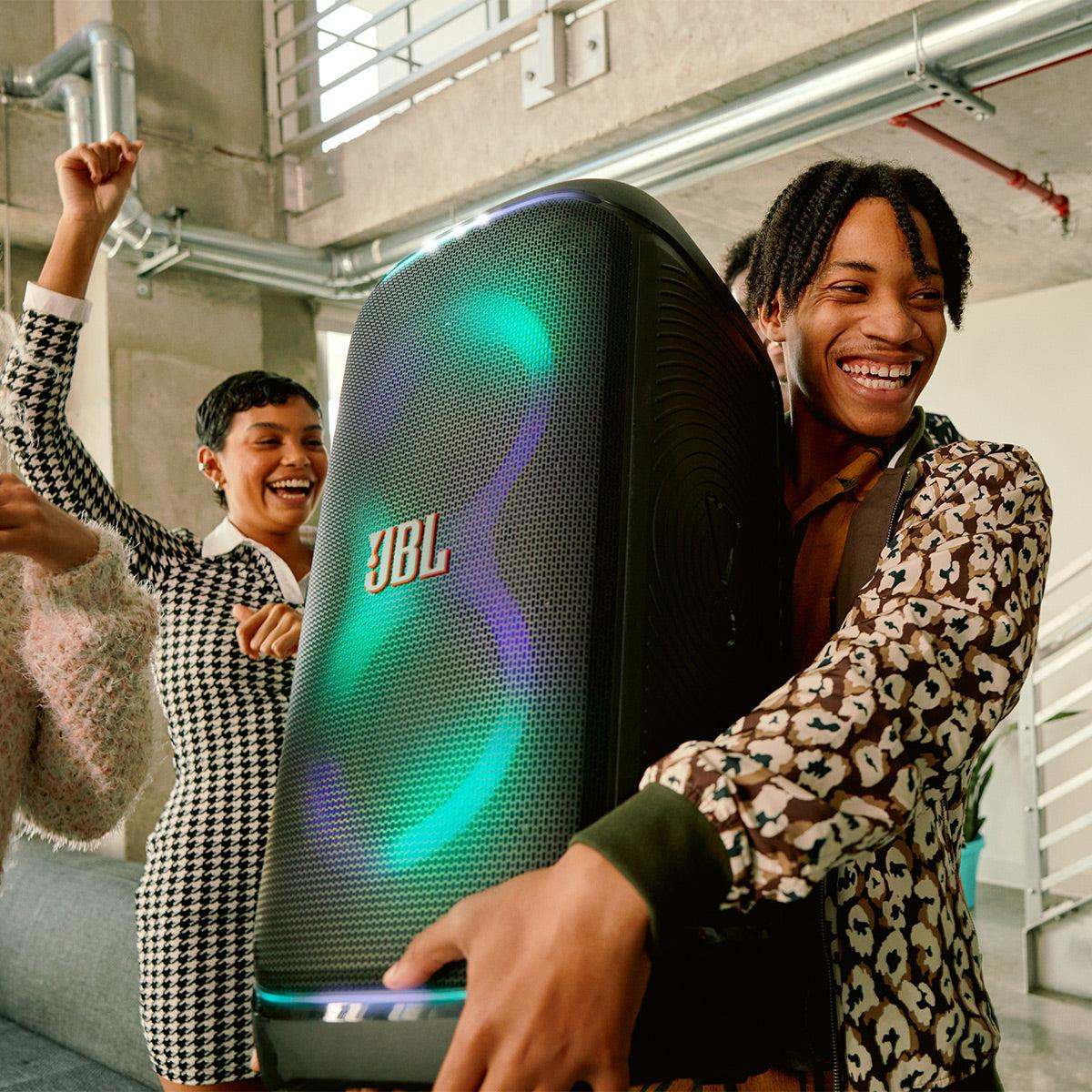
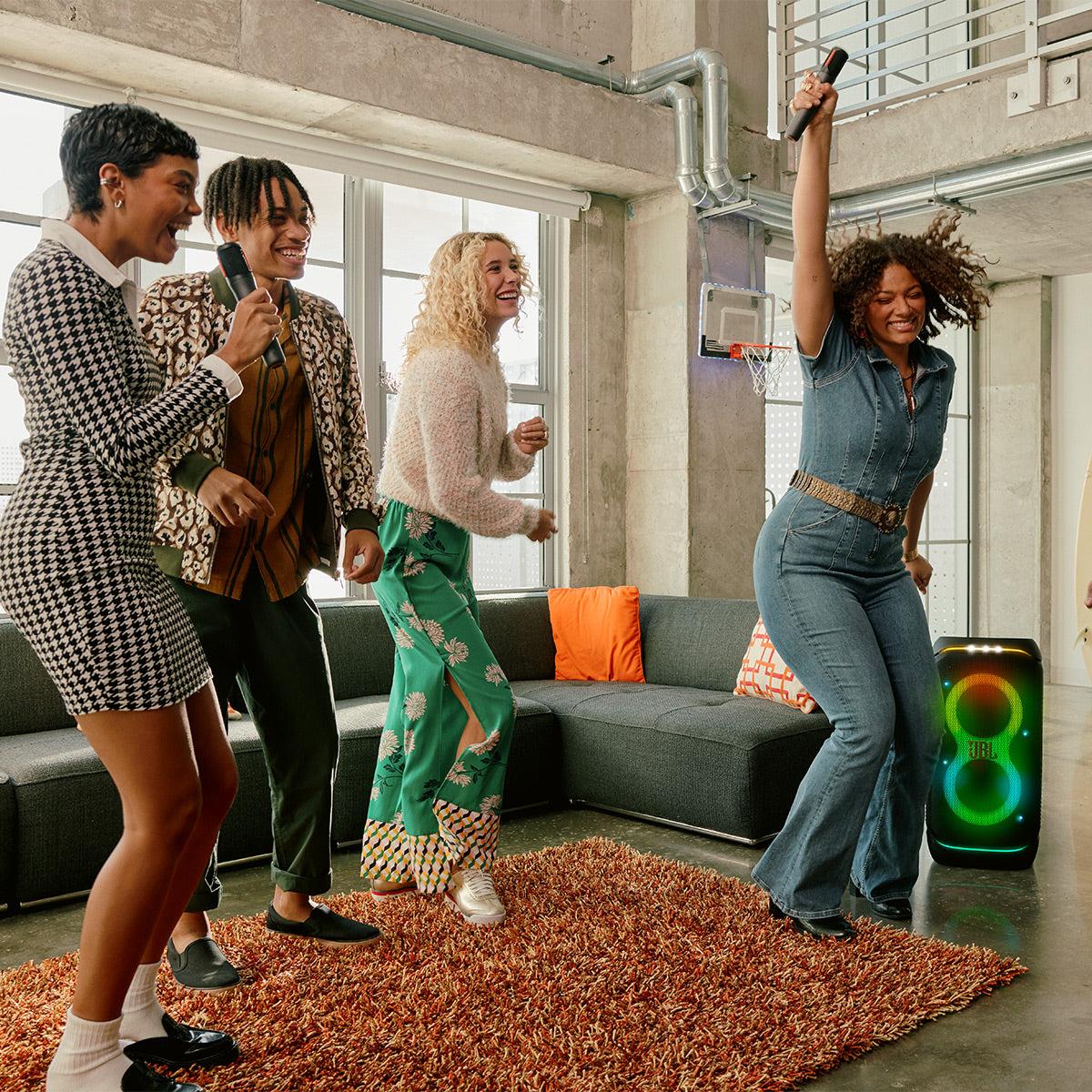
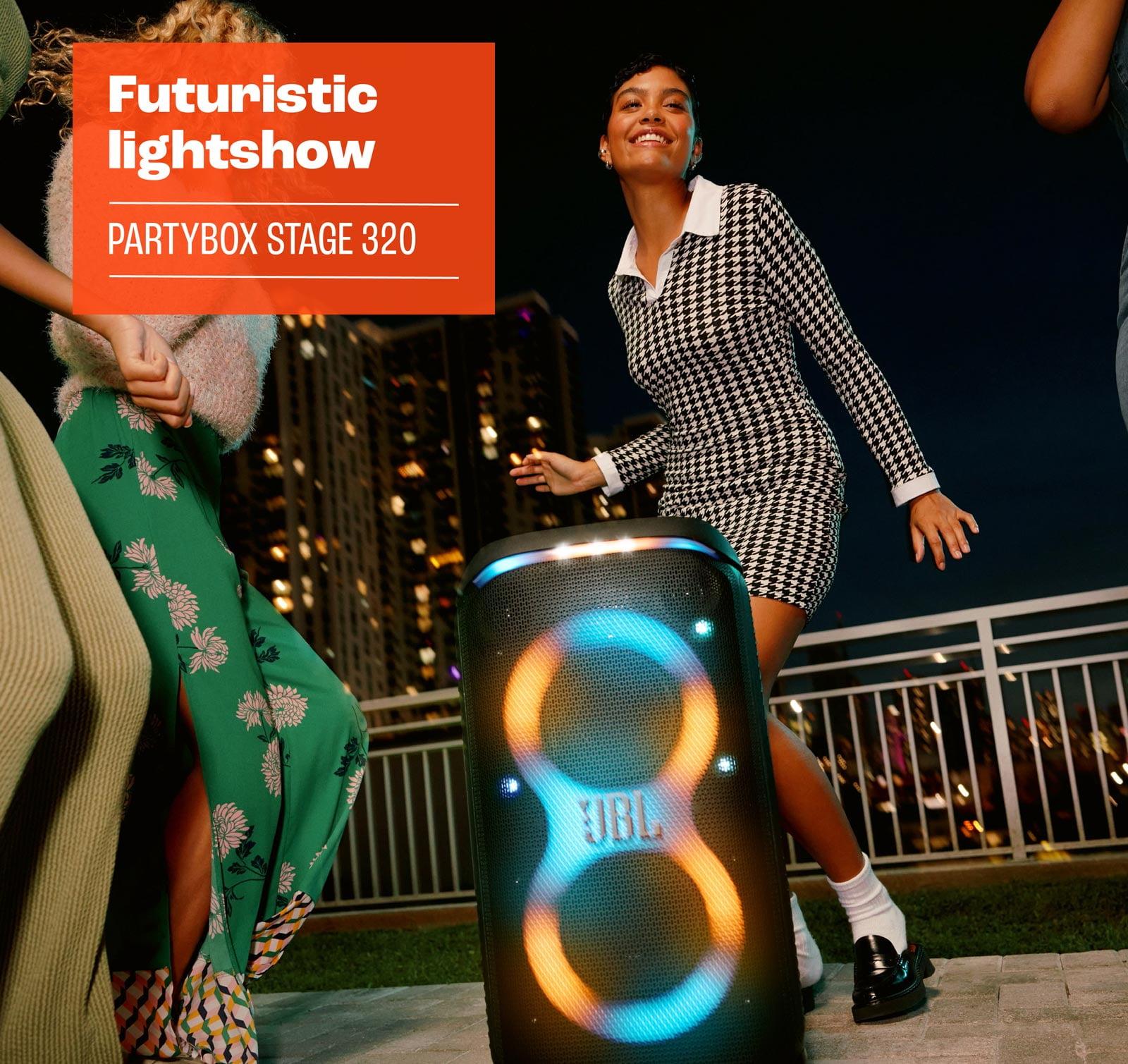
Modern party speakers compete on more than just sound quality—lighting effects and user interface design play important roles in creating atmosphere. The JBL PartyBox Stage 320 features an adaptive lightshow with multiple modes that sync to the music's beat. The effects include starry lights, light trails, and strobe patterns that can energize a party or be turned off to conserve battery life.
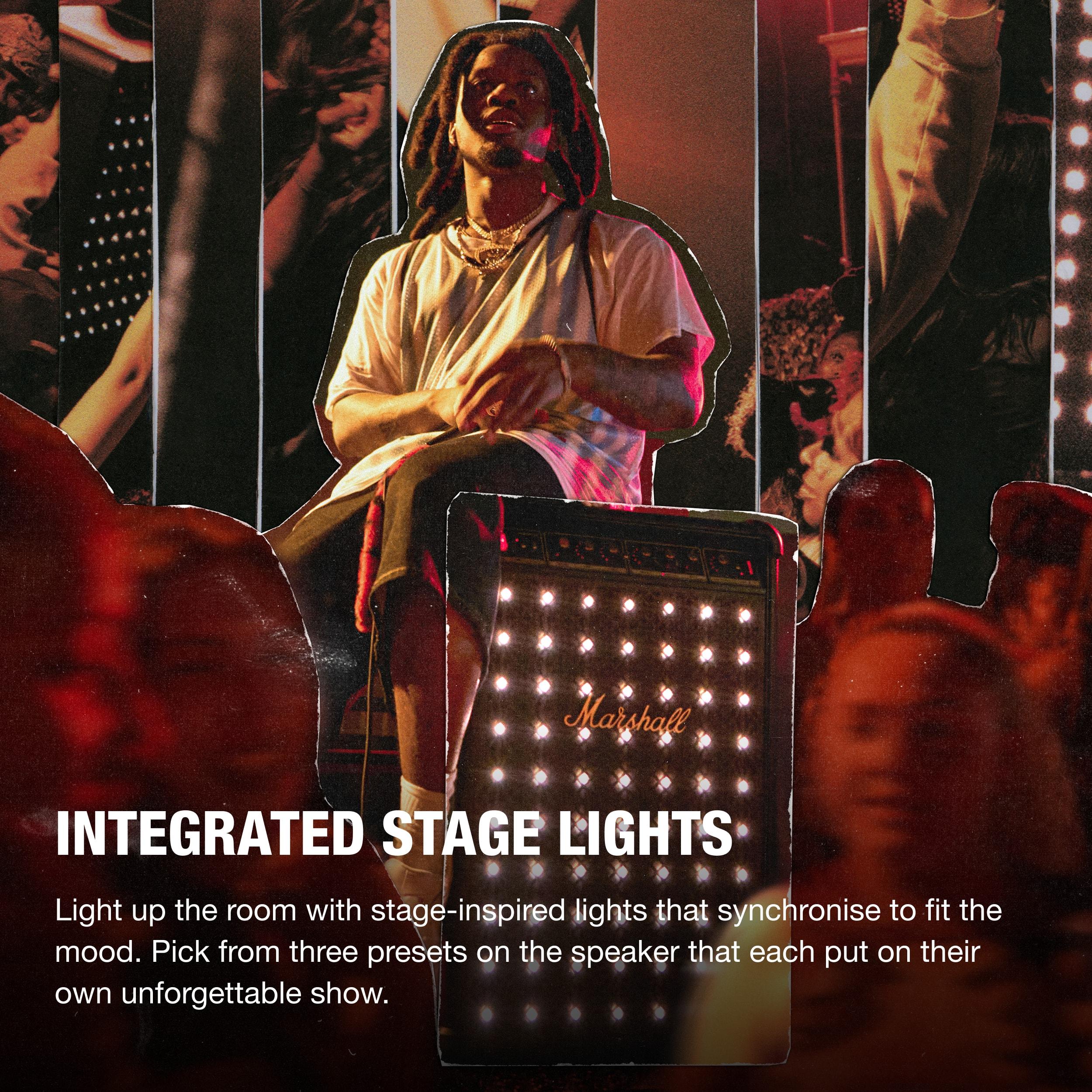
The Marshall Bromley 750 takes a more understated approach with white LED lighting concealed behind its front grille. Rather than disco-style color changes, Marshall's lighting evokes stage spotlights and vintage marquee signs. Three presets include one static mode and two that respond to music, but the overall effect is more sophisticated and less party-focused than the JBL's colorful display.
The choice between these approaches depends on your party style. The JBL embraces the fun, energetic aesthetic that many people expect from party speakers. The Marshall offers a more mature, professional appearance that works equally well in adult gatherings and performance venues.
Understanding how these speakers perform in different environments helps clarify which suits your needs. For typical backyard parties with 20-30 people, both speakers provide more than adequate volume and coverage. The JBL PartyBox Stage 320 excels in these scenarios with its forward-firing design concentrating energy toward the main gathering area and its bass-forward tuning keeping energy high.
Large outdoor events reveal more significant differences. The Marshall Bromley 750's higher power output and 360-degree coverage work better for very large spaces where people spread out significantly. However, reviews suggest that pushing the Marshall to maximum volume in outdoor settings can make it sound thin and compressed, somewhat defeating the purpose of its extra power.
For indoor use, the situation reverses somewhat. The Marshall's balanced frequency response and superior midrange clarity make it more pleasant for background listening or mixed-use scenarios where you might play acoustic music or jazz alongside dance tracks. The 360-degree sound distribution also works well in rectangular rooms where traditional speakers create dead zones.
At the time of writing, the price difference between these speakers is substantial—roughly double for the Marshall compared to the JBL. This creates a clear value equation that depends heavily on your specific needs and usage patterns.
The JBL PartyBox Stage 320 represents exceptional value for typical party use. Its 18-hour battery life covers most single-day events, the sound quality is optimized for party music, and the build quality is solid without unnecessary premium materials. For most people hosting occasional backyard gatherings, pool parties, or indoor celebrations, the JBL provides everything needed at an accessible price point.
The Marshall Bromley 750 justifies its premium pricing through specific advantages that matter for certain users. The 40+ hour battery life is genuinely transformative for camping trips, multi-day festivals, or professional use where power access is uncertain. The professional connectivity turns it into a small PA system capable of handling live performance scenarios. The superior build quality and weather resistance provide long-term durability that may justify the higher initial cost.
Choose the JBL PartyBox Stage 320 if you want proven party performance without paying for features you won't use. Its bass-forward sound signature, colorful lighting effects, and straightforward operation make it ideal for energetic gatherings. The 18-hour battery life and manageable weight ensure it's truly portable for most scenarios. At its price point, the Stage 320 delivers remarkable value and performance that will satisfy most party hosts.
Select the Marshall Bromley 750 if battery life is crucial for your use cases or if you need professional audio capabilities. The marathon battery performance makes it uniquely suitable for extended outdoor adventures or multi-day events. The professional XLR inputs and effects processing provide genuine utility for musicians or event hosts who need PA system functionality. The premium build quality and sophisticated aesthetic also appeal to users who view their speaker as a long-term investment and design element rather than just a party accessory.
Both speakers represent significant evolution from the party speakers available just a few years ago, with swappable batteries, advanced Bluetooth connectivity, and thoughtful design addressing real-world use challenges. Your choice ultimately depends on whether you prioritize the JBL's party-optimized performance and value or the Marshall's professional features and exceptional battery endurance. Either way, you're getting a capable speaker that will elevate your gatherings significantly over basic Bluetooth speakers or older party speaker designs.
| JBL PartyBox Stage 320 | Marshall Bromley 750 |
|---|---|
| Power Output - Determines maximum volume and room-filling capability | |
| 240W RMS with dual 6.5" woofers and 1" tweeters | 500W total with eight Class D amplifiers, up to 127dB SPL |
| Battery Life - Critical for all-day events without power access | |
| 18 hours continuous playback, 10-min quick charge = 2 hours | 40+ hours continuous, 20-min quick charge = 5 hours |
| Sound Distribution - How evenly sound reaches all listeners | |
| Front-firing design concentrates bass impact forward | 360-degree True Stereophonic coverage from all angles |
| Weight and Portability - Affects how easily you can move it between venues | |
| 16.5kg with telescopic handle and wheels | 24kg with telescopic handle and wheels |
| Weather Resistance - Protection for outdoor party use | |
| IPX4 splash-proof rating | IP54 dust and splash resistant with drainage system |
| Professional Connectivity - Live performance and karaoke capabilities | |
| Basic mic inputs with echo effects, 3.5mm aux | Dual XLR/6.35mm combo jacks with reverb/delay effects |
| Frequency Response - Range of sounds the speaker can reproduce | |
| 40Hz-20kHz, bass-forward tuning for party music | Balanced response optimized for moderate listening levels |
| Sound Character - Tuning philosophy and target use cases | |
| Party-optimized with punchy bass, maintains clarity at high volumes | Sophisticated balanced sound, better for mixed genres at moderate levels |
| Lighting Effects - Visual entertainment features | |
| Adaptive RGB lightshow with starry lights and strobes | White LED stage-inspired lighting with 3 presets |
| Battery System - Convenience and backup options | |
| Removable battery with USB charge-out capability | User-replaceable battery doubles as power bank via USB-C |
| Additional Connectivity - Modern wireless and wired options | |
| Bluetooth 5.4 with Auracast, USB playback | Bluetooth 5.3 with Auracast, RCA inputs, separate USB-C ports |
| Build Quality - Materials and long-term durability | |
| Recycled materials construction, proven JBL reliability | Premium brushed metal controls, PU leather wrap, professional-grade |
The JBL PartyBox Stage 320 is generally better for outdoor parties due to its bass-forward sound signature that cuts through ambient noise and maintains energy at high volumes. While the Marshall Bromley 750 has more total power, reviews indicate it can sound thin when pushed to maximum volume outdoors, whereas the JBL maintains its punchy character even at party volumes.
The Marshall Bromley 750 offers exceptional battery life with 40+ hours of continuous playback, while the JBL PartyBox Stage 320 provides 18 hours. Both feature removable batteries, but the Marshall's marathon endurance makes it ideal for camping trips or multi-day events where power access is limited.
The JBL PartyBox Stage 320 is more portable at 16.5kg compared to the Marshall Bromley 750 at 24kg. Both include wheels and telescopic handles, but the lighter JBL is easier to maneuver and load into vehicles for transport between venues.
The JBL PartyBox Stage 320 delivers bass-forward party sound with punchy low-end perfect for dance music, while the Marshall Bromley 750 offers more balanced, sophisticated sound quality with superior midrange clarity. The JBL excels at energetic party music, while the Marshall handles diverse genres better at moderate volumes.
The Marshall Bromley 750 provides professional-grade connectivity with dual XLR/6.35mm combo jacks, onboard reverb and delay effects, and RCA inputs for DJ equipment. The JBL PartyBox Stage 320 offers basic microphone inputs with echo effects, making the Marshall significantly better for live music performance and professional use.
The JBL PartyBox Stage 320 features colorful RGB lighting with adaptive effects including starry lights, light trails, and strobes that sync to music beats. The Marshall Bromley 750 uses more sophisticated white LED lighting with stage-inspired effects. Choose the JBL for vibrant party atmosphere or the Marshall for understated professional ambiance.
The Marshall Bromley 750 offers superior weather protection with IP54 rating for dust and splash resistance plus a built-in drainage system. The JBL PartyBox Stage 320 provides IPX4 splash-proof rating, which is adequate for most outdoor parties but doesn't include dust protection like the Marshall.
The Marshall Bromley 750 features 360-degree True Stereophonic sound that distributes audio evenly in all directions, ideal for large gatherings where people spread out. The JBL PartyBox Stage 320 uses front-firing drivers that concentrate sound forward, providing more impactful bass for listeners directly in front of the speaker.
The JBL PartyBox Stage 320 provides better value for typical party use, delivering excellent sound quality and features at roughly half the cost of the Marshall Bromley 750. The Marshall justifies its premium pricing through exceptional battery life, professional connectivity, and superior build quality for users who need those specific advantages.
Both speakers offer quick charging, but with different performance levels. The JBL PartyBox Stage 320 provides 2 hours of playback from a 10-minute charge, while the Marshall Bromley 750 delivers 5 hours from a 20-minute charge. The Marshall offers better quick charge performance due to its larger battery capacity.
The Marshall Bromley 750 excels for indoor use with its balanced frequency response, superior midrange clarity, and 360-degree sound distribution that works well in rectangular rooms. While the JBL PartyBox Stage 320 can work indoors, its party-focused tuning makes the Marshall more suitable for mixed-use scenarios and background listening.
Choose the JBL PartyBox Stage 320 for proven party performance, manageable portability, and excellent value at its price point. Select the Marshall Bromley 750 if you need marathon battery life for extended outdoor adventures, professional audio inputs for live performance, or premium build quality for long-term investment. The JBL suits most party hosts, while the Marshall serves specialized needs.
We've done our best to create useful and informative comparisons to help you decide what product to buy. Our research uses advanced automated methods to create this comparison and perfection is not possible - please contact us for corrections or questions. These are the sites we've researched in the creation of this article: stereoguide.com - soundguys.com - rtings.com - soundguys.com - soundguys.com - rtings.com - jbl.com - youtube.com - youtube.com - youtube.com - youtube.com - rtings.com - 9to5toys.com - versus.com - cdw.com - jbl.com - projectorscreenstore.com - projectorscreen.com - ro.harmanaudio.com - jbl.co.nz - bestbuy.com - youtube.com - theluxereview.com - techradar.com - whathifi.com - routenote.com - techradar.com - marshall.com - newatlas.com - marshall.com - youtube.com - wallpaper.com - sweetwater.com - soundguys.com - t3.com - bestbuy.com - hiconsumption.com - architeg-prints.com

Privacy Policy
Terms and Conditions - Affiliate Policy
Home Security
© Copyright 2008-2026.
11816 Inwood Rd #1211, Dallas, TX 75244