


When it comes to bringing the party wherever you go, portable speakers have completely transformed how we think about sound systems. Gone are the days when throwing an epic gathering meant dealing with complicated setups, extension cords, and hoping the neighbors wouldn't complain about your ancient boom box. Today's party speakers pack serious punch into surprisingly portable packages – but choosing the right one can feel overwhelming with so many options flooding the market.
We've spent considerable time researching two speakers that represent completely different philosophies in portable party audio: the Rockville Rock Party 9 and the Sony SRS-XV800. At the time of writing, these speakers sit at opposite ends of the value spectrum, with the Rockville targeting budget-conscious party-goers while Sony's offering commands premium pricing for audiophile-level performance. Both promise to be the life of your next gathering, but they achieve this goal through remarkably different approaches.
Before diving into the specifics, it's worth understanding what separates party speakers from regular Bluetooth speakers. Party speakers prioritize several key characteristics: they need to get loud without falling apart, deliver bass that you can feel in your chest, survive the chaos of outdoor events, and ideally offer entertainment features that turn any gathering into an interactive experience.
The most critical performance metric is actually not just raw volume – it's maintaining audio clarity at high volumes. Many speakers can get loud, but they sound terrible when pushed to their limits. The best party speakers use advanced driver designs and amplification technologies to stay clean and punchy even when cranked up to levels that would make your neighbors question their life choices.
Bass response deserves special attention because it's what makes music feel alive at a party. This isn't just about volume – it's about depth, control, and impact. The best party speakers can deliver bass that energizes a crowd without becoming muddy or overpowering the vocals and instruments that make songs recognizable.
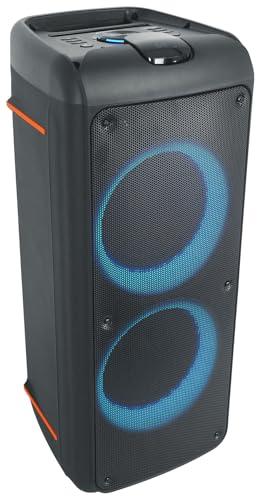
Released around 2022, the Rockville Rock Party 9 represents the "more bass for your buck" philosophy that has made Rockville popular among value-conscious consumers. This speaker doesn't pretend to be subtle – it's designed to deliver earth-shaking low frequencies and party-focused features at a price point that won't require taking out a second mortgage.
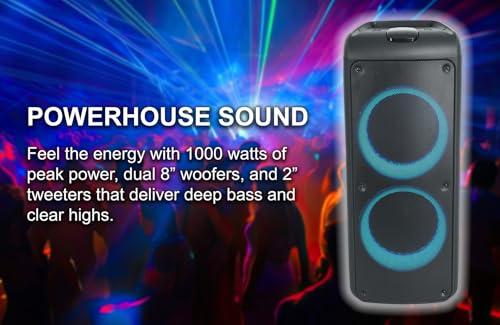
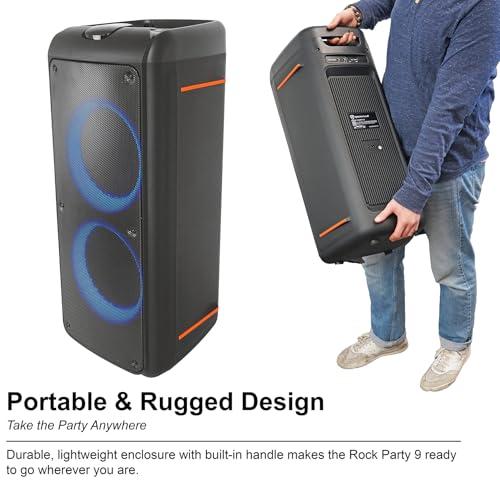
The heart of the Rockville Rock Party 9 lies in its dual 8-inch woofers. These are the drivers responsible for bass frequencies, and size matters significantly in this department. Larger woofers can move more air, which translates directly to deeper, more impactful bass. The 8-inch configuration gives this speaker a significant advantage over competitors using smaller drivers, allowing it to produce those chest-thumping lows that make electronic music and hip-hop come alive.
Supporting the bass drivers are dual 2-inch tweeters – the smaller drivers that handle high frequencies like cymbals, vocals, and the sparkle that makes music sound crisp. While not as sophisticated as some premium designs, they're sized appropriately to balance with those powerful woofers. The speaker's frequency response spans from 50Hz to 20kHz, which covers the full range of human hearing with emphasis on the lower end where party music lives.
The amplification system delivers 1000 watts of peak power and 250 watts RMS (Root Mean Square – a more realistic measurement of continuous power output). This gives the Rockville Rock Party 9 serious volume capabilities, though the peak rating should be taken with a grain of salt since it represents short-term maximum output rather than sustained performance.
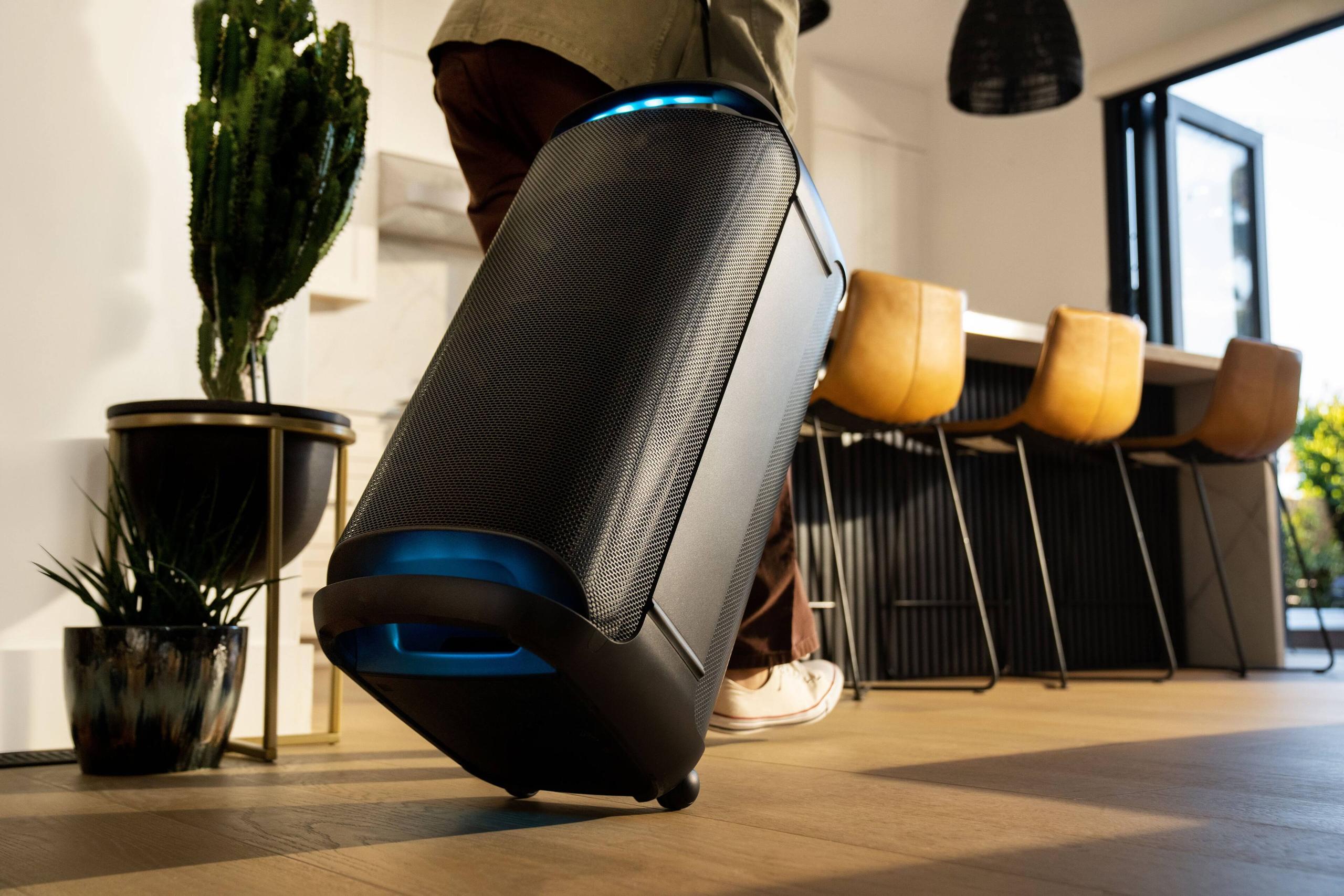
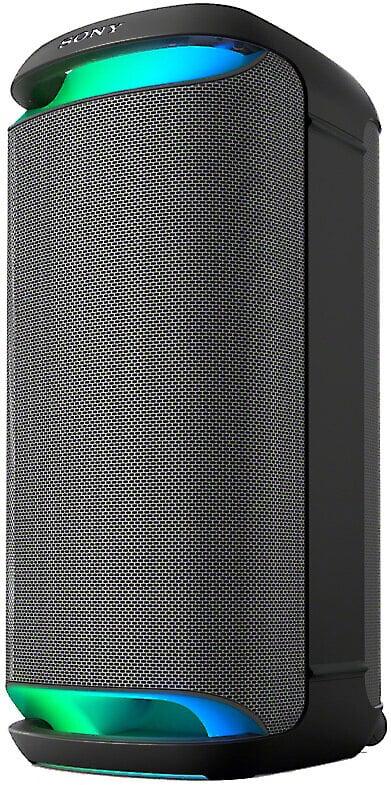
Sony's entry into the party speaker market came in 2023 with the Sony SRS-XV800, and it reflects decades of audio engineering expertise applied to the party speaker format. Rather than simply scaling up a regular speaker, Sony reimagined what party audio could be, resulting in a speaker that challenges assumptions about what portable really means.
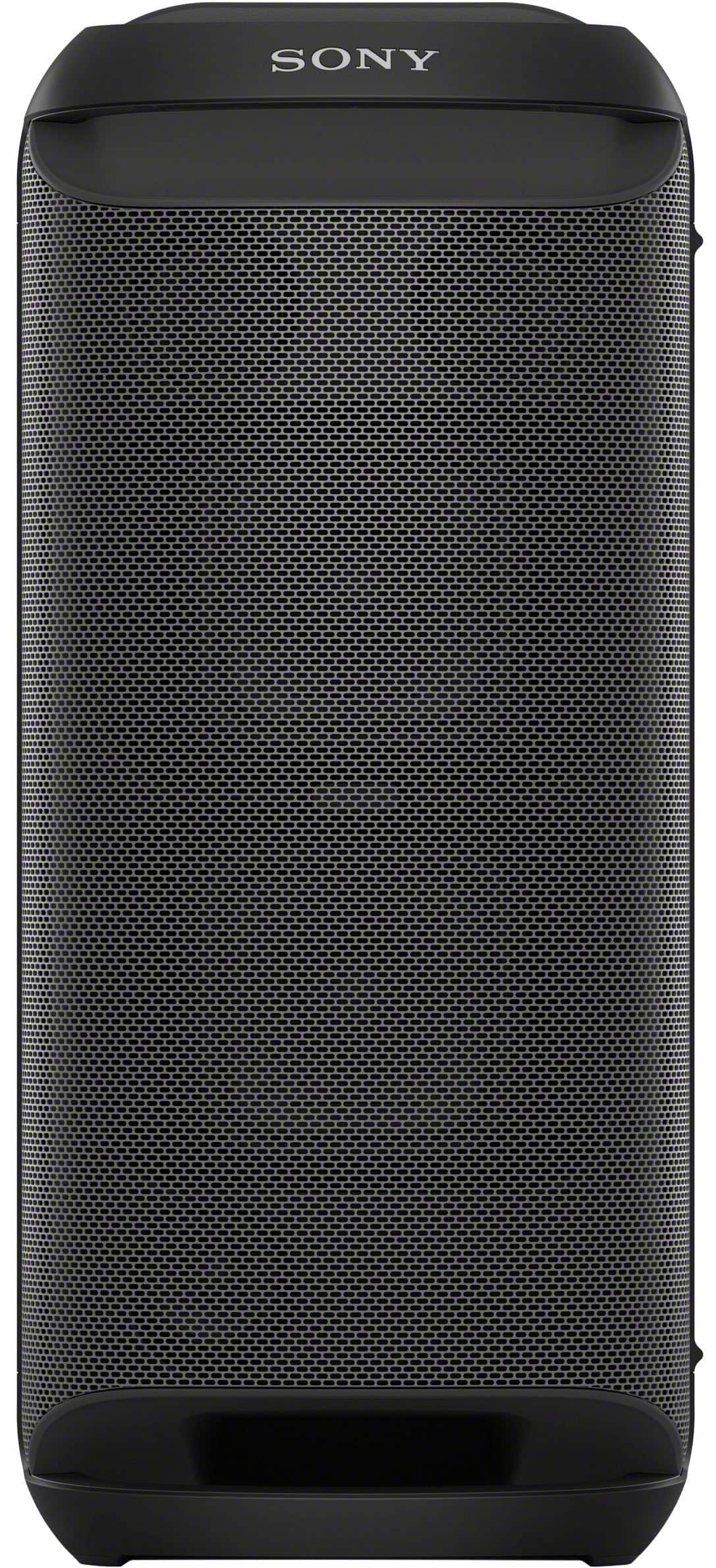
The most innovative aspect of the Sony SRS-XV800 is its X-Balanced Speaker Unit technology. Traditional woofers are circular, but Sony's X-Balanced design uses a rectangular diaphragm (the part of the speaker that moves back and forth to create sound waves). This rectangular shape allows for significantly more surface area within the same cabinet space, which means more air movement and better bass response without increasing distortion.
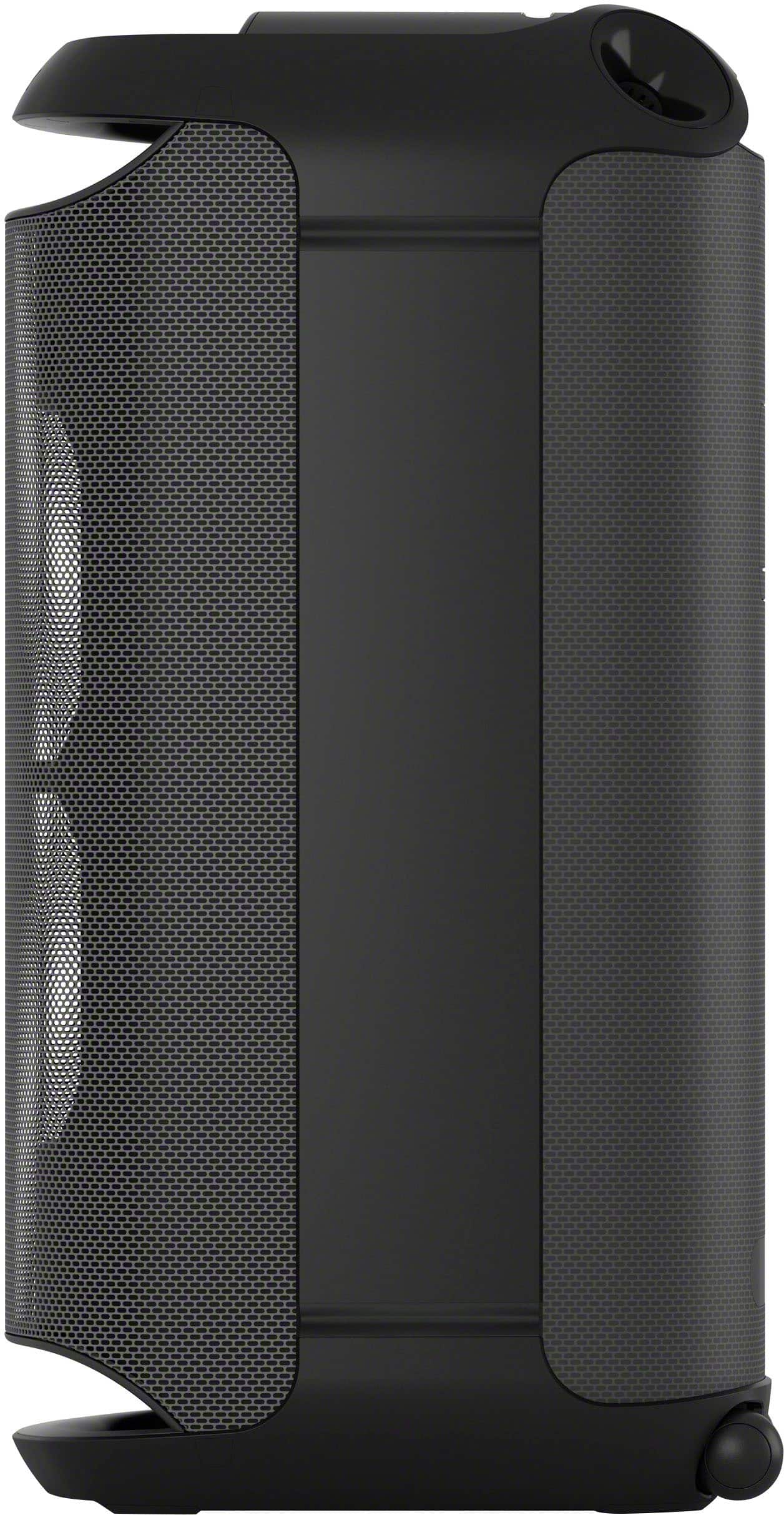
The Sony SRS-XV800 takes an omnidirectional approach to sound projection, using five dome tweeters strategically positioned around the cabinet – three facing forward and two facing backward. This creates what Sony calls 360-degree sound, meaning the audio quality remains consistent whether you're standing in front of, beside, or even behind the speaker. For party environments where people are scattered around a space, this design philosophy makes tremendous sense.
Perhaps most impressively, the Sony SRS-XV800 supports LDAC, Sony's proprietary high-resolution audio codec that transmits up to three times more data than standard Bluetooth. This means your wireless music retains significantly more detail and nuance, bringing you closer to the original recording quality than typical Bluetooth speakers manage.
The bass performance comparison reveals the fundamental difference between these speakers' design philosophies. The Rockville Rock Party 9 approaches bass with brute force – those dual 8-inch woofers can move serious air and create the kind of bass presence that you feel as much as hear. This approach particularly excels with electronic dance music, hip-hop, and other bass-heavy genres where impact matters more than subtlety.
Based on our research into user experiences and expert evaluations, the Rockville delivers bass that can genuinely shake the ground at outdoor events. The 50Hz low-frequency response means it can reproduce the deepest bass notes in most popular music, though it may not match subwoofer-level extension for the most demanding electronic tracks.
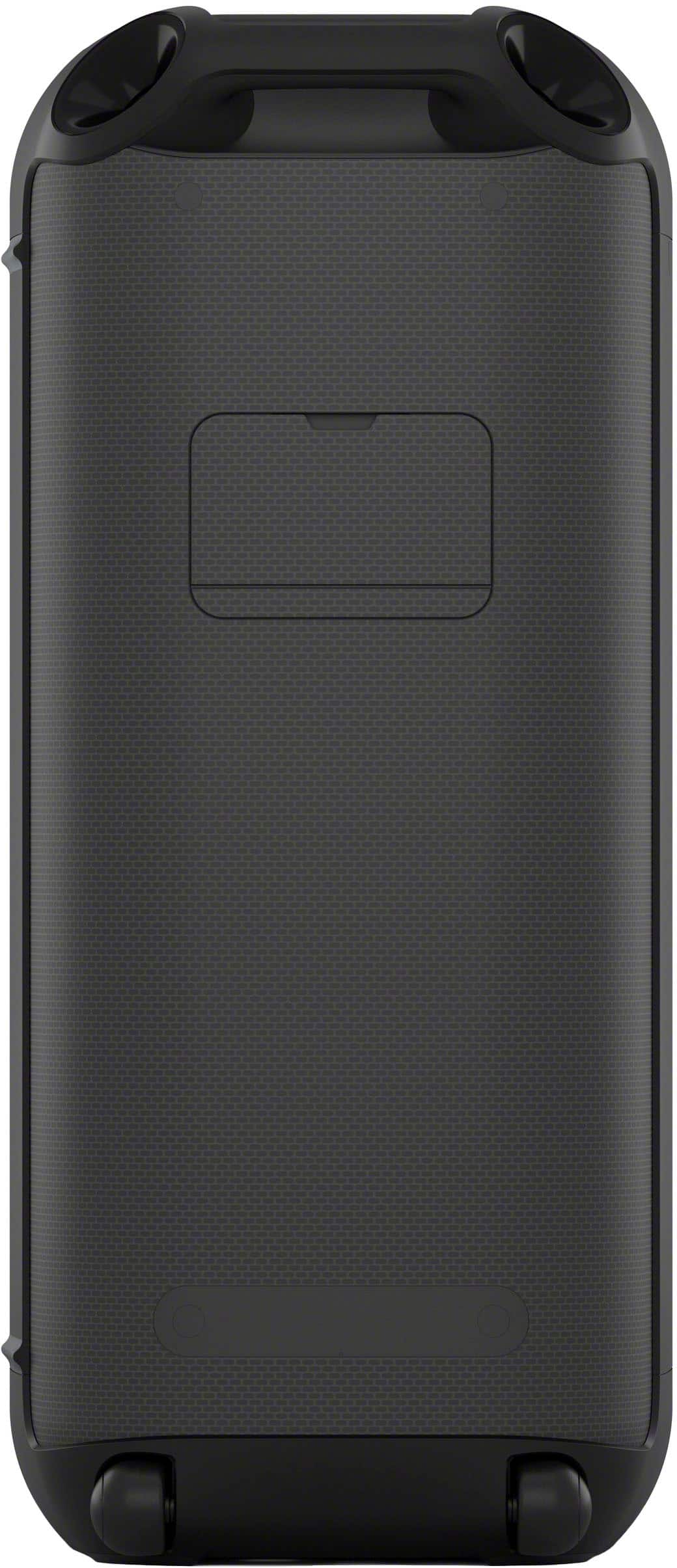
The Sony SRS-XV800 takes a more sophisticated approach. The X-Balanced woofers, while smaller at 6.75 inches, use their rectangular design to achieve impressive bass response with better control and less distortion. The addition of a rear-firing passive bass radiator (essentially a speaker without a motor that moves in response to the main woofers) extends the low-frequency response while maintaining clarity.
Expert reviews consistently praise the Sony's ability to deliver deep, controlled bass that doesn't overwhelm other frequencies. This translates to better overall musical balance – you get impressive low-end impact without losing vocal clarity or instrumental detail. For listeners who appreciate bass but don't want it to dominate every song, Sony's approach proves superior.
Midrange performance – where most vocals and many instruments live – represents one of the clearest differences between these speakers. The Rockville Rock Party 9 prioritizes bass and treble over midrange refinement, which works well for party music but can make vocals sound slightly recessed or unclear at higher volumes.
The Sony SRS-XV800 demonstrates superior midrange balance, though some reviewers note it can sound slightly pale compared to the more aggressive Rockville presentation. However, this restraint pays dividends for speech clarity, making the Sony significantly better for presentations, announcements, or any application where vocal intelligibility matters.
Both speakers handle high frequencies adequately, but with different characteristics. The Rockville's dual 2-inch tweeters provide clear highs that can become slightly shrill when pushed to maximum volume – a common trade-off in budget-oriented designs prioritizing maximum output over refinement.
The Sony's five-tweeter array creates a more sophisticated high-frequency presentation. The omnidirectional design means treble quality remains consistent from different listening positions, and the overall presentation stays controlled even at high volumes. This technical superiority becomes particularly apparent with complex musical arrangements where multiple instruments compete for attention in the high frequencies.
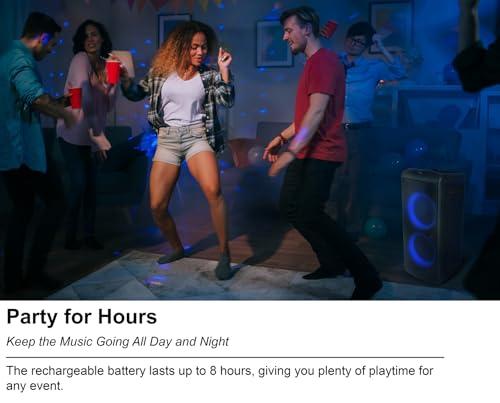
Perhaps no specification difference is as dramatic as battery performance. The Rockville Rock Party 9 delivers 6-8 hours at moderate volumes, dropping to just 2-3 hours when pushed hard. This reflects the reality of high-power audio – those big woofers and powerful amplification consume significant energy when working hard.
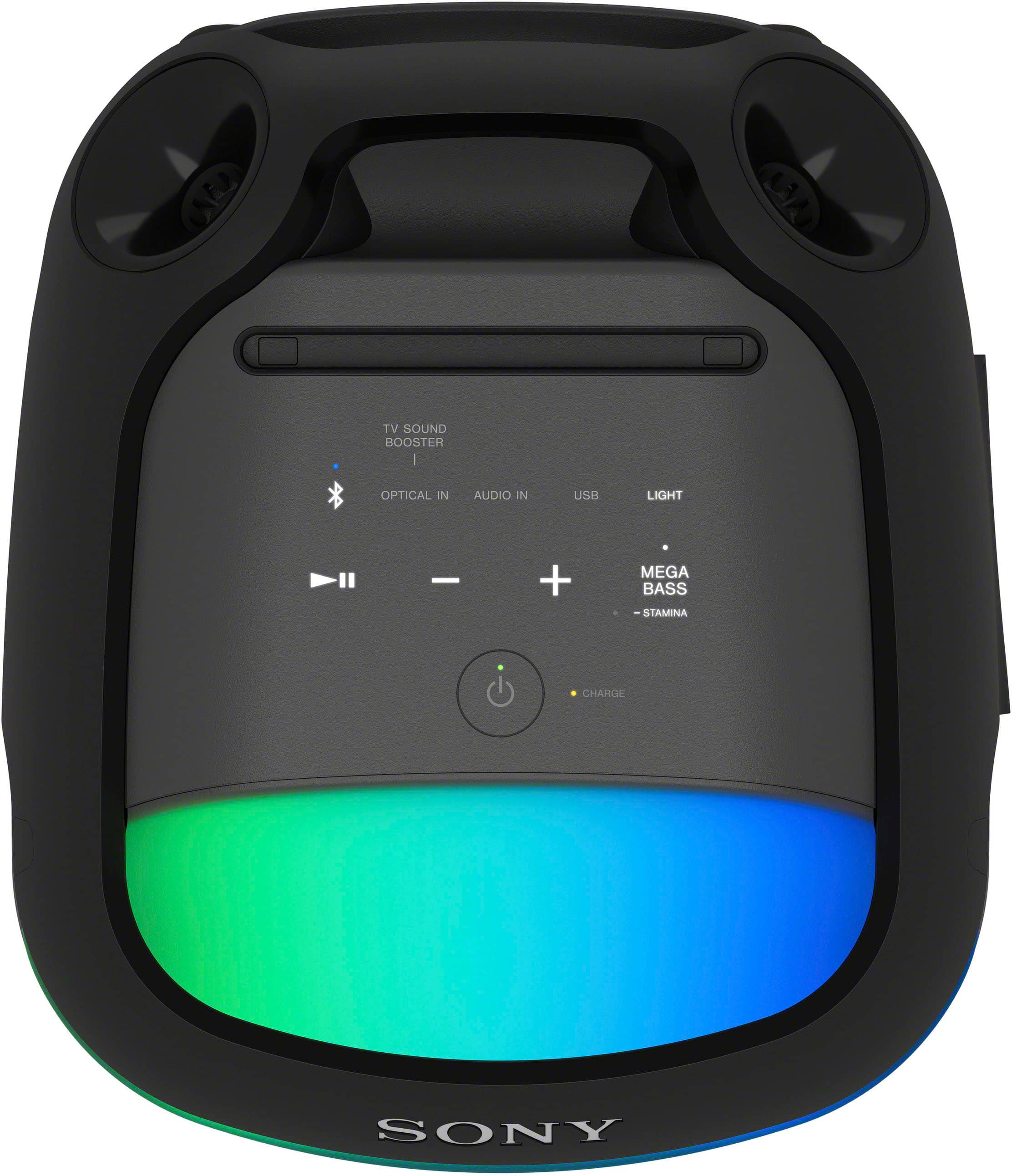
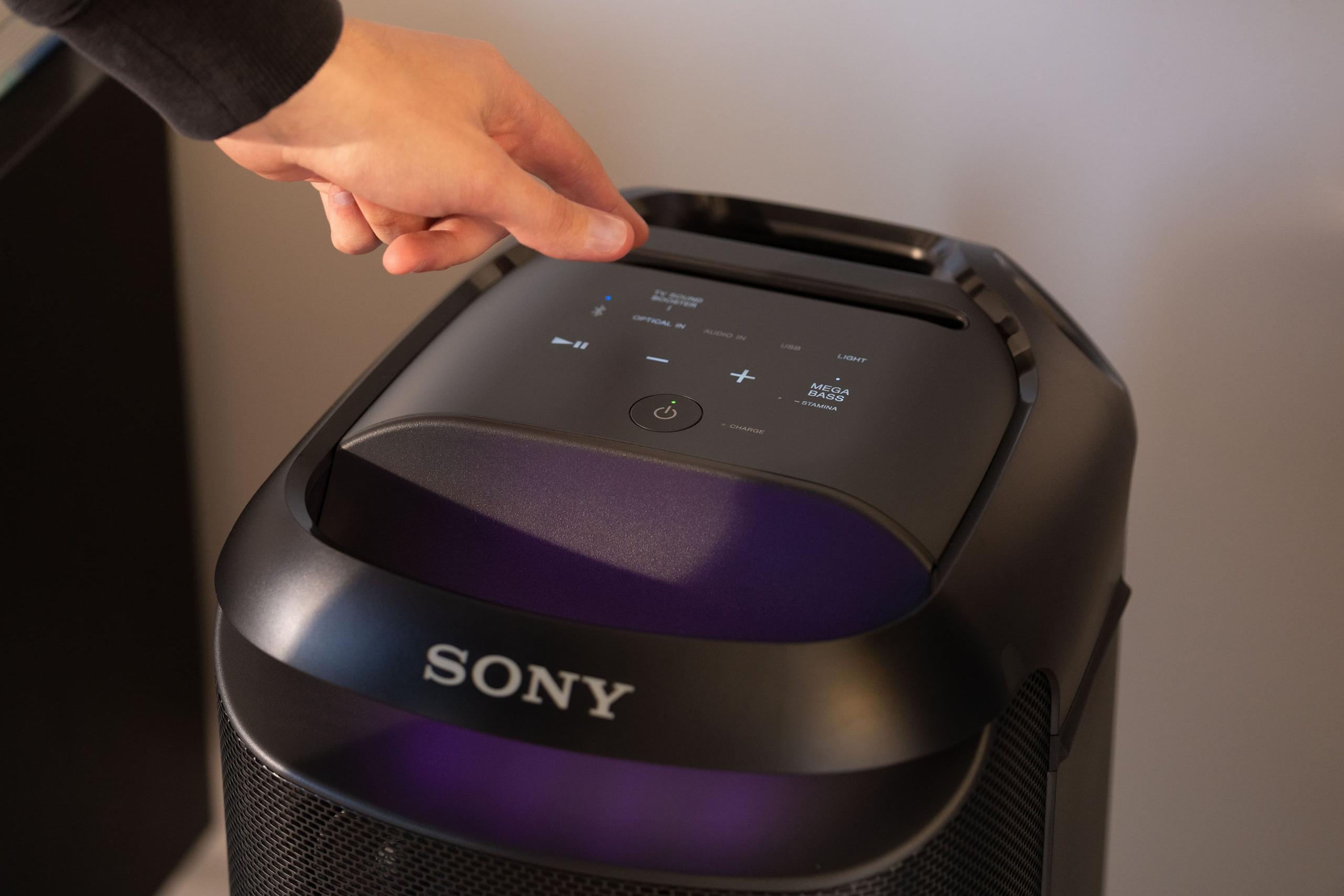
The Sony SRS-XV800 achieves an remarkable 25-hour runtime, representing one of the longest-lasting party speakers available. This isn't just marketing fluff – the combination of efficient Class D amplification, intelligent power management, and a larger battery capacity creates genuinely all-day performance. The speaker also includes STAMINA mode, which extends runtime further by disabling lighting and some sound processing features.
For event planning, this difference is crucial. The Rockville requires charging strategy – you'll need power access for longer events or must plan around its limitations. The Sony eliminates battery anxiety entirely, making it suitable for camping trips, all-day festivals, or any situation where plugging in isn't possible.
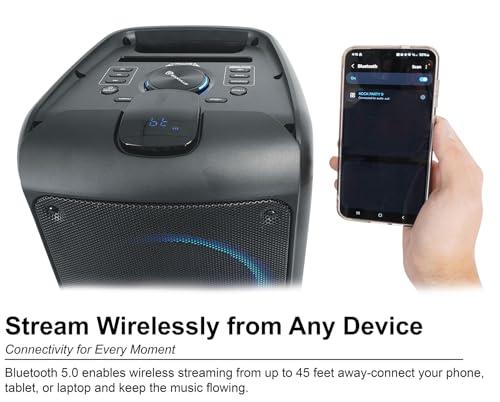
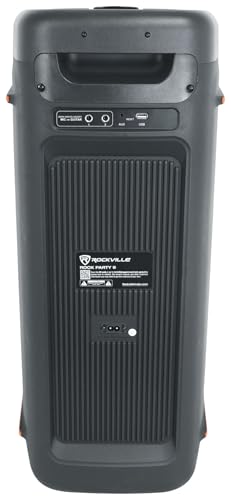
Both speakers embrace the wireless future while providing comprehensive wired connectivity options. The Rockville Rock Party 9 uses Bluetooth 5.0 with a solid 45-foot range and includes USB input supporting up to 128GB drives, TF card slot, and standard 3.5mm auxiliary input. The inclusion of a smartphone/tablet slot shows thoughtful design for real-world use.
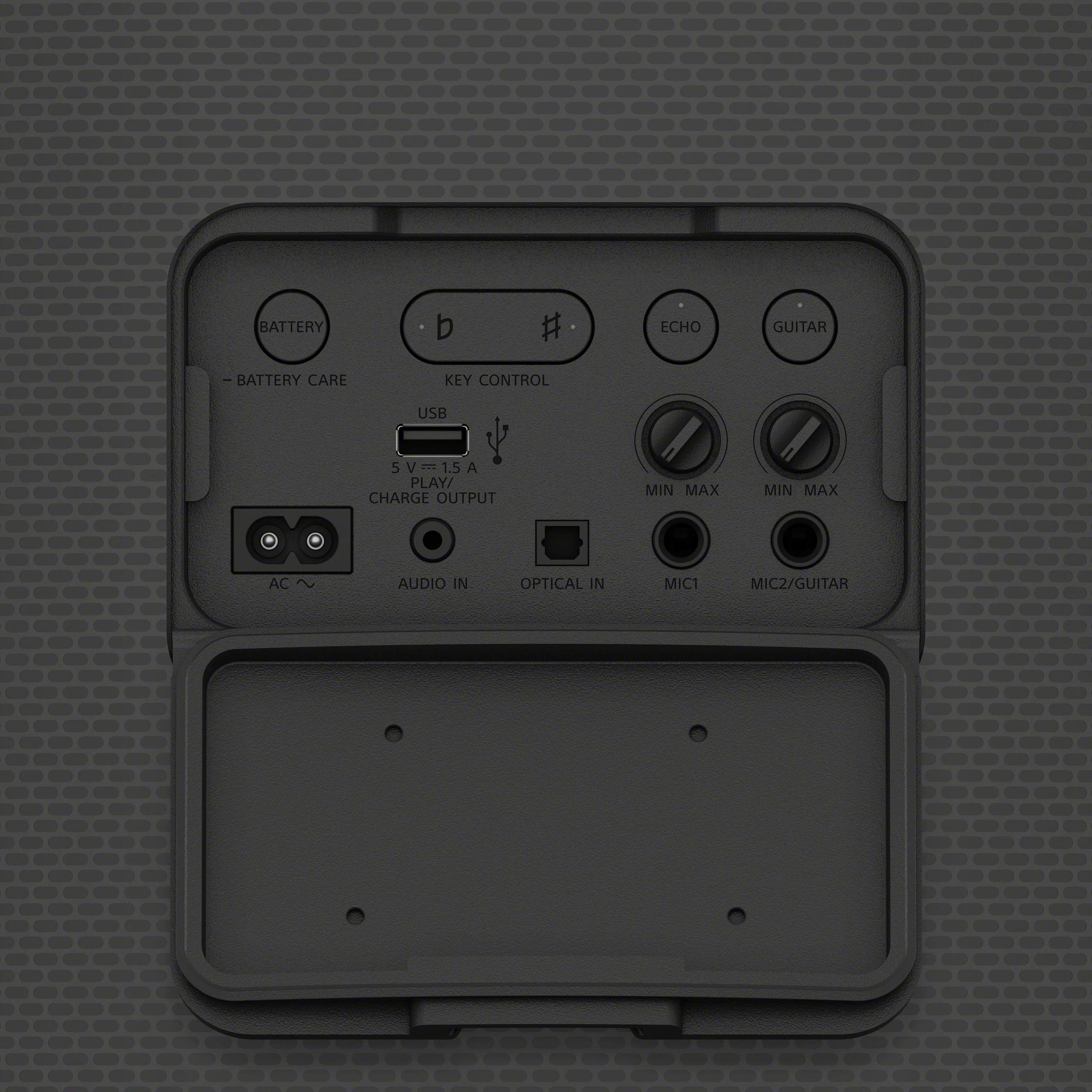
The Sony SRS-XV800 steps up with Bluetooth 5.2 and that impressive LDAC codec support, providing noticeably better wireless audio quality for compatible devices. Beyond standard inputs, Sony includes optical digital input specifically for TV connection, positioning this speaker as a potential soundbar alternative. The USB-A port not only plays music files but can charge your devices – a surprisingly useful feature during long events.
Sony's Party Connect technology deserves special mention, allowing up to 100 compatible Sony speakers to be linked wirelessly. While most users won't need anywhere near that capacity, the ability to create stereo pairs or link multiple units for larger venues adds professional-level flexibility.
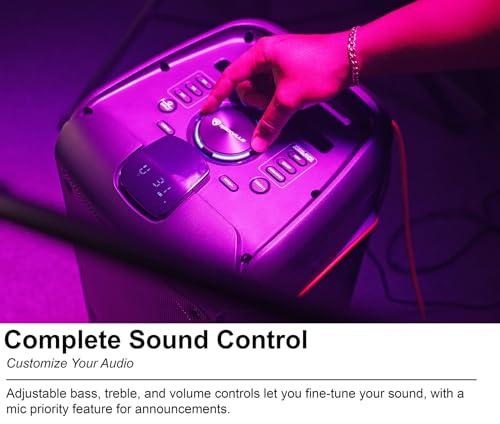
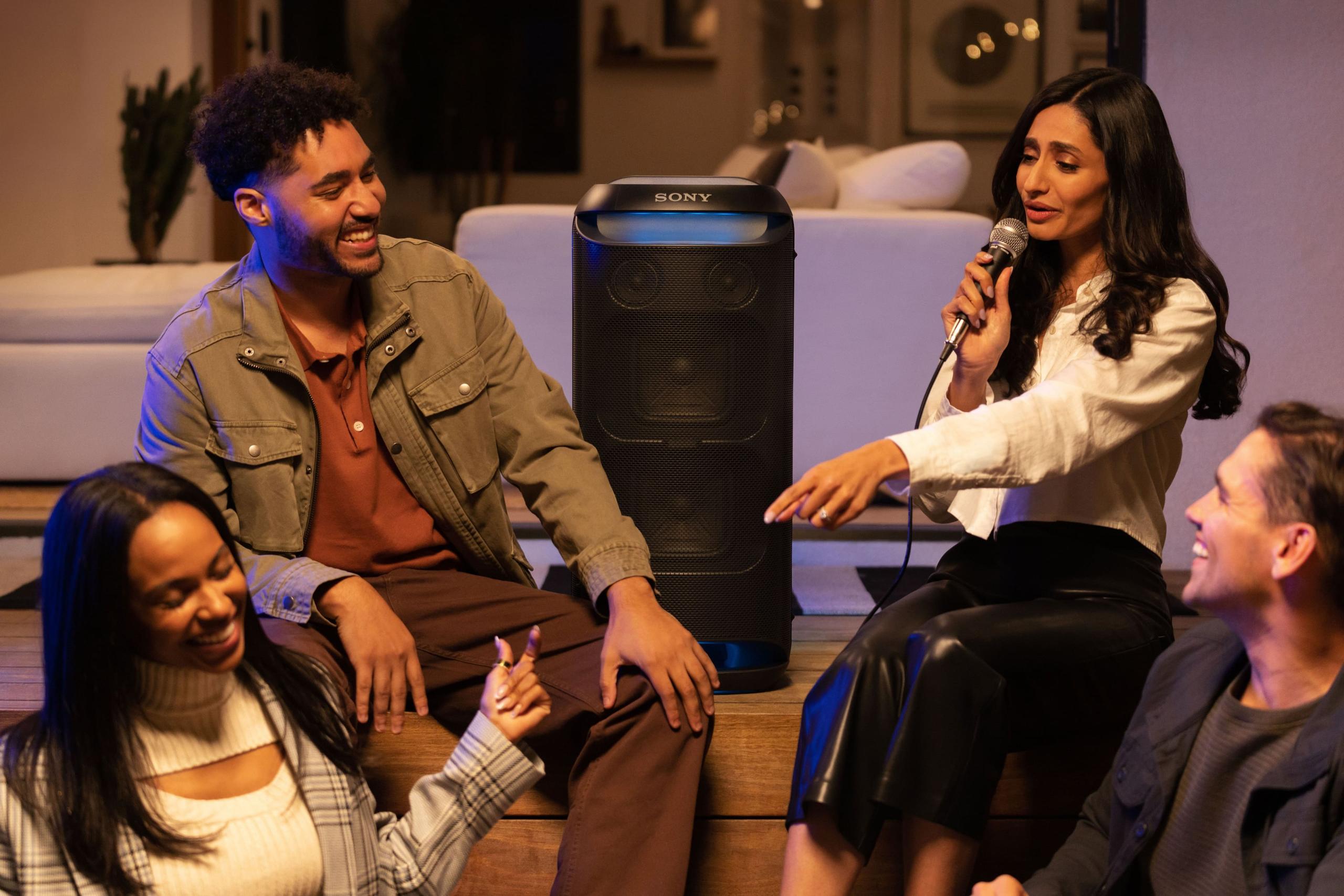
The Rockville Rock Party 9 excels in karaoke functionality with advanced features like auto-tune, voice-changing effects, and echo control. These aren't just gimmicks – they're genuinely useful for turning any gathering into an interactive karaoke party. The dual microphone inputs with independent volume controls and mic priority function (which automatically lowers music volume when speaking) show real understanding of how people actually use these features.
The Sony SRS-XV800 includes microphone and guitar inputs but focuses more on audio quality than special effects. However, it adds unique capabilities like TV Sound Booster mode, which can enhance your home theater experience, and LIVE SOUND mode that simulates concert acoustics. The programmable LED lighting system, controllable through Sony's mobile app, provides visual enhancement without the over-the-top effects some competitors offer.
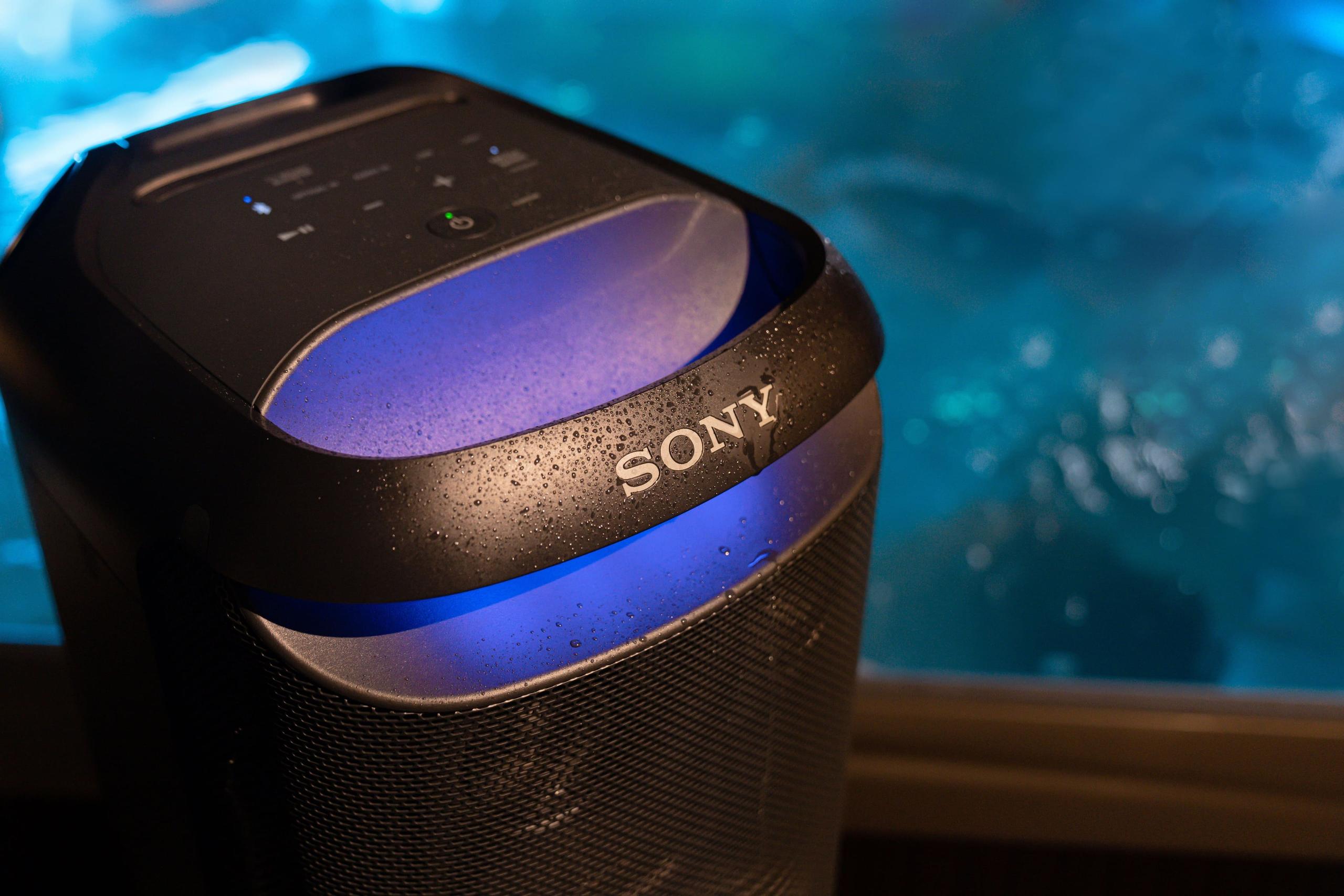
Weather resistance represents a significant advantage for the Sony SRS-XV800, with IPX4 rating when positioned vertically (meaning it can handle splashing water from any direction) and IPX2 when horizontal. This makes it genuinely suitable for poolside parties, beach gatherings, or any outdoor event where weather might be a concern.
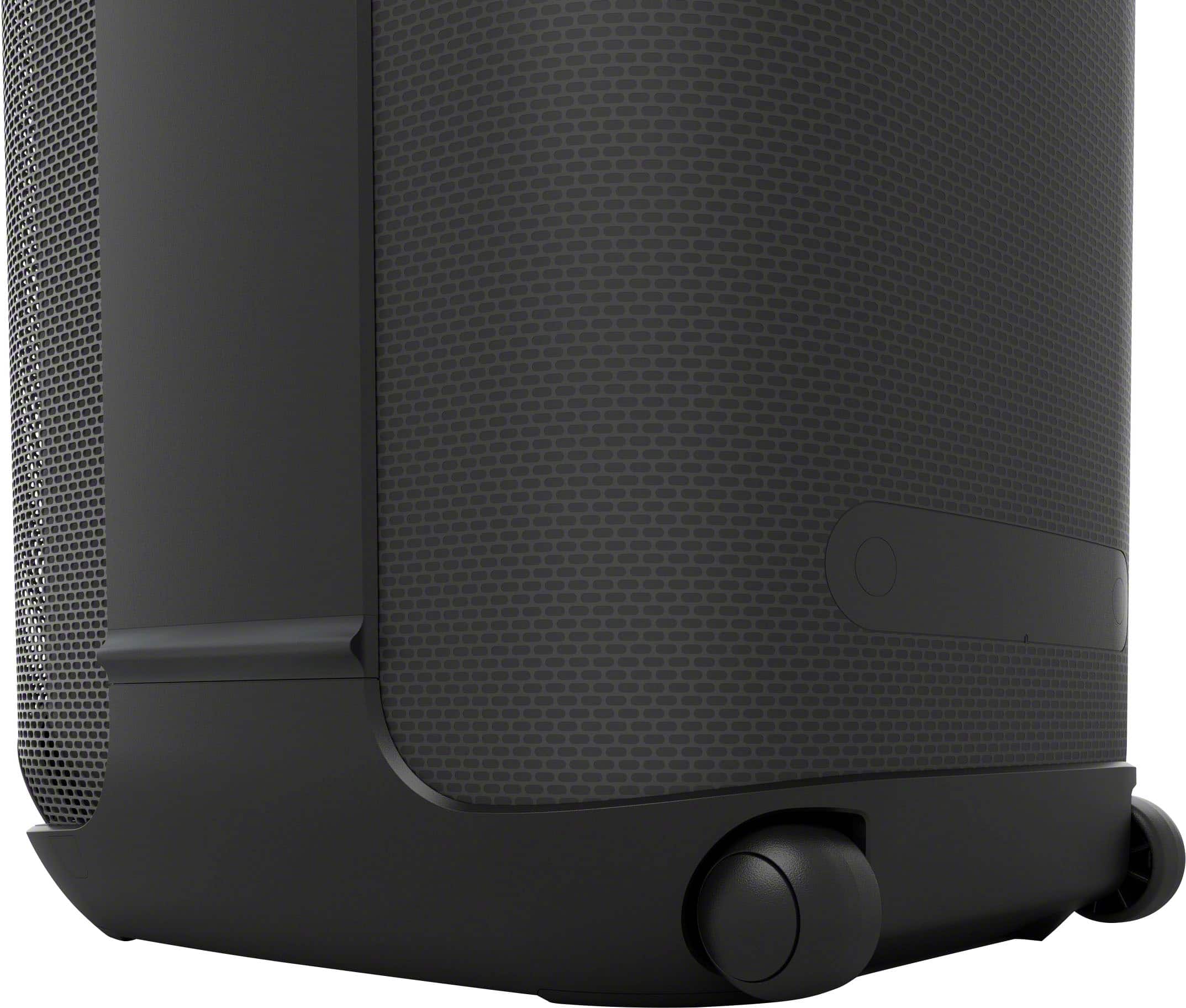
The Rockville Rock Party 9 lacks official water resistance rating, making it more suitable for covered outdoor areas or indoor use. However, its lighter weight (19.64 lbs vs Sony's 40.8 lbs) makes it significantly more portable for users who frequently transport their speaker.
For users considering these speakers as home theater solutions, the Sony SRS-XV800 clearly leads. The optical digital input allows direct connection to TVs, while TV Sound Booster mode specifically enhances dialogue clarity and bass response for movies and shows. The omnidirectional design works well for living rooms where seating might be spread out, and the 25-hour battery means it can serve as a wireless soundbar without charging concerns.
The Rockville Rock Party 9 can certainly boost TV audio through Bluetooth or auxiliary connection, but it lacks the specific features and connectivity that make the Sony shine in this application.
After extensive research and evaluation of expert and user consensus, both speakers succeed in their intended roles, but serve markedly different audiences and use cases.
Choose the Rockville Rock Party 9 if you prioritize maximum bass impact per dollar spent, plan to use karaoke features regularly, need true portability for frequent transport, or primarily listen to bass-heavy music genres. At the time of writing, it represents exceptional value for users who want party-level sound without premium pricing. The trade-offs in battery life, weather resistance, and audio refinement are reasonable compromises for the significant cost savings.
The Sony SRS-XV800 justifies its premium positioning through superior overall audio quality, exceptional battery life, weather resistance, and professional-level features. Choose Sony if audio quality matters more than raw bass impact, you need all-day battery performance, plan to use the speaker for presentations or TV enhancement, or want the flexibility of multi-speaker linking. While significantly more expensive at the time of writing, it delivers proportionally more capability and refinement.
Ultimately, both speakers succeed by staying true to their design philosophies. The Rockville maximizes party impact at budget prices, while the Sony elevates portable audio to near-audiophile levels with corresponding versatility and reliability. Your choice should align with whether you prioritize immediate fun and value (Rockville) or long-term audio excellence and professional capability (Sony).
| Rockville Rock Party 9 | Sony SRS-XV800 |
|---|---|
| Woofer Size - Larger drivers typically mean deeper, more powerful bass | |
| Dual 8" woofers (excellent for bass impact) | Dual 6.75" X-Balanced woofers (smaller but more sophisticated design) |
| Power Output - Higher numbers usually mean louder maximum volume | |
| 1000W peak / 250W RMS (impressive on paper) | 70W RMS (conservative rating but likely more accurate) |
| Battery Life - Critical for all-day events without power access | |
| 2-8 hours depending on volume (short for long events) | Up to 25 hours (exceptional endurance) |
| Weight - Affects true portability for frequent transport | |
| 19.64 lbs (genuinely portable) | 40.8 lbs (heavy but includes wheels) |
| Water Resistance - Essential for poolside and outdoor events | |
| No official rating (indoor/covered use only) | IPX4 when vertical (splash-resistant, outdoor-ready) |
| Bluetooth Version - Newer versions offer better range and audio quality | |
| Bluetooth 5.0 with 45ft range (solid performance) | Bluetooth 5.2 with LDAC codec (superior wireless audio quality) |
| Tweeter Configuration - Affects sound clarity and dispersion | |
| Dual 2" tweeters (basic but adequate) | Five dome tweeters in omnidirectional array (room-filling sound) |
| Karaoke Features - Important for interactive party entertainment | |
| Auto-tune, voice-changing, echo effects (Rockville excels here) | Basic mic input with volume control (Sony focuses on audio quality) |
| Connectivity Options - More inputs mean greater versatility | |
| USB, TF card, AUX, dual mic/guitar inputs | USB, AUX, optical digital, mic/guitar inputs, TV connectivity |
| Multi-Speaker Linking - Useful for larger venues or stereo sound | |
| Basic wireless linking | Party Connect (up to 100 speakers) + stereo pairing |
| LED Lighting - Adds visual excitement to parties | |
| Customizable modes around woofers | Programmable ambient lighting via app control |
| TV Integration - Matters if you want to enhance home theater audio | |
| Bluetooth/AUX only (basic TV connection) | Optical input + TV Sound Booster mode (Sony doubles as soundbar) |
The Rockville Rock Party 9 delivers more powerful bass with its dual 8-inch woofers, creating earth-shaking low frequencies that you can physically feel. The Sony SRS-XV800 uses smaller 6.75-inch X-Balanced woofers but offers more controlled, refined bass with less distortion. For maximum bass impact, choose the Rockville. For balanced, high-quality bass, the Sony is superior.
The Sony SRS-XV800 offers exceptional battery life with up to 25 hours of playback, making it ideal for all-day events. The Rockville Rock Party 9 provides 6-8 hours at moderate volume but drops to just 2-3 hours at maximum volume. For extended use without charging, the Sony is the clear winner.
The Rockville Rock Party 9 excels for karaoke with advanced features like auto-tune, voice-changing effects, echo control, and dual microphone inputs. The Sony SRS-XV800 includes microphone inputs but focuses more on audio quality than special effects. For dedicated karaoke entertainment, the Rockville is the better choice.
The Sony SRS-XV800 works excellently as a TV soundbar with its optical digital input and TV Sound Booster mode that enhances dialogue and bass for movies. The Rockville Rock Party 9 can connect to TVs via Bluetooth or auxiliary input but lacks specific TV enhancement features. For home theater use, the Sony is significantly better.
The Rockville Rock Party 9 is more truly portable at 19.64 lbs with a carry handle, making it easy to transport frequently. The Sony SRS-XV800 weighs 40.8 lbs but includes wheels and handles for easier movement. However, the Sony offers IPX4 water resistance for poolside use, while the Rockville lacks weather protection.
Both speakers offer comprehensive connectivity. The Rockville Rock Party 9 includes Bluetooth 5.0, USB (up to 128GB), TF card slot, auxiliary input, and dual mic/guitar inputs. The Sony SRS-XV800 features Bluetooth 5.2 with LDAC codec, USB-A, auxiliary, optical digital input, and mic/guitar inputs. The Sony provides higher-quality wireless audio and TV connectivity.
The Rockville Rock Party 9 claims higher power output (1000W peak/250W RMS) and can achieve impressive volume levels, though it may become shrill at maximum volume. The Sony SRS-XV800 maintains better clarity and balance at high volumes despite lower specified power. For clean, loud audio, the Sony performs better at sustained high volumes.
The Sony SRS-XV800 offers superior linking capabilities with Party Connect technology supporting up to 100 compatible Sony speakers, plus stereo pairing between two units. The Rockville Rock Party 9 supports basic wireless linking but with more limited functionality. For multi-speaker setups, the Sony provides more professional options.
The Rockville Rock Party 9 provides exceptional value for budget-conscious buyers, delivering powerful bass and comprehensive karaoke features at a significantly lower price point. The Sony SRS-XV800 costs considerably more but offers premium audio quality, 25-hour battery life, and professional features. Value depends on your priorities: maximum impact per dollar (Rockville) or long-term audio excellence (Sony).
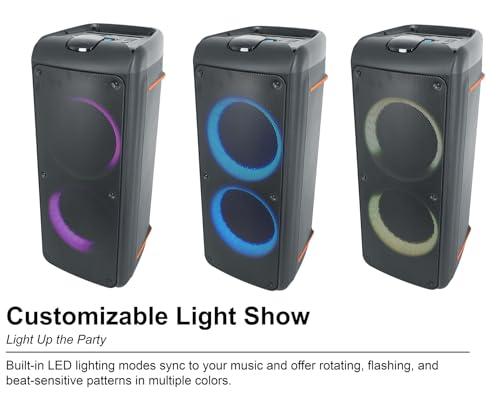
Both speakers feature LED lighting for party atmosphere. The Rockville Rock Party 9 offers customizable light modes around the woofers with rotating, flashing, and beat-syncing effects controlled by buttons and remote. The Sony SRS-XV800 provides more sophisticated programmable ambient lighting controlled through Sony's mobile app. The Sony offers more refined lighting control.
The Sony SRS-XV800 is better suited for professional use with its 25-hour battery life, weather resistance, optical input for presentations, superior audio clarity, and ability to link multiple units. The Rockville Rock Party 9 works well for casual events but may require more frequent charging and lacks weather protection for outdoor professional use.
The Rockville Rock Party 9 emphasizes powerful bass and high volume output, making it ideal for bass-heavy music and party atmospheres. The Sony SRS-XV800 offers more balanced, audiophile-quality sound with omnidirectional dispersion, better midrange clarity, and support for high-resolution audio via LDAC codec. Choose Rockville for maximum bass impact or Sony for overall audio excellence.
We've done our best to create useful and informative comparisons to help you decide what product to buy. Our research uses advanced automated methods to create this comparison and perfection is not possible - please contact us for corrections or questions. These are the sites we've researched in the creation of this article: youtube.com - wiki.ezvid.com - youtube.com - youtube.com - walmart.com - soundcore.com - youtube.com - rtings.com - rockvilleaudio.com - youtube.com - youtube.com - youtube.com - review-rating.com - manuals.plus - support.rockvilleaudio.com - reverb.com - rockvilleaudio.com - privacy.we-conect.com - audiosavings.com - youtube.com - youtube.com - soundandvision.com - crutchfield.com - sciencefocus.com - sony.com - bestbuy.com - bestbuy.com - stereoguide.com - sony-mea.com - soundguys.com - electronics.sony.com - youtube.com - sony.com - youtube.com - device.report - youtube.com - youtube.com - adorama.com - sonylatvija.com - sony.com

Privacy Policy
Terms and Conditions - Affiliate Policy
Home Security
© Copyright 2008-2026.
11816 Inwood Rd #1211, Dallas, TX 75244