

When you're planning a party or event, nothing kills the vibe like weak, distorted audio that can't fill the space or get people moving. The high-power party speaker category has exploded in recent years, offering everything from massive bass cannons to feature-packed entertainment systems that combine booming sound with dazzling light shows. Today, we're diving deep into two standout speakers that take very different approaches to party audio: the Sony SRS-XV800 and the JBL PartyBox Ultimate.
These speakers represent two distinct philosophies in party audio design. The Sony SRS-XV800, released in 2023, focuses on delivering powerful yet portable audio with impressive battery life and versatile connectivity. Meanwhile, the JBL PartyBox Ultimate, launched in 2024, prioritizes maximum power output and professional-grade features, trading portability for raw performance. Understanding these differences will help you choose the right speaker for your specific needs and budget.
Party speakers sit at the intersection of portable audio and professional sound systems. Unlike regular Bluetooth speakers designed for casual listening, these devices prioritize maximum volume output, deep bass response, and party-enhancing features like synchronized lighting effects. The key considerations when evaluating party speakers include raw power output (measured in watts), maximum sound pressure level (measured in decibels), bass extension and impact, visual entertainment features, connectivity options, and the eternal trade-off between portability and performance.
The most important performance metric is often maximum sound pressure level, which determines how large a space the speaker can effectively fill. A speaker producing 100 dB can comfortably handle a medium-sized room, while speakers reaching 110+ dB can fill gymnasium-sized spaces. However, raw volume numbers don't tell the whole story – sound quality, bass clarity, and how well the speaker maintains composure at high volumes are equally crucial for a satisfying listening experience.
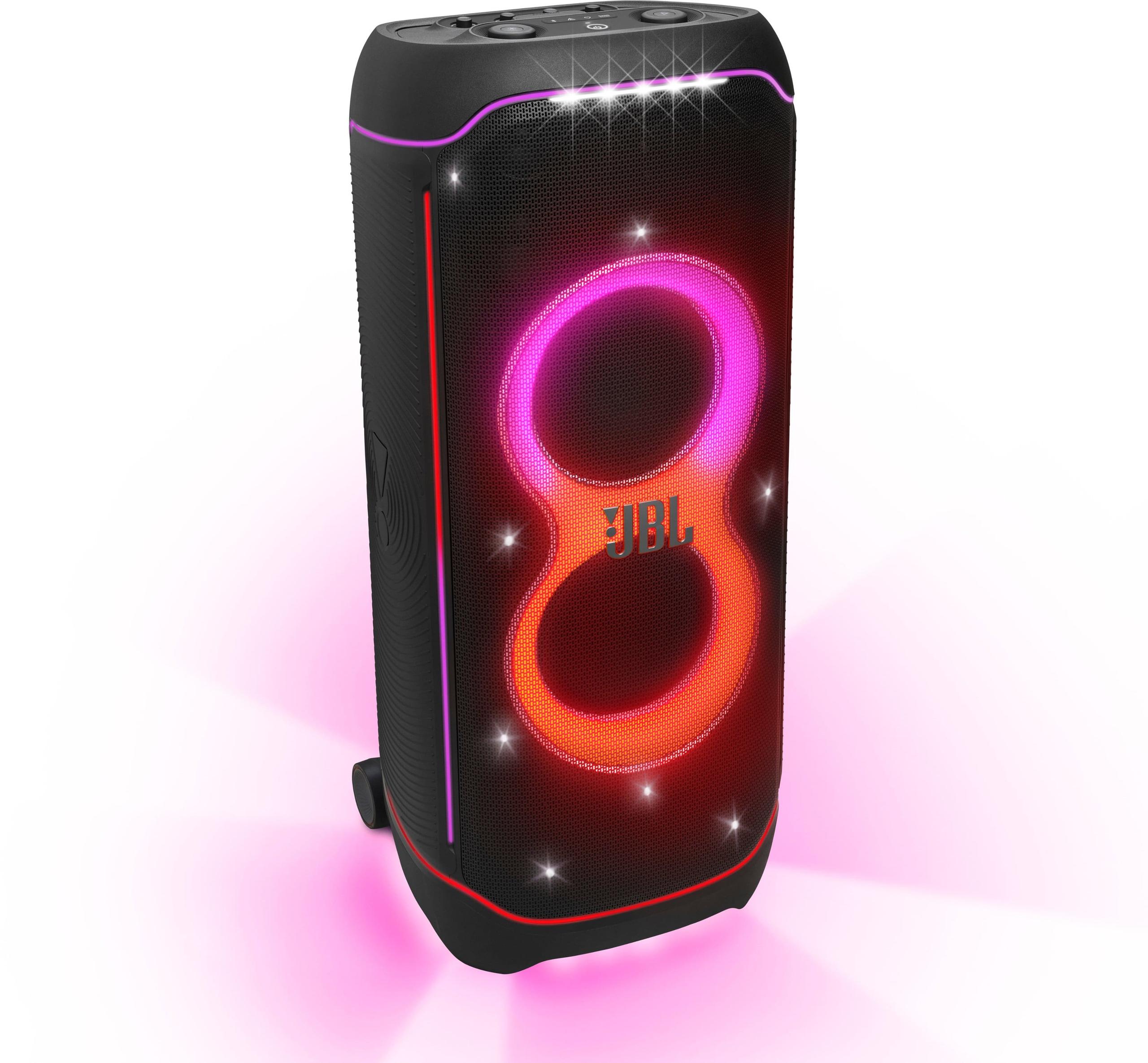
The performance gap between these speakers becomes immediately apparent when examining their power specifications. The Sony SRS-XV800 delivers 70W RMS (root mean square – the continuous power output) with peaks up to 180W, while the JBL PartyBox Ultimate produces a massive 1100W RMS. This isn't just a numbers game – it translates to real-world differences in how large a space each speaker can effectively fill.
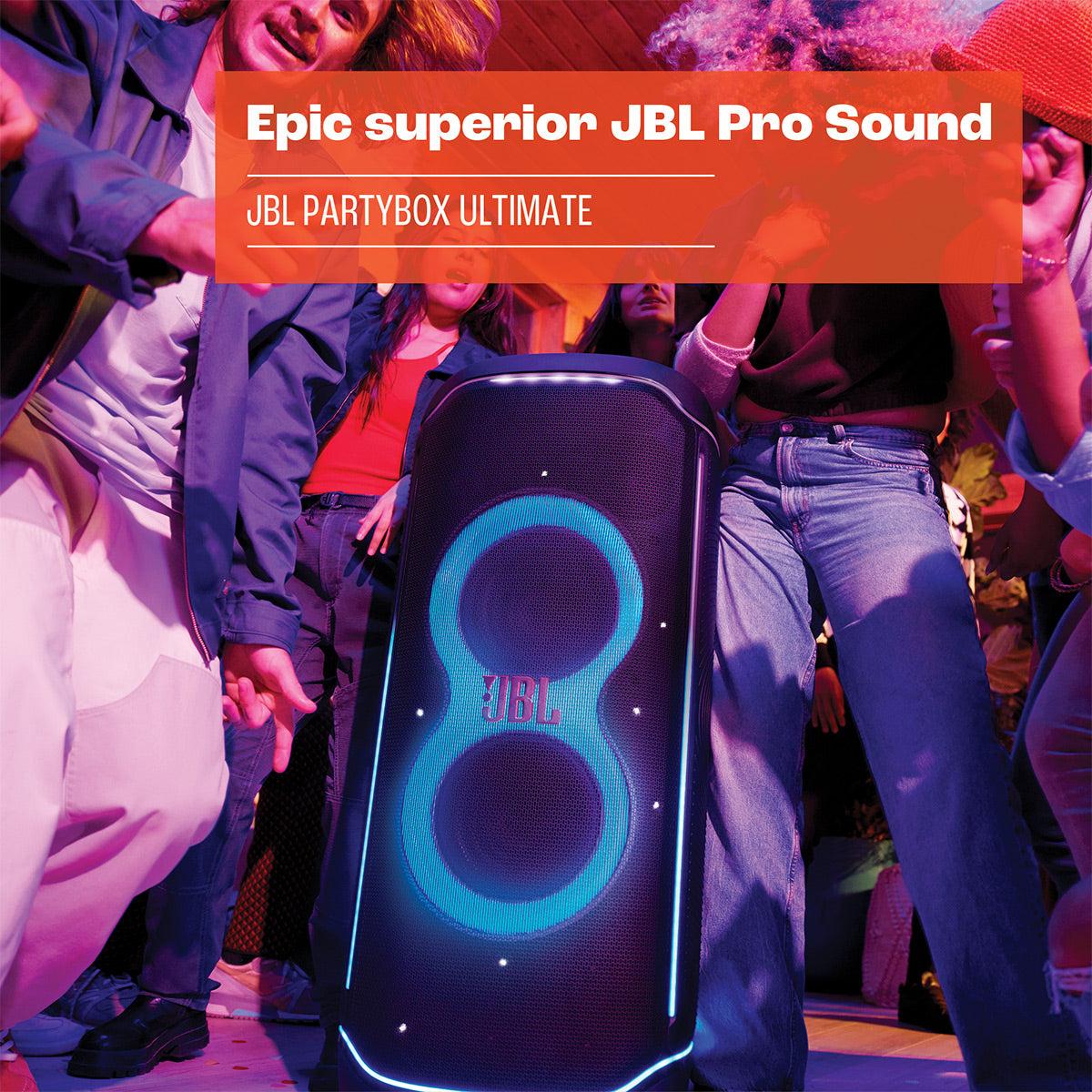
In practical terms, the Sony SRS-XV800 can comfortably handle backyard gatherings, large living rooms, and medium-sized party spaces accommodating 50-100 people. Its maximum output of around 106 dB provides plenty of volume for most residential party scenarios. The JBL PartyBox Ultimate, reaching 109.4 dB in testing, can fill spaces as large as two basketball courts – we're talking about venues that might host 200+ people.
This power difference matters more than you might initially think. When a speaker is pushed beyond its comfortable operating range, you'll hear compression, distortion, and a loss of dynamic range that makes music sound flat and lifeless. The JBL PartyBox Ultimate operating at 50% volume will likely sound cleaner and more effortless than the Sony SRS-XV800 pushed to its limits, even if the overall volume levels are similar.
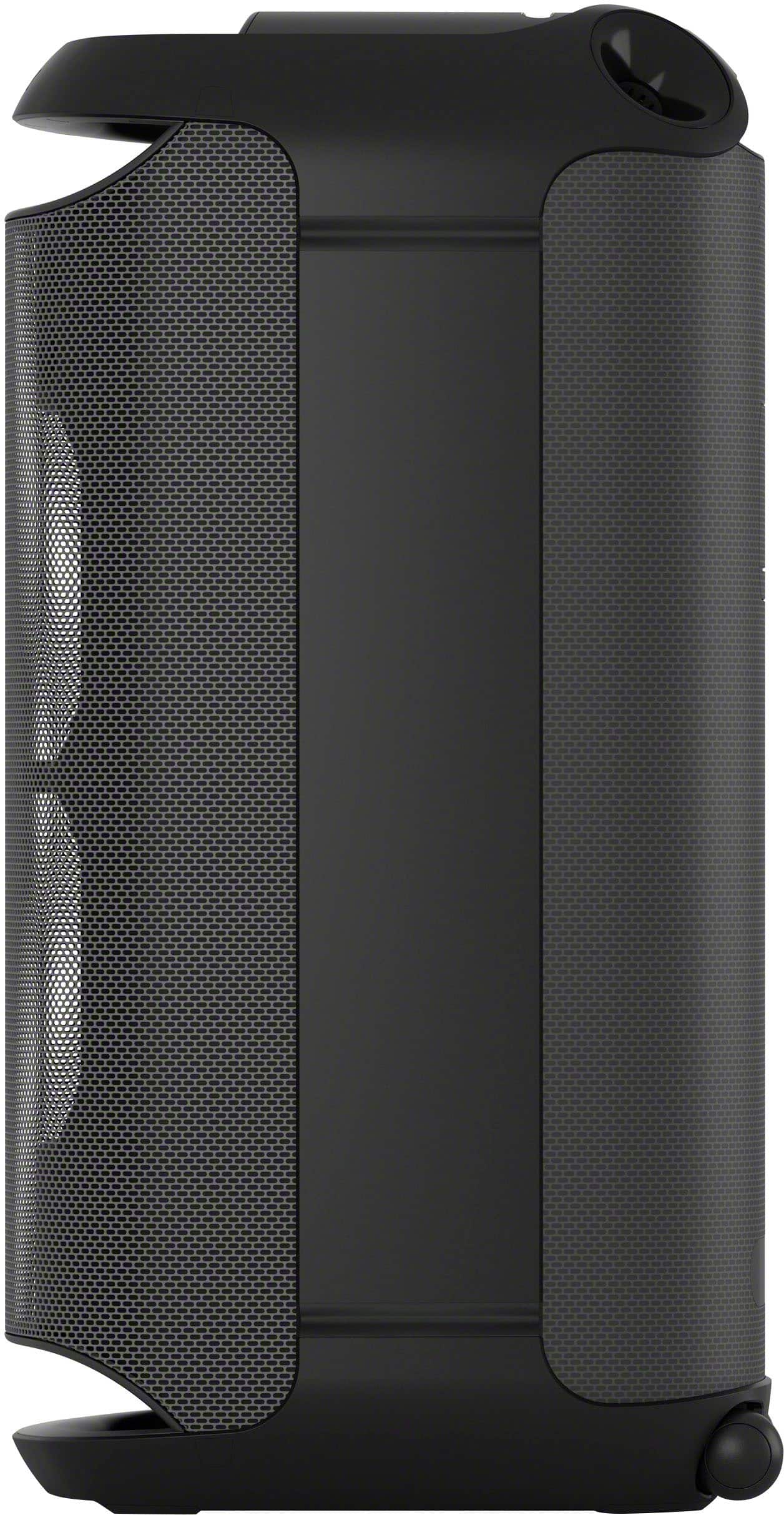
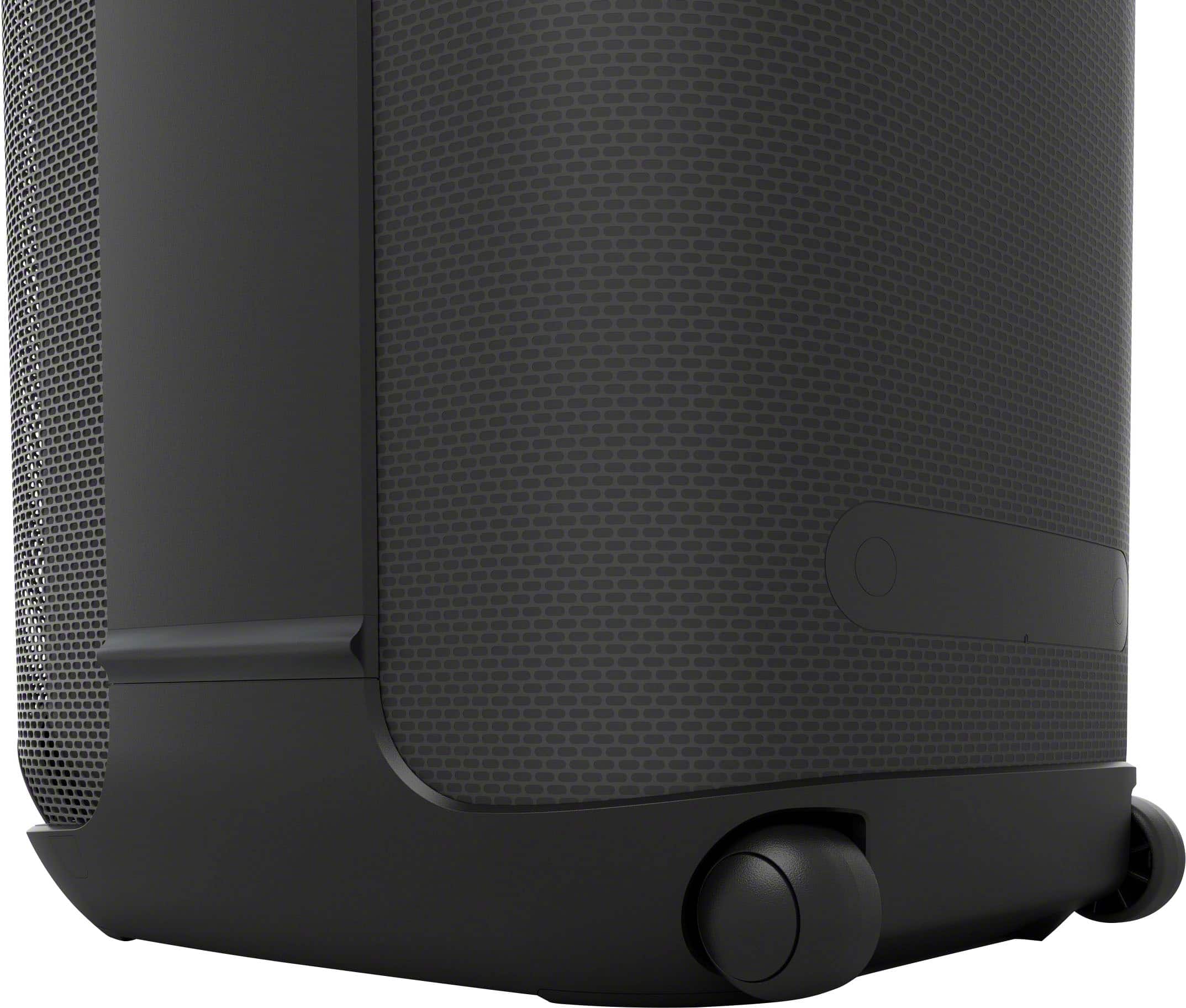
Both speakers excel in bass reproduction but achieve their low-end prowess through different engineering approaches. The Sony SRS-XV800 employs X-Balanced Speaker Technology, using rectangular woofer diaphragms instead of traditional circular designs. This rectangular shape provides significantly more surface area within the same cabinet space, allowing for greater air displacement and deeper bass response while reducing unwanted vibration and distortion.
The Sony's dual 6.69-inch X-Balanced woofers work in conjunction with a rear-firing passive radiator – essentially a unpowered speaker cone that moves in response to air pressure changes inside the cabinet, extending bass response even lower. This configuration, combined with the speaker's omnidirectional tweeter arrangement, creates what many users describe as "clean, punchy bass" that doesn't overwhelm the midrange frequencies where vocals and most instruments sit.
The JBL PartyBox Ultimate takes a more traditional but scaled-up approach with dual 9-inch conventional woofers supported by dedicated 4.5-inch midrange drivers and 2.75-inch tweeters. This three-way design allows each driver to focus on its optimal frequency range, potentially offering better clarity across the spectrum. Users consistently describe the JBL's bass as "chest-thumping" and "physically felt" – the kind of low-end impact that makes electronic music and hip-hop truly shine at parties.
The difference in bass character is significant. The Sony SRS-XV800 provides more balanced, musical bass that works well across all genres, while the JBL PartyBox Ultimate delivers the kind of overwhelming bass presence that gets people moving on the dance floor. Your music preferences and venue requirements will determine which approach suits you better.
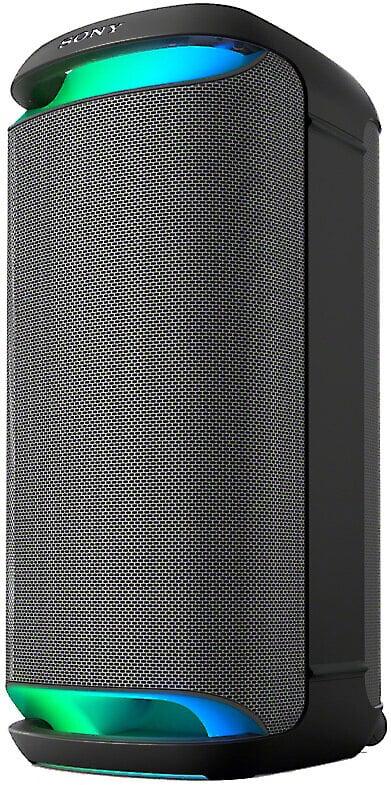
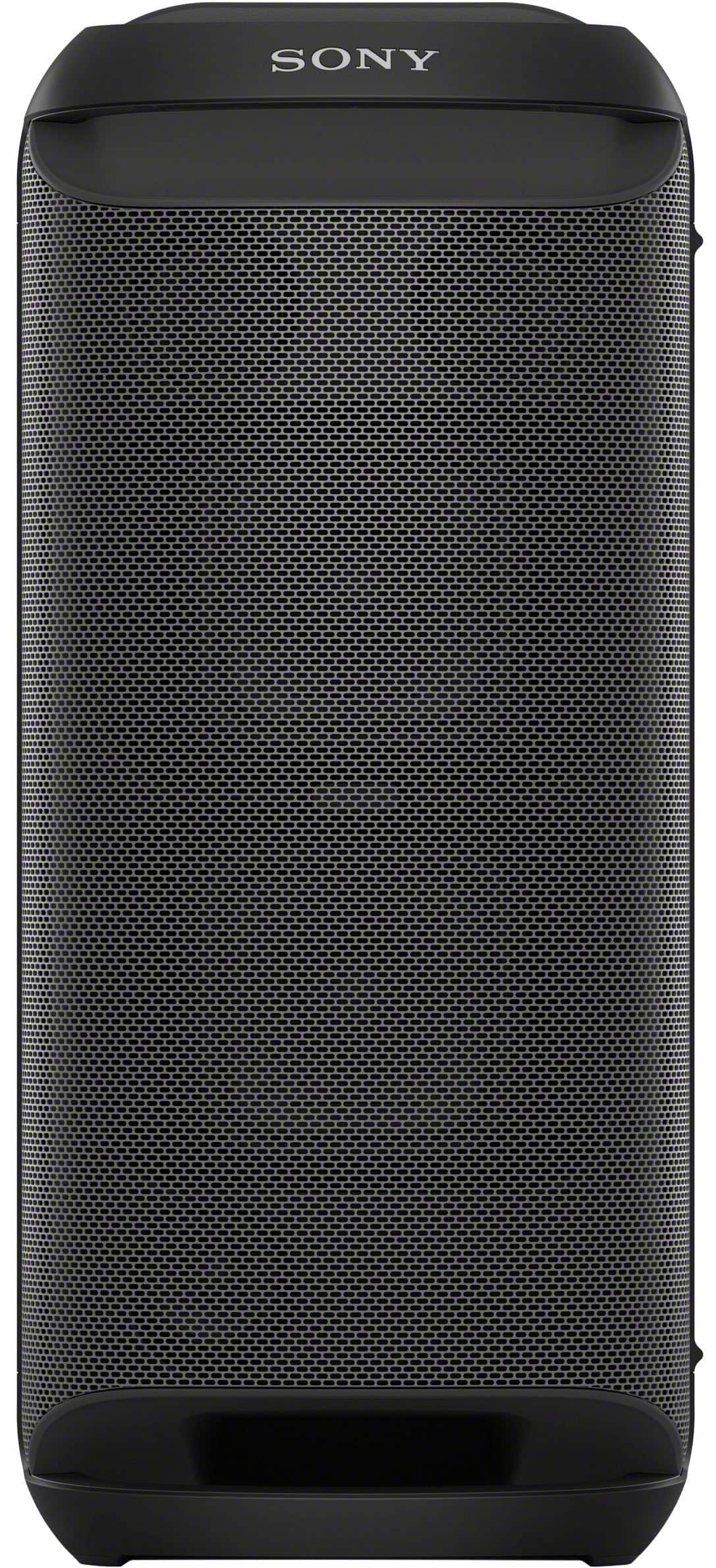
Perhaps the most innovative feature of the Sony SRS-XV800 is its omnidirectional sound design. Traditional speakers fire sound in one primary direction, but Sony's approach uses five strategically positioned dome tweeters – three facing forward and two facing backward – to create 360-degree high-frequency dispersion. This means everyone at your party gets a similar listening experience regardless of where they're standing relative to the speaker.
The omnidirectional design particularly shines in open floor plans and outdoor settings where people naturally spread out around the speaker. Instead of having a "sweet spot" directly in front of the speaker and dead zones off to the sides, the Sony SRS-XV800 creates a more even soundfield that adapts well to real party scenarios.
The JBL PartyBox Ultimate uses a more conventional directional approach, optimized for maximum forward projection. While this might seem like a limitation, it's actually advantageous in certain scenarios – if you're setting up against a wall or need to project sound across a large, elongated space like a backyard or dance floor. The directional design also helps the JBL achieve its impressive maximum volume levels by focusing acoustic energy rather than dispersing it.
Modern party speakers need to handle various audio sources seamlessly, and both speakers excel here with different strengths. The Sony SRS-XV800 supports Bluetooth 5.2 with LDAC codec, which transmits roughly three times more data than standard Bluetooth connections. This means higher audio quality when streaming from compatible Android devices, though iPhone users won't benefit from LDAC support.
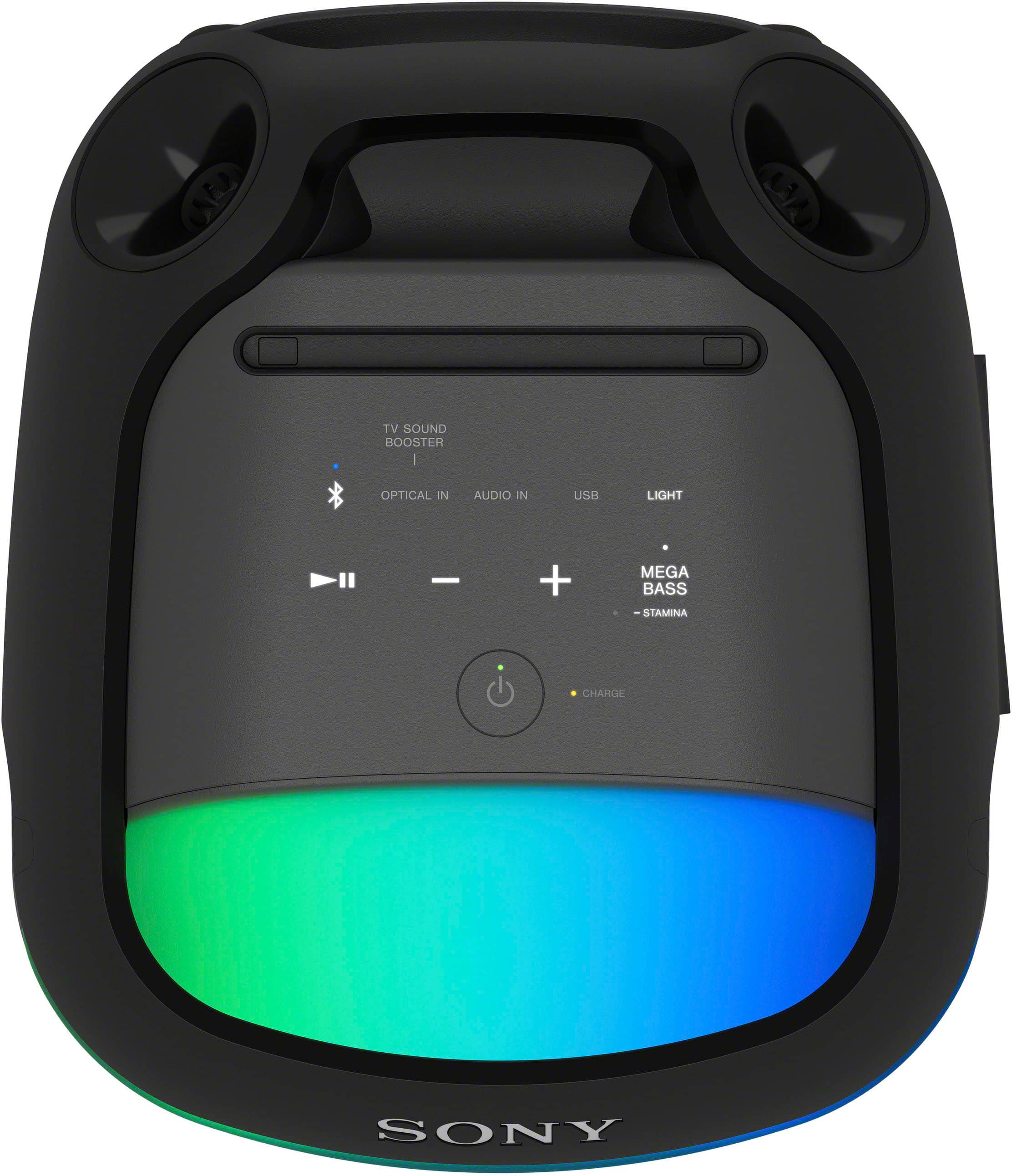
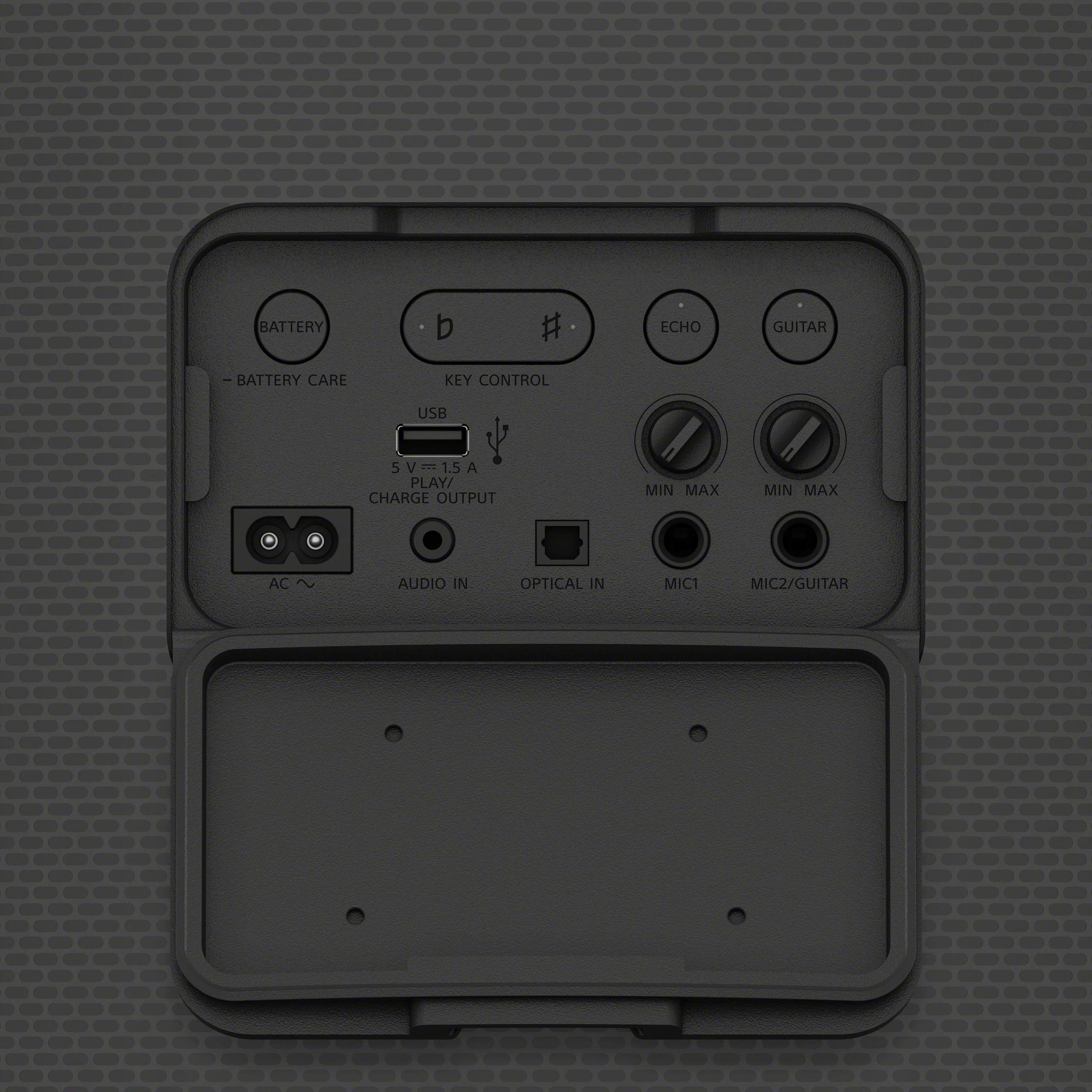
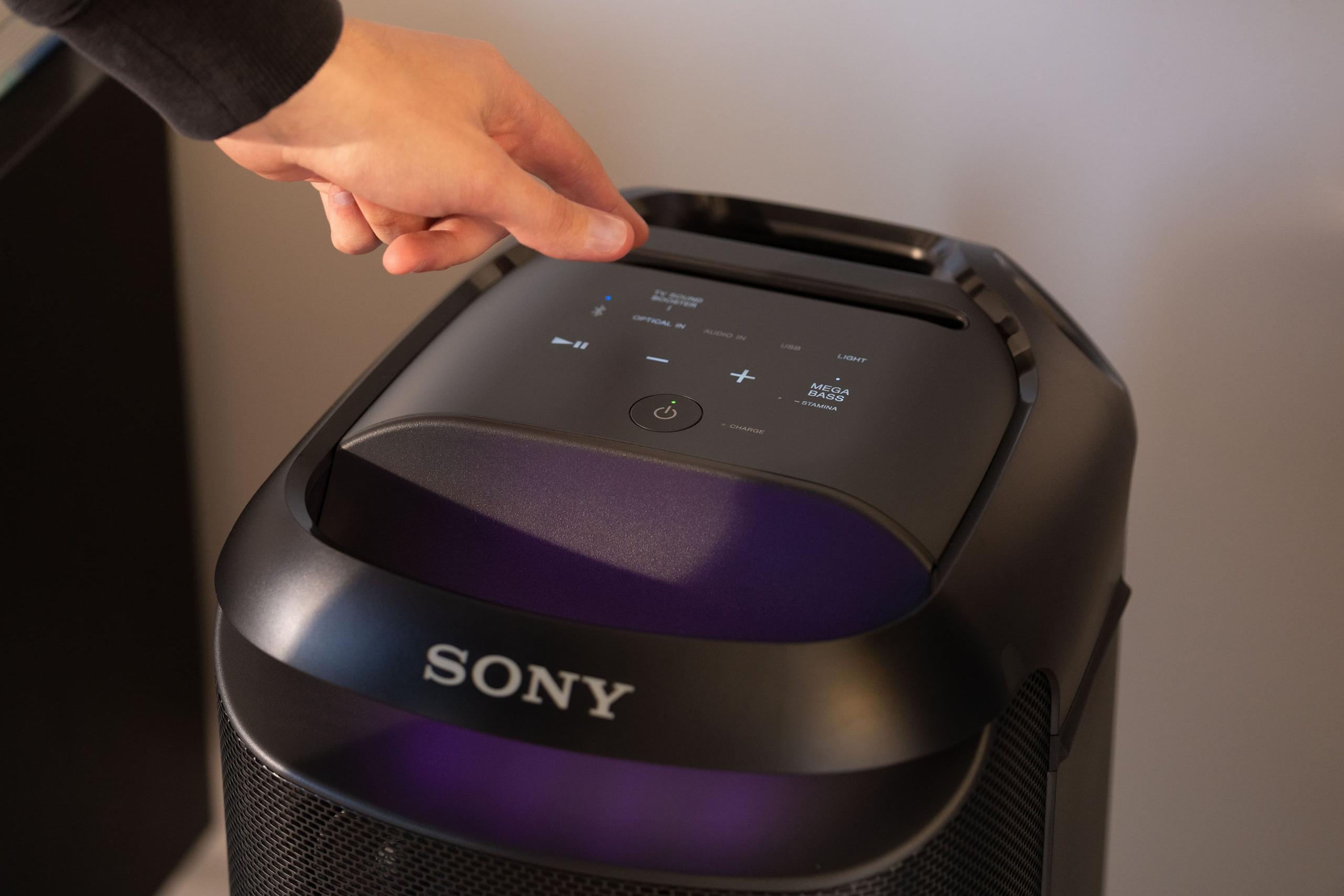
What sets the Sony apart is its comprehensive input selection. Beyond standard Bluetooth and auxiliary connections, it includes a USB-A port for playing music directly from flash drives, an optical digital input for connecting to TVs, and dedicated microphone and guitar inputs with independent volume controls. The optical connection is particularly valuable for home theater applications – you can use the Sony SRS-XV800 as a powerful soundbar alternative that dramatically improves TV audio while maintaining the flexibility for party use.
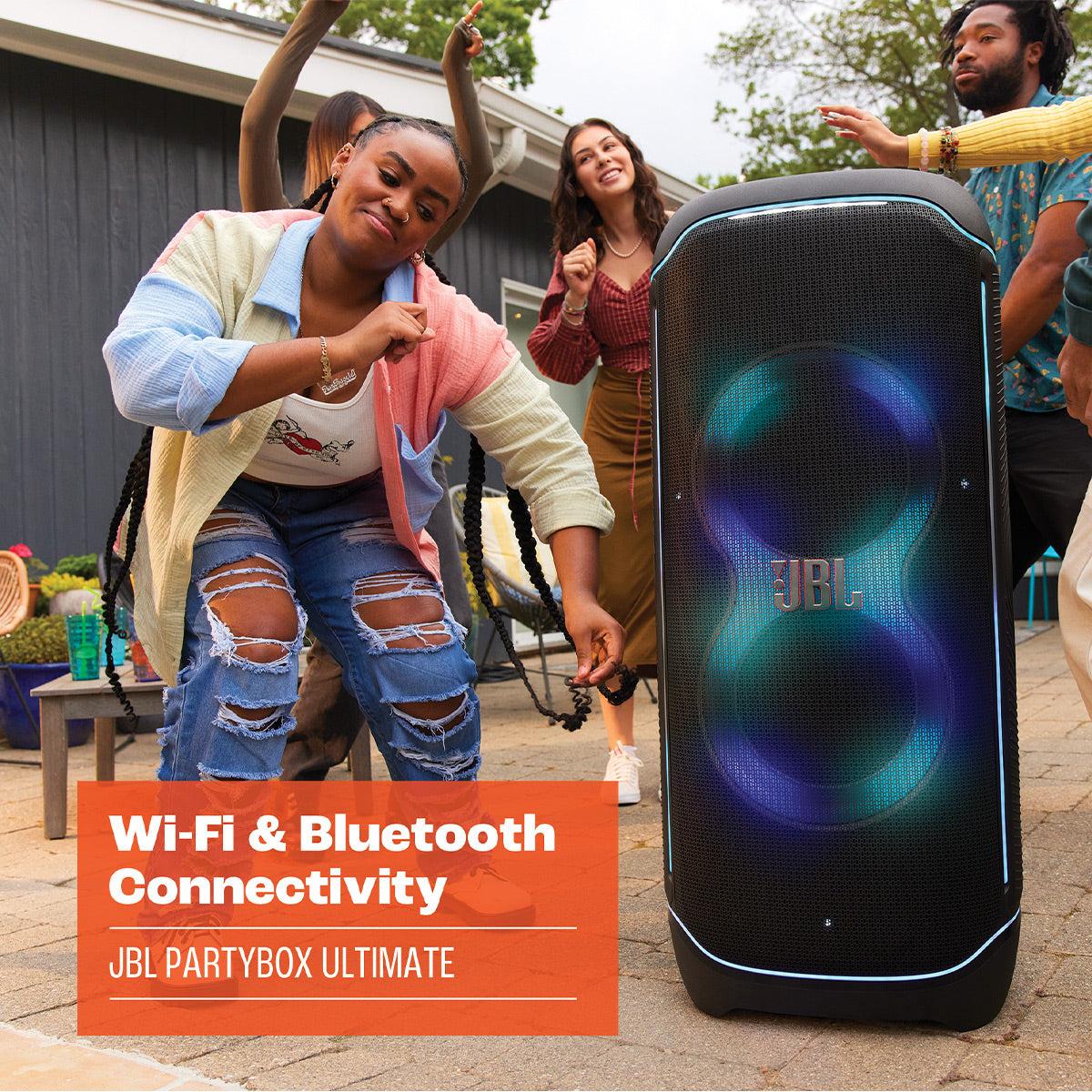
The JBL PartyBox Ultimate raises the connectivity stakes with Wi-Fi 6 support alongside Bluetooth 5.3. Wi-Fi streaming offers several advantages over Bluetooth: higher quality audio, immunity to phone calls and notifications interrupting your music, and support for advanced features like Dolby Atmos spatial audio. Dolby Atmos creates a three-dimensional soundscape that places different audio elements around the listener – imagine hearing rain falling from above or a helicopter circling around you during a movie soundtrack.
The JBL also includes AirPlay 2 and Chromecast built-in, allowing seamless streaming from both iOS and Android devices without quality compromises. For users with smart home ecosystems, these features integrate the speaker into their existing setup more naturally.
Here's where these speakers diverge most dramatically. The Sony SRS-XV800 includes a substantial internal battery providing up to 25 hours of playback time. Twenty-five hours isn't just impressive – it's transformative for how you can use the speaker. Beach parties, camping trips, backyard gatherings that run late into the night, or multi-day events all become possible without worrying about power sources.
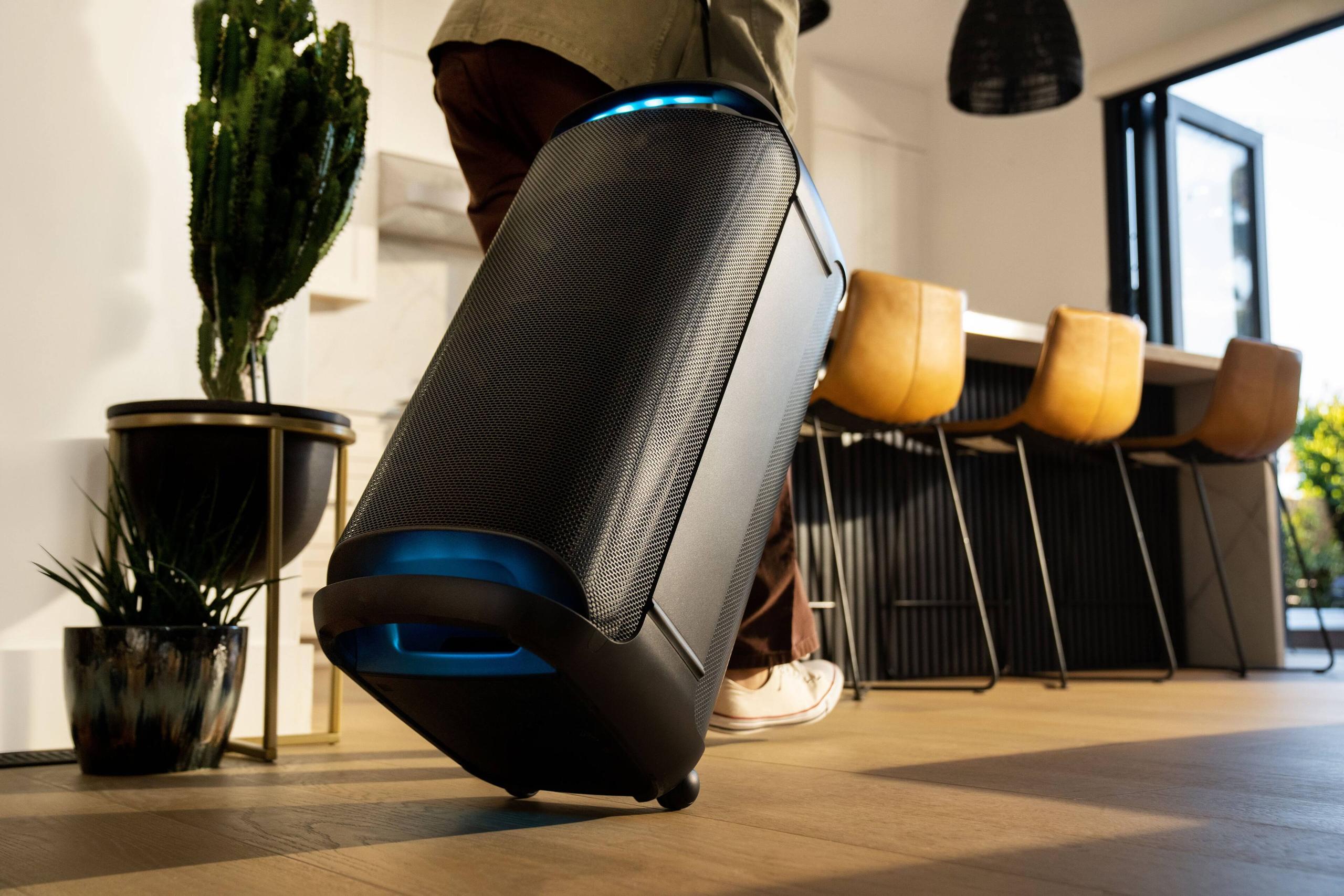
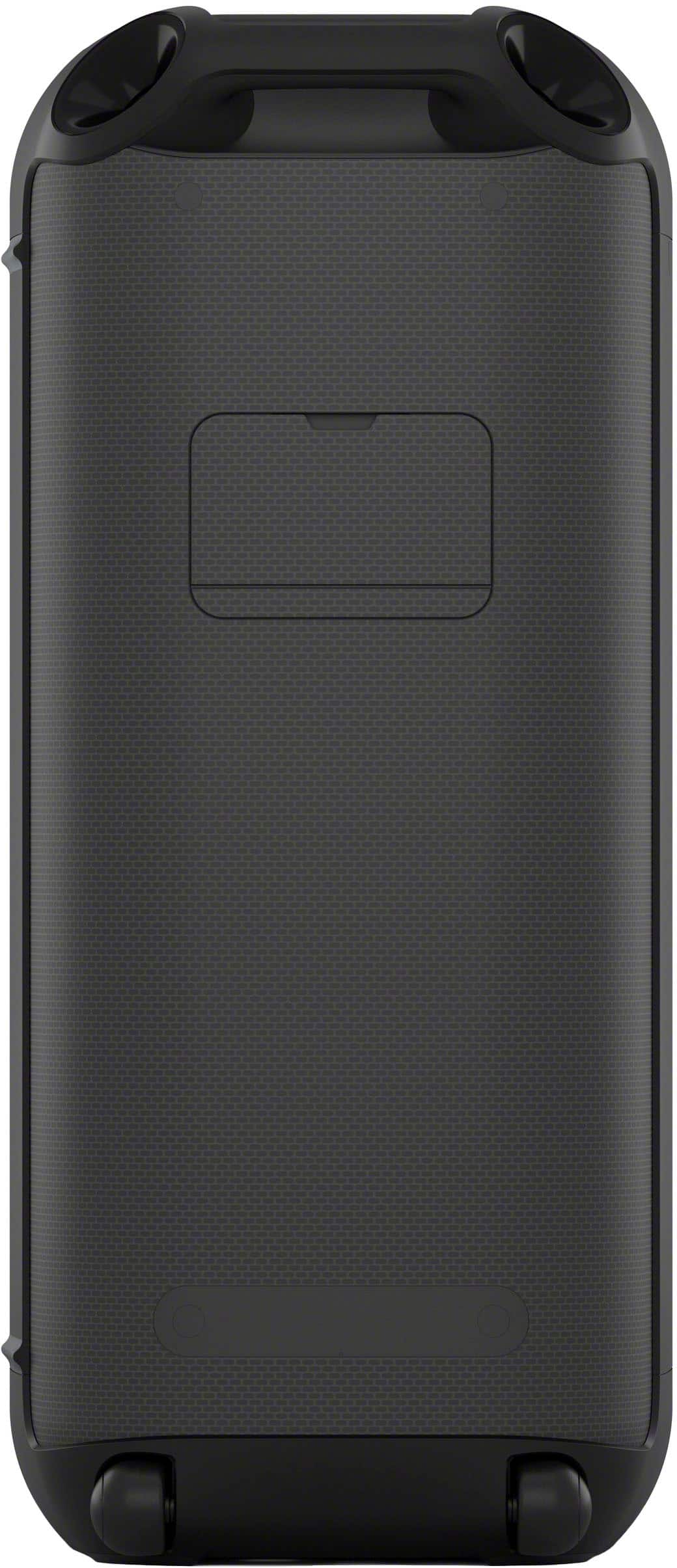
The quick charge feature adds another layer of convenience: just ten minutes of charging provides three hours of playback, perfect for those "oops, I forgot to charge it" moments before guests arrive. At 40.8 pounds, the Sony certainly isn't lightweight, but the built-in handle and wheels make transport manageable for most people.
The JBL PartyBox Ultimate weighs 87.1 pounds and requires constant AC power. This isn't necessarily a flaw – it's a deliberate design choice prioritizing maximum performance over portability. The heavy-duty wheels and sturdy handle help with positioning once you get it to your venue, but this speaker is designed for semi-permanent installations or events with guaranteed power access.
The portability difference fundamentally changes how you'll use these speakers. The Sony SRS-XV800 opens up possibilities for outdoor adventures and locations without power outlets, while the JBL PartyBox Ultimate excels in established venues, clubs, or backyard setups where maximum impact matters more than mobility.
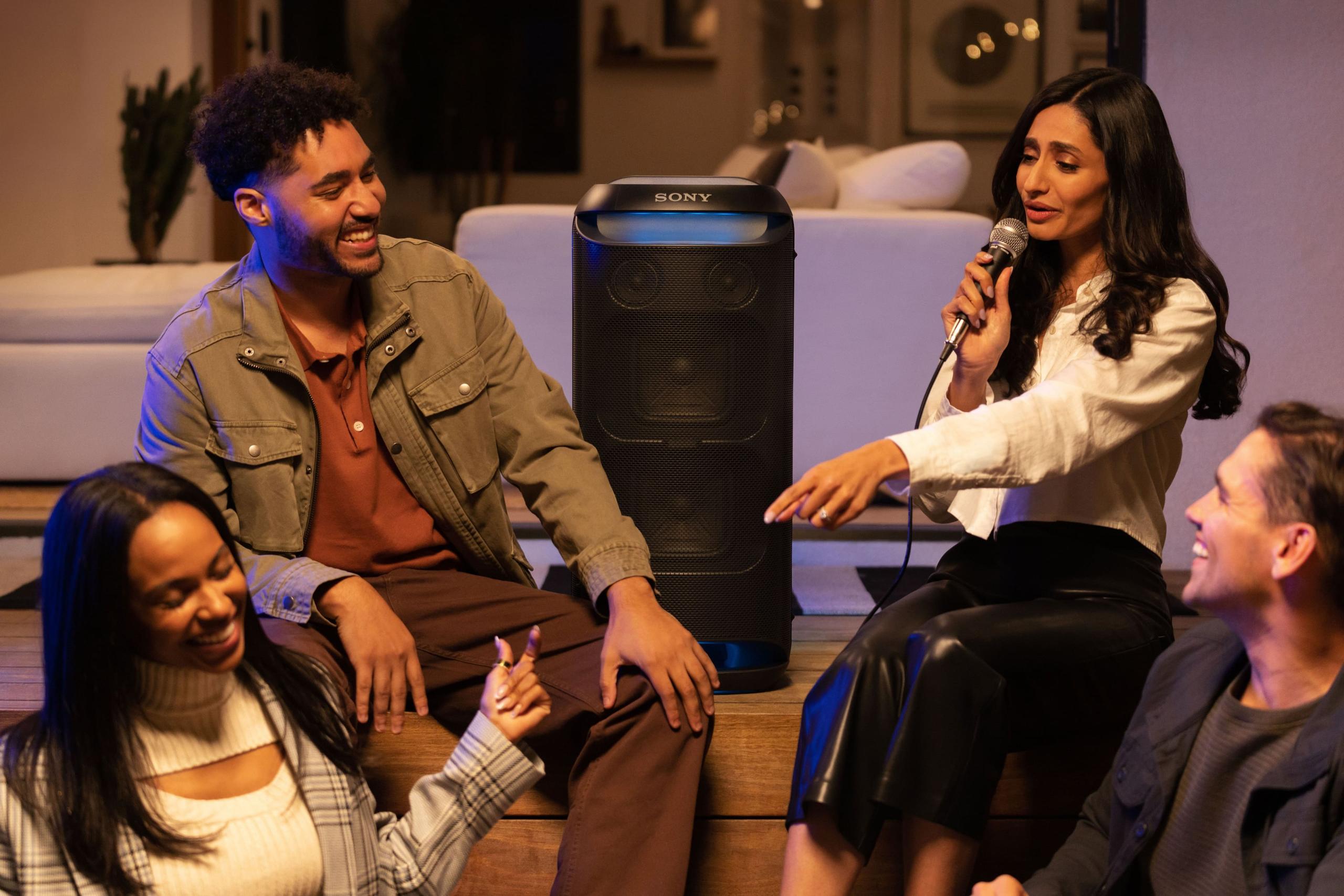
Both speakers recognize that modern parties are multi-sensory experiences, but they approach visual entertainment differently. The Sony SRS-XV800 features programmable LED ambient lighting that can be customized through the Sony Music Center app. While attractive and functional, the lighting is relatively subtle – think accent lighting that enhances the party atmosphere without overwhelming it.
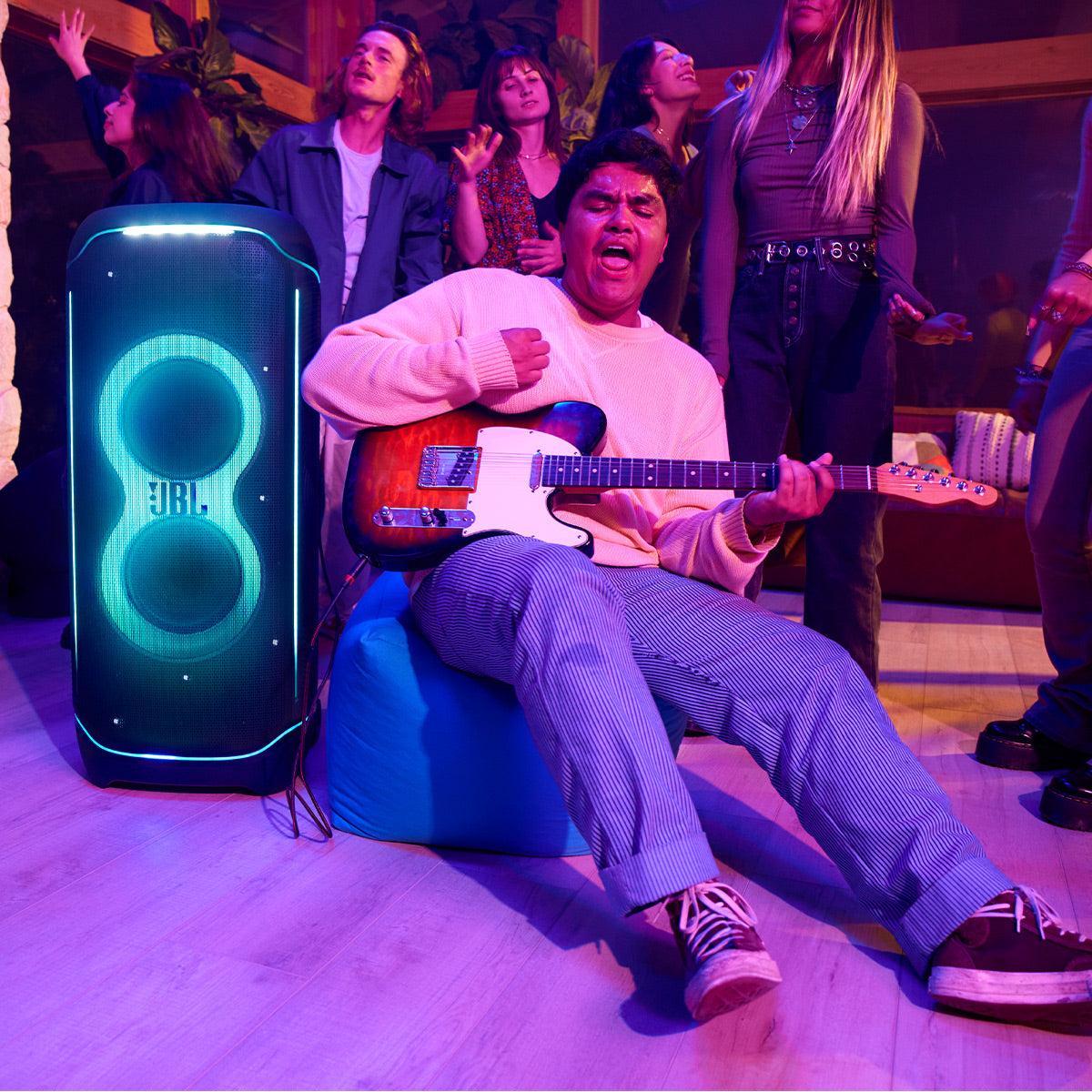
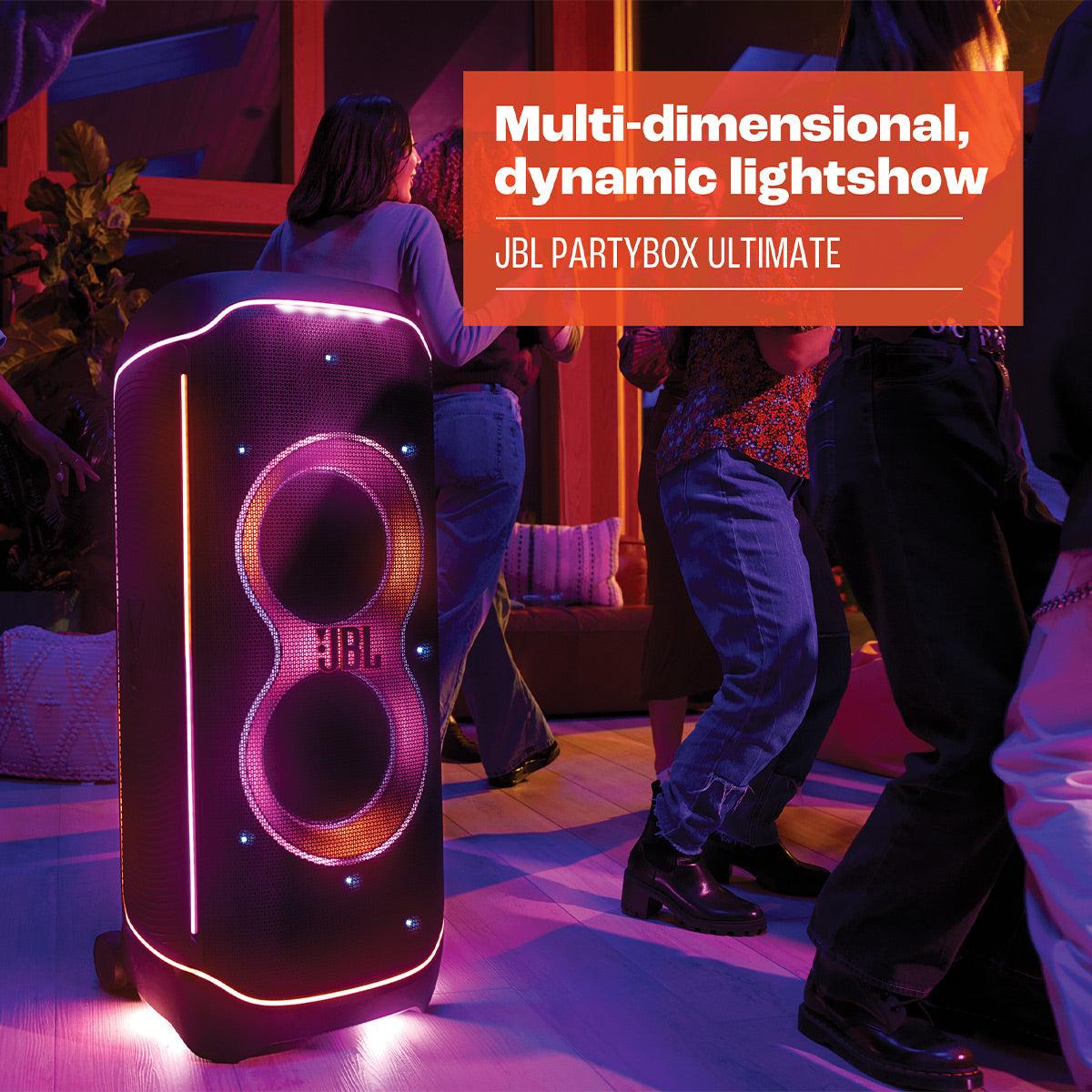
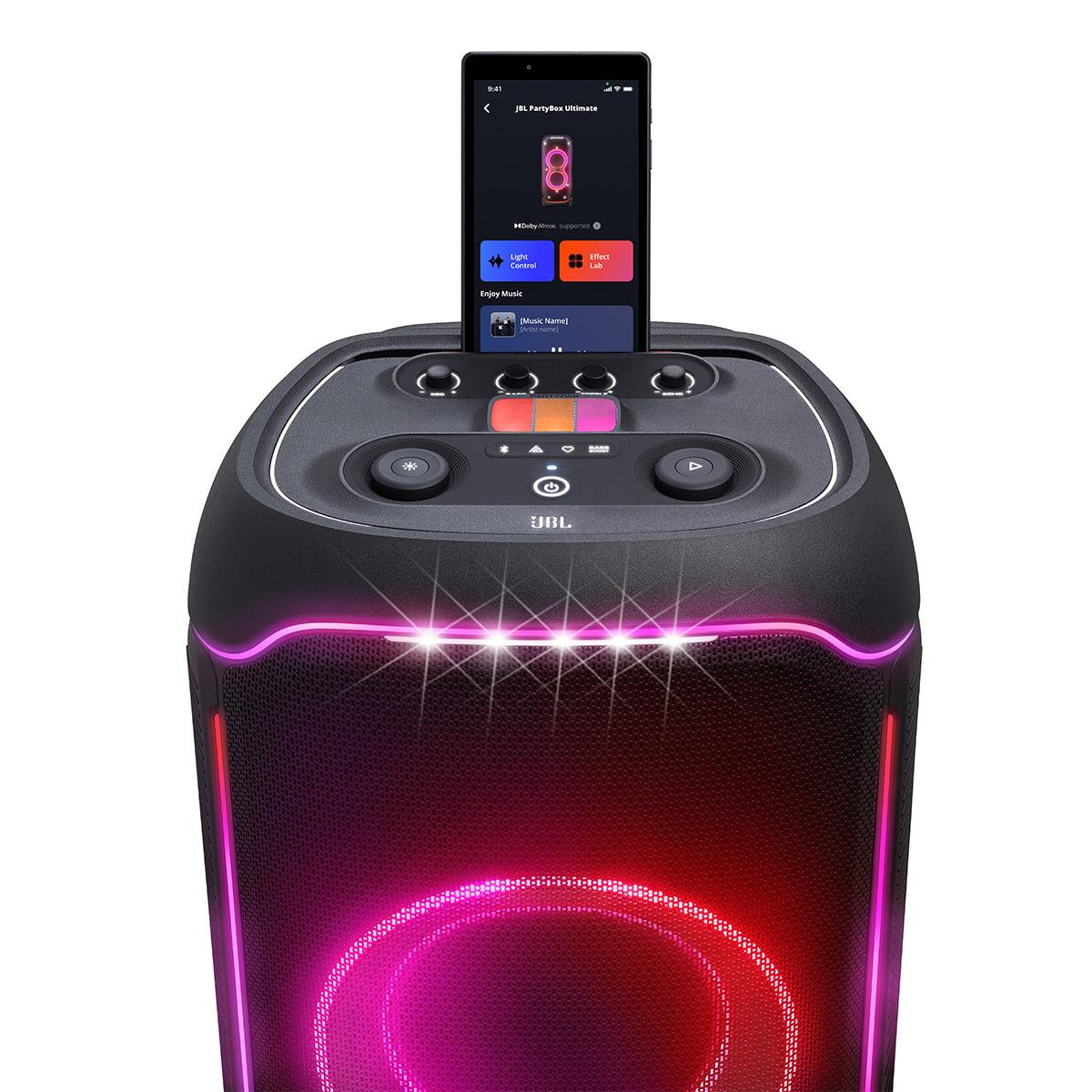
The JBL PartyBox Ultimate transforms lighting into a major feature with its multi-dimensional RGB system. We're talking about starry night effects, dynamic light trails, synchronized strobes, and even ground projection effects that pulse and change with your music. The lighting system is sophisticated enough that many users report it becoming a conversation piece and primary reason for choosing the speaker.
For house parties and casual gatherings, the Sony's more restrained lighting approach might actually be preferable – it adds atmosphere without turning your living room into a nightclub. The JBL's aggressive lighting effects truly shine (literally) at larger events, outdoor parties, or when you specifically want that club-like ambiance.
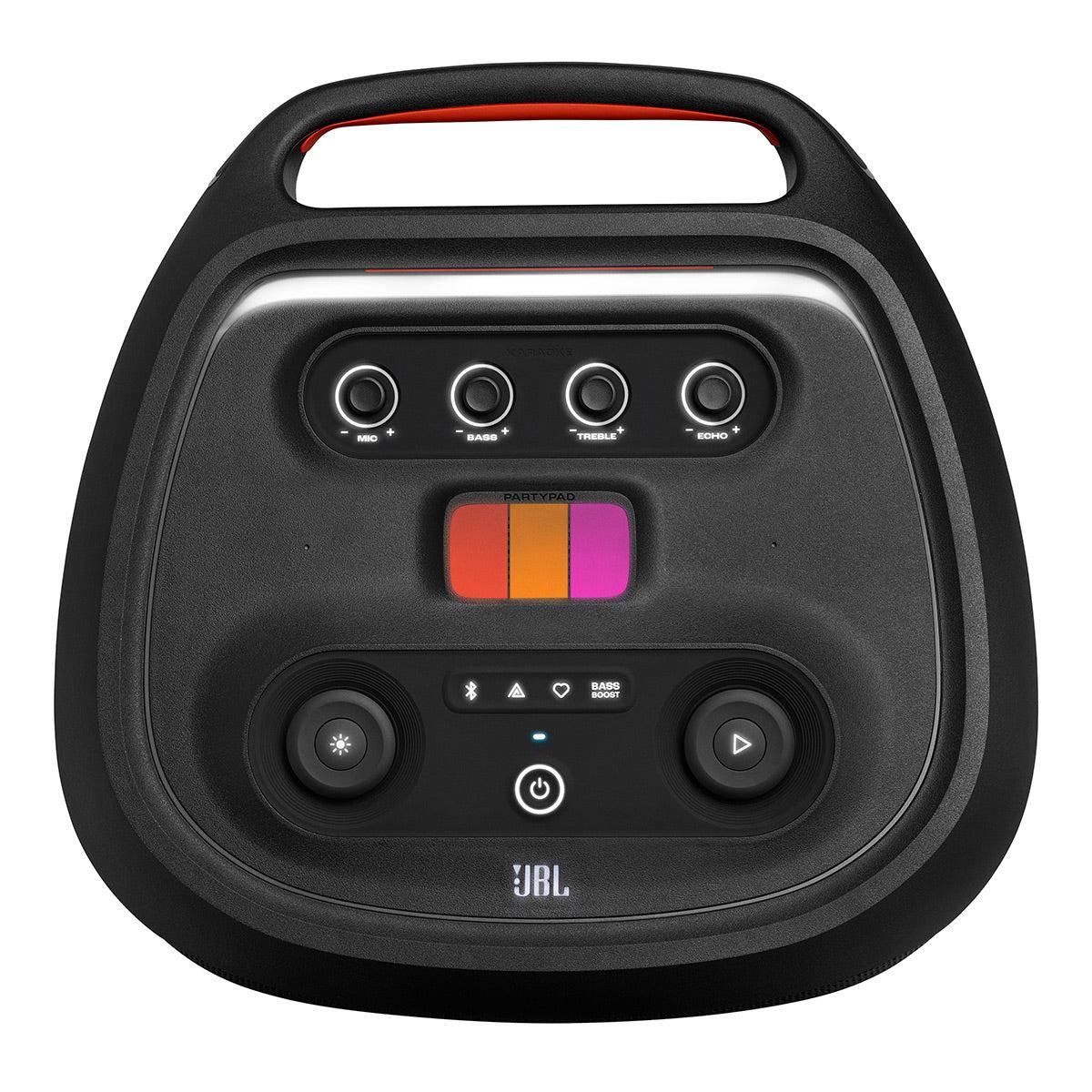
The JBL PartyBox Ultimate includes several features that edge it into professional territory. The JBL PartyPad™ – an interactive DJ control panel built into the top of the speaker – allows real-time sound manipulation including filters, echo effects, and sample triggers. It's not just a gimmick; experienced users can genuinely enhance their music mixing and create more engaging party experiences.
The self-tuning acoustic calibration represents another technological advancement. Built-in microphones analyze the speaker's acoustic environment and automatically adjust the sound profile for optimal performance. Whether you place it in a corner, against a wall, or in an open space, the speaker adapts its output to sound its best.
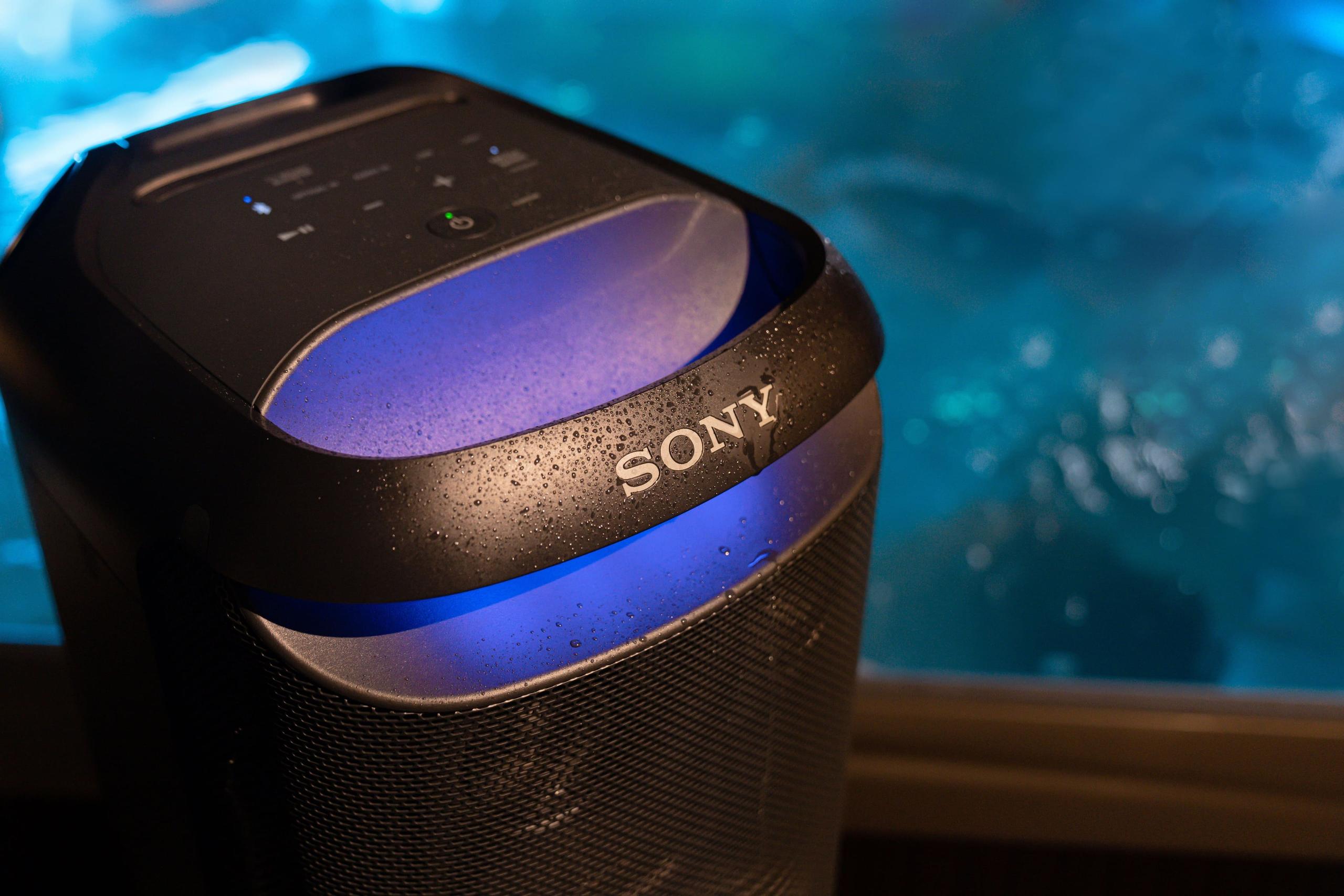
The Sony SRS-XV800 takes a different approach with its adaptive orientation system. Internal sensors detect whether the speaker is positioned vertically or horizontally and optimize the sound accordingly. This flexibility proves valuable for different room layouts and setup constraints, though it's worth noting that water resistance drops from IPX4 to IPX2 when positioned horizontally.
Both speakers support connecting multiple units for larger events, but with different approaches and capabilities. The Sony SRS-XV800 supports Party Connect, allowing up to 100 compatible Sony speakers to be linked wirelessly. This creates possibilities for truly massive events or distributed audio across large venues.
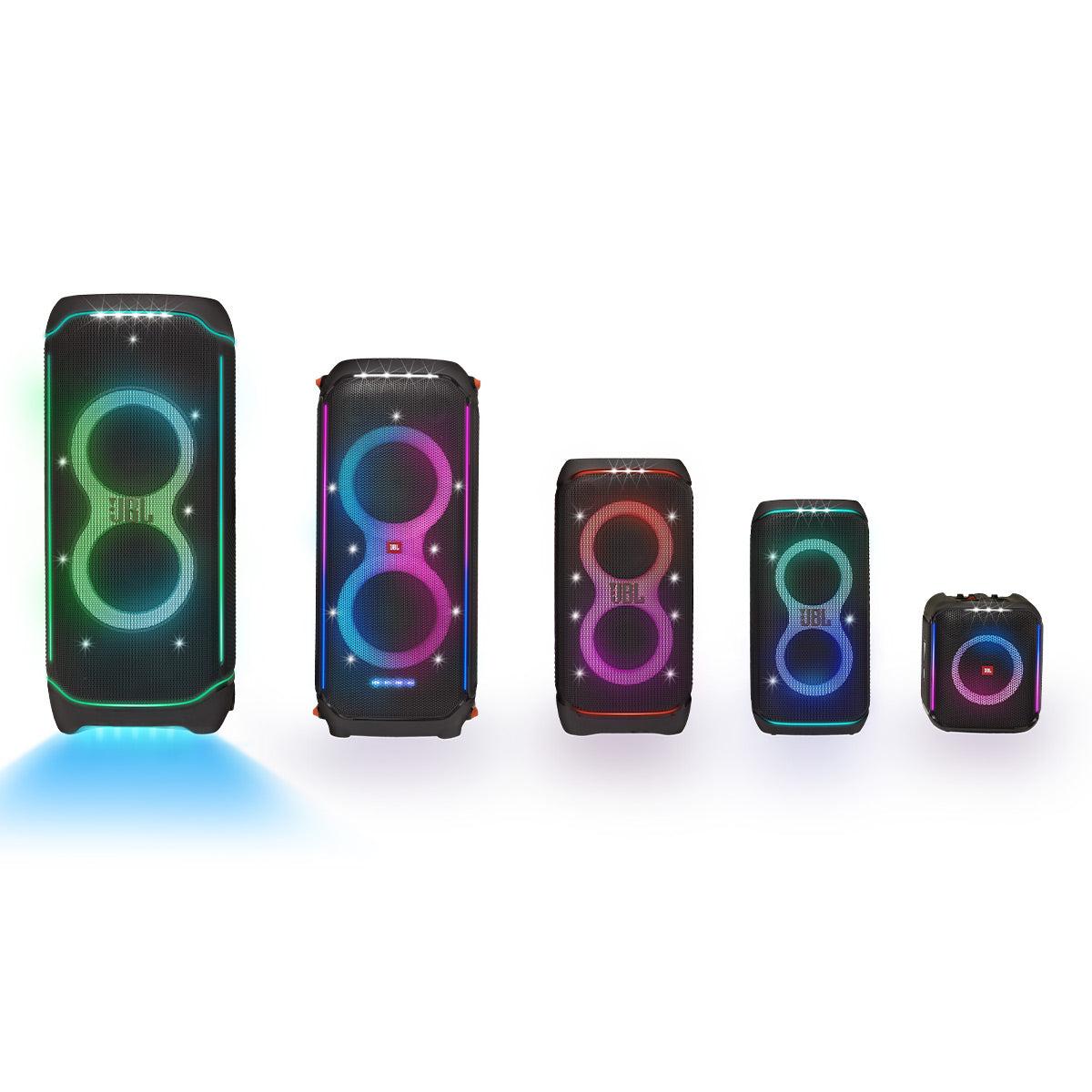
The JBL PartyBox Ultimate supports True Wireless Stereo pairing and multi-speaker connections, though typically with smaller speaker counts. The advantage comes in the integration quality – lighting effects, sound profiles, and even DJ effects can be synchronized across multiple JBL units for a more cohesive large-scale experience.
The Sony SRS-XV800 deserves special consideration as a TV audio solution. The optical digital input and TV Sound Booster mode optimize the speaker for movie and gaming audio, delivering dramatically improved dialogue clarity and bass impact compared to built-in TV speakers. The omnidirectional design works particularly well in living rooms where family members sit in various positions around the room.
While the JBL PartyBox Ultimate lacks dedicated TV connectivity features, its Dolby Atmos support over Wi-Fi creates impressive movie experiences when streaming from compatible devices. The spatial audio effects can make action movies and immersive gaming truly spectacular, though setup requires Wi-Fi-capable source devices rather than direct TV connection.
At the time of writing, the Sony SRS-XV800 commands a significantly lower price than the JBL PartyBox Ultimate, making the value equation complex. The Sony offers genuine versatility – it's equally at home as a TV soundbar, outdoor party speaker, or home audio system. The 25-hour battery life and comprehensive connectivity options justify its cost for users who need flexible, high-quality audio.
The JBL PartyBox Ultimate costs considerably more, but it delivers professional-grade performance that can replace much more expensive PA systems for many applications. If you regularly host large gatherings, need maximum volume output, or want impressive visual effects, the price premium becomes more justifiable.
Choose the Sony SRS-XV800 if you value versatility above all else. It's perfect for people who want one speaker that can handle backyard barbecues, beach trips, movie nights, and medium-sized parties equally well. The battery life eliminates location constraints, making it ideal for outdoor enthusiasts or renters who might not always have convenient power access. The omnidirectional sound and TV connectivity features add value for everyday use beyond parties.
The JBL PartyBox Ultimate makes sense for users who prioritize maximum impact and don't mind the mobility limitations. It's the better choice for large venue events, users who frequently host 100+ person gatherings, or anyone who wants professional DJ features and spectacular lighting effects. The AC-only power requirement isn't a limitation if you primarily use it in established locations with power access.
Both speakers excel in their intended roles, but the Sony SRS-XV800 offers broader appeal with its combination of performance, portability, and versatility. The JBL PartyBox Ultimate serves a more specific market but absolutely dominates when raw power and visual impact are your primary concerns. Your choice should align with how and where you'll actually use the speaker most often – versatility and battery freedom, or maximum performance regardless of power requirements.
| Sony SRS-XV800 | JBL PartyBox Ultimate |
|---|---|
| Power Output - Determines maximum volume and ability to fill large spaces | |
| 70W RMS / 180W peak (good for medium venues) | 1100W RMS (exceptional for very large venues) |
| Maximum Volume Level - Critical for party and event use | |
| 106 dB (suitable for 50-100 people) | 109.4 dB (can fill spaces for 200+ people) |
| Battery Life - Determines portability and venue flexibility | |
| Up to 25 hours wireless operation with quick charging | AC power only (requires electrical outlet) |
| Weight and Portability - Affects transport and setup ease | |
| 40.8 lbs with wheels and handle (truly portable) | 87.1 lbs with heavy-duty wheels (semi-permanent setup) |
| Sound Design - Impacts listening experience and coverage | |
| Omnidirectional with 5 tweeters (360° coverage) | Directional array (focused forward projection) |
| Bass System - Affects low-end impact and music genres | |
| Dual 6.69" X-Balanced woofers + passive radiator | Dual 9" conventional woofers with dedicated midrange |
| Connectivity Options - Determines source flexibility | |
| Bluetooth 5.2 with LDAC, USB-A, optical input, mic/guitar inputs | Wi-Fi 6, Bluetooth 5.3, AirPlay 2, Chromecast, dual mic/guitar inputs |
| Lighting Effects - Enhances party atmosphere | |
| Programmable LED ambient lighting | Multi-dimensional RGB with strobes, trails, and ground projection |
| Advanced Features - Professional and convenience capabilities | |
| TV Sound Booster, orientation sensing, Party Connect (100 speakers) | JBL PartyPad DJ controls, Dolby Atmos, self-tuning acoustic calibration |
| Water Resistance - Important for outdoor and poolside use | |
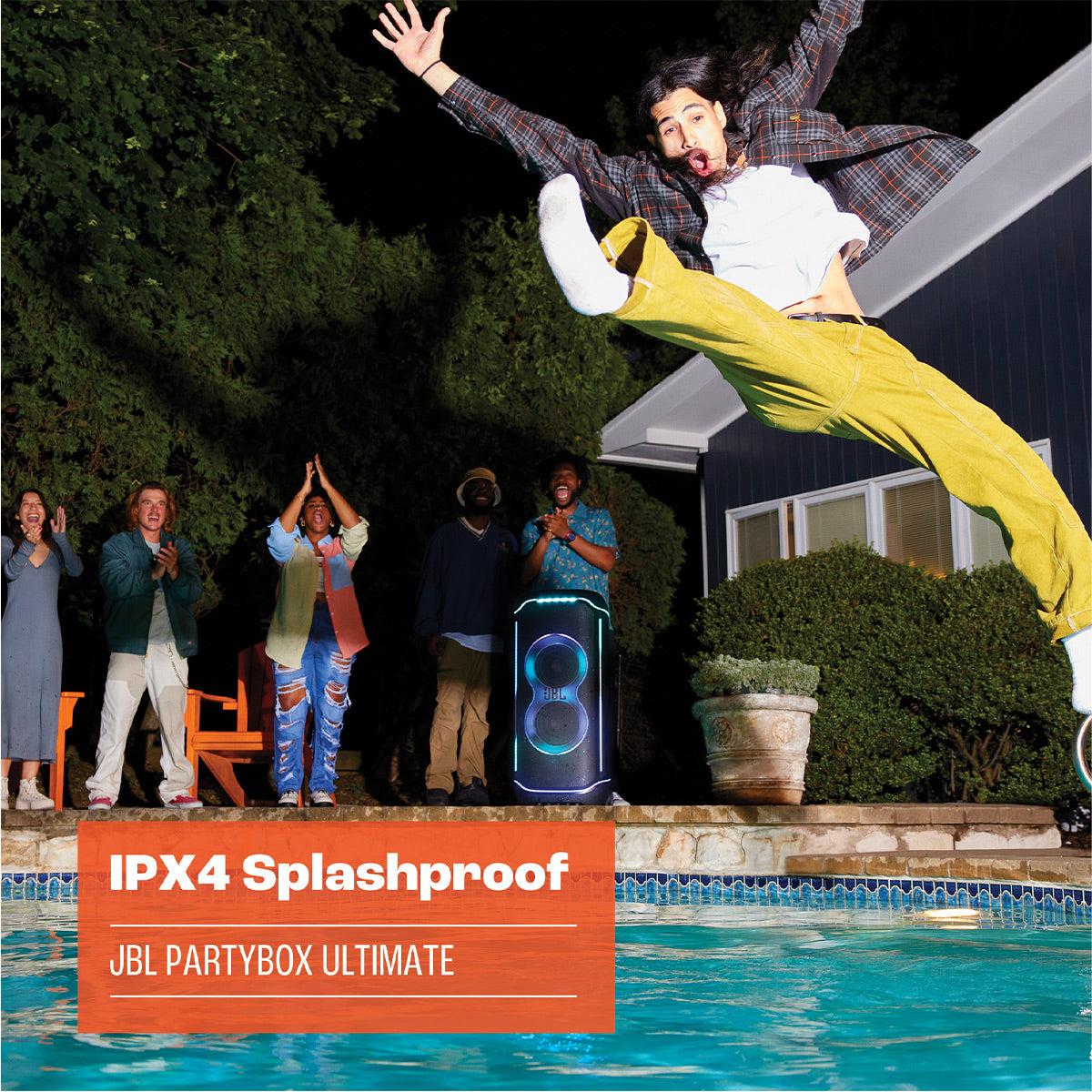
| IPX4 vertical / IPX2 horizontal | IPX4 splashproof |
| Best Use Cases - Who should choose each speaker | |
| Versatile portable use, home theater, medium parties, outdoor events | Large venues, professional events, maximum impact parties, club-like atmosphere |
The JBL PartyBox Ultimate is significantly louder, producing 1100W RMS compared to the Sony SRS-XV800's 70W RMS. In real-world testing, the JBL PartyBox Ultimate reaches 109.4 dB while the Sony SRS-XV800 maxes out at 106 dB. The JBL can fill spaces as large as two basketball courts, making it better for very large events.
Only the Sony SRS-XV800 offers battery operation, providing up to 25 hours of wireless playback with quick charging capabilities. The JBL PartyBox Ultimate requires AC power at all times, making it less portable but allowing for unlimited playtime during events.
Both excel at bass but differ in character. The Sony SRS-XV800 uses X-Balanced rectangular woofers for clean, punchy bass that works across all music genres. The JBL PartyBox Ultimate delivers more intense, "chest-thumping" bass with dual 9-inch woofers that's particularly effective for electronic music and hip-hop at parties.
The Sony SRS-XV800 is better suited for home theater use, featuring an optical digital input and TV Sound Booster mode specifically designed for movie and gaming audio. The JBL PartyBox Ultimate can enhance TV audio through Wi-Fi streaming with Dolby Atmos support, but lacks direct TV connectivity options.
The Sony SRS-XV800 is much more portable at 40.8 pounds with built-in battery, wheels, and handle. The JBL PartyBox Ultimate weighs 87.1 pounds and requires AC power, making it better suited for semi-permanent installations or venues with guaranteed power access.
The JBL PartyBox Ultimate offers superior lighting with multi-dimensional RGB effects, starry patterns, light trails, strobes, and ground projection that sync with music. The Sony SRS-XV800 provides more subtle programmable LED ambient lighting that enhances atmosphere without overwhelming it.
Both support multi-speaker connectivity but differently. The Sony SRS-XV800 supports Party Connect for linking up to 100 compatible Sony speakers wirelessly. The JBL PartyBox Ultimate offers True Wireless Stereo pairing and multi-speaker connections with better integration of lighting and sound effects.
The Sony SRS-XV800 provides more balanced sound with its omnidirectional design and X-Balanced technology, offering 360-degree coverage and clean audio reproduction. The JBL PartyBox Ultimate delivers more raw power and impact but focuses sound directionally, making it better for large venue projection than intimate listening.
Both speakers support karaoke with dual microphone inputs and guitar connections. The Sony SRS-XV800 offers independent volume and echo controls, while the JBL PartyBox Ultimate includes more advanced karaoke EQ tuning and professional-grade features for live performance use.
The JBL PartyBox Ultimate has superior connectivity with Wi-Fi 6, AirPlay 2, Chromecast built-in, and Dolby Atmos support over Wi-Fi. The Sony SRS-XV800 offers Bluetooth 5.2 with LDAC for high-quality Android streaming, plus unique features like USB playback and optical TV connectivity.
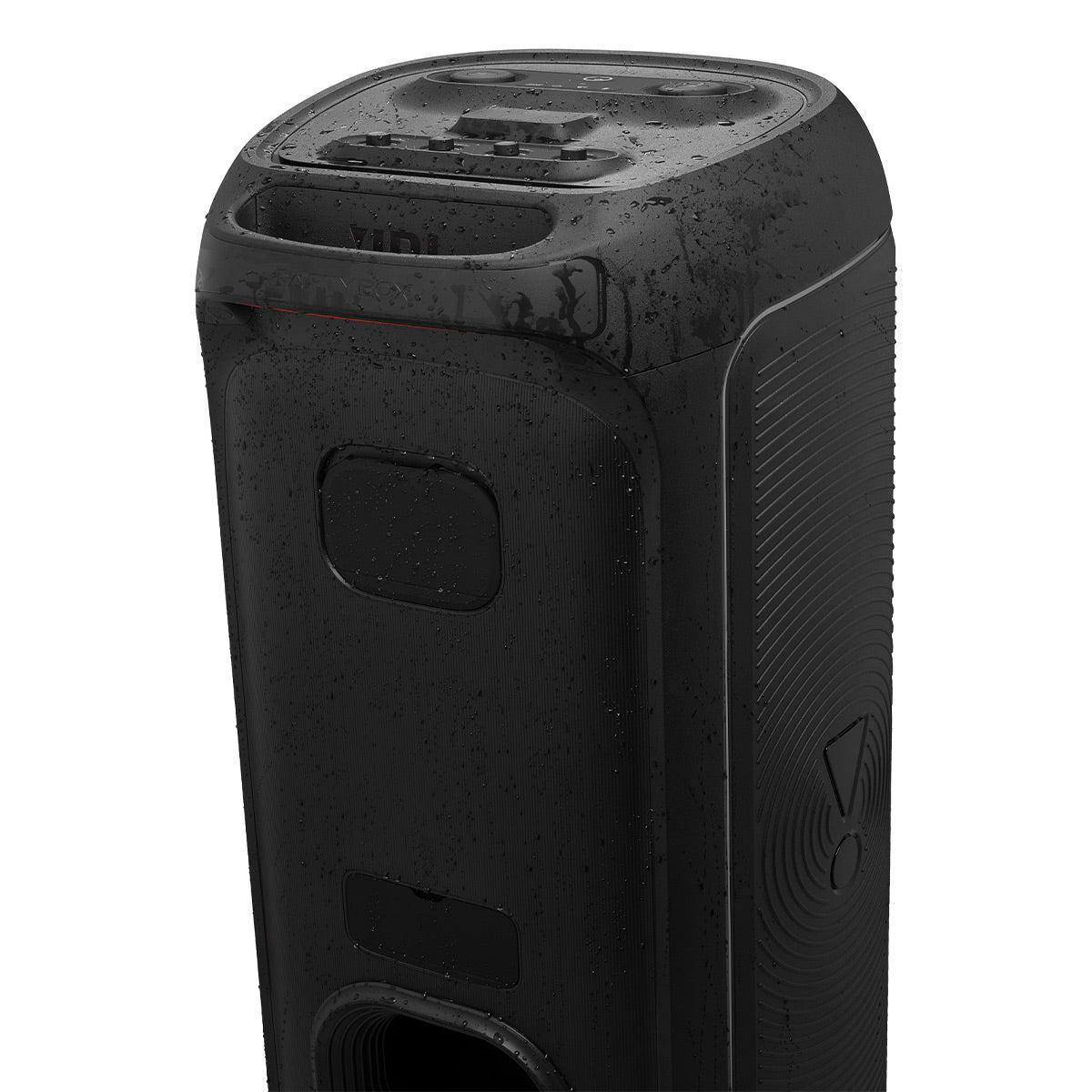
Both offer splash protection but aren't fully waterproof. The Sony SRS-XV800 provides IPX4 rating when vertical (IPX2 horizontal), while the JBL PartyBox Ultimate maintains IPX4 splashproof rating. Both can handle poolside use and light rain but shouldn't be fully submerged.
The Sony SRS-XV800 typically offers better value for most users due to its versatility, 25-hour battery life, and multiple use cases including TV audio, outdoor events, and medium-sized parties. The JBL PartyBox Ultimate justifies its higher cost for users who need maximum power for large venues and professional-grade features.
We've done our best to create useful and informative comparisons to help you decide what product to buy. Our research uses advanced automated methods to create this comparison and perfection is not possible - please contact us for corrections or questions. These are the sites we've researched in the creation of this article: soundandvision.com - crutchfield.com - sciencefocus.com - sony.com - bestbuy.com - bestbuy.com - stereoguide.com - sony-mea.com - soundguys.com - electronics.sony.com - youtube.com - sony.com - youtube.com - device.report - youtube.com - youtube.com - adorama.com - sonylatvija.com - sony.com - audioadvice.com - youtube.com - crutchfield.com - youtube.com - youtube.com - youtube.com - youtube.com - versus.com - youtube.com - rtings.com - youtube.com - youtube.com - jbl.com - pcx.com.ph - global.jbl.com - gzhls.at - electronicexpress.com - harmanaudio.in - jbl.com - dell.com - robot-advance.com - device.report - ro.harmanaudio.com

Privacy Policy
Terms and Conditions - Affiliate Policy
Home Security
© Copyright 2008-2026.
11816 Inwood Rd #1211, Dallas, TX 75244