


The portable Bluetooth speaker market has exploded over the past decade, evolving from simple wireless music players into sophisticated audio systems that can power entire parties or deliver audiophile-quality sound. Today's speakers range from pocket-sized companions to powerful party machines, each targeting different needs and preferences.
Two speakers that perfectly illustrate this diversity are the Tivoli Audio SongBook MAX and the JBL PartyBox Stage 320. Released in 2024, these represent fundamentally different approaches to portable audio: one emphasizes vintage-inspired design and audio quality, while the other prioritizes raw power and party features.
Before diving into specifics, it's worth understanding what separates good portable speakers from great ones. The most important factors include audio quality (how accurate and detailed the sound reproduction is), power output (measured in watts, which determines maximum volume), battery life, build quality, and additional features that enhance usability.
Driver configuration—the arrangement and size of speakers inside the cabinet—plays a crucial role in sound quality. Larger drivers typically produce better bass response, while smaller tweeters handle high frequencies. The amplifier power determines how loud the speaker can play without distortion, measured in watts RMS (Root Mean Square), which indicates continuous power output rather than peak bursts.
Weather resistance has become increasingly important, with IPX4 rating meaning the speaker can handle splashes from any direction—perfect for poolside use but not submersion. Connectivity options like Bluetooth version, auxiliary inputs, and specialized connections can dramatically expand a speaker's usefulness beyond basic music playback.
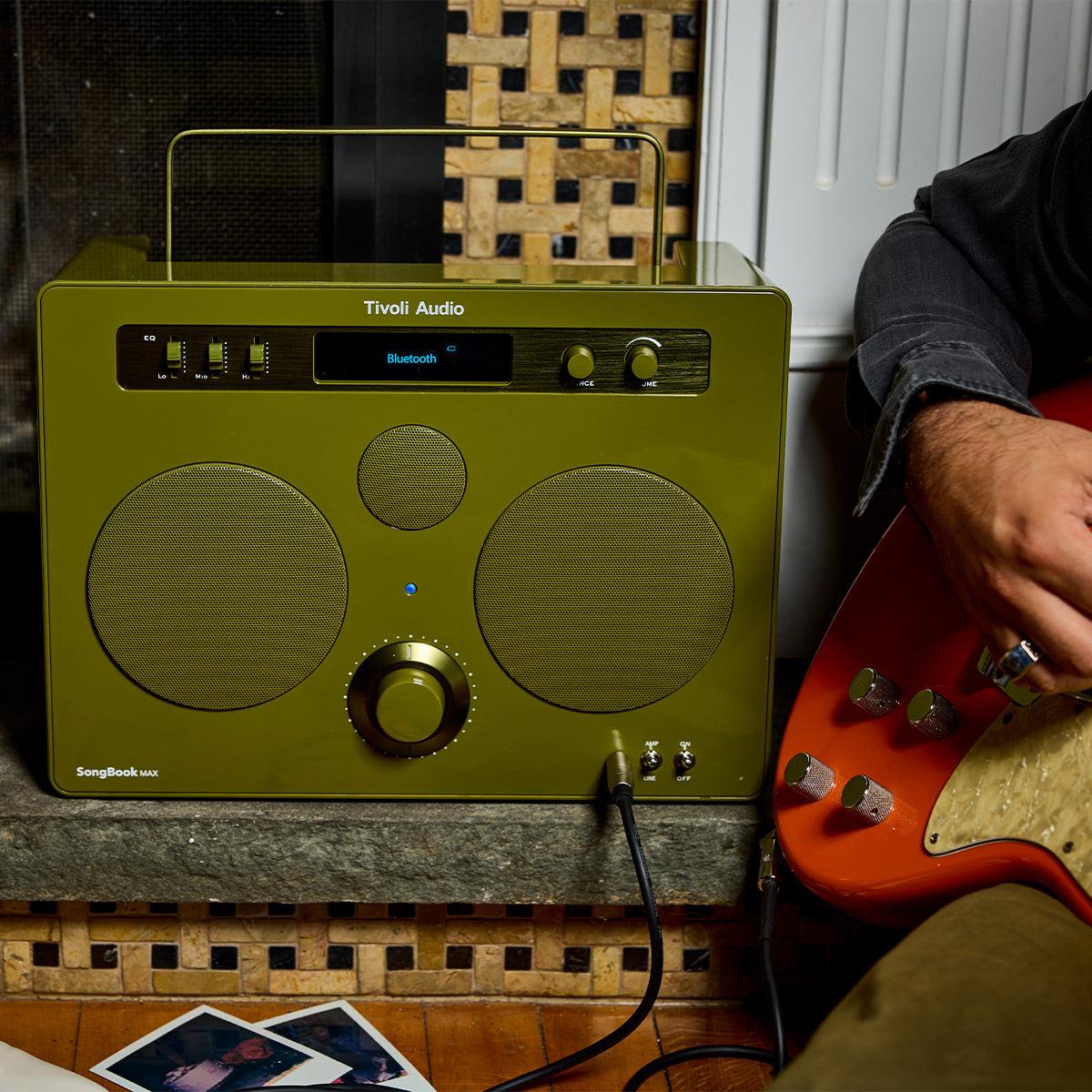
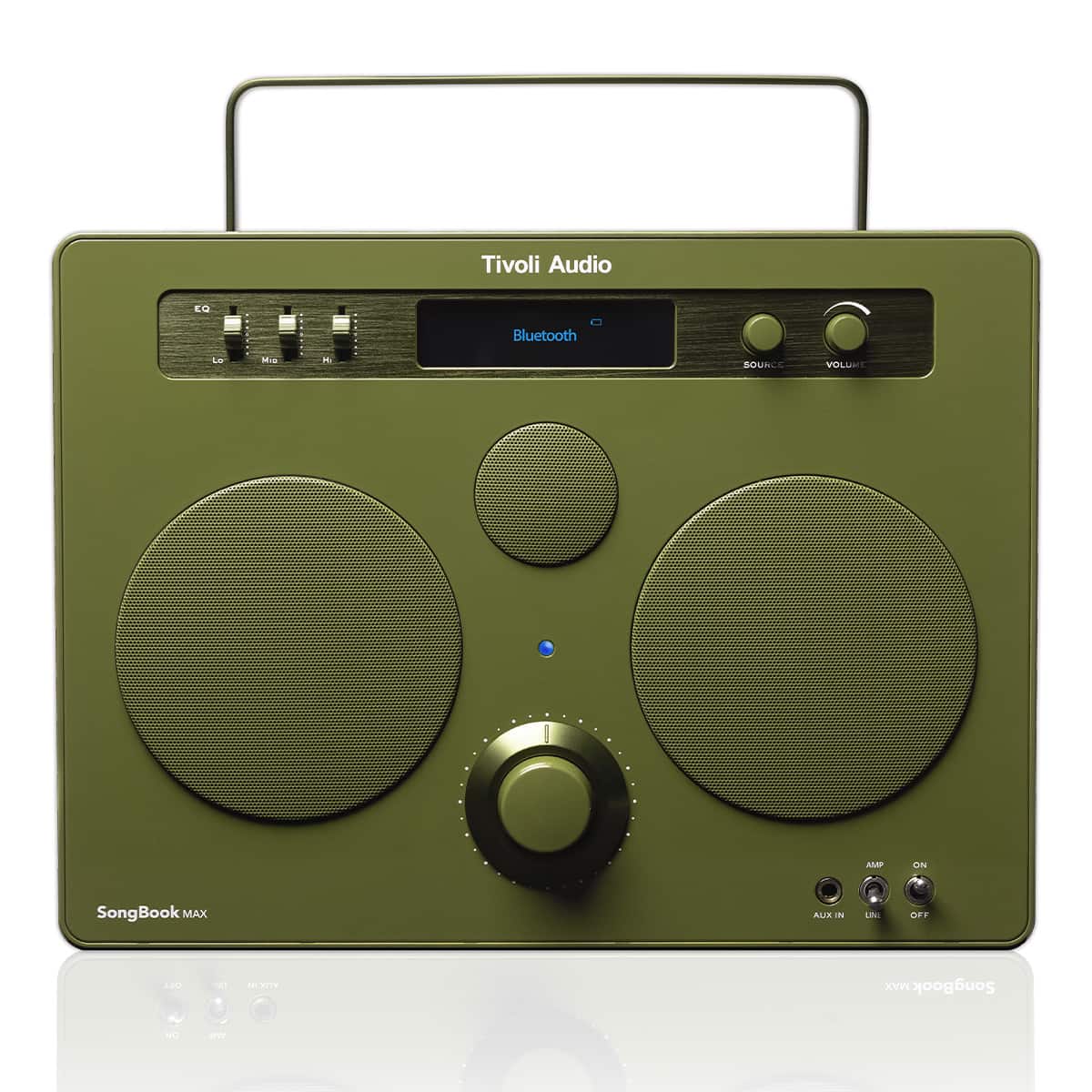
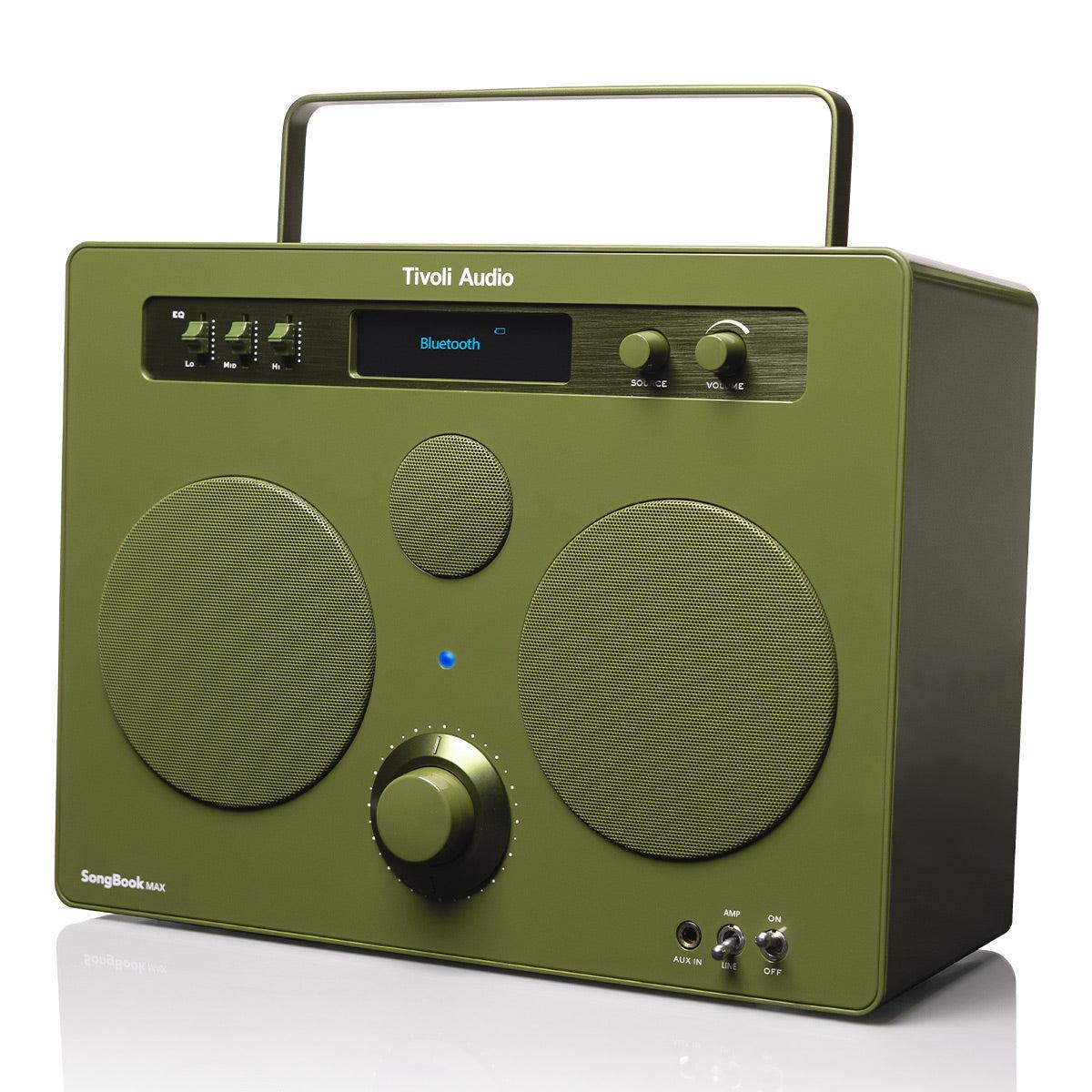
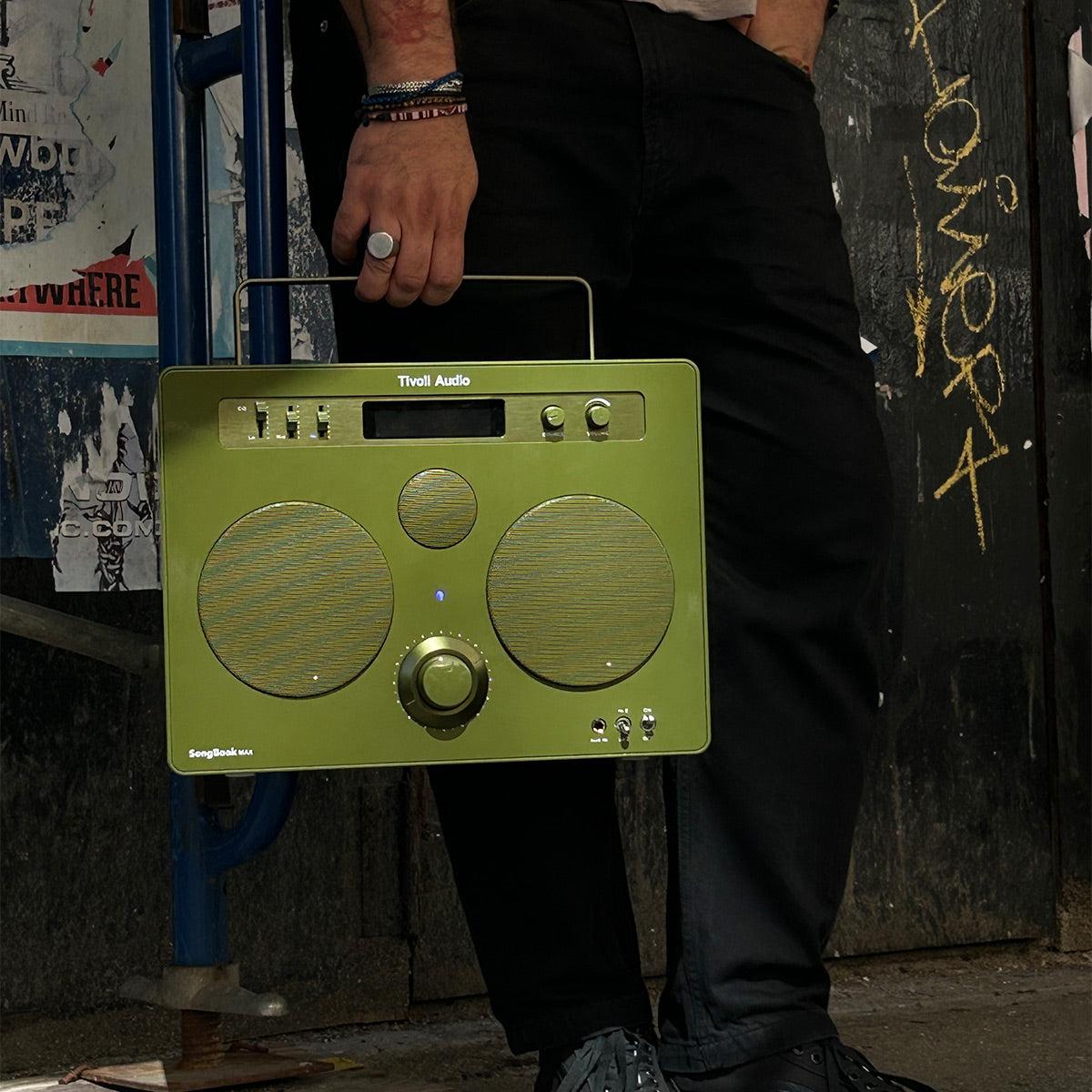
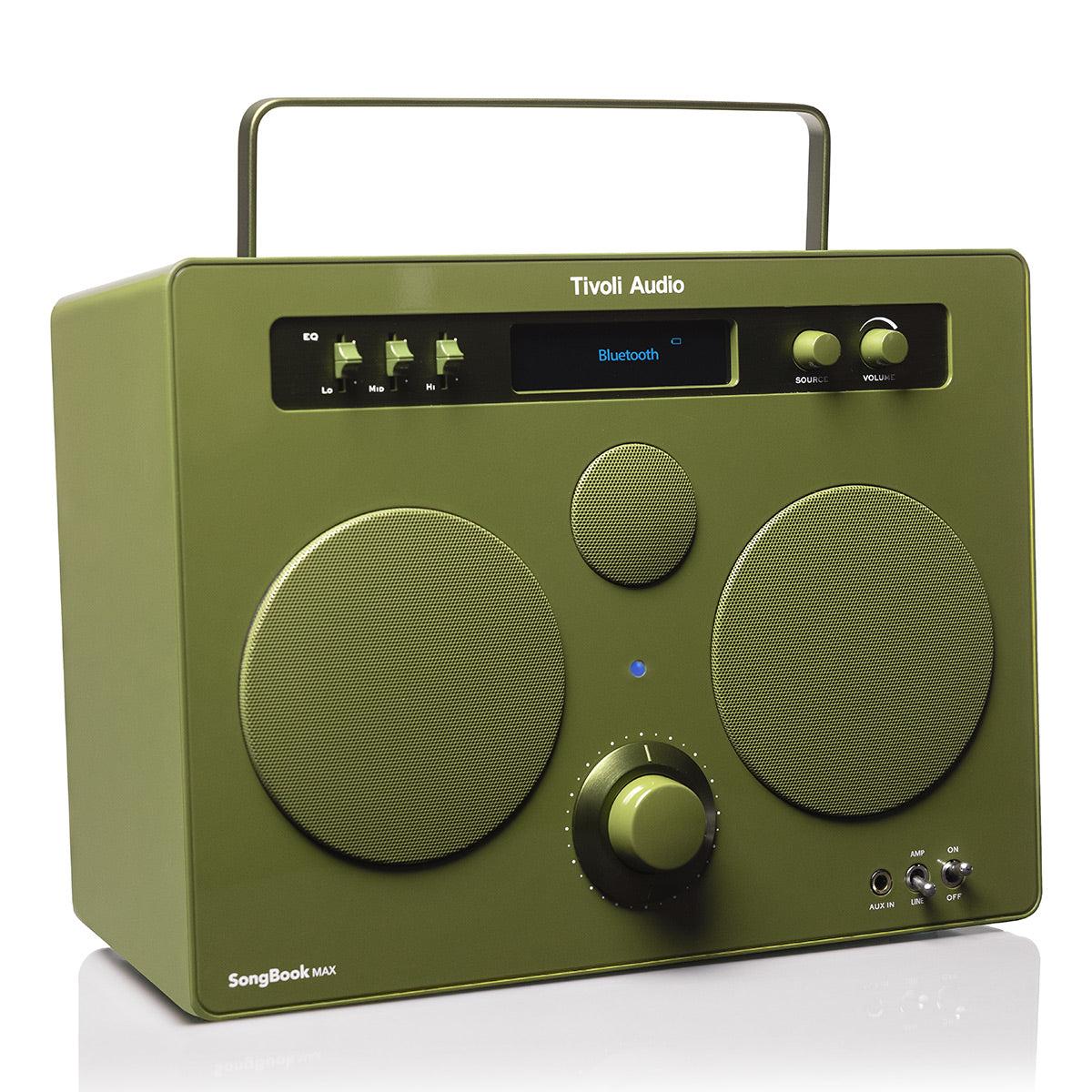
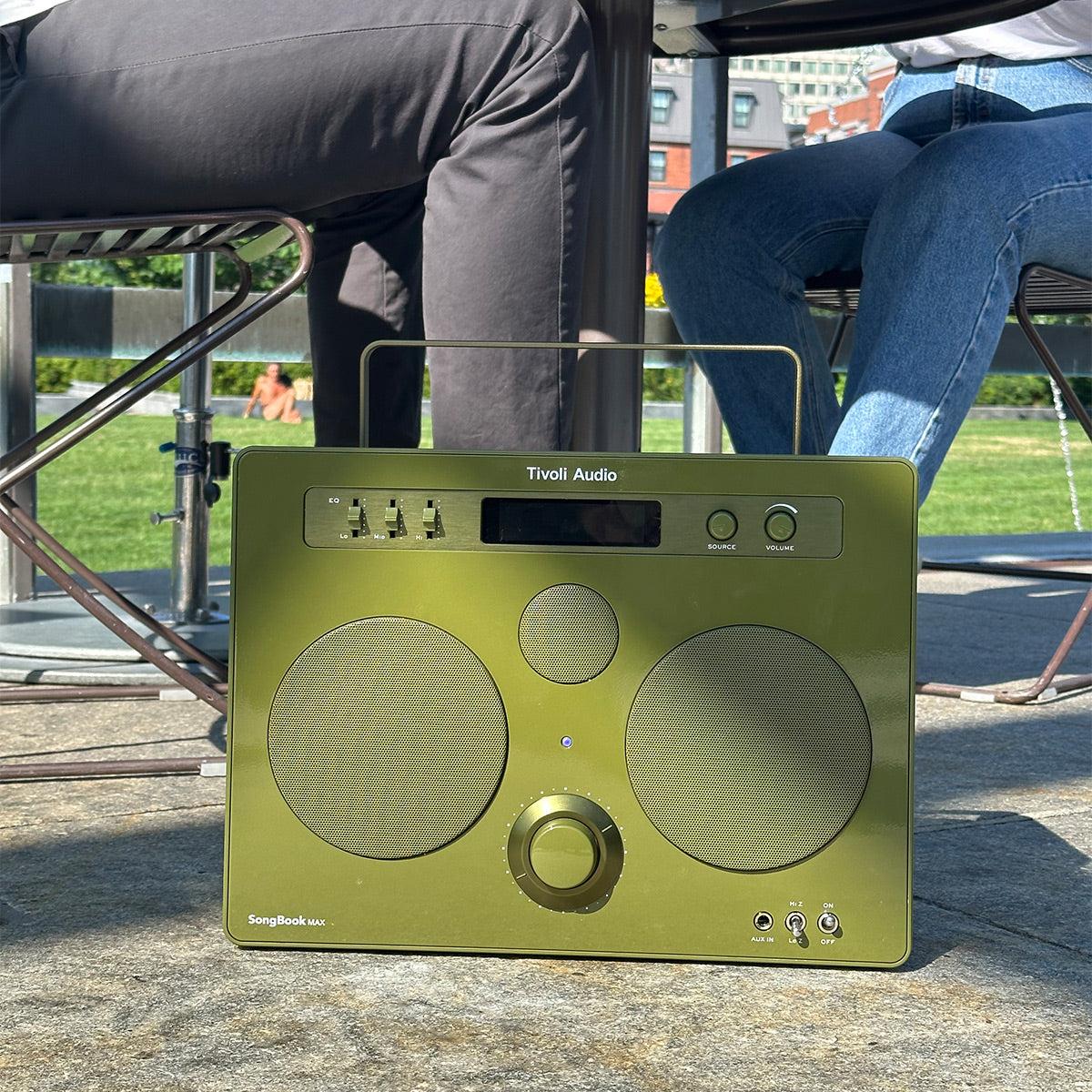
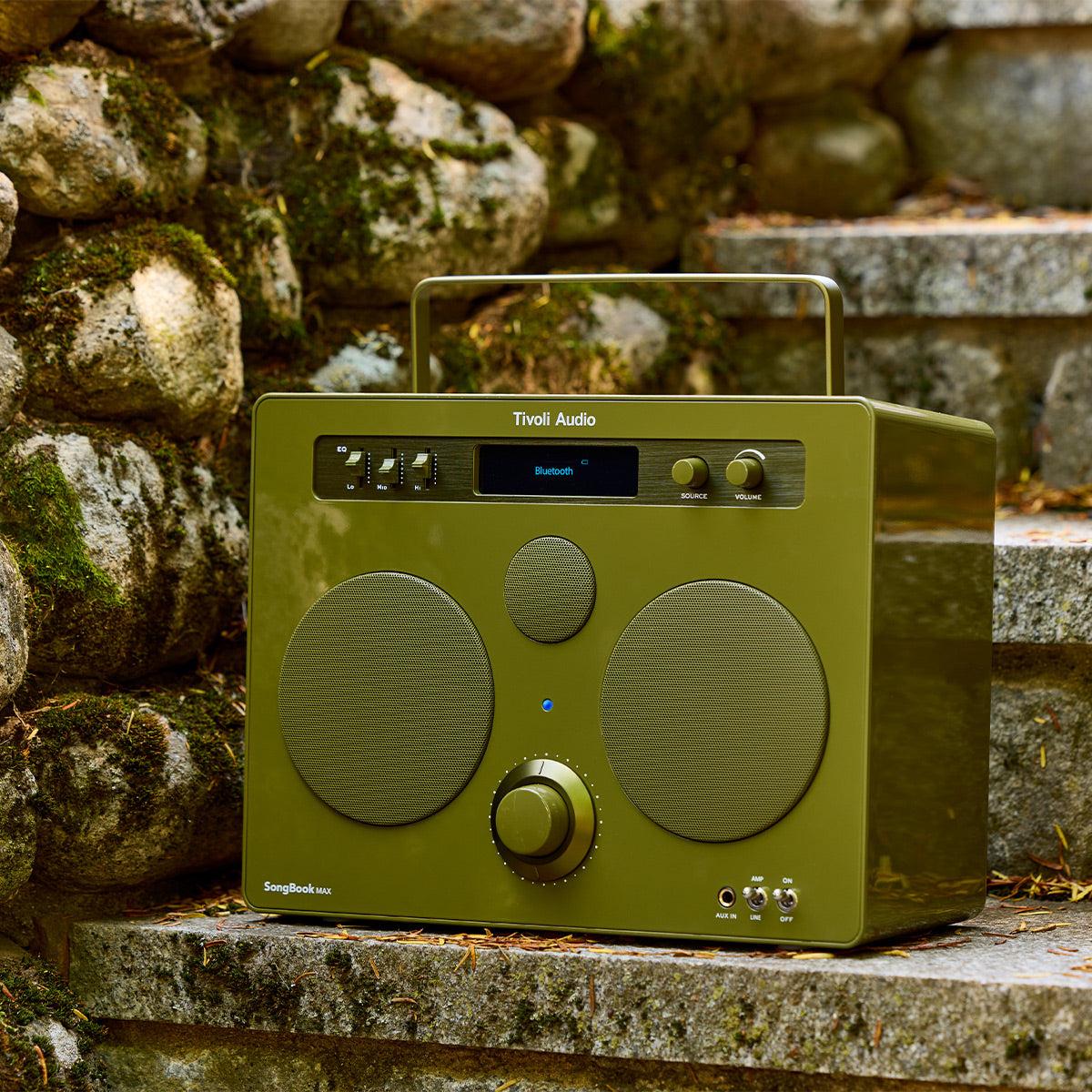
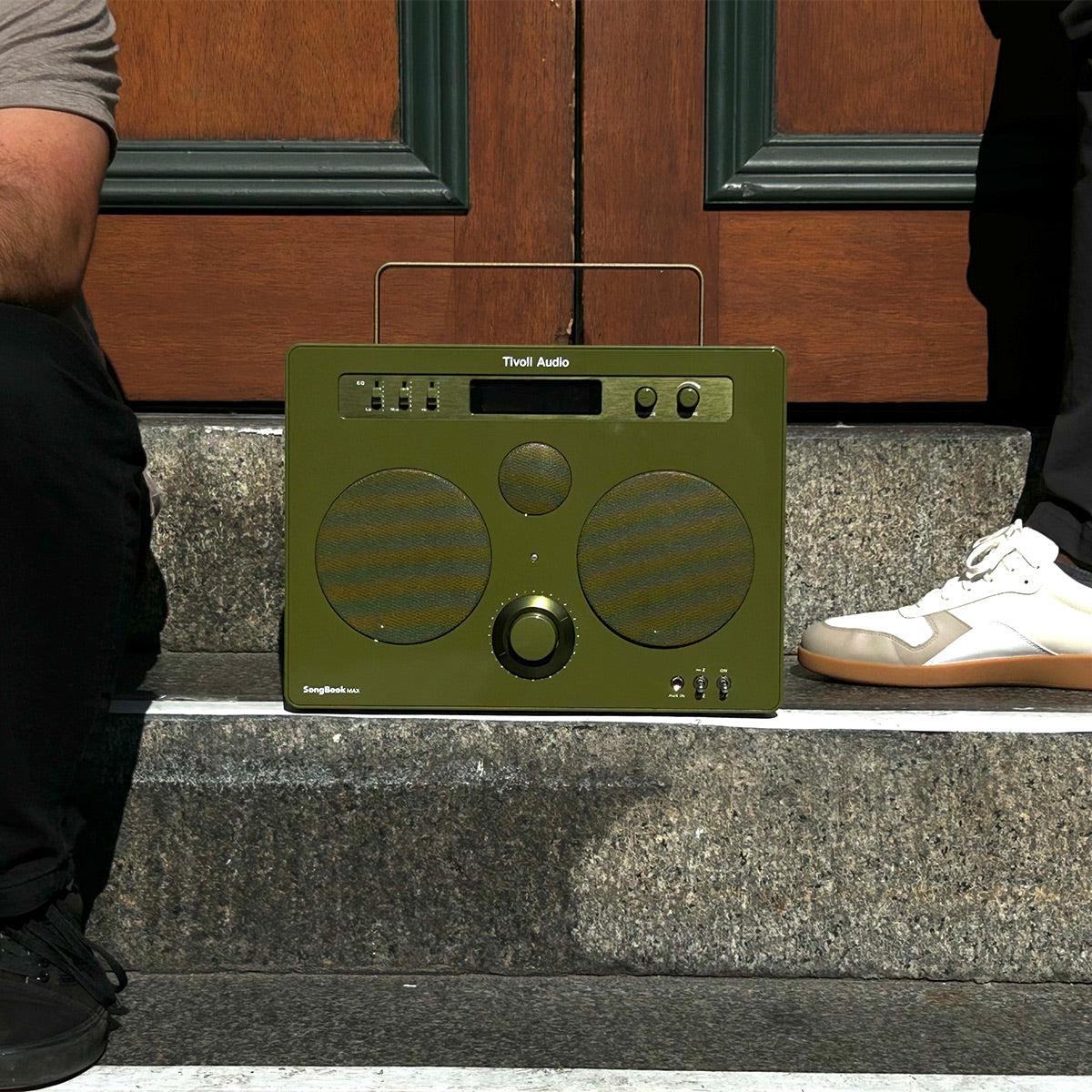
The Tivoli Audio SongBook MAX represents a distinctly different philosophy in portable audio. At first glance, its vintage-inspired design with high-gloss finishes and analog controls might seem like mere nostalgia, but there's serious engineering beneath the retro aesthetic.
The SongBook MAX employs a sophisticated three-driver system: a dedicated 4-inch subwoofer handling low frequencies, a 4-inch midrange driver for vocals and instruments, and a 0.75-inch tweeter for crisp highs. This configuration allows each driver to specialize in its optimal frequency range, resulting in more accurate sound reproduction than speakers that ask fewer drivers to cover wider frequency ranges.
With 50 watts of total power (20W + 20W + 10W), the Tivoli isn't the loudest speaker available, but our research into professional reviews reveals consistently impressive audio detail. Reviewers frequently mention hearing "granular vocal details" and discovering elements in familiar recordings they'd never noticed before. This suggests the speaker excels at midrange clarity—the frequency range where human voices and most instruments reside.
The frequency response spans 40Hz to 20kHz, covering nearly the full range of human hearing. More importantly, the speaker can reach 100 dB at one meter distance, which is loud enough for most indoor spaces and small outdoor gatherings without significant distortion.
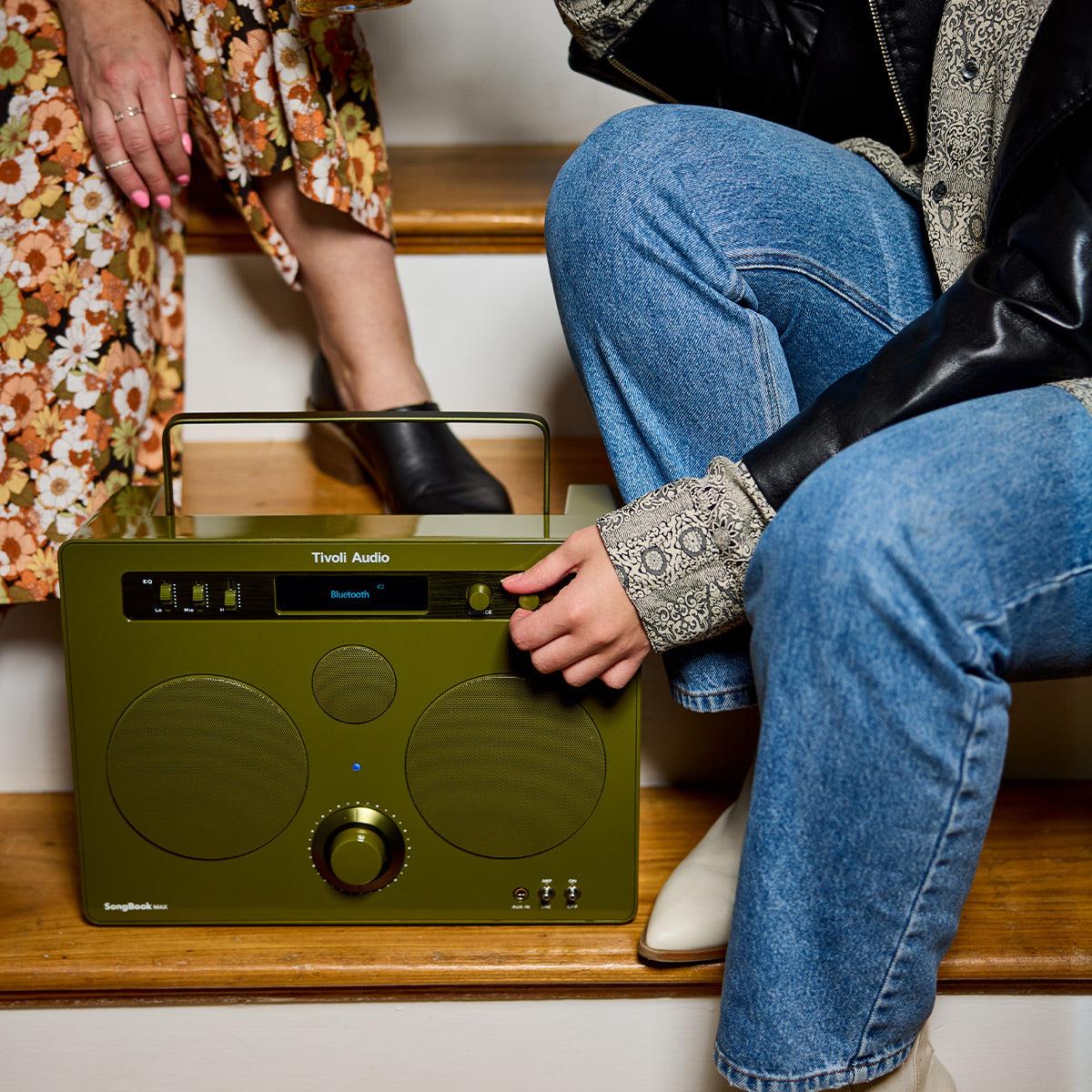
Perhaps the SongBook MAX's most distinctive feature is its analog approach to sound control. Three physical EQ sliders on the front panel adjust Low, Mid, and High frequencies by ±6 dB each. This might seem quaint compared to app-based digital equalizers, but there's real value in immediate, tactile control.
Unlike digital EQ that processes audio through software algorithms, these analog controls adjust the signal before amplification, potentially preserving more of the original audio quality. The ability to quickly adjust bass response when moving from a hard floor to a carpeted room, or boost midrange clarity during conversation, proves remarkably useful in practice.
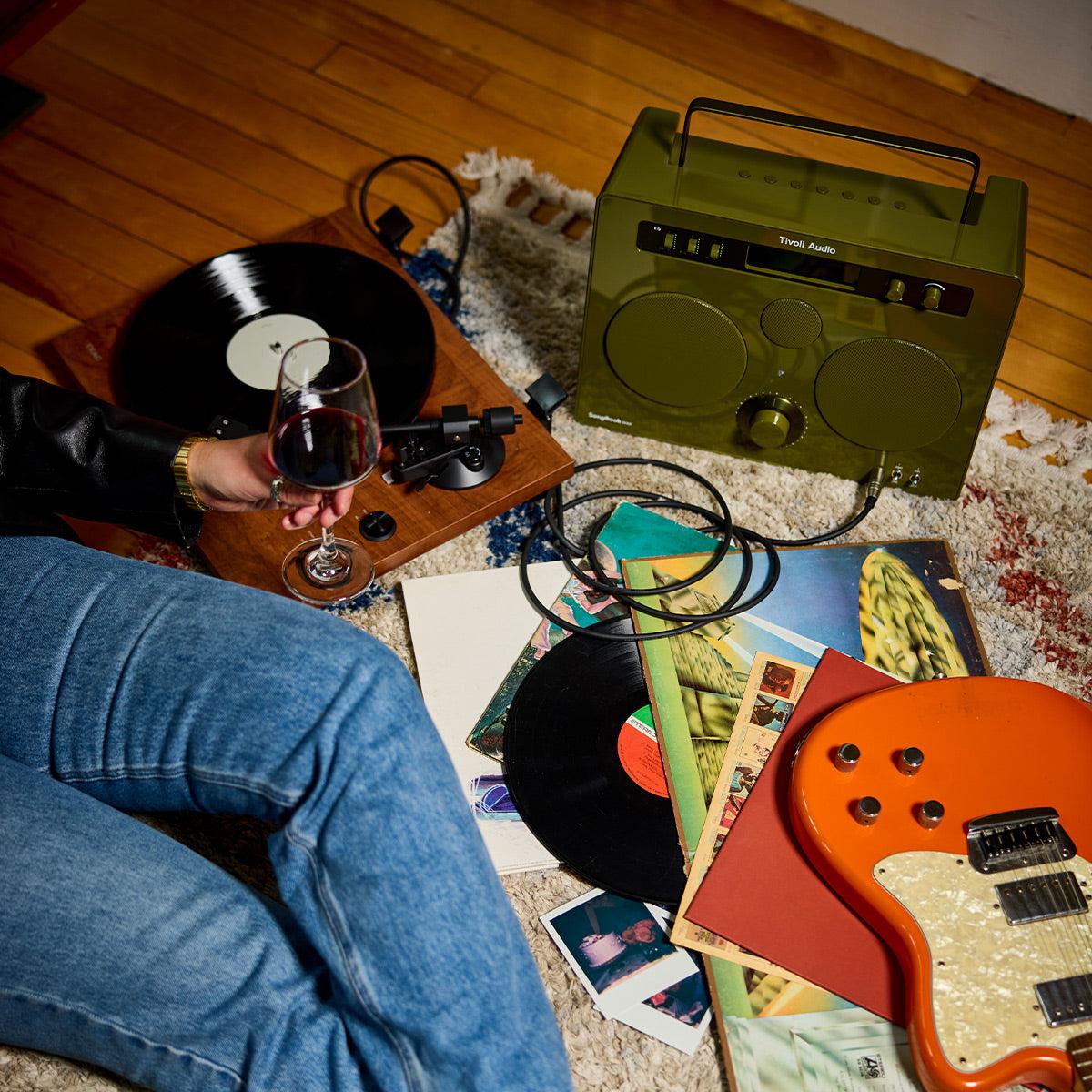
The Tivoli's built-in preamp with selectable impedance settings (Line: 16.4kΩ / Amp: 110kΩ) transforms it from a simple Bluetooth speaker into a versatile audio hub. This allows direct connection of turntables, guitars, keyboards, or other instruments that require signal amplification.
The ¼-inch auxiliary input specifically accommodates professional audio equipment, making the SongBook MAX suitable for small performances, vinyl listening sessions, or as a practice amplifier. This flexibility extends its usefulness far beyond typical Bluetooth speakers.
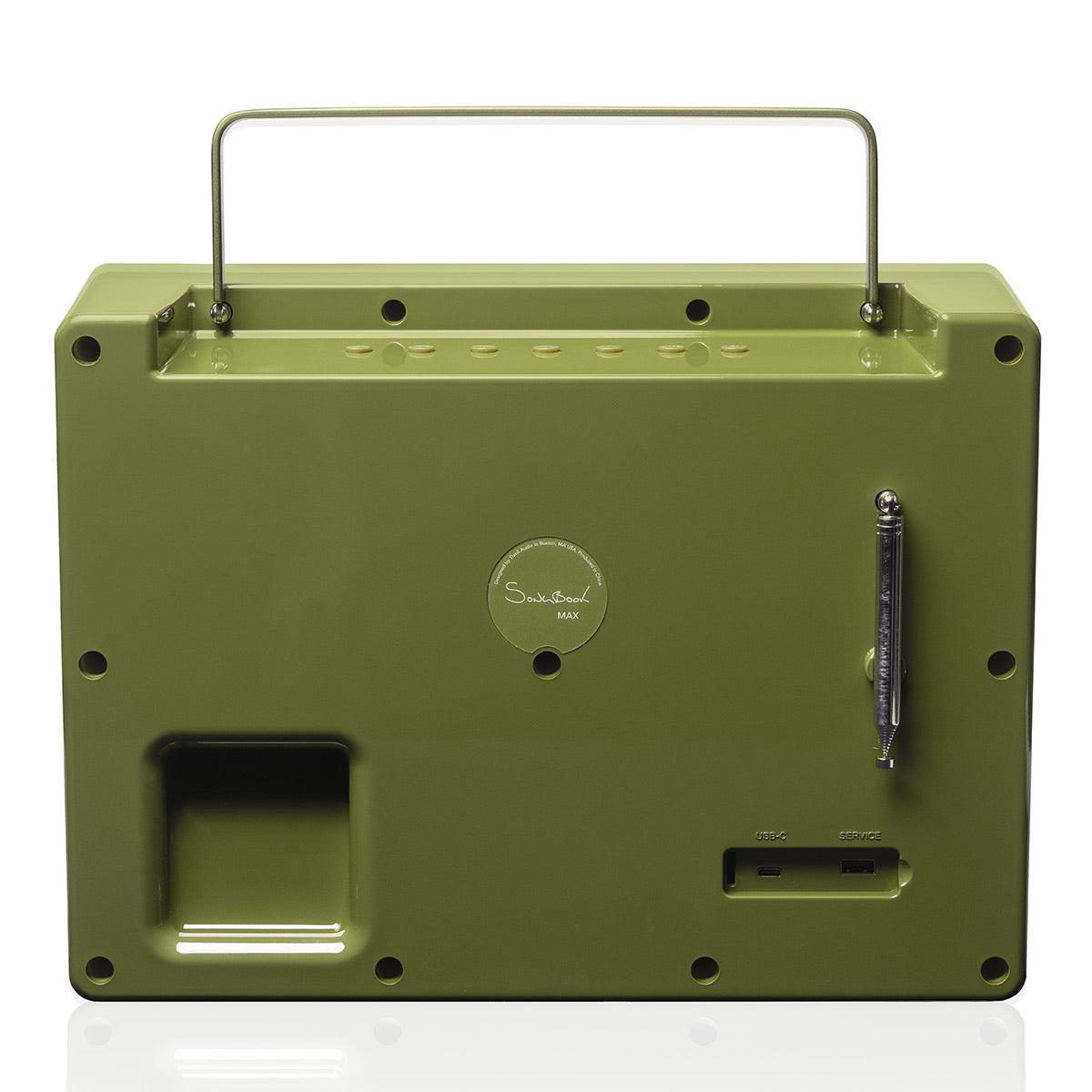
The integrated FM radio with analog tuning might seem anachronistic, but it adds offline entertainment value and can be particularly useful in areas with poor cellular coverage. Five preset stations and an extendable antenna ensure reliable reception for news, music, or emergency broadcasts.
Battery life reaches up to 10 hours, which is respectable for a 50-watt speaker. The USB-C charging supports Power Delivery at multiple voltages (5V/9V/15V), enabling faster charging when compatible adapters are available. While not the longest-lasting portable speaker, the battery performance aligns well with its intended use for smaller, more intimate gatherings.
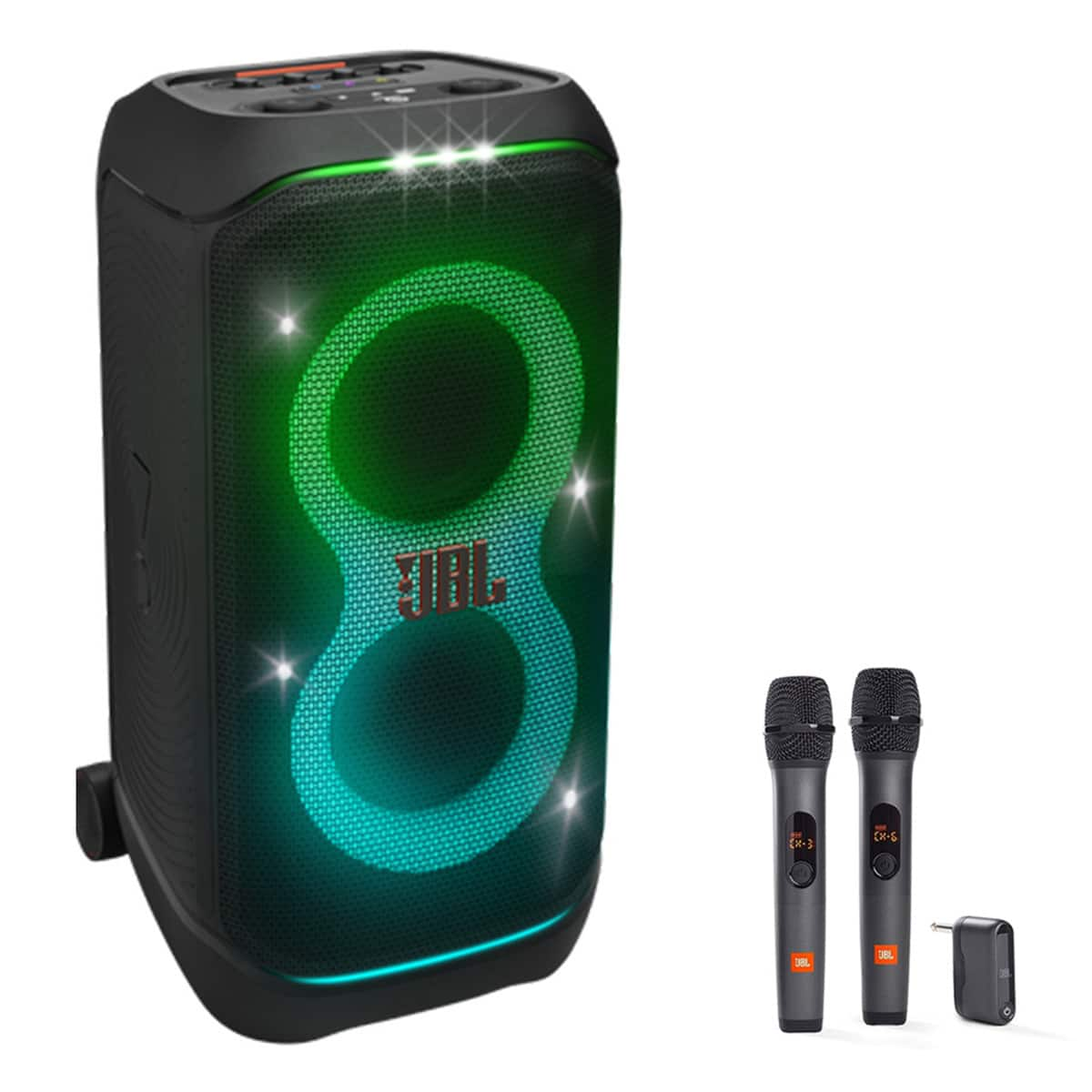
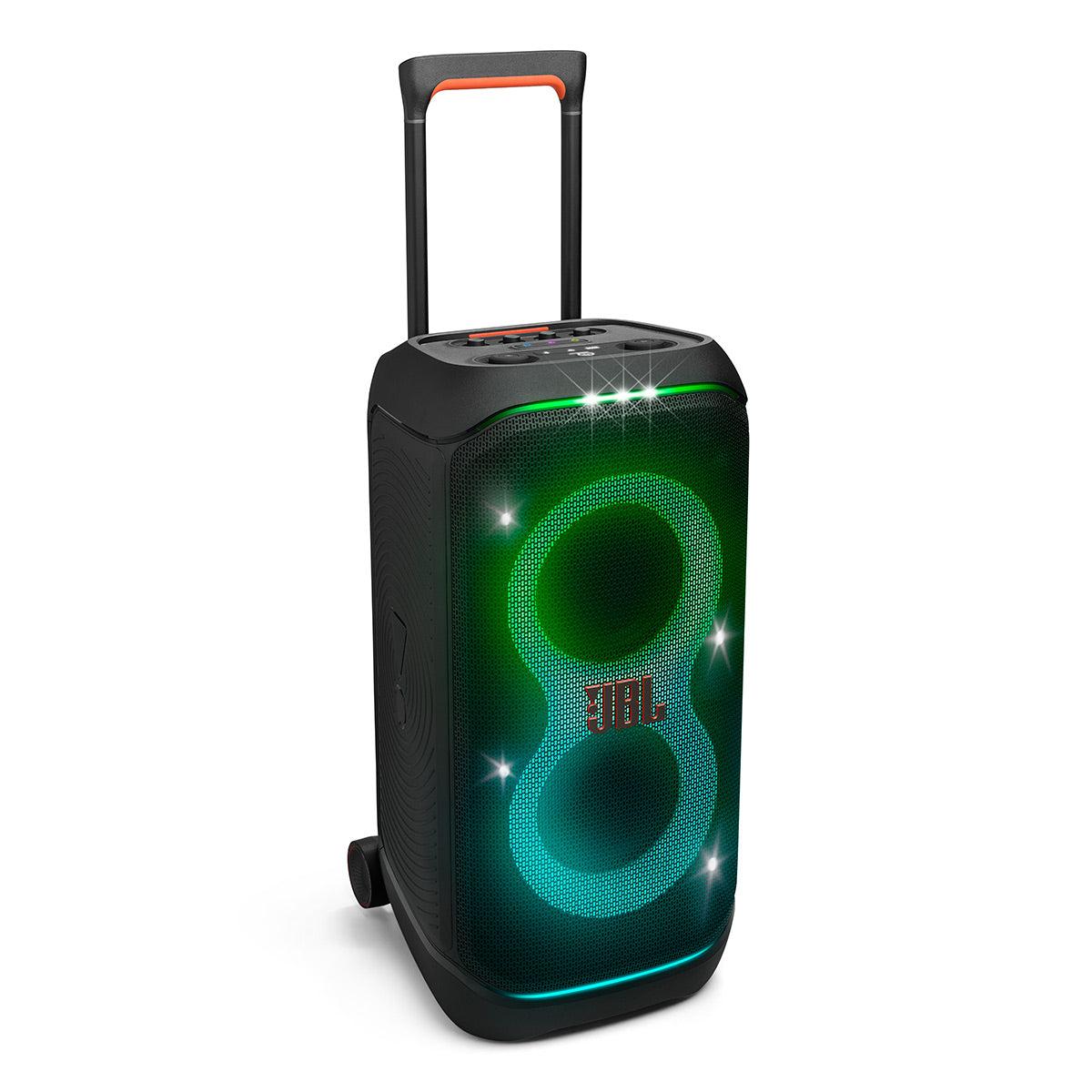
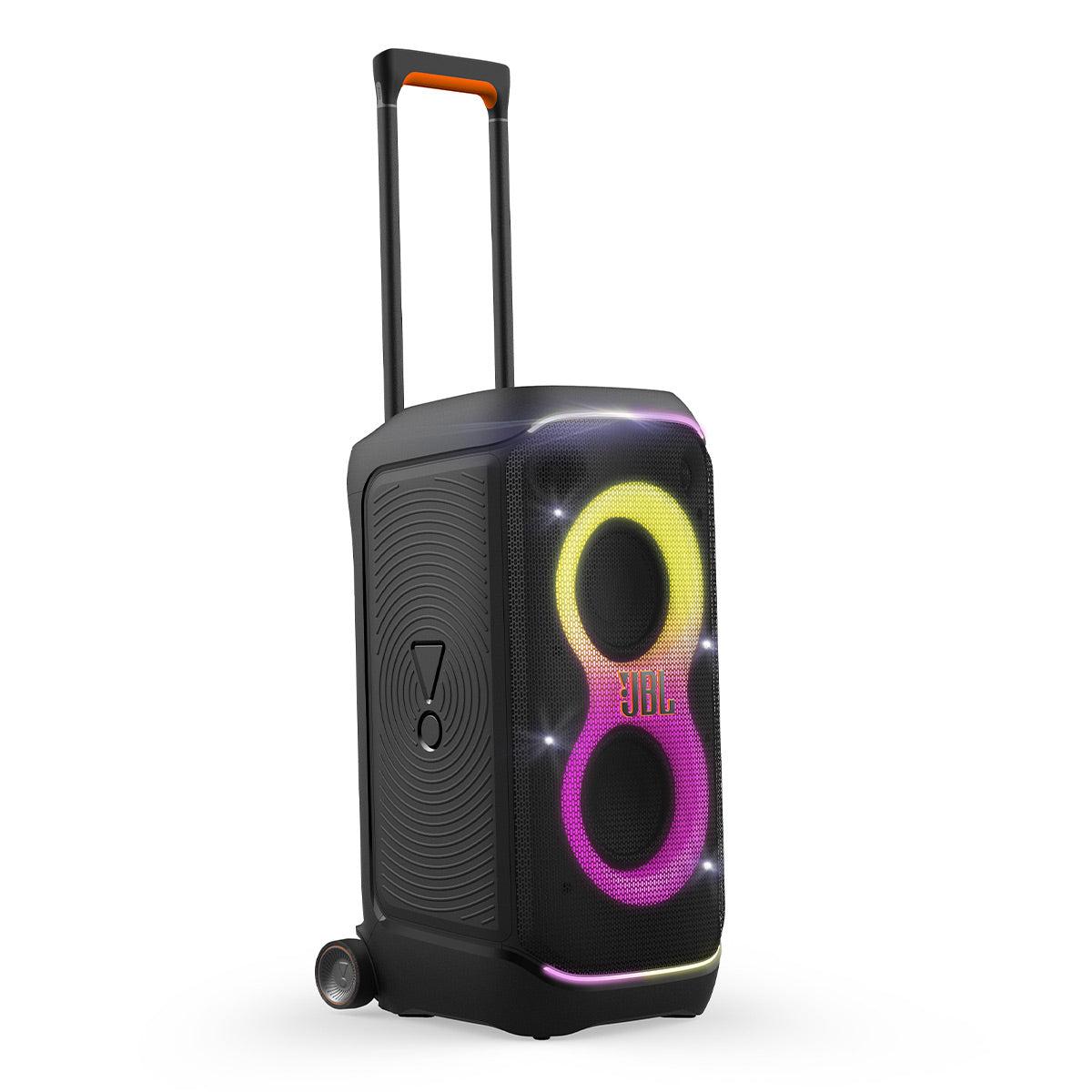
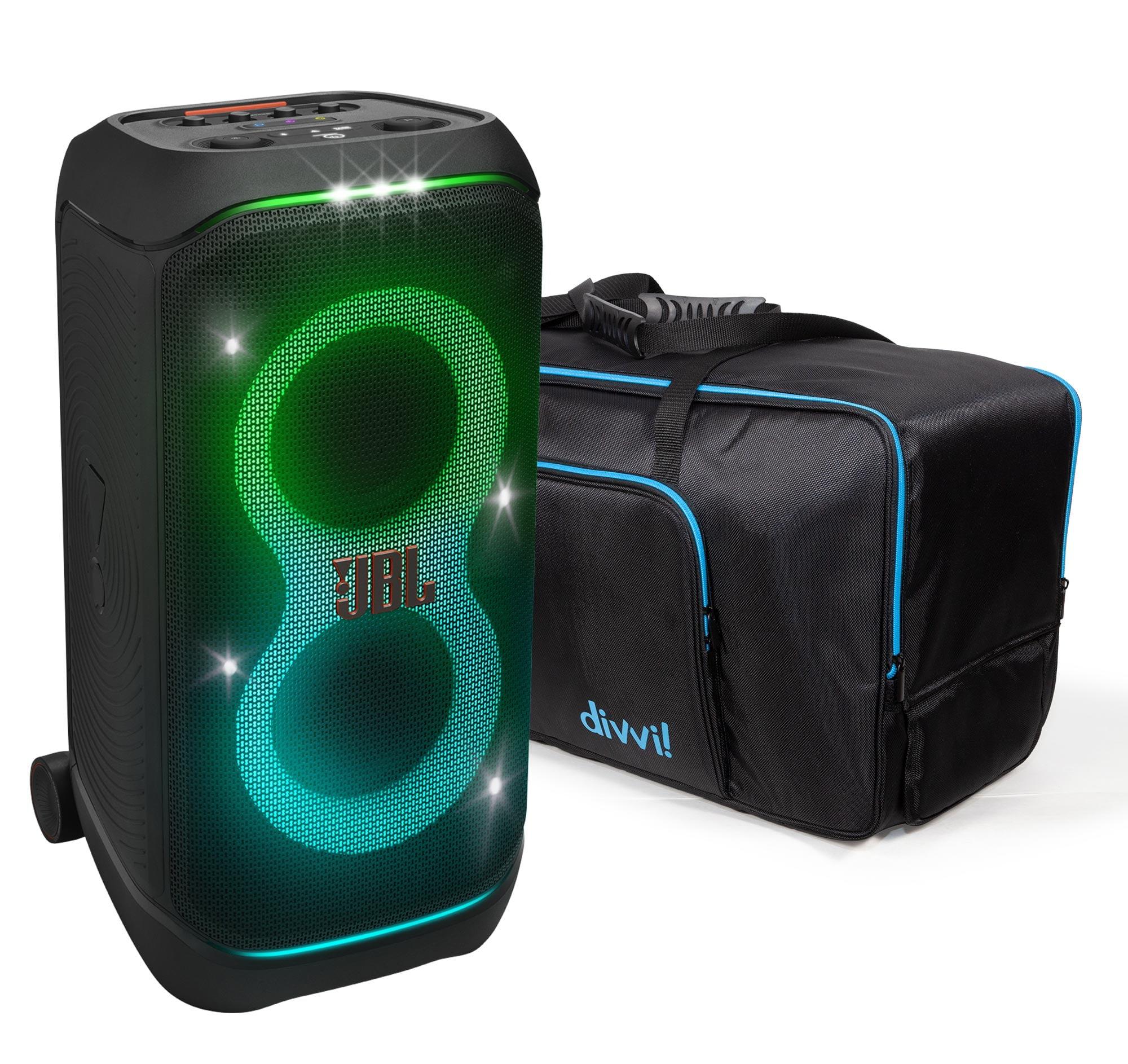
Released in 2024 as an evolution of JBL's popular PartyBox series, the Stage 320 takes a completely different approach, prioritizing maximum volume, visual impact, and crowd entertainment features.
The JBL PartyBox Stage 320 delivers 240 watts of total output—nearly five times the power of the Tivoli. This dramatic difference translates to significantly higher maximum volumes and the ability to energize much larger spaces. JBL claims the Stage 320 can fill tennis court-sized areas outdoors, a capability that becomes evident in user reports of impressive volume levels.
The driver configuration emphasizes bass impact with dual 6.5-inch woofers supported by 1-inch dome tweeters. This setup prioritizes the low-frequency punch that makes electronic music, hip-hop, and pop music feel energetic and engaging. The larger woofers can move more air than smaller drivers, creating the physical sensation of bass that party-goers expect.
However, our analysis of user feedback reveals some limitations at extreme volumes. Several reviewers note compression in the bass range when playing at maximum volume, and some describe the sound as becoming "sharp or buzzy" with high female vocals at very loud levels. This suggests the Stage 320 performs best at moderately high volumes rather than absolute maximum output.
JBL's "AI Sound Boost" represents an interesting approach to optimizing audio performance. This technology analyzes incoming audio signals in real-time, adjusting processing to reduce distortion and enhance bass output based on the content being played. While marketing terms like "AI" should be viewed skeptically, user reports suggest the feature does provide noticeably improved sound quality, particularly for compressed audio sources like streaming music.
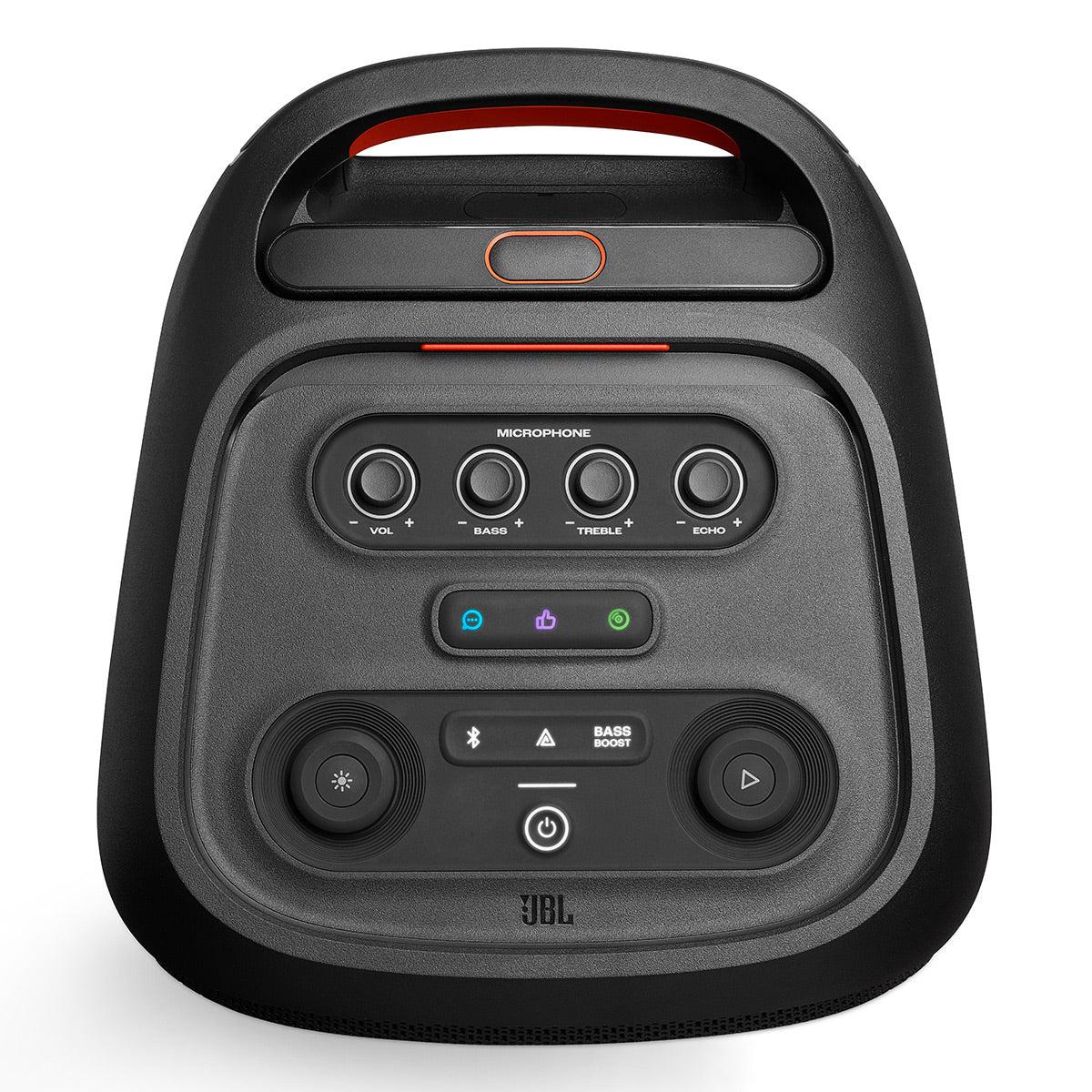
The two-stage bass boost system offers flexibility for different listening environments. Level 1 provides fuller bass response suitable for most situations, while Level 2 adds special emphasis to upper bass frequencies that enhance electronic music's impact. Users report that Level 2 can cause booming in corner placements, indicating the importance of speaker positioning for optimal performance.
The Stage 320 advertises up to 18 hours of battery life, with real-world testing showing even longer performance—up to 23 hours of continuous playback under moderate volume conditions. This exceptional endurance comes from the substantial 68Wh lithium-ion battery pack.
More importantly, the battery is user-swappable, allowing purchase of additional battery packs for extended events. This design addresses a common limitation of portable speakers: the inability to continue playing when the battery dies. A quick 10-minute charge provides approximately 2 hours of playback, making short breaks for partial charging viable during extended events.
However, battery life decreases significantly when using RGB lighting and maximum bass boost settings. Users report approximately 7 hours of runtime under these conditions, which is still respectable for a high-power speaker but important to consider for event planning.
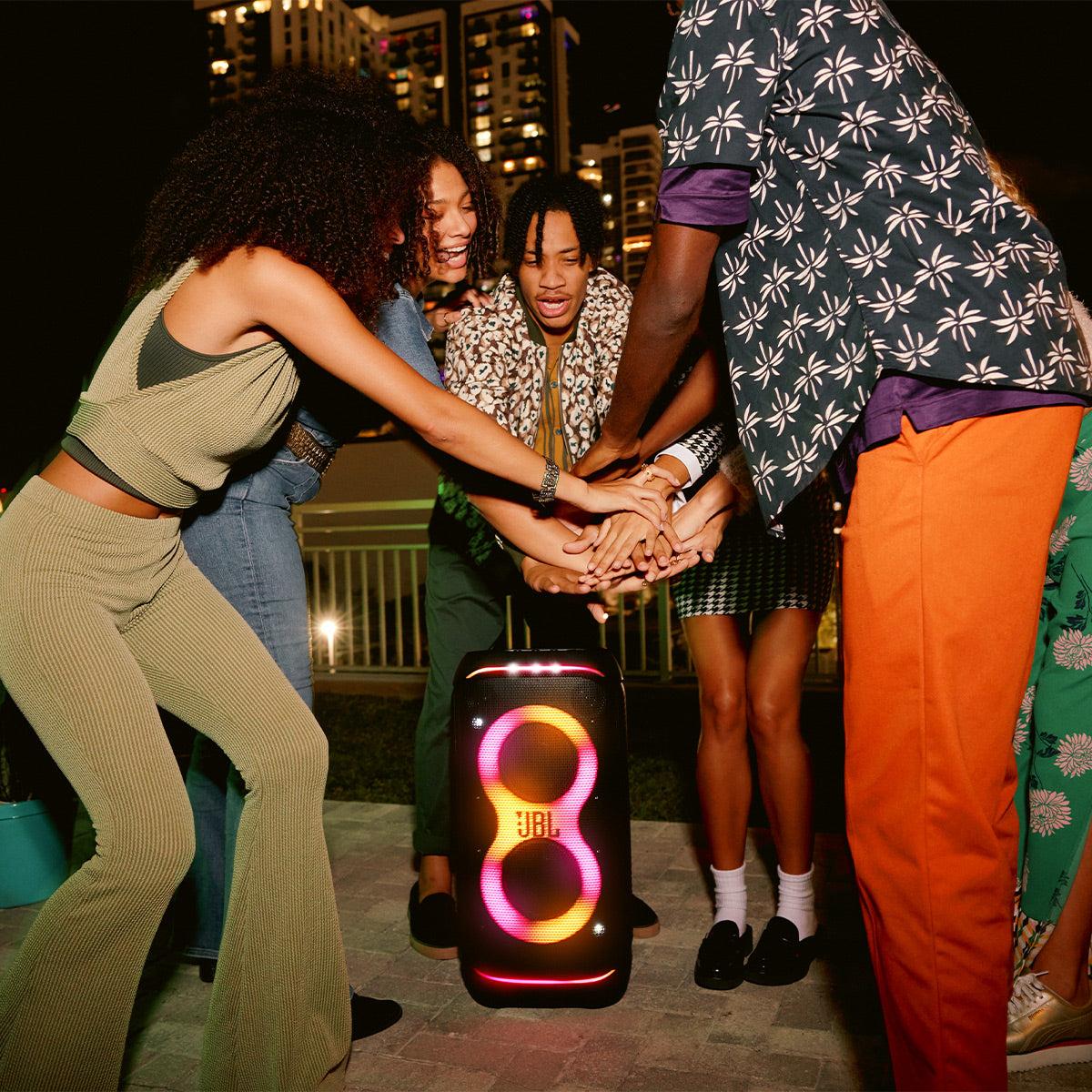
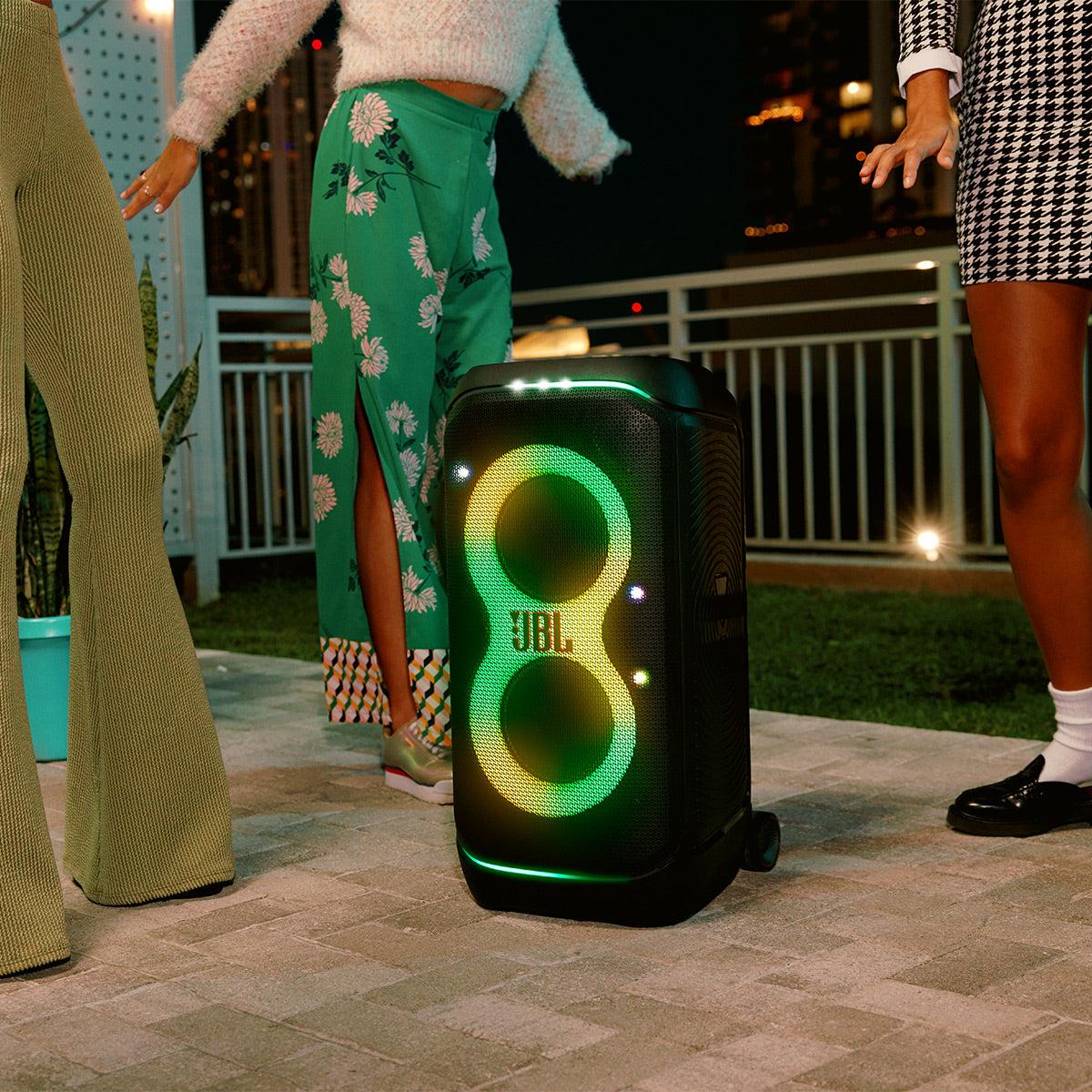
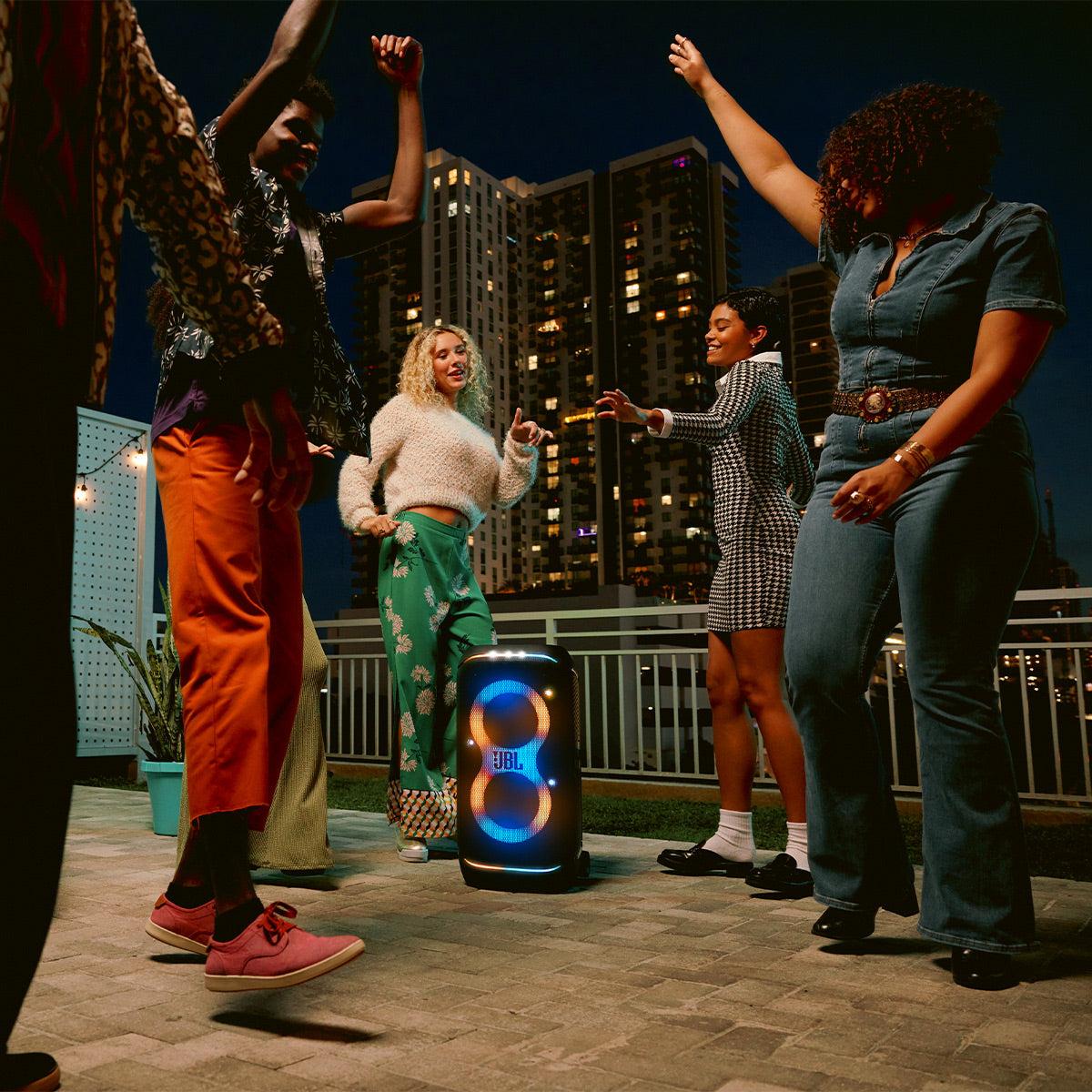
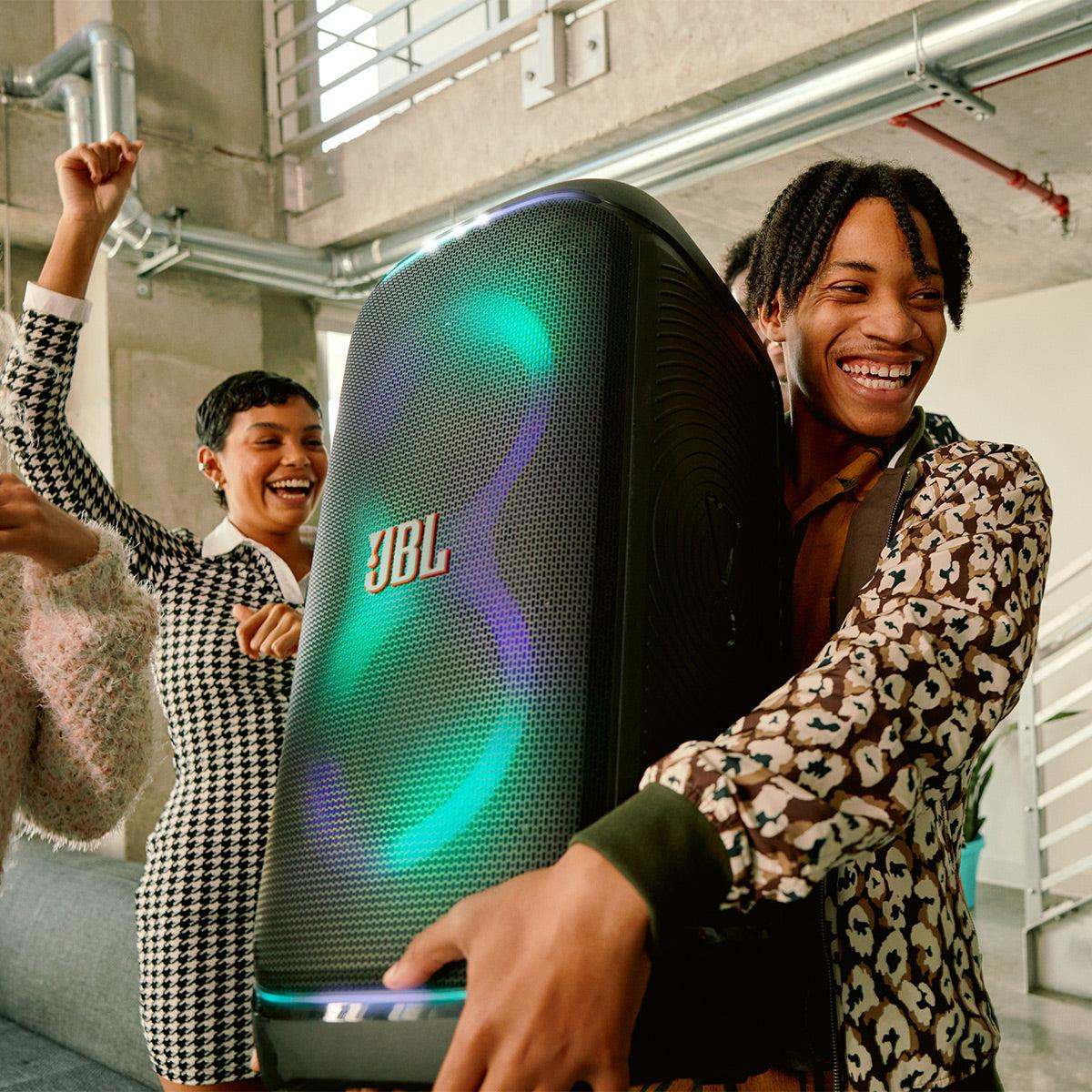
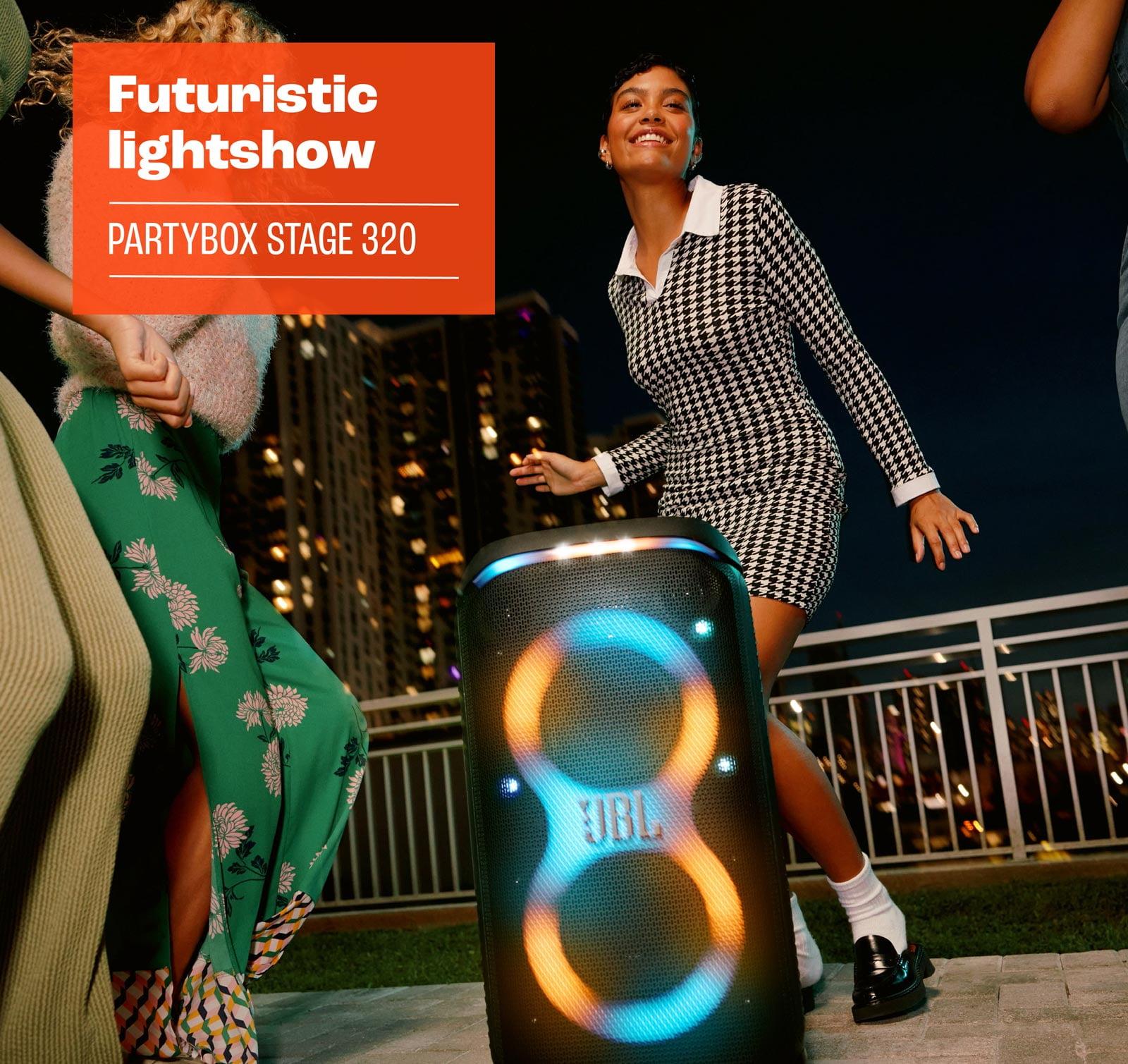
The JBL's RGB lighting system frames the drivers with synchronized light shows including starry effects, light trails, and strobes. While some may dismiss this as gimmicky, the lighting genuinely enhances party atmospheres, particularly in dimmer environments. The lights can be turned off entirely to preserve battery life when visual effects aren't needed.
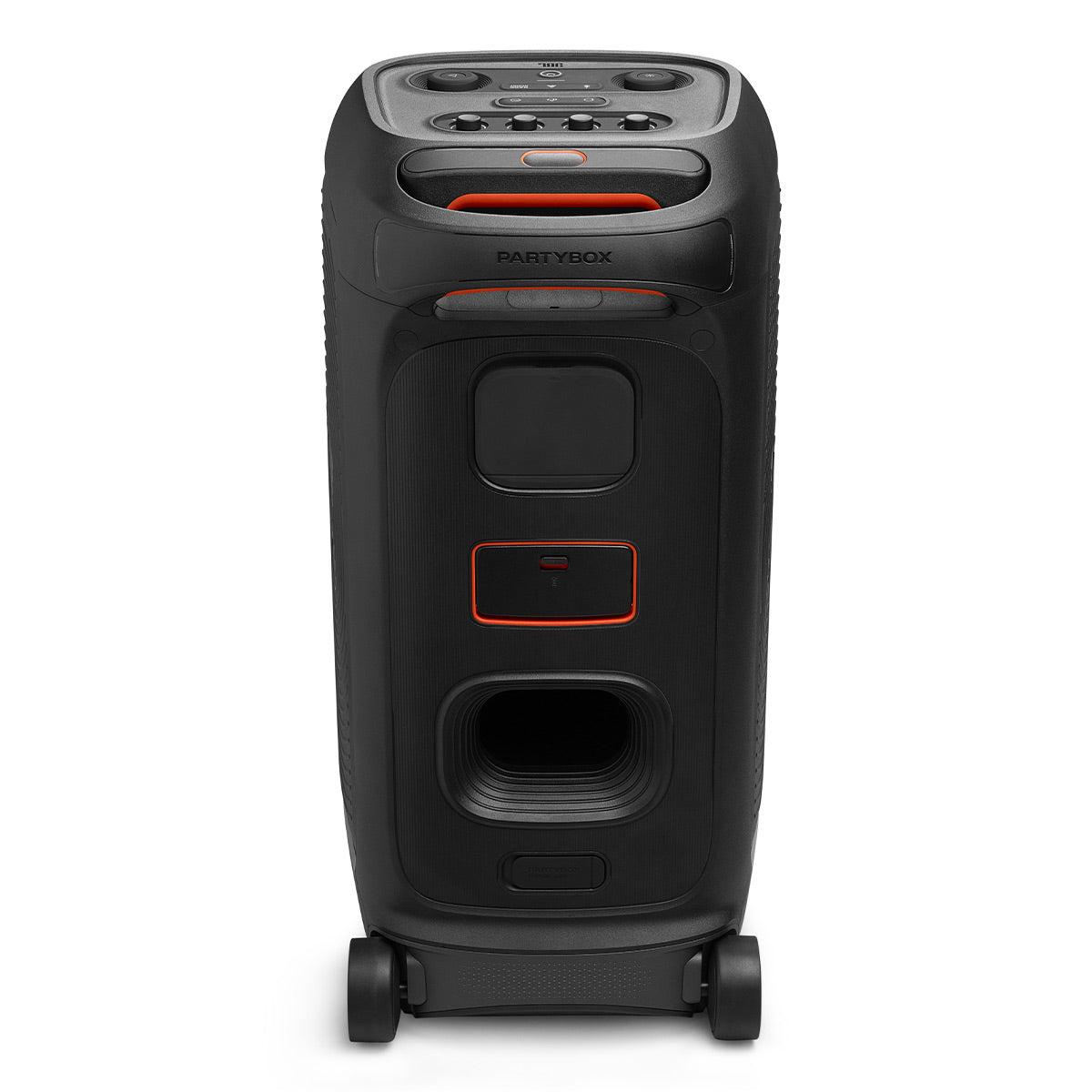
Dual microphone and guitar inputs with independent gain controls make the Stage 320 suitable for karaoke, announcements, or small live performances. The karaoke EQ presets optimize sound specifically for vocal performance, while DJ sound effects and echo controls add entertainment value for interactive events.
The fundamental difference between these speakers becomes clear when examining their performance characteristics. The Tivoli SongBook MAX optimizes for audio quality and detail, while the JBL Stage 320 maximizes volume and bass impact.
Professional reviews consistently praise the Tivoli's sound quality as "outstanding" and "powerful" despite its lower wattage. The three-driver configuration with dedicated frequency ranges allows each component to operate in its optimal range, reducing distortion and improving clarity. The balanced frequency response makes it suitable for various music genres and critical listening applications.
The JBL, conversely, is tuned for impact rather than accuracy. The bass emphasis and higher power output make it exciting for electronic music, pop, and hip-hop, but may not represent acoustic instruments or vocals as naturally as the Tivoli. The sound signature prioritizes energy and excitement over precision.
The power difference becomes crucial for larger gatherings. The Stage 320's 240 watts can maintain clean sound at volume levels that would cause significant distortion in the 50-watt Tivoli. For outdoor events or large indoor spaces, this capability gap is substantial and may determine which speaker is suitable.
The SongBook MAX's 100 dB maximum output works well for indoor spaces, patios, and small outdoor gatherings but lacks the raw power needed for large parties or competing with ambient noise in challenging acoustic environments.
Both speakers show directivity limitations—meaning sound quality varies depending on listening position. The JBL's larger size and multiple drivers create some directional characteristics, with clearest sound directly in front of the speaker. The Tivoli's more compact design offers slightly better omnidirectional performance but still benefits from central positioning.
Neither speaker produces true stereo sound despite multiple drivers, which is common in portable speakers where driver spacing is insufficient for proper stereo separation. Both create a mono image that can sound wide and immersive but lacks the spatial precision of separate left and right channels.
For home theater applications, both speakers present interesting possibilities and limitations. The Tivoli SongBook MAX's superior midrange clarity and balanced frequency response make it potentially useful as a temporary center channel speaker for dialog enhancement, though its mono output limits surround sound applications.
The JBL PartyBox Stage 320's powerful bass output could theoretically supplement a home theater system's low-frequency performance, but its party-oriented tuning may not integrate well with more neutral home theater speakers. The lack of precise calibration options limits its usefulness in critical listening environments.
Both speakers' Bluetooth connectivity introduces latency (audio delay) that makes them unsuitable for real-time video applications unless the display device can compensate with audio delay adjustments. For music-only applications in home entertainment spaces, either could serve as powerful wireless speakers, with choice depending on room size and aesthetic preferences.
At the time of writing, these speakers occupy similar price ranges in the premium portable category, but their value propositions differ significantly based on intended use.
The SongBook MAX targets users who prioritize audio quality, aesthetic appeal, and versatile connectivity over maximum volume. Its strengths emerge in scenarios requiring:
Critical Music Listening: The superior midrange clarity and balanced frequency response make familiar recordings reveal new details. Users who appreciate audio quality will find the Tivoli more satisfying for attentive listening sessions.
Vintage Audio Integration: The built-in preamp and professional-grade auxiliary input make it exceptional for vinyl record playback or acoustic instrument amplification. Musicians and vinyl enthusiasts gain functionality unavailable in most portable speakers.
Intimate Gatherings: The combination of excellent sound quality and moderate volume works perfectly for dinner parties, book clubs, or small social gatherings where conversation remains important.
Design-Conscious Environments: The vintage-inspired aesthetic and premium build quality make it an attractive permanent addition to living spaces, offices, or creative studios.
The Stage 320 excels in scenarios demanding maximum volume, visual impact, and crowd entertainment features:
Large Outdoor Events: The substantial power output and weather resistance handle pool parties, barbecues, and outdoor gatherings where ambient noise requires higher volumes.
Interactive Entertainment: Microphone inputs, karaoke features, and RGB lighting create engaging experiences for parties, family gatherings, and social events focused on participation rather than passive listening.
Extended Runtime Requirements: The swappable battery system and exceptional battery life make it suitable for all-day events, camping trips, or situations where charging opportunities are limited.
Multi-Speaker Applications: Auracast connectivity allows wireless chaining with compatible JBL speakers for even larger coverage areas.
Both speakers incorporate recent technological advances while taking different approaches to user interaction. The Tivoli's analog control philosophy runs counter to industry trends toward app-based interfaces, but offers immediate responsiveness and reliability that many users prefer.
The JBL's AI Sound Boost and Auracast connectivity represent more conventional approaches to modern speaker technology, offering computational audio enhancement and wireless networking capabilities that expand functionality.
Since their 2024 releases, both speakers have maintained relevance through build quality and feature sets that don't rely heavily on software updates. This suggests both products were designed with longevity in mind rather than planned obsolescence through rapidly changing app requirements.
The choice between these speakers ultimately depends on identifying your primary use case and performance priorities. Neither speaker is objectively superior; each excels in its intended domain while accepting compromises in others.
Choose the Tivoli Audio SongBook MAX if you value audio quality over maximum volume, appreciate tactile analog controls, need turntable or instrument connectivity, or want a speaker that enhances rather than dominates its environment. Its premium build quality and timeless design make it suitable for users who view audio equipment as long-term investments rather than disposable technology.
Choose the JBL PartyBox Stage 320 if maximum volume, extended battery life, party features, or multi-speaker capability are priorities. Its substantial power output and entertainment features make it ideal for users who regularly host larger gatherings or need a speaker capable of energizing challenging acoustic environments.
Both speakers represent thoughtful approaches to portable audio, with engineering decisions that support their intended use cases. The Tivoli elevates smaller-scale listening experiences through superior audio quality and versatile connectivity, while the JBL powers larger gatherings through raw capability and engaging entertainment features. Understanding which scenario better matches your needs makes the choice clear, ensuring satisfaction with either exceptional speaker.
| Tivoli Audio SongBook MAX | JBL PartyBox Stage 320 |
|---|---|
| Power Output - Determines maximum volume and room coverage | |
| 50W total (balanced 3-driver system) | 240W total (nearly 5x more powerful for large spaces) |
| Audio Philosophy - Different approaches to sound reproduction | |
| Premium quality focus with audiophile detail | Party-optimized with bass emphasis and high volume |
| Driver Configuration - How sound is produced across frequency ranges | |
| 3 dedicated drivers: 4" sub, 4" mid, 0.75" tweeter | Multiple drivers with dual 6.5" woofers for bass impact |
| EQ Control - How you adjust sound to your preference | |
| Physical analog sliders (Low/Mid/High ±6dB each) | App-based 5-band EQ with presets and AI enhancement |
| Battery Life - Runtime for extended use | |
| Up to 10 hours with USB-C fast charging | Up to 18 hours with swappable battery design |
| Portability - Ease of transport and setup | |
| 11.5 lbs with carry handle (truly portable) | 16.5 kg with wheels and telescopic handle (party setup) |
| Connectivity Options - Input flexibility beyond Bluetooth | |
| Built-in preamp, ¼" aux, FM radio with analog tuning | Dual mic/guitar inputs, Auracast multi-speaker chaining |
| Special Features - Unique capabilities that set each apart | |
| Turntable/instrument preamp, vintage analog controls | RGB light show, karaoke mode, DJ effects |
| Build Quality - Durability and weather resistance | |
| Premium materials, IPX4 splash resistance, vintage aesthetics | IPX4 splash resistance, party-focused design with LED accents |
| Ideal Use Cases - When each speaker performs best | |
| Critical listening, vinyl playback, intimate gatherings, home use | Large parties, outdoor events, karaoke, extended runtime needs |
The JBL PartyBox Stage 320 is significantly louder with 240W of power compared to the Tivoli Audio SongBook MAX's 50W output. The JBL can fill tennis court-sized outdoor spaces, while the Tivoli is better suited for indoor rooms and small gatherings.
The Tivoli Audio SongBook MAX focuses on premium audio quality with vintage-inspired design and analog controls, while the JBL PartyBox Stage 320 prioritizes maximum volume, RGB lighting effects, and party features. The Tivoli targets audiophiles and intimate listening, whereas the JBL is designed for large gatherings and events.
The Tivoli Audio SongBook MAX delivers superior sound quality with its dedicated 3-driver system and balanced frequency response. Professional reviews consistently praise its audio detail and vocal clarity. The JBL PartyBox Stage 320 emphasizes bass impact and volume over precision, making it better for party atmospheres than critical listening.
The JBL PartyBox Stage 320 offers longer battery life with up to 18 hours of playback and features a swappable battery design for extended use. The Tivoli Audio SongBook MAX provides up to 10 hours of battery life with USB-C fast charging. For all-day events, the JBL has a clear advantage.
The JBL PartyBox Stage 320 is far superior for outdoor parties due to its 240W power output, weather-resistant design, RGB lighting system, and microphone inputs for karaoke. The Tivoli Audio SongBook MAX works for small outdoor gatherings but lacks the volume and party features needed for larger events.
The Tivoli Audio SongBook MAX excels at instrument connectivity with its built-in preamp and ¼-inch auxiliary input designed for turntables, guitars, and keyboards. The JBL PartyBox Stage 320 offers dual microphone and guitar inputs with gain controls, making it suitable for karaoke and live performances but without the preamp functionality.
The Tivoli Audio SongBook MAX is more truly portable at 11.5 pounds with a simple carry handle. The JBL PartyBox Stage 320 weighs 36 pounds and requires wheels and a telescopic handle for transport, making it better suited for stationary party setups than frequent movement.
Neither speaker is ideal for home theater use since both output mono sound rather than stereo. The Tivoli Audio SongBook MAX could serve as a temporary center channel for dialog enhancement due to its superior midrange clarity, while the JBL PartyBox Stage 320 might supplement bass but would likely overpower more neutral home theater speakers.
Value depends on your needs: the JBL PartyBox Stage 320 offers more watts per dollar and includes RGB lighting, multiple inputs, and swappable batteries for party use. The Tivoli Audio SongBook MAX provides premium build quality, superior audio fidelity, and versatile connectivity for users prioritizing sound quality over raw volume.
The Tivoli Audio SongBook MAX features analog EQ sliders, FM radio, and a built-in preamp for vinyl and instruments. The JBL PartyBox Stage 320 includes synchronized RGB lighting, AI Sound Boost technology, karaoke mode, and Auracast for wireless speaker chaining. Each speaker's features align with its intended use case.
The Tivoli Audio SongBook MAX is ideal for intimate gatherings where conversation is important, offering excellent sound quality at moderate volumes with elegant vintage styling. The JBL PartyBox Stage 320 would likely be too powerful and visually dominant for small, conversation-focused gatherings.
The Tivoli Audio SongBook MAX operates entirely without an app using physical analog controls for all functions including EQ adjustment and radio tuning. The JBL PartyBox Stage 320 has basic physical controls but requires the JBL PartyBox app for advanced EQ settings, light customization, and many features, making the Tivoli more user-friendly for those preferring simple operation.
We've done our best to create useful and informative comparisons to help you decide what product to buy. Our research uses advanced automated methods to create this comparison and perfection is not possible - please contact us for corrections or questions. These are the sites we've researched in the creation of this article: tivoliaudio.com - tivoliaudio.eu - whathifi.com - manofmany.com - tivoliaudio.com - versus.com - ecoustics.com - tivoliaudio.eu - versus.com - boomboxery.com - tivoliaudio.com - tivoliaudio.com - gearpatrol.com - bestbuy.com - crutchfield.com - techradar.com - youtube.com - target.com - gearpatrol.com - wallpaper.com - hawthornestereo.com - tivoliaudio.com - stereoguide.com - soundguys.com - rtings.com - soundguys.com - soundguys.com - rtings.com - jbl.com - youtube.com - youtube.com - youtube.com - youtube.com - rtings.com - 9to5toys.com - versus.com - cdw.com - jbl.com - projectorscreenstore.com - projectorscreen.com - ro.harmanaudio.com - jbl.co.nz - bestbuy.com - youtube.com

Privacy Policy
Terms and Conditions - Affiliate Policy
Home Security
© Copyright 2008-2026.
11816 Inwood Rd #1211, Dallas, TX 75244