

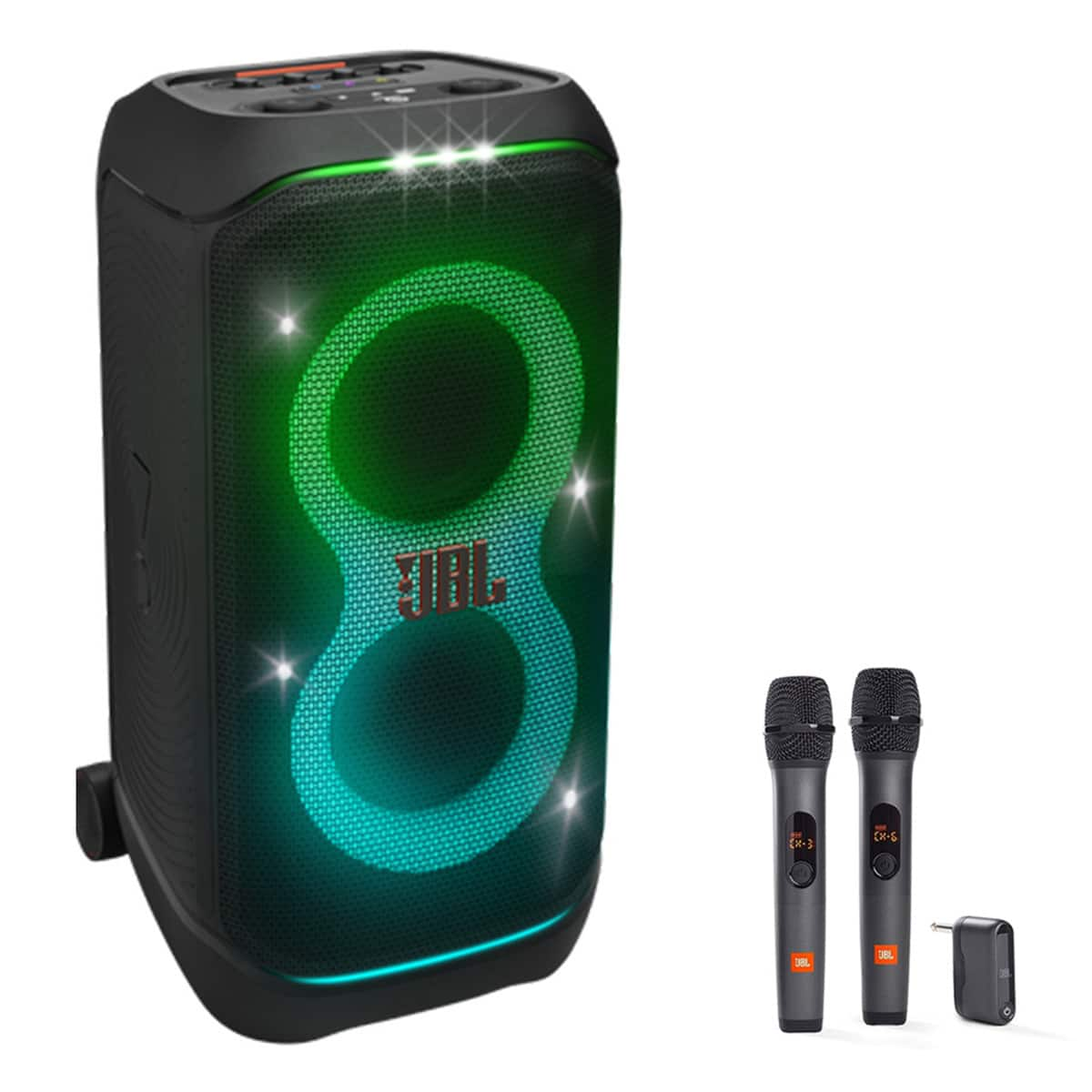
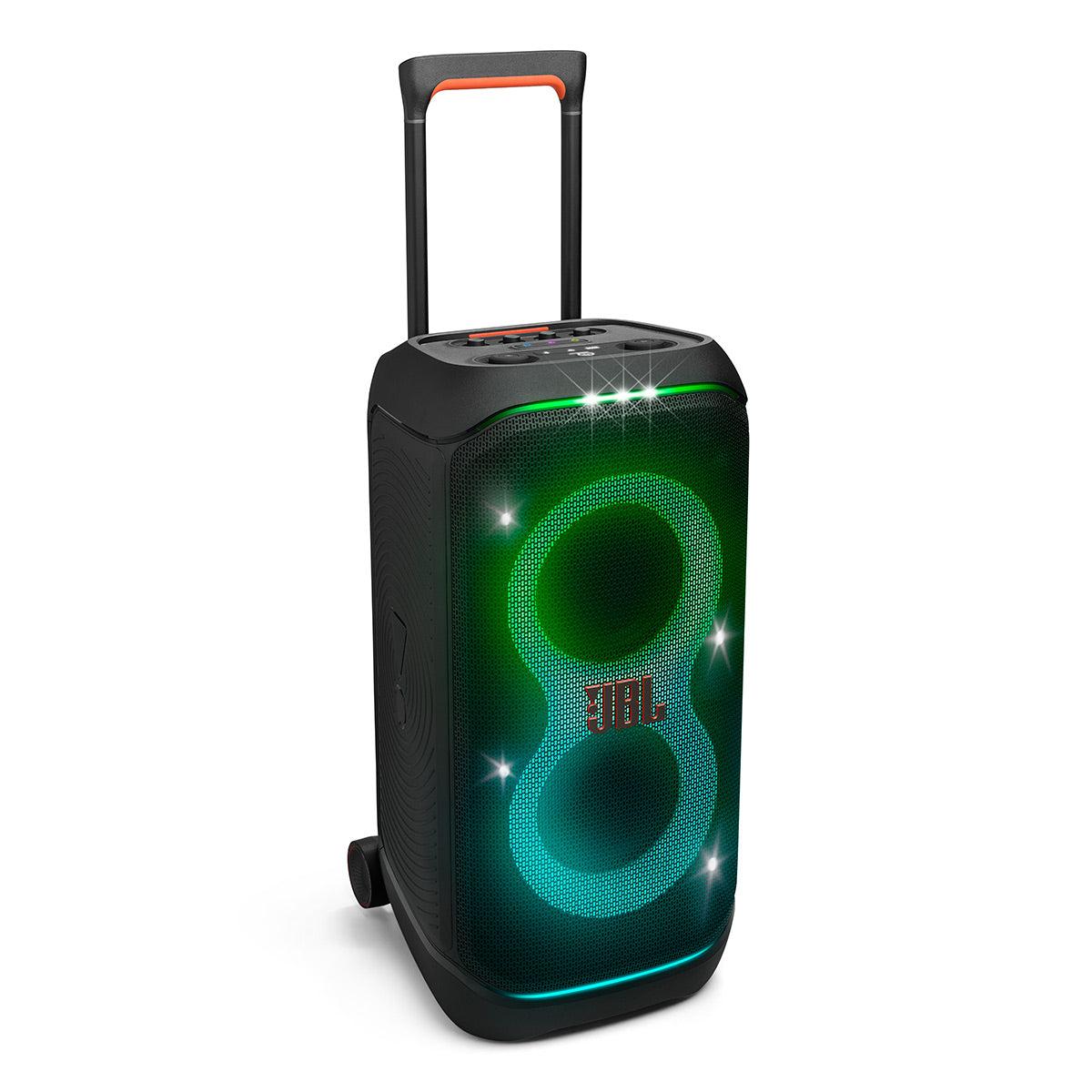
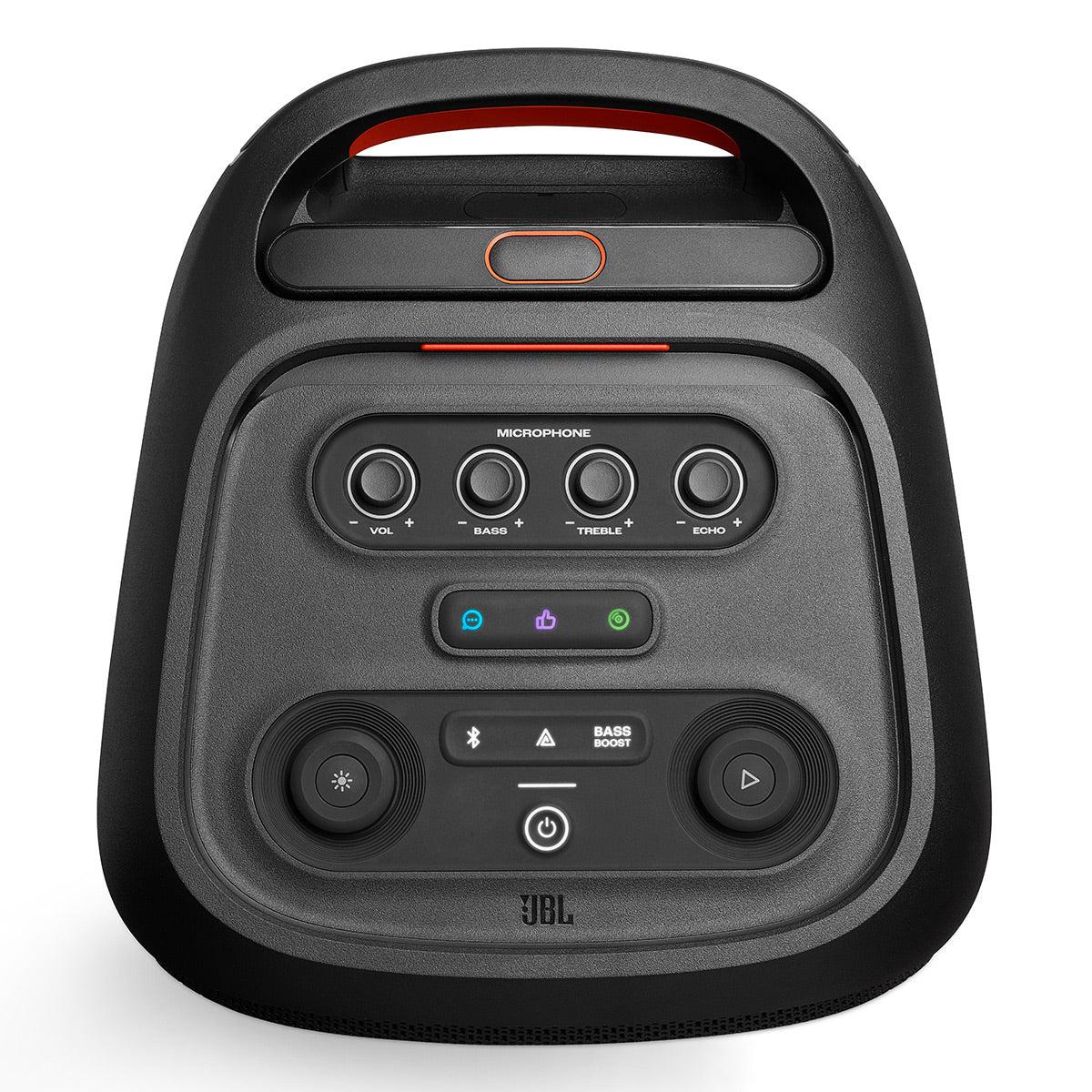
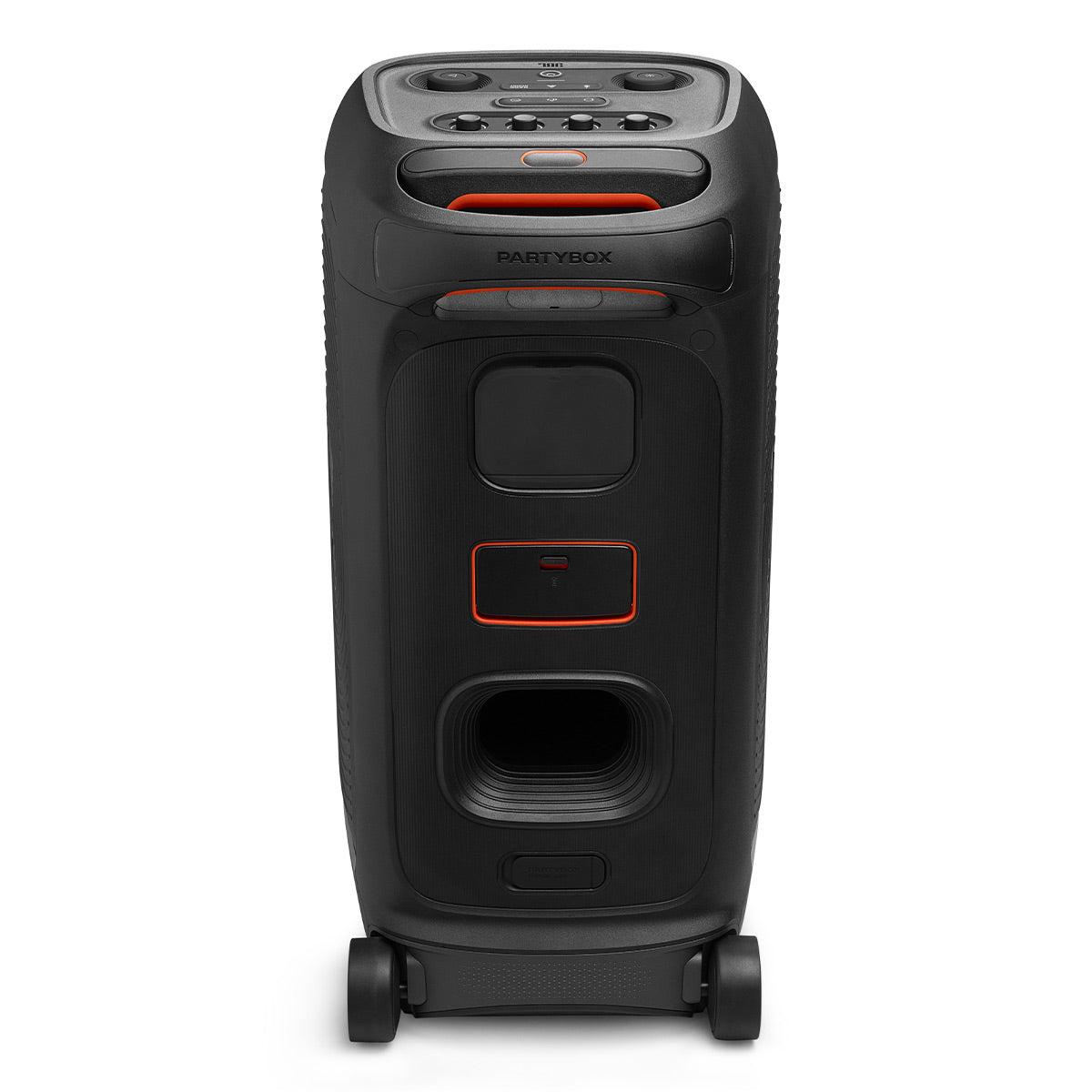
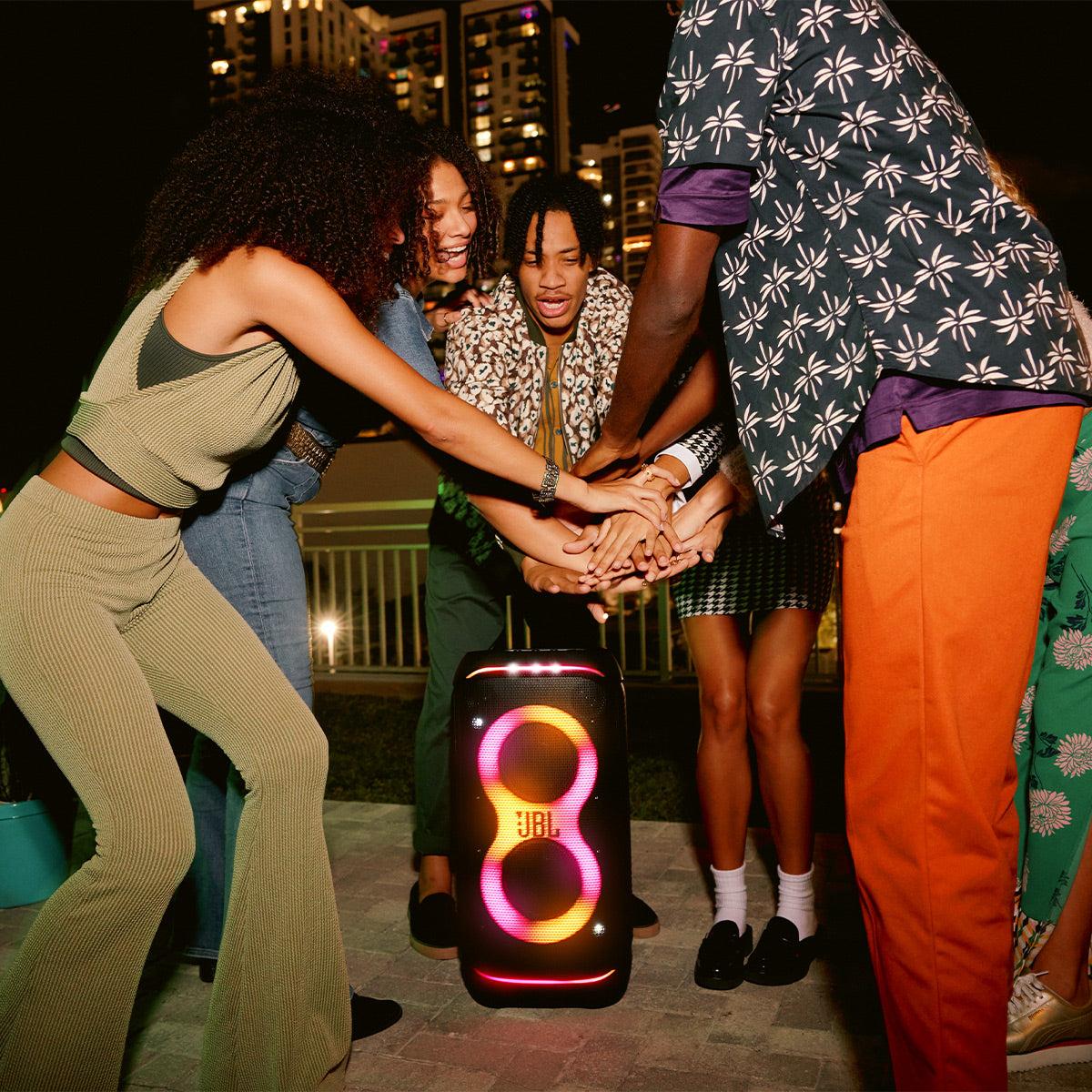
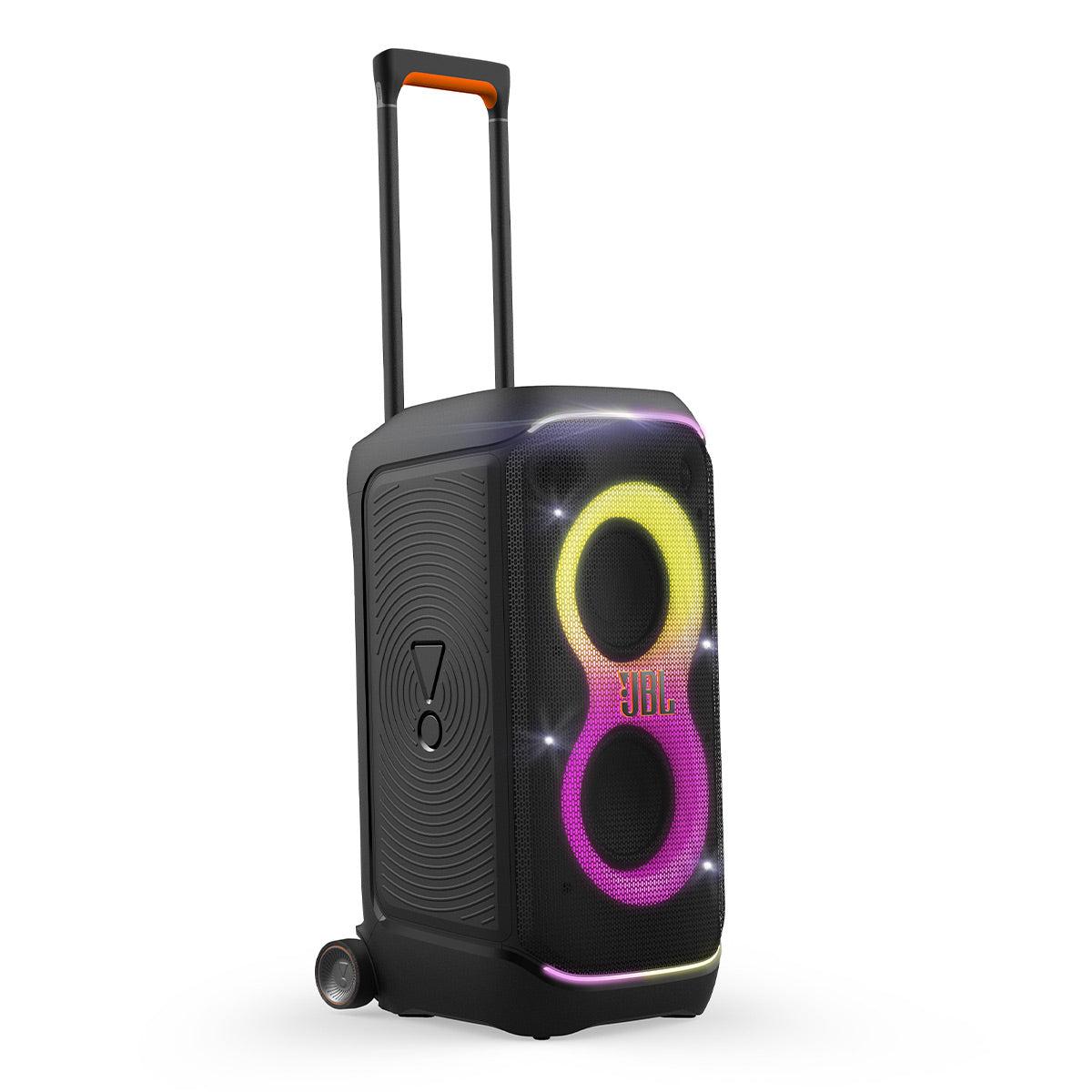
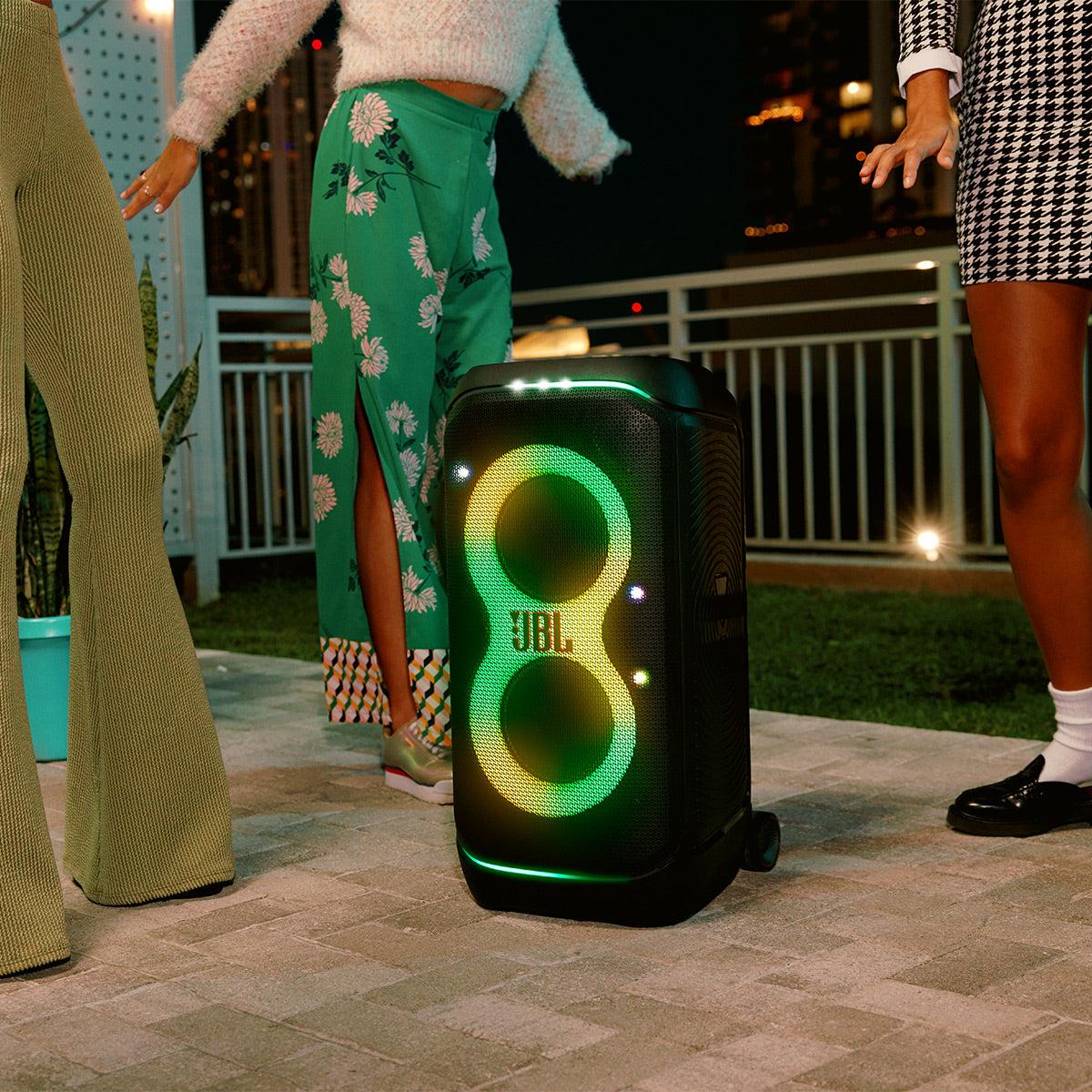
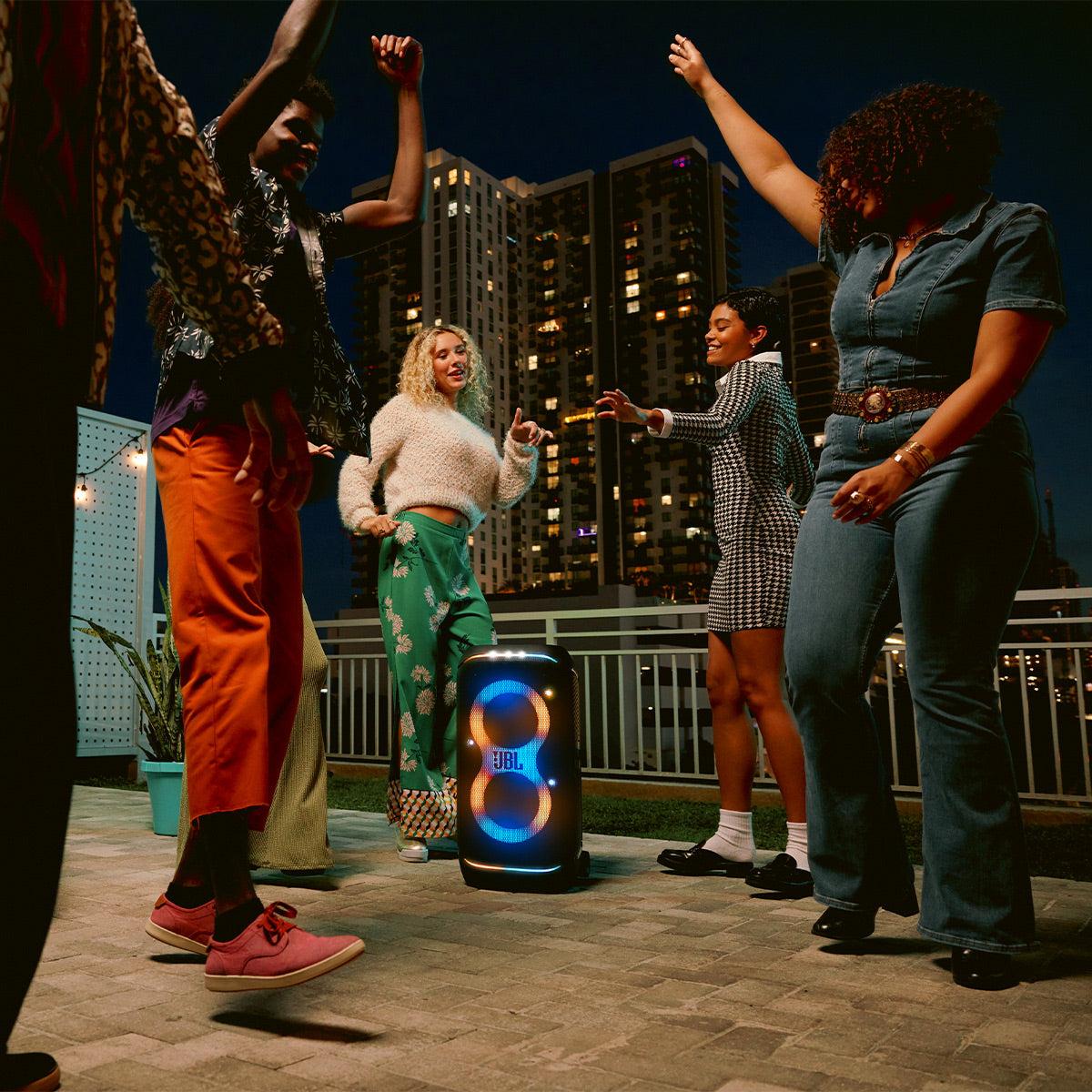
When you're planning the perfect party, having the right speaker can make or break the entire experience. Both the JBL PartyBox Stage 320 and Samsung MX-ST50F promise to transform your gatherings with booming sound and dazzling lights, but they take notably different approaches to achieving party perfection. After diving deep into user reviews, expert analyses, and technical specifications, we've uncovered some crucial differences that could dramatically impact your party experience.
Large portable party speakers occupy a unique space in the audio world. Unlike bookshelf speakers designed for critical listening or small Bluetooth speakers meant for personal use, these behemoths prioritize volume, visual spectacle, and practical party features over audiophile-grade sound reproduction. Think of them as the difference between a sports car and a pickup truck—both have their place, but they're built for entirely different missions.
The most important performance characteristics for party speakers include maximum volume output (measured in decibels), frequency response (how well they reproduce different pitch ranges), bass extension (how deep the low notes go), and dynamic range (the difference between the quietest and loudest sounds they can handle). Beyond pure audio performance, factors like battery life, weather resistance, lighting effects, and connectivity options often matter just as much to party-goers.
What's particularly interesting about this category is how manufacturers balance power consumption with portability. More powerful amplifiers and drivers require more energy, which means either larger batteries (adding weight) or shorter playtime. The best party speakers find clever ways to maximize both performance and practicality.
The JBL PartyBox Stage 320 arrived in 2024 as an evolution of JBL's popular PartyBox 310, incorporating several user-requested improvements. JBL has been refining their party speaker formula for years, and this latest iteration benefits from advances in battery technology, digital signal processing, and wireless connectivity. The Stage 320 represents JBL's philosophy of maintaining consistent performance regardless of whether you're plugged into the wall or running on battery power.
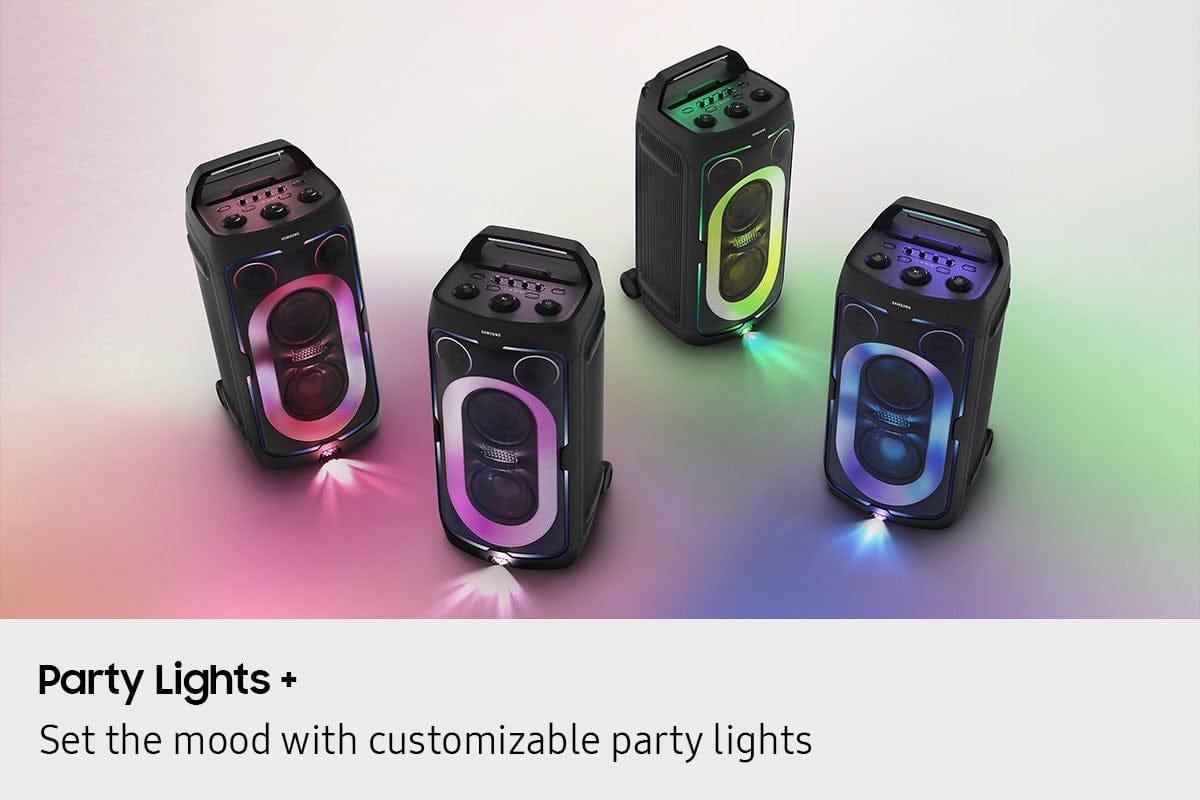
Samsung's MX-ST50F launched around the same timeframe as part of their Sound Tower series, reflecting Samsung's broader push into premium audio markets. Samsung brought their expertise in display technology to audio, creating what they call "Party Lights+" — a sophisticated lighting system that rivals what you'd find at professional venues. The MX-ST50F embodies Samsung's approach of maximizing visual impact and customization options, even if it means making some compromises in pure audio performance.
Since 2024, both companies have continued refining their software and adding features through firmware updates, but the core hardware remains unchanged. The wireless technology landscape has also evolved, with Auracast (a new Bluetooth standard for connecting multiple speakers) becoming more prevalent in both models.
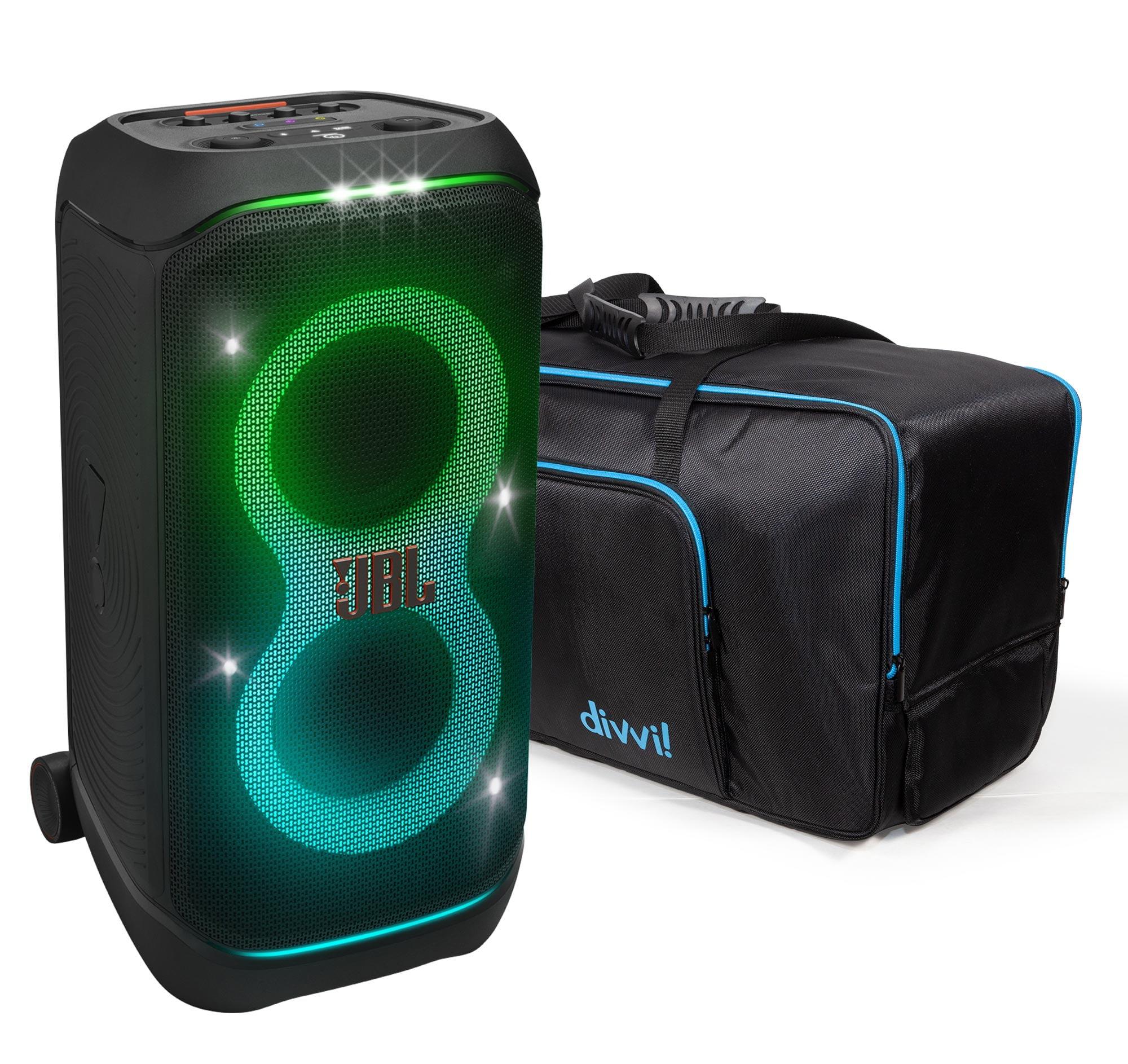
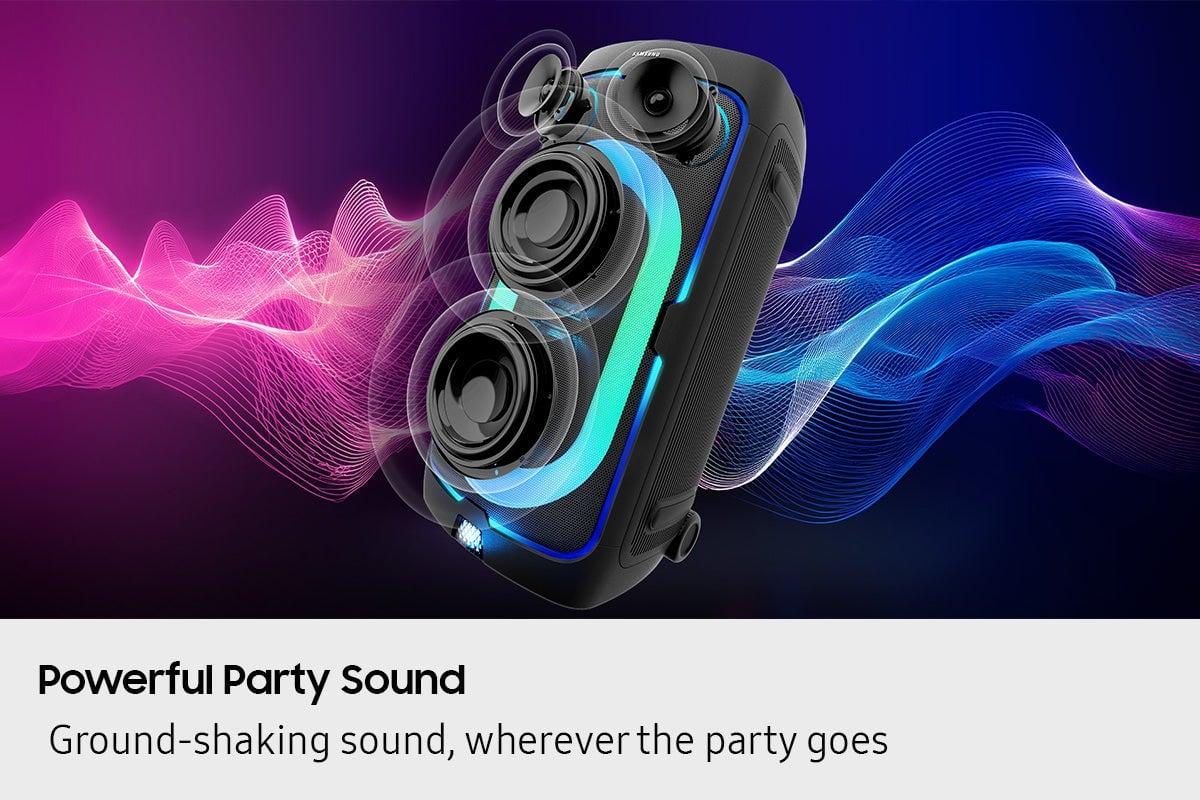
Here's where things get fascinating from a technical perspective. Both speakers claim identical 240-watt power output and use similar driver configurations (two 6.5-inch woofers plus two 25mm tweeters), but their real-world performance tells a very different story.
The JBL PartyBox Stage 320 maintains its full 240-watt output whether you're plugged into AC power or running on battery. This consistency stems from JBL's sophisticated power management system and higher-capacity battery design. In practical terms, this means the JBL sounds just as loud and punchy at your remote beach party as it does in your backyard with an extension cord nearby.
The Samsung MX-ST50F, however, drops to just 90 watts when running on battery power—a 60% reduction that's immediately noticeable. This isn't necessarily a design flaw; it's a conscious trade-off Samsung made to prioritize other features like advanced lighting and longer theoretical battery life. When plugged in, the Samsung can match the JBL's output, but on battery, it's playing in a completely different league.
From a frequency response standpoint (how well each speaker reproduces different pitch ranges), the JBL tends toward a more aggressive, party-focused sound signature. Its AI Sound Boost technology analyzes incoming audio in real-time and adjusts the signal to prevent distortion while maintaining maximum impact. This makes it particularly effective with electronic dance music, hip-hop, and other bass-heavy genres that dominate party playlists.
The Samsung takes a more balanced approach, using what they call Waveguide technology to create more even sound dispersion. This omnidirectional design means the audio quality remains more consistent whether you're standing directly in front of the speaker or off to the side—a real advantage for large gatherings where people are scattered around a space.
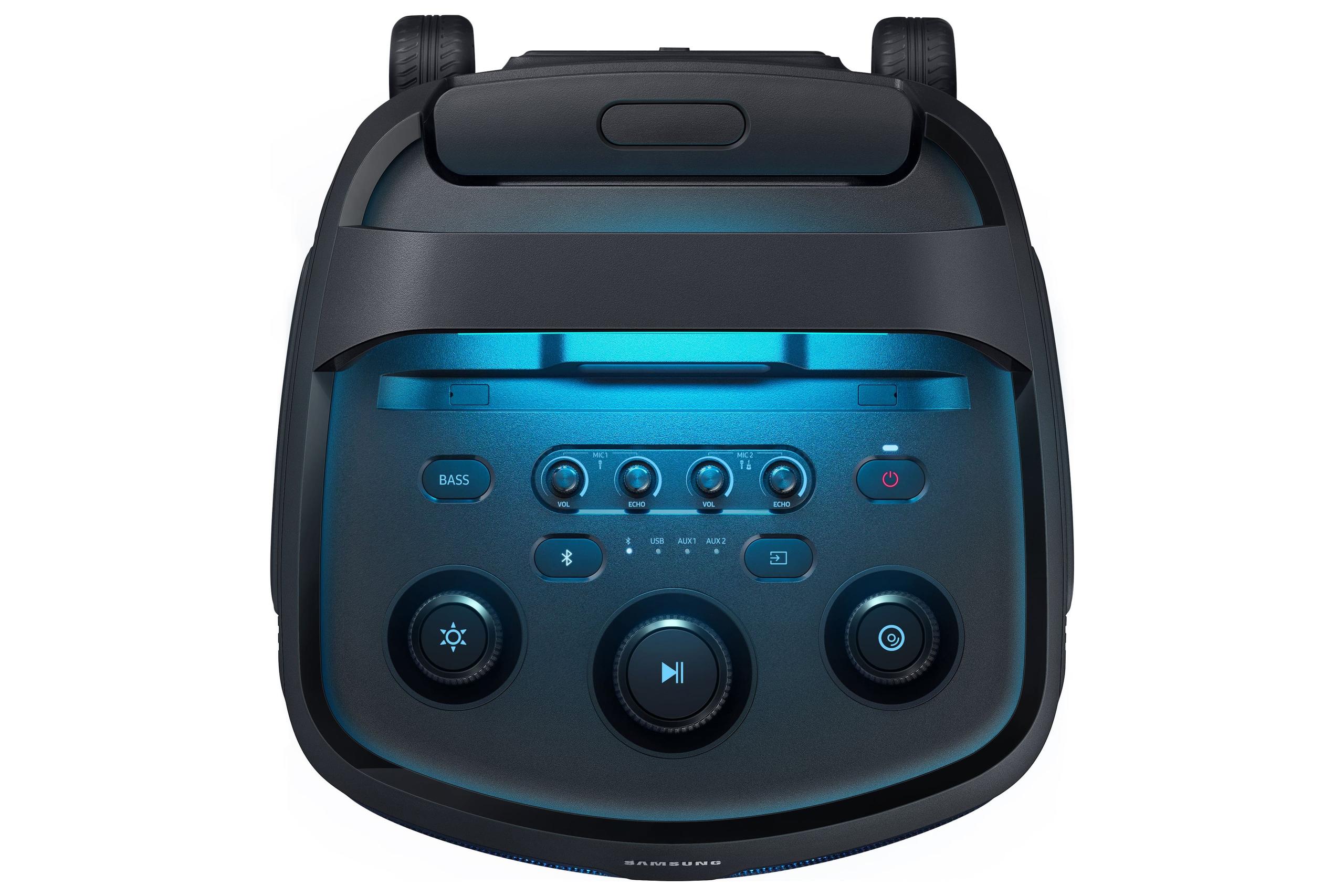
Bass response deserves special attention since it's often the most important factor for party atmosphere. The JBL PartyBox Stage 320 delivers more consistent bass impact across all volume levels, maintaining its punch even when cranked to maximum. The Samsung offers more bass customization with three distinct modes (Deep, Punchy, Gentle), but its battery-powered performance limitations mean that customization becomes less meaningful when you're not plugged in.
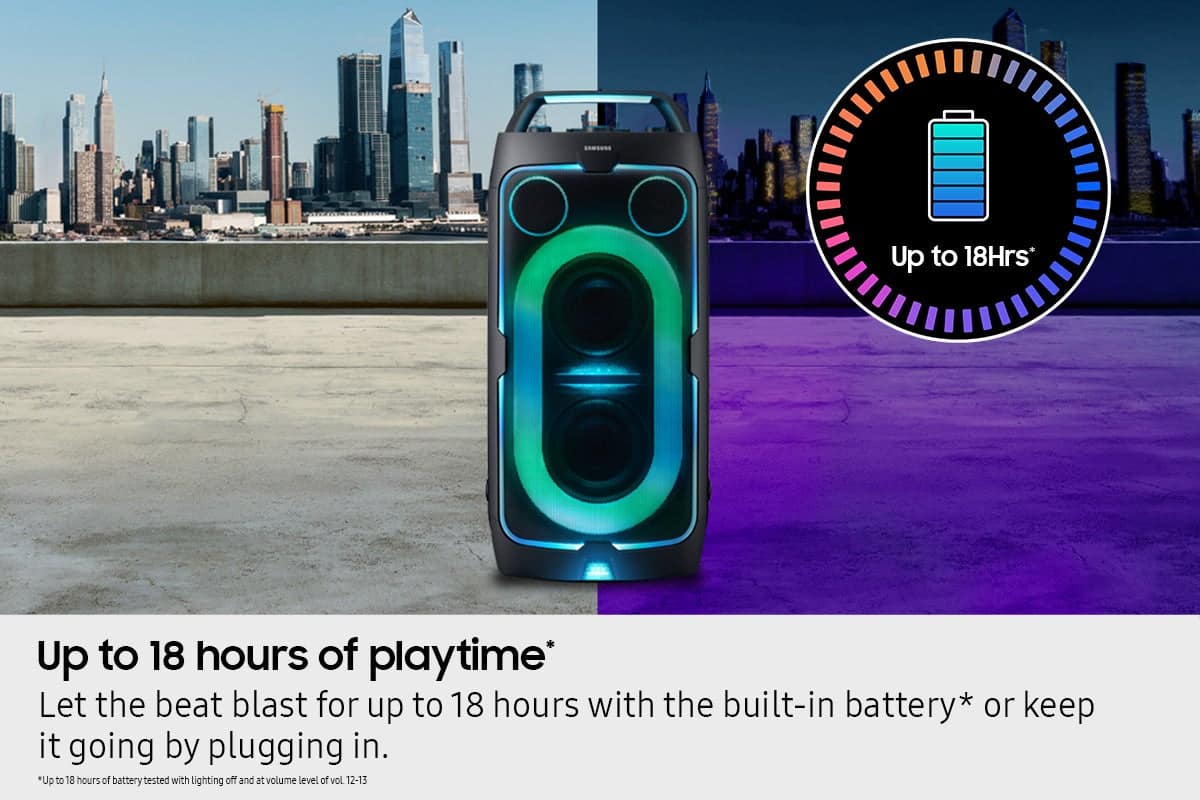
Battery performance represents the biggest philosophical difference between these speakers. Both advertise 18-hour battery life, but that number tells only part of the story.
The JBL PartyBox Stage 320 achieves its 18-hour rating while maintaining full performance capabilities. Its removable Li-ion battery system (68Wh capacity) includes a quick-charge feature that provides two hours of playback from just ten minutes of charging. More importantly, you can purchase additional batteries and hot-swap them for unlimited party duration—a feature that's surprisingly rare in this category.
The Samsung MX-ST50F reaches its 18-hour claim by significantly reducing power output on battery operation. While this extends runtime, it fundamentally changes the speaker's character. It's like having a sports car that automatically switches to economy mode when you're not at a gas station—functional, but not what you initially signed up for.
For real-world use, this difference is crucial. If you're planning a camping trip, tailgate party, or beach gathering where AC power isn't available, the JBL maintains its party-worthy performance throughout the event. The Samsung becomes more suitable for background music rather than the center-stage sound system you probably intended.
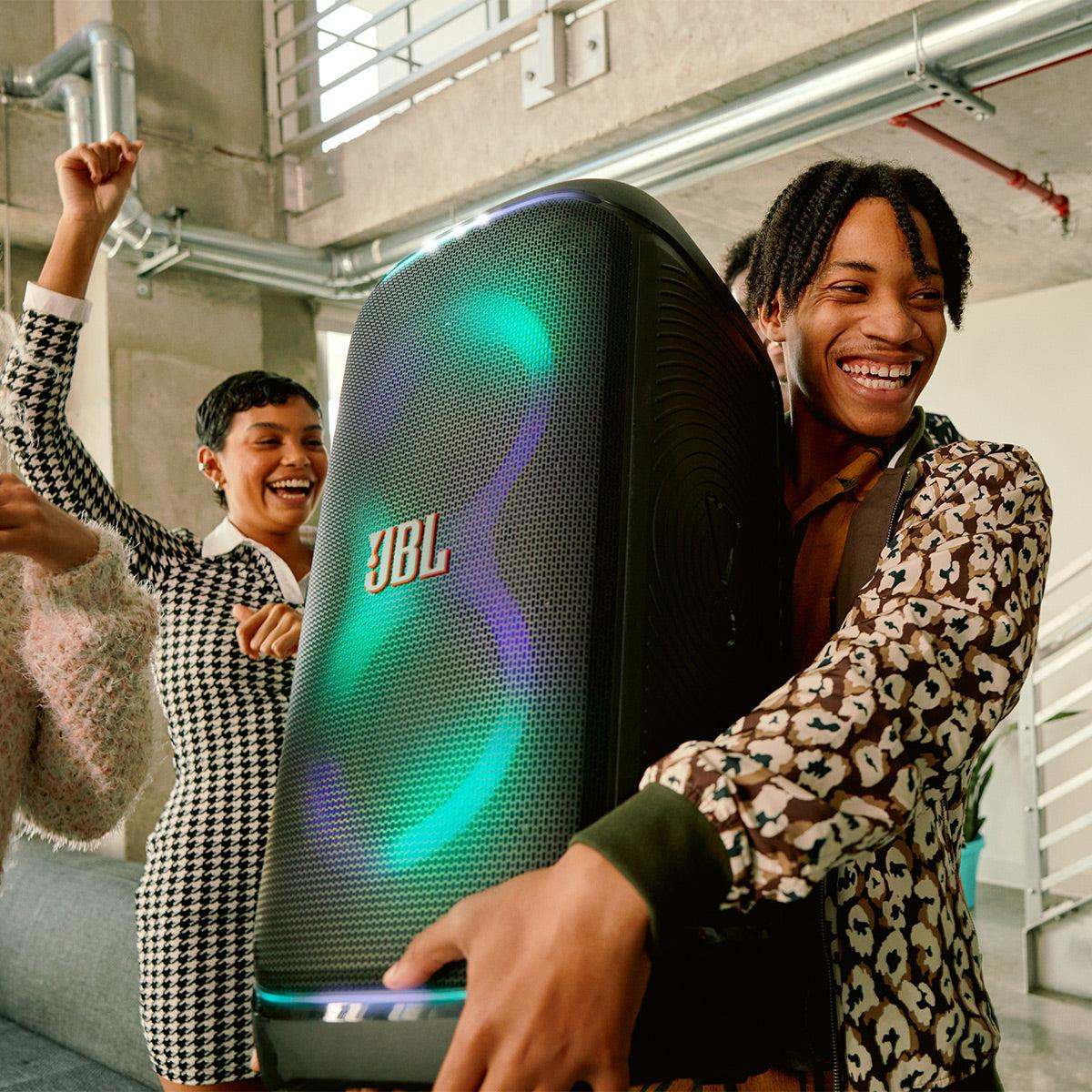
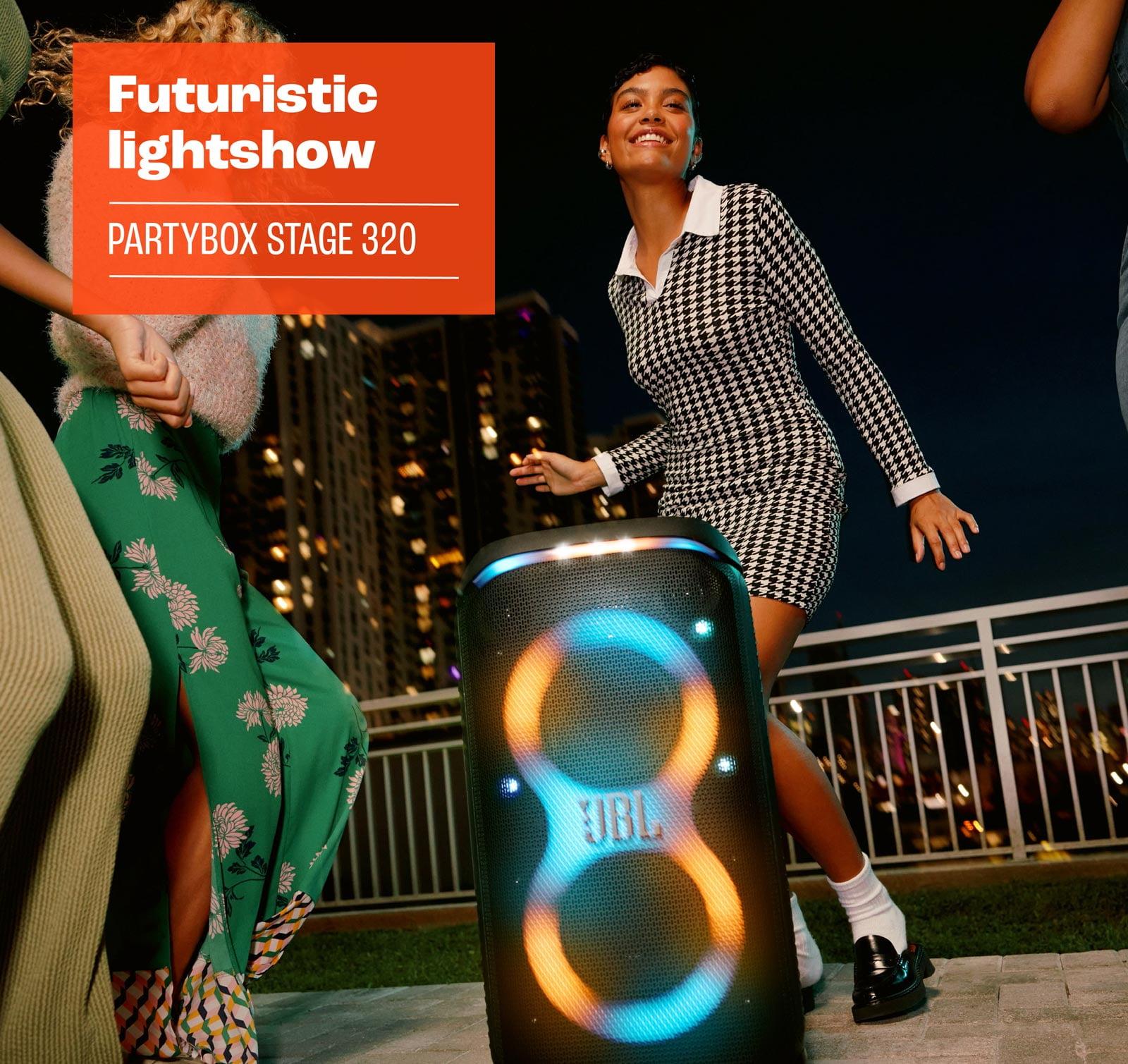
While the JBL PartyBox Stage 320 includes competent lighting with starry effects, light trails, and strobe patterns synchronized to music, it's clearly secondary to the audio experience. The lighting adds atmosphere but doesn't fundamentally transform the party environment.
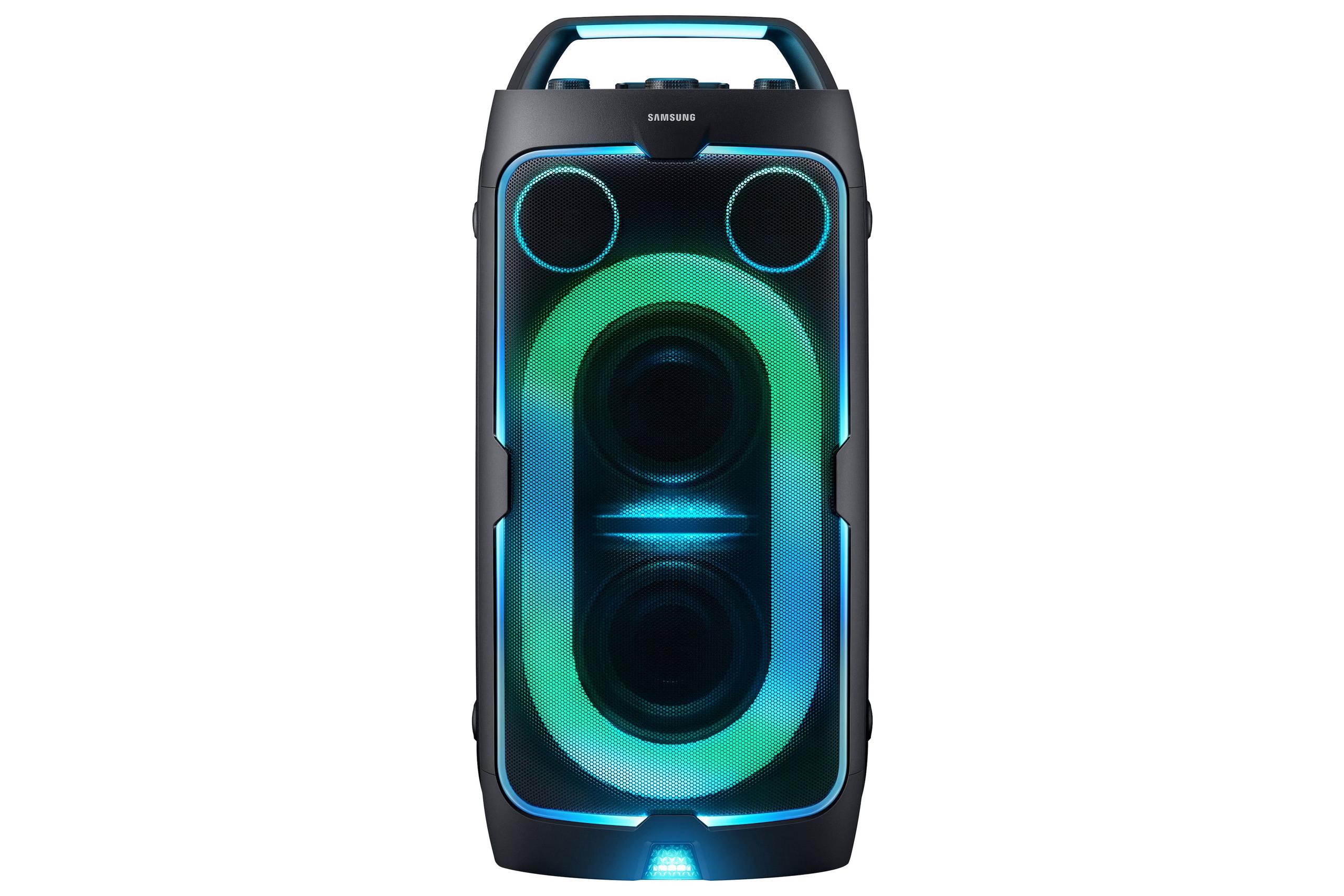
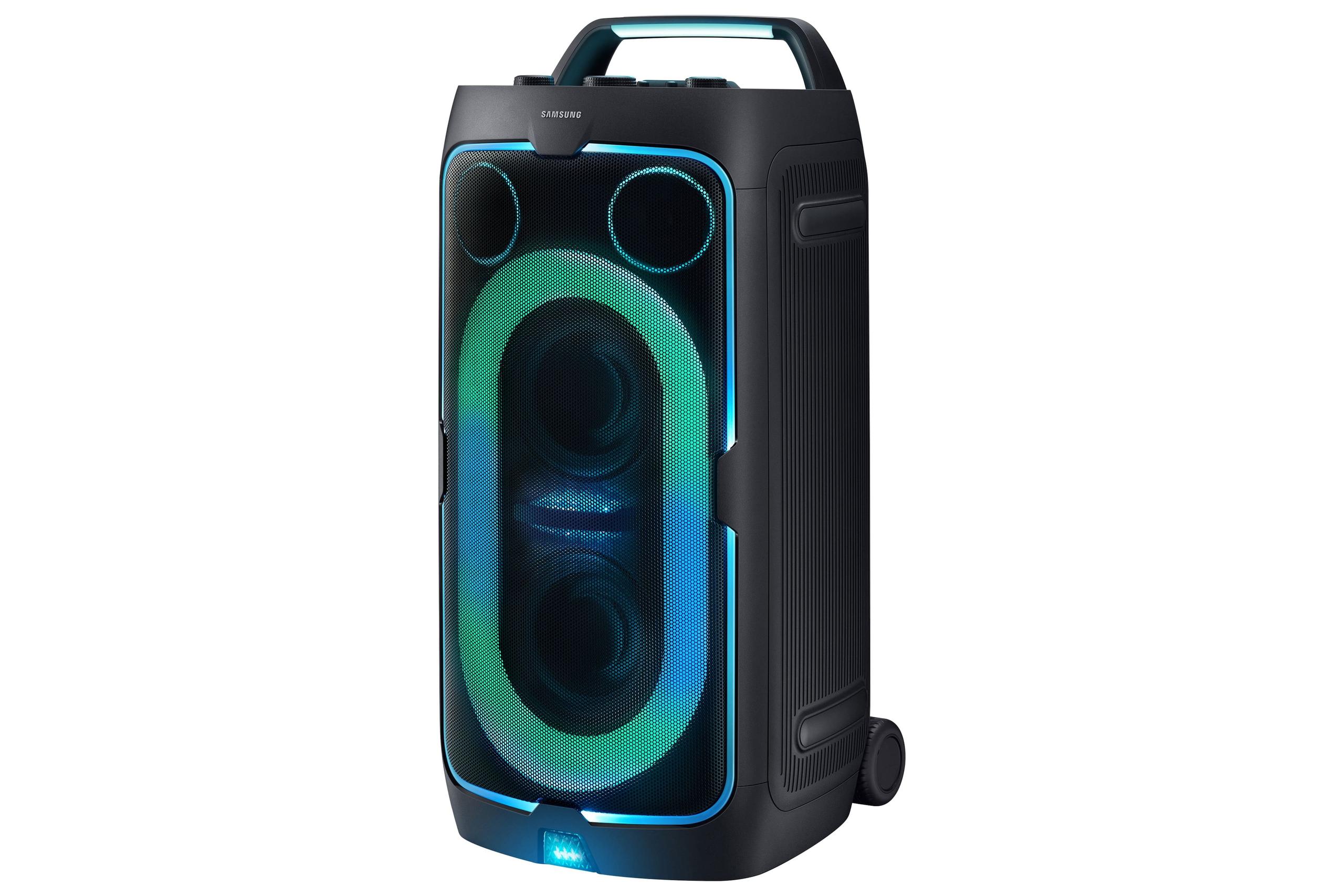
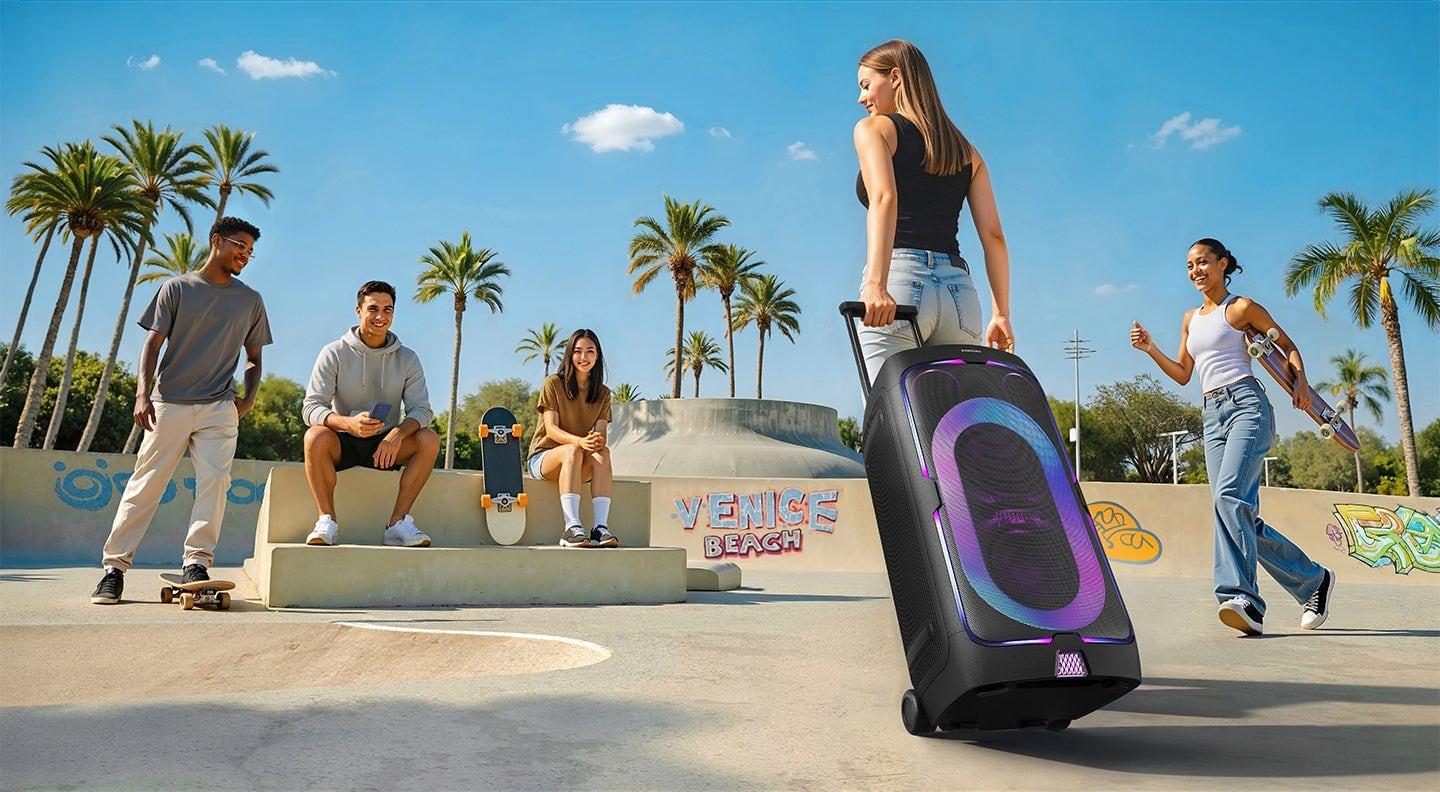
The Samsung MX-ST50F takes an entirely different approach with its Party Lights+ system. This sophisticated setup includes five distinct lighting zones (track, ring, line, crystal, and handle) that create a true 360-degree light show. With six customizable patterns and five mood presets, the Samsung can genuinely compete with dedicated party lighting systems.
The Samsung's lighting customization through their mobile app is particularly impressive, offering real-time synchronization with music and the ability to create custom light sequences. For indoor parties or events where visual impact is equally important as sound quality, this represents a significant advantage.
However, it's worth noting that more elaborate lighting systems consume additional battery power, further impacting the Samsung's already-compromised battery performance. The trade-off becomes even more pronounced when you consider that the most visually impressive light shows happen in darker environments, exactly when you're least likely to have AC power available.
Both speakers embrace modern connectivity standards, but with different focuses. The JBL PartyBox Stage 320 features Bluetooth 5.4 with Auracast support, allowing wireless connection of multiple compatible JBL speakers to create larger sound systems. Its dual 6.35mm inputs accommodate both microphones and guitars with independent gain controls, making it suitable for live performance scenarios.
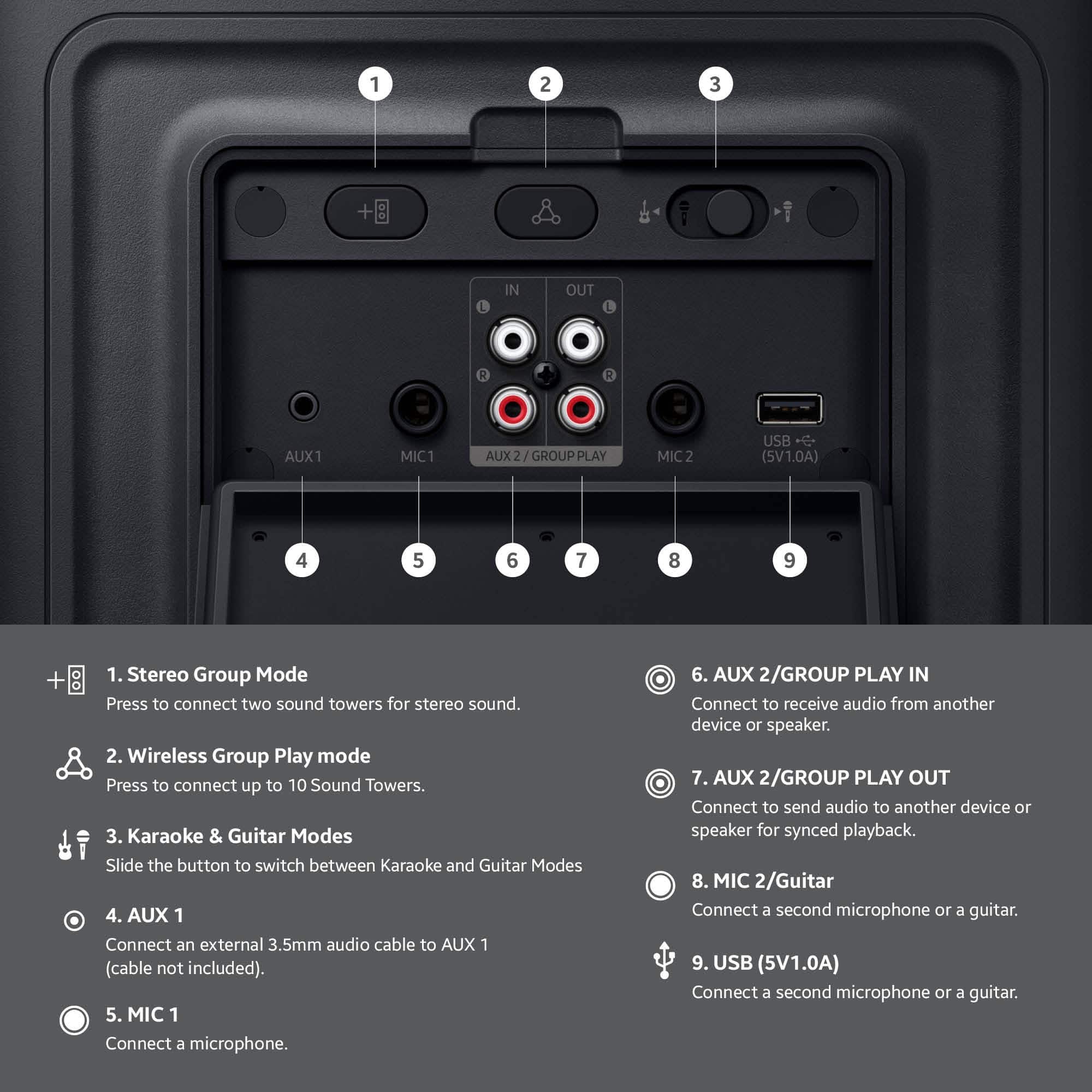
The Samsung MX-ST50F supports simultaneous connection of two Bluetooth devices, enabling seamless transitions between different people's playlists—a surprisingly useful feature for parties. Its Auracast implementation supports up to ten connected units, theoretically offering more expansion possibilities than the JBL.
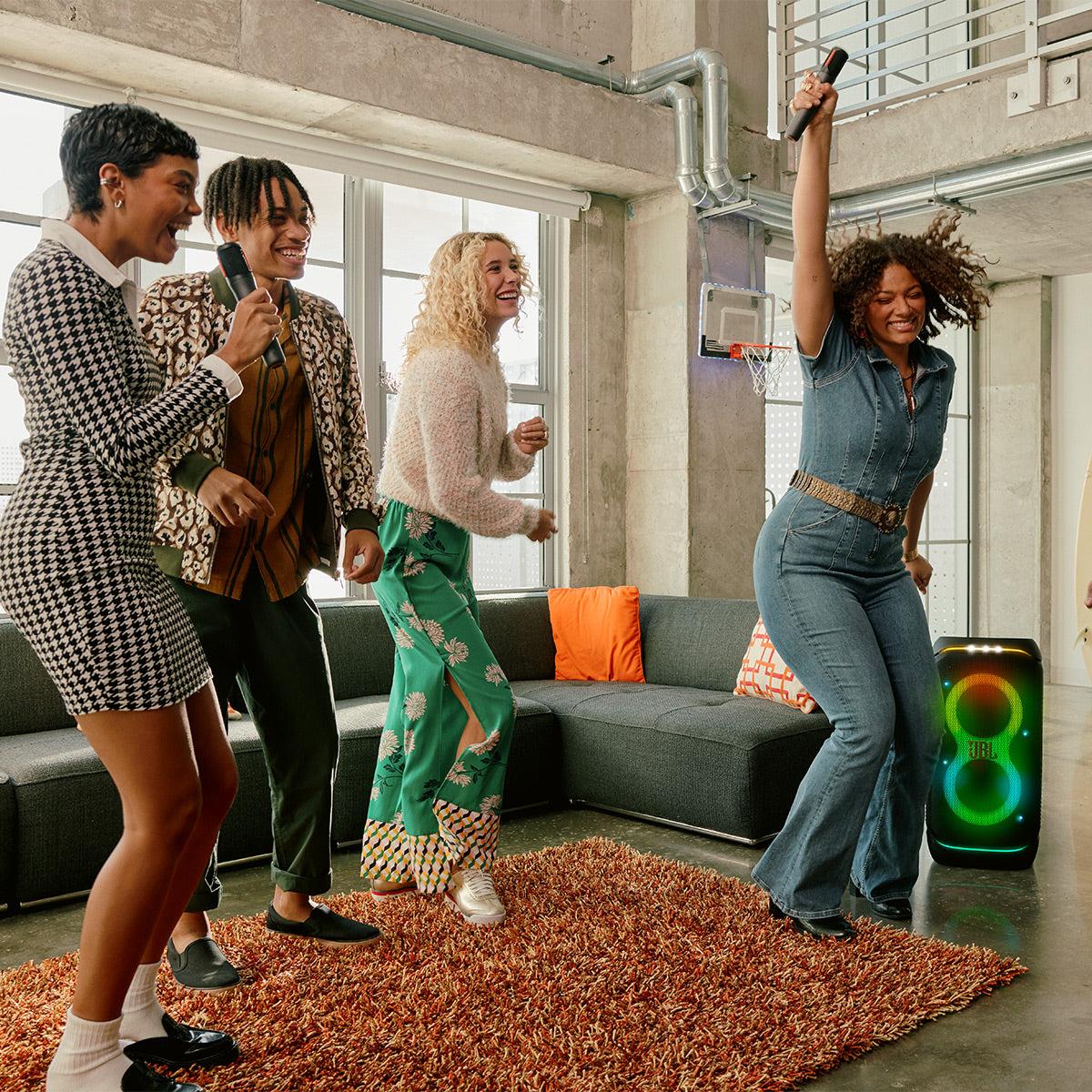
For karaoke enthusiasts, the Samsung provides more advanced features including voice recording and specialized karaoke EQ settings. The JBL offers solid microphone support but focuses more on straightforward amplification rather than voice processing effects.
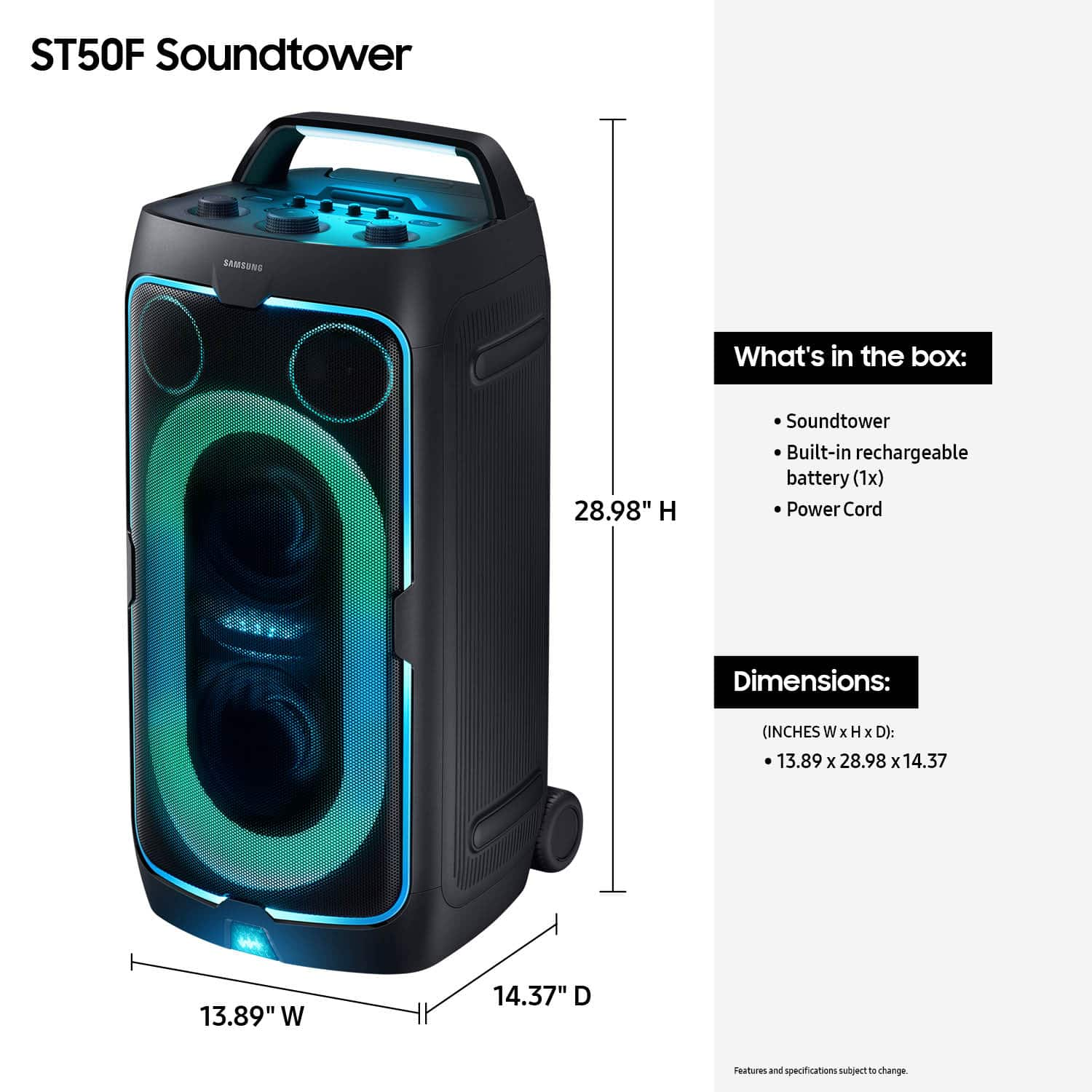
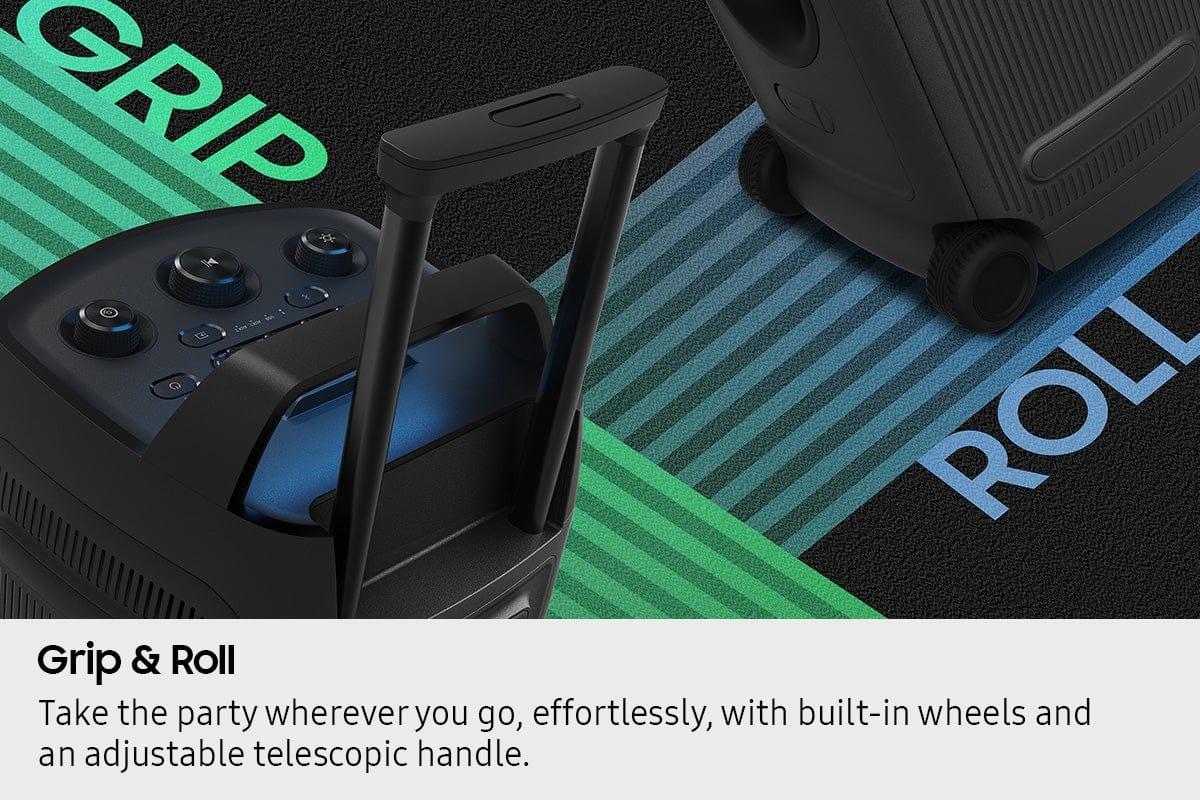
Both speakers weigh in at substantial figures—16.5kg for the JBL PartyBox Stage 320 and 18.4kg for the Samsung MX-ST50F—but they handle their bulk differently. The JBL's telescopic handle and wide wheels feel more refined in daily use, while the Samsung's transport system works but doesn't inspire the same confidence for frequent movement.
Both carry IPX4 splash-resistance ratings, meaning they can handle light rain and poolside splashes but shouldn't be submerged or exposed to heavy weather. This rating makes them suitable for most outdoor gatherings while acknowledging they're not beach-proof.
The removable battery designs in both speakers represent a significant advantage over sealed systems, allowing for battery replacement as they age or additional batteries for extended events. However, the JBL's battery swap provides more practical benefit since it maintains full performance, while swapping the Samsung's battery primarily extends reduced-power operation time.
While neither speaker is designed primarily for home theater use, both can serve as powerful sound solutions for casual movie watching or gaming. The JBL PartyBox Stage 320 provides more consistent bass impact and dynamic range, making action sequences and music more engaging. However, its party-focused sound signature may emphasize bass at the expense of dialogue clarity.
The Samsung MX-ST50F offers better sound customization through its multiple audio modes, potentially allowing better optimization for different content types. Its Waveguide technology also provides more even sound distribution across seating positions. However, the reduced performance on battery power makes it less suitable for outdoor movie nights or situations where AC power isn't convenient.
For dedicated home theater use, both speakers represent overkill solutions that prioritize maximum volume over the precise imaging and tonal balance that make movies truly immersive. They're better suited for casual entertainment where impact matters more than accuracy.
At the time of writing, both speakers command premium prices in the large portable speaker category, though the JBL PartyBox Stage 320 typically costs somewhat less than the Samsung MX-ST50F. This price difference makes the performance gap even more significant—you're paying more for the Samsung while getting substantially less audio performance in battery-powered scenarios.
The JBL represents better value for users who prioritize consistent audio performance and true portability. Its ability to maintain full power on battery operation, combined with the hot-swappable battery system, provides more practical utility for the majority of party scenarios.
The Samsung offers better value for users who prioritize visual entertainment and sound customization, particularly if their primary use involves AC power availability. The advanced lighting system and superior app-based controls provide features you simply can't get with the JBL.
The JBL PartyBox Stage 320 makes the most sense for users who need reliable, consistent performance across all usage scenarios. If you're planning camping trips, tailgate parties, beach gatherings, or any event where AC power isn't guaranteed, the JBL's ability to maintain full performance on battery makes it the clear choice. It's also better suited for users who prioritize audio impact over visual effects, or those who need a speaker that can handle live performance duties with microphones and instruments.
The Samsung MX-ST50F is ideal for users whose parties typically happen in locations with AC power access and who value visual entertainment as highly as audio performance. If you're hosting backyard gatherings, indoor parties, or events where the lighting atmosphere is crucial to the experience, the Samsung's advanced Party Lights+ system provides capabilities the JBL simply can't match. It's also better for users who want extensive sound customization options and advanced karaoke features.
After extensive evaluation of user experiences and expert reviews, the choice between these speakers ultimately depends on your power source expectations and priorities. The JBL PartyBox Stage 320 delivers superior versatility and consistent performance, making it the better choice for most users who need a genuinely portable party solution. The Samsung MX-ST50F offers a more complete entertainment experience when AC power is available, but its significant performance limitations on battery power restrict its versatility.
For most party scenarios, the JBL's ability to maintain full performance regardless of power source provides more real-world value, even if it means accepting less sophisticated lighting effects. However, if your parties primarily happen in powered environments and visual impact is equally important as audio quality, the Samsung's advanced features justify its premium positioning.
The decision ultimately comes down to whether you're buying a powerful portable speaker that happens to have lights, or an entertainment system that happens to be portable. Both approaches have merit, but understanding this fundamental difference will help you choose the speaker that best matches your party style and expectations.
| JBL PartyBox Stage 320 | Samsung MX-ST50F |
|---|---|
| Power Output - Critical for filling large spaces with sound | |
| 240W RMS (consistent AC and battery) | 240W AC / 90W battery (60% power drop unplugged) |
| Battery Performance - Determines true portability for outdoor events | |
| 18 hours at full power, 10-min quick charge = 2 hours | 18 hours at reduced power, replaceable battery |
| Driver Configuration - Affects sound quality and bass response | |
| 2×6.5" woofers + 2×25mm tweeters with AI Sound Boost | 2×6.5" woofers + 2×25mm tweeters with Waveguide technology |
| Weight & Portability - Important for transport to events | |
| 16.5kg with telescopic handle and wide wheels | 18.4kg with telescopic handle and wheels |
| Lighting System - Creates party atmosphere and visual impact | |
| Basic adaptive lightshow with starry lights and strobes | Advanced Party Lights+ with 360° coverage, 6 patterns, 5 zones |
| Sound Customization - Allows tuning for different music and environments | |
| 5-band EQ with AI Sound Boost optimization | 3 bass modes + 4 environmental sound modes with app control |
| Connectivity Options - Affects versatility for different setups | |
| Bluetooth 5.4, Auracast, dual mic/guitar inputs, USB charging | Bluetooth multi-connect (2 devices), Auracast up to 10 units |
| Weather Resistance - Determines outdoor use reliability | |
| IPX4 splash-resistant (light rain and poolside safe) | IPX4 splash-resistant (light rain and poolside safe) |
| Karaoke Features - Important for interactive party entertainment | |
| Dual 6.35mm inputs with independent gain controls | Advanced karaoke with voice recording and specialized EQ |
| Multi-Speaker Capability - For scaling up to larger events | |
| Auracast wireless chaining with other JBL PartyBox units | Auracast support for up to 10 Samsung Sound Tower units |
The JBL PartyBox Stage 320 is significantly better for outdoor parties without AC power. It maintains its full 240W output on battery, while the Samsung MX-ST50F drops to just 90W when unplugged - a 60% power reduction that's very noticeable. For camping, beach parties, or tailgating where you need consistent loud sound, the JBL PartyBox Stage 320 is the clear winner.
When plugged into AC power, both speakers deliver similar 240W output, but their sound signatures differ. The JBL PartyBox Stage 320 has a more aggressive, party-focused sound with consistent performance. The Samsung MX-ST50F offers more balanced sound with better customization options through three bass modes and four environmental settings, but only reaches full volume when plugged in.
The Samsung MX-ST50F has significantly superior lighting with its Party Lights+ system featuring 360-degree coverage, six customizable patterns, and five distinct lighting zones. The JBL PartyBox Stage 320 includes basic adaptive lighting with starry effects and strobes, but it's clearly secondary to the audio experience. For visual impact, the Samsung wins decisively.
Both the JBL PartyBox Stage 320 and Samsung MX-ST50F advertise 18-hour battery life, but there's a crucial difference. The JBL maintains full 240W performance for the entire duration, while the Samsung achieves its 18-hour rating by reducing power to 90W. The JBL PartyBox Stage 320 also offers 10-minute quick charging for 2 hours of playback.
Yes, both speakers support Auracast technology for wireless multi-speaker connections. The JBL PartyBox Stage 320 can connect with other JBL PartyBox units, while the Samsung MX-ST50F supports up to 10 connected units. Both also offer traditional wired connections for creating larger sound systems at big events.
The JBL PartyBox Stage 320 is easier to transport at 16.5kg compared to the Samsung MX-ST50F at 18.4kg. Both include telescopic handles and wheels, but the JBL's transport system feels more refined. However, both are substantial speakers best moved on their wheels rather than carried by hand.
Both speakers support karaoke, but the Samsung MX-ST50F offers more advanced features including voice recording and specialized karaoke EQ settings. The JBL PartyBox Stage 320 provides solid microphone and guitar support with dual 6.35mm inputs and independent gain controls, making it better for straightforward live performance amplification.
Both the JBL PartyBox Stage 320 and Samsung MX-ST50F have IPX4 splash-resistant ratings, meaning they can handle light rain and poolside splashes but shouldn't be submerged. They're suitable for most outdoor gatherings but aren't fully waterproof. Keep them away from direct water exposure or heavy rain.
The JBL PartyBox Stage 320 typically offers better value due to its consistent performance on battery power and generally lower pricing. The Samsung MX-ST50F costs more while delivering significantly less audio performance when unplugged. However, if advanced lighting and sound customization are priorities and you primarily use AC power, the Samsung provides better entertainment value.
While neither the JBL PartyBox Stage 320 nor Samsung MX-ST50F is designed primarily for home theater, both can work for casual movie watching. The JBL provides more consistent bass impact for action scenes, while the Samsung offers better sound customization and more even sound distribution. However, both prioritize maximum volume over the precise sound imaging ideal for movies.
For indoor parties with AC power available, the Samsung MX-ST50F excels with its superior lighting system and sound customization options. The advanced Party Lights+ create impressive visual atmosphere, and the omnidirectional sound design works well in enclosed spaces. The JBL PartyBox Stage 320 is better if you prioritize pure audio impact and consistent performance.
The key difference is power consistency: the JBL PartyBox Stage 320 maintains full 240W performance whether plugged in or on battery, while the Samsung MX-ST50F drops to 90W on battery but offers superior lighting and customization when plugged in. Choose the JBL for true portability and consistent performance, or the Samsung MX-ST50F for enhanced visual entertainment in powered environments.
We've done our best to create useful and informative comparisons to help you decide what product to buy. Our research uses advanced automated methods to create this comparison and perfection is not possible - please contact us for corrections or questions. These are the sites we've researched in the creation of this article: stereoguide.com - soundguys.com - rtings.com - soundguys.com - soundguys.com - rtings.com - jbl.com - youtube.com - youtube.com - youtube.com - youtube.com - rtings.com - 9to5toys.com - versus.com - cdw.com - jbl.com - projectorscreenstore.com - projectorscreen.com - ro.harmanaudio.com - jbl.co.nz - bestbuy.com - youtube.com - bestbuy.com - news.samsung.com - youtube.com - youtube.com - videoandaudiocenter.com - youtube.com - youtube.com - samsung.com - crutchfield.com - youtube.com - arrowassociatedstores.com - brandsmartusa.com - bestbuy.com - crutchfield.com - samsung.com - icecat.in - thefrogpadappliances.com - news.samsung.com

Privacy Policy
Terms and Conditions - Affiliate Policy
Home Security
© Copyright 2008-2026.
11816 Inwood Rd #1211, Dallas, TX 75244