

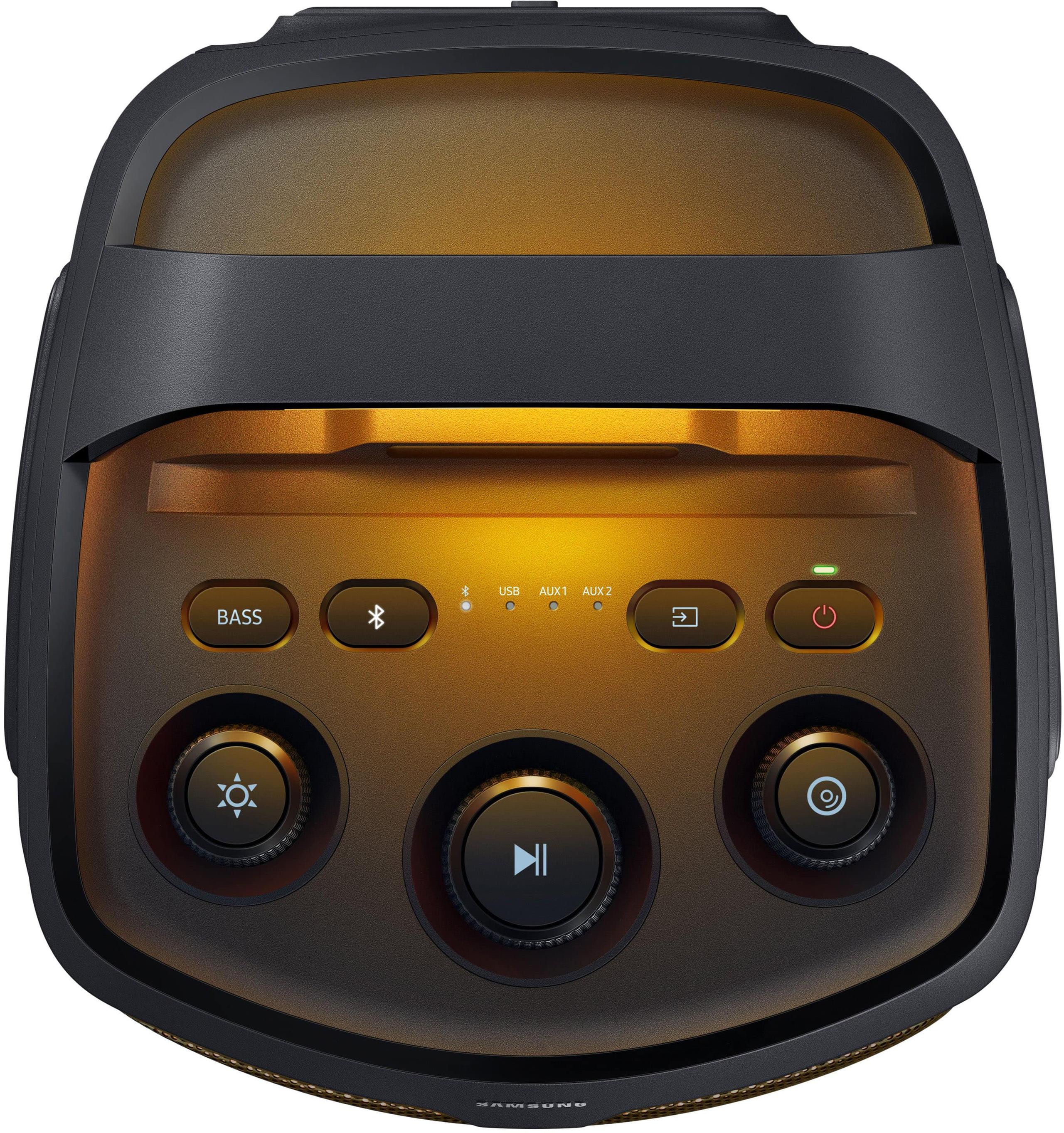
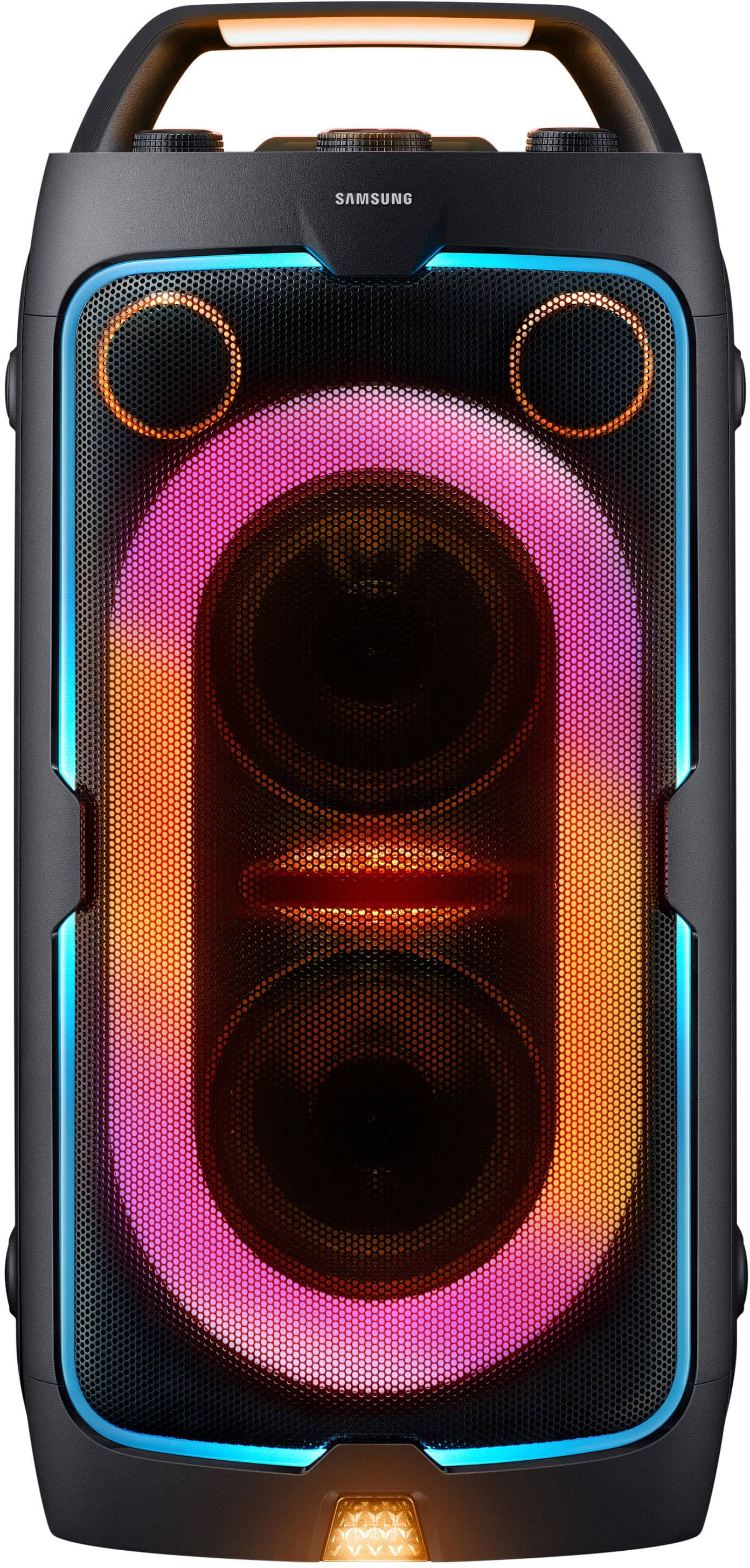
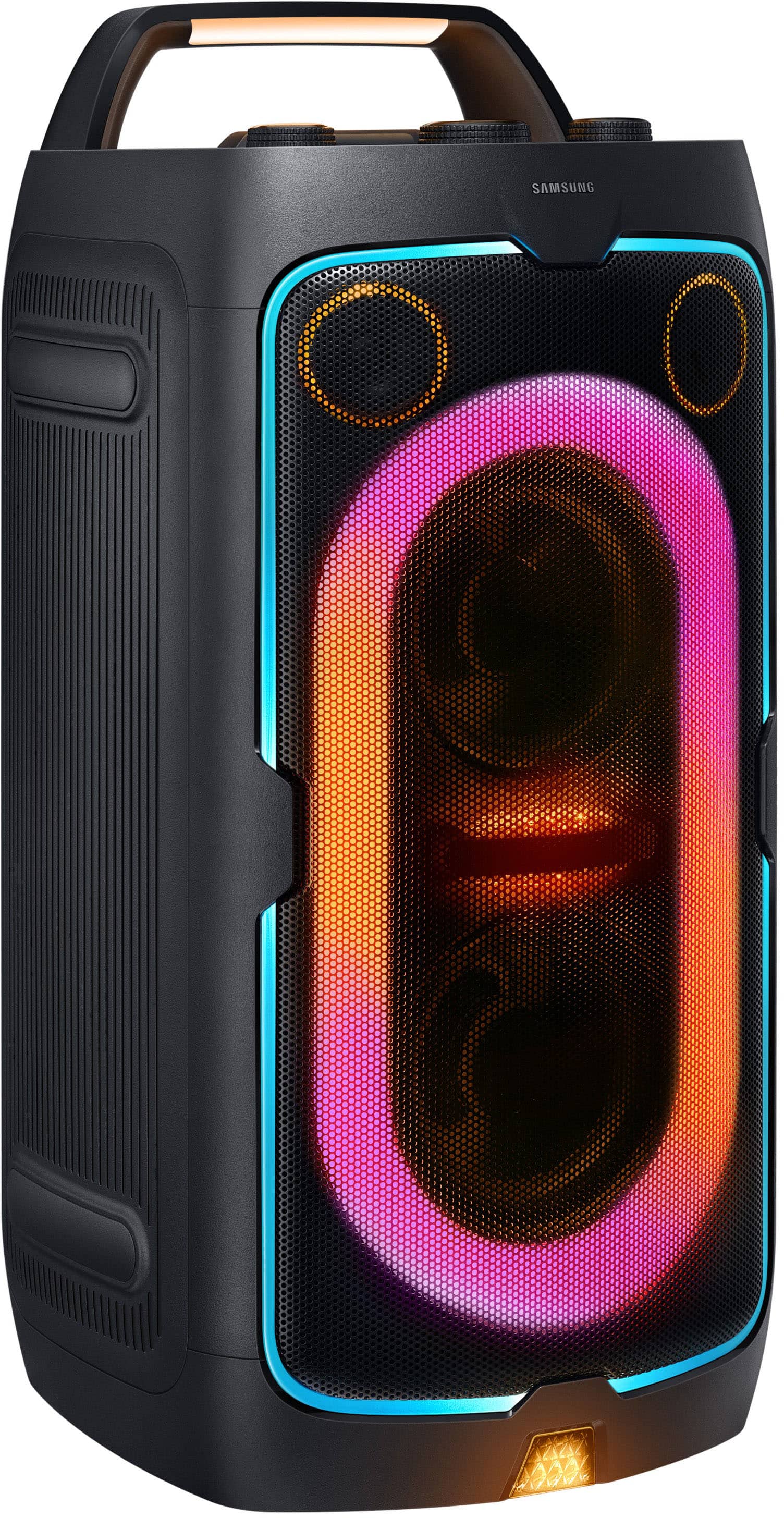
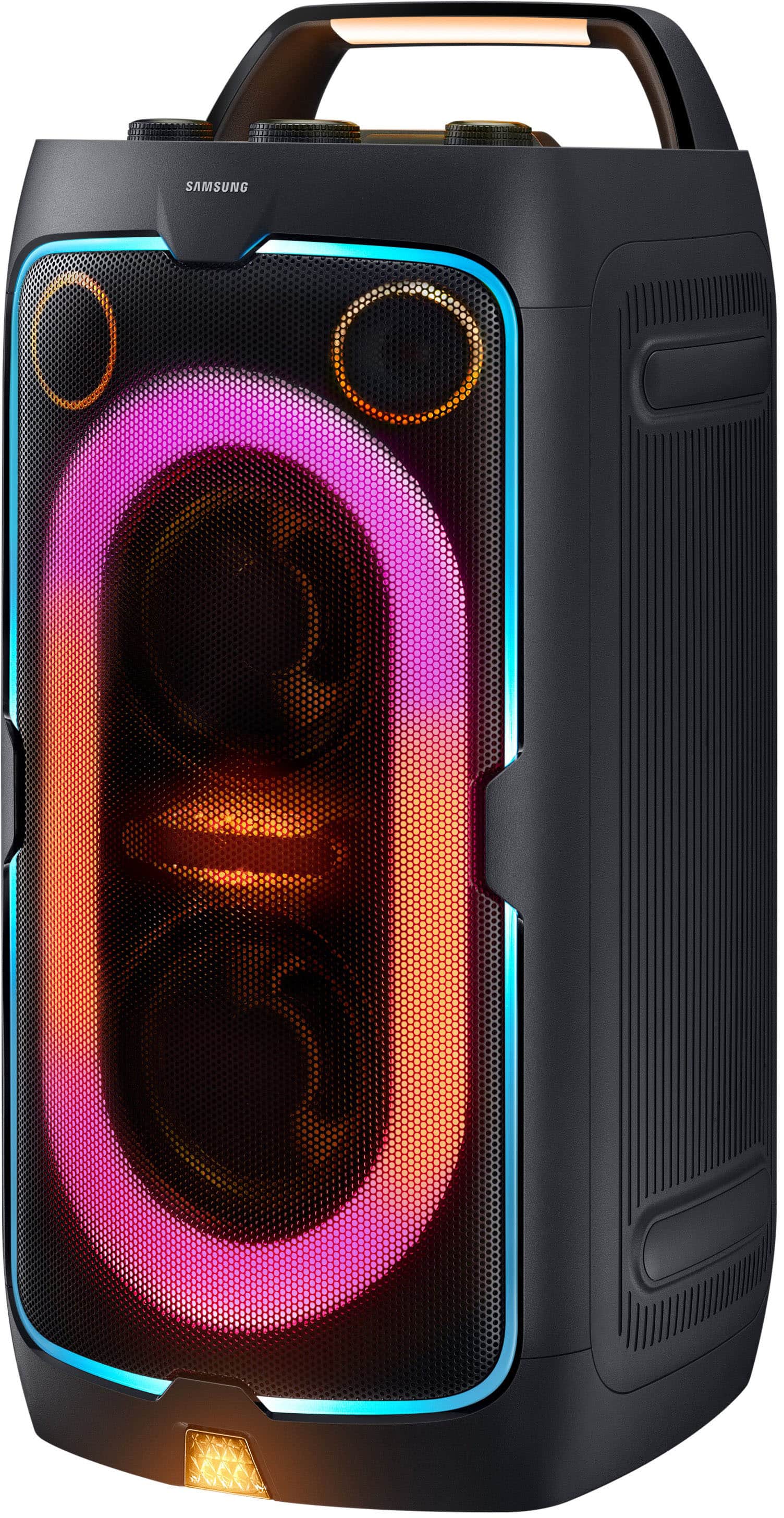
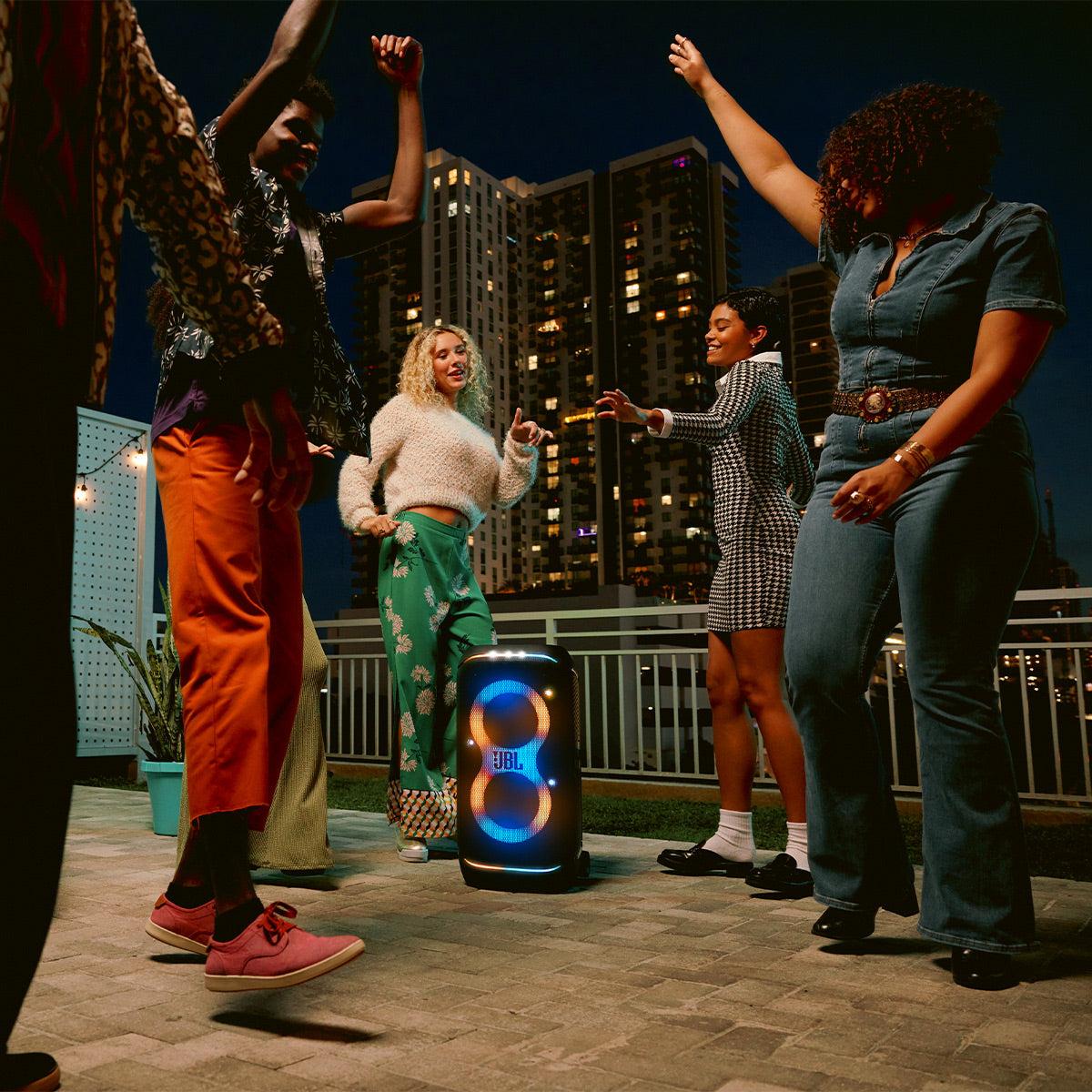
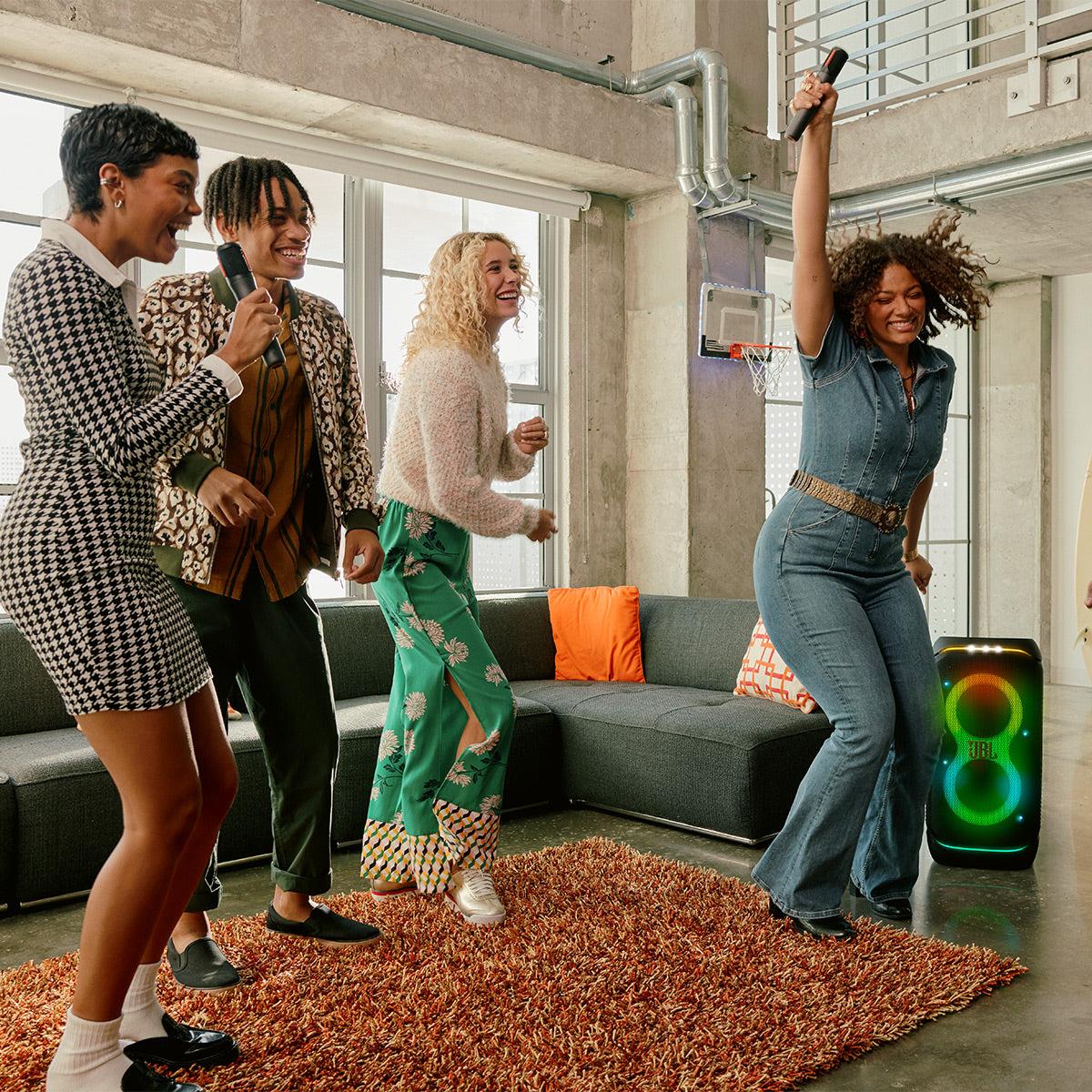
Portable party speakers have evolved dramatically over the past few years, transforming from simple Bluetooth boxes into sophisticated entertainment systems. These speakers need to do more than just play music loudly—they're expected to light up a room (literally), handle karaoke sessions, survive outdoor conditions, and keep the party going for hours without being plugged in.
Both the Samsung MX-ST40F and JBL PartyBox Stage 320 represent the latest generation of party speakers, but they take notably different approaches to solving the same problem. At the time of writing, both fall into the premium portable party speaker category with prices that reflect their advanced feature sets, though the JBL PartyBox Stage 320 commands a modest premium over the Samsung MX-ST40F.
Before diving into specifics, it's worth understanding what makes party speakers different from regular Bluetooth speakers or home audio systems. Party speakers prioritize maximum volume output, extended battery life, and entertainment features over the nuanced sound reproduction that audiophiles seek. They're engineered to fill large spaces with energetic, bass-heavy sound that cuts through conversation and ambient noise.
The most important considerations when evaluating party speakers include power output (how loud they can get), battery performance, portability features, durability for outdoor use, and party-specific features like lighting effects and karaoke capabilities. Sound quality matters, but it's balanced against the need for volume and excitement rather than critical listening accuracy.
The most critical difference between these speakers lies in their power delivery systems. The Samsung MX-ST40F produces 160 watts when plugged into AC power but drops significantly to just 80 watts when running on battery power. This represents a 50% reduction in output that fundamentally changes the speaker's character when untethered from the wall.
In contrast, the JBL PartyBox Stage 320 maintains a consistent 240 watts of stereo output regardless of power source. This consistency is crucial for party speakers because you often start indoors with AC power available, then move outside where only battery power is feasible.
To put these numbers in perspective, wattage directly correlates to maximum volume and bass impact. The difference between 80 watts and 240 watts isn't just numerical—it's the difference between filling a living room and commanding a backyard gathering. When the Samsung MX-ST40F switches to battery mode, it essentially becomes a different class of speaker entirely.
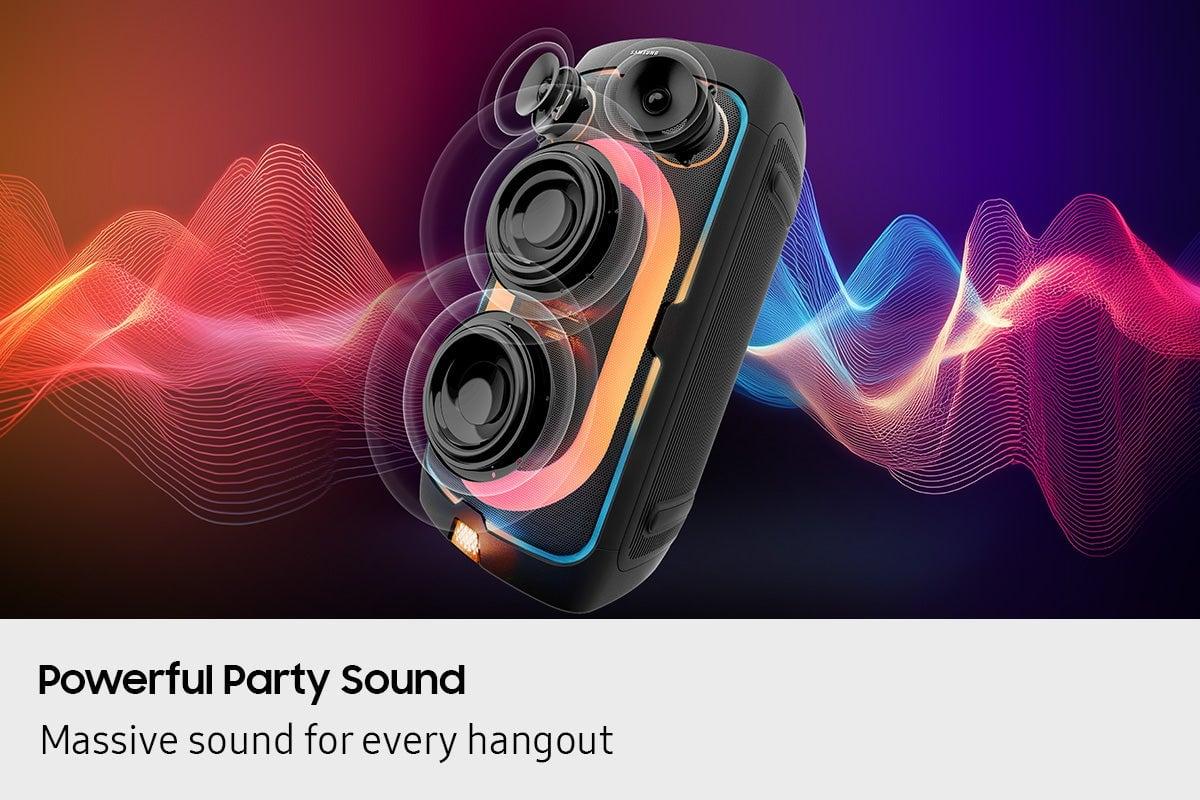
The Samsung MX-ST40F uses dual 5.25-inch woofers (the drivers responsible for bass and midrange frequencies) paired with 20mm dome tweeters that handle high frequencies. Samsung has equipped these tweeters with waveguide technology, which is essentially a specially shaped acoustic lens that helps spread high-frequency sound more evenly across a room instead of beaming it directly forward.
The JBL PartyBox Stage 320 steps up to larger 6.5-inch woofers, providing more surface area for moving air and creating deeper bass impact. JBL has also implemented their AI Sound Boost technology, which continuously analyzes the incoming audio signal and adjusts the speaker's performance in real-time to prevent distortion and maximize loudness. Think of it as having a sound engineer constantly tweaking the settings to get the best possible performance.
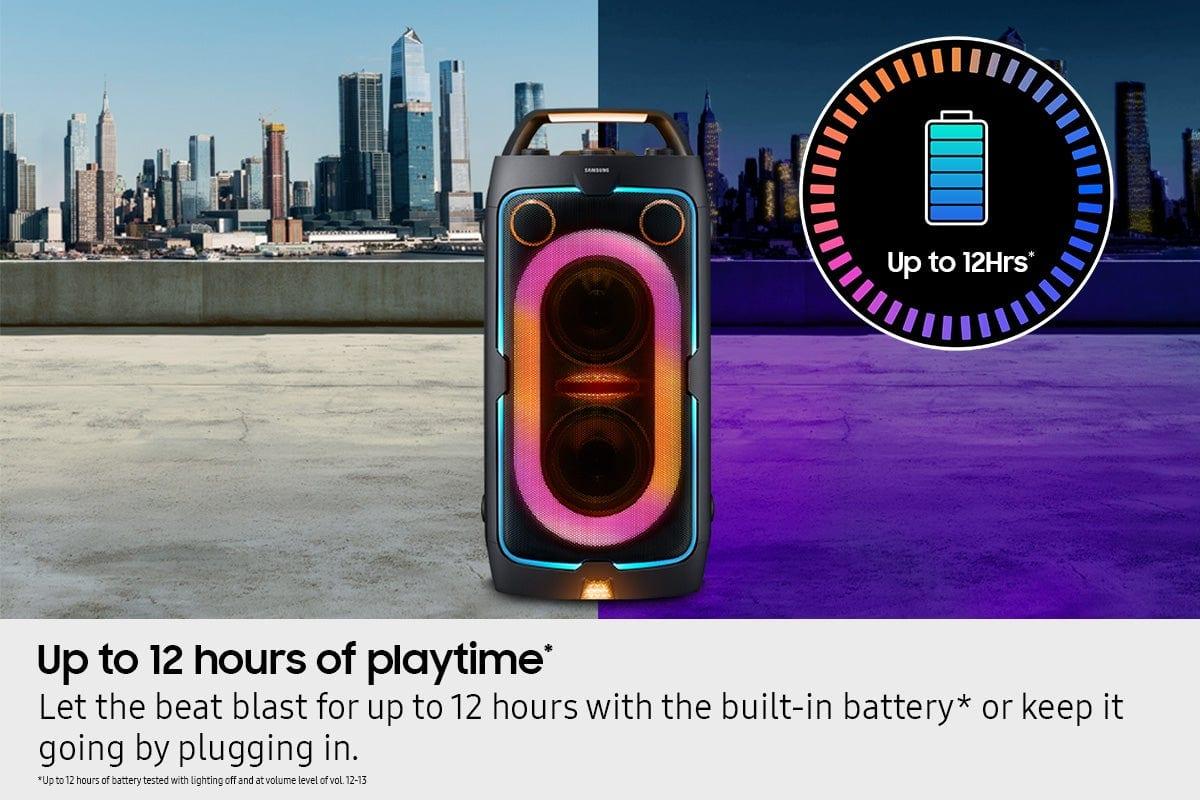
Battery performance tells an interesting story about engineering priorities. The Samsung MX-ST40F offers 12 hours of continuous playback with a replaceable battery design. The replaceable aspect is genuinely useful—when the battery dies, you can swap in a fresh one instead of waiting hours for a recharge. However, those 12 hours come with the caveat of reduced power output.
The JBL PartyBox Stage 320 achieves 18-23 hours of playback while maintaining full power throughout. This isn't just about longer runtime; it's about consistent performance. The swappable battery pack design means you can theoretically achieve unlimited runtime by rotating charged batteries, similar to professional audio equipment.
JBL has also included a 10-minute quick charge feature that provides approximately 2 hours of playback. This can be a party-saver when you've forgotten to charge overnight and guests are arriving soon.
From our research into user experiences, battery anxiety is real with party speakers. Nothing kills a gathering's momentum like a speaker dying mid-song, and the psychological comfort of knowing you have hours of reliable power remaining significantly impacts the user experience.
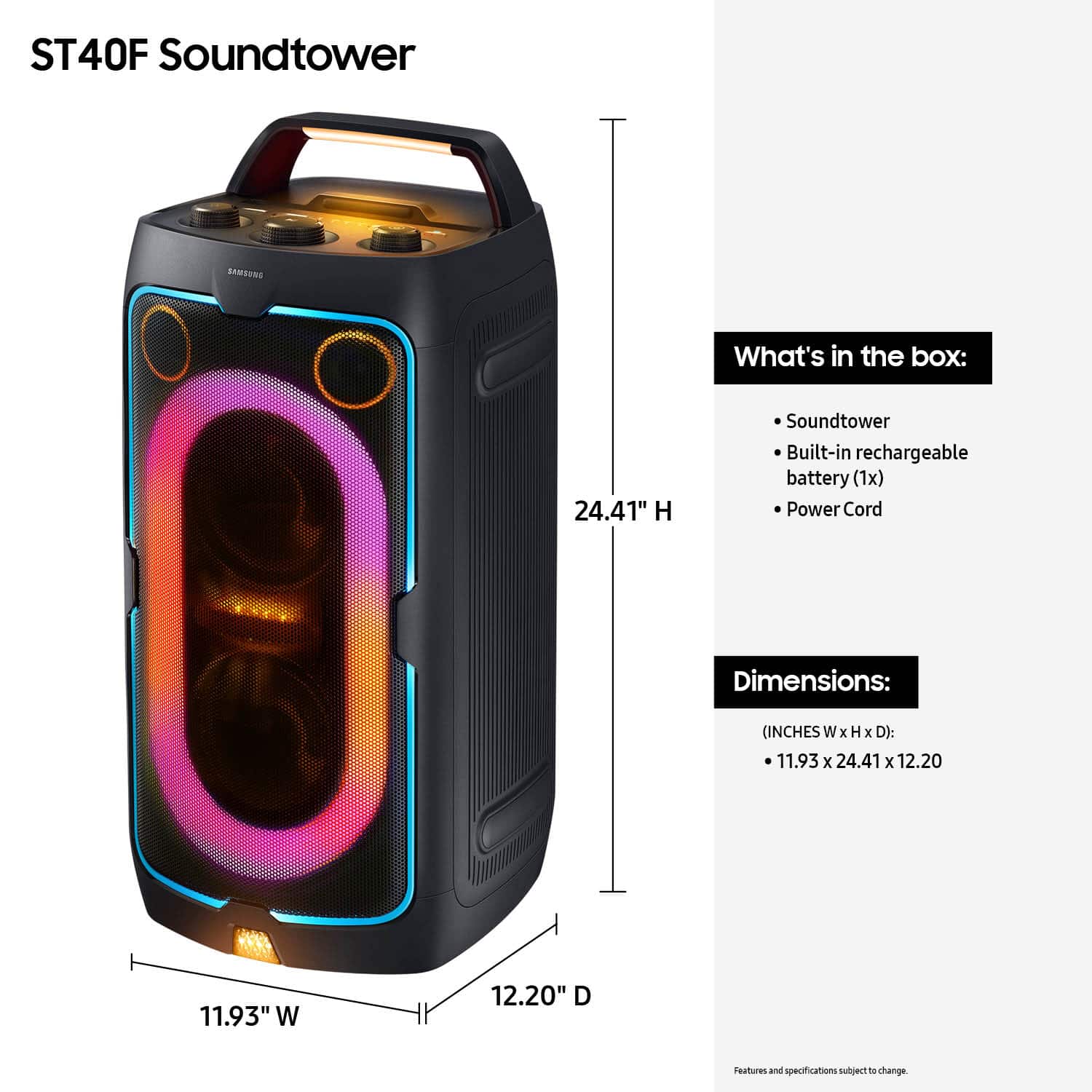
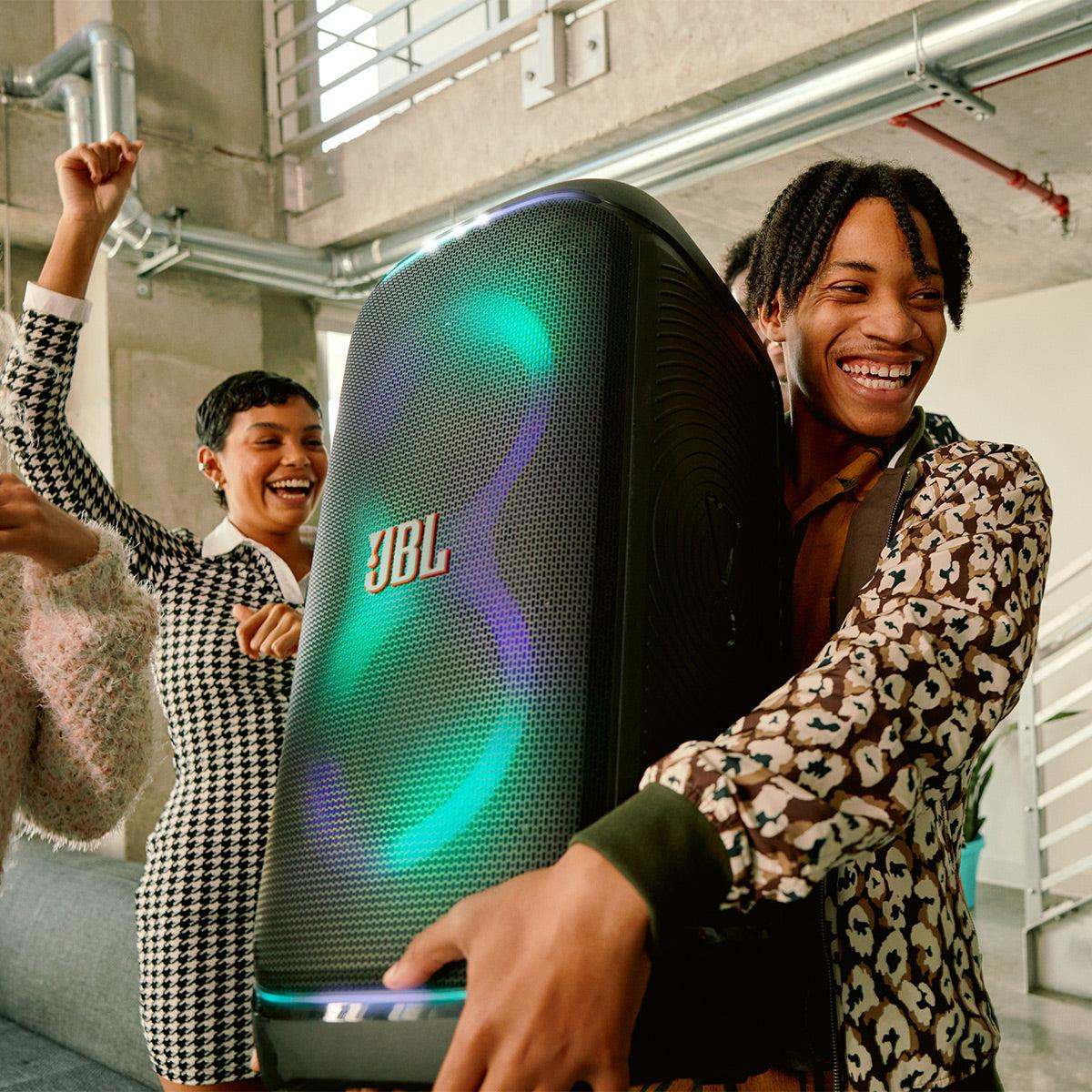
The portability equation involves more than just weight. The Samsung MX-ST40F weighs in at 12.73kg (about 28 pounds) with an integrated carrying handle. While lighter than its competitor, carrying 28 pounds any significant distance becomes uncomfortable quickly, especially when navigating stairs or uneven outdoor terrain.
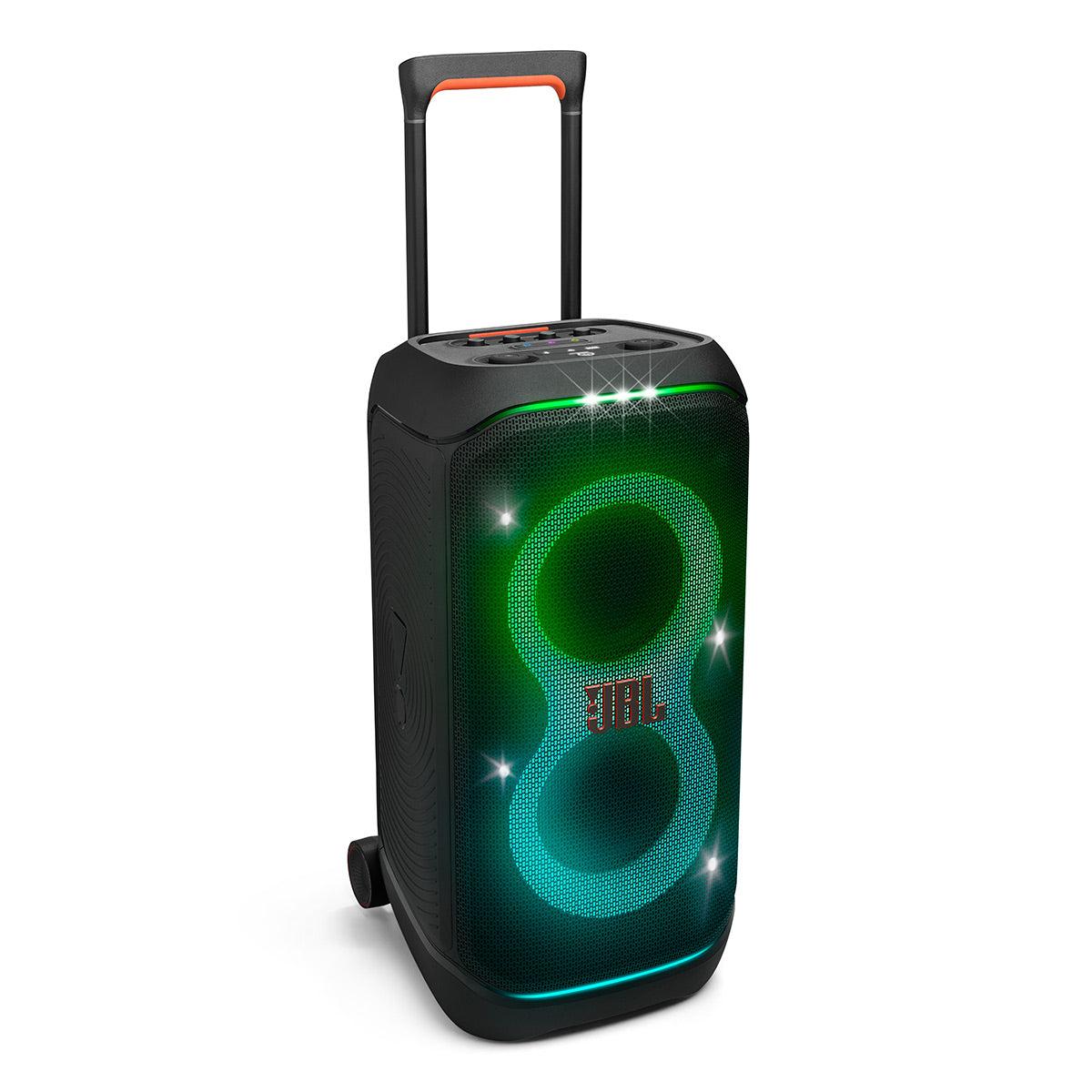
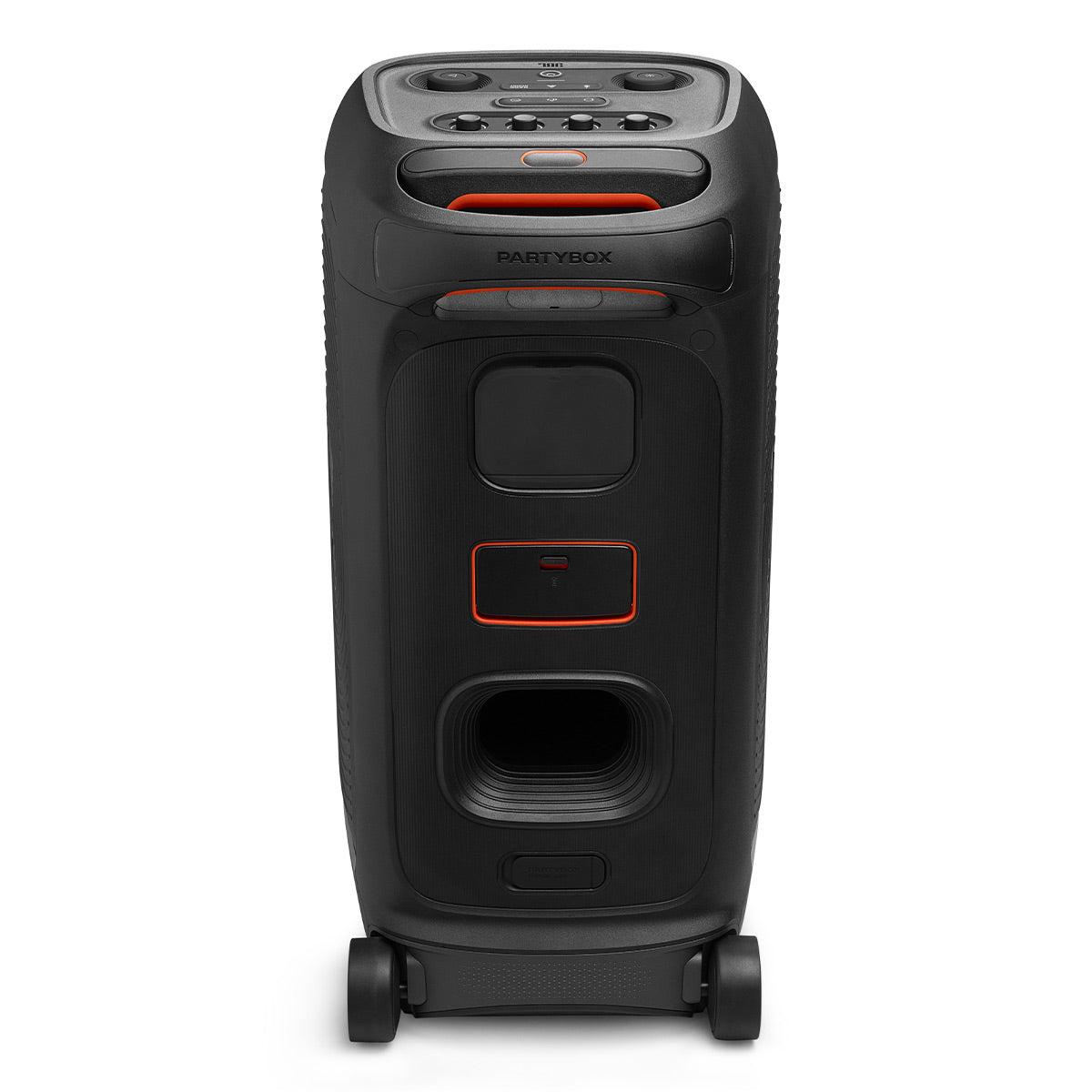
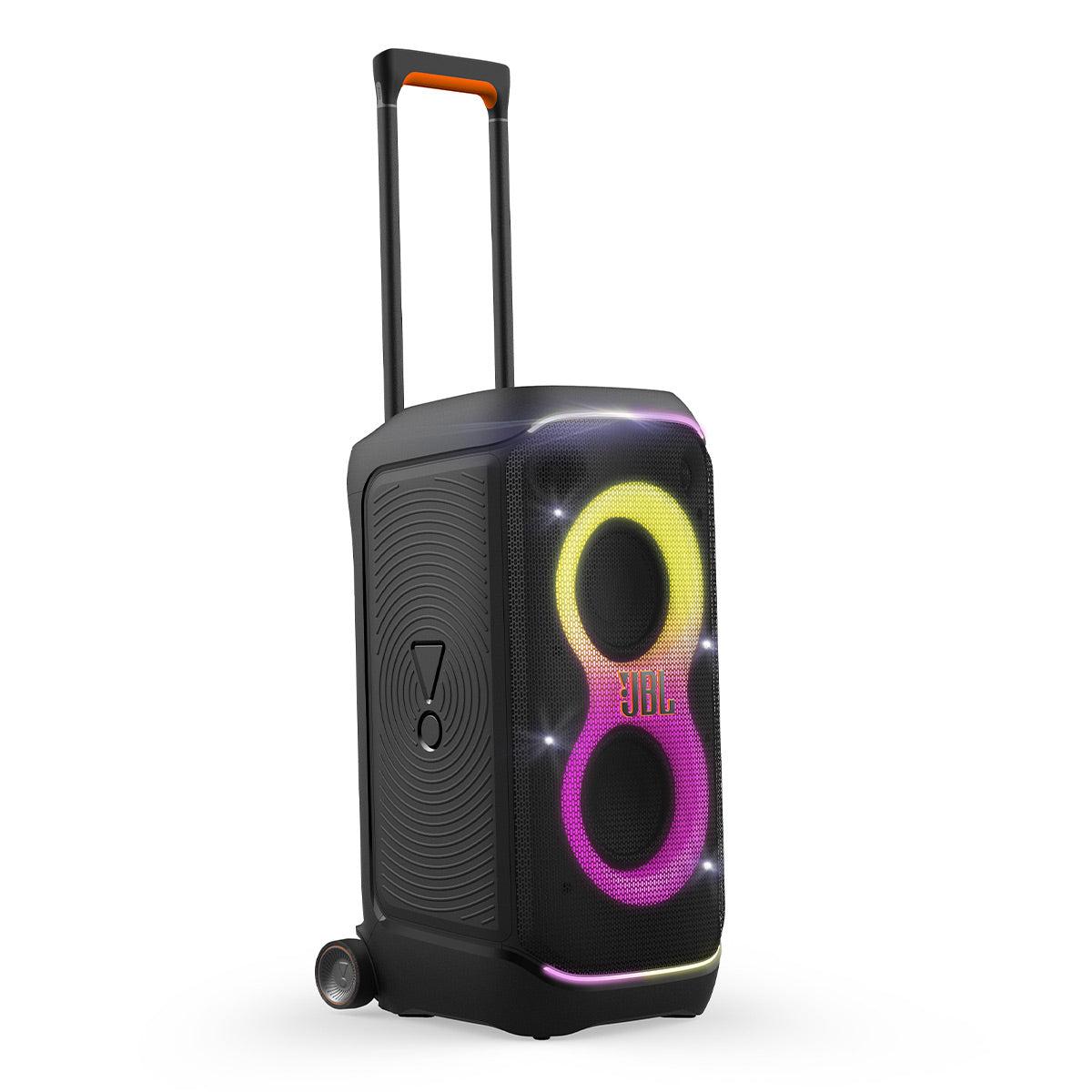
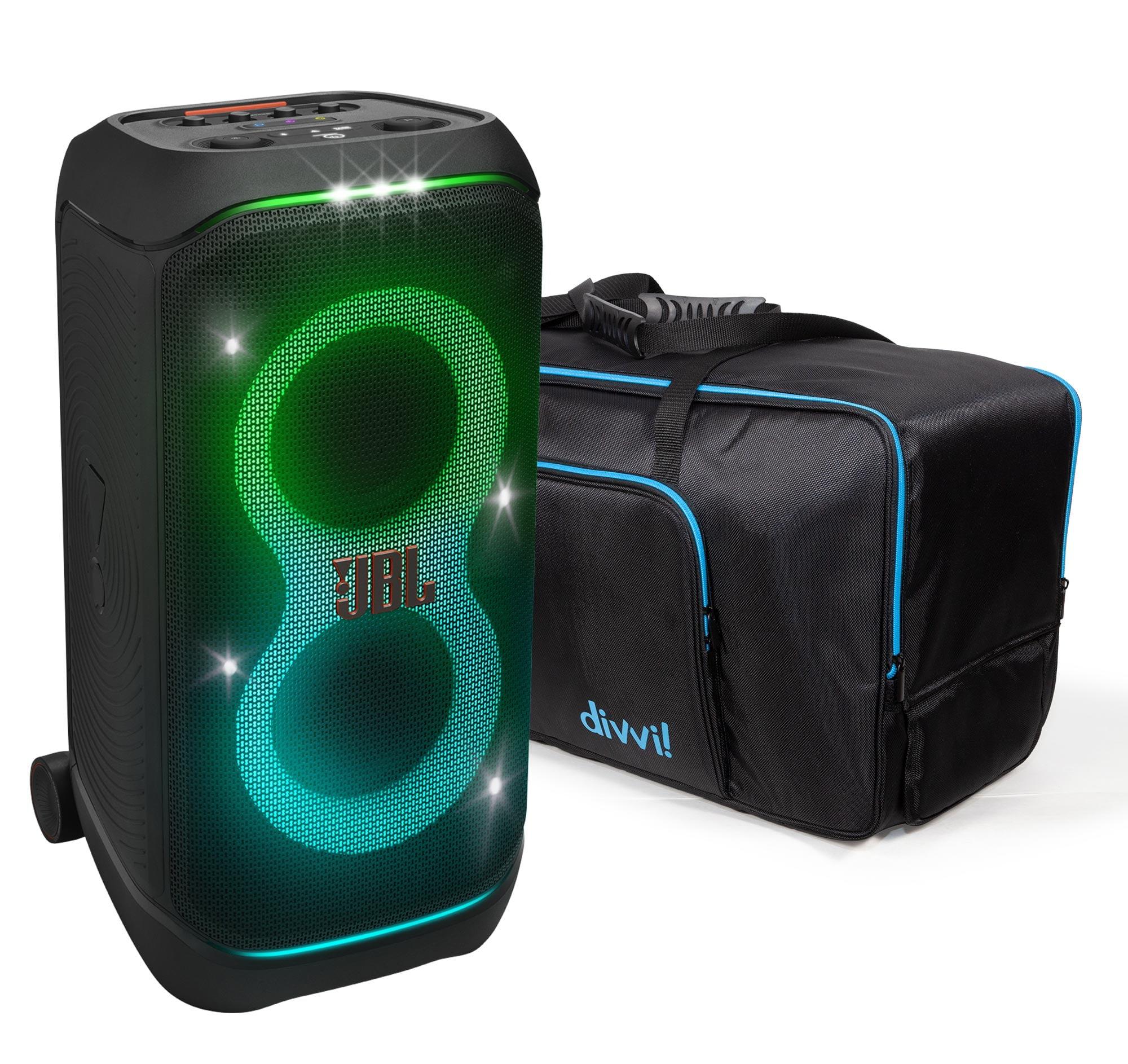
The JBL PartyBox Stage 320 is heavier at 16.5kg (approximately 36 pounds), but it includes telescopic handle and wide, sturdy wheels—essentially transforming into a piece of rolling luggage. This design philosophy acknowledges that party speakers are inherently heavy due to the large drivers and substantial batteries required for their performance goals.
In practice, the wheel-and-handle system makes the heavier JBL more practical to move than the lighter Samsung. It's the difference between carrying a heavy box versus wheeling a suitcase—the absolute weight matters less than the ease of transport.
Sound quality in party speakers involves different priorities than traditional hi-fi equipment. These speakers need to sound engaging and energetic rather than analytically accurate, with emphasis on bass impact and vocal clarity that cuts through party noise.
The Samsung MX-ST40F offers impressive customization through three distinct bass modes: Deep (emphasizes sub-bass frequencies for electronic music), Punchy (boosts mid-bass for rock and pop), and Gentle (balanced response for background listening). Additionally, four environmental sound modes adapt the audio profile for different spaces and use cases.
The waveguide technology in the Samsung's tweeters provides notably better sound dispersion than typical party speakers. This means the sound quality remains more consistent as you move around the room, rather than having a "sweet spot" directly in front of the speaker.
The JBL PartyBox Stage 320 takes a more straightforward approach with a bass-forward sound signature optimized for popular music genres. The larger 6.5-inch woofers deliver deeper, more physical bass impact that you feel as much as hear. However, our research indicates some compression occurs at maximum volume levels, and the directional nature of the design means audio quality varies depending on your listening position.
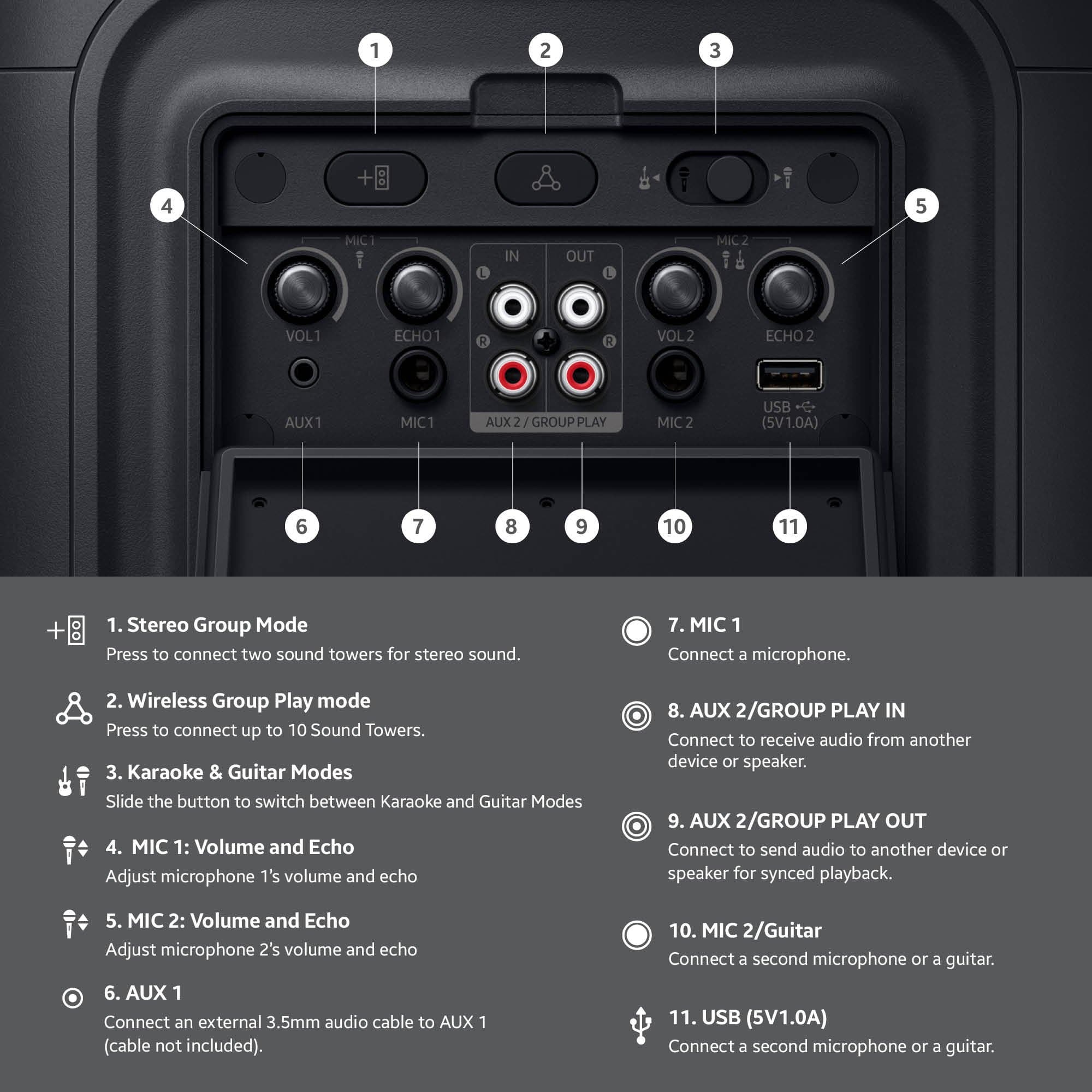
For home theater use, both speakers can connect to TVs and streaming devices, but the Samsung MX-ST40F offers a unique advantage with its True Wireless Stereo (TWS) capability. You can pair two Samsung MX-ST40F units to create a proper stereo setup, positioning one speaker on each side of your TV for genuine left-right channel separation. This transforms your living room into a more immersive audio environment for movies and shows.
The entertainment features reveal each manufacturer's interpretation of what makes a great party speaker. The Samsung MX-ST40F focuses heavily on connectivity and multi-speaker capabilities. Its Auracast technology allows you to wirelessly connect up to 10 Sound Towers together, creating a massive distributed sound system for large events. This could be transformative for wedding receptions, outdoor festivals, or any gathering where you need to fill multiple spaces with synchronized audio.
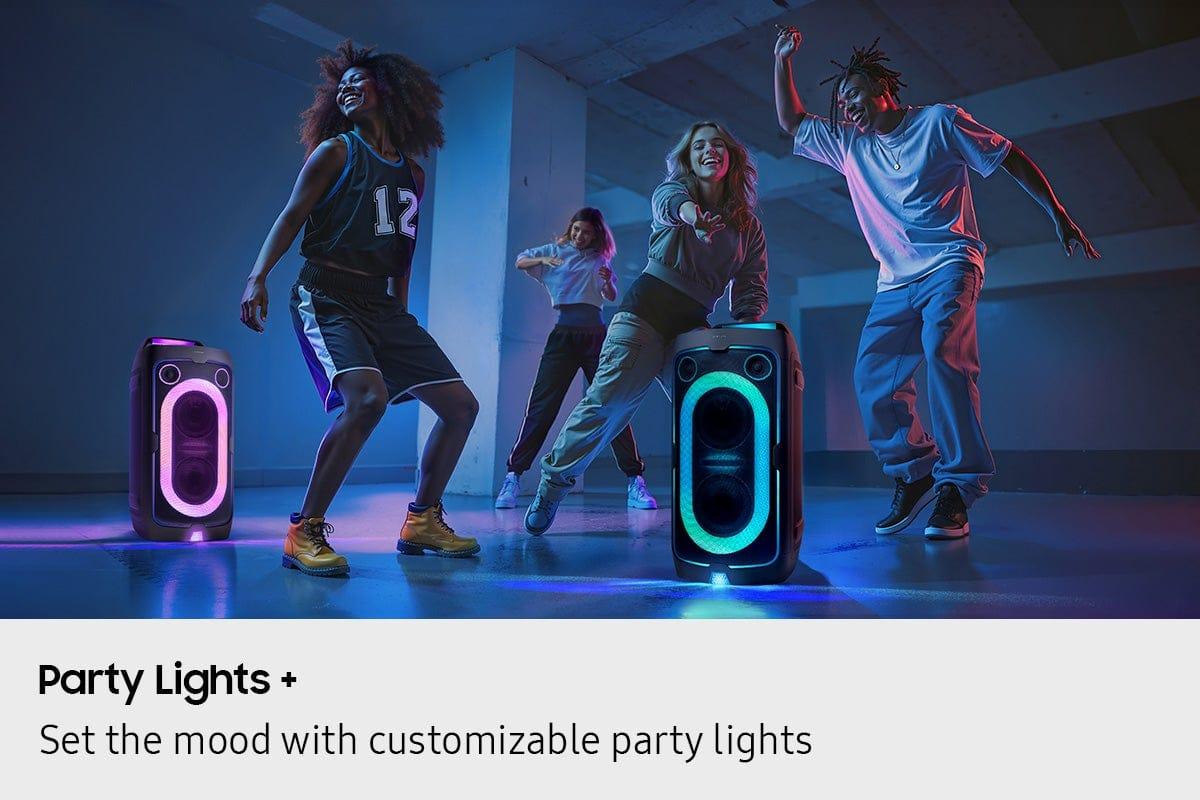
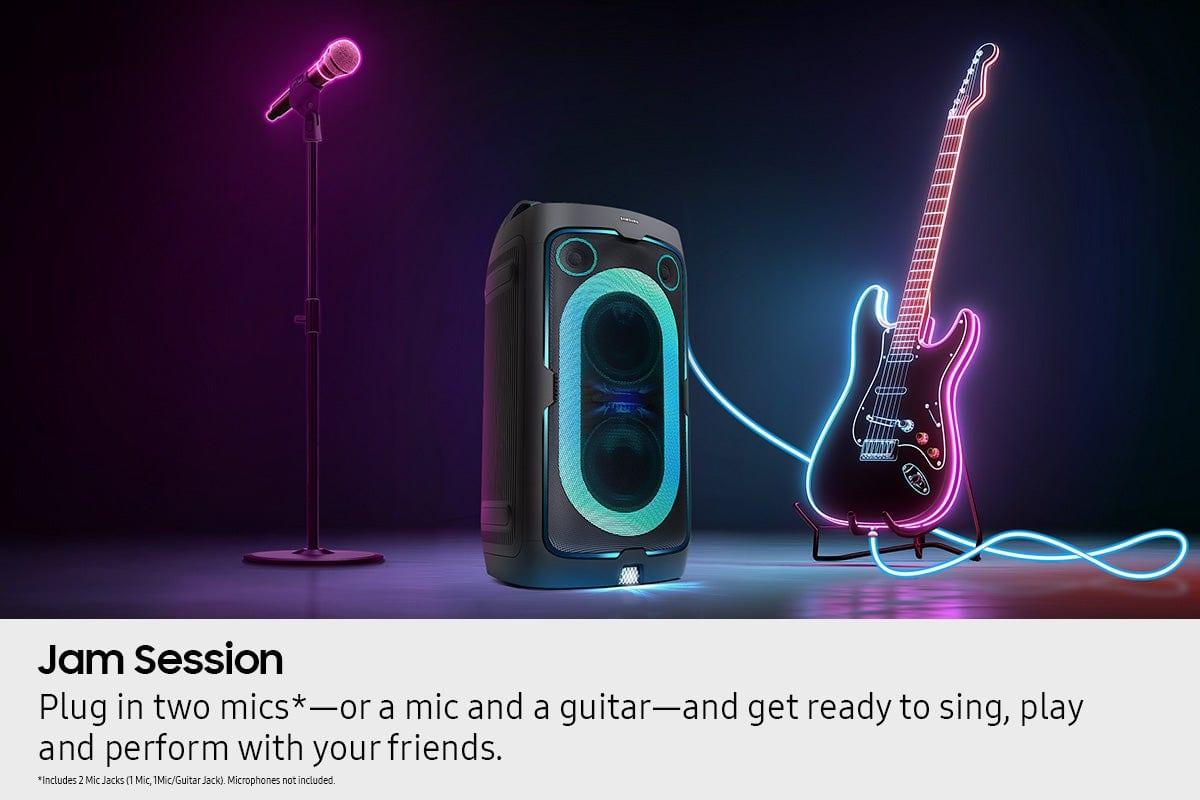
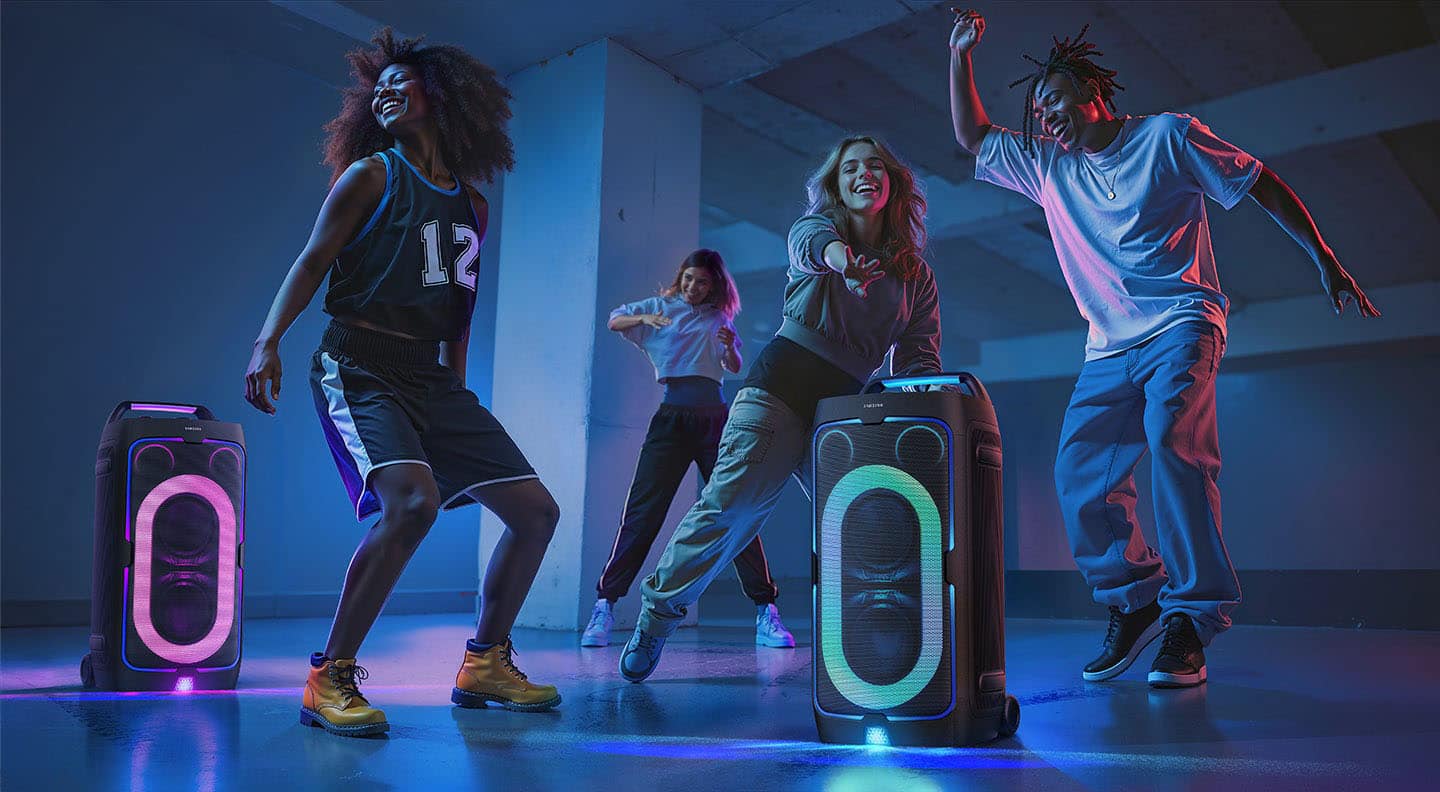
Samsung's Party Lights+ system offers six customizable LED lighting patterns with full color control through their Sound Tower app. The lighting syncs to music rhythm and can be tailored to match party themes or personal preferences. For karaoke enthusiasts, the Samsung MX-ST40F includes comprehensive features like voice recording, voice removal from tracks, and a 12-sound sampler for adding sound effects.
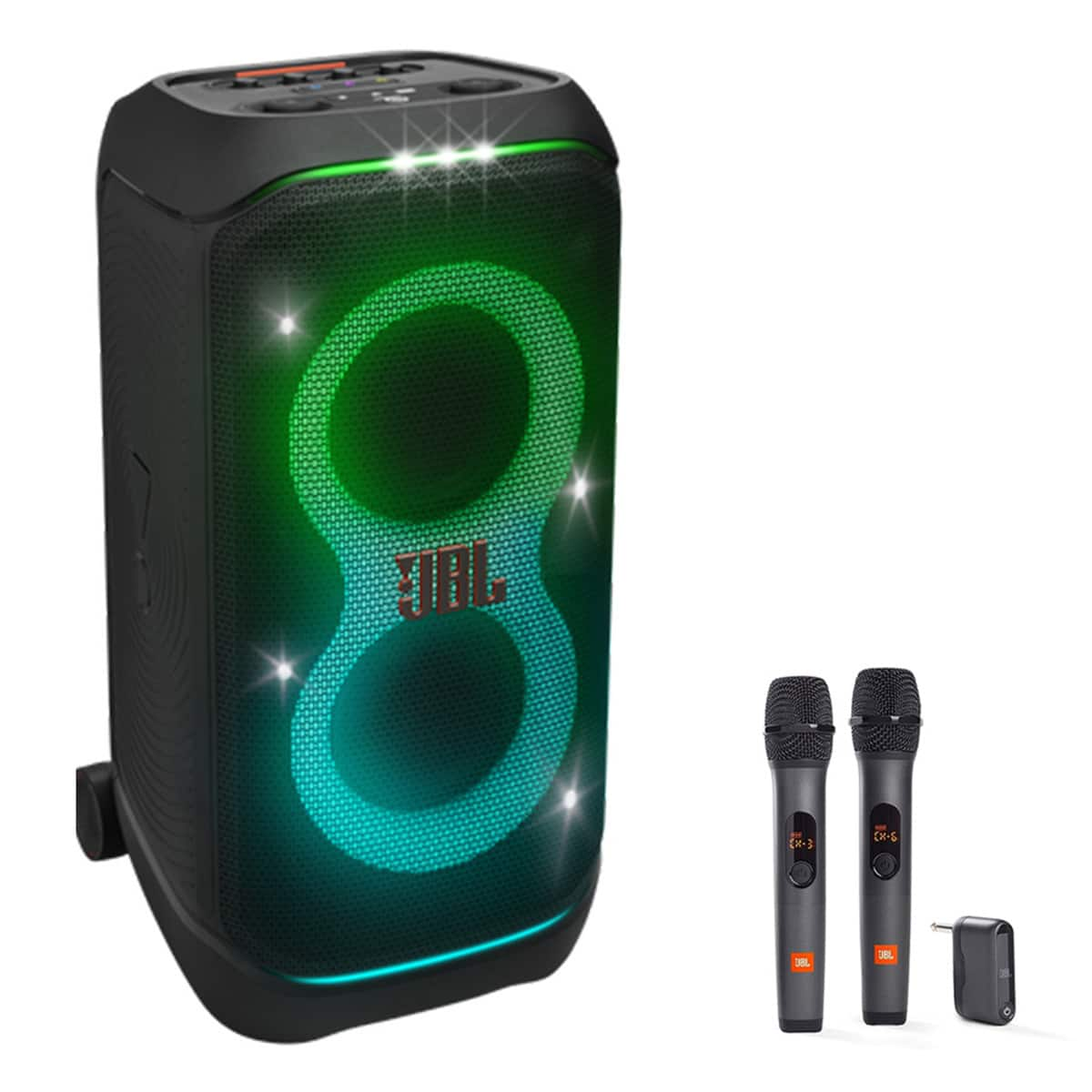
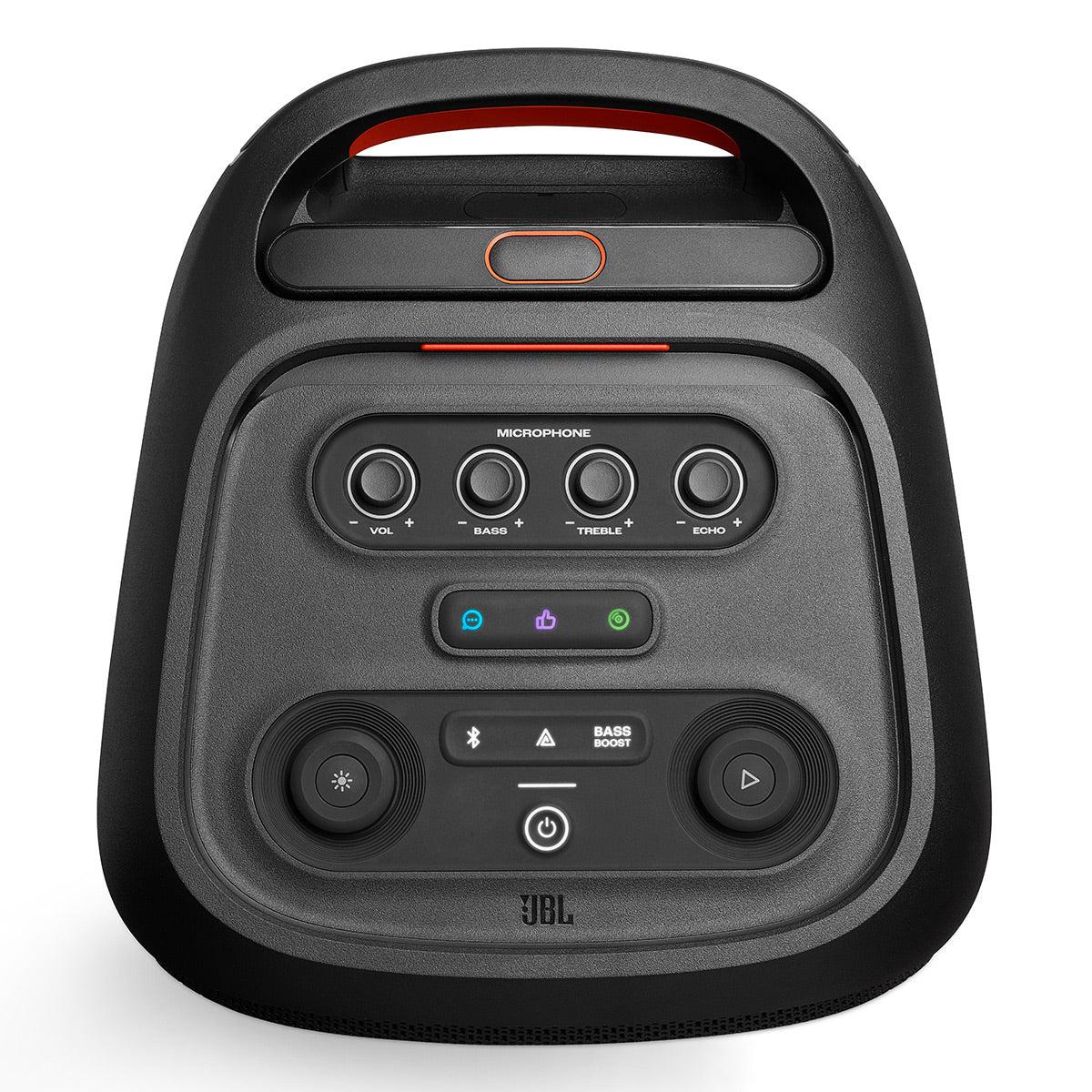
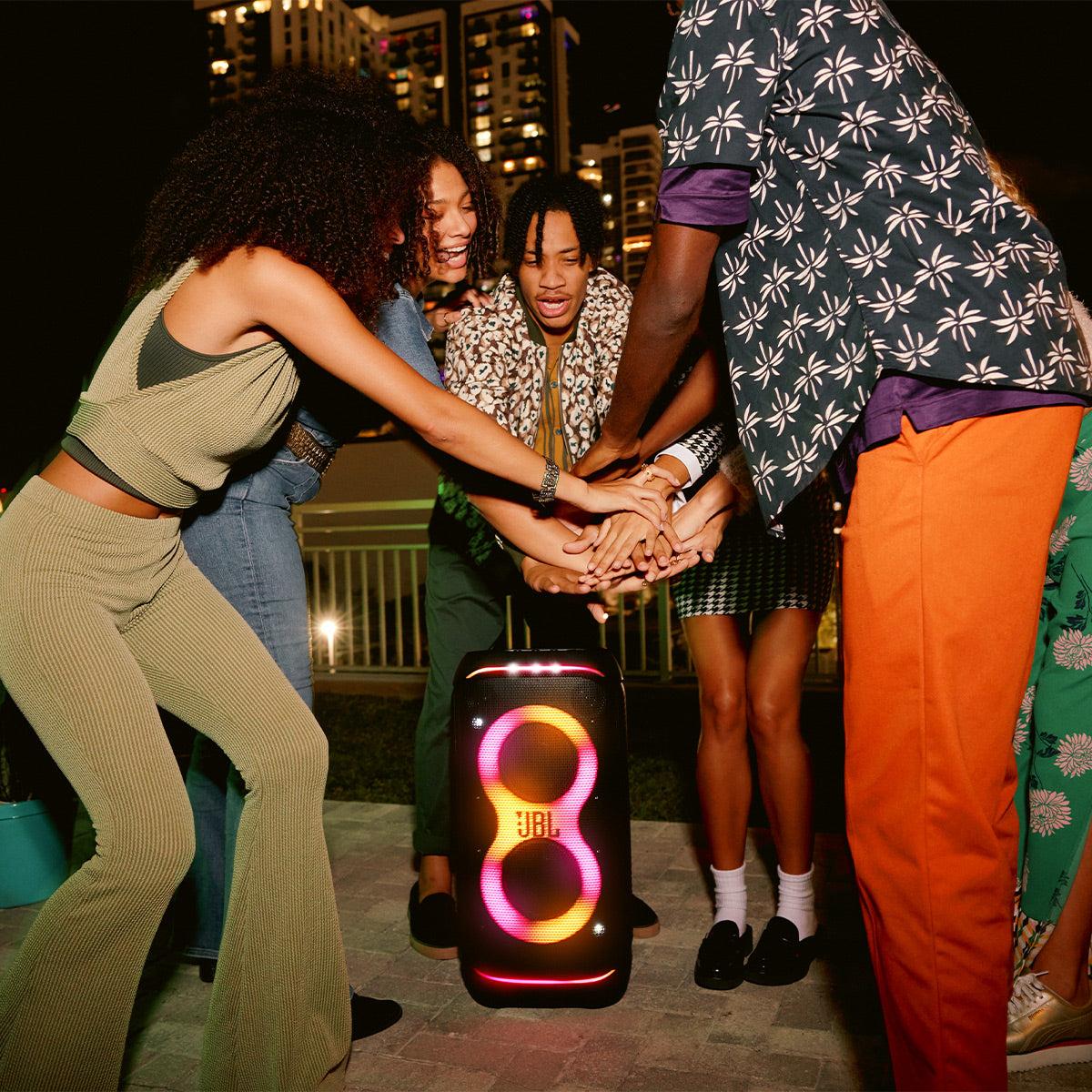
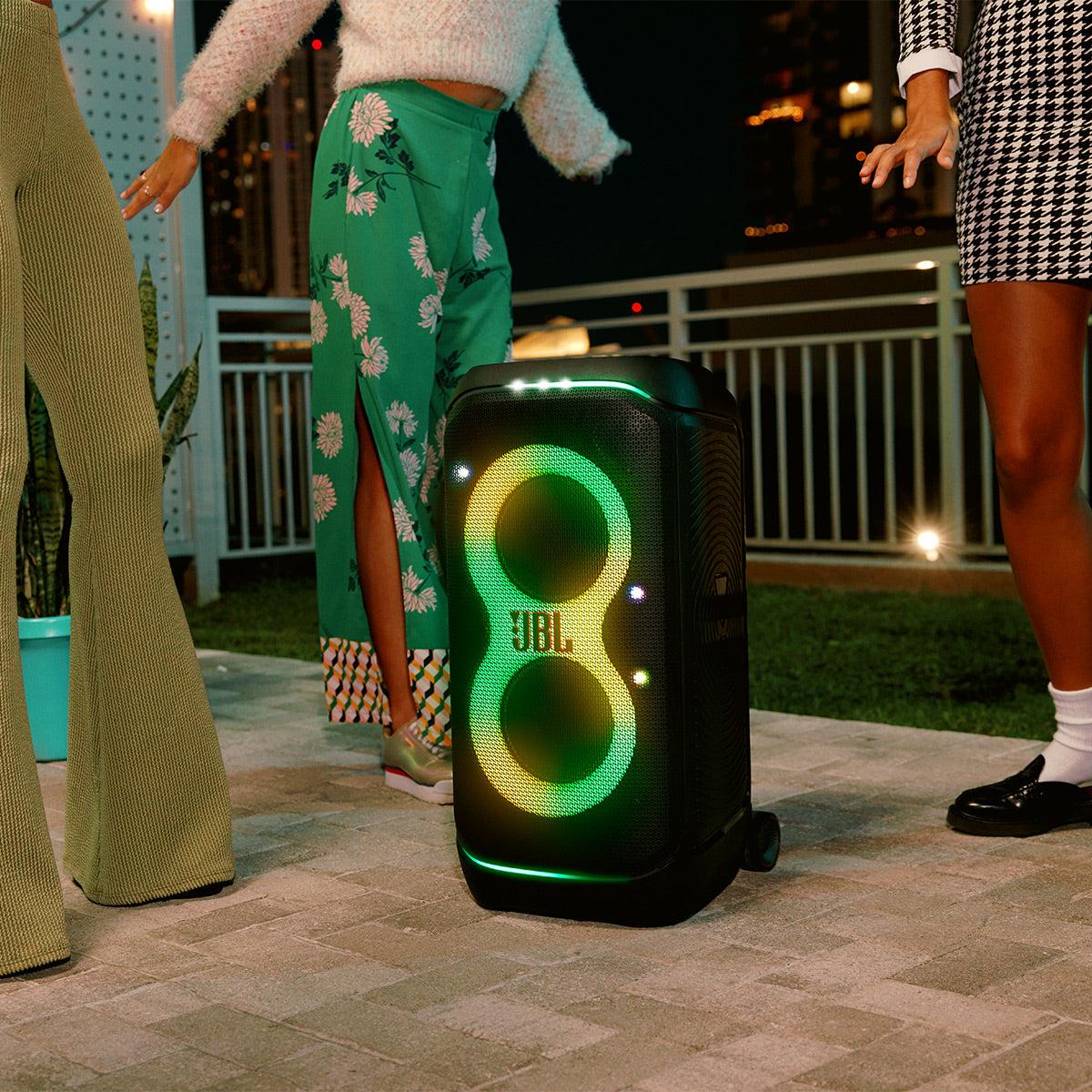
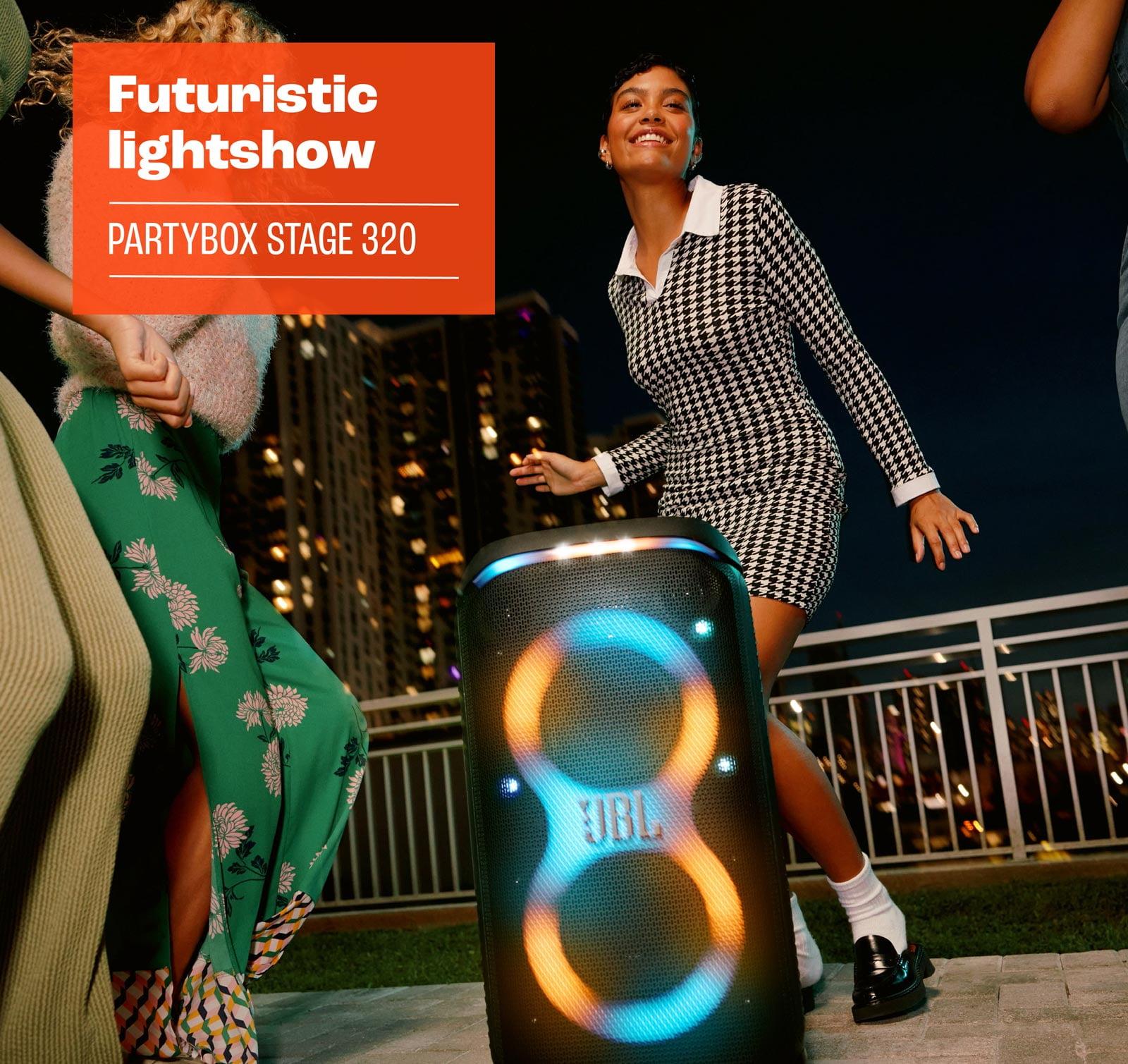
The JBL PartyBox Stage 320 emphasizes immediate usability with physical DJ effect controls on the top panel. You can add echo, adjust bass and treble, or trigger sound effects without touching your phone—crucial when your hands are busy or the app isn't immediately accessible. The dynamic RGB light show includes starry effects, light trails, and strobe patterns that create an impressive visual display.
JBL's approach includes independent gain controls for the dual microphone and guitar inputs, making it more suitable for actual live performance scenarios. If you have friends who play instruments or sing seriously, the JBL PartyBox Stage 320 provides more professional-level input handling.
Both speakers embrace modern connectivity standards, but with different emphasis. The Samsung MX-ST40F supports Bluetooth multi-connection, allowing two smartphones to pair simultaneously. This eliminates the awkward "disconnect so I can play my song" moments that plague many party speakers. Friends can take turns controlling music without technical interruptions.
The JBL PartyBox Stage 320 features Bluetooth 5.4 with multipoint connection and lower latency for better lip-sync when watching videos. The newer Bluetooth version provides more stable connections and better power efficiency.
Both speakers decode high-quality audio formats including FLAC (lossless compression that preserves original recording quality) and support USB input for playing music directly from flash drives—useful when you want to avoid Bluetooth limitations or phone battery concerns.
Party speakers face harsh conditions: poolside splashes, beach sand, temperature extremes, and frequent transport. Both the Samsung MX-ST40F and JBL PartyBox Stage 320 carry IPX4 splash-proof ratings, meaning they can handle water splashing from any direction but aren't submersible.
The IPX4 rating provides peace of mind for poolside parties or light rain, but neither speaker is designed for beach use where sand infiltration could damage drivers or controls. The build quality appears robust on both units, with the JBL PartyBox Stage 320's wheel-and-handle system suggesting additional reinforcement for frequent transport stress.
At the time of writing, the Samsung MX-ST40F represents better value for users who primarily operate near AC power sources. If your typical use involves house parties, backyard gatherings with extension cords available, or indoor events, the 160-watt AC mode provides substantial sound with advanced connectivity features at a lower price point.
The JBL PartyBox Stage 320 justifies its premium through superior portable performance. The consistent 240-watt output, extended battery life, and practical transport features make it ideal for true mobility—beach parties, camping trips, or events where power sources are unavailable or inconvenient.
Choose the Samsung MX-ST40F if you prioritize advanced multi-speaker connectivity, comprehensive karaoke features, and excellent value for primarily AC-powered use. The ability to link up to 10 speakers wirelessly could be transformative for large events, and the lower price point makes it accessible for users who don't need maximum portable power.
The True Wireless Stereo capability makes it particularly appealing for home theater enhancement, allowing you to create a proper stereo soundstage that elevates movie and TV experiences beyond what single speakers can achieve.
Choose the JBL PartyBox Stage 320 if maximum volume, extended battery life, and true portability are priorities. The consistent 240-watt output and 18+ hour runtime make it ideal for all-day outdoor events, while the wheels and handle system acknowledge the practical realities of moving heavy audio equipment.
The physical DJ controls and professional-grade input handling make it better suited for users who frequently incorporate live instruments or serious karaoke sessions into their gatherings.
Both speakers represent solid engineering compromises between competing priorities, but they serve slightly different use cases within the party speaker category. The modest price difference between them becomes less significant when you consider the substantial performance differences in portable scenarios—making the JBL PartyBox Stage 320 the better choice for users who prioritize true mobility, while the Samsung MX-ST40F offers superior value for more stationary party applications.
| Samsung MX-ST40F Sound Tower Speaker | JBL PartyBox Stage 320 Portable Speaker |
|---|---|
| Power Output - Critical for volume and bass impact at parties | |
| 160W (AC mode) / 80W (battery mode) - significant power drop when unplugged | 240W consistent output - maintains full power on battery |
| Battery Life - Determines how long your party can last | |
| 12 hours with replaceable battery | 18-23 hours with swappable battery packs |
| Portability Features - Essential for moving between locations | |
| 12.73kg with handle only - lighter but must be carried | 16.5kg with wheels and telescopic handle - heavier but easier to transport |
| Driver Configuration - Affects sound quality and bass depth | |
| Dual 5.25" woofers + 20mm tweeters with waveguide tech | Dual 6.5" woofers + dual tweeters - larger drivers for deeper bass |
| Water Resistance - Important for outdoor and poolside use | |
| IPX4 splash-proof rating | IPX4 splash-proof rating |
| Multi-Speaker Connectivity - For scaling up to larger events | |
| Auracast supports up to 10 wirelessly connected Samsung MX-ST40F units | Standard JBL Connect for linking compatible speakers |
| Lighting Effects - Enhances party atmosphere | |
| Party Lights+ with 6 customizable patterns via app | Dynamic RGB lightshow with starry effects and strobes |
| Karaoke Features - For sing-along entertainment | |
| Dual mic/guitar inputs, voice recording, voice removal, 12-sound sampler | Dual mic/guitar inputs with independent gain controls |
| Physical Controls - For adjusting settings without using phone | |
| Basic controls on speaker | Full DJ effect controls on top panel |
| Bluetooth Connectivity - For seamless device switching | |
| Multi-connection (2 devices simultaneously) + Bluetooth 5.4 | Multipoint connection + Bluetooth 5.4 with lower latency |
| Best Use Case - Who should choose this speaker | |
| House parties and AC-powered events where multi-speaker linking matters | True portable parties and outdoor events requiring maximum power |
The JBL PartyBox Stage 320 is significantly louder with 240W of consistent power output compared to the Samsung MX-ST40F, which delivers 160W when plugged in but drops to only 80W on battery power. For maximum volume at outdoor parties, the JBL PartyBox Stage 320 provides superior loudness and bass impact.
The JBL PartyBox Stage 320 offers superior battery performance with 18-23 hours of continuous playback while maintaining full power. The Samsung MX-ST40F provides 12 hours of battery life, but you'll experience reduced volume and bass since it drops from 160W to 80W when unplugged from AC power.
The Samsung MX-ST40F is better suited for home theater applications thanks to its True Wireless Stereo (TWS) feature, which allows you to pair two units for proper left-right stereo separation when watching movies or TV shows. The JBL PartyBox Stage 320 works as a single powerful speaker for TV audio but lacks stereo pairing capabilities.
Despite being heavier, the JBL PartyBox Stage 320 is easier to transport thanks to its built-in wheels and telescopic handle - you can roll it like luggage. The Samsung MX-ST40F is lighter at 12.73kg but only has a carrying handle, requiring you to lift and carry the full weight when moving between locations.
The Samsung MX-ST40F excels at multi-speaker connectivity, supporting up to 10 wirelessly connected units through Auracast technology for massive sound coverage. The JBL PartyBox Stage 320 can connect to other compatible JBL speakers but doesn't offer the same extensive multi-unit linking capabilities as the Samsung MX-ST40F.
Both speakers prioritize party sound over audiophile accuracy, but they take different approaches. The Samsung MX-ST40F offers better sound dispersion through waveguide technology and three customizable bass modes for different music styles. The JBL PartyBox Stage 320 delivers more powerful, physical bass impact with its larger 6.5-inch woofers but has more directional sound.
Both the Samsung MX-ST40F and JBL PartyBox Stage 320 feature IPX4 splash-proof ratings, making them suitable for poolside use and light rain. However, neither speaker is fully waterproof or submersible, so they should be kept away from direct water exposure and beach sand.
The Samsung MX-ST40F offers more comprehensive karaoke features including voice recording, voice removal from tracks, and a 12-sound sampler for effects. The JBL PartyBox Stage 320 provides more professional mic and guitar inputs with independent gain controls, making it better for serious live performances and instrument playing.
The JBL PartyBox Stage 320 features extensive physical controls on the top panel, including DJ effects, bass/treble adjustments, and lighting controls for immediate access without your phone. The Samsung MX-ST40F has basic physical controls but relies more heavily on the Samsung Sound Tower app for accessing advanced features and customization.
The Samsung MX-ST40F provides better value for users who primarily use AC power and want advanced multi-speaker connectivity at a lower price point. The JBL PartyBox Stage 320 justifies its higher cost with consistent high power output, longer battery life, and superior portability features for true mobile use.
The JBL PartyBox Stage 320 is specifically designed for outdoor use with consistent 240W power output, extended battery life, and wheels for easy transport across various terrains. While the Samsung MX-ST40F works outdoors, its reduced 80W battery power significantly limits its effectiveness for large outdoor gatherings compared to the JBL PartyBox Stage 320.
Both speakers support modern Bluetooth connectivity, but the Samsung MX-ST40F allows two smartphones to connect simultaneously for seamless playlist switching between friends. The JBL PartyBox Stage 320 features Bluetooth 5.4 with lower latency, making it better for watching videos without audio sync issues, though both Samsung MX-ST40F and JBL PartyBox Stage 320 handle basic music streaming well.
We've done our best to create useful and informative comparisons to help you decide what product to buy. Our research uses advanced automated methods to create this comparison and perfection is not possible - please contact us for corrections or questions. These are the sites we've researched in the creation of this article: samsung.com - samsung.com - youtube.com - samsung.com - youtube.com - thefrogpadappliances.com - bestbuy.com - standardtvandappliance.com - samsung.com - youtube.com - youtube.com - youtube.com - news.samsung.com - videoandaudiocenter.com - arrowassociatedstores.com - shopjetson.com - stereoguide.com - soundguys.com - rtings.com - soundguys.com - soundguys.com - rtings.com - jbl.com - youtube.com - youtube.com - youtube.com - youtube.com - rtings.com - 9to5toys.com - versus.com - cdw.com - jbl.com - projectorscreenstore.com - projectorscreen.com - ro.harmanaudio.com - jbl.co.nz - bestbuy.com - youtube.com

Privacy Policy
Terms and Conditions - Affiliate Policy
Home Security
© Copyright 2008-2026.
11816 Inwood Rd #1211, Dallas, TX 75244