

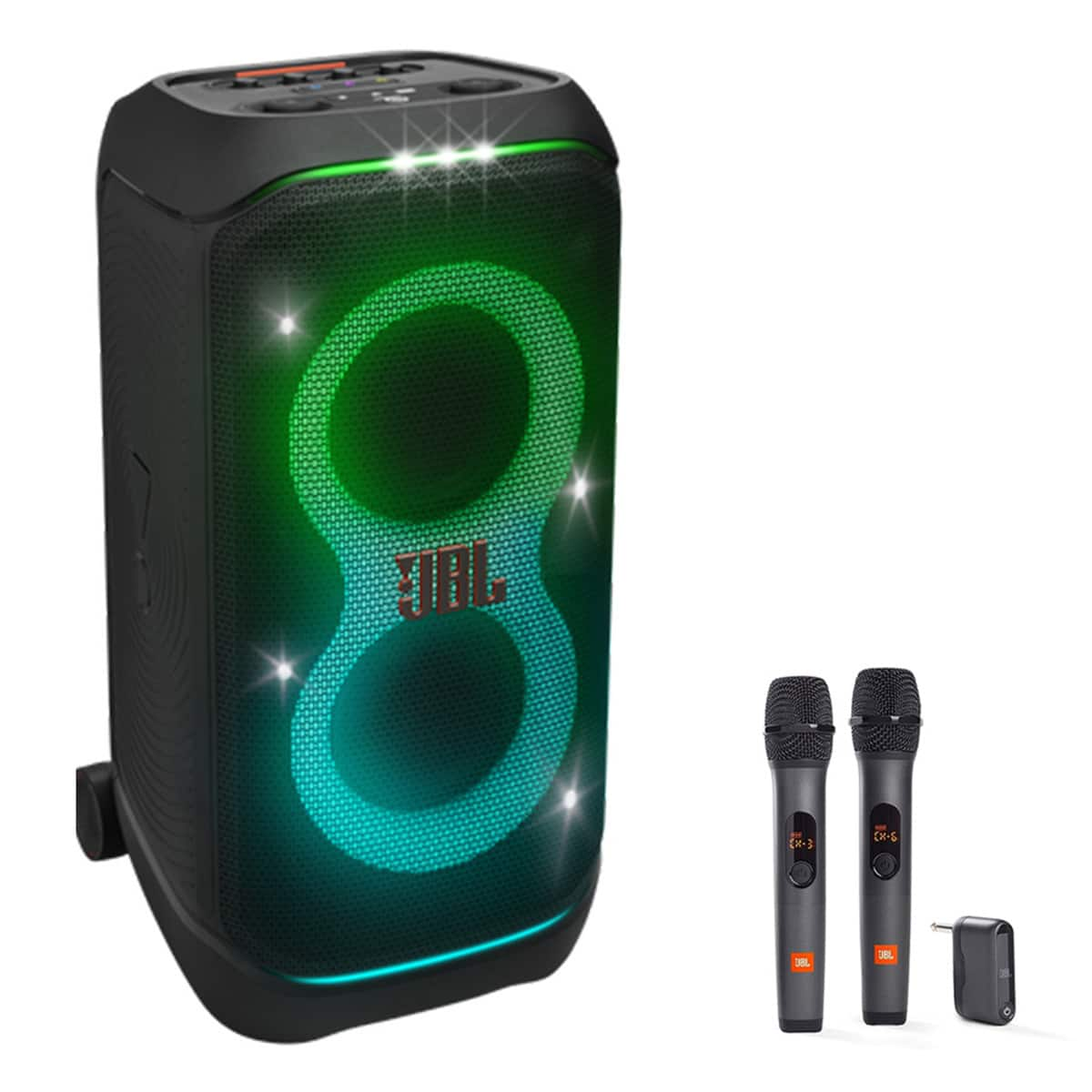
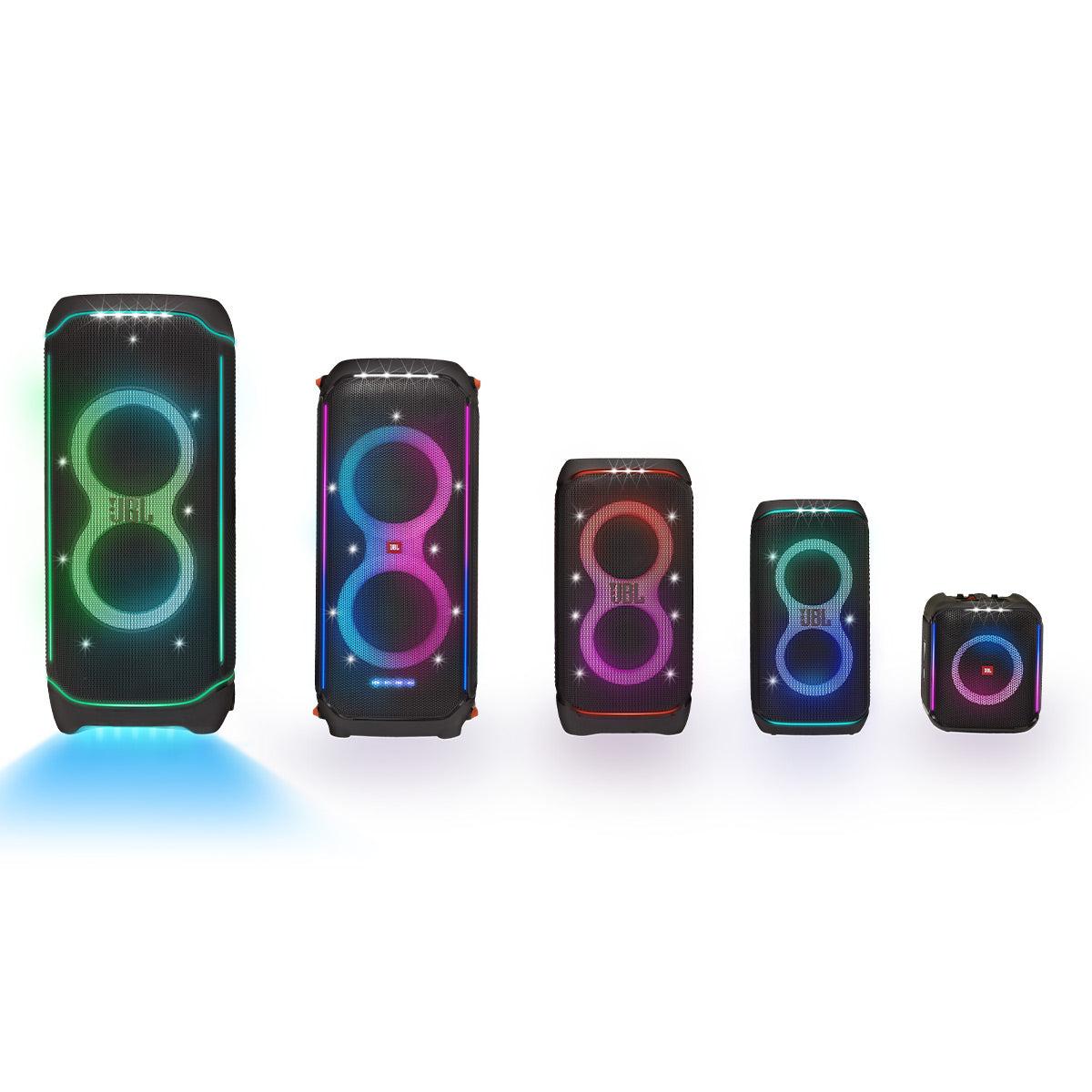
Party speakers have evolved far beyond basic Bluetooth boxes. Today's models pump out serious power, create mesmerizing light shows, and pack features that would make professional DJ equipment jealous. But with great power comes great confusion—especially when choosing between JBL's PartyBox Stage 320 and the massive PartyBox Ultimate.
These speakers represent two completely different philosophies: portable party power versus stationary sonic supremacy. Getting this choice wrong means either lugging around an 87-pound monster to your friend's backyard BBQ or showing up to a warehouse rave with a speaker that gets drowned out by conversation.
Party speakers live in their own category because they prioritize completely different things than your typical bookshelf speakers or even portable Bluetooth models. Instead of precise imaging and neutral sound signatures, they focus on maximum impact, crowd-pleasing bass, and visual spectacle.
The core technology revolves around high-power amplification paired with large drivers—especially woofers that can move massive amounts of air to create that chest-thumping bass everyone feels on the dance floor. Most use Class D amplification, which stays cool and efficient even when pushing hundreds of watts. The light shows aren't just decoration; they use sophisticated algorithms to sync LED arrays with the music's rhythm and frequency content.
Modern party speakers also pack wireless connectivity that goes far beyond basic Bluetooth. Features like multi-speaker pairing let you create sound systems that would cost thousands in traditional audio equipment, while app control gives you DJ-level command over sound and lighting effects.
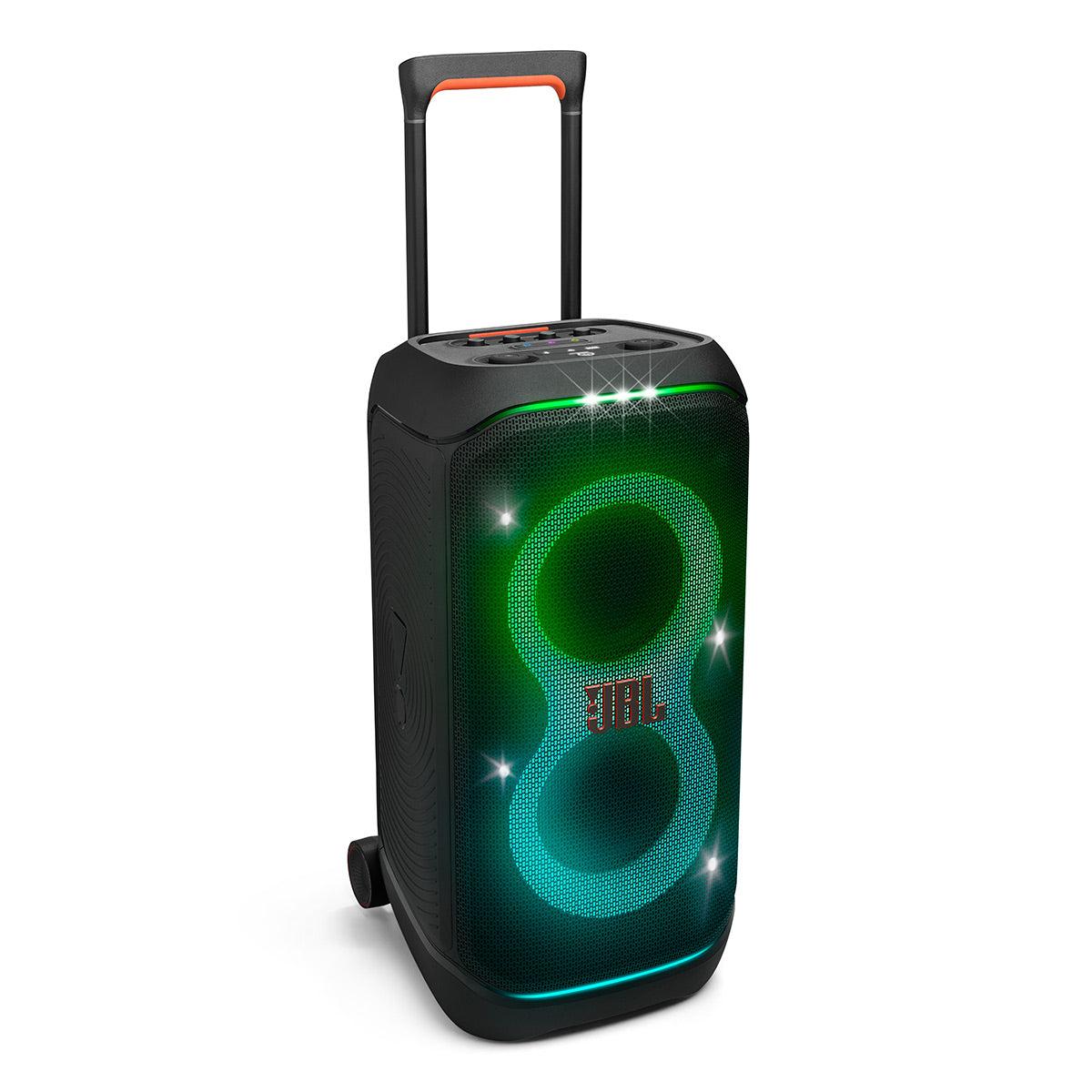
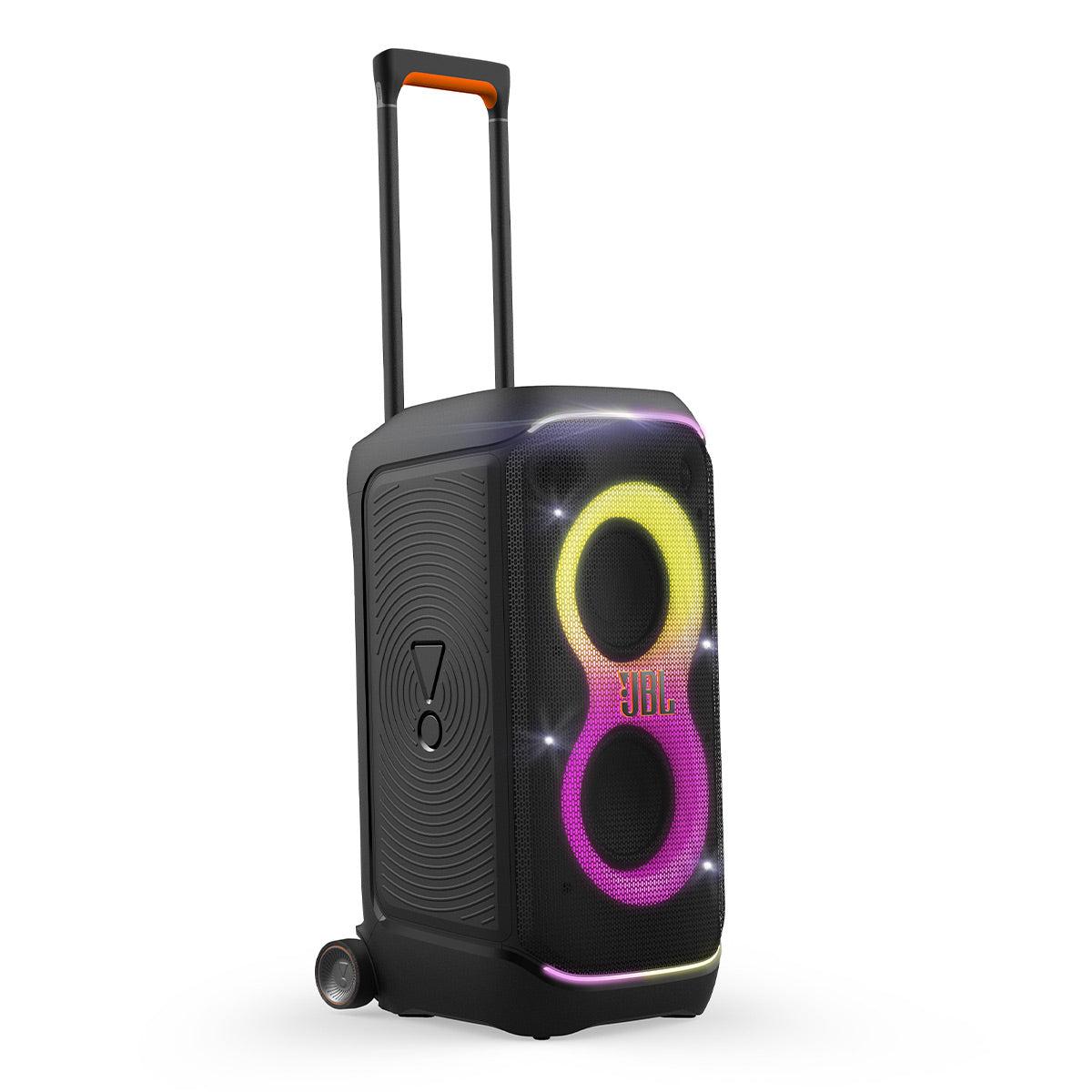
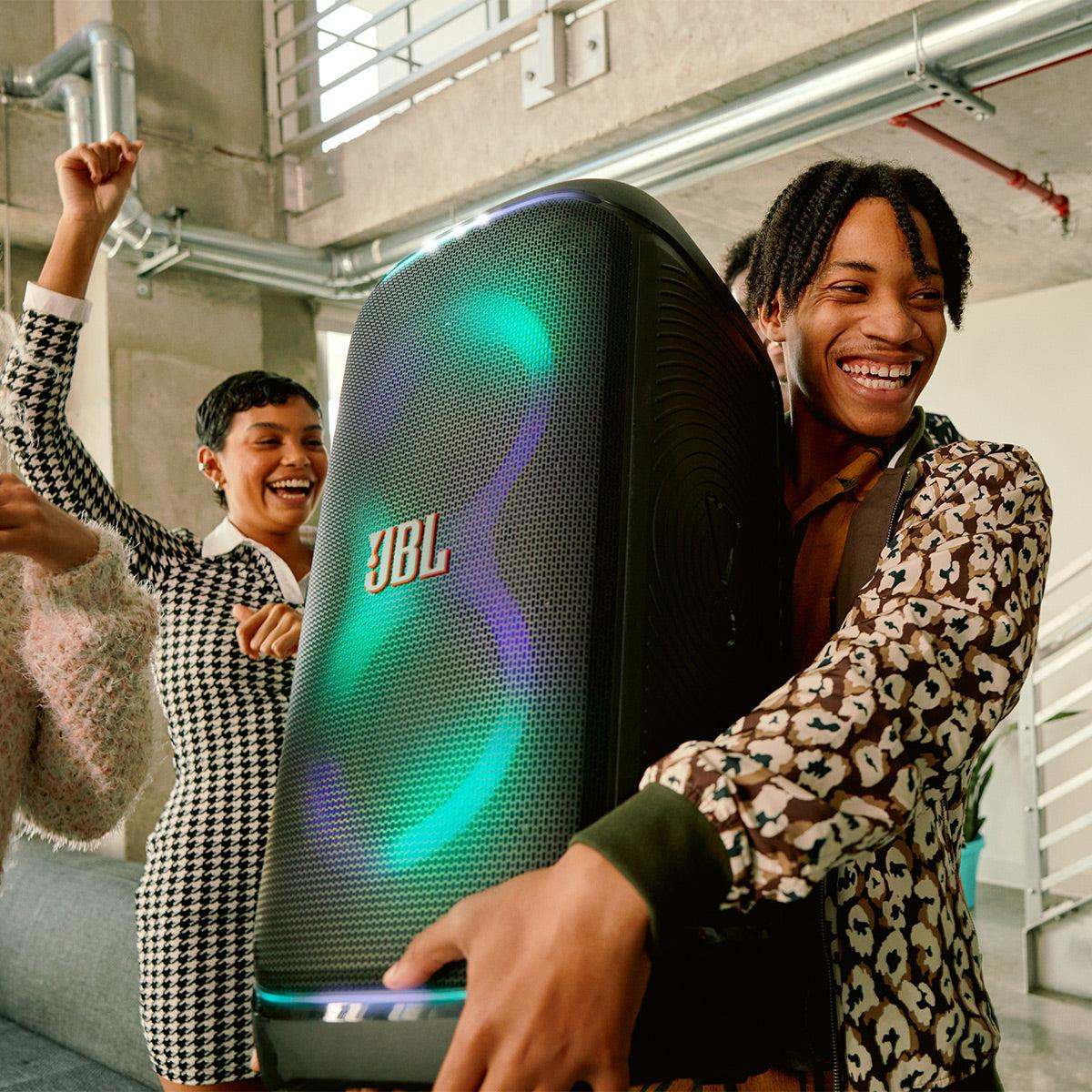
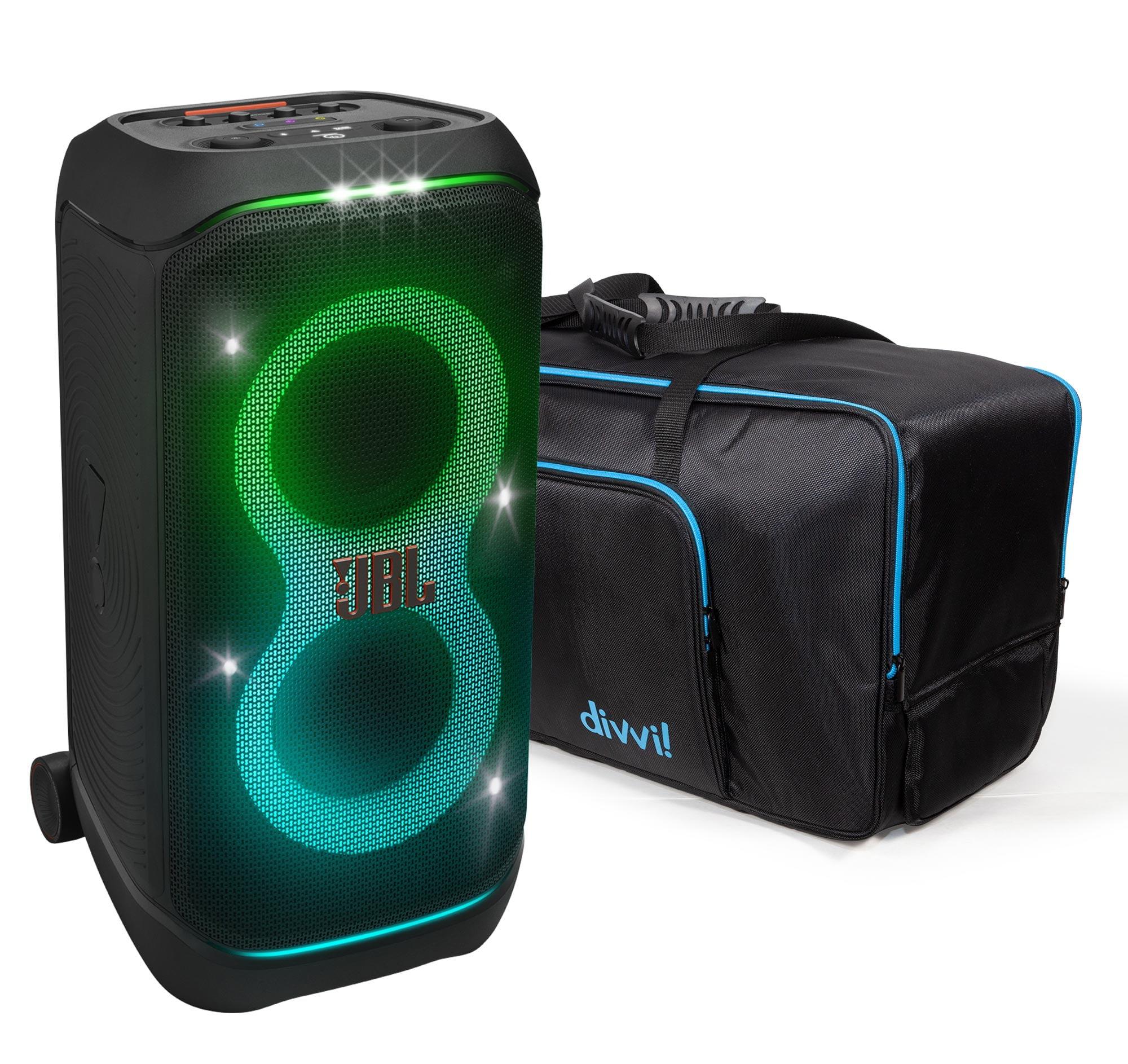
Released in 2024, the PartyBox Stage 320 represents JBL's latest thinking on portable party audio. At around 36 pounds with a telescopic handle and wheels, it's designed for the party that moves—beach gatherings, backyard BBQs, camping trips, and apartment celebrations where neighbors matter.
The 240-watt RMS output comes from two 6.5-inch woofers and dual 1-inch tweeters, all powered by an 18-hour battery that's actually removable and swappable. This means you can keep spares charged for marathon events. The speaker also functions as a power bank, so your phone won't die when you're miles from an outlet.
What's clever about the 2024 release is the integration of AI Sound Boost technology. This system analyzes incoming audio in real-time and automatically adjusts processing to maximize clarity and bass impact within the speaker's power limits. It's particularly effective at preventing the muddiness that plagues many portable speakers when pushed hard.
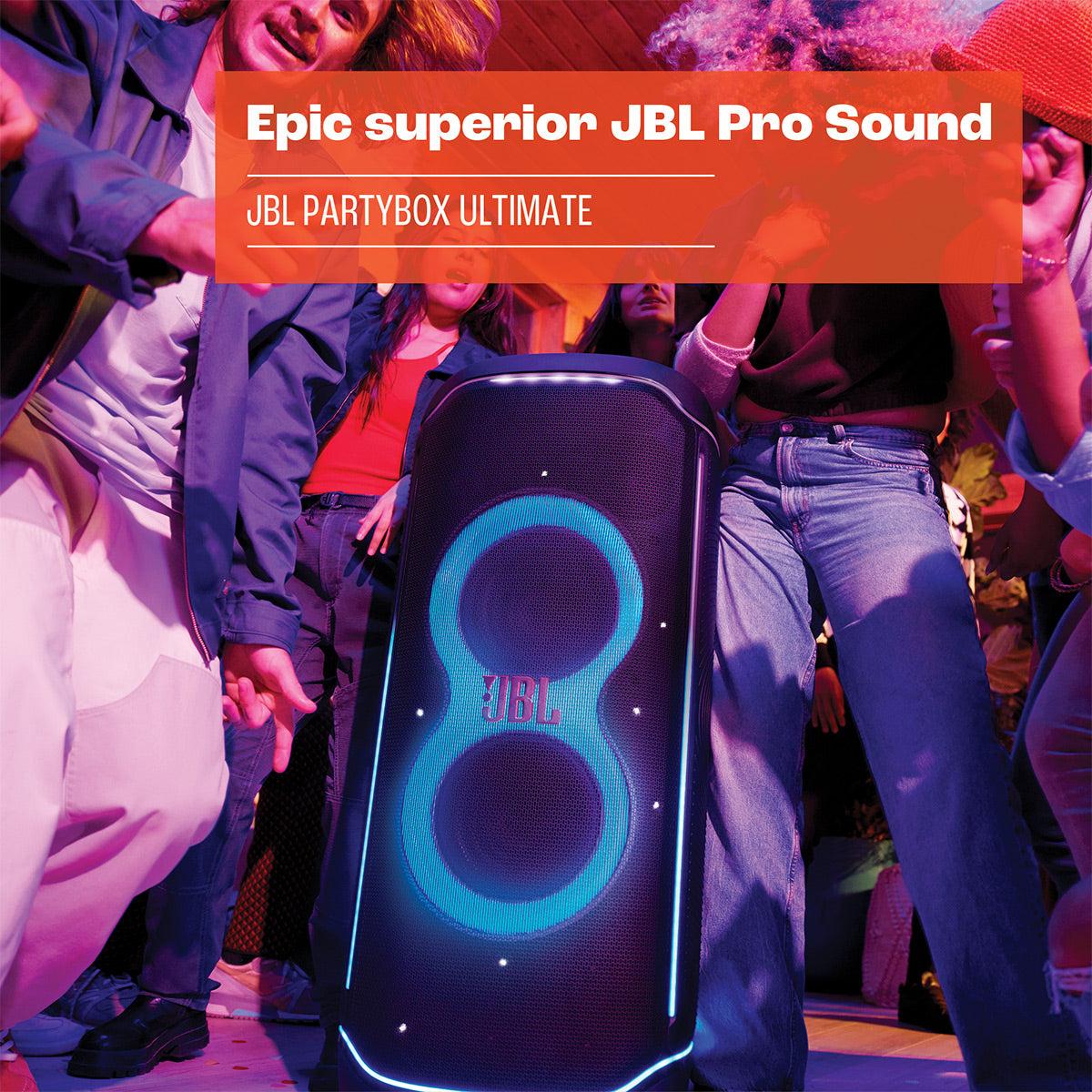
The PartyBox Ultimate, launched in 2023, takes a completely different approach. This 87-pound beast delivers 1,100 watts RMS through a complex driver array that includes two massive 9-inch subwoofers alongside 4.5-inch midrange drivers and 2.75-inch tweeters. The result is audio output that can literally be felt as much as heard.
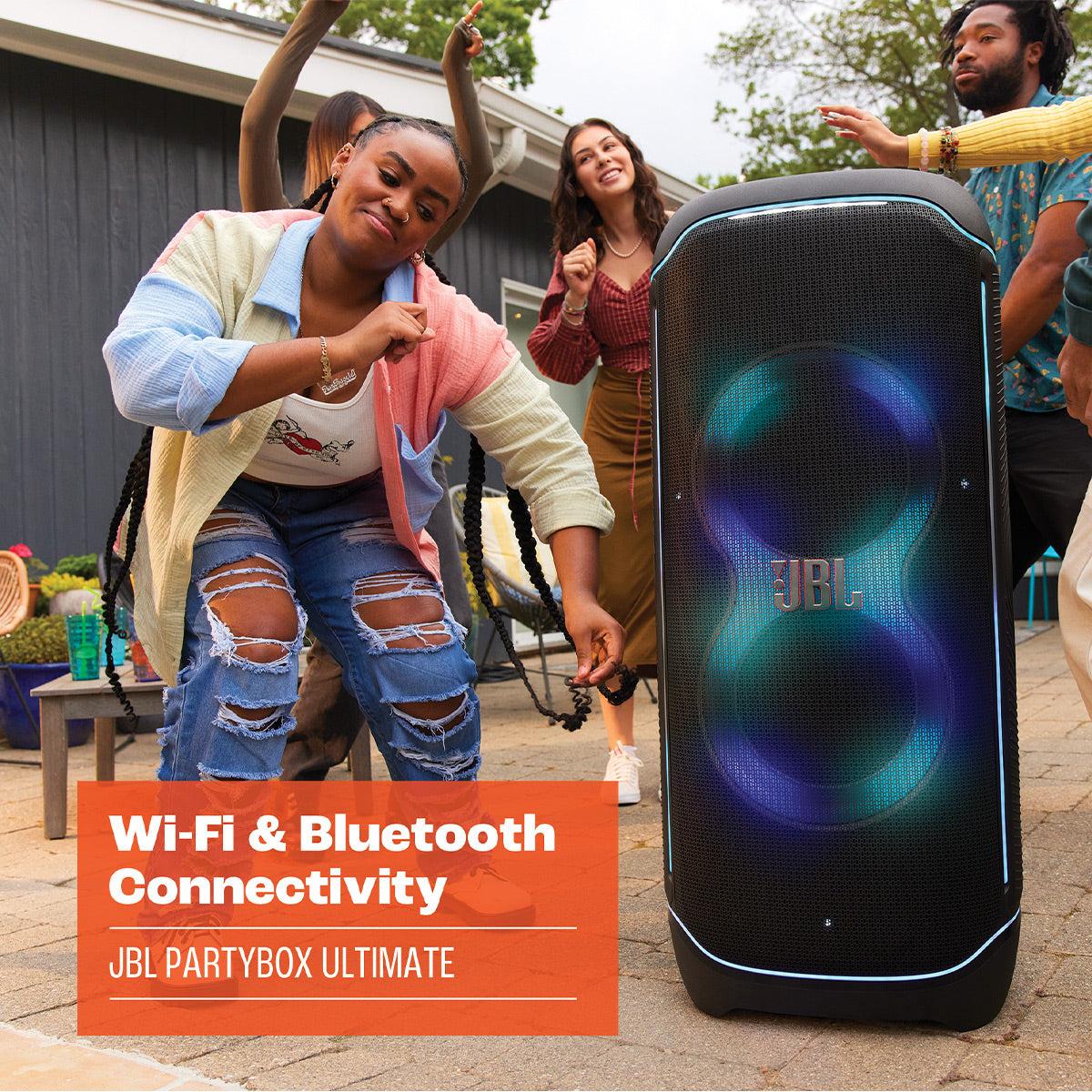
The Ultimate was one of the first party speakers to integrate Dolby Atmos support, creating three-dimensional soundscapes that surround listeners rather than just blasting them from one direction. This works through Wi-Fi 6 connectivity, which also enables features like AirPlay 2, Chromecast, and multi-room audio that puts it in smart speaker territory.
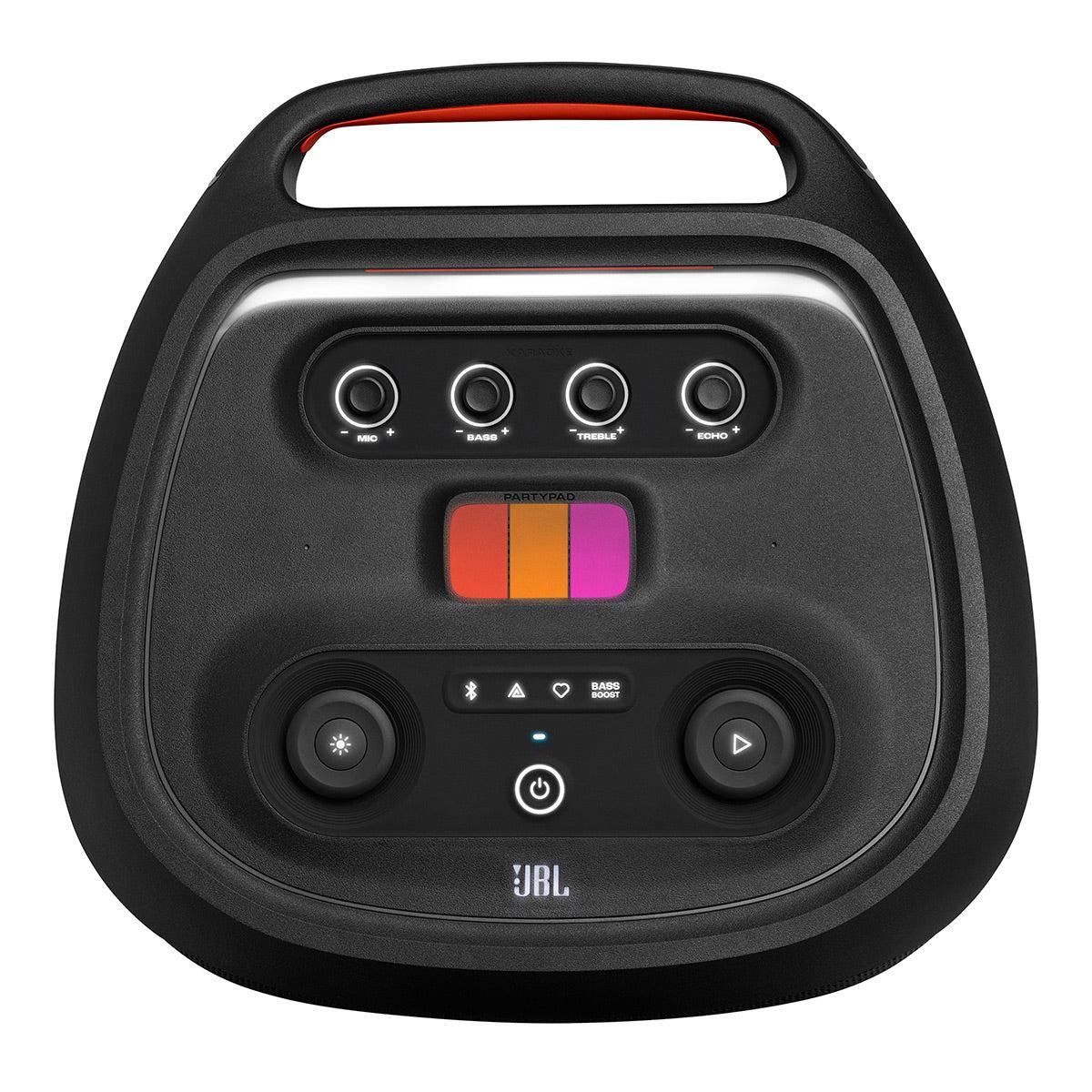
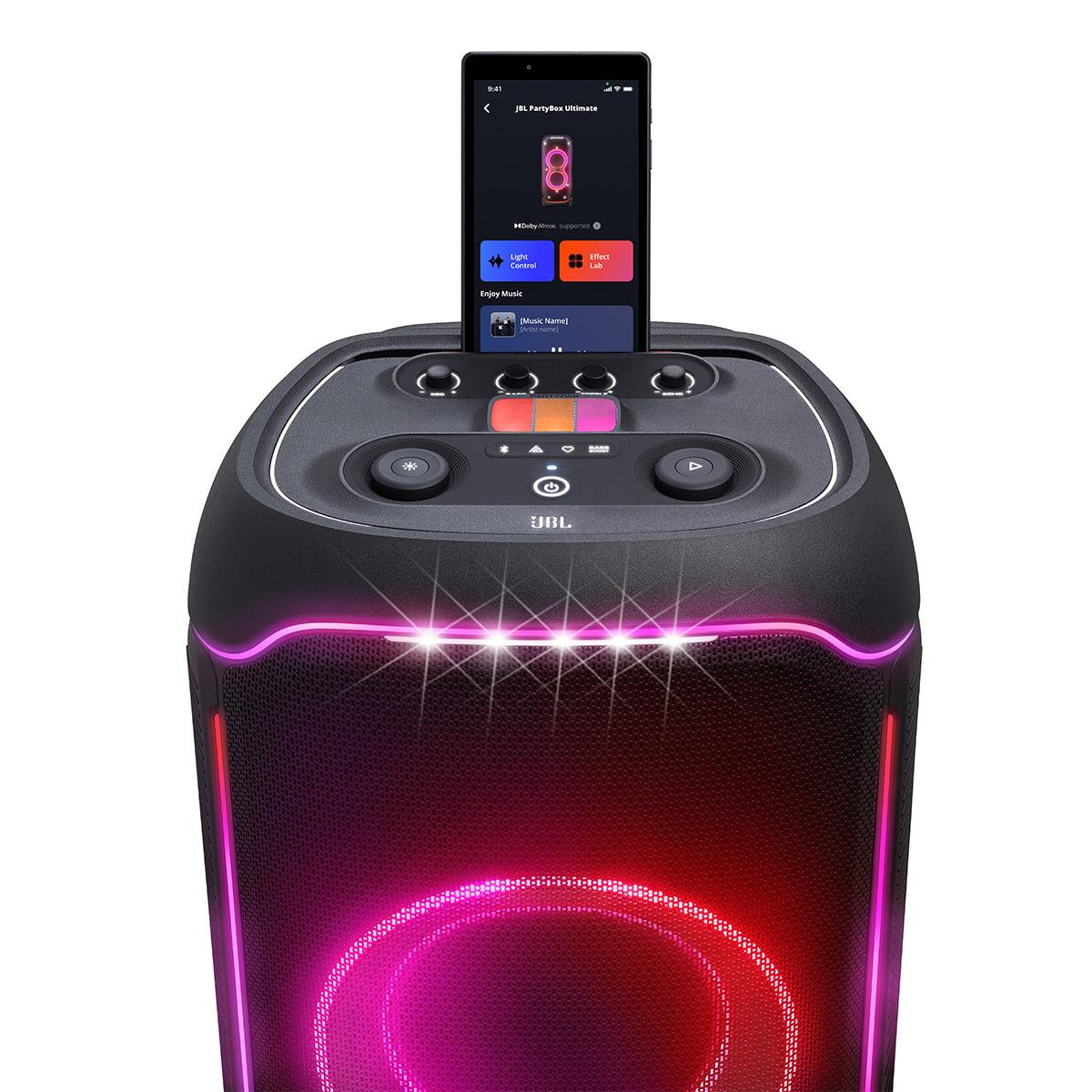
The standout feature is the JBL PartyPad—an interactive DJ console built into the top panel. Touch-sensitive pads let you trigger sound effects, apply filters, and manipulate the audio in real-time without needing a laptop or DJ controller.
Unlike home audio where more watts often mean little, party speakers live in a world where raw power output directly translates to real-world capability. The PartyBox Ultimate's 1,100-watt advantage isn't just marketing—it represents nearly five times the electrical power of the Stage 320.
In controlled acoustic testing, this translates to the Ultimate reaching 114.1 decibels compared to the Stage 320's 110.9 decibels. While that might seem like a small difference, decibels work on a logarithmic scale. Every 3 dB increase represents double the acoustic power, so the Ultimate is producing significantly more sound pressure.
More importantly, the Ultimate maintains its clarity and composure at these extreme volumes. The larger 2.75-inch tweeters can handle high-frequency content without the harshness that smaller drivers exhibit when pushed hard. The dual 9-inch subwoofers move enough air to produce bass that's felt as much as heard—the kind of physical impact that gets people moving.
The difference in bass capability between these speakers is dramatic and immediately obvious. The Stage 320's dual 6.5-inch woofers produce tight, controlled bass that works well in most residential settings. They hit low enough (40Hz frequency response) to deliver the full range of most music without being overwhelming.
The PartyBox Ultimate's dual 9-inch subwoofers operate in a completely different league. These drivers can move massive amounts of air, producing bass that's not just heard but physically felt throughout a room. Users consistently report that even at 20% volume, the bass output is intense enough to shake walls and rattle objects.
This isn't just about being loud—it's about creating the kind of full-body audio experience that defines great parties. The larger drivers also mean the Ultimate can reproduce the deepest bass frequencies (down to 30Hz) that smaller speakers simply can't handle, capturing the full impact of electronic music, hip-hop, and modern pop productions.
Both speakers deliver impressive clarity for their respective power levels, but they achieve it differently. The Stage 320 relies heavily on digital signal processing and AI optimization to maximize performance from its more modest hardware. This works remarkably well—the speaker maintains good separation between instruments and vocals even when pushed to its limits.
The Ultimate takes a brute-force approach with superior hardware. The dedicated midrange drivers handle vocals and instruments without interference from bass frequencies, while the larger tweeters reproduce cymbals, hi-hats, and other high-frequency content with remarkable detail even at crushing volumes.
The Ultimate's support for Dolby Atmos over Wi-Fi adds another dimension—literally. Instead of stereo left-right separation, Atmos creates a three-dimensional soundscape where individual elements can be placed anywhere in space around the listener. This works particularly well for electronic music and modern pop productions mixed specifically for spatial audio.
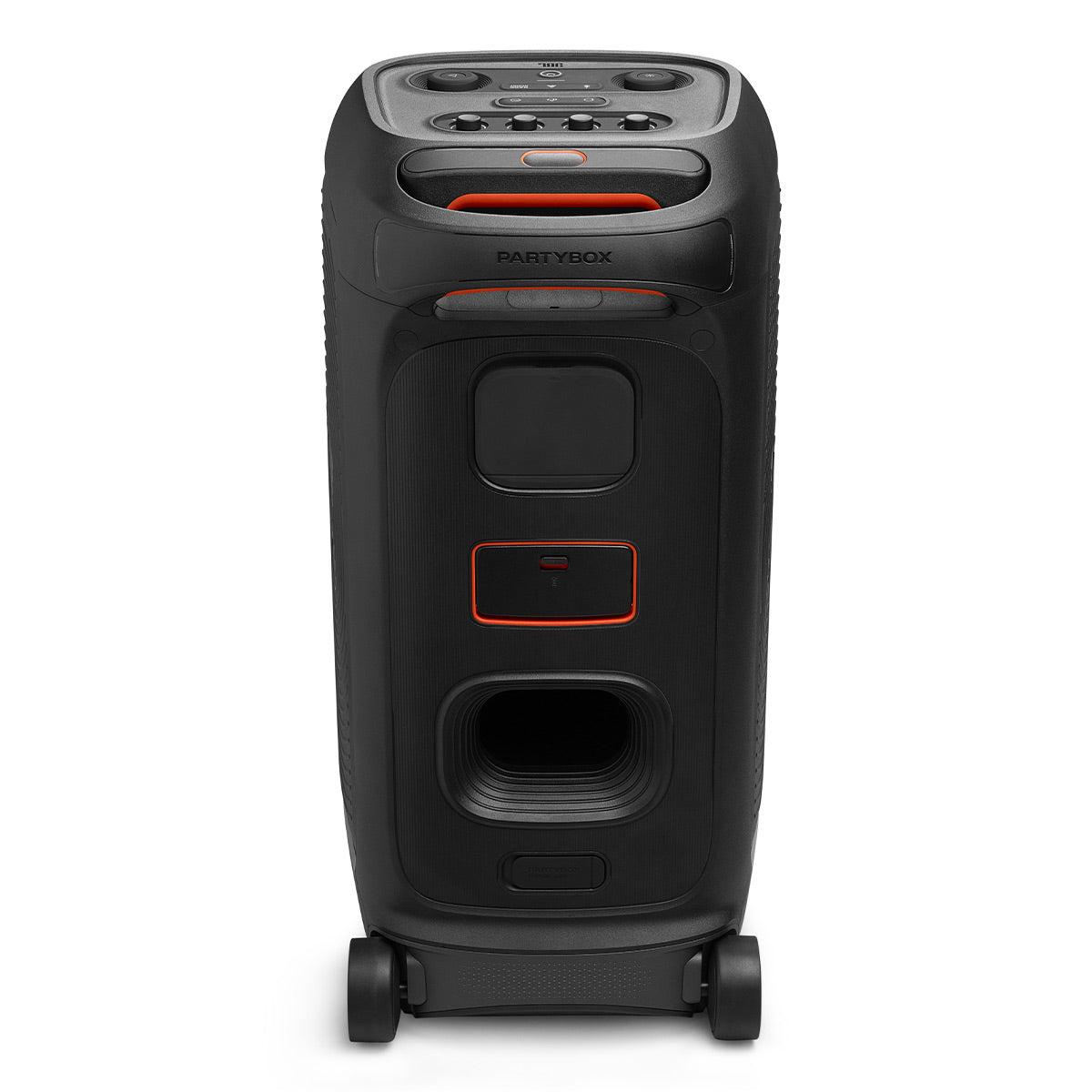
The PartyBox Stage 320 earns its "portable" designation honestly. At 36 pounds with a telescopic handle that extends for comfortable rolling, one person can easily transport it from car to party location. The 18-hour battery life means you're not hunting for power outlets or running extension cords.
The removable battery system is particularly clever. Extra batteries cost around $100 (at the time of writing), but they enable virtually unlimited runtime for multi-day events. The 10-minute quick-charge feature provides two hours of playback, perfect for those "oh no, we forgot to charge it" moments.
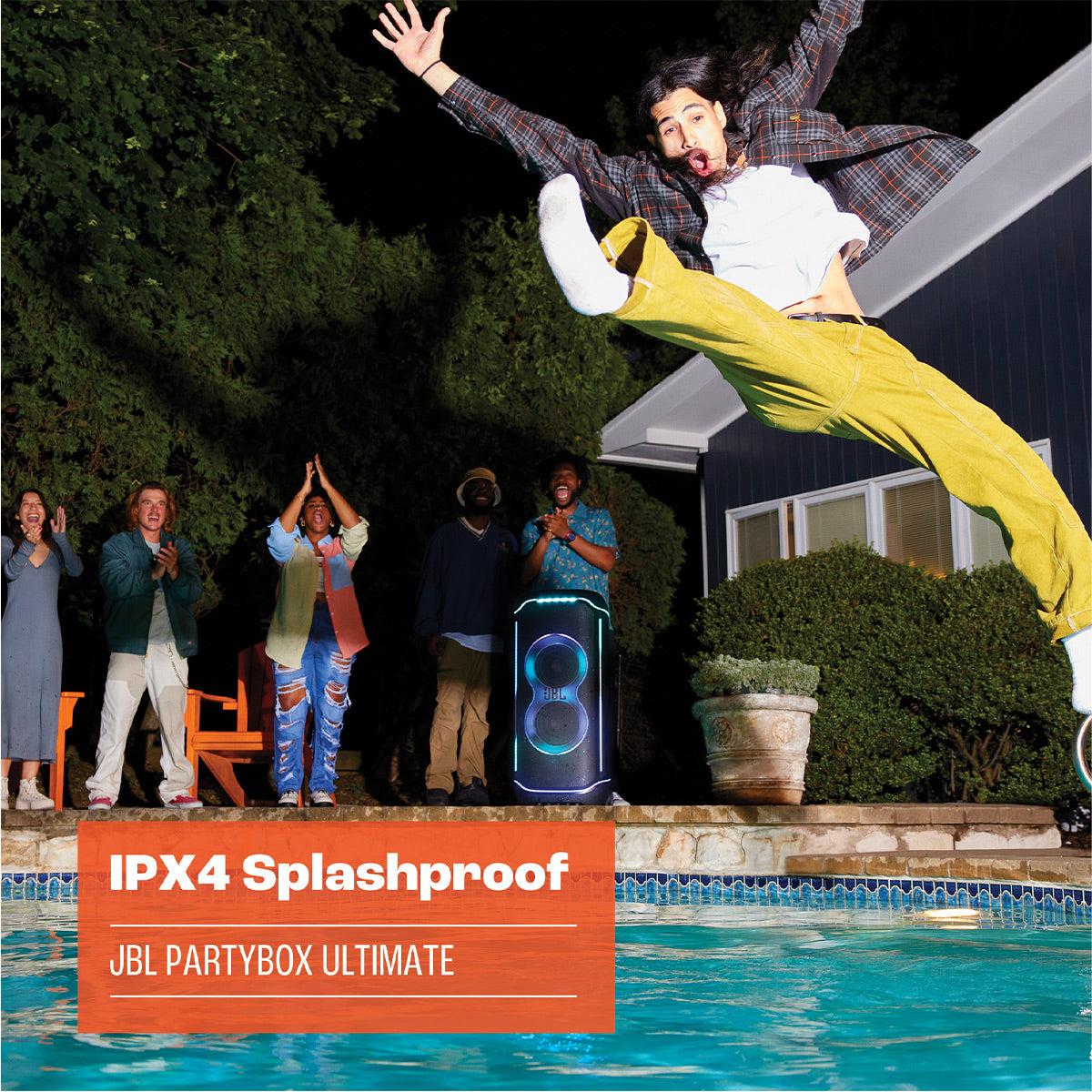
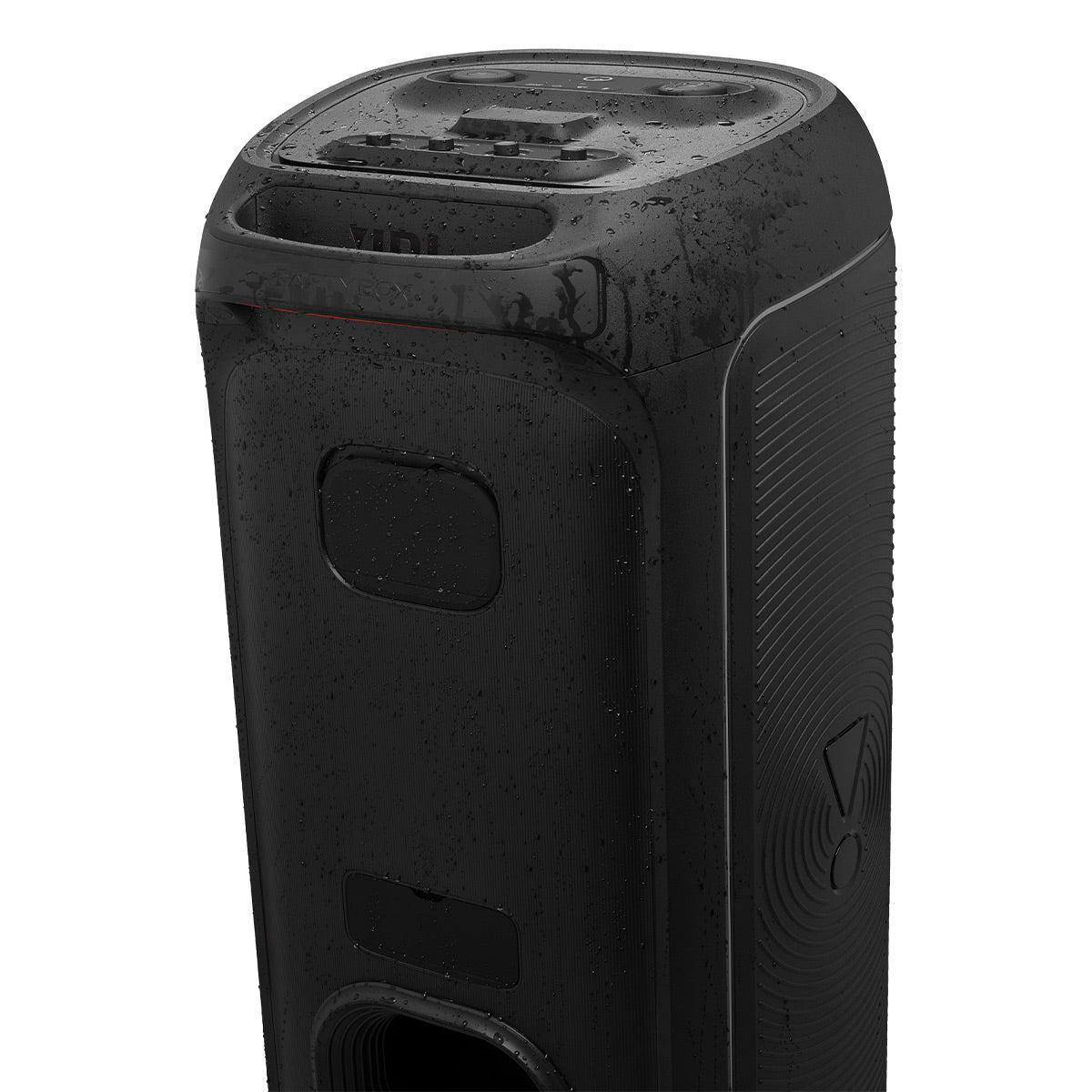
The IPX4 splash-proof rating adds practical outdoor capability. While you can't submerge it, rain and poolside splashes won't end the party. Combined with the battery operation, this makes it genuinely suitable for beach gatherings, camping trips, and other locations where AC power isn't available.
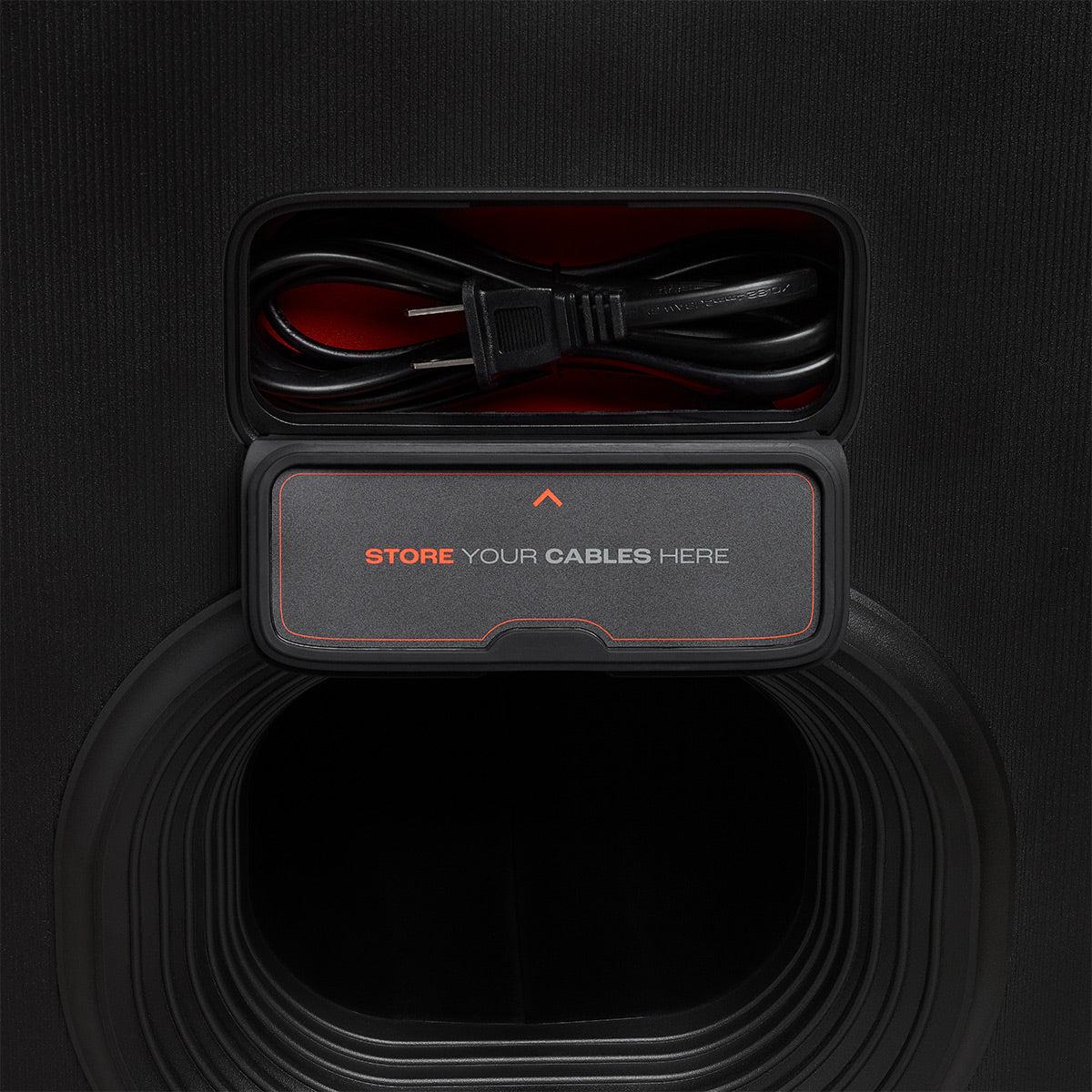
The PartyBox Ultimate makes no pretense about portability. At 87 pounds without a telescopic handle, moving it requires real planning and preferably multiple people. The inclusion of wheels helps, but this is fundamentally a speaker designed to stay put once positioned.
The lack of battery operation is the ultimate limitation for portable use. While this eliminates weight and cost, it also means the Ultimate requires AC power wherever it's used. For outdoor events, this means generators, nearby outlets, or running long extension cords—all of which add complexity and limit placement options.
However, this AC-only approach has advantages for permanent installations. There's no battery degradation over time, no charge management, and no performance limitations as batteries discharge. The Ultimate delivers its full 1,100-watt output consistently as long as it's plugged in.
The Stage 320 showcases JBL's latest wireless technology with Bluetooth 5.4—the newest standard that offers improved connection stability and lower power consumption. The inclusion of Auracast support is forward-thinking; this emerging standard will enable easy multi-speaker connections and audio sharing in ways current Bluetooth can't match.
The Ultimate combines Bluetooth 5.3 with Wi-Fi 6 for a more comprehensive connectivity suite. Wi-Fi 6 isn't just faster—it handles congested wireless environments much better than older standards, crucial when you're at parties where dozens of phones are competing for bandwidth.
The Wi-Fi connection enables features impossible over Bluetooth: lossless audio streaming, Dolby Atmos support, and integration with smart home ecosystems through AirPlay 2 and Chromecast. You can start music on your phone, hand control to a friend's iPhone, then switch to a tablet without any connection dropouts.
Both speakers use different JBL apps, reflecting their distinct target markets. The Stage 320 uses the JBL PartyBox app, which focuses on practical party controls: EQ adjustment, light show customization, and multi-speaker pairing. The 5-band equalizer gives you enough control to adapt the sound to different environments without overwhelming casual users.
The Ultimate operates through the JBL One app, which offers more sophisticated control including detailed room correction, advanced EQ options, and integration with other JBL smart speakers for whole-home audio systems. The app also controls the PartyPad DJ features, letting you customize sound effects and create preset mixes.
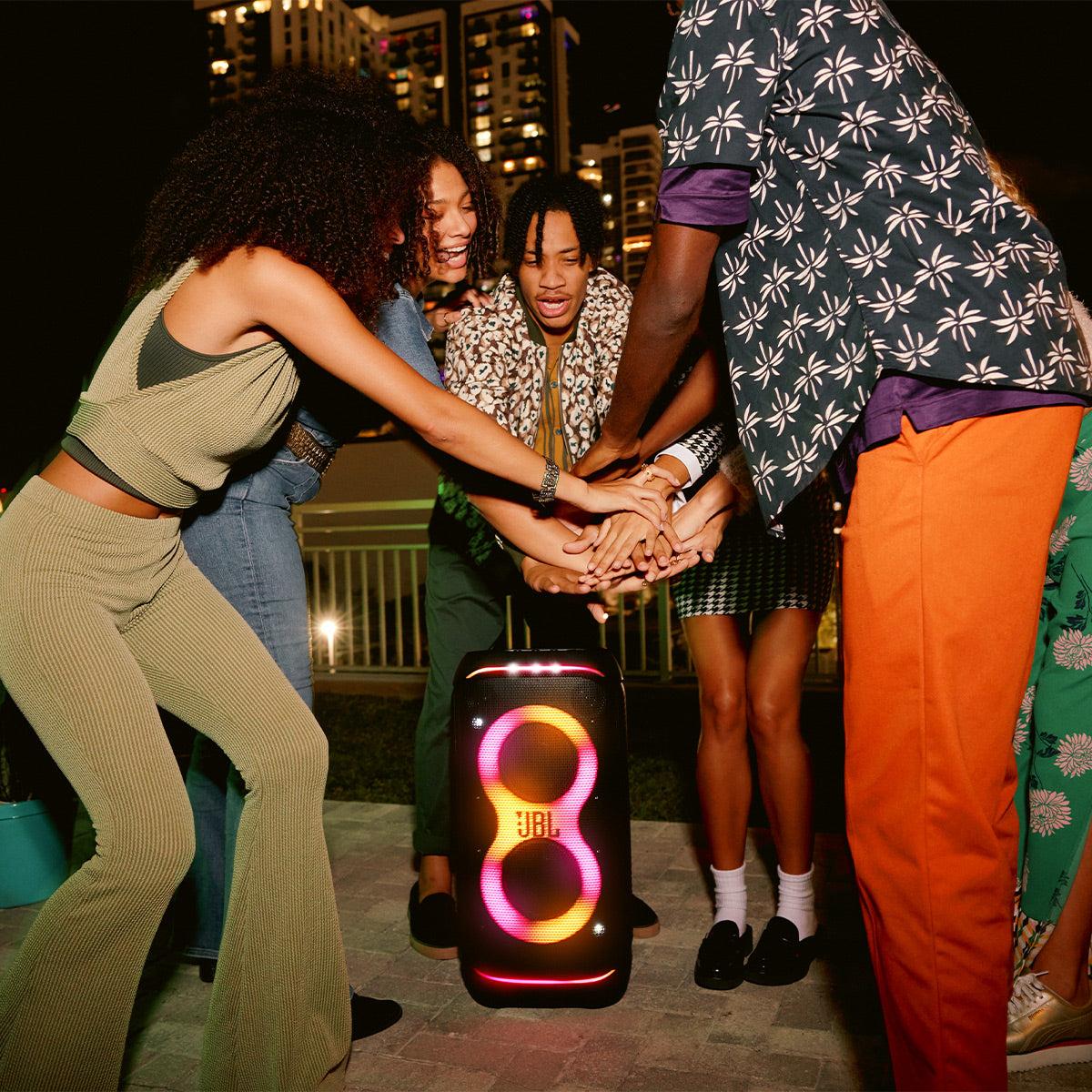
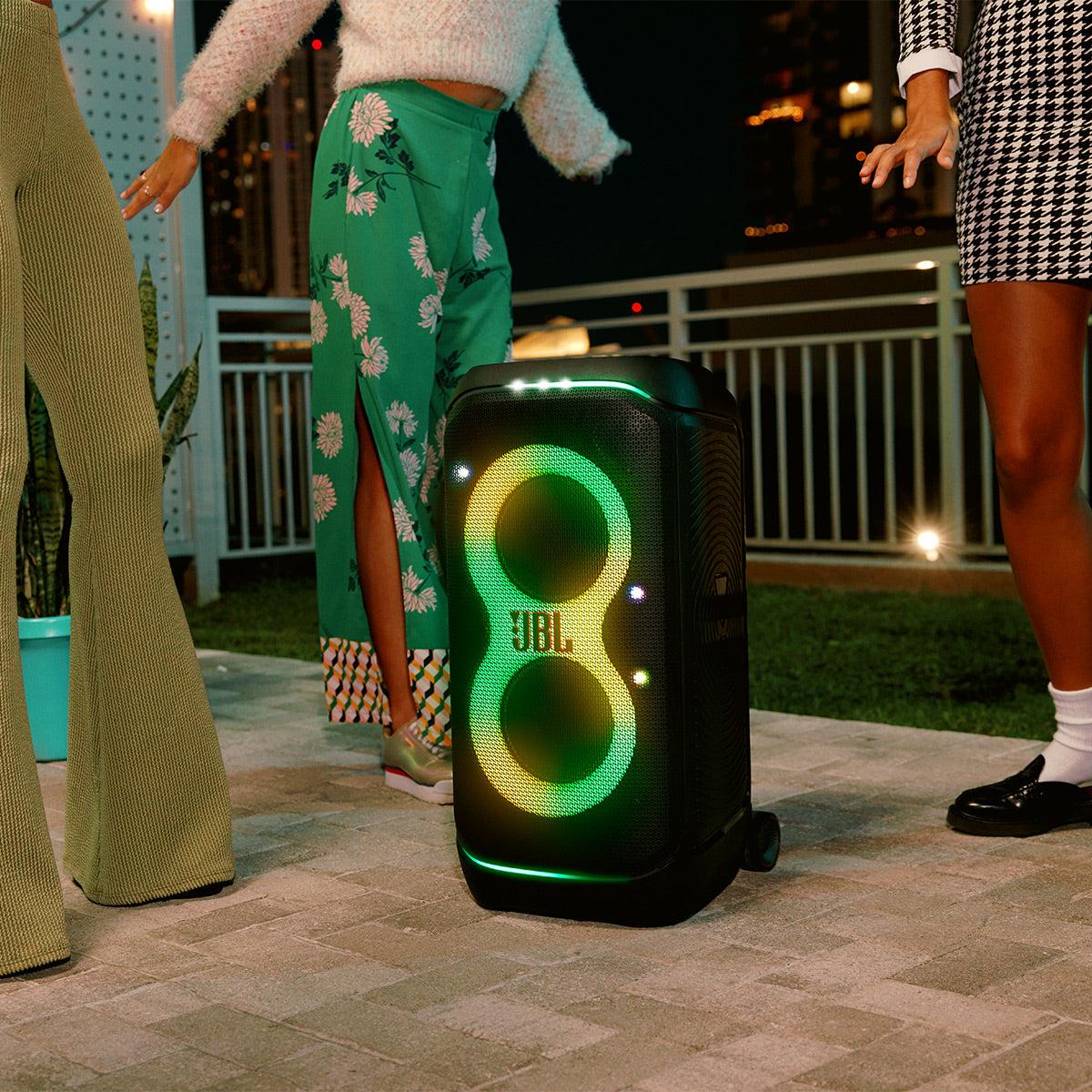
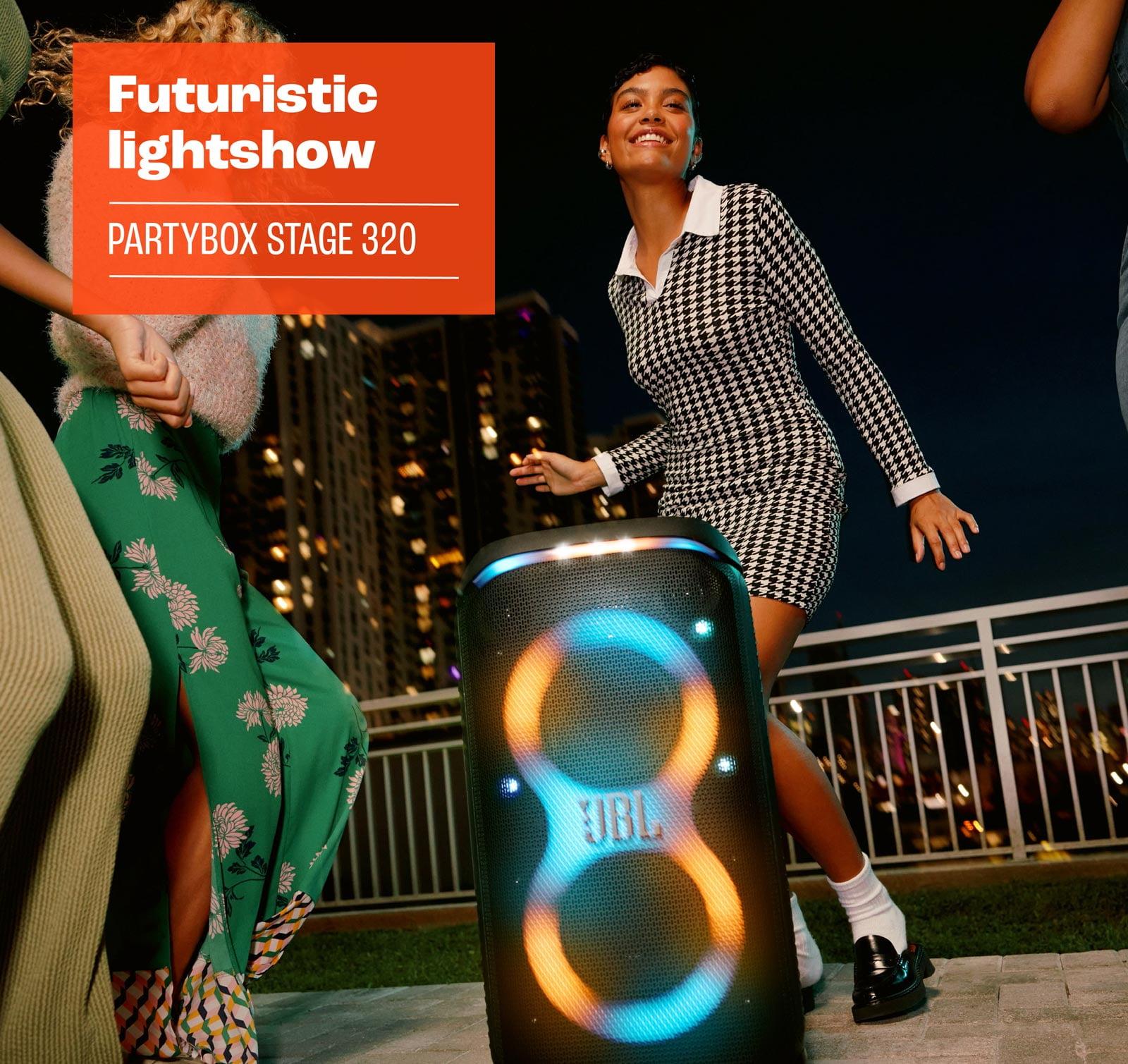
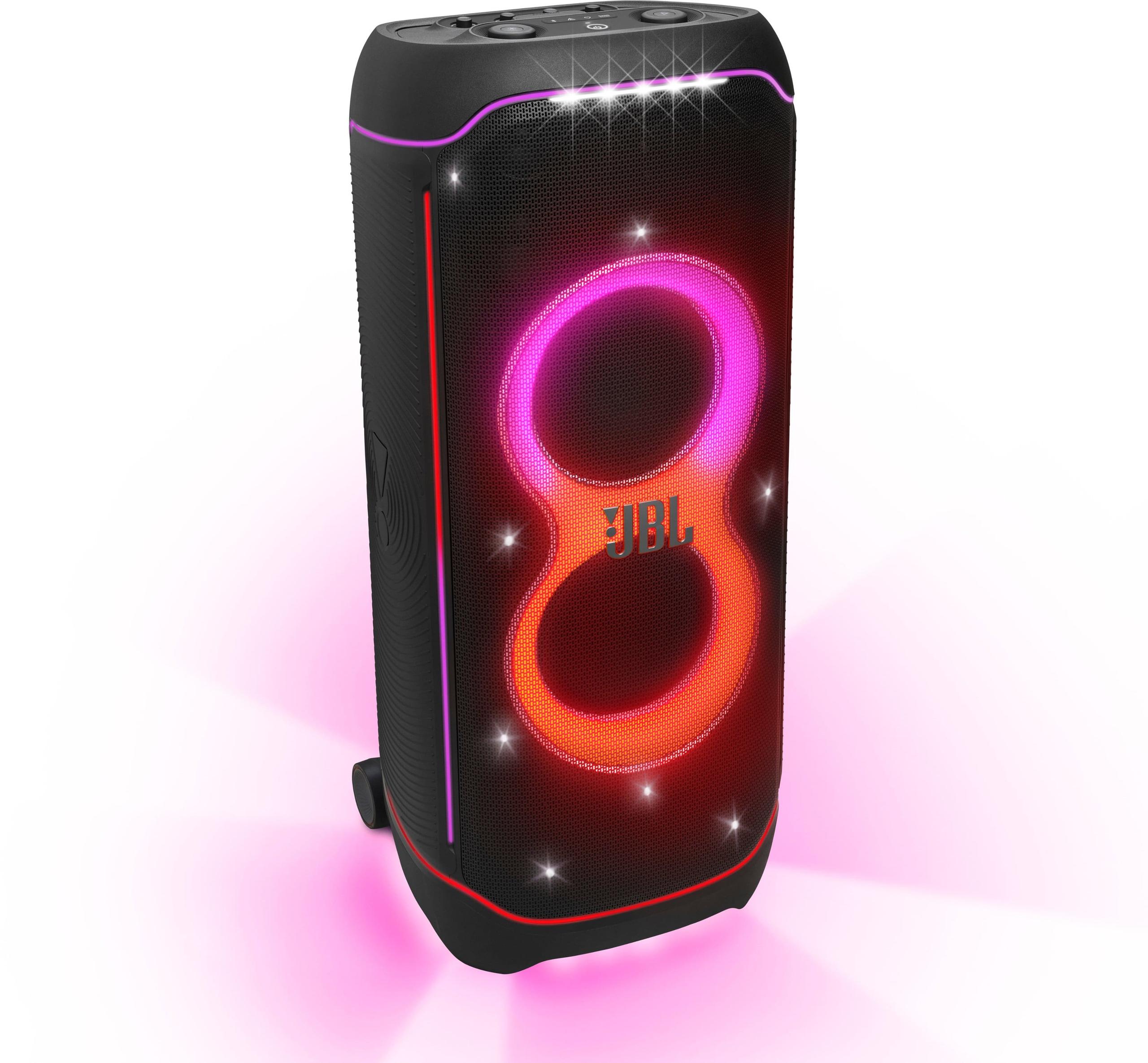
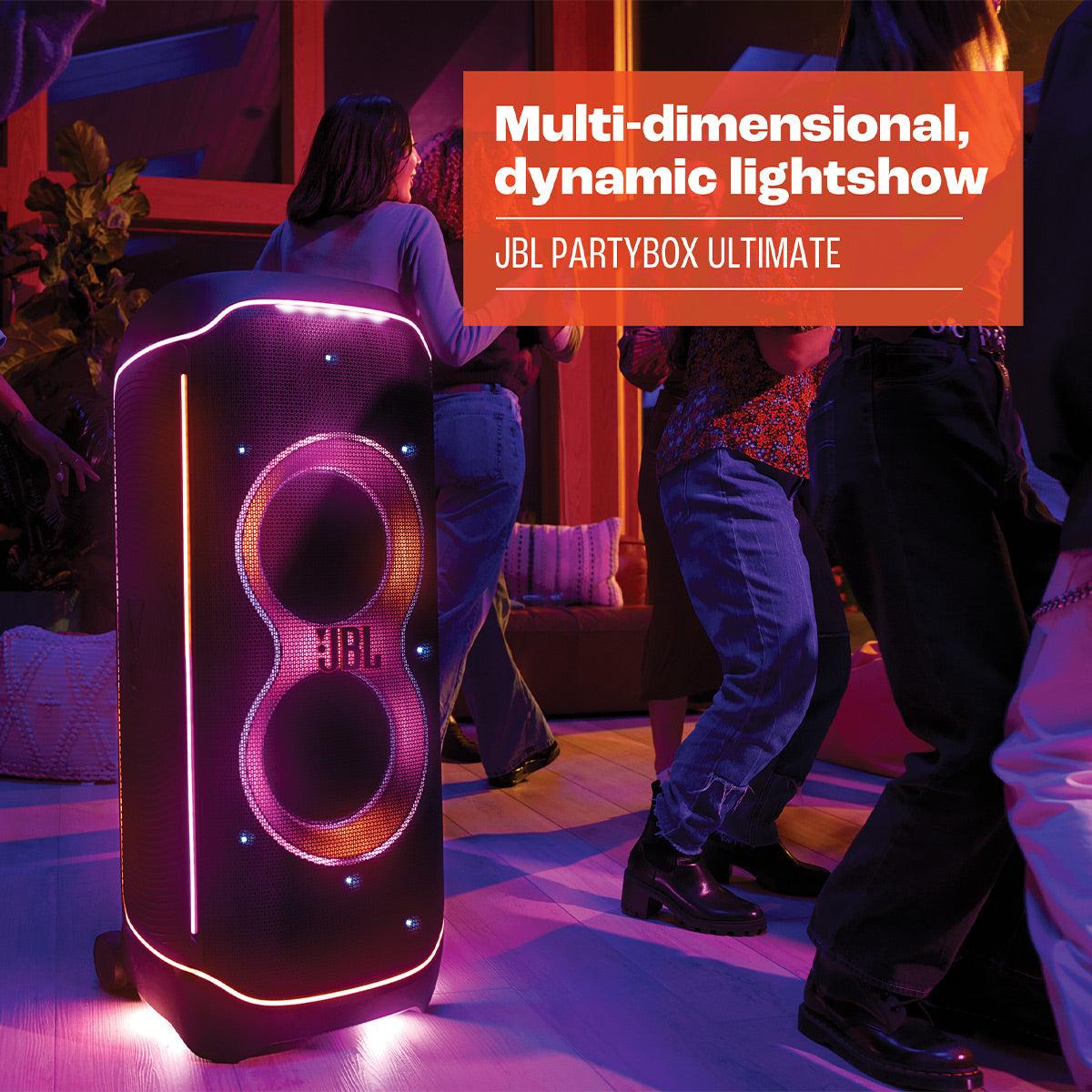
Modern party speaker light shows aren't random Christmas decorations—they're sophisticated systems that analyze audio signals in real-time and translate them into synchronized visual effects. Both speakers use multiple LED zones that respond to different frequency ranges, creating the illusion that the lights are "dancing" to the music.
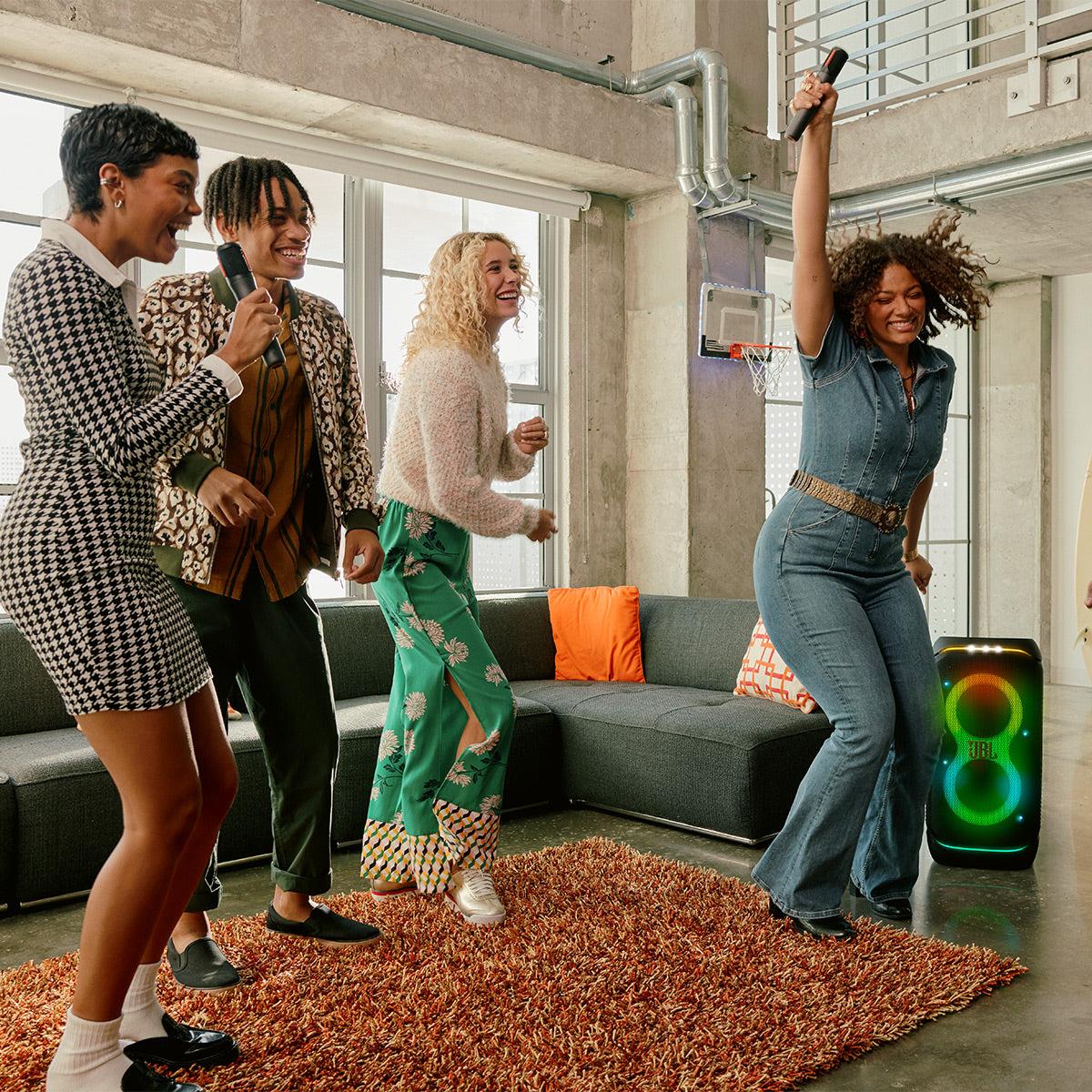
The Stage 320 features two LED rings, two light strips, and eleven strobe LEDs. The adaptive lightshow responds to bass hits, vocal phrases, and high-frequency content differently, creating varied patterns that match the music's energy and rhythm.
The Ultimate steps this up significantly with two LED rings, three light strips, and twenty-two strobe LEDs, plus ground projection effects that cast patterns onto nearby surfaces. The additional LEDs enable more complex synchronized patterns, and the ground projection creates an immersive environment that extends beyond the speaker itself.
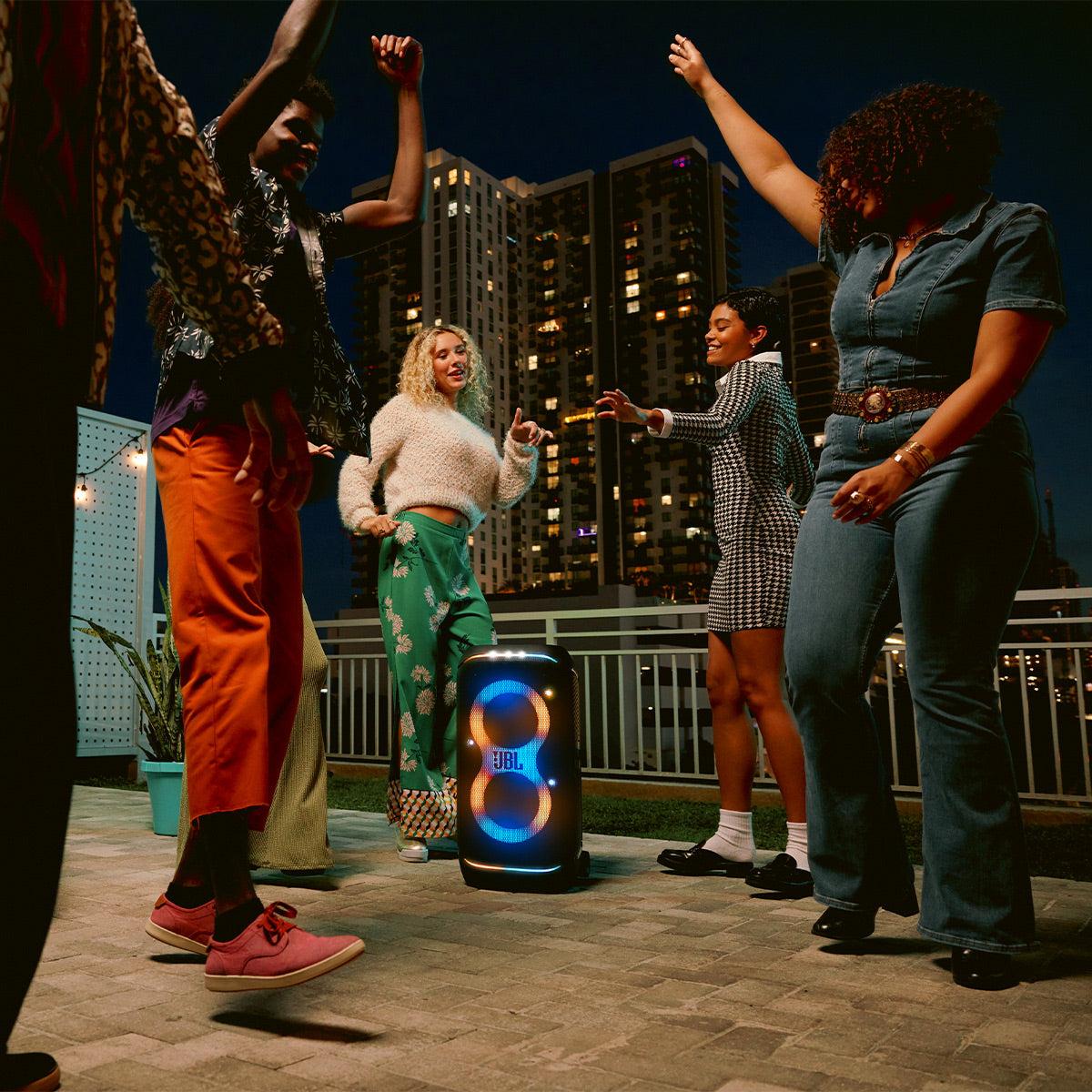
The visual component genuinely affects how people respond to these speakers. The synchronized light shows create a focal point that draws attention and energy, similar to how professional DJ setups use lighting to enhance the music experience. In dimly lit environments, the effect is particularly dramatic.
However, the light shows do impact battery life on the Stage 320. Users report roughly 25% longer runtime with lights disabled, which might matter for all-day outdoor events. The Ultimate doesn't face this limitation with AC power, so you can run the full light show without performance concerns.
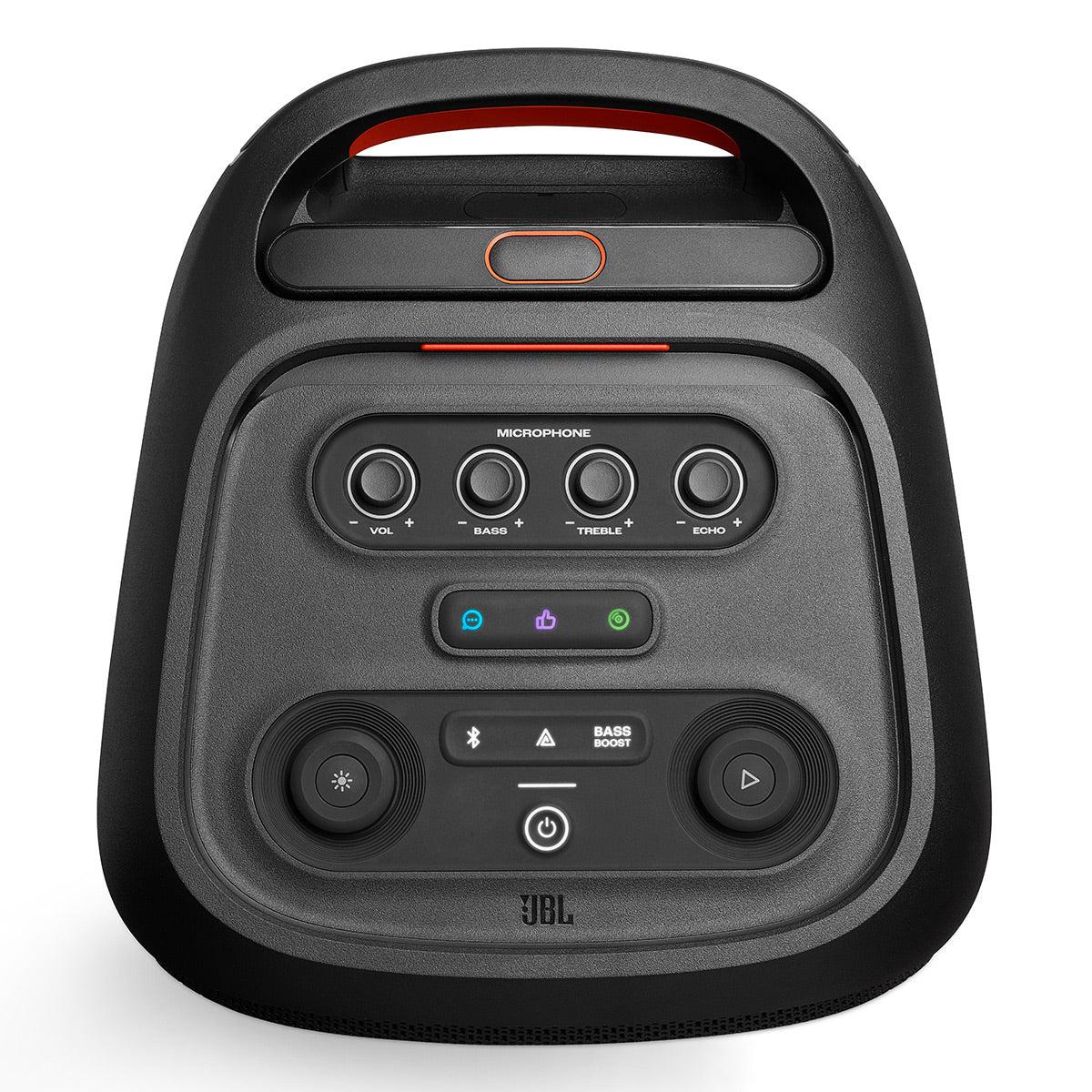
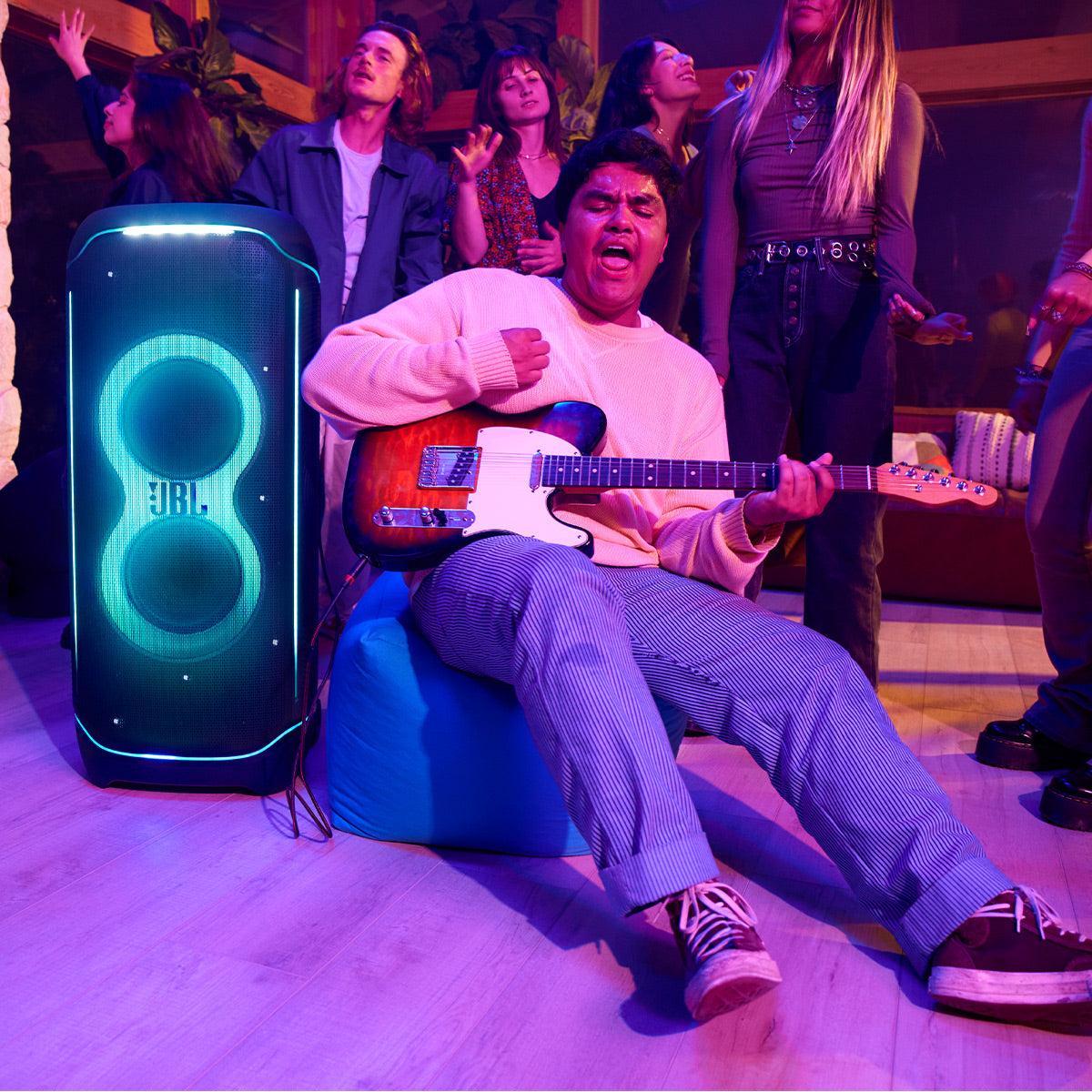
Both speakers include dual microphone inputs and guitar connectivity, but they handle these differently. The basic functionality is similar—you can plug in microphones for karaoke or announcements, adjust volume levels independently, and add echo effects for that professional sound.
The Ultimate's PartyPad DJ console sets it apart significantly. The touch-sensitive pads respond to taps, holds, and slides to trigger effects like horns, repeaters, and filters. While not as sophisticated as professional DJ software, it provides genuine creative control over the audio in real-time.
This makes the Ultimate suitable for amateur DJs who want to add live elements to their sets without lugging laptops and controllers. The effects are high-quality and responsive enough for actual performance use, not just novelty features.
Both speakers handle karaoke well with dedicated mic volume controls and echo adjustment. The Stage 320 includes karaoke EQ tuning that automatically adjusts the sound signature to make vocals more prominent and reduce feedback potential.
The Ultimate's superior power and larger drivers provide better vocal clarity in noisy environments. When you're singing over loud background music and crowd noise, having those extra watts and larger tweeters makes a real difference in being heard clearly.
While neither speaker is designed primarily for home theater use, both can serve in this role with limitations. The Stage 320 works reasonably well for casual movie watching in smaller rooms, though the lack of optical or HDMI inputs means you'll need to use Bluetooth or the auxiliary input.
The Ultimate has enough power and bass output for serious home theater use, and its Wi-Fi connectivity enables integration with streaming services for audio content. However, both speakers use sound signatures optimized for music rather than dialogue clarity, so voices might not be as clear as dedicated home theater speakers.
For basement home theaters or media rooms where you want the option of both movie watching and party hosting, the Ultimate's power and clarity advantage becomes more significant. Just be aware that neither speaker offers the precise imaging and neutral response that dedicated home theater systems provide.
At the time of writing, the Stage 320 typically costs around 60% of the Ultimate's price—a significant difference that reflects their different capabilities and target markets. But the real value calculation involves more than just the purchase price.
The Stage 320's battery system might require additional investment for heavy users. Extra batteries cost roughly one-sixth of the speaker's price, so extended outdoor events could mean buying multiple spares. However, this still comes out cheaper than generators or extensive electrical setup for AC-powered alternatives.
The Ultimate's higher upfront cost is partially offset by not needing battery replacements, but it might require electrical upgrades for optimal use. Running 1,100 watts continuously demands adequate electrical service, and some venues might need professional setup for proper power distribution.
From a pure performance standpoint, the Ultimate actually delivers better value per watt—you get nearly five times the power for less than double the price. The superior drivers, additional features like Dolby Atmos, and professional DJ capabilities add significant value for users who can utilize them.
However, the Stage 320 provides better versatility per dollar. Its mobility, battery operation, and more manageable size mean you can use it in more situations, potentially replacing multiple other speakers in your collection.
The PartyBox Stage 320 makes sense for most people most of the time. If you live in an apartment, host backyard gatherings, or need a speaker that works everywhere from camping trips to house parties, its combination of solid performance and genuine portability is hard to beat.
The battery operation alone justifies the choice for many users. Being able to set up anywhere without hunting for outlets or managing extension cords removes a major logistical headache from party planning. The 18-hour runtime handles most events, and the quick-charge feature covers emergency situations.
The sound quality is genuinely impressive for the size and price. While it can't match the Ultimate's raw power, it delivers clean, impactful audio that satisfies most party requirements. The AI Sound Boost technology helps it punch above its weight class, maintaining clarity even when pushed to maximum volume.
The PartyBox Ultimate justifies its premium price for specific use cases where its extreme capabilities are actually needed. If you regularly host large gatherings, have a dedicated party space, or want the most impressive audio-visual experience possible, the performance difference is undeniable.
The professional DJ features and Wi-Fi connectivity make it genuinely suitable for semi-professional use. Amateur DJs can create impressive sets using just the built-in PartyPad, while the multi-room audio capabilities integrate it into smart home systems in ways the Stage 320 can't match.
The bass performance alone might justify the choice for serious electronic music enthusiasts. The physical impact of those 9-inch subwoofers creates an experience that smaller speakers simply cannot replicate, regardless of digital processing or clever tuning.
Don't choose the Ultimate if portability matters at all, if you have close neighbors, or if your parties typically involve fewer than 30-40 people. Its capabilities will be wasted, and you'll be paying for performance you can't actually use.
Similarly, don't choose the Stage 320 if you regularly need to fill very large spaces or if maximum audio impact is your priority. While it's an excellent speaker, it has physical limitations that no amount of clever engineering can overcome.
The sweet spot for each speaker is pretty clear: the Stage 320 for mobile versatility and residential use, the Ultimate for stationary power and large venue capability. Choose based on where and how you'll actually use the speaker, not just which one sounds more impressive on paper.
Both speakers represent significant evolution from earlier party speaker designs, incorporating modern wireless technology, sophisticated digital processing, and build quality that justifies their positions as premium products in the category. The question isn't which one is better—it's which one matches your specific needs and use cases.
| JBL PartyBox Stage 320 | JBL PartyBox Ultimate |
|---|---|
| Power Output - Determines maximum volume and bass impact | |
| 240W RMS (suitable for tennis court-sized areas) | 1,100W RMS (fills warehouse-sized spaces) |
| Portability - Critical for mobile party use | |
| 36.4 lbs with telescopic handle, wheels, 18-hour battery | 87.1 lbs, wheels only, requires AC power |
| Driver Configuration - Affects sound quality and frequency range | |
| 2× 6.5" woofers, 2× 1" tweeters | 2× 9" subwoofers, 2× 4.5" midrange, 2× 2.75" tweeters |
| Maximum Volume Output - Real-world loudness capability | |
| ~110.9 dB (great for backyard parties) | ~114.1 dB (professional venue levels) |
| Battery Life - Freedom from power outlets | |
| Up to 18 hours, removable/swappable battery | No battery - AC power required |
| Connectivity Options - Modern wireless features | |
| Bluetooth 5.4 with Auracast, JBL PartyBox app | Bluetooth 5.3, Wi-Fi 6, AirPlay 2, Chromecast, JBL One app |
| Light Show Complexity - Visual party atmosphere | |
| 2 LED rings, 2 strips, 11 strobes | 2 LED rings, 3 strips, 22 strobes, ground projection |
| DJ Features - Creative control capabilities | |
| Basic app-controlled effects and EQ | Interactive PartyPad with touch-sensitive DJ controls |
| Special Audio Technologies - Advanced sound processing | |
| AI Sound Boost optimization | Dolby Atmos 3D audio over Wi-Fi |
| Water Resistance - Outdoor use protection | |
| IPX4 splashproof (handles rain and poolside use) | IPX4 splashproof (same protection level) |
| Release Year - Technology generation | |
| 2024 (latest portable party tech) | 2023 (flagship stationary model) |
| Ideal Use Cases - Who should buy which | |
| Mobile parties, apartments, camping, beach gatherings | Large venues, permanent setups, professional events |
The JBL PartyBox Stage 320 is better for most people because of its portability, 18-hour battery life, and more manageable size. It delivers excellent sound quality for typical parties while being light enough to transport easily. The PartyBox Ultimate is only better if you need maximum volume for very large spaces and don't require portability.
The biggest difference is portability versus power. The JBL PartyBox Stage 320 weighs 36 pounds with a battery and telescopic handle, making it truly portable. The JBL PartyBox Ultimate weighs 87 pounds, requires AC power, and delivers nearly 5 times more audio power for large venues.
The PartyBox Ultimate reaches 114.1 decibels compared to the Stage 320's 110.9 decibels. While this seems small, it represents significantly more acoustic power and much stronger bass impact that you can physically feel throughout a room.
Only the JBL PartyBox Stage 320 works on battery power, providing up to 18 hours of playback with a removable battery system. The PartyBox Ultimate requires AC power at all times, making it unsuitable for outdoor locations without electrical access.
The PartyBox Ultimate has dramatically better bass with dual 9-inch subwoofers that produce physically impactful low frequencies. The Stage 320 has solid bass from 6.5-inch woofers that's appropriate for most parties but can't match the Ultimate's room-shaking output.
Both speakers work well for karaoke with dual microphone inputs and guitar connectivity. The PartyBox Ultimate has an advantage for live performance due to its higher power output and clearer vocals in noisy environments. Both include echo effects and dedicated karaoke EQ settings.
The JBL PartyBox Stage 320 is much better for apartments due to its more neighbor-friendly volume levels and controlled bass output. The PartyBox Ultimate is designed for large spaces and would be overwhelming in residential settings, potentially causing noise complaints.
The PartyBox Ultimate has a more impressive light show with additional LED strips, more strobe lights, and ground projection effects. The Stage 320 has a solid adaptive lightshow, but the Ultimate's display is noticeably more elaborate and visually impactful for parties.
The JBL PartyBox Stage 320 uses the JBL PartyBox app with practical controls for EQ and lighting. The PartyBox Ultimate uses the more advanced JBL One app with professional DJ controls, room correction, and smart home integration features.
The JBL PartyBox Stage 320 offers better value for most users, providing excellent performance with crucial portability features. The PartyBox Ultimate delivers better performance per watt but only justifies its premium cost if you need its extreme power for large venues.
Both can work for casual home theater, but neither is optimized for movie dialogue. The PartyBox Ultimate has enough power for larger home theaters and Wi-Fi connectivity for streaming services, while the Stage 320 works better for smaller rooms with its more controlled output.
We've done our best to create useful and informative comparisons to help you decide what product to buy. Our research uses advanced automated methods to create this comparison and perfection is not possible - please contact us for corrections or questions. These are the sites we've researched in the creation of this article: stereoguide.com - soundguys.com - rtings.com - soundguys.com - soundguys.com - rtings.com - jbl.com - youtube.com - youtube.com - youtube.com - youtube.com - rtings.com - 9to5toys.com - versus.com - cdw.com - jbl.com - projectorscreenstore.com - projectorscreen.com - ro.harmanaudio.com - jbl.co.nz - bestbuy.com - youtube.com - audioadvice.com - youtube.com - crutchfield.com - youtube.com - youtube.com - youtube.com - youtube.com - versus.com - youtube.com - rtings.com - youtube.com - youtube.com - jbl.com - pcx.com.ph - global.jbl.com - gzhls.at - electronicexpress.com - harmanaudio.in - jbl.com - dell.com - robot-advance.com - device.report - ro.harmanaudio.com

Privacy Policy
Terms and Conditions - Affiliate Policy
Home Security
© Copyright 2008-2026.
11816 Inwood Rd #1211, Dallas, TX 75244