

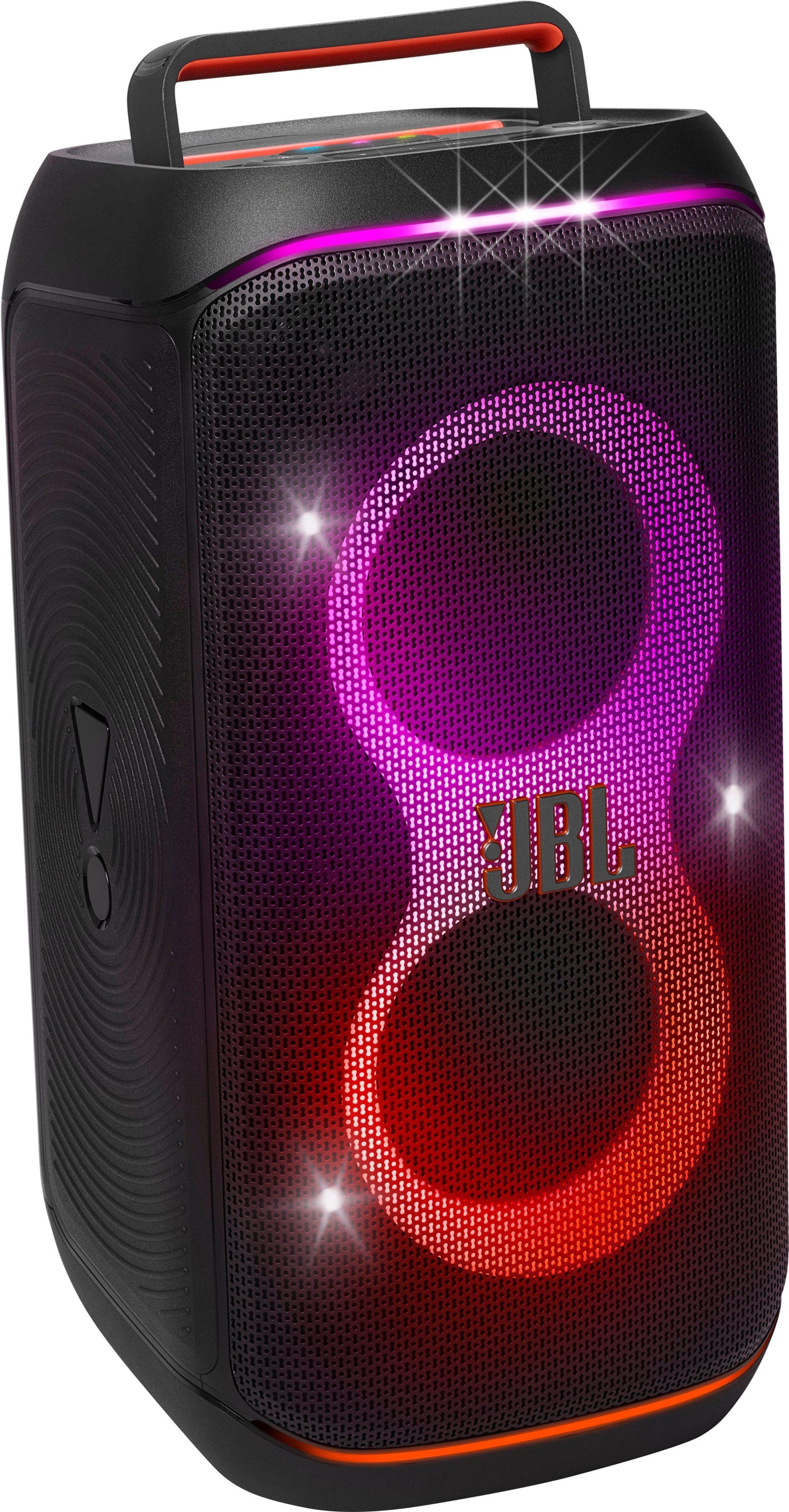
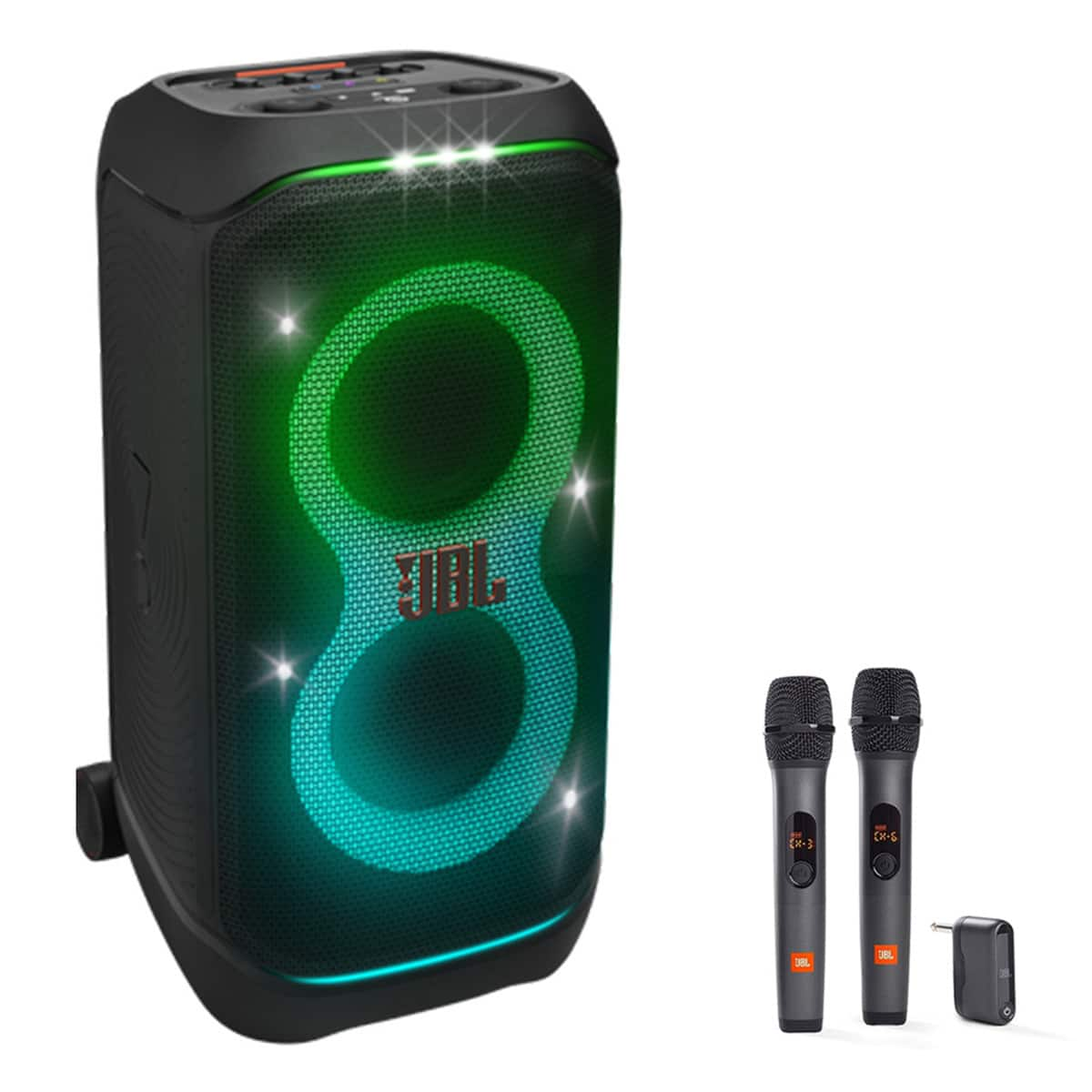
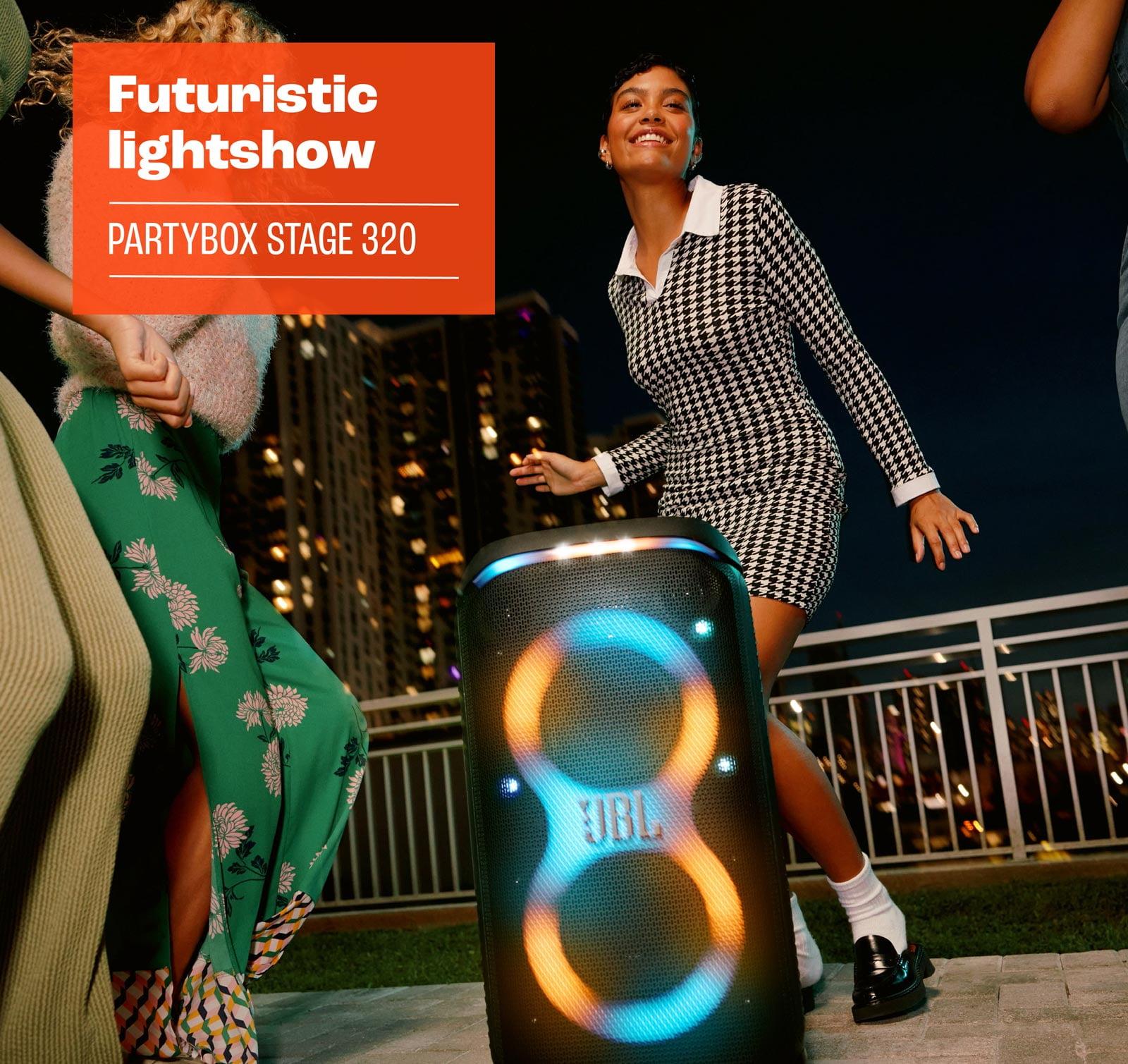
When it comes to throwing memorable parties, your sound system can make or break the entire experience. JBL's PartyBox series has become the go-to choice for people who want serious volume, thumping bass, and eye-catching light shows without breaking the bank on professional DJ equipment. Both the PartyBox Club 120 and PartyBox Stage 320 launched in 2024 as part of JBL's refreshed party speaker lineup, but choosing between them requires understanding some key differences that go far beyond just price.
Party speakers occupy a unique space in the audio world. Unlike home stereo systems that prioritize accurate sound reproduction, or portable Bluetooth speakers designed for casual listening, party speakers are engineered for one primary goal: energizing crowds. This means they emphasize powerful bass response, maximum volume output, and features that create an engaging atmosphere—like synchronized light shows and microphone inputs for karaoke or live performance.
The technical approach differs significantly from traditional speakers. Party speakers typically use larger woofers (the drivers that produce bass frequencies) and amplifiers tuned to push more power into the low-end frequencies where you feel the music's impact. They also incorporate digital signal processing (DSP)—essentially computer algorithms that manipulate the audio signal—to maximize loudness while preventing damage to the speakers.
Both the Club 120 and Stage 320 represent JBL's latest thinking in this category, incorporating new technologies like AI Sound Boost, which uses real-time analysis to predict how the speakers will behave and adjusts the signal accordingly to prevent distortion while maximizing output.
The most significant difference between these speakers lies in their power output, measured in watts RMS (Root Mean Square). This specification tells you how much continuous power the amplifier can deliver to the drivers without distortion. The Stage 320 produces 240 watts compared to the Club 120's 160 watts—a substantial 80-watt advantage that translates to real-world performance differences you can both hear and feel.
To understand what this means practically, sound engineers use decibels (dB) to measure volume levels. Every 3 dB increase represents a doubling of acoustic power, and every 10 dB increase sounds roughly twice as loud to human ears. Our research indicates the Stage 320 reaches approximately 107.5 dB at maximum volume, while the Club 120 achieves around 99.8 dB. This 7.7 dB difference means the Stage 320 sounds noticeably louder and can fill significantly larger spaces.
The power advantage becomes even more apparent when you consider the driver sizes. The Stage 320 uses two 6.5-inch woofers compared to the Club 120's 5.25-inch drivers. Larger woofers move more air with each cycle, producing deeper bass and higher overall output with less strain on the amplifier. This translates to cleaner sound at high volumes—the Stage 320 maintains its composure when pushed hard, while the Club 120 may exhibit some compression or distortion at maximum levels.
For context, the Club 120 can effectively energize gatherings of 12-15 people in typical backyard or basement party scenarios. The Stage 320, however, can handle crowds of 20-25 people and even fill tennis-court-sized outdoor areas according to JBL's specifications. If you've ever been to a party where you couldn't hear the music clearly from the back of the crowd, you understand why this difference matters.
Battery technology represents another crucial differentiator, and here the numbers tell a compelling story. The Stage 320 incorporates a 68 Wh (watt-hour) battery compared to the Club 120's 34 Wh capacity—exactly double the energy storage. In manufacturer testing, this translates to 18 hours versus 12 hours of advertised playtime, but real-world usage patterns paint a different picture.
When you factor in typical party conditions—bass boost enabled, light show active, and volume levels around 70%—both speakers deliver considerably less runtime. Based on user reports and expert testing, the Stage 320 provides approximately 7 hours under these conditions, while the Club 120 manages 6-7 hours. The extra hour might not sound dramatic, but it often represents the difference between making it through an entire evening event or scrambling for power outlets.
Both speakers feature replaceable batteries, which was a significant upgrade when JBL introduced this design in 2024. Previous PartyBox models had sealed batteries that couldn't be swapped, limiting their usefulness for extended events. Now you can purchase spare batteries and hot-swap them when power runs low, effectively providing unlimited runtime for camping trips, beach parties, or all-day festivals.
The fast charging capability shouldn't be overlooked either. Both speakers can gain about an hour of playtime from a 10-minute charge, which proves invaluable when you need to quickly top up between party segments or during brief intermissions.
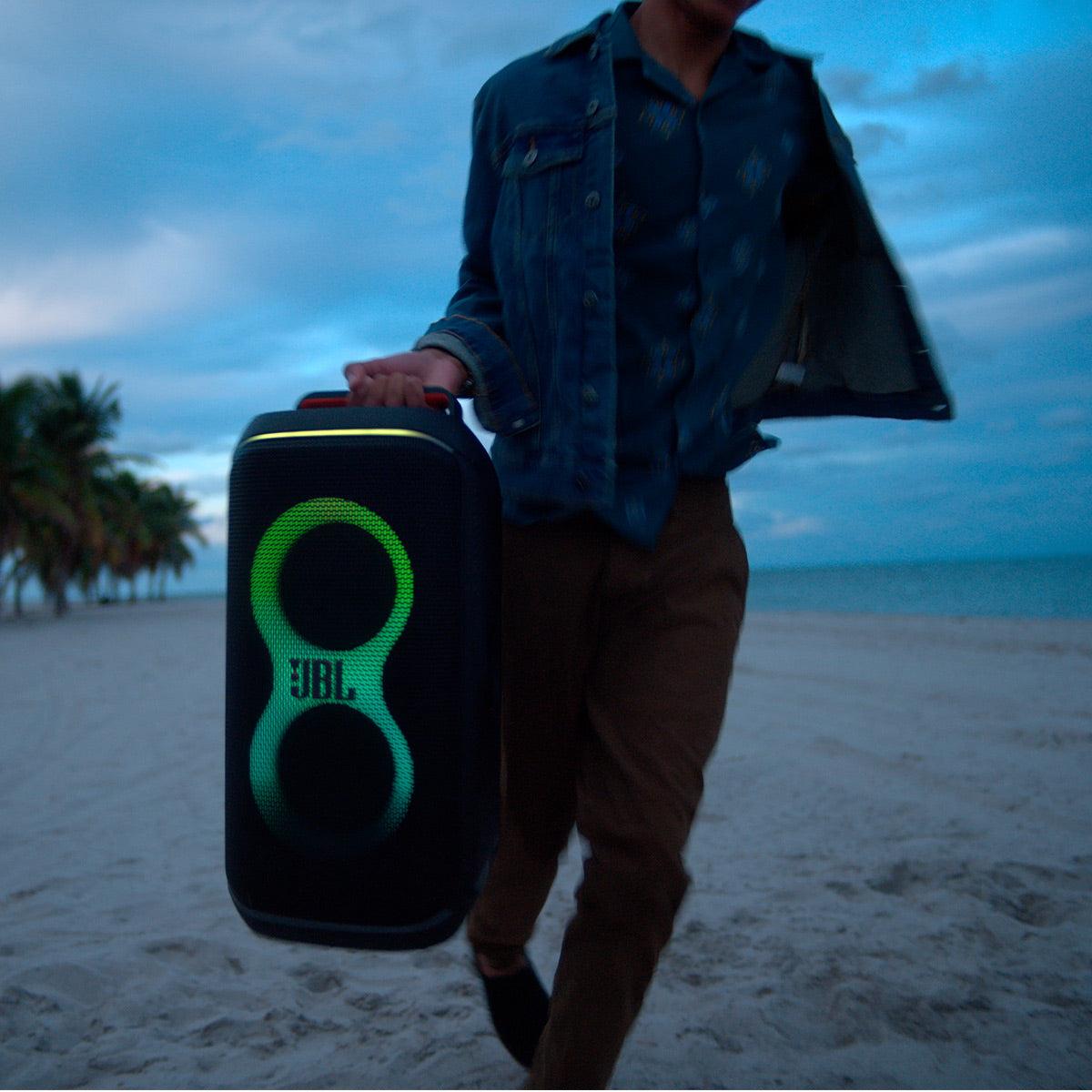
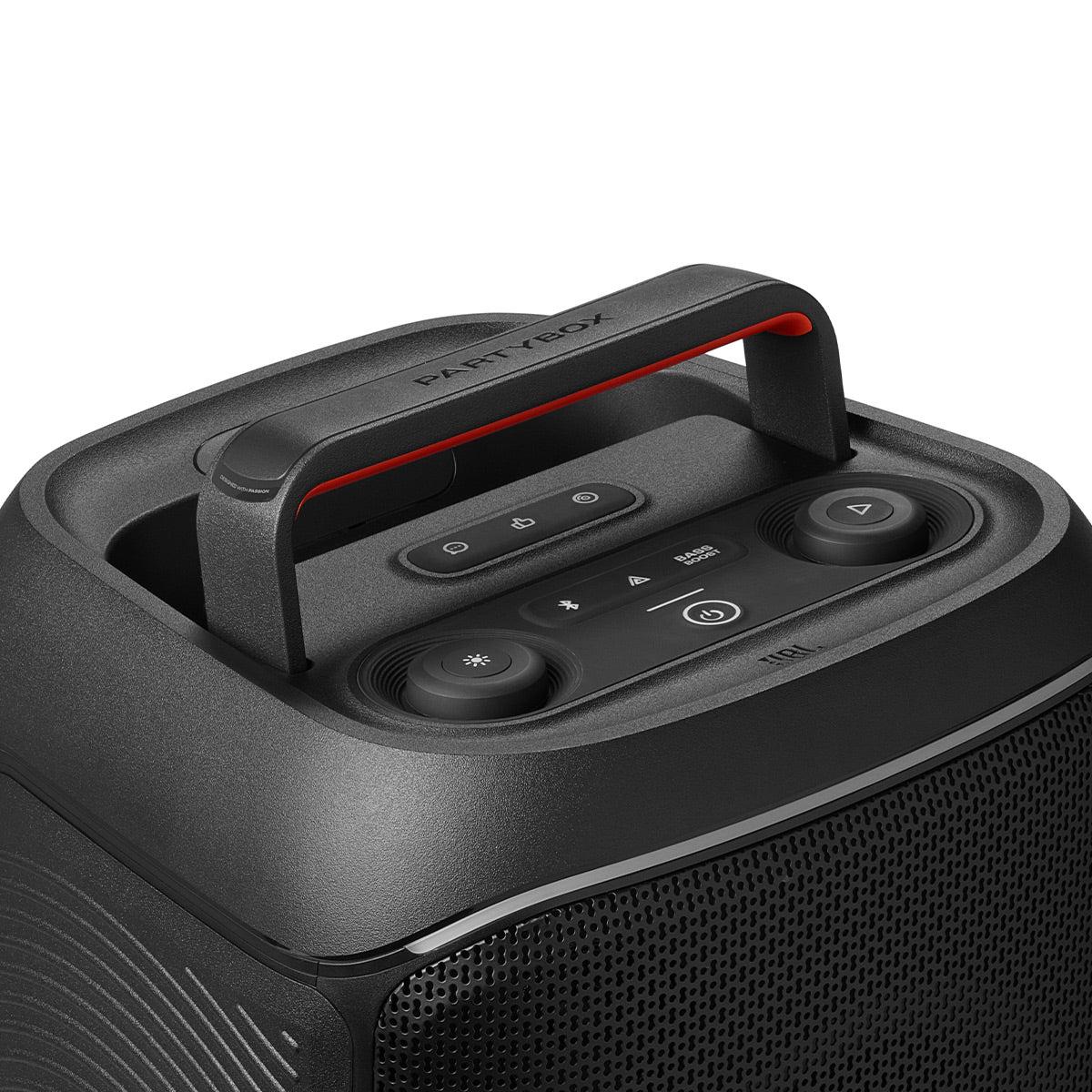
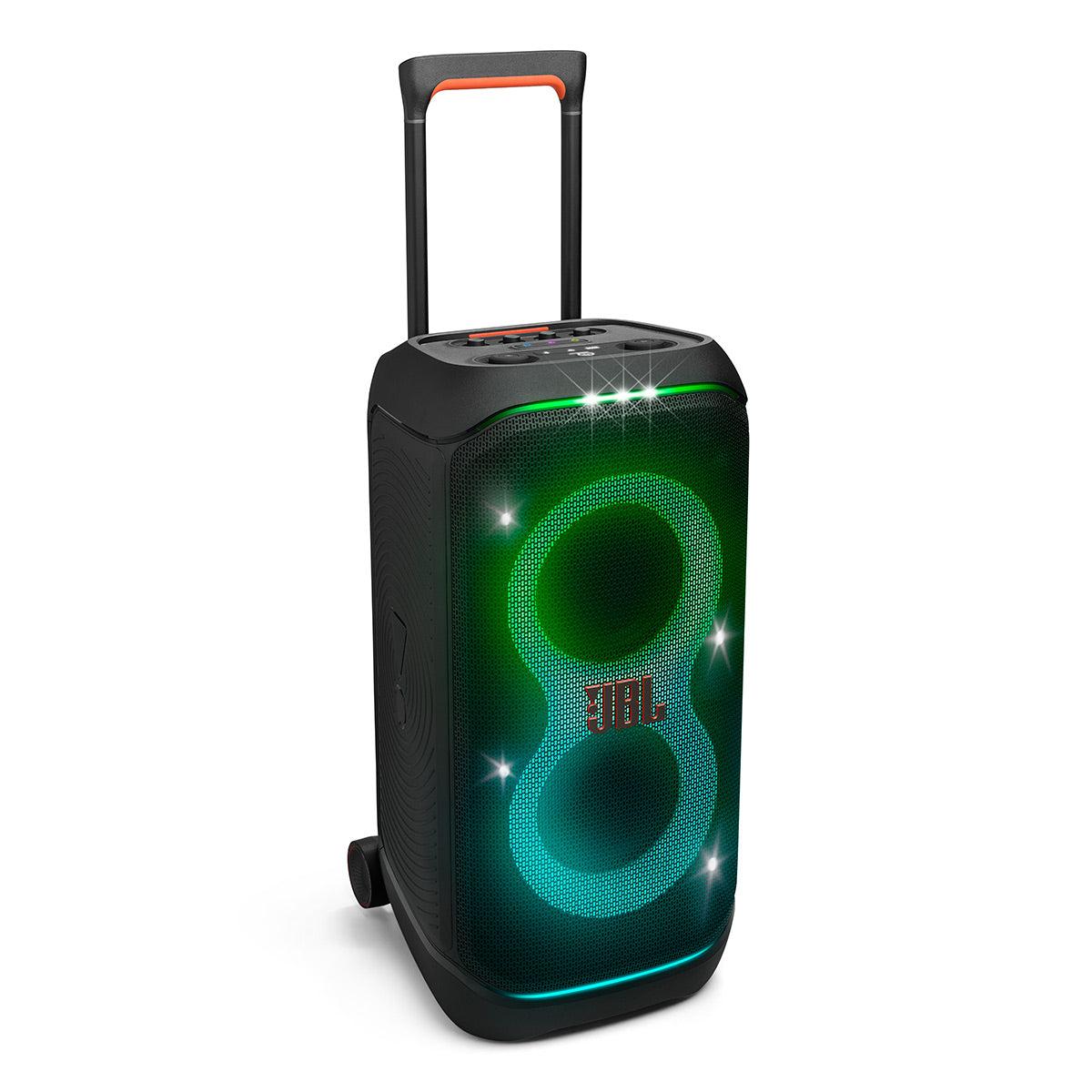
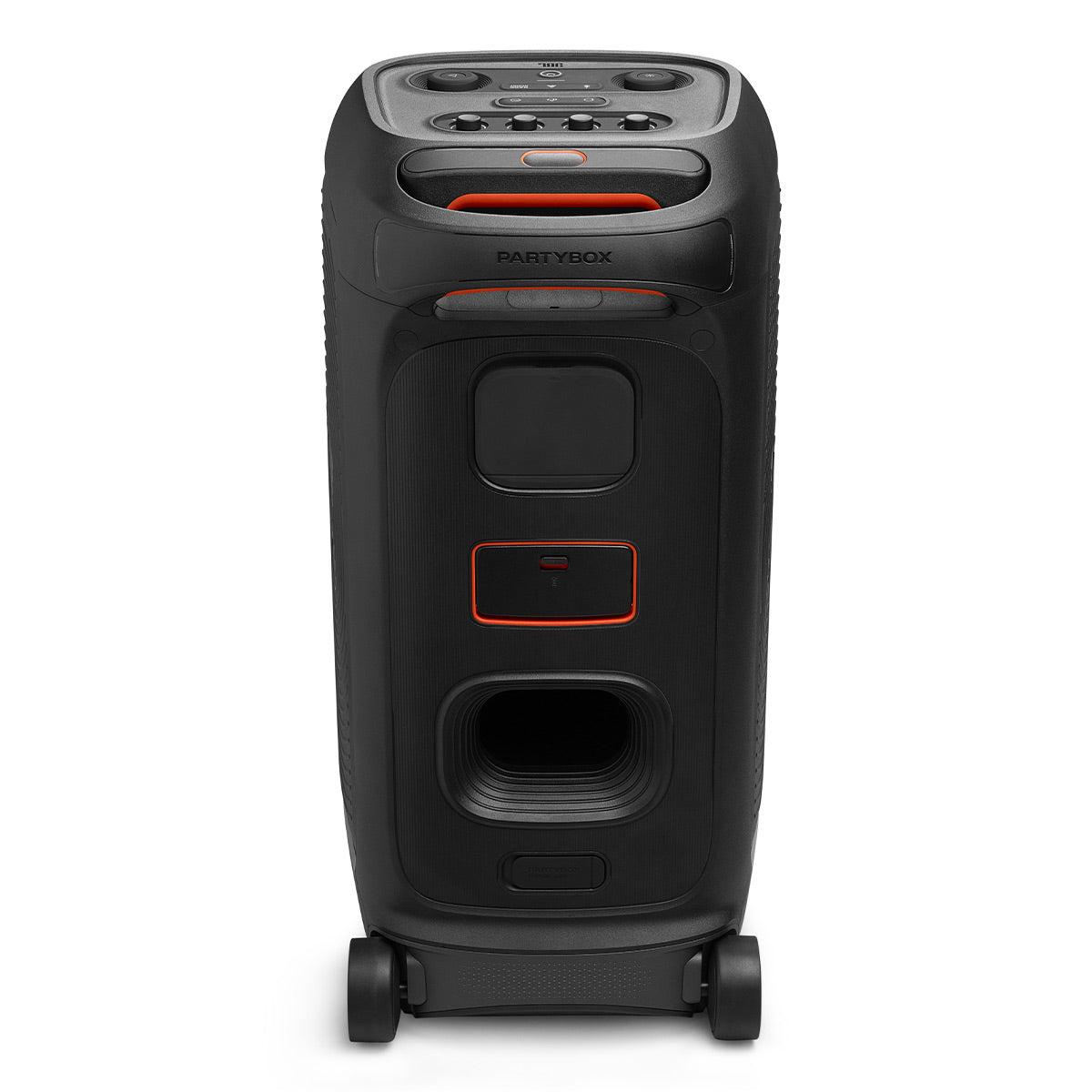
Here's where the decision becomes personal, and your specific use cases matter enormously. The Club 120 weighs 11.05 kg (24.35 lbs) with compact dimensions that make it manageable for most people to carry by hand using its foldable ergonomic handle. The Stage 320 tips the scales at 16.5 kg (36.38 lbs)—still technically portable, but approaching the limits of what most people want to carry manually.
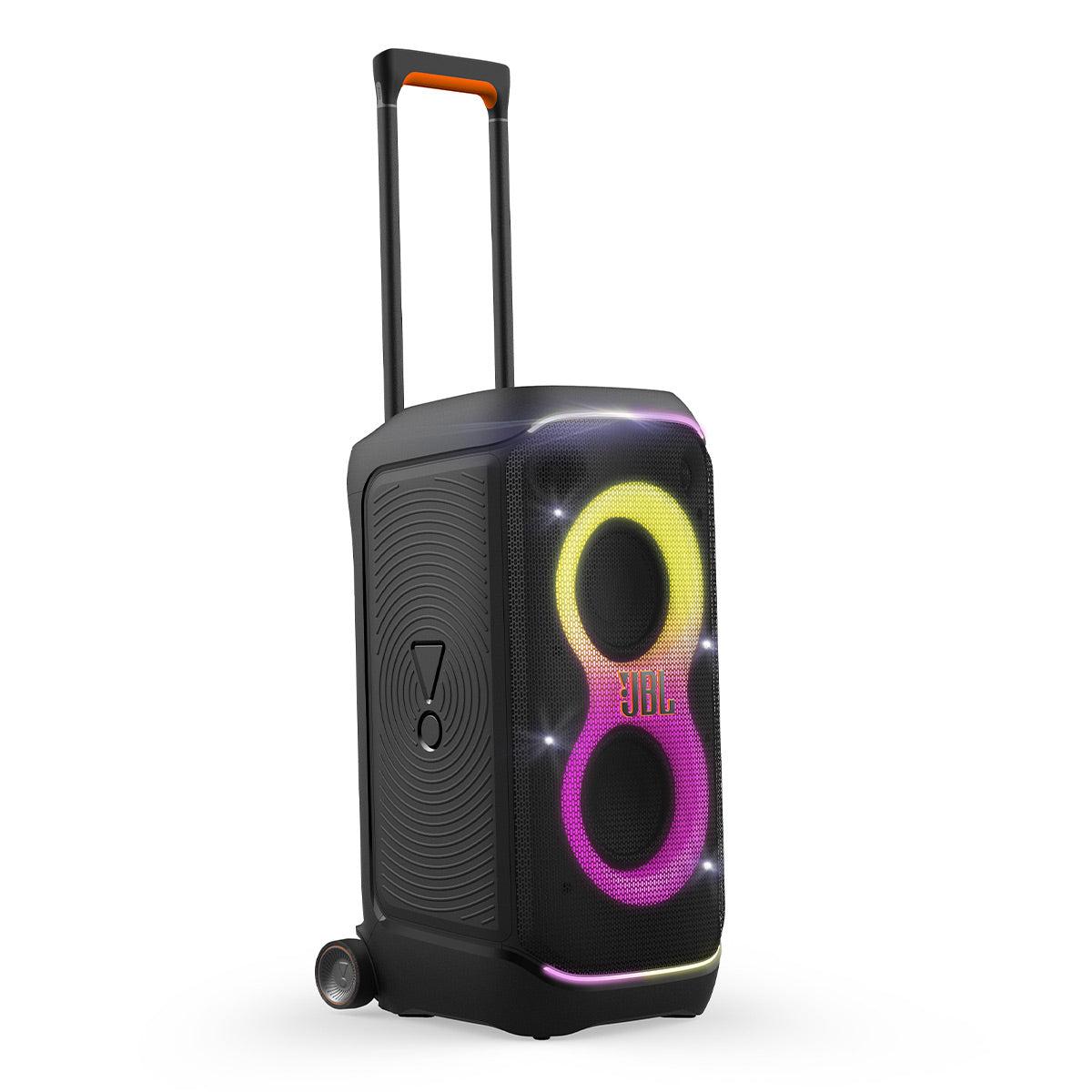
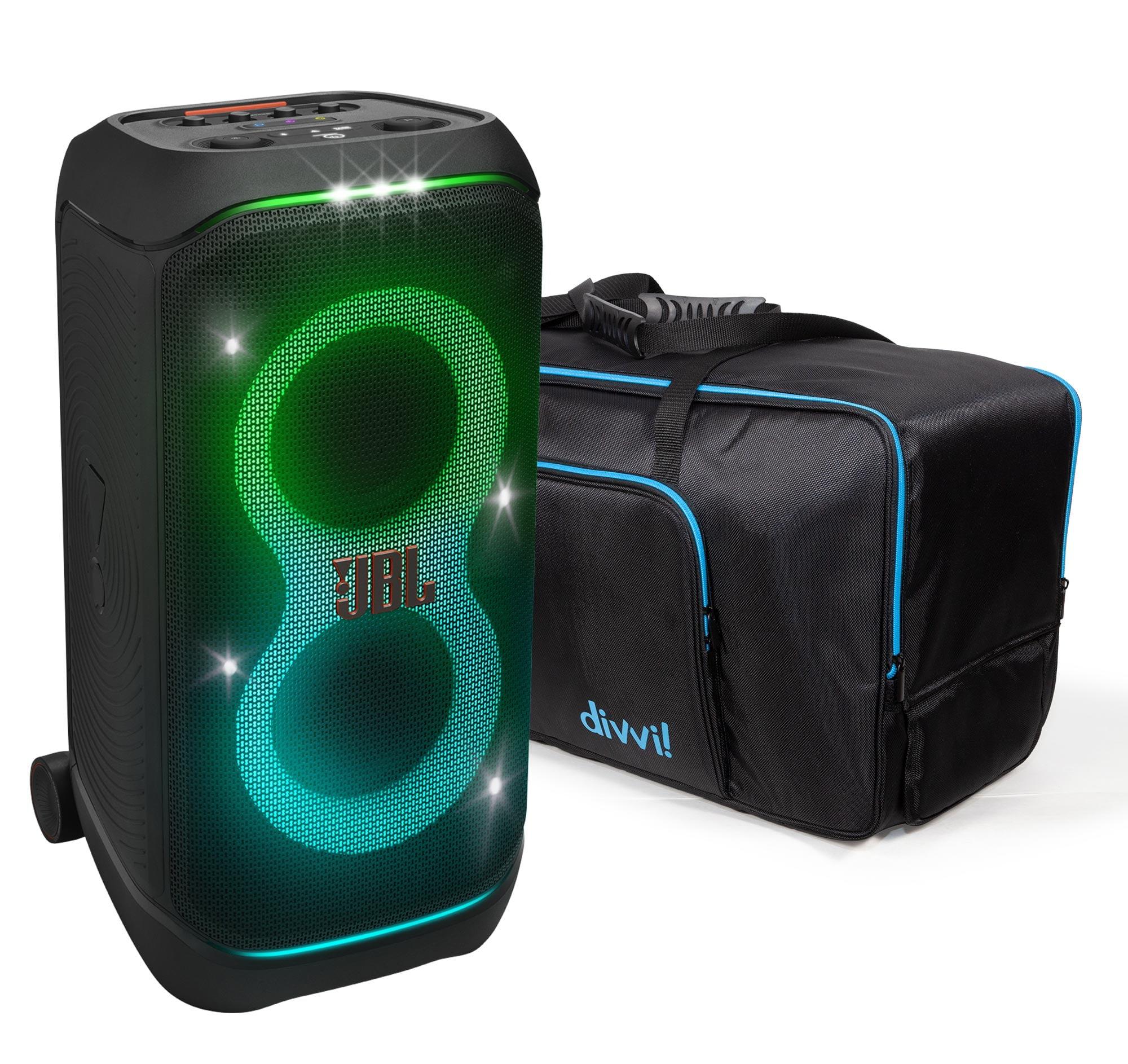
JBL addressed the Stage 320's weight penalty with a clever design solution: built-in wheels and a telescoping handle, similar to rolling luggage. This transforms the transport experience from a strength exercise into a simple rolling operation. The wide, sturdy wheels handle various surfaces reasonably well, though they work best on smooth pavement or indoor floors.
The portability question often comes down to your typical scenarios. If you frequently face stairs, tight spaces, or need to load speakers into smaller vehicles, the Club 120's manageable size becomes a significant advantage. However, if you primarily move speakers across flat surfaces or have assistance available, the Stage 320's transport system works excellently and the extra weight becomes less relevant.
Consider storage as well. The Club 120 fits more easily into closets, car trunks, and spare rooms, while the Stage 320 requires dedicated storage space due to its larger footprint.
While maximum volume gets attention, sound quality across the entire volume range matters for actual enjoyment. Both speakers share JBL's signature sound profile, which emphasizes bass response and energetic presentation over audiophile neutrality. This tuning works excellently for electronic music, hip-hop, pop, and rock—genres that benefit from punchy low-end and forward presentation.
The Stage 320 maintains better composure at high volumes thanks to its larger drivers and more powerful amplification. Bass response remains tight and controlled even when pushed hard, while the Club 120 may exhibit some bloating or compression in the upper bass region at maximum levels. Both speakers utilize JBL's AI Sound Boost technology, which analyzes the incoming signal and adjusts processing in real-time to maximize output while minimizing distortion.
For midrange frequencies—where vocals and most instruments live—both speakers perform admirably. The two-way design with dedicated tweeters ensures vocals remain clear and intelligible even at party volumes. However, neither speaker targets critical listening applications. If you're planning to use these for home theater duties, they'll provide impressive impact for action movies but lack the nuanced detail reproduction that dedicated home theater speakers offer.
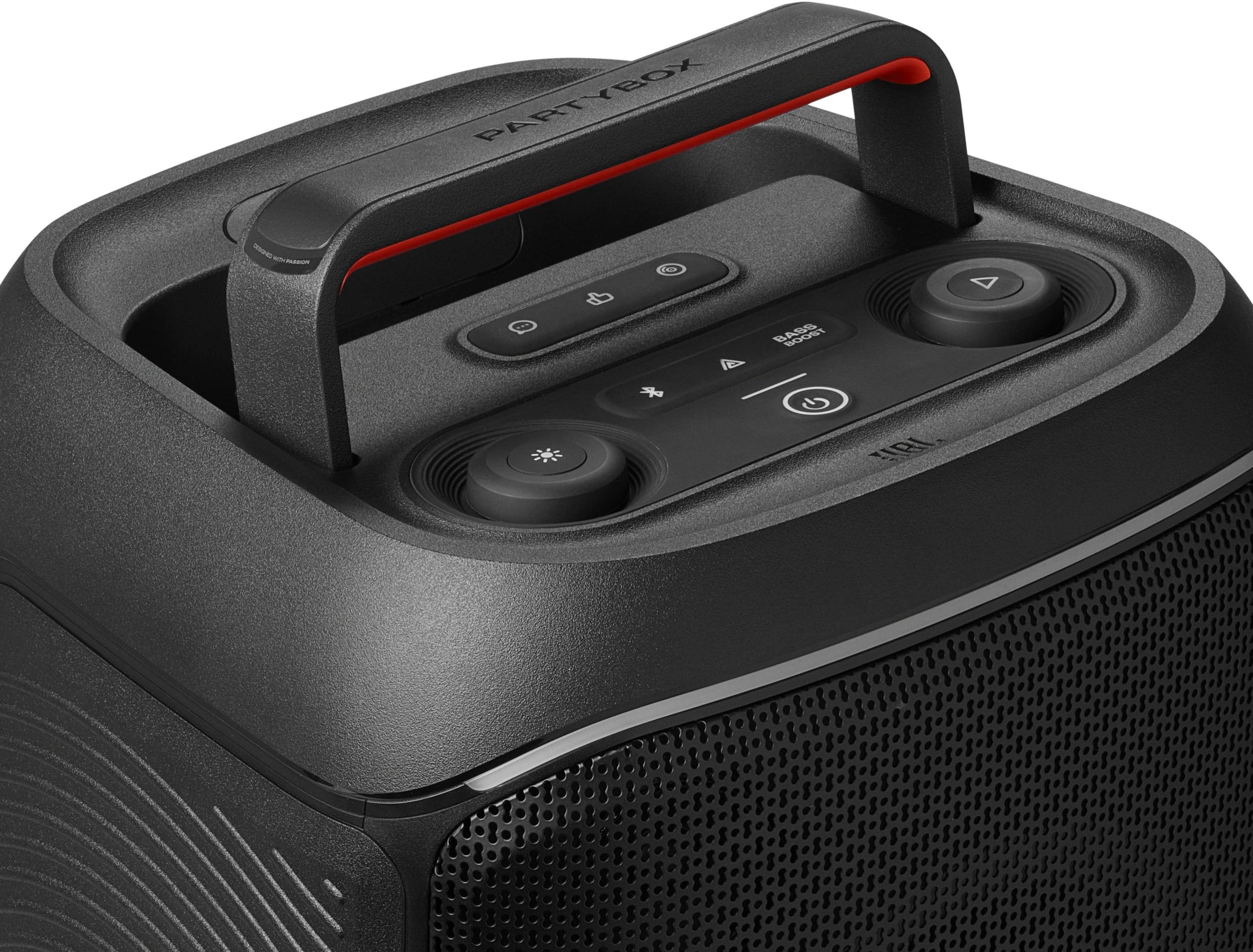
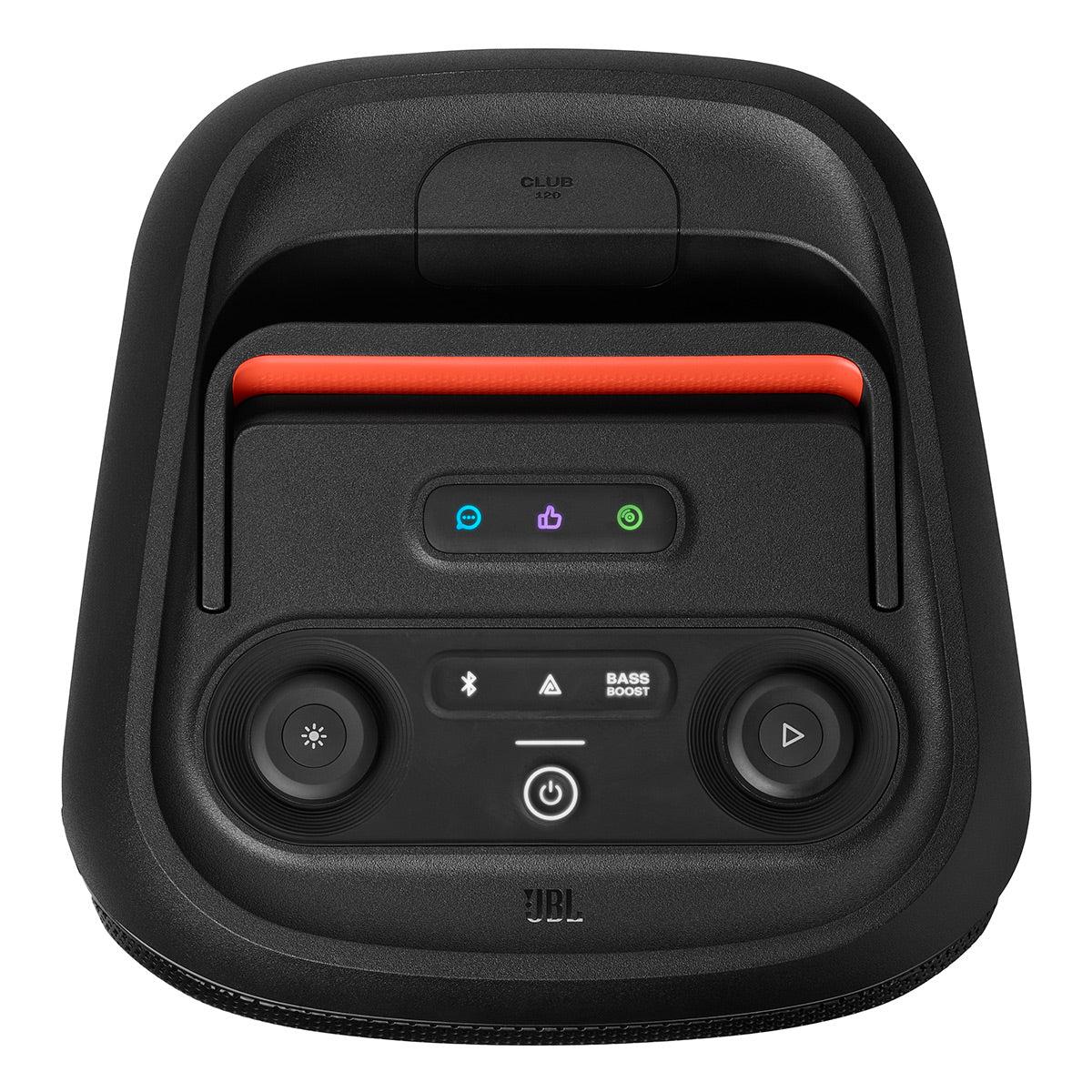
The built-in EQ system, controlled through JBL's PartyBox app, allows considerable customization. The 5-band equalizer lets you adjust bass, low-mids, mids, high-mids, and treble to match your preferences or room acoustics. Both speakers also feature Bass Boost settings with two levels—one for overall bass enhancement and another that specifically targets the upper bass region for electronic music's characteristic "kick" impact.
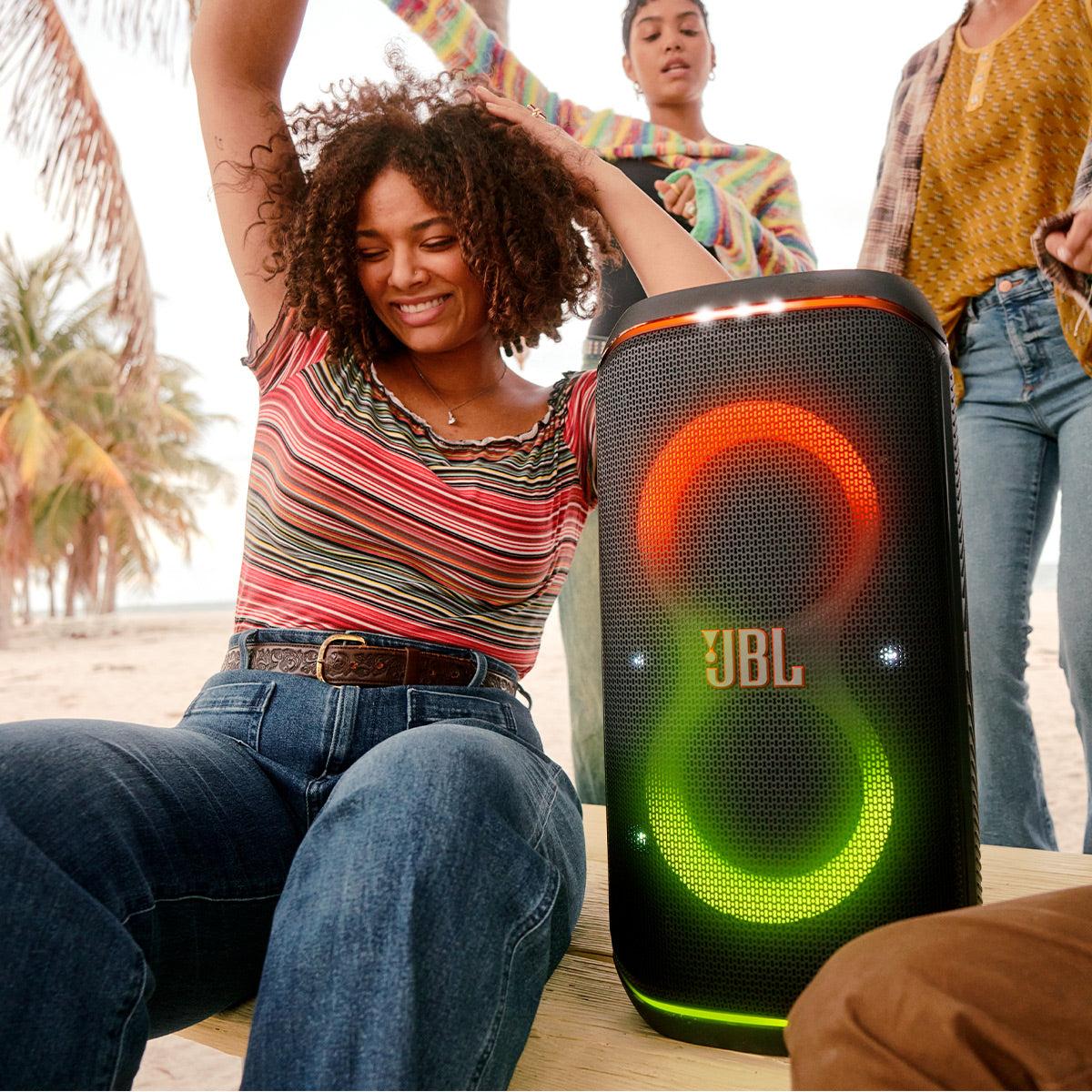
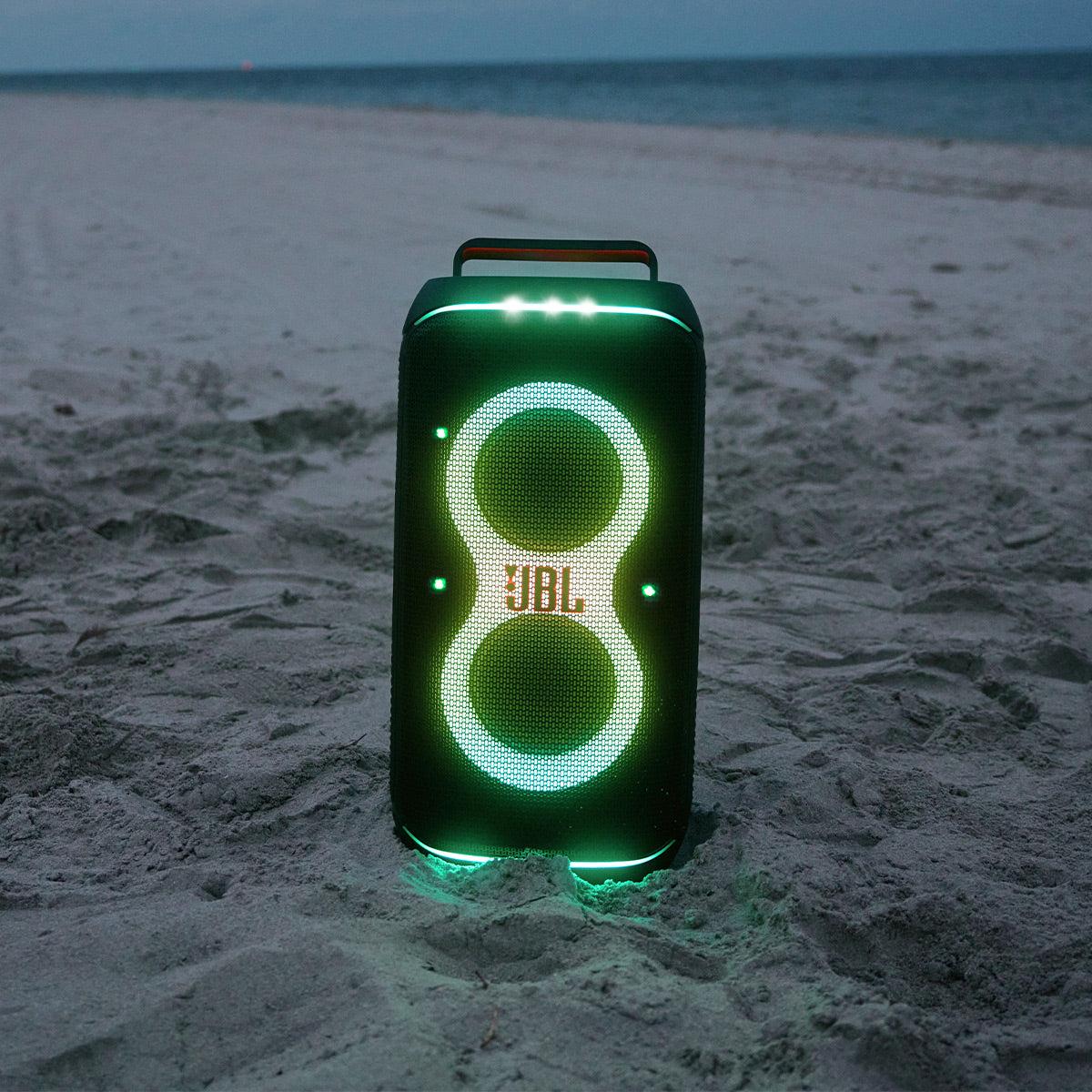
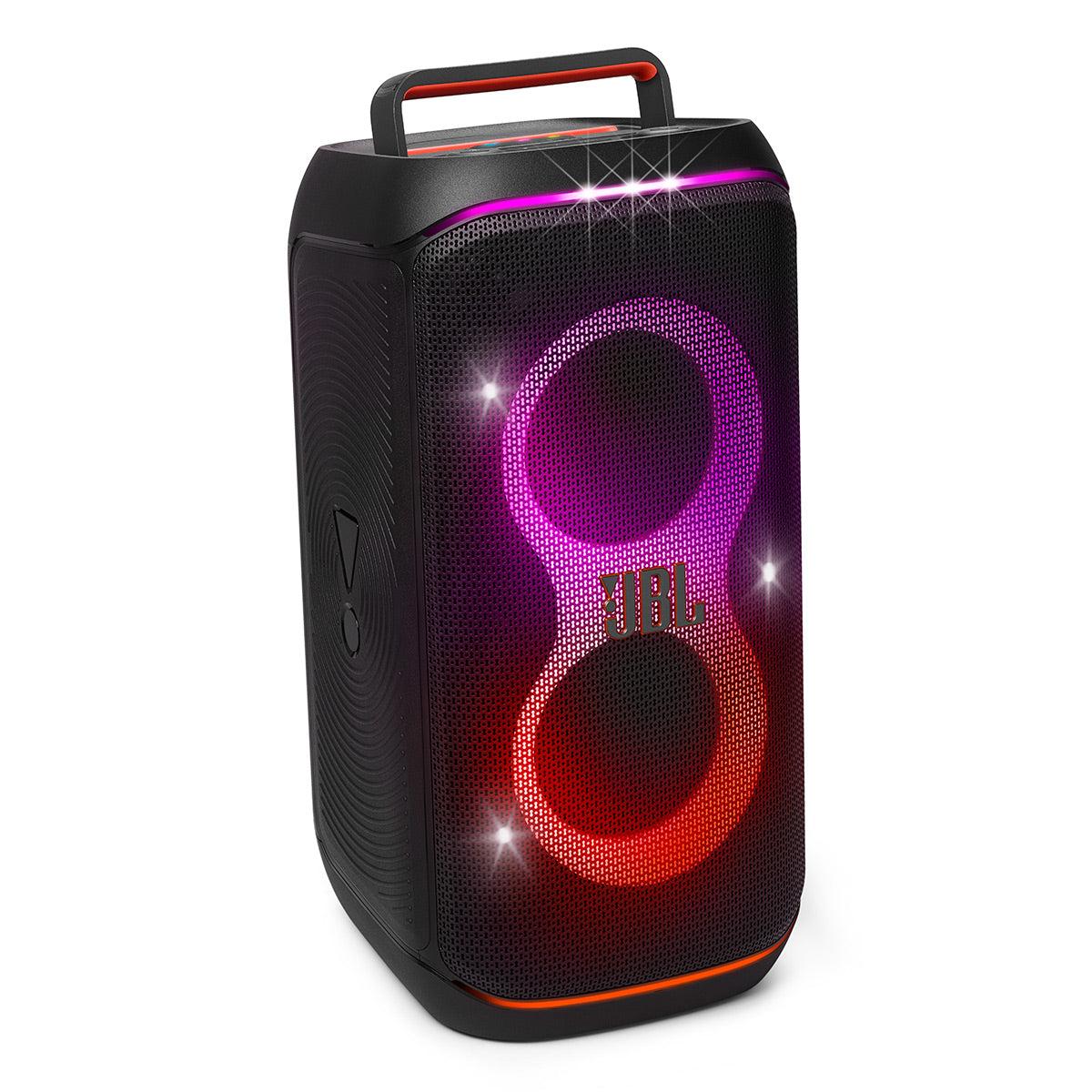
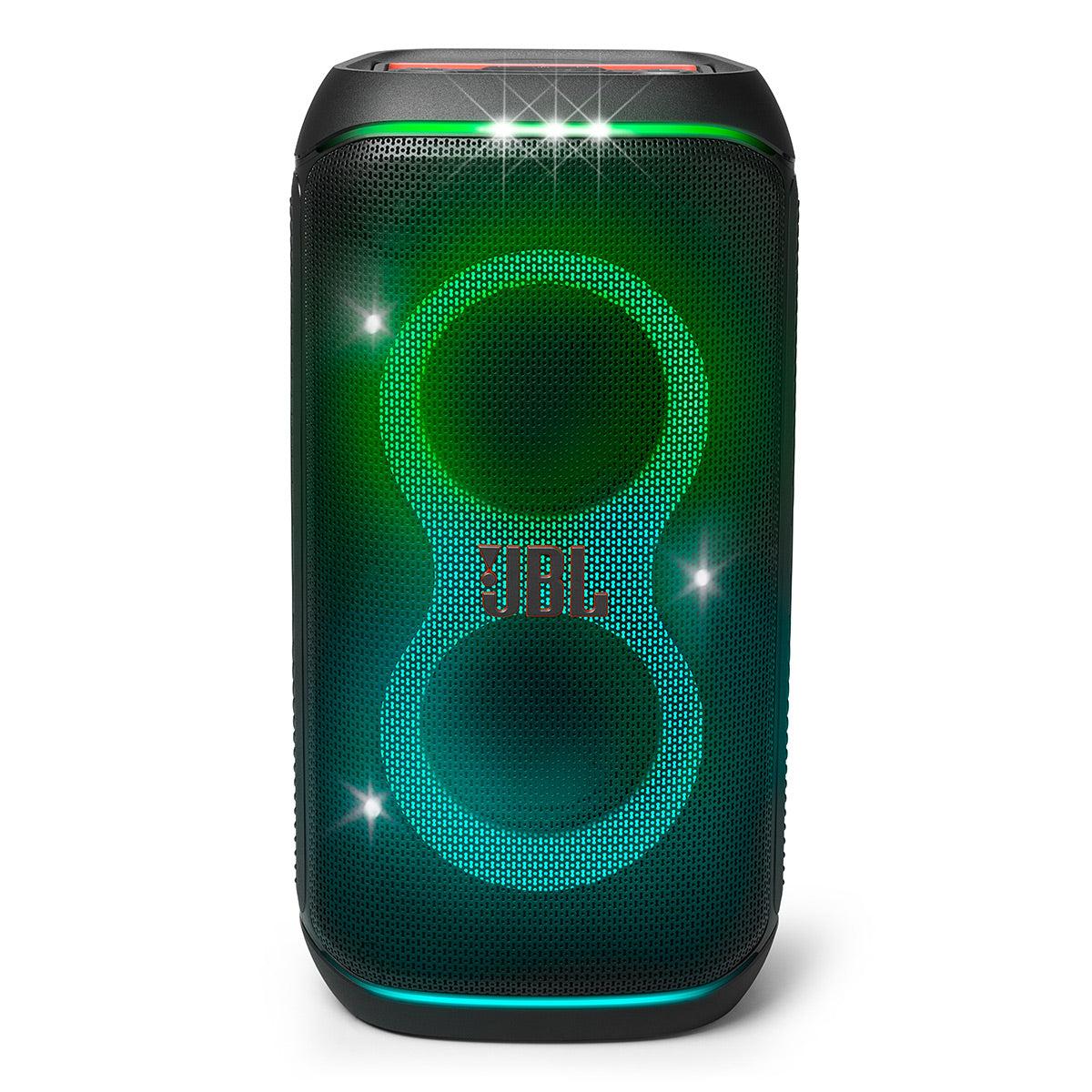
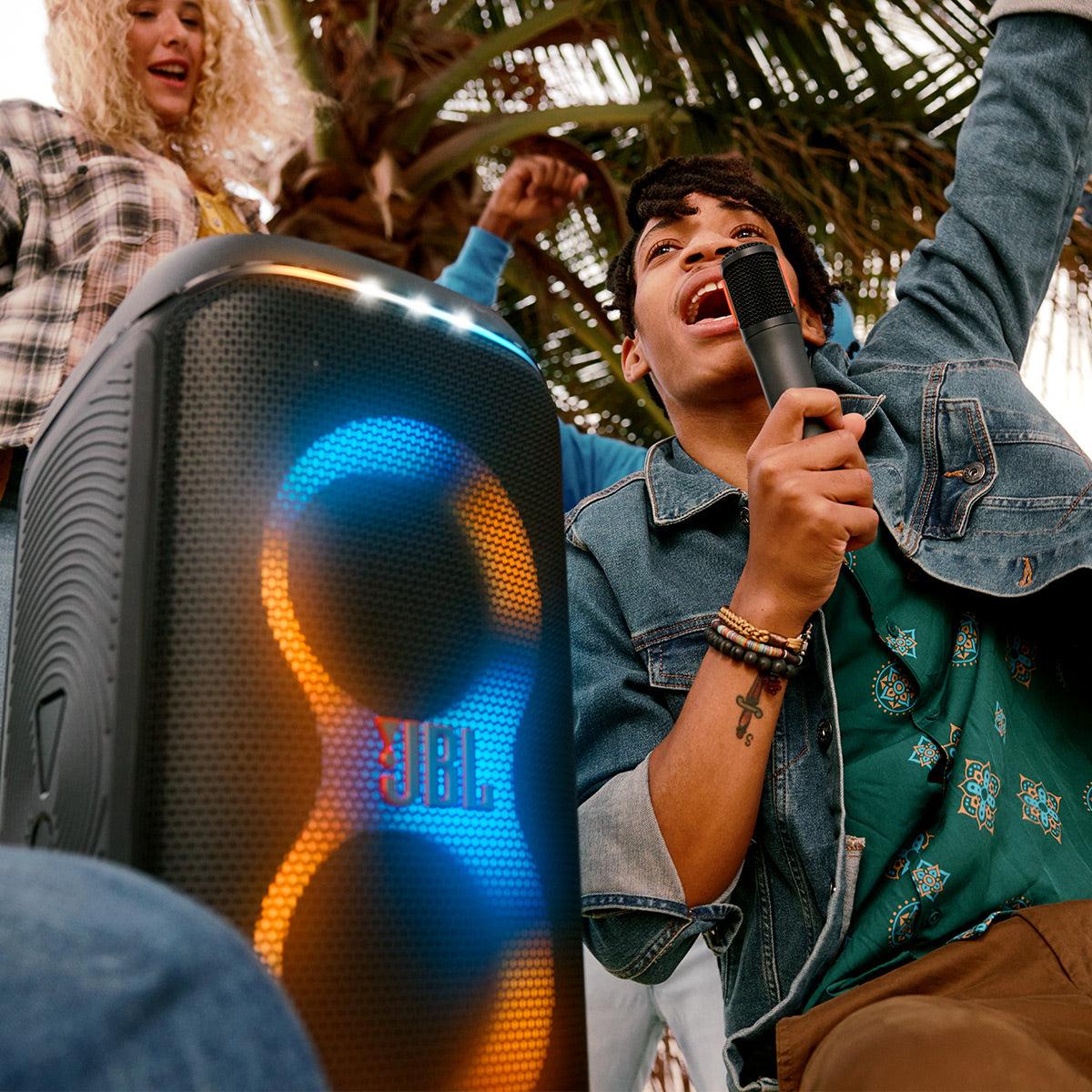
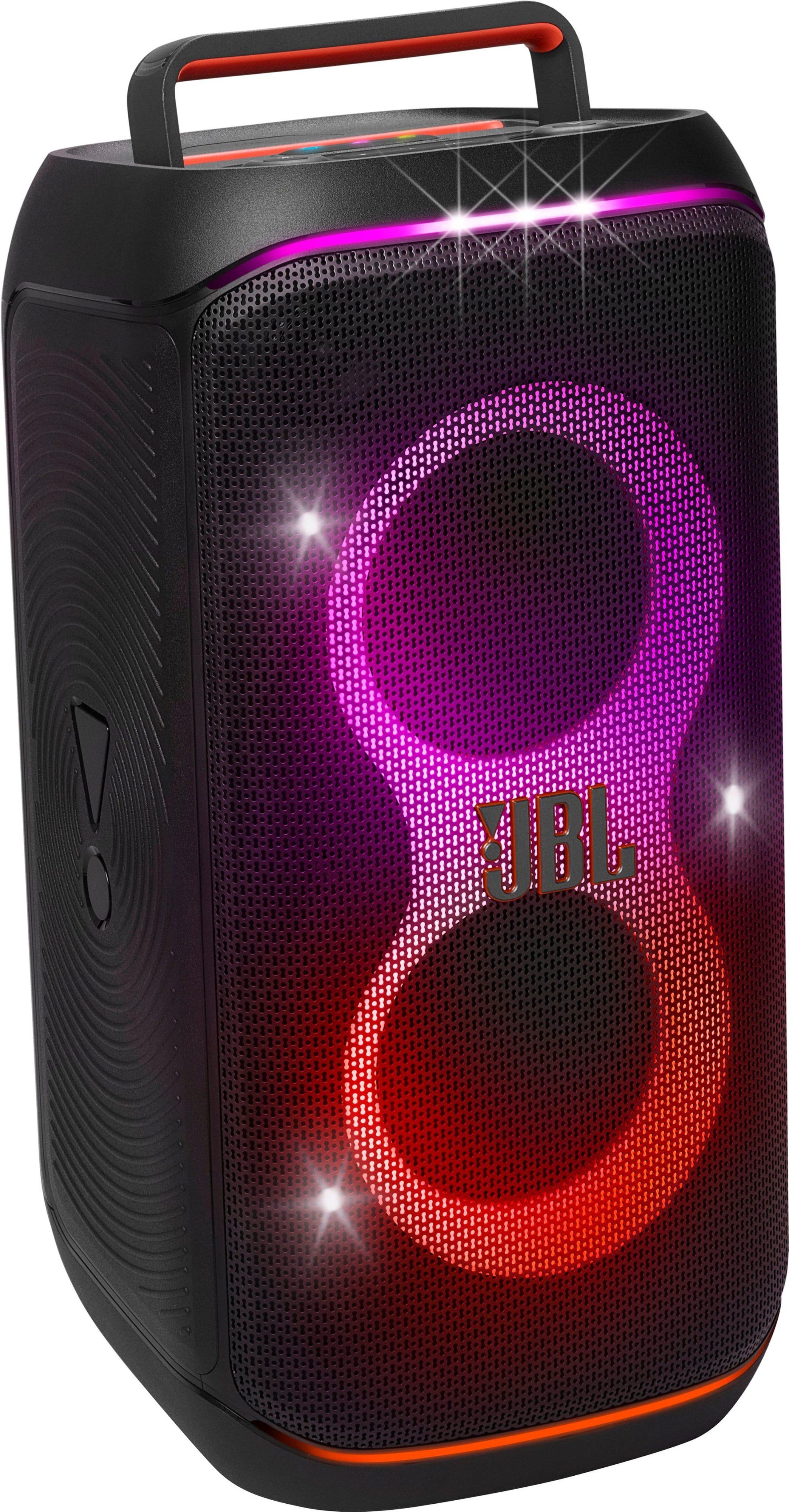
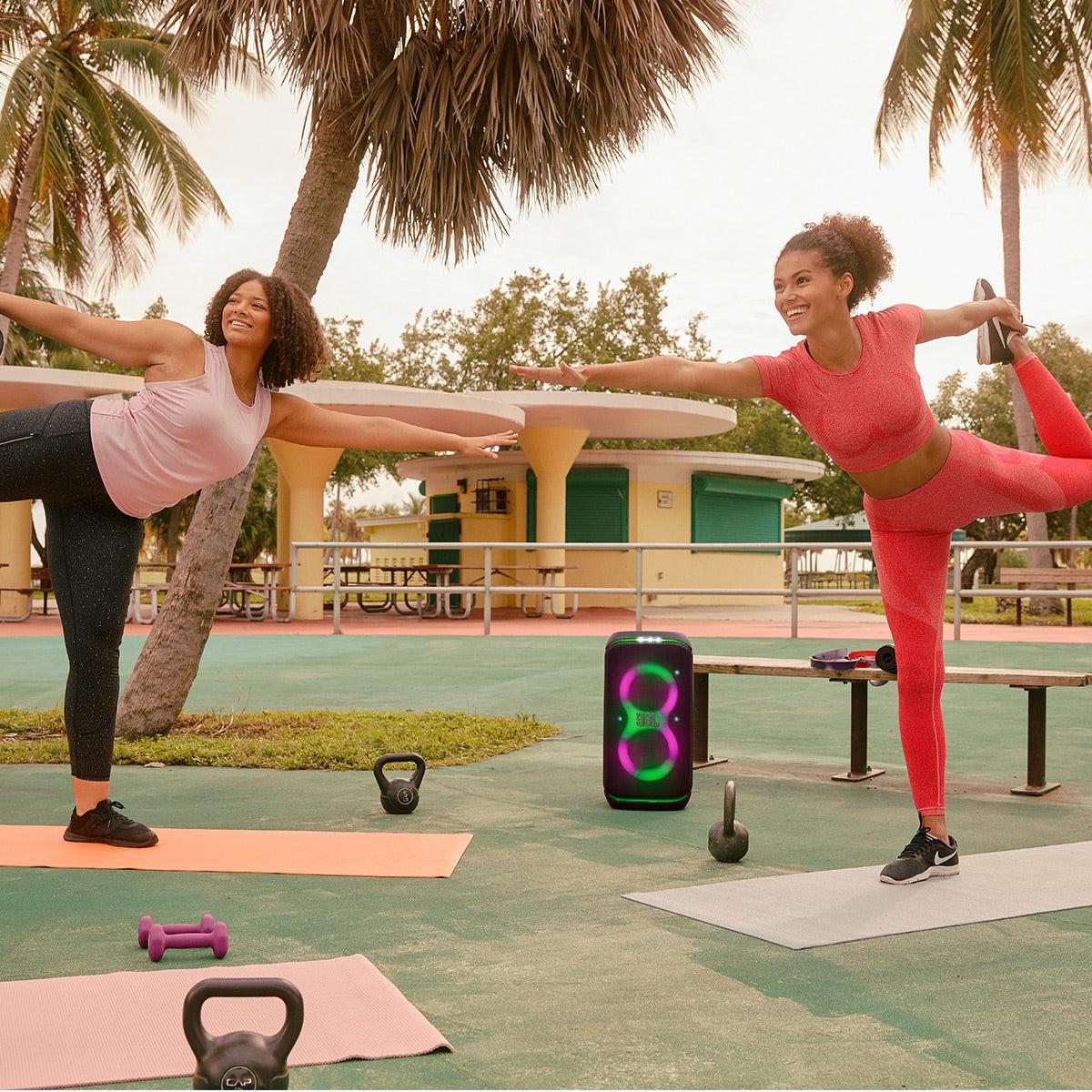
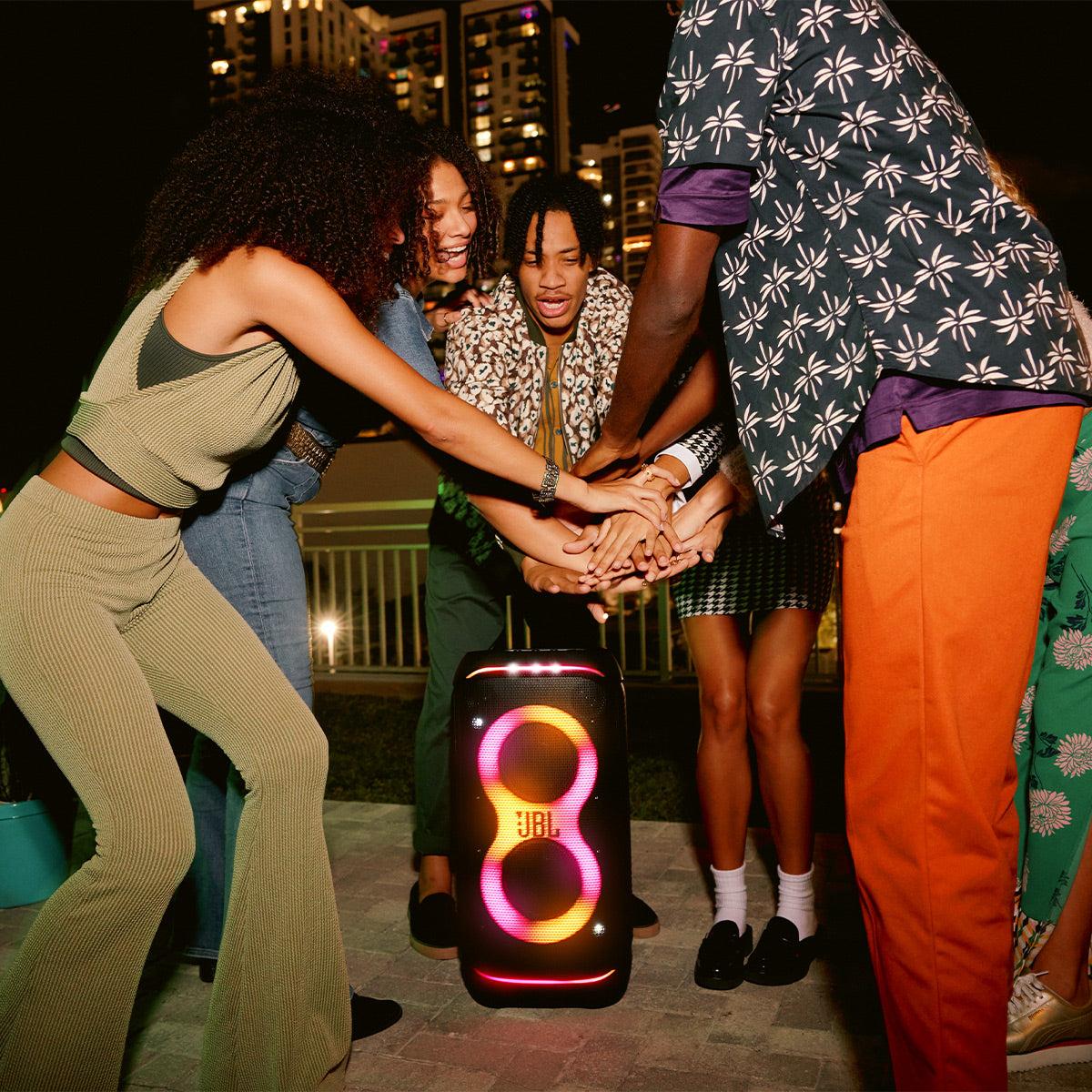
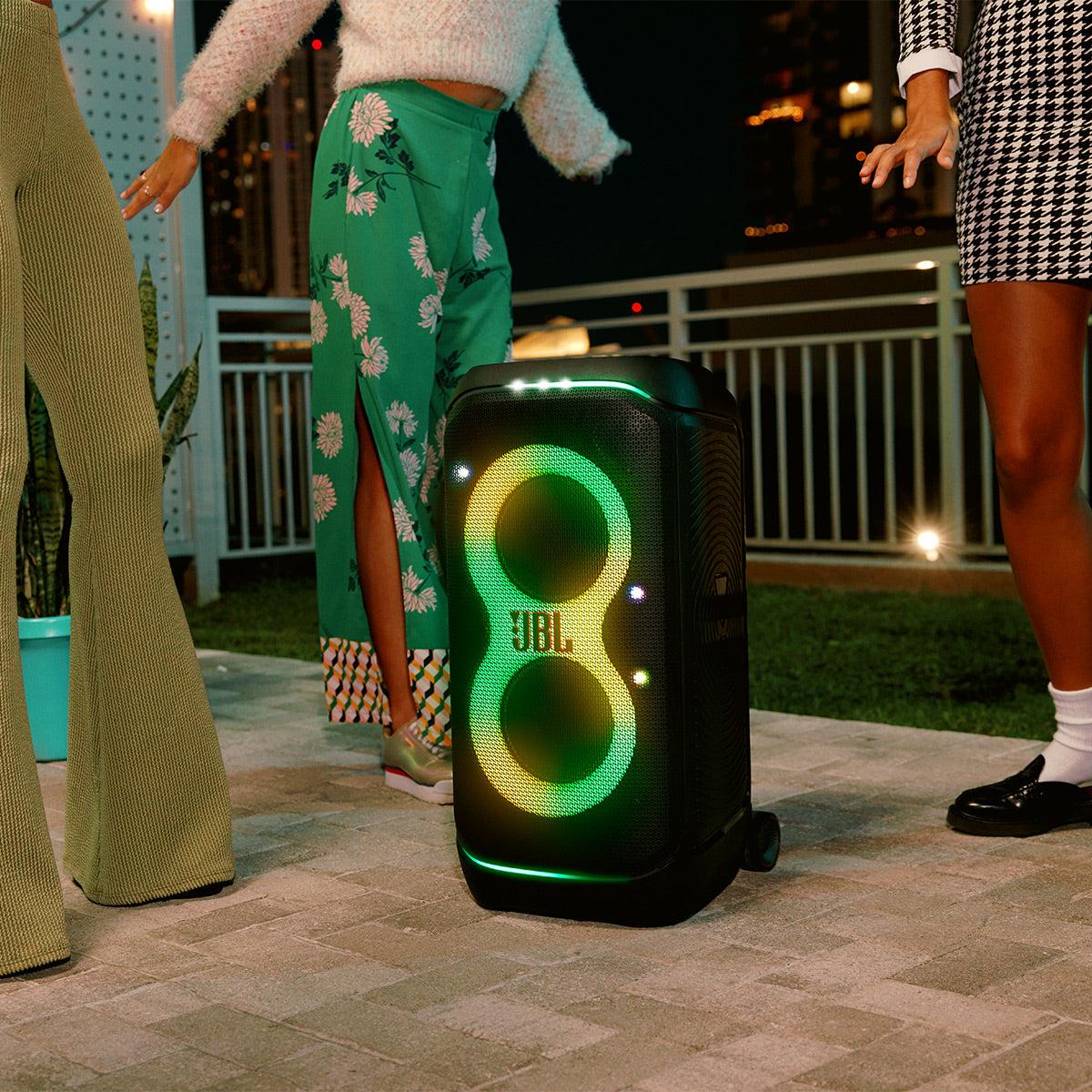
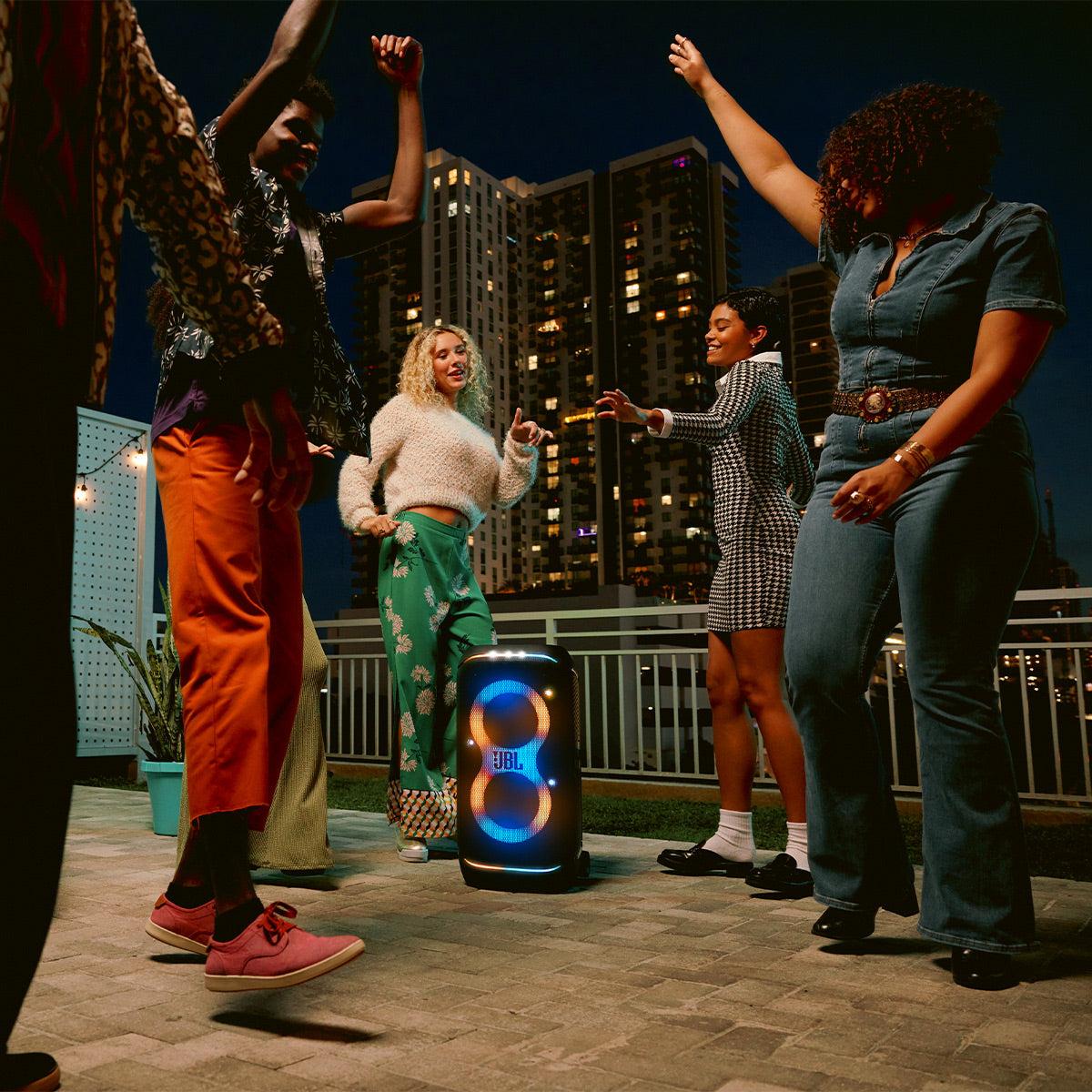
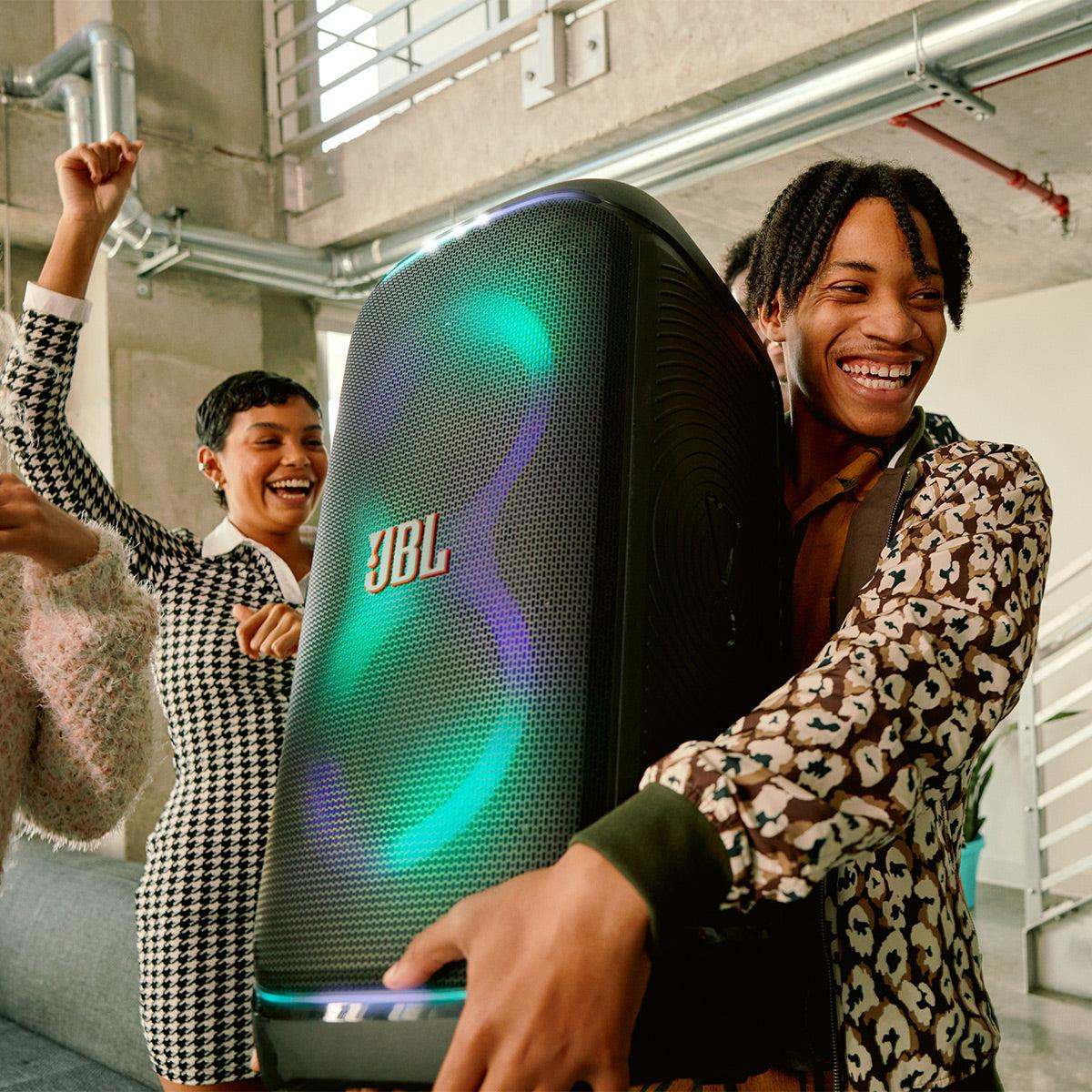
The PartyBox series distinguishes itself through features specifically designed for entertaining, and both models share nearly identical capabilities in this regard. The customizable RGB light show represents more than just visual flair—it's synchronized to the music's beat and can dramatically enhance the party atmosphere. The lighting system includes starry effects, light trails, and strobe patterns, all controllable through the JBL PartyBox app or physical buttons on the speakers.
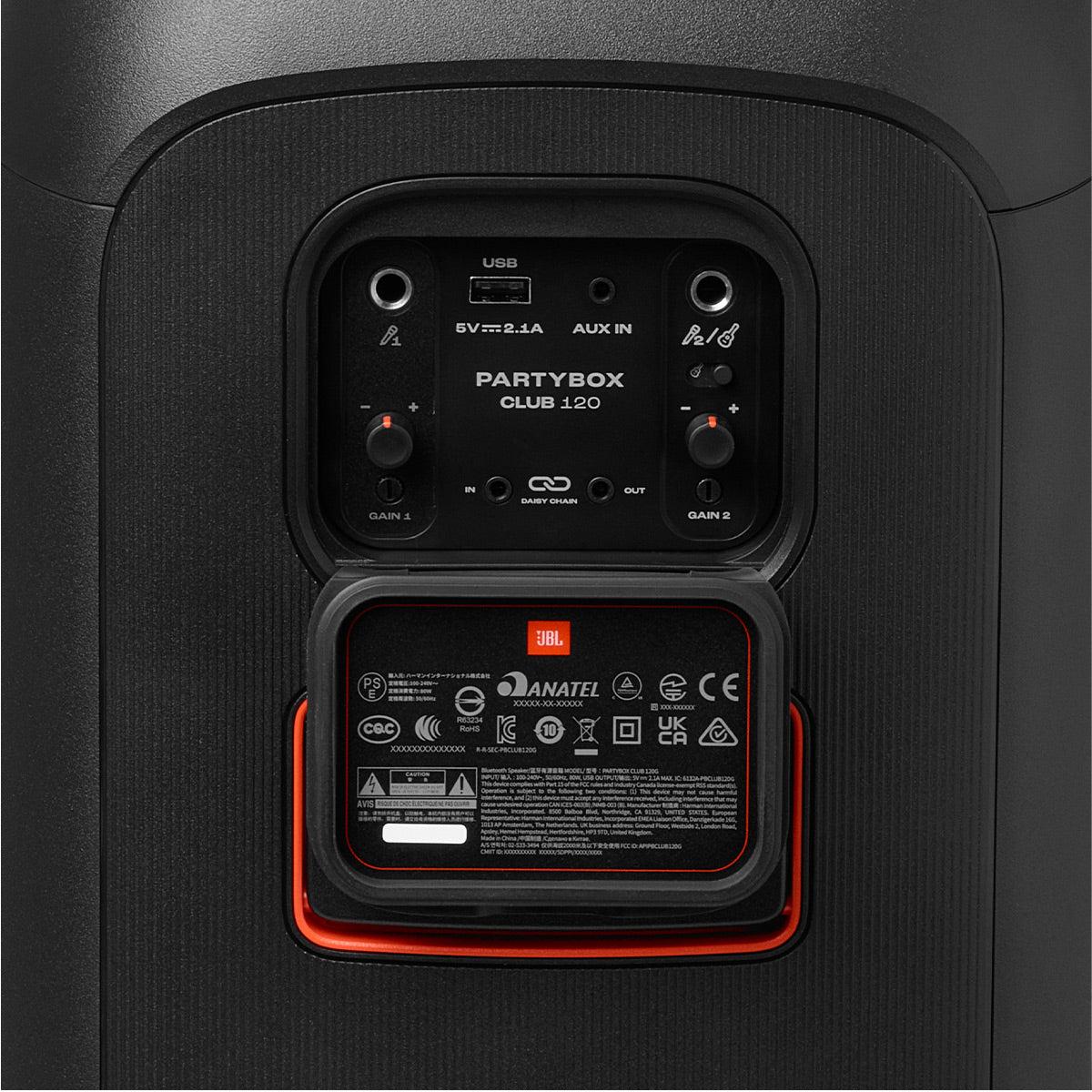
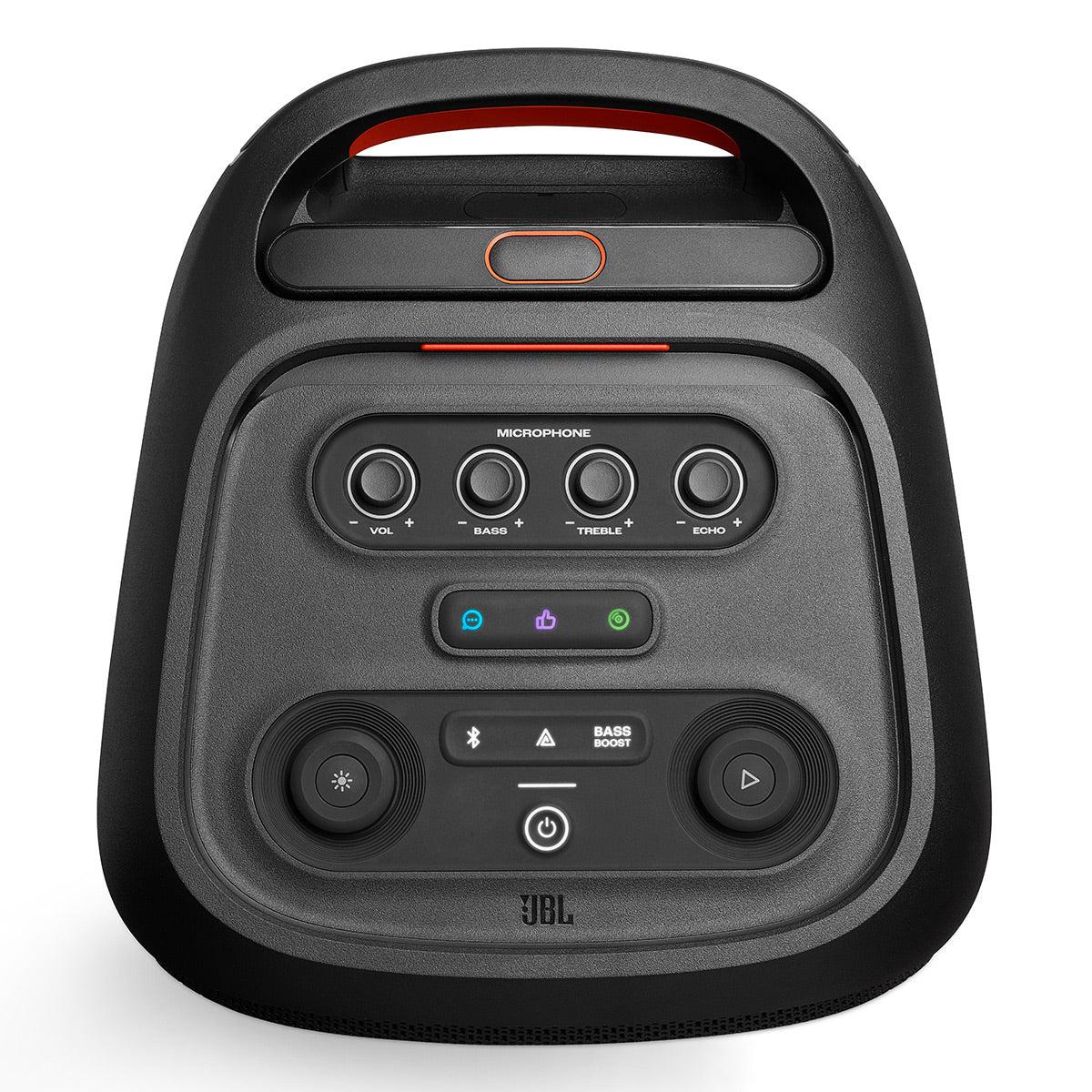
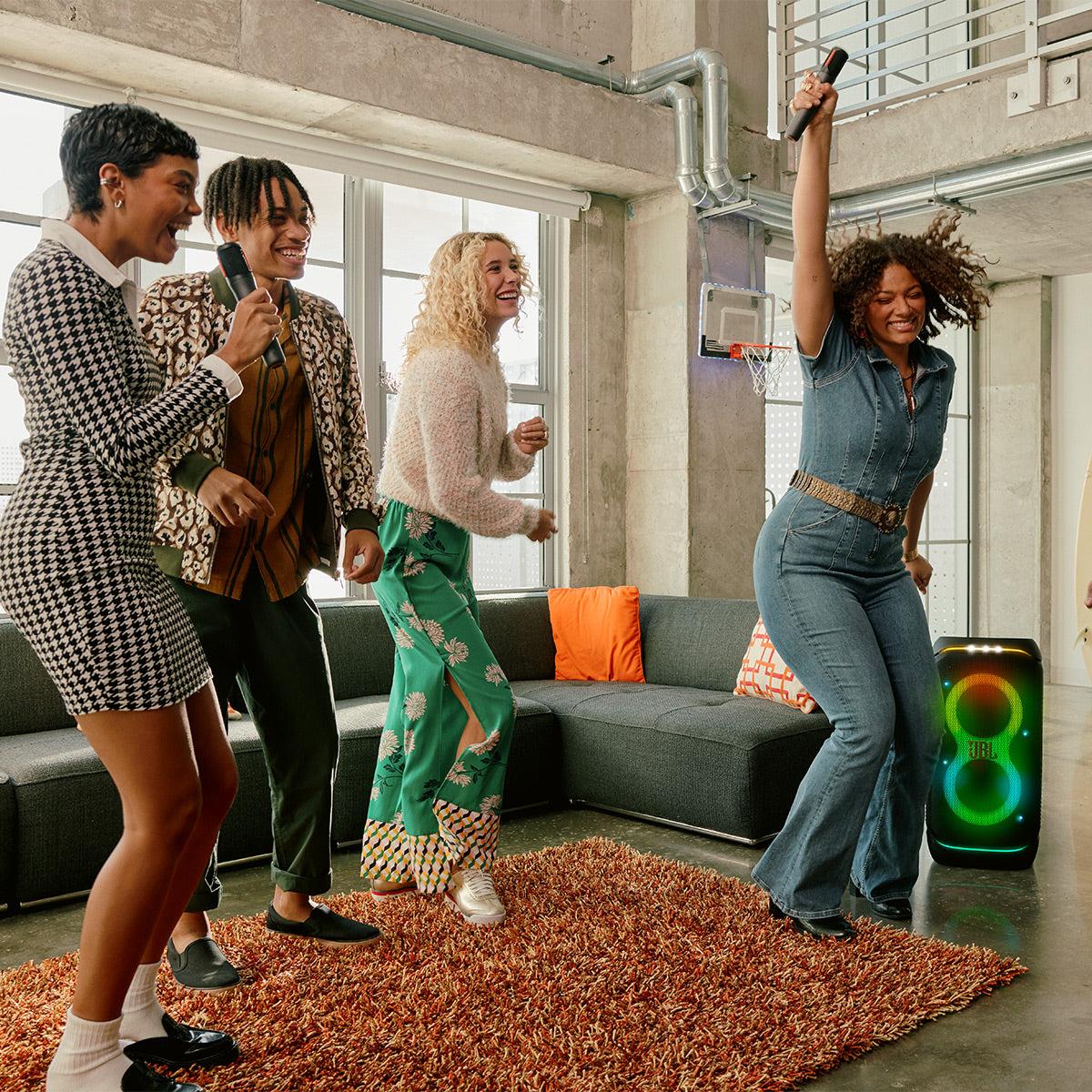
Karaoke functionality comes standard with dual microphone inputs, each featuring independent volume and gain controls. The Stage 320 offers a slight advantage here with dedicated physical controls for microphone EQ settings (reverb and echo), while the Club 120 requires app access for these adjustments. For casual karaoke, this difference is minimal, but professional entertainers or serious karaoke enthusiasts might appreciate the Stage 320's direct control access.
Guitar inputs transform either speaker into a portable PA system for acoustic performances or jam sessions. The individual gain controls prevent feedback issues and allow proper level matching between different instruments or microphones.
Auracast wireless technology, introduced in these 2024 models, enables multi-speaker connectivity without the complexity of traditional wireless systems. You can link multiple JBL PartyBox speakers for larger events or create stereo pairs for wider soundstage coverage. This technology represents a significant improvement over earlier Bluetooth-based speaker pairing systems, offering more reliable connections and lower latency.
At the time of writing, the Stage 320 typically commands about a 35-50% premium over the Club 120, depending on current promotions and retailer pricing. This premium buys you 50% more power output, double the battery capacity, and enhanced transport features, making the value calculation relatively straightforward from a specifications perspective.
However, value extends beyond raw specifications. The Club 120 delivers 80% of the Stage 320's volume capability while including all the same party features—lighting, karaoke, app integration, and AI Sound Boost. For many users, this represents the sweet spot of capability versus cost, especially when you factor in the superior portability.
The Stage 320 justifies its premium for users who regularly host larger gatherings or need maximum portable output. The extended battery life alone can justify the price difference for users who frequently attend all-day events or camping trips where charging opportunities are limited.
An interesting alternative worth considering is purchasing two Club 120 speakers for stereo operation rather than one Stage 320. While this approach costs more initially, it provides wider soundstage coverage, redundancy in case of failure, and potentially better overall coverage for large outdoor spaces.
While neither speaker targets home theater applications primarily, they can serve double duty for users with space or budget constraints. The powerful bass response and high output capabilities work well for action movies and gaming, providing visceral impact that smaller speakers cannot match.
However, both speakers' party-oriented tuning may color dialogue reproduction and subtle sound effects. The emphasized bass response, while exciting for music, can mask midrange details important for clear dialogue. The directional nature of both speakers also limits optimal seating positions compared to dedicated surround sound systems.
If you're considering either speaker for occasional home theater use alongside their party duties, the Stage 320's superior power handling and lower compression at high volumes make it the better choice for large rooms or demanding content.
The Club 120 emerges as the clear choice for users who prioritize portability and value while maintaining access to all party features. It's ideal for apartment dwellers, frequent travelers, or anyone who regularly carries speakers manually. The performance difference compared to the Stage 320 only becomes significant at very high volume levels or in large outdoor spaces.
Choose the Club 120 if you typically host gatherings under 15 people, frequently transport speakers by hand, work within a tighter budget, or need a speaker that fits easily in smaller vehicles and storage spaces.
The Stage 320 serves users who need maximum portable performance and can accommodate its size and weight through proper transport planning. It's the better choice for regular large outdoor events, professional entertainers, extended battery life requirements, or situations where maximum volume output is crucial.
Select the Stage 320 if you regularly host 20+ people, can utilize the wheels for transport, need extended battery life for all-day events, or want the loudest possible option from JBL's current portable lineup.
Both speakers represent excellent execution of JBL's party speaker concept, incorporating the latest technology improvements from 2024 while maintaining competitive pricing. The decision ultimately comes down to matching the speaker's capabilities to your specific needs and transport requirements. Neither choice will disappoint—they just serve different segments of the party speaker market with remarkable effectiveness.
| JBL PartyBox Club 120 | JBL PartyBox Stage 320 |
|---|---|
| Power Output - Determines maximum volume and bass impact | |
| 160W RMS (suitable for 12-15 people) | 240W RMS (handles 20-25 people effectively) |
| Driver Size - Larger drivers produce deeper bass and cleaner sound | |
| 2x 5.25" woofers, 2x 2.25" tweeters | 2x 6.5" woofers, 2x 1" tweeters |
| Maximum Volume Level - Critical for outdoor events and large spaces | |
| ~99.8 dB (backyard party level) | ~107.5 dB (fills tennis court-sized areas) |
| Weight & Portability - Major factor for transport and storage | |
| 11.05 kg (24.35 lbs) with foldable handle | 16.5 kg (36.38 lbs) with wheels and telescopic handle |
| Battery Life - Determines event duration without power | |
| Up to 12 hours advertised, 6-7 hours real-world with effects | Up to 18 hours advertised, 7+ hours real-world with effects |
| Battery Capacity - Higher capacity means longer runtime | |
| 34 Wh (replaceable battery system) | 68 Wh (replaceable battery system, double capacity) |
| Dimensions - Affects storage and vehicle transport | |
| 57.0×28.8×29.7 cm (compact footprint) | 66.9×33.5×38.5 cm (requires more storage space) |
| Microphone Controls - Important for karaoke and live performance | |
| App-only control for reverb and echo | Physical controls plus app (more convenient) |
| Transport Method - How you'll actually move the speaker | |
| Hand-carry with ergonomic handle (better for stairs) | Rolling with wheels (easier on flat surfaces) |
| Ideal Crowd Size - Based on volume output and coverage | |
| 8-15 people in typical party settings | 15-25+ people or large outdoor spaces |
| Shared Features - Both models include these party essentials | |
| RGB lightshow, dual mic/guitar inputs, Bluetooth 5.4, Auracast, IPX4 splash resistance, JBL PartyBox app, AI Sound Boost | Same features as Club 120 |
| Value Proposition - Performance per dollar consideration | |
| Best value for most users, includes all party features | Premium pricing for maximum portable performance |
The JBL PartyBox Stage 320 is significantly louder than the Club 120, producing 240W of power compared to 160W. This translates to the Stage 320 reaching about 107.5 dB maximum volume versus the Club 120's 99.8 dB. The Stage 320 can fill tennis-court-sized outdoor areas, while the Club 120 works best for backyard gatherings of 12-15 people.
The primary differences are power output and portability. The Stage 320 delivers 50% more power (240W vs 160W) and has double the battery capacity, but weighs significantly more at 16.5 kg compared to the Club 120's 11.05 kg. The Stage 320 includes wheels and a telescopic handle for transport, while the Club 120 relies on a foldable carry handle.
The JBL PartyBox Stage 320 offers superior battery life with its 68 Wh battery providing up to 18 hours of advertised playtime. The Club 120 has a 34 Wh battery rated for 12 hours. In real-world use with lights and bass boost enabled, expect about 7 hours from the Stage 320 and 6-7 hours from the Club 120.
While both are technically portable, they serve different transport needs. The Club 120 is more traditionally portable at 24 lbs with a carry handle, making it ideal for hand-carrying and stairs. The Stage 320 at 36 lbs is designed for rolling transport with built-in wheels and telescopic handle, similar to rolling luggage.
Yes, both the Club 120 and Stage 320 share nearly identical party features including RGB lightshow, dual microphone/guitar inputs, Bluetooth 5.4, Auracast multi-speaker connectivity, IPX4 splash resistance, and JBL PartyBox app control. The main feature difference is that the Stage 320 has physical microphone EQ controls while the Club 120 requires app control.
The JBL PartyBox Stage 320 is better suited for large outdoor events due to its higher power output and extended battery life. It can effectively cover 20-25 people in outdoor settings and maintain clean sound at high volumes. The Club 120 works well for smaller outdoor gatherings but may struggle to fill very large spaces.
Both speakers can serve as powerful home theater solutions for action movies and gaming, providing impressive bass impact that smaller speakers cannot match. However, their party-oriented sound tuning emphasizes bass over dialogue clarity. The Stage 320 is better for large rooms due to its higher output, while the Club 120 suits smaller home theater setups.
Both the Club 120 and Stage 320 offer excellent karaoke capabilities with dual microphone inputs and individual volume controls. The Stage 320 has a slight advantage with dedicated physical controls for microphone reverb and echo effects, while the Club 120 requires app access for these settings. Both support karaoke EQ tuning through the JBL PartyBox app.
The Club 120 is significantly easier to store due to its compact dimensions and lighter weight, fitting better in closets, car trunks, and small spaces. It's also better for manual transport up stairs or in tight spaces. The Stage 320 requires more storage space but offers easier transport across flat surfaces with its wheel system.
Yes, both the Club 120 and Stage 320 support Auracast technology for wireless multi-speaker connectivity and True Wireless Stereo pairing. You can connect multiple JBL PartyBox speakers together for larger events or create stereo pairs for wider soundstage coverage. This was a key improvement introduced in the 2024 PartyBox lineup.
For regular indoor parties, the Club 120 is typically the better choice unless you consistently host very large gatherings. It provides ample volume for most indoor spaces, includes all party features, and is much easier to move and store. The Stage 320 is better reserved for users who regularly need maximum volume output or extended battery life for all-day events.
We've done our best to create useful and informative comparisons to help you decide what product to buy. Our research uses advanced automated methods to create this comparison and perfection is not possible - please contact us for corrections or questions. These are the sites we've researched in the creation of this article: stereoguide.com - armorsound.com - rtings.com - rtings.com - bestbuy.com - youtube.com - soundguys.com - youtube.com - lbtechreviews.com - youtube.com - youtube.com - versus.com - jbl.com - rtings.com - versus.com - ro.harmanaudio.com - dell.com - jbl.com - jbl.com - projectorscreenstore.com - stereoguide.com - rtings.com - soundguys.com - soundguys.com - rtings.com - jbl.com - youtube.com - youtube.com - youtube.com - youtube.com - rtings.com - 9to5toys.com - versus.com - cdw.com - jbl.com - projectorscreenstore.com - projectorscreen.com - ro.harmanaudio.com - jbl.co.nz - bestbuy.com - youtube.com

Privacy Policy
Terms and Conditions - Affiliate Policy
Home Security
© Copyright 2008-2026.
11816 Inwood Rd #1211, Dallas, TX 75244