


Portable party speakers have evolved dramatically since their early days of basic Bluetooth connectivity and modest sound output. Today's models pack professional-grade features into semi-portable packages that can energize everything from backyard barbecues to beach parties. The category sits in that sweet spot between compact Bluetooth speakers and full PA systems—powerful enough to fill large spaces but still manageable enough to transport without a roadie crew.
Two standout models released in 2024 represent distinctly different approaches to the party speaker formula: the JBL PartyBox Stage 320 and the Sony SRS-XV500. After diving deep into user reviews, professional evaluations, and technical specifications, it's clear these speakers target different priorities within the same category. The question isn't which one is better overall—it's which one matches your specific needs and usage patterns.
Before we dive into the comparison, it's worth understanding what separates party speakers from regular Bluetooth speakers. These devices prioritize several key elements that standard speakers often ignore: maximum volume output (measured in watts RMS, which indicates continuous power handling), extended battery life for all-day events, visual entertainment through RGB lighting systems, and specialized inputs for microphones and instruments.
The engineering challenge lies in balancing power with portability. More powerful drivers (the components that actually produce sound) require larger enclosures and bigger amplifiers, which increases weight and size. Battery life becomes crucial since these speakers often operate far from power outlets, but larger batteries add more weight. It's a constant trade-off that manufacturers approach differently.
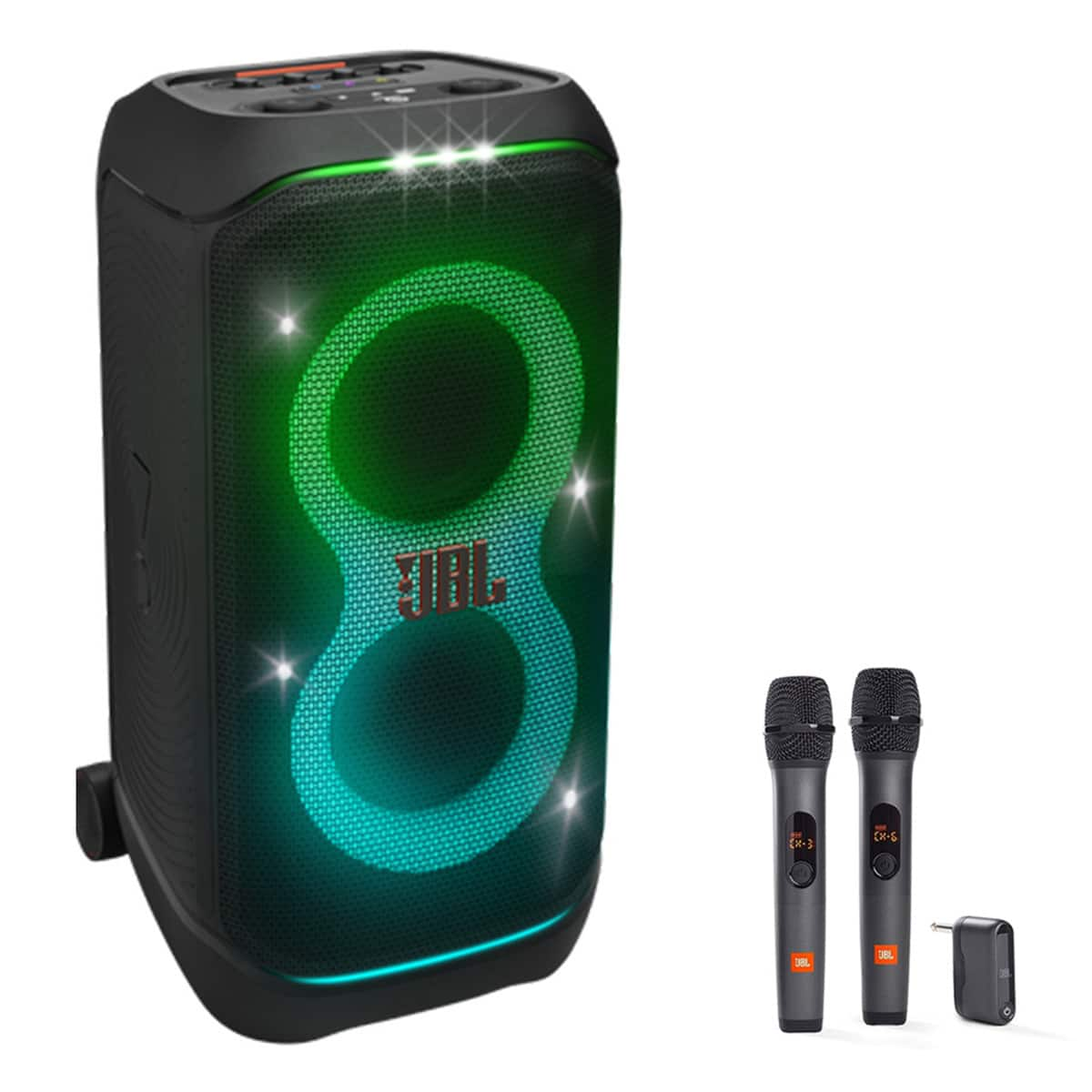
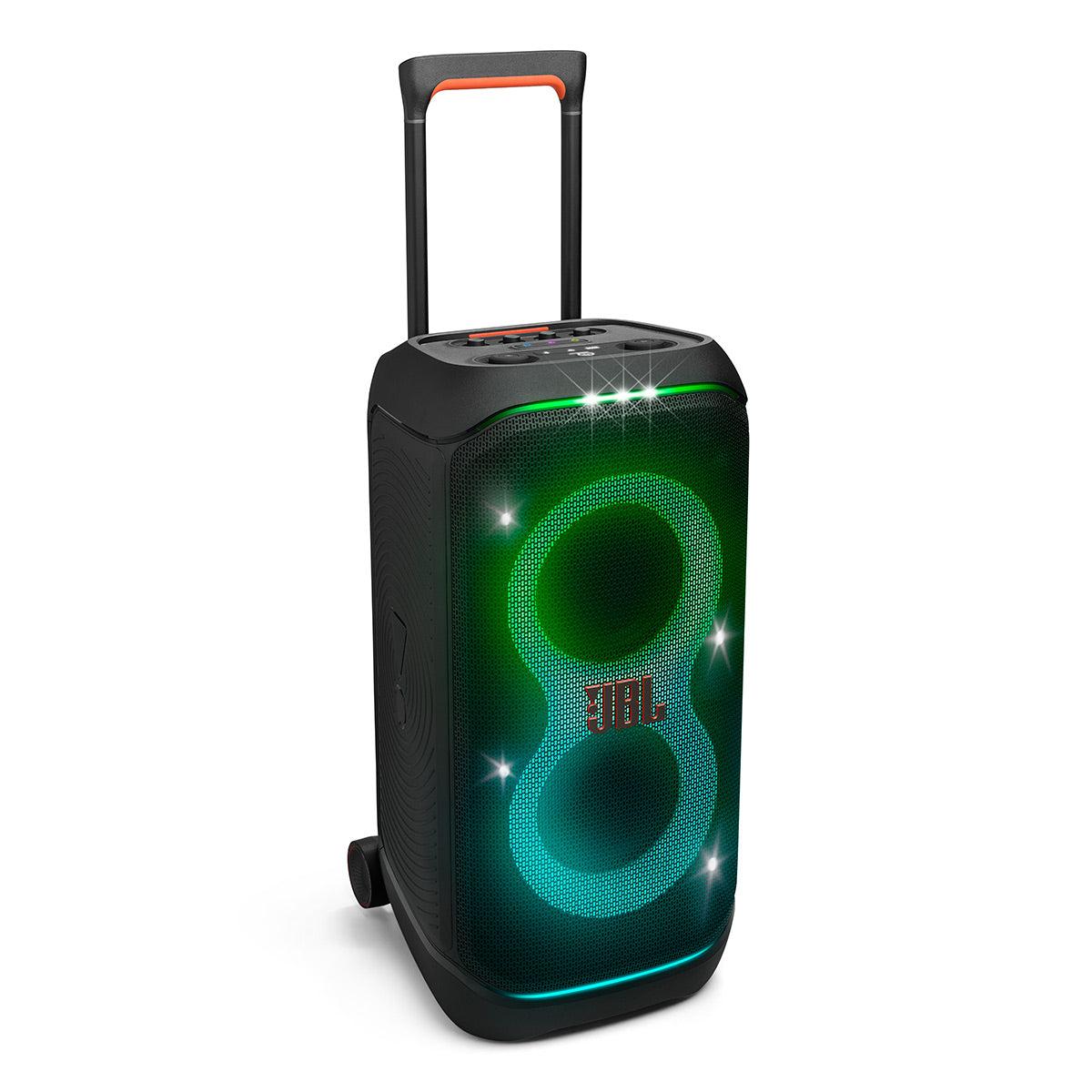
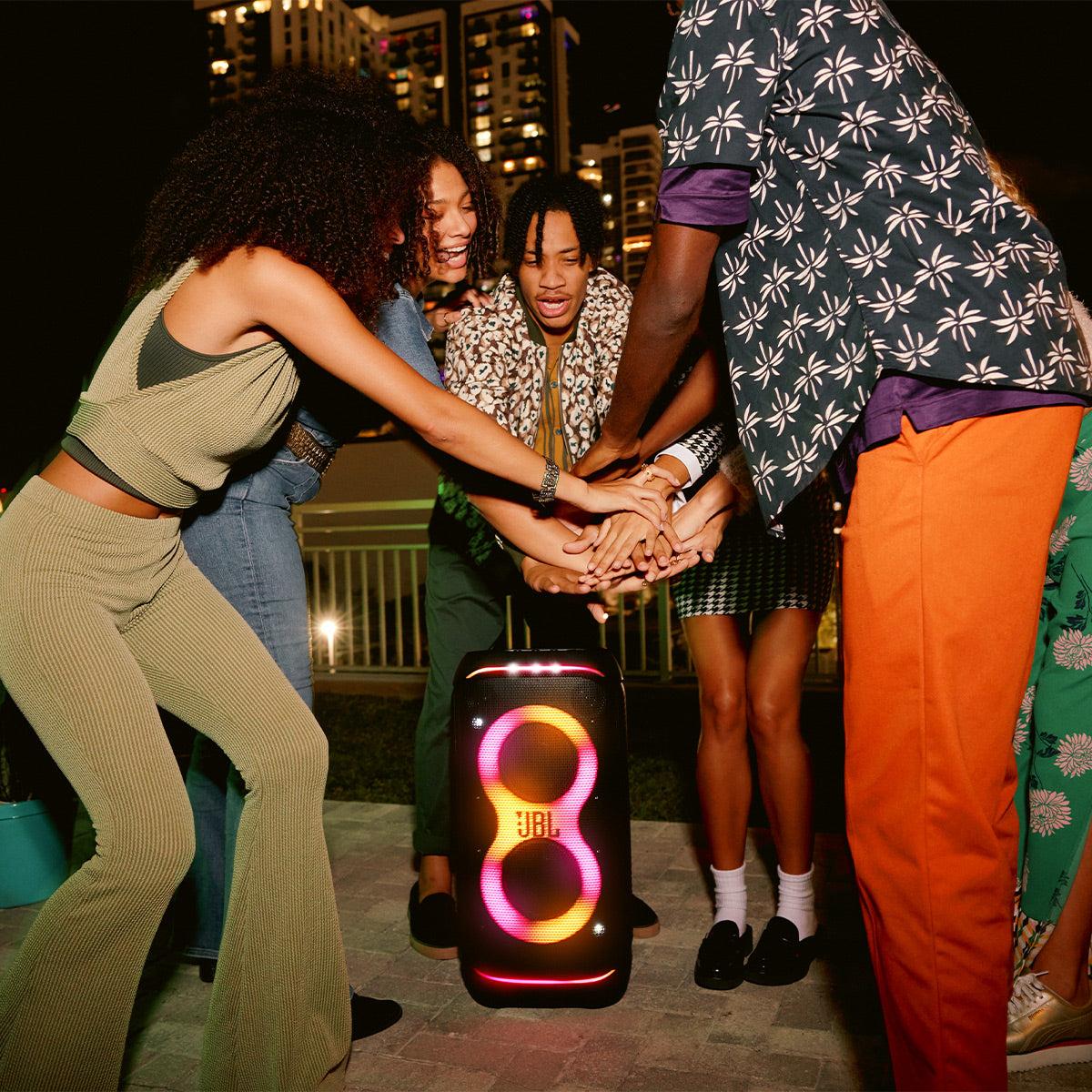
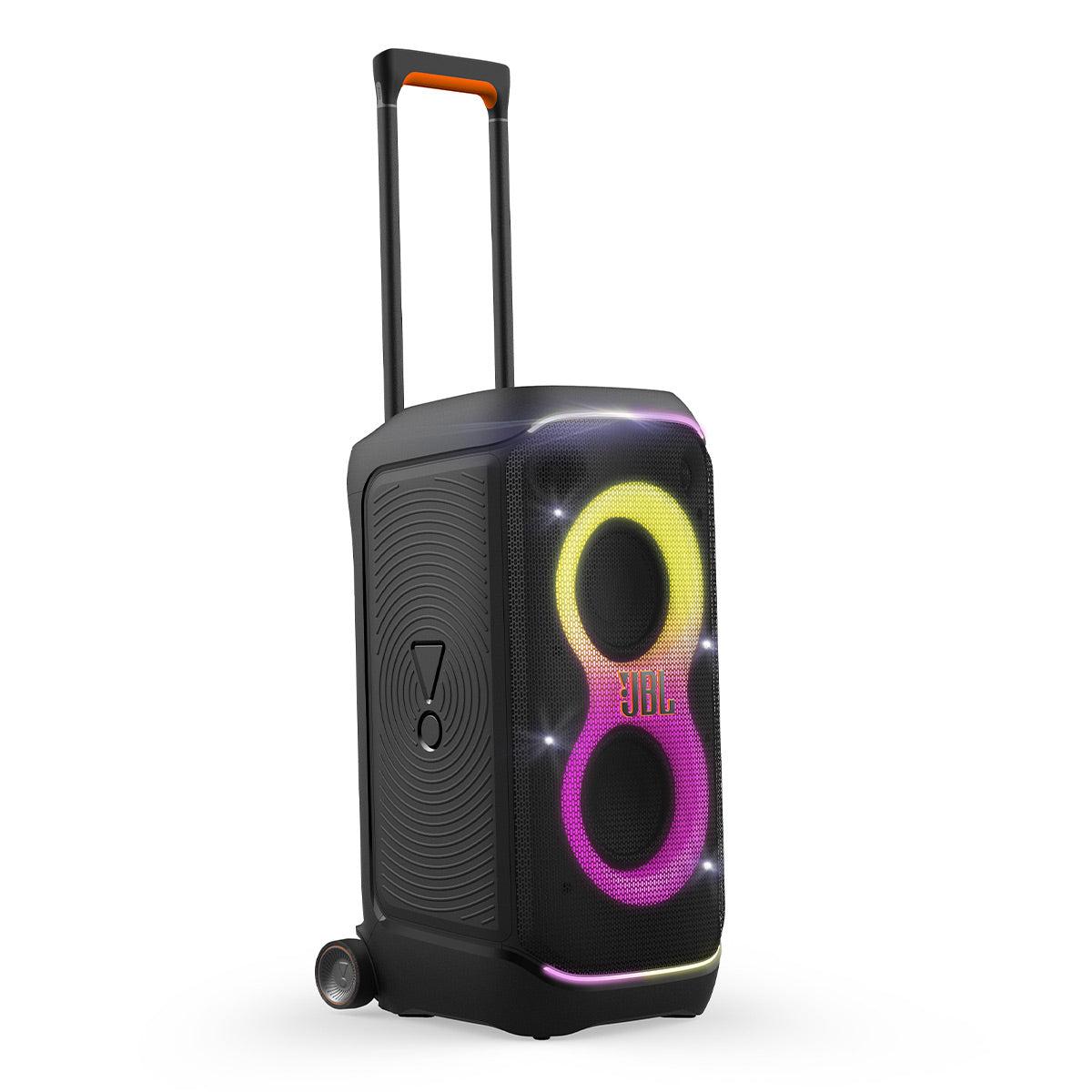
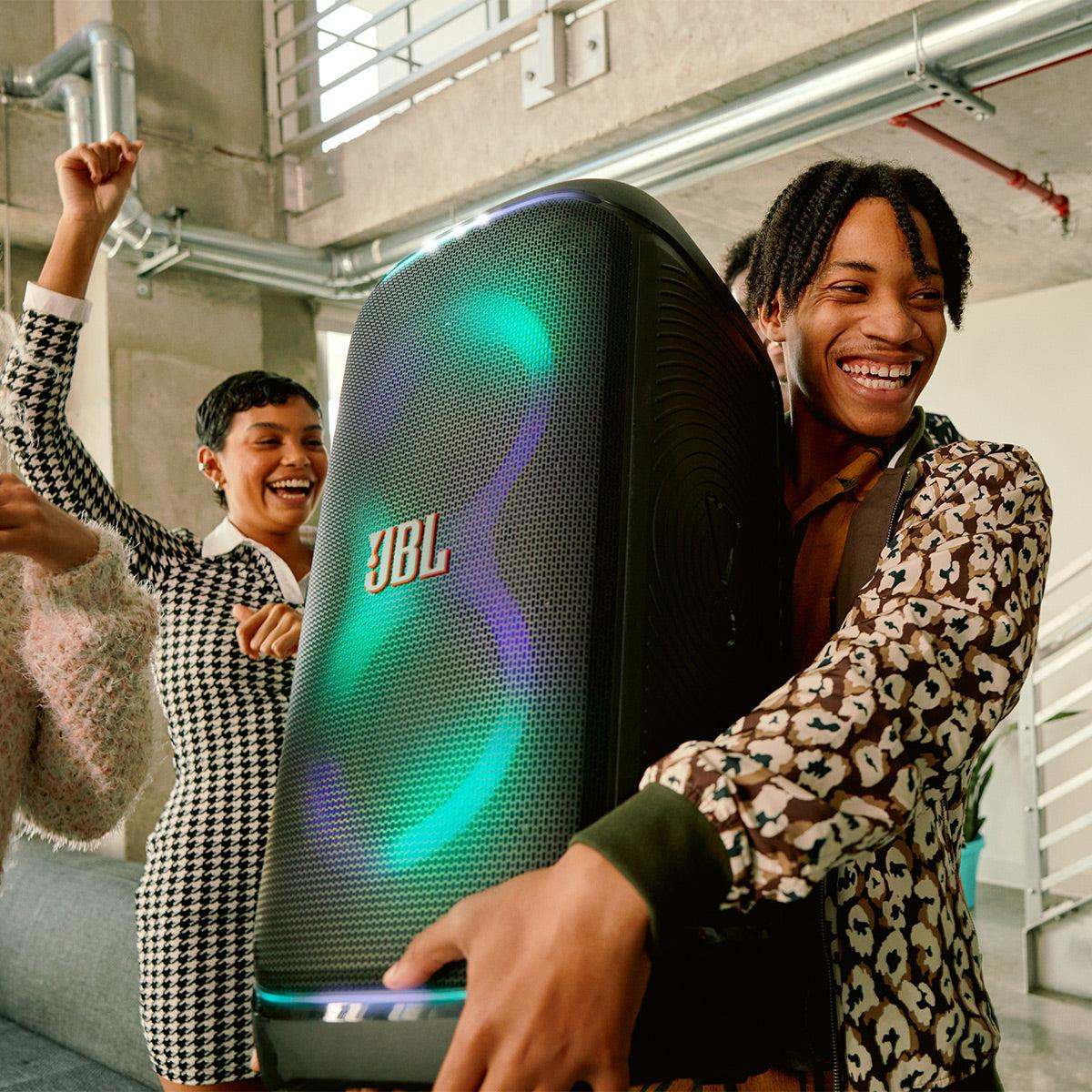
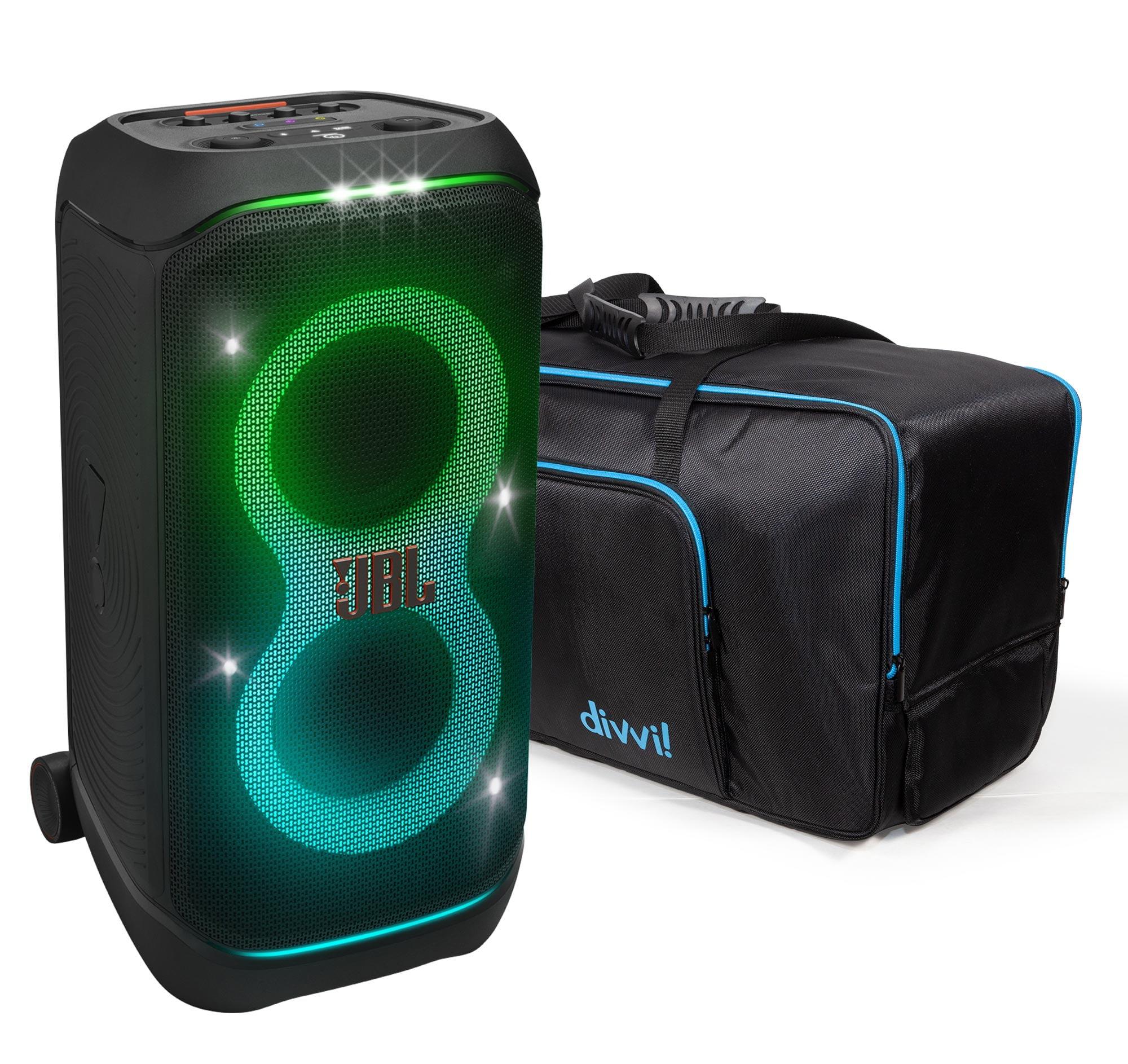
The JBL PartyBox Stage 320 represents JBL's maximum-power philosophy. At 36 pounds with wheels and a telescopic handle, it's clearly designed as a semi-portable powerhouse rather than something you'll casually carry around. The 240W RMS output comes from dual 6.5-inch woofers paired with 1-inch tweeters in a mono configuration—meaning all that power focuses into a single, center-focused soundstage rather than true stereo separation.
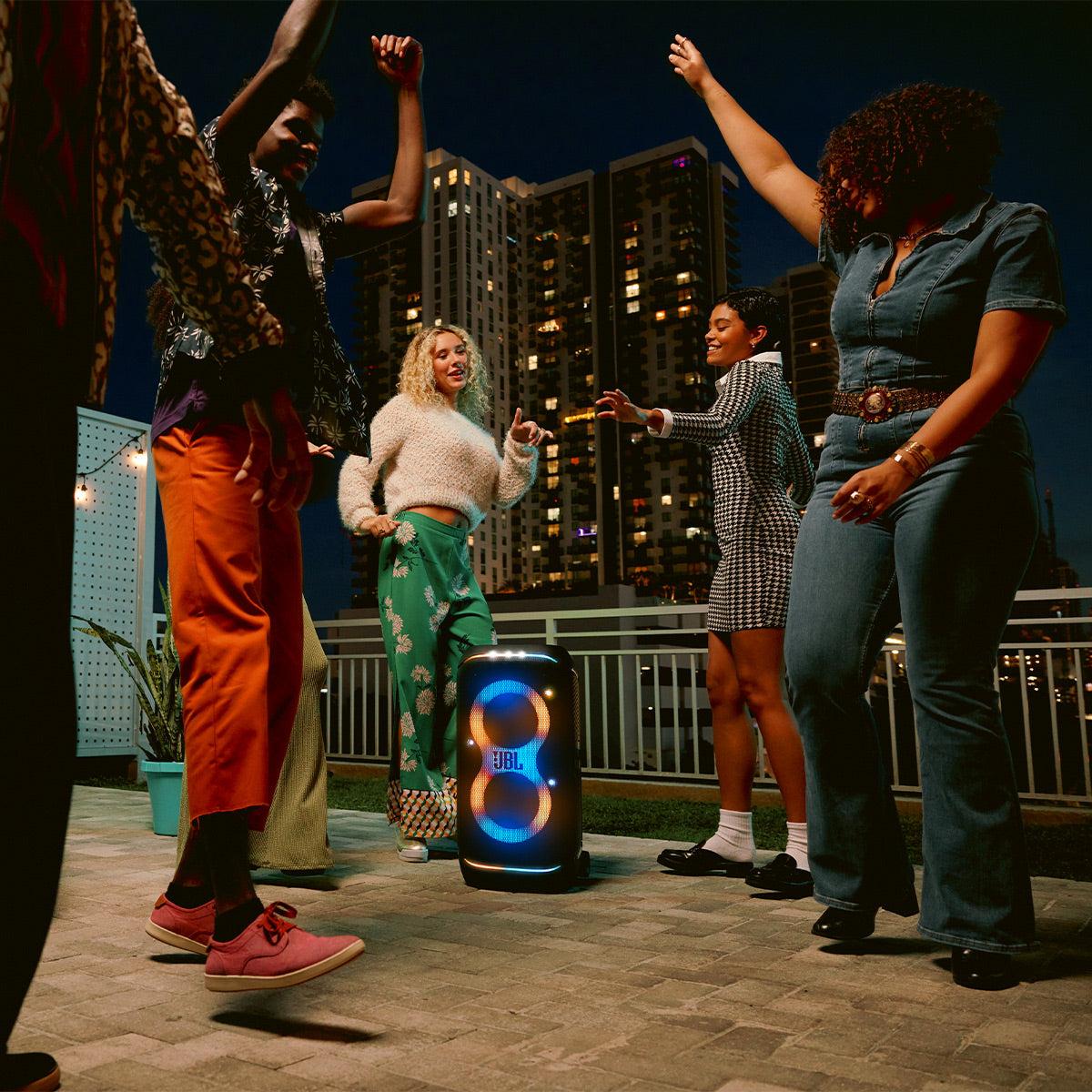
This mono approach isn't a limitation; it's intentional. Party environments benefit more from consistent sound coverage across a wide area than precise stereo imaging. The JBL PartyBox Stage 320 can reportedly fill tennis court-sized outdoor spaces with sound, which speaks to its impressive sound pressure level capabilities.
The speaker's AI Sound Boost technology deserves special attention. This feature analyzes incoming audio signals in real-time, automatically adjusting the amplifier's output to maximize bass response while preventing distortion. It's particularly effective with electronic music and hip-hop, where the kick drum and bassline carry much of the song's energy. Based on user feedback, this technology delivers noticeably tighter bass compared to older PartyBox models.
One standout feature is the swappable battery system. While the included battery provides 18 hours of playback, you can purchase additional battery packs and swap them out for unlimited runtime. This addresses one of the biggest limitations of portable speakers and makes the JBL PartyBox Stage 320 viable for professional applications where downtime isn't acceptable.
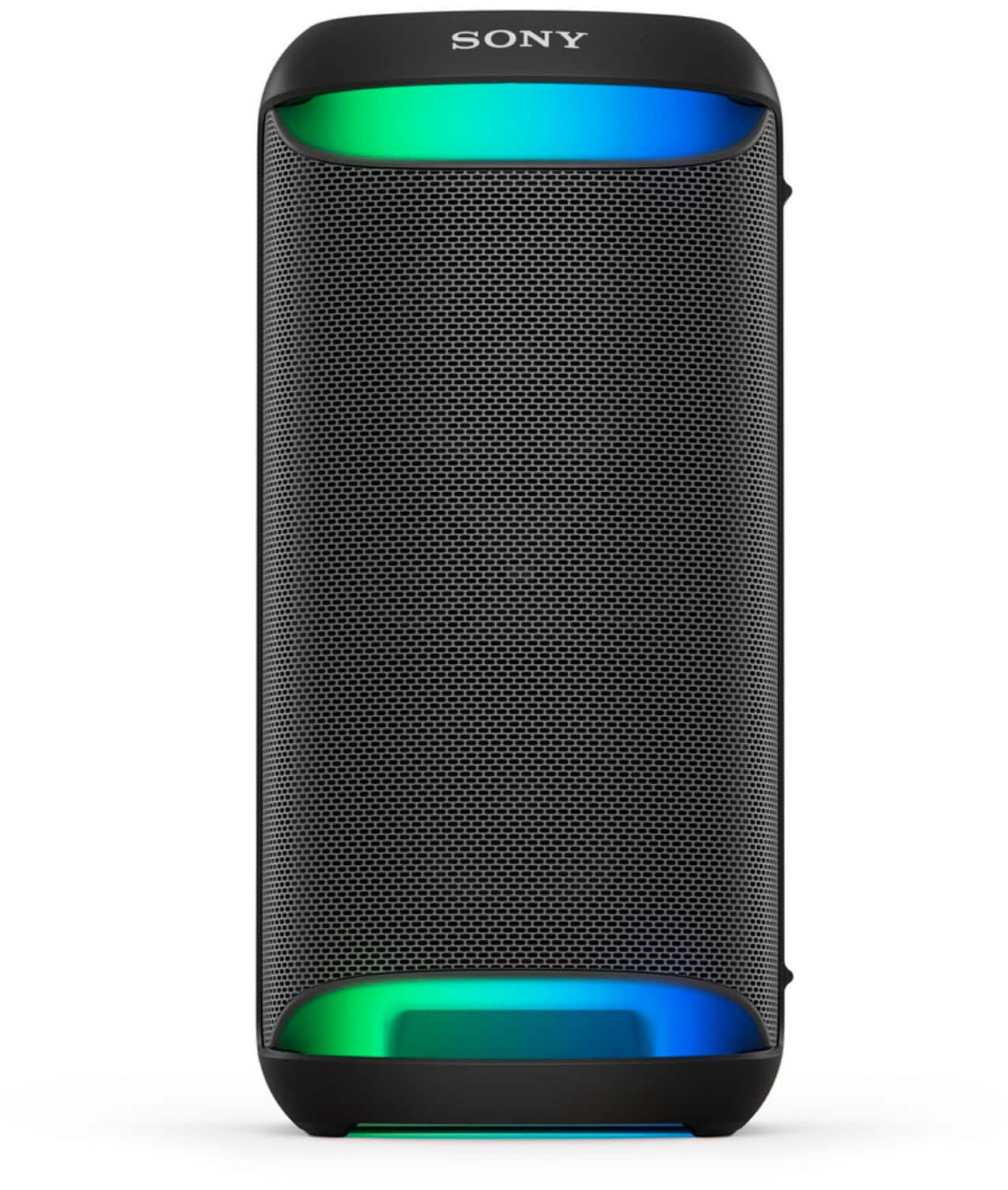
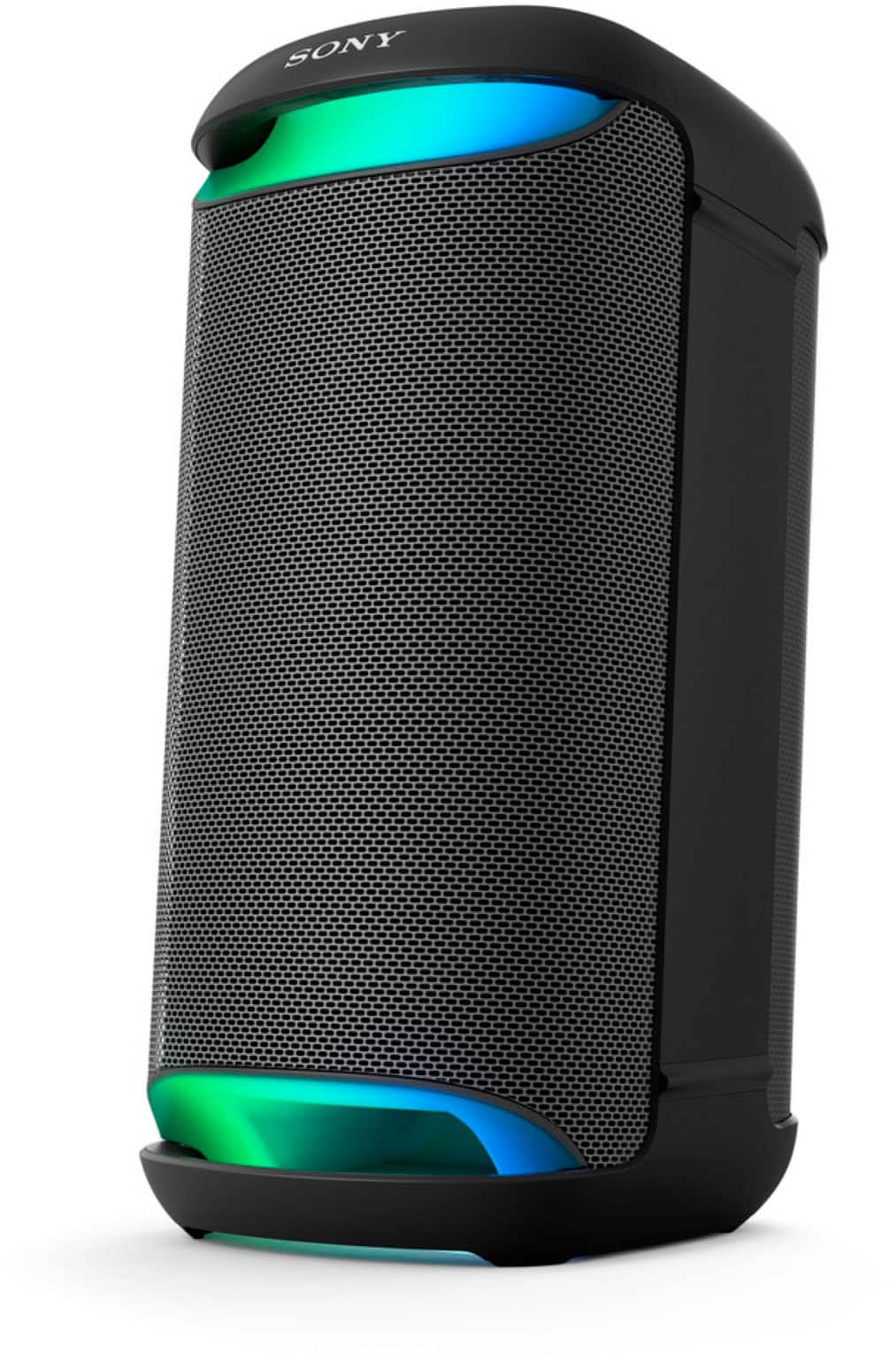
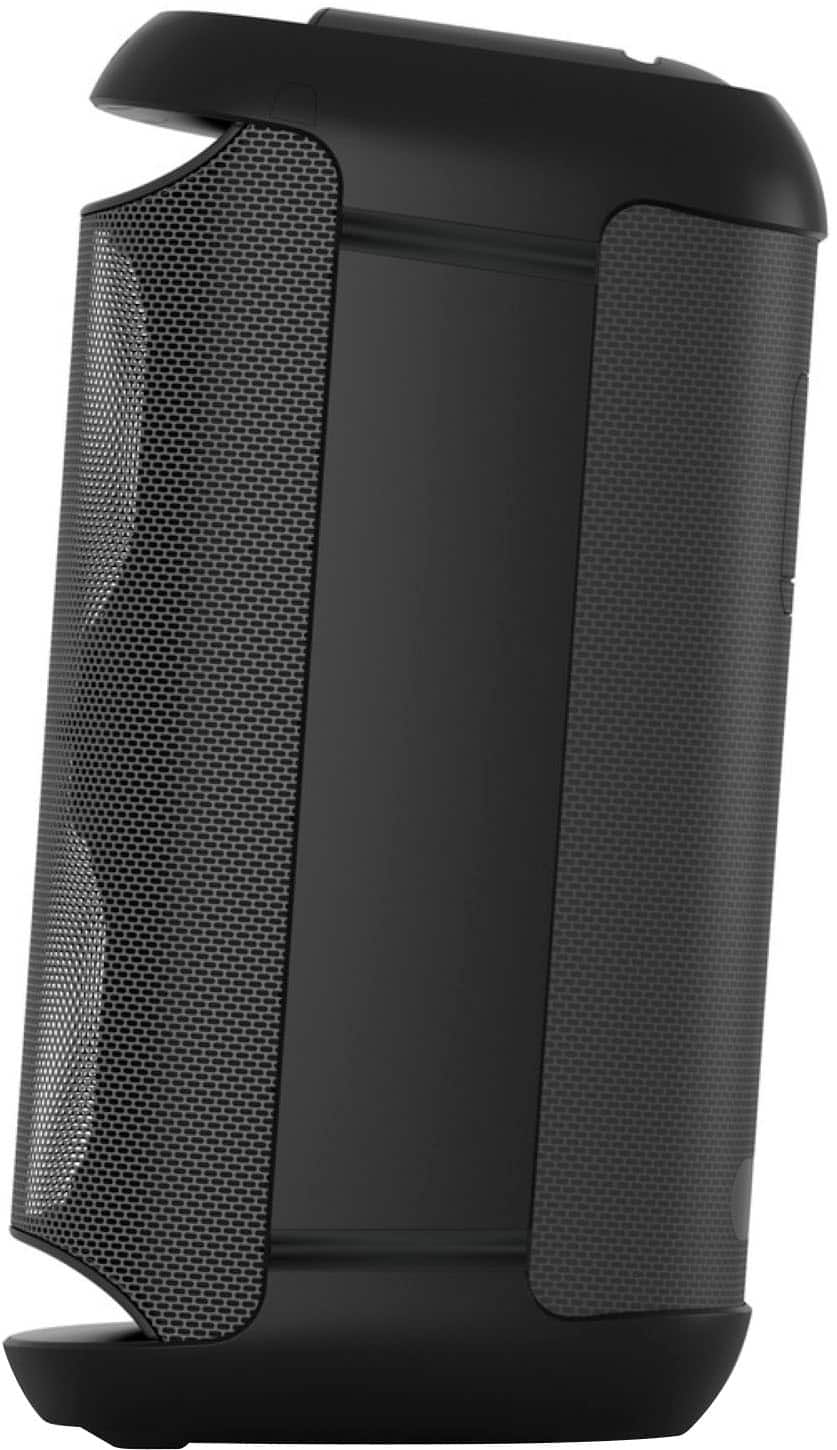
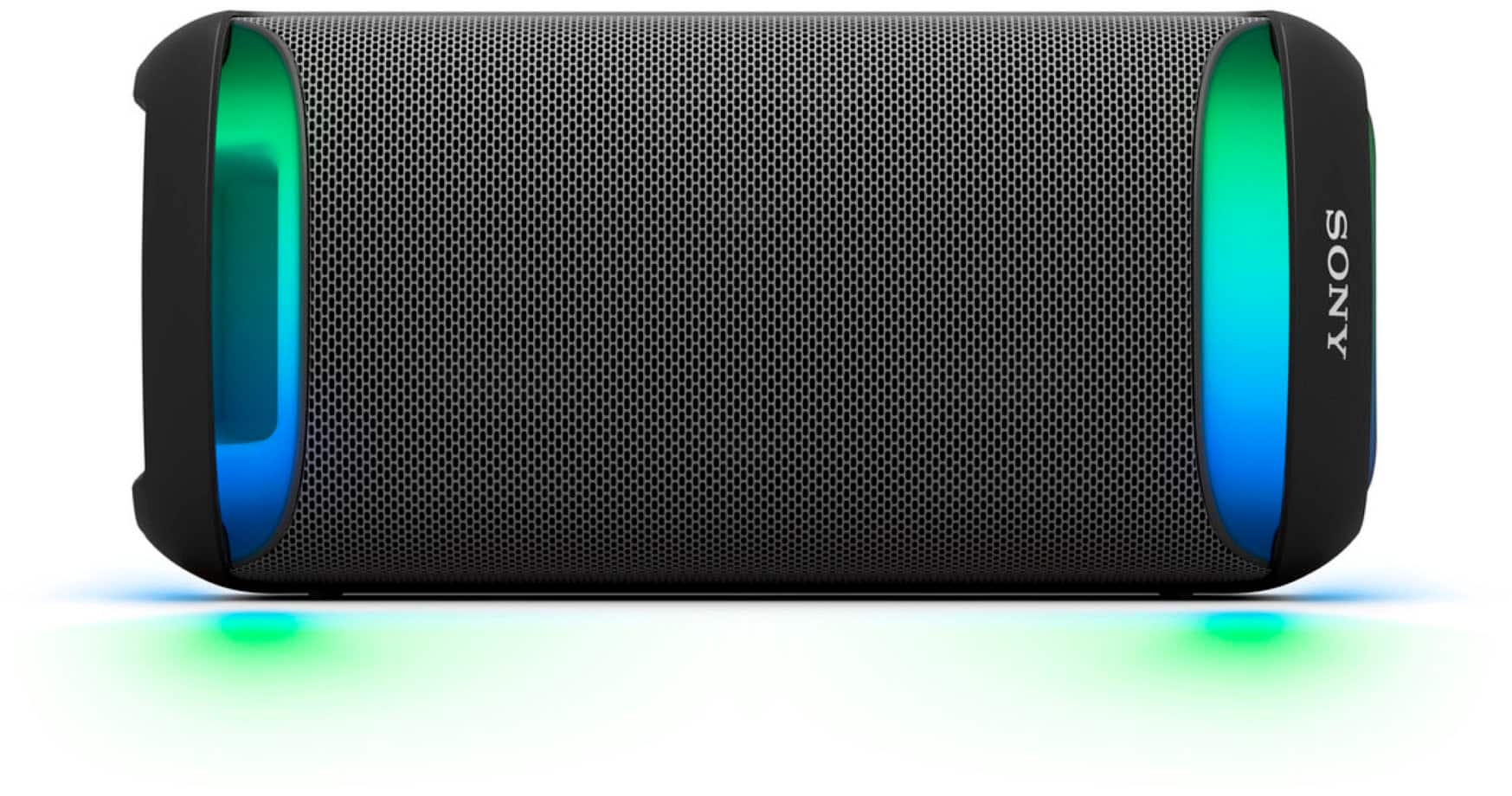
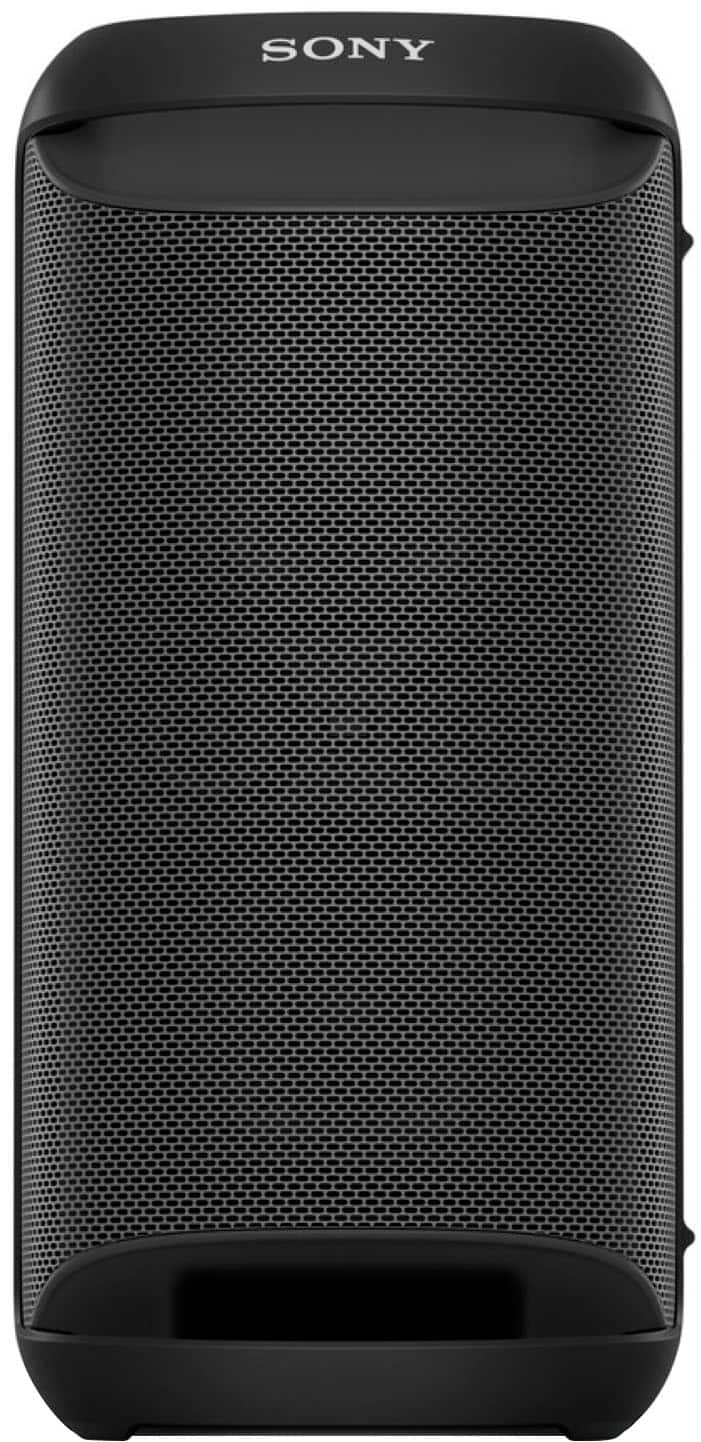
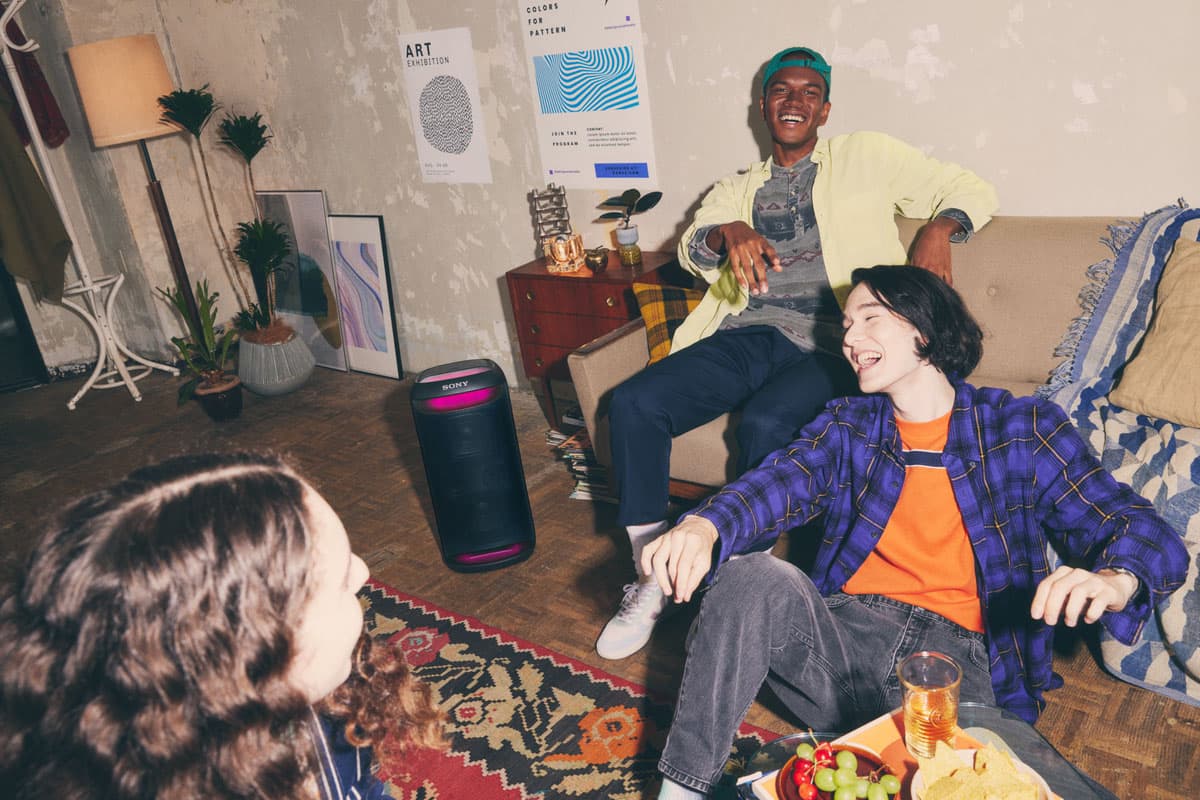
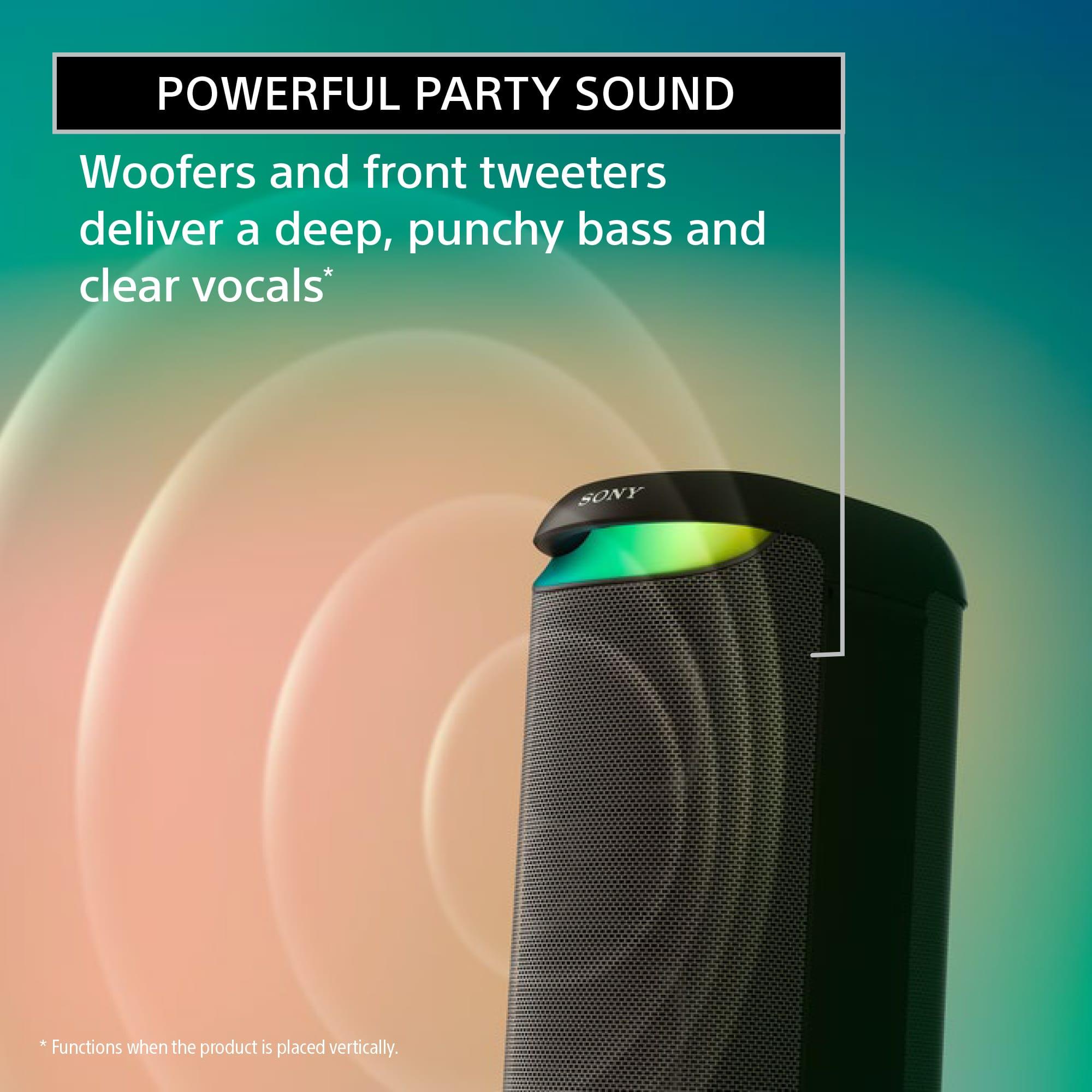
The Sony SRS-XV500 takes a completely different approach. At 25 pounds without wheels, it prioritizes true portability over maximum power output. The stereo configuration uses dual 140mm woofers with separate tweeters, creating genuine left-right channel separation that benefits music with complex arrangements.
The Sony's 25-hour battery life immediately stands out—seven hours longer than the JBL's standard battery. For all-day outdoor events, camping trips, or situations where charging isn't practical, this extended runtime provides significant peace of mind. The difference between running out of music at hour 18 versus hour 25 can make or break an event.
Sony's X-Balanced Speaker technology in the woofers maximizes the cone area within the available space, theoretically providing better bass response than traditional round drivers of similar size. However, the smaller driver dimensions and likely lower power output mean the Sony SRS-XV500 simply cannot match the JBL's raw bass impact.
The stereo pairing capability through Sony's Music Center app is particularly interesting. Two Sony SRS-XV500 units can create true wireless stereo, with each speaker handling one channel. This provides better spatial audio reproduction than a single mono speaker, though it obviously doubles the cost and complexity.
Sound quality represents the most critical performance metric for any speaker, but party speakers prioritize different sonic characteristics than audiophile models. Maximum volume without distortion, bass impact, and vocal clarity in noisy environments matter more than precise frequency balance or soundstage accuracy.
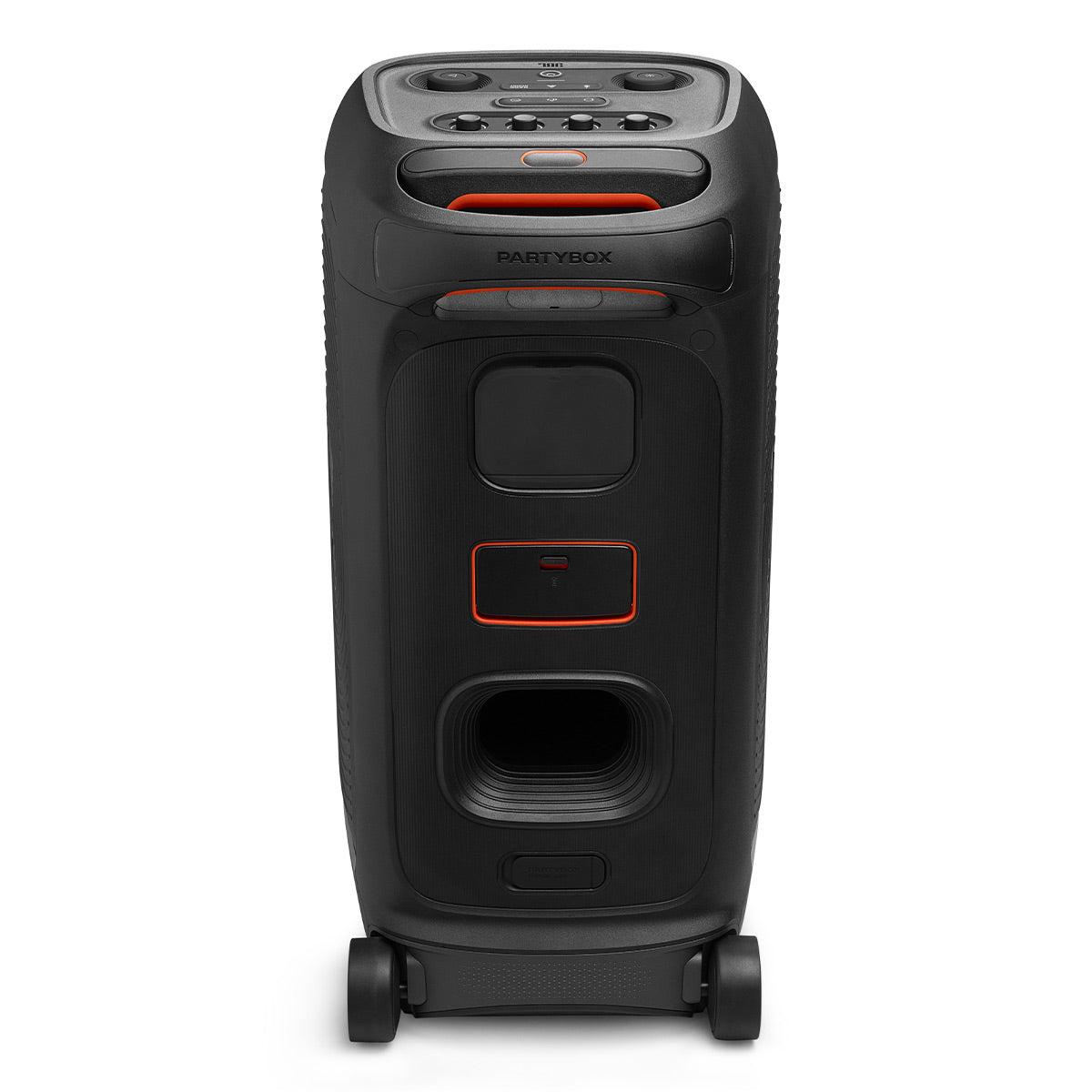
The JBL PartyBox Stage 320 dominates in pure power output. User reviews consistently describe "wall-shaking" bass that excels with electronic dance music, hip-hop, and pop. The rear-firing bass port (an opening that allows air to escape from behind the woofer) amplifies low-frequency output when placed against walls, a common party setup. However, this bass emphasis can overwhelm midrange frequencies at maximum volume, potentially burying vocals in bass-heavy tracks.
The Sony SRS-XV500 offers more balanced frequency response across the entire range. Vocals remain clear even in complex musical passages, and the stereo configuration provides better instrument separation. However, multiple reviews note that it lacks the visceral bass impact that gets people moving at parties. It's more "musical" in the traditional sense but less exciting in party contexts.
Both speakers support high-quality Bluetooth codecs—AAC for iPhone users and LDAC for Android devices with compatible phones. LDAC can transmit significantly more audio data than standard Bluetooth, though the improvement is most noticeable with high-quality source files rather than compressed streaming music.
Battery performance goes beyond simple hour ratings. Real-world usage patterns significantly impact runtime, with volume levels, lighting effects, and ambient temperature all affecting battery drain. Both speakers provide optimistic manufacturer ratings that assume moderate volume levels with lighting disabled.
The Sony SRS-XV500's 25-hour rating translates to approximately 12-15 hours of real-world party use with lights and high volume levels. The JBL PartyBox Stage 320's 18-hour rating drops to roughly 8-12 hours under similar conditions. This difference becomes critical for multi-day camping trips or all-day outdoor events.
Both speakers support fast charging, providing several hours of playback from short charging sessions. The JBL PartyBox Stage 320's swappable battery system changes this equation entirely—unlimited runtime becomes possible with spare batteries, though this adds cost and complexity.
Quick charge capabilities deserve mention: 10 minutes of charging provides approximately 2-2.5 hours of playbook on both speakers. This can save events when you realize the battery is dead just before guests arrive.
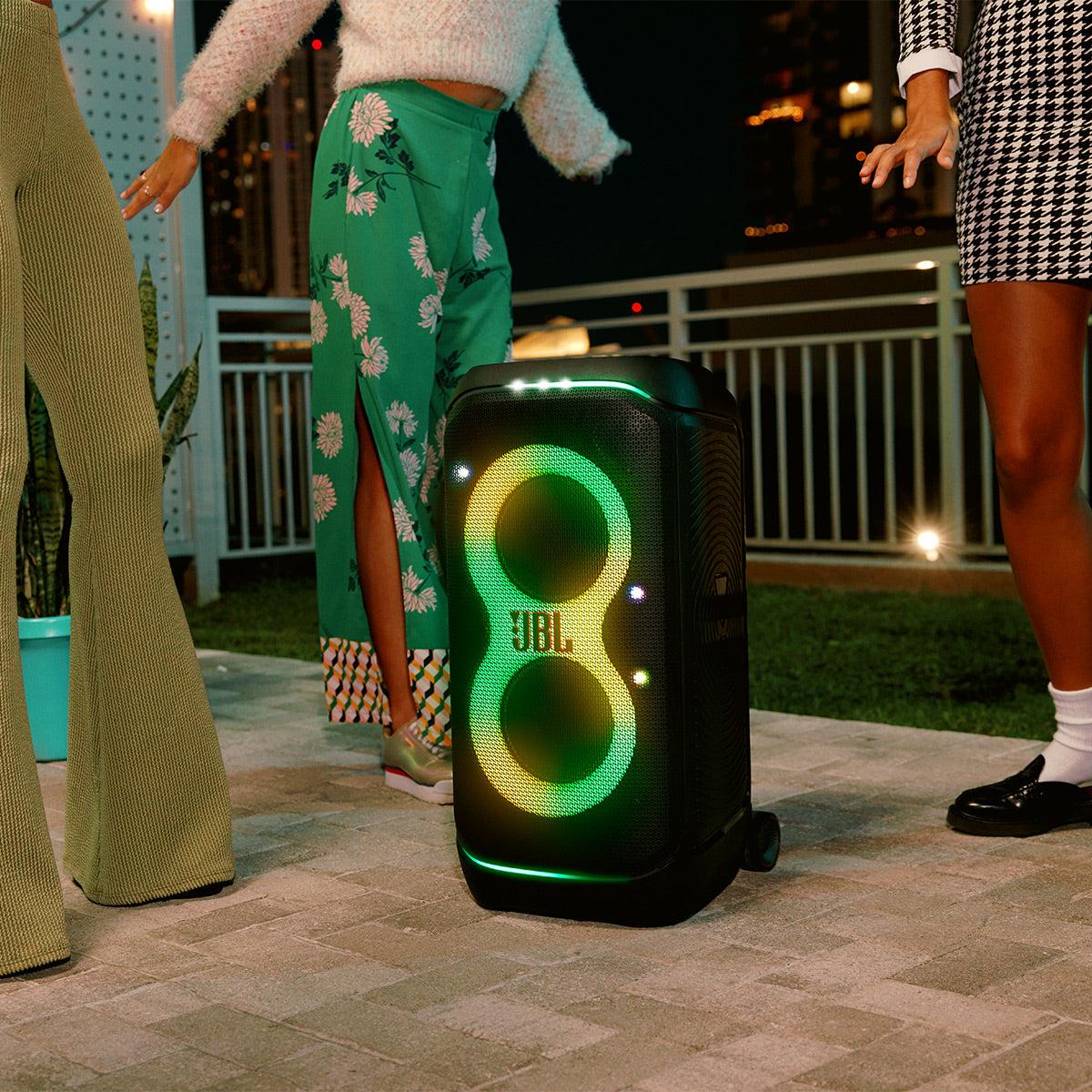
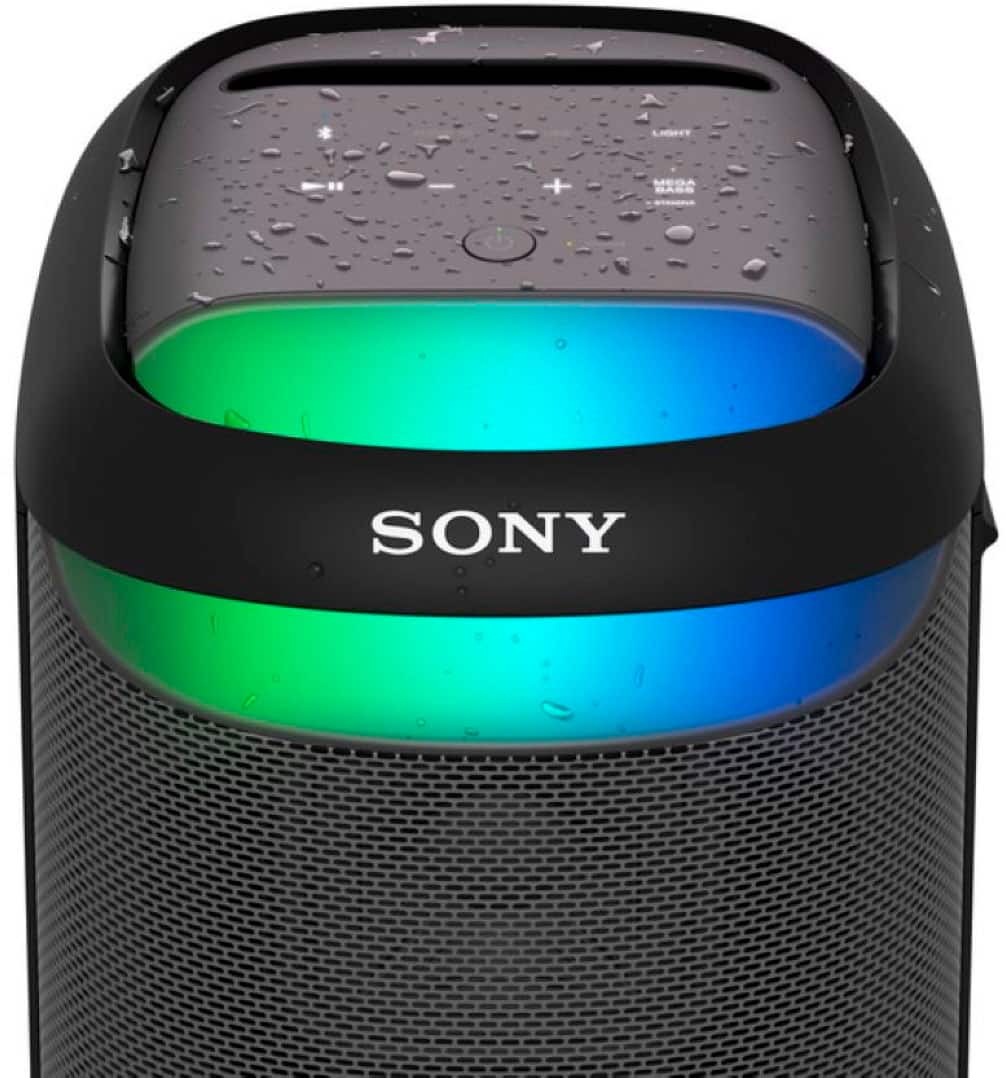
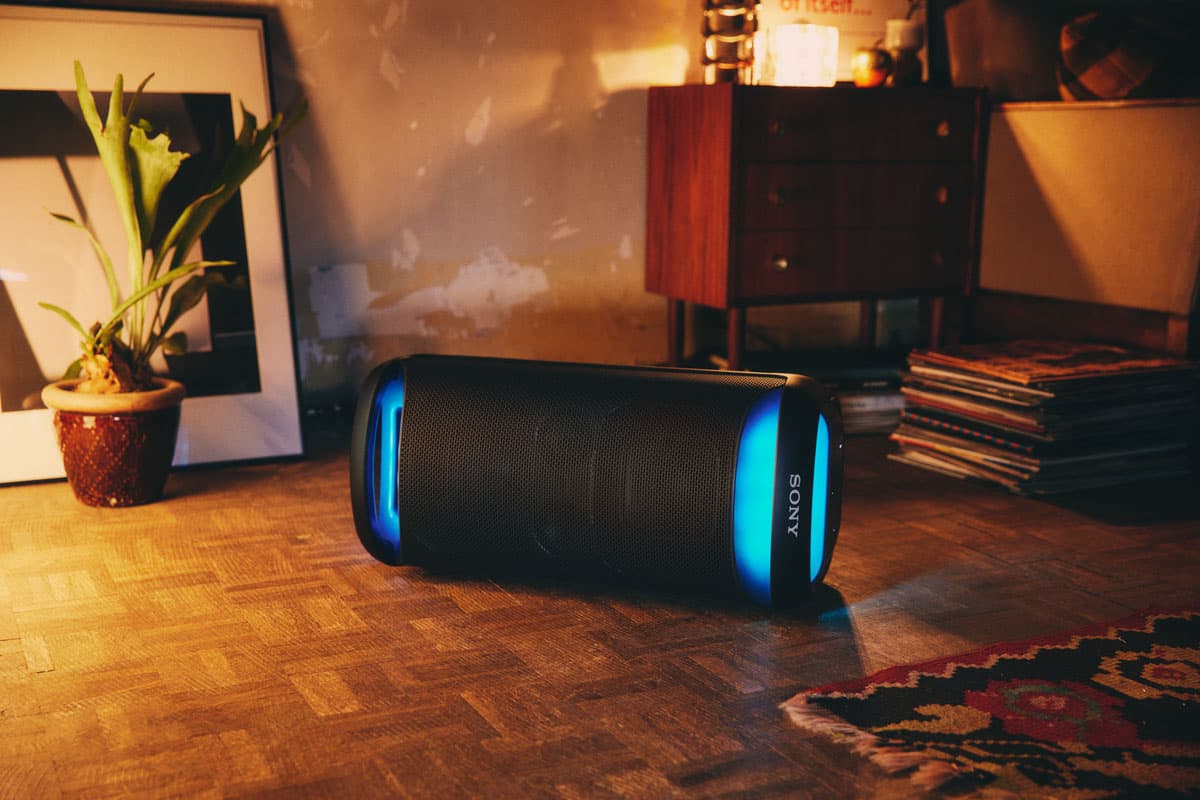
Modern party speakers incorporate features that would have seemed impossible just a few years ago. RGB lighting systems sync with music beats, creating visual entertainment that enhances the party atmosphere. Both speakers include these systems, but with different sophistication levels.
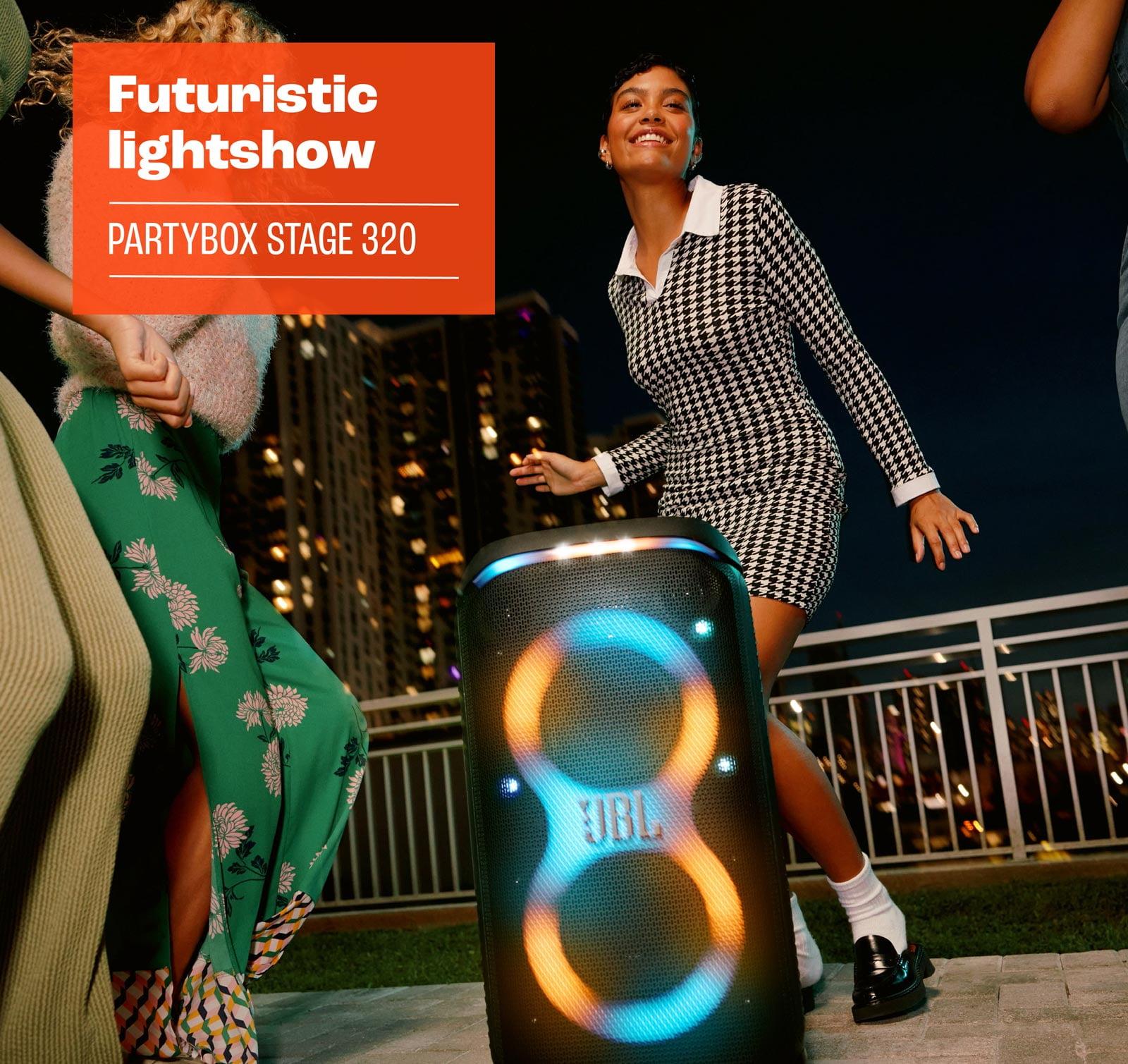
The JBL PartyBox Stage 320 features more advanced lighting with strobe capabilities and greater customization options through the PartyBox app. The lighting effects are brighter and more varied, creating a more dramatic visual experience. The Sony SRS-XV500's lighting is more subdued but still effective for mood creation.
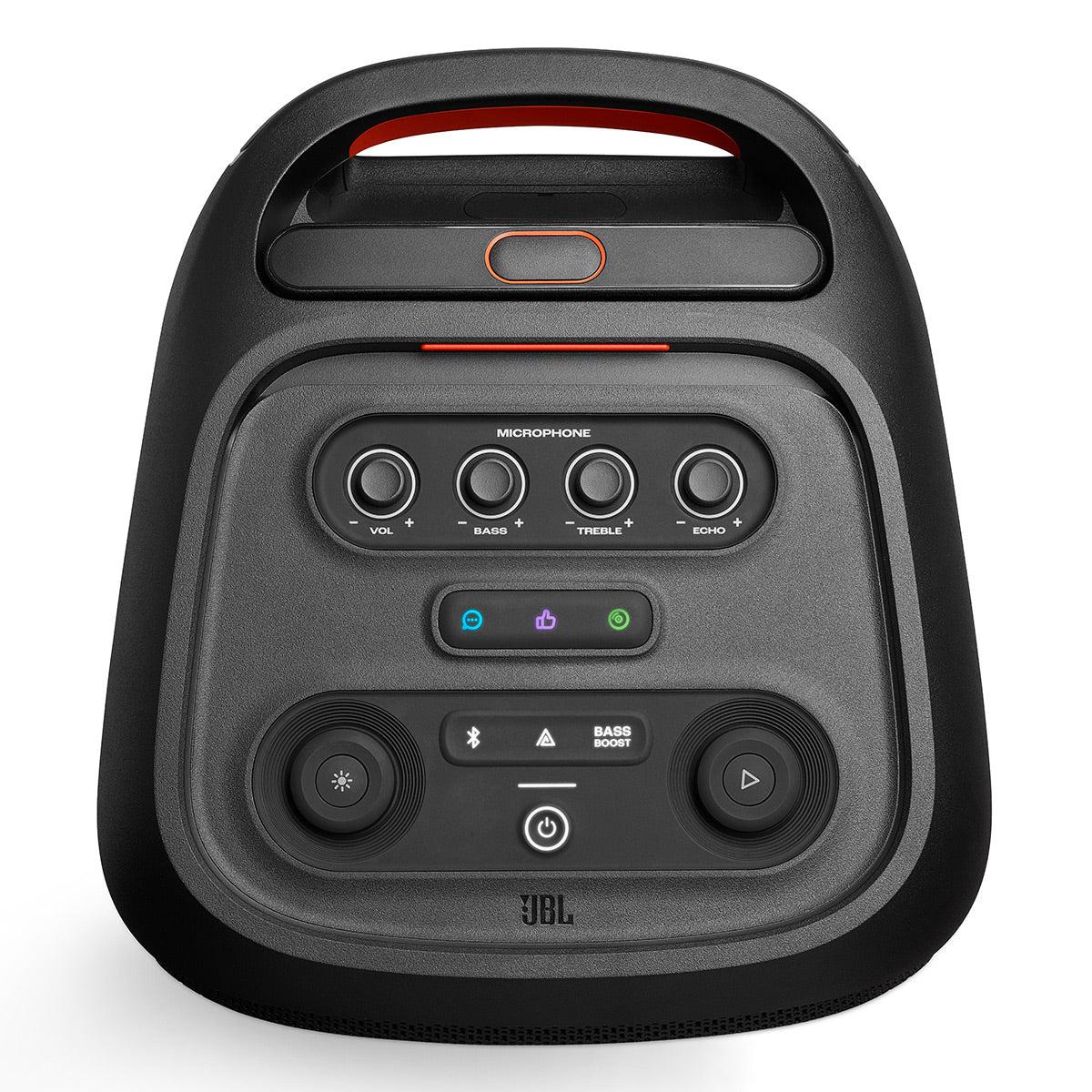
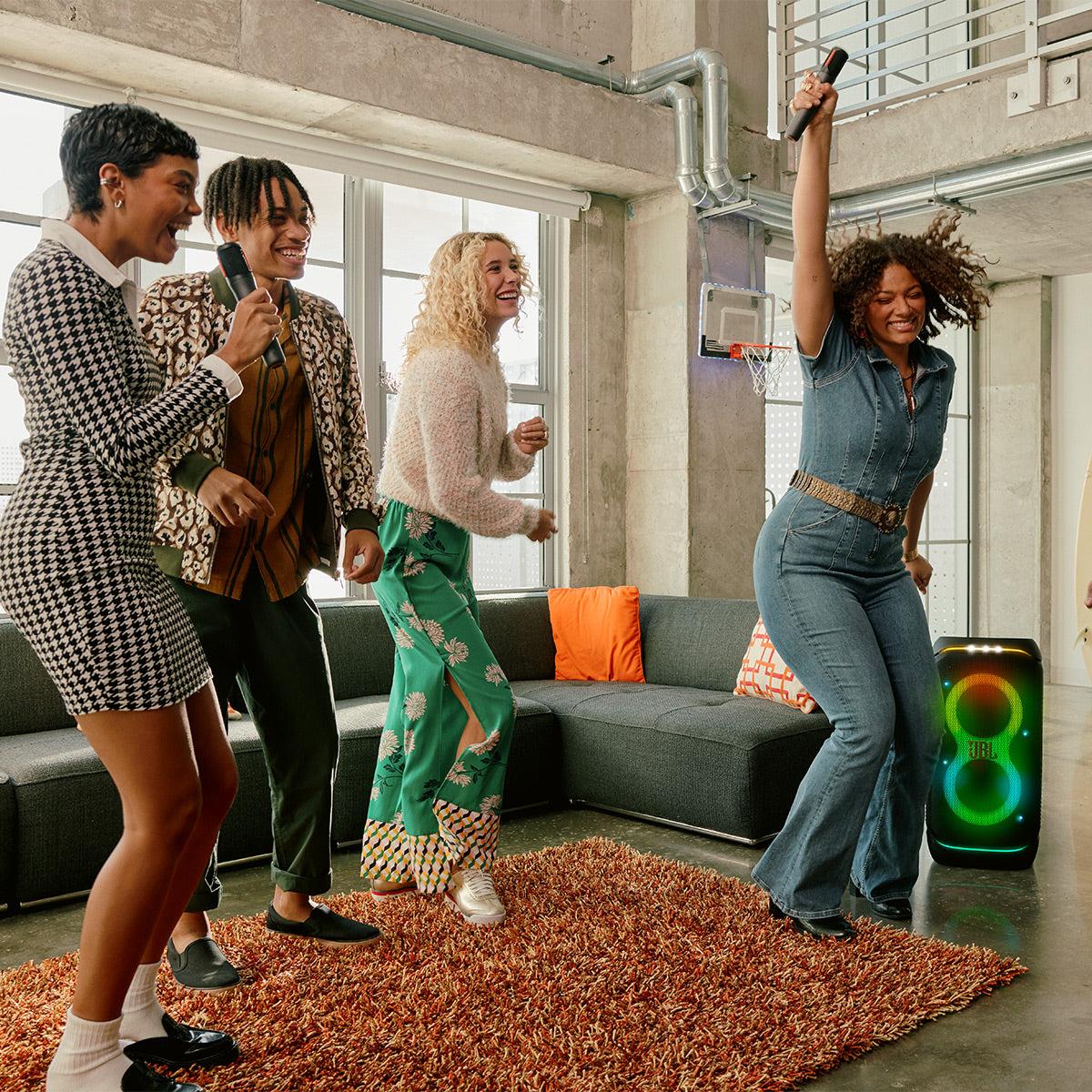
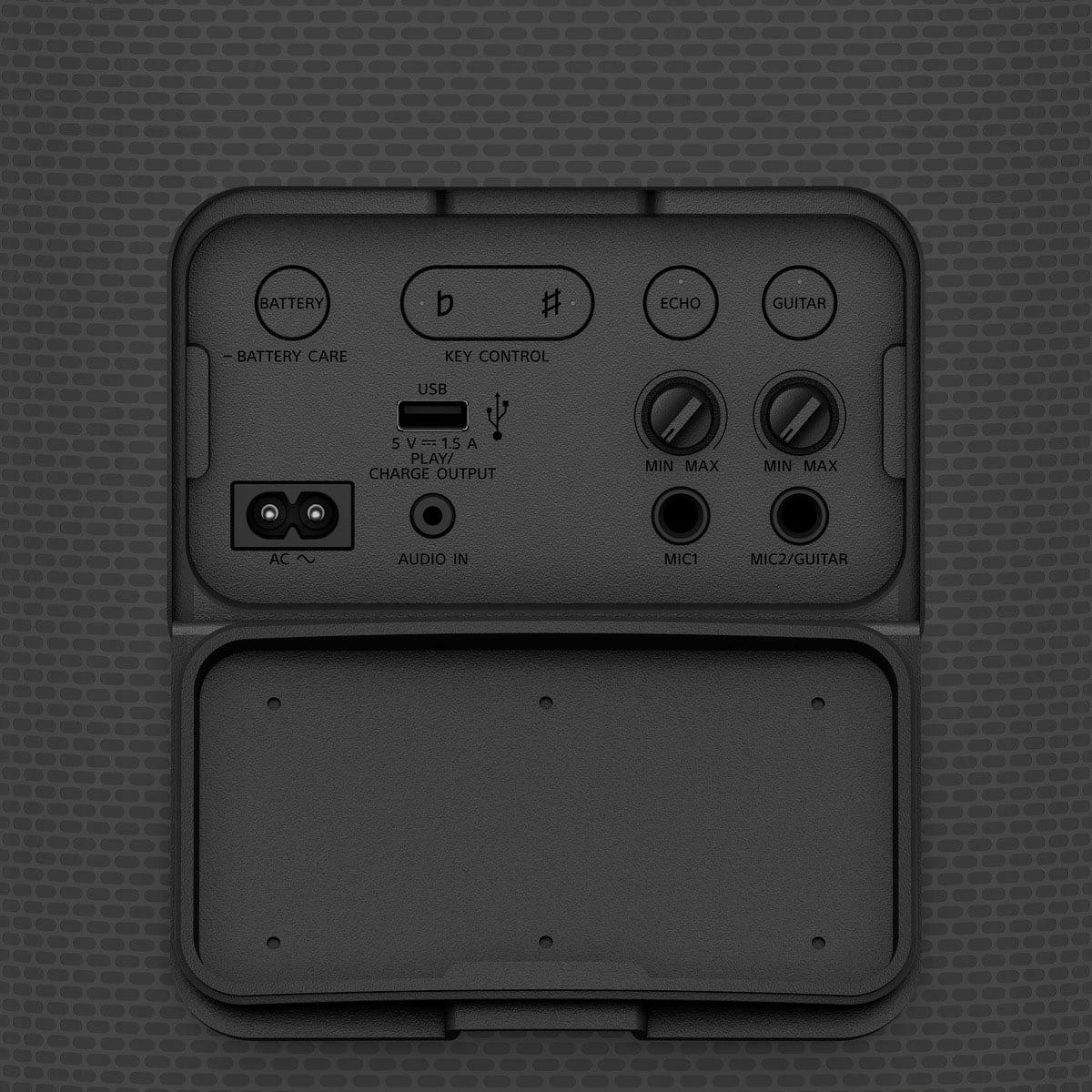
Karaoke functionality has become standard, with both speakers including dedicated microphone inputs and volume controls. The JBL PartyBox Stage 320 provides more comprehensive mixing controls, including separate bass/treble adjustments and echo effects with physical knobs rather than app-only controls. The Sony SRS-XV500 includes key control for pitch adjustment, helping singers match their vocal range to songs.
Multi-speaker connectivity allows linking multiple units for larger events. JBL's Auracast technology can theoretically connect unlimited compatible speakers, while Sony's Party Connect supports up to 100 units. In practice, most users connect 2-4 speakers maximum due to cost and logistics.
Weight and transportation method significantly impact real-world usability. The JBL PartyBox Stage 320's 36-pound weight would be prohibitive for hand-carrying, but the integrated wheels and telescopic handle make it remarkably easy to move across various terrain. Rolling it from a car trunk to a beach setup or backyard party becomes effortless.
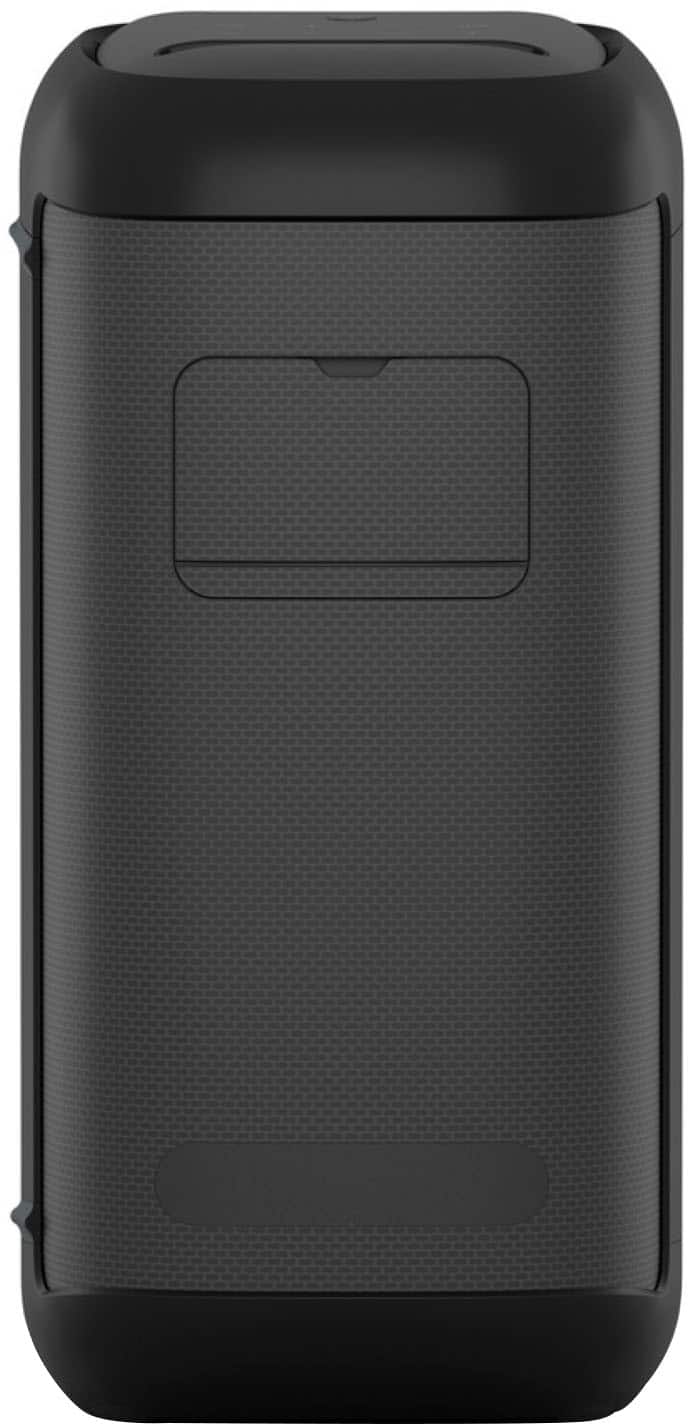
The Sony SRS-XV500's 25-pound weight with dual handles represents the upper limit of comfortable hand-carrying for most people. It fits more easily in car trunks and doesn't require the storage space that the JBL demands. For apartments or homes with limited storage, the size difference matters.
Both speakers include IPX4 water resistance, protecting against splash and light rain but not submersion. This rating suits poolside parties and outdoor use but requires caution around bodies of water.
At the time of writing, the Sony SRS-XV500 costs approximately $250-300 less than the JBL PartyBox Stage 320, representing a significant price difference that affects the value equation. The Sony delivers about 70% of the JBL's performance at roughly 60% of the cost, making it a strong value proposition for budget-conscious buyers.
However, the JBL justifies its premium through superior power output, comprehensive feature set, and professional-grade build quality. The swappable battery system alone adds considerable long-term value by extending the speaker's useful life beyond typical battery degradation timeframes.
For casual party use 3-4 times per year, the Sony's lower cost and adequate performance make it the logical choice. For frequent entertainers or semi-professional applications, the JBL's capabilities justify the investment.
While neither speaker is designed primarily for home theater use, both can serve this function with varying degrees of success. The Sony SRS-XV500's stereo configuration and more balanced frequency response make it better suited for movie dialogue and sound effects. The extended battery life allows for cord-free TV watching, which appeals to users who want flexibility in room arrangement.
The JBL PartyBox Stage 320's mono configuration and bass-heavy tuning aren't ideal for home theater applications. Movie dialogue may get buried under the prominent bass response, and the large size makes it impractical for most living rooms.
For users considering a speaker that can pull double duty between parties and home entertainment, the Sony SRS-XV500 offers better versatility.
After extensive research into user experiences and professional evaluations, the choice between these speakers comes down to intended usage patterns and priorities.
Choose the JBL PartyBox Stage 320 if you host frequent large gatherings, need maximum volume and bass impact, don't mind the size and weight, and can utilize the comprehensive feature set. It's the better choice for users who want a dedicated party machine that can handle professional applications. The swappable battery system and wheels make it surprisingly practical despite its size.
Choose the Sony SRS-XV500 if you prioritize portability and battery life, host smaller to medium-sized gatherings, need versatile functionality beyond parties, have budget constraints, or prefer more balanced sound quality. It's the smarter choice for users who want one speaker to handle multiple roles rather than a specialized party-only device.
The Sony SRS-XV500 represents better overall value for most buyers. Its combination of adequate power, superior battery life, true portability, and lower cost makes it the more practical choice for typical usage patterns. However, the JBL PartyBox Stage 320 is unquestionably superior for its intended purpose—throwing memorable parties with maximum audio and visual impact.
Both speakers represent significant improvements over earlier models in their respective lineups, incorporating better battery technology, more sophisticated DSP processing, and enhanced connectivity options that weren't available in previous generations. The 2024 release timing means both include the latest Bluetooth standards and mobile app integration that older models lack.
Ultimately, your decision should focus on honest assessment of your actual usage patterns rather than aspirational scenarios. Most buyers will be happier with the Sony SRS-XV500's versatility and value, but those who genuinely need maximum party performance will find the JBL PartyBox Stage 320 worth every penny of its premium price.
| JBL PartyBox Stage 320 | Sony SRS-XV500 |
|---|---|
| Power Output - Determines maximum volume and room-filling capability | |
| 240W RMS (significantly louder, fills tennis court-sized areas) | Not specified (noticeably quieter, suitable for smaller gatherings) |
| Speaker Configuration - Affects sound quality and stereo imaging | |
| Mono with 2x 6.5" woofers + 2x 1" tweeters (maximum bass impact) | Stereo with 2x 140mm woofers + 2x 60mm tweeters (better spatial audio) |
| Weight & Portability - Critical for transport and storage | |
| 16.5 kg (36 lbs) with wheels and telescopic handle (heavy but rolls easily) | 11.2 kg (25 lbs) with dual handles (lighter but must be carried) |
| Battery Life - Essential for all-day outdoor events | |
| 18 hours (shorter runtime but swappable battery available) | 25 hours (7 hours longer, no swappable option) |
| Bass Performance - Most important for party atmosphere | |
| Dual 6.5" woofers with rear port (wall-shaking bass, overwhelming impact) | Smaller drivers with front port (controlled bass, less party excitement) |
| Lighting Effects - Enhances visual party experience | |
| Advanced RGB + strobe LEDs with extensive customization | Basic RGB lighting with moderate customization options |
| Multi-Speaker Connectivity - For larger venues and events | |
| Auracast technology (unlimited compatible speakers theoretically) | Party Connect (up to 100 Sony speakers maximum) |
| Physical Controls - Quick adjustments without phone apps | |
| Comprehensive DJ panel with EQ, effects, and mixing controls | Basic controls with key karaoke functions, less mixing capability |
| Water Resistance - Protection for outdoor use | |
| IPX4 splash-proof (handles poolside splashes, not submersion) | IPX4 splash-proof (identical protection level) |
| Microphone/Guitar Inputs - Karaoke and live performance capability | |
| Dual 1/4" inputs with dedicated mixing controls and reverb | Dual 1/4" inputs with key control and basic echo effects |
| Bluetooth Version - Affects connection stability and audio quality | |
| Bluetooth 5.4 with multipoint connection | Bluetooth 5.2 with multipoint connection |
| Quick Charge Capability - Recovery time when battery dies | |
| 10 minutes charging = 2 hours playback | 10 minutes charging = 2.5 hours playback |
| Powerbank Function - Charges phones and devices | |
| USB-A port with 10W output for device charging | USB-A port with 7.5W output for device charging |
The JBL PartyBox Stage 320 is significantly louder with 240W RMS power output, making it capable of filling tennis court-sized outdoor areas. The Sony SRS-XV500 has lower power output and is better suited for smaller to medium gatherings of 5-15 people.
The Sony SRS-XV500 offers superior battery life with 25 hours of playback compared to the JBL PartyBox Stage 320's 18 hours. However, the JBL PartyBox Stage 320 features a unique swappable battery system that allows unlimited runtime with spare batteries.
The Sony SRS-XV500 is more portable at 25 pounds with dual handles for carrying. The JBL PartyBox Stage 320 weighs 36 pounds but includes wheels and a telescopic handle, making it easier to roll across various terrain despite being heavier.
The JBL PartyBox Stage 320 delivers significantly more powerful, wall-shaking bass through its dual 6.5-inch woofers with rear-firing port. The Sony SRS-XV500 provides more controlled, balanced bass that's less overwhelming but also less exciting for party atmospheres.
Both speakers support multi-speaker connectivity. The JBL PartyBox Stage 320 uses Auracast technology to connect unlimited compatible speakers, while the Sony SRS-XV500 uses Party Connect to link up to 100 Sony speakers for larger sound coverage.
The Sony SRS-XV500 provides better value for casual users, offering essential party features at a lower cost with superior battery life. The JBL PartyBox Stage 320 justifies its higher price through maximum power output, comprehensive DJ features, and professional-grade capabilities.
Both speakers include karaoke functionality with dual microphone inputs. The JBL PartyBox Stage 320 offers more comprehensive mixing controls with physical knobs for bass, treble, and reverb. The Sony SRS-XV500 includes key control for pitch adjustment and basic echo effects.
The Sony SRS-XV500 provides more balanced sound quality with its stereo configuration, making it better for diverse music genres and casual listening. The JBL PartyBox Stage 320 is tuned for party music with emphasized bass that may overwhelm other frequencies.
Both the JBL PartyBox Stage 320 and Sony SRS-XV500 feature IPX4 water resistance, protecting against splashes and light rain but not submersion. This rating makes them suitable for poolside parties and outdoor events with basic weather protection.
The Sony SRS-XV500 is better suited for small indoor gatherings due to its more compact size, balanced sound signature, and lower volume levels that won't overwhelm intimate spaces. The JBL PartyBox Stage 320 may be too powerful for small rooms.
The JBL PartyBox Stage 320 features more advanced lighting with RGB colors plus strobe LEDs and extensive customization through the app. The Sony SRS-XV500 offers basic RGB lighting that's effective for mood creation but less dramatic than the JBL's visual effects.
For occasional party use 3-4 times per year, the Sony SRS-XV500 is the smarter choice due to its lower cost, adequate performance, superior battery life, and versatility for non-party applications. The JBL PartyBox Stage 320 is better for frequent entertainers who need maximum power and professional features.
We've done our best to create useful and informative comparisons to help you decide what product to buy. Our research uses advanced automated methods to create this comparison and perfection is not possible - please contact us for corrections or questions. These are the sites we've researched in the creation of this article: stereoguide.com - soundguys.com - rtings.com - soundguys.com - soundguys.com - rtings.com - jbl.com - youtube.com - youtube.com - youtube.com - youtube.com - rtings.com - 9to5toys.com - versus.com - cdw.com - jbl.com - projectorscreenstore.com - projectorscreen.com - ro.harmanaudio.com - jbl.co.nz - bestbuy.com - youtube.com - bestbuy.com - rtings.com - bestbuy.com - youtube.com - rtings.com - versus.com - youtube.com - versus.com - youtube.com - youtube.com - guidingtech.com - crutchfield.com - sony.com - sony.com - bestbuy.com - helpguide.sony.net - smappliance.com - youtube.com - helpguide.sony.net - videoandaudiocenter.com - electronics.sony.com - linqcdn.avbportal.com

Privacy Policy
Terms and Conditions - Affiliate Policy
Home Security
© Copyright 2008-2026.
11816 Inwood Rd #1211, Dallas, TX 75244