

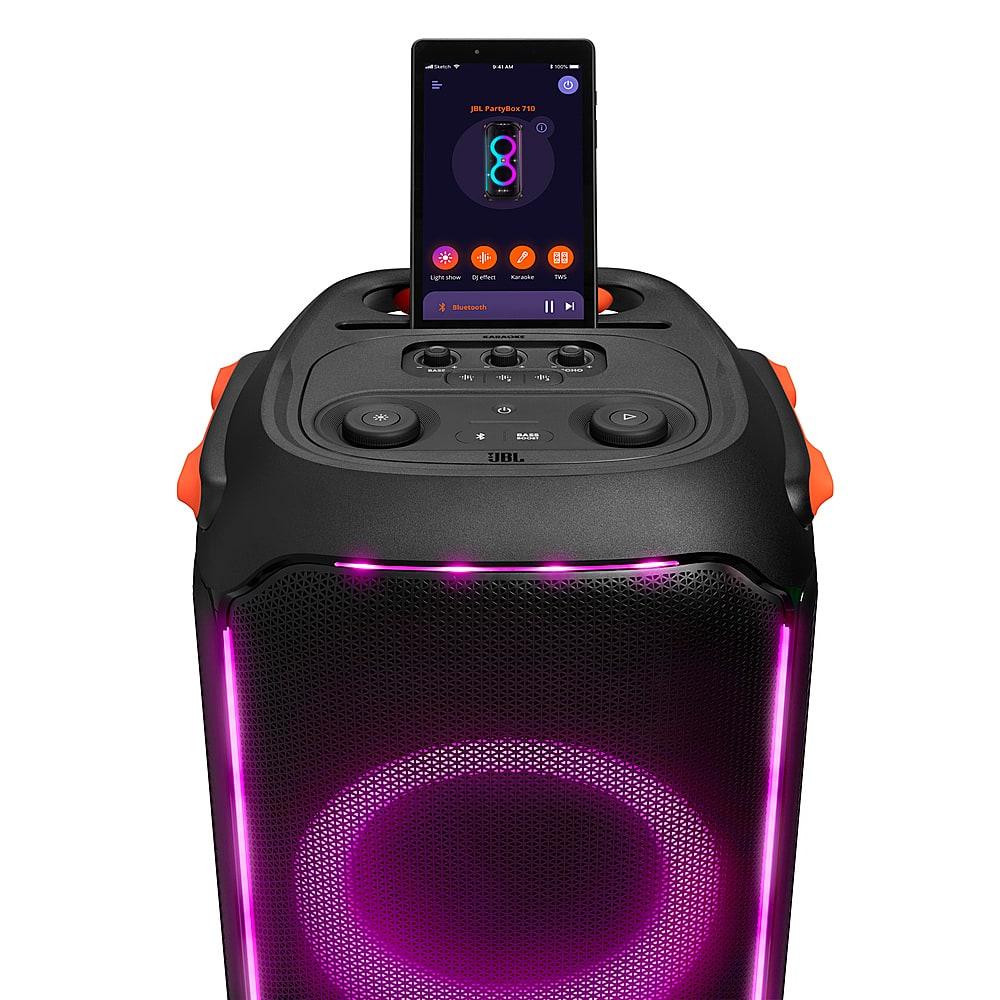
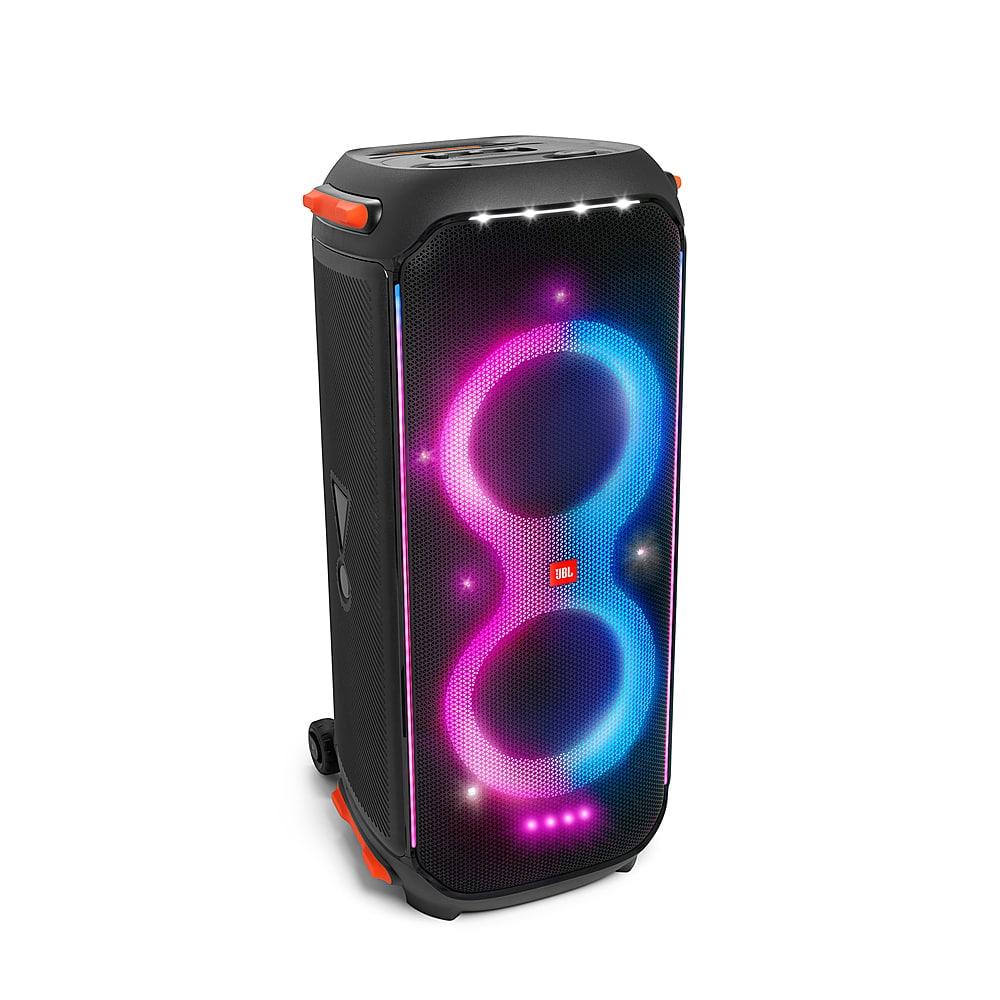
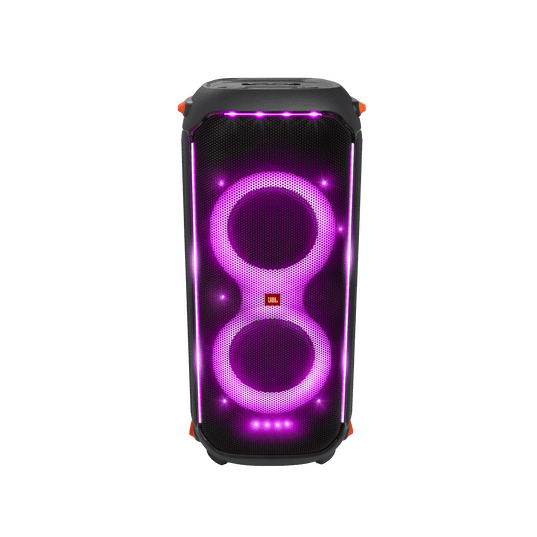
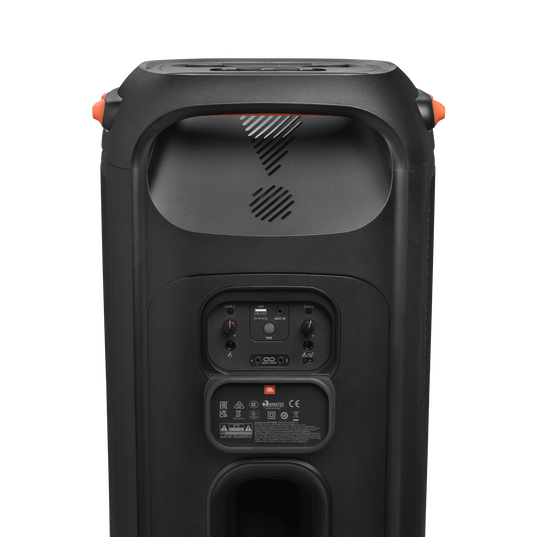
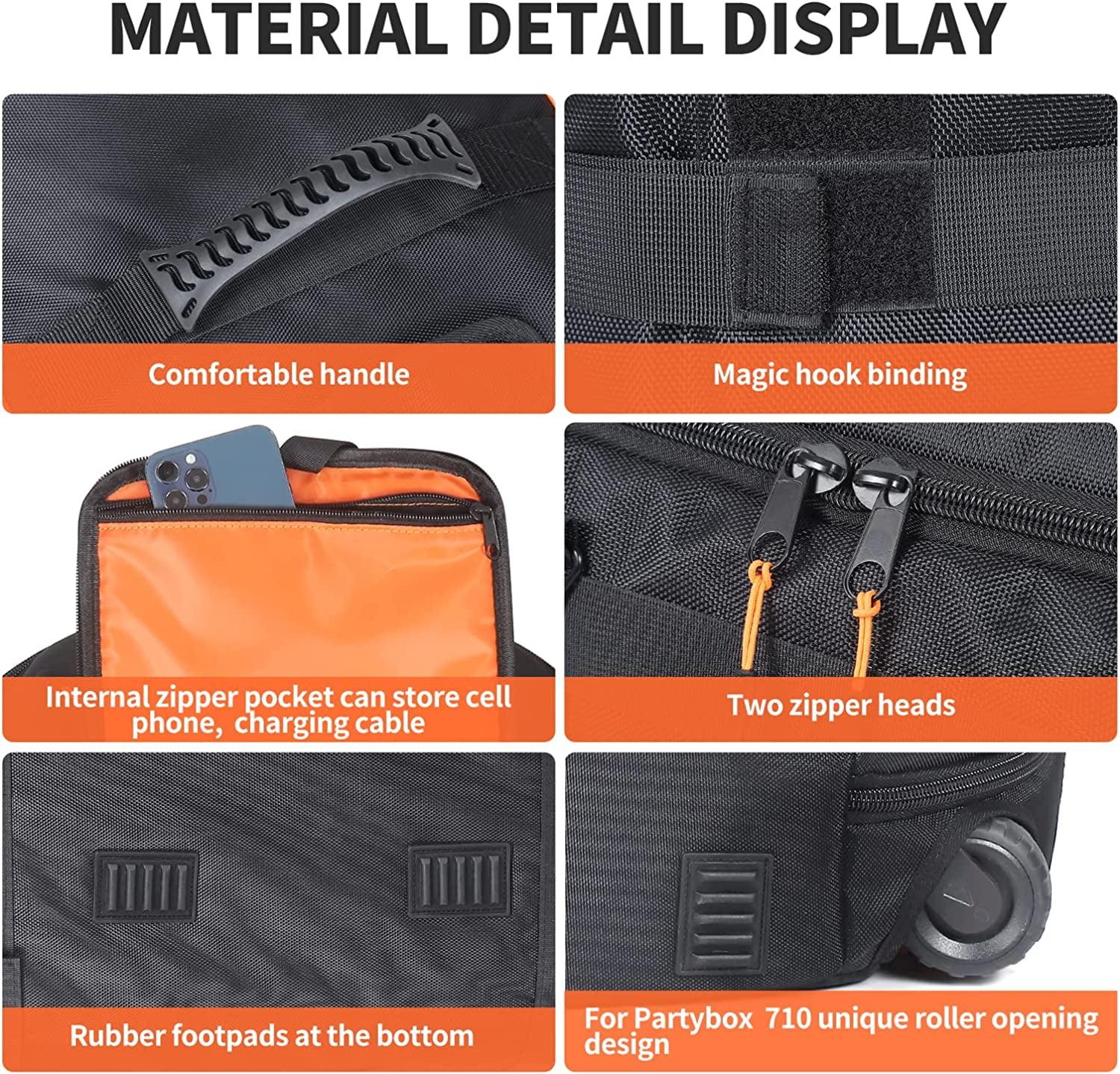
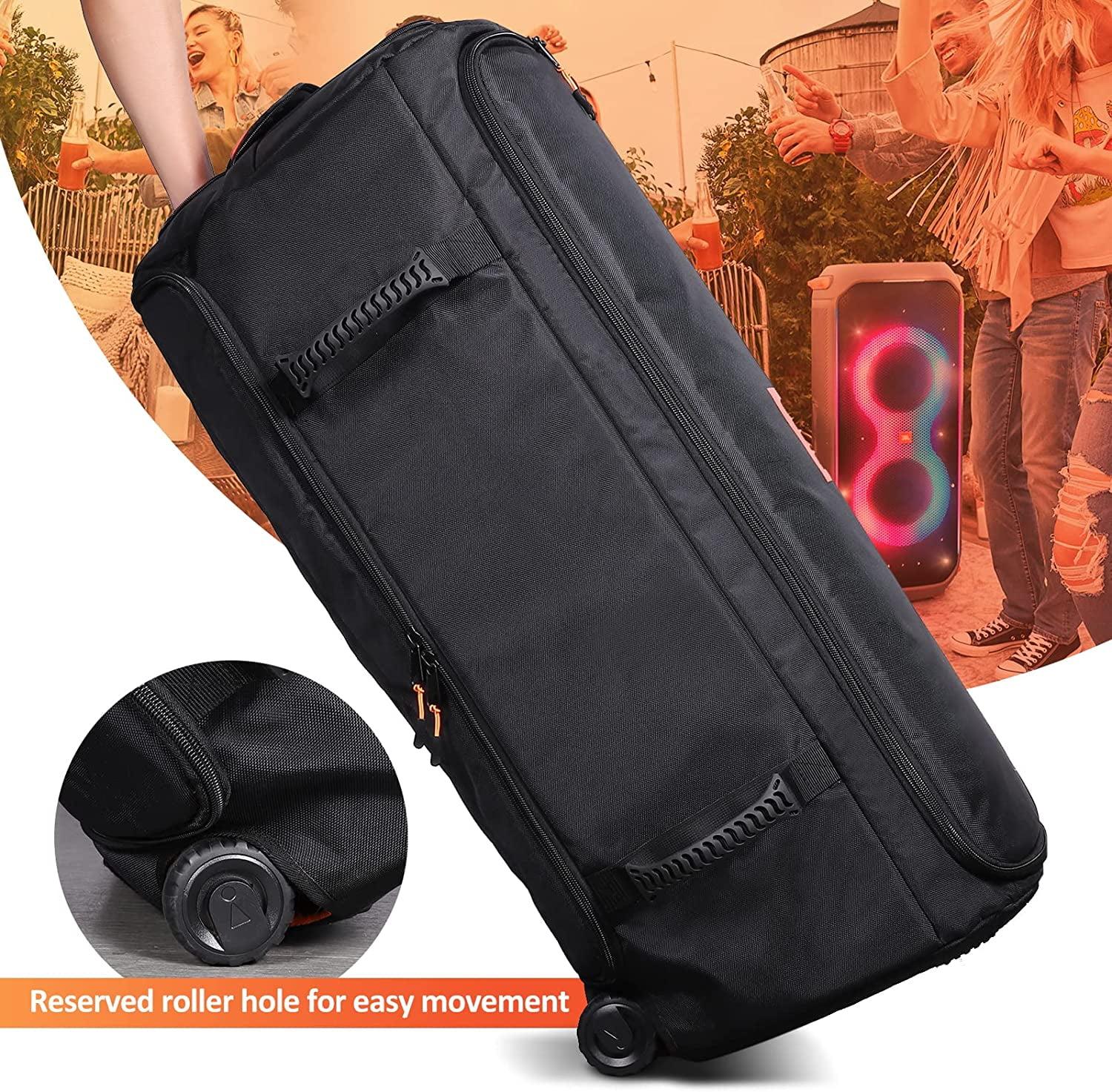
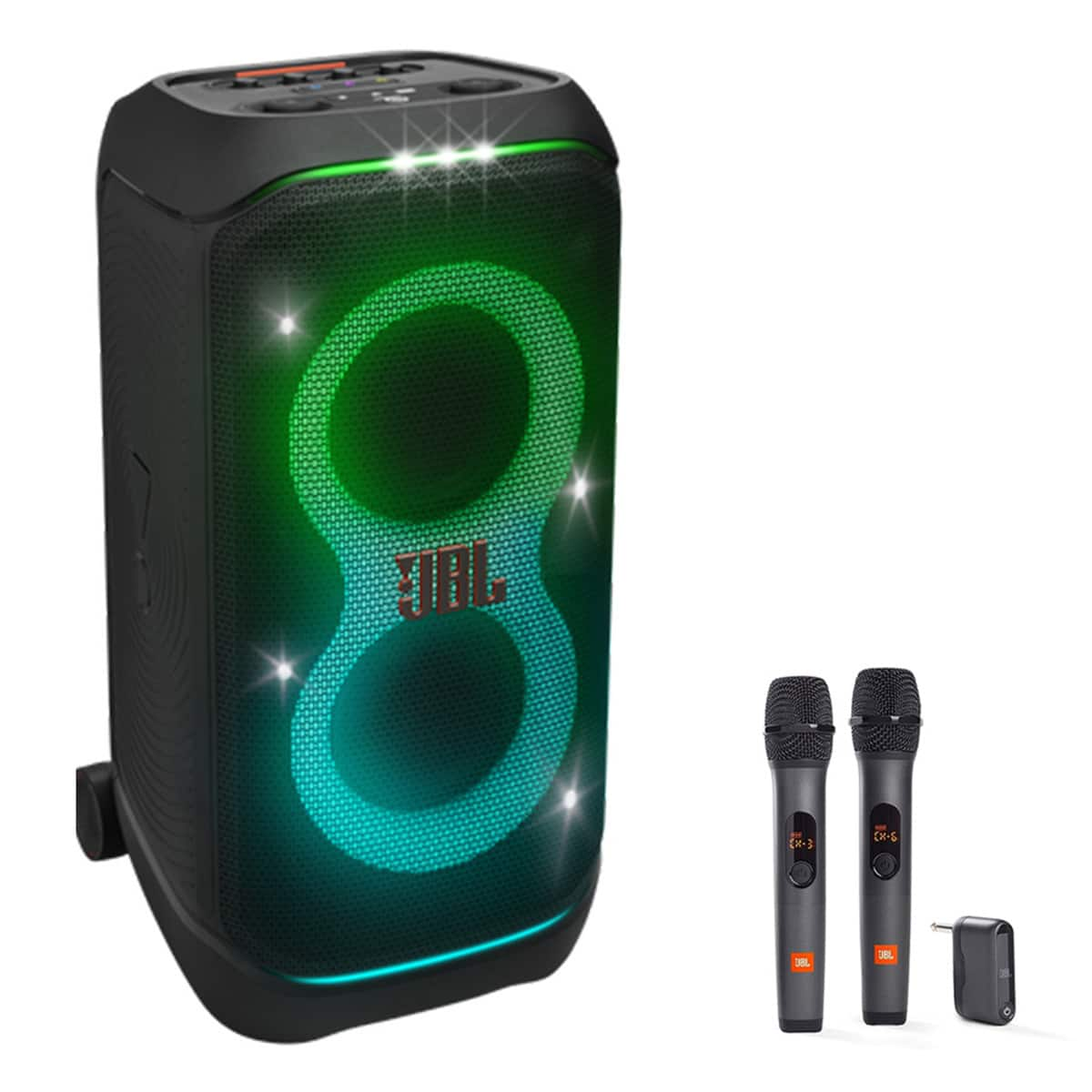
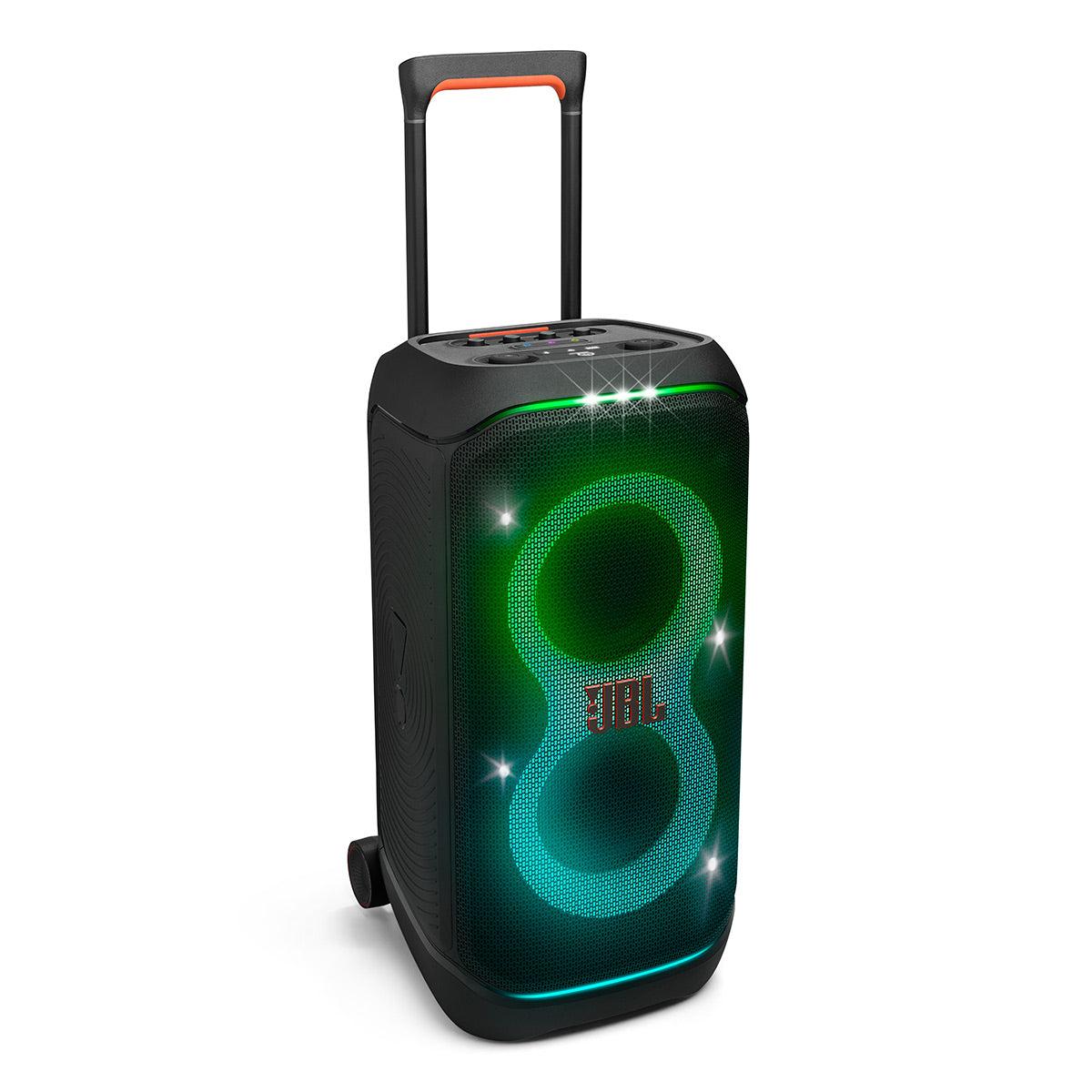
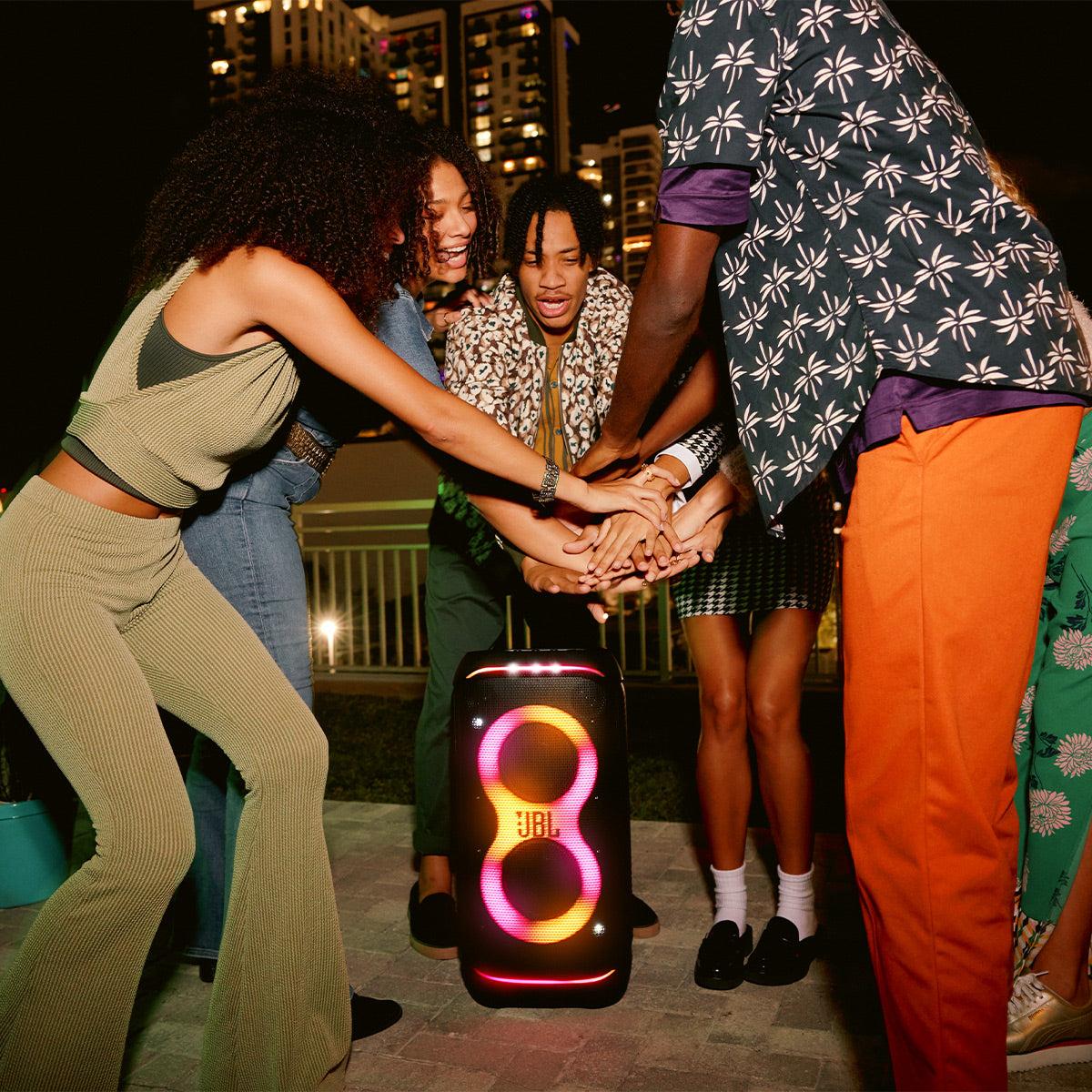
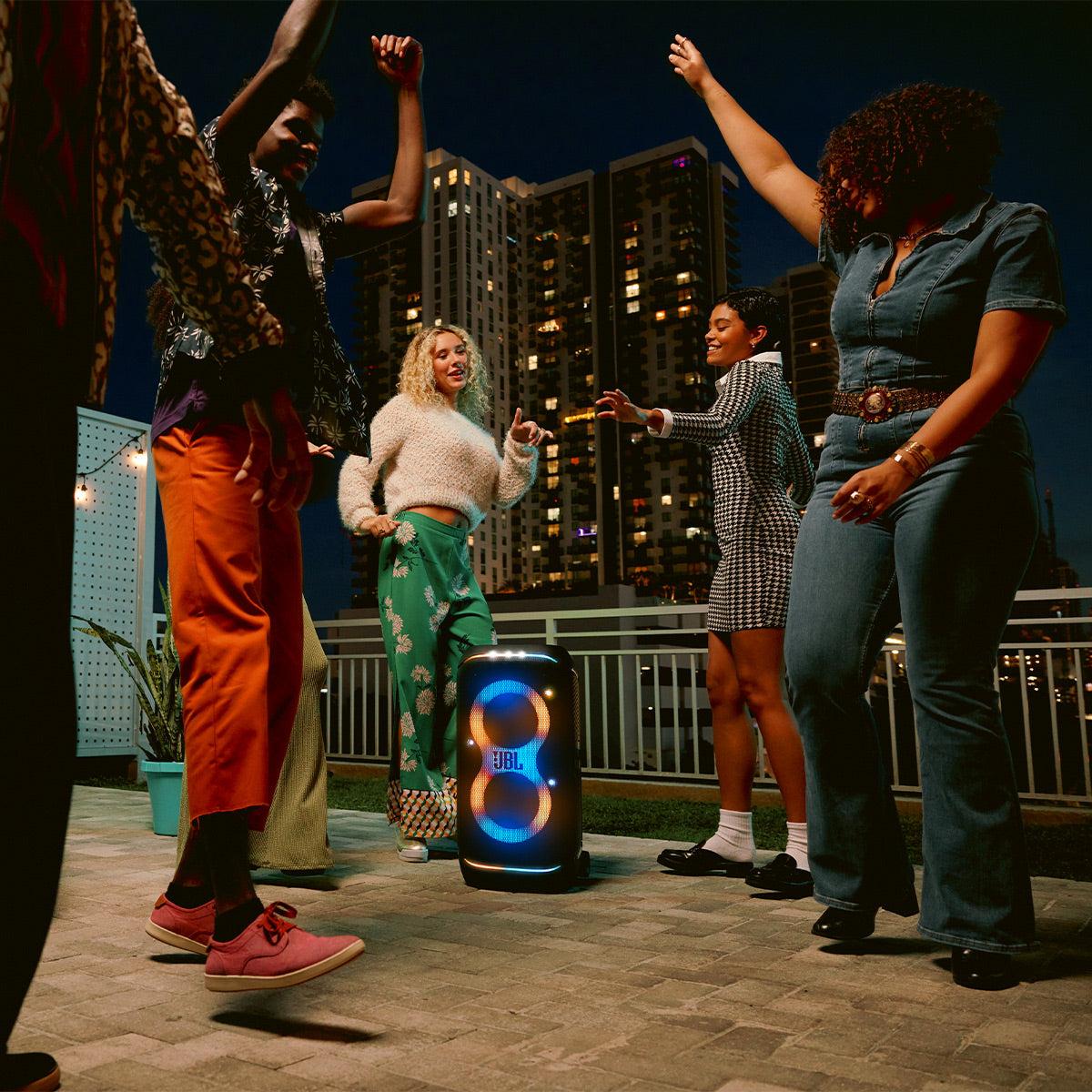
When it comes to throwing memorable parties, your speaker can make or break the entire vibe. JBL's PartyBox series has become the go-to choice for people who want that nightclub energy at home, but choosing between the powerhouse PartyBox 710 and the newer, more portable Stage 320 requires understanding what you're actually getting for your money.
Party speakers operate in a completely different league than your typical Bluetooth speaker. They're designed to fill large spaces with bass-heavy music while adding visual excitement through synchronized light shows. Think of them as the middle ground between a home stereo system and professional PA equipment—they need to get loud enough for outdoor gatherings while remaining simple enough for anyone to use.
The key considerations when shopping in this category center around power output (measured in watts RMS, which tells you the sustained power the speaker can handle), portability features, connectivity options, and special party-focused features like microphone inputs and customizable lighting effects. The bass response becomes particularly critical because party music—whether it's hip-hop, EDM, or pop—relies heavily on that physical thump you can feel in your chest.
The PartyBox 710, released in 2021, represented JBL's commitment to raw power above all else. It delivers 800 watts RMS through dual 8-inch woofers and smaller tweeters (the high-frequency drivers that handle vocals and treble). At 61 pounds and requiring constant AC power, it was designed for people who prioritized maximum impact over convenience.
Fast-forward to 2024, and the PartyBox Stage 320 arrives with a completely different philosophy. At 240 watts RMS, it's significantly less powerful on paper, but JBL packed it with modern conveniences: an 18-hour battery, AI-powered sound enhancement, and updated Bluetooth connectivity. This shift reflects how the market has evolved—people want great sound that travels with them, not just maximum volume.
The technological improvements between these generations are substantial. The Stage 320 includes Bluetooth 5.4 (compared to the 710's 5.1), which provides better connection stability and support for higher-quality audio codecs like AAC. The newer model also features AI Sound Boost, which analyzes incoming audio in real-time to reduce distortion and optimize bass response—essentially giving you a sound engineer built into the speaker.
When evaluating party speakers, watts matter, but not in the way most people think. The PartyBox 710's 800 watts RMS doesn't just mean it's 3.3 times more powerful than the Stage 320's 240 watts—it means the difference between filling a backyard and filling an entire outdoor festival area.
RMS (Root Mean Square) represents the continuous power a speaker can handle without damaging itself, unlike peak power ratings that manufacturers sometimes use to inflate specifications. Those 800 watts translate into genuine wall-shaking bass that you'll feel as much as hear. During our research into user experiences, the most common description of the 710 was that it produces bass you can "feel in your bones," while the Stage 320 was consistently praised for being "surprisingly powerful for its size."
The driver configuration tells the real story here. The 710 uses two 8-inch woofers—those large cone speakers responsible for bass frequencies—while the Stage 320 makes do with 6.5-inch woofers. That 1.5-inch difference might not sound like much, but larger drivers move more air, creating deeper, more physical bass response. In practical terms, the 710 can comfortably handle gatherings of 35+ people in outdoor settings, while the Stage 320 is better suited for groups of around 20 people.
However, raw power isn't everything. The Stage 320's AI Sound Boost technology actually helps it punch above its weight class by intelligently managing the audio signal to prevent distortion and maximize perceived loudness. This means that while it can't match the 710's absolute volume, it maintains cleaner sound at its maximum output levels.
Bass performance separates good party speakers from great ones, and the numbers here tell a compelling story. The PartyBox 710 reaches down to 35Hz, while the Stage 320 bottoms out at 40Hz. Those 5Hz might seem insignificant, but they represent the difference between feeling the rumble of a kick drum and simply hearing it.
Frequency response describes the range of sounds a speaker can reproduce, measured in Hertz (Hz). Lower numbers mean deeper bass—for context, the lowest note on a standard bass guitar sits around 41Hz, so the 710 can actually reproduce frequencies deeper than most musical instruments produce.
The larger 8-inch woofers in the 710 create what audio engineers call "excursion"—the physical movement of the driver cone that pushes air and creates those bass waves you feel. Based on user feedback analysis, the 710 consistently delivers what people describe as "earth-shaking" bass, particularly effective for electronic music, hip-hop, and modern pop that relies on sub-bass frequencies for impact.
The Stage 320 takes a different approach with its AI Sound Boost. This technology monitors the audio signal and applies real-time processing to enhance bass response without overdriving the smaller woofers. While it can't match the 710's raw low-end power, it produces tighter, more controlled bass that many users actually prefer for vocal-heavy music and acoustic genres.
Here's where these speakers diverge dramatically. The PartyBox 710 weighs 61 pounds and requires constant AC power—it's essentially a stationary speaker with wheels. Moving it requires planning, preferably two people, and you're limited to locations with accessible power outlets.
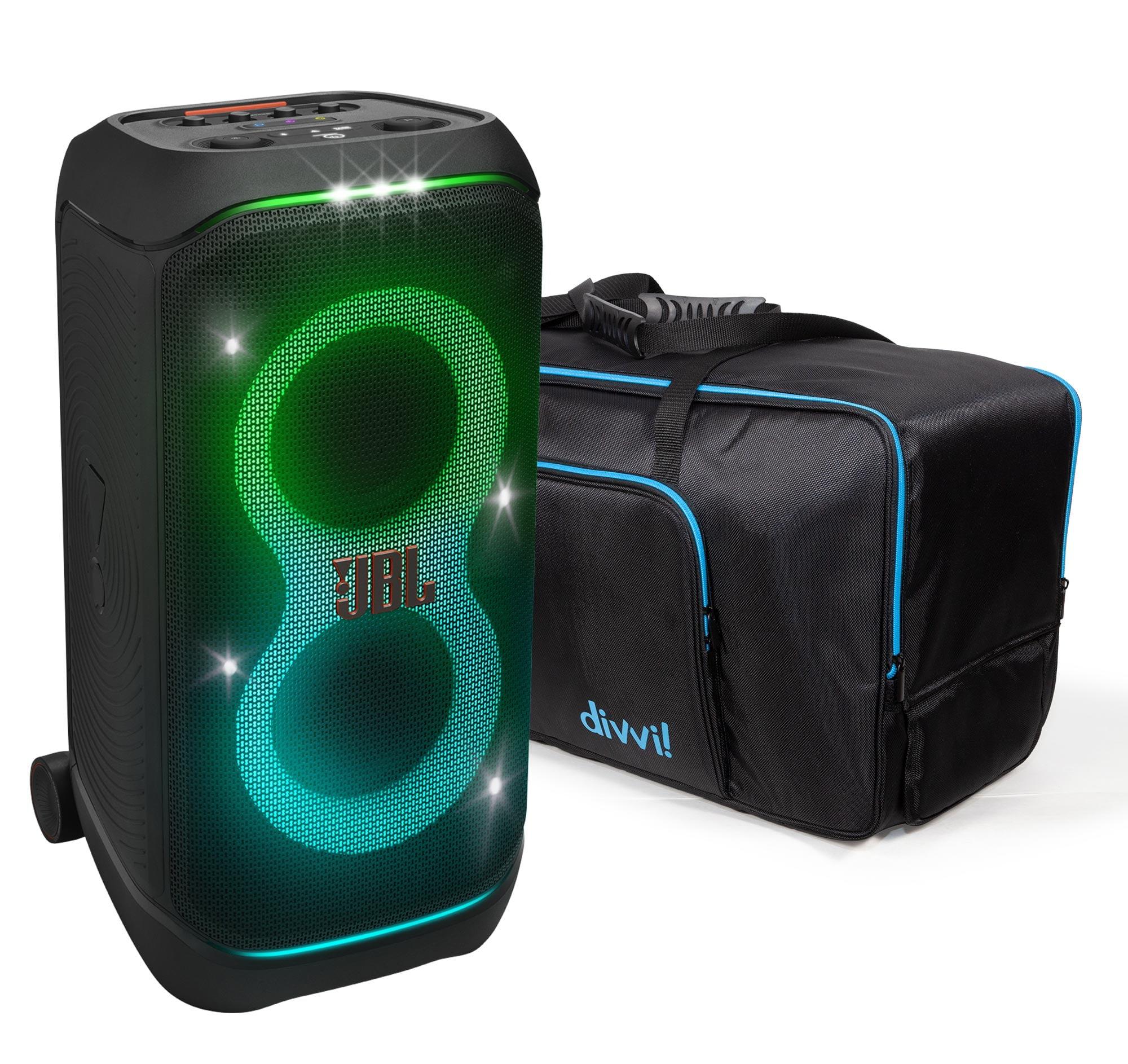
The Stage 320, at 36 pounds with an integrated 18-hour battery, represents true portability. That battery specification deserves explanation: the 18-hour rating assumes moderate volume levels with the light show disabled. Real-world usage at party volumes with all features active typically yields 6-8 hours, which still covers most events. The swappable battery design means you can extend playtime indefinitely with spare battery packs—a feature the 710 simply can't match.
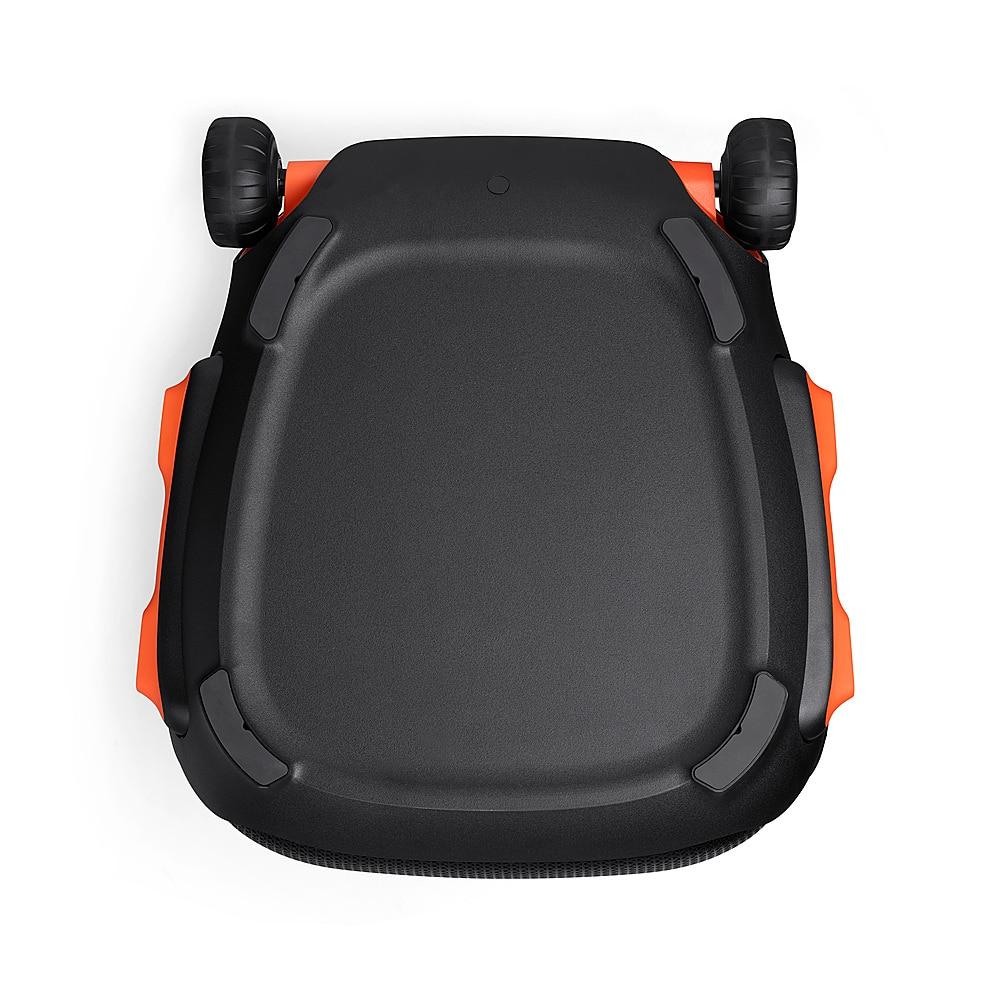
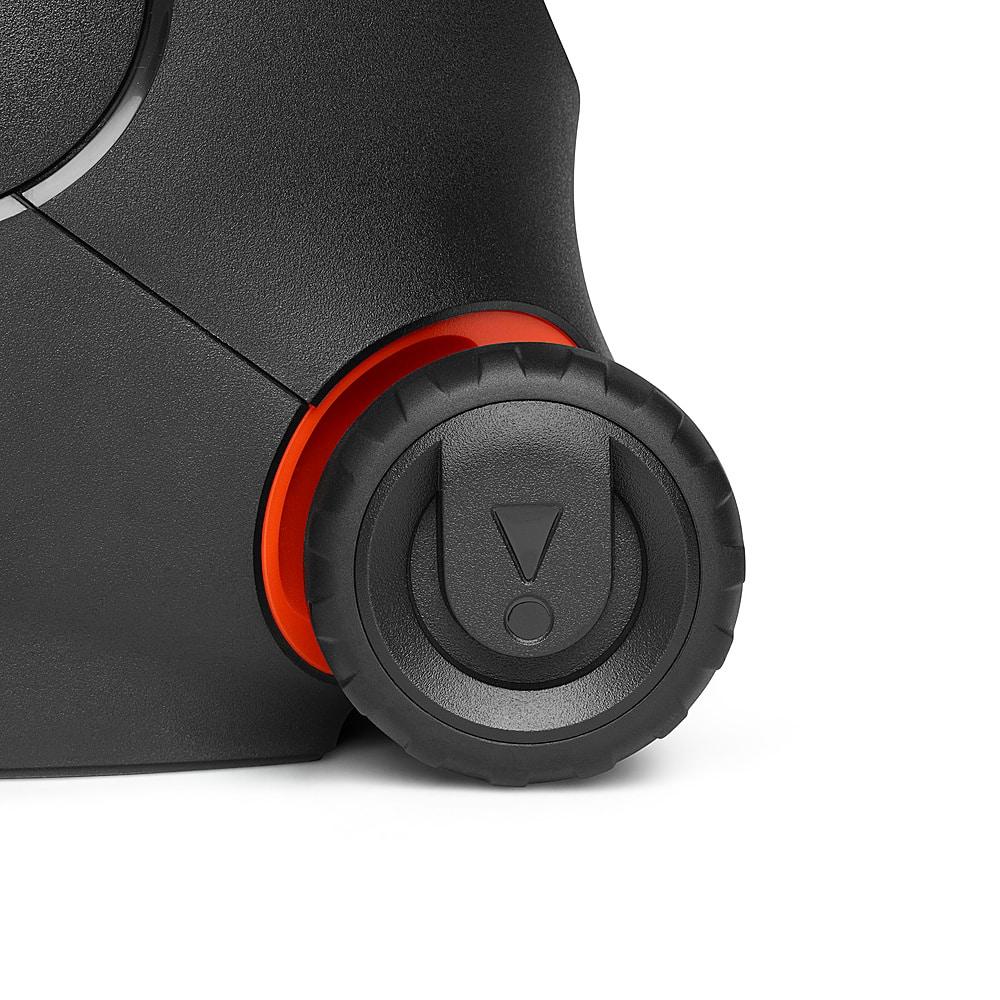
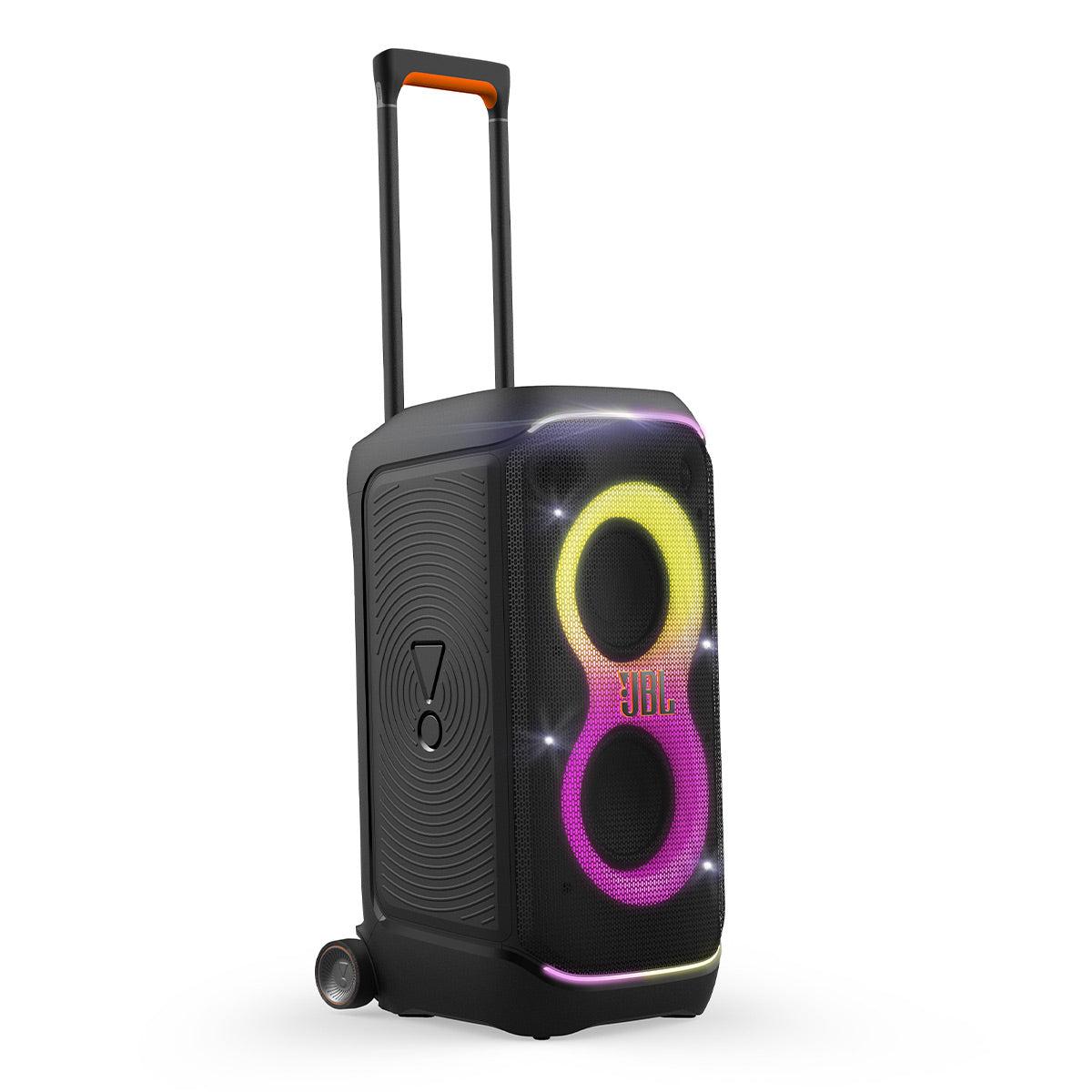
The telescopic handle and optimized wheel design on the Stage 320 make it genuinely portable for one person, while the 710's wheels are more about preventing floor damage than enabling easy transport. For context, 61 pounds is roughly equivalent to a large suitcase at airline weight limits—manageable for short distances but cumbersome for regular transport.
Bluetooth technology has evolved significantly between these generations. The Stage 320's Bluetooth 5.4 supports multiple high-quality audio codecs, including AAC, which provides noticeably better audio quality when streaming from iPhones and many Android devices. The 710's Bluetooth 5.1 only supports the basic SBC codec, which compresses audio more aggressively.
The Stage 320 also introduces Auracast, JBL's latest multi-speaker pairing technology. Unlike traditional pairing that requires manual setup, Auracast lets you wirelessly connect multiple compatible speakers with minimal fuss. This matters for people who might start with one speaker and later add others for larger events.
Both speakers include True Wireless Stereo (TWS), which allows pairing two identical units for genuine stereo sound—left and right channels separated for a wider soundstage. However, the 710's raw power makes TWS pairing almost overwhelming for most residential settings, while the Stage 320 pairing creates a more balanced experience.
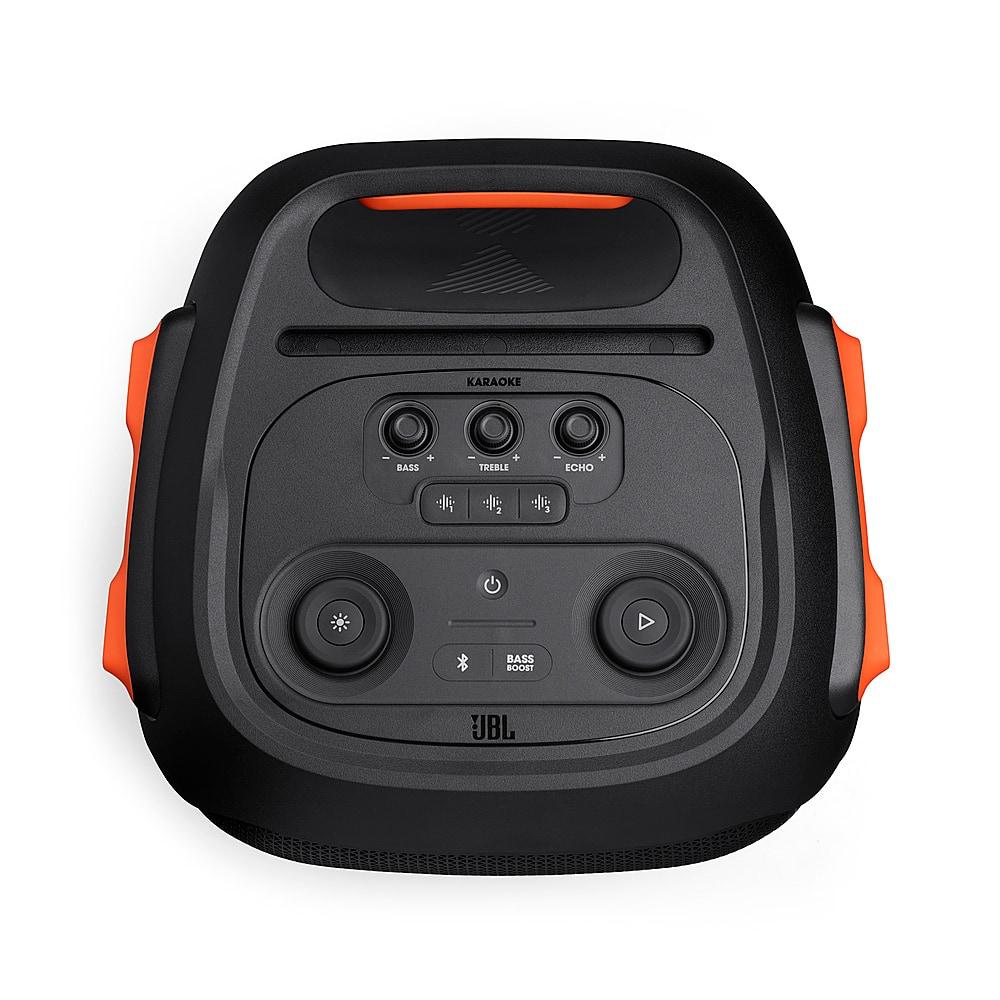
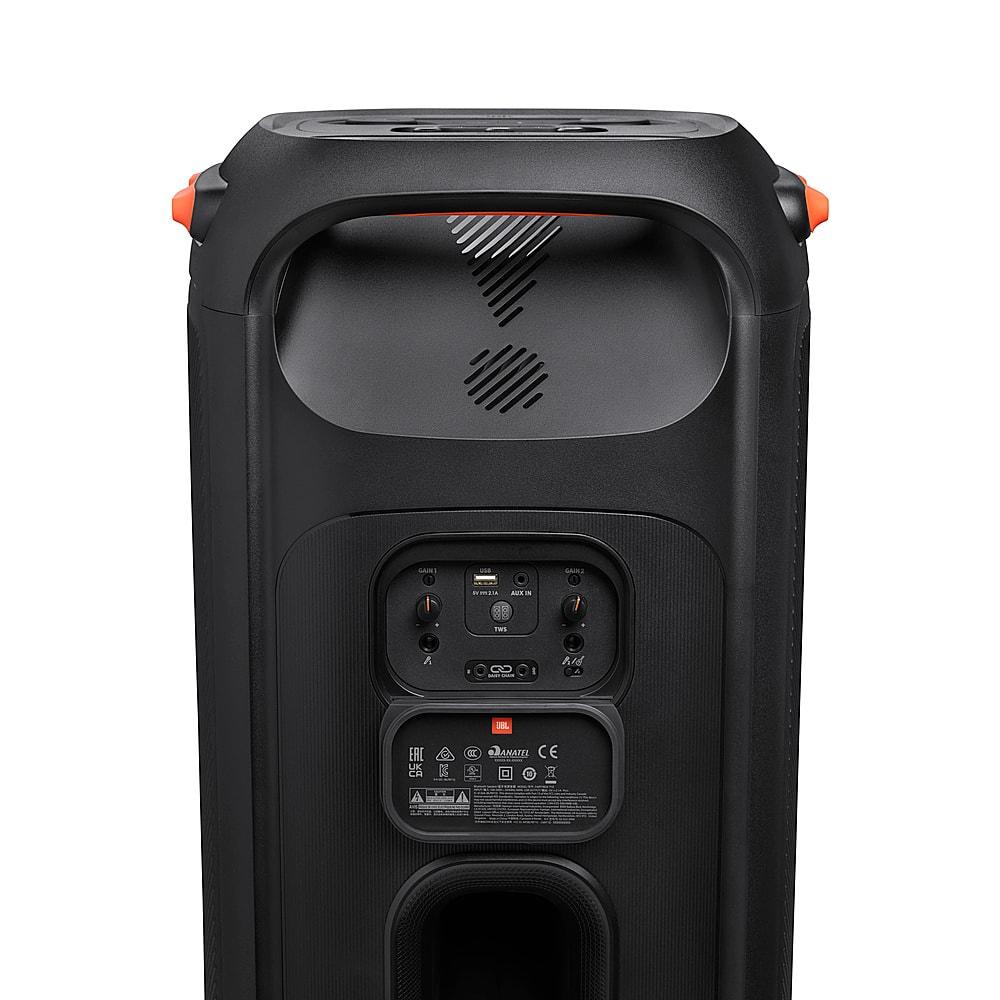
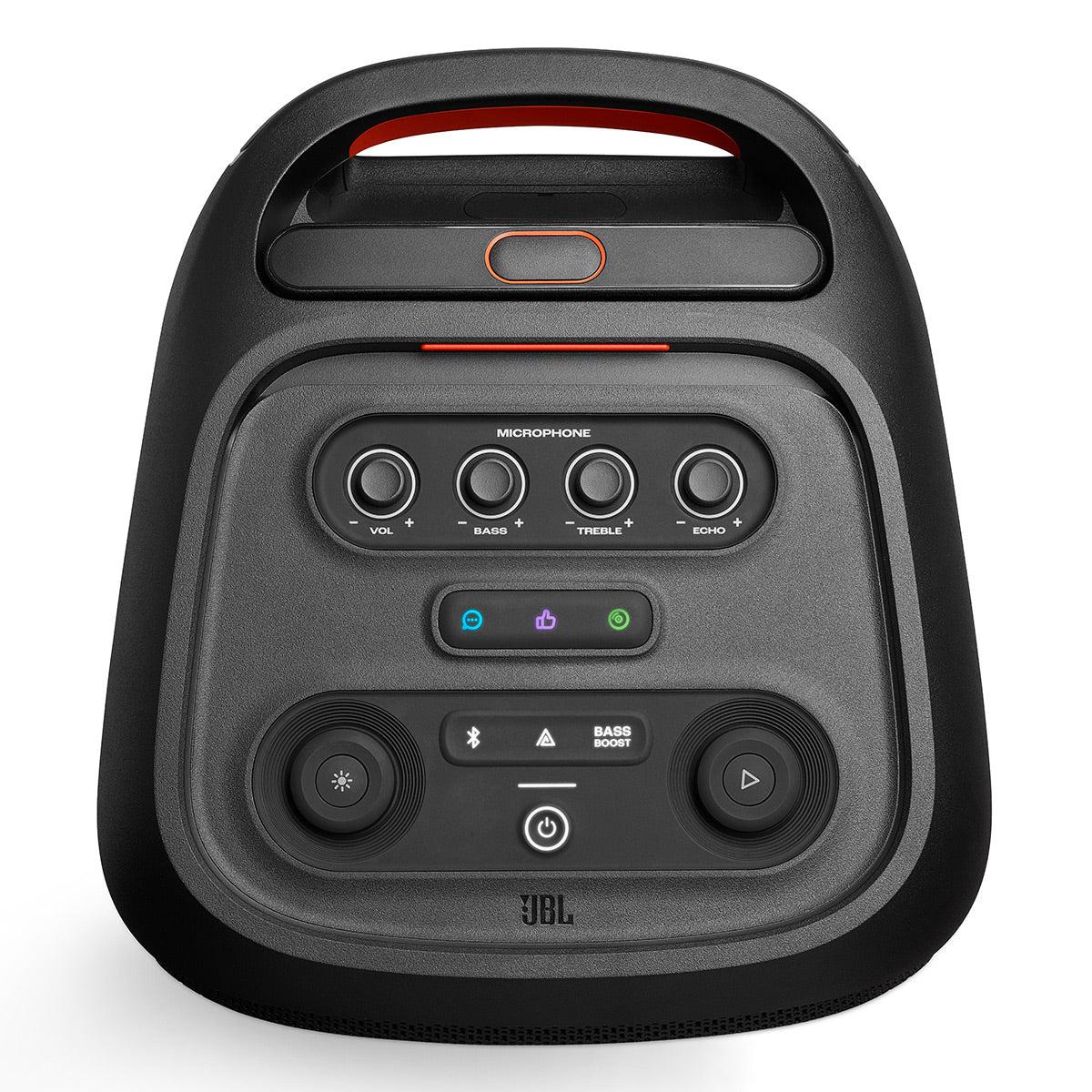
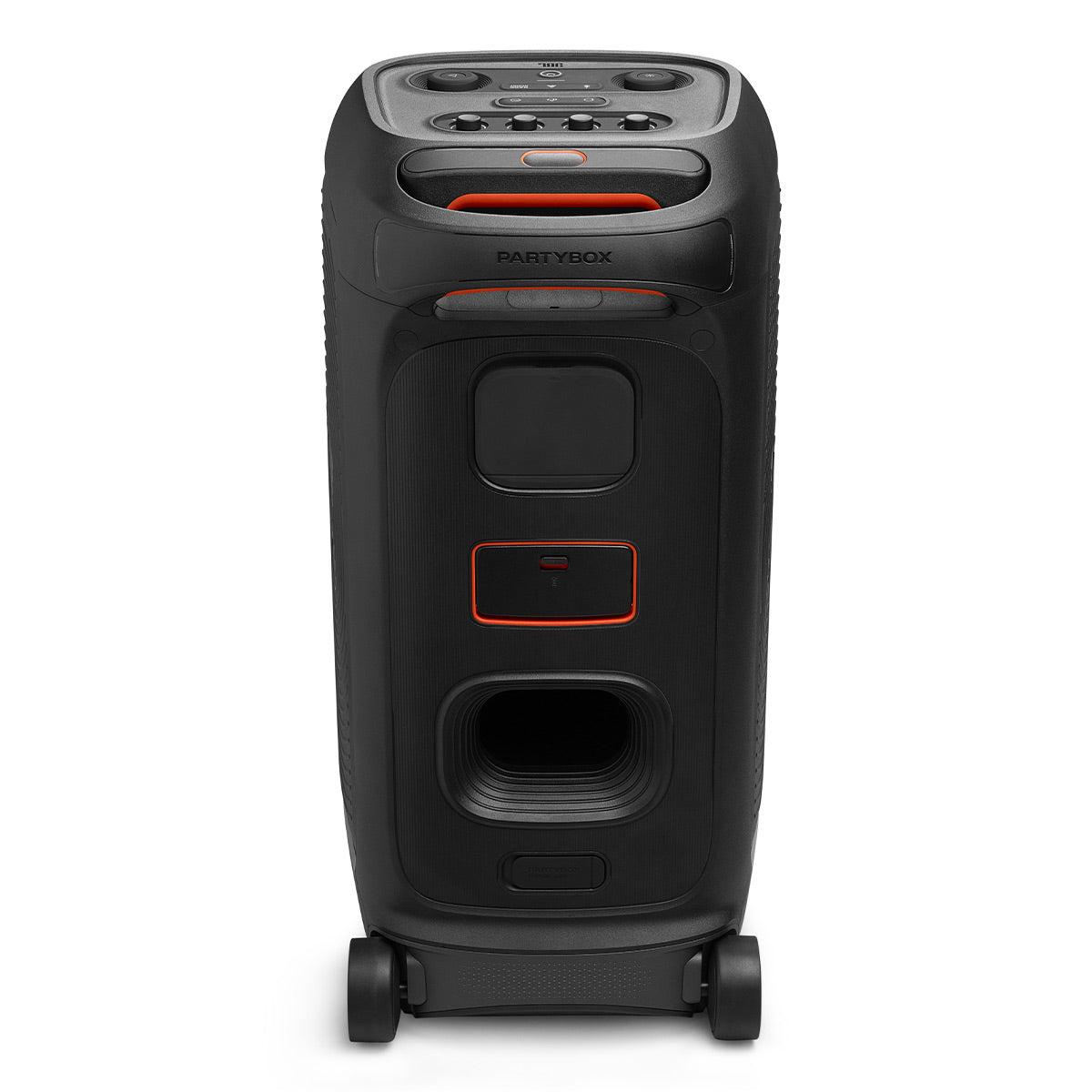
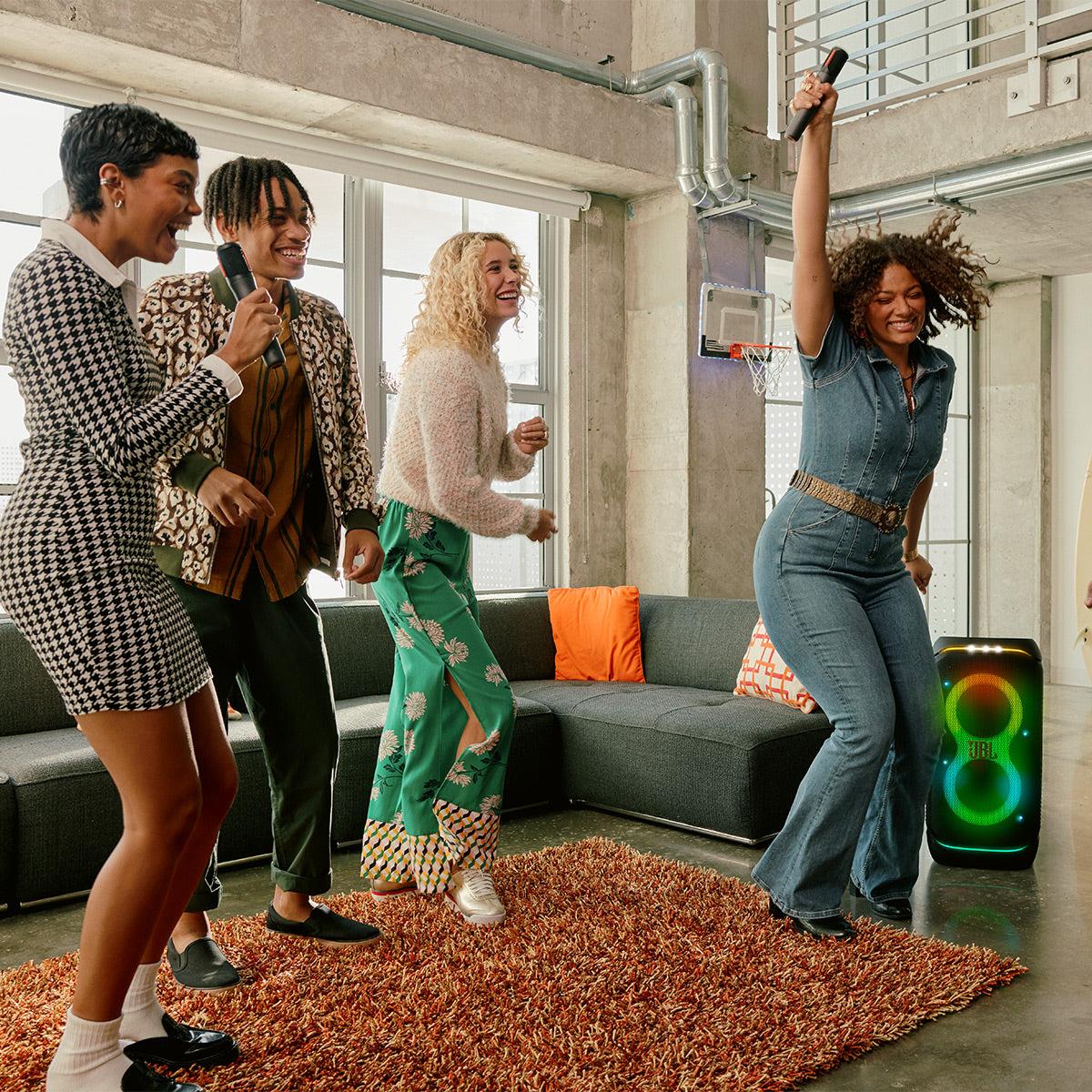
Both speakers cater to karaoke enthusiasts and amateur performers with dual 6.35mm inputs for microphones and guitars. These aren't afterthought features—they include independent gain controls, echo effects, and basic EQ adjustments. The 710 adds a 3.5mm output for daisy-chaining additional speakers, which the Stage 320 lacks.
The microphone inputs use quarter-inch TRS (Tip-Ring-Sleeve) connectors, the same standard used in professional audio equipment. This means you can use any professional microphone without adapters. The independent gain controls let you balance vocals against music volume, while the echo effects add that classic karaoke ambiance.
For musicians, the guitar input accepts standard instrument cables and provides enough gain for electric guitars without additional amplification. While these speakers won't replace dedicated guitar amplifiers for serious musicians, they're perfectly adequate for casual jamming or acoustic performances.
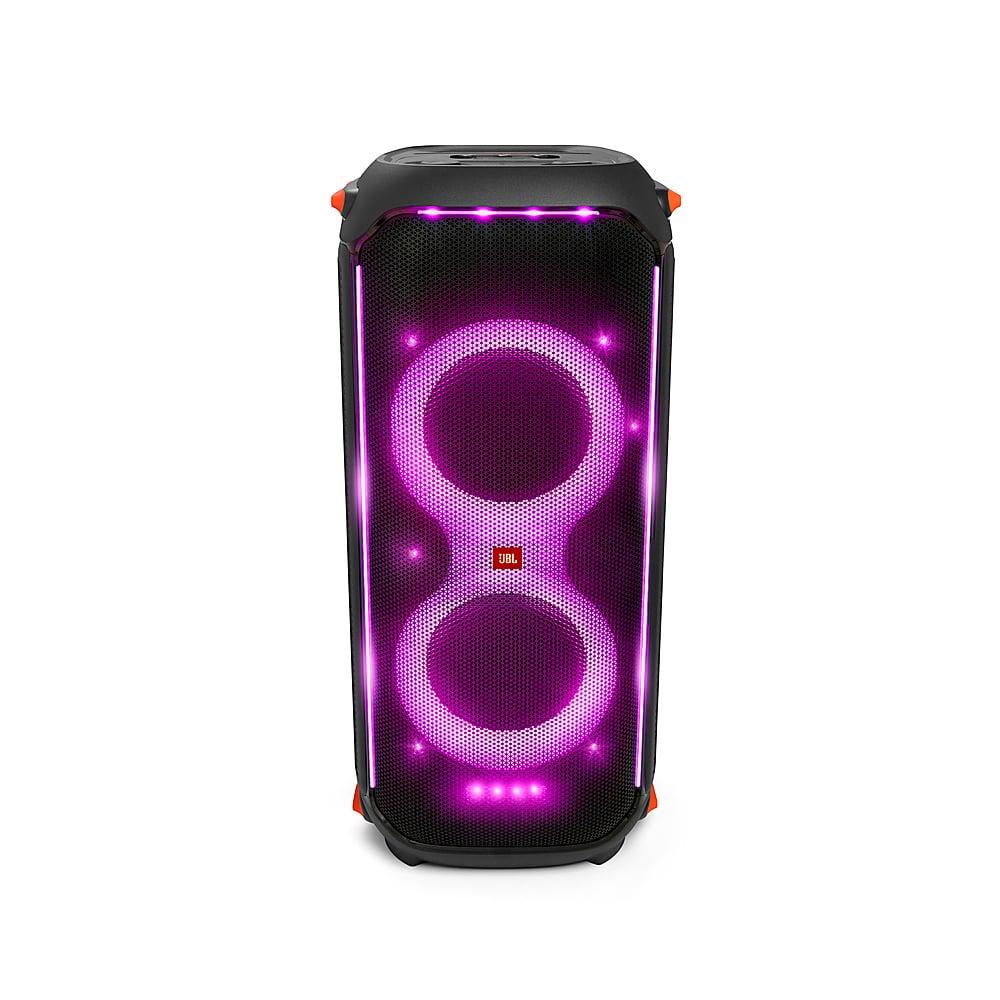
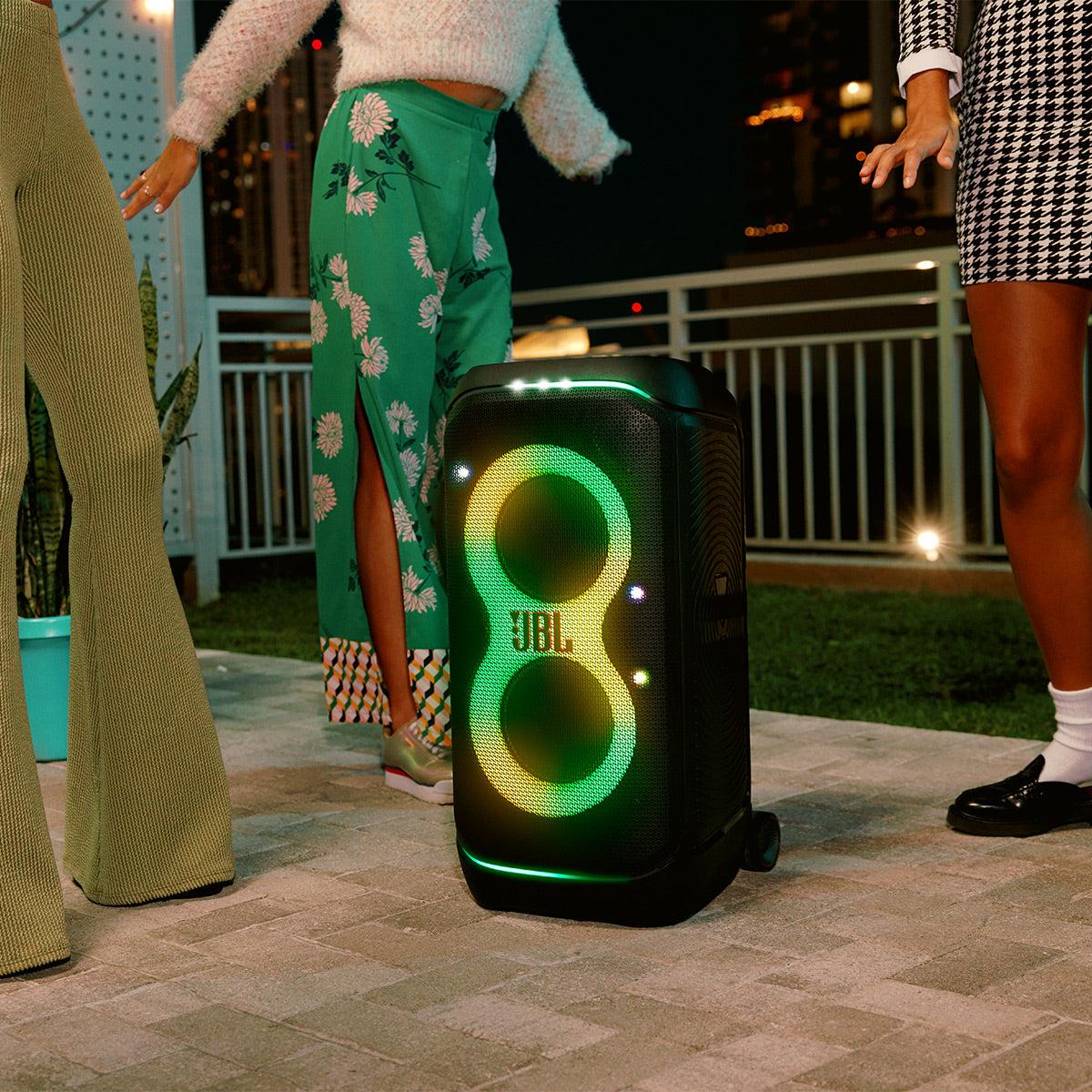
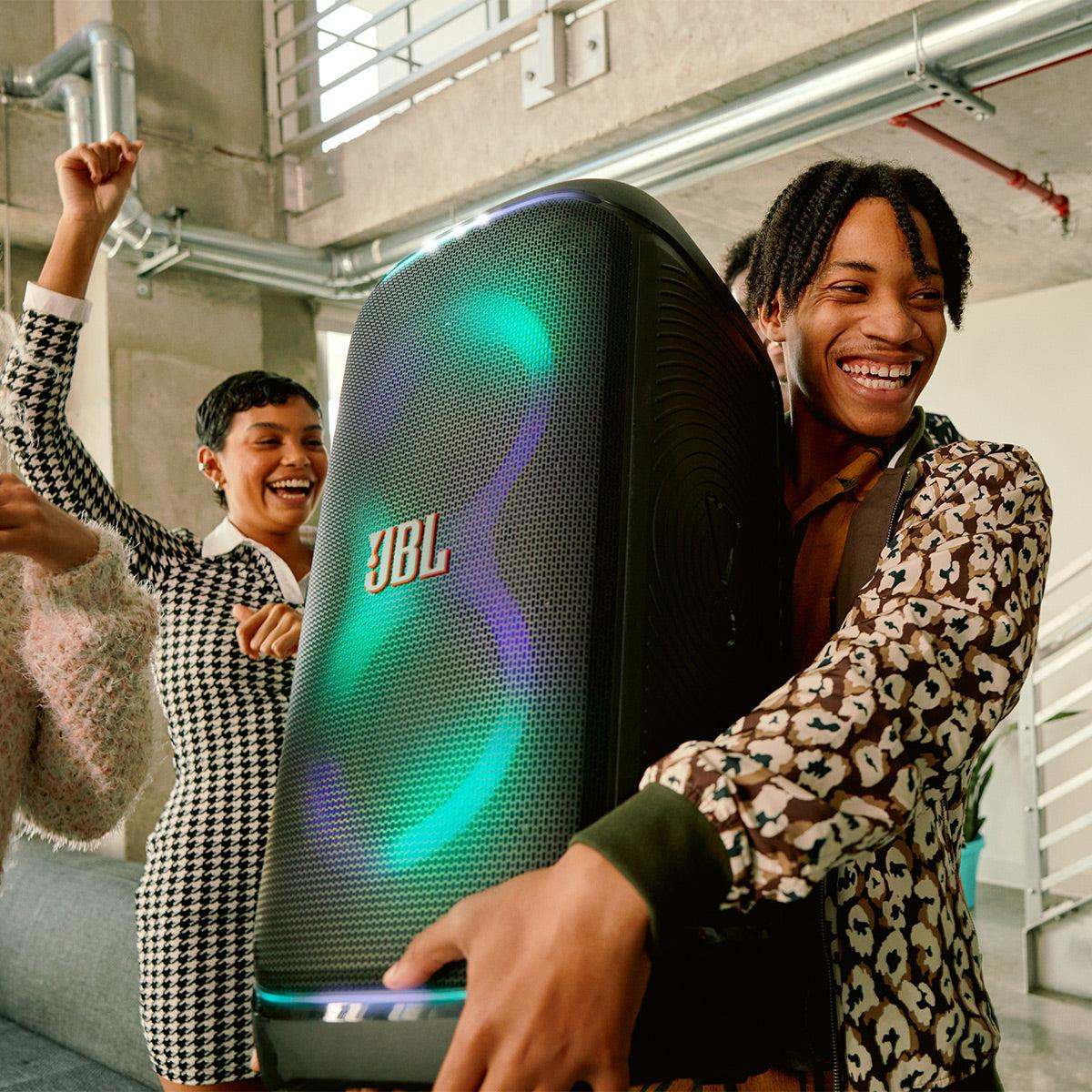
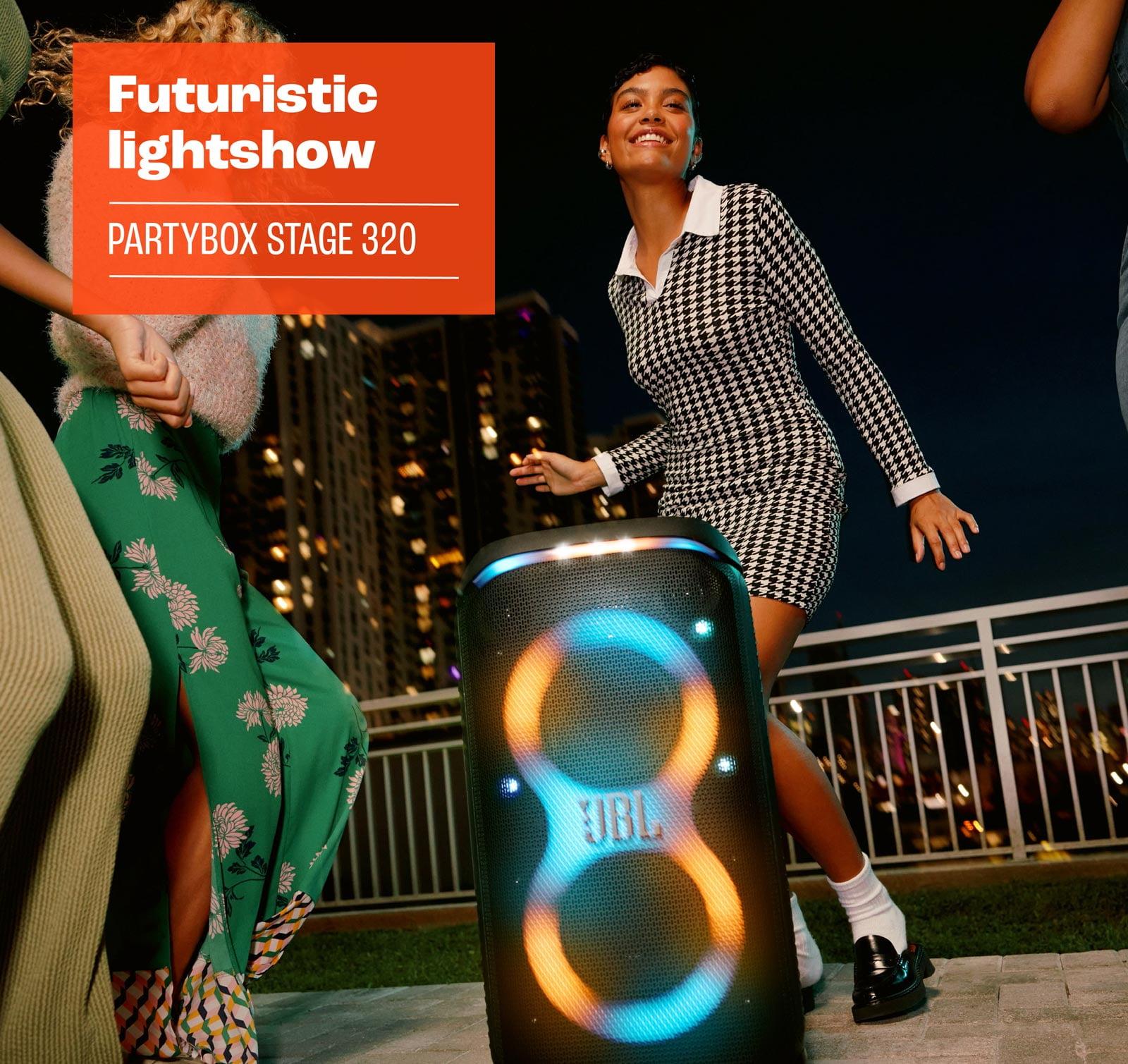
Both speakers feature customizable RGB light systems synchronized to music, but they take different approaches. The 710 offers more lighting zones with its larger surface area, creating more dramatic visual impact. The Stage 320 focuses on efficiency, providing substantial visual excitement while preserving battery life.
The light synchronization uses built-in algorithms that analyze bass frequencies and trigger lighting effects accordingly. Strobe modes flash with percussive hits, while "starry night" modes create ambient lighting for slower songs. Through JBL's PartyBox app, you can customize colors, intensity, and patterns to match your event's mood.
While purists might dismiss these as gimmicks, the reality is that synchronized lighting significantly enhances the party atmosphere, particularly in dimmer environments. Many users report that guests interact more with the music when visual elements complement the audio experience.
At the time of writing, the Stage 320 costs significantly less than the 710 while offering more modern features and genuine portability. From a price-per-watt perspective, the 710 delivers more raw audio value, but that calculation ignores the Stage 320's convenience features and newer technology.
The long-term value equation favors the Stage 320 for most users. Its swappable battery design means the speaker remains useful even as battery technology improves, while the 710's AC-only design could become limiting as outdoor entertainment preferences evolve. The newer Bluetooth standards in the Stage 320 also provide better future-proofing against connectivity obsolescence.
However, for users who prioritize maximum audio impact and primarily use their speaker in powered environments, the 710's superior power output represents better long-term value. You're less likely to outgrow its capabilities or wish you had purchased something more powerful.
Neither speaker was designed specifically for home theater use, but both can serve in this capacity with important caveats. The 710's power and bass response work well for action movies and concerts, but its tuning emphasizes party music over dialogue clarity. The lack of sophisticated DSP (Digital Signal Processing) means you can't fine-tune the sound for different content types.
The Stage 320's AI Sound Boost actually helps with home theater applications by reducing distortion and maintaining clarity at various volume levels. However, both speakers lack the precise imaging and soundstage characteristics that dedicated home theater speakers provide.
For casual movie watching or music listening, either speaker delivers impressive performance. For critical home theater applications, purpose-built speakers remain the better choice, though these JBL models excel as supplements for outdoor movie nights or party entertainment.
The Stage 320 emerges as the clear winner for most users. Its combination of modern features, genuine portability, and competitive audio performance addresses the real-world needs of contemporary party hosting. The battery operation alone opens up use cases that the 710 simply can't address—beach parties, camping trips, or any event without convenient power access.
Choose the PartyBox 710 only if maximum audio impact trumps all other considerations. If you regularly host large outdoor gatherings, need bass that can compete with significant ambient noise, or prioritize raw power over convenience, the 710 justifies its bulk and power requirements. It's also the better choice if you primarily use your speaker in a fixed location with reliable power access.
The Stage 320 suits everyone else. Its balance of power, portability, and modern features creates a more versatile tool that adapts to various entertainment scenarios. The slightly reduced bass impact compared to the 710 is noticeable only in direct comparison—on its own, the Stage 320 provides more than enough punch for most parties and gatherings.
Both speakers represent excellent engineering within their respective design philosophies. Your choice should align with your specific use cases: raw power for maximum impact, or balanced capabilities for maximum flexibility. Either way, you're getting a speaker that can transform ordinary gatherings into memorable experiences.
| JBL PartyBox 710 | JBL PartyBox Stage 320 |
|---|---|
| Power Output - Determines maximum volume and bass impact for large gatherings | |
| 800W RMS (fills outdoor areas up to tennis court size) | 240W RMS (suitable for backyard parties up to 20 people) |
| Battery Life - Critical for portability and outdoor events | |
| No battery (requires AC power outlet) | 18 hours advertised / 7 hours real-world with lights on |
| Weight & Portability - Affects how easily you can transport to different locations | |
| 61.3 lbs (two-person transport recommended) | 36.4 lbs (single-person portable with telescopic handle) |
| Bass Response - Lower frequencies create more physical impact you can feel | |
| 35Hz-20kHz (deeper bass with dual 8" woofers) | 40Hz-20kHz (punchy bass with dual 6.5" woofers) |
| Bluetooth Technology - Newer versions provide better connection and audio quality | |
| Bluetooth 5.1 with SBC codec only | Bluetooth 5.4 with SBC and AAC codecs |
| Smart Features - Modern conveniences and sound optimization | |
| Basic app control and EQ | AI Sound Boost, Auracast pairing, advanced app integration |
| Weather Resistance - Important for pool parties and outdoor use | |
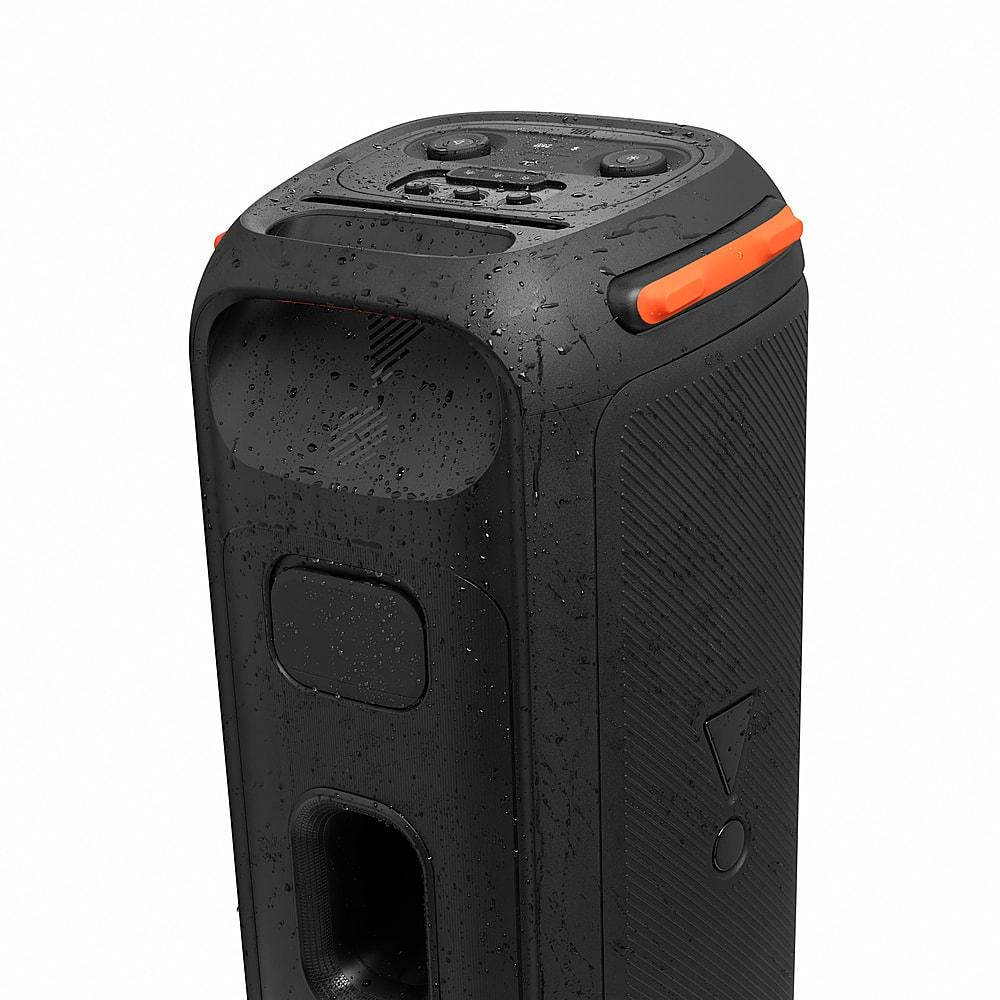
| IPX4 splashproof (light rain and splashes) | IPX4 splashproof (light rain and splashes) |
| Multi-Speaker Connectivity - For expanding sound coverage at larger events | |
| TWS pairing + 3.5mm AUX out for daisy-chaining | TWS pairing + Auracast wireless multi-speaker connection |
| Release Year - Indicates technology generation and feature availability | |
| 2021 (proven reliability, older tech) | 2024 (latest features and connectivity standards) |
| Best Use Case - Where each speaker excels based on design priorities | |
| Large fixed-location events with maximum bass needs | Portable parties requiring modern features and true mobility |
The JBL PartyBox 710 is significantly better for large outdoor gatherings due to its 800W RMS power output versus the Stage 320's 240W. The PartyBox 710 can effectively cover areas the size of a tennis court and handle crowds of 35+ people, while the Stage 320 is better suited for smaller backyard parties with up to 20 people.
The JBL PartyBox Stage 320 has an 18-hour battery (7 hours real-world with lights on), while the JBL PartyBox 710 has no battery at all and requires constant AC power. This makes the Stage 320 far more portable and suitable for events without power access, such as beach parties or camping trips.
The JBL PartyBox 710 produces deeper, more physical bass with its dual 8-inch woofers and 35Hz frequency response. The PartyBox Stage 320 uses smaller 6.5-inch woofers with a 40Hz response, resulting in punchy but less earth-shaking bass. For bass-heavy music like hip-hop and EDM, the PartyBox 710 delivers superior impact.
Yes, both the JBL PartyBox 710 and PartyBox Stage 320 feature dual microphone inputs with independent gain controls, echo effects, and karaoke EQ tuning. Both also include guitar inputs for live performances. The main difference is that the PartyBox 710 provides more powerful amplification for larger venues.
The JBL PartyBox Stage 320 is significantly more portable at 36 pounds with a telescopic handle and 18-hour battery. The PartyBox 710 weighs 61 pounds, requires two people for comfortable transport, and needs constant AC power. For events requiring frequent speaker movement, the Stage 320 is the clear choice.
No, the JBL PartyBox Stage 320 has newer Bluetooth 5.4 with AAC codec support and Auracast multi-speaker pairing technology. The PartyBox 710 uses older Bluetooth 5.1 with only SBC codec support. The Stage 320 provides better audio quality when streaming from smartphones and easier multi-speaker setup.
The JBL PartyBox Stage 320 typically offers better value for most users due to its lower price point, modern features like AI Sound Boost, battery operation, and genuine portability. The PartyBox 710 provides better price-per-watt for raw power but lacks the convenience features that most people actually need.
Both speakers can serve as home theater audio, but neither is specifically designed for this purpose. The PartyBox 710 provides more powerful bass for action movies, while the Stage 320's AI Sound Boost helps maintain clarity at various volumes. However, both are tuned for party music rather than dialogue clarity, making dedicated home theater speakers a better choice for serious movie watching.
Both the JBL PartyBox 710 and PartyBox Stage 320 feature customizable RGB light shows with strobes, starry night effects, and music synchronization. The PartyBox 710 has more lighting zones due to its larger size, creating more dramatic visual impact. However, both provide substantial party atmosphere enhancement through their synchronized lighting systems.
Both the JBL PartyBox 710 and PartyBox Stage 320 feature IPX4 splashproof ratings, protecting against light rain and pool splashes. Neither is fully waterproof or dustproof, so they should be kept away from heavy rain or sandy environments. The Stage 320's portability makes it easier to quickly move to shelter when weather changes.
Yes, both speakers support multi-speaker connections but use different technologies. The JBL PartyBox 710 offers TWS pairing with matching units and includes a 3.5mm output for daisy-chaining additional speakers. The PartyBox Stage 320 features modern Auracast technology for easier wireless multi-speaker setup and TWS pairing with other Stage 320 units.
The JBL PartyBox Stage 320 is better for most beginners due to its true portability, modern features, and lower price point. It's powerful enough for typical house parties while remaining manageable to transport and set up. The PartyBox 710 is better reserved for users who specifically need maximum bass impact and primarily host large, stationary events with power access.
We've done our best to create useful and informative comparisons to help you decide what product to buy. Our research uses advanced automated methods to create this comparison and perfection is not possible - please contact us for corrections or questions. These are the sites we've researched in the creation of this article: rtings.com - audioadvice.com - crutchfield.com - youtube.com - bestbuy.com - rtings.com - youtube.com - youtube.com - youtube.com - versus.com - worldwidestereo.com - rtings.com - jbl.com - youtube.com - expertvoice.com - jbl.com - jbl.com.tw - robot-advance.com - youtube.com - hu.harmanaudio.com - onward.ph - harmanaudio.in - youtube.com - youtube.com - manuals.plus - global.jbl.com - de.jbl.com - ro.harmanaudio.com - stereoguide.com - soundguys.com - rtings.com - soundguys.com - soundguys.com - rtings.com - jbl.com - youtube.com - youtube.com - youtube.com - youtube.com - rtings.com - 9to5toys.com - versus.com - cdw.com - jbl.com - projectorscreenstore.com - projectorscreen.com - ro.harmanaudio.com - jbl.co.nz - bestbuy.com - youtube.com

Privacy Policy
Terms and Conditions - Affiliate Policy
Home Security
© Copyright 2008-2026.
11816 Inwood Rd #1211, Dallas, TX 75244