

When you're shopping for a portable party speaker, you're not just buying audio equipment—you're investing in the soundtrack for your best memories. Whether it's poolside BBQs, beach trips, or backyard celebrations, these speakers need to pump out serious sound while staying portable enough to tag along wherever the party goes.
The portable party speaker market has exploded over the past few years, with manufacturers racing to pack more power, better battery life, and flashier features into increasingly portable packages. Two standout options that consistently appear on shopping lists are the Sony SRS-XP700 and the JBL PartyBox Stage 320. Both launched in recent years—Sony's offering hit the market in 2021, while JBL's Stage 320 arrived more recently as an updated version of their popular PartyBox series.
Before diving into specifics, it's worth understanding what sets party speakers apart from your typical Bluetooth speaker or home audio setup. These aren't designed for critical listening in your living room—they're engineered to get loud, stay loud, and keep the energy high even in challenging outdoor environments where sound dissipates quickly.
The key considerations revolve around a few critical areas: maximum volume without distortion, bass response that you can actually feel, battery life that lasts through extended events, and portability features that make transportation realistic. Unlike bookshelf speakers that prioritize accuracy, party speakers intentionally emphasize certain frequencies to create excitement and energy.
The most striking difference between the Sony SRS-XP700 and JBL PartyBox Stage 320 lies in their power specifications. The JBL delivers 240 watts RMS (Root Mean Square, which represents continuous power output), while the Sony puts out 60 watts RMS. This isn't just a numbers game—this 4:1 power difference translates to significantly different real-world performance.
RMS wattage matters because it tells you how much sustained power the speaker can deliver without distorting or damaging its drivers. Peak wattage numbers, which manufacturers sometimes emphasize, represent short bursts of power that don't reflect everyday listening capability.
The JBL Stage 320's higher output means it can genuinely fill tennis court-sized outdoor spaces with clear, undistorted sound. Based on our research of user experiences and professional testing, the JBL maintains its composure at party volumes where many speakers start to strain. The Sony XP700, while less powerful on paper, uses its 60 watts more efficiently through clever driver design and digital signal processing.
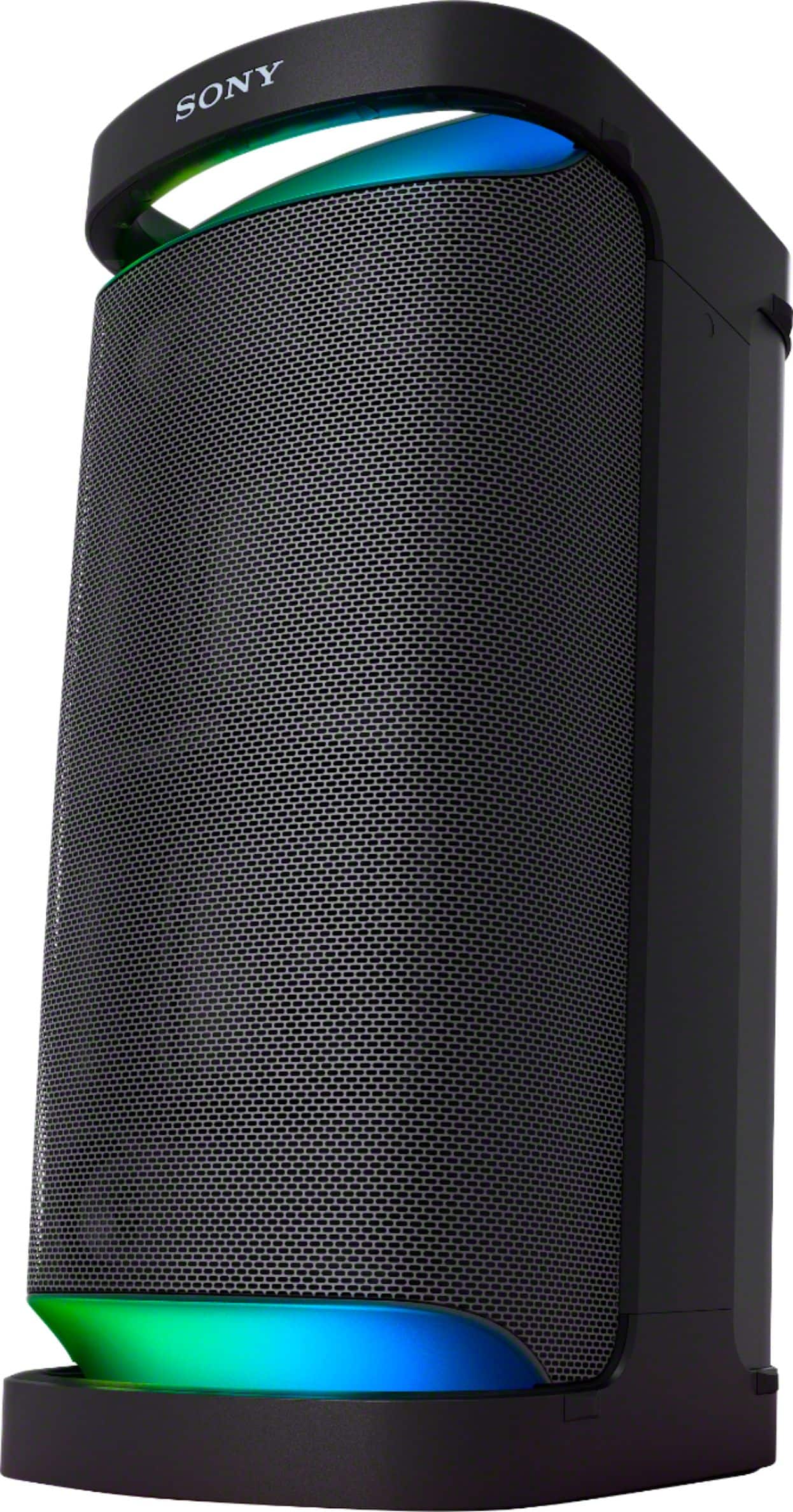
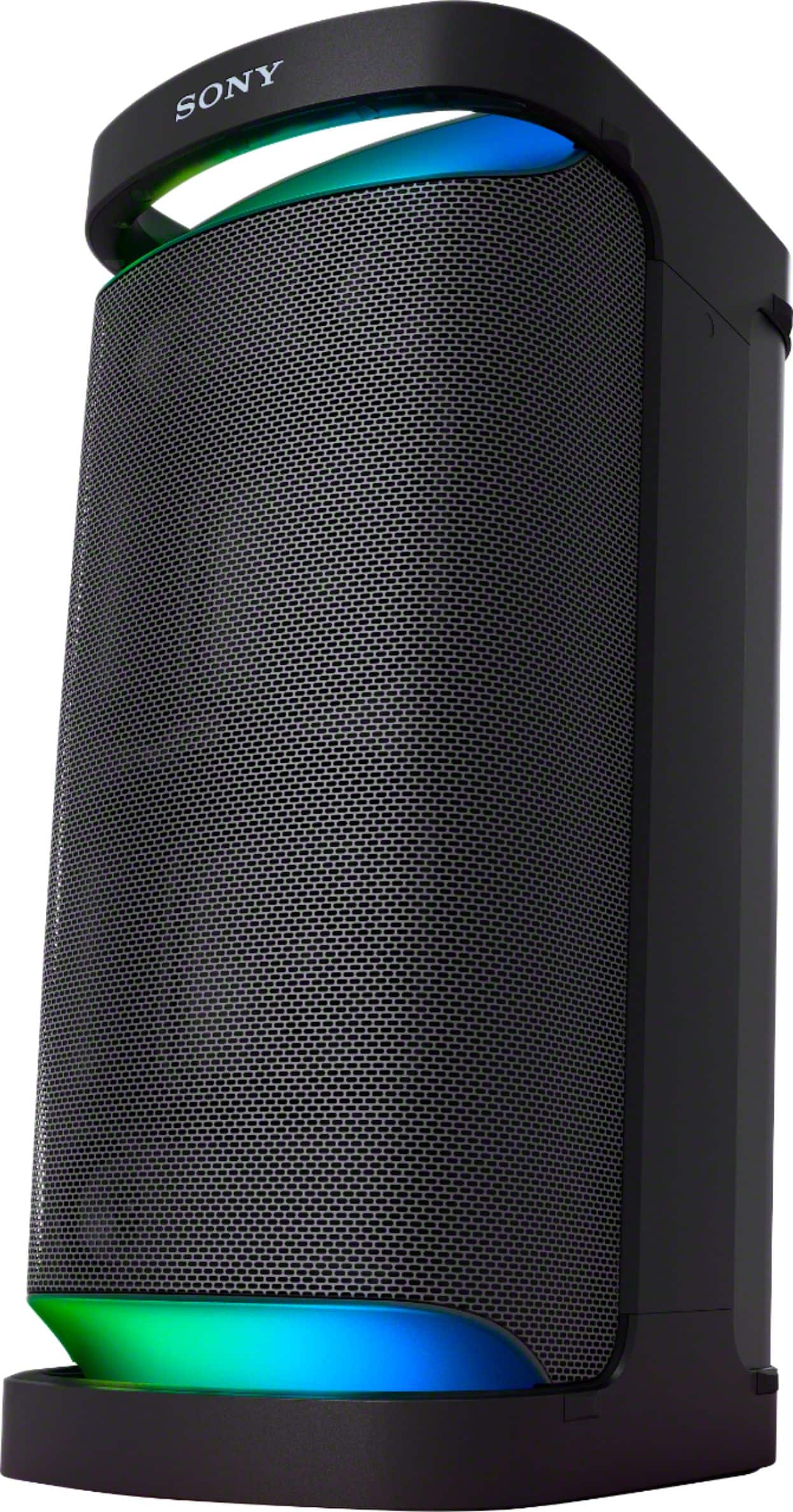
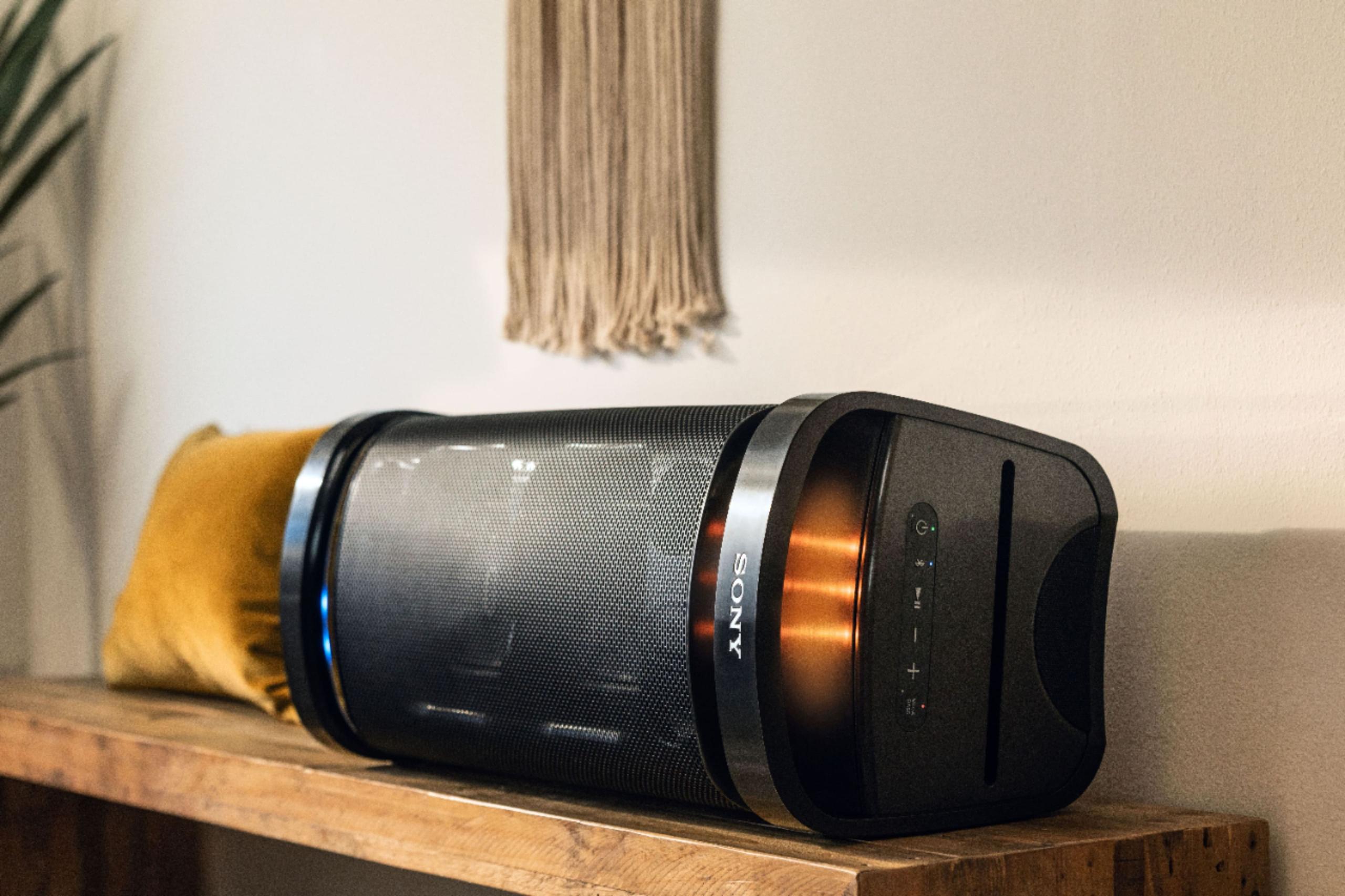
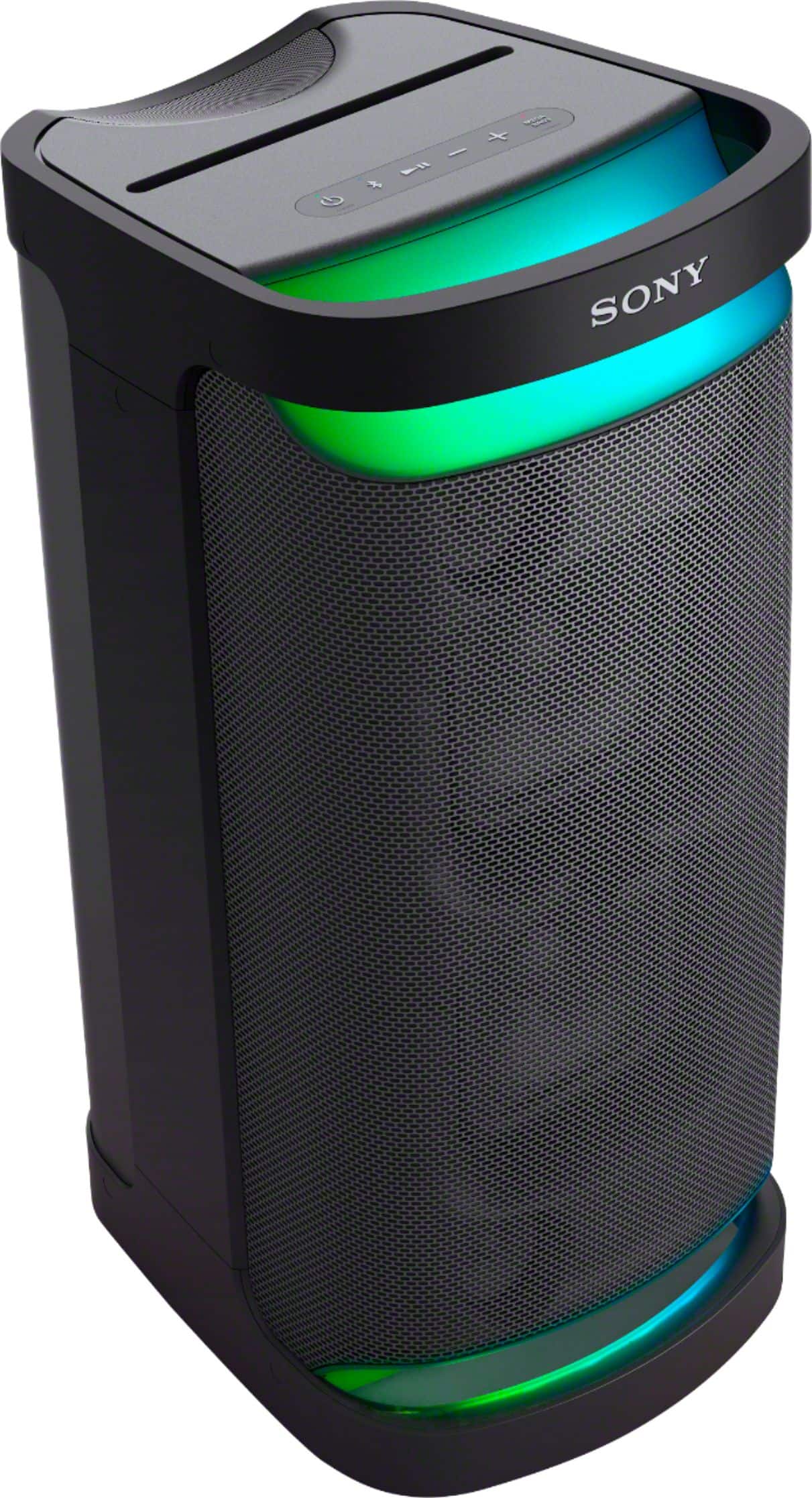
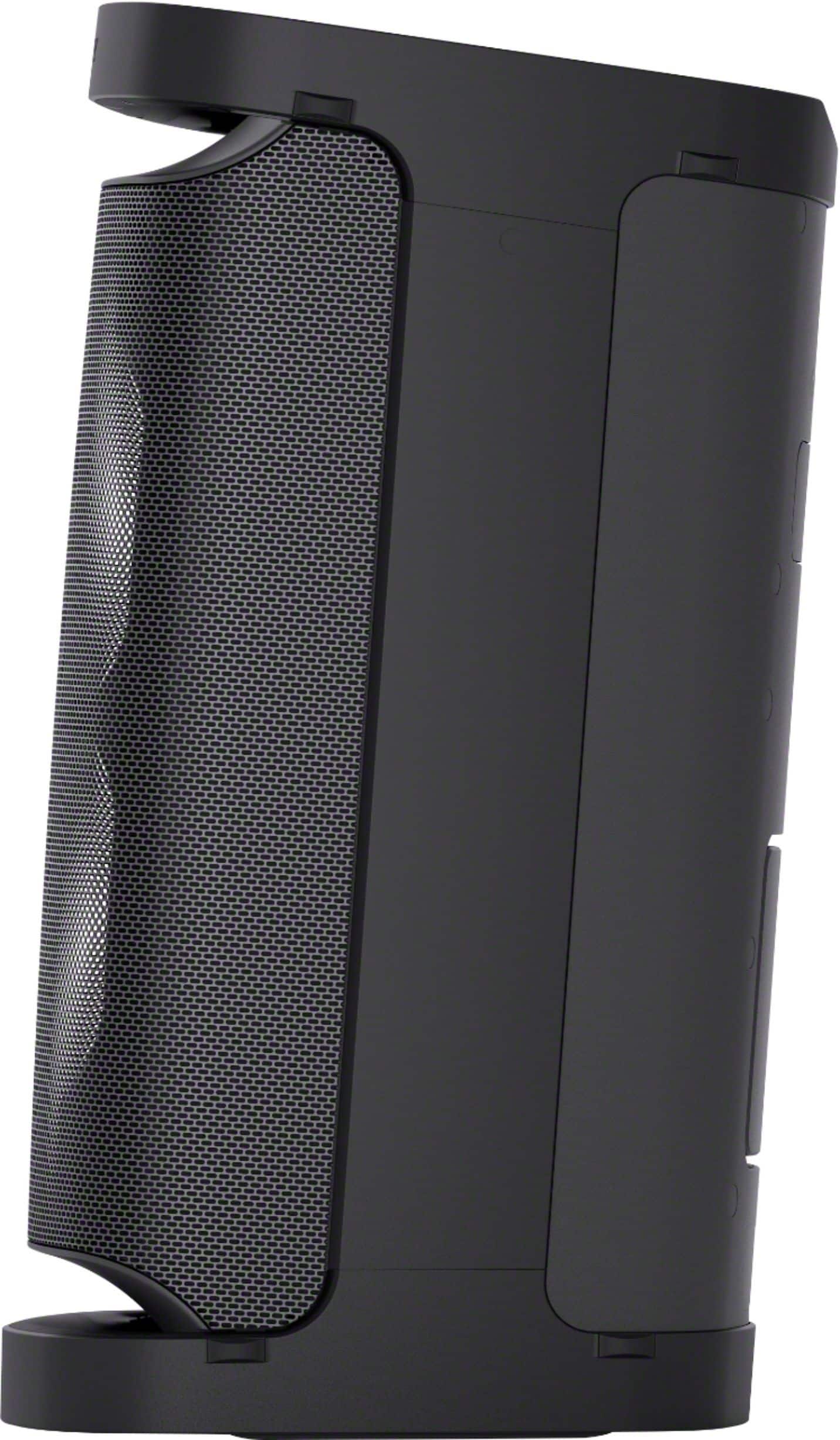
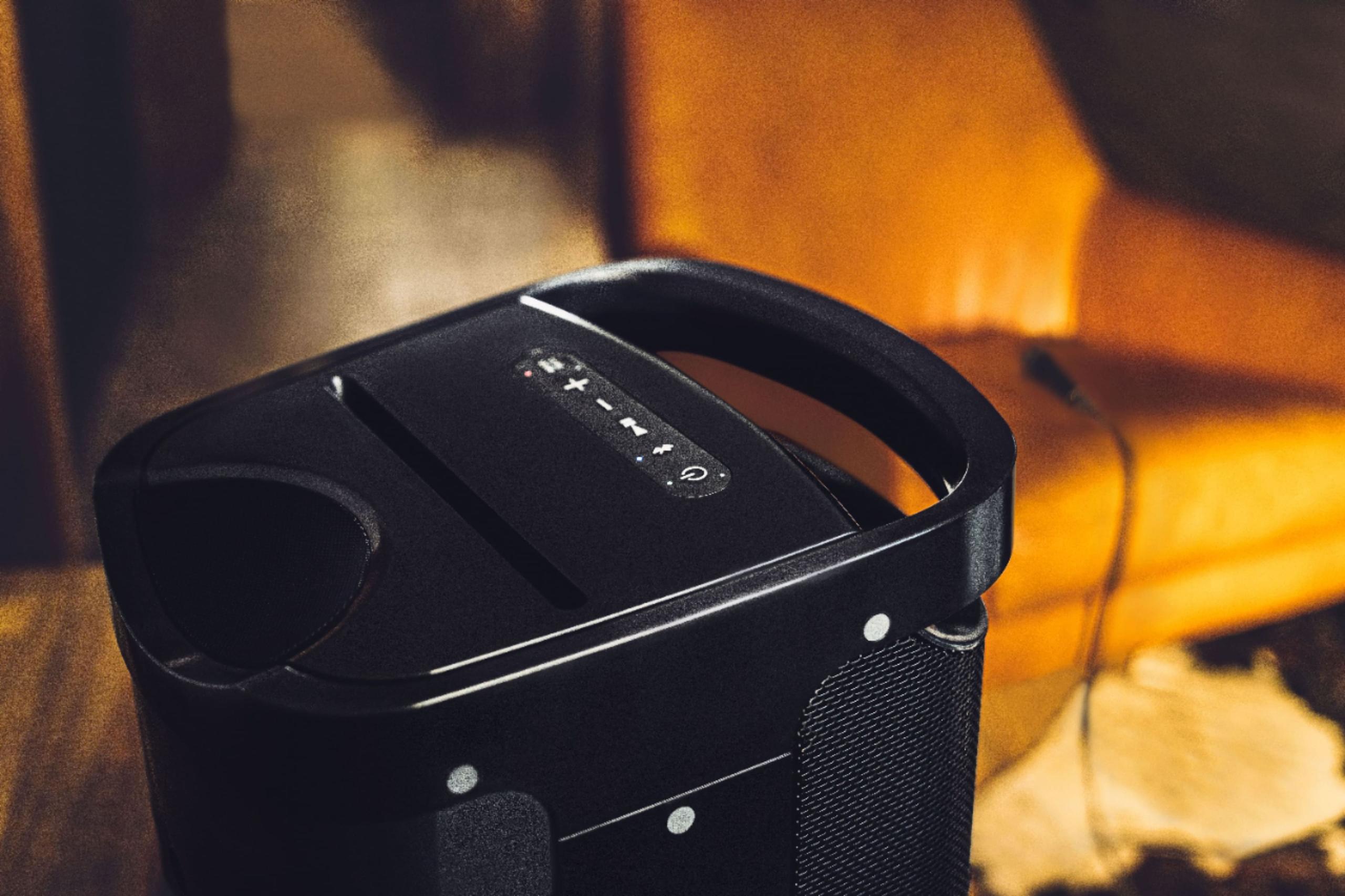
The technical approach each speaker takes reveals a lot about their intended use. The Sony SRS-XP700 uses what Sony calls an "omnidirectional" design with three front-facing tweeters (small drivers that handle high frequencies), one rear-facing tweeter, two X-Balanced woofers (large drivers for bass), and a passive radiator (a driver without a magnet that moves in response to air pressure from active drivers).
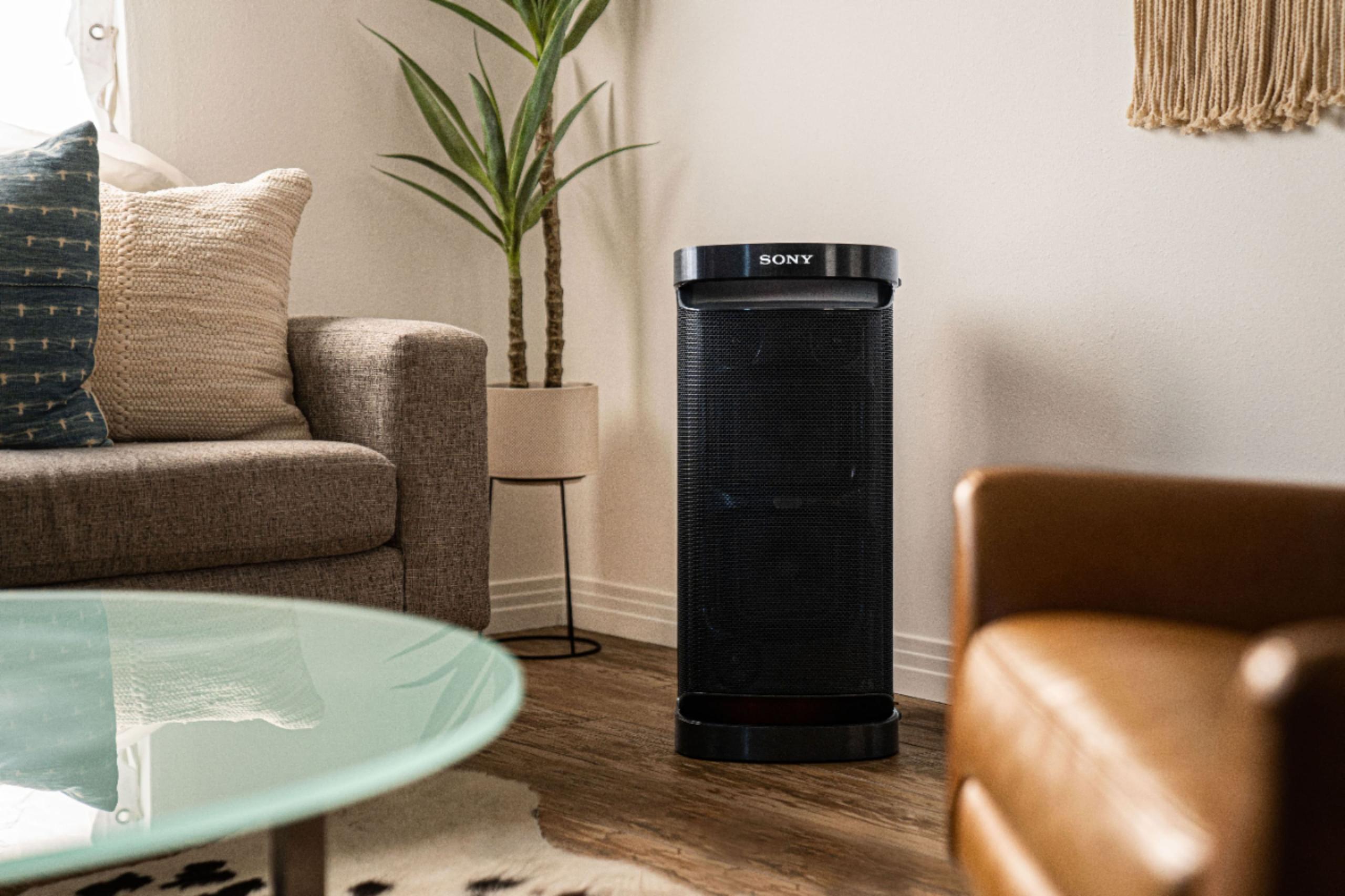
This omnidirectional setup means the Sony spreads sound in multiple directions, creating more consistent audio quality whether you're standing in front of, behind, or beside the speaker. It's particularly useful when people are scattered around a pool or patio area.
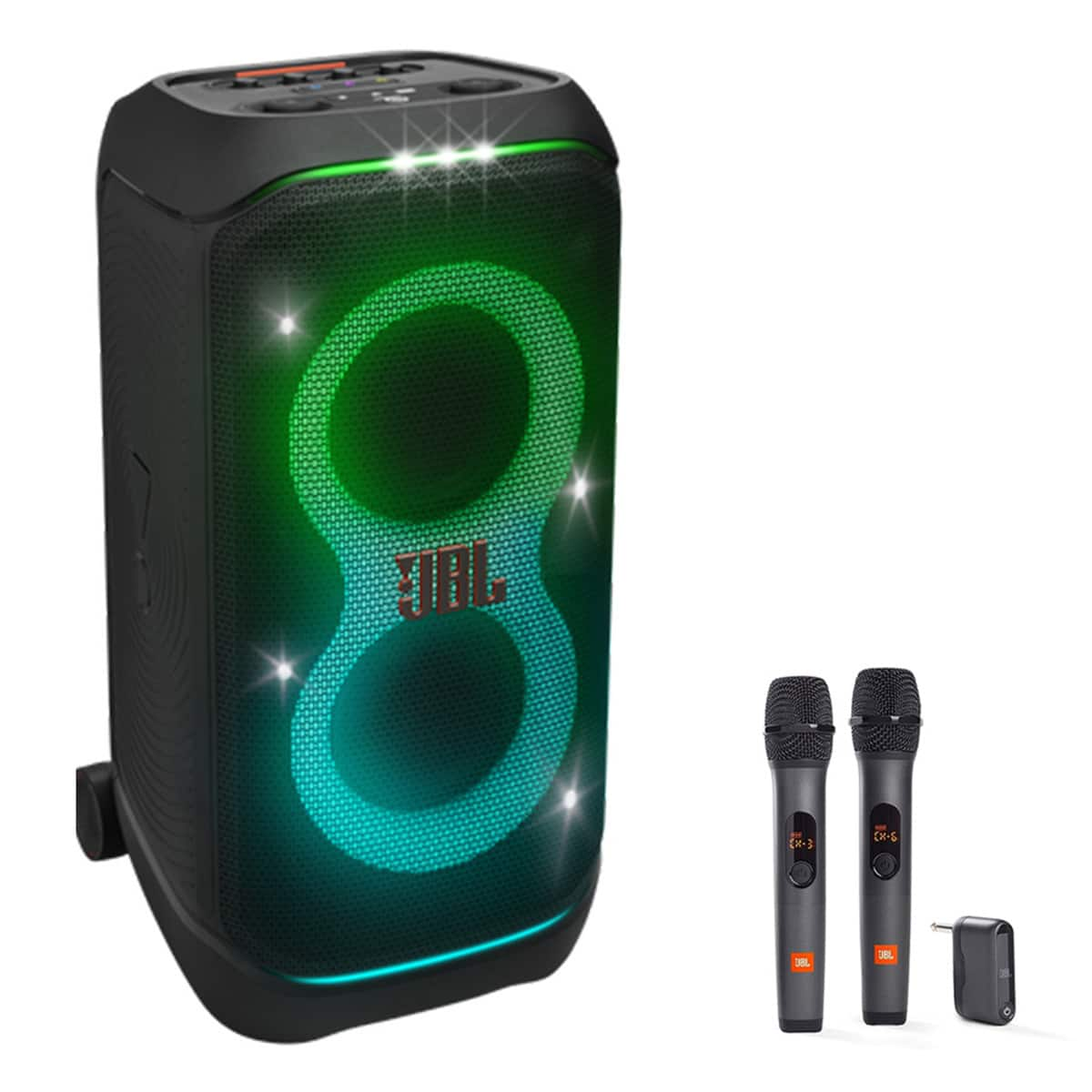
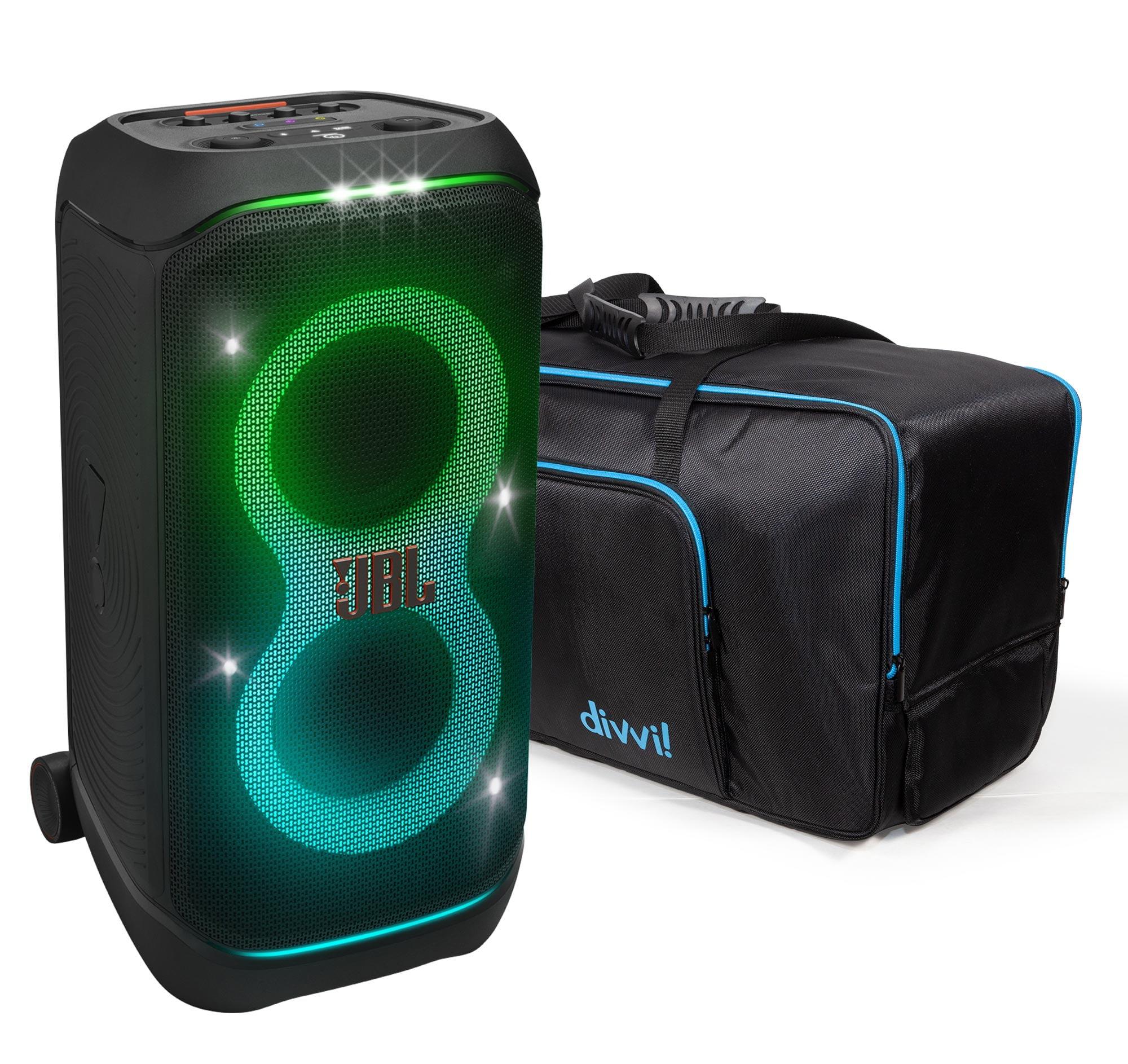
The JBL PartyBox Stage 320 takes a more traditional forward-firing approach with dual 6.5-inch woofers and dual 1-inch dome tweeters all pointing in the same direction. This creates a more focused sound beam that projects farther but with less consistency when you move to the sides or behind the unit.
Bass response separates good party speakers from great ones, and this is where the two speakers diverge significantly. The JBL Stage 320's larger 6.5-inch woofers move more air than the Sony's drivers, creating the kind of physical bass impact that you feel in your chest. User reports consistently highlight the JBL's ability to deliver what many describe as "wall-shaking" bass that maintains its impact even outdoors where bass typically dissipates quickly.
The Sony XP700 takes a more refined approach with its X-Balanced driver technology. These drivers use a non-circular shape that Sony claims provides 30% more surface area than conventional round drivers of the same size. The result is cleaner, more controlled bass that doesn't overwhelm the midrange frequencies where vocals live.
The difference becomes apparent with different music genres. Electronic dance music, hip-hop, and modern pop—genres that rely heavily on sub-bass frequencies—sound more impactful on the JBL Stage 320. The physical sensation of deep bass hits creates the energy that gets people moving. Meanwhile, rock, acoustic, jazz, and vocal-heavy music often sound more balanced and natural on the Sony XP700.
Nothing kills a party faster than a dead speaker, making battery performance crucial. Here's where the Sony SRS-XP700 shows its engineering priorities. Sony rates it for up to 25 hours of playback, and based on user reports, it delivers approximately 10-12 hours of real-world use at party volumes with lighting effects enabled.
The JBL PartyBox Stage 320 claims 18 hours but typically delivers 7-8 hours under similar conditions. That's not necessarily a deal-breaker, but it's a significant difference for all-day events or camping trips where charging opportunities are limited.
However, JBL includes a game-changing feature: a removable battery pack. When the battery eventually degrades after years of use, you can replace just the battery rather than the entire speaker. More immediately useful, you can purchase a second battery and swap them during extended events, effectively eliminating battery life concerns entirely.
Both speakers support quick charging, providing 2-3 hours of playback from a 10-minute charge. They also include USB ports for charging phones and tablets, though using these features will reduce overall battery life.
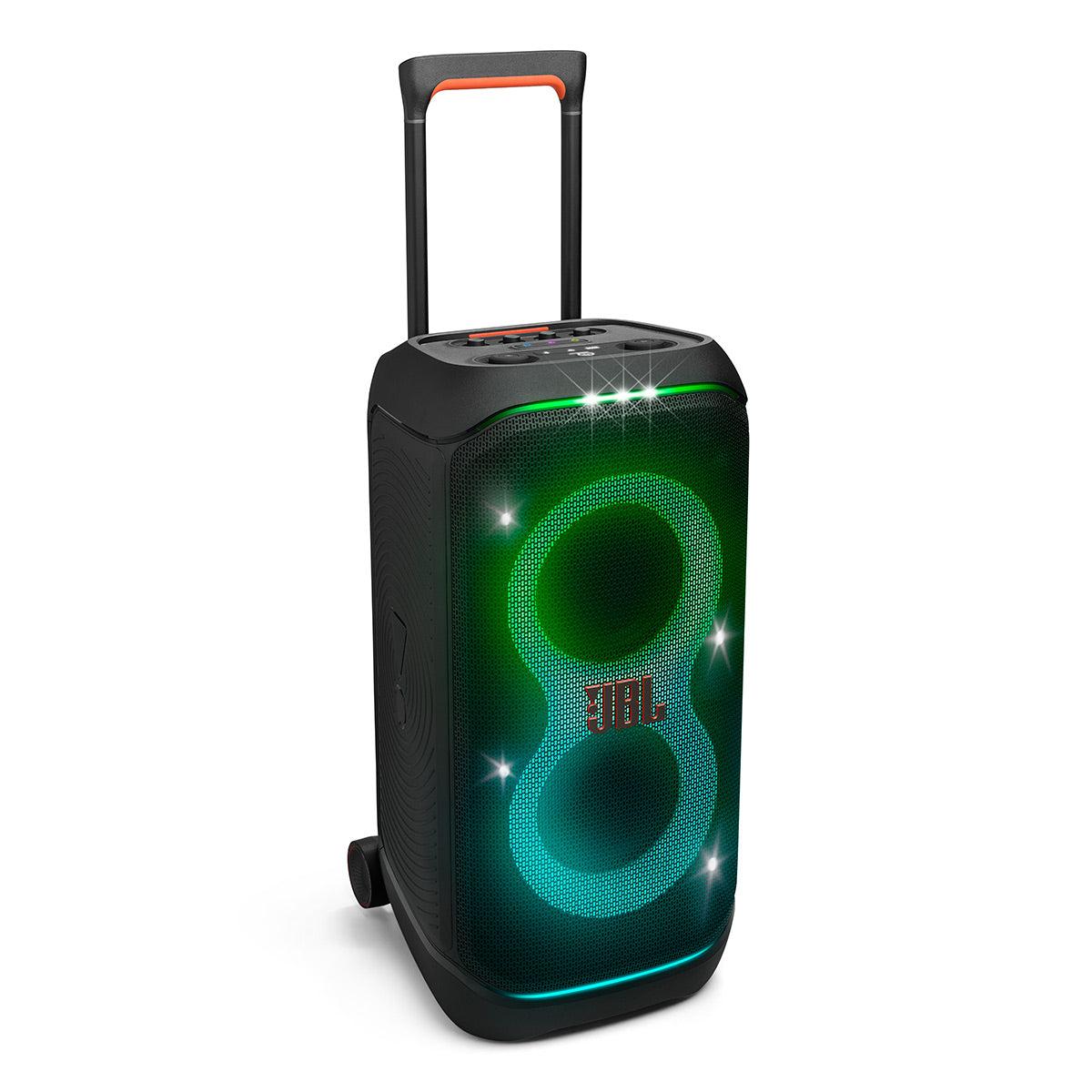
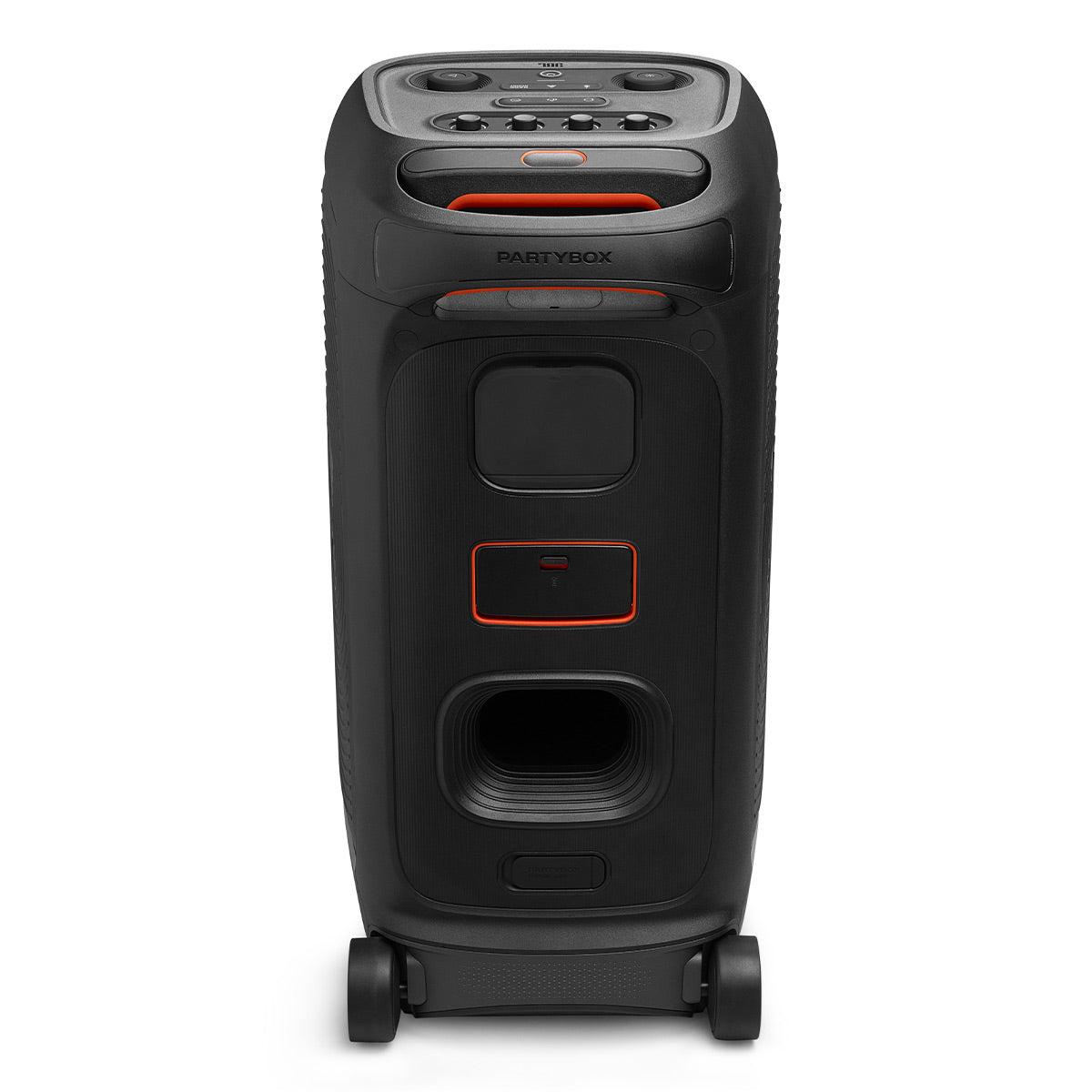
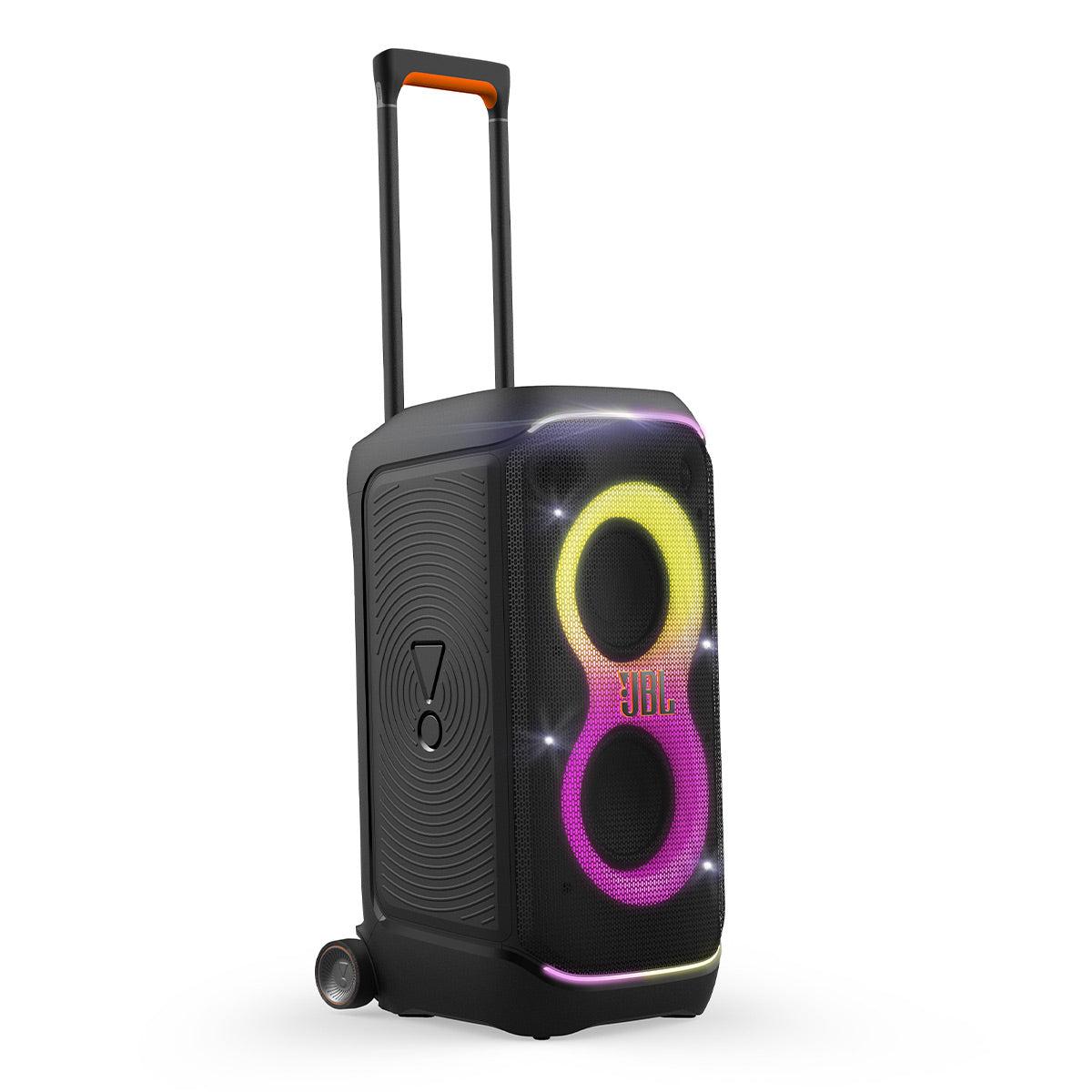
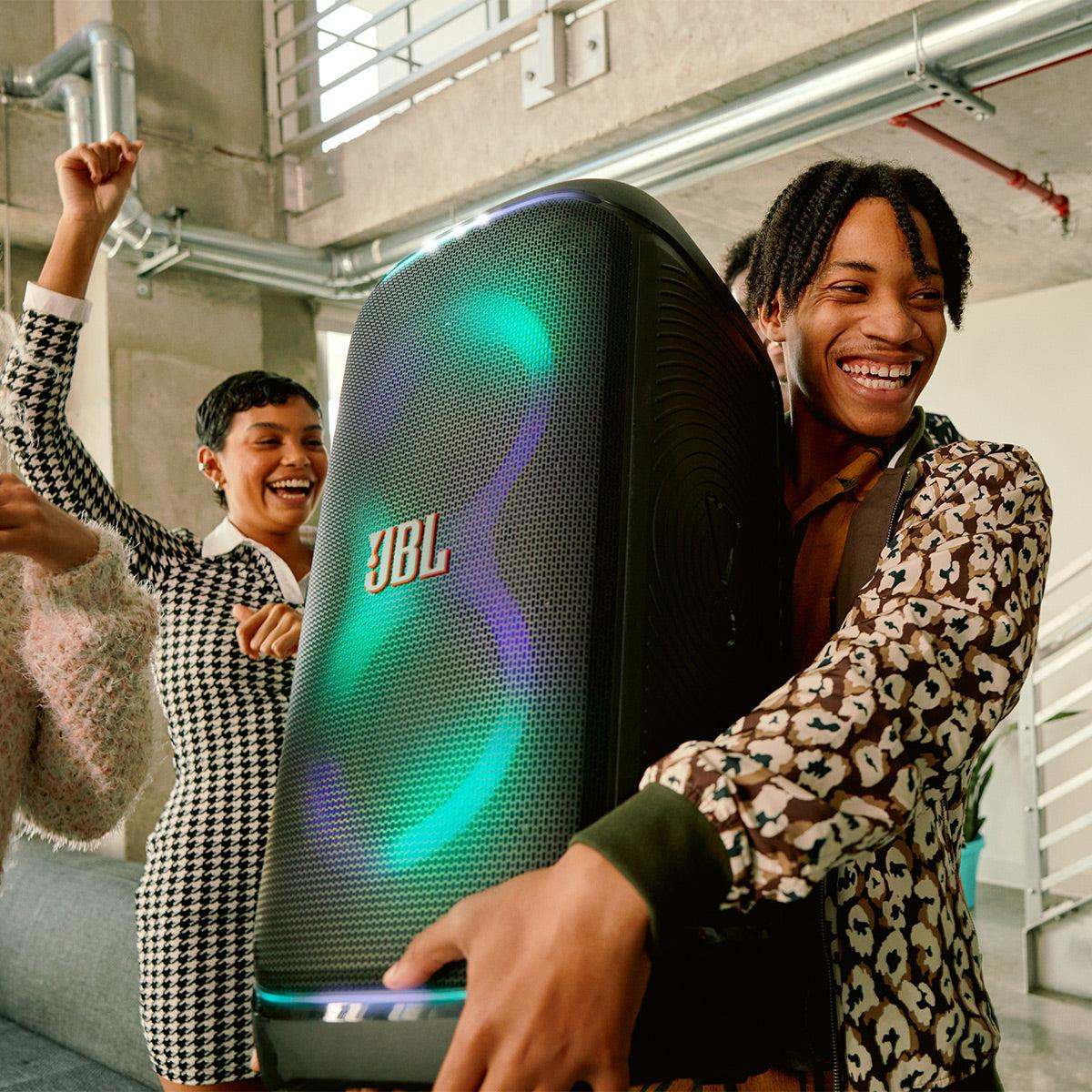
On paper, these speakers seem similarly portable—the Sony XP700 weighs 37 pounds while the JBL Stage 320 comes in at 36 pounds. In practice, the JBL is significantly more manageable thanks to its telescopic handle and sturdy wheels. Moving a 36-pound speaker across grass, gravel, or pavement becomes realistic when you can roll it rather than carry it.
The Sony XP700 provides dual carrying handles and can operate in both vertical and horizontal orientations with automatic sound optimization. However, carrying 37 pounds for any distance quickly becomes impractical, especially for stairs or uneven surfaces.
This difference matters more than you might expect. Party speakers spend a lot of time being moved—from car to beach, garage to backyard, basement to deck. The JBL's mobility advantage often determines whether the speaker gets used or stays home.
Both speakers embrace modern connectivity expectations with Bluetooth 5.0+ support, but they take different approaches to ecosystem integration. The Sony SRS-XP700 supports LDAC, a high-quality audio codec that can transmit more audio data than standard Bluetooth. This translates to better sound quality when streaming from compatible Android devices or music services, though iPhone users won't benefit from this feature.
Sony's Party Connect technology allows linking up to 100 compatible speakers for massive sound systems, and uniquely, the Sony can pair with non-Sony Bluetooth speakers for basic stereo functionality. The JBL PartyBox Stage 320 uses Auracast for wireless speaker chaining but limits pairing to other compatible JBL models.
Both speakers include companion apps that control EQ settings, lighting effects, and special features. Sony's Music Center app provides more granular audio control, while JBL's PartyBox app focuses on ease of use with quick access to party-oriented features like sound effects and karaoke modes.
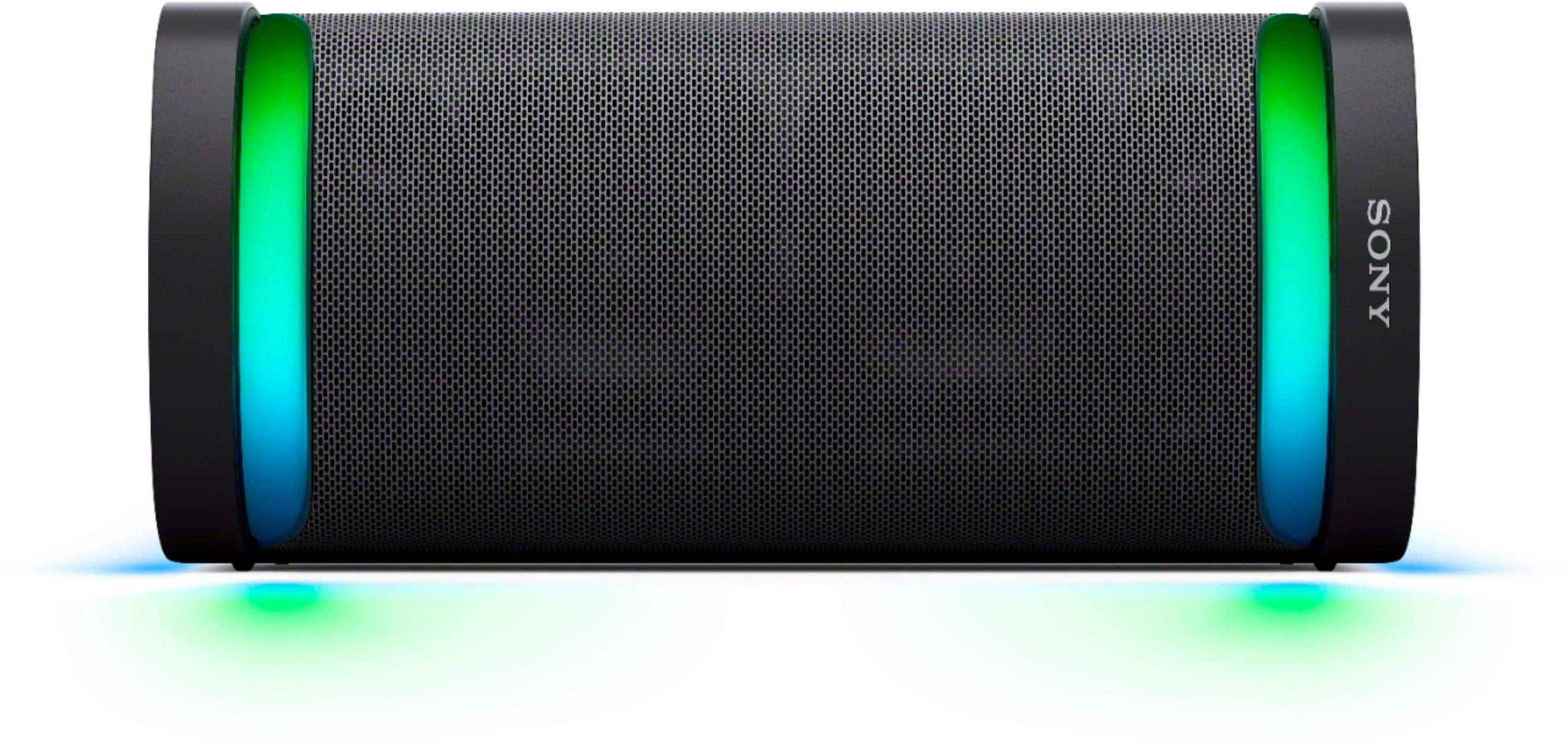
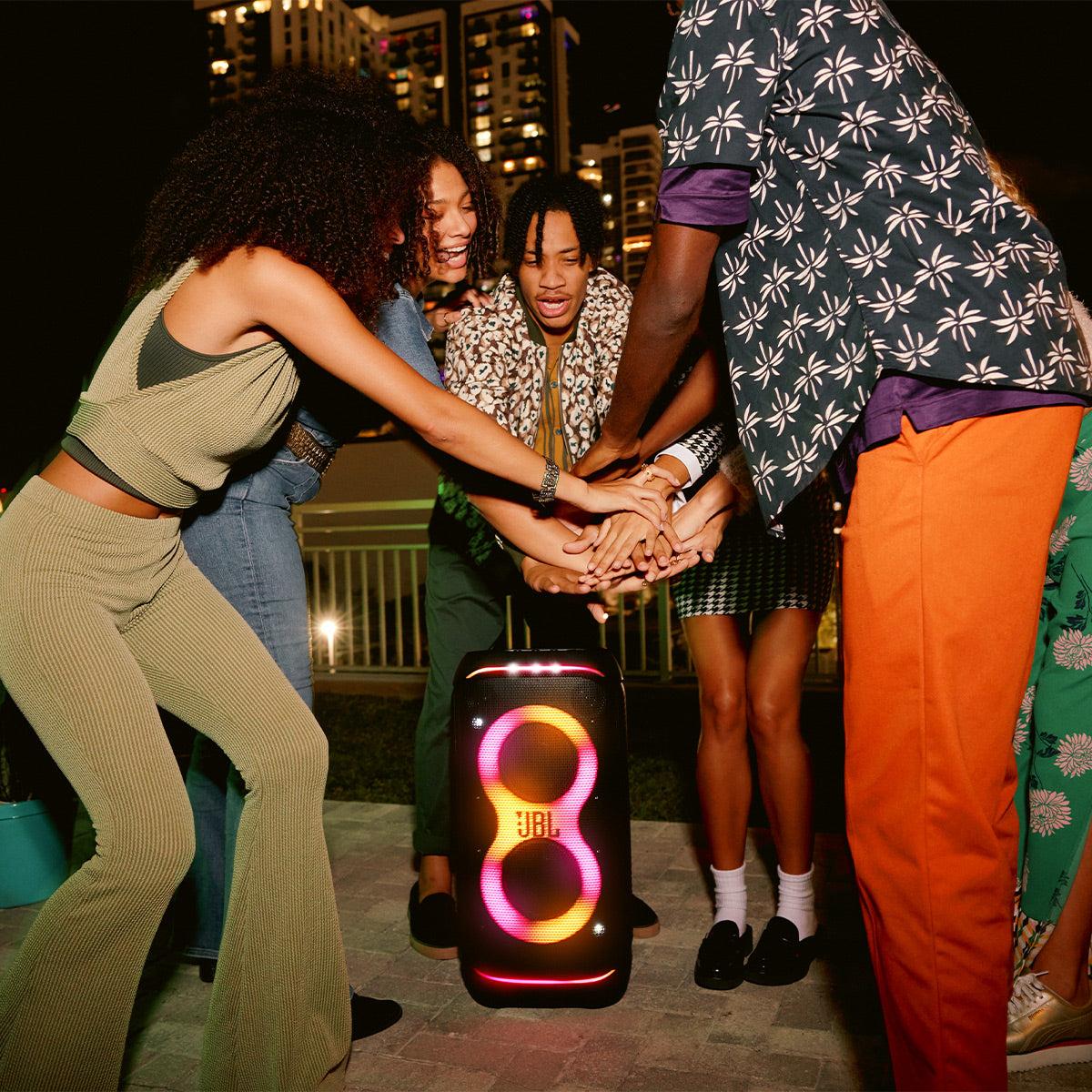
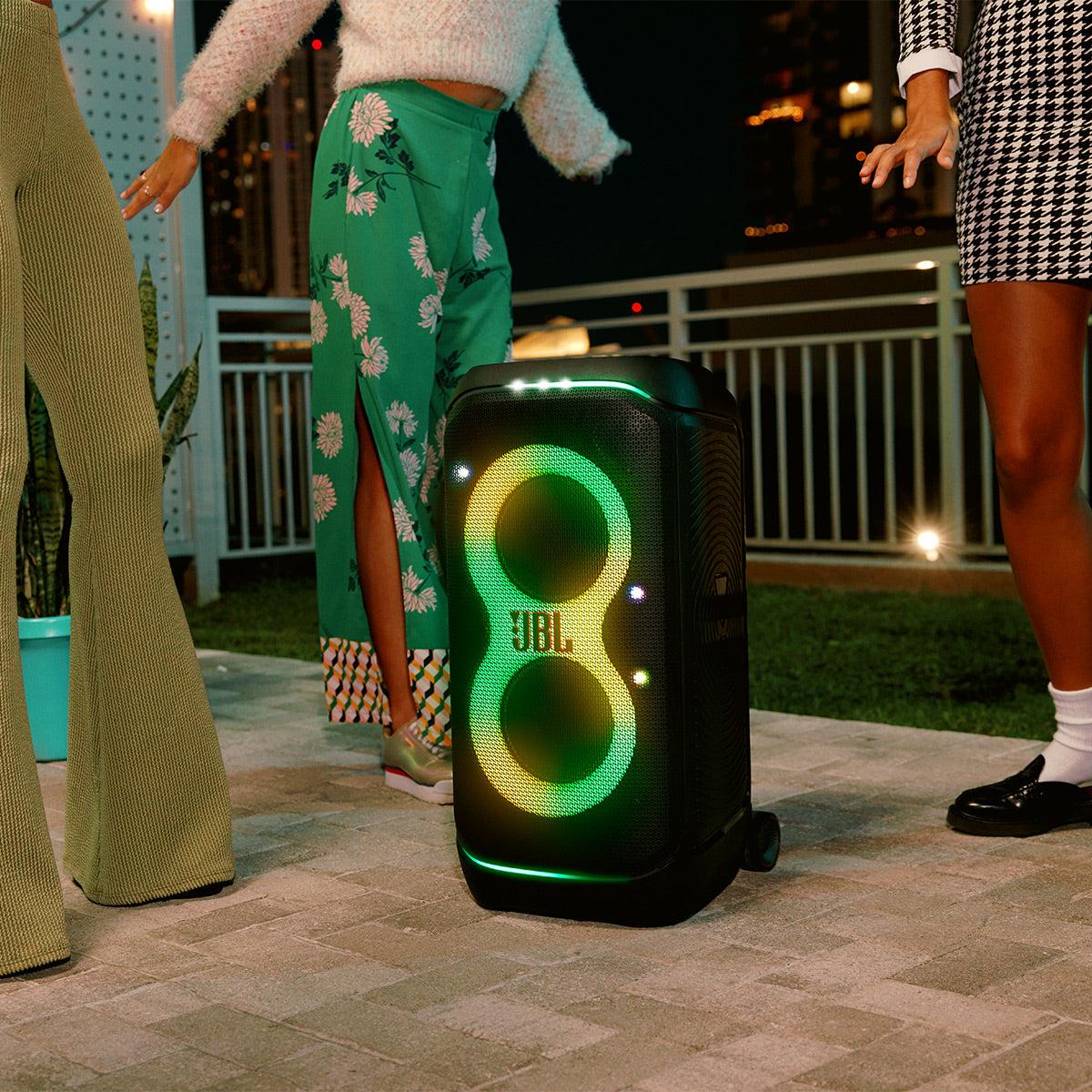
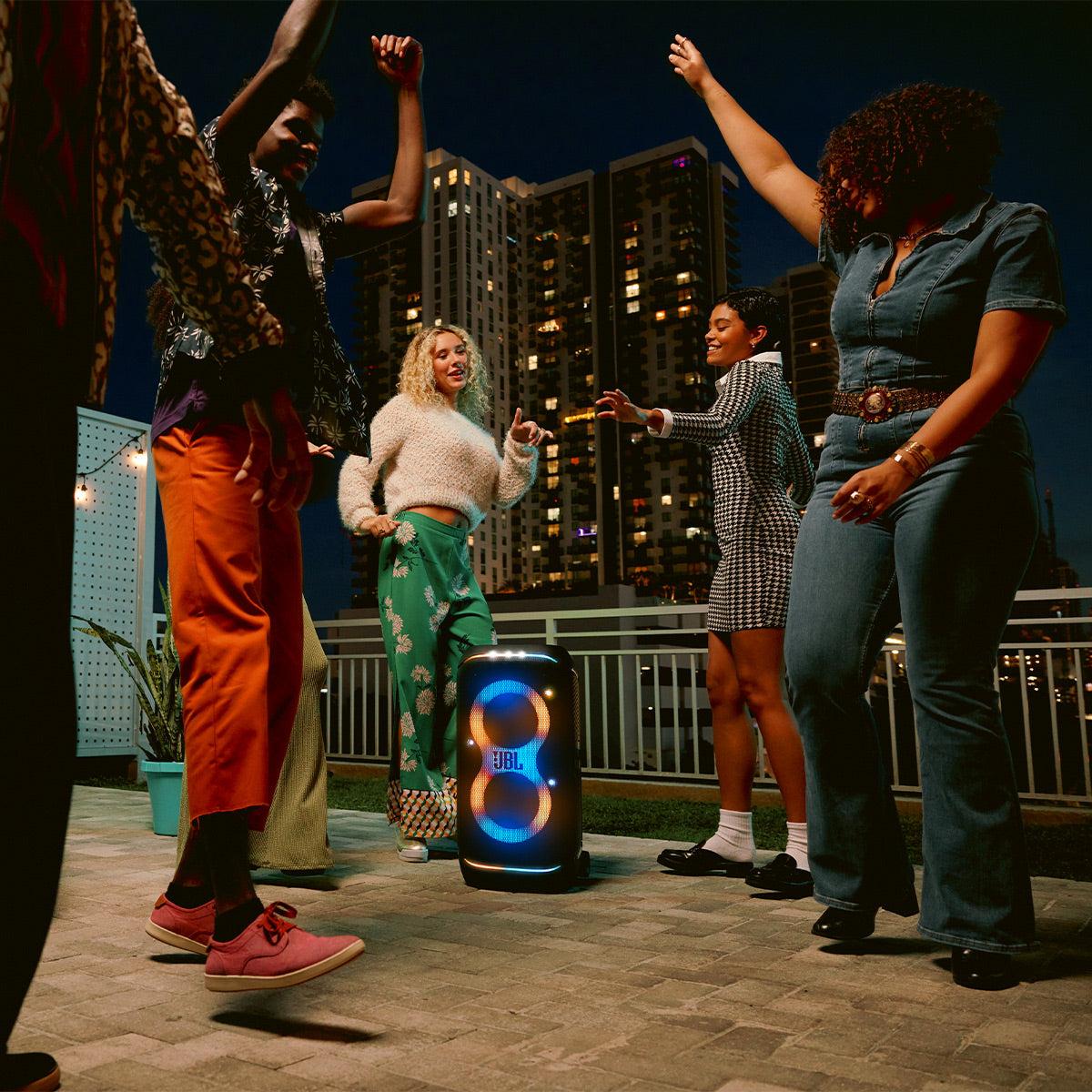
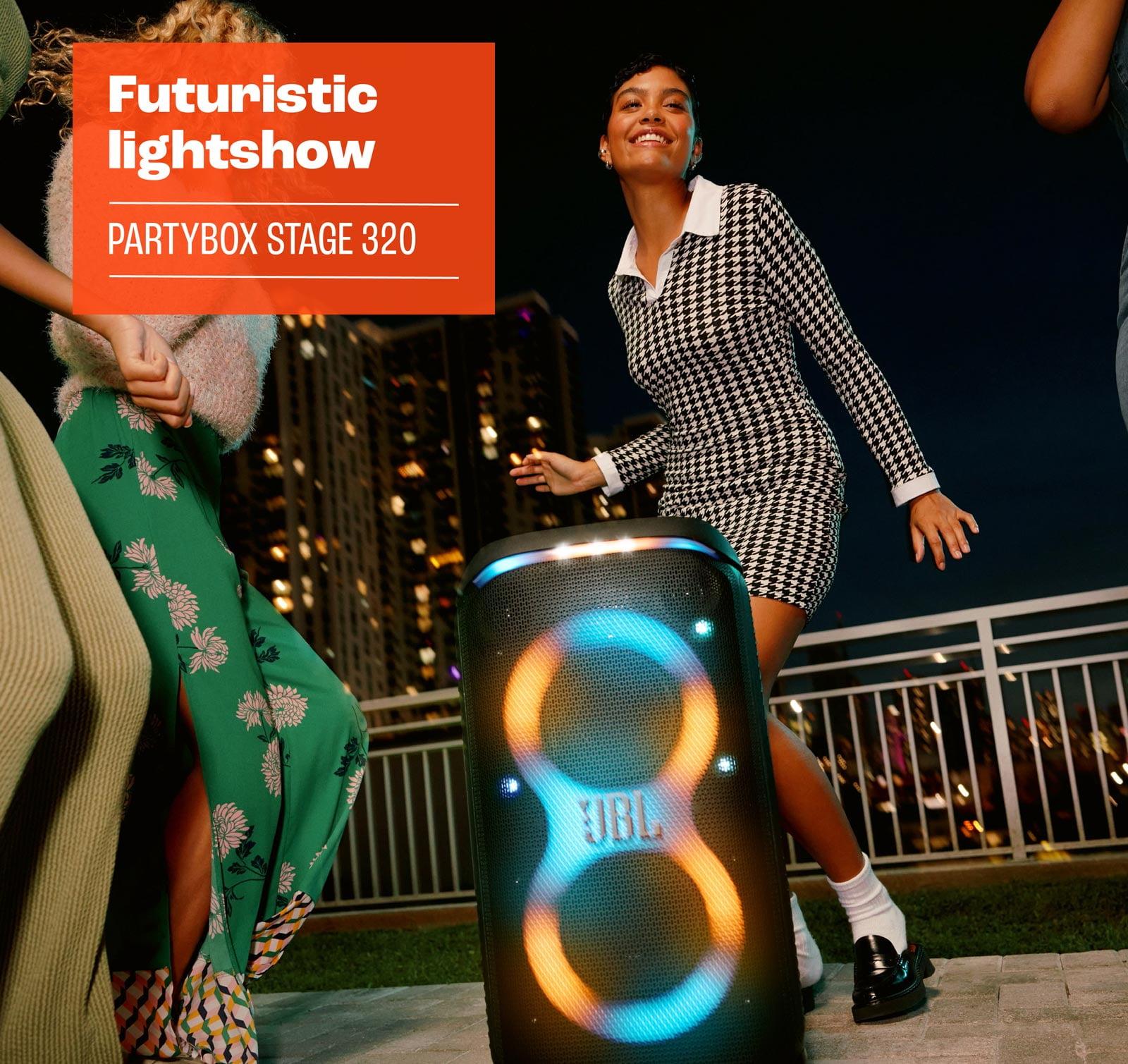
Party speakers increasingly include LED lighting systems, and both models deliver synchronized light shows that pulse with the music. The JBL Stage 320's lighting system is brighter and more dynamic, featuring starry lights, trailing effects, and strobes that create an impressive visual display visible even in partially lit environments.
The Sony XP700's lighting is more subdued but offers greater customization through its apps. You can create custom color patterns and sync lighting across multiple connected Sony speakers. The lighting can be disabled entirely to extend battery life, which becomes important during long events.
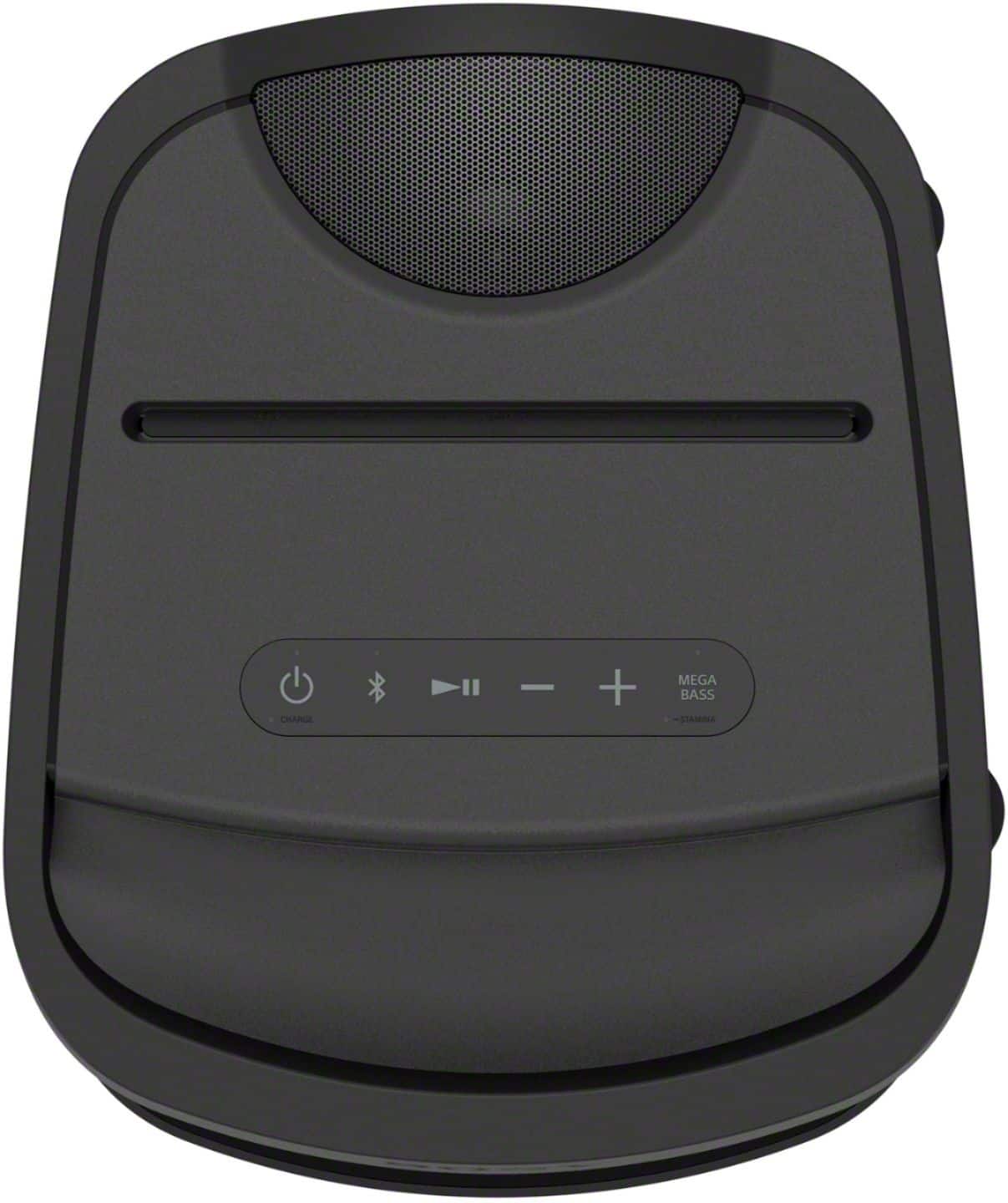
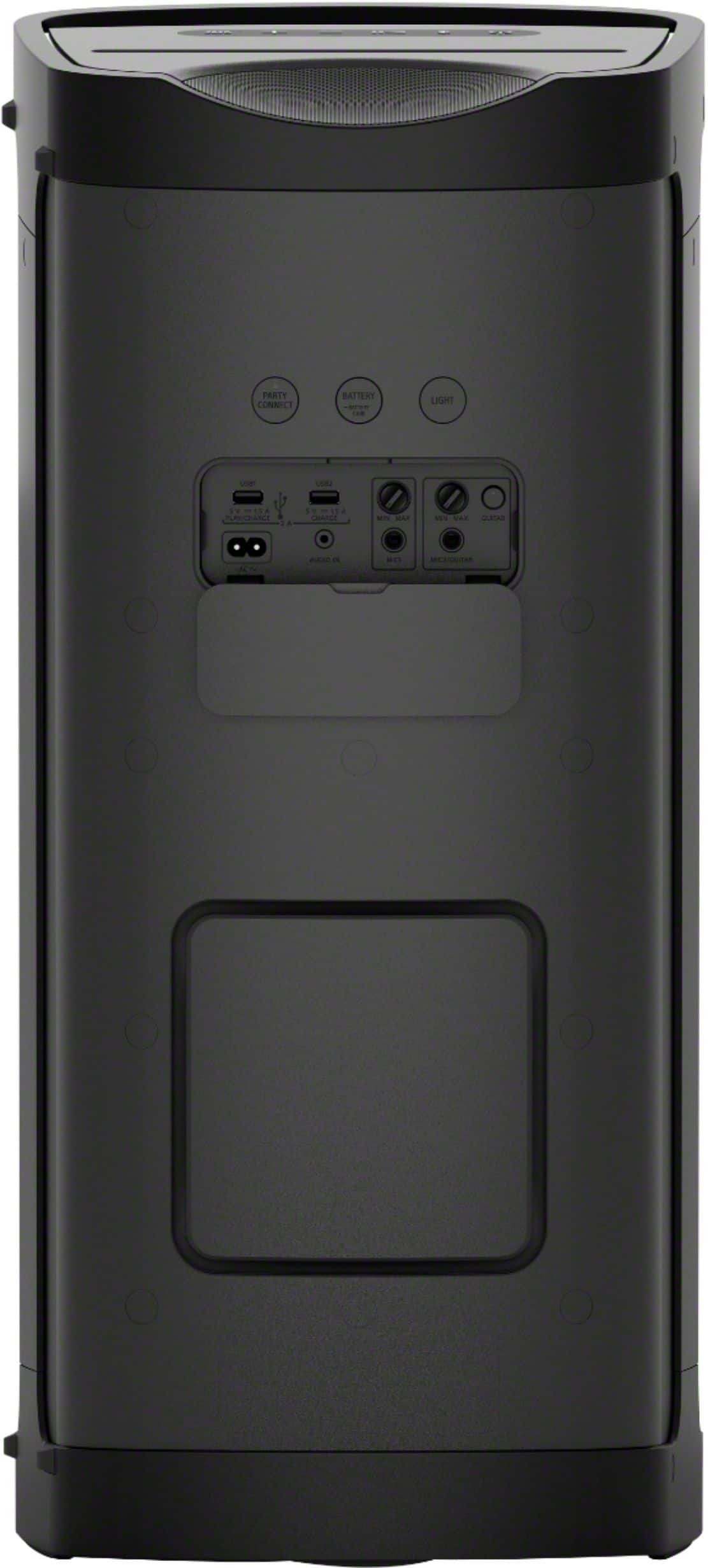
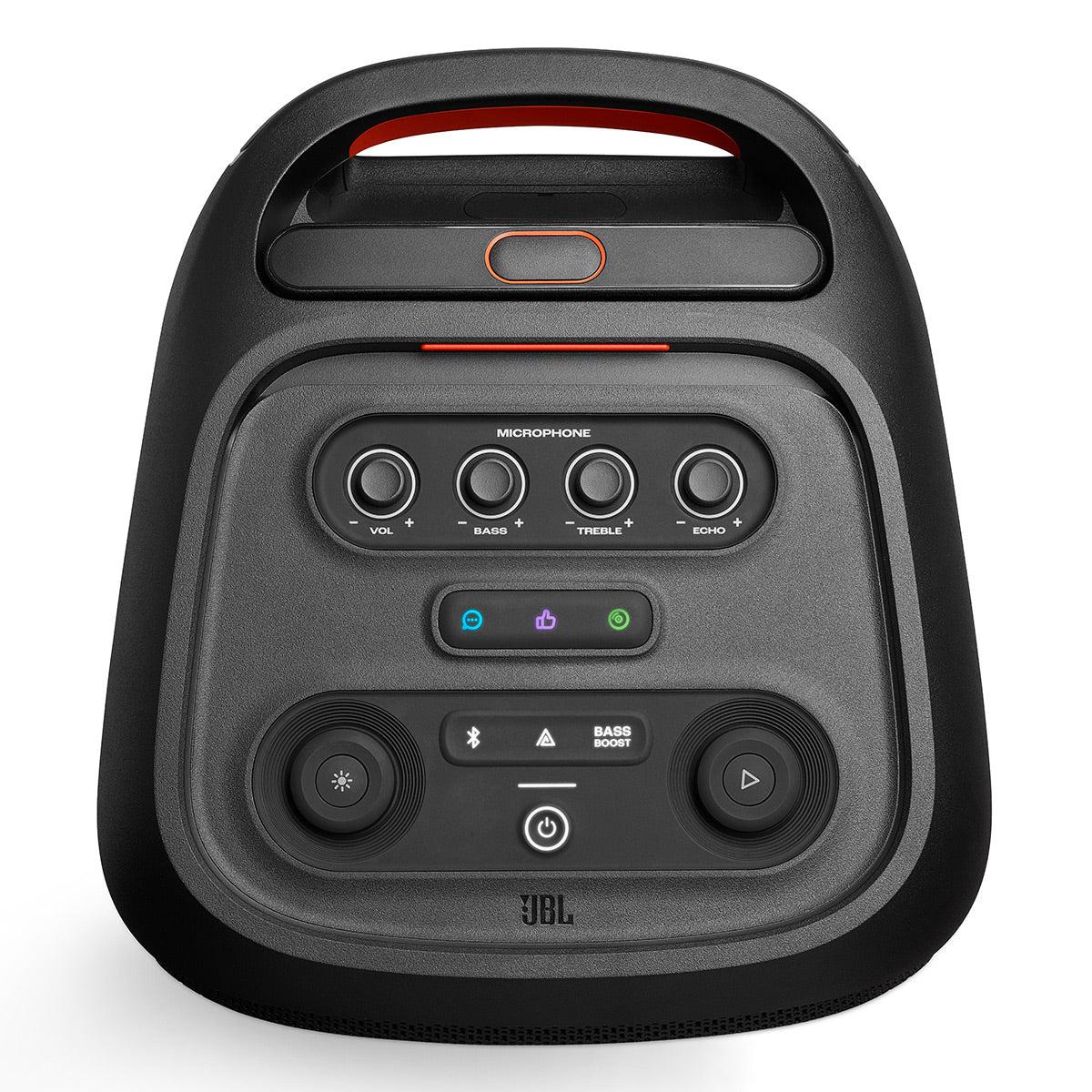
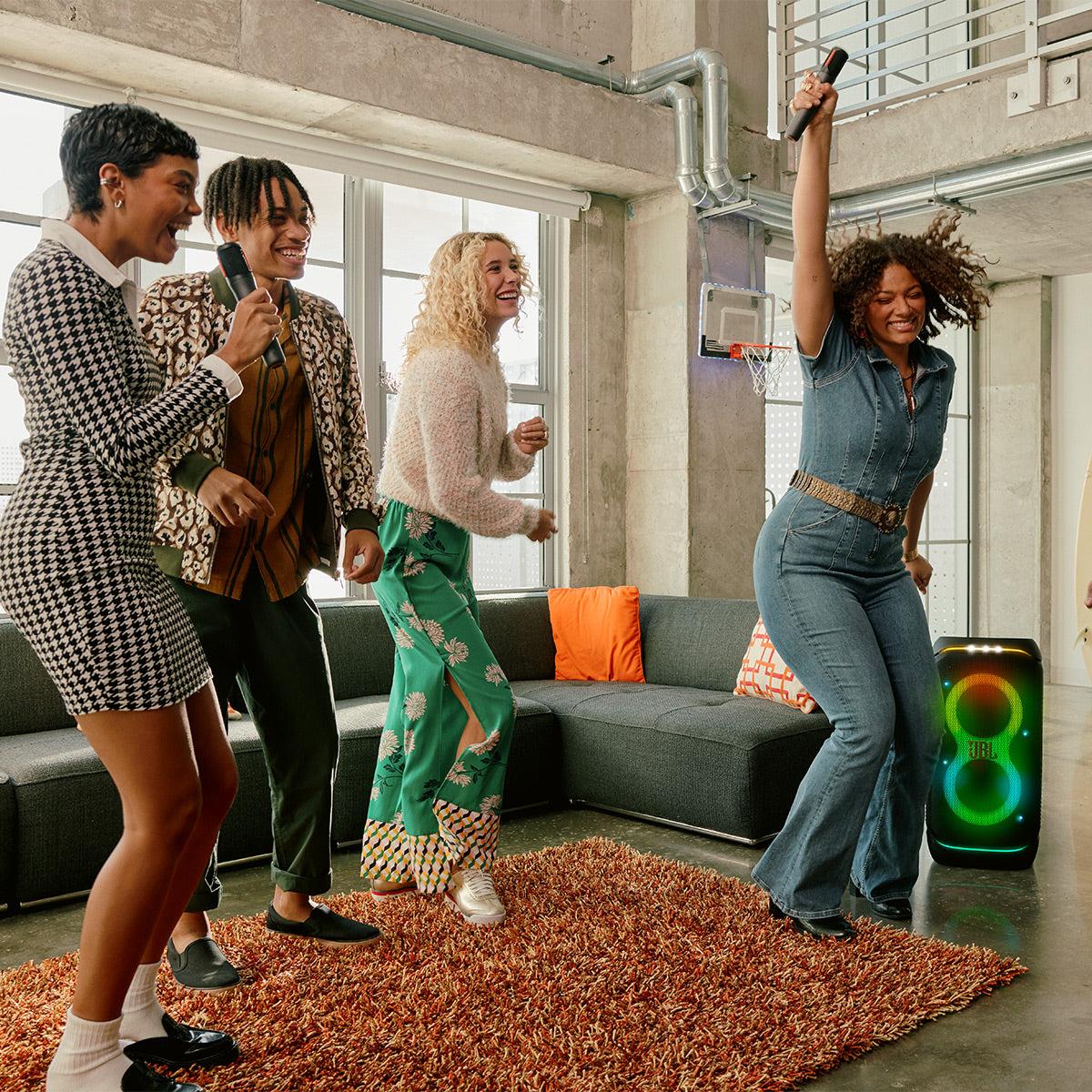
Both speakers include inputs for microphones and guitars, transforming them into portable PA systems for karaoke, small performances, or presentations. The JBL Stage 320 provides dedicated physical controls for microphone volume, echo effects, and EQ adjustments directly on the speaker, making it easier to dial in good sound without smartphone apps.
The Sony XP700 offers similar functionality but requires app-based control for advanced microphone features. Both approaches work well, though having physical controls proves more convenient when juggling a microphone and trying to adjust settings simultaneously.
Both speakers carry IPX4 ratings, meaning they can handle splashes and light rain but shouldn't be submerged or exposed to heavy weather. This level of protection works well for poolside use, beach trips (away from crashing waves), and outdoor events where weather might change unexpectedly.
The plastic construction on both models shows wear over time, with scratches and scuffs becoming visible after regular transport and outdoor use. Neither feels particularly premium in hand, but both prove durable enough for typical party speaker abuse.
While neither speaker is designed primarily for home theater use, both can serve as temporary solutions for outdoor movie nights or situations where traditional surround sound isn't practical. The Sony XP700's more balanced frequency response and omnidirectional design make it better suited for dialogue clarity and mixed content.
The JBL Stage 320's bass-heavy signature works well for action movies and dramatic content but may overwhelm dialogue-heavy scenes. Neither provides the imaging precision or frequency accuracy that dedicated home theater speakers deliver, but both can energize outdoor screenings or basement hangouts effectively.
At the time of writing, these speakers compete directly in the mid-to-high tier of the portable party speaker market, typically priced within $50 of each other. This similar pricing makes the comparison particularly relevant since buyers often cross-shop these exact models.
The Sony SRS-XP700 delivers better value for users prioritizing battery life, audio balance, and ecosystem flexibility. Its longer runtime reduces anxiety about power management during events, while its more neutral sound signature works well with diverse music collections.
The JBL PartyBox Stage 320 provides better value for maximum impact scenarios. The significantly higher power output, superior bass response, and practical mobility features justify the trade-offs in battery life for users who need genuine party-filling sound.
Choose the Sony SRS-XP700 if you value audio quality over maximum volume, need all-day battery life, or frequently listen to diverse music genres. Its omnidirectional design benefits gatherings where people move around freely, and the superior codec support appeals to Android users with high-quality music libraries. The Sony works particularly well for intimate gatherings, acoustic music, and situations where refined sound quality matters more than maximum impact.
Choose the JBL PartyBox Stage 320 if you need maximum volume for large outdoor spaces, transport the speaker frequently, or primarily listen to bass-heavy music genres. The wheels and telescopic handle eliminate the practical barriers to moving a heavy speaker, while the replaceable battery system provides long-term value. The JBL excels at energizing large parties, electronic music events, and situations where maximum impact trumps audio refinement.
Both speakers succeed in their intended roles, but they optimize for different priorities. The Sony prioritizes sustainability and refinement, making it ideal for regular use across varied scenarios. The JBL prioritizes maximum party impact and practical mobility, making it perfect for event-focused users who need serious sound projection.
Consider your typical use cases carefully. If you're hosting weekly backyard gatherings for 10-20 people, the Sony's balanced approach and superior battery life provide daily benefits. If you're organizing monthly beach parties for 50+ people, the JBL's extra power and mobility features become essential rather than nice-to-have.
The speaker market continues evolving rapidly, with manufacturers constantly improving battery technology, driver efficiency, and smart features. Both the Sony SRS-XP700 and JBL PartyBox Stage 320 represent current-generation thinking about what portable party audio should deliver, but each prioritizes different aspects of the experience. Your choice between them says as much about your party style as it does about your audio preferences.
| Sony SRS-XP700 | JBL PartyBox Stage 320 |
|---|---|
| Power Output - Determines maximum volume and outdoor performance | |
| 60W RMS (suitable for backyard parties) | 240W RMS (fills tennis court-sized areas) |
| Battery Life - Critical for all-day events without power access | |
| Up to 25 hours rated, 10-12 hours real-world at party volume | Up to 18 hours rated, 7-8 hours real-world at party volume |
| Portability Features - Makes the difference between using it or leaving it home | |
| 37.25 lbs with dual carry handles only | 36 lbs with telescopic handle and built-in wheels |
| Driver Configuration - Affects sound distribution and quality | |
| Omnidirectional: 3 front + 1 rear tweeter, 2 X-Balanced woofers | Forward-firing: 2x 6.5" woofers, 2x 1" dome tweeters |
| Bass Performance - Essential for party atmosphere and music impact | |
| Balanced, controlled bass with X-Balanced technology | Deep, physical bass with larger 6.5" woofers |
| Battery System - Long-term ownership and extended use considerations | |
| Fixed internal battery (requires service when degraded) | Removable/swappable battery (user-replaceable) |
| Bluetooth Codec Support - Audio quality over wireless connection | |
| SBC, AAC, LDAC (high-quality for Android devices) | Standard SBC, AAC codecs |
| Multi-Speaker Connectivity - Expanding your sound system | |
| Party Connect (up to 100 Sony speakers, pairs with non-Sony) | Auracast (JBL speakers only, fewer compatibility options) |
| Water Resistance - Protection for outdoor and poolside use | |
| IPX4 splash-resistant | IPX4 splash-resistant |
| Lighting System - Visual entertainment and party atmosphere | |
| Customizable RGB with app control (more subdued) | Dynamic starry lights and strobes (brighter, more dramatic) |
| Microphone Controls - Karaoke and live performance convenience | |
| App-based control for mic effects and EQ | Physical controls on speaker for volume, echo, EQ |
| Quick Charging - Getting back to the party faster | |
| 10 minutes = 3 hours playback | 10 minutes = 2 hours playback |
| Orientation Flexibility - Setup options for different spaces | |
| Horizontal or vertical with auto sound optimization | Vertical orientation only |
The JBL PartyBox Stage 320 is significantly louder with 240W RMS compared to the Sony SRS-XP700's 60W RMS. The JBL can fill tennis court-sized outdoor areas, while the Sony is better suited for backyard gatherings and medium-sized spaces.
The Sony SRS-XP700 offers superior battery life with up to 25 hours rated (10-12 hours real-world at party volume), while the JBL PartyBox Stage 320 provides up to 18 hours rated (7-8 hours real-world). However, the JBL features a removable battery that can be swapped during extended use.
The JBL PartyBox Stage 320 is much easier to transport despite similar weight (36 lbs vs 37 lbs) because it includes built-in wheels and a telescopic handle. The Sony SRS-XP700 only has carry handles, making it impractical to move long distances.
The JBL PartyBox Stage 320 delivers more powerful, physical bass with its larger 6.5-inch woofers that you can feel in your chest. The Sony SRS-XP700 offers more balanced, controlled bass that doesn't overwhelm other frequencies but lacks the party impact of the JBL.
Both the Sony SRS-XP700 and JBL PartyBox Stage 320 have IPX4 water resistance, meaning they can handle splashes and light rain but should not be submerged or exposed to heavy downpours. They're suitable for poolside use and outdoor parties.
The Sony SRS-XP700 provides more balanced sound that works well with rock, acoustic, jazz, and vocal music. The JBL PartyBox Stage 320 excels with bass-heavy genres like EDM, hip-hop, and electronic music due to its powerful low-end response.
Yes, both the Sony SRS-XP700 and JBL PartyBox Stage 320 include microphone and guitar inputs for karaoke. The JBL offers physical controls on the speaker for mic volume and echo effects, while the Sony requires app-based control for advanced microphone features.
The JBL PartyBox Stage 320 features brighter, more dynamic lighting with starry effects, light trails, and strobes that are visible even in partially lit rooms. The Sony SRS-XP700 has more customizable but subdued RGB lighting that can be personalized through apps.
The Sony SRS-XP700 can connect up to 100 Sony speakers via Party Connect and also pairs with non-Sony Bluetooth speakers. The JBL PartyBox Stage 320 uses Auracast technology but is limited to pairing only with other compatible JBL speakers.
Neither speaker is designed for home theater, but the Sony SRS-XP700 works better for movie watching due to its more balanced frequency response and omnidirectional design that provides clearer dialogue. The JBL PartyBox Stage 320 may overwhelm dialogue with its bass-heavy signature.
Both speakers offer quick charging capabilities. The Sony SRS-XP700 provides 3 hours of playback from a 10-minute charge, while the JBL PartyBox Stage 320 gives 2 hours from 10 minutes of charging. Both also include USB ports for charging other devices.
The value depends on your priorities. The Sony SRS-XP700 offers better value for longer battery life, balanced sound, and versatile use cases. The JBL PartyBox Stage 320 provides better value for maximum volume, superior portability features, and party-focused performance in large outdoor spaces.
We've done our best to create useful and informative comparisons to help you decide what product to buy. Our research uses advanced automated methods to create this comparison and perfection is not possible - please contact us for corrections or questions. These are the sites we've researched in the creation of this article: bestbuy.com - rtings.com - crutchfield.com - versus.com - rtings.com - rtings.com - youtube.com - versus.com - electronics.sony.com - youtube.com - youtube.com - youtube.com - youtube.com - crutchfield.com - armorsound.com - sony-asia.com - helpguide.sony.net - helpguide.sony.net - videoandaudiocenter.com - sony.com - sony.com - sony-asia.com - sony.com - sony.com - bestbuy.com - device.report - bestbuy.com - stereoguide.com - soundguys.com - rtings.com - soundguys.com - soundguys.com - rtings.com - jbl.com - youtube.com - youtube.com - youtube.com - youtube.com - rtings.com - 9to5toys.com - versus.com - cdw.com - jbl.com - projectorscreenstore.com - projectorscreen.com - ro.harmanaudio.com - jbl.co.nz - bestbuy.com - youtube.com

Privacy Policy
Terms and Conditions - Affiliate Policy
Home Security
© Copyright 2008-2026.
11816 Inwood Rd #1211, Dallas, TX 75244