

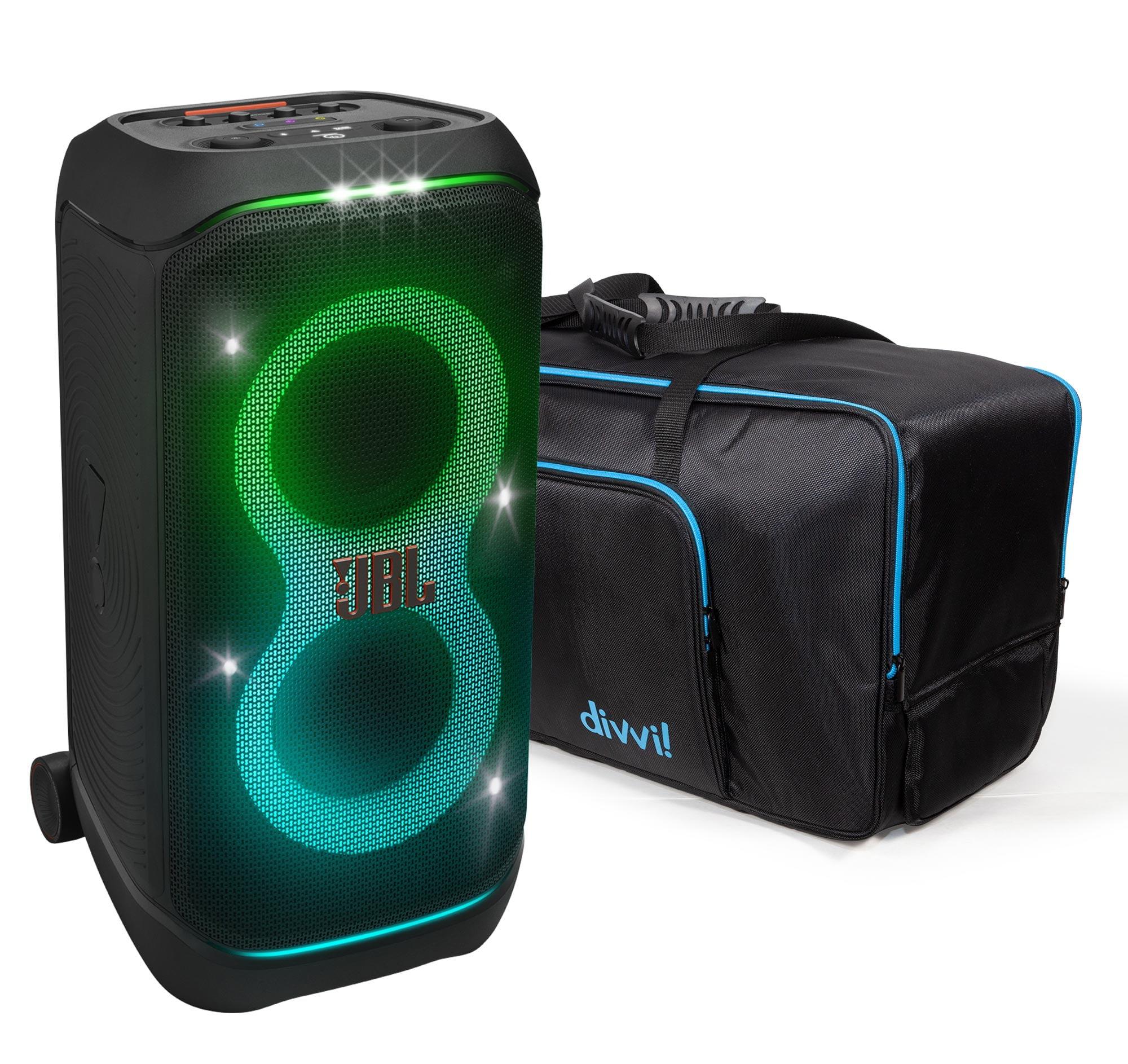
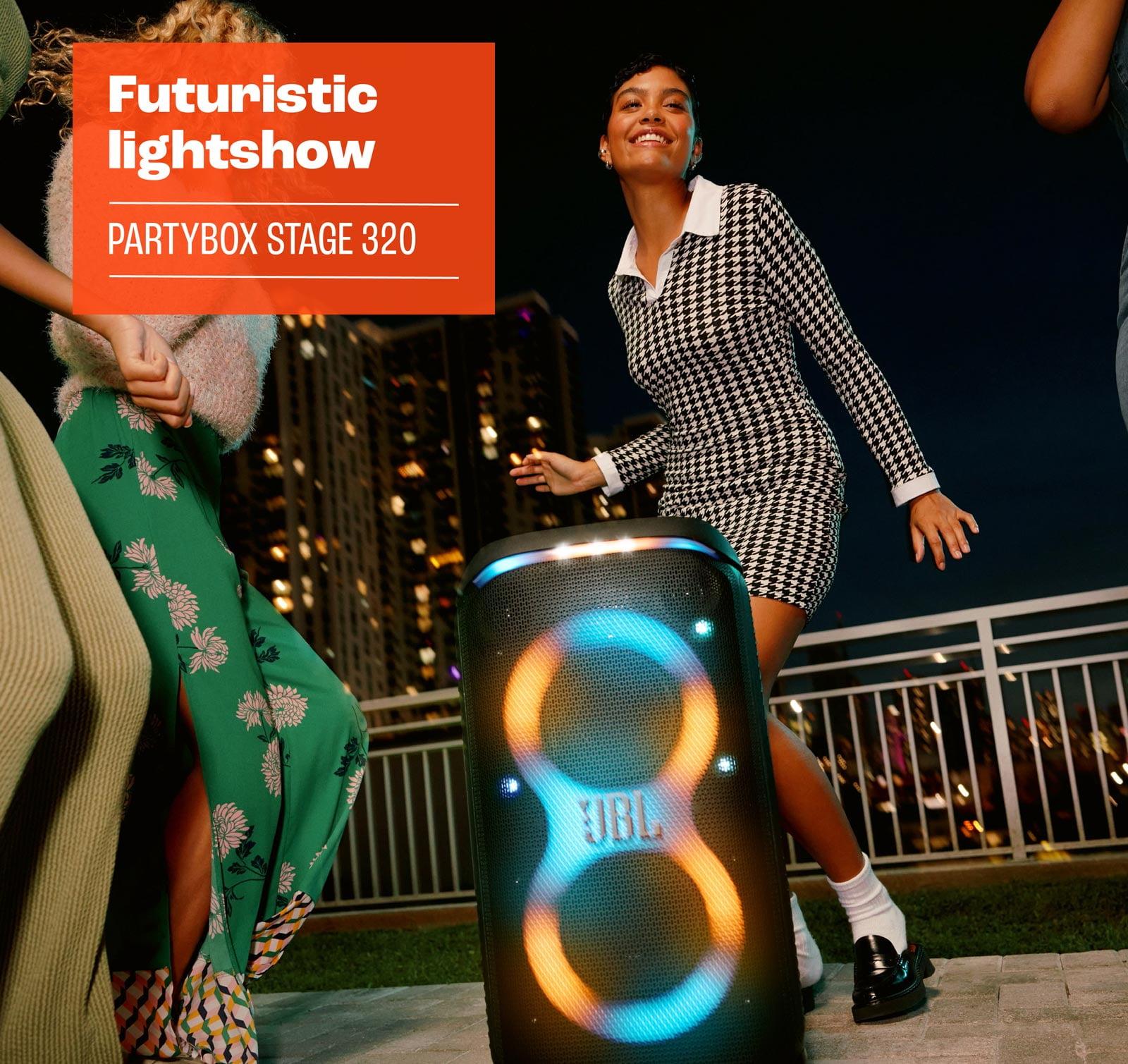
When you're shopping for a portable party speaker, you're essentially looking for three things: loud, clear sound that can fill a space with people, enough battery life to keep the party going, and features that make hosting more fun. JBL's PartyBox lineup has dominated this space for years, and two models that often come up in conversations are the PartyBox 110 and the newer PartyBox Stage 320.
At the time of writing, these speakers sit at different price points but serve similar core purposes – they're both designed to be the centerpiece of your gathering, whether that's a backyard barbecue, beach party, or indoor celebration. The key question isn't just which one sounds better, but which approach to portable party audio makes more sense for your specific needs and budget.
Party speakers operate in their own category, separate from home audio systems or portable Bluetooth speakers you'd use for personal listening. These aren't designed for critical listening where you're analyzing every detail of a recording. Instead, they prioritize several key characteristics that matter when you're entertaining groups of people.
Volume capability is probably the most obvious requirement. A party speaker needs to cut through conversation, laughter, and ambient noise while still sounding clean and powerful. This means the internal amplifiers need serious power, and the speaker drivers (the physical components that produce sound) must be large enough to move substantial amounts of air without distorting.
Bass response matters enormously because low-frequency energy is what people feel in their chest – it's what makes music exciting and gets people moving. The size of the woofers (the larger drivers that handle bass frequencies) directly impacts how deep and punchy the low end will sound.
Battery life becomes critical because these speakers are often used away from power outlets. Nothing kills a party faster than your music source dying, so manufacturers pack in large battery cells and optimize power consumption to keep the music playing for hours.
Finally, entertainment features like synchronized lighting, microphone inputs for karaoke, and app-based controls help create an engaging atmosphere that goes beyond just playing music.
The PartyBox 110 launched in 2021 as JBL's entry-level portable party speaker, designed to bring the brand's signature sound and party features to a more affordable price point. It represented JBL's understanding that not everyone needs the massive power of their flagship models, but still wants the quality and reliability the brand is known for.
The PartyBox Stage 320 arrived in 2024 as part of JBL's updated lineup, incorporating three years of technological advancement and user feedback. The "Stage" branding signals JBL's intention to position this as a more professional option, suitable for performers and serious entertainers who need additional power and features.
This timing matters because audio technology has progressed significantly in those three years. Bluetooth connections have become more stable and efficient, battery technology has improved, and digital signal processing (the computer chips that optimize sound quality) has become more sophisticated.
The most fundamental difference between these speakers lies in their power output. The Stage 320 delivers 240 watts RMS compared to the 110's 160 watts RMS. RMS (Root Mean Square) represents the continuous power a speaker can handle, giving you a realistic idea of sustained volume capability rather than peak power numbers that can be misleading.
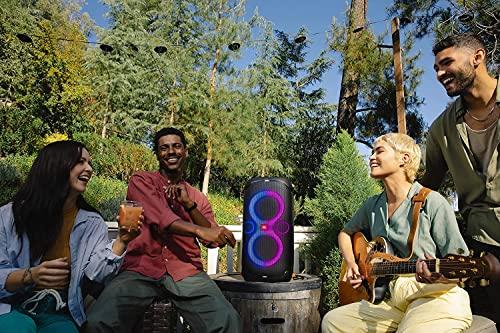
This 80-watt difference translates to noticeable real-world performance. Based on extensive user feedback and expert reviews, the Stage 320 can comfortably fill outdoor spaces the size of a tennis court with clear, powerful sound, while the 110 works best for smaller gatherings – think typical backyards, basements, or indoor parties with 20-30 people.
The driver configuration tells the complete story. The Stage 320 uses two 6.5-inch woofers paired with two 1-inch dome tweeters, while the 110 relies on a single 5.25-inch woofer with two 2.25-inch tweeters. Having dual woofers allows the Stage 320 to move significantly more air, creating that physical sensation of bass that you feel as much as hear.
This translates to frequency response differences as well. The Stage 320 reaches down to 40Hz, while the 110 bottoms out at 45Hz. Those 5Hz might not sound significant, but in bass response, every Hz counts – it's the difference between feeling the kick drum in your chest versus just hearing it clearly.
Based on consensus from reviews and user experiences, both speakers deliver what JBL calls "Original Pro Sound," but they achieve it through different methods. The 110 focuses on balanced, smooth output that sounds great at moderate volumes and remains clear even when you're not positioned directly in front of it. This makes it excellent for smaller spaces where people might be scattered around the room.
The Stage 320 takes a more aggressive approach, with additional headroom that allows it to maintain clarity even when pushed to high volumes. The dual woofer design means less strain on individual drivers, resulting in cleaner sound when the party gets loud. Reviews consistently mention that vocals come through more clearly on the Stage 320, and instrument separation is noticeably better – you can pick out individual elements in busy musical arrangements.
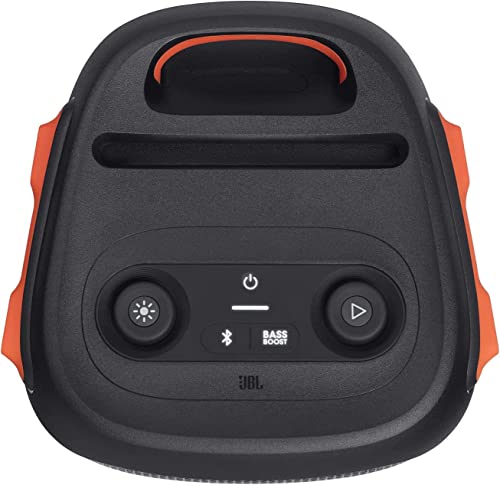
Both speakers include JBL's Bass Boost feature with two intensity levels, but they behave differently. On the 110, Bass Boost Level 1 adds fullness without overwhelming the mix, while Level 2 can make the speaker sound boomy in corner placements. The Stage 320 handles bass boost more gracefully due to its larger drivers, allowing you to use higher settings without muddying the overall sound.
The newer Stage 320 also incorporates AI Sound Boost, which uses digital signal processing to analyze incoming audio in real-time and optimize the output for maximum clarity and impact. This technology automatically adjusts the speaker's response based on the type of content you're playing, reducing distortion and enhancing the listening experience without any input from you.
Battery performance represents one of the most significant upgrades from the 110 to the Stage 320. The newer model packs a 68Wh battery compared to the older model's 36Wh – nearly double the capacity. This translates to 18 hours of rated playbook versus 12 hours, but real-world performance depends heavily on volume levels and whether you're using the light show features.
Based on user reports, you can expect around 7-8 hours from the 110 when played at party-appropriate volumes with lights active, while the Stage 320 delivers 12-14 hours under similar conditions. For all-day events like wedding receptions, company picnics, or day-long festivals, this difference becomes crucial.
The Stage 320 also introduces a game-changing feature: a swappable battery system. JBL sells replacement batteries separately, meaning you can essentially achieve unlimited runtime by carrying spare battery packs. This professional-level feature addresses one of the biggest limitations of portable speakers – eventual battery degradation over time.
Both speakers include quick charging capabilities, but the Stage 320 takes this further with a 10-minute quick charge that provides approximately 2 hours of playback. This can be a lifesaver when you're setting up for an event and realize you forgot to charge your speaker the night before.
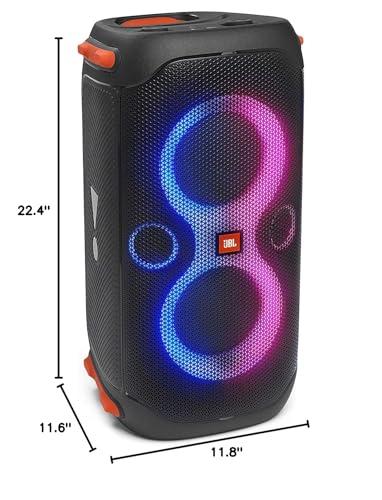
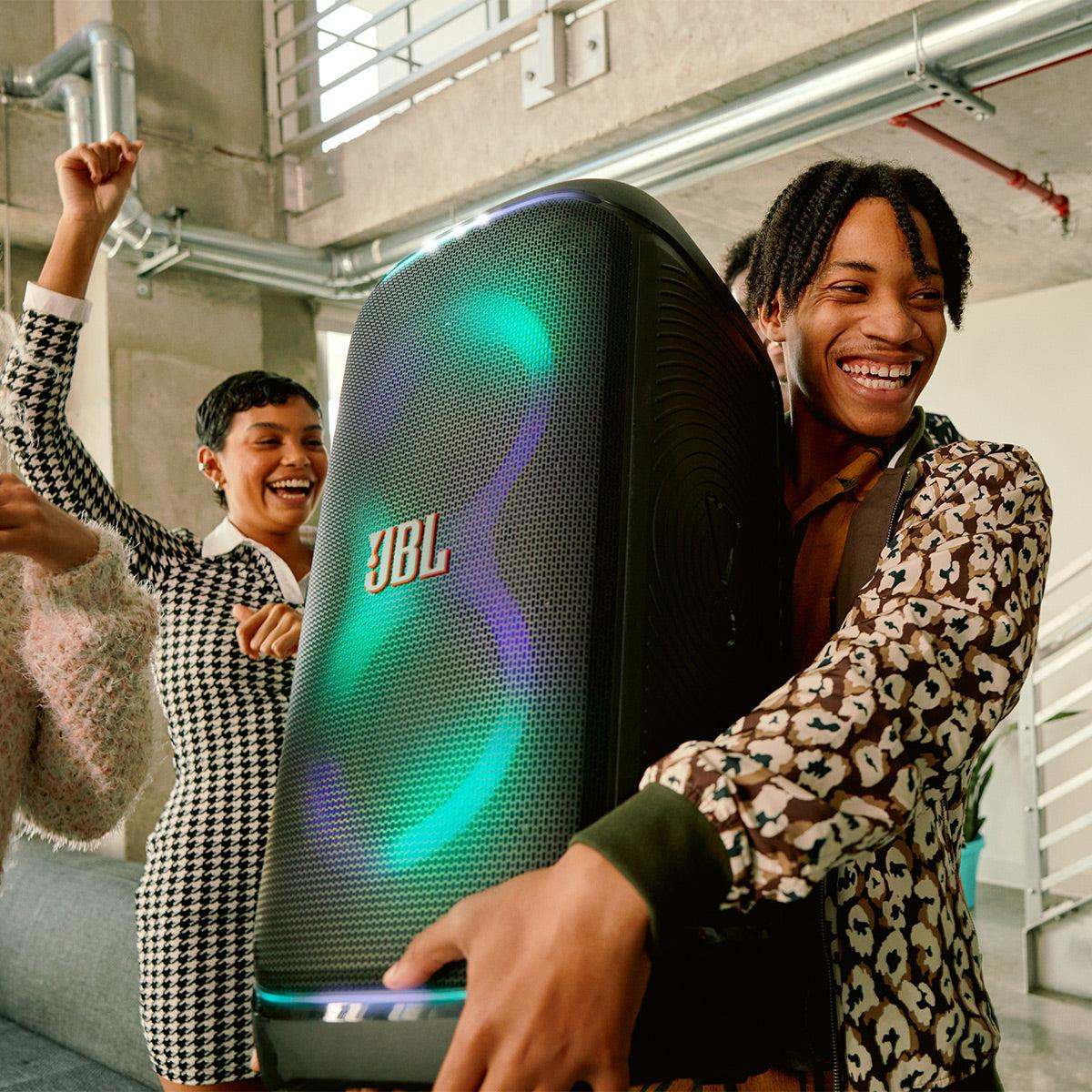
Here's where these speakers reveal their distinct target audiences. The 110 weighs 24 pounds and features dual carrying handles, making it genuinely portable for one person to carry reasonable distances. You can easily lift it in and out of cars, carry it down to the beach, or move it around your house as needed.
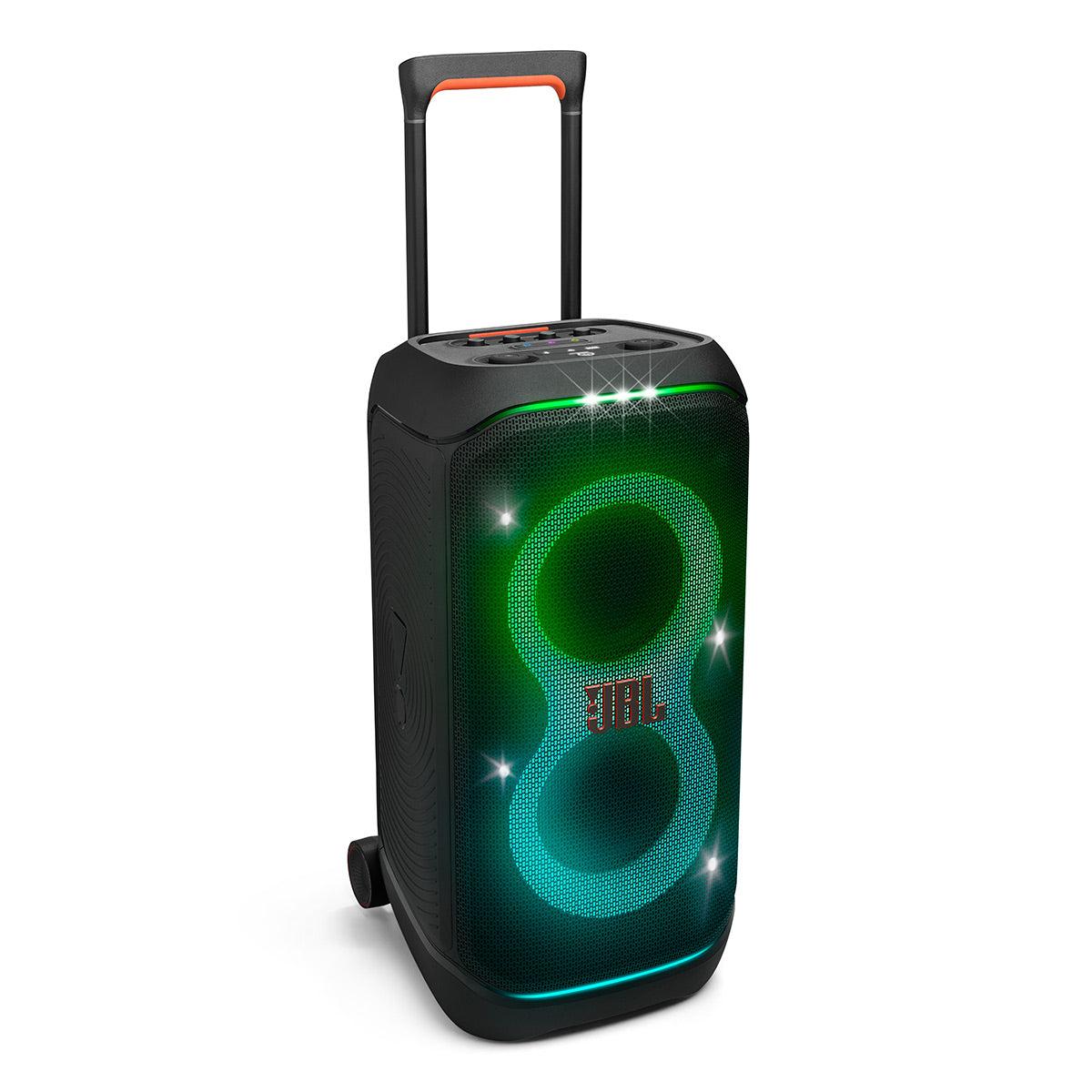
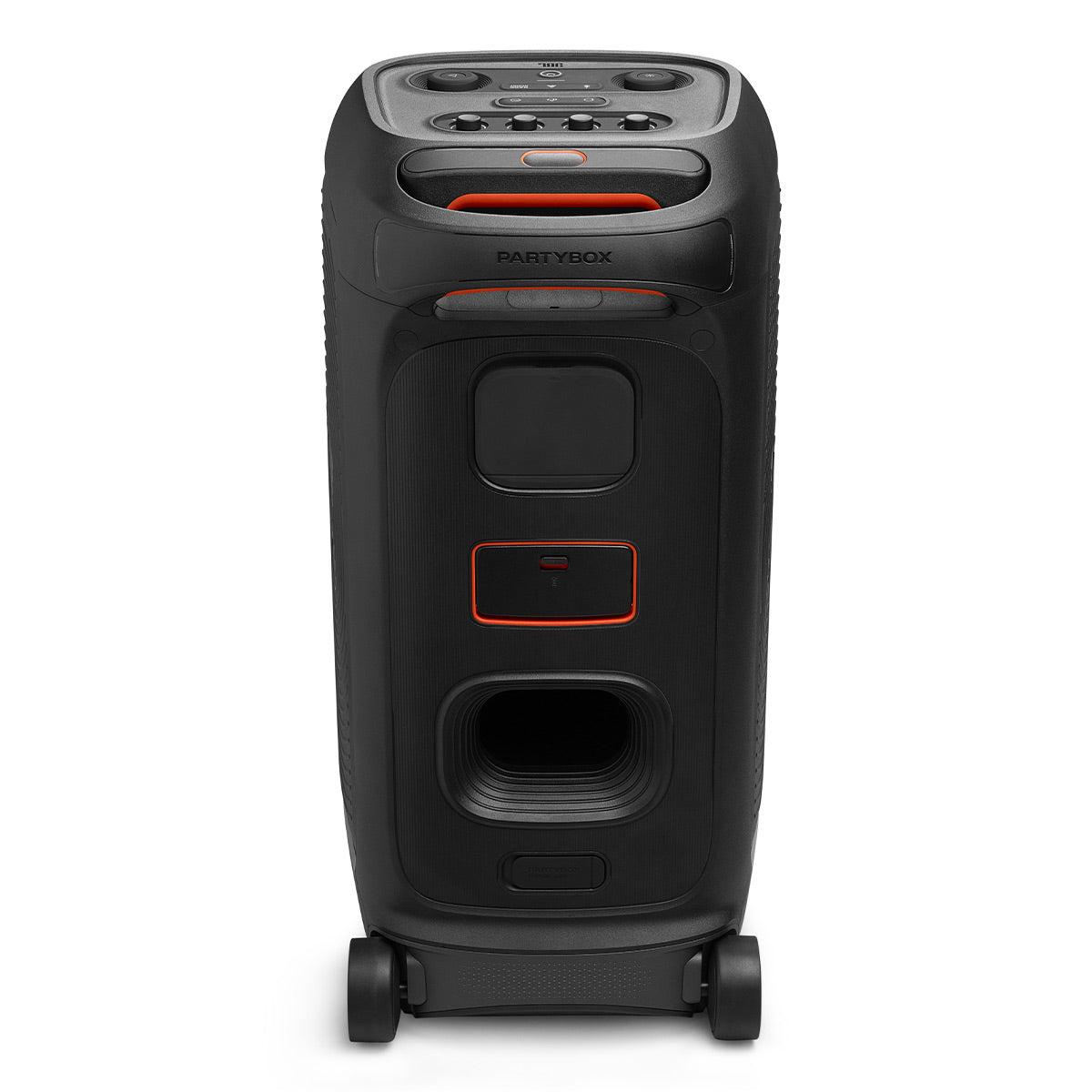
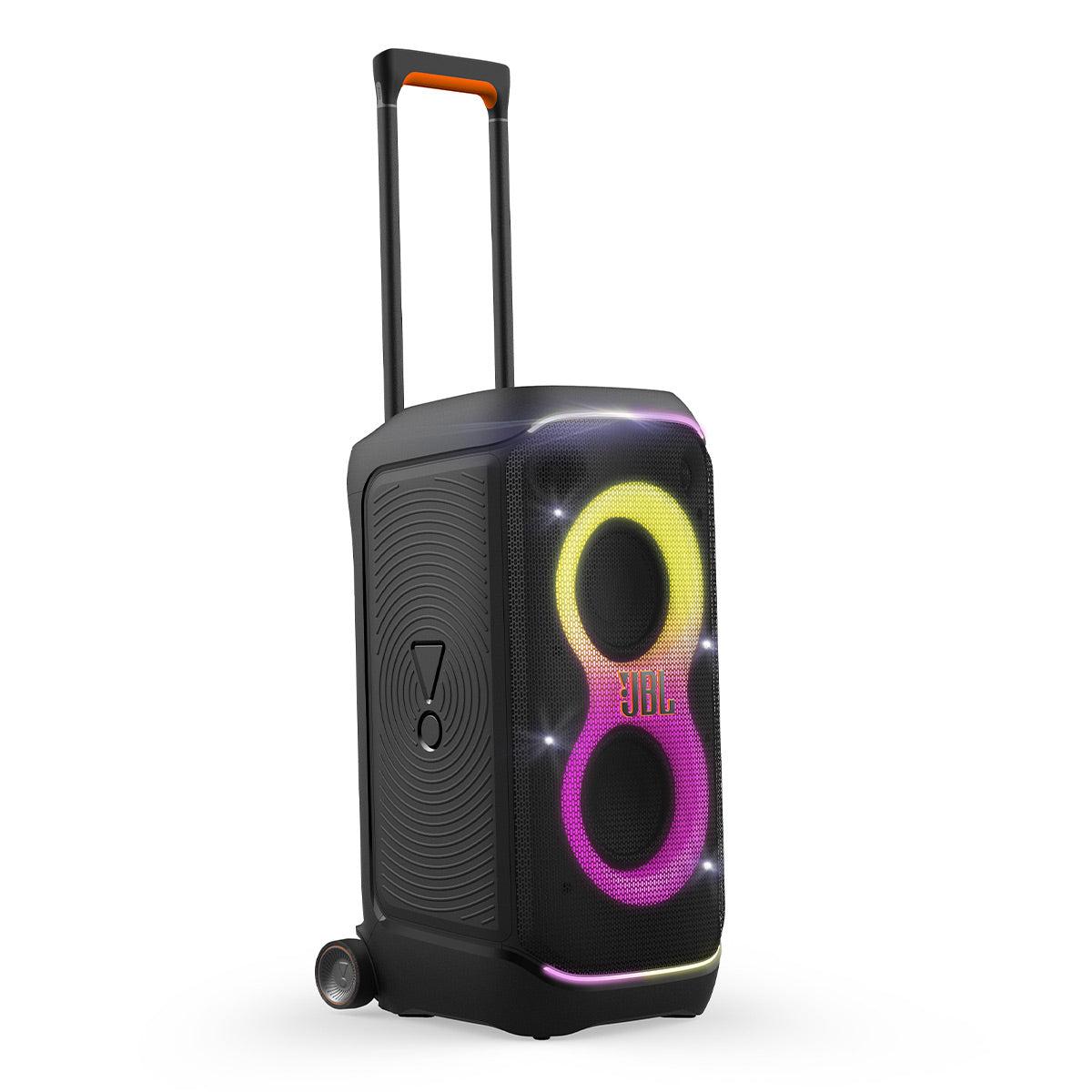
The Stage 320 weighs 36 pounds – still manageable, but at the limit of what most people want to carry. JBL's solution is clever: they've added wide, sturdy wheels and a telescopic handle, transforming it into rolling luggage. This approach works brilliantly on smooth surfaces like concrete, asphalt, or indoor floors, but becomes challenging on sand, grass, or uneven terrain.
This weight difference reflects the fundamental trade-off in speaker design: larger drivers and more powerful amplifiers require bigger cabinets and heavier components. The Stage 320's approach acknowledges that serious party speakers will often be used in semi-permanent setups – you roll it out to your patio for a party and leave it there for the duration, rather than carrying it around constantly.
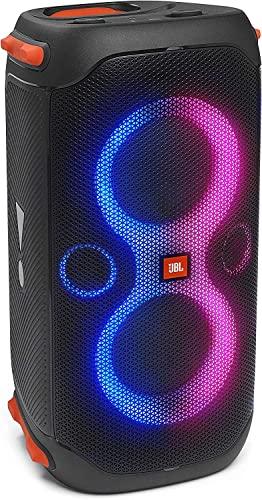
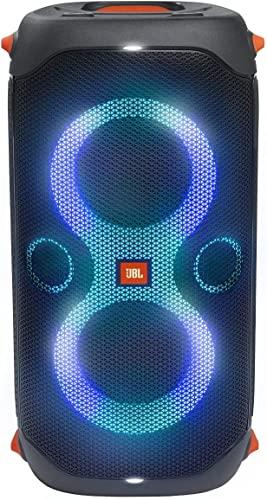
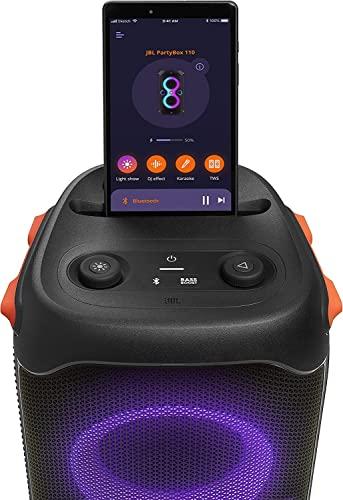
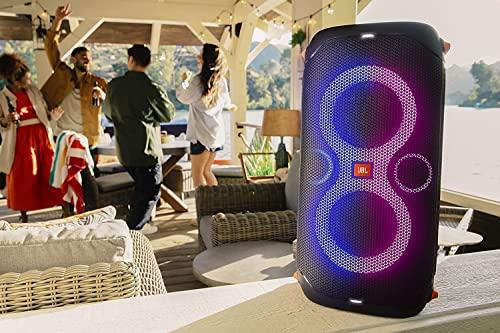
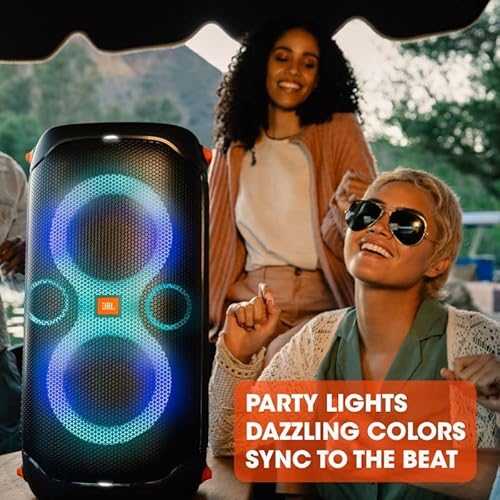
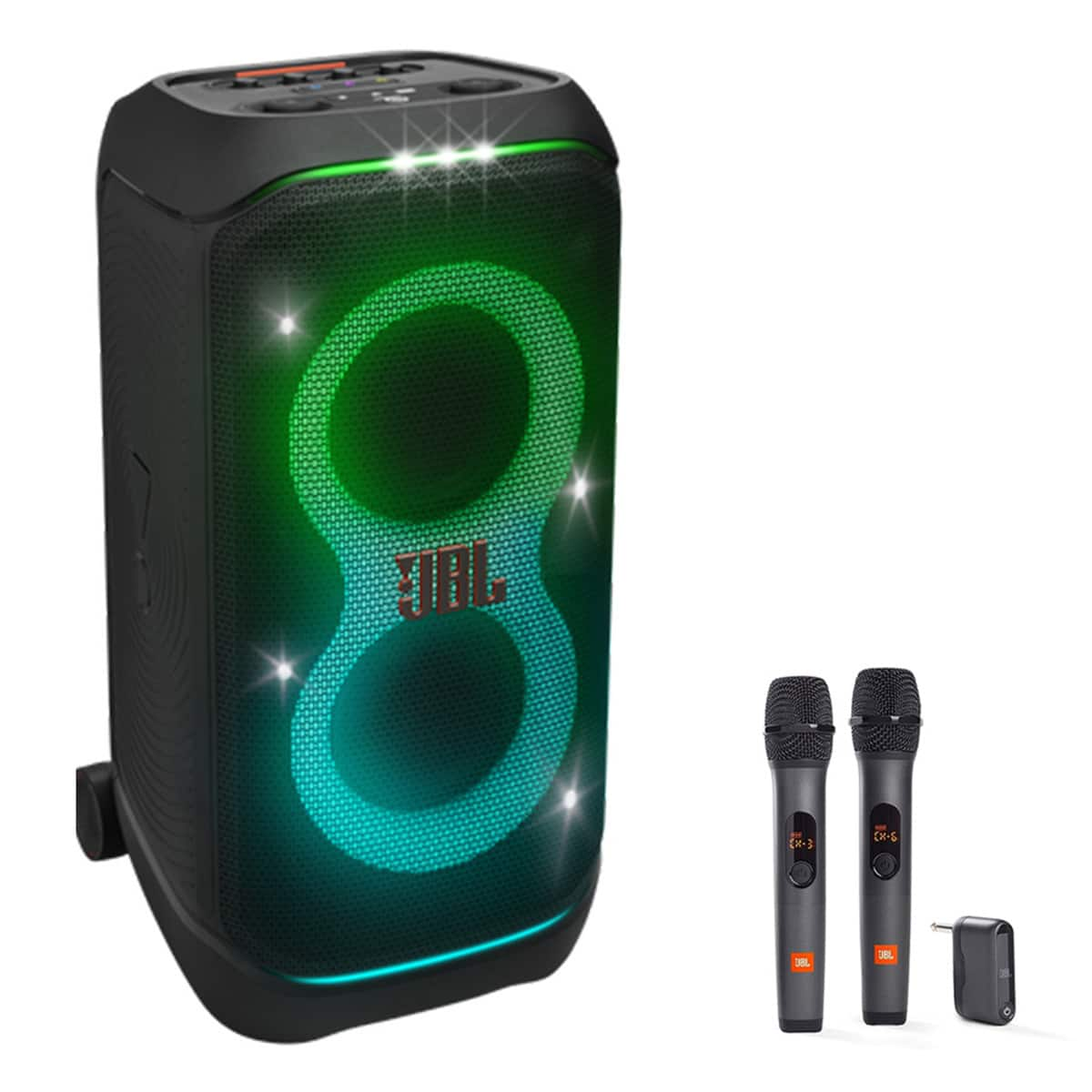
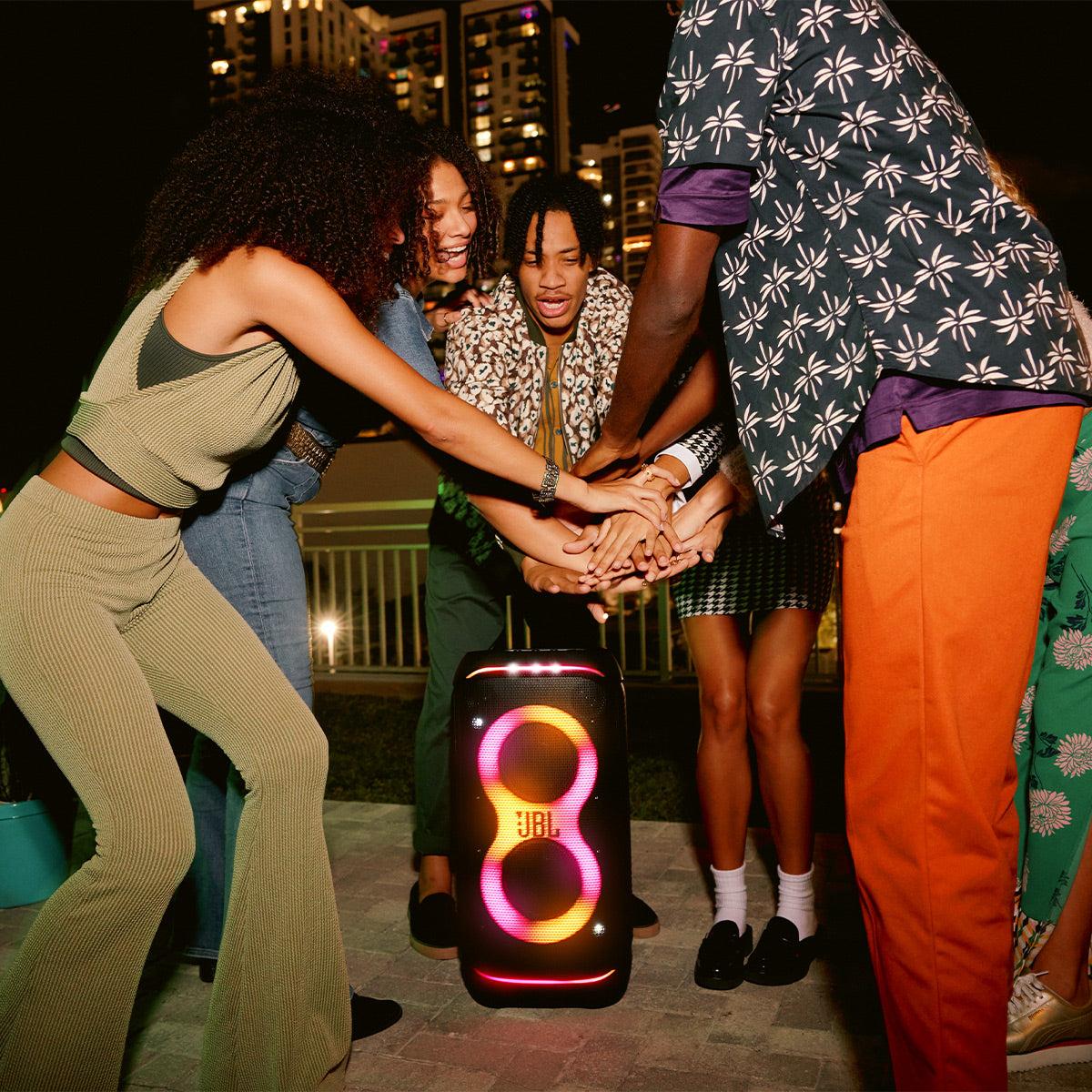
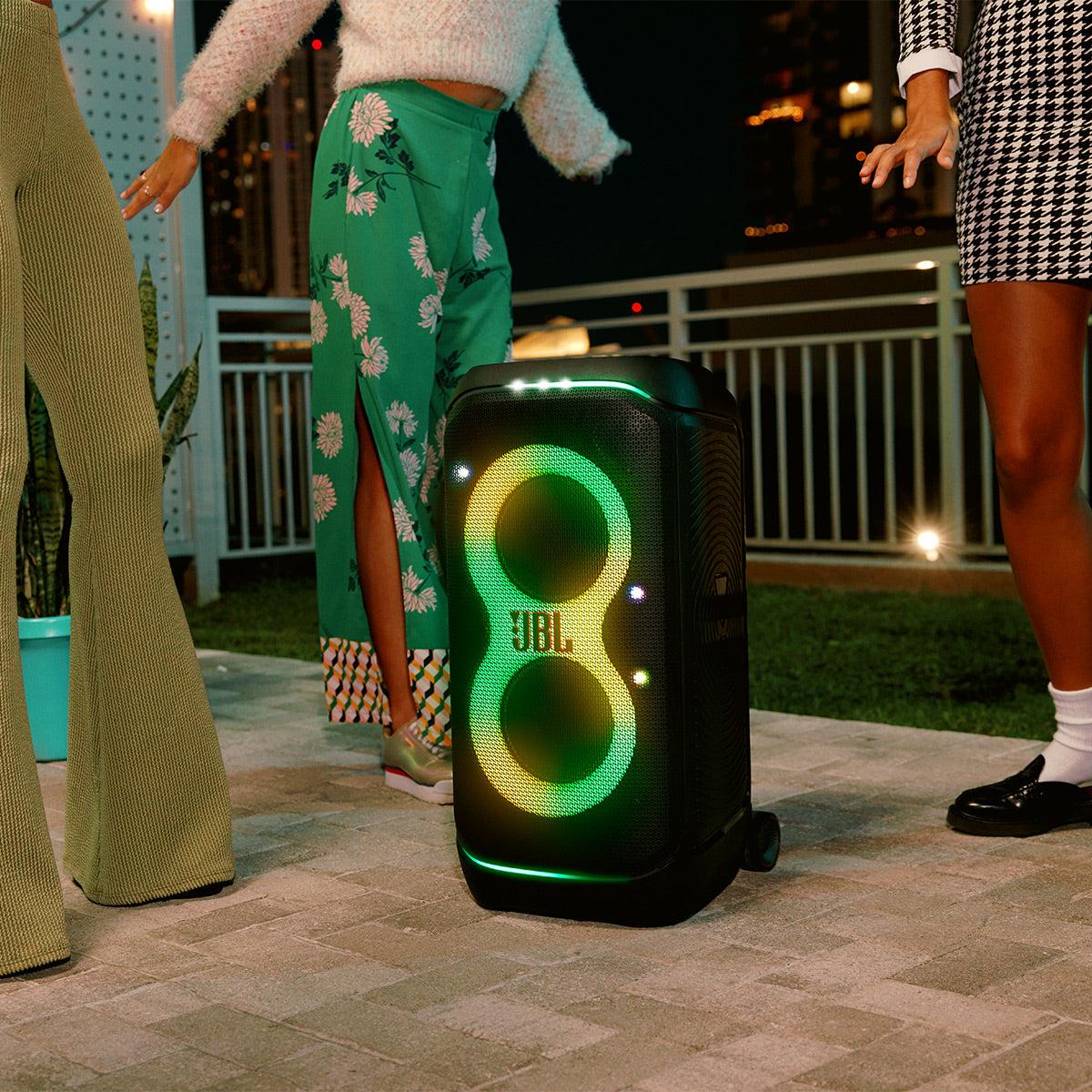
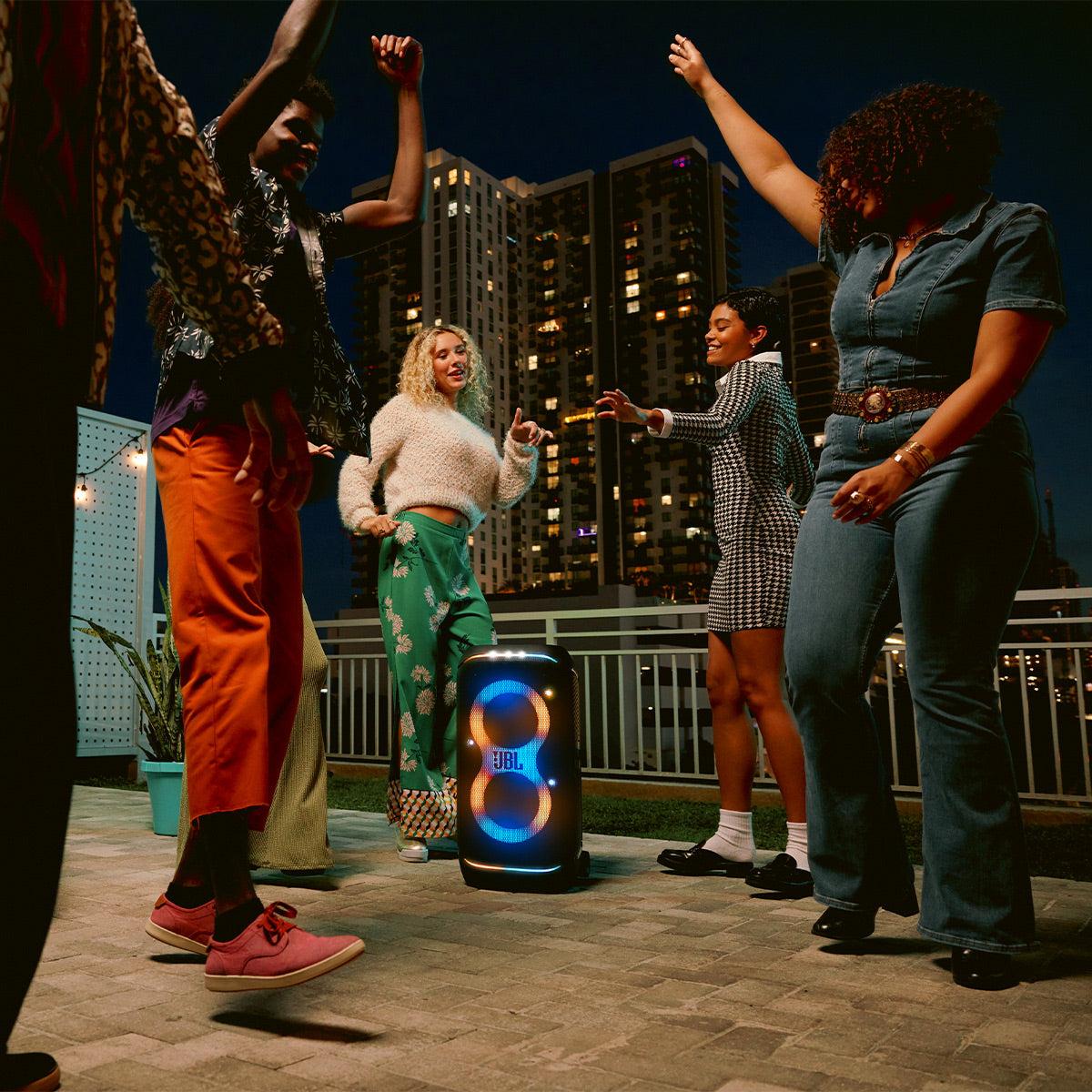
Both speakers include dynamic lighting systems, but the Stage 320 significantly ups the game. While the 110 features four RGB light rings and two white strobe LEDs, the Stage 320 incorporates ring LEDs, strip LEDs, and eleven white strobe LEDs. The result is a more immersive light show with greater variety in patterns and effects.
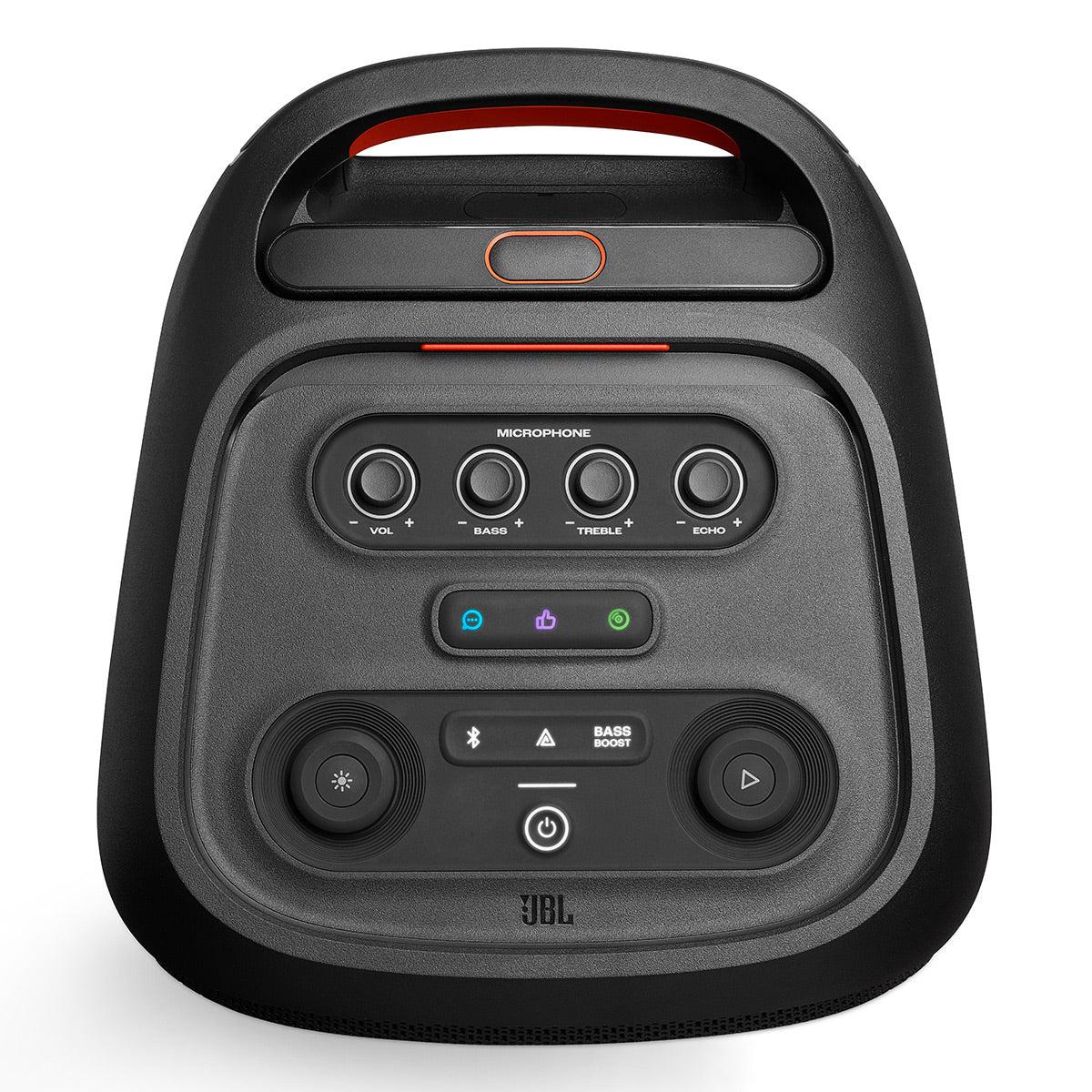
The JBL PartyBox app controls both speakers, but the Stage 320 offers more sophisticated options including a 5-band equalizer versus the 110's simpler bass and treble controls. This matters if you want to fine-tune the sound for different types of music or acoustic environments.
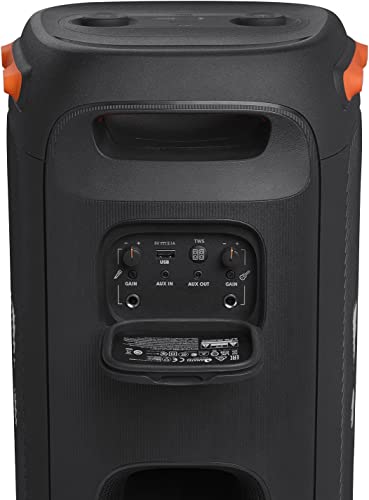
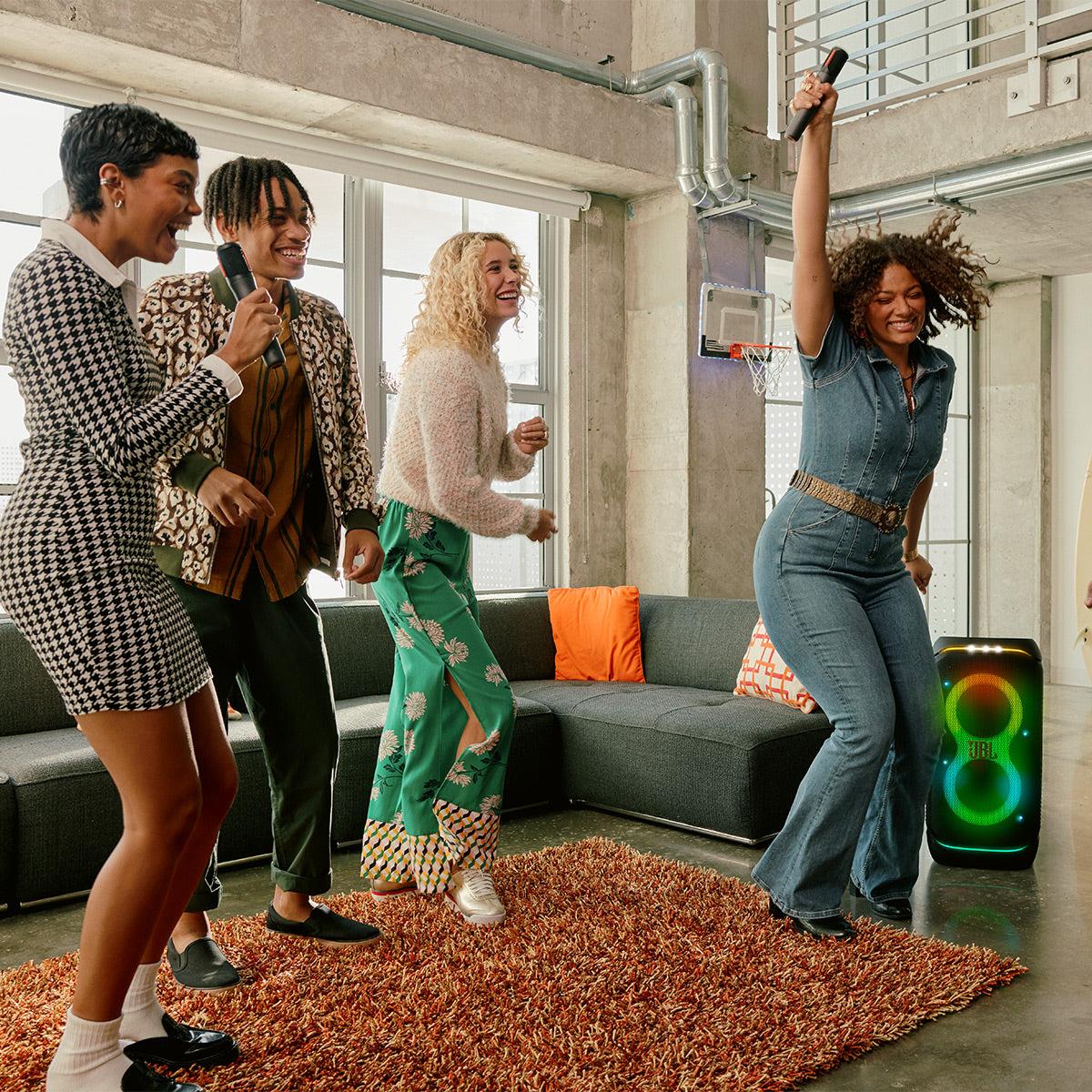
Both speakers include microphone inputs for karaoke, but the implementation differs slightly. The 110 provides both microphone and guitar inputs with independent gain controls, while the Stage 320 focuses specifically on microphone input with additional EQ tailoring for vocal performances.
For connectivity, the Stage 320 incorporates Bluetooth 5.4 versus the 110's Bluetooth 5.1, providing more stable connections and better multi-device handling. The newer model also supports Auracast, JBL's latest wireless multi-speaker technology that allows you to connect multiple compatible speakers for larger events.
While neither speaker is designed primarily for home theater use, they can serve as powerful audio sources for outdoor movie nights or large spaces where traditional soundbars might lack the necessary output. The Stage 320's higher power output and better frequency response make it more suitable for this application, especially if you're projecting movies in backyards or large rooms.
However, both speakers prioritize party-friendly sound over accurate reproduction, so they'll emphasize bass and overall impact rather than dialogue clarity or subtle sound effects. If home theater is a primary use case, dedicated home audio equipment will serve you better, but for casual outdoor movie viewing with groups, either PartyBox will deliver an engaging experience.
At the time of writing, the Stage 320 costs significantly more than the 110, but the price-per-watt ratio remains similar. The question becomes whether the additional features and capabilities justify the higher investment.
The 110 represents excellent value for casual users who host occasionally and prioritize portability and ease of use. It delivers genuine JBL sound quality and party features at a more accessible price point. For many users, its performance ceiling will never become a limitation.
The Stage 320 costs more upfront but offers better long-term value through its swappable battery system and more professional feature set. If you host frequently, need maximum volume for large groups, or want room to expand your setup with additional speakers, the extra investment makes sense.
The 110 makes the most sense for casual entertainers who prioritize true portability and budget consciousness. If you're hosting smaller gatherings, need something you can easily transport, and don't require maximum volume, it delivers excellent performance without unnecessary complexity or cost. It's perfect for college students, apartment dwellers, or anyone who wants reliable party audio without breaking the bank.
The Stage 320 targets serious entertainers, event organizers, or anyone who regularly hosts large groups. If you find yourself constantly wishing for more volume, need professional features like swappable batteries, or plan to expand your audio setup over time, the additional investment pays dividends. It's also the better choice if you have a dedicated entertainment space and don't need to transport your speaker frequently.
For most people, the decision comes down to honest assessment of your actual needs versus your aspirational ones. The 110 satisfies the vast majority of home entertainment scenarios, while the Stage 320 handles the most demanding applications where its additional capabilities become essential rather than just nice to have.
Both speakers represent solid engineering and proven reliability from JBL, so your choice really depends on matching the right tool to your specific use case and budget. Either way, you'll end up with a party speaker that delivers the sound quality and entertainment value that makes gatherings more memorable.
| JBL PartyBox 110 | JBL PartyBox Stage 320 |
|---|---|
| Power Output - Determines maximum volume and crowd size you can serve | |
| 160W RMS (good for 10-30 people) | 240W RMS (handles 25+ people easily) |
| Driver Configuration - Affects bass depth and overall sound quality | |
| 1x 5.25" woofer + 2x 2.25" tweeters | 2x 6.5" woofers + 2x 1" dome tweeters |
| Frequency Response - Lower numbers mean deeper bass you can feel | |
| 45 Hz - 20 kHz (solid bass for most music) | 40 Hz - 20 kHz (deeper bass impact) |
| Battery Life - How long your party can last without plugging in | |
| Up to 12 hours (7-8 hours real-world with lights) | Up to 18 hours (12-14 hours real-world with lights) |
| Battery Features - Important for long events and future-proofing | |
| Fixed battery, 3.5-hour charge time | Swappable battery system, 3-hour charge + 10-min quick charge |
| Weight and Portability - Affects how easily you can transport it | |
| 24 lbs with dual carry handles (truly portable) | 36 lbs with wheels and telescopic handle (mobile but heavy) |
| Audio Technology - Advanced features that enhance sound quality | |
| Bass Boost with 2 levels | AI Sound Boost + Bass Boost (automatic optimization) |
| Lighting System - Creates party atmosphere and visual excitement | |
| 4x RGB rings + 2x white strobes | Ring + strip + 11x white strobe LEDs (more dynamic) |
| Connectivity - How you connect devices and expand your setup | |
| Bluetooth 5.1, TWS pairing, AUX in/out | Bluetooth 5.4, Auracast multi-speaker, AUX in only |
| App Features - Controls and customization options | |
| Basic EQ and light controls | 5-band EQ, advanced sound effects, detailed light control |
| Inputs for Performance - Karaoke and live music capabilities | |
| Mic + guitar inputs with independent controls | Mic input with dedicated EQ tuning |
| Water Resistance - Protection for outdoor parties | |
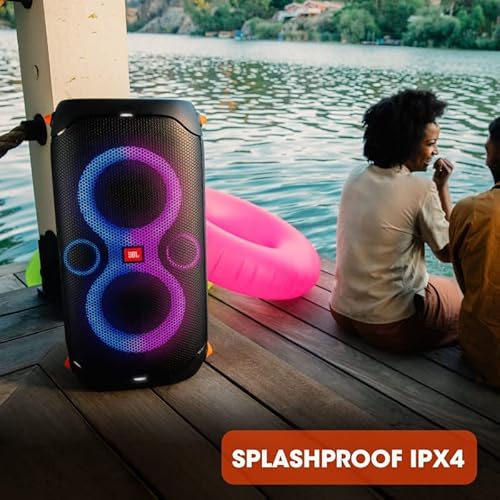
| IPX4 splashproof (handles light rain and splashes) | IPX4 splashproof (same protection level) |
| Release Date - Affects available features and technology | |
| 2021 (proven reliability, older tech) | 2024 (latest features and improvements) |
The JBL PartyBox Stage 320 is significantly louder with 240W RMS compared to the PartyBox 110's 160W RMS. The Stage 320 can fill tennis court-sized outdoor areas, while the 110 works best for smaller gatherings of 10-30 people.
The JBL PartyBox Stage 320 offers up to 18 hours of battery life, while the PartyBox 110 provides up to 12 hours. In real-world party conditions with lights active, expect about 12-14 hours from the Stage 320 and 7-8 hours from the 110.
The JBL PartyBox 110 is more portable at 24 pounds with dual carrying handles, making it easy for one person to carry. The PartyBox Stage 320 weighs 36 pounds but includes wheels and a telescopic handle, making it mobile but requiring rolling rather than carrying.
Both deliver JBL's signature sound, but the PartyBox Stage 320 offers superior audio quality with dual 6.5-inch woofers providing deeper bass (40Hz vs 45Hz) and clearer vocals. The Stage 320 also includes AI Sound Boost technology for automatic sound optimization.
The JBL PartyBox Stage 320 has a more advanced lighting system with ring LEDs, strip LEDs, and 11 white strobe LEDs compared to the PartyBox 110's 4 RGB rings and 2 white strobes. This creates more dynamic and varied light show patterns.
Yes, both speakers support karaoke. The JBL PartyBox 110 has microphone and guitar inputs with independent controls, while the PartyBox Stage 320 focuses on microphone input with dedicated vocal EQ tuning for better karaoke performance.
The JBL PartyBox 110 offers better value for casual users who prioritize portability and budget. The PartyBox Stage 320 provides better long-term value for frequent entertainers due to its swappable battery system and professional features.
The JBL PartyBox 110 takes 3.5 hours to fully charge, while the PartyBox Stage 320 charges in 3 hours. The Stage 320 also offers a 10-minute quick charge feature that provides 2 hours of playback time.
Yes, both support multi-speaker setups but differently. The JBL PartyBox 110 uses True Wireless Stereo (TWS) pairing and has an AUX output for daisy-chaining. The PartyBox Stage 320 uses newer Auracast technology for wireless multi-speaker connections.
Both the JBL PartyBox 110 and PartyBox Stage 320 are IPX4 splashproof, meaning they can handle light rain and splashes but aren't fully waterproof or submersible. They're suitable for poolside parties and outdoor use.
The JBL PartyBox Stage 320 is better for large outdoor parties due to its 240W power output, deeper bass response, and ability to maintain clarity at high volumes. The 110 is better suited for smaller outdoor gatherings and intimate parties.
While neither is designed for home theater, the JBL PartyBox Stage 320 works better for outdoor movie nights due to its higher power output and better frequency response. However, both prioritize party-friendly sound over dialogue clarity, so dedicated home theater equipment is recommended for serious movie watching.
We've done our best to create useful and informative comparisons to help you decide what product to buy. Our research uses advanced automated methods to create this comparison and perfection is not possible - please contact us for corrections or questions. These are the sites we've researched in the creation of this article: rtings.com - youtube.com - bestbuy.com - gadgets360.com - popsci.com - youtube.com - audioadvice.com - popsci.com - youtube.com - versus.com - youtube.com - rtings.com - jbl.com - in.jbl.com - jbl.com.tw - bhphotovideo.com - in.jbl.com - jbl.com - youtube.com - hu.harmanaudio.com - jbl.com.au - global.jbl.com - support.jbl.com - youtube.com - kh.jbl.com - onward.ph - jbl.com.ph - support.jbl.com - youtube.com - stereoguide.com - soundguys.com - rtings.com - soundguys.com - soundguys.com - rtings.com - jbl.com - youtube.com - youtube.com - youtube.com - youtube.com - rtings.com - 9to5toys.com - versus.com - cdw.com - jbl.com - projectorscreenstore.com - projectorscreen.com - ro.harmanaudio.com - jbl.co.nz - bestbuy.com - youtube.com

Privacy Policy
Terms and Conditions - Affiliate Policy
Home Security
© Copyright 2008-2026.
11816 Inwood Rd #1211, Dallas, TX 75244