

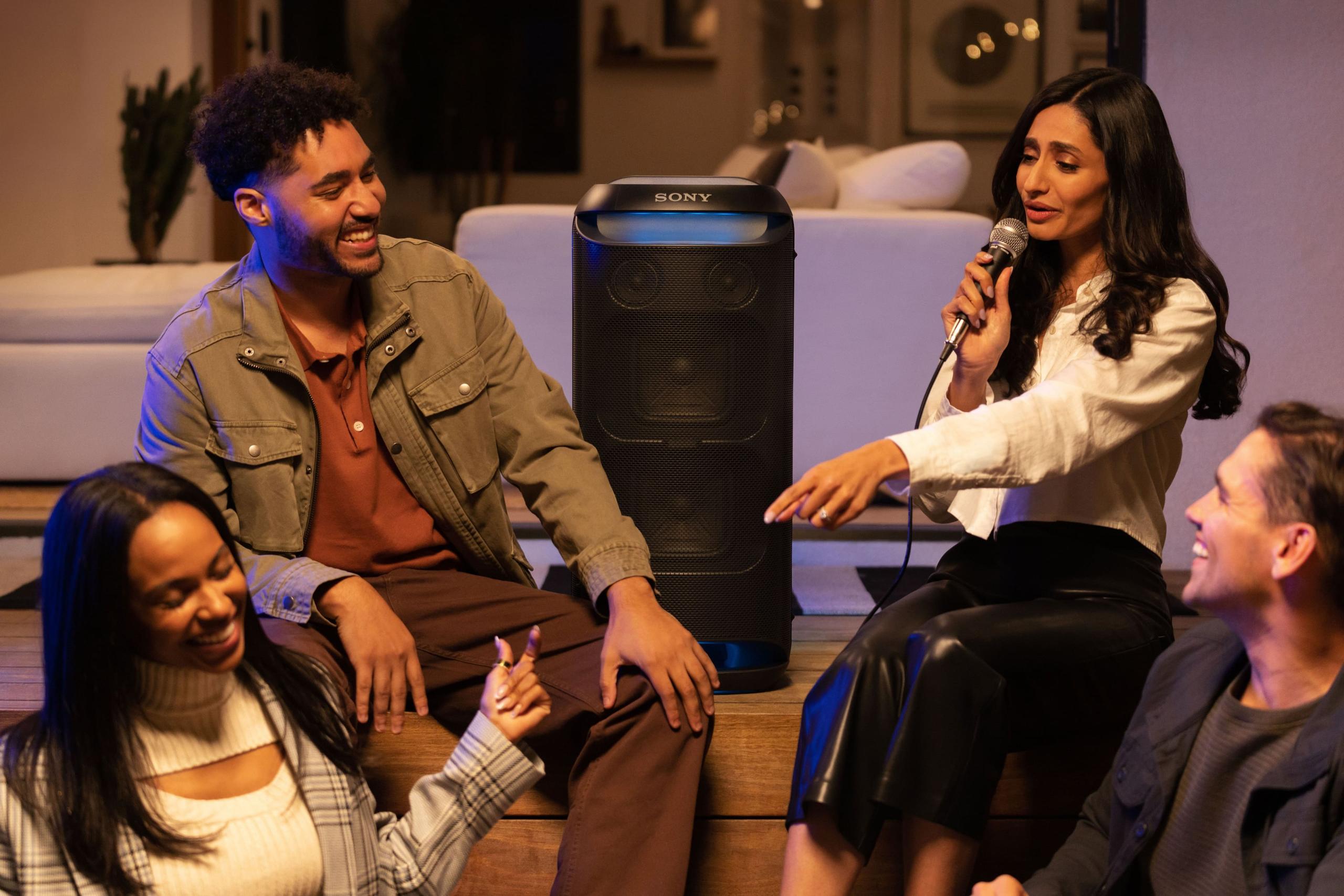
Party speakers have evolved dramatically over the past few years, transforming from simple loud Bluetooth speakers into sophisticated entertainment systems that can power everything from backyard barbecues to wedding receptions. These aren't your typical bookshelf speakers—they're designed to fill large spaces with powerful sound, survive outdoor conditions, and keep the party going all night long on battery power.
When shopping for a party speaker, you're essentially buying a portable sound system that needs to check several important boxes: it must be loud enough to compete with conversation and ambient noise, portable enough to move around (despite often weighing 30+ pounds), and durable enough to handle spills, splashes, and the occasional bump from enthusiastic party-goers.
Today we're comparing two standout options that take notably different approaches to the party speaker formula: Samsung's MX-ST50F Sound Tower and Sony's SRS-XV800 X-Series. At the time of writing, these speakers sit at opposite ends of the price spectrum, with the Samsung commanding a significant premium over the Sony—but that higher price doesn't automatically mean better value.
Before diving into specifics, it's worth understanding what separates party speakers from regular portable speakers. The key differentiators are power output (measured in watts), battery endurance, weather resistance, and increasingly, visual entertainment features like LED lighting systems.
Power output tells you how loud a speaker can get, but it's not the whole story. The speaker's driver configuration—meaning the size and arrangement of the individual speakers inside the cabinet—matters enormously for sound quality. Larger woofers (the speakers that handle bass frequencies) can move more air and create deeper, more impactful low-end sound. Meanwhile, tweeters (the smaller speakers handling high frequencies) need to be positioned strategically to spread sound evenly throughout a room.
Battery life becomes crucial when you're away from power outlets, whether that's at a beach, campground, or outdoor wedding venue. Many party speakers also include features like karaoke microphone inputs, customizable lighting effects, and the ability to chain multiple speakers together for even bigger sound.
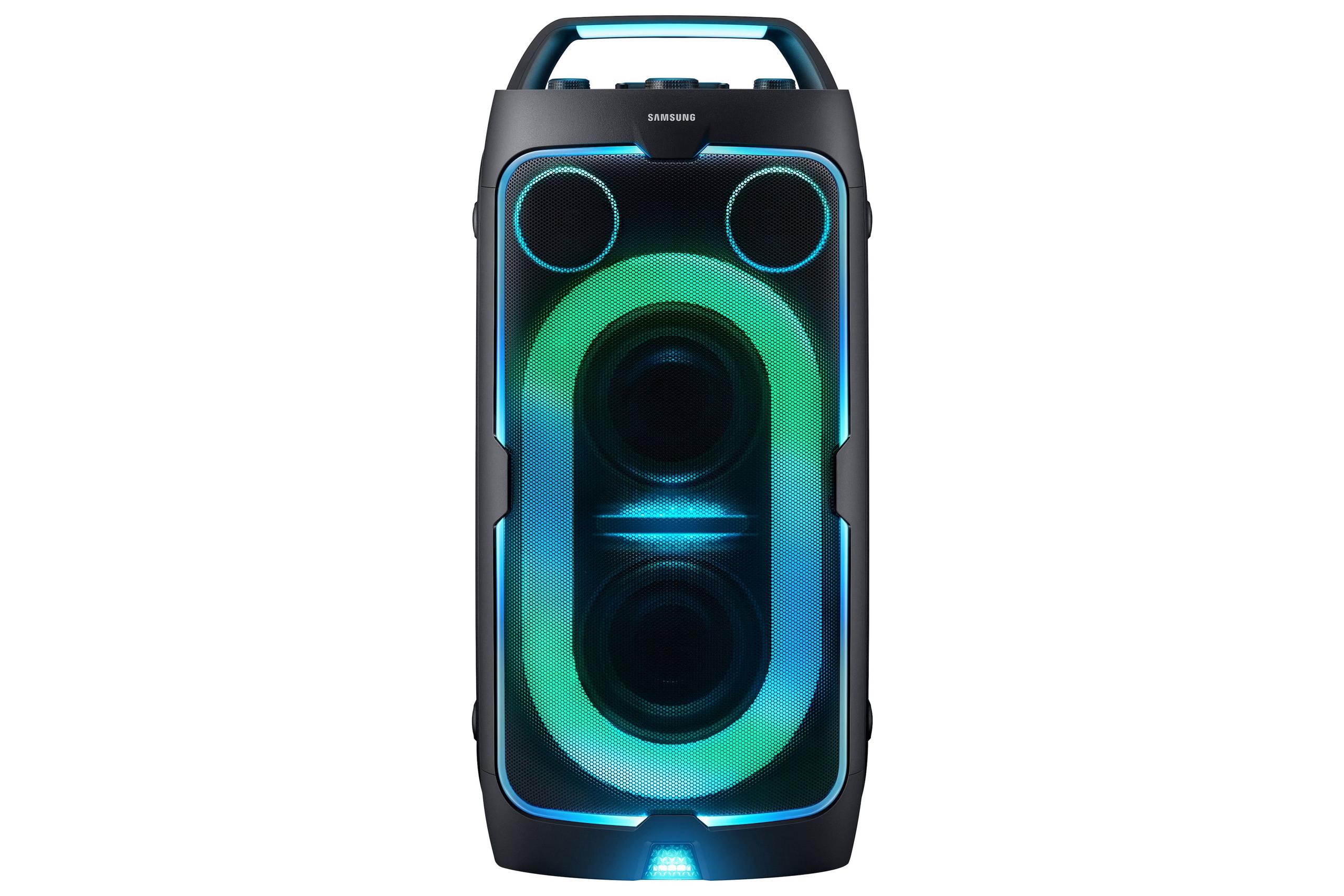
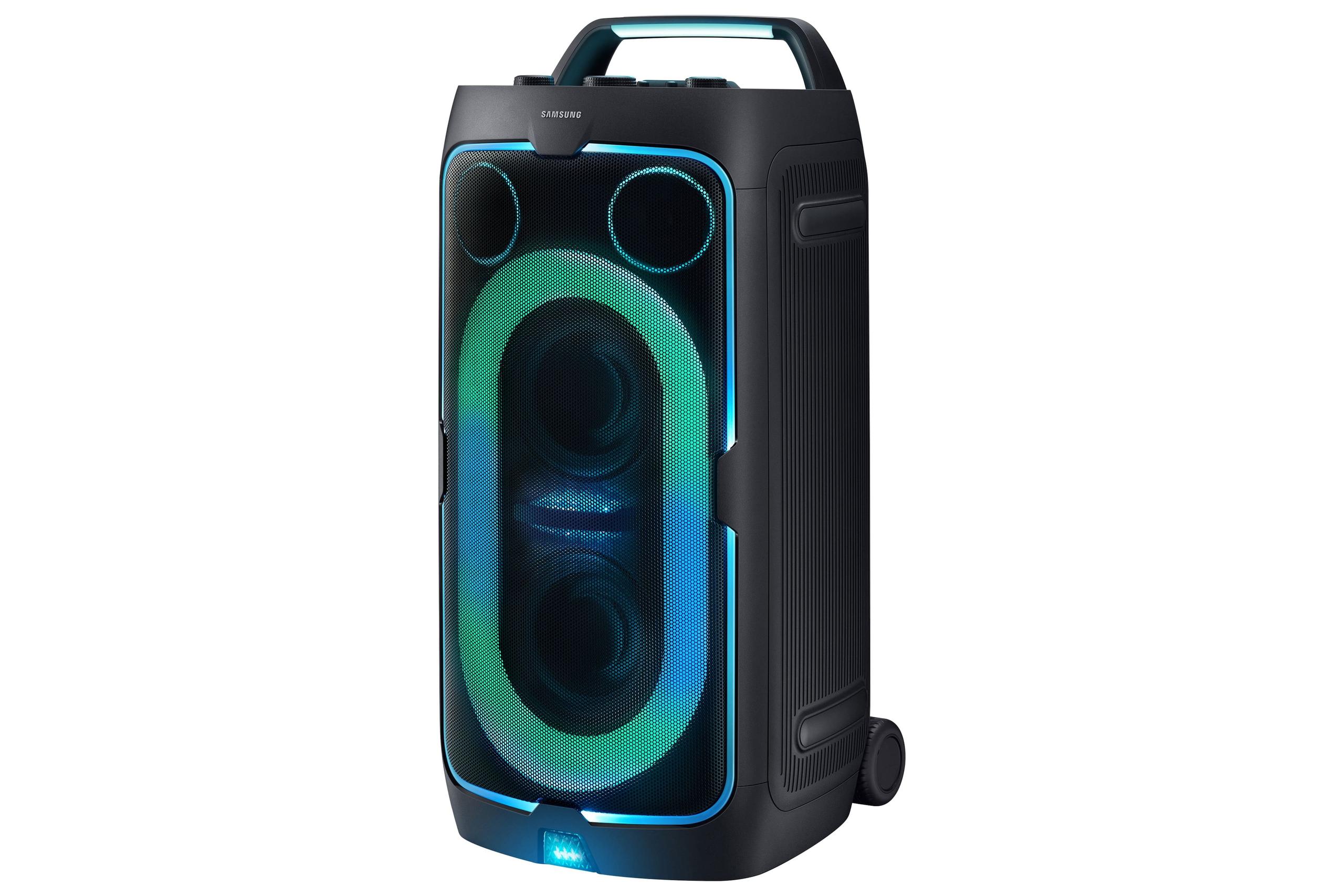
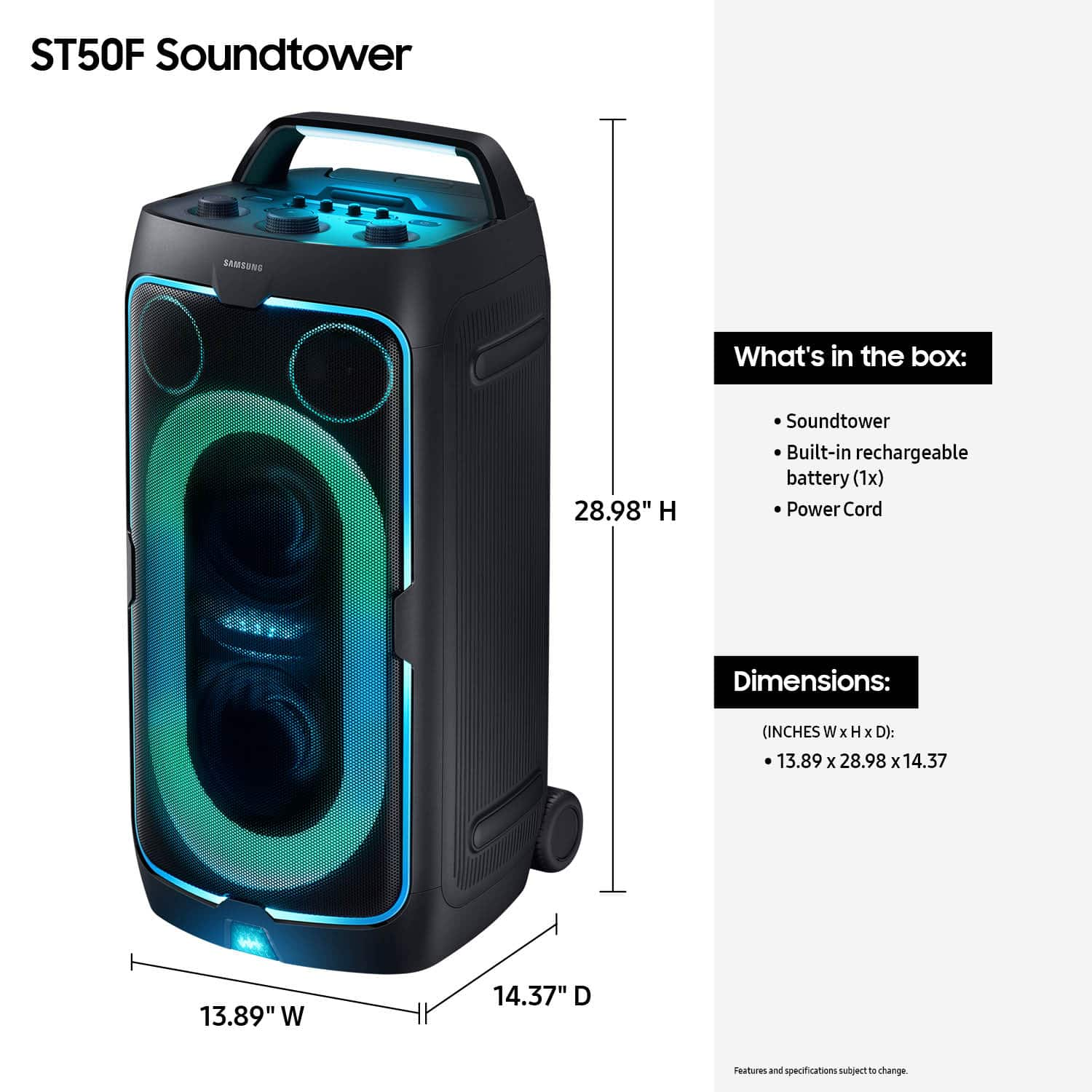
The Samsung MX-ST50F, released in 2025, represents Samsung's latest thinking on what a premium party speaker should be. It's positioned as a comprehensive entertainment system with extensive customization options and cutting-edge features like Auracast technology (which allows seamless wireless connection of multiple speakers) and Samsung's Party Lights+ system.
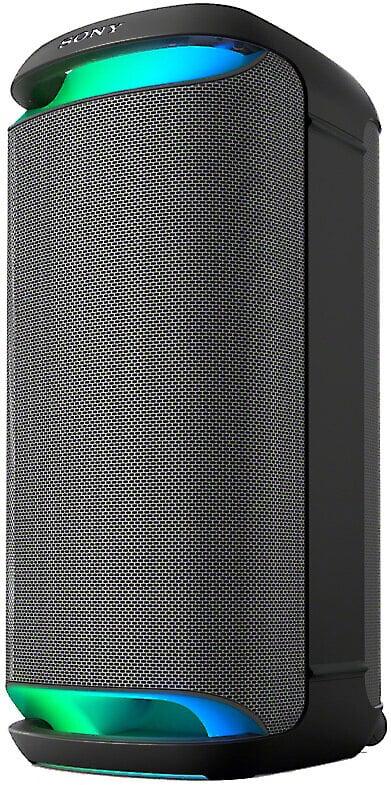
Sony's SRS-XV800, which hit the market in 2023, takes a more straightforward approach focused on acoustic performance and practical features. Sony has been refining their X-Series party speakers for several years, and the XV800 benefits from that iterative development with features like their X-Balanced speaker technology and LDAC high-resolution Bluetooth codec support.
The timing difference matters here. The Samsung incorporates newer wireless technologies and more sophisticated app integration, while the Sony has had more time in the market for real-world testing and software refinements.
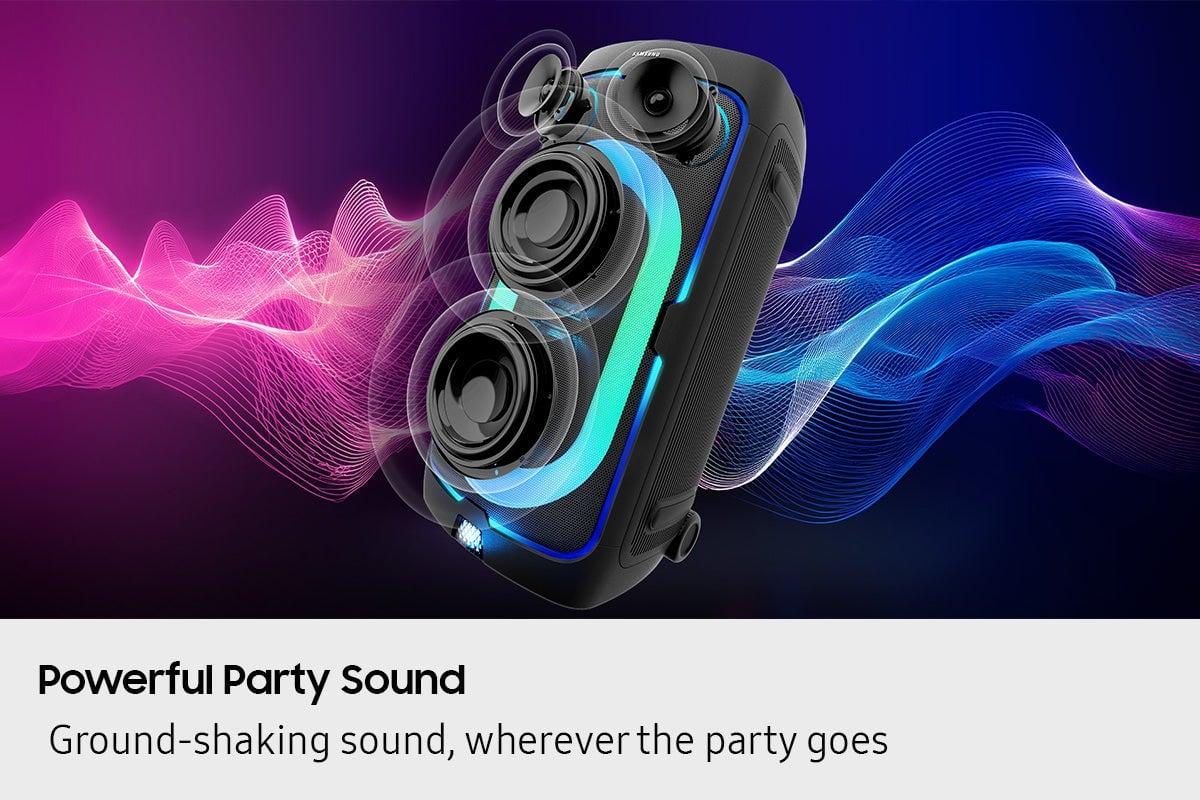
Sound quality is where these speakers show their different philosophies most clearly. The Samsung MX-ST50F delivers 240 watts of power through dual 6.5-inch woofers and dual tweeters, but here's the catch: that's only when plugged into wall power. On battery, it drops to 90 watts—a significant reduction that affects both volume and bass impact.
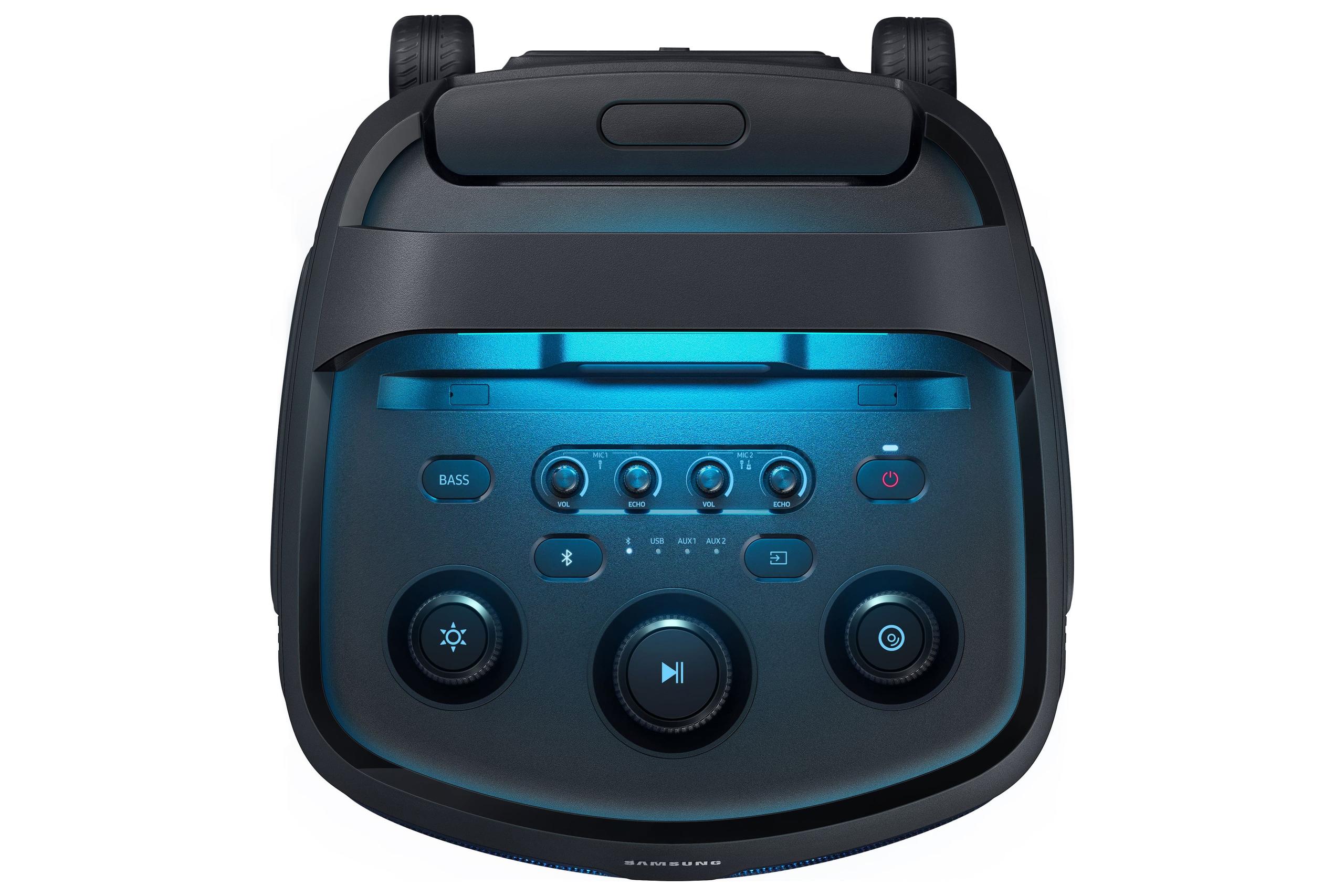
This power reduction on battery is actually common in party speakers, but it's more pronounced with the Samsung than many competitors. The upside is Samsung's sophisticated tuning options. The speaker offers three distinct bass modes (Deep, Punchy, and Gentle) plus four environmental sound modes (Standard, Wide, Stadium, and Outdoor). This level of customization is rare in the category and lets you optimize sound for different music genres and venues.
The Samsung also incorporates Waveguide technology, which is essentially a shaped acoustic channel that helps direct sound more efficiently from the speakers. Think of it like a megaphone built into the speaker cabinet—it helps ensure sound spreads evenly rather than just blasting straight forward.
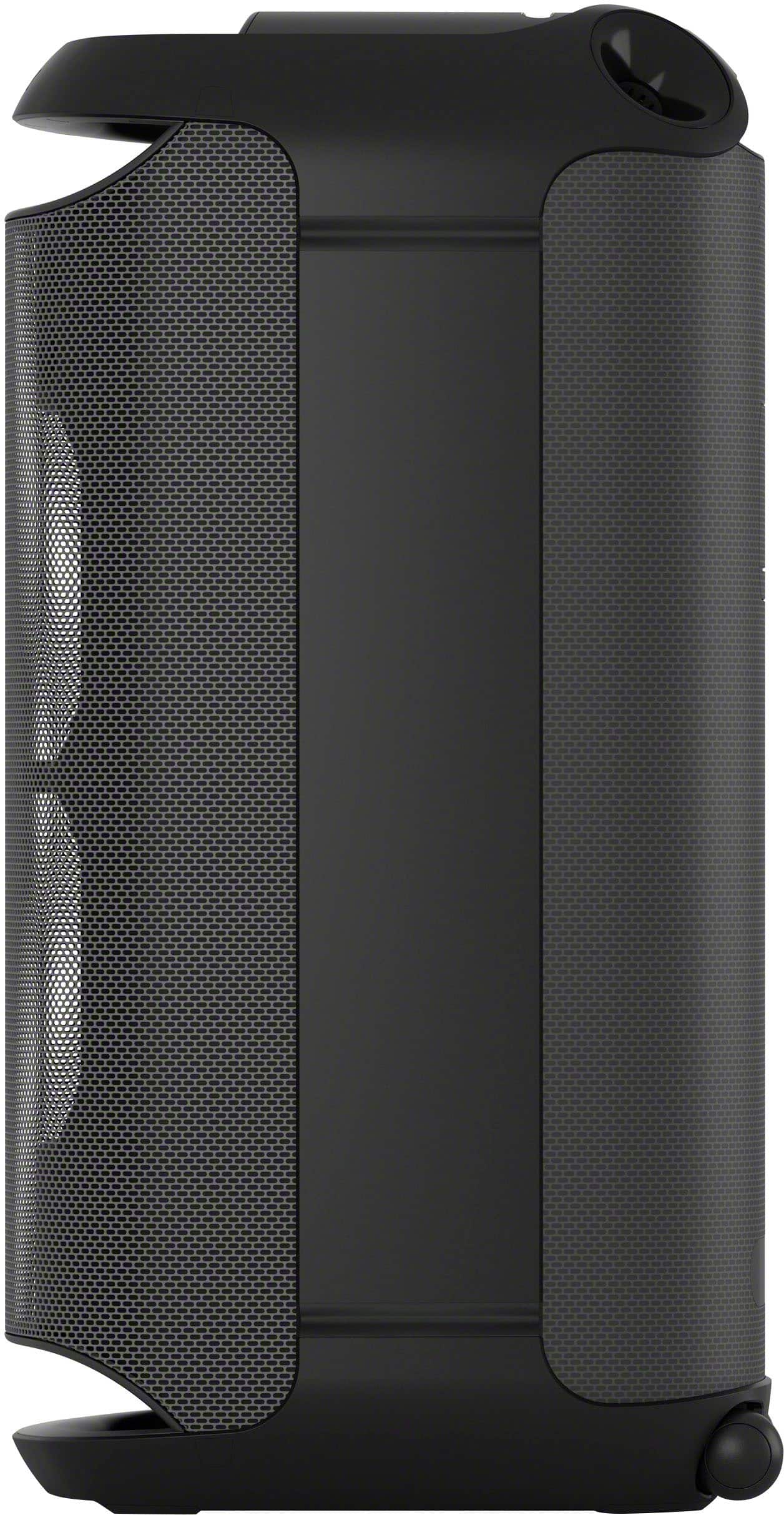
In contrast, the Sony SRS-XV800 takes a more hardware-focused approach with six total drivers: dual 6.75-inch X-Balanced woofers and five dome tweeters arranged strategically around the cabinet. Sony's X-Balanced design uses rectangular rather than circular woofers, which allows for larger diaphragm surface area in the same cabinet space. More surface area means the speakers can move more air with less effort, potentially reducing distortion and improving clarity.
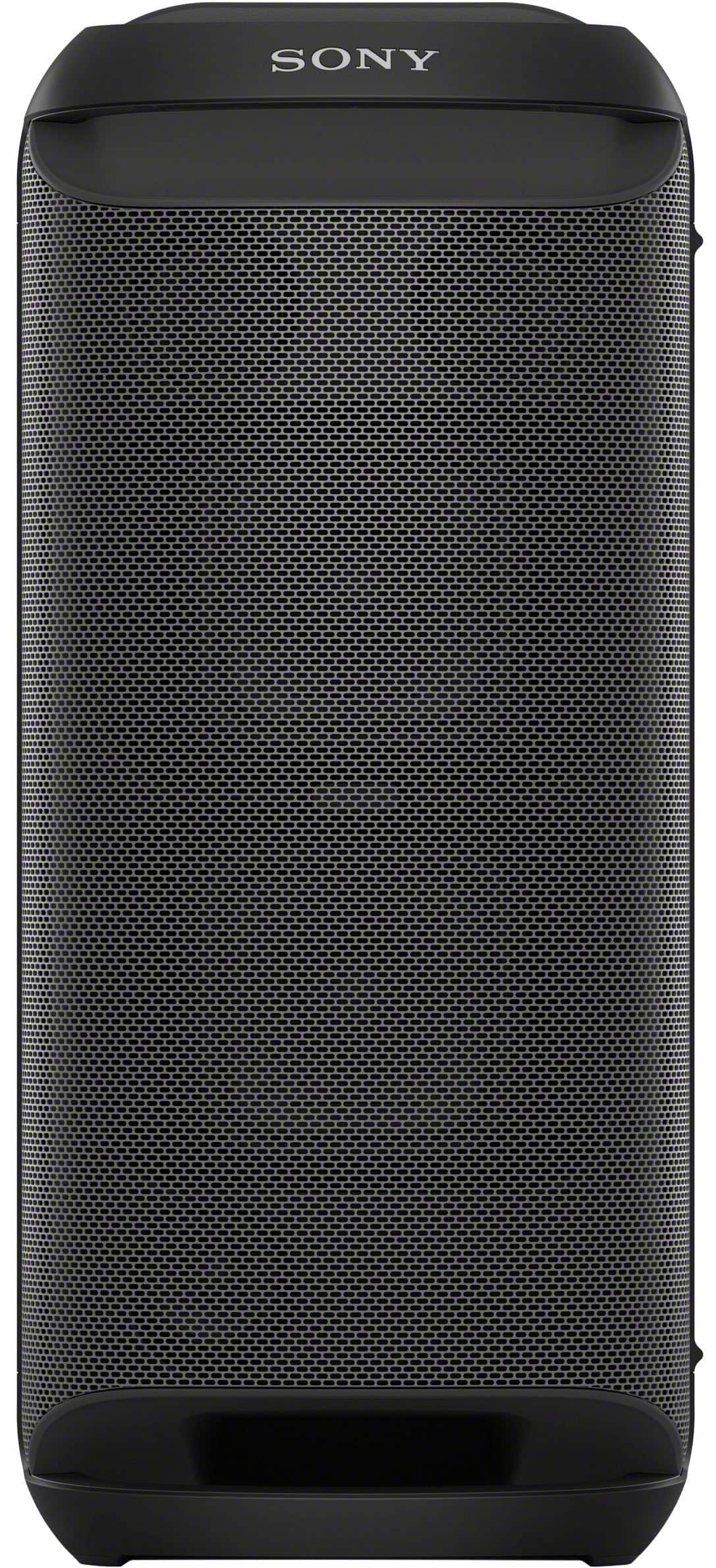
Based on user and expert reviews we've analyzed, the Sony consistently earns praise for sound quality that remains clear and powerful even at maximum volumes. Users frequently mention that they rarely need to push the speaker past halfway on the volume dial, even in large outdoor spaces. The omnidirectional design, created by positioning three tweeters on the front and two on the rear, helps fill rooms more evenly than traditional forward-firing designs.
The Samsung, while offering more tuning flexibility, seems to prioritize customization over raw acoustic performance. This isn't necessarily bad—it means you can fine-tune the sound to your preferences—but it requires more user input to achieve optimal results.
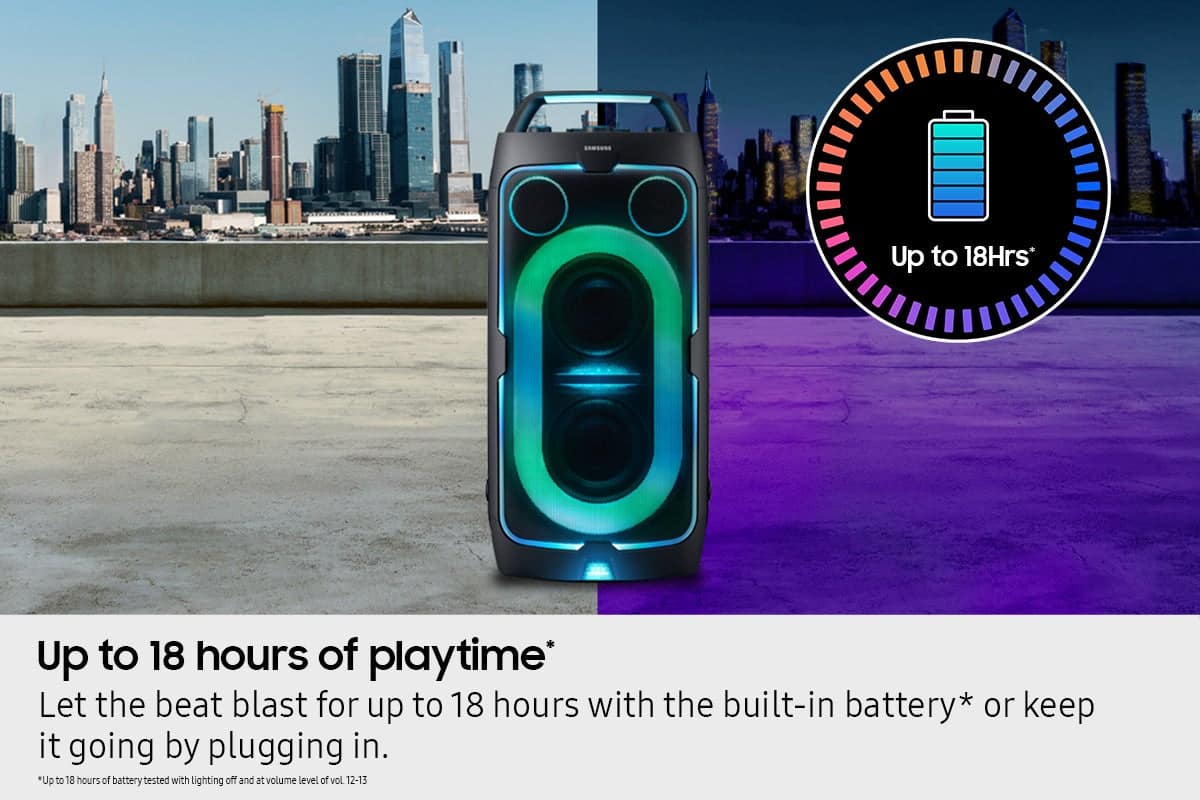
Battery performance reveals another key difference in design philosophy. The Samsung MX-ST50F provides up to 18 hours of playback with a user-replaceable battery system. This replaceable design is genuinely useful for heavy users—when the battery eventually degrades after hundreds of charge cycles, you can swap in a new one rather than retiring the entire speaker.
However, the Sony SRS-XV800 counters with up to 25 hours of battery life from its built-in battery—about 39% longer than the Samsung. Sony also includes quick charging that provides three hours of playback from just a 10-minute charge, which is incredibly handy when you realize you forgot to charge before an event.
In practical terms, both offer enough battery life for most events. The difference becomes important for multi-day festivals, camping trips, or situations where charging opportunities are limited. The Sony's longer life reduces anxiety about running out of power, while the Samsung's replaceable battery offers long-term serviceability.
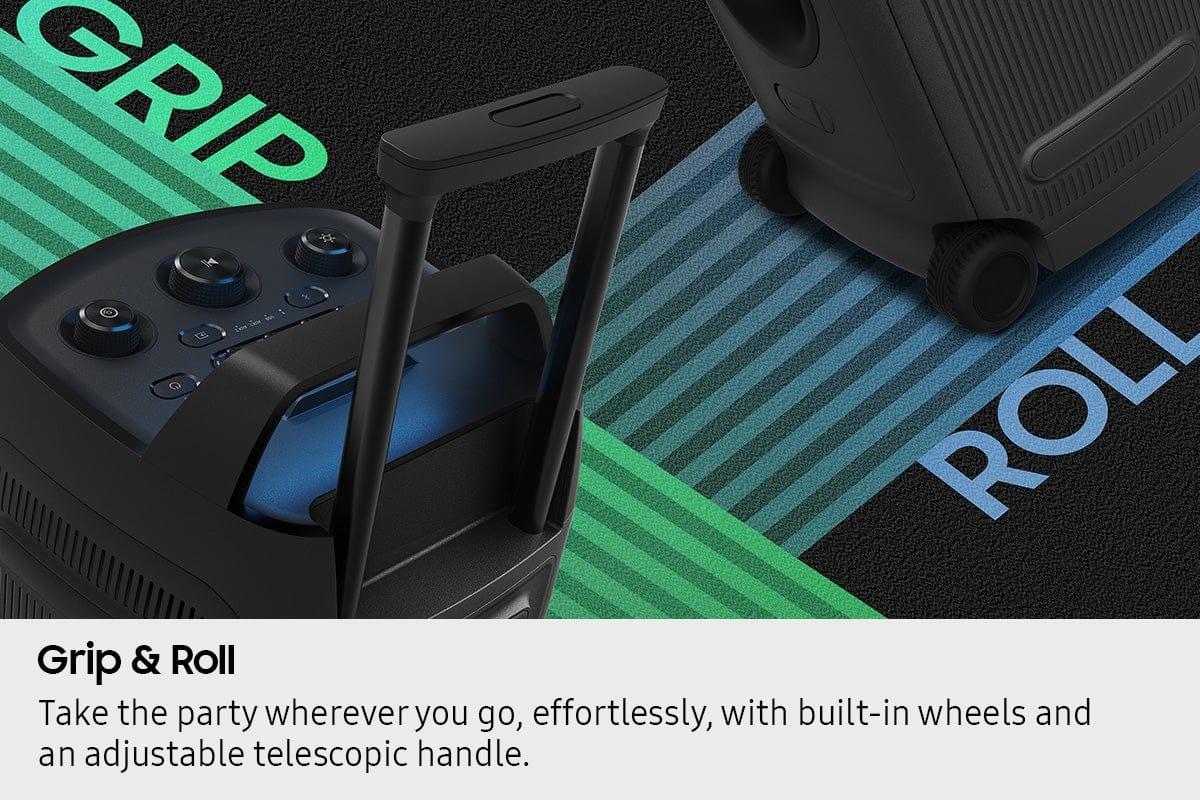
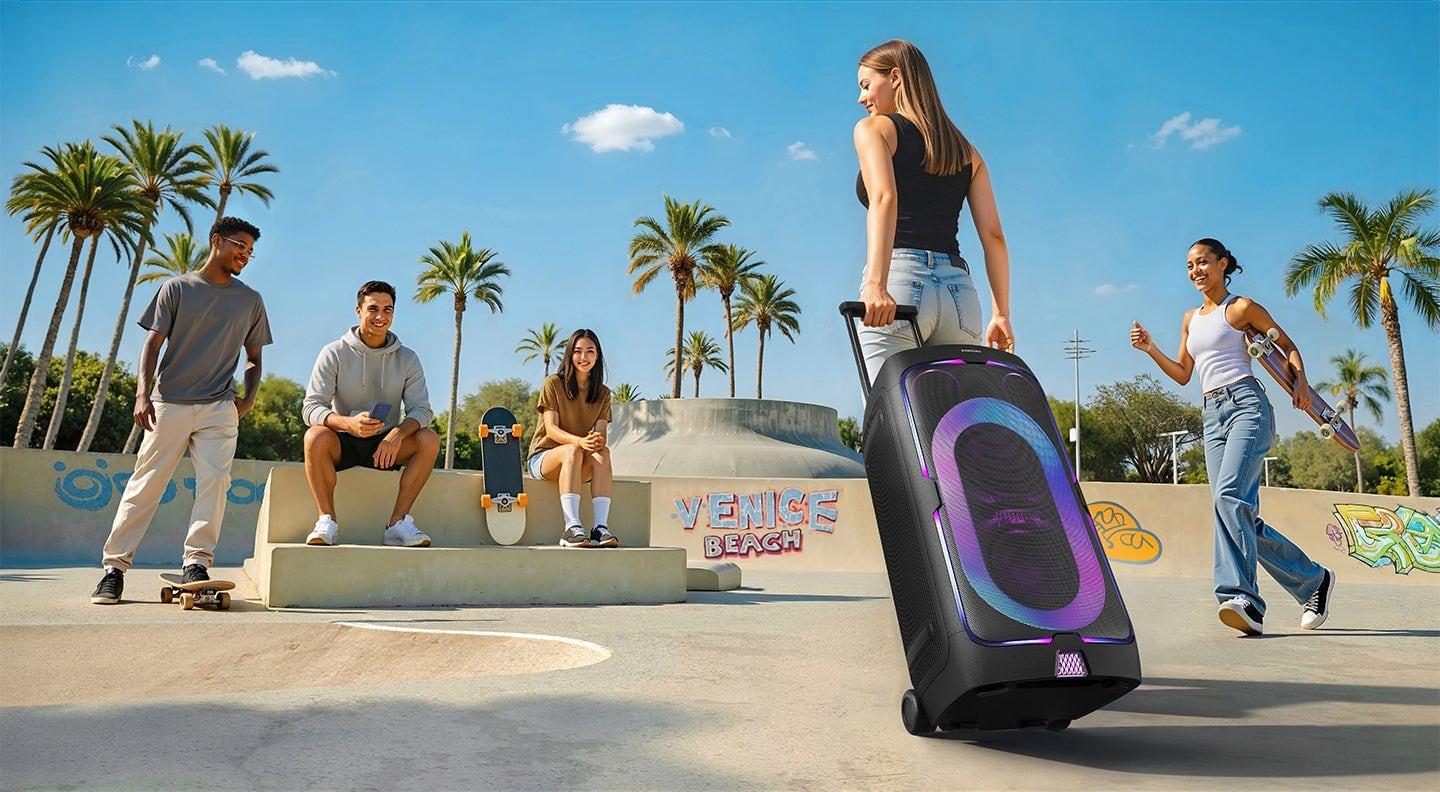
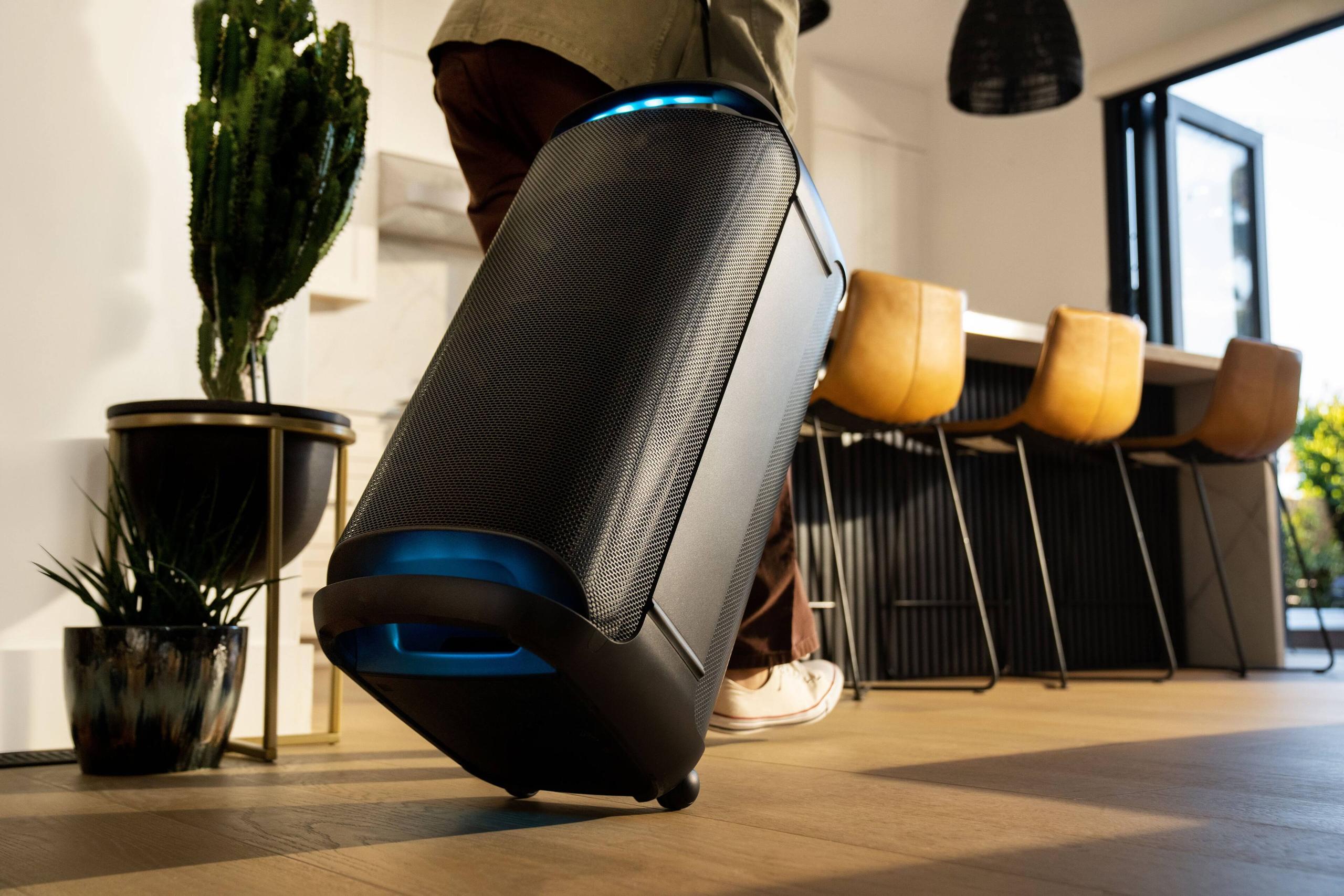
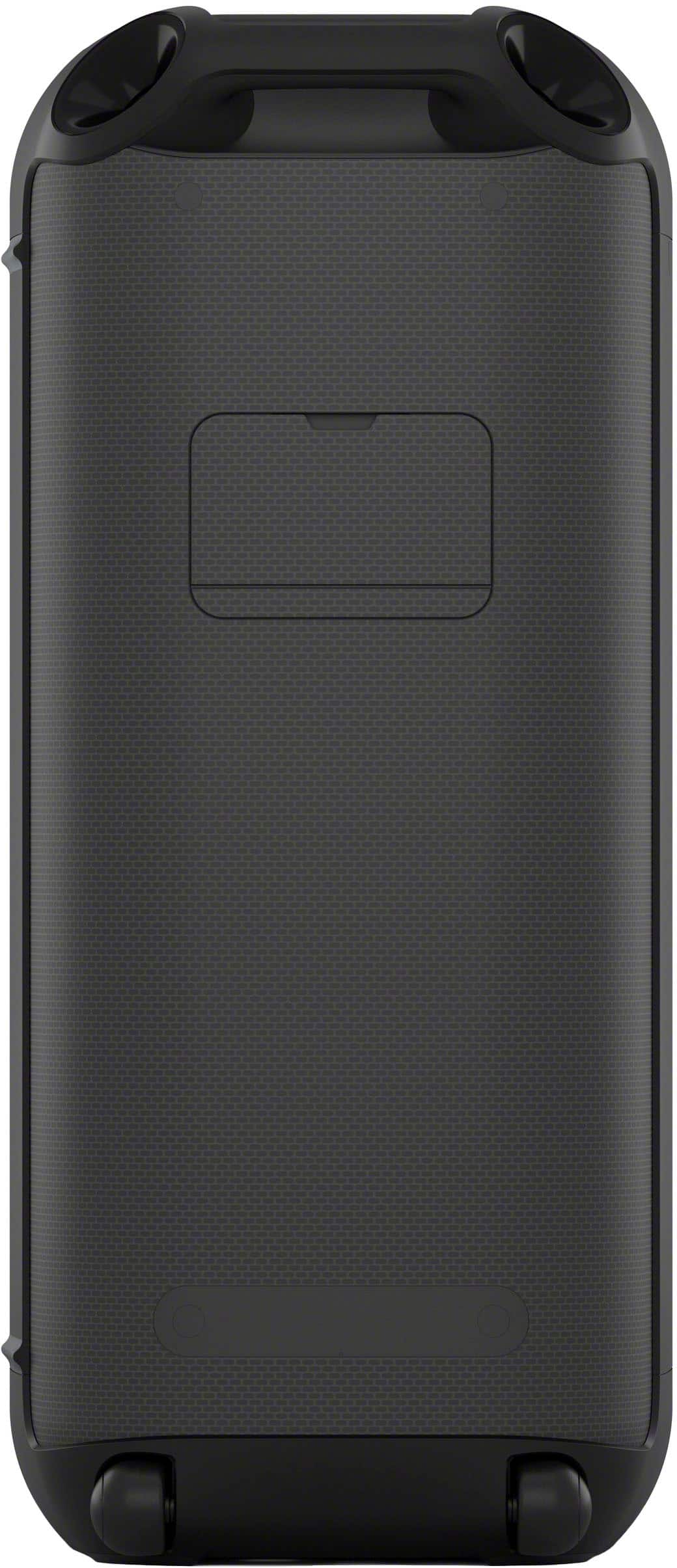
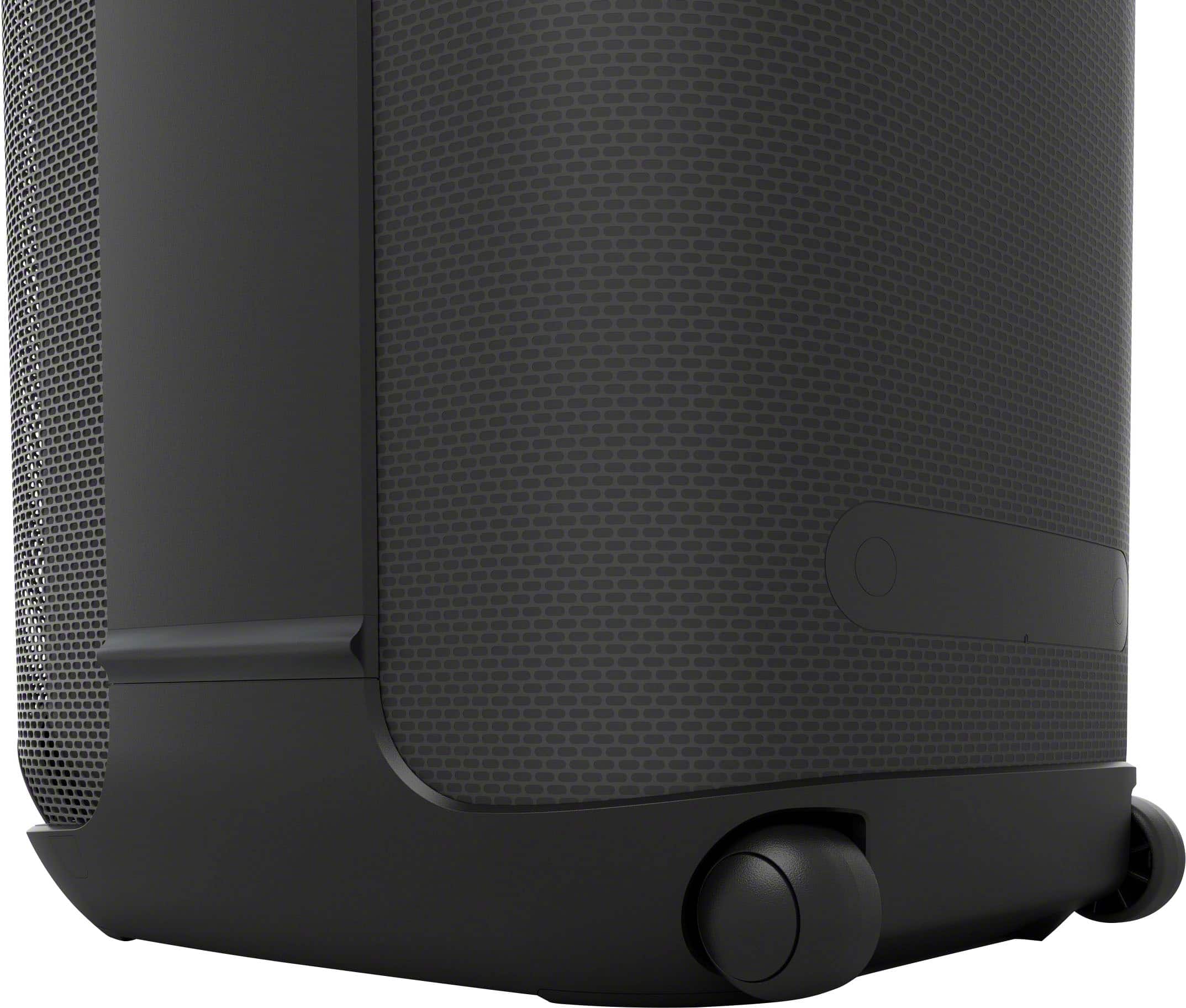
Despite being called "portable," both speakers are substantial pieces of equipment. The Sony SRS-XV800 weighs about 41 pounds, making it genuinely challenging to carry any significant distance. Both speakers include wheels and handles, but the Samsung MX-ST50F goes further with a five-level adjustable telescoping handle, similar to rolling luggage.
From our research into user experiences, this portability difference matters more than you might expect. Many users report preferring to lift and carry the Sony for short distances rather than dealing with the wheels on uneven surfaces, but that becomes impractical quickly due to the weight. The Samsung's superior handle system and lighter overall weight (though exact weight wasn't specified) makes it genuinely more user-friendly for transport.
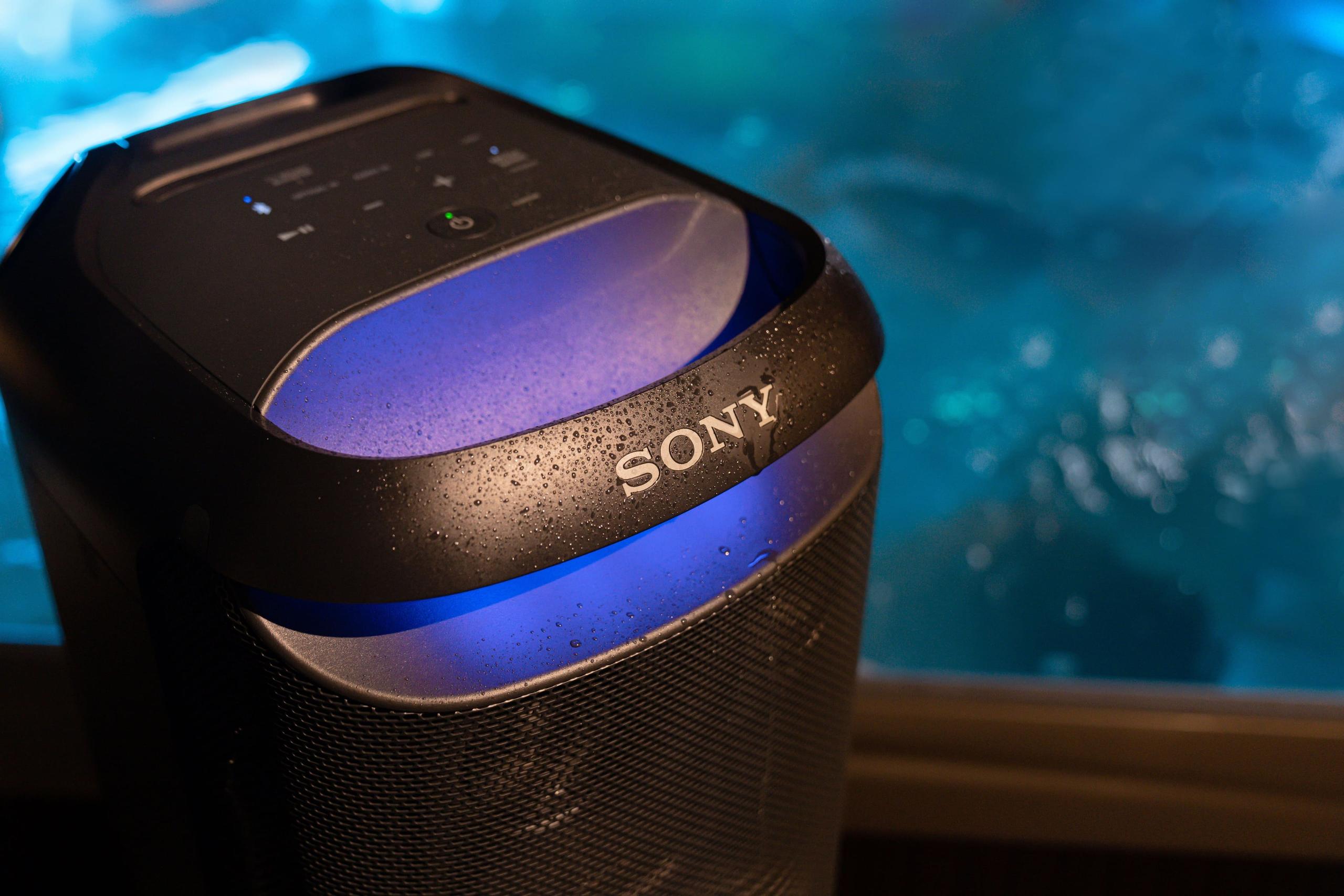
Both speakers earn IPX4 water resistance ratings, meaning they can handle splashes and light rain but shouldn't be submerged. The Sony has an interesting quirk where its water resistance drops to IPX2 when placed horizontally, so orientation matters for outdoor use.
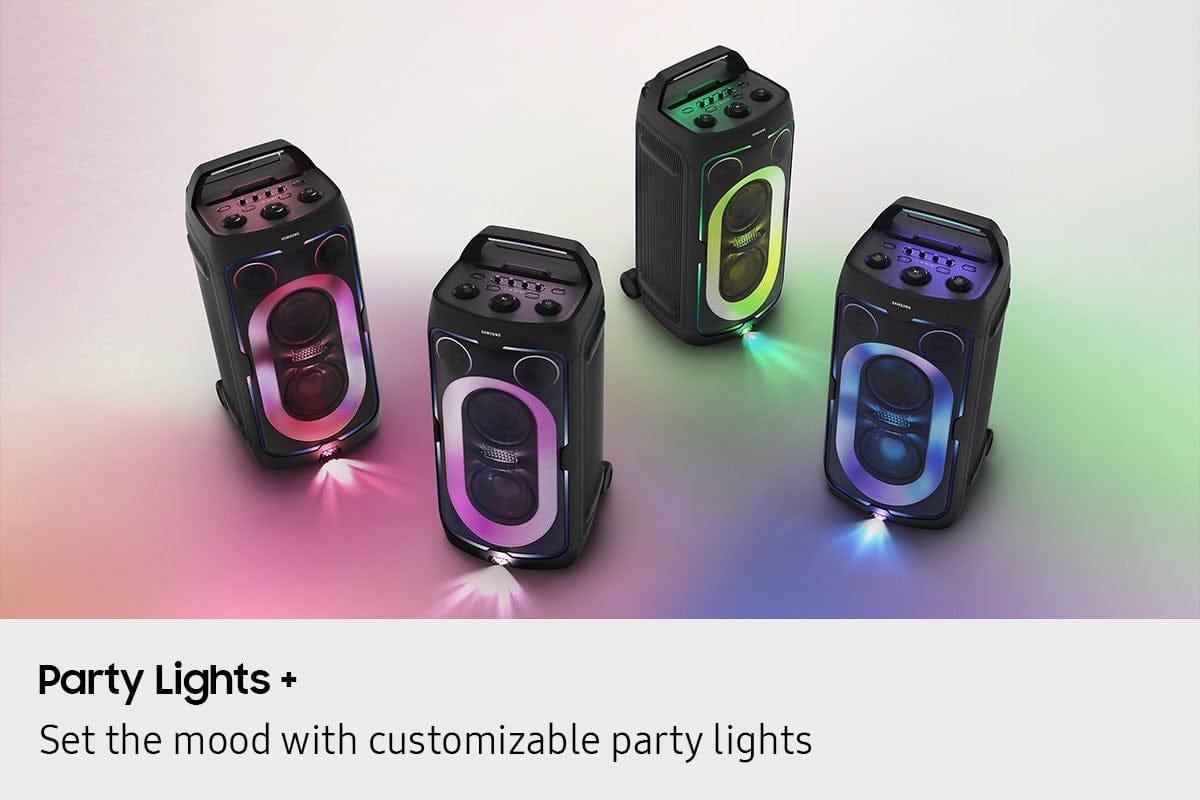
This is where the Samsung MX-ST50F really justifies its premium positioning. The Party Lights+ system offers six customizable lighting patterns across five different zones of the speaker cabinet, including the handle area. These aren't just basic color-changing LEDs—the system includes specific modes like Wave, Trail, Spark, Breeze, Flow, and Flare that react dynamically to music.
The Samsung Sound Tower app provides comprehensive control over these lighting effects, plus DJ features including 12 sampler effects that let you add sound effects and transitions like a professional DJ setup. For users who see their speaker as part of the entertainment rather than just background music, these features add significant value.
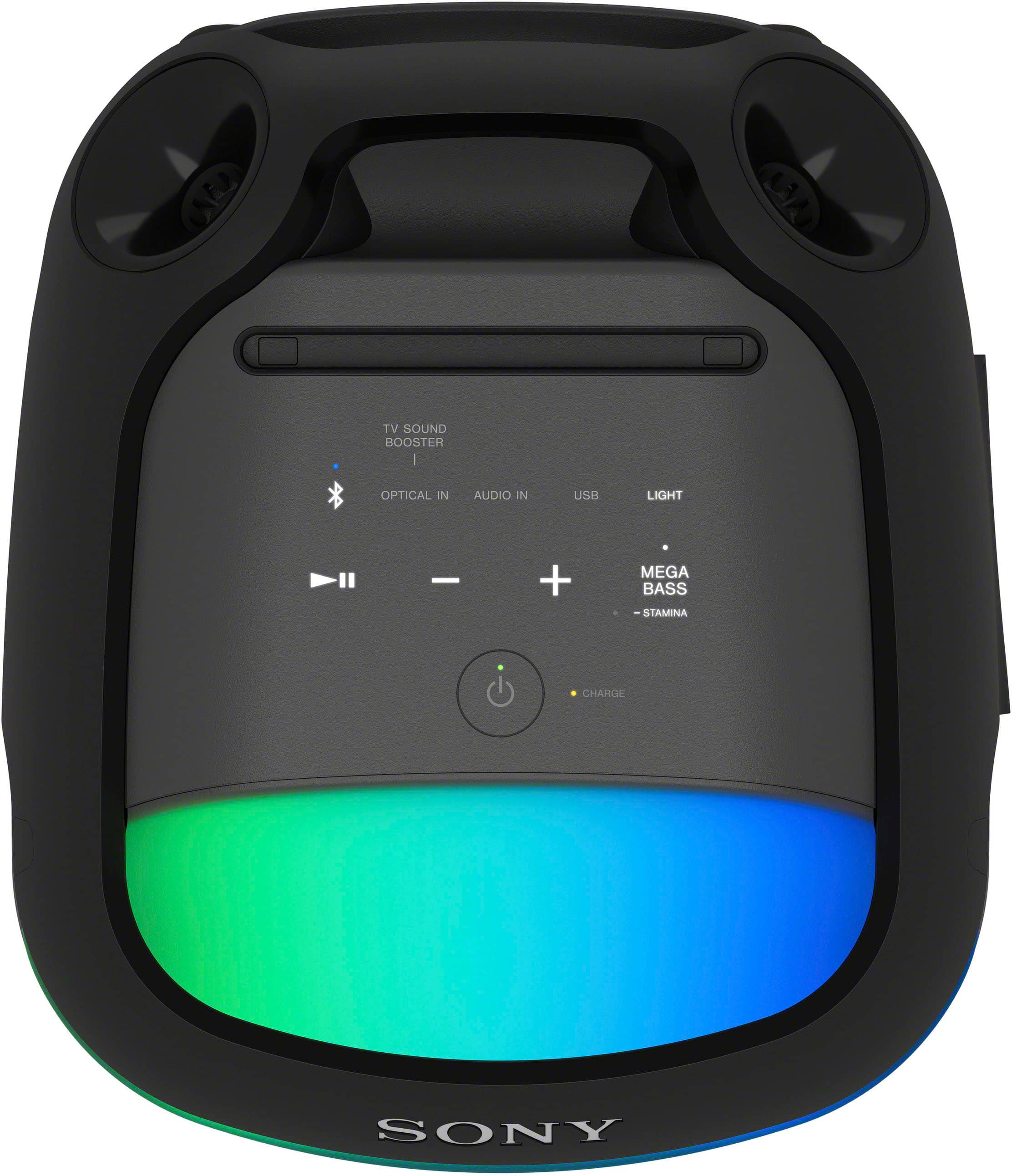
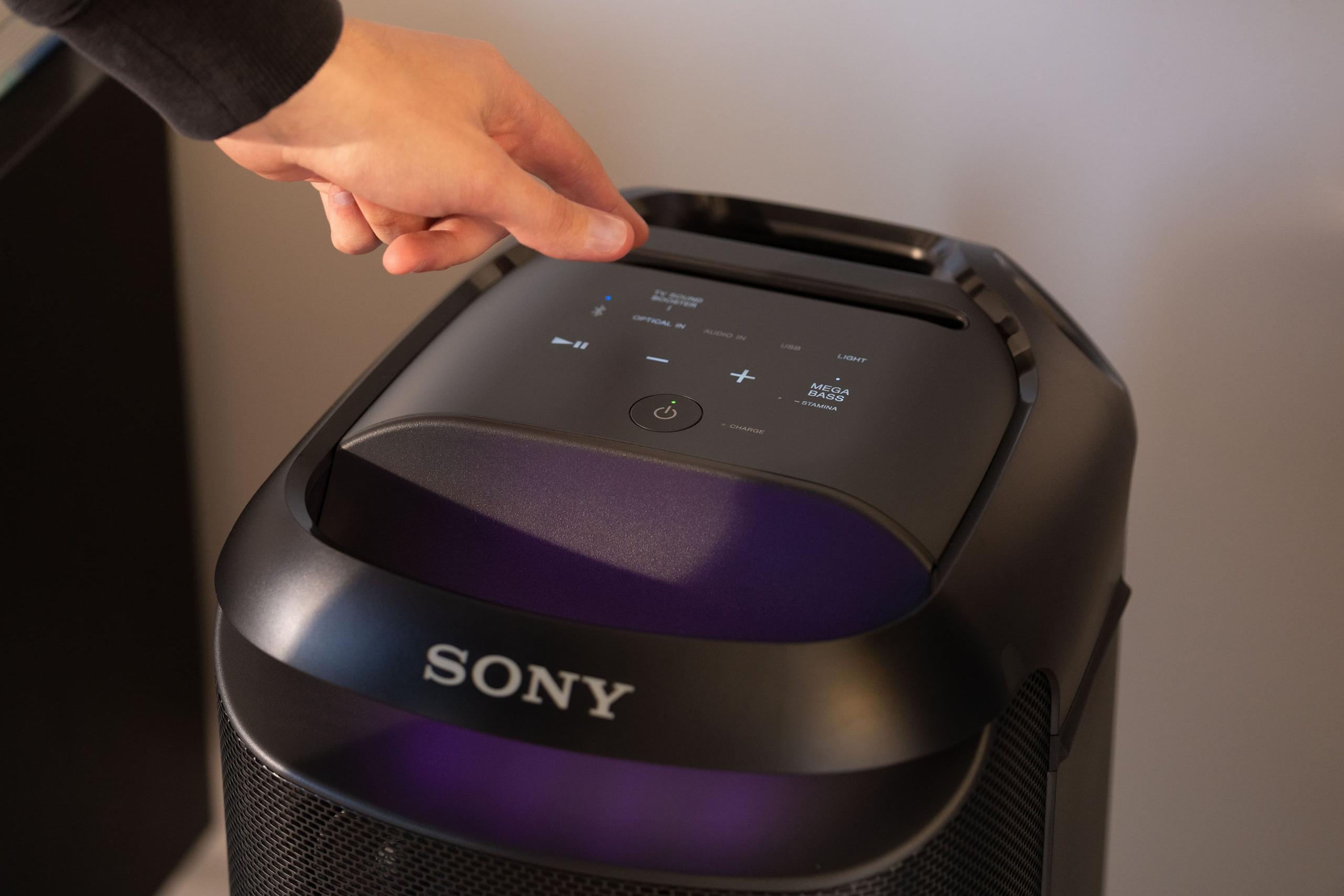
The Sony SRS-XV800 includes basic LED lighting effects but nothing approaching the sophistication of Samsung's system. Instead, Sony focuses on practical features like optical digital input for connecting to TVs, essentially letting the speaker function as a soundbar for movie nights or gaming sessions.
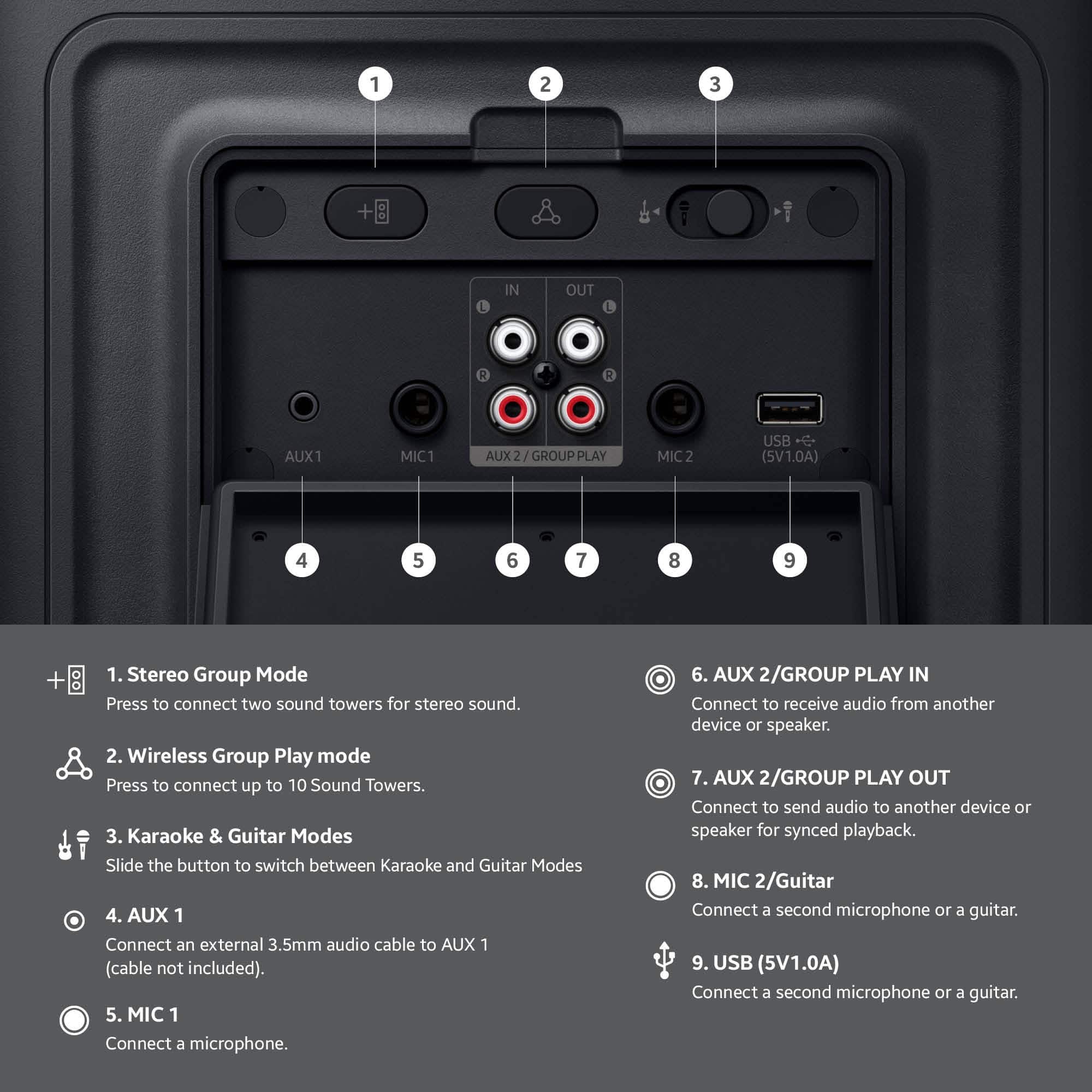
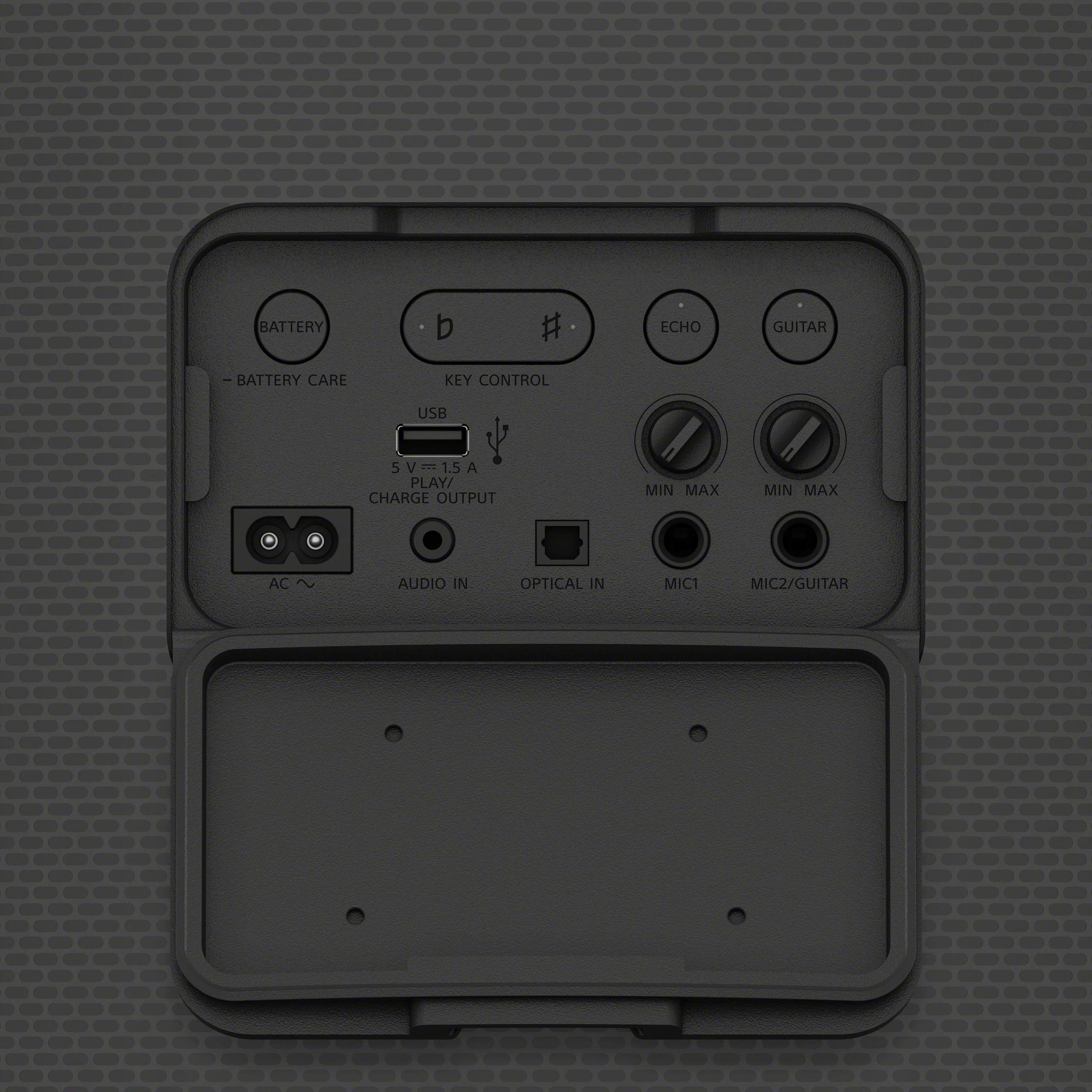
Both speakers support karaoke with dual microphone inputs, but the Samsung goes further with dedicated guitar input and more extensive vocal processing options through its app.
Modern party speakers increasingly support connecting multiple units together, and both speakers offer this capability with different approaches. The Samsung MX-ST50F uses Auracast technology to connect up to 10 speakers wirelessly, with synchronized music and lighting effects. Based on user reports, this system works reliably when it connects properly.
The Sony SRS-XV800 theoretically supports connecting up to 100 Sony speakers through their Party Connect system, but user reviews consistently report connectivity issues and synchronization problems when using multiple units. Songs frequently stop and start, and maintaining stable connections proves challenging.
For single-speaker use, both offer solid Bluetooth connectivity, but the Sony stands out with LDAC codec support. LDAC is Sony's high-resolution Bluetooth technology that transmits about three times more data than standard Bluetooth, potentially improving sound quality from compatible phones and music players.
While primarily designed for parties, both speakers can serve double duty for home entertainment. The Sony SRS-XV800 has a clear advantage here with its optical digital input and TV Sound Booster mode. This lets you connect it directly to your TV and optimize the sound specifically for dialogue and movie audio, functioning as an alternative to a traditional soundbar.
The Sony's omnidirectional sound design works well for this application, spreading audio around the room rather than creating a narrow "sweet spot" like traditional stereo speakers. For casual movie watching or gaming in large rooms, it provides more immersive sound than most TV speakers.
The Samsung MX-ST50F can also work for home theater through its True Wireless Stereo mode, which lets you pair two units for dedicated left and right channels. However, without direct TV connectivity options, you're limited to Bluetooth streaming from your TV or media device.
At the time of writing, the price difference between these speakers is substantial—the Samsung commands a significant premium over the Sony. This raises the fundamental question of whether Samsung's additional features justify the higher cost.
The Sony SRS-XV800 delivers exceptional value by focusing on core performance. You get superior sound quality, longer battery life, and solid build quality at a lower price point. The trade-off is fewer entertainment features and less sophisticated visual effects.
The Samsung MX-ST50F asks you to pay more for a comprehensive entertainment system rather than just a speaker. If you value the advanced lighting effects, extensive audio customization, and superior portability, the premium makes sense. However, if your priority is simply great sound for parties, the Sony offers better bang for your buck.
The Sony SRS-XV800 makes the most sense for users who prioritize audio performance and extended battery life. It's ideal for camping trips, beach days, or any situation where you need consistently great sound without access to power outlets. The robust build quality and proven reliability make it a safe choice for heavy use.
Choose the Sony if you're budget-conscious but don't want to compromise on sound quality, need maximum battery life, or plan to use the speaker with your TV for home entertainment.
The Samsung MX-ST50F targets users who see their speaker as part of the entertainment experience rather than just background music. It's perfect for hosts who frequently throw parties, DJs or entertainers who need portable sound with visual effects, or anyone who values having the latest technology and extensive customization options.
Pick the Samsung if you frequently move your speaker between venues, want synchronized multi-speaker setups, or consider advanced lighting effects essential to your events.
Both speakers excel in their intended roles, but they serve different user priorities. The Sony SRS-XV800 delivers superior audio performance and practical value, making it the smart choice for users focused on sound quality and reliability. The Samsung MX-ST50F justifies its premium price for users who need comprehensive entertainment features alongside good audio performance.
Your decision ultimately comes down to whether you're buying a high-quality speaker that happens to have some party features (Sony), or a complete entertainment system that prioritizes customization and visual spectacle (Samsung). Both will power great parties, but they'll do so in distinctly different ways.
| Samsung MX-ST50F Sound Tower | Sony SRS-XV800 X-Series |
|---|---|
| Total Power Output - Determines maximum volume and bass impact | |
| 240W (AC mode), 90W (battery mode) - significant power drop untethered | Not specified but consistently praised for powerful, room-filling sound |
| Battery Life - Critical for extended outdoor events and parties | |
| Up to 18 hours with replaceable battery system | Up to 25 hours (39% longer) with quick charging capability |
| Speaker Configuration - Affects sound quality and dispersion | |
| Dual 6.5" woofers + dual tweeters with Waveguide technology | Dual 6.75" X-Balanced woofers + 5 dome tweeters for 360° sound |
| Weight & Portability - Important for moving between venues | |
| Lighter weight with 5-level telescoping handle and wheels | 40.8 lbs (18.5 kg) - substantially heavier but includes wheels |
| Audio Customization - Lets you optimize sound for different music and environments | |
| 3 bass modes + 4 sound modes (Deep, Punchy, Gentle, Standard, Wide, Stadium, Outdoor) | MEGA BASS button and basic sound modes - less customization |
| Party Lighting System - Visual entertainment value for events | |
| Advanced Party Lights+ with 6 patterns across 5 zones, app-controlled | Basic programmable LED ambient lighting with limited customization |
| Water Resistance - Protection for outdoor and poolside use | |
| IPX4 (splash-resistant) - handles light rain and spills | IPX4 vertical, IPX2 horizontal - orientation affects water protection |
| Multi-Speaker Connectivity - For scaling up sound at large events | |
| Auracast technology (up to 10 speakers) with reliable sync | Party Connect (up to 100 speakers theoretically) but reported connectivity issues |
| Bluetooth Audio Quality - Affects streaming sound quality | |
| SBC and AAC codecs supported | SBC, AAC, and LDAC (high-resolution) codec support |
| TV Integration - Useful for home theater applications | |
| True Wireless Stereo mode for TV pairing | Optical digital input with TV Sound Booster mode - superior TV connectivity |
| Karaoke & Live Performance Features - Entertainment versatility | |
| Dual mic/guitar inputs with 12 sampler effects and 5 DJ effects | Dual mic/guitar inputs with basic karaoke features |
| Release Date & Technology - Newer often means better features | |
| 2025 release with latest Auracast and app integration | 2023 release with proven, refined performance |
The Sony SRS-XV800 generally delivers superior sound quality with its six-driver configuration including dual 6.75-inch X-Balanced woofers and five strategically positioned tweeters. Users consistently praise its clarity at high volumes and powerful bass response. The Samsung MX-ST50F offers more sound customization options with three bass modes and four environmental settings, but the Sony's hardware advantage gives it the edge in raw audio performance.
The Sony SRS-XV800 provides up to 25 hours of battery life, significantly outlasting the Samsung MX-ST50F which offers up to 18 hours. However, the Samsung features a replaceable battery system, allowing you to swap in fresh batteries for extended use, while the Sony has a built-in battery that requires the entire unit to be charged.
The Samsung MX-ST50F is more portable thanks to its lighter weight and superior mobility features, including a five-level adjustable telescoping handle and built-in wheels. The Sony SRS-XV800 weighs 40.8 pounds and, while it has wheels, many users find it challenging to transport due to its substantial weight.
The Sony SRS-XV800 is better suited for home theater use with its optical digital input and TV Sound Booster mode, allowing direct connection to TVs with optimized audio processing. The Samsung MX-ST50F can work for home entertainment through Bluetooth or its True Wireless Stereo pairing mode, but lacks dedicated TV connectivity features.
The Samsung MX-ST50F significantly outperforms the Sony in lighting effects with its advanced Party Lights+ system featuring six customizable patterns across five lighting zones. The Sony SRS-XV800 offers only basic programmable LED ambient lighting with limited customization options through its app.
Both speakers offer IPX4 water resistance, but the Samsung MX-ST50F maintains this rating consistently, while the Sony SRS-XV800 drops to IPX2 when placed horizontally. The Sony's longer 25-hour battery life gives it an advantage for extended outdoor events, but the Samsung's superior portability makes it easier to transport to outdoor venues.
The Samsung MX-ST50F uses Auracast technology to connect up to 10 speakers with reliable synchronization of both music and lighting effects. The Sony SRS-XV800 theoretically supports up to 100 speakers through Party Connect, but users frequently report connectivity issues and synchronization problems when linking multiple units.
The Sony SRS-XV800 provides exceptional value with superior sound quality, longer battery life, and robust build quality at a lower price point. The Samsung MX-ST50F commands a premium for its advanced lighting system, enhanced portability, and comprehensive customization features, making it better value for users who prioritize these entertainment-focused features.
Both the Samsung MX-ST50F and Sony SRS-XV800 include dual microphone inputs for karaoke use. The Samsung goes further with additional DJ effects, sampler functions, and more extensive vocal processing options through its companion app, making it more versatile for live entertainment and performance applications.
The Samsung MX-ST50F offers more comprehensive app integration through the Samsung Sound Tower app, providing control over lighting effects, DJ features, sound modes, and multi-speaker connectivity. The Sony SRS-XV800 uses Sony Music Center and Fiestable apps for basic controls, but the Samsung's app ecosystem is more feature-rich and central to the user experience.
The Sony SRS-XV800 has superior Bluetooth audio quality with LDAC codec support for high-resolution streaming, alongside standard SBC and AAC codecs. The Samsung MX-ST50F supports SBC and AAC codecs and can connect to two devices simultaneously, but lacks the high-resolution LDAC capability that the Sony offers.
The Samsung MX-ST50F is better suited for professional entertainers and DJs who need extensive lighting control, sound customization, and reliable multi-speaker connectivity. The Sony SRS-XV800 excels for professional applications requiring consistent, high-quality audio performance and extended battery life, but lacks the visual entertainment features that many professional entertainers prefer.
We've done our best to create useful and informative comparisons to help you decide what product to buy. Our research uses advanced automated methods to create this comparison and perfection is not possible - please contact us for corrections or questions. These are the sites we've researched in the creation of this article: bestbuy.com - news.samsung.com - youtube.com - youtube.com - videoandaudiocenter.com - youtube.com - youtube.com - samsung.com - crutchfield.com - youtube.com - arrowassociatedstores.com - brandsmartusa.com - bestbuy.com - crutchfield.com - samsung.com - icecat.in - thefrogpadappliances.com - news.samsung.com - soundandvision.com - crutchfield.com - sciencefocus.com - sony.com - bestbuy.com - bestbuy.com - stereoguide.com - sony-mea.com - soundguys.com - electronics.sony.com - youtube.com - sony.com - youtube.com - device.report - youtube.com - youtube.com - adorama.com - sonylatvija.com - sony.com

Privacy Policy
Terms and Conditions - Affiliate Policy
Home Security
© Copyright 2008-2026.
11816 Inwood Rd #1211, Dallas, TX 75244