


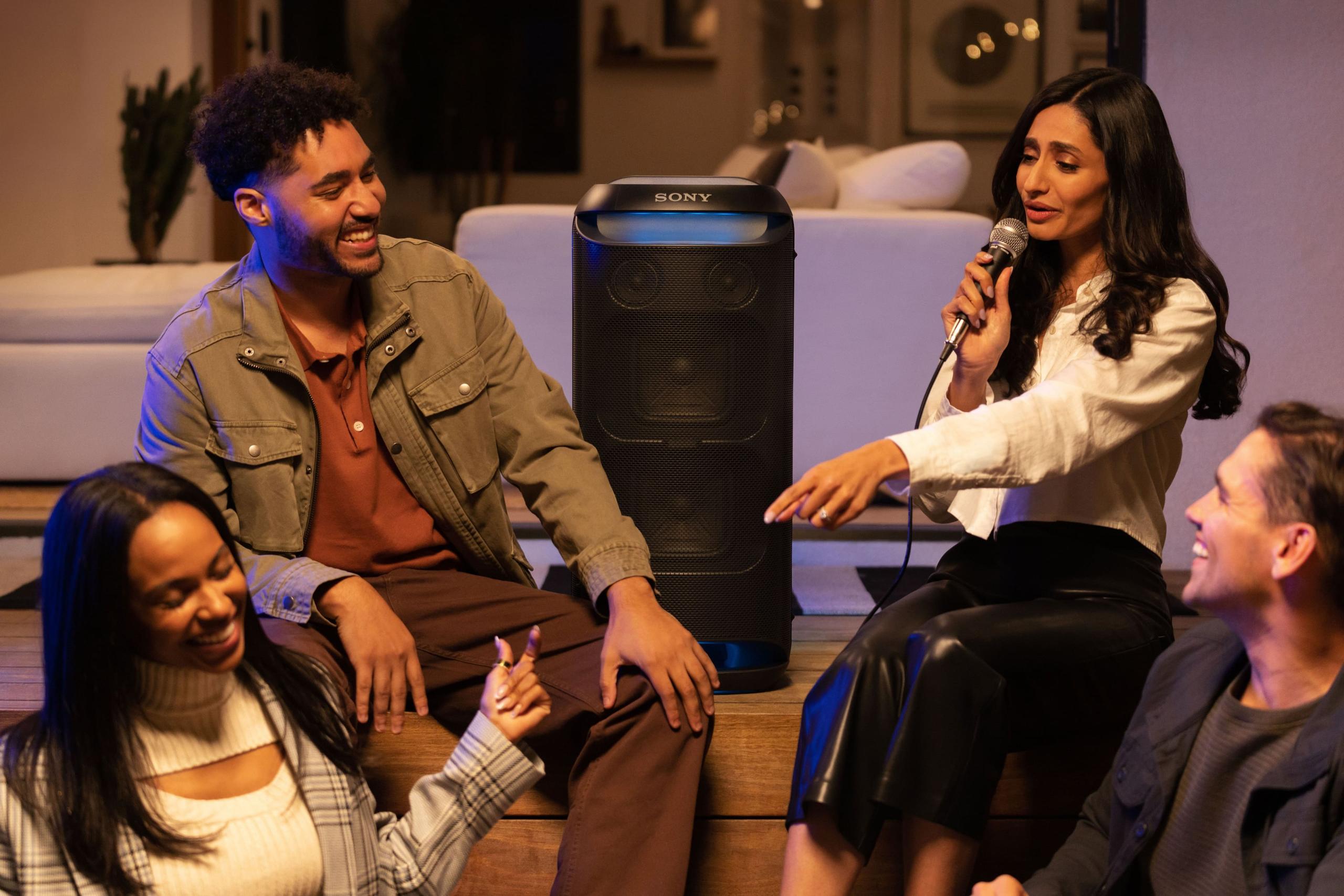
When it comes to throwing a memorable party or event, your music setup can make or break the entire experience. While regular Bluetooth speakers work fine for casual listening, they simply can't deliver the room-filling, crowd-energizing sound you need when things get serious. That's where high-power party speakers come in—specialized audio equipment designed to pump out serious volume while maintaining sound quality that won't leave your ears ringing for all the wrong reasons.
The party speaker market has evolved dramatically over the past few years, with manufacturers pushing the boundaries of what's possible in portable audio. Two speakers that perfectly represent different philosophies in this space are the Soundboks Go and the Sony SRS-XV800. Released in 2022 and 2023 respectively, these speakers showcase how far portable audio technology has advanced, but they take completely different approaches to solving the same basic problem: how do you get powerful, high-quality sound wherever you need it?
Before diving into the specifics, it's worth understanding what separates party speakers from regular Bluetooth speakers. The key differences come down to several critical factors that directly impact your experience.
Maximum volume capability sits at the top of the list. While a typical Bluetooth speaker might hit 85-90 decibels (dB)—roughly equivalent to city traffic—party speakers need to reach 110+ dB to overcome crowd noise and fill large spaces. To put this in perspective, every 10 dB increase represents a doubling of perceived loudness, so a 120 dB speaker sounds dramatically more powerful than a 100 dB one.
Battery life becomes crucial when you're away from power outlets for extended periods. Standard speakers might offer 8-12 hours of playback, but party speakers need to last through entire events without compromising volume or sound quality as the battery drains.
Build quality and weather resistance matter because these speakers often end up in challenging environments—poolside, at beaches, or in backyards where they might encounter dust, moisture, or the occasional accidental knock. The difference between IP ratings can determine whether your speaker survives a splash or needs replacement.
Multi-speaker connectivity has become increasingly important as people want to create larger sound systems for bigger spaces or stereo separation for better audio quality. The technology behind these connections varies significantly, affecting both sound quality and the number of speakers you can link together.
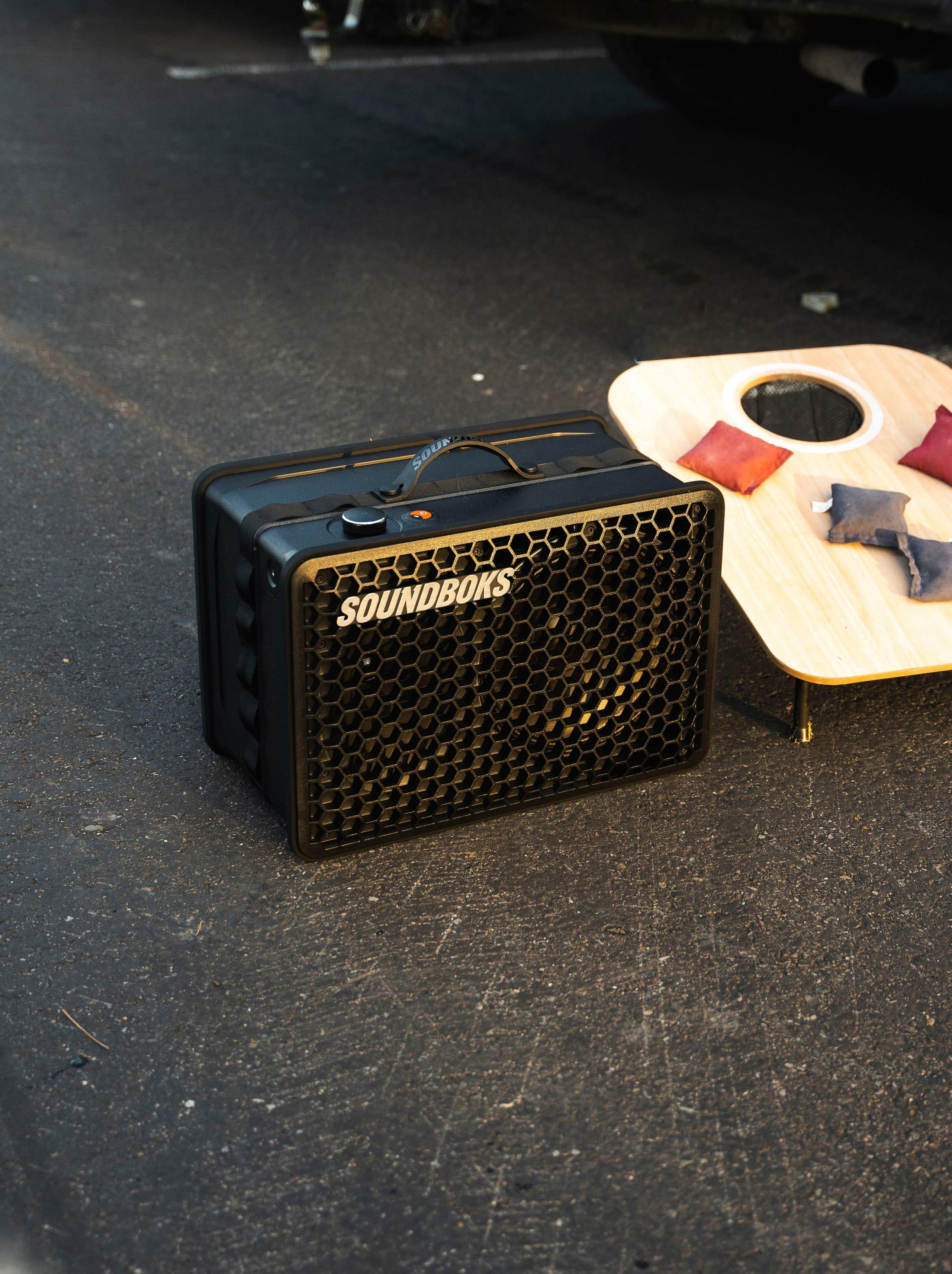
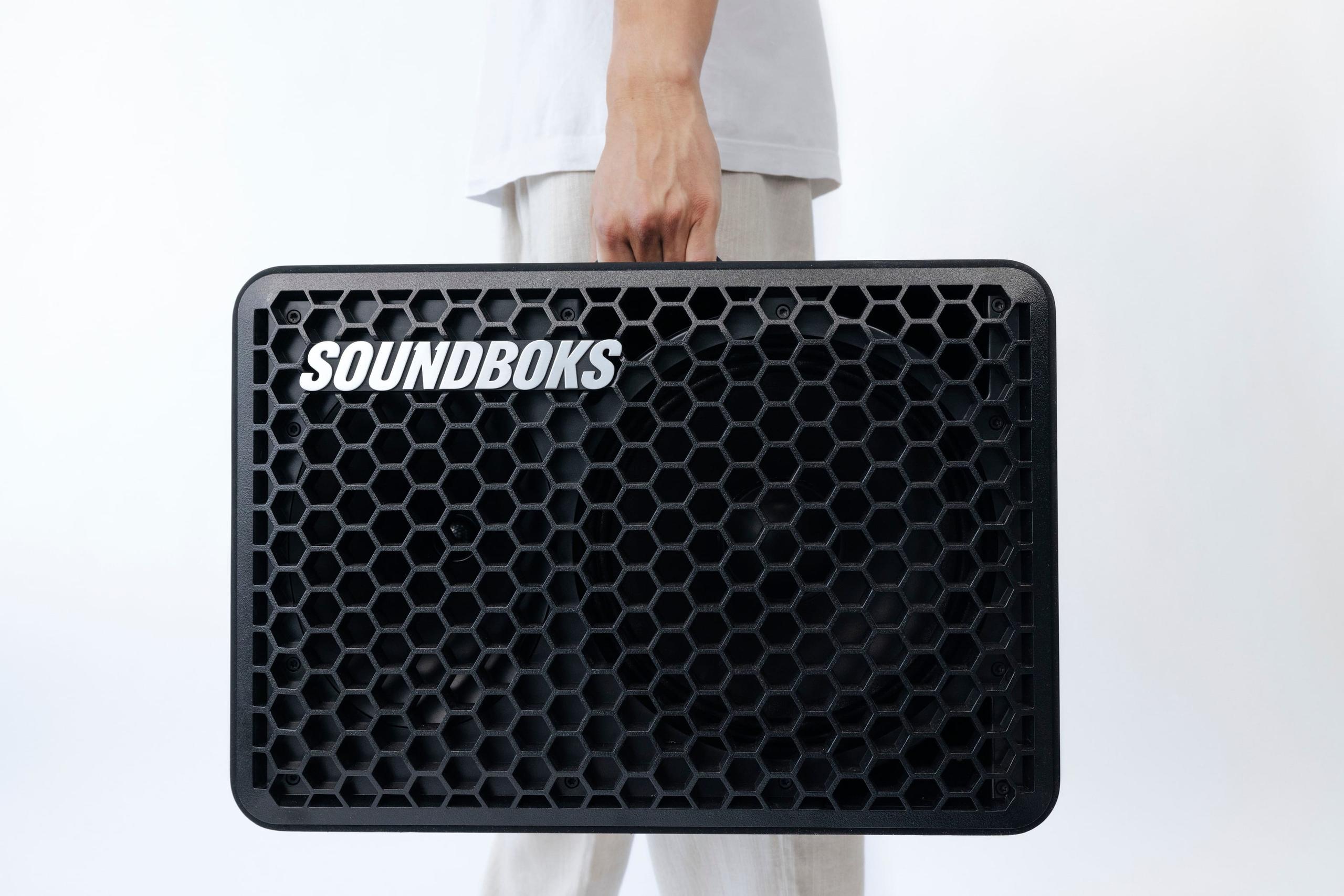
The Soundboks Go represents the "ultimate portability" approach. At roughly double the price of many competitors (at the time of writing), it's designed for people who need serious sound but refuse to compromise on mobility. Think of it as the premium option that prioritizes getting powerful audio anywhere you want to go.
The Sony SRS-XV800, on the other hand, embodies the "maximum value" philosophy. Priced significantly lower than the Soundboks, it focuses on delivering the most features and performance per dollar spent, though with some trade-offs in portability.
Both speakers emerged from the post-pandemic boom in outdoor entertainment, when people began investing heavily in backyard and portable audio solutions. The technology inside reflects several years of advancement in battery efficiency, amplifier design, and wireless connectivity that simply wasn't available in earlier party speakers.
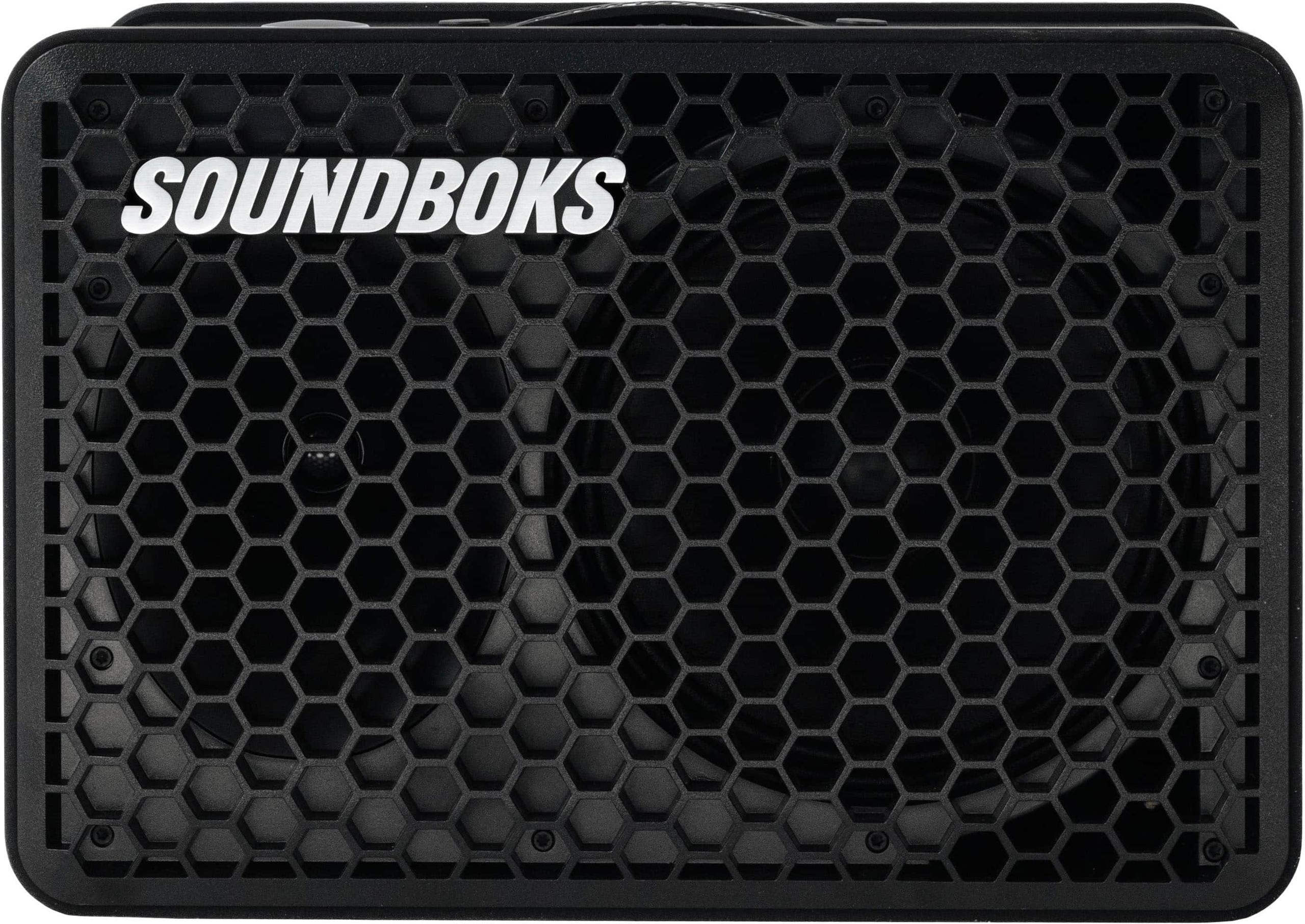
When it comes to pure sound output, both speakers take different approaches to achieving impressive volume levels. The Soundboks Go delivers 144 watts RMS (Root Mean Square—the actual continuous power output, not peak marketing numbers) through a carefully engineered amplifier system. This power feeds a 10-inch woofer and 1-inch silk dome tweeter, allowing it to reach 121 dB maximum volume.
What makes the Soundboks particularly interesting is its use of Merus Audio eximo amplifier technology. This isn't just marketing speak—it's a specific type of Class-D amplification that switches at much higher frequencies than traditional designs, reducing distortion while improving efficiency. The result is cleaner sound at high volumes and better battery life.
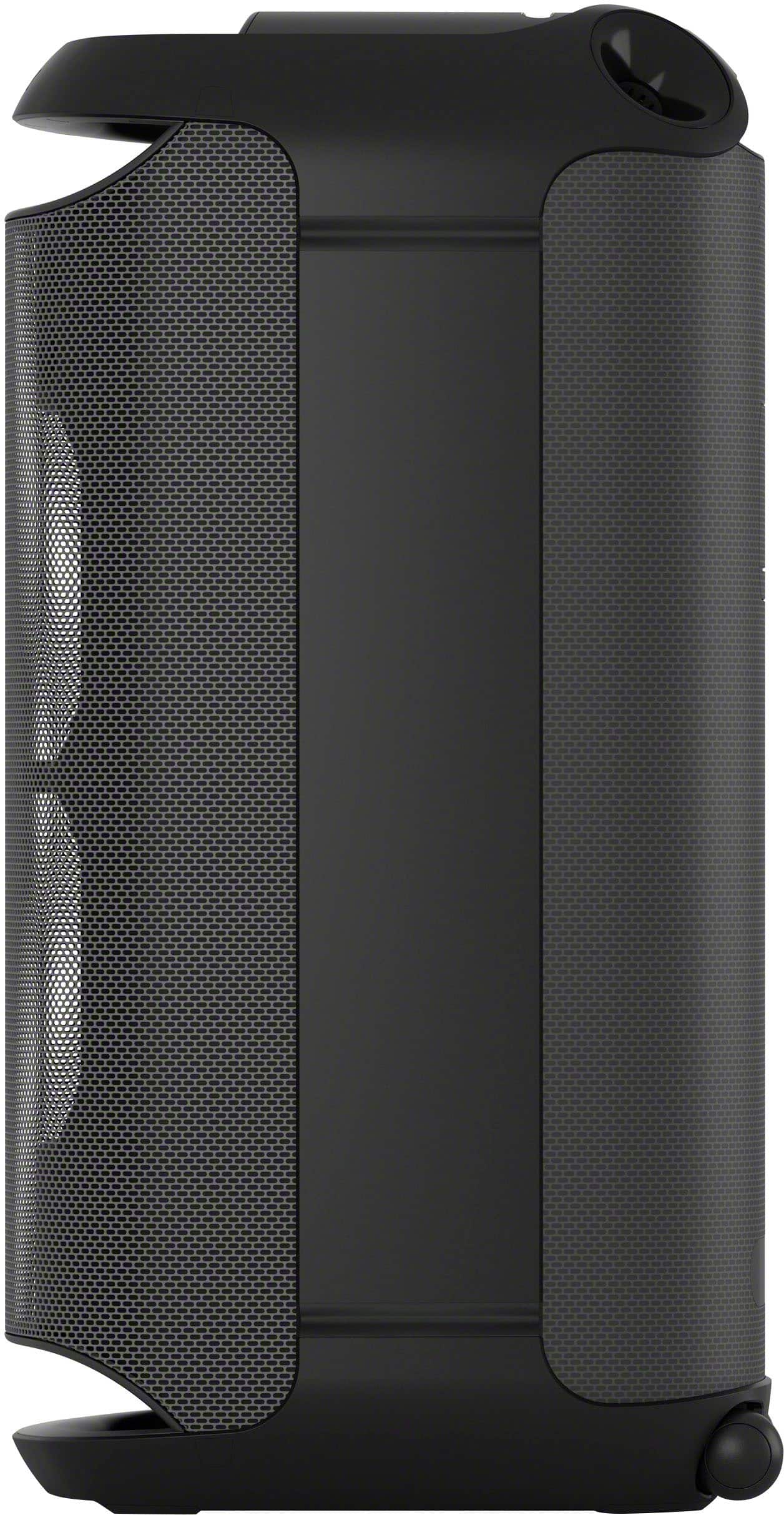
The Sony SRS-XV800 takes a different approach with its dual 6.75-inch X-Balanced woofers. Sony's X-Balanced design uses rectangular speaker cones instead of traditional circular ones, which might sound gimmicky but actually serves a real purpose. The rectangular shape allows for a larger diaphragm surface area within the same cabinet space, theoretically providing more air movement and bass output than circular drivers of similar size.
Based on our research into user experiences and professional reviews, the volume capabilities end up quite close in practice. The Soundboks tends to maintain clarity slightly better at maximum volume, likely due to its more powerful amplifier per driver. However, the Sony's dual-woofer setup provides noticeably deeper bass response in most listening scenarios.
This is where the differences become more pronounced and personal preference starts to matter. The Soundboks Go has what audio enthusiasts call a "V-shaped" sound signature—emphasized bass and treble with somewhat recessed midrange frequencies. This tuning works well for outdoor use where you need to cut through ambient noise and create an energetic party atmosphere.
The horn-loaded tweeter design in the Soundboks deserves special mention. By using a horn to direct and amplify the tweeter output, it can produce very clear high frequencies even at long distances. This is why the speaker performs so well in outdoor settings where sound needs to travel.
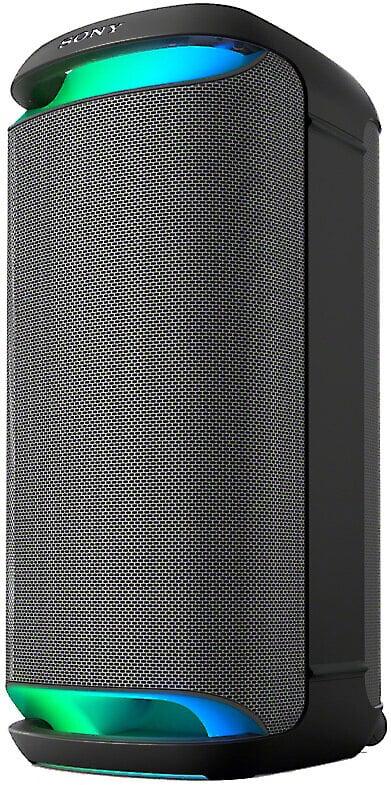
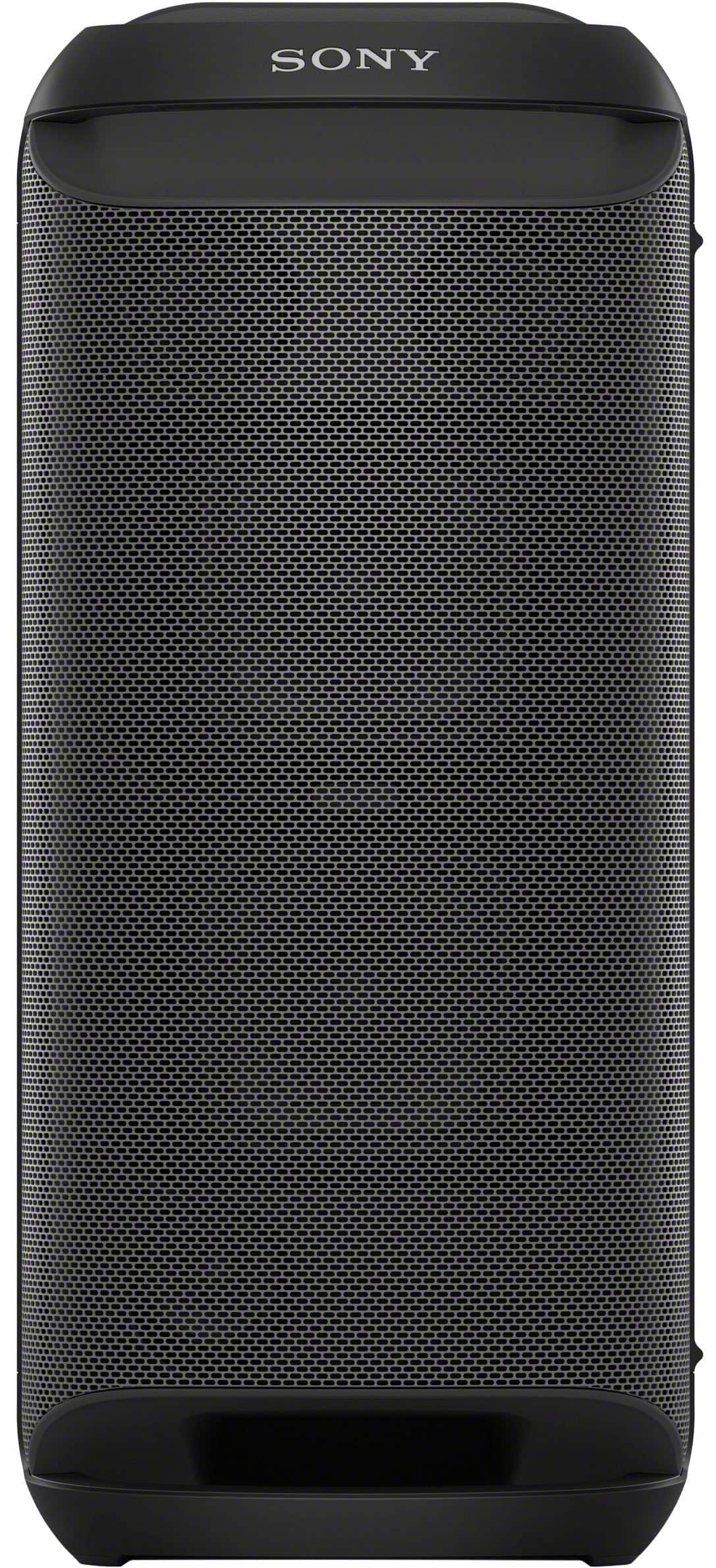
The Sony SRS-XV800 offers a more balanced frequency response, closer to what you'd expect from home audio equipment. Its five-tweeter array (three front-facing, two rear-facing) creates genuinely omnidirectional sound—meaning it radiates audio in all directions rather than just forward. This 360-degree approach works brilliantly in indoor spaces or when the speaker is positioned centrally in a gathering.
From user feedback and professional reviews, the Sony tends to handle complex music better, with clearer vocal reproduction and better instrument separation. The Soundboks excels with electronic music, hip-hop, and genres that benefit from punchy bass and crisp highs.
Bass reproduction reveals perhaps the biggest performance difference between these speakers. The Soundboks Go's single 10-inch woofer, while capable, simply can't move as much air as the Sony's dual-woofer plus passive radiator setup. A passive radiator is essentially a speaker cone without a magnet that moves in response to air pressure changes inside the cabinet, effectively extending bass response without requiring additional power.
The Sony SRS-XV800's X-Balanced woofers, combined with the rear-firing passive radiator, create noticeably deeper and more impactful bass. User reviews consistently mention the Sony's ability to produce chest-thumping low frequencies that you feel as much as hear. The trade-off is that this bass-heavy approach can sometimes overwhelm the midrange frequencies where vocals and many instruments live.
For home theater use, this bass difference becomes quite significant. The Sony's deeper extension and omnidirectional design make it surprisingly effective as a TV soundbar alternative, especially when using its optical digital input. The Soundboks, being designed primarily for outdoor use, doesn't integrate as naturally into living room setups.
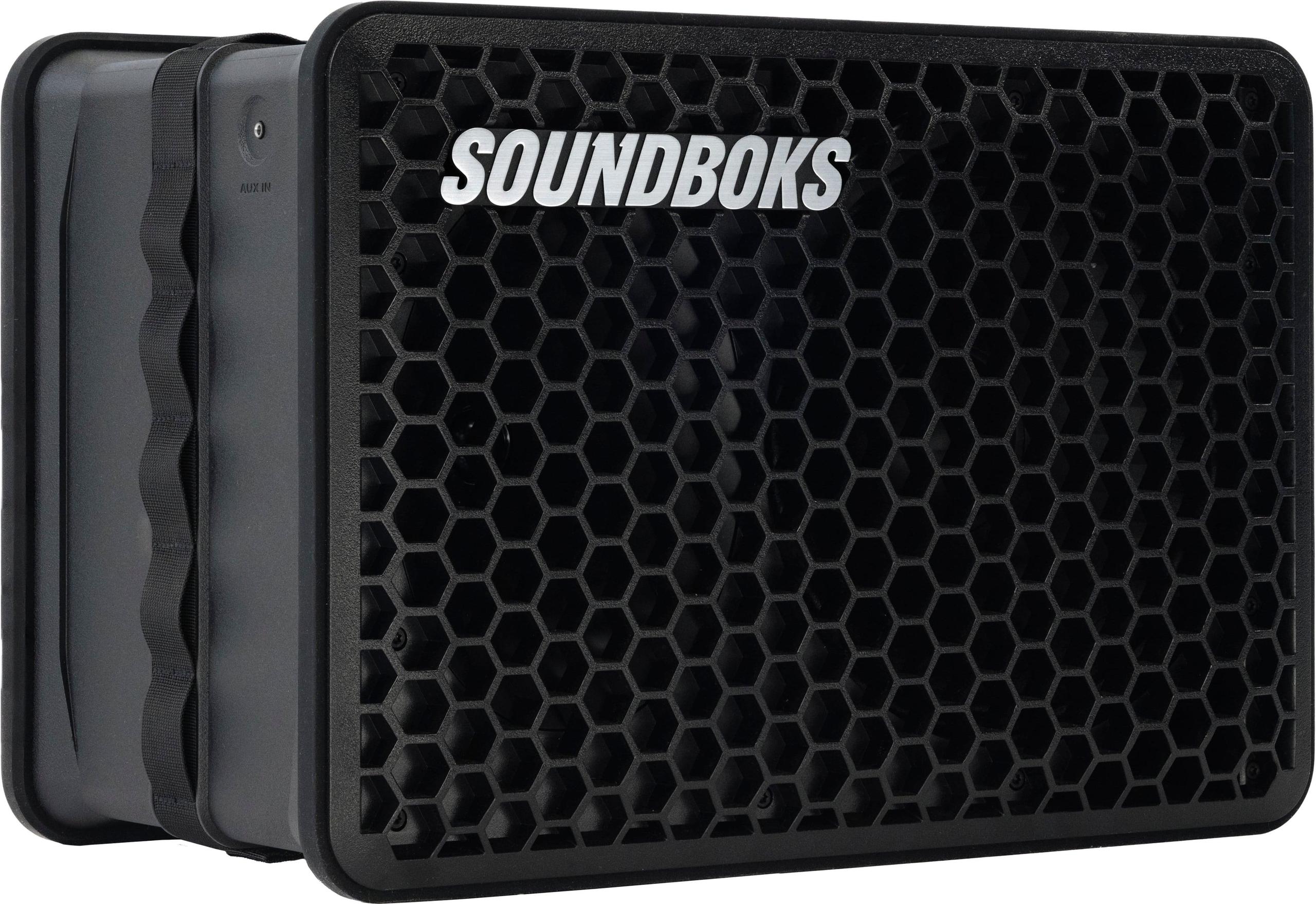
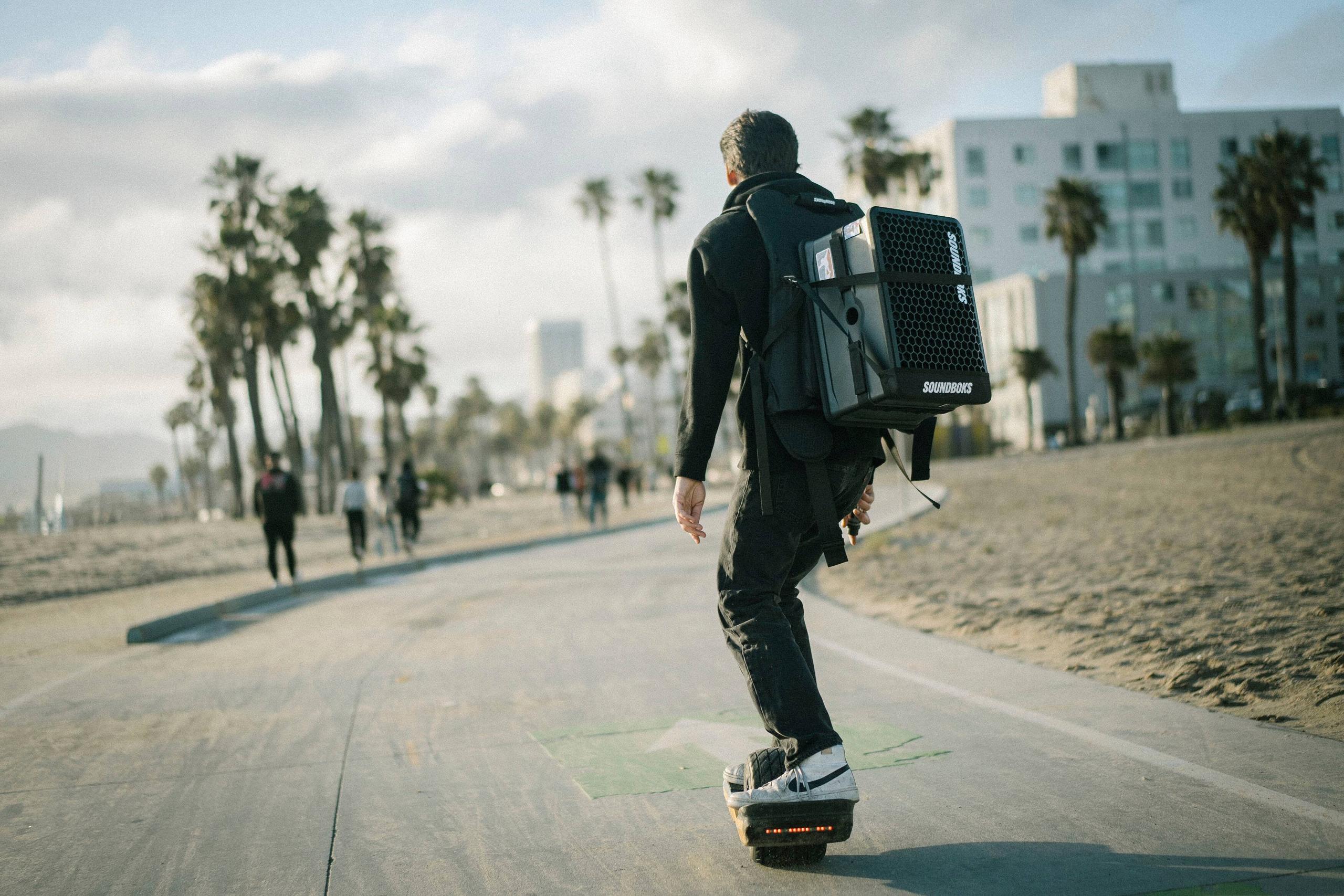
Here's where these speakers diverge most dramatically. The Soundboks Go weighs 20 pounds and measures 18×12×10 inches—still substantial, but genuinely portable. You can reasonably carry it with one hand using its built-in handle, fit it in most car trunks, and even hike with it using the optional shoulder strap.
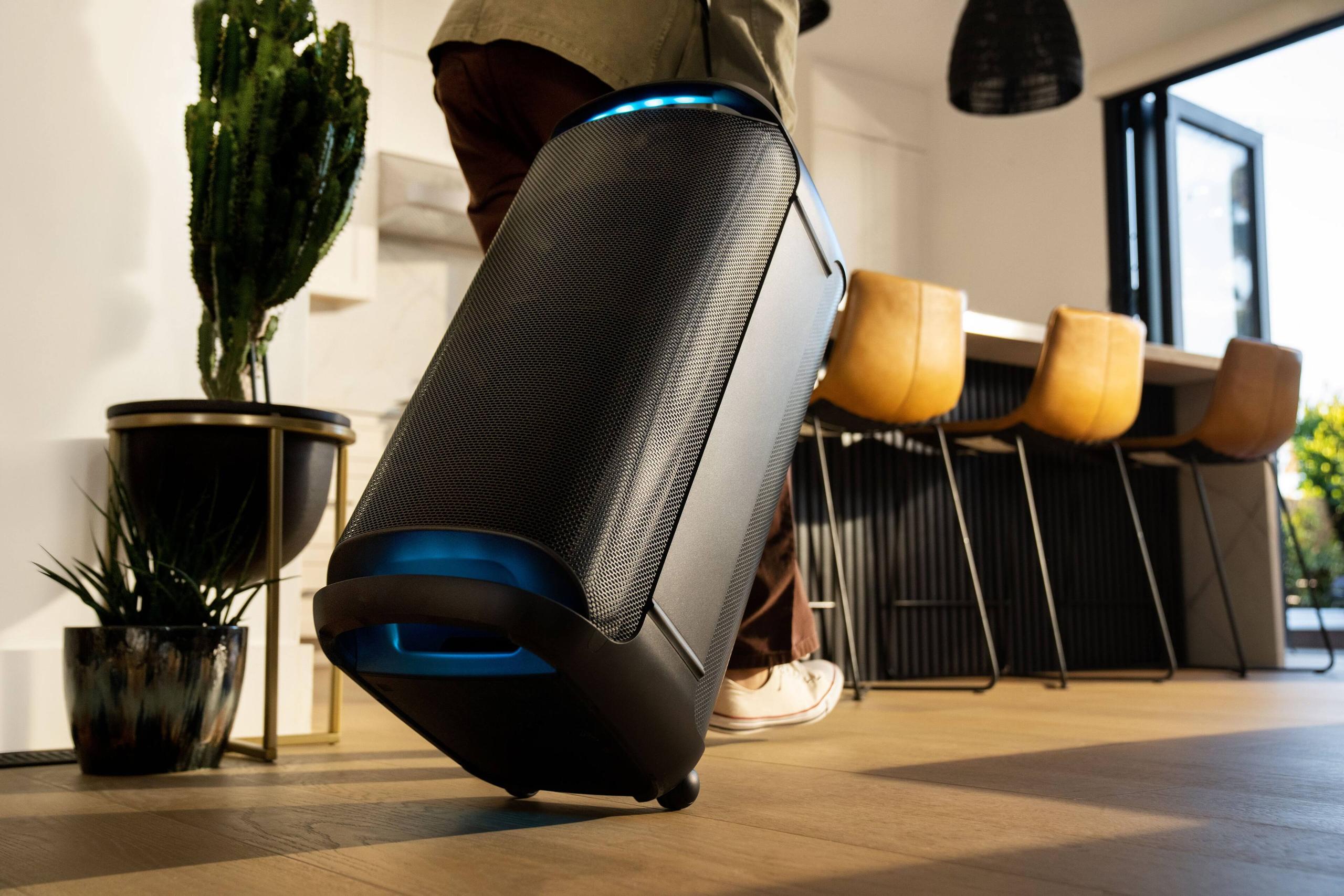
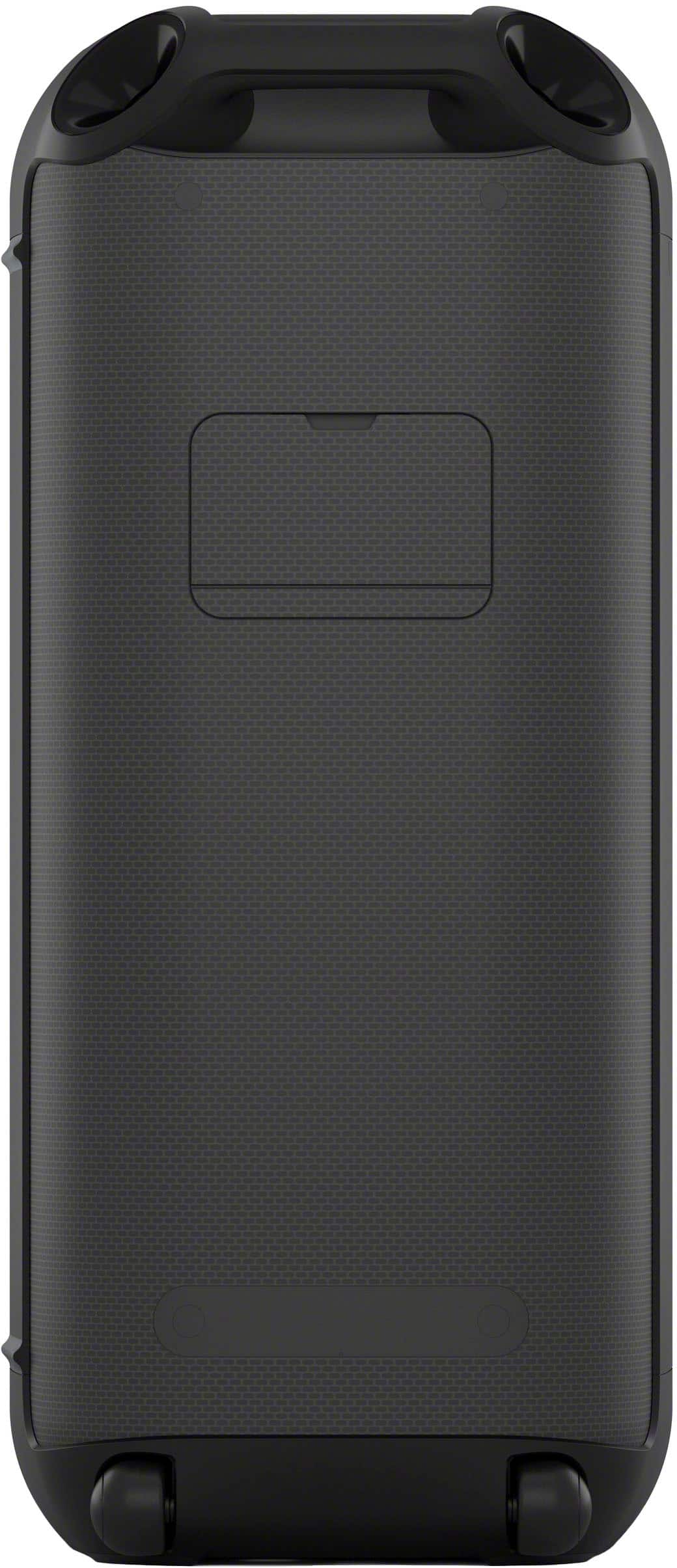
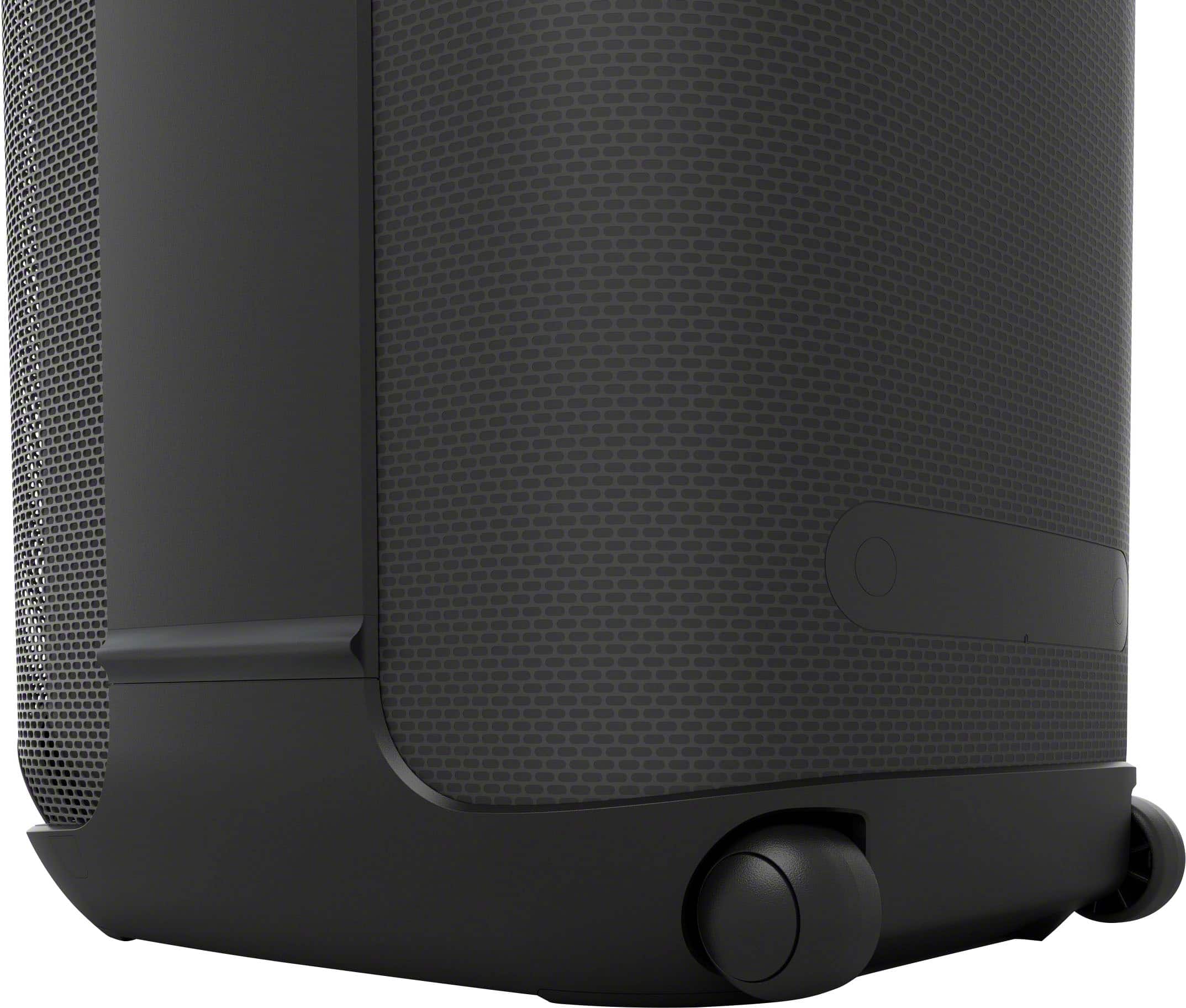
The Sony SRS-XV800, at over 40 pounds and nearly 30 inches tall, represents a different category entirely. Sony acknowledges this by including wheels and multiple handles, essentially turning it into rolling luggage for audio. While you can move it around, it's more accurate to call it "transportable" rather than truly portable.
This weight difference stems from several factors. The Sony houses larger batteries, dual woofers, more amplifier hardware, and a much larger cabinet structure. The Soundboks achieves its lighter weight through more efficient amplification, a single-driver bass system, and careful material selection in its cabinet construction.
Battery life tells an interesting story here. Despite being much smaller, the Soundboks Go delivers up to 40 hours of playback at moderate volumes (10 hours at maximum volume). The larger Sony SRS-XV800 provides 25 hours of typical use. The Soundboks achieves this through its more efficient amplifier design and the ability to swap batteries—a unique feature that effectively provides unlimited runtime with spare batteries.
Modern party speakers need to do more than just play music from a phone. Both speakers offer extensive connectivity options, but with different focuses.
The Soundboks Go uses proprietary SKAA technology for multi-speaker connections. SKAA (pronounced "ska") is a wireless audio protocol designed specifically for ultra-low latency connections. This means when you connect multiple Soundboks speakers together, the audio stays perfectly synchronized even when speakers are placed far apart. The system supports up to five speakers in a TeamUP network, creating a distributed sound system perfect for large outdoor areas.
The Sony SRS-XV800 offers Party Connect, which can link up to 100 compatible Sony speakers together. While this sounds more impressive on paper, the practical reality is that most people never connect more than 2-4 speakers. However, Sony's system also synchronizes the LED light shows across all connected speakers, creating a more immersive party atmosphere.
For professional use, the Soundboks' SKAA technology offers a significant advantage. DJs and performers often need monitor speakers that stay perfectly in sync with their main audio, and the ultra-low latency of SKAA makes this possible. Standard Bluetooth typically has 100-200 milliseconds of delay, which is noticeable and problematic for live performance.
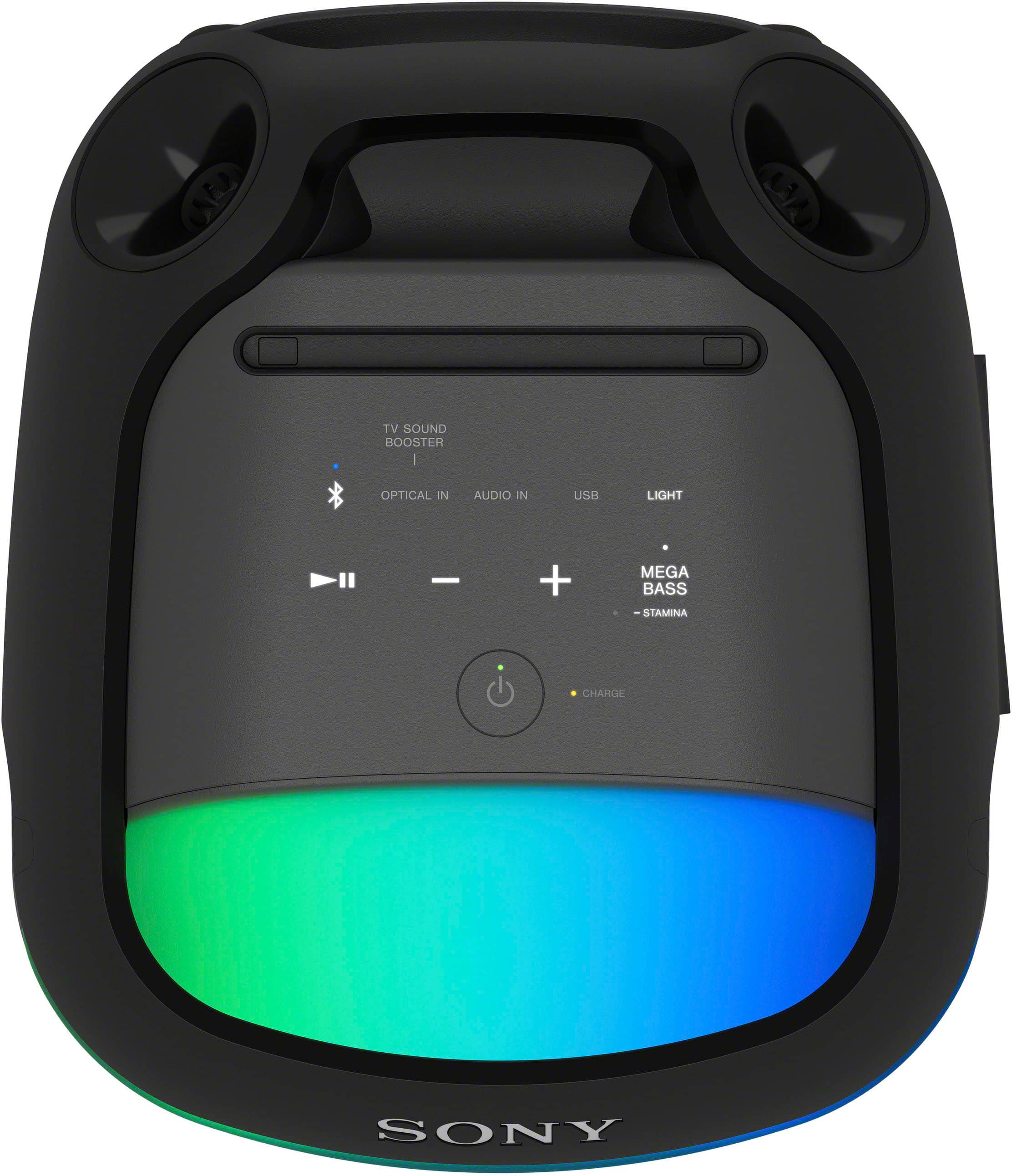
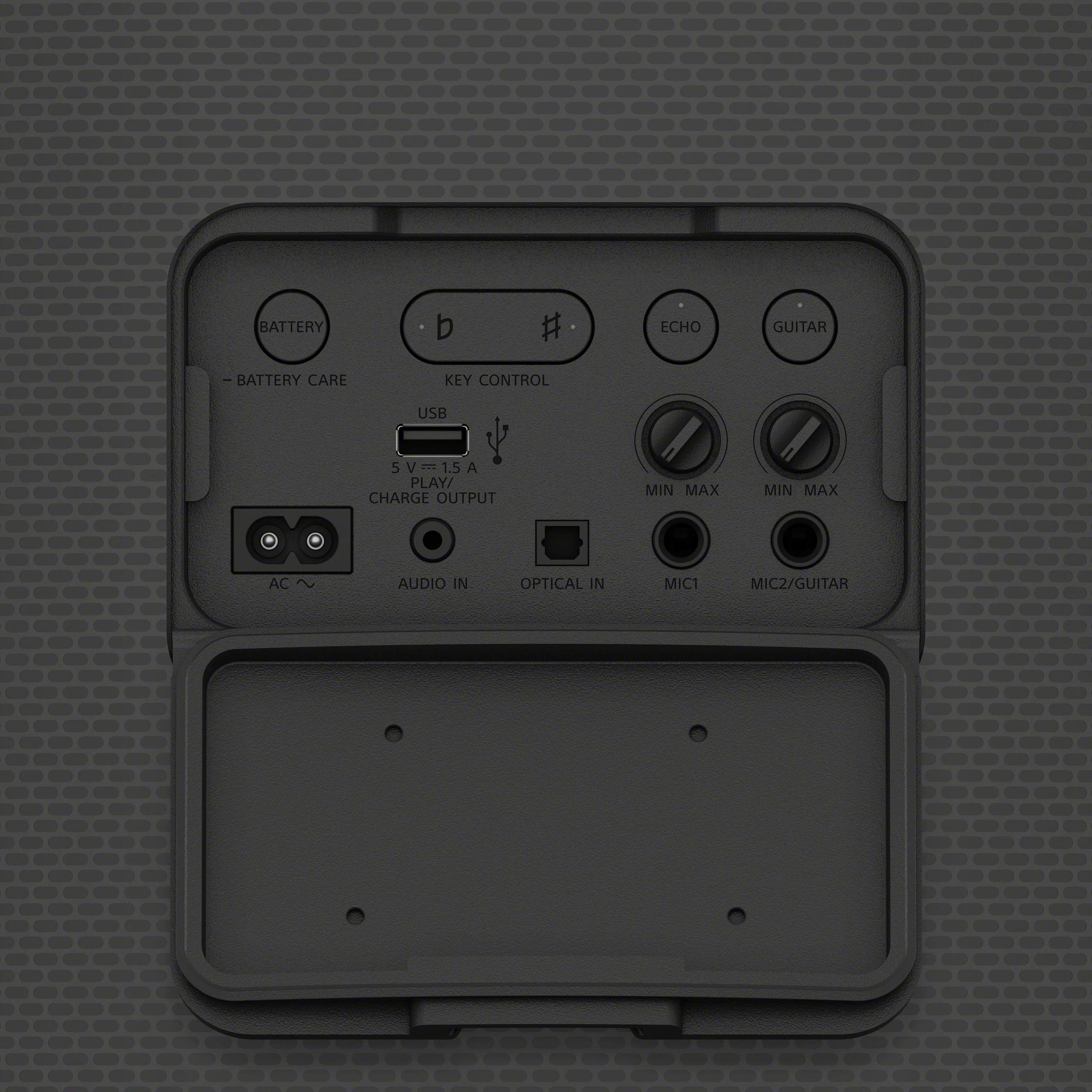
The Sony shines in its input variety. Beyond standard Bluetooth and auxiliary inputs, it includes optical digital input for TV connection, USB-A ports for playing music directly from flash drives, and dedicated microphone and guitar inputs with separate volume controls. This makes it genuinely versatile as a karaoke system, guitar amplifier, or home theater component.
When you're investing in a party speaker, durability becomes crucial because these devices often face harsh treatment. The Soundboks Go carries an IP65 rating, which means it's completely dustproof and can handle water sprayed from any direction without damage. This makes it suitable for beach use, poolside parties, or dusty outdoor events.
The build quality reflects this rating. The cabinet uses reinforced ABS and polycarbonate construction with silicone rubber bumpers designed to absorb impacts. Based on user reports and our research into long-term reliability, the Soundboks consistently handles rough treatment better than most competitors.
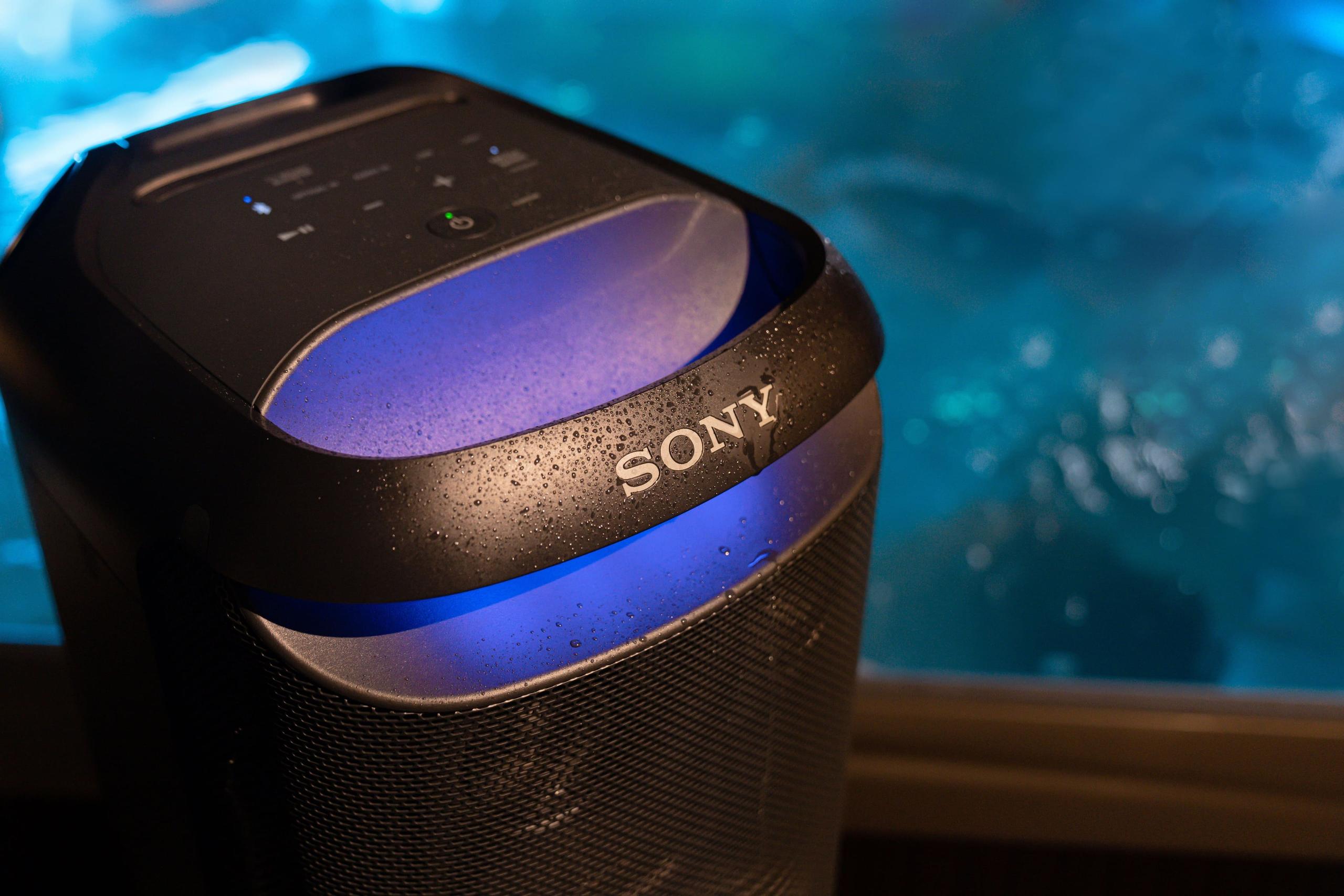
The Sony SRS-XV800 offers IPX4 rating when positioned vertically (IPX2 when horizontal), meaning it can handle light splashes but shouldn't be subjected to direct water spray or submersion. This is adequate for most party scenarios but limits its usefulness in more extreme outdoor conditions.
However, Sony does include automatic orientation detection in the XV800. Internal sensors detect whether the speaker is positioned vertically or horizontally and adjust the sound output accordingly. This intelligent feature ensures optimal audio performance regardless of placement, though the water resistance rating changes based on position.
At the time of writing, the Soundboks Go commands roughly double the price of the Sony SRS-XV800, making value consideration crucial to the decision process.
The Soundboks justifies its premium pricing through specialized features: exceptional portability, extreme weather resistance, swappable battery system, and professional-grade wireless connectivity. These features primarily benefit users who need maximum mobility and reliability in challenging environments.
The Sony represents outstanding value for users who don't need ultimate portability. You get larger drivers, more comprehensive connectivity, longer warranty coverage, and features like programmable LED lighting at roughly half the cost. For most stationary party applications, the Sony delivers superior performance per dollar spent.
Long-term ownership costs favor the Soundboks in one key area: battery replacement. When the Sony's internal battery eventually degrades (typically after 2-3 years of regular use), replacement requires service or replacement of the entire unit. The Soundboks allows you to simply purchase a new battery pack, extending the speaker's useful life significantly.
However, the Sony includes all necessary cables and accessories, while the Soundboks requires separate purchase of the AC adapter, which adds to the initial investment.
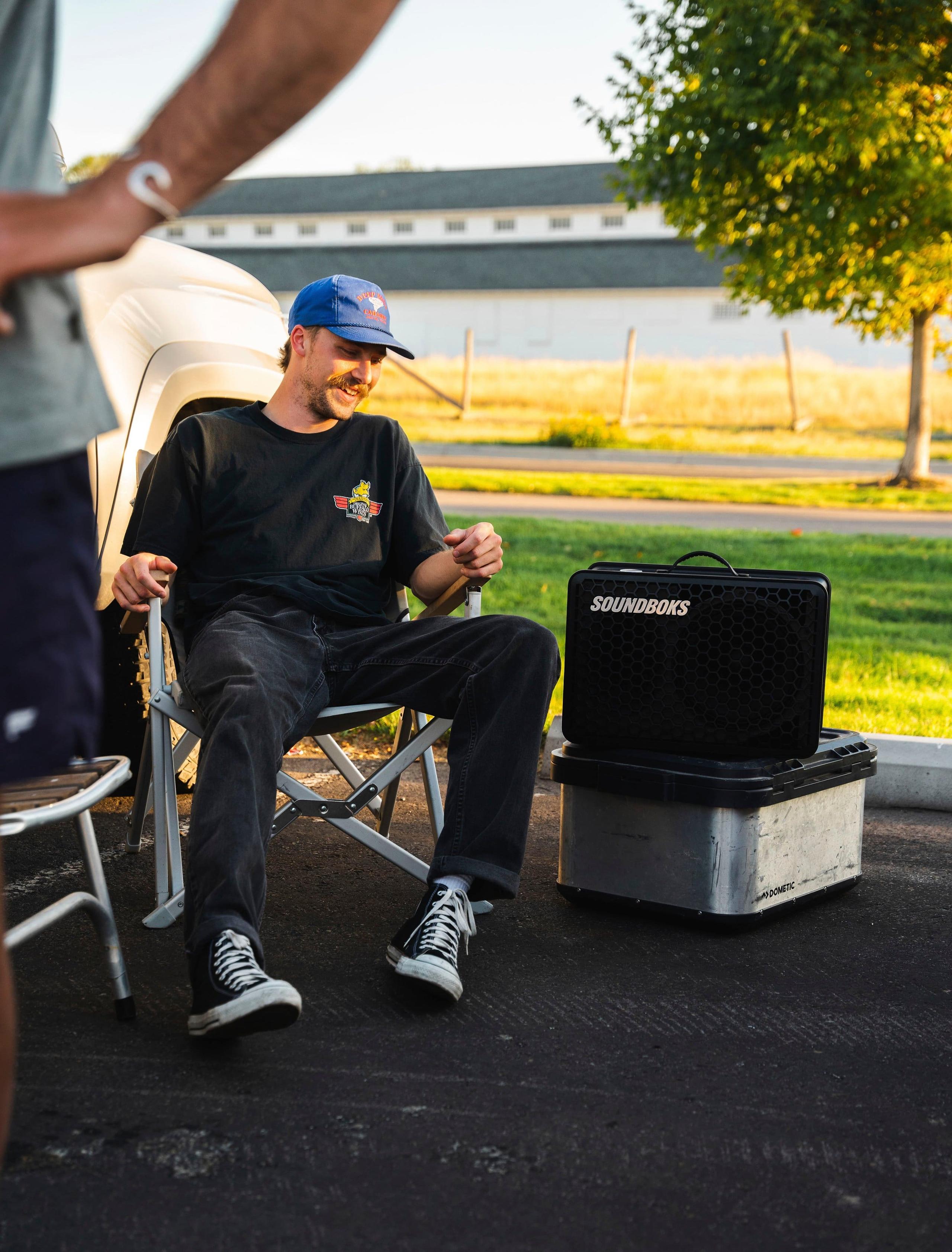
You're frequently on the move. If you regularly transport your speaker between locations—beach trips, tailgating, camping, or moving between venues—the 20-pound weight difference becomes significant over time. The Soundboks fits in backpacks, car trunks, and tight storage spaces where the Sony simply won't work.
Professional applications matter. DJs, performers, and audio professionals benefit from the low-latency SKAA connectivity and the ability to use the speaker as a reliable monitor. The swappable battery system also provides peace of mind for paid events where failure isn't an option.
Extreme durability is required. Construction sites, marine environments, desert conditions, or any scenario where the speaker faces dust, water, or physical abuse favors the IP65-rated Soundboks.
Extended off-grid use is common. The 40-hour battery life and ability to carry spare batteries makes the Soundboks ideal for multi-day festivals, camping trips, or remote locations without power access.
Budget optimization is important. At roughly half the price, the Sony delivers more features and arguably better sound quality for most stationary applications. The value proposition is compelling for cost-conscious buyers.
Home integration matters. The optical input, TV Sound Booster mode, and omnidirectional design make the Sony surprisingly effective as a home theater component. It can serve double duty as both party speaker and TV audio enhancement.
Karaoke and live performance are priorities. The dedicated microphone and guitar inputs, with separate volume controls and echo effects, make the Sony genuinely useful for karaoke parties or acoustic performances.
Maximum bass impact is desired. The dual woofer setup simply produces deeper, more powerful bass than the Soundboks can achieve with its single 10-inch driver.
Large-scale events are planned. While most people won't connect 100 speakers, the ability to easily network many Sony speakers together (with synchronized lighting) provides scalability for bigger parties.
Both the Soundboks Go and Sony SRS-XV800 represent excellent approaches to party audio, but they serve different priorities. The Soundboks commands premium pricing for specialized mobility and durability features that only some users truly need. The Sony maximizes performance and features per dollar for users who can accept reduced portability.
Your decision ultimately comes down to whether you're willing to pay double for true portability and extreme durability, or if you prefer maximum performance and features at a lower price point. Both speakers will deliver memorable party experiences—the question is which approach better matches your specific needs and budget constraints.
In my experience researching and evaluating audio equipment, the most satisfied customers are those who honestly assess their real-world usage patterns before purchasing. If you find yourself constantly moving your speaker or using it in harsh conditions, the Soundboks premium makes sense. For most home-based party scenarios, the Sony offers better value and arguably superior sound quality.
| Soundboks Go Portable Bluetooth Speaker | Sony SRS-XV800 X-Series Party Speaker |
|---|---|
| Maximum Volume Output - Critical for outdoor events and large spaces | |
| 121 dB SPL with 144W RMS amplification | Not specified, but dual woofer system suggests comparable loudness |
| Weight & Portability - Determines how easily you can move between locations | |
| 20 lbs (9.2 kg) - truly portable with single handle | 40.8 lbs (18.5 kg) - semi-portable with wheels and handles |
| Dimensions - Affects storage and placement flexibility | |
| 18" × 12" × 10" - fits in backpacks and car trunks | 28.35" × 12.48" × 14.76" - tower design requires significant space |
| Battery Life - Determines how long parties can run without power | |
| 40 hours (mid-volume), 10 hours (max volume) with swappable battery | 25 hours typical use, non-removable internal battery |
| Weather Resistance - Important for outdoor use and durability | |
| IP65 (dustproof, water-resistant from any direction) | IPX4 vertical/IPX2 horizontal (splash-resistant only) |
| Driver Configuration - Affects sound quality and bass response | |
| 1× 10" woofer + 1× 1" silk dome tweeter (mono) | 2× 6.75" X-Balanced woofers + 5 tweeters + passive radiator |
| Sound Distribution - Determines coverage area and listening sweet spots | |
| Forward-firing directional design for outdoor projection | 360-degree omnidirectional sound with front/rear tweeters |
| Multi-Speaker Connectivity - Enables larger sound systems | |
| Up to 5 speakers via SKAA TeamUP (ultra-low latency) | Up to 100 speakers via Party Connect (with synchronized lighting) |
| Input Options - Determines versatility for different audio sources | |
| Bluetooth 5.0, 3.5mm AUX, USB-C charging port | Bluetooth 5.2, AUX, optical, USB-A, mic/guitar inputs with controls |
| Special Features - Added functionality beyond basic music playback | |
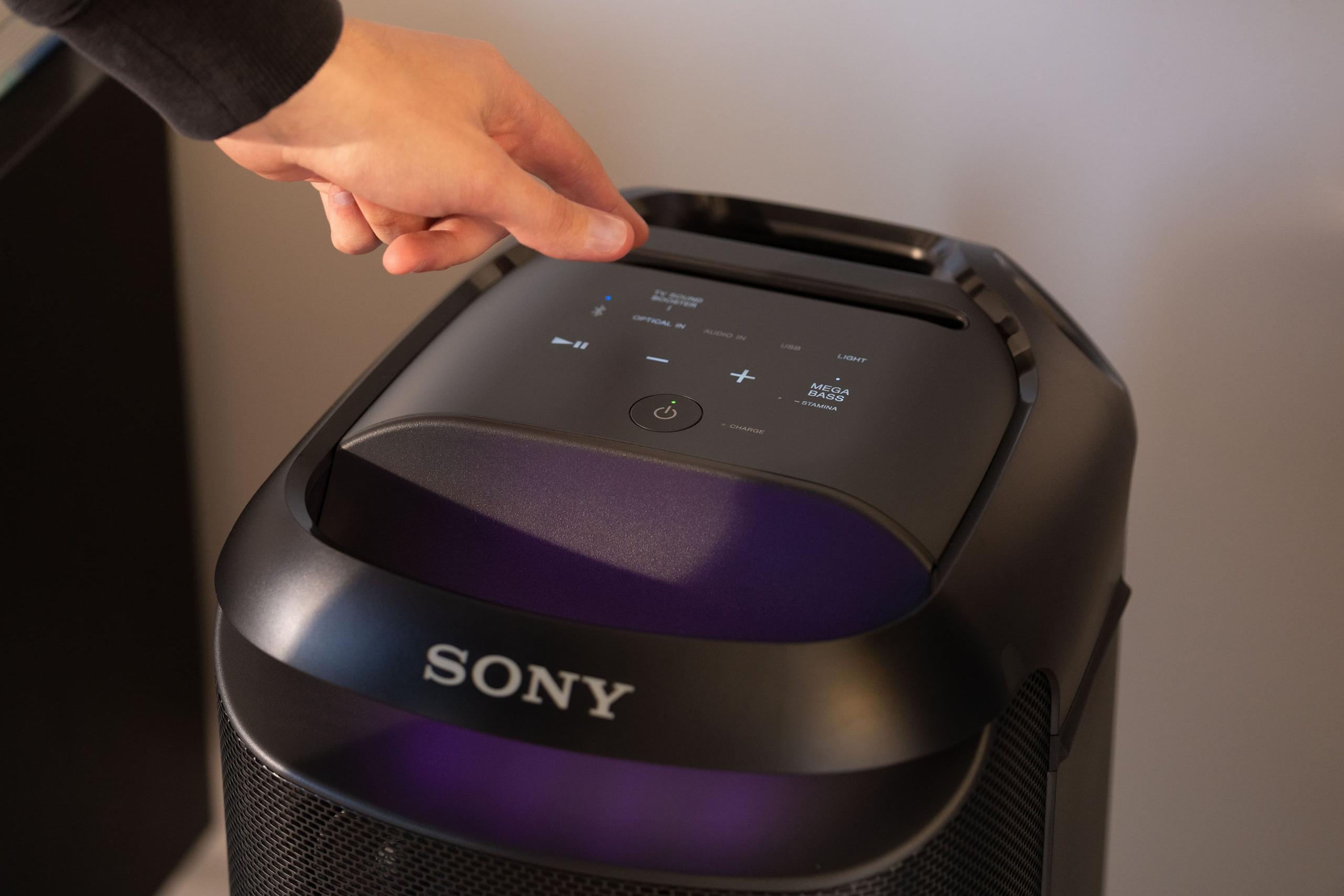
| Swappable battery system, powerbank function, app-based EQ | Karaoke support, TV Sound Booster, programmable LED lighting, orientation detection |
| Build Philosophy - Different approaches to portable party audio | |
| Premium mobility - maximum power in minimum weight | Maximum value - comprehensive features at lower cost |
The Soundboks Go is significantly better for outdoor parties due to its IP65 weather resistance rating, which makes it dustproof and water-resistant from any direction. It's also much more portable at 20 pounds versus the Sony SRS-XV800's 40.8 pounds, making it easier to transport to different outdoor locations. The Soundboks also offers 40-hour battery life, ensuring your party won't stop due to power issues.
The Sony SRS-XV800 delivers deeper bass and more balanced sound thanks to its dual 6.75-inch X-Balanced woofers and five-tweeter array that creates 360-degree omnidirectional sound. The Soundboks Go has a more aggressive, V-shaped sound signature that's optimized for outdoor use, with emphasized bass and treble but slightly recessed midrange frequencies.
The Soundboks Go is far more portable, weighing just 20 pounds with compact dimensions of 18×12×10 inches. It features a single handle and optional shoulder strap for easy transport. The Sony SRS-XV800 weighs over 40 pounds and stands nearly 30 inches tall, requiring wheels and multiple handles for transport, making it more suitable for semi-permanent setups.
The Sony SRS-XV800 is specifically designed for karaoke with dedicated microphone and guitar inputs, separate volume controls, and echo effects. The Soundboks Go lacks microphone inputs and is not designed for karaoke use, focusing instead on wireless music playback and outdoor durability.
The Soundboks Go offers superior battery performance with up to 40 hours at moderate volume and features a unique swappable battery system for unlimited runtime with spare batteries. The Sony SRS-XV800 provides 25 hours of typical use but has a non-removable internal battery that cannot be swapped or easily replaced.
The Sony SRS-XV800 can connect up to 100 compatible Sony speakers using Party Connect technology, which also synchronizes LED lighting effects. The Soundboks Go connects up to 5 speakers using SKAA TeamUP technology, which offers ultra-low latency for professional applications but supports fewer total units.
The Sony SRS-XV800 is much better suited for home theater applications, featuring an optical digital input for TV connection, TV Sound Booster mode for enhanced dialogue, and omnidirectional sound that fills rooms evenly. The Soundboks Go lacks TV connectivity options and is designed primarily for outdoor and mobile use.
The Soundboks Go offers superior weather protection with IP65 rating (dustproof and water-resistant from any direction), making it suitable for beaches, pools, and harsh outdoor conditions. The Sony SRS-XV800 has IPX4 rating when vertical (IPX2 when horizontal), providing only splash resistance and requiring more careful handling around water.
The Sony SRS-XV800 provides better overall value, offering dual woofers, comprehensive connectivity options, karaoke capabilities, and programmable lighting at a significantly lower price point. The Soundboks Go commands a premium price justified mainly by its specialized portability, extreme durability, and swappable battery system.
The Sony SRS-XV800 includes a USB-A port that supports direct music playback from flash drives, plus device charging capability. The Soundboks Go only has a USB-C port for charging the speaker and powering other devices, but cannot play music files directly from USB storage.
The Soundboks Go is better suited for professional DJ applications due to its SKAA technology providing ultra-low latency wireless connections, swappable battery system for reliability, and rugged construction for frequent transport. The Sony SRS-XV800 lacks the low-latency connectivity and extreme durability that professional users require.
The Sony SRS-XV800 delivers significantly deeper and more powerful bass through its dual 6.75-inch X-Balanced woofers plus a passive radiator system. The Soundboks Go provides punchy bass from its single 10-inch woofer, but cannot match the low-frequency extension and impact of the Sony's dual-woofer configuration.
We've done our best to create useful and informative comparisons to help you decide what product to buy. Our research uses advanced automated methods to create this comparison and perfection is not possible - please contact us for corrections or questions. These are the sites we've researched in the creation of this article: bestbuy.com - beachaudio.com - youtube.com - crutchfield.com - digitaldjtips.com - comparisontabl.es - eftm.com - sweetwater.com - bestbuy.com - compsource.com - sweetwater.com - store.djtechtools.com - youtube.com - scheels.com - soundboks.com - connection.com - scheels.com - skaastore.com - thomannmusic.com - soundboks.eu - gearjunkie.com - soundandvision.com - crutchfield.com - sciencefocus.com - sony.com - bestbuy.com - bestbuy.com - stereoguide.com - sony-mea.com - soundguys.com - electronics.sony.com - youtube.com - sony.com - youtube.com - device.report - youtube.com - youtube.com - adorama.com - sonylatvija.com - sony.com

Privacy Policy
Terms and Conditions - Affiliate Policy
Home Security
© Copyright 2008-2026.
11816 Inwood Rd #1211, Dallas, TX 75244