

When you're planning the perfect party, your speaker choice can make or break the entire vibe. Two powerhouses dominate the large party speaker market: the JBL PartyBox 710 and the Sony SRS-XV800. Both promise to transform your gathering into an unforgettable experience, but they take dramatically different approaches to get there.
After diving deep into user reviews, expert opinions, and technical specifications, we've found these speakers target different priorities entirely. The JBL PartyBox 710 is an absolute powerhouse that demands a wall outlet but delivers unmatched volume and bass impact. The Sony SRS-XV800, meanwhile, prioritizes flexibility with its built-in battery and multi-purpose design. Let's break down exactly what makes each speaker tick and help you decide which one deserves your hard-earned cash.
Party speakers aren't just oversized Bluetooth speakers—they're purpose-built entertainment systems designed to energize large groups with massive sound output and eye-catching visual effects. Think of them as portable nightclub systems that can transform your backyard into a concert venue or your living room into a dance floor.
These speakers prioritize several key elements that regular speakers often ignore. Maximum volume capability is crucial since you need to fill large spaces and compete with crowd noise. Deep, physical bass response gets people moving—the kind of low-end frequencies you feel in your chest rather than just hear. Visual elements like customizable LED light shows create atmosphere and excitement. Multiple input options accommodate microphones for karaoke, instruments for live performance, and various audio sources.
The trade-offs usually involve size, weight, and power consumption. Most party speakers are substantial units that require careful consideration of portability versus performance. Some manufacturers prioritize raw power output while others focus on battery life and mobility. Understanding these compromises helps determine which speaker fits your specific needs.
What sets premium party speakers apart from budget alternatives is their ability to maintain audio quality even at ear-splitting volumes. Cheap speakers distort and sound harsh when pushed hard, but well-engineered models like the JBL PartyBox 710 and Sony SRS-XV800 stay controlled and clear even when cranked to maximum volume.
The JBL PartyBox 710 absolutely crushes the competition in terms of sheer power output. With 800 watts RMS (Root Mean Square—the continuous power output, not peak power), this speaker can get legitimately loud without breaking a sweat. RMS measurements matter more than peak wattage claims because they represent real-world sustained output rather than brief bursts.
This power advantage translates directly to real-world performance. The PartyBox 710 can easily fill outdoor spaces covering a third of an acre at 65-70% volume with headroom to spare. User reports consistently mention being able to satisfy crowds of 30-35 people in large outdoor settings where competing speakers struggle.
The Sony SRS-XV800, while still impressive, focuses on efficiency over raw power. Sony hasn't published specific RMS figures, but based on performance reports and battery life considerations, it likely outputs significantly less continuous power. This isn't necessarily a weakness—the Sony compensates with smarter driver design and better power management.
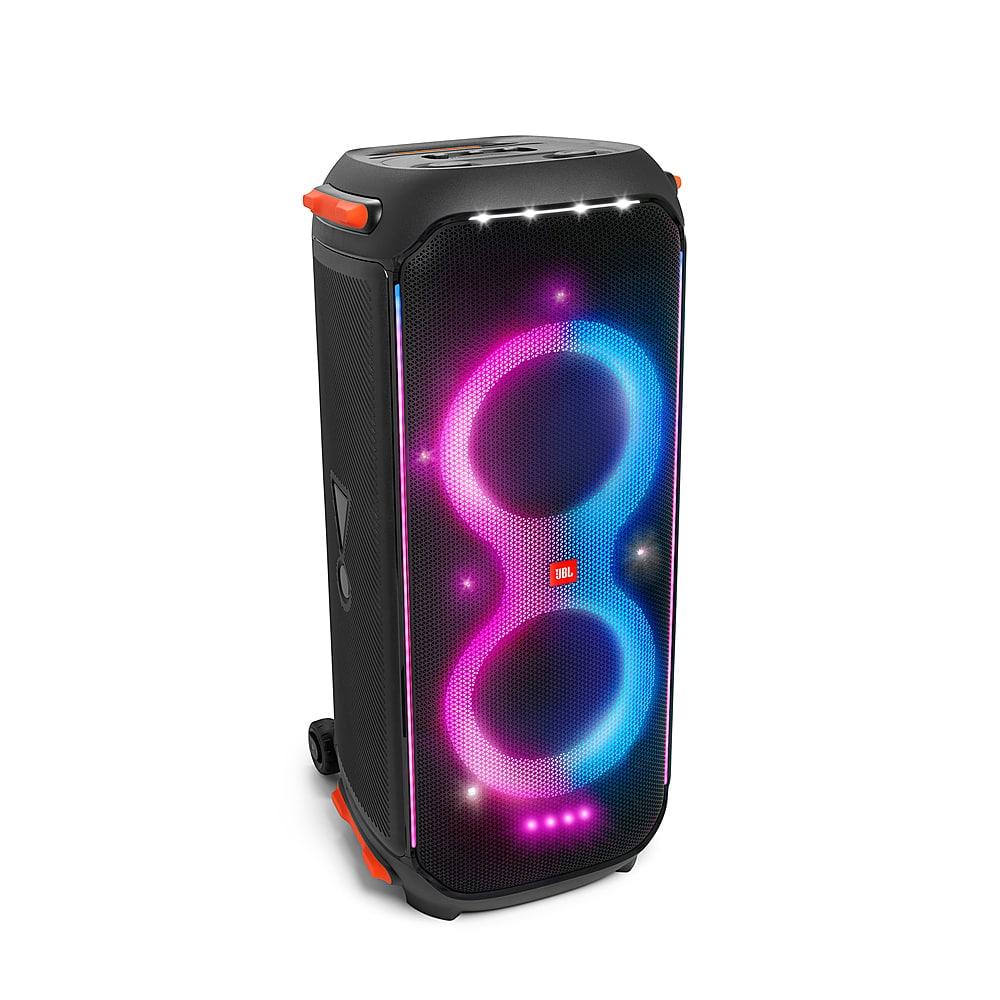
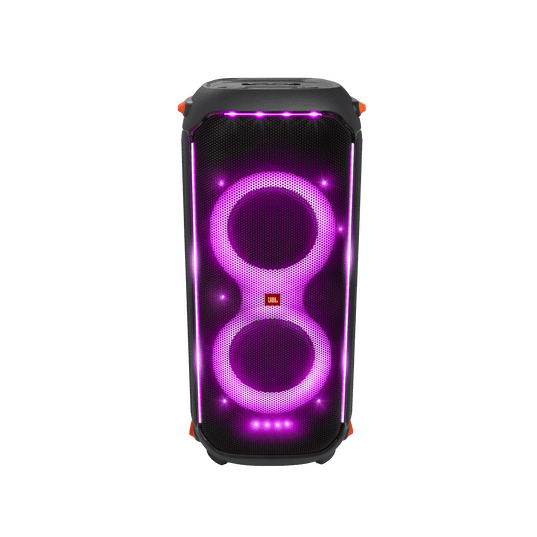
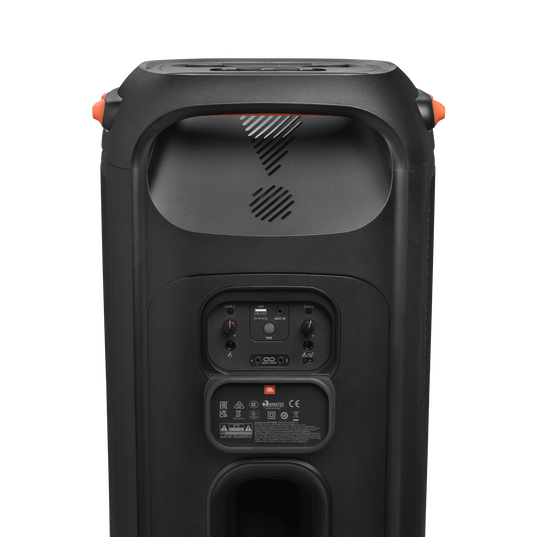
The JBL PartyBox 710 uses dual 8-inch woofers paired with dual 2.75-inch tweeters in a traditional configuration optimized for maximum air displacement. Larger woofers can move more air, creating that physical bass impact that gets people dancing. The rear-firing bass port (a tuned opening that enhances low-frequency output) works with these drivers to deliver impressive low-end extension down to 35Hz.
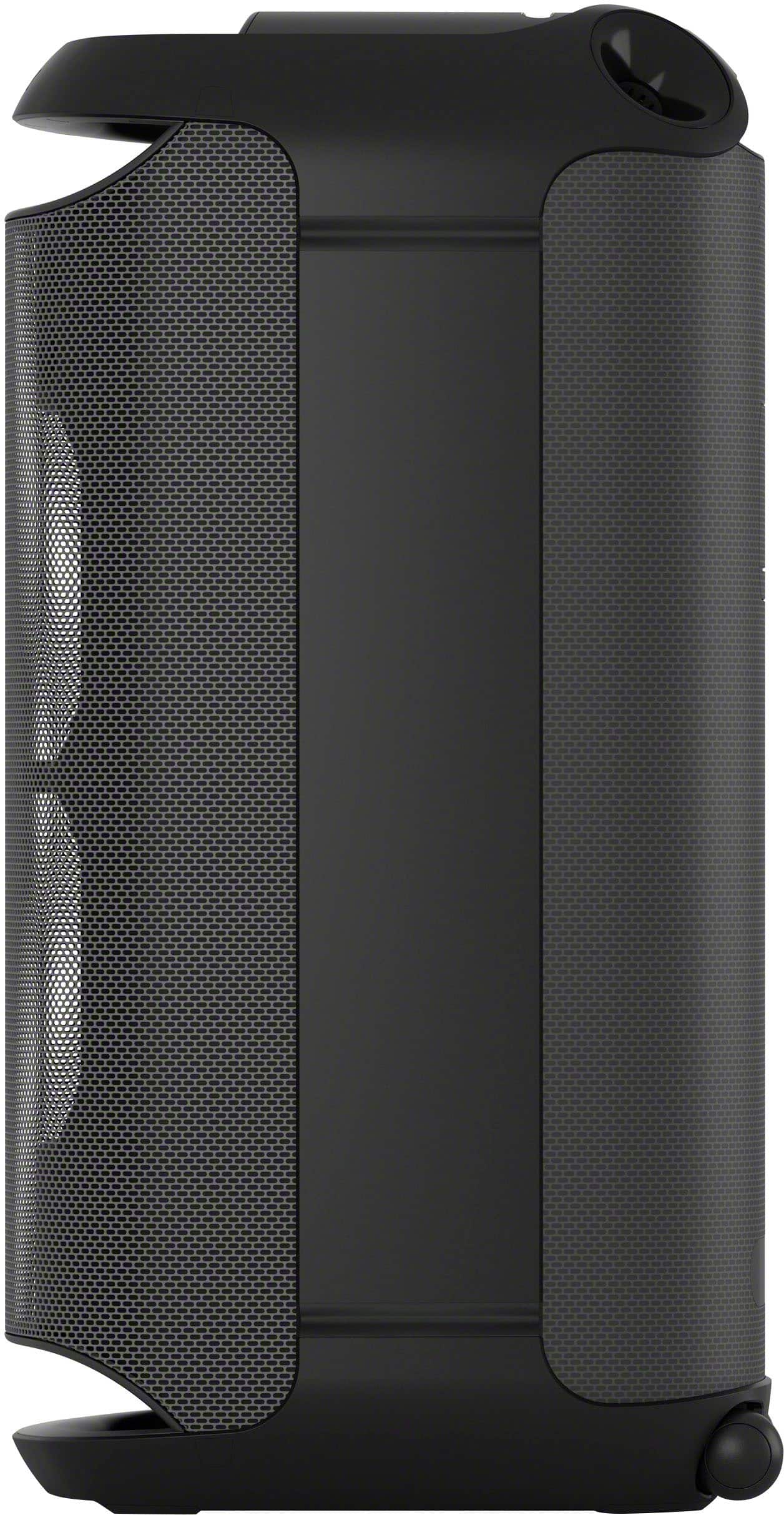
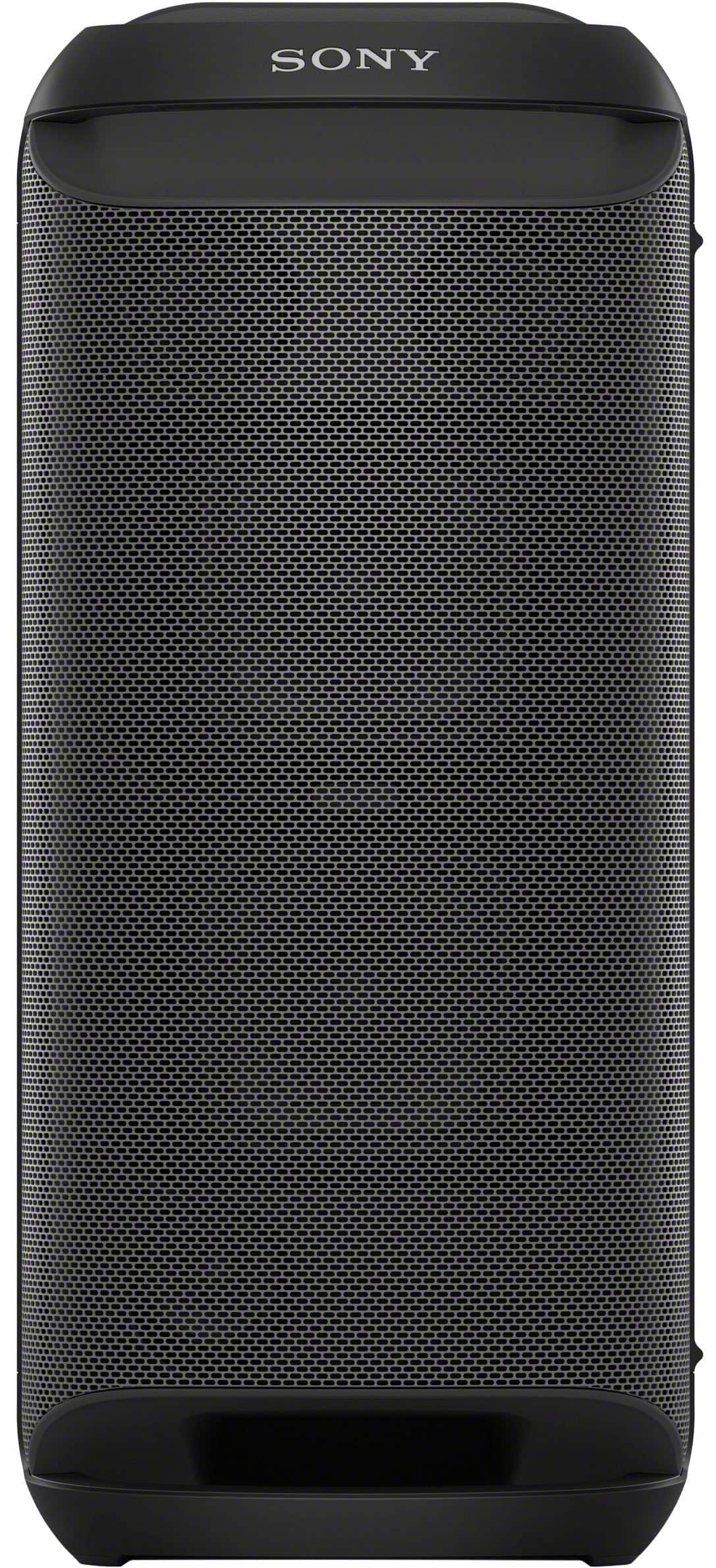
Sony takes a completely different approach with the SRS-XV800. Its dual 6.69-inch woofers use Sony's X-Balanced Speaker technology—a rectangular driver design that maximizes diaphragm surface area within the same cabinet space. This clever engineering allows smaller drivers to move as much air as larger circular ones while reducing distortion.
More interesting is Sony's five-tweeter array: three 2.36-inch tweeters on the front and two 1.57-inch units on the rear. This omnidirectional high-frequency setup creates a more immersive soundstage where everyone at the party gets consistent treble response regardless of their position relative to the speaker.
Here's where things get technical but important. The Sony SRS-XV800 extends deeper into bass territory, reaching 20Hz compared to the JBL's 35Hz lower limit. These numbers represent the lowest frequencies each speaker can reproduce effectively. Human hearing typically bottoms out around 20Hz, so Sony technically covers the full audible spectrum.
However, frequency response numbers only tell part of the story. The JBL PartyBox 710 might not reach quite as low on paper, but its larger drivers and higher power output create more physical bass impact. Users consistently describe the JBL's bass as more "felt" than "heard"—that chest-thumping sensation that defines great party audio.
The Sony's bass, while technically more extended, is described as more "audible" than physical. It's cleaner and more controlled, better suited for detailed listening and varied music genres, but potentially less exciting for dance-focused parties.
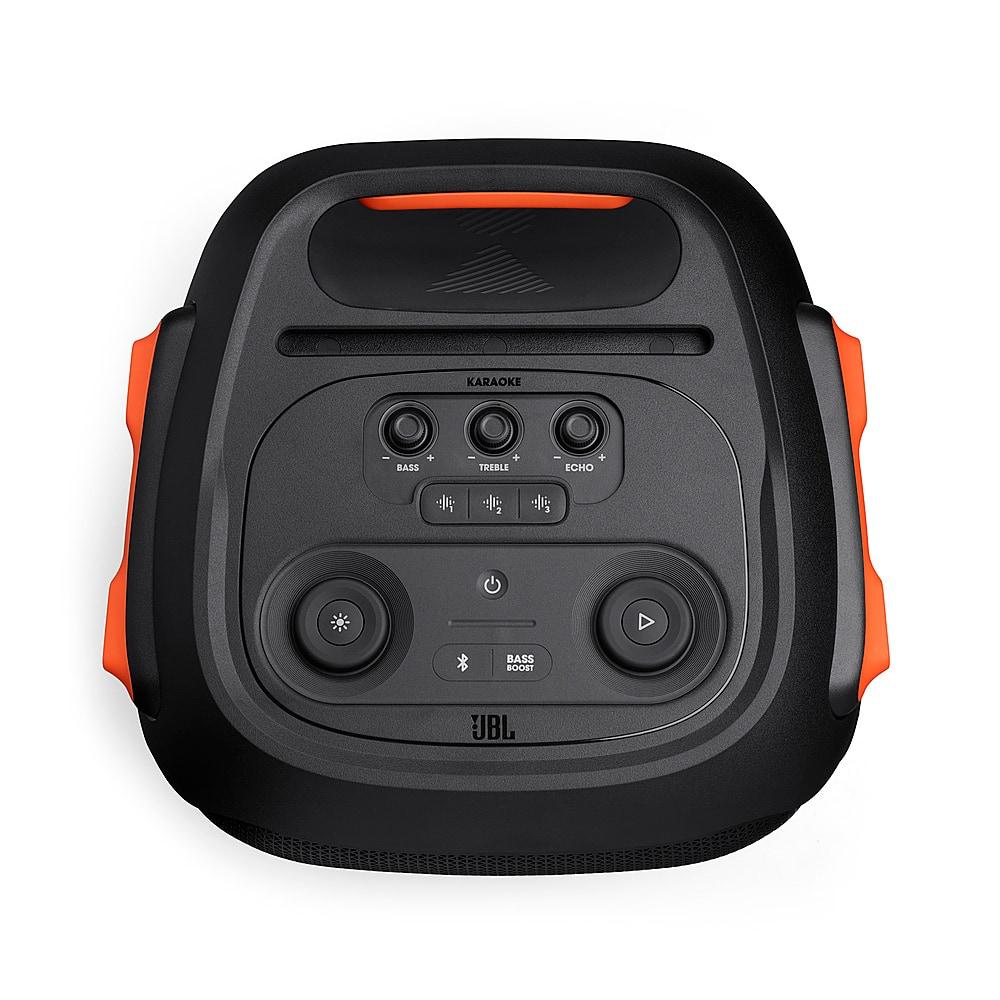
The JBL PartyBox 710 makes no apologies for its party-first tuning. This speaker wants to get people moving, and everything about its sound signature serves that goal. The bass response is deliberately emphasized and physical, with a "Bass Boost" feature offering "Deep" and "Punchy" modes for real-time adjustment.
"Deep" mode extends low-bass response for sub-bass frequencies that you feel more than hear—perfect for electronic dance music and hip-hop. "Punchy" mode emphasizes mid-bass frequencies that give kick drums and bass guitars more impact. This flexibility lets you adapt the sound to different music styles and venue acoustics.
The midrange and treble are tuned to cut through crowd noise and maintain vocal clarity even at high volumes. Some listeners find this results in a slightly bright sound signature that can become fatiguing during extended listening, but it serves the party environment well by ensuring announcements and vocals remain intelligible.
The Sony SRS-XV800 takes a more audiophile-friendly approach to tuning. Its sound signature is smoother and more balanced, with better separation between frequency ranges. The five-tweeter array creates genuine omnidirectional high-frequency dispersion, meaning the speaker sounds consistent from multiple listening positions.
Sony's "Mega Bass" mode provides low-end enhancement, but it's more subtle than JBL's bass boost options. The X-Balanced woofer technology reduces distortion at high output levels, maintaining cleaner sound quality when pushed hard. This makes the Sony better suited for critical listening and varied music genres beyond just dance tracks.
The stereo 2.0 configuration (versus JBL's mono 1.0 setup) provides better soundstage width and instrument separation. If you care about audio quality for purposes beyond just getting loud, the Sony has clear advantages.
Modern audio quality depends heavily on wireless codec support—the compression algorithms used to transmit audio over Bluetooth. The JBL PartyBox 710 only supports basic SBC codec, which is universally compatible but offers relatively low audio quality due to heavy compression.
The Sony SRS-XV800 supports SBC, AAC, and Sony's proprietary LDAC codec. AAC provides better quality than SBC, especially for iPhone users. LDAC is the real game-changer—it can transmit up to three times more data than standard Bluetooth codecs, approaching CD-quality wireless audio when streaming from compatible devices.
For casual party use, codec differences might not matter much over loud background noise. But if you plan to use your speaker for serious music listening or home theater applications, Sony's superior codec support provides a notable advantage.
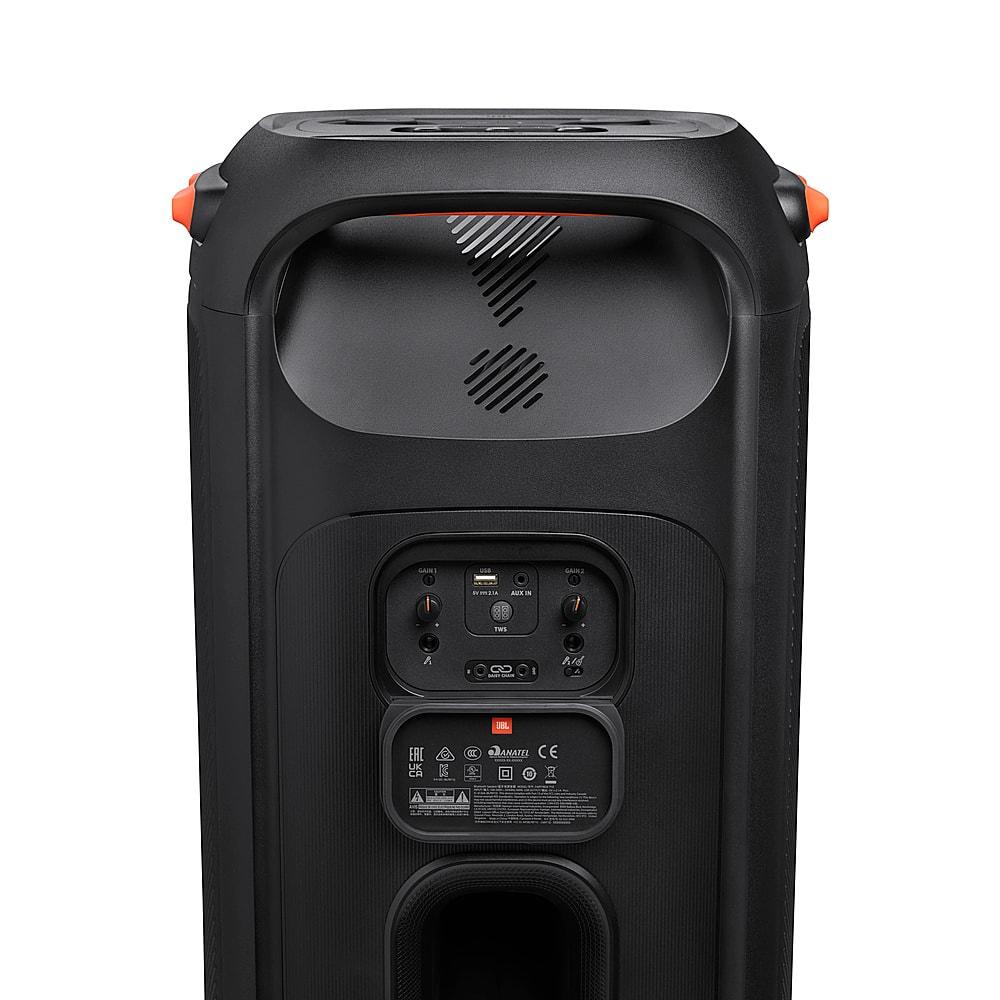
Here's where the JBL PartyBox 710 reveals its biggest limitation: it has no internal battery whatsoever. This speaker must remain plugged into a wall outlet at all times, making it fundamentally different from most portable speakers.
This power dependency severely limits use cases. Outdoor parties require extension cords or portable generators. Beach gatherings become impossible unless you have access to power. The lack of battery also means the speaker becomes completely useless during power outages or in remote locations.
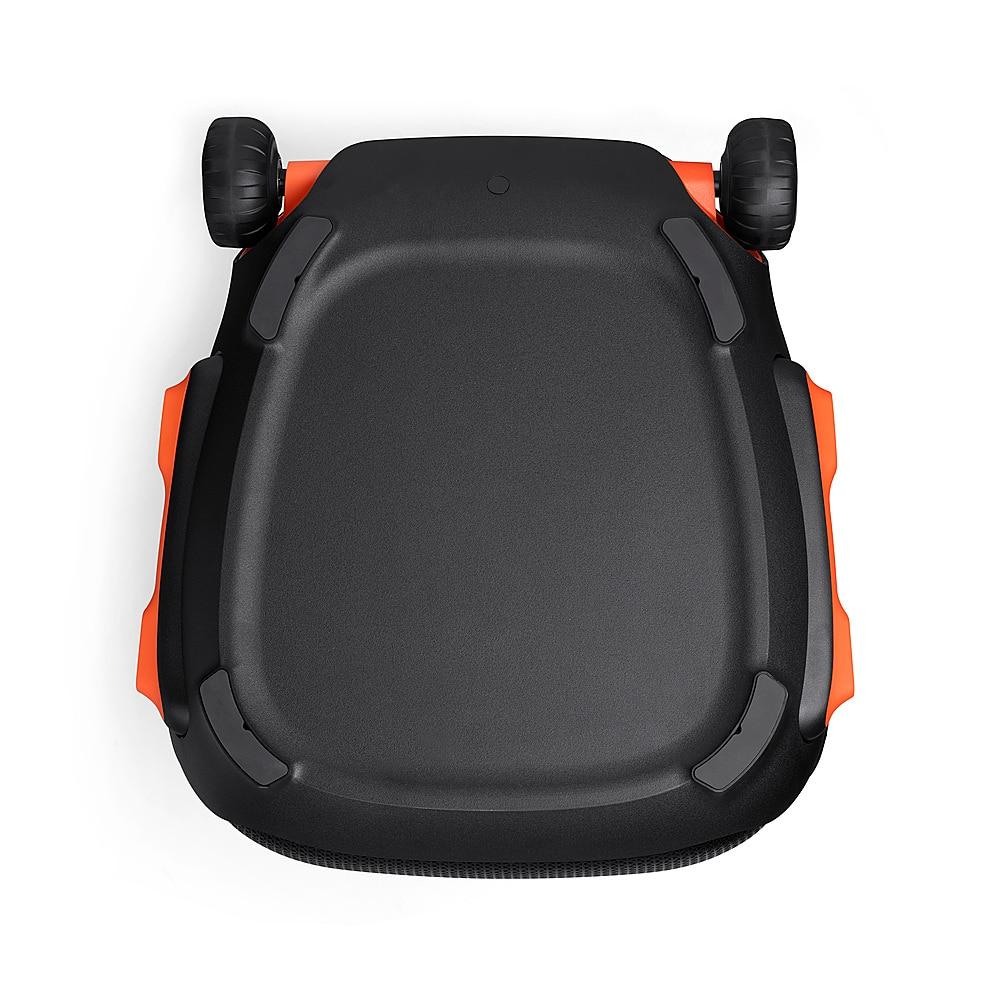
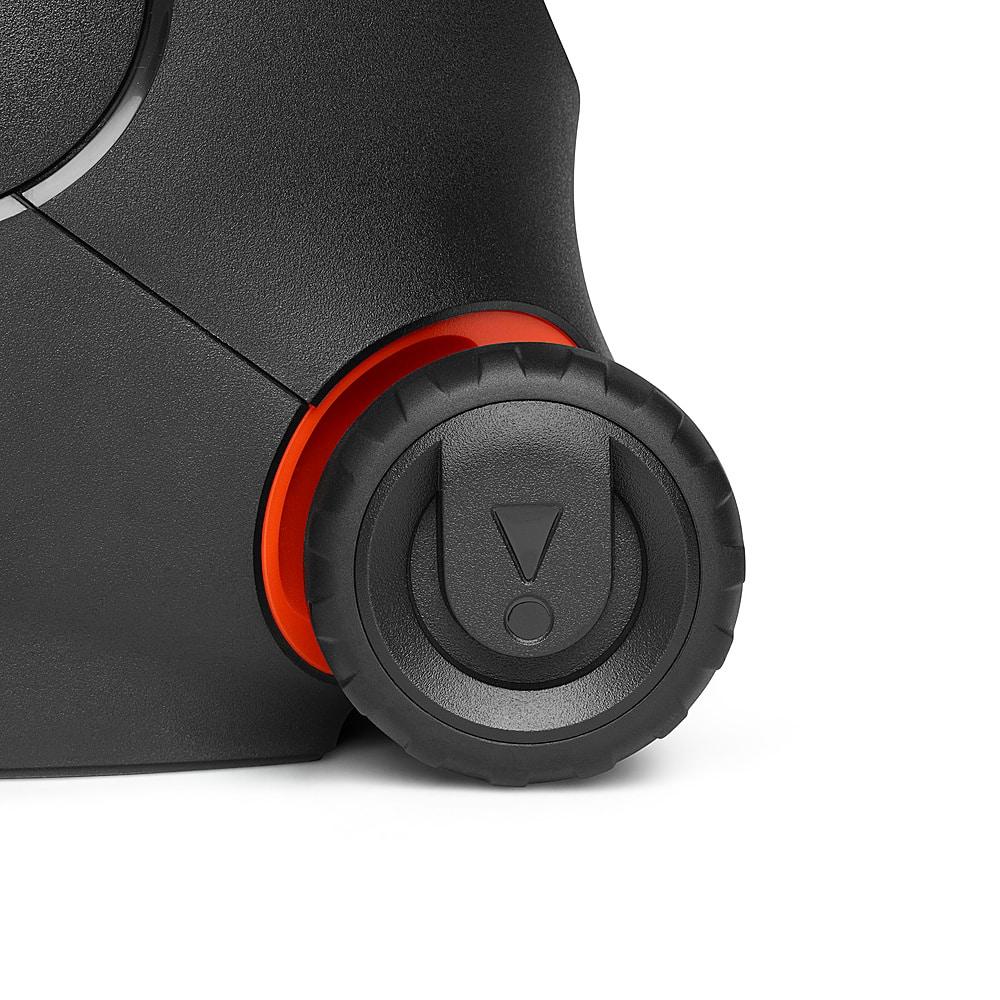
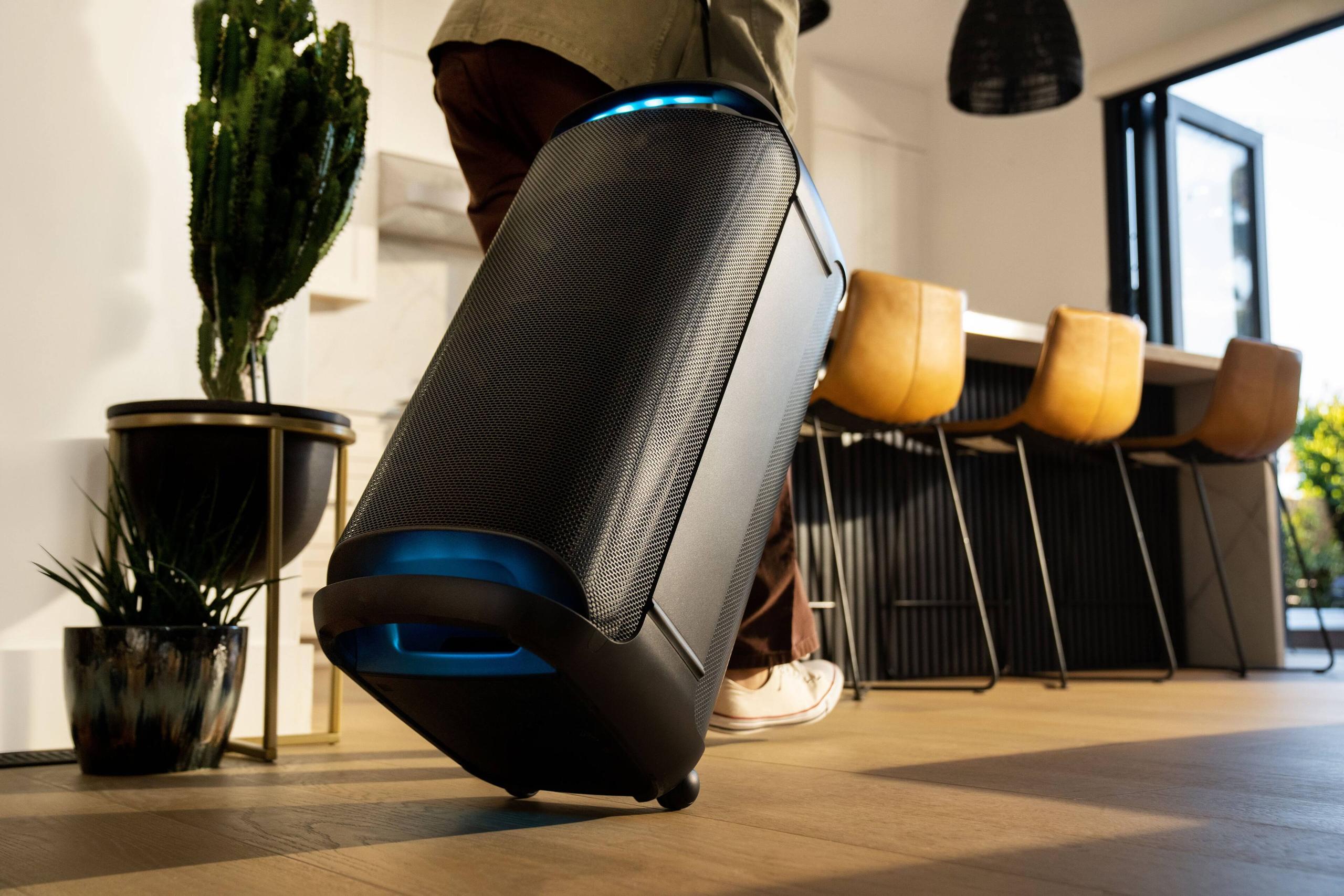
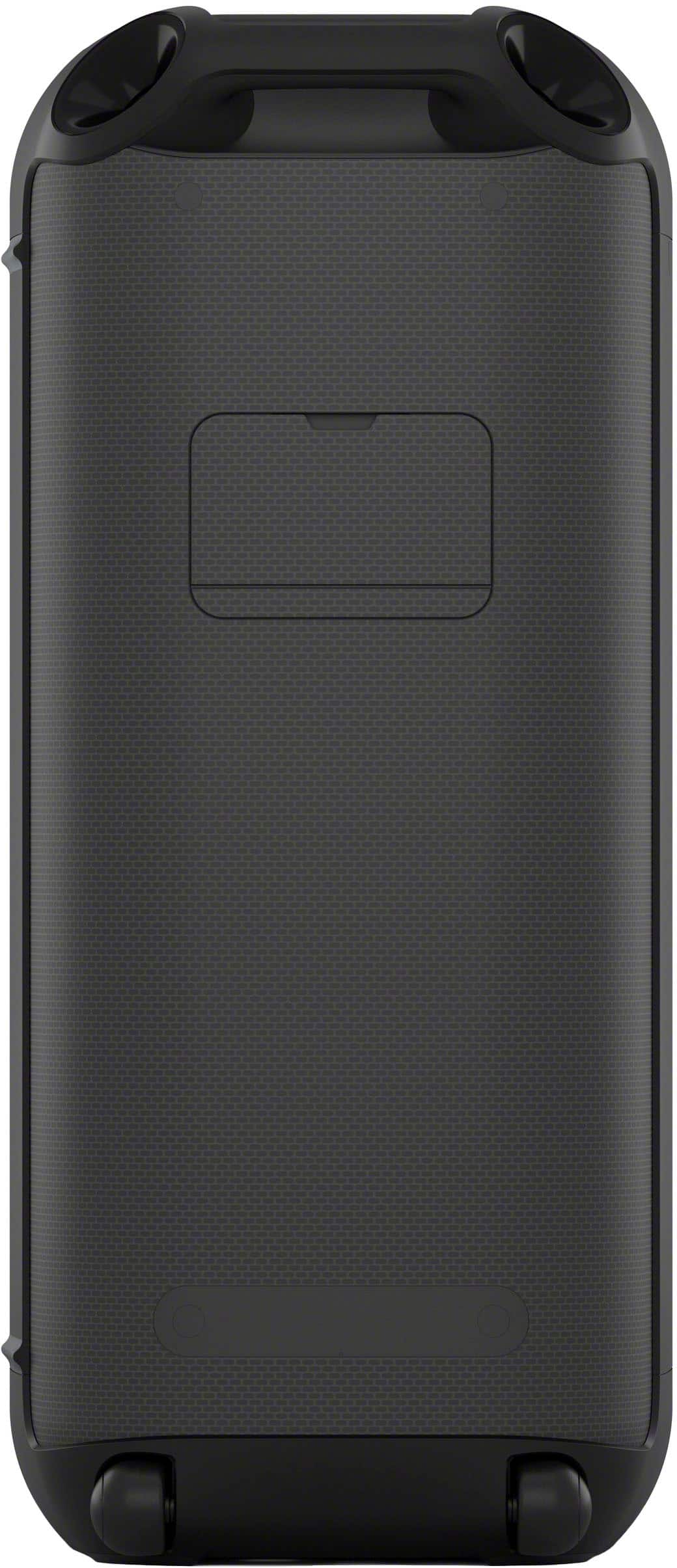
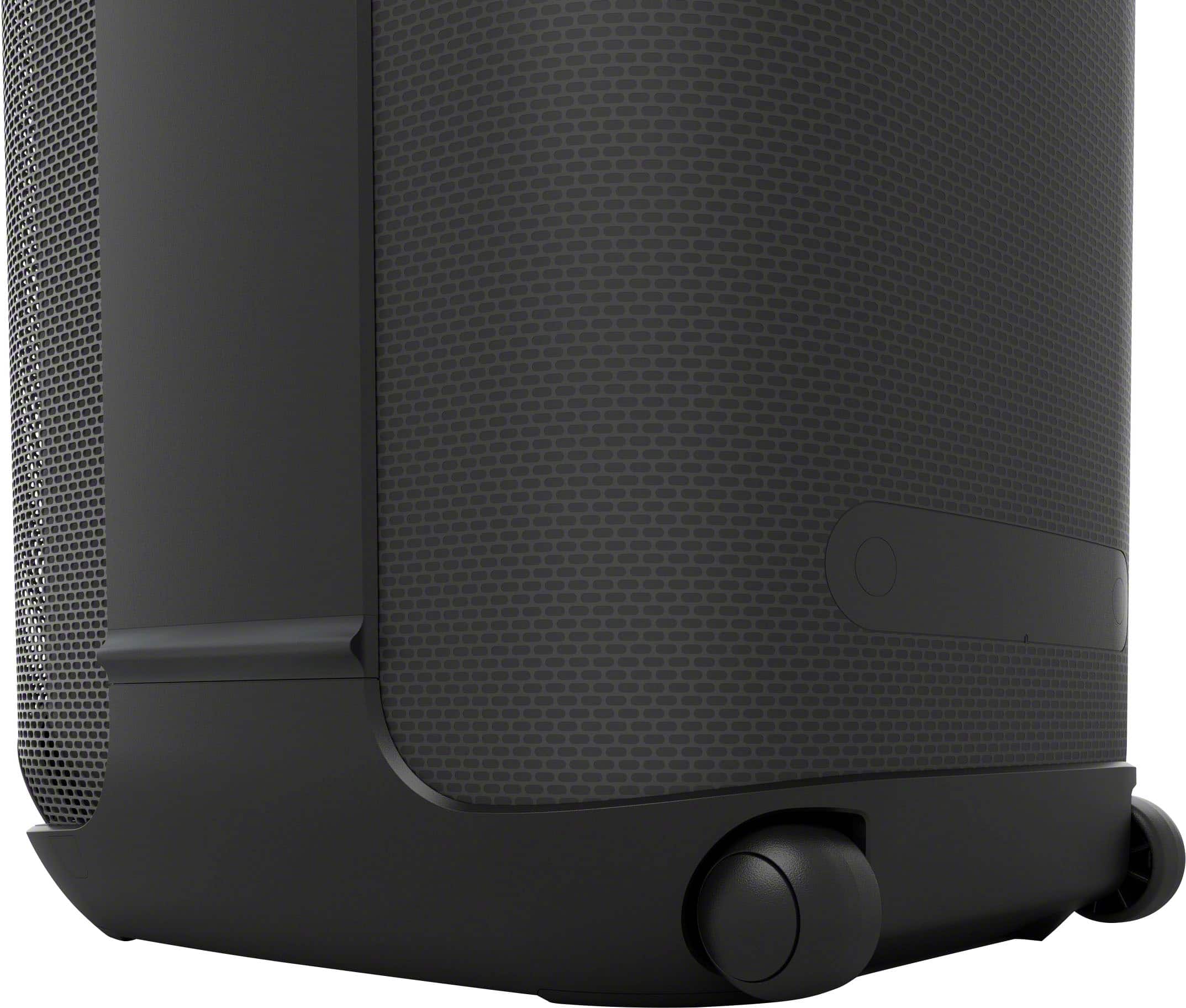
At 61.3 pounds, the JBL is also significantly heavier than most competitors. While it includes wheels and a handle for transport, moving it across uneven terrain or up stairs requires serious effort. This speaker works best for users who can position it in a semi-permanent location with reliable power access.
The Sony SRS-XV800 completely reverses this equation with a substantial internal battery rated for 25 hours of playback. Real-world battery life varies significantly based on volume level and feature usage—expect roughly 10 hours at party-appropriate volume levels with lights and bass boost active.
At 40.8 pounds, the Sony is still heavy but manageable for most users. Its smaller footprint and lighter weight make it genuinely portable for moving between locations. The ability to operate completely wirelessly opens up use cases the JBL simply can't handle: beach parties, camping trips, outdoor events without power infrastructure.
The Sony also includes quick charging capability, providing three hours of playback from just 10 minutes of charging. This feature can save a party when you forget to charge beforehand. A USB power output port lets the speaker double as a powerbank for charging phones and tablets during events.
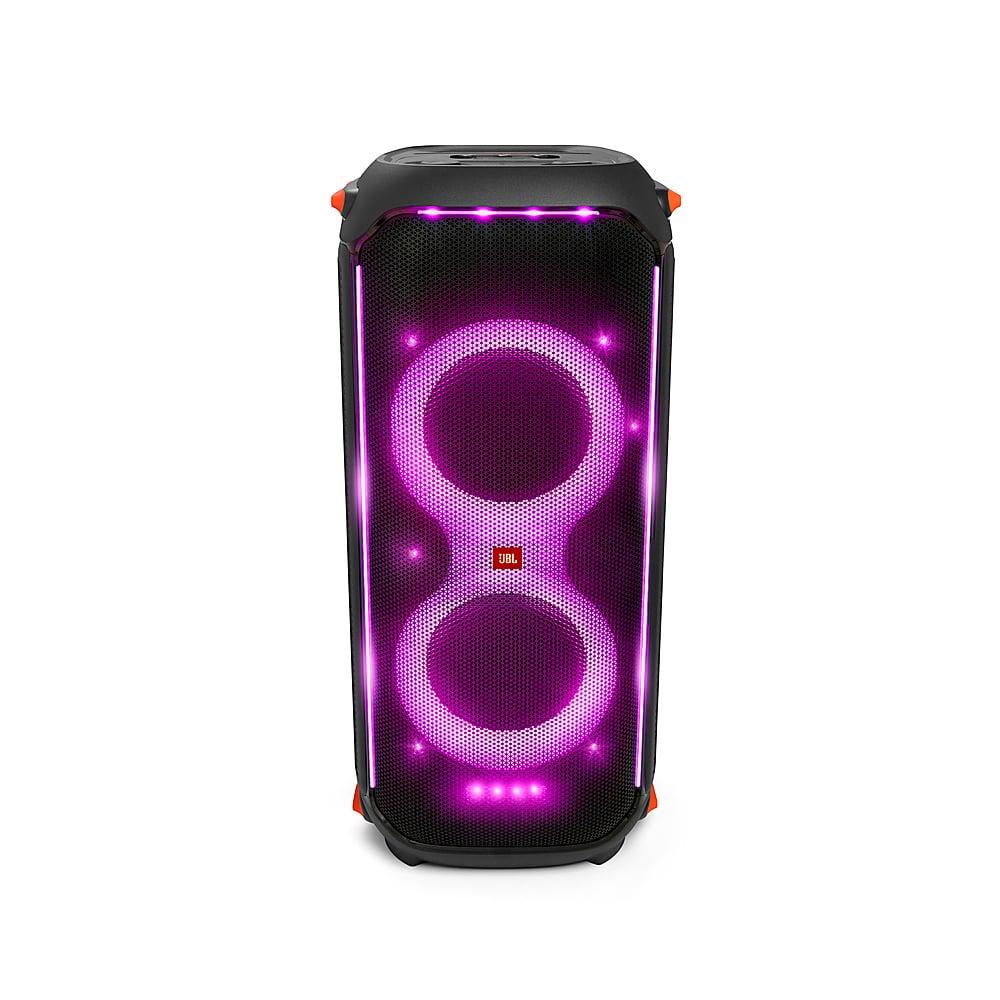
Party speakers aren't just about audio—the visual experience matters enormously for creating atmosphere. The JBL PartyBox 710 absolutely dominates in this category with one of the most comprehensive lighting systems we've encountered in a consumer speaker.
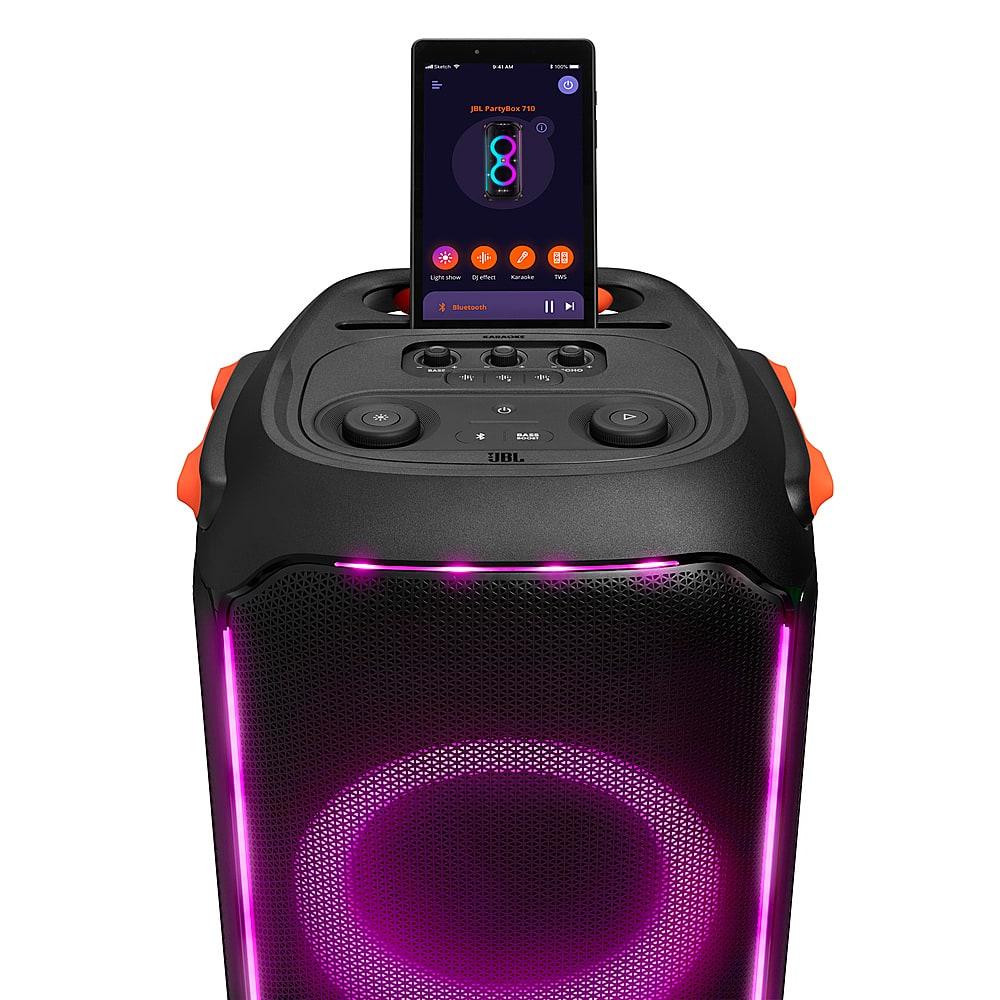
The lighting array includes connected light rings around each woofer, strobe lights (four white plus 15 colored LEDs), a unique "starry night" effect, and illuminated rails running down the sides of the grille. These elements work together to create genuinely impressive light shows that synchronize with the music.
The JBL PartyBox app provides extensive customization options for colors, patterns, and intensity. Users can create custom light shows or choose from preset patterns including club-style strobes and gentle ambient effects. The visual impact is dramatic enough to transform any space into a party environment.
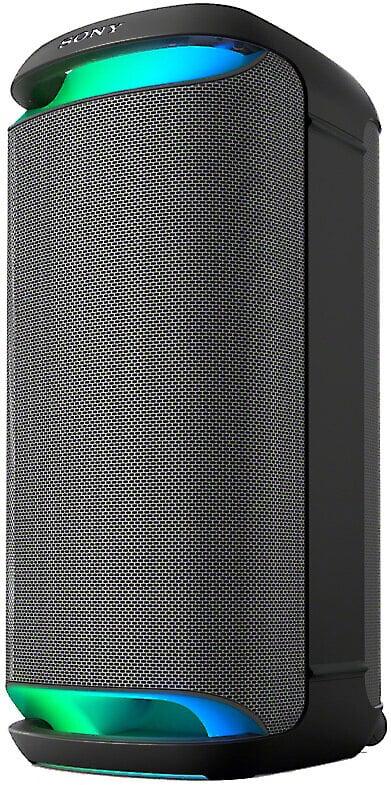
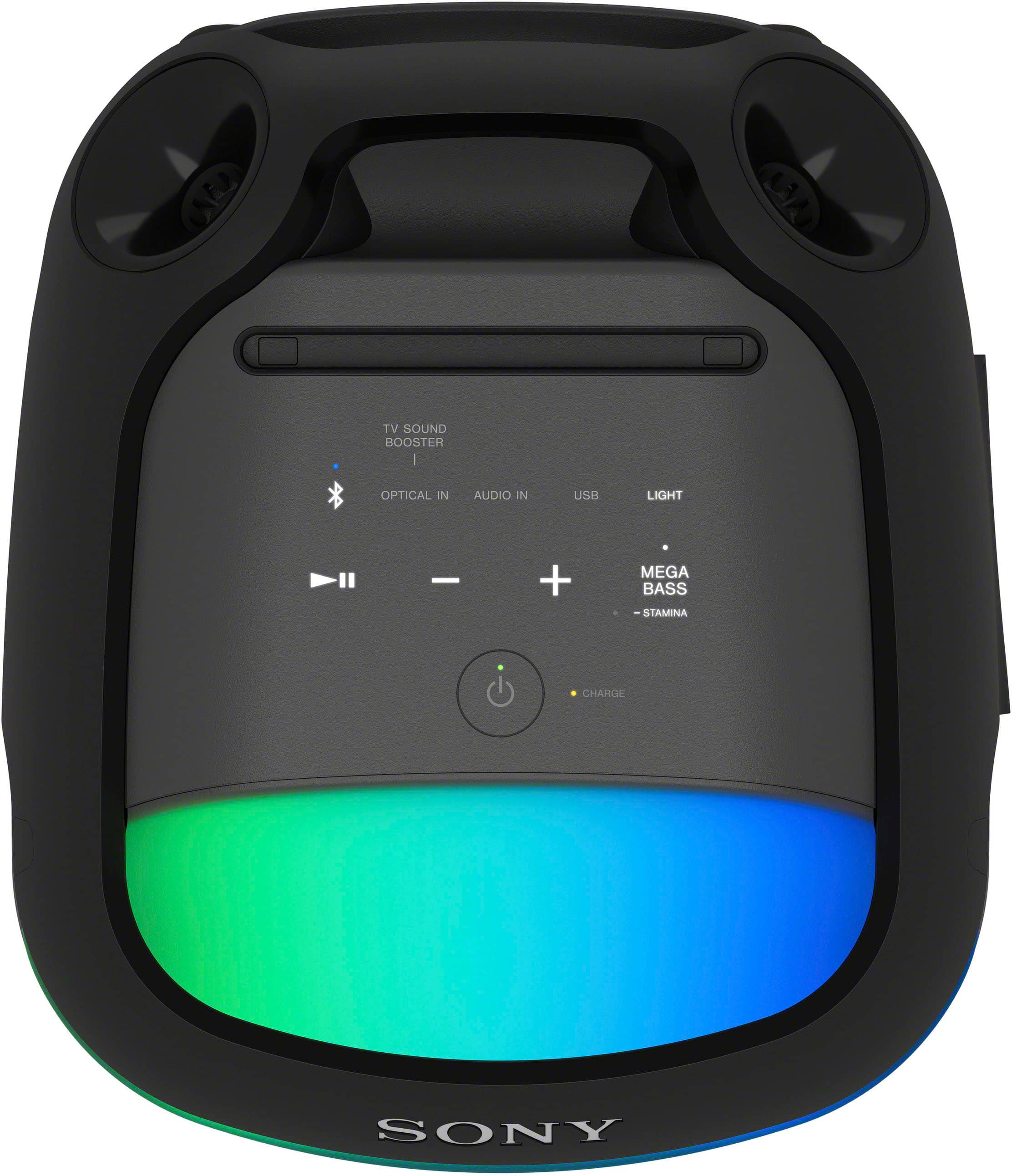
The Sony SRS-XV800 takes a more restrained approach with LED zones at the top and bottom of the speaker. The lighting is programmable through Sony's apps and provides decent visual enhancement, but it can't compete with JBL's more comprehensive system.
Sony's lighting focuses on ambient enhancement rather than dramatic effects. There are no strobe capabilities or the complex synchronized patterns available on the JBL. For sophisticated gatherings where you want visual interest without overwhelming the space, Sony's approach works well. For maximum party impact, the JBL clearly wins.
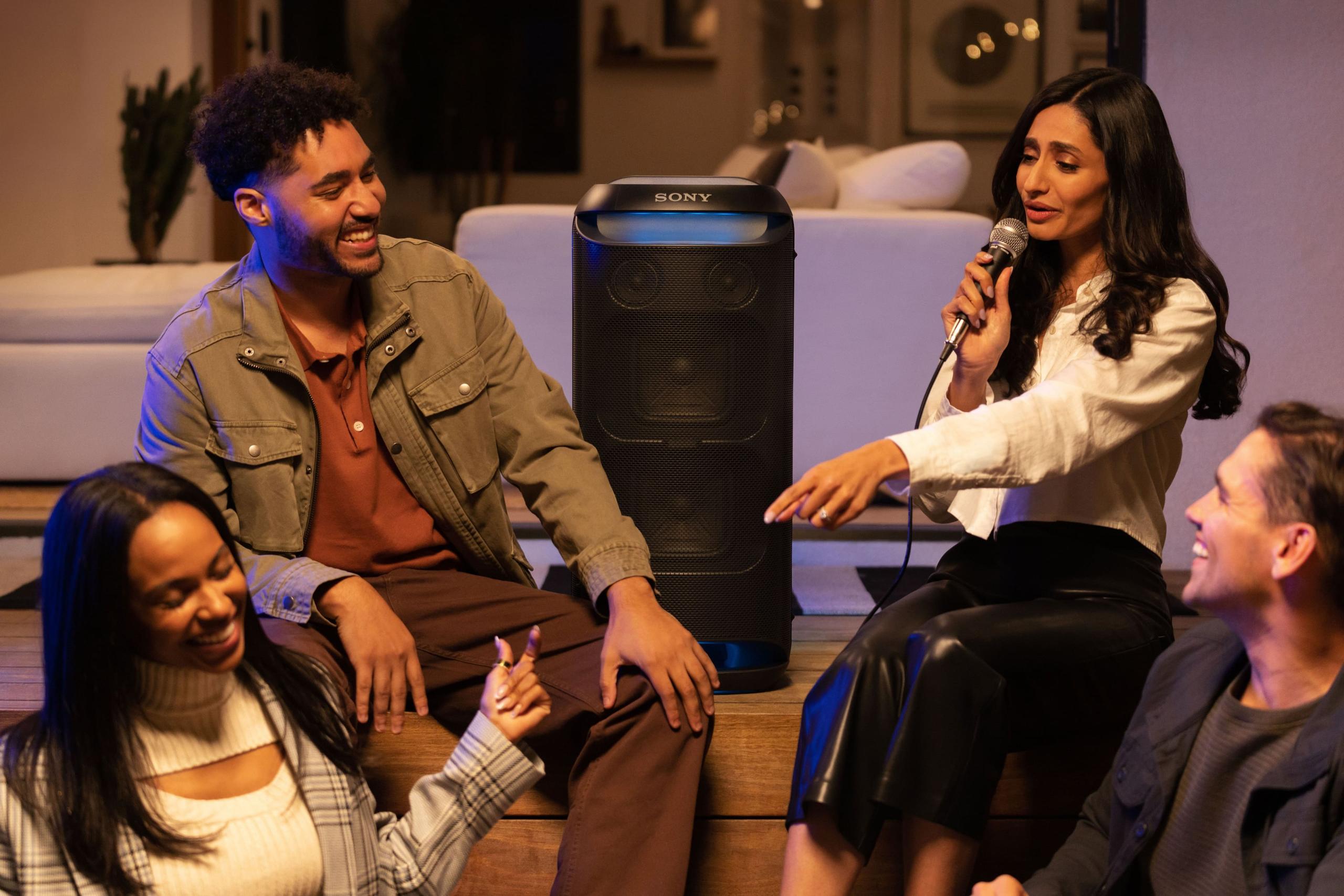
Both speakers include quarter-inch inputs for microphones and instruments, but their implementation differs significantly. The JBL PartyBox 710 provides more comprehensive microphone controls including dedicated bass, treble, and echo adjustment dials. This level of control makes it genuinely useful for karaoke enthusiasts and live performance applications.
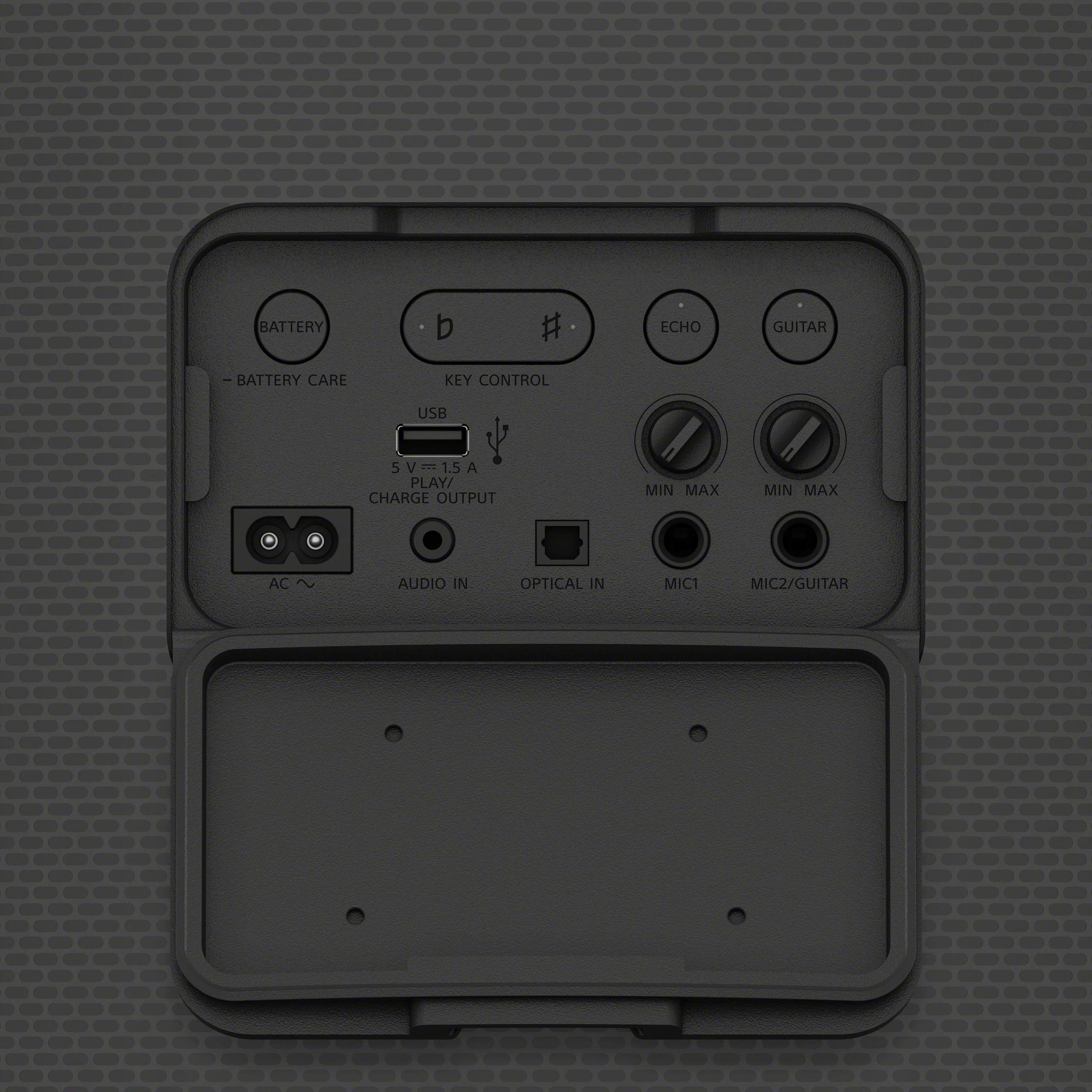
The Sony SRS-XV800 includes microphone inputs with basic volume control and echo effects, but lacks the detailed EQ adjustments available on the JBL. For casual karaoke use, Sony's implementation works fine. For serious vocal performance or public address applications, the JBL's superior controls provide clear advantages.
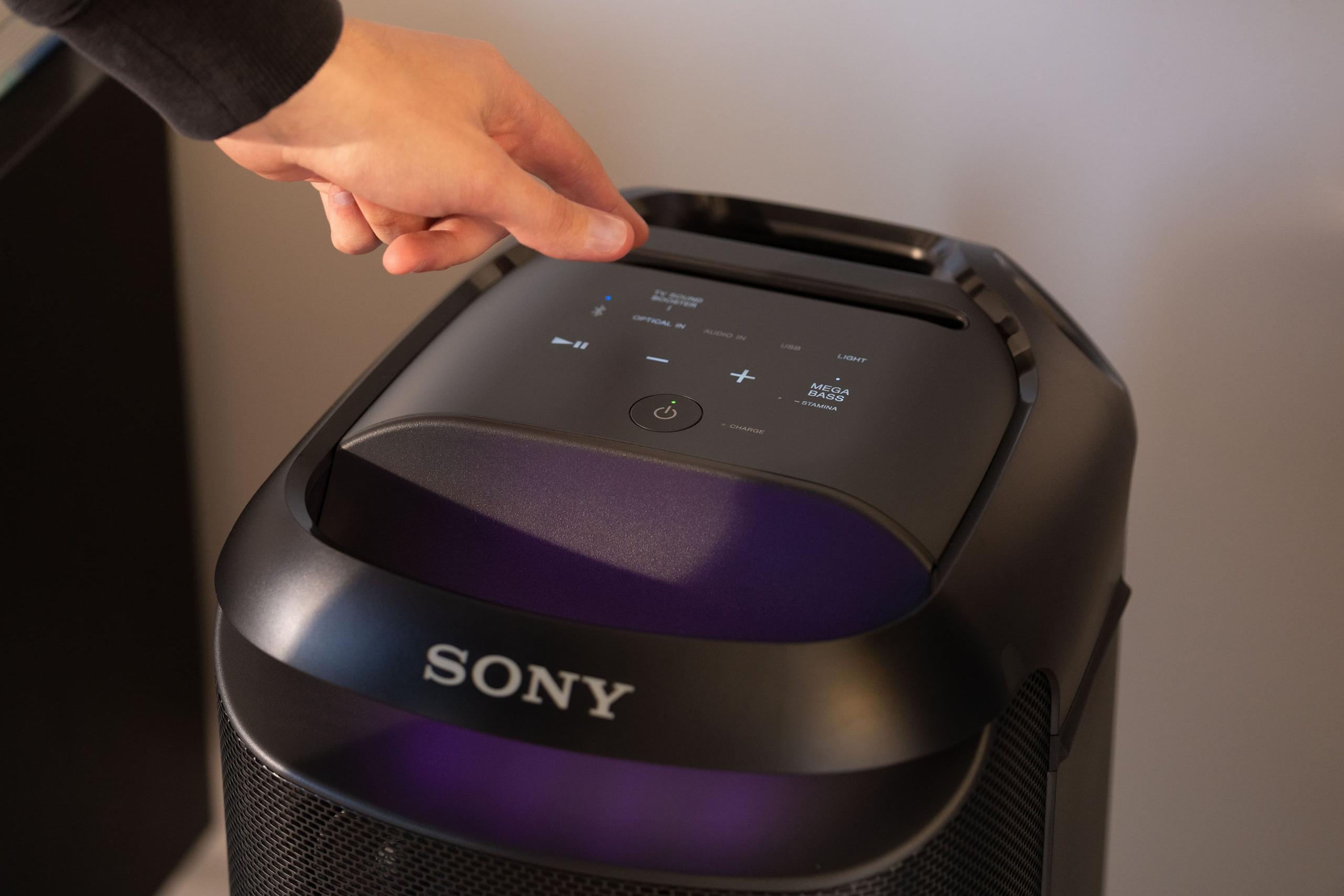
Here's where the Sony SRS-XV800 reveals its secret weapon: an optical digital input that enables direct connection to televisions. This feature transforms the speaker into a capable soundbar for home theater use, something the JBL PartyBox 710 simply cannot do.
The optical input bypasses Bluetooth entirely, providing lag-free audio for movies and gaming. Sony includes a "TV Sound Booster" mode specifically designed for dialog clarity and enhanced soundtrack bass. Given the speaker's substantial power output and wide soundstage, it can significantly improve the audio experience for large televisions.
This multi-purpose functionality adds considerable value to the Sony package. You get both a party speaker and a home theater upgrade in a single device. The JBL remains purely party-focused without this versatility.
Both speakers support multi-unit pairing, but with different approaches and capabilities. The JBL PartyBox 710 focuses on True Wireless Stereo pairing with identical units, creating a genuine stereo setup with dedicated left and right channels. It also includes an audio output jack for daisy-chaining additional speakers via cables.
The Sony SRS-XV800 offers more flexible multi-speaker connectivity through its "Party Connect" system. This technology can link up to 100 compatible Sony speakers across multiple product lines, including smaller models like the XE300 and XB33. While not providing true stereo separation like paired JBLs, this system offers greater flexibility for large events requiring multiple speakers in different locations.
At the time of writing, the JBL PartyBox 710 commands a premium price that reflects its flagship status in JBL's party speaker lineup. Released in 2022, it represents the pinnacle of JBL's consumer party speaker technology with no major updates since launch.
The value proposition centers on uncompromising performance for users who prioritize maximum impact over flexibility. You're paying for 800 watts of genuine power output, comprehensive lighting systems, and professional-grade microphone controls. For permanent installations or users with reliable power access, the performance-per-dollar ratio remains competitive.
However, the lack of battery significantly impacts overall value for many potential users. You're essentially buying a powered speaker that happens to include Bluetooth rather than a truly portable party solution.
The Sony SRS-XV800, released in 2023, typically sells for notably less than the JBL despite being newer. Sony's pricing strategy positions this speaker as a more accessible entry into premium party audio while offering superior versatility through battery operation and home theater capability.
The value equation strongly favors Sony for most users. You get genuine portability, multi-purpose functionality, superior audio codecs, and modern Bluetooth 5.2 connectivity at a lower price point. The trade-offs in maximum volume and lighting capabilities may not matter for typical use cases.
Sony's newer release date also means more recent technology integration, including improved power management, better app interfaces, and enhanced wireless connectivity protocols.
Since the JBL PartyBox 710's 2022 release, party speaker technology has evolved primarily in battery efficiency, wireless connectivity, and app integration. JBL's decision to omit battery technology entirely means the speaker avoids battery degradation over time but also misses improvements in lithium-ion technology that enable longer runtime and faster charging.
The Sony SRS-XV800's 2023 release incorporates these technological advances, particularly in battery management and Bluetooth 5.2 implementation. The newer wireless standard provides better connection stability, lower latency, and improved multi-device handling compared to the JBL's Bluetooth 5.1.
Looking forward, battery-powered speakers like the Sony will benefit from ongoing improvements in battery technology and power efficiency. The JBL's AC-powered design insulates it from battery-related concerns but limits integration with emerging wireless and mobile technologies.
You're serious about maximum audio impact and always have power access. This speaker excels for large outdoor gatherings, permanent patio installations, or indoor venues where you need to fill substantial space with sound. The superior microphone controls make it ideal for karaoke enthusiasts or aspiring DJs who want professional-level vocal processing.
The impressive light show capabilities justify the premium for users who prioritize visual impact alongside audio performance. If your parties regularly host 30+ people or occur in large outdoor spaces, the JBL's superior power output becomes essential rather than optional.
Commercial applications also favor the JBL PartyBox 710—the lack of battery concerns eliminates maintenance issues for rental companies or event planners who need reliable performance without worrying about charge status.
You value flexibility and multi-purpose functionality over raw power. The battery operation opens up countless use cases impossible with the JBL: beach parties, camping trips, tailgating, or any outdoor event without power infrastructure.
The home theater capability through optical input adds tremendous value for users seeking both party speaker and soundbar functionality. If you regularly watch movies or game on a large TV, the Sony provides significant audio upgrade capability beyond its party duties.
For most residential users, the Sony's combination of portability, versatility, and lower price creates a compelling value proposition. Unless you regularly host massive gatherings requiring maximum volume, the Sony's more balanced approach serves typical party needs while offering superior flexibility for other applications.
These speakers target fundamentally different priorities, making direct comparison challenging. The JBL PartyBox 710 is an uncompromising power monster that delivers maximum impact when you can provide reliable AC power. The Sony SRS-XV800 is a versatile performer that sacrifices some raw power for genuine portability and multi-use flexibility.
For most users, the Sony's advantages in battery life, home theater capability, lighter weight, and lower price create a more compelling overall package. The ability to use the speaker anywhere without power constraints opens up use cases the JBL simply cannot address.
However, if your priority is maximum audio impact for large gatherings and you have reliable power access, the JBL's superior volume output and comprehensive lighting system justify its limitations. The question isn't which speaker is objectively better—it's which approach better matches your specific needs and priorities.
Consider your typical use cases carefully. Do you need maximum volume for massive outdoor parties, or would you prefer the flexibility to take your speaker anywhere? Your answer to that fundamental question should drive your decision between these two excellent but very different party speakers.
| JBL PartyBox 710 | Sony SRS-XV800 |
|---|---|
| Power Output - Determines maximum volume and bass impact | |
| 800W RMS (significantly louder, fills larger spaces) | Power unspecified (estimated lower, suitable for medium gatherings) |
| Battery Life - Critical for portability and outdoor use | |
| No battery (requires AC power at all times) | 25 hours (true wireless operation, 10 hours at party volume) |
| Weight - Affects ease of transport and setup | |
| 61.3 lbs (heavy, requires two people for stairs) | 40.8 lbs (34% lighter, manageable for most users) |
| Audio Configuration - Impacts sound quality and coverage | |
| Mono 1.0, dual 8" woofers, dual 2.75" tweeters | Stereo 2.0, dual 6.69" X-Balanced woofers, five tweeters |
| Frequency Response - Lower numbers mean deeper bass | |
| 35Hz-20kHz (strong but not extended bass) | 20Hz-20kHz (technically deeper bass extension) |
| Lighting System - Creates party atmosphere and visual impact | |
| Advanced: strobes, starry night, light rings, side rails | Basic: top/bottom LED zones, no strobe effects |
| Bluetooth Codec Support - Affects wireless audio quality | |
| SBC only (basic quality) | SBC, AAC, LDAC (high-resolution audio support) |
| TV/Home Theater Connectivity - Enables soundbar functionality | |
| None (party use only) | Optical input (doubles as TV soundbar) |
| Microphone Controls - Important for karaoke and live performance | |
| Advanced: bass, treble, echo EQ controls | Basic: volume and echo controls |
| Water Resistance - Protection for outdoor use | |
| IPX4 (splashproof) | IPX4 vertical, IPX2 horizontal (splashproof) |
| Multi-Speaker Pairing - Expands sound coverage for large events | |
| TWS with identical units, daisy-chain via cable | Party Connect with up to 100 Sony speakers |
| Release Year - Indicates technology generation | |
| 2022 (established technology) | 2023 (newer Bluetooth 5.2, improved efficiency) |
The JBL PartyBox 710 is significantly louder with its 800W RMS power output, making it better for large outdoor parties and filling bigger spaces. The Sony SRS-XV800 has lower power output but still gets plenty loud for most gatherings of 20+ people.
The Sony SRS-XV800 has a 25-hour battery and can operate completely wirelessly, while the JBL PartyBox 710 has no battery at all and must stay plugged into a wall outlet. This makes the Sony much more portable for outdoor events and locations without power access.
The JBL PartyBox 710 delivers more physical, "felt" bass that hits harder and gets people dancing, thanks to its larger 8-inch woofers and 800W power. The Sony SRS-XV800 has technically deeper bass extension (20Hz vs 35Hz) but it's more controlled and less impactful for party environments.
Only the Sony SRS-XV800 works as a TV soundbar thanks to its optical digital input and TV Sound Booster mode. The JBL PartyBox 710 lacks optical input and is designed purely for party use, not home theater applications.
The Sony SRS-XV800 is much easier to transport at 40.8 pounds versus the JBL PartyBox 710's 61.3 pounds. The Sony is also smaller and has true wireless operation, while the JBL requires power cords and is significantly bulkier.
The Sony SRS-XV800 supports advanced codecs including LDAC for near-CD quality wireless audio, plus AAC for better iPhone compatibility. The JBL PartyBox 710 only supports basic SBC codec, which provides lower audio quality over Bluetooth.
The JBL PartyBox 710 has a much more impressive light show with strobes, starry night effects, light rings around the woofers, and illuminated side rails. The Sony SRS-XV800 has simpler LED zones that provide ambient lighting but can't match the JBL's dramatic visual effects.
Both speakers support multi-speaker setups but differently. The JBL PartyBox 710 pairs with identical units for true stereo sound and can daisy-chain via cables. The Sony SRS-XV800 uses Party Connect to link up to 100 compatible Sony speakers across different models.
The JBL PartyBox 710 offers superior karaoke features with dedicated bass, treble, and echo controls for microphone inputs. The Sony SRS-XV800 has mic inputs with basic volume and echo controls, making the JBL better for serious karaoke enthusiasts.
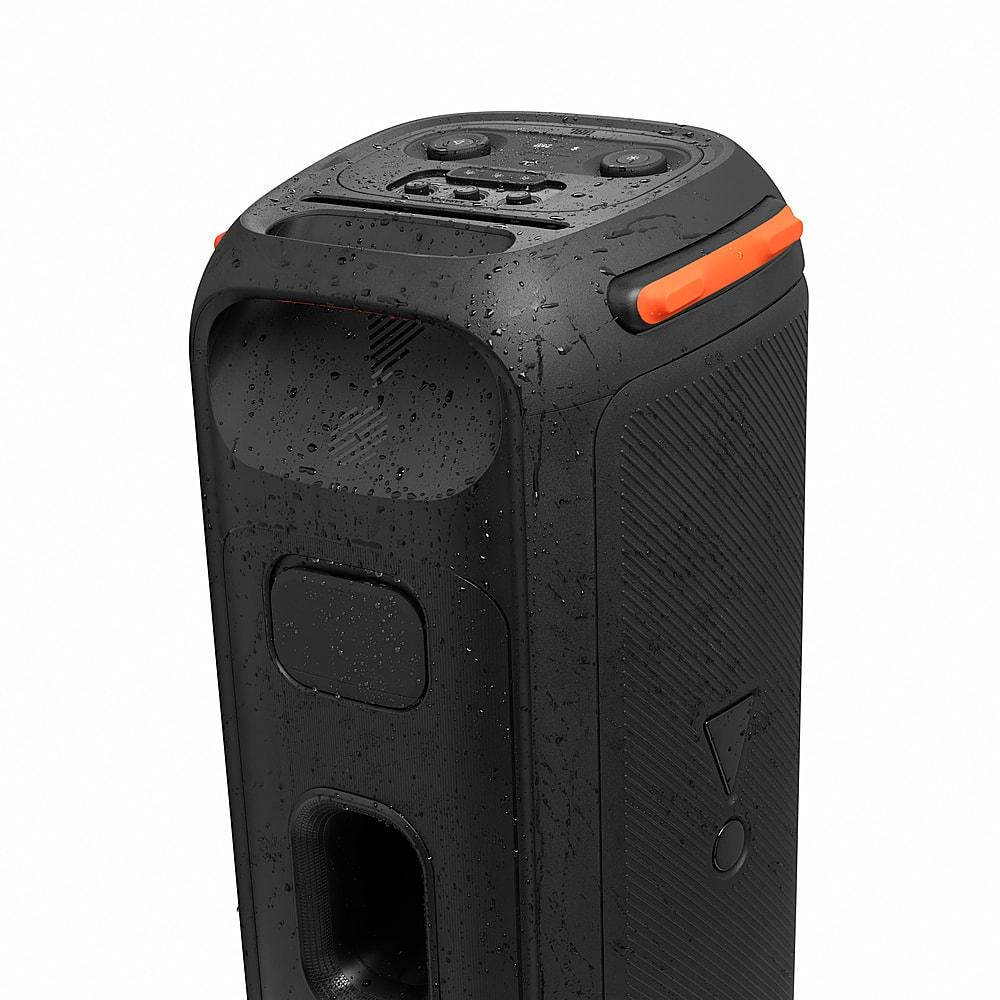
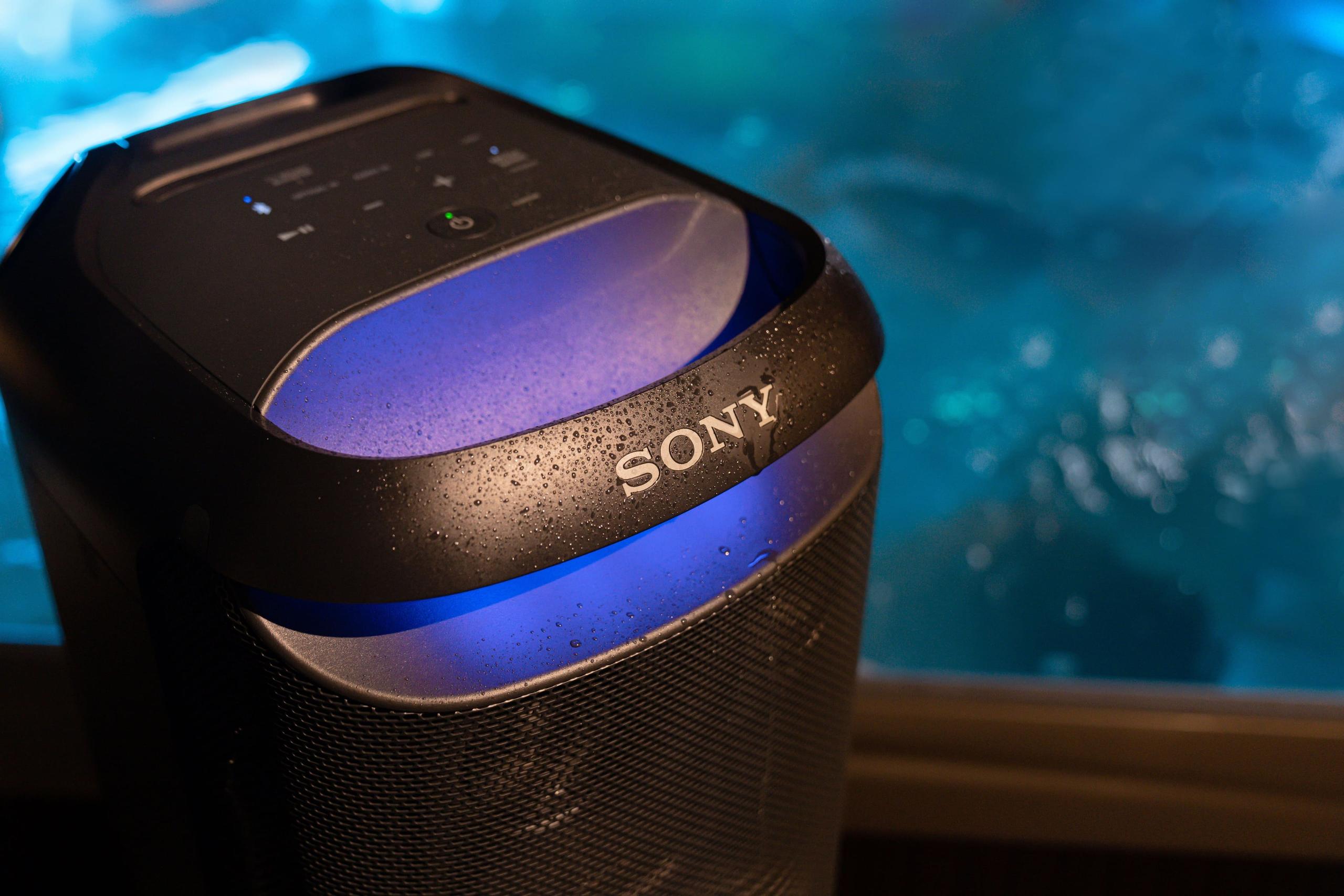
Both the JBL PartyBox 710 and Sony SRS-XV800 have IPX4 splashproof ratings, protecting against water splashes but not full submersion. They're suitable for poolside parties and light rain but shouldn't be left in heavy downpours.
The Sony SRS-XV800 typically offers better value with its battery operation, home theater capability, lighter weight, and advanced audio codecs at a generally lower price point. The JBL PartyBox 710 provides better value only if you need maximum volume and always have power access.
Choose the JBL PartyBox 710 if you need maximum volume for large gatherings, have reliable power access, and want the most impressive light show. Choose the Sony SRS-XV800 if you want true portability, home theater functionality, or prefer balanced audio quality with wireless freedom.
We've done our best to create useful and informative comparisons to help you decide what product to buy. Our research uses advanced automated methods to create this comparison and perfection is not possible - please contact us for corrections or questions. These are the sites we've researched in the creation of this article: rtings.com - audioadvice.com - crutchfield.com - youtube.com - bestbuy.com - rtings.com - youtube.com - youtube.com - youtube.com - versus.com - worldwidestereo.com - rtings.com - jbl.com - youtube.com - expertvoice.com - jbl.com - jbl.com.tw - robot-advance.com - youtube.com - hu.harmanaudio.com - onward.ph - harmanaudio.in - youtube.com - youtube.com - manuals.plus - global.jbl.com - de.jbl.com - ro.harmanaudio.com - soundandvision.com - crutchfield.com - sciencefocus.com - sony.com - bestbuy.com - bestbuy.com - stereoguide.com - sony-mea.com - soundguys.com - electronics.sony.com - youtube.com - sony.com - youtube.com - device.report - youtube.com - youtube.com - adorama.com - sonylatvija.com - sony.com

Privacy Policy
Terms and Conditions - Affiliate Policy
Home Security
© Copyright 2008-2026.
11816 Inwood Rd #1211, Dallas, TX 75244