

When you're planning a party or outdoor event, the speaker you choose can make or break the entire experience. Party speakers have evolved far beyond simple Bluetooth boxes—they're now entertainment centers that combine powerful audio, light shows, and professional connectivity. Today we're comparing two heavy hitters: the Sony SRS-XV800 and the JBL PartyBox 720.
Party speakers occupy a unique space in the audio world. Unlike home stereo speakers that prioritize accuracy and detail, or portable speakers that focus on convenience, party speakers need to do it all. They must pump out enough volume to energize a crowd, survive outdoor conditions, run for hours on battery power, and often provide visual entertainment through built-in light shows.
The most important considerations when shopping for a party speaker include sound quality versus maximum volume output, portability versus performance capabilities, battery life versus feature consumption, overall value proposition, and versatility for multiple use cases. Getting the balance right depends entirely on how you plan to use your speaker.
The Sony SRS-XV800, released in 2023, represents Sony's approach to premium portable party audio. At roughly $450 less expensive than its JBL competitor (at the time of writing), Sony focuses on delivering exceptional audio clarity, marathon battery life, and balanced features in a relatively compact package that most people can actually move around.
The JBL PartyBox 720, launched in 2025, embodies JBL's maximum-impact philosophy. This newer model costs significantly more but delivers raw power output, extensive visual effects, and a modular battery design that professionals appreciate. It's designed for users who want to make a statement and have the budget to match their ambitions.
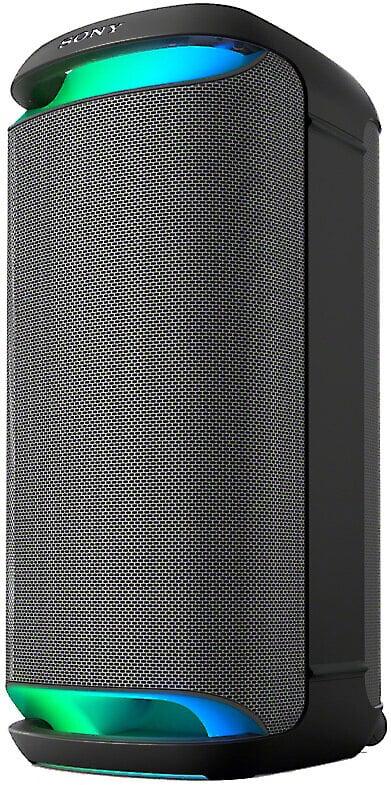
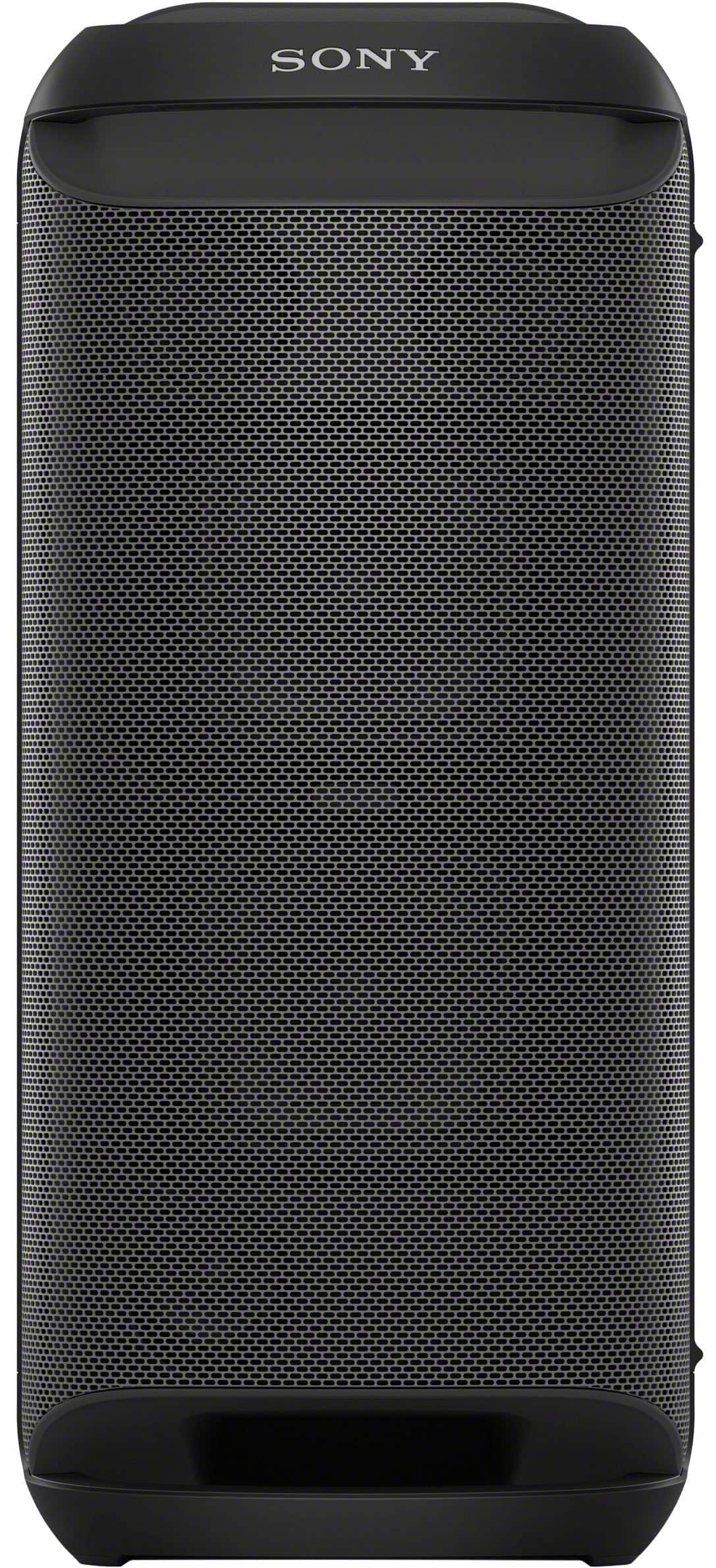
The Sony SRS-XV800 takes a fundamentally different approach to party audio than most competitors. Instead of simply making everything louder, Sony engineered a true stereo system with five dome tweeters—three facing forward and two facing backward. This creates what audio engineers call "omnidirectional sound," meaning the music doesn't just blast in one direction but fills the entire space around the speaker.
The real technical innovation lies in Sony's X-Balanced woofer design. Traditional speakers use circular drivers, but Sony's engineers created rectangular woofers that pack more surface area into the same space. Think of it like comparing a circle to a rectangle of the same height—the rectangle has more total area. This extra surface area means the drivers can move more air with less distortion, creating cleaner bass that doesn't muddy up the vocals and instruments.
Sony also includes LDAC codec support, which is technical jargon for a Bluetooth technology that preserves much more musical detail during wireless transmission. Most Bluetooth speakers compress your music heavily to send it wirelessly, but LDAC maintains near-CD quality. For listeners who care about audio fidelity, this makes a meaningful difference.
The JBL PartyBox 720 doesn't hide its intentions—it specifies exactly 800 watts of RMS power output and backs that up with two massive 9-inch woofers. RMS (Root Mean Square) is the honest way to measure speaker power, showing what the speaker can actually sustain rather than peak numbers that look impressive on paper.
Those 9-inch drivers are significantly larger than Sony's 6.69-inch woofers, and in the physics of audio, larger drivers generally mean more bass impact and higher overall volume capability. The JBL PartyBox 720 operates in mono configuration, meaning it doesn't create stereo separation like the Sony SRS-XV800, but it maximizes the impact of every beat.
Based on user feedback and professional reviews, the sound character differences are substantial. The Sony SRS-XV800 delivers what audiophiles call "balanced" sound—clear vocals, controlled bass, and detailed highs that work well across music genres. The JBL PartyBox 720 prioritizes what party-goers feel in their chest—deep, powerful bass that makes electronic dance music and hip-hop truly exciting, though it may sacrifice some clarity in busy musical passages.
Battery performance reveals completely different design philosophies. The Sony SRS-XV800 achieves an industry-leading 25 hours of continuous playbook from its internal battery. This isn't just impressive on paper—it means you can start a party Friday evening and still have power left Sunday morning without ever thinking about charging.
Sony achieves this through superior power management and efficient amplification. The company's engineers prioritized making every watt count, resulting in a speaker that sips power even while delivering substantial volume levels. The quick charge feature provides three hours of playback from just ten minutes of charging, which can save an event if you forgot to charge beforehand.
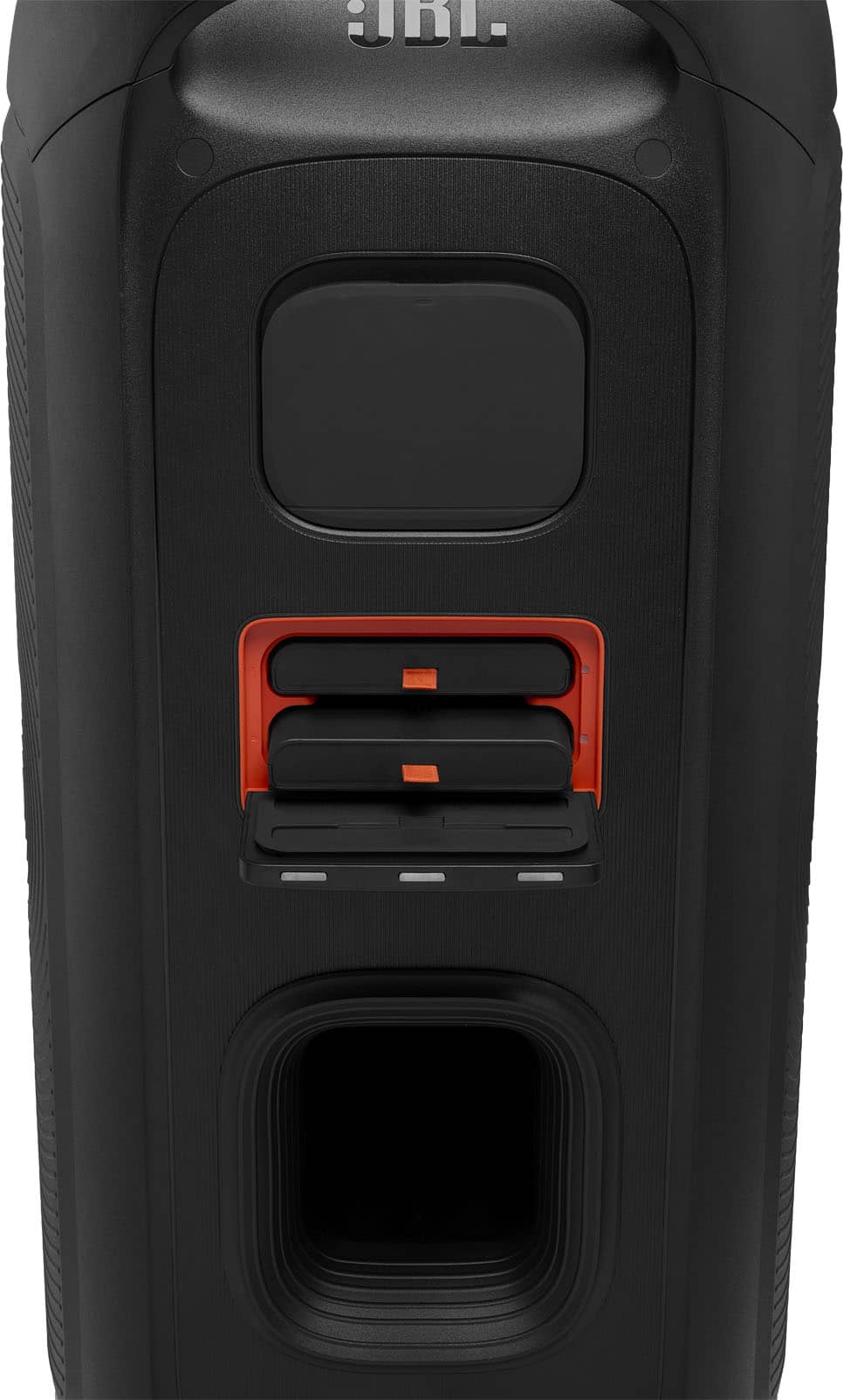
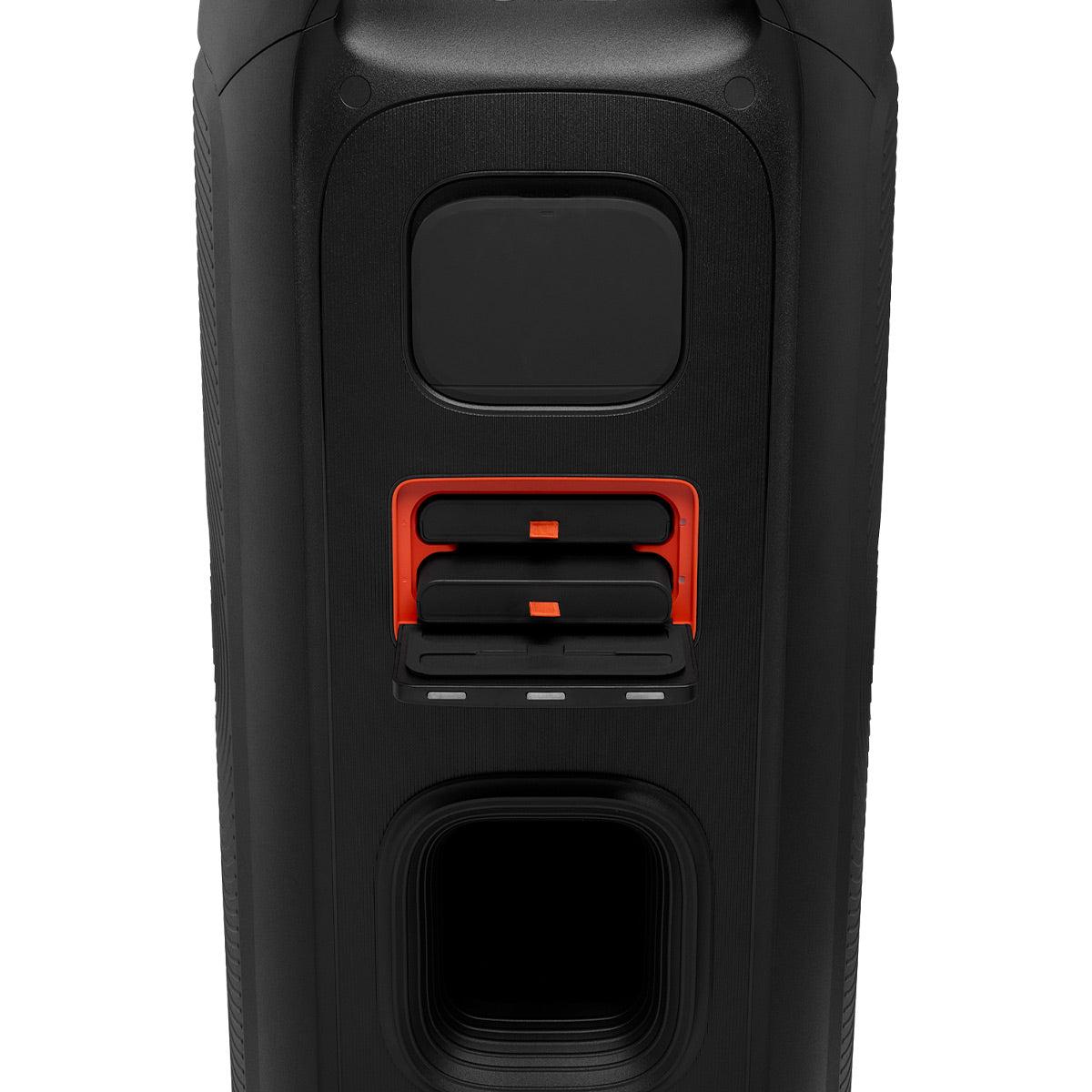
The JBL PartyBox 720 takes the modular approach with two swappable 99.02 Wh batteries (each providing roughly 15 hours of operation). While the individual battery life is shorter, the swappable design means theoretically unlimited operation if you keep spare batteries charged. This appeals to professional DJs or event rental companies who need guaranteed continuous operation.
However, the practical reality is that most home users won't want to manage multiple batteries, and the Sony SRS-XV800's 25-hour runtime covers virtually any realistic use case without the complexity of battery swapping.
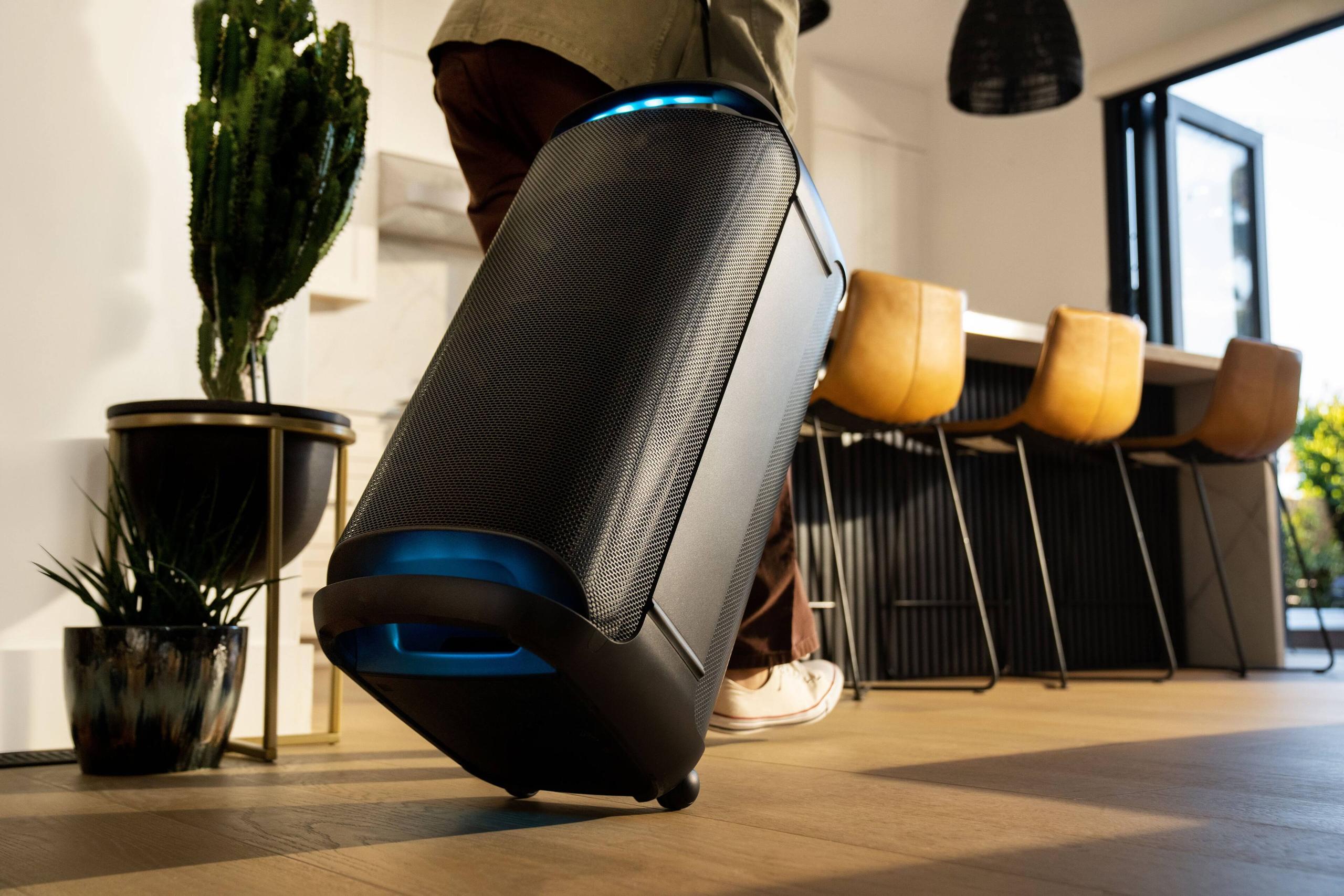
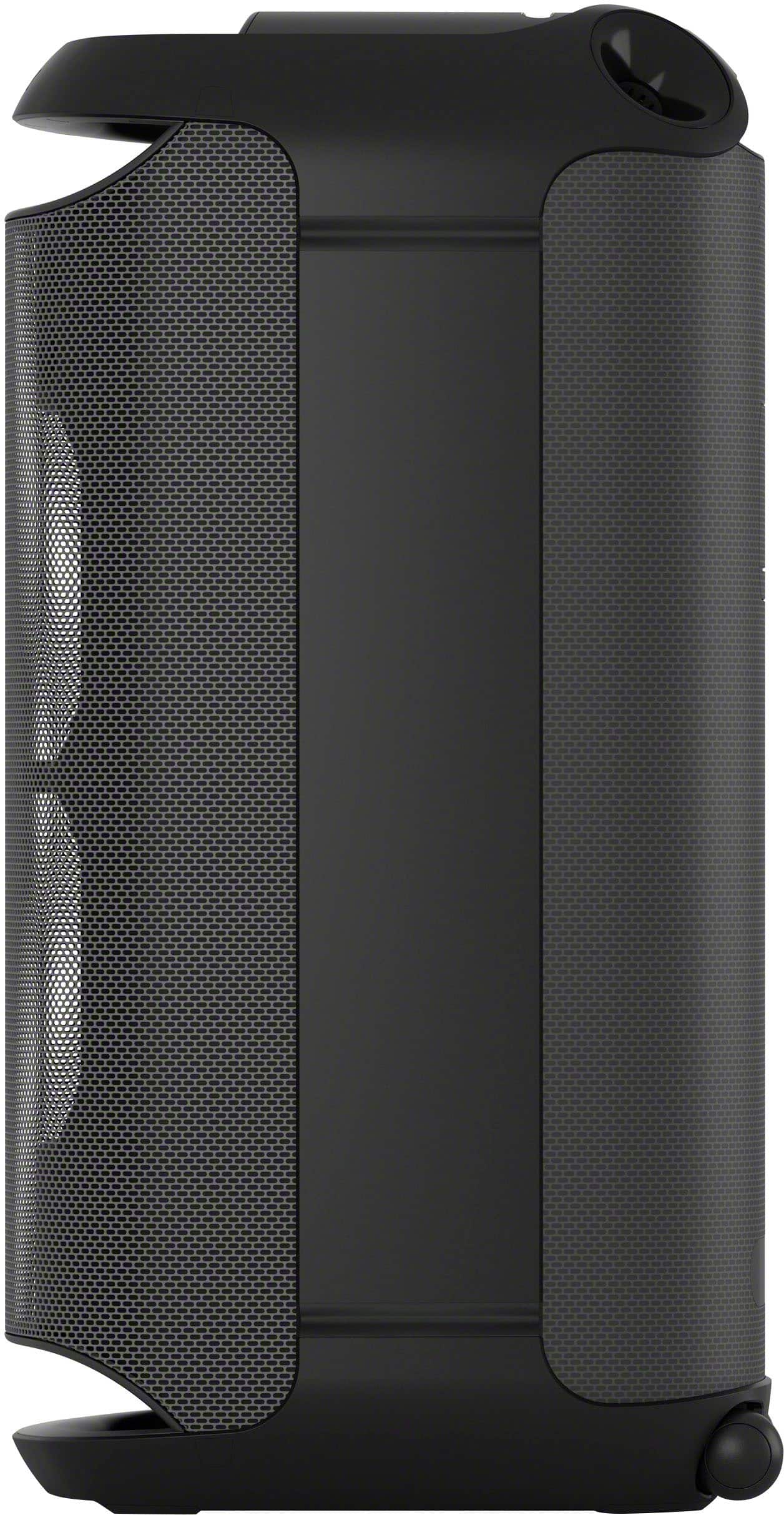
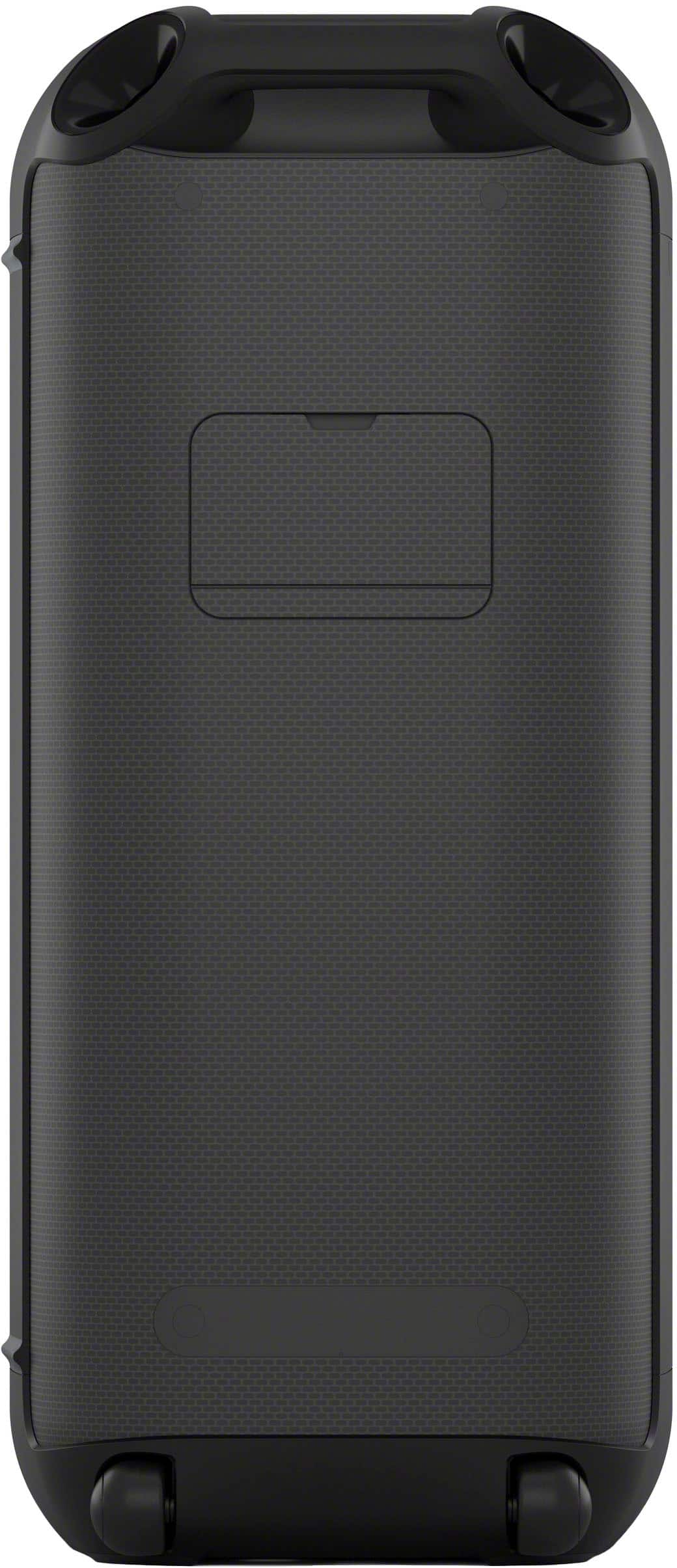
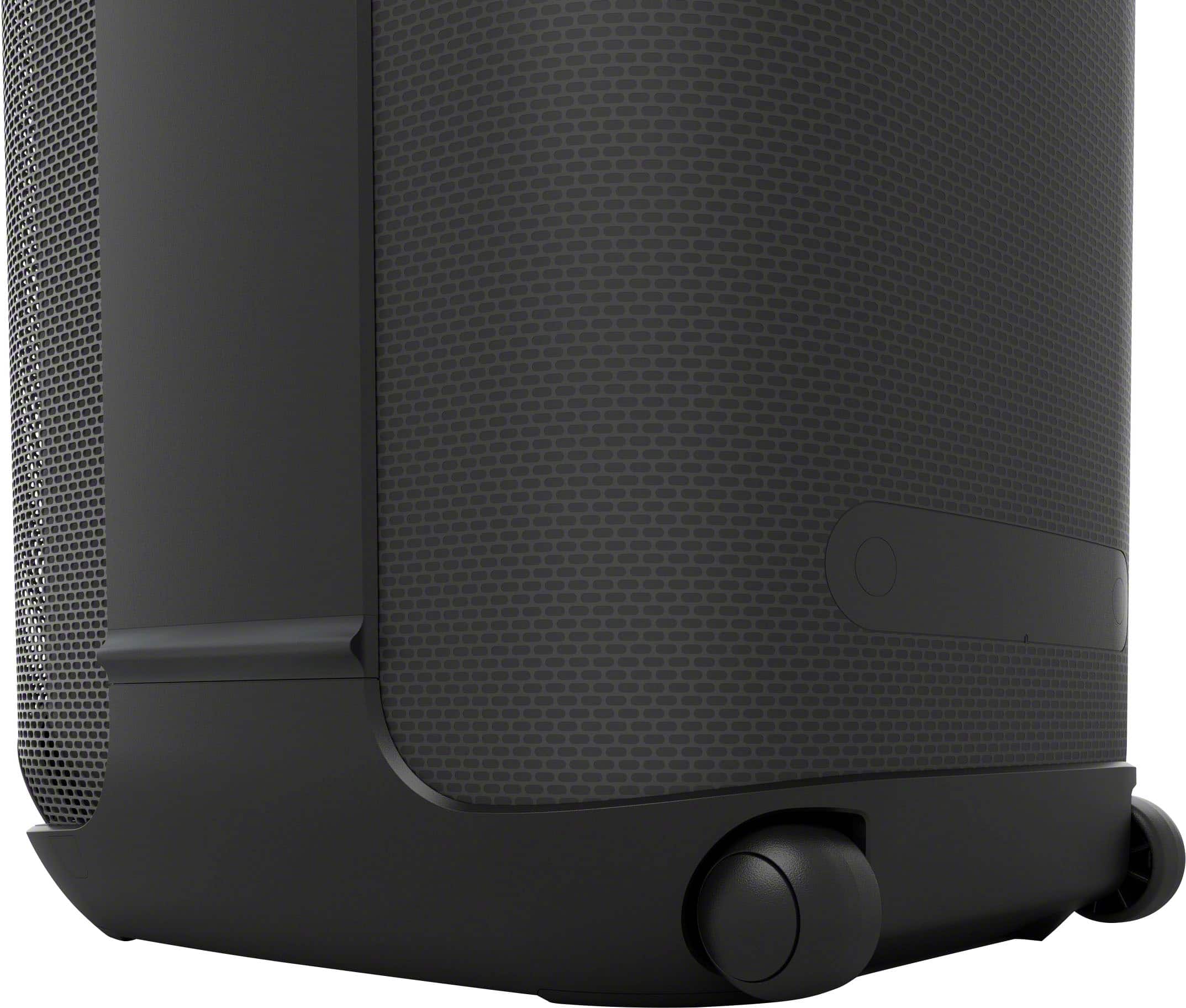
Here's where the rubber meets the road for most buyers. The Sony SRS-XV800 weighs 40.8 pounds and stands 28.35 inches tall—substantial but manageable for most adults. The built-in wheels and handle make it feasible to move between rooms, load into vehicles, and set up at different locations.
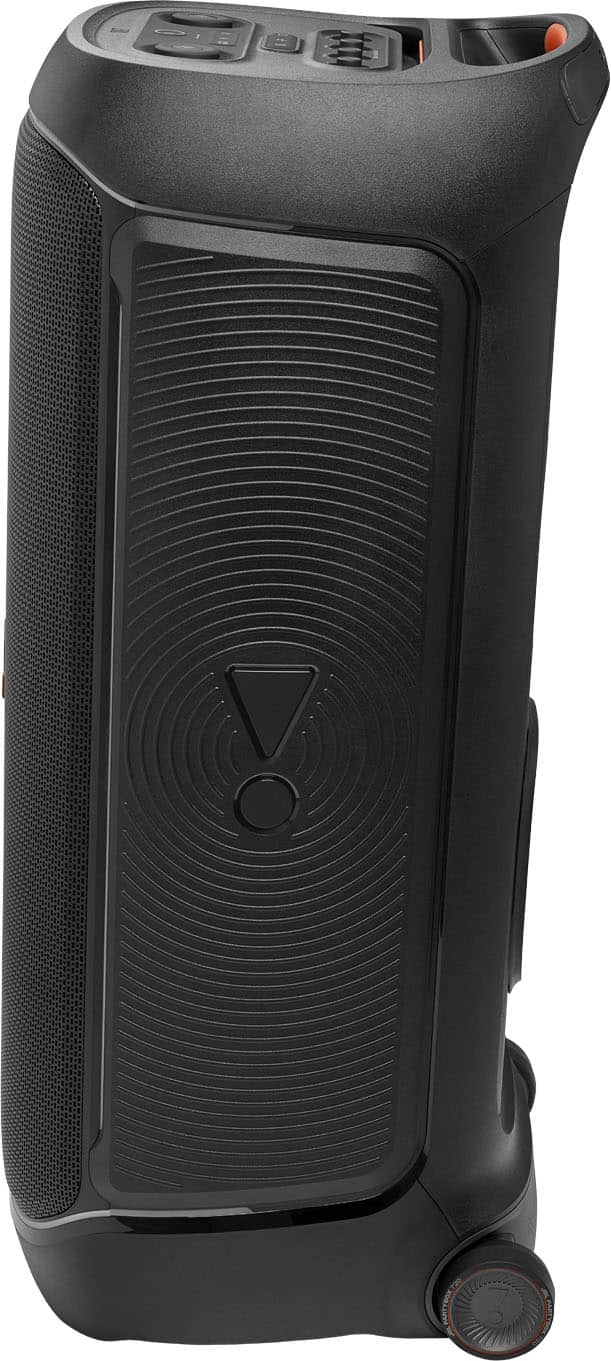
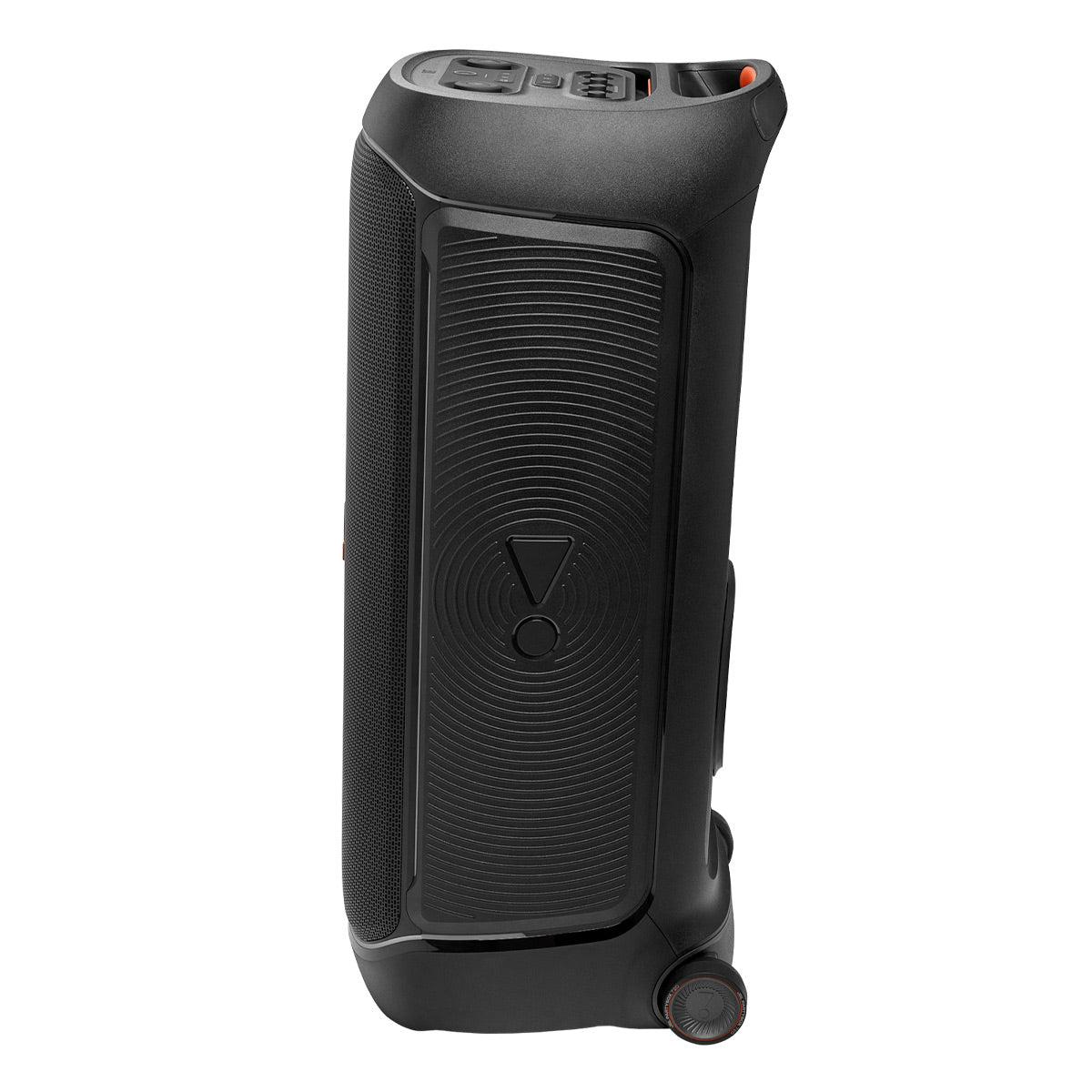
The JBL PartyBox 720, at 68.3 pounds and 37.1 inches tall, enters semi-portable territory. It's nearly 30 pounds heavier than the Sony—that's like carrying an extra toddler every time you move it. The wider wheels help with transport, but this speaker really wants to stay in one place once you set it up.
This weight difference matters more than the numbers suggest. Moving a 40-pound speaker solo is manageable; moving a 68-pound speaker safely often requires two people or significant effort that limits how often you'll actually use its "portable" capabilities.
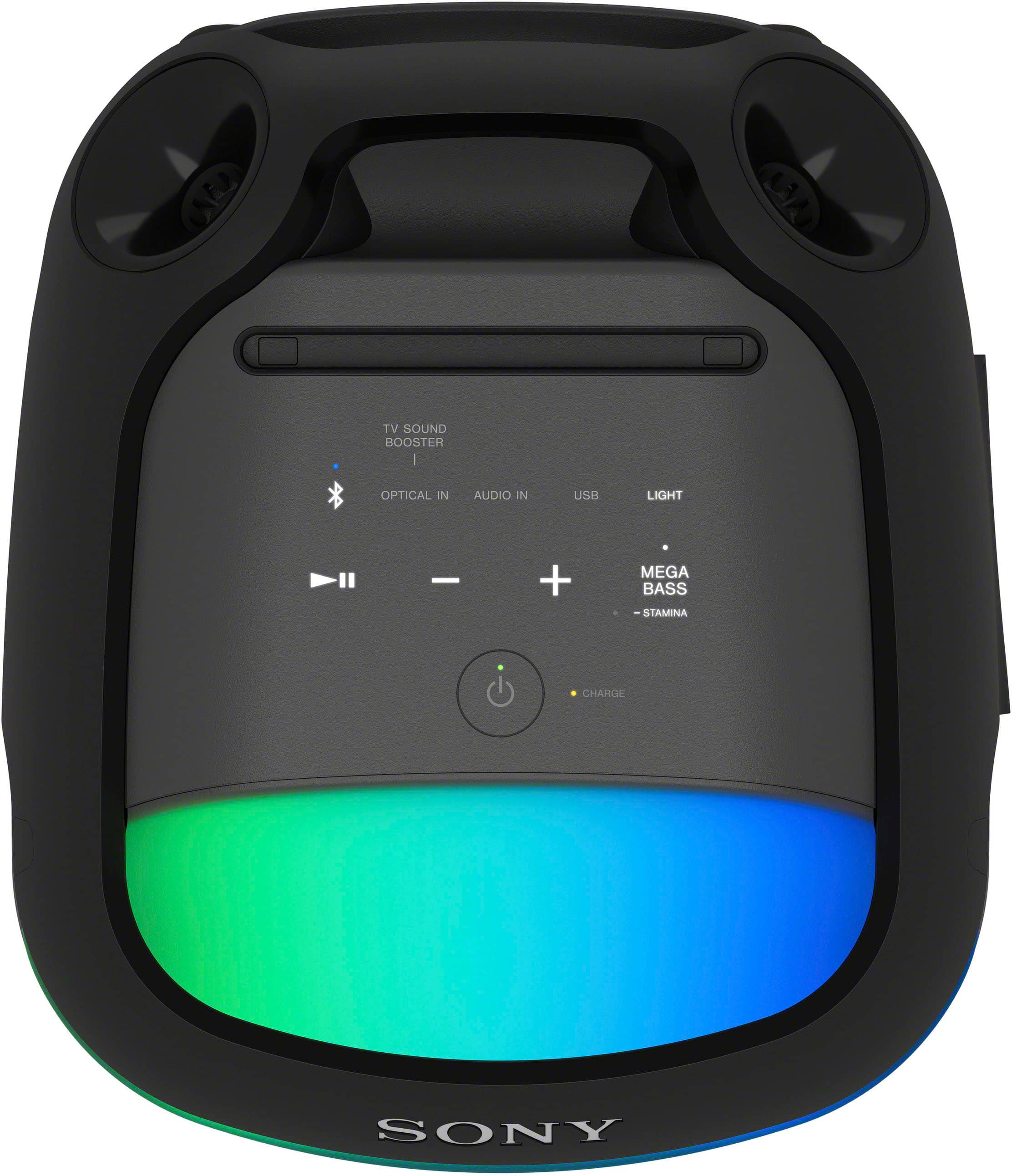
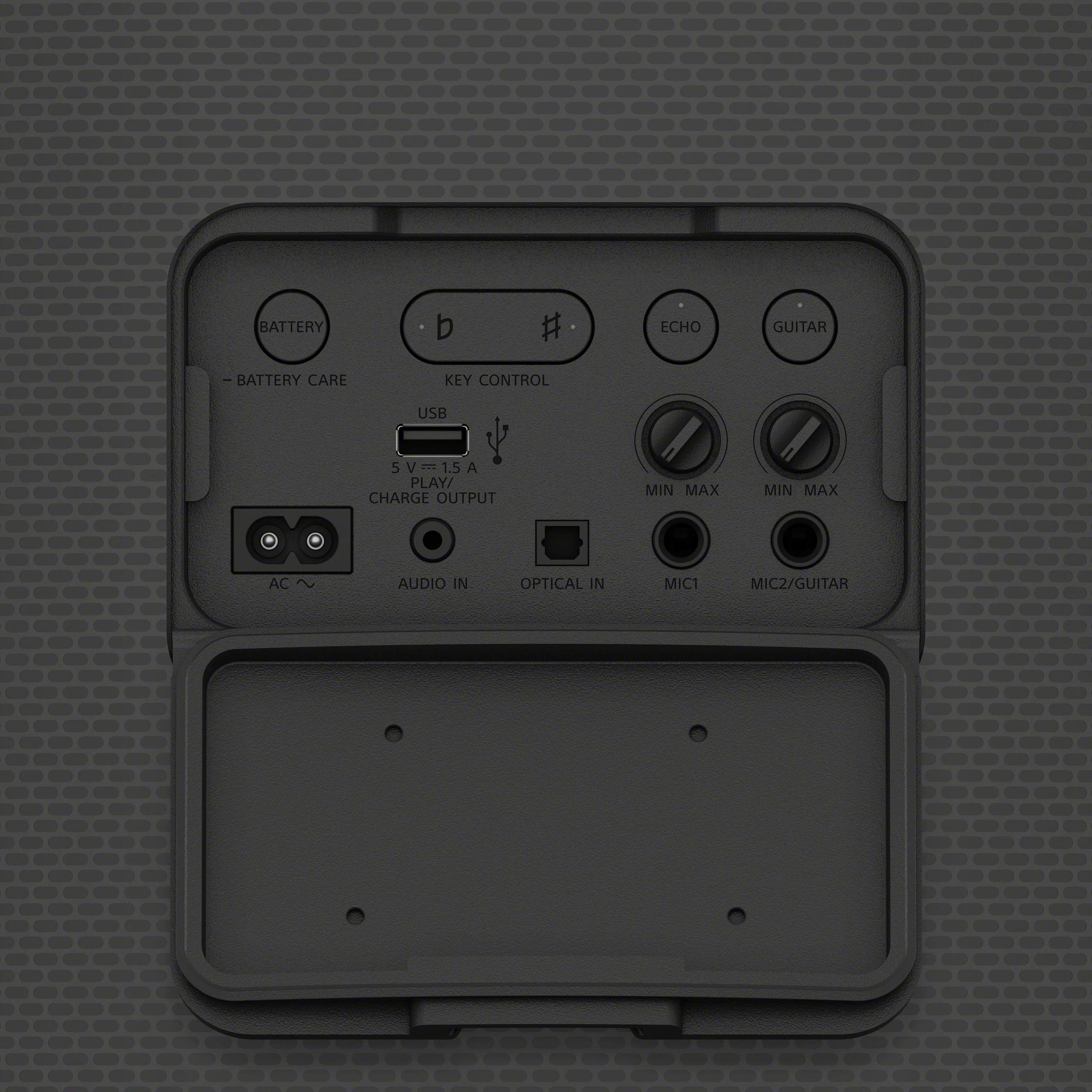
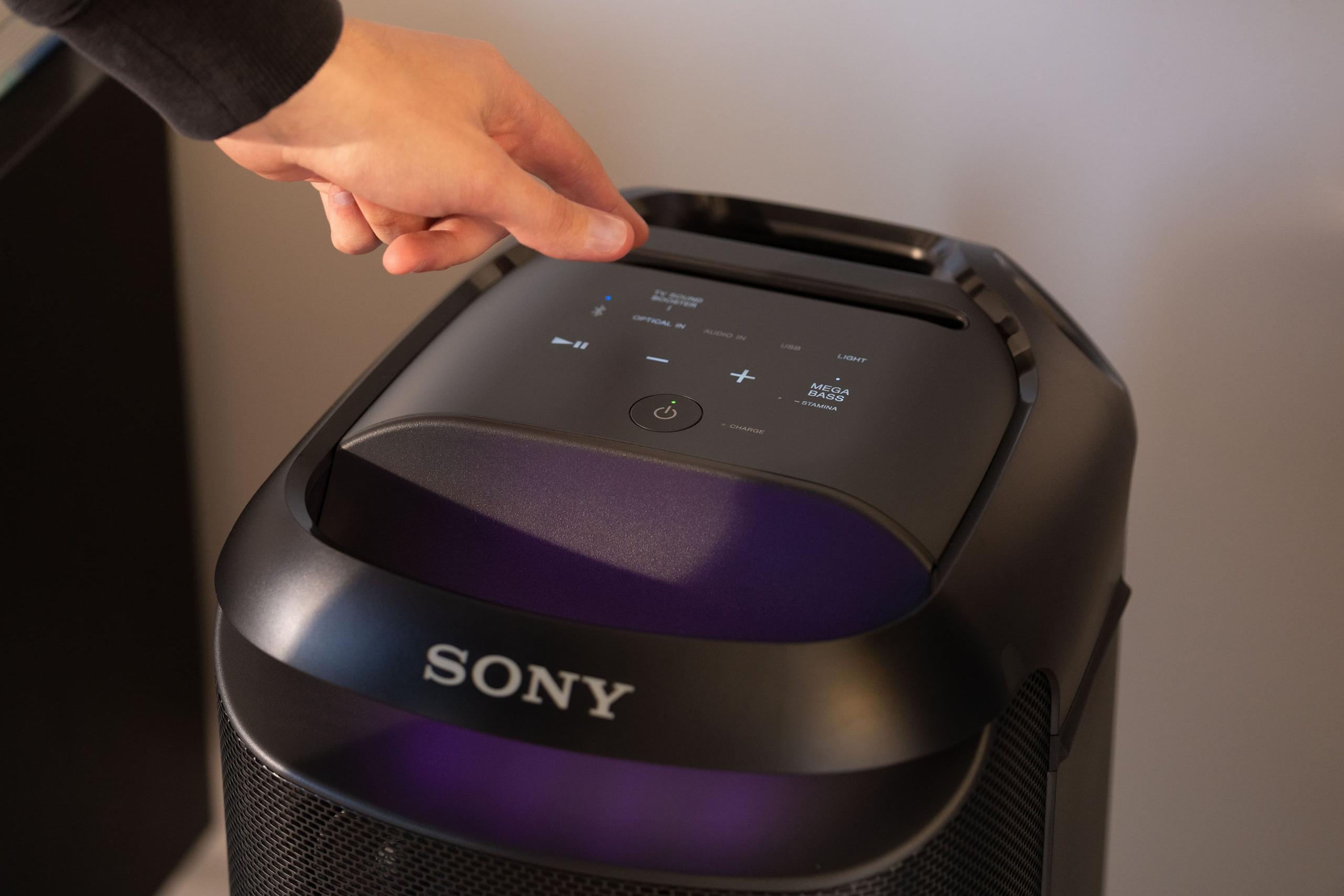
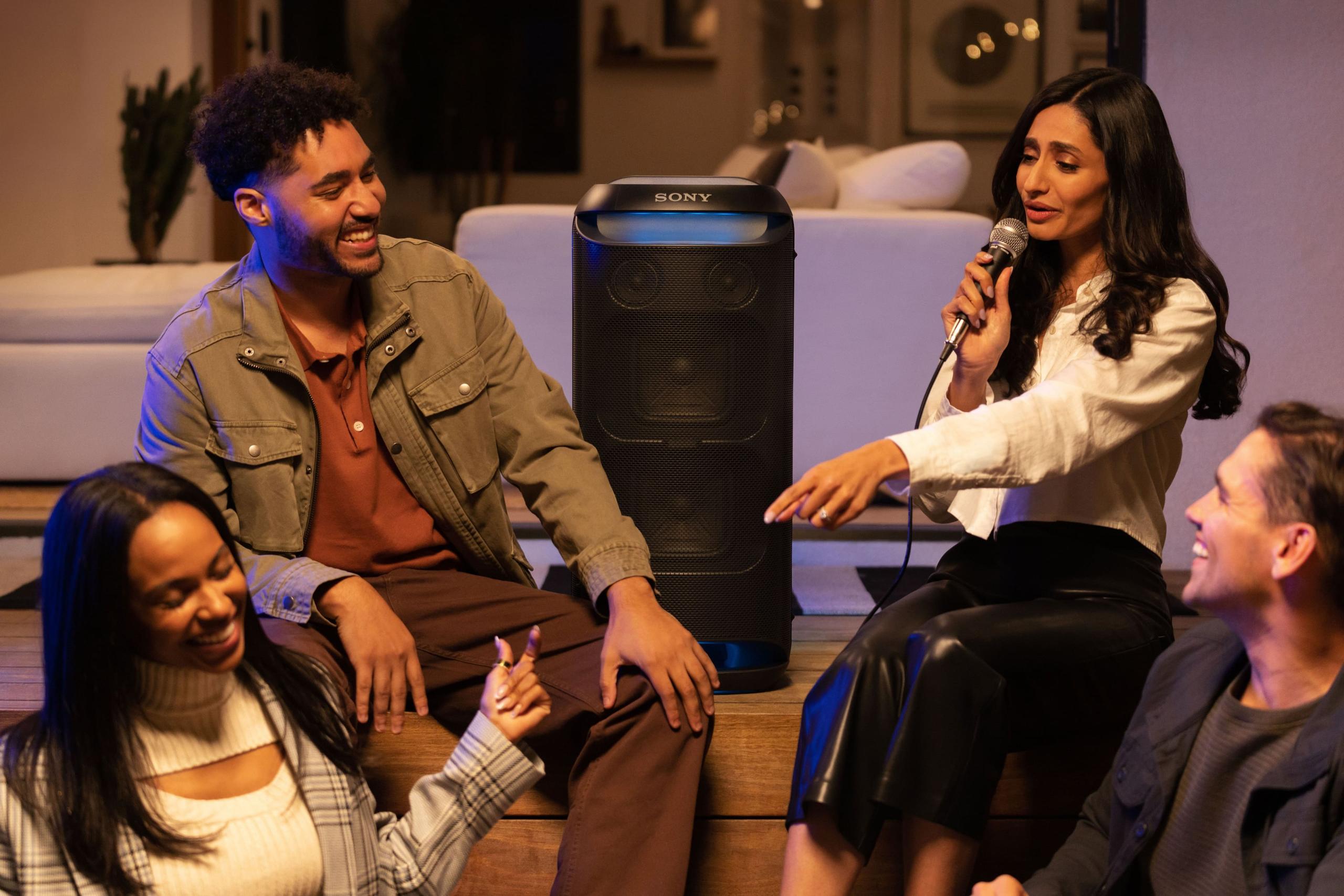
The Sony SRS-XV800 shines in versatility with features that extend beyond party use. The optical digital input and TV Sound Booster mode transform it into a capable soundbar alternative for home theater use. The built-in karaoke features include echo and key controls, while the guitar input lets it double as a practice amp.
Sony's Party Connect feature links up to 100 compatible speakers wirelessly—though few people will ever use anywhere near that many, it demonstrates the system's scalability. The Bluetooth 5.2 implementation with multiple codec support ensures compatibility with virtually any source device.
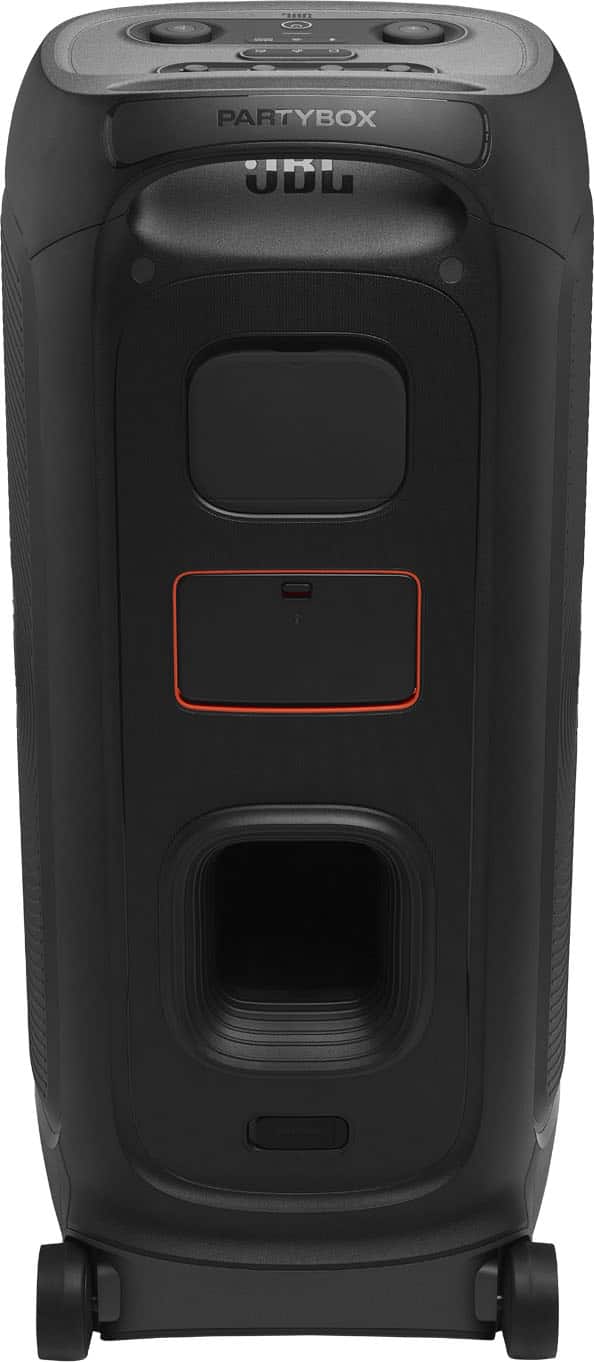
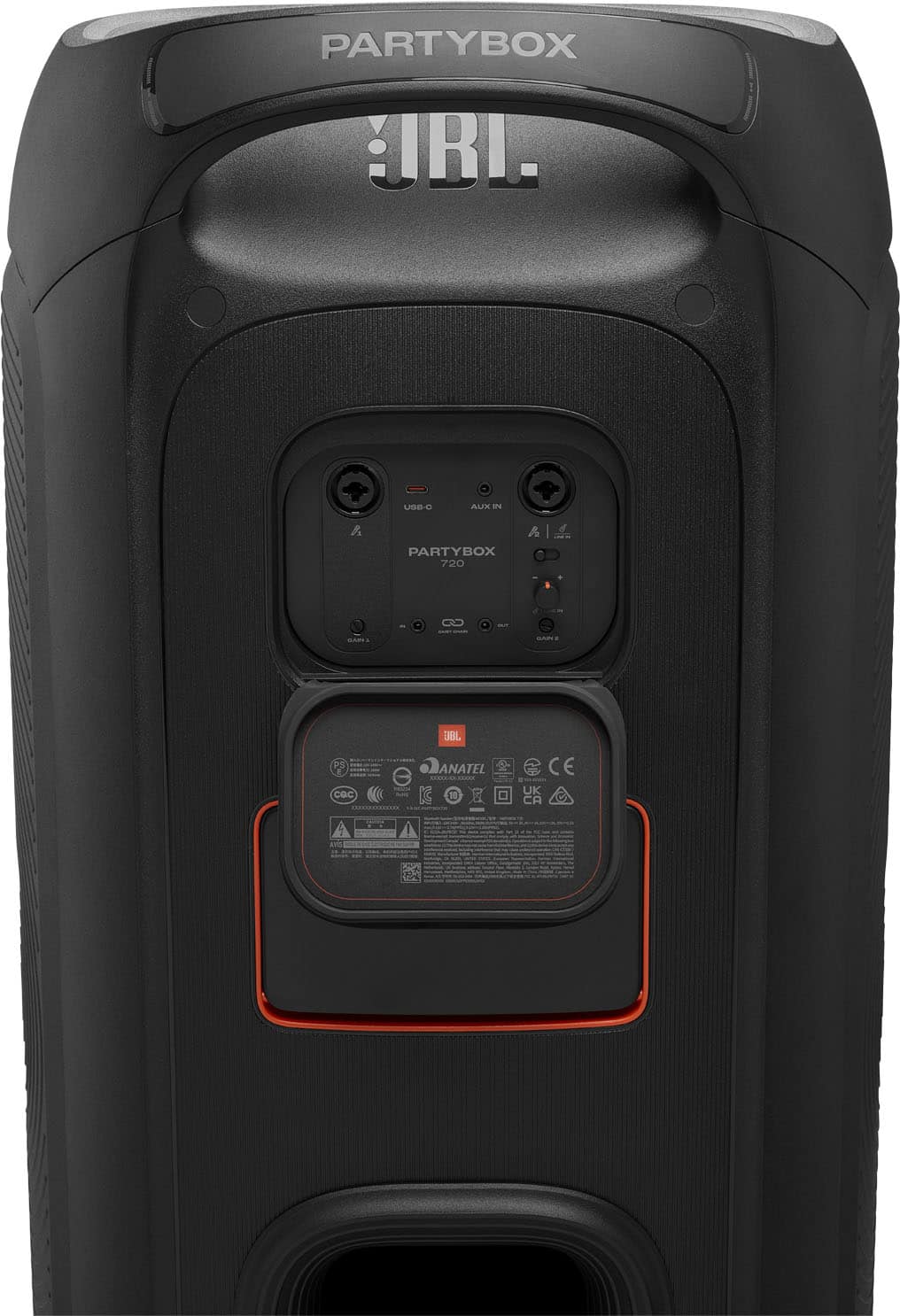
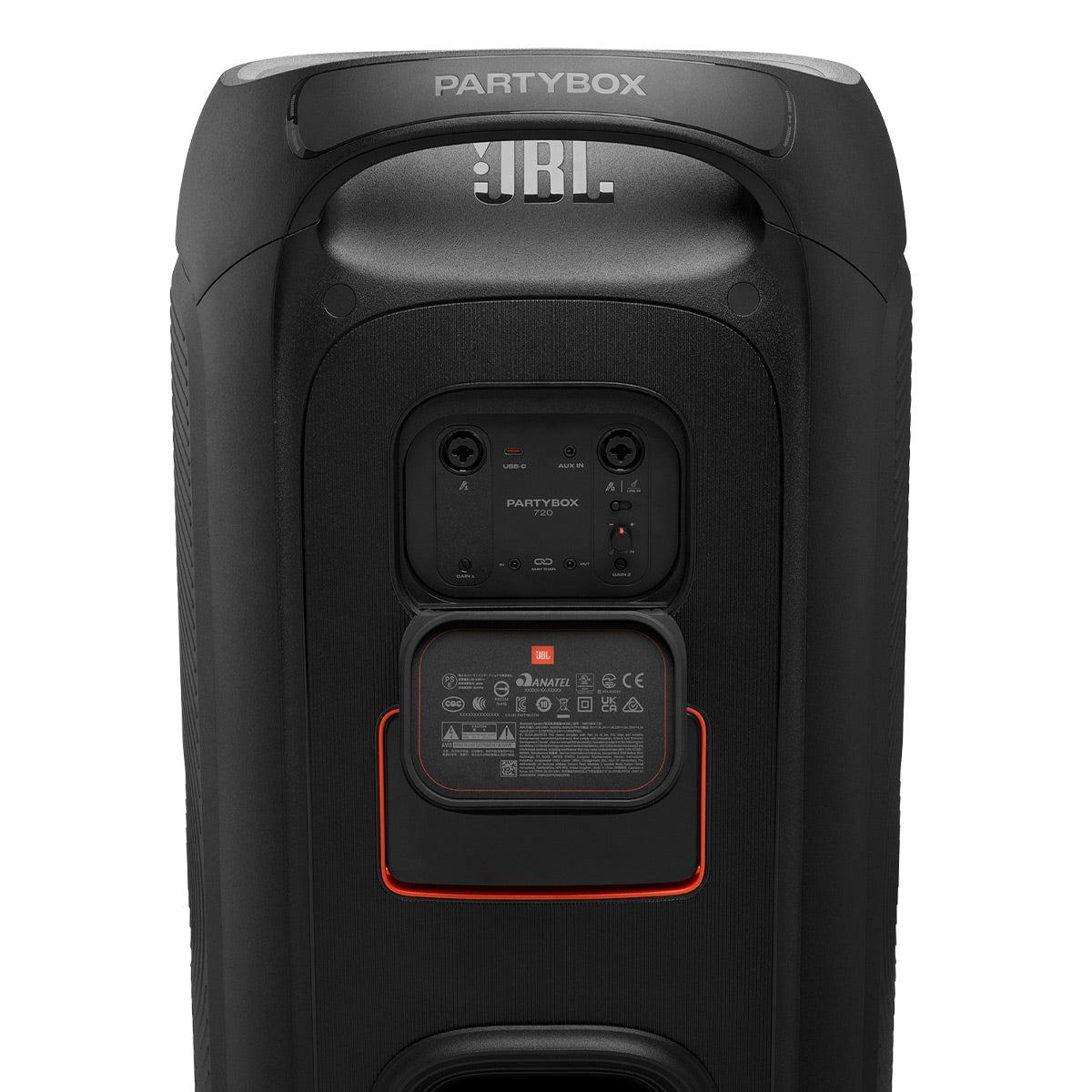
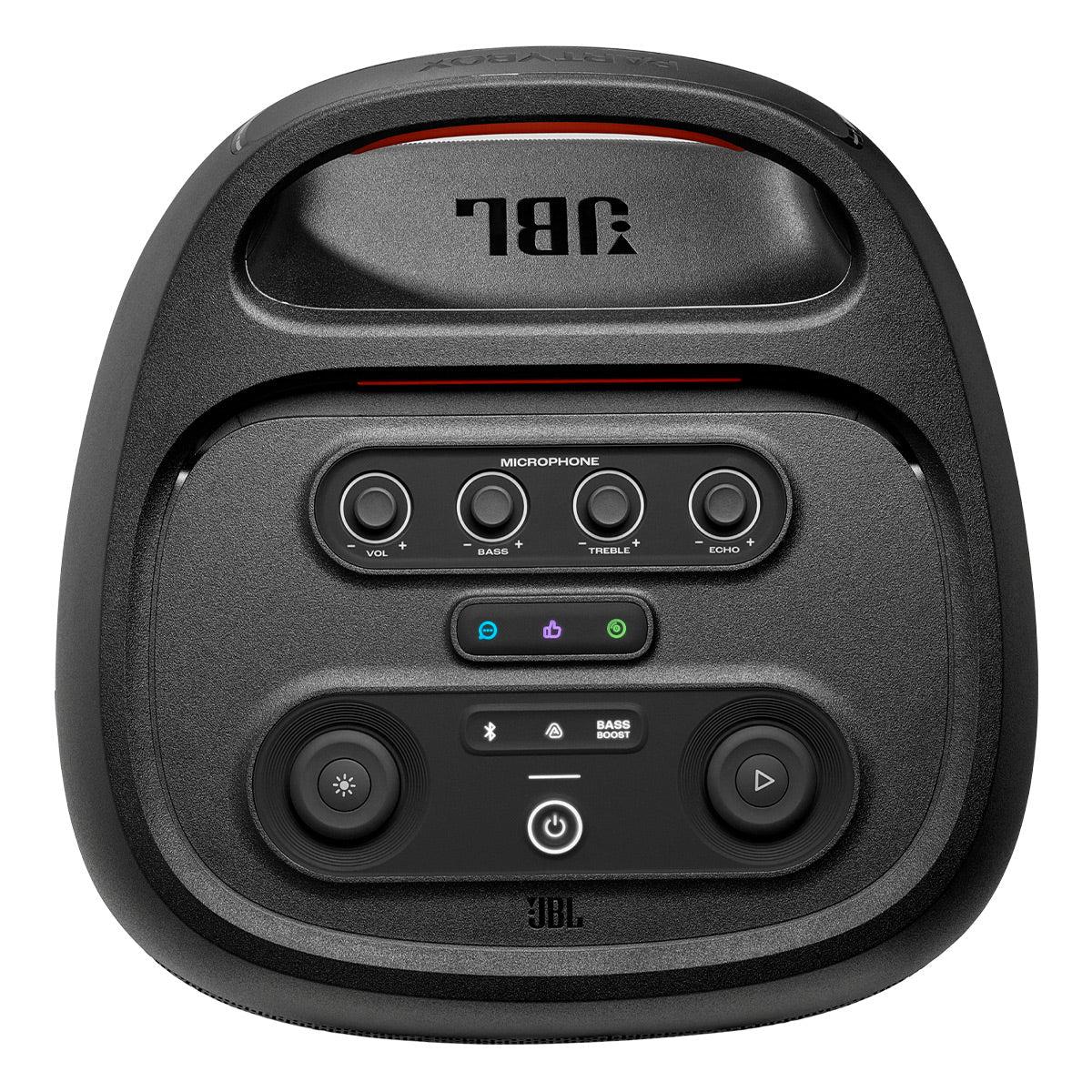
The JBL PartyBox 720 targets professional users with dual XLR inputs—the standard connection for professional microphones and DJ equipment. The USB-C connectivity reflects its 2025 design, while the 30W device charging capability (versus Sony's 7.5W) can actually keep phones and tablets powered throughout long events.
JBL's Auracast technology, part of the newer Bluetooth 5.4 standard, enables more sophisticated multi-speaker linking and represents the latest in wireless audio technology.
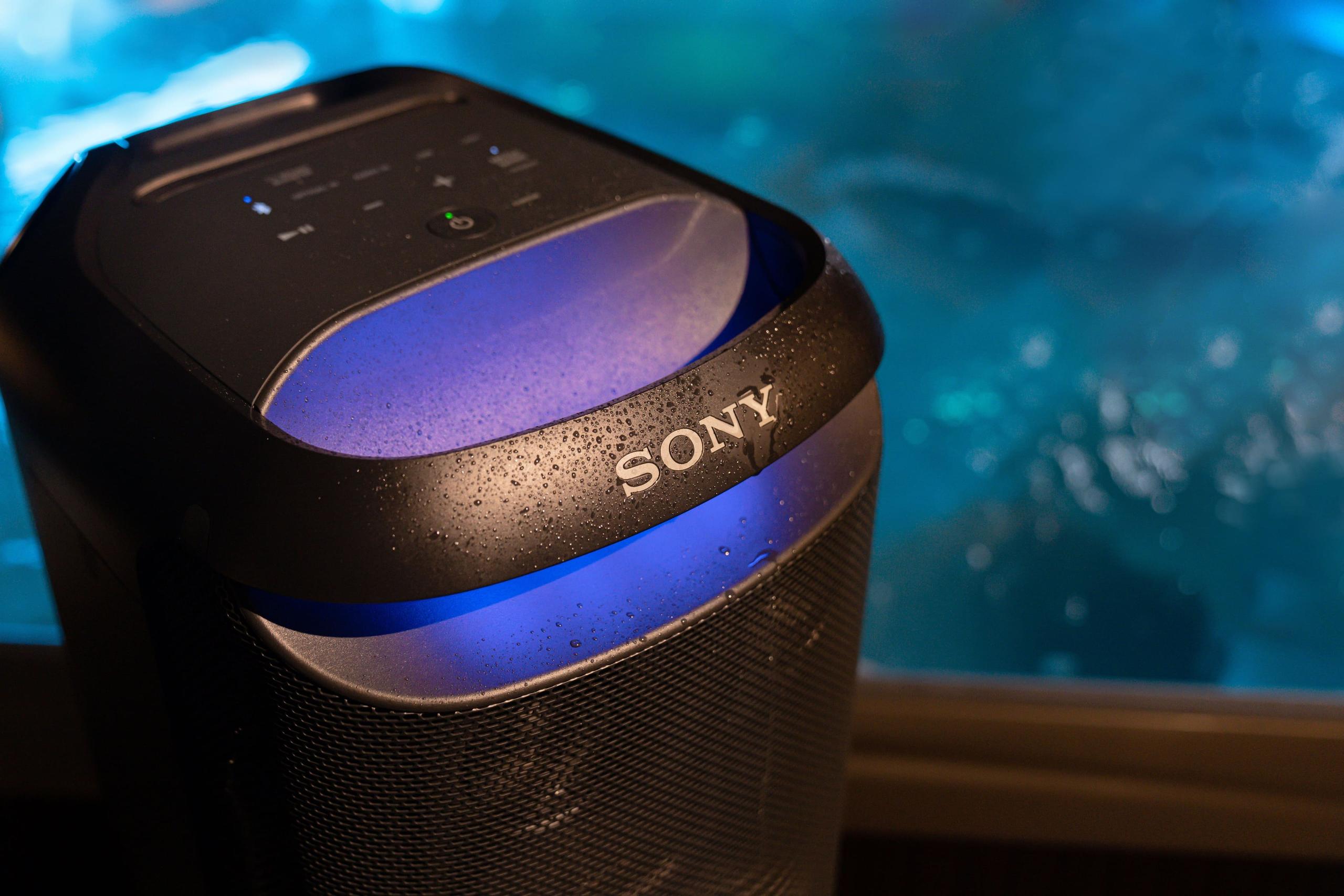
This comparison reveals the starkest difference between the two speakers. The Sony SRS-XV800 includes programmable LED lighting in the top and bottom sections, controllable through Sony's app, but treats lighting as a secondary feature to complement the audio experience.
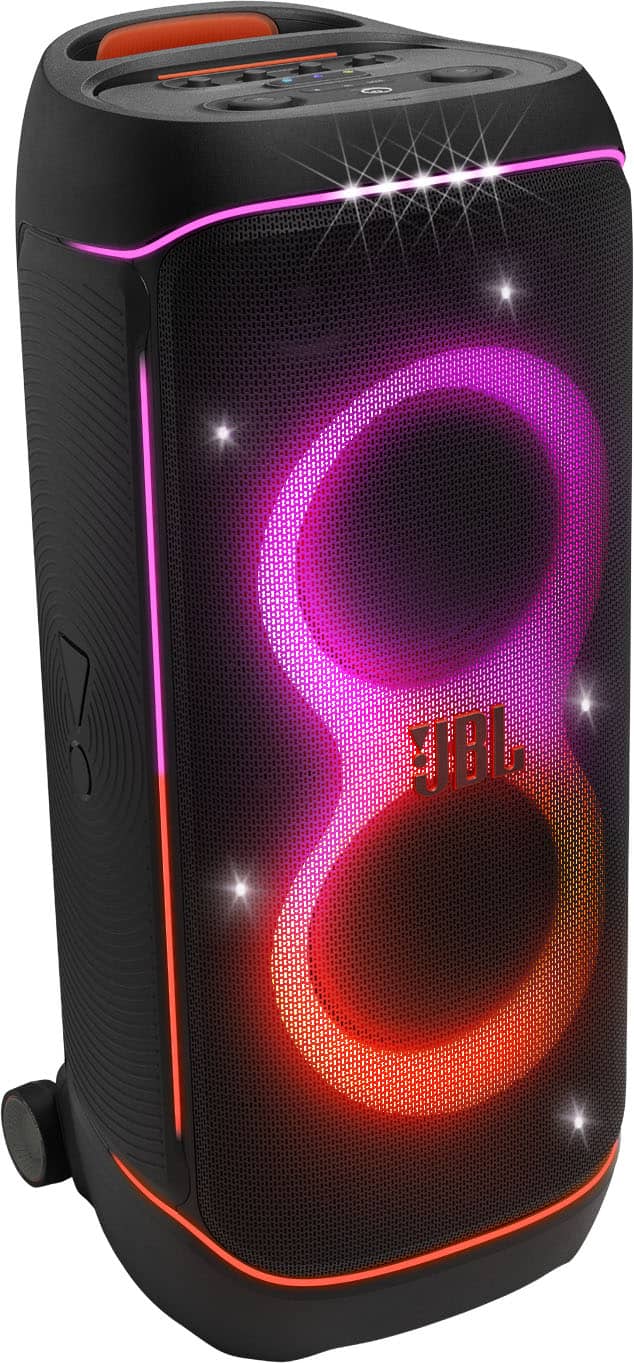
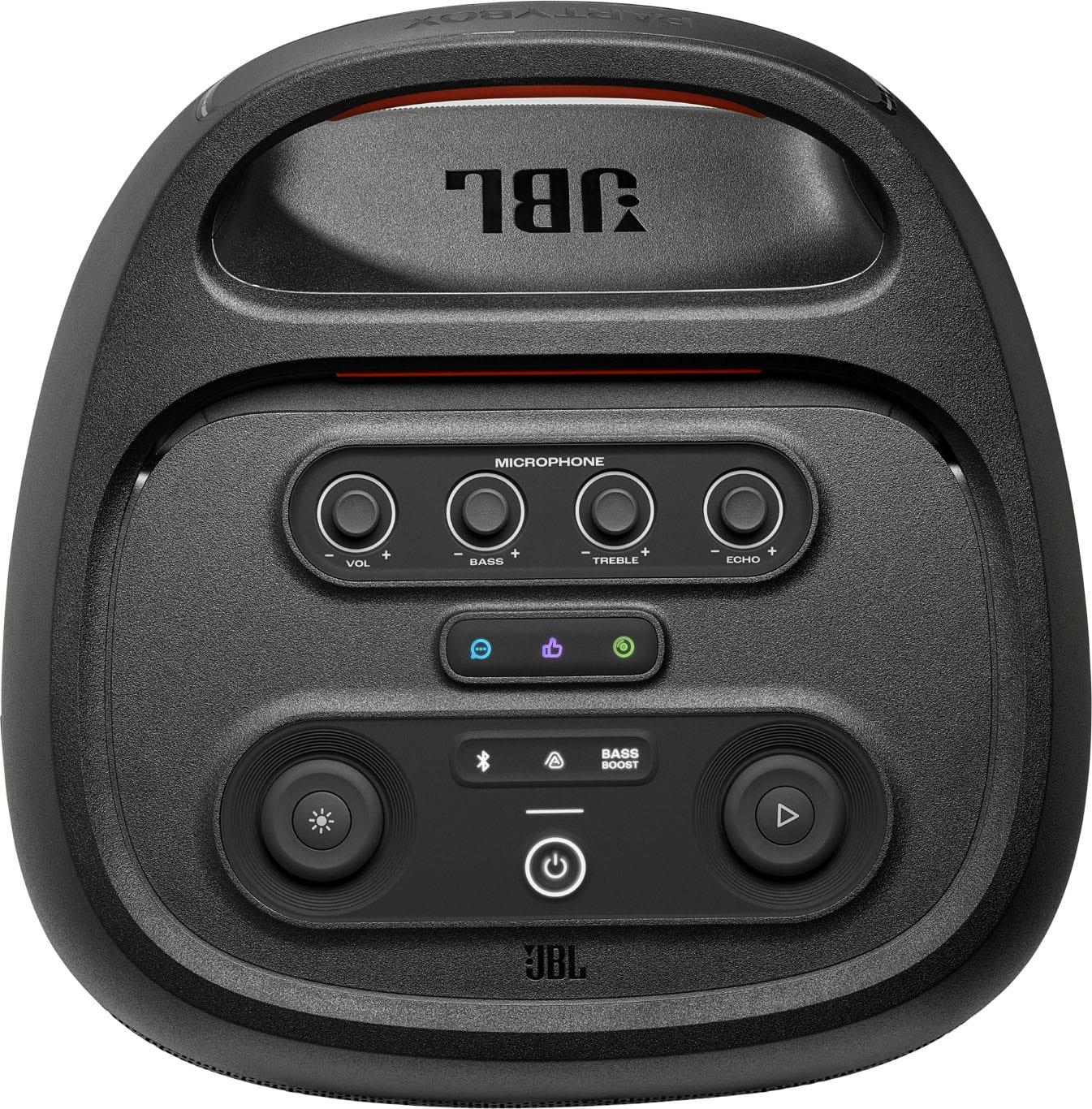
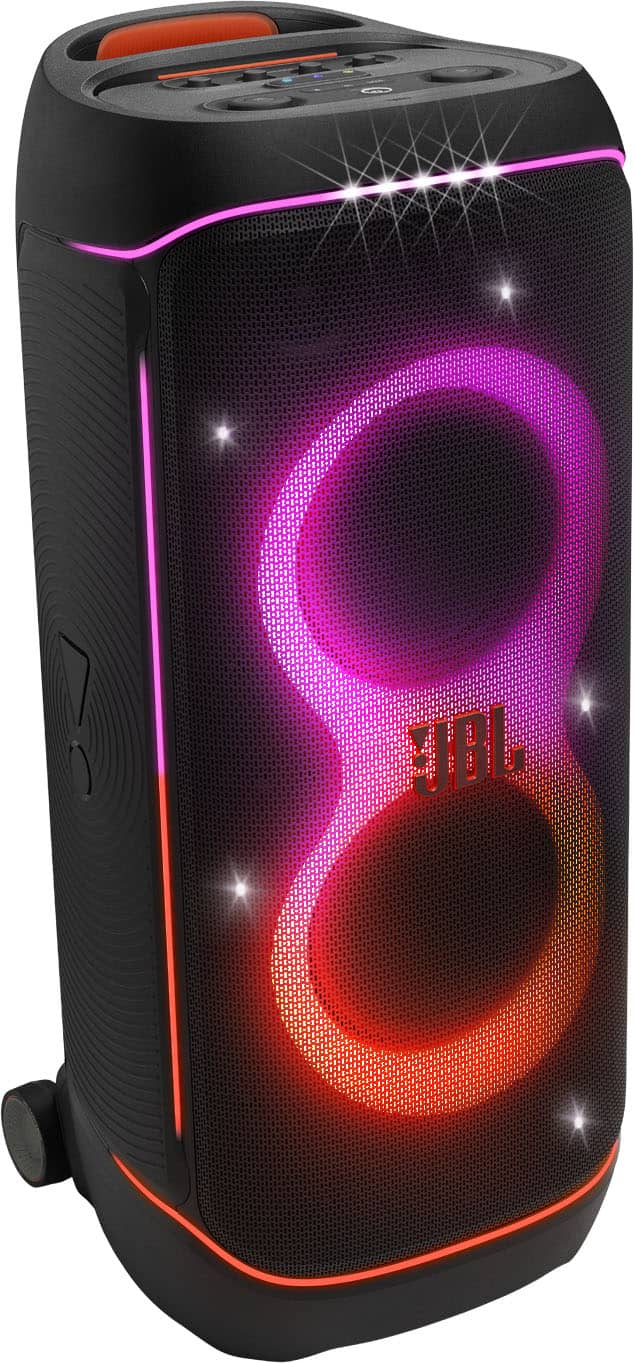
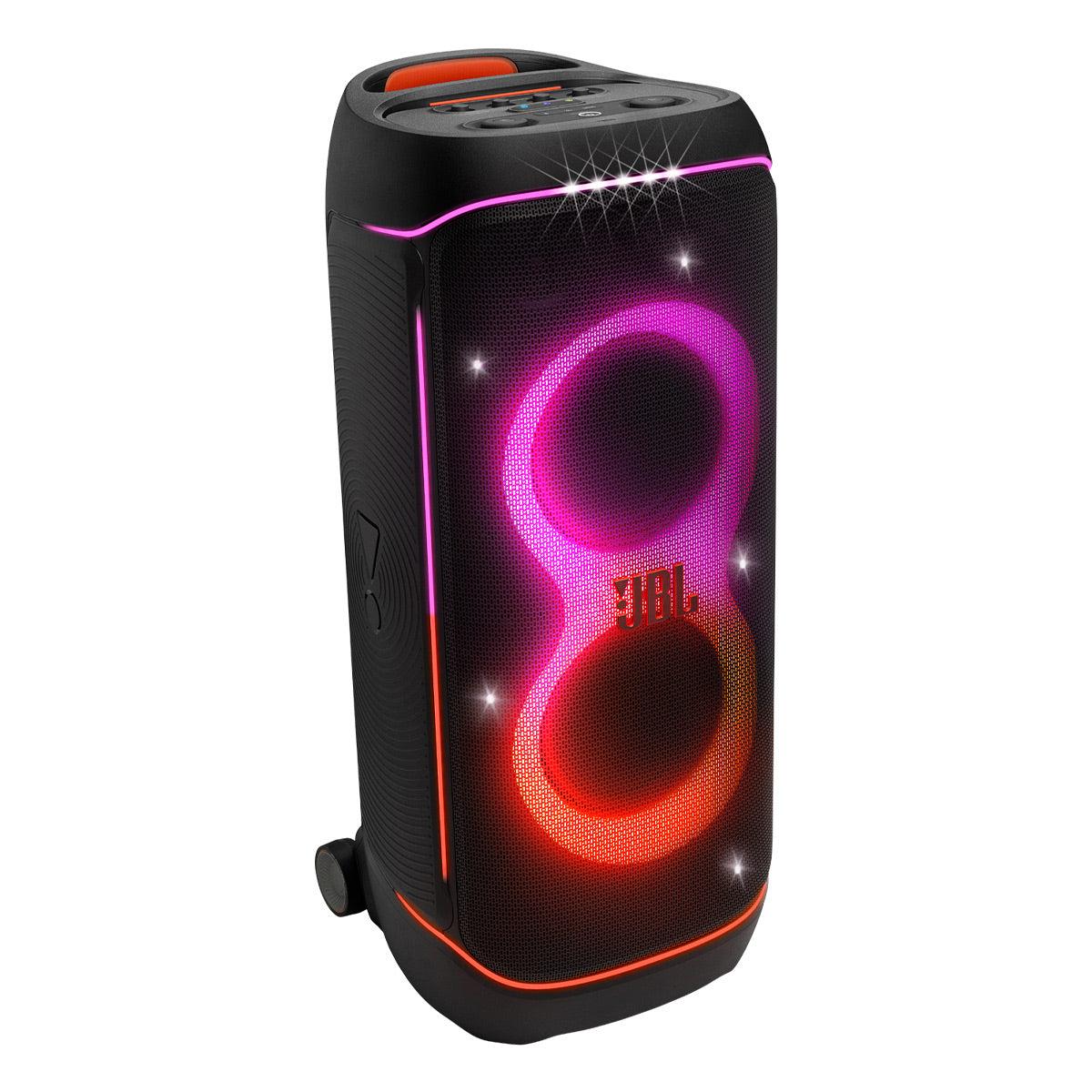
The JBL PartyBox 720 creates a complete light show with 20 strobe LEDs, dual LED rings, and four LED strips that span the entire speaker. The visual effects synchronize with music and include multiple modes like Rhythm, Pulse, and Party. For users who want their speaker to be the visual centerpiece of an event, there's no comparison—the JBL delivers spectacular lighting that can anchor an entire party's atmosphere.
While neither speaker is primarily designed for home theater use, the Sony SRS-XV800's optical input and TV Sound Booster feature make it surprisingly capable as a soundbar alternative. The stereo configuration provides better dialogue clarity and spatial effects than typical mono party speakers, while the 25-hour battery means it can serve double duty without staying plugged in.
The JBL PartyBox 720's mono configuration and party-focused tuning make it less suitable for movie and TV audio, where dialogue clarity and spatial effects matter more than raw bass impact.
At the time of writing, the Sony SRS-XV800 costs roughly $450 less than the JBL PartyBox 720, making it the clear value champion for most buyers. Sony delivers exceptional audio quality, industry-leading battery life, and versatile connectivity at a price that doesn't require a major investment decision.
The Sony SRS-XV800 represents what we'd call "smart money"—you get professional-quality sound, reliable operation, and features that extend beyond parties into daily home use. For families or individuals who want a premium speaker that can handle everything from backyard barbecues to movie nights, Sony delivers remarkable capability without premium pricing.
The JBL PartyBox 720's higher cost reflects its specialized capabilities: maximum power output, professional connectivity, extensive visual effects, and cutting-edge technology. For users who regularly host large events, work as DJs, or operate party rental businesses, these features justify the investment through enhanced capability and reliability.
Based on our research into user experiences and professional reviews, several performance characteristics emerge as crucial for party speaker satisfaction:
Volume capability matters more than technical audio measurements for large outdoor events. The JBL PartyBox 720's 800W specification and larger drivers deliver noticeably higher maximum volume than the Sony SRS-XV800.
Audio clarity at high volume separates good party speakers from great ones. The Sony SRS-XV800's X-Balanced design and stereo configuration maintain clarity even when pushed hard, while the JBL PartyBox 720 prioritizes impact over detail.
Battery reliability determines whether your speaker becomes a trusted tool or a source of anxiety. Sony's 25-hour rating with quick charging provides peace of mind that JBL's swappable system can't match for casual users.
Real-world portability affects how often you'll actually use advanced features. The nearly 30-pound weight difference significantly impacts practical usability.
Choose the Sony SRS-XV800 if you want a versatile speaker that excels at multiple roles. It's perfect for homeowners who host moderate-sized gatherings (50-100 people), want exceptional battery life without complexity, prioritize audio quality over maximum volume, and appreciate the $450 savings for similar core functionality. The Sony also makes sense if you value true portability or want home theater capabilities.
The JBL PartyBox 720 suits users who need maximum power output for large venues, want professional DJ capabilities with XLR inputs, prioritize visual impact and party atmosphere, require unlimited operation through battery swapping, and regularly host events with 100+ people where power matters most. It's also the choice for those who want the latest technology and don't mind premium pricing.
After extensive research into user experiences, professional reviews, and technical specifications, the Sony SRS-XV800 emerges as the smarter choice for most party speaker buyers. It delivers superior value through exceptional audio quality, unmatched battery life, genuine portability, and versatile connectivity at a price that doesn't require major financial commitment.
The JBL PartyBox 720 serves a specific audience of serious entertainers and professionals who need maximum power, visual spectacle, and scalable operation. For these users, the premium cost is justified through specialized capabilities that casual users won't fully utilize.
Both speakers represent excellent engineering and build quality from respected audio brands. Your choice should reflect your actual needs, usage patterns, and budget rather than simply picking the most expensive or impressive-looking option. For most readers, the Sony SRS-XV800 provides better long-term satisfaction through its balanced approach to party audio performance.
| Sony SRS-XV800 | JBL PartyBox 720 |
|---|---|
| Power Output - Determines maximum volume and bass impact | |
| Not specified (estimated 70W RMS based on drivers) | 800W RMS (significantly more powerful for large venues) |
| Audio Configuration - Affects sound quality and spatial experience | |
| 2.0 stereo with 5 tweeters (3 front, 2 rear) for omnidirectional sound | 1.0 mono with 2 tweeters, optimized for maximum impact over stereo separation |
| Driver Size - Larger drivers typically produce deeper bass | |
| 2× 6.69" X-Balanced woofers + 5 dome tweeters | 2× 9" woofers + 2× 1.25" tweeters (larger drivers for more bass) |
| Battery Life - Critical for extended events without power access | |
| Up to 25 hours (industry-leading endurance) | Up to 15 hours per battery (2 swappable batteries included) |
| Weight & Portability - Affects how often you'll actually move the speaker | |
| 40.8 lbs / 28.35" tall (manageable for most users) | 68.3 lbs / 37.1" tall (requires two people or significant effort) |
| Connectivity Options - Determines versatility for different audio sources | |
| Bluetooth 5.2, USB-A, 3.5mm, optical, mic/guitar TRS inputs | Bluetooth 5.4, USB-C/A, 3.5mm, dual XLR inputs (more professional) |
| Water Resistance - Important for outdoor and poolside use | |
| IPX4 when vertical, IPX2 when horizontal | IPX4 splash-proof in all orientations |
| Visual Effects - Party atmosphere and entertainment value | |
| Basic LED lighting (top and bottom sections only) | Extensive light show: 20 strobes, LED rings, strips (full party experience) |
| Multi-Speaker Linking - Expandability for larger events | |
| Party Connect (up to 100 Sony speakers) | Auracast-enabled wireless linking with newer Bluetooth tech |
| Home Theater Integration - Bonus functionality beyond parties | |
| Optical input with TV Sound Booster mode (works as soundbar alternative) | No TV-specific features (purely party-focused) |
| Device Charging - Keeping phones and tablets powered during events | |
| USB-A 7.5W charging port | USB-C 30W charging (4× more powerful for faster device charging) |
| Release Year & Technology - Newer often means better connectivity | |
| 2023 release with mature, proven technology | 2025 release with latest Bluetooth 5.4 and USB-C standards |
| Value Proposition - Performance per dollar spent | |
| Exceptional value: premium features at mid-range pricing | Premium pricing justified by professional features and maximum power |
The Sony SRS-XV800 delivers superior audio clarity and balance with its stereo configuration and five-tweeter array. It excels at reproducing vocals and maintaining detail across all music genres. The JBL PartyBox 720 prioritizes powerful bass impact and maximum volume with its 800W output and dual 9-inch woofers, making it ideal for bass-heavy music like EDM and hip-hop.
The JBL PartyBox 720 produces significantly more volume with its specified 800W RMS output and larger 9-inch drivers. The Sony SRS-XV800 doesn't publish power specifications but delivers sufficient volume for most home parties and medium-sized gatherings. For large outdoor events or venues requiring maximum volume, the JBL PartyBox 720 has a clear advantage.
The Sony SRS-XV800 offers exceptional 25-hour battery life from a single charge, making it ideal for extended events without interruption. The JBL PartyBox 720 provides 15 hours per battery but includes two swappable batteries for theoretically unlimited runtime if you manage battery swaps during events.
The Sony SRS-XV800 weighs 40.8 pounds and is manageable for most users to transport solo with its built-in wheels and handle. The JBL PartyBox 720 at 68.3 pounds requires significant effort or two people to move safely, making it better suited for semi-permanent installations rather than frequent transport.
The Sony SRS-XV800 works excellently as a soundbar alternative with its optical input and TV Sound Booster mode, plus its stereo configuration provides better dialogue clarity for movies. The JBL PartyBox 720 lacks TV-specific features and its mono configuration makes it less suitable for home theater use.
The Sony SRS-XV800 provides exceptional value with premium audio quality, 25-hour battery life, and versatile connectivity at a significantly lower price point. The JBL PartyBox 720 costs considerably more but justifies the premium through professional features, maximum power output, and extensive visual effects for serious entertainers.
Both speakers support karaoke well, but with different approaches. The Sony SRS-XV800 includes echo and key controls with mic and guitar inputs for casual karaoke use. The JBL PartyBox 720 offers professional XLR inputs for high-quality microphones and DJ equipment, making it better for serious performances.
The JBL PartyBox 720 dominates with extensive lighting featuring 20 strobe LEDs, dual LED rings, and four strips creating immersive 360-degree effects. The Sony SRS-XV800 includes basic programmable LEDs in top and bottom sections only, focusing more on audio than visual spectacle.
Yes, both speakers support multi-speaker linking. The Sony SRS-XV800 uses Party Connect to link up to 100 compatible Sony speakers, while the JBL PartyBox 720 features newer Auracast technology for wireless linking with other compatible speakers.
Both offer IPX4 water resistance for splash protection. The Sony SRS-XV800 provides longer 25-hour battery life ideal for all-day pool parties, while the JBL PartyBox 720 delivers more powerful bass and volume for larger outdoor gatherings, though it requires battery management for extended use.
The JBL PartyBox 720 features newer Bluetooth 5.4 technology with Auracast support, while the Sony SRS-XV800 uses Bluetooth 5.2 with LDAC codec for higher audio quality streaming. Both provide reliable wireless connectivity, with Sony prioritizing audio fidelity and JBL offering the latest wireless features.
Choose the Sony SRS-XV800 if you want excellent audio quality, exceptional battery life, genuine portability, and versatile home use including TV audio at a more affordable price. Select the JBL PartyBox 720 if you need maximum power for large venues, professional connectivity, spectacular lighting effects, and have the budget for premium features.
We've done our best to create useful and informative comparisons to help you decide what product to buy. Our research uses advanced automated methods to create this comparison and perfection is not possible - please contact us for corrections or questions. These are the sites we've researched in the creation of this article: soundandvision.com - crutchfield.com - sciencefocus.com - sony.com - bestbuy.com - bestbuy.com - stereoguide.com - sony-mea.com - soundguys.com - electronics.sony.com - youtube.com - sony.com - youtube.com - device.report - youtube.com - youtube.com - adorama.com - sonylatvija.com - sony.com - stereoindex.com - youtube.com - youtube.com - youtube.com - youtube.com - comparisontabl.es - jbl.com - youtube.com - youtube.com - youtube.com - bestbuy.com - versus.com - youtube.com - youtube.com - versus.com - youtube.com - jbl.com - news.jbl.com - engadget.com - news.harman.com - youtube.com - creativeaudio.net - jbl.com - skybygramophone.com - crutchfield.com - manuals.plus - youtube.com

Privacy Policy
Terms and Conditions - Affiliate Policy
Home Security
© Copyright 2008-2026.
11816 Inwood Rd #1211, Dallas, TX 75244