

Party speakers have evolved dramatically from the basic boom boxes of the past. Today's models pack serious power, advanced connectivity, and features that would make a professional sound engineer jealous. At the time of writing, two speakers stand out in this crowded field: Sony's established SRS-XV800 X-Series and Marshall's brand-new Bromley 750. Both promise to be the life of your party, but they take very different approaches to getting there.
Before diving into specifics, let's talk about what actually matters in a party speaker. Unlike the bookshelf speakers in your living room that prioritize accurate sound reproduction, party speakers need to solve different problems. They must project sound over conversations and ambient noise, survive outdoor conditions, and run for hours without plugging into a wall.
The most critical performance metric is maximum volume output, measured in decibels (dB). For context, normal conversation happens around 60 dB, while a lawnmower produces about 90 dB. Party speakers typically aim for 100+ dB to cut through crowd noise effectively. Sound pressure level (SPL) tells you how loud a speaker can get before distortion ruins the music.
Battery life becomes crucial since these speakers often venture far from power outlets. Weather resistance protects your investment during poolside parties or sudden rain showers. Finally, connectivity options determine how many devices can connect and what additional equipment you can plug in.
The Sony SRS-XV800 launched in 2023 as part of Sony's push into the lifestyle audio market. Sony brought decades of audio engineering experience to create what many consider the benchmark for value in this category. At the time of writing, it sits in the mid-to-upper price range but delivers features typically found in much more expensive speakers.
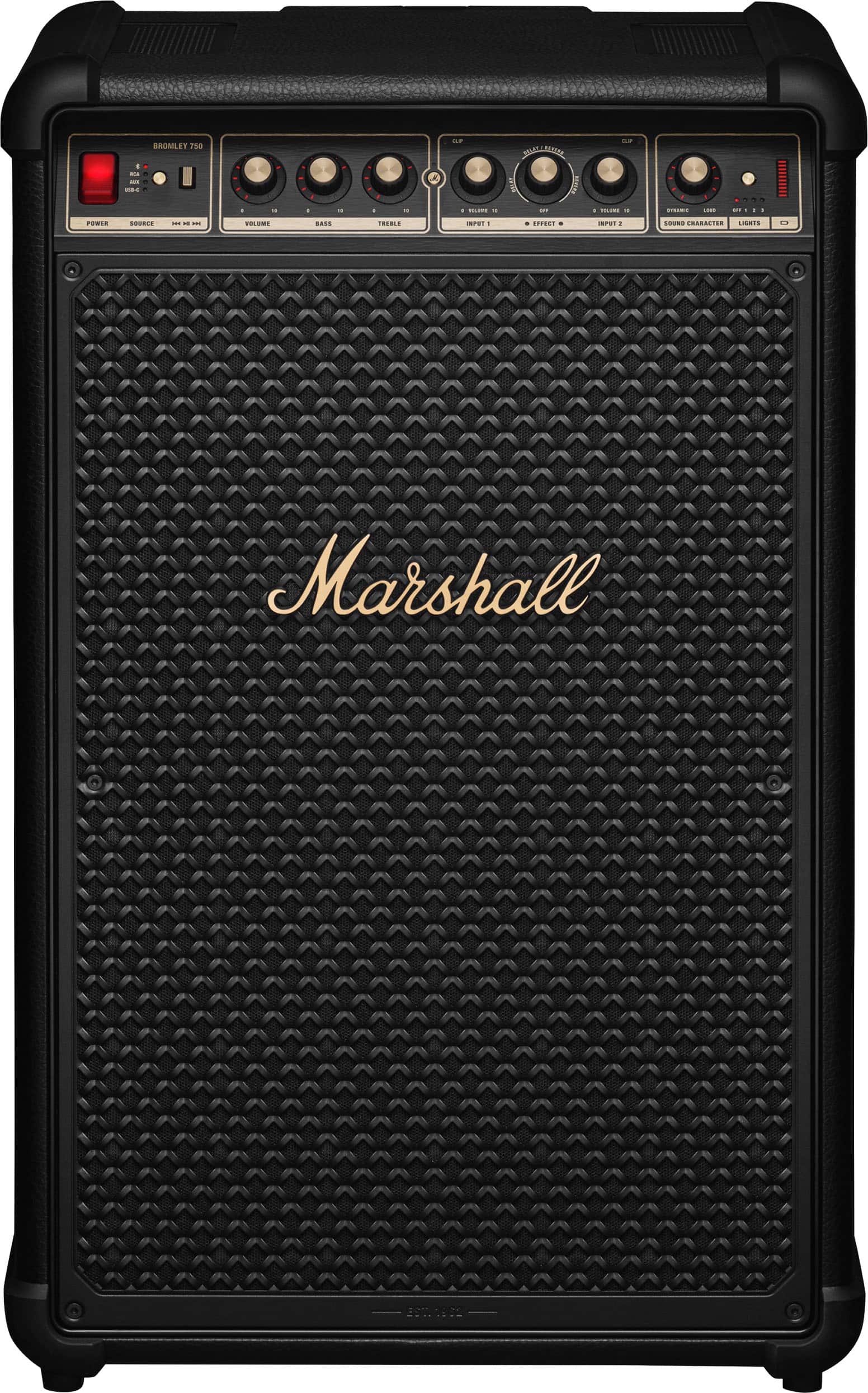
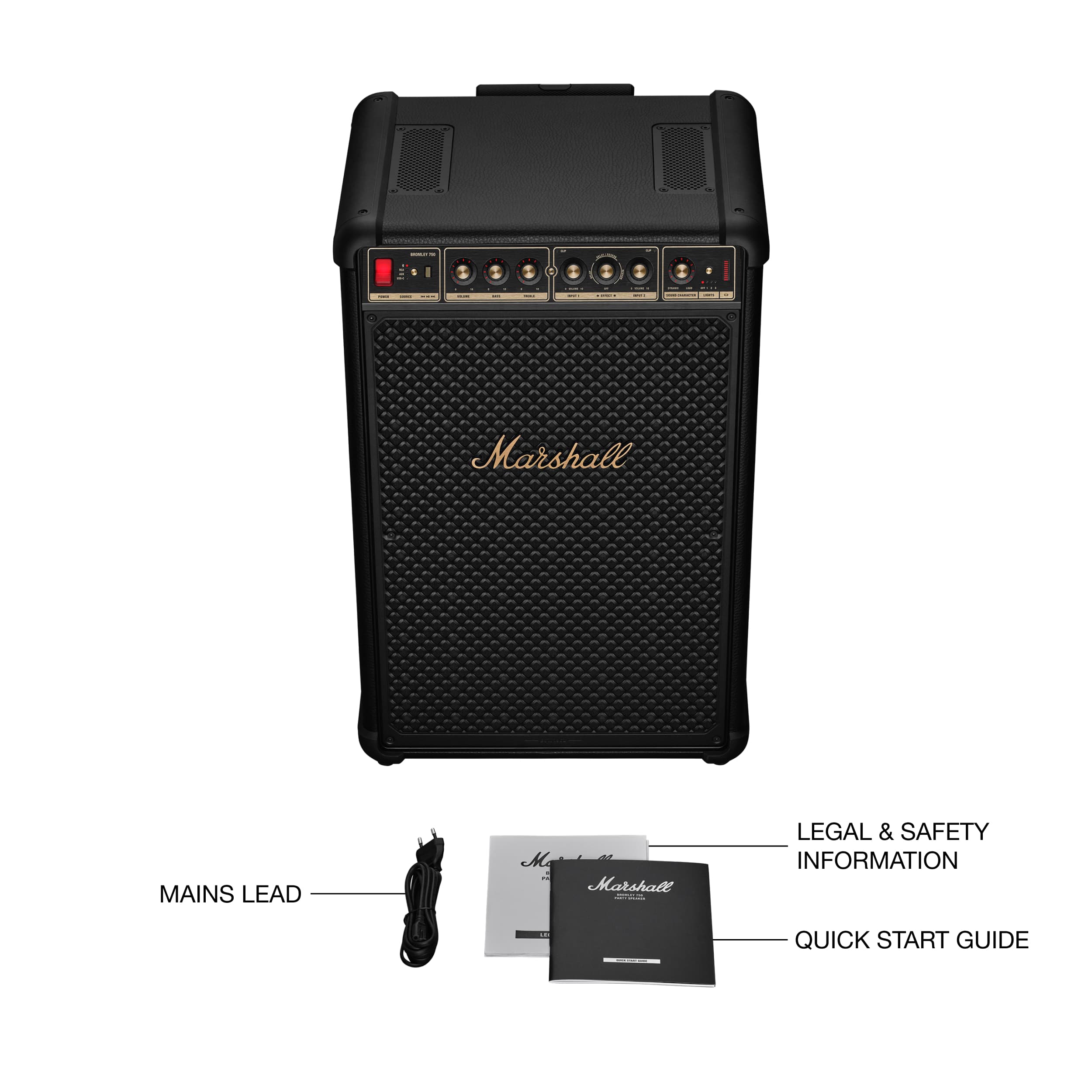
Marshall's Bromley 750 arrived in 2025 as the legendary amplifier company's first serious attempt at portable party speakers. Marshall spent over 60 years perfecting guitar and bass amplifiers that power the world's biggest stages. The Bromley 750 represents their effort to translate that professional audio expertise into the consumer party speaker market, commanding a significant premium over competitors.
When it comes to raw power, the Marshall Bromley 750 dominates with 500 watts of total power output and the ability to reach 127 dB SPL. To put this in perspective, 127 dB is comparable to a rock concert or jet engine at takeoff. This isn't just marketing fluff – those extra decibels make a real difference when you're trying to energize a backyard full of people or compete with outdoor ambient noise.
The Sony SRS-XV800 takes a more conservative approach with 70 watts RMS (root mean square – the continuous power output rather than peak power). While this sounds dramatically less powerful on paper, Sony's engineering makes these watts work harder through their X-Balanced woofer technology. These rectangular woofers pack more surface area than traditional circular drivers, moving more air for deeper bass without requiring massive power consumption.
In practical terms, the Sony delivers plenty of volume for typical residential parties. Most users find themselves using only half the available volume, even in outdoor settings. The Marshall's extra power becomes essential for larger venues, outdoor festivals, or when you need that extra headroom to prevent distortion at maximum volume.
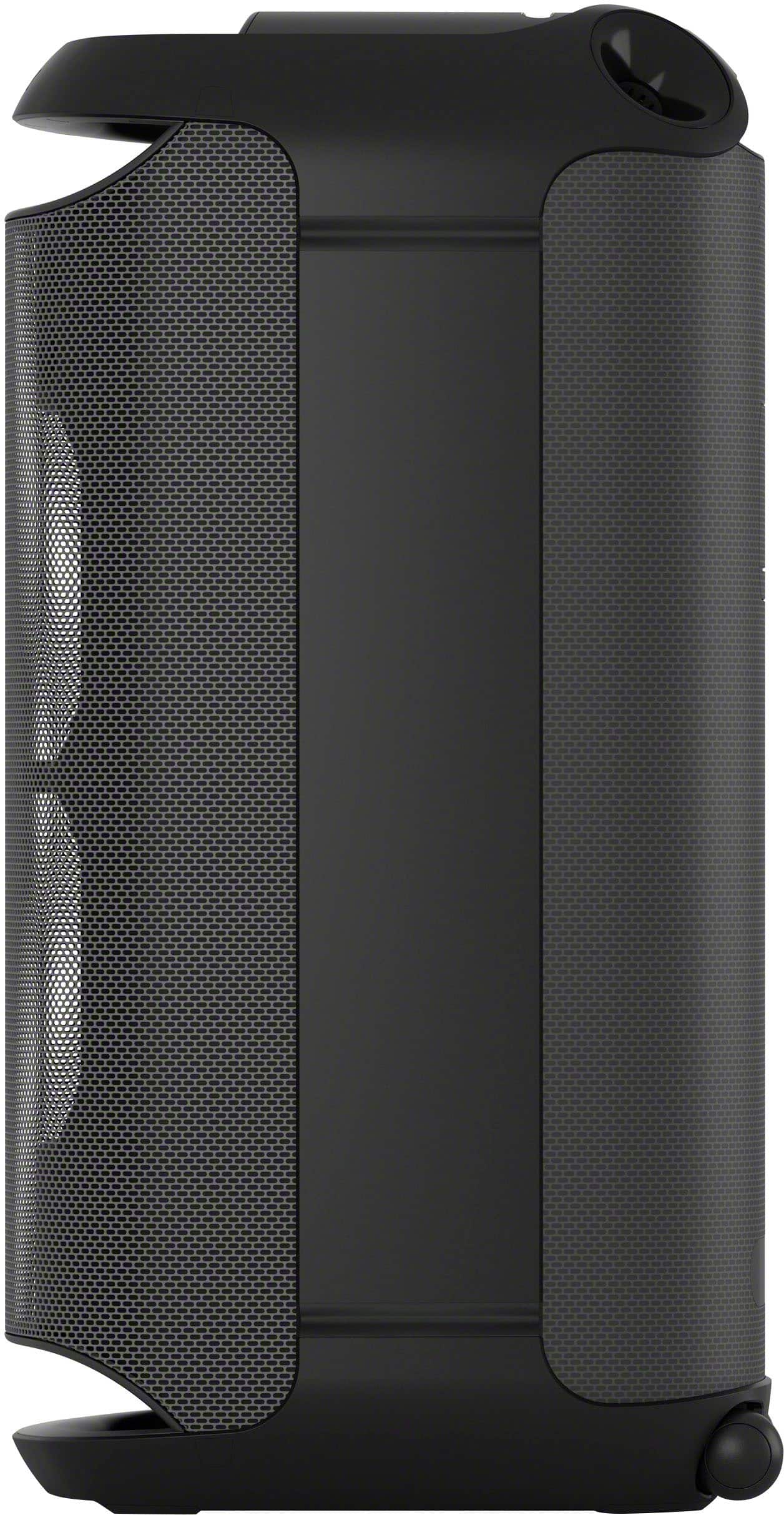
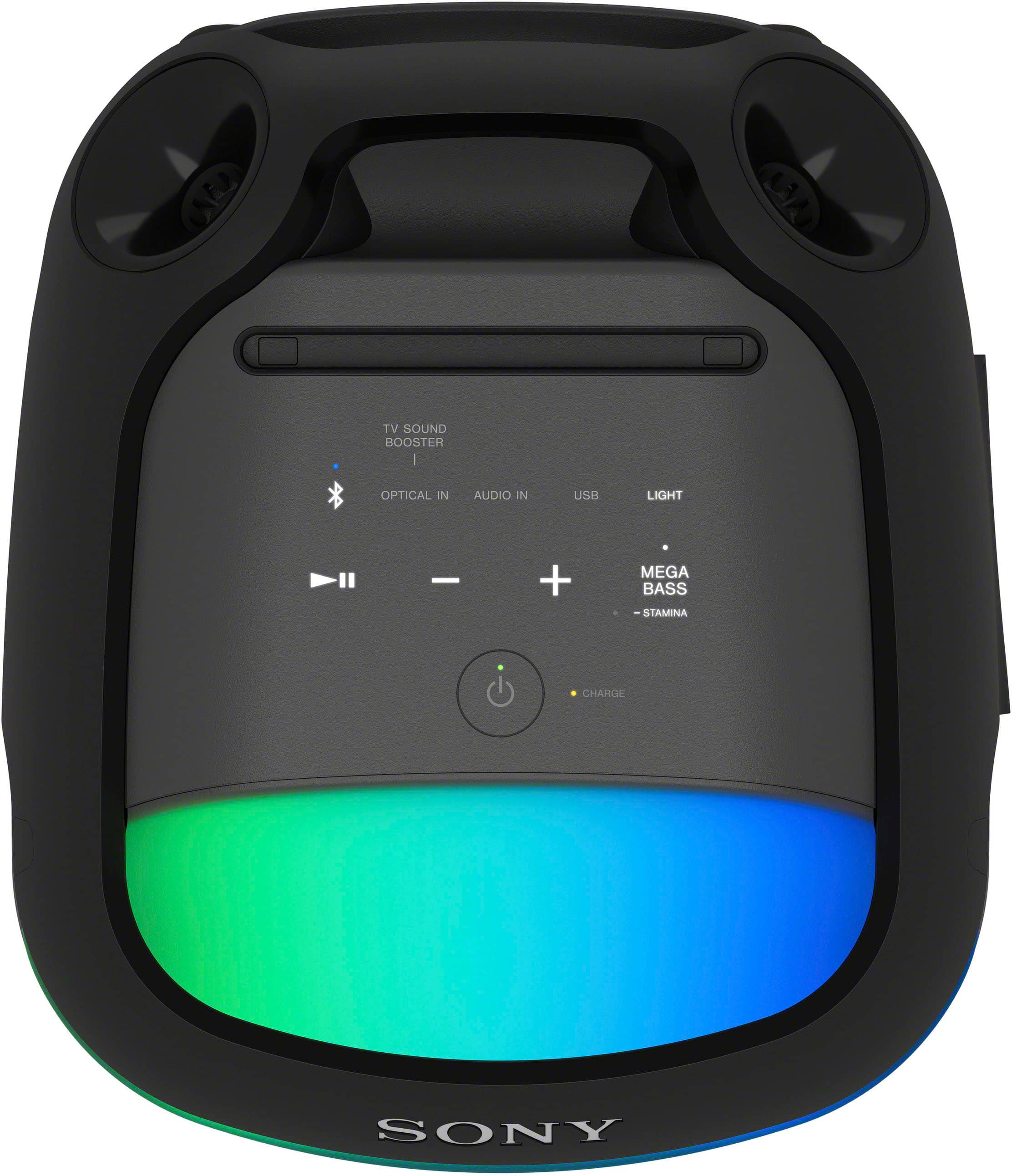
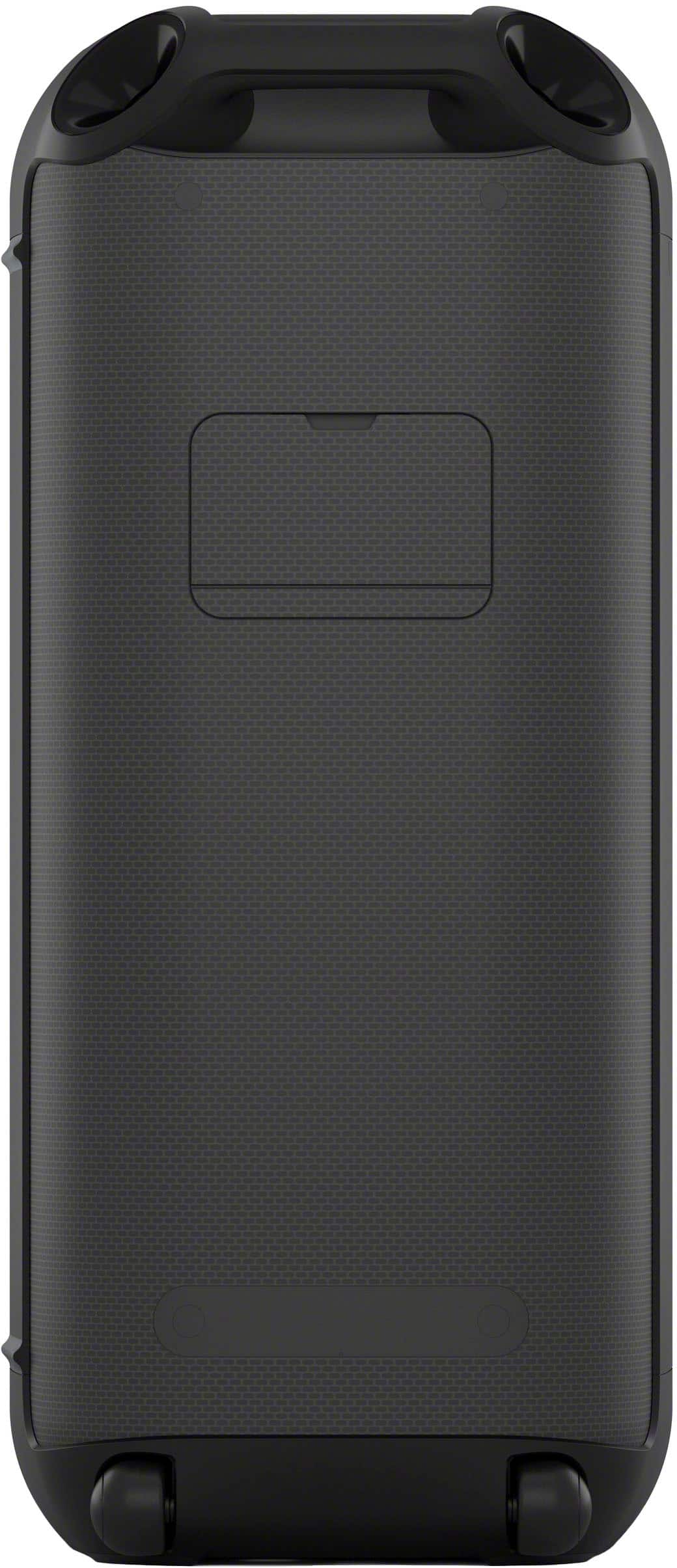
Both speakers handle bass differently, which significantly impacts their sound character. The Sony SRS-XV800 uses a bass reflex design with a rear-firing passive radiator. This setup maximizes low-frequency output by using the cabinet itself as part of the bass production system. The result is deep, impactful bass that consumer audiences love, especially when engaging the MEGA BASS mode.
The Marshall Bromley 750 employs a sealed (closed-box) design that prioritizes accuracy over maximum boom. Professional audio engineers prefer sealed enclosures because they provide tighter, more controlled bass response. The trade-off is less dramatic low-end impact, but you get cleaner, more accurate reproduction that doesn't muddy up during complex musical passages.
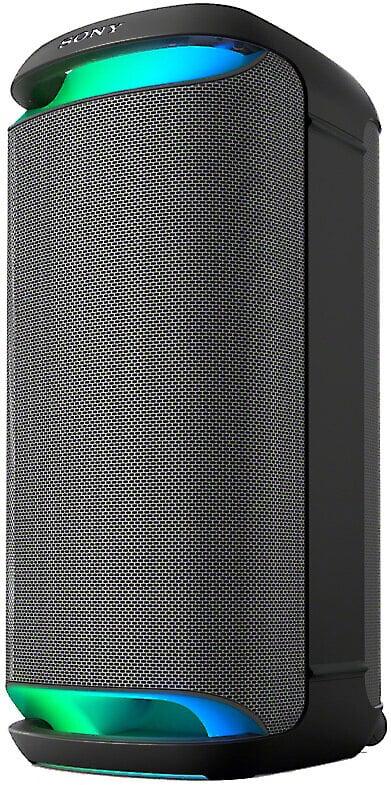
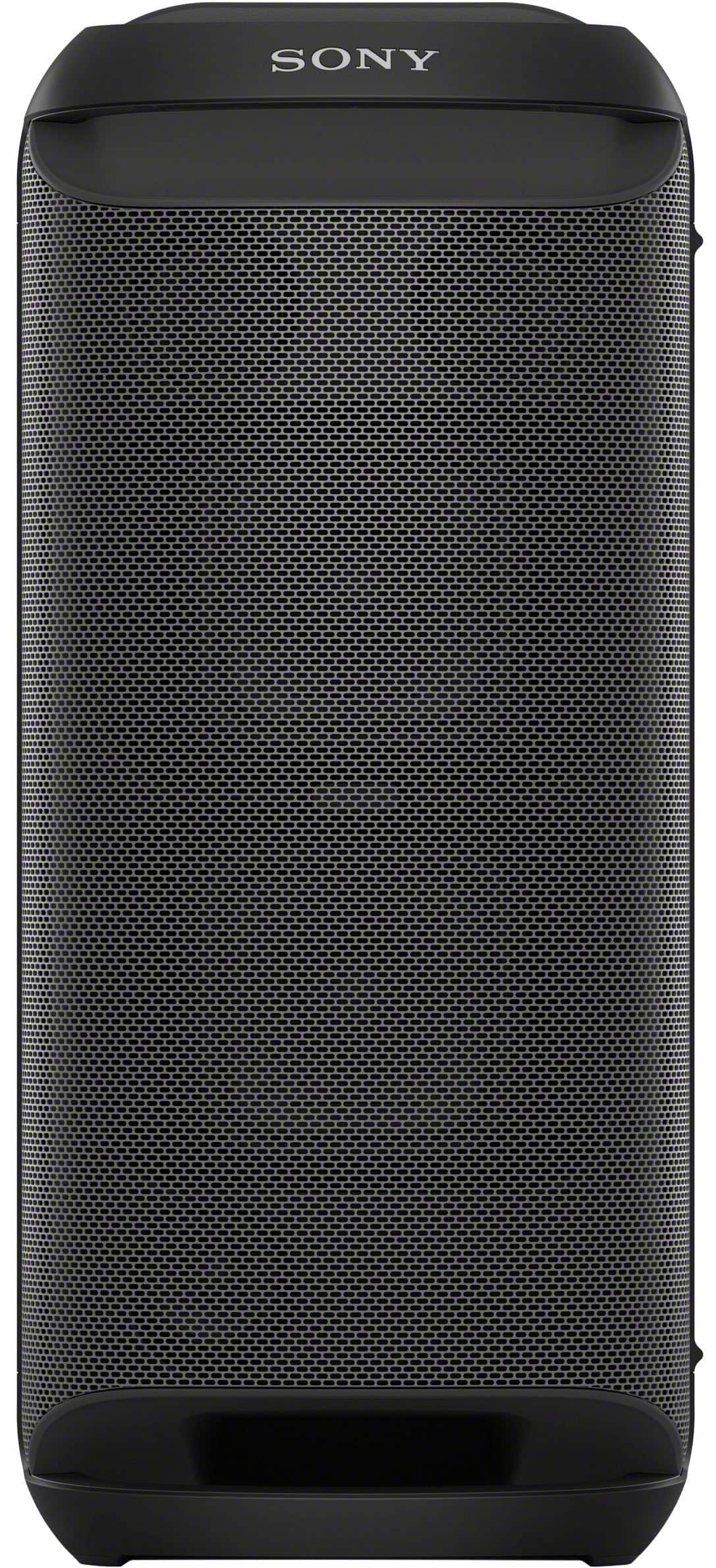
Sound quality differences between these speakers reflect their target audiences. The Sony SRS-XV800 focuses on creating an immersive listening experience through its five-tweeter array. Three tweeters face forward while two fire rearward, creating what Sony calls omnidirectional sound. This design fills a space with music from multiple angles, making it feel like you're surrounded by sound rather than listening to a single source.
Sony also includes LDAC Bluetooth codec support, which transmits roughly three times more data than standard Bluetooth connections. This means less compression and better sound quality when streaming from compatible devices. Most Android phones and some music streaming services support LDAC, making this a practical advantage for audio quality enthusiasts.
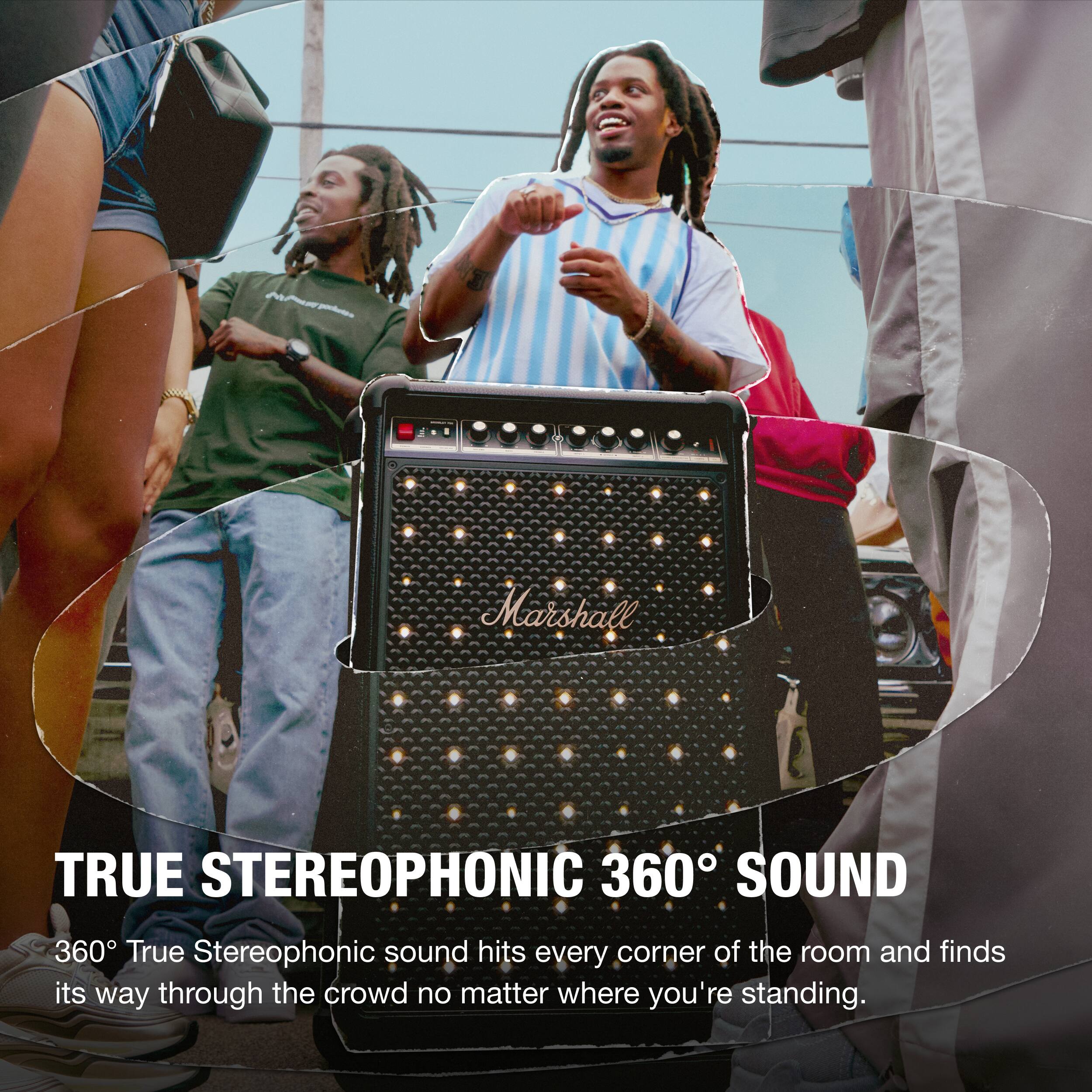
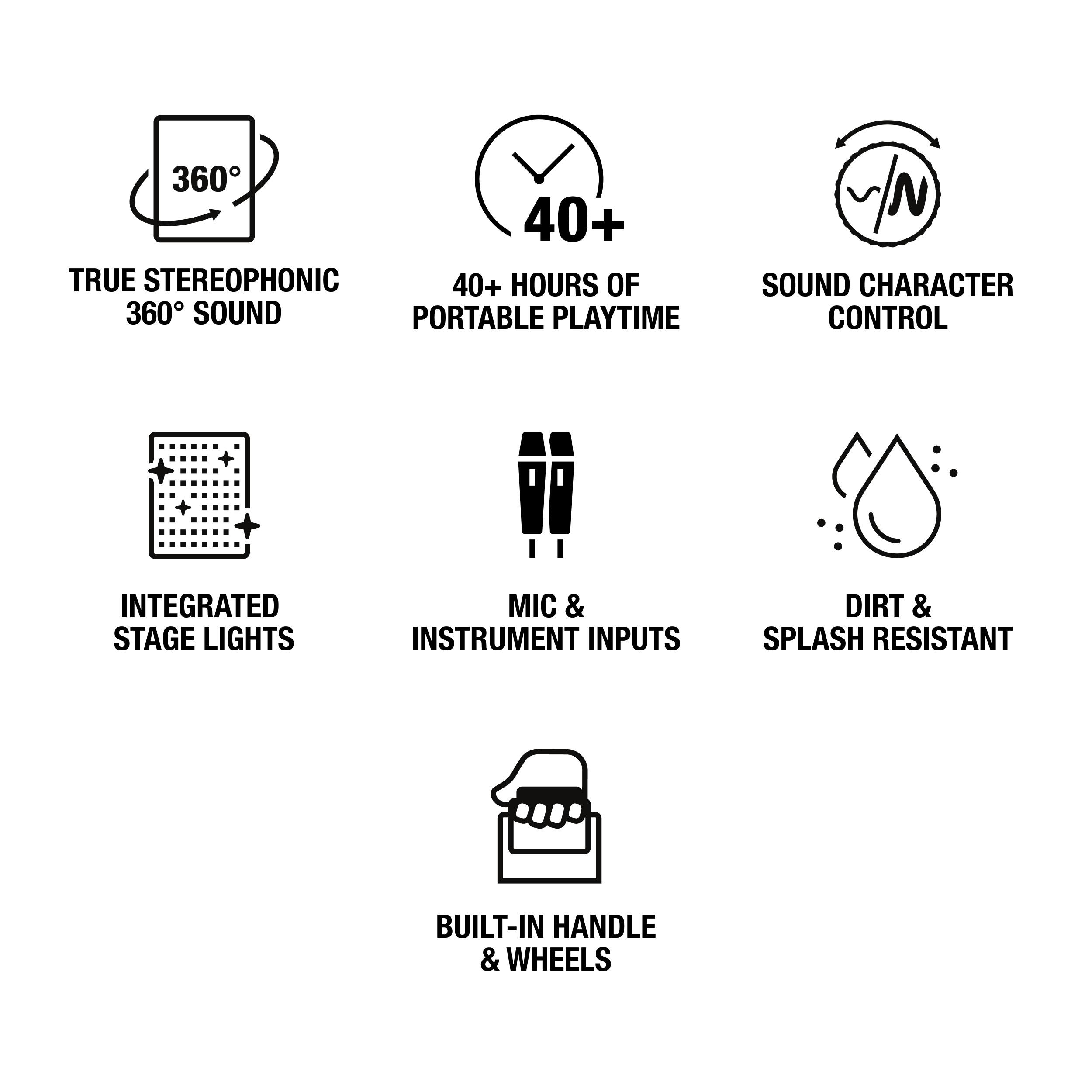
The Marshall Bromley 750 takes a professional approach with its True Stereophonic 360° sound system. Eight Class D amplifiers power dedicated drivers positioned throughout the cabinet: twin 10-inch woofers, mid-range drivers, and four tweeters including two mounted on top. Class D amplifiers run cooler and more efficiently than older designs while delivering clean power across the frequency spectrum.
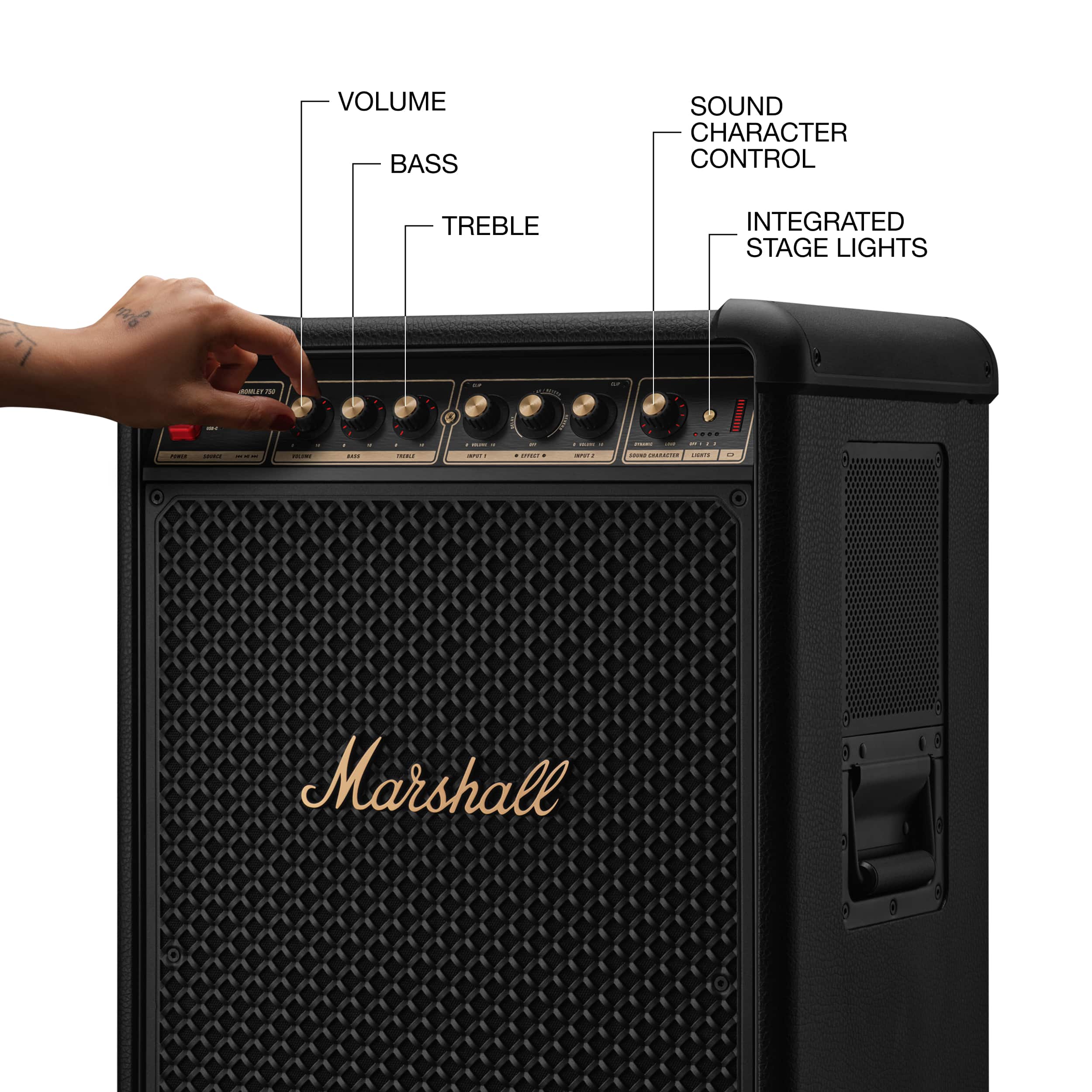
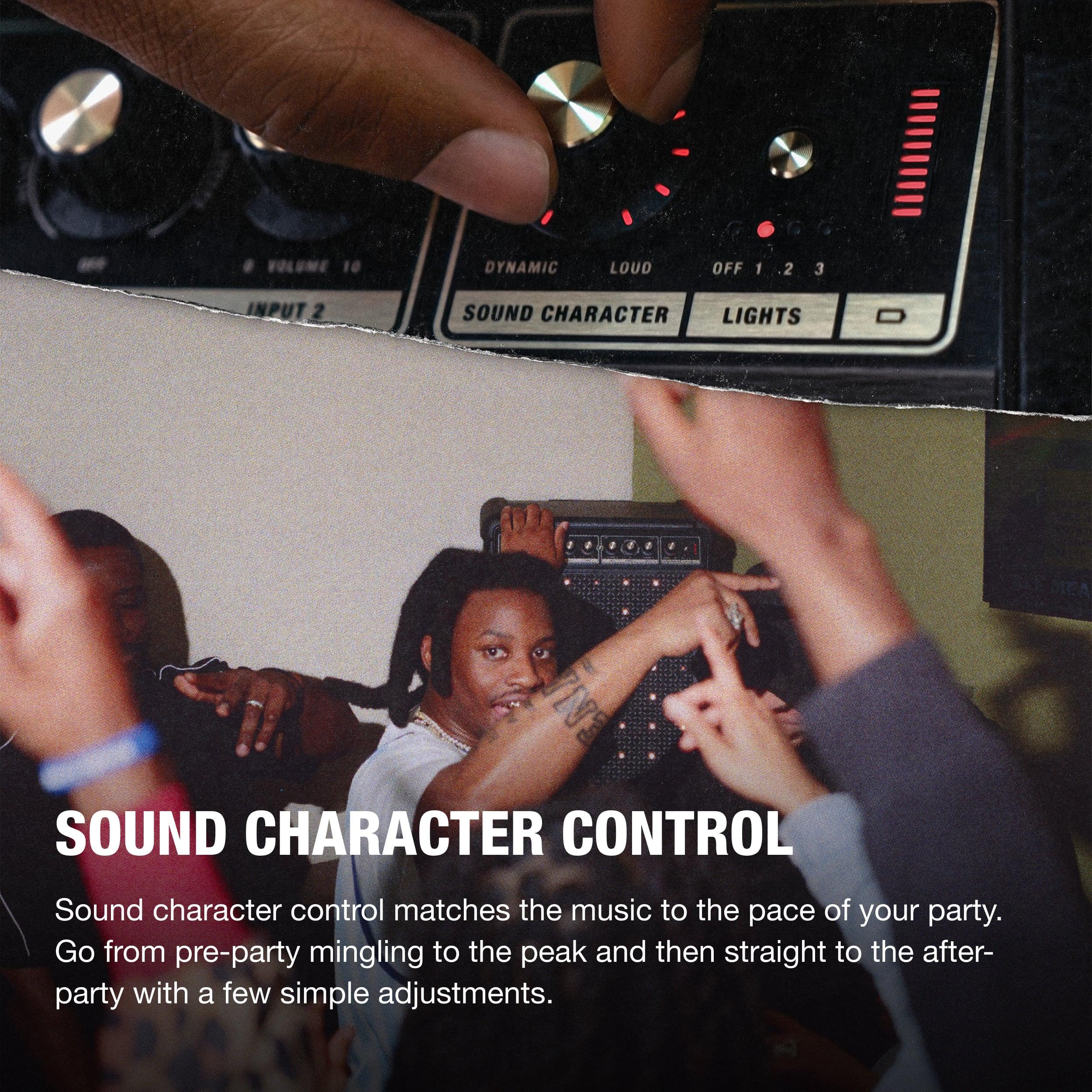
Marshall's unique Sound Character control lets you switch between "Dynamic" mode for detailed indoor listening and "Loud" mode for outdoor performance. This isn't just an EQ adjustment – it fundamentally changes how the speaker processes audio to match the acoustic environment. Dynamic mode emphasizes clarity and detail for close listening, while Loud mode prioritizes projection and punch for open spaces.
Battery performance represents one of the most significant practical differences between these speakers. The Sony SRS-XV800 delivers up to 25 hours of continuous playback, which covers most party scenarios with room to spare. Sony includes a STAMINA mode that extends battery life by disabling lighting effects and sound processing features. Quick charging provides three hours of playback from just 10 minutes of charging time.
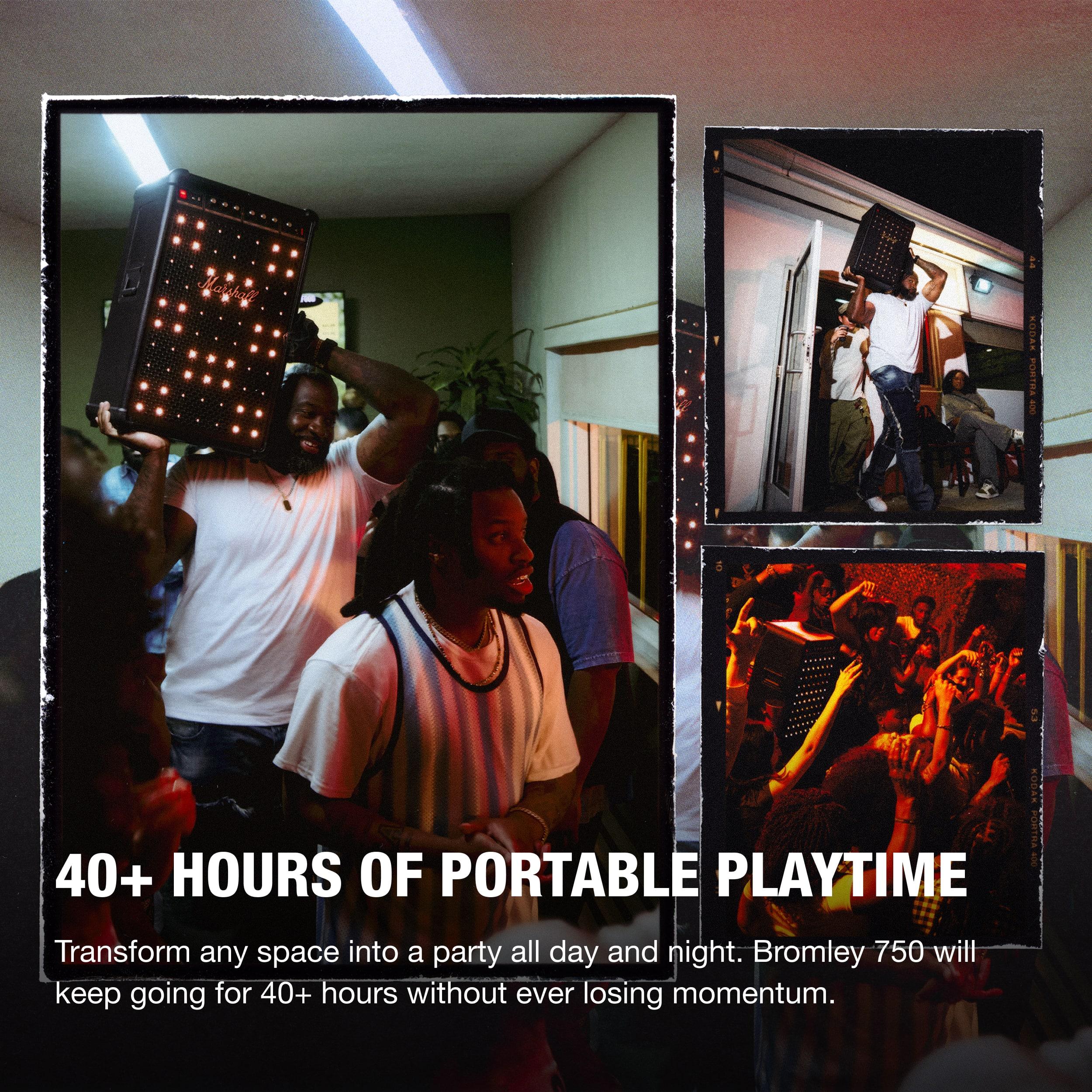
The Marshall Bromley 750 pushes battery endurance to new levels with over 40 hours of continuous operation. More importantly, Marshall uses a user-replaceable battery system that doubles as a power bank for charging phones and other devices. When the battery eventually wears out after years of use, you can swap in a fresh one rather than replacing the entire speaker.
This replaceable battery design addresses one of the biggest long-term issues with portable speakers. Most built-in batteries degrade after 2-3 years of regular use, often turning expensive speakers into expensive paperweights. Marshall's system means the Bromley 750 could theoretically last decades with periodic battery replacements.
The quick charging capabilities also differ significantly. Marshall's 20-minute charge provides five hours of playback time – useful when you need to top up between party segments. Both speakers can operate while plugged in, effectively providing unlimited runtime when AC power is available.
Connectivity options reveal the fundamental differences in these speakers' intended use cases. The Sony SRS-XV800 emphasizes wireless connectivity and home integration. Beyond standard Bluetooth, Sony's Party Connect technology allows you to link up to 100 compatible speakers together. This creates possibilities for whole-house audio systems or massive outdoor events with synchronized music and lighting.
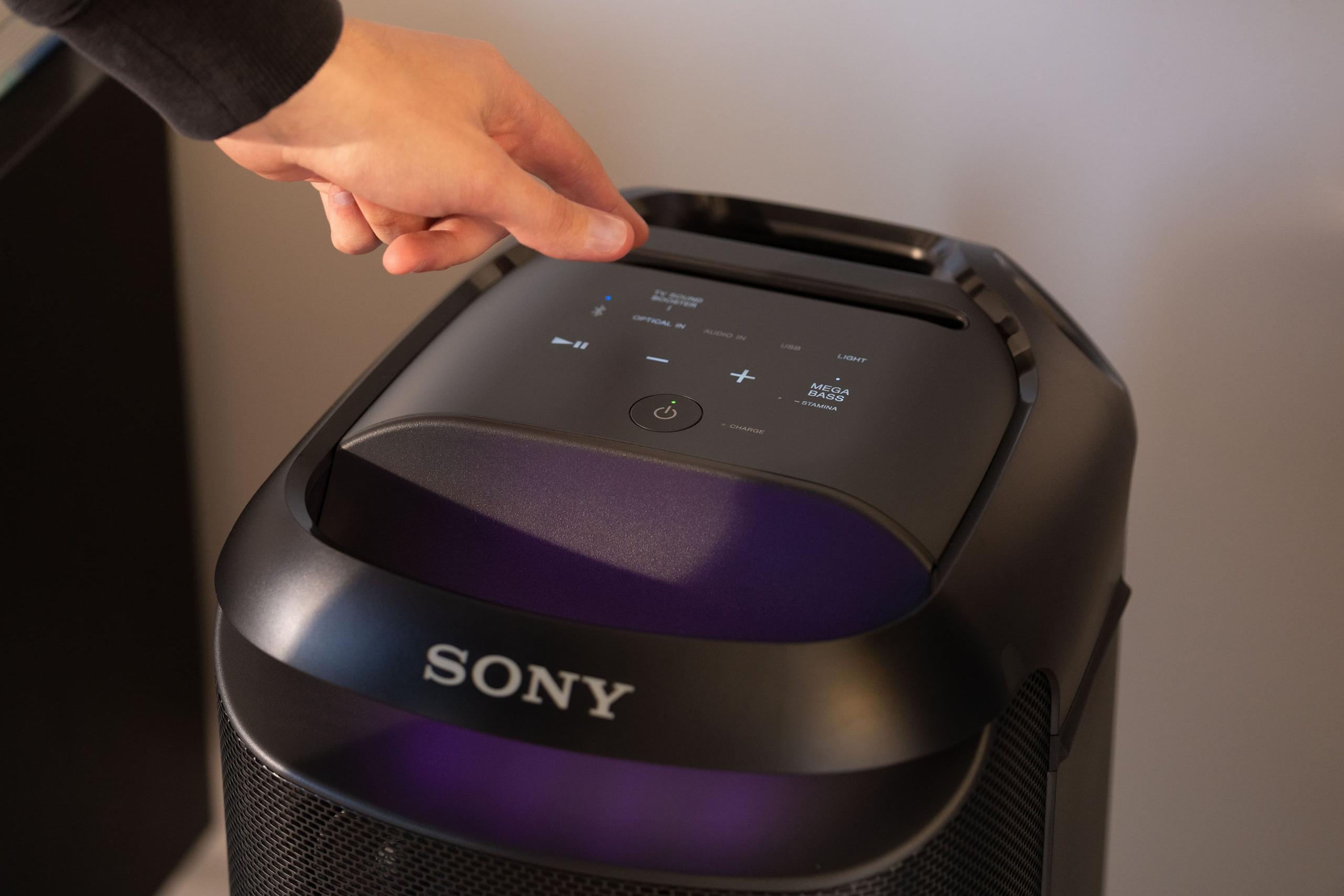
The optical digital input sets the Sony apart for home theater applications. This connection bypasses the lossy analog-to-digital conversions that degrade sound quality, providing a direct digital link to TVs, gaming consoles, and media players. Sony's TV Sound Booster mode optimizes the speaker's output for movie dialogue and sound effects, making it function as a powerful soundbar alternative.
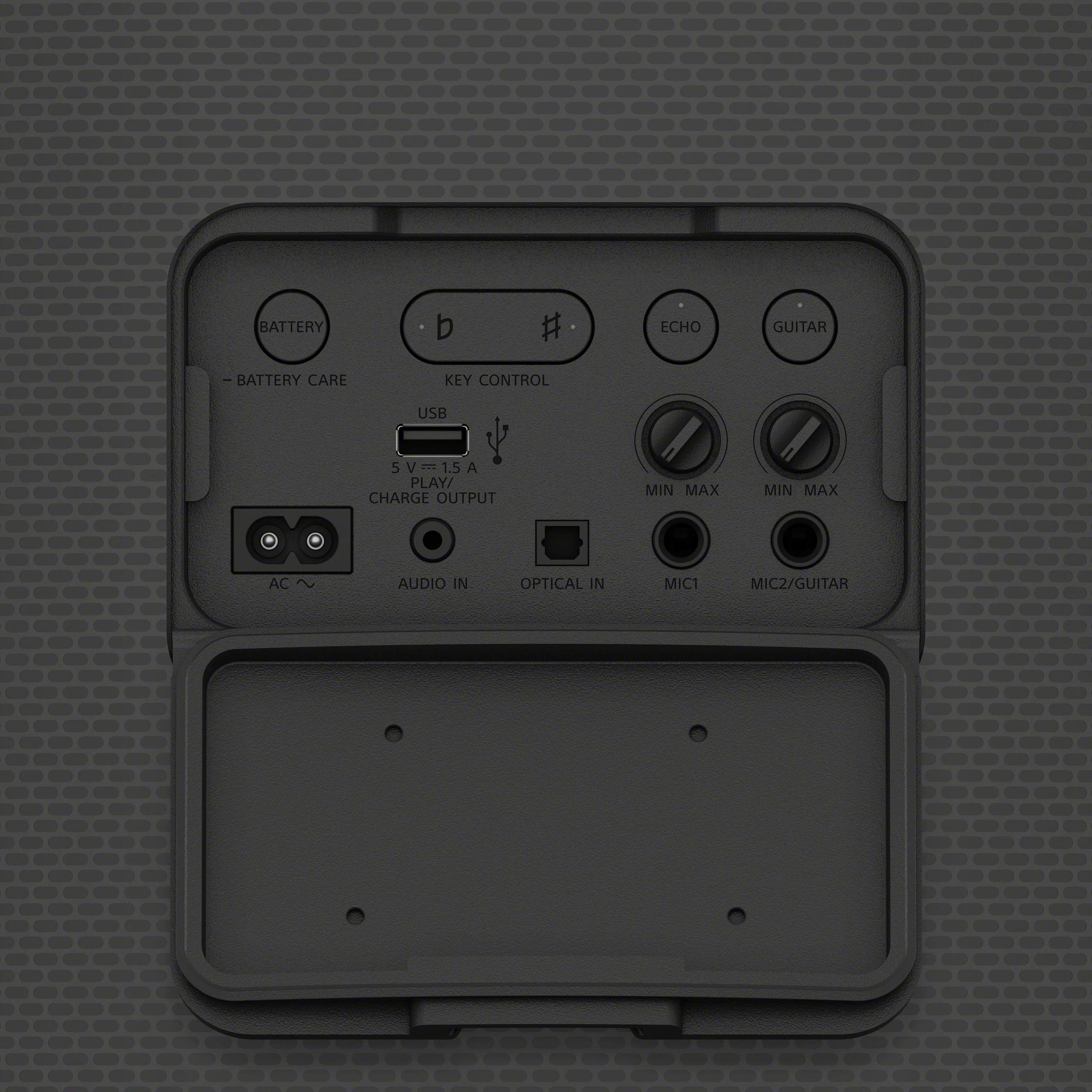
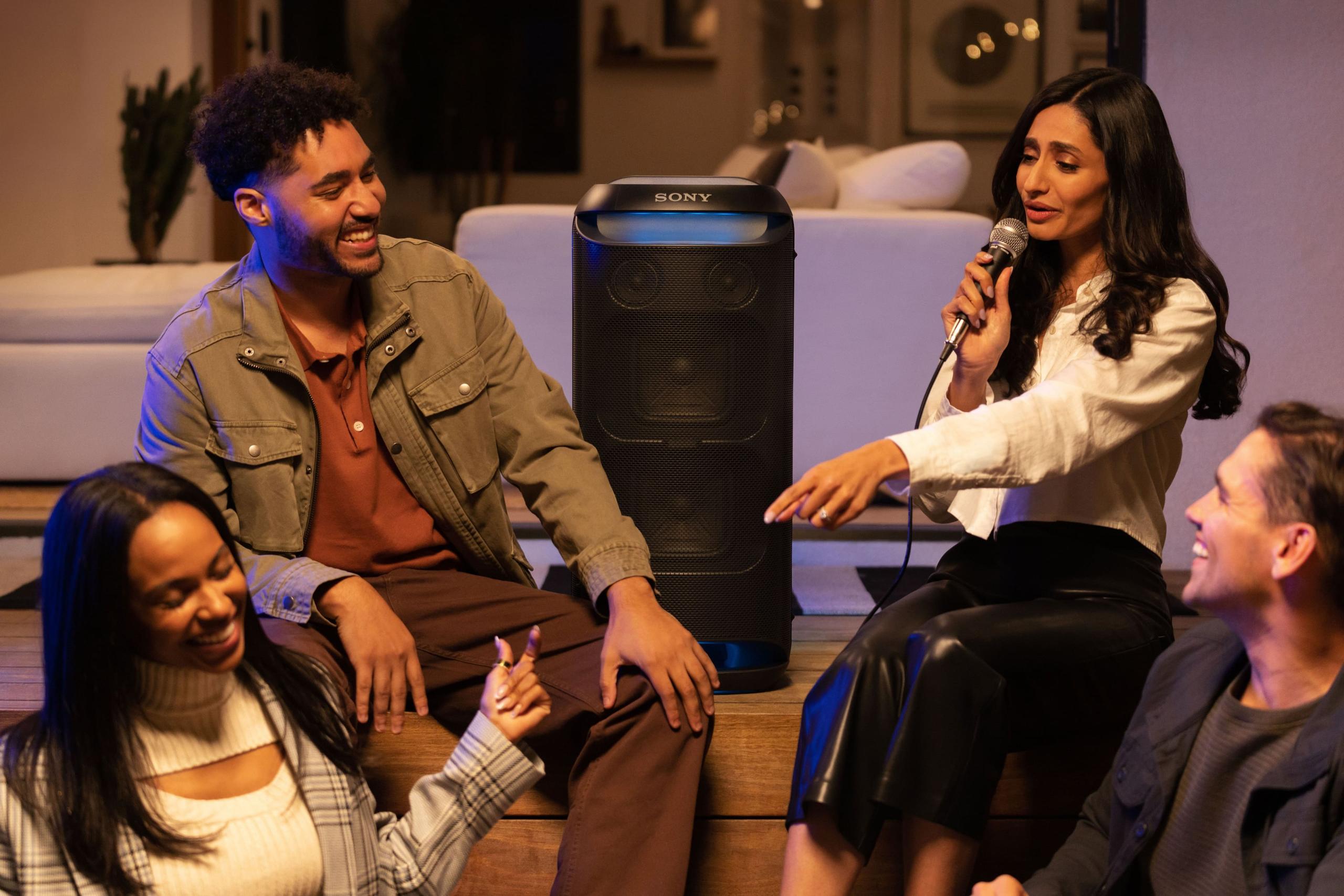
Sony includes dedicated inputs for karaoke applications: a microphone input with volume control and a separate guitar/MIC input. While functional, these use basic 3.5mm connections rather than professional-grade connectors.
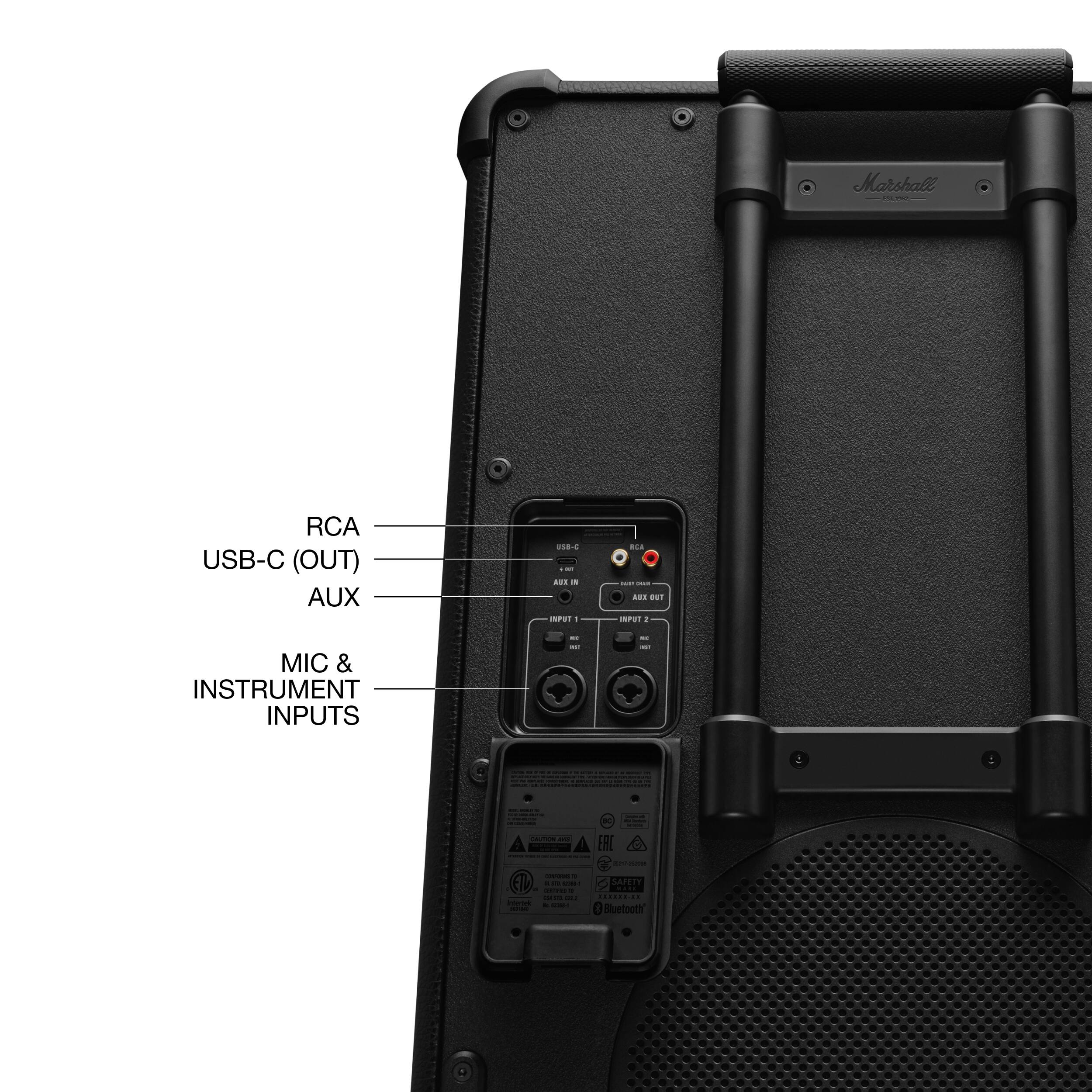
The Marshall Bromley 750 prioritizes professional-grade connectivity. Two combo jack inputs accept both XLR and 6.35mm (quarter-inch) connections – the same connectors used in recording studios and live venues. This means you can plug in professional microphones, electric guitars, keyboards, or other instruments without adapters or signal degradation.
Marshall includes RCA inputs for connecting DJ mixers, CD players, or other professional audio equipment. The USB-C input provides digital audio connection while simultaneously charging connected devices. Auxiliary input and output jacks allow daisy-chaining multiple Bromley speakers together using cables rather than wireless connections.
The trade-off is less emphasis on multi-room wireless systems. While the Marshall supports Bluetooth 5.3 with advanced Auracast technology for sharing audio between compatible devices, it lacks the comprehensive multi-speaker ecosystem that Sony offers.
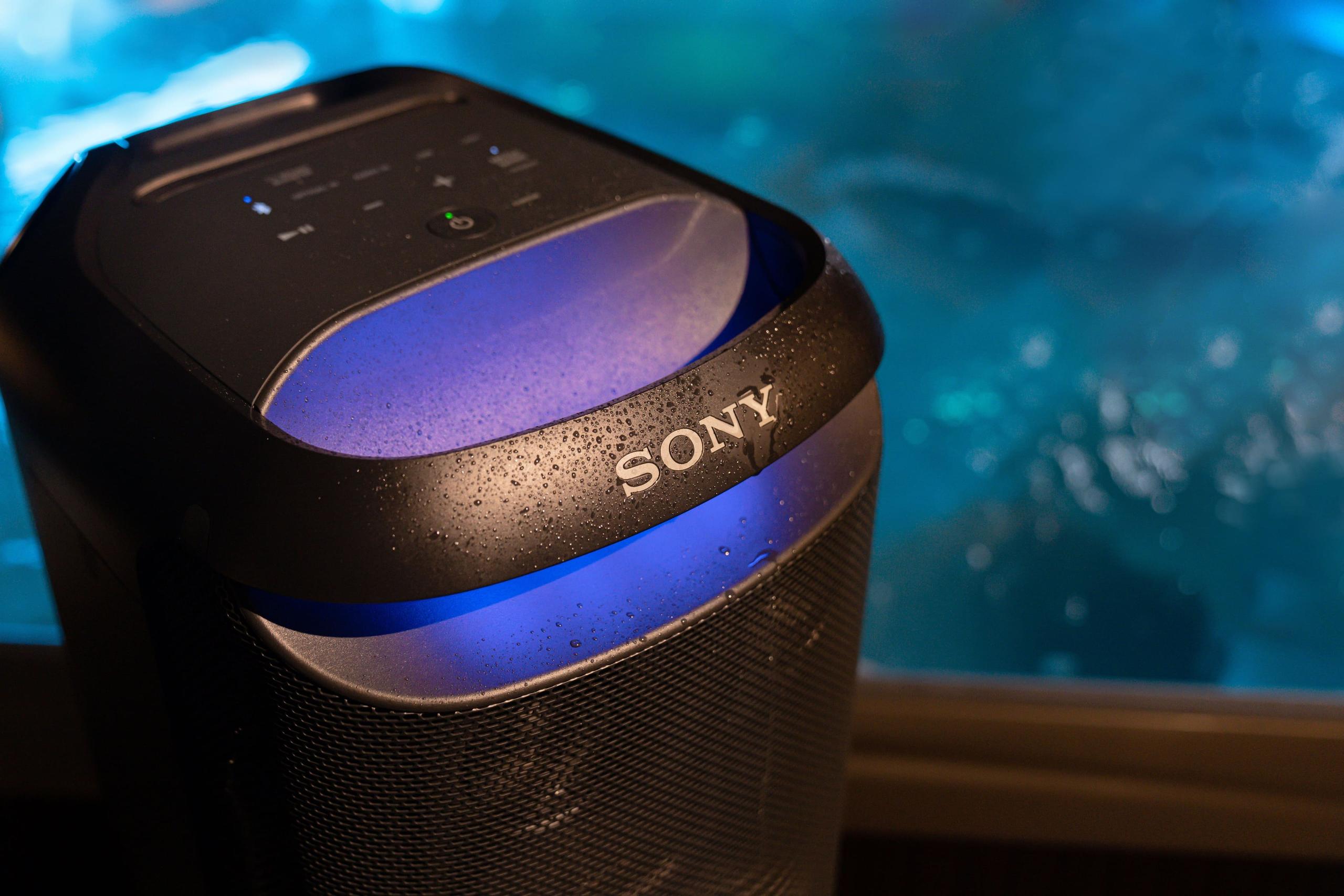
Weather resistance becomes critical for speakers designed to venture outdoors. The Sony SRS-XV800 carries an IPX4 rating when positioned vertically, meaning it can handle splashes from any direction. However, this rating drops to IPX2 (protection from vertical water drops only) when placed horizontally. The built-in orientation sensor automatically optimizes sound output for the speaker's position.
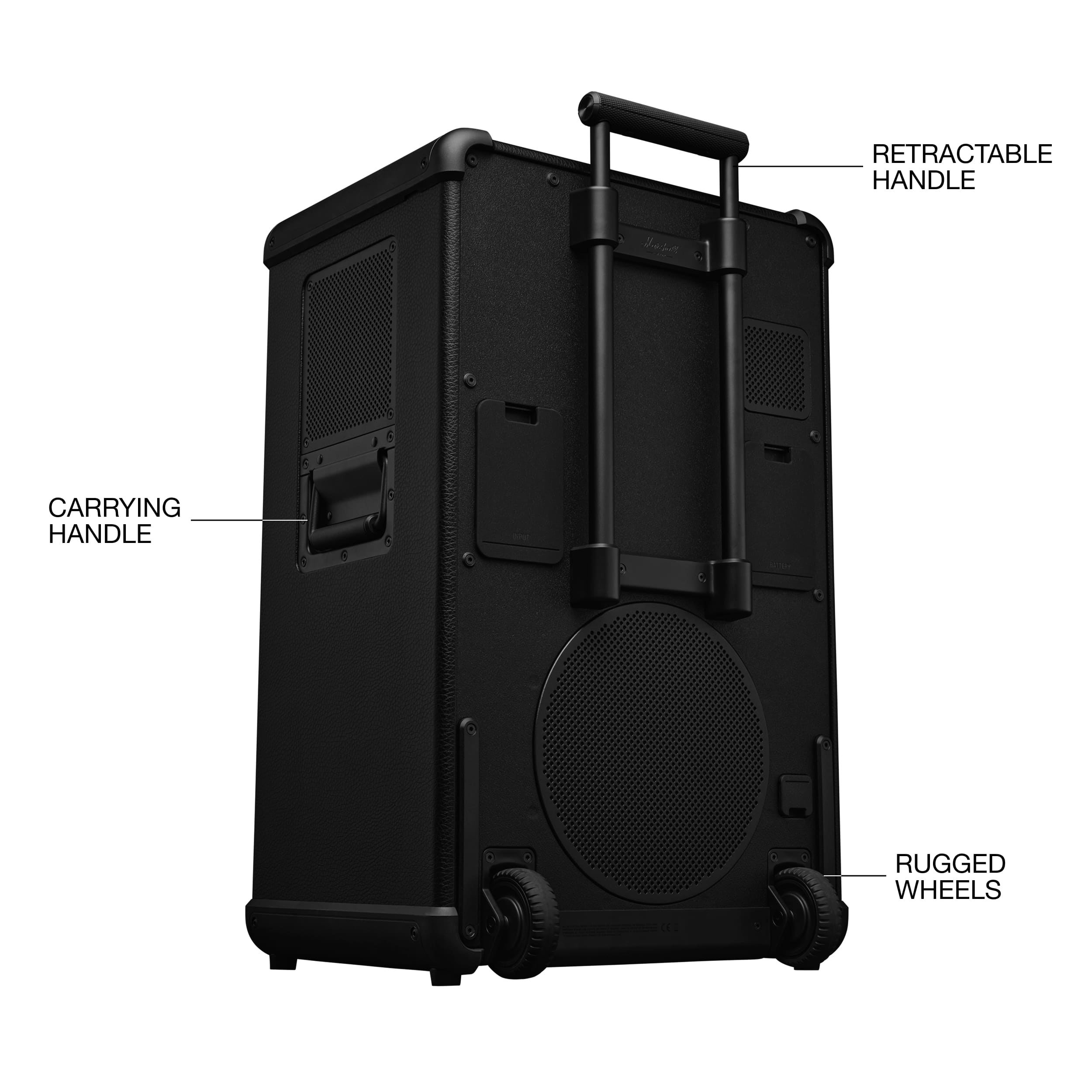
The Marshall Bromley 750 achieves superior IP54 rating, protecting against both dust and water splashes from any direction regardless of orientation. Marshall engineers included a drainage system that channels water away from the speaker drivers, preventing damage from pooled water. This makes the Marshall more suitable for truly outdoor environments like beaches or camping trips.
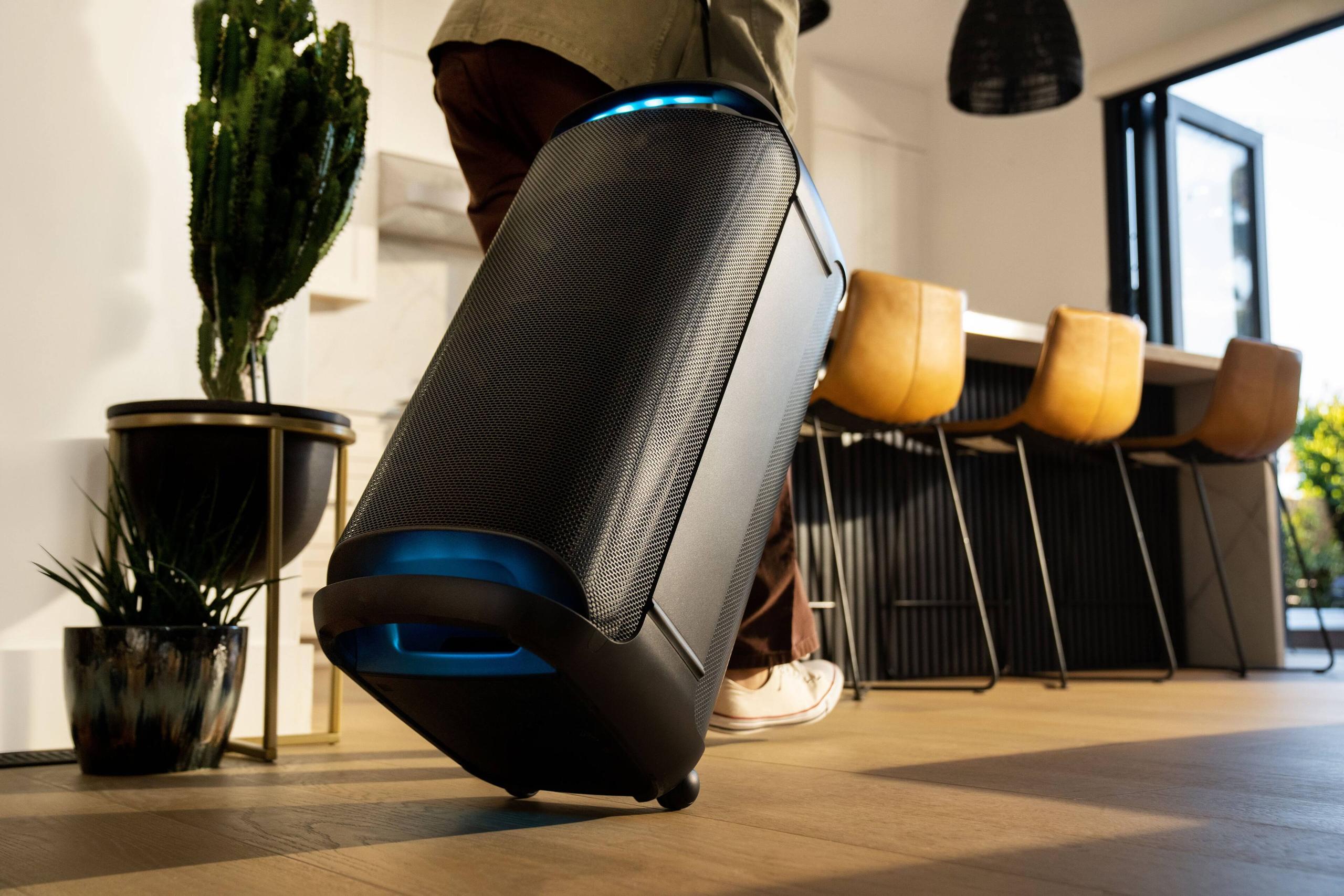
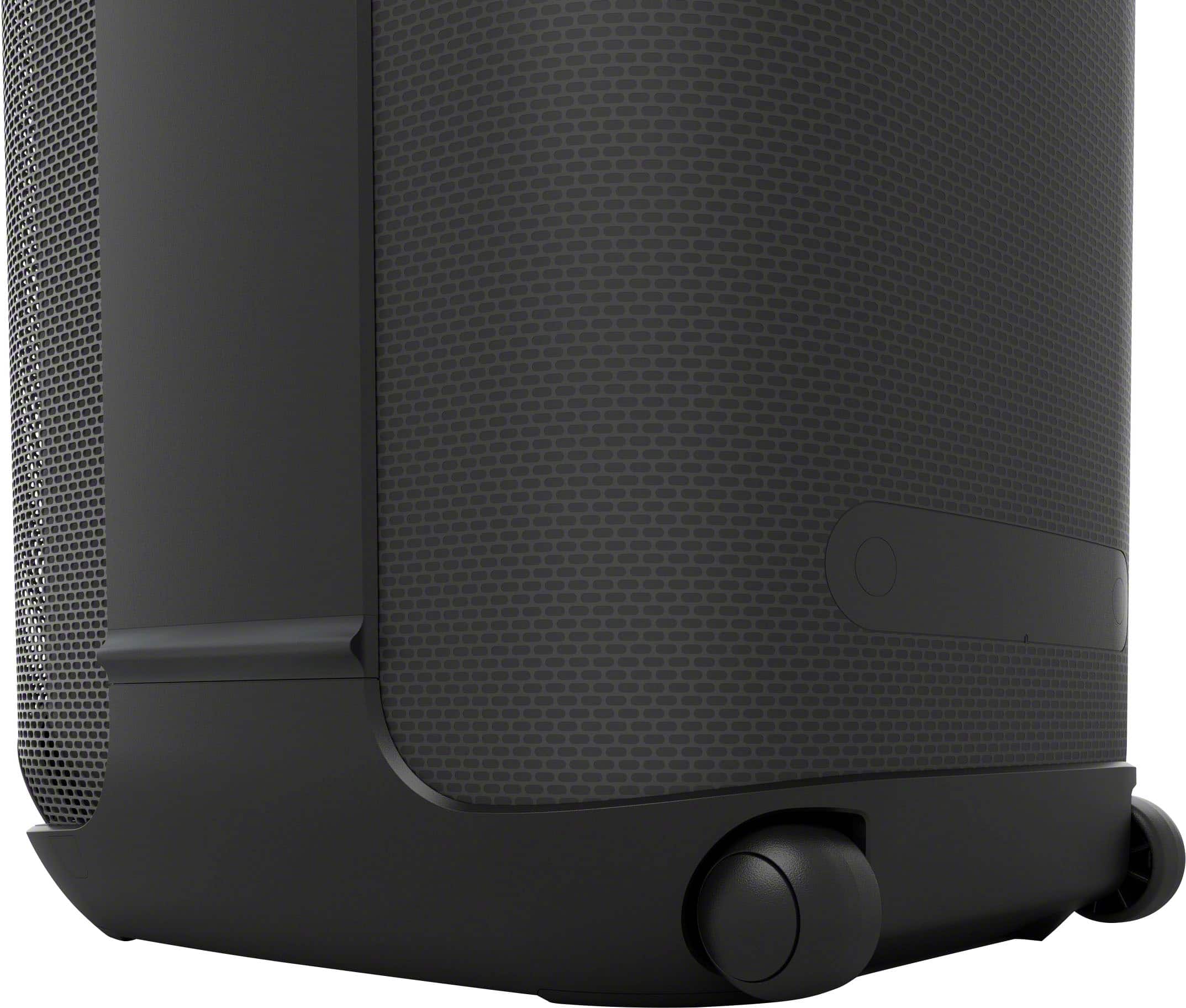
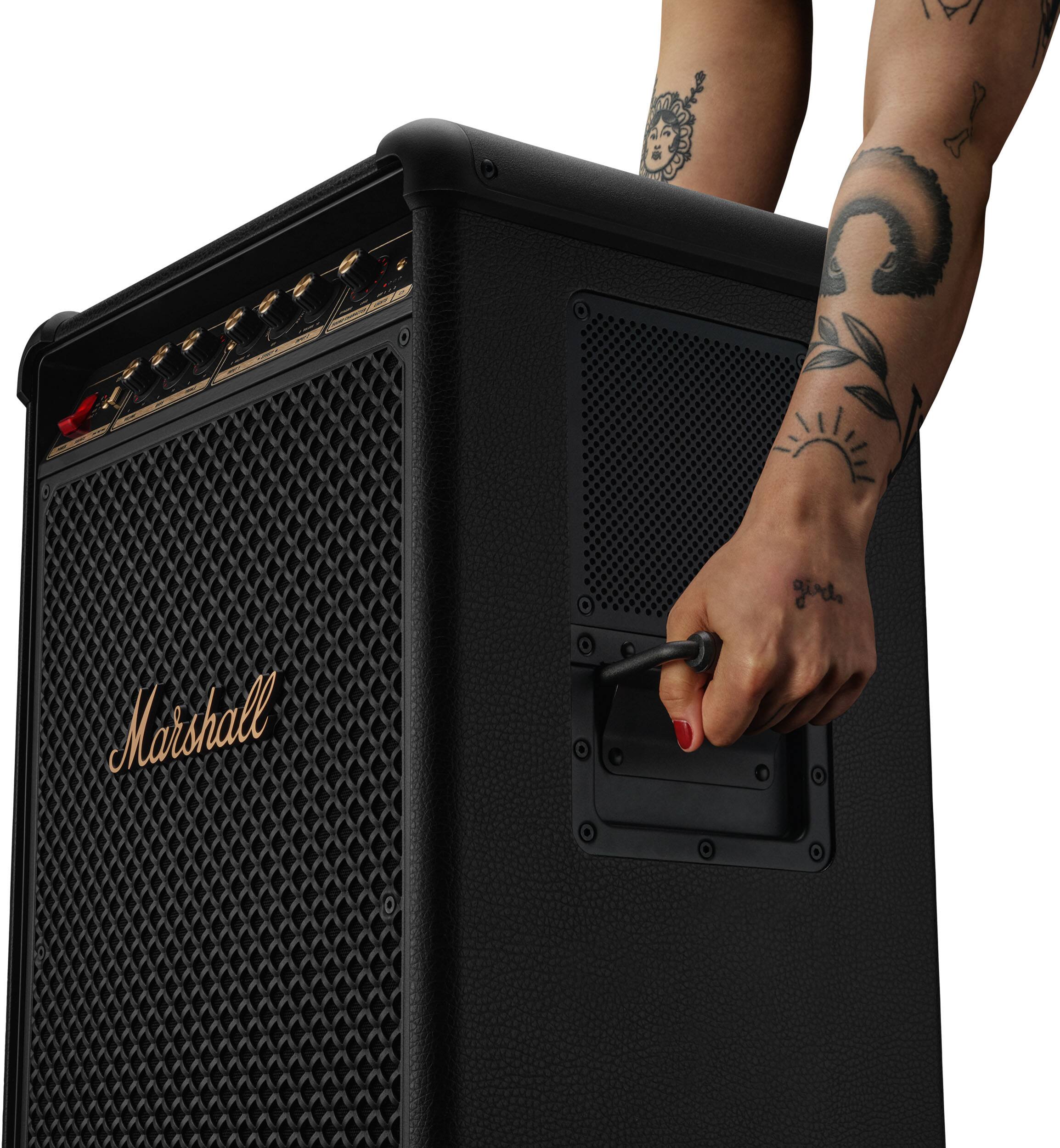
Both speakers include built-in wheels and handles for portability, though their weight difference is substantial. The Sony weighs about 41 pounds while the Marshall tips the scales at 53 pounds. That 12-pound difference becomes noticeable when carrying the speaker up stairs or loading it into vehicles.
Lighting effects represent another philosophical divide between these speakers. The Sony SRS-XV800 embraces the party aesthetic with programmable LED lighting that can be customized through Sony's Fiestable app. The lights synchronize with music, creating dynamic color shows that enhance the party atmosphere. Different presets provide various lighting patterns, from subtle ambient effects to full disco mode.
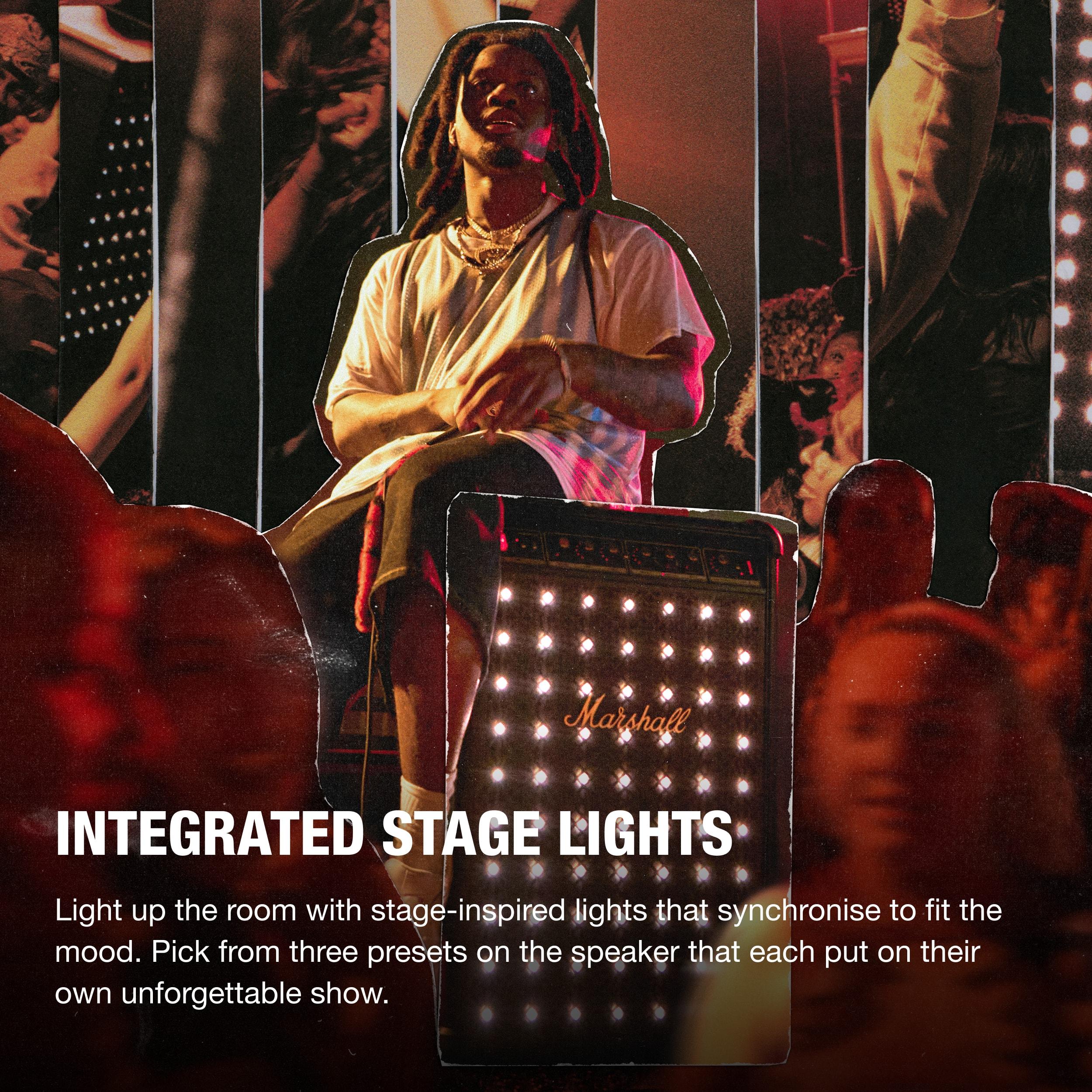
The Marshall Bromley 750 takes inspiration from professional stage lighting rather than dance floors. White LEDs hidden behind the front grille create warm, stage-style illumination reminiscent of vintage amplifier pilot lights or theater marquees. Three modes provide general lighting, music-reactive effects, or grid patterns. When turned off, the lights disappear completely behind the metal grille, maintaining Marshall's classic amplifier aesthetic.
Neither approach is inherently better – it depends on your preferred party vibe. Sony's colorful effects work well for casual gatherings and younger audiences, while Marshall's subtle white lighting suits more sophisticated events or professional applications.
At the time of writing, the Sony SRS-XV800 delivers exceptional value in the mid-to-upper price range. It provides features typically found in much more expensive speakers: high-quality Bluetooth codecs, extensive connectivity options, long battery life, and impressive sound quality. The ability to expand the system with additional compatible speakers adds long-term flexibility.
The Marshall Bromley 750 commands approximately double the price of the Sony, placing it firmly in premium territory. This price premium reflects professional-grade build quality, superior power output, and the replaceable battery system. For casual users, the price difference is hard to justify. For professionals or serious audio enthusiasts, the Marshall's additional capabilities and long-term durability make it worthwhile.
Consider that the Sony's lower price allows budget for additional accessories or even a second speaker for stereo pairing. Two Sony speakers in Party Connect mode would provide more total power and better stereo separation than a single Marshall, though without the Marshall's professional input options.
One area where the Sony SRS-XV800 excels is home theater integration. The optical digital input and TV Sound Booster mode transform it into a powerful soundbar alternative. For apartment dwellers or those with space constraints, this dual functionality provides excellent value. The speaker's wide soundstage and powerful bass enhance movie watching and gaming experiences significantly better than TV speakers.
The Marshall Bromley 750 lacks dedicated home theater features, focusing instead on live music and party applications. While it can connect to TVs through auxiliary inputs, it doesn't offer the optimized processing modes that make the Sony more suitable for this application.
Choose the Sony SRS-XV800 if you want excellent all-around performance without breaking the bank. It's perfect for residential parties, backyard gatherings, and home entertainment use. The multi-speaker connectivity makes it ideal for users who might expand their system over time. Its lighter weight and comprehensive app control appeal to users who prioritize convenience and versatility.
The Marshall Bromley 750 justifies its premium price for specific use cases. Professional musicians, DJs, and event organizers will appreciate the XLR inputs and superior power output. The replaceable battery system makes it a better long-term investment for frequent users. Its stage-inspired aesthetic and Marshall heritage appeal to brand enthusiasts and those who view their audio equipment as furniture.
For most home users throwing occasional parties, the Sony provides 90% of the Marshall's performance at roughly half the cost. The remaining 10% – mainly additional power and professional inputs – matters primarily for commercial applications or very large gatherings.
Both speakers represent the current state of the art in their respective market segments. The Sony proves that exceptional performance doesn't require premium pricing, while the Marshall demonstrates that professional features and build quality command justifiable premiums. Your choice ultimately depends on whether you need a versatile home speaker that can party, or a professional-grade party speaker that happens to work at home.
| Sony SRS-XV800 X-Series Party Speaker | Marshall Bromley 750 Party Speaker |
|---|---|
| Power Output - Determines maximum volume and room-filling capability | |
| 70W RMS (sufficient for most residential parties) | 500W total, 127dB SPL (professional-level power for large venues) |
| Battery Life - Critical for all-day events without power access | |
| 25 hours continuous playback (covers typical party duration) | 40+ hours with user-replaceable battery (unlimited with spare batteries) |
| Weight - Affects portability and setup convenience | |
| 40.8 lbs / 18.5 kg (manageable with wheels and handle) | 53 lbs / 24 kg (30% heavier, requires more effort to move) |
| Audio Design - Shapes overall sound character and listening experience | |
| 5-tweeter omnidirectional array with X-Balanced woofers | 8 Class D amplifiers, 360° True Stereophonic with sealed cabinet |
| Professional Inputs - Essential for live music and professional applications | |
| Basic 3.5mm mic/guitar inputs (suitable for karaoke) | Dual XLR/6.35mm combo jacks (professional microphones and instruments) |
| Weather Resistance - Protection level for outdoor use | |
| IPX4 vertical / IPX2 horizontal (splash-resistant) | IP54 (superior dust and water protection with drainage system) |
| Multi-Speaker Connectivity - Ability to scale up for larger events | |
| Party Connect up to 100 speakers, stereo pairing available | No multi-speaker wireless system (single unit operation) |
| Home Theater Integration - Versatility beyond party use | |
| Optical input, TV Sound Booster mode (excellent soundbar alternative) | Basic auxiliary input only (limited home entertainment features) |
| Bluetooth Technology - Affects wireless audio quality and connectivity | |
| Bluetooth 5.2 with LDAC high-resolution codec support | Bluetooth 5.3 with Auracast, multipoint pairing |
| Charging Features - Convenience and device power options | |
| Quick charge: 10 min = 3 hours play, USB-A device charging | 20 min = 5 hours play, battery doubles as power bank via USB-C |
| Sound Customization - Ability to adapt audio to different environments | |
| MEGA BASS, multiple EQ modes, LIVE SOUND, app control | Dynamic/Loud mode switching, professional-grade sound character control |
| Lighting Effects - Visual enhancement for party atmosphere | |
| Programmable multicolor LED effects, app-customizable | Stage-inspired white LED grid, three preset modes |
| Release Timeline - Product maturity and feature refinement | |
| 2023 release (established model with proven track record) | 2025 release (Marshall's debut party speaker with latest tech) |
The Sony SRS-XV800 offers better value for most users, delivering excellent sound quality, 25-hour battery life, and comprehensive connectivity options at a significantly lower price point. The Marshall Bromley 750 is superior for professional applications or users who need maximum power, but most home users won't utilize its premium features enough to justify the higher cost.
Both speakers deliver impressive sound quality with different approaches. The Sony SRS-XV800 uses omnidirectional five-tweeter design and X-Balanced woofers for immersive consumer audio with deep bass. The Marshall Bromley 750 employs professional 360° True Stereophonic sound with eight Class D amplifiers for more accurate, controlled audio reproduction favored by audio professionals.
The Marshall Bromley 750 significantly outperforms the Sony in maximum volume, delivering 500W power output and 127dB SPL capability versus the Sony SRS-XV800's 70W RMS. For large outdoor events or venues, the Marshall's superior power makes a noticeable difference, while the Sony provides sufficient volume for typical residential parties.
The Sony SRS-XV800 excels as a TV soundbar alternative with its optical digital input and dedicated TV Sound Booster mode that optimizes audio for movies and gaming. The Marshall Bromley 750 can connect to TVs through auxiliary inputs but lacks specialized home theater features, making the Sony the clear choice for dual-purpose use.
The Marshall Bromley 750 offers superior battery endurance with 40+ hours of continuous playback compared to the Sony SRS-XV800's 25-hour battery life. Additionally, the Marshall features a user-replaceable battery system that doubles as a power bank, while the Sony has an internal rechargeable battery with quick charging capabilities.
The Sony SRS-XV800 is more portable, weighing 40.8 pounds compared to the Marshall Bromley 750's 53-pound weight. Both include wheels and handles, but the Sony's 12-pound weight advantage makes it noticeably easier to transport, especially when carrying up stairs or loading into vehicles.
Both speakers support microphones, but with different capabilities. The Sony SRS-XV800 includes basic 3.5mm microphone and guitar inputs suitable for karaoke. The Marshall Bromley 750 features professional-grade dual XLR/6.35mm combo jacks that accommodate studio microphones and instruments, making it superior for live performance applications.
The Marshall Bromley 750 offers superior weather protection with IP54 rating for dust and splash resistance plus a built-in drainage system. The Sony SRS-XV800 provides IPX4 water resistance when vertical (IPX2 horizontal), making it splash-resistant but less suitable for harsh outdoor conditions than the Marshall.
The Sony SRS-XV800 excels in multi-speaker connectivity with Party Connect technology that links up to 100 compatible speakers and stereo pairing for two-speaker setups. The Marshall Bromley 750 lacks wireless multi-speaker capabilities, operating as a standalone unit, though you can daisy-chain multiple units with cables.
The Sony SRS-XV800 provides exceptional value, delivering professional-level features at a much lower price point than the Marshall Bromley 750. The Marshall commands a significant premium for its professional-grade power and build quality, making the Sony the better choice for budget-conscious buyers who still want excellent performance.
The Sony SRS-XV800 features programmable multicolor LED lighting with customizable effects through the Fiestable app, creating dynamic party atmosphere. The Marshall Bromley 750 uses subtle white LED grid lighting inspired by professional stage equipment, offering three preset modes that maintain a more sophisticated aesthetic than typical party speaker lighting.
The Marshall Bromley 750 is clearly designed for professional use with its XLR inputs, 500W power output, replaceable battery system, and professional-grade build quality. While the Sony SRS-XV800 offers good performance for semi-professional applications, the Marshall's superior power, connectivity, and durability make it the preferred choice for musicians, DJs, and event professionals.
We've done our best to create useful and informative comparisons to help you decide what product to buy. Our research uses advanced automated methods to create this comparison and perfection is not possible - please contact us for corrections or questions. These are the sites we've researched in the creation of this article: soundandvision.com - crutchfield.com - sciencefocus.com - sony.com - bestbuy.com - bestbuy.com - stereoguide.com - sony-mea.com - soundguys.com - electronics.sony.com - youtube.com - sony.com - youtube.com - device.report - youtube.com - youtube.com - adorama.com - sonylatvija.com - sony.com - theluxereview.com - techradar.com - whathifi.com - routenote.com - techradar.com - marshall.com - newatlas.com - marshall.com - youtube.com - wallpaper.com - sweetwater.com - soundguys.com - t3.com - bestbuy.com - hiconsumption.com - architeg-prints.com

Privacy Policy
Terms and Conditions - Affiliate Policy
Home Security
© Copyright 2008-2026.
11816 Inwood Rd #1211, Dallas, TX 75244