



Party speakers have become the backbone of modern entertainment, whether you're hosting a backyard barbecue, throwing a pool party, or just want to fill your living room with music that makes the neighbors take notice. But choosing between budget-friendly options and premium models can feel overwhelming, especially when the price difference is substantial.
Today we're comparing two speakers that represent very different approaches to the party speaker market: the Philips TAX5206 and the JBL PartyBox Stage 320. At the time of writing, these speakers sit in completely different price brackets—the Philips costs roughly one-third of what you'd pay for the JBL. But does that price difference translate to a meaningful performance gap, or are you just paying for a fancy brand name?
Before diving into the specifics, let's talk about what separates party speakers from your typical Bluetooth speaker or bookshelf speakers. Party speakers prioritize different things than audiophile equipment. They're built for maximum impact in social settings, which means they need to:
Pump out serious volume without falling apart sonically. When you're competing with conversation, laughter, and ambient noise, you need clean power that can fill large spaces—both indoors and outdoors.
Deliver bass that you feel, not just hear. Party music relies heavily on low-end impact. Whether it's the kick drum in electronic dance music or the bass line in hip-hop, these frequencies need to hit with authority.
Keep the party going for hours on battery power. Nobody wants to hunt for extension cords when the energy is high.
Handle the chaos of real-world use. Spilled drinks, weather changes, and rough handling are part of the territory.
Both the Philips TAX5206 and JBL PartyBox Stage 320 tackle these challenges, but they take notably different approaches to get there.
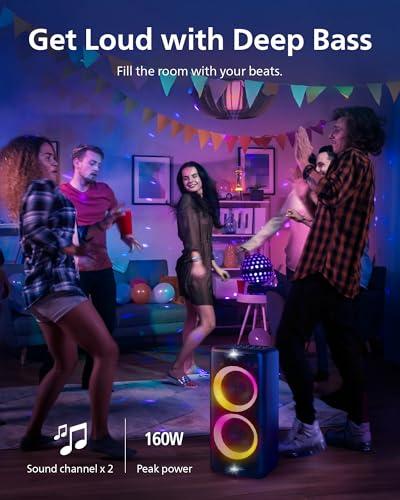
The most fundamental difference between these speakers lies in their power output specifications. The Philips TAX5206 delivers 80 watts RMS (Root Mean Square—essentially the continuous, sustainable power output) with peaks up to 160 watts maximum. The JBL PartyBox Stage 320 steps things up significantly with 240 watts RMS.
But here's where it gets interesting: watts don't tell the whole story. Think of wattage like horsepower in a car—it's important, but how that power gets delivered matters more than the raw number.
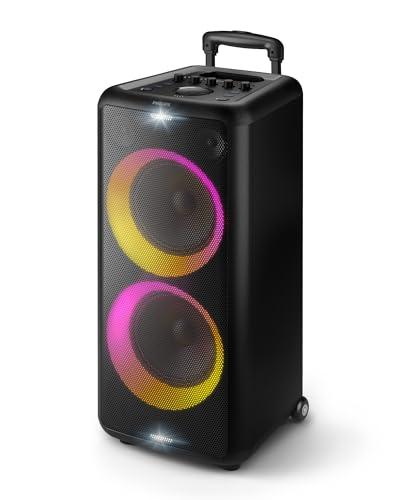
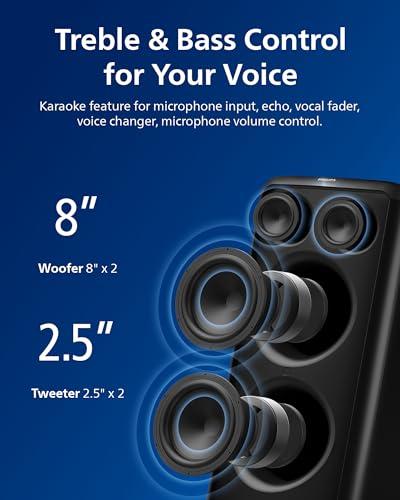
The Philips TAX5206 uses two 8-inch woofers paired with two 2.5-inch tweeters in what's called a 2-way configuration. This means the larger drivers handle bass and midrange frequencies, while the smaller tweeters focus on the crisp highs. It's a straightforward, proven approach that keeps costs down while delivering decent performance.
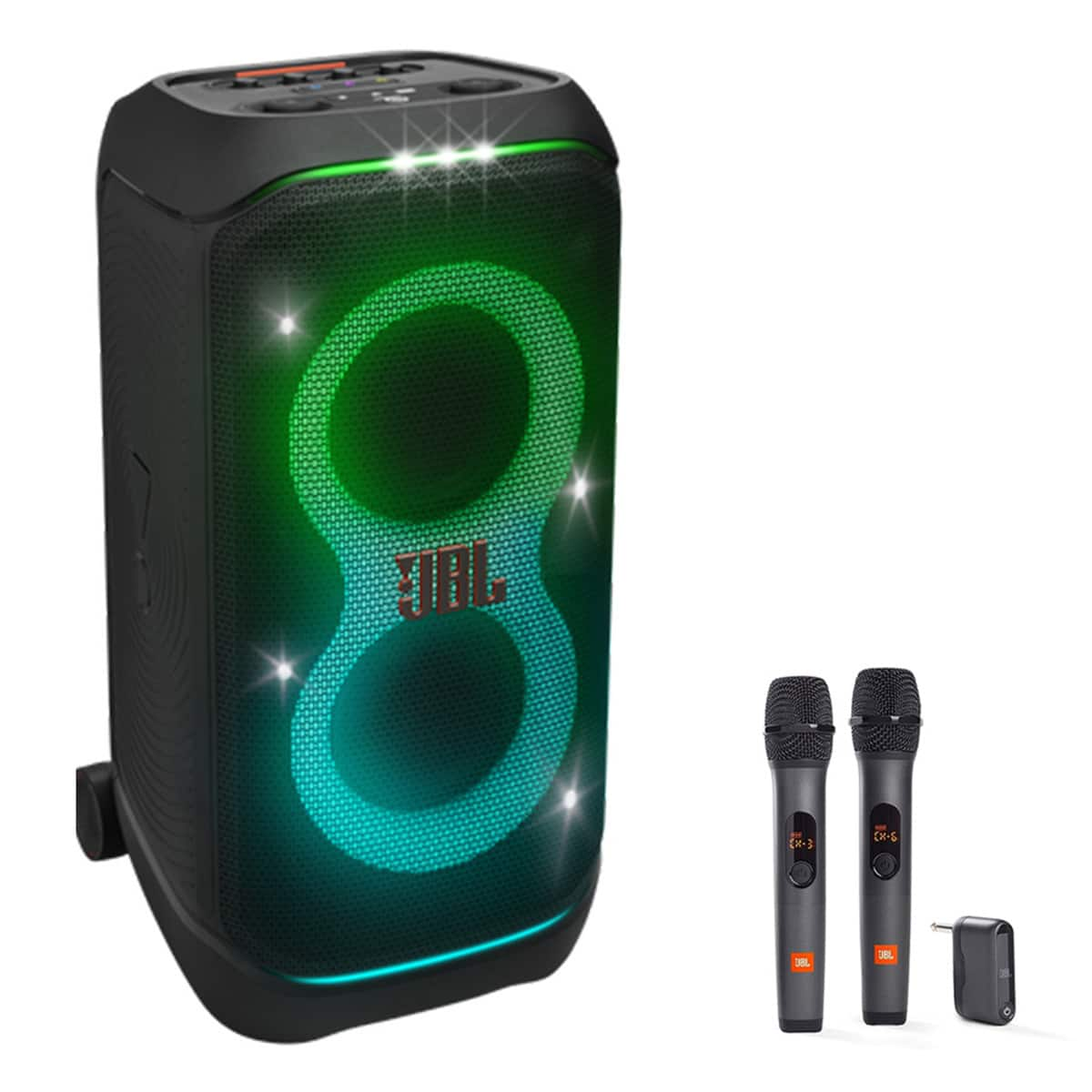
The JBL PartyBox Stage 320 takes a more sophisticated route with two 6.5-inch woofers and two 1-inch dome tweeters. While the woofers are smaller than the Philips, JBL's driver engineering and the significant power advantage more than compensate. User reports consistently describe the JBL's bass response as dramatically more impactful, with one reviewer noting the "lows hit so hard" compared to typical party speakers.
Both speakers claim to cover the full audible spectrum from 40Hz to 20kHz, but the devil's in the details. The Philips TAX5206 achieves this range at -12dB, while the JBL PartyBox Stage 320 does it at -6dB. This technical specification reveals a lot about real-world performance.
Decibels (dB) measure sound intensity on a logarithmic scale, where every 3dB represents a doubling of power. The -6dB specification means the JBL maintains much stronger output at the frequency extremes—the deep bass and crisp highs that make music engaging. The -12dB rating on the Philips suggests these frequencies are present but significantly quieter than the midrange, which can make music sound less dynamic and engaging.
Our research into user feedback backs this up. Multiple reviews of the Philips TAX5206 describe its bass as "mediocre at best" even with bass boost engaged, while the same reviewers praise its overall loudness. Conversely, JBL PartyBox Stage 320 owners consistently highlight the speaker's ability to deliver deep, controlled bass without muddiness—a hallmark of better driver engineering and more sophisticated digital signal processing.
Here's where the 2020s technology really shows. The JBL PartyBox Stage 320, released in 2023, incorporates AI Sound Boost—a real-time audio analysis system that automatically optimizes sound quality as music plays. This technology identifies potential distortion points and adjusts the audio signal to prevent them, while simultaneously enhancing bass output without overwhelming other frequencies.
Think of it like having a sound engineer constantly tweaking your audio in real-time. When the system detects that you're pushing the speaker hard with bass-heavy content, it automatically adjusts to prevent the muddy, distorted sound that ruins parties.
The Philips TAX5206, representing earlier generation party speaker technology, relies on traditional analog controls. You get physical knobs for bass and treble adjustment, which work fine but require manual tweaking as you switch between different types of music or volume levels.
Nothing kills party momentum like a dead speaker. Both units use rechargeable lithium-ion batteries, but their approaches differ significantly.
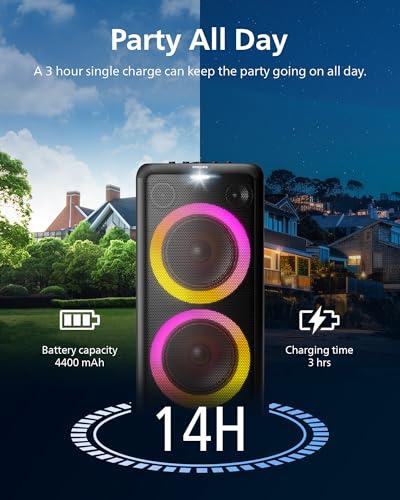
The Philips TAX5206 packs a 4400 mAh battery rated for 14 hours of continuous playback. In real-world conditions—with lighting effects active and volume at party levels—expect closer to 8-10 hours. The speaker also doubles as a power bank, letting you charge phones or tablets through its USB port, though at a modest 1A output rate.
The JBL PartyBox Stage 320 promises up to 18 hours of playback from its larger battery pack. More importantly, it features a replaceable battery system—a game-changer for serious party hosts. When one battery dies, you can swap in a fresh one and keep the music going indefinitely. User reports suggest real-world battery life of 12-15 hours at moderate volume levels, which aligns well with the advertised specs.
The JBL also includes a 10-minute quick charge feature that provides two hours of playback—perfect for those "oh no, I forgot to charge it" moments before guests arrive.
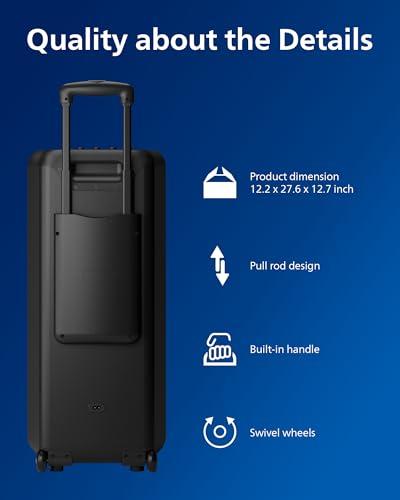
Both speakers acknowledge that party speakers need to move. The Philips TAX5206 weighs 10.52 kg (about 23 pounds) and uses a trolley design with basic wheels and a carry handle. It's manageable for short distances but can become cumbersome for longer hauls.
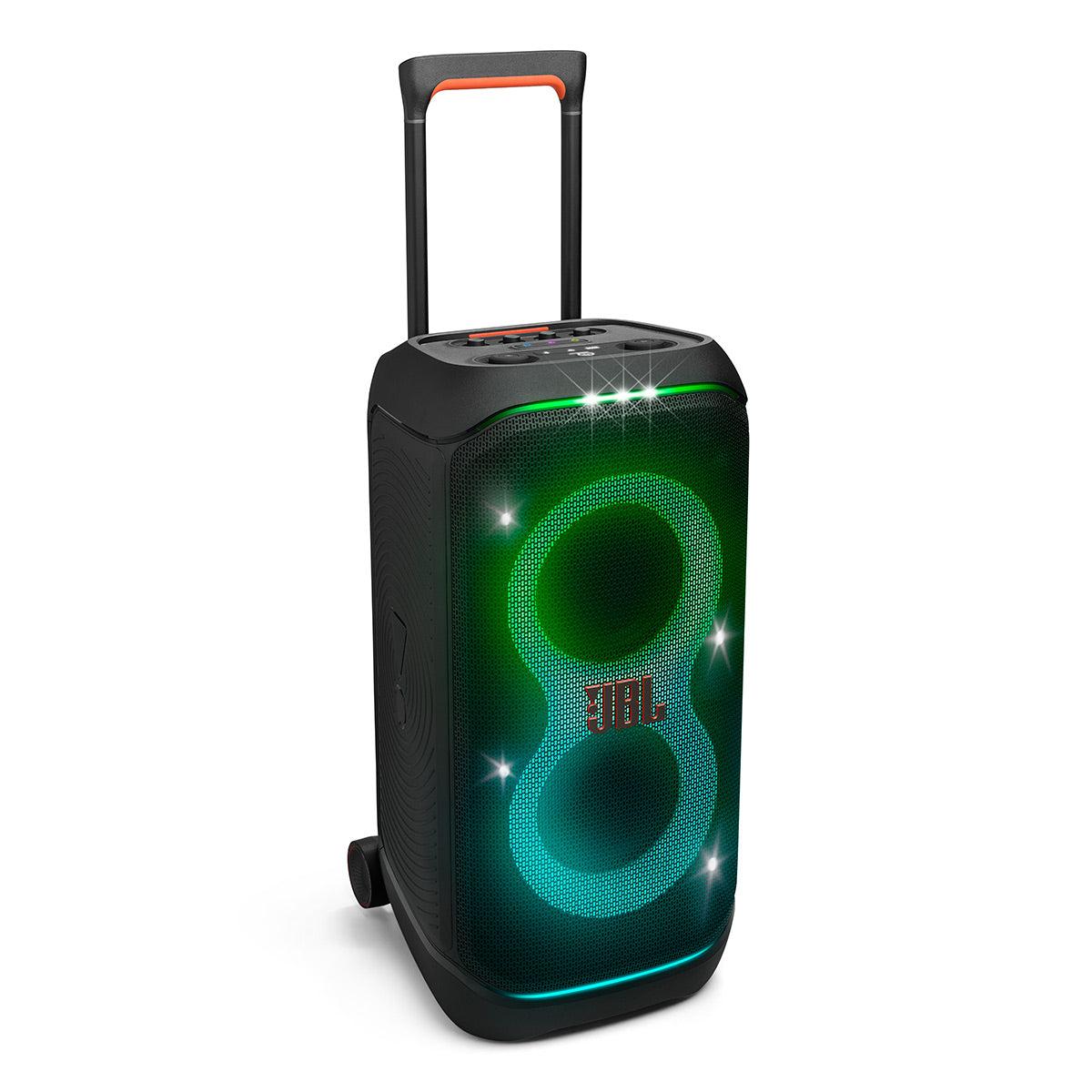
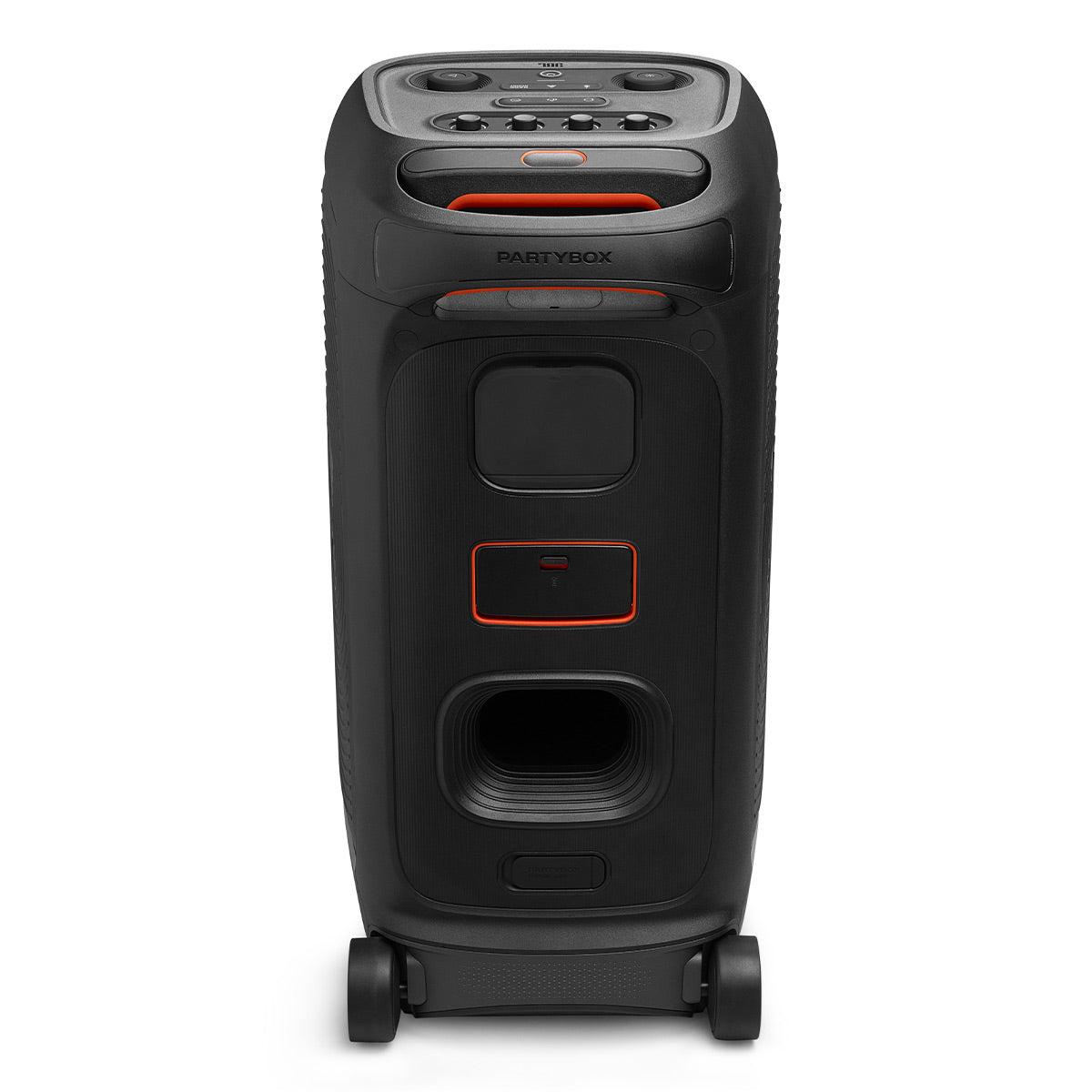
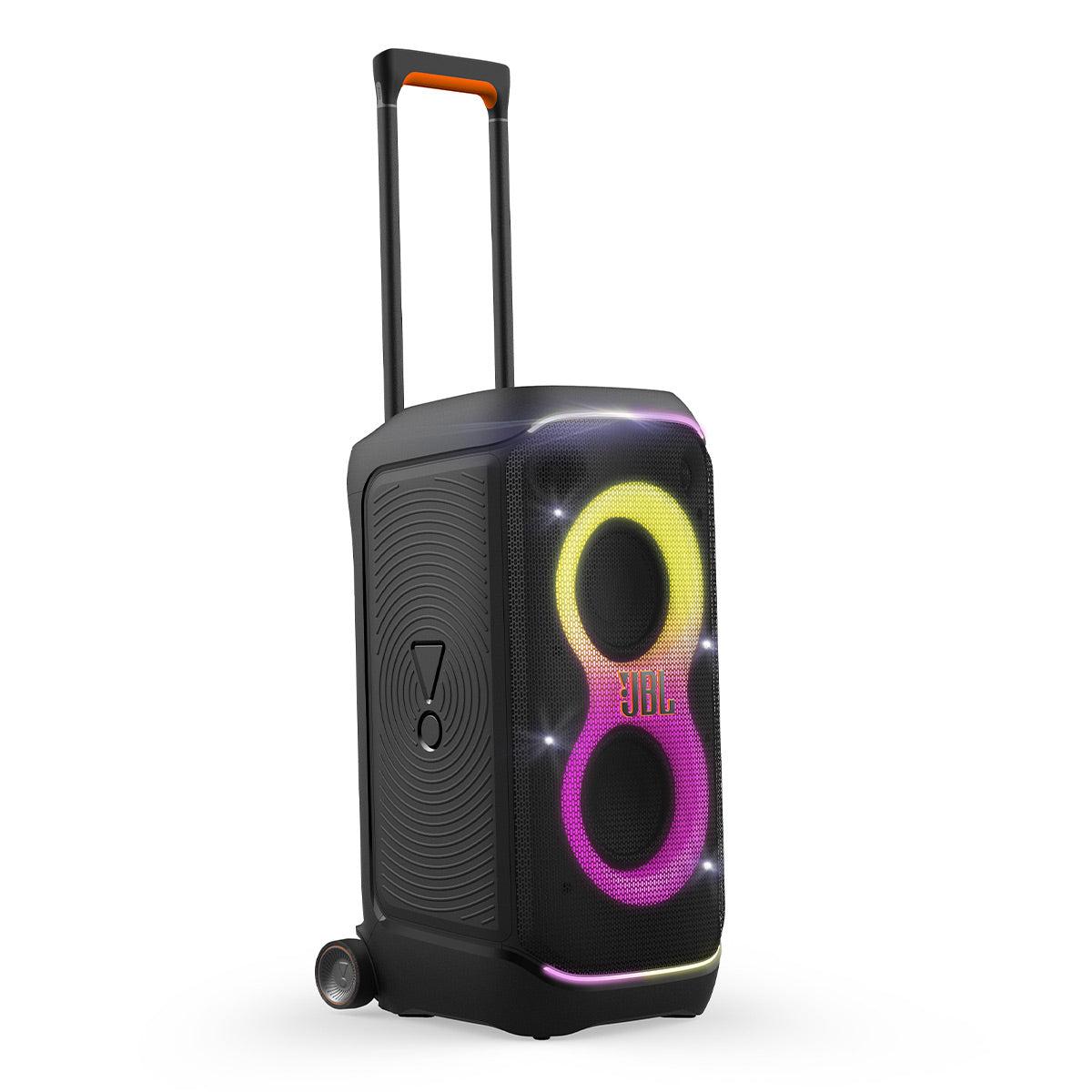
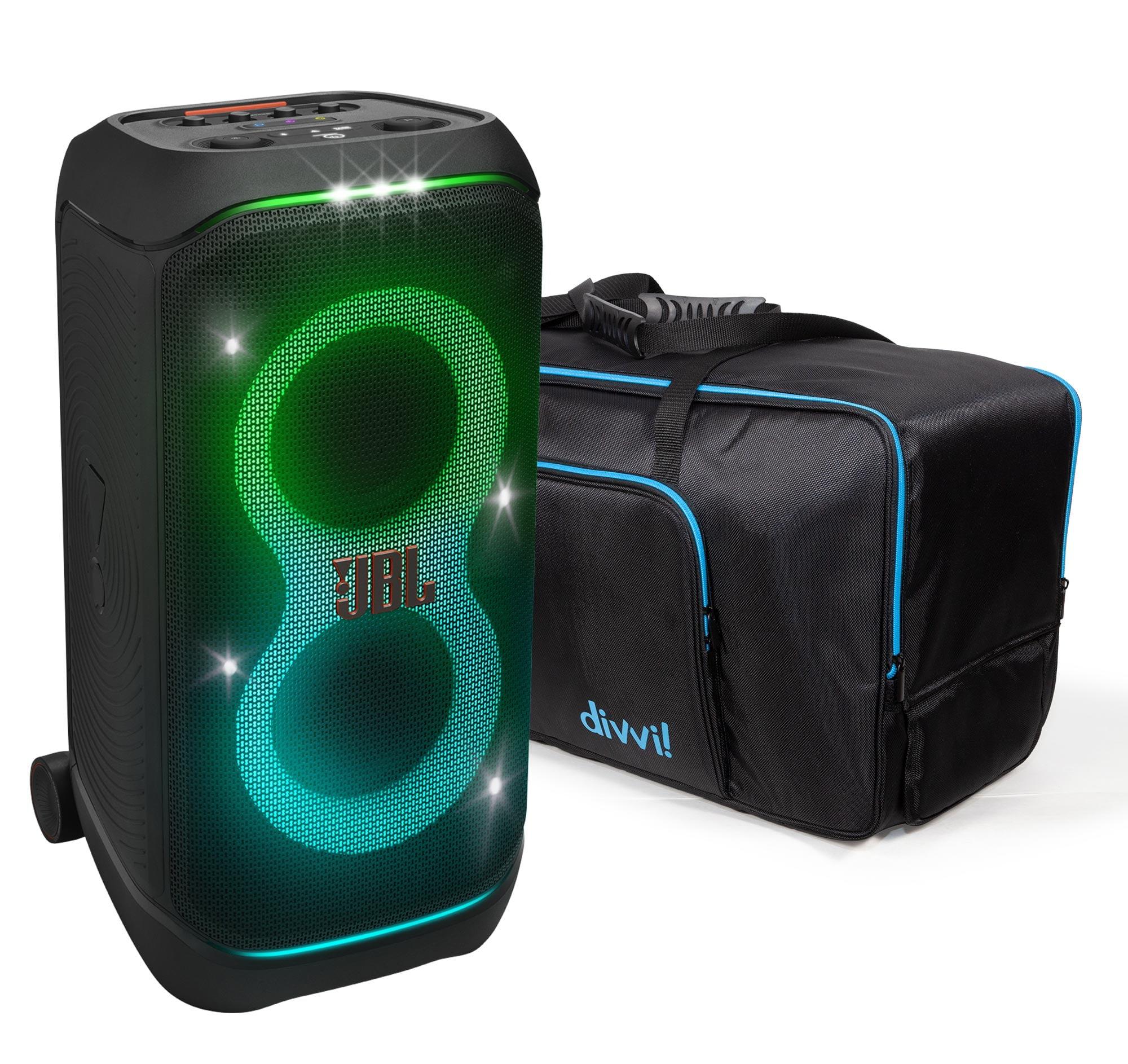
The JBL PartyBox Stage 320 weighs significantly more at 16.5 kg (36 pounds), but JBL invested heavily in mobility solutions. The telescopic handle extends to a comfortable pulling height, and the wide, sturdy wheels roll smoothly over various surfaces. Multiple users report that despite the extra weight, the JBL actually feels easier to transport thanks to its superior wheel system.
Here's where weather resistance becomes crucial: the JBL PartyBox Stage 320 carries an IPX4 rating, meaning it can handle water splashes from any direction. Pool parties, beach gatherings, and sudden rain showers won't kill your speaker. The Philips TAX5206 lacks weather protection, limiting its outdoor versatility.
Both speakers embrace the karaoke trend that's exploded since 2020, but they implement it differently.
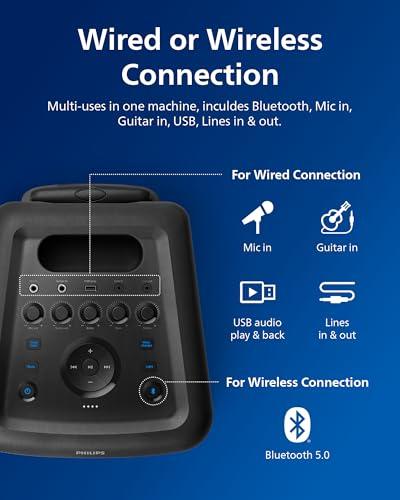
The Philips TAX5206 provides dedicated 6.3mm inputs for microphone and guitar, each with independent volume controls. The karaoke processing includes echo control, vocal fader (which reduces the original vocals in songs), and voice changer effects. It's a complete karaoke setup out of the box, requiring only microphones to get started.
The JBL PartyBox Stage 320 offers similar connectivity but with more sophisticated processing. The karaoke EQ specifically optimizes vocal frequencies, making singers sound better even with amateur microphones. The speaker also integrates seamlessly with JBL's wireless microphone systems, eliminating cable clutter for serious karaoke setups.
Party speakers aren't just about sound anymore—they're entertainment systems. Both speakers feature synchronized light shows, but the execution varies dramatically.
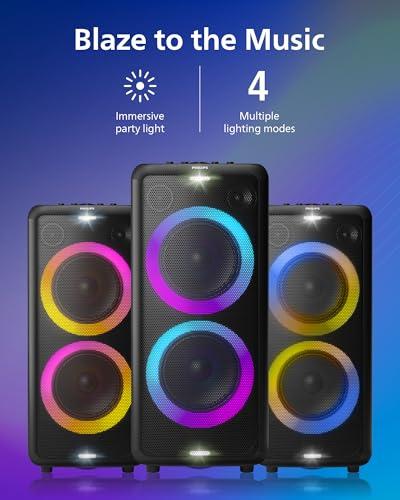
The Philips TAX5206 offers a ring of colored lights with four different modes and strobe effects. It's functional but basic, providing adequate visual interest for smaller gatherings.
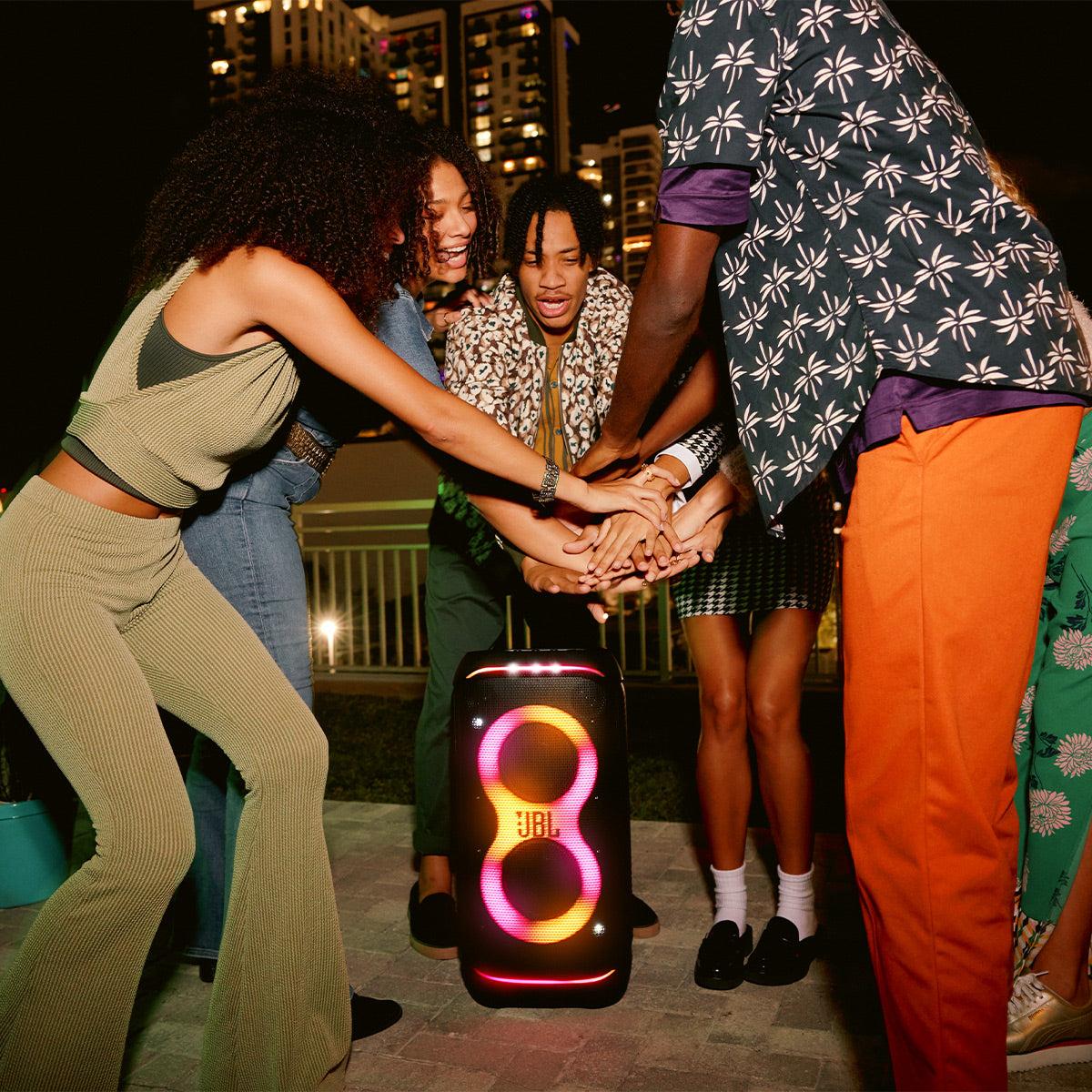
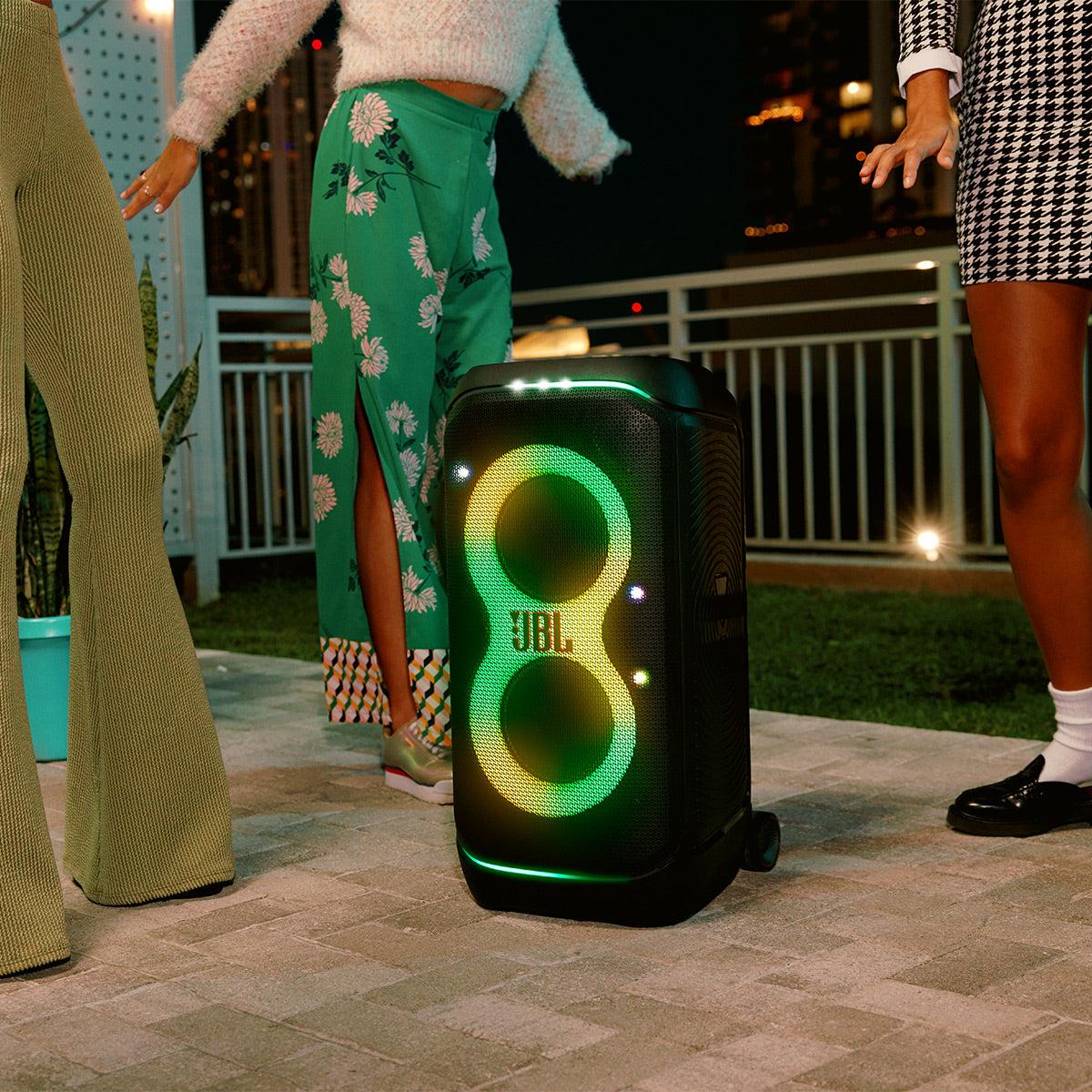
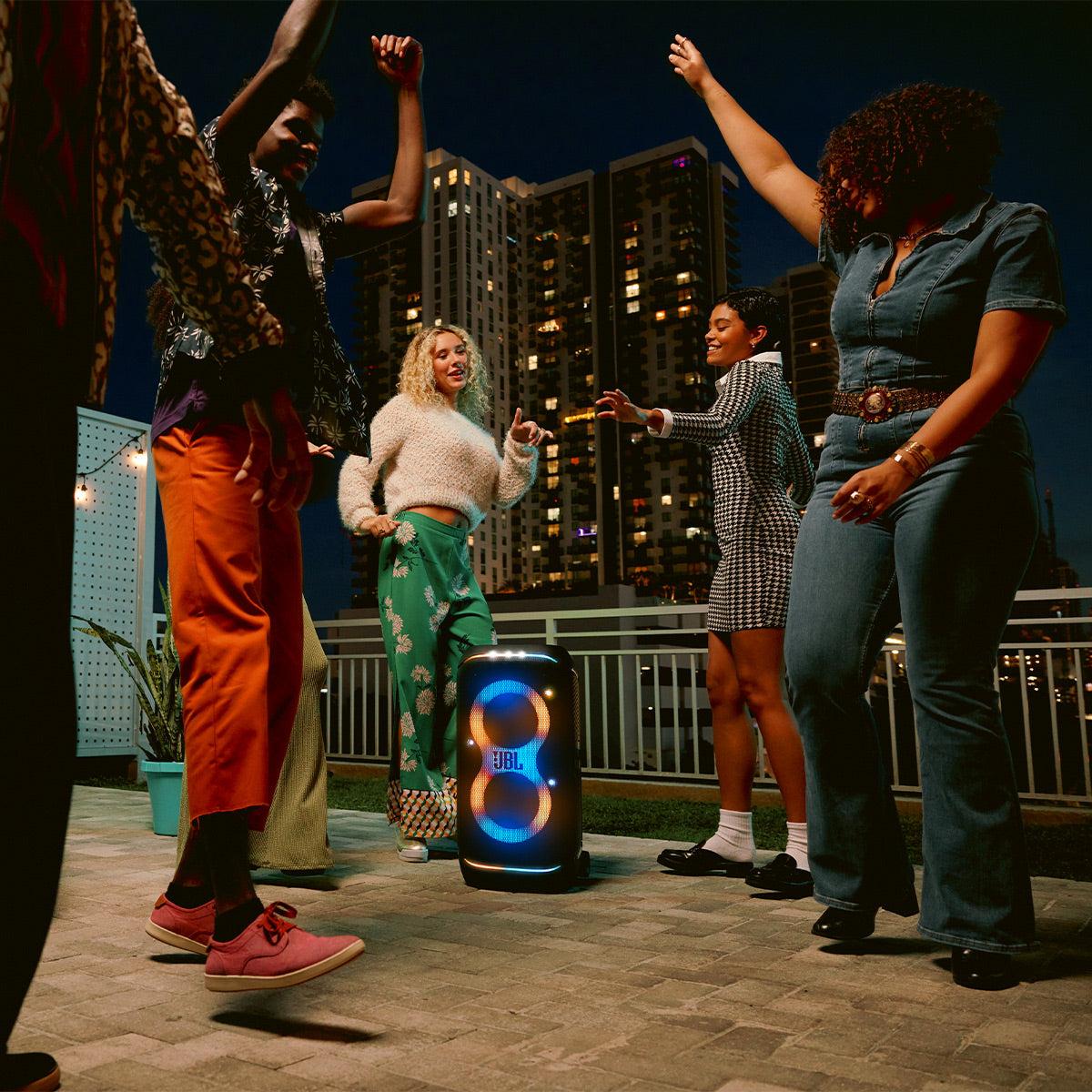
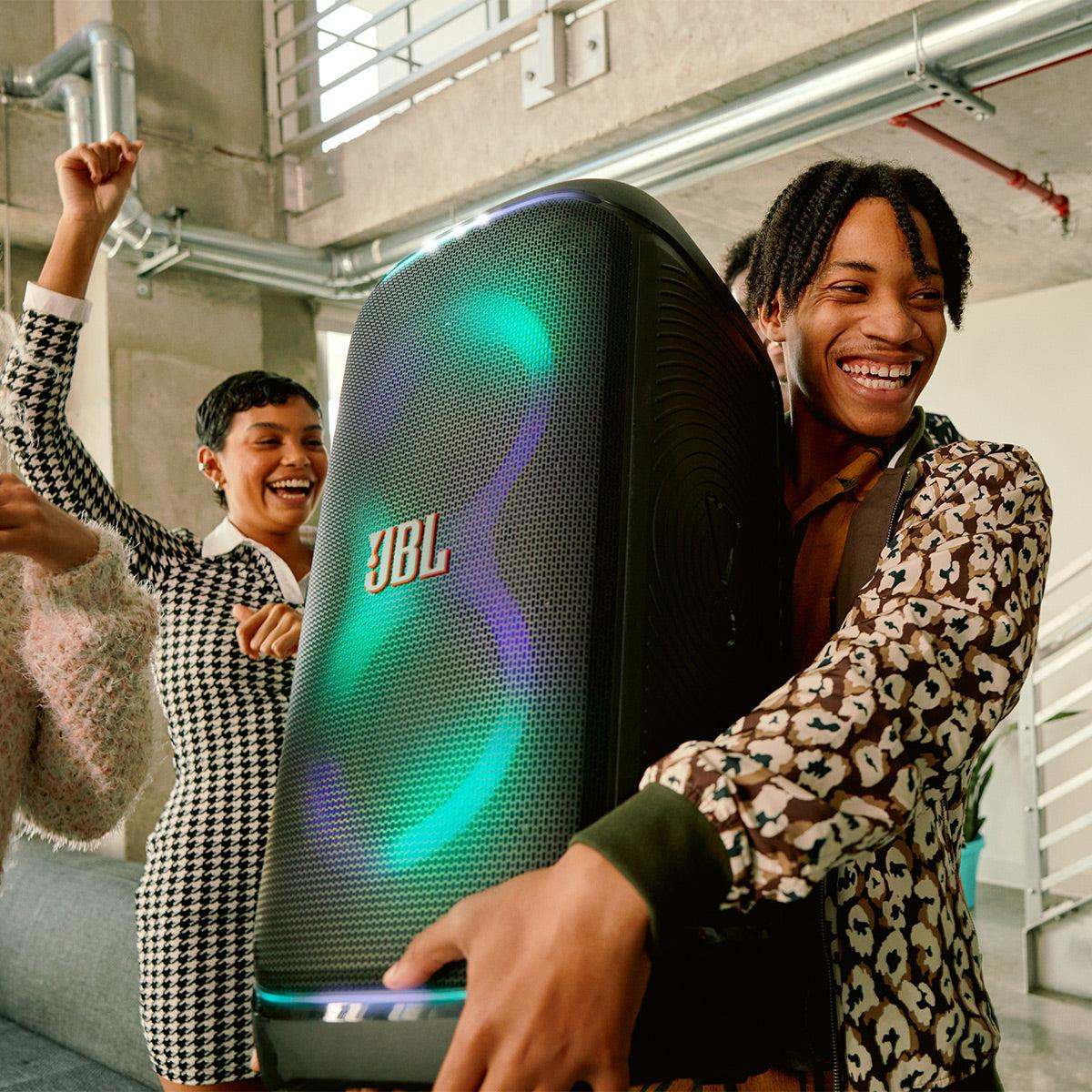
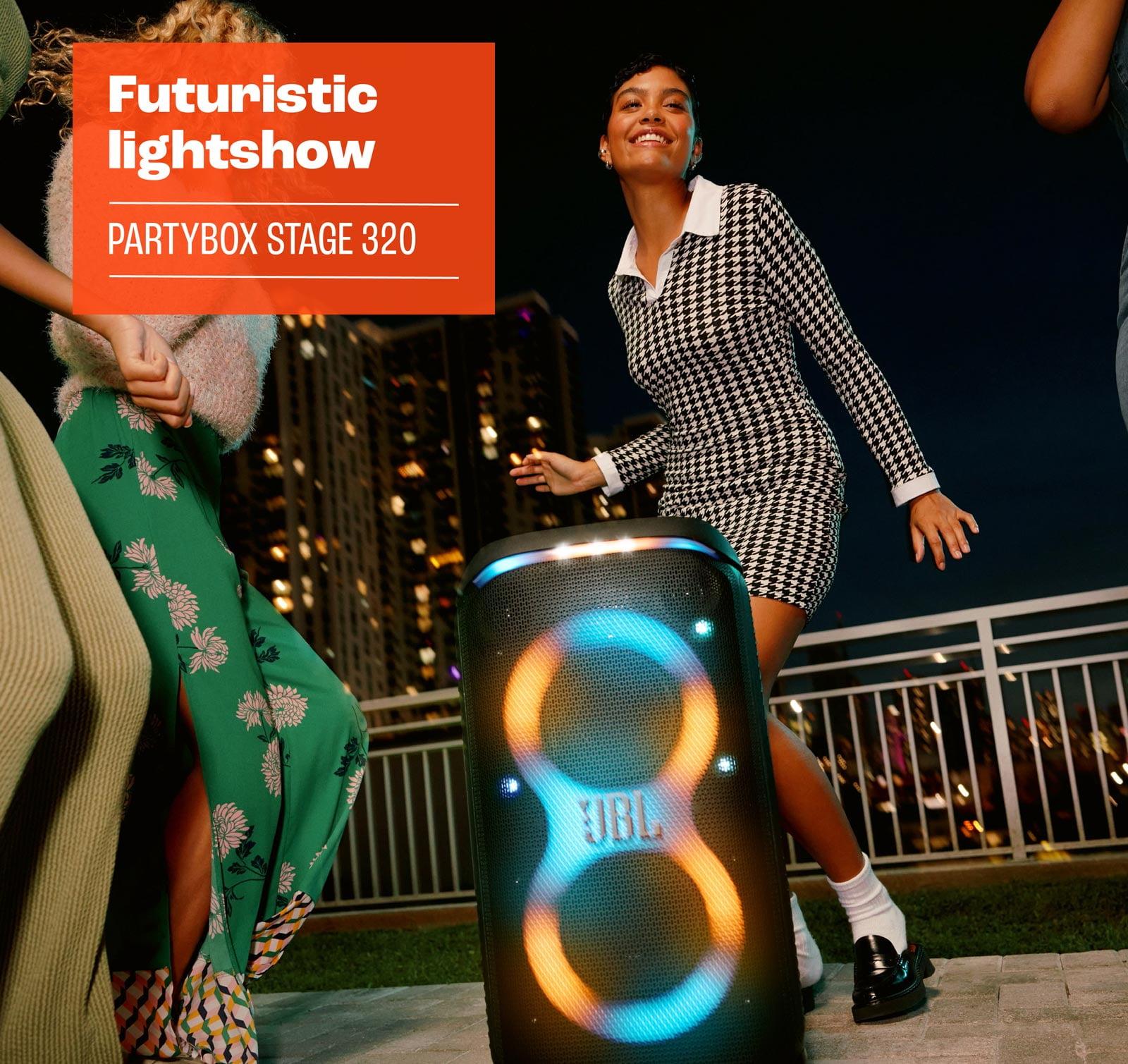
The JBL PartyBox Stage 320 treats lighting as seriously as audio. The system includes starry lights, light trails, and sophisticated strobe effects that analyze the music's rhythm and react accordingly. The JBL PartyBox app provides extensive lighting customization, letting you create custom light shows that match your music and mood.
The control philosophy reveals each speaker's target audience clearly.
The Philips TAX5206 emphasizes immediate accessibility with physical rotary knobs for all major functions. Bass, treble, microphone volume, guitar volume, and echo effects all get dedicated controls. You can make adjustments instantly without menu diving or app navigation—perfect for users who want plug-and-play simplicity.
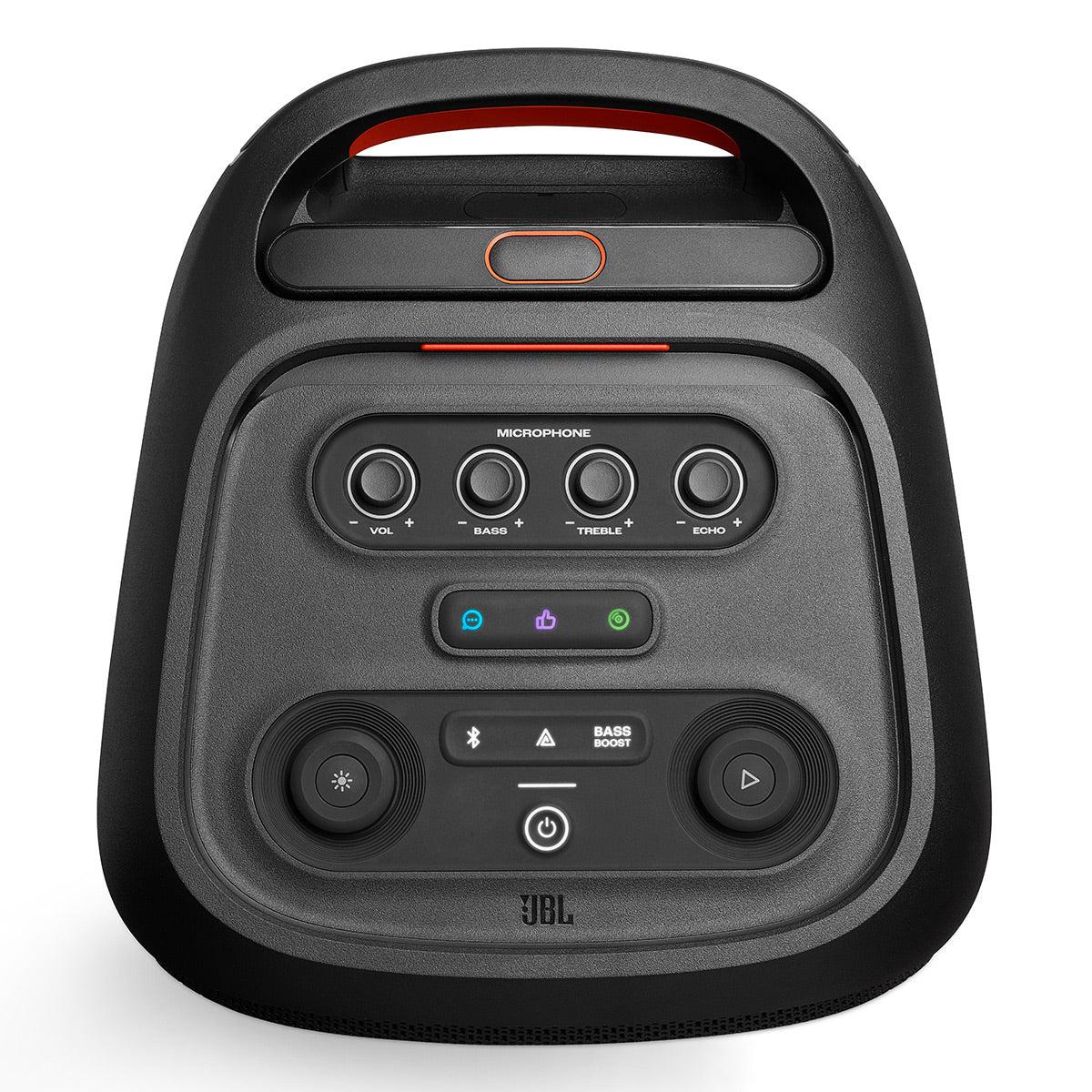
The JBL PartyBox Stage 320 offers physical controls for basic functions but unlocks its full potential through the JBL PartyBox app. The app provides a 5-band equalizer, preset sound modes, lighting control, and DJ effects. It's more complex but far more powerful for users willing to invest time in setup and customization.
Connectivity options reflect this same philosophy. Both support Bluetooth, USB playback, and aux inputs, but the JBL PartyBox Stage 320 adds Auracast technology for wireless multi-speaker setups. You can chain multiple JBL speakers wirelessly to create truly room-filling (or yard-filling) sound systems.
At the time of writing, the price difference between these speakers is substantial—the JBL PartyBox Stage 320 costs roughly three times what you'd pay for the Philips TAX5206. This creates very different value equations.
The Philips TAX5206 delivers solid party speaker functionality at an accessible price point. It provides adequate volume for small-to-medium gatherings, complete karaoke setup, reasonable battery life, and all essential party features. For budget-conscious users or those testing the waters of party speakers, it represents honest value.
The JBL PartyBox Stage 320 commands premium pricing but delivers correspondingly premium performance. The superior audio quality, weather resistance, advanced features, and replaceable battery system justify the higher cost for serious users. It's an investment in long-term entertainment infrastructure rather than a casual purchase.
While neither speaker is designed primarily for home theater use, both can serve double duty in living rooms or entertainment spaces. The Philips TAX5206's 3.5mm line-out jack allows connection to additional speakers or subwoofers, potentially integrating into existing stereo systems.
However, party speakers prioritize impact over accuracy, making them less suitable for movie dialogue or nuanced music listening. If home theater is important, consider these as secondary entertainment speakers for parties and casual listening rather than primary home cinema solutions.
Choose the Philips TAX5206 if:
Choose the JBL PartyBox Stage 320 if:
The JBL PartyBox Stage 320 represents the clear choice for serious party hosts and outdoor enthusiasts who can justify the premium. Its superior audio performance, weather resistance, and advanced features create a more complete entertainment experience.
The Philips TAX5206 serves budget-conscious users excellently, providing genuine party speaker functionality without breaking the bank. It's honest about its limitations while delivering solid performance in its price class.
Consider your typical use scenarios carefully. If you're hosting pool parties, beach gatherings, or large outdoor events, the JBL's weather resistance and superior power output become essential rather than nice-to-have features. For indoor parties and smaller outdoor gatherings, the Philips provides adequate performance at a fraction of the cost.
The technology gap between these speakers reflects the rapid advancement in party speaker design over recent years. The JBL's AI processing, advanced battery management, and sophisticated app integration represent the current state of the art, while the Philips shows how much capability you can get with more traditional approaches and careful engineering.
Ultimately, both speakers succeed in their intended roles. The question isn't which is better in absolute terms, but which better matches your specific needs, budget, and ambitions for entertaining friends and family.
| Philips TAX5206 | JBL PartyBox Stage 320 |
|---|---|
| Audio Power - Critical for filling large spaces and outdoor events | |
| 80W RMS / 160W MAX (adequate for small-medium gatherings) | 240W RMS (significantly more powerful for large events) |
| Driver Configuration - Determines sound quality and bass response | |
| 2x 8" woofers + 2x 2.5" tweeters (basic but functional) | 2x 6.5" woofers + 2x 1" dome tweeters (more refined engineering) |
| Frequency Response - Shows how well it reproduces full audio spectrum | |
| 40Hz - 20kHz (-12dB) (weaker at frequency extremes) | 40Hz - 20kHz (-6dB) (stronger bass and treble output) |
| Battery Life - Essential for outdoor events without power access | |
| 14 hours (adequate for most parties) | Up to 18 hours with replaceable battery (game-changer for extended events) |
| Weather Resistance - Important for pool parties and outdoor use | |
| No weather protection (indoor/covered use only) | IPX4 splash-proof (handles rain and pool splashes) |
| Weight and Portability - Balance between power and ease of transport | |
| 10.52kg with basic trolley wheels | 16.5kg with telescopic handle and premium wheel system |
| Audio Processing - Modern features that optimize sound quality | |
| Basic analog bass/treble controls | AI Sound Boost with real-time optimization |
| App Integration - Advanced control and customization options | |
| Physical controls only (simple but limited) | JBL PartyBox app with 5-band EQ and lighting control |
| Karaoke Features - Entertainment capabilities beyond music playback | |
| Mic/guitar inputs, echo, vocal fader, voice changer | Enhanced karaoke EQ, DJ effects, wireless mic compatibility |
| Multi-Speaker Setup - Ability to expand your sound system | |
| 3.5mm line-out for wired connections | Auracast wireless chaining with other JBL speakers |
| Charging Capability - Bonus feature for device charging | |
| USB power bank (5V/1A) | USB charge-out (5V/2.1A) with quick charge feature |
| Target Use Case - Who each speaker serves best | |
| Budget-conscious users, indoor parties, first-time buyers | Serious entertainers, outdoor events, premium performance seekers |
The JBL PartyBox Stage 320 is significantly louder with 240W RMS output compared to the Philips TAX5206's 80W RMS. For large outdoor gatherings, the JBL PartyBox Stage 320 can fill tennis court-sized areas while the Philips TAX5206 works better for smaller backyard parties.
The JBL PartyBox Stage 320 offers up to 18 hours of playback with a replaceable battery system, while the Philips TAX5206 provides 14 hours from its built-in battery. The JBL PartyBox Stage 320's replaceable battery is a major advantage for extended events.
The JBL PartyBox Stage 320 delivers superior bass performance with deeper, more controlled low-end response. Reviews consistently describe the Philips TAX5206's bass as adequate but not exceptional, while the JBL PartyBox Stage 320's bass is praised as impactful and room-filling.
Only the JBL PartyBox Stage 320 offers weather protection with its IPX4 splash-proof rating, making it suitable for pool parties and outdoor use in light rain. The Philips TAX5206 lacks weather resistance and should be kept dry.
Both speakers offer karaoke capabilities, but the JBL PartyBox Stage 320 provides more advanced features including specialized karaoke EQ and wireless microphone compatibility. The Philips TAX5206 includes basic karaoke functions like echo control and voice changer, which work well for casual use.
The Philips TAX5206 weighs 10.5kg with basic wheels, while the JBL PartyBox Stage 320 weighs 16.5kg but features a superior telescopic handle and wide wheels. Despite being heavier, users report the JBL PartyBox Stage 320 feels easier to move due to better design.
The Philips TAX5206 provides excellent value for budget-conscious buyers, offering solid party speaker features at a lower cost. The JBL PartyBox Stage 320 costs significantly more but delivers premium performance, weather resistance, and advanced features that justify the higher investment for serious users.
Both the Philips TAX5206 and JBL PartyBox Stage 320 support Bluetooth multipoint connectivity. The JBL PartyBox Stage 320 also features Auracast technology for wireless multi-speaker chaining, allowing you to connect multiple JBL units.
Neither the Philips TAX5206 nor JBL PartyBox Stage 320 is designed primarily for home theater, as party speakers prioritize impact over accuracy. However, the Philips TAX5206 includes a line-out jack for connecting to additional speakers if needed for casual home entertainment.
The JBL PartyBox Stage 320 offers a more sophisticated light show with starry lights, light trails, and app-controlled customization. The Philips TAX5206 provides basic colored lights with four modes and strobe effects, which work well for smaller gatherings.
The JBL PartyBox Stage 320 includes a 10-minute quick charge feature that provides 2 hours of playback, plus its replaceable battery system means you can swap batteries instantly. The Philips TAX5206 requires 3 hours for a full charge with no quick charge option.
The JBL PartyBox Stage 320 features AI Sound Boost technology and superior driver engineering, resulting in cleaner, more dynamic sound with better frequency response. The Philips TAX5206 provides adequate sound quality with basic analog controls, suitable for casual listening but not as refined as the JBL PartyBox Stage 320.
We've done our best to create useful and informative comparisons to help you decide what product to buy. Our research uses advanced automated methods to create this comparison and perfection is not possible - please contact us for corrections or questions. These are the sites we've researched in the creation of this article: youtube.com - documents.philips.com - cutetechgadgets.com - odpbusiness.com - usa.philips.com - hitechers.com - youtube.com - documents.philips.com - youtube.com - walmart.com - walmart.com - device.report - flipkart.com - brightstarcomp.com - youtube.com - philips.co.in - documents.philips.com - fullspecs.net - documents.philips.com - stereoguide.com - soundguys.com - rtings.com - soundguys.com - soundguys.com - rtings.com - jbl.com - youtube.com - youtube.com - youtube.com - youtube.com - rtings.com - 9to5toys.com - versus.com - cdw.com - jbl.com - projectorscreenstore.com - projectorscreen.com - ro.harmanaudio.com - jbl.co.nz - bestbuy.com - youtube.com

Privacy Policy
Terms and Conditions - Affiliate Policy
Home Security
© Copyright 2008-2026.
11816 Inwood Rd #1211, Dallas, TX 75244