

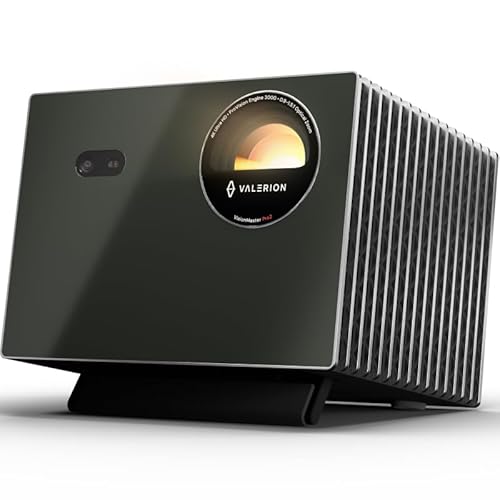

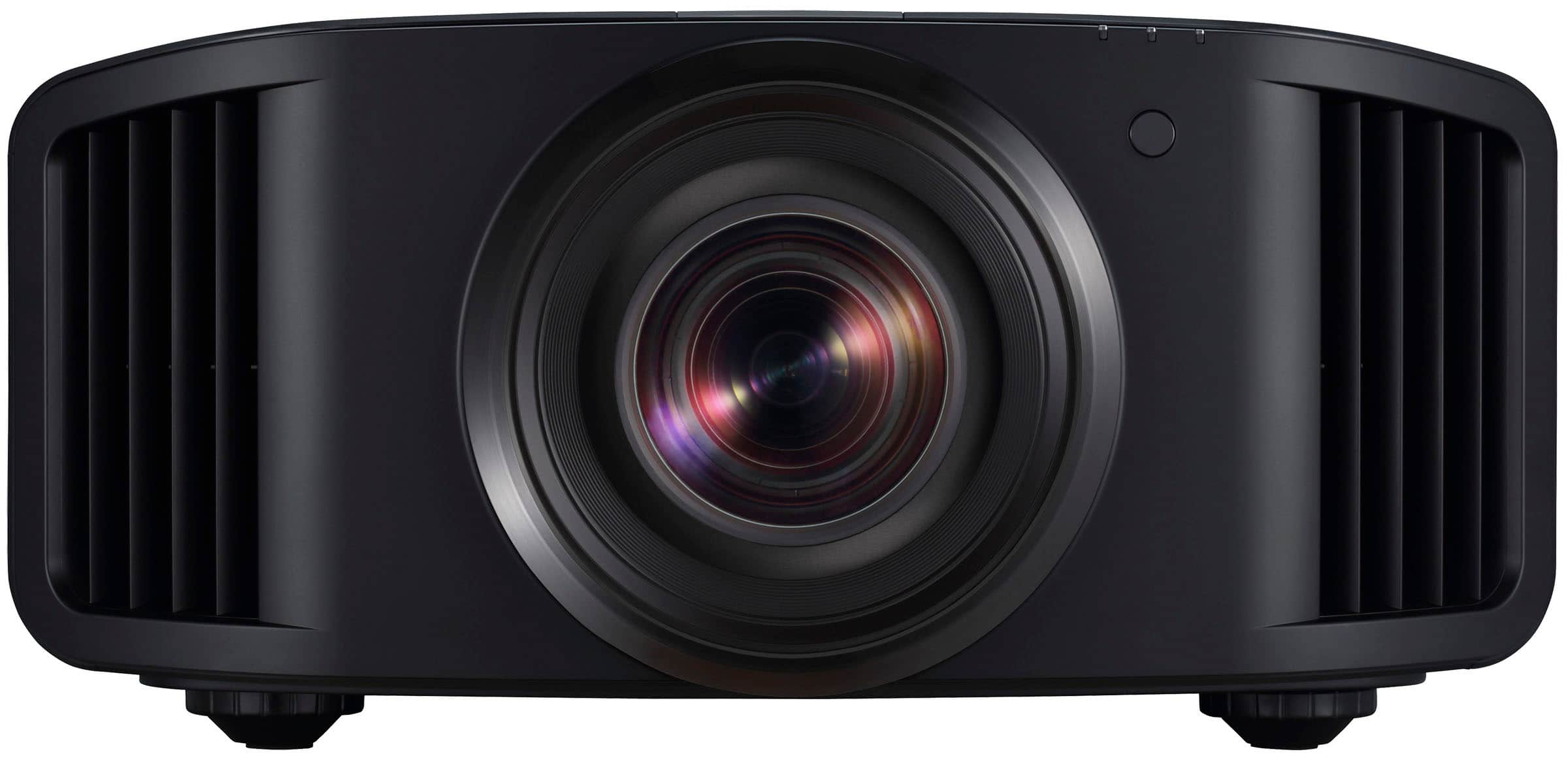
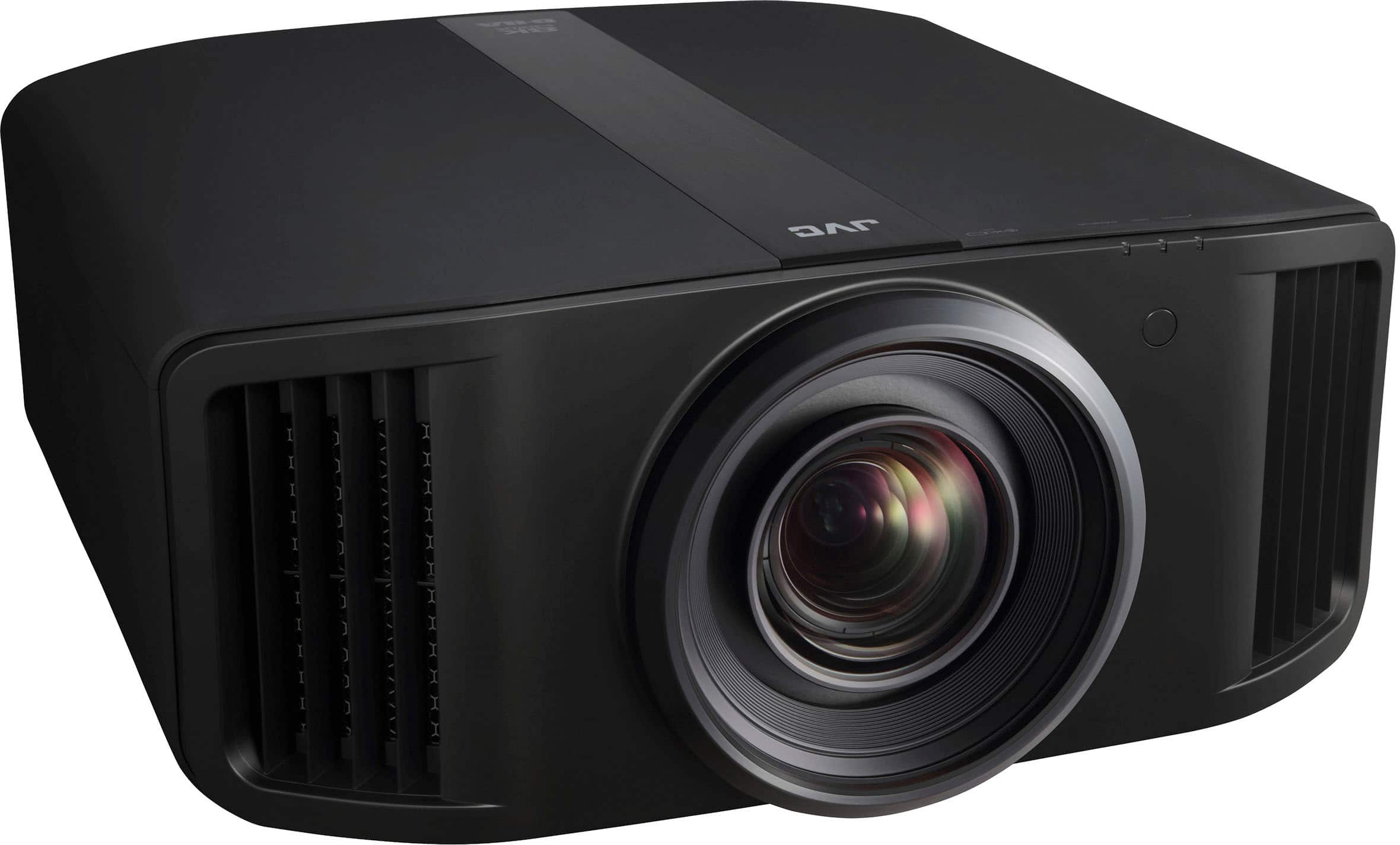
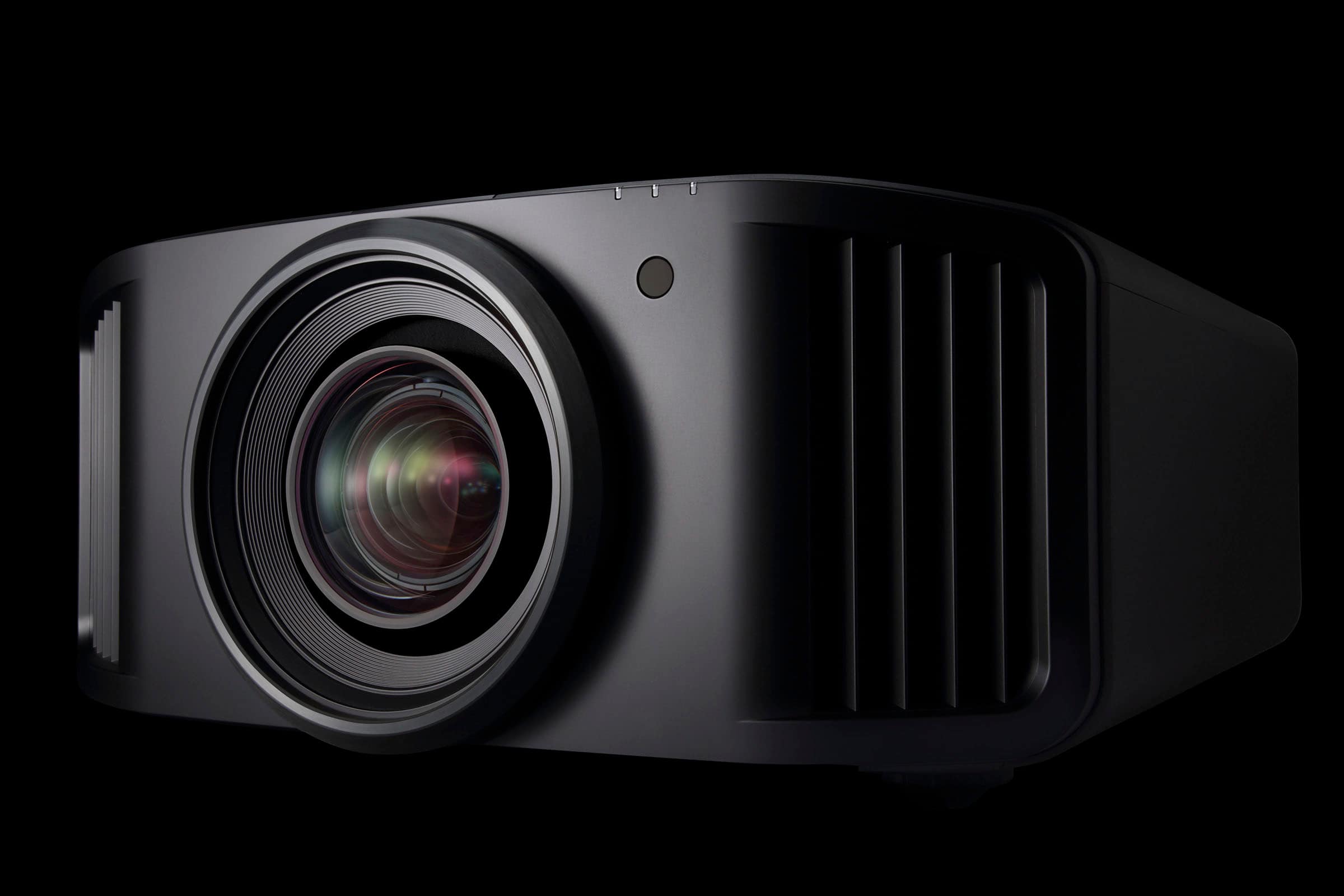
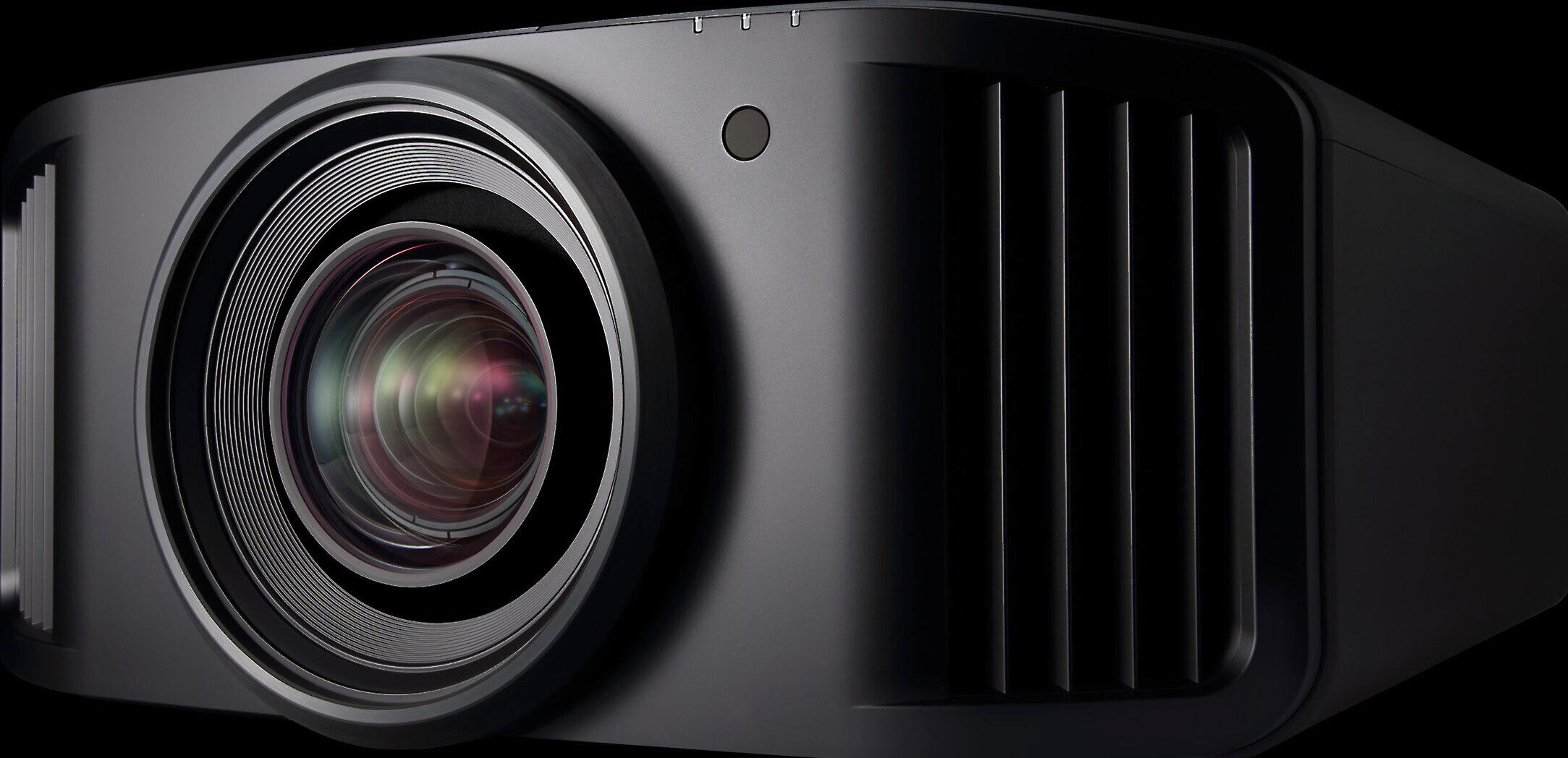
The home projector market can feel overwhelming when you're trying to decide between vastly different approaches to big-screen entertainment. At the time of writing, the Valerion VisionMaster Pro 2 represents the pinnacle of lifestyle projectors at around $3,000, while the JVC DLA-NZ900 stands as a reference cinema projector commanding nearly ten times that price. Both launched in 2024, but they couldn't be more different in their design philosophy and target audience.
Understanding these differences is crucial because choosing the wrong projector can leave you either overpaying for features you'll never use or disappointed by performance that doesn't meet your expectations. Let's dive deep into what makes each projector unique and help you make the right decision.
Before we compare these specific models, it's important to understand the fundamental technologies at play. The projector world has evolved dramatically since the early 2000s, moving from traditional lamp-based systems to laser light sources that last 20,000+ hours without replacement. This shift has enabled brighter images, wider color ranges, and virtually maintenance-free operation.
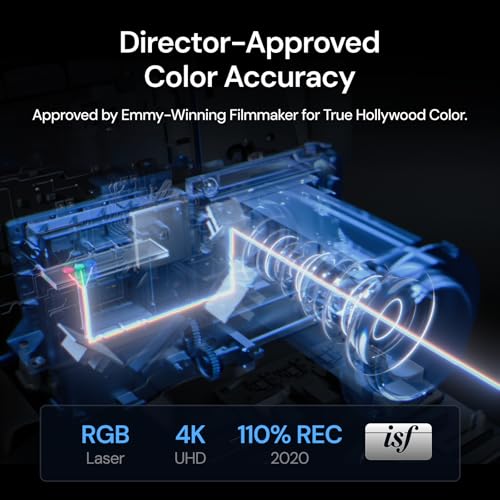
The Valerion VisionMaster Pro 2 uses single-chip DLP (Digital Light Processing) technology with an RGB triple laser system. DLP works by using millions of tiny mirrors on a chip that tilt thousands of times per second to create images. The "XPR" pixel-shifting technology essentially flashes each frame multiple times with slight pixel offsets, creating the appearance of higher resolution than the chip actually produces natively. Think of it like rapidly showing four slightly different versions of the same picture so fast your brain blends them into one super-detailed image.
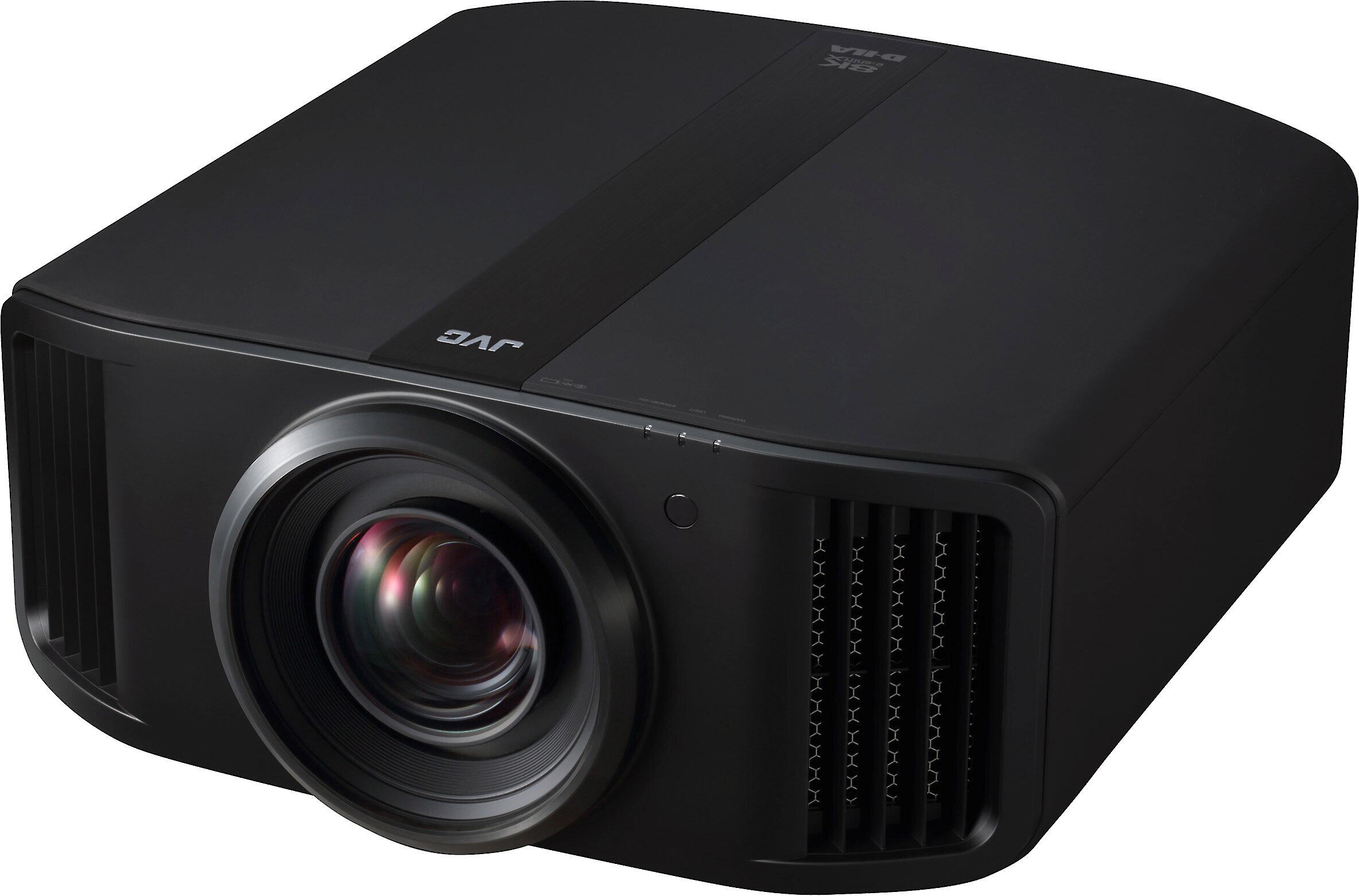
The JVC DLA-NZ900, meanwhile, employs three-chip D-ILA technology (JVC's version of LCoS - Liquid Crystal on Silicon). Instead of moving mirrors, LCoS uses liquid crystals over a reflective surface to modulate light. Having three separate panels - one each for red, green, and blue - eliminates the need for color wheels or sequential color processing, which can cause rainbow artifacts that some viewers notice with single-chip projectors.
The resolution story between these projectors is more complex than the marketing numbers suggest. The Valerion VisionMaster Pro 2 achieves 4K resolution through pixel-shifting from native 1920x1080 panels. This XPR technology has improved significantly since its introduction around 2016, and modern implementations like this one produce genuinely sharp 4K images that most viewers can't distinguish from native 4K at normal viewing distances.
However, the JVC DLA-NZ900 takes this concept further with its 8K e-shiftX technology. Starting with native 4K panels (each with 4,096 x 2,160 pixels), JVC's system shifts pixels in four directions to create an 8K image with 8,192 x 4,320 resolution. The difference becomes apparent on very large screens - above 150 inches - where the additional detail processing creates noticeably smoother textures and finer detail rendering.
From our research into professional calibrations and user experiences, the JVC's advantage in resolution becomes most apparent with high-quality 4K source material on screens larger than 200 inches. For typical home setups with 100-120 inch screens, the Valerion's pixel-shifted 4K provides excellent sharpness that satisfies most viewers.
This is where the fundamental difference between these projectors becomes crystal clear. Contrast ratio - the difference between the brightest whites and darkest blacks a projector can produce - defines the cinematic quality of the image more than any other specification.
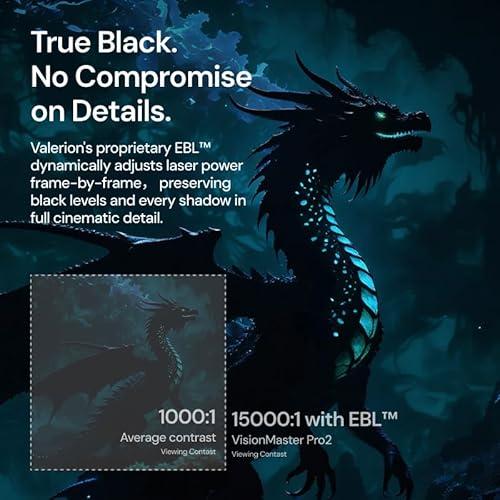
The Valerion VisionMaster Pro 2 achieves a respectable 4,000:1 native contrast ratio, enhanced to 15,000:1 through dynamic laser dimming. For a lifestyle projector, this performs well in rooms with some ambient light and delivers punchy, vibrant images that work great for gaming, sports, and colorful movies.
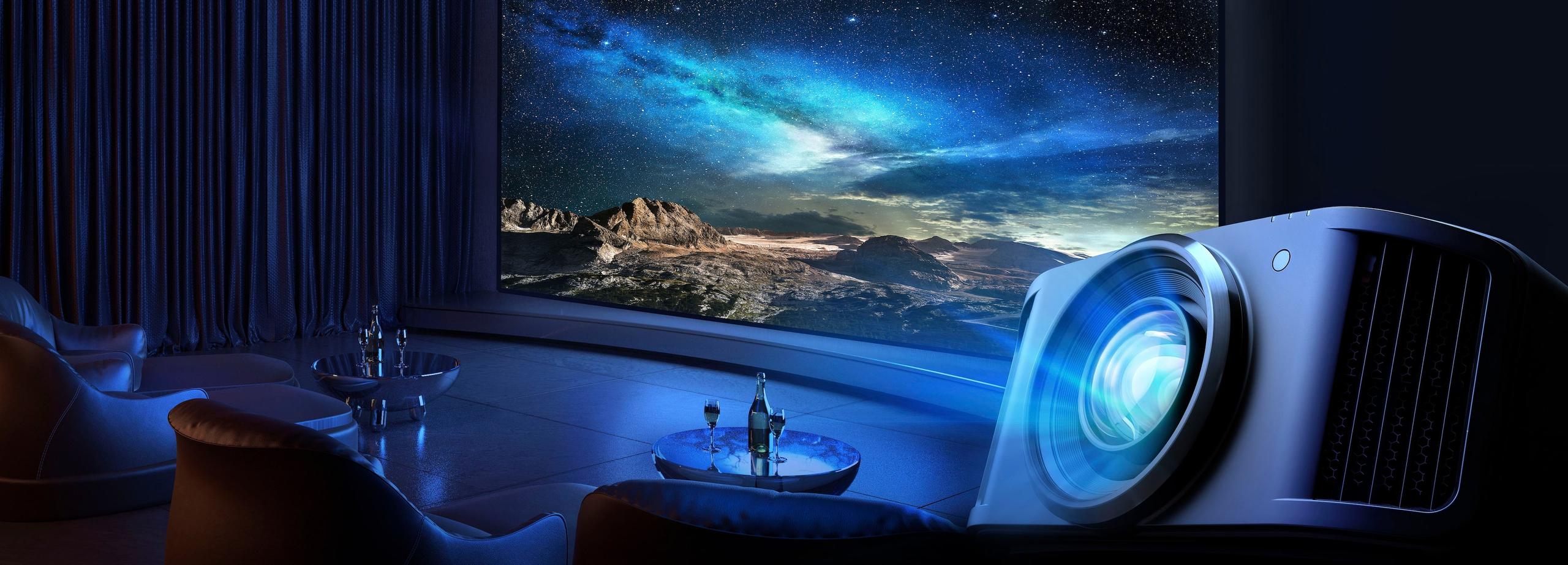
The JVC DLA-NZ900 delivers a staggering 150,000:1 native contrast ratio - nearly 40 times better. This isn't just a numbers game; it translates to blacks so deep they virtually disappear in a dark room, creating that "looking through a window" effect that defines reference-quality home cinema. When watching a space scene, stars pop against truly black backgrounds rather than the slight gray glow you get from lesser projectors.
This contrast advantage comes from the fundamental physics of the imaging technologies. Single-chip DLP projectors like the Valerion must create all colors sequentially, which inherently limits how deep blacks can get. The JVC's three-chip design with individual light modulation per color allows each panel to achieve perfect black levels independently.
Color reproduction reveals another philosophical difference. The Valerion VisionMaster Pro 2 covers an extraordinary 110% of the Rec.2020 color space - the future standard for ultra-high-definition content. This creates incredibly vibrant, saturated colors that look spectacular with gaming, animated content, and HDR movies. The RGB laser system produces colors that practically leap off the screen.
The JVC DLA-NZ900 takes a different approach, focusing on accuracy over saturation. It covers over 100% of the DCI-P3 color gamut - the digital cinema standard used in movie theaters. Combined with professional ISF calibration capabilities and JVC's Cinema Filter, it reproduces colors exactly as filmmakers intended them. The difference is subtle but important: the Valerion makes everything look more exciting, while the JVC makes everything look more authentic.
For home theater purists, color accuracy matters more than excitement. But for mixed-use entertainment, the Valerion's vibrant presentation often looks more impressive, especially in rooms with ambient light where perfect black levels aren't achievable anyway.
Gaming performance has become crucial as 4K gaming consoles and high-refresh-rate PC gaming have gone mainstream. Input lag - the delay between pressing a button and seeing the action on screen - can make or break the gaming experience.
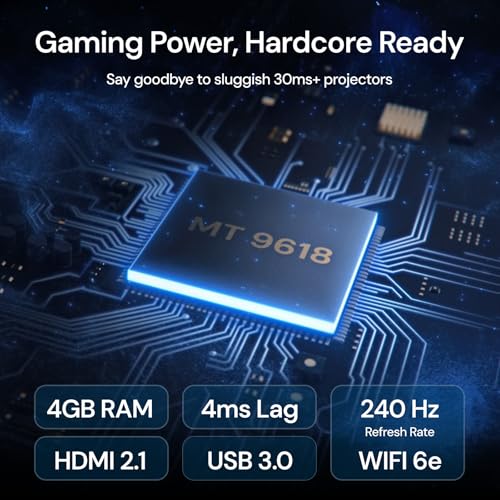
The Valerion VisionMaster Pro 2 was clearly designed with gaming as a priority. Its 4ms input lag at 1080p/240Hz rivals dedicated gaming monitors, while its 15ms lag at 4K/60Hz remains competitive with the best gaming TVs. This performance comes from dedicated gaming modes that bypass most image processing, plus HDMI 2.1 inputs that support variable refresh rates and auto low-latency mode switching.
The JVC DLA-NZ900, conversely, shows its cinema-focused heritage with 38ms input lag at 4K/60Hz. While it includes a low-latency mode, the projector's extensive image processing for optimal picture quality inherently creates delay. For cinematic gaming or turn-based strategy games, this might be acceptable, but competitive online gaming becomes frustrating.
From evaluating user feedback across gaming forums, the Valerion consistently gets praise from gamers for its responsive feel, while the JVC receives complaints about noticeable lag in fast-paced games. If gaming is even 25% of your usage, the Valerion becomes the clear choice.
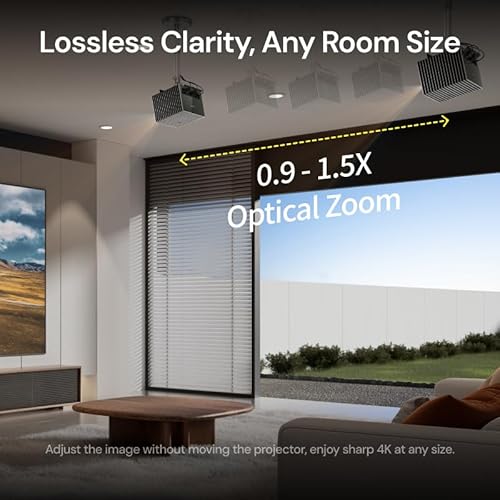
The installation experience differs dramatically between these approaches. The Valerion VisionMaster Pro 2 emphasizes convenience with features like auto-focus, automatic keystone correction, and obstacle avoidance. At just over 15 pounds, it's easily portable and can work on a coffee table for movie nights or be ceiling-mounted for permanent installation. Its short throw capability (0.9-1.5:1 ratio) means you can get a 100-inch image from just 8-12 feet away.
However, the Valerion lacks lens shift - the ability to move the image position without physically moving the projector. This means precise placement becomes critical to avoid using keystone correction, which can reduce image quality.
The JVC DLA-NZ900 requires more planning but offers ultimate flexibility once installed. At nearly 56 pounds, it demands robust ceiling mounting and professional installation. But its motorized 2x zoom lens and extensive lens shift (±100% vertical, ±43% horizontal) provide enormous placement flexibility. You can mount it almost anywhere in a room and still achieve perfect image alignment.
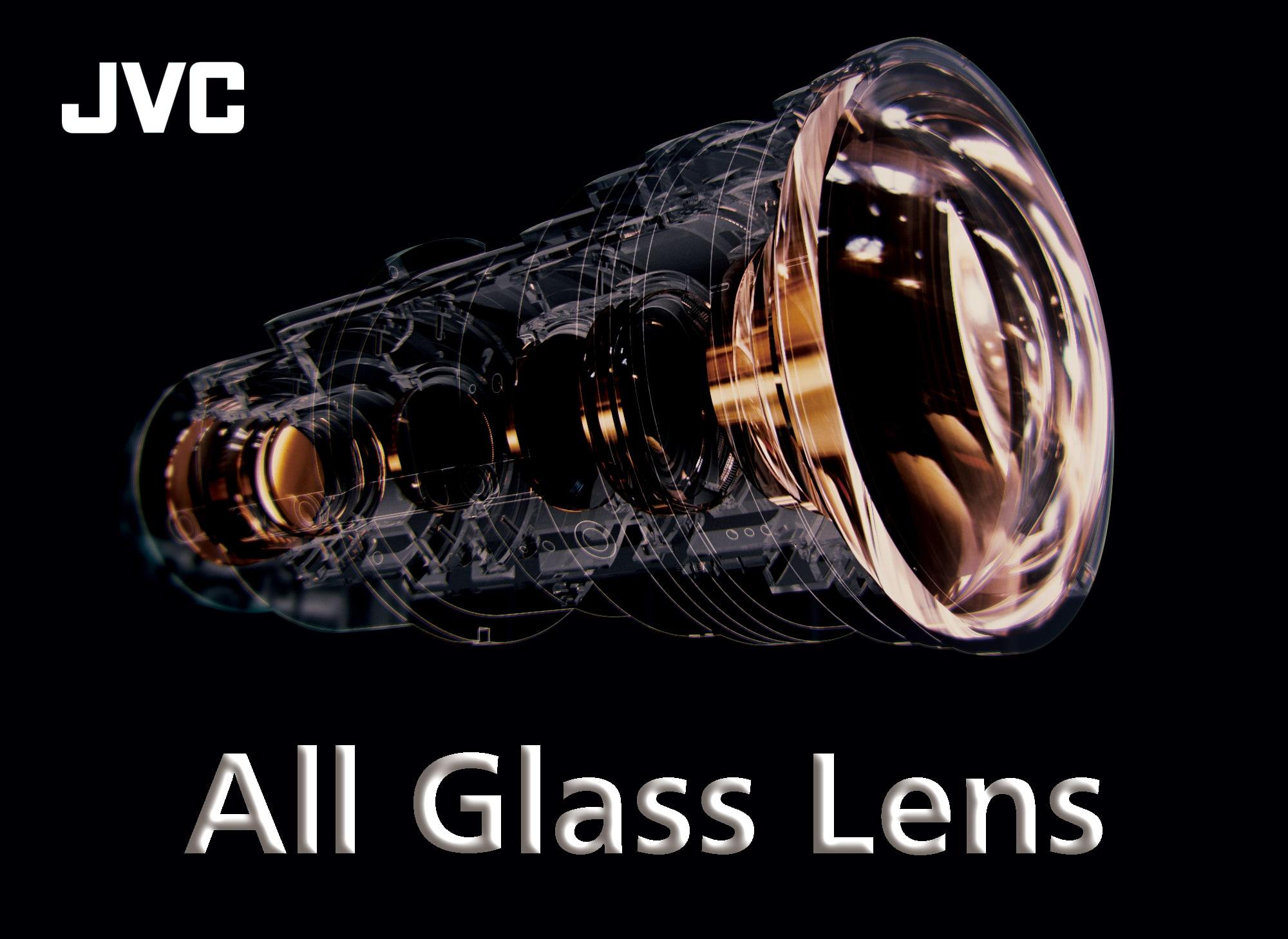
The JVC's 18-element, all-glass lens system represents a significant engineering achievement. Most projectors use plastic elements to save cost and weight, but glass provides superior optical performance - especially important when filling 200+ inch screens where any optical imperfections become magnified.
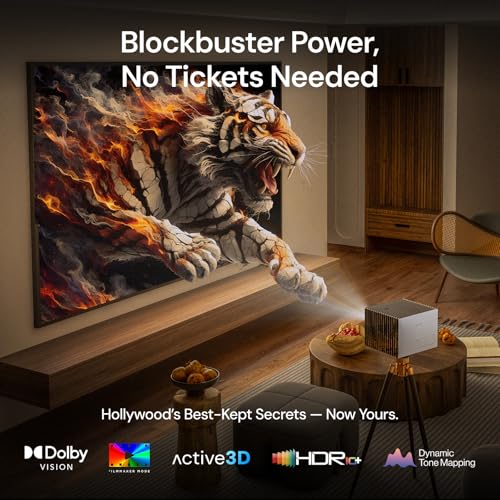
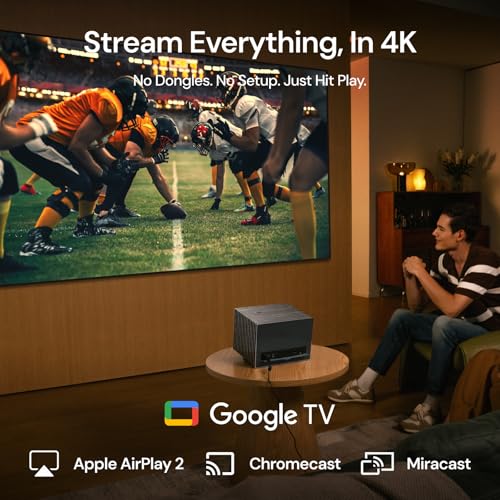
Modern projector buyers increasingly expect smart features, and this represents another clear differentiation. The Valerion VisionMaster Pro 2 runs Google TV with built-in Netflix, YouTube, Prime Video, Disney+, and other major streaming apps. Its Wi-Fi 6E connectivity ensures smooth 4K streaming, while integrated 12-watt DTS-X speakers provide adequate audio for casual viewing.
This all-in-one approach means you can literally unbox the Valerion, plug it in, and start streaming within minutes. The voice remote works with Google Assistant, and the projector integrates with smart home systems like Alexa and Apple HomeKit.
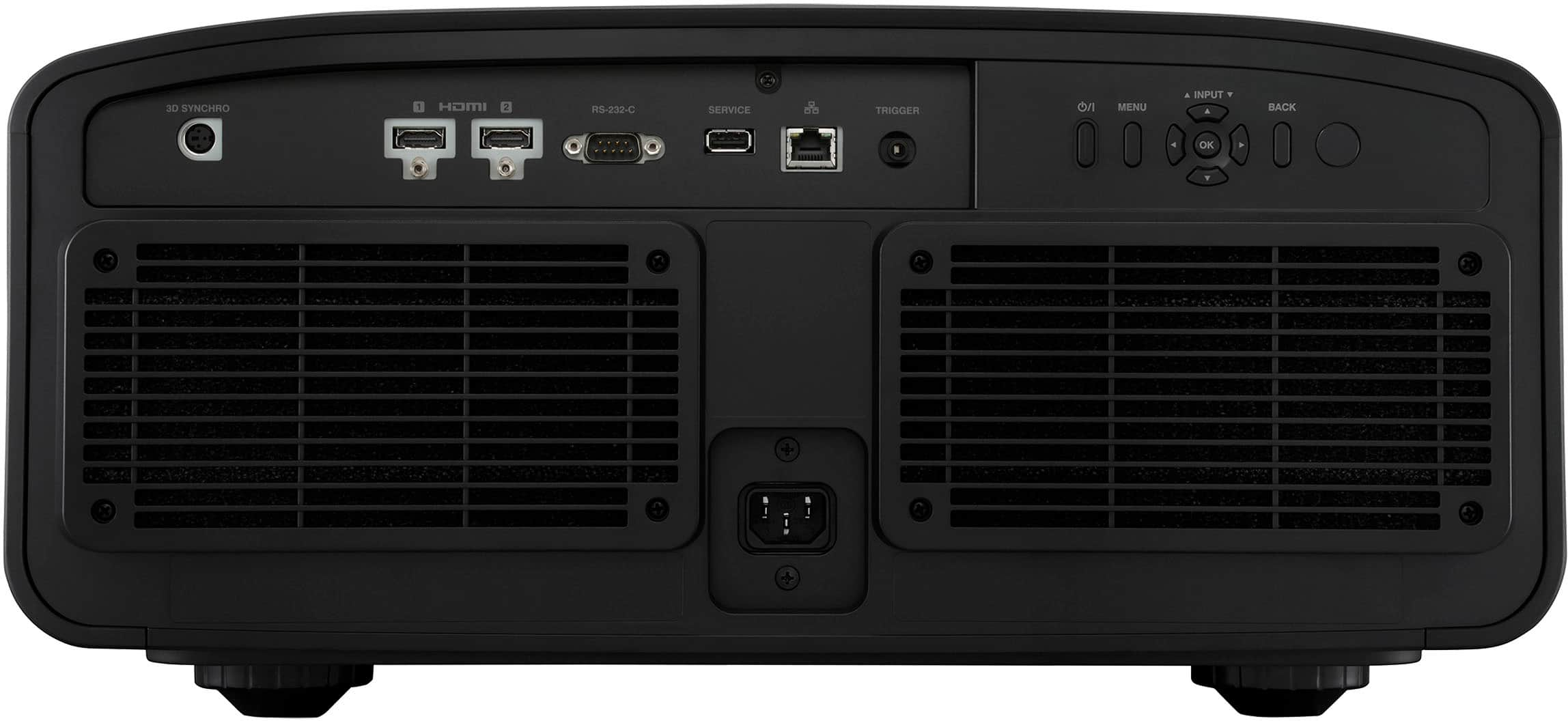
The JVC DLA-NZ900 includes no smart features whatsoever - no apps, no speakers, no wireless streaming. This might seem like a limitation, but it reflects the different target market. Serious home theater enthusiasts typically prefer separate, upgradeable components: a dedicated media player like an Apple TV 4K or NVIDIA Shield, a proper AV receiver with room correction, and quality speakers or a full surround sound system.
This component approach costs more initially but provides better long-term flexibility. When new streaming standards emerge or audio formats evolve, you upgrade individual components rather than replacing the entire projector.
At the time of writing, the value comparison seems almost unfair - the Valerion VisionMaster Pro 2 costs roughly one-tenth the price of the JVC DLA-NZ900. But value isn't just about initial cost; it's about getting the performance you need for your specific situation.
The Valerion delivers exceptional value for mixed-use entertainment. You get genuine 4K resolution, excellent gaming performance, smart features, and adequate brightness for most room conditions. When you factor in the integrated streaming and audio capabilities, the total system cost stays remarkably low.
The JVC provides value of a different sort - it delivers reference-quality performance that would cost significantly more from other manufacturers. Professional cinema projectors with similar contrast and color accuracy often cost $40,000 or more. For dedicated home theater enthusiasts with appropriate rooms and budgets, the performance per dollar can actually be quite reasonable.
However, the JVC's value proposition breaks down quickly if you don't use it appropriately. Installing it in a bright room, pairing it with a mediocre screen, or using it primarily for gaming wastes its capabilities while exposing its weaknesses.
You want a versatile entertainment solution that excels at multiple tasks. This projector makes sense for families, gamers, or anyone using shared living spaces. Its combination of gaming performance, smart features, and good image quality covers most entertainment needs without requiring additional components or professional installation.
The Valerion particularly excels in scenarios where convenience and flexibility matter more than ultimate performance. If you're setting up in a living room, basement, or anywhere ambient light control is limited, its bright, vibrant presentation will look more impressive than a contrast-optimized projector struggling in sub-optimal conditions.
You're building a dedicated home theater where image quality is paramount. This projector demands an appropriate environment - a light-controlled room, quality screen, and professional installation - but rewards that investment with truly cinematic performance.
The JVC makes sense for serious movie enthusiasts who prioritize accuracy over convenience, have large projection surfaces (150+ inches), and can afford the total system cost including professional setup, calibration, and supporting components.
The choice between these projectors ultimately comes down to priorities and circumstances rather than simple performance comparisons. The Valerion VisionMaster Pro 2 offers remarkable versatility and value, delivering 80% of a high-end cinema experience while excelling at gaming and smart features for a fraction of the cost.
The JVC DLA-NZ900 provides uncompromising reference quality that justifies its premium price only in dedicated theater environments where its capabilities can be fully realized.
Consider your primary use cases, room conditions, and budget not just for the projector but for the entire system. Both represent excellent engineering achievements in their respective categories - the key is matching the right tool to your specific needs and expectations.
The projector market continues evolving rapidly, with laser light sources, advanced processing, and smart features becoming more affordable each year. But the fundamental trade-offs between convenience and performance, value and ultimate quality, remain constant considerations in making the right choice for your home entertainment setup.
| Valerion VisionMaster Pro 2 | JVC DLA-NZ900 |
|---|---|
| Resolution Technology - Determines image sharpness and detail quality | |
| 4K via XPR pixel-shifting from 1920x1080 native DLP chip | 8K via e-shiftX from three native 4K D-ILA panels |
| Contrast Ratio - Most important spec for cinematic black levels and image depth | |
| 4,000:1 native (15,000:1 dynamic) - good for lifestyle use | 150,000:1 native - reference cinema quality |
| Brightness Output - Critical for ambient light performance | |
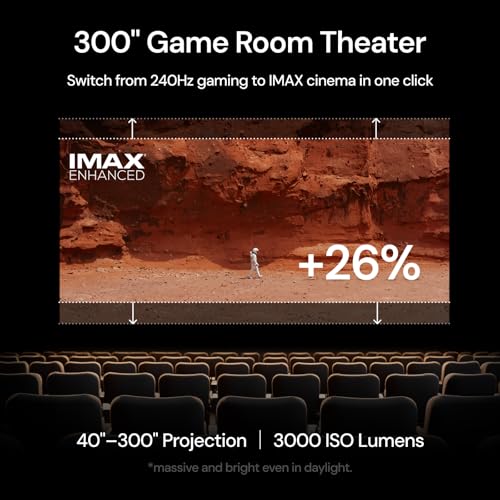
| 3,000 ISO lumens - excellent for moderate ambient light | 3,300 ANSI lumens - slightly brighter with superior control |
| Gaming Input Lag - Essential for responsive gaming performance | |
| 4ms at 1080p/240Hz, 15ms at 4K/60Hz - exceptional for gaming | 38ms at 4K/60Hz - too high for competitive gaming |
| Color Gamut Coverage - Affects color vibrancy and accuracy | |
| 110% Rec.2020 - extremely wide, vibrant colors | 100%+ DCI-P3 - cinema-accurate color reproduction |
| Physical Size & Weight - Impacts installation flexibility | |
| 15.4 lbs, compact desktop/portable design | 55.7 lbs, requires professional ceiling installation |
| Lens Features - Determines installation placement options | |
| 1.67x manual zoom, powered focus, no lens shift | 2x motorized zoom/focus, extensive lens shift capability |
| Smart Platform - Built-in streaming and convenience features | |
| Google TV with Netflix, YouTube, Prime Video apps | No smart features - requires external streaming devices |
| Audio System - Integrated sound capabilities | |
| Dual 12W DTS-X speakers included | No speakers - requires external audio system |
| Light Source Lifespan - Long-term maintenance costs | |
| 25,000+ hour RGB triple laser | 20,000 hour BLU-Escent laser with phosphor |
| Warranty Coverage - Protection and support duration | |
| 1 year standard warranty | 3 years with first-year advanced replacement |
| Target Market - Who each projector is designed for | |
| Versatile lifestyle users wanting gaming + movies | Dedicated home theater enthusiasts prioritizing image quality |
The JVC DLA-NZ900 is significantly better for dedicated home theaters with its 150,000:1 contrast ratio and cinema-accurate colors. The Valerion VisionMaster Pro 2 works well for casual home theater use but can't match the JVC's black levels and detail in dark rooms.
The biggest difference is image technology and target market. The Valerion VisionMaster Pro 2 uses single-chip DLP for versatile lifestyle entertainment, while the JVC DLA-NZ900 uses three-chip D-ILA technology for reference-quality cinema performance at a much higher price point.
The Valerion VisionMaster Pro 2 is far superior for gaming with 4ms input lag at high refresh rates. The JVC DLA-NZ900 has 38ms input lag, making it unsuitable for competitive gaming but acceptable for casual, cinematic games.
The Valerion VisionMaster Pro 2 works well in moderately lit rooms thanks to its 3,000 lumens brightness. The JVC DLA-NZ900 requires a dark, dedicated theater room to showcase its superior contrast capabilities effectively.
The JVC DLA-NZ900 displays 8K resolution through pixel-shifting from native 4K panels, while the Valerion VisionMaster Pro 2 achieves 4K through pixel-shifting from 1080p panels. Both look sharp, but the JVC provides more detail on very large screens.
Yes, the Valerion VisionMaster Pro 2 includes Google TV with Netflix, YouTube, and other major streaming apps built-in. The JVC DLA-NZ900 has no smart features and requires external streaming devices like Apple TV or Roku.
The Valerion VisionMaster Pro 2 is much easier to install with auto-focus, keystone correction, and compact 15-pound design. The JVC DLA-NZ900 weighs 56 pounds and typically requires professional installation with ceiling mounting.
The Valerion VisionMaster Pro 2 includes dual 12-watt DTS-X speakers that work for casual viewing. The JVC DLA-NZ900 has no built-in speakers and requires a separate audio system for sound.
The Valerion VisionMaster Pro 2 offers exceptional value for most users, providing excellent performance for movies, gaming, and streaming at a fraction of the cost. The JVC DLA-NZ900 provides value only for dedicated home theater enthusiasts who can utilize its premium capabilities.
The contrast difference is dramatic - the JVC DLA-NZ900 delivers 150,000:1 native contrast compared to the Valerion VisionMaster Pro 2's 4,000:1 native contrast. This means much deeper blacks and more cinematic image quality from the JVC.
Both handle moderate ambient light well, but the Valerion VisionMaster Pro 2 is better suited for bright rooms due to its vibrant colors and lifestyle-focused design. The JVC DLA-NZ900 performs best in completely dark environments.
The JVC DLA-NZ900 includes a comprehensive 3-year warranty with first-year advanced replacement. The Valerion VisionMaster Pro 2 comes with a standard 1-year warranty, reflecting their different market positioning and expected usage patterns.
We've done our best to create useful and informative comparisons to help you decide what product to buy. Our research uses advanced automated methods to create this comparison and perfection is not possible - please contact us for corrections or questions. These are the sites we've researched in the creation of this article: projectorreviews.com - projectorcentral.com - projectorcentral.com - soundandvision.com - valerion.com - projector-database.com - rtings.com - valerion.com - techradar.com - valueelectronics.com - digitalcameraworld.com - youtube.com - youtube.com - bestbuy.com - projectorcentral.com - valueelectronics.com - crutchfield.com - projectorreviews.com - soundapproach.com - houseofstereo.com - puretheatre.com - projectorscreen.com - projectorcentral.com - stereonet.com

Privacy Policy
Terms and Conditions - Affiliate Policy
Home Security
© Copyright 2008-2026.
11816 Inwood Rd #1211, Dallas, TX 75244