

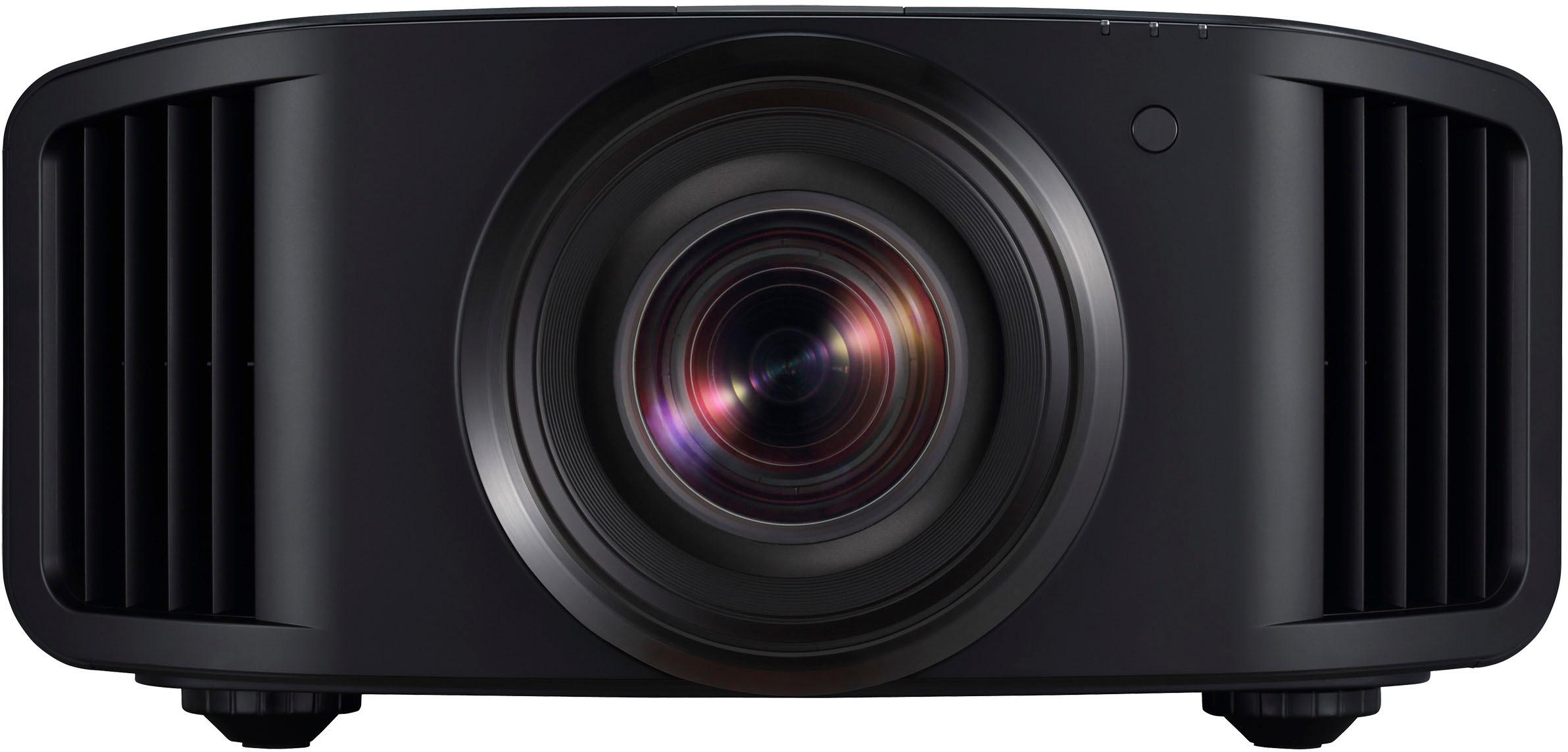
When shopping for a premium home theater projector, you'll quickly discover that not all projectors are created equal—and the price differences can be shocking. At the time of writing, you can find excellent lifestyle projectors around $3,000 that deliver impressive performance, while reference-grade cinema projectors easily cost eight times more. The Valerion VisionMaster Pro 2 and JVC DLA-NZ9 represent these two distinct approaches to home projection, and understanding their differences will help you make the right choice for your setup and budget.
The home theater projector market has evolved dramatically over the past few years. Traditional lamp-based projectors have largely given way to laser light sources that last 20,000+ hours without replacement. Meanwhile, 4K resolution has become the baseline, with 8K capabilities now emerging in flagship models. Smart features that were once exclusive to TVs—built-in streaming apps, voice control, wireless connectivity—are increasingly common in lifestyle projectors.
The fundamental question isn't whether these technologies are good (they are), but rather which implementation best serves your needs. A $3,000 projector might use the same "4K" marketing term as a $26,000 model, but the underlying technology and performance can be worlds apart. Understanding these differences is crucial for making an informed decision.
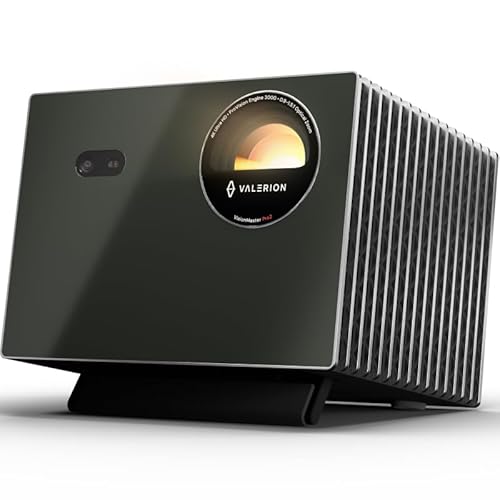
The Valerion VisionMaster Pro 2, launched in late 2024, represents the modern lifestyle projector at its peak. It packs impressive specs—RGB triple-laser light source, 4K resolution, 3,000 lumens brightness, and comprehensive smart features—into a compact, 15-pound package that you can easily move between rooms. This projector targets users who want excellent performance without the complexity and permanent installation requirements of traditional home theater equipment.
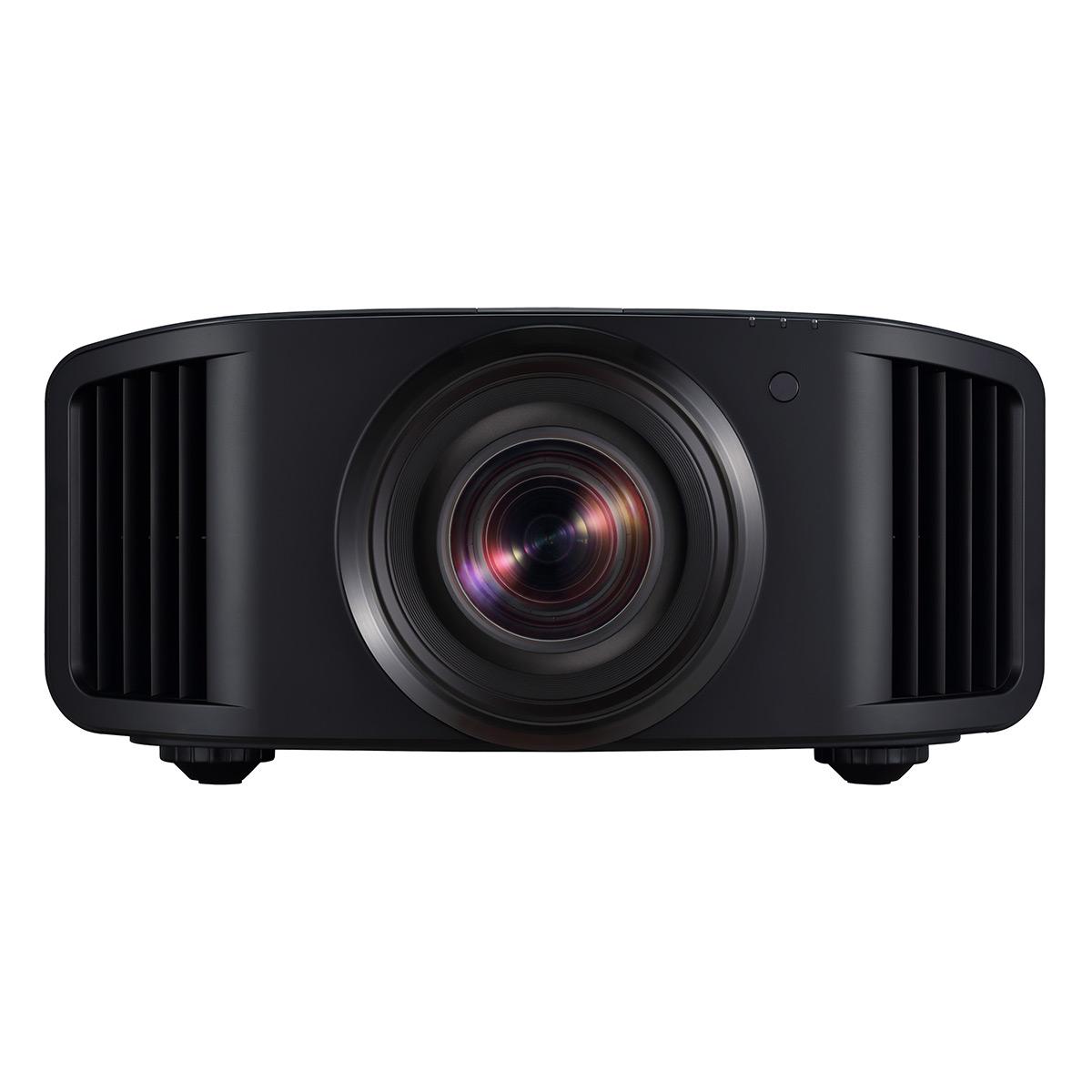
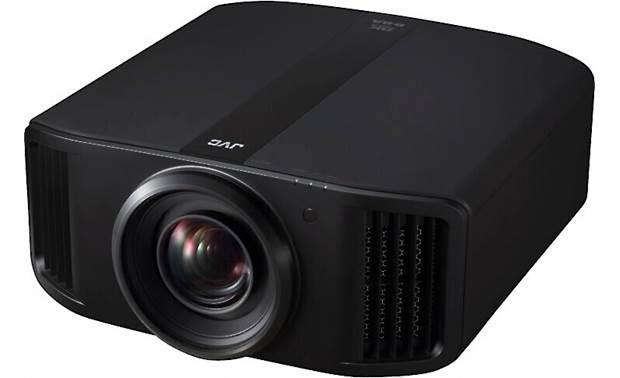
In contrast, the JVC DLA-NZ9, released in 2022, embodies the "no compromises" philosophy of reference-grade home theater. At 56 pounds with premium all-glass optics and three separate imaging chips, this projector requires professional installation and careful room preparation. But for videophiles willing to make that investment, it delivers image quality that can rival or exceed commercial cinema systems.
Understanding display technology is crucial because it fundamentally determines what you'll see on screen. The Valerion VisionMaster Pro 2 uses a single 0.47-inch DLP (Digital Light Processing) chip from Texas Instruments. DLP technology works by using millions of tiny mirrors that tilt thousands of times per second to create images. To achieve 4K resolution from this smaller chip, Valerion employs XPR (eXpanded Pixel Resolution) technology, which rapidly shifts each pixel to four different positions, effectively quadrupling the resolution you see on screen.
This pixel-shifting approach is clever and cost-effective, but it's not quite the same as native 4K. Think of it like digital zoom on a camera—the result looks sharper, but it's achieved through processing rather than having more actual pixels to begin with. For most content and viewing distances, this difference is academic, but pixel-shifting can sometimes create subtle artifacts with very fine details or specific test patterns.
The JVC DLA-NZ9 takes a completely different approach with three separate 0.69-inch D-ILA chips, each handling red, green, and blue independently. D-ILA (Direct Drive Image Light Amplifier) is JVC's version of LCD technology, but refined to an extraordinary degree. Each chip has a native resolution of 4096×2160—true, native 4K without any pixel shifting required. But JVC doesn't stop there. Their 8K/e-shiftX technology then shifts these native 4K pixels in four directions to create over 35 million addressable points on screen, resulting in genuine 8K capability.
The practical difference is substantial. Single-chip DLP projectors, including the Valerion, can occasionally produce "rainbow artifacts"—brief flashes of red, green, and blue that some people notice during rapid eye movements or with high-contrast scenes. The three-chip design in the JVC completely eliminates this phenomenon because each color is always present simultaneously.
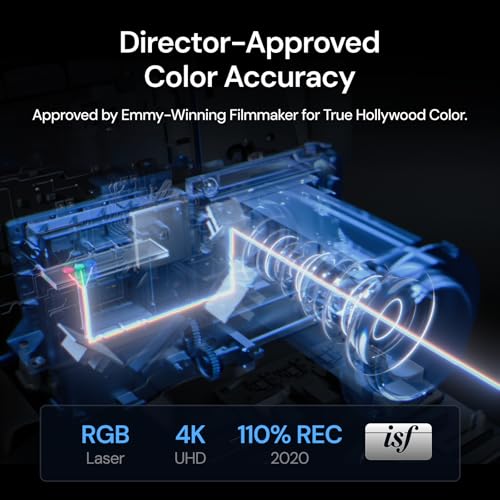
Both projectors claim 3,000 lumens of brightness, but their light sources work differently. The Valerion VisionMaster Pro 2 uses an RGB triple-laser system, where separate red, green, and blue lasers combine to create the full spectrum. This approach delivers exceptionally wide color coverage—110% of the Rec.2020 standard, which is wider than most premium TVs can display. The lasers also maintain consistent color temperature across different brightness levels, and the system is rated for over 25,000 hours of operation.
The JVC DLA-NZ9 employs a laser phosphor system called BLU-Escent, where blue lasers excite a phosphor wheel to generate other colors. While this covers a smaller color gamut than RGB lasers (about 100% of DCI-P3, the cinema standard), the color reproduction is extremely accurate and film-like. The laser life is rated at 20,000 hours, still excellent by traditional projector standards.
In practical terms, both projectors are bright enough for moderately lit rooms, though the JVC is optimized for darkened theater environments where its superior contrast performance can truly shine.
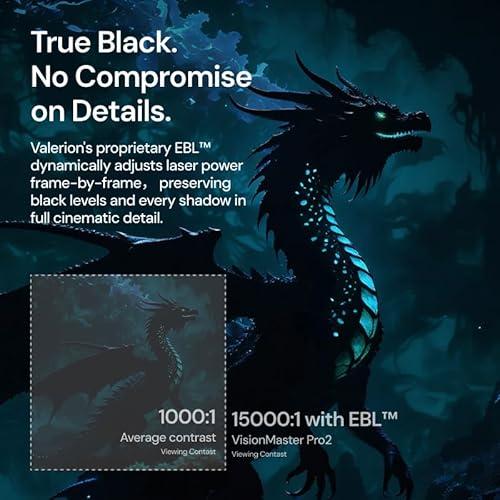
Here's where the performance gap becomes obvious. Contrast ratio—the difference between the brightest whites and darkest blacks a projector can produce—dramatically affects perceived image quality. The Valerion VisionMaster Pro 2 delivers a respectable 4,000:1 native contrast ratio, extending to 15,000:1 with its Enhanced Black Level technology that dynamically adjusts the laser output.
The JVC DLA-NZ9 obliterates these numbers with a native contrast ratio of 100,000:1—twenty-five times better. This isn't just a specifications game; the difference is immediately visible. Dark movie scenes that look gray and washed out on lesser projectors appear truly black on the JVC, with shadow details that emerge naturally rather than being crushed or artificially boosted.
This contrast advantage comes from the fundamental differences in their display technologies. DLP chips must allow some light to pass even when displaying black, while D-ILA technology can block light more completely. Combined with JVC's advanced light control and their famous "infinite" dynamic contrast system, the result approaches the inky blacks of OLED displays.
For movie watching, especially in darkened rooms, this contrast difference is the most significant factor affecting image quality. It's the reason serious home theater enthusiasts often prefer the JVC despite its much higher price—the experience of watching a film with proper black levels and shadow detail is transformative.
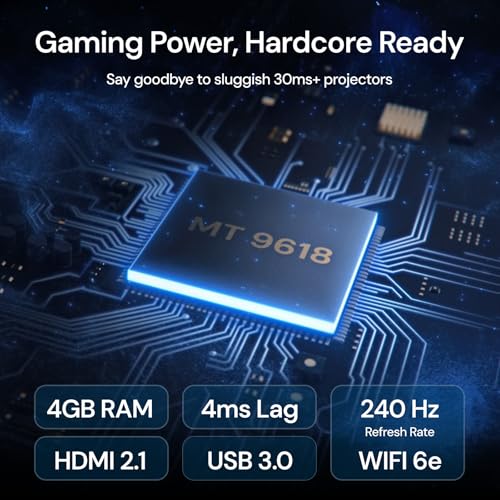
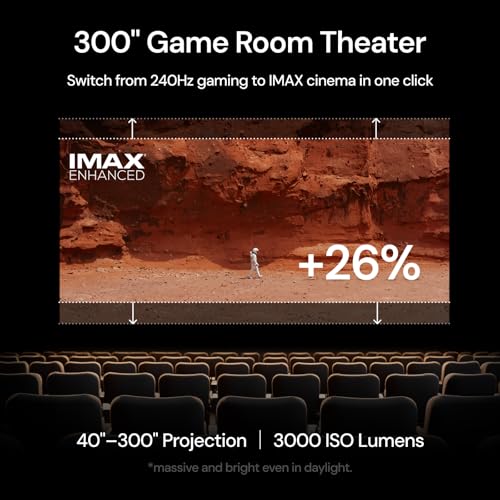
Gaming performance has become increasingly important as projectors compete with large-screen TVs for living room dominance. The Valerion VisionMaster Pro 2 clearly targets gamers with industry-leading input lag specifications: just 4ms at 1080p/240Hz, 8ms at 1080p/120Hz, and 15ms at 4K/60Hz. These numbers rival the best gaming monitors and make competitive gaming viable on a massive screen.
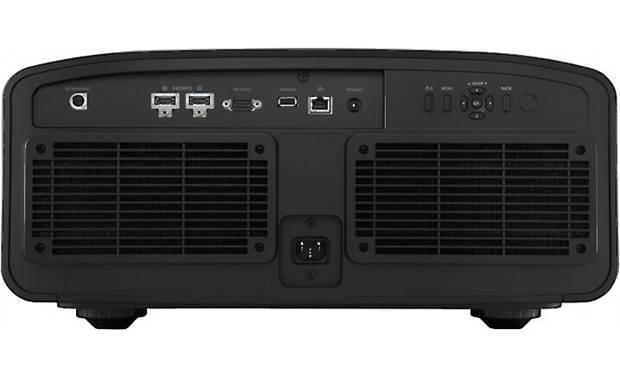
The JVC DLA-NZ9 wasn't designed with gaming as a priority. While it accepts 4K/120Hz and 8K/60p signals through its 48Gbps HDMI 2.1 connections, input lag isn't optimized for fast-paced gaming. JVC focuses on image processing quality rather than speed, making it better suited for cinematic gaming experiences where visual fidelity trumps competitive advantage.
If you're planning to connect a PlayStation 5, Xbox Series X, or high-end gaming PC, the Valerion is clearly the better choice for responsive gameplay. The JVC will make single-player, story-driven games look absolutely stunning, but isn't ideal for competitive online gaming.
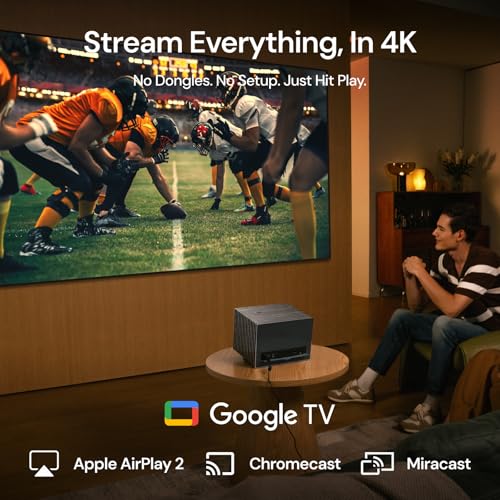
The convenience factor heavily favors the Valerion VisionMaster Pro 2. Its Google TV OS provides instant access to Netflix, YouTube, Disney+, Prime Video, and other major streaming services. Wi-Fi 6E connectivity ensures smooth 4K streaming, while AirPlay 2, Chromecast, and Miracast support virtually any casting scenario. The built-in 2×12W DTS:X speakers, while not home theater quality, are adequate for casual viewing and eliminate the need for external audio equipment.
The JVC DLA-NZ9 takes the opposite approach, focusing purely on projection performance. There are no smart features, no built-in speakers, and no wireless connectivity for content streaming. This projector expects to integrate with high-end AV receivers, external streaming devices, and professional control systems. For dedicated home theaters, this approach makes sense—you likely already have superior audio equipment and source components.
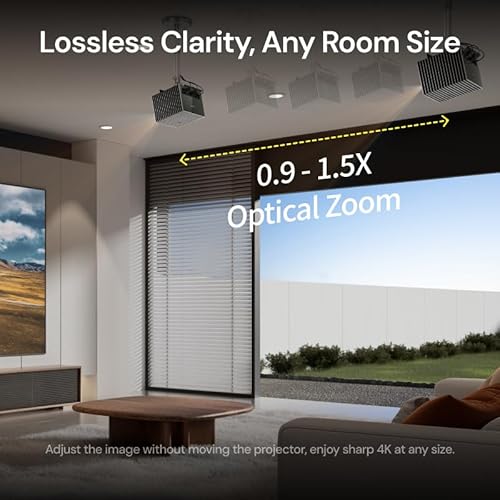
Installation requirements differ dramatically between these projectors. The Valerion VisionMaster Pro 2 weighs just 15.4 pounds and offers a flexible 0.9:1 to 1.5:1 throw ratio, meaning it can create a 100-inch image from as close as 8 feet away. This short-throw capability makes it perfect for smaller rooms or situations where you can't mount the projector far from the screen. However, it lacks lens shift—the ability to move the image up, down, or sideways without physically moving the projector—which limits placement precision.
The JVC DLA-NZ9 requires serious commitment. At 56 pounds, it needs robust ceiling mounting or a substantial shelf. The throw ratio of 1.29:1 to 2.61:1 means you'll need 13-26 feet to create that same 100-inch image. However, extensive motorized lens shift (±43% horizontal, ±100% vertical) provides tremendous flexibility for perfect image placement without keystone correction, which can degrade image quality.
Color reproduction reveals another philosophical difference. The Valerion VisionMaster Pro 2 aims for impact with its 110% Rec.2020 coverage—colors that literally pop off the screen. This wider-than-cinema color gamut makes HDR content particularly vibrant and is perfect for users who want that "wow factor" when showing off their setup.
The JVC DLA-NZ9 prioritizes accuracy over breadth, delivering nearly perfect DCI-P3 coverage—the same color standard used in commercial cinemas. Combined with JVC's Frame Adapt HDR and Theater Optimizer technologies, which analyze each frame to optimize dynamic range in real-time, the result is color reproduction that matches the filmmaker's intent.
Both projectors offer ISF (Imaging Science Foundation) calibration support, but the JVC provides more comprehensive calibration tools and typically benefits more from professional setup. The Valerion delivers excellent color accuracy out of the box and includes automatic calibration features that work well for most users.
At the time of writing, the price difference between these projectors exceeds 8:1, which raises the question: is the JVC DLA-NZ9 really eight times better? The answer depends entirely on your priorities and viewing environment.
The Valerion VisionMaster Pro 2 delivers outstanding value by combining very good image quality with exceptional convenience and gaming performance. For around $3,000, you get a complete entertainment system that requires no additional components and can transform any room into a cinema or gaming arena. The 25,000-hour laser life means virtually maintenance-free operation for decades.
The JVC DLA-NZ9, while expensive, competes against commercial cinema projectors costing $40,000-$100,000+. When viewed in that context, its pricing becomes more reasonable. The image quality improvements—especially in contrast and black level performance—are substantial and immediately visible. For dedicated home theater enthusiasts, these differences justify the premium.
Consider also the total system cost. The Valerion works perfectly as a standalone unit, while the JVC requires external streaming devices, professional audio equipment, and likely professional installation and calibration. A complete system around the JVC could easily exceed $40,000-$50,000.
Choose the Valerion VisionMaster Pro 2 if you want maximum versatility and convenience. It's perfect for gamers who need ultra-low input lag, families who want built-in streaming without additional devices, or anyone who values portability and easy setup. The wide color gamut makes HDR content particularly impressive, and the compact size allows for temporary or permanent installation in various rooms. This projector excels in moderately lit environments and represents excellent value for users who want projector benefits without traditional projector complexity.
The JVC DLA-NZ9 makes sense for serious videophiles building dedicated home theaters. If image quality is your absolute priority—especially contrast, black levels, and cinema-accurate color reproduction—the performance difference is worth the premium. This projector shines in darkened rooms with large screens (150+ inches) where its superior optics and native 4K/8K capability can be fully appreciated. It's also the better choice if rainbow artifacts from single-chip DLP bother anyone in your household.
The choice between these projectors ultimately comes down to your viewing environment, priorities, and budget. If you're upgrading from a TV and want a projector that delivers great performance while maintaining the convenience you're used to, the Valerion VisionMaster Pro 2 is an excellent choice. Its gaming performance, smart features, and impressive color gamut make it a versatile entertainment centerpiece.
However, if you're building a dedicated home theater and prioritize ultimate image quality above all else, the JVC DLA-NZ9 delivers a genuinely cinematic experience that can rival commercial theaters. The contrast performance alone transforms how movies look and feel, especially in properly darkened rooms.
Both projectors represent the best in their respective categories, but they serve different masters. The Valerion excels at being an outstanding all-around projector that happens to be excellent for gaming, while the JVC is a no-compromise cinema reference that requires dedication to the home theater craft. Choose based on whether you want great versatility with very good image quality, or ultimate image quality with the commitment that requires.
| Valerion VisionMaster Pro 2 | JVC DLA-NZ9 |
|---|---|
| Display Technology - Determines image quality ceiling and rainbow artifacts | |
| Single 0.47" DLP chip with XPR pixel-shifting | Three native 0.69" 4K D-ILA chips |
| Native Resolution - True pixels before any processing | |
| 1920×1080 (pixel-shifted to 4K) | 4096×2160 per chip (native 4K) |
| Maximum Display Resolution - What you actually see on screen | |
| 3840×2160 (4K UHD via pixel-shifting) | 8192×4320 (true 8K with e-shiftX) |
| Brightness - Critical for room lighting flexibility | |
| 3,000 ISO lumens (RGB triple laser) | 3,000 ANSI lumens (laser phosphor) |
| Contrast Ratio - Most impactful spec for perceived image quality | |
| 4,000:1 native, 15,000:1 dynamic | 100,000:1 native, 1,000,000:1 dynamic |
| Color Gamut - Determines color vibrancy and HDR impact | |
| 110% Rec.2020 (wider than cinema standard) | ~100% DCI-P3 (cinema reference accuracy) |
| Gaming Input Lag - Essential for competitive gaming | |
| 4ms at 1080p/240Hz, 15ms at 4K/60Hz | Not optimized (cinema-focused processing) |
| Light Source Lifespan - Long-term maintenance costs | |
| 25,000+ hours (RGB laser) | 20,000 hours (laser phosphor) |
| Lens Quality and Features - Installation flexibility | |
| Motorized focus, manual zoom, no lens shift | Premium 100mm all-glass, motorized zoom/focus, full lens shift |
| Throw Ratio - Distance needed for large images | |
| 0.9:1-1.5:1 (short throw, space-saving) | 1.29:1-2.61:1 (requires more room depth) |
| Weight and Portability - Installation and mobility options | |
| 15.4 lbs (easily portable) | 55.8 lbs (permanent installation required) |
| Smart Features - Convenience and additional device needs | |
| Google TV OS, built-in streaming apps, Wi-Fi 6E | None (requires external streaming devices) |
| Built-in Audio - Need for external sound system | |
| Dual 12W DTS:X speakers included | No speakers (requires external audio) |
| HDR Support - Premium content optimization | |
| Dolby Vision, HDR10+, IMAX Enhanced | HDR10+, Frame Adapt HDR with Theater Optimizer |
| HDMI Connectivity - Future-proofing and device support | |
| 2× HDMI 2.1, 1× HDMI 2.0 (eARC) | 2× HDMI 2.1 (48Gbps) with 8K/60p support |
| Target Use Case - Best suited environments | |
| Lifestyle/gaming projector for multiple rooms | Dedicated home theater with professional installation |
| Warranty Coverage - Purchase protection and support | |
| 1 year limited | 3 years with advanced replacement first year |
The Valerion VisionMaster Pro 2 is significantly better for gaming with ultra-low input lag of just 4ms at 1080p/240Hz and 15ms at 4K/60Hz. The JVC DLA-NZ9 prioritizes cinematic image processing over gaming speed, making the Valerion the clear winner for competitive gaming and console use.
The core difference is that the Valerion VisionMaster Pro 2 is a lifestyle projector focused on convenience and versatility, while the JVC DLA-NZ9 is a reference-grade cinema projector designed for ultimate image quality in dedicated home theaters. The JVC offers 25× better contrast ratio but requires professional installation.
The JVC DLA-NZ9 delivers superior picture quality with native 4K resolution, 100,000:1 contrast ratio, and true cinema-grade black levels. The Valerion VisionMaster Pro 2 offers excellent image quality for its category but cannot match the JVC's contrast performance and shadow detail.
Both projectors output 3,000 lumens and can handle moderately lit rooms. However, the Valerion VisionMaster Pro 2 is better suited for rooms with ambient light due to its vibrant colors and lifestyle design. The JVC DLA-NZ9 performs best in darkened home theater environments where its superior contrast can shine.
The Valerion VisionMaster Pro 2 is much easier to install at just 15.4 pounds with automatic focus and keystone correction. The JVC DLA-NZ9 weighs 55.8 pounds and typically requires professional installation with precise calibration, though it offers more placement flexibility with full lens shift.
Only the JVC DLA-NZ9 can display true 8K content at 60fps with its 8K/e-shiftX technology creating over 35 million addressable pixels. The Valerion VisionMaster Pro 2 uses pixel-shifting to achieve 4K from a 1080p chip but cannot display native 8K content.
The Valerion VisionMaster Pro 2 includes Google TV OS with built-in Netflix, YouTube, Disney+, and other streaming apps, plus Wi-Fi 6E connectivity. The JVC DLA-NZ9 has no smart features and requires external streaming devices like Apple TV or Roku.
The contrast difference is dramatic: the JVC DLA-NZ9 delivers 100,000:1 native contrast versus 4,000:1 for the Valerion VisionMaster Pro 2. This 25× advantage means the JVC produces much deeper blacks and better shadow detail, especially important for movie watching in dark rooms.
The Valerion VisionMaster Pro 2 is highly portable at 15.4 pounds and can easily move between rooms or locations. The JVC DLA-NZ9 at 55.8 pounds is designed for permanent installation in dedicated home theaters and is not practical for portability.
The Valerion VisionMaster Pro 2 includes dual 12W DTS:X speakers that are adequate for casual viewing. The JVC DLA-NZ9 has no built-in speakers and requires external audio equipment, which is typical for high-end home theater projectors.
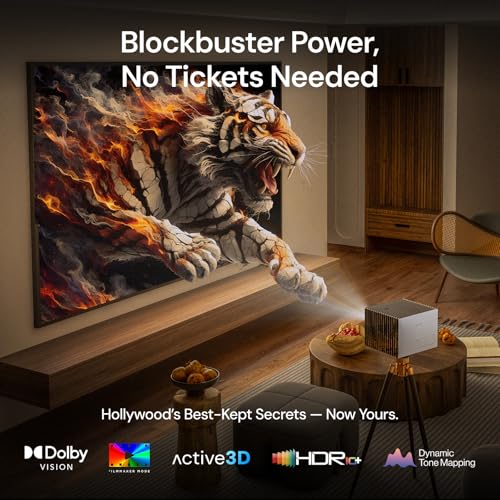
The Valerion VisionMaster Pro 2 supports more HDR formats including Dolby Vision, HDR10+, and IMAX Enhanced. The JVC DLA-NZ9 supports HDR10+ and features advanced Frame Adapt HDR with Theater Optimizer for scene-by-scene optimization, focusing on cinema-reference accuracy.
Both projectors use laser light sources for long life. The Valerion VisionMaster Pro 2 offers 25,000+ hours with its RGB triple-laser system, while the JVC DLA-NZ9 provides 20,000 hours with its BLU-Escent laser phosphor technology. Both eliminate the need for lamp replacements.
We've done our best to create useful and informative comparisons to help you decide what product to buy. Our research uses advanced automated methods to create this comparison and perfection is not possible - please contact us for corrections or questions. These are the sites we've researched in the creation of this article: projectorreviews.com - projectorcentral.com - projectorcentral.com - soundandvision.com - valerion.com - projector-database.com - rtings.com - valerion.com - techradar.com - valueelectronics.com - digitalcameraworld.com - youtube.com - youtube.com - bestbuy.com - whathifi.com - soundandvision.com - worldwidestereo.com - projectorreviews.com - worldwidestereo.com - us.jvc.com - crutchfield.com - abtvaustin.com - valueelectronics.com - projectorcentral.com

Privacy Policy
Terms and Conditions - Affiliate Policy
Home Security
© Copyright 2008-2026.
11816 Inwood Rd #1211, Dallas, TX 75244