

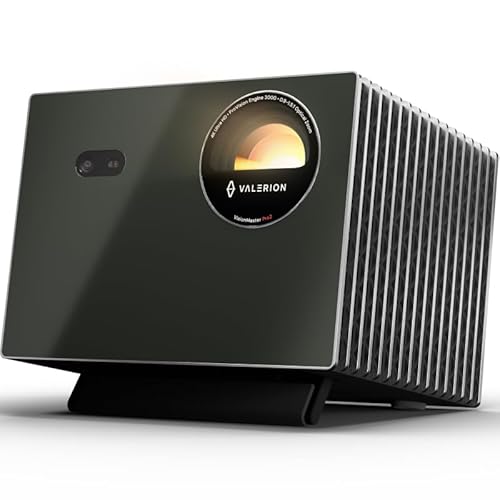
The projector world has never been more exciting—or more confusing. Two dramatically different approaches to home projection have emerged, and they're perfectly embodied by the Valerion VisionMaster Pro 2 and the Sony VPL-XW7000ES. One costs about what you'd spend on a nice laptop, the other rivals a luxury car payment. One tries to be your complete entertainment hub, the other focuses obsessively on picture perfection. Understanding which philosophy suits your needs could save you thousands of dollars and years of buyer's remorse.
Home projectors used to be simple: expensive boxes that showed movies on big screens. Today's market has split into two distinct camps. Lifestyle projectors like the Valerion, released in 2024, pack streaming apps, gaming features, and wireless connectivity into relatively affordable packages. They're designed for people who want the big screen experience without turning their living room into a dedicated theater.
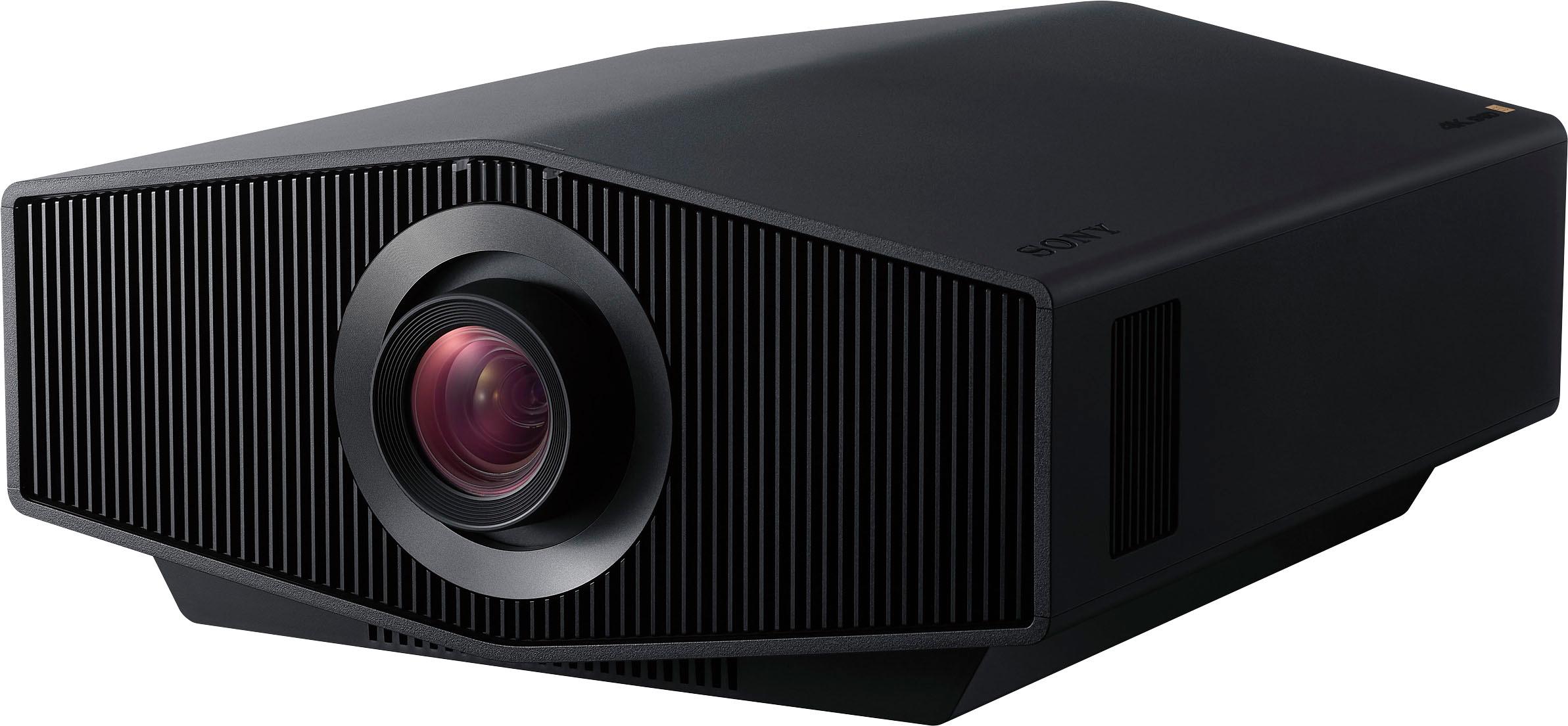
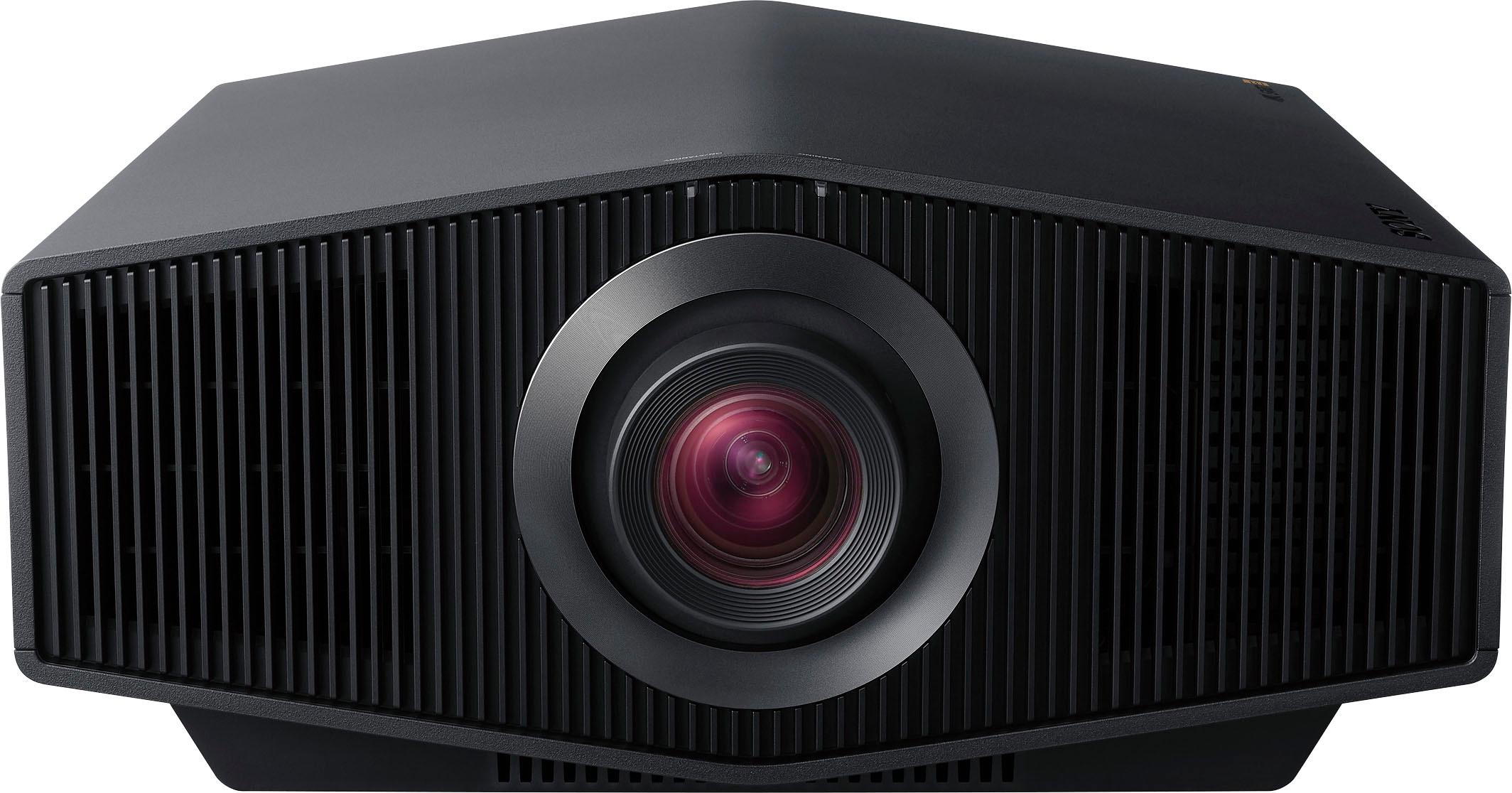
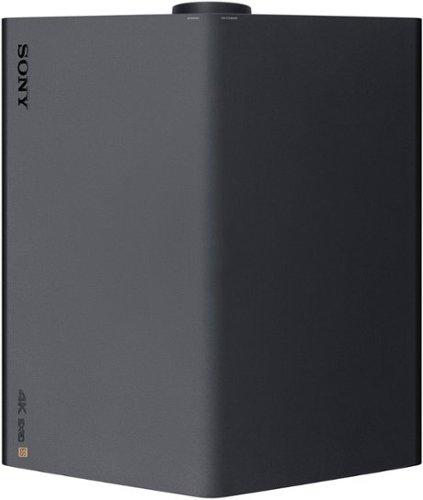
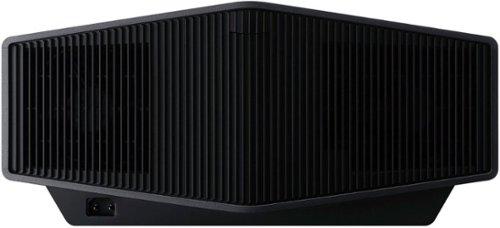
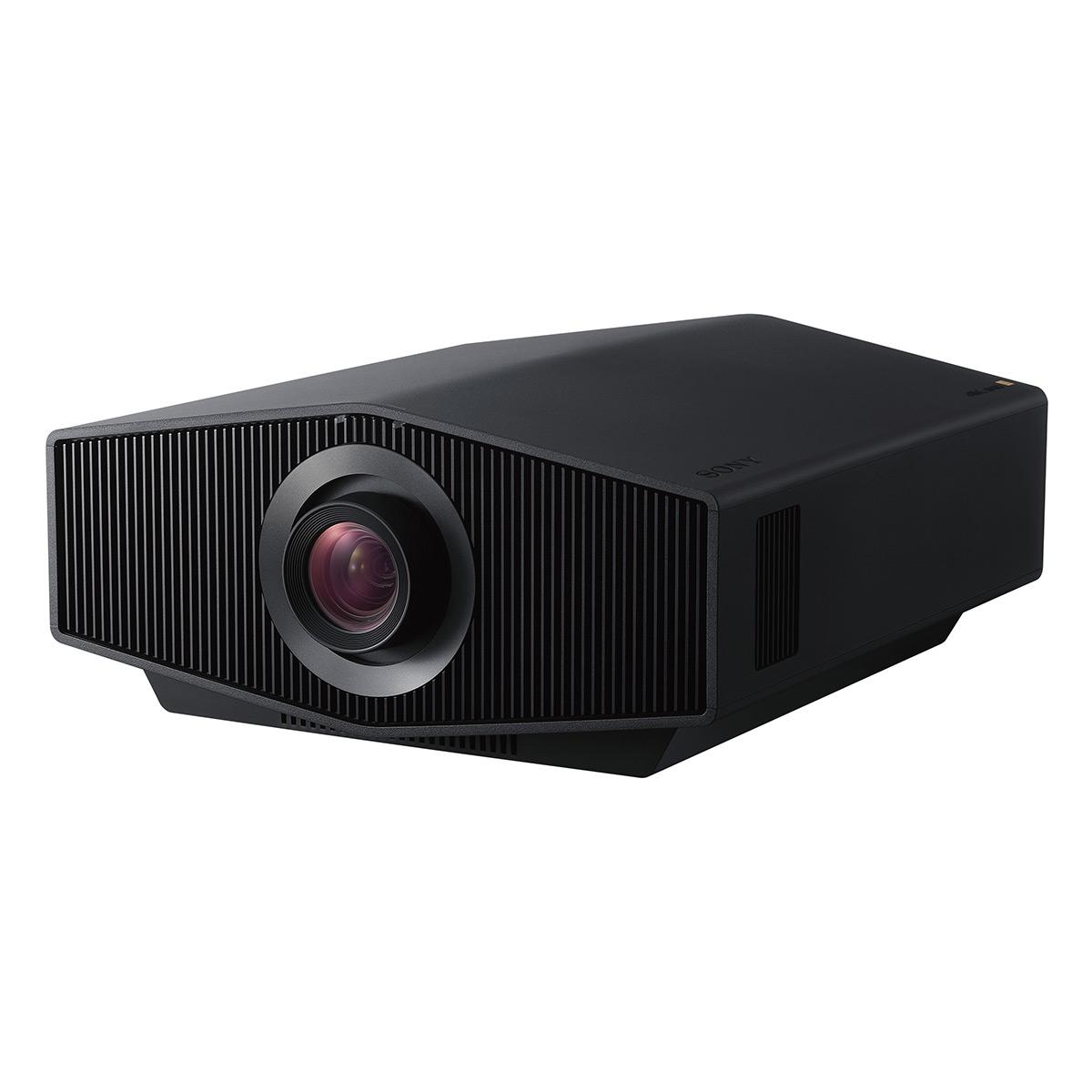
Professional cinema projectors like the Sony, which launched in 2022 as an updated version of Sony's flagship series, take the opposite approach. They eliminate every feature that doesn't directly improve image quality. No smart apps, no built-in speakers, no wireless connectivity—just relentless focus on creating the most accurate, stunning images possible.
The key considerations when choosing between these philosophies come down to image quality, installation flexibility, features versus performance, and long-term value. Let's dig into each area to understand what really matters for your specific situation.
The most fundamental difference between these projectors lies in how they actually create images. The Sony VPL-XW7000ES uses three separate SXRD panels—think of them as tiny, incredibly precise mirrors that reflect light to form images. Each panel handles one primary color (red, green, blue), and since there are over 8 million microscopic mirrors per panel, you get true native 4K resolution with 3,840 x 2,160 pixels actually displayed on screen.
SXRD (Silicon X-tal Reflective Display) technology has a crucial advantage: it can achieve perfect black levels by completely blocking light when needed. This creates what Sony calls "infinite contrast"—the difference between the brightest whites and deepest blacks can be virtually unlimited.
The Valerion VisionMaster Pro 2 uses a completely different approach called DLP (Digital Light Processing) with pixel shifting. Instead of three panels, it has one chip with about 2 million tiny mirrors that tilt incredibly fast—over 4,000 times per second. To create 4K images, each mirror actually shows four different pixels in rapid succession, using a technique called XPR (eXpanded Pixel Resolution). Your eye sees this as a full 4K image, but it's technically not "native" 4K like the Sony.
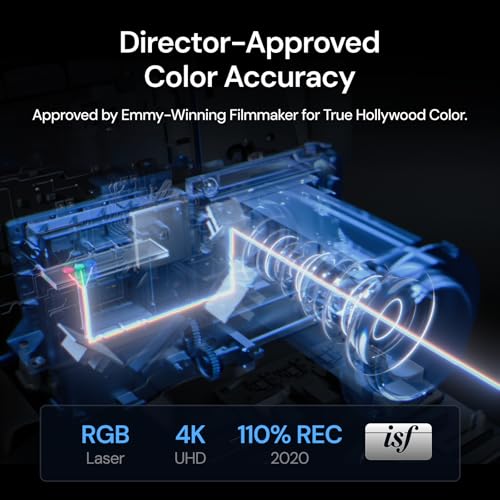
Here's where things get interesting—and controversial. The Valerion claims to display 110% of the Rec.2020 color space, which is incredibly wide. Rec.2020 is the color standard for future 8K broadcasts and represents colors more vivid than most displays can show. The Sony covers 95% of DCI-P3, which is the cinema standard but a smaller color space overall.
On paper, the Valerion should win the color battle decisively. However, our research into professional reviews revealed a significant problem: color instability. Multiple reviewers found that carefully calibrated color settings on the Valerion would drift substantially within 12-24 hours. This means the projector might look amazing when you first set it up, but the colors could shift noticeably by the next day.
The Sony takes the opposite approach. Its colors might not be as initially impressive, but they remain absolutely stable over time. Professional calibrators consistently praise Sony projectors for maintaining their settings month after month, year after year.
This is where the technology differences become most apparent. The Sony's SXRD panels can achieve true black by completely blocking light, creating that infinite contrast ratio. When you're watching a space movie with stars against the void, those black areas look genuinely black—not dark gray.
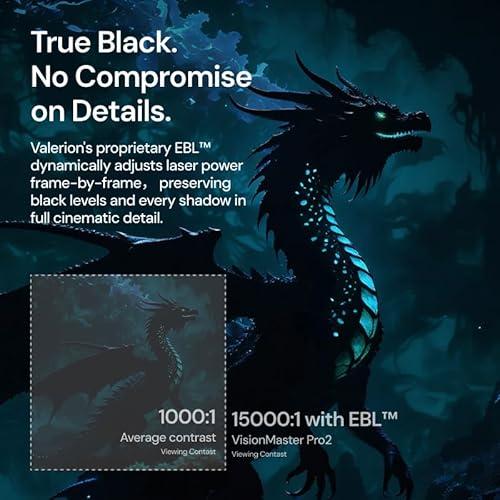
The Valerion achieves 4,000:1 native contrast, boosted to 15,000:1 with dynamic features that adjust the laser brightness in real-time. While impressive for DLP technology, it can't match SXRD's fundamental ability to produce perfect blacks. In very bright scenes, the black levels can rise noticeably, a common limitation of single-chip DLP projectors.
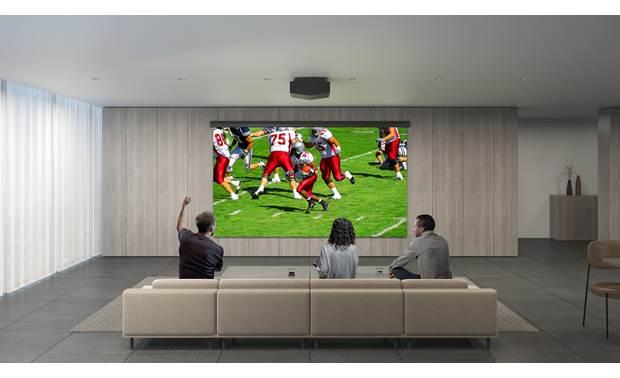
The Sony VPL-XW7000ES includes motorized lens shift, which is absolutely crucial for permanent installations. Lens shift lets you move the image up, down, left, or right without creating the geometric distortion that digital keystone correction introduces. With ±85% vertical and ±36% horizontal adjustment, you can mount the Sony almost anywhere in your theater room and still get a perfectly rectangular image.
The projector also remembers five different lens positions, so you can instantly switch between different screen formats—maybe 16:9 for movies and 21:9 for ultrawide gaming—with perfect alignment each time.
The Valerion completely lacks lens shift. Instead, it relies on digital keystone correction and auto-focus features. While convenient, digital keystone essentially crops and stretches your image, reducing resolution and potentially creating artifacts. Professional reviewers noted that achieving proper placement with the Valerion requires "SpaceX precision"—you need to position it exactly right or accept some image compromise.
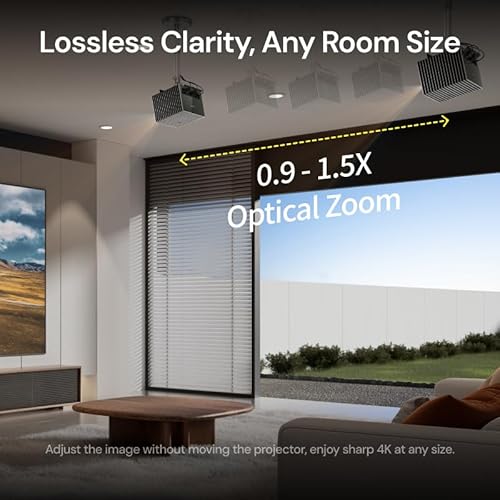
Both projectors offer optical zoom, but with different philosophies. The Sony provides a substantial 2.1x zoom range with throw ratios from 1.35:1 to 2.84:1. This means for a 100-inch screen, you could place it anywhere from about 11 feet to 24 feet away—tremendous flexibility for room design.
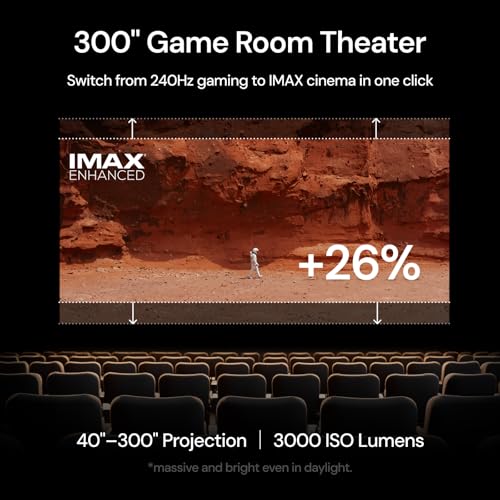
The Valerion offers 1.67x zoom with a shorter throw ratio of 0.9:1 to 1.5:1. Despite marketing claims about "long throw" capability, you'll typically need to place it 8-13 feet from a 100-inch screen. The shorter throw can be advantageous in smaller rooms, but the lack of lens shift makes precise placement critical.
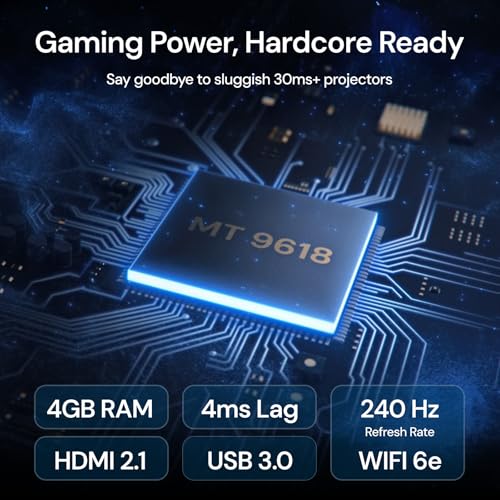
If gaming is a priority, the Valerion VisionMaster Pro 2 absolutely dominates. Input lag—the delay between pressing a controller button and seeing the action on screen—measures just 4 milliseconds at 1080p/240Hz, 8ms at 1080p/120Hz, and 15ms at 4K/60Hz.
To put this in perspective, competitive gamers consider anything under 20ms excellent, and under 10ms ideal. The Valerion achieves response times that rival dedicated gaming monitors, something virtually unheard of in projectors just a few years ago.
The Sony doesn't emphasize gaming specifications, and while it can certainly display games beautifully, it's not optimized for competitive play. The focus remains squarely on cinema reproduction.
The Valerion includes HDMI 2.1 ports that support the latest gaming consoles' high-refresh-rate modes, plus gaming-specific features like crosshair overlays and enhanced dark detail to spot enemies hiding in shadows. It even supports ultrawide aspect ratios (21:9 and 32:9) for that wraparound gaming experience.
For serious gamers, especially those who play competitive titles, the Valerion's gaming prowess could justify the purchase alone. No other projector in its price range comes close to these gaming capabilities.
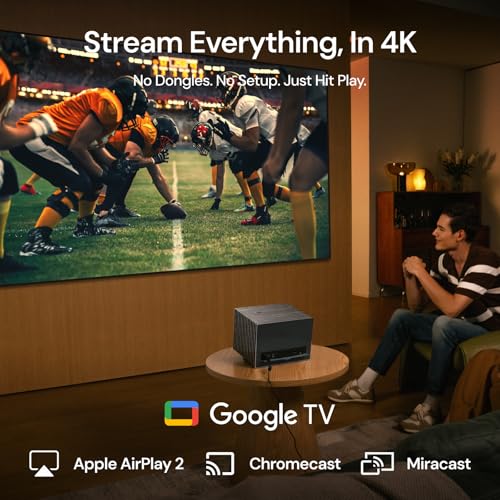
The Valerion VisionMaster Pro 2 runs Google TV OS directly, giving you instant access to Netflix, YouTube, Prime Video, Disney+, and dozens of other streaming services without any external devices. Wi-Fi 6e provides fast, stable wireless streaming, while Bluetooth 5.2 connects your headphones or speakers.
Smart home integration extends to Google Home, Apple HomeKit, and Amazon Alexa, so you can control the projector with voice commands or automation routines. The built-in 24-watt speakers with DTS-X support eliminate the need for external audio in smaller spaces.
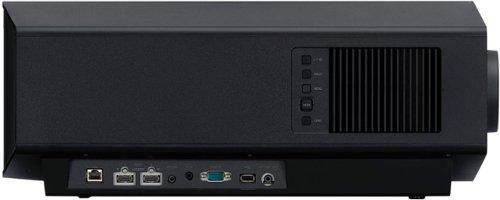
The Sony VPL-XW7000ES includes none of these features. No smart OS, no wireless connectivity, no built-in speakers. Instead, it focuses entirely on accepting high-quality video signals and reproducing them as accurately as possible.
This isn't a limitation—it's a design philosophy. Professional home theater enthusiasts typically prefer dedicated streaming devices (like Apple TV 4K or NVIDIA Shield) paired with high-end audio processors and speaker systems. The Sony integrates seamlessly with control systems from Control4, Crestron, and other professional automation companies.
Both projectors use laser light sources, eliminating the need to replace bulbs every few thousand hours like older models. The Valerion employs an RGB triple-laser system rated for 25,000+ hours, while the Sony uses laser phosphor technology good for 20,000 hours.
RGB lasers theoretically produce purer colors since each color is generated by its own dedicated laser. Laser phosphor systems use blue lasers to excite phosphor materials that create other colors—slightly less pure but historically more stable.
The Sony reflects its professional positioning with a robust metal chassis designed for permanent installation. At about 31 pounds, it's built like the precision instrument it is. The three-year warranty demonstrates Sony's confidence in long-term reliability.
The Valerion weighs just 15.4 pounds with a more consumer-oriented design featuring chrome accents and RGB lighting. While attractive, the build quality doesn't match the Sony's professional-grade construction. The shorter warranty period reflects its consumer market positioning.
For dedicated home theater use, the Sony VPL-XW7000ES excels in every meaningful way. The native 4K SXRD panels deliver reference-quality images with stunning detail and perfect geometric accuracy. Colors remain stable and accurate over time, crucial for serious movie watching.
The X1 Ultimate processor, borrowed from Sony's flagship TVs, analyzes each scene in real-time and optimizes individual objects for maximum impact. This sophisticated processing creates images that often surpass what you'd see in commercial theaters.
The Valerion produces impressive images for its price point, but the color stability issues we researched could be problematic for critical viewing. If you're planning to calibrate the projector professionally, the color drift essentially defeats the purpose of calibration.
In mixed-use living spaces, the Valerion VisionMaster Pro 2 offers advantages the Sony simply can't match. The smart features eliminate cable clutter, the gaming performance handles everything from casual mobile games cast from your phone to hardcore PC gaming, and the portable design lets you move it between rooms or store it when not in use.
However, the installation limitations become more apparent in living rooms where you can't control mounting positions as precisely as in dedicated theaters.
You're a gamer who wants projector-sized gaming without compromising competitive performance. The ultra-low input lag and high refresh rate support are genuinely impressive achievements. The smart features and all-in-one design appeal to people who want simplicity and convenience over ultimate performance.
However, be prepared for the color stability issues. If you're okay with occasionally readjusting color settings or don't notice subtle color shifts, this might not bother you. The projector works well for casual movie watching and excels at gaming and streaming content.
You're building a dedicated home theater and want reference-quality images that remain consistent over time. The lens shift and installation flexibility are essential for permanent setups, and the native 4K SXRD technology delivers images that justify the premium price.
The Sony makes sense when image quality is your absolute priority and budget isn't a primary concern. It's designed for people who want the closest thing to a commercial cinema experience at home.
The Valerion attempts to bridge lifestyle and performance markets but succeeds completely at neither. At the time of writing, it costs significantly more than basic lifestyle projectors while lacking the stability and flexibility of professional models.
If budget is a primary concern, consider whether a more basic projector might serve your needs better. If performance is crucial, the jump to the Sony or similar professional models might be worth saving for.
The choice between these projectors ultimately comes down to priorities and use cases. The Valerion VisionMaster Pro 2 offers impressive gaming performance and smart features in a relatively affordable package, but with documented stability issues that could affect long-term satisfaction.
The Sony VPL-XW7000ES represents the gold standard for home cinema projection but at a price that puts it out of reach for most buyers. If you're building a serious home theater and can afford the premium, it's hard to argue against the Sony's proven performance and reliability.
Consider your primary use case, installation requirements, and tolerance for the documented issues with each model. Neither projector is perfect, but understanding their strengths and limitations will help you choose the one that best matches your specific needs and expectations.
The projector market continues evolving rapidly, with new models appearing regularly. However, the fundamental divide between lifestyle convenience and professional performance seems likely to persist, making this comparison relevant for understanding the broader category regardless of specific model choices.
| Valerion VisionMaster Pro 2 | Sony VPL-XW7000ES |
|---|---|
| Display Technology - Fundamental difference in image creation | |
| Single 0.47" DLP chip with XPR pixel-shifting to achieve 4K | Three native 4K SXRD panels (true 4K without pixel shifting) |
| Brightness - Critical for room lighting flexibility | |
| 3,000 ISO lumens (excellent for most rooms) | 3,200 ISO lumens (slightly brighter, professional grade) |
| Contrast Ratio - Determines black level quality and image depth | |
| 4,000:1 native, 15,000:1 dynamic (good DLP performance) | Infinite (∞:1) - SXRD technology achieves perfect blacks |
| Color Gamut - Affects color vibrancy and accuracy | |
| 110% Rec.2020 (wider colors but with documented stability issues) | 95% DCI-P3 (cinema standard with proven long-term stability) |
| Installation Flexibility - Critical for permanent setups | |
| No lens shift, digital keystone only (requires precise placement) | Motorized lens shift ±85% vertical, ±36% horizontal (professional flexibility) |
| Zoom Range - Affects placement distance options | |
| 1.67x manual zoom, 0.9:1-1.5:1 throw ratio (shorter distances) | 2.1x powered zoom, 1.35:1-2.84:1 throw ratio (much more flexible) |
| Gaming Performance - Input lag matters for competitive gaming | |
| 4ms at 1080p/240Hz, 8ms at 120Hz, 15ms at 4K/60Hz (excellent) | Not specified (designed for cinema, not gaming optimization) |
| Smart Features - Convenience vs dedicated components | |
| Google TV OS, Wi-Fi 6e, built-in streaming apps, voice control | No smart features, designed for professional integration |
| Audio - Built-in sound capability | |
| 2x 12W DTS-X speakers (decent for casual use) | No built-in speakers (assumes external audio system) |
| Light Source Lifespan - Long-term operating costs | |
| RGB triple-laser, 25,000+ hours (longer rated life) | Laser phosphor, 20,000 hours (proven reliability) |
| Weight & Portability - Installation and flexibility considerations | |
| 15.4 lbs (portable, lifestyle-oriented design) | 30.9 lbs (permanent installation, professional build) |
| Connectivity - Modern device compatibility | |
| 2x HDMI 2.1, 1x HDMI 2.0 eARC, USB 3.0/2.0, Bluetooth 5.2 | 2x HDMI 2.0, professional control interfaces (RS232) |
| Target Market - Who each projector serves best | |
| Gaming enthusiasts, smart home users, lifestyle buyers | Dedicated home theater, professional installations, cinema purists |
The Valerion VisionMaster Pro 2 is significantly better for gaming with ultra-low input lag of just 4ms at 1080p/240Hz and 8ms at 120Hz. It includes gaming-specific features like crosshair overlays and supports ultrawide aspect ratios. The Sony VPL-XW7000ES focuses on cinema quality and doesn't prioritize gaming performance, making the Valerion the clear winner for gamers.
The Sony VPL-XW7000ES uses true native 4K SXRD technology with three separate panels, delivering sharper images and infinite contrast for perfect black levels. The Valerion VisionMaster Pro 2 uses DLP pixel-shifting to achieve 4K and offers wider colors, but professional reviews found color stability issues where settings drift over time. The Sony provides more reliable, reference-quality images.
The Sony VPL-XW7000ES is much easier to install with motorized lens shift that allows ±85% vertical and ±36% horizontal adjustment, plus 2.1x zoom range. The Valerion VisionMaster Pro 2 lacks lens shift entirely and requires very precise placement to avoid digital keystone correction, which reduces image quality. For permanent home theater installations, the Sony offers far more flexibility.
The Valerion VisionMaster Pro 2 includes Google TV OS with built-in Netflix, YouTube, Prime Video, and other streaming apps, so no external devices are needed. The Sony VPL-XW7000ES has no smart features and requires external streaming devices like Apple TV or NVIDIA Shield. The Valerion offers more convenience while the Sony assumes you'll use dedicated, higher-quality streaming components.
Both projectors offer similar brightness levels - the Sony VPL-XW7000ES produces 3,200 lumens while the Valerion VisionMaster Pro 2 delivers 3,000 lumens. This small difference won't be noticeable in real-world use. Both provide enough brightness for moderately lit rooms and excellent performance in dedicated dark theaters.
The Sony VPL-XW7000ES offers professional-grade construction with a robust metal chassis, 30.9-pound weight, and three-year warranty, designed for permanent installation. The Valerion VisionMaster Pro 2 weighs just 15.4 pounds with consumer-oriented styling but has documented color stability issues in professional reviews. The Sony provides better long-term reliability for serious home theater use.
Value depends on your priorities. The Valerion VisionMaster Pro 2 costs significantly less and includes smart features, excellent gaming performance, and all-in-one convenience. The Sony VPL-XW7000ES costs much more but delivers professional-grade image quality, installation flexibility, and proven reliability. The Valerion offers better value for casual users, while the Sony justifies its premium for dedicated home theaters.
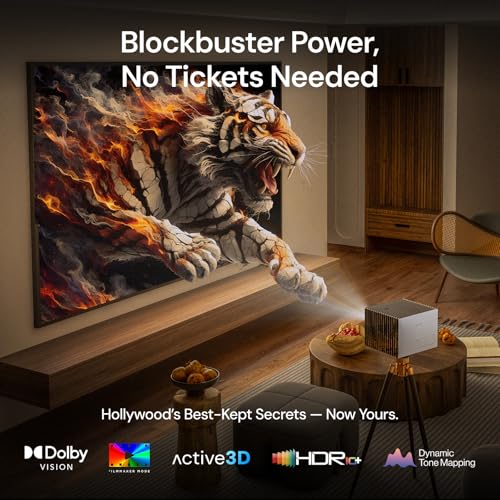
Both projectors support HDR formats, but differently. The Valerion VisionMaster Pro 2 supports Dolby Vision, HDR10+, and IMAX Enhanced with dynamic tone mapping. The Sony VPL-XW7000ES includes Sony's X1 Ultimate processor with object-based HDR remastering for superior processing. While the Valerion supports more HDR formats, the Sony provides better HDR image processing quality.
The Valerion VisionMaster Pro 2 works better in living rooms due to its smart features, built-in speakers, portable 15.4-pound design, and wireless connectivity. However, its lack of lens shift makes placement challenging in flexible spaces. The Sony VPL-XW7000ES requires dedicated components and permanent installation, making it less suitable for multi-purpose living rooms. Choose the Valerion for living room flexibility.
The Valerion VisionMaster Pro 2 includes built-in 24-watt DTS-X speakers that are decent for casual viewing, plus Bluetooth connectivity for wireless headphones. The Sony VPL-XW7000ES has no built-in speakers and assumes you'll use a dedicated audio system with its optical and analog outputs. The Valerion offers more audio convenience while the Sony integrates with high-end theater audio systems.
Both use laser light sources that last much longer than traditional bulbs. The Valerion VisionMaster Pro 2 uses RGB triple-laser technology rated for 25,000+ hours, while the Sony VPL-XW7000ES employs laser phosphor technology good for 20,000 hours. Both eliminate bulb replacement concerns, though the Valerion has a slightly longer rated lifespan and the Sony offers more proven laser reliability.
For dedicated home theaters, the Sony VPL-XW7000ES is the better choice despite its higher cost. It offers native 4K image quality, infinite contrast, motorized lens shift for perfect installation, and proven long-term stability. The Valerion VisionMaster Pro 2 has documented color stability issues and lacks lens shift, limiting its suitability for permanent installations. Serious home theater enthusiasts should choose the Sony for reference-quality performance.
We've done our best to create useful and informative comparisons to help you decide what product to buy. Our research uses advanced automated methods to create this comparison and perfection is not possible - please contact us for corrections or questions. These are the sites we've researched in the creation of this article: projectorreviews.com - projectorcentral.com - projectorcentral.com - soundandvision.com - valerion.com - projector-database.com - rtings.com - valerion.com - techradar.com - valueelectronics.com - digitalcameraworld.com - youtube.com - youtube.com - bestbuy.com - whathifi.com - electronics.sony.com - us.puretheatre.com - pro.sony - stereonet.com - pro.sony - valueelectronics.com - projectorreviews.com - pro.sony - leisuretheory.com

Privacy Policy
Terms and Conditions - Affiliate Policy
Home Security
© Copyright 2008-2026.
11816 Inwood Rd #1211, Dallas, TX 75244