


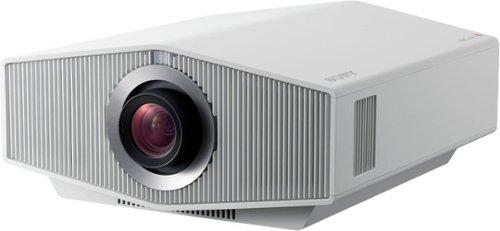
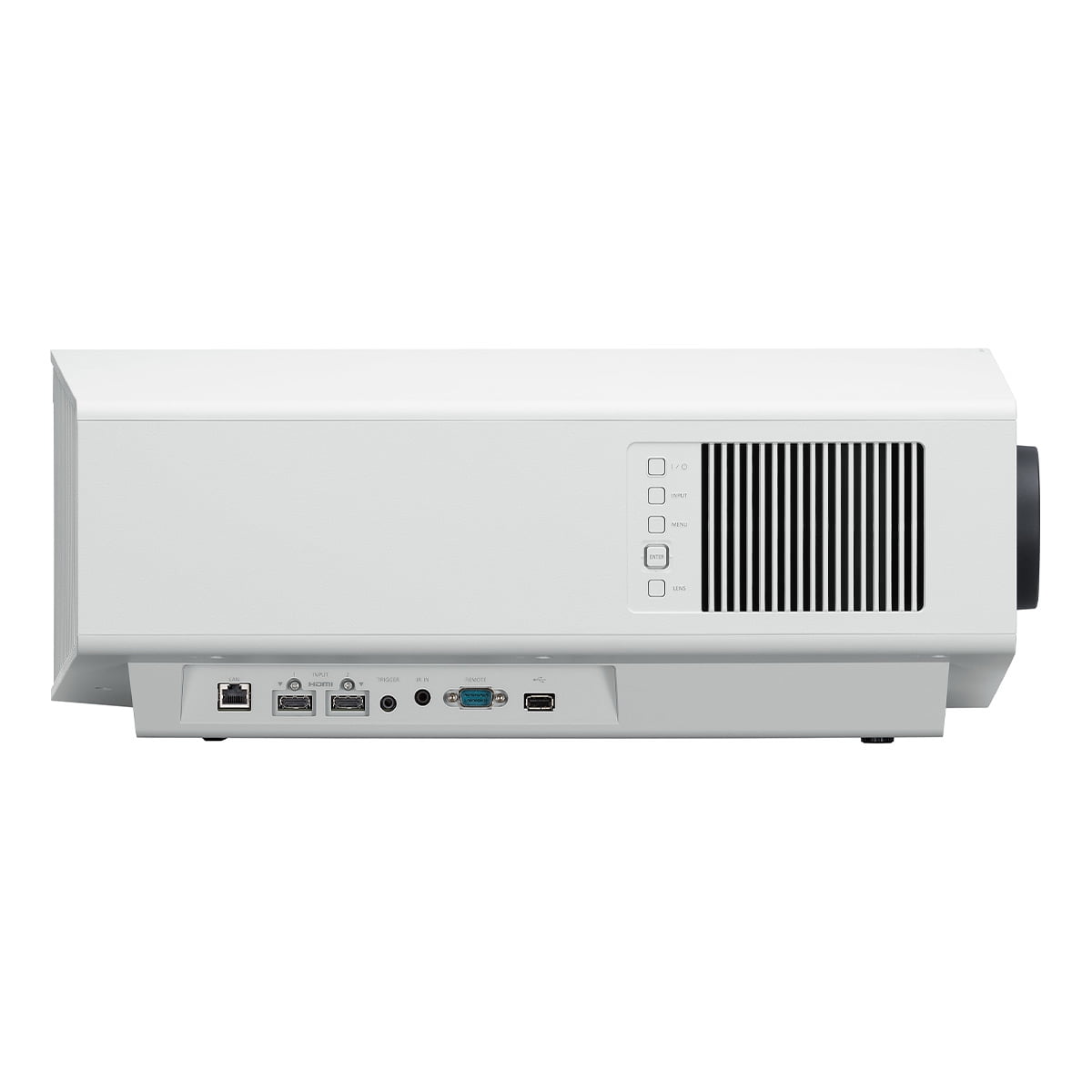

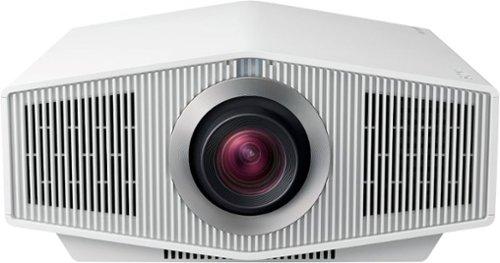
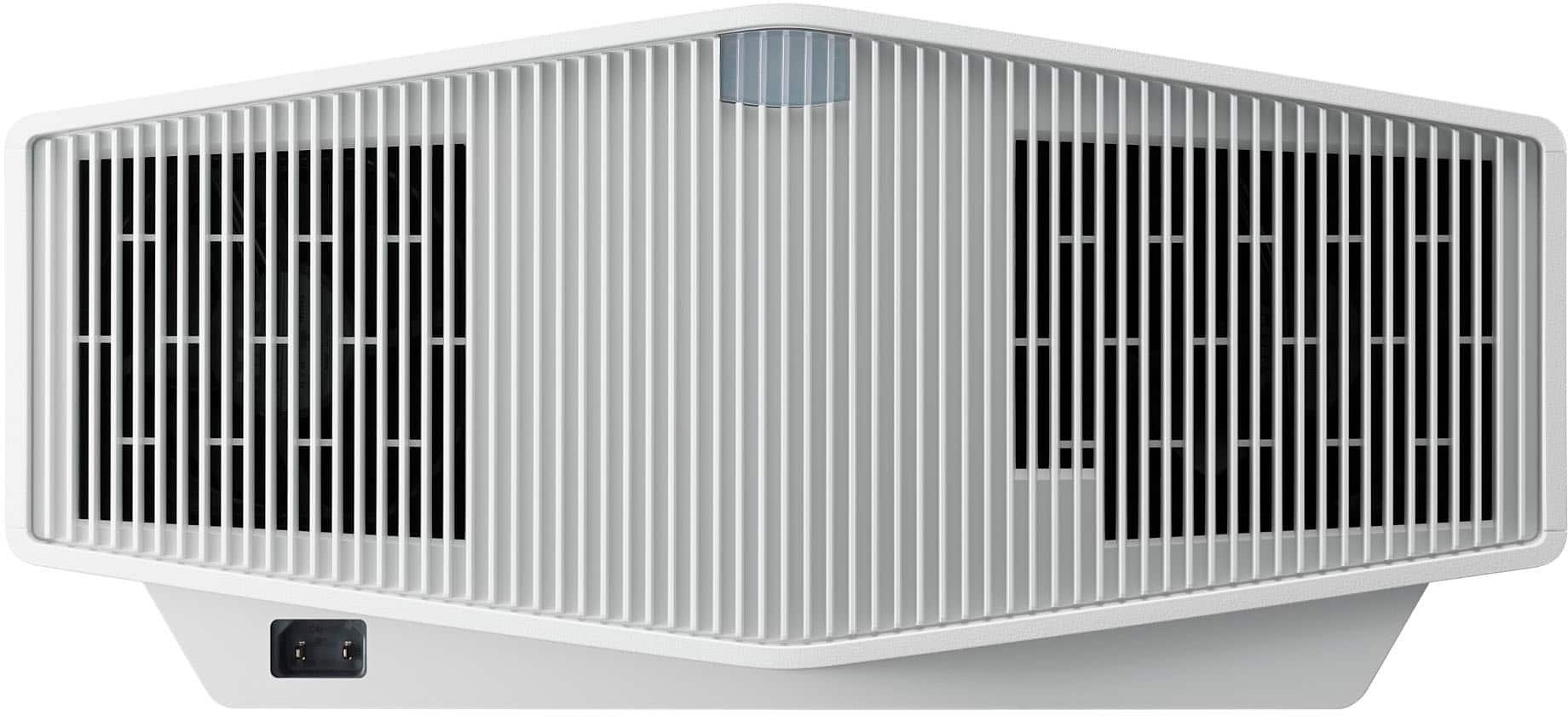
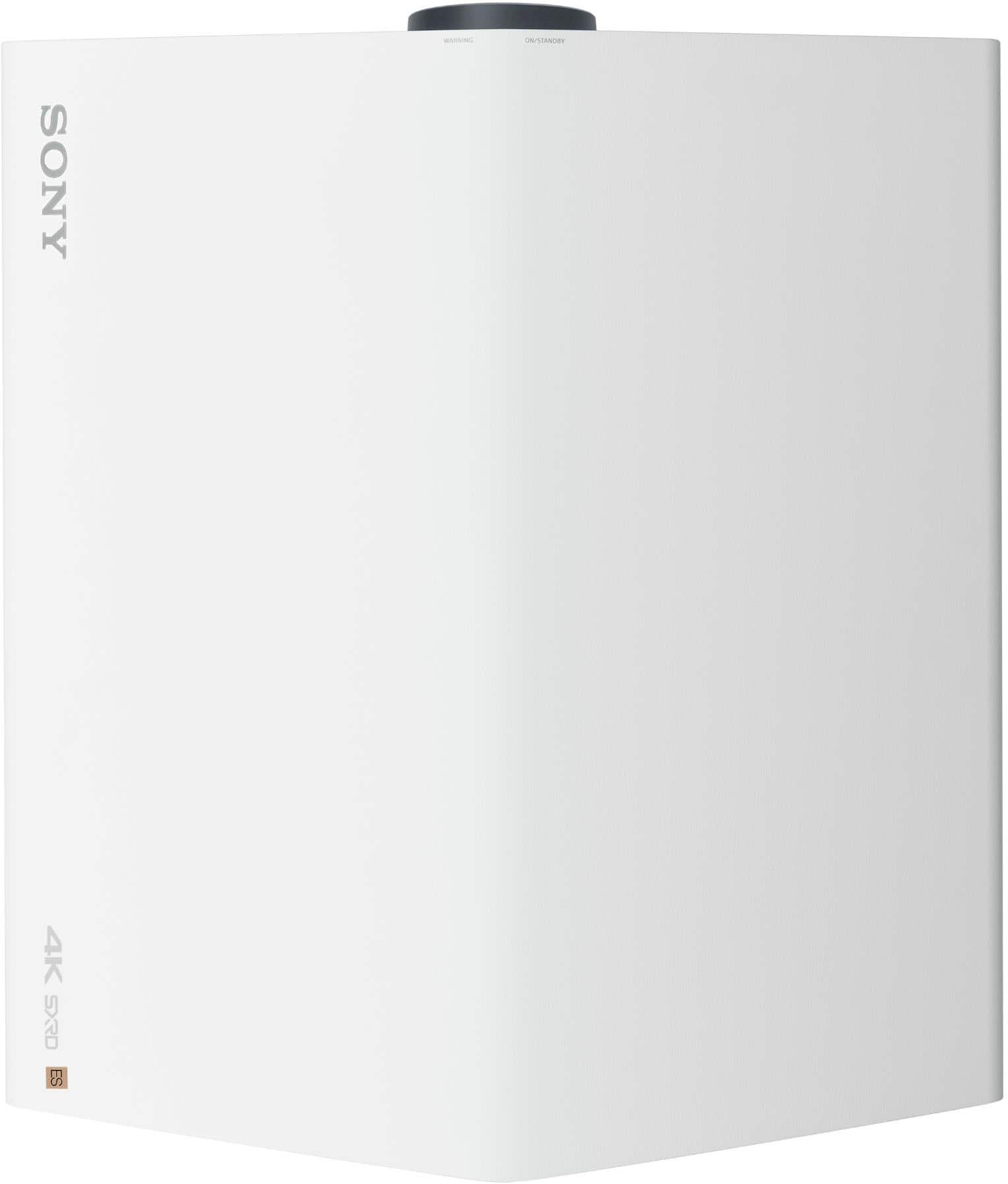
Home theater projection has reached an exciting crossroads. We're seeing incredible advances in laser technology, 4K processing, and smart features that make projectors more appealing than ever. But with these advances comes a fundamental choice: do you want a convenient lifestyle projector that handles everything well, or a professional-grade cinema machine that excels at pure image quality?
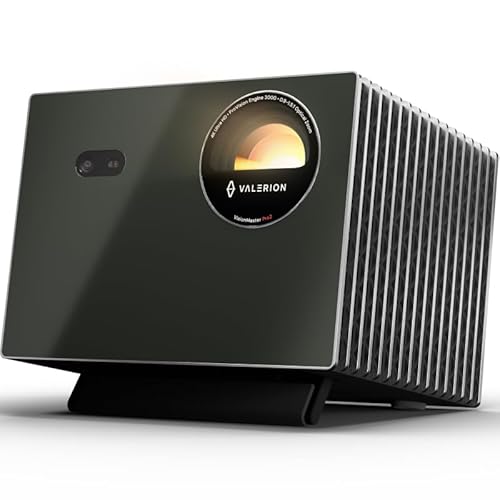
The Valerion VisionMaster Pro 2 and Sony BRAVIA Projector 8 represent these two philosophies perfectly. Released in 2024, both showcase cutting-edge laser technology, but they're designed for completely different users and scenarios. At the time of writing, the Valerion costs around $3,000 while the Sony commands about five times that price - a difference that reflects their fundamentally different approaches to home projection.
Before diving into specifics, it's worth understanding what separates today's projectors from older models. Both the Valerion VisionMaster Pro 2 and Sony BRAVIA Projector 8 use laser light sources instead of traditional lamps. This matters because lasers last 20,000-25,000 hours compared to maybe 4,000 hours for a lamp, and they maintain consistent brightness throughout their lifespan.
The real revolution, though, is in how they create images. Traditional projectors struggled with color accuracy and brightness, especially in rooms with ambient light. These modern laser projectors can produce images bright enough for daytime viewing while maintaining rich, accurate colors that rival high-end televisions.
When evaluating projectors, the most critical performance metrics are brightness (measured in lumens), contrast ratio (the difference between darkest black and brightest white), color accuracy, and resolution sharpness. Installation flexibility - how easily you can position the projector in your room - has become equally important as more people integrate projectors into living spaces rather than dedicated theater rooms.
Here's where things get interesting. The Valerion VisionMaster Pro 2 uses a single-chip DLP (Digital Light Processing) system with what's called XPR pixel-shifting. Think of it as a high-tech sleight of hand - the projector has a native 1080p chip that rapidly shifts pixels to create the impression of 4K resolution. It displays all 8.3 million pixels of 4K content, but does so by moving them around quickly rather than having dedicated spots for each pixel.
The Sony BRAVIA Projector 8 takes a completely different approach with three separate SXRD (Silicon X-tal Reflective Display) panels - one each for red, green, and blue. Each panel physically contains all 8.3 million pixels needed for true 4K. It's like the difference between a magician making you think you see something versus actually having that thing right there.
This technical difference has real-world implications. Single-chip DLP projectors can sometimes produce a "rainbow effect" - brief flashes of color that some people notice, especially when moving their eyes quickly. The Valerion minimizes this with its RGB triple-laser design, but sensitive viewers might still detect it occasionally. The Sony's three-chip system eliminates rainbow effects entirely.
More importantly, the Sony's approach typically produces sharper text and finer details, particularly noticeable with computer content or detailed film scenes. However, the Valerion's pixel-shifting 4K looks excellent for movies and gaming, especially considering the significant price difference.
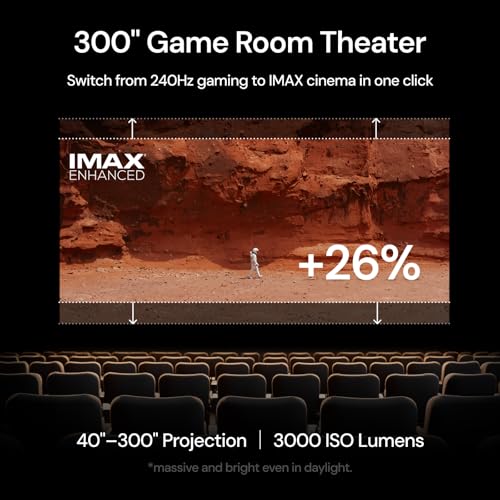
Both projectors excel in brightness, but in different ways. The Valerion VisionMaster Pro 2 produces 3,000 ISO lumens from its RGB triple-laser system, while the Sony BRAVIA Projector 8 outputs 2,700 lumens using Z-Phosphor laser technology. In practical terms, both are bright enough for rooms with moderate ambient light - a huge advantage over older projectors that demanded cave-like darkness.
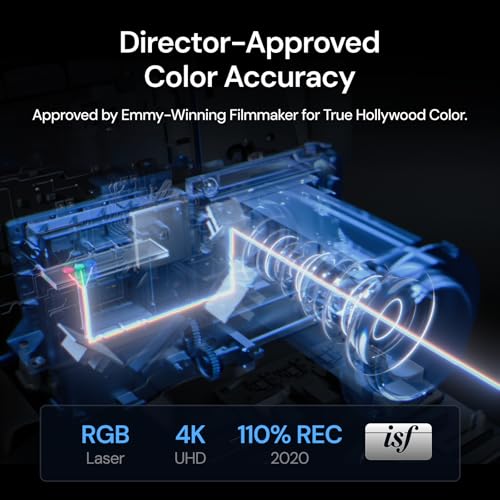
The Valerion claims an impressive 110% coverage of the Rec. 2020 color space (the standard for premium content), which sounds fantastic on paper. However, our research into user experiences reveals a significant issue: color channel instability. Multiple reviewers noted that even after professional calibration, the colors would drift over time, requiring constant readjustment. This isn't a dealbreaker for casual viewing, but it's frustrating for enthusiasts who want consistent performance.
The Sony takes a more conservative but stable approach, covering over 95% of the DCI-P3 color space (the cinema standard) with rock-solid consistency. Its XR Triluminos Pro technology doesn't just display wide colors - it reproduces them accurately and maintains that accuracy over time. For serious movie watching, this stability matters more than impressive specifications that don't hold up in practice.
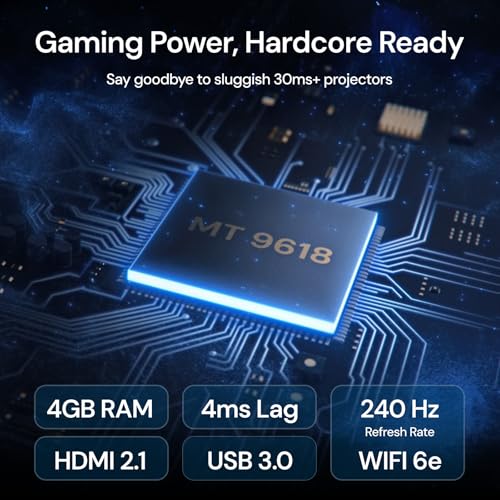
If gaming factors into your projector decision, the Valerion VisionMaster Pro 2 delivers genuinely impressive performance. With input lag as low as 4 milliseconds at 1080p/240Hz and 8ms at 1080p/120Hz, it rivals dedicated gaming monitors. For context, anything under 20ms is considered excellent for gaming, so these numbers put the Valerion in elite territory.
This matters because input lag - the delay between pressing a controller button and seeing the action on screen - can make or break competitive gaming experiences. The Valerion's dual HDMI 2.1 ports also support the latest gaming consoles' high refresh rate modes, making it genuinely competitive with premium gaming displays.
The Sony BRAVIA Projector 8 wasn't designed with gaming as a priority, and while it likely handles games adequately, it doesn't match the Valerion's specialized gaming optimizations. If you're primarily interested in movies and television, this won't matter. But for households where gaming is important, the Valerion offers a rare combination of excellent projection and gaming performance.
Here's where the Sony BRAVIA Projector 8 justifies much of its premium pricing. Professional installation flexibility might sound boring, but it's often the difference between a successful projector setup and a frustrating compromise.
The Sony features extensive lens shift - you can move the image up/down by 85% and left/right by 36% without any digital processing. Combined with a 2.14:1 zoom ratio, this means you can place the projector almost anywhere in your room and still get a perfectly rectangular, sharp image. You might mount it on a rear shelf, ceiling mount it offset to one side, or place it on a coffee table - the Sony adapts to your room rather than forcing your room to adapt to it.
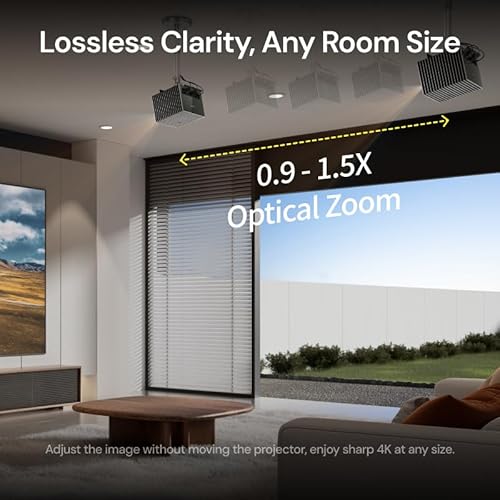
The Valerion VisionMaster Pro 2 has no lens shift whatsoever. It includes digital keystone correction to fix geometric distortion, but this always involves some image quality compromise. Multiple reviewers noted that achieving a perfectly aligned image with the Valerion requires extremely precise placement - one described it as needing "SpaceX precision." This isn't impossible, but it means you'll likely need to build your room layout around the projector's requirements.
For dedicated theater rooms where you can position everything precisely, this might not matter. But for living rooms, bedrooms, or other multi-purpose spaces, the Sony's flexibility can be invaluable.
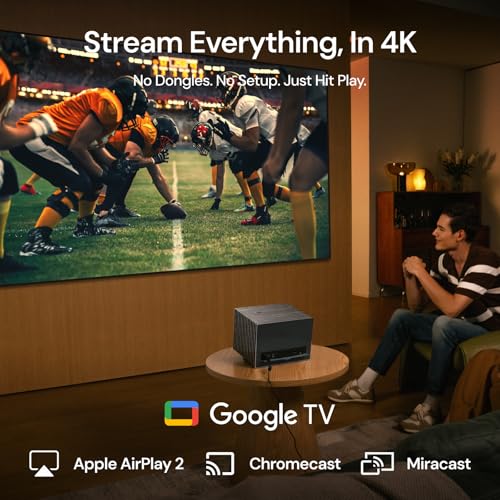
The Valerion VisionMaster Pro 2 embraces the modern lifestyle projector concept with built-in Google TV OS, comprehensive app support, and integrated 12-watt speakers with DTS Virtual:X processing. You can literally unbox it, plug it in, and start streaming Netflix without any additional devices or speakers.
This convenience factor shouldn't be underestimated. The Valerion supports Wi-Fi 6E for fast wireless streaming, includes voice control through Google Assistant and Alexa, and integrates with smart home systems. It's designed to be as simple as a premium television while delivering projection's unique benefits.
The Sony BRAVIA Projector 8 takes a more traditional approach, requiring external devices for streaming and a separate audio system. This might seem like a disadvantage, but it reflects the Sony's positioning as a component in a larger, professionally designed system. Serious home theater enthusiasts often prefer this approach because it allows them to choose exactly the streaming device and audio system they want rather than being locked into the projector manufacturer's choices.
Both projectors support the full range of modern HDR (High Dynamic Range) formats: HDR10, HDR10+, Dolby Vision, HLG, and IMAX Enhanced. HDR dramatically expands the range between the darkest shadows and brightest highlights, making images appear more lifelike and three-dimensional.
However, supporting HDR formats and displaying them well are different things. The Sony BRAVIA Projector 8's XR Processor, derived from Sony's professional cinema technology, analyzes each frame in real-time to optimize brightness and color. This dynamic tone mapping helps ensure that both bright highlights and dark shadows maintain detail, rather than getting blown out or crushed into black.
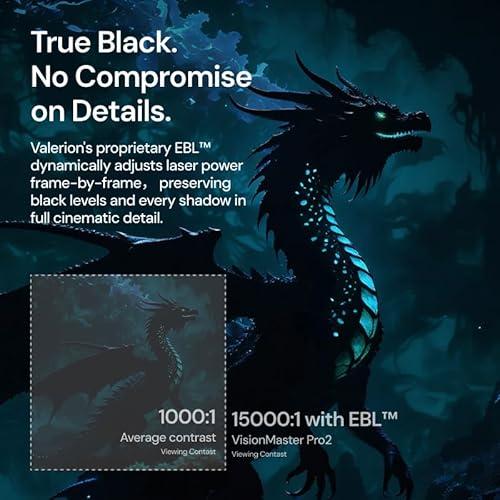
The Sony's laser system can modulate its output with extreme precision, creating what's effectively infinite dynamic contrast. Dark scenes can go truly dark while bright scenes maintain their impact. The Valerion handles HDR content well with its 4,000:1 native contrast ratio, but the Sony's processing and hardware advantages become particularly apparent with challenging HDR content.
The Valerion VisionMaster Pro 2 includes built-in speakers that most users find adequate for casual viewing. However, several reviewers noted that while the 12-watt speakers handle dialogue and background music acceptably, they don't match the projector's visual capabilities for serious home theater use.
The Sony BRAVIA Projector 8 includes no speakers at all, requiring you to provide your own audio solution. At the Sony's price point, this makes sense - buyers are likely building comprehensive home theater systems with dedicated receivers and speakers. But it does mean additional complexity and cost.
For most users, good external speakers or a soundbar will dramatically improve either projector's performance. The Valerion's built-in audio is a convenient backup, but shouldn't be the deciding factor in your choice.
Professional projectors like the Sony BRAVIA Projector 8 typically offer longer warranties and more comprehensive support networks, reflecting their positioning as long-term investments. The Sony includes a three-year warranty and access to Sony's professional installation and calibration services.
The Valerion VisionMaster Pro 2, as a newer brand in the projector space, doesn't have the same extensive support infrastructure. However, its use of standard components (Texas Instruments DLP chips, established laser modules) means repairs should be straightforward when needed.
Both projectors use laser light sources rated for 20,000+ hours, meaning they should provide a decade or more of regular use without replacement. This is a major advantage over lamp-based projectors that require expensive bulb changes every few years.
The Sony BRAVIA Projector 8's superior contrast performance makes it particularly suited to dedicated theater rooms with good light control. Its ability to produce deep blacks really shines in darker environments, and its color accuracy benefits from careful calibration with specific screen materials.
The Valerion VisionMaster Pro 2's higher brightness and convenience features make it excellent for multi-purpose rooms with some ambient light. Its smart features mean you can use it for everything from streaming shows during dinner to gaming with friends to movie nights.
Screen choice matters significantly for both projectors. The Sony's superior contrast can take advantage of more specialized screen materials, while the Valerion's brightness works well with standard white or gray screens available at reasonable prices.
Choose the Valerion VisionMaster Pro 2 if you want a projector that does everything well without breaking the bank. It's perfect for gaming enthusiasts, families who want smart TV convenience with big-screen projection, and anyone building a first projector setup. The color stability issues are real but likely won't bother most users, especially given the significant price advantage.
The Sony BRAVIA Projector 8 makes sense for serious home theater enthusiasts who prioritize absolute image quality and have the budget for a comprehensive system. Its installation flexibility alone can justify the premium in challenging room layouts, and its professional-grade image quality provides a foundation for a truly exceptional viewing experience.
At the time of writing, the price gap between these projectors is substantial enough that they're really targeting different markets. The Valerion competes with other lifestyle projectors while offering features typically found in much more expensive models. The Sony competes with other professional home theater projectors where image quality and flexibility matter more than price.
Both represent the current state of the art in their respective categories. Your choice should depend on your budget, room constraints, intended use cases, and how much you value convenience versus ultimate performance. Either way, you're getting access to projection technology that would have been impossible just a few years ago.
| Valerion VisionMaster Pro 2 | Sony BRAVIA Projector 8 |
|---|---|
| Display Technology - Core image quality approach | |
| Single 0.47" DLP chip with XPR pixel-shifting to 4K | Three 0.61" native 4K SXRD panels (true 4K) |
| Brightness - Critical for rooms with ambient light | |
| 3,000 ISO lumens (RGB triple laser) | 2,700 ANSI lumens (Z-Phosphor laser) |
| Contrast Ratio - Determines black levels and image depth | |
| 4,000:1 native, 15,000:1 dynamic | Excellent native, nearly infinite dynamic |
| Color Gamut - Affects color vibrancy and accuracy | |
| 110% Rec.2020 (but with stability issues) | 95% DCI-P3 (rock-solid consistency) |
| Lens Flexibility - Installation options in your room | |
| 1.67x zoom, no lens shift (precise placement required) | 2.14x zoom, ±85% vertical/±36% horizontal lens shift |
| Gaming Performance - Input lag for responsive gaming | |
| 4ms at 1080p/240Hz, 8ms at 1080p/120Hz (excellent) | Not optimized for gaming (adequate for casual use) |
| Smart Features - Built-in convenience vs external flexibility | |
| Google TV OS, Wi-Fi 6E, built-in apps and speakers | No built-in smart features or speakers (requires external) |
| HDR Support - Premium content compatibility | |
| Dolby Vision, HDR10+, HDR10, HLG, IMAX Enhanced | Same formats plus XR Dynamic Tone Mapping processing |
| Light Source Life - Long-term operating costs | |
| 25,000+ hours (RGB laser) | 20,000 hours (Z-Phosphor laser) |
| Size and Weight - Portability and installation ease | |
| 10.2" × 7.3" × 9.2", 15.4 lbs (compact lifestyle design) | 18.1" × 8.4" × 20.4", 31 lbs (professional installation focus) |
| Target User - Who this projector is designed for | |
| Gaming enthusiasts and convenience-focused families | Serious home theater enthusiasts with dedicated rooms |
| Key Advantage - What this projector does best | |
| Outstanding value with gaming performance and smart features | Professional image quality with unmatched installation flexibility |
| Main Limitation - Biggest potential drawback | |
| Color channel instability and no lens shift | Premium price requires external audio and streaming devices |
The Valerion VisionMaster Pro 2 is significantly better for gaming with ultra-low input lag of just 4ms at 1080p/240Hz and 8ms at 1080p/120Hz. It includes HDMI 2.1 ports and gaming-optimized features like Auto Low Latency Mode. The Sony BRAVIA Projector 8 isn't specifically designed for gaming and lacks these specialized gaming features, making the Valerion the clear winner for gamers.
The Sony BRAVIA Projector 8 offers true native 4K with three separate panels containing all 8.3 million pixels, while the Valerion VisionMaster Pro 2 uses pixel-shifting technology to create 4K from a 1080p chip. For most viewers, the Valerion's pixel-shifted 4K looks excellent, especially for movies and gaming. However, the Sony provides sharper text and finer details, particularly noticeable with computer content.
The Valerion VisionMaster Pro 2 produces 3,000 ISO lumens compared to the Sony BRAVIA Projector 8's 2,700 lumens. Both are bright enough for rooms with moderate ambient light, but the Valerion has a slight edge in brightness. However, the difference is minimal in real-world use, and both projectors handle daytime viewing well compared to older lamp-based models.
The Sony BRAVIA Projector 8 offers superior installation flexibility with extensive lens shift (±85% vertical, ±36% horizontal) and a 2.14x zoom ratio, allowing placement almost anywhere in your room. The Valerion VisionMaster Pro 2 has no lens shift and requires very precise placement to avoid using digital keystone correction, which can reduce image quality. For challenging room layouts, the Sony is much more forgiving.
The Valerion VisionMaster Pro 2 provides exceptional value with premium features like RGB triple laser, 4K resolution, gaming optimization, and built-in smart features at a fraction of the cost of the Sony BRAVIA Projector 8. The Sony costs approximately five times more but delivers professional-grade image quality and installation flexibility. For most users, the Valerion offers better bang for your buck.
The Valerion VisionMaster Pro 2 runs Google TV OS with built-in Netflix, YouTube, Prime Video, and other major streaming apps, plus Wi-Fi 6E connectivity. The Sony BRAVIA Projector 8 has no built-in smart features and requires external streaming devices like Apple TV or Roku. If you want an all-in-one solution, the Valerion provides more convenience.
The Sony BRAVIA Projector 8 delivers superior color stability and consistency, covering 95% of DCI-P3 with rock-solid performance over time. While the Valerion VisionMaster Pro 2 claims wider color coverage (110% Rec.2020), multiple reviews note color channel instability issues where colors drift even after calibration. For serious home theater use, the Sony's consistent color accuracy is more valuable.
The Sony BRAVIA Projector 8 eliminates rainbow effects completely due to its three-chip SXRD design. The Valerion VisionMaster Pro 2 uses single-chip DLP technology, which can produce brief rainbow flashes that some sensitive viewers notice when moving their eyes quickly. However, the Valerion's RGB triple laser minimizes this effect compared to traditional DLP projectors with color wheels.
The Sony BRAVIA Projector 8 excels in dedicated home theater environments with its superior contrast ratio, stable color accuracy, and professional-grade image processing. Its installation flexibility also helps in custom theater room designs. The Valerion VisionMaster Pro 2 works well for casual home theater use and offers great value, but the Sony provides the premium image quality serious cinephiles expect.
The Valerion VisionMaster Pro 2 includes built-in 12-watt DTS Virtual:X speakers that are adequate for casual viewing but not exceptional for serious home theater use. The Sony BRAVIA Projector 8 has no built-in speakers and requires external audio equipment. Both benefit significantly from dedicated speakers or soundbars, but the Valerion can work standalone if needed.
Both projectors use long-lasting laser light sources: the Valerion VisionMaster Pro 2 is rated for 25,000+ hours while the Sony BRAVIA Projector 8 lasts up to 20,000 hours. This means either projector should provide 10+ years of regular use without replacement, a major advantage over traditional lamp-based projectors that require expensive bulb changes every few years.
For most first-time projector buyers, the Valerion VisionMaster Pro 2 offers an excellent entry point with premium features, built-in smart capabilities, and outstanding gaming performance at a reasonable price point. Choose the Sony BRAVIA Projector 8 if you have a larger budget, prioritize absolute image quality, need professional installation flexibility, or are building a dedicated theater room with external audio equipment.
We've done our best to create useful and informative comparisons to help you decide what product to buy. Our research uses advanced automated methods to create this comparison and perfection is not possible - please contact us for corrections or questions. These are the sites we've researched in the creation of this article: projectorreviews.com - projectorcentral.com - projectorcentral.com - soundandvision.com - valerion.com - projector-database.com - rtings.com - valerion.com - techradar.com - valueelectronics.com - digitalcameraworld.com - youtube.com - youtube.com - bestbuy.com - projectorreviews.com - valueelectronics.com - stereonet.com - crutchfield.com - audioholics.com - crutchfield.com - projectorcentral.com - pro.sony - electronics.sony.com - cepro.com - community.verizon.com

Privacy Policy
Terms and Conditions - Affiliate Policy
Home Security
© Copyright 2008-2026.
11816 Inwood Rd #1211, Dallas, TX 75244