



The 4K projector market has exploded in recent years, offering everything from budget-friendly options that deliver impressive visuals to reference-grade units that rival commercial cinema equipment. At the heart of this decision lies a fundamental question: do you prioritize getting excellent performance at a great price, or are you willing to invest significantly more for the absolute best image quality available?
This comparison between the Valerion StreamMaster Plus 2 and JVC DLA-NZ700 perfectly illustrates this divide. Released in 2024, these projectors represent two completely different philosophies in home theater design, yet both excel in their respective domains.
Before diving into specifics, it's crucial to understand what makes a projector "4K" and why the technology matters. True 4K means displaying 4,096 × 2,160 pixels simultaneously—that's over 8.8 million individual picture elements creating your image. However, not all 4K projectors achieve this the same way.
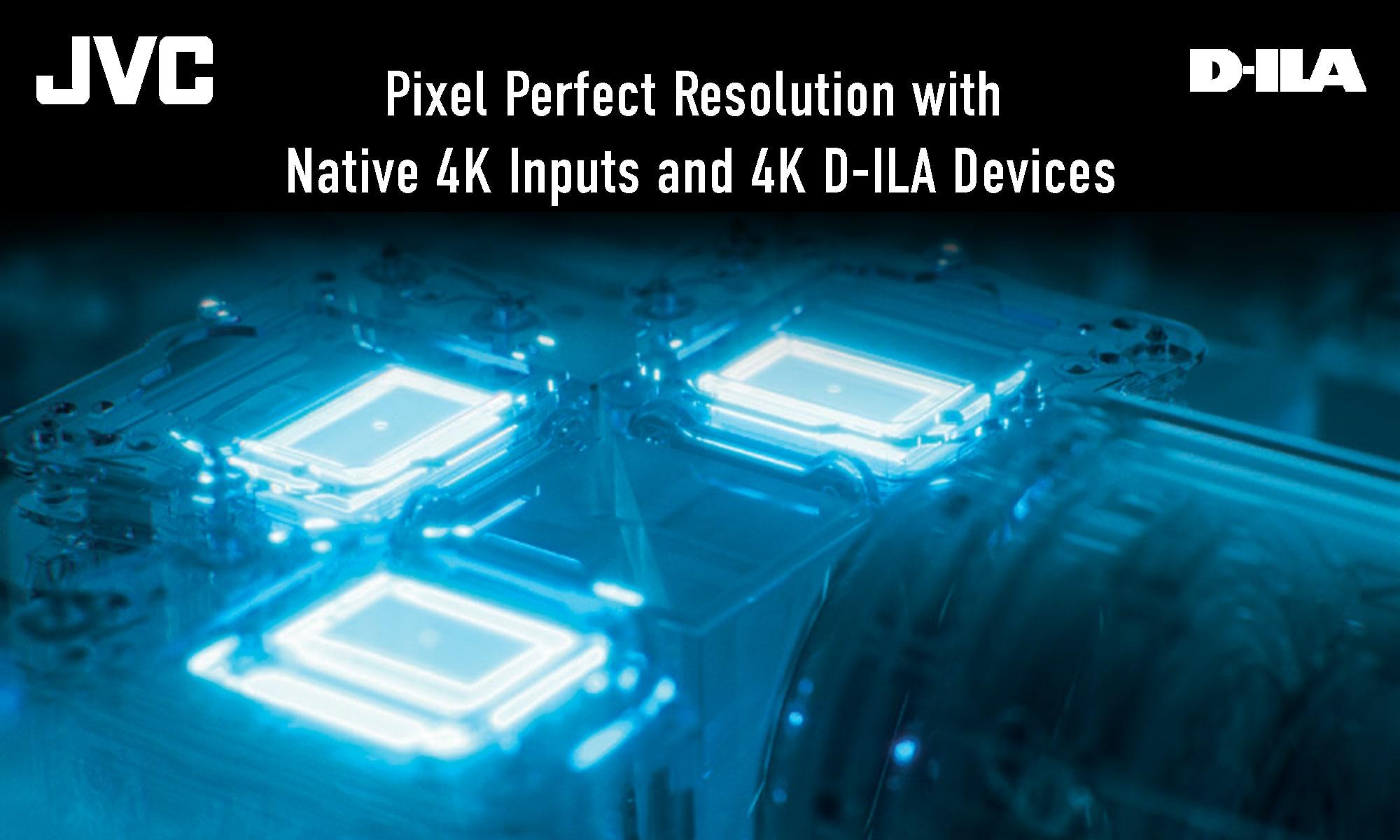
Some projectors, like the JVC DLA-NZ700, use native 4K chips that display every pixel at once. Others, including the Valerion StreamMaster Plus 2, use pixel-shifting technology—rapidly moving a lower-resolution image to create the appearance of 4K. Both approaches can produce sharp, detailed images, but native 4K typically provides superior clarity and eliminates potential artifacts.
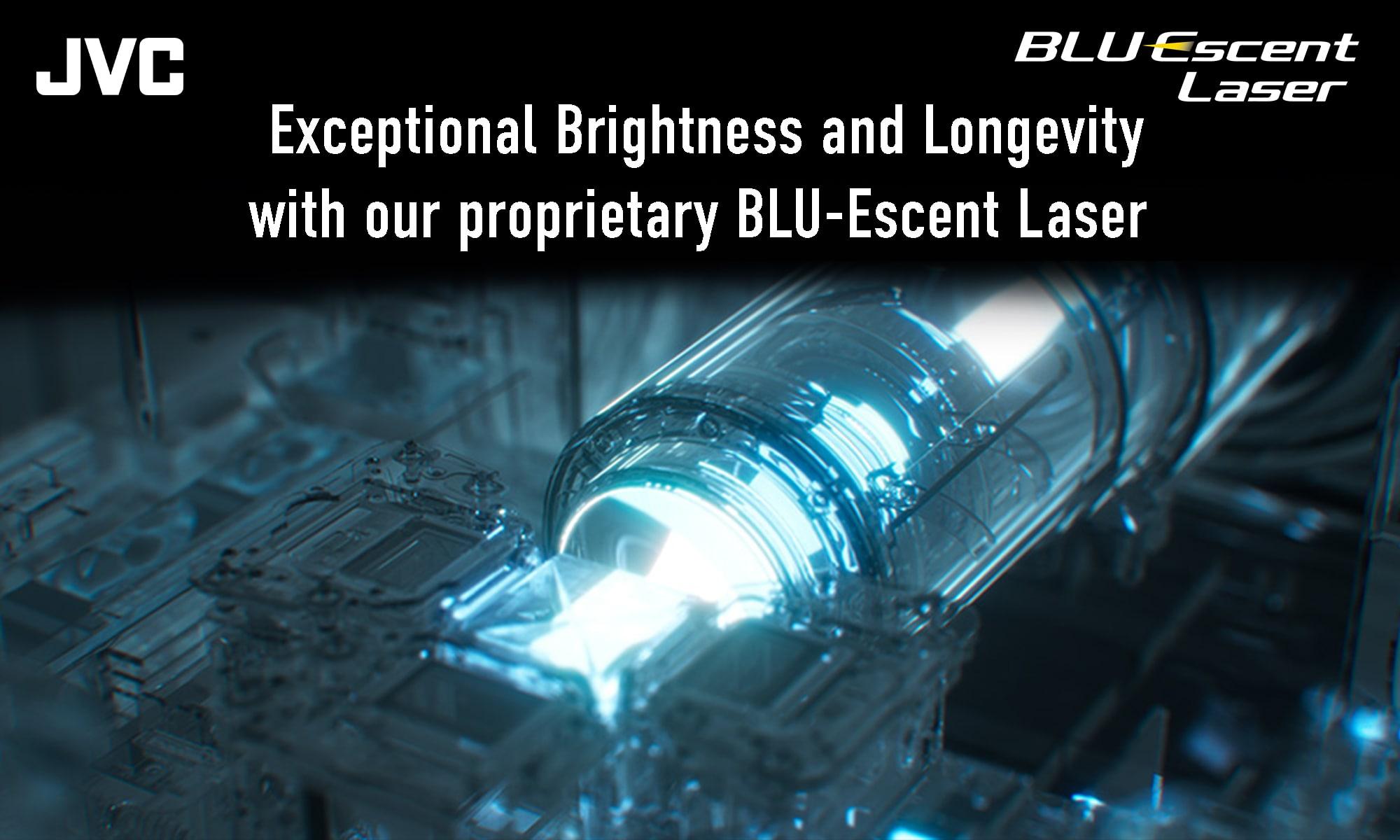
The light source technology has also evolved dramatically. Traditional projector bulbs lasted maybe 3,000-5,000 hours and required expensive replacements. Modern laser projectors like both units we're examining offer 20,000+ hour lifespans—roughly 10-15 years of normal use—while maintaining consistent brightness and color throughout their lives.
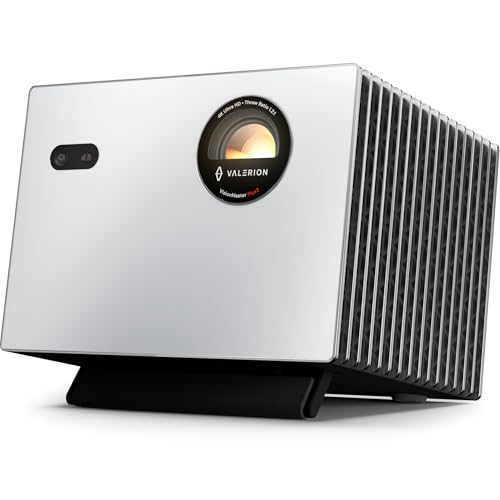
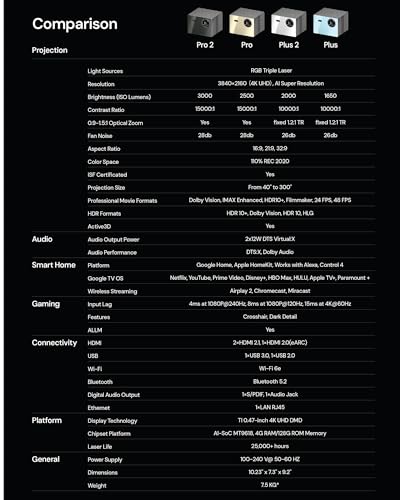
The Valerion StreamMaster Plus 2 launched as an impressive value proposition, packing features typically found in much more expensive projectors into a compact, affordable package. At the time of writing, it sits in the sub-$2,000 category, making genuine 4K projection accessible to mainstream buyers.
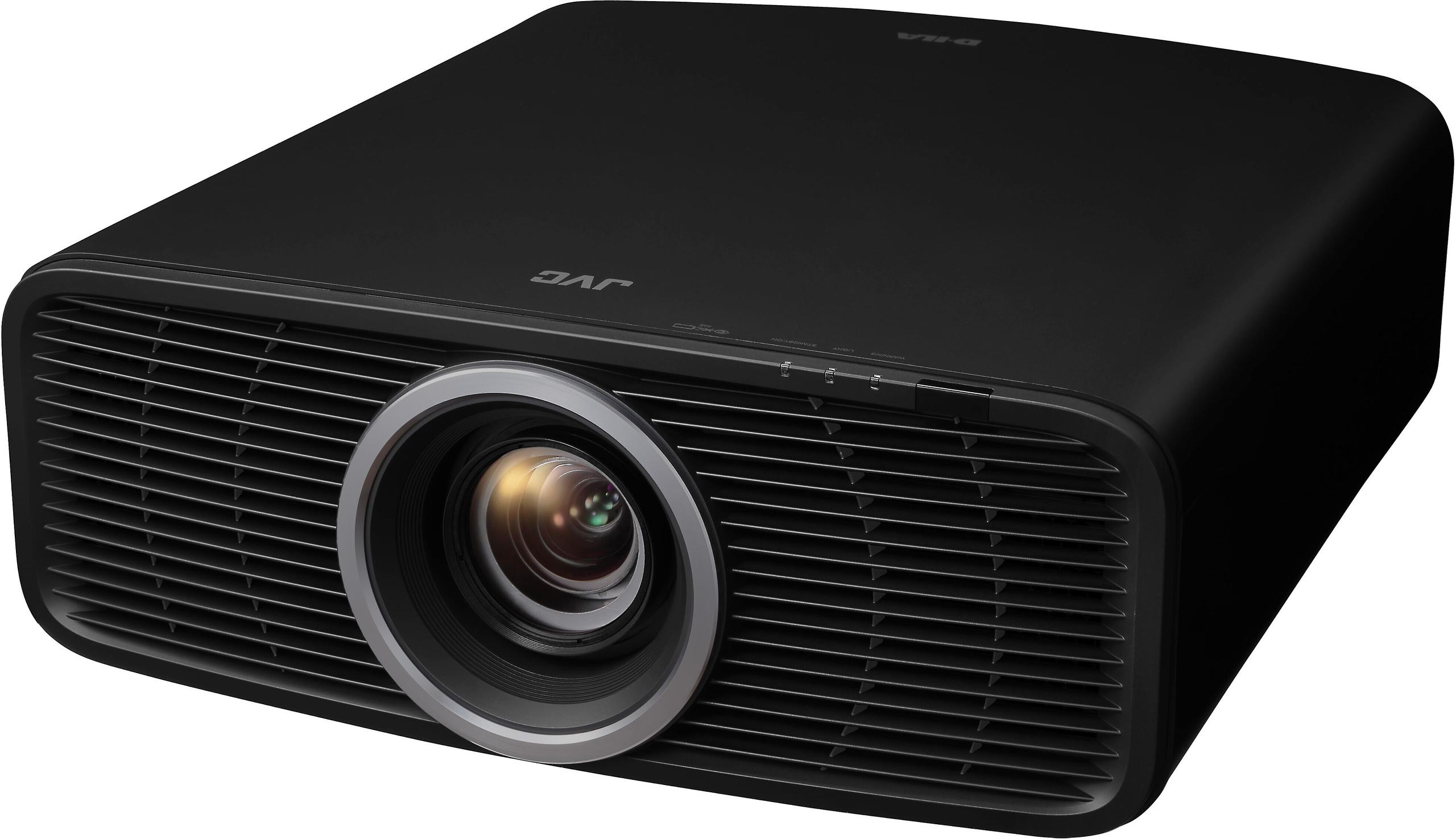
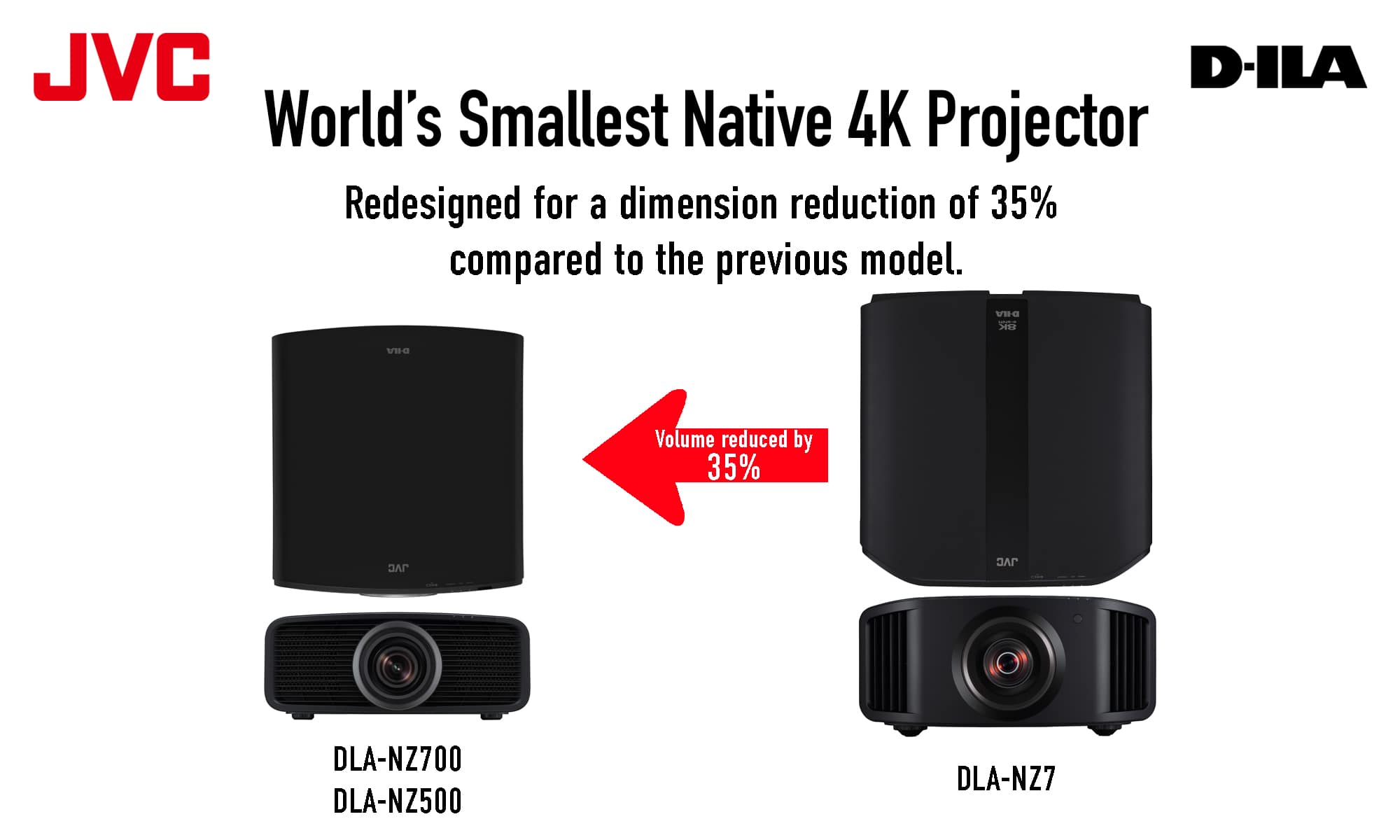
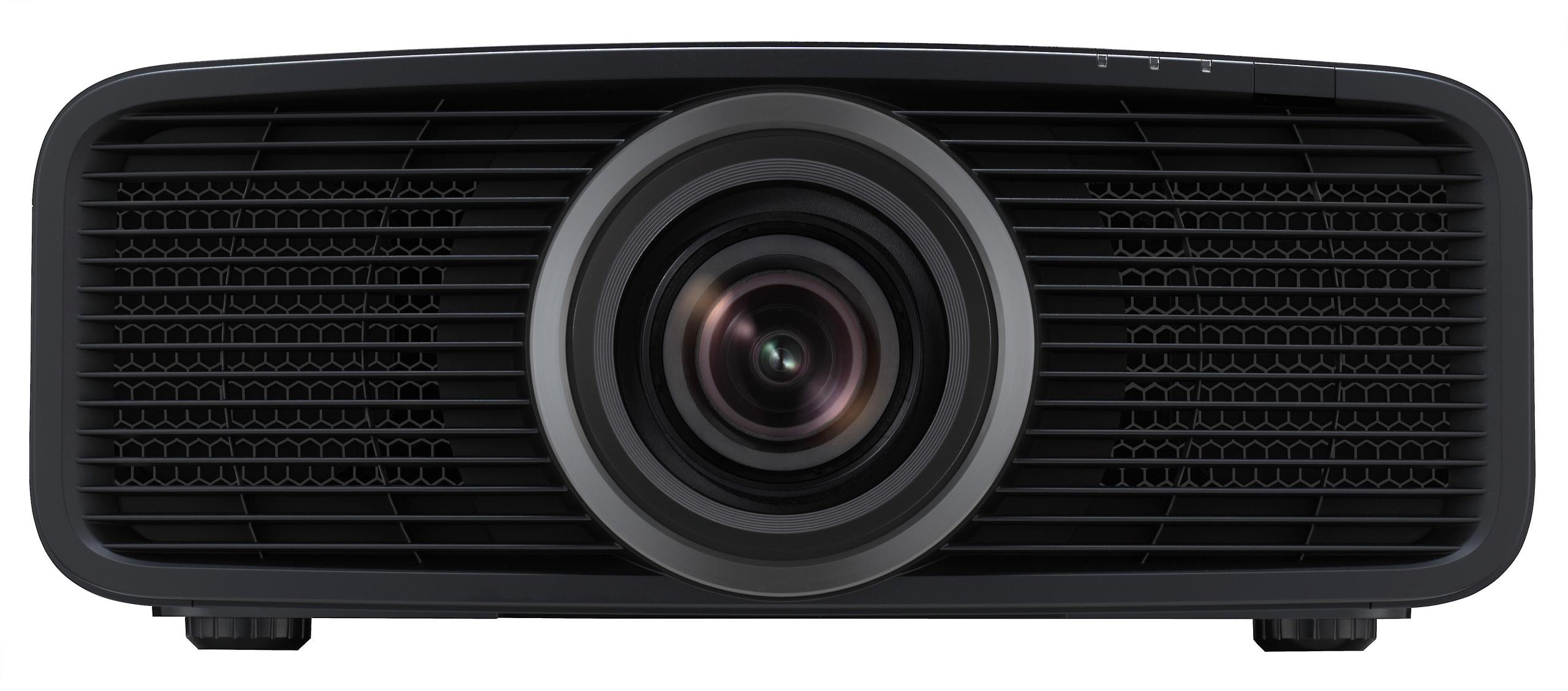
Meanwhile, the JVC DLA-NZ700 represents JVC's "entry-level" native 4K laser projector—though at nearly five times the price of the Valerion, "entry-level" is relative. This projector embodies JVC's decades of expertise in premium home theater, offering the kind of image quality that serious enthusiasts demand.
The most significant difference between these projectors lies in how they create images. The JVC DLA-NZ700 uses JVC's proprietary D-ILA technology—essentially a refined version of liquid crystal display (LCD) technology that reflects rather than transmits light. This results in three separate 0.69-inch chips, one each for red, green, and blue, working together to create true native 4K resolution.
D-ILA technology offers several advantages: no visible pixel structure (called the "screen door effect"), excellent contrast ratios, and smooth gradations between colors. The larger chip size also means more surface area for light collection, contributing to the projector's impressive brightness and color accuracy.
The Valerion StreamMaster Plus 2 employs DLP (Digital Light Processing) technology with a 0.47-inch chip. DLP uses millions of tiny mirrors that tilt rapidly to create images, combined with pixel-shifting to achieve 4K resolution. This approach offers its own benefits: sharp images, good reliability, and typically smaller, more affordable projector designs.
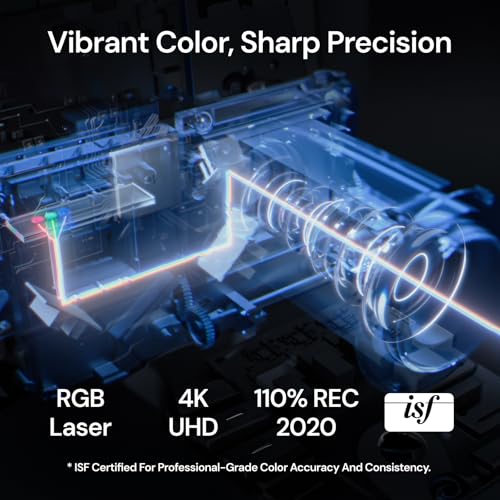
However, DLP's single-chip design can sometimes produce what's called the "rainbow effect"—brief flashes of color that some viewers notice during high-contrast scenes. The Valerion minimizes this through its RGB triple laser design, which uses separate red, green, and blue lasers instead of a spinning color wheel.
In my experience researching projector performance, contrast ratio—the difference between the brightest whites and darkest blacks—matters more than almost any other specification. Poor contrast makes images look flat and washed out, while excellent contrast creates that "pop" that makes movies feel lifelike.
Here's where these projectors diverge dramatically. The JVC DLA-NZ700 achieves an remarkable 80,000:1 native contrast ratio, meaning its brightest white is 80,000 times brighter than its darkest black. This isn't achieved through dynamic adjustments—it's the projector's fundamental optical capability.
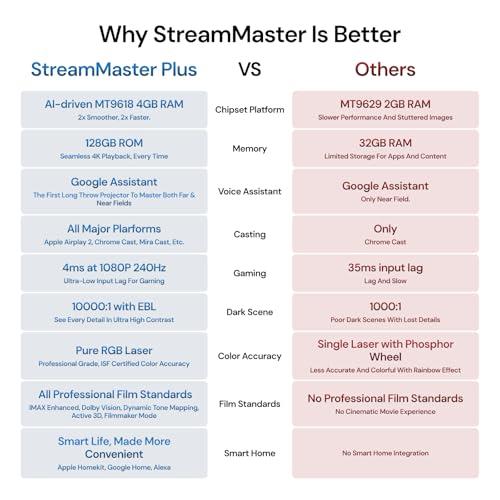
The Valerion StreamMaster Plus 2 offers 3,000:1 native contrast, enhanced to 10,000:1 with its Enhanced Black Level (EBL) mode activated. While respectable for its price point, this represents a significant performance gap. In practical terms, the JVC will display deeper blacks, better shadow detail, and more realistic-looking dark scenes.
This contrast advantage becomes particularly noticeable in movie content. Dark scenes in films like "Blade Runner 2049" or "The Batman" rely heavily on subtle shadow details and true blacks to create atmosphere. The JVC excels here, while the Valerion may appear somewhat milky or gray in the darkest areas.
However, contrast isn't everything. The Valerion's RGB laser system produces incredibly vibrant colors that can make HDR content absolutely stunning, sometimes compensating for the contrast limitations through sheer color intensity.
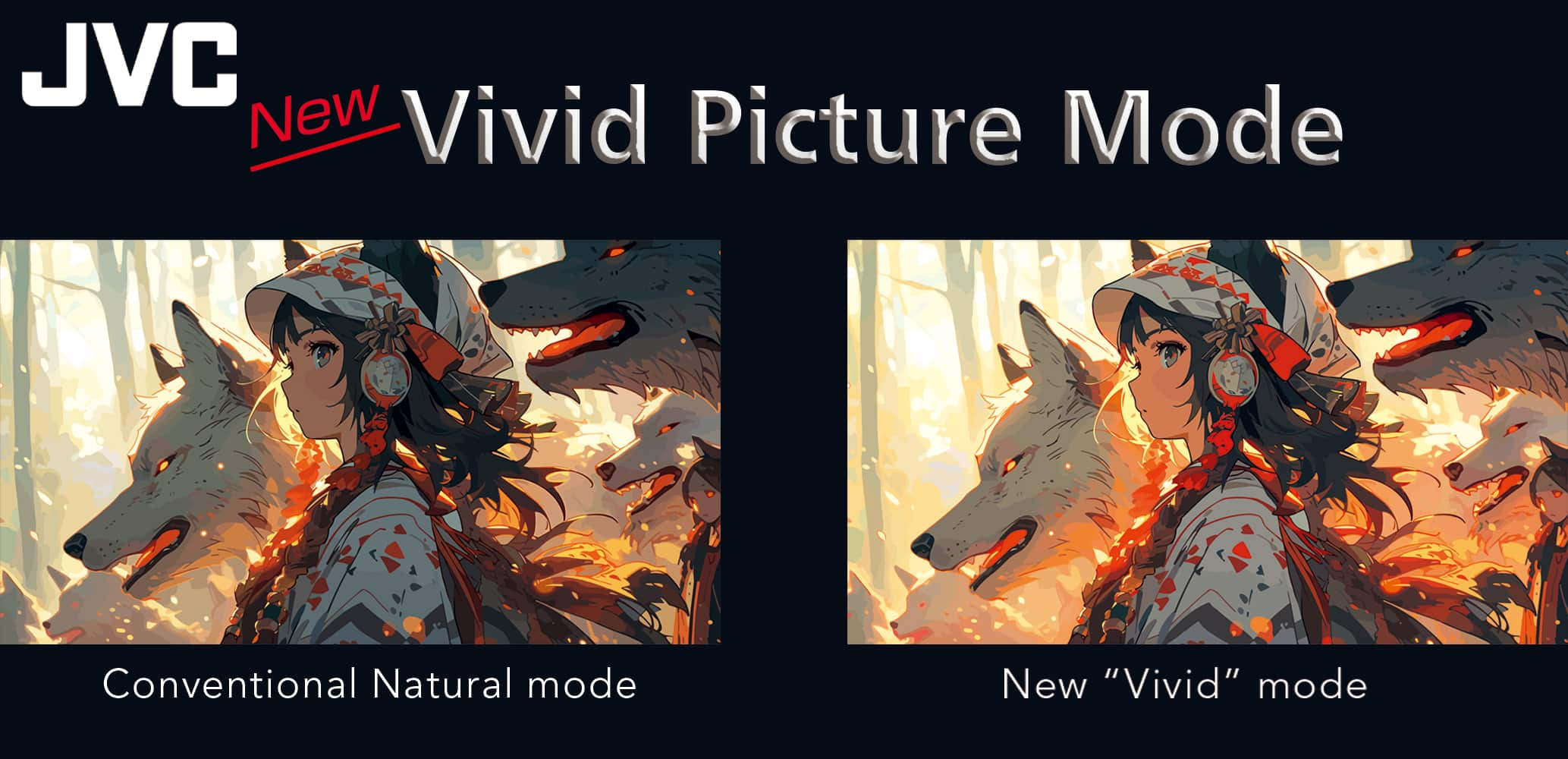
Color reproduction represents another area where these projectors take different approaches. The Valerion StreamMaster Plus 2 uses RGB triple laser technology to achieve an impressive 110% coverage of the Rec.2020 color space—the ultra-wide color standard for future content. This means incredibly vibrant, saturated colors that can make animated content and HDR movies truly pop off the screen.
The JVC DLA-NZ700 takes a more conservative approach, focusing on accurate reproduction of current content standards. It covers 100% of the DCI-P3 cinema color space and BT.709 television standard with remarkable precision. JVC's color science, refined over decades of professional cinema work, prioritizes accuracy over wow factor.
Which approach is better depends on your preferences and content. If you primarily watch animated movies, HDR content, or want colors that immediately grab attention, the Valerion's wider gamut might appeal more. For critical movie watching where the director's intent matters most, the JVC's accuracy proves superior.
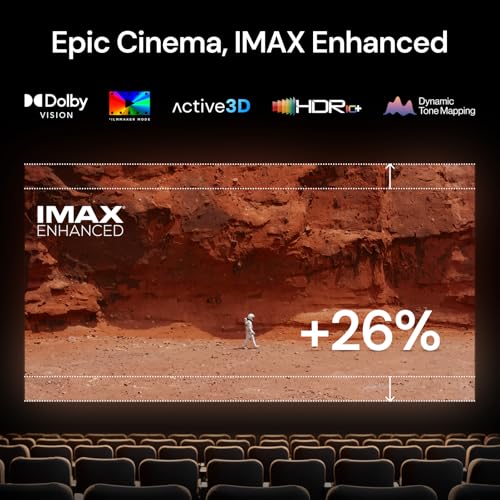
Both projectors support HDR (High Dynamic Range), which allows for brighter highlights and more color information than standard content. The Valerion supports Dolby Vision, HDR10+, and IMAX Enhanced formats, while the JVC handles HDR10, HDR10+, and HLG with sophisticated tone mapping.
Room layout often determines projector choice more than specifications. The Valerion StreamMaster Plus 2 uses a fixed 1.2:1 throw ratio, meaning it must be placed at a very specific distance from your screen. For a 100-inch image, you'll need exactly 10.4 feet of throw distance—no flexibility for slight adjustments.
This limitation significantly constrains installation options. You can't easily avoid ceiling fans, accommodate existing furniture, or make minor positioning adjustments. Digital keystone correction helps somewhat, but any digital adjustment degrades image quality slightly.
The JVC DLA-NZ700 offers comprehensive installation flexibility through its motorized lens system. The 1.6x powered zoom allows placement anywhere from 11.1 to 17.8 feet for that same 100-inch image. More importantly, the extensive lens shift capability—±70% vertical and ±28% horizontal—means you can mount the projector significantly off-center while maintaining perfect image geometry.
This flexibility proves invaluable in real-world installations. Ceiling joists, HVAC ducts, or existing room layouts often prevent ideal projector placement. The JVC's motorized adjustments, controlled from your seat via remote, make professional-quality installation possible in almost any room.
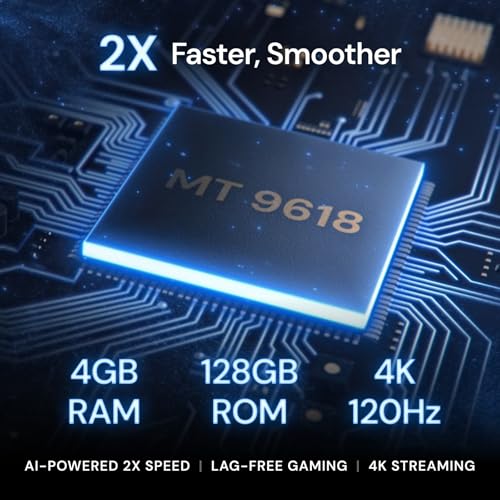
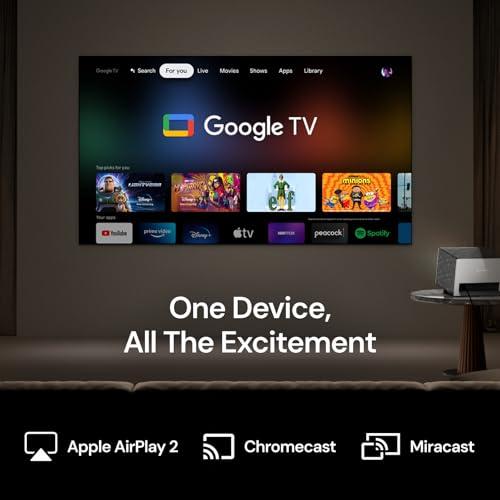
The Valerion StreamMaster Plus 2 embraces the all-in-one philosophy with integrated Google TV OS, complete with 4GB of RAM and 128GB of storage. This means Netflix, Disney+, YouTube, and other streaming apps run directly on the projector without external devices. The implementation feels responsive, and having everything integrated simplifies setup considerably.
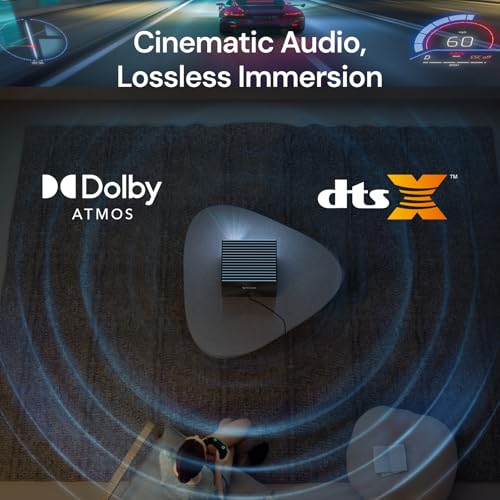
Built-in 12-watt stereo speakers provide surprisingly adequate sound for casual viewing, though serious movie watching still benefits from external audio systems. Voice control through Google Assistant adds convenience for basic functions.
The JVC DLA-NZ700 takes the opposite approach—it's purely a display device with no smart features whatsoever. This philosophy assumes you'll connect high-quality external sources like an Apple TV 4K, NVIDIA Shield, or dedicated media server. For serious enthusiasts, this approach often provides better long-term flexibility and performance.
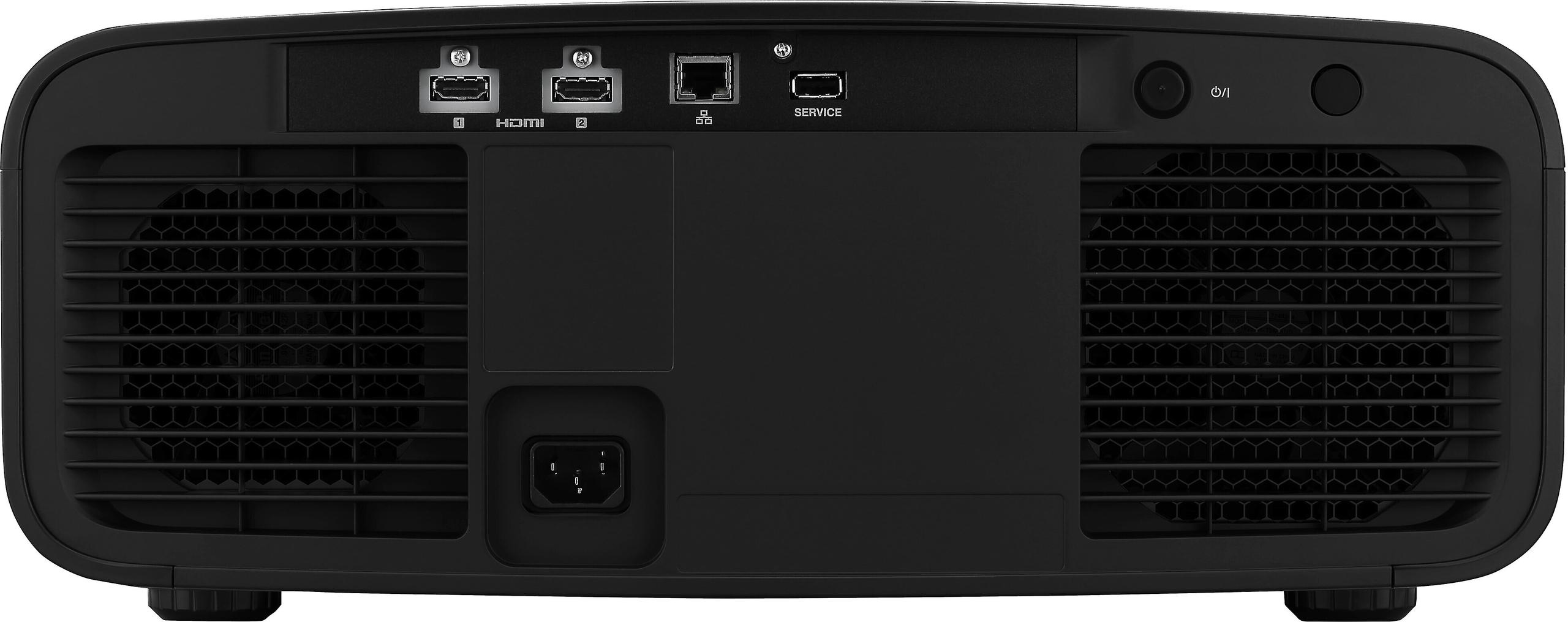
Both projectors offer modern connectivity with multiple HDMI 2.1 ports supporting 4K at 60fps and various HDR formats. The Valerion includes WiFi for its smart features, while the JVC adds professional control options like RS-232C and trigger outputs for automated systems.
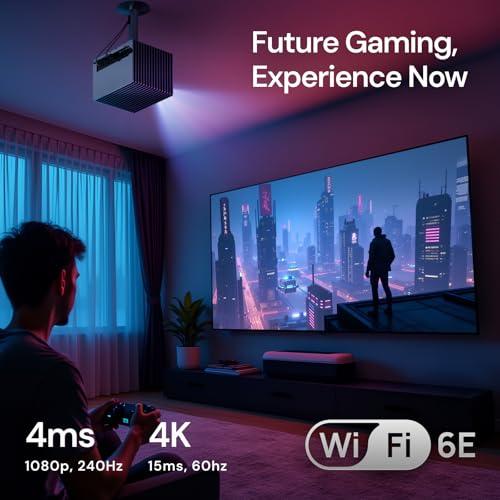
Gaming has become increasingly important for projector buyers, and the Valerion StreamMaster Plus 2 clearly targets this market. Input lag—the delay between controller input and screen response—measures just 4ms at 1080p/240Hz, 8ms at 1080p/120Hz, and 15ms at 4K/60Hz. These figures rival dedicated gaming monitors and make competitive gaming entirely viable.
The projector supports ALLM (Auto Low Latency Mode) and includes gaming-specific picture modes optimized for different genres. Features like FPS crosshair overlay and night vision enhancement show clear gaming focus.
The JVC DLA-NZ700 doesn't specify gaming performance metrics, reflecting its cinema-focused design philosophy. While it'll certainly handle gaming adequately, expect higher input lag that might frustrate competitive players.
For most gamers, this performance difference matters significantly. Racing games, first-person shooters, and fighting games all benefit from ultra-low latency. The Valerion makes large-screen gaming genuinely competitive, while the JVC suits more casual gaming sessions.
Physical construction reveals each projector's target market. The Valerion StreamMaster Plus 2 weighs just 16.5 pounds with compact dimensions, making it genuinely portable. The design suggests flexibility—easy to move between rooms, take outdoors, or store when not in use.
The JVC DLA-NZ700 weighs over 32 pounds with substantially larger dimensions. This isn't a criticism—the weight reflects extensive optical components, superior cooling systems, and premium construction materials. It's designed for permanent installation in dedicated theater rooms.
Noise levels matter in dark, quiet movie scenes. Based on our research of user experiences, the JVC operates virtually silently, while the Valerion produces modest but audible fan noise—acceptable for most content but potentially noticeable during quiet dialogue.
Both projectors handle HDR content, but with different strengths. The Valerion StreamMaster Plus 2 supports Dolby Vision—the premium HDR format with scene-by-scene metadata for optimal brightness and color mapping. This technology, combined with the wide color gamut, can produce truly spectacular HDR images that exceed many TVs.
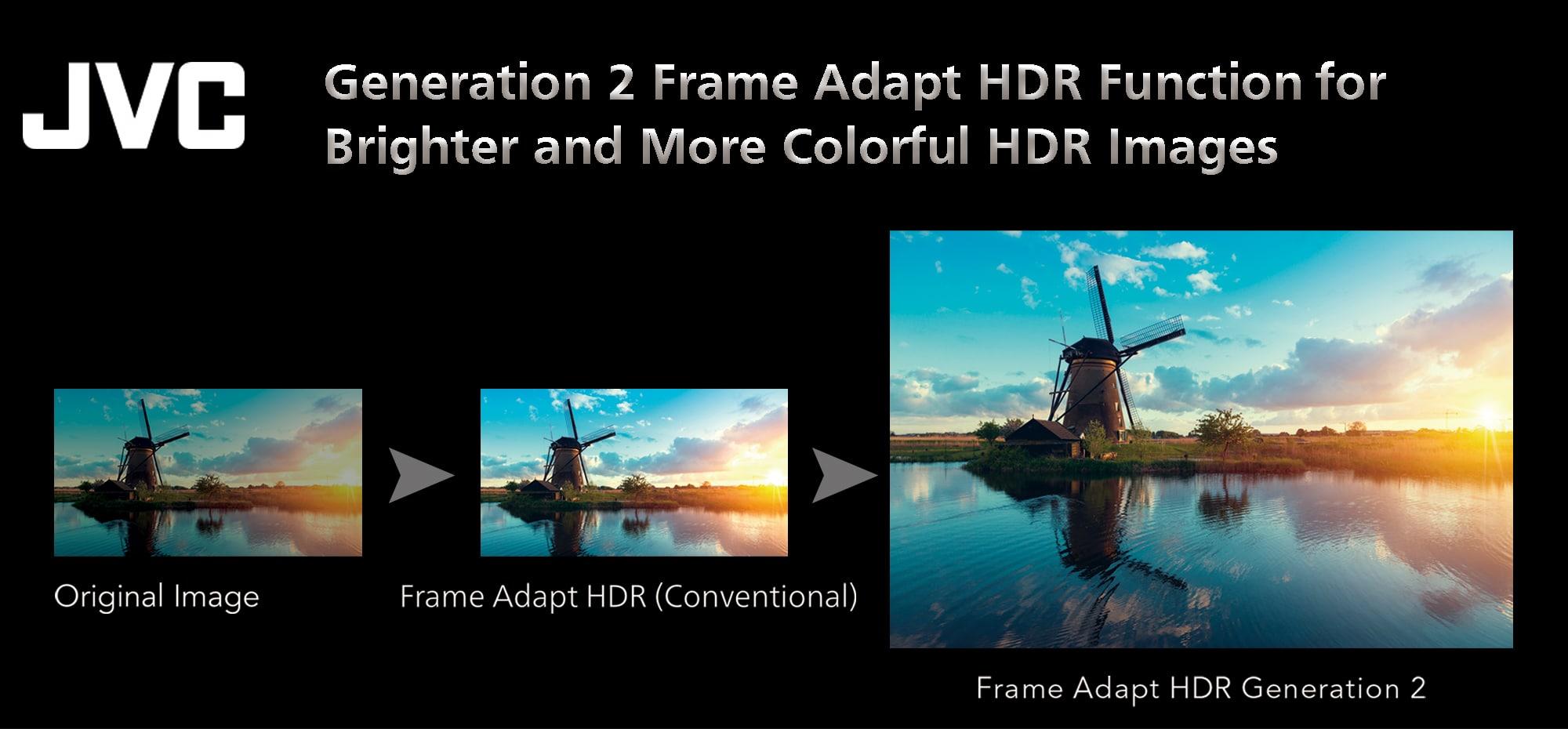
The JVC DLA-NZ700 uses sophisticated Frame Adapt HDR processing with tone mapping optimized for its high contrast ratio. While lacking Dolby Vision, the processing quality and native contrast advantages often produce more natural-looking HDR that better matches the content creator's intent.
Motion handling—how well the projector displays moving objects—shows subtle differences. The Valerion includes MEMC (Motion Estimation, Motion Compensation) processing that can smooth motion but sometimes creates the "soap opera effect" that makes movies look artificial. The JVC uses more conservative motion processing that maintains film-like presentation.
At the time of writing, the Valerion StreamMaster Plus 2 represents exceptional value in the sub-$2,000 category. You're getting legitimate 4K resolution, wide color gamut, smart TV features, excellent gaming performance, and solid build quality. For many buyers, it delivers 80% of expensive projector performance at 20% of the cost.
The JVC DLA-NZ700, priced around $9,000, targets serious enthusiasts who prioritize image quality above all else. The price premium buys genuine native 4K, dramatically superior contrast, professional-grade color accuracy, extensive installation flexibility, and premium construction.
Choose the Valerion StreamMaster Plus 2 if you want excellent 4K projection without breaking the bank. It's perfect for mixed-use entertainment rooms where you'll watch movies, stream content, and play games. The smart TV integration and compact design make it ideal for users who want simplicity and versatility.
The gaming performance alone justifies the Valerion for anyone serious about large-screen gaming. The low input lag and high refresh rate support create an experience that larger TVs can't match at this price point.
Consider the JVC DLA-NZ700 if you're building a dedicated home theater and image quality is your primary concern. The superior contrast, native 4K resolution, and professional features justify the premium for serious movie enthusiasts. The installation flexibility makes it suitable for custom theater designs where projector placement is challenging.
In my evaluation, both projectors excel in their intended roles. The Valerion democratizes high-quality 4K projection, making it accessible to mainstream buyers who previously couldn't justify the cost. The JVC represents the current state-of-the-art in home theater projection, offering performance that genuinely rivals commercial cinema.
Your choice ultimately depends on budget, room requirements, and intended use. The Valerion delivers remarkable value and versatility, while the JVC provides uncompromising performance for those who demand the absolute best. Both represent excellent choices within their respective market segments.
| Valerion StreamMaster Plus 2 | JVC DLA-NZ700 |
|---|---|
| Display Technology - Determines image sharpness and pixel visibility | |
| 0.47" DLP with pixel-shifting to achieve 4K | Native 4K D-ILA with three 0.69" chips |
| Native Contrast Ratio - Most important spec for image depth and realism | |
| 3,000:1 (10,000:1 with EBL mode) | 80,000:1 (infinite dynamic contrast) |
| Brightness - Critical for screen size and ambient light handling | |
| 2,000 ISO lumens | 2,300 ANSI lumens |
| Color Gamut - Affects color vibrancy and HDR performance | |
| 110% Rec.2020 via RGB triple laser | 100% DCI-P3 with cinema-accurate calibration |
| Installation Flexibility - Determines projector placement options | |
| Fixed 1.2:1 throw ratio, powered focus only | Motorized 1.6x zoom, ±70% vertical/±28% horizontal lens shift |
| Gaming Performance - Input lag affects competitive gaming | |
| 4ms at 1080p/240Hz, 8ms at 1080p/120Hz, ALLM support | Gaming specs not specified, cinema-focused design |
| Smart Features - Eliminates need for external streaming devices | |
| Google TV OS, 4GB RAM/128GB storage, built-in apps | No smart features, requires external media players |
| HDR Support - Premium content compatibility | |
| HDR10, HDR10+, Dolby Vision, IMAX Enhanced | HDR10, HDR10+, HLG with Frame Adapt processing |
| Physical Design - Affects portability and installation requirements | |
| 16.5 lbs, compact and portable design | 32.2 lbs, premium construction for permanent installation |
| Audio - Built-in sound capability | |
| 12W × 2 stereo speakers included | No built-in speakers, requires external audio system |
| Connectivity - Ports and wireless capabilities | |
| 2× HDMI 2.1, 1× HDMI 2.0, WiFi, Bluetooth | 2× HDMI 2.1, 1× HDMI 2.0, Ethernet, RS-232C control |
| Laser Life - Long-term reliability and maintenance | |
| 25,000 hours RGB laser | 20,000 hours BLU-Escent laser |
| Warranty Coverage - Protection and support duration | |
| 2-year warranty with 30-day money-back guarantee | 3-year warranty with first-year advanced replacement |
| Target User - Best fit scenarios | |
| Multi-purpose entertainment, gaming, portable use | Dedicated home theater, cinema enthusiasts, permanent installation |
The JVC DLA-NZ700 is significantly better for dedicated home theater use. It offers native 4K resolution with 80,000:1 contrast ratio, delivering cinema-quality images with deep blacks and exceptional detail. The Valerion StreamMaster Plus 2 is better suited for multi-purpose entertainment rooms where you'll also game and stream content casually.
The core difference is display technology and target market. The JVC DLA-NZ700 uses true native 4K D-ILA panels for reference-quality cinema images, while the Valerion StreamMaster Plus 2 uses DLP pixel-shifting technology optimized for versatile entertainment including gaming and streaming at a much lower price point.
The JVC DLA-NZ700 dramatically outperforms with 80,000:1 native contrast versus the Valerion StreamMaster Plus 2's 3,000:1 native contrast. This means much deeper blacks, better shadow detail, and more realistic dark scenes - crucial for movie watching in dark rooms.
The Valerion StreamMaster Plus 2 excels for gaming with 4ms input lag at 1080p/240Hz and dedicated gaming modes. The JVC DLA-NZ700 doesn't specify gaming performance and focuses on cinematic quality instead. Choose the Valerion for serious gaming.
The Valerion StreamMaster Plus 2 is simpler to set up with its compact design and built-in Google TV, but has limited placement flexibility due to its fixed lens. The JVC DLA-NZ700 offers extensive motorized lens adjustments for flexible installation but requires more planning and potentially professional setup.
The Valerion StreamMaster Plus 2 includes Google TV OS with streaming apps built-in, so no external devices are required. The JVC DLA-NZ700 has no smart features and requires external media players like Apple TV, Roku, or gaming consoles for content.
Both excel differently - the Valerion StreamMaster Plus 2 covers 110% Rec.2020 color space for incredibly vibrant colors, while the JVC DLA-NZ700 provides 100% DCI-P3 cinema-accurate colors. The Valerion is more "wow factor" while the JVC is more accurate to filmmaker intent.
Both offer similar brightness levels - the Valerion StreamMaster Plus 2 produces 2,000 ISO lumens while the JVC DLA-NZ700 outputs 2,300 ANSI lumens. Both work best in dark or controlled lighting environments, with the JVC having a slight brightness advantage.
The Valerion StreamMaster Plus 2 offers exceptional value, delivering solid 4K performance, gaming features, and smart TV functionality at a fraction of the cost. The JVC DLA-NZ700 justifies its premium pricing only for serious home theater enthusiasts who prioritize ultimate image quality.
Yes, both support HDR but differently. The Valerion StreamMaster Plus 2 supports Dolby Vision, HDR10+, and IMAX Enhanced with wide color gamut advantages. The JVC DLA-NZ700 handles HDR10, HDR10+, and HLG with superior tone mapping thanks to its exceptional contrast ratio.
The Valerion StreamMaster Plus 2 is much more portable at 16.5 pounds with compact dimensions, making it suitable for different rooms or outdoor use. The JVC DLA-NZ700 weighs over 32 pounds and is designed for permanent installation in dedicated theater rooms.
The JVC DLA-NZ700 offers superior warranty coverage with 3 years plus first-year advanced replacement service. The Valerion StreamMaster Plus 2 provides a 2-year warranty with 30-day money-back guarantee, giving you risk-free trial period but shorter overall coverage.
We've done our best to create useful and informative comparisons to help you decide what product to buy. Our research uses advanced automated methods to create this comparison and perfection is not possible - please contact us for corrections or questions. These are the sites we've researched in the creation of this article: bestbuy.com - valerion.com - youtube.com - valerion.com - youtube.com - projectorcentral.com - youtube.com - valerion.com - avsforum.com - neowin.net - hometheatershack.com - avsforum.com - bestbuy.com - projector-database.com - simplehomecinema.com - soundapproach.com - jvc.com - projectorreviews.com - valueelectronics.com - youtube.com - crutchfield.com - stereonet.com - projectorcentral.com - manual3.jvckenwood.com

Privacy Policy
Terms and Conditions - Affiliate Policy
Home Security
© Copyright 2008-2026.
11816 Inwood Rd #1211, Dallas, TX 75244