




The world of home theater projectors has fundamentally split into two camps, each solving different problems for movie lovers and gaming enthusiasts. On one side, you have traditional long-throw projectors that sit across the room from your screen, requiring careful planning but offering incredible flexibility. On the other, ultra-short throw (UST) projectors have emerged as "laser TVs" that sit inches from the wall, bringing cinema-quality images to living rooms where traditional projectors simply won't work.
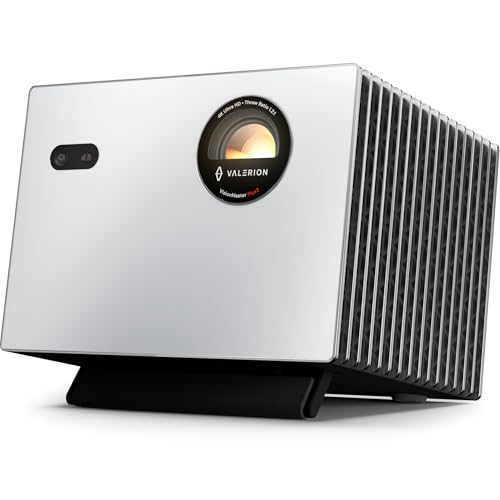
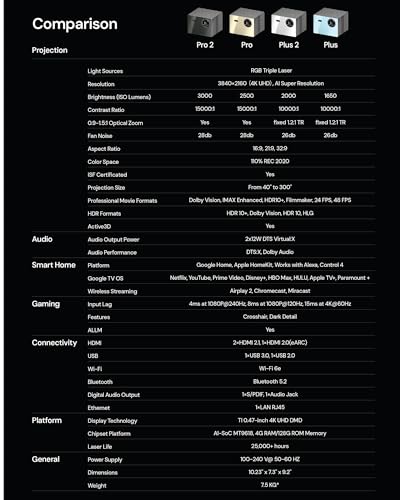
This divide became especially pronounced around 2023-2025, when manufacturers began perfecting RGB triple laser technology—where separate red, green, and blue lasers combine to create incredibly vibrant colors—while simultaneously making UST optics sophisticated enough to compete with traditional projection. The Valerion StreamMaster Plus 2, released in 2025, represents the pinnacle of affordable long-throw projection, while the Leica Cine 1 showcases what happens when a legendary optics company applies its expertise to ultra-short throw technology.
The most fundamental difference between these projectors is where they sit in your room, and this choice affects everything else about your setup.
The Valerion StreamMaster Plus 2 uses a 1.2:1 throw ratio, which means for every 1.2 feet of distance from the screen, you get 1 foot of image width. For a 100-inch diagonal screen (about 87 inches wide), you'd place the projector roughly 8-9 feet away. This flexibility lets you create screens anywhere from 40 inches up to a massive 300 inches, depending on your room size and how far back you can position the projector.
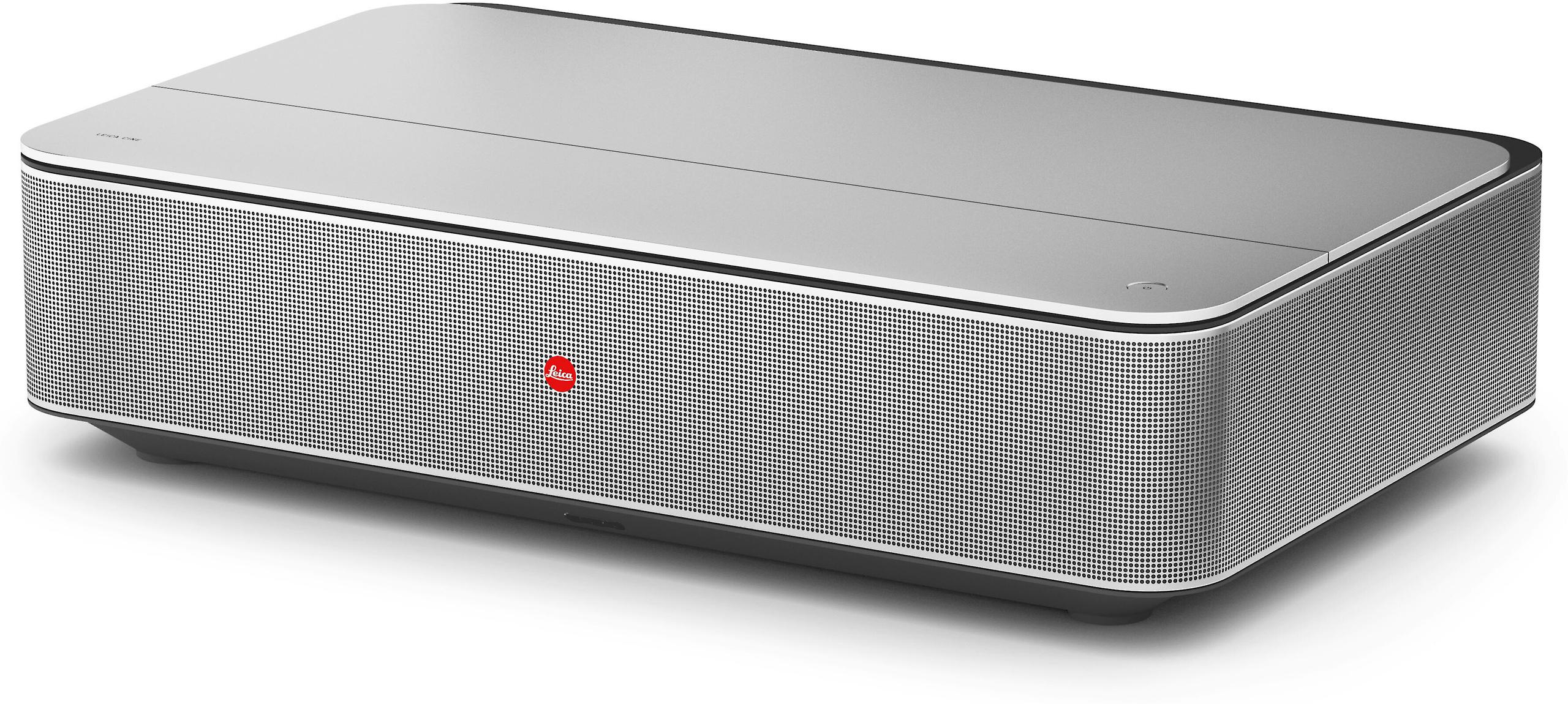
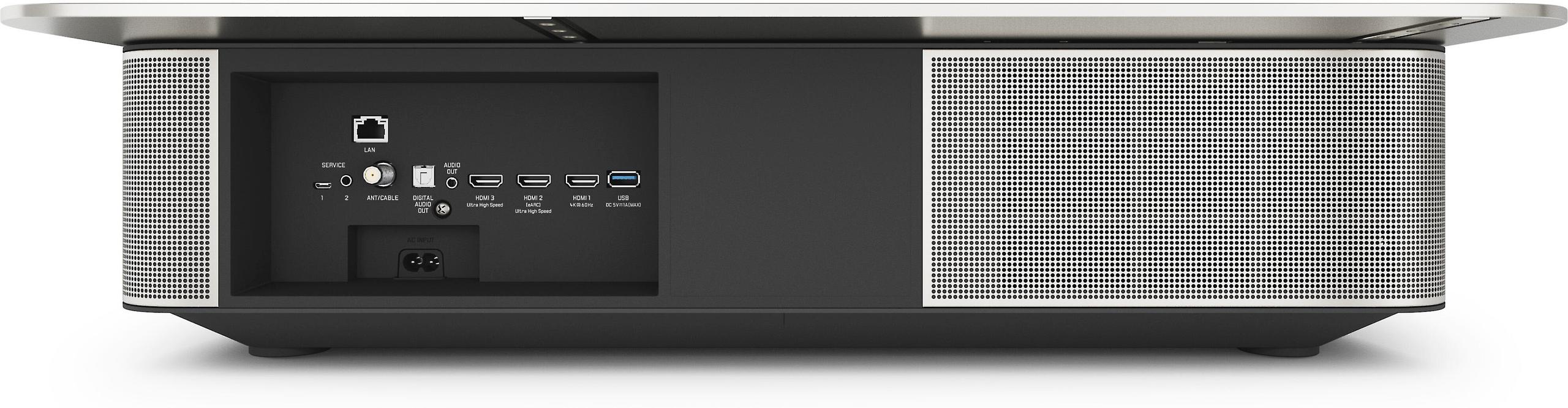
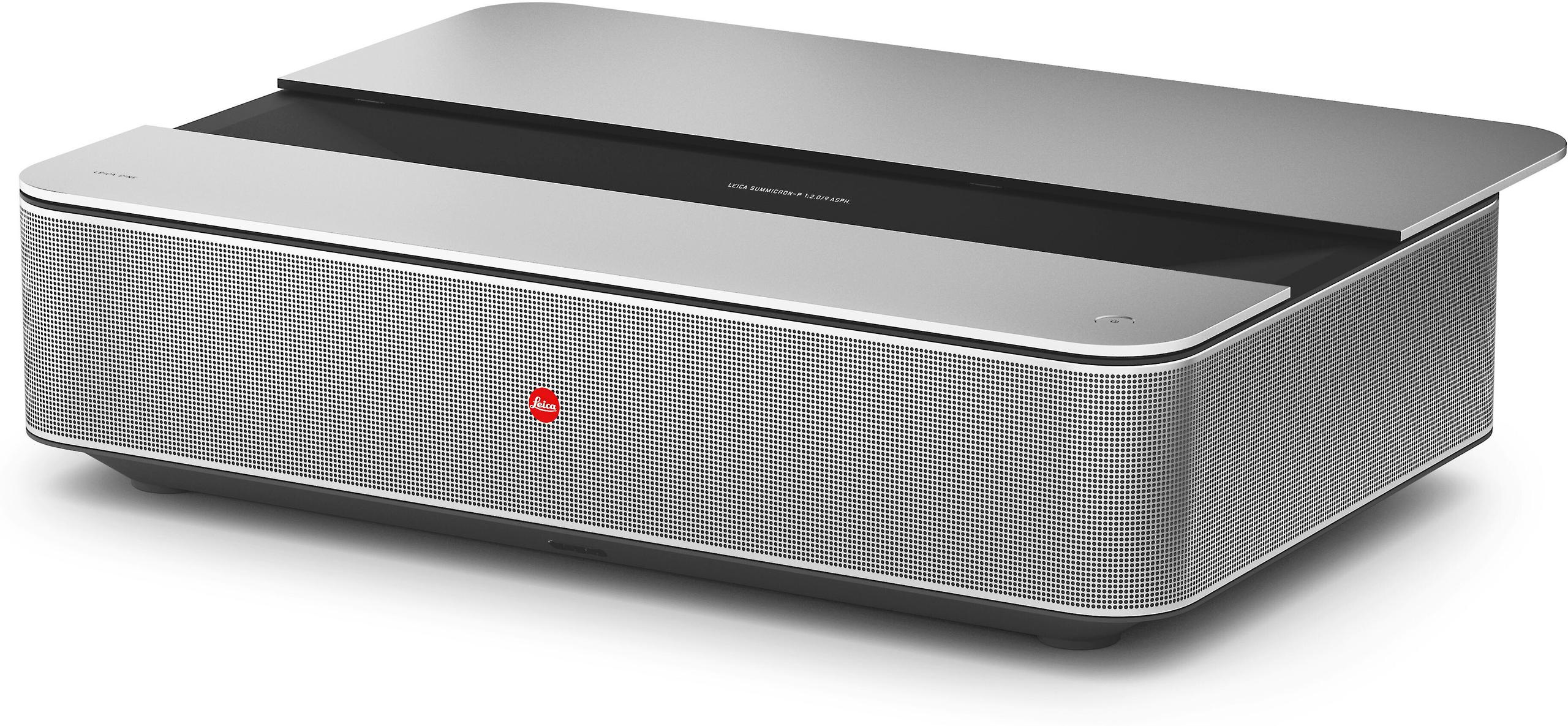
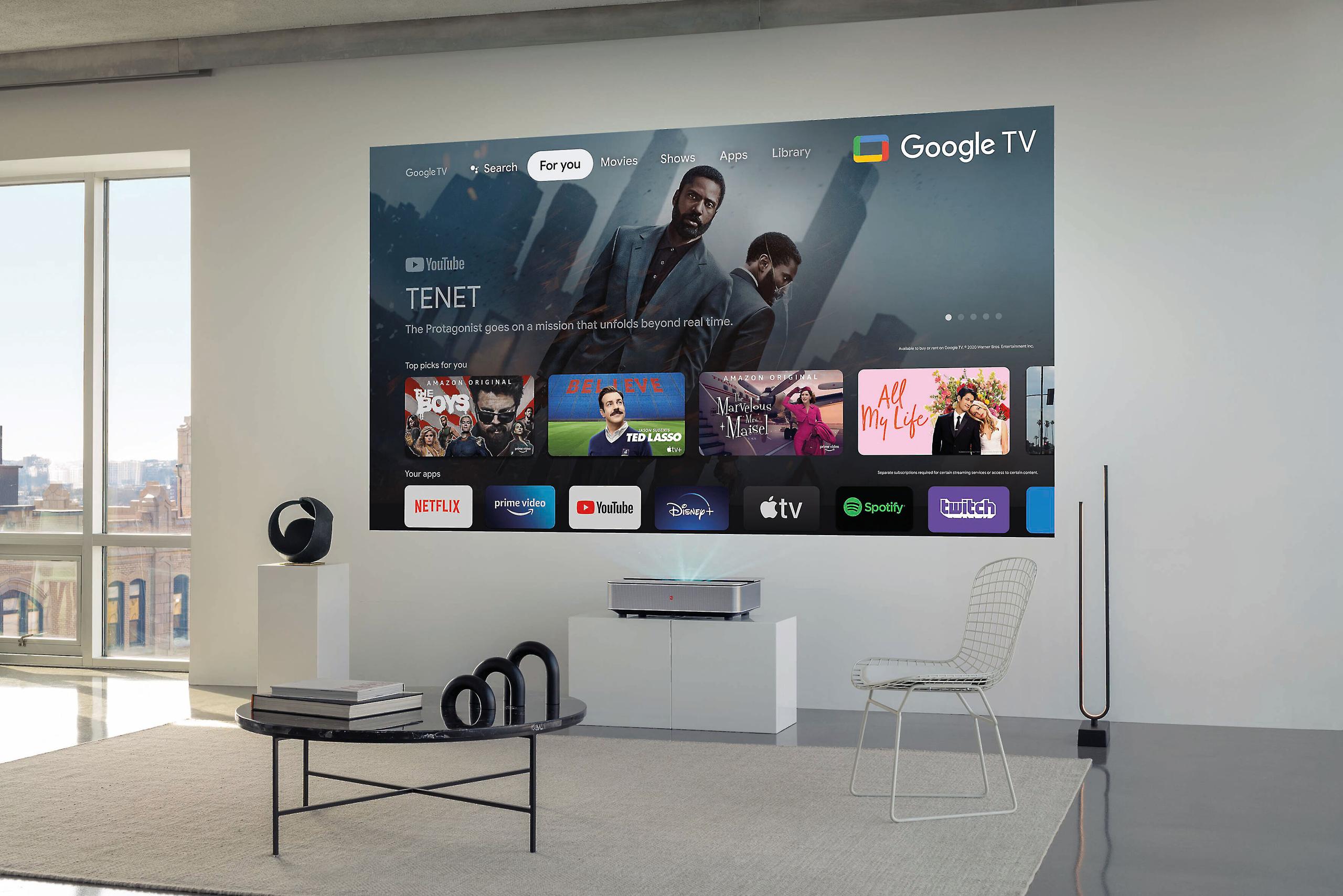
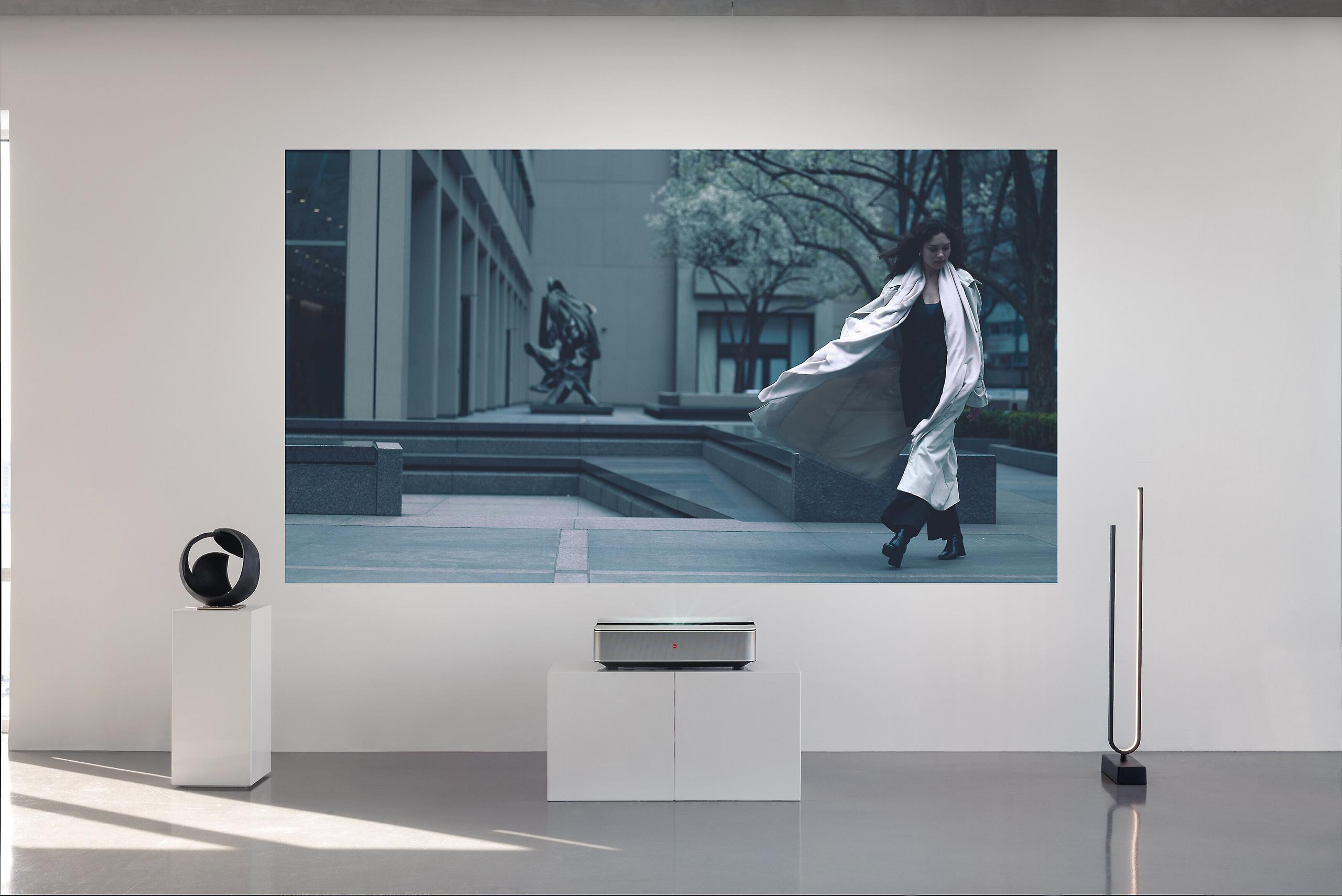
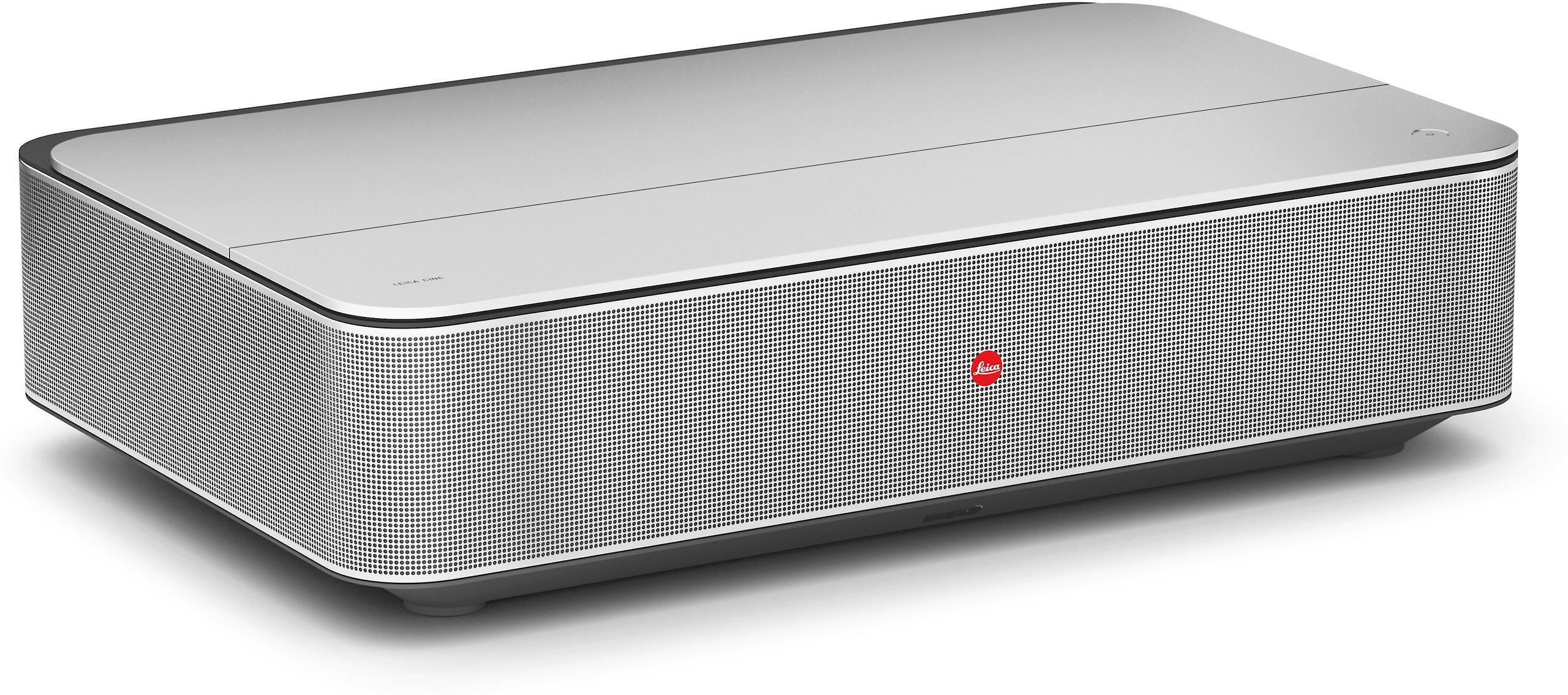
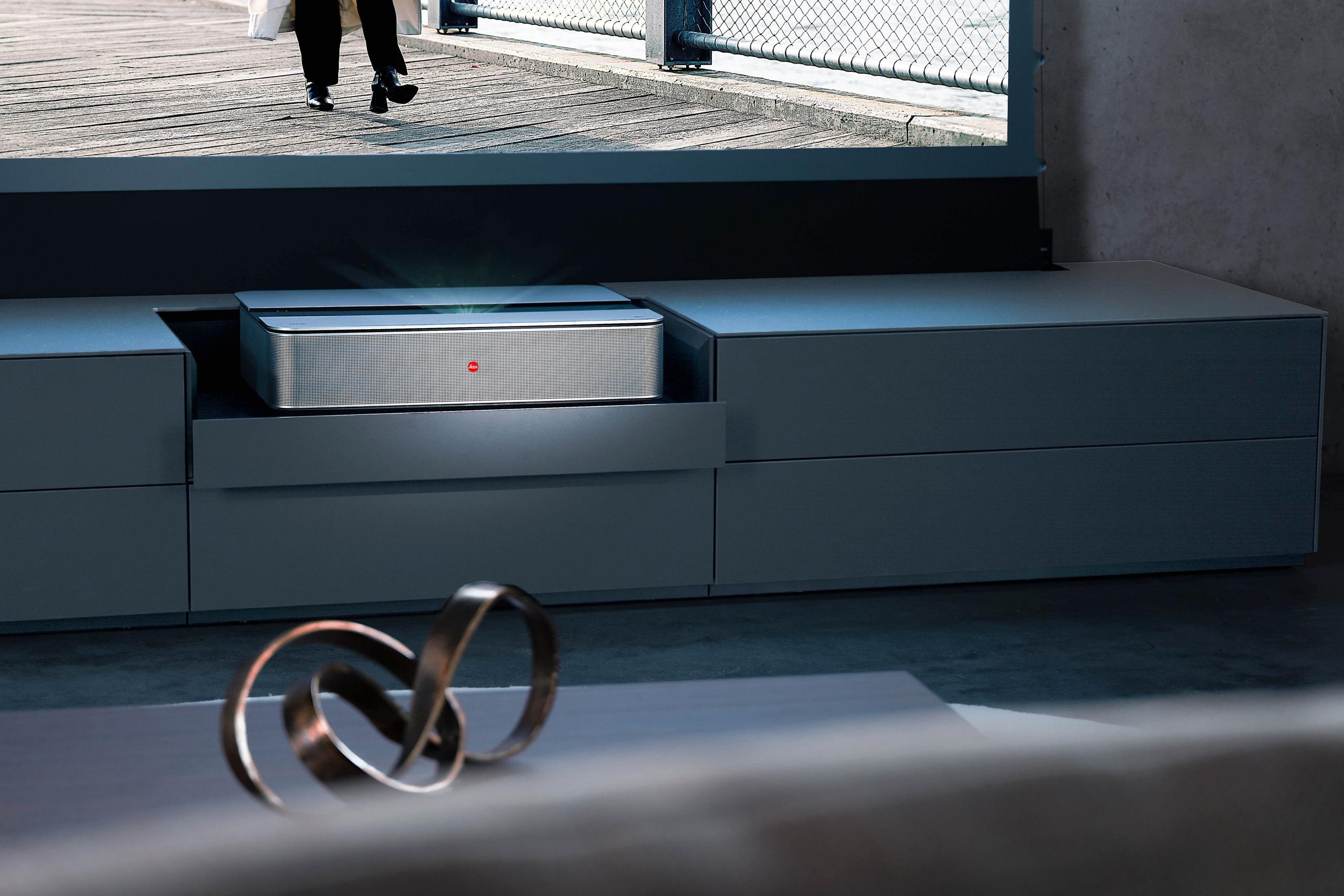
The Leica Cine 1, meanwhile, uses an ultra-short 0.25:1 throw ratio. Its complex mirror system spreads light across a 120-inch screen from just 14.3 inches away. Think of it like a periscope in reverse—light bounces through carefully engineered mirrors to project upward at extreme angles, creating a large image from an impossibly short distance.
This difference in approach creates completely different use cases. Long-throw projectors excel in dedicated theater rooms where you can mount the projector on the ceiling or place it on a rear shelf. UST projectors shine in living rooms where the projector needs to sit on your TV stand without anyone walking through the light path.
Both projectors achieve 4K resolution through pixel-shifting technology rather than native 4K panels. This means they use 0.47-inch DLP chips that physically move pixels to create the illusion of higher resolution. While purists sometimes debate this approach, real-world performance is excellent, and most viewers can't distinguish pixel-shifted 4K from native 4K at normal viewing distances.
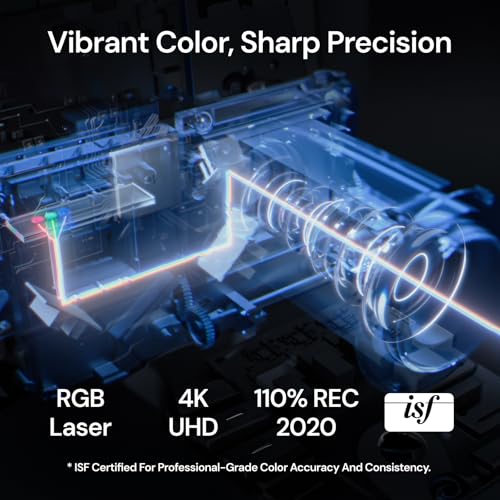
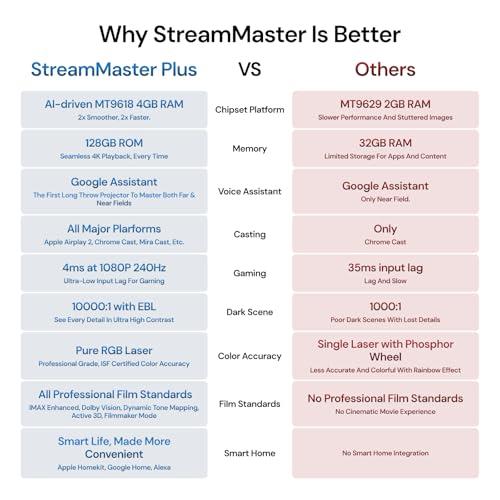
The Valerion StreamMaster Plus 2 achieves remarkable color performance for its price point, covering 110% of the Rec.2020 color space. Rec.2020 is the ultra-wide color standard used for 4K content, and covering 110% means this projector can display colors more vibrant than what most content was designed for. This wide color gamut, combined with RGB triple laser technology, virtually eliminates the rainbow effect—those brief flashes of red, green, and blue that some people see with DLP projectors, especially during eye movements.
The engineering really shines in the Valerion's Enhanced Black Level (EBL) mode, which dynamically adjusts the laser output to deepen blacks without crushing shadow detail. Unlike some projectors where these modes only work at maximum brightness, the StreamMaster Plus 2 can use EBL at various brightness levels, making it more practical for different viewing environments.
The Leica Cine 1 takes a different approach, emphasizing optical precision over maximum color saturation. Its Summicron lens system—the same naming convention Leica uses for its legendary camera lenses—incorporates four aspherical lens elements to maintain edge-to-edge sharpness across the entire 120-inch image. This is particularly challenging for UST projectors, which must correct for extreme projection angles while maintaining uniform focus and brightness.
Leica's proprietary Image Optimization (LIO) technology uses custom algorithms to enhance natural color reproduction rather than pushing for maximum saturation. Based on extensive user feedback, this results in more film-like color rendering that many viewers prefer for extended watching sessions, though it may appear less "punchy" than some competitors during brief demonstrations.
Brightness measurements in projectors can be confusing because manufacturers use different standards. The Valerion StreamMaster Plus 2 outputs 2,000 ISO lumens, while the Leica Cine 1 produces 3,000 ANSI lumens. Both measurements indicate real-world brightness, but the Leica's higher output becomes crucial for its intended use case.
Here's why brightness matters differently for each projector: the Valerion excels in dark or dimly lit rooms where its 2,000 lumens provide plenty of punch for immersive viewing. Its 10,000:1 dynamic contrast ratio with EBL mode delivers deep blacks that make dark movie scenes genuinely atmospheric. However, in brightly lit rooms, the image can appear washed out, which is typical for most projectors in this brightness range.
The Leica Cine 1 was designed specifically to combat ambient light, which is essential for living room installations. Its 3,000 lumens, combined with specialized Ambient Light Rejection (ALR) screens, maintains image quality even with windows and lamps creating competing light sources. The trade-off is that this higher brightness can make blacks appear slightly gray in completely dark rooms, though the projector's 2,000,000:1 dynamic contrast ratio helps mitigate this issue.
Based on extensive user feedback, the brightness difference becomes most apparent during daytime viewing. The Valerion requires blackout curtains for optimal daytime performance, while the Leica can deliver watchable images with natural room lighting—a crucial advantage for its target audience.
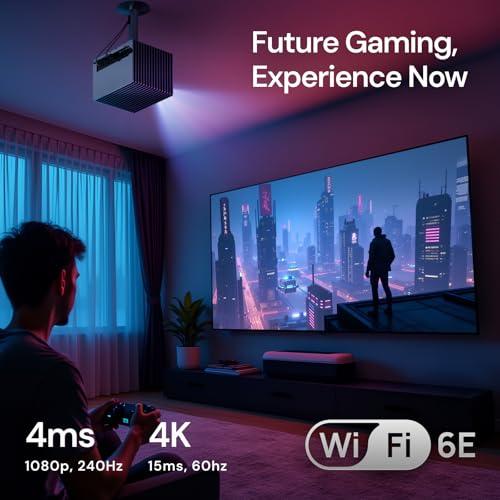
Gaming performance has become increasingly important as console gaming embraces 4K and high refresh rates. The Valerion StreamMaster Plus 2 clearly targets gaming enthusiasts with input lag as low as 4 milliseconds at 1080p/240Hz—fast enough for competitive esports. Even at 4K/60Hz, its 15ms input lag remains very responsive for console gaming.
Input lag measures the delay between when your controller sends a signal and when that action appears on screen. Anything under 20ms feels instantaneous for most gaming, while delays above 40ms become noticeable, especially in fast-paced games. The Valerion's dedicated gaming modes (RPG, FPS, RCG) optimize different picture settings for various game types, and features like FPS Crosshair overlay targeting reticles for competitive shooters.
The Leica Cine 1 takes a more casual approach to gaming with 35.3ms input lag in game mode. This is perfectly acceptable for story-driven games, racing games, and casual multiplayer, but competitive gamers will notice the difference. The Leica's focus clearly lies in cinematic presentation rather than gaming performance.
Auto Low Latency Mode (ALLM) on both projectors automatically switches to game mode when detecting compatible consoles, though the Valerion implements this more aggressively with multiple gaming-specific picture presets.
Installation requirements create the starkest difference between these projectors. The Valerion StreamMaster Plus 2 offers incredible flexibility but demands careful planning. You can create a 150-inch image in a medium-sized room or go up to 300 inches if you have the space and throw distance. However, optimal placement often requires ceiling mounting, which means running cables through walls or using cable management systems.
The projector's powered focus and automatic keystone correction help with setup, but you'll still need to account for projector placement, screen selection, and ensuring people don't walk through the light path during viewing. The lack of optical zoom means you can't fine-tune image size through the projector alone—you must physically move the projector or accept digital zoom, which slightly reduces image quality.
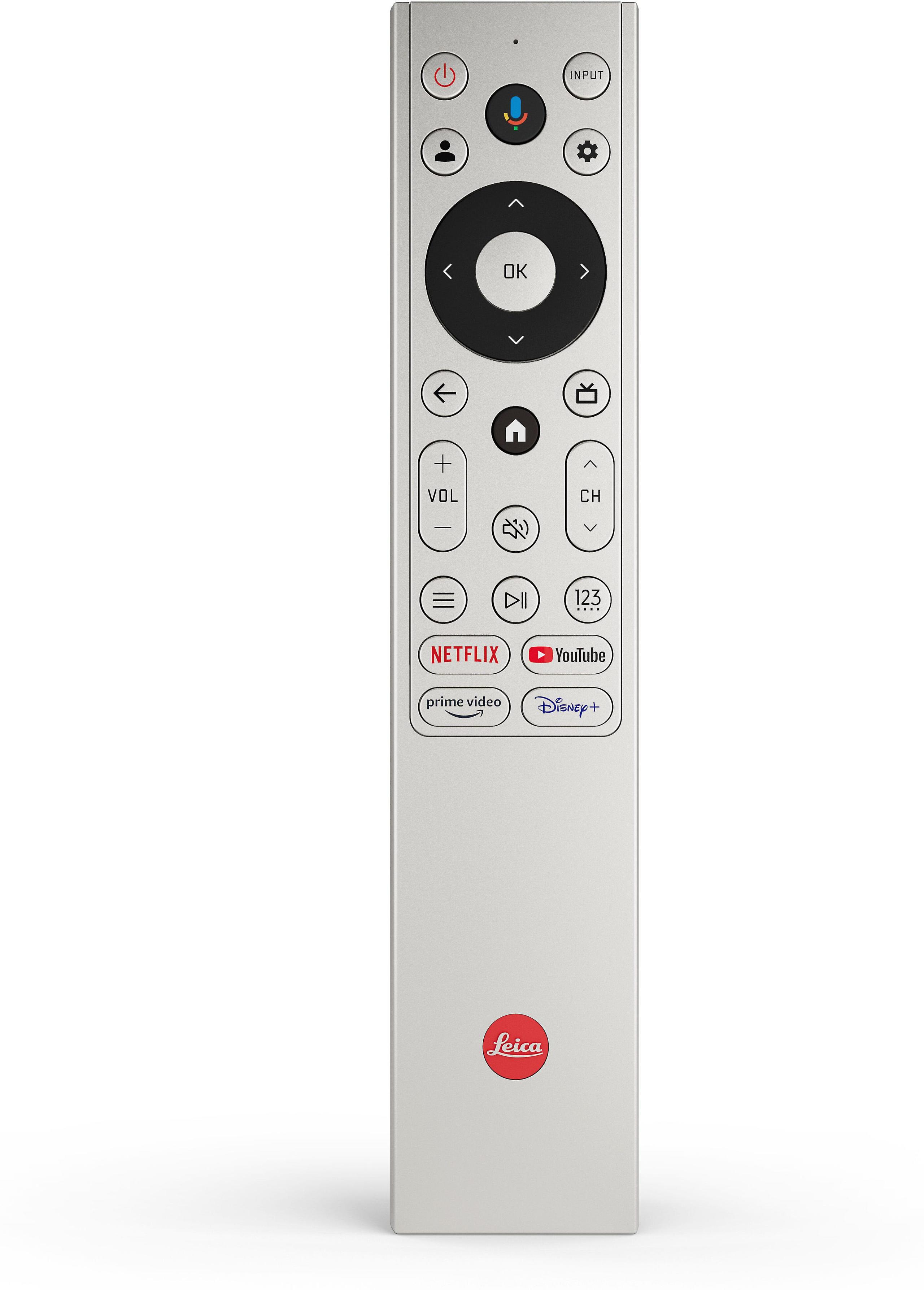
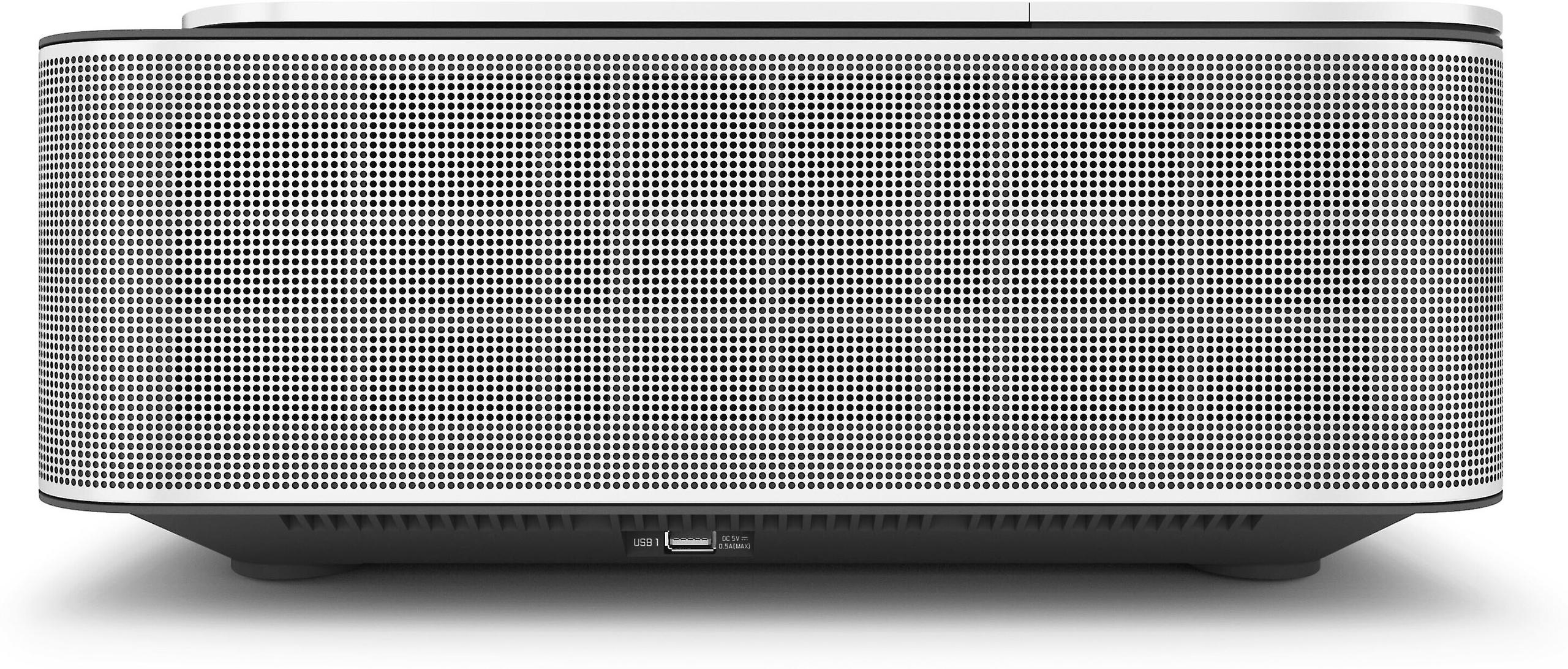
The Leica Cine 1 revolutionizes installation by eliminating most of these concerns. It sits on your entertainment center like an oversized soundbar, projecting upward onto the wall above. There's no ceiling mounting, no complex cable runs, and no shadows when people walk around the room. The trade-off is complete inflexibility—you get exactly 120 inches, no more, no less.
However, the Leica requires specialized ALR screens for optimal performance. These screens have micro-structures that reject ceiling and side lighting while directing projected light toward viewers. A quality ALR screen can cost as much as a mid-range projector, but it's essential for the UST experience in living rooms with ambient light.
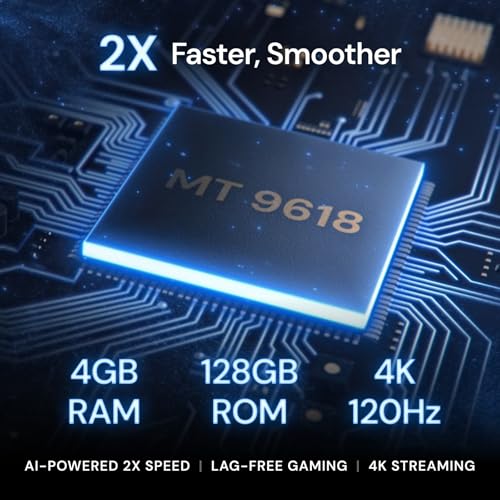
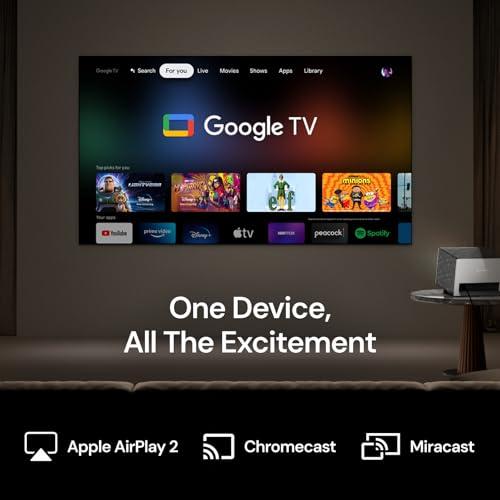
Both projectors run Google TV OS, but their implementations serve different purposes. The Valerion StreamMaster Plus 2 provides comprehensive smart TV functionality with 4GB RAM and 128GB storage, ensuring smooth app performance and plenty of space for downloaded content. Its dual HDMI 2.1 ports support the latest gaming consoles and streaming devices, while wireless networking enables seamless streaming without additional hardware.
The Leica Cine 1 includes similar smart functionality but adds features specific to TV replacement use, including a built-in TV tuner for broadcast television and Apple AirPlay 2 for iOS device integration. WiFi 6 support ensures robust streaming even in crowded wireless environments, which is more important for living room installations where multiple devices compete for bandwidth.
Voice control through Google Assistant works well on both projectors, though the Leica's integration feels more natural for daily TV-like usage, while the Valerion excels when you want to dive deep into picture calibration and gaming settings.
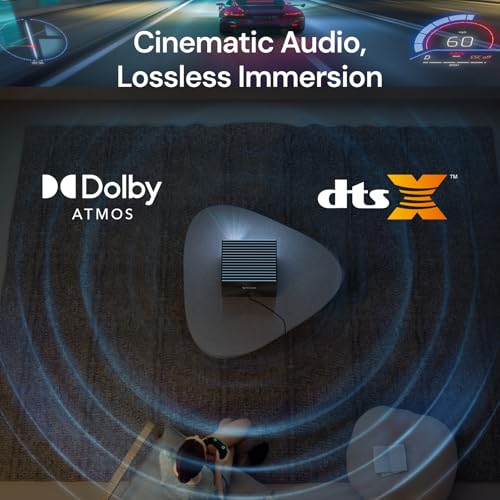
Audio represents another philosophical divide between these projectors. The Valerion StreamMaster Plus 2 includes modest 12W × 2 speakers adequate for casual viewing, but most serious users will want external audio systems. This aligns with the traditional home theater approach where separate components optimize each function.
The Leica Cine 1 takes the opposite approach with integrated Dolby Atmos and 50 watts total power (2×15W + 2×10W configuration). This creates genuinely immersive surround sound that eliminates the need for additional speakers in many installations. For living room use, this integrated approach reduces complexity and spouse acceptance factor—always important considerations for shared spaces.
Based on user feedback, the Leica's audio quality surprises most people with its depth and clarity, though dedicated audio enthusiasts will still prefer separate components. The Valerion user base typically plans for external audio from the beginning, viewing the built-in speakers as backup or temporary solutions.
Value comparisons require looking beyond initial purchase price to total system cost and long-term satisfaction. At the time of writing, the Valerion StreamMaster Plus 2 positions itself as a premium-performance projector at mainstream pricing, delivering color accuracy and feature sets typically found in much more expensive units.
However, total cost for a Valerion installation includes screen selection ($200-$2,000+), potential ceiling mounting ($100-$500), cable management, and likely external audio ($300-$2,000+). The benefit is tremendous flexibility—you can start with a smaller screen and upgrade later, or move the entire system to different rooms as needs change.
The Leica Cine 1 commands premium pricing justified by its luxury positioning and convenience factor. Total system cost includes specialized ALR screening ($800-$3,000+), but the integrated audio and simplified installation reduce other expenses. Most importantly, it solves installation problems that traditional projectors simply cannot address.
Both projectors use 25,000-hour RGB laser light sources, meaning the "lamp" should last 10-15 years with typical usage. This eliminates the ongoing replacement costs associated with traditional lamp-based projectors, making both excellent long-term investments.
The Valerion StreamMaster Plus 2 makes the most sense if you have or can create a dedicated theater space. Its combination of exceptional color accuracy, gaming performance, and size flexibility rewards users who can optimize their environment around the projector. Enthusiasts who enjoy tweaking picture settings will appreciate its extensive calibration controls and ISF-certified modes.
This projector particularly excels for gaming enthusiasts who want large-screen gaming without compromising response times. The ability to scale from 40 inches for desktop gaming up to 300 inches for immersive single-player experiences provides versatility that fixed-size displays cannot match.
The Leica Cine 1 targets users who want cinema-quality images in living spaces where traditional projectors won't work. Its combination of premium optics, integrated Dolby Atmos, and ambient light performance creates a true TV replacement that happens to be 120 inches diagonal.
This makes most sense for users who prioritize convenience and integration over absolute customization. The luxury positioning means it attracts buyers who value premium brand heritage and want a solution that "just works" without extensive tweaking or optimization.
Neither projector is objectively better—they solve different problems for different users. The choice depends entirely on your space constraints, usage priorities, and whether you prefer maximum flexibility or seamless integration. Both represent significant advances in their respective categories and deliver performance that would have been impossible just a few years ago.
The evolution of projector technology continues rapidly, with both long-throw and ultra-short throw designs benefiting from advances in laser technology, smart features, and optical engineering. Based on current trends, both approaches will continue improving, giving consumers even better options for bringing cinema-quality entertainment home.
| Valerion StreamMaster Plus 2 | Leica Cine 1 |
|---|---|
| Projector Type - Determines installation flexibility and room requirements | |
| Long-throw projector (traditional setup) | Ultra-short throw projector (laser TV) |
| Brightness - Critical for ambient light performance | |
| 2,000 ISO lumens (best in dark/dimmed rooms) | 3,000 ANSI lumens (handles bright rooms well) |
| Screen Size Range - How much flexibility you get | |
| 40" to 300" (incredible flexibility) | Fixed 120" only (no size options) |
| Throw Distance - How far from screen the projector sits | |
| 3.5' to 26.2' (requires room planning) | 14.3" (sits on TV stand) |
| Color Performance - Impact on image vibrancy | |
| 110% Rec.2020 coverage (exceptionally wide colors) | 100% BT.2020 coverage with Leica color tuning |
| Gaming Input Lag - Critical for responsive gaming | |
| 4ms at 1080p/240Hz, 15ms at 4K/60Hz (excellent) | 35.3ms at 60Hz (casual gaming only) |
| Contrast Ratio - Affects black levels and image depth | |
| 10,000:1 dynamic with EBL mode | 2,000,000:1 dynamic (exceptional on paper) |
| Resolution Technology - How 4K is achieved | |
| 0.47" DLP with pixel shifting + AI upscaling | 0.47" DLP with pixel shifting + Leica optics |
| HDR Support - Future-proofing for premium content | |
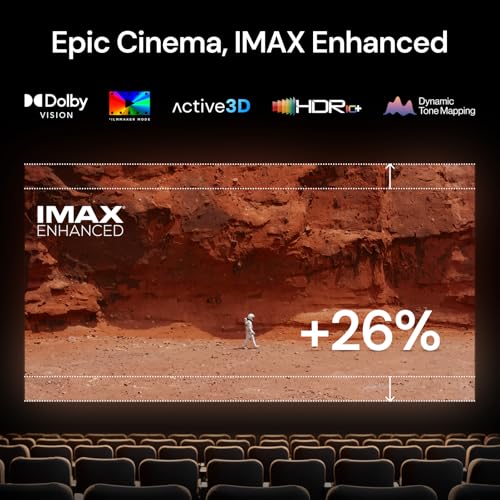
| HDR10, HDR10+, Dolby Vision, IMAX Enhanced | HDR10, HDR10+, Dolby Vision, HLG |
| Audio System - Built-in sound quality | |
| 12W × 2 speakers (basic, external audio recommended) | 50W Dolby Atmos system (2×15W + 2×10W) |
| Smart Platform - Streaming and app performance | |
| Google TV with 4GB RAM/128GB storage | Google TV plus TV tuner for broadcast channels |
| Installation Complexity - Setup difficulty and requirements | |
| Requires ceiling mount or rear placement + screen selection | Sits on furniture + requires specialized ALR screen |
| Lens System - Impact on image quality and setup | |
| Fixed 1.2:1 ratio with powered focus (no zoom/shift) | Leica Summicron with 4 aspherical elements |
| Light Source Lifespan - Long-term operating costs | |
| 25,000-hour RGB laser (10-15 years typical use) | 25,000-hour RGB laser (10-15 years typical use) |
| Best Use Case - Who should choose this projector | |
| Dedicated theater rooms, gaming enthusiasts, size flexibility | Living room integration, TV replacement, convenience priority |
The Valerion StreamMaster Plus 2 is a traditional long-throw projector that sits 8-26 feet from your screen, while the Leica Cine 1 is an ultra-short throw projector that sits just 14 inches from the wall. The Valerion offers flexible screen sizes from 40" to 300", whereas the Leica is fixed at 120". This fundamental difference affects installation, room requirements, and use cases.
The Valerion StreamMaster Plus 2 is significantly better for gaming with 4ms input lag at 1080p/240Hz and 15ms at 4K/60Hz. It includes dedicated gaming modes and supports up to 240Hz refresh rates. The Leica Cine 1 has 35.3ms input lag, which is fine for casual gaming but not ideal for competitive gaming.
The Leica Cine 1 handles bright rooms much better with 3,000 ANSI lumens and is designed for living room use with ambient light. The Valerion StreamMaster Plus 2 produces 2,000 ISO lumens and performs best in dark or dimmed rooms. For daytime viewing, the Leica is the clear winner.
Both projectors deliver excellent 4K image quality but through different approaches. The Valerion StreamMaster Plus 2 offers 110% Rec.2020 color coverage for incredibly vibrant colors, while the Leica Cine 1 uses precision Leica optics for natural, film-like color reproduction. The Valerion excels in color saturation, while the Leica focuses on optical accuracy.
The Valerion StreamMaster Plus 2 typically requires ceiling mounting or rear shelf placement for optimal setup, especially for larger screens. The Leica Cine 1 sits on your TV stand or entertainment center like a soundbar - no ceiling mounting required. This makes the Leica much easier to install in existing living spaces.
The Valerion StreamMaster Plus 2 is ideal for dedicated theater rooms because it can create massive 300-inch screens in dark environments where its excellent contrast and color accuracy shine. The Leica Cine 1 is designed more for living room integration and TV replacement rather than dedicated theater spaces.
The Leica Cine 1 has significantly better built-in audio with a 50W Dolby Atmos system that can eliminate the need for separate speakers. The Valerion StreamMaster Plus 2 has basic 12W speakers that most users will want to supplement with external audio equipment for the full home theater experience.
The Valerion StreamMaster Plus 2 offers tremendous flexibility with screen sizes from 40 inches up to 300 inches, depending on your room size and projector placement. The Leica Cine 1 is fixed at exactly 120 inches with no size adjustment options. Choose the Valerion if you want size flexibility or plan to upgrade later.
The Valerion StreamMaster Plus 2 requires careful room planning, potential ceiling mounting, cable management, and screen selection. The Leica Cine 1 simply sits on furniture but requires a specialized ALR (Ambient Light Rejection) screen for optimal performance. The Leica is much simpler to install but less flexible.
The Valerion StreamMaster Plus 2 offers exceptional value with professional-grade color accuracy and gaming performance at a competitive price point. The Leica Cine 1 commands premium pricing but justifies it with luxury optics, integrated Dolby Atmos, and the convenience of ultra-short throw installation. Value depends on your priorities and space constraints.
The Leica Cine 1 is specifically designed as a TV replacement with integrated tuner, living room-friendly installation, and ambient light performance. The Valerion StreamMaster Plus 2 can replace a TV but works best in controlled lighting environments and requires more complex installation. For true TV replacement, the Leica is the better choice.
Choose the Leica Cine 1 for living rooms because it sits on your entertainment center, handles ambient light well, includes excellent built-in audio, and won't interfere with foot traffic. The Valerion StreamMaster Plus 2 is better suited for dedicated theater rooms or basements where you can control lighting and optimize projector placement.
We've done our best to create useful and informative comparisons to help you decide what product to buy. Our research uses advanced automated methods to create this comparison and perfection is not possible - please contact us for corrections or questions. These are the sites we've researched in the creation of this article: bestbuy.com - valerion.com - youtube.com - valerion.com - youtube.com - projectorcentral.com - youtube.com - valerion.com - avsforum.com - neowin.net - hometheatershack.com - avsforum.com - bestbuy.com - projector-database.com - trustedreviews.com - leicacamerausa.com - hometechnologyreview.com - projectorreviews.com - richersounds.com - whathifi.com - crutchfield.com - projectorcentral.com - cdn11.bigcommerce.com - leicarumors.com - leica-camera.com

Privacy Policy
Terms and Conditions - Affiliate Policy
Home Security
© Copyright 2008-2026.
11816 Inwood Rd #1211, Dallas, TX 75244