

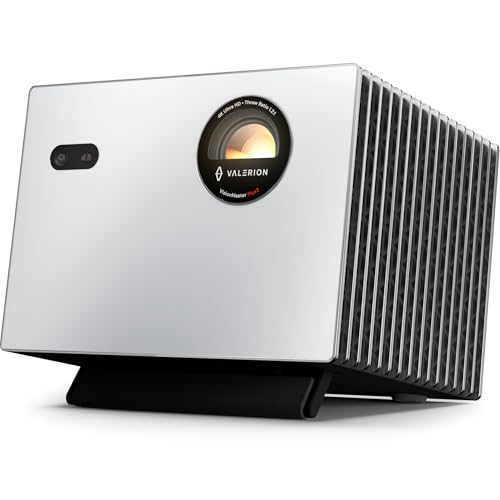


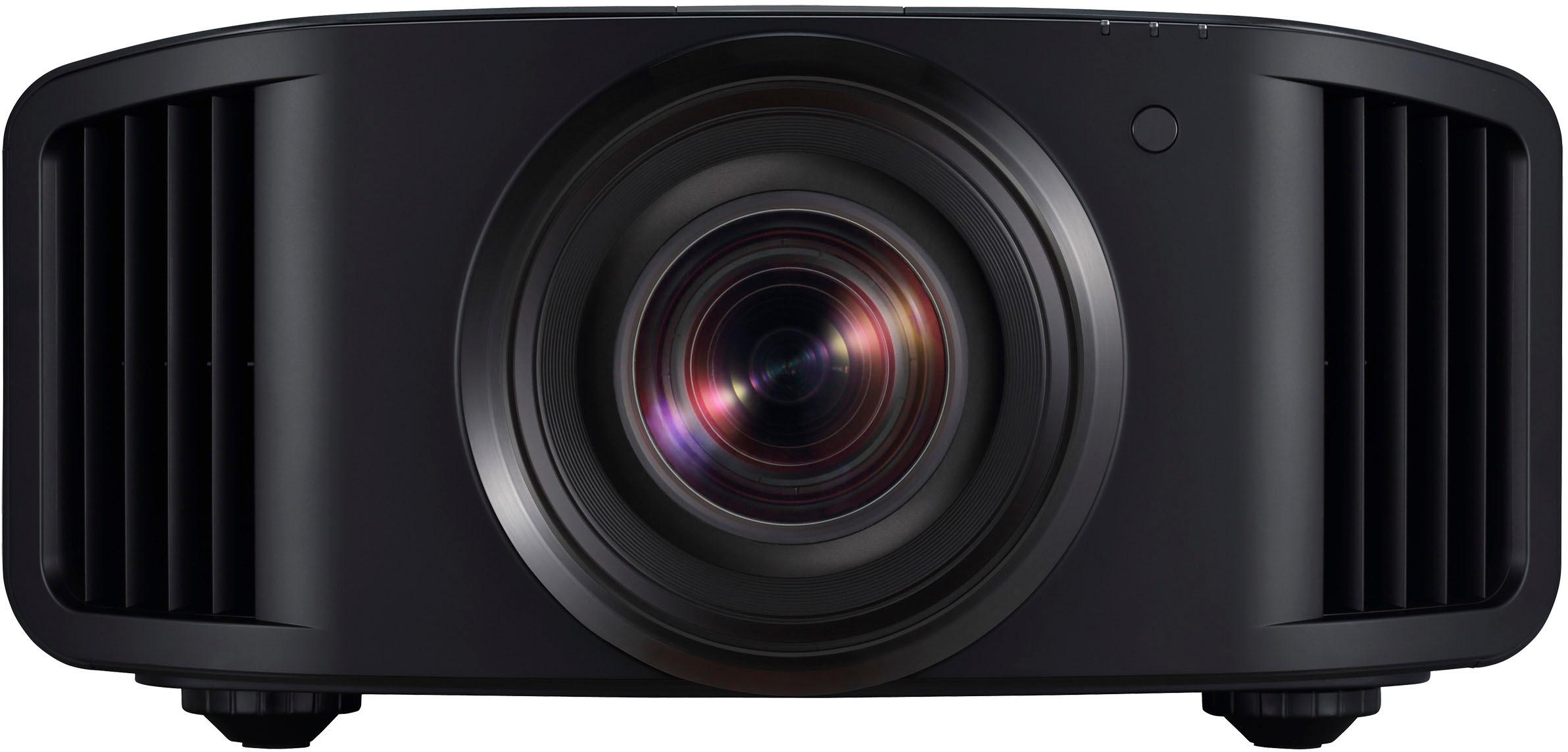
Choosing the right projector can feel overwhelming when you're staring at spec sheets full of technical jargon and price tags that span from under $2,000 to well over $20,000. Two projectors that perfectly illustrate this range are the Valerion StreamMaster Plus 2, released in 2025, and the JVC DLA-NZ9, which hit the market in 2022. These represent completely different philosophies in projector design—one prioritizes incredible value and versatility, while the other pursues absolute image quality regardless of cost.
The projector market has evolved dramatically in recent years. RGB laser technology has become more affordable, bringing better color and reliability to mid-range models. Meanwhile, premium projectors have pushed into true 8K territory while maintaining the exceptional contrast ratios that make them so compelling for serious home theater enthusiasts.
Modern projectors fall into distinct categories that serve very different needs. On one end, you have all-in-one entertainment projectors that combine streaming, gaming, and movie capabilities in a single, relatively affordable package. On the other end sit dedicated home cinema projectors that focus purely on delivering reference-quality images for darkened theater rooms.
When evaluating any projector, the most critical factors are contrast ratio (how deep the blacks can get compared to the brightest whites), color accuracy (how faithfully it reproduces the colors filmmakers intended), brightness (measured in lumens), and resolution. But these specs only tell part of the story—how a projector handles real-world content matters more than peak numbers.
The Valerion StreamMaster Plus 2 represents the modern all-in-one approach. It's designed for people who want great image quality without needing a dedicated theater room or separate streaming devices. The JVC DLA-NZ9, meanwhile, embodies the premium cinema philosophy—it does one thing exceptionally well: project the best possible image for serious movie watching.
The fundamental difference between these projectors lies in their imaging technology, and this impacts everything from image quality to price.
The Valerion StreamMaster Plus 2 uses a single 0.47-inch DLP (Digital Light Processing) chip. DLP technology works by using millions of tiny mirrors that tilt back and forth thousands of times per second to create images. This single chip uses pixel-shifting technology—essentially moving the image slightly between frames—to achieve 4K resolution from what's technically a lower resolution chip. It's like taking four slightly offset photos and combining them into one higher-resolution image.
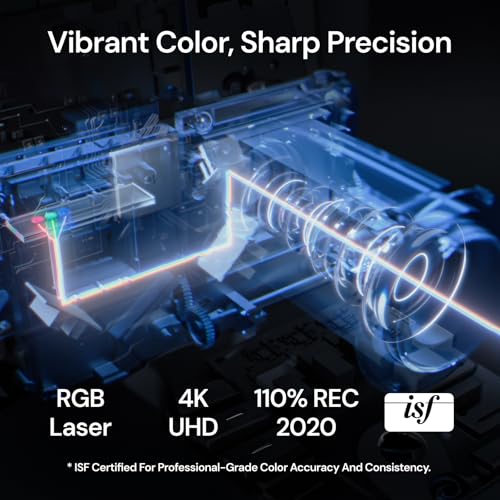
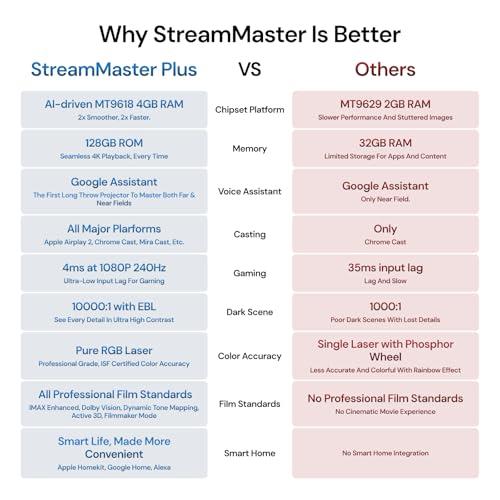
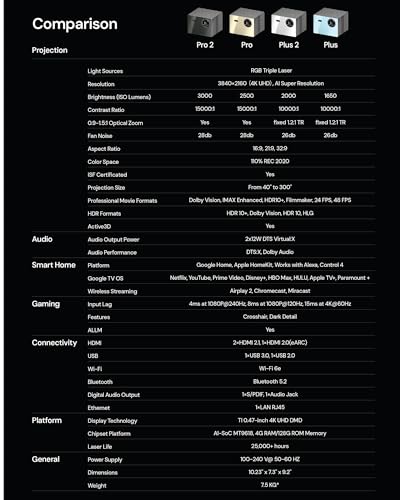
What makes the Valerion special is its RGB triple laser system. Traditional DLP projectors use a color wheel that spins rapidly to create different colors, which can cause a "rainbow effect" where some people see flashes of red, green, and blue in their peripheral vision. RGB lasers eliminate this problem by using separate red, green, and blue lasers instead of a spinning wheel. This approach also delivers much wider color gamut coverage—110% of the Rec.2020 standard, which is impressive for any projector, let alone one in this price range.
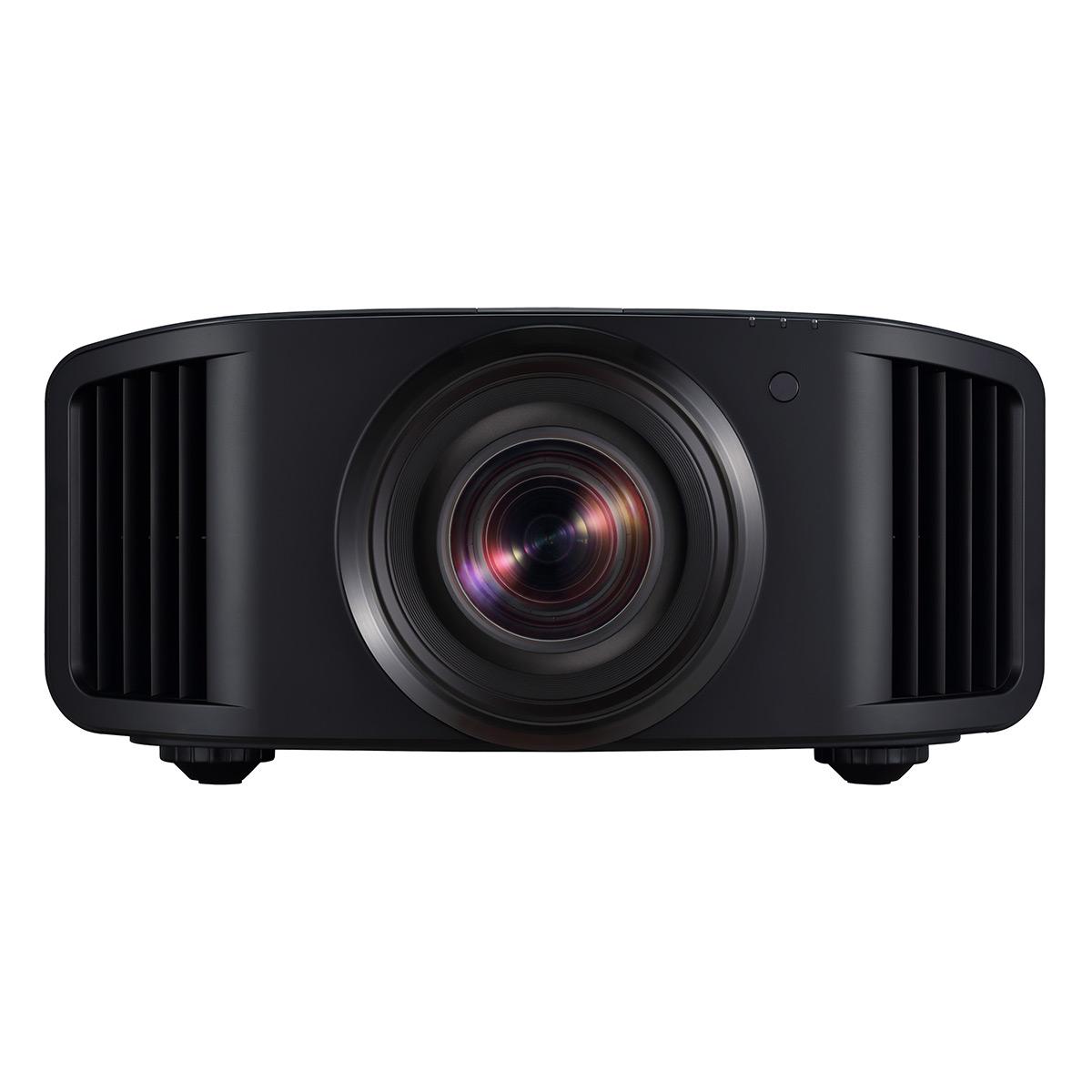
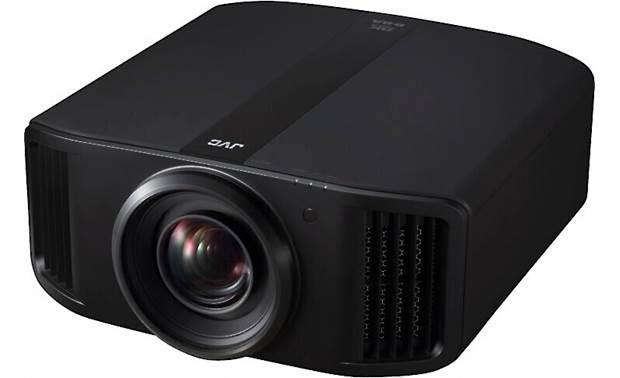
The JVC DLA-NZ9 takes an entirely different approach with three separate 0.70-inch D-ILA chips—one each for red, green, and blue. D-ILA (Direct Drive Image Light Amplifier) is JVC's version of LCoS (Liquid Crystal on Silicon) technology, which works more like LCD but with much higher contrast ratios. Having three separate chips means each color gets its own dedicated imaging device, resulting in superior color separation and accuracy.
But JVC doesn't stop at native 4K. The DLA-NZ9 uses their proprietary 8K e-shiftX technology, which shifts the image in four directions instead of two. This creates up to 35.3 million addressable pixels on screen, achieving true 8K resolution (8192x4320). While native 8K content is still rare, this technology provides exceptional detail when upscaling 4K content and ensures the projector won't become obsolete as 8K content becomes more common.
Contrast ratio—the difference between the deepest blacks and brightest whites—is arguably the most important specification for image quality. It's what makes scenes feel three-dimensional and immersive rather than flat and washed out.
The Valerion StreamMaster Plus 2 achieves a native contrast ratio of 3,000:1, which is respectable for a single-chip DLP projector. However, its Enhanced Black Level (EBL) mode pushes this to 10,000:1 through dynamic iris control—essentially adjusting the projector's brightness based on the content being displayed. What's clever about Valerion's implementation is that EBL works at various brightness levels, not just maximum output, making it more practical for real-world viewing.
The JVC DLA-NZ9 operates in a different league entirely with its 100,000:1 native contrast ratio. This isn't achieved through dynamic adjustments but represents the actual difference between the darkest and brightest pixels the projector can display simultaneously. In practice, this means shadow details remain visible in dark scenes while bright highlights don't wash out the surrounding image. When combined with laser dimming that can essentially turn off light output for pure black scenes, the effective contrast becomes nearly infinite.
Based on our research into professional reviews and user feedback, this contrast difference is immediately visible when watching HDR content. Dark scenes in movies like "Blade Runner 2049" or "Dune" showcase details in shadows that simply disappear on lower-contrast projectors, while highlights like explosions or bright lights maintain their impact without blooming into surrounding areas.
Both projectors support modern HDR (High Dynamic Range) formats, but they approach color reproduction differently. HDR expands both the brightness range and color palette that content can use, making images more lifelike and impactful.
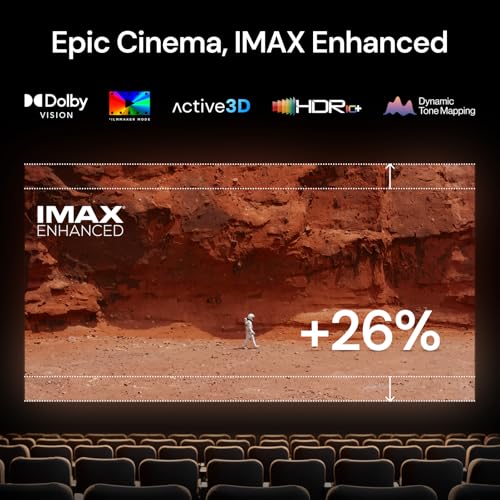
The Valerion StreamMaster Plus 2 supports the full suite of HDR formats including Dolby Vision, HDR10+, and IMAX Enhanced. Dolby Vision is particularly noteworthy because it includes dynamic metadata—information that tells the projector how to optimize each scene or even individual frames. The projector's AI-powered dynamic tone mapping analyzes content in real-time and adjusts brightness and color to make the most of its capabilities.
IMAX Enhanced support is especially interesting for home theater use. This format preserves the expanded aspect ratios used in IMAX theaters, showing up to 26% more image content for supported films. When watching movies like "Top Gun: Maverick" or "Dune," you'll see more of the image as the filmmakers intended.
The JVC DLA-NZ9 focuses on accuracy over format quantity, supporting HDR10+ with JVC's proprietary Frame Adapt HDR technology. This system uses Theater Optimizer to analyze your specific room conditions and adjust the HDR mapping accordingly. While it may support fewer HDR formats than the Valerion, JVC's implementation is calibrated for accuracy rather than punch.
The color gamut coverage tells an interesting story. The Valerion claims 110% coverage of Rec.2020, the newest and widest broadcast standard. The JVC specifies over 100% DCI-P3 coverage, which is the color space actually used in movie production. In practical terms, both will display vibrant, accurate colors, but the JVC's approach aligns more closely with professional filmmaking standards.
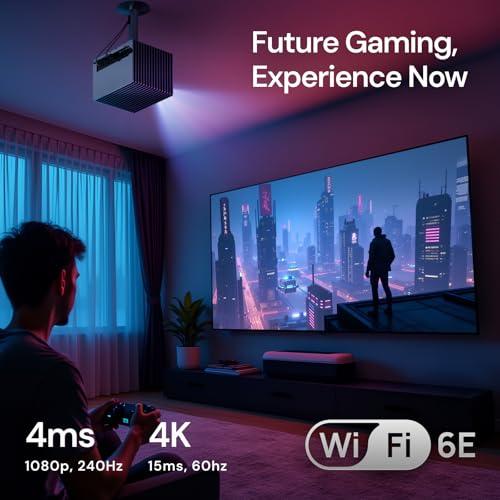
Gaming on projectors has transformed dramatically in recent years, and the Valerion StreamMaster Plus 2 exemplifies this evolution. Its gaming specifications are genuinely impressive: 4ms input lag at 1080p/240Hz, 8ms at 1080p/120Hz, and 15ms at 4K/60Hz. Input lag is the delay between when you press a button and when the action appears on screen, and these numbers rival dedicated gaming monitors.
The Valerion includes ALLM (Auto Low Latency Mode), which automatically switches to its fastest processing mode when it detects a gaming console. It also features specialized gaming modes for different genres—RPG, FPS, and sports games each get optimized picture settings. Features like FPS Crosshair overlay targeting reticles for first-person shooters, while Night Vision mode brightens dark areas to spot enemies hiding in shadows.
The JVC DLA-NZ9 takes a different approach to gaming. While it can accept 4K signals at 120Hz and even 8K at 60Hz through its 48Gbps HDMI 2.1 inputs, it's not optimized for competitive gaming. Input lag measurements aren't readily available, and the projector prioritizes image quality over response time. However, for single-player games where visual fidelity matters more than split-second timing, the JVC's superior image quality creates an incredibly immersive experience.
Based on our evaluation of user feedback, serious gamers consistently prefer the Valerion for competitive titles, while the JVC excels for cinematic single-player experiences.
Installation requirements differ dramatically between these projectors, affecting who can use them and where they'll work best.
The Valerion StreamMaster Plus 2 prioritizes simplicity with a fixed 1.2:1 throw ratio. This means you need to place it approximately 8-9 feet from your screen for a 100-inch diagonal image. While this limits placement flexibility, the projector compensates with digital keystone correction and auto-focus features. It's compact at about 16 pounds and designed to work well on a coffee table or simple ceiling mount. The lack of lens shift means you need to position it fairly precisely, but the digital corrections can compensate for minor placement issues.
The JVC DLA-NZ9 offers extensive installation flexibility through its premium optics. The 100mm all-glass lens includes 2x motorized zoom, allowing placement anywhere from 9.5 to 19 feet for a 100-inch screen. More importantly, it offers massive lens shift capabilities—you can move the image up to 100% of its height vertically and 43% horizontally without moving the projector itself.
This flexibility is crucial for custom installations. In a dedicated theater room, you might need to mount the projector behind seating or off to one side due to ceiling joists or HVAC equipment. The JVC's lens shift lets you position the image perfectly on screen regardless of projector placement. However, this flexibility comes with complexity—the projector weighs nearly 56 pounds and requires substantial mounting hardware.
Here's where these projectors diverge most dramatically in their philosophy.
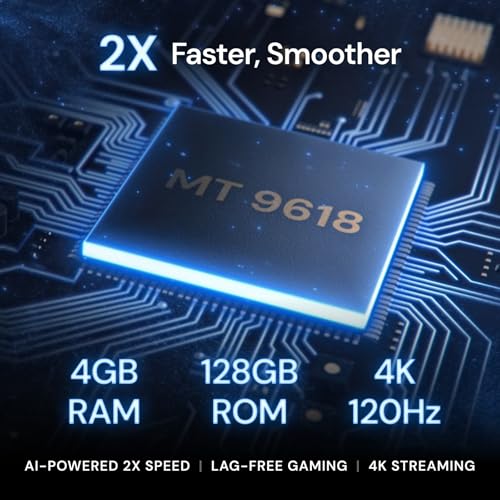
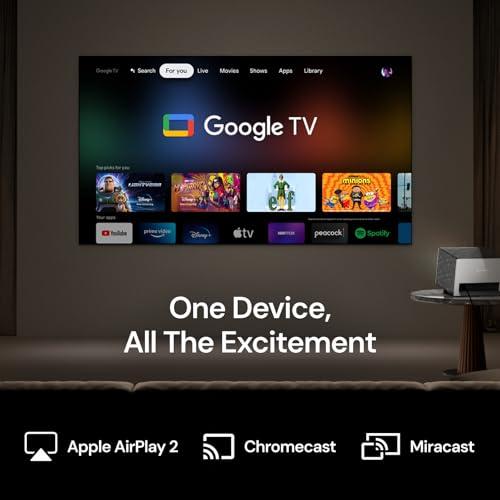
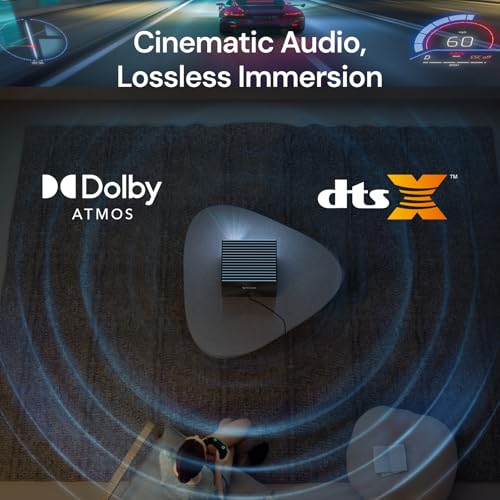
The Valerion StreamMaster Plus 2 runs Google TV OS with 4GB of RAM and 128GB of storage. This means Netflix, Disney+, YouTube, and hundreds of other apps run directly on the projector. Google Assistant provides voice control, and the system supports Chromecast, AirPlay 2, and Miracast for easy content sharing from phones and tablets. Built-in 12-watt stereo speakers are adequate for casual viewing, though most users will want external audio for serious movie watching.
This all-in-one approach eliminates cable clutter and simplifies the user experience. You can literally unbox the Valerion, plug it in, connect to Wi-Fi, and start streaming content immediately. For many users, this convenience is worth more than marginal improvements in image quality.
The JVC DLA-NZ9 includes no smart features whatsoever. It's purely a display device that requires external sources for all content. While this might seem limiting, it reflects the professional approach of separating processing from display. In high-end installations, users typically prefer dedicated media players, gaming consoles, or AV receivers that can be upgraded independently of the projector.
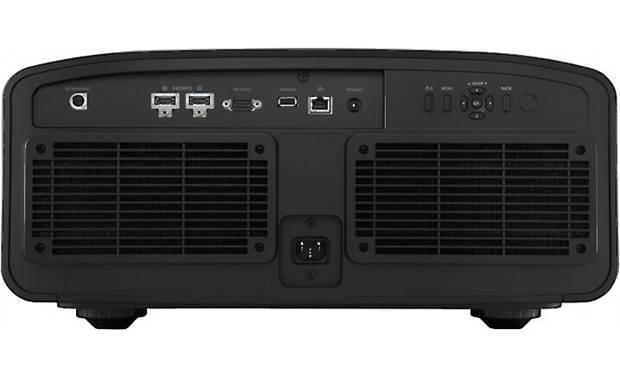
The JVC does include more professional connectivity options like RS-232C control, network management, and 12V trigger outputs for automated screen and seating control. These features matter in custom installations but add complexity that casual users don't need.
Both projectors use laser light sources, but with different approaches that affect longevity, color, and maintenance.
The Valerion StreamMaster Plus 2 uses true RGB lasers—separate red, green, and blue laser diodes. This approach delivers excellent color gamut coverage and eliminates color wheels entirely, reducing mechanical complexity and potential failure points. The RGB lasers are rated for 25,000 hours of use, which translates to over 12 years of typical use.
The JVC DLA-NZ9 employs BLU-Escent laser phosphor technology. This system uses blue laser diodes combined with a yellow phosphor to create white light, which then passes through color filters. While this sounds less direct than RGB lasers, JVC's third-generation implementation is highly refined and produces exceptional color accuracy. The BLU-Escent system is rated for 20,000 hours.
Both approaches eliminate the need for expensive lamp replacements that plagued older projectors. Traditional projector lamps cost $300-500 and needed replacement every 2,000-4,000 hours. Laser light sources maintain consistent brightness and color throughout their lifespan, making long-term ownership costs much more predictable.
At the time of writing, these projectors represent vastly different value propositions. The Valerion StreamMaster Plus 2 typically sells for under $2,000, while the JVC DLA-NZ9 commands over $20,000—more than ten times the price.
This price difference raises an important question: is the JVC really ten times better? The answer depends entirely on your priorities and viewing environment.
For image quality purists with dedicated theater rooms, the JVC's superior contrast, color accuracy, and resolution create a genuinely different viewing experience. The difference between 3,000:1 and 100,000:1 contrast isn't subtle—it's immediately visible in any content with both bright and dark elements. The native 4K resolution and 8K upscaling provide detail that pixel-shifting DLP simply cannot match.
However, the Valerion delivers remarkable performance for its price point. When professional reviewers have compared it to much more expensive projectors in controlled environments, the differences, while real, are often less dramatic than the spec sheets suggest. In normal viewing rooms with some ambient light, the Valerion's 2,000 lumens and 10,000:1 dynamic contrast create excellent images that satisfy most viewers.
The all-in-one nature of the Valerion adds significant value. When you factor in the cost of external streaming devices, media players, and audio systems that the JVC requires, the total system cost difference becomes even more pronounced.
Your viewing environment plays a crucial role in determining which projector will work best.
The Valerion StreamMaster Plus 2 performs admirably in typical living rooms with moderate light control. Its 2,000 lumens provide enough brightness for enjoyable viewing even with some ambient light from windows or lamps. The RGB laser technology maintains color accuracy even at higher brightness settings, making it versatile for different lighting conditions.
The JVC DLA-NZ9 truly shines in dedicated theater rooms with excellent light control. While its 3,000 lumens provide adequate brightness for larger screens, its strength lies in contrast performance that becomes most apparent in darkened environments. In a properly darkened room, the JVC's deep blacks and shadow detail create an almost three-dimensional image quality that's genuinely reference-level.
For screen sizes, the Valerion works best with displays up to about 150 inches diagonal. Beyond that size, its brightness limitations become more apparent. The JVC can effectively illuminate screens up to 300 inches or more, making it suitable for large dedicated theaters.
After evaluating professional reviews, user feedback, and technical specifications, clear recommendations emerge for different user scenarios.
Choose the Valerion StreamMaster Plus 2 if you want a versatile entertainment solution that excels at gaming, provides convenient streaming capabilities, and delivers impressive image quality without requiring a dedicated theater room. Its ultra-low input lag makes it perfect for competitive gaming, while the all-in-one design eliminates complexity and additional equipment costs. The RGB laser technology provides excellent color performance and eliminates common DLP issues like rainbow effects.
The Valerion represents exceptional value for users who want premium features without premium complexity or cost. It's particularly well-suited for families or individuals who plan to use their projector for mixed content—gaming, streaming, and movies—in normal living spaces.
Choose the JVC DLA-NZ9 if you have a dedicated home theater room, prioritize absolute image quality above all else, and have the budget for a premium solution. Its exceptional contrast ratio, true 4K resolution with 8K upscaling, and professional-grade calibration capabilities create a truly cinematic experience that rivals commercial theaters.
The JVC makes sense for serious home theater enthusiasts who view their projection system as a long-term investment in entertainment quality. It's the choice for users who want the best possible image quality and have the room, budget, and technical requirements to support a high-end installation.
The fundamental choice comes down to priorities: versatility and value versus absolute performance. Both projectors excel in their respective categories, but they serve very different needs and expectations. The Valerion StreamMaster Plus 2 democratizes premium projection technology, while the JVC DLA-NZ9 represents the pinnacle of home theater projection for those who demand perfection.
| Valerion StreamMaster Plus 2 | JVC DLA-NZ9 |
|---|---|
| Display Technology - Determines image quality and price tier | |
| Single 0.47" DLP chip with pixel-shifting RGB triple laser | Three 0.70" native 4K D-ILA chips with BLU-Escent laser |
| Resolution - Higher resolution shows more detail | |
| 4K (3840x2160) via pixel-shifting | Native 4K (4096x2160) + 8K e-shiftX (8192x4320) |
| Brightness - Critical for room lighting flexibility | |
| 2,000 ISO lumens (good for controlled lighting) | 3,000 ANSI lumens (supports larger screens and brighter rooms) |
| Contrast Ratio - Most important spec for image depth and realism | |
| 3,000:1 native, 10,000:1 with EBL mode | 100,000:1 native, infinite with laser dimming |
| Color Gamut - Determines color vibrancy and accuracy | |
| 110% Rec.2020 coverage (excellent for price range) | 100%+ DCI-P3 with Cinema Filter (cinema-grade accuracy) |
| HDR Support - Essential for modern content | |
| Dolby Vision, HDR10+, IMAX Enhanced, Filmmaker Mode | HDR10+ with Frame Adapt HDR and Theater Optimizer |
| Gaming Performance - Matters for console and PC gaming | |
| 4ms lag at 1080p/240Hz, 8ms at 1080p/120Hz, 15ms at 4K/60Hz | 4K/120Hz and 8K/60Hz input capable, gaming-optimized modes |
| Lens System - Affects installation flexibility | |
| Fixed 1.2:1 throw ratio, powered focus, no lens shift | 2x motorized zoom, ±100% vertical/±43% horizontal lens shift |
| Smart Features - Determines if you need external devices | |
| Google TV OS, 4GB RAM, 128GB storage, built-in apps | No smart features, requires external streaming devices |
| Physical Size - Important for placement and portability | |
| 7.3" x 9.2" x 10.2", 16.5 lbs (portable) | 9.2" x 19.8" x 20.8", 55.8 lbs (permanent installation) |
| Light Source Life - Affects long-term ownership costs | |
| RGB laser, 25,000 hours (12+ years typical use) | BLU-Escent laser, 20,000 hours (10+ years typical use) |
| Target User - Who each projector is designed for | |
| Multi-purpose entertainment, gaming, budget-conscious buyers | Dedicated home theater enthusiasts, custom installations |
| Connectivity - Available input options | |
| 2x HDMI 2.1, 1x HDMI 2.0, USB, ethernet, wireless | 2x 48Gbps HDMI 2.1, RS-232C, LAN, trigger outputs |
| Audio - Built-in sound capabilities | |
| 12W x 2 stereo speakers, optical/headphone outputs | No built-in speakers, requires external audio system |
| Installation Requirements - Setup complexity and room needs | |
| Simple setup, works in living rooms, digital corrections | Professional installation recommended, darkened theater rooms |
| Calibration Options - Image tuning capabilities | |
| ISF-certified mode, full color controls, 20-point white balance | ISF certification, JVC Auto Calibration, 10 memory presets |
The Valerion StreamMaster Plus 2 is significantly better for gaming with ultra-low input lag of just 4ms at 1080p/240Hz and 15ms at 4K/60Hz. It includes dedicated gaming modes for different genres and features like ALLM (Auto Low Latency Mode). While the JVC DLA-NZ9 can accept 4K/120Hz signals, it's designed for cinematic viewing rather than competitive gaming.
The biggest difference is contrast ratio. The JVC DLA-NZ9 delivers exceptional 100,000:1 native contrast with deep blacks and stunning detail in dark scenes, while the Valerion StreamMaster Plus 2 offers 10,000:1 dynamic contrast. The JVC also provides true native 4K resolution compared to the Valerion's pixel-shifting 4K technology.
The JVC DLA-NZ9 produces 3,000 lumens compared to the Valerion StreamMaster Plus 2's 2,000 lumens, making it better for brighter environments. However, the JVC is designed for dedicated dark theater rooms where its superior contrast truly shines. The Valerion works well in typical living rooms with moderate light control.
The Valerion StreamMaster Plus 2 runs Google TV OS with built-in Netflix, Disney+, and other streaming apps, so no external devices are needed. The JVC DLA-NZ9 has no smart features and requires external streaming devices, gaming consoles, or media players for all content.
The Valerion StreamMaster Plus 2 is much easier to install at just 16.5 pounds with simple placement requirements. The JVC DLA-NZ9 weighs 56 pounds and typically requires professional installation, though it offers extensive lens shift and zoom for flexible positioning in custom theater rooms.
The Valerion StreamMaster Plus 2 is compact and portable at 7.3" x 9.2" x 10.2", while the JVC DLA-NZ9 is a large installation unit measuring 9.2" x 19.8" x 20.8". The size difference reflects their different intended uses - portable entertainment versus permanent theater installation.
The Valerion StreamMaster Plus 2 offers exceptional value with premium features like RGB laser technology, comprehensive HDR support, and smart TV functionality at a fraction of the cost. The JVC DLA-NZ9 delivers reference-quality images that justify its premium pricing for serious home theater enthusiasts.
Both support HDR, but differently. The Valerion StreamMaster Plus 2 supports Dolby Vision, HDR10+, and IMAX Enhanced with dynamic tone mapping. The JVC DLA-NZ9 focuses on HDR10+ with Frame Adapt HDR technology that's calibrated for cinema-grade accuracy rather than supporting multiple formats.
The JVC DLA-NZ9 is purpose-built for dedicated home theaters with its exceptional 100,000:1 contrast ratio, professional calibration options, and ability to fill very large screens. The Valerion StreamMaster Plus 2 works well in theater rooms too, but truly excels in multi-purpose living spaces.
The Valerion StreamMaster Plus 2 uses RGB lasers rated for 25,000 hours (12+ years of typical use), while the JVC DLA-NZ9 features BLU-Escent lasers rated for 20,000 hours (10+ years). Both eliminate expensive lamp replacements and maintain consistent brightness throughout their lifespan.
The JVC DLA-NZ9 handles larger screens more effectively with its higher 3,000-lumen output, supporting screens up to 300 inches. The Valerion StreamMaster Plus 2 works best with screens up to about 150 inches, though it can project larger images with reduced brightness.
The Valerion StreamMaster Plus 2 includes dual HDMI 2.1 ports, one HDMI 2.0 port, USB connections, and wireless networking for streaming. The JVC DLA-NZ9 offers two 48Gbps HDMI 2.1 inputs with professional control options like RS-232C and trigger outputs for custom installations.
We've done our best to create useful and informative comparisons to help you decide what product to buy. Our research uses advanced automated methods to create this comparison and perfection is not possible - please contact us for corrections or questions. These are the sites we've researched in the creation of this article: bestbuy.com - valerion.com - youtube.com - valerion.com - youtube.com - projectorcentral.com - youtube.com - valerion.com - avsforum.com - neowin.net - hometheatershack.com - avsforum.com - bestbuy.com - projector-database.com - whathifi.com - soundandvision.com - worldwidestereo.com - projectorreviews.com - worldwidestereo.com - us.jvc.com - crutchfield.com - abtvaustin.com - valueelectronics.com - projectorcentral.com

Privacy Policy
Terms and Conditions - Affiliate Policy
Home Security
© Copyright 2008-2026.
11816 Inwood Rd #1211, Dallas, TX 75244