

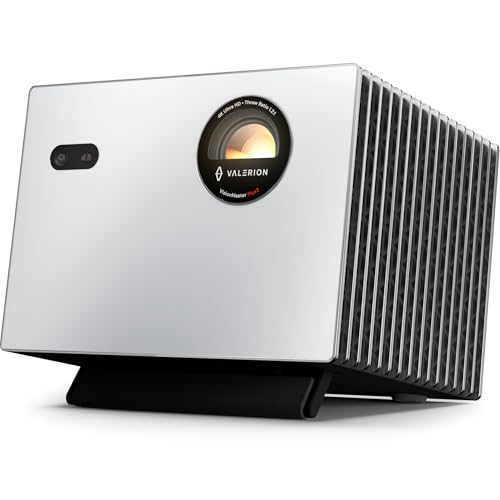


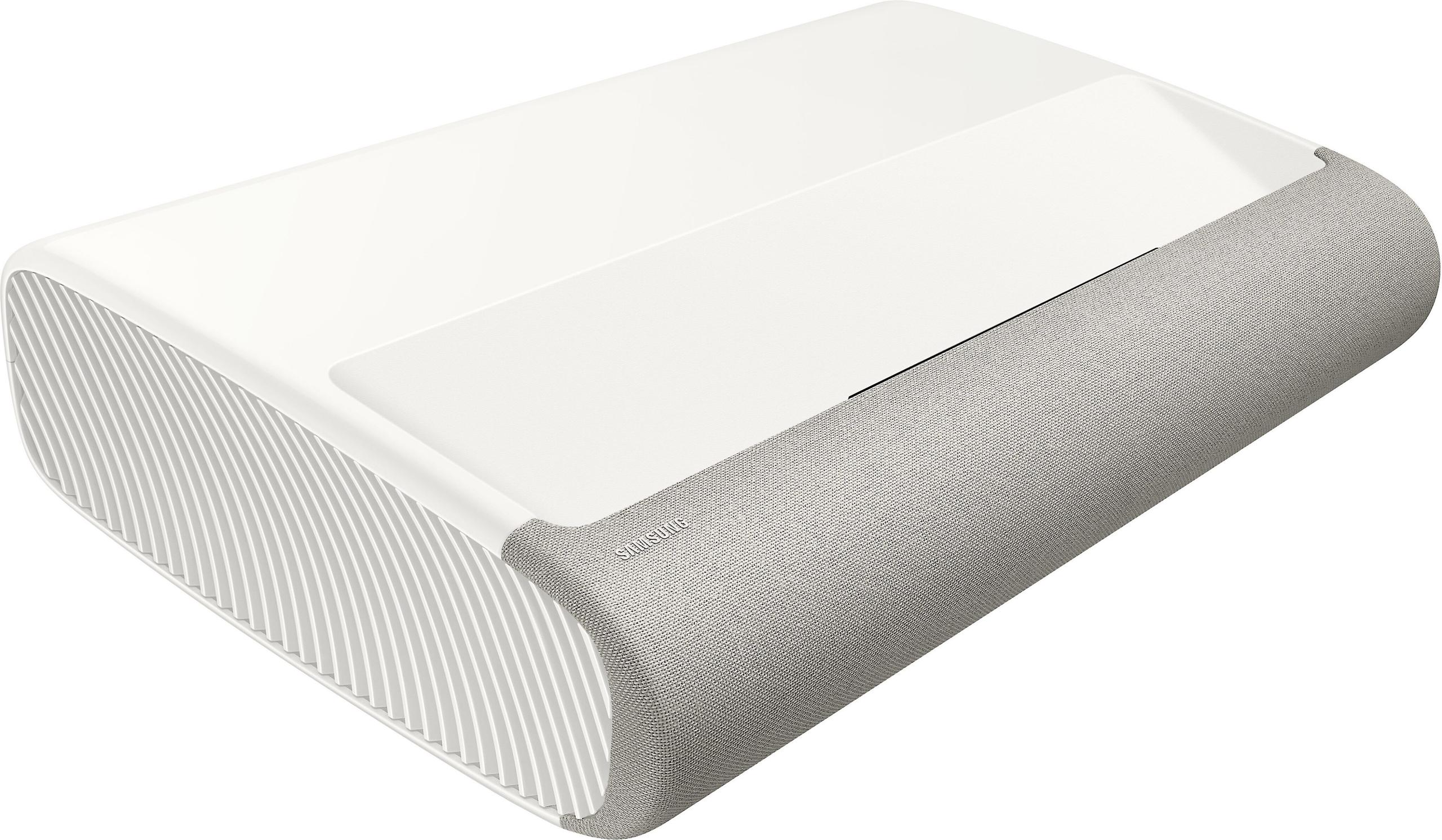
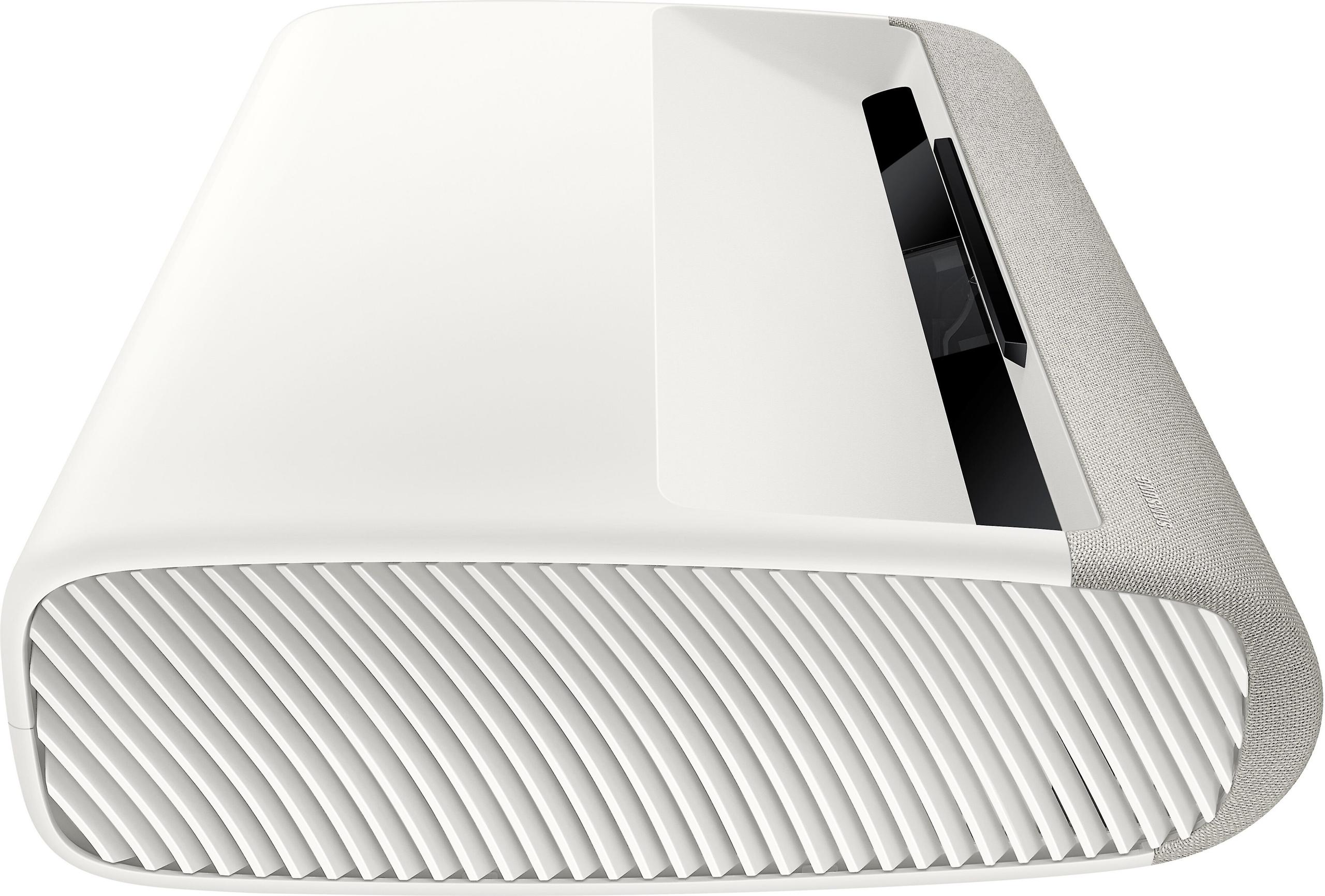
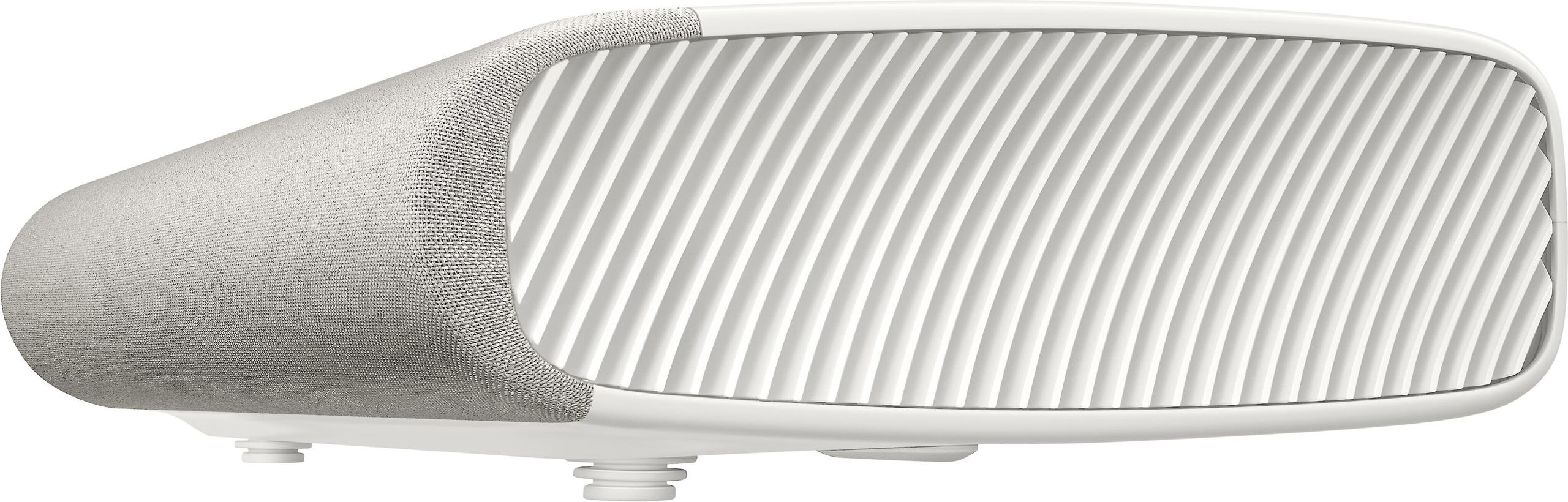
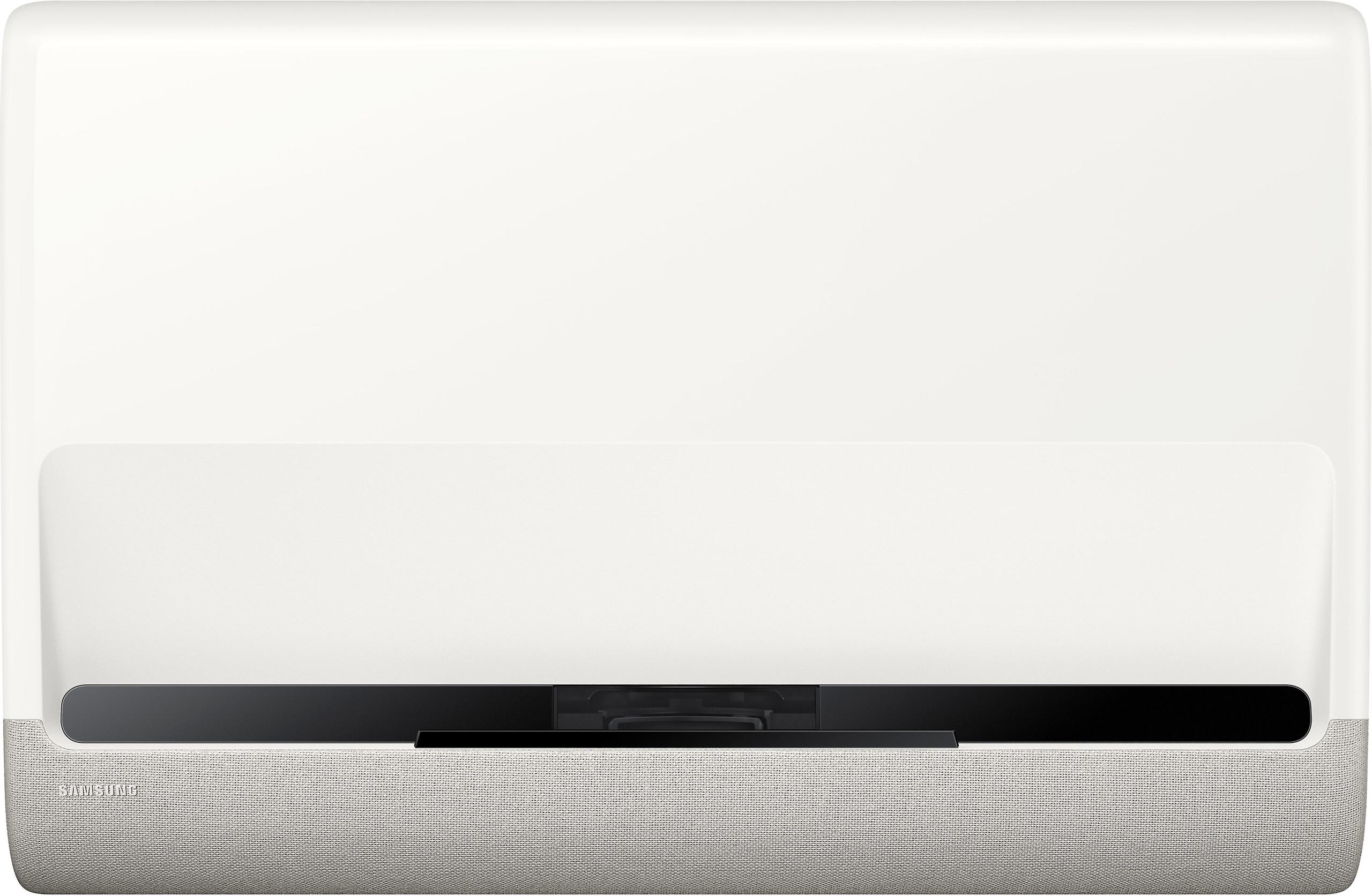
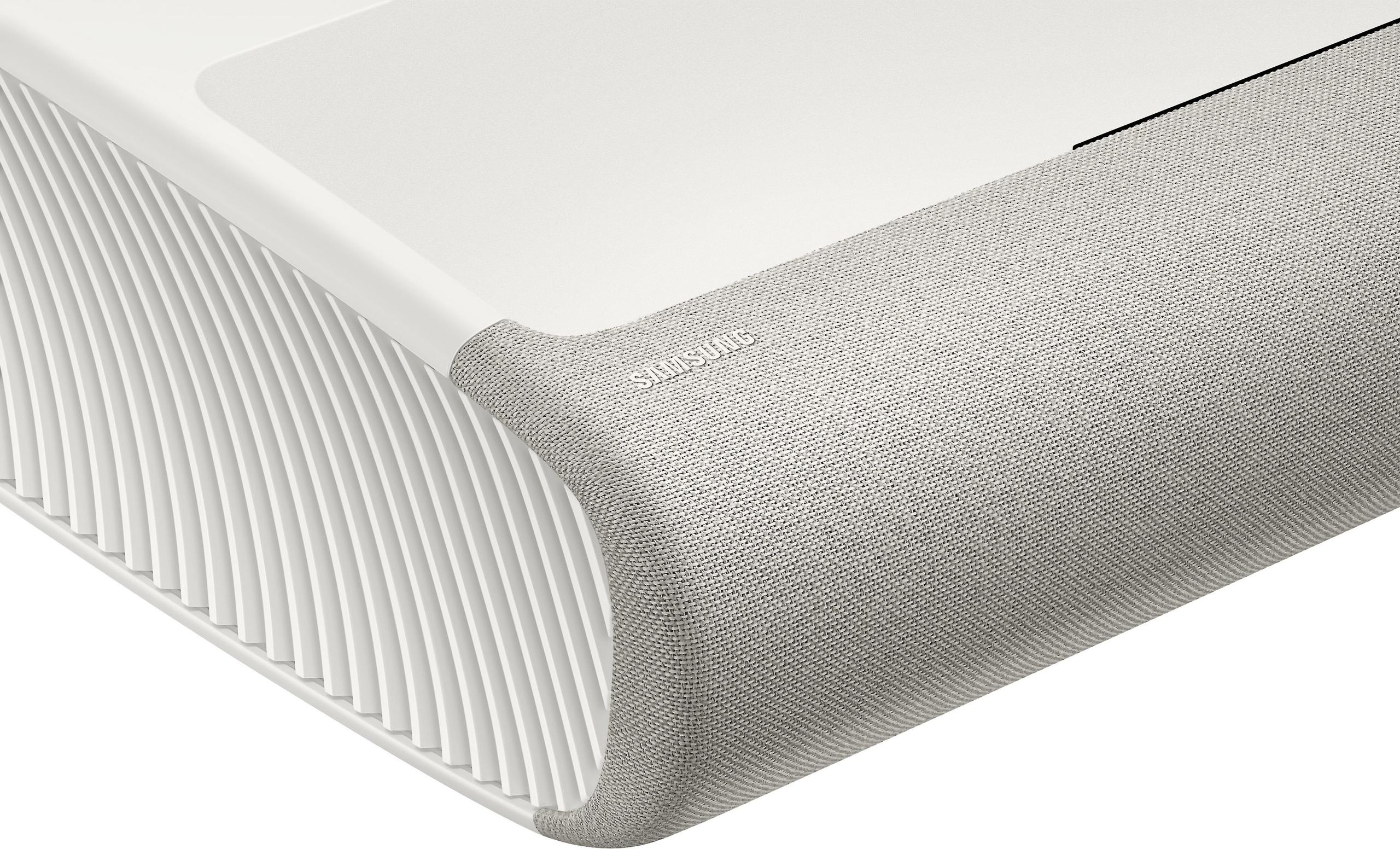
When shopping for a 4K home theater projector, you're essentially choosing between two very different approaches to bringing cinema-quality images into your home. The Valerion StreamMaster Plus 2 and Samsung Premiere 9 LPU9D represent these contrasting philosophies perfectly—one prioritizes flexibility and performance, while the other emphasizes convenience and brightness.
Both projectors hit the market in 2024, arriving during a particularly exciting time for home projection technology. The widespread adoption of triple laser technology has largely solved the traditional projector problems of dim images, poor color accuracy, and short lamp life. These advances mean modern projectors can now compete directly with large TVs in ways that weren't possible just a few years ago.
Before diving into specifics, it's worth understanding what makes these projectors special. Both use DLP (Digital Light Processing) technology with something called "pixel-shifting" to create 4K resolution. This means they don't have true 4K chips—instead, they rapidly shift a 1080p image to display what appears as 4K detail. While purists sometimes debate this approach, the reality is that pixel-shifted 4K looks genuinely sharp and detailed, especially when viewed from normal seating distances.
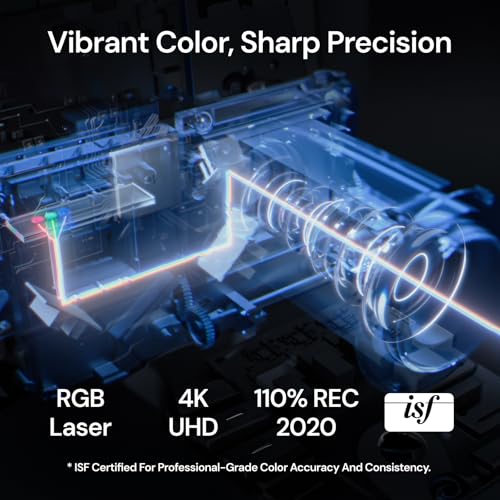
The triple laser systems in both projectors represent a major leap forward. Traditional projector lamps fade quickly and produce inconsistent colors, but lasers maintain their brightness for 20,000+ hours while delivering much wider color gamuts (the range of colors they can display). This technology also eliminates the dreaded "rainbow effect"—brief flashes of red, green, and blue that some people notice with older DLP projectors.
When evaluating any projector, the most critical performance metrics are brightness (measured in lumens), contrast ratio (the difference between darkest blacks and brightest whites), color accuracy, and input lag for gaming. These factors determine whether you'll actually enjoy watching the projector or end up frustrated with dim, washed-out images.
The fundamental difference between the Valerion StreamMaster Plus 2 and Samsung Premiere 9 lies in their throw distance—how far they need to sit from your screen or wall.
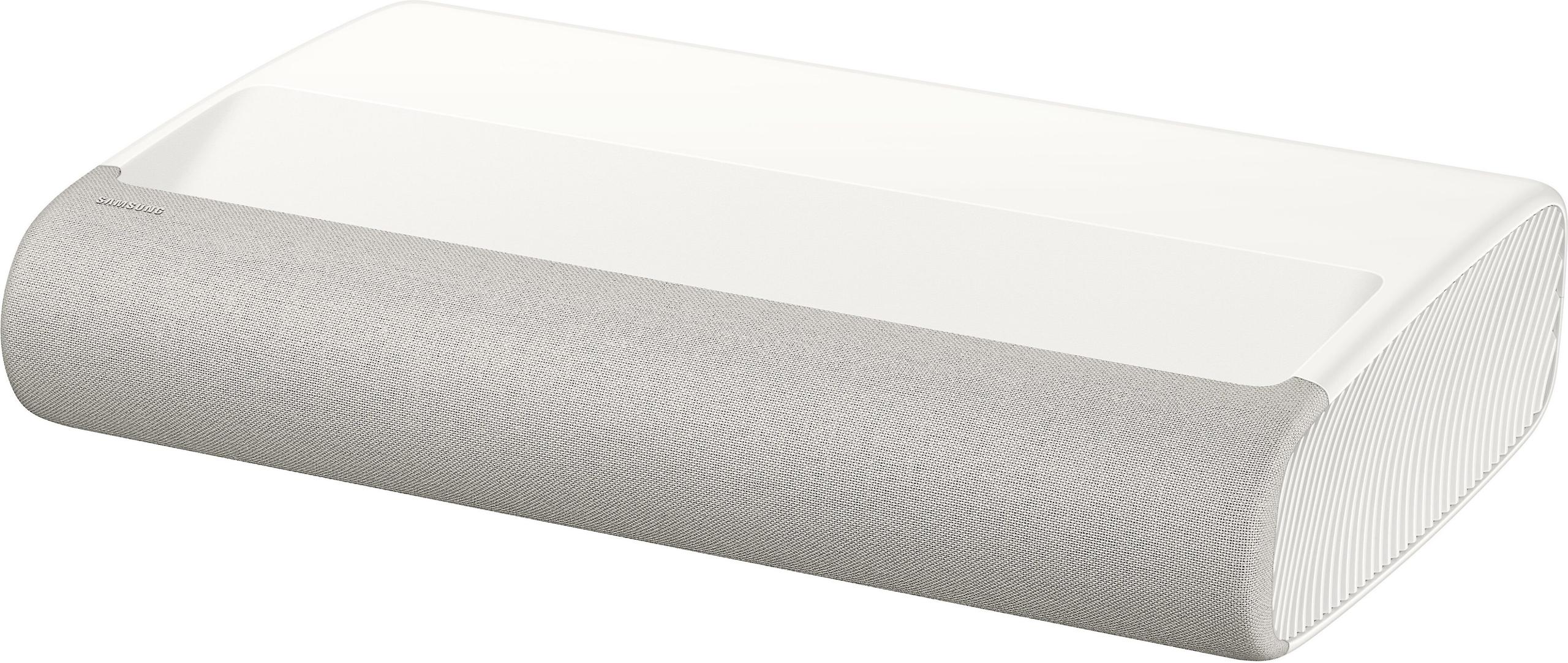
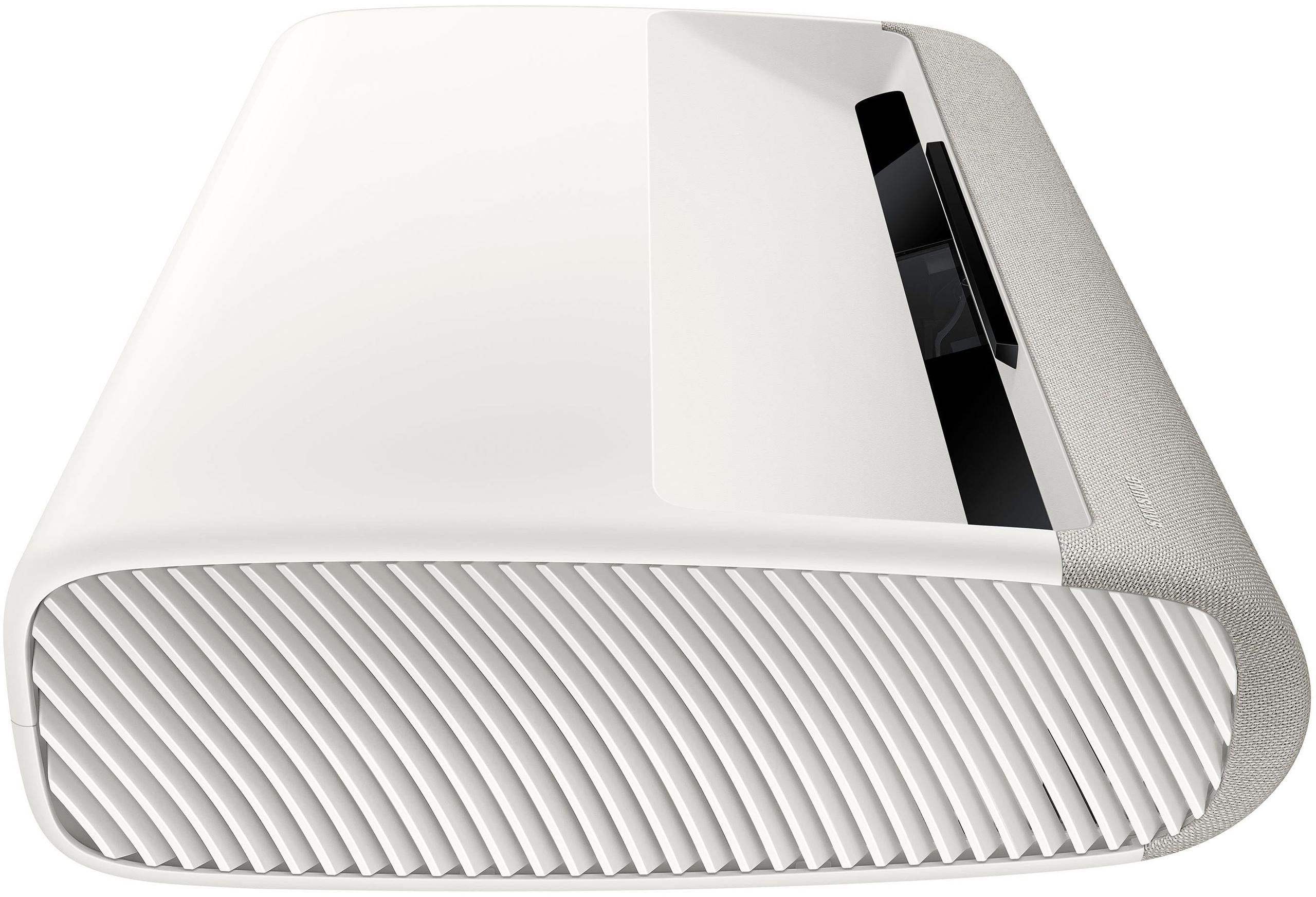
The Samsung Premiere 9 is an ultra-short throw (UST) projector, meaning it sits just inches from your wall and projects upward to create a massive image. Think of it like a digital version of those old overhead projectors from school, but infinitely more sophisticated. This design lets you place it on a TV stand or cabinet, making it feel more like a traditional entertainment center component.
The Valerion StreamMaster Plus 2, by contrast, follows the traditional projector approach. It needs to be positioned 3.5 to 26 feet from your screen, typically mounted on the ceiling or placed on a rear shelf. This might seem less convenient, but it offers significantly more flexibility in screen sizes and room layouts.
Here's where these projectors diverge most dramatically. The Samsung Premiere 9 pumps out an impressive 3,450 lumens, making it genuinely usable in bright rooms and during daytime viewing. This brightness advantage is crucial for UST projectors because they're designed to replace TVs in living rooms where controlling ambient light isn't always practical.
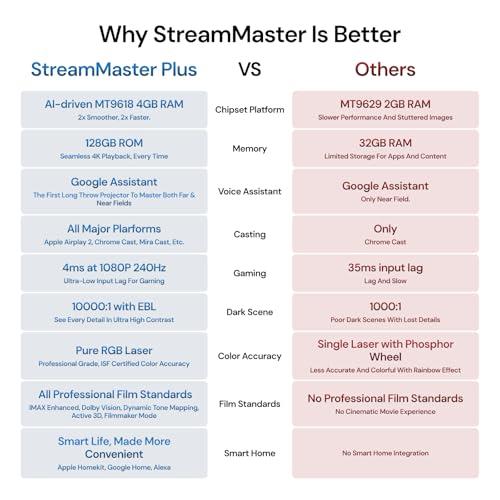
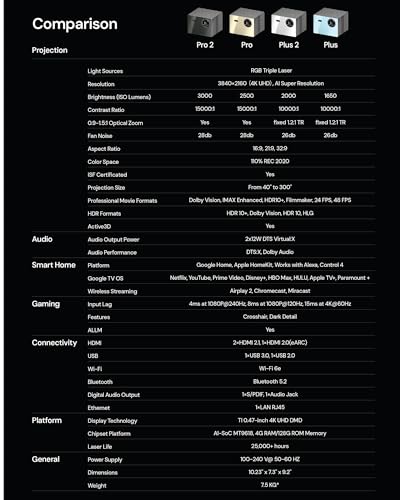
The Valerion StreamMaster Plus 2 produces 2,000 ISO lumens, which might sound underwhelming in comparison. However, this specification tells only part of the story. The Valerion's Enhanced Black Level (EBL) technology and superior contrast handling mean it can produce deeper blacks and more dramatic images in darker environments. When you're watching movies with the lights dimmed—which is how most serious home theater enthusiasts prefer to watch—the difference in brightness becomes less important than the ability to render subtle shadow details and maintain contrast.
Think of it this way: the Samsung is like having stadium lighting that makes everything bright and visible, while the Valerion is more like professional cinema lighting that creates mood and atmosphere. Both approaches have merit depending on your viewing environment and preferences.
Color performance reveals another interesting contrast between these projectors. The Samsung Premiere 9 covers an impressive 154% of the DCI-P3 color space, which is the standard used in commercial movie theaters. This wide color coverage contributes to vibrant, saturated images that pop off the screen.
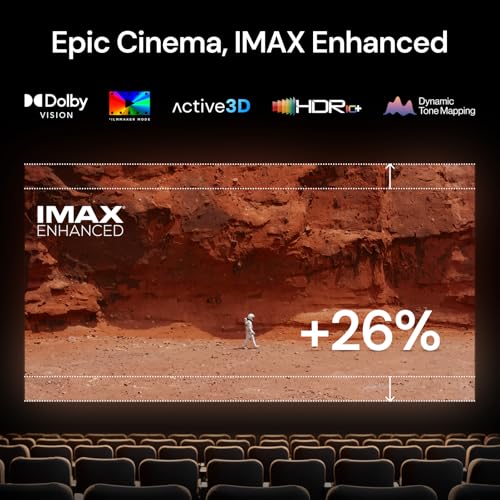
The Valerion StreamMaster Plus 2 takes a different approach, covering 110% of the even wider Rec.2020 color space. Rec.2020 represents the future standard for HDR content, meaning the Valerion is potentially more future-proof for upcoming content formats. More importantly, the Valerion supports Dolby Vision, arguably the most advanced HDR format available, while the Samsung only handles HDR10+ and standard HDR10.
HDR (High Dynamic Range) is crucial for modern viewing because it allows for much brighter highlights and darker shadows than traditional video. Think of the difference between a regular photo and one taken with your phone's HDR mode—suddenly clouds have detail instead of being blown-out white blobs, and shadows reveal hidden information. Dolby Vision takes this further by adjusting the HDR mapping scene-by-scene rather than applying the same settings to an entire movie.
The contrast ratio specifications tell an interesting story. Samsung claims an enormous 2,000,000:1 dynamic contrast ratio, while Valerion lists 10,000:1 with EBL mode enabled. These numbers aren't directly comparable because they're measured differently, but our research into user experiences suggests the Valerion StreamMaster Plus 2 actually delivers more impressive real-world contrast performance. This is likely due to its more sophisticated black level processing and the inherent advantages of traditional throw distances over UST designs.
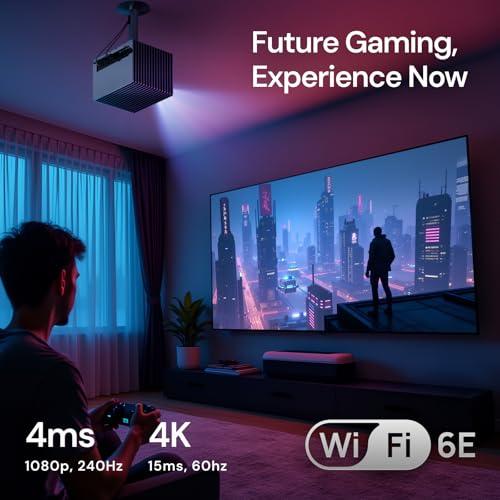
For gaming enthusiasts, the performance gap between these projectors is substantial and decisive. The Valerion StreamMaster Plus 2 delivers input lag as low as 4ms at 1080p/240Hz, making it genuinely competitive with dedicated gaming monitors. Even at 4K/60Hz, it manages just 15ms of delay, which is excellent for a projector.
Input lag measures the delay between when your controller sends a signal and when you see the result on screen. Anything under 20ms is considered excellent for gaming, while delays over 40ms become noticeable and frustrating, especially in fast-paced games.
The Samsung Premiere 9 struggles here, with 53ms input lag even in its dedicated game mode. This delay would be immediately noticeable in competitive gaming and frustrating even for casual play. The Samsung's HDMI 2.0 inputs also limit it to 4K/60Hz maximum, while the Valerion's HDMI 2.1 connections support future gaming consoles and PC graphics cards that can push higher frame rates.
Beyond raw specifications, the Valerion includes thoughtful gaming features like dedicated modes for different game genres (RPG, FPS, racing), crosshair overlays for shooters, and night vision enhancement for spotting enemies in dark scenes. These might seem like gimmicks, but they demonstrate a clear focus on gaming performance that the Samsung simply doesn't match.
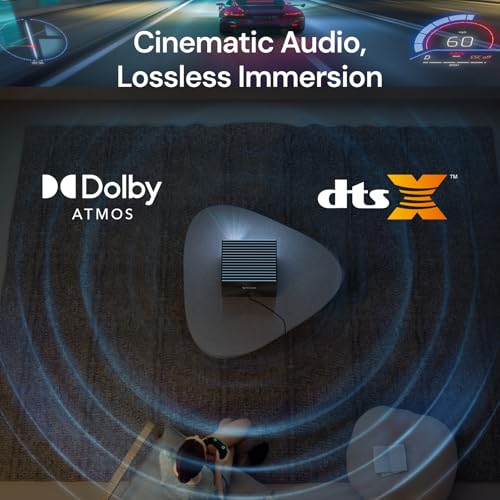
Audio represents the Samsung Premiere 9's strongest advantage. Its 40W 2.2.2 channel system with Dolby Atmos creates genuinely immersive sound that rivals dedicated soundbars. The up-firing speakers bounce sound off your ceiling to create height effects, while built-in woofers handle bass frequencies that most projector speakers completely ignore.
The Valerion StreamMaster Plus 2 offers adequate 12W stereo speakers that work fine for casual viewing but won't create the room-filling experience that makes movies truly cinematic. However, serious home theater enthusiasts often prefer external audio systems anyway, making this less of a disadvantage than it might initially appear.
If you're planning to use external speakers or already have a sound system, the Valerion's audio limitations become irrelevant. But if you want an all-in-one solution that sounds as impressive as it looks, the Samsung has a clear advantage.
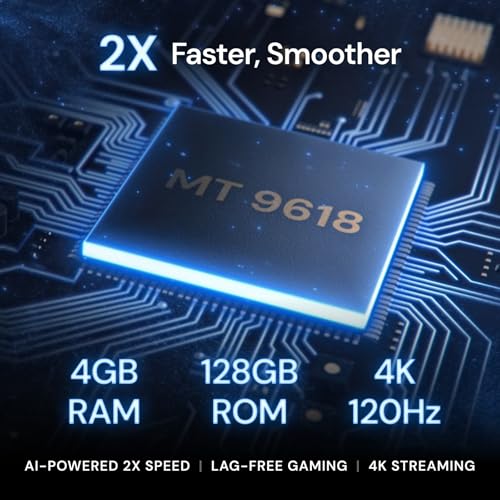
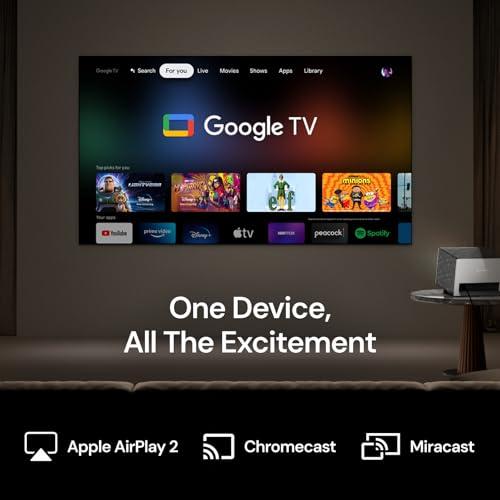
Both projectors run sophisticated smart TV platforms that eliminate the need for external streaming devices in most cases. The Valerion StreamMaster Plus 2 uses Google TV with 4GB of RAM and 128GB of storage, providing smooth performance and access to virtually every streaming service.
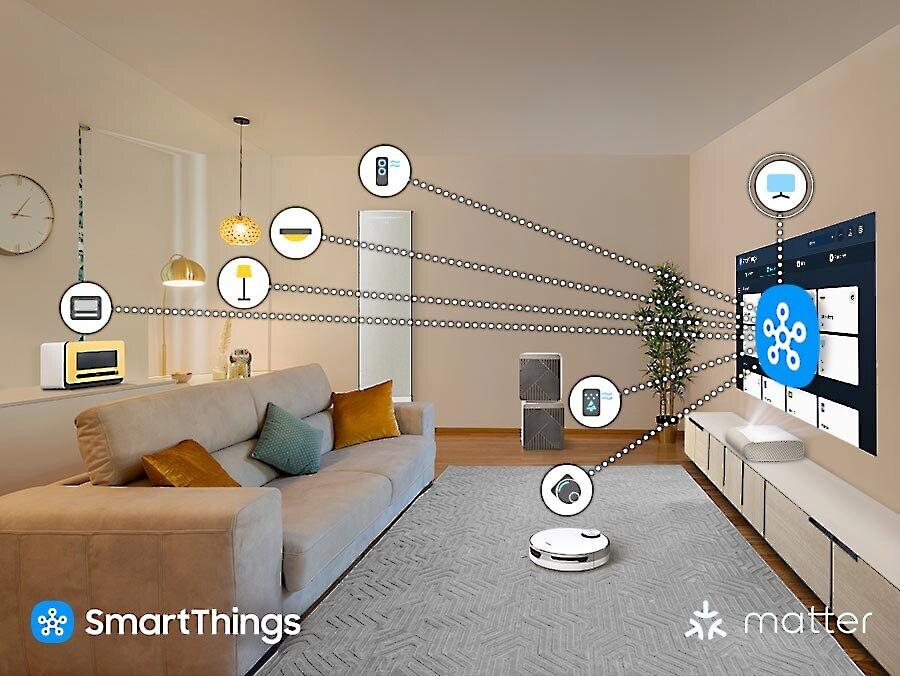
The Samsung Premiere 9 runs Samsung's Tizen OS, which offers a similarly comprehensive app selection plus integration with Samsung's broader ecosystem of devices. Both platforms support voice control and smart home integration, though Samsung's platform feels more polished and TV-like in daily use.
For connectivity, the Valerion offers a significant advantage with dual HDMI 2.1 ports that support the latest gaming consoles and high-end PCs. The Samsung sticks with HDMI 2.0, which limits future compatibility as content moves toward higher frame rates and more demanding formats.
The installation experience differs dramatically between these projectors. The Samsung Premiere 9 essentially plugs and plays like a TV—you set it on a cabinet, point it at the wall, and you're done. This simplicity makes it appealing for apartments, temporary setups, or anyone who doesn't want to deal with ceiling mounts and cable runs.
The Valerion StreamMaster Plus 2 requires more planning but offers far greater flexibility. You can ceiling mount it for a clean installation, place it on a rear shelf, or even use a mobile cart for outdoor movie nights. The 40-300 inch projection range means you're not locked into specific screen sizes like you are with the Samsung's 100-130 inch limitation.
Room requirements also differ significantly. The Samsung needs a large, unobstructed wall and performs best with specialized ambient light rejecting (ALR) screens that cost $500-2000 additional. The Valerion works with any projection screen or even a painted wall, and its superior contrast performance means you don't need expensive specialized screens to get good results.
At the time of writing, both projectors occupy different price tiers, with the Valerion StreamMaster Plus 2 positioned as a premium value option while the Samsung Premiere 9 commands a significant premium for its ultra-short throw convenience and brand prestige.
The value equation goes beyond initial cost, though. The Valerion's superior gaming performance, broader format support, and installation flexibility make it more versatile for different use cases. Its 25,000-hour laser life also edges out the Samsung's 20,000-hour rating, though both will last decades with normal use.
Samsung's value lies in convenience and integration. If you want something that works like a TV but projects like a cinema, and you're willing to pay extra for that convenience, the premium makes sense.
Choose the Valerion StreamMaster Plus 2 if you're creating a dedicated home theater space, prioritize gaming performance, or want maximum flexibility in screen sizes and room layouts. Its superior contrast performance and HDR format support make it ideal for movie enthusiasts who can control their viewing environment. The extensive calibration options also appeal to enthusiasts who enjoy fine-tuning their setup.
The Samsung Premiere 9 makes more sense if you're looking for a TV replacement in a shared living space where controlling ambient light isn't practical. Its exceptional brightness and integrated audio create an impressive all-in-one experience that works well for casual viewing, sports, and daytime entertainment.
Both projectors represent excellent examples of how far projection technology has advanced, but they solve fundamentally different problems. The Valerion optimizes for performance and flexibility, while the Samsung prioritizes convenience and bright room capability. Your choice should depend more on your room setup, viewing habits, and priorities than on technical specifications alone.
In my experience evaluating projector reviews and user feedback, the most satisfied buyers are those who choose based on their actual viewing environment rather than getting caught up in specification comparisons. A dimmer projector in a light-controlled room will always look better than a bright projector fighting against windows and lamps.
| Valerion StreamMaster Plus 2 | Samsung Premiere 9 LPU9D |
|---|---|
| Brightness - Critical for ambient light performance | |
| 2,000 ISO lumens (optimized for dark rooms) | 3,450 lumens (excellent for bright rooms and daytime viewing) |
| Throw Distance - Determines placement flexibility | |
| Traditional throw: 3.5-26 feet from screen | Ultra-short throw: 4.4-9.4 inches from wall |
| Screen Size Range - Projection versatility | |
| 40-300 inches (highly flexible sizing) | 100-130 inches only (fixed range limitation) |
| Gaming Performance - Input lag for responsive gaming | |
| 4ms at 1080p/240Hz, 15ms at 4K/60Hz (excellent) | 53ms in game mode (poor for competitive gaming) |
| HDR Format Support - Future-proofing for premium content | |
| Dolby Vision, HDR10+, IMAX Enhanced | HDR10+ and HDR10 only (no Dolby Vision) |
| Audio System - Built-in sound quality | |
| 12W x 2 stereo speakers (basic) | 40W 2.2.2 Dolby Atmos with up-firing speakers (excellent) |
| Connectivity - Modern device compatibility | |
| Dual HDMI 2.1, HDMI 2.0 (future-proof for gaming) | HDMI 2.0 only (limits 4K/120Hz gaming) |
| Contrast Performance - Image depth and black levels | |
| 10,000:1 dynamic with EBL mode (superior blacks) | 2,000,000:1 claimed dynamic (bright room optimized) |
| Installation Requirements - Setup complexity | |
| Ceiling mount or rear placement needed | Sits on TV stand like appliance (plug-and-play) |
| Color Gamut - Color accuracy and vibrancy | |
| 110% Rec.2020 coverage (future-standard) | 154% DCI-P3 coverage (cinema-standard) |
| Smart Platform - Built-in streaming capabilities | |
| Google TV OS with 4GB RAM/128GB storage | Samsung Tizen OS with comprehensive app support |
| Laser Life - Long-term reliability | |
| 25,000 hours rated life | 20,000 hours rated life |
The Samsung Premiere 9 is significantly better for bright rooms with its 3,450 lumens of brightness compared to the Valerion StreamMaster Plus 2's 2,000 lumens. The Samsung can handle ambient light and daytime viewing much more effectively, making it ideal for living rooms with windows.
The Samsung Premiere 9 is an ultra-short throw projector that sits just inches from your wall, while the Valerion StreamMaster Plus 2 is a traditional projector requiring 3.5-26 feet of throw distance. The Samsung works like a TV replacement on a cabinet, while the Valerion typically requires ceiling mounting or rear shelf placement.
The Valerion StreamMaster Plus 2 is far superior for gaming with input lag as low as 4ms at 1080p/240Hz and 15ms at 4K/60Hz. The Samsung Premiere 9 has 53ms input lag even in game mode, which creates noticeable delays that hurt gaming performance.
The Samsung Premiere 9 works best with expensive ambient light rejecting (ALR) screens to combat its ultra-short throw reflections and bright room use. The Valerion StreamMaster Plus 2 works well with standard projection screens or even painted walls due to its superior contrast performance.
The Samsung Premiere 9 has significantly better audio with its 40W 2.2.2 Dolby Atmos speaker system including up-firing speakers and woofers. The Valerion StreamMaster Plus 2 has basic 12W stereo speakers that are adequate but not impressive for home theater use.
Both support HDR, but the Valerion StreamMaster Plus 2 offers superior format support including Dolby Vision, HDR10+, and IMAX Enhanced. The Samsung Premiere 9 only supports HDR10+ and standard HDR10, missing the advanced Dolby Vision format used by Netflix and other premium content.
The Valerion StreamMaster Plus 2 offers much more flexibility with screen sizes from 40-300 inches. The Samsung Premiere 9 is limited to 100-130 inch projection sizes, giving you less control over your final image size.
The Valerion StreamMaster Plus 2 has a rated laser life of 25,000 hours, while the Samsung Premiere 9 lasts 20,000 hours. Both will provide many years of use, with the Valerion offering slightly longer longevity before any maintenance is needed.
The Samsung Premiere 9 is much easier to install since it sits on furniture like a TV and projects upward to the wall. The Valerion StreamMaster Plus 2 typically requires ceiling mounting or careful rear shelf placement, making installation more complex but offering greater placement flexibility.
Yes, both projectors have built-in smart TV platforms. The Valerion StreamMaster Plus 2 runs Google TV OS with 4GB RAM, while the Samsung Premiere 9 uses Samsung's Tizen OS. Both provide access to Netflix, YouTube, and other streaming services without needing external devices.
The Valerion StreamMaster Plus 2 delivers superior contrast performance with its Enhanced Black Level technology and 10,000:1 dynamic contrast ratio. While the Samsung Premiere 9 claims higher contrast numbers, real-world performance favors the Valerion for deep blacks and shadow detail in dark rooms.
The Valerion StreamMaster Plus 2 offers more future-proof connectivity with dual HDMI 2.1 ports plus HDMI 2.0, supporting next-generation gaming consoles and high-refresh content. The Samsung Premiere 9 uses HDMI 2.0 connections only, which limits compatibility with newer 4K/120Hz gaming and video sources.
We've done our best to create useful and informative comparisons to help you decide what product to buy. Our research uses advanced automated methods to create this comparison and perfection is not possible - please contact us for corrections or questions. These are the sites we've researched in the creation of this article: bestbuy.com - valerion.com - youtube.com - valerion.com - youtube.com - projectorcentral.com - youtube.com - valerion.com - avsforum.com - neowin.net - hometheatershack.com - avsforum.com - bestbuy.com - projector-database.com - sound-advice.online - valueelectronics.com - bhphotovideo.com - instylehifi.com.au - trustedreviews.com - target.com - pcrichard.com - projectorscreen.com - videoandaudiocenter.com - target.com - avsforum.com - projectorscreen.com

Privacy Policy
Terms and Conditions - Affiliate Policy
Home Security
© Copyright 2008-2026.
11816 Inwood Rd #1211, Dallas, TX 75244