



The world of home projection has evolved dramatically over the past few years. What once required a dedicated room and professional installation can now deliver stunning 4K images in almost any living space. Two projectors perfectly illustrate this transformation: the Valerion StreamMaster Plus 2 and the Sony VPL-XW7000ES. These represent completely different philosophies in home projection—one prioritizes convenience and value, while the other pursues absolute image quality regardless of cost.
Before diving into specifics, it's worth understanding what separates today's 4K projectors from earlier generations. The key advancement is laser light sources, which replaced traditional bulbs that dimmed over time and needed frequent replacement. Modern laser projectors maintain consistent brightness for 20,000+ hours—that's over a decade of regular use without maintenance.
The other major leap is processing power. Today's projectors include sophisticated chips that can upscale content, enhance colors in real-time, and even run full smart TV platforms. This processing happens at the pixel level, meaning the projector analyzes each frame and optimizes it before displaying the image.
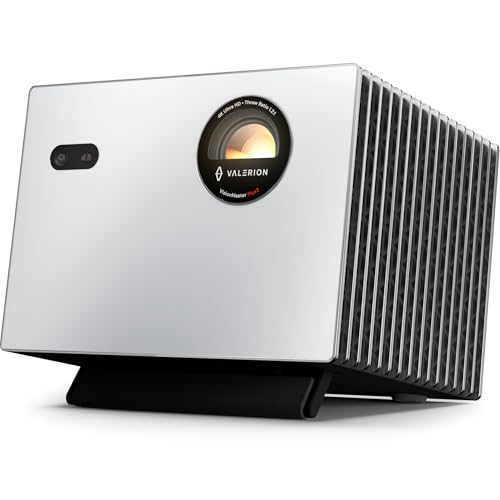
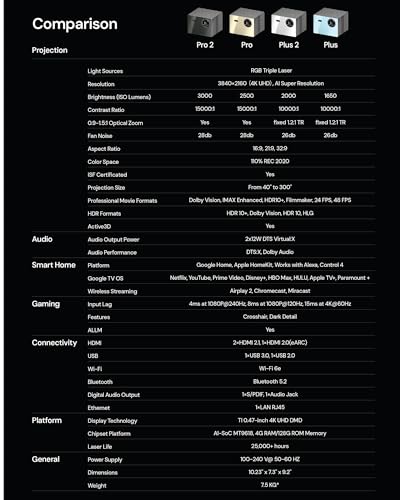
The Valerion StreamMaster Plus 2, released in 2025, represents the modern "smart projector" approach. At a price point accessible to most home theater enthusiasts, it packs Google TV, gaming features, and advanced color processing into a compact package. Think of it as a 300-inch smart TV that happens to use projection technology.
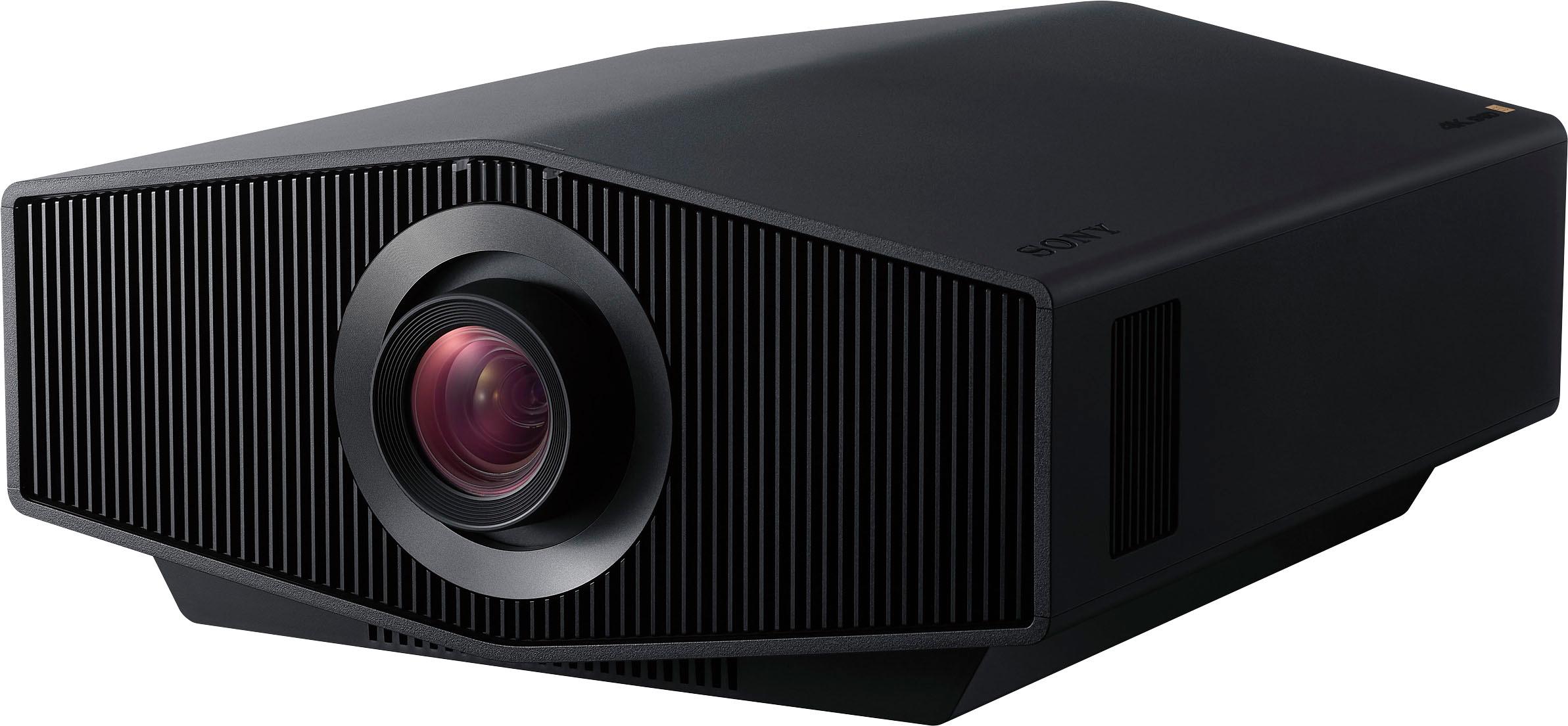
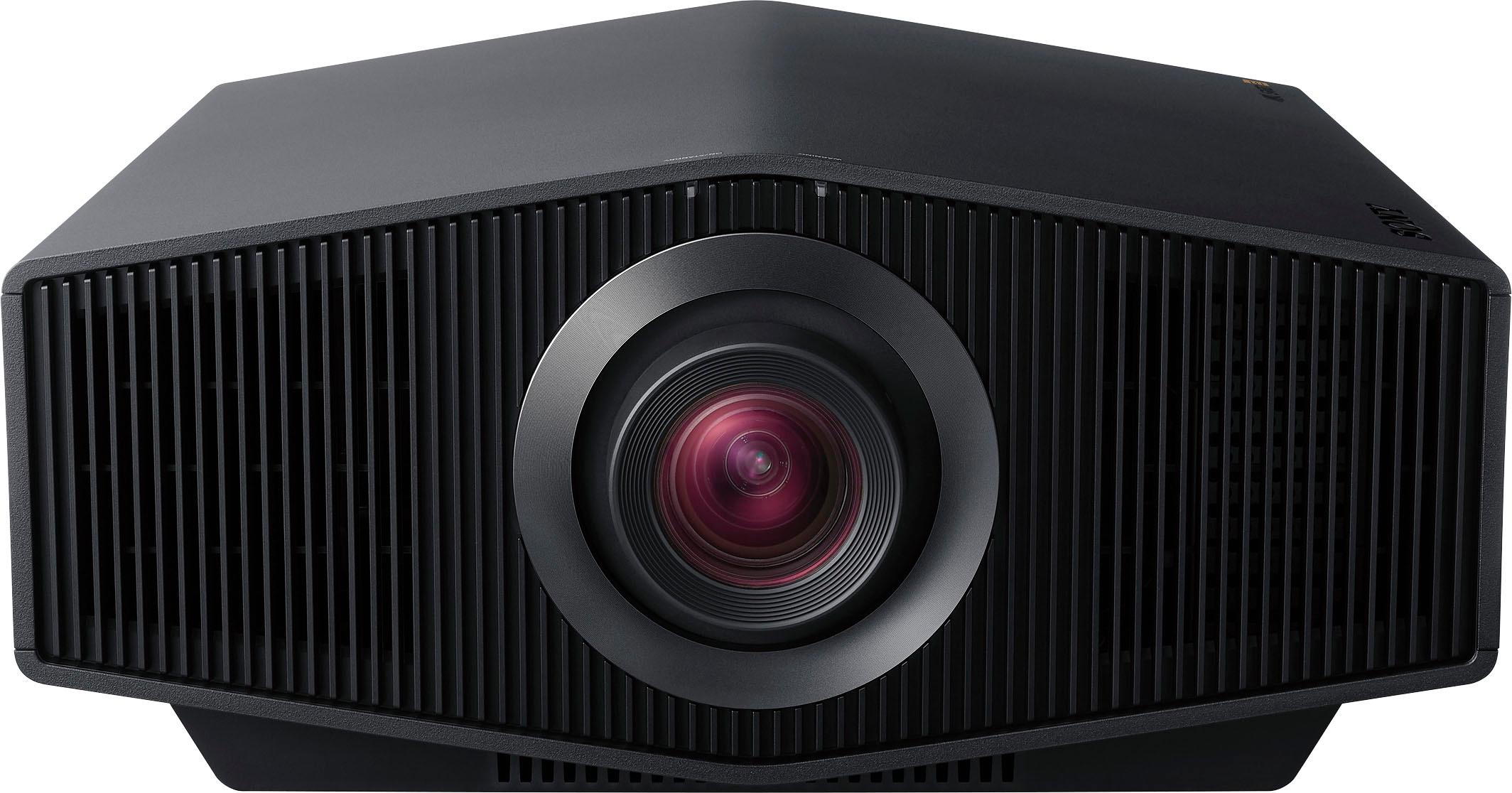
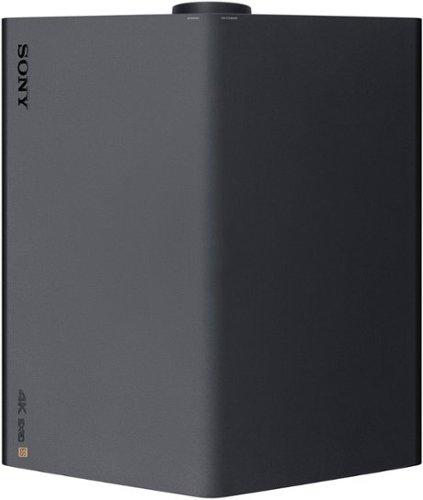
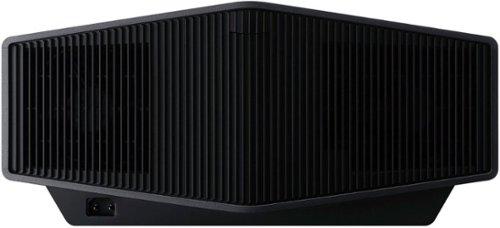
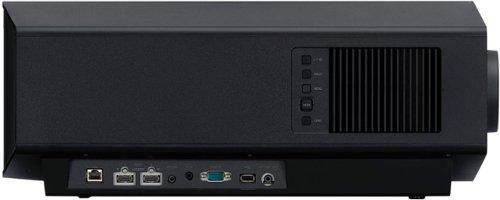
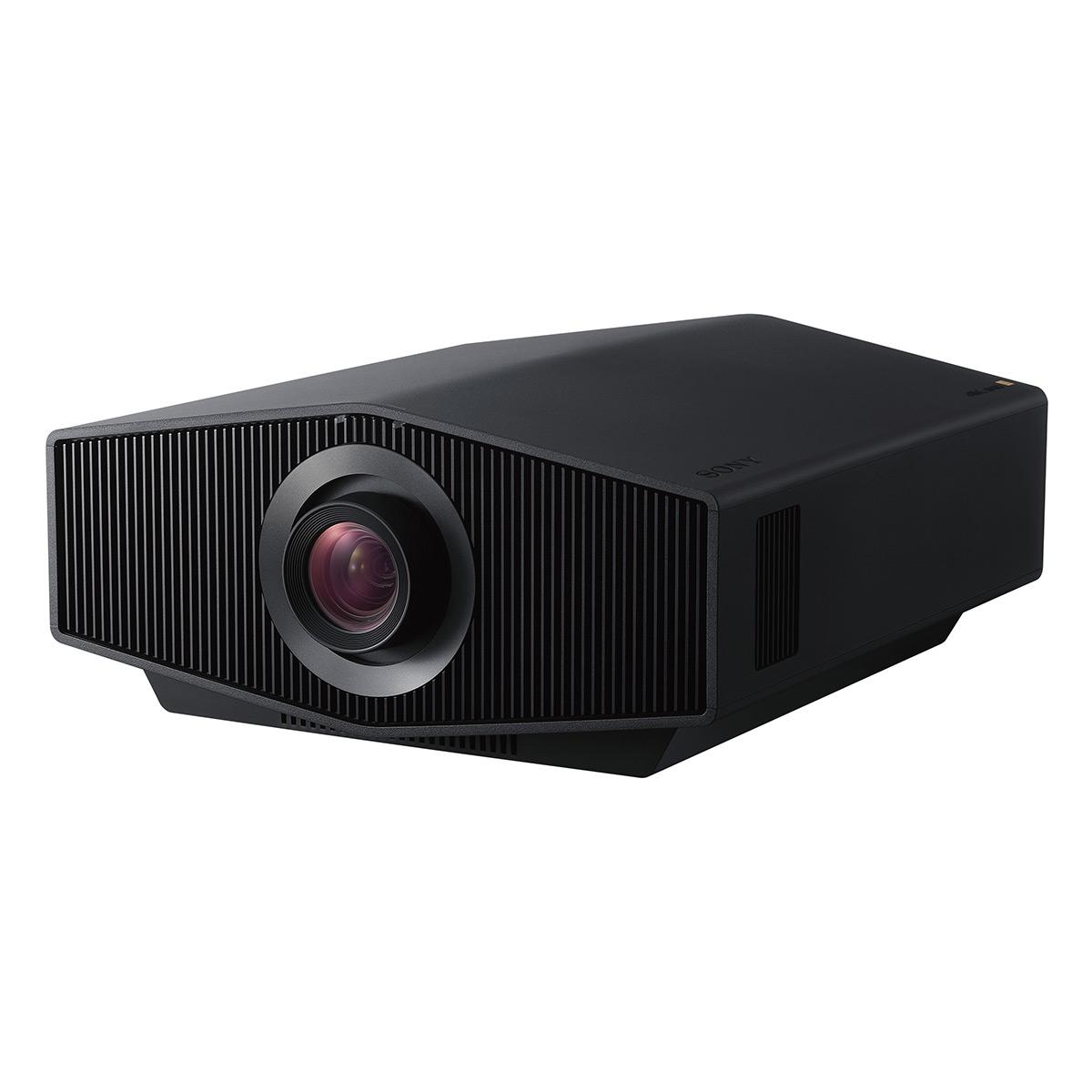
The Sony VPL-XW7000ES, launched in 2022 but now discontinued, took the traditional audiophile route: do one thing exceptionally well. With a price tag that puts it firmly in luxury territory, this projector focused entirely on delivering reference-quality images for dedicated home theaters.
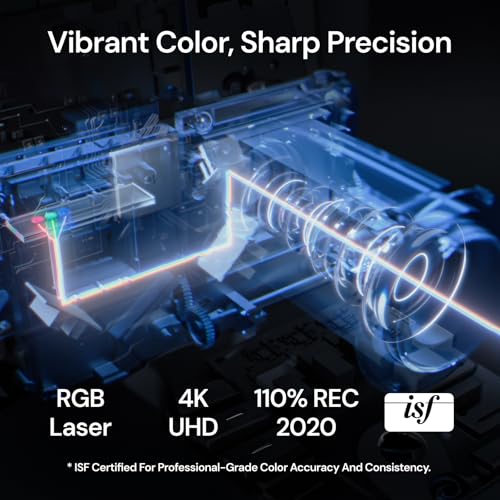
The most fundamental difference between these projectors lies in their display technology. The Valerion uses a single 0.47-inch DLP (Digital Light Processing) chip. DLP works like millions of tiny mirrors that tilt rapidly to create images. To produce color, most single-chip DLP projectors use a spinning color wheel, but Valerion's RGB triple laser system eliminates this wheel entirely, reducing the "rainbow effect"—those fleeting color flashes some people notice, especially when moving their eyes quickly across the screen.
The Sony takes a completely different approach with three separate 0.61-inch SXRD panels—one each for red, green, and blue. SXRD (Silicon X-tal Reflective Display) is Sony's version of liquid crystal technology, similar to LCD but with a reflective design that produces deeper blacks. Having three dedicated panels means true 8.3 million pixel 4K resolution with zero rainbow effect, since colors are processed simultaneously rather than sequentially.
This technical difference has real-world implications. The Sony's three-chip design produces more natural motion and eliminates artifacts that sensitive viewers might notice with single-chip projectors. However, the Valerion's advanced RGB laser system gets remarkably close to three-chip performance at a fraction of the cost.
Brightness matters more than many realize. Measured in lumens, brightness determines how large your screen can be and how much ambient light the room can have. The Sony outputs 3,200 lumens compared to the Valerion's 2,000 lumens—a significant 60% difference that translates to larger possible screen sizes and better performance in brighter rooms.
But raw brightness isn't everything. Color reproduction involves the projector's ability to display the full spectrum of colors that exist in nature. Here's where things get interesting: the Valerion covers 110% of the Rec.2020 color space, which is actually wider than what most premium TVs can achieve. Rec.2020 represents the colors visible in Ultra HD content, so covering 110% means the projector can display colors more vivid than what the content creators intended.
The Sony covers 95% of the DCI-P3 color space, which is the standard for commercial cinema. This might sound less impressive numerically, but DCI-P3 focuses on accuracy rather than saturation. The difference is like comparing a vintage sports car with modern performance tires—both approaches have merit depending on your preferences.
Contrast ratio—the difference between the darkest and brightest parts of an image—arguably impacts picture quality more than resolution itself. Deep blacks make colors appear more vibrant and create that "pop" you notice in premium displays.
The Sony achieves an infinite contrast ratio through precise light control. Its SXRD panels can completely block light pixel by pixel, creating true blacks that rival OLED displays. This is particularly noticeable in dark movie scenes where you can see subtle details in shadows without the image looking washed out.
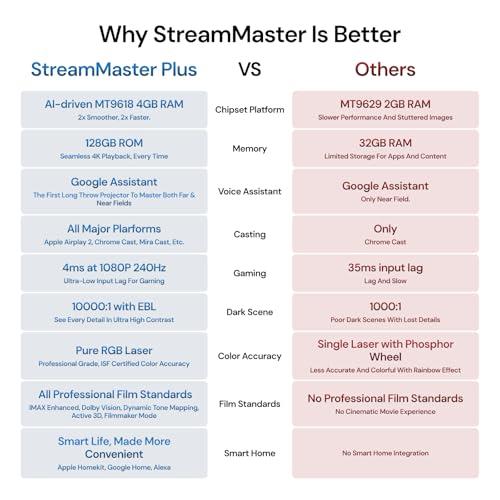
The Valerion reaches 3,000:1 native contrast, jumping to 10,000:1 with its Enhanced Black Level (EBL) mode engaged. EBL uses dynamic iris and laser output control to deepen blacks in real-time. While not matching the Sony's infinite contrast, this level still produces excellent shadow detail and vibrant colors, especially considering the price difference.
Modern gaming demands low input lag—the delay between pressing a button and seeing the result on screen. Competitive gamers notice delays as small as 20 milliseconds, so projector manufacturers have focused heavily on reducing this metric.
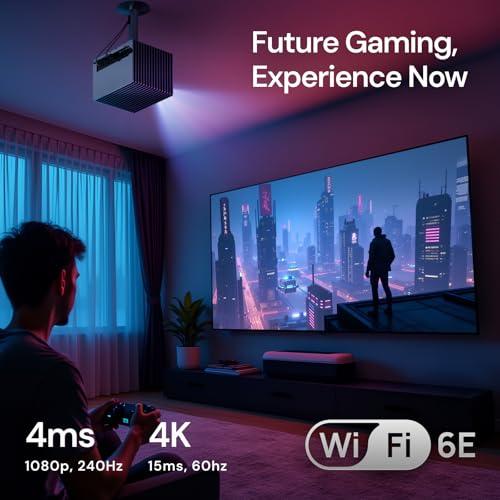
The Valerion excels here with 4ms input lag at 1080p/240Hz, making it competitive with dedicated gaming monitors. It also offers 15ms at 4K/60Hz, which is excellent for console gaming. The projector includes gaming-specific features like crosshair overlays for first-person shooters and Night Vision mode that enhances visibility in dark game scenes.
The Sony wasn't designed primarily for gaming, achieving respectable but not outstanding input lag times of under 21ms at 4K/60Hz. For casual gaming this works fine, but serious gamers would notice the difference compared to the Valerion's performance.
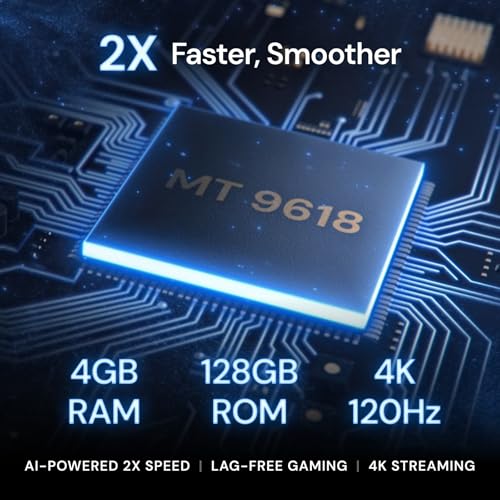
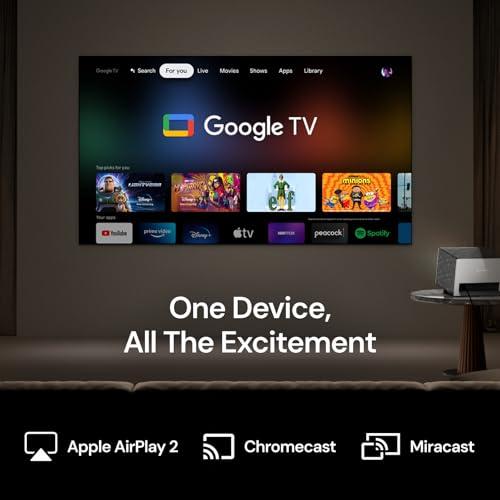
This represents perhaps the biggest philosophical divide between these projectors. The Valerion includes Google TV with 4GB of RAM and 128GB storage—essentially a high-end Android TV built into the projector. This means direct access to Netflix, Disney+, and other streaming services without additional devices. The system handles 4K streaming smoothly and includes voice control through Google Assistant.
The Sony includes no smart features whatsoever. This isn't an oversight—it's a deliberate choice. Professional home theater installers often prefer this approach because it allows them to choose the best streaming device for each installation and avoid the complexity of projector software updates potentially affecting core projection functionality.
Both approaches have merit. The Valerion's integrated smart features reduce cable clutter and provide excellent convenience for most users. The Sony's approach ensures maximum compatibility with professional control systems and eliminates potential software-related issues down the line.
Installing a projector involves more complexity than mounting a TV. The Sony addresses this with a 2.1x zoom lens and extensive lens shift capabilities. Lens shift lets you move the image up, down, or sideways without physically repositioning the projector—crucial for ceiling installations where perfect alignment isn't always possible. The zoom lens means you can achieve your desired screen size from a range of distances.
The Valerion uses a fixed 1.2:1 throw ratio with no optical zoom or lens shift. This requires precise positioning during installation but keeps costs down and reduces mechanical complexity. Digital zoom and keystone correction can help with alignment, though these features slightly reduce image quality compared to optical adjustments.
For most living room installations, the Valerion's fixed lens works fine with proper planning. For dedicated theater rooms or challenging installation scenarios, the Sony's flexibility becomes invaluable.
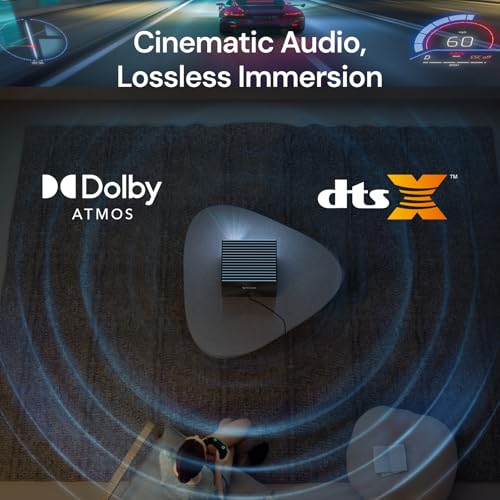
The Valerion includes 12-watt stereo speakers that provide surprisingly good sound quality for a projector. They're adequate for casual viewing and eliminate the need for additional audio equipment in simple setups.
The Sony includes no internal speakers, requiring a separate audio system. This aligns with its professional approach—dedicated theater installations typically use high-quality sound systems that would make internal projector speakers redundant anyway.
At the time of writing, these projectors occupy completely different price segments. The Valerion offers remarkable value in the under-$2,000 category, delivering features and performance that would have cost significantly more just a few years ago. Its RGB laser system, smart TV functionality, and gaming capabilities create an all-in-one entertainment solution.
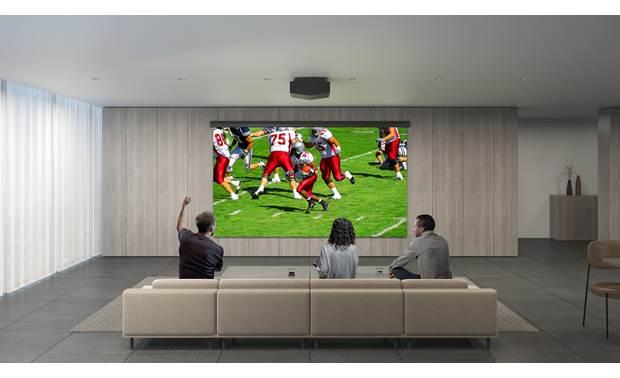
The Sony, being discontinued, commanded premium pricing when available, reflecting its professional-grade components and build quality. For users building dedicated home theaters with large screens (150 inches or more), its superior brightness and image processing justified the cost difference.
The projection market has evolved rapidly since the Sony launched in 2022. Newer projectors offer brighter laser systems, more advanced processing chips, and better smart TV platforms. The Valerion, being a 2025 release, incorporates these latest developments including more powerful AI processing for image enhancement and updated connectivity standards.
This evolution highlights a key consideration: the Sony, while excellent, represents 2022 technology in a rapidly advancing field. The Valerion includes current-generation features that may provide better long-term compatibility with future content and devices.
The Valerion StreamMaster Plus 2 makes sense for users who want maximum convenience and features without premium pricing. It's ideal for living room installations, apartments where permanent mounting isn't possible, and users who prioritize gaming performance. The wide color gamut and smart TV integration create an excellent all-around entertainment hub.
The Sony VPL-XW7000ES suits dedicated home theater enthusiasts who prioritize absolute image quality over convenience features. Its superior brightness, contrast, and installation flexibility make it excellent for large screens in controlled lighting environments. However, being discontinued means limited availability and potential future service concerns.
These projectors represent two valid approaches to home projection. The Valerion democratizes high-quality 4K projection by packing premium features into an accessible package. The Sony pursues uncompromising image quality for users who view their projector as the centerpiece of a dedicated entertainment system.
For most users, the Valerion provides better overall value by delivering excellent performance while including modern convenience features. The Sony remains compelling for users building high-end theater rooms who can take advantage of its superior brightness and professional installation flexibility—assuming they can still find one for sale.
The projection market continues evolving rapidly, with new models regularly pushing the boundaries of brightness, color accuracy, and smart features. Both of these projectors demonstrate how far the technology has progressed, making cinema-quality experiences achievable in home environments that would have been impossible just a few years ago.
| Valerion StreamMaster Plus 2 | Sony VPL-XW7000ES |
|---|---|
| Display Technology - Determines image quality and potential artifacts | |
| Single 0.47" DLP chip with RGB triple laser (minimal rainbow effect) | Three 0.61" SXRD panels (true native 4K, zero rainbow effect) |
| Brightness - Critical for screen size and ambient light tolerance | |
| 2,000 ISO lumens (good for dark rooms, screens up to 120") | 3,200 lumens (60% brighter, handles larger screens and more ambient light) |
| Contrast Ratio - Determines black depth and image pop | |
| 3,000:1 native, 10,000:1 with Enhanced Black Level mode | Infinite contrast ratio with pixel-level light control |
| Color Gamut - Affects color vibrancy and accuracy | |
| 110% Rec.2020 coverage (exceptionally wide, vivid colors) | 95% DCI-P3 coverage (cinema-accurate, natural reproduction) |
| Lens System - Installation flexibility and screen size options | |
| Fixed 1.2:1 throw ratio, no zoom or lens shift (requires precise placement) | 2.1x motorized zoom, extensive lens shift (maximum installation flexibility) |
| Gaming Performance - Input lag matters for responsive gameplay | |
| 4ms at 1080p/240Hz, 15ms at 4K/60Hz (excellent for competitive gaming) | Under 21ms at 4K/60Hz (adequate for casual gaming) |
| Smart Features - Built-in streaming and convenience | |
| Google TV OS with 4GB RAM, 128GB storage, built-in apps | No smart features (requires external streaming devices) |
| Audio - Built-in sound capability | |
| 12W stereo speakers included | No internal speakers (requires separate audio system) |
| HDR Support - Premium content compatibility | |
| Dolby Vision, HDR10+, HDR10, IMAX Enhanced | HDR10, HLG with X1 Ultimate processing |
| Laser Life - Long-term maintenance requirements | |
| 25,000 hours rated life | 20,000 hours rated life |
| Weight & Portability - Installation and mobility considerations | |
| 16.5 lbs (portable, easier mounting) | 30.9 lbs (requires robust mounting, professional installation) |
| Warranty & Support - Long-term ownership protection | |
| 2-year warranty with lifetime support | 3-year warranty (discontinued model may affect future support) |
| Target Use Case - Best application for each projector | |
| All-in-one entertainment hub for living rooms and gaming setups | Dedicated home theater with professional installation and large screens |
The Sony VPL-XW7000ES is superior for dedicated home theater rooms due to its 3,200 lumens brightness, infinite contrast ratio, and professional installation flexibility with zoom lens and lens shift. The Sony delivers reference-quality images on large screens (150+ inches) and integrates with professional control systems. However, the Valerion StreamMaster Plus 2 can work well in smaller dedicated theaters where convenience and smart features are valued.
The Sony VPL-XW7000ES offers superior picture quality with true native 4K from three SXRD panels, infinite contrast ratio, and 60% more brightness than the Valerion StreamMaster Plus 2. The Valerion uses single-chip DLP technology but compensates with 110% Rec.2020 color coverage for more vivid colors. The Sony provides more natural, cinema-accurate images while the Valerion delivers vibrant, eye-catching visuals.
The Valerion StreamMaster Plus 2 is significantly better for gaming with 4ms input lag at 1080p/240Hz and specialized gaming modes including crosshair overlays and Night Vision enhancement. The Sony VPL-XW7000ES has higher input lag at 21ms for 4K/60Hz and lacks gaming-specific features. Serious gamers should choose the Valerion for competitive performance.
The Valerion StreamMaster Plus 2 includes Google TV OS with built-in streaming apps, eliminating the need for external devices. It also has 12W stereo speakers for basic audio. The Sony VPL-XW7000ES requires separate streaming devices (Apple TV, Roku, etc.) and an external audio system since it has no smart features or speakers. The Valerion offers a complete entertainment solution out of the box.
The Sony VPL-XW7000ES produces 3,200 lumens, making it suitable for screens up to 200+ inches even with some ambient light. The Valerion StreamMaster Plus 2 outputs 2,000 lumens, working best with screens up to 120 inches in darker rooms. For large home theater screens, the Sony provides better brightness, while the Valerion works excellently for typical living room setups.
The Sony VPL-XW7000ES offers superior installation flexibility with 2.1x zoom lens and extensive lens shift (±36% horizontal, ±85% vertical), allowing placement in various positions. The Valerion StreamMaster Plus 2 uses a fixed 1.2:1 throw ratio with no optical adjustments, requiring precise positioning. The Sony is ideal for custom installations, while the Valerion works best when placement can be planned in advance.
The Valerion StreamMaster Plus 2 covers 110% of Rec.2020 color space, delivering exceptionally vibrant and saturated colors that exceed most premium TVs. The Sony VPL-XW7000ES covers 95% of DCI-P3 cinema color space, focusing on natural, accurate color reproduction. The Valerion produces more vivid colors while the Sony delivers cinema-accurate hues.
The Valerion StreamMaster Plus 2 has a 25,000-hour laser life, while the Sony VPL-XW7000ES offers 20,000 hours. Both provide maintenance-free operation for over a decade of regular use. The Valerion has a slightly longer rated lifespan, but both eliminate the need for bulb replacements that plagued older projectors.
The Sony VPL-XW7000ES performs better in bright rooms due to its 3,200 lumens output compared to the Valerion StreamMaster Plus 2's 2,000 lumens. The Sony can maintain image quality with more ambient light and larger screen sizes. However, both projectors perform best in controlled lighting conditions for optimal contrast and color performance.
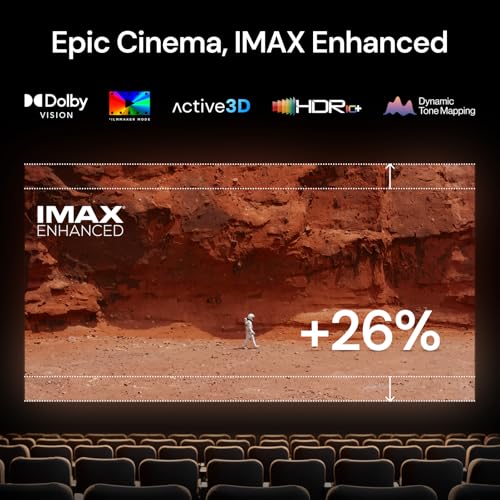
The Valerion StreamMaster Plus 2 supports Dolby Vision, HDR10+, HDR10, and IMAX Enhanced formats with AI-powered tone mapping. The Sony VPL-XW7000ES supports HDR10 and HLG with its advanced X1 Ultimate processor. The Valerion offers broader HDR format compatibility, while the Sony provides superior HDR processing quality.
The Valerion StreamMaster Plus 2 is easier to set up with Google TV interface, built-in apps, and simpler installation due to its all-in-one design. The Sony VPL-XW7000ES requires more complex setup with external devices, professional calibration, and precise installation using its advanced lens system. The Valerion is more user-friendly for most consumers.
The Valerion StreamMaster Plus 2 offers excellent value with smart features, gaming performance, and wide color gamut at an accessible price point. The Sony VPL-XW7000ES provides premium image quality and professional features but at a significantly higher cost and is now discontinued. The Valerion delivers better value for most users, while the Sony justifies its premium for dedicated home theater enthusiasts.
We've done our best to create useful and informative comparisons to help you decide what product to buy. Our research uses advanced automated methods to create this comparison and perfection is not possible - please contact us for corrections or questions. These are the sites we've researched in the creation of this article: bestbuy.com - valerion.com - youtube.com - valerion.com - youtube.com - projectorcentral.com - youtube.com - valerion.com - avsforum.com - neowin.net - hometheatershack.com - avsforum.com - bestbuy.com - projector-database.com - whathifi.com - electronics.sony.com - us.puretheatre.com - pro.sony - stereonet.com - pro.sony - valueelectronics.com - projectorreviews.com - pro.sony - leisuretheory.com

Privacy Policy
Terms and Conditions - Affiliate Policy
Home Security
© Copyright 2008-2026.
11816 Inwood Rd #1211, Dallas, TX 75244