

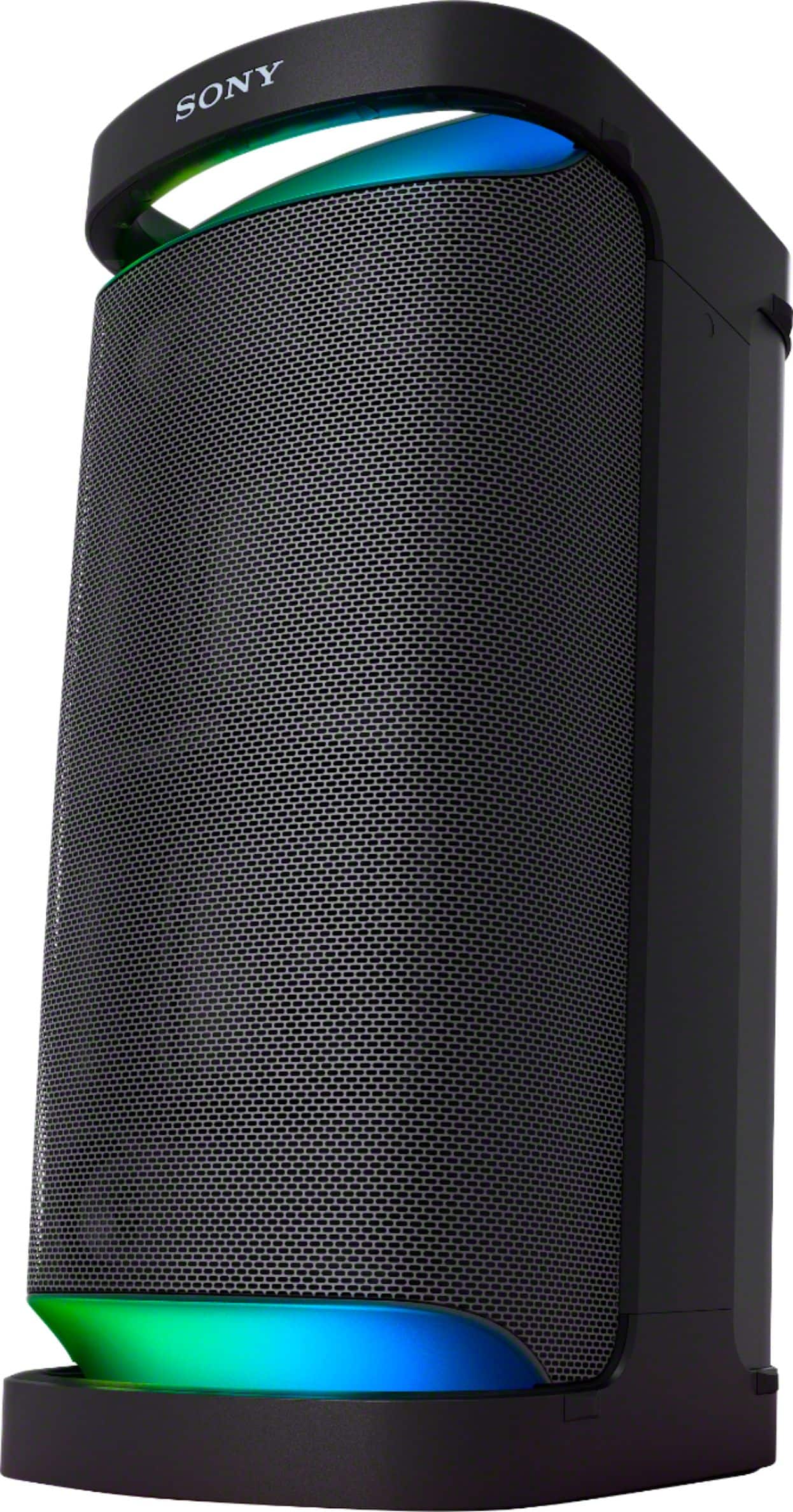
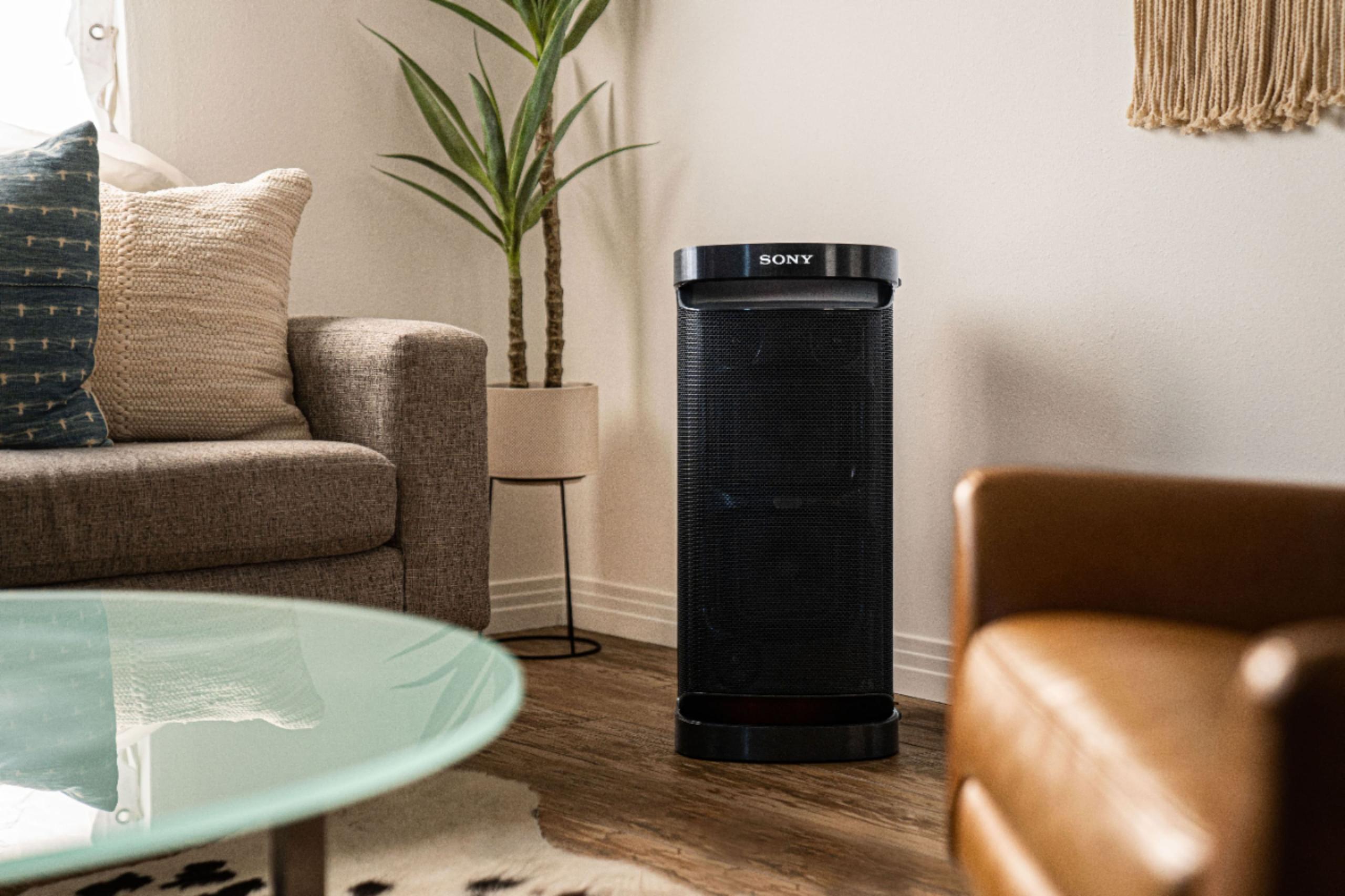
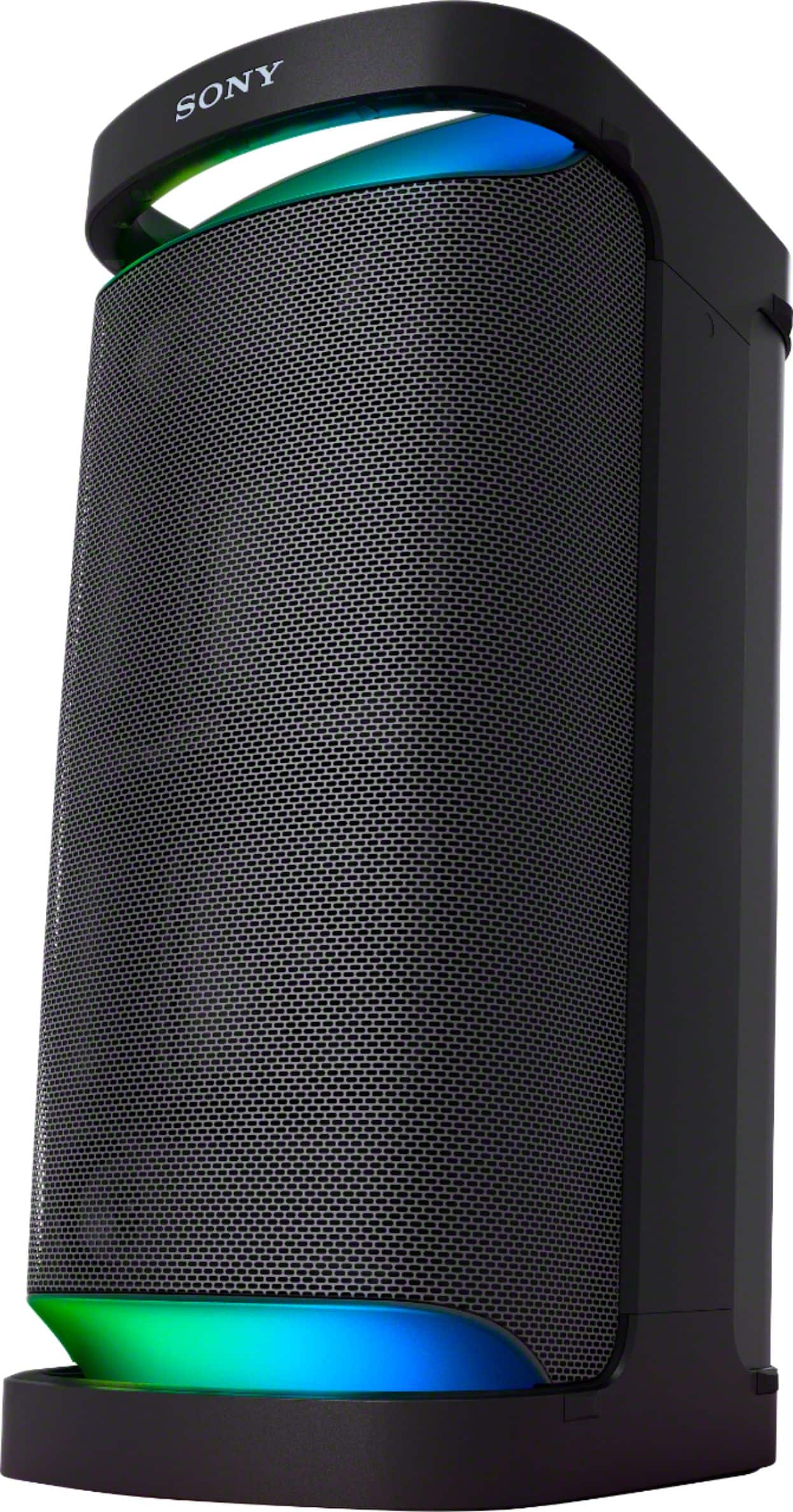
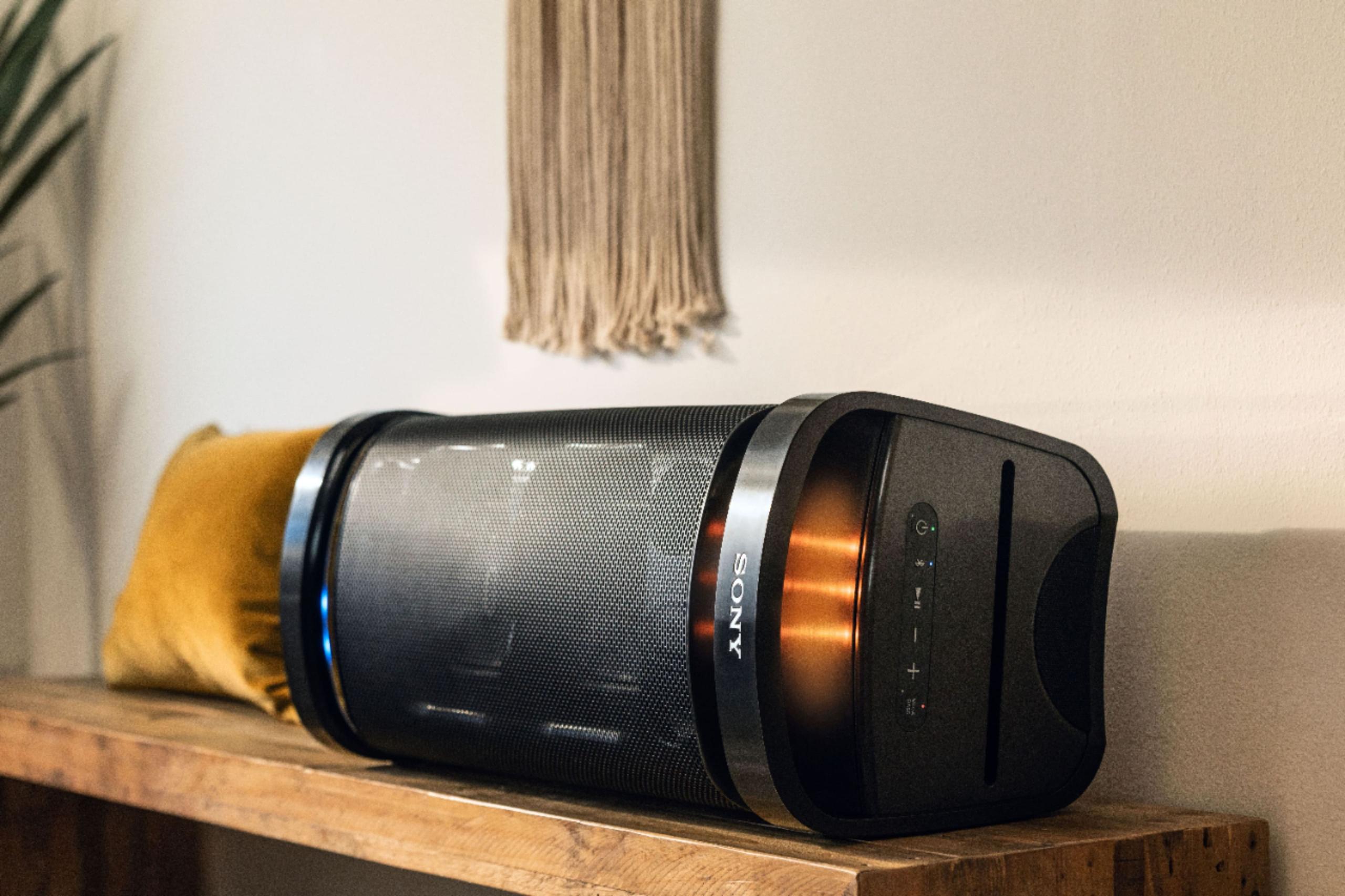
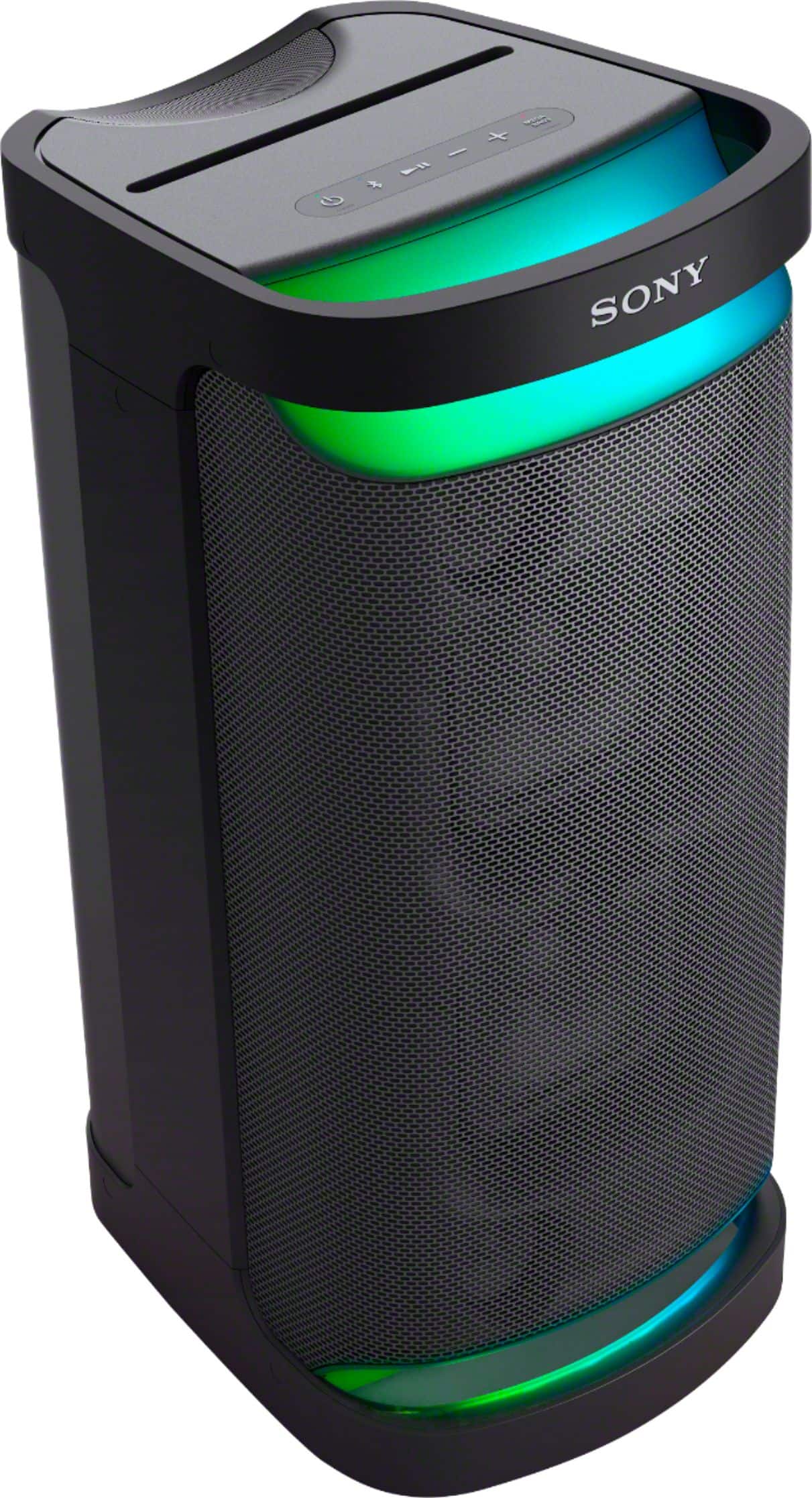
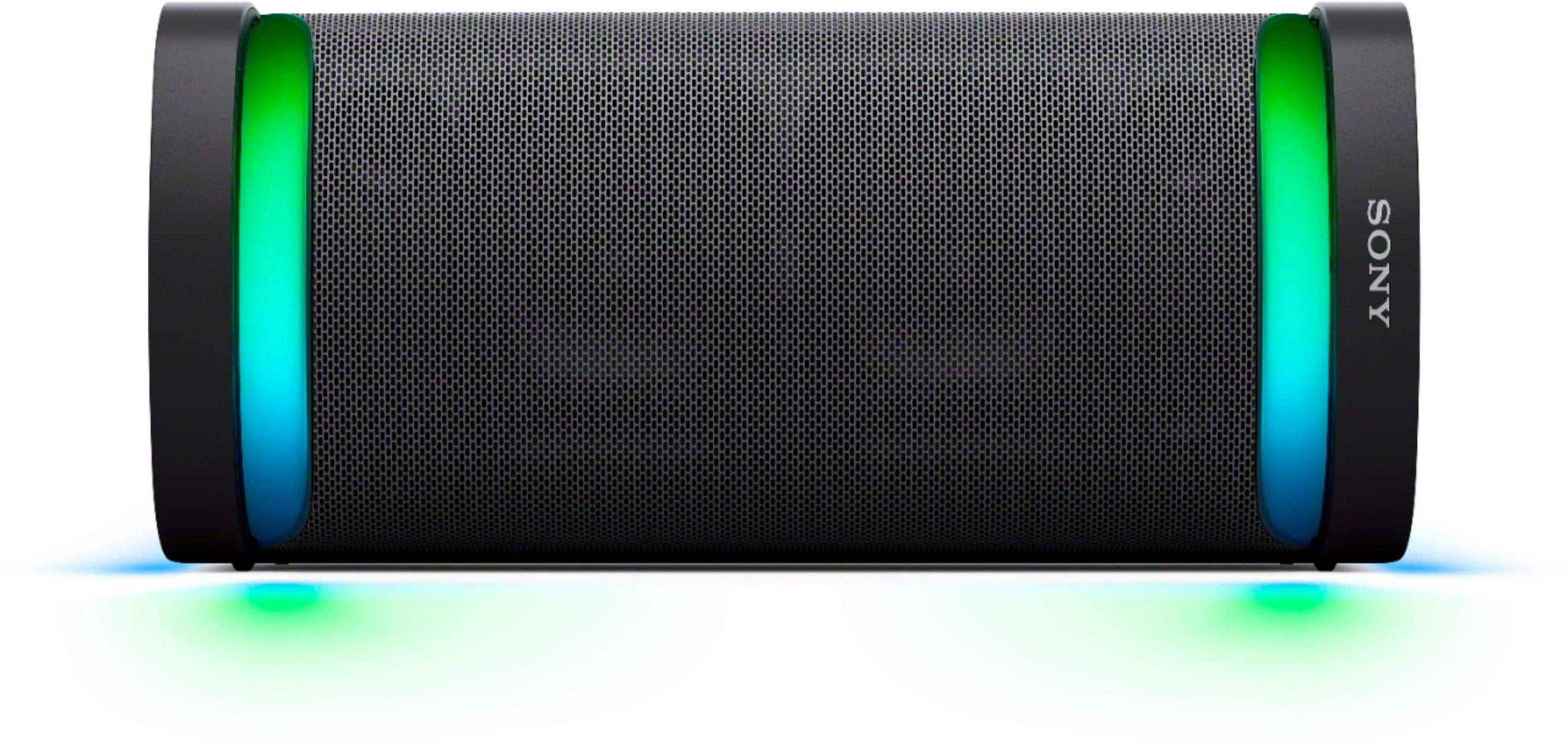
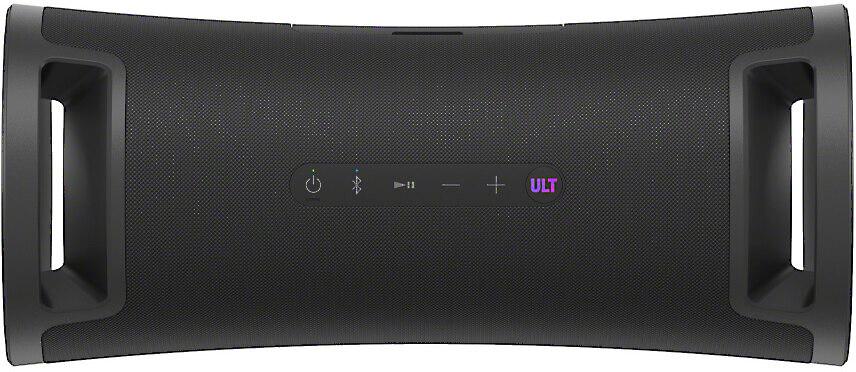
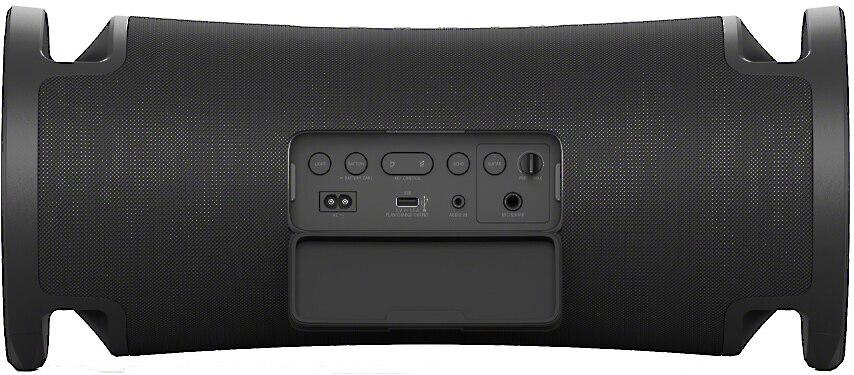
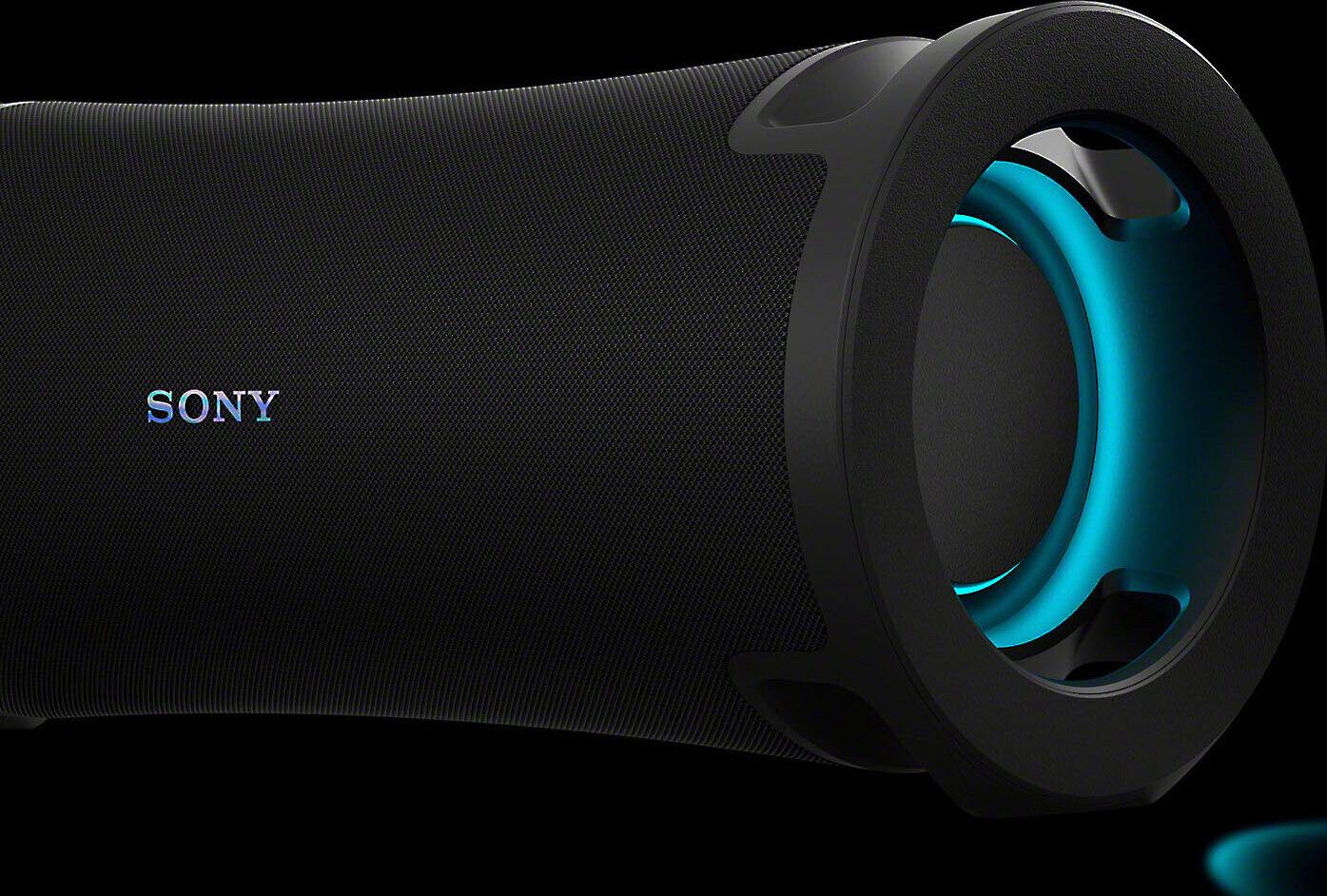
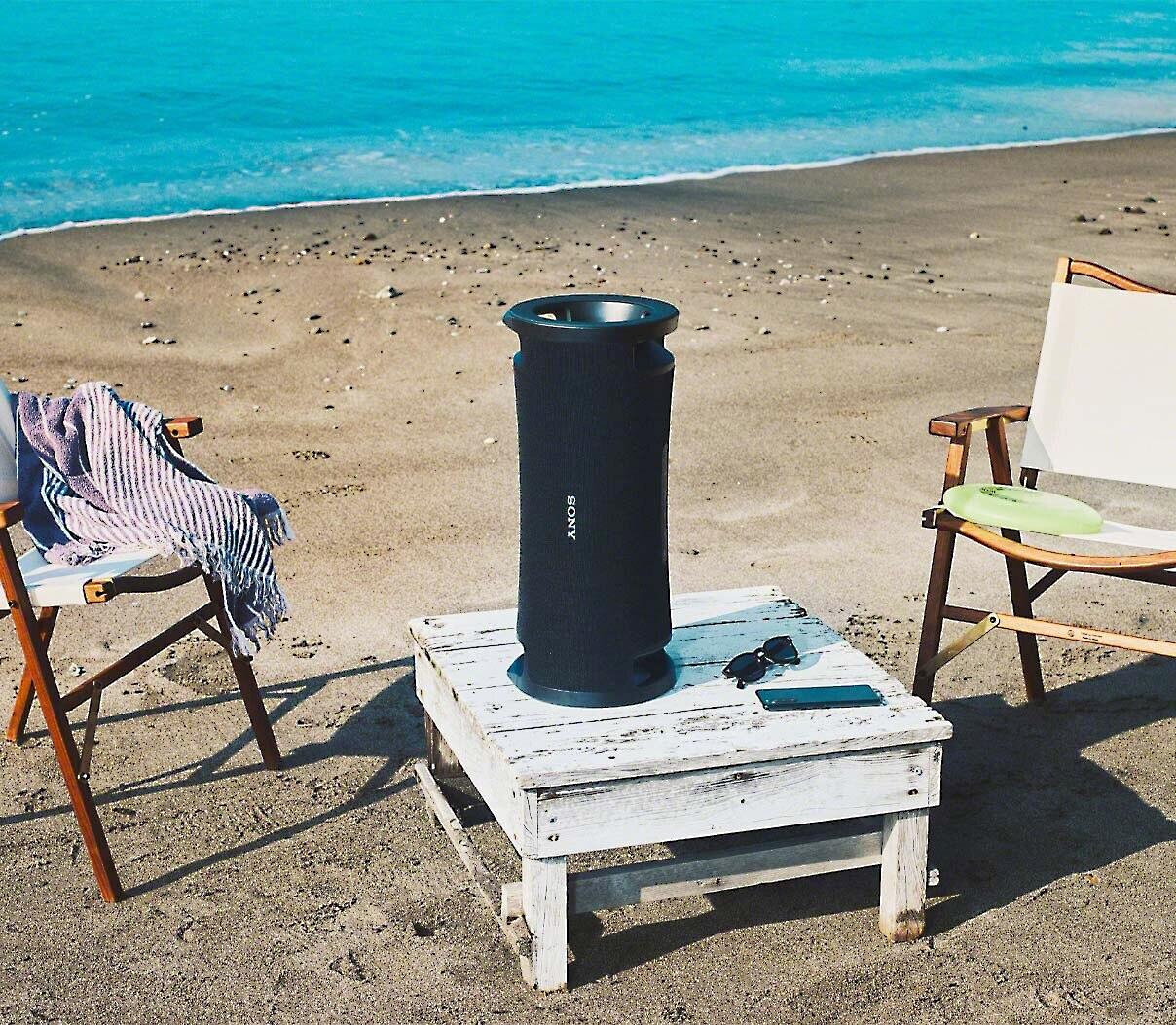
When it comes to portable party speakers, Sony has two heavyweights that dominate different corners of the market. The Sony SRS-XP700 launched in 2021 as Sony's flagship party beast, while the newer Sony ULT FIELD 7 arrived in 2024 with a fresh approach to portable audio. At the time of writing, these speakers sit at different price points – the XP700 commands a premium, while the ULT FIELD 7 offers more bang for your buck.
But here's the thing: more expensive doesn't always mean better for your specific needs. After diving deep into user reviews, expert tests, and technical specifications, I've found that each speaker excels in different scenarios. Let me break down everything you need to know to make the right choice.
Party speakers occupy a unique space in the audio world. Unlike bookshelf speakers designed for critical listening or compact Bluetooth speakers meant for personal use, these beasts are built for one primary mission: filling large spaces with powerful, engaging sound that gets people moving.
The key metrics that matter most in this category include maximum volume output (measured in decibels), bass extension (how low the frequency response goes), battery endurance, and weather resistance. Think of it like choosing between a sports car and an SUV – both get you places, but they're optimized for completely different purposes.
What makes party speakers special is their ability to maintain clarity even when cranked to ear-splitting levels. This is where dynamic range comes into play – the difference between the quietest and loudest sounds a speaker can reproduce without distortion. Cheap speakers fall apart when you push them hard, but quality party speakers like the XP700 and ULT FIELD 7 keep their composure.
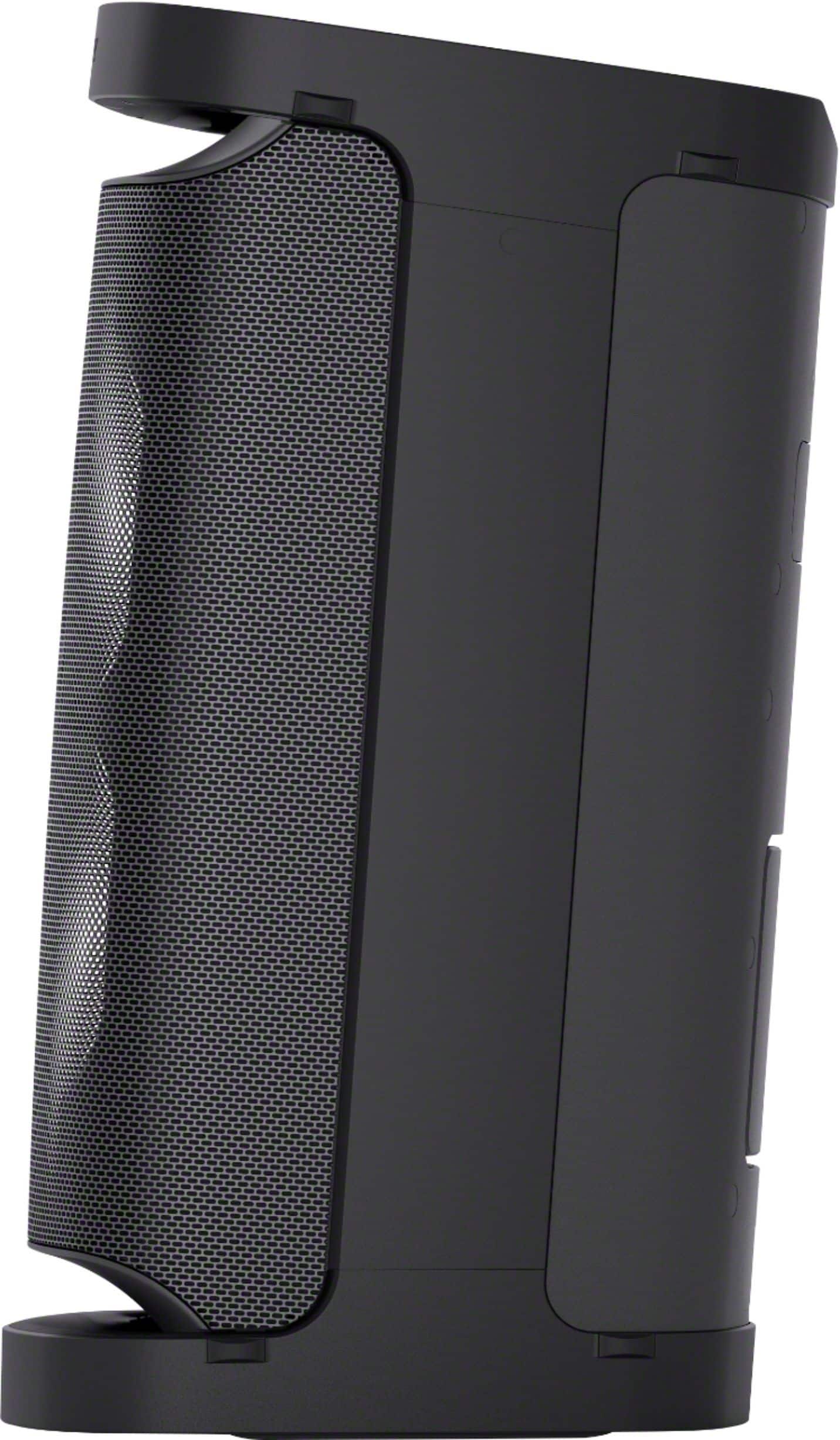
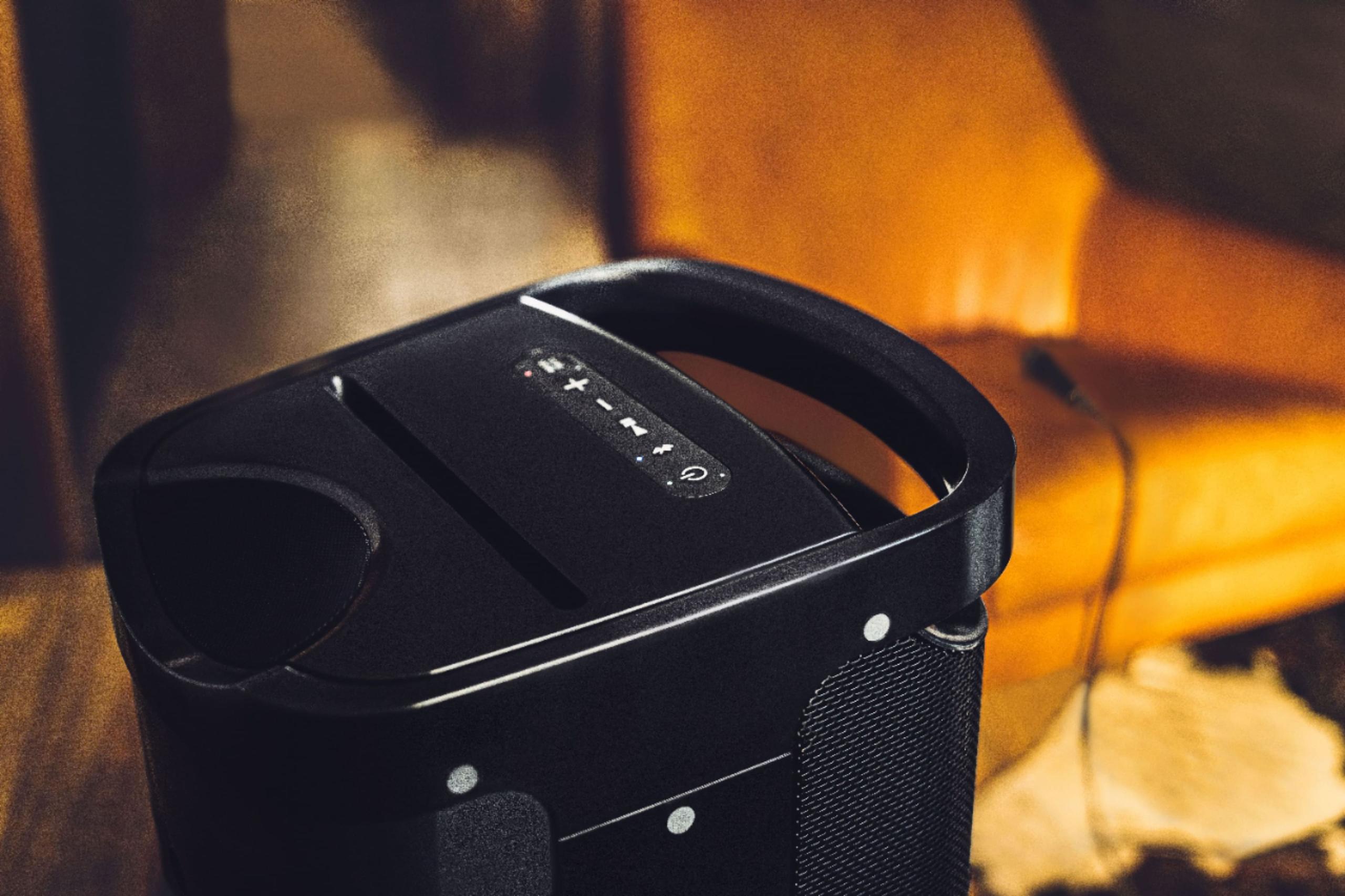
The Sony SRS-XP700 approaches sound like a heavyweight boxer – it hits hard and doesn't hold back. With its seven-driver configuration including three front tweeters, one rear tweeter, two large woofers, and a passive bass radiator, this speaker creates what Sony calls "omnidirectional party sound." This means you get consistent volume and bass no matter where you're standing relative to the speaker.
The 60W RMS amplification might not sound massive on paper, but RMS (Root Mean Square) represents continuous power output – the real-world power the speaker can sustain. Many cheaper speakers advertise inflated "peak" power numbers that they can only hit for milliseconds. The XP700's honest power rating translates to room-filling sound that maintains its punch throughout a long party.
What impressed me most in researching user experiences is how the XP700 handles high volume levels. Multiple reviews consistently mention that it "plays the loudest without distorting" compared to competitors. This comes down to Sony's X-Balanced Speaker Unit technology, which uses a non-circular diaphragm design. Instead of traditional round speaker cones, these units have an oval shape that increases surface area while reducing edge resonance – the unwanted vibrations that cause distortion.
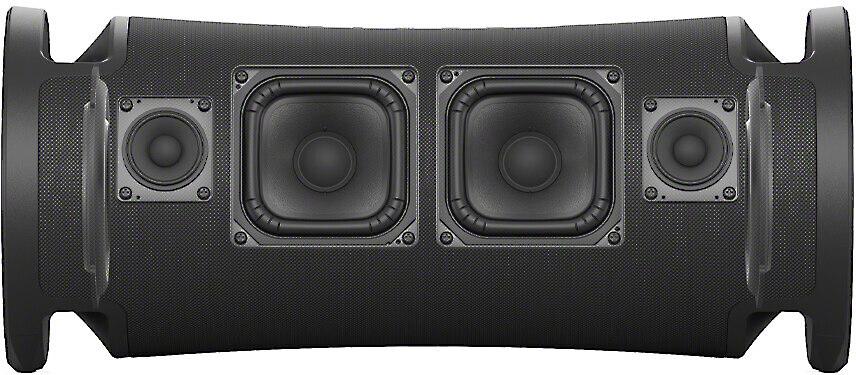
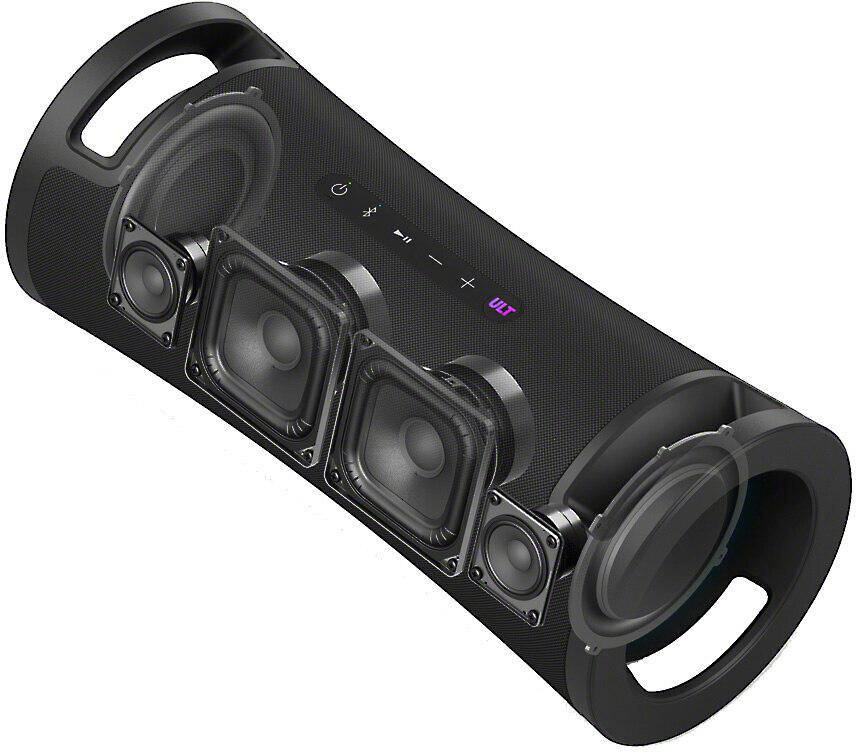
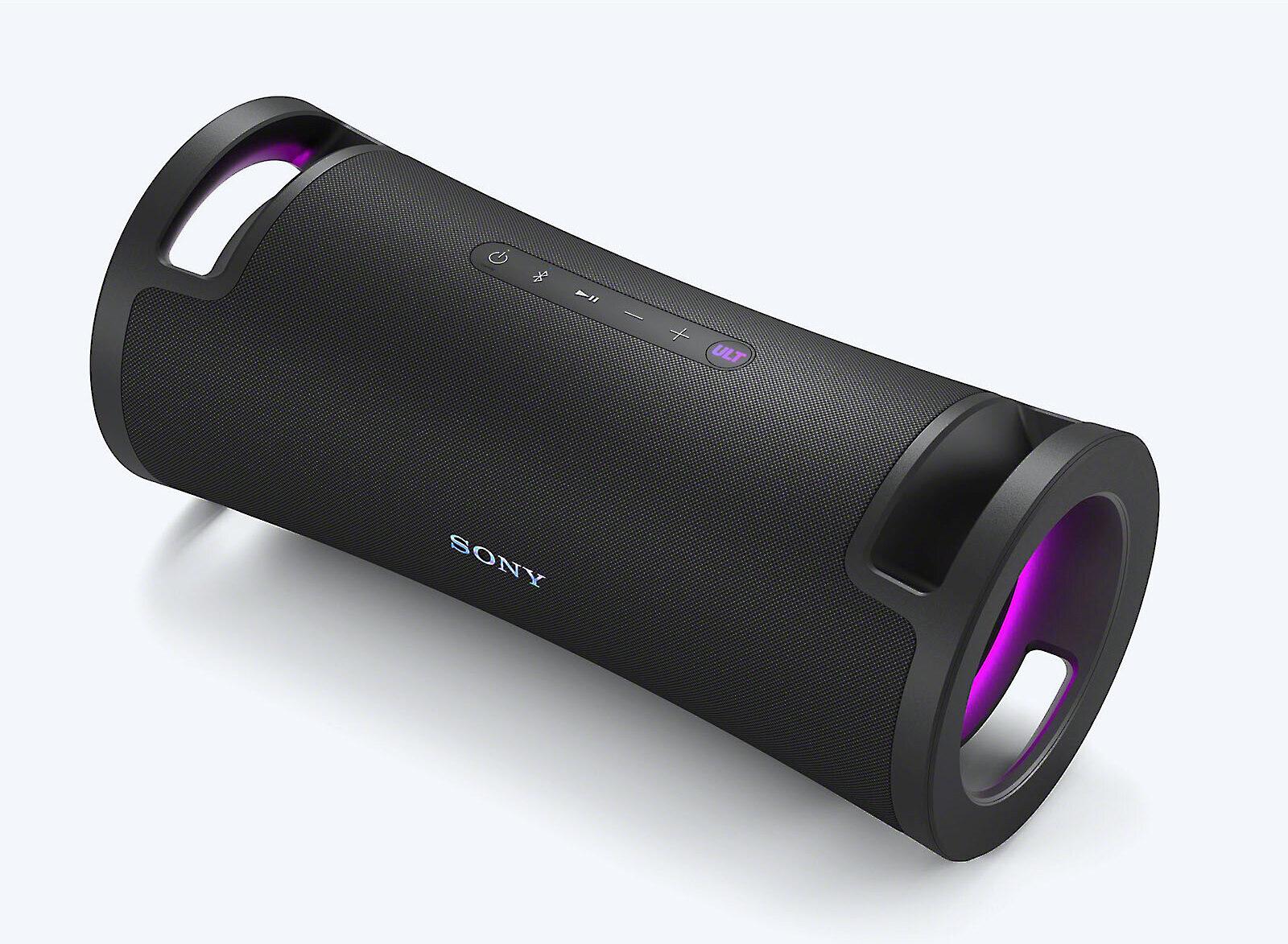
The Sony ULT FIELD 7, released three years later, takes a more sophisticated approach. While it has fewer drivers (four total: two woofers and two tweeters), it focuses on sound quality over sheer volume. The newer design benefits from Sony's improved digital signal processing, which was refined significantly between 2021 and 2024.
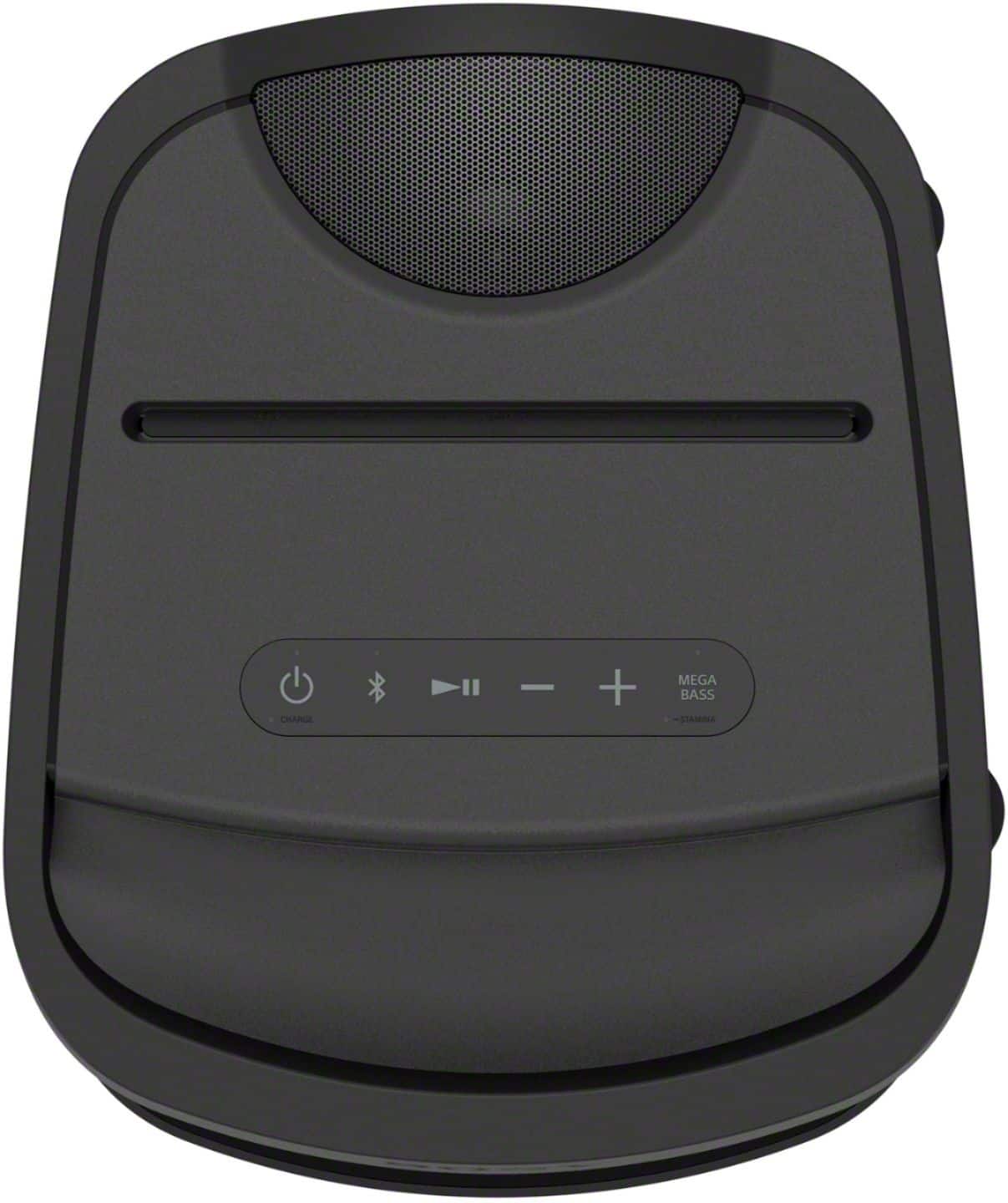
Here's where these speakers reveal their fundamental philosophical differences. The XP700 is all about bass quantity – it wants to move air and rattle windows. Its MEGA BASS feature essentially boosts low frequencies across the board, creating that chest-thumping sensation you feel at live concerts.
The passive bass radiator on the XP700 works like having a second subwoofer that doesn't require its own amplifier. When the main woofers push air, the radiator responds by moving in sync, effectively doubling the bass output. This is why users describe the XP700's bass as "visceral" and "room-shaking."
The ULT FIELD 7 takes the quality approach with its dual ULT enhancement modes. Instead of just cranking up the bass, it offers two distinct flavors: Deep Bass mode adds warmth and resonance to low frequencies, while Attack Bass mode increases the punch and impact of kick drums and bass lines. This gives you more control over your sound signature.
What's particularly clever about the ULT FIELD 7 is its Sound Field Optimization feature. Using internal microphones, it analyzes the acoustic environment and adjusts the sound profile accordingly. If you're outdoors where sound dissipates quickly, it might boost certain frequencies. Indoors where sound reflects off walls, it might dial things back to prevent muddiness.
Battery performance often gets overlooked until you're three hours into a pool party and your speaker dies. The Sony SRS-XP700 promises up to 25 hours of playback, but real-world performance varies dramatically based on volume levels and whether you're using features like the LED light show.
The quick charge capability is genuinely useful – 10 minutes of charging provides three hours of playback. This uses fast-charging battery technology that was still relatively new when the XP700 launched in 2021. The USB-C charging port also doubles as a power bank, letting you charge phones and tablets.
The ULT FIELD 7 extends battery life to 30 hours and benefits from three years of battery technology improvements. Lithium-ion batteries have become more efficient and longer-lasting since 2021, and Sony incorporated these advances. Users consistently report getting 25+ hours of real-world use even at moderate-to-high volume levels.
More importantly, the ULT FIELD 7's lower power consumption in standby mode (just 2 watts) means it won't drain overnight if you forget to turn it off. The XP700's older power management system is less refined in this regard.
Weather resistance ratings follow the IP (Ingress Protection) standard, where the first number represents dust protection and the second represents water protection. The Sony SRS-XP700 carries an IPX4 rating – the "X" means no official dust protection rating, and "4" means it can handle water splashes from any direction.
This makes the XP700 fine for poolside parties or light rain, but you wouldn't want to take it to the beach where sand could get into the ports, or leave it outside during a downpour.
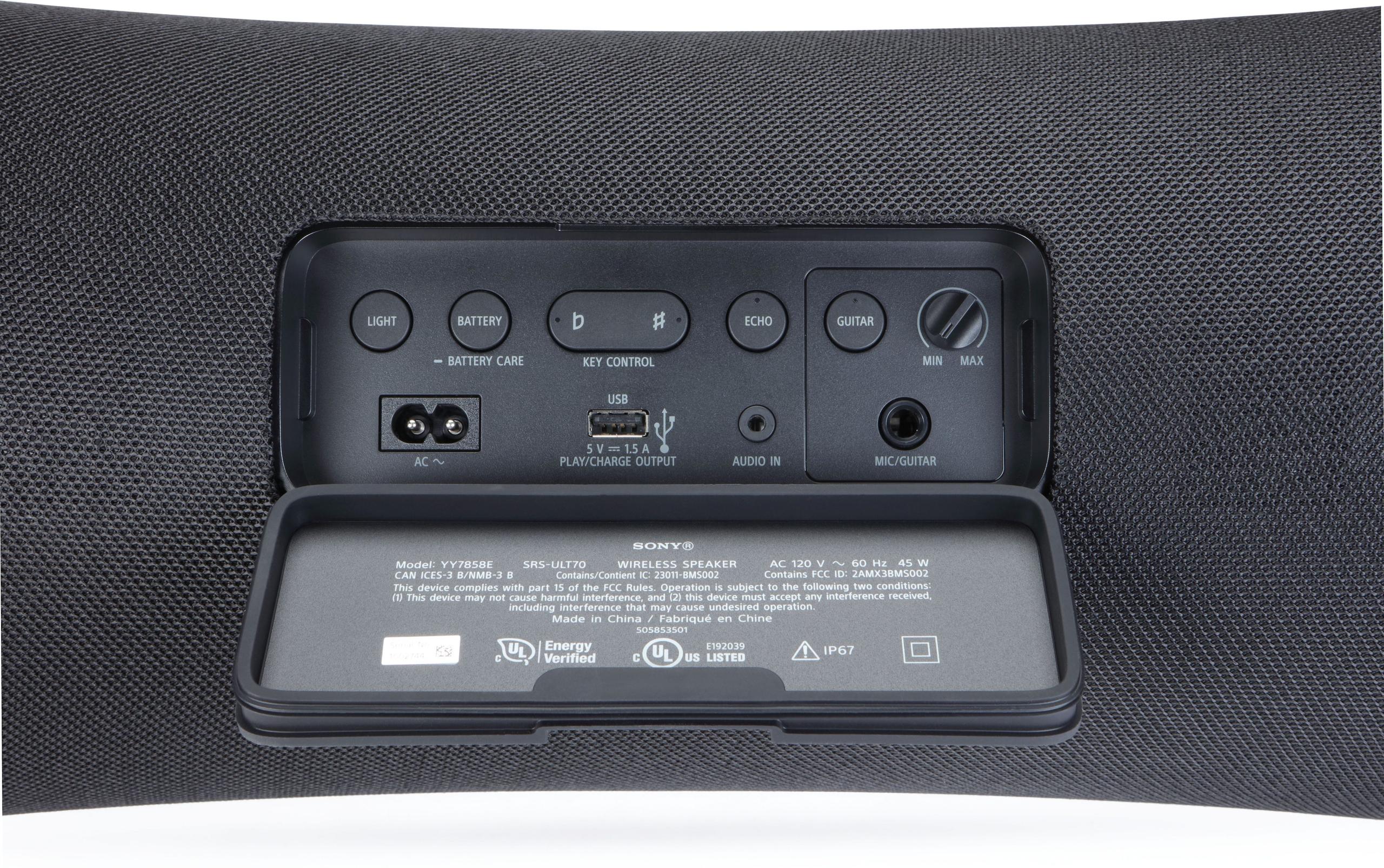
The ULT FIELD 7 leaps ahead with an IP67 rating – complete dust protection and the ability to survive underwater submersion up to 1 meter for 30 minutes. This isn't just marketing speak; it represents a fundamental design difference. Every port, seam, and connection is sealed against the elements.
I've seen users describe accidentally dropping their ULT FIELD 7 in pools, using it at dusty construction sites, and leaving it outside during rainstorms with no issues. This level of protection opens up use cases that would destroy the XP700.
Here's where we need to talk honestly about "portable" speakers that weigh as much as a medium-sized dog. The Sony SRS-XP700 tips the scales at over 37 pounds, making it more of a "moveable" speaker than a truly portable one. Yes, it has handles, but users consistently complain that carrying it any distance becomes uncomfortable quickly.
This weight comes from the multiple large drivers, substantial internal amplification, and the robust build quality needed to handle high power levels without rattling apart. It's the engineering trade-off for maximum sound output.
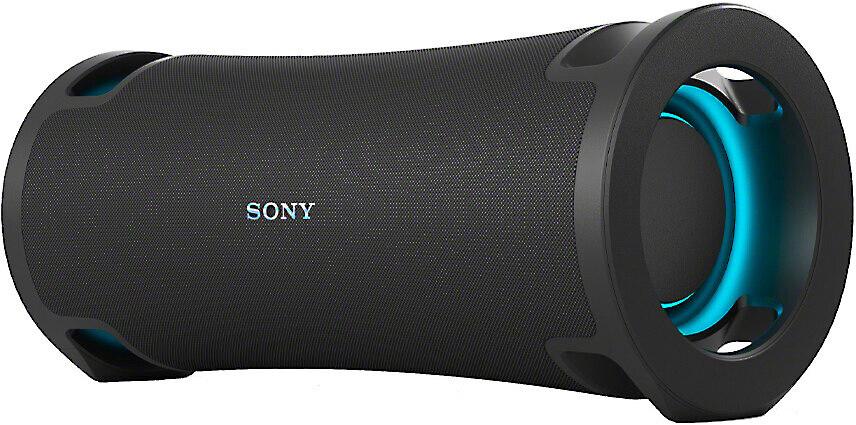
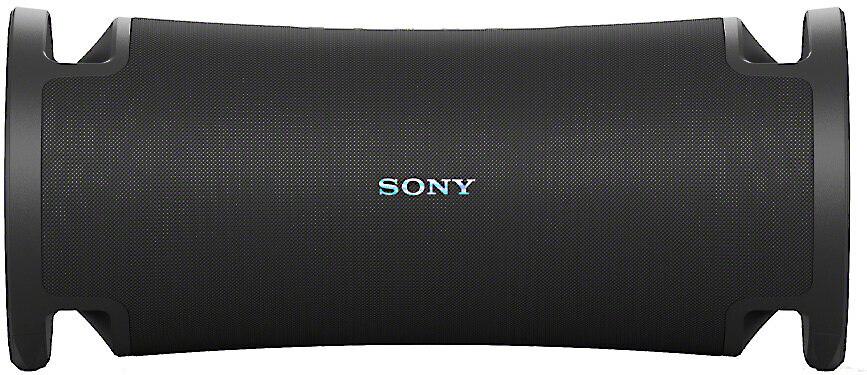
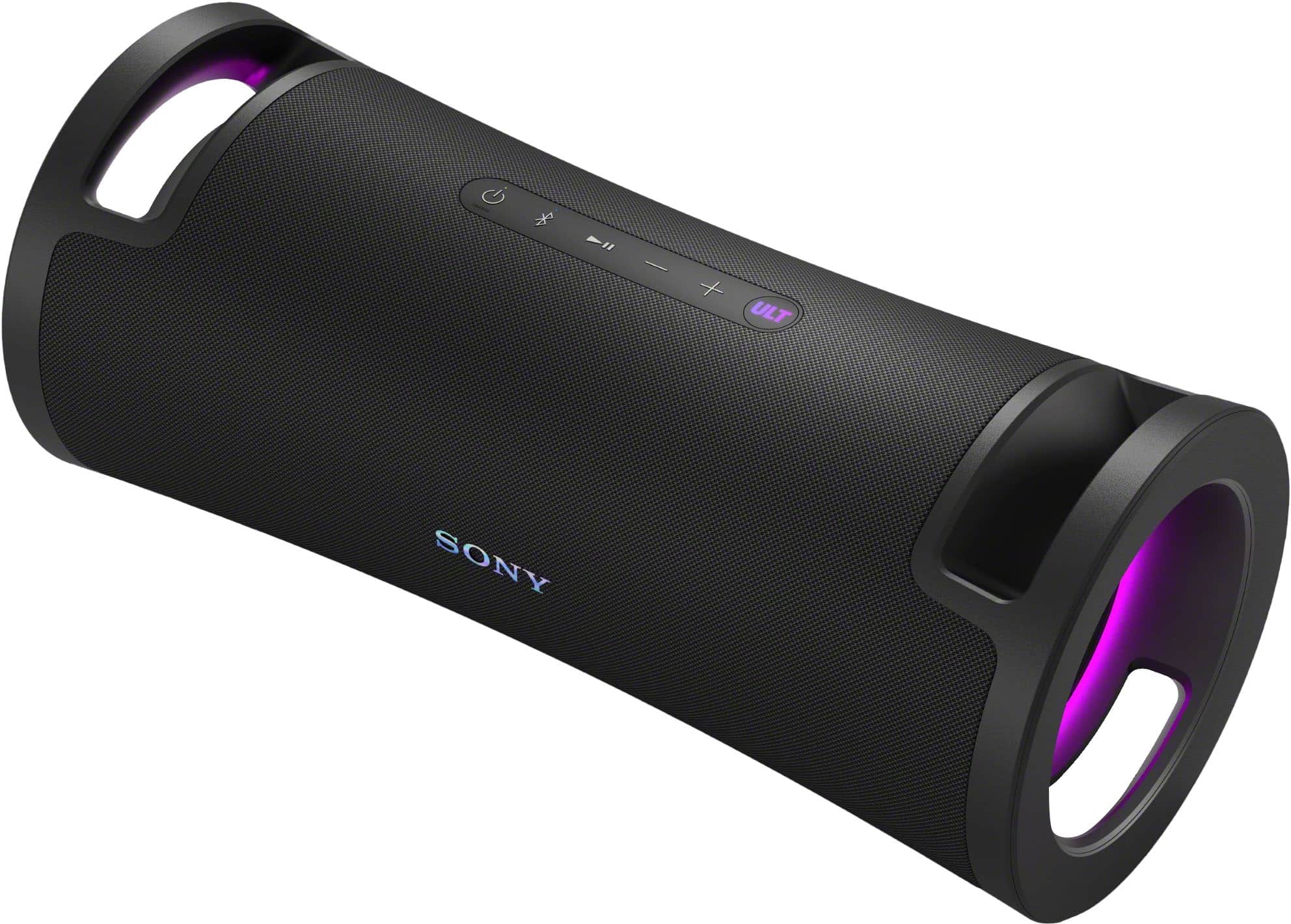
The ULT FIELD 7 makes different compromises, weighing in at about 14 pounds – still substantial, but manageable for one person to carry reasonable distances. The barrel-shaped design with integrated handles makes it easier to grip securely, though some users wish Sony had included a shoulder strap for longer carries.
Both speakers support modern Bluetooth standards, but there are important differences. The XP700 uses Bluetooth 5.0 with LDAC codec support, which was cutting-edge in 2021. LDAC transmits roughly three times more data than standard Bluetooth, resulting in noticeably better sound quality from high-resolution music files.
The ULT FIELD 7 upgrades to Bluetooth 5.2, which offers improved connection stability and lower latency. While the difference isn't dramatic, Bluetooth 5.2 handles interference better in crowded wireless environments and maintains more stable connections when your phone is across a large room or yard.
Both speakers can connect to multiple Bluetooth sources simultaneously, letting two people take turns DJ'ing from their phones without constant re-pairing. They also support Sony's Party Connect feature, which links multiple compatible Sony speakers for synchronized audio across larger spaces.
Sony's Music Center app provides control over both speakers, but the ULT FIELD 7 benefits from three years of app development improvements. The newer speaker offers a 7-band graphic equalizer for precise sound tuning, while the XP700's app controls are more basic.
This matters more than you might think. Different music genres benefit from different EQ settings – hip-hop might want boosted sub-bass, rock might need enhanced midrange for guitar clarity, and electronic music might benefit from crisp high frequencies. Having granular control means you can optimize performance for your music preferences.
While neither speaker is designed primarily for home theater use, both can serve as powerful stereo speakers for movie watching. The XP700 provides more visceral impact for action movies – explosions have real weight, and dialogue remains clear even during intense scenes.
However, both speakers are voiced for music rather than movies. They emphasize bass and treble in ways that can make dialogue less natural than dedicated home theater speakers. If you're looking for a speaker that pulls double duty, consider that party speakers prioritize excitement over accuracy.
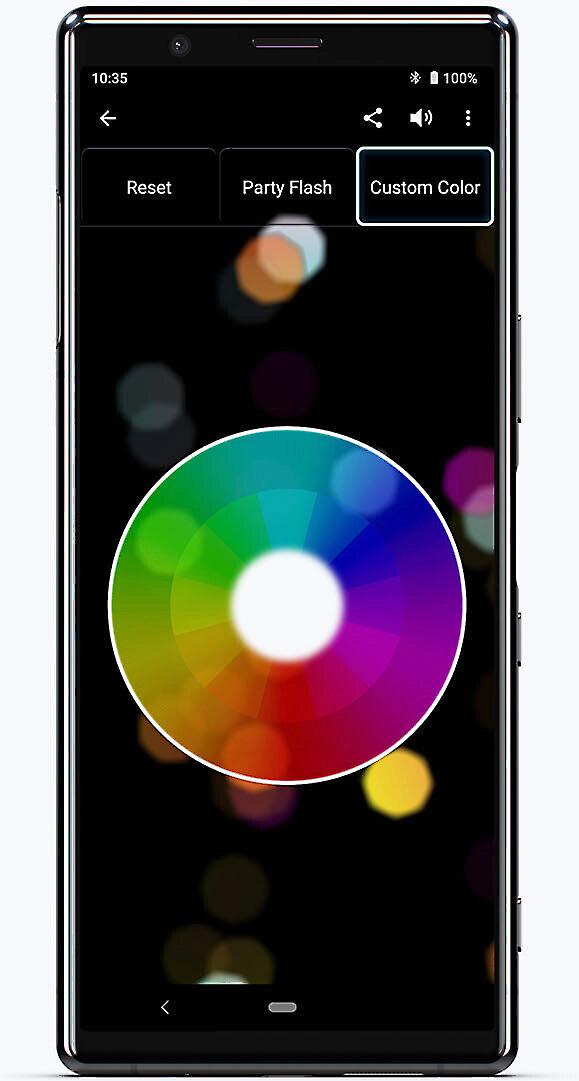
Both speakers feature customizable LED lighting that syncs to music, but they take different approaches. The XP700 offers more dramatic lighting effects across a larger surface area, creating a more immersive party atmosphere. The lights are bright enough to serve as ambient room lighting during gatherings.
The ULT FIELD 7 features more refined lighting with better music synchronization. While less flashy than the XP700, the lighting effects are more tasteful and less likely to become annoying during longer listening sessions. Both speakers let you disable lighting entirely to extend battery life.
After analyzing hundreds of user reviews and professional tests, clear usage patterns emerge. The Sony SRS-XP700 excels in scenarios where maximum impact matters: large house parties, outdoor gatherings with 50+ people, or any situation where you need to compete with ambient noise and conversation.
Its omnidirectional design means people standing behind or beside the speaker still get full bass impact and volume. This makes it ideal for parties where people are spread throughout a space rather than sitting in a focused listening arrangement.
The ULT FIELD 7 shines in more varied scenarios. Its superior weather protection makes it perfect for beach trips, camping, or poolside use where the XP700 would be risky. The lighter weight makes it practical for regular transport, while the more balanced sound signature works well for everything from dinner parties to workout sessions.
Based on extensive research into user experiences and expert opinions, the choice becomes clear when you consider your primary use case.
Choose the Sony SRS-XP700 if you regularly host large gatherings and maximum volume/bass impact is your priority. This speaker justifies its premium price when you need to fill big spaces or compete with outdoor ambient noise. It's also the better choice if you plan to keep it in one location most of the time, since the weight makes frequent transport impractical.
The XP700 also makes sense if you're primarily playing bass-heavy music genres like hip-hop, electronic, or reggae, where the visceral low-end impact enhances the listening experience.
Choose the Sony ULT FIELD 7 for almost everything else. At the time of writing, it offers better value for most users, with superior weather protection, longer battery life, and significantly better portability. The more balanced sound signature works well across all music genres, and the advanced app controls provide more customization options.
The ULT FIELD 7 is particularly appealing if you'll be moving the speaker regularly, using it outdoors in challenging conditions, or want a speaker that works well for both intimate gatherings and larger parties.
After extensive research and analysis, the Sony ULT FIELD 7 emerges as the better choice for most buyers. It delivers roughly 80% of the XP700's sound performance while offering superior portability, weather resistance, and battery life at a lower price point.
The XP700 remains the champion if maximum volume and bass impact are your absolute priorities and you don't mind the weight and weather limitations. But for the majority of party speaker buyers, the ULT FIELD 7's combination of performance, features, and value makes it the smarter pick.
Both speakers represent Sony's commitment to party audio excellence, but they serve different masters. Choose based on your specific needs, and either speaker will deliver years of party-powering performance.
| Sony SRS-XP700 Wireless Party Speaker | Sony ULT FIELD 7 Portable Speaker |
|---|---|
| Sound Output - Maximum volume capability for large gatherings | |
| 60W RMS with 7 drivers + subwoofer (louder overall) | 45W with 4 drivers (sufficient for most parties) |
| Bass Performance - Low-end impact and depth | |
| MEGA BASS + passive radiator (deeper, more visceral) | Dual ULT modes (more controlled and customizable) |
| Battery Life - How long your party can last | |
| Up to 25 hours (shorter runtime) | Up to 30 hours (20% longer playback) |
| Weight - How easy it is to transport | |
| 37.25 lbs (requires two people for comfort) | 13.89 lbs (manageable for one person) |
| Weather Resistance - Durability for outdoor use | |
| IPX4 splash-resistant only | IP67 fully waterproof and dustproof |
| Speaker Configuration - Audio quality and dispersion | |
| 3 front tweeters, 1 rear tweeter, 2 woofers, 1 passive radiator | 2 tweeters, 2 woofers (more balanced sound) |
| Bluetooth Version - Connection quality and features | |
| Bluetooth 5.0 with LDAC codec | Bluetooth 5.2 with AAC and LDAC codecs |
| Dimensions - Space requirements and portability | |
| 12.32" x 27.28" x 14.44" (tower design) | 20.16" x 8.82" x 8.74" (barrel design) |
| Karaoke Features - Entertainment capabilities | |
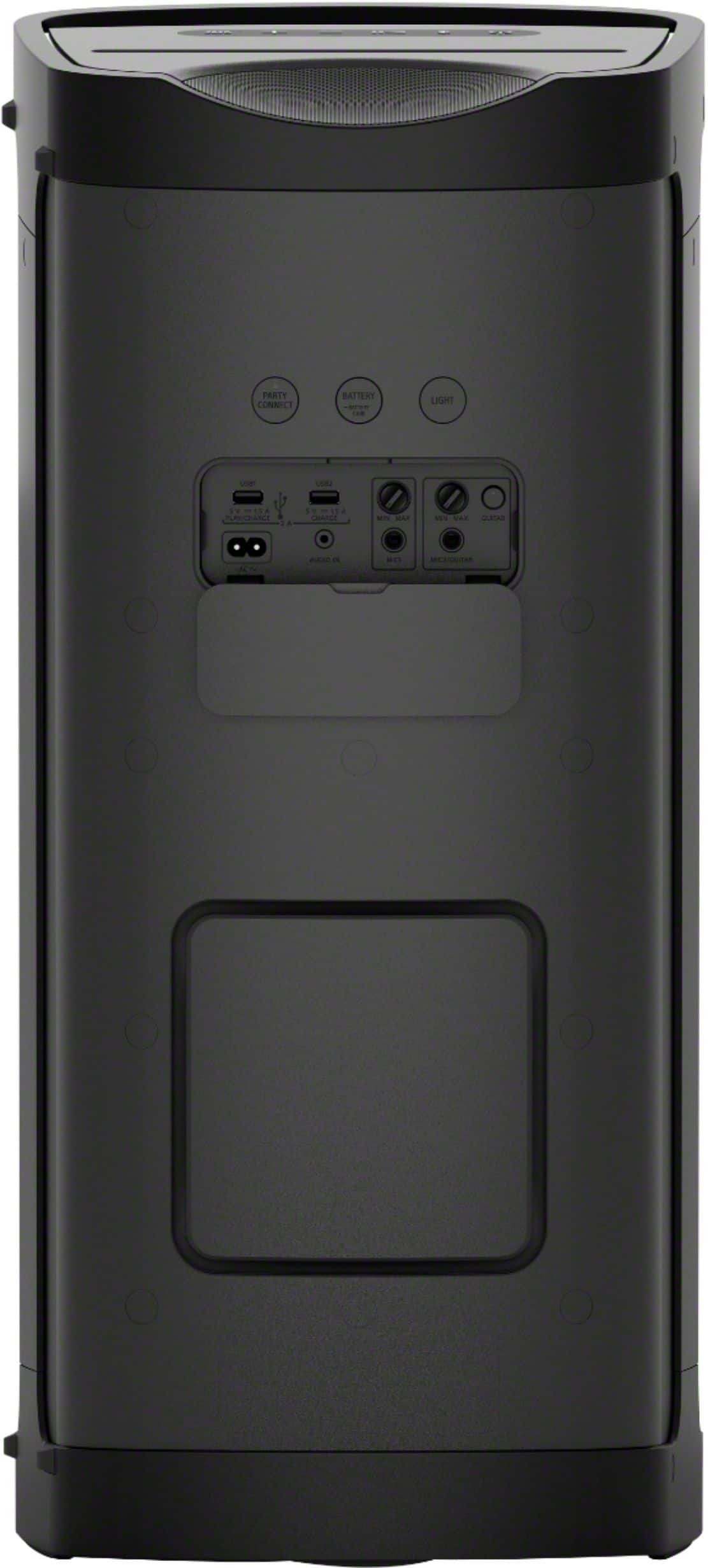
| Mic and guitar inputs with dedicated controls | Mic and guitar input with app-based controls |
| App Control - Customization options | |
| Sony Music Center (basic controls) | Sony Music Center with 7-band EQ and advanced features |
| Charging - Power delivery and convenience | |
| USB-C fast charging + dual USB-A outputs | USB-C charging (more efficient power management) |
| Release Year - Technology generation and features | |
| 2021 (older generation with proven performance) | 2024 (newer tech with refined features) |
The Sony SRS-XP700 is better for large outdoor parties due to its higher power output (60W RMS) and seven-driver configuration that includes a dedicated subwoofer. It can fill larger spaces with sound and provides more visceral bass impact that carries well in open areas. However, the Sony ULT FIELD 7 is more practical for outdoor use thanks to its IP67 waterproof rating and lighter weight.
The Sony SRS-XP700 focuses on maximum volume and bass impact with its larger driver array and passive bass radiator, making it ideal for bass-heavy music. The Sony ULT FIELD 7 offers more balanced sound with better vocal clarity and mid-range definition, plus customizable ULT bass modes for different music styles. The ULT FIELD 7 provides more refined audio quality overall.
The Sony ULT FIELD 7 offers up to 30 hours of battery life compared to the Sony SRS-XP700's 25 hours. The ULT FIELD 7 also has more efficient power management and lower standby consumption, making it better for extended outdoor adventures or all-day events.
The Sony ULT FIELD 7 is fully waterproof with IP67 rating, meaning it can handle rain, pool splashes, and even brief submersion. The Sony SRS-XP700 only has IPX4 splash resistance, making it suitable for light rain but not ideal for poolside use or dusty environments.
The Sony ULT FIELD 7 weighs only 13.89 pounds compared to the Sony SRS-XP700's 37.25 pounds, making it much more portable. The ULT FIELD 7's barrel design with integrated handles is manageable for one person, while the XP700 typically requires two people for comfortable transport.
Yes, both the Sony SRS-XP700 and Sony ULT FIELD 7 include 6.3mm microphone and guitar inputs for karaoke and live performance. The XP700 offers more powerful amplification for vocals, while the ULT FIELD 7 provides better app-based controls for karaoke settings through the Sony Music Center app.
The Sony ULT FIELD 7 typically offers better value, providing about 80% of the Sony SRS-XP700's sound performance at a lower price point. The ULT FIELD 7 also includes superior weather protection, longer battery life, and better portability, making it the more practical choice for most users.
Both speakers support Sony's Party Connect feature, allowing you to link up to 100 compatible Sony speakers for synchronized audio and lighting. The Sony SRS-XP700 and Sony ULT FIELD 7 can also pair with non-Sony Bluetooth speakers, providing more flexibility than some competing brands.
The Sony SRS-XP700 excels with bass-heavy genres like hip-hop, electronic, and reggae due to its powerful subwoofer and MEGA BASS feature. The Sony ULT FIELD 7 works better across all music genres with its more balanced sound signature and customizable ULT bass modes that can be adjusted for different musical styles.
While neither the Sony SRS-XP700 nor Sony ULT FIELD 7 is designed primarily for home theater, both can serve as powerful stereo speakers for movies. The XP700 provides more visceral impact for action scenes, but both speakers are optimized for music rather than dialogue clarity, so dedicated home theater speakers would be better for serious movie watching.
The Sony ULT FIELD 7 offers more advanced app controls through the Sony Music Center app, including a 7-band graphic equalizer and refined lighting controls. The Sony SRS-XP700 has more basic app functionality. Both speakers work with Sony's Fiestable app for party features and DJ effects.
Choose the Sony ULT FIELD 7 for regular use due to its superior portability, weather resistance, and longer battery life. It's practical for both intimate gatherings and larger parties. Only choose the Sony SRS-XP700 if you need maximum volume for very large events and don't mind the weight and weather limitations.
We've done our best to create useful and informative comparisons to help you decide what product to buy. Our research uses advanced automated methods to create this comparison and perfection is not possible - please contact us for corrections or questions. These are the sites we've researched in the creation of this article: bestbuy.com - rtings.com - crutchfield.com - versus.com - rtings.com - rtings.com - youtube.com - versus.com - electronics.sony.com - youtube.com - youtube.com - youtube.com - youtube.com - crutchfield.com - armorsound.com - sony-asia.com - helpguide.sony.net - helpguide.sony.net - videoandaudiocenter.com - sony.com - sony.com - sony-asia.com - sony.com - sony.com - bestbuy.com - device.report - bestbuy.com - rtings.com - hifipicks.com - thesonyshop.ca - techradar.com - rtings.com - sony-africa.com - videoandaudiocenter.com - sony.com - youtube.com - johnlewis.com

Privacy Policy
Terms and Conditions - Affiliate Policy
Home Security
© Copyright 2008-2026.
11816 Inwood Rd #1211, Dallas, TX 75244