

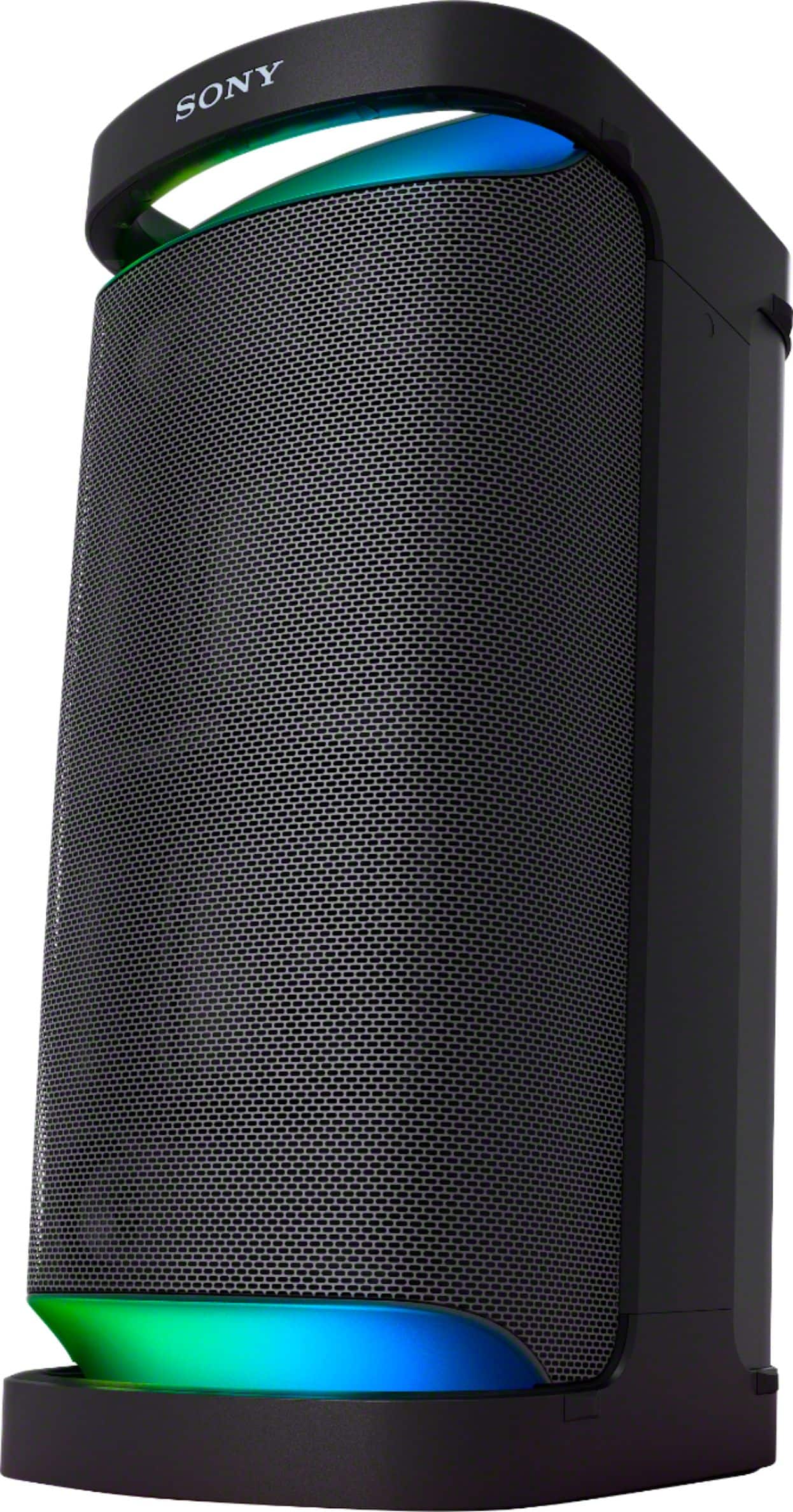
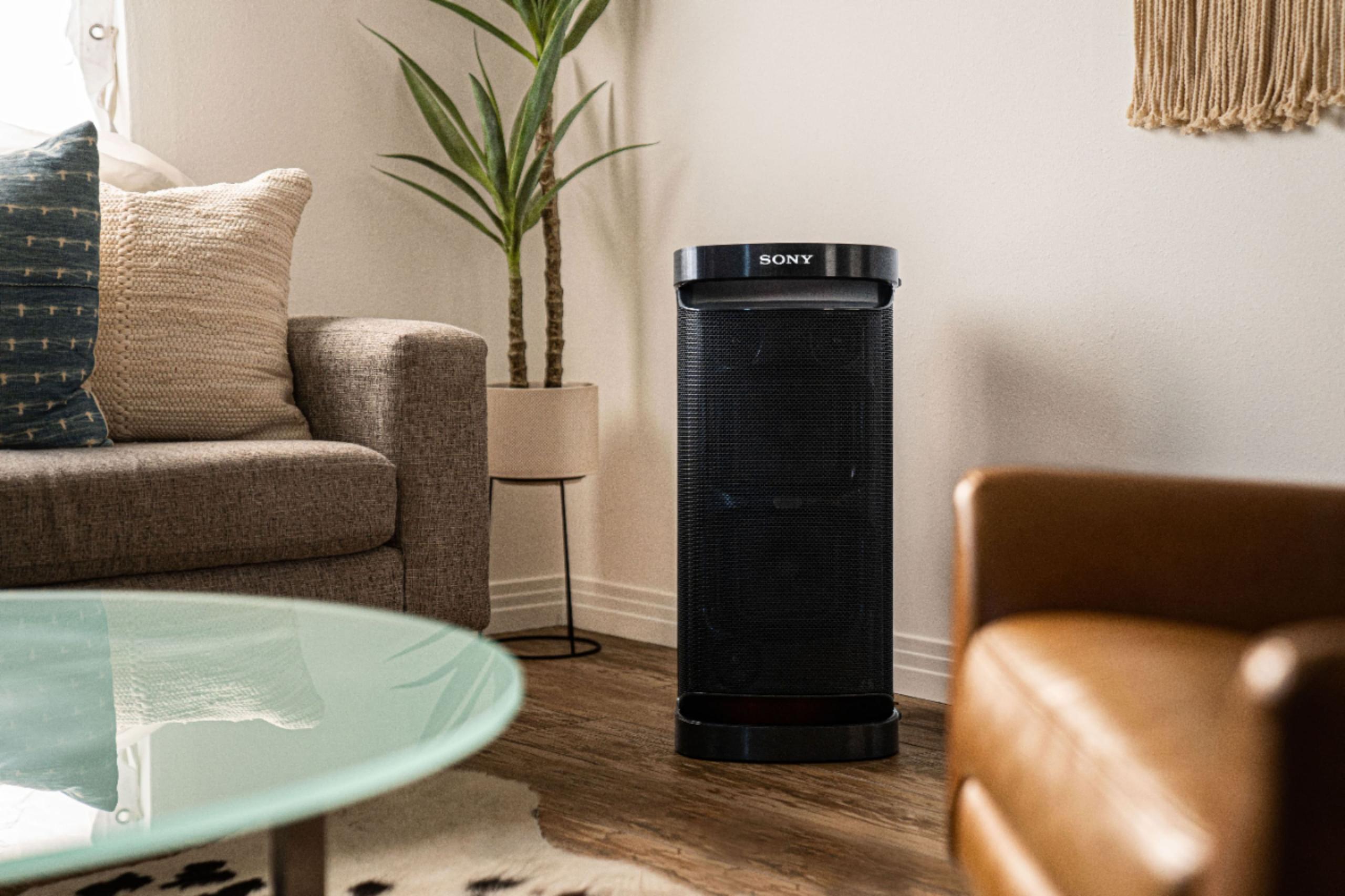
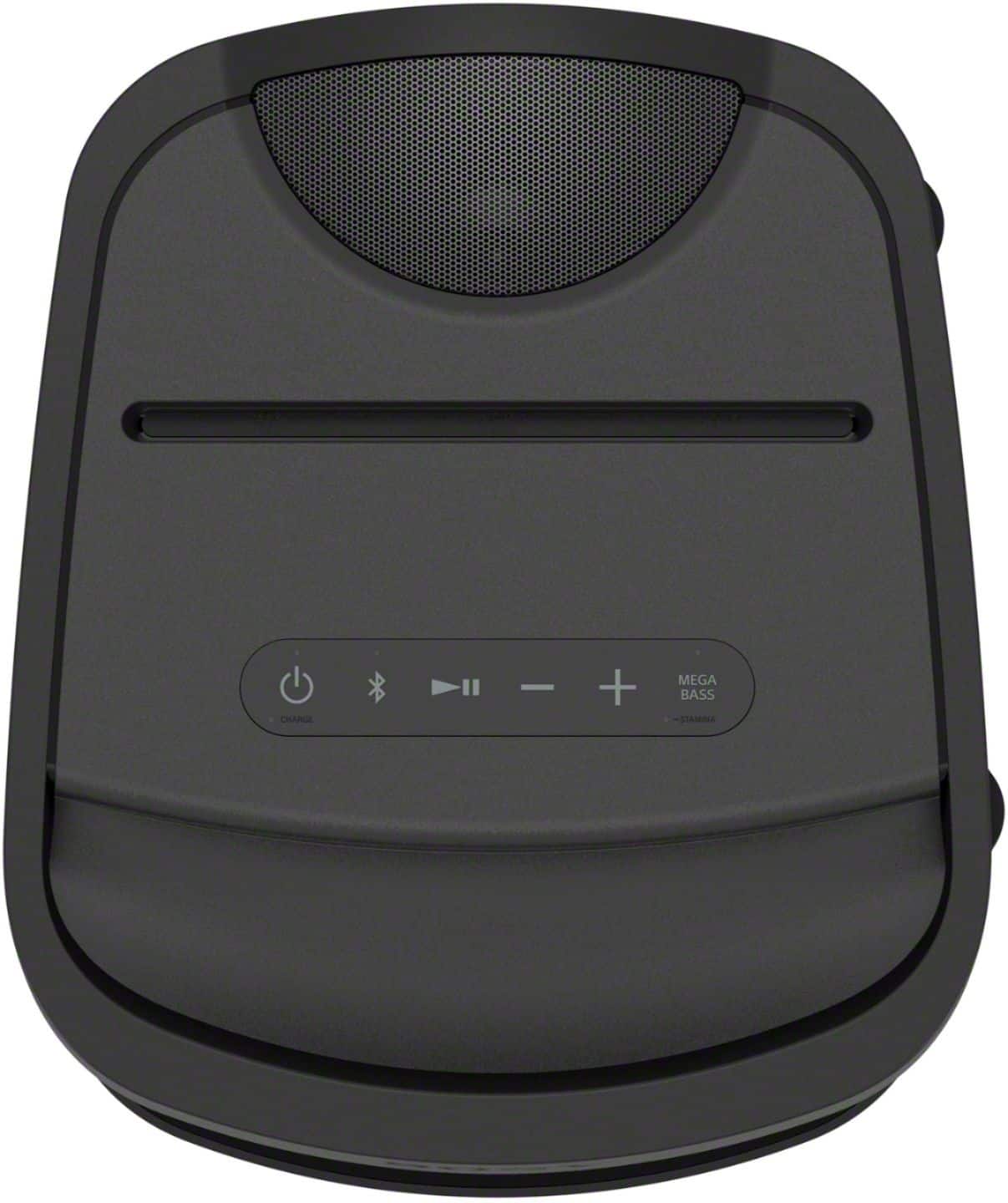
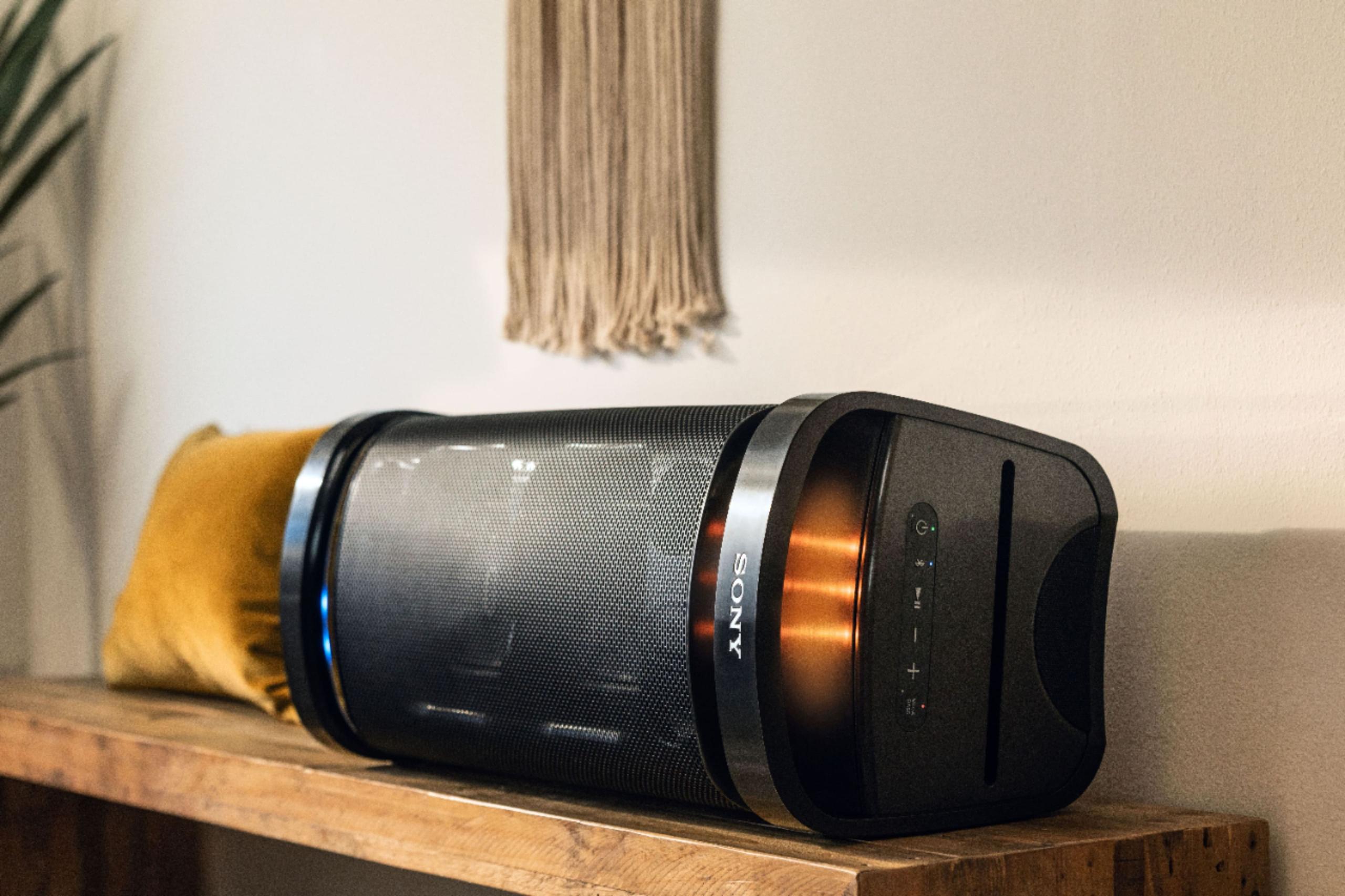
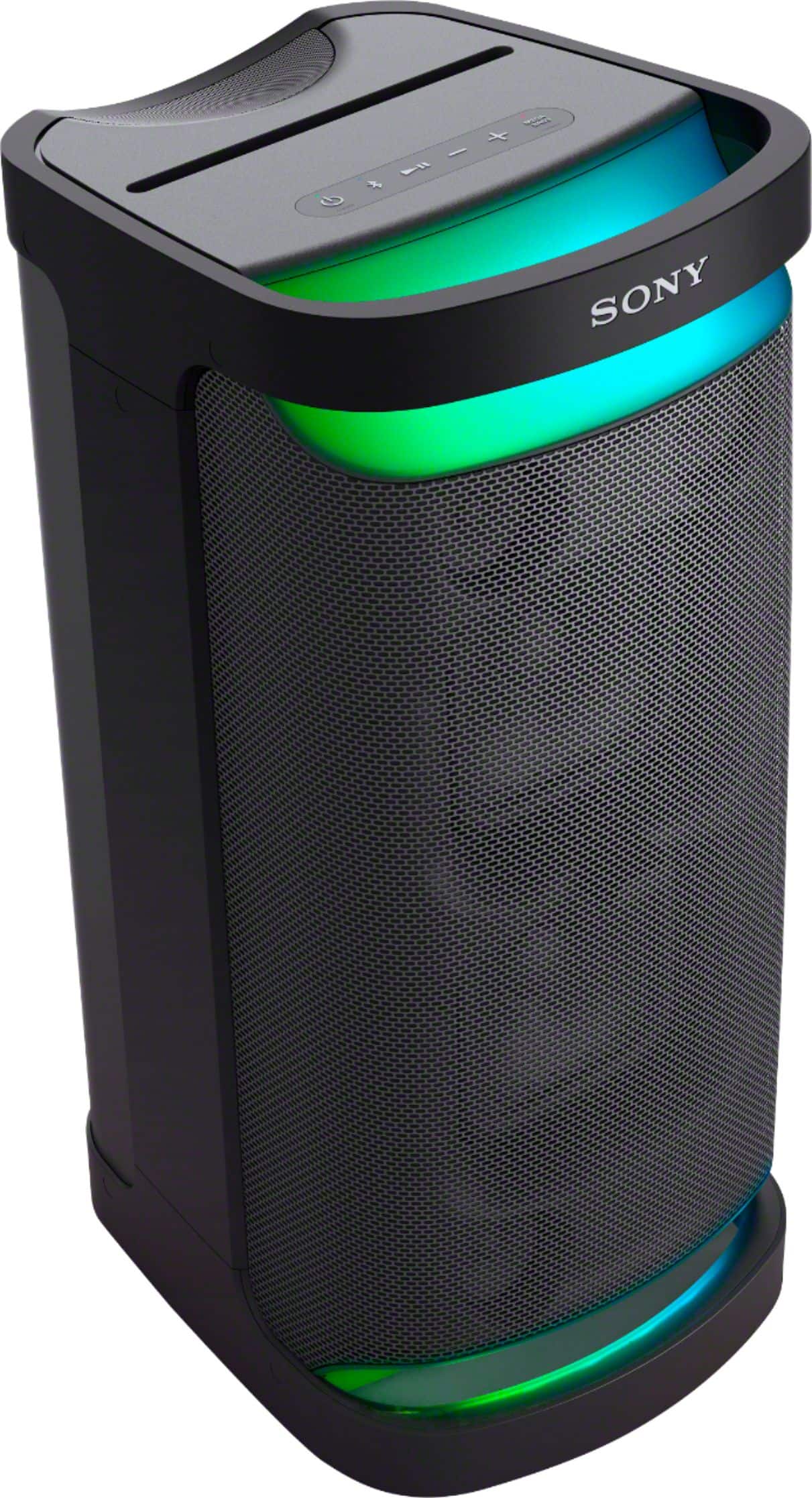
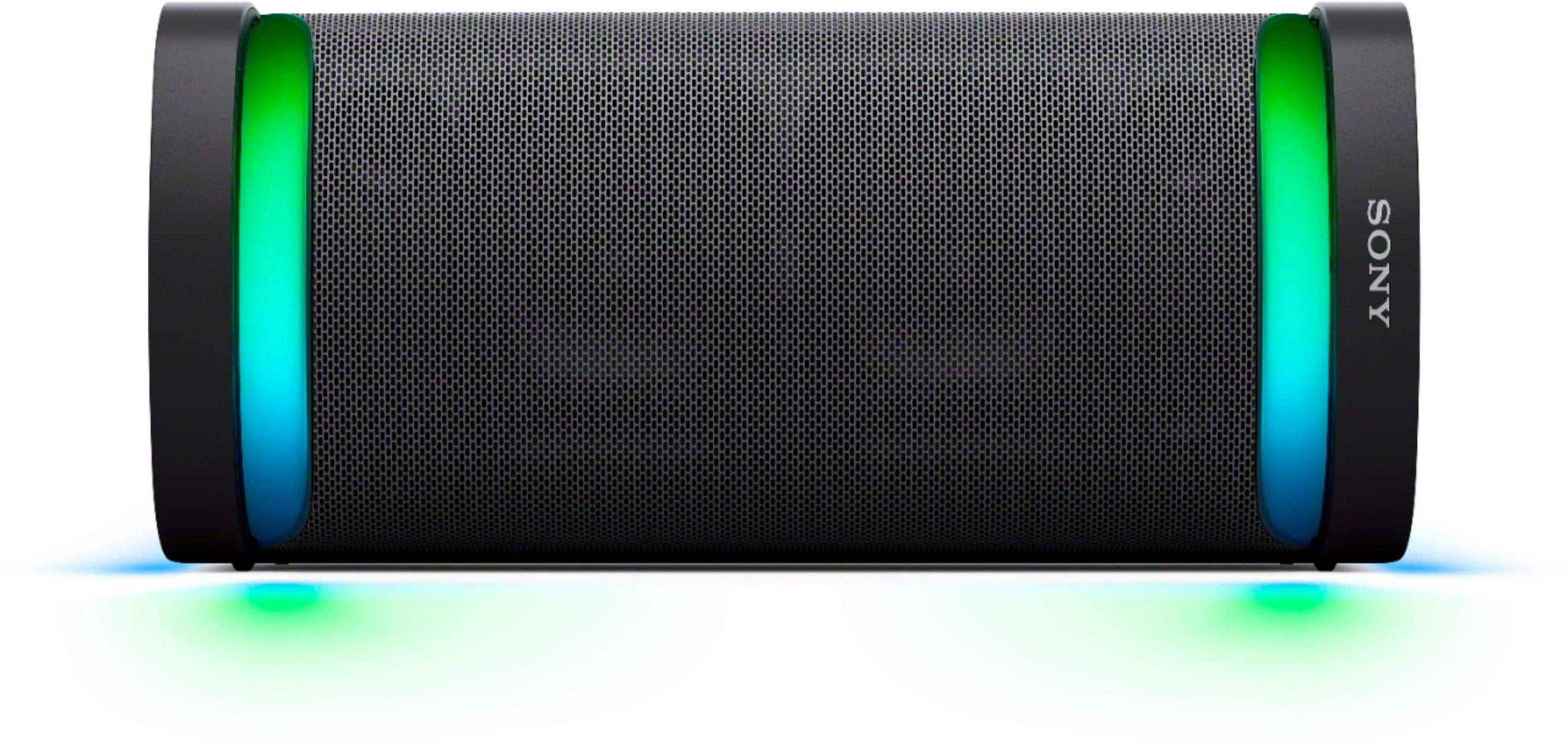
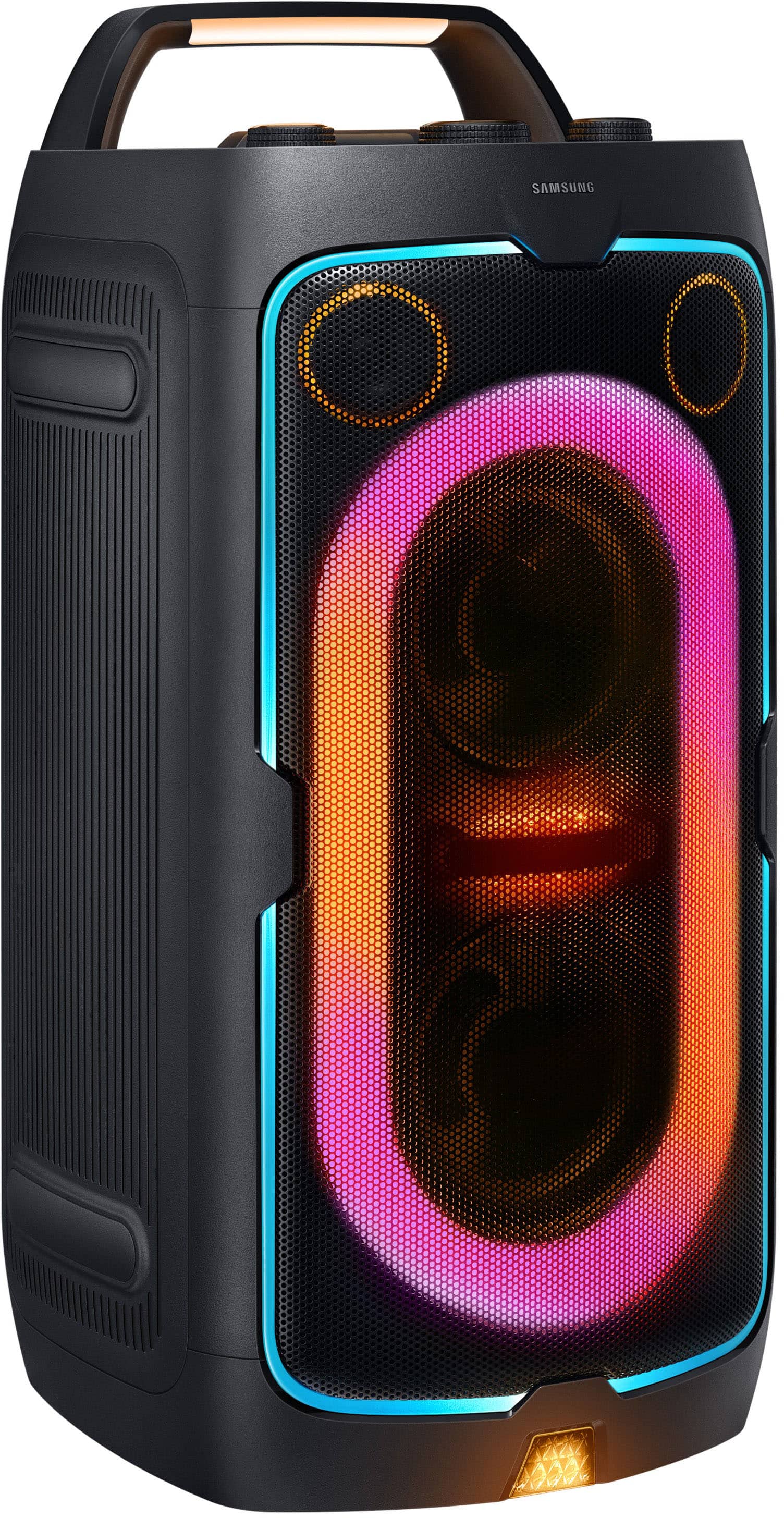
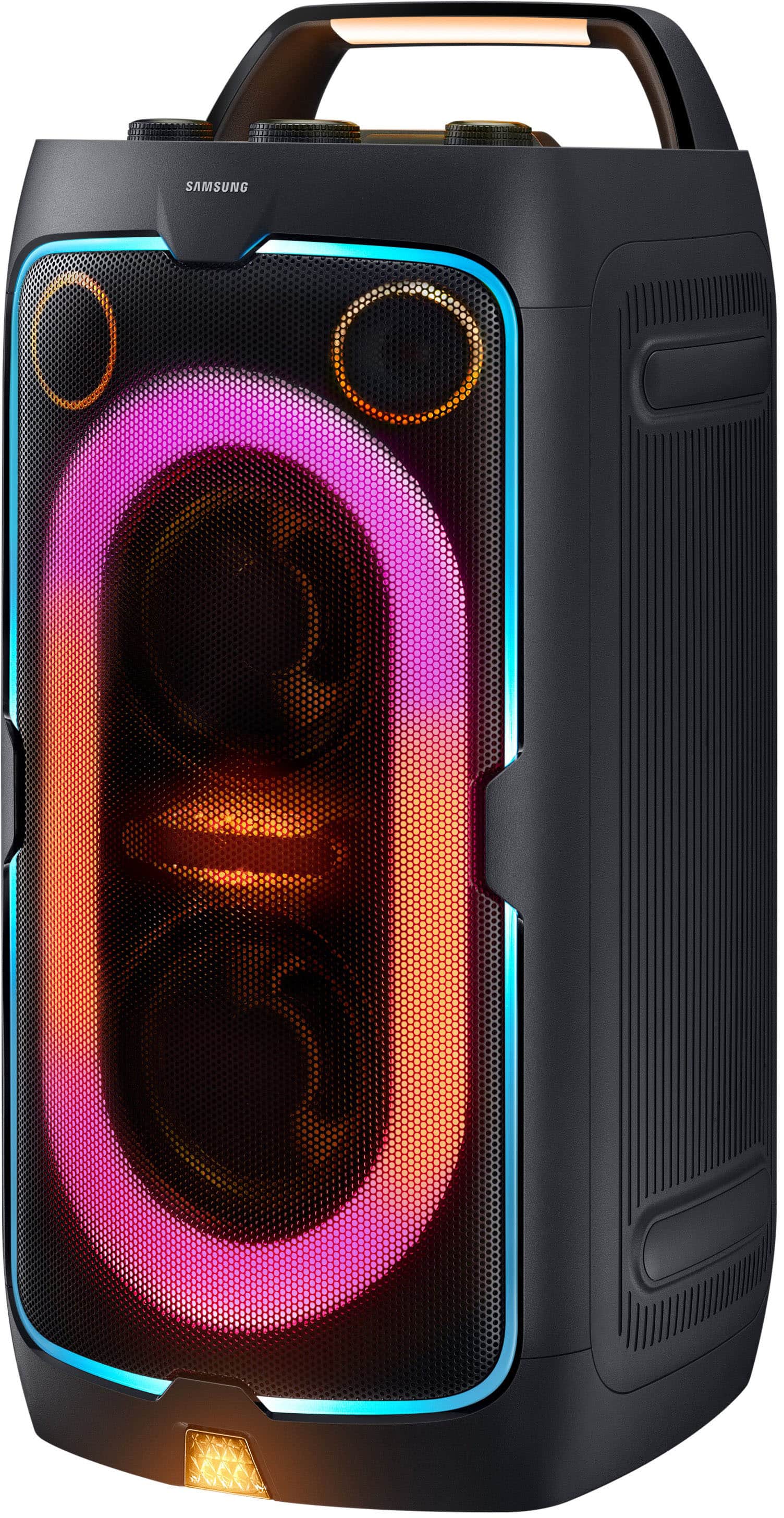
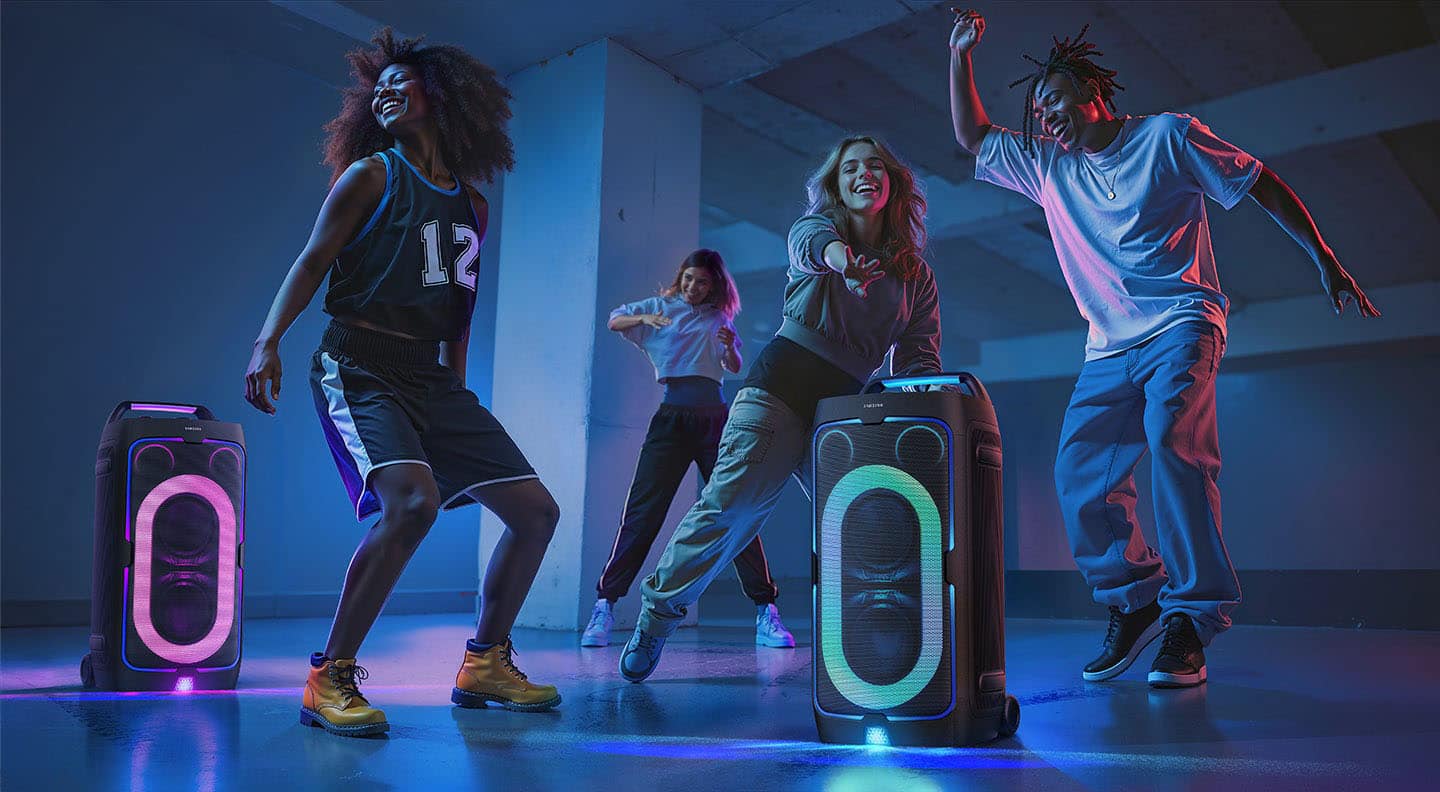
When you're planning a backyard barbecue, pool party, or outdoor celebration, the right speaker can make or break the atmosphere. Two standout options in the party speaker category are the Sony SRS-XP700 and the Samsung MX-ST40F, both designed to pump up the volume and keep the energy flowing. But these speakers take very different approaches to delivering powerful sound, and understanding their strengths will help you pick the right one for your needs.
Party speakers aren't your typical home audio equipment. They're built for specific challenges: competing with outdoor ambient noise, surviving splashes and weather, and delivering consistent performance over long periods. The most important factors to consider include power output (how loud they can get), sound quality at high volumes, battery life for untethered use, and durability for outdoor conditions.
Unlike studio monitors that prioritize accurate sound reproduction, party speakers emphasize volume, bass impact, and fun features like lighting effects and karaoke support. They need to fill large spaces with sound that stays clear even when you crank the volume to party levels.
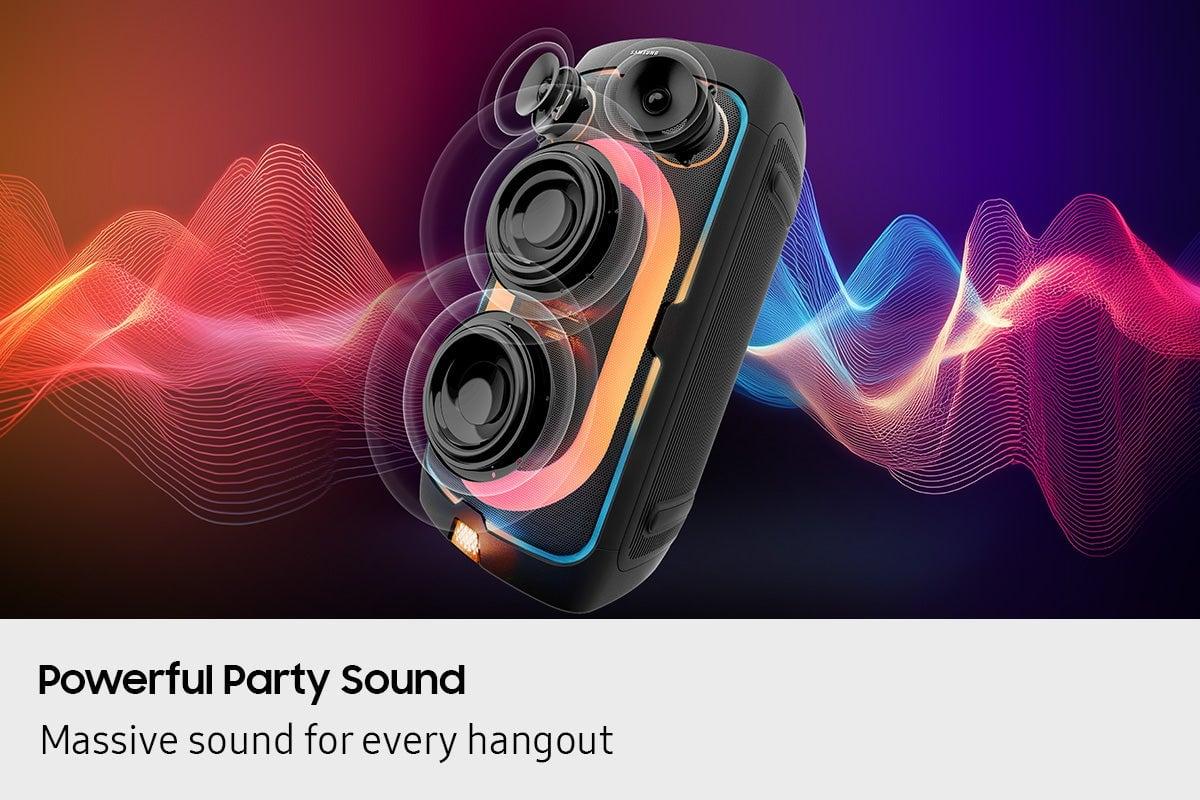
The biggest difference between these two speakers lies in their power capabilities. The Sony SRS-XP700 delivers an impressive 500 watts of total output, while the Samsung MX-ST40F produces 160 watts in AC mode and 80 watts when running on battery power.
To put this in perspective, the Sony can generate sound levels that will easily fill a large backyard, compete with pool noise, and project clearly across significant distances. Users consistently report being able to hear the Sony SRS-XP700 from across the street, which speaks to its serious volume capabilities. This makes it ideal for larger gatherings where you need to overcome significant background noise.
The Samsung MX-ST40F, while less powerful on paper, still delivers enough volume for most home party scenarios. What it lacks in raw power, it compensates with cleaner sound reproduction. When you push the Samsung to its limits, it maintains better audio clarity without the compression artifacts (that "squeezed" sound quality) that can affect the Sony at maximum volume.
Think of it this way: the Sony is like a powerful motorcycle that can go very fast but might get a bit rough at top speed, while the Samsung is like a well-tuned sports car that performs smoothly within its range but has a lower top speed.
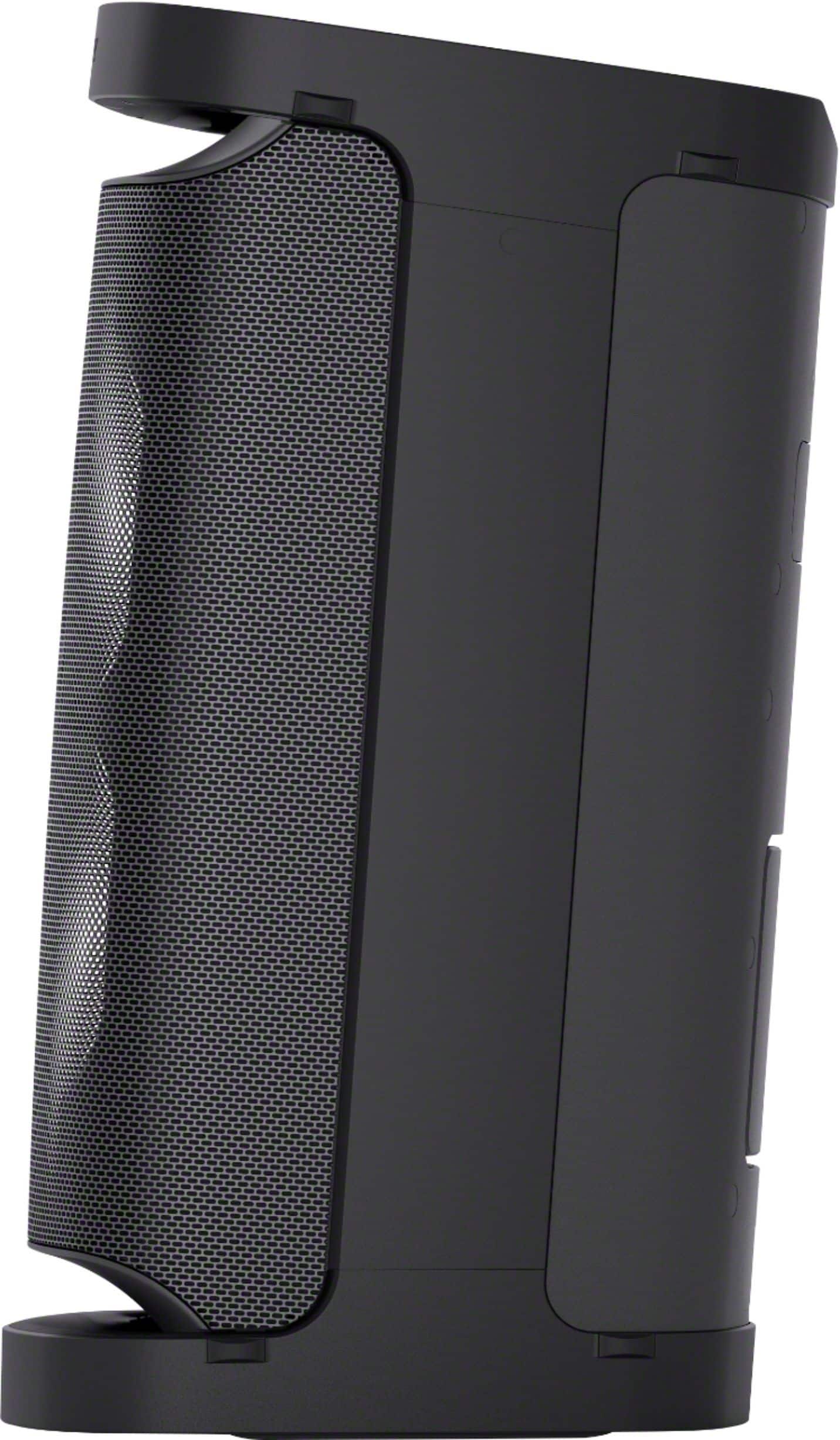
The Sony SRS-XP700, released in 2021, features Sony's proprietary X-Balanced Speaker Unit technology. This uses non-circular speaker diaphragms (the part that moves to create sound) with more surface area than traditional round speakers. Combined with multiple tweeters (small speakers for high frequencies) positioned both front and rear, it creates omnidirectional sound—meaning you get consistent audio quality regardless of where you're standing around the speaker.
Sony's approach emphasizes their MEGA BASS feature, which boosts low frequencies for that chest-thumping impact that gets people moving. However, our research into user and expert reviews reveals this creates a somewhat "boomy" sound profile that can make vocals sound harsh or "honky" at times. The omnidirectional design works great for parties where people are scattered around a space, but the heavy bass emphasis means it's not ideal for more nuanced music listening.
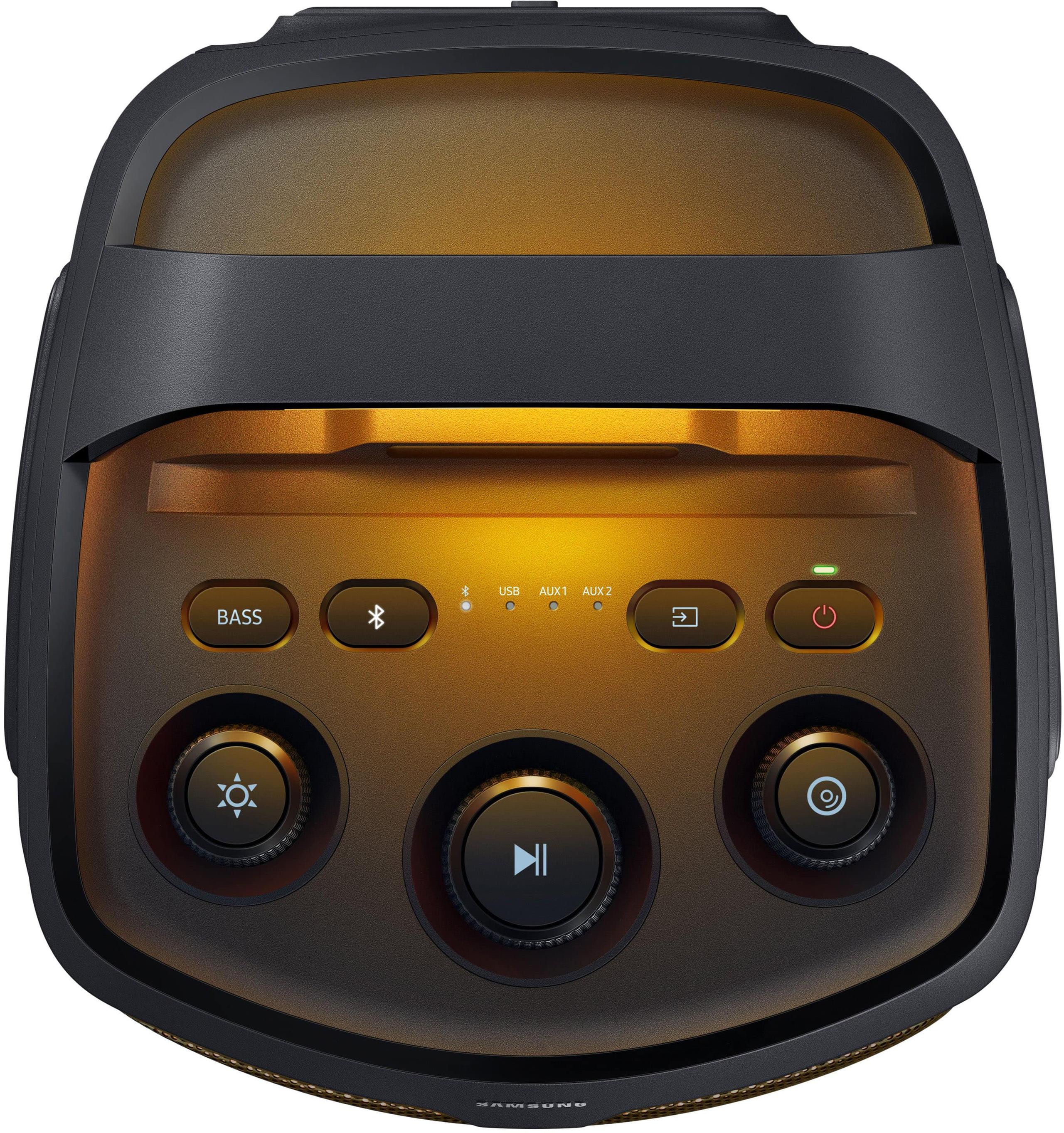
The Samsung MX-ST40F, released in 2024, takes a different approach with waveguide technology. Waveguides are specially shaped acoustic channels that control how sound waves disperse from the speaker, optimizing the sound distribution for clearer, more directional audio coverage. Rather than emphasizing bass at all costs, Samsung focuses on balanced sound reproduction with customizable bass modes: Deep, Punchy, and Gentle.
This means you can actually tune the Samsung MX-ST40F to match your music preference or the acoustic characteristics of your space. Playing jazz or acoustic music? Switch to Gentle mode. Spinning electronic dance music? Deep mode will give you the low-end impact you want. This flexibility represents a more sophisticated approach to sound tuning that the Sony simply doesn't offer.
Battery performance tells another story of different design priorities. The Sony SRS-XP700 delivers an exceptional 25 hours of playback time with USB-C quick charging that provides three hours of music from just 10 minutes of charging. This makes it practically unbeatable for extended outdoor events, camping trips, or multi-day festivals.
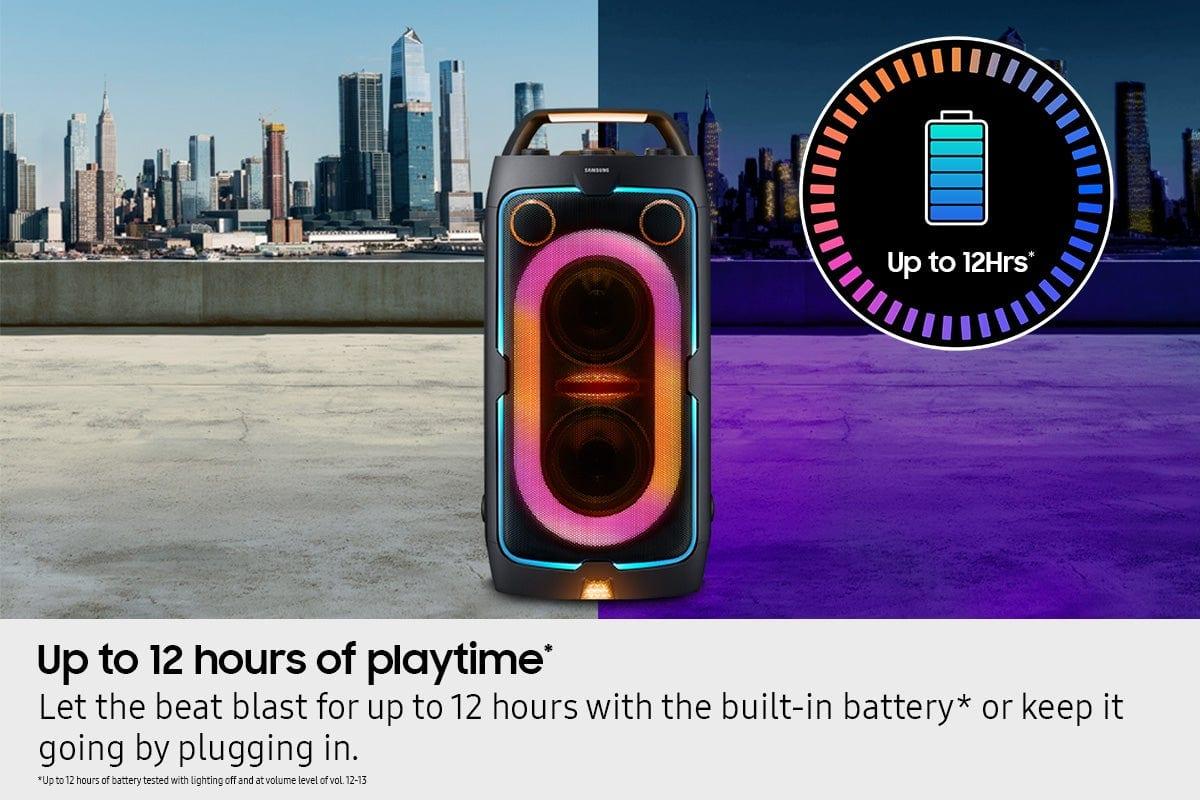
The Samsung MX-ST40F offers 12 hours of battery life but includes something unique: a replaceable battery system. While 12 hours covers most single-day events, the ability to swap in a fresh battery means you could theoretically run the speaker indefinitely if you invest in spare batteries. This is particularly valuable for professional users like DJs or event planners who need guaranteed uptime.
The Sony's approach favors convenience and long single-session use, while Samsung's replaceable system offers more flexibility for extended or professional use scenarios.
Here's where personal preference and use case really matter. The Sony SRS-XP700 weighs 37.25 pounds and measures over two feet tall, requiring dual handles for safe transport. It's undeniably hefty, but that size houses the drivers and amplification needed for its impressive power output.
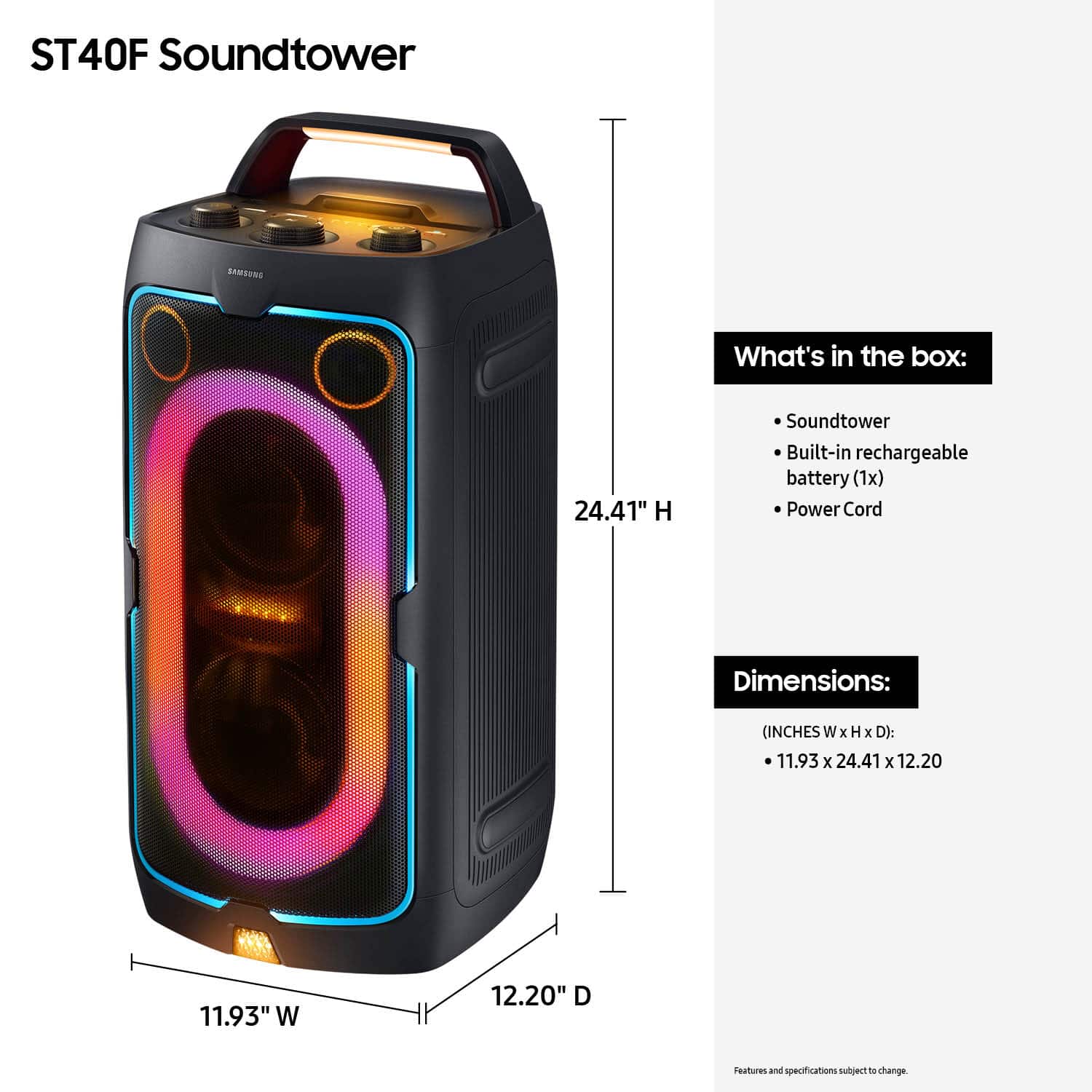
The Samsung MX-ST40F weighs about 10 pounds less at 28 pounds, making it noticeably easier to move around. Both speakers include built-in handles, but neither offers wheels—something you'll find on competing JBL PartyBox speakers. If you frequently move your speaker between locations, those 10 pounds make a meaningful difference.
Both achieve IPX4 water resistance, meaning they can handle splashes from any direction and light rain exposure. This rating makes them suitable for poolside use and outdoor events, though they're not fully waterproof for submersion.
The connectivity story reveals how speaker technology has advanced in recent years. The Samsung MX-ST40F, being the newer product, includes Bluetooth 5.4—the latest version that offers improved connection stability and energy efficiency compared to older Bluetooth standards.
The Sony SRS-XP700 supports Sony's LDAC codec, which transmits much higher quality audio over Bluetooth than standard connections. LDAC can send three times more data than conventional Bluetooth audio, preserving more musical detail. However, this only works with compatible source devices—mainly Android phones and select music players.
Both speakers can connect to multiple devices simultaneously, but they handle multi-speaker setups differently. Sony's Party Connect technology can sync up to 100 compatible speakers with coordinated music and lighting—impressive for building large-scale sound systems. Samsung's Auracast technology connects up to 10 Sound Towers, which is more than sufficient for most users but represents a smaller ecosystem.
An interesting advantage for the Sony SRS-XP700 is its ability to pair with non-Sony Bluetooth speakers, offering more flexibility than brands that lock you into their ecosystem.
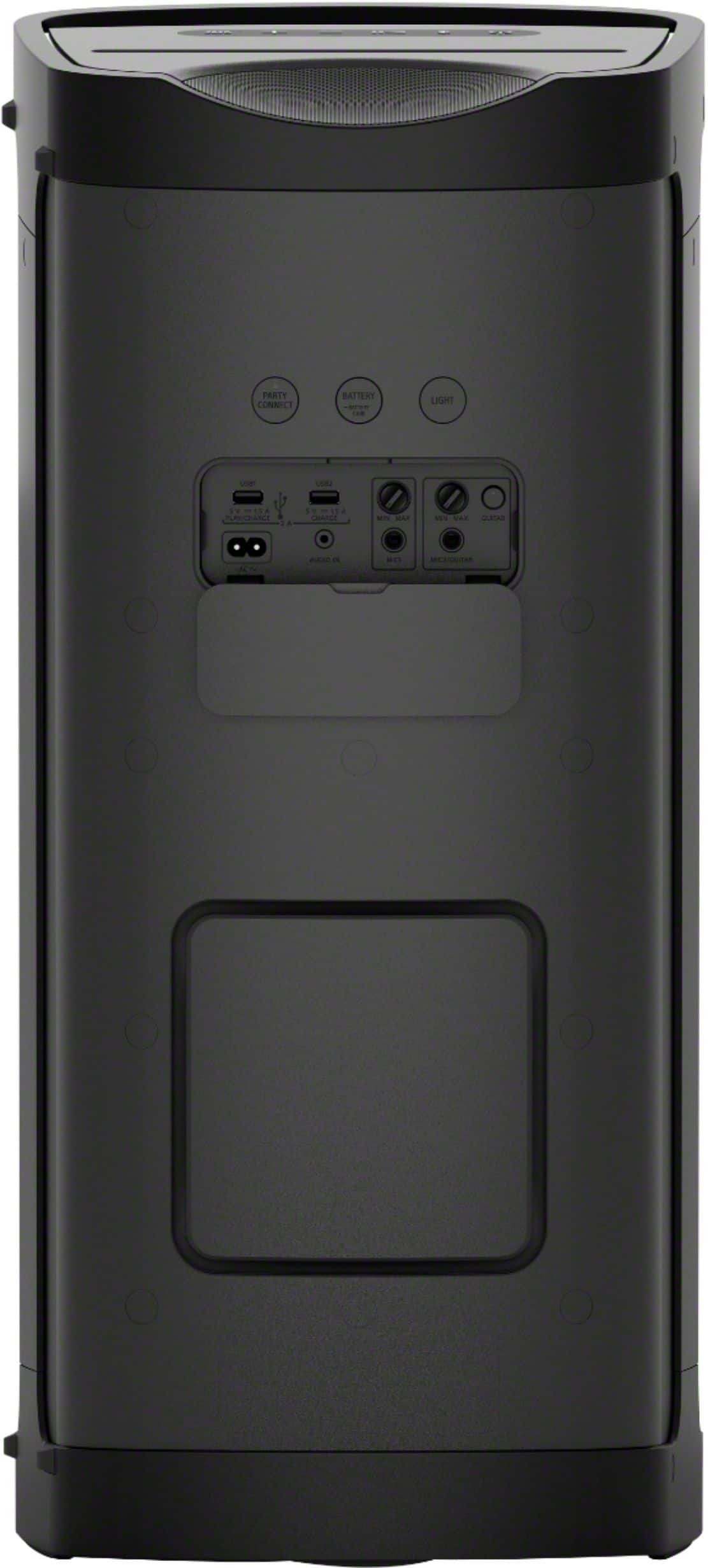
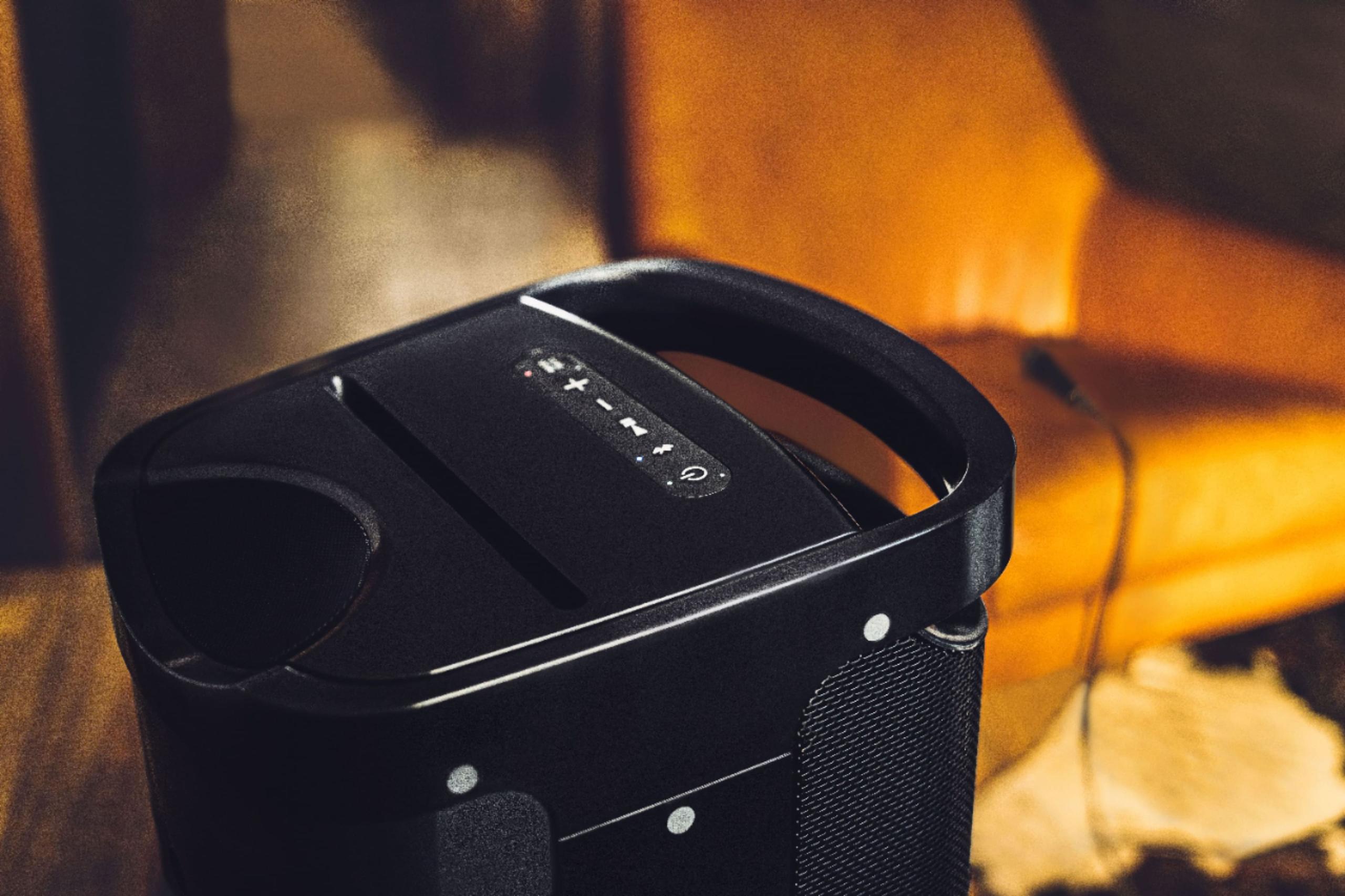
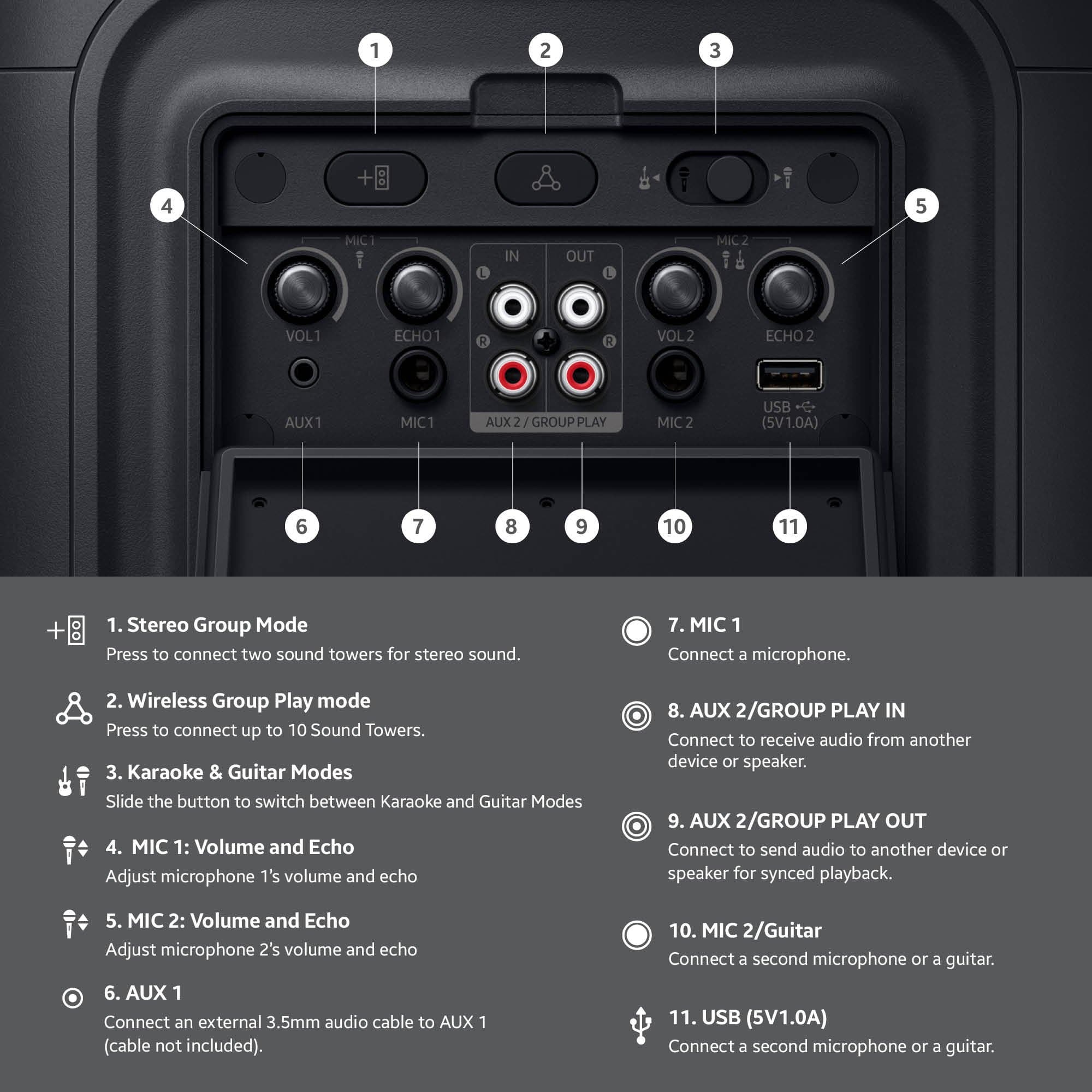
Both speakers include karaoke and performance features, but with different emphases. The Sony SRS-XP700 provides microphone and guitar inputs along with Sony's entertainment apps for enhanced functionality. It's designed to work as a portable PA system for small performances or karaoke sessions.
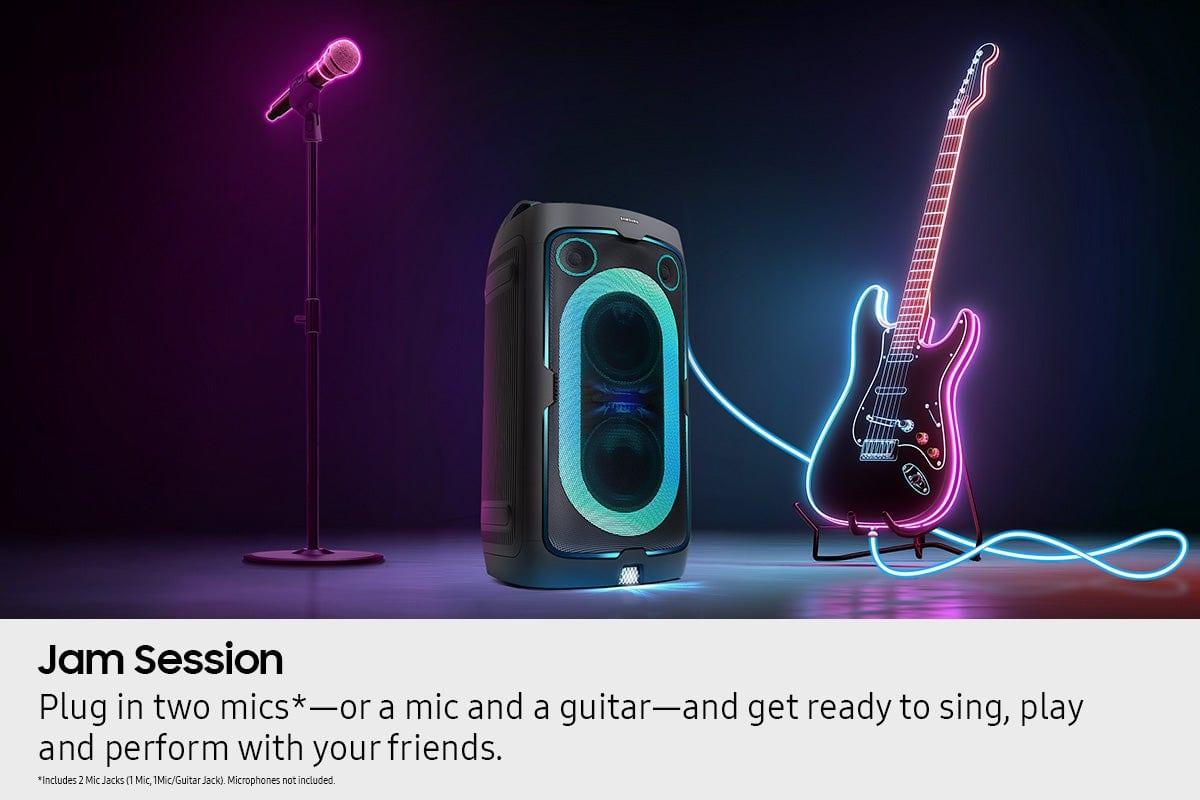
The Samsung MX-ST40F goes further with built-in DJ effects, voice recording capabilities, and voice removing technology that can strip vocals from songs for karaoke tracks. It includes 12 built-in sampler sounds and adjustable echo effects, making it more like a portable DJ booth than just a speaker.
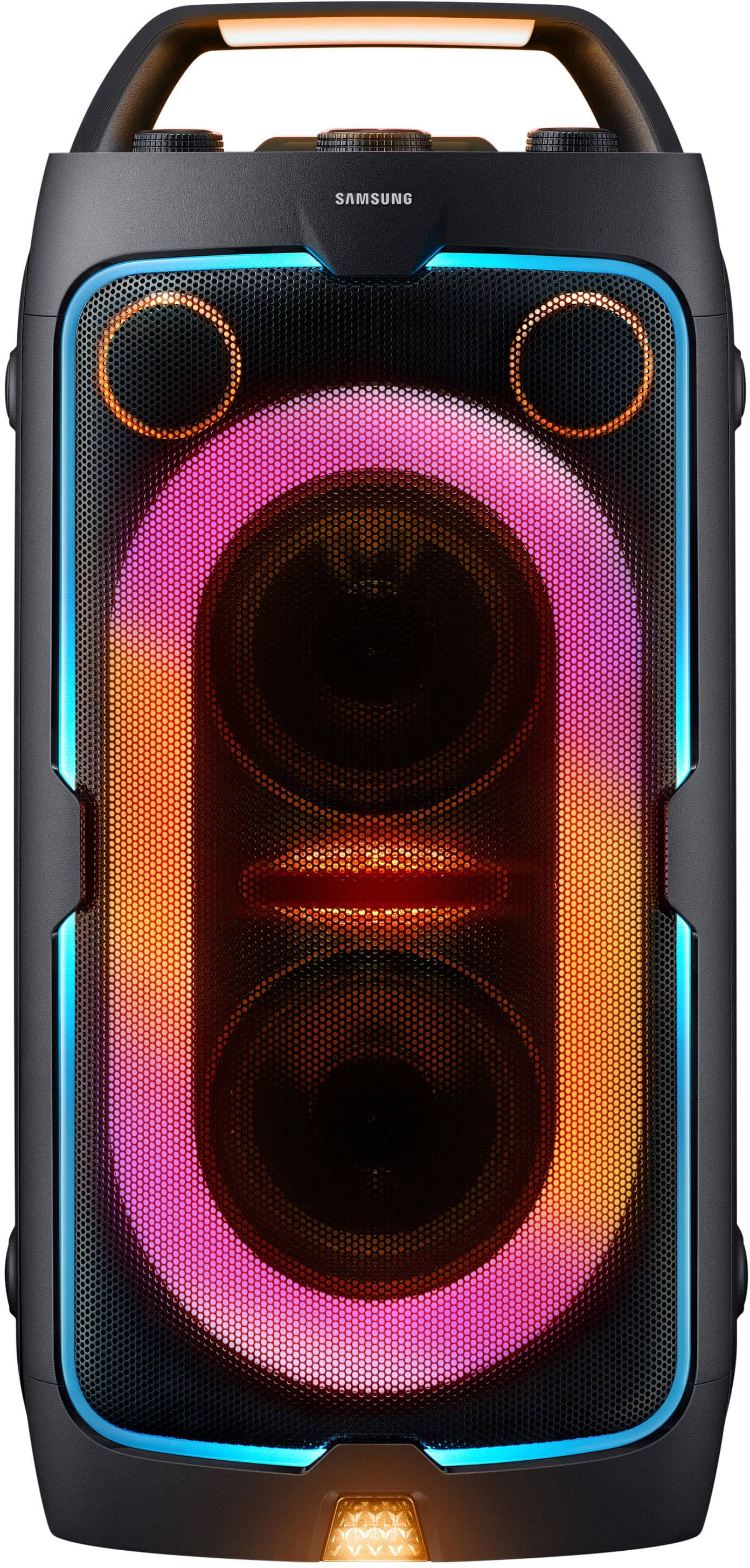
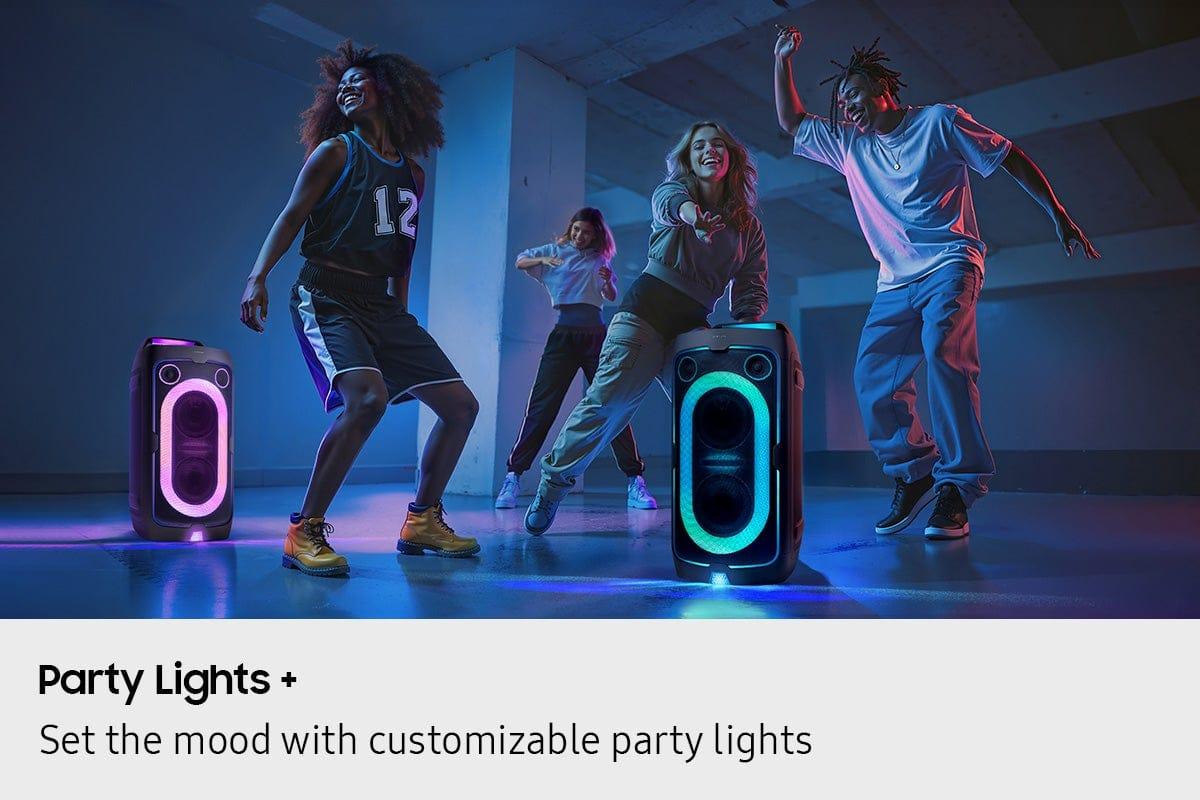
For lighting, both offer customizable LED effects controlled through smartphone apps. Sony uses their Music Center app for basic lighting control, while Samsung's Party Lights+ system provides six different patterns with music synchronization. Based on user feedback, Samsung's lighting appears more dynamic and engaging.
While neither speaker is designed primarily for home theater use, they can serve this role in specific scenarios. The Sony SRS-XP700's omnidirectional sound works well for casual TV watching where you want room-filling audio without precise stereo imaging. Its multiple input options, including 3.5mm analog, make it easy to connect to various devices.
However, both speakers' bass-heavy profiles and party-oriented sound signatures make them less ideal for movie dialogue clarity compared to dedicated soundbars or home theater speakers. They're better suited for action movies, sports viewing, or casual content where maximum impact matters more than nuanced audio reproduction.
At the time of writing, these speakers are priced competitively in the premium party speaker segment, with the Sony commanding a modest premium over the Samsung. The Sony's higher price reflects its substantially greater power output, longer battery life, and mature ecosystem features like Party Connect.
From a pure watts-per-dollar perspective, the Sony offers better value for users who need maximum volume. However, the Samsung provides better value for sound quality, offering cleaner audio reproduction and more sophisticated sound tuning options at a lower price point.
The Samsung's replaceable battery system could also reduce long-term ownership costs, as you won't need to replace the entire speaker when the battery eventually degrades after years of use.
The Samsung MX-ST40F's 2024 release date means it incorporates more recent technological advances. The Bluetooth 5.4 support, Auracast connectivity, and more sophisticated app integration represent the current state of party speaker technology.
The Sony SRS-XP700, released in 2021, still holds up well but shows its age in areas like app functionality and some connectivity features. However, Sony's LDAC support was ahead of its time and remains valuable for Android users who prioritize audio quality.
The Sony SRS-XP700 makes sense for users who prioritize maximum volume and extended battery life. If you regularly host large outdoor gatherings, need a speaker for fitness instruction or events, or want to build a multi-speaker system over time, the Sony's power and ecosystem features justify its premium.
Choose the Sony if you:
The Samsung MX-ST40F appeals to users who want clean, customizable sound quality with solid performance at a better price point. Its advanced features like DJ effects and voice recording make it more interactive, while the lighter weight improves practical usability.
Choose the Samsung if you:
Both speakers succeed in their intended roles, but they serve different needs within the party speaker category. The Sony SRS-XP700 is the choice for power users who need maximum volume, extended battery life, and proven performance for large gatherings. The Samsung MX-ST40F offers a more balanced approach with superior sound quality, advanced features, and better portability at a more attractive price.
Your choice ultimately depends on whether you prioritize raw power and endurance (Sony) or sound quality and value (Samsung). For most home users hosting typical gatherings, the Samsung MX-ST40F's 160 watts will provide plenty of volume while delivering cleaner sound and more engaging features. However, if you frequently find yourself needing to fill large spaces or compete with significant ambient noise, the Sony SRS-XP700's extra power becomes genuinely valuable rather than just impressive on paper.
| Sony SRS-XP700 | Samsung MX-ST40F |
|---|---|
| Power Output - Determines maximum volume and room-filling capability | |
| 500W (significantly louder for large outdoor venues) | 160W AC / 80W battery (adequate for most home parties) |
| Sound Quality Approach - How each speaker balances volume vs clarity | |
| Omnidirectional with heavy bass emphasis, some compression at max volume | Waveguide technology with balanced sound, stays clean at limits |
| Battery Life - Critical for extended outdoor events | |
| Up to 25 hours (exceptional for all-day use) | Up to 12 hours with replaceable battery system |
| Weight and Portability - Affects ease of transport between locations | |
| 37.25 lbs (requires two people or significant effort to move) | 28 lbs (noticeably easier to carry solo) |
| Bass Customization - Ability to tailor low-end response | |
| Fixed MEGA BASS profile (boomy, party-focused sound) | 3 selectable modes: Deep, Punchy, Gentle (adaptable to music type) |
| Multi-Speaker Connectivity - Building larger sound systems | |
| Party Connect: up to 100 Sony speakers | Auracast: up to 10 Samsung towers |
| Bluetooth Audio Quality - Higher quality wireless transmission | |
| LDAC codec support (3x more data than standard Bluetooth) | Standard SBC/AAC codecs |
| Karaoke and DJ Features - Entertainment beyond music playback | |
| Basic mic/guitar inputs with app control | Built-in DJ effects, voice recording, 12 samplers |
| Lighting Effects - Visual enhancement for parties | |
| Customizable RGB via Music Center app | Party Lights+ with 6 patterns, music sync |
| Water Resistance - Protection for outdoor use | |
| IPX4 splash-resistant | IPX4 splash-resistant |
| Release Date and Technology - How current the features are | |
| 2021 (mature but proven technology) | 2024 (latest Bluetooth 5.4 and connectivity features) |
The Sony SRS-XP700 is significantly louder with 500 watts of power output compared to the Samsung MX-ST40F's 160 watts. The Sony can fill larger outdoor spaces and compete with more ambient noise, making it better for big gatherings or venues where maximum volume is essential.
The Sony SRS-XP700 delivers omnidirectional sound with heavy bass emphasis but can sound boomy and experience compression at maximum volume. The Samsung MX-ST40F uses waveguide technology for cleaner, more balanced sound with customizable bass modes (Deep, Punchy, Gentle) that stay clear even when pushed to their limits.
The Sony SRS-XP700 offers exceptional battery life with up to 25 hours of playback, making it ideal for all-day events. The Samsung MX-ST40F provides 12 hours of battery life but features a replaceable battery system, allowing you to swap in fresh batteries for extended use.
The Samsung MX-ST40F is more portable at 28 pounds compared to the Sony SRS-XP700's 37.25 pounds. The 10-pound difference makes the Samsung noticeably easier to move between locations, though both require effort to transport due to their substantial size and power.
Both speakers support karaoke with microphone inputs. The Samsung MX-ST40F offers more advanced features including built-in DJ effects, voice recording, 12 samplers, and voice removing technology. The Sony SRS-XP700 provides basic mic and guitar inputs with app-based controls.
Neither speaker is primarily designed for home theater, but both can serve this role casually. The Sony SRS-XP700's omnidirectional sound works well for room-filling TV audio, while the Samsung MX-ST40F's cleaner sound reproduction may be better for dialogue clarity. However, both have bass-heavy profiles that aren't ideal for nuanced movie audio.
The Samsung MX-ST40F includes newer Bluetooth 5.4 technology and Auracast for connecting up to 10 speakers. The Sony SRS-XP700 supports LDAC codec for higher quality audio transmission and Party Connect for linking up to 100 Sony speakers, plus it can pair with non-Sony Bluetooth speakers.
Both the Sony SRS-XP700 and Samsung MX-ST40F feature IPX4 water resistance, meaning they can handle splashes from any direction and light rain. They're suitable for poolside use and outdoor parties but aren't fully waterproof for submersion in water.
The Samsung MX-ST40F typically offers better value with cleaner sound quality, advanced DJ features, and lighter weight at a lower price point. The Sony SRS-XP700 justifies its premium pricing with significantly more power output, 25-hour battery life, and extensive multi-speaker connectivity options.
Yes, both support multi-speaker setups but differently. The Sony SRS-XP700 uses Party Connect to sync up to 100 compatible Sony speakers with coordinated music and lighting. The Samsung MX-ST40F uses Auracast technology to connect up to 10 Sound Towers wirelessly.
Both speakers feature customizable LED lighting controlled through smartphone apps. The Samsung MX-ST40F includes Party Lights+ with 6 different patterns and music synchronization that appears more dynamic. The Sony SRS-XP700 offers customizable RGB lighting through Sony's Music Center app with basic pattern options.
The Sony SRS-XP700 excels at large outdoor events with its 500-watt power output, 25-hour battery, and ability to project sound across significant distances. The Samsung MX-ST40F is better suited for home parties and medium gatherings where its 160 watts provide adequate volume while delivering cleaner sound quality and more interactive features.
We've done our best to create useful and informative comparisons to help you decide what product to buy. Our research uses advanced automated methods to create this comparison and perfection is not possible - please contact us for corrections or questions. These are the sites we've researched in the creation of this article: bestbuy.com - rtings.com - crutchfield.com - versus.com - rtings.com - rtings.com - youtube.com - versus.com - electronics.sony.com - youtube.com - youtube.com - youtube.com - youtube.com - crutchfield.com - armorsound.com - sony-asia.com - helpguide.sony.net - helpguide.sony.net - videoandaudiocenter.com - sony.com - sony.com - sony-asia.com - sony.com - sony.com - bestbuy.com - device.report - bestbuy.com - samsung.com - samsung.com - youtube.com - samsung.com - youtube.com - thefrogpadappliances.com - bestbuy.com - standardtvandappliance.com - samsung.com - youtube.com - youtube.com - youtube.com - news.samsung.com - videoandaudiocenter.com - arrowassociatedstores.com - shopjetson.com

Privacy Policy
Terms and Conditions - Affiliate Policy
Home Security
© Copyright 2008-2026.
11816 Inwood Rd #1211, Dallas, TX 75244