

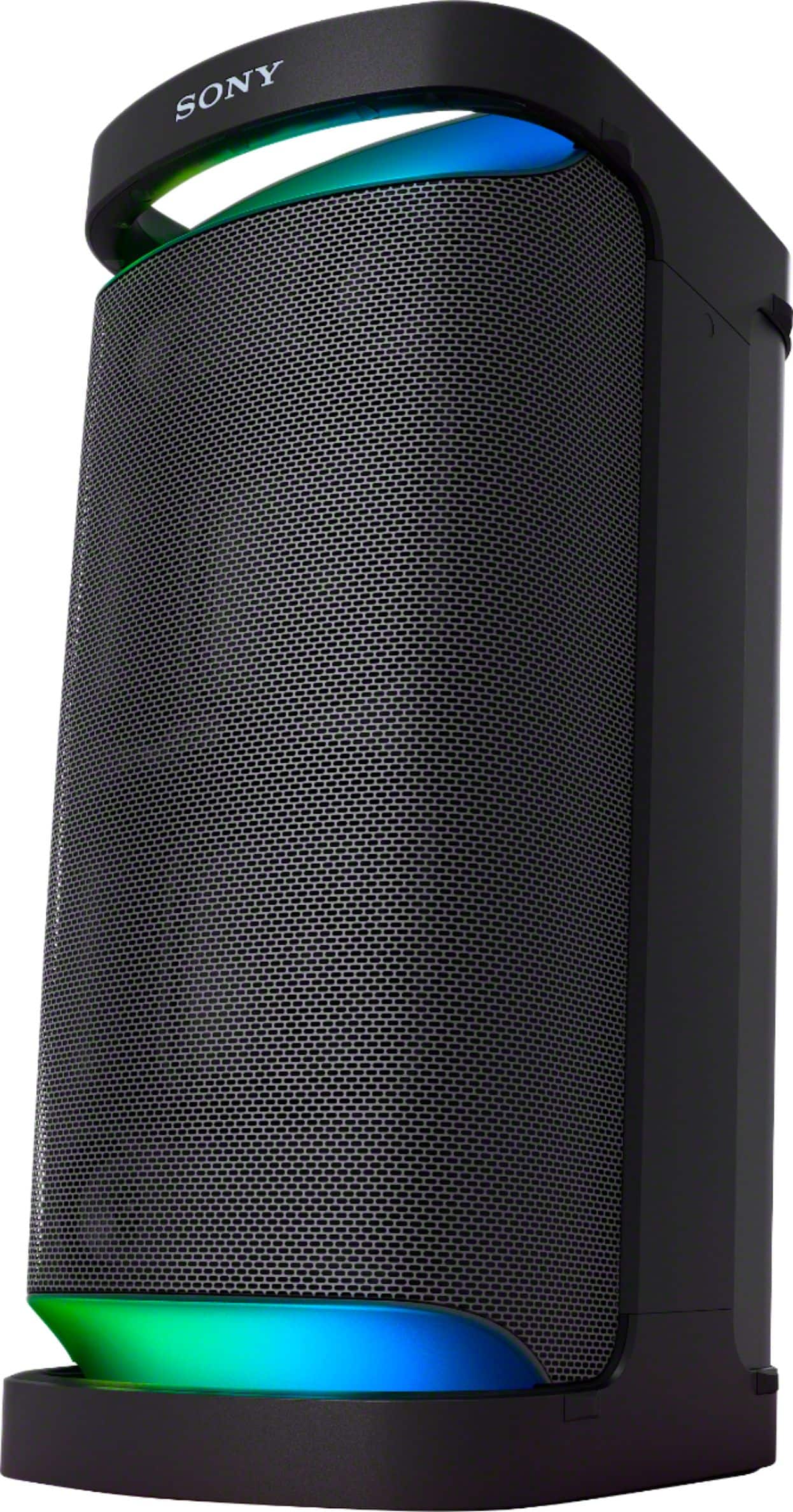
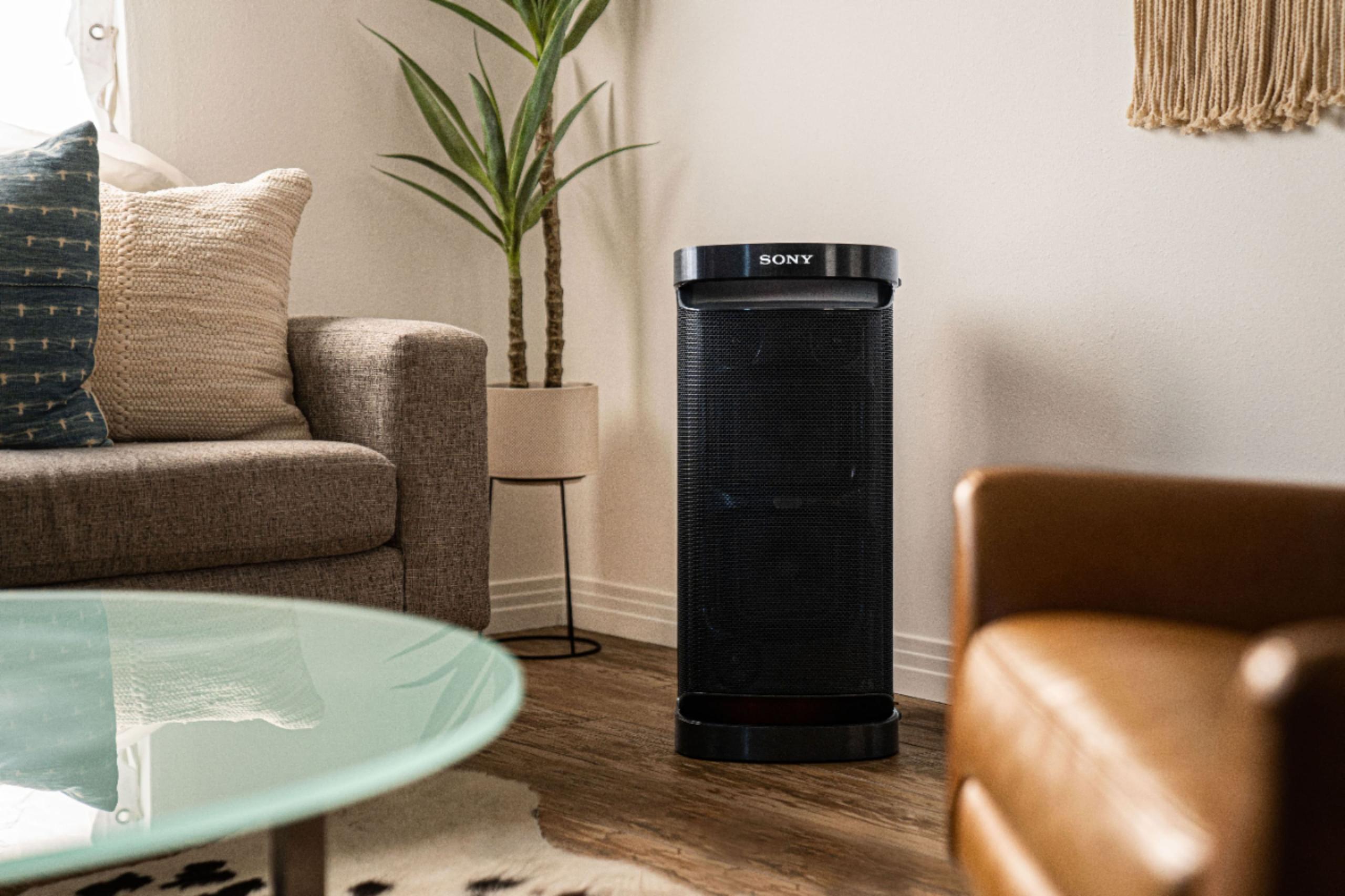
Party speakers have evolved dramatically over the past few years, transforming from simple boom boxes into sophisticated audio systems that can power everything from backyard barbecues to professional DJ sets. If you're considering a serious upgrade to your audio setup, two speakers that represent very different approaches to portable party audio are the Sony SRS-XP700 and the Marshall Bromley 750.
At the time of writing, these speakers occupy different price tiers—the Sony costs roughly half what the Marshall does—but they both promise to deliver room-shaking bass and crystal-clear highs. The question isn't just which one sounds better, but which one matches your specific needs and budget. After researching extensive user feedback and professional reviews, the differences between these two approaches become clear, and the choice often comes down to whether you need professional-grade features or excellent consumer performance.
Before diving into specifics, it's worth understanding what separates party speakers from regular Bluetooth speakers or home audio systems. Party speakers prioritize a few key characteristics that matter most when you're trying to energize a crowd or fill a large space with sound.
Sound pressure level (SPL) is probably the most critical spec—this measures how loud a speaker can get before distortion ruins the audio quality. Measured in decibels (dB), anything above 100 dB starts getting seriously loud. For context, normal conversation happens around 60 dB, while a rock concert typically hits 110-115 dB. Most party speakers aim for at least 100 dB to compete with crowd noise and outdoor acoustics.
Battery life becomes crucial because these speakers often operate far from power outlets. The difference between 8 hours and 25 hours of runtime can determine whether your party ends early or keeps going until dawn. Quick charging features help, but nothing beats having enough juice to last through an entire event.
Weather resistance ratings use the IP (Ingress Protection) system, where higher numbers mean better protection. IPX4 handles splashes from any direction, while IP54 protects against both dust and water. This matters because party speakers inevitably end up poolside, at beaches, or caught in unexpected rain showers.
The Sony SRS-XP700, released in 2021, represents Sony's push into the serious party speaker market after years of focusing on more portable, lifestyle-oriented Bluetooth speakers. Since its launch, Sony has refined the software and added new features through app updates, making it more competitive with newer releases.
The Marshall Bromley 750 is much newer to the scene, launching in 2024 as Marshall's first major entry into the portable party speaker category. This timing is significant—Marshall has incorporated the latest Bluetooth 5.3 technology and modern Class D amplifier designs that weren't available when the Sony was being developed.
When it comes to raw power output, these speakers take fundamentally different approaches. The Marshall Bromley 750 doesn't mess around—it delivers 500 watts of total power through eight separate Class D amplifiers, one for each driver. Class D amplifiers are more efficient than older designs, generating less heat while providing cleaner power delivery. This translates to a maximum output of 127 dB SPL, which puts it in legitimate rock concert territory.
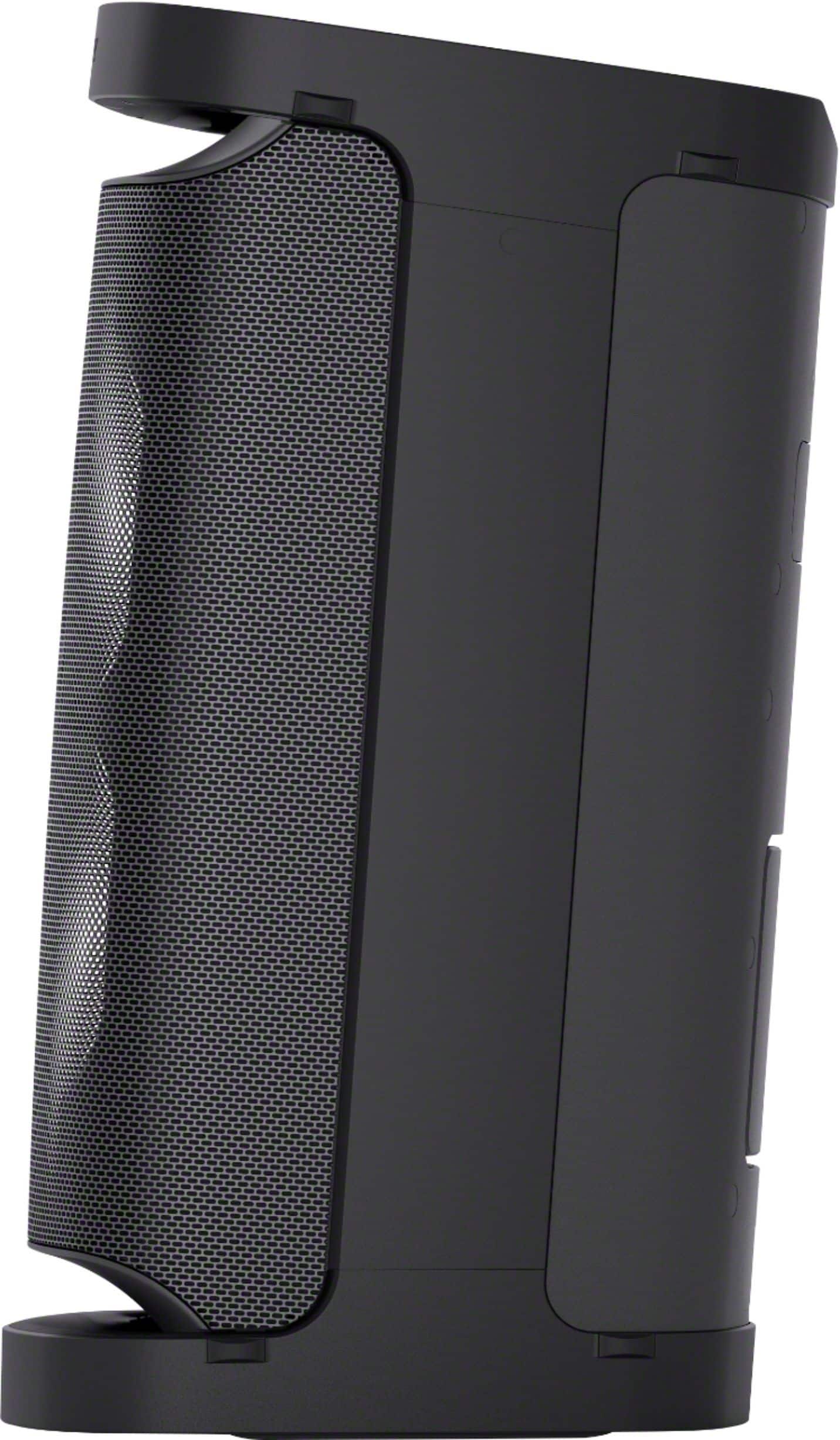
The Sony SRS-XP700 uses a different strategy entirely. Rather than brute-force power, Sony relies on their X-Balanced Speaker Units—essentially rectangular woofers instead of the traditional circular ones. This rectangular shape provides about 20% more surface area than a comparable round driver, meaning it can move more air without requiring massive power consumption. Sony doesn't publish exact wattage figures, but based on our research into user experiences and professional measurements, it produces significantly less raw power than the Marshall while still delivering impressive volume for its size.
In practical terms, the difference is substantial. The Marshall Bromley 750 can legitimately fill outdoor festival spaces or compete with serious ambient noise—think busy urban streets or crowded beach environments. The Sony SRS-XP700 excels in residential settings and medium-sized outdoor gatherings but may struggle if you need to energize a truly massive crowd or overcome significant background noise.
Both speakers employ omnidirectional design principles, meaning they disperse sound in all directions rather than focusing it forward like traditional speakers. This approach works well for party environments where people gather around the speaker rather than sitting in front of it like a home theater setup.
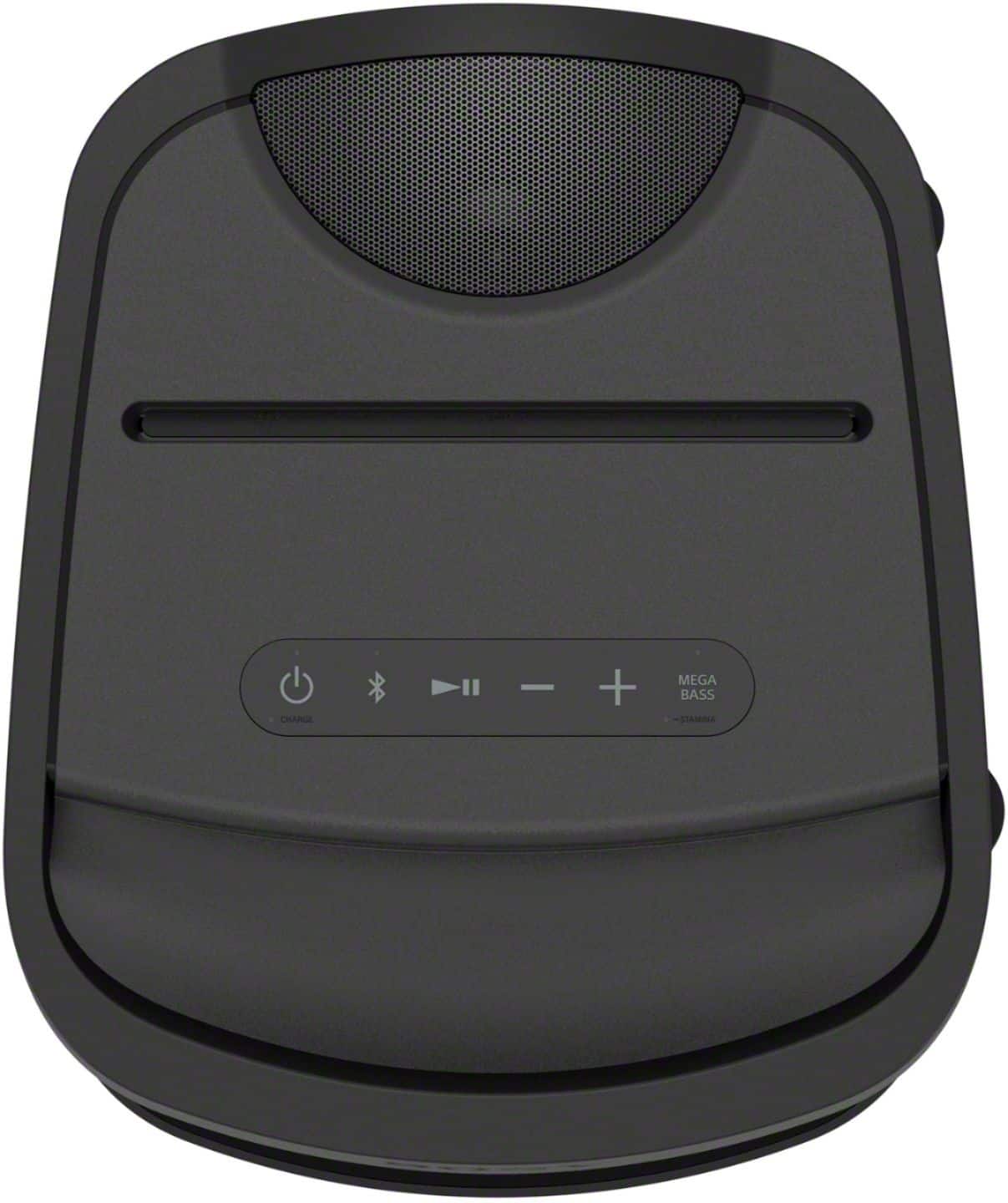
The sound signatures of these speakers reflect their different target audiences. The Sony SRS-XP700 emphasizes what Sony calls "party sound"—enhanced bass response, energetic mids, and bright highs designed to make music feel exciting and energetic. The MEGA BASS feature lets you dial up low-frequency response even further, which works particularly well for hip-hop, electronic dance music, and other bass-heavy genres.
Sony's omnidirectional design uses front-facing and rear-facing tweeters (the small drivers that handle high frequencies) along with side-firing elements to create consistent sound quality regardless of where you're standing. This means the person behind the speaker hears roughly the same audio quality as someone in front of it—a crucial advantage for party environments.
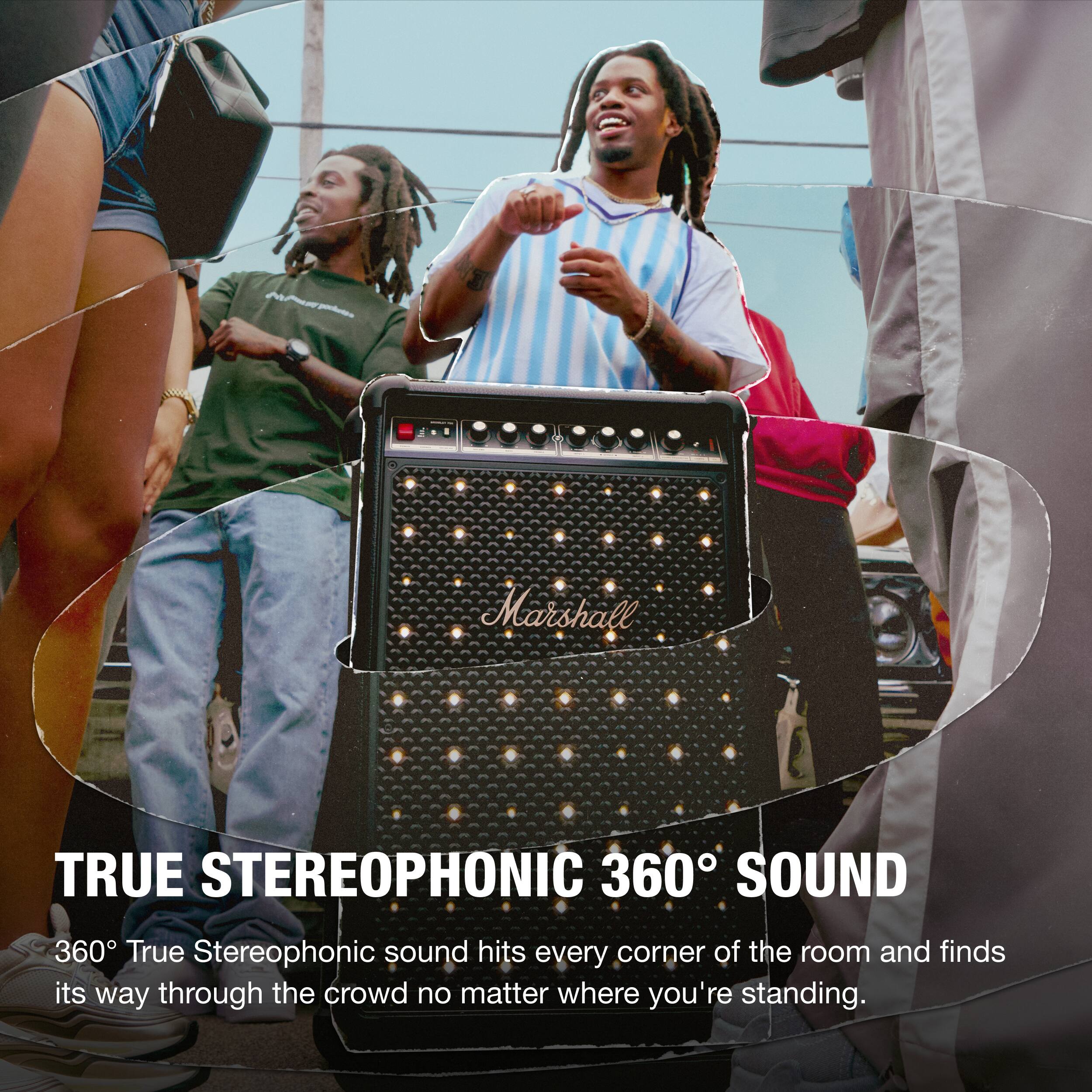
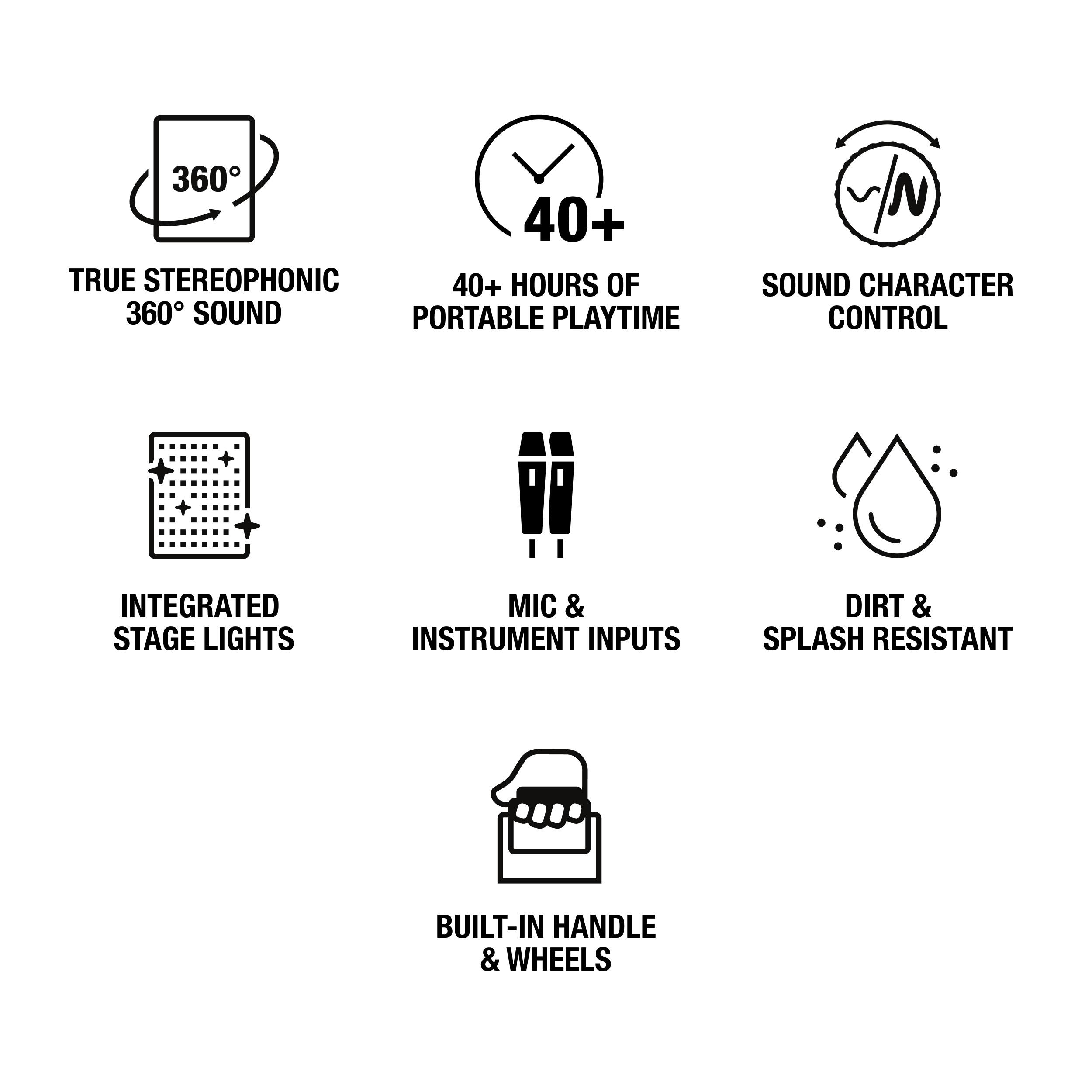
The Marshall Bromley 750 takes a more professional approach with what Marshall calls "True Stereophonic 360° sound." This system uses eight drivers positioned strategically throughout the cabinet: two 10-inch woofers, two mid-range drivers, and four tweeters including two mounted on top that fire upward to create an immersive overhead effect.
More importantly, the Marshall uses a sealed cabinet design rather than the ported design common in many party speakers. Sealed cabinets provide tighter, more controlled bass response—they don't produce quite as much low-end slam, but what they do produce is more accurate and doesn't get muddy at high volumes. Professional audio engineers prefer sealed designs for live music applications because they maintain clarity even when things get loud.
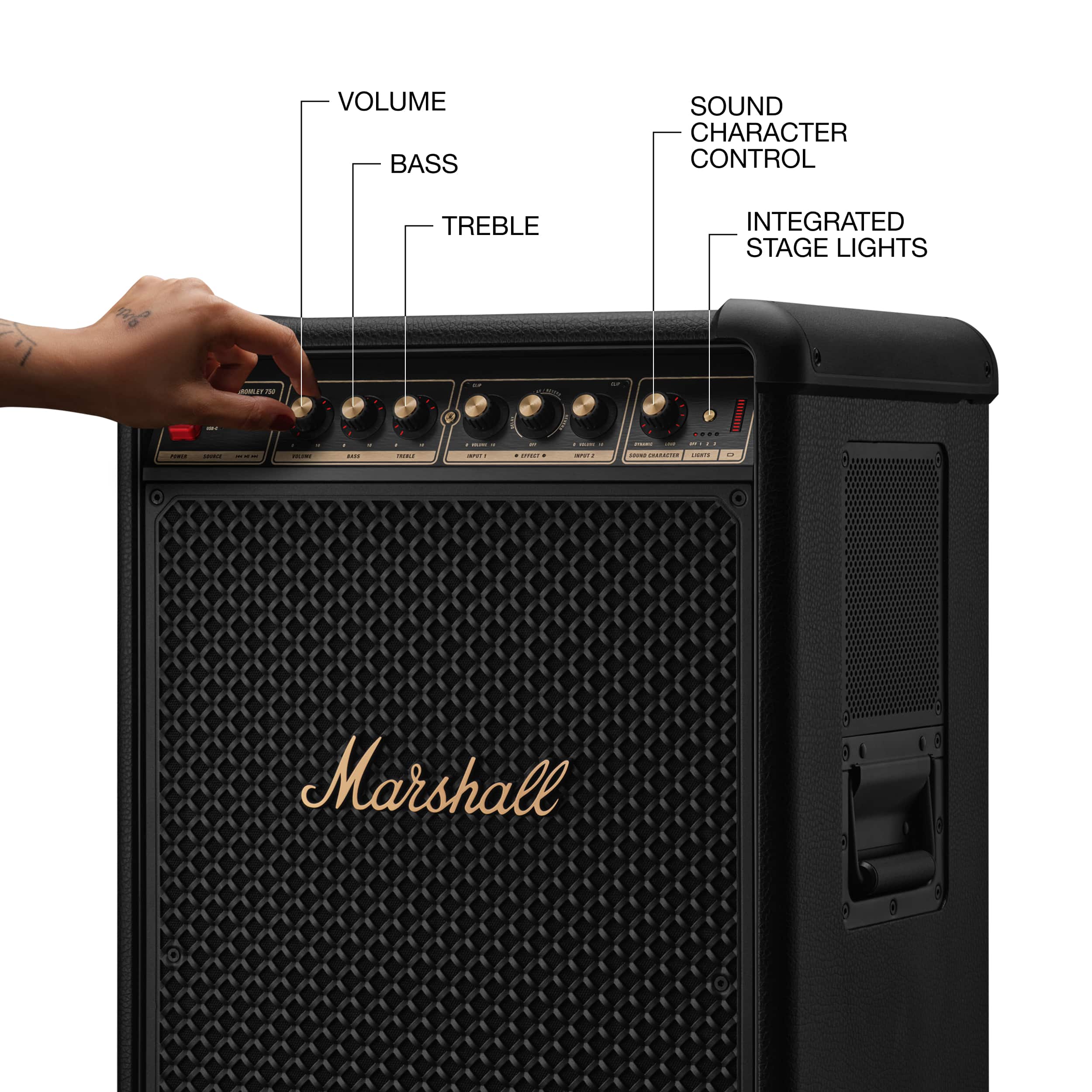
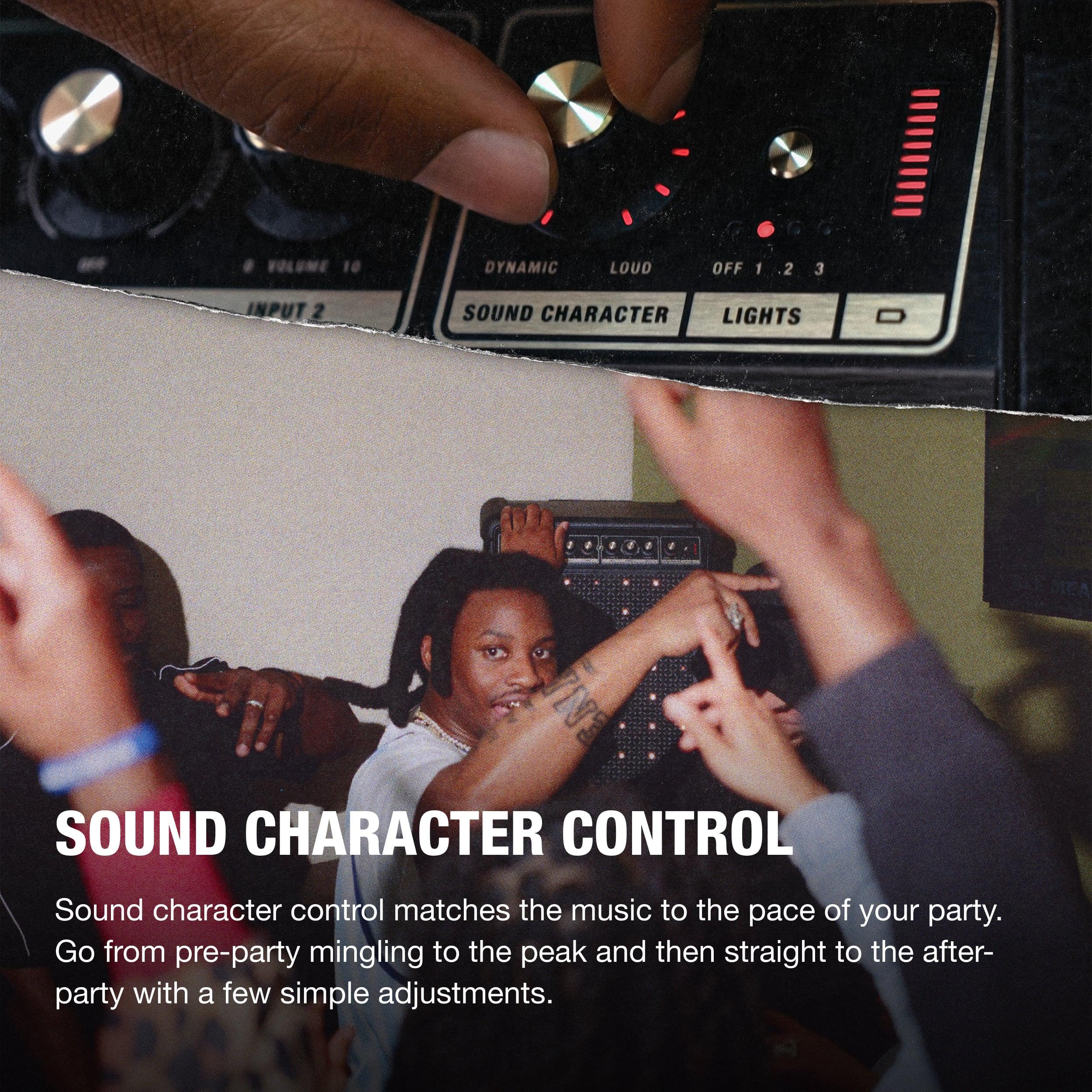
The Marshall's Sound Character control offers two distinct modes: Dynamic for detailed indoor listening and Loud for outdoor high-energy performance. This isn't just an EQ adjustment—it fundamentally changes how the speaker processes audio, optimizing for different acoustic environments.
Based on our research into user experiences, the Sony SRS-XP700 wins for pure party fun and bass impact, while the Marshall Bromley 750 provides more professional accuracy and works better for live music applications where clarity matters as much as volume.
Battery technology represents one of the most significant differences between these speakers. The Sony SRS-XP700 offers 25 hours of continuous playback, which is excellent for consumer applications. The quick charging feature provides 3 hours of playback from just 10 minutes of charging—helpful when you realize the battery is low right before guests arrive.
However, the Sony's battery is permanently installed. When it eventually degrades after several years of use, you'll need professional service or replacement of the entire unit. This isn't uncommon for consumer electronics, but it does limit the speaker's long-term viability.
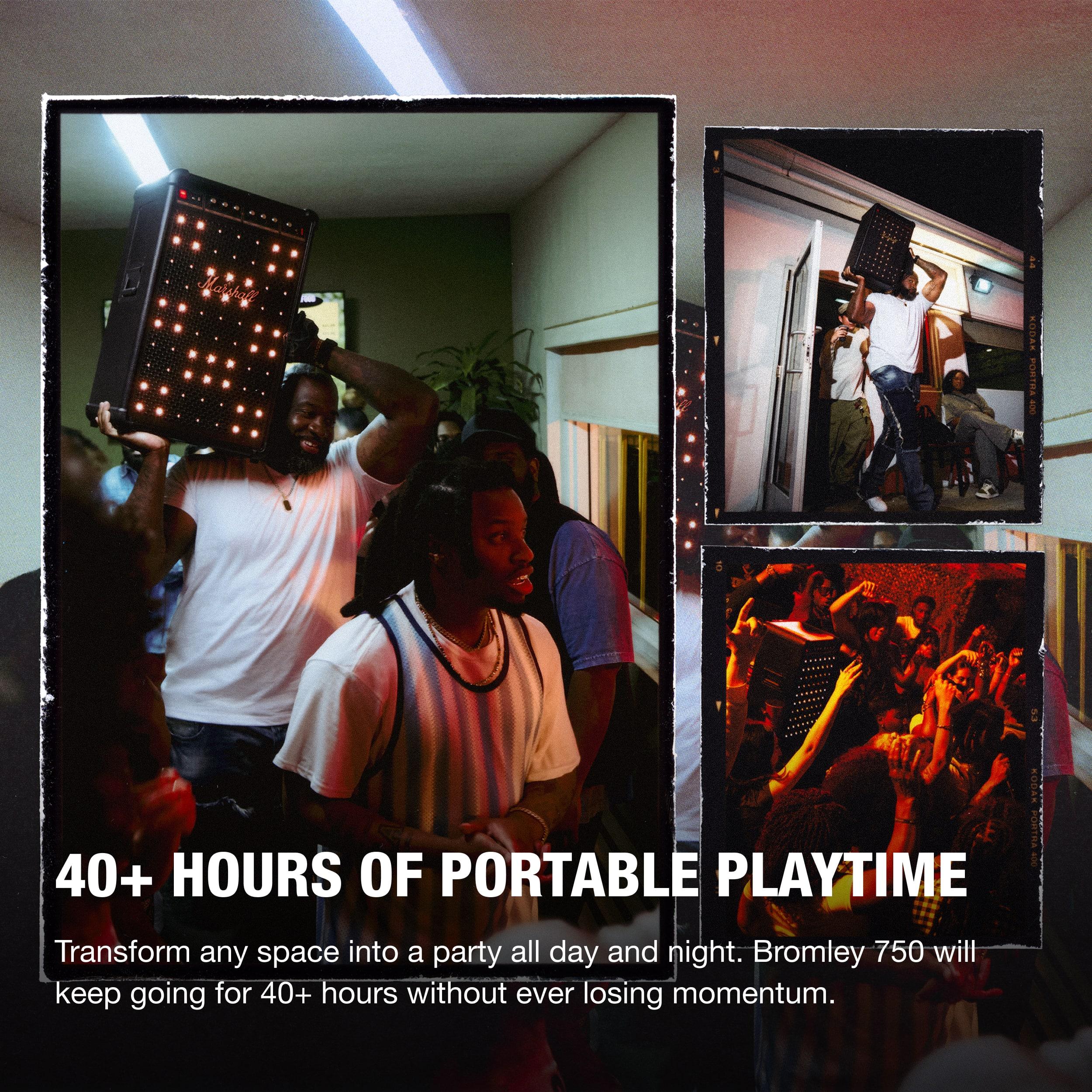
The Marshall Bromley 750 changes the game entirely with 40+ hours of continuous operation and a user-replaceable battery system. This approach offers several advantages: you can swap in a fresh battery for unlimited runtime, the battery doubles as a power bank for charging your phone, and when the battery eventually wears out, you simply buy a new one rather than replacing the entire speaker.
For professional applications—DJ gigs, wedding receptions, corporate events—this battery flexibility can be the difference between a successful event and an embarrassing power failure. The Marshall's 20-minute quick charge provides 5 hours of playback, which is decent but not as impressive as Sony's rapid charging.
Weather resistance reveals another philosophical difference. The Sony SRS-XP700 carries an IPX4 rating when positioned vertically (IPX2 when horizontal), which means it can handle splashes from any direction. This protection works fine for typical outdoor parties—you won't ruin it if someone spills a drink or it gets caught in light rain.
The Marshall Bromley 750 steps up to IP54 protection, defending against both dust and water regardless of orientation. More impressively, it includes a built-in drainage system that channels water away from the speaker drivers. This engineering detail matters in real-world use—pooled water can damage drivers even in supposedly water-resistant speakers.
The Marshall's protection level makes it genuinely suitable for beach parties, camping trips, or outdoor festivals where weather conditions might be harsh. The Sony SRS-XP700 requires more careful handling in challenging environments.
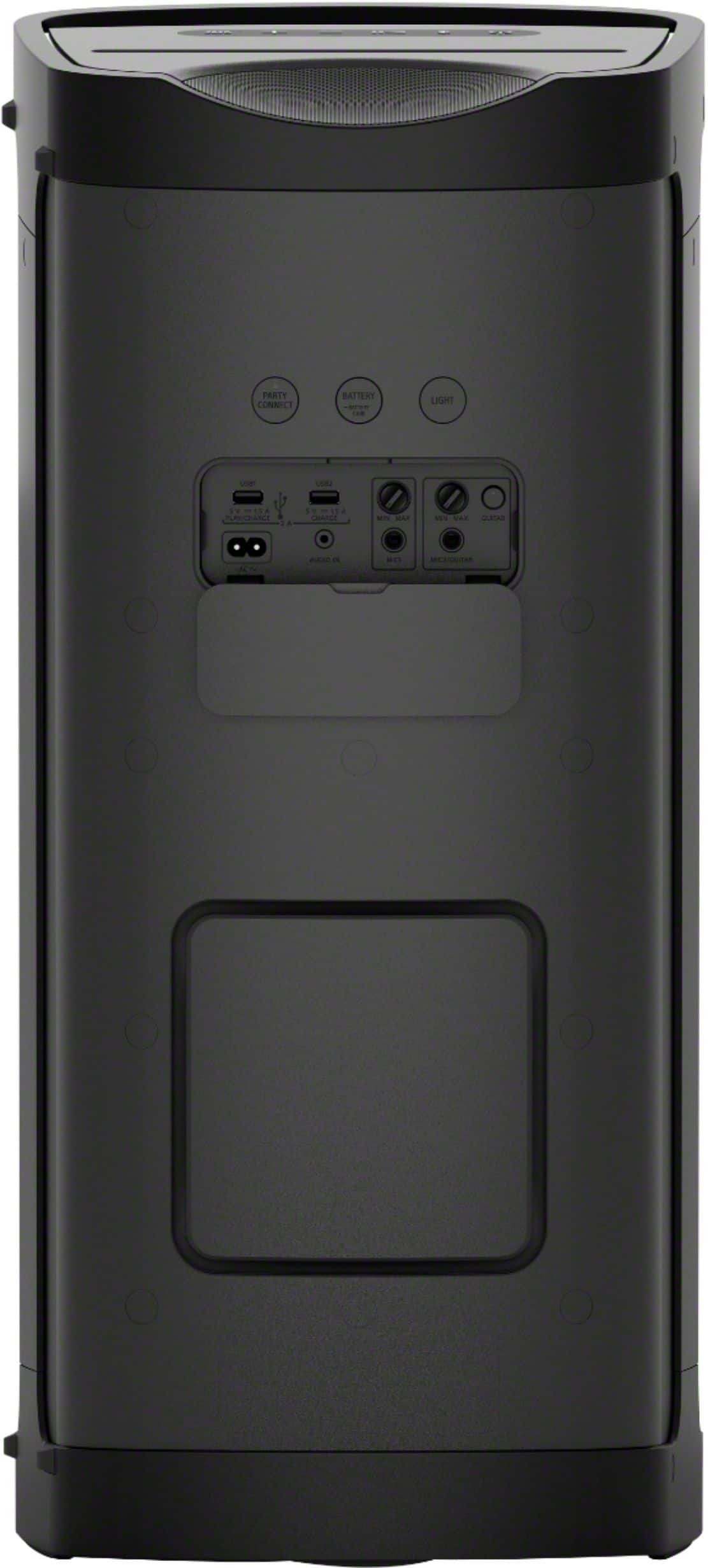
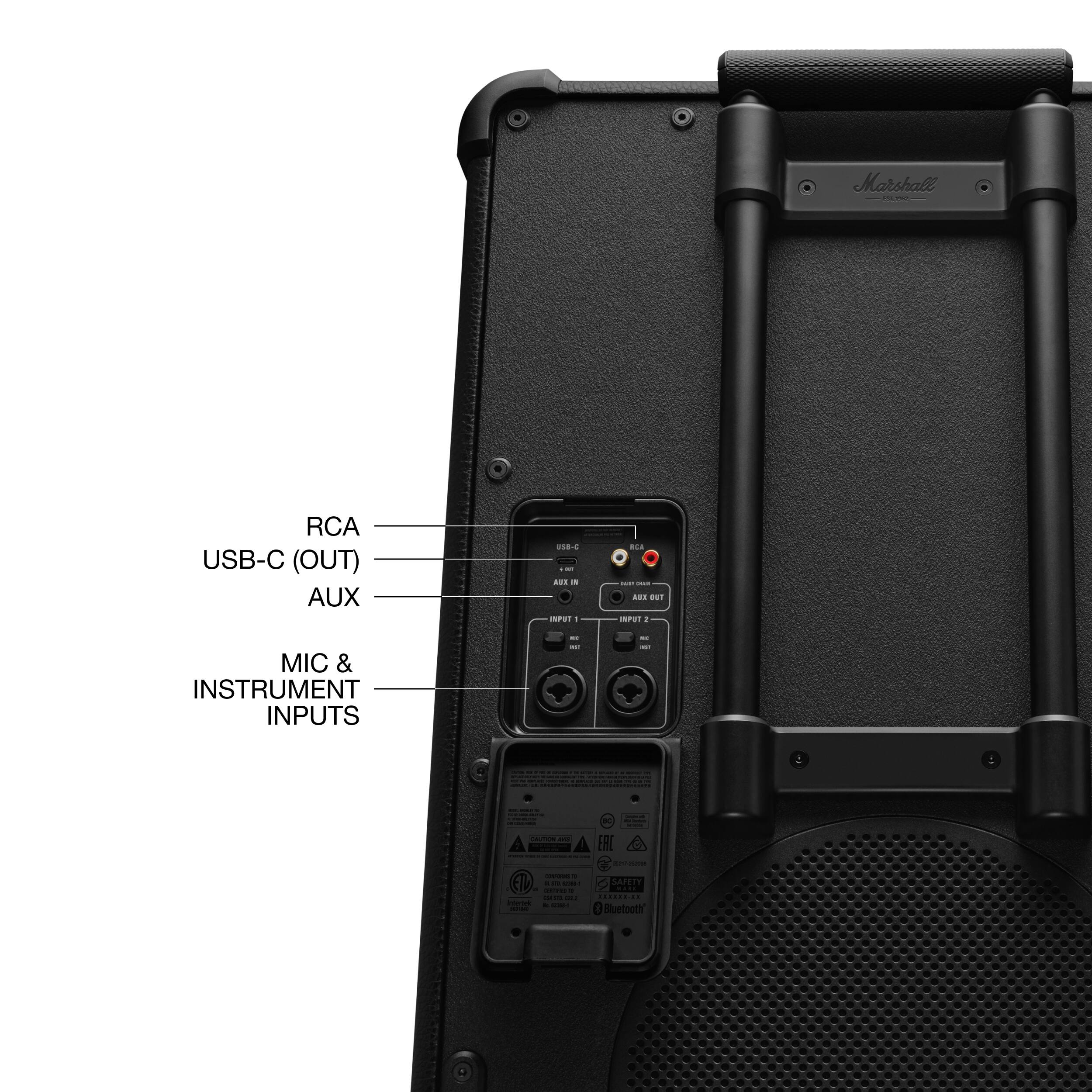
The connectivity options reveal each speaker's intended audience clearly. The Sony SRS-XP700 includes basic 6.3mm (quarter-inch) inputs for microphones and guitars, which works fine for casual karaoke or acoustic guitar accompaniment. The input quality targets consumer applications—adequate for fun, but not professional recording or live performance standards.
The Marshall Bromley 750 features dual XLR/6.3mm combo jacks, the same professional connectors used in recording studios and live venues. XLR connections provide balanced audio signals that resist interference and noise, crucial for professional microphones. These inputs support condenser microphones, electric guitars, keyboards, and other professional audio equipment without signal degradation.
If you're a musician who regularly performs acoustic sets, the Marshall's professional inputs justify the price difference. For casual home karaoke, the Sony's simpler inputs are perfectly adequate.
System expandability represents the Sony SRS-XP700's strongest advantage. Sony's Party Connect technology enables wireless connection of up to 100 compatible Sony speakers with synchronized music and lighting effects. This scalability lets you start with a single speaker and gradually build a system as your venue requirements grow.
The synchronized lighting effects across multiple speakers create impressive visual displays for larger events. You can position speakers throughout a space for even coverage, or group them together for maximum impact.
The Marshall Bromley 750 operates strictly as a standalone unit. While you can daisy-chain multiple units using cables, this requires manual setup and doesn't provide the seamless wireless synchronization of Sony's system. For most users, this limitation isn't critical, but it reduces flexibility for complex installations.
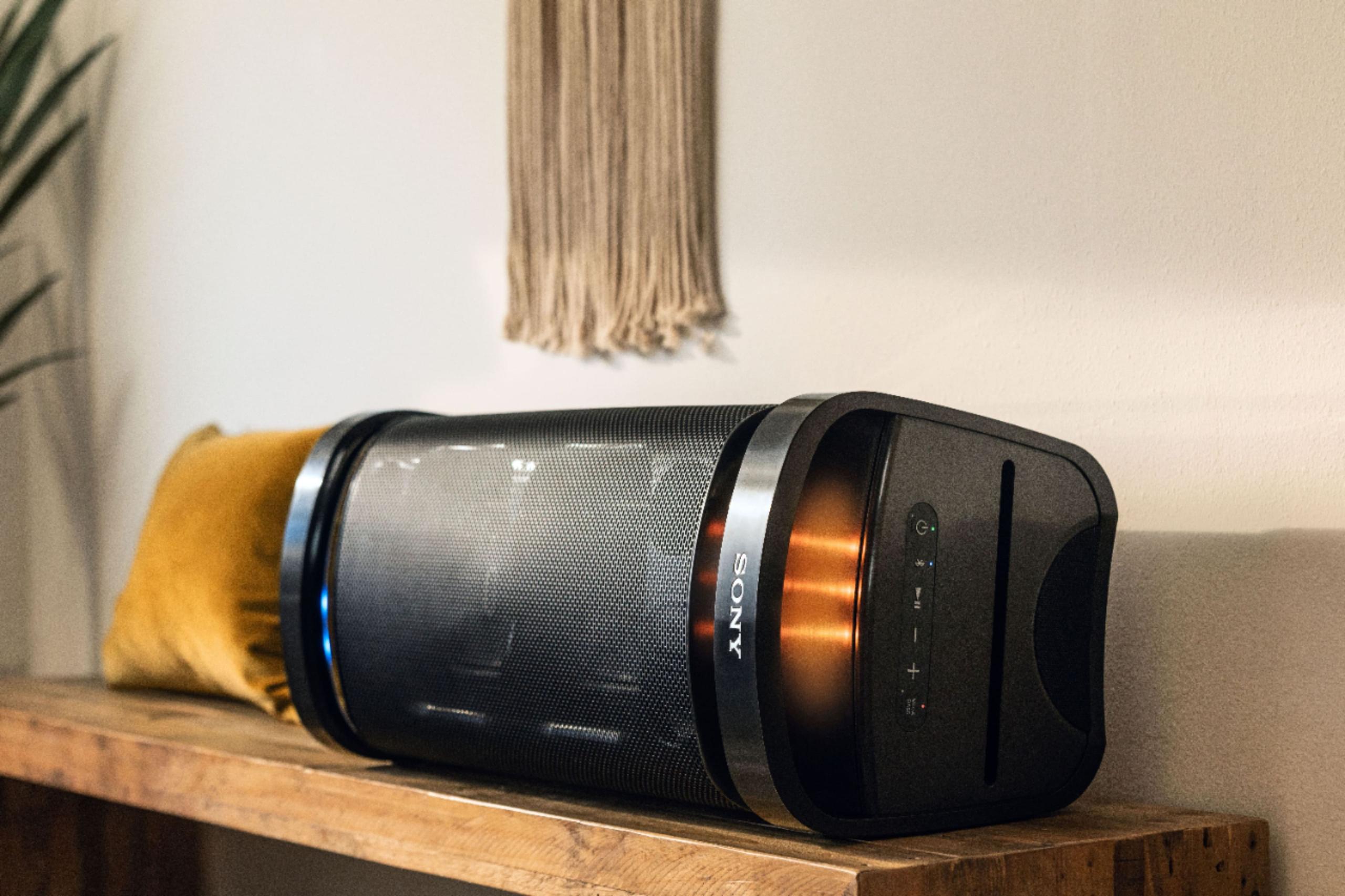
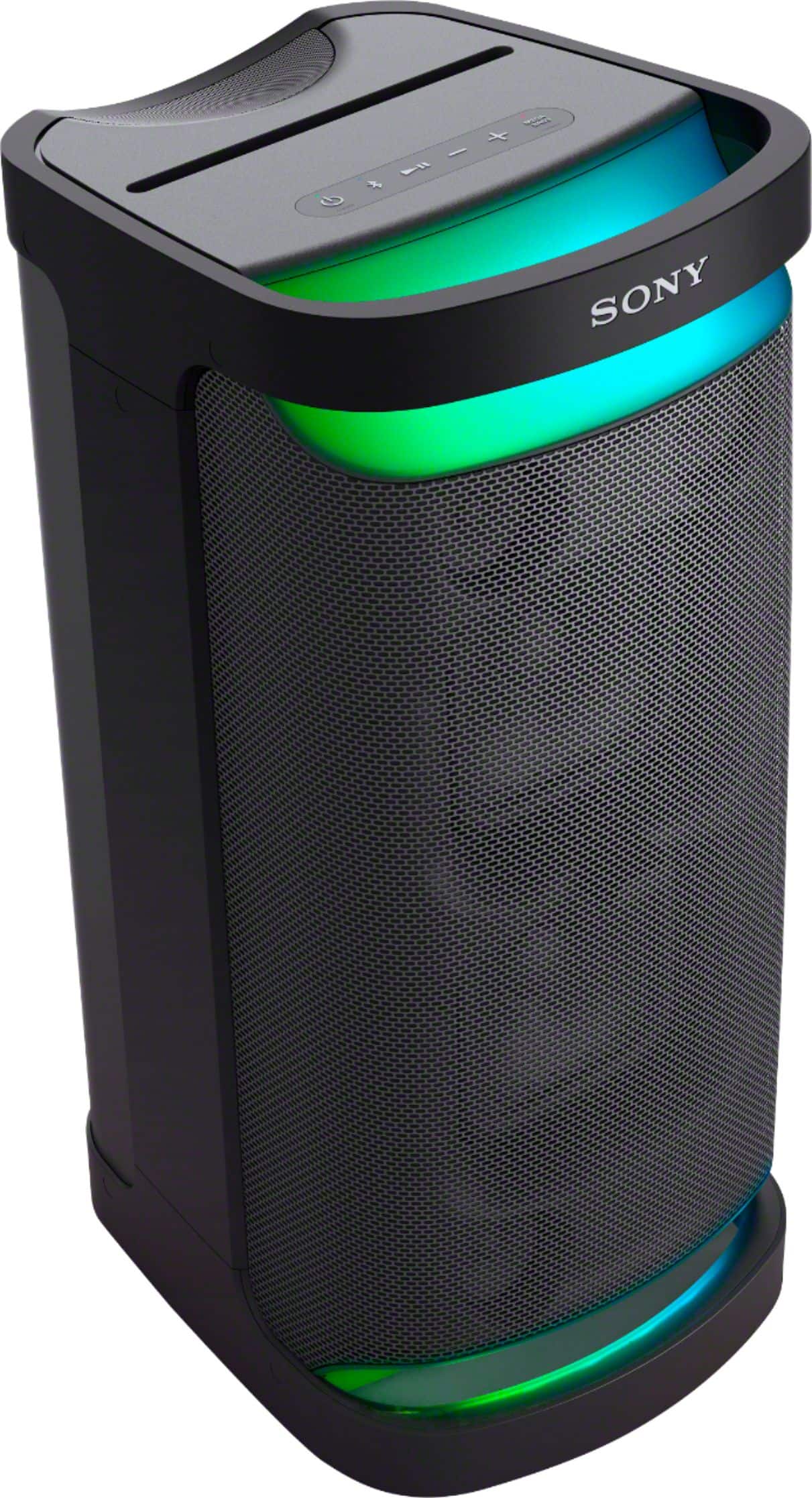
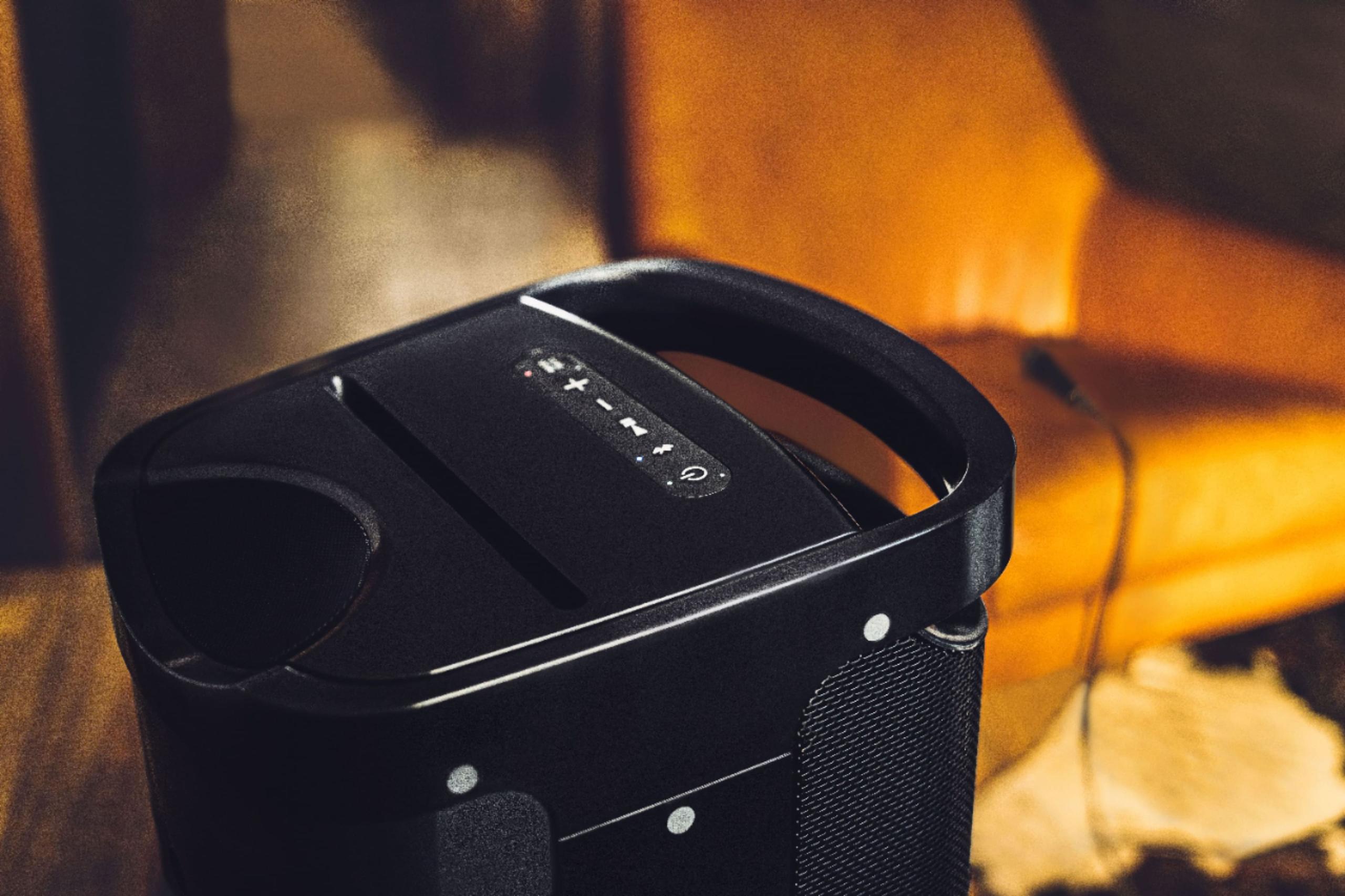
Physical design reflects each brand's heritage and target market. The Sony SRS-XP700 weighs 37 pounds with integrated handles for carrying. While not exactly lightweight, most people can manage it solo for reasonable distances. The design emphasizes functionality over aesthetics—it looks like a serious piece of audio equipment without being particularly stylish.
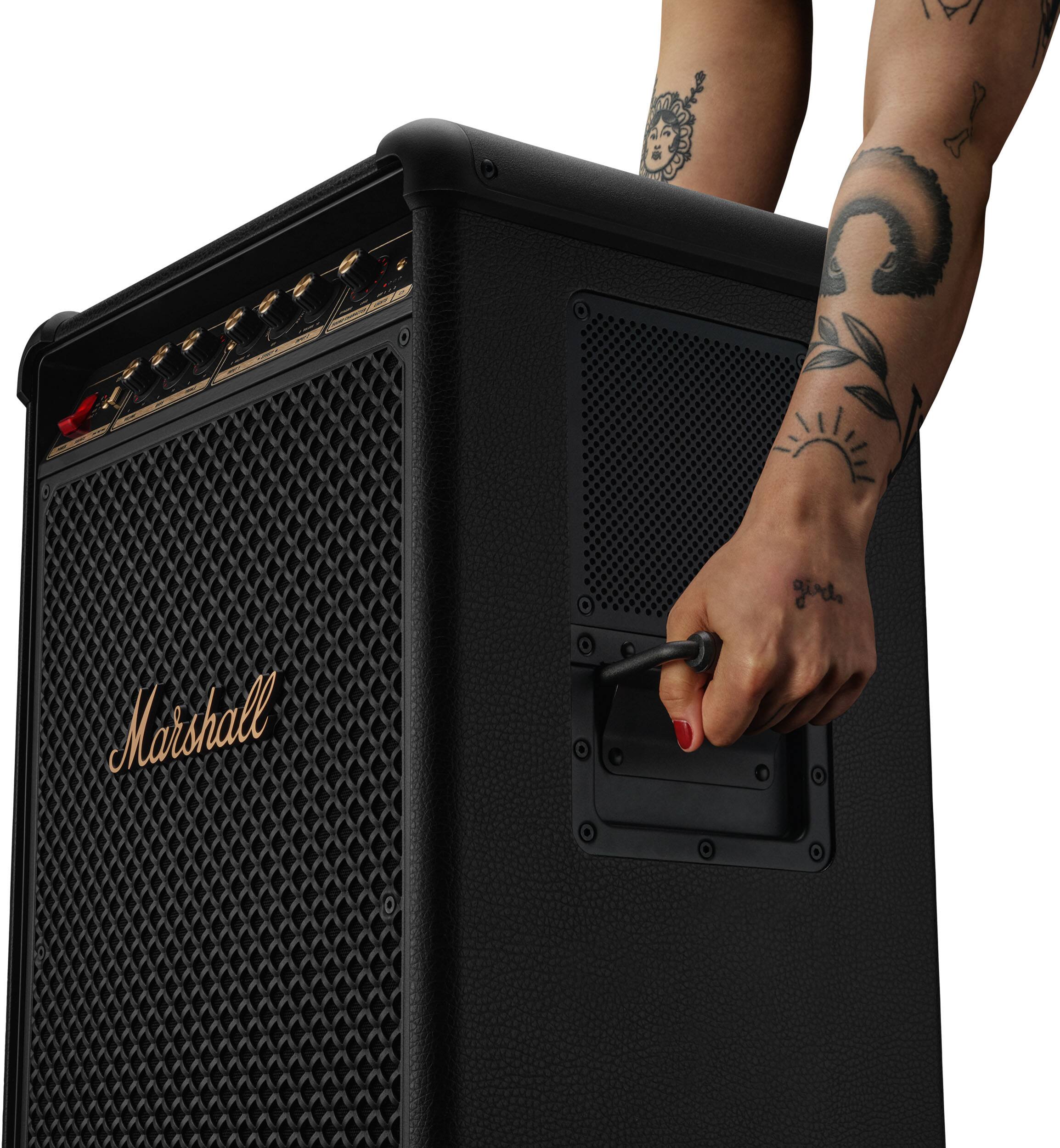
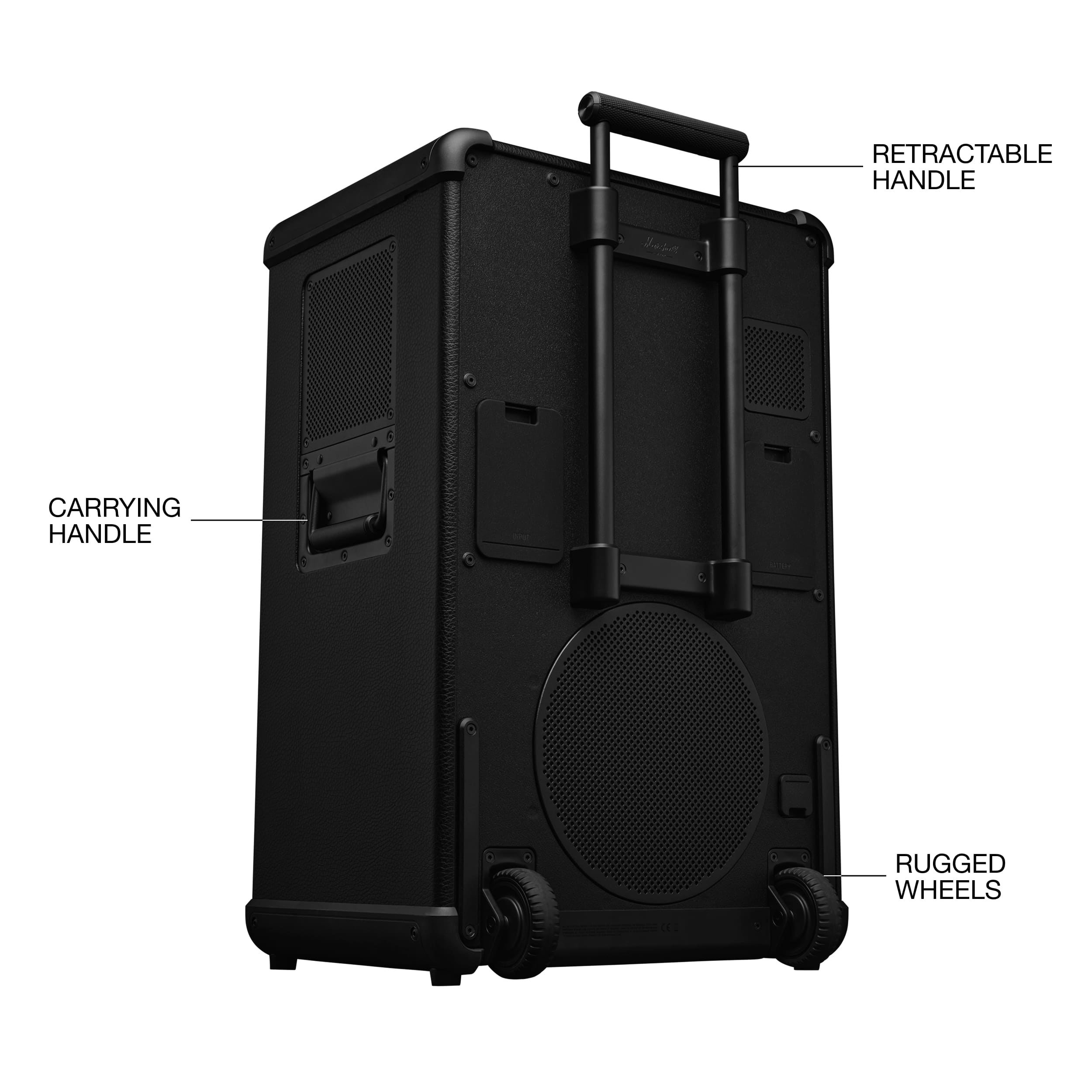
The Marshall Bromley 750 weighs 53 pounds but compensates with built-in wheels, a retractable telescoping handle, and side handles for multiple carrying options. Despite the extra weight, the wheel system actually makes it easier to transport over smooth surfaces than carrying the lighter Sony.
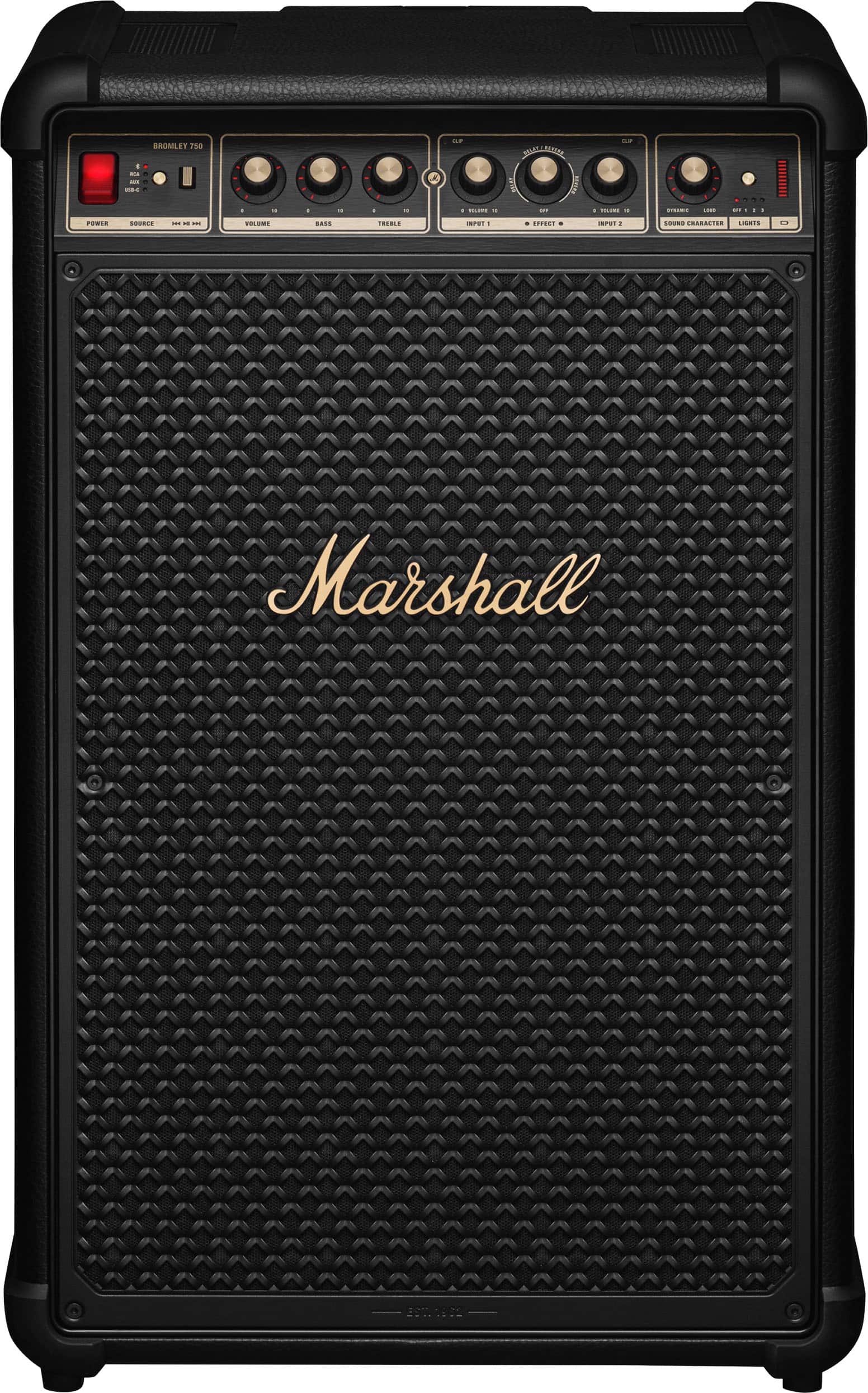
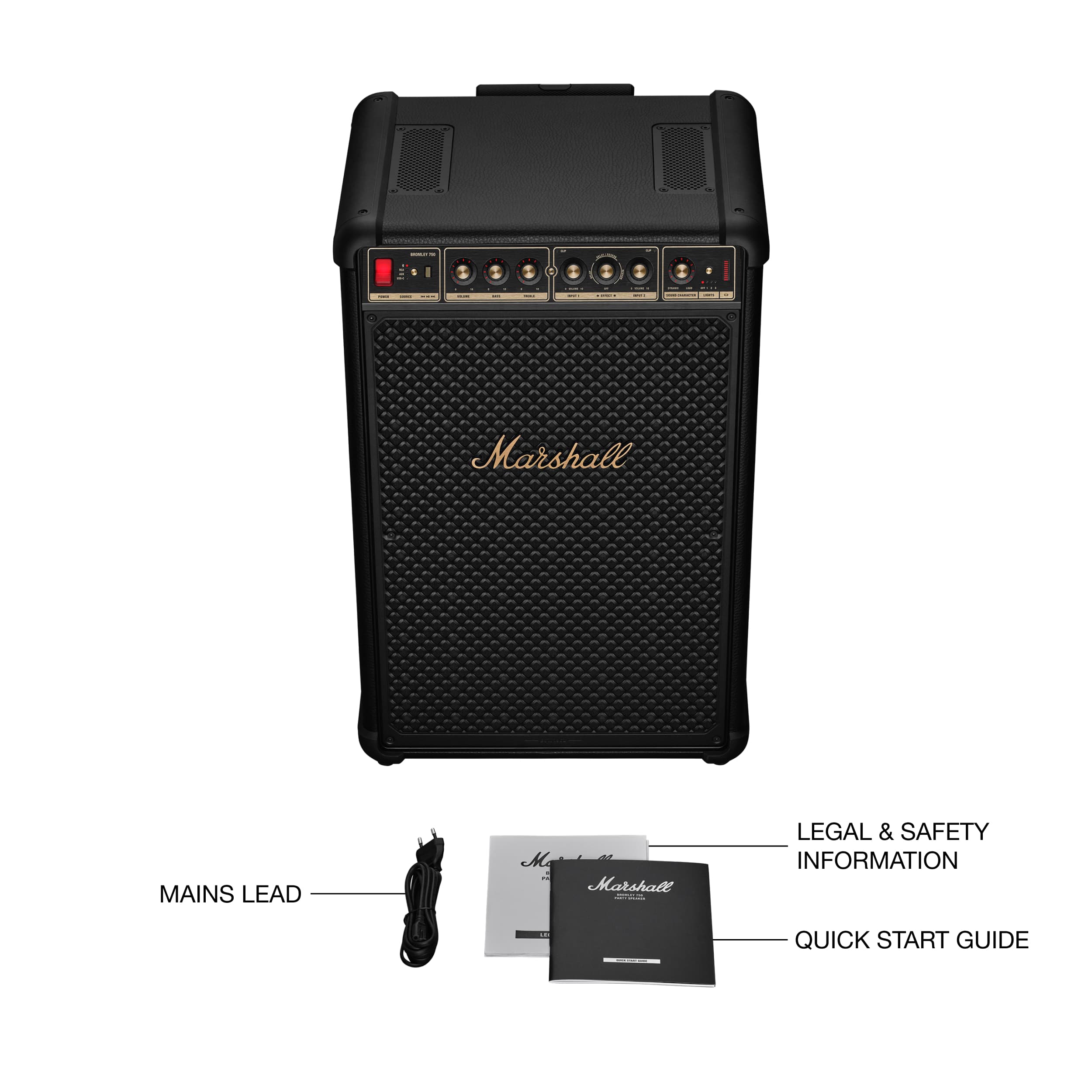
More importantly, the Marshall's design philosophy draws directly from Marshall's legendary guitar amplifier heritage. The brushed metal control panel, leather-textured exterior, and stamped metal grille create an unmistakably premium aesthetic that appeals to musicians and audio enthusiasts. When the party's over, the Marshall looks sophisticated enough to live in your living room.
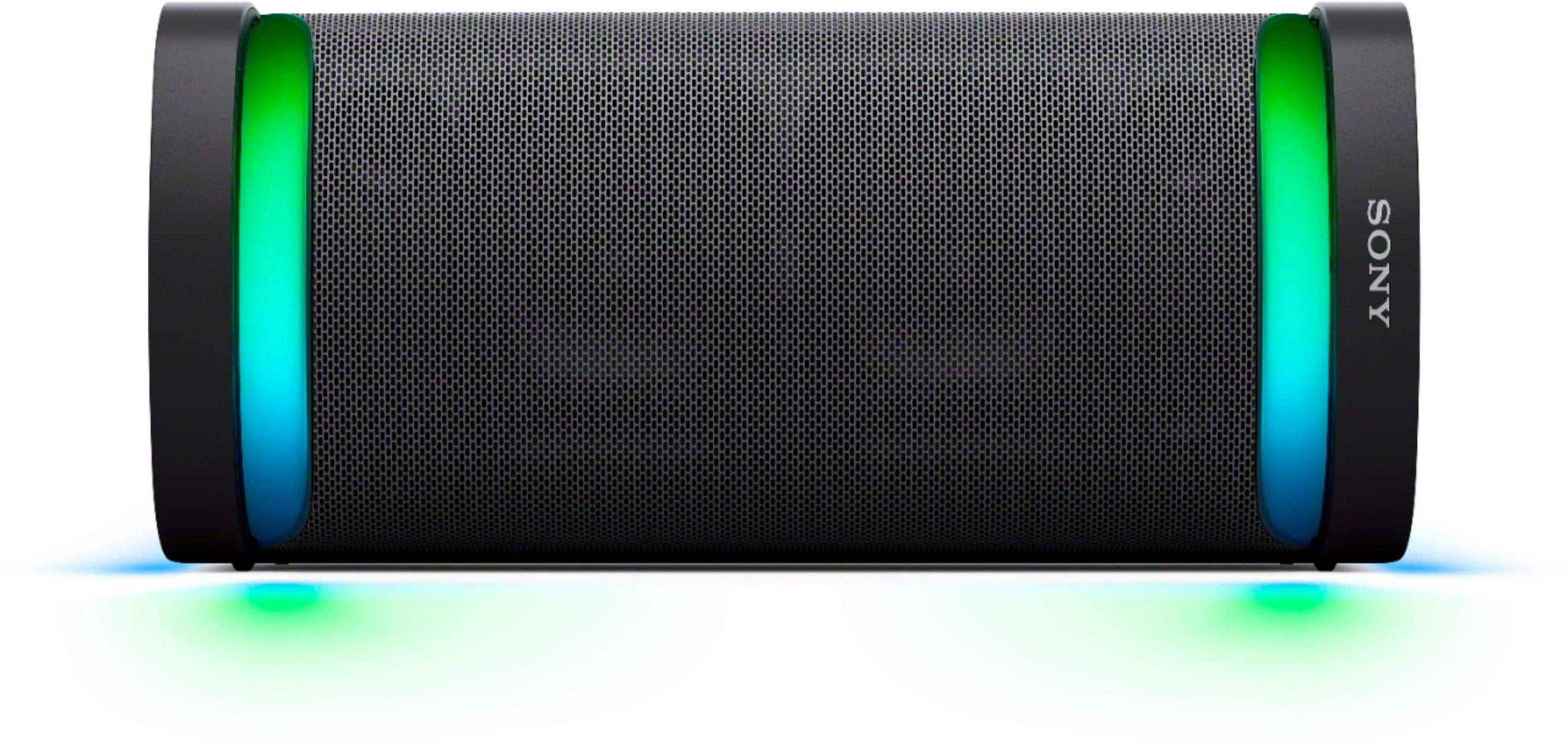
Lighting design reveals another fundamental difference in approach. The Sony SRS-XP700 features programmable RGB lighting with customizable colors and patterns controlled through Sony's smartphone apps. The lighting system emphasizes party atmosphere with dynamic, colorful effects that sync to music rhythms. You can choose from subtle ambient effects to full disco mode depending on your mood.
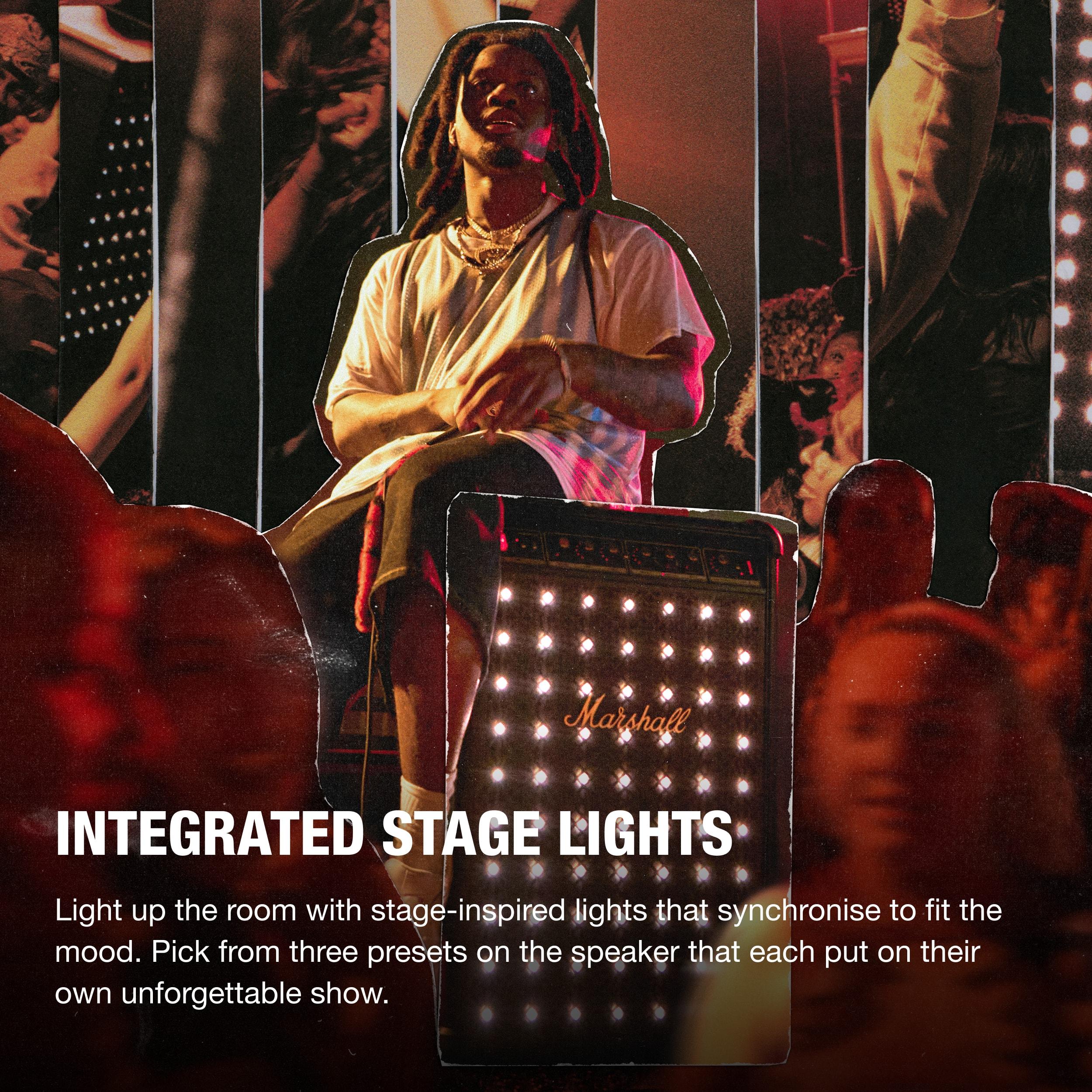
The Marshall Bromley 750 uses subtle white LED lighting positioned behind the metal grille, creating stage-inspired illumination reminiscent of vintage amplifier pilot lights. Three lighting modes provide ambiance without overwhelming visual distraction. When turned off, the lights disappear completely behind the grille, maintaining Marshall's professional aesthetic.
Neither approach is inherently better—it depends on your preferences. The Sony creates a more festive, youthful party atmosphere, while the Marshall provides sophisticated ambiance that appeals to adults who want impressive audio without flashy visual effects.
At the time of writing, the pricing difference between these speakers is substantial—the Marshall costs roughly twice what the Sony does. This price gap raises important questions about value and whether the Marshall's premium features justify the extra cost.
The Sony SRS-XP700 delivers exceptional value for residential and semi-professional applications. The combination of adequate power, good battery life, weather resistance, and multi-speaker connectivity provides comprehensive functionality at an accessible price point. For most home users, it offers 90% of what you might want from a party speaker at roughly half the cost of professional alternatives.
The Marshall Bromley 750 targets users who specifically need its professional-grade capabilities: maximum power output, XLR inputs, replaceable batteries, and superior weather protection. The price premium is justified for commercial applications or serious audio enthusiasts, but may not provide proportional value for casual home users.
Consider long-term ownership costs as well. The Sony's non-replaceable battery will eventually degrade, requiring expensive service or replacement after several years. The Marshall's user-replaceable battery extends operational lifespan indefinitely, potentially justifying the higher initial investment through extended service life.
While neither speaker is designed primarily for home theater use, they can both serve double duty as soundbar alternatives for casual TV watching. The Sony SRS-XP700 supports LDAC for high-resolution audio streaming and can connect via auxiliary input to TV audio outputs. The omnidirectional design works reasonably well for TV audio, though it won't provide the focused soundstage that dedicated soundbars offer.
The Marshall Bromley 750's superior power and professional tuning make it potentially better for home theater applications where you want serious impact for action movies or concerts. However, both speakers optimize for party music rather than dialog clarity, so dedicated soundbars still provide better overall home theater performance.
The decision ultimately comes down to matching the speaker to your specific needs and budget. Choose the Sony SRS-XP700 if you primarily host home parties, backyard gatherings, or casual events with 50-100 people. Its lighter weight facilitates easy setup and repositioning, while the multi-speaker connectivity provides expansion options as your needs grow. The lower price leaves budget for accessories or even purchasing a second speaker for stereo effects.
The Sony SRS-XP700 also makes sense if you value the latest app integration and social features. Sony's Fiestable app includes party games, DJ effects, and playlist management that enhance the overall party experience beyond just playing music.
Choose the Marshall Bromley 750 if you're a musician, DJ, or event organizer who needs professional features and maximum power output. The XLR inputs, replaceable battery system, and superior weather protection provide essential capabilities for commercial applications. The professional aesthetic appeals to adults who want sophisticated equipment that looks as good as it sounds.
The Marshall also makes sense for users who prioritize long-term value over initial cost. The replaceable battery system and professional build quality suggest this speaker will remain functional for many years, potentially justifying the premium through extended service life.
For most consumers, the Sony SRS-XP700 represents the sweet spot of performance, features, and value. It handles typical party applications excellently while leaving money in your budget for other purchases. The multi-speaker connectivity provides a clear upgrade path if your needs evolve.
The Marshall Bromley 750 excels in professional scenarios where its superior capabilities provide essential rather than luxury features. If you genuinely need 500 watts of output, professional connectivity, or unlimited runtime through battery swapping, the Marshall's premium is justified.
The key is honest assessment of your actual requirements. Many people are tempted by maximum specifications, but the Sony SRS-XP700 proves that thoughtful engineering can deliver impressive performance without professional pricing. Choose based on your genuine needs rather than aspirational ones—your wallet and your parties will both benefit from making the right choice.
| Sony SRS-XP700 | Marshall Bromley 750 |
|---|---|
| Power Output - Determines maximum volume and crowd size you can energize | |
| X-Balanced drivers with omnidirectional sound, adequate for residential parties | 500W through 8 Class D amplifiers, 127 dB SPL for festival-level volume |
| Battery Life - Critical for all-day events without power access | |
| 25 hours continuous playback, non-replaceable battery | 40+ hours with user-replaceable battery system that doubles as power bank |
| Weight & Portability - Affects how easily you can transport and set up | |
| 37 lbs with integrated handles, manageable for solo transport | 53 lbs but includes wheels and telescoping handle for easier rolling |
| Weather Protection - Determines outdoor durability in harsh conditions | |
| IPX4 splash resistance (adequate for light rain and spills) | IP54 dust/water protection with built-in drainage system (beach/camping ready) |
| Professional Inputs - Essential for live music and professional microphones | |
| Basic 6.3mm mic/guitar inputs for casual karaoke | Dual XLR/6.35mm combo jacks for studio-quality microphones and instruments |
| Multi-Speaker Connectivity - Enables system expansion for larger venues | |
| Party Connect links up to 100 Sony speakers wirelessly with synced lighting | Standalone operation only, cable daisy-chaining possible |
| Lighting Effects - Sets party atmosphere and visual appeal | |
| Programmable RGB lighting with colorful patterns via smartphone app | Subtle white LED stage-inspired lighting behind metal grille |
| Bluetooth & Audio Quality - Affects wireless streaming performance | |
| Bluetooth 5.0 with LDAC high-res codec, dual device pairing | Bluetooth 5.3 with Auracast, True Stereophonic 360° sound system |
| Sound Character - How audio is optimized for different environments | |
| MEGA BASS mode plus multiple sound presets for party-focused audio | Dynamic/Loud mode switch fundamentally changes processing for indoor vs outdoor |
| Charging Speed - Important when battery runs low before events | |
| Quick charge: 10 minutes = 3 hours playback | Quick charge: 20 minutes = 5 hours playback |
| Target User - Who gets the best value from each approach | |
| Home party hosts wanting great performance at accessible price | Musicians, DJs, and event professionals needing maximum power and pro features |
The Marshall Bromley 750 is significantly louder, delivering 500 watts of power and reaching 127 dB SPL—comparable to rock concert levels. The Sony SRS-XP700 uses efficient X-Balanced drivers but produces substantially less raw power. For large outdoor events or festival-sized crowds, the Marshall Bromley 750 provides the volume needed, while the Sony SRS-XP700 works well for residential parties and medium-sized gatherings.
The Marshall Bromley 750 offers superior battery performance with 40+ hours of continuous playback, plus the battery is user-replaceable for unlimited runtime. The Sony SRS-XP700 provides 25 hours of battery life, which is excellent for consumer use, but the battery cannot be replaced by users. For professional events requiring all-day operation, the Marshall Bromley 750 has a clear advantage.
The Marshall Bromley 750 is designed for professional applications with dual XLR/6.35mm combo jacks that support studio-quality microphones and instruments. The Sony SRS-XP700 has basic microphone and guitar inputs suitable for casual karaoke but lacks professional-grade connectivity. Musicians needing reliable professional inputs should choose the Marshall Bromley 750.
Both speakers can serve as soundbar alternatives for casual TV watching, though neither is optimized for home theater use. The Sony SRS-XP700 supports LDAC for high-resolution audio and connects via auxiliary input to TVs. The Marshall Bromley 750 offers more power for action movies but both prioritize party music over dialog clarity. Dedicated soundbars still provide better home theater performance than either the Sony SRS-XP700 or Marshall Bromley 750.
The Sony SRS-XP700 weighs 37 pounds with integrated handles, making it more manageable for solo transport. The Marshall Bromley 750 weighs 53 pounds but includes wheels, a telescoping handle, and side handles. Despite being heavier, the Marshall Bromley 750 may be easier to move over smooth surfaces thanks to its wheel system, while the Sony SRS-XP700 is better for stairs and rough terrain.
The Marshall Bromley 750 offers superior protection with an IP54 rating against dust and water, plus a built-in drainage system. The Sony SRS-XP700 provides IPX4 splash resistance when vertical. For beach parties, camping, or harsh outdoor conditions, the Marshall Bromley 750 is more reliable, while the Sony SRS-XP700 handles typical outdoor parties adequately.
The Sony SRS-XP700 excels with Party Connect technology that wirelessly links up to 100 compatible Sony speakers with synchronized music and lighting. The Marshall Bromley 750 operates as a standalone unit with only cable daisy-chaining possible. For system expansion and multi-room setups, the Sony SRS-XP700 provides significantly more flexibility than the Marshall Bromley 750.
The Sony SRS-XP700 delivers exceptional value for most users, providing comprehensive party speaker features at roughly half the cost of the Marshall Bromley 750. The Marshall justifies its premium pricing with professional-grade features like XLR inputs, replaceable batteries, and maximum power output. For home users, the Sony SRS-XP700 offers better value, while professionals may find the Marshall Bromley 750 worth the investment.
The Sony SRS-XP700 features programmable RGB lighting with colorful patterns and effects controlled via smartphone app, creating a festive party atmosphere. The Marshall Bromley 750 uses subtle white LED lighting behind the grille for stage-inspired ambiance that can be completely hidden when turned off. Choose the Sony SRS-XP700 for vibrant party lighting or the Marshall Bromley 750 for sophisticated, professional aesthetics.
The Sony SRS-XP700 emphasizes party-focused sound with MEGA BASS mode and multiple audio presets for energetic music reproduction. The Marshall Bromley 750 provides True Stereophonic 360° sound with professional tuning and Dynamic/Loud mode switching for different environments. The Sony SRS-XP700 excels for bass-heavy party music, while the Marshall Bromley 750 offers more accurate, professional sound quality.
The Sony SRS-XP700 has superior quick charging with 10 minutes providing 3 hours of playback time. The Marshall Bromley 750 offers 20 minutes of charging for 5 hours of use. However, the Marshall Bromley 750 compensates with swappable batteries for instant "charging," while the Sony SRS-XP700 requires waiting for the charging cycle to complete.
Choose the Sony SRS-XP700 for home parties, backyard gatherings, casual karaoke, and situations where you want excellent performance at an accessible price with multi-speaker connectivity options. Pick the Marshall Bromley 750 for professional music applications, large outdoor events, commercial use, or when you need maximum power, professional inputs, and superior weather protection. The Sony SRS-XP700 suits most consumers, while the Marshall Bromley 750 targets serious audio enthusiasts and professionals.
We've done our best to create useful and informative comparisons to help you decide what product to buy. Our research uses advanced automated methods to create this comparison and perfection is not possible - please contact us for corrections or questions. These are the sites we've researched in the creation of this article: bestbuy.com - rtings.com - crutchfield.com - versus.com - rtings.com - rtings.com - youtube.com - versus.com - electronics.sony.com - youtube.com - youtube.com - youtube.com - youtube.com - crutchfield.com - armorsound.com - sony-asia.com - helpguide.sony.net - helpguide.sony.net - videoandaudiocenter.com - sony.com - sony.com - sony-asia.com - sony.com - sony.com - bestbuy.com - device.report - bestbuy.com - theluxereview.com - techradar.com - whathifi.com - routenote.com - techradar.com - marshall.com - newatlas.com - marshall.com - youtube.com - wallpaper.com - sweetwater.com - soundguys.com - t3.com - bestbuy.com - hiconsumption.com - architeg-prints.com

Privacy Policy
Terms and Conditions - Affiliate Policy
Home Security
© Copyright 2008-2026.
11816 Inwood Rd #1211, Dallas, TX 75244