

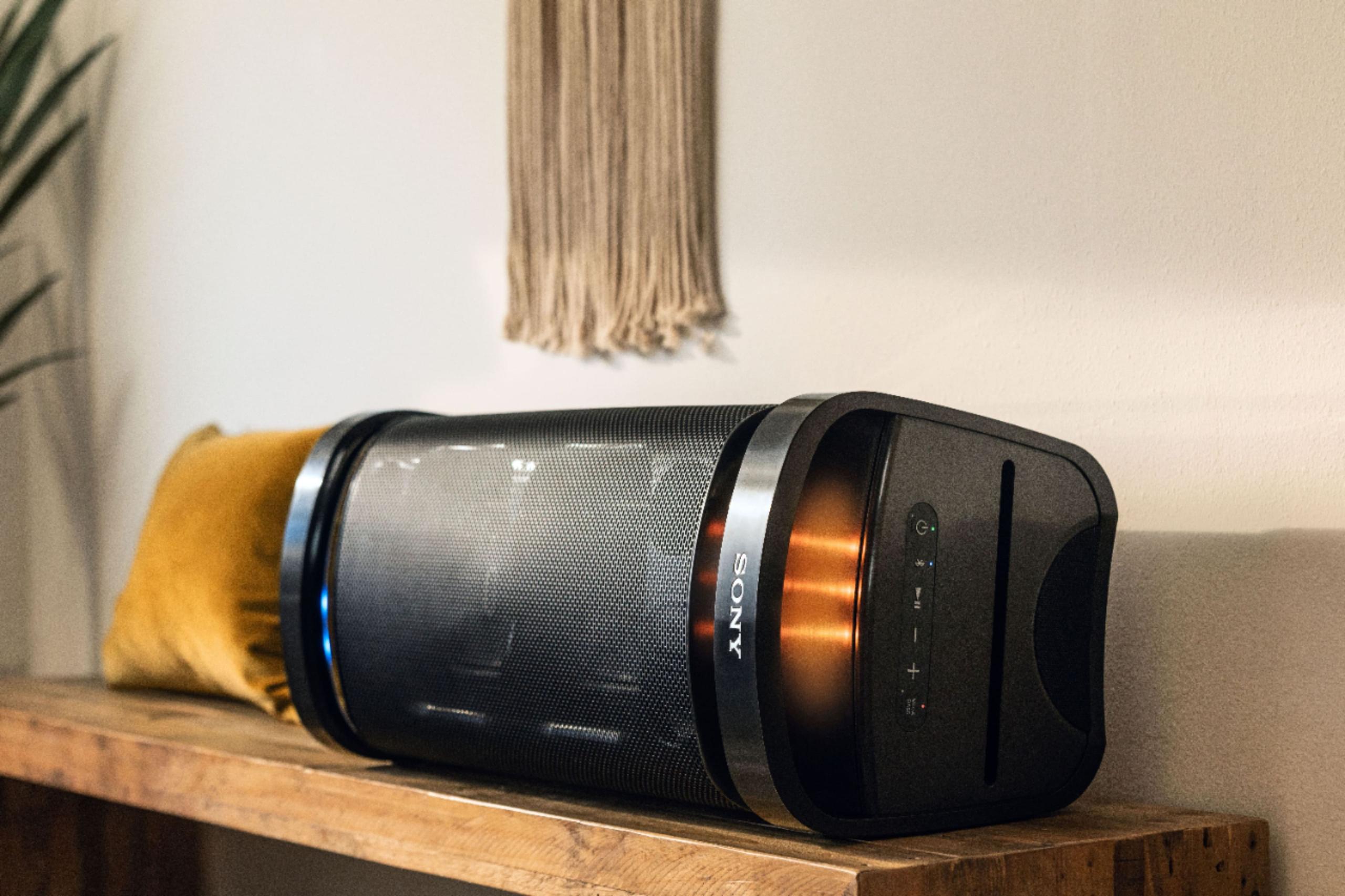
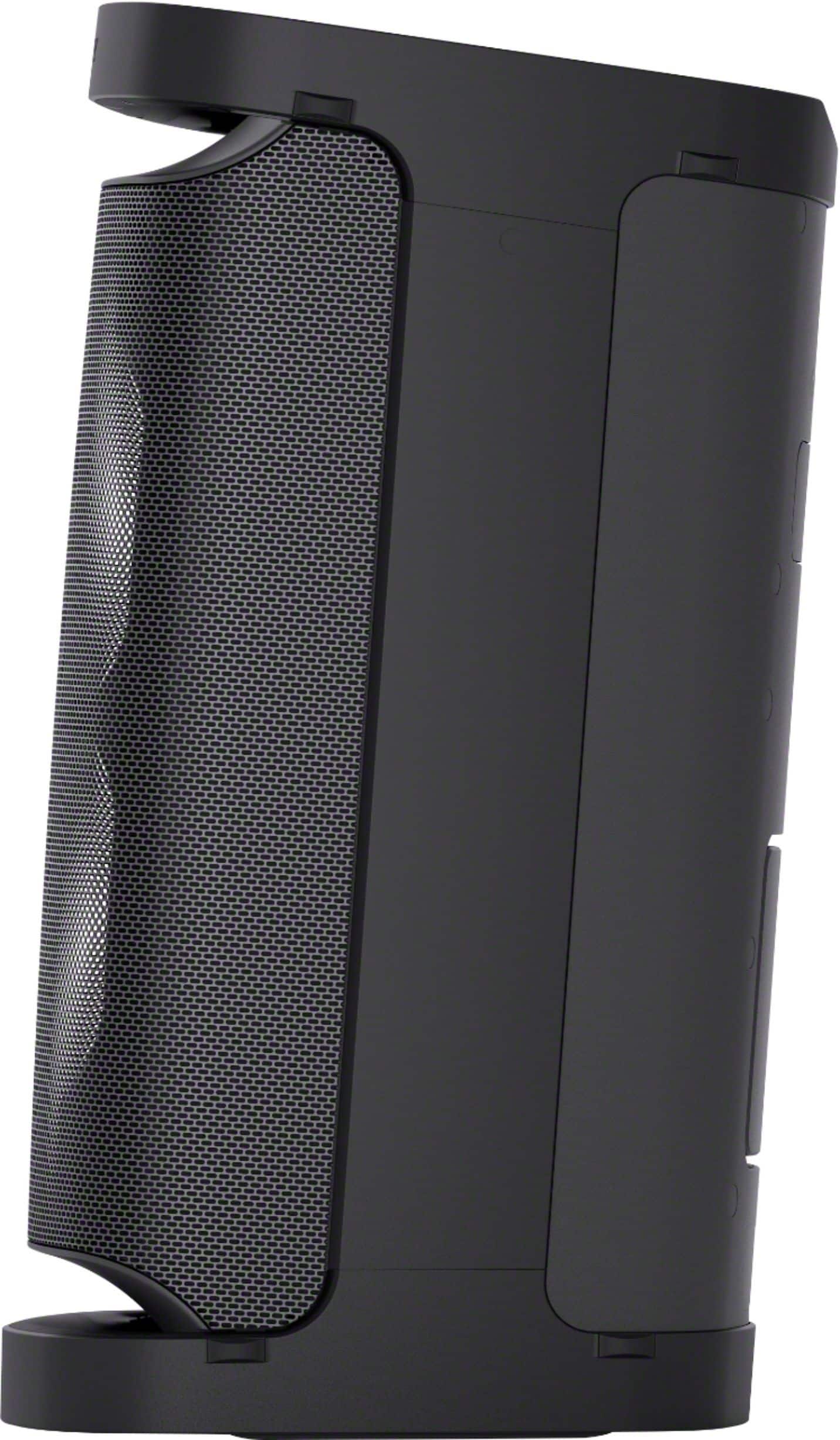
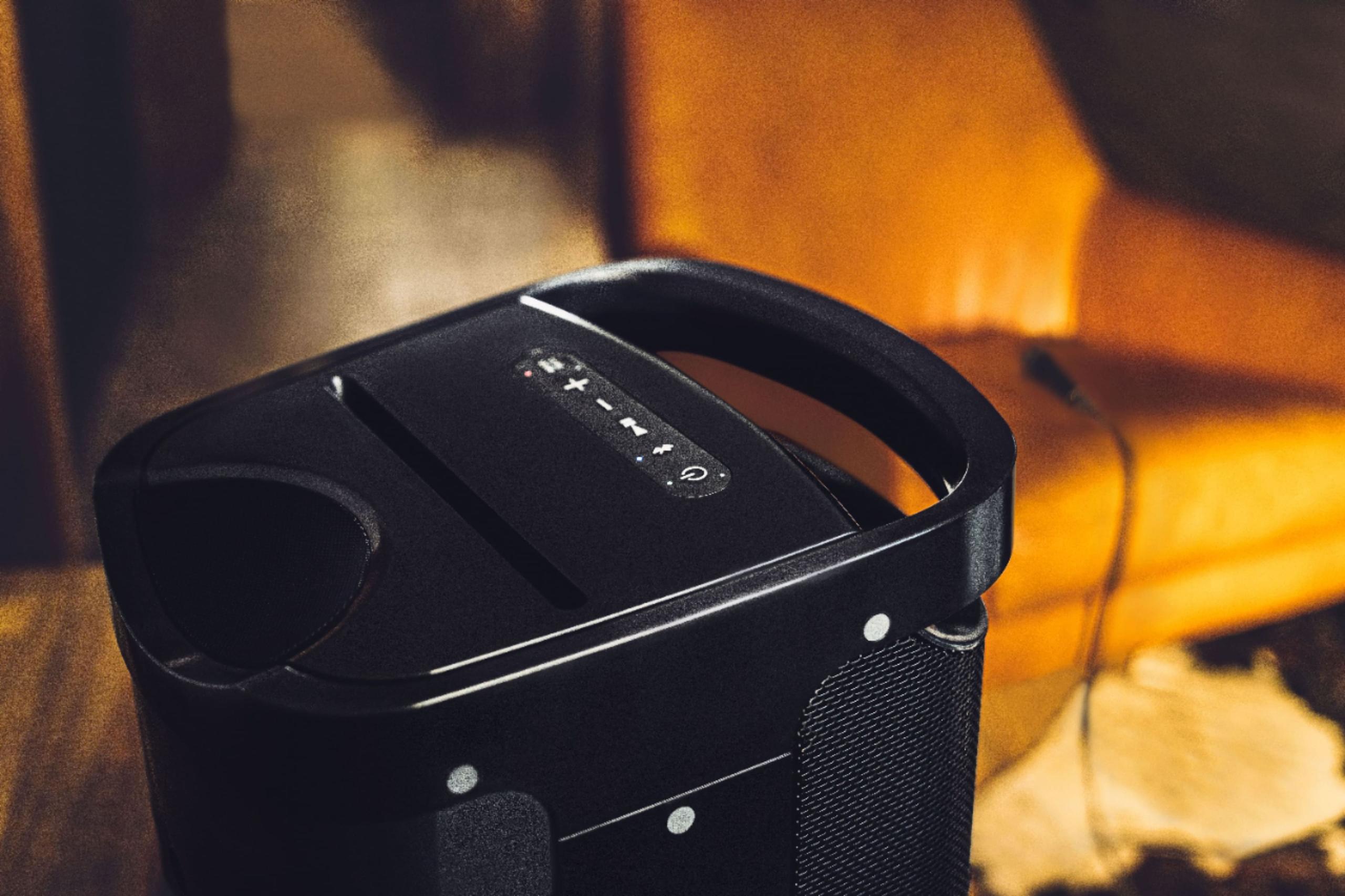
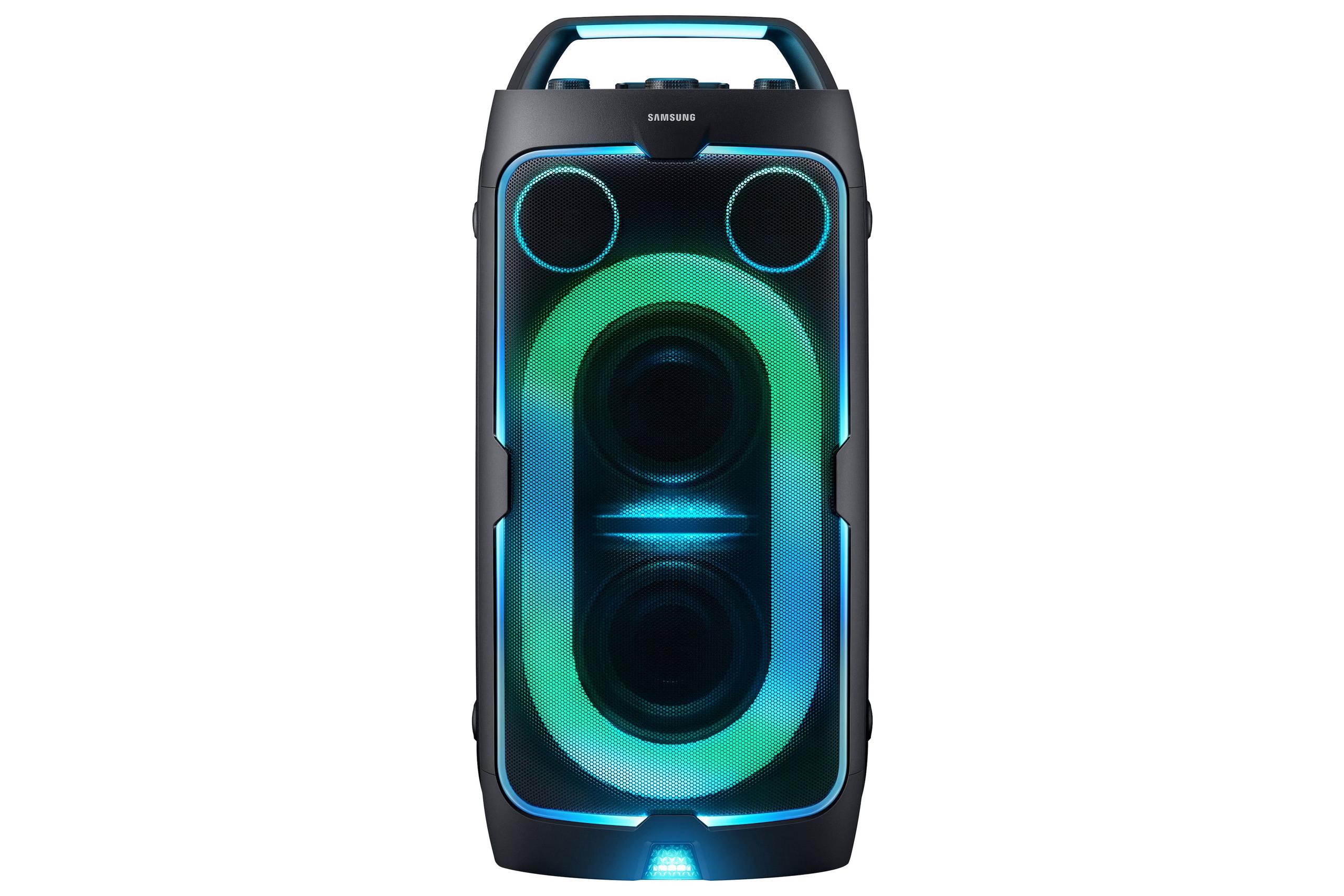
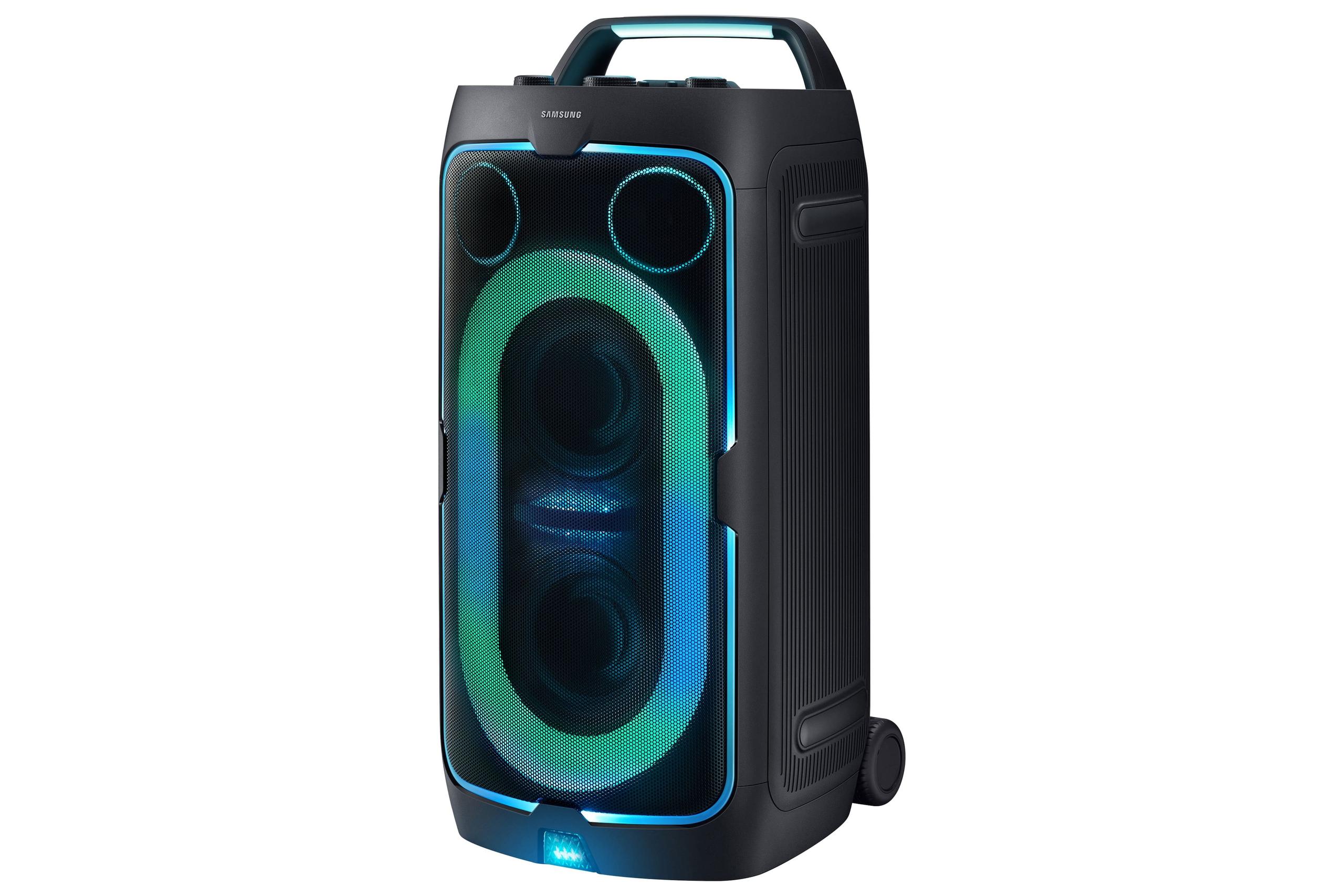
When it comes to hosting memorable gatherings, your speaker can make or break the vibe. Whether you're throwing a backyard barbecue, setting up for a beach party, or just want to fill your living room with massive sound, party speakers have become the go-to solution for serious audio enthusiasts who refuse to compromise on volume or battery life.
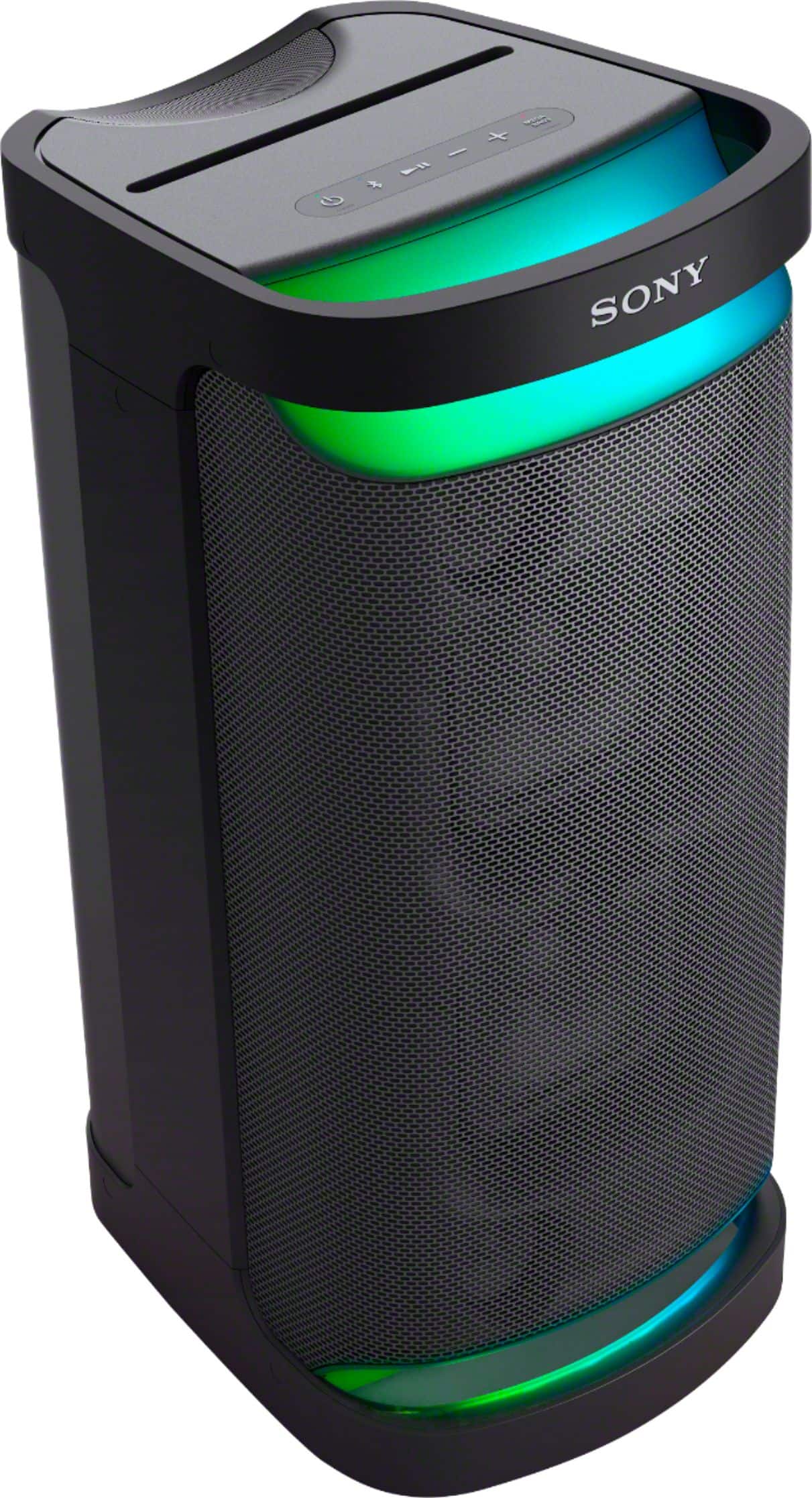
The portable party speaker market has exploded since around 2019, with manufacturers racing to pack more power, better lighting, and longer battery life into increasingly sophisticated packages. Two standouts that have captured attention are the Sony SRS-XP700 and the Samsung MX-ST50F, both released in 2021 during a particularly innovative period for this category.
Before diving into these specific models, it's worth understanding what separates party speakers from regular Bluetooth speakers. Think of party speakers as the SUVs of the audio world—they're built for different priorities than your typical desktop speaker or portable option.
Volume capability sits at the top of the priority list. While a standard Bluetooth speaker might peak at 20-30 watts, party speakers routinely push 60-200+ watts to fill large spaces and compete with ambient noise. This isn't just about getting louder—it's about maintaining clarity and bass response even when cranked up to levels that would make smaller speakers sound distorted and harsh.
Bass response becomes crucial at these power levels. Party music typically emphasizes low-end frequencies, and these speakers need to move serious air to create that chest-thumping experience people expect. This requires larger drivers (the actual speaker cones that create sound) and more sophisticated amplification.
Battery life takes on special importance because party speakers often venture far from wall outlets. A speaker that dies after 4-5 hours becomes useless for all-day events, making 15+ hour battery life a practical necessity rather than a luxury feature.
The Sony SRS-XP700 and Samsung MX-ST50F represent distinct approaches to party audio, despite competing in the same space. Both launched in 2021, riding the wave of technological improvements in battery density, driver efficiency, and Bluetooth connectivity that defined that era.
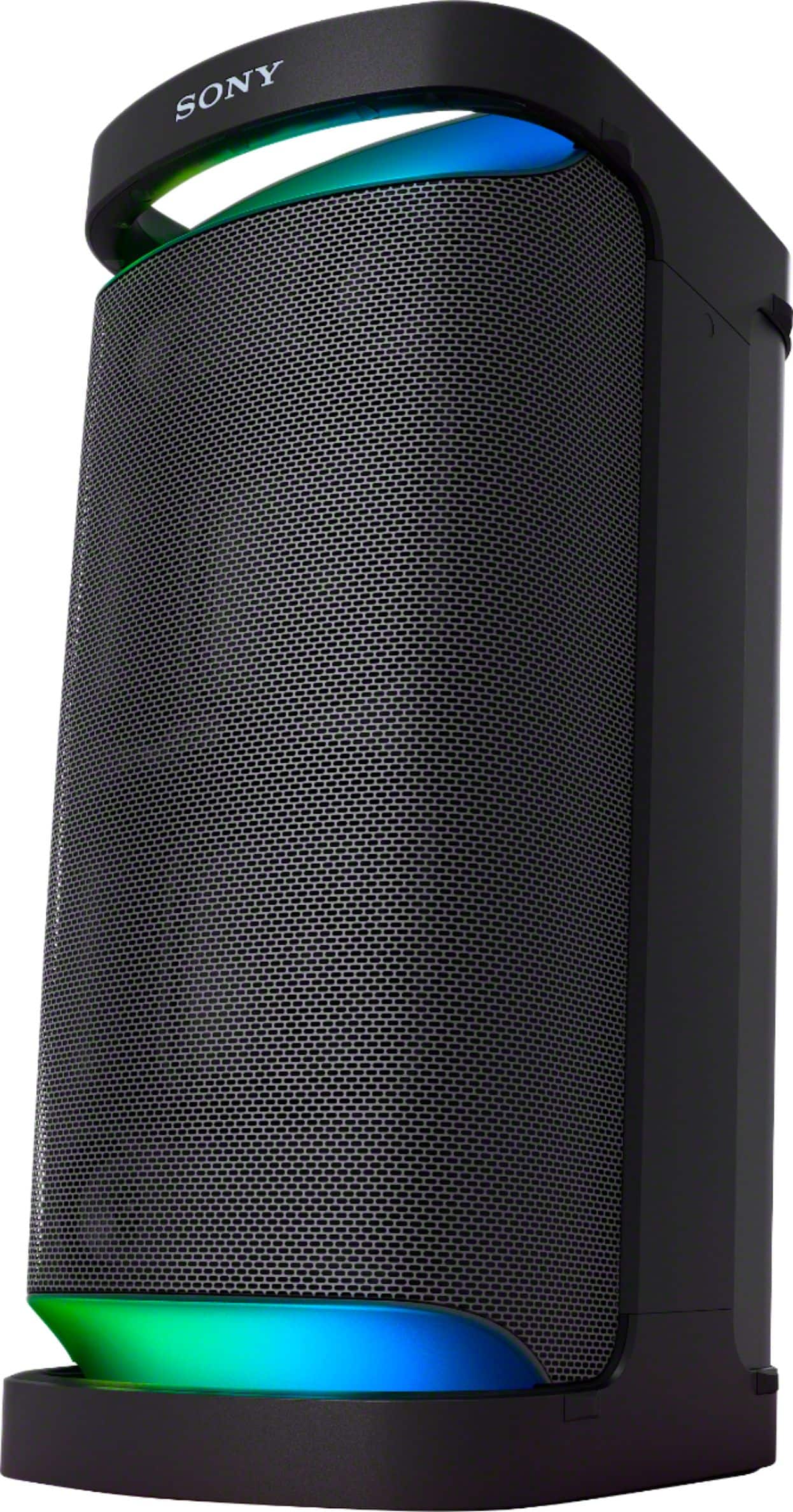
Sony's approach with the XP700 emphasizes audio engineering fundamentals. Their X-Balanced Speaker Unit technology uses non-circular diaphragms (the cone-shaped parts that actually create sound waves) to pack more surface area into the same space. Think of it like fitting a larger pizza into the same box by changing its shape—more surface area means the speaker can move more air with less effort, theoretically improving both volume and clarity.
Samsung took a more holistic entertainment approach with the MX-ST50F. While they didn't skimp on audio technology—incorporating Waveguide technology to optimize sound dispersion—they invested heavily in visual spectacle and user customization. Their philosophy seems to be that modern party speakers need to engage multiple senses, not just hearing.
Based on extensive research across professional reviews and user feedback, these speakers deliver distinctly different listening experiences despite similar price points at the time of writing.
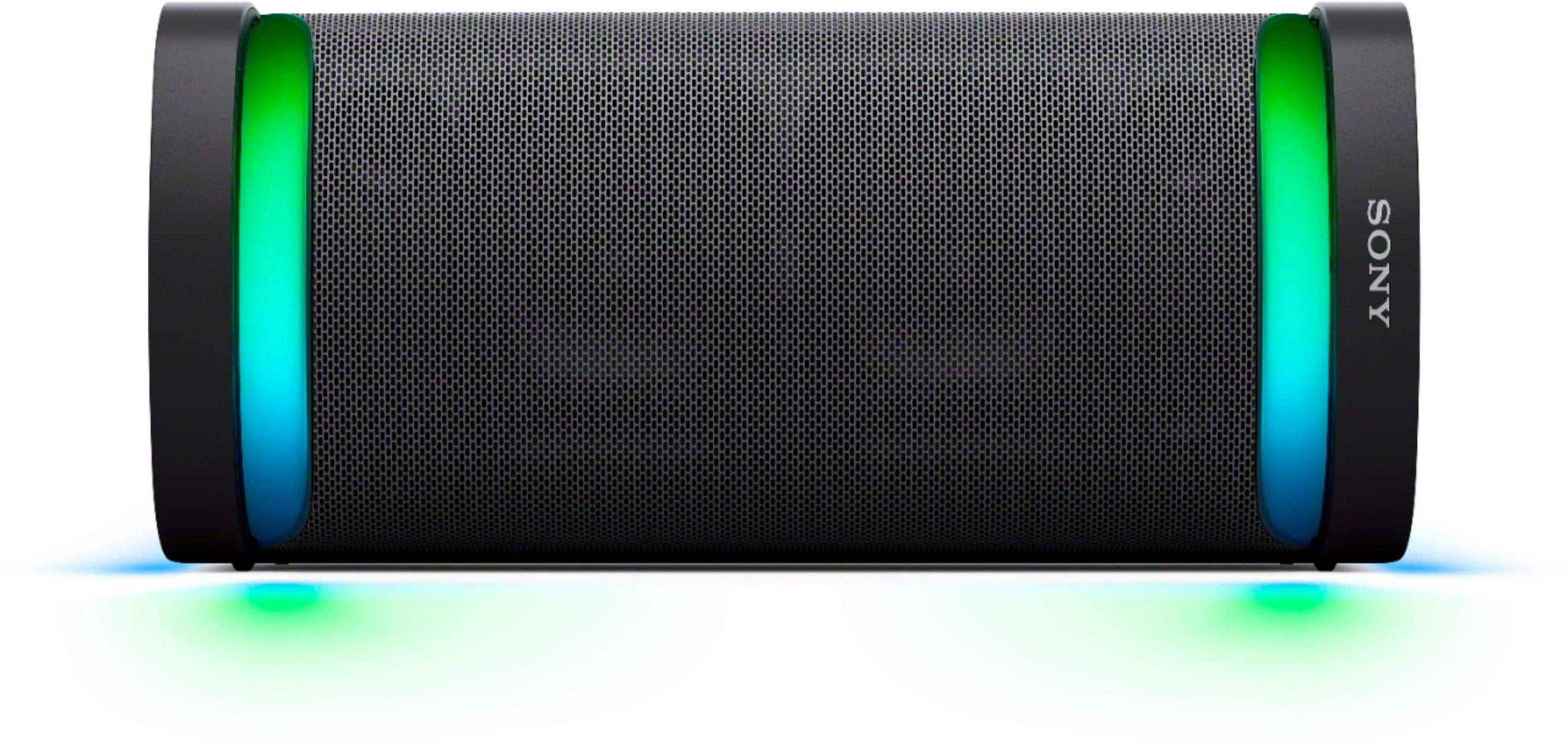
The Sony SRS-XP700 excels in what audiophiles call "frequency balance"—how evenly it reproduces different pitch ranges. Its four-tweeter array (tweeters handle high frequencies like cymbals and vocals) creates what Sony calls "omnidirectional party sound." In practice, this means you get consistent sound quality whether you're standing directly in front of the speaker or off to the side. This omnidirectional design proves particularly valuable for parties where people naturally spread throughout a space.
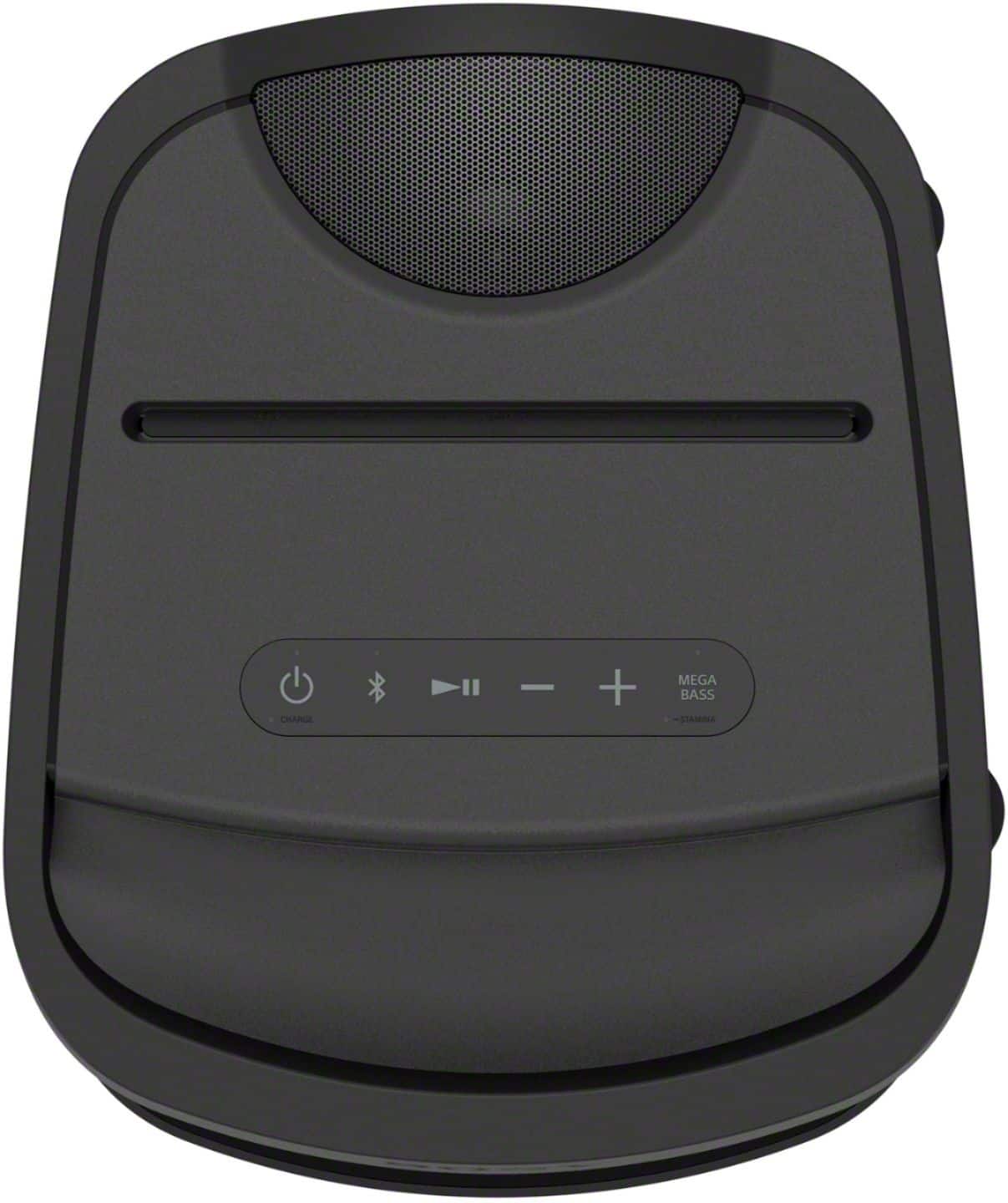
However, our research reveals the Sony's bass presentation can be polarizing. Multiple reviews describe it as "boomy" rather than tight and controlled. This boominess works brilliantly for outdoor use where bass naturally dissipates, but indoor use often requires EQ adjustment through Sony's Music Center app to avoid overwhelming smaller spaces.
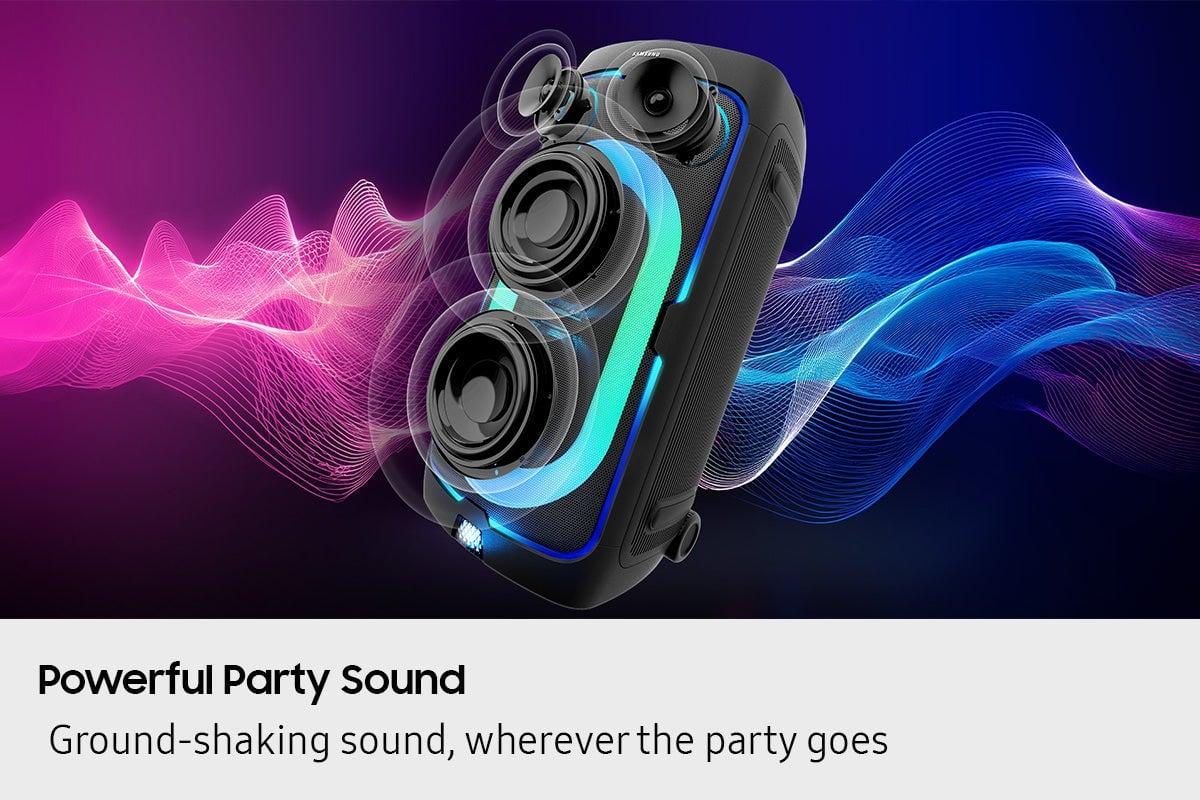
The Samsung MX-ST50F takes a different approach with its dual 6.5-inch woofers paired with dome tweeters. Samsung's Waveguide technology—essentially carefully shaped acoustic channels that direct sound waves—helps create more focused sound projection. Where this becomes interesting is in Samsung's power delivery: 240 watts when plugged into AC power, dropping to 90 watts on battery.
This power differential reveals a crucial real-world consideration. When AC-powered, the Samsung can achieve significantly higher volume levels than the Sony, which maintains consistent 60-watt RMS output regardless of power source. But that consistency gives Sony an advantage for truly portable use—you get the same performance whether plugged in or running on battery.
Here's where Sony's engineering focus pays dividends. The XP700 supports LDAC, Sony's proprietary high-resolution Bluetooth codec that can transmit roughly three times more data than standard Bluetooth. While most people won't notice LDAC's benefits with typical party music, it makes a genuine difference when streaming high-quality recordings or using the speaker for more critical listening scenarios.
Both speakers support the standard SBC and AAC codecs that work with all modern devices, but Sony's LDAC support provides a technical edge for users with compatible devices (mainly Android phones and Sony products).
Battery performance represents one of the clearest differentiators between these models. Our research consistently shows the Sony SRS-XP700 delivering closer to its claimed 25-hour runtime, even at moderate-to-high volume levels. This exceptional battery life stems from Sony's efficient Class-D amplification and power management systems that have improved significantly since their earlier party speaker models.
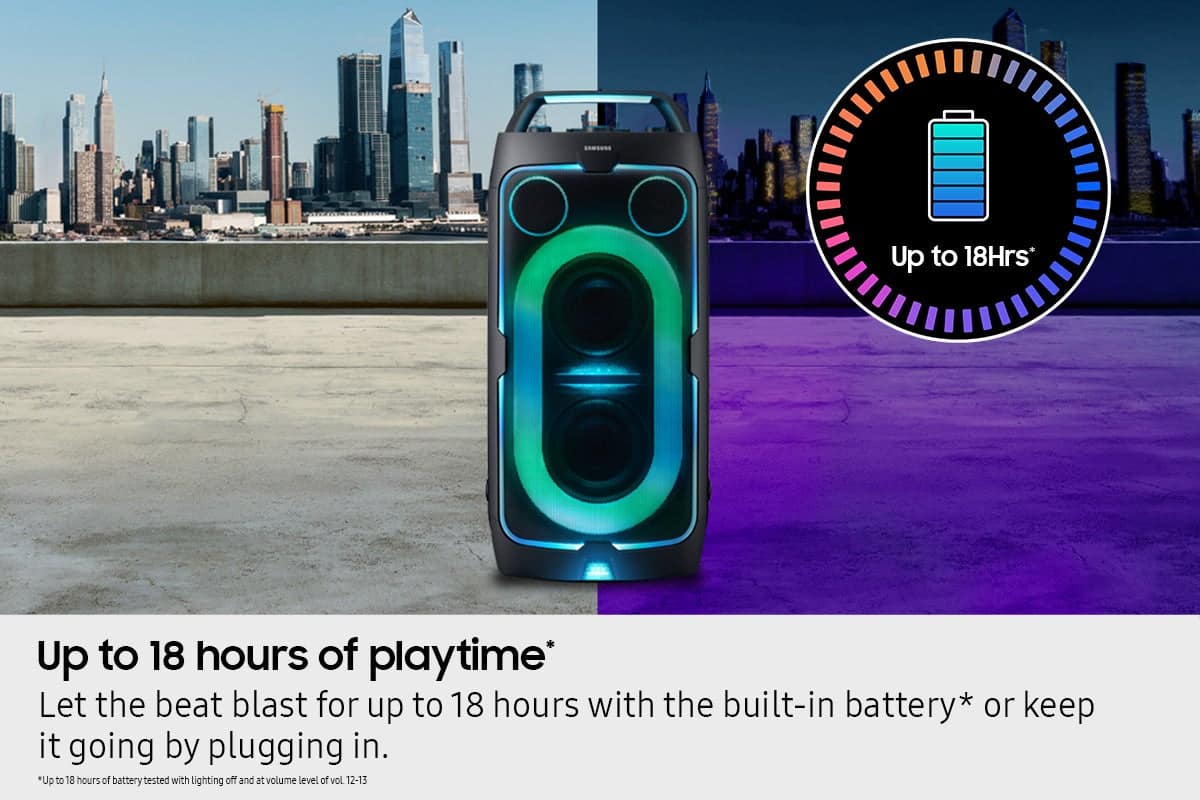
The Samsung MX-ST50F claims 18 hours, which aligns with user reports under similar conditions. While 7 hours might not sound significant, it represents nearly 40% longer runtime—the difference between a speaker lasting through a full outdoor event or requiring mid-party charging.
Samsung's ace card is its replaceable battery design. Unlike the Sony's sealed battery system, Samsung allows users to swap in fresh batteries, theoretically providing unlimited runtime with proper preparation. This feature particularly appeals to event planners or frequent hosts who can't afford downtime.
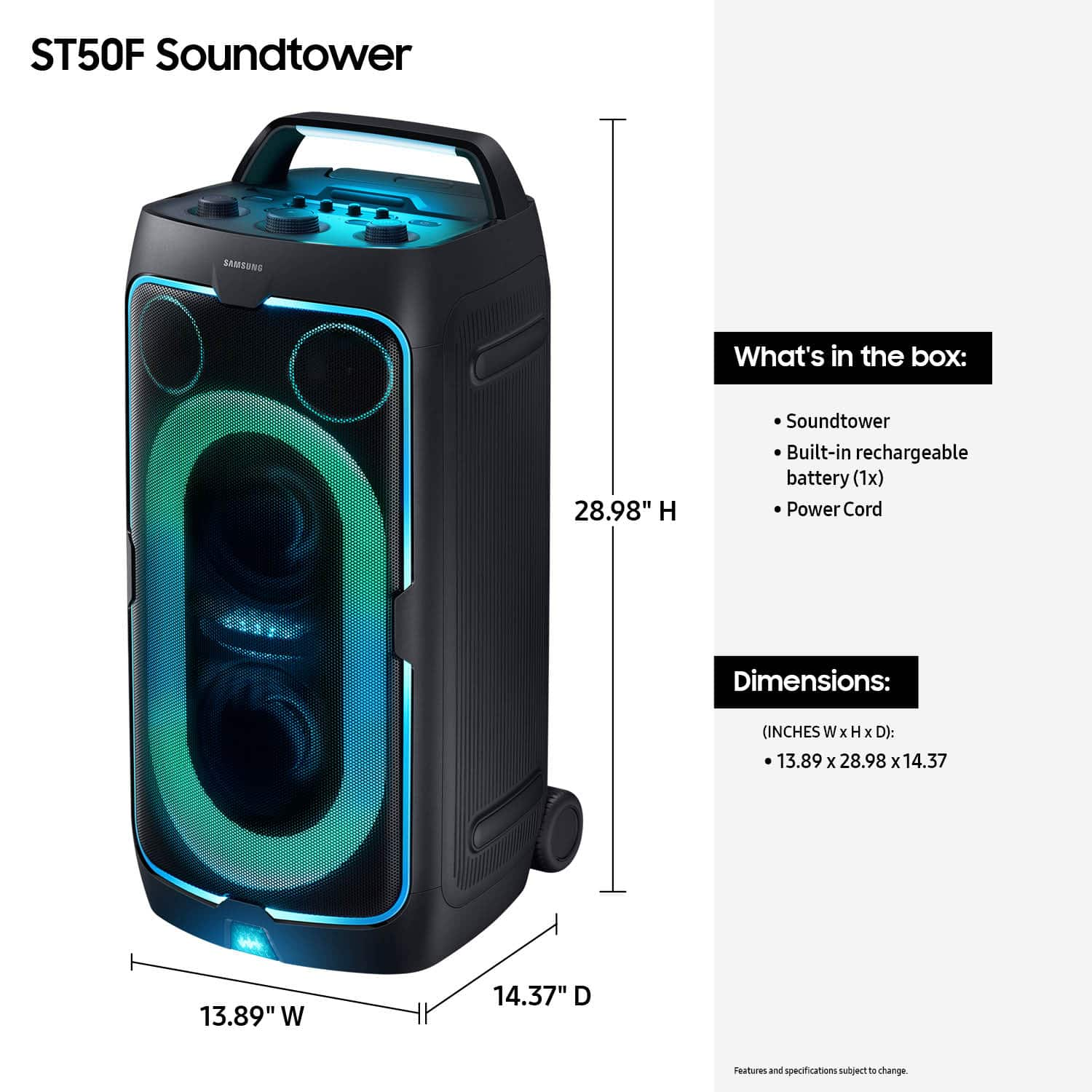
Both speakers face the fundamental challenge of party speaker design: packing this much power and battery capacity inevitably creates hefty products. The Sony XP700 weighs about 37 pounds while the Samsung MX-ST50F tips the scales at roughly 40 pounds.
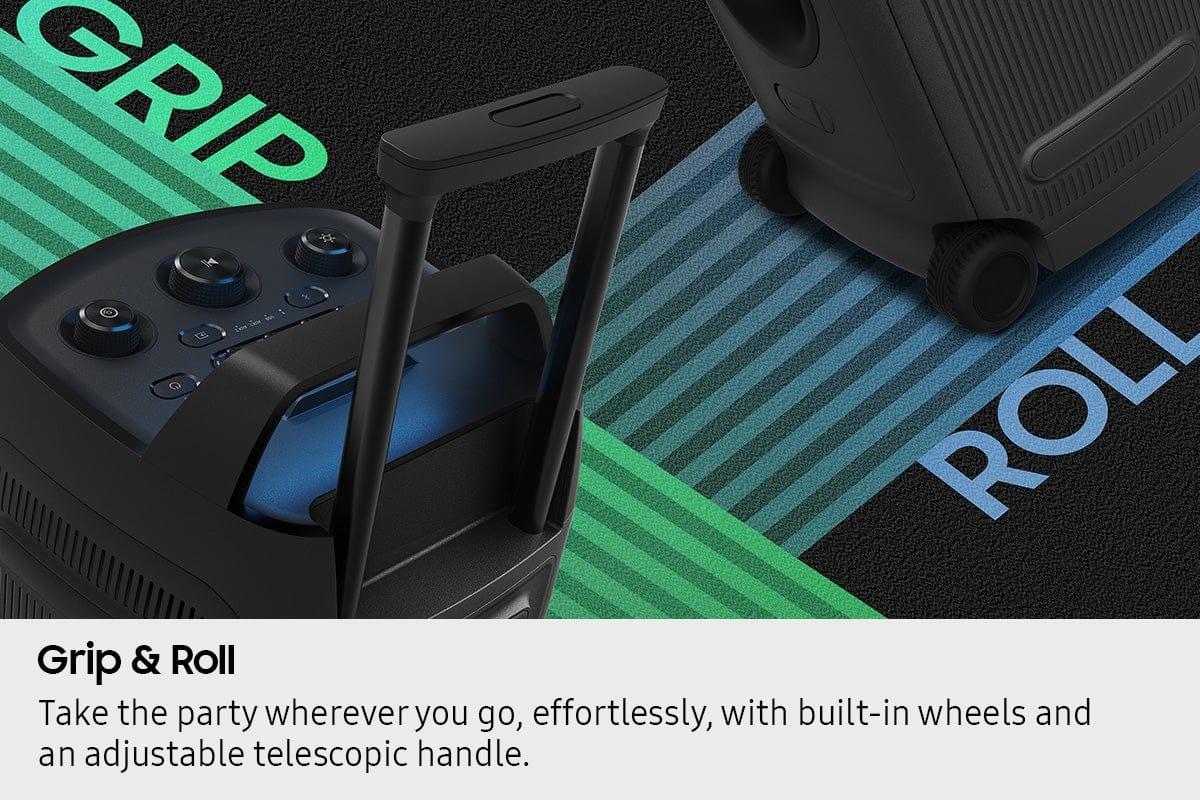
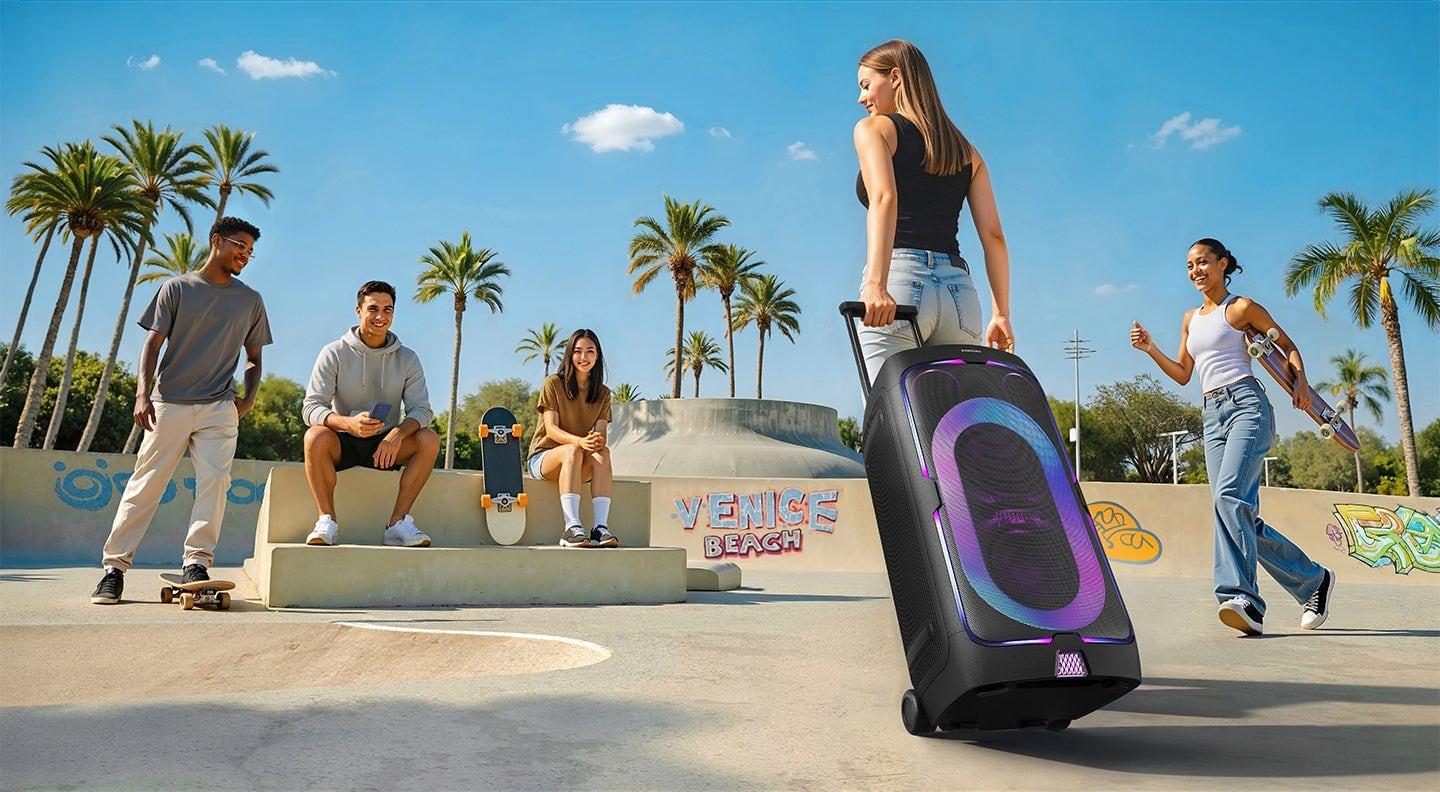
Where Samsung distinguishes itself is in practical portability features. The MX-ST50F includes built-in wheels and a telescopic handle, transforming it into a rolling suitcase rather than a carry-on burden. Having moved plenty of heavy speakers over the years, this difference becomes crucial for anyone planning to transport their speaker regularly.
The Sony provides dual integrated handles but no wheels, making it manageable for short distances but genuinely cumbersome for longer hauls. Multiple user reviews specifically mention wishing Sony had included wheels, suggesting this design choice impacts real-world usability.
Modern party speakers increasingly compete on entertainment value beyond pure audio, and this is where philosophical differences become most apparent.
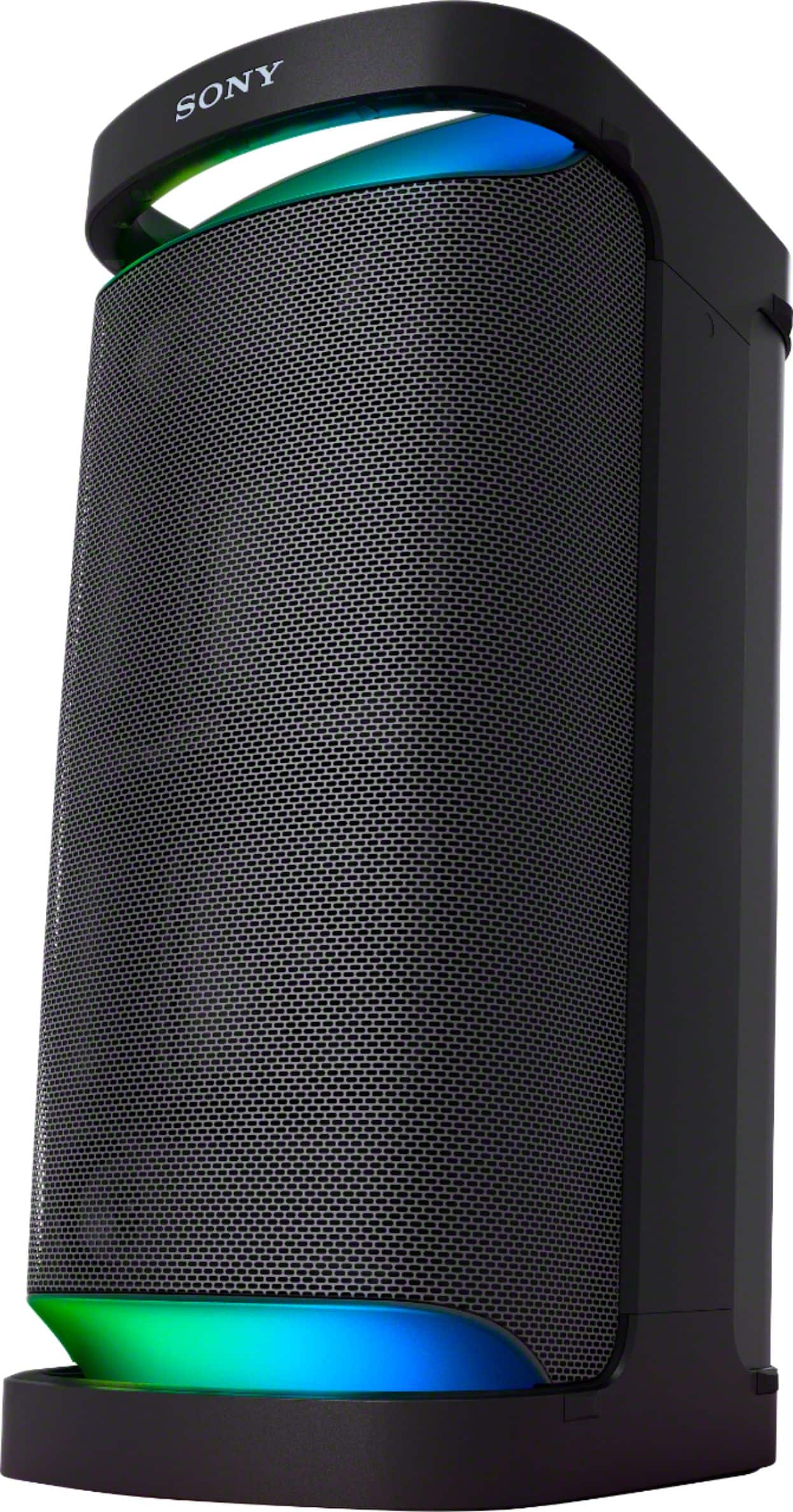
Sony's lighting system on the XP700 feels almost apologetic—basic RGB LEDs that pulse with the music but don't create particularly impressive visual displays. Sony clearly prioritized audio engineering over visual spectacle, which aligns with their traditional audio-first brand identity.
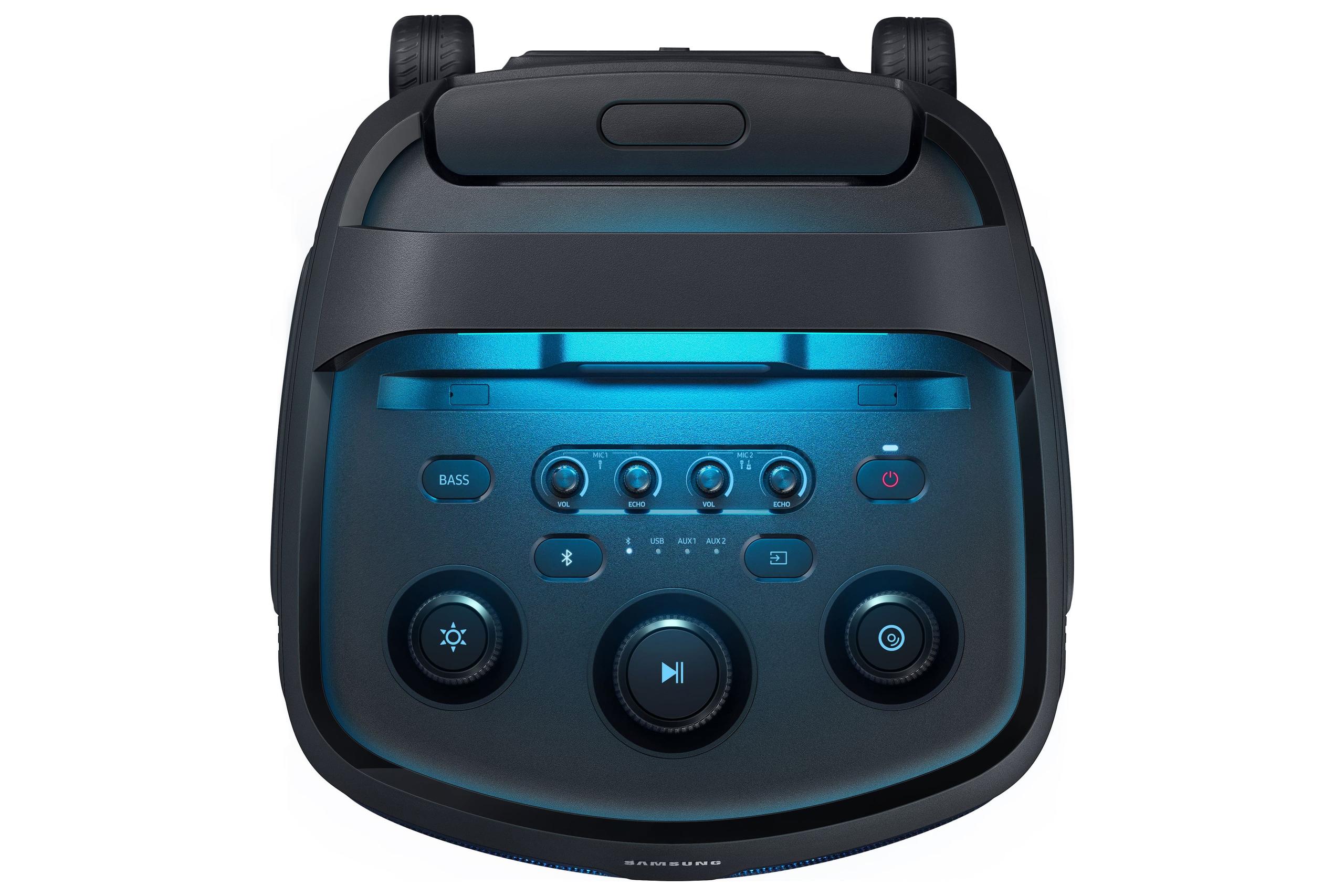
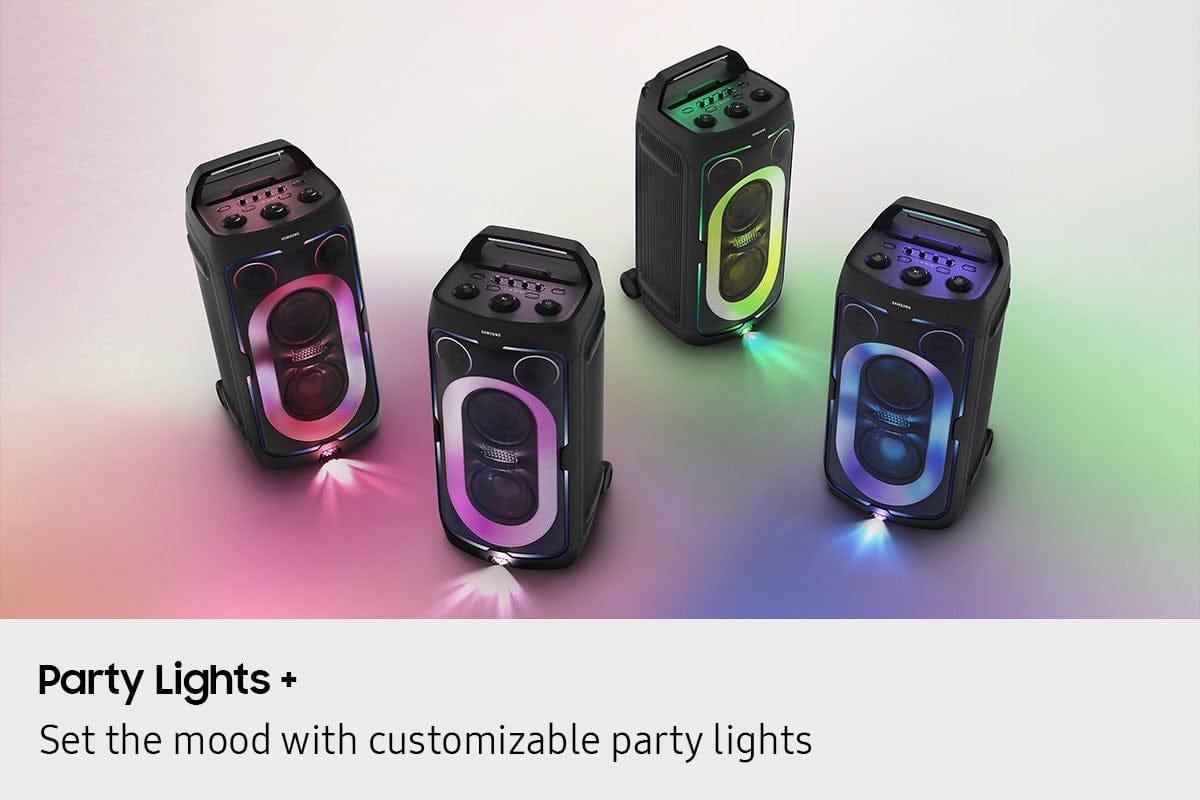
The Samsung MX-ST50F approaches lighting as a core feature rather than an afterthought. Its "Party Lights+" system includes six customizable patterns across five different zones of the speaker, creating a proper light show that synchronizes with music. Reviews consistently praise Samsung's lighting implementation as significantly more impressive and customizable than Sony's basic offering.
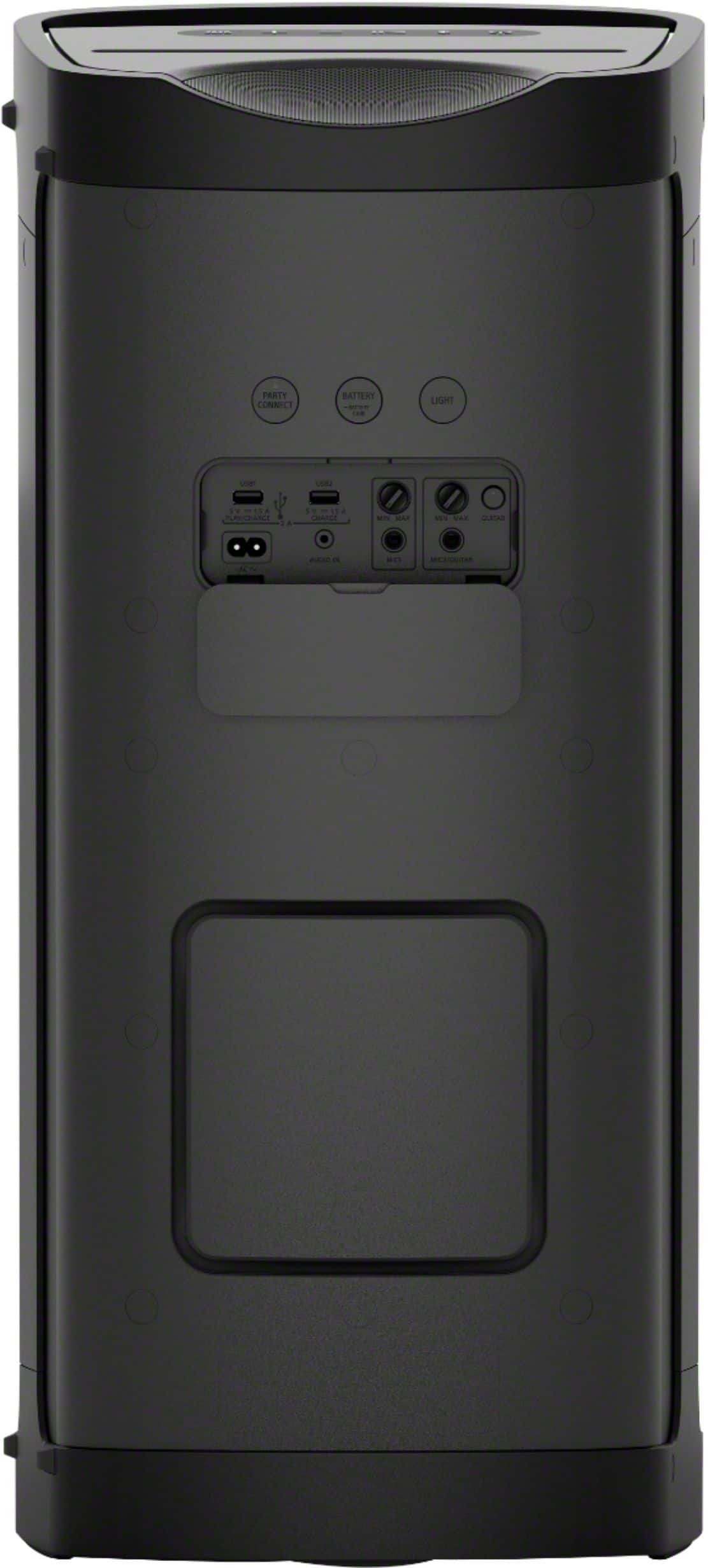
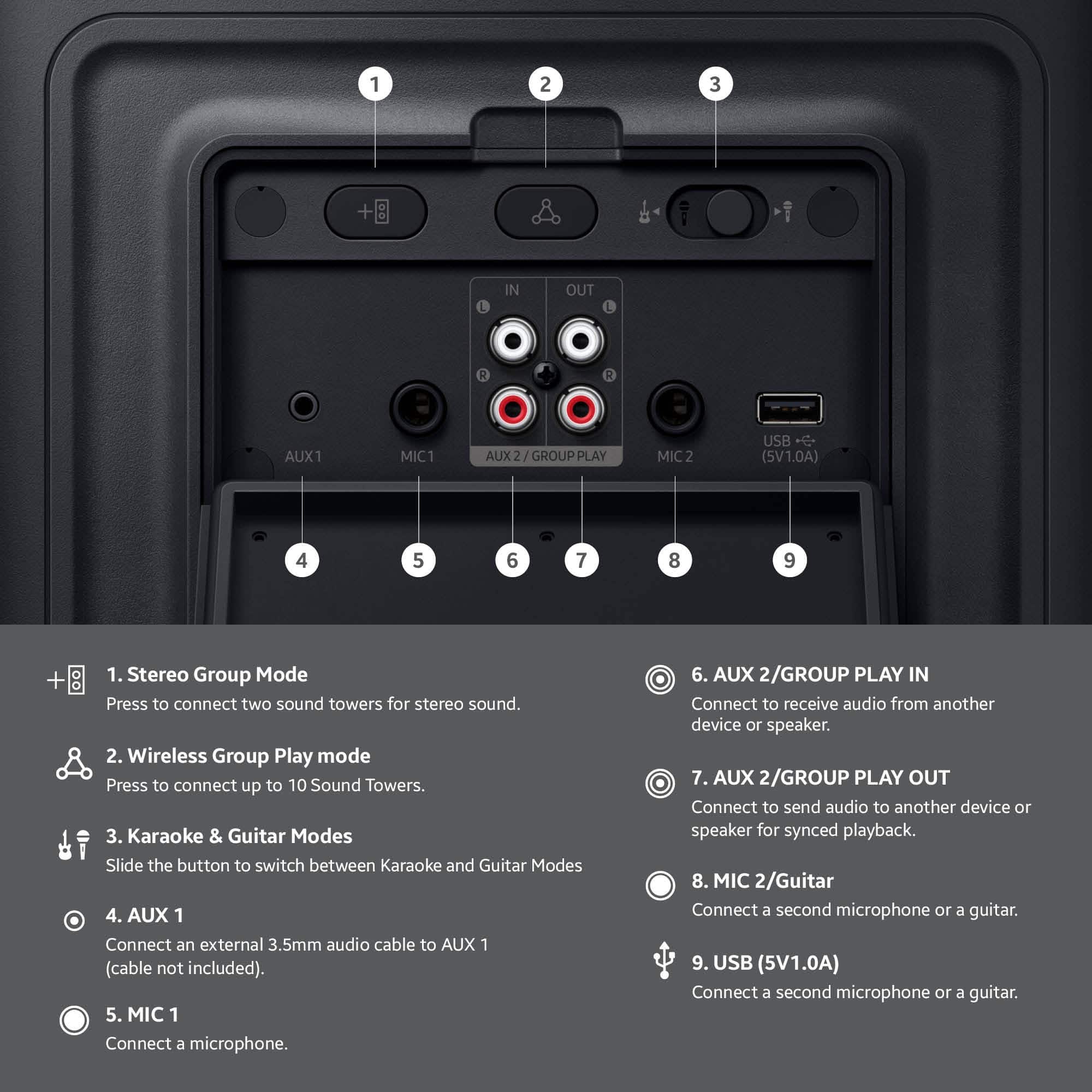
Both speakers provide karaoke functionality with microphone and guitar inputs, but Samsung's DJ-focused app features give it an edge for users wanting to actively perform rather than just play music. The Samsung Sound Tower app includes sampling features, voice effects, and more sophisticated mixing controls compared to Sony's more straightforward Music Center app.
Both speakers carry IPX4 ratings, meaning they can handle splashes and light rain but aren't suitable for submersion or heavy weather exposure. This splash resistance proves adequate for most outdoor parties but requires some caution around pools or during unexpected downpours.
Build quality feels solid on both models based on review consensus, though Sony's longer track record in professional audio equipment provides some confidence in long-term reliability. Samsung has improved significantly in audio product durability since entering this market segment seriously, but Sony's decades of speaker manufacturing experience shows in details like control responsiveness and overall fit-and-finish.
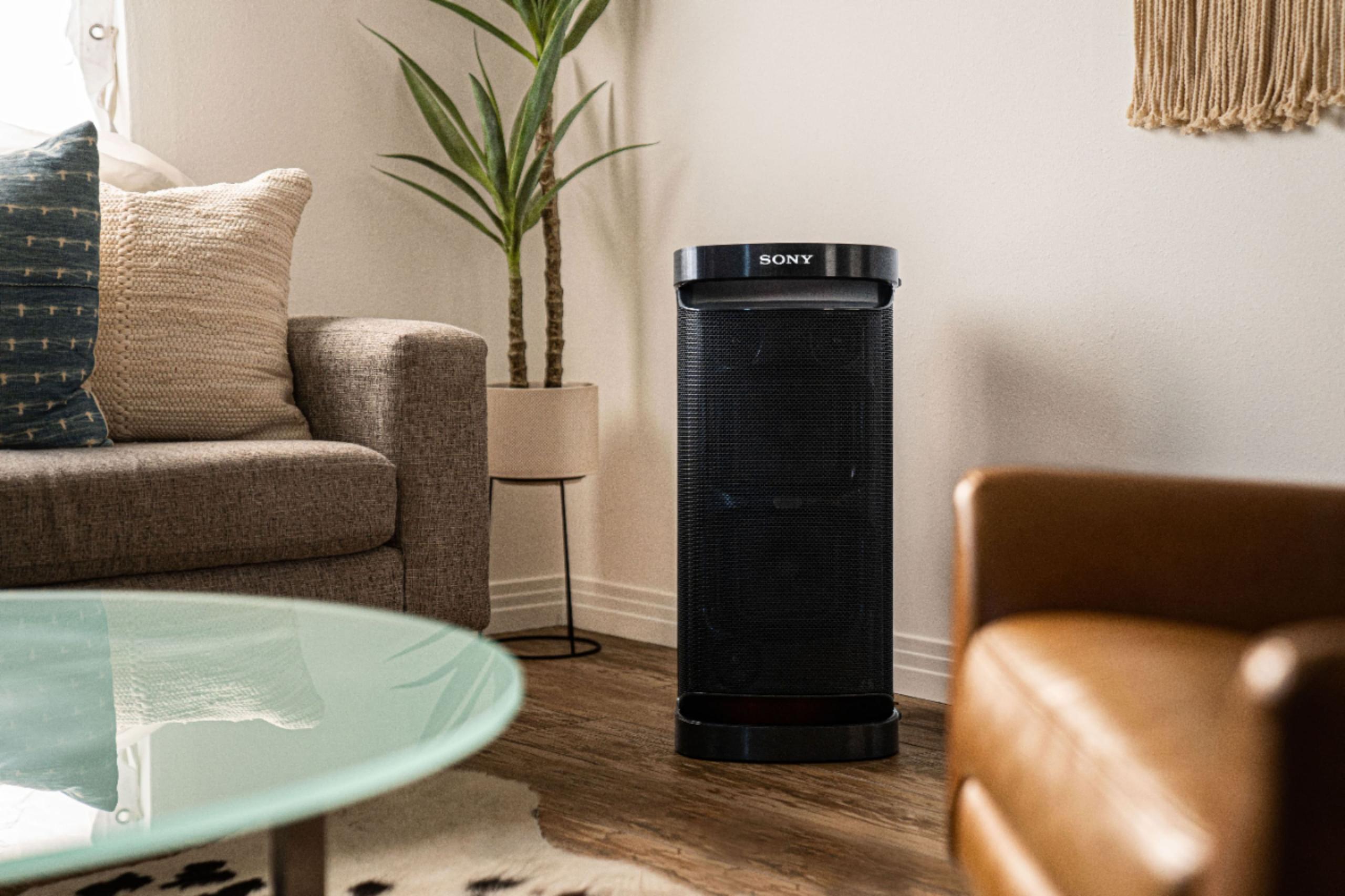
While neither speaker was designed primarily for home theater use, both can serve this role given their power output and connectivity options. The Sony XP700 actually performs better for this application thanks to its more balanced frequency response and LDAC support for higher-quality audio transmission.
However, both speakers' omnidirectional design philosophy works against precise stereo imaging that home theater enthusiasts typically prefer. Their party-optimized sound signatures also emphasize bass and excitement over the neutral accuracy most people want for movie dialogue and subtle sound effects.
If home theater use is a priority, you'd be better served by dedicated soundbars or bookshelf speakers, using these party speakers for their intended purpose of filling large spaces with energetic music.
At the time of writing, these speakers occupy similar price territories with the Samsung MX-ST50F carrying a modest premium over the Sony SRS-XP700. The value equation depends heavily on your priorities and usage patterns.
The Sony offers better pure value for audio quality and battery life. Its 25-hour runtime, LDAC support, and consistent performance between AC and battery operation provide clear technical advantages. For users who prioritize listening experience and maximum portability, Sony's approach delivers more performance per dollar.
Samsung's premium pricing reflects its investment in visual entertainment and practical mobility features. The advanced lighting system, wheels, and telescopic handle justify the extra cost for users who frequently transport their speaker or want maximum visual impact at gatherings.
After researching extensive user feedback and professional reviews, clear usage patterns emerge for each speaker.
Choose the Sony SRS-XP700 if:
Choose the Samsung MX-ST50F if:
Consider other options if:
Both speakers succeed at their primary mission of delivering powerful, engaging sound for parties and gatherings. Your choice should align with whether you prioritize Sony's audio engineering excellence and marathon battery life, or Samsung's comprehensive entertainment experience with superior practical portability.
The Sony SRS-XP700 represents the better pure audio investment, offering longer runtime, more consistent performance, and better value for the core function of reproducing music. The Samsung MX-ST50F costs more but delivers a more complete party package with its impressive lighting, mobility features, and maximum volume capabilities when AC-powered.
Neither speaker is perfect—both are heavier than ideal, and both make compromises between portability and performance that define this category. But for users who need serious portable power for gatherings, both deliver on their promises while approaching the challenge from different philosophical directions.
The party speaker market continues evolving rapidly, with manufacturers finding new ways to pack more features into portable packages. These 2021 models represent mature implementations of current technology, offering good long-term value as the market focus shifts toward even more advanced features in newer generations.
| Sony SRS-XP700 | Samsung MX-ST50F |
|---|---|
| Power Output - Determines maximum volume and bass impact | |
| 60W RMS (consistent AC/battery) | 240W AC / 90W battery (major drop on battery) |
| Battery Life - Critical for all-day outdoor events | |
| 25 hours (exceptional endurance) | 18 hours (solid but 28% shorter runtime) |
| Weight & Portability - Affects real-world usability | |
| 37 lbs with handles only | 40 lbs but includes wheels + telescopic handle |
| Speaker Configuration - Impacts sound quality and coverage | |
| 4 tweeters + 2 woofers (omnidirectional design) | 2 tweeters + 2 woofers (traditional stereo layout) |
| Bluetooth Codecs - Audio quality over wireless connection | |
| SBC, AAC, LDAC (high-res audio support) | SBC, AAC (standard quality only) |
| Lighting System - Party atmosphere enhancement | |
| Basic RGB LEDs (minimal visual impact) | Advanced Party Lights+ with 6 patterns, 5 zones |
| Sound Customization - Tailoring audio to your preferences | |
| Standard EQ via app | 4 sound modes + 3 bass modes (extensive options) |
| Water Resistance - Outdoor durability | |
| IPX4 splash-resistant | IPX4 splash-resistant |
| Multi-Speaker Connectivity - Expanding your setup | |
| Party Connect (up to 100 Sony speakers) | Auracast Group Play (up to 10 Samsung units) |
| Karaoke Features - Live performance capabilities | |
| Mic + guitar inputs with basic app support | Mic + guitar inputs with DJ effects and sampling |
| Battery Design - Long-term ownership considerations | |
| Sealed battery (not user-replaceable) | Replaceable battery (unlimited runtime potential) |
| Positioning Flexibility - Setup versatility | |
| Horizontal/vertical with auto-optimization | Vertical tower design only |
The Samsung MX-ST50F is significantly louder when plugged into AC power, delivering 240W compared to the Sony SRS-XP700's 60W RMS output. However, on battery power, the Samsung drops to just 90W while the Sony maintains consistent performance. For maximum volume at outdoor events with power access, choose the Samsung MX-ST50F.
The Sony SRS-XP700 offers superior battery life with up to 25 hours of playback compared to the Samsung MX-ST50F's 18-hour runtime. This 7-hour difference represents nearly 40% longer operation, making the Sony the clear winner for all-day events and extended outdoor use without charging access.
Neither the Sony SRS-XP700 nor Samsung MX-ST50F are ideal for home theater applications. Both are designed as omnidirectional party speakers with bass-heavy sound signatures that prioritize excitement over dialogue clarity. For home theater use, dedicated soundbars or bookshelf speakers would provide better results than either party speaker.
The Samsung MX-ST50F is much easier to transport despite being slightly heavier at 40 pounds. It features built-in wheels and a telescopic handle, functioning like rolling luggage. The Sony SRS-XP700 weighs 37 pounds but only has carrying handles, making it more cumbersome for frequent transportation.
Both speakers deliver powerful bass, but with different characteristics. The Sony SRS-XP700 produces punchy, sometimes boomy bass that works well outdoors but may overwhelm indoor spaces. The Samsung MX-ST50F offers three bass modes (Deep, Punchy, Gentle) for more customization and typically provides deeper low-end extension when AC-powered.
The Samsung MX-ST50F has significantly better lighting with its Party Lights+ system featuring six customizable patterns across five different zones of the speaker. The Sony SRS-XP700 only offers basic RGB lighting that's less impressive and customizable, making Samsung the clear winner for visual party atmosphere.
Yes, both speakers support multi-unit connectivity but use different systems. The Sony SRS-XP700 uses Party Connect technology to link up to 100 compatible speakers for synchronized music and lighting. The Samsung MX-ST50F supports Auracast Group Play for connecting up to 10 units, providing good expansion but less than Sony's system.
Both the Sony SRS-XP700 and Samsung MX-ST50F include microphone and guitar inputs for karaoke and live performance. However, the Samsung edges ahead with more advanced DJ effects, sampling features, and voice processing through its companion app, making it slightly better for interactive entertainment.
Both speakers have IPX4 splash-resistant ratings, meaning they can handle light rain and splashes but are not fully waterproof. Neither the Sony SRS-XP700 nor Samsung MX-ST50F should be submerged or exposed to heavy rain. They're suitable for poolside use with caution but not for beach or water-focused activities.
The Samsung MX-ST50F provides more extensive sound customization with four different sound modes (Standard, Wide, Stadium, Outdoor) plus three bass modes. The Sony SRS-XP700 offers standard EQ adjustment through its Music Center app but fewer preset options, making Samsung better for users who want detailed audio tailoring.
The Sony SRS-XP700 has a technical advantage with LDAC codec support for high-resolution audio streaming, in addition to standard SBC and AAC codecs. The Samsung MX-ST50F only supports SBC and AAC codecs. Both can connect to two devices simultaneously, but Sony offers better audio quality potential with compatible devices.
The Sony SRS-XP700 typically offers better value for pure audio performance with its longer battery life, consistent power output, and LDAC support. The Samsung MX-ST50F costs more but justifies the premium with superior lighting, mobility features, and replaceable battery design. Choose Sony for audio value or Samsung for complete entertainment features.
We've done our best to create useful and informative comparisons to help you decide what product to buy. Our research uses advanced automated methods to create this comparison and perfection is not possible - please contact us for corrections or questions. These are the sites we've researched in the creation of this article: bestbuy.com - rtings.com - crutchfield.com - versus.com - rtings.com - rtings.com - youtube.com - versus.com - electronics.sony.com - youtube.com - youtube.com - youtube.com - youtube.com - crutchfield.com - armorsound.com - sony-asia.com - helpguide.sony.net - helpguide.sony.net - videoandaudiocenter.com - sony.com - sony.com - sony-asia.com - sony.com - sony.com - bestbuy.com - device.report - bestbuy.com - bestbuy.com - news.samsung.com - youtube.com - youtube.com - videoandaudiocenter.com - youtube.com - youtube.com - samsung.com - crutchfield.com - youtube.com - arrowassociatedstores.com - brandsmartusa.com - bestbuy.com - crutchfield.com - samsung.com - icecat.in - thefrogpadappliances.com - news.samsung.com

Privacy Policy
Terms and Conditions - Affiliate Policy
Home Security
© Copyright 2008-2026.
11816 Inwood Rd #1211, Dallas, TX 75244