

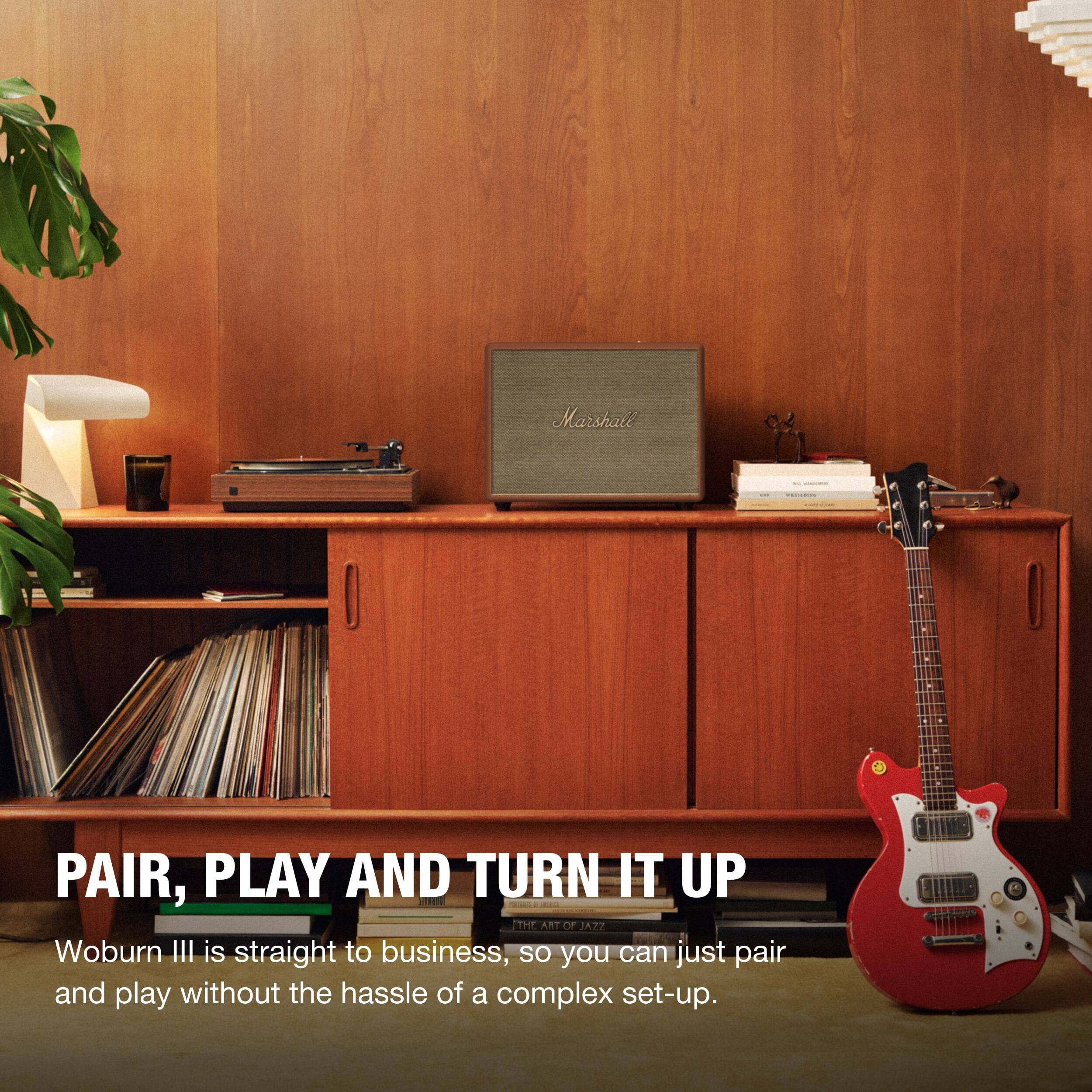
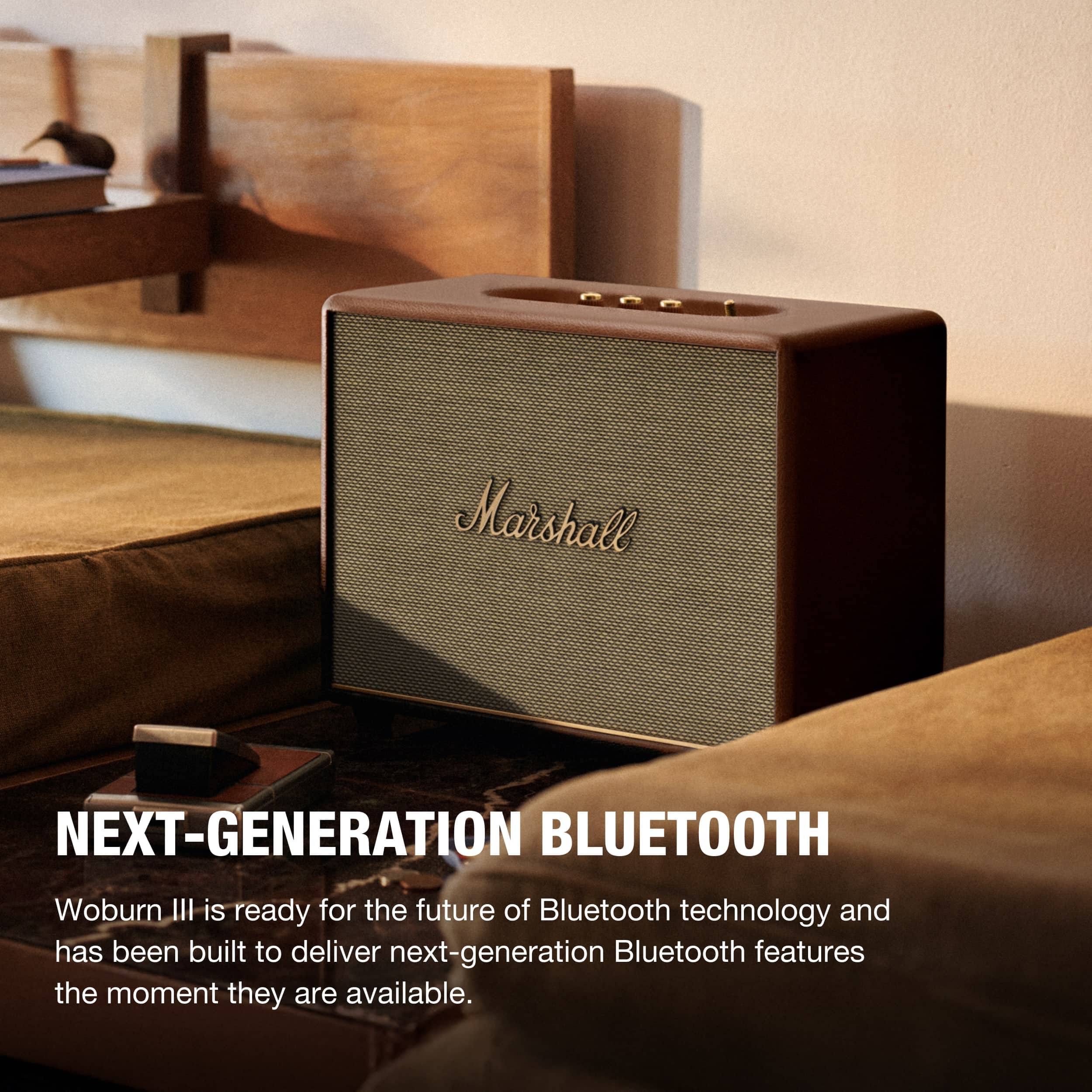
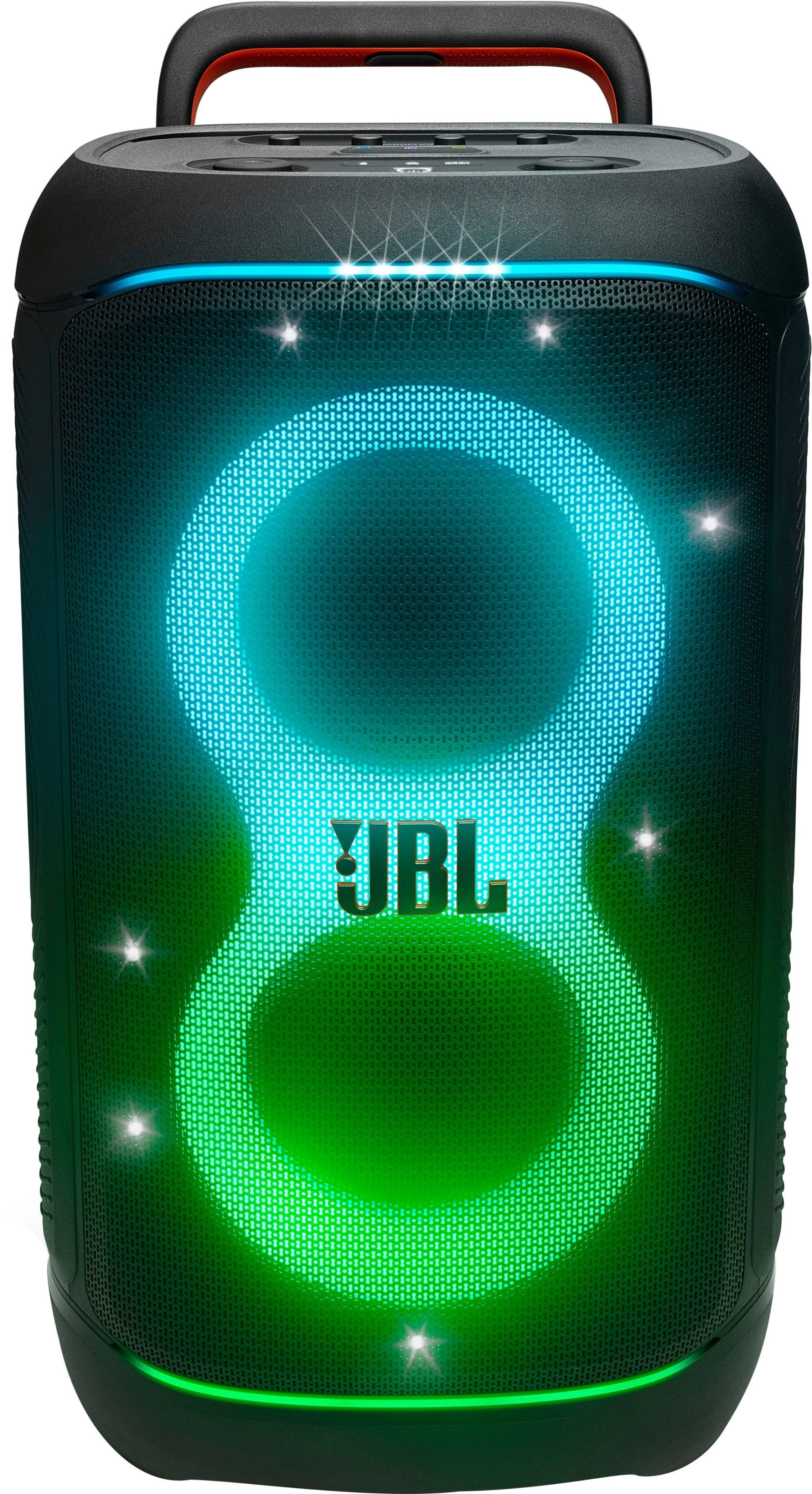
When you're shopping for a high-powered speaker, you'll quickly discover that "loud" doesn't tell the whole story. The Marshall Woburn III and JBL PartyBox 520 both deliver impressive audio performance, but they approach the task from completely different angles. Understanding these differences is crucial to making the right choice for your specific needs.
The speaker market has split into distinct camps, and these two products represent perfect examples of this divide. The Marshall Woburn III is what we call a premium home speaker—it's designed to sit in your living room, look fantastic, and deliver audiophile-quality sound for everyday listening. Think of it as furniture that happens to play music exceptionally well.
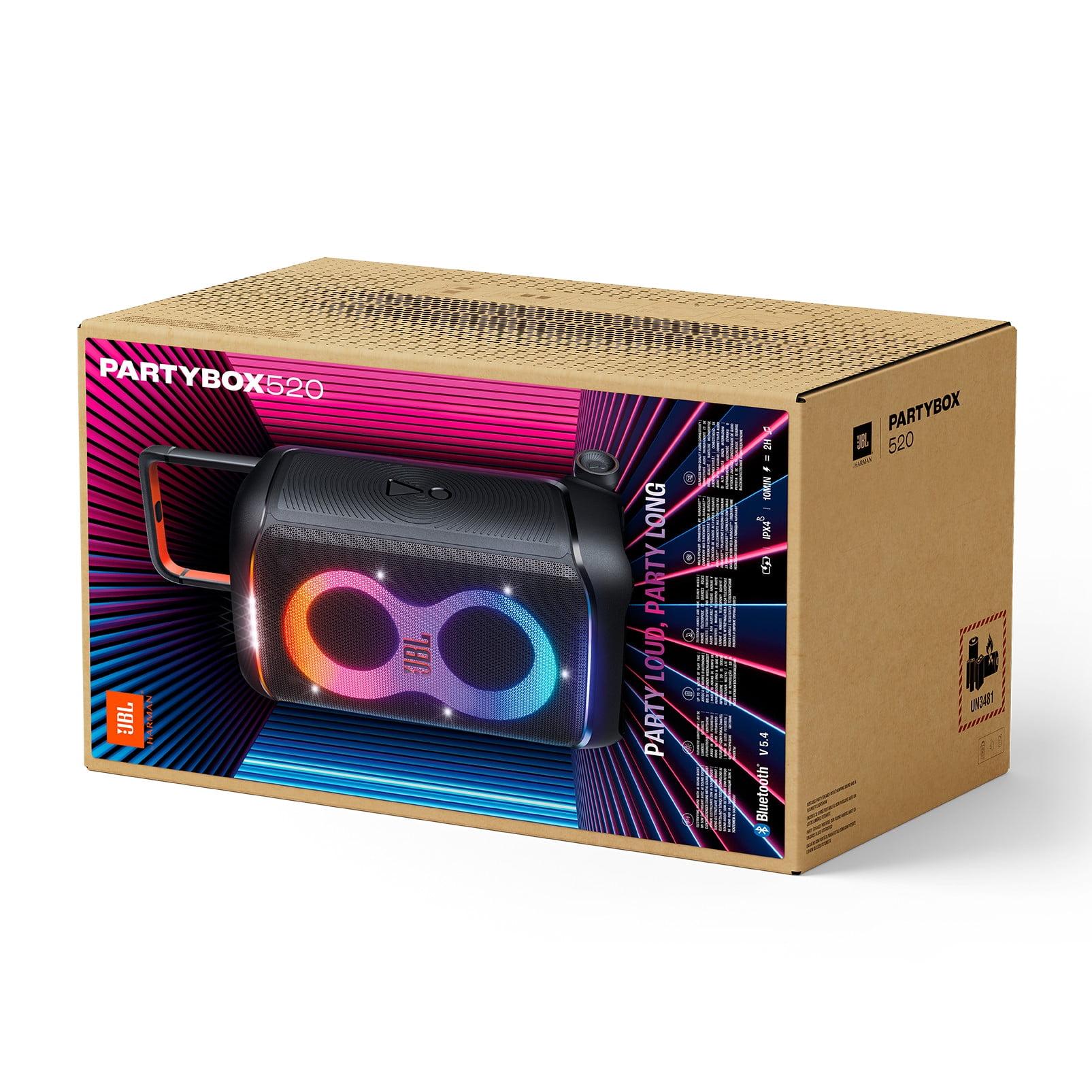
The JBL PartyBox 520, on the other hand, is a portable party system. It's built to travel, get loud enough for outdoor events, and survive the chaos of actual parties. It's less concerned with perfectly balanced sound reproduction and more focused on getting people dancing.
Both speakers were released in 2022-2023, representing the latest thinking in their respective categories. The Marshall Woburn III brought significant improvements over its predecessor with better driver technology and Bluetooth 5.2, while the JBL PartyBox 520 introduced AI Sound Boost technology and Auracast connectivity—features that weren't available in earlier party speakers.
The key consideration here isn't just about sound quality or volume—it's about understanding your primary use case. Are you building a home audio system, or do you need something that can handle your cousin's wedding reception?
The Marshall Woburn III uses what's called a three-way driver system, which is audiophile speak for having different speakers handle different parts of the sound spectrum. It features a dedicated 6-inch woofer (the big speaker that handles bass), two 2-inch midrange drivers (for vocals and most instruments), and two angled 0.75-inch tweeters (for the crispy high frequencies like cymbals and guitar harmonics).
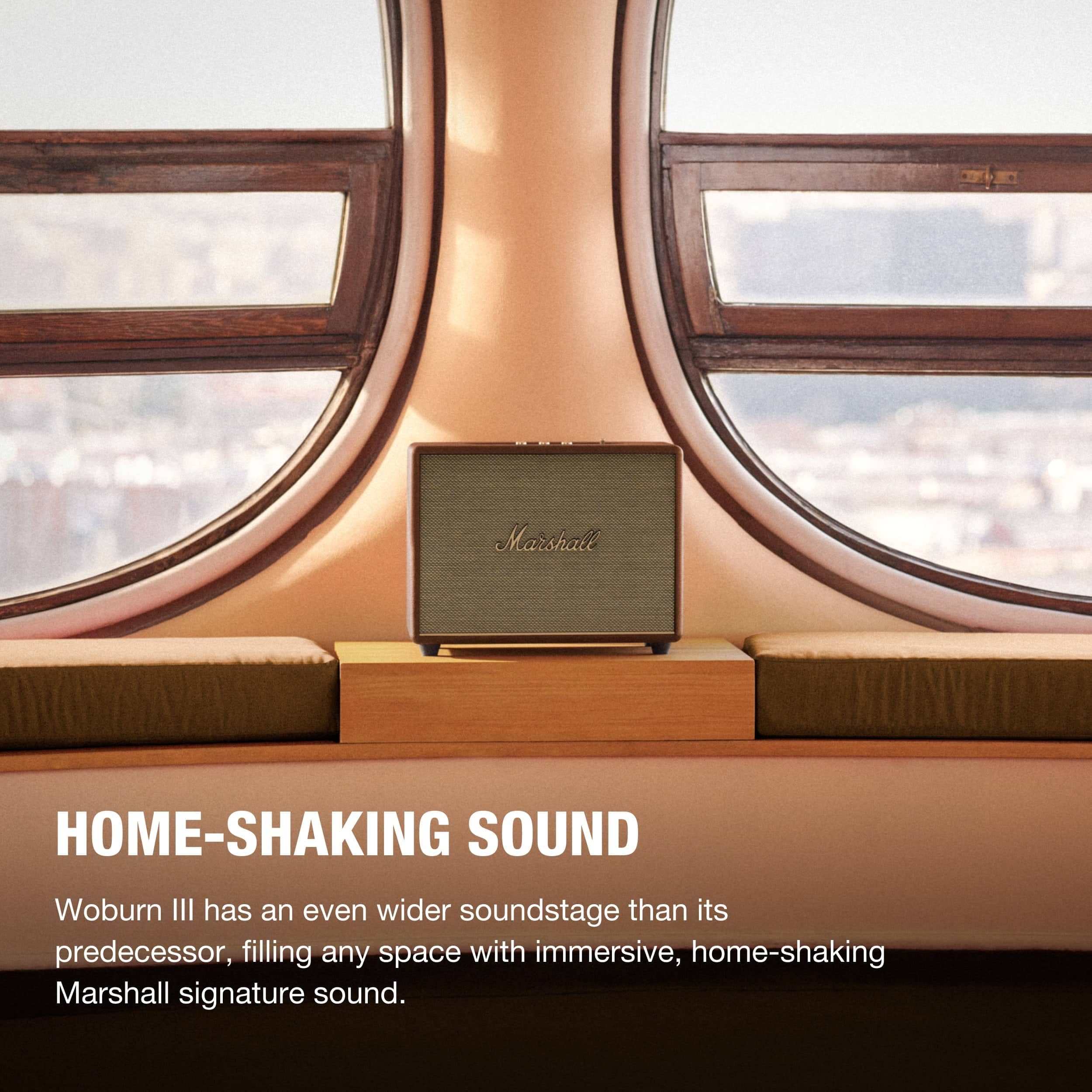
This separation is crucial because it allows each driver to focus on what it does best. The result is remarkably clear sound with excellent stereo imaging—you can actually pinpoint where different instruments are positioned in the mix. The angled tweeters create a wide soundstage that fills a room naturally, rather than beaming sound directly forward like a flashlight.
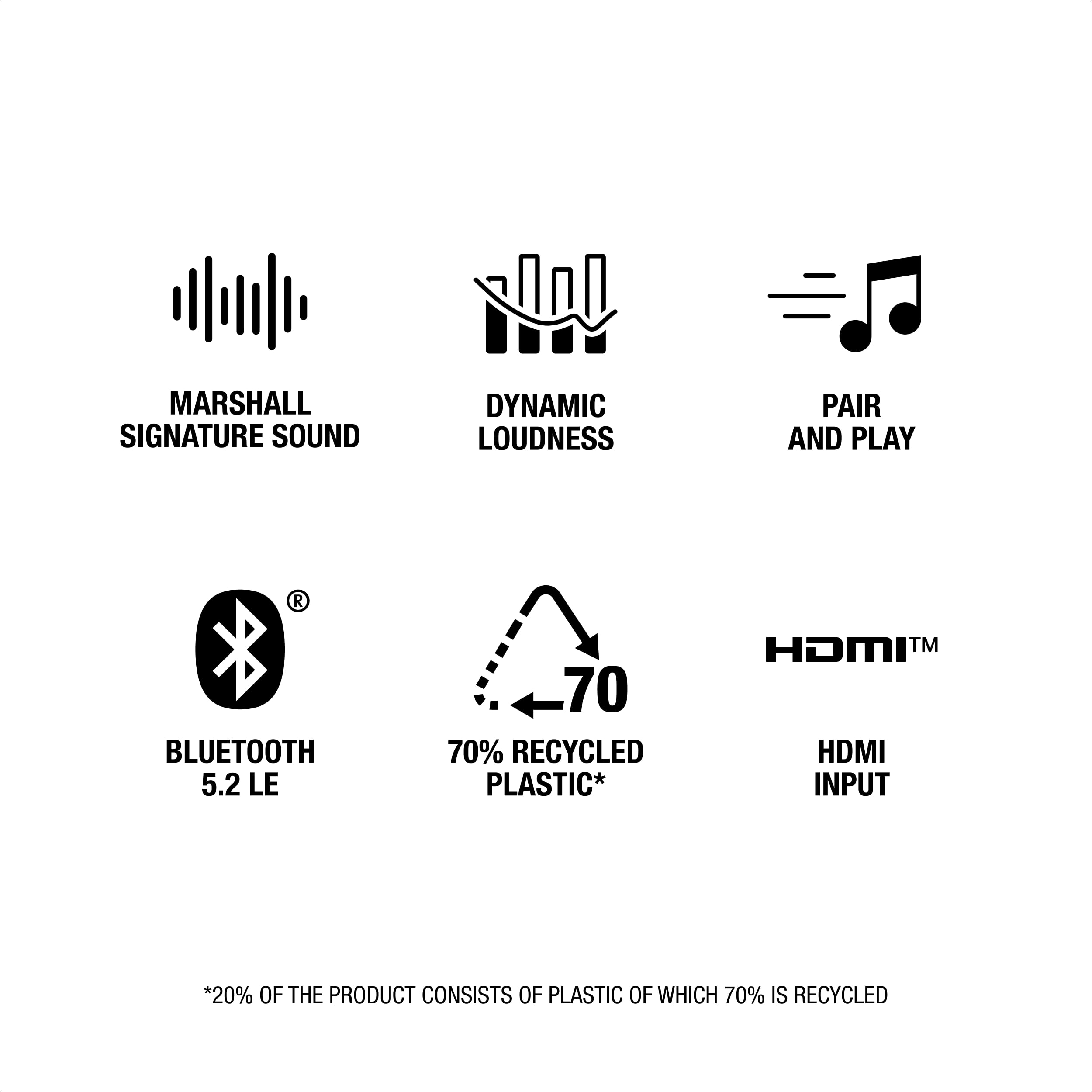
The Marshall Woburn III also includes Dynamic Loudness technology, which automatically adjusts the tonal balance as you change volume levels. At low volumes, your ears naturally lose sensitivity to bass and treble frequencies, so this feature compensates by boosting them slightly. It's the difference between music that sounds thin and lifeless at low volume versus music that maintains its full character.
The JBL PartyBox 520 takes a different approach entirely. It uses dual 7.5-inch woofers paired with dual 1-inch dome tweeters—essentially doubling down on bass production while keeping the high frequencies crisp. This configuration is designed for what audio engineers call a "V-shaped" sound signature: emphasized bass and treble with a slight dip in the midrange.
This isn't a flaw—it's intentional. Party music benefits from punchy bass that you can feel in your chest and sparkling highs that cut through crowd noise. The AI Sound Boost technology analyzes the audio signal in real-time and prevents distortion even when you're pushing the volume to ear-splitting levels.
The frequency response tells the story: the Marshall Woburn III reaches down to 35 Hz (almost the lowest frequency humans can hear), while the JBL PartyBox 520 starts at 40 Hz but can produce much higher sound pressure levels without breaking a sweat.
When comparing speakers, the specifications that matter most are frequency response (how wide a range of sounds it can reproduce), maximum sound pressure level (how loud it can get), and total harmonic distortion (how clean it sounds at high volumes).
The Marshall Woburn III produces 100.5 dB at one meter, which is loud enough to fill a large living room or moderately sized party. The JBL PartyBox 520 significantly exceeds this—it's designed to reach volumes suitable for outdoor events and can easily overpower the Marshall in pure loudness contests.
However, loudness isn't everything. The Marshall's three-way design provides better detail retrieval and imaging accuracy. When listening to complex music like jazz or classical, you'll hear instruments and spatial cues that the JBL's two-way design simply can't reproduce as precisely.
The power specifications reveal each speaker's priorities. The Marshall Woburn III delivers 150 watts total: 90 watts to the woofer and 60 watts split among the midrange and tweeter drivers. This might seem modest compared to the JBL PartyBox 520's 400-watt RMS output, but raw wattage doesn't tell the complete story.
The Marshall's power allocation is carefully balanced across its three-way system, resulting in clean, distortion-free sound at its intended volume levels. The JBL concentrates most of its power on those massive woofers, prioritizing maximum output over tonal balance.
In practical terms, the Marshall Woburn III provides more than enough volume for indoor use and intimate gatherings of 15-20 people. The JBL PartyBox 520 can easily handle outdoor events with 75+ people and spaces up to 300 square meters.
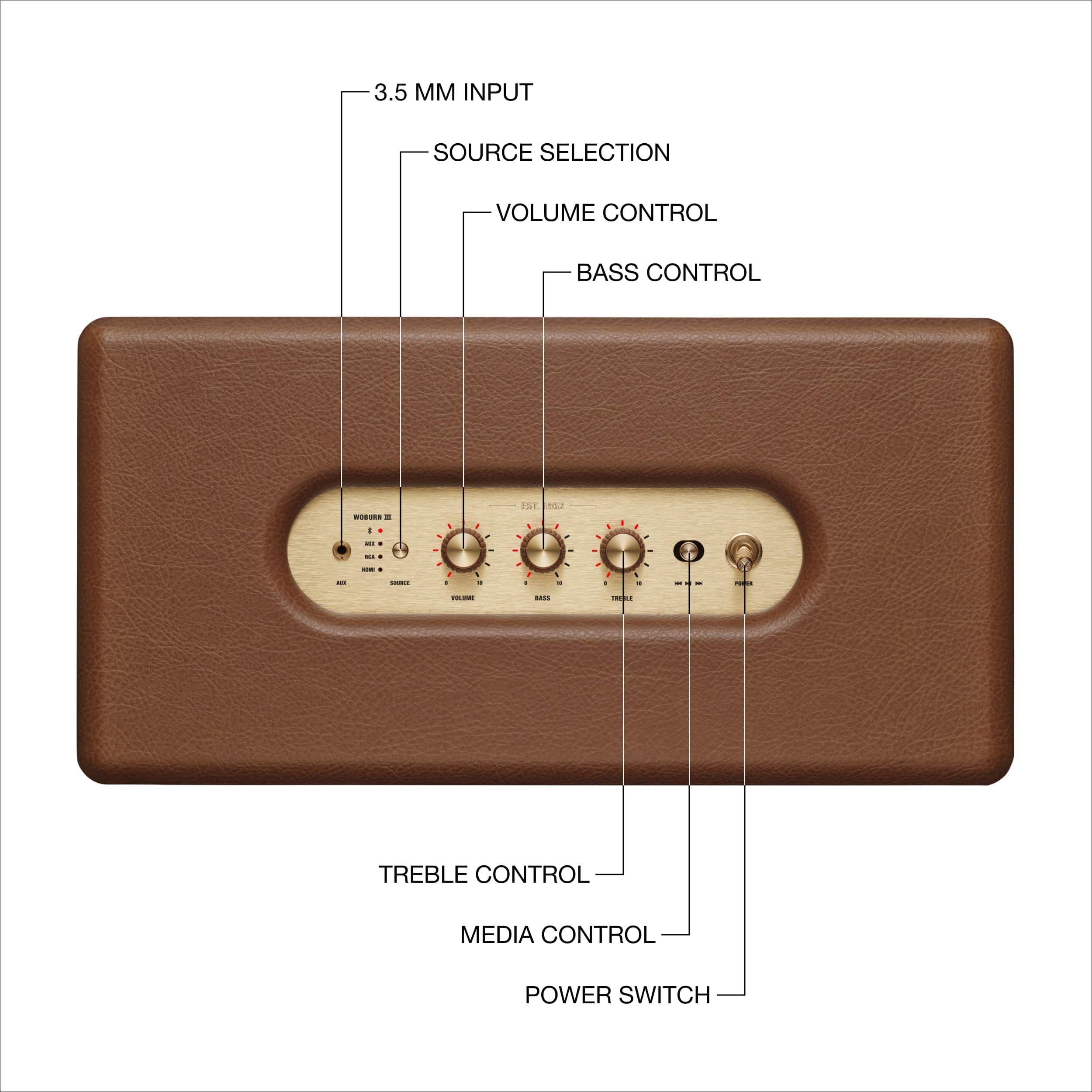
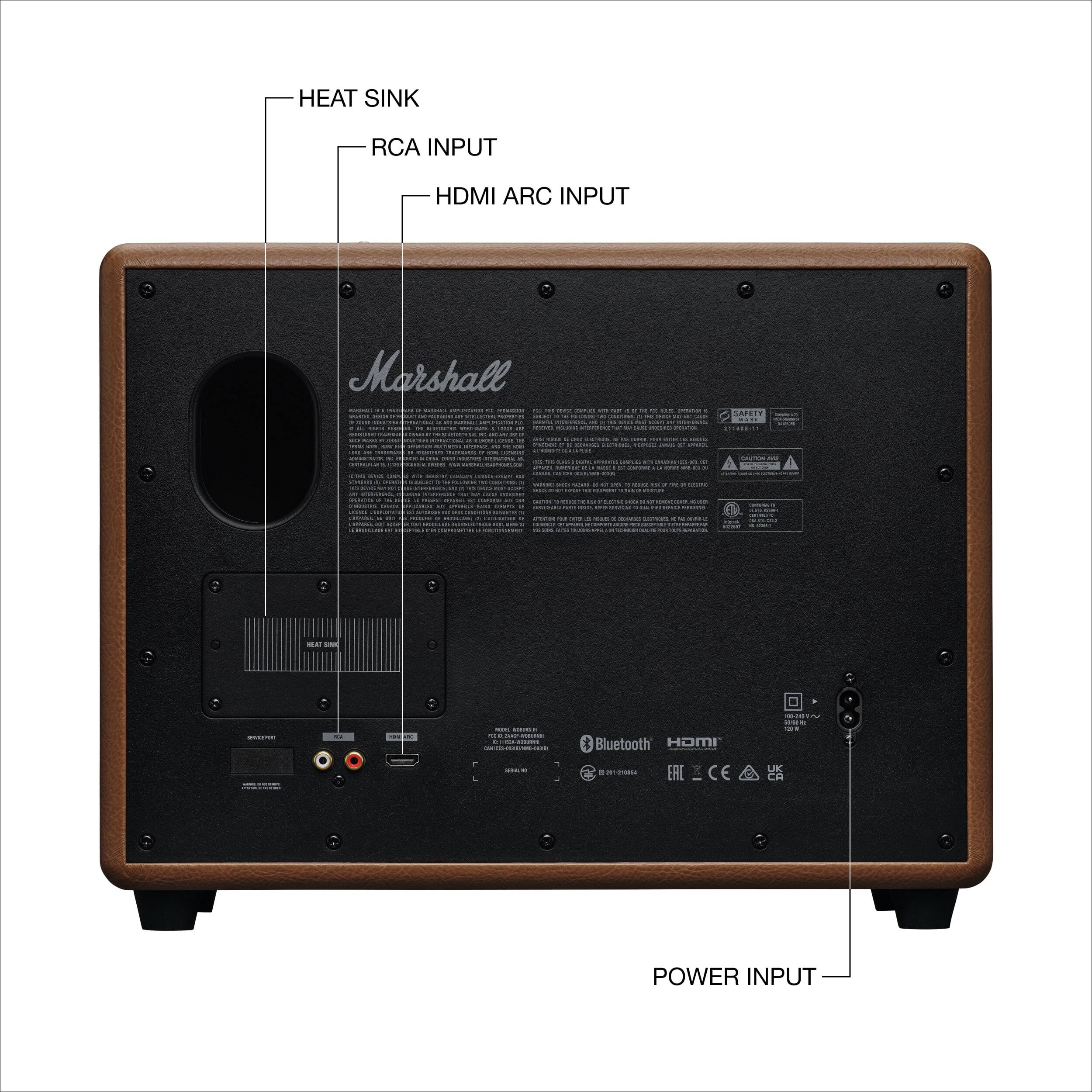
The Marshall Woburn III shines in home integration scenarios. Its HDMI ARC (Audio Return Channel) input allows it to connect directly to your TV and automatically handle volume control through your TV remote. This feature alone makes it an excellent choice for home theater applications—you get dramatically better TV audio without the complexity of a full surround sound system.
The Bluetooth 5.2 implementation supports multipoint connectivity, meaning you can pair two devices simultaneously and switch between them seamlessly. This is perfect for households where multiple people want to play music from their phones without constantly re-pairing devices.
The Marshall app provides placement compensation, which adjusts the speaker's output based on where you position it in your room. Near a wall? The app reduces bass to prevent boomy sound. In the center of a large room? It maintains full bass output for optimal balance.
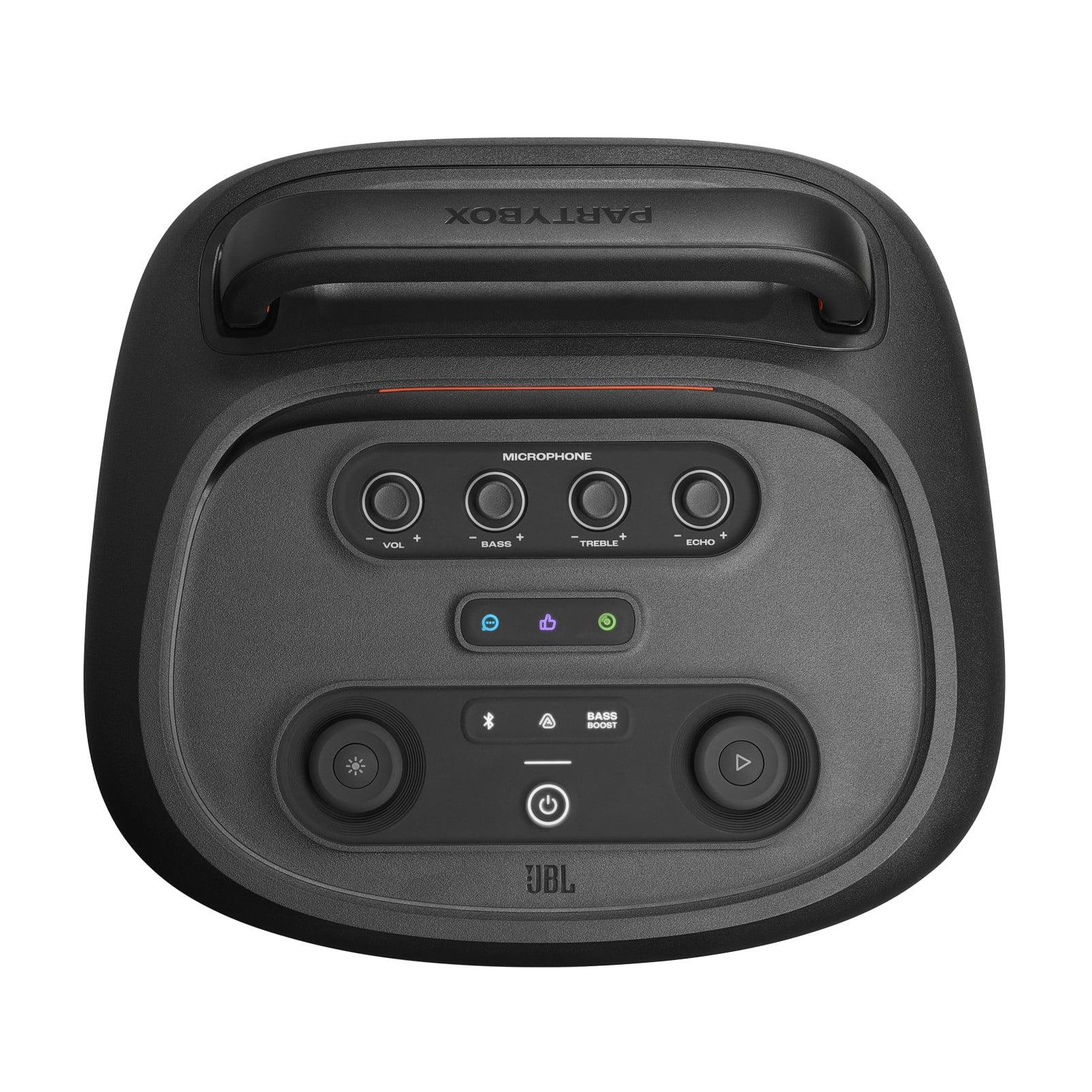
The JBL PartyBox 520 offers completely different connectivity priorities. Those dual XLR/quarter-inch combo inputs aren't just marketing features—they transform this speaker into a legitimate PA system. You can plug in microphones for announcements, guitars for live performance, or even DJ controllers for mixing music.
The Auracast technology represents the cutting edge of speaker linking. Unlike traditional Bluetooth pairing, Auracast allows you to broadcast audio to multiple compatible speakers simultaneously, creating a synchronized sound system across large spaces. This is revolutionary for events where you need consistent audio coverage.
The USB-C port serves double duty: it can charge your devices (crucial during long events) and accept lossless audio files directly from USB drives. The JBL PartyBox 520 also supports various audio formats including FLAC, ensuring you're not limited to compressed streaming services.
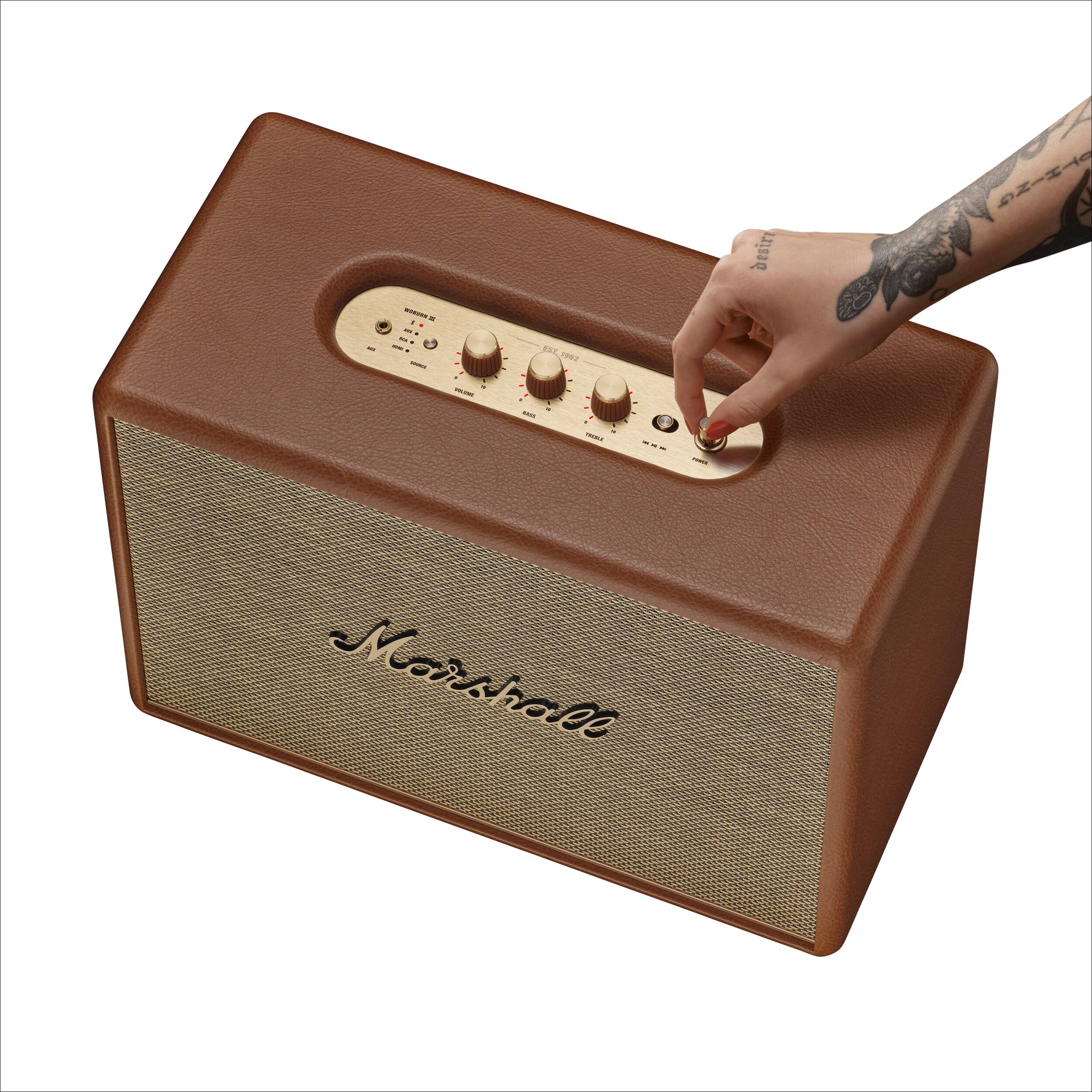
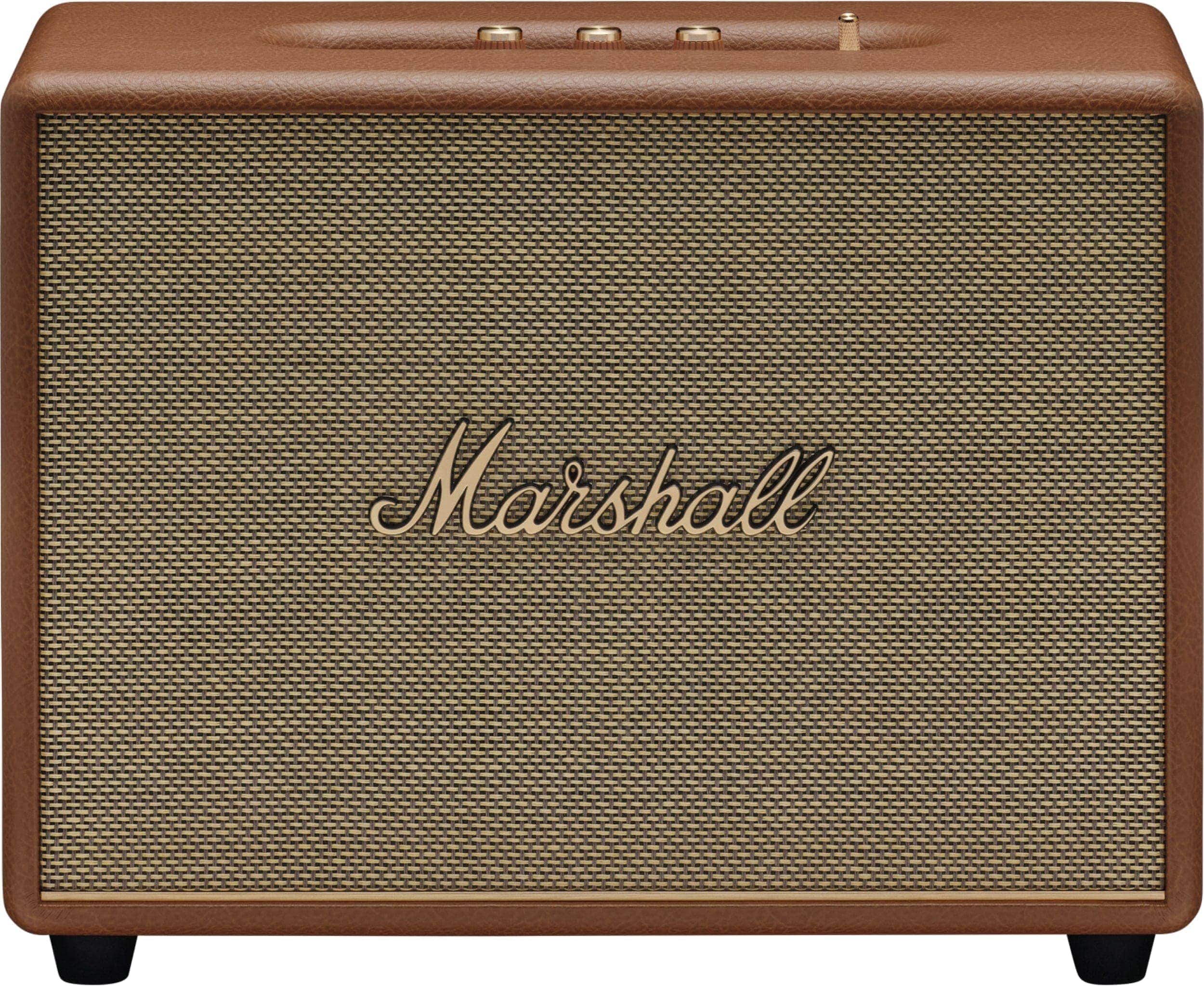
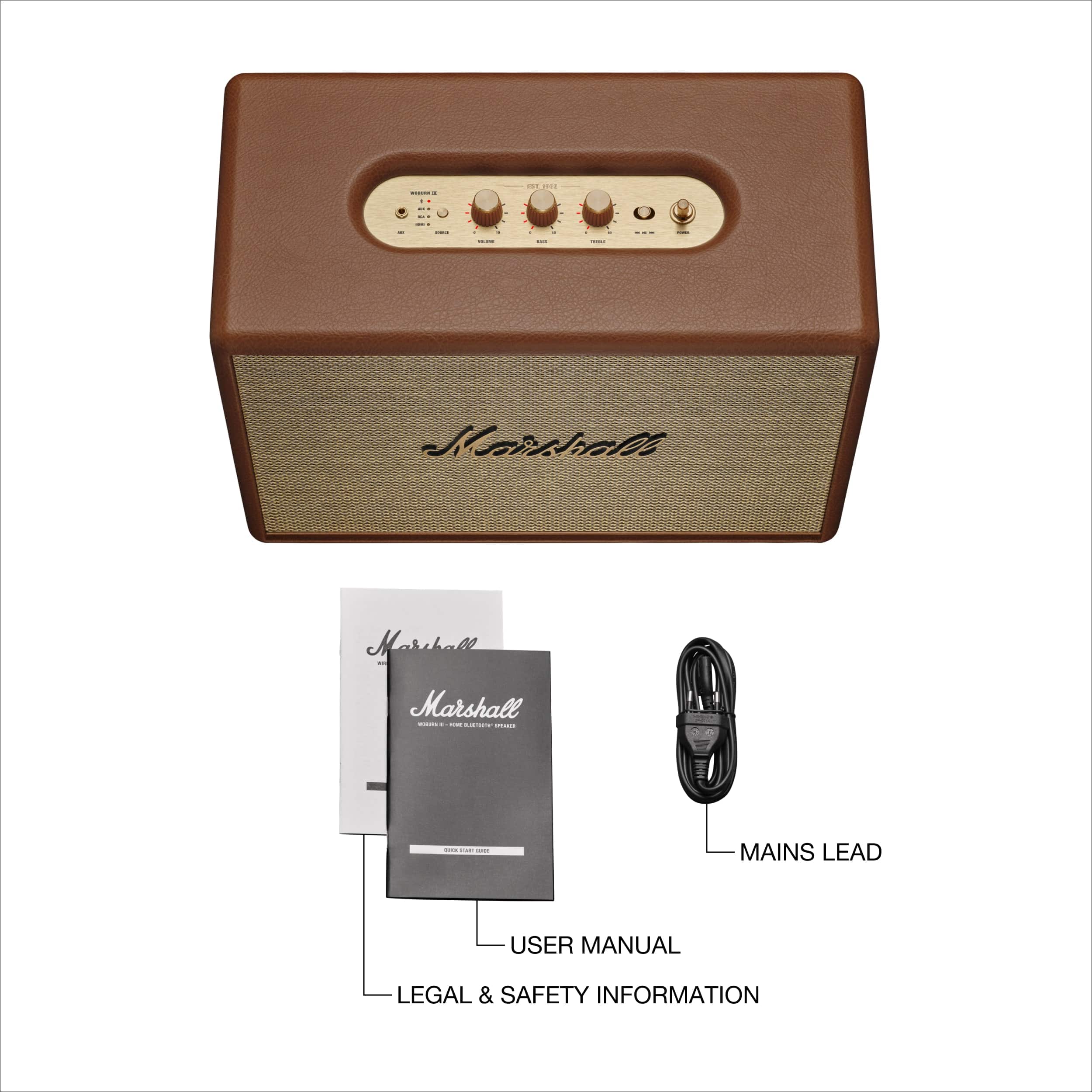
The Marshall Woburn III looks like what it is: a premium piece of audio equipment that belongs in a well-appointed living room. The vegan leather texture and brass control knobs reference Marshall's legendary guitar amplifiers, creating an instantly recognizable aesthetic that many find irresistible.
More importantly, the build quality reflects the price point. The cabinet construction uses 70% recycled plastic with no PVC, and the overall fit and finish feels substantial. This isn't a speaker you'll want to hide—it's designed to be a conversation piece.
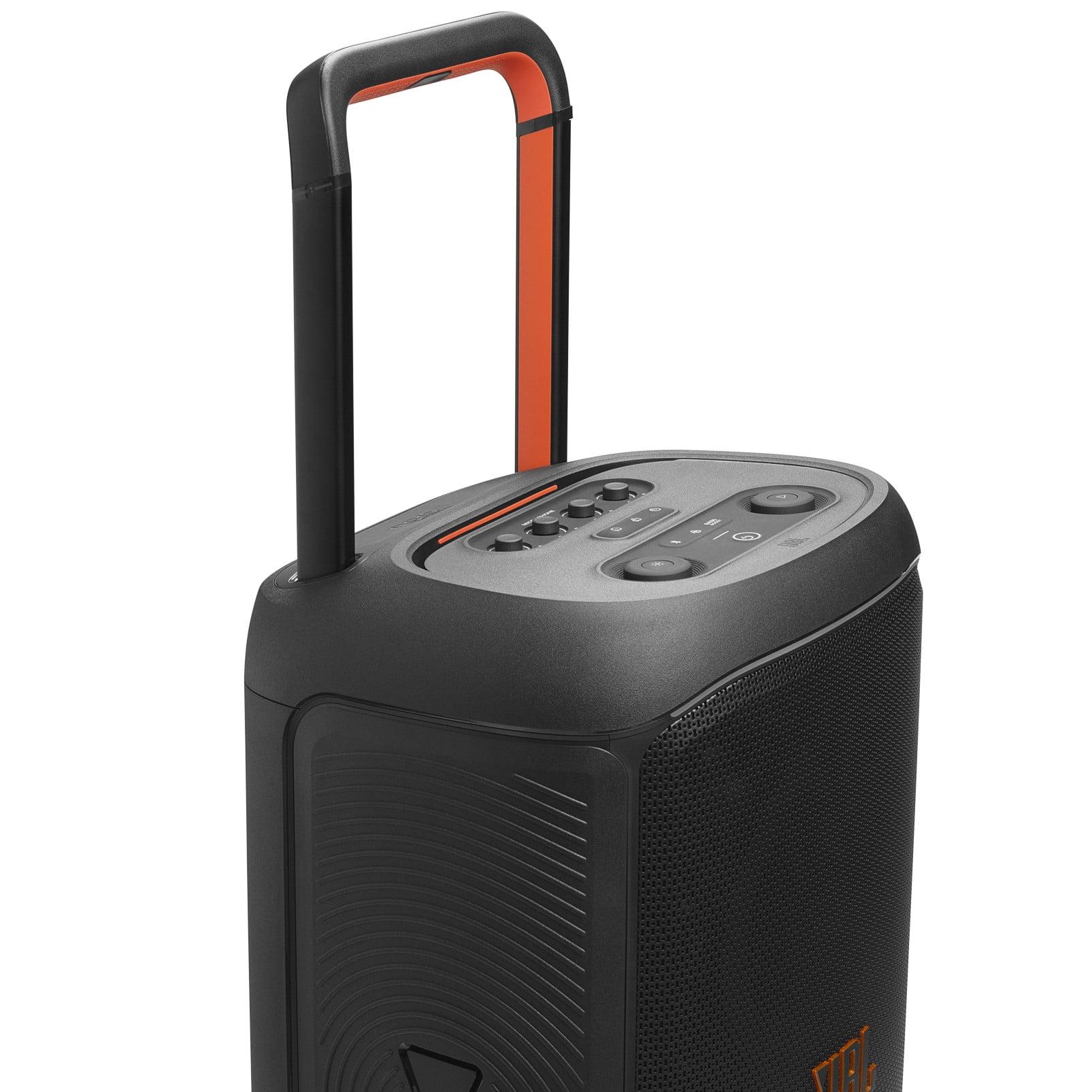
The analog controls on top provide tactile feedback that many users prefer over app-only interfaces. You can adjust volume, bass, and treble without reaching for your phone, and the control layout is intuitive enough to use in the dark.
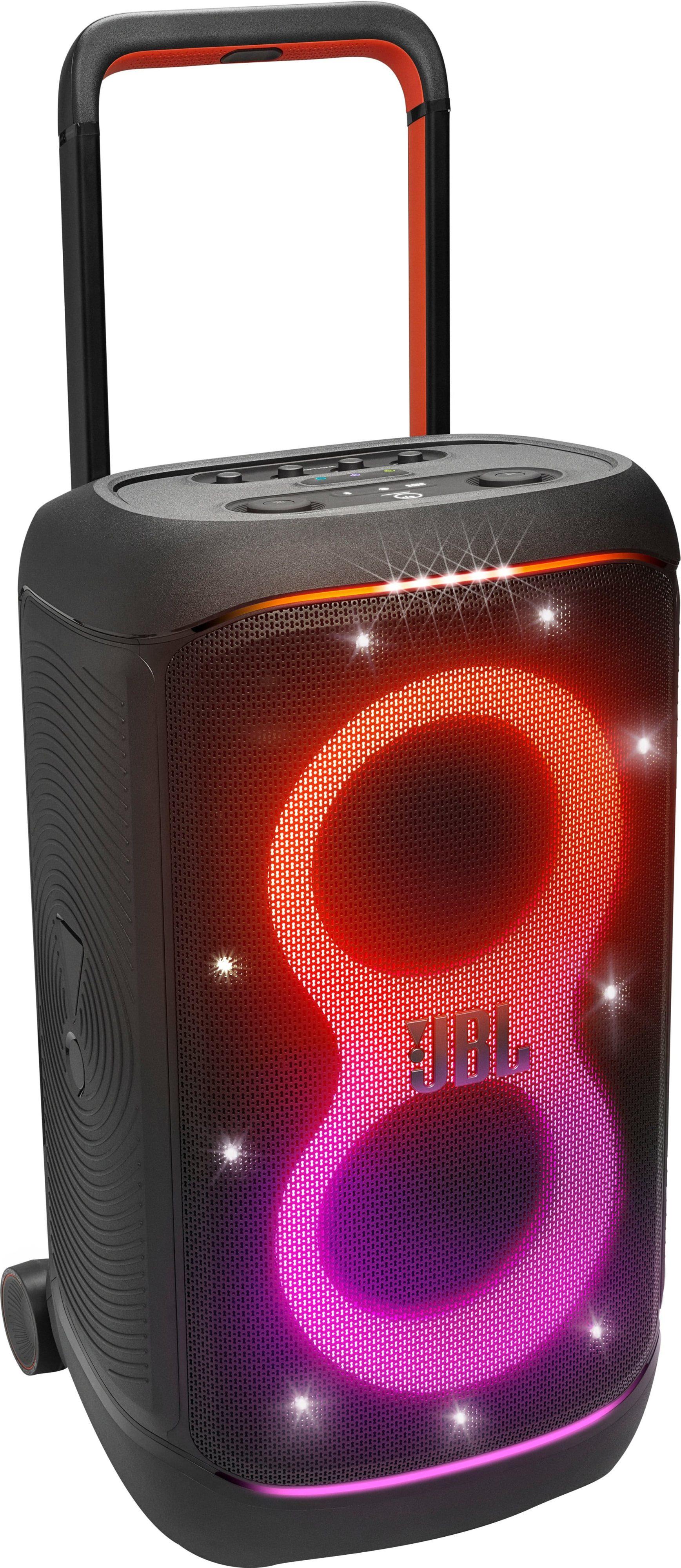
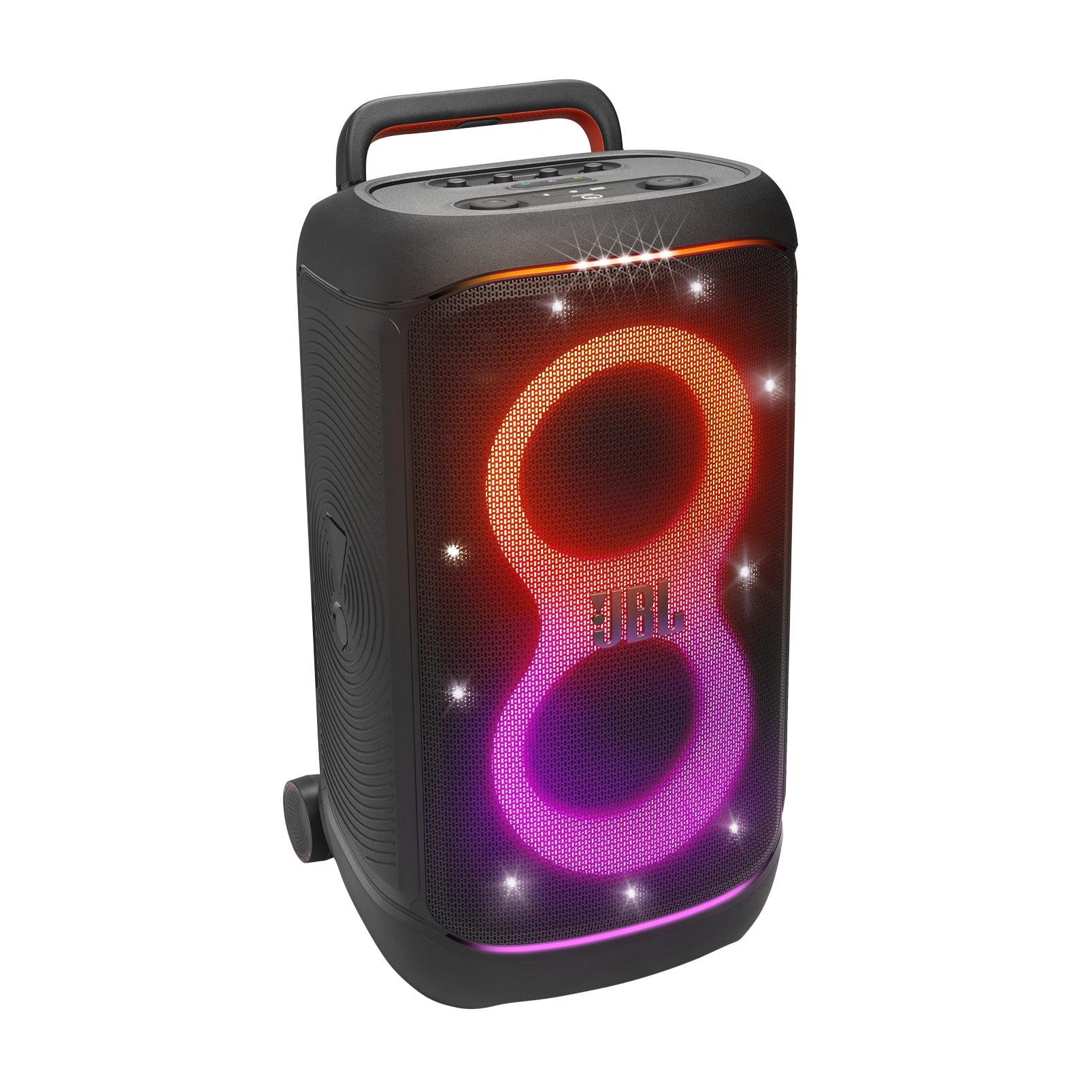
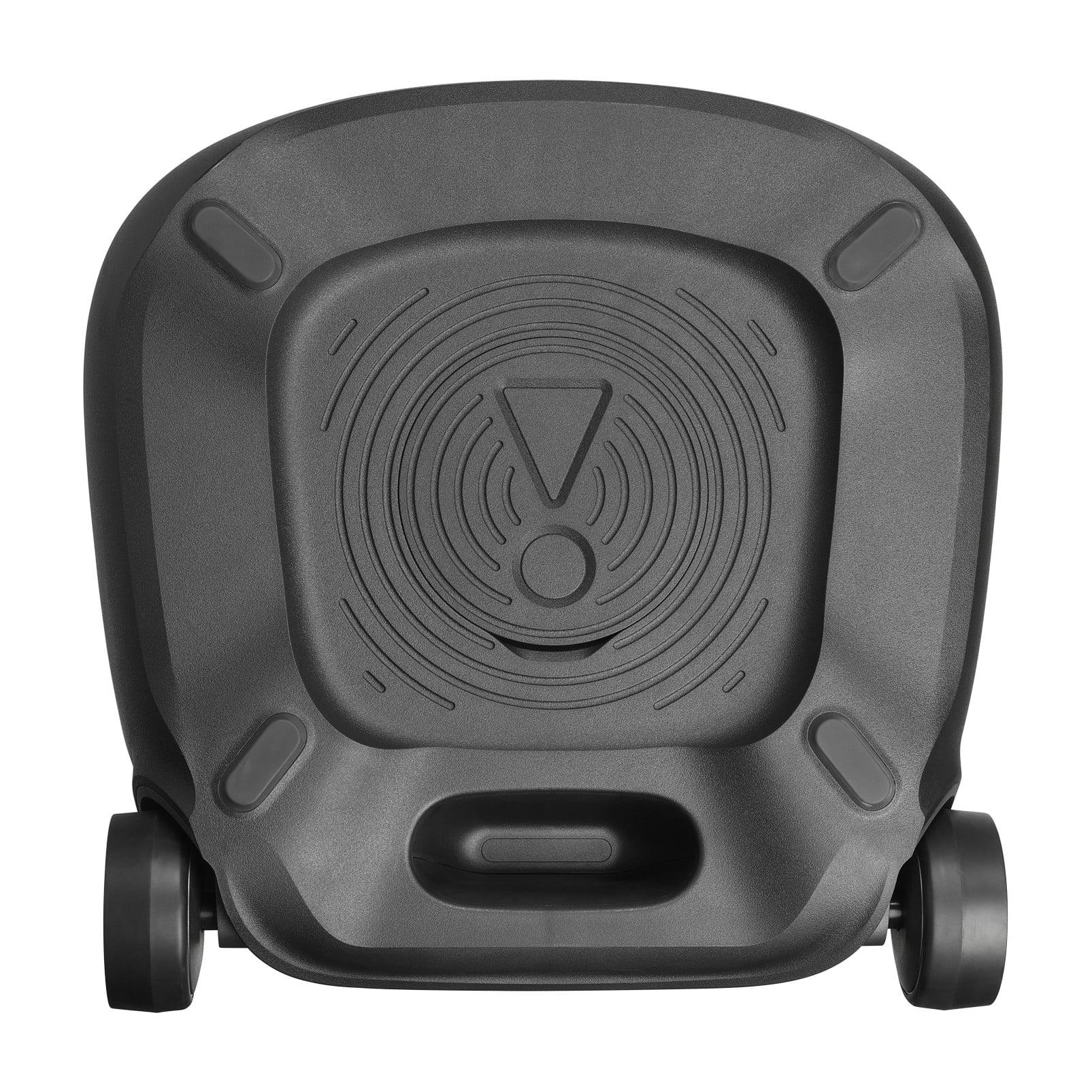
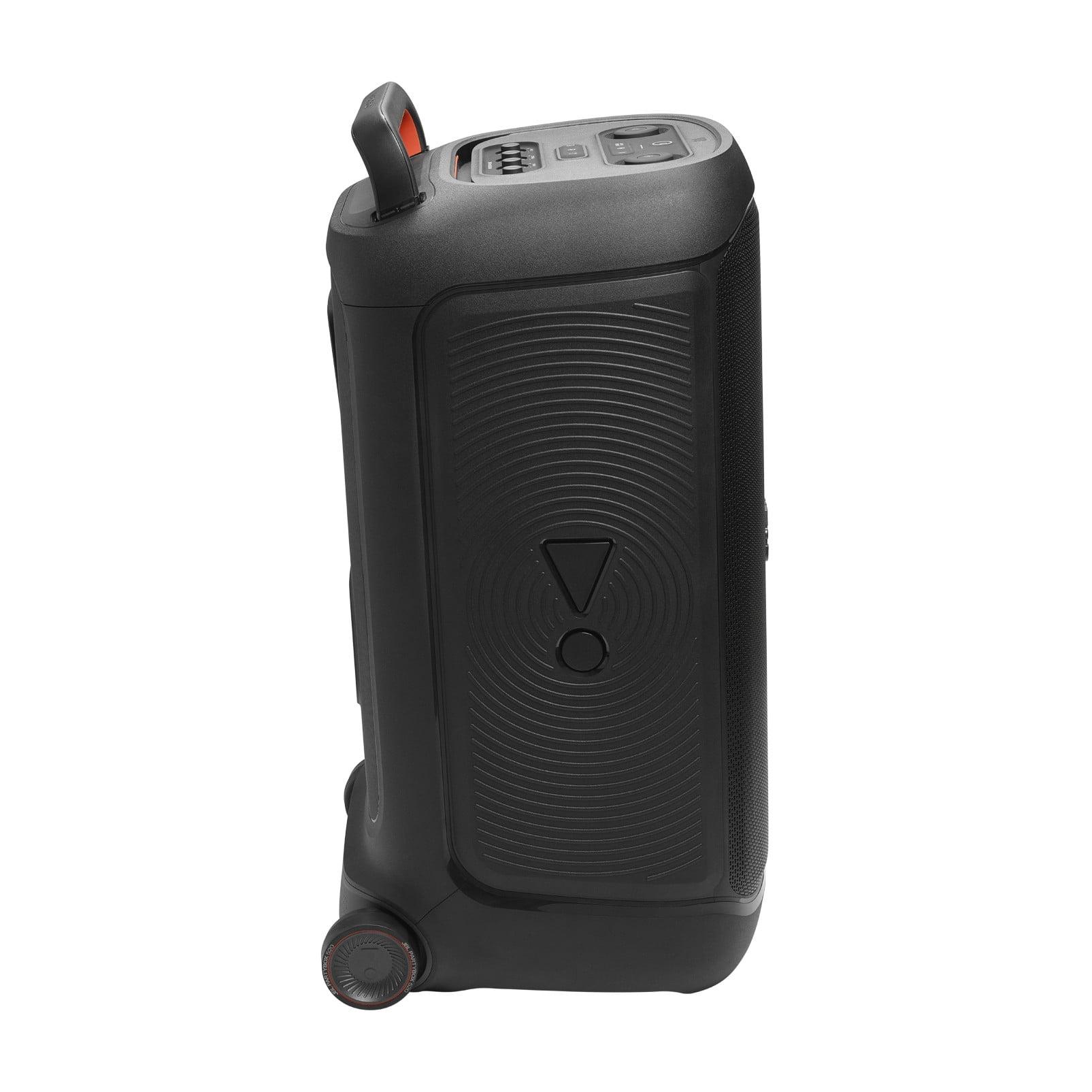
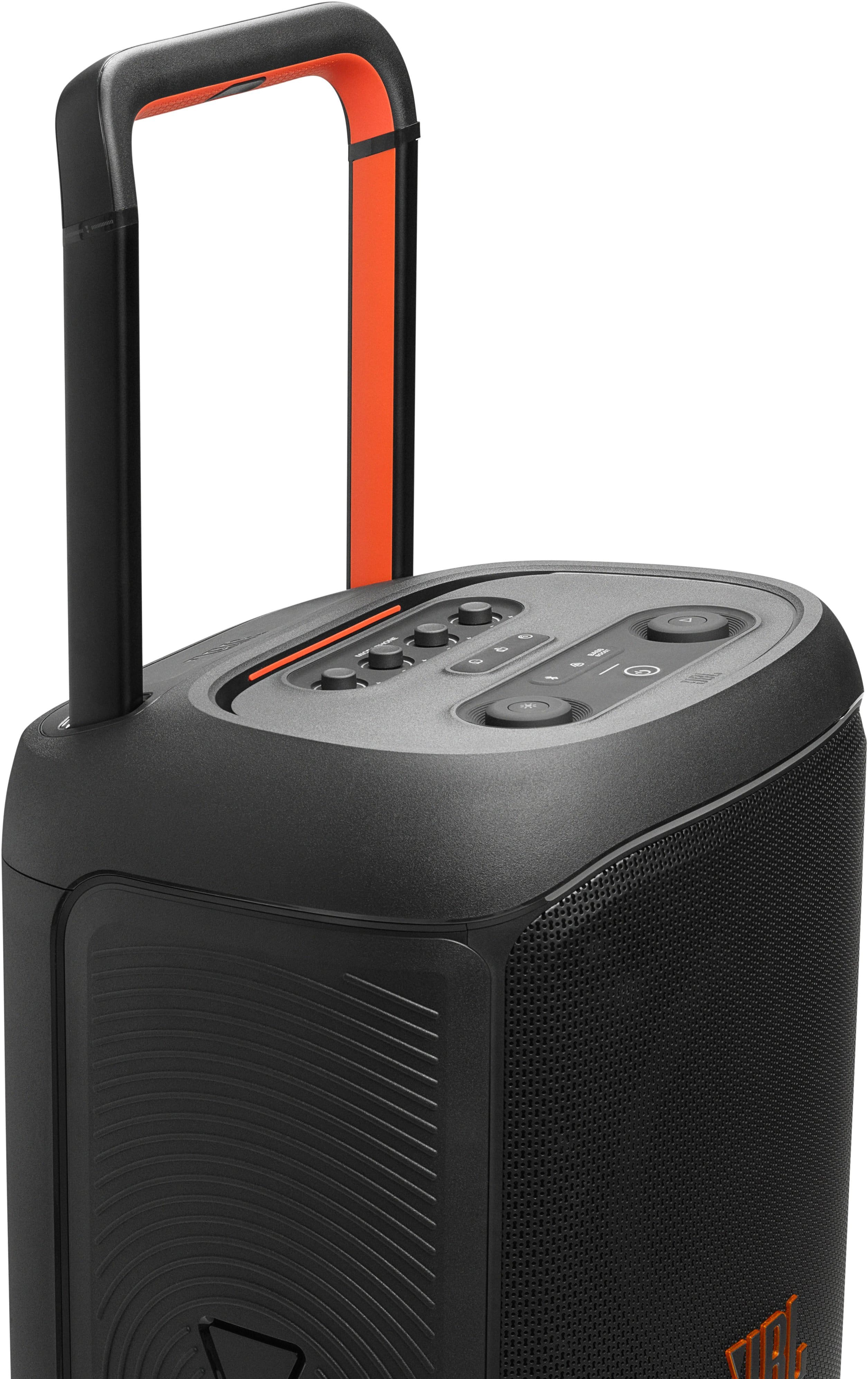
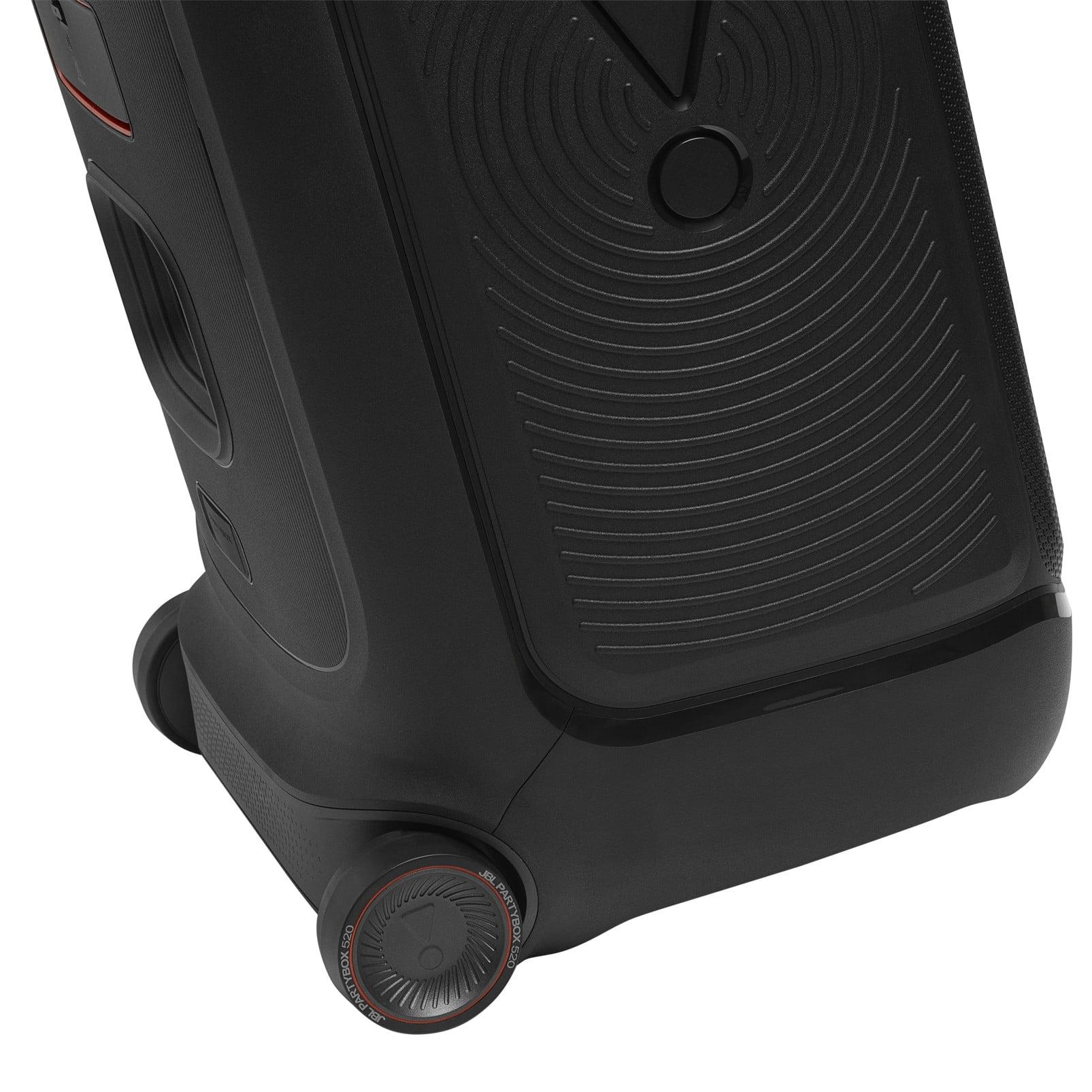
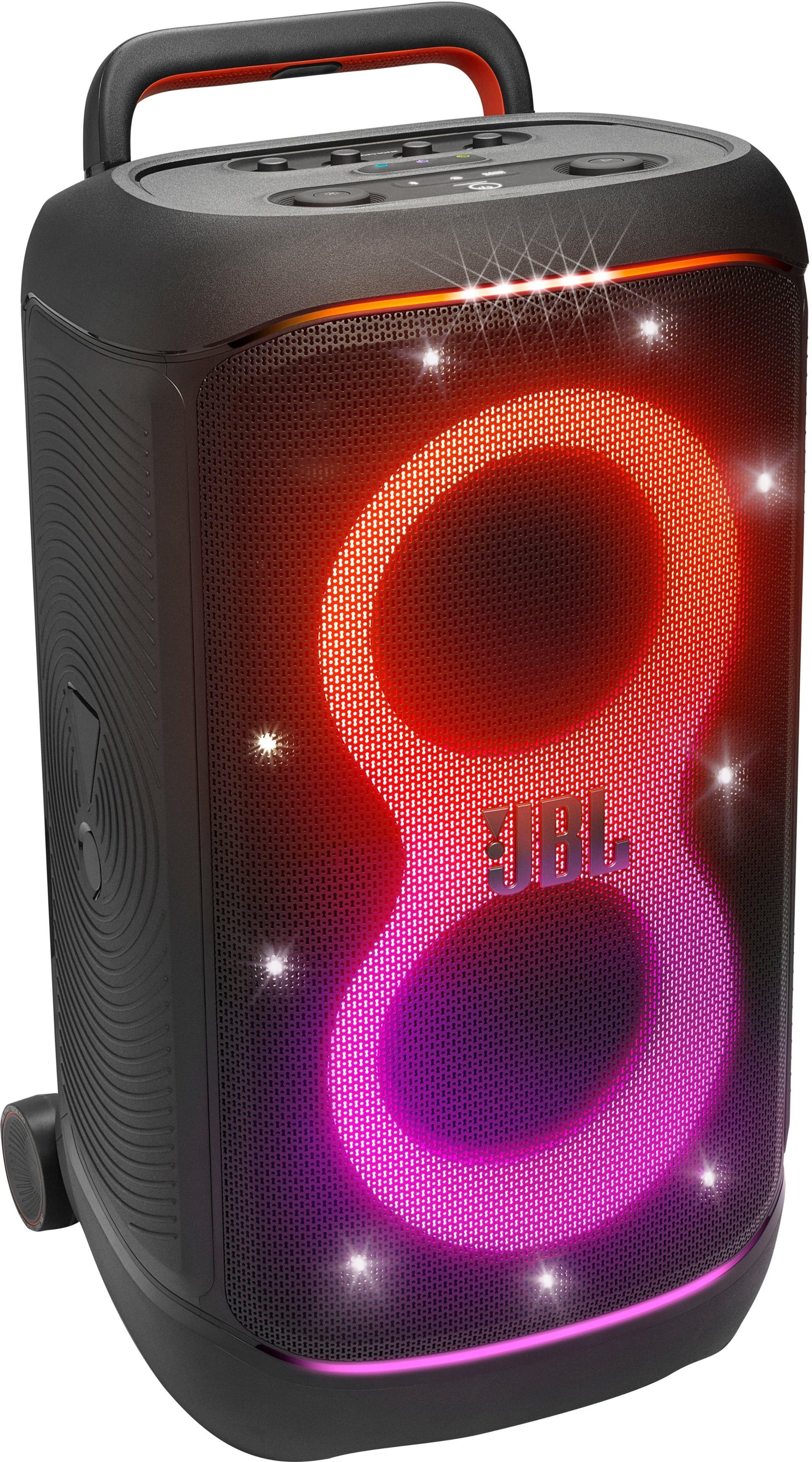
The JBL PartyBox 520 prioritizes durability and portability over living room aesthetics. At 56 pounds, it's definitely heavy, but the telescopic handle and grippy wheels make it manageable for most people. The IPX4 rating means it can handle light rain and drink spills—crucial features for outdoor events.
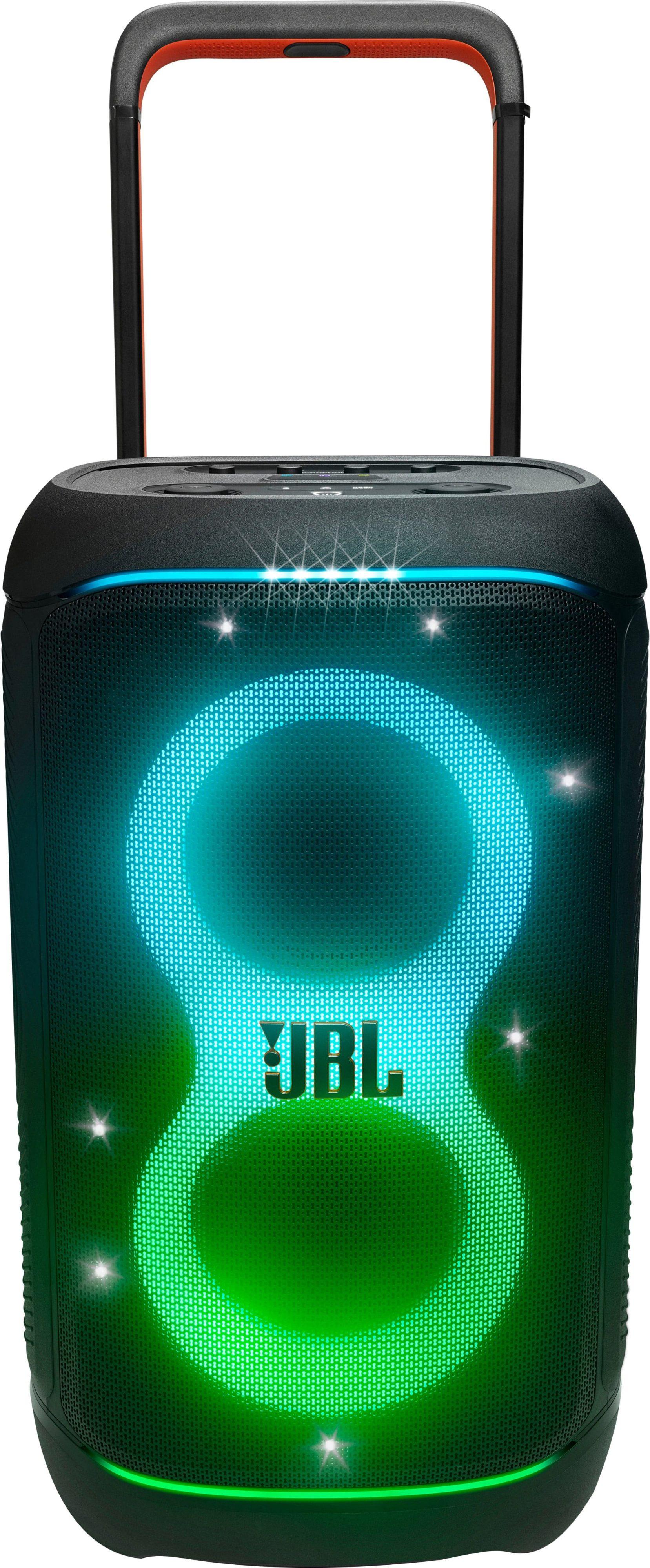
The build quality is robust rather than refined. The plastic construction feels substantial without being precious, and the metal grille can withstand the inevitable bumps that come with portable use. The integrated lighting system adds visual excitement but also serves as a functional indicator of volume levels and playback status.
This is where the fundamental difference between these speakers becomes most apparent. The Marshall Woburn III requires AC power at all times—it's not designed to be portable. This limitation allows for higher power efficiency and eliminates concerns about battery degradation, but it also restricts placement options.
The JBL PartyBox 520 offers up to 15 hours of battery life, though this varies significantly based on volume levels and bass content. More importantly, the battery is replaceable, extending the speaker's useful life well beyond what's typical for battery-powered electronics. A 10-minute quick charge provides two additional hours of playback—essential for event use.
The USB-C output can charge phones and tablets, essentially turning the speaker into a portable power station. This feature proves invaluable during outdoor events where power outlets aren't readily available.
For home theater use, the Marshall Woburn III provides a compelling upgrade path. The HDMI ARC connection eliminates audio delay issues common with Bluetooth, and the Night Mode feature (when connected to a TV) automatically adjusts dynamics for late-night viewing—reducing loud explosions while boosting quiet dialogue.
The three-way driver configuration excels at dialogue clarity, which is often the weakest point of TV audio. Movie soundtracks benefit from the controlled bass response and detailed midrange reproduction.
The JBL PartyBox 520 can technically connect to TVs through its auxiliary input, but its party-focused tuning isn't ideal for movie dialog or nuanced soundtracks. The emphasized bass and treble that work well for dance music can make movies sound exaggerated and unnatural.
At the time of writing, both speakers represent significant investments, but they target different value propositions. The Marshall Woburn III costs considerably less while delivering audiophile-quality performance for home use. Its sustainable construction and over-the-air update capability suggest strong long-term value retention.
The JBL PartyBox 520 commands a premium price but justifies it through versatility and professional features. The replaceable battery system, weather resistance, and multi-device connectivity create a speaker that can serve multiple roles throughout its lifespan.
You prioritize sound quality over maximum volume, plan to use it primarily indoors, value home theater integration, or simply want a speaker that looks as good as it sounds. The Marshall Woburn III excels at critical listening sessions, background music during dinner parties, and enhancing your TV viewing experience.
It's perfect for audiophiles who want high-quality sound without the complexity of separate components, homeowners who value design aesthetics, and anyone who primarily listens in controlled indoor environments.
You regularly host outdoor events, need maximum volume for large gatherings, want weather resistance, or require microphone inputs for announcements or performances. The JBL PartyBox 520 dominates when you need to fill large spaces with sound or when portability matters more than ultimate sound quality.
It's ideal for event organizers, DJs, musicians who need portable PA systems, and social hosts who frequently entertain large groups in various locations.
These speakers serve fundamentally different purposes, and choosing between them should be straightforward once you honestly assess your primary use case. The Marshall Woburn III is the superior choice for home listening, offering exceptional sound quality, elegant design, and seamless integration with modern home entertainment systems.
The JBL PartyBox 520 wins decisively for event use, providing the volume, durability, and features necessary for successful gatherings. Its professional inputs and portable design make it genuinely versatile in ways the Marshall simply cannot match.
Both speakers represent excellent value within their respective categories. The mistake would be choosing based on price alone rather than matching the speaker's strengths to your actual needs. Consider how you'll primarily use the speaker, and the choice becomes clear.
| Marshall Woburn III Bluetooth Home Speaker | JBL PartyBox 520 Speaker |
|---|---|
| Power Output - Determines maximum volume and room size capability | |
| 150W total (90W woofer + 60W mids/tweets) - sufficient for large rooms | 400W RMS - designed for outdoor events and crowds up to 75 people |
| Driver Configuration - Affects sound quality and detail reproduction | |
| 3-way stereo: 1x 6" woofer, 2x 2" midrange, 2x 0.75" tweeters (superior detail) | 2-way: 2x 7.5" woofers, 2x 1" tweeters (maximum bass impact) |
| Frequency Response - Shows how deep bass extends and overall sound range | |
| 35-20,000 Hz (exceptional low-end extension for home listening) | 40 Hz-20 kHz (strong bass but optimized for party music rather than critical listening) |
| Power Source - Determines portability and placement flexibility | |
| AC powered only (permanent installation, no battery concerns) | Replaceable 99Wh battery (up to 15 hours playback, truly portable) |
| Connectivity Options - Shows versatility for different audio sources | |
| HDMI ARC, RCA, 3.5mm aux, Bluetooth 5.2 multipoint (excellent TV integration) | Dual XLR/1/4" inputs, USB-C, 3.5mm aux, Bluetooth 5.4 with Auracast (professional PA capabilities) |
| Weather Resistance - Important for outdoor use and durability | |
| No weather resistance (indoor use only) | IPX4 splashproof (handles light rain and party spills) |
| Weight and Portability - Affects placement flexibility and transport | |
| 16.4 lbs, stationary design (easy room placement, not portable) | 56.2 lbs with telescopic handle and wheels (heavy but designed for transport) |
| Sound Signature - Describes the tonal balance and listening experience | |
| Balanced audiophile tuning with controlled bass and detailed mids/highs | V-shaped party tuning with emphasized bass and treble for dance music |
| Smart Features - Modern conveniences and app integration | |
| Marshall app with placement compensation, Dynamic Loudness, OTA updates | JBL app with 7-band EQ, customizable light show, AI Sound Boost technology |
| Professional Features - Capabilities beyond basic music playback | |
| HDMI ARC for seamless TV integration and Night Mode for late viewing | Microphone/guitar inputs, device charging via USB-C, multi-speaker linking |
| Build Quality and Design - Aesthetic appeal and construction durability | |
| Premium vegan leather texture, brass controls, 70% recycled materials | Rugged plastic construction with LED light show, built for event use |
The Marshall Woburn III is specifically designed for home use with premium materials, elegant design, and HDMI ARC connectivity for seamless TV integration. The JBL PartyBox 520 is built for portable events and parties, making it oversized and overpowered for typical home listening scenarios.
The JBL PartyBox 520 is designed for outdoor use with IPX4 weather resistance, battery power, and wheels for easy transport. The Marshall Woburn III requires AC power and has no weather protection, making it unsuitable for outdoor use.
The JBL PartyBox 520 produces significantly higher volume levels with its 400W RMS output, designed to fill large outdoor spaces and entertain crowds up to 75 people. The Marshall Woburn III at 150W provides ample volume for home use but cannot match the JBL's maximum output.
The Marshall Woburn III delivers superior sound quality with its three-way driver system providing detailed midrange, controlled bass, and excellent stereo imaging ideal for critical listening. The JBL PartyBox 520 prioritizes maximum impact and bass punch over audiophile accuracy.
The Marshall Woburn III excels for TV use with dedicated HDMI ARC connectivity, automatic volume control, and Night Mode for late-night viewing. While the JBL PartyBox 520 can connect via auxiliary input, its party-focused tuning isn't optimized for movie dialogue and soundtracks.
The JBL PartyBox 520 is designed for portability despite its 56-pound weight, featuring a telescopic handle, wheels, and 15-hour battery life. The Marshall Woburn III is a stationary speaker requiring AC power and is not intended for transport.
Neither the Marshall Woburn III nor the JBL PartyBox 520 includes built-in voice assistant support. Both rely on Bluetooth connectivity from your phone or tablet for voice control through your device's assistant.
The JBL PartyBox 520 is purpose-built for parties with customizable LED light shows, microphone inputs, extremely loud output, and weather resistance for outdoor events. The Marshall Woburn III is designed for refined home listening rather than party entertainment.
The JBL PartyBox 520 features dual XLR/quarter-inch combo inputs for microphones, guitars, or DJ equipment, making it suitable for live performances and announcements. The Marshall Woburn III has no microphone inputs and focuses solely on music playback.
Both speakers deliver impressive bass, but differently: the Marshall Woburn III extends deeper to 35 Hz with controlled, accurate bass reproduction, while the JBL PartyBox 520 emphasizes bass impact and punch with dual 7.5-inch woofers designed to be felt at party volumes.
The Marshall Woburn III app focuses on sound refinement with placement compensation, Dynamic Loudness, and OTA updates for audiophile features. The JBL PartyBox 520 app emphasizes entertainment with customizable light shows, 7-band EQ, and AI Sound Boost for party optimization.
Value depends on your needs: the Marshall Woburn III offers exceptional home audio quality and design at its price point, while the JBL PartyBox 520 provides professional PA system capabilities, portability, and entertainment features that justify its higher cost for event use.
We've done our best to create useful and informative comparisons to help you decide what product to buy. Our research uses advanced automated methods to create this comparison and perfection is not possible - please contact us for corrections or questions. These are the sites we've researched in the creation of this article: loudersound.com - ash-asia.zendesk.com - armorsound.com - rtings.com - crutchfield.com - rtings.com - stereoguide.com - bestbuy.com - hometechnologyreview.com - crutchfield.com - sweetwater.com - rtings.com - youtube.com - greentoe.com - versus.com - idownloadblog.com - marshall.com - youtube.com - comparisontabl.es - youtube.com - versus.com - crutchfield.com - device.report - consumerreports.org - sg.tcacoustic.asia - stereoindex.com - safemark.com - smarthomesounds.co.uk - marshall.com - device.report - bestbuy.com - marshall.com - soundguys.com - rtings.com - rtings.com - rtings.com - letemsvetemapplem.eu - youtube.com - worldwidestereo.com - youtube.com - global.jbl.com - youtube.com - soundguys.com - youtube.com - youtube.com - comparisontabl.es - youtube.com - youtube.com - youtube.com - gzhls.at - sweetwater.com - static.pcrichard.com - brandsmartusa.com - news.harman.com - jbl.com - ro.harmanaudio.com - jbl.com - creativeaudio.net

Privacy Policy
Terms and Conditions - Affiliate Policy
Home Security
© Copyright 2008-2026.
11816 Inwood Rd #1211, Dallas, TX 75244