


When shopping for a Bluetooth speaker, you'll quickly realize that not all wireless audio devices are created equal. The Marshall Woburn III and JBL PartyBox Encore Essential 2 represent two completely different philosophies in speaker design, despite both connecting to your phone via Bluetooth. Think of it like comparing a luxury sedan to an adventure SUV—both get you from point A to point B, but they're designed for entirely different journeys.
At the time of writing, these speakers sit in vastly different price categories, with the Marshall Woburn III commanding premium pricing as a flagship home speaker, while the JBL PartyBox Encore Essential 2 offers solid value in the mid-range portable category. This price difference reflects their fundamentally different approaches to audio reproduction and user experience.
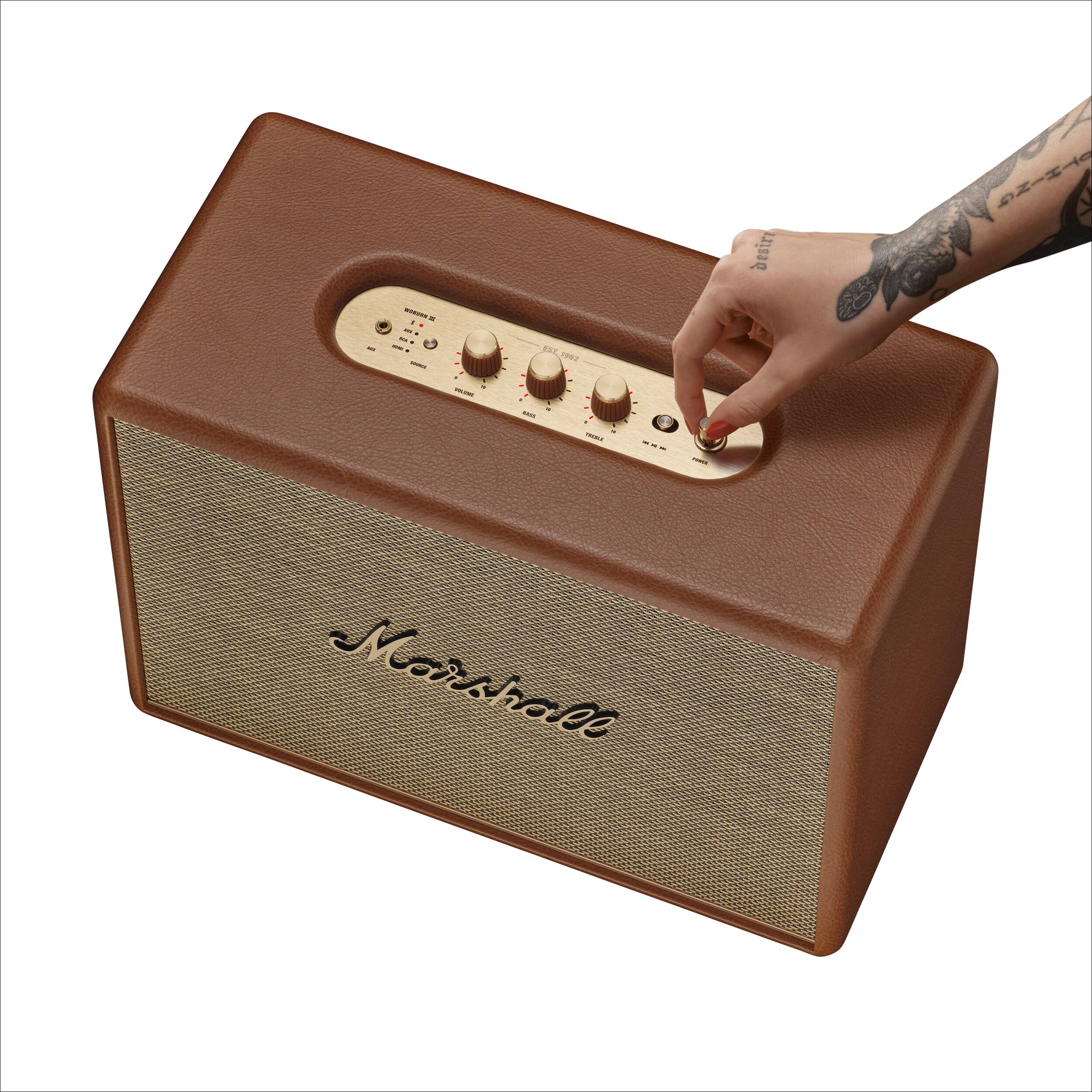
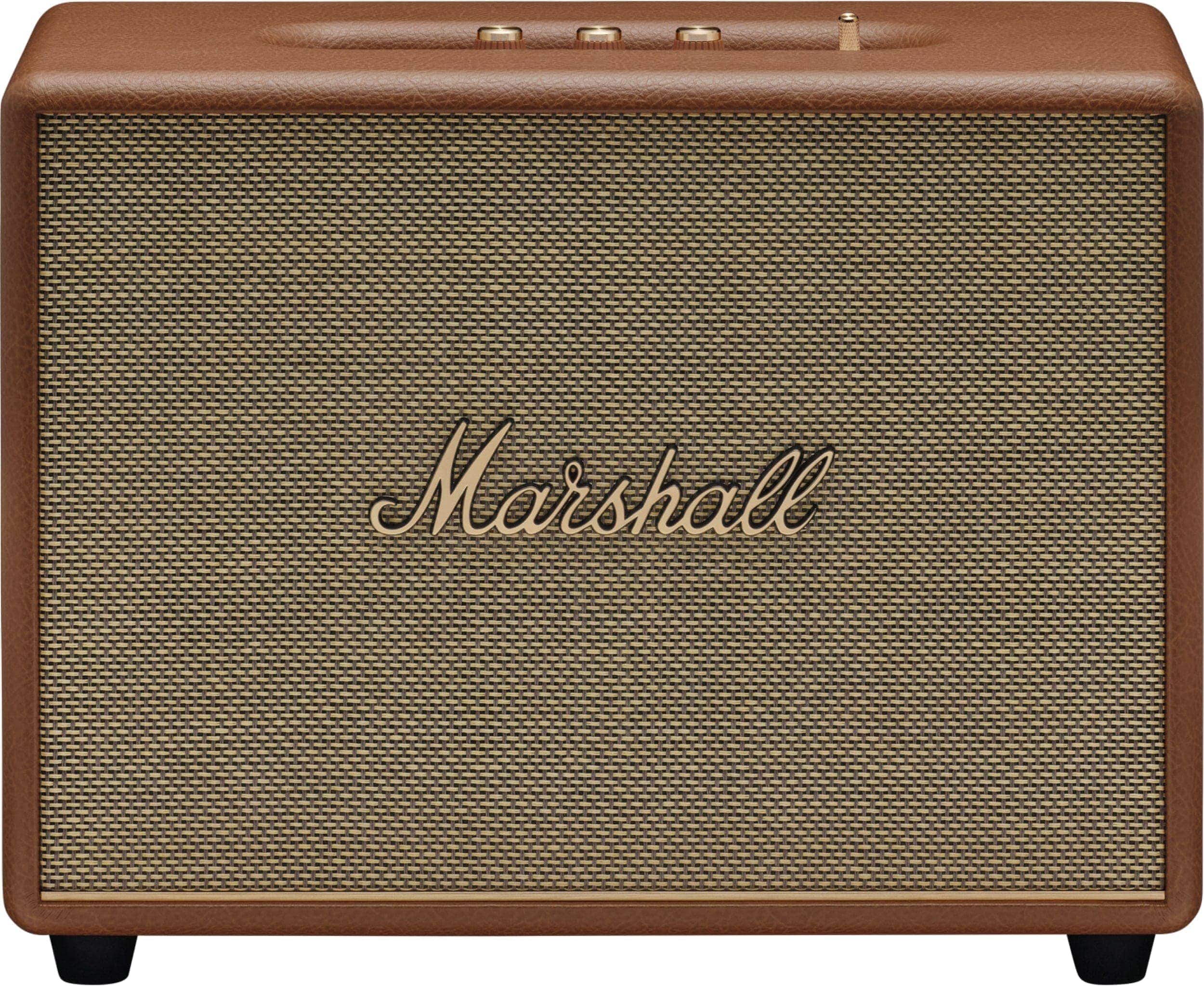
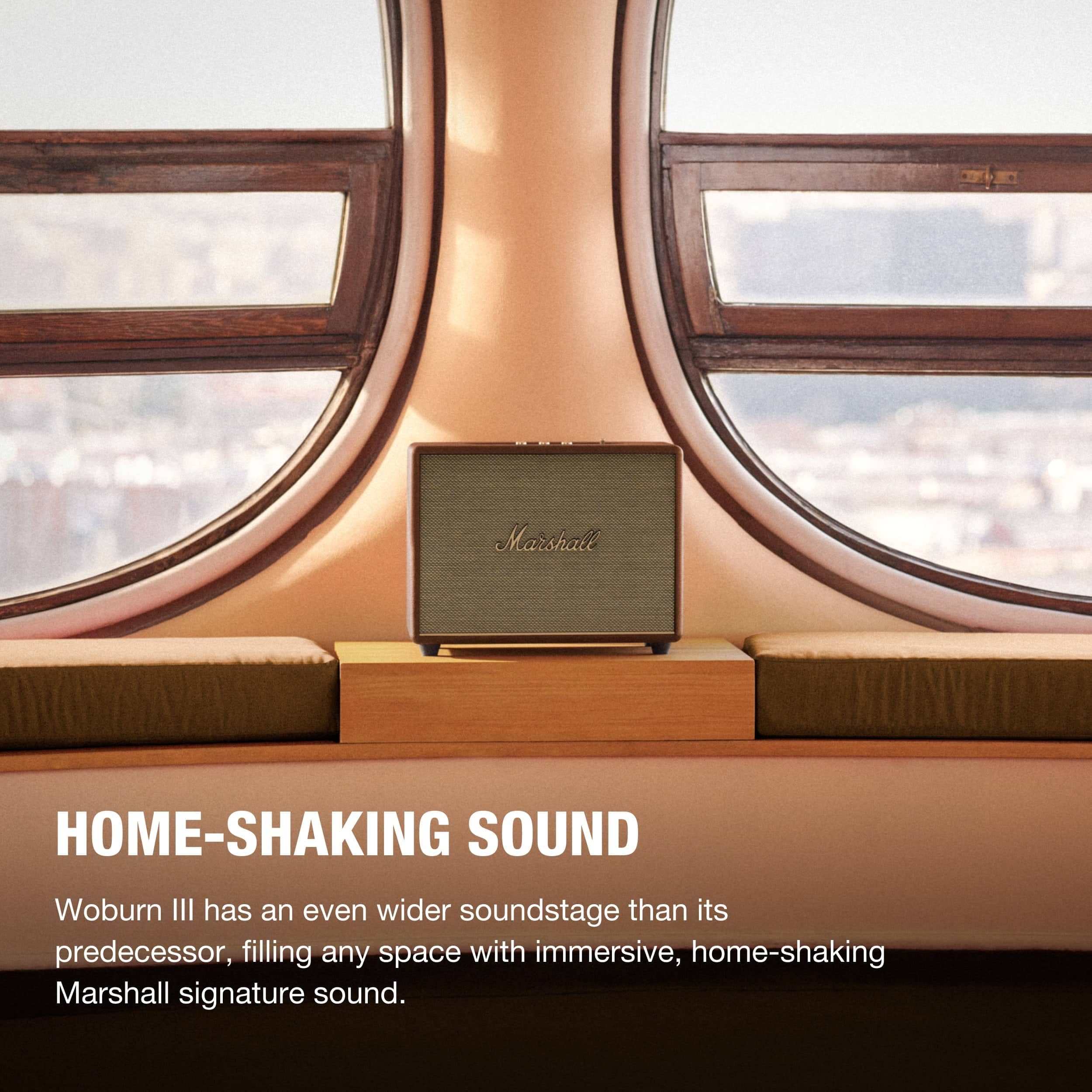
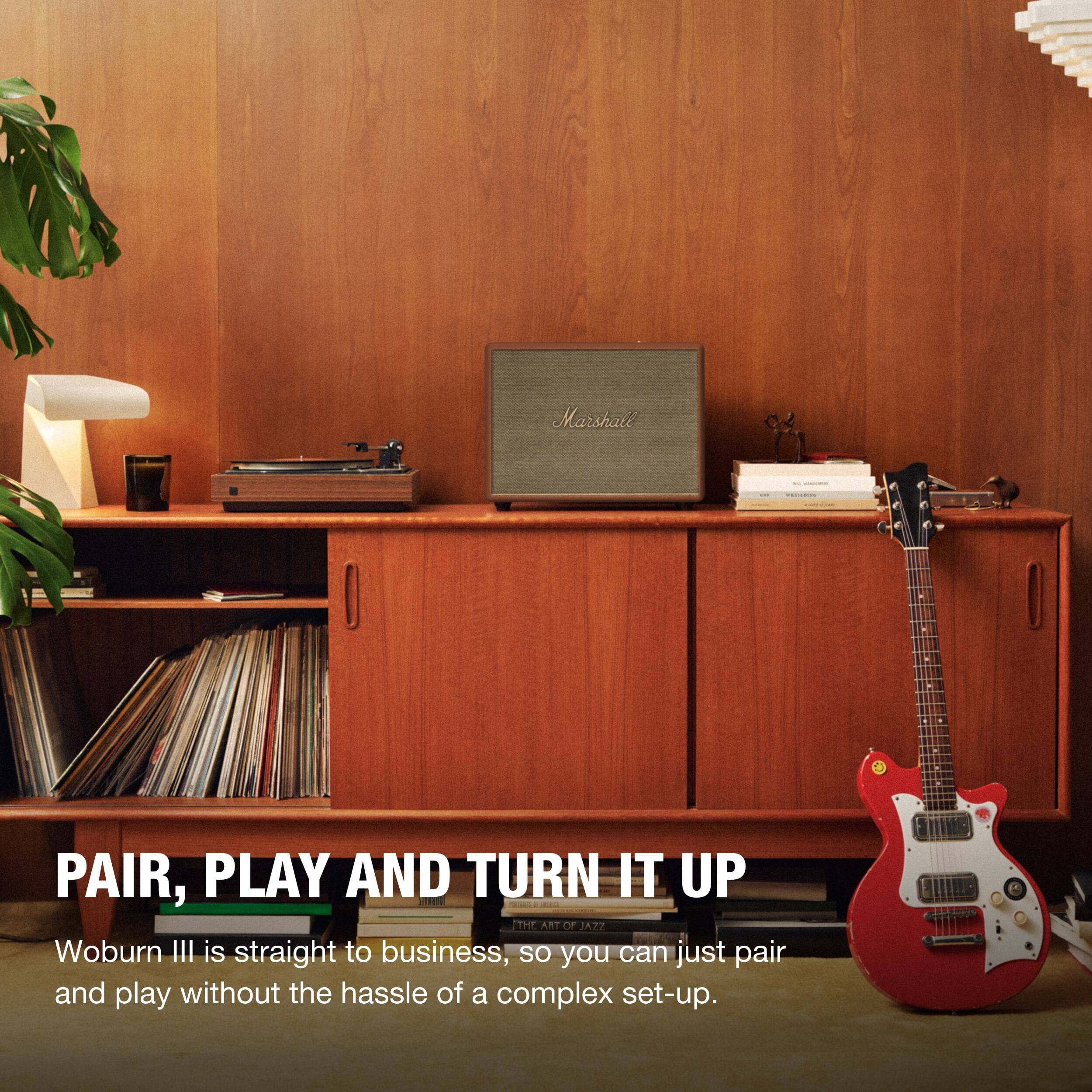
The Marshall Woburn III, released in 2022, belongs to the world of stationary home speakers—devices designed to stay in one place and deliver the best possible sound quality for your living space. These speakers prioritize audio fidelity (how accurately they reproduce music), build quality, and integration with your home entertainment system.
The JBL PartyBox Encore Essential 2, on the other hand, falls into the portable party speaker category. These devices sacrifice some audio perfection in favor of features like battery power, light shows, and rugged construction that can handle being moved around and used outdoors.
When evaluating speakers, the most important performance characteristics include frequency response (how well they reproduce different pitches from deep bass to high treble), power output (how loud they can get without distortion), soundstage (how well they create a sense of space in the music), and dynamic range (the difference between the quietest and loudest sounds they can reproduce clearly).
The Marshall Woburn III represents Marshall's flagship approach to home audio, building on decades of amplifier expertise. Since its 2022 release, it has established itself as a serious contender in the premium home speaker market, offering improvements in driver technology and connectivity over previous generations.
What sets the Marshall Woburn III apart is its sophisticated three-way driver system. Think of this like having three specialized musicians in a band: the 6-inch woofer handles the bass lines, two 2-inch midrange drivers take care of vocals and instruments, and two angled 0.75-inch tweeters deliver the crisp high frequencies. This division of labor allows each driver to focus on what it does best, resulting in clearer, more detailed sound than speakers that try to make one or two drivers handle everything.
The speaker's 150 watts of total power breaks down strategically: 90 watts dedicated to the woofer for deep bass impact, with the remaining 60 watts split between the midrange and tweeter drivers. This isn't just about getting loud—it's about maintaining clarity and control even when you crank up the volume. The Marshall Woburn III can reach 100.5 decibels at one meter, which is loud enough to fill even large living rooms without strain.
Perhaps most impressive is the frequency response extending down to 35 Hz. To put this in perspective, the lowest note on a standard piano is about 27 Hz, so the Marshall Woburn III can reproduce almost the entire range of musical instruments with authority. This deep bass extension, combined with the sophisticated driver arrangement, creates what reviewers consistently describe as "rich, differentiated bass" that doesn't muddy the midrange frequencies where vocals and most instruments live.
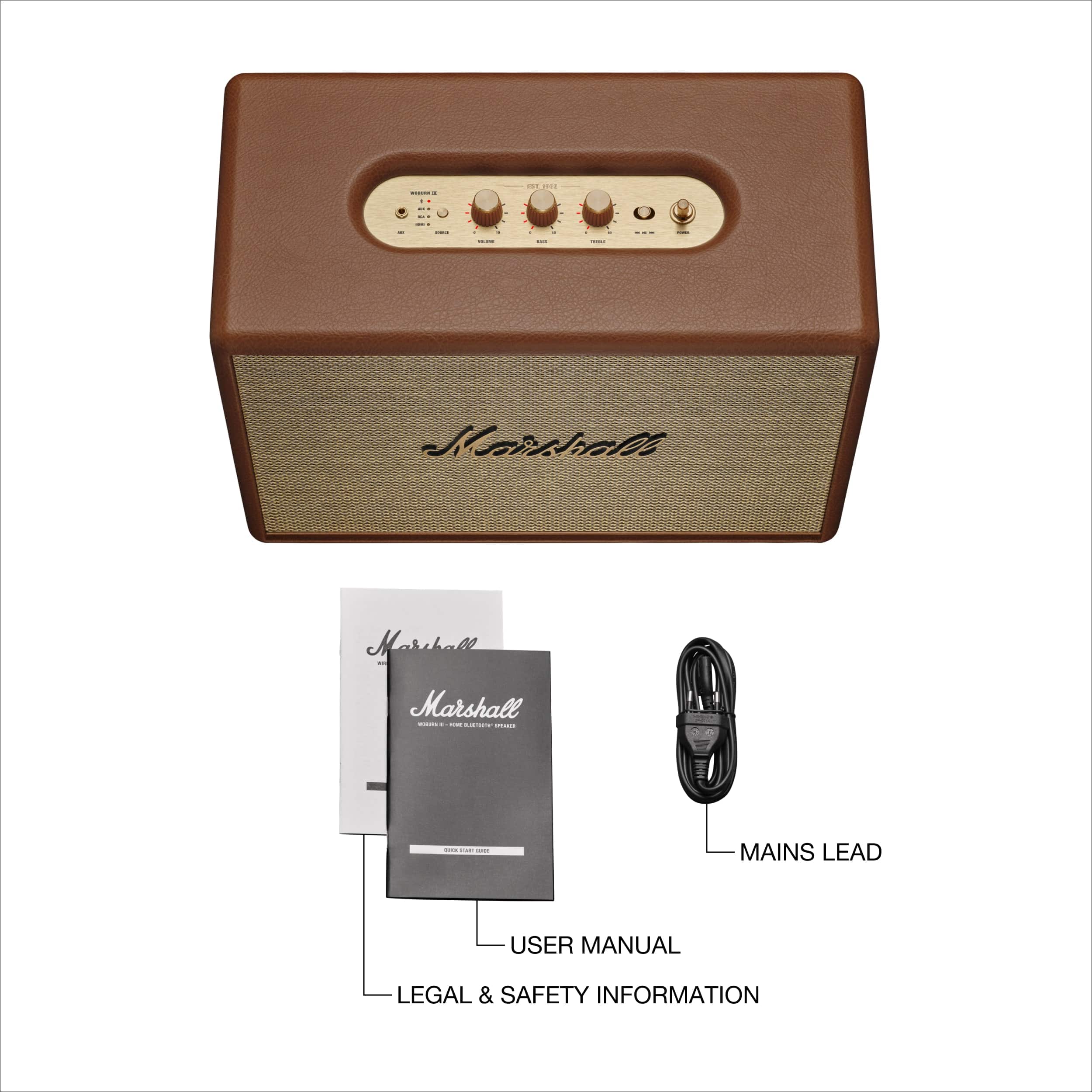
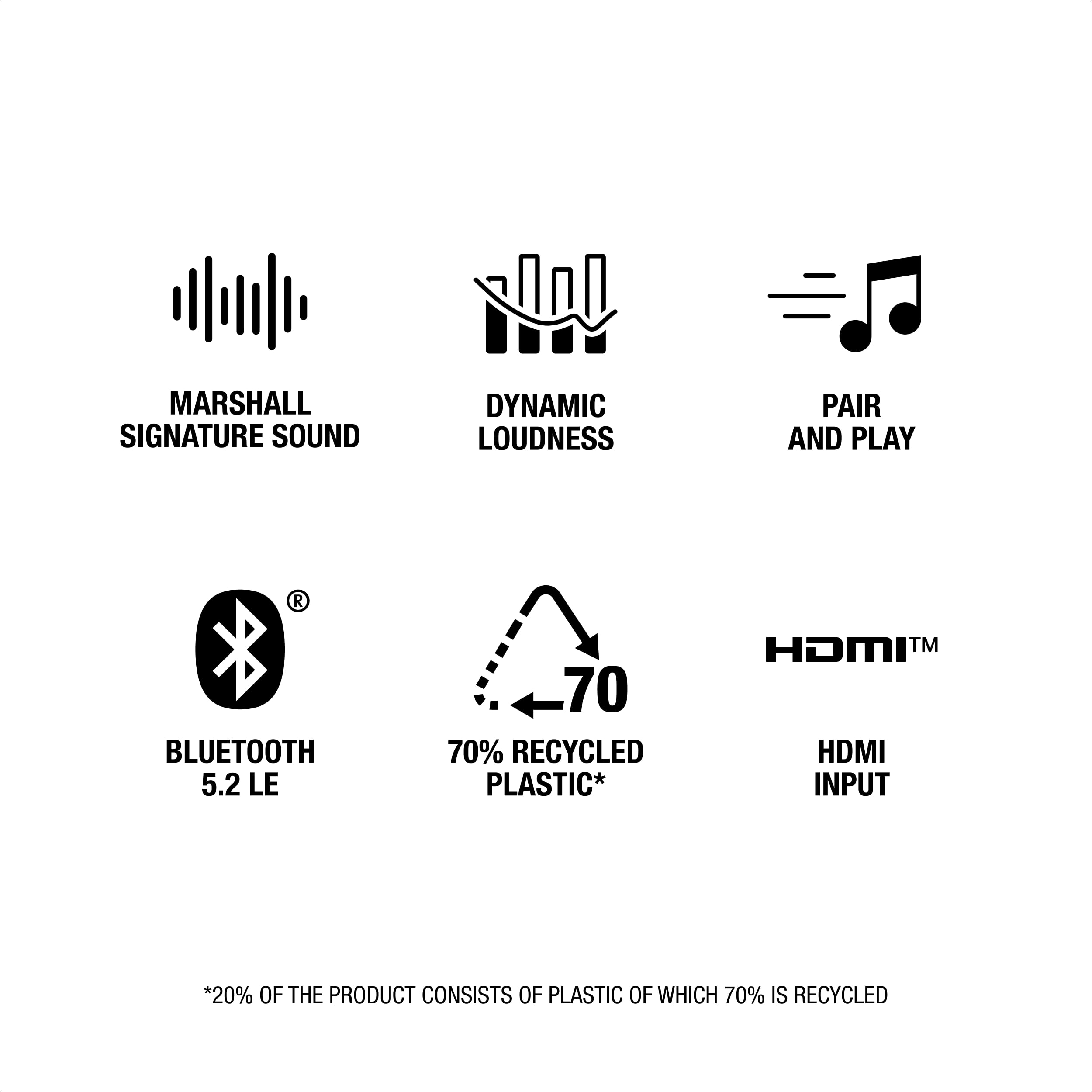
The Marshall Woburn III includes several intelligent features that adapt the sound to your environment and preferences. Dynamic Loudness automatically adjusts the tonal balance based on your volume level—this matters because our ears perceive bass and treble differently at low volumes compared to high volumes. Without this feature, music sounds thin and lifeless when played quietly.
Placement Compensation is another standout feature that uses digital processing to account for where you've positioned the speaker in your room. Speakers sound different when placed near walls, in corners, or out in the open because room reflections affect the bass response. This feature helps maintain consistent sound quality regardless of placement.
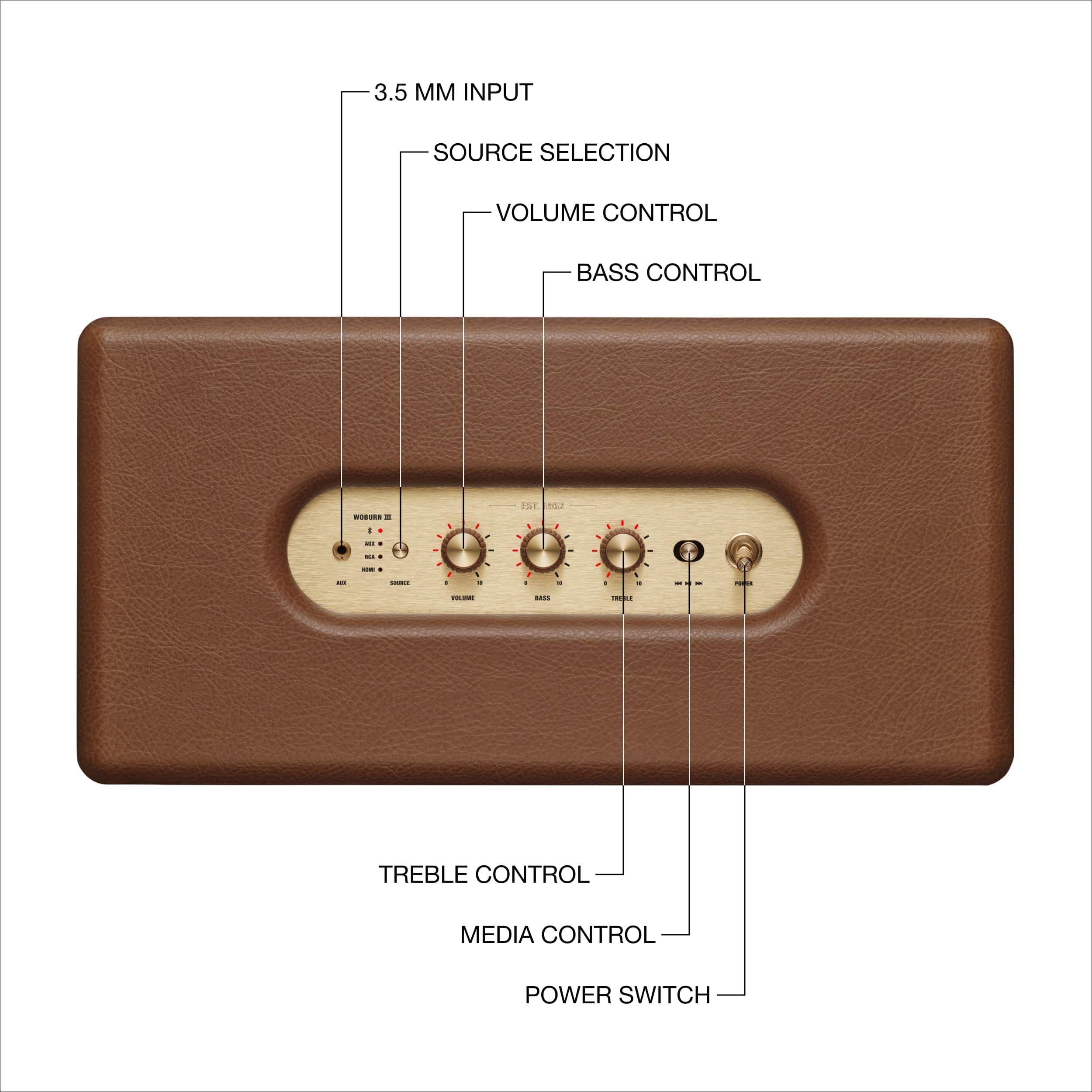
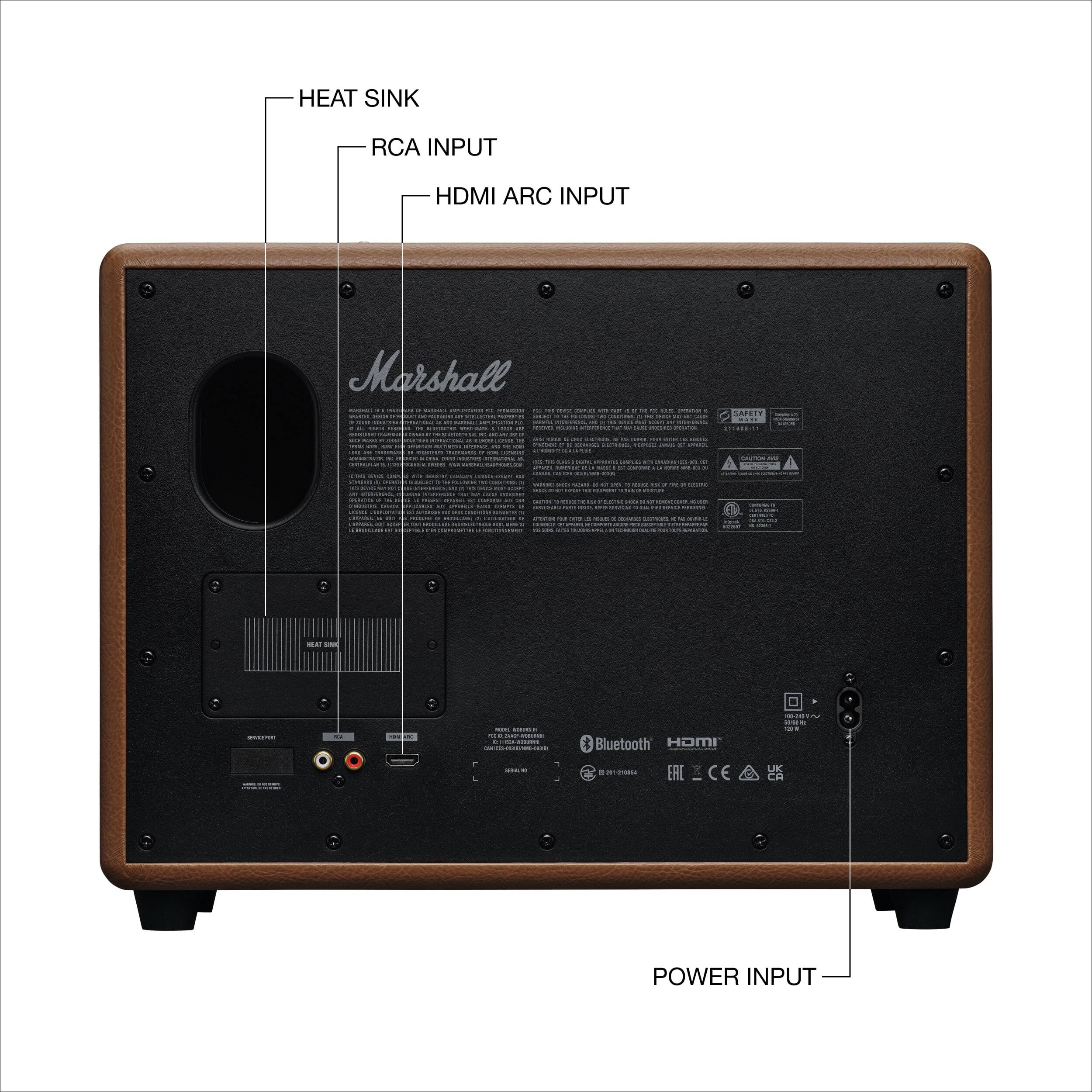
The Marshall Woburn III shines in its connectivity options, particularly for home theater integration. The HDMI ARC (Audio Return Channel) input allows you to connect it directly to your TV, replacing those tinny built-in TV speakers with serious audio power. This connection type also enables the TV remote to control the speaker's volume, creating a seamless experience.
For music lovers with existing audio equipment, the RCA inputs connect to turntables, CD players, or other traditional audio sources, while the 3.5mm auxiliary input handles phones, tablets, and laptops. The Bluetooth 5.2 implementation supports connecting two devices simultaneously (called multipoint), so you can have both your phone and laptop connected without constantly re-pairing.
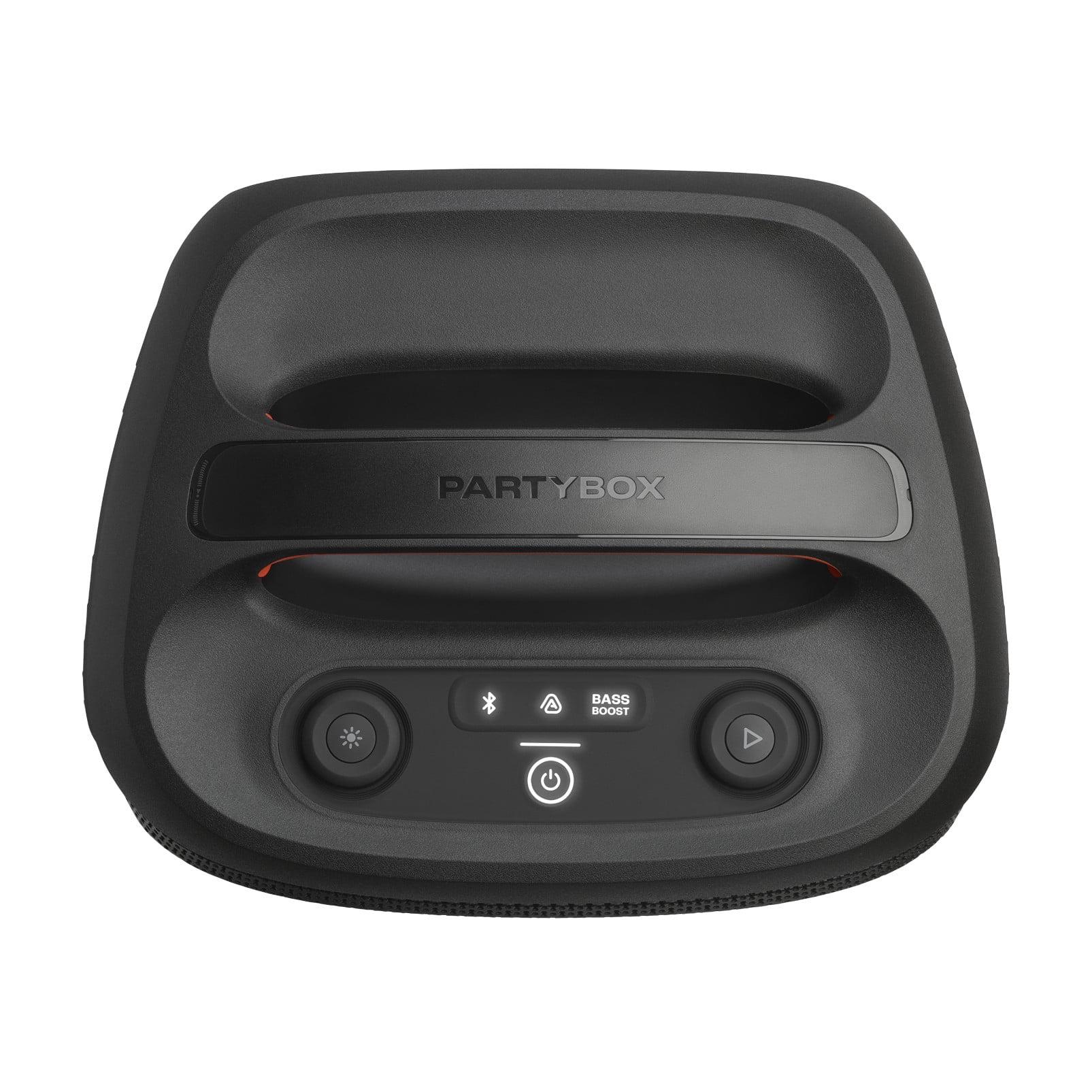
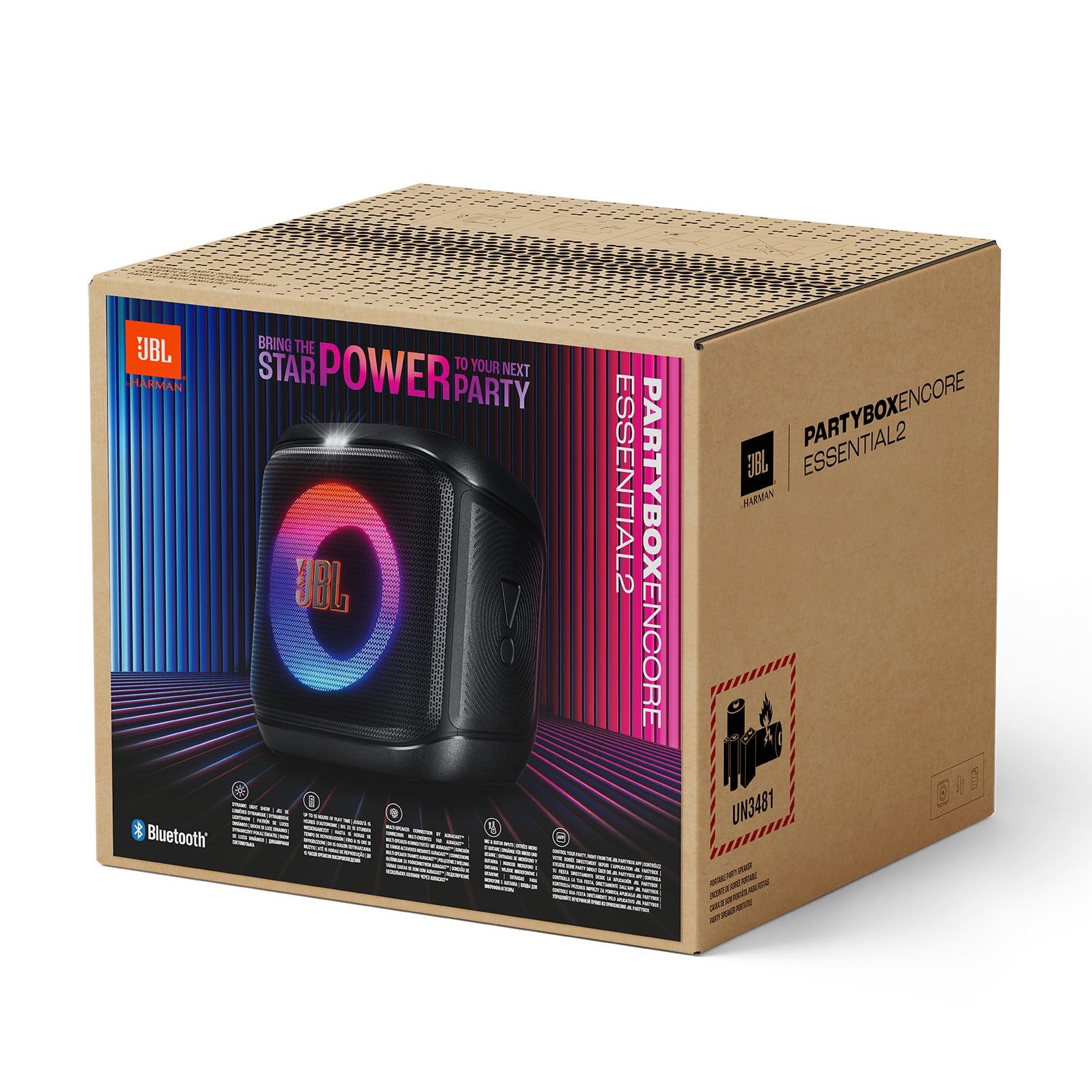
The JBL PartyBox Encore Essential 2 takes a completely different approach, prioritizing fun factor and versatility over pure audio perfection. This speaker embodies the "party anywhere" philosophy that JBL has refined over years of portable speaker development.
Don't let the focus on portability fool you—the JBL PartyBox Encore Essential 2 packs serious audio punch for its size. The 100 watts RMS (RMS means continuous power, not peak power) drives a 5.25-inch woofer and two 0.75-inch tweeters in a two-way configuration. While simpler than the Marshall's three-way system, this setup still delivers impressive bass response down to 40 Hz and clear highs up to 20 kHz.
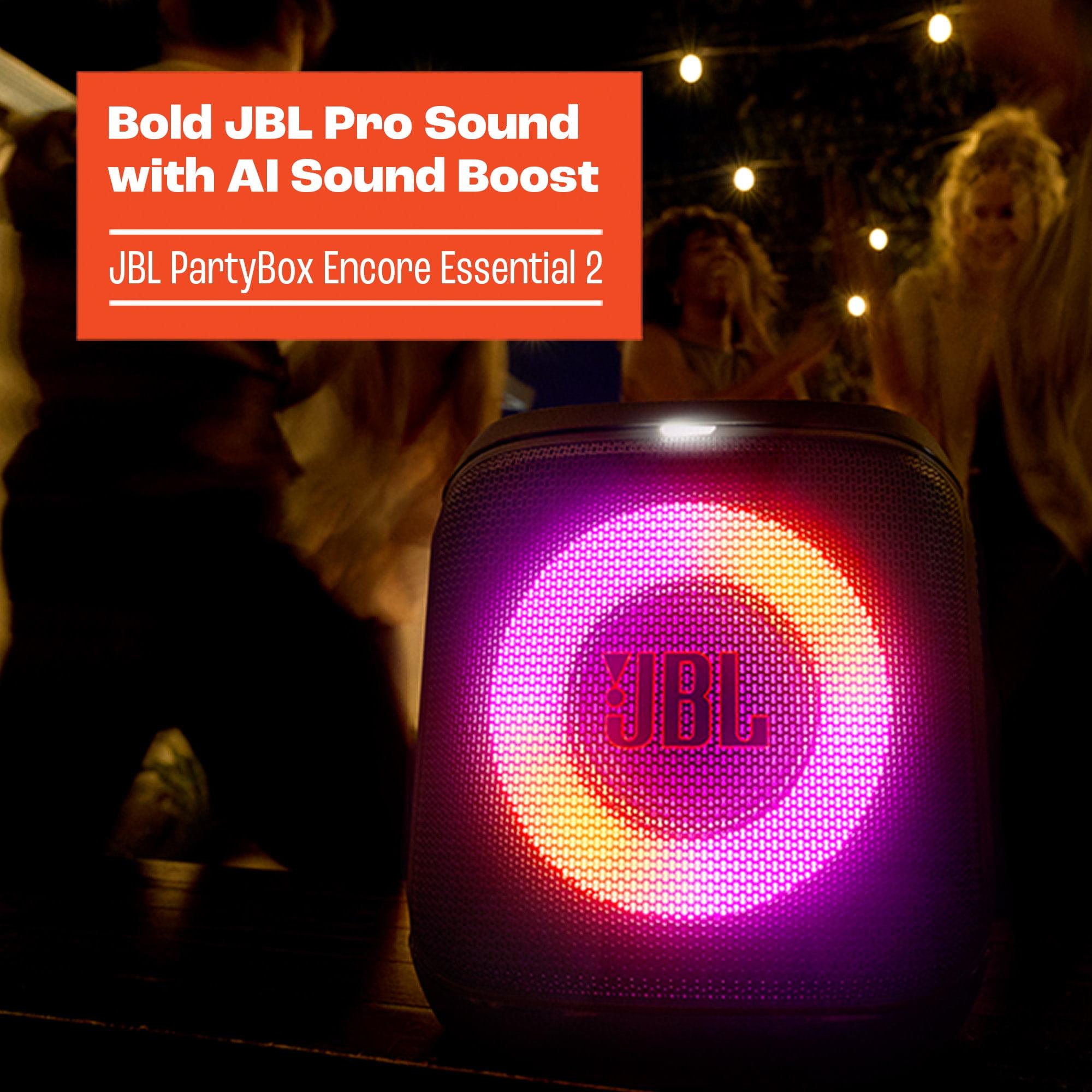
The speaker's AI Sound Boost technology represents JBL's approach to maintaining audio quality at high volumes. This digital processing prevents the harsh distortion that typically occurs when you push portable speakers to their limits, keeping the sound clear and punchy even during the loudest party moments.
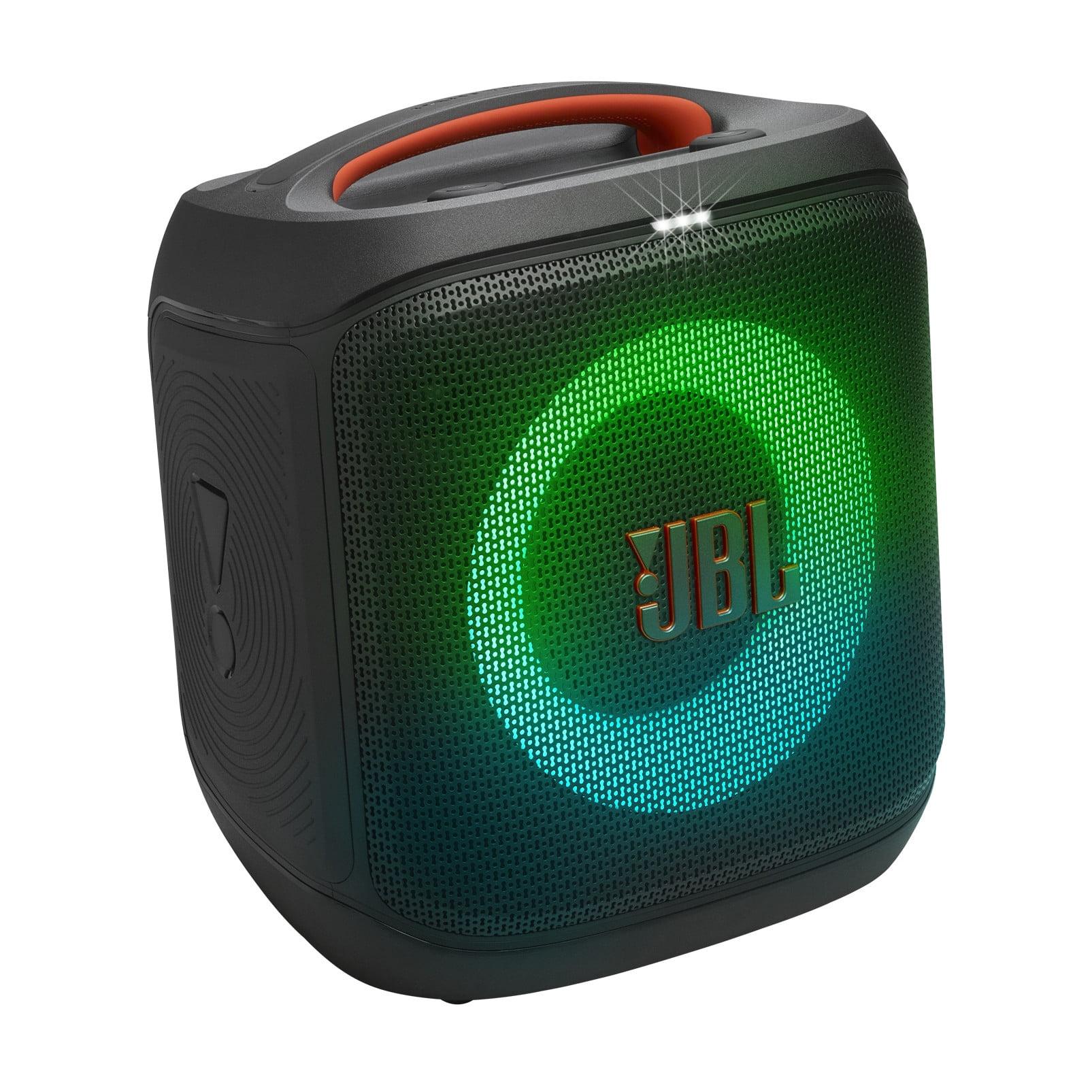
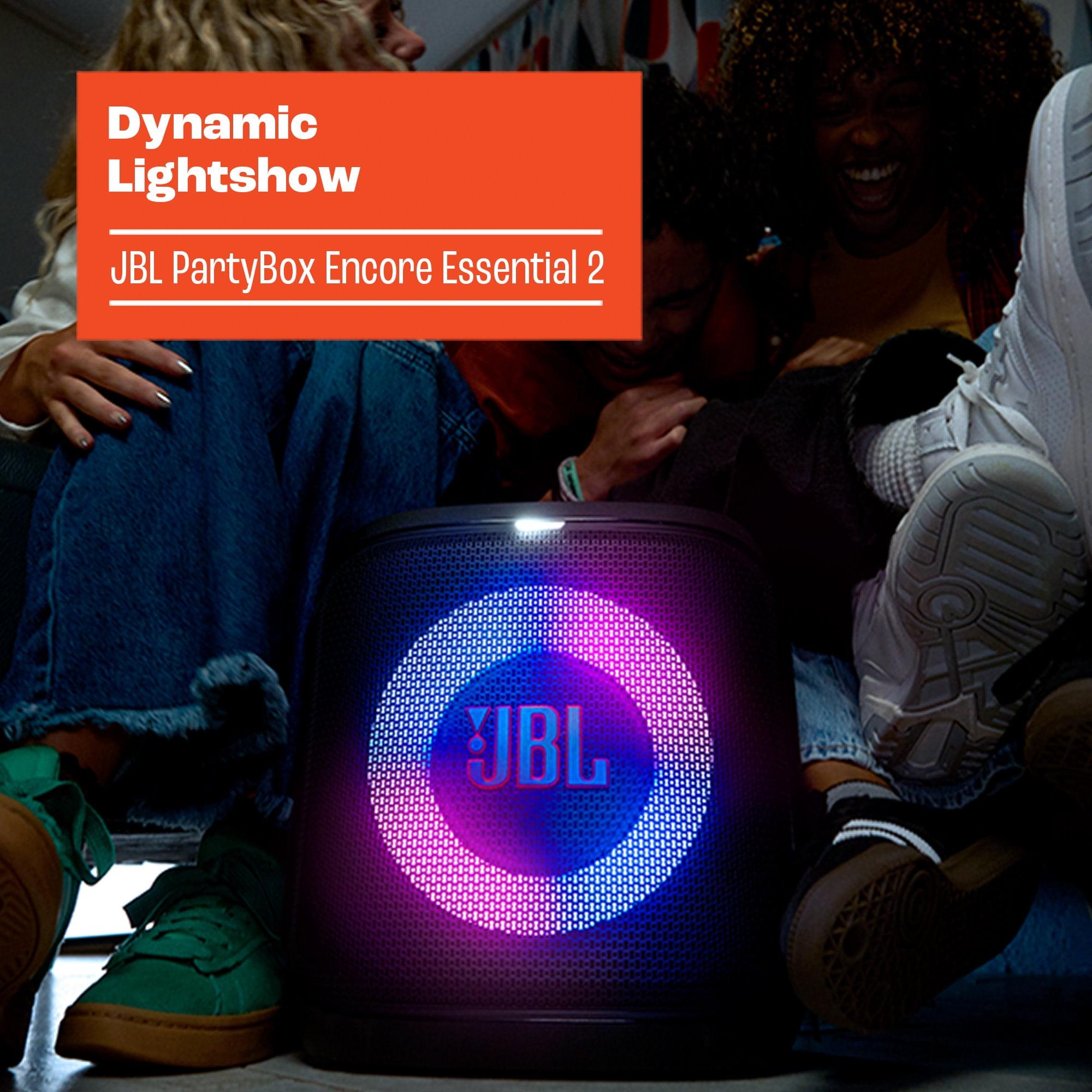
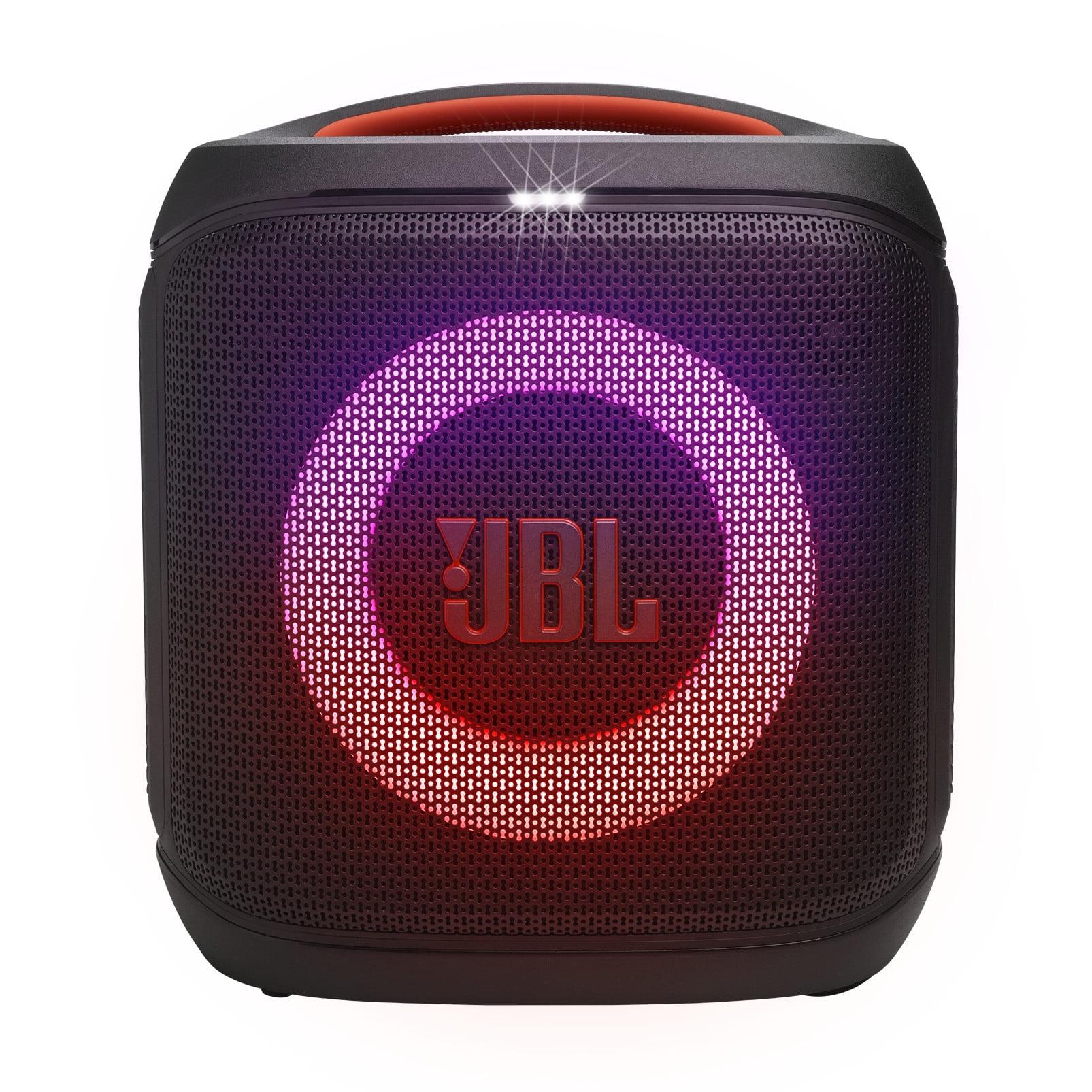
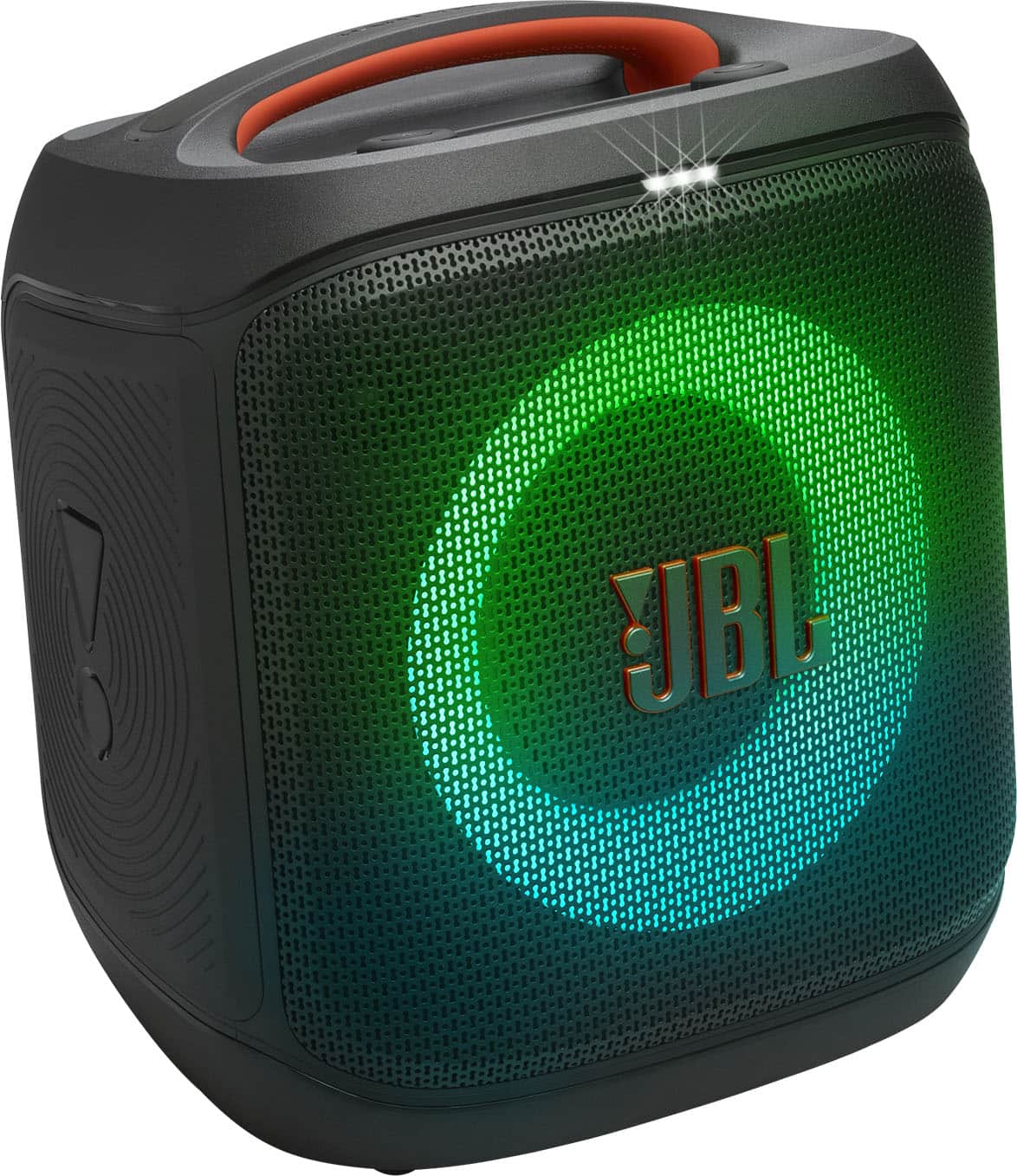
What truly distinguishes the JBL PartyBox Encore Essential 2 is its integrated dynamic lightshow. Multiple LED lighting modes—including Neon, Loop, Bounce, and Freeze—synchronize with your music's beat and can be customized through JBL's app. While this might seem gimmicky, lighting effects genuinely enhance the party atmosphere, especially in outdoor or dimmed indoor settings.
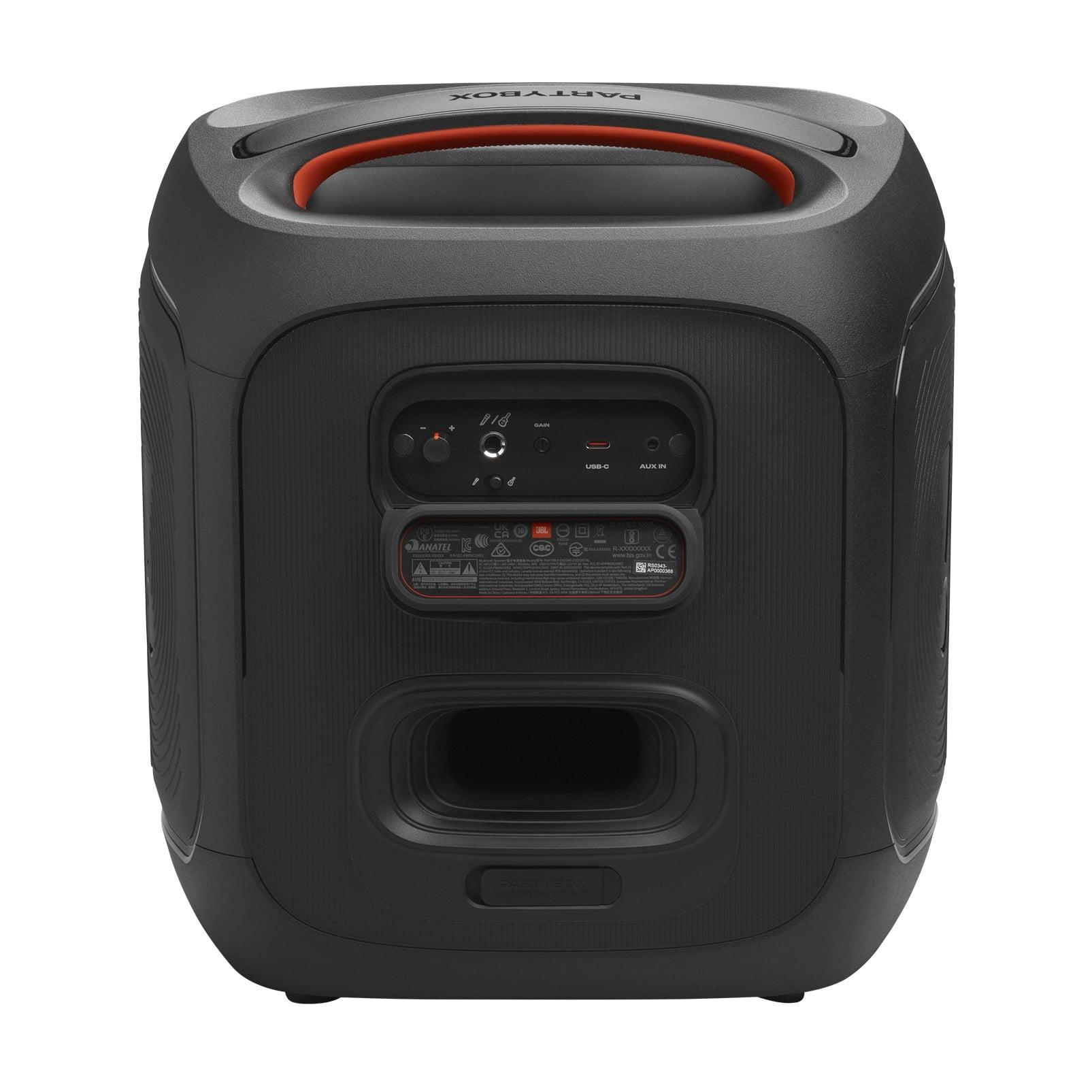
The microphone and guitar inputs with dedicated level controls transform this speaker into a portable PA system. Whether you're hosting karaoke night or jamming with friends, the built-in karaoke EQ tuning optimizes the sound for vocals and instruments. This versatility makes the JBL PartyBox Encore Essential 2 genuinely useful for events where the Marshall Woburn III simply couldn't participate.
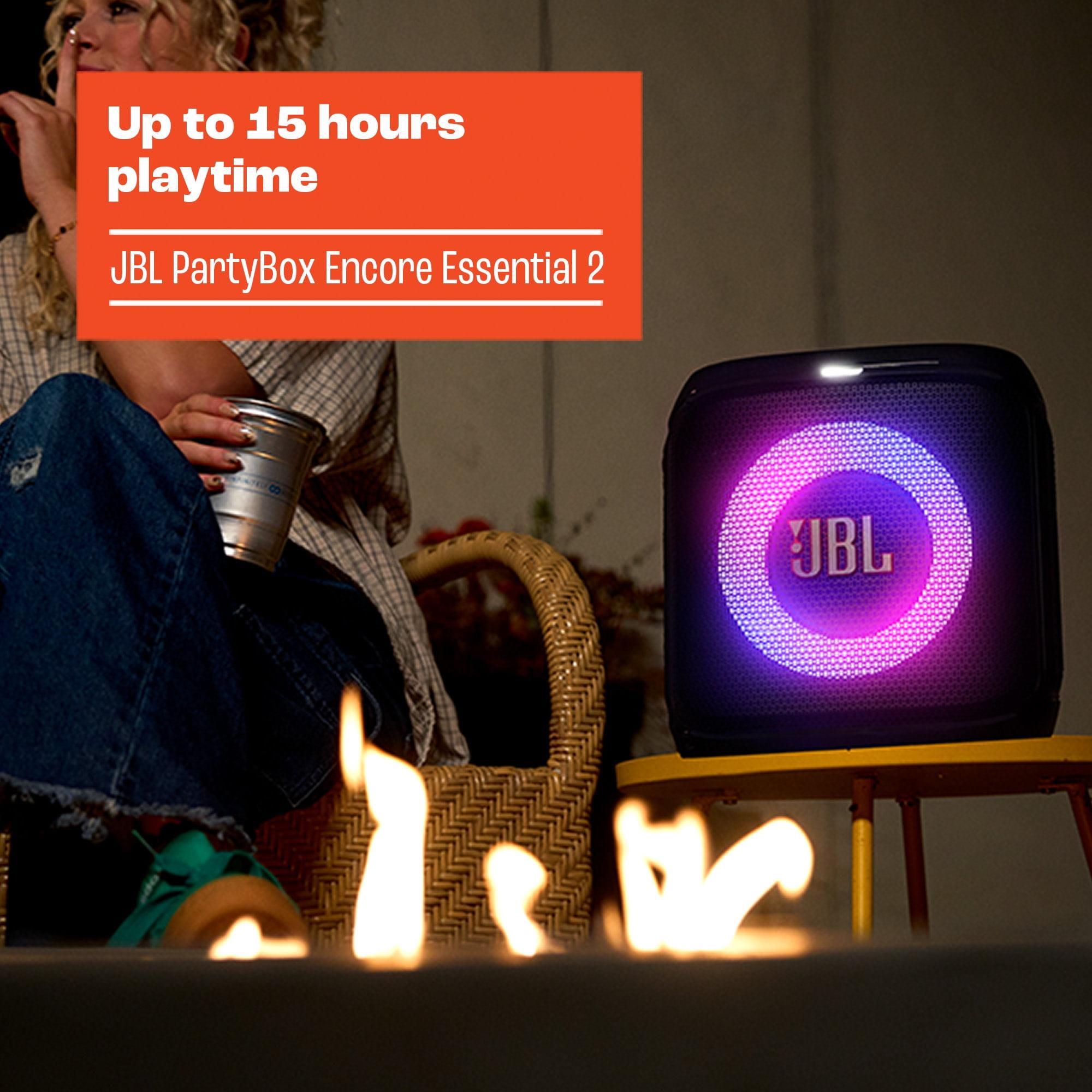
The up to 15 hours of battery life provides genuine all-day power for events, though real-world usage with lights and high volume reduces this to more like 7-10 hours. The removable battery design is particularly smart—when the battery eventually wears out after hundreds of charge cycles, you can replace it rather than discarding the entire speaker.
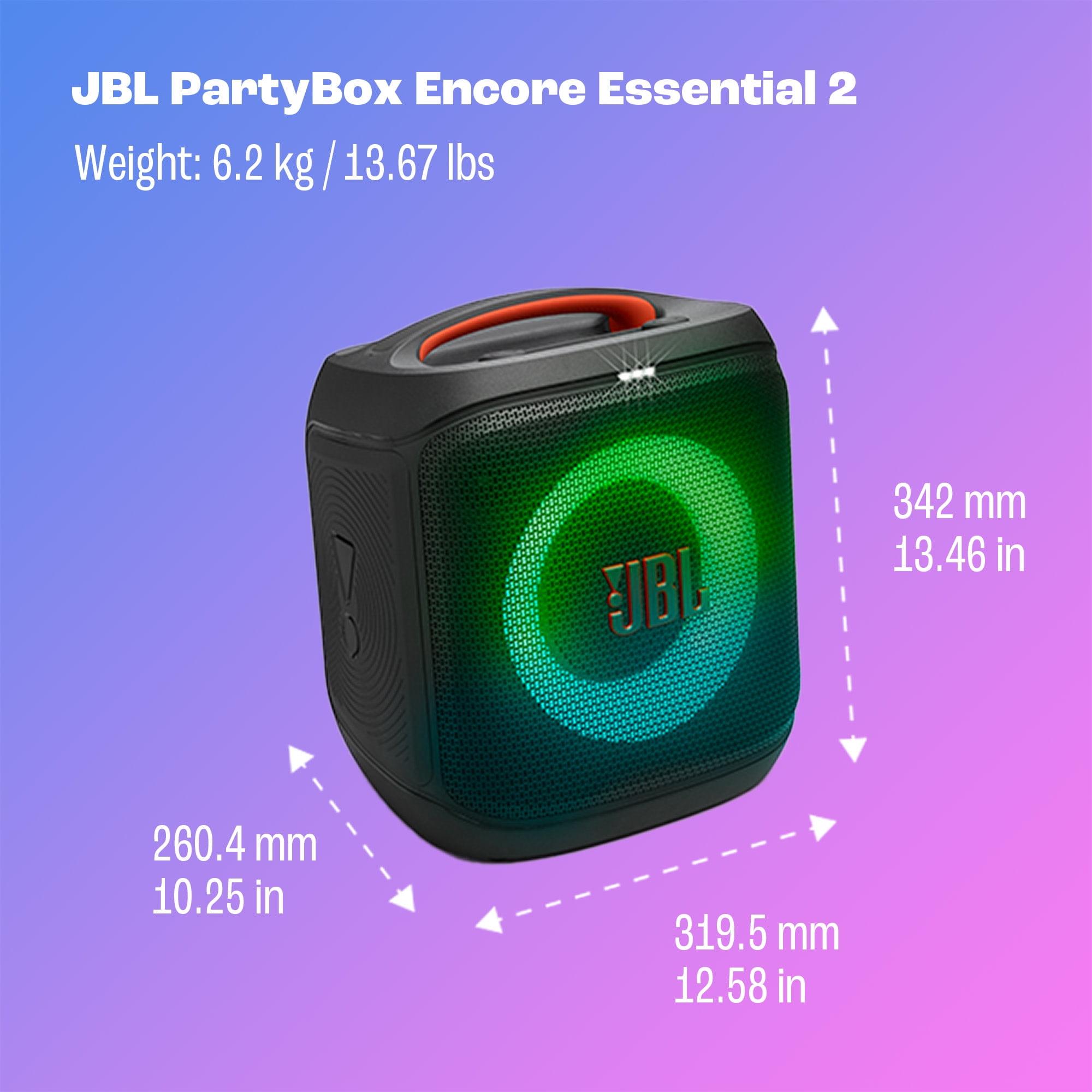
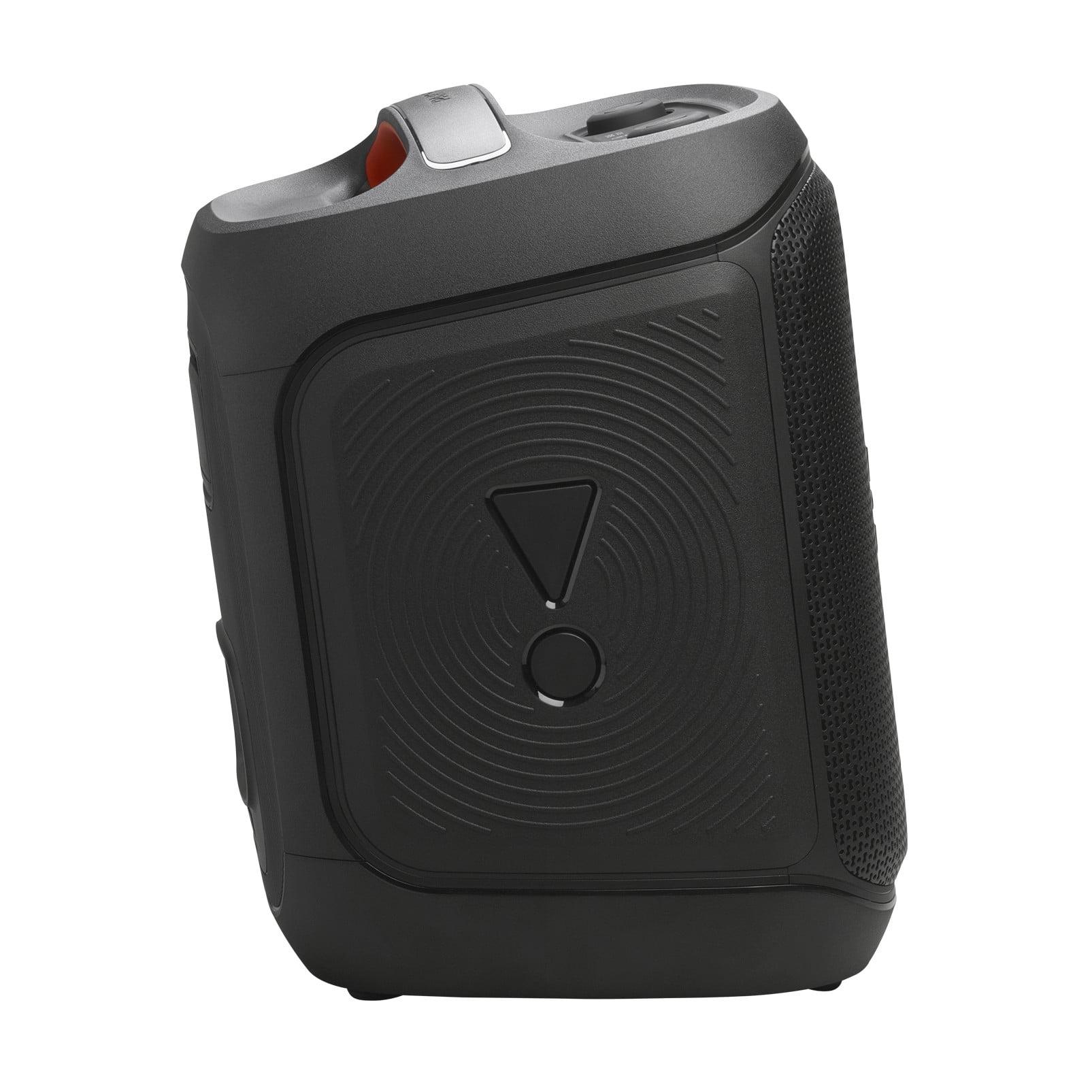
The IPX4 splash-proof rating means the JBL PartyBox Encore Essential 2 can handle light rain, poolside splashes, and outdoor conditions that would damage the Marshall Woburn III. This durability, combined with the integrated carry handle and reasonable 13.7-pound weight, makes it genuinely practical for mobile use.
When it comes to pure sound quality, the Marshall Woburn III operates in a different league. The three-way driver configuration creates superior imaging—the ability to pinpoint where different instruments and vocals are positioned in the stereo field. This matters most when listening to well-recorded music where you want to hear every detail the artist intended.
The Marshall Woburn III also excels at dynamic range—its ability to reproduce both whisper-quiet passages and explosive crescendos without compression. This is particularly noticeable with classical music, jazz, and high-quality recordings where the contrast between soft and loud moments is crucial to the musical experience.
The JBL PartyBox Encore Essential 2 takes a more colored approach to sound reproduction, emphasizing bass impact and treble sparkle to create an exciting, energetic presentation. While this isn't as accurate as the Marshall's approach, it's often more engaging for party music, pop, and electronic genres where you want the beat to drive the energy.
Both speakers can get impressively loud, but they handle high volumes differently. The Marshall Woburn III maintains its composure and tonal balance even at ear-splitting levels, thanks to its higher-quality drivers and more sophisticated amplification. The JBL PartyBox Encore Essential 2 can match it for overall volume but shows more compression and tonal shifts when pushed to maximum output.
For outdoor use, this difference becomes more pronounced. The Marshall Woburn III would theoretically provide cleaner sound at high volumes, but its AC-power requirement makes outdoor use impractical anyway.
If you're considering either speaker for home theater use, the Marshall Woburn III clearly wins. The HDMI ARC connection provides seamless integration with modern TVs, automatically powering on and adjusting volume with your TV remote. The superior dialogue clarity from its dedicated midrange drivers makes movies and TV shows more engaging than typical soundbars in this price range.
The JBL PartyBox Encore Essential 2 could technically work for home theater via Bluetooth, but the inherent audio delay (latency) in Bluetooth connections creates lip-sync issues that make dialogue unwatchable. It's simply not designed for this application.
At the time of writing, these speakers target completely different value propositions. The Marshall Woburn III asks you to invest significantly more money for superior audio engineering, premium materials, and the iconic Marshall aesthetic. If you calculate cost per watt of clean, distortion-free power, the Marshall actually offers reasonable value among premium speakers.
The JBL PartyBox Encore Essential 2 delivers impressive features and performance for its price point. You're getting genuine portability, entertainment features, and respectable sound quality for roughly one-third the cost of the Marshall. From a pure features-per-dollar perspective, it's hard to beat.
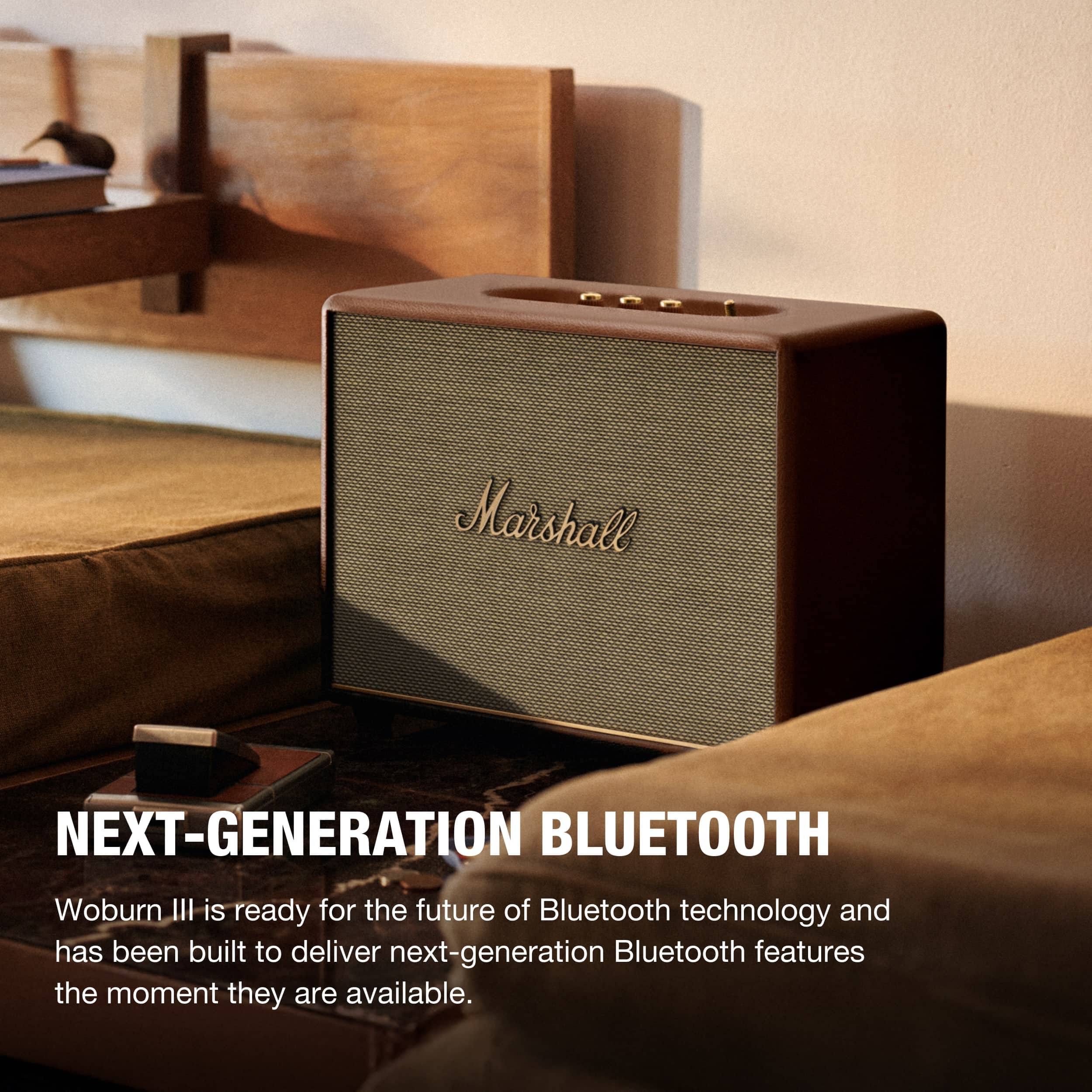
Both speakers benefit from recent technological advances, but in different ways. The Marshall Woburn III, released in 2022, incorporates the latest Bluetooth 5.2 standard and is ready for Bluetooth LE Audio—a next-generation protocol that will enable better sound quality and new features like audio sharing. The speaker can receive firmware updates over-the-air, ensuring it stays current as technology evolves.
The JBL PartyBox Encore Essential 2 features Auracast technology, JBL's implementation of Bluetooth broadcasting that allows multiple compatible speakers to connect wirelessly. This creates possibilities for scaling up your audio system for larger events without the complexity of traditional stereo pairing.
You're primarily focused on audio quality and want a speaker that will serve as your main music system for years to come. The Marshall Woburn III makes sense if you listen to diverse music genres, appreciate subtle details in recordings, and want something that looks as good as it sounds in your living room.
It's also the clear choice if you're looking to upgrade your TV's audio with a speaker that integrates seamlessly into your entertainment setup. The combination of HDMI ARC connectivity and superior dialogue clarity makes it an excellent soundbar alternative.
You need genuine portability and plan to use your speaker in multiple locations—indoors, outdoors, and everywhere in between. The JBL PartyBox Encore Essential 2 excels when you want one speaker that can handle living room listening, backyard parties, beach trips, and karaoke nights.
It's also the smart choice if you're on a tighter budget but still want impressive performance and features. The combination of good sound quality, entertainment features, and rugged portability offers excellent value at its price point.
These speakers succeed because they embrace their intended purposes rather than trying to be everything to everyone. The Marshall Woburn III is uncompromisingly focused on delivering the best possible audio experience in a premium package, while the JBL PartyBox Encore Essential 2 prioritizes fun, flexibility, and value.
If forced to choose just one speaker for life, most people would probably find the JBL PartyBox Encore Essential 2 more versatile simply because it can go anywhere and do more things. However, if you're building a serious home audio system and want speakers that will still impress you years from now, the Marshall Woburn III represents a smarter long-term investment.
The best scenario? These speakers complement each other perfectly—the Marshall Woburn III for serious home listening and the JBL PartyBox Encore Essential 2 for when the party needs to move outside. But if you're choosing just one, let your primary use case and budget guide the decision.
| Marshall Woburn III | JBL PartyBox Encore Essential 2 |
|---|---|
| Primary Use Case - Determines which speaker fits your lifestyle | |
| Stationary home audio system for premium listening | Portable party speaker for events and gatherings |
| Power Output - Higher wattage means louder, cleaner sound | |
| 150W total (90W woofer + 60W mids/tweeters) | 100W RMS (simpler but adequate for most uses) |
| Driver Configuration - More drivers typically mean better sound separation | |
| 3-way: 6" woofer, 2x 2" midrange, 2x 0.75" tweeters | 2-way: 5.25" woofer, 2x 0.75" tweeters |
| Frequency Response - Lower bass numbers mean deeper, richer sound | |
| 35Hz - 20kHz (exceptional bass extension) | 40Hz - 20kHz (good bass for portable speaker) |
| Maximum Volume - Important for large rooms or outdoor use | |
| 100.5 dB @ 1 meter (room-filling without distortion) | Not specified (adequate for parties but likely lower) |
| Power Source - Battery vs AC affects where you can use it | |
| AC power only (must stay plugged in) | Up to 15 hours battery life (true portability) |
| Portability - Weight and design affect ease of movement | |
| 16.4 lbs, stationary design with no handle | 13.67 lbs with integrated carry handle |
| Water Resistance - Critical for outdoor or poolside use | |
| None (indoor use only) | IPX4 splash-proof (handles light rain and splashes) |
| Connectivity Options - More inputs mean greater versatility | |
| Bluetooth 5.2, HDMI ARC, RCA, 3.5mm aux | Bluetooth 5.4, mic/guitar inputs, 3.5mm aux, USB |
| Smart Features - Advanced processing improves sound quality | |
| Dynamic Loudness, Placement Compensation, OTA updates | AI Sound Boost, Auracast multi-speaker linking |
| Entertainment Features - Beyond just audio reproduction | |
| None (focus on pure audio quality) | RGB lightshow synced to music, karaoke EQ |
| TV Integration - Important for home theater use | |
| HDMI ARC with TV remote control compatibility | None (Bluetooth latency causes lip-sync issues) |
| Build Quality - Affects longevity and aesthetics | |
| Premium materials, brass controls, iconic Marshall design | Rugged construction with recycled materials |
| Target Audience - Who each speaker is designed for | |
| Audiophiles and home theater enthusiasts | Social users and portable audio fans |
The Marshall Woburn III is specifically designed for home use with superior audio quality, HDMI ARC connectivity for TV integration, and premium build quality. The JBL PartyBox Encore Essential 2 can work at home but is primarily designed for portability and parties. For dedicated home listening, the Marshall Woburn III delivers significantly better sound quality and seamless integration with your entertainment system.
Only the JBL PartyBox Encore Essential 2 is suitable for outdoor use, featuring IPX4 splash-proof rating, battery power up to 15 hours, and a portable design with carry handle. The Marshall Woburn III requires AC power and has no water resistance, making it strictly an indoor speaker. For outdoor parties, poolside use, or camping, choose the JBL PartyBox Encore Essential 2.
The Marshall Woburn III produces higher maximum volume at 100.5 dB with cleaner, distortion-free sound thanks to its 150W power output and superior driver configuration. While the JBL PartyBox Encore Essential 2 can also get quite loud with its 100W output, it shows more compression at maximum volume. For large rooms or high-volume listening, the Marshall Woburn III performs better.
The Marshall Woburn III excels for TV use with dedicated HDMI ARC input that allows TV remote control and eliminates audio delay. This makes it an excellent soundbar alternative for home theater setups. The JBL PartyBox Encore Essential 2 can connect via Bluetooth but suffers from audio latency that creates lip-sync issues, making it unsuitable for TV and movie watching.
The Marshall Woburn III delivers superior bass quality with deeper extension down to 35Hz and more controlled, detailed low-end response thanks to its dedicated 6-inch woofer and 90W of bass power. The JBL PartyBox Encore Essential 2 provides punchy, exciting bass that's great for party music but isn't as deep or refined. For serious bass performance, choose the Marshall Woburn III.
Only the JBL PartyBox Encore Essential 2 features dedicated microphone and guitar inputs with karaoke EQ tuning, making it perfect for singing, presentations, or live performances. The Marshall Woburn III has no microphone inputs and focuses purely on audio playback. For karaoke or live performance needs, the JBL PartyBox Encore Essential 2 is the clear choice.
The JBL PartyBox Encore Essential 2 is designed for portability with built-in battery, carry handle, and weighs 13.67 pounds. It's built for moving between rooms, outdoor events, and travel. The Marshall Woburn III weighs 16.4 pounds, requires constant AC power, and is designed to stay in one location. Choose the JBL PartyBox Encore Essential 2 if you need to move your speaker around.
The JBL PartyBox Encore Essential 2 features a dynamic RGB lightshow with multiple modes that sync to your music, controllable via the JBL app for party atmosphere. The Marshall Woburn III has no lighting effects, focusing entirely on audio performance and classic design aesthetics. For visual entertainment and party ambiance, only the JBL PartyBox Encore Essential 2 offers lighting features.
The Marshall Woburn III delivers superior music reproduction with its three-way driver system, balanced frequency response, and audiophile-grade engineering that reveals musical details across all genres. The JBL PartyBox Encore Essential 2 provides energetic, fun sound that's great for parties but less accurate for critical music listening. Serious music lovers should choose the Marshall Woburn III.
The JBL PartyBox Encore Essential 2 supports Auracast technology for linking multiple compatible JBL speakers wirelessly, perfect for scaling up sound at large events. The Marshall Woburn III supports Bluetooth multipoint for connecting two devices but doesn't pair with other speakers. For multi-speaker setups, the JBL PartyBox Encore Essential 2 offers better expandability.
The JBL PartyBox Encore Essential 2 offers excellent value with portability, entertainment features, decent sound quality, and versatility at a much lower price point. The Marshall Woburn III costs significantly more but delivers premium audio engineering, superior build quality, and home theater integration. Value depends on your priorities: choose JBL PartyBox Encore Essential 2 for features per dollar, or Marshall Woburn III for long-term audio quality investment.
Only the JBL PartyBox Encore Essential 2 has a battery, providing up to 15 hours of playback (7-10 hours with lights and high volume). The battery is also replaceable for long-term durability. The Marshall Woburn III is AC-powered only with no battery option, requiring constant connection to wall power. For battery-powered portable use, only the JBL PartyBox Encore Essential 2 is suitable.
We've done our best to create useful and informative comparisons to help you decide what product to buy. Our research uses advanced automated methods to create this comparison and perfection is not possible - please contact us for corrections or questions. These are the sites we've researched in the creation of this article: loudersound.com - ash-asia.zendesk.com - armorsound.com - rtings.com - crutchfield.com - rtings.com - stereoguide.com - bestbuy.com - hometechnologyreview.com - crutchfield.com - sweetwater.com - rtings.com - youtube.com - greentoe.com - versus.com - idownloadblog.com - marshall.com - youtube.com - comparisontabl.es - youtube.com - versus.com - crutchfield.com - device.report - consumerreports.org - sg.tcacoustic.asia - stereoindex.com - safemark.com - smarthomesounds.co.uk - marshall.com - device.report - bestbuy.com - marshall.com - rtings.com - rtings.com - global.jbl.com - armorsound.com - rtings.com - soundguys.com - youtube.com - versus.com - manuals.plus - jbl.com - youtube.com - bestbuy.com - crutchfield.com - youtube.com - bestbuy.com - audioadvice.com - youtube.com - comparisontabl.es - manuals.plus - ggelectronics.com - gzhls.at - jbl.com - th.jbl.com - manuals.plus - cdwg.com - th.jbl.com - creativeaudio.net - bestbuy.com - samsung.com - bestbuy.com - crutchfield.com - manuals.plus - guidefitter.com - static.pcrichard.com

Privacy Policy
Terms and Conditions - Affiliate Policy
Home Security
© Copyright 2008-2026.
11816 Inwood Rd #1211, Dallas, TX 75244