

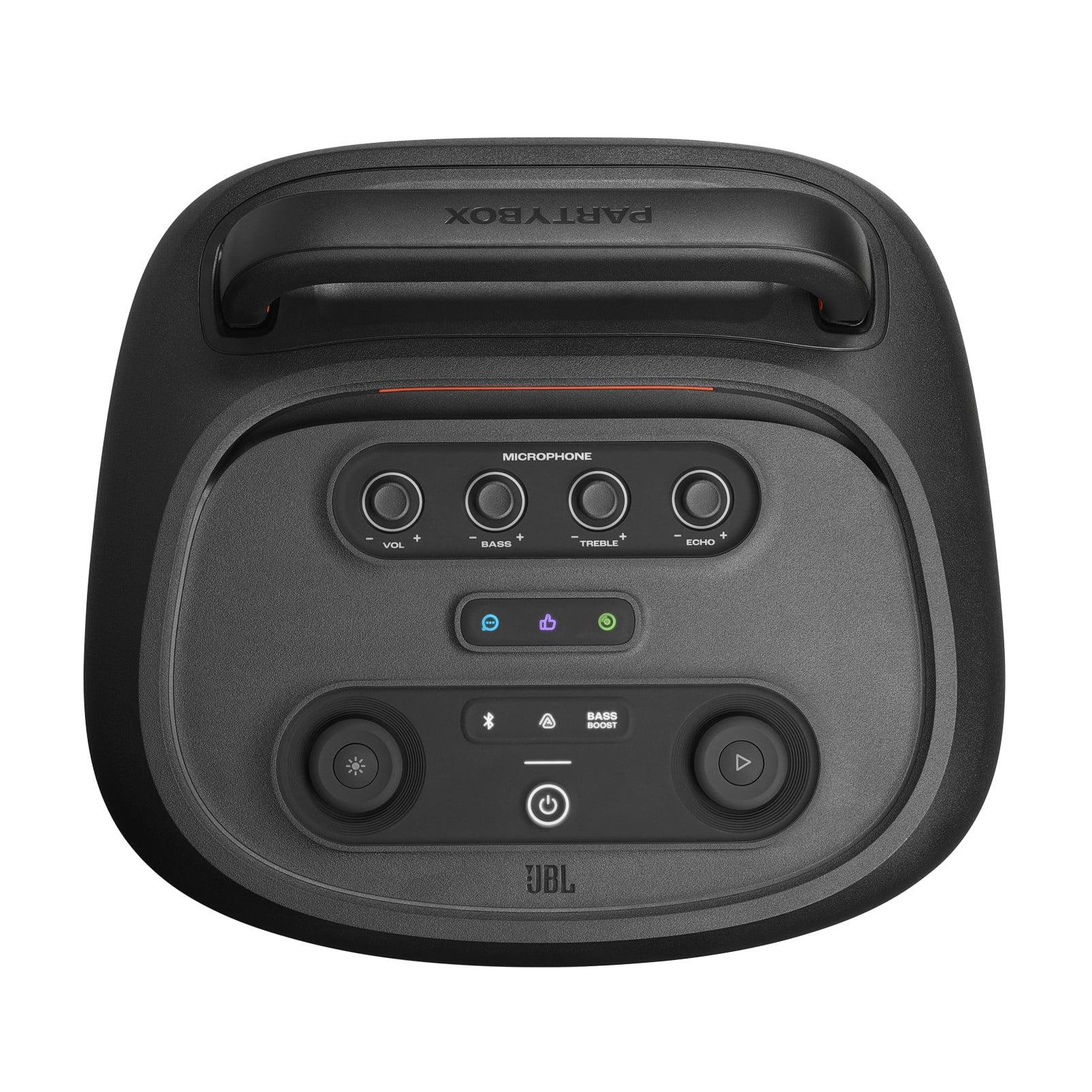
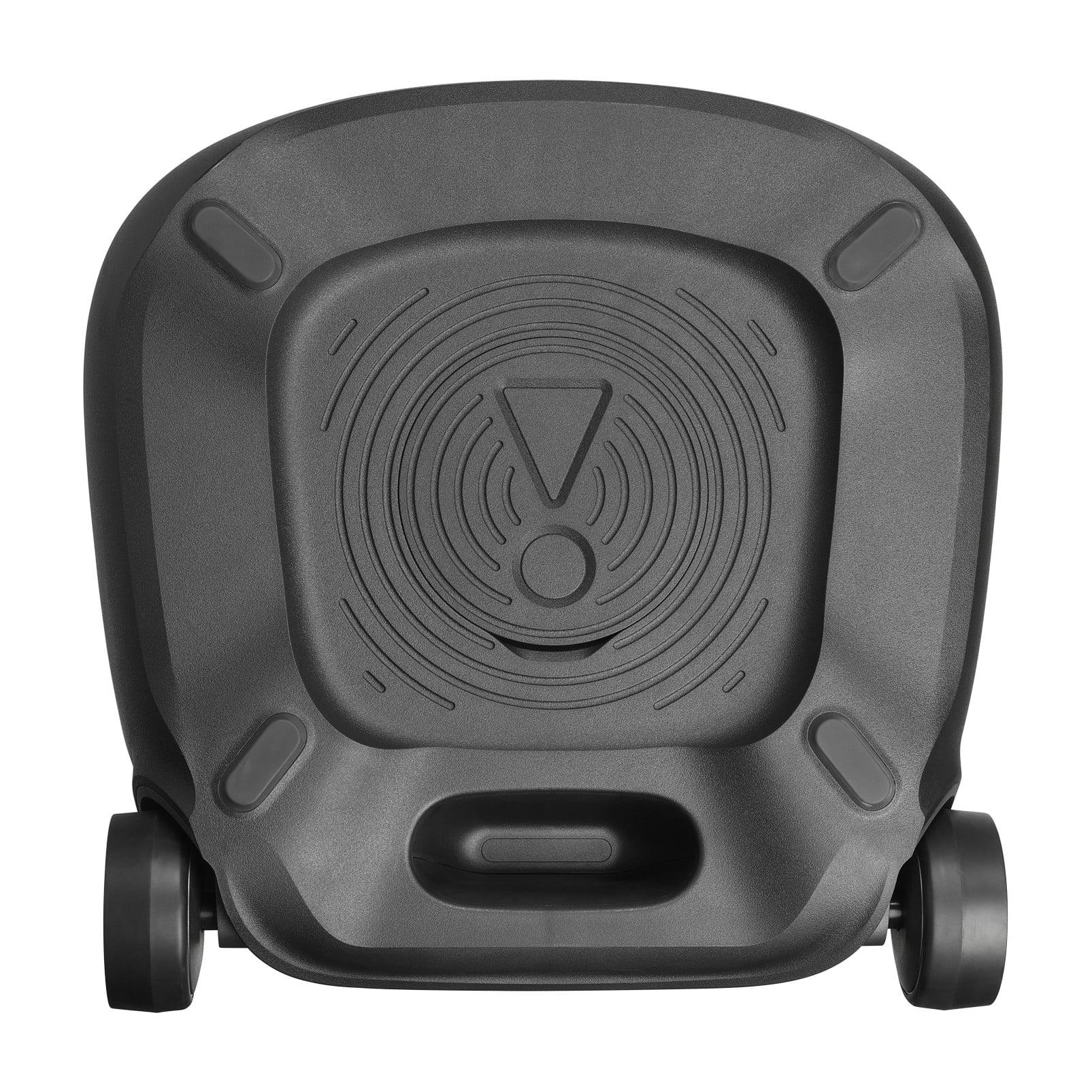
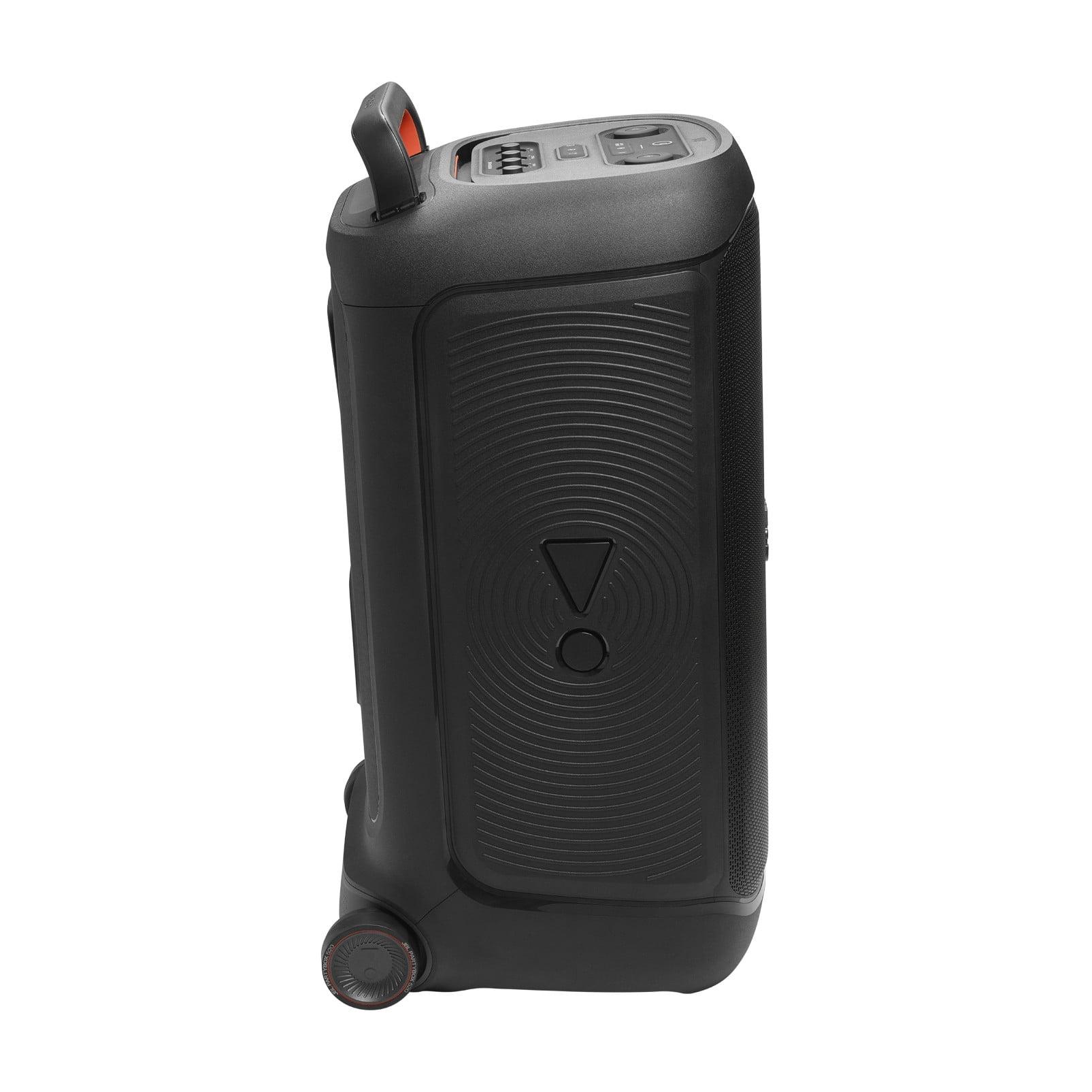
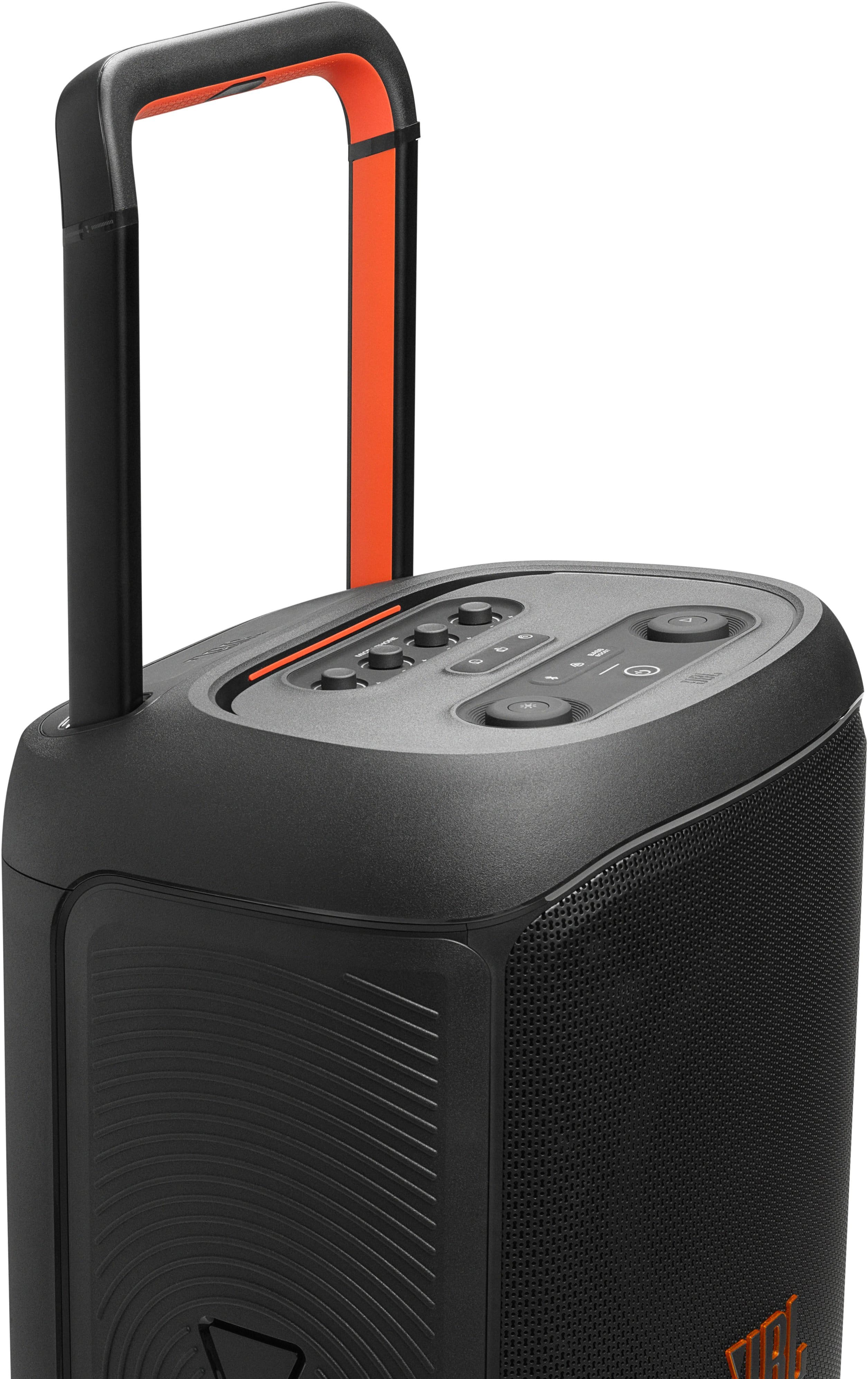
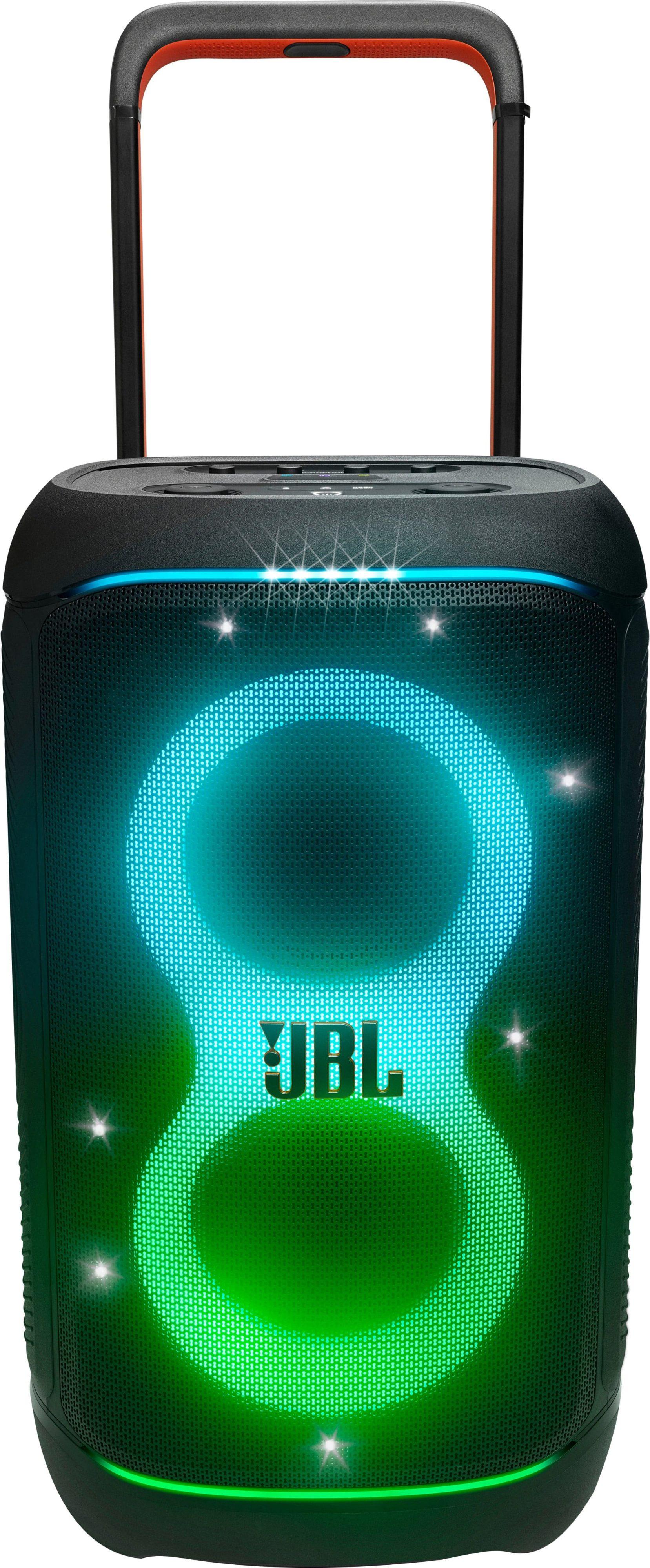
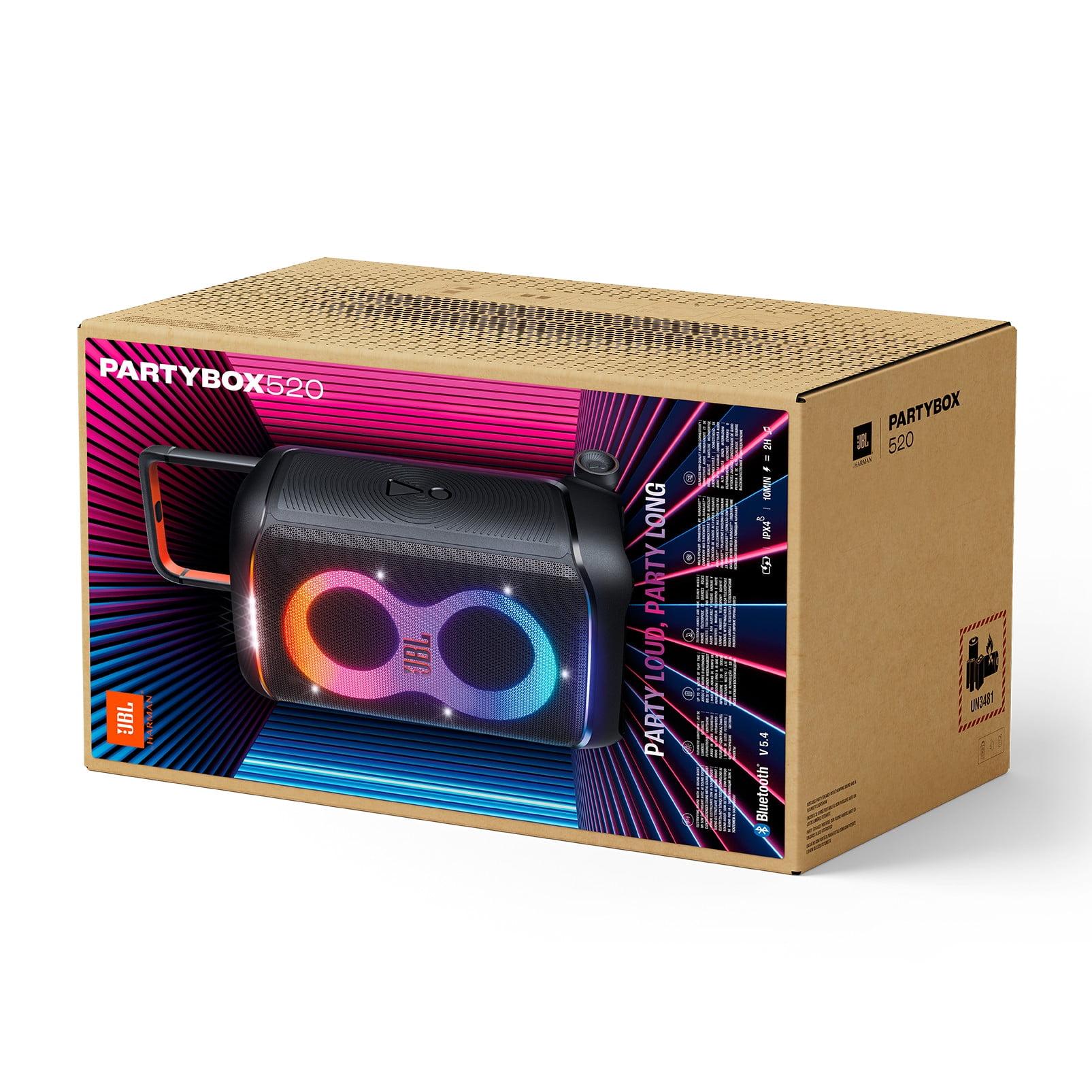
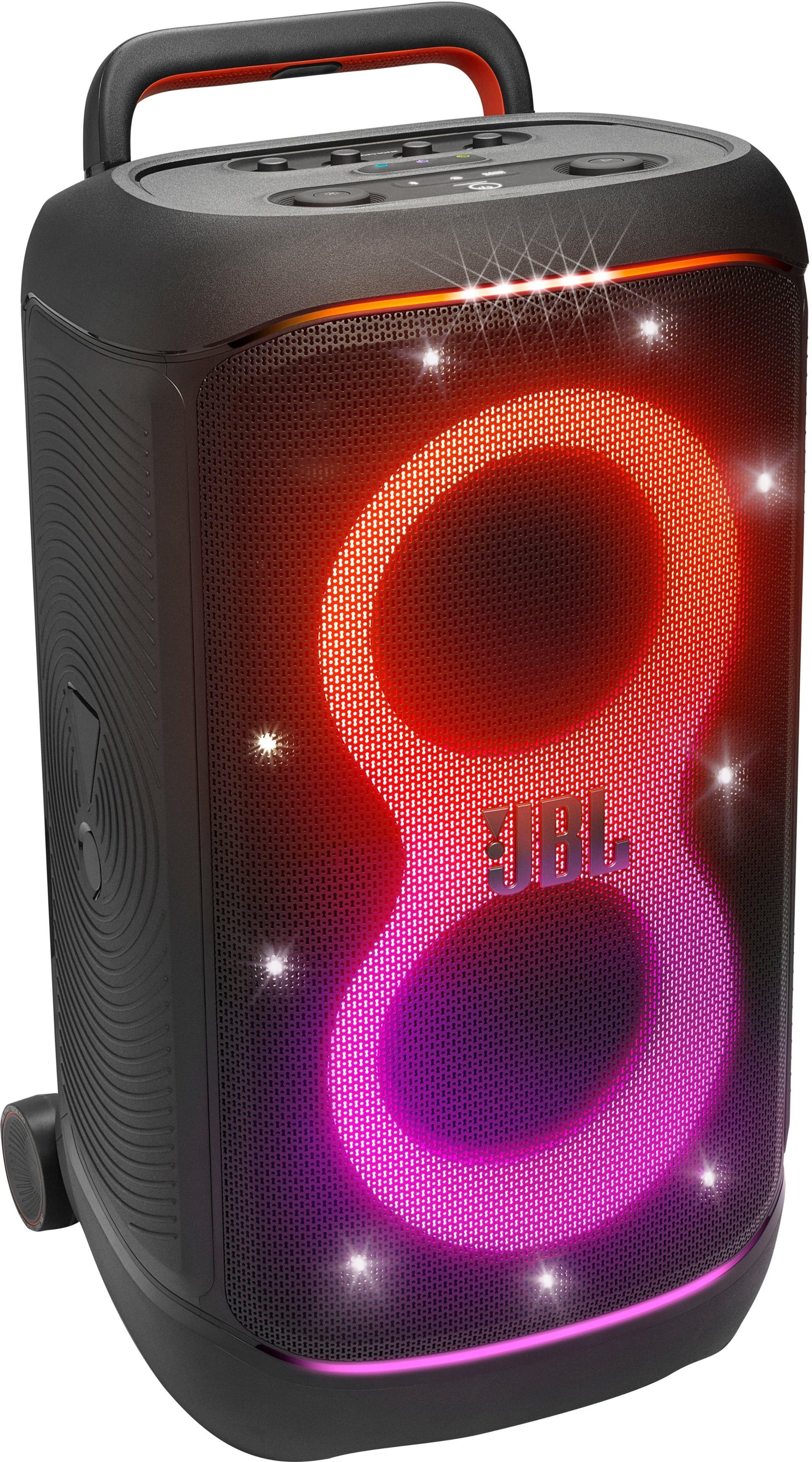
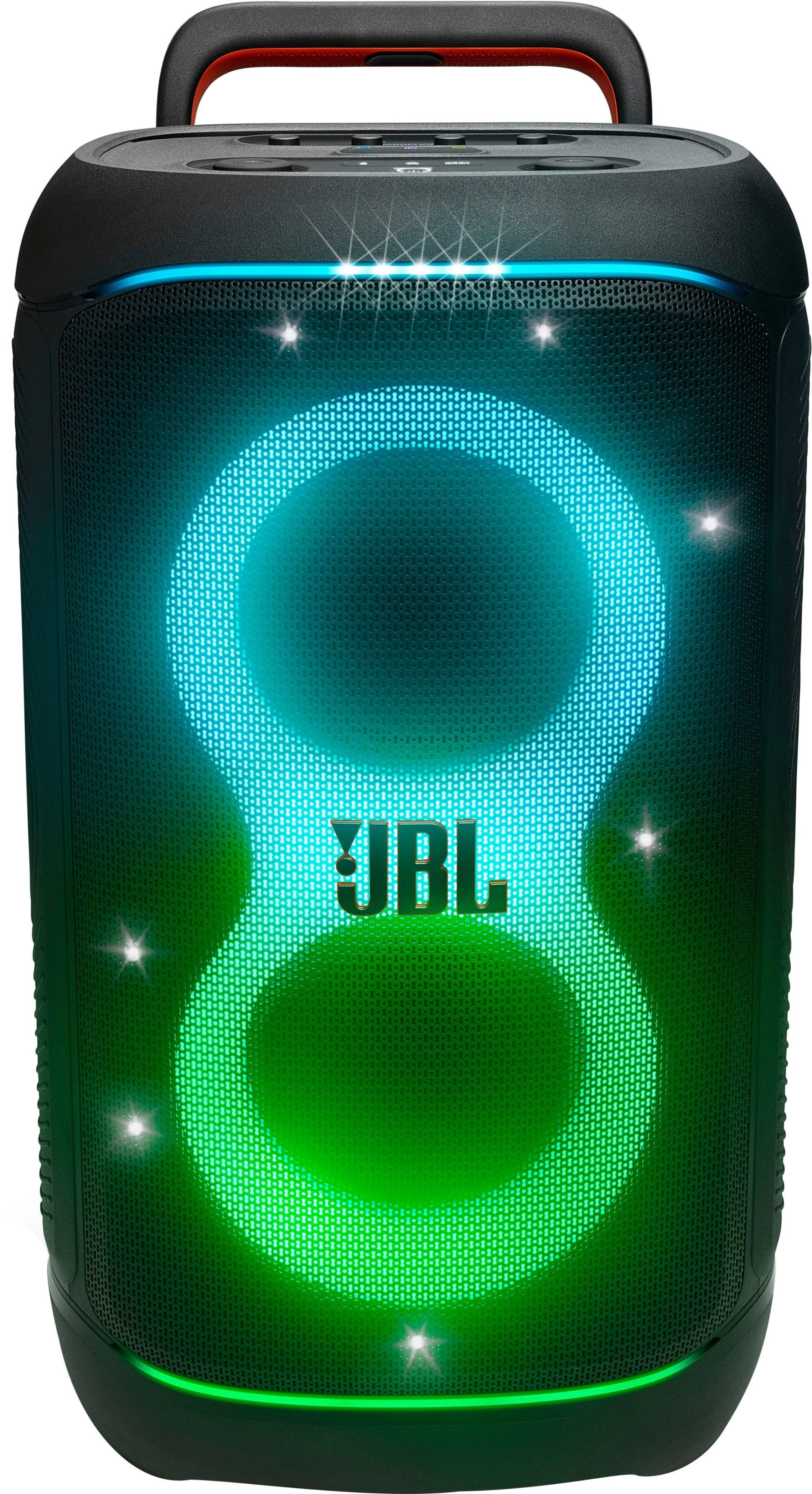
Party speakers have exploded in popularity over the past few years, and for good reason. They're designed to do one thing really well: get loud enough to fill large spaces while adding visual flair to your gatherings. Unlike regular Bluetooth speakers that prioritize balanced sound, party speakers embrace bass-heavy profiles, eye-catching light shows, and features that make hosting easier.
The two main considerations when shopping for party speakers are power output (how loud they can get) and portability (how easy they are to move around). JBL's PartyBox lineup, which debuted around 2018, has become one of the most popular choices in this category. Today we're comparing two standout models: the compact JBL PartyBox 110 and the more powerful JBL PartyBox 520.
Both speakers represent different philosophies in party speaker design. The PartyBox 110, released in 2021, focuses on genuine portability without sacrificing too much power. The PartyBox 520, launched in 2024, takes the opposite approach—maximizing performance even if it means requiring wheels to move around.
When comparing party speakers, RMS power output is the most important specification to understand. RMS (Root Mean Square) represents the continuous power a speaker can handle, unlike peak power ratings that only show brief bursts. The PartyBox 110 delivers 160W RMS, while the PartyBox 520 produces 400W RMS—more than double the output.
But power ratings only tell part of the story. What really matters is Sound Pressure Level (SPL), measured in decibels (dB). This indicates how loud the speaker actually gets. Our research shows the PartyBox 110 reaches about 106.8 dB at maximum volume, while the PartyBox 520 hits 114.3 dB. That 7.5 dB difference might not sound like much, but decibels work on a logarithmic scale—the 520 is actually more than twice as loud in practical terms.
To put this in perspective, 106 dB is roughly equivalent to a motorcycle engine, while 114 dB approaches the level of a rock concert. For indoor parties of 20-40 people, the PartyBox 110 provides more than enough volume. For outdoor events or gatherings of 75+ people, the PartyBox 520 becomes necessary to properly fill the space.
The driver configuration—the actual speakers inside the cabinet—explains much of the performance difference. The PartyBox 110 uses two 5.25-inch woofers (for bass and midrange) and two 2.25-inch tweeters (for highs). The PartyBox 520 steps up to two massive 7.5-inch woofers and two 1-inch dome tweeters.
Larger woofers move more air, which directly translates to deeper, more impactful bass. Based on expert reviews, the PartyBox 520 delivers substantially more low-end punch—the kind that you feel in your chest rather than just hear. This makes a significant difference for bass-heavy music genres like hip-hop, EDM, and reggaeton that dominate many parties.
Both speakers feature AI Sound Boost, JBL's proprietary technology that analyzes audio signals in real-time and optimizes output to prevent distortion. This keeps the sound clear even when you crank the volume to maximum. However, the PartyBox 110 shows more audio compression at peak volumes—essentially, the speaker starts to "squash" the dynamic range to prevent damage, which can make music sound less natural.
The frequency response (the range of sounds the speaker can reproduce) is similar for both models: roughly 40-45 Hz to 20 kHz. The lower number represents bass frequencies, while the higher number covers treble. Both speakers handle the full spectrum of human hearing, but the PartyBox 520's larger drivers deliver more authority across the entire range.
For sound quality purists, neither speaker will replace a high-end stereo system. Party speakers intentionally emphasize bass and volume over balanced reproduction. But within this category, both models offer surprisingly good clarity, especially the PartyBox 520 when you're not pushing it to maximum volume.
Battery technology has improved dramatically since the first PartyBox models launched in 2018. The PartyBox 110 offers 12 hours of playtime from its 36Wh lithium-ion battery, while the PartyBox 520 provides 15 hours from a much larger 99Wh battery pack.
These numbers come with important caveats. Battery life depends heavily on volume level, bass boost settings, and whether you're using the light show features. In real-world testing, users report getting around 7 hours from the PartyBox 110 at moderate-to-high volumes with lights enabled. The PartyBox 520 tends to deliver closer to its advertised 15 hours because its more powerful amplification doesn't have to work as hard to achieve high volumes.
The PartyBox 520 introduces a game-changing feature: swappable battery packs. You can purchase additional batteries and hot-swap them during events, essentially providing unlimited runtime. The quick-charge feature adds another two hours of playtime with just a 10-minute charge—perfect for short breaks between sets.
Both speakers charge via standard AC power cords and can operate while plugged in. Interestingly, both models get slightly louder (about 2-3 dB) when connected to AC power, as they're not limited by battery constraints.
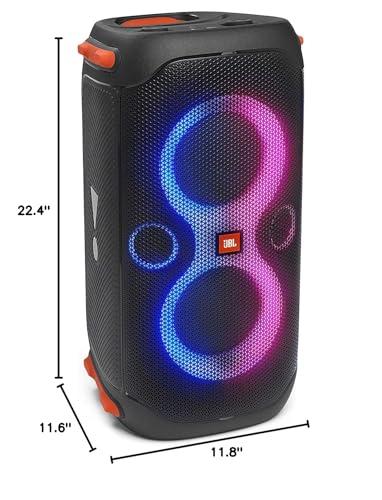
Here's where the fundamental difference between these speakers becomes clear. The PartyBox 110 weighs 23 pounds (10.4 kg) with built-in handles, making it genuinely portable for most people. You can carry it with one hand, toss it in a car trunk, or bring it up stairs without significant effort.
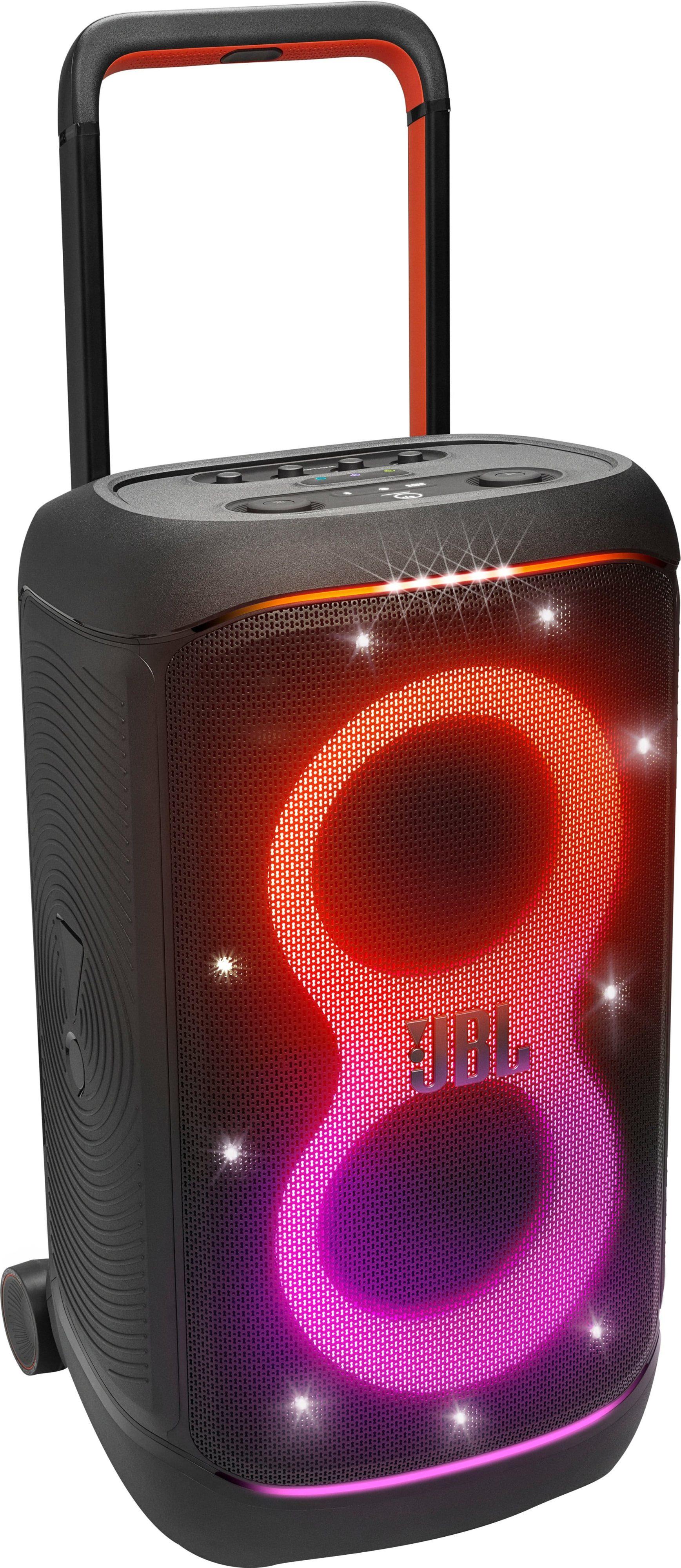
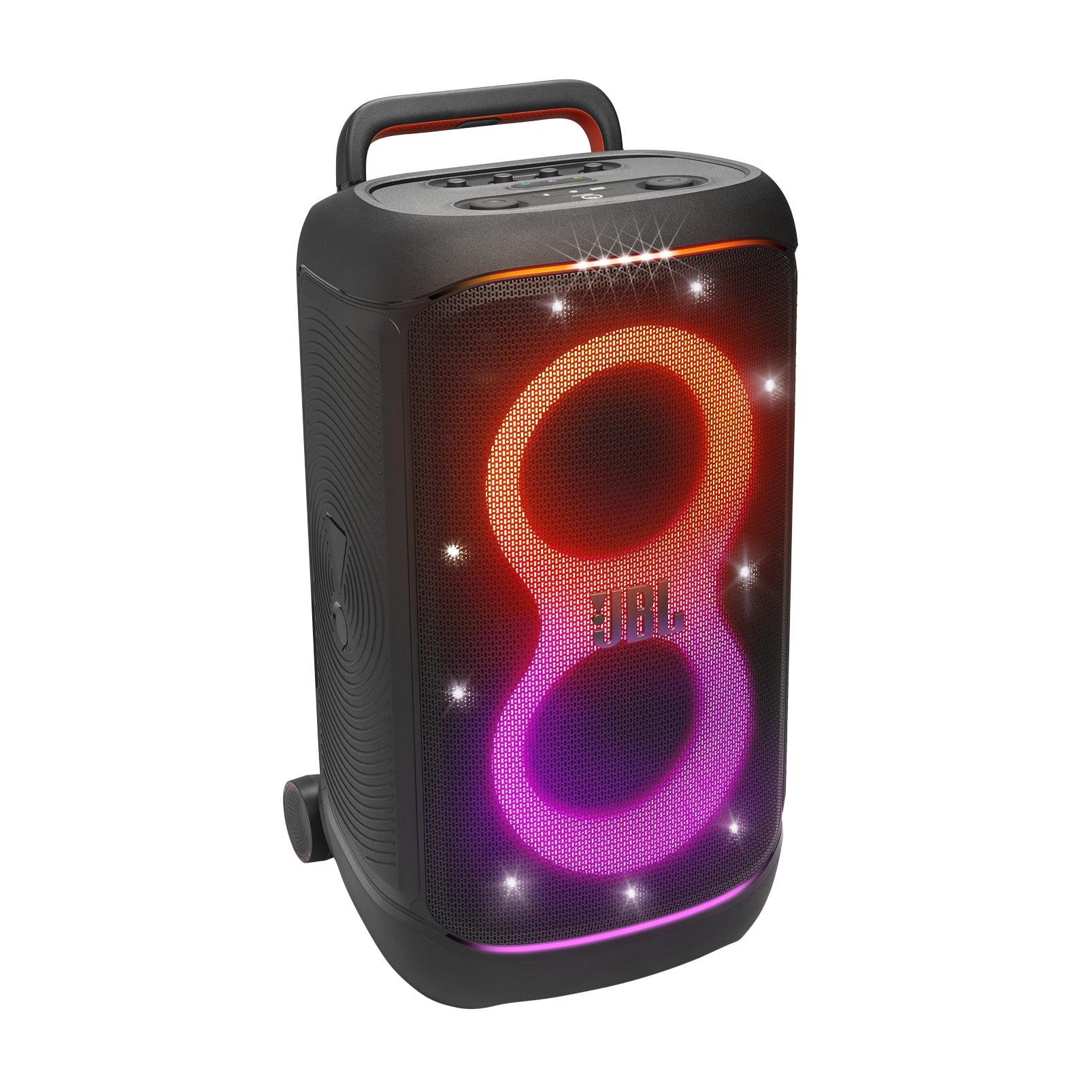
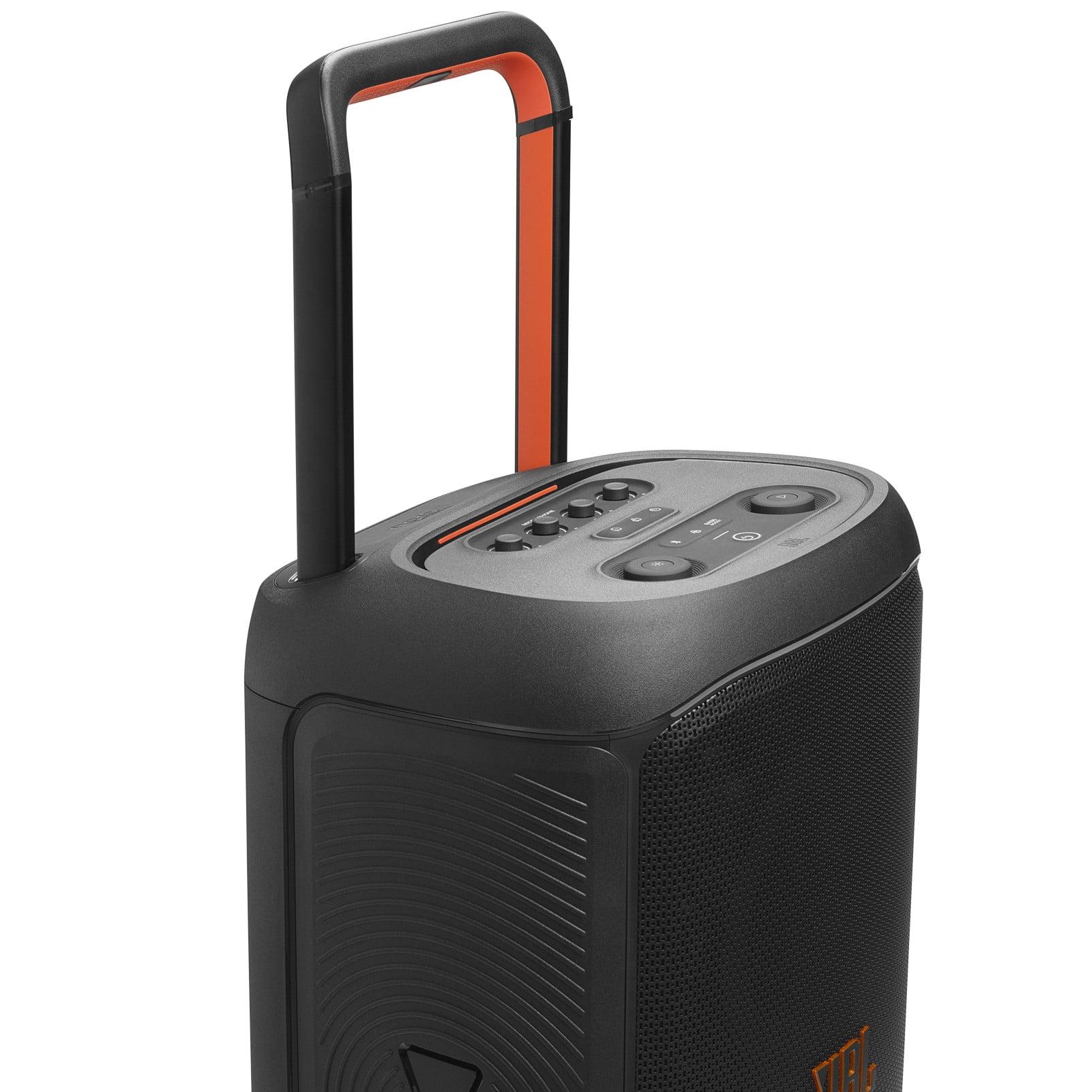
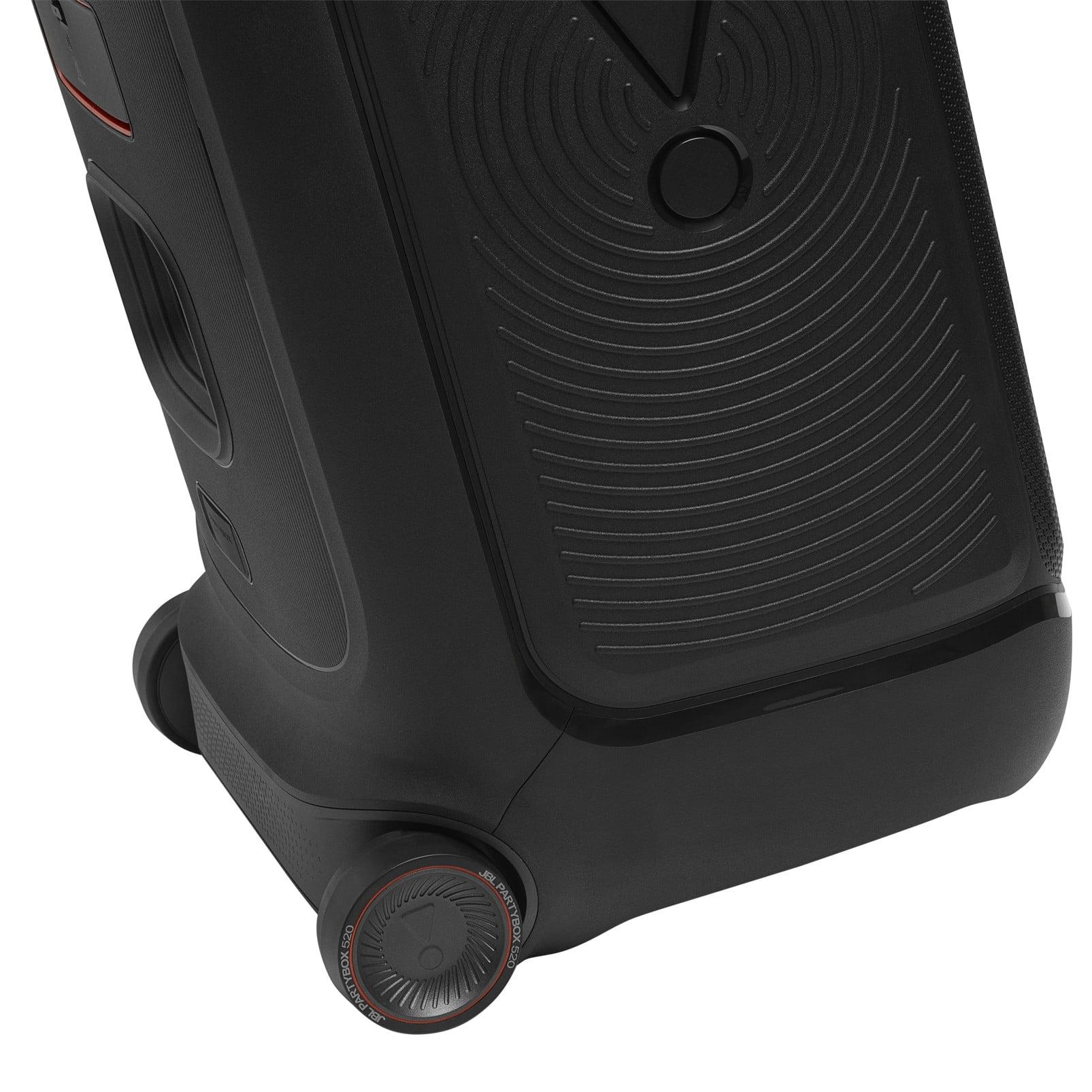
The PartyBox 520 weighs 56 pounds (25.5 kg)—nearly 2.5 times heavier. JBL addresses this with a telescopic handle and wide, sturdy wheels, essentially turning it into rolling luggage. The wheels work well on smooth surfaces like pavement or indoor floors, but struggle with grass, sand, or stairs.
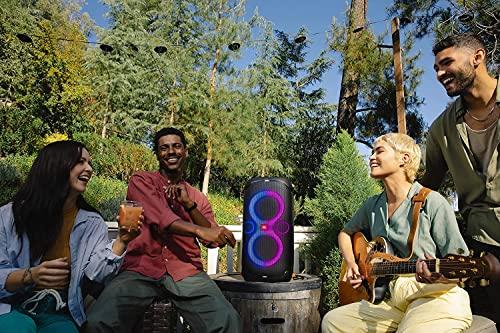
This weight difference fundamentally changes how you use each speaker. The PartyBox 110 encourages spontaneous parties—grab it and go to the beach, park, or friend's house. The PartyBox 520 requires more planning and works best for events where you can wheel it close to the final location.
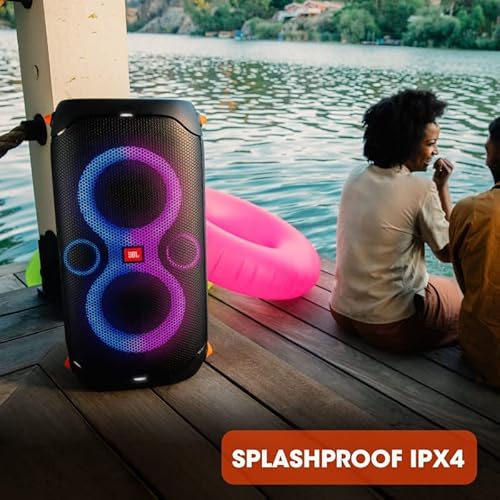
Both speakers feature IPX4 splashproof rating, meaning they can handle light rain and poolside splashes but shouldn't be submerged. This rating has remained consistent across JBL's party speaker lineup since 2019, providing adequate protection for most outdoor scenarios.
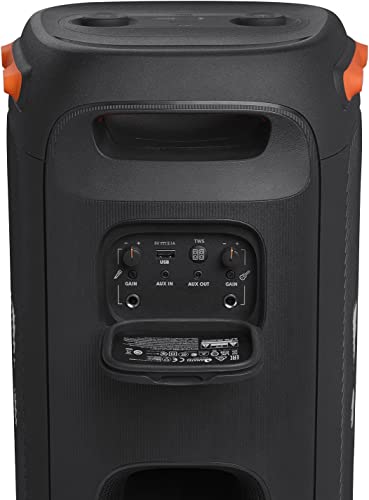
Modern party speakers need to handle multiple audio sources seamlessly. Both models offer identical core connectivity: Bluetooth 5.1+ with multi-device pairing, 3.5mm auxiliary input, USB ports for direct playback and device charging, plus dedicated inputs for microphones and guitars.
The PartyBox 520 adds USB-C audio connectivity and combo XLR-1/4" inputs. XLR connections are the professional standard for microphones and mixing equipment, making the 520 more suitable for DJ setups or live performances. The PartyBox 110 uses standard 1/4" inputs, which work fine for consumer microphones but limit professional applications.
Both speakers support True Wireless Stereo (TWS) pairing, allowing you to connect two identical units for stereo separation. The newer PartyBox 520 also supports Auracast technology, JBL's latest wireless standard that enables more flexible multi-speaker setups and better audio synchronization.
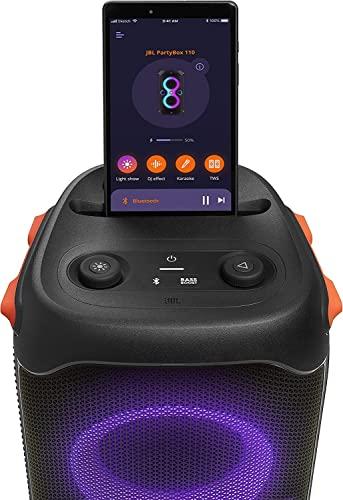
The JBL PartyBox app provides control over EQ settings, light patterns, and various sound effects. The app has improved significantly since the original PartyBox launch, now offering a 7-band graphic equalizer and dozens of lighting presets. Both speakers benefit from these software updates, though the PartyBox 520's newer Bluetooth implementation provides more responsive app connectivity.
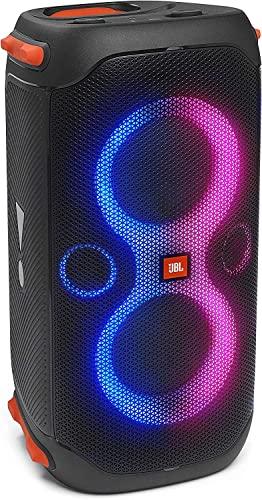
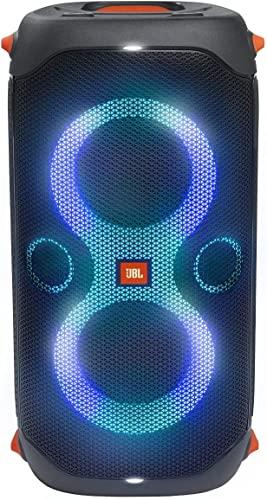
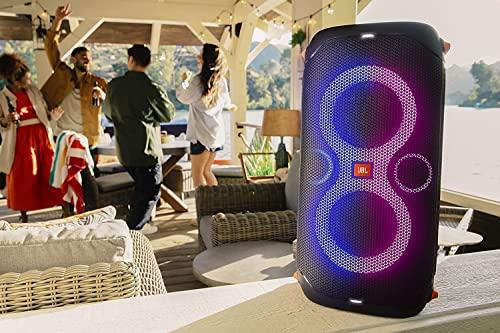
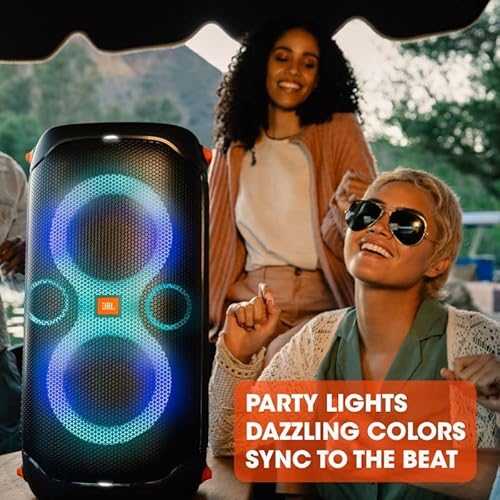
Party speaker lighting has evolved from simple color-changing LEDs to sophisticated displays synchronized with music. Both the PartyBox 110 and PartyBox 520 feature dynamic LED light rings around the drivers that pulse, strobe, and change colors based on the music's rhythm and bass content.
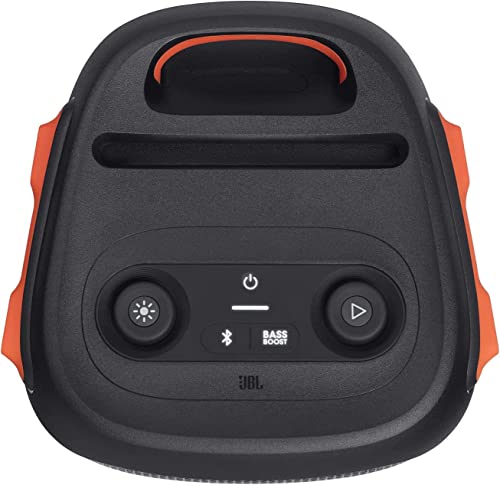
The PartyBox 520's larger size creates more impactful lighting effects that remain visible even in larger outdoor spaces. The lights can be customized through the app or controlled via physical buttons on the speaker. For indoor parties, the lighting creates an immersive atmosphere that genuinely enhances the experience.
Some users find the lights gimmicky, but they serve a practical purpose beyond aesthetics. Visual feedback helps party-goers feel the music's energy, and the synchronized effects create a more cohesive entertainment experience than audio alone.
While neither speaker is designed specifically for home theater use, both can enhance movie watching experiences in certain scenarios. The PartyBox 110 works well for casual movie nights where you want more impactful bass than TV speakers provide, especially for action movies or concerts.
However, both speakers have elevated Bluetooth latency—the delay between audio signal transmission and playback. This creates noticeable lip-sync issues when watching video content wirelessly. Using the auxiliary input eliminates this problem, making wired connections essential for serious home theater applications.
For dedicated home theater use, you'd be better served by traditional soundbars or bookshelf speakers. These party speakers excel at music playback and live entertainment rather than dialogue clarity and precise imaging required for films.
At the time of writing, the PartyBox 110 typically retails for significantly less than the PartyBox 520—roughly 40-50% of the larger model's price. This creates an interesting value proposition.
The PartyBox 110 delivers about 80% of the party speaker experience at less than half the cost. For most users hosting typical house parties, backyard BBQs, or pool gatherings, it provides more than adequate performance. The money saved could go toward better microphones, additional accessories, or simply staying within a reasonable budget.
The PartyBox 520 costs substantially more but offers more than double the power output, better build quality, swappable batteries, and professional connectivity options. The higher price is justified if you regularly host large events, need maximum volume for outdoor spaces, or want the most capable party speaker available.
Neither speaker offers exceptional value compared to budget alternatives from brands like Soundcore or Tribit, but JBL's build quality, software support, and brand reliability justify the premium for many users.
Choose the PartyBox 110 if you:
Choose the PartyBox 520 if you:
Both speakers succeed within their intended markets, but they serve fundamentally different needs. The PartyBox 110 strikes an excellent balance between performance, portability, and price, making it the better choice for most users. It provides legitimate party speaker capabilities without the compromises that come with extreme size and weight.
The PartyBox 520 makes sense for users who need maximum performance and can work within its physical limitations. It's genuinely impressive how much sound JBL extracts from a battery-powered speaker, but that performance comes with significant trade-offs in portability and cost.
For typical home users hosting occasional parties, the PartyBox 110 offers better overall value. For serious entertainers, DJs, or anyone who regularly needs to fill large outdoor spaces with sound, the PartyBox 520 justifies its premium price with substantially superior performance. The key is honestly assessing your actual needs rather than simply buying the most powerful option available.
| JBL PartyBox 110 | JBL PartyBox 520 |
|---|---|
| Power Output - Determines maximum volume and bass impact | |
| 160W RMS (suitable for indoor/moderate outdoor events) | 400W RMS (handles large outdoor gatherings with authority) |
| Maximum Volume - Critical for filling different space sizes | |
| 106.8 dB SPL (adequate for 30-40 people) | 114.3 dB SPL (covers 75+ people effectively) |
| Driver Configuration - Affects sound quality and bass depth | |
| 2x 5.25" woofers, 2x 2.25" tweeters (balanced for size) | 2x 7.5" woofers, 2x 1" dome tweeters (substantially deeper bass) |
| Weight and Portability - Major factor for transport and setup | |
| 23 lbs with handles (truly portable by hand) | 56 lbs with telescopic handle and wheels (requires rolling) |
| Battery Life - Important for all-day events | |
| 12 hours (typically 7-8 hours at party volumes) | 15 hours with swappable battery packs available |
| Dimensions - Determines storage and transport requirements | |
| 11.6" x 22.4" x 11.8" (fits in car trunks easily) | 16.3" x 30.3" x 14.5" (requires larger vehicle space) |
| Connectivity Options - Affects compatibility with equipment | |
| Bluetooth 5.1, AUX, USB, standard mic/guitar inputs | Bluetooth 5.4, AUX, USB-C audio, professional XLR inputs |
| Water Resistance - Protection for outdoor use | |
| IPX4 splashproof (handles poolside splashes) | IPX4 splashproof (same outdoor durability) |
| Release Year - Indicates available features and tech | |
| 2021 (proven reliability, mature software) | 2024 (latest features, newest Bluetooth and app support) |
| Best Use Cases - Helps determine which fits your needs | |
| House parties, beach trips, casual gatherings | Large events, DJ setups, maximum volume requirements |
The JBL PartyBox 520 is significantly louder than the PartyBox 110. The 520 produces 400W RMS compared to the 110's 160W RMS, reaching 114.3 dB SPL versus 106.8 dB SPL. This makes the PartyBox 520 more than twice as loud in practical terms, suitable for large outdoor events of 75+ people, while the PartyBox 110 works best for gatherings of 30-40 people.
The JBL PartyBox 520 offers 15 hours of battery life compared to the PartyBox 110's 12 hours. However, the 520 also features swappable battery packs and quick-charge capability (10 minutes for 2 extra hours), while the PartyBox 110 has a fixed internal battery. Real-world usage typically delivers 7-8 hours for both speakers at party volumes with lights enabled.
The JBL PartyBox 110 is much more portable, weighing only 23 pounds with built-in handles that allow one-handed carrying. The PartyBox 520 weighs 56 pounds and requires a telescopic handle with wheels for transport. The PartyBox 110 encourages spontaneous use and fits easily in car trunks, while the 520 needs planning and works best on smooth surfaces.
Both speakers share core features like Bluetooth, AUX input, USB ports, and microphone inputs, but the JBL PartyBox 520 offers more professional connectivity. The 520 includes USB-C audio and combo XLR-1/4" inputs suitable for DJ equipment, while the PartyBox 110 uses standard consumer inputs. Both support the JBL PartyBox app for control and customization.
The JBL PartyBox 520 delivers superior sound quality with its larger 7.5-inch woofers providing deeper, more impactful bass and better clarity at high volumes. The PartyBox 110 offers good sound quality for its size but shows more compression and harshness when pushed to maximum volume. Both use JBL Pro Sound technology and AI Sound Boost for optimization.
Neither the PartyBox 110 nor PartyBox 520 is ideal for dedicated home theater use due to elevated Bluetooth latency causing lip-sync issues. However, both can enhance casual movie nights when connected via AUX cable, with the PartyBox 520 providing more impactful bass for action movies. Traditional soundbars offer better dialogue clarity and imaging for serious home theater applications.
The JBL PartyBox 110 typically costs significantly less than the PartyBox 520 - roughly 40-50% of the larger model's price at the time of writing. The PartyBox 110 offers excellent value for most users, providing about 80% of the party speaker experience at less than half the cost, while the 520 justifies its premium price with substantially superior performance.
For large outdoor events, the JBL PartyBox 520 is the clear winner with its 400W output and ability to fill spaces for 75+ people. The PartyBox 110 works well for smaller outdoor gatherings like backyard BBQs or beach trips where portability matters more than maximum volume. Both offer IPX4 splashproof rating for outdoor durability.
Yes, both the PartyBox 110 and PartyBox 520 feature dynamic LED light shows that sync with music beats. The PartyBox 520 creates more impactful lighting effects due to its larger size, making them visible in bigger spaces. Both speakers allow light customization through the JBL PartyBox app with multiple patterns and color options.
Both the JBL PartyBox 110 and PartyBox 520 support True Wireless Stereo (TWS) pairing to connect two identical units for stereo separation. The newer PartyBox 520 also supports Auracast technology for more flexible multi-speaker setups. You can also daisy-chain speakers using auxiliary cables for amplified sound coverage.
The JBL PartyBox 110 is better for beginners due to its more manageable size, lower cost, and genuine portability. It provides legitimate party speaker capabilities without the complexity and commitment of the larger model. The PartyBox 520 is better suited for experienced users who know they need maximum performance and can handle its size and weight requirements.
Both the PartyBox 110 and PartyBox 520 are purpose-built for high-volume entertainment with powerful amplification, visual light shows, and party-focused features like microphone inputs. Regular Bluetooth speakers prioritize balanced sound and portability but can't match the sheer volume and bass impact of either PartyBox model. The PartyBox 520 particularly excels at filling large spaces that would overwhelm standard portable speakers.
We've done our best to create useful and informative comparisons to help you decide what product to buy. Our research uses advanced automated methods to create this comparison and perfection is not possible - please contact us for corrections or questions. These are the sites we've researched in the creation of this article: rtings.com - youtube.com - bestbuy.com - gadgets360.com - popsci.com - youtube.com - audioadvice.com - popsci.com - youtube.com - versus.com - youtube.com - rtings.com - jbl.com - in.jbl.com - jbl.com.tw - bhphotovideo.com - in.jbl.com - jbl.com - youtube.com - hu.harmanaudio.com - jbl.com.au - global.jbl.com - support.jbl.com - youtube.com - kh.jbl.com - onward.ph - jbl.com.ph - support.jbl.com - youtube.com - soundguys.com - rtings.com - rtings.com - rtings.com - letemsvetemapplem.eu - youtube.com - worldwidestereo.com - youtube.com - global.jbl.com - youtube.com - soundguys.com - youtube.com - youtube.com - comparisontabl.es - youtube.com - youtube.com - youtube.com - gzhls.at - sweetwater.com - static.pcrichard.com - brandsmartusa.com - news.harman.com - jbl.com - ro.harmanaudio.com - jbl.com - creativeaudio.net

Privacy Policy
Terms and Conditions - Affiliate Policy
Home Security
© Copyright 2008-2026.
11816 Inwood Rd #1211, Dallas, TX 75244