







When shopping for a premium Bluetooth speaker, you'll quickly discover that not all speakers are created equal—even when they're both designed to deliver powerful, room-filling sound. The Marshall Woburn III and SOUNDBOKS 4 represent two completely different philosophies in speaker design, each excelling in their intended environment while being poorly suited for the other's purpose.
At the time of writing, these speakers sit in different price ranges that reflect their distinct target markets. The Marshall Woburn III positions itself as a premium home speaker, while the SOUNDBOKS 4 commands a higher price as a professional-grade portable solution. Understanding which approach matches your needs will save you from an expensive mistake.
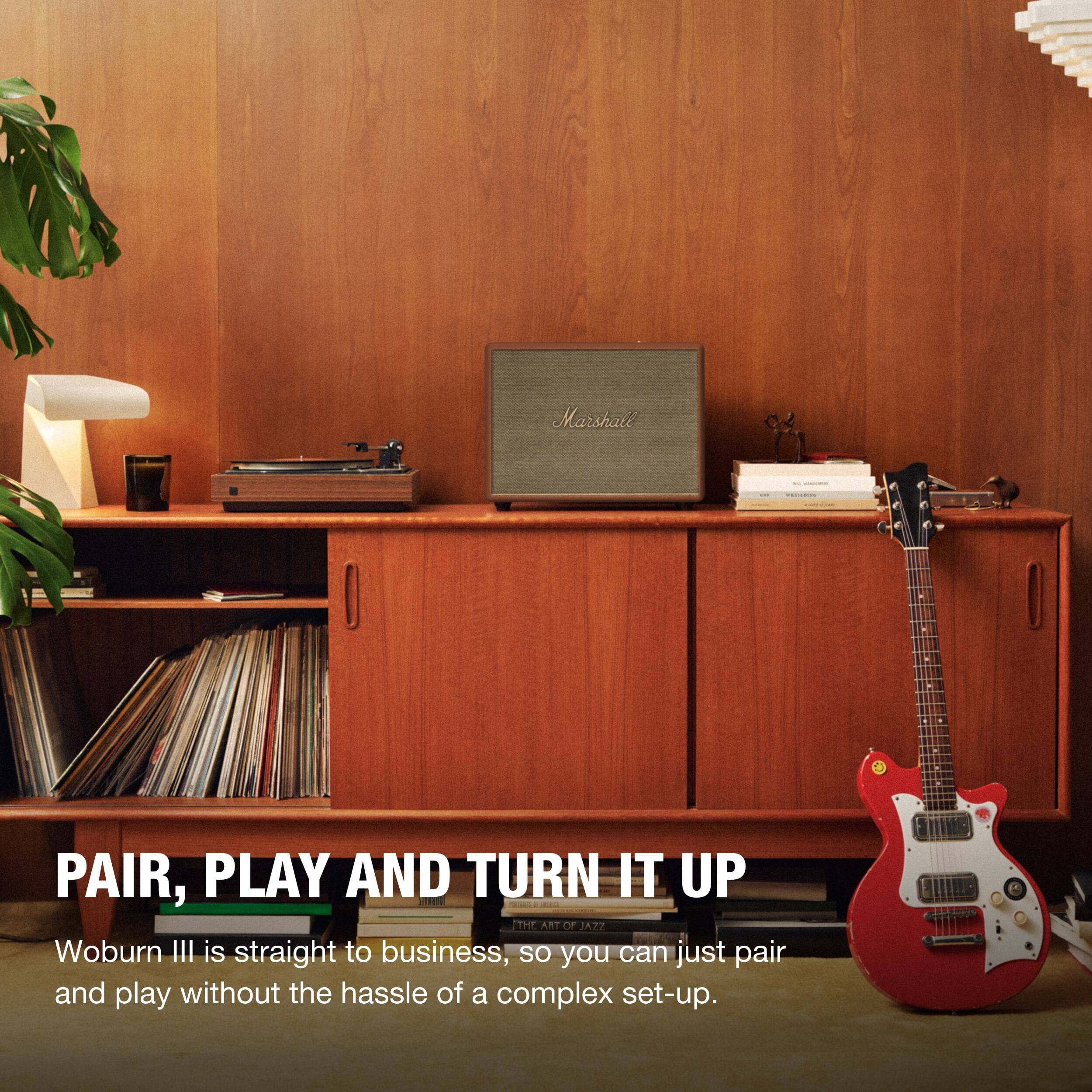
The fundamental difference between these speakers starts with where you'll use them. The Marshall Woburn III, released in 2022 as part of Marshall's third-generation home speaker lineup, is what we call a stationary home speaker—it's designed to plug into your wall and stay put, serving as a permanent fixture in your living room or home theater setup.
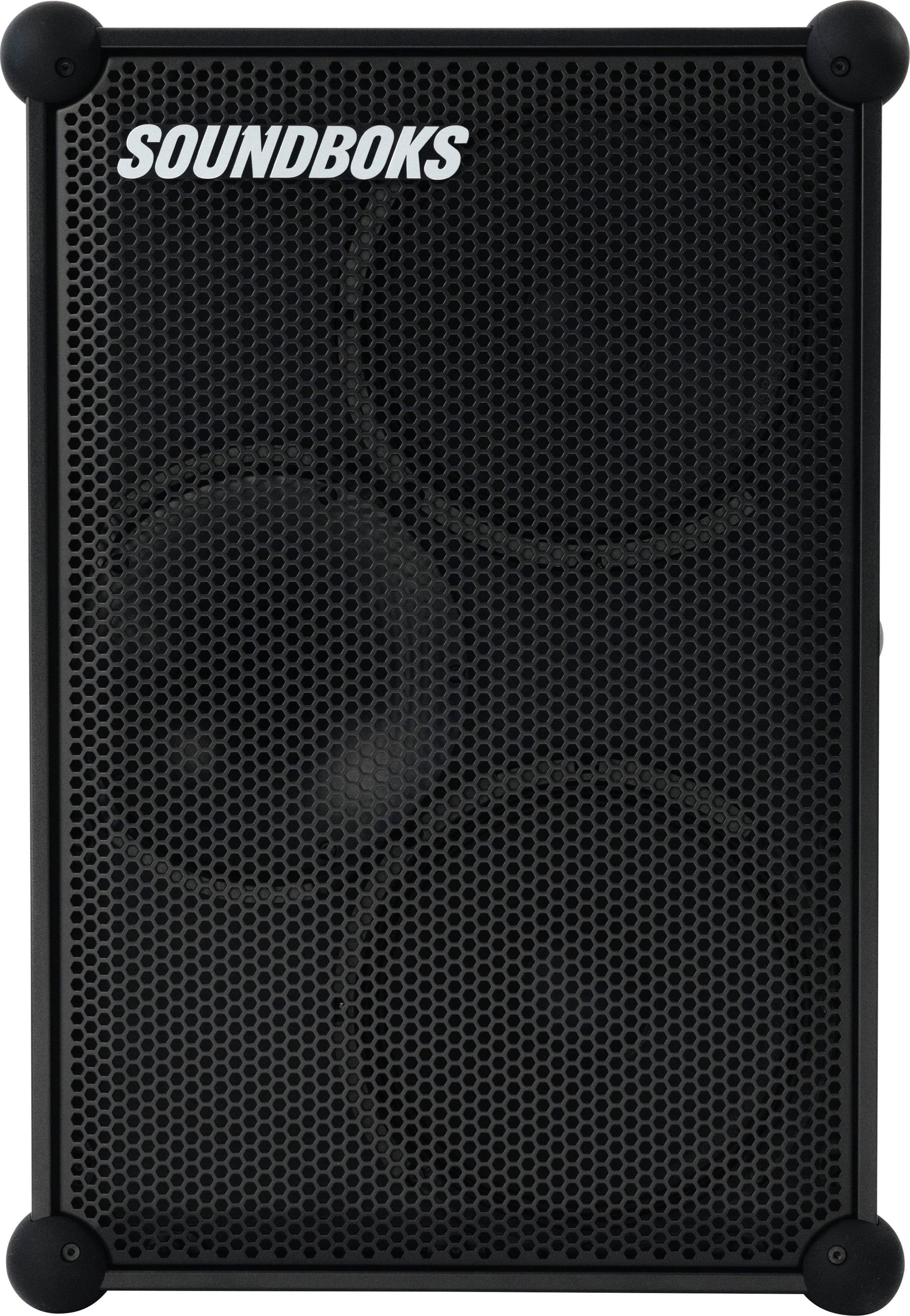
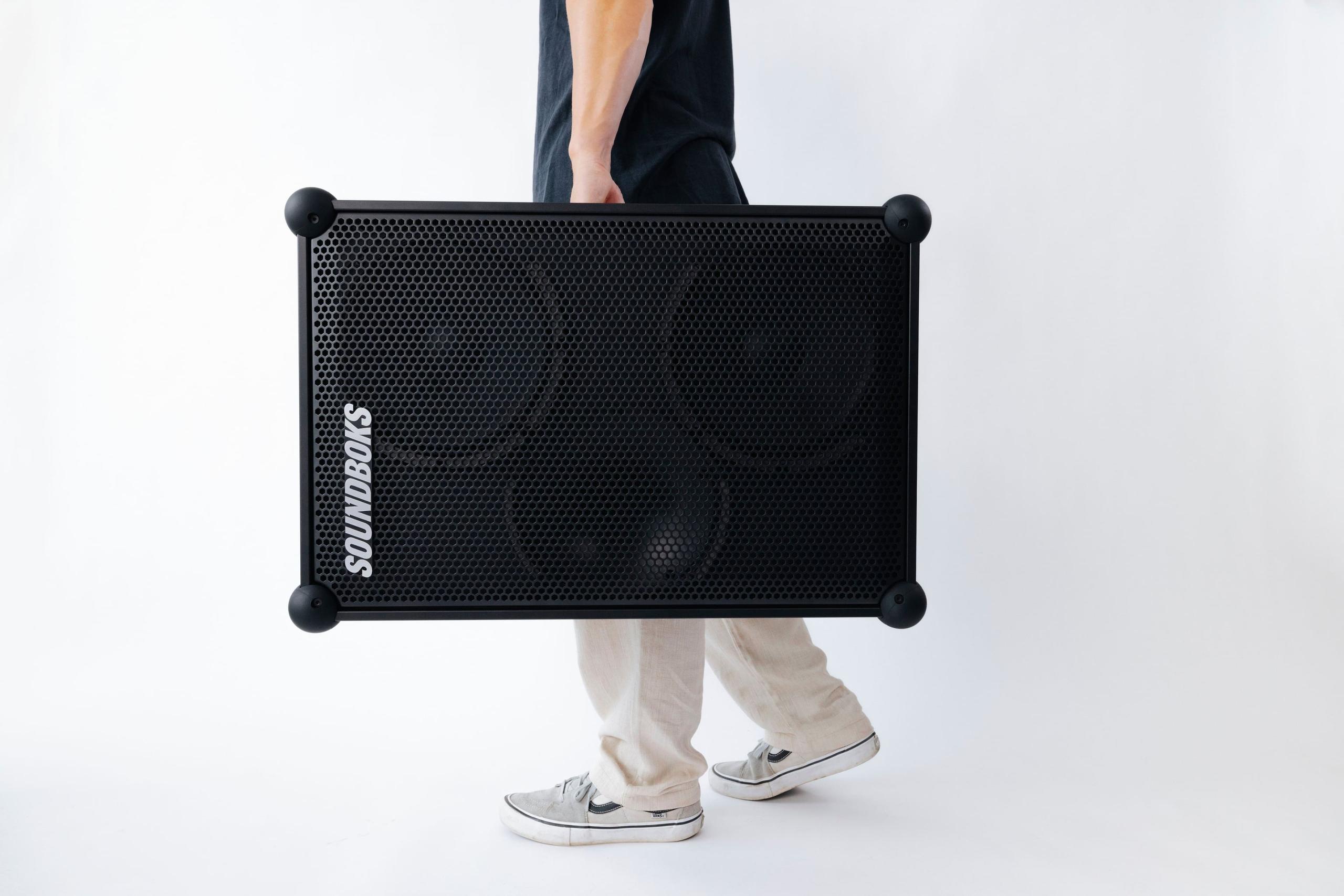
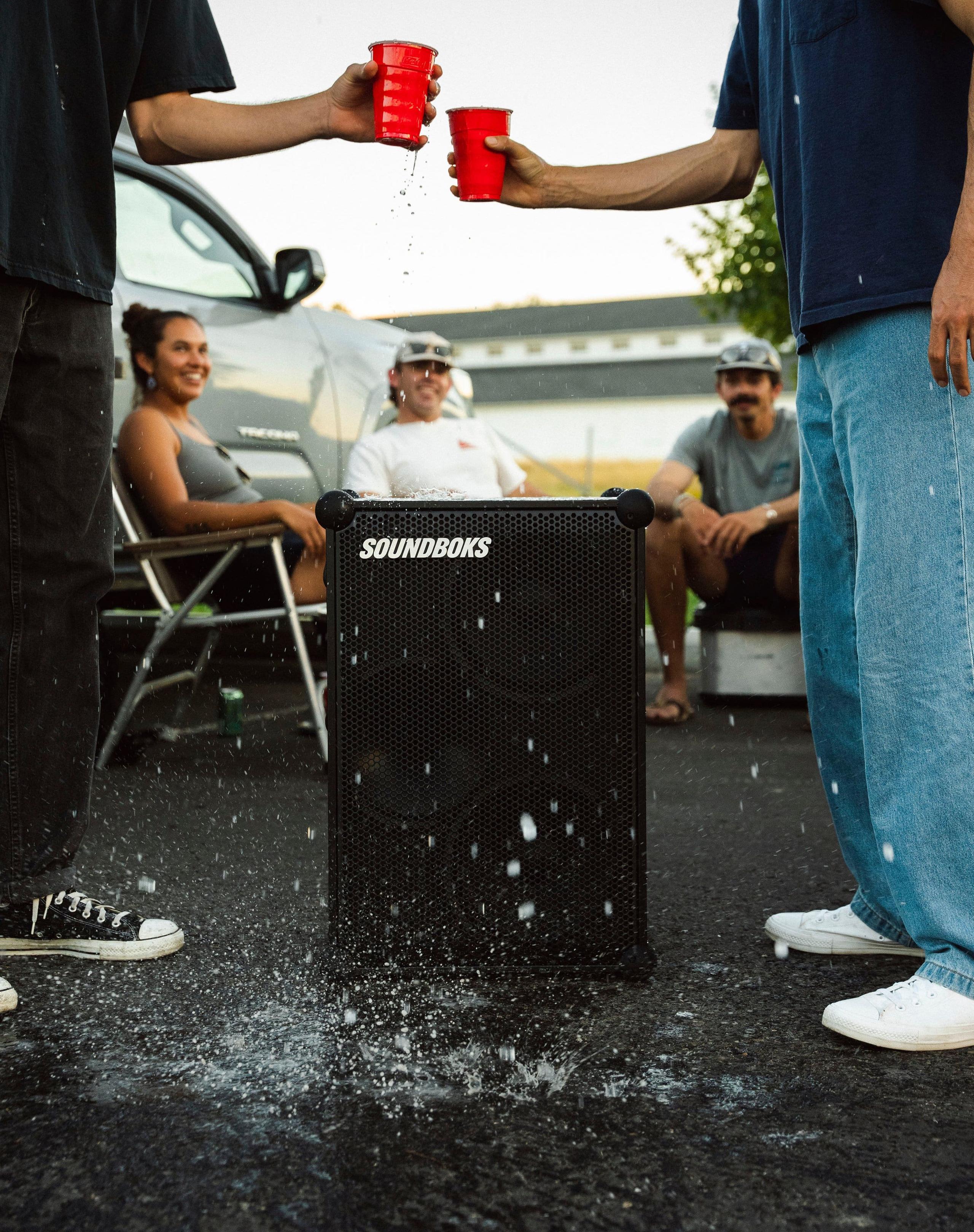
The SOUNDBOKS 4, also launched in 2022, takes the opposite approach as a portable party speaker. It's built around a removable battery system and weather-resistant construction, designed to travel with you to outdoor events, pool parties, or anywhere you need serious volume without access to wall power.
This isn't just a matter of portability—it fundamentally changes how each speaker approaches sound quality, connectivity, and user experience. Think of it like comparing a high-end home stereo receiver to a powerful PA system. Both make music loud, but they're optimized for completely different scenarios.
The Marshall Woburn III uses what's called a three-way driver system—this means it has separate speakers dedicated to handling different frequency ranges. It features a 6-inch woofer (the large driver that handles bass), two 2-inch midrange drivers (for vocals and most instruments), and two ¾-inch tweeters (the small drivers that produce high frequencies like cymbals and vocal details).
This separation matters because each driver can be optimized for its specific job. The woofer gets a powerful 90-watt amplifier, while the mids and tweeters each get their own 15-watt amplifiers. It's like having a specialized team where each member focuses on what they do best, rather than one person trying to handle everything.
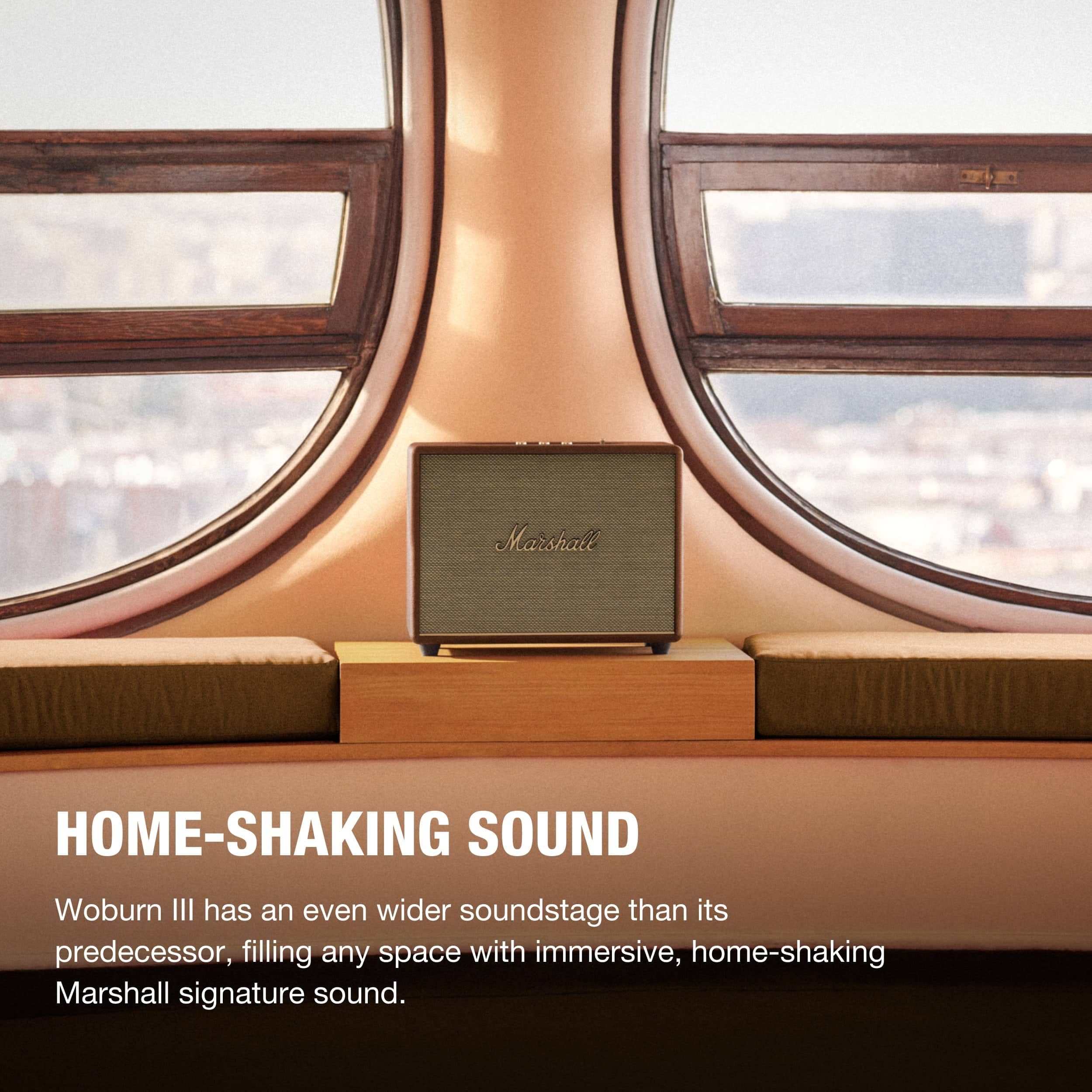
What makes the Marshall Woburn III particularly clever is its angled tweeter design. Instead of pointing straight forward, these high-frequency drivers are angled outward with special waveguides—think of them as acoustic lenses that shape how sound disperses. This creates what reviewers consistently describe as an exceptionally wide soundstage, meaning the music seems to come from a much broader area than just the speaker itself.
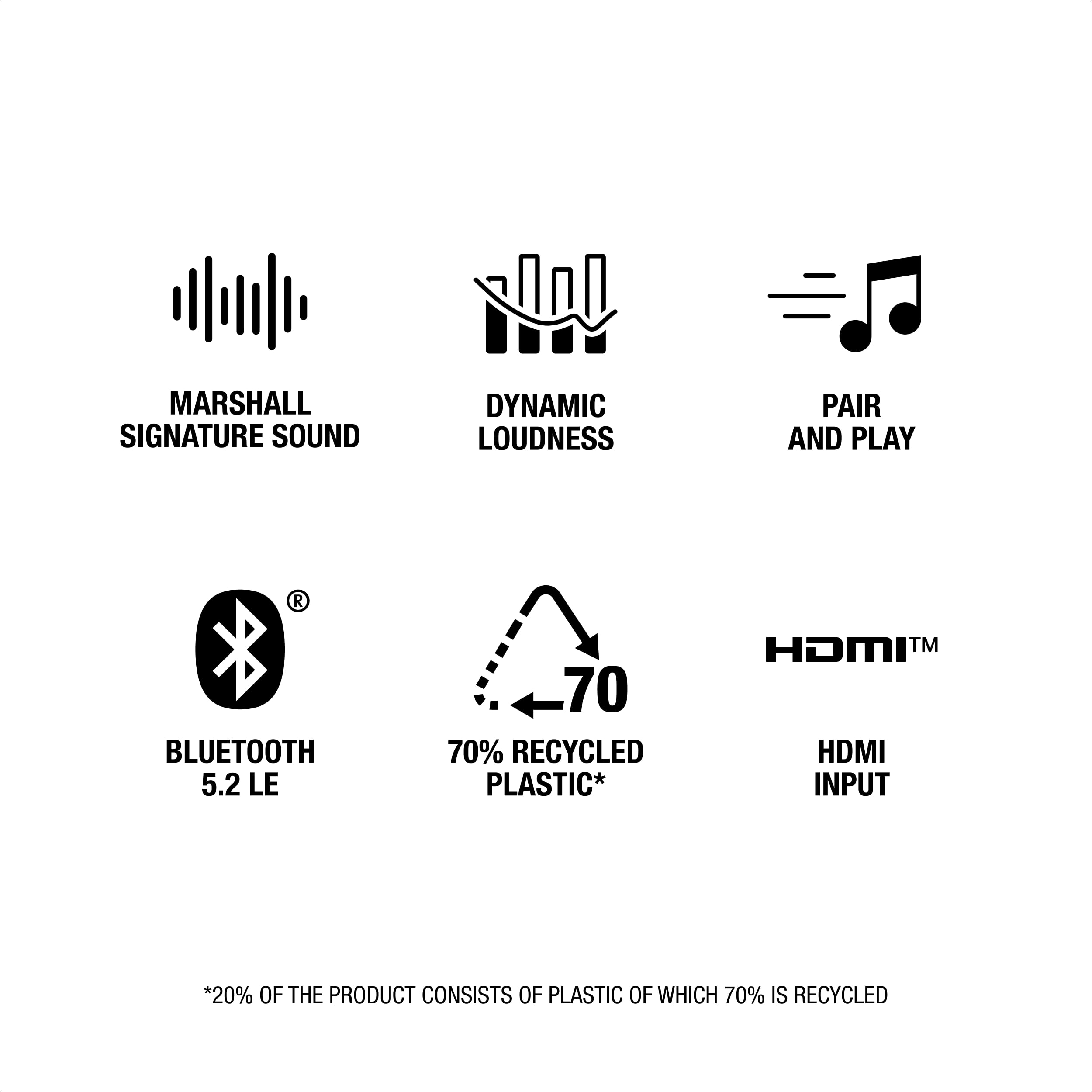
The speaker also includes Dynamic Loudness technology, which automatically adjusts the tonal balance based on your volume setting. At low volumes, your ears naturally perceive less bass and treble, so this feature compensates by boosting those frequencies to maintain balanced sound even during quiet listening sessions.
The SOUNDBOKS 4, meanwhile, prioritizes maximum output and deep bass impact. It uses dual 10-inch woofers—significantly larger than the Marshall's single 6-inch driver—paired with a horn-loaded compression driver for high frequencies. This compression driver design is borrowed from professional PA systems and concert speakers, where a small dome tweeter is coupled to a horn that amplifies and directs the sound efficiently.
Each of the three amplifiers in the SOUNDBOKS 4 delivers 72 watts, for a total of 216 watts of power—significantly more than the Marshall's 150 watts. But more importantly, this speaker can reach 126 dB of maximum sound pressure level (SPL), compared to the Marshall's 100.5 dB. To put this in perspective, every 10 dB increase represents roughly double the perceived loudness, making the SOUNDBOKS 4 dramatically louder.
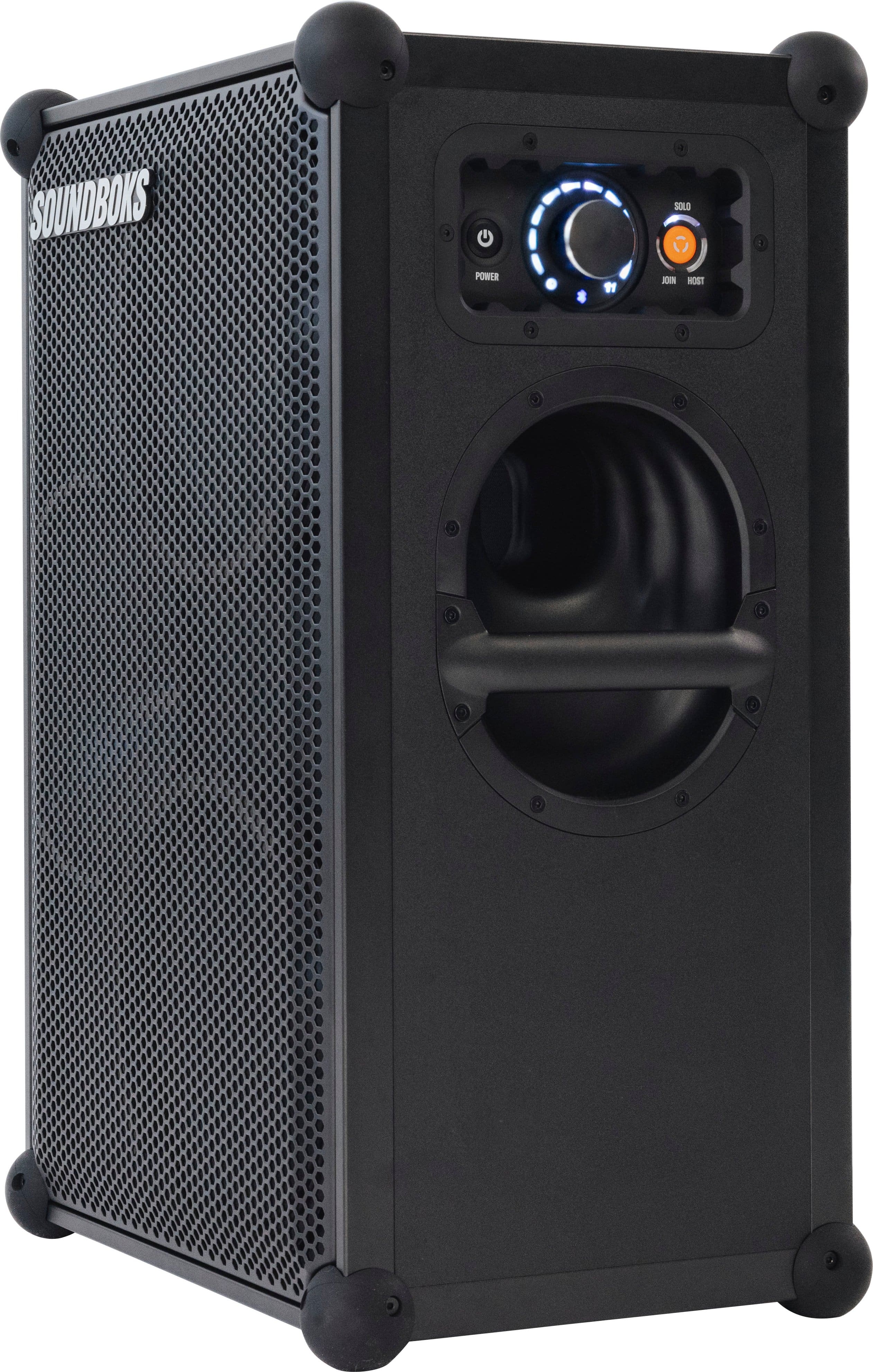
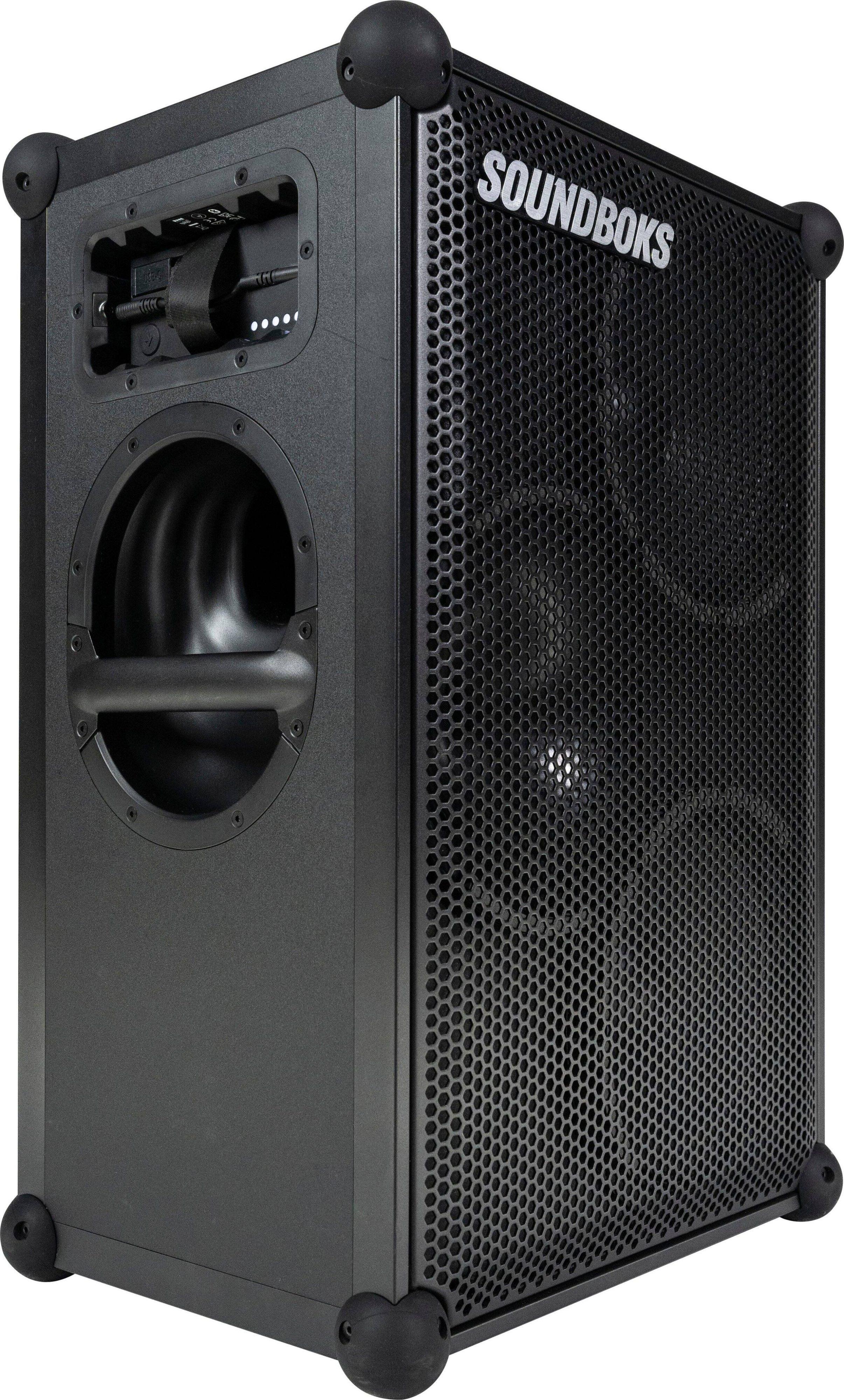
The SOUNDBOKS 4 also features something called a Pulse Reflex port—a specially tuned opening that allows air to move in and out of the speaker cabinet in sync with the woofers. This extends the bass response lower than would be possible with a sealed cabinet, contributing to the speaker's impressive low-frequency impact.
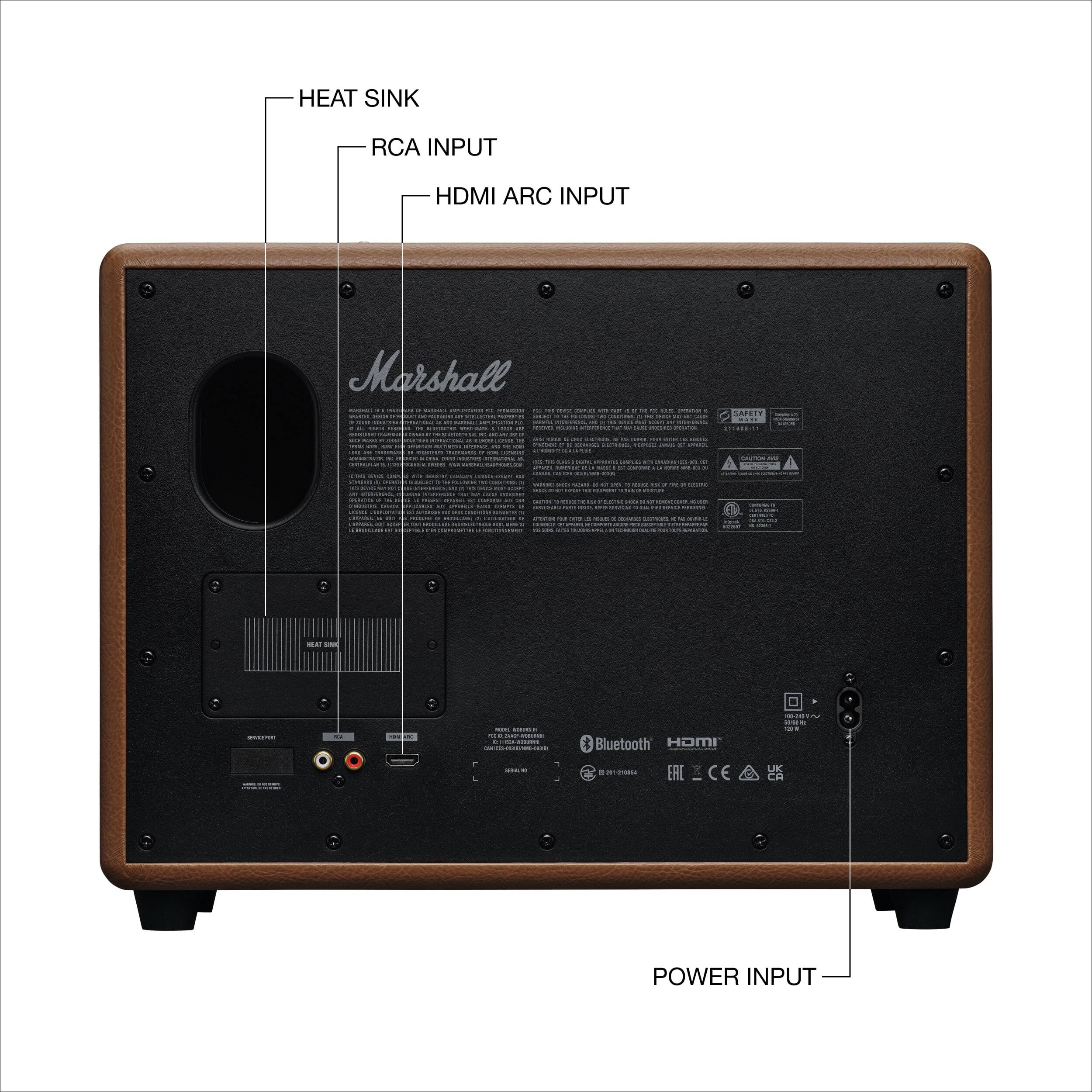
The Marshall Woburn III shines in its connectivity options for home use. Its standout feature is HDMI ARC (Audio Return Channel) connectivity, which allows it to connect directly to your TV and act as a soundbar replacement. This isn't just about convenience—the HDMI ARC connection enables special features like Night Mode, which automatically reduces loud sounds (like explosions) while boosting quiet dialogue, making late-night movie watching more considerate to sleeping family members.
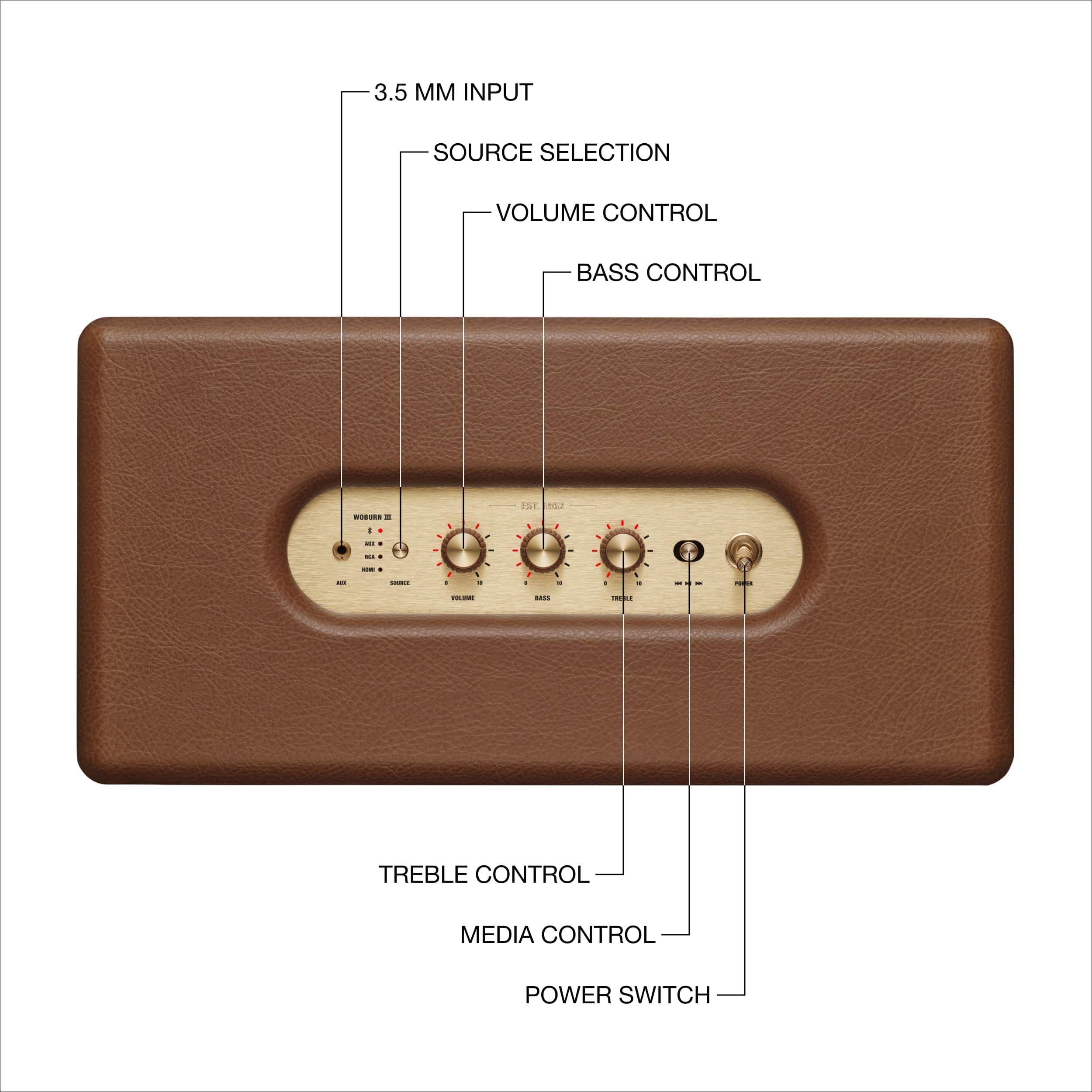
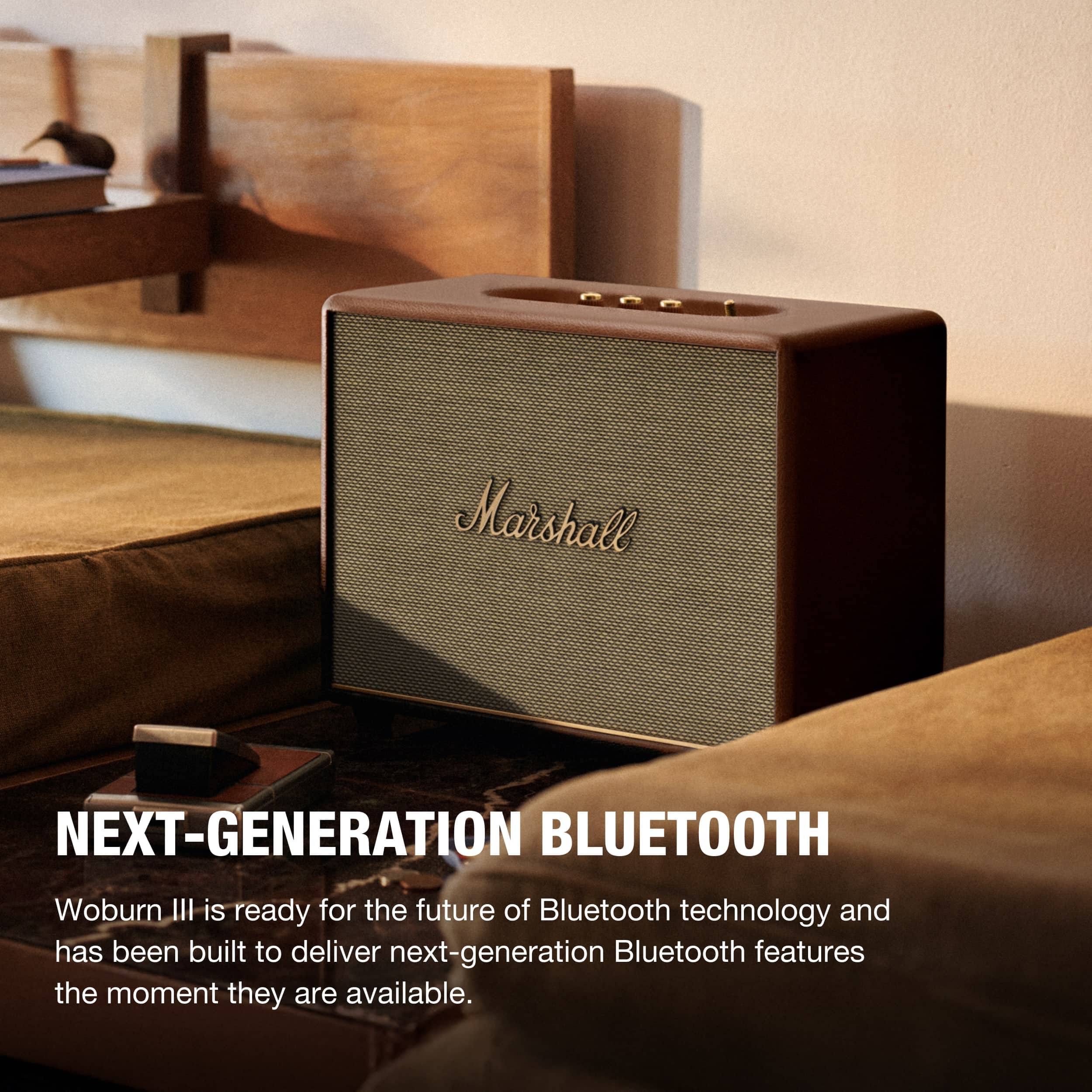
The speaker also includes traditional RCA inputs (the red and white cables from older stereo equipment) and a 3.5mm auxiliary input for connecting various audio sources. Its Bluetooth 5.2 connectivity supports multipoint connections, meaning you can have two devices paired simultaneously and easily switch between them.
The SOUNDBOKS 4 takes a completely different approach with its Pro Panel—a set of professional audio inputs on the back of the speaker. It includes two XLR/combo inputs, which are the type of connections used by microphones, electric guitars, and DJ mixing boards. These aren't just simple audio inputs; they're balanced connections that can handle both microphone-level and line-level signals while reducing noise and interference over long cable runs.
This means you can plug a microphone directly into the SOUNDBOKS 4 for speeches or karaoke, connect an electric guitar for outdoor performances, or link it to a DJ mixer for professional event use. Most consumer speakers require additional equipment to handle these scenarios.
The speaker also features TeamUP technology, which uses a proprietary wireless protocol (different from Bluetooth) to link up to five compatible SOUNDBOKS speakers together for synchronized playback. This is particularly valuable for large outdoor events where you need to cover a wide area with consistent sound.
The power approach represents perhaps the biggest philosophical difference between these speakers. The Marshall Woburn III requires constant connection to wall power, which means it's always ready to deliver full performance but completely tethered to electrical outlets.
The SOUNDBOKS 4 uses a removable Lithium Iron Phosphate (LiFePO4) battery system. This battery chemistry is more stable and longer-lasting than the lithium-ion batteries found in phones and laptops, but it also makes the battery larger and heavier. The trade-off is impressive runtime: up to 40 hours at moderate volumes, or about 6 hours at maximum output.
What's clever about the SOUNDBOKS 4's design is that the battery is completely removable, so you can purchase additional batteries and hot-swap them for truly unlimited runtime. This makes it practical for all-day outdoor events or situations where charging isn't feasible.
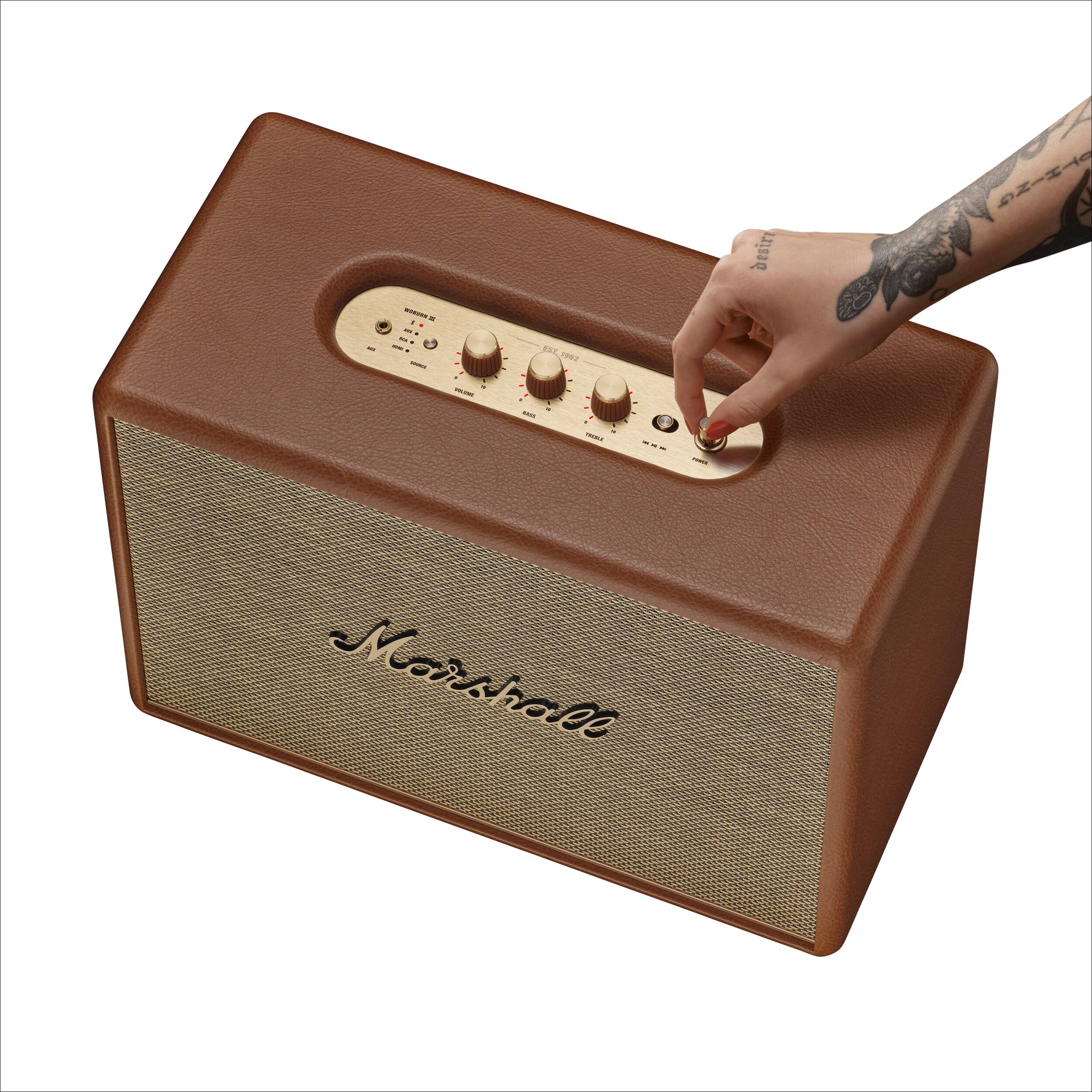
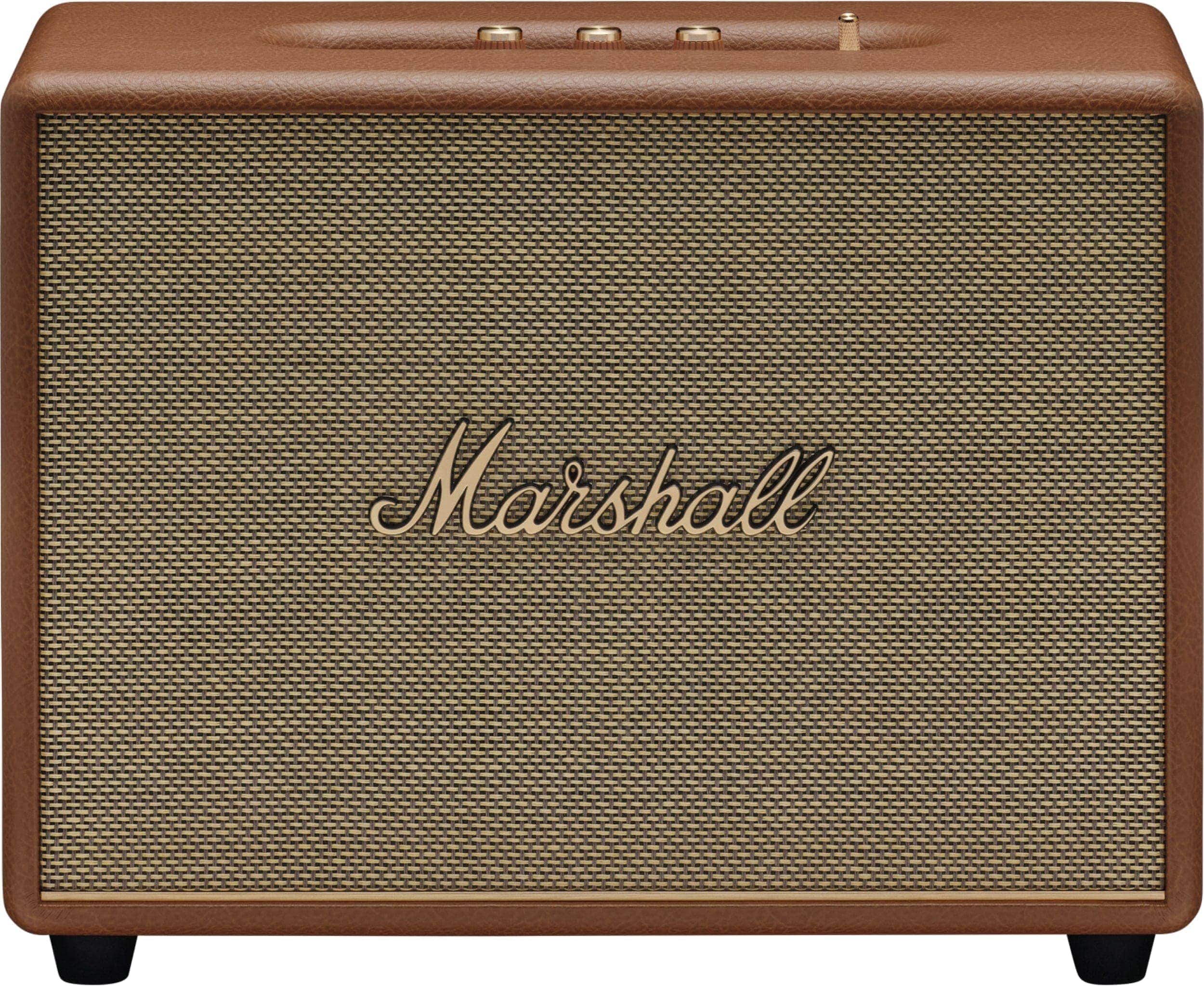
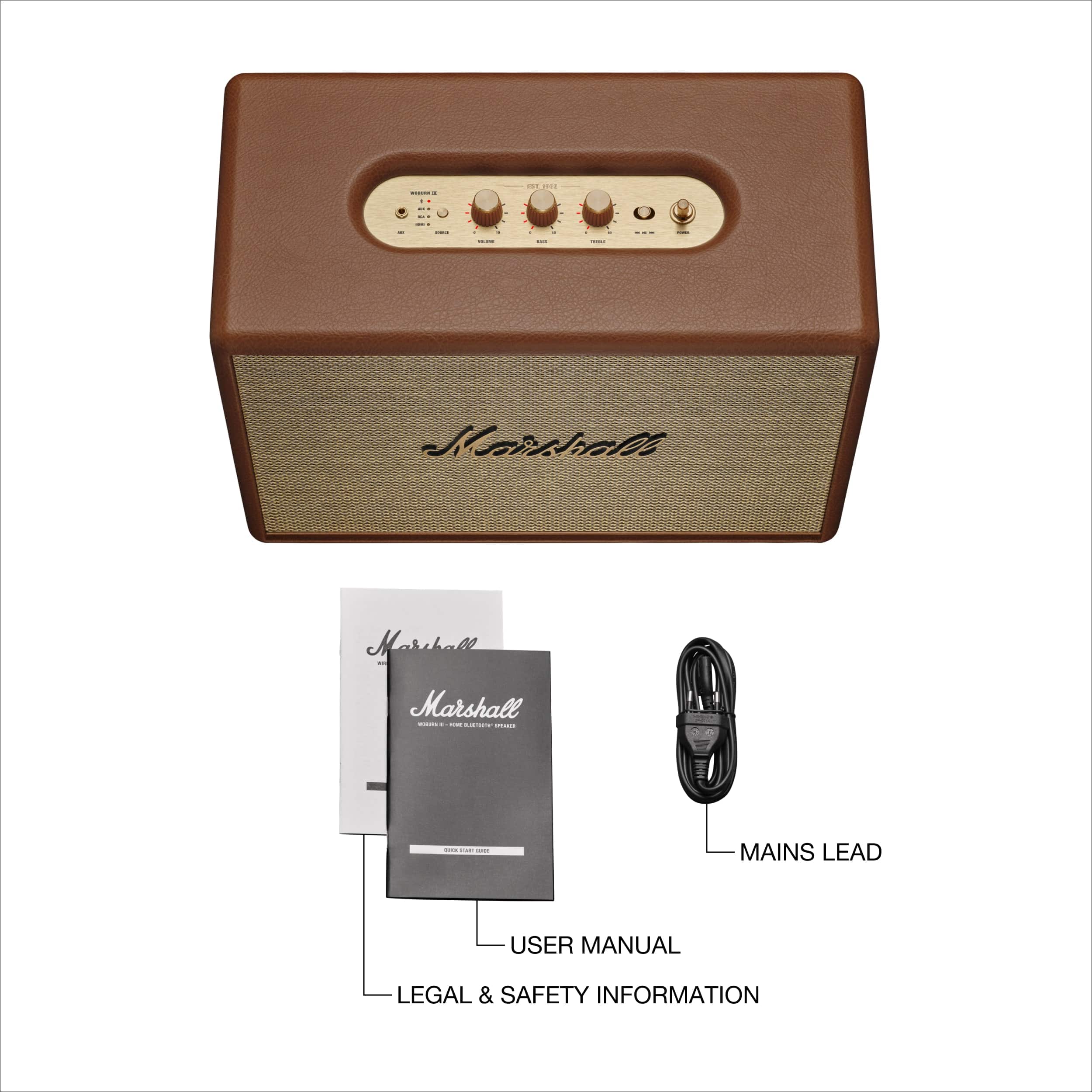
The Marshall Woburn III embodies Marshall's iconic amplifier aesthetic with a vegan leather texture, brass-colored control knobs, and the classic script logo. It's built to be a attractive piece of furniture that happens to be a speaker. The construction focuses on acoustic isolation and internal bracing to minimize unwanted vibrations that could color the sound.
The speaker sits low and wide for stability, and its weight (around 16 pounds) helps it stay planted when playing at high volumes. However, it offers no protection against moisture, dust, or physical impacts—it's clearly designed for controlled indoor environments.
The SOUNDBOKS 4 approaches durability from a completely different angle. It carries an IP65 rating, which means it's completely dust-tight and can withstand low-pressure water jets from any direction. While it's not fully waterproof (don't submerge it), it can handle poolside splashing, light rain, or dusty outdoor conditions.
The speaker's construction includes silicone ball corners that absorb impacts, a powder-coated aluminum frame for structural rigidity, and a snap-on steel grille that can be removed and even painted for customization. At 35.5 pounds, it's significantly heavier than most portable speakers, but this weight contributes to its stability and substantial feel.
When evaluating speakers, certain measurements matter more than others. Maximum SPL tells you how loud a speaker can play without significant distortion—crucial for outdoor use or large spaces. Frequency response indicates how evenly the speaker reproduces different musical frequencies, with wider ranges generally being better for full-spectrum music reproduction.
Total Harmonic Distortion (THD) measures how much the speaker changes the original signal, with lower numbers indicating cleaner sound. However, these specs only tell part of the story—real-world performance depends heavily on the acoustic environment and the quality of the digital signal processing (DSP).
Based on extensive research of professional reviews and user feedback, the Marshall Woburn III excels in soundstage width, tonal balance, and bass quality rather than quantity. Users consistently praise its ability to maintain clarity at all volume levels and create an immersive listening experience in medium-to-large rooms.
The SOUNDBOKS 4 dominates in maximum output, bass impact, and outdoor performance. Professional reviews highlight its ability to maintain clean sound even at extreme volumes that would cause most speakers to distort heavily.
If you're considering either speaker for home theater use, the Marshall Woburn III is clearly the better choice. Its HDMI ARC connectivity allows it to integrate seamlessly with your TV, automatically powering on when you start watching and following volume commands from your TV remote.
The Night Mode feature is particularly valuable for apartment dwellers or families with different sleep schedules. Unlike simple volume limiting, Night Mode uses dynamic range compression to maintain dialogue clarity while reducing sudden loud sounds like gunshots or explosions.
The Marshall Woburn III's three-way driver system also provides better dialogue clarity than the SOUNDBOKS 4's configuration, which is optimized more for music than spoken content. While the SOUNDBOKS 4 could technically be used with a TV via Bluetooth, you'd lose the integration features and deal with potential audio delay issues.
Based on our research of user experiences and professional reviews, the Marshall Woburn III consistently receives praise for its "refined" and "musical" sound quality. Users frequently mention that it makes them rediscover details in familiar music, and that it maintains its tonal balance whether playing jazz at low volumes or rock at high volumes.
The SOUNDBOKS 4 earns enthusiasm for its ability to "fill any space" and "sound like a live concert." Users particularly appreciate that it maintains full bass output even when running on battery power—a common weakness in portable speakers. The weather resistance also receives frequent mentions, with users reporting successful use at beach parties, camping trips, and pool parties.
One interesting pattern in user feedback is that Marshall Woburn III owners often describe emotional connections to their music, while SOUNDBOKS 4 owners focus more on the practical advantages and impressive volume capabilities. This suggests that each speaker succeeds in its intended purpose.
Choose the Marshall Woburn III if your primary use case involves home listening, you value sound quality over maximum volume, and you want the convenience of HDMI integration for TV use. It's particularly well-suited for music lovers who want a permanent upgrade to their home audio setup without the complexity of separating components.
The SOUNDBOKS 4 makes sense if you need true portability, plan to use it outdoors regularly, or require the ability to connect professional audio equipment. It's also the obvious choice if you need extreme volume for large spaces or outdoor events.
At the time of writing, the price difference between these speakers reflects their different target markets and capabilities. The Marshall Woburn III offers excellent value for home users seeking premium sound quality with smart features. The SOUNDBOKS 4 commands a premium price but delivers professional-grade portable performance that few competitors can match.
Consider your primary use case carefully—buying the wrong type of speaker for your needs will leave you disappointed regardless of how well-built or well-reviewed it might be. These are both excellent speakers that excel in their intended roles while being poorly suited for the other's purpose.
| Marshall Woburn III | SOUNDBOKS 4 |
|---|---|
| Speaker Type - Determines where and how you can use it | |
| Stationary home speaker (AC powered only) | Portable party speaker (battery powered) |
| Maximum Volume - Critical for room size and outdoor use | |
| 100.5 dB SPL (suitable for medium-large rooms) | 126 dB SPL (loud enough for outdoor events and large spaces) |
| Total Power Output - More watts generally means louder, cleaner sound | |
| 150W (90W woofer + 30W mids + 30W tweeters) | 216W (3× 72W Class D amplifiers) |
| Driver Configuration - Affects sound quality and frequency separation | |
| 3-way system: 1× 6" woofer, 2× 2" mids, 2× 0.75" tweeters | 2-way system: 2× 10" woofers, 1× 1" compression driver |
| Frequency Range - Lower bass and higher treble = fuller sound spectrum | |
| 35Hz–20kHz (excellent bass extension for home use) | 40Hz–20kHz (slightly less bass extension but still excellent) |
| Battery Life - Only matters if you need portability | |
| None (requires wall outlet at all times) | Up to 40 hours at mid-volume, 6 hours at max volume |
| Weather Resistance - Essential for outdoor use | |
| None (indoor use only) | IP65 rated (dust-tight, water jet resistant) |
| TV Integration - Important for home theater setups | |
| HDMI ARC with Night Mode for seamless TV connection | None (Bluetooth only, potential audio delay with TV) |
| Professional Audio Inputs - Needed for mics, instruments, DJ equipment | |
| Consumer inputs only (3.5mm, RCA, HDMI) | XLR/combo inputs for professional microphones and instruments |
| Multi-Speaker Setup - For larger coverage areas | |
| None (single speaker only) | TeamUP wireless linking (connect up to 5 speakers) |
| Bluetooth Version - Newer versions offer better connectivity and features | |
| Bluetooth 5.2 with multipoint (connect 2 devices) | Bluetooth 5.0 (single device connection) |
| Weight and Portability - Affects placement flexibility | |
| 16.4 lbs (manageable for repositioning at home) | 35.5 lbs (heavy but designed with handles for transport) |
| Sound Optimization Features - Helps adapt to your room and preferences | |
| Room placement compensation, Dynamic Loudness, custom EQ | Custom EQ profiles, Bass Enhancer DSP, app-based tuning |
The Marshall Woburn III is specifically designed for home use with HDMI ARC connectivity for TVs, room placement compensation, and a refined three-way driver system optimized for indoor listening. The SOUNDBOKS 4 is built for portability and outdoor events, making the Marshall Woburn III the clear winner for permanent home setups.
Only the SOUNDBOKS 4 is suitable for outdoor use, featuring IP65 weather resistance and battery power for up to 40 hours. The Marshall Woburn III requires wall power and has no weather protection, limiting it to indoor use only.
The SOUNDBOKS 4 reaches 126 dB maximum volume compared to the Marshall Woburn III's 100.5 dB, making it significantly louder and better suited for large spaces and outdoor events where maximum volume is needed.
The Marshall Woburn III requires constant AC power connection, while the SOUNDBOKS 4 runs on a removable battery system. Choose the Marshall Woburn III for always-ready home use or the SOUNDBOKS 4 for portable applications.
The Marshall Woburn III offers more refined sound quality with its three-way driver system, dedicated midrange drivers, and angled tweeters for wider soundstage. The SOUNDBOKS 4 prioritizes maximum output and bass impact over audiophile-level detail and refinement.
The Marshall Woburn III features HDMI ARC input for direct TV connection with Night Mode for optimized movie watching. The SOUNDBOKS 4 only connects via Bluetooth, which may cause audio delay issues and lacks TV integration features.
The SOUNDBOKS 4 is designed for portability despite its 35.5-pound weight, featuring built-in handles and battery power. The Marshall Woburn III weighs less but requires wall power, making it unsuitable for truly portable use.
The SOUNDBOKS 4 supports TeamUP wireless linking to connect up to 5 speakers for synchronized playback across large areas. The Marshall Woburn III doesn't offer multi-speaker connectivity and works as a standalone unit only.
Both offer excellent bass, but with different approaches. The SOUNDBOKS 4 delivers more powerful, physical bass impact with dual 10-inch woofers, while the Marshall Woburn III provides more controlled, refined bass quality that integrates better with midrange frequencies.
The SOUNDBOKS 4 includes XLR/combo inputs for professional microphones, instruments, and DJ equipment. The Marshall Woburn III only offers consumer audio inputs (HDMI, RCA, 3.5mm) and cannot directly connect microphones.
Value depends on your use case. The Marshall Woburn III provides excellent value for home users seeking refined sound quality with TV integration features. The SOUNDBOKS 4 offers superior value for those needing portable, high-volume performance with professional audio capabilities.
The Marshall Woburn III has no battery and requires wall power. The SOUNDBOKS 4 provides up to 40 hours of playback at moderate volumes or about 6 hours at maximum volume, with the option to purchase additional removable batteries for extended use.
We've done our best to create useful and informative comparisons to help you decide what product to buy. Our research uses advanced automated methods to create this comparison and perfection is not possible - please contact us for corrections or questions. These are the sites we've researched in the creation of this article: loudersound.com - ash-asia.zendesk.com - armorsound.com - rtings.com - crutchfield.com - rtings.com - stereoguide.com - bestbuy.com - hometechnologyreview.com - crutchfield.com - sweetwater.com - rtings.com - youtube.com - greentoe.com - versus.com - idownloadblog.com - marshall.com - youtube.com - comparisontabl.es - youtube.com - versus.com - crutchfield.com - device.report - consumerreports.org - sg.tcacoustic.asia - stereoindex.com - safemark.com - smarthomesounds.co.uk - marshall.com - device.report - bestbuy.com - marshall.com - hometechnologyreview.com - youtube.com - bestbuy.com - youtube.com - the-gadgeteer.com - blog.soundboks.com - youtube.com - ecoustics.com - soundboks.com - rtings.com - youtube.com - youtube.com - comparisontabl.es - canadianomad.com - skaastore.com - crutchfield.com - b2b-eu.soundboks.com - soundboks.com - bestbuy.com - store.djtechtools.com - novis.ch - crutchfield.com - comparisontabl.es - youtube.com - govconnection.com

Privacy Policy
Terms and Conditions - Affiliate Policy
Home Security
© Copyright 2008-2026.
11816 Inwood Rd #1211, Dallas, TX 75244