

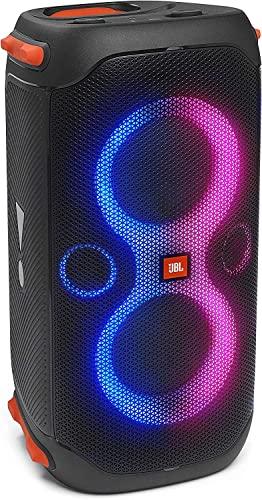
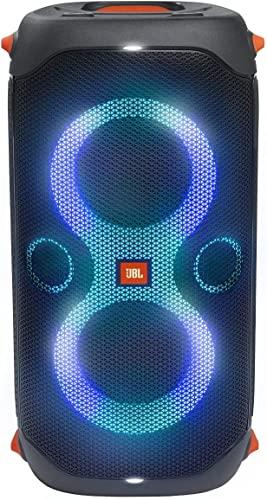
Choosing between a party speaker and a premium home speaker isn't just about sound—it's about lifestyle. The JBL PartyBox 110 and Marshall Woburn III represent two completely different philosophies in audio design, each excelling in their intended domain while falling short in the other's territory.
These speakers emerged from different eras and priorities. The Marshall Woburn III launched in 2020 as part of Marshall's third-generation home speaker lineup, incorporating years of refinement in Bluetooth technology and driver engineering. The JBL PartyBox 110 arrived in 2021, building on JBL's party speaker expertise with improved battery technology and synchronized lighting systems that had become increasingly sophisticated.
Party speakers prioritize versatility, durability, and entertainment features over pure audiophile performance. They're designed to compete with ambient noise, weather conditions, and the chaos of social gatherings. Premium home speakers focus on accurate sound reproduction, room acoustics optimization, and seamless integration into your living space.
The fundamental difference lies in their engineering priorities. Party speakers need to be loud, portable, and resilient—they sacrifice some audio refinement for practical durability. Home speakers can dedicate their engineering budget entirely to sound quality since they don't need batteries, weather protection, or visual effects.
At the time of writing, these speakers sit in different price brackets, with the JBL PartyBox 110 positioned as a versatile mid-range option while the Marshall Woburn III commands a premium price reflecting its audiophile aspirations and iconic design heritage.
The Marshall Woburn III demonstrates why dedicated home speakers often outperform portable alternatives in pure sound quality. Its three-way driver system represents a significant engineering advancement over typical two-way designs. This means it uses specialized drivers for different frequency ranges: a 6-inch woofer handles deep bass, two 2-inch midrange drivers manage vocals and instruments, and two 0.75-inch tweeters reproduce the highest frequencies.
This separation matters because each driver can be optimized for its specific frequency range. When a single driver tries to reproduce both midrange and high frequencies (as in two-way systems), it faces physical compromises. The Marshall Woburn III's dedicated midrange drivers excel at reproducing vocals and acoustic instruments with remarkable clarity, something our research consistently shows users notice immediately.
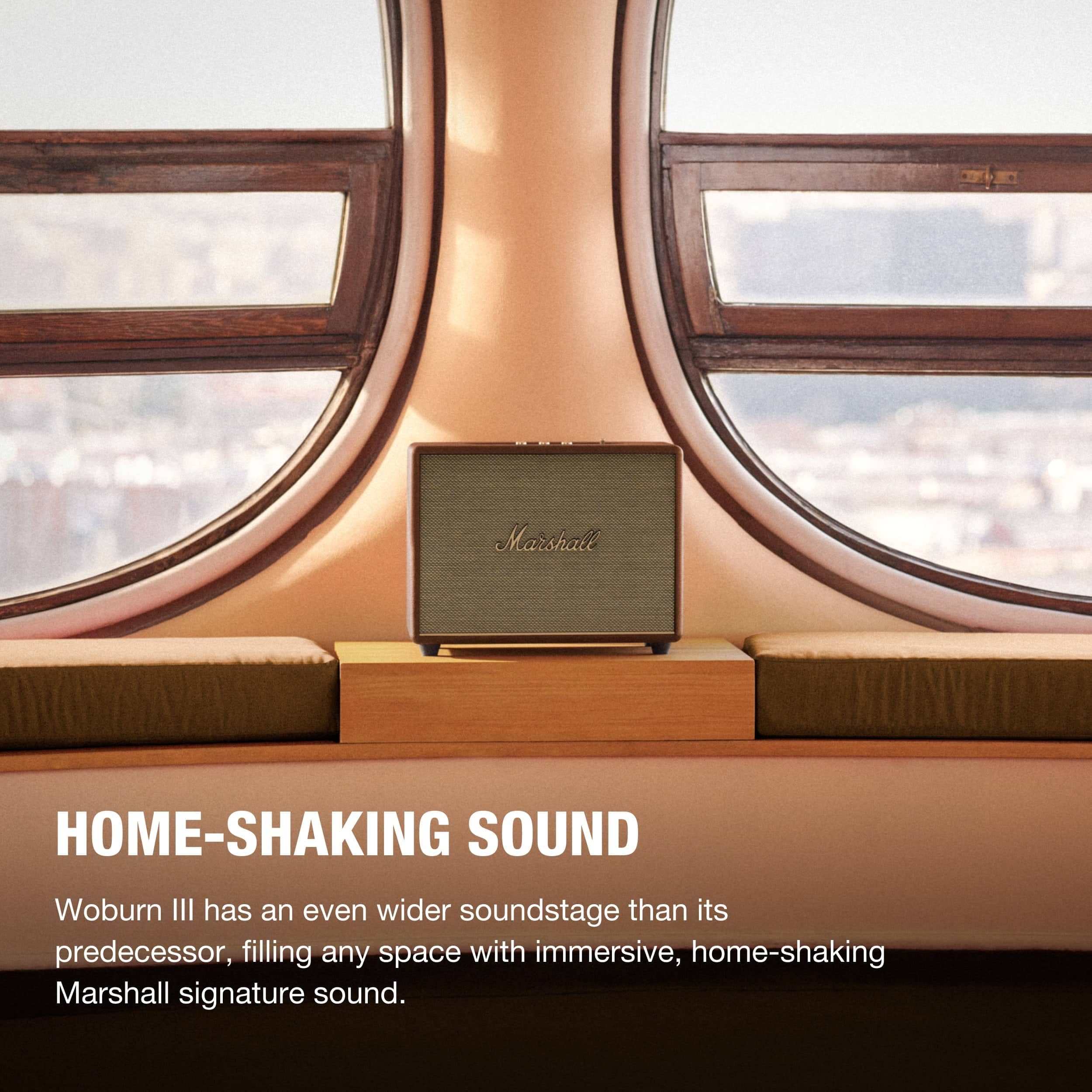
The angled tweeters deserve special attention. Marshall positioned these high-frequency drivers at slight outward angles and equipped them with waveguides—specialized acoustic channels that control how sound disperses. This creates a wider "sweet spot" where you experience proper stereo imaging, meaning you don't need to sit directly centered to hear balanced left-right separation.
The JBL PartyBox 110 takes a different approach with its two-way driver configuration: two 5.25-inch woofers and two 2.25-inch tweeters. This design prioritizes impact and volume over nuanced reproduction. The dual woofers provide substantial bass output that can cut through crowd noise and outdoor ambient sound—critical for party environments.
JBL's Bass Boost feature offers two intensity levels beyond the standard setting. This isn't just an EQ adjustment; it's a carefully tuned enhancement that emphasizes frequencies around 60-80 Hz where humans perceive impactful, chest-thumping bass. For party applications, this creates the physical sensation of music that gets people moving.
However, this party optimization comes with trade-offs. The lack of dedicated midrange drivers means vocals and instruments share frequency space with bass and treble drivers, leading to less precise instrument separation than the Marshall Woburn III achieves.
The numbers tell an important story. The Marshall Woburn III extends down to 35 Hz compared to the JBL PartyBox 110's 45 Hz low-frequency limit. That 10 Hz difference represents significant deep bass extension—the kind of sub-bass that adds weight and authority to orchestral music, electronic genres, and movie soundtracks.
Power distribution reveals another key difference. While both speakers deliver similar total wattage, the Marshall distributes its 150 watts across five drivers (90W to the woofer, 15W each to four mid/high drivers), while the JBL pushes 160 watts through four drivers. This means each Marshall driver operates with less stress, contributing to the cleaner sound reproduction our research shows users consistently prefer for extended listening.
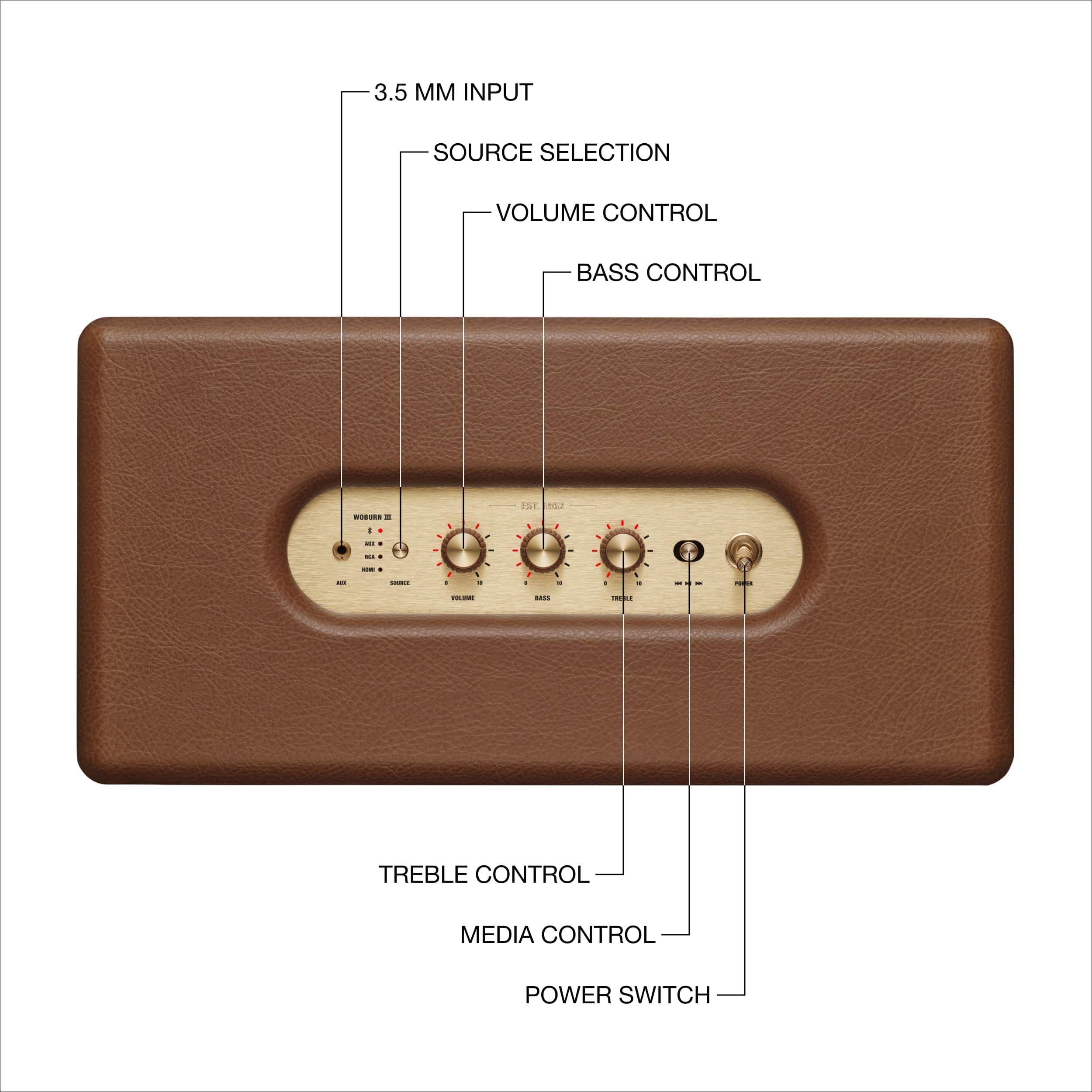
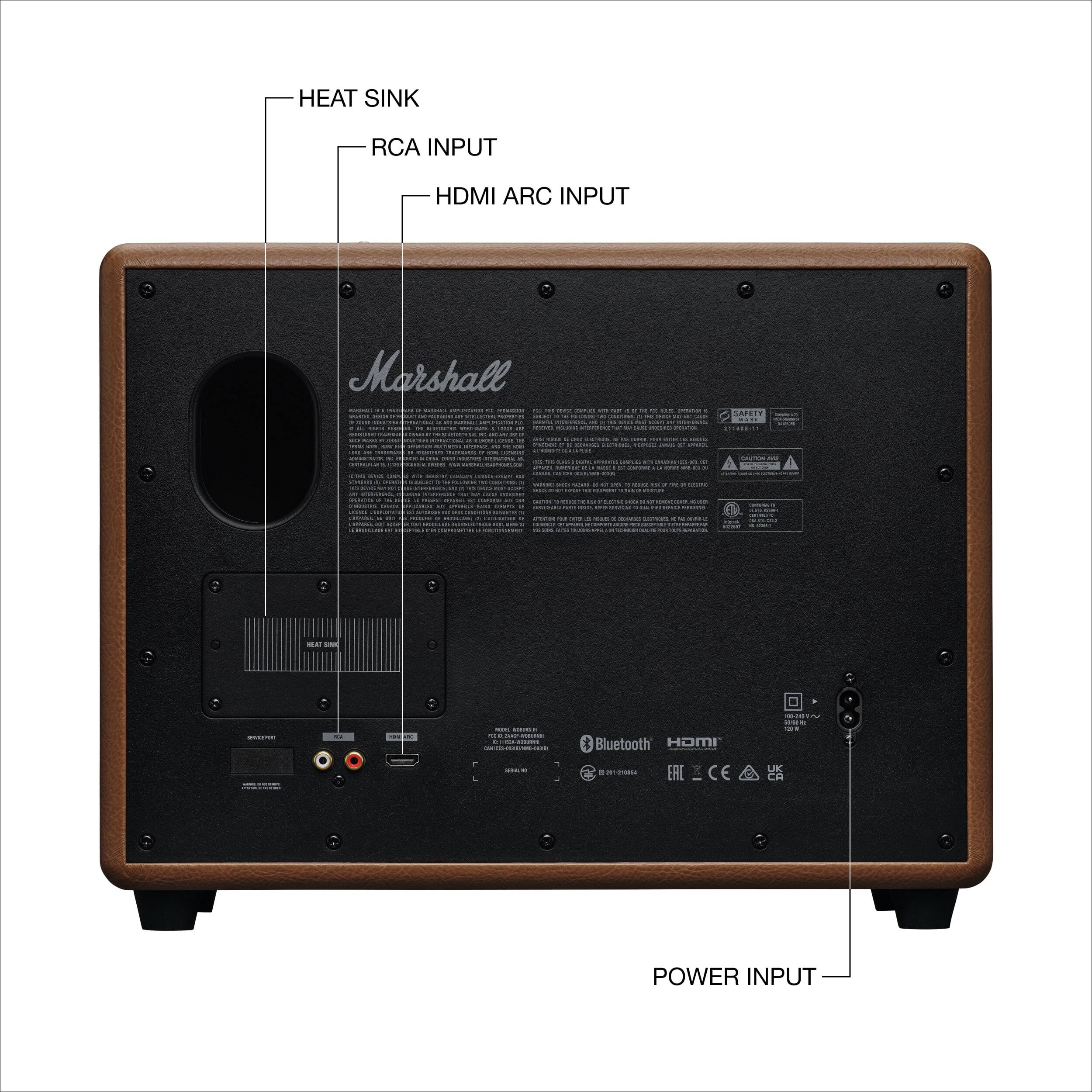
The Marshall Woburn III shines in home connectivity with its HDMI ARC (Audio Return Channel) input. This feature transforms it into a premium soundbar alternative for your TV. HDMI ARC allows the speaker to receive audio directly from your television while enabling volume control through your TV remote—seamless integration that party speakers simply can't match.
The Marshall also includes traditional RCA inputs for connecting turntables, CD players, or other hi-fi components, plus a 3.5mm auxiliary input. This variety accommodates virtually any audio source you might own, from vintage equipment to modern streaming devices.
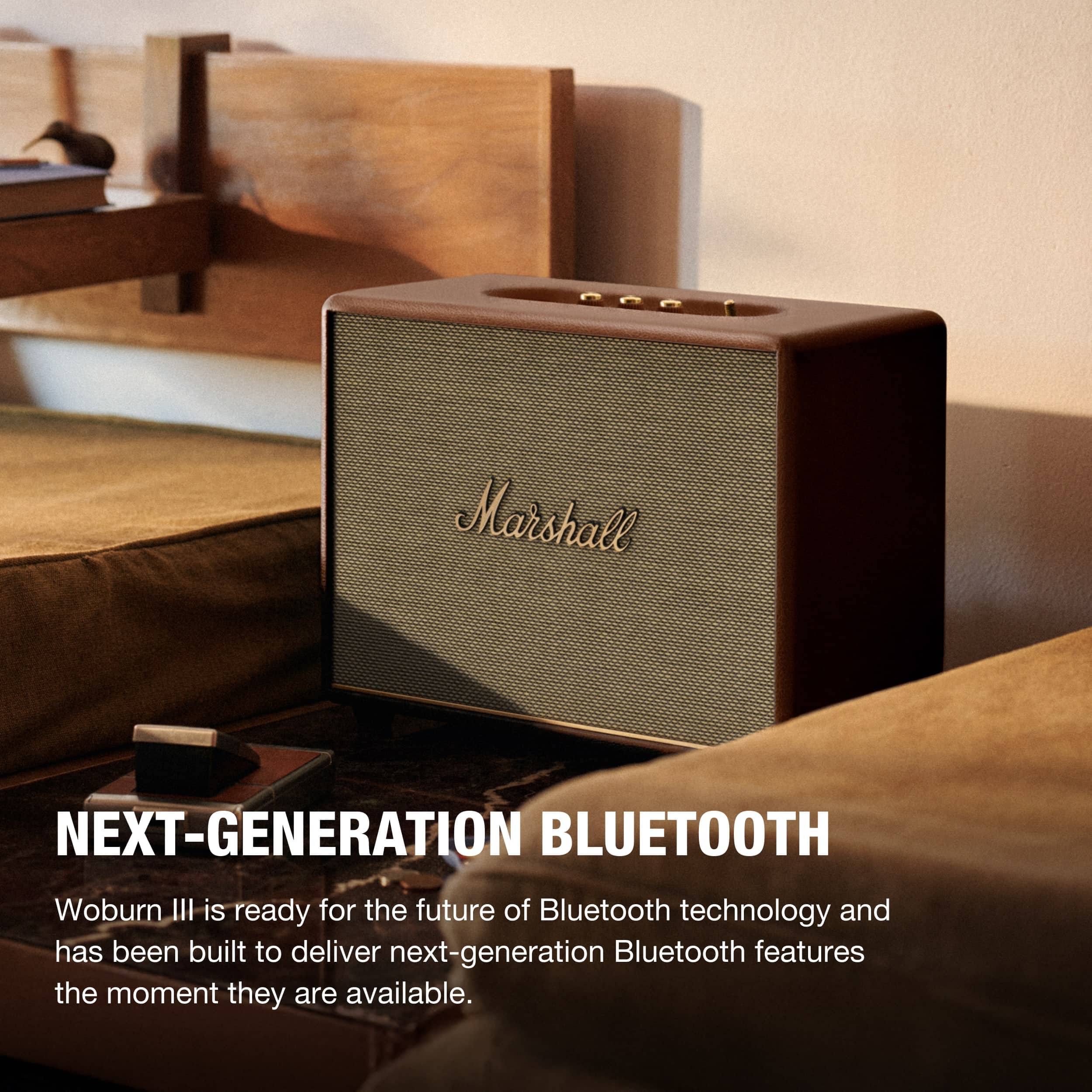
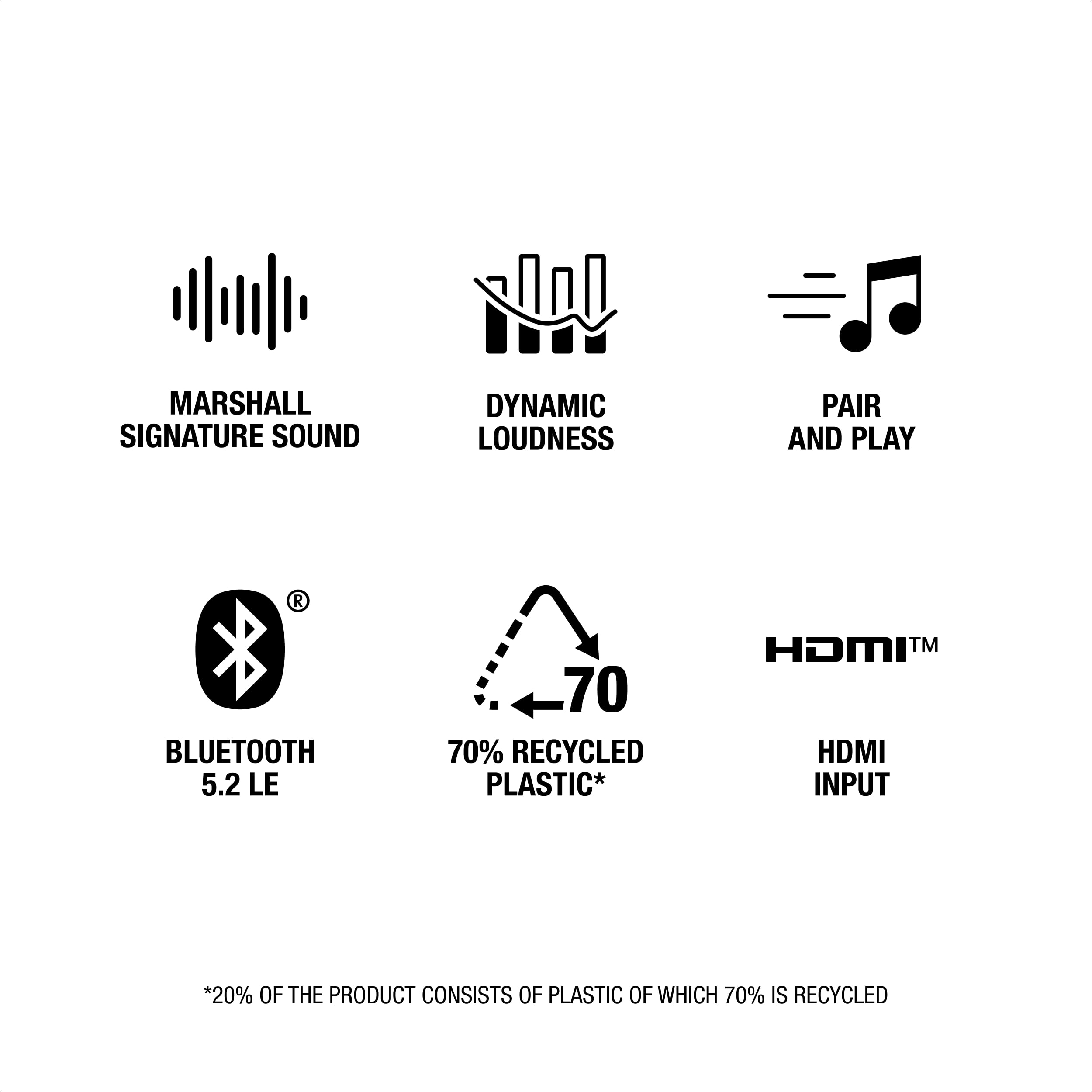
Bluetooth 5.2 in the Marshall offers meaningful improvements over older Bluetooth versions, including better connection stability and readiness for future LE Audio features. The multipoint capability lets you connect two devices simultaneously—handy when you want to switch between your phone and tablet without constantly re-pairing.
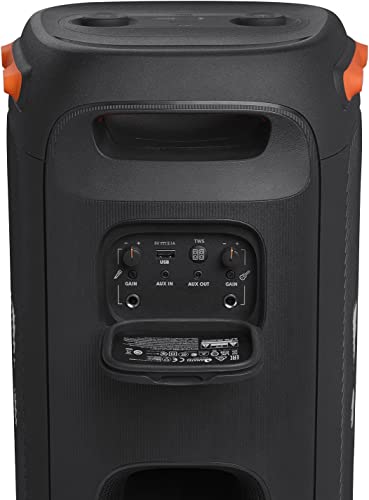
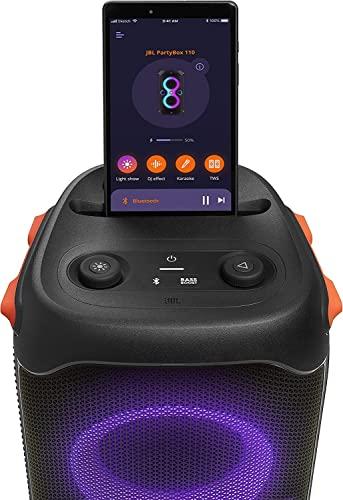
The JBL PartyBox 110 approaches connectivity differently, emphasizing interaction and versatility. The microphone and guitar inputs with independent gain controls transform it into a complete PA system. This isn't just karaoke capability—serious musicians can use it for small venue performances or practice sessions.
The USB port serves dual purposes: playing music files directly from storage devices and charging your phone or tablet. This eliminates the need for separate charging stations during parties. The 3.5mm input and output combo allows daisy-chaining multiple speakers or connecting to additional audio equipment.
True Wireless Stereo (TWS) capability deserves special mention. Two PartyBox 110 units can pair wirelessly to create a genuine stereo setup with dedicated left and right channels. This scalability makes it appealing for users who might start with one speaker but want expansion options.
The power source difference fundamentally shapes how you'll use these speakers. The JBL PartyBox 110's battery provides up to 12 hours of playback, though real-world performance varies significantly based on volume, lighting usage, and bass boost settings. Our research suggests most users get 6-8 hours at party volumes with lights activated—still impressive for outdoor events.
Battery technology has improved substantially since 2021, but the PartyBox 110 still represents solid engineering in this area. The 3.5-hour charge time means you can top up during lunch breaks for evening events.
The Marshall Woburn III deliberately abandons battery power for AC-only operation. This decision eliminates the weight, complexity, and eventual degradation of battery systems while allowing more power allocation to audio components rather than power management circuits.
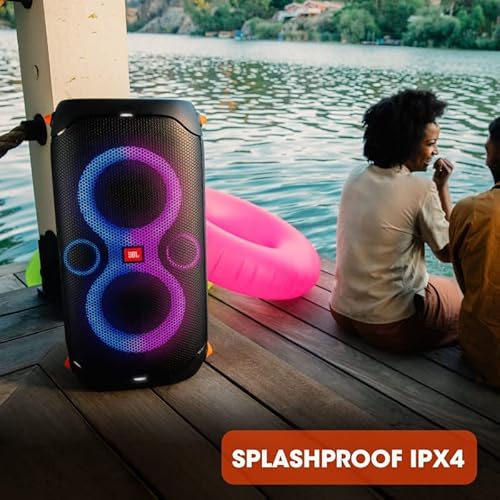
IPX4 water resistance in the JBL PartyBox 110 protects against splashes from any direction—sufficient for poolside use or light rain, but not submersion. This rating has proven reliable in real-world party scenarios according to user feedback, though it requires keeping input ports properly sealed.
The Marshall Woburn III offers no water resistance, reflecting its indoor-only design philosophy. This isn't a limitation—it's a conscious choice that allows for better acoustic design without weatherproofing compromises.
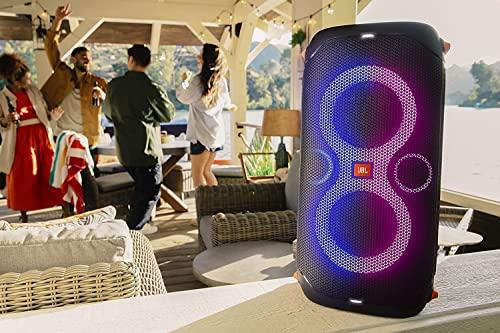
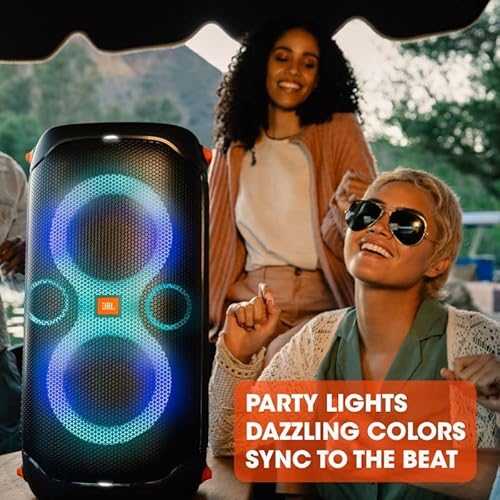
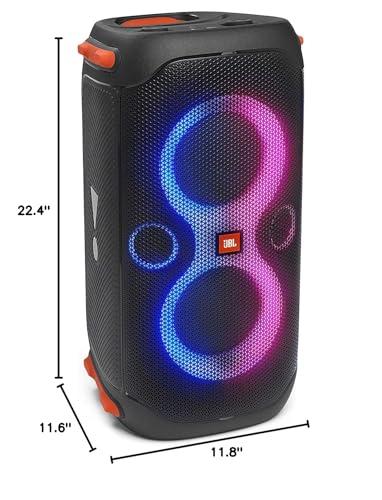
The JBL PartyBox 110's synchronized lighting system represents sophisticated engineering that's often underappreciated. The LED arrays don't just flash randomly—they analyze audio signals in real-time to create patterns that match musical elements like drum hits, bass lines, and vocal peaks. This creates genuine audiovisual synchronization that enhances the party atmosphere.
The JBL PartyBox app provides extensive lighting customization, allowing users to adjust colors, patterns, and intensity. For some users, this visual element becomes as important as the audio quality itself.
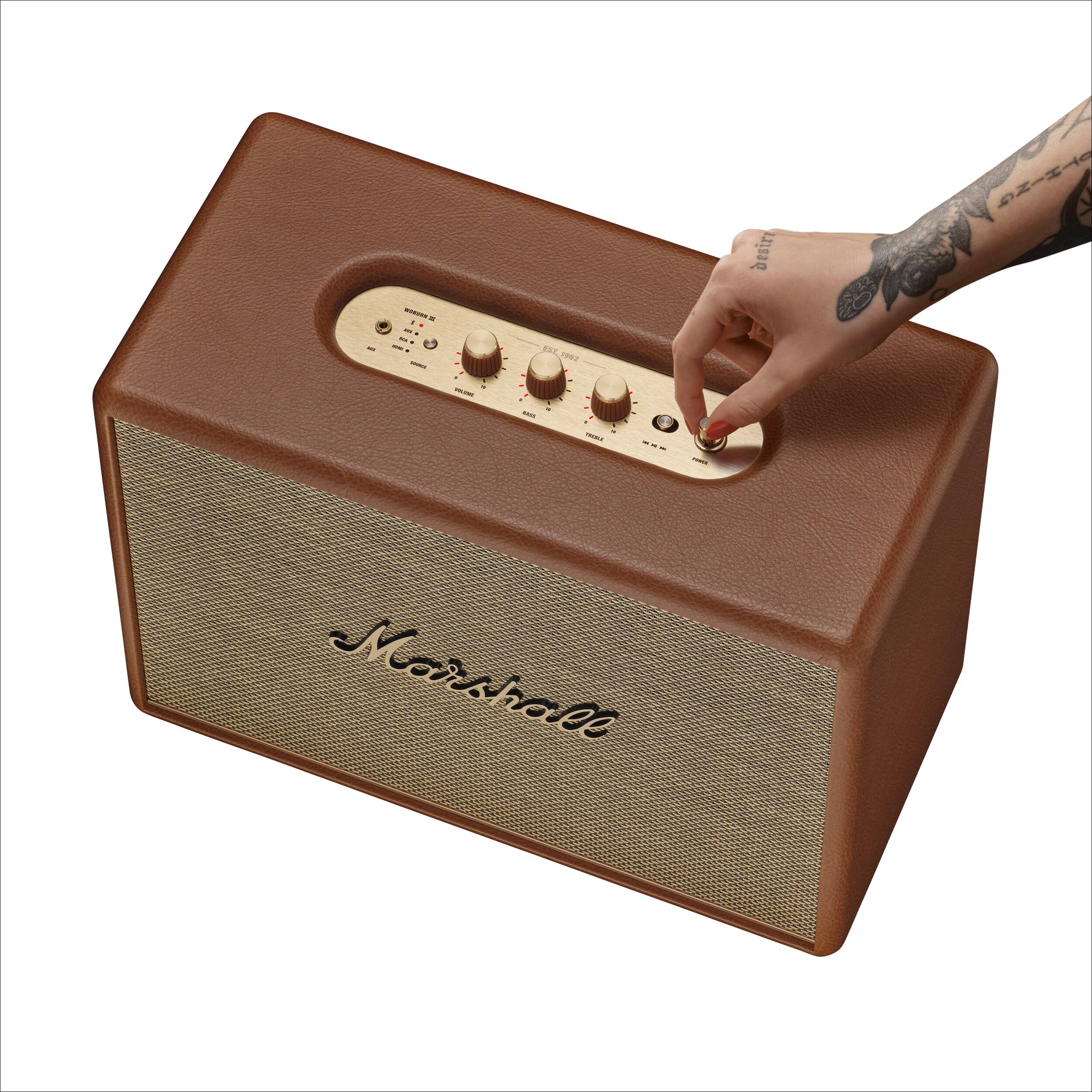
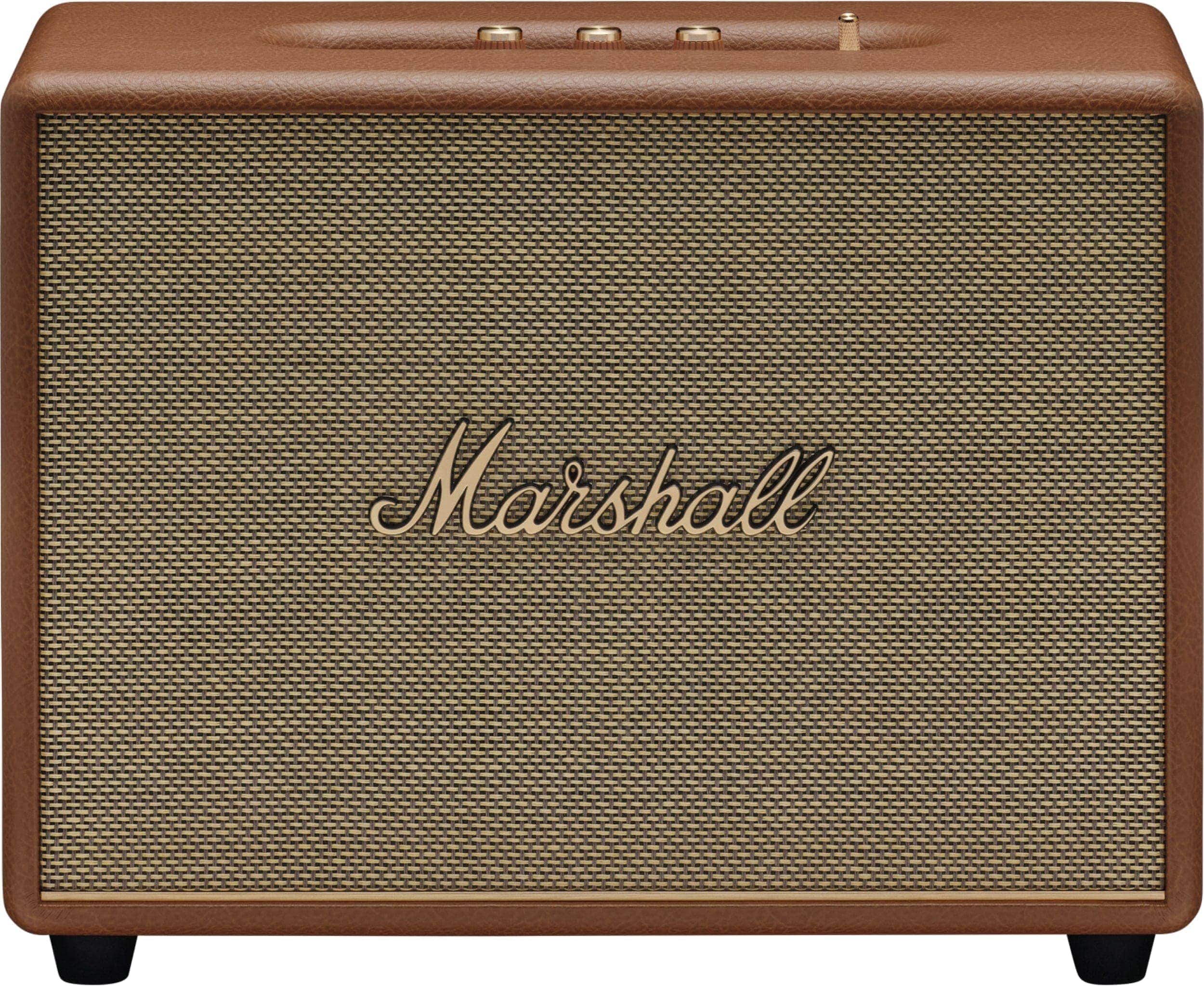
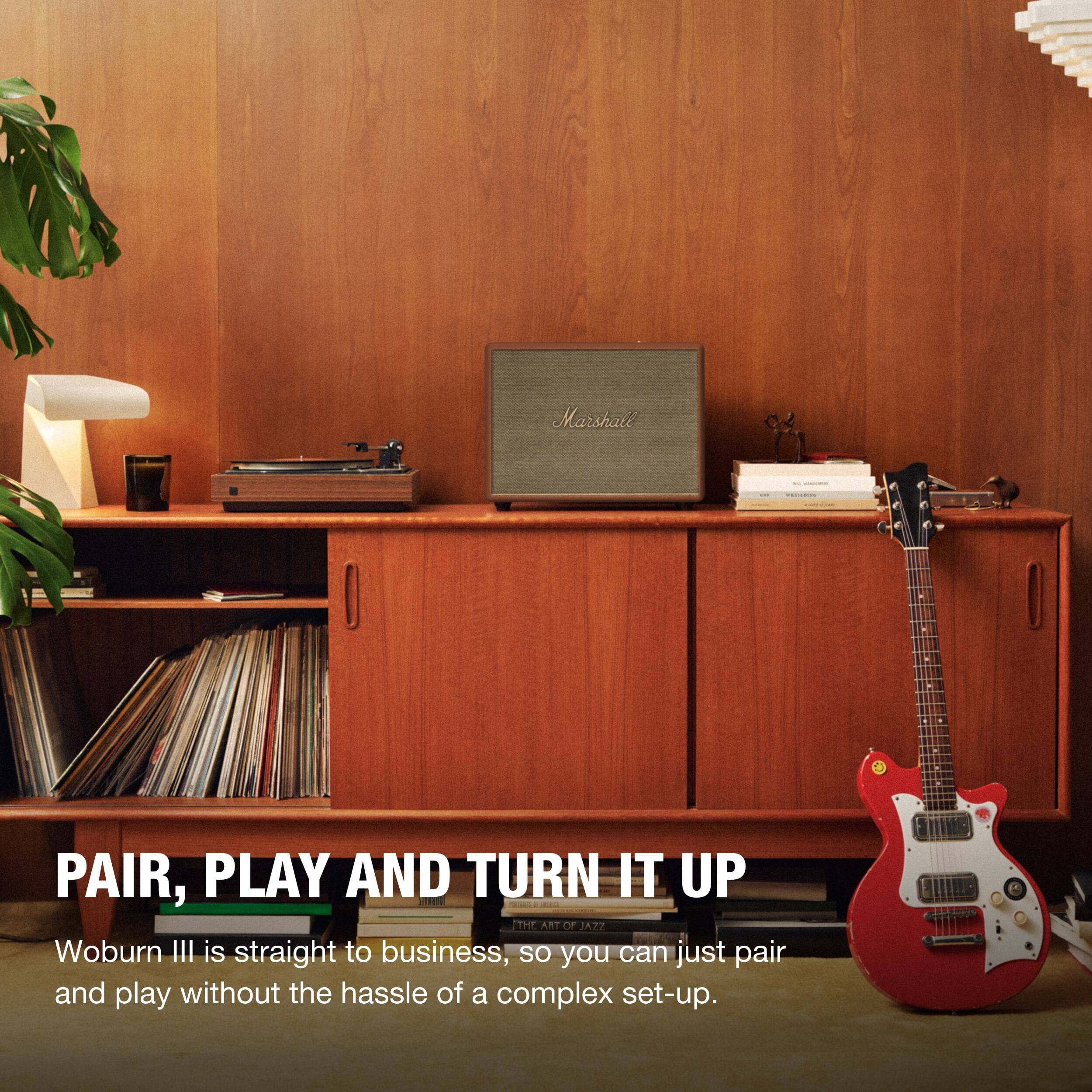
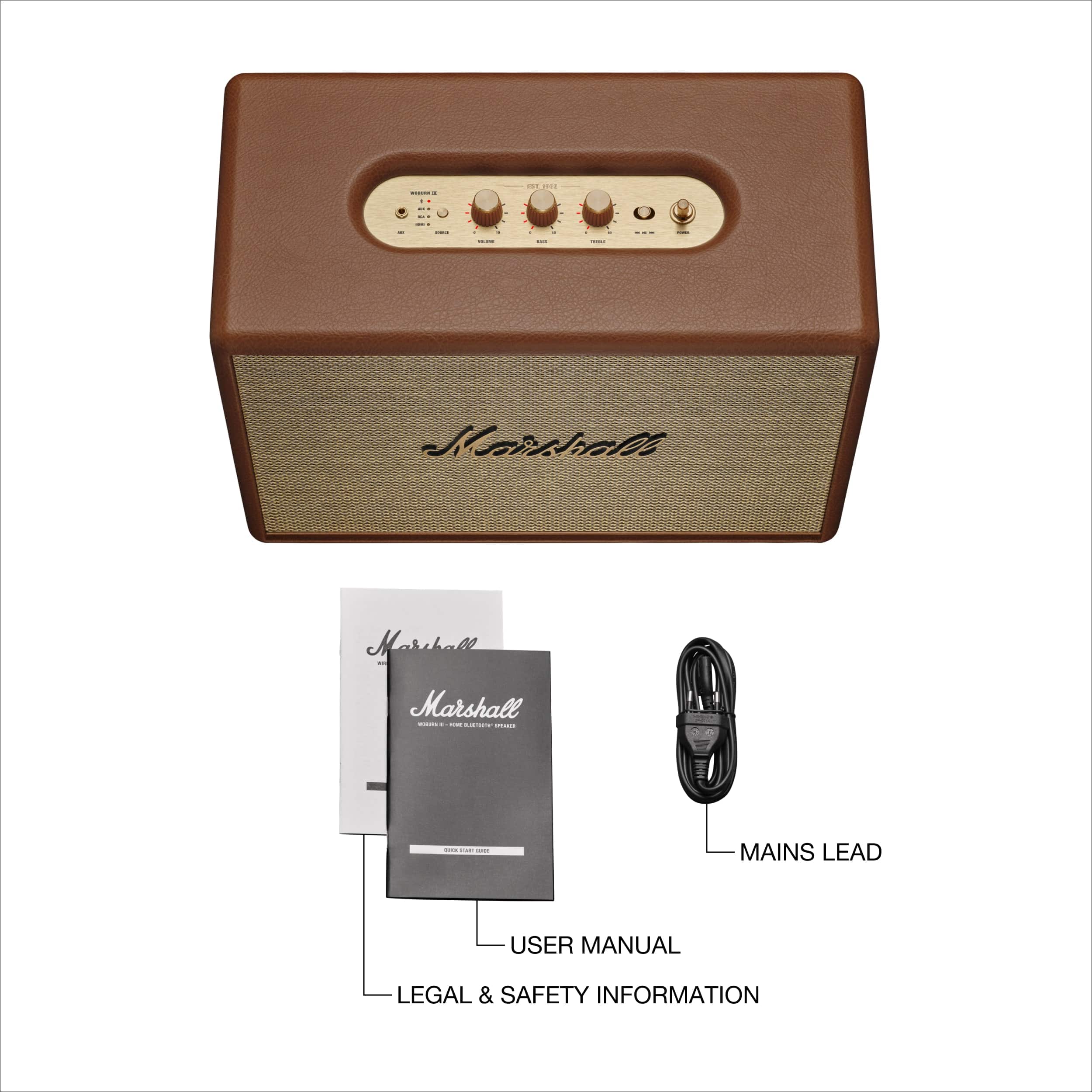
The Marshall Woburn III takes the opposite approach, focusing entirely on audio reproduction and classic aesthetics. The brass control knobs and traditional Marshall amplifier styling create visual appeal through iconic design rather than active lighting. This appeals to users who want their speaker to complement rather than dominate their room's aesthetics.
Physical controls on both speakers reflect their different priorities. The Marshall Woburn III features traditional analog knobs for bass, treble, and volume—tactile controls that audio enthusiasts appreciate for their precision and immediate response. These aren't just cosmetic; analog potentiometers can provide smoother, more precise adjustments than digital equivalents.
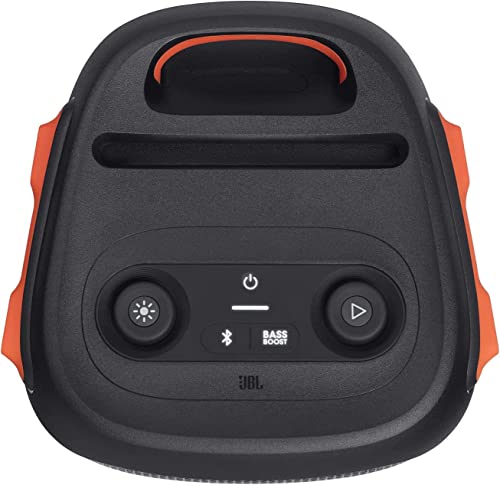
The JBL PartyBox 110's controls prioritize party functionality with play/pause, track skipping, and source selection prominently featured alongside volume and bass boost toggles. Everything is designed for quick adjustments during social gatherings.
For home theater use, the Marshall Woburn III offers significant advantages through its HDMI ARC connection and dedicated Night Mode. Night Mode intelligently compresses dynamic range, reducing loud explosions while maintaining dialogue clarity—essential for apartment living or late-night viewing.
The three-way driver system particularly excels with movie soundtracks, providing clear dialogue reproduction through dedicated midrange drivers while the substantial woofer handles action sequences effectively. The wide soundstage created by angled tweeters enhances the cinematic experience beyond what typical soundbars achieve.
The JBL PartyBox 110 can connect to TVs via auxiliary input but lacks the seamless integration and acoustic optimization of the Marshall. Its party-tuned sound signature, while exciting for music, may not provide the balanced response ideal for movie dialogue.
For serious music appreciation, the Marshall Woburn III demonstrates clear superiority. Its frequency response extends lower and maintains better linearity across the spectrum. The dedicated midrange drivers excel at reproducing acoustic instruments and vocals with accuracy that reveals musical details often masked by lesser speakers.
Dynamic Loudness technology automatically adjusts tonal balance at different volumes, ensuring bass and treble remain present even during quiet listening sessions. This sophisticated feature maintains musical engagement without the fatigue that can result from poorly balanced frequency response at low volumes.
The JBL PartyBox 110 certainly produces enjoyable music, but its party-optimized tuning can become fatiguing during extended listening sessions. The emphasized bass and bright treble that work well for parties may overwhelm subtle musical details that audiophiles value.
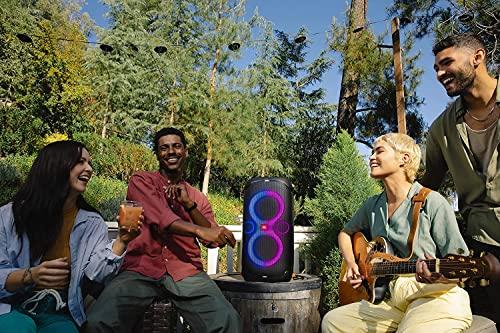
In outdoor environments, the JBL PartyBox 110 reveals its engineering strengths. The dual woofers and party-tuned frequency response cut through ambient noise effectively, while the substantial power output maintains clarity even in open spaces where sound disperses quickly.
The battery operation eliminates extension cord limitations, crucial for beach parties, camping trips, or events in locations without convenient power access. The IPX4 rating provides real-world protection against the inevitable spills and weather exposure that occur during outdoor gatherings.
The Marshall Woburn III simply isn't designed for these applications. Its AC power requirement and lack of weather protection make outdoor use impractical, while its refined sound signature may not provide the punchy impact needed to energize party crowds.
Both speakers incorporate technologies that extend their useful life beyond basic audio reproduction. The Marshall Woburn III's Over-the-Air (OTA) update capability allows firmware improvements and new feature additions without requiring new hardware. Since its 2020 release, Marshall has delivered several updates that improved Bluetooth stability and added new app features.
The JBL PartyBox 110 benefits from JBL's continued development of party speaker technology. The synchronized lighting algorithms have become more sophisticated since launch, and the companion app has received regular updates that expand customization options.
The decision ultimately depends on your primary audio lifestyle and priorities. Our research and evaluation of expert opinions suggests clear scenarios where each speaker excels.
Choose the JBL PartyBox 110 if:
Choose the Marshall Woburn III if:
The Marshall Woburn III represents better long-term value for dedicated music listeners and home theater enthusiasts. Its superior driver configuration, wider connectivity options, and refined acoustics justify the premium price for users who prioritize audio quality.
The JBL PartyBox 110 offers exceptional versatility and entertainment value for users whose audio needs extend beyond pure listening. Its combination of portability, durability, and interactive features creates a complete entertainment solution that no stationary speaker can match.
Neither speaker is objectively "better"—they're optimized for different lifestyles and priorities. Understanding these differences helps ensure you choose the speaker that best matches your actual usage patterns rather than aspirational ideas about how you might use it.
The key insight from our research is that most people are happier when they choose based on their primary use case rather than trying to find one speaker that does everything adequately. Both the JBL PartyBox 110 and Marshall Woburn III excel in their intended domains while accepting compromises in areas outside their design focus. This specialization ultimately serves users better than generic solutions that attempt to satisfy every possible need.
| JBL PartyBox 110 | Marshall Woburn III |
|---|---|
| Power Output - Total system power affects maximum volume and dynamic range | |
| 160W RMS | 150W (90W woofer + 60W mid/treble) |
| Driver Configuration - More drivers typically means better sound separation | |
| 2-way: 2x 5.25" woofers, 2x 2.25" tweeters | 3-way: 1x 6" woofer, 2x 2" midrange, 2x 0.75" tweeters |
| Frequency Response - Lower numbers mean deeper bass extension | |
| 45 Hz - 20 kHz | 35 Hz - 20 kHz (superior bass depth) |
| Power Source - Battery vs AC affects portability and placement flexibility | |
| Built-in battery: 12 hours playback | AC-powered only (no battery) |
| Portability - Weight and design affect ease of transport | |
| 23 lbs with handles, designed for mobility | 16.4 lbs, designed as stationary speaker |
| Water Resistance - Critical for outdoor use and durability | |
| IPX4 splashproof rating | No water resistance (indoor only) |
| Bluetooth Version - Newer versions offer better stability and features | |
| Bluetooth 5.1 with TWS pairing capability | Bluetooth 5.2 with multipoint connection |
| Special Features - Value-adding capabilities beyond basic audio | |
| RGB lighting, karaoke inputs, USB charging port | HDMI ARC, analog controls, placement compensation |
| Intended Use Case - Primary design purpose affects all other specs | |
| Portable party entertainment with visual effects | Premium home audio with TV integration |
| Maximum SPL - How loud the speaker can get without distortion | |
| High volume for outdoor crowds | 100.5 dB @ 1m (excellent for large rooms) |
| App Features - Software capabilities that enhance the user experience | |
| JBL PartyBox app: lighting control, TWS setup | Marshall app: room correction, EQ, firmware updates |
| Connectivity Options - Available inputs affect versatility with different sources | |
| Bluetooth, AUX, USB, mic/guitar inputs | Bluetooth, HDMI ARC, RCA, AUX (superior home integration) |
| Build Materials - Construction quality affects longevity and aesthetics | |
| Durable plastic with party-focused design | 70% recycled plastic, vegan leather texture, brass accents |
The JBL PartyBox 110 is specifically designed for outdoor parties with its IPX4 splashproof rating, 12-hour battery life, and dynamic RGB lighting that syncs with music. It includes microphone and guitar inputs for karaoke and live performances, plus True Wireless Stereo pairing to connect multiple speakers. The Marshall Woburn III is AC-powered only with no water resistance, making it unsuitable for outdoor use.
The Marshall Woburn III excels for TV use with its dedicated HDMI ARC input that allows seamless volume control through your TV remote and includes a Night Mode for late-night viewing. The JBL PartyBox 110 can connect to TVs via auxiliary input but lacks the integrated features and balanced sound signature ideal for movie dialogue and home theater applications.
The Marshall Woburn III delivers superior sound quality with its 3-way driver system featuring dedicated midrange drivers for clearer vocals and instrument separation. It extends deeper into bass frequencies (35 Hz vs 45 Hz) and includes Dynamic Loudness technology that maintains tonal balance at any volume. The JBL PartyBox 110 is tuned for party environments with emphasized bass that may become fatiguing during extended listening.
Both speakers support Bluetooth connectivity. The JBL PartyBox 110 uses Bluetooth 5.1 and can pair with two speakers for stereo sound using True Wireless Stereo technology. The Marshall Woburn III features Bluetooth 5.2 with multipoint capability, allowing simultaneous connections to two devices for easy source switching between your phone and tablet.
The JBL PartyBox 110 is designed for portability with built-in handles, 12-hour battery life, and weighing 23 pounds. It's built to travel between locations for parties, camping, and outdoor events. The Marshall Woburn III weighs 16.4 pounds but requires AC power and is designed as a stationary home speaker without portability features.
The JBL PartyBox 110 includes dedicated microphone and guitar inputs with independent gain controls, making it excellent for karaoke and live performances. It also features synchronized lighting that responds to vocals and music. The Marshall Woburn III focuses purely on audio reproduction without microphone inputs or karaoke capabilities.
Both speakers deliver similar maximum volume levels suitable for their intended uses. The JBL PartyBox 110 with 160W is optimized to cut through outdoor ambient noise and crowd chatter at parties. The Marshall Woburn III with 150W provides 100.5 dB output that easily fills large indoor rooms while maintaining better sound quality at high volumes.
Yes, both speakers have dedicated smartphone apps. The JBL PartyBox 110 app controls lighting effects, True Wireless Stereo pairing, and sound settings. The Marshall Woburn III app offers room placement compensation, graphic EQ adjustments, and over-the-air firmware updates to add new features over time.
The Marshall Woburn III is purpose-built for home use with HDMI ARC for TV integration, RCA inputs for hi-fi equipment, analog bass/treble controls, and iconic design that complements home decor. The JBL PartyBox 110 can work at home but its party-focused features like RGB lighting and karaoke inputs may be unnecessary for typical home listening.
The JBL PartyBox 110 has IPX4 splashproof rating, protecting against water splashes from any direction - suitable for poolside use but not submersion. The Marshall Woburn III has no water resistance rating and is designed exclusively for indoor use where moisture isn't a concern.
The JBL PartyBox 110 supports True Wireless Stereo pairing to connect two speakers wirelessly for stereo sound, plus daisy-chaining via auxiliary output. The Marshall Woburn III doesn't support wireless pairing with other speakers but can connect to additional audio equipment through its multiple inputs and outputs.
The JBL PartyBox 110 provides exceptional value for users needing portable entertainment with battery power, water resistance, lighting effects, and karaoke features in one package. The Marshall Woburn III offers premium value for home audio enthusiasts prioritizing sound quality, TV integration, and iconic design, justifying its higher price through superior audio engineering and build quality.
We've done our best to create useful and informative comparisons to help you decide what product to buy. Our research uses advanced automated methods to create this comparison and perfection is not possible - please contact us for corrections or questions. These are the sites we've researched in the creation of this article: rtings.com - youtube.com - bestbuy.com - gadgets360.com - popsci.com - youtube.com - audioadvice.com - popsci.com - youtube.com - versus.com - youtube.com - rtings.com - jbl.com - in.jbl.com - jbl.com.tw - bhphotovideo.com - in.jbl.com - jbl.com - youtube.com - hu.harmanaudio.com - jbl.com.au - global.jbl.com - support.jbl.com - youtube.com - kh.jbl.com - onward.ph - jbl.com.ph - support.jbl.com - youtube.com - loudersound.com - ash-asia.zendesk.com - armorsound.com - rtings.com - crutchfield.com - rtings.com - stereoguide.com - bestbuy.com - hometechnologyreview.com - crutchfield.com - sweetwater.com - rtings.com - youtube.com - greentoe.com - versus.com - idownloadblog.com - marshall.com - youtube.com - comparisontabl.es - youtube.com - versus.com - crutchfield.com - device.report - consumerreports.org - sg.tcacoustic.asia - stereoindex.com - safemark.com - smarthomesounds.co.uk - marshall.com - device.report - bestbuy.com - marshall.com

Privacy Policy
Terms and Conditions - Affiliate Policy
Home Security
© Copyright 2008-2026.
11816 Inwood Rd #1211, Dallas, TX 75244