


When shopping for a Bluetooth speaker in 2025, you'll quickly discover that not all speakers are created equal—or even designed for the same purpose. The JBL PartyBox Encore Essential and Marshall Woburn III perfectly illustrate this point. While both can play your music wirelessly, they represent completely different philosophies about what a speaker should do and where it should live.
The JBL PartyBox Encore Essential, released in 2023, is basically a portable party in a box. It's designed to be grabbed, moved around, and become the centerpiece of your social gatherings. The Marshall Woburn III, launched in 2022, takes the opposite approach—it's a premium home audio system that wants to become a permanent part of your living space, delivering audiophile-quality sound with the classic rock aesthetic Marshall is famous for.
At the time of writing, these speakers sit in different price ranges that reflect their distinct purposes. The JBL PartyBox Encore Essential positions itself as an accessible entertainment speaker, while the Marshall Woburn III commands a premium price for its home audio credentials.
This isn't just about cost—it's about fundamental design philosophy. Party speakers like the JBL prioritize fun features, portability, and crowd-pleasing sound over technical perfection. Home audio speakers like the Marshall focus on accurate sound reproduction, build quality, and seamless integration with your existing entertainment setup.
The technology improvements since these speakers launched have been incremental rather than revolutionary. Bluetooth has gotten more stable, and both companies have refined their tuning through firmware updates. However, the core strengths of each approach remain unchanged.
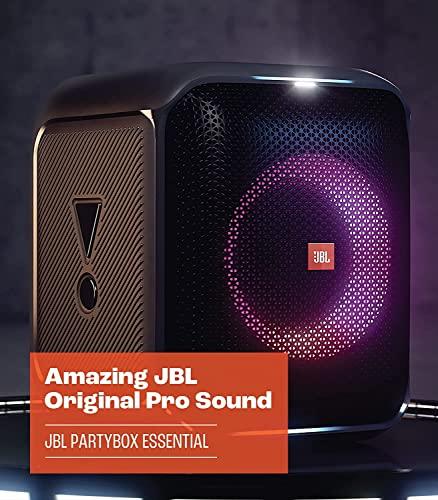
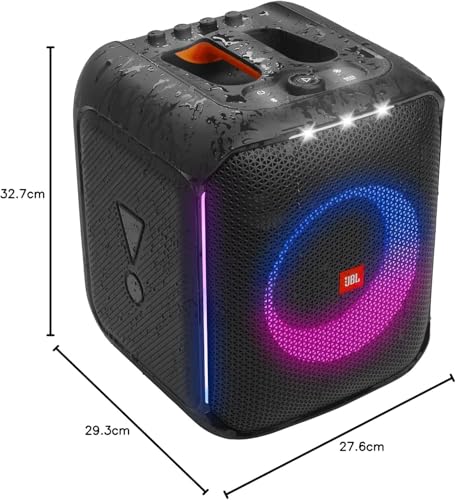
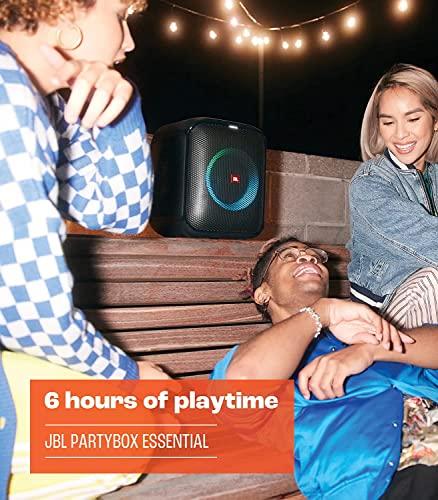
The JBL PartyBox Encore Essential screams "take me places." Weighing about 13 pounds with a built-in handle, it's designed for one-person transport to pool parties, beach gatherings, or dorm room hangouts. The IPX4 rating means it can handle splashes and light rain—essential for outdoor use where accidents happen.
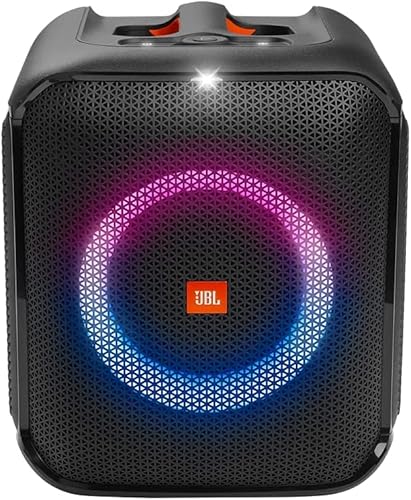
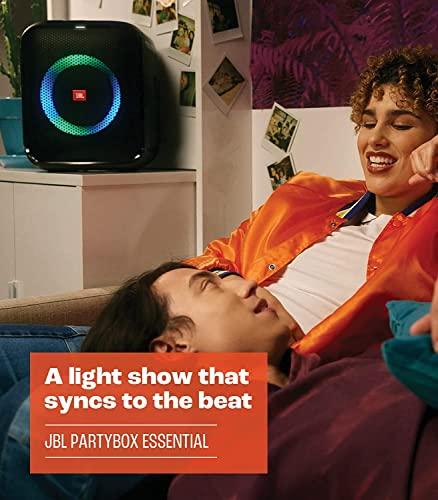
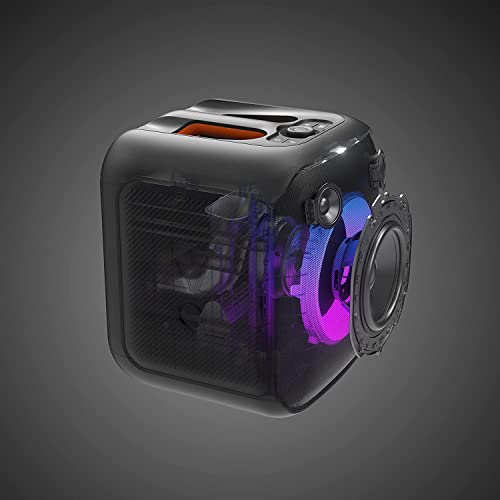
But here's where it gets interesting: the JBL isn't just about portability. It's packed with features that transform any gathering into an event. The RGB light ring and strobe effects synchronize with your music's beat, creating a club-like atmosphere that's genuinely impressive in dark environments. Having experienced similar light shows at parties, they add an energy that static speakers simply can't match.
The microphone input with dedicated gain control turns the JBL into an instant karaoke machine. This isn't just a novelty—at parties, the karaoke feature often becomes the main attraction, especially when combined with the light show. The True Wireless Stereo (TWS) capability means you can pair two units for bigger events, though this obviously requires owning or borrowing a second speaker.
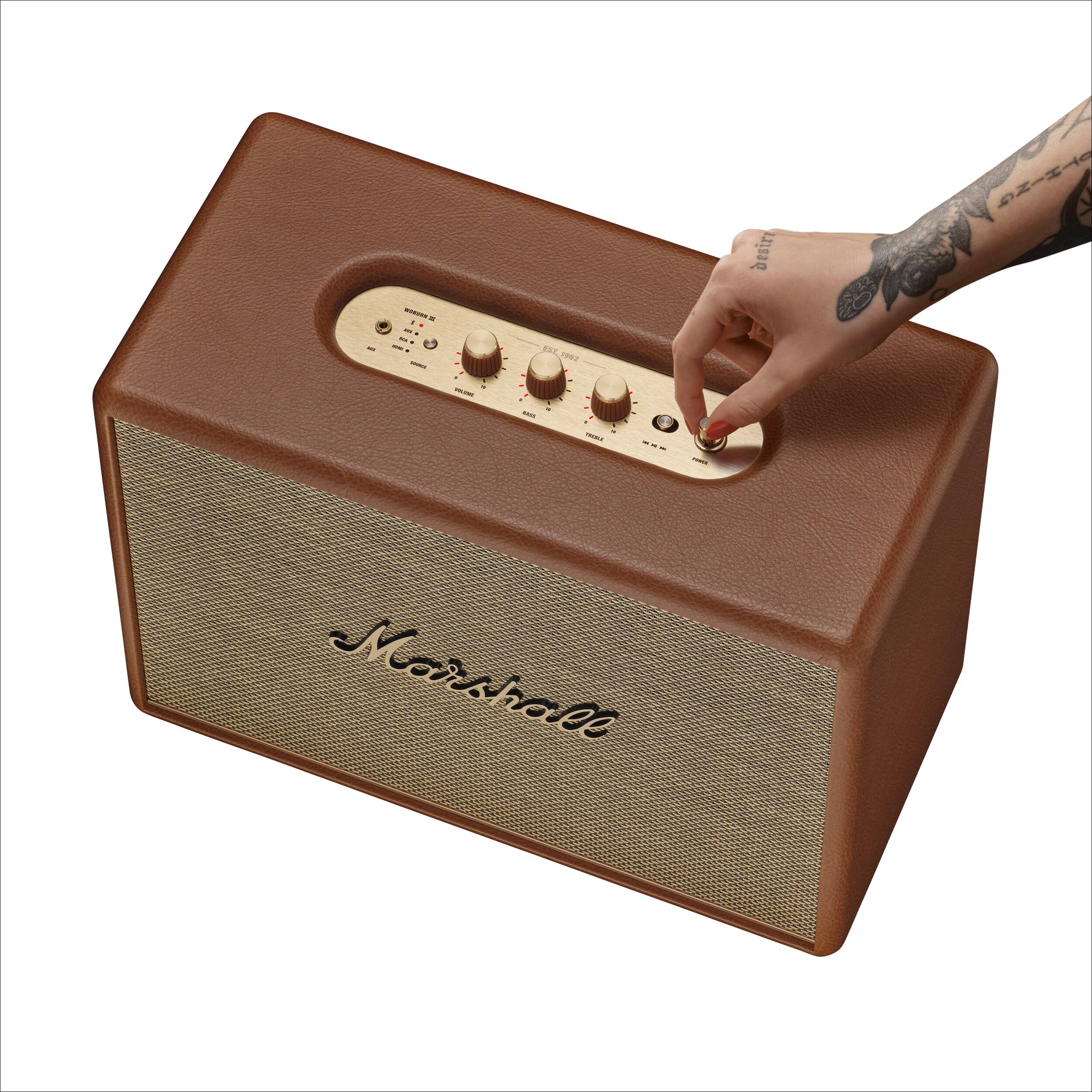
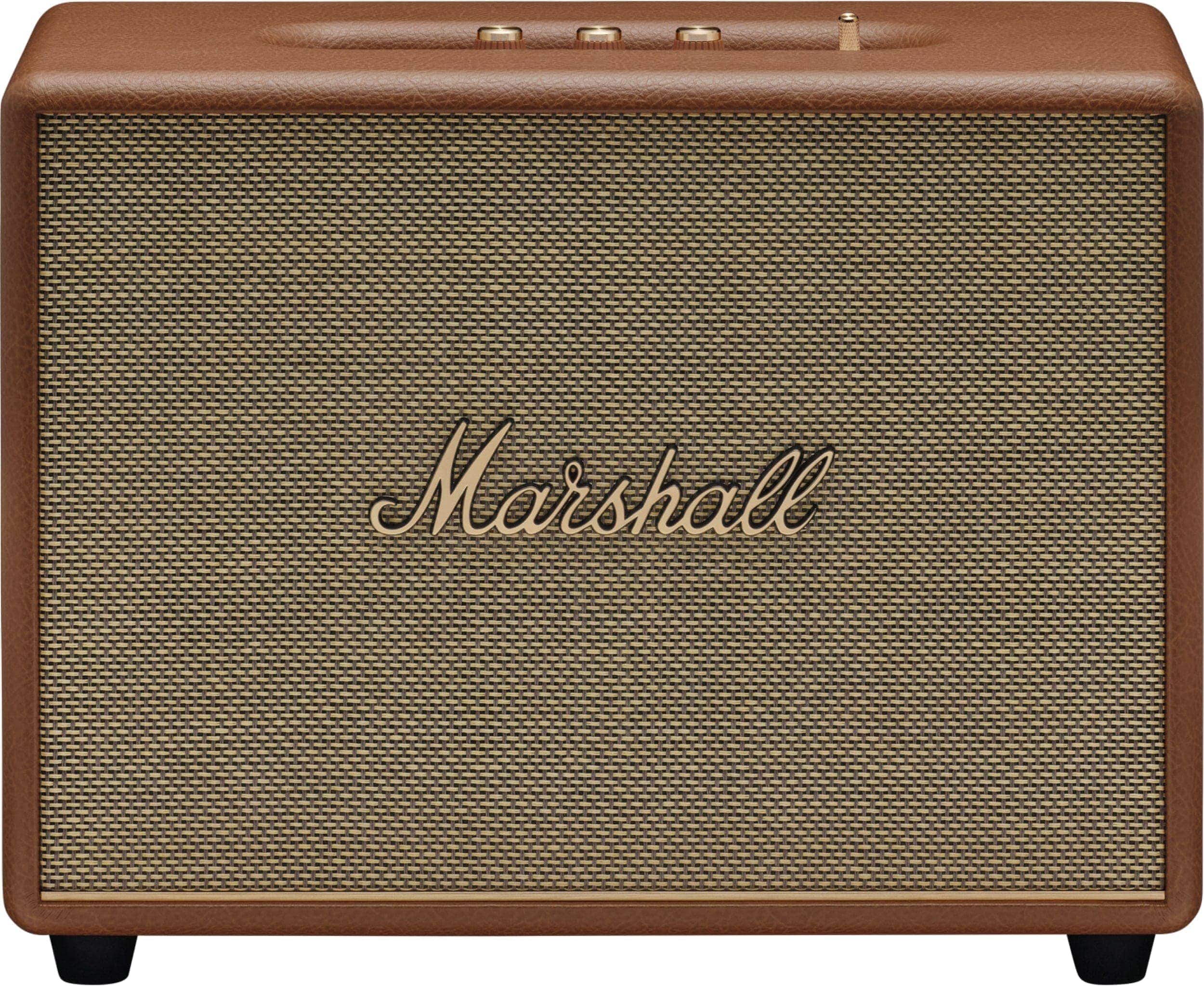
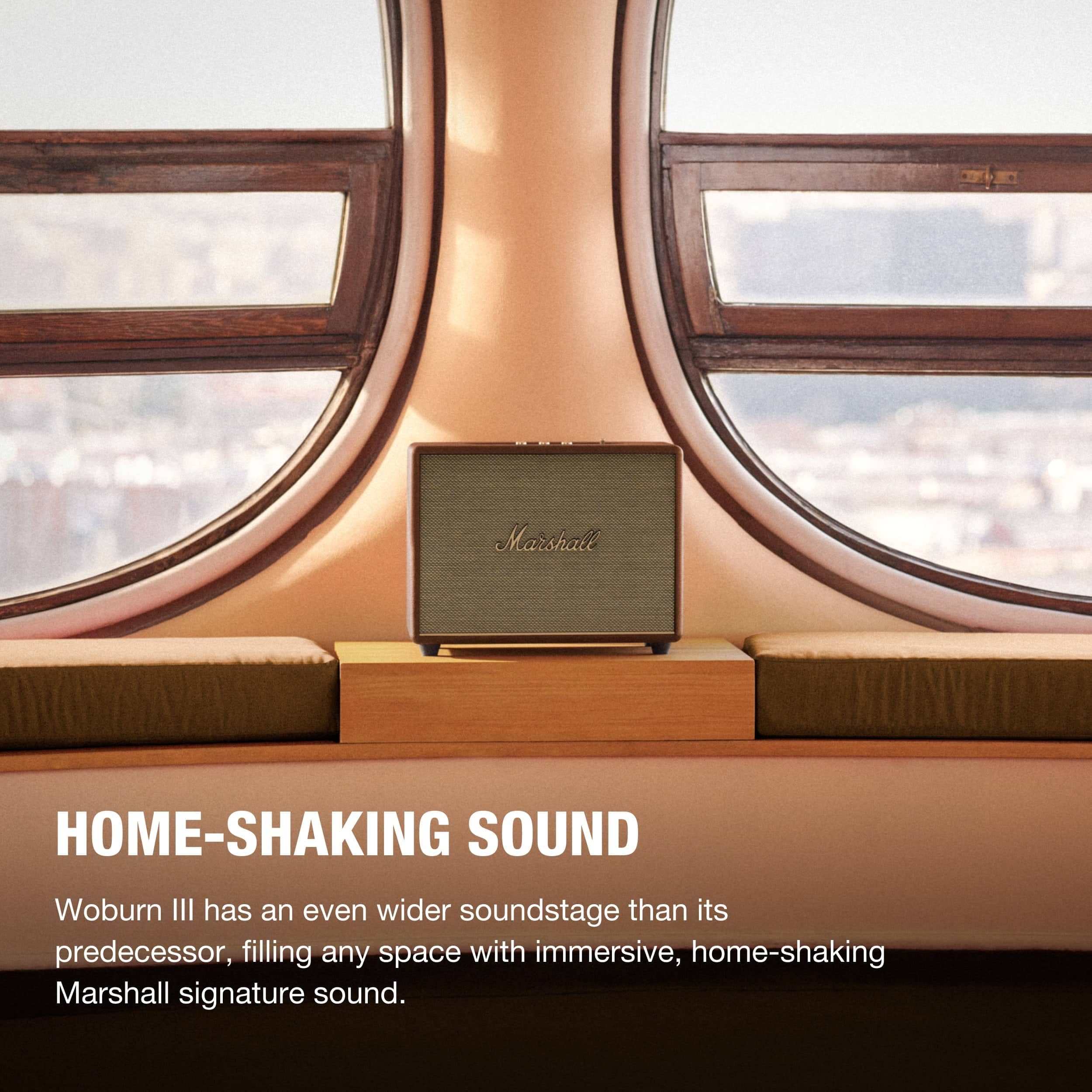
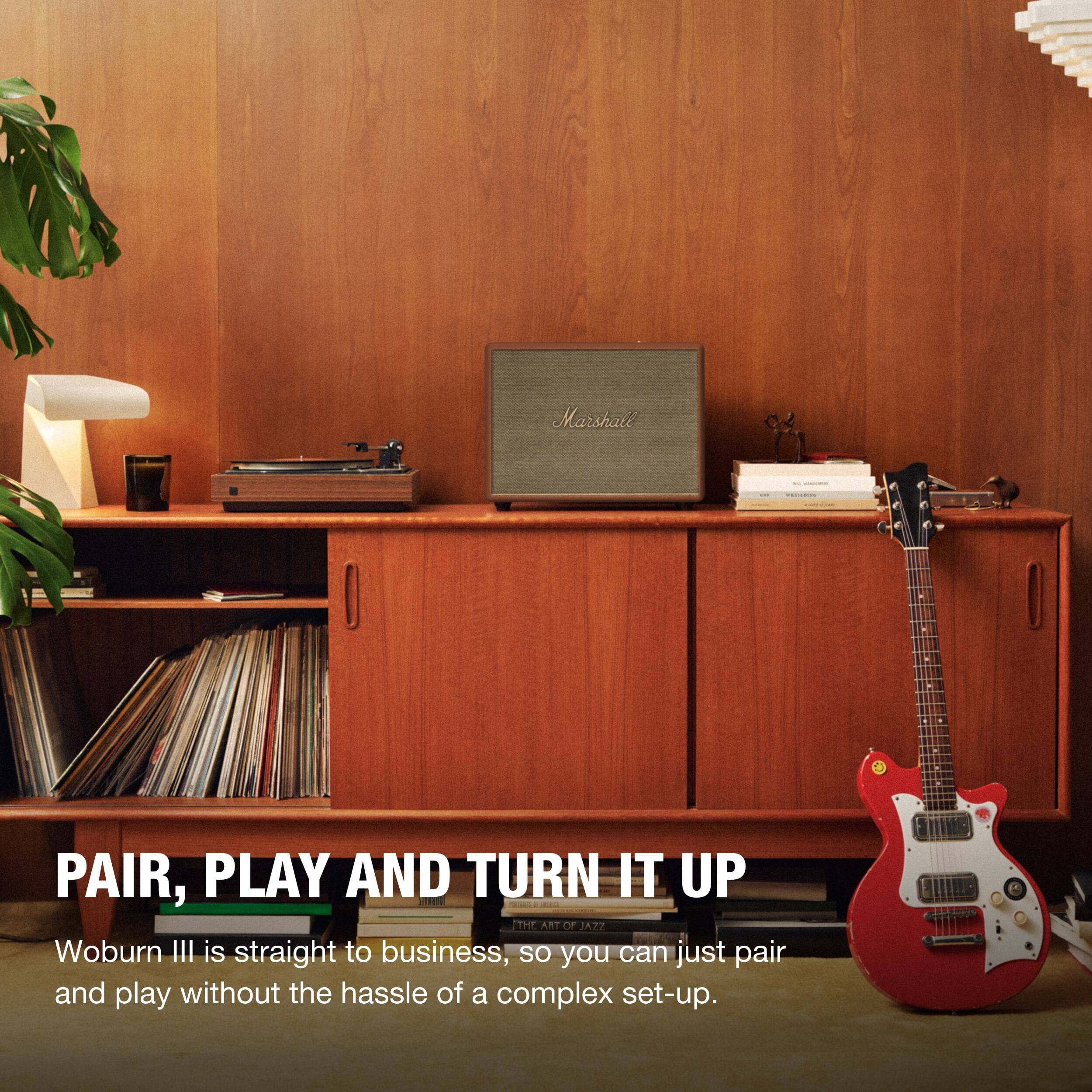
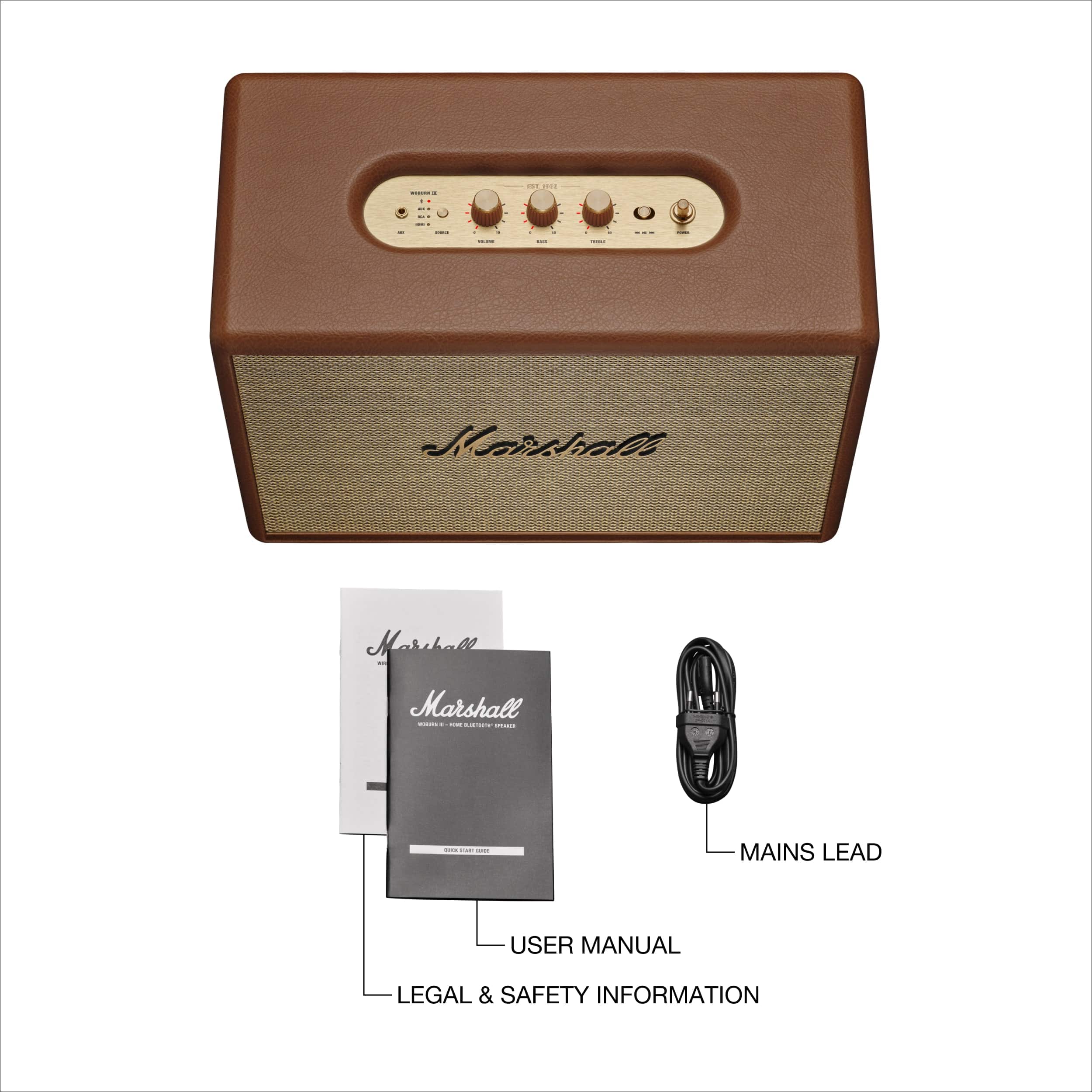
The Marshall Woburn III takes an entirely different approach. At over 16 pounds, it's not going anywhere without serious effort. Instead, it's designed to become furniture—a beautiful, functional piece that enhances your living space. The classic Marshall amplifier aesthetic, complete with textured vegan leather and brass control knobs, makes it as much a style statement as an audio device.
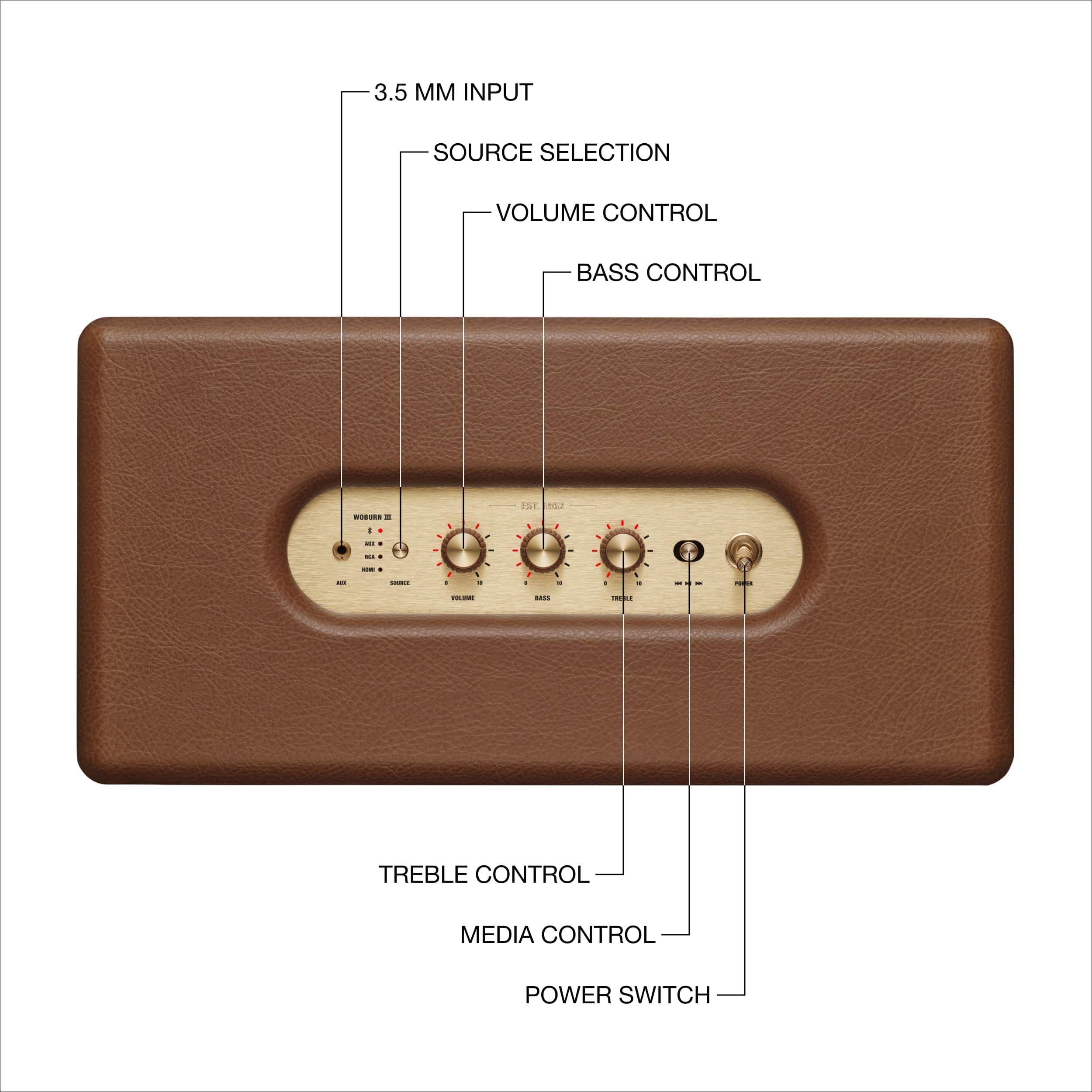
The analog controls on top aren't just for show. Having physical knobs for volume, bass, and treble provides immediate tactile feedback that many find more satisfying than app-based adjustments. It's a throwback to when audio equipment had character, and it works particularly well for users who prefer direct control over their listening experience.
This is where the fundamental differences become most apparent. The Marshall Woburn III employs a sophisticated 3-way driver system that separates audio frequencies for optimal reproduction. It features a 6-inch woofer handling bass, two 2-inch midrange drivers for vocals and instruments, and two angled 0.75-inch tweeters for crisp highs.
This separation matters more than you might think. When a single driver tries to reproduce all frequencies, it creates compromises—bass notes can muddy midrange clarity, and high frequencies might get masked. The Marshall's dedicated midrange drivers ensure vocals remain clear even when bass is pumping, making it excellent for complex music like jazz or classical where instrument separation is crucial.
The JBL PartyBox Encore Essential uses a more conventional 2.1 system with a single 5.25-inch woofer and two 1.75-inch tweeters. While this might sound less impressive on paper, it's optimized for the speaker's intended use. The larger woofer relative to the cabinet size delivers surprising bass impact for parties, where you want that chest-thumping low-end that gets people moving.
Power output tells another part of the story. The Marshall delivers 150 watts total, with a dedicated 90-watt amplifier just for the woofer. The JBL provides 100 watts RMS, which might seem lower, but remember that it's battery-powered—maintaining that output for up to 6 hours is genuinely impressive for a portable speaker.
Here's where technical specifications translate to real-world listening differences. The Marshall Woburn III reproduces frequencies from 35Hz to 20kHz, while the JBL PartyBox Encore Essential handles 50Hz to 20kHz.
That 15Hz difference at the low end is significant. The lowest note on a standard bass guitar is around 41Hz, so the Marshall can reproduce it fully, while the JBL might miss some of the fundamental frequency. For electronic music with sub-bass drops—think dubstep or modern trap—the Marshall delivers a more complete experience.
However, frequency response isn't everything. The JBL compensates with dynamic range optimization that emphasizes the frequencies most important for party music. Its V-shaped sound signature (boosted bass and treble, slightly recessed mids) makes EDM, hip-hop, and pop sound exciting and energetic, even if it's not technically "accurate."
Maximum sound pressure level (SPL) measurements show interesting differences. The Marshall Woburn III reaches 100.5dB at one meter distance, while the JBL PartyBox Encore Essential hits approximately 97.5dB. That 3dB difference might seem small, but decibels are logarithmic—3dB represents roughly double the perceived loudness.
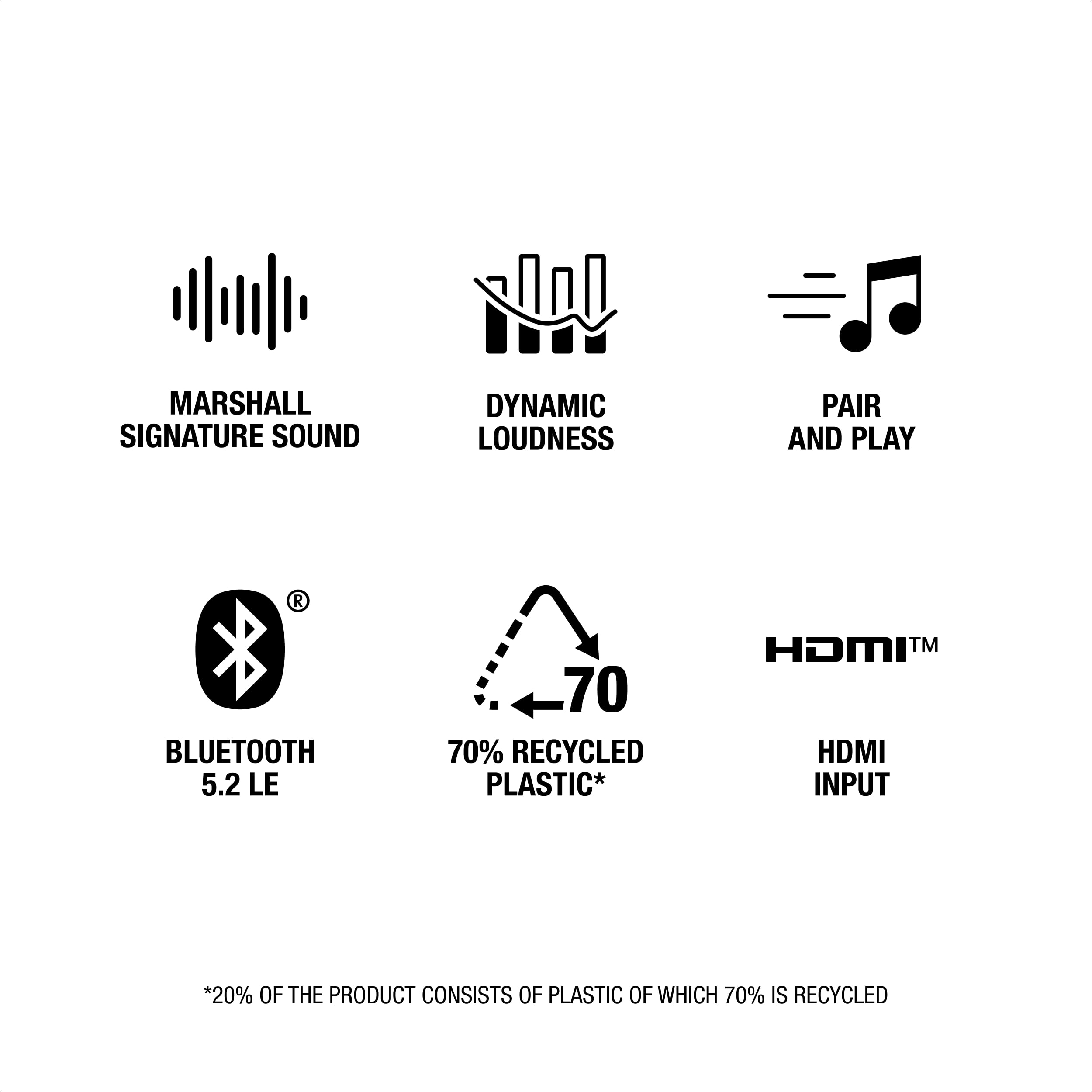
More importantly, the Marshall maintains better clarity at high volumes. Its larger drivers and more powerful amplification mean less distortion when cranked up. The Dynamic Loudness feature automatically adjusts tonal balance at any volume, ensuring bass and treble remain present even during quiet listening.
The JBL, designed for outdoor use where ambient noise is higher, prioritizes volume over ultimate clarity. It can get surprisingly loud for its size, but our research suggests it becomes less refined at maximum output—fine for parties where atmosphere matters more than audiophile precision.
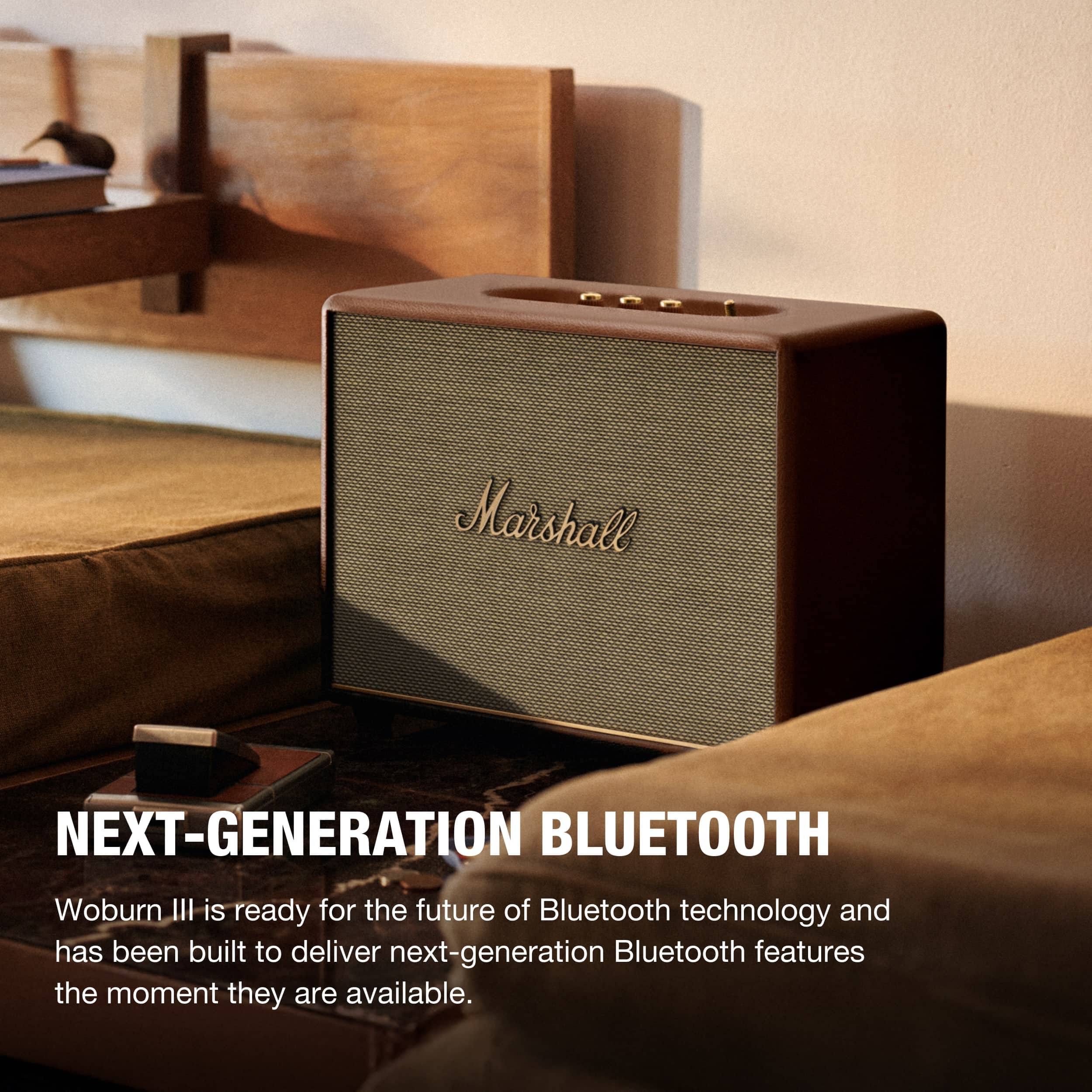
Both speakers support Bluetooth, but with different approaches. The Marshall Woburn III uses Bluetooth 5.2 with multipoint connectivity, letting you connect two devices simultaneously. This is genuinely useful when multiple people want to queue music, though only one can play at a time.
The JBL PartyBox Encore Essential includes Bluetooth 5.1 plus several features the Marshall lacks. USB input supports direct playback of MP3, WAV, WMA, and FLAC files—great for parties where someone brings a USB drive full of music. The aux input provides universal compatibility with any device that has a headphone jack.
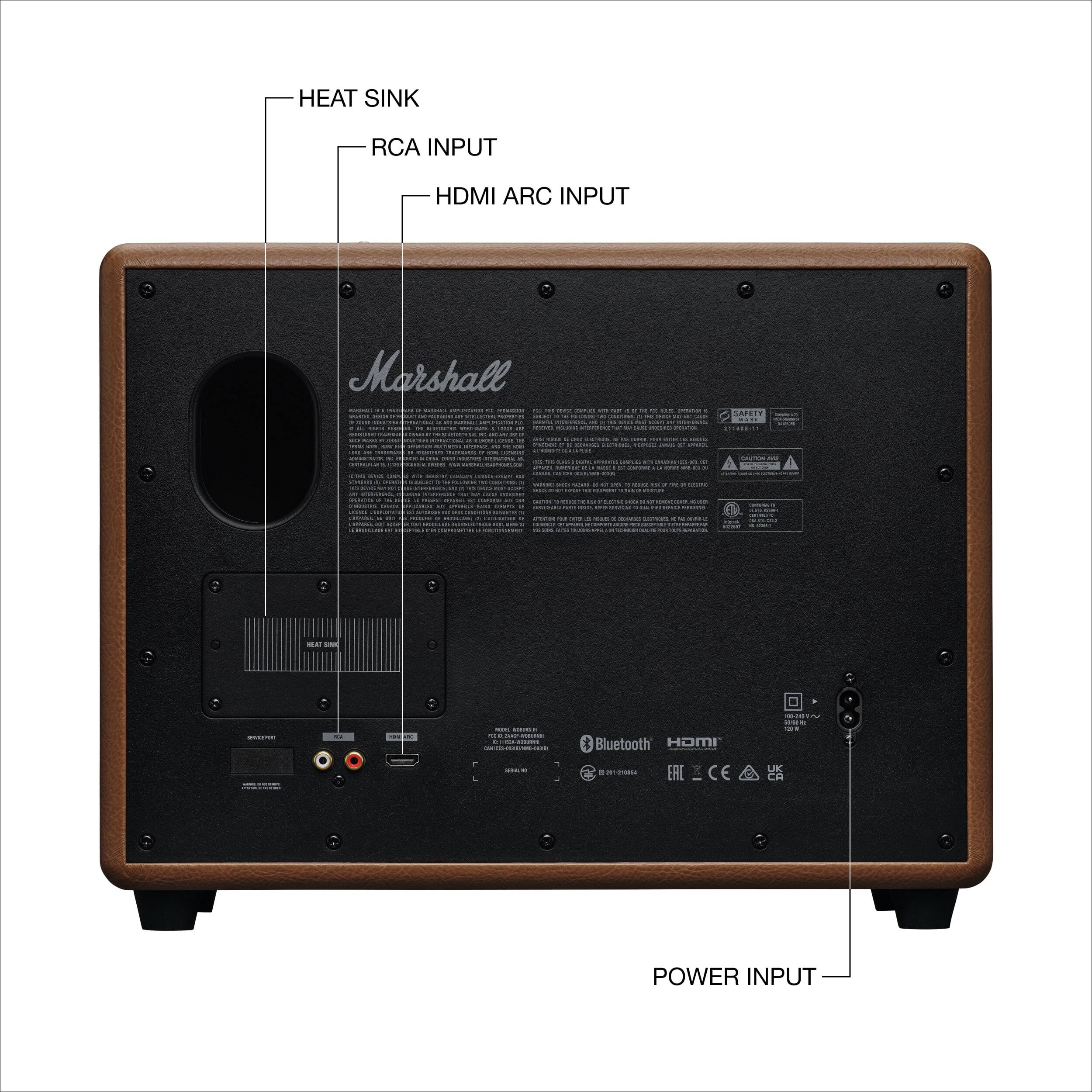
Where the Marshall shines is home integration. The HDMI ARC (Audio Return Channel) input connects directly to your TV, automatically switching on when the TV activates and following volume commands from your TV remote. For home theater use, this seamless integration is invaluable. The speaker can enhance dialogue clarity and provide much better bass than built-in TV speakers without requiring a full surround sound system.
The Marshall also includes RCA inputs for connecting turntables, CD players, or other traditional audio sources—a nod to serious music listeners who might have legacy equipment.
The Marshall Bluetooth app provides room placement compensation, which adjusts the sound based on where you position the speaker. Place it near a wall, and the app reduces bass to prevent boomy reflections. Put it in a corner, and it makes different adjustments. This feature demonstrates Marshall's commitment to optimal sound regardless of room constraints.
The JBL PartyBox app focuses on entertainment features. You can customize light colors and patterns, adjust karaoke settings with echo effects, and access sound presets optimized for different music genres. While less audiophile-focused than Marshall's app, it's perfectly suited to the speaker's party-centric mission.
For home theater use, the Marshall Woburn III is clearly the better choice. The HDMI ARC connection provides true integration with your TV system, and the dedicated midrange drivers ensure dialogue remains clear even during action scenes with heavy bass.
The Night Mode feature, available when connected via HDMI ARC, automatically compresses dynamic range for late-night viewing—loud explosions become quieter while whispered dialogue gets boosted. It's a thoughtful feature that many soundbars charge extra for.
The JBL PartyBox Encore Essential can connect to TVs via Bluetooth or aux cable, but without HDMI ARC integration, it feels more like an accessory than part of your entertainment system. The party-optimized tuning, while fun for music, might make dialogue sound less natural in movies and TV shows.
The JBL PartyBox Encore Essential's 6-hour battery life represents a reasonable compromise between size, weight, and endurance. In real-world testing reported by users, expect closer to 4-5 hours at higher volumes with lights activated. For most parties, this is sufficient, especially since many gatherings happen near power outlets where you can plug in as needed.
The USB charge-out port lets you use the JBL as a power bank for phones—handy during outdoor events where battery life becomes critical for everyone's devices.
The Marshall Woburn III requires constant AC power, which eliminates portability but provides unlimited listening time and consistent performance. There's no battery degradation to worry about, and the speaker maintains full power output regardless of how long you've been listening.
At the time of writing, the price difference between these speakers reflects their different market positions. The JBL PartyBox Encore Essential offers exceptional value for users who need versatility—one purchase serves multiple use cases from dorm room listening to beach parties to small gatherings.
The Marshall Woburn III costs significantly more but provides audiophile-quality sound and premium build materials that should last for decades. For users who prioritize sound quality and home integration over portability, the higher cost delivers proportional value.
Choose the JBL PartyBox Encore Essential if you're a social person who moves around frequently, lives in small spaces, or prioritizes entertainment features. College students, renters who might move often, and anyone who hosts gatherings in multiple locations will appreciate its flexibility. The water resistance and battery power make it uniquely suited for outdoor activities that the Marshall simply cannot handle.
The Marshall Woburn III is ideal for homeowners or long-term renters who want to upgrade their primary listening experience. If you find yourself listening to music critically rather than just as background, or if you want to enhance your TV's audio, the Marshall provides a level of refinement that justifies its premium positioning.
For home theater use specifically, the Marshall is the clear winner thanks to HDMI ARC integration and dialogue-optimized midrange drivers. The JBL works for casual TV watching but lacks the integration features that make a speaker feel like part of your entertainment system.
Both speakers represent successful executions of their respective missions. The JBL PartyBox Encore Essential excels at bringing people together through music and entertainment features, while the Marshall Woburn III elevates the critical listening experience in your home. Understanding which mission aligns with your lifestyle and priorities makes the choice straightforward.
The key insight is that these aren't competing products—they're complementary approaches to audio entertainment. One prioritizes flexibility and fun, the other emphasizes fidelity and integration. Both succeed admirably within their intended roles.
| JBL PartyBox Encore Essential | Marshall Woburn III |
|---|---|
| Design Philosophy - Fundamentally different approaches to audio entertainment | |
| Portable party speaker with entertainment features | Premium stationary home audio system |
| Power Output - Determines maximum volume and clarity | |
| 100W RMS (impressive for battery-powered) | 150W total (90W woofer + dedicated mid/tweeter amps) |
| Driver Configuration - Affects sound quality and stereo imaging | |
| 2.1 system: 1x 5.25" woofer + 2x 1.75" tweeters | 3-way stereo: 1x 6" woofer + 2x 2" mids + 2x 0.75" tweeters |
| Frequency Response - How deep the bass goes and overall audio range | |
| 50Hz - 20kHz (good bass for portable speaker) | 35Hz - 20kHz (superior low-end extension) |
| Maximum Volume - Peak loudness capability | |
| ~97.5dB at 1m (loud enough for outdoor parties) | 100.5dB at 1m (3dB louder = roughly twice as loud) |
| Power Source - Determines where and how long you can use it | |
| 6-hour rechargeable battery + AC power | AC power only (unlimited runtime) |
| Portability - Mobility and outdoor use capability | |
| 5.9kg with handle, IPX4 splashproof | 7.45kg, not portable, no water resistance |
| Entertainment Features - Party and social gathering capabilities | |
| RGB light show, karaoke mic input, True Wireless Stereo pairing | None (focus on pure audio quality) |
| Home Integration - TV and home theater connectivity | |
| Bluetooth, USB, 3.5mm aux only | HDMI ARC + RCA + 3.5mm aux (seamless TV integration) |
| Bluetooth Technology - Wireless connection quality and features | |
| Bluetooth 5.1 with standard connectivity | Bluetooth 5.2 with multipoint (connect 2 devices) |
| Sound Signature - How the music will sound | |
| V-shaped (boosted bass/treble for party atmosphere) | Balanced with Dynamic Loudness (accurate across genres) |
| Build Quality - Long-term durability and materials | |
| Durable plastic designed for transport and splashes | Premium vegan leather and brass controls (furniture-grade) |
| Smart Features - App control and customization | |
| PartyBox app (lights, karaoke, sound effects) | Marshall app (room compensation, placement optimization) |
| Best Use Cases - Who should buy each speaker | |
| Parties, outdoor events, dorms, multiple locations | Home listening, TV enhancement, dedicated audio rooms |
The JBL PartyBox Encore Essential is specifically designed for parties and outdoor use. It features a built-in rechargeable battery for 6 hours of playtime, IPX4 splashproof rating for poolside use, RGB light shows that sync to music, and a microphone input for karaoke. The Marshall Woburn III requires AC power and isn't water-resistant, making it unsuitable for outdoor events.
The Marshall Woburn III excels for TV use with its HDMI ARC connection that integrates seamlessly with your television, automatically turning on with your TV and following volume commands. It also has a Night Mode for late-night viewing. The JBL PartyBox Encore Essential can connect via Bluetooth or aux cable but lacks the integrated TV features.
The Marshall Woburn III produces 100.5dB maximum volume compared to the JBL PartyBox Encore Essential's 97.5dB, making it roughly twice as loud. The Marshall also has better room-filling capability with its 150W power output and angled tweeters that create a wider soundstage for large spaces.
The Marshall Woburn III delivers superior sound quality with its 3-way driver system (dedicated woofer, midrange, and tweeters) that provides better instrument separation and vocal clarity. The JBL PartyBox Encore Essential has a more bass-heavy, party-optimized sound signature that's exciting for dance music but less accurate for critical listening.
The JBL PartyBox Encore Essential is designed for portability with a built-in handle, 6-hour battery life, and weighs 13 pounds. The Marshall Woburn III is a stationary speaker that requires constant AC power and weighs over 16 pounds, designed to be a permanent part of your home setup.
The Marshall Woburn III has deeper bass extension, reproducing frequencies down to 35Hz compared to the JBL PartyBox Encore Essential's 50Hz cutoff. However, the JBL delivers punchy, impactful bass that's optimized for party music, while the Marshall provides more accurate, controlled bass reproduction.
The JBL PartyBox Encore Essential supports True Wireless Stereo (TWS) pairing, allowing you to connect two units wirelessly for stereo sound and increased volume. The Marshall Woburn III doesn't support speaker pairing but delivers stereo sound from a single unit with its dual tweeter configuration.
Both speakers offer Bluetooth connectivity, but the Marshall Woburn III provides more home-focused inputs including HDMI ARC, RCA, and 3.5mm aux. The JBL PartyBox Encore Essential includes Bluetooth, USB for direct file playback, 3.5mm aux, and a microphone input for karaoke.
The JBL PartyBox Encore Essential offers excellent value for users needing versatility, combining portability, entertainment features, and decent sound quality in one package. The Marshall Woburn III commands a premium but delivers audiophile-quality sound and premium build materials that justify the higher cost for serious listeners.
Only the JBL PartyBox Encore Essential has a battery, providing up to 6 hours of playtime (4-5 hours at high volume with lights). The Marshall Woburn III is AC-powered only, which means unlimited runtime but requires being plugged into a wall outlet at all times.
The Marshall Woburn III excels across all music genres with its balanced sound signature and dedicated midrange drivers, making it ideal for jazz, classical, rock, and acoustic music. The JBL PartyBox Encore Essential is optimized for party music like EDM, hip-hop, and pop with its bass-heavy tuning.
The JBL PartyBox Encore Essential uses the PartyBox app for customizing light shows, karaoke settings, and sound effects. The Marshall Woburn III features the Marshall Bluetooth app with room placement compensation, EQ adjustments, and Dynamic Loudness settings for optimized home listening.
We've done our best to create useful and informative comparisons to help you decide what product to buy. Our research uses advanced automated methods to create this comparison and perfection is not possible - please contact us for corrections or questions. These are the sites we've researched in the creation of this article: bestbuy.com - rtings.com - rtings.com - youtube.com - popsci.com - youtube.com - soundguys.com - audioadvice.com - youtube.com - versus.com - youtube.com - hometechnologyreview.com - jbl.com - bhphotovideo.com - hometechnologyreview.com - global.jbl.com - youtube.com - in.jbl.com - therevolverclub.com - harmanaudio.in - jbl.com.my - jbl.com.ar - jbl.com - pcrichard.com - kh.jbl.com - youtube.com - uclastore.com - bhphotovideo.com - creativeaudio.net - youtube.com - loudersound.com - ash-asia.zendesk.com - armorsound.com - rtings.com - crutchfield.com - rtings.com - stereoguide.com - bestbuy.com - hometechnologyreview.com - crutchfield.com - sweetwater.com - rtings.com - youtube.com - greentoe.com - versus.com - idownloadblog.com - marshall.com - youtube.com - comparisontabl.es - youtube.com - versus.com - crutchfield.com - device.report - consumerreports.org - sg.tcacoustic.asia - stereoindex.com - safemark.com - smarthomesounds.co.uk - marshall.com - device.report - bestbuy.com - marshall.com

Privacy Policy
Terms and Conditions - Affiliate Policy
Home Security
© Copyright 2008-2026.
11816 Inwood Rd #1211, Dallas, TX 75244