

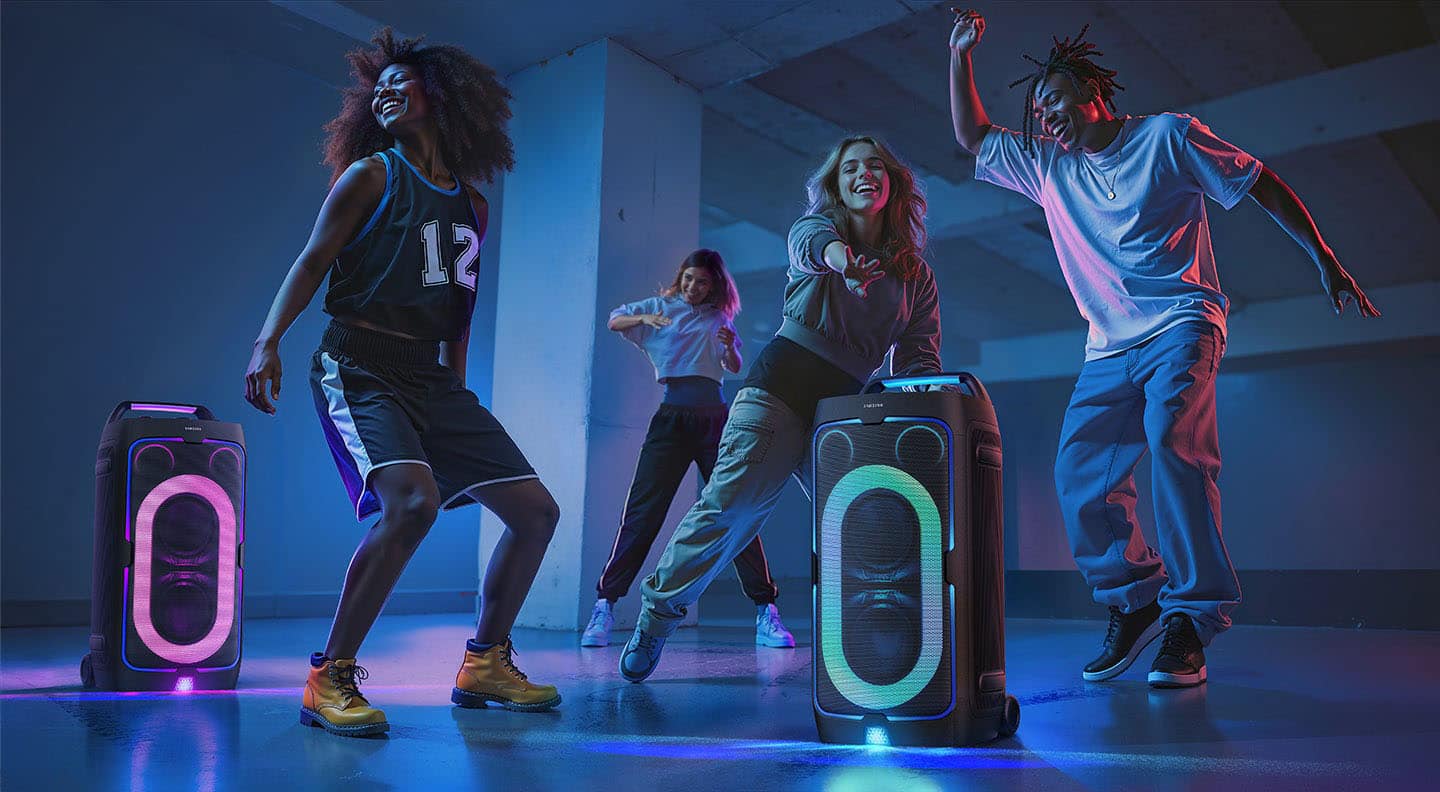
Party speakers have exploded in popularity over the past few years, and it's easy to see why. These powerful, battery-powered sound systems can transform any gathering from a casual hangout into a proper celebration. Whether you're hosting a backyard barbecue, throwing a pool party, or setting up for karaoke night, the right speaker makes all the difference.
But with so many options flooding the market, choosing between models like the Samsung MX-ST40F and the JBL PartyBox 520 can feel overwhelming. Both launched in 2025 and represent their manufacturers' latest thinking on what makes a great party speaker, but they take distinctly different approaches to get there.
Before diving into specifics, it's worth understanding what separates party speakers from your typical Bluetooth speaker. These aren't just louder versions of portable speakers – they're engineered for completely different use cases.
Party speakers prioritize maximum volume output, which is measured in watts (the electrical power the speaker consumes) and decibels or dB (the actual sound pressure level you hear). A typical portable speaker might output 20-30 watts and reach around 80-85 dB, which is fine for personal listening. Party speakers like the Samsung MX-ST40F and JBL PartyBox 520 pump out 160-400 watts and can exceed 110 dB – loud enough to fill large outdoor spaces and compete with ambient noise.
They also emphasize bass response heavily. Bass frequencies (roughly 20-200 Hz) are what make music feel energetic and get people moving, but they require more power and larger drivers to reproduce effectively. Party speakers use dedicated woofers – larger speakers designed specifically for bass – paired with separate tweeters that handle high frequencies for clarity.
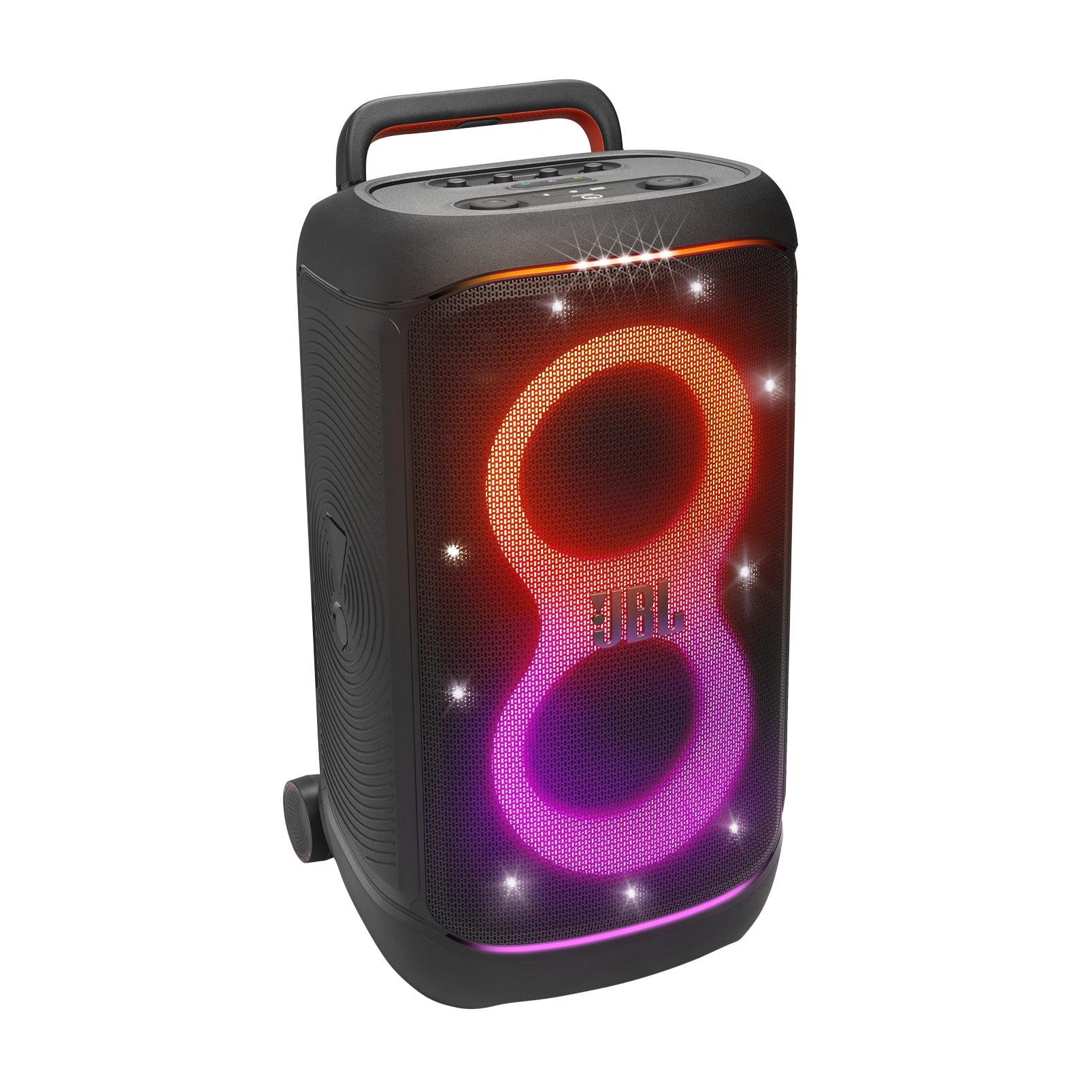
The other major differentiator is visual entertainment. LED lighting systems aren't just decoration; they create atmosphere and can sync with music to enhance the party experience. This is where the two speakers we're comparing really start to diverge.
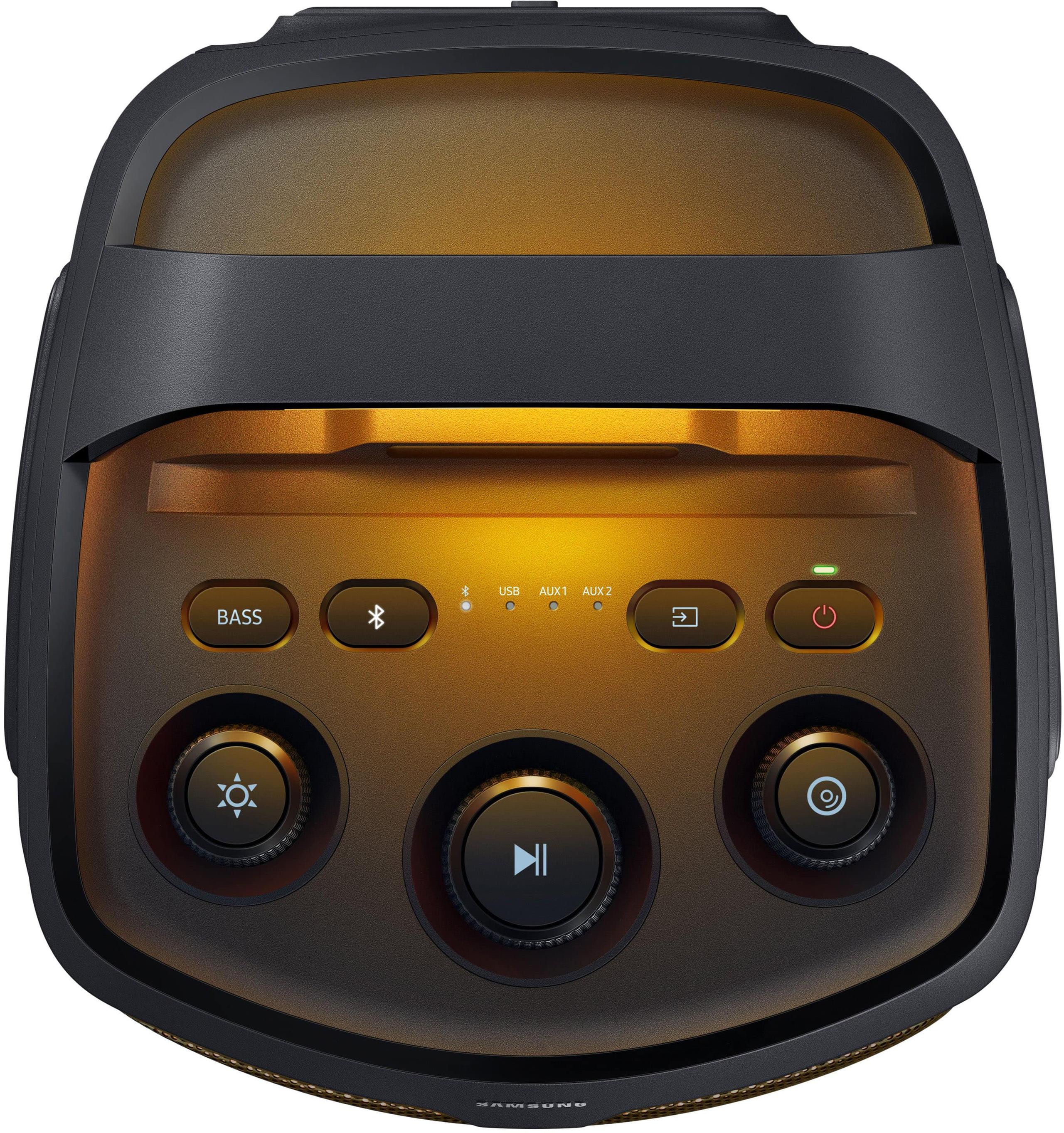
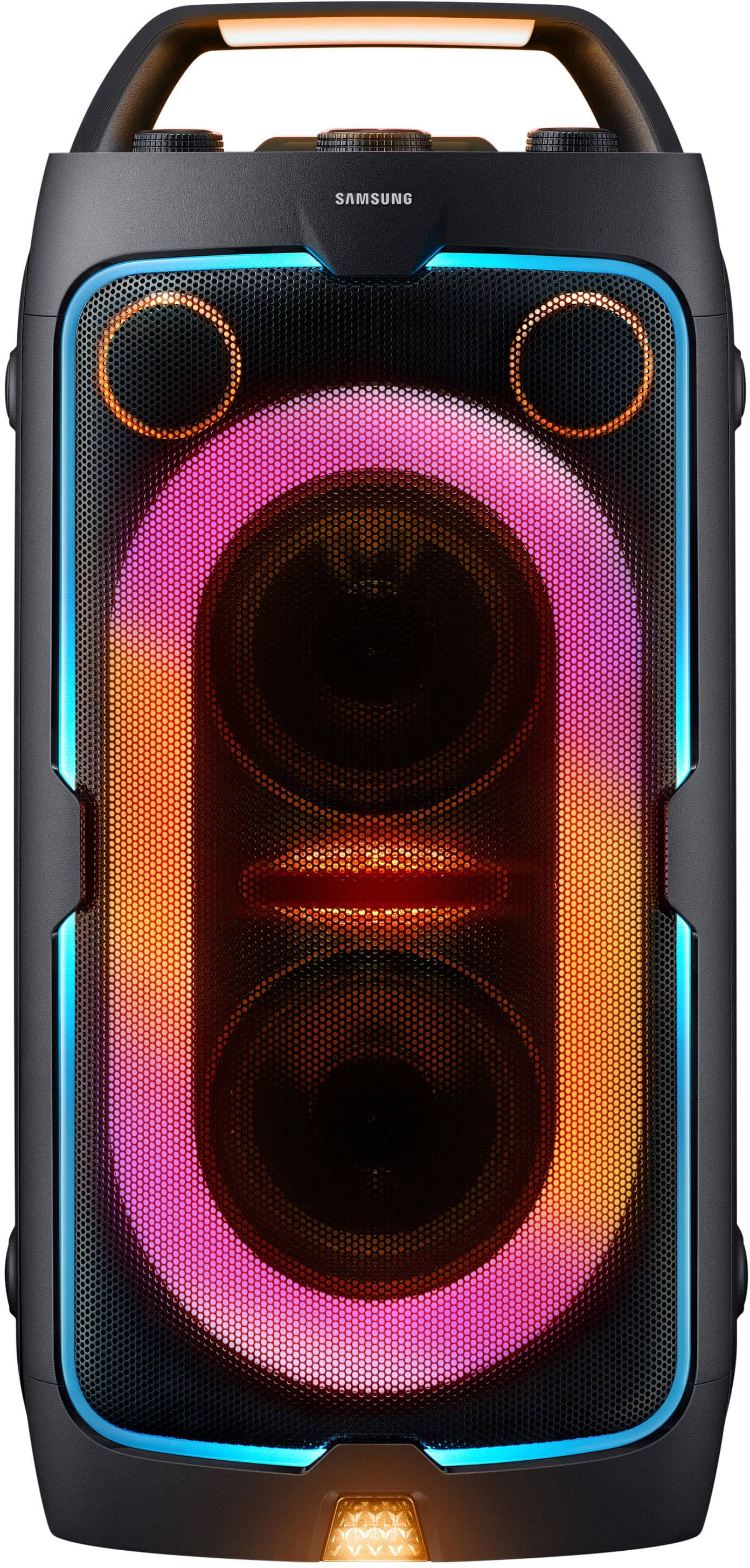
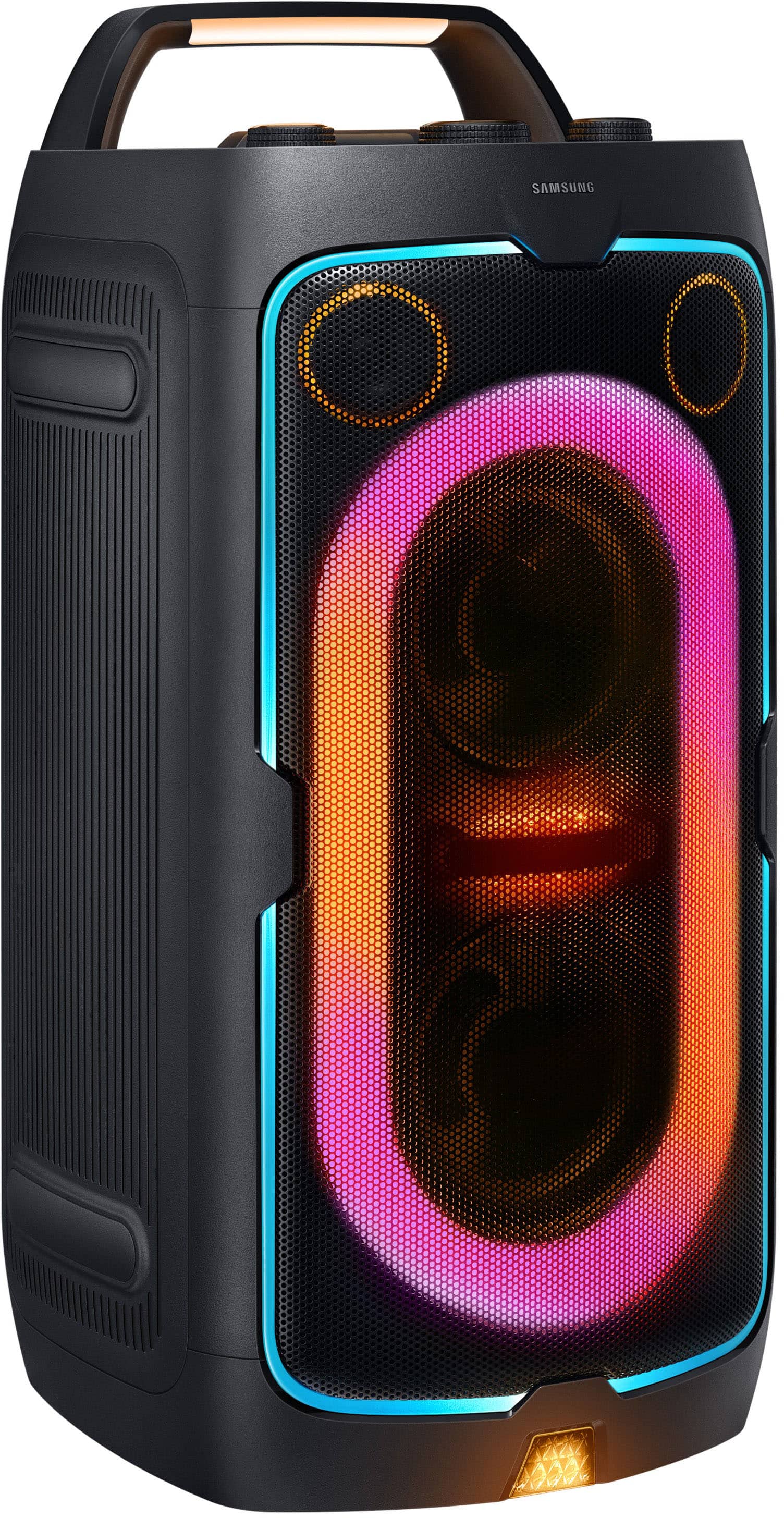
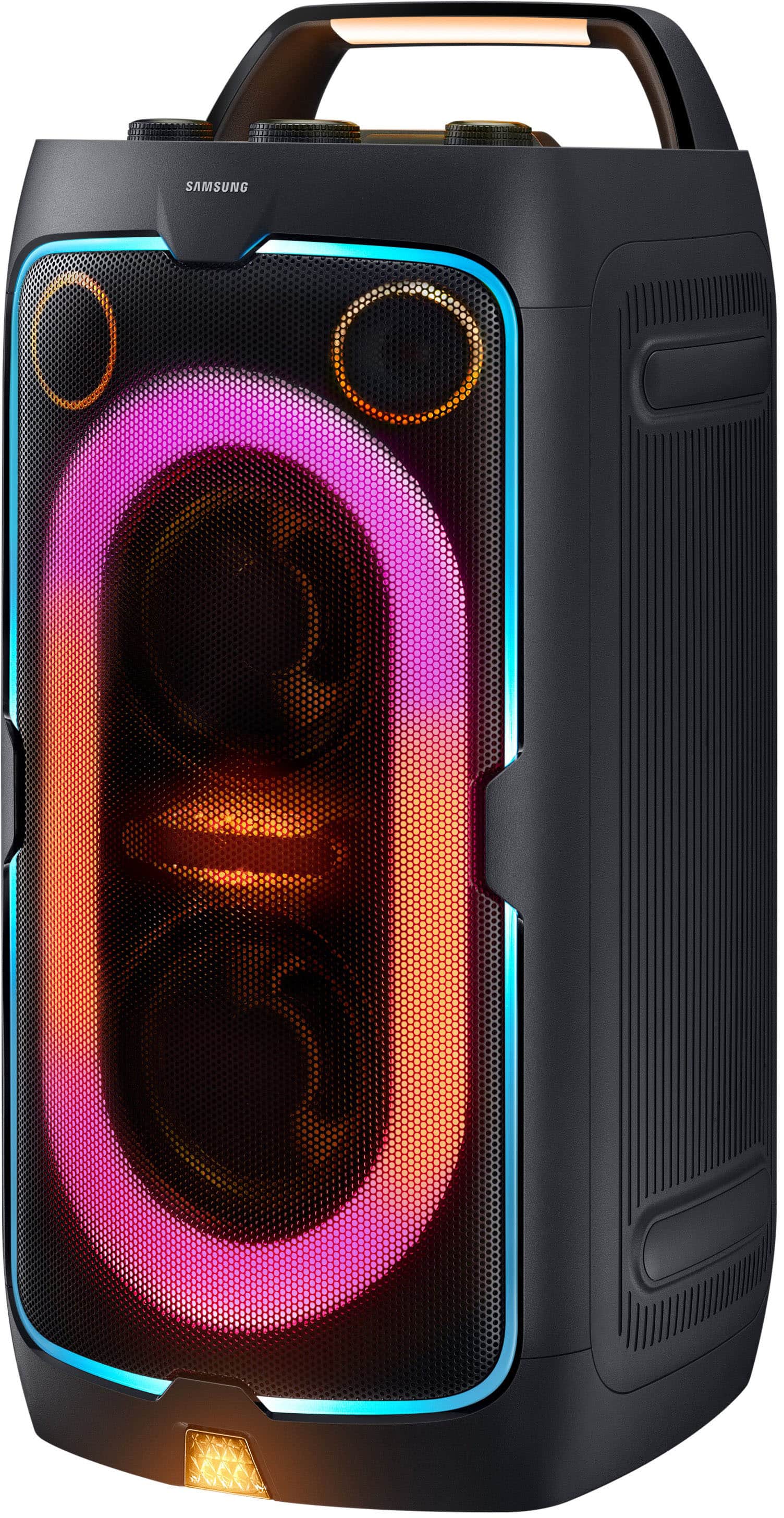
The Samsung MX-ST40F represents what we'd call the "smart portable" approach. At around 28 pounds, it's designed to be genuinely portable while still delivering serious sound. Samsung has focused heavily on bass customization, offering three distinct bass modes (Deep, Punchy, and Gentle) that fundamentally change how the speaker sounds rather than just boosting or cutting frequencies.
The JBL PartyBox 520, weighing in at over 56 pounds, takes the "maximum performance" route. JBL has prioritized raw power and professional features, assuming that most users will set it up in one location rather than constantly moving it around. The trade-off is significantly more power and features that serious entertainers will appreciate.
Both speakers launched in 2025, representing the current state of party speaker technology. Compared to models from just a few years ago, both benefit from improved battery efficiency, more sophisticated digital signal processing, and better wireless connectivity. The inclusion of Auracast technology (a new Bluetooth standard that allows multiple speakers to connect wirelessly) in both models shows how the industry is moving toward more flexible multi-speaker setups.
When it comes to party speakers, power isn't everything – but it's pretty close to everything. The Samsung MX-ST40F delivers 160 watts in AC mode and 80 watts when running on battery. The JBL PartyBox 520 pushes 400 watts of continuous power, which translates to significantly more headroom for loud, clear sound.
In practical terms, our research into user and expert reviews suggests the difference is noticeable but not as dramatic as the wattage numbers might suggest. The Samsung reaches about 111 dB maximum output, while the JBL hits around 110.6 dB – essentially equivalent for most listeners. The real difference comes in sustained performance: the JBL PartyBox 520 can maintain high volumes for hours without strain, while the Samsung MX-ST40F may show some compression (a slight dulling of dynamics) at maximum output over extended periods.
For home theater use, both speakers can serve as impressive sound systems for movie nights, though neither is specifically designed for this purpose. The Samsung's more compact size makes it easier to position near a TV without dominating the room, while the JBL's raw power provides more of that cinema-like impact for action scenes. However, their front-firing design means optimal placement matters – you'll want to position either speaker directly facing your seating area.
The practical impact of these power differences becomes clear when you consider room size and audience. The Samsung MX-ST40F excels in indoor spaces and can handle outdoor gatherings of 25-50 people comfortably. The JBL PartyBox 520 is built for larger outdoor events and can easily fill spaces for 75+ people without breaking a sweat.
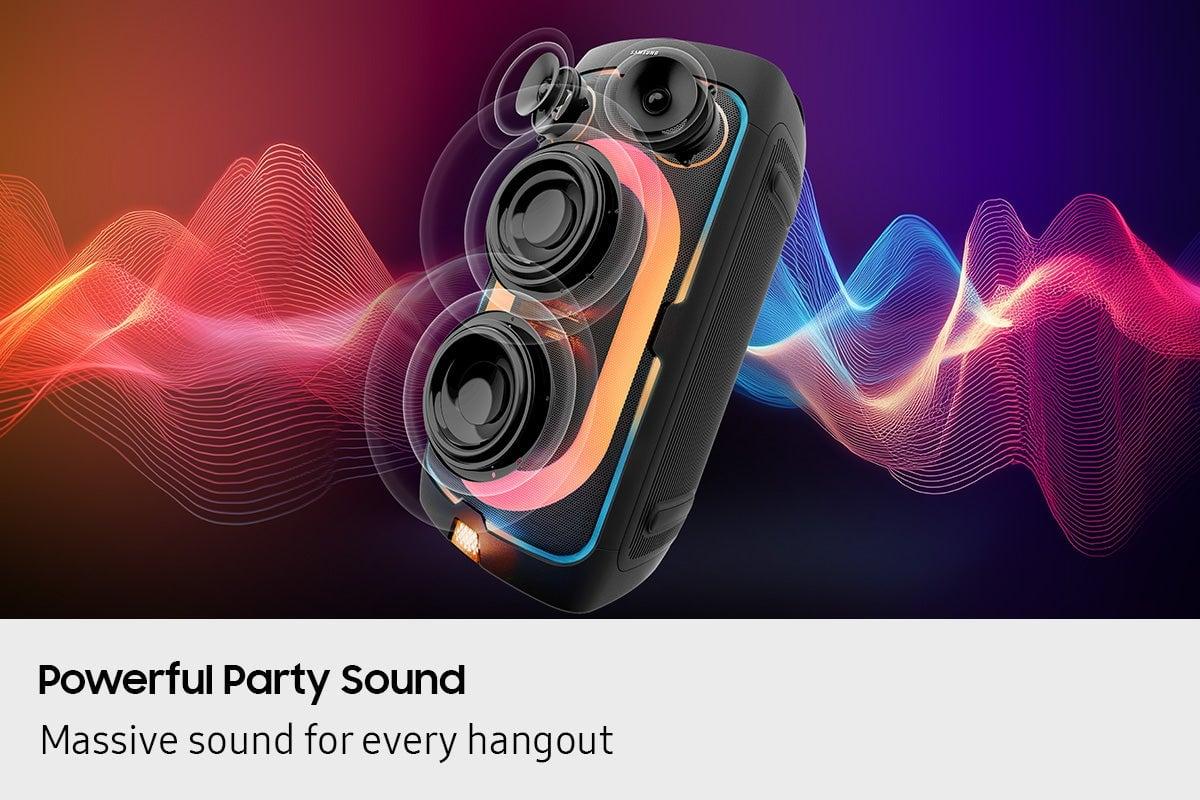
Raw power means nothing if the sound quality isn't there, and this is where the two speakers reveal their different design priorities. The Samsung MX-ST40F uses dual 5.25-inch woofers paired with 20mm dome tweeters that feature waveguide technology – essentially specially shaped housings that help spread high-frequency sound more evenly across a wider area.
What makes the Samsung unique is its bass customization system. The three bass modes aren't just simple EQ adjustments; they actually change how the digital signal processing handles low frequencies. "Deep" mode extends bass response lower for genres like electronic and hip-hop, "Punchy" emphasizes mid-bass for rock and pop, and "Gentle" provides more balanced bass for acoustic music and podcasts. This level of bass control is unusual and genuinely useful for different types of content.
The JBL PartyBox 520 takes a more traditional but refined approach with dual 7.5-inch woofers and dual 1-inch dome tweeters. JBL's strength lies in their tuning – the frequency response is remarkably balanced for a party speaker, meaning it sounds good with virtually any type of content. Whether you're playing bass-heavy EDM, vocal-focused podcasts, or watching movies, the JBL maintains clarity and balance better than most competitors.
Based on consensus from reviews, the Samsung produces deeper, more precise bass that's particularly impressive with electronic music. The JBL creates more of a "room-filling" bass experience that's less precise but more visceral – the kind that makes your chest thump at live concerts.
For critical listening or home theater use, the JBL PartyBox 520 has the edge due to its more neutral frequency response. But for pure party atmosphere, the Samsung's customizable bass gives it a unique advantage.
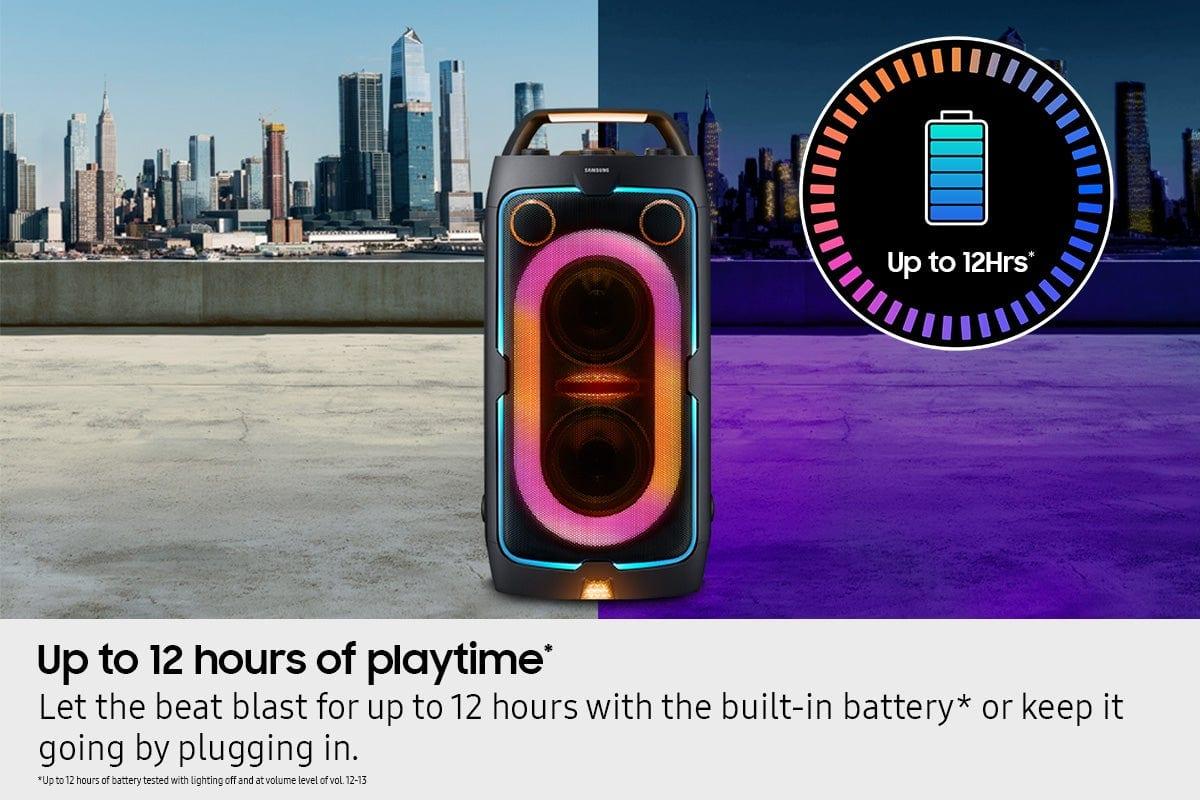
Battery performance often determines whether a party speaker lives up to its portable promises. The Samsung MX-ST40F provides up to 12 hours of playback with a replaceable battery system. This is clever engineering – instead of being stuck with degraded battery performance after a few years, you can swap in a fresh battery pack or even carry spares for unlimited runtime.
The JBL PartyBox 520 offers 15-18 hours from its internal battery, depending on volume levels and content. While the battery isn't user-replaceable in the traditional sense, it can be serviced by JBL when it eventually degrades. The JBL also includes fast charging: a 10-minute charge adds about 2 hours of playtime, which can be a lifesaver for extended events.
In real-world usage patterns, the Samsung's replaceable battery system is probably more practical for frequent users. If you're hosting regular gatherings, being able to swap batteries means never being caught with a dead speaker. The JBL's longer single-session runtime is better for occasional use or events where you can't easily access charging.
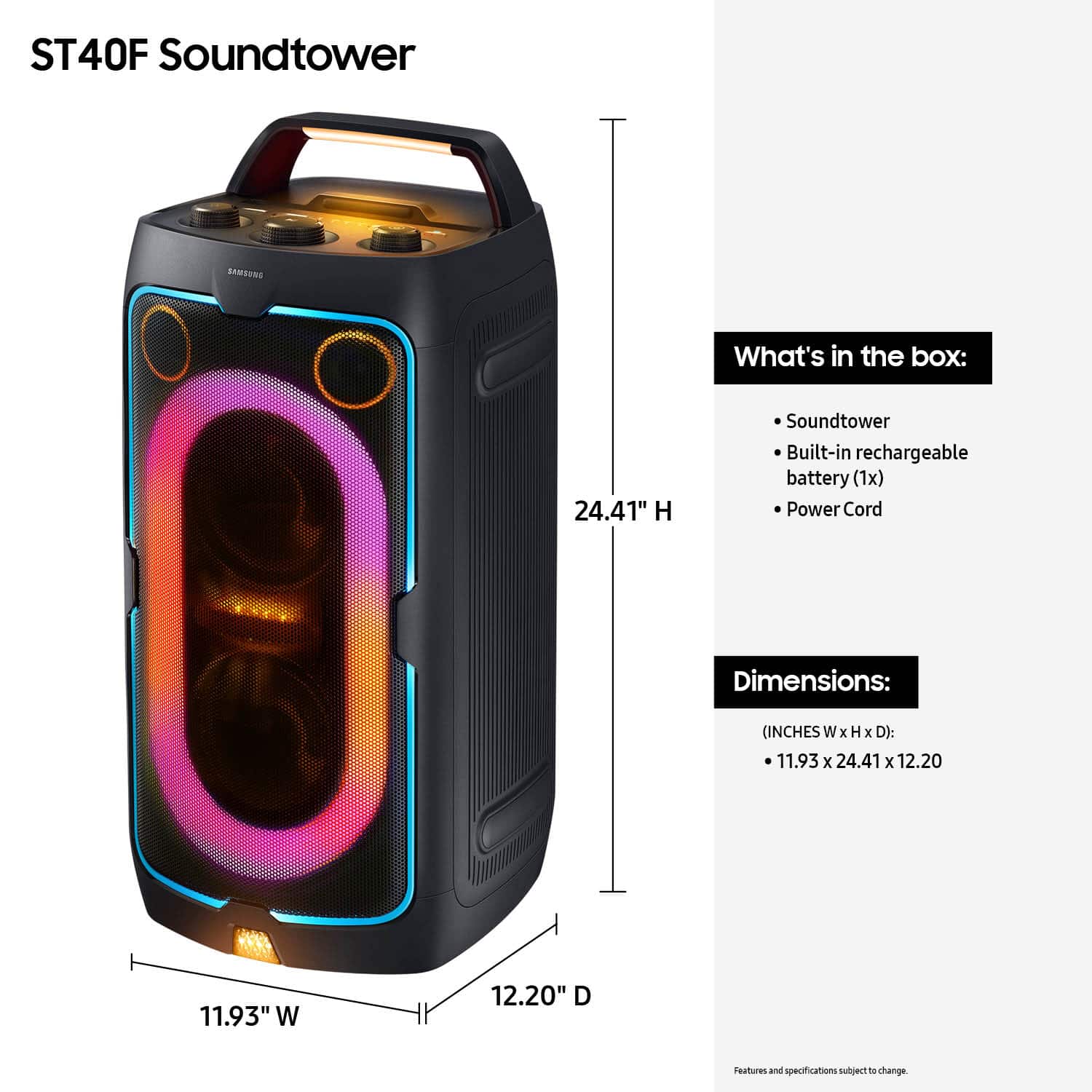
This is where the two speakers' different philosophies become most apparent. The Samsung MX-ST40F weighs 28 pounds with just an integrated handle – light enough that most people can carry it reasonable distances. This makes it genuinely portable for beach trips, park gatherings, or moving between rooms.
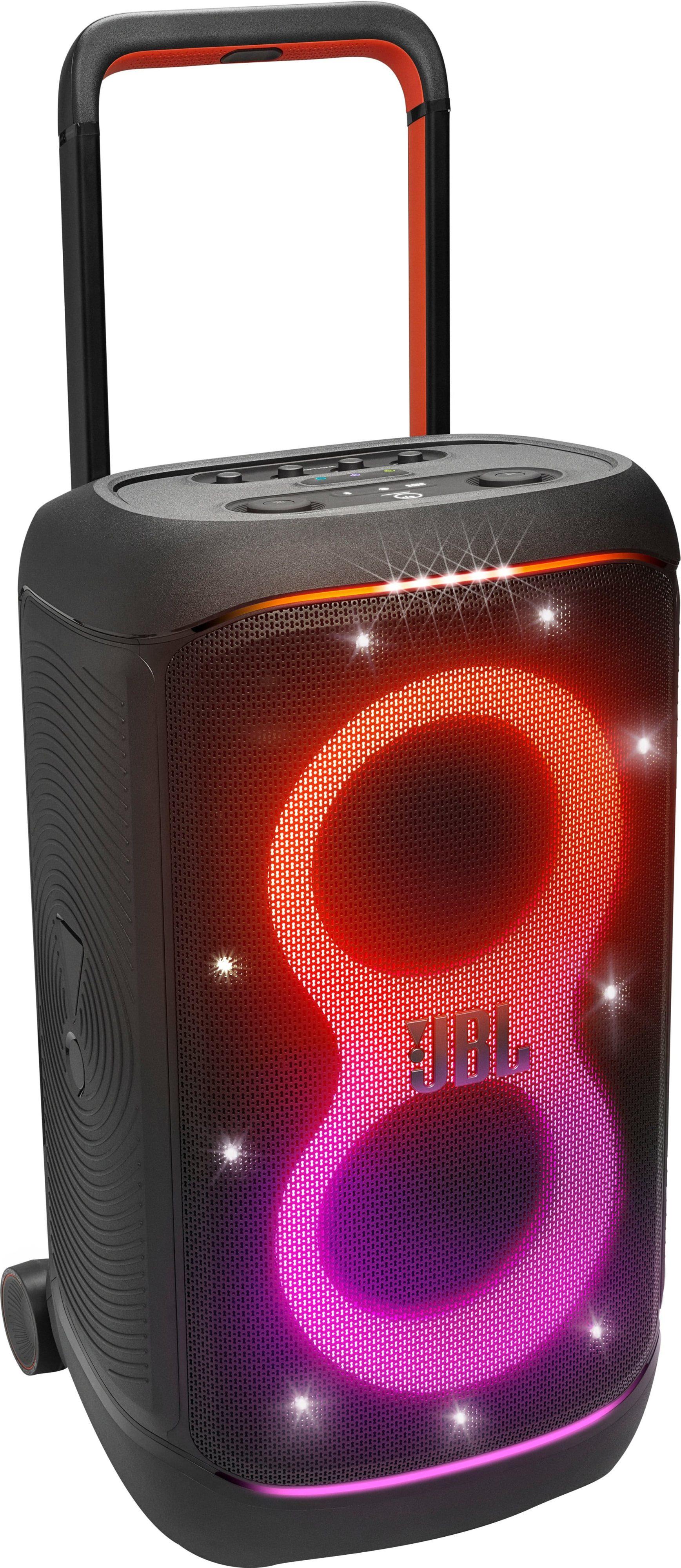
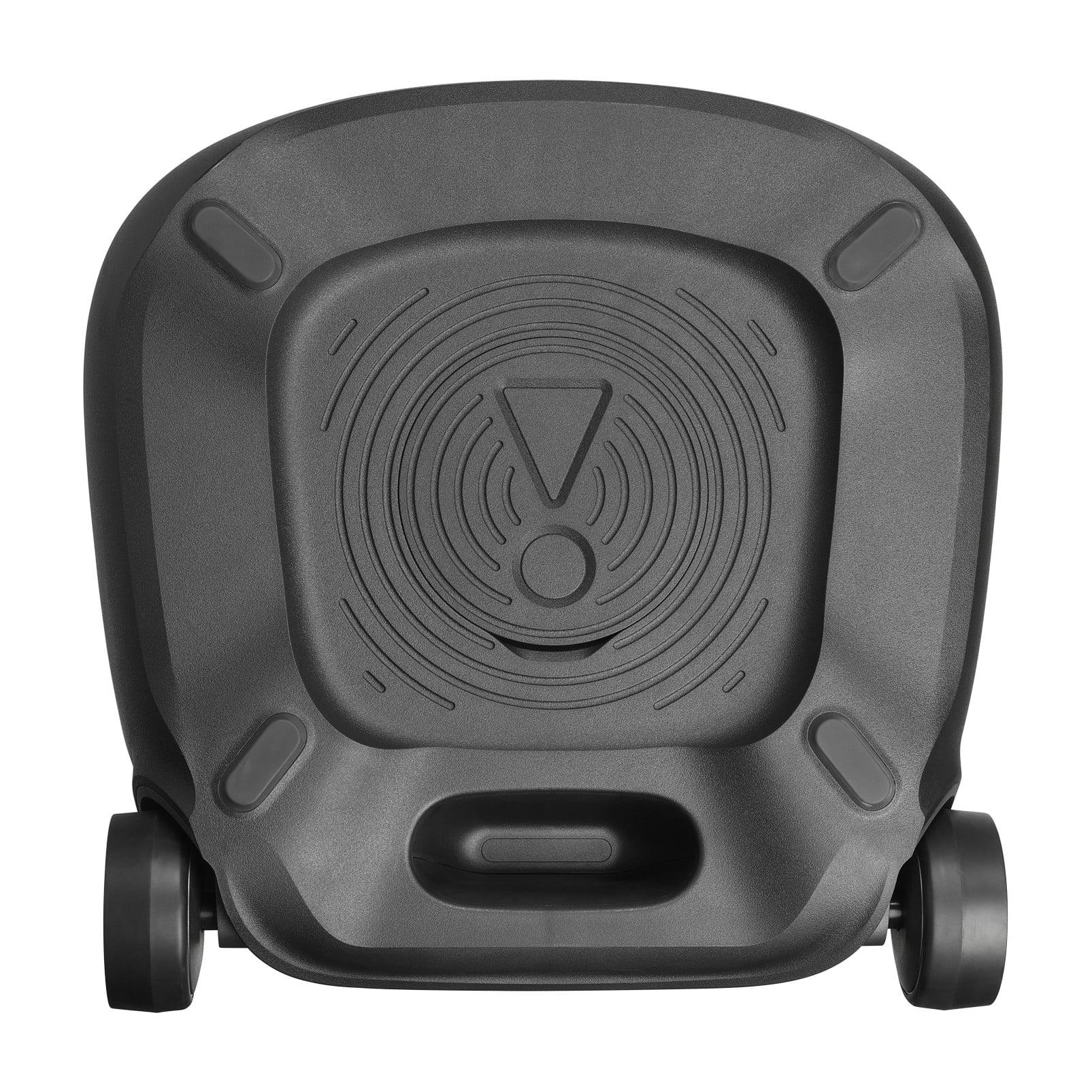
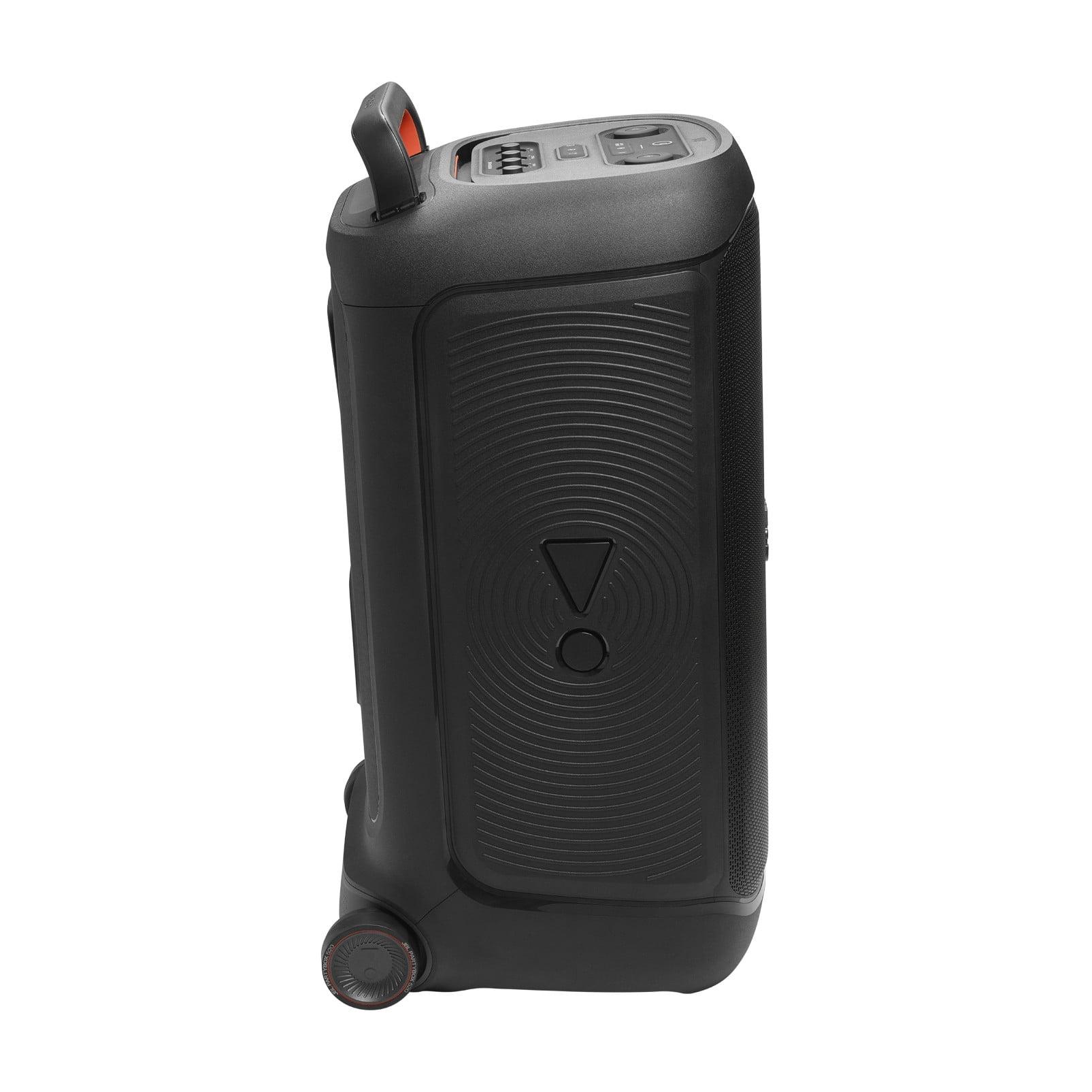
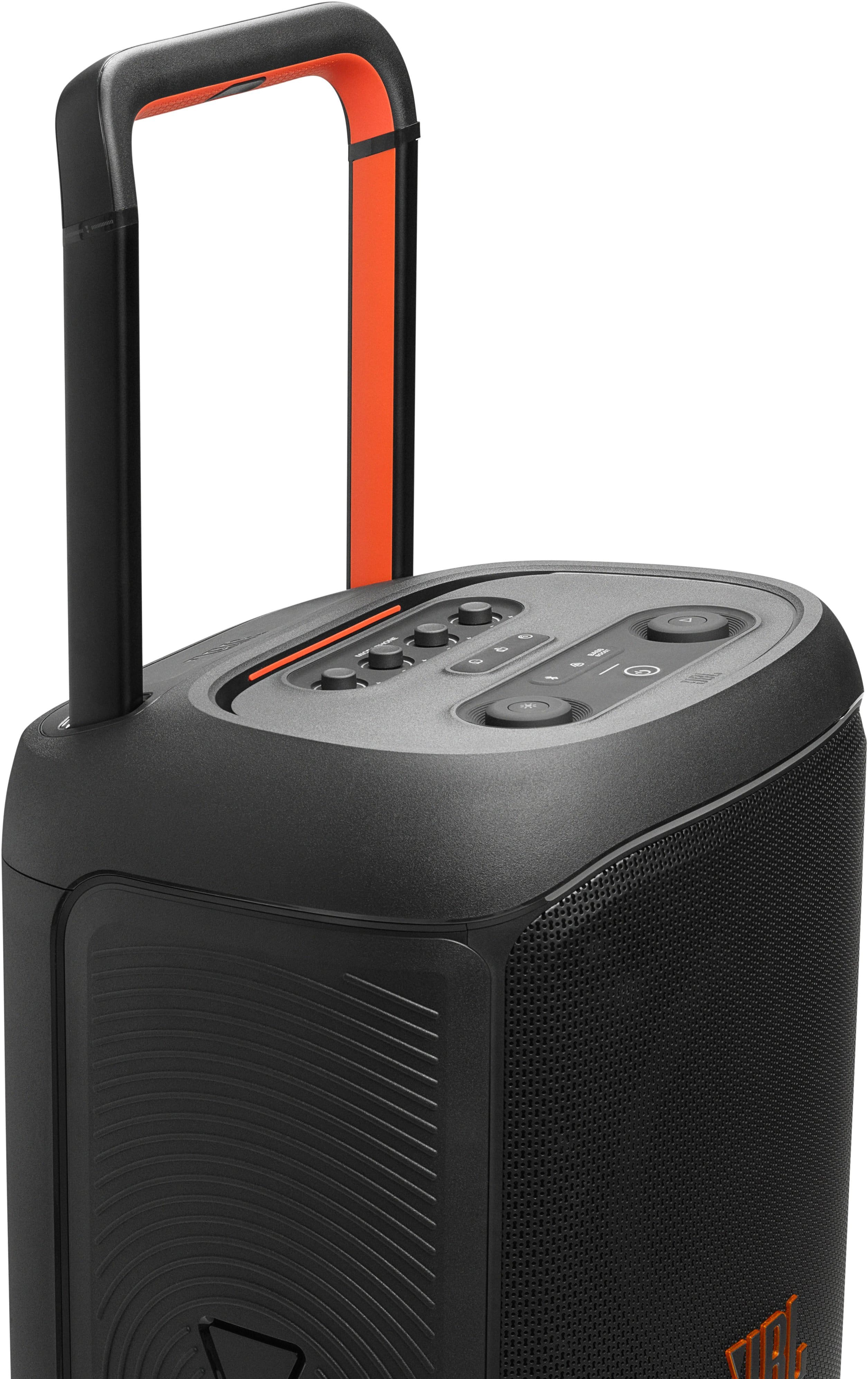
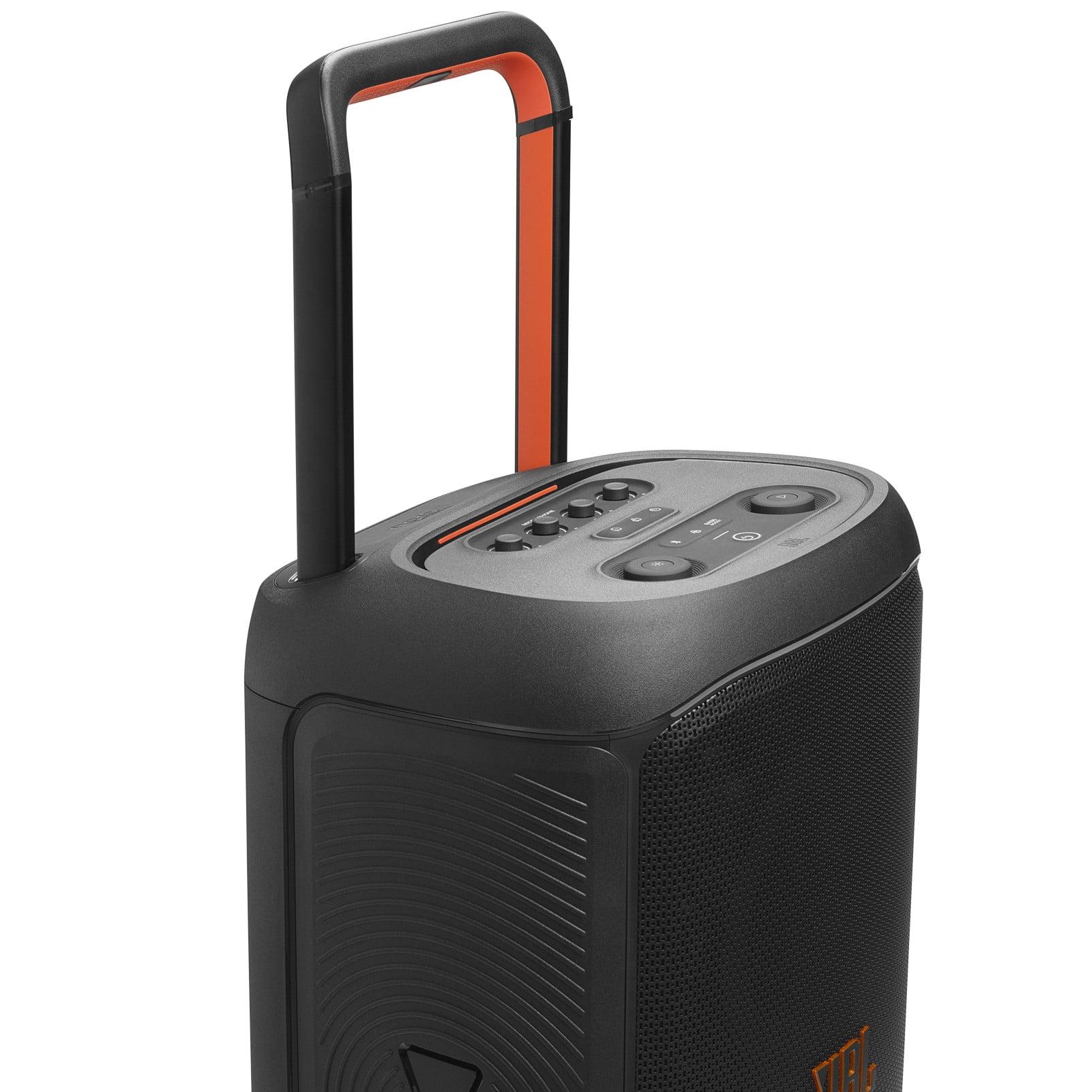
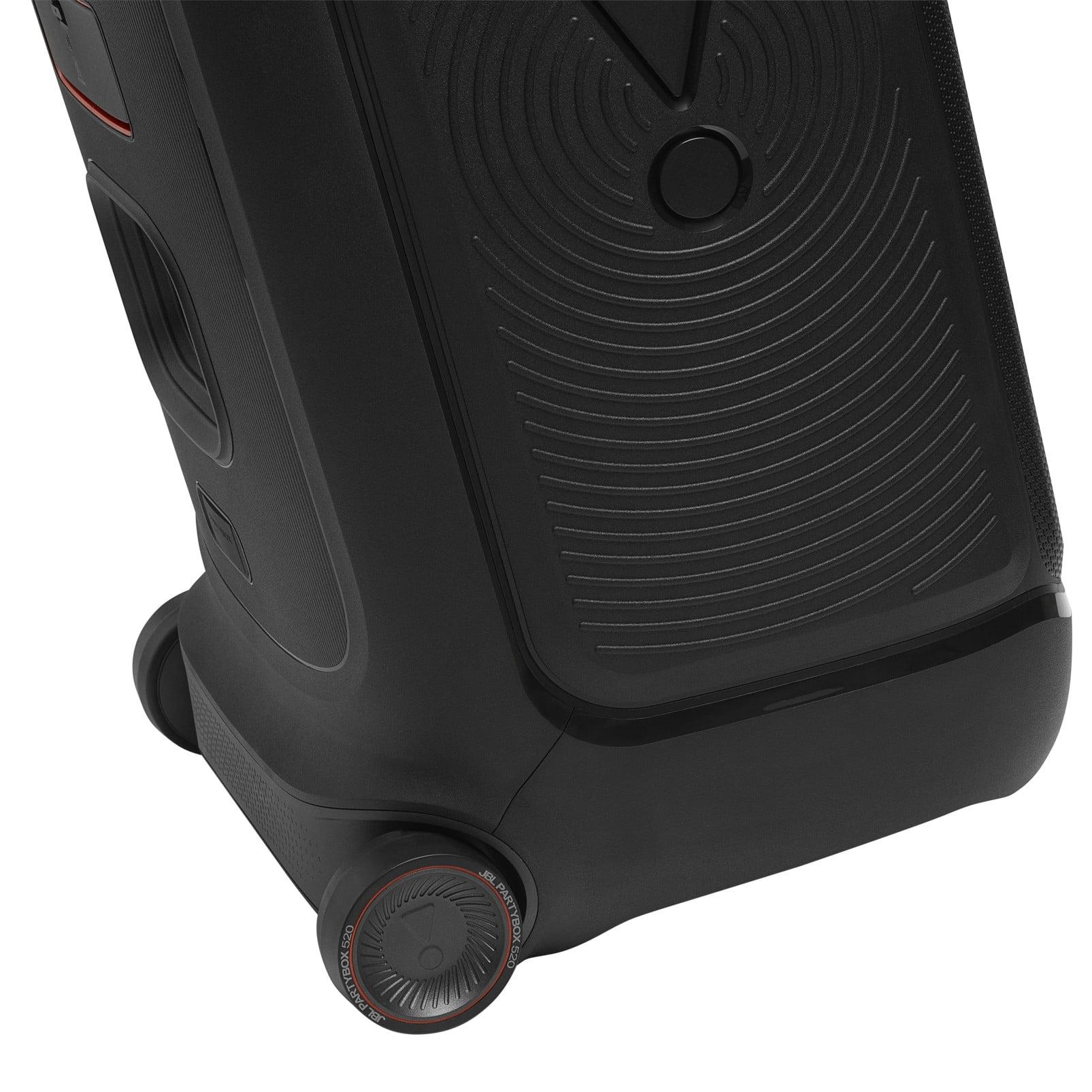
The JBL PartyBox 520 at 56+ pounds requires its telescopic handle and built-in wheels. It's not something you'll casually carry, but the wheels make it surprisingly manageable for transport. Think of it like luggage – heavy, but designed to roll smoothly.
The portability difference affects usage patterns significantly. The Samsung works well for people who frequently move their speaker around, whether that's bringing it to different rooms, taking it to friends' houses, or carrying it to outdoor locations. The JBL is better suited for people who primarily use it in one or two locations but want the option to transport it when needed.
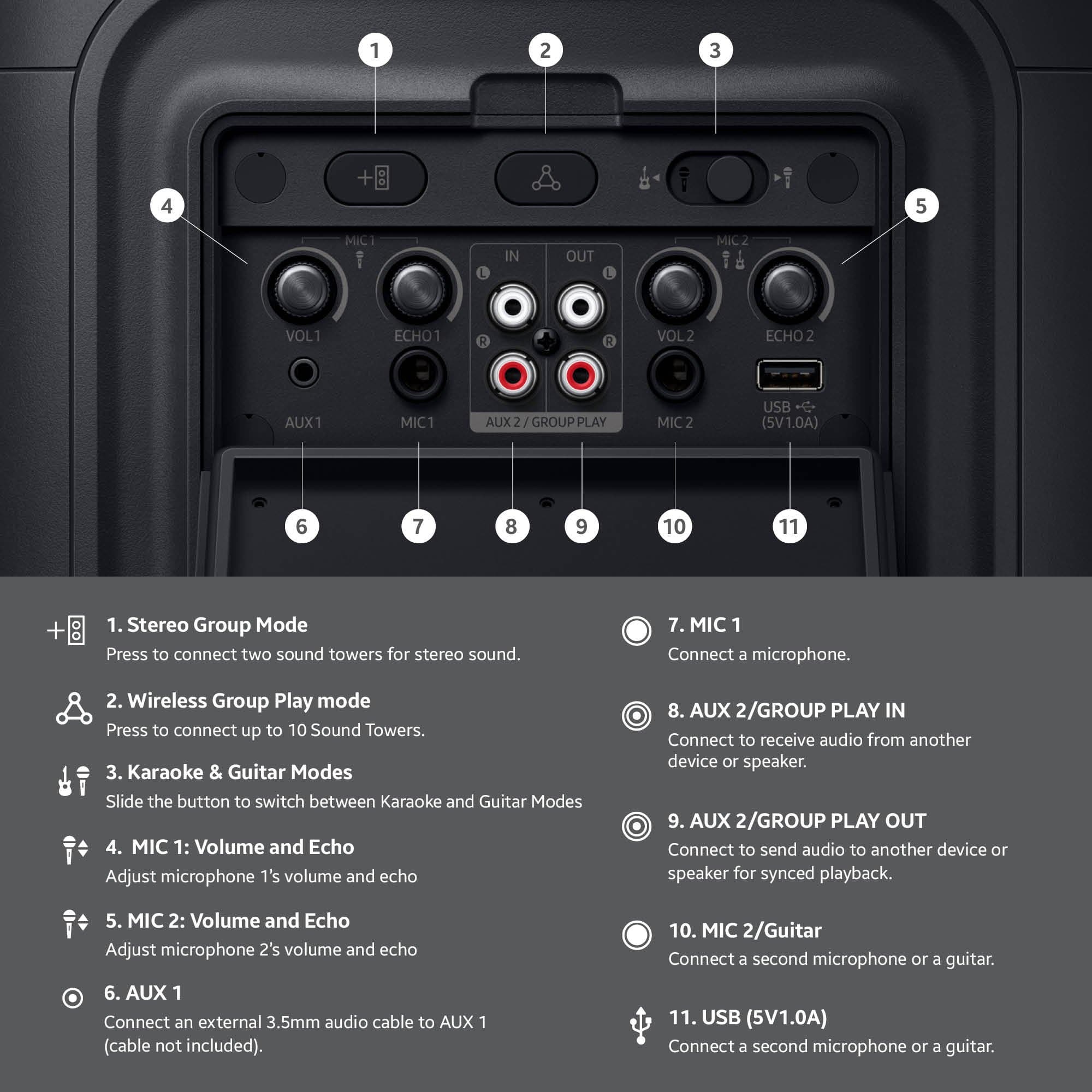
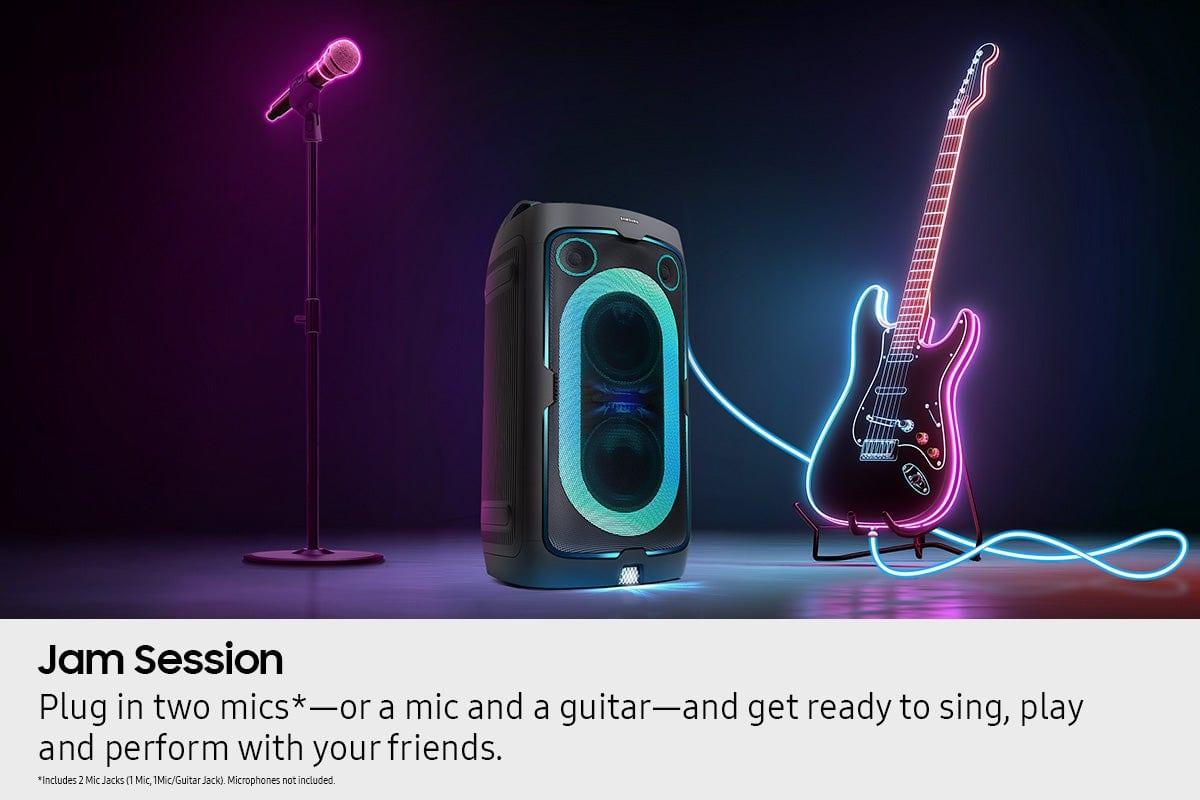
Both speakers include karaoke functionality, but their approaches reveal their target audiences. The Samsung MX-ST40F offers basic but effective karaoke features: two mic/guitar inputs, voice effects, and the ability to record performances. It even includes voice removal technology that can strip vocals from existing songs – not perfect, but fun for casual karaoke nights.
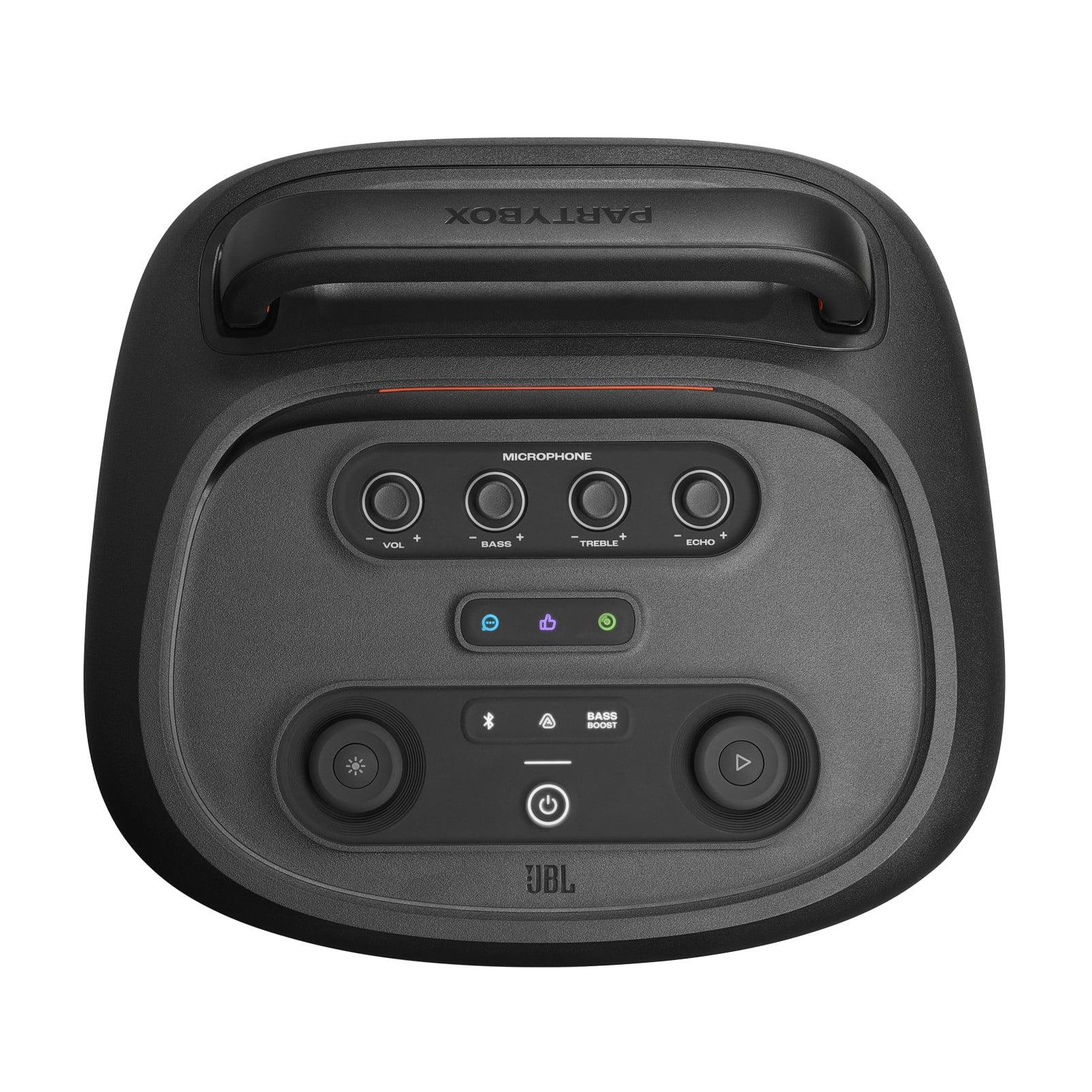
The JBL PartyBox 520 steps up with professional XLR inputs alongside standard 1/4-inch jacks. XLR connections are the professional standard for microphones and DJ equipment because they're balanced (meaning they resist electrical interference) and more robust. This makes the JBL suitable for actual DJ setups, professional karaoke systems, or anyone who takes their audio equipment seriously.
The JBL also includes USB-C audio input, which provides higher quality digital audio than Bluetooth, and can even charge connected devices. Its 7-band graphic equalizer offers much more precise sound tuning than the Samsung's four preset sound modes.
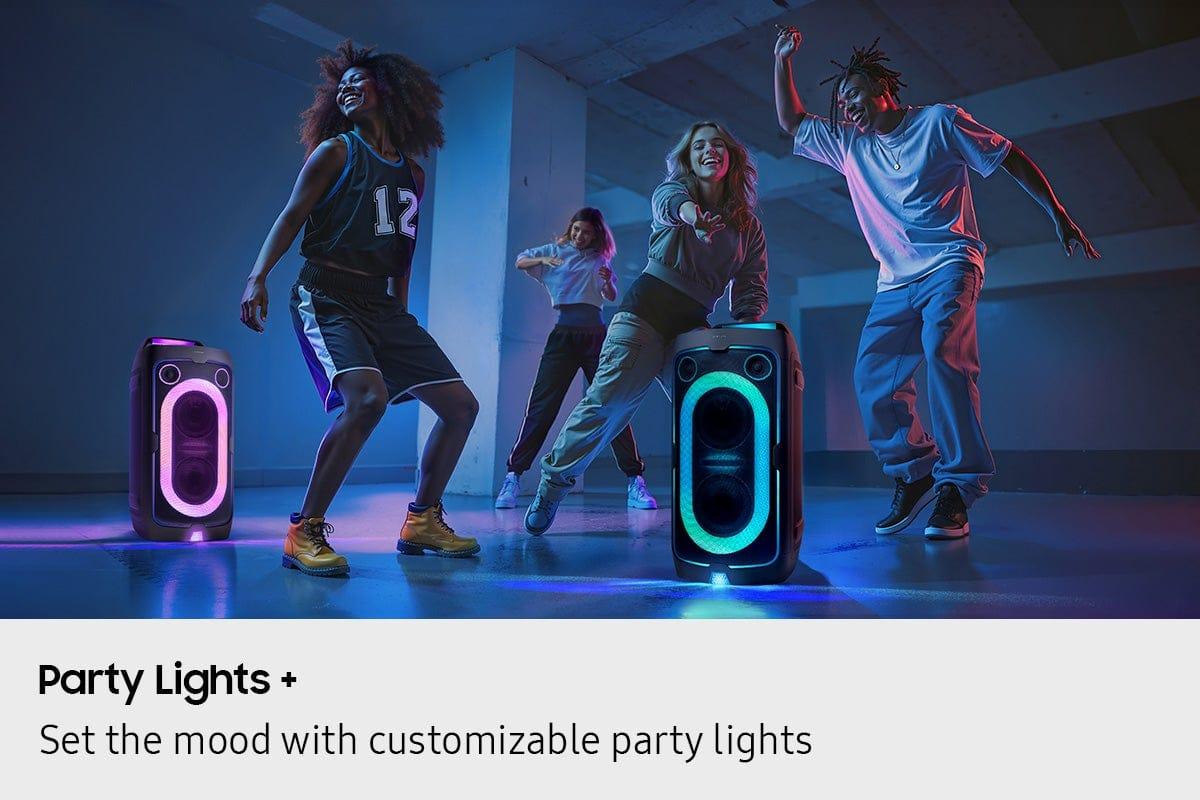
Both speakers include LED lighting systems, but they create different experiences. The Samsung MX-ST40F offers six customizable lighting patterns with five mood presets, controlled through Samsung's Sound Tower app. The effects are tasteful and sync well with music, creating a nice ambient atmosphere without being overwhelming.
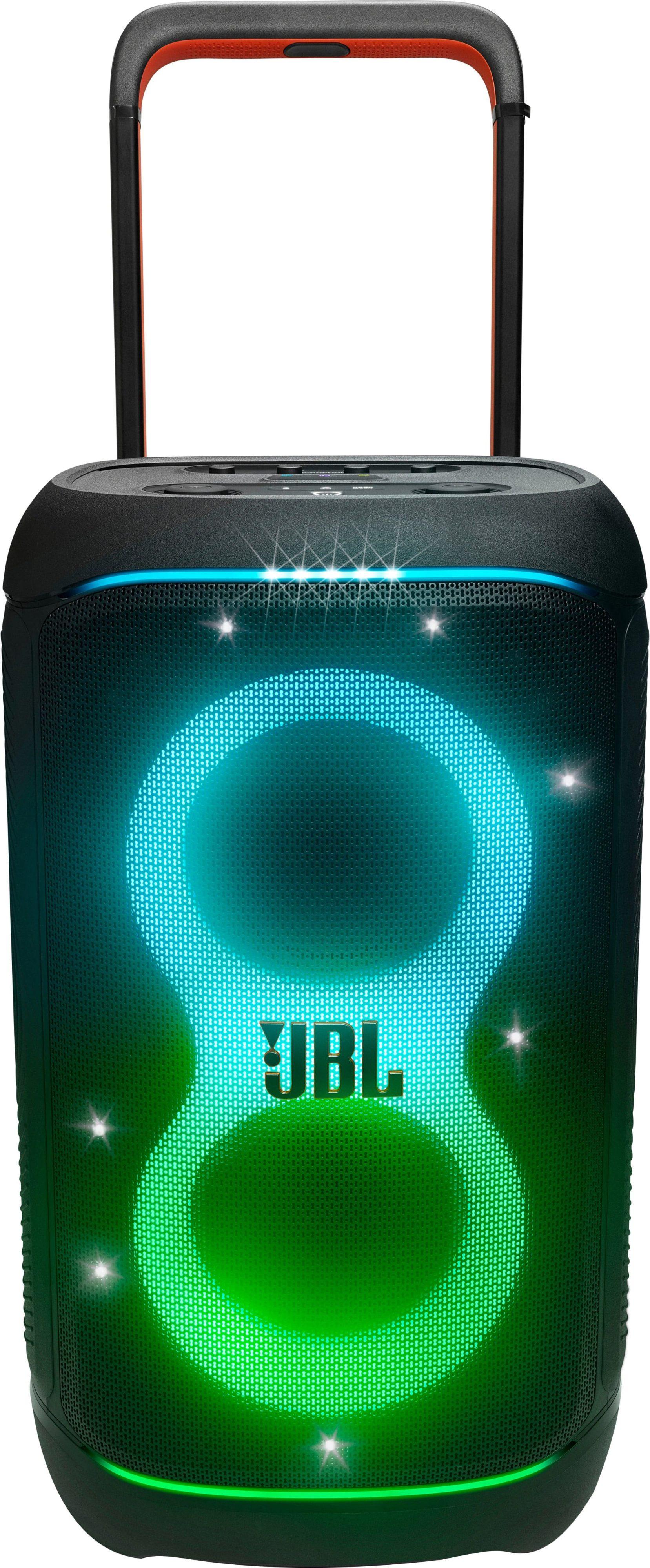
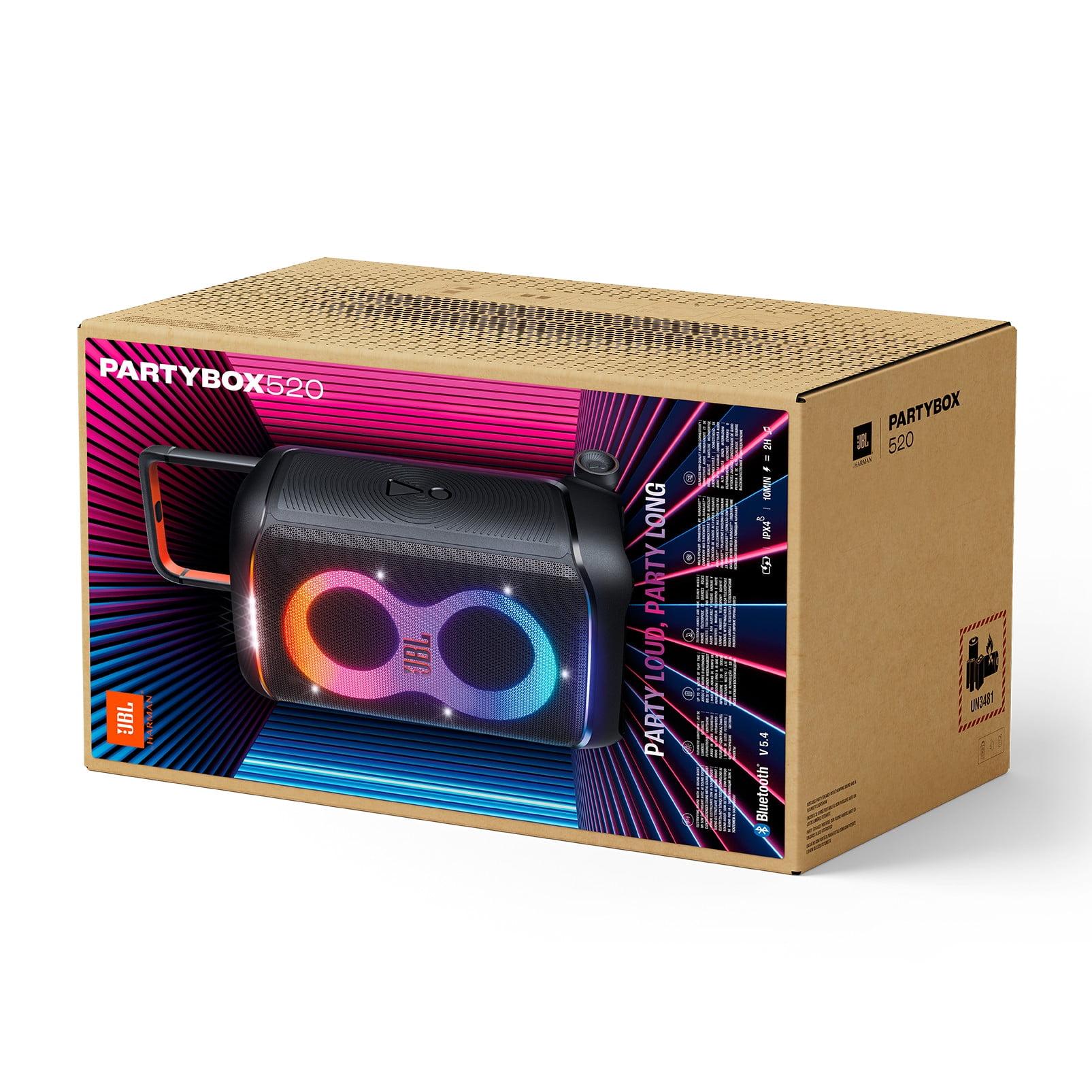
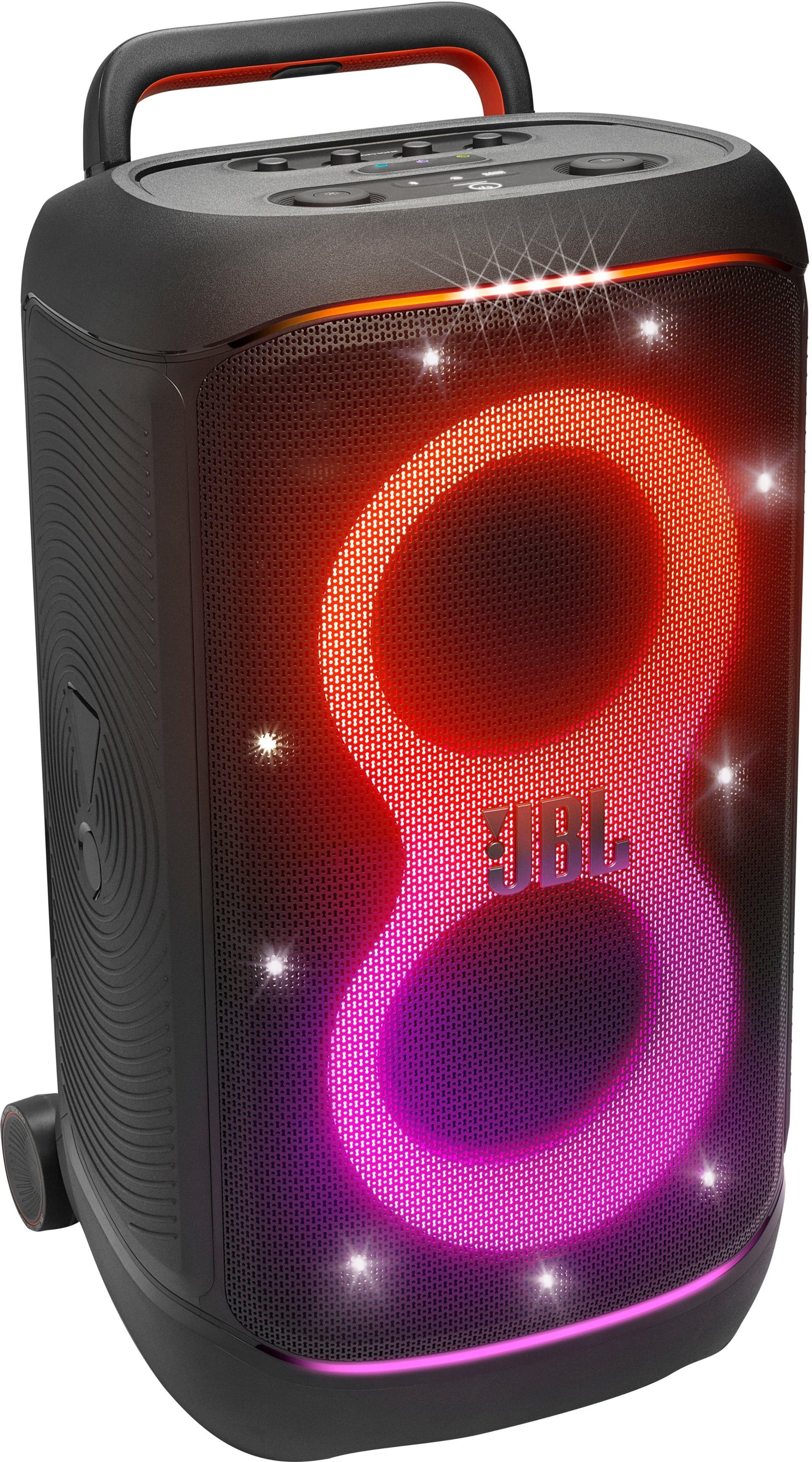
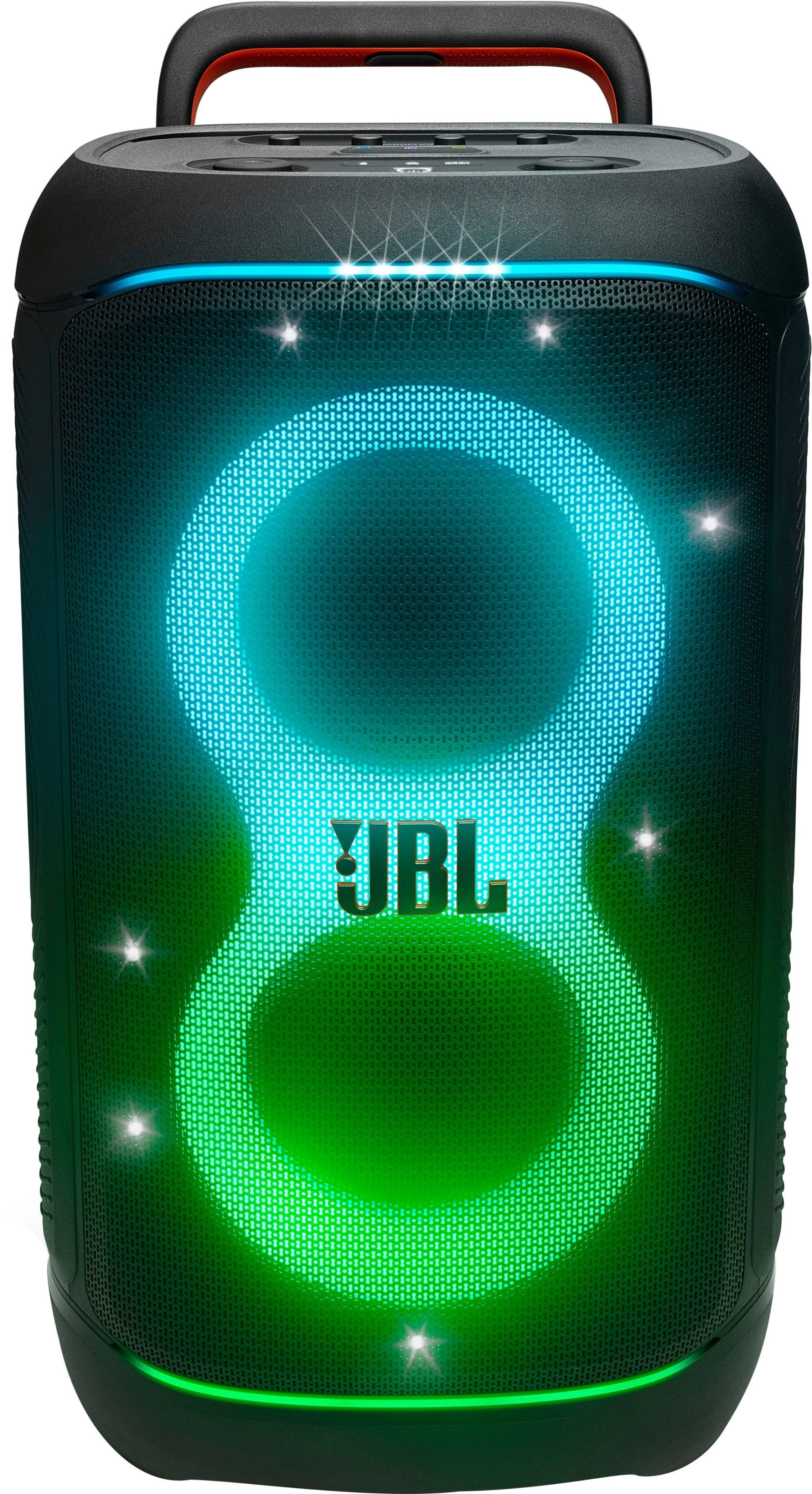
The JBL PartyBox 520's lighting system is more dramatic and attention-grabbing. It includes strobe effects and brighter, more dynamic patterns that can genuinely serve as party entertainment on their own. Based on user feedback, the JBL's lights are significantly more impressive visually, though some might find them too flashy for intimate gatherings.
Both apps offer good control over their respective speakers, but the JBL PartyBox app provides more detailed audio customization options. The Samsung app focuses more on ease of use and quick setup.
Both speakers support Bluetooth 5.4 and can connect to multiple devices, though their implementations differ slightly. The Samsung MX-ST40F can maintain connections to two devices simultaneously and switch between them seamlessly. The JBL PartyBox 520 offers multipoint pairing and can remember multiple devices but focuses on one primary connection at a time.
Both support Auracast technology, which represents the future of wireless speaker systems. Auracast allows multiple compatible speakers to connect wirelessly without needing a primary device to coordinate them. The Samsung can chain up to 10 units together, while the JBL can pair with other JBL Auracast-enabled speakers for stereo or multi-room setups.
For home theater use, both speakers support True Wireless Stereo (TWS) pairing, meaning you can use two speakers as left and right channels for a proper stereo setup. This significantly improves the soundstage for movies and music, though it requires buying two speakers.
At the time of writing, the Samsung MX-ST40F typically costs significantly less than the JBL PartyBox 520 – often $200+ difference depending on sales and promotions. This makes value comparison complex because they target somewhat different use cases.
The Samsung offers exceptional value for its price point, delivering genuinely impressive sound quality, useful features, and true portability at a relatively accessible cost. Its bass customization feature is unique in this price range and adds real functionality that affects daily use.
The JBL PartyBox 520 costs more but delivers proportionally more performance and features. Its professional inputs, longer battery life, and superior power output justify the premium for users who need those capabilities. The cost per watt is actually better with the JBL, making it a solid value for power-focused buyers.
Choose the Samsung MX-ST40F if you want a speaker that truly goes where you go. Its lighter weight and more affordable price make it ideal for people who prioritize flexibility and don't need maximum volume. The bass customization is genuinely useful if you listen to varied content, and the karaoke features work well for family entertainment. It's perfect for apartment dwellers, frequent travelers, or anyone who values portability over pure power.
The JBL PartyBox 520 makes sense if you're serious about hosting events or need professional features. Its professional XLR inputs, extended battery life, and superior power output justify the higher cost and weight for users who host larger gatherings or use their speaker frequently. The impressive lighting system and robust build quality make it a better long-term investment for heavy use.
For home theater applications, the JBL edges ahead due to its more balanced frequency response and higher power handling, though both can serve this role effectively when paired in stereo.
The bottom line: the Samsung MX-ST40F excels as a versatile, portable option that doesn't compromise too much on performance. The JBL PartyBox 520 is the choice for maximum performance and professional features when portability takes a back seat to capability. Both represent solid engineering and good value within their respective niches – your choice should align with how and where you plan to use your speaker most often.
| Samsung MX-ST40F | JBL PartyBox 520 |
|---|---|
| Power Output - Determines maximum volume and headroom for loud gatherings | |
| 160W AC / 80W Battery | 400W RMS |
| Weight & Portability - Critical for frequent transport and storage | |
| 28 lbs with integrated handle (truly portable) | 56+ lbs with telescopic handle and wheels |
| Battery Life - Essential for outdoor events without power access | |
| 12 hours (replaceable battery system) | 15-18 hours (non-removable but serviceable) |
| Speaker Configuration - Affects sound quality and bass response | |
| Dual 5.25" woofers + dual 20mm dome tweeters | Dual 7.5" woofers + dual 1" dome tweeters |
| Bass Customization - Important for different music genres and listening preferences | |
| 3 modes: Deep, Punchy, Gentle (unique feature) | Single Bass Boost mode with 7-band EQ |
| Professional Inputs - Matters for DJ setups and professional microphones | |
| 2x mic/guitar inputs (1/4" jacks) | 2x combo XLR/1/4" professional inputs |
| Multi-Speaker Connectivity - Allows expansion for larger events | |
| Auracast up to 10 speakers + TWS stereo pairing | Auracast compatible + JBL stereo pairing |
| Lighting System - Creates party atmosphere and visual entertainment | |
| 6 customizable patterns, 5 mood presets | Futuristic lightshow with strobe effects |
| Water Resistance - Protection for outdoor and poolside use | |
| IPX4 splash-proof rating | IPX4 splash-proof rating |
| App Control - Convenience for adjusting settings remotely | |
| Samsung Sound Tower app (sound modes + lighting) | JBL PartyBox app (7-band EQ + advanced controls) |
| Karaoke Features - Fun factor for interactive entertainment | |
| Voice recording, voice removal, basic effects | Professional mic inputs, advanced vocal processing |
| Value Proposition - Price-to-performance consideration | |
| Best for portability and customizable bass at lower cost | Best for maximum power and professional features at premium price |
The JBL PartyBox 520 is significantly better for large outdoor events. With 400W of power compared to the Samsung MX-ST40F's 160W, the JBL PartyBox 520 can easily handle crowds of 75+ people and fill large outdoor spaces without distortion. Its longer 15-18 hour battery life also ensures your party won't stop due to power issues.
The Samsung MX-ST40F offers unique bass customization with three distinct modes (Deep, Punchy, Gentle) that let you tailor the sound to different music genres. The JBL PartyBox 520 provides more balanced overall frequency response and superior clarity at high volumes. For bass-heavy music, the Samsung MX-ST40F excels, while the JBL PartyBox 520 handles all content types more consistently.
The Samsung MX-ST40F is much more portable at 28 pounds with an integrated handle, making it easy for one person to carry. The JBL PartyBox 520 weighs over 56 pounds but includes telescopic handle and wheels for transport. Choose the Samsung MX-ST40F if you frequently move your speaker between locations.
The JBL PartyBox 520 offers longer battery life at 15-18 hours compared to the Samsung MX-ST40F's 12 hours. However, the Samsung MX-ST40F has a replaceable battery system, allowing you to swap batteries for unlimited runtime. The JBL PartyBox 520 also features fast charging with 2 hours of playtime from a 10-minute charge.
The JBL PartyBox 520 has more impressive and dramatic lighting effects with strobe capabilities and brighter patterns that work well for large gatherings. The Samsung MX-ST40F offers 6 customizable patterns with 5 mood presets that are more subtle and better suited for intimate settings. Both can sync lighting with music through their respective apps.
Both speakers support karaoke, but the JBL PartyBox 520 is better for serious karaoke setups with professional XLR inputs and advanced vocal processing. The Samsung MX-ST40F includes voice recording and voice removal features that are perfect for casual family karaoke nights. The Samsung MX-ST40F is more user-friendly for beginners.
The Samsung MX-ST40F typically offers better value for casual users who want quality sound and portability without paying premium pricing. The JBL PartyBox 520 provides better value per watt of power and includes professional features that justify its higher cost for serious entertainers and frequent party hosts.
Both speakers can enhance home theater experiences, though neither is specifically designed for this purpose. The JBL PartyBox 520 works better for home theater due to its more balanced frequency response and higher power output for movie dynamics. Both support stereo pairing for improved soundstage when watching films.
Both the Samsung MX-ST40F and JBL PartyBox 520 support Bluetooth 5.4 and Auracast technology for multi-speaker setups. The Samsung MX-ST40F can connect up to 10 speakers wirelessly, while the JBL PartyBox 520 works with other JBL Auracast-enabled speakers. Both offer True Wireless Stereo pairing for stereo sound.
The JBL PartyBox 520 is significantly better for professional DJ use with combo XLR/1/4" inputs, 7-band graphic EQ, and USB-C audio input for higher quality digital connections. The Samsung MX-ST40F has basic 1/4" inputs suitable for casual DJ setups but lacks the professional connectivity that serious DJs require.
Both the Samsung MX-ST40F and JBL PartyBox 520 feature IPX4 splash-proof ratings, protecting against light rain and water splashes from any direction. Neither speaker is fully waterproof, so avoid submersion or heavy rain exposure. Both are suitable for poolside parties and outdoor gatherings with proper precautions.
The Samsung MX-ST40F is generally easier to set up with intuitive controls and the Samsung Sound Tower app that streamlines configuration. The JBL PartyBox 520 offers more advanced features but requires more time to fully configure its professional inputs and detailed EQ settings. Both speakers pair quickly via Bluetooth and offer user-friendly basic operation.
We've done our best to create useful and informative comparisons to help you decide what product to buy. Our research uses advanced automated methods to create this comparison and perfection is not possible - please contact us for corrections or questions. These are the sites we've researched in the creation of this article: samsung.com - samsung.com - youtube.com - samsung.com - youtube.com - thefrogpadappliances.com - bestbuy.com - standardtvandappliance.com - samsung.com - youtube.com - youtube.com - youtube.com - news.samsung.com - videoandaudiocenter.com - arrowassociatedstores.com - shopjetson.com - soundguys.com - rtings.com - rtings.com - rtings.com - letemsvetemapplem.eu - youtube.com - worldwidestereo.com - youtube.com - global.jbl.com - youtube.com - soundguys.com - youtube.com - youtube.com - comparisontabl.es - youtube.com - youtube.com - youtube.com - gzhls.at - sweetwater.com - static.pcrichard.com - brandsmartusa.com - news.harman.com - jbl.com - ro.harmanaudio.com - jbl.com - creativeaudio.net

Privacy Policy
Terms and Conditions - Affiliate Policy
Home Security
© Copyright 2008-2026.
11816 Inwood Rd #1211, Dallas, TX 75244