


When you're ready to upgrade from basic Bluetooth speakers to something that can truly fill your living space with sound, you'll quickly discover that the premium audio market splits into two distinct camps. There are speakers designed for serious listening—the kind that make your favorite albums sound like the artist intended—and there are speakers built for pure entertainment value, prioritizing volume, bass, and party features over audiophile refinement.
The Marshall Woburn III and Sony ULT Tower 9AC perfectly represent these two philosophies. Released in 2022, both speakers arrived during a particularly interesting time for home audio. Bluetooth technology had matured with version 5.2 and 5.3 offering better stability and range, while streaming services were pushing higher-quality audio formats like Sony's LDAC codec. More importantly, the pandemic had shifted how people thought about home entertainment, with many investing in better sound systems for both music and movie watching.
Before diving into specifics, it's crucial to understand that these speakers aren't just different models—they're designed for completely different lifestyles. The Marshall Woburn III follows the traditional hi-fi approach: deliver the most accurate, balanced sound possible while looking elegant in your living room. Think of it as a modern take on the classic stereo system, just without the separate components.
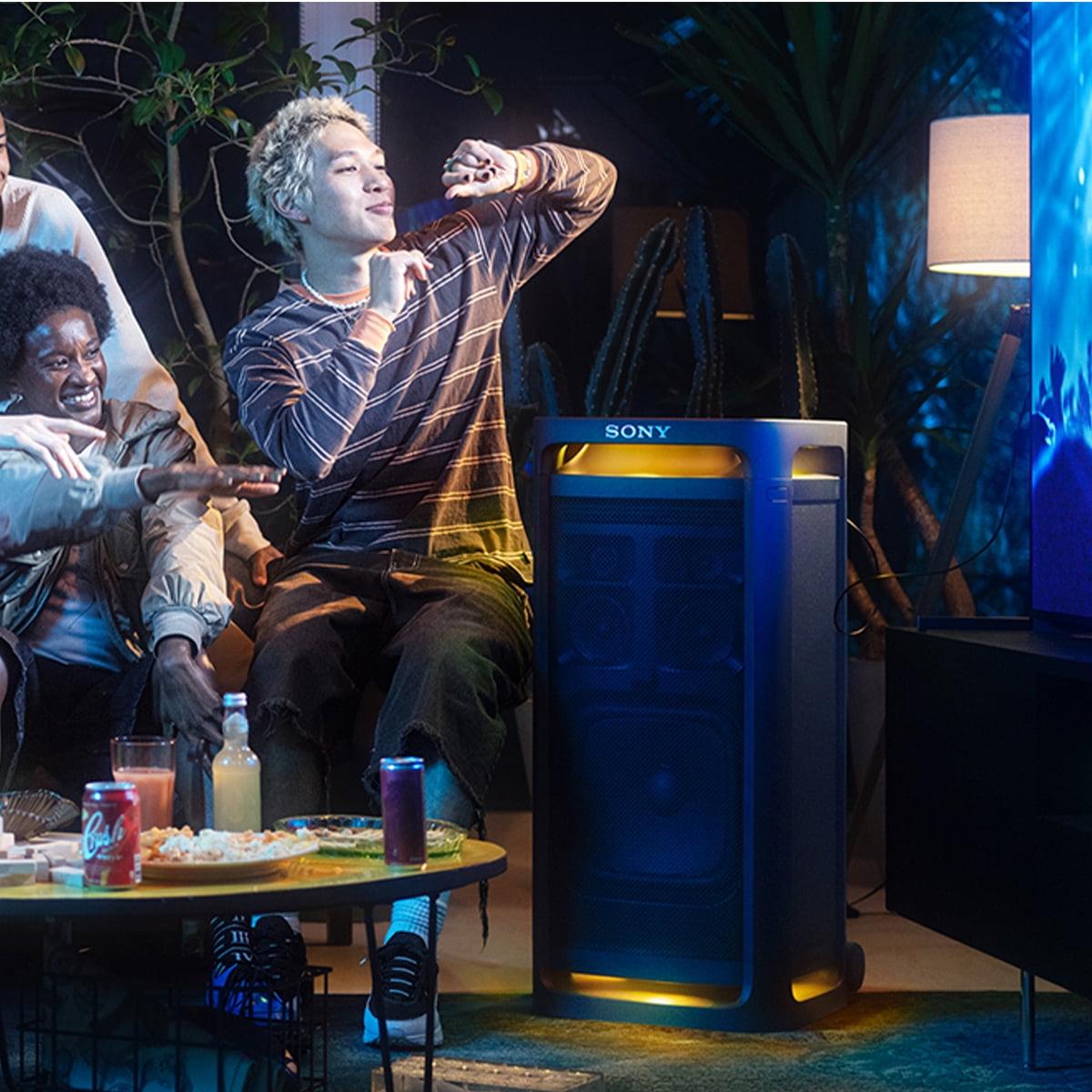
The Sony ULT Tower 9AC, on the other hand, is what happens when engineers ask "what if we built a speaker specifically for parties?" It's loaded with entertainment features like karaoke inputs, party lights, and bass modes that can shake your windows. At the time of writing, expect to pay moderately more for the Sony, though both fall into the premium category where you're investing several hundred dollars.
The most important difference between these speakers lies in their fundamental approach to sound reproduction, and this difference becomes obvious the moment you power them on.
The Marshall Woburn III uses what's called a three-way driver system, which means it splits audio frequencies into three distinct ranges and uses specialized speakers for each. The bass frequencies (the low rumbles and thumps) go to a 6-inch woofer, while midrange frequencies (most vocals and instruments) are handled by two dedicated 2-inch drivers. The high frequencies (cymbals, guitar picks on strings, vocal breaths) are reproduced by two ¾-inch tweeters that are angled outward to create a wider soundstage—that's the technical term for how spacious and immersive the music feels.
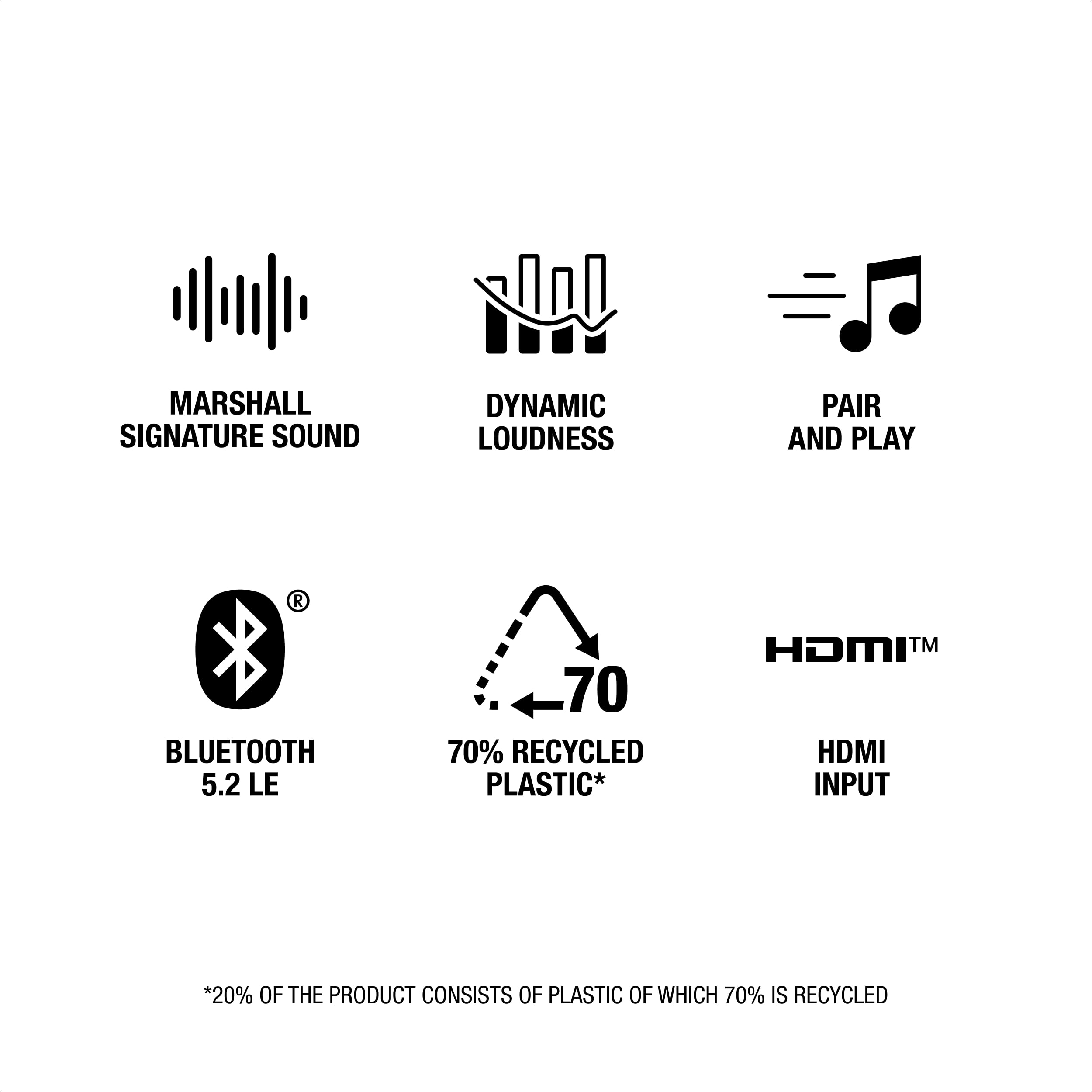
What makes this setup special is Marshall's use of Dynamic Loudness technology. Most speakers sound thin and lifeless at low volumes because human ears naturally perceive bass and treble differently depending on volume level. Dynamic Loudness automatically adjusts the tonal balance as you change volume, so your music maintains its full character whether you're listening quietly in the morning or cranking it up for a dinner party.
The frequency response—the range of sounds the speaker can reproduce—extends from 35Hz all the way up to 20,000Hz. To put that in perspective, 35Hz is nearly the lowest frequency most humans can perceive, while 20,000Hz covers the highest sounds in most music. This wide range means the Marshall can handle everything from the deepest bass lines to the shimmer of high-hat cymbals without missing detail.
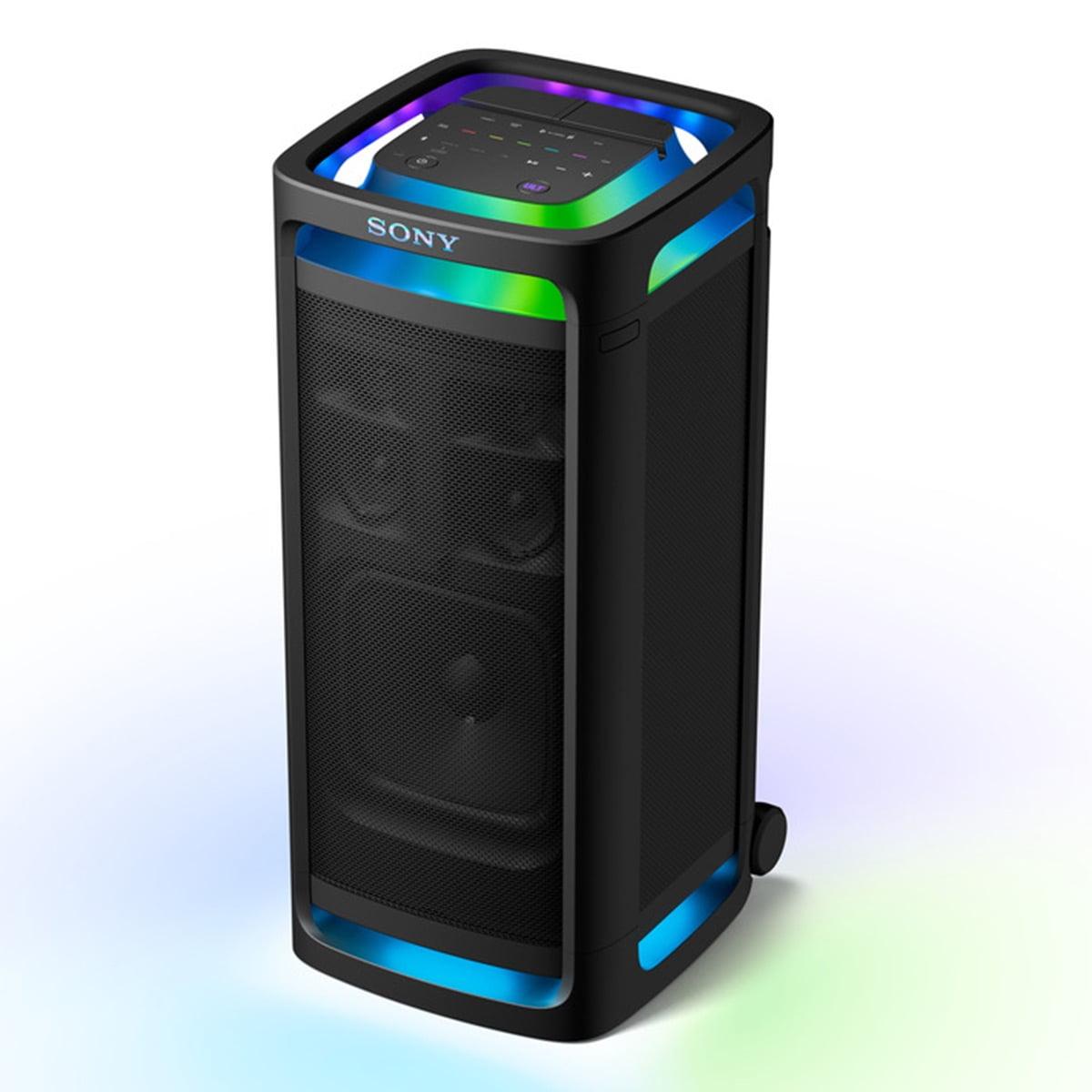
The Sony ULT Tower 9AC takes a radically different approach with its X-Balanced Speaker Unit—a nearly square woofer that measures about 13 inches across. Traditional woofers are circular, but Sony's square design maximizes the surface area that can push air, generating more sound pressure (essentially, more volume and bass impact) from the same amount of space.
The speaker uses seven drivers total: that massive square woofer, two midrange drivers, and four tweeters arranged to create 360-degree sound dispersion. Two tweeters face forward for direct listening, while two rear-facing tweeters bounce sound off your walls to create an enveloping audio experience. This setup is designed so everyone at a party hears good sound, regardless of where they're standing.
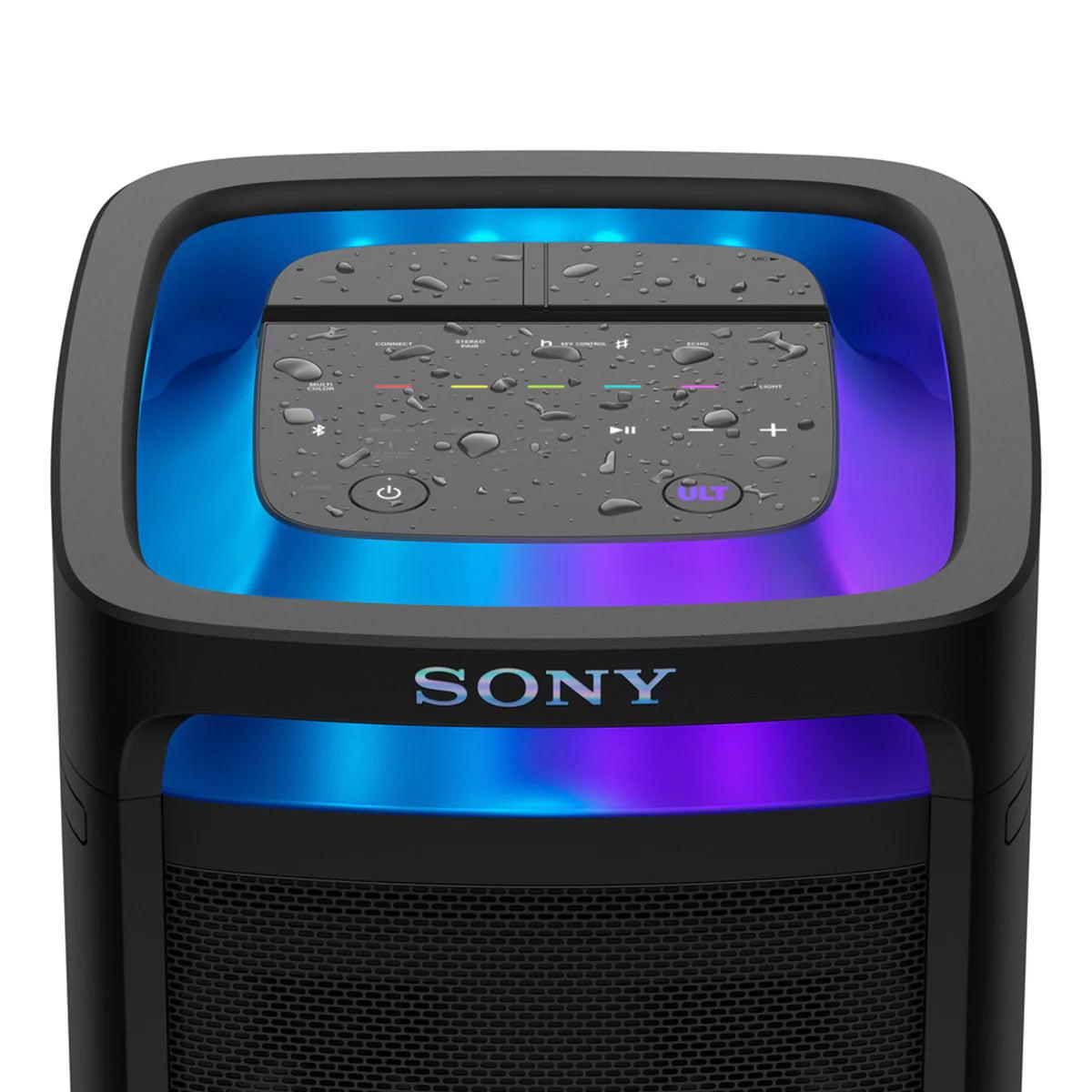
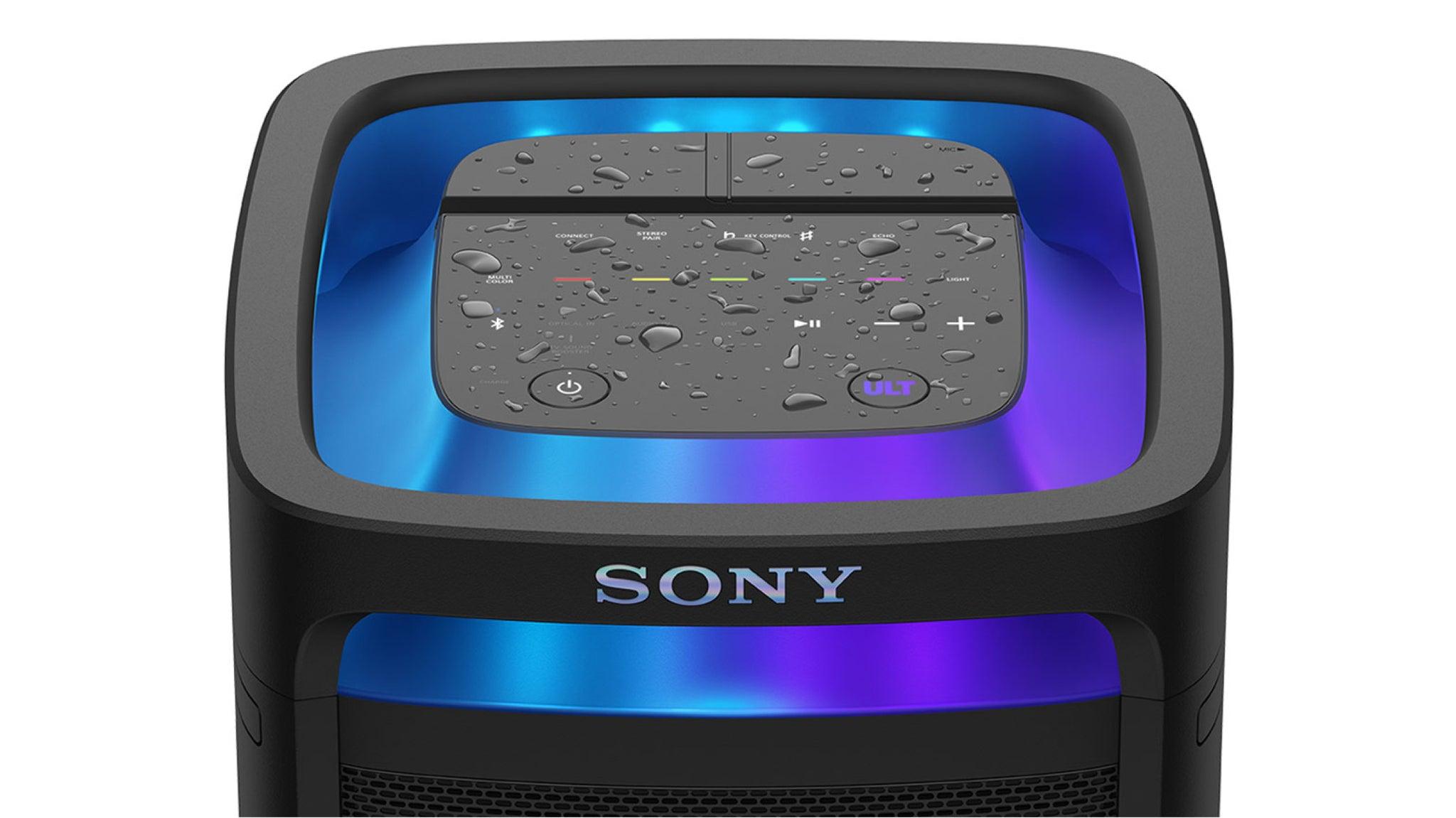
The signature feature is the ULT button, which activates two bass enhancement modes. ULT1 provides deeper, more extended bass, while ULT2 delivers punchier, more aggressive low-end that's designed to get people moving. However, our research into professional reviews reveals a significant caveat: this bass-heavy tuning can be overwhelming in typical indoor spaces, often requiring careful adjustment using the speaker's 10-band equalizer to achieve balanced sound.
When evaluating speakers in this price range, several key specifications determine real-world performance, though marketing materials don't always emphasize the most important ones.
Maximum Sound Pressure Level (SPL) tells you how loud a speaker can play without distortion. The Marshall Woburn III achieves 100.5 dB at one meter distance—loud enough to fill even large rooms without strain. The Sony ULT Tower 9AC doesn't publish specific SPL figures, but its seven-driver configuration and massive woofer clearly prioritize maximum volume output over precision.
Driver configuration matters more than total wattage. The Marshall's 150 watts are distributed thoughtfully: 90 watts to the woofer for controlled bass, and 15 watts each to the midrange drivers and tweeters for clean highs and mids. This balanced approach prevents any frequency range from overpowering others.
Frequency response reveals how evenly a speaker reproduces different sounds. While both speakers can handle the full audible spectrum, the Marshall maintains better balance across frequencies, whereas the Sony deliberately emphasizes bass frequencies for maximum impact.
Both speakers offer interesting possibilities for enhancing your TV watching experience, though they approach it differently.
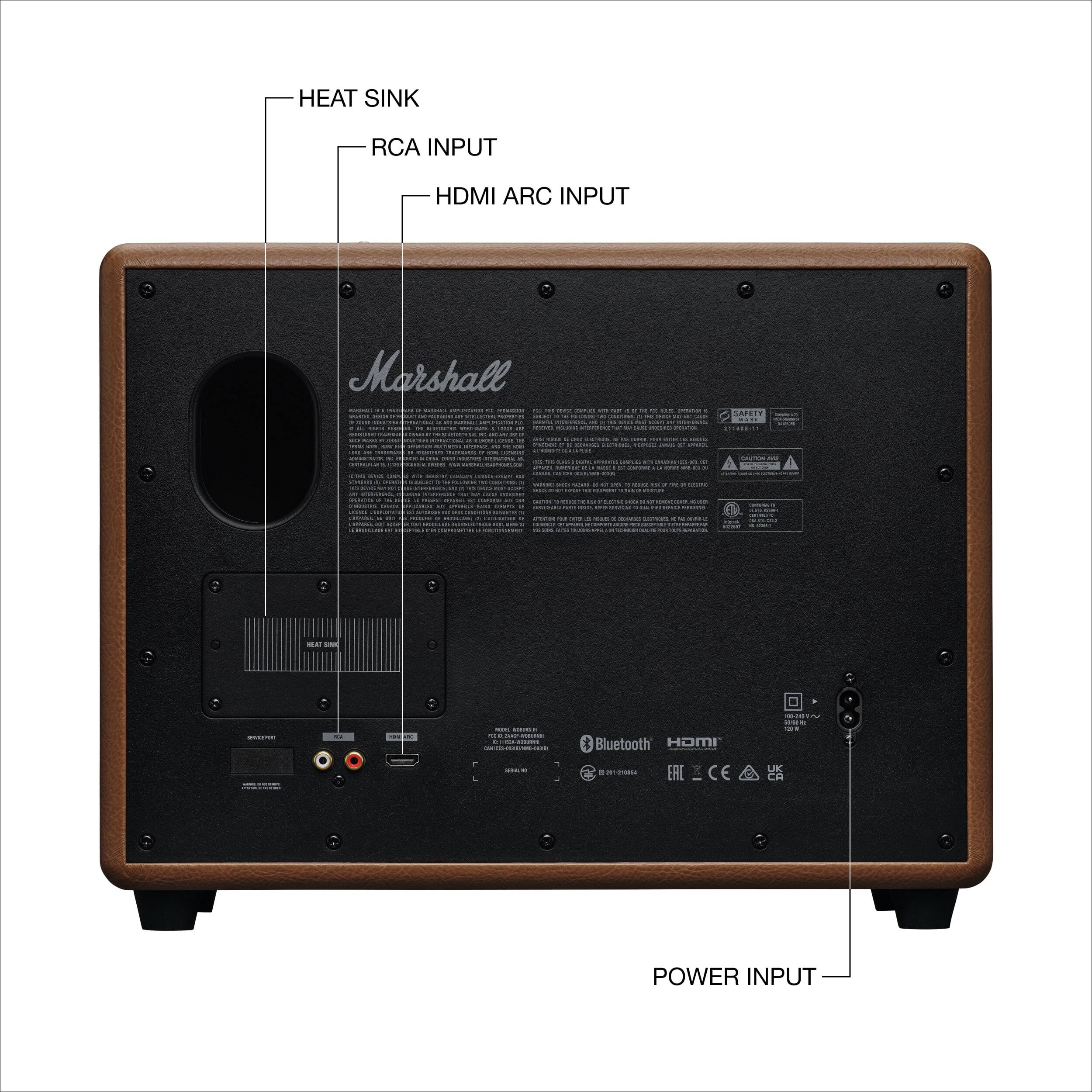
The Marshall Woburn III includes HDMI ARC (Audio Return Channel) connectivity, which creates a seamless connection with your TV. When connected this way, your TV's remote can control the speaker's volume, and the speaker automatically switches to TV audio when you turn on your television. The Marshall also features a Night Mode that reduces loud sounds while boosting quiet dialogue—incredibly useful for late-night movie watching without disturbing others.
The Sony ULT Tower 9AC connects to TVs via optical cable (a digital audio connection) and includes a TV Sound Booster mode. This feature utilizes the rear-facing tweeters to create a wider soundstage by reflecting audio off your walls, making movie soundtracks feel more immersive. However, you'll need to manually switch inputs and control volume separately.
For movie watching, the Marshall provides a more refined, integrated experience with better dialogue clarity and more natural sound balance. The Sony excels with action movies where explosive sound effects and dramatic bass can enhance the experience, though it may overpower dialogue without careful EQ adjustment.
This is where the philosophical differences between these speakers become most apparent.
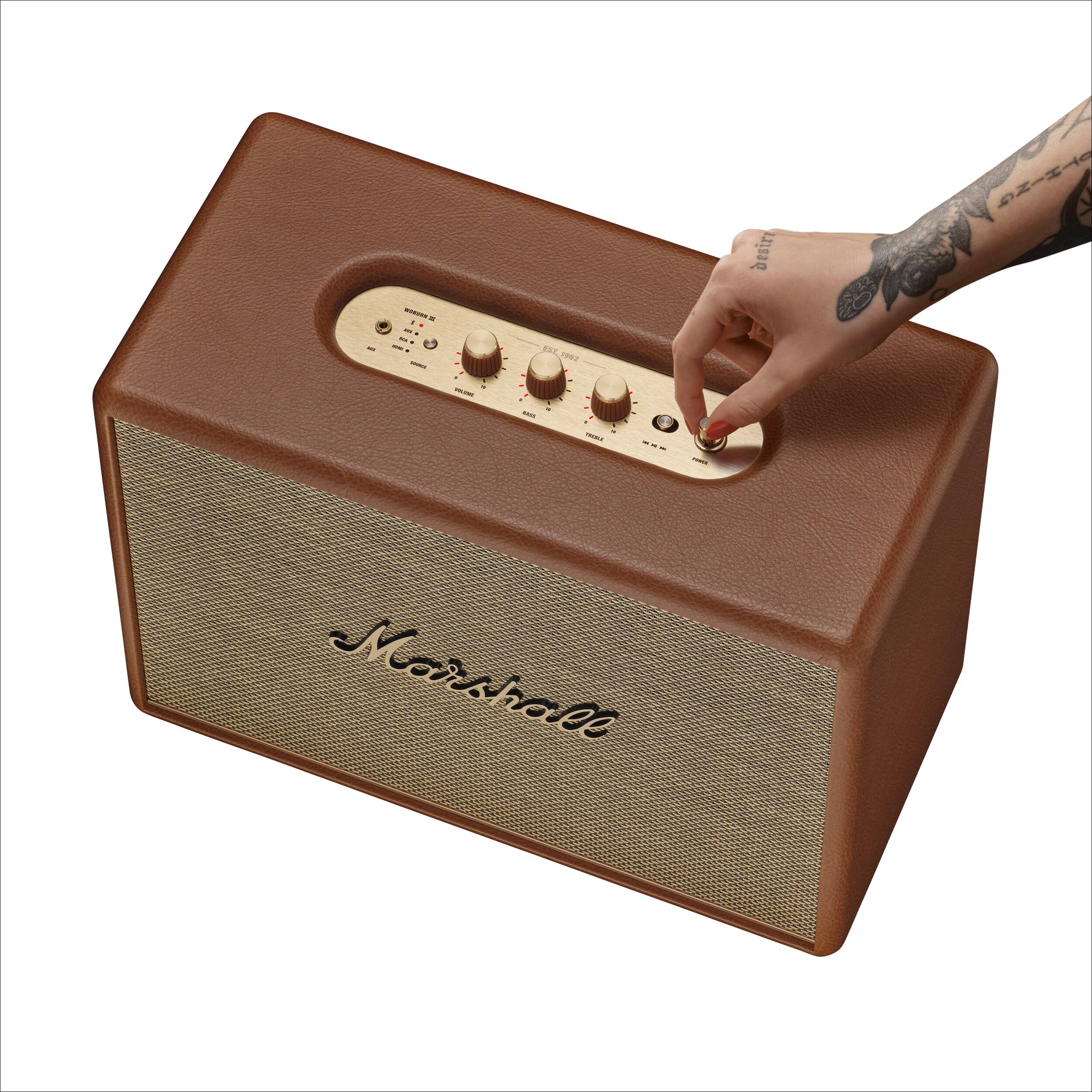
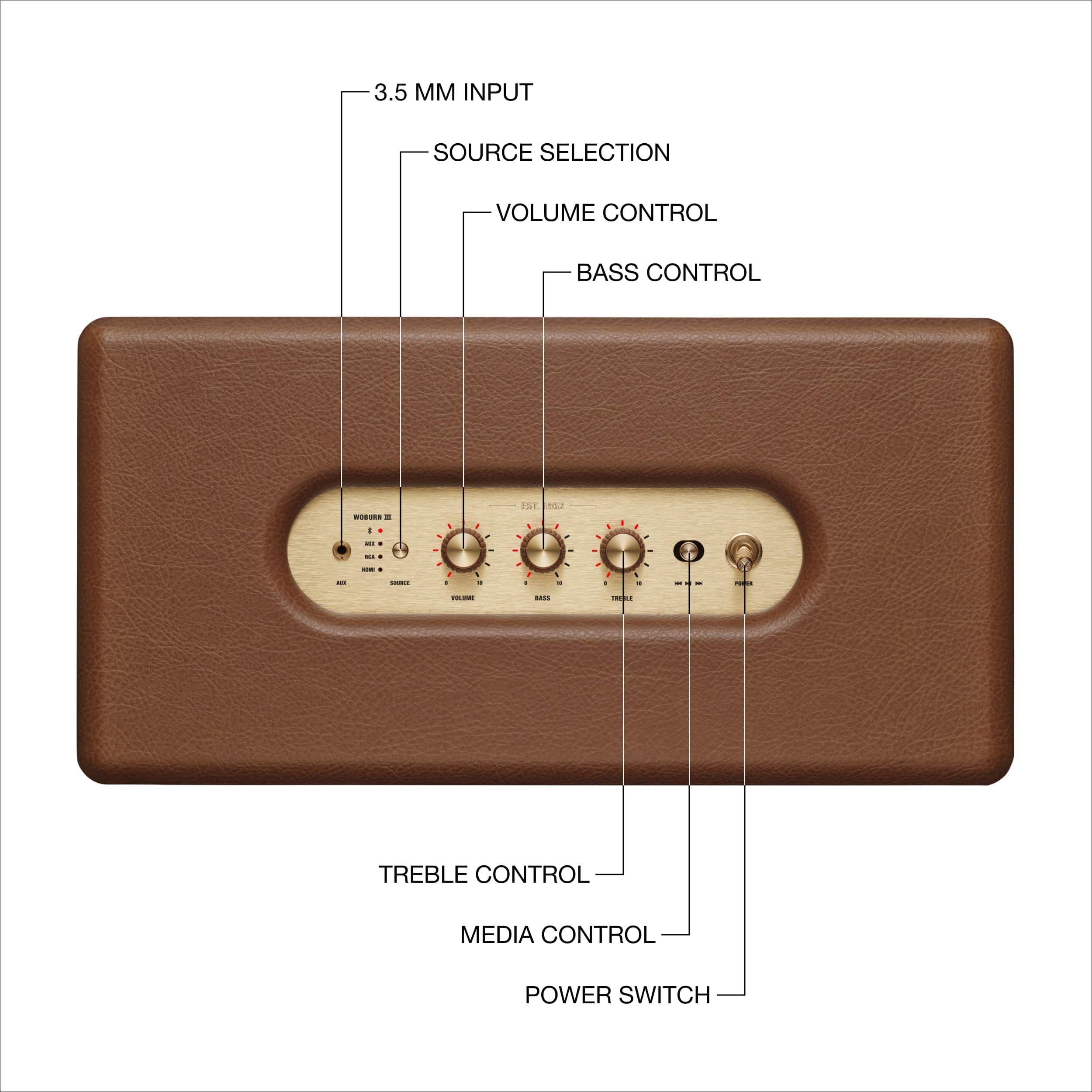
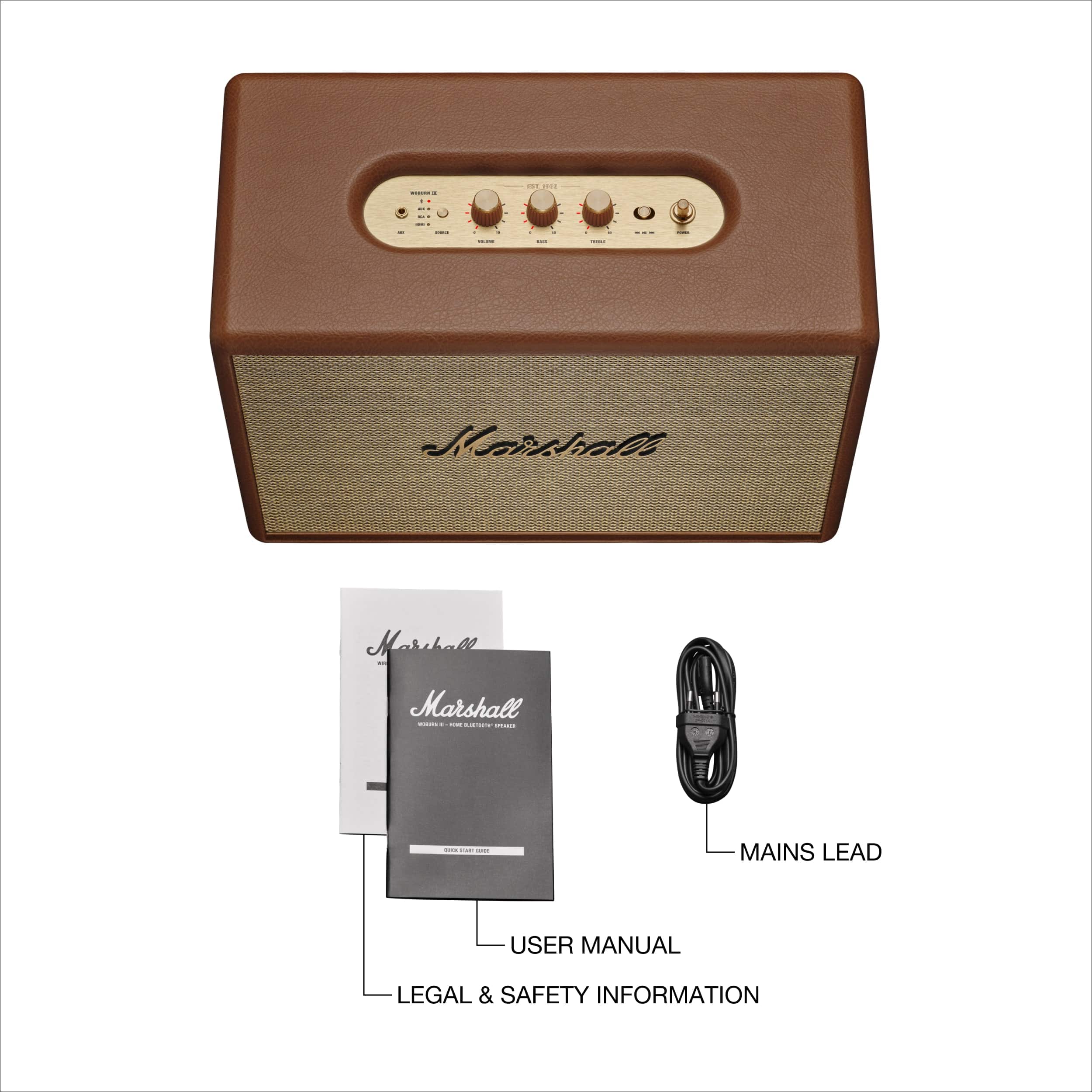
The Marshall Woburn III prioritizes intuitive, tactile controls with physical brass knobs for bass and treble adjustment right on the speaker's top panel. It's the kind of interface that feels natural—twist a knob, hear the immediate change. The accompanying Marshall Bluetooth app provides additional features like Placement Compensation, which adjusts sound based on whether your speaker is near walls or in open space.
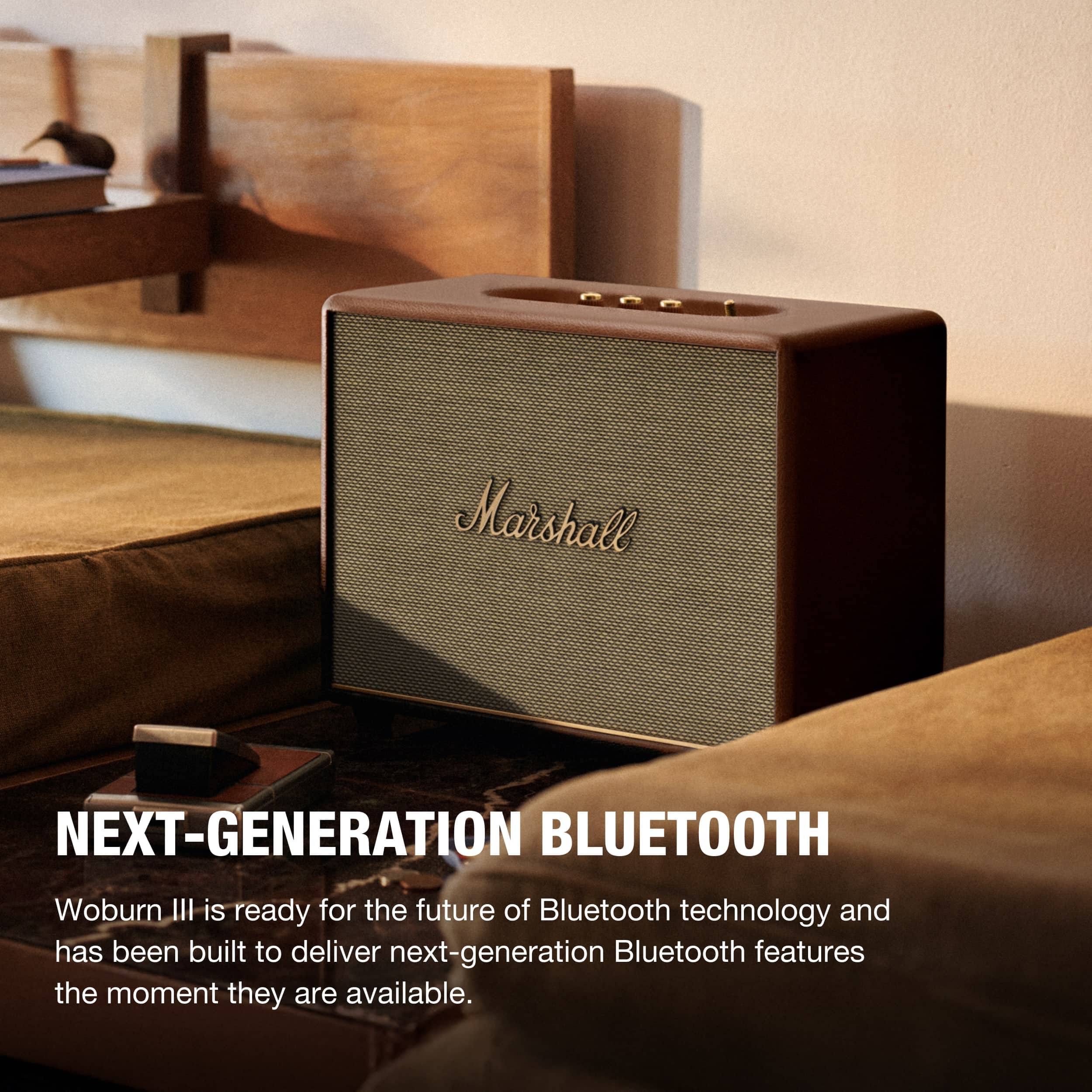
Connectivity focuses on home integration: Bluetooth 5.2 with multipoint pairing (connect two devices simultaneously), plus traditional wired inputs including RCA for connecting turntables or CD players, and that crucial HDMI ARC for TV integration.
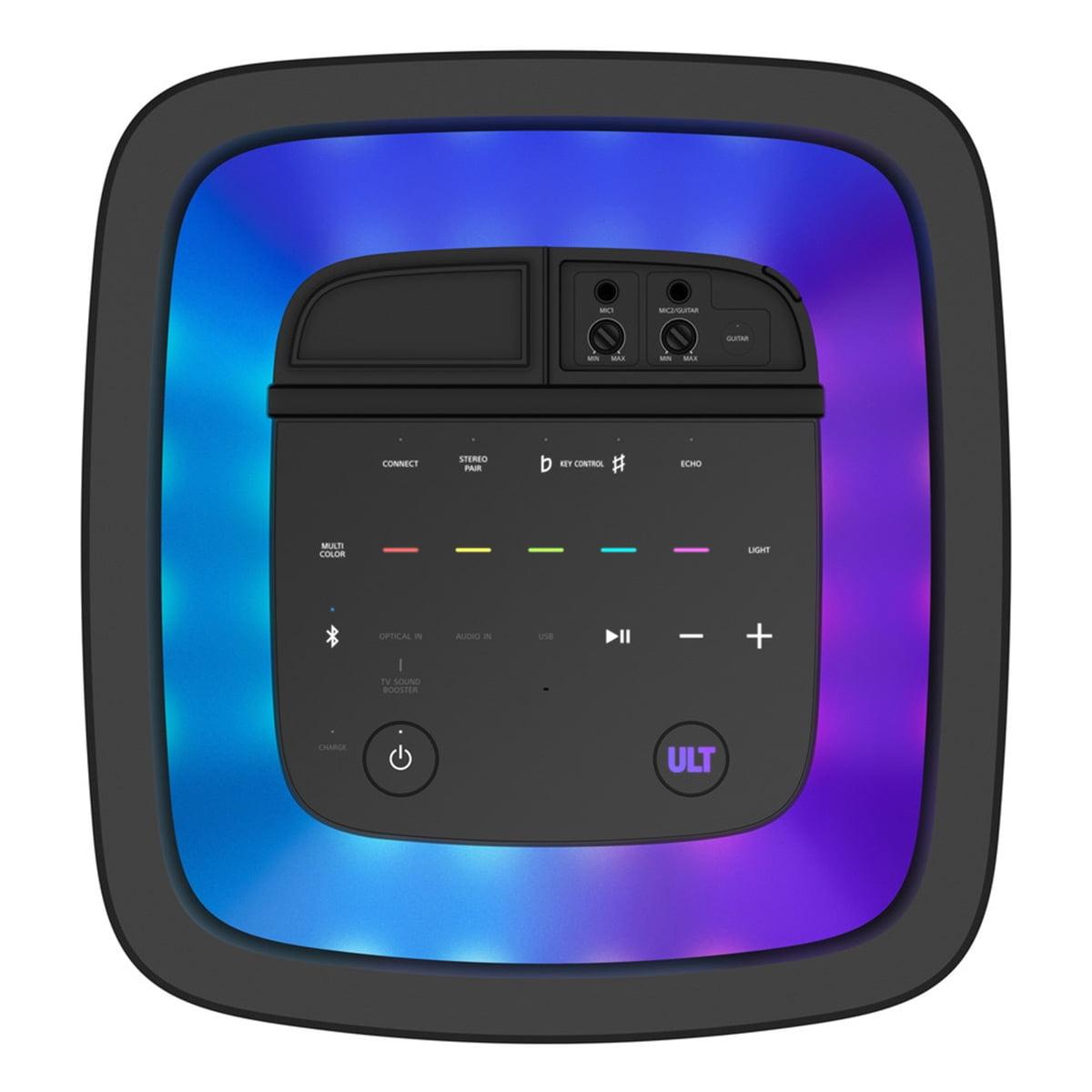
The Sony ULT Tower 9AC transforms into a complete entertainment system with features that go far beyond music playback. Two 6.35mm inputs accept both microphones and guitars, with dedicated controls for each. The Key Control feature adjusts pitch for karaoke, while echo effects add professional polish to performances.
The Sony Sound Connect app unlocks the speaker's full potential with a 10-band equalizer—that's individual control over ten different frequency ranges, allowing precise sound tuning. DJ effects, lighting customization, and the ability to link up to 100 compatible Sony speakers for massive events round out the feature set.
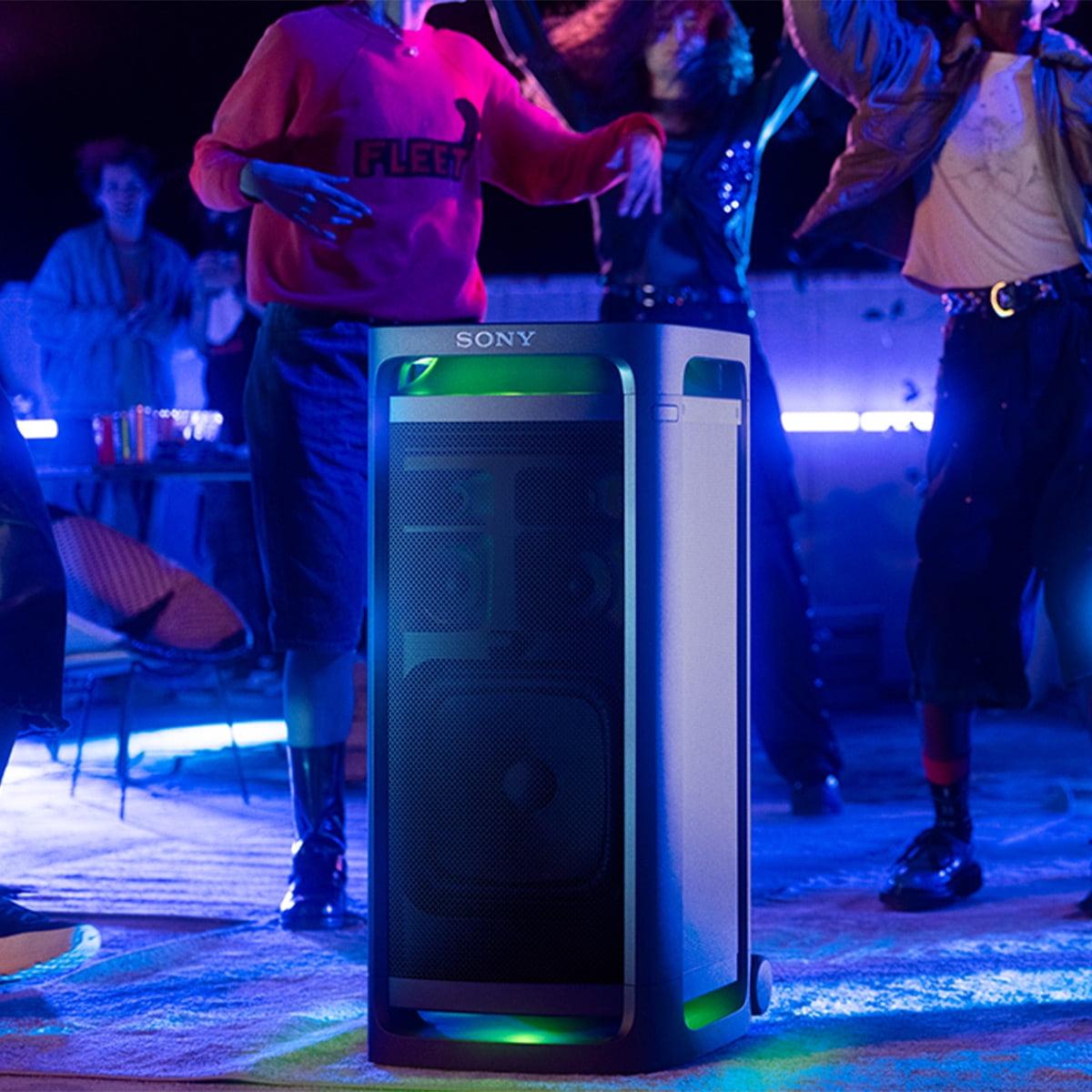
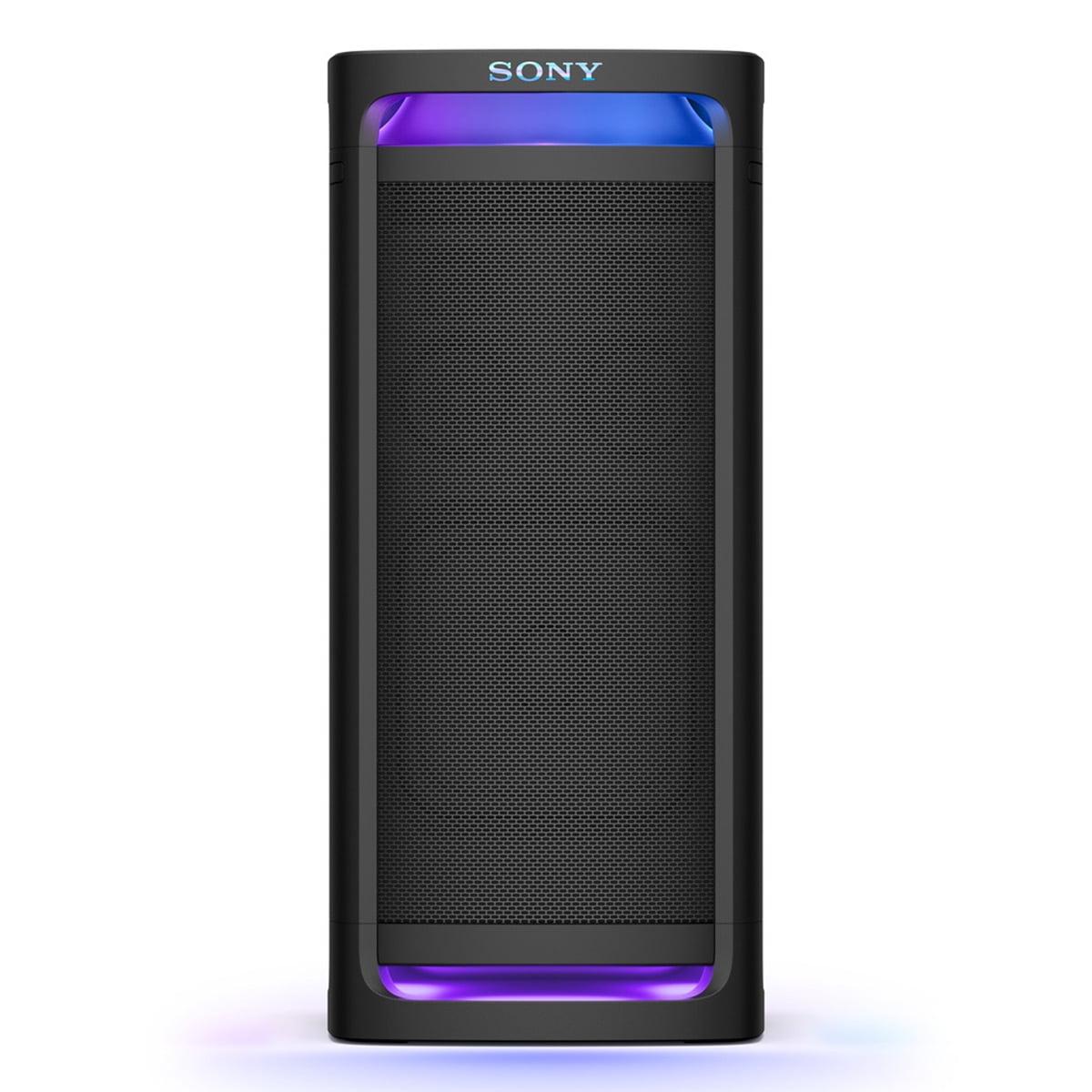
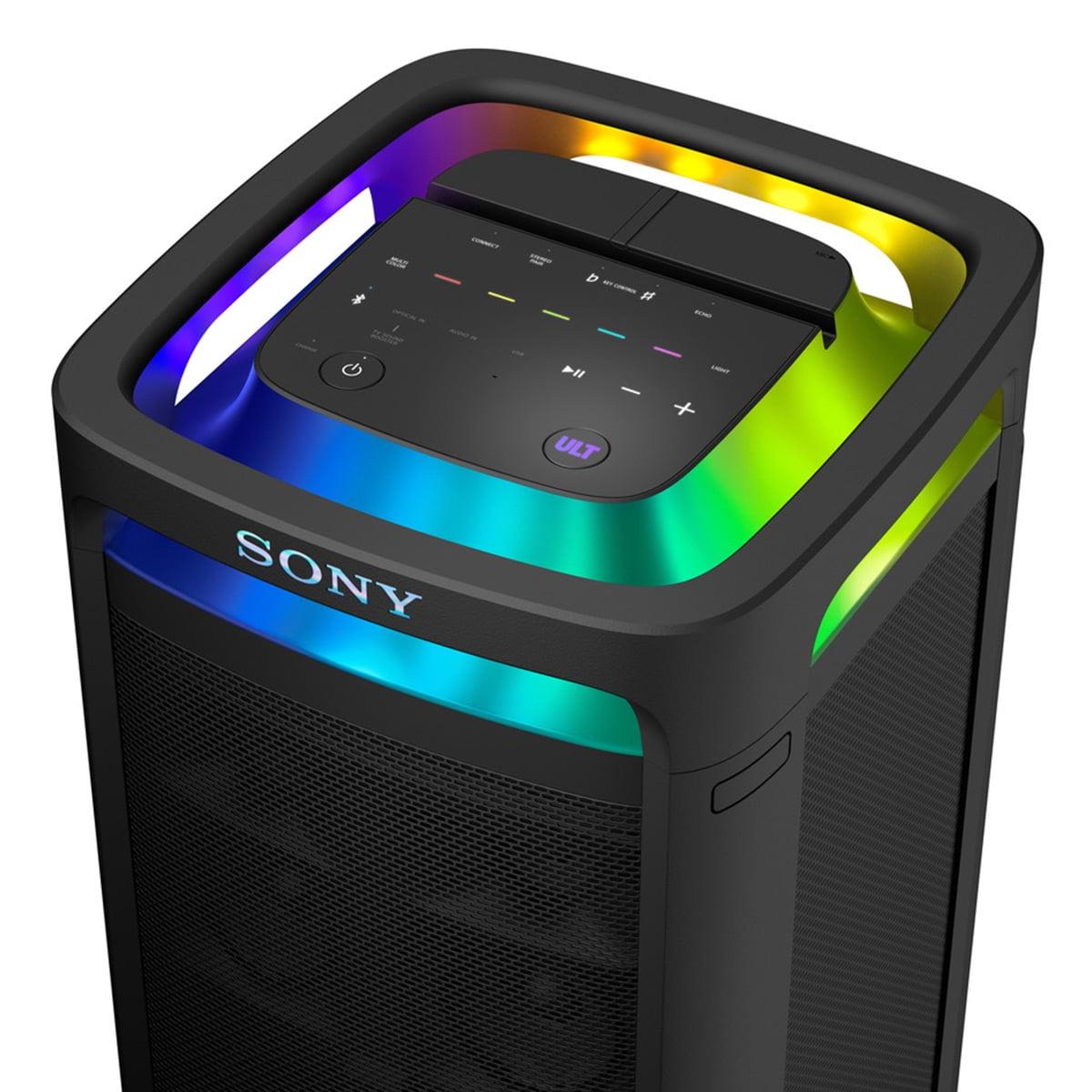
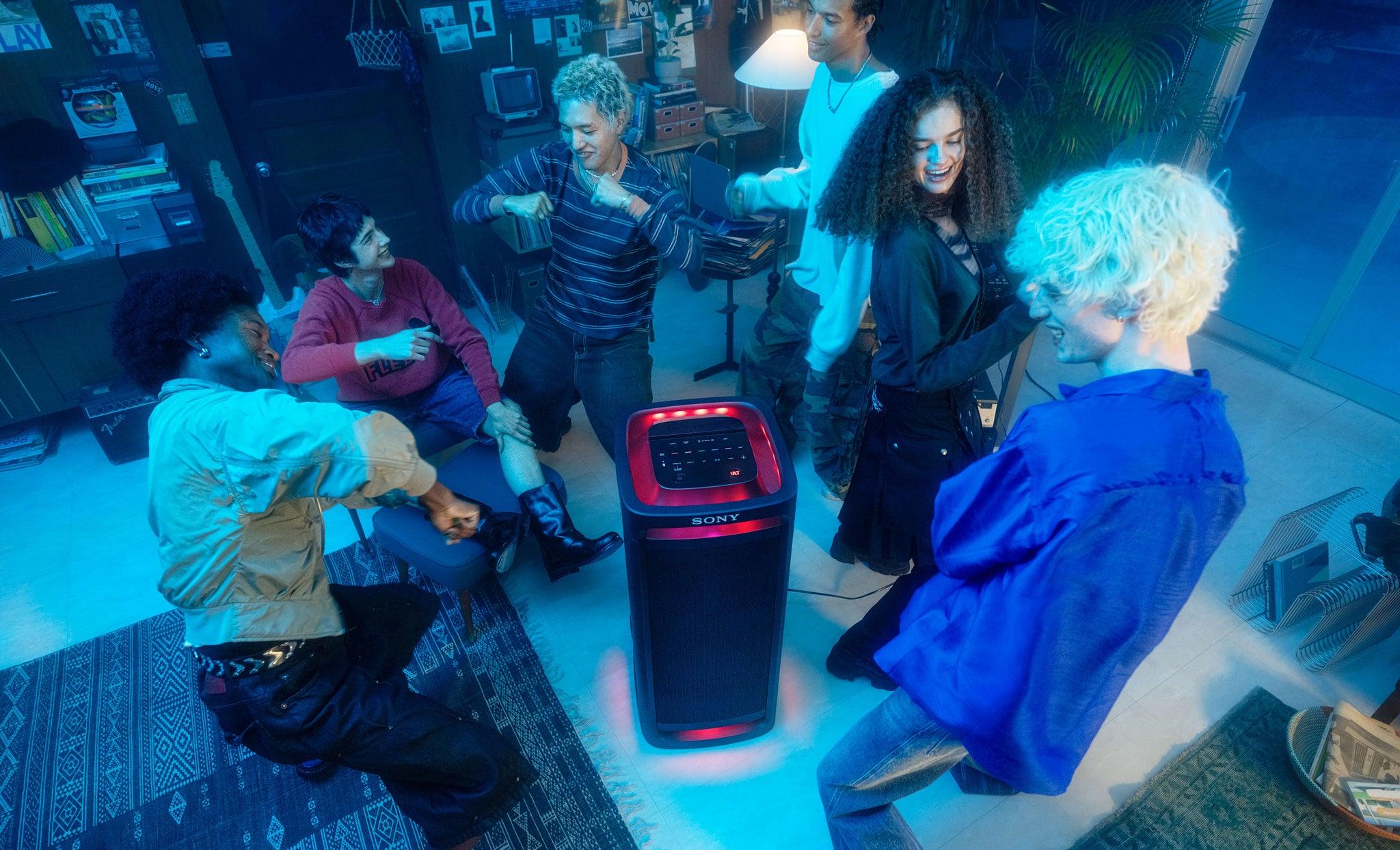
The 360-degree party lighting system deserves special mention. These aren't just decorative LEDs; they pulse, strobe, and change colors in sync with your music, transforming any space into a dance floor. While this might sound gimmicky, it genuinely enhances the party atmosphere when entertaining.
The physical differences between these speakers tell their design stories clearly.
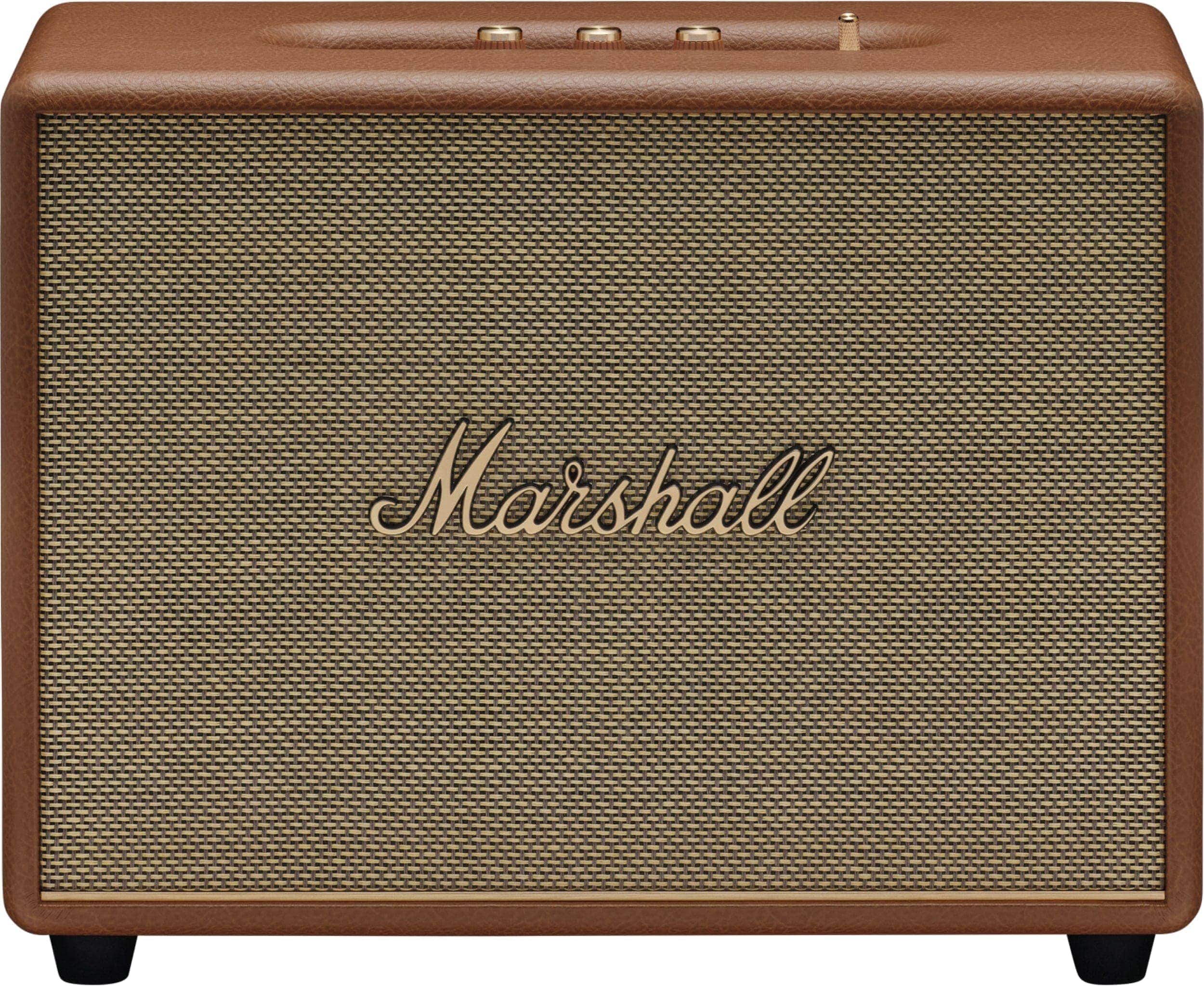
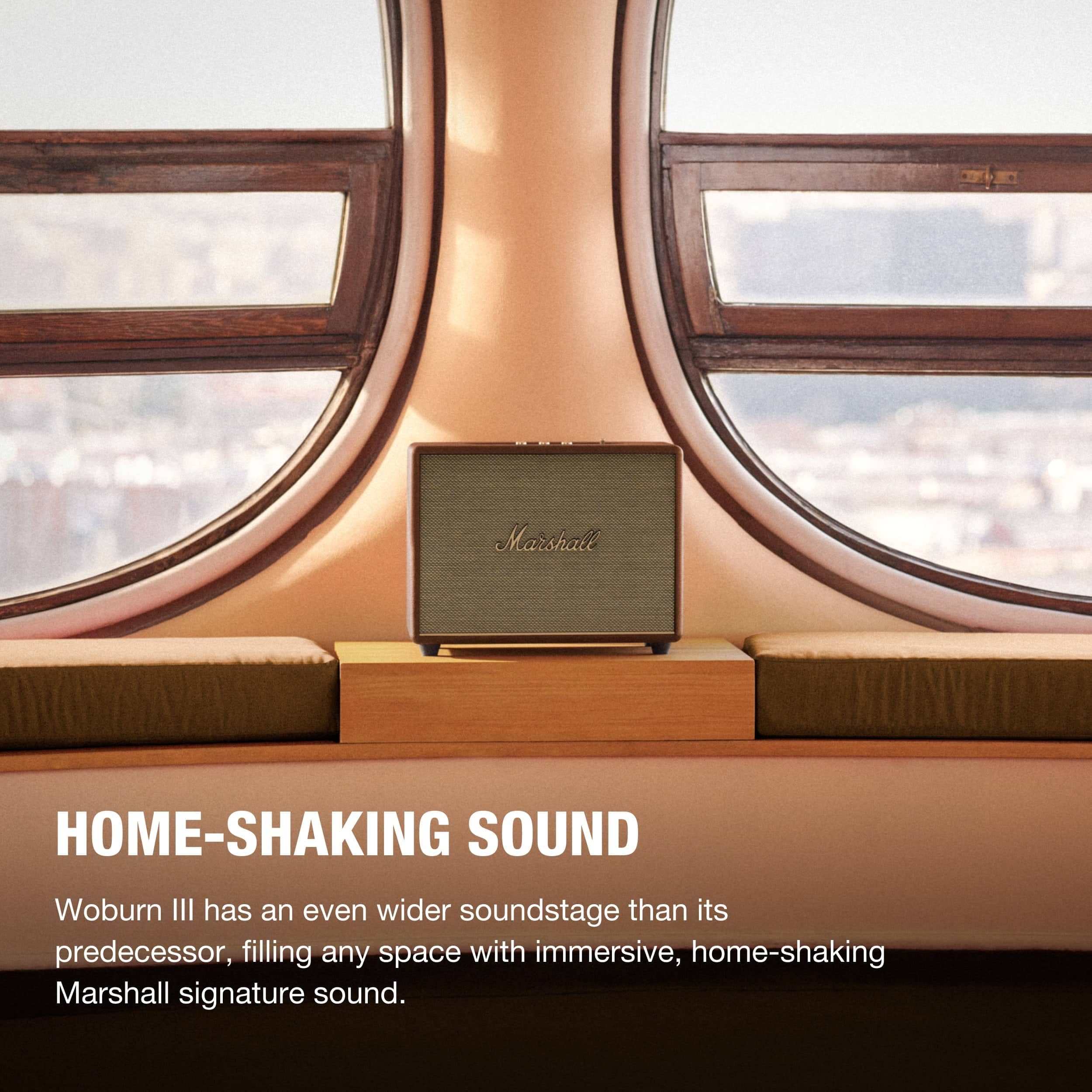
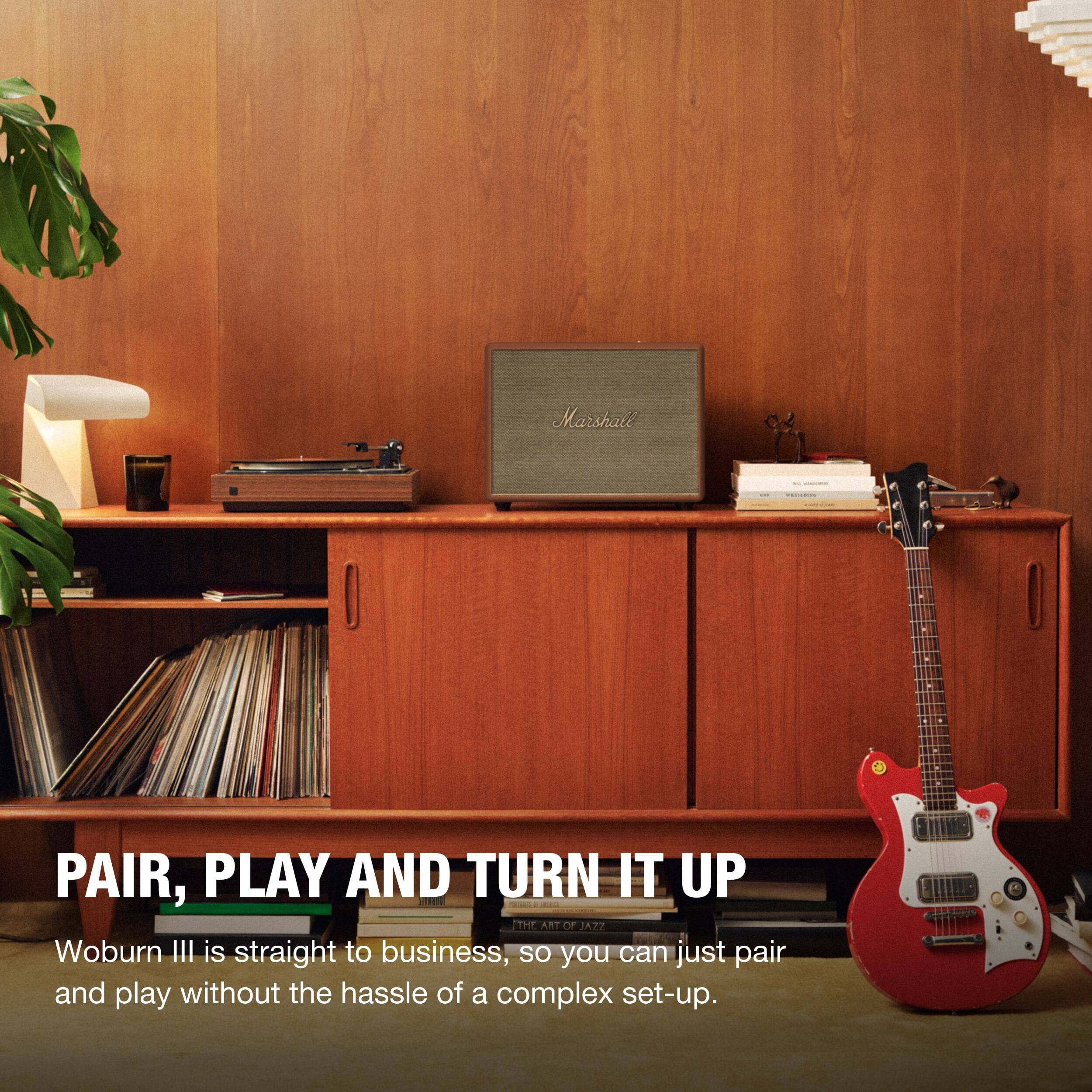
The Marshall Woburn III maintains the iconic Marshall amplifier aesthetic that's been synonymous with rock music for decades. Available in classic black, cream, or brown colorways with vegan leather texture and brass control knobs, it's designed to complement rather than dominate your living space. At roughly 16 pounds and compact dimensions, it integrates naturally into home environments.
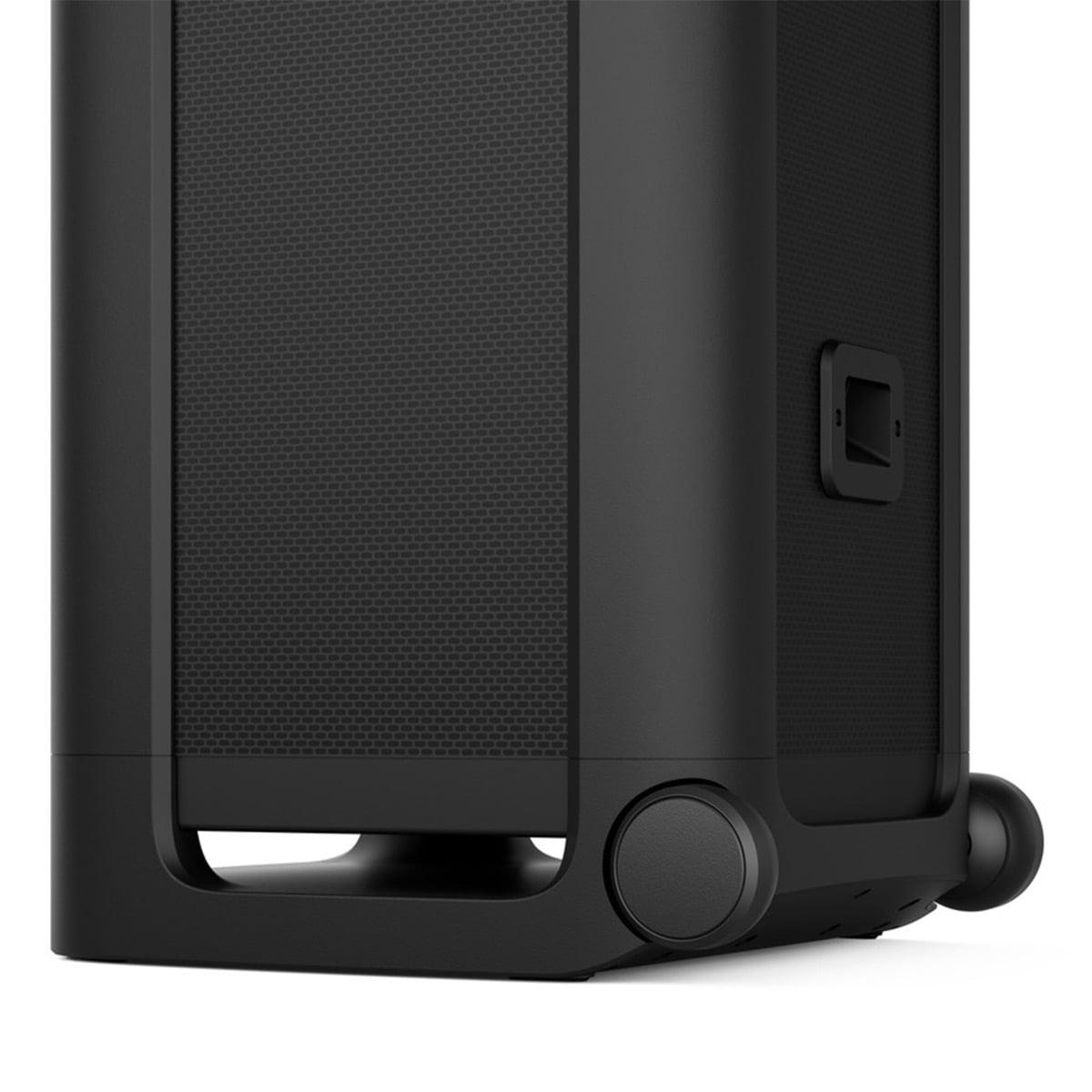
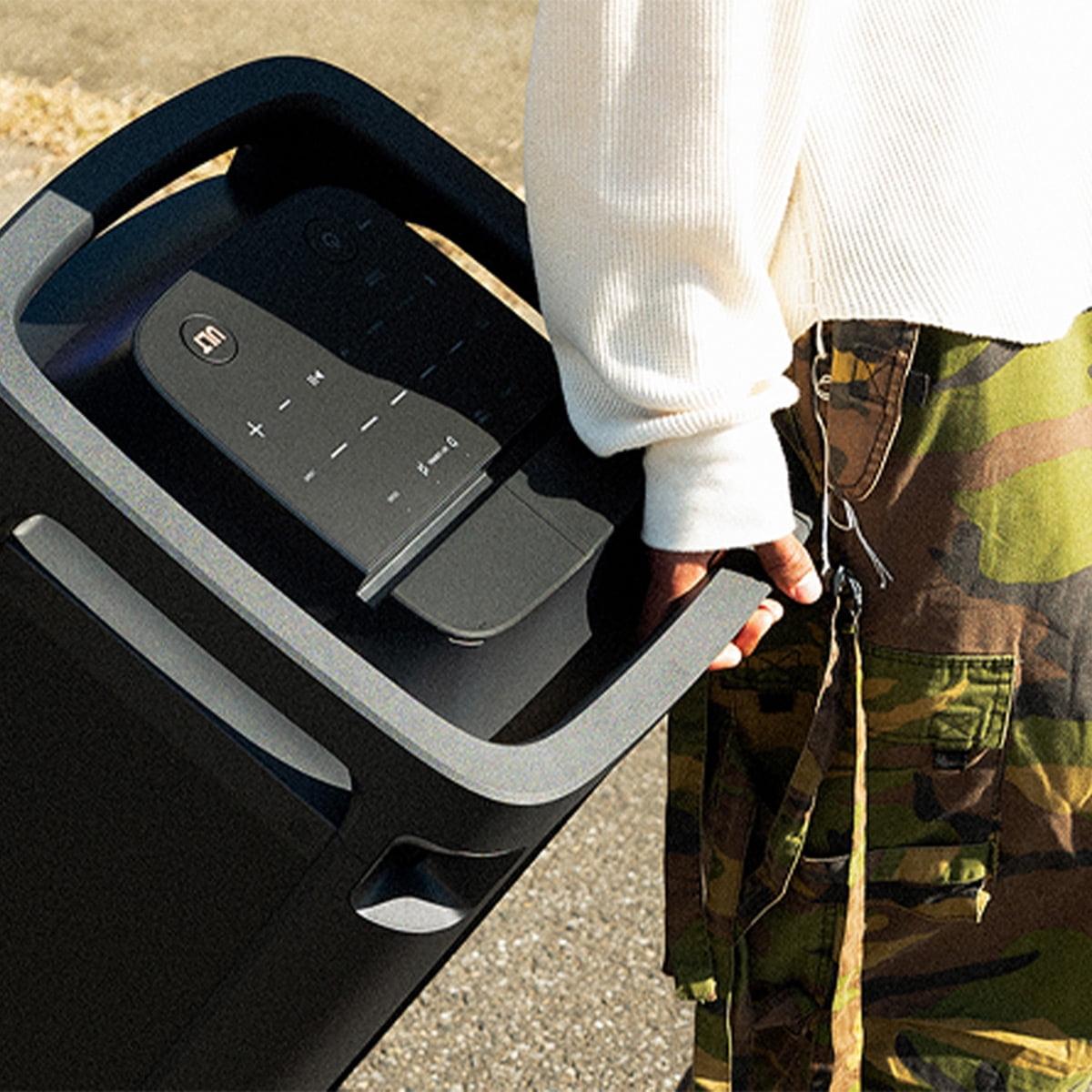
The Sony ULT Tower 9AC makes an entirely different statement. Standing over three feet tall and weighing more than 60 pounds, it's an imposing presence that announces its party intentions. Built-in wheels and a carrying handle acknowledge that despite its size, this speaker is meant to travel between venues. The angular, modern design with integrated lighting clearly targets younger users who prioritize entertainment features.
Both speakers represent significant improvements over their predecessors, incorporating lessons learned from earlier generations.
The Marshall Woburn III benefits from years of Marshall's experience translating their legendary amplifier sound into home speakers. The third generation introduced the three-way driver system and improved waveguides for better stereo imaging compared to earlier versions. The addition of HDMI ARC connectivity reflects the reality that modern speakers need TV integration capabilities.
Sony's ULT line, launched in 2022, consolidated their party speaker expertise into a more focused product range. The X-Balanced Speaker technology represents years of development in maximizing bass output from limited space, while the refined app control addresses earlier complaints about Sony's speaker software being difficult to use.
Our evaluation of extensive user feedback and professional reviews reveals some interesting patterns.
Marshall Woburn III owners consistently praise the speaker's ability to fill rooms with balanced, detailed sound that never becomes fatiguing during long listening sessions. The most common complaint involves the relatively high price for a speaker without smart features like voice control, though most users find the audio quality justifies the investment.
Sony ULT Tower 9AC users love the maximum volume capability and party features, but frequently mention the need to spend time with the EQ settings to achieve satisfying sound for regular music listening. The bass, while impressive, often requires taming for indoor use. However, users who invest time in proper setup report excellent results for both parties and casual listening.
The decision between these speakers should align closely with your primary use case and listening preferences.
Choose the Marshall Woburn III if you're building a sophisticated home audio setup where music quality takes priority over entertainment features. It's ideal for listeners who appreciate nuanced sound reproduction, want seamless TV integration, and prefer speakers that enhance rather than dominate their living space. At the time of writing, it represents excellent value in the premium home audio category, especially considering its build quality and Marshall's audio heritage.
The Marshall particularly excels in home theater scenarios where dialogue clarity and balanced sound are crucial. Its compact size makes it suitable for apartments or smaller rooms where a massive tower speaker would be overwhelming.
Select the Sony ULT Tower 9AC if entertaining is a major part of your lifestyle and you need a speaker system that can handle everything from background music to full-scale parties. Despite requiring more setup time to optimize sound quality, it delivers unmatched versatility for users who want karaoke capability, massive bass impact, and features that enhance social gatherings.
The Sony makes sense for users with larger homes, outdoor spaces, or those who regularly host events. Its higher price point at the time of writing reflects the extensive feature set rather than pure audio performance.
These speakers represent two valid but incompatible approaches to home audio. The Marshall Woburn III delivers what many consider superior sound quality with elegant home integration, while the Sony ULT Tower 9AC prioritizes entertainment features and maximum impact over audiophile refinement.
Neither speaker is objectively better than the other—they're simply optimized for different priorities. The Marshall will satisfy users who want their music to sound exactly as the artist intended, while the Sony will thrill those who want their music to feel like an event.
Your choice should depend on honest assessment of how you actually use speakers in your daily life. If you're primarily interested in high-quality music reproduction for personal enjoyment and occasional entertaining, the Marshall provides better long-term satisfaction. If you genuinely need the party features and maximum volume capability, the Sony justifies its additional complexity and cost.
Both speakers represent solid investments in their respective categories, offering build quality and features that should provide years of reliable service. The key is choosing the one that matches your lifestyle and listening priorities.
| Marshall Woburn III | Sony ULT Tower 9AC |
|---|---|
| Speaker Configuration - Determines sound quality and room coverage | |
| 3-way system: 6" woofer + dual 2" midrange + dual ¾" tweeters (150W total) | 7-driver system: 13" square woofer + dual midrange + 4 tweeters (360° coverage) |
| Maximum Volume Output - Critical for room size and party use | |
| 100.5 dB SPL at 1m (suitable for large living rooms) | Higher output capability (designed for parties and large gatherings) |
| Bass Performance - Key difference in sound signature | |
| Controlled, musical bass extending to 35Hz (balanced for home listening) | Massive bass emphasis with ULT modes (may overwhelm indoor spaces) |
| Primary Use Case - Defines the entire experience | |
| Home audio system focused on balanced sound quality | Party speaker with entertainment features and maximum impact |
| Physical Size and Portability - Affects placement and mobility | |
| Compact: 16×12×8 inches, 16 lbs (easy room repositioning) | Tower: 16×36×18 inches, 63 lbs (wheels included for transport) |
| Connectivity Options - Determines versatility with devices | |
| Bluetooth 5.2, HDMI ARC, RCA, 3.5mm (home-focused) | Bluetooth 5.3, optical, USB-A, dual mic/guitar inputs (entertainment-rich) |
| TV Integration Features - Important for home theater use | |
| HDMI ARC with TV remote control + Night Mode for movies | Optical input with TV Sound Booster mode (manual switching required) |
| Entertainment Features - Matters for social use | |
| Basic music playback with refined sound quality | Karaoke capability, party lights, DJ effects, stereo pairing |
| App and EQ Control - Affects sound customization | |
| Marshall app with basic bass/treble adjustment | Sony app with 10-band EQ (required to optimize sound for indoor use) |
| Design Philosophy - Reflects target audience | |
| Classic Marshall amp aesthetic (living room integration) | Modern party speaker design (entertainment centerpiece) |
| Value Proposition - Cost vs benefits consideration | |
| Premium audio quality at moderate price point | Comprehensive entertainment system at higher investment |
The Marshall Woburn III is significantly better for home theater applications. It features HDMI ARC connectivity that allows your TV remote to control volume and automatically switches to TV audio when you turn on your television. The Marshall also includes a Night Mode that reduces loud sounds while boosting quiet dialogue, making it perfect for late-night movie watching. While the Sony ULT Tower 9AC can connect to TVs via optical cable, it requires manual input switching and doesn't offer the seamless integration that the Marshall Woburn III provides.
The primary difference is their intended purpose: the Marshall Woburn III is designed for high-quality home audio listening with balanced sound, while the Sony ULT Tower 9AC is built for parties and entertainment with maximum bass impact and features like karaoke inputs and party lights. The Marshall prioritizes audio refinement, whereas the Sony emphasizes volume and entertainment features.
The Marshall Woburn III delivers superior sound quality for critical music listening. It features a balanced three-way driver system with controlled bass, clear midrange, and precise treble that reproduces music as the artist intended. The Sony ULT Tower 9AC emphasizes heavy bass that can overwhelm other frequencies in typical indoor spaces, though it can be adjusted using the 10-band equalizer in the Sony app.
The Sony ULT Tower 9AC produces significantly more bass quantity with its massive 13-inch square woofer and ULT bass modes. However, this bass can be overwhelming in indoor environments and may require EQ adjustment. The Marshall Woburn III offers more controlled, musical bass that extends to 35Hz while maintaining balance with midrange and treble frequencies for better overall sound quality.
The Sony ULT Tower 9AC is specifically designed for parties and entertaining. It features karaoke capabilities with dual microphone/guitar inputs, 360-degree party lighting that syncs with music, maximum volume output, and the ability to connect up to 100 compatible speakers. The Marshall Woburn III focuses on refined audio quality rather than party features, making the Sony the clear choice for entertainment.
The Marshall Woburn III is compact at 16×12×8 inches and weighs 16 pounds, making it easy to reposition within your home. The Sony ULT Tower 9AC is much larger at 16×36×18 inches and weighs 63 pounds, but includes built-in wheels and a carrying handle for transport between venues. Neither speaker has a battery, so both require AC power.
The Marshall Woburn III offers home-focused connectivity including Bluetooth 5.2, HDMI ARC for TV integration, RCA inputs for hi-fi components, and 3.5mm auxiliary input. The Sony ULT Tower 9AC provides more entertainment-oriented connections with Bluetooth 5.3, optical digital input, USB-A for playback and charging, plus dual 6.35mm inputs for microphones and guitars, making the Sony more versatile for performance use.
Value depends on your priorities. The Marshall Woburn III offers excellent value for pure audio quality and home integration features at a lower price point. The Sony ULT Tower 9AC costs more but provides extensive entertainment features, karaoke capability, and party lighting. Choose the Marshall for audio value or the Sony for feature breadth.
The Marshall Woburn III is ideal for apartments due to its compact size and balanced sound that won't overwhelm smaller spaces. The Sony ULT Tower 9AC may be too large and bass-heavy for typical apartment use, potentially disturbing neighbors and requiring significant EQ adjustment to sound balanced in confined spaces.
The Sony ULT Tower 9AC offers more comprehensive app control through the Sony Sound Connect app, featuring a 10-band equalizer, DJ effects, lighting customization, and speaker linking options. The Marshall Woburn III app provides simpler but effective controls with basic bass/treble adjustment and placement compensation. The Sony app is necessary for optimal sound tuning, while the Marshall sounds great with minimal adjustment.
The Marshall Woburn III excels for daily home listening with its balanced sound signature, Dynamic Loudness technology that maintains audio quality at any volume level, and refined three-way driver system. The Sony ULT Tower 9AC requires more setup time and EQ adjustment to achieve satisfying sound for regular music listening, though it can deliver excellent results once properly configured.
The Marshall Woburn III features the classic Marshall amplifier aesthetic with vegan leather texture, brass control knobs, and comes in black, cream, or brown colorways designed to complement home décor. The Sony ULT Tower 9AC has a modern, angular tower design in black with integrated party lighting and a more industrial appearance that serves as an entertainment centerpiece rather than blending into home environments.
We've done our best to create useful and informative comparisons to help you decide what product to buy. Our research uses advanced automated methods to create this comparison and perfection is not possible - please contact us for corrections or questions. These are the sites we've researched in the creation of this article: loudersound.com - ash-asia.zendesk.com - armorsound.com - rtings.com - crutchfield.com - rtings.com - stereoguide.com - bestbuy.com - hometechnologyreview.com - crutchfield.com - sweetwater.com - rtings.com - youtube.com - greentoe.com - versus.com - idownloadblog.com - marshall.com - youtube.com - comparisontabl.es - youtube.com - versus.com - crutchfield.com - device.report - consumerreports.org - sg.tcacoustic.asia - stereoindex.com - safemark.com - smarthomesounds.co.uk - marshall.com - device.report - bestbuy.com - marshall.com - stereoguide.com - videoandaudiocenter.com - bestbuy.com - electronics.sony.com - rtings.com - youtube.com - hindustantimes.com - helpguide.sony.net - soundguys.com - sony.com - youtube.com - bestbuy.com - youtube.com - youtube.com - youtube.com - shopjetson.com - youtube.com - sony.com - sonyworld.co.za - sony.com

Privacy Policy
Terms and Conditions - Affiliate Policy
Home Security
© Copyright 2008-2026.
11816 Inwood Rd #1211, Dallas, TX 75244