

When you're shopping for a premium speaker, the choices can feel overwhelming. Two models that consistently catch attention are the Marshall Woburn III and the JBL PartyBox Ultimate, but they represent fundamentally different philosophies about what great audio should accomplish. One focuses on refined home listening, while the other aims to turn any space into an entertainment venue.
Understanding which approach fits your needs requires diving into what makes each speaker tick. At the time of writing, these represent significant investments in your audio setup, with the Marshall positioned as a premium home speaker and the JBL commanding a much higher price point as a professional-grade party system.
The premium speaker market has evolved dramatically over the past few years. What used to be a straightforward choice between "loud" and "good-sounding" has become much more nuanced. Today's top speakers incorporate advanced digital processing, multiple connectivity options, and sophisticated driver configurations that would have been unthinkable in budget models just a decade ago.
The key considerations when evaluating any premium speaker include sound quality across different volume levels, connectivity flexibility, build quality, and whether the feature set matches your actual usage patterns. Some speakers excel at critical listening sessions where you're focused entirely on the music, while others shine when hosting gatherings where the audio serves as backdrop to conversation and activities.
The Marshall Woburn III, released in 2022, represents the third generation of Marshall's flagship home speaker line. It builds on decades of Marshall's amplifier heritage, translating their iconic rock-and-roll aesthetic into a modern home audio product. Meanwhile, the JBL PartyBox Ultimate, launched in 2024, incorporates the latest advances in wireless connectivity and digital signal processing, including support for Dolby Atmos spatial audio—a feature that was practically unheard of in portable speakers just a few years ago.
The Marshall Woburn III employs a three-way driver system, which means it divides the audio spectrum into three distinct ranges, each handled by specialized drivers. The 6-inch woofer handles the bass frequencies, two 2-inch midrange drivers cover the crucial vocal and instrument range, and two angled 3/4-inch tweeters reproduce the high frequencies that add sparkle and detail to music.
This configuration excels at what audio engineers call "coherent" sound reproduction. The frequency response extends down to 35Hz—deep enough to capture the fundamental notes of a bass guitar or the lowest organ pipes—while reaching up to 20kHz, covering the full range of human hearing. More importantly, the Marshall maintains excellent balance between these ranges, meaning vocals remain clear and present even when bass-heavy music is playing.
The angled tweeters deserve special attention. By positioning them at slight outward angles and incorporating waveguides (essentially acoustic lenses that shape how sound disperses), Marshall creates a wider "sweet spot" where the music sounds great. This means you don't have to sit in one perfect position to enjoy optimal sound quality—a crucial advantage for home listening where people move around the room.
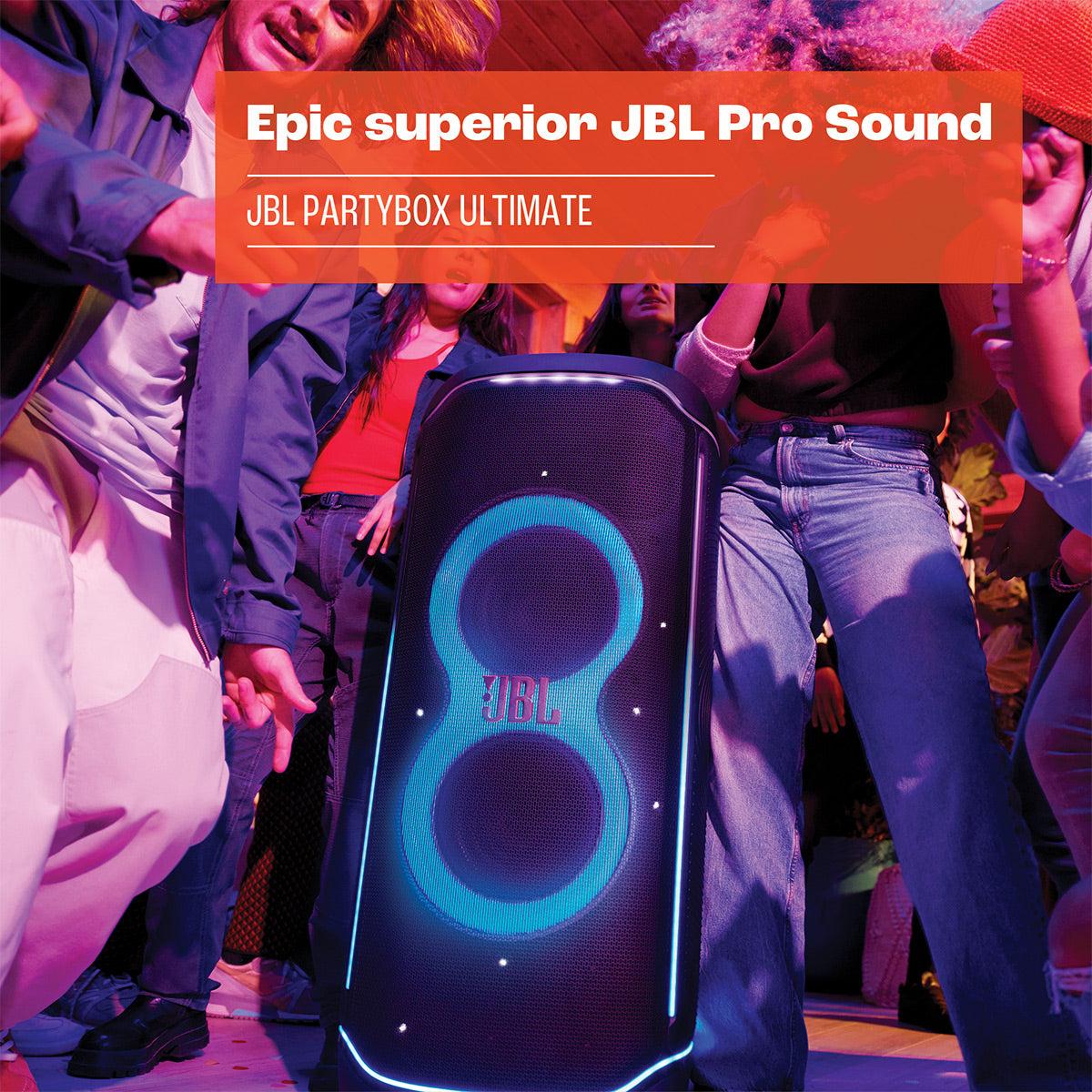
The JBL PartyBox Ultimate takes a completely different approach with its dual 9-inch woofers, 4.5-inch midrange drivers, and 2.75-inch tweeters. Everything about this configuration prioritizes maximum output and bass impact. Those massive 9-inch woofers can move significantly more air than the Marshall's single 6-inch driver, creating bass that you don't just hear—you feel it in your chest.
The 1100W RMS power output represents a massive difference in capability. RMS (Root Mean Square) power indicates how much continuous power the amplifiers can deliver, rather than peak power that might only last for brief moments. This translates to the ability to maintain clean, undistorted sound even when pushed to extremely high volume levels.
The JBL's frequency response extends down to 30Hz, reaching into sub-bass territory that can reproduce the lowest synthesizer notes and the deepest drum hits with remarkable authority. However, the real story is in how it handles dynamics—those sudden loud passages in music that can cause lesser speakers to compress or distort.
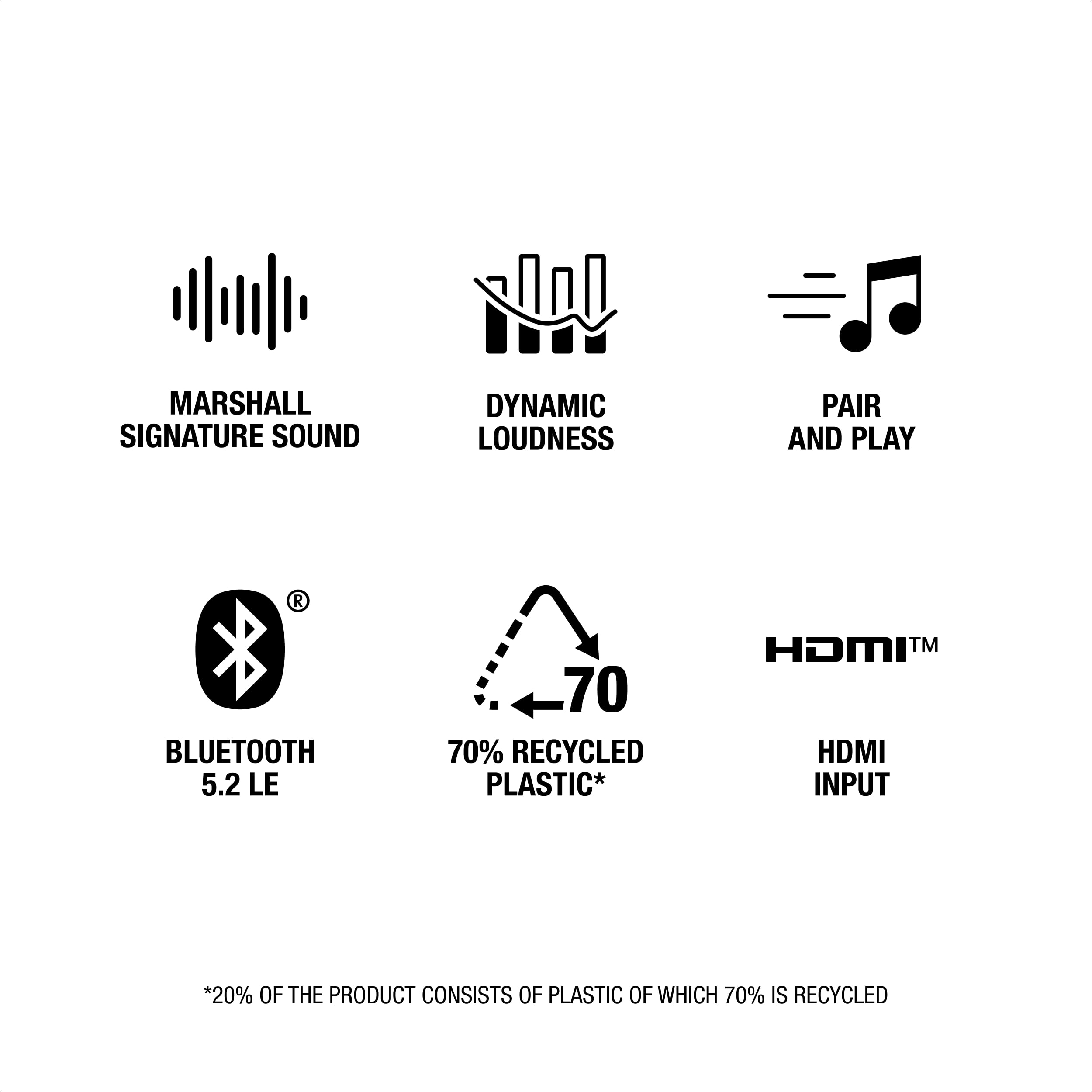
In practice, these different approaches create distinctly different listening experiences. The Marshall Woburn III excels with complex music where you want to hear individual instruments clearly defined within the mix. Jazz recordings, classical music, and well-produced rock albums reveal new details through the Marshall's balanced presentation. The Dynamic Loudness feature automatically adjusts the tonal balance at different volume levels, ensuring that bass and treble remain present even during quiet late-night listening sessions.
The JBL PartyBox Ultimate, on the other hand, transforms music into a physical experience. Electronic music, hip-hop, and modern pop productions with deep bass extension sound absolutely explosive. The sheer headroom—the difference between normal listening levels and maximum capability—means the JBL never sounds strained or compressed, even when filling large spaces with sound.
Perhaps the most significant difference between these speakers lies in their volume capabilities and intended coverage areas. The Marshall Woburn III produces a maximum sound pressure level (SPL) of 100.5 dB at one meter. To put this in perspective, that's roughly equivalent to standing next to a motorcycle at idle—plenty loud for any home environment.
However, the JBL PartyBox Ultimate reaches SPL levels exceeding 116 dB, which approaches the threshold of human discomfort. This isn't just academic—it represents the difference between filling a living room and filling a large outdoor space or warehouse venue. The JBL can literally project clear, undistorted audio across distances that would leave the Marshall sounding thin and strained.
The room coverage patterns differ significantly as well. The Marshall creates what's best described as an "intimate soundstage"—it fills a typical living room or bedroom with rich, detailed sound that invites close listening. The JBL projects sound in a more omnidirectional pattern, designed to reach people scattered across a large area rather than providing critical listening for a few people in optimal positions.
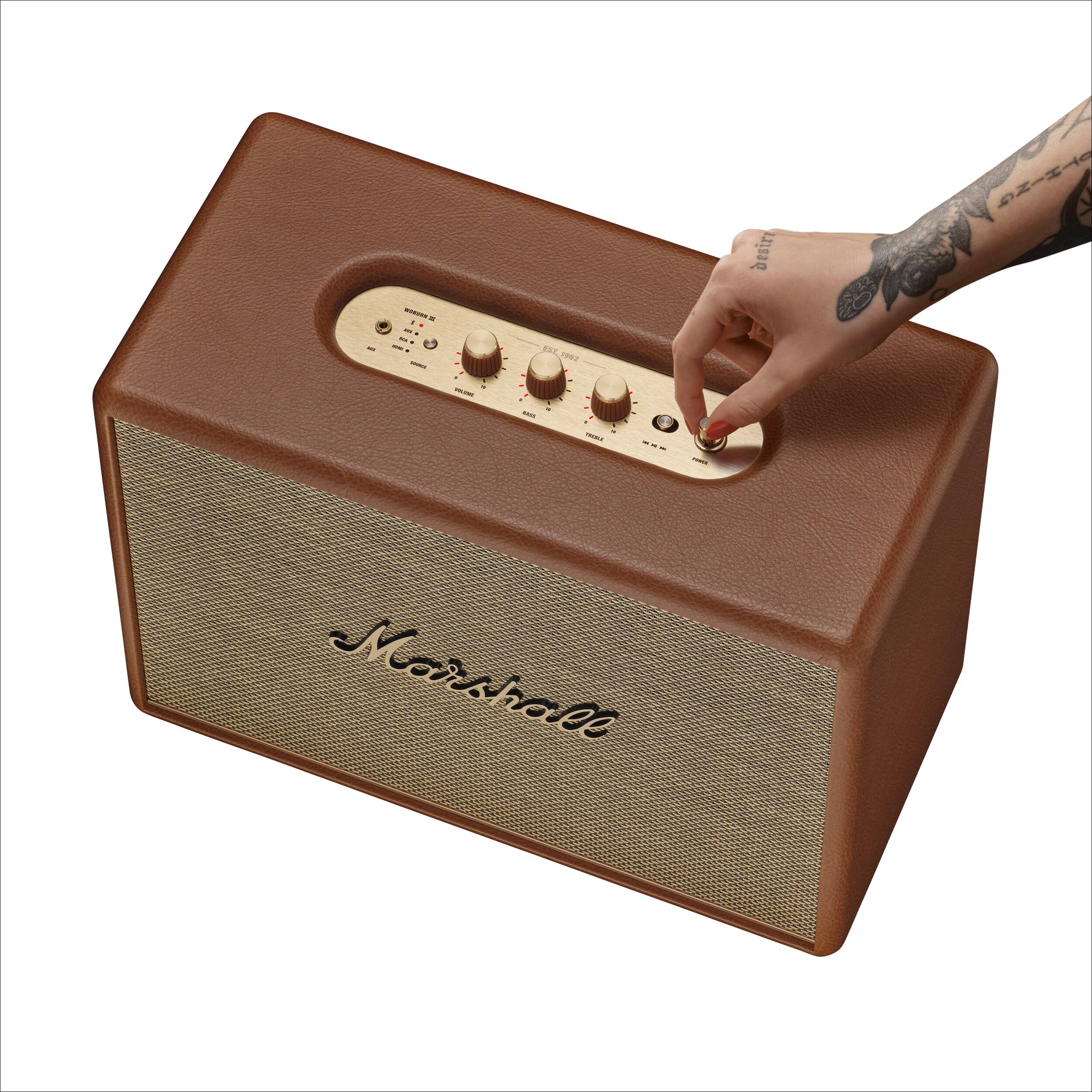
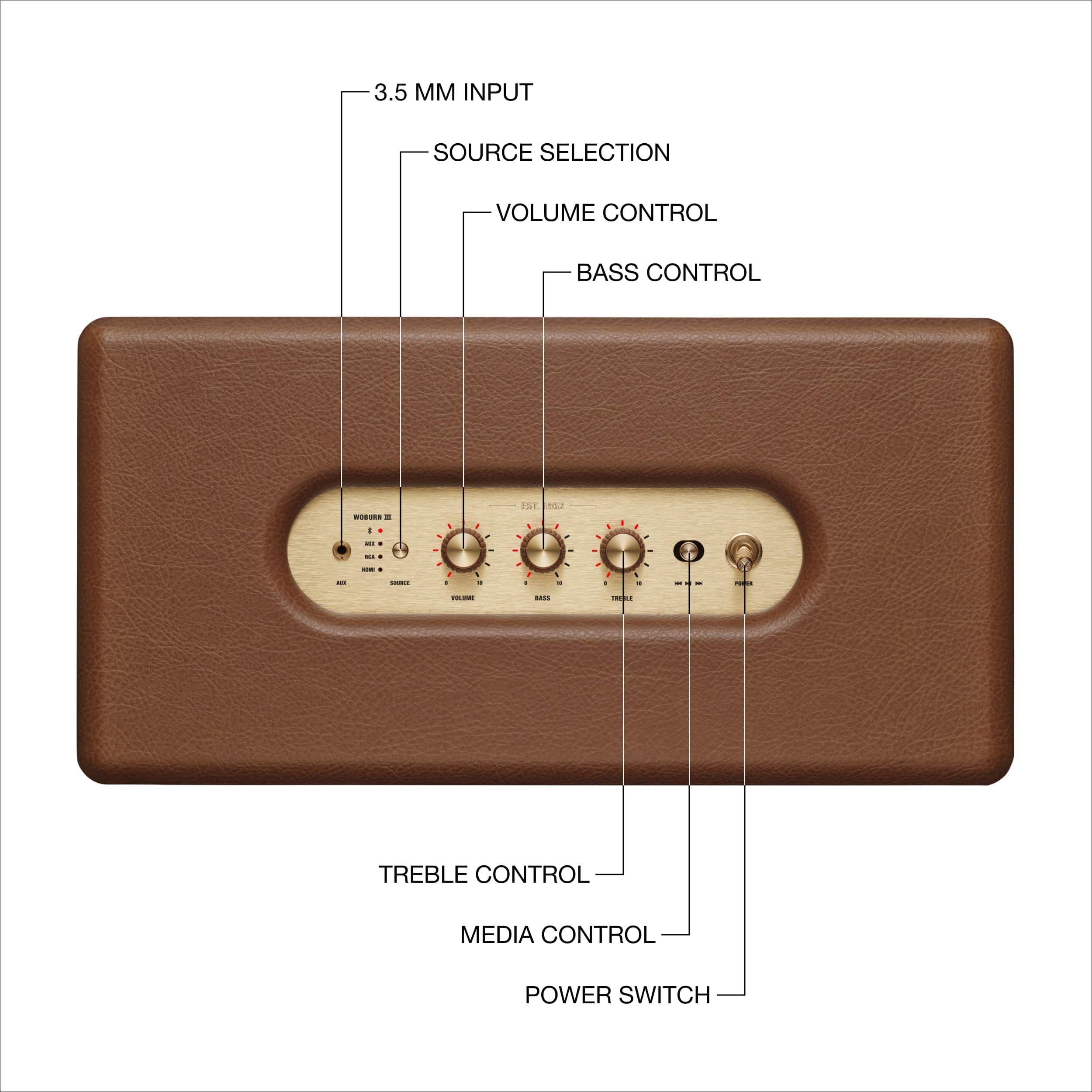
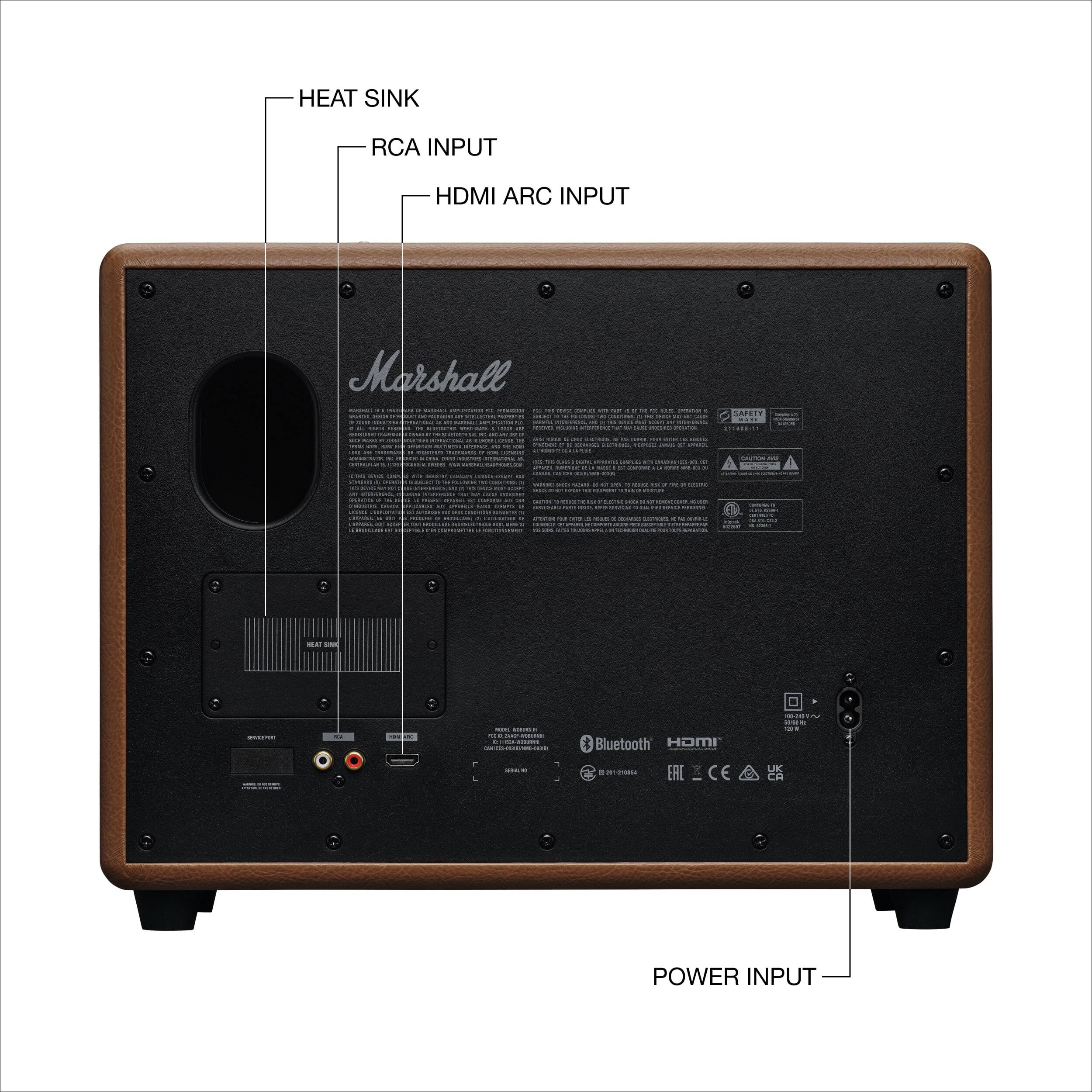
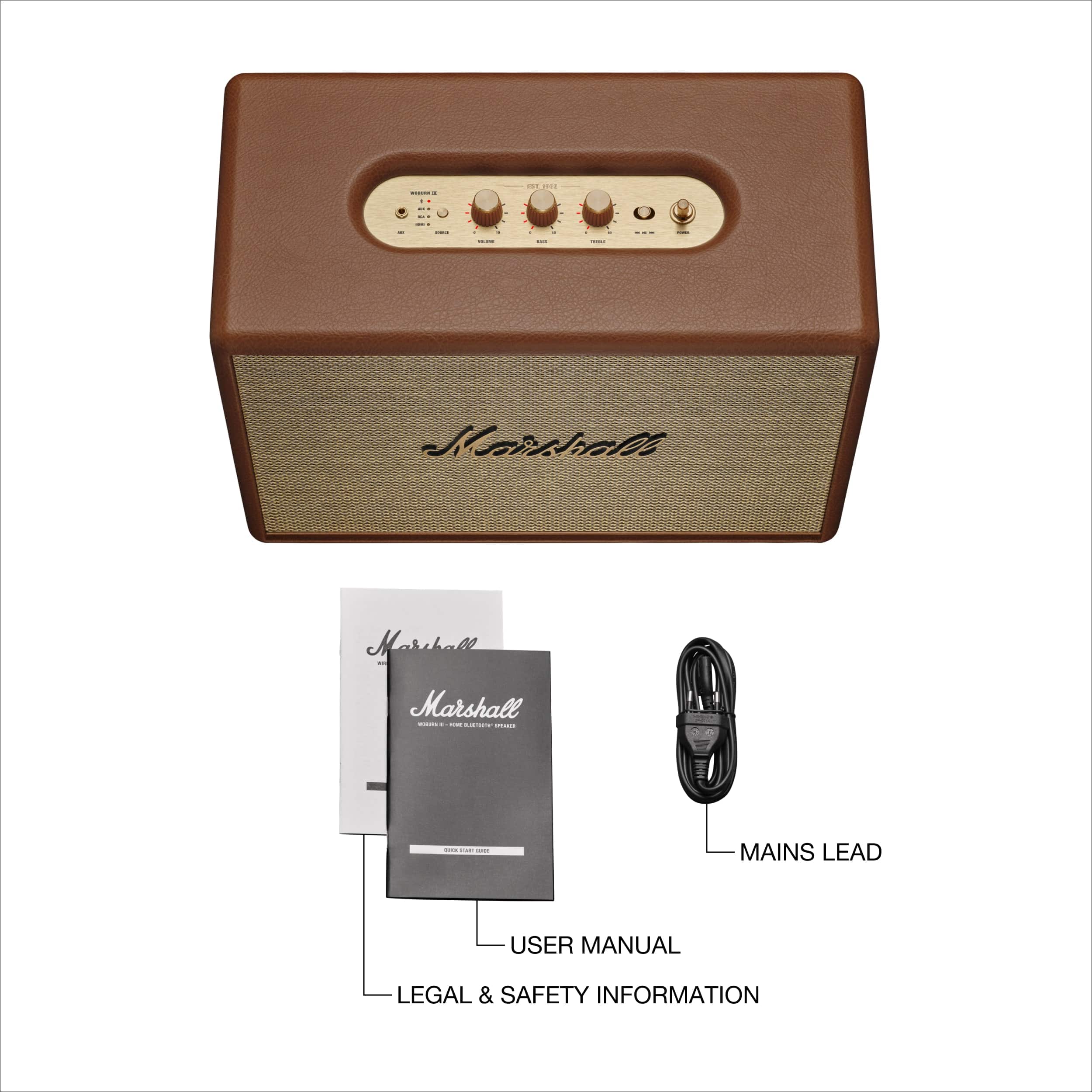
The Marshall Woburn III embraces a deliberately traditional feature set. The brass control knobs provide tactile, analog-style adjustment of volume, bass, and treble—no menu diving required. This simplicity extends to the connectivity options: Bluetooth 5.2 with multipoint connection (allowing two devices to stay paired simultaneously), traditional RCA inputs for connecting CD players or turntables, a 3.5mm auxiliary input, and crucially, an HDMI ARC connection.
That HDMI ARC port sets the Marshall apart for home theater use. Audio Return Channel technology allows the speaker to receive audio directly from your TV, automatically turning on when the TV powers up and adjusting volume with your TV remote. For many users, this transforms the Marshall into their primary TV audio system, delivering dramatically better sound than built-in TV speakers.
The Placement Compensation feature uses digital signal processing to automatically adjust the sound based on the speaker's location in your room. Place it near a wall, and it reduces bass to prevent boomy sound. Position it in an open area, and it maintains full bass response. This kind of intelligent adaptation represents modern speaker technology at its most practical.
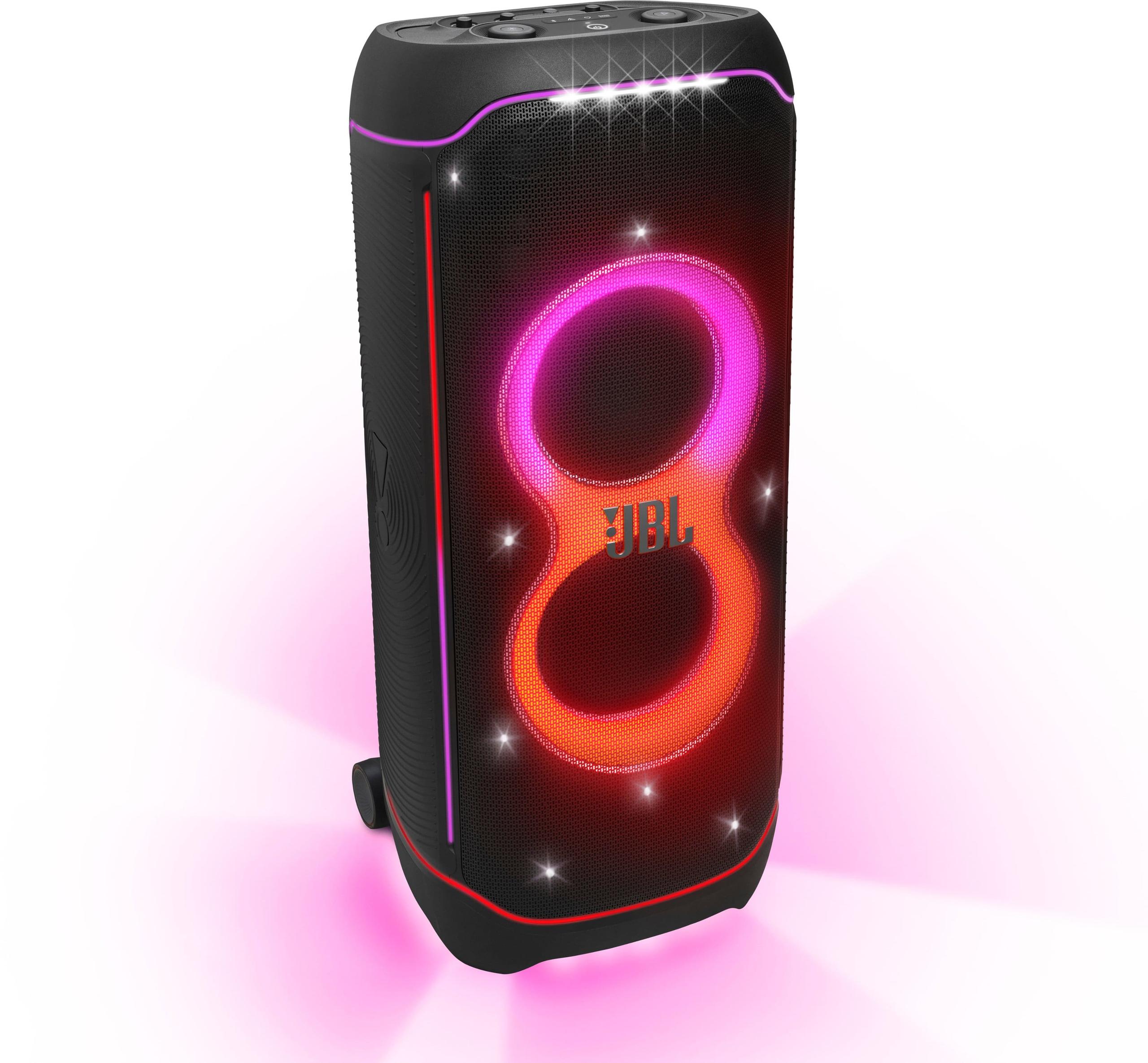
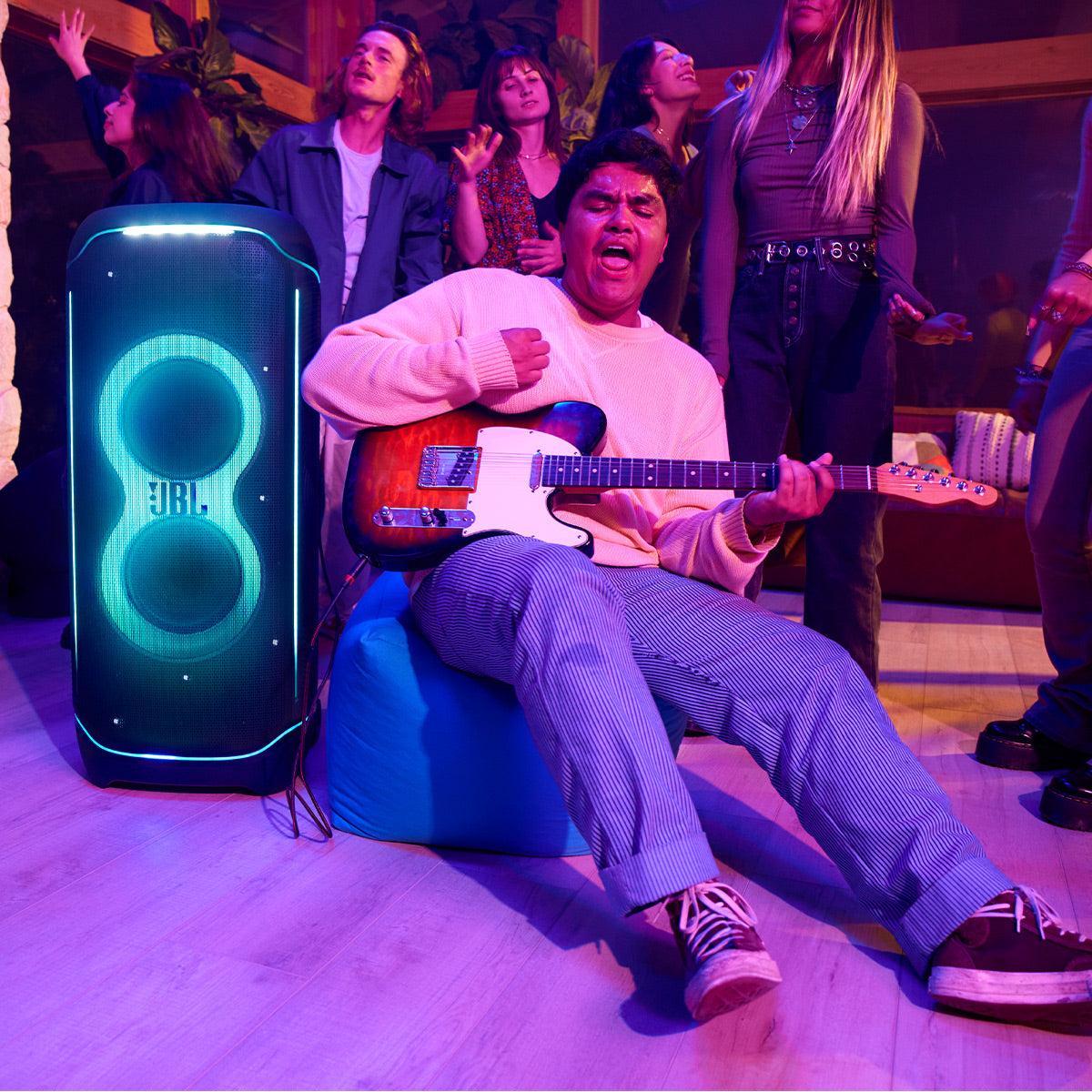
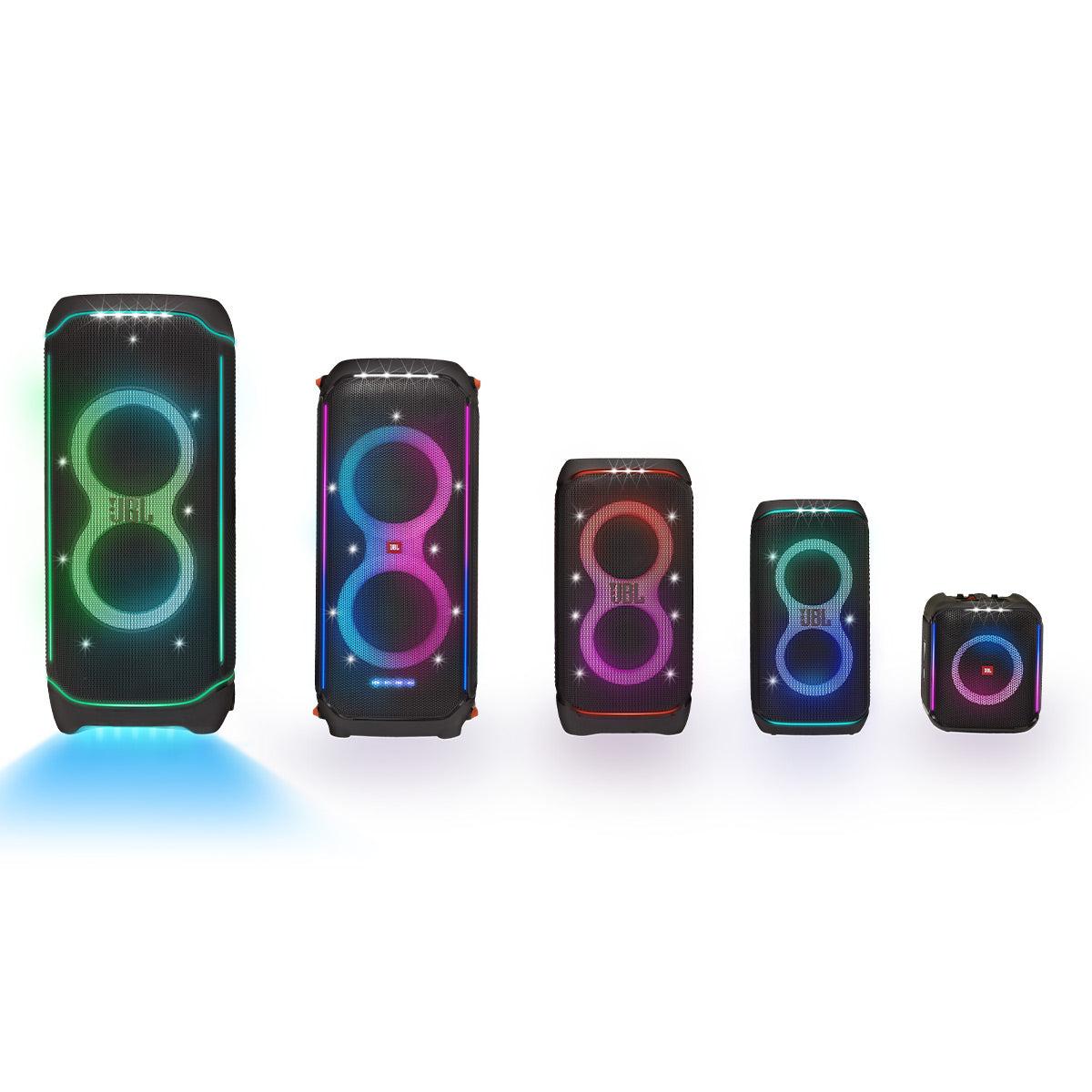
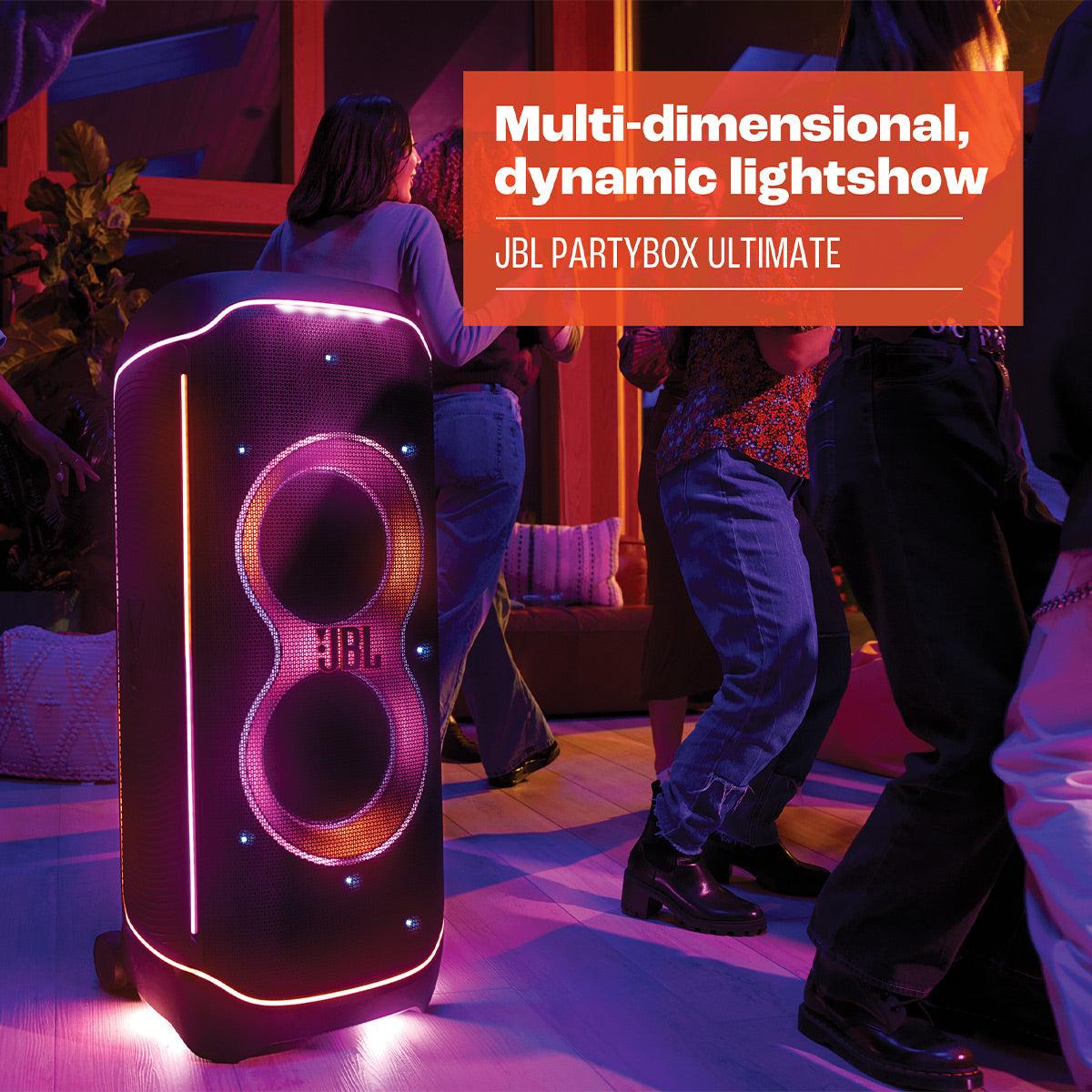
The JBL PartyBox Ultimate packs features that would be impressive in a dedicated DJ system. The multi-dimensional lightshow includes RGB lighting, strobes, light trails, and even ground projection effects that synchronize with the music's beat. This isn't just decoration—it's a legitimate part of the entertainment experience that can transform any gathering.
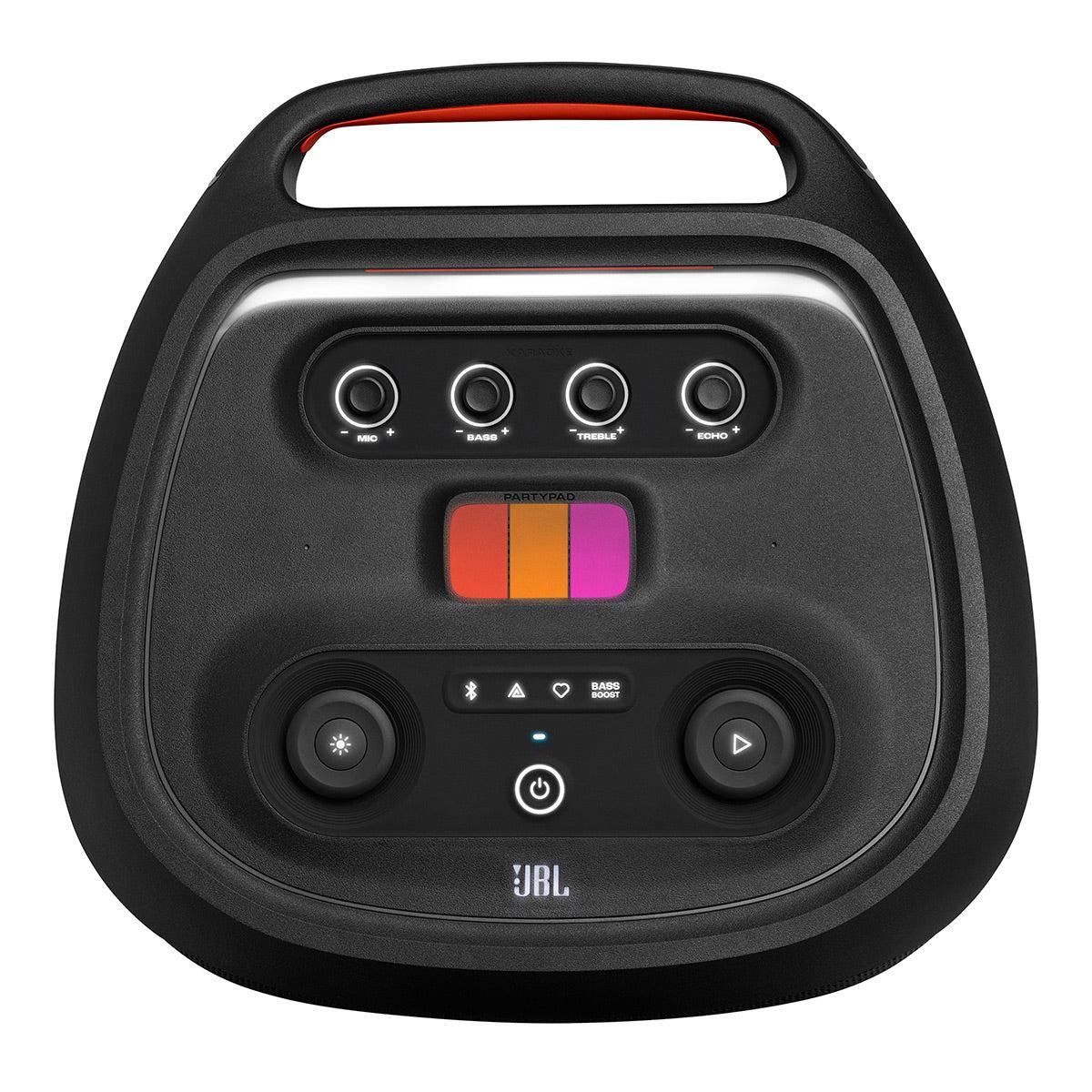
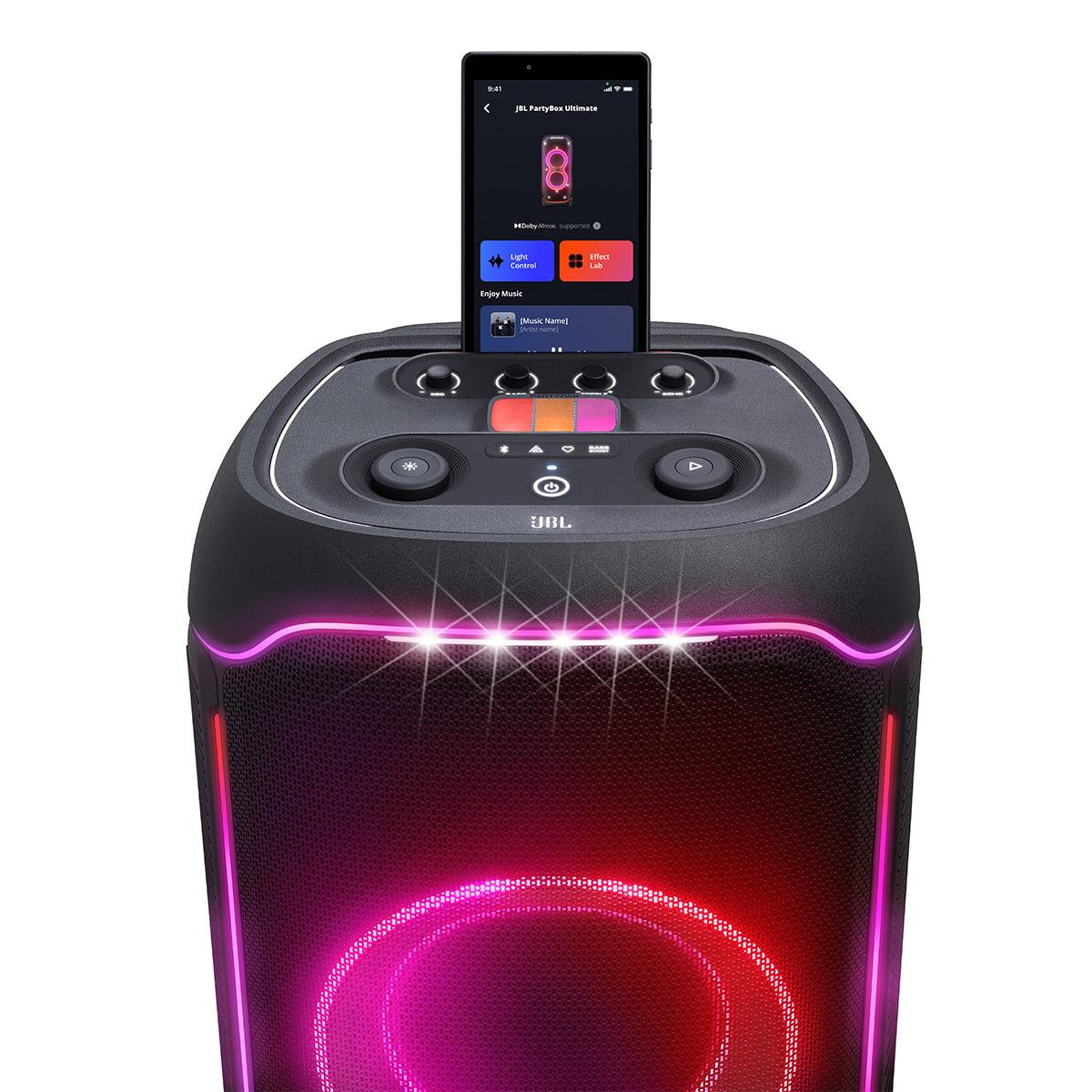
The PartyPad DJ console deserves special recognition. Located on the speaker's top panel, it provides three color-coded pads that trigger sound effects like horns, repeaters, and filters. Simple gestures like tapping, holding, and sliding across the pads allow real-time music manipulation without needing separate DJ equipment.
For live performance, the JBL includes dual microphone inputs with dedicated volume and echo controls, plus a guitar input. The karaoke EQ tuning specifically optimizes vocal reproduction, making it genuinely suitable for live singing rather than just background music playback.
The self-tuning capability represents cutting-edge audio technology. Built-in microphones continuously analyze the acoustic environment, automatically adjusting the speaker's output to compensate for room acoustics or outdoor conditions. This ensures optimal sound quality regardless of where you place the speaker.
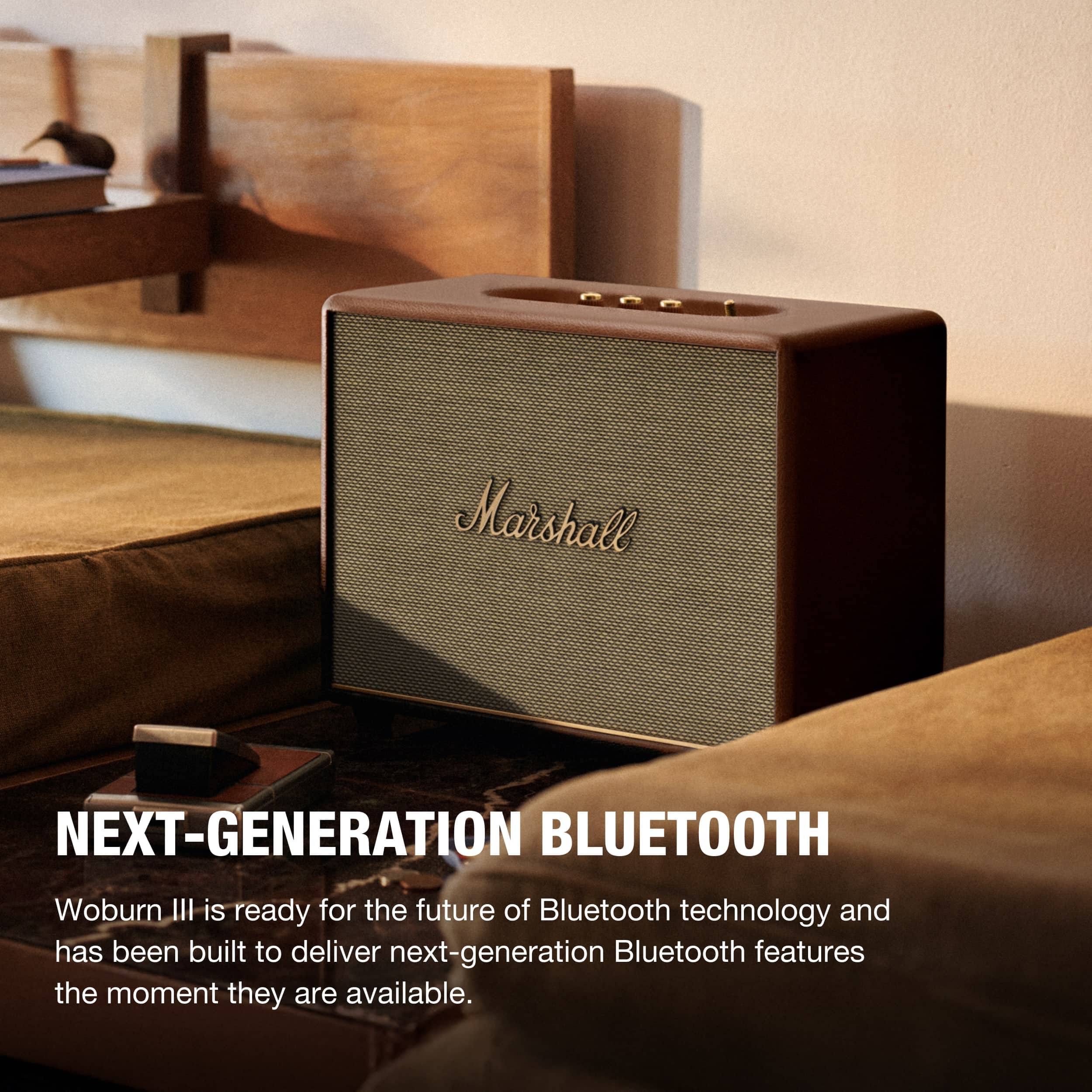
The connectivity differences between these speakers reflect their different target audiences. The Marshall Woburn III focuses on proven, reliable connections. Bluetooth 5.2 provides stable wireless connectivity with lower latency (delay) than previous versions, making it suitable for watching videos without audio sync issues. The multipoint connection allows seamless switching between a phone and tablet without manual re-pairing.
However, the Marshall limits Bluetooth to the SBC codec—the basic audio compression standard. While perfectly adequate for most listening, it doesn't support higher-quality codecs like aptX or AAC that can improve wireless audio fidelity with compatible devices.
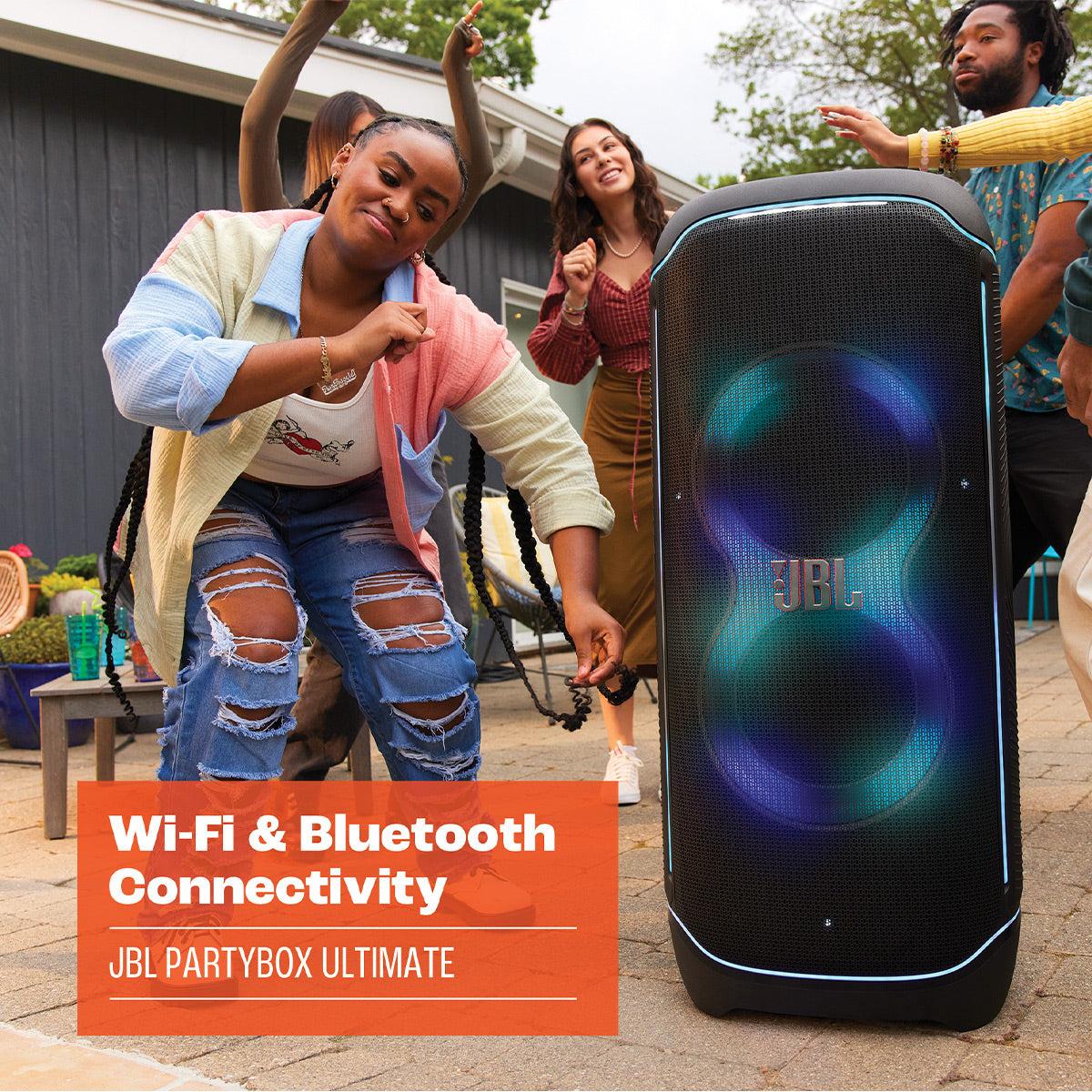
The JBL PartyBox Ultimate embraces modern connectivity with Wi-Fi 6 (802.11ax) support alongside Bluetooth 5.3. Wi-Fi streaming enables several advantages: higher audio quality without Bluetooth compression, uninterrupted playback even when your phone receives calls, and support for advanced features like Dolby Atmos spatial audio. The inclusion of AirPlay, Chromecast built-in, and Spotify Connect means virtually any streaming service or device can connect seamlessly.
The multi-speaker wireless pairing capability allows multiple JBL PartyBox units to work together, either in stereo mode or to cover multiple areas of a large venue. This scalability makes it genuinely suitable for professional event use.
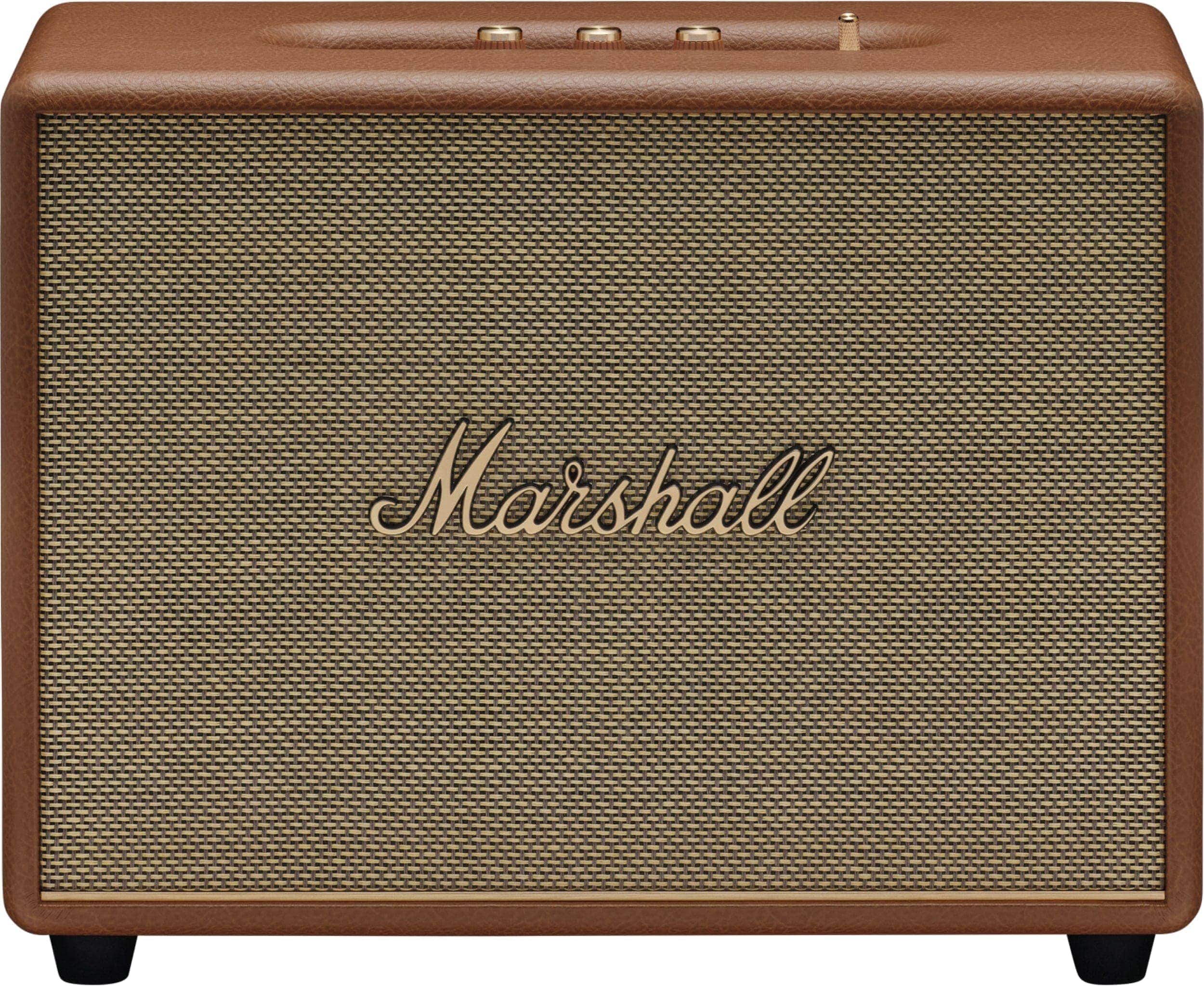
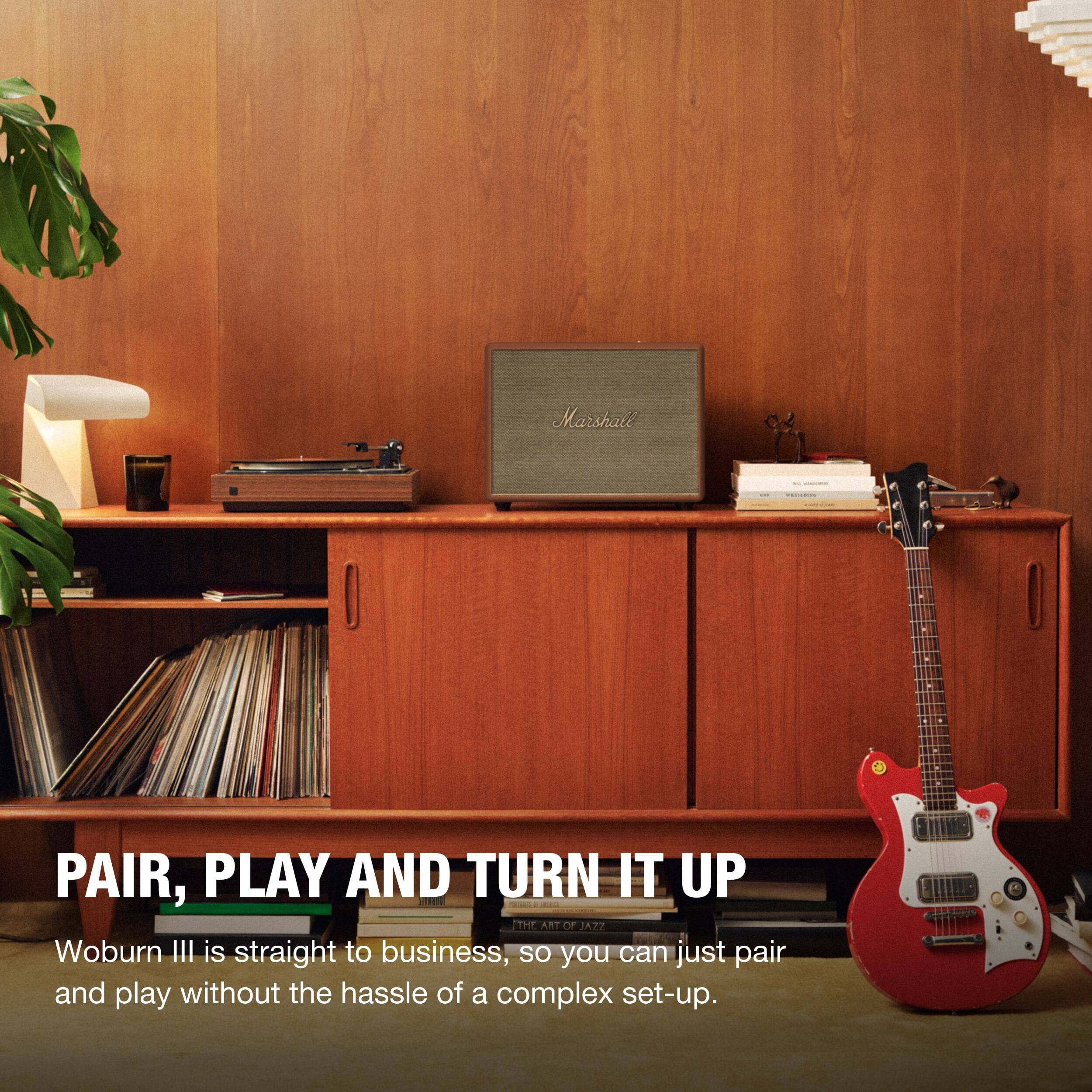
Both speakers demonstrate premium build quality, but with different priorities. The Marshall Woburn III uses a wooden cabinet construction with a textured, leather-like exterior that's actually made from vegan materials. The brass control knobs and classic Marshall script logo create an aesthetic that complements home décor rather than dominating it. At roughly 16-21 pounds (sources vary), it's substantial enough to feel premium while remaining manageable for repositioning.
The environmental considerations are noteworthy—70% recycled plastic content and PVC-free construction reflect growing awareness of sustainability in premium electronics. The analog control layout means the speaker remains fully functional even if the companion app experiences issues or becomes outdated.
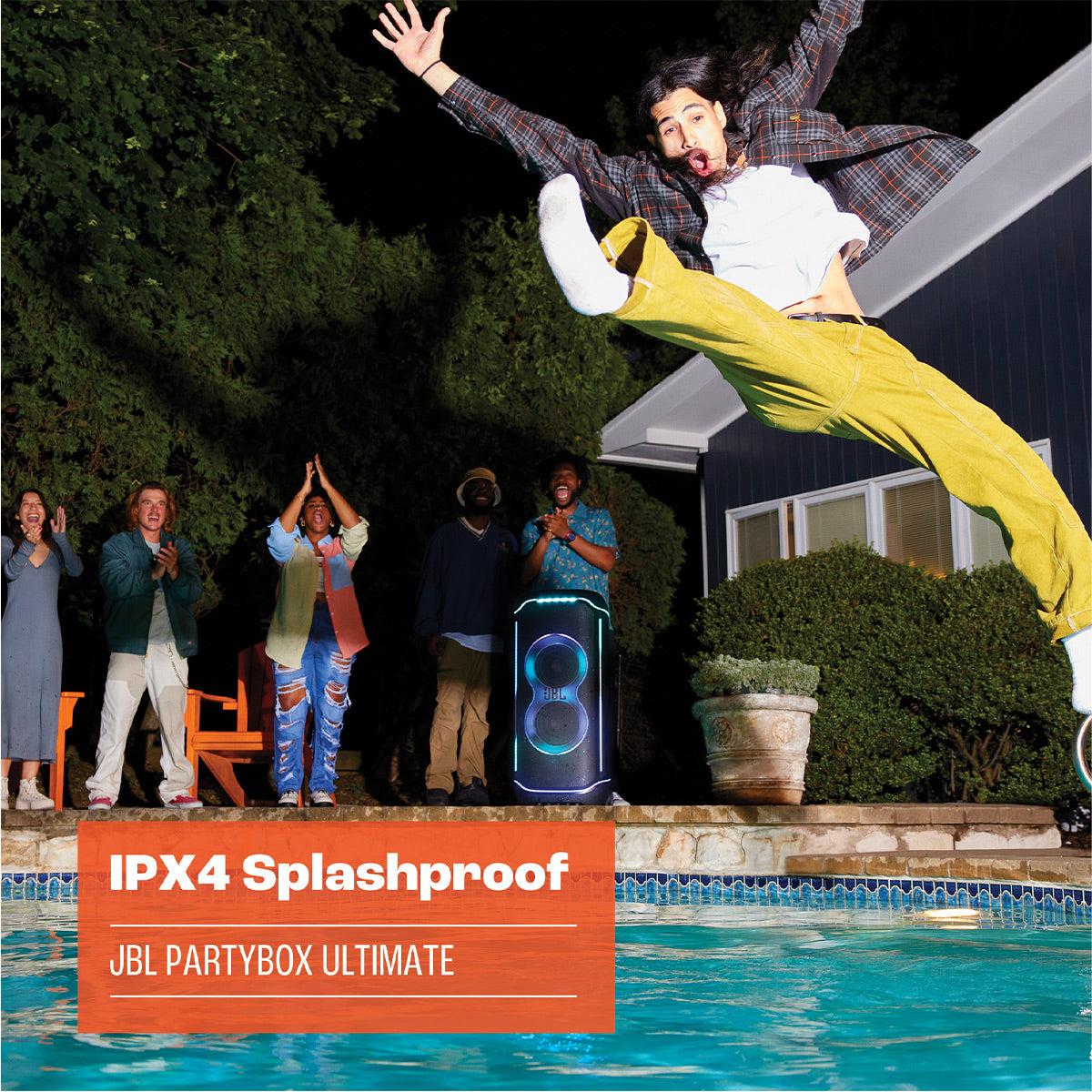
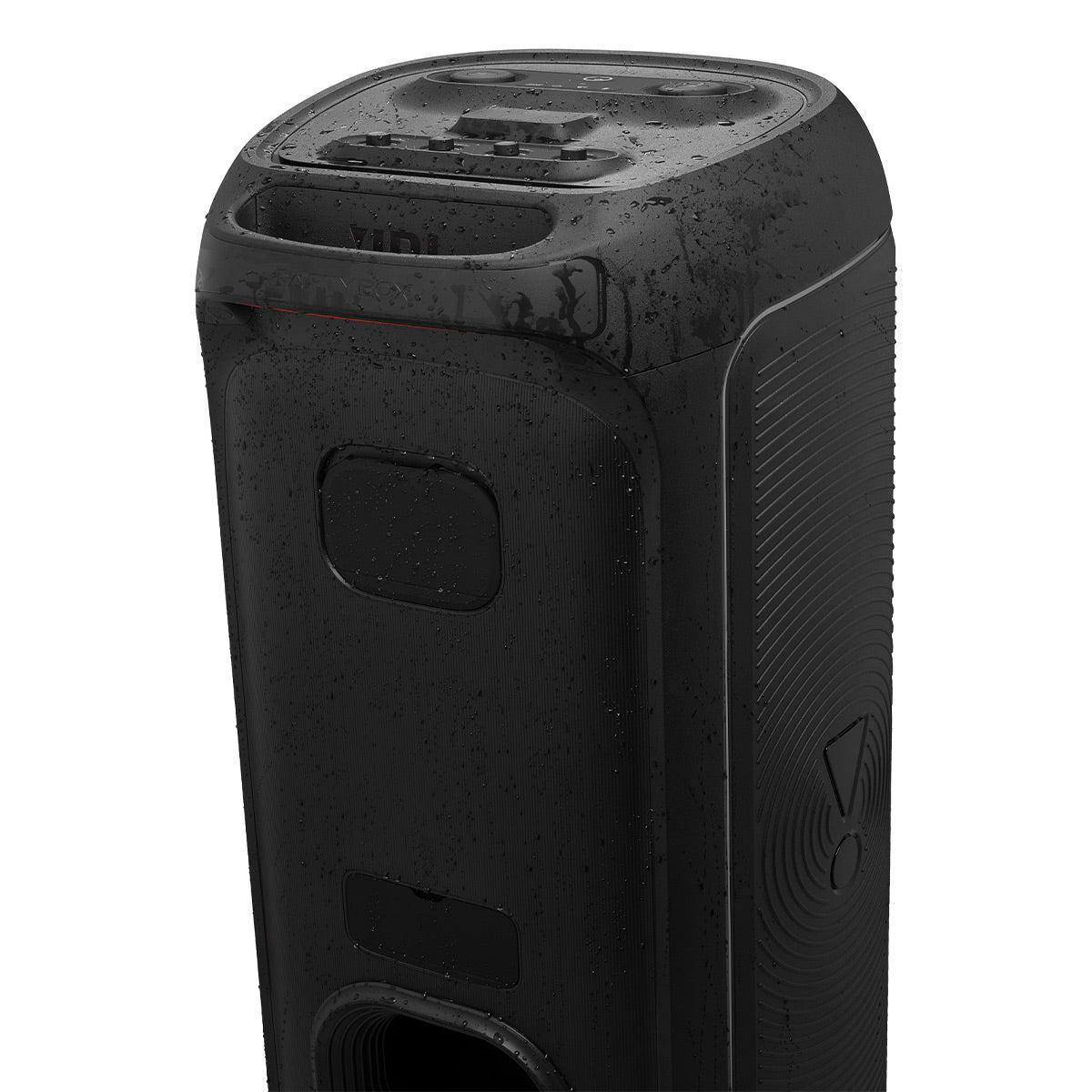
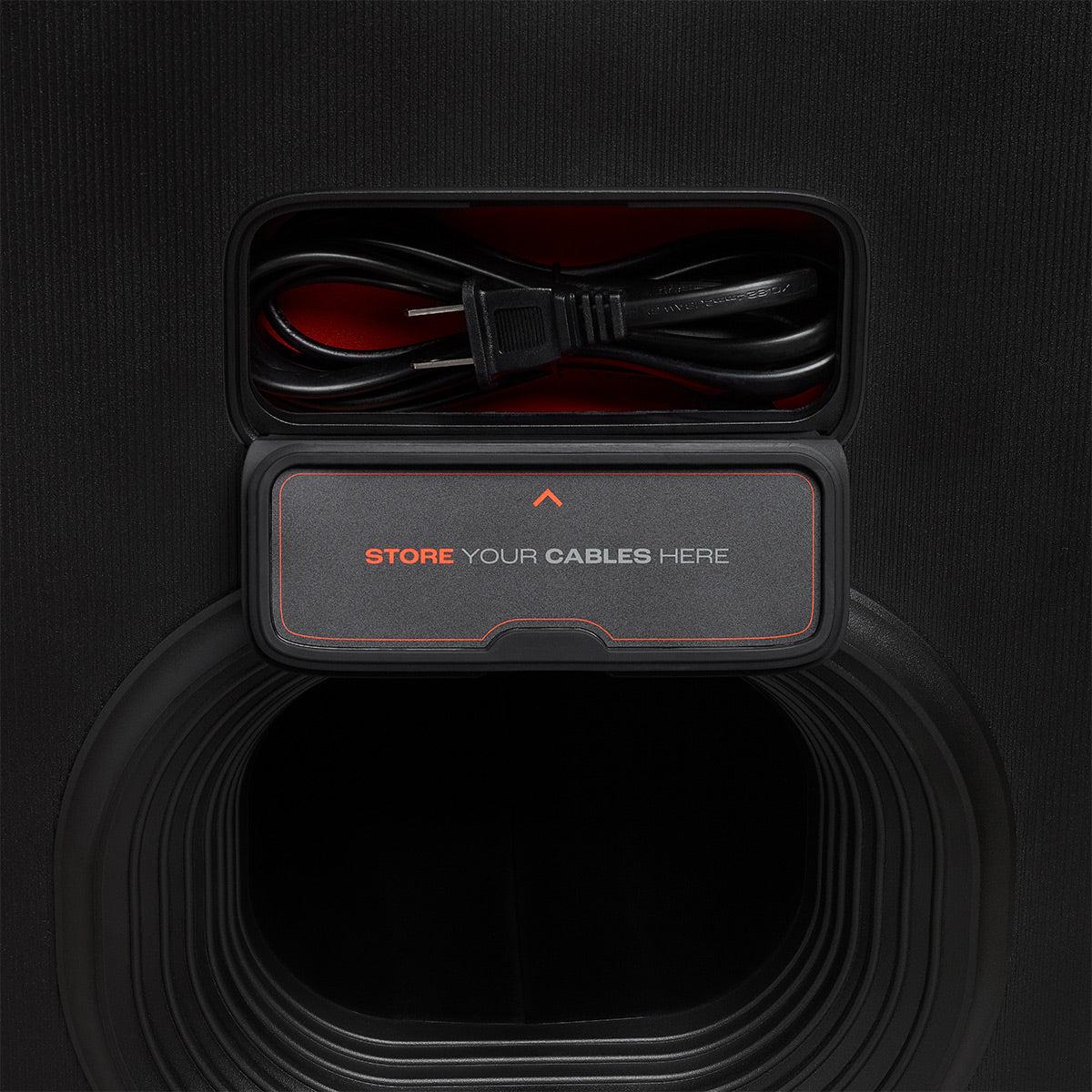
The JBL PartyBox Ultimate weighs a substantial 87 pounds, reflecting its professional-grade construction and massive driver complement. Despite the weight, thoughtful design includes heavy-duty wheels and a sturdy handle for transport. The IPX4 splashproof rating provides protection against spills and outdoor use—something completely absent from the Marshall.
The visual design prioritizes impact over subtlety. The large LED display, prominent light elements, and bold proportions announce this speaker's party-focused purpose. Build quality feels robust enough for frequent transport and demanding use scenarios.
For home theater use, these speakers serve very different roles. The Marshall Woburn III excels as a TV audio upgrade thanks to its HDMI ARC connection and Night Mode feature. Night Mode automatically reduces loud sound effects while boosting dialogue clarity—perfect for late-night movie watching without disturbing others. The balanced frequency response ensures clear dialogue reproduction, often the weakest point of TV built-in speakers.
The three-way driver system provides excellent stereo separation for movie soundtracks, creating a convincing left-to-right soundstage that enhances the viewing experience. However, it's important to understand that this remains a single-speaker solution—it won't provide the surround sound experience of a dedicated home theater system.
The JBL PartyBox Ultimate brings Dolby Atmos support via Wi-Fi streaming, creating spatial audio effects that can genuinely enhance movie experiences. However, its bass-heavy tuning and party-oriented features make it less ideal for critical movie dialogue reproduction. The massive size and prominent lighting might overwhelm a typical living room setup.
Where the JBL excels for home theater is in creating an immersive experience for action movies, concerts, or sports viewing where maximum impact trumps subtle detail. The ability to fill large rooms with sound makes it perfect for basement entertainment areas or media rooms where traditional bookshelf speakers might fall short.
After extensive research into user reviews and professional evaluations, clear usage patterns emerge for each speaker. The Marshall Woburn III consistently receives praise from users who prioritize sound quality over raw volume. It excels in scenarios where music is the primary focus—background listening while working, critical listening sessions, and intimate gatherings where conversation and music coexist.
The HDMI ARC integration proves particularly valuable for users seeking a simple TV audio upgrade without the complexity of a full surround sound system. The classic aesthetic appeals to users who want premium audio performance without a speaker that dominates their living space visually.
The JBL PartyBox Ultimate receives enthusiastic reviews from users who regularly host large gatherings or need professional-level audio capabilities. The combination of extreme volume capability, comprehensive connectivity, and entertainment features creates genuine versatility for event hosting. Users consistently report that it can replace multiple pieces of audio equipment—PA systems, DJ speakers, and karaoke machines—in a single unit.
However, this capability comes with trade-offs. The size, weight, and visual prominence make it impractical for many home environments. Users who purchase the JBL typically have specific use cases in mind: pool parties, large basement entertainment areas, outdoor events, or semi-professional DJ work.
Choose the Marshall Woburn III if you value refined sound quality, classic design, and seamless home integration. It's the better choice for daily music listening, TV audio enhancement, and situations where the speaker should complement rather than dominate your space. The more accessible price point (at the time of writing) makes it an excellent entry into premium home audio without the complexity of multi-component systems.
Choose the JBL PartyBox Ultimate if you need maximum volume capability, comprehensive entertainment features, and the flexibility to handle everything from intimate listening to large events. Despite the significantly higher investment required (at the time of writing), it provides genuine professional-level capabilities that can justify the cost for users who regularly host gatherings or need portable PA functionality.
Both speakers represent excellent engineering within their respective niches. The Marshall proves that premium home audio doesn't require complexity—sometimes the best approach is executing fundamentals exceptionally well. The JBL demonstrates how modern technology can create truly versatile entertainment solutions that adapt to virtually any scenario.
Your choice ultimately depends on whether you prioritize the refined home listening experience or the comprehensive entertainment capabilities—both represent genuine value within their intended use cases.
| Marshall Woburn III | JBL PartyBox Ultimate |
|---|---|
| Power Output - Determines maximum volume and room coverage | |
| 150W total (90W woofer + 60W mid/high) - Perfect for home rooms | 1100W RMS - Can fill venue-sized spaces like two basketball courts |
| Driver Configuration - Affects sound quality and frequency response | |
| 3-way: 6" woofer + dual 2" midrange + dual 0.75" tweeters - Balanced for refined listening | Dual 9" woofers + 4.5" midrange + 2.75" tweeters - Optimized for maximum bass impact |
| Frequency Response - Shows how deep bass extends and overall sound range | |
| 35Hz – 20kHz (musical bass, clear highs) | 30Hz – 20kHz (sub-bass extension for electronic music) |
| Maximum Volume (SPL) - Critical for party use and large spaces | |
| 100.5 dB @ 1m (loud enough for home use) | 116+ dB (professional venue levels) |
| Connectivity Options - Determines source flexibility and streaming quality | |
| Bluetooth 5.2, HDMI ARC, RCA, 3.5mm aux | Bluetooth 5.3, Wi-Fi 6, HDMI ARC missing, USB, dual mic/guitar inputs |
| Smart Features - Modern conveniences and audio optimization | |
| Dynamic Loudness, Placement Compensation, Marshall app control | Dolby Atmos, self-tuning calibration, PartyPad DJ controls, JBL One app |
| Entertainment Features - Party and performance capabilities | |
| TV integration via HDMI ARC, Night Mode | Multi-dimensional lightshow, karaoke setup, live performance inputs |
| Portability - Important for moving between locations | |
| 16-21 lbs, compact home placement | 87 lbs with wheels and handle, designed for event transport |
| Durability Rating - Protection against spills and outdoor use | |
| No water resistance (indoor only) | IPX4 splashproof (outdoor parties and poolside use) |
| Multi-Speaker Support - Ability to connect multiple units | |
| No wireless pairing capabilities | Wireless pairing and daisy-chaining for large venues |
| Design Approach - Aesthetic and room integration | |
| Classic Marshall amp styling, brass knobs, home décor friendly | Bold party aesthetic with prominent lighting, entertainment-focused |
The Marshall Woburn III is significantly better for home use. It's designed specifically for indoor listening with a balanced sound signature, compact size that fits on furniture, and HDMI ARC connectivity for TV integration. The JBL PartyBox Ultimate weighs 87 pounds, requires floor placement, and is optimized for large venues rather than home environments.
The Marshall Woburn III focuses on refined, balanced audio with excellent midrange clarity and controlled bass perfect for critical listening. The JBL PartyBox Ultimate emphasizes maximum volume and bass impact, designed to create a physical sound experience for parties and large gatherings rather than detailed home listening.
The JBL PartyBox Ultimate is dramatically louder, reaching 116+ dB compared to the Marshall Woburn III's 100.5 dB maximum. The JBL can fill venue-sized spaces and includes party features like RGB lightshows, DJ controls, and karaoke capabilities that the Marshall completely lacks.
The Marshall Woburn III excels for TV use with its HDMI ARC connection, Night Mode for dialogue clarity, and balanced sound that enhances movies without overwhelming your room. The JBL PartyBox Ultimate supports Dolby Atmos but lacks HDMI ARC and its bass-heavy tuning makes it less ideal for clear dialogue reproduction.
The JBL PartyBox Ultimate provides more comprehensive connectivity with Wi-Fi 6, Bluetooth 5.3, AirPlay, Chromecast, and multiple input options. The Marshall Woburn III focuses on essential connections like Bluetooth 5.2, HDMI ARC, and traditional RCA/aux inputs that most home users actually need.
The Marshall Woburn III is semi-portable at 16-21 pounds and designed for home placement on shelves or furniture. The JBL PartyBox Ultimate weighs 87 pounds but includes wheels and handles for event transport, making it portable between venues but not casually moveable like the Marshall.
Value depends on your needs. The Marshall Woburn III offers excellent value for refined home listening and TV enhancement at its price point. The JBL PartyBox Ultimate costs significantly more but provides professional-grade volume, comprehensive party features, and venue-scale capabilities that justify the investment for event hosting.
The JBL PartyBox Ultimate supports wireless pairing with other JBL PartyBox speakers and daisy-chaining for large venue coverage. The Marshall Woburn III doesn't offer multi-speaker connectivity, as it's designed to be a standalone home audio solution rather than a scalable party system.
The Marshall Woburn III is superior for home music listening with its three-way driver system providing balanced sound, Dynamic Loudness for optimal performance at any volume, and placement compensation for room acoustics. The JBL PartyBox Ultimate prioritizes maximum impact over nuanced music reproduction.
The JBL PartyBox Ultimate is designed for outdoor use with IPX4 splashproof rating, massive volume capability, and self-tuning that adapts to outdoor acoustics. The Marshall Woburn III has no water resistance and is intended exclusively for indoor use in controlled environments.
Both offer capable apps, but serve different purposes. The Marshall Woburn III app provides essential sound tuning and placement optimization. The JBL PartyBox Ultimate app offers comprehensive control over lightshow effects, DJ features, multi-speaker management, and advanced audio settings, reflecting its more complex feature set.
Choose the Marshall Woburn III for refined home listening, TV integration, classic design, and excellent sound quality at moderate volumes. Choose the JBL PartyBox Ultimate for maximum volume capability, party entertainment features, outdoor use, live performance capabilities, and when you need to fill large spaces with powerful sound.
We've done our best to create useful and informative comparisons to help you decide what product to buy. Our research uses advanced automated methods to create this comparison and perfection is not possible - please contact us for corrections or questions. These are the sites we've researched in the creation of this article: loudersound.com - ash-asia.zendesk.com - armorsound.com - rtings.com - crutchfield.com - rtings.com - stereoguide.com - bestbuy.com - hometechnologyreview.com - crutchfield.com - sweetwater.com - rtings.com - youtube.com - greentoe.com - versus.com - idownloadblog.com - marshall.com - youtube.com - comparisontabl.es - youtube.com - versus.com - crutchfield.com - device.report - consumerreports.org - sg.tcacoustic.asia - stereoindex.com - safemark.com - smarthomesounds.co.uk - marshall.com - device.report - bestbuy.com - marshall.com - audioadvice.com - youtube.com - crutchfield.com - youtube.com - youtube.com - youtube.com - youtube.com - versus.com - youtube.com - rtings.com - youtube.com - youtube.com - jbl.com - pcx.com.ph - global.jbl.com - gzhls.at - electronicexpress.com - harmanaudio.in - jbl.com - dell.com - robot-advance.com - device.report - ro.harmanaudio.com

Privacy Policy
Terms and Conditions - Affiliate Policy
Home Security
© Copyright 2008-2026.
11816 Inwood Rd #1211, Dallas, TX 75244