

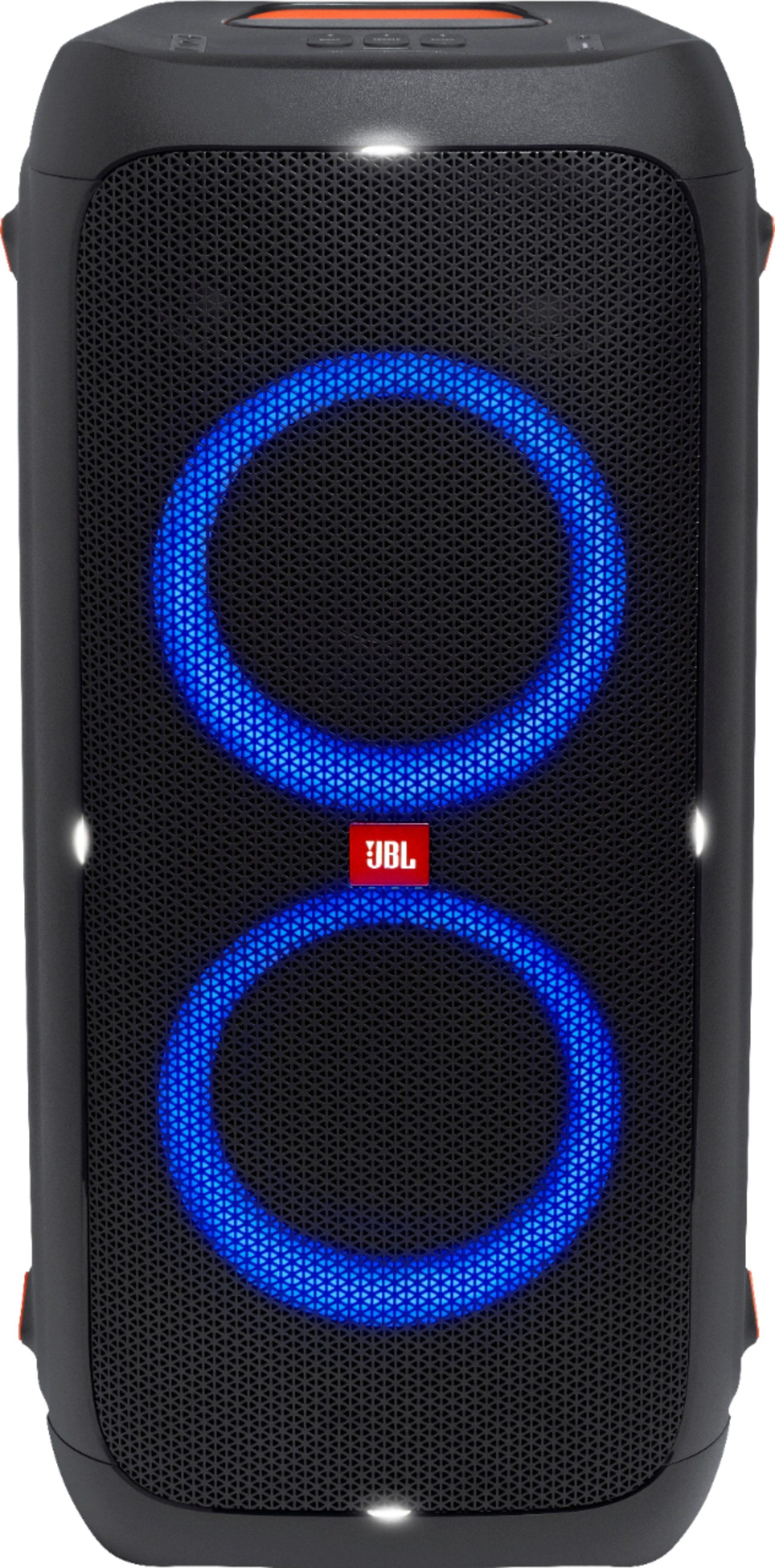
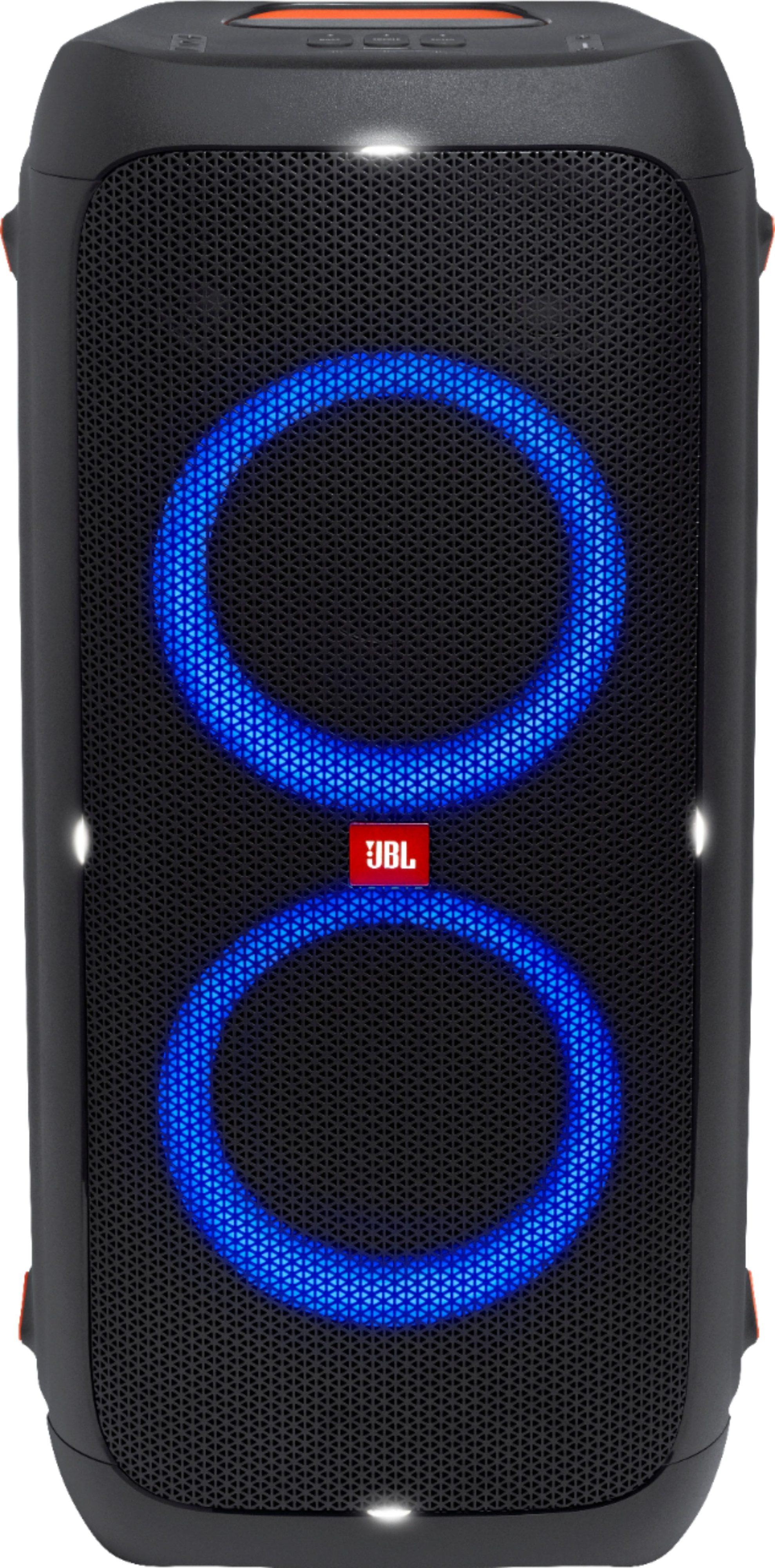
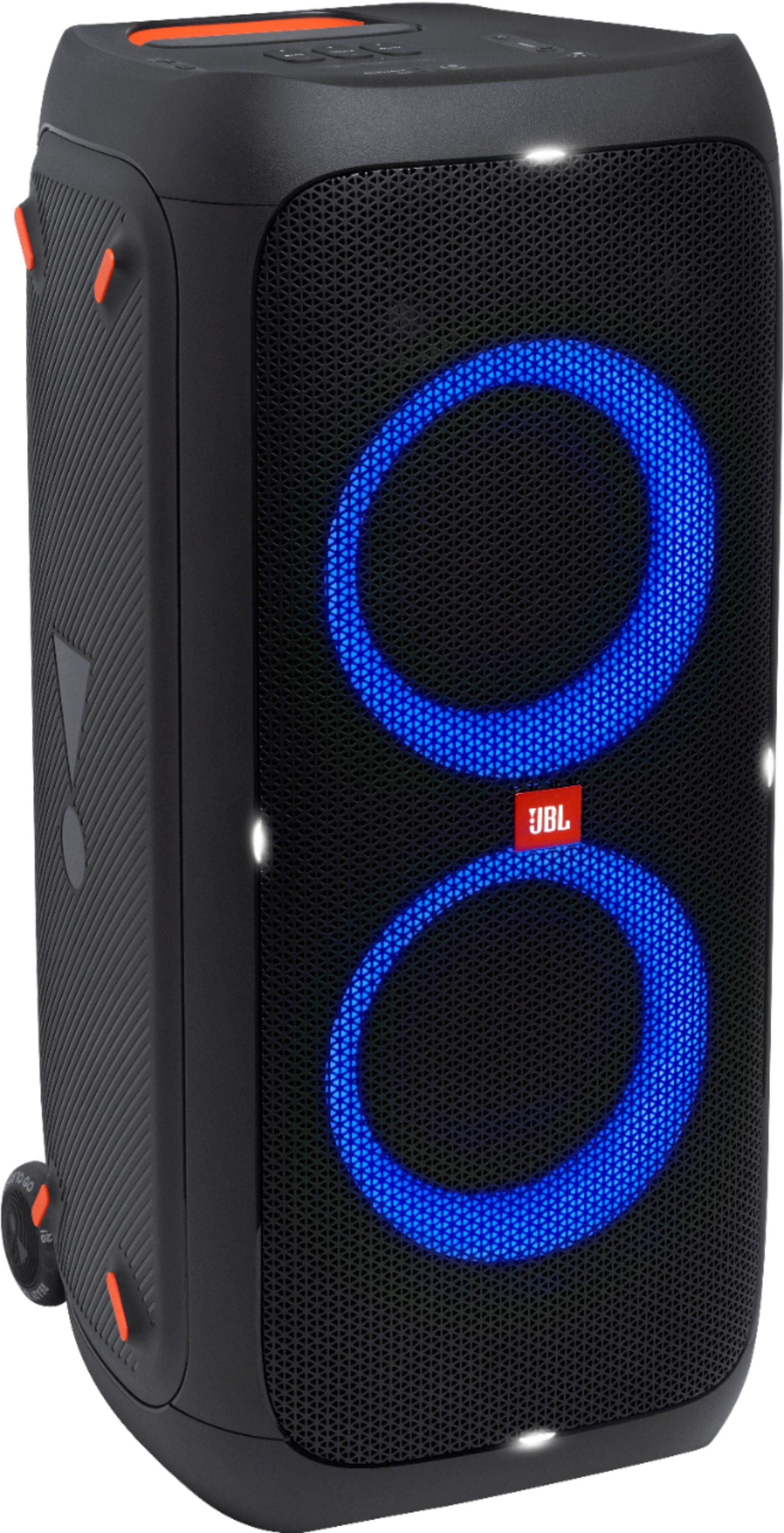
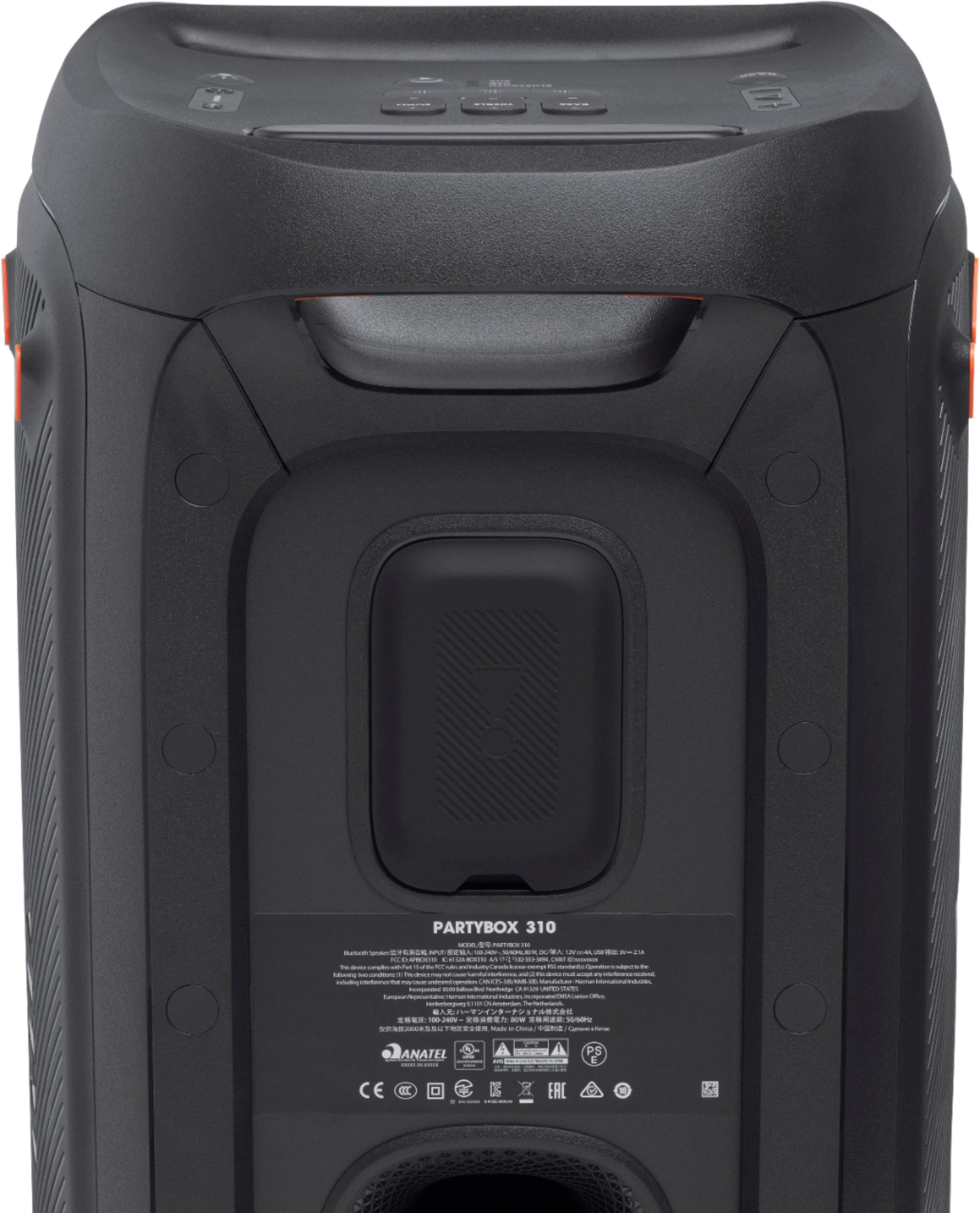
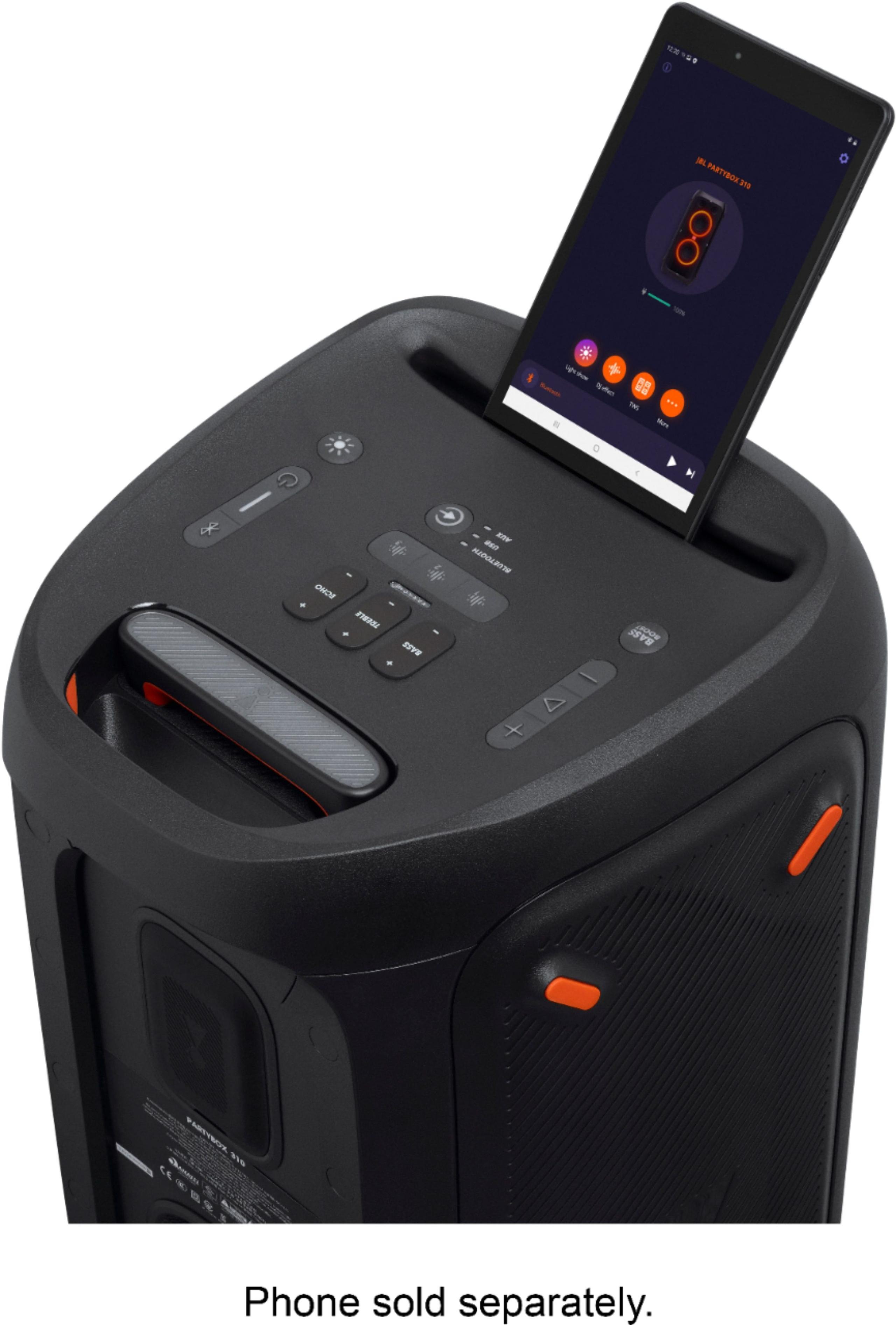
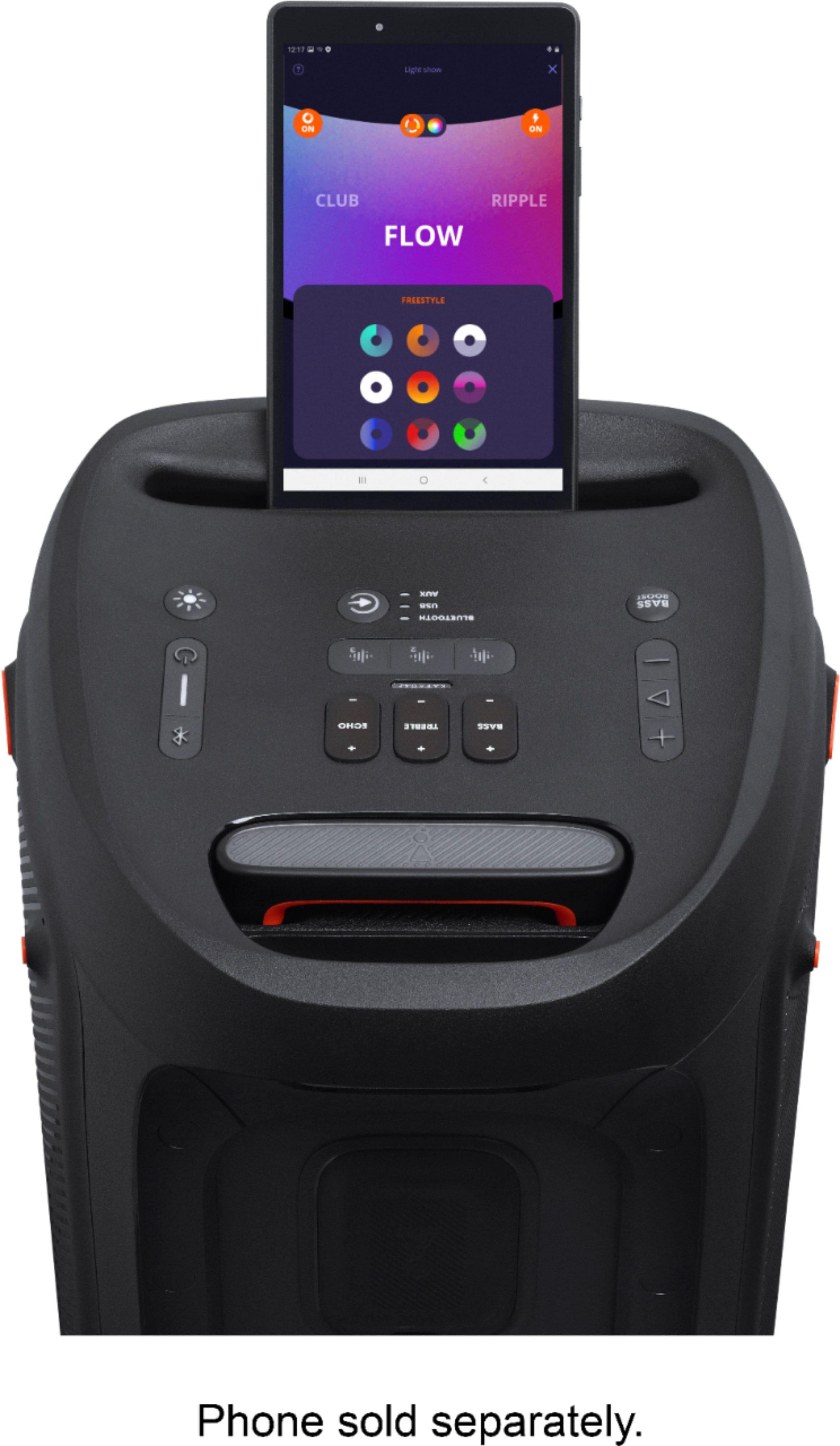
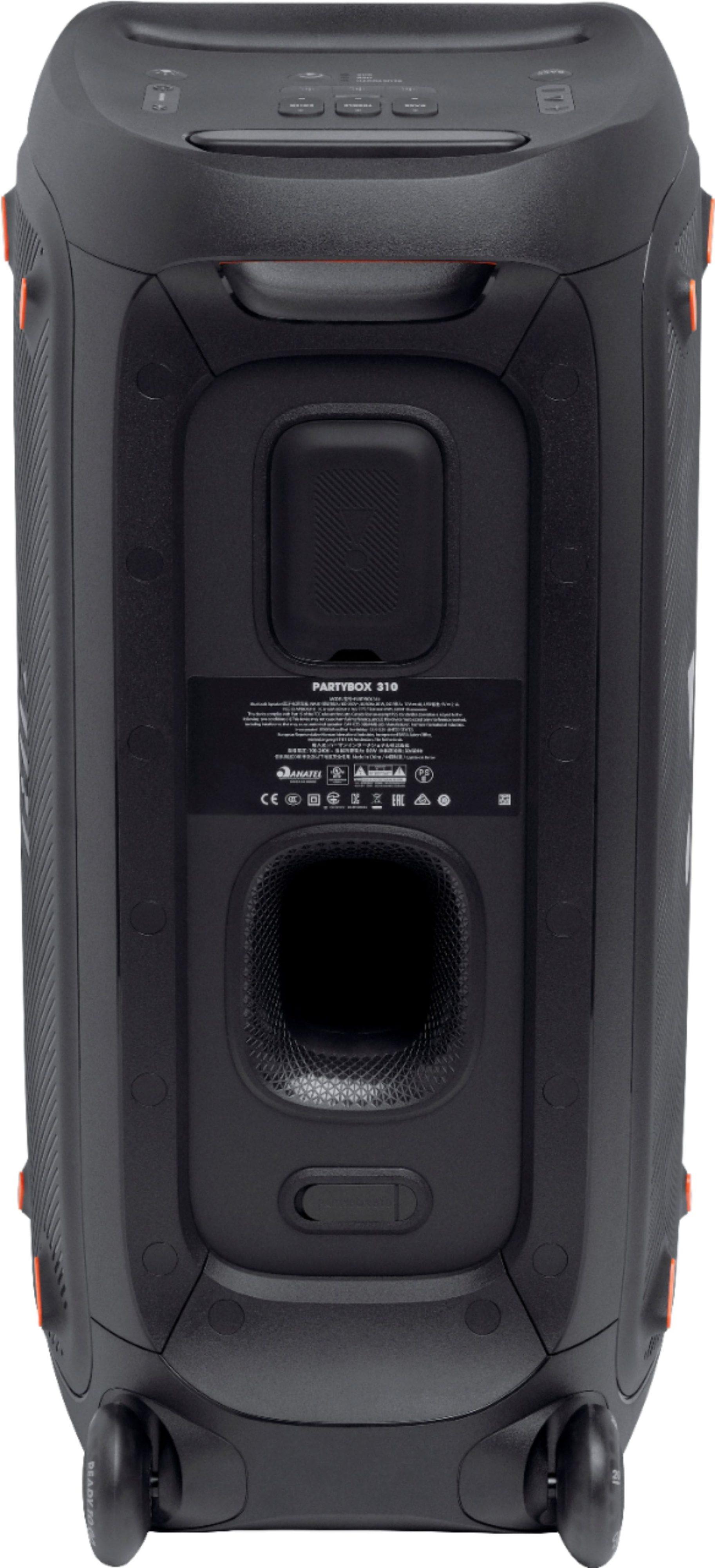
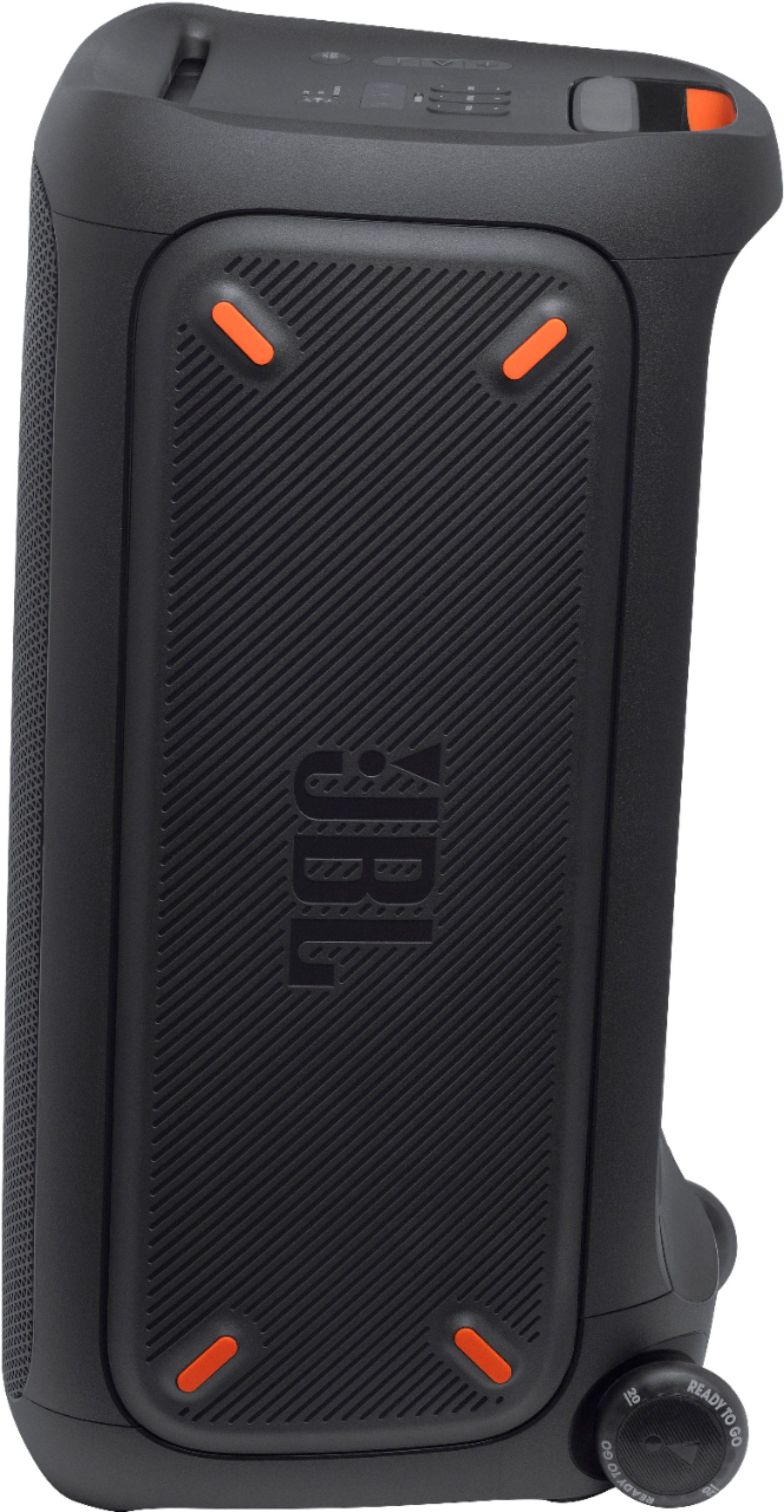
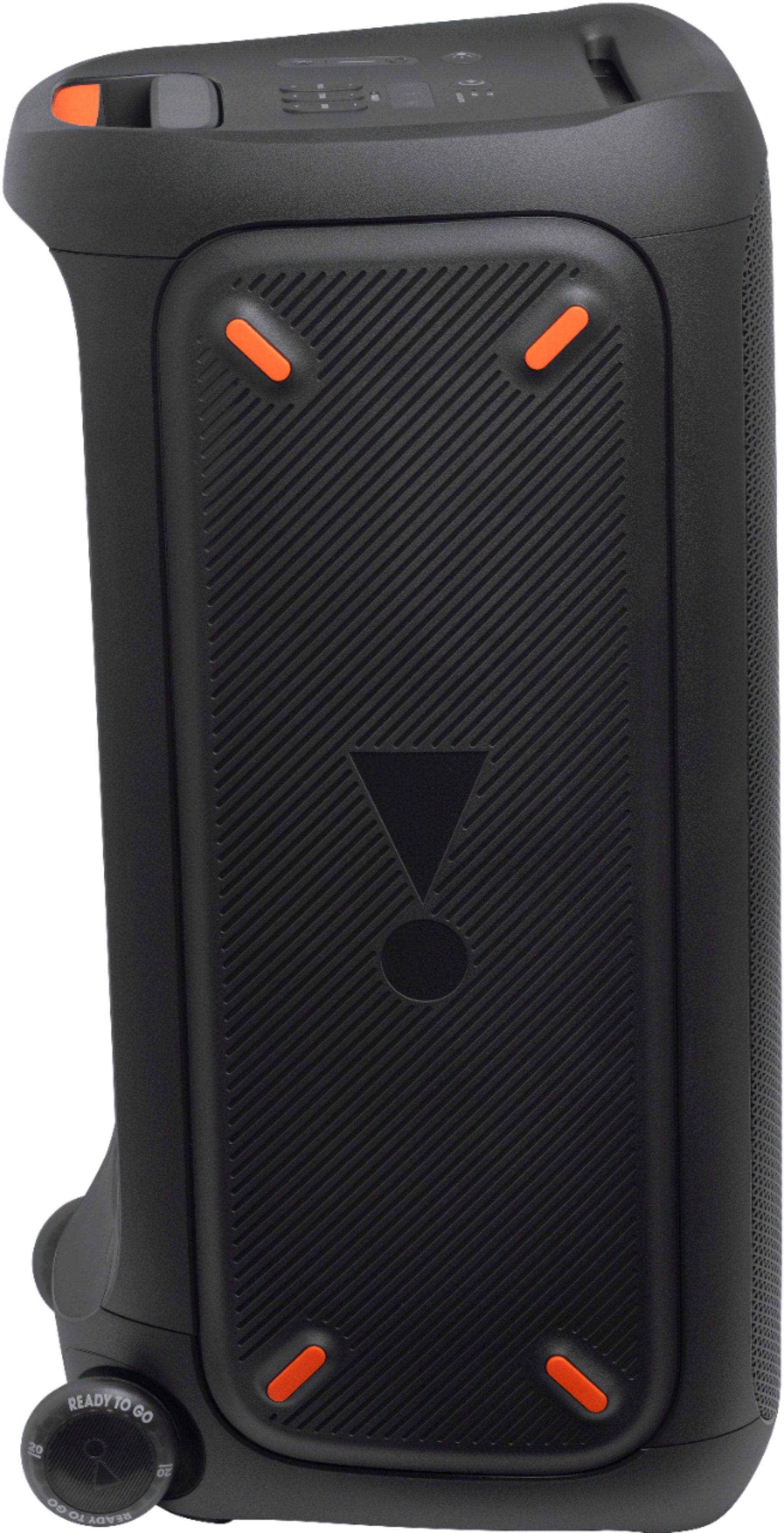
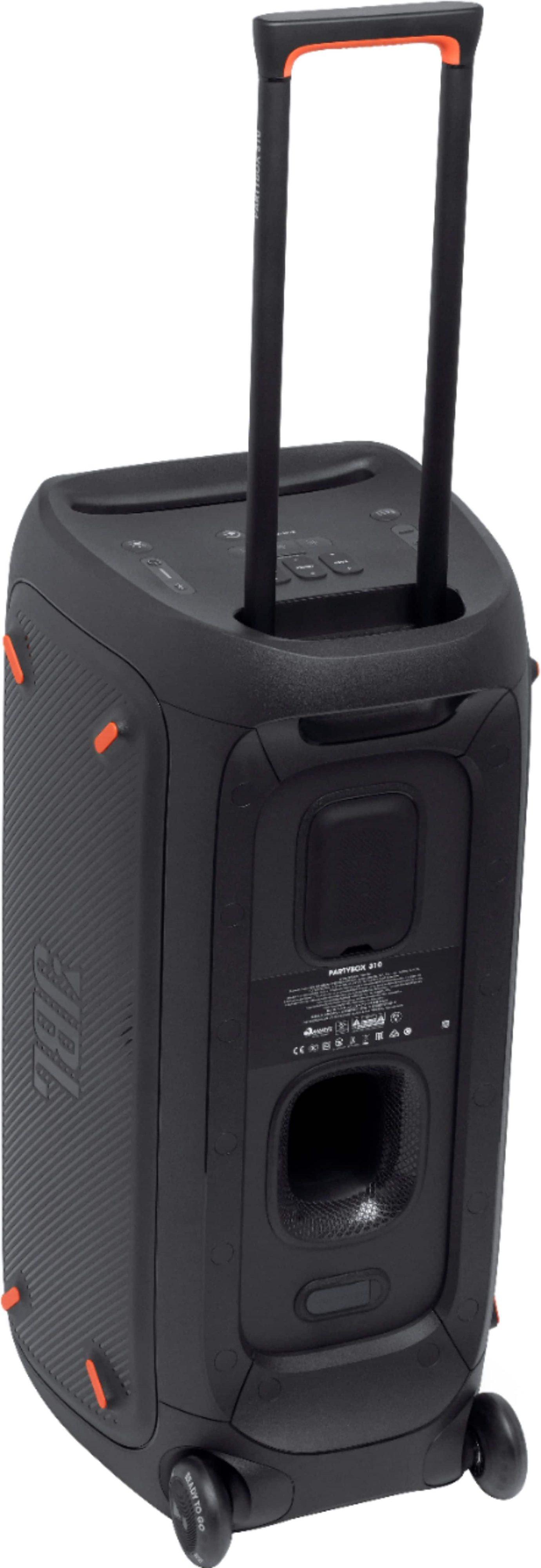
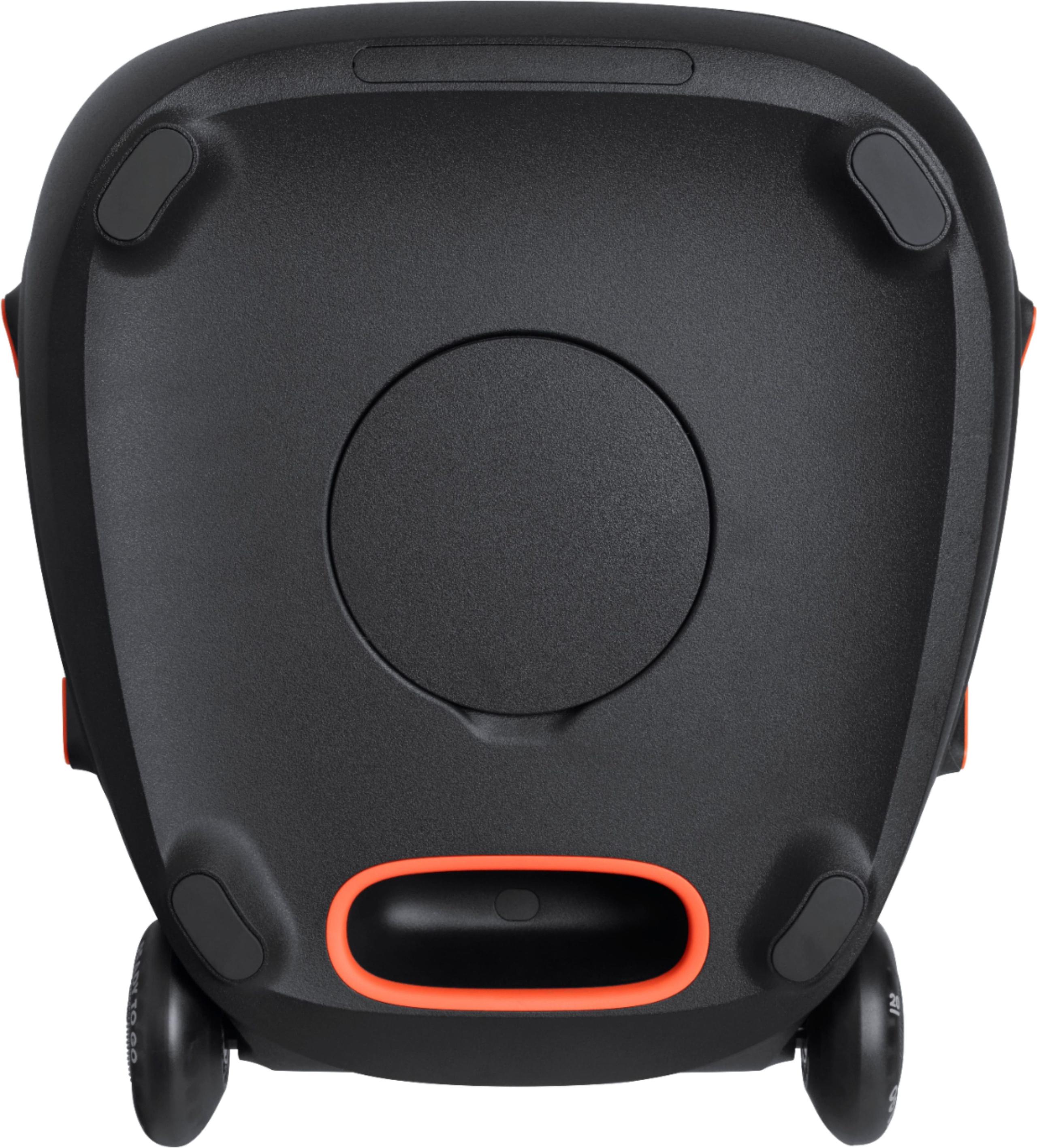
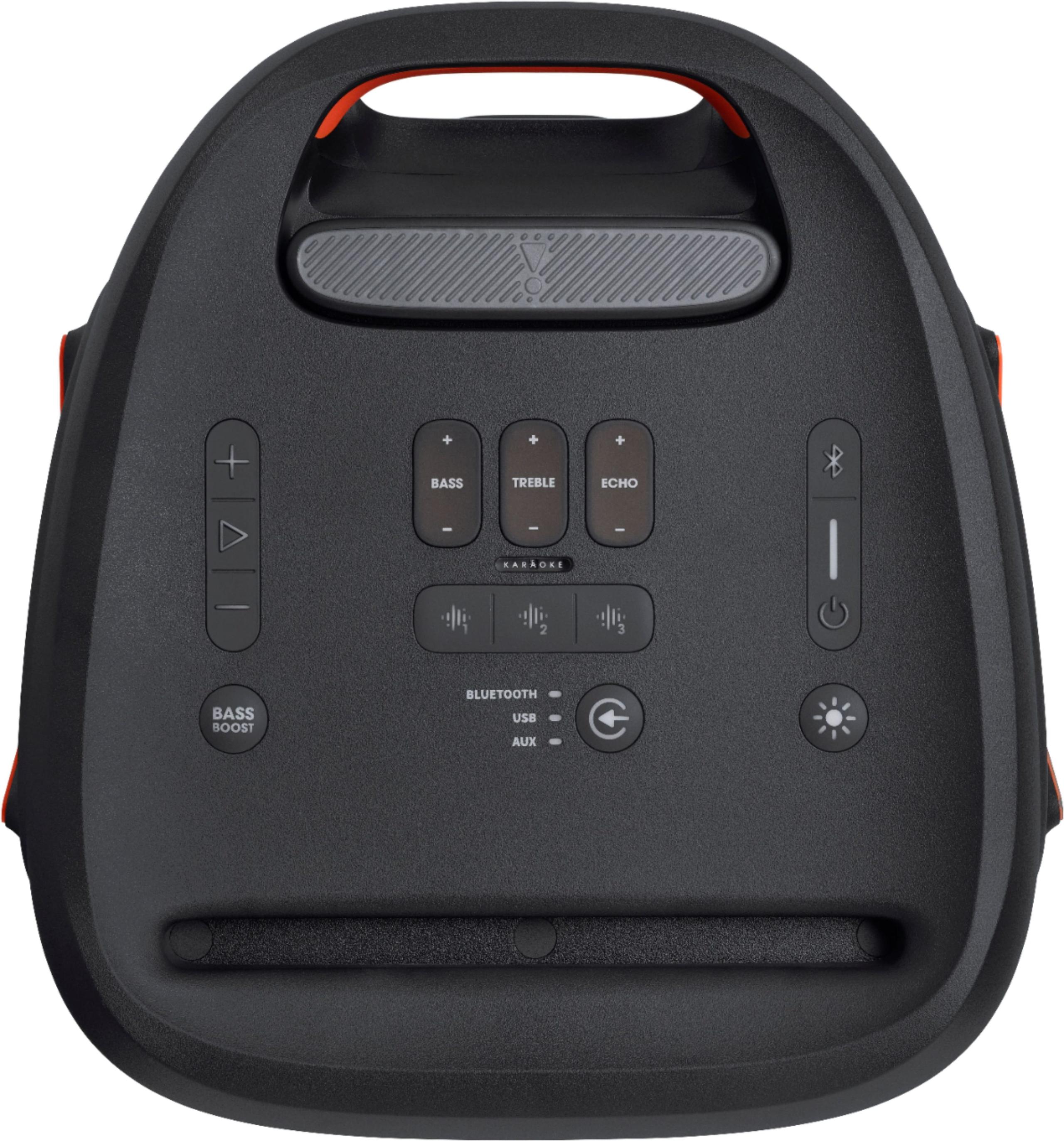
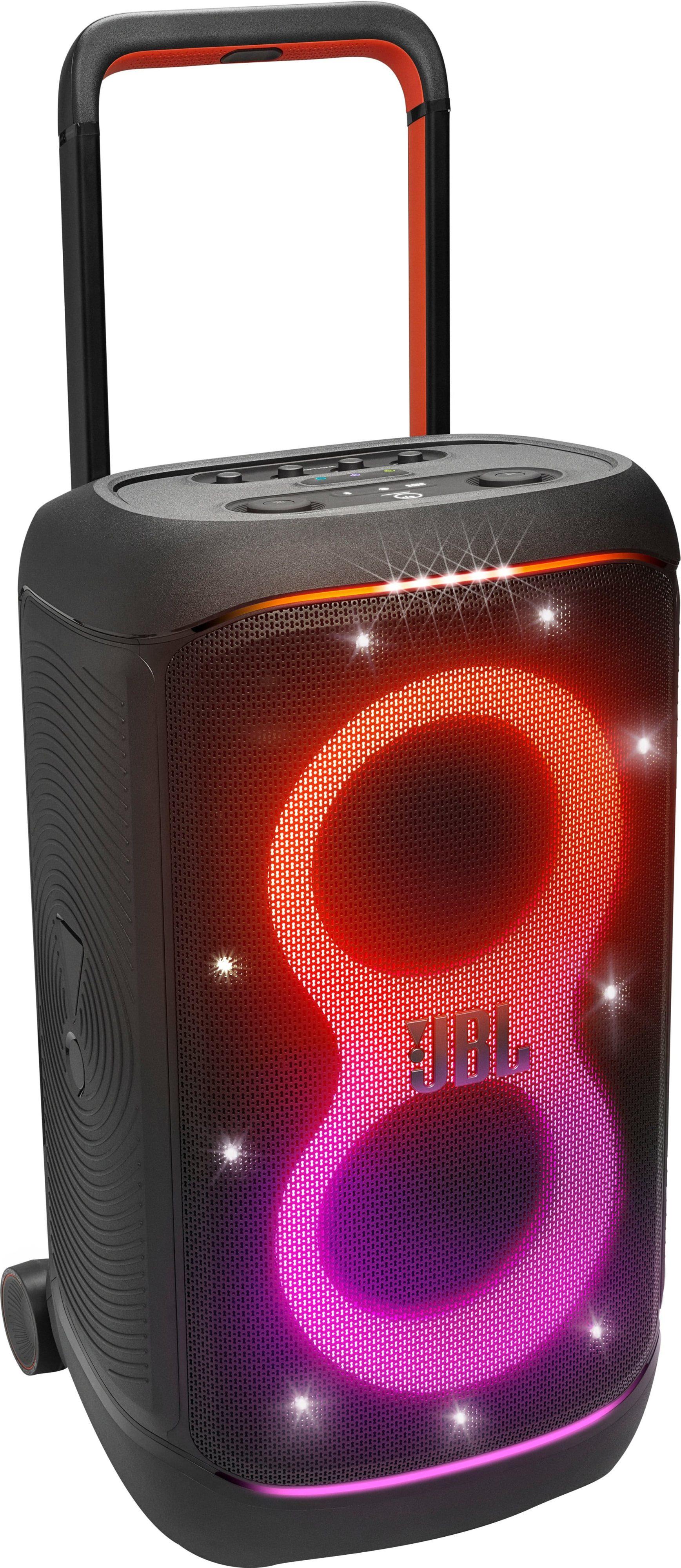
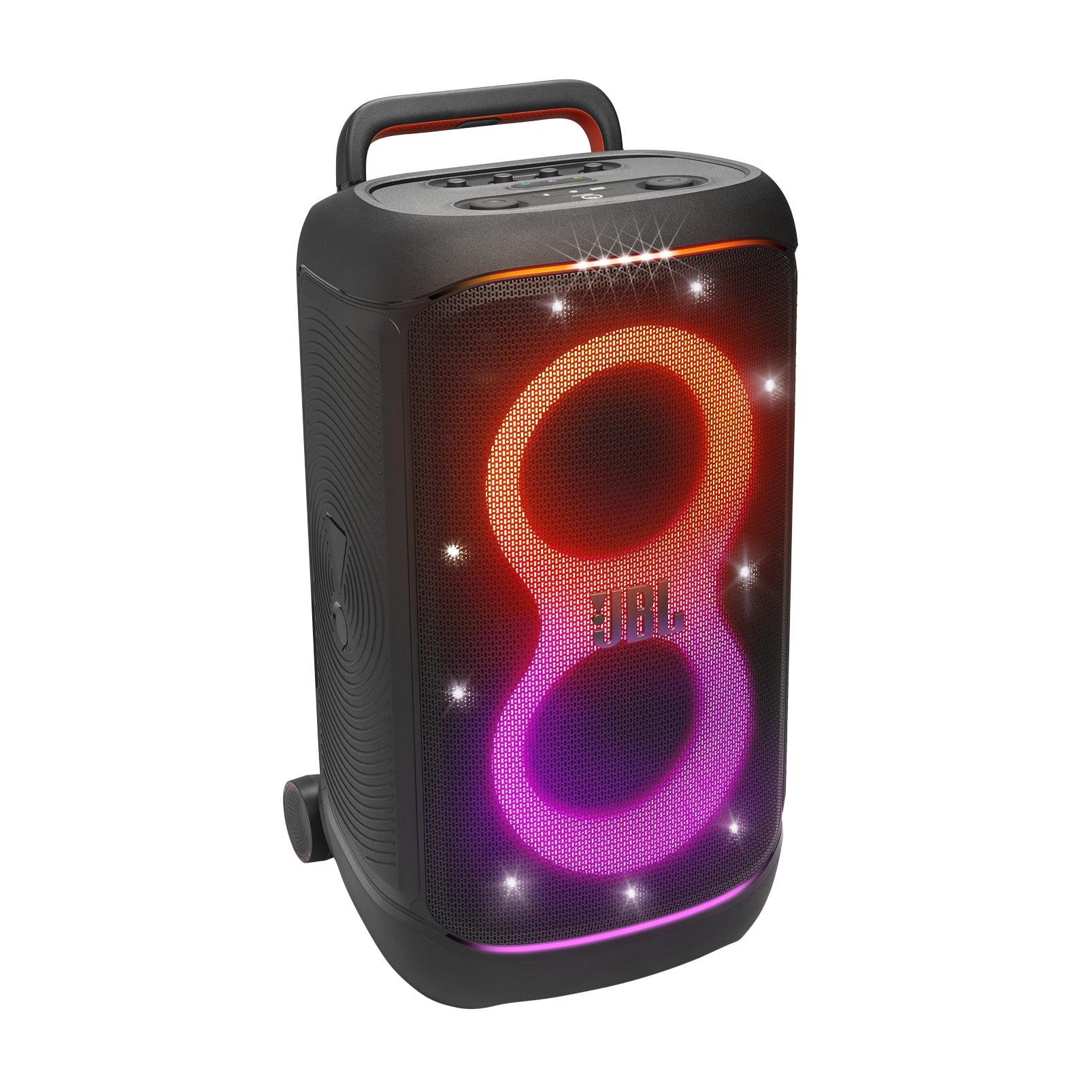
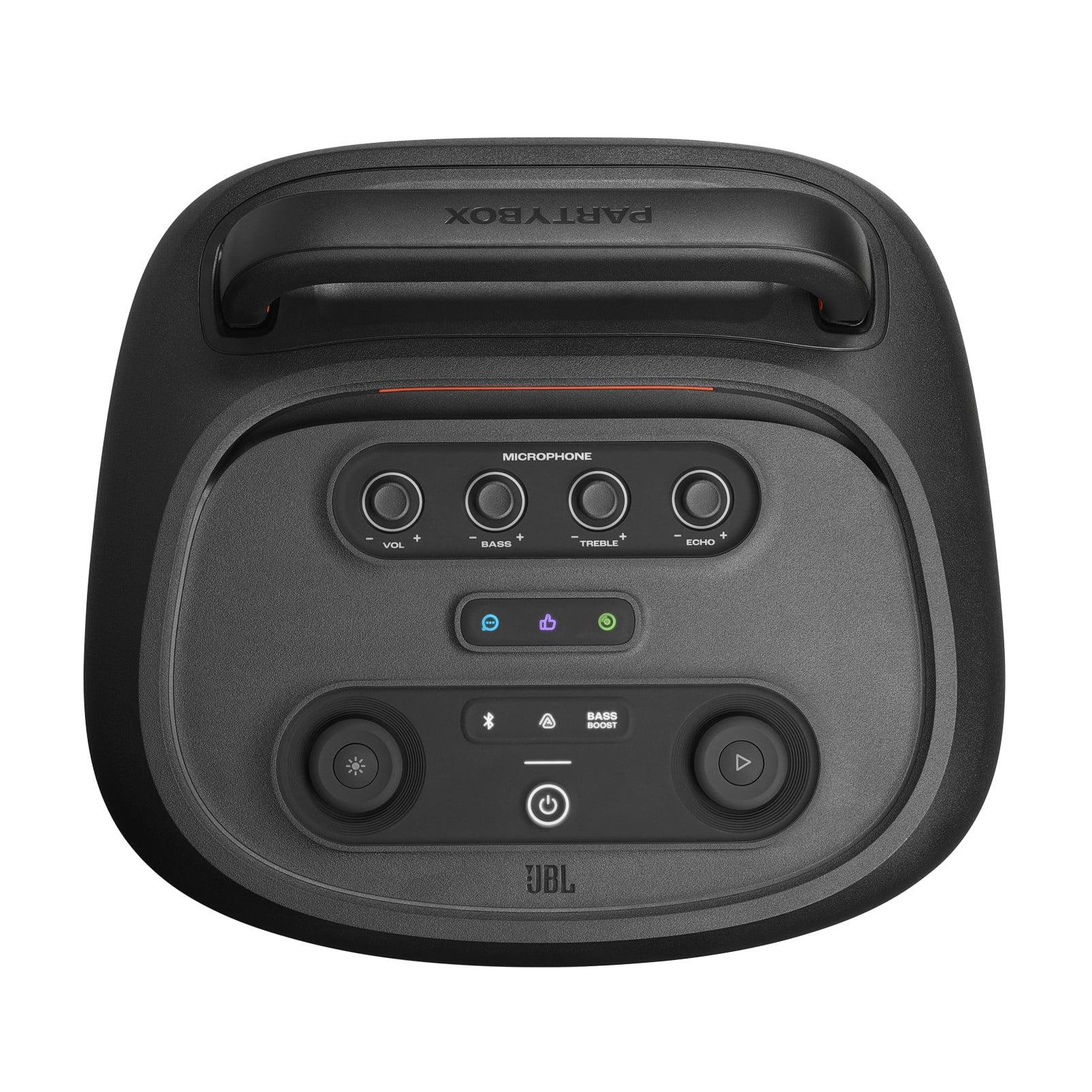
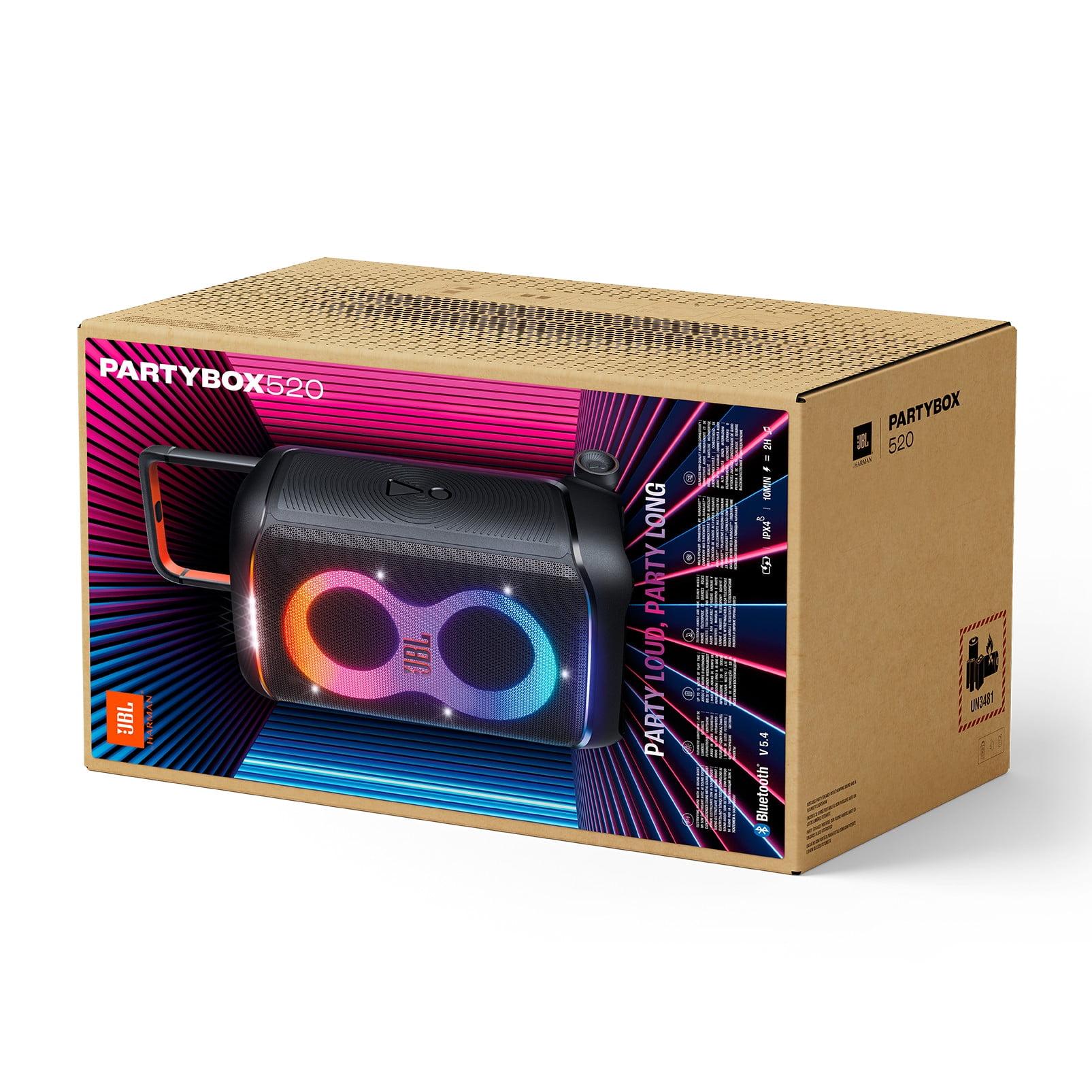
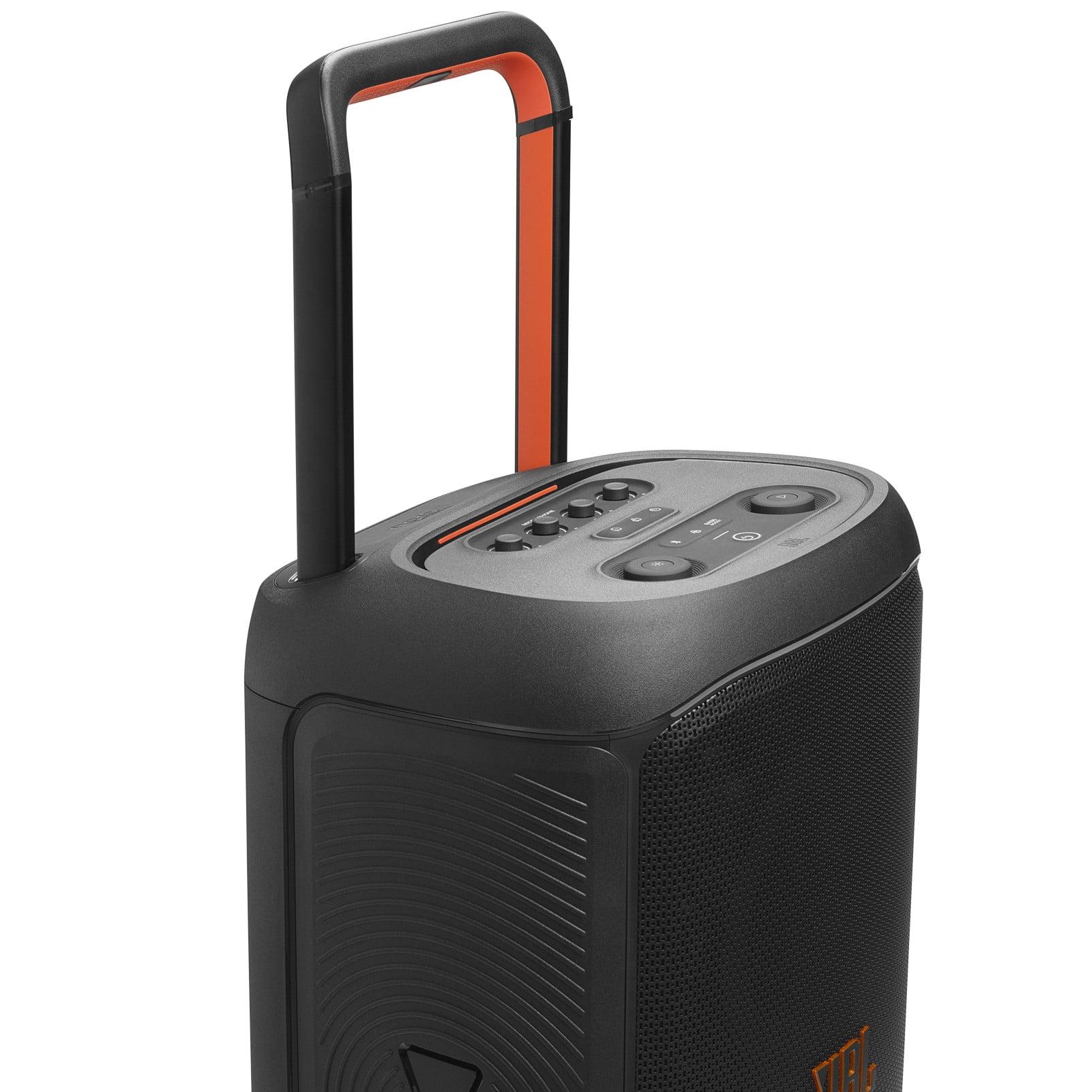
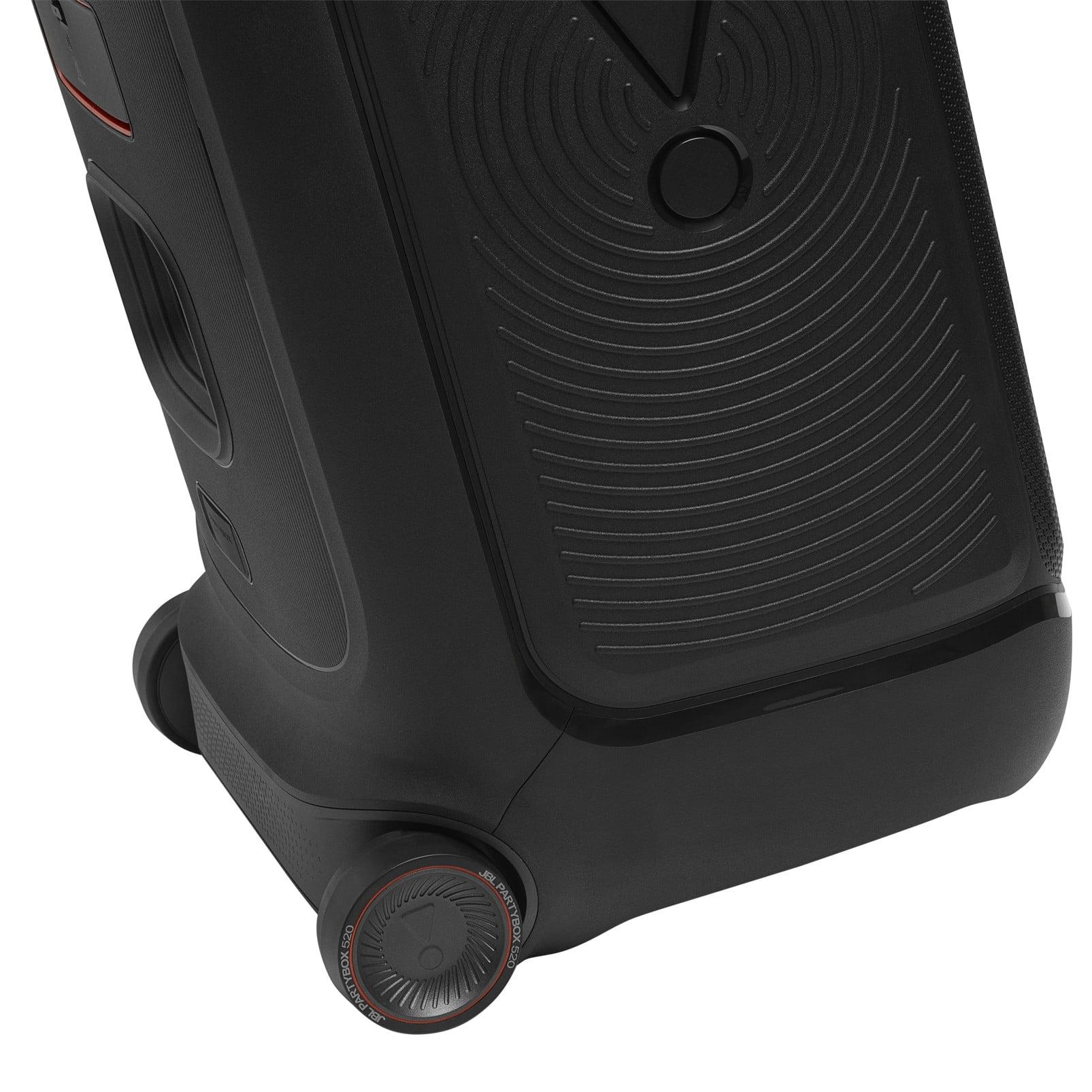
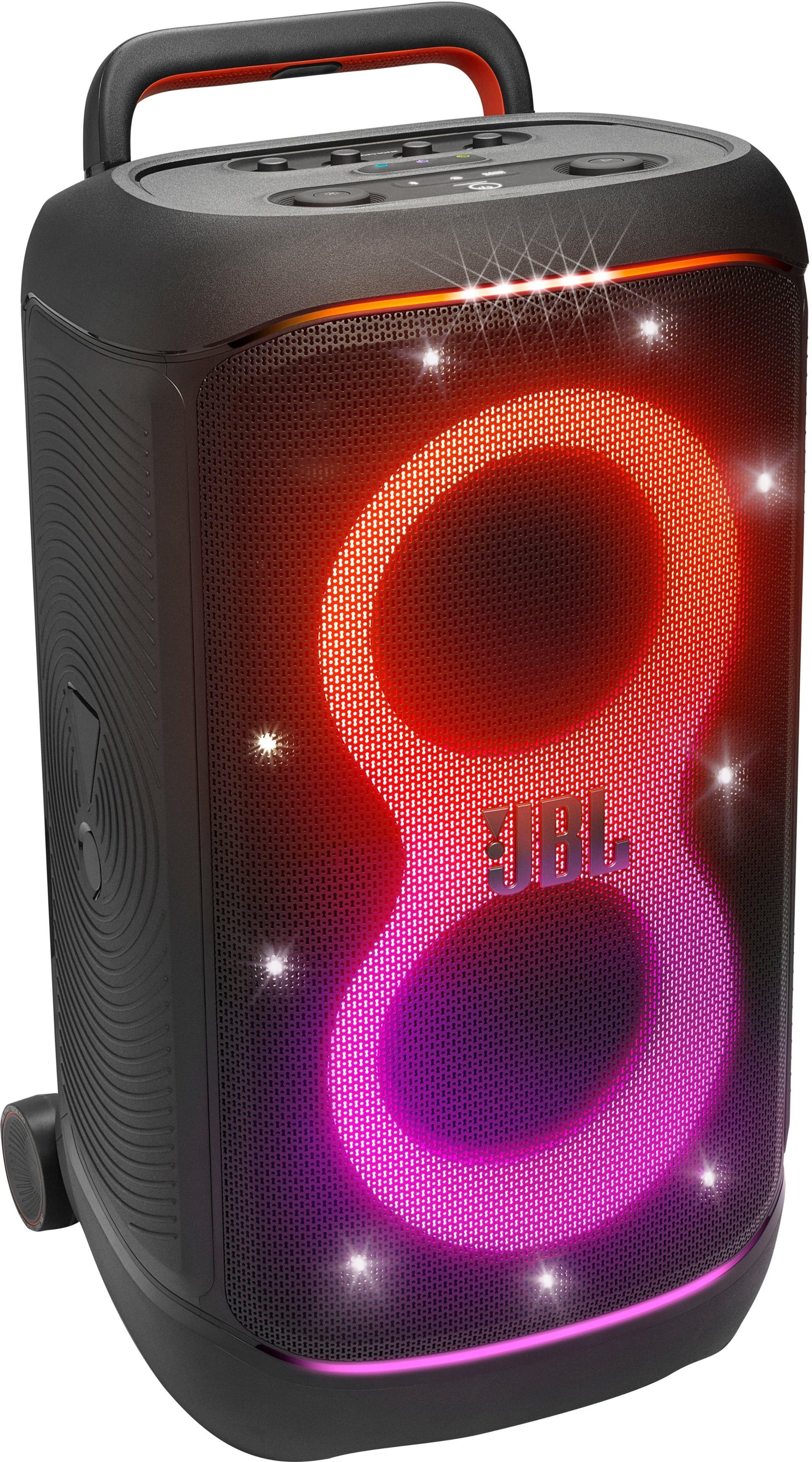
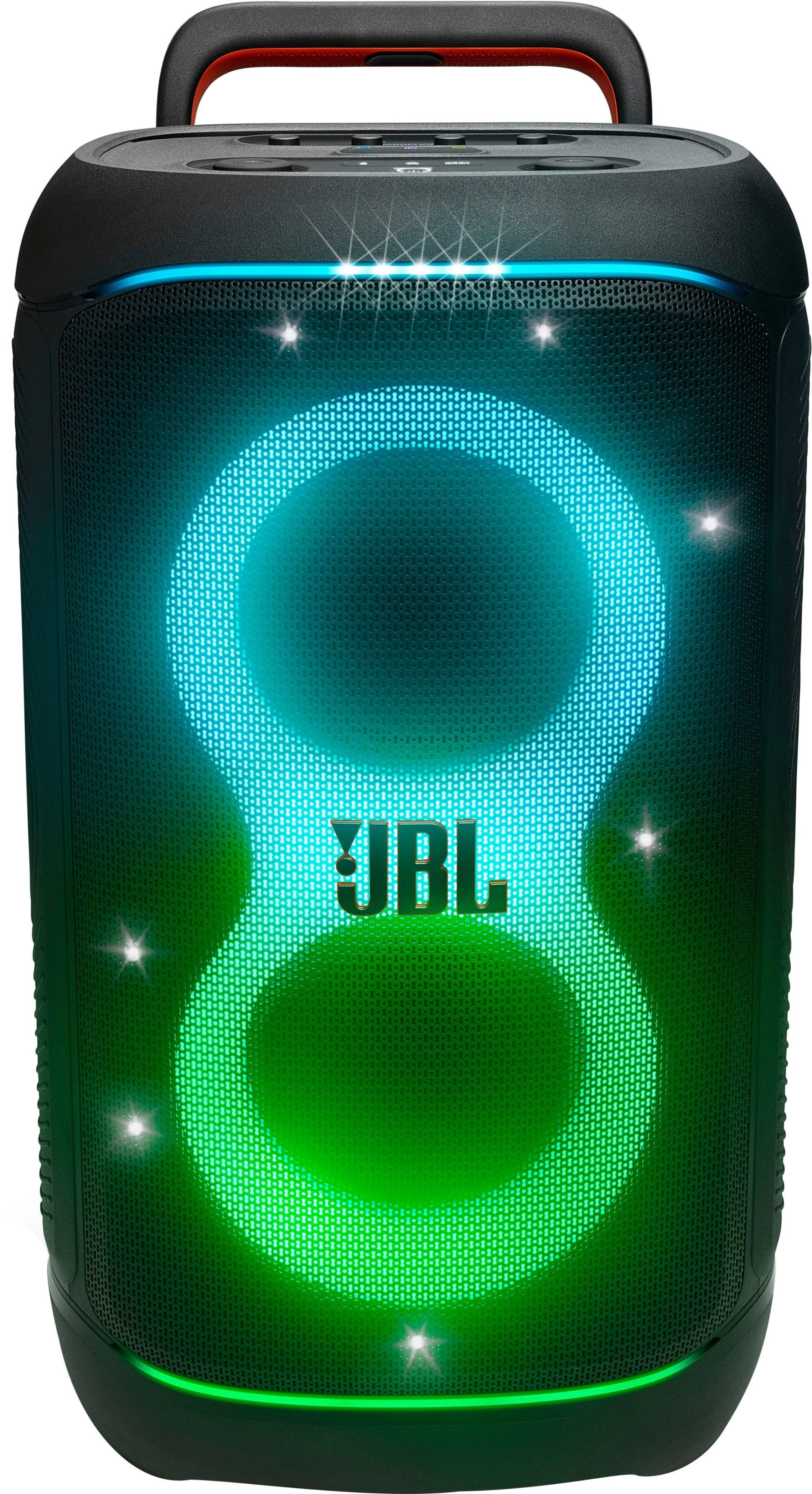
When you're shopping for a portable party speaker, you're entering a world where bigger definitely means louder—and louder usually means more fun. The JBL PartyBox 310 and JBL PartyBox 520 represent two generations of JBL's approach to portable entertainment, but they're targeting slightly different users and budgets.
These aren't your typical Bluetooth speakers that sit on a coffee table. Both speakers are designed to be the centerpiece of parties, outdoor gatherings, and events where you need serious volume and visual flair. Think of them as portable DJ rigs with built-in light shows that can fill large spaces with sound.
Before diving into specifics, it's worth understanding what makes party speakers different from regular home audio equipment. These speakers prioritize maximum volume output (measured in decibels or dB) over perfectly balanced sound. They need to compete with outdoor environments, crowds of people talking, and the challenge of filling large spaces without sounding thin or distorted.
RMS power (Root Mean Square) tells you how much continuous power a speaker can handle—this is more reliable than peak power ratings that only last for brief moments. Weather resistance, measured by IP ratings (Ingress Protection), matters because these speakers often end up poolside or at beach parties. An IPX4 rating means the speaker can handle splashes from any direction, which covers most party scenarios.
The other major consideration is frequency response—the range of sounds from deep bass (measured in Hz or hertz) to high treble that the speaker can reproduce. Lower numbers mean deeper bass, which is crucial for modern music genres like hip-hop, EDM, and pop that rely heavily on sub-bass frequencies.
The JBL PartyBox 310 launched in 2020 during the height of the pandemic when backyard gatherings became the norm. It represented JBL's sweet spot for portable party audio—powerful enough for outdoor use but manageable enough for one person to move around.
The JBL PartyBox 520, released in 2025, reflects five years of technological advancement and user feedback. During this period, we've seen significant improvements in battery technology, Bluetooth standards, and digital signal processing. The 520 incorporates these advances while addressing some limitations of the earlier model.
This is where the differences become immediately obvious. The PartyBox 520 delivers 400W RMS compared to the PartyBox 310's 240W RMS—a substantial 67% increase in continuous power output. In practical terms, this translates to the 520 being roughly 20% louder, which is more significant than it sounds.
Why power matters so much: Sound doesn't scale linearly. To double the perceived loudness, you need roughly 10 times the power. So that extra 160W in the PartyBox 520 represents a meaningful jump in how well it can fill large outdoor spaces or compete with ambient noise.
The speaker drivers tell the story clearly. The PartyBox 520 uses dual 7.5-inch woofers versus the 310's 6.5-inch drivers. Larger woofers move more air, creating deeper bass and higher maximum volume before distortion sets in. The 520's frequency response extends down to 40Hz versus 45Hz for the 310, which means you'll feel more of the sub-bass that makes modern music exciting.
However, raw power isn't everything. The PartyBox 310 handles its power efficiently and maintains good sound quality up to about 80% volume. Push it beyond that, and you'll hear compression and distortion creeping in. The PartyBox 520 maintains clarity across its entire volume range thanks to improved amplifier design and digital processing.
The PartyBox 520 introduces something genuinely new: AI Sound Boost. This isn't marketing fluff—it's real-time digital signal processing that analyzes the music as it plays and optimizes the output to prevent distortion while maximizing perceived loudness.
Think of it like having an audio engineer constantly adjusting the sound to get the best possible performance from the speakers. When bass frequencies threaten to overload the woofers, the system makes micro-adjustments to maintain clarity. When the music gets complex with multiple instruments, it ensures nothing gets lost in the mix.
This technology addresses one of the biggest challenges with portable speakers: maintaining good sound quality at party volumes. Most speakers, including the PartyBox 310, start to sound harsh or muddy when pushed to their limits. The AI processing in the 520 keeps the sound clean and powerful throughout the volume range.
Here's where things get interesting. The older PartyBox 310 actually offers longer battery life—up to 18 hours versus 15 hours for the PartyBox 520. This seems counterintuitive given that the 520 has a larger battery capacity (99.02Wh versus 72Wh).
The explanation lies in power consumption. The 520's more powerful amplifiers and additional LED lighting systems drain the battery faster, despite the larger capacity. For most users, 15 hours is still more than enough for any single event, but if you're planning all-day festivals or multi-day camping trips, those extra three hours matter.
The PartyBox 520 offers a game-changing feature: swappable batteries. While the replacement batteries aren't cheap (at the time of writing, they cost around $200), they enable unlimited runtime. You can keep the party going indefinitely by swapping in fresh batteries, something impossible with the 310's fixed internal battery.
Both speakers function as power banks for charging phones and tablets, but the 520 offers much faster charging through its 30W USB-C port compared to the 310's basic 5W USB-A port.
This is where the generational improvement really shows. The PartyBox 310 uses Bluetooth 5.1, which was cutting-edge in 2020. The PartyBox 520 upgrades to Bluetooth 5.4, offering better range, more stable connections, and improved audio quality with compatible devices.
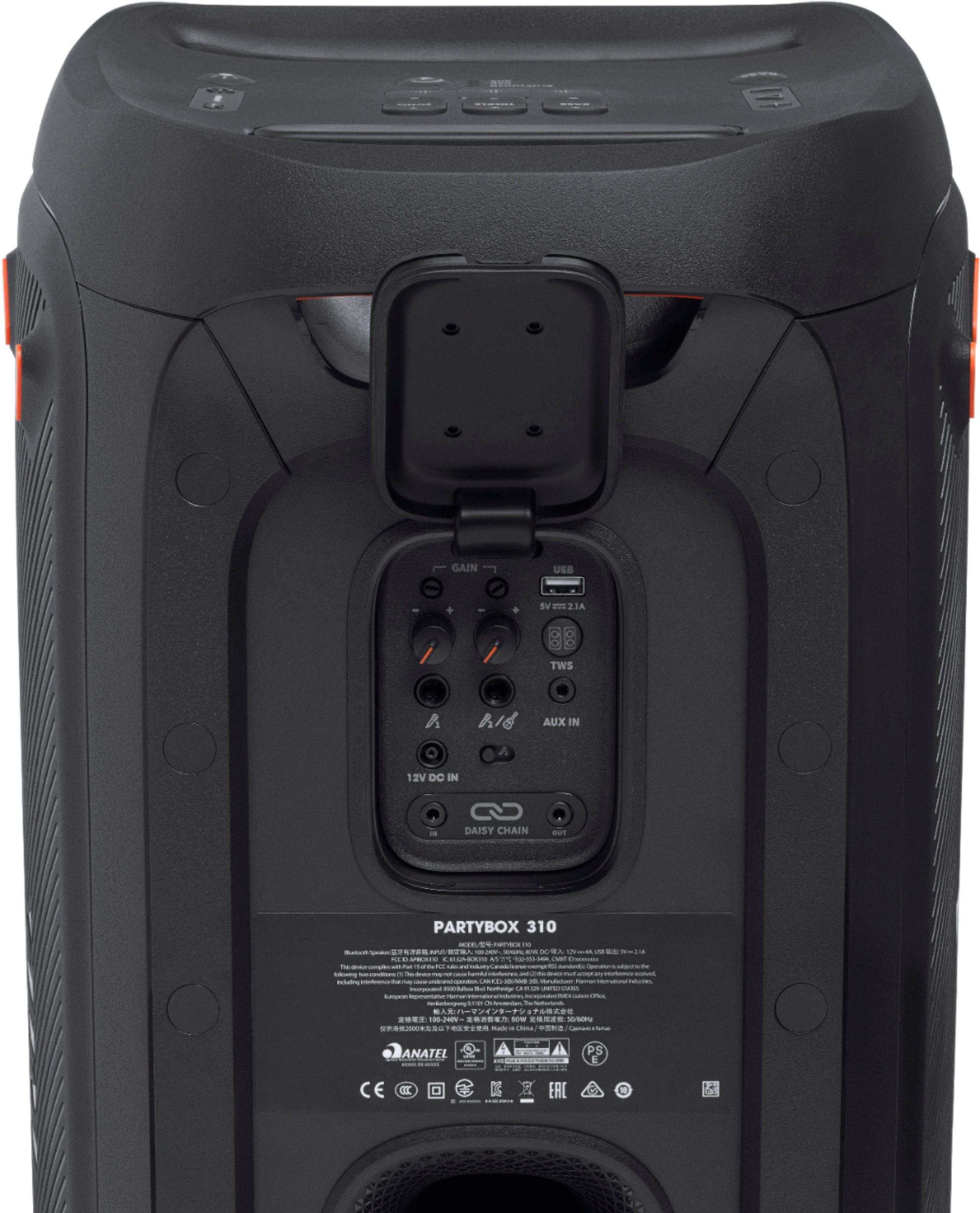
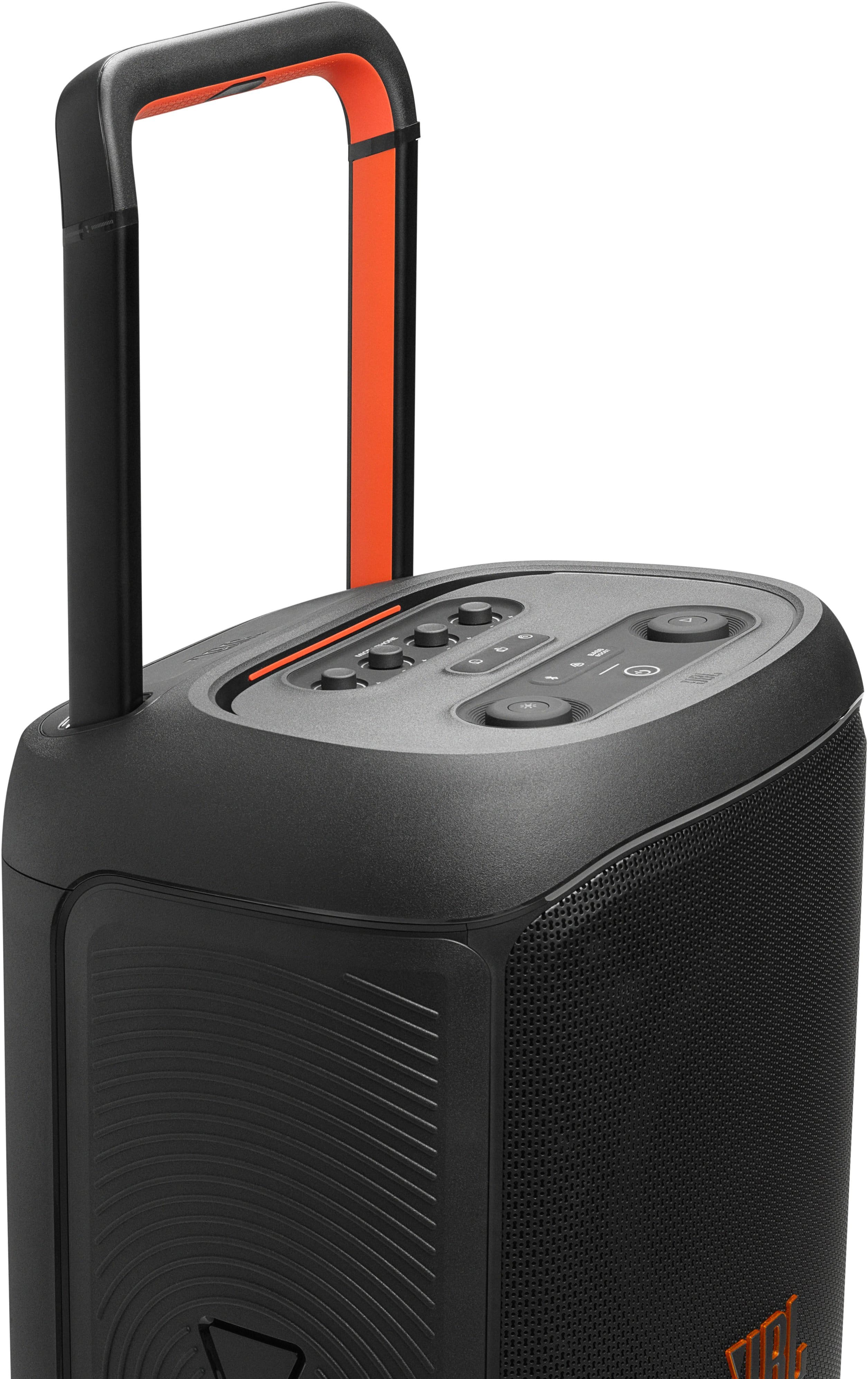
More importantly, the input options tell different stories about intended use. The PartyBox 310 has two quarter-inch TRS inputs for microphones or guitars—fine for karaoke and basic live music. The PartyBox 520 upgrades to combo XLR/TRS inputs, which are professional audio standards. XLR connections provide better signal quality and are what professional musicians and DJs expect to use.
The 520 also introduces Auracast technology, which enables multiple speakers to connect wirelessly and play in perfect synchronization. This goes beyond simple stereo pairing—you can create arrays of speakers for large events with precise timing control. The 310 supports basic True Wireless Stereo (TWS) pairing but lacks the advanced multi-speaker capabilities.
Here's the trade-off that matters most for many users. The PartyBox 310 weighs 38.4 pounds, while the PartyBox 520 tips the scales at 56.2 pounds. That 18-pound difference is significant when you're moving speakers around.
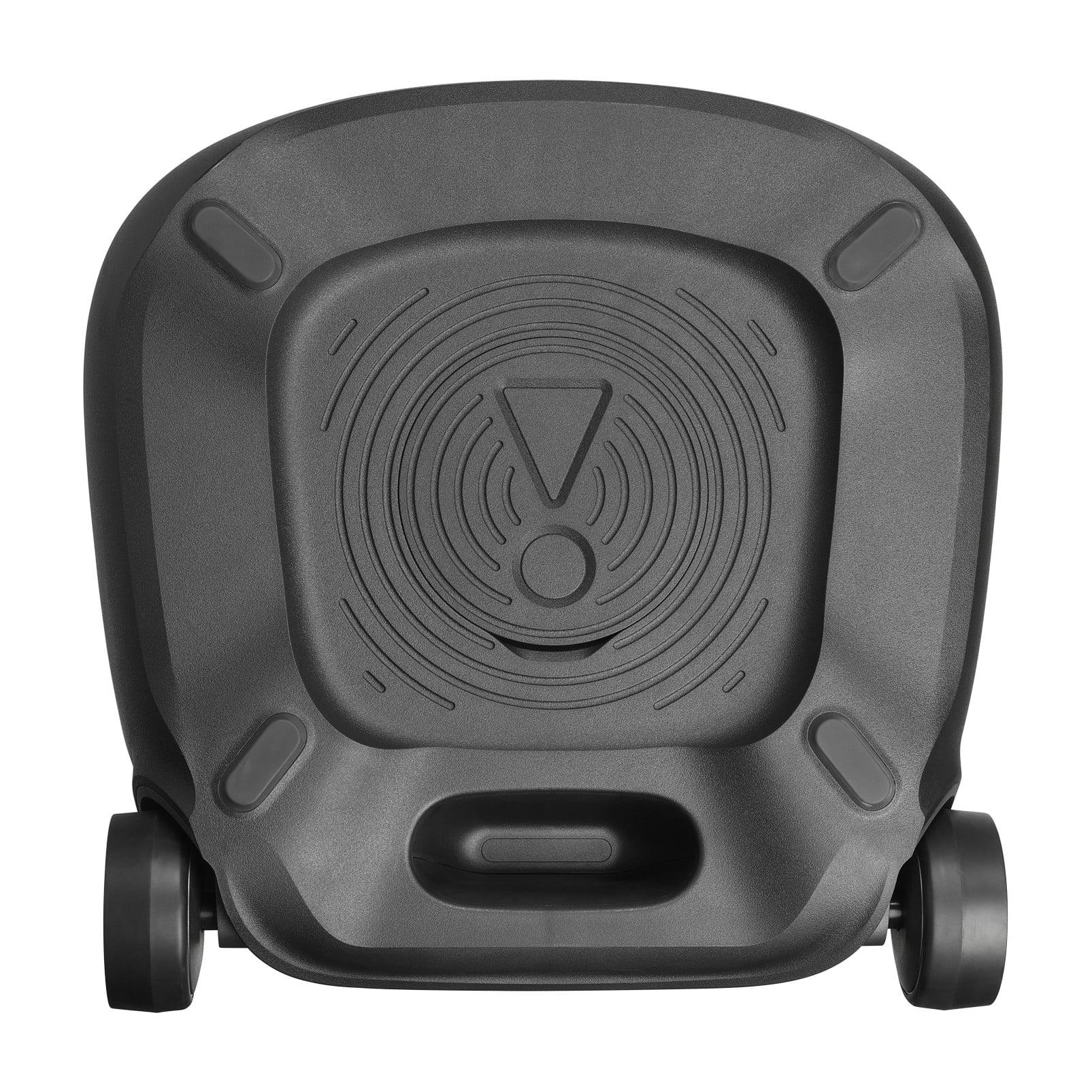
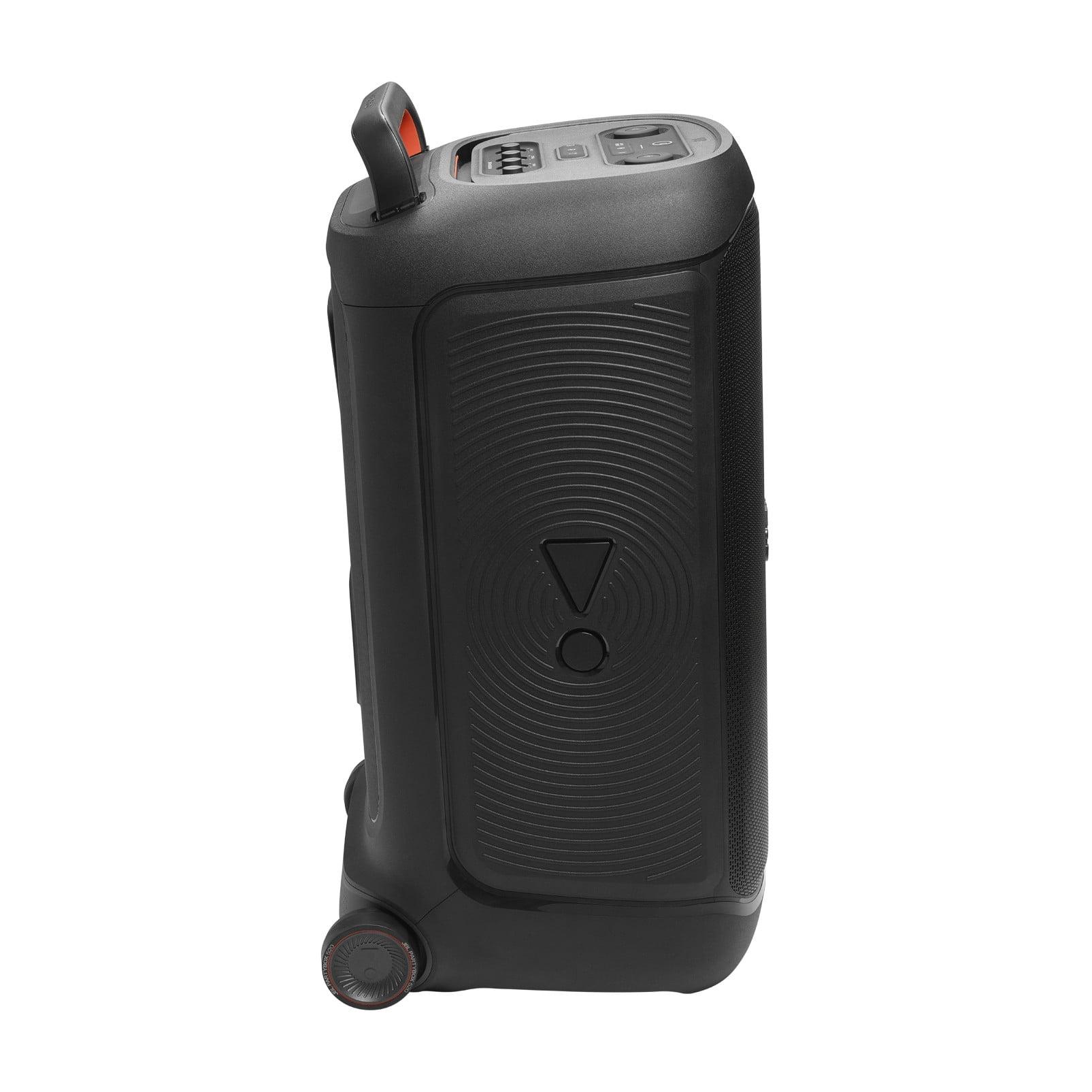
The 310 features a telescoping handle that adjusts to different user heights, making it easier for shorter users to wheel around comfortably. Both speakers have wheels, but the 520's are wider and more robust for outdoor terrain.
In practical terms, the 310 is manageable for most people to lift into a car trunk or carry up stairs when necessary. The 520 really requires two people for lifting and is best suited to wheeled transport only. This weight difference will influence your buying decision more than you might expect.
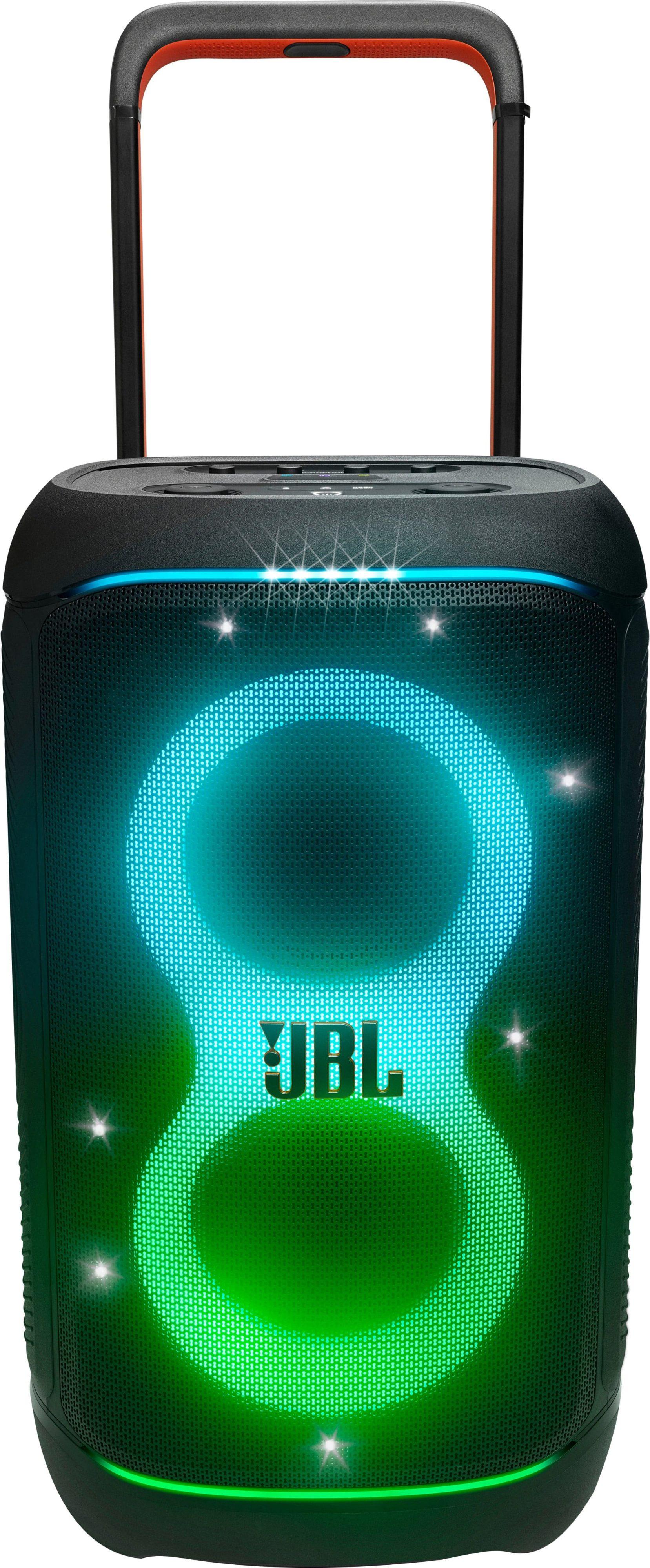
Both speakers feature synchronized light shows, but the PartyBox 520 takes this to another level. While the 310 has LED rings around the drivers and basic strobe effects, the 520 adds LED strips and significantly more strobe LEDs that react dynamically to bass frequencies.
The visual difference is substantial—the 520 creates a more immersive party atmosphere with lighting that feels more like a professional DJ setup. If you're using the speaker as the centerpiece of a party where people will be dancing and the lights are part of the entertainment, the 520's enhanced light show justifies some of the price premium.
While these aren't traditional home theater speakers, both can work in large entertainment spaces. The PartyBox 310 might actually be better suited for home theater use due to its more balanced frequency response and lower weight for repositioning.
The 520's extra power is overkill for most living rooms and might overwhelm smaller spaces. However, if you have a large basement entertainment area or open-plan home where you want one speaker to fill multiple rooms, the 520's extra output could be worthwhile.
Neither speaker is optimized for dialogue clarity like dedicated home theater systems, so they work best for music, gaming, and action movies rather than dialogue-heavy content.
Small to medium indoor parties (up to 75 people): The PartyBox 310 provides more than enough volume and its lighter weight makes setup easier. The 18-hour battery life means you won't worry about power during typical house parties.
Large outdoor gatherings: The PartyBox 520 becomes necessary when you're dealing with open spaces, wind, and the sound absorption of large crowds. Its extra power maintains clarity at high volumes needed for outdoor events.
Professional or semi-professional use: The 520's XLR inputs, swappable battery, and professional build quality make it suitable for DJs, small venue events, or regular commercial use. The 310 is better suited for enthusiast-level use.
Regular home entertainment: For users who primarily want great sound for backyard barbecues and occasional gatherings, the 310 offers better value and practical advantages.
At the time of writing, the price difference between these speakers is substantial—the PartyBox 520 typically costs roughly 60-70% more than the 310. The 310 often sees significant discounts, making the value gap even wider.
From a pure performance-per-dollar perspective, the 310 delivers excellent value for most users. You get professional-grade volume, good sound quality, and party features at a more accessible price point.
The PartyBox 520 represents a premium investment that's justified mainly if you need maximum power output, professional connectivity, or plan to use the speaker frequently for large events. The AI Sound Boost and swappable battery are genuinely useful innovations, but they come at a significant cost premium.
Choose the PartyBox 310 if you:
Choose the PartyBox 520 if you:
The PartyBox 310 remains an excellent choice for most users, offering proven performance and better value. The PartyBox 520 is genuinely better in measurable ways, but those improvements come at a significant cost that's justified mainly for power users and professional applications.
For most people throwing house parties, backyard gatherings, or even medium-sized outdoor events, the 310 provides all the power and features you'll actually use, while being easier to transport and gentler on your budget. The 520 is the choice when good enough isn't good enough—when you need the absolute best performance JBL offers in a portable package.
| JBL PartyBox 310 Portable Speaker | JBL PartyBox 520 Speaker |
|---|---|
| Power Output - Determines maximum volume and bass impact | |
| 240W RMS (good for indoor parties up to 75 people) | 400W RMS (67% more power for large outdoor events) |
| Speaker Drivers - Affects sound quality and bass depth | |
| 2× 6.5" woofers + 2× 2.25" tweeters | 2× 7.5" woofers + 2× 1" tweeters (larger woofers = deeper bass) |
| Weight - Critical for portability and setup ease | |
| 38.4 lbs (manageable for one person to move) | 56.2 lbs (requires two people or wheeled transport only) |
| Battery Life - How long parties can last unplugged | |
| Up to 18 hours (longer single-charge operation) | Up to 15 hours (shorter but has swappable battery option) |
| Battery System - Affects long-term usability | |
| Fixed internal battery (no replacement option) | Swappable battery system (unlimited runtime with spare batteries) |
| Frequency Response - How deep the bass goes | |
| 45Hz – 20kHz (good bass extension) | 40Hz – 20kHz (deeper sub-bass for modern music) |
| Audio Processing - Sound quality at high volumes | |
| Standard amplification (clarity drops above 80% volume) | AI Sound Boost technology (maintains clarity at all volumes) |
| Bluetooth Version - Connection stability and range | |
| Bluetooth 5.1 (solid 2020-era connectivity) | Bluetooth 5.4 (improved range and stability) |
| Professional Inputs - Microphone and instrument connectivity | |
| 2× 1/4" TRS inputs (basic karaoke/guitar use) | 2× XLR/TRS combo inputs (professional-grade connectivity) |
| Multi-Speaker Pairing - Connecting multiple units | |
| True Wireless Stereo pairing only | Auracast technology (advanced multi-speaker synchronization) |
| Device Charging - Power bank capability | |
| USB-A port with 5W output (slow phone charging) | USB-C port with 30W output (fast charging for tablets/phones) |
| Light Show - Visual entertainment features | |
| 2 LED rings + 4 white strobes (basic party lighting) | 2 LED rings + 2 LED strips + 15 strobes (immersive light show) |
| Water Resistance - Protection from spills and weather | |
| IPX4 splashproof (handles poolside use) | IPX4 splashproof (same protection level) |
| Handle Design - Affects ease of transport | |
| Telescoping handle (adjusts to user height) | Fixed handle with enhanced wheels (better for rough terrain) |
| Release Year - Technology generation | |
| 2020 (proven reliability, 5-year track record) | 2025 (latest technology and features) |
The JBL PartyBox 520 is significantly louder with 400W RMS compared to the JBL PartyBox 310's 240W RMS. This 67% power increase translates to roughly 20% more perceived loudness, making the 520 better for large outdoor events while the 310 is sufficient for most indoor parties.
The JBL PartyBox 310 weighs 38.4 lbs while the JBL PartyBox 520 weighs 56.2 lbs—an 18-pound difference. The 310 is manageable for one person to move, but the heavier 520 typically requires two people for lifting and is best suited for wheeled transport.
The JBL PartyBox 310 offers longer battery life at up to 18 hours compared to the PartyBox 520's 15 hours. However, the 520 features a swappable battery system that allows unlimited runtime with spare batteries, while the 310 has a fixed internal battery.
No, the JBL PartyBox 520 has more advanced connectivity with Bluetooth 5.4, XLR/TRS combo inputs for professional microphones, and USB-C audio. The JBL PartyBox 310 uses Bluetooth 5.1 and standard 1/4" TRS inputs, making the 520 better for professional use.
The JBL PartyBox 520 is superior for outdoor events due to its higher power output, deeper bass response (40Hz vs 45Hz), and AI Sound Boost technology that maintains clarity at high volumes. The 310 works well for smaller outdoor gatherings but may struggle in very large or noisy environments.
Both speakers support multi-speaker pairing, but the JBL PartyBox 520 offers advanced Auracast technology for precise synchronization of multiple units. The PartyBox 310 supports basic True Wireless Stereo pairing with another 310 unit.
The JBL PartyBox 520 delivers superior sound quality with its AI Sound Boost technology, larger 7.5" woofers, and improved amplification that maintains clarity throughout the entire volume range. The 310 sounds good up to about 80% volume but can become distorted when pushed to maximum levels.
Both the JBL PartyBox 310 and 520 have IPX4 splashproof ratings, meaning they can handle water splashes from any direction but shouldn't be submerged. This makes both suitable for poolside parties and light rain exposure.
The JBL PartyBox 310 typically offers better value for most users, providing excellent performance at a lower cost with frequent discounts available. The PartyBox 520 costs significantly more but is justified for users who need maximum power or professional features.
Yes, but the JBL PartyBox 520 has a more impressive light display with 2 LED rings, 2 LED strips, and 15 white strobes compared to the 310's 2 LED rings and 4 strobes. The 520's enhanced lighting creates a more immersive party atmosphere.
The JBL PartyBox 310 is much easier to transport due to its lighter weight and telescoping handle that adjusts to different user heights. The 520 is substantially heavier and better suited for users who primarily wheel it rather than lift it frequently.
Yes, both can charge devices, but the JBL PartyBox 520 offers faster 30W USB-C charging compared to the PartyBox 310's basic 5W USB-A port. The 520 can quickly charge tablets and phones, while the 310 provides slower emergency charging.
We've done our best to create useful and informative comparisons to help you decide what product to buy. Our research uses advanced automated methods to create this comparison and perfection is not possible - please contact us for corrections or questions. These are the sites we've researched in the creation of this article: rtings.com - comparisontabl.es - crutchfield.com - youtube.com - bestbuy.com - rtings.com - youtube.com - versus.com - youtube.com - youtube.com - jbl.com - youtube.com - crutchfield.com - manuals.plus - in.jbl.com - jbl.com.tw - mm.jbl.com - bestbuy.com - jbl.com - onward.ph - youtube.com - manuals.plus - harmanaudio.com - support.jbl.com - youtube.com - kh.jbl.com - bestbuy.com - soundguys.com - rtings.com - rtings.com - rtings.com - letemsvetemapplem.eu - youtube.com - worldwidestereo.com - youtube.com - global.jbl.com - youtube.com - soundguys.com - youtube.com - youtube.com - comparisontabl.es - youtube.com - youtube.com - youtube.com - gzhls.at - sweetwater.com - static.pcrichard.com - brandsmartusa.com - news.harman.com - jbl.com - ro.harmanaudio.com - jbl.com - creativeaudio.net

Privacy Policy
Terms and Conditions - Affiliate Policy
Home Security
© Copyright 2008-2026.
11816 Inwood Rd #1211, Dallas, TX 75244