

When it comes to throwing an epic party, your speaker choice can make or break the vibe. The battle between portable party speakers has intensified over the past few years, with two standout contenders emerging: the JBL PartyBox 310 and the Sony ULT Tower 10. These aren't your typical Bluetooth speakers—they're purpose-built entertainment machines designed to pump out serious volume with enough bass to get everyone moving.
At the time of writing, these speakers sit in different price tiers, with the JBL PartyBox 310 positioning itself as the more budget-friendly option while the Sony ULT Tower 10 commands a premium price for premium performance. But price alone doesn't tell the whole story. Understanding what makes each speaker tick—and which one fits your specific needs—requires diving deeper into their design philosophies, technical capabilities, and real-world performance.
Party speakers occupy a unique space in the audio world. Unlike bookshelf speakers designed for critical listening or portable speakers optimized for convenience, party speakers prioritize three key elements: volume, bass impact, and entertainment features. They need to fill large spaces with sound, deliver the kind of deep bass that makes electronic and hip-hop music come alive, and often include features like lighting effects and microphone inputs for karaoke or announcements.
The most critical performance metrics for party speakers differ from traditional audio equipment. Maximum sound pressure level (SPL)—measured in decibels—tells you how loud a speaker can get before distorting. Frequency response, particularly in the low end (20-100 Hz), determines how deep and powerful the bass sounds. Power handling, measured in watts, affects both volume capability and dynamic range (the difference between quiet and loud sounds). Finally, total harmonic distortion (THD) indicates how clean the sound remains at high volumes.
These speakers also face unique engineering challenges. Achieving high volume requires significant power, which means either large batteries (adding weight) or AC power (limiting portability). Deep bass demands large drivers or clever acoustic design, again impacting size and weight. The result is that party speakers involve more trade-offs than other speaker categories.
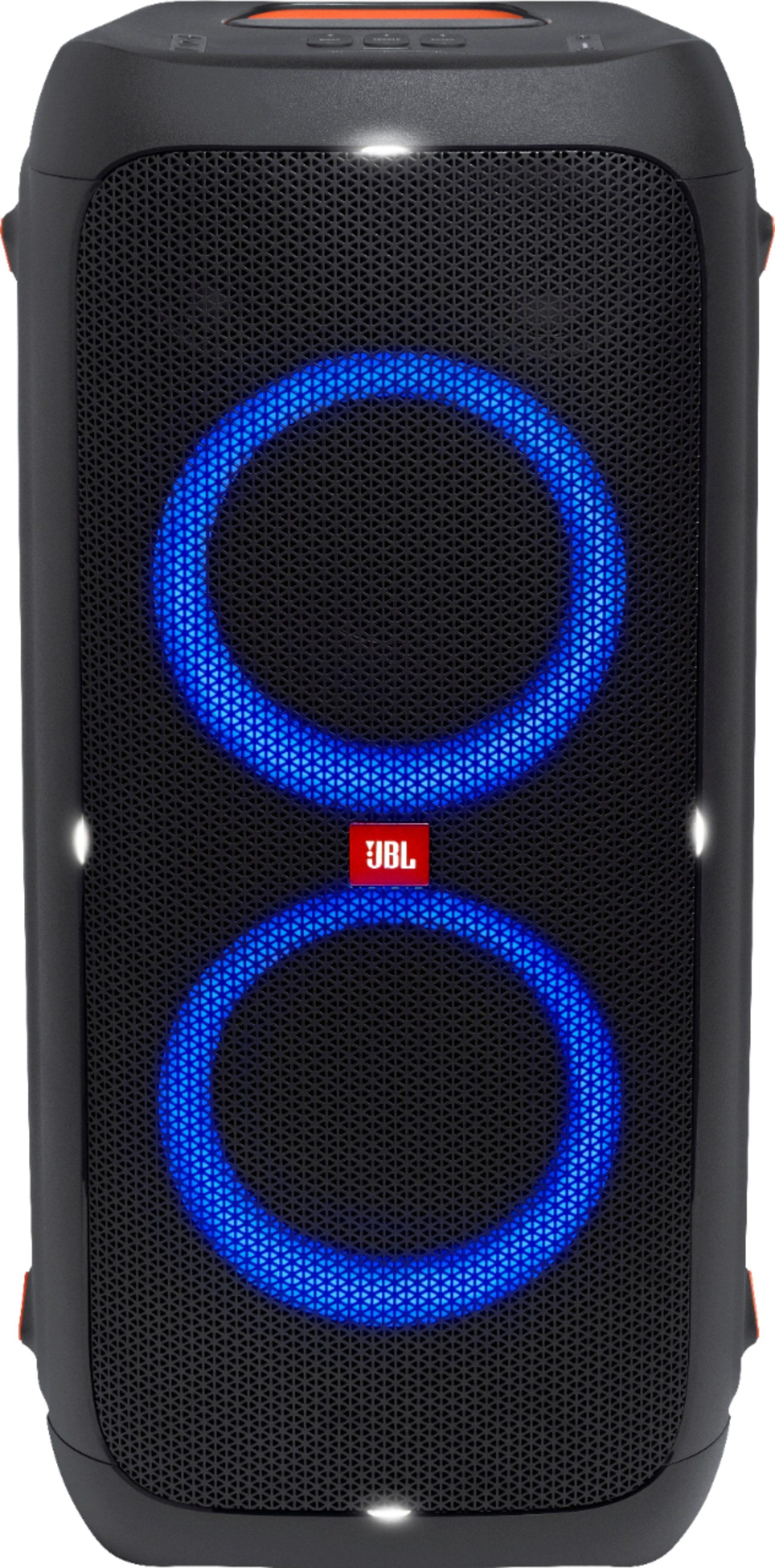
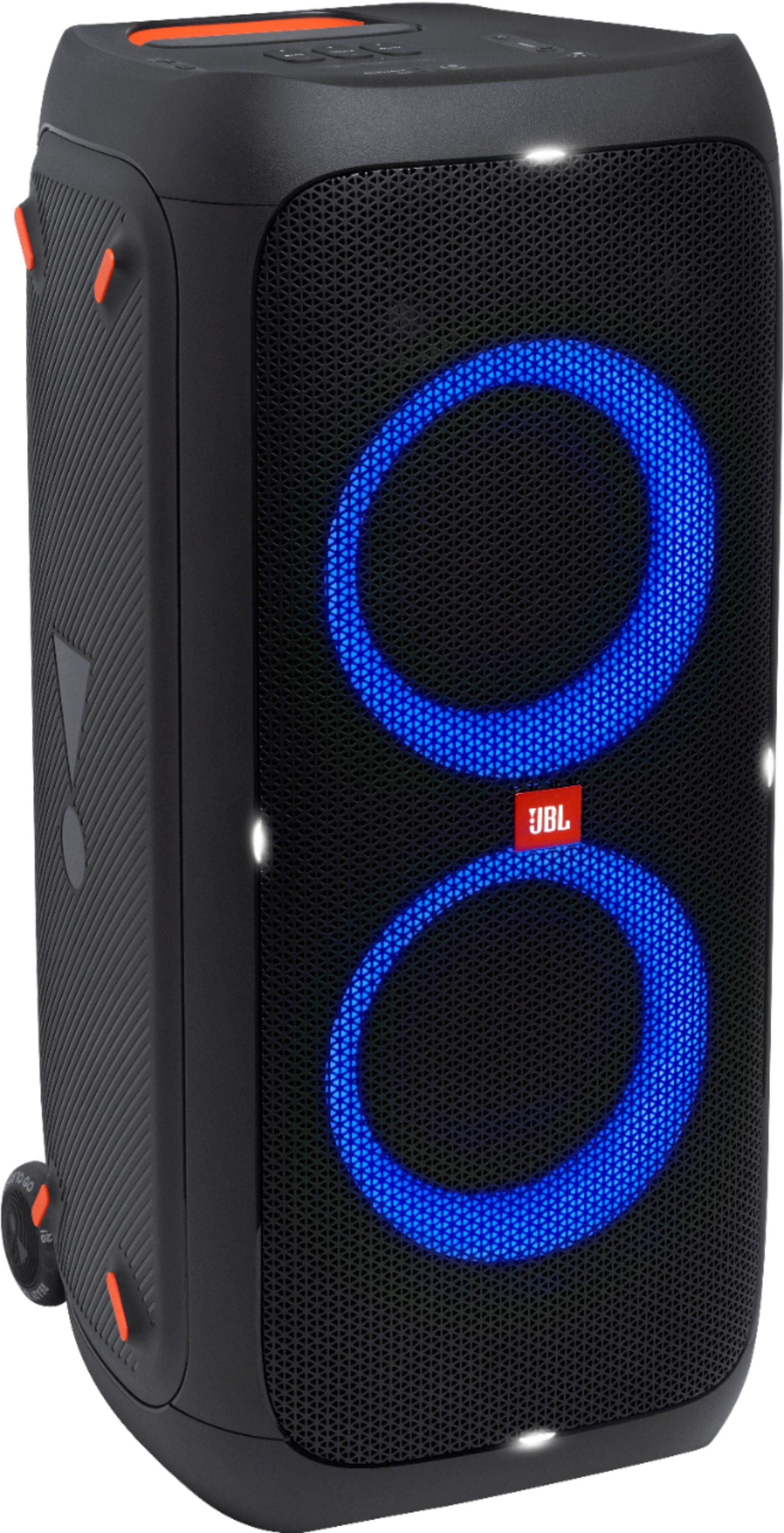
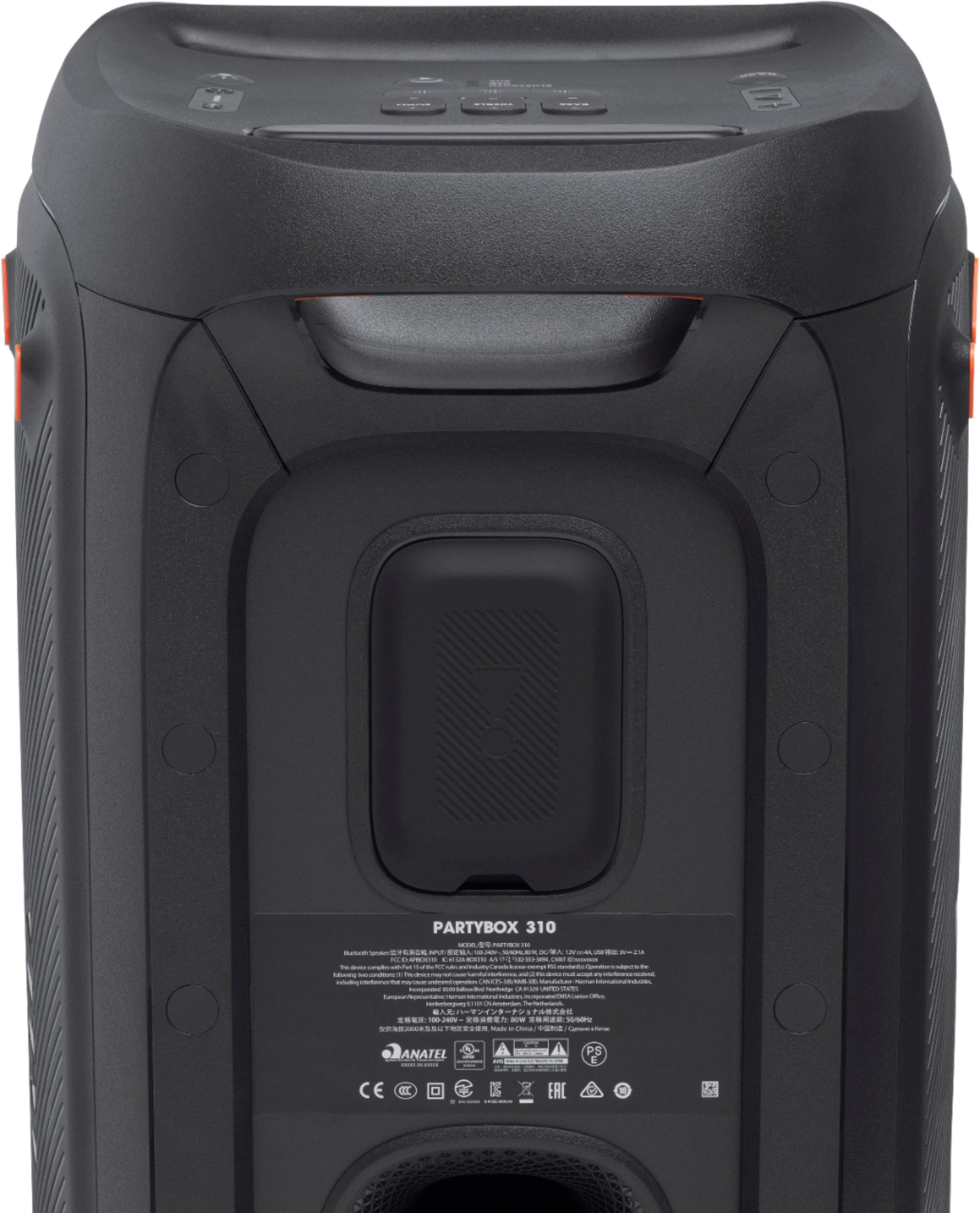
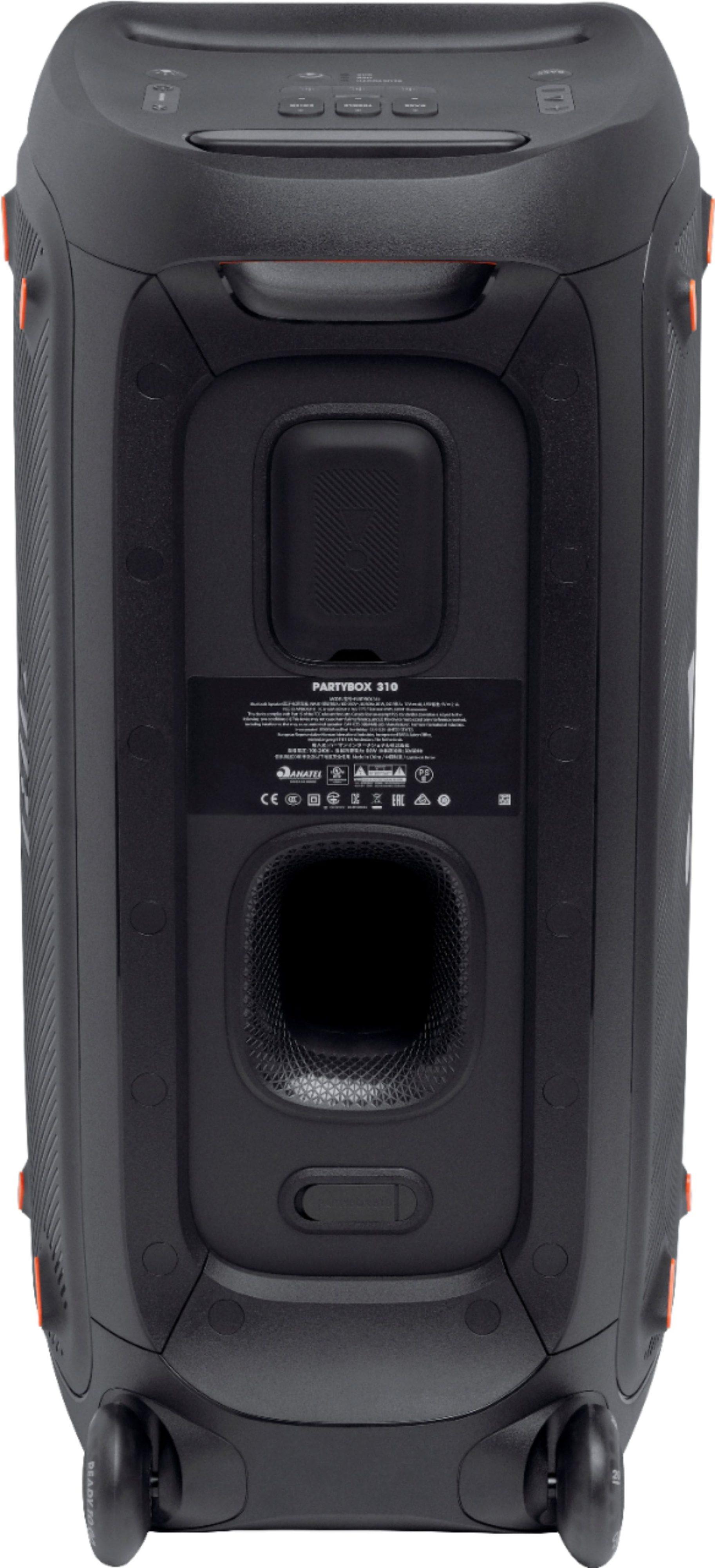
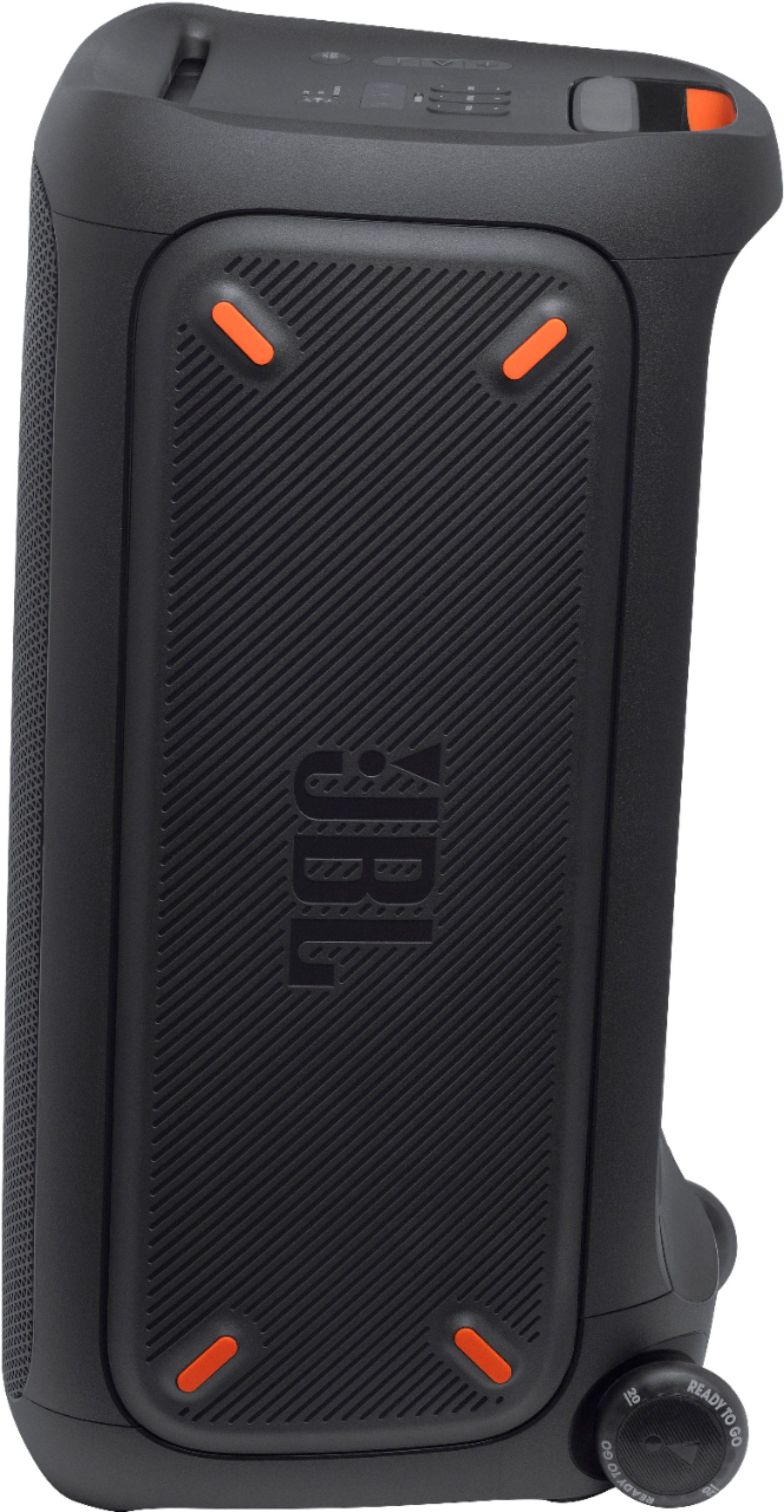
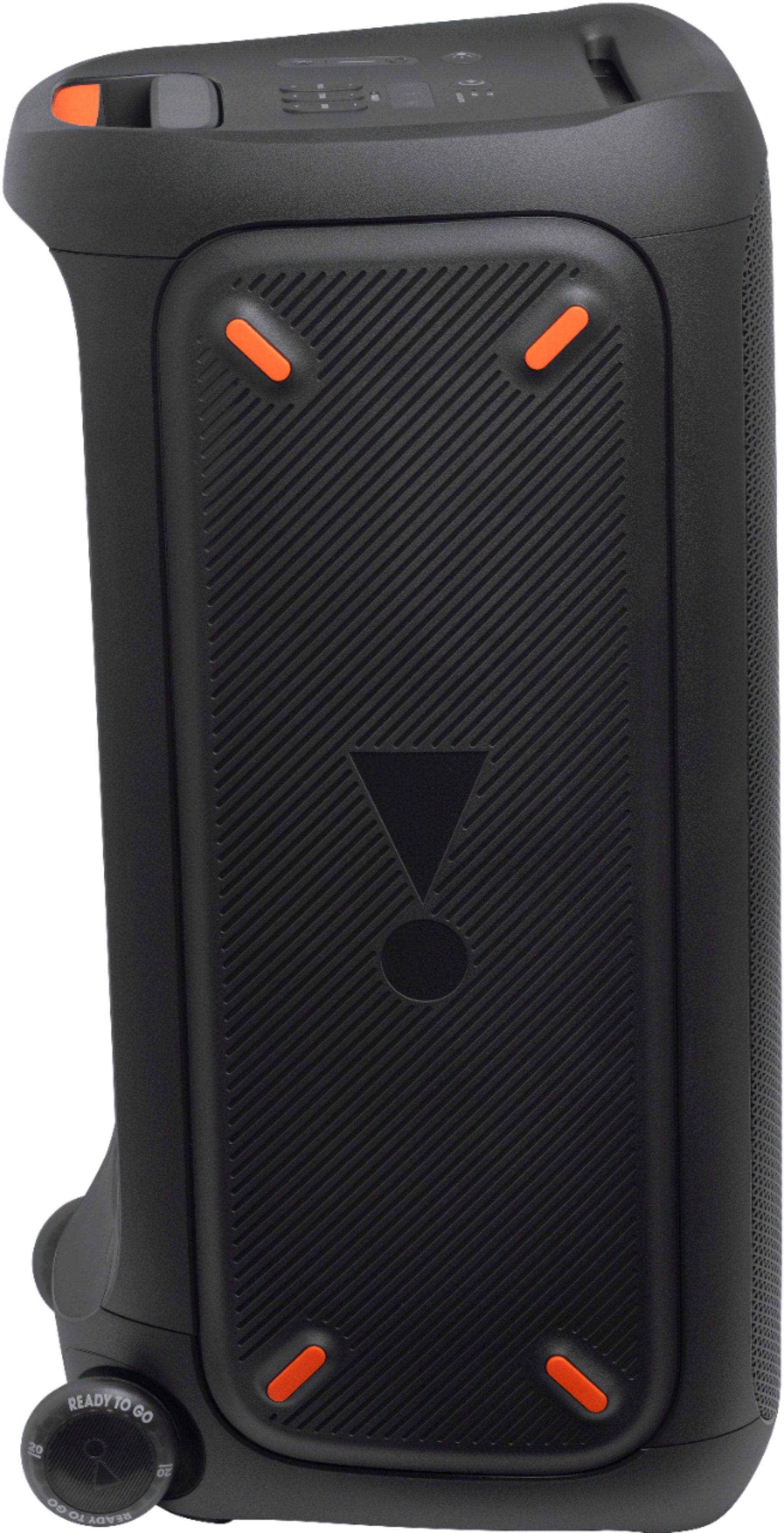
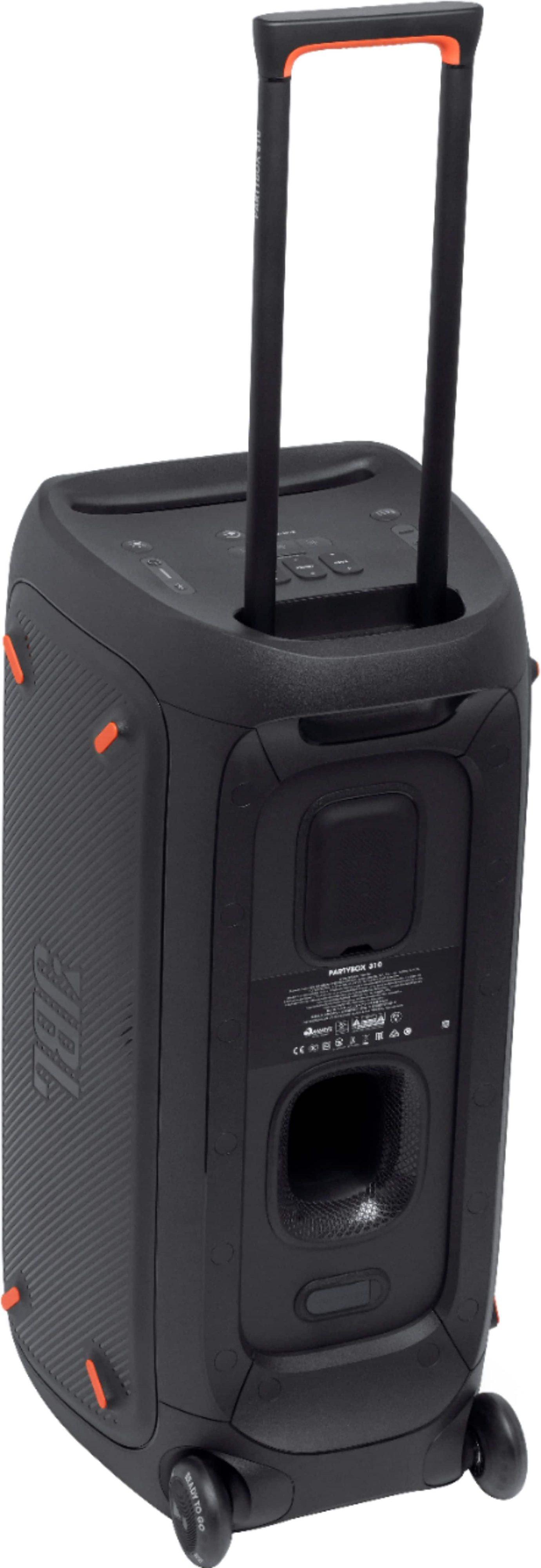
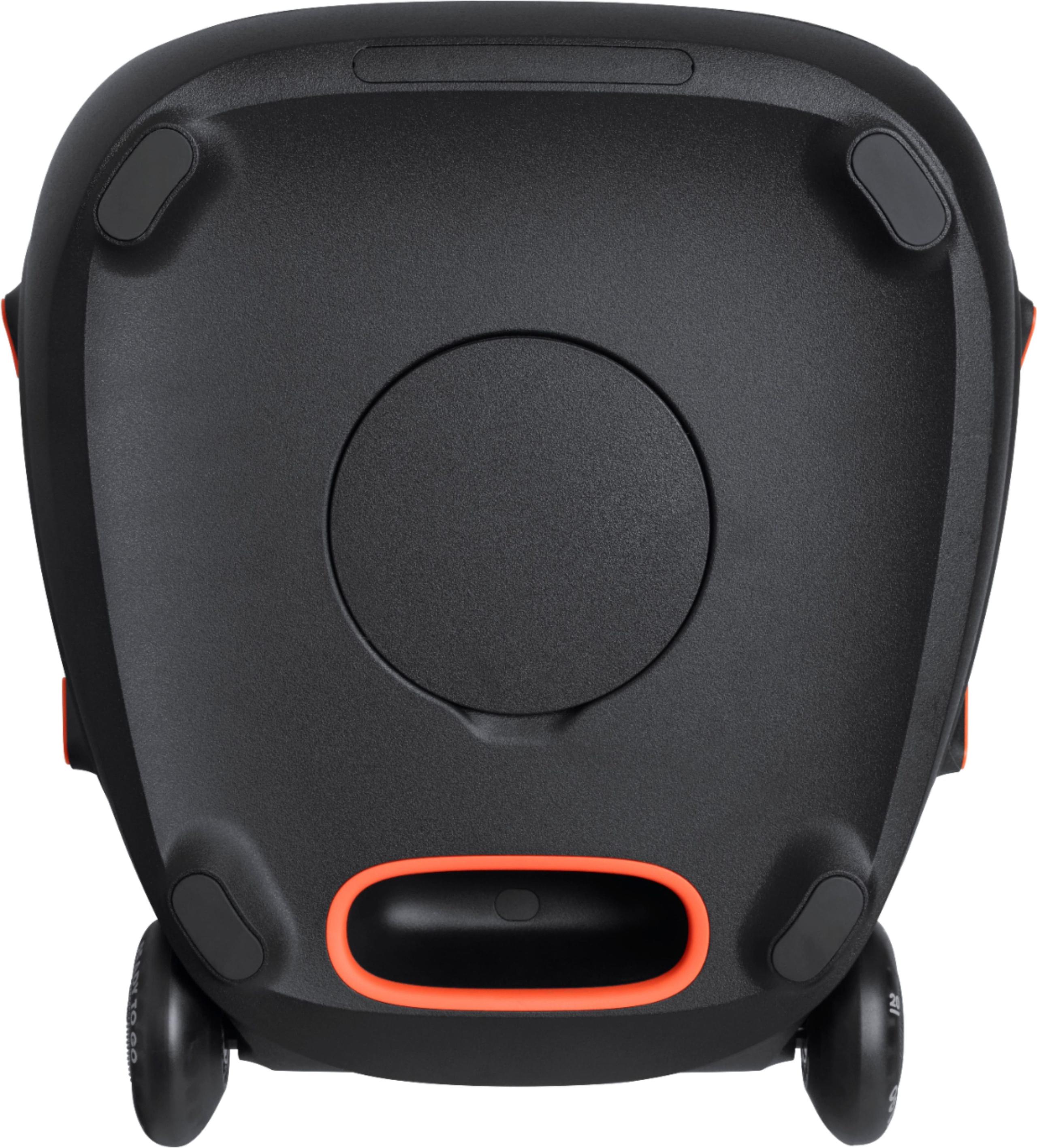
The JBL PartyBox 310, released in 2020, represents the "take anywhere" approach to party audio. JBL engineered this speaker around genuine portability, incorporating an 18-hour rechargeable battery, telescoping handle with smooth-glide wheels, and IPX4 water resistance. At roughly 38 pounds, it's heavy enough to deliver serious sound but light enough for one person to transport reasonably easily. The integrated handle and wheel system clearly signals JBL's intention: this speaker should go wherever the party goes.
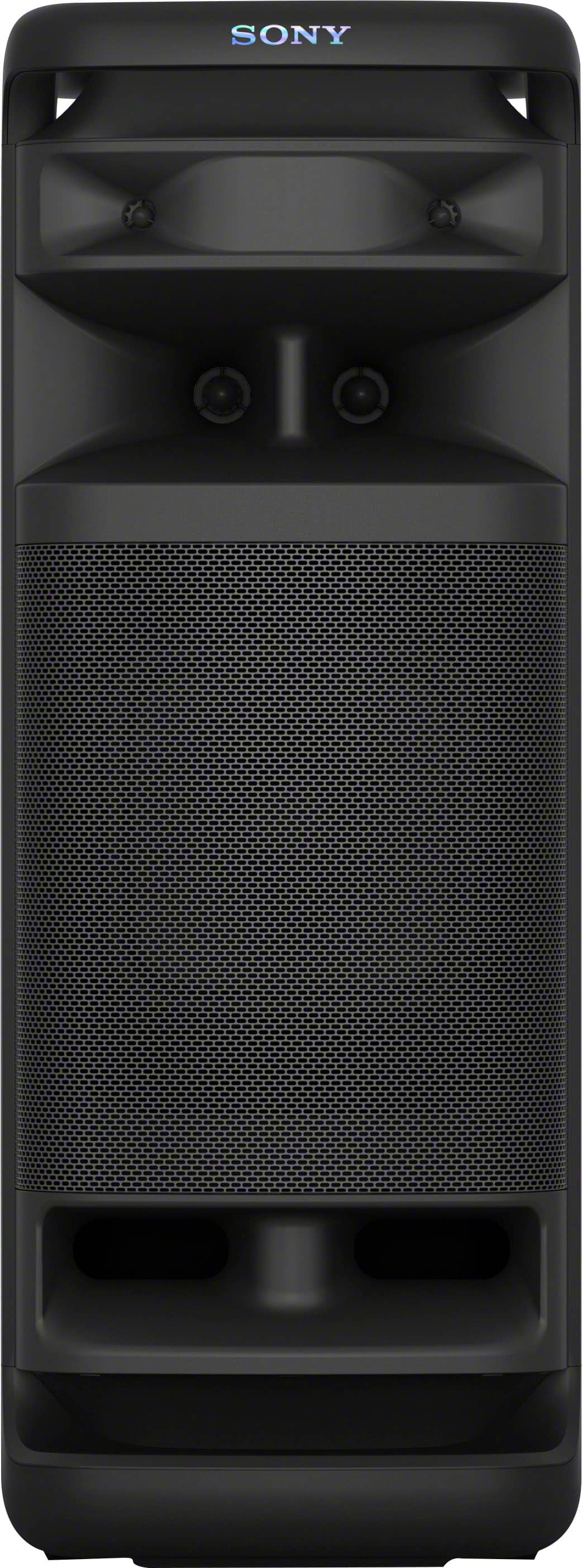
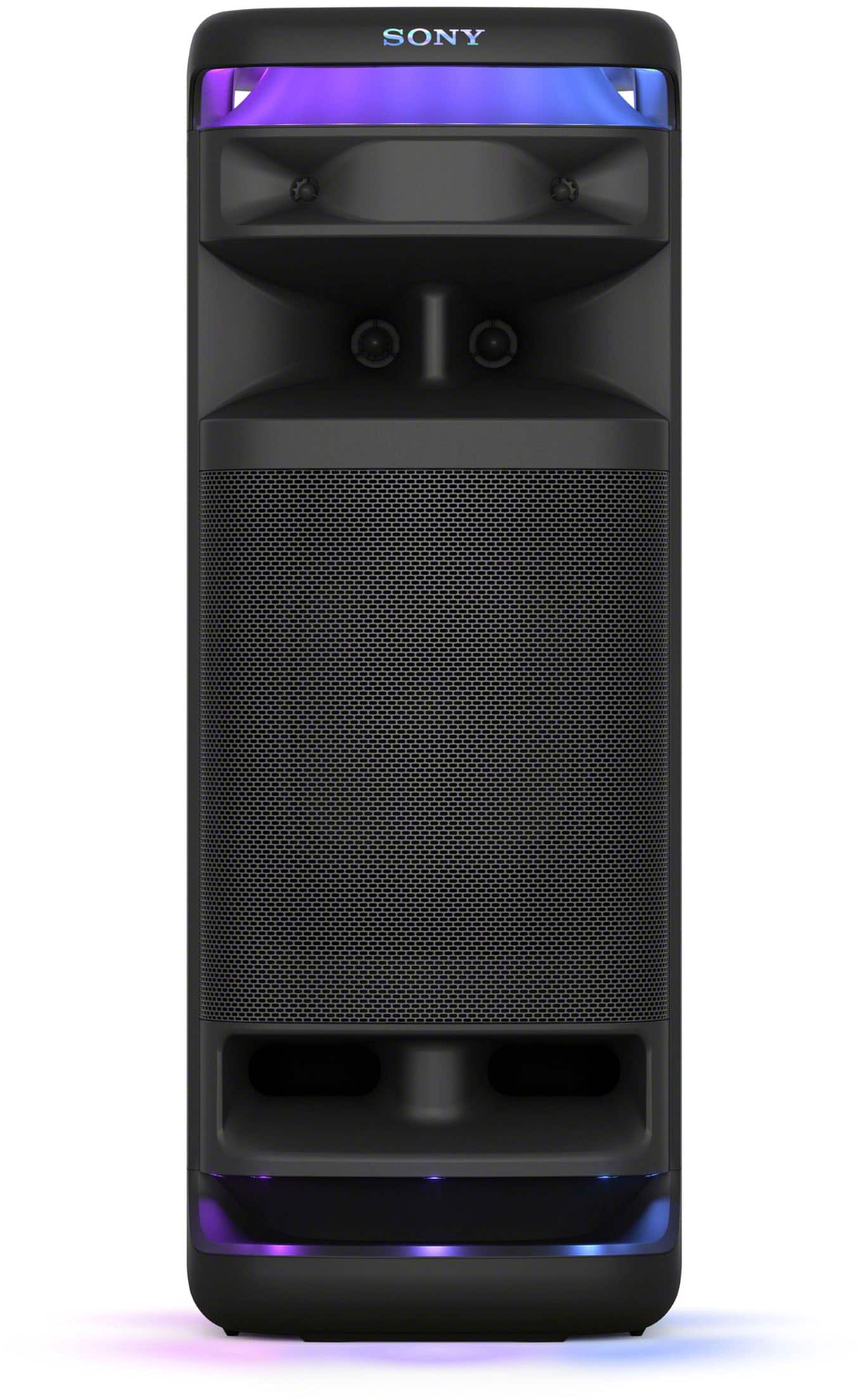
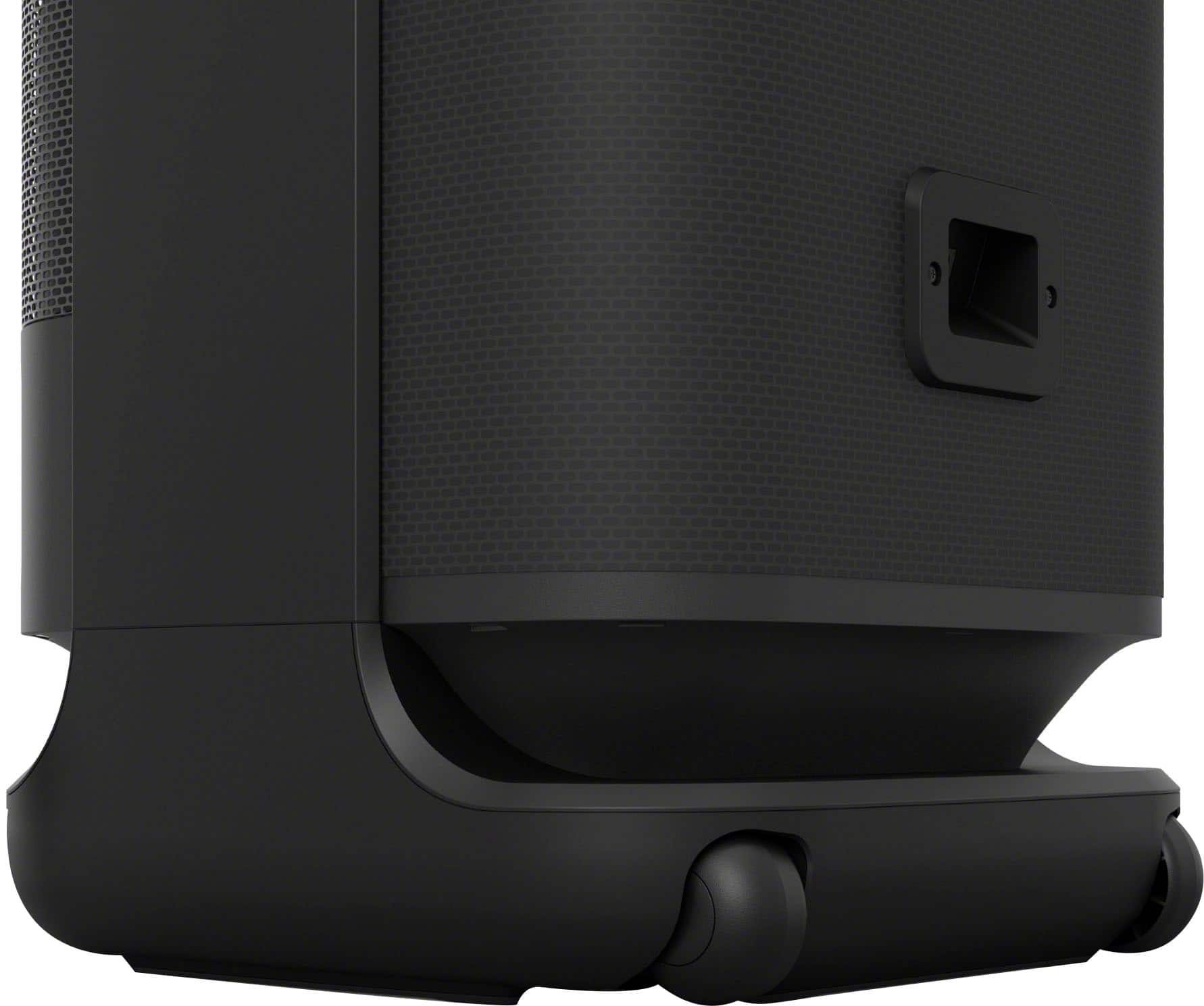
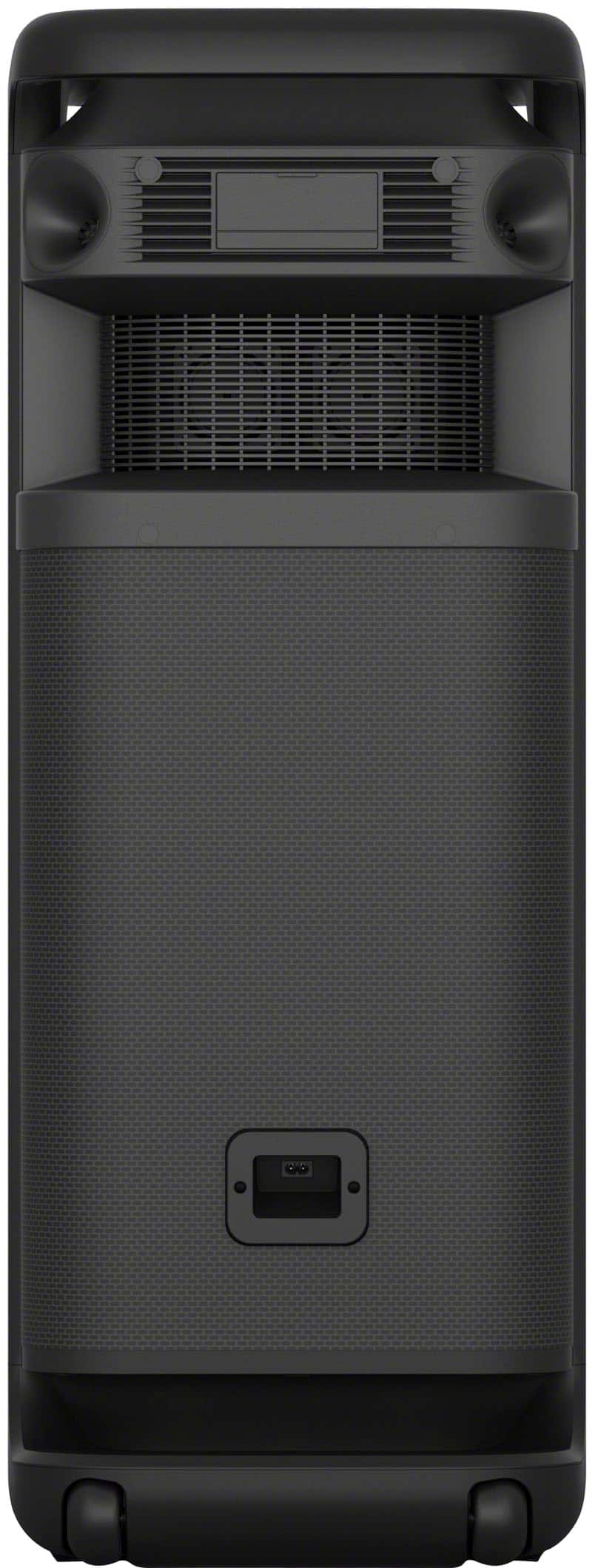
The Sony ULT Tower 10, launched in 2024, takes the opposite approach. Sony prioritized maximum acoustic performance over portability, creating a 64-pound tower that stands nearly four feet tall. This speaker requires AC power exclusively—there's no battery option—and while it includes basic caster wheels, there's no integrated handle. Sony's message is clear: park this speaker where you need it most and enjoy audiophile-level performance.
Since the JBL PartyBox 310's 2020 release, we've seen significant improvements in Bluetooth technology, with version 5.2 offering better range and stability, plus advanced audio codecs like LDAC that deliver higher-quality wireless sound. The Sony ULT Tower 10 benefits from these newer technologies, while the JBL PartyBox 310 uses the earlier Bluetooth 5.1 standard.
The sound quality differences between these speakers reveal their distinct engineering priorities. The JBL PartyBox 310 employs dual 6.5-inch woofers paired with dual 2.5-inch tweeters in a traditional forward-firing configuration. This setup delivers 240 watts of RMS power (the continuous power output, not peak) and covers frequencies from 45 Hz to 20 kHz. In practical terms, this means solid bass extension that handles most music well, though it won't reproduce the deepest sub-bass frequencies found in modern electronic music or movie soundtracks.
Based on extensive user feedback and professional reviews, the JBL PartyBox 310 produces a slightly warm sound signature with particularly strong performance in the mid-bass region (60-120 Hz). This translates to punchy drums and bass lines that cut through party noise effectively. The tweeters provide clear highs without becoming harsh at high volumes, though some compression artifacts appear when pushed to maximum output—a common limitation when running on battery power.
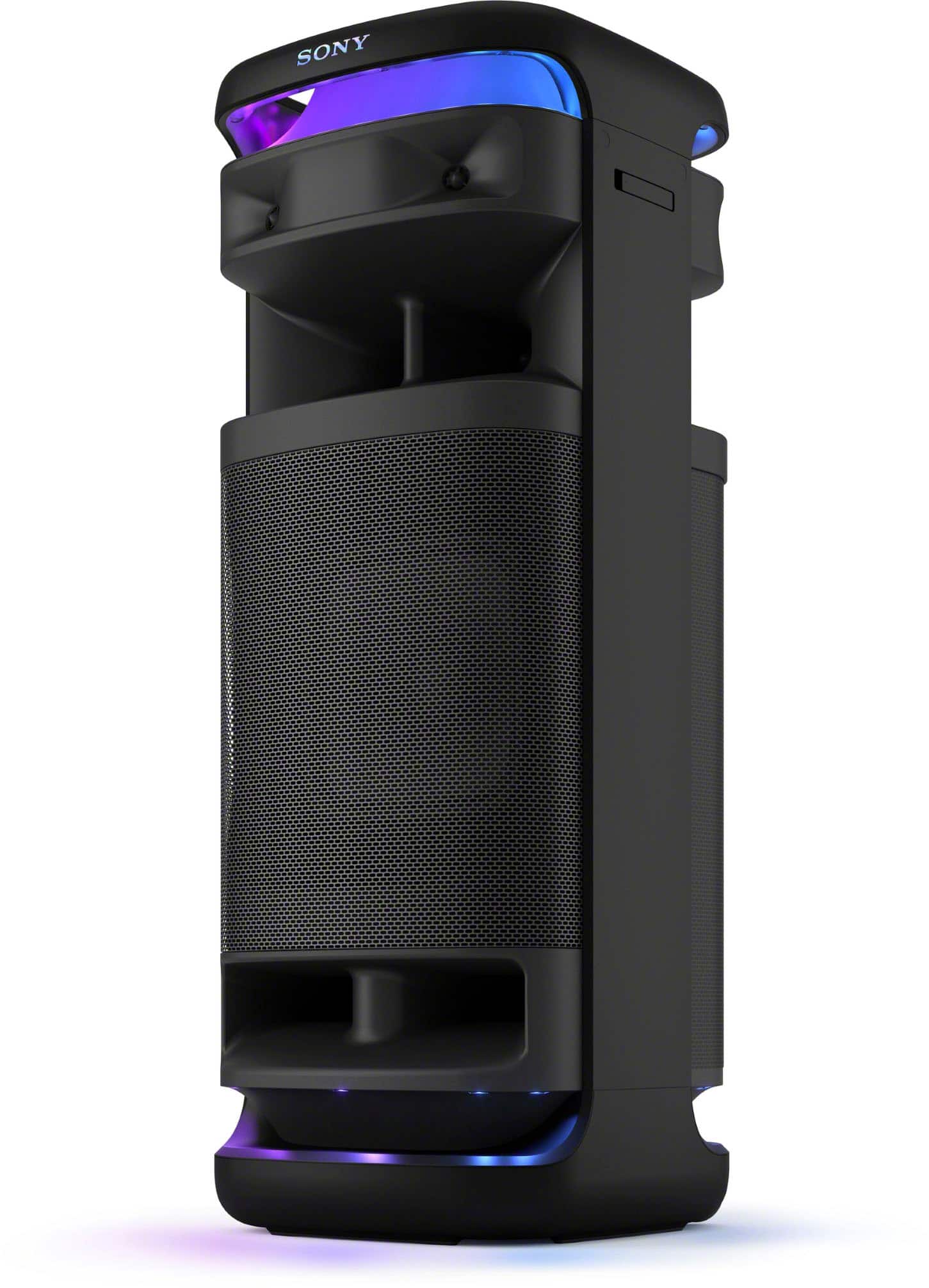
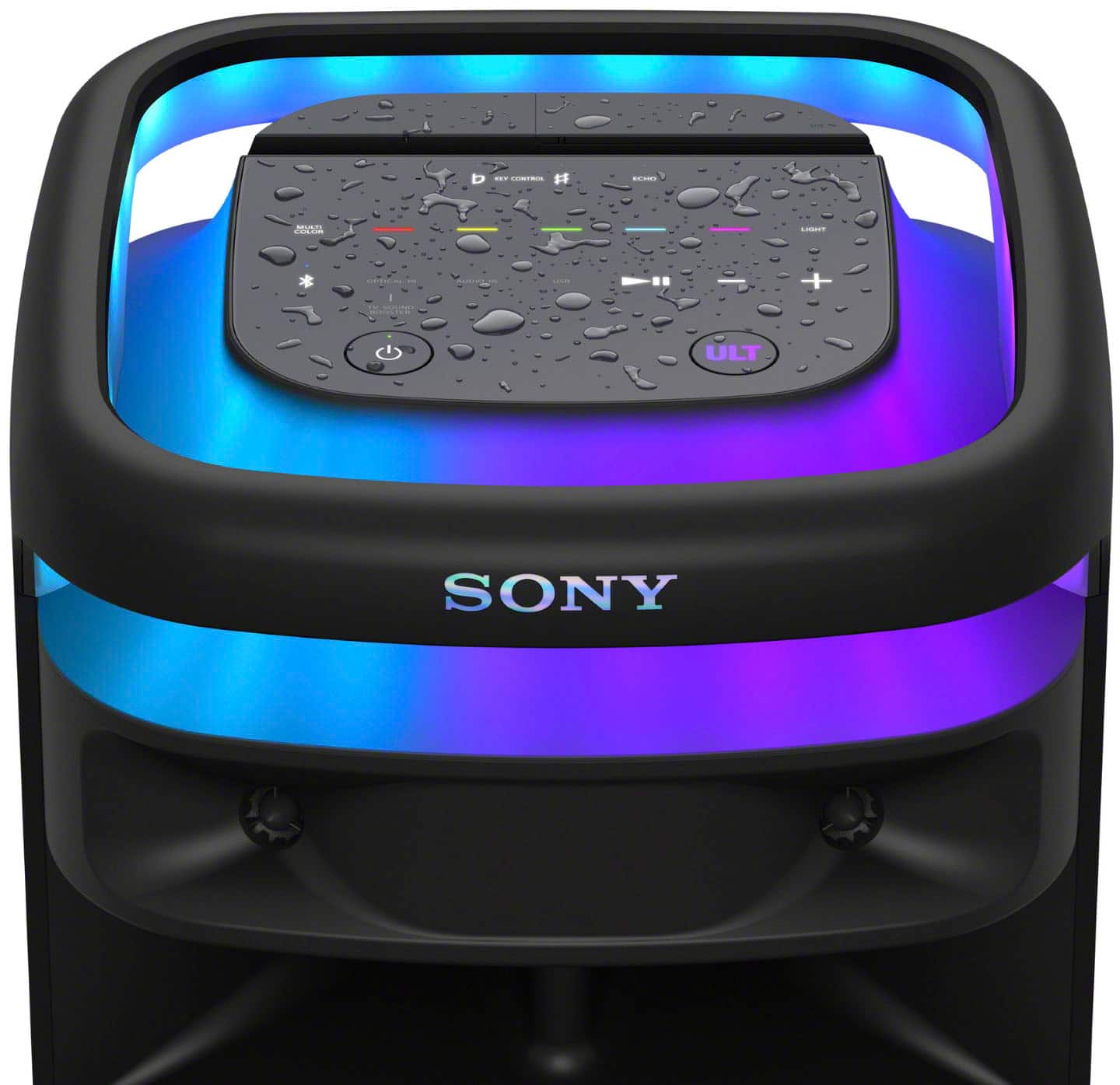
The Sony ULT Tower 10 takes a more sophisticated acoustic approach with its 3-way driver system. The centerpiece is a massive 12.6 × 12.6-inch X-Balanced woofer—Sony's rectangular driver design that maximizes cone area while reducing distortion. This unconventional square shape allows more air displacement than traditional round drivers of similar size, resulting in deeper, cleaner bass. Complementing the woofer are two 3.25-inch midrange drivers handling vocals and instruments, plus four 1.625-inch dome tweeters arranged in a front-and-rear configuration for omnidirectional sound dispersion.
The Sony's frequency response extends down to 20 Hz—25 Hz lower than the JBL PartyBox 310—reaching into true sub-bass territory. This deeper extension makes electronic music, hip-hop, and movie soundtracks dramatically more impactful. User reports consistently highlight the Sony's ability to reproduce bass frequencies you can feel throughout your body, not just hear.
Perhaps more importantly, the Sony ULT Tower 10 maintains this deep bass performance while delivering a more balanced overall sound signature. The separate midrange drivers prevent bass from muddying vocals and instruments, while the quad-tweeter arrangement creates a wider soundstage that doesn't require listeners to position themselves directly in front of the speaker for optimal sound.
Volume capability represents one of the most significant differences between these speakers. The JBL PartyBox 310 achieves approximately 100 decibels maximum output, which sounds impressively loud in most settings. To put this in perspective, 100 dB is roughly equivalent to standing near a motorcycle or being in a loud nightclub. This output level easily handles medium to large indoor spaces up to about 2,000 square feet and outdoor gatherings of 50-100 people.
However, the Sony ULT Tower 10 pushes maximum output to 110 decibels—and this 10 dB difference is more significant than it might seem. Decibels use a logarithmic scale, meaning every 10 dB increase represents roughly double the perceived loudness. The Sony doesn't just sound louder; it sounds dramatically more powerful, capable of filling spaces twice the size of what the JBL PartyBox 310 can handle effectively.
This volume advantage comes partly from AC power operation, which provides consistent high current delivery compared to battery power that diminishes as charge depletes. The Sony maintains its maximum output indefinitely, while the JBL PartyBox 310's volume capability gradually decreases as battery charge drops below 50%.
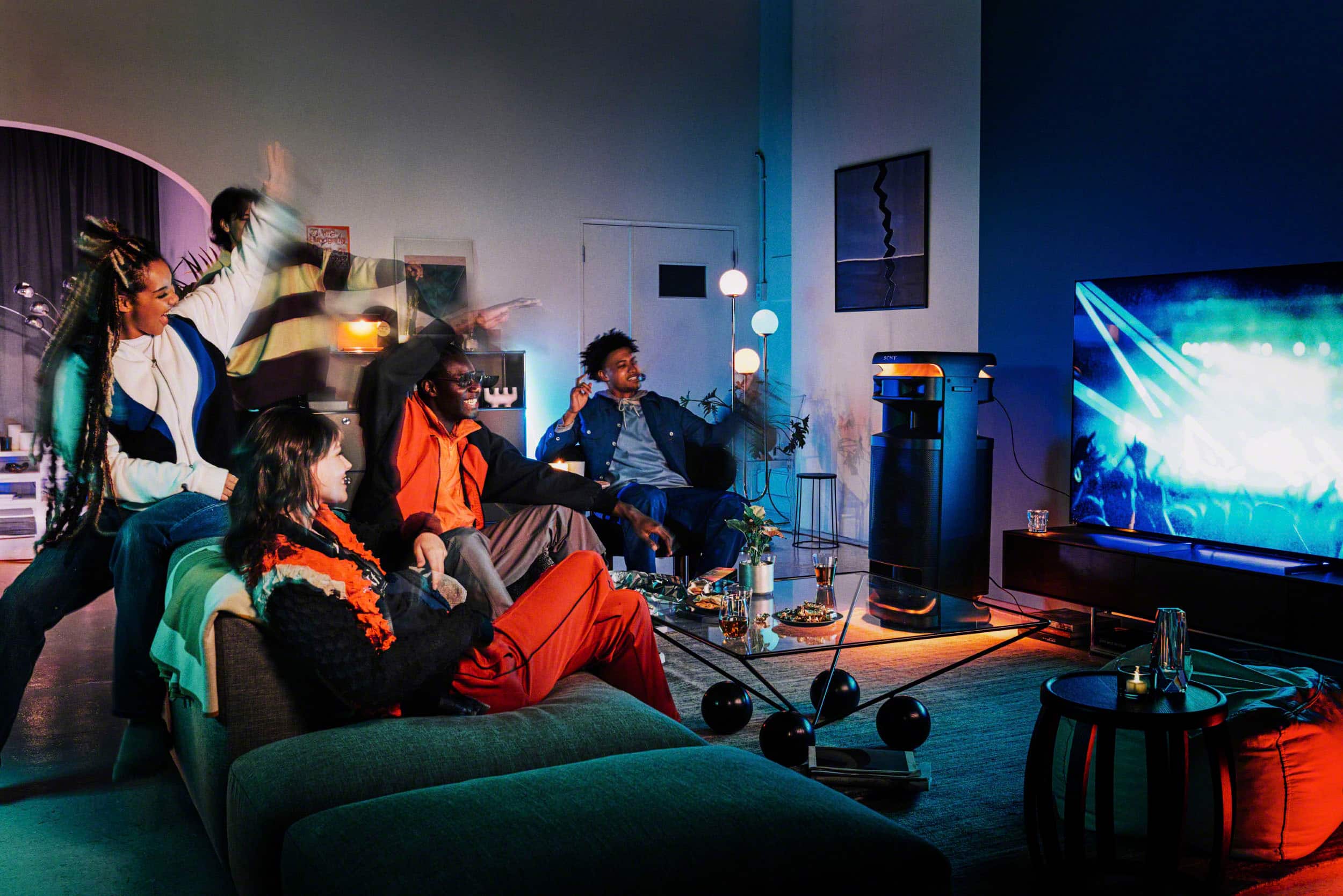
For home theater integration, the volume differences become particularly relevant. The Sony ULT Tower 10 can easily serve as the primary sound system for large rooms, delivering the dynamic range needed for movie soundtracks. Its optical input specifically supports this use case, accepting digital audio directly from TVs or streaming devices. The JBL PartyBox 310, while capable of enhancing TV audio via Bluetooth or auxiliary connection, lacks the headroom for truly cinematic experiences in larger rooms.
Bass performance arguably matters more for party speakers than any other audio category. Modern music production—especially electronic, hip-hop, and pop—relies heavily on sub-bass frequencies (20-60 Hz) to create impact and energy. The differences between these speakers' bass capabilities are substantial and immediately audible.
The JBL PartyBox 310 delivers what most users describe as "punchy" bass that emphasizes the 60-100 Hz range. This mid-bass focus works excellently for rock, pop, and classic hip-hop, providing the kick drum impact and bass guitar presence that drives these genres. The Bass Boost feature pushes this region even harder, creating an exciting, energetic sound that gets crowds moving. However, the speaker's -6 dB point at 45 Hz means truly deep bass—the kind that creates physical sensations—remains limited.
The Sony ULT Tower 10 operates in a different league entirely. Its X-Balanced woofer reproduces frequencies down to 20 Hz with authority, delivering the kinds of sub-bass impacts that typically require dedicated subwoofers. The ULT button provides two distinct bass enhancement modes: ULT 1 emphasizes the deepest frequencies for maximum rumble and physical impact, while ULT 2 boosts the upper bass range for tighter, punchier delivery suited to dance music.
This bass advantage becomes most apparent with modern electronic music, where producers specifically design tracks to exploit deep sub-bass frequencies. Tracks that sound merely energetic on the JBL PartyBox 310 become visceral, room-shaking experiences on the Sony ULT Tower 10. For home theater use, this deep bass capability transforms movie experiences, reproducing everything from explosion rumbles to the subtle low-frequency effects that create atmosphere and tension.
Wireless connectivity quality has become increasingly important as streaming services and high-resolution audio gain popularity. The JBL PartyBox 310 uses Bluetooth 5.1 with standard SBC codec support, providing reliable connection with any Bluetooth device but without enhanced audio quality features. The connection range extends to about 33 feet, adequate for most party scenarios.
The Sony ULT Tower 10 benefits from newer Bluetooth 5.2 technology plus support for advanced audio codecs including LDAC and AAC. LDAC, developed by Sony, transmits nearly three times more data than standard Bluetooth, preserving much more of the original audio quality. When streaming high-resolution music from compatible devices, the difference becomes audible—particularly in clarity of vocals and instruments, and the precision of bass reproduction.
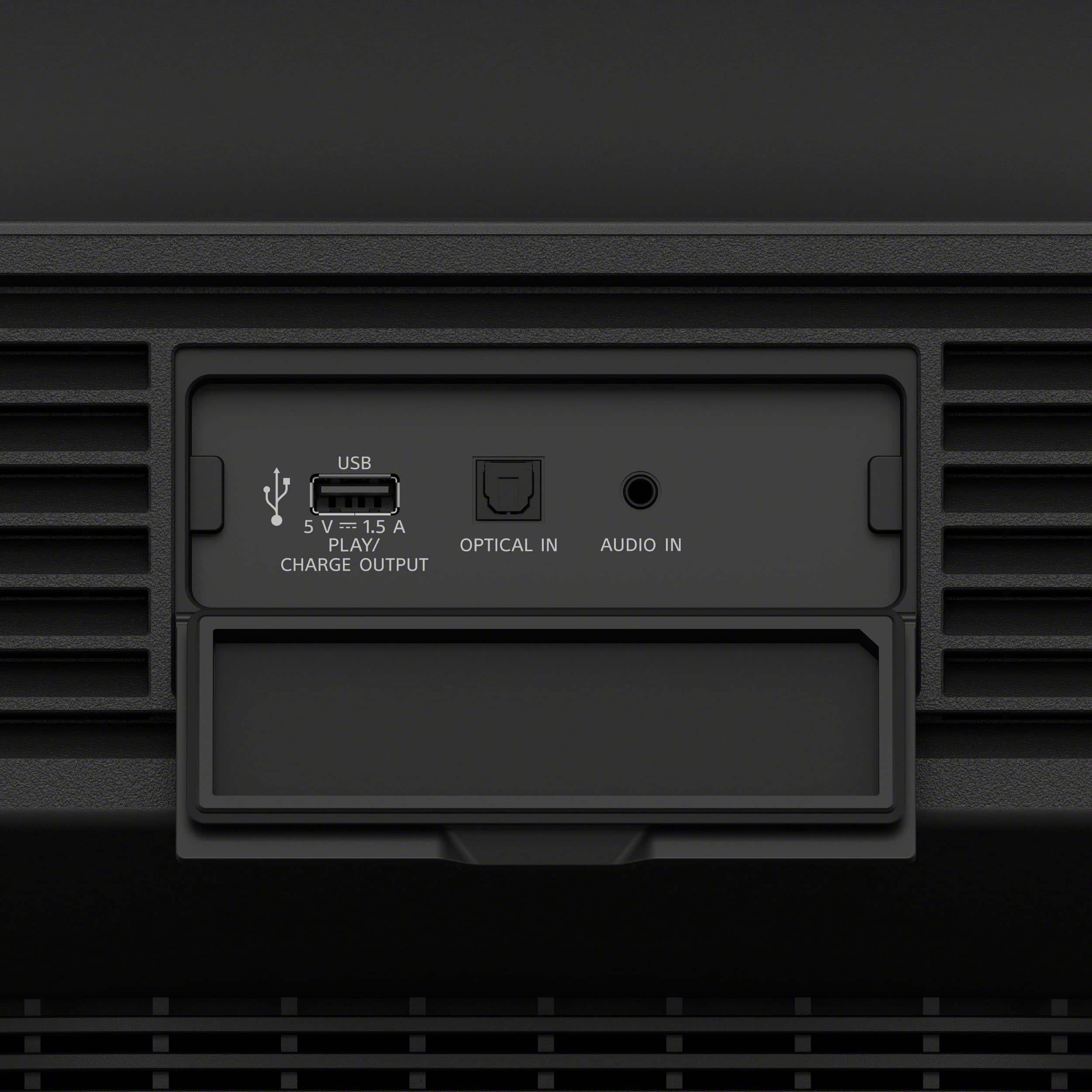
Both speakers offer wired connectivity options, but the Sony provides more versatility. The optical digital input allows direct connection to TVs, game consoles, or streaming devices, bypassing potential Bluetooth delays and quality limitations that can affect video synchronization. This feature essentially transforms the Sony ULT Tower 10 into a premium soundbar alternative for large rooms.
For expanding your sound system, the approaches differ significantly. The JBL PartyBox 310 supports True Wireless Stereo pairing with a second identical unit, creating a proper left-right stereo setup. The Sony ULT Tower 10 offers more ambitious expansion through Party Connect, which can wirelessly link up to 100 compatible Sony speakers for massive multi-room coverage. While few users need 100 speakers, linking 3-4 units for large events or multiple rooms becomes genuinely useful.
Party speakers need to do more than just play music loudly—they need to enhance the entire entertainment experience. Both speakers include extensive lighting systems, though their approaches differ considerably.
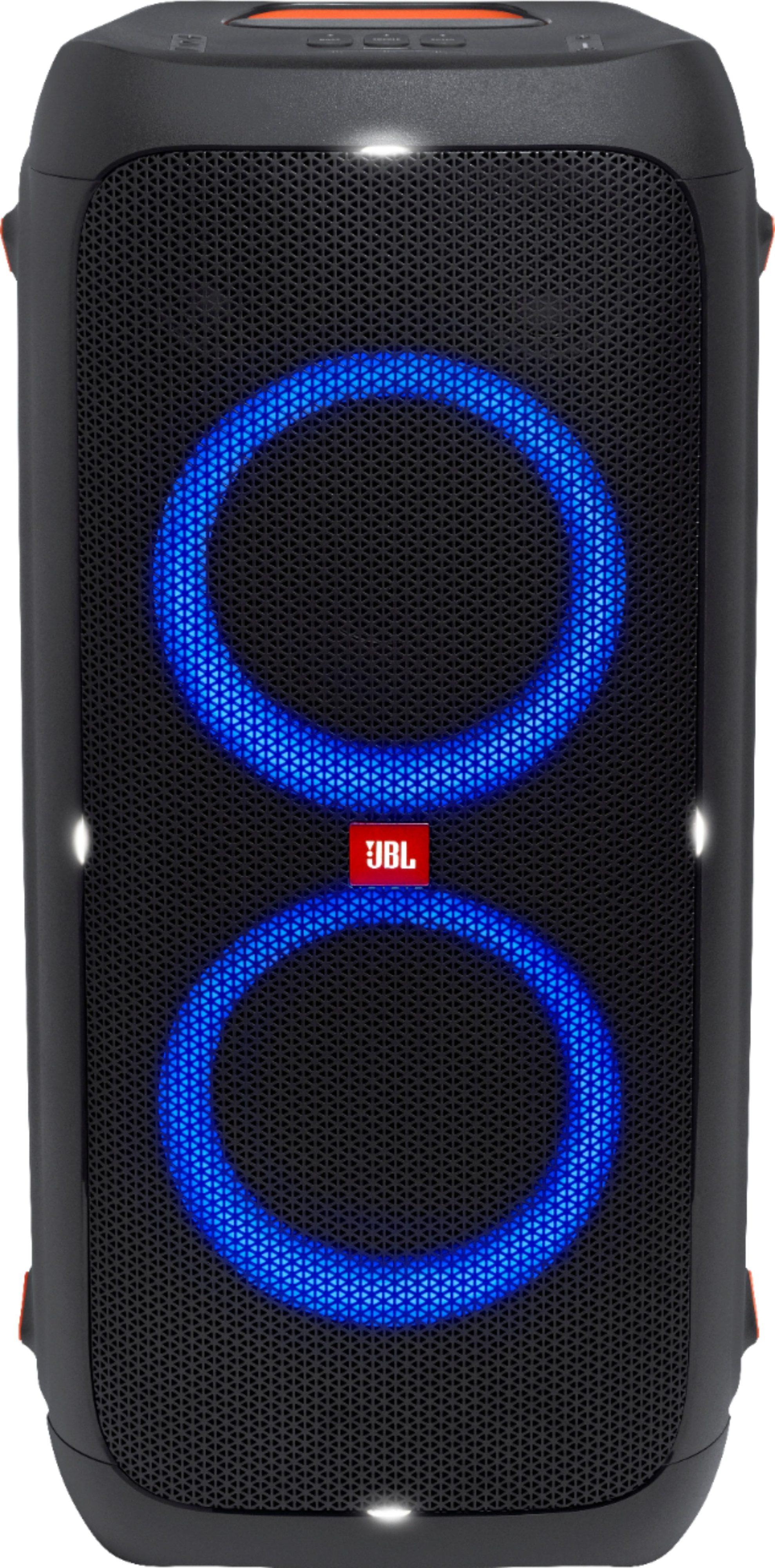
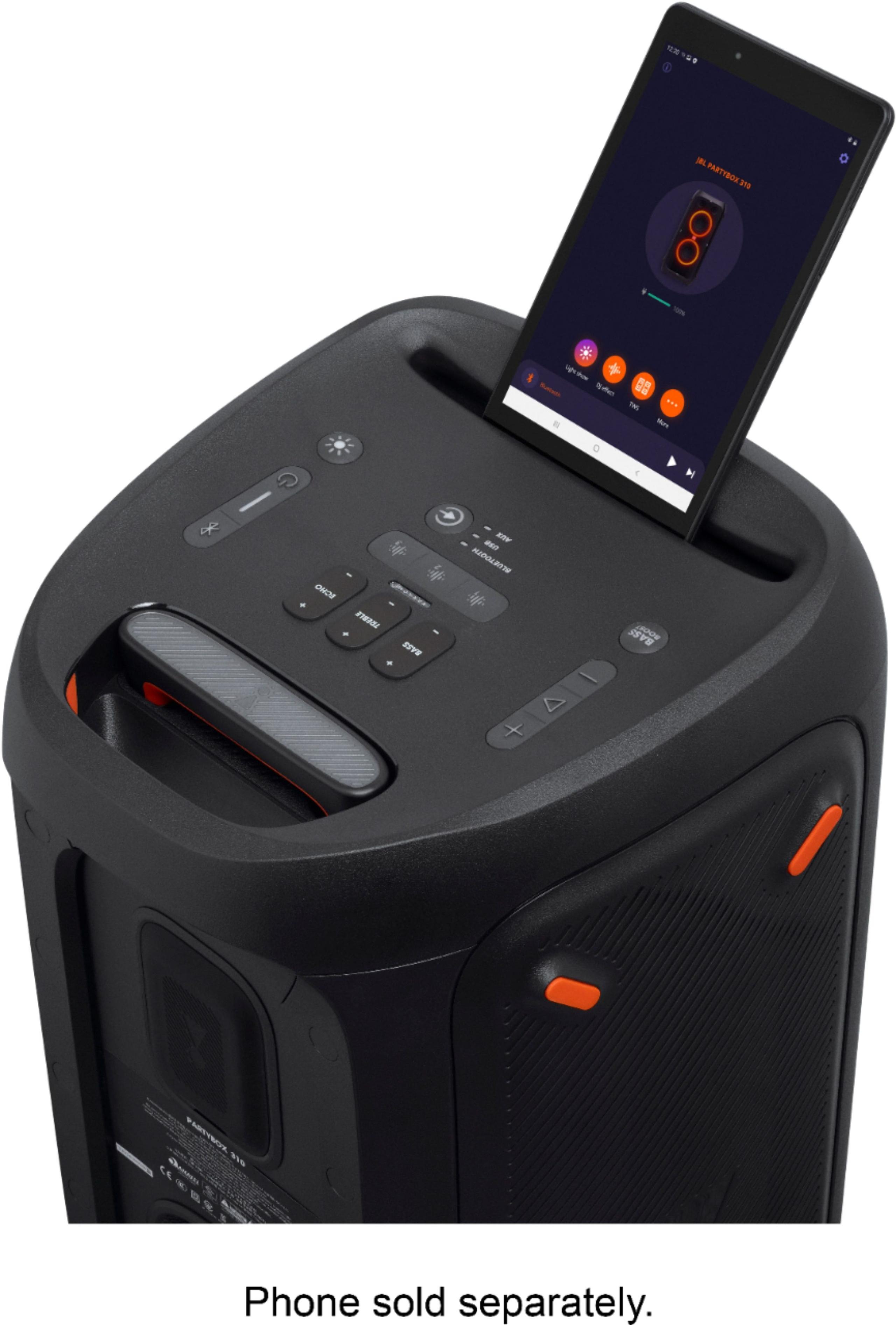
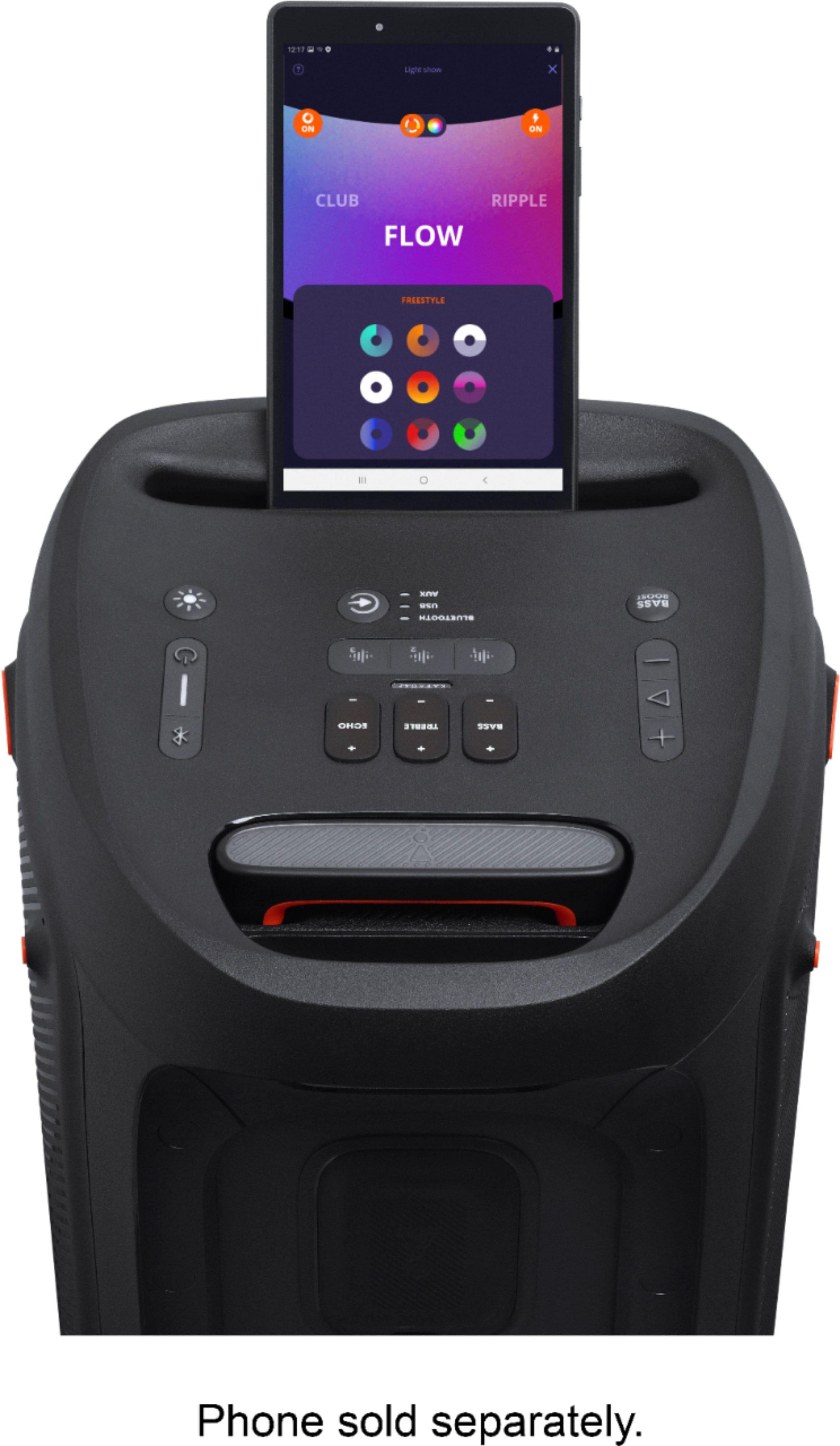
The JBL PartyBox 310 features what can only be described as a comprehensive light show. Multiple LED rings around the drivers plus dedicated strobe lights create dynamic, music-synchronized effects that can transform any space into a club-like environment. The JBL PartyBox app provides extensive control over lighting patterns, colors, and intensity, with five distinct modes ranging from ambient to full party strobe effects.
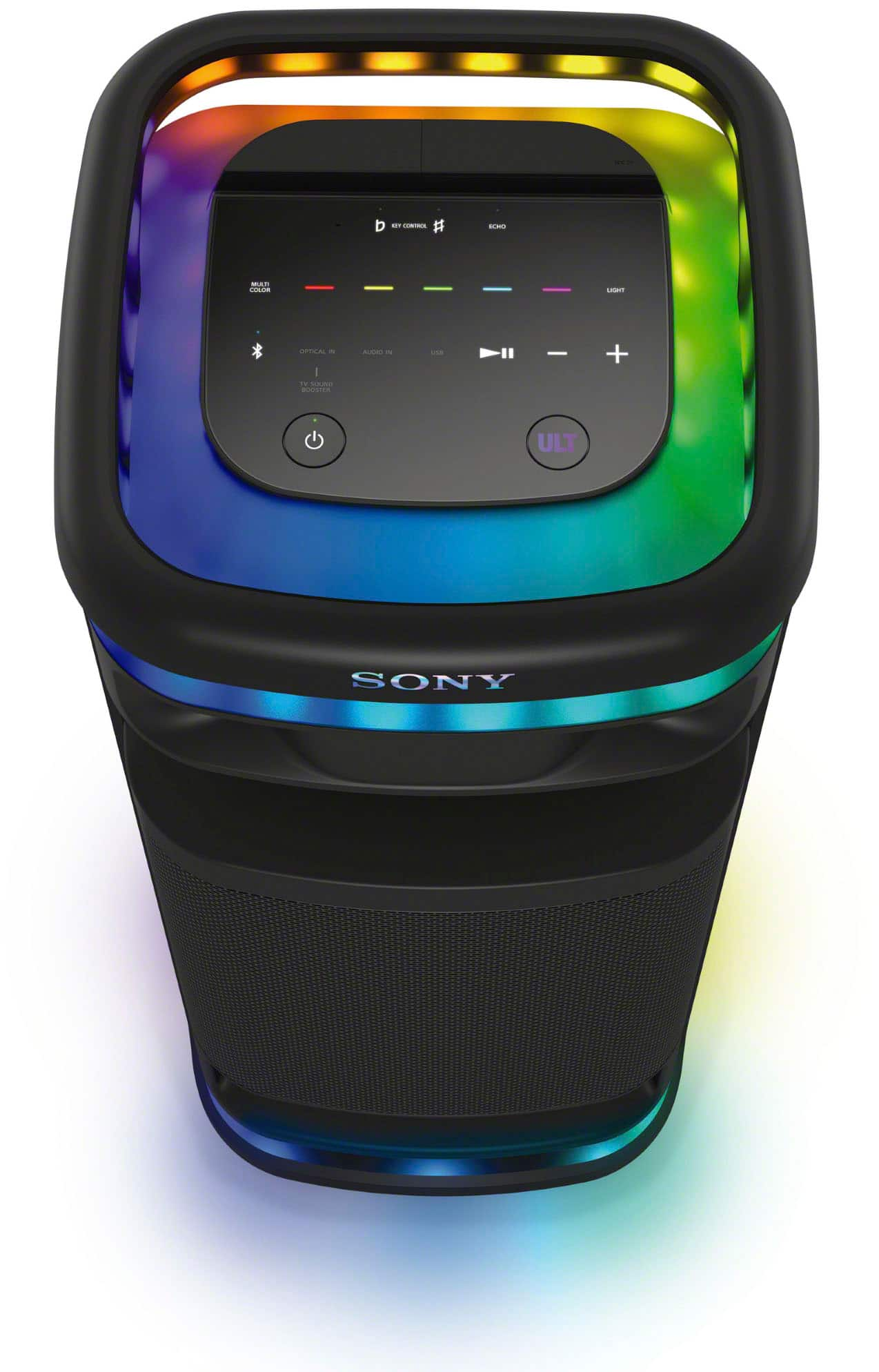
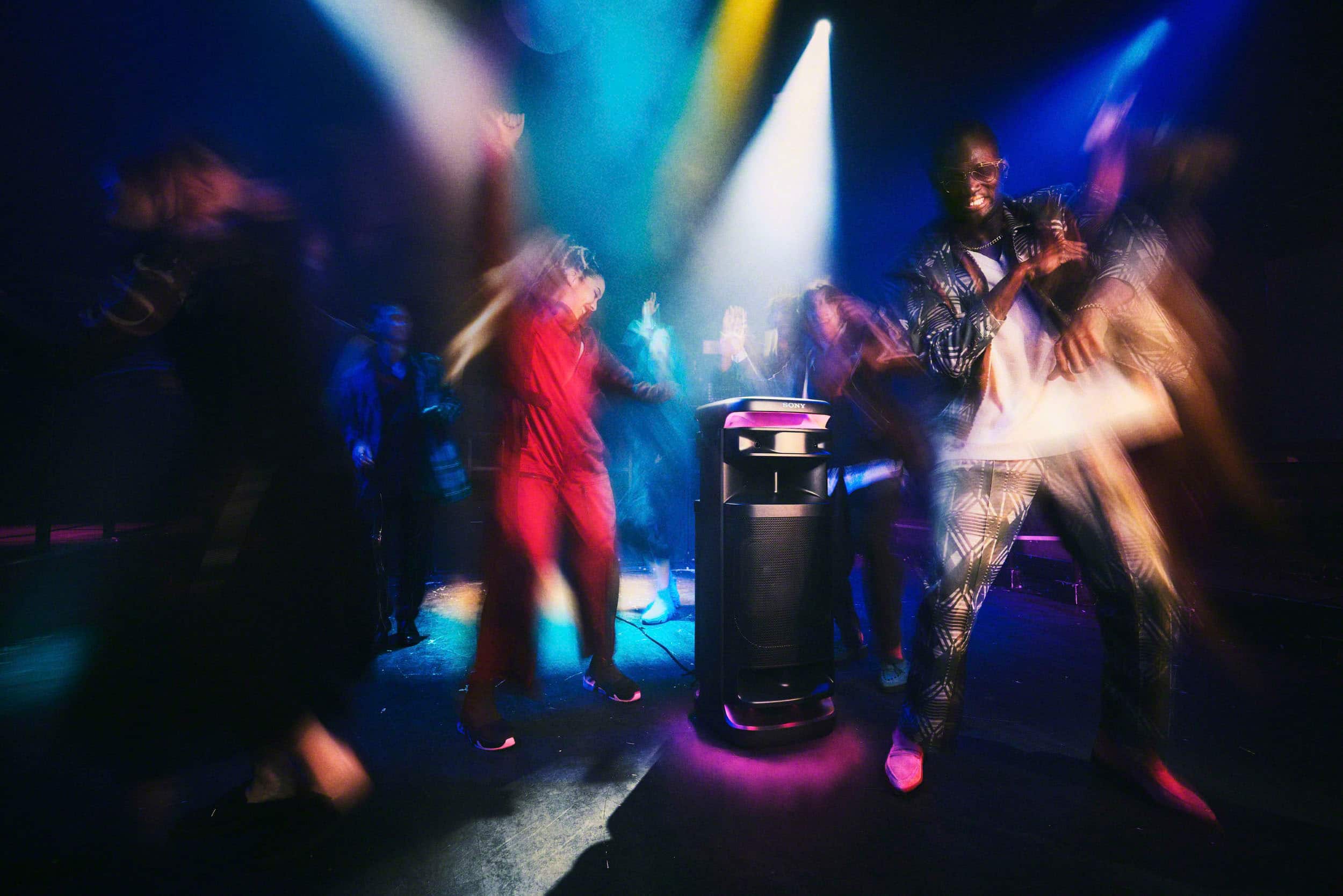
The Sony ULT Tower 10 takes a more sophisticated approach with its 360-degree party lighting. Rather than maximum visual impact, Sony focuses on creating ambient lighting that enhances the party atmosphere without overwhelming it. The lights wrap around the speaker's circumference, casting both upward and downward illumination that creates an inviting glow in the room. While less flashy than JBL's approach, many users prefer Sony's more refined lighting aesthetic.
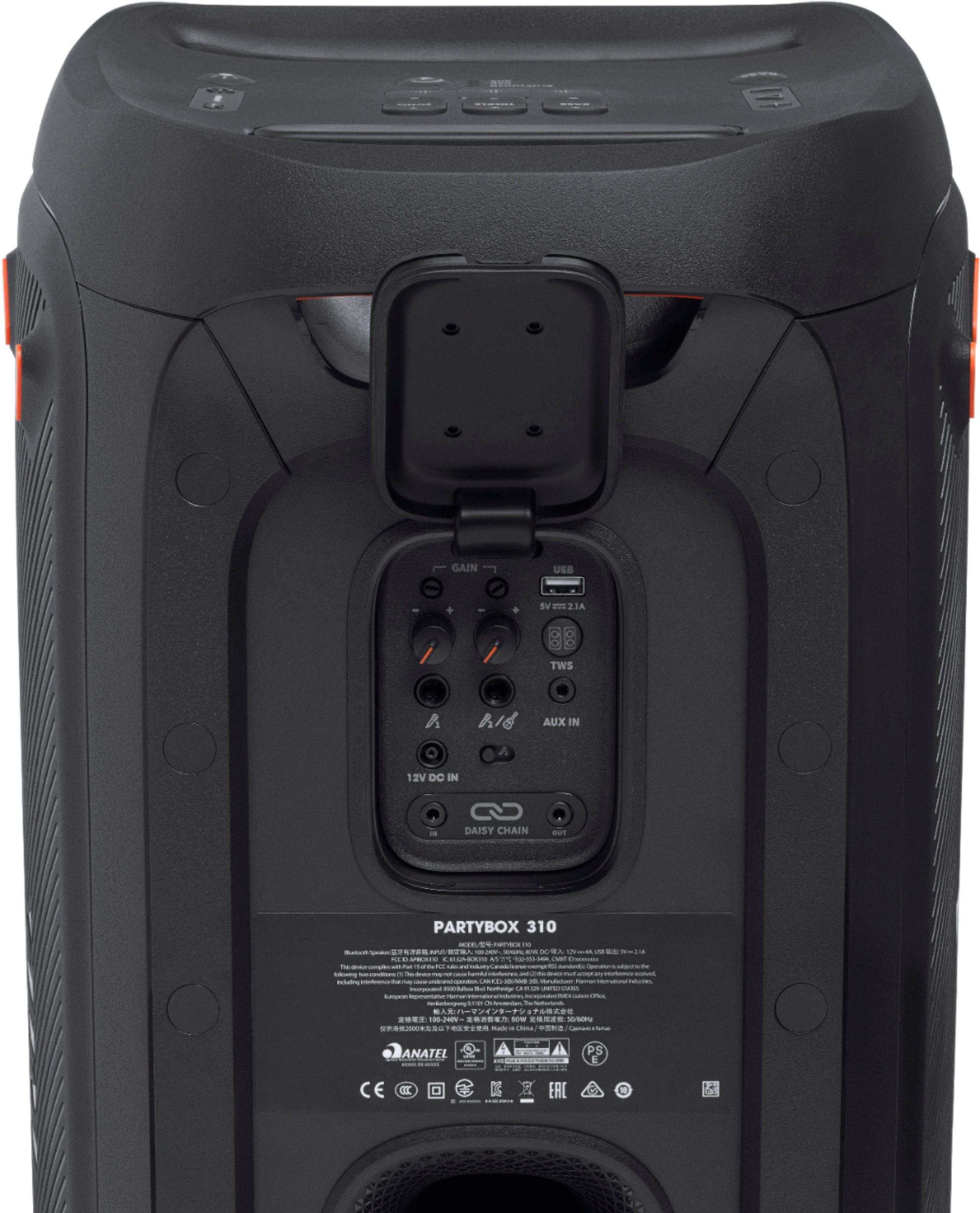
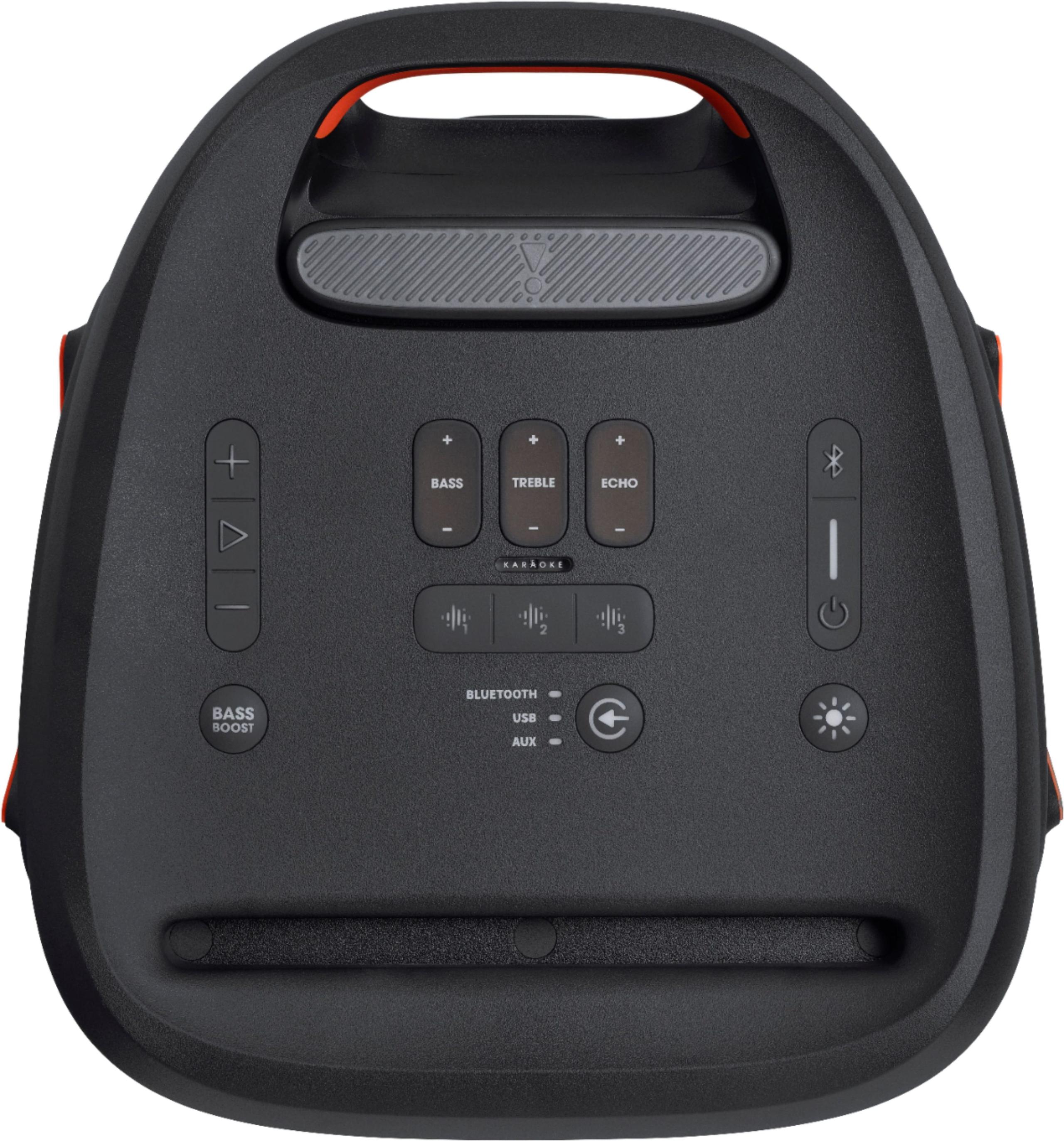
For karaoke and live performance, the differences become more practical. The JBL PartyBox 310 includes dual 1/4-inch inputs for microphones and guitars, plus dedicated volume controls and echo effects. However, microphones aren't included, requiring separate purchases that can add $50-150 to the total investment.
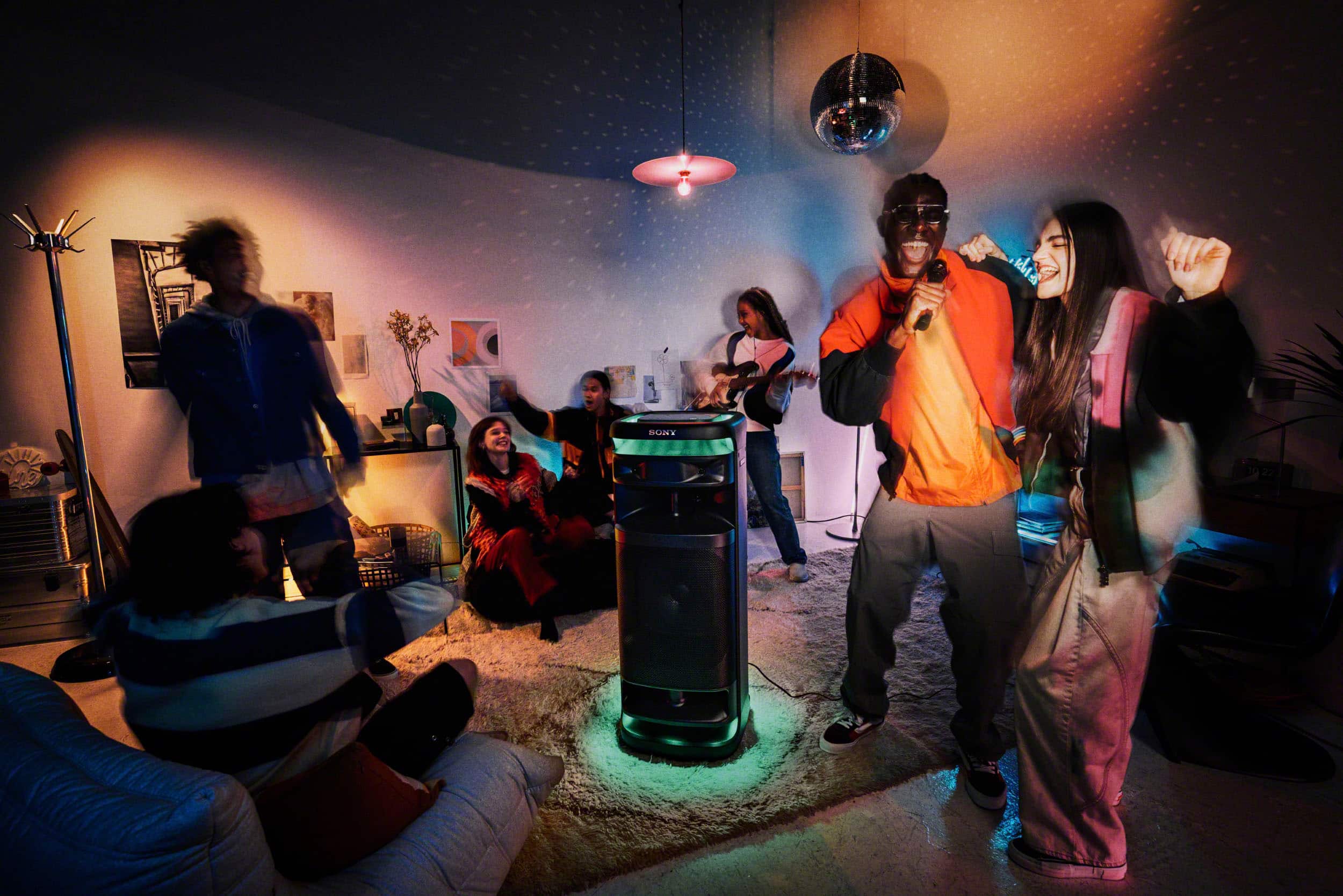
The Sony ULT Tower 10 includes a professional wireless microphone in the box—a significant value addition. This isn't a cheap throwaway mic; it's a proper dynamic microphone with decent frequency response and wireless range up to 98 feet. The speaker also includes dedicated mic holders and comprehensive mixing controls through the Sony Music Center app, including echo, key control, and vocal isolation features that rival dedicated karaoke systems.
The portability difference between these speakers cannot be overstated—it fundamentally determines their appropriate use cases. The JBL PartyBox 310 was engineered for transport from day one. The telescoping handle extends smoothly and locks securely, while the dual wheels roll effortlessly across various surfaces. At 38 pounds, it's certainly not lightweight, but the wheel-and-handle combination makes solo transport feasible for most adults.
More importantly, the 18-hour battery enables true wireless operation. You can take this speaker to beaches, parks, tailgate parties, camping trips, or anywhere else without worrying about power outlets. The IPX4 water resistance adds confidence for poolside use or unexpected weather, though it's not designed for submersion or heavy rain exposure.
The Sony ULT Tower 10 makes no pretense about portability. At 64 pounds with basic caster wheels and no handle, moving this speaker requires either two people or significant effort from one. Sony clearly designed it for semi-permanent installation—basement party rooms, covered patios, dedicated entertainment spaces where maximum performance matters more than mobility.
This AC-only operation becomes both limitation and advantage. The limitation is obvious: no power outlet means no music. But the advantage is sustained peak performance without the gradual power decline that affects all battery-powered speakers. When your party runs past midnight, the Sony ULT Tower 10 maintains full output while the JBL PartyBox 310's volume and bass impact gradually diminish as battery charge depletes.
For users considering these speakers as home theater upgrades, the Sony ULT Tower 10 provides distinct advantages. The optical digital input accepts uncompressed audio directly from TVs, eliminating the slight delays and quality compromises inherent in Bluetooth transmission. This direct connection ensures perfect audio-video synchronization and preserves the full dynamic range of movie soundtracks.
The Sony's extended low-frequency response dramatically enhances movie experiences. Action films benefit from deeper explosion rumbles and more impactful sound effects, while the speaker's wide dispersion pattern creates immersive surround-like effects even from a single unit. The TV Sound Booster mode specifically optimizes the speaker's output for dialogue clarity and soundtrack balance.
The JBL PartyBox 310 can certainly improve TV audio over built-in speakers, but its limitations become apparent in home theater use. The lack of direct digital input means relying on Bluetooth with its inherent delays and compression. The more limited bass extension reduces the impact of movie soundtracks, and the forward-firing design creates a narrower sweet spot for optimal listening.
At the time of writing, these speakers occupy different value propositions that reflect their design priorities. The JBL PartyBox 310 delivers impressive performance-per-dollar when portability factors into the equation. Its combination of solid sound quality, genuine wireless operation, weather resistance, and comprehensive feature set creates compelling value for users who need versatile party audio.
However, purely from a sound quality perspective, the Sony ULT Tower 10 justifies its premium pricing through superior acoustic performance, deeper bass extension, advanced connectivity options, and the included wireless microphone. When you factor in that microphone's value plus the enhanced build quality and premium features, the price differential narrows considerably.
Choose the JBL PartyBox 310 if you need genuine portability, plan to use your speaker outdoors regularly, or have budget constraints. It excels for beach parties, camping trips, tailgating, backyard barbecues, and any situation where AC power isn't available. The IPX4 water resistance provides peace of mind around pools or unpredictable weather, while the 18-hour battery eliminates power anxiety for all-day events.
The JBL PartyBox 310 also makes sense for users who prioritize maximum lighting effects and prefer a more energetic, forward-punchy sound signature. If you're frequently moving your speaker between locations or need it to serve double duty as both indoor and outdoor entertainment, JBL's portability advantage becomes decisive.
Choose the Sony ULT Tower 10 if you have a dedicated party space, prioritize maximum sound quality and bass impact, or want serious home theater capabilities. It's ideal for basement party rooms, covered patios, game rooms, or any indoor space where you want the most impressive audio experience possible. The included wireless microphone immediately enables professional-quality karaoke, while the optical input and extended bass response create genuine home theater capabilities.
The Sony also makes sense for serious music enthusiasts who want party-level volume without sacrificing audio fidelity. The advanced Bluetooth codecs, balanced sound signature, and superior bass extension deliver a more audiophile-friendly experience while still maintaining the fun factor essential for party speakers.
Ultimately, your decision comes down to whether you need a speaker that travels with you (JBL PartyBox 310) or one that maximizes performance in a fixed location (Sony ULT Tower 10). Both excel in their intended roles, but their fundamental design philosophies make them suited for distinctly different use cases.
| JBL PartyBox 310 | Sony ULT Tower 10 |
|---|---|
| Maximum Volume - Critical for large spaces and outdoor use | |
| ~100 dB maximum output | ~110 dB maximum output (twice as loud perceptually) |
| Bass Extension - Determines impact of modern music and movies | |
| 45 Hz low frequency limit (good punch) | 20 Hz low frequency limit (true sub-bass, cinema-like) |
| Power Source - Defines where and how long you can use it | |
| 18-hour rechargeable battery + AC power | AC power only (unlimited runtime, consistent peak output) |
| Portability - Essential for transport between locations | |
| 38.4 lbs with wheels and telescoping handle | 64 lbs with basic wheels, no handle (requires 2 people) |
| Weather Resistance - Important for outdoor parties | |
| IPX4 splashproof (poolside and light rain safe) | Indoor use only (no water resistance rating) |
| Wireless Audio Quality - Affects streaming sound fidelity | |
| Bluetooth 5.1 with standard SBC codec | Bluetooth 5.2 with LDAC and AAC (3x more audio data) |
| Microphone Inclusion - Immediate karaoke capability | |
| Dual 1/4" inputs but no microphone included | Professional wireless microphone included in box |
| TV Integration - Home theater upgrade potential | |
| Bluetooth/AUX only (slight audio delay) | Optical digital input (perfect sync, uncompressed audio) |
| Multi-Speaker Expansion - Building larger sound systems | |
| Pair with one identical unit for stereo | Connect up to 100 compatible Sony speakers wirelessly |
| Driver Configuration - Affects sound quality and dispersion | |
| 2x 6.5" woofers + 2x 2.5" tweeters (forward-firing) | 12.6"x12.6" woofer + 2 midrange + 4 tweeters (360° sound) |
| Lighting Effects - Visual party enhancement | |
| Extensive multi-ring LEDs with strobe effects | Sophisticated 360° ambient lighting (less flashy, more refined) |
| Release Year - Technology generation and feature updates | |
| 2020 (mature platform with proven reliability) | 2024 (latest tech including advanced Bluetooth and codecs) |
The Sony ULT Tower 10 is significantly louder, reaching 110 dB compared to the JBL PartyBox 310's 100 dB maximum output. This 10 dB difference means the Sony sounds roughly twice as loud and can fill spaces up to twice the size effectively.
Only the JBL PartyBox 310 works outdoors without power, thanks to its 18-hour rechargeable battery and IPX4 water resistance. The Sony ULT Tower 10 requires AC power exclusively, limiting it to locations with electrical outlets.
The Sony ULT Tower 10 delivers superior bass, extending down to 20 Hz compared to the JBL PartyBox 310's 45 Hz limit. This means the Sony reproduces true sub-bass frequencies that you can feel physically, making it better for electronic music and movie soundtracks.
The Sony ULT Tower 10 includes a professional wireless microphone in the box, while the JBL PartyBox 310 has microphone inputs but requires separate microphone purchases. This makes the Sony immediately ready for karaoke without additional investment.
The JBL PartyBox 310 is much more portable at 38 pounds with a telescoping handle and smooth wheels, allowing one person to transport it easily. The Sony ULT Tower 10 weighs 64 pounds with basic wheels but no handle, typically requiring two people to move safely.
The Sony ULT Tower 10 offers superior TV integration with an optical digital input that provides perfect audio sync and uncompressed sound quality. The JBL PartyBox 310 can connect via Bluetooth or auxiliary cable but may have slight audio delays with video content.
Only the JBL PartyBox 310 has a battery, providing up to 18 hours at moderate volumes or 4-7 hours when using bass boost at higher volumes. The Sony ULT Tower 10 operates on AC power only, offering unlimited runtime but requiring constant electrical connection.
The Sony ULT Tower 10 provides superior sound quality with its 3-way driver system, deeper bass extension, and support for high-quality LDAC wireless codec. The JBL PartyBox 310 offers good sound quality but focuses more on portability than audiophile-level performance.
Both speakers support multi-unit connection but differently. The JBL PartyBox 310 can pair with one identical unit for stereo sound, while the Sony ULT Tower 10 can wirelessly connect up to 100 compatible Sony speakers through Party Connect for massive coverage.
The Sony ULT Tower 10 excels for home theater with its optical digital input, deeper bass extension down to 20 Hz, and higher maximum volume. The JBL PartyBox 310 can enhance TV audio but lacks the deep bass and direct digital connectivity needed for cinematic experiences.
The JBL PartyBox 310 features extensive multi-ring LEDs with strobe effects and five programmable modes for maximum visual impact. The Sony ULT Tower 10 offers more sophisticated 360-degree ambient lighting that's less flashy but creates a refined party atmosphere.
The JBL PartyBox 310 provides excellent value for users needing portability, battery operation, and weather resistance. The Sony ULT Tower 10 offers better value for stationary use when you factor in superior sound quality, included wireless microphone, and advanced connectivity features.
We've done our best to create useful and informative comparisons to help you decide what product to buy. Our research uses advanced automated methods to create this comparison and perfection is not possible - please contact us for corrections or questions. These are the sites we've researched in the creation of this article: rtings.com - comparisontabl.es - crutchfield.com - youtube.com - bestbuy.com - rtings.com - youtube.com - versus.com - youtube.com - youtube.com - jbl.com - youtube.com - crutchfield.com - manuals.plus - in.jbl.com - jbl.com.tw - mm.jbl.com - bestbuy.com - jbl.com - onward.ph - youtube.com - manuals.plus - harmanaudio.com - support.jbl.com - youtube.com - kh.jbl.com - bestbuy.com - stereoguide.com - crutchfield.com - youtube.com - electronics.sony.com - youtube.com - helpguide.sony.net - bestbuy.com - sony.com - us.community.sony.com - youtube.com - sony.com - nfm.com - sony.com - videoandaudiocenter.com - youtube.com

Privacy Policy
Terms and Conditions - Affiliate Policy
Home Security
© Copyright 2008-2026.
11816 Inwood Rd #1211, Dallas, TX 75244