

When you're shopping for a portable speaker that can handle serious volume, you'll quickly discover that not all speakers are created equal. JBL makes two very different approaches to portable audio that often confuse buyers: the professional-grade EON ONE Compact and the party-focused PartyBox 310. While both deliver impressive sound in portable packages, they're designed for completely different purposes—and understanding these differences will save you from buyer's remorse.
The fundamental question isn't which speaker is "better," but rather which approach matches your needs. Do you need a versatile tool that can handle everything from acoustic performances to business presentations? Or are you looking for maximum party impact with booming bass and light shows? Let's dive deep into what makes each speaker tick and help you make the right choice.
Before we compare specific models, it's crucial to understand what separates professional PA (Public Address) systems from party speakers. This distinction goes far beyond marketing—it reflects fundamentally different design philosophies.
Professional PA systems like the EON ONE Compact prioritize versatility and sound accuracy. They're built to handle diverse audio sources cleanly, from spoken word to live instruments. The "PA" designation means these speakers are designed to address (speak to) the public in various settings. Think of them as Swiss Army knives—they might not excel at any single task, but they handle everything competently.
Party speakers like the PartyBox 310 take the opposite approach. They're laser-focused on creating maximum impact for recreational use. This means emphasis on deep bass (low-frequency sounds that make music feel powerful), high volume output, and visual entertainment features. They're more like specialized tools—incredibly effective for their intended purpose, but less flexible overall.
When evaluating portable speakers, the most important performance characteristics are:
Maximum SPL (Sound Pressure Level): This measures how loud a speaker can get, expressed in decibels (dB). Every 3dB increase represents roughly double the perceived volume, so small numbers make big differences.
Frequency Response: This tells you the range of sounds a speaker can reproduce, from deep bass (measured in Hz) to high treble. Human hearing spans roughly 20Hz to 20,000Hz, but most music lives between 40Hz and 15,000Hz.
Total Harmonic Distortion (THD): This measures how much a speaker changes the original audio signal. Lower numbers mean cleaner, more accurate sound reproduction.
Input Flexibility: The types and number of connections available for microphones, instruments, and audio sources.
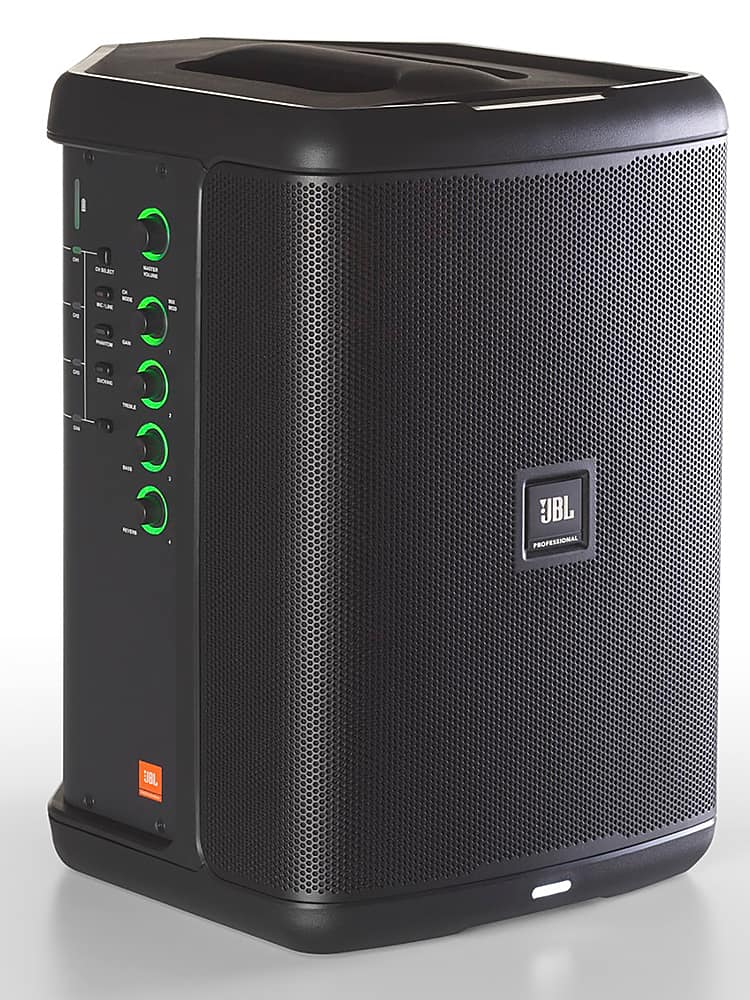
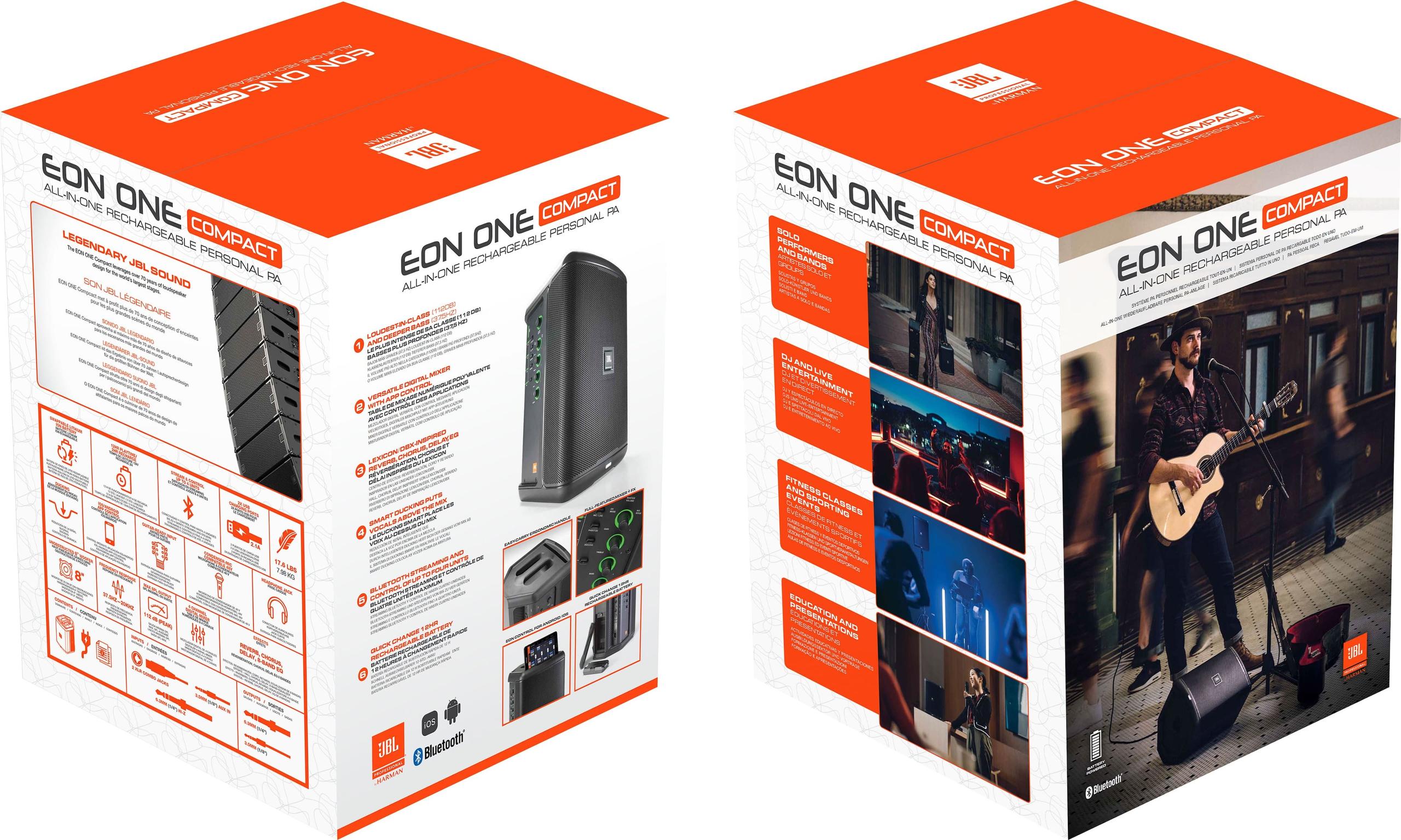
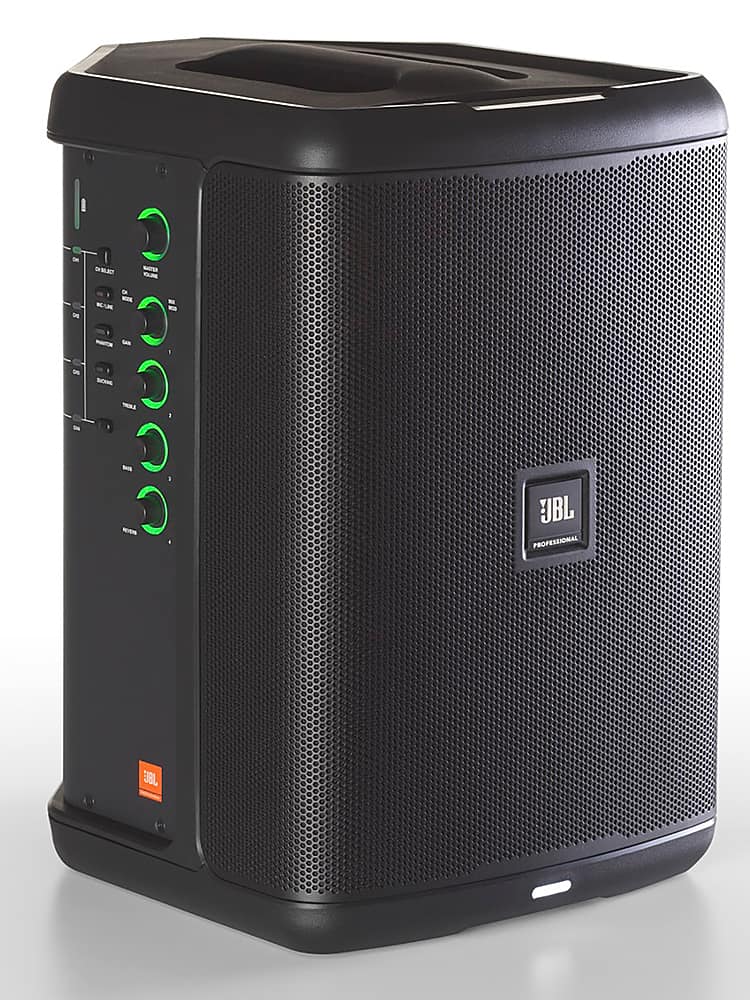
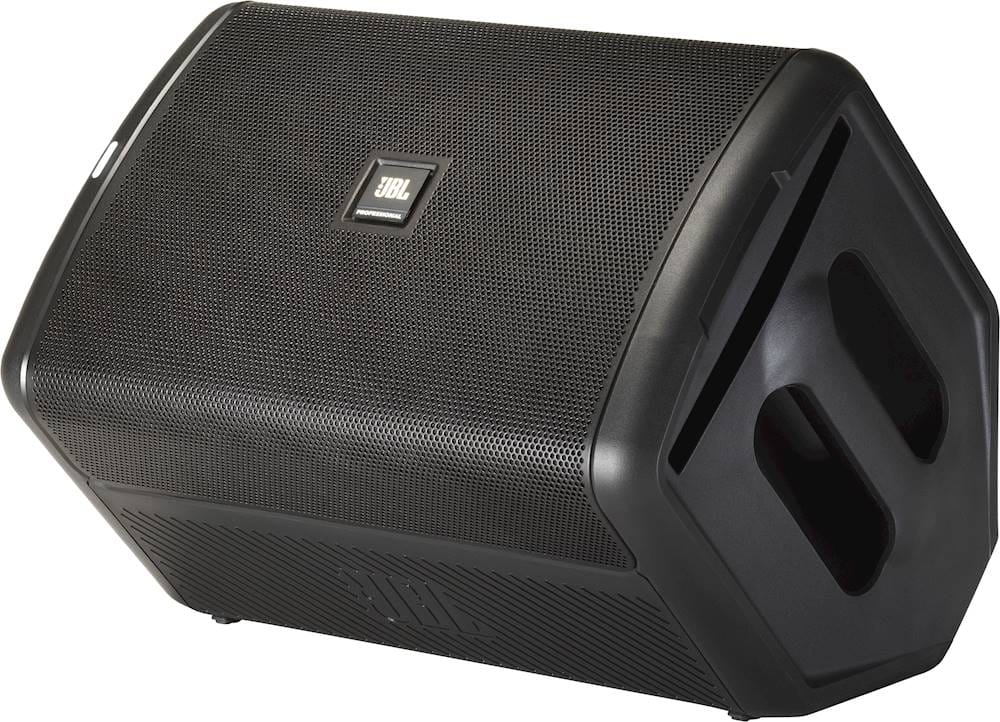
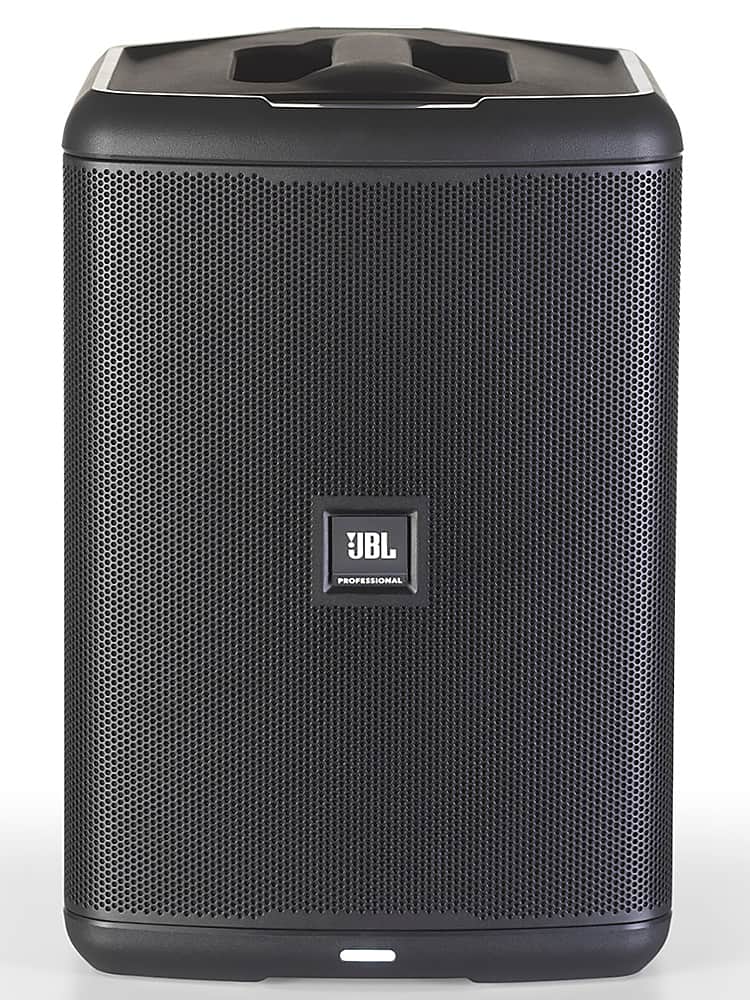
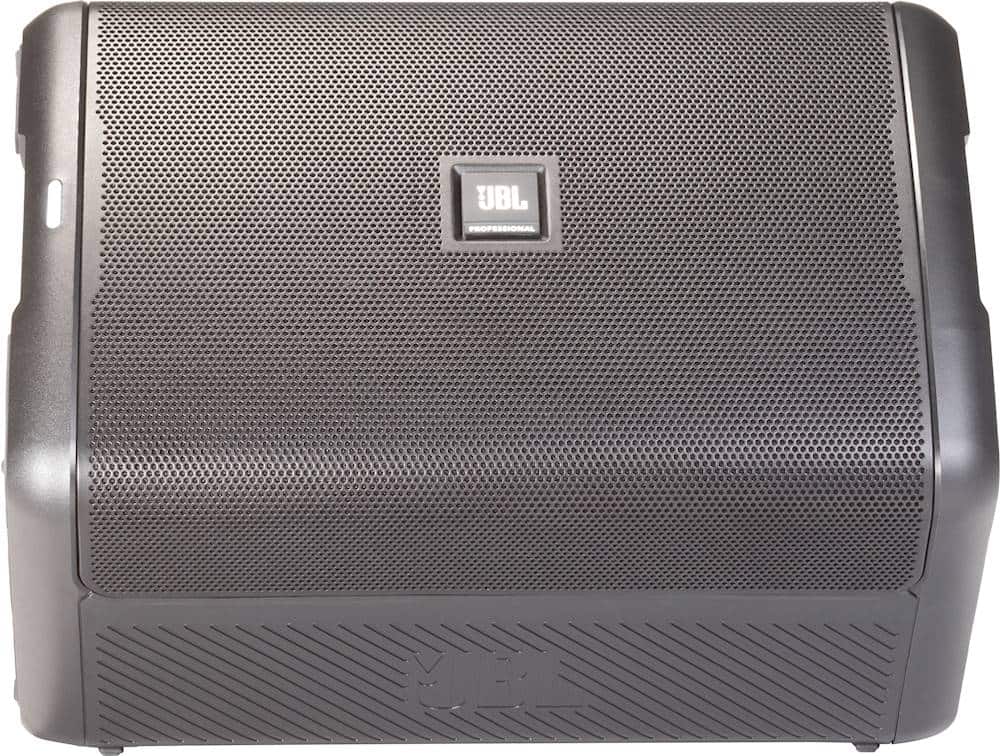
Released in 2020, the EON ONE Compact represented JBL's attempt to create the ultimate portable PA system. At just over 17 pounds, it packs remarkable technology into a surprisingly small package.
The EON ONE Compact achieves its 112 dB maximum output through clever engineering. The 8-inch woofer (the large driver that produces bass) handles frequencies down to an impressive 37.5Hz—that's nearly an octave lower than many competitors. This extended low-frequency response gives solo acoustic performers and small bands a fuller sound that doesn't leave audiences missing the bottom end.
The 1-inch tweeter (high-frequency driver) covers everything above the crossover point with clarity that rivals studio monitors. JBL's engineers tuned this system for accuracy rather than excitement, which means vocals cut through clearly and instruments maintain their natural character. This balanced approach makes the EON ONE Compact suitable for both music and speech applications—a critical distinction for users who need one speaker for multiple purposes.
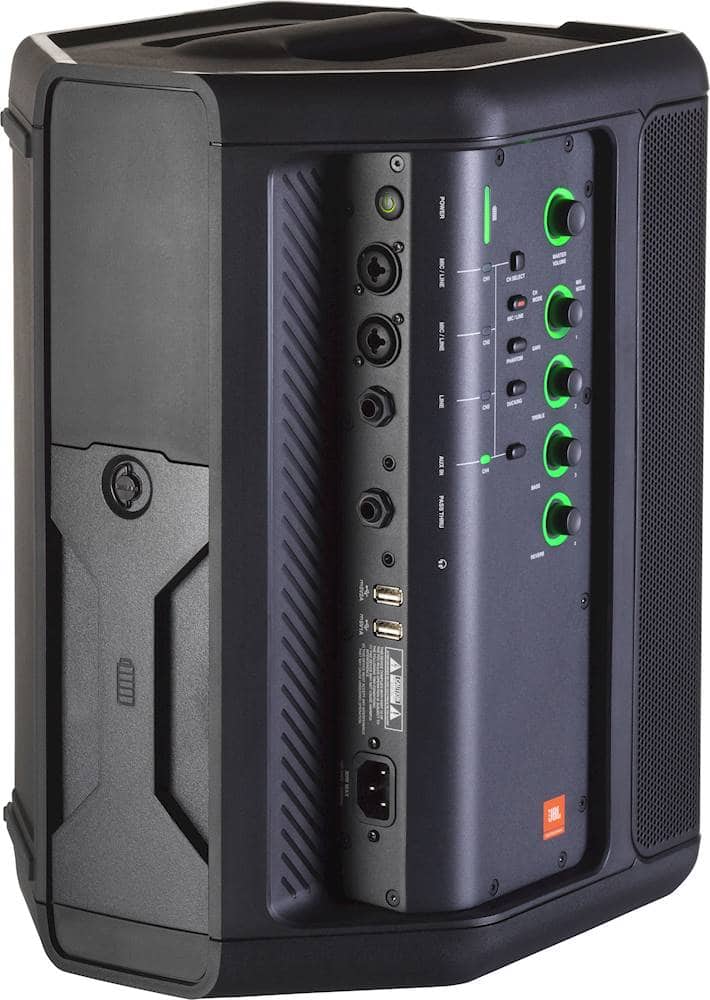
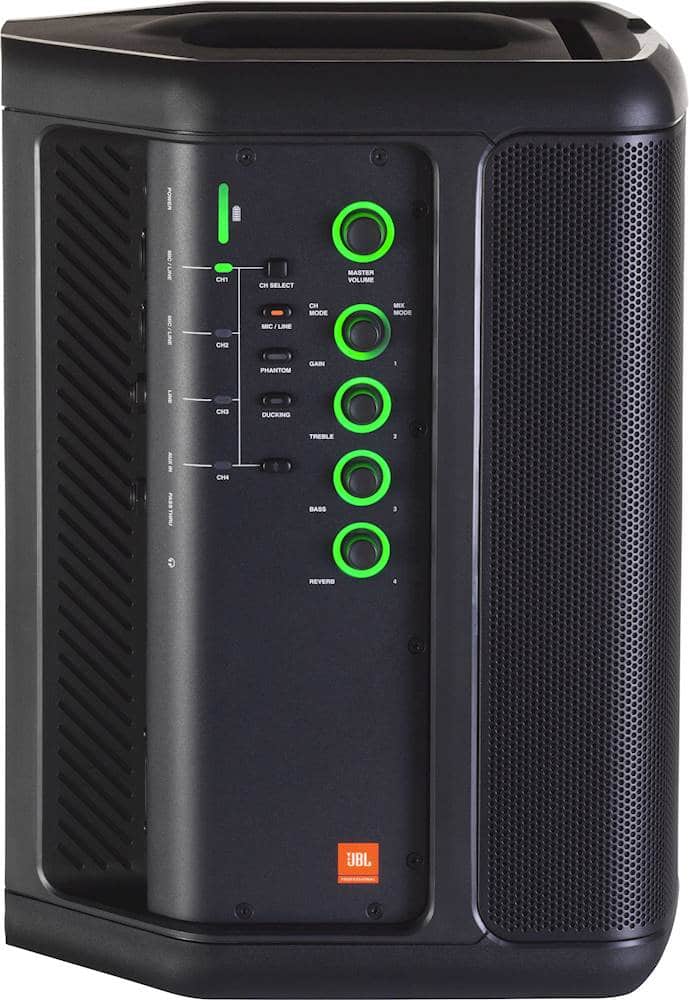
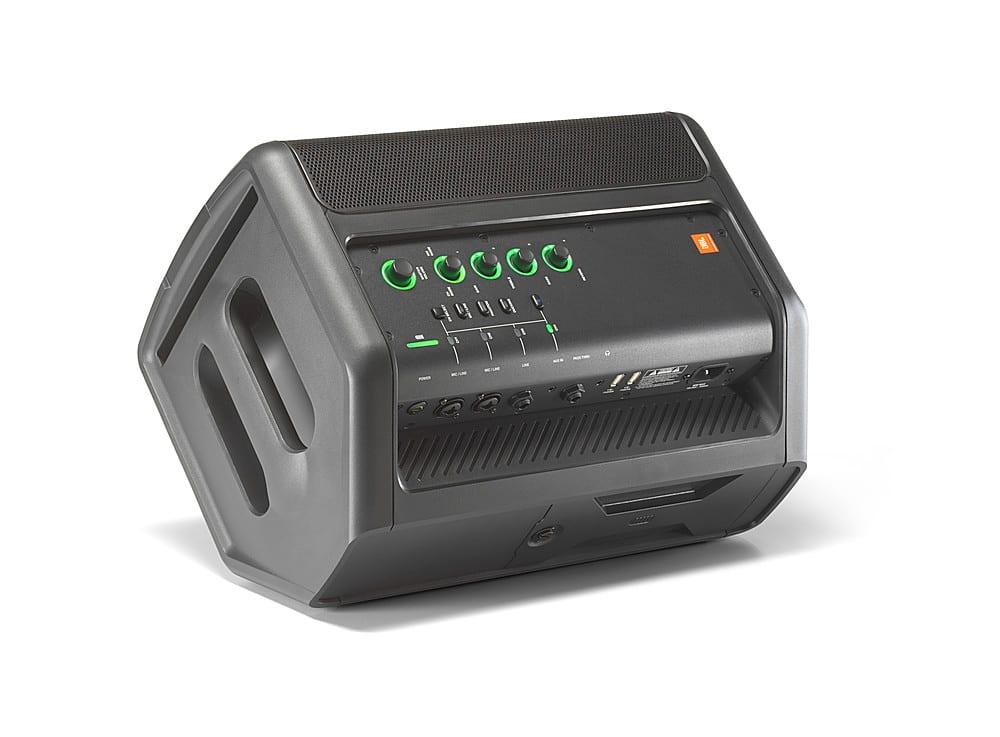
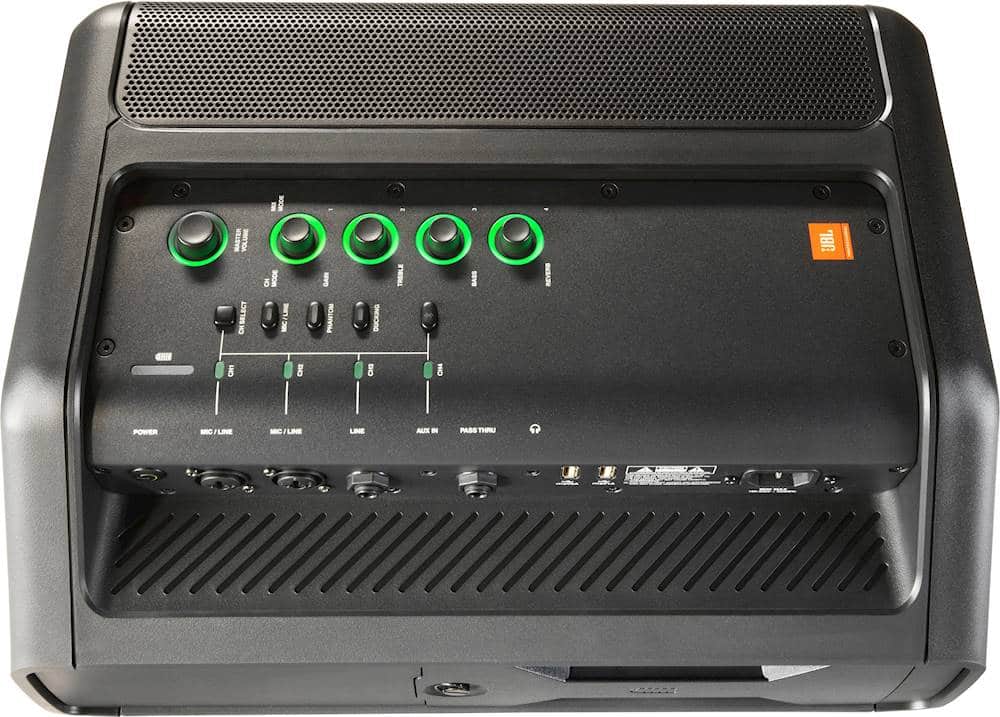
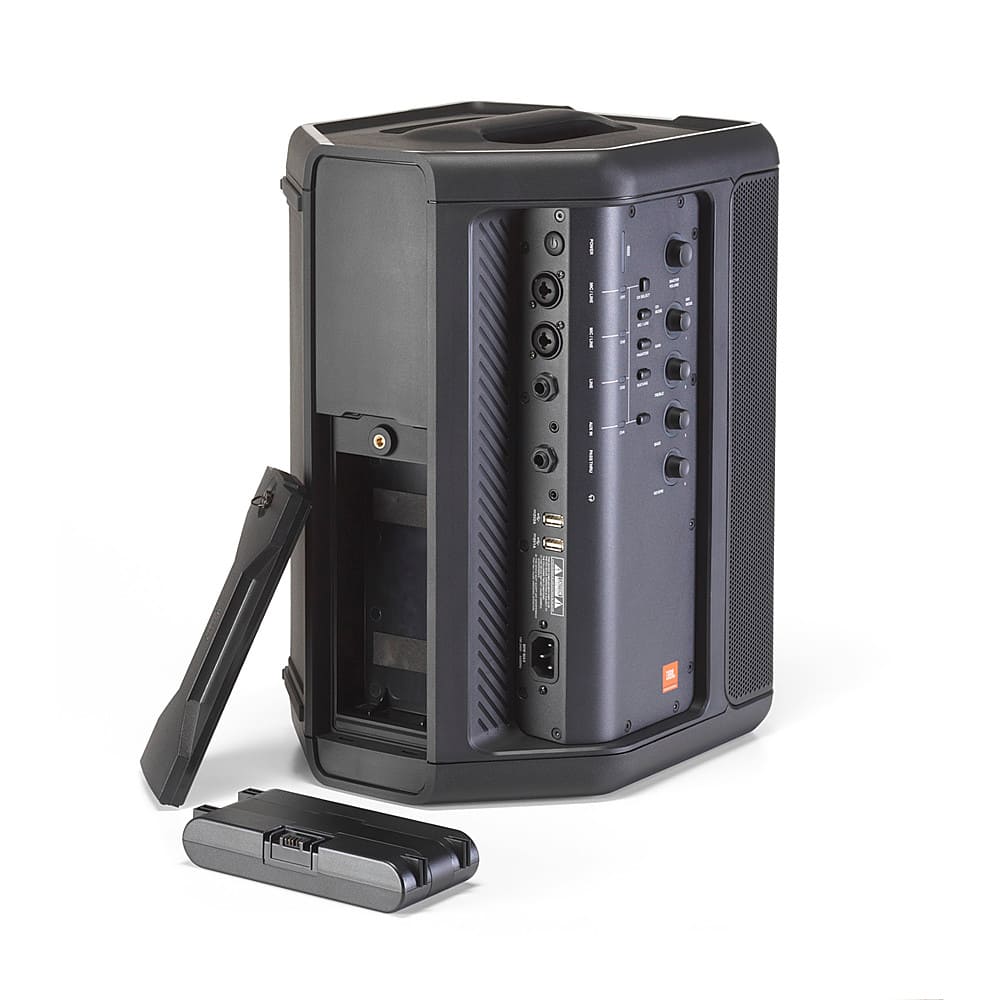
What truly sets the EON ONE Compact apart is its built-in 4-channel digital mixer. This isn't just marketing speak—it's a legitimate mixing console that would typically require separate equipment. Channel 1 and 2 feature XLR/TRS combo jacks (professional connections that accept both microphone and line-level signals) with switchable phantom power on Channel 1. Phantom power is essential for condenser microphones, which require electrical power to operate.
Channel 3 provides a dedicated Hi-Z (high-impedance) input specifically designed for electric guitars and basses. This input type prevents the characteristic tone loss that occurs when plugging instruments into regular line inputs. Channel 4 handles auxiliary sources and Bluetooth audio, making it easy to mix live performance with backing tracks.
The inclusion of Lexicon reverb and delay effects (professional-grade audio processing) eliminates the need for external effects units. These aren't toy-quality effects—Lexicon has been the gold standard in professional audio for decades. The ability to apply different amounts of reverb to individual channels gives performers unprecedented control in a portable package.
The EON ONE Compact's tool-free, swappable battery system addresses one of portable audio's biggest limitations. Most battery-powered speakers become expensive paperweights when their internal batteries eventually wear out. JBL's approach lets you swap fresh batteries in seconds, extending event time indefinitely and providing a realistic upgrade path as battery technology improves.
The 12-hour battery life represents conservative real-world performance. Unlike some manufacturers who test at minimal volume with no effects or inputs active, JBL's rating reflects actual usage patterns. The ducking feature (which automatically lowers background music when speech is detected) shows attention to practical needs that distinguish professional tools from consumer products.
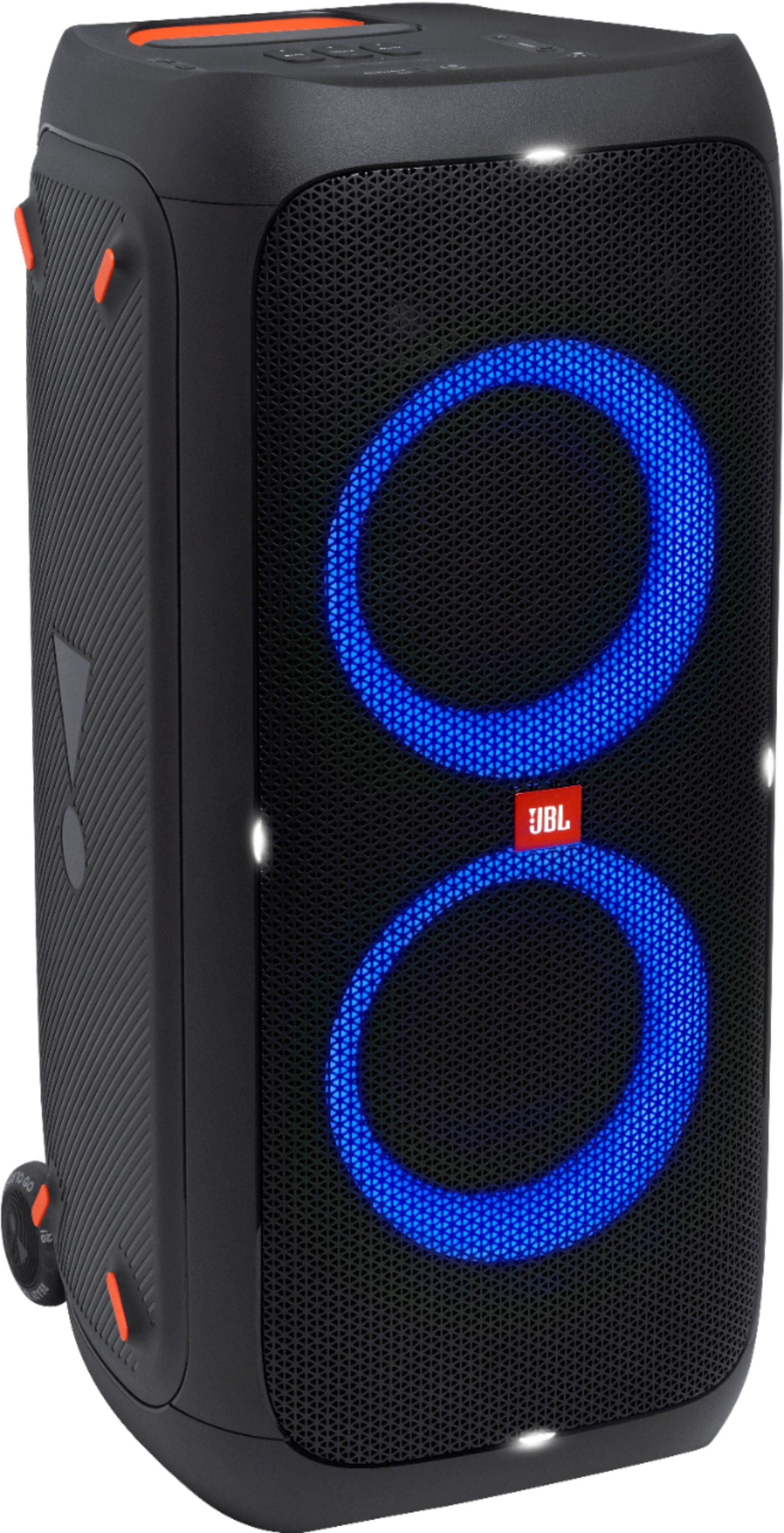
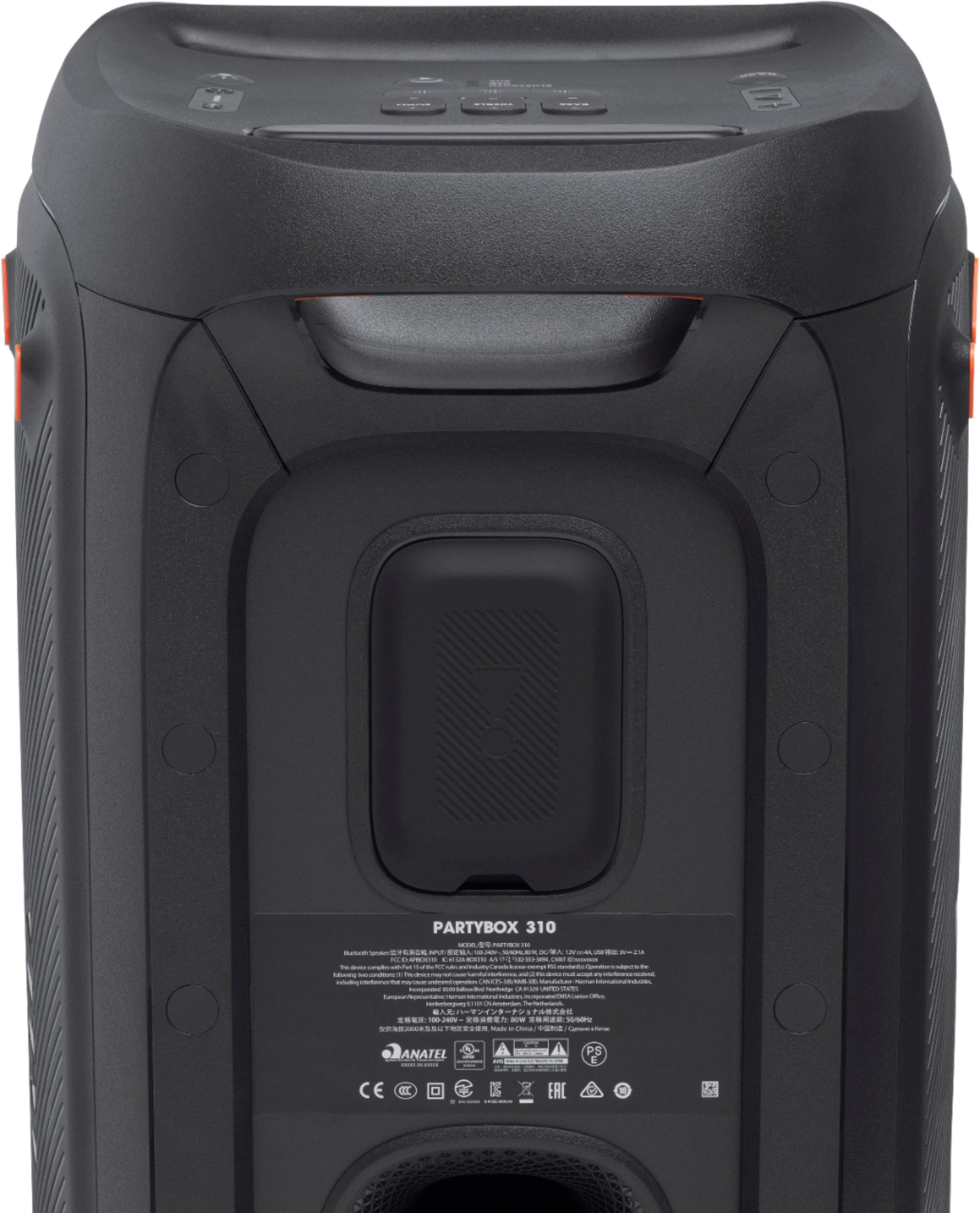
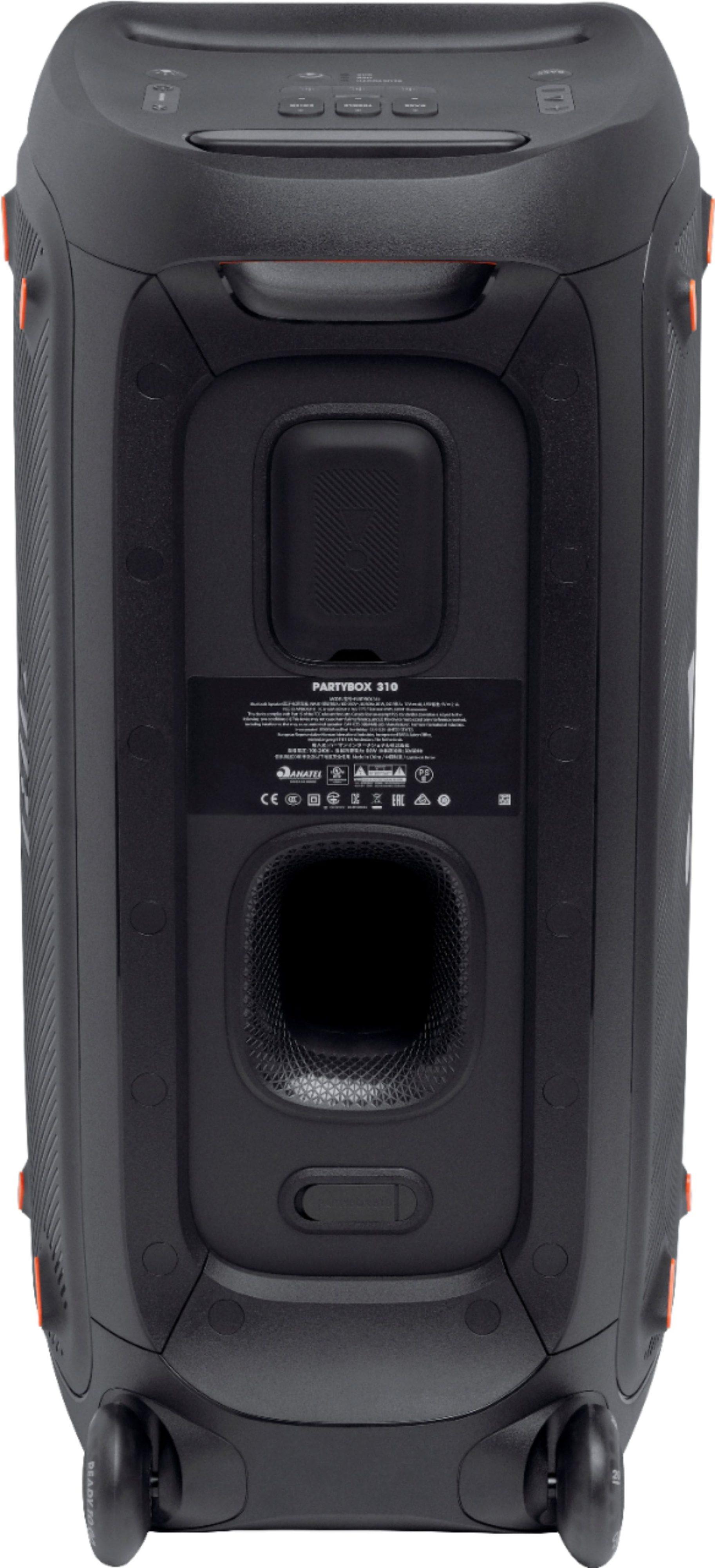
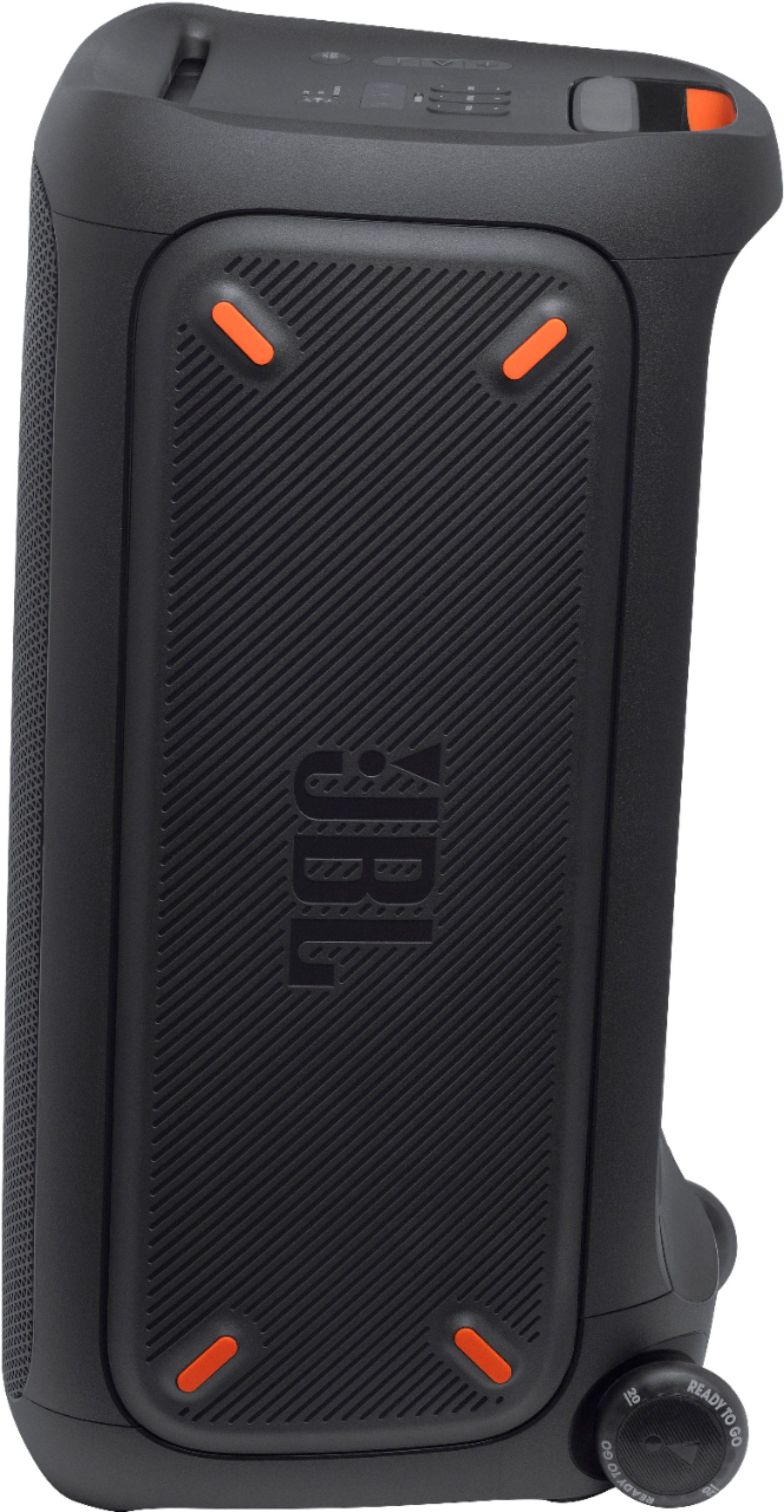
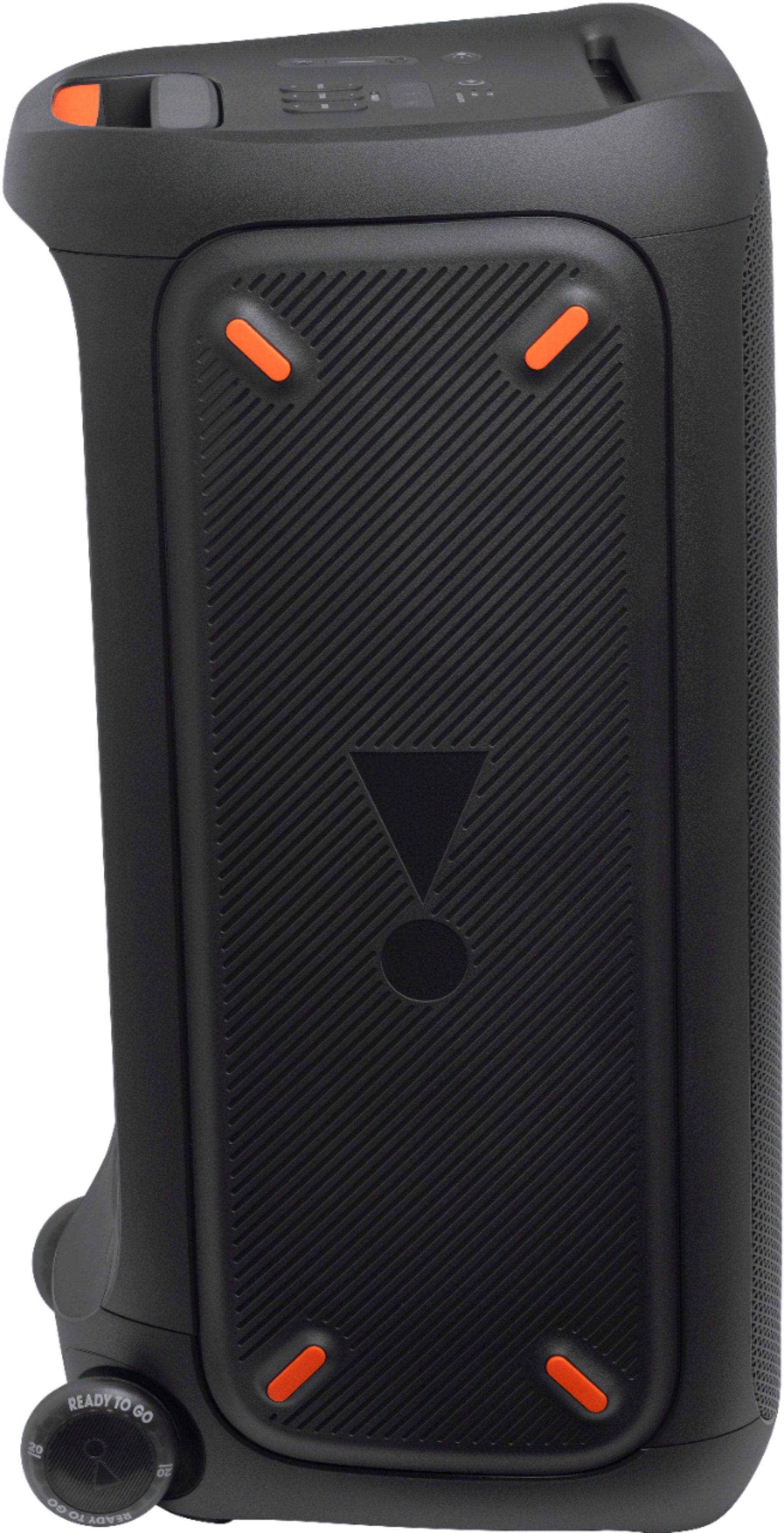
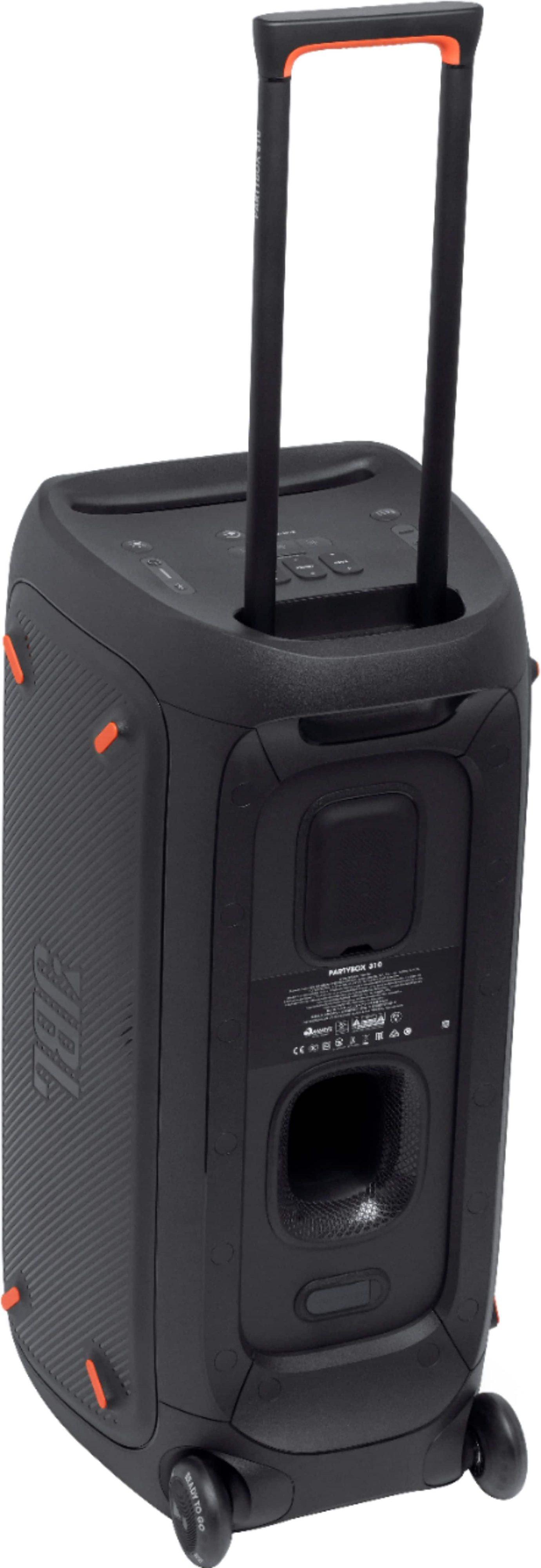
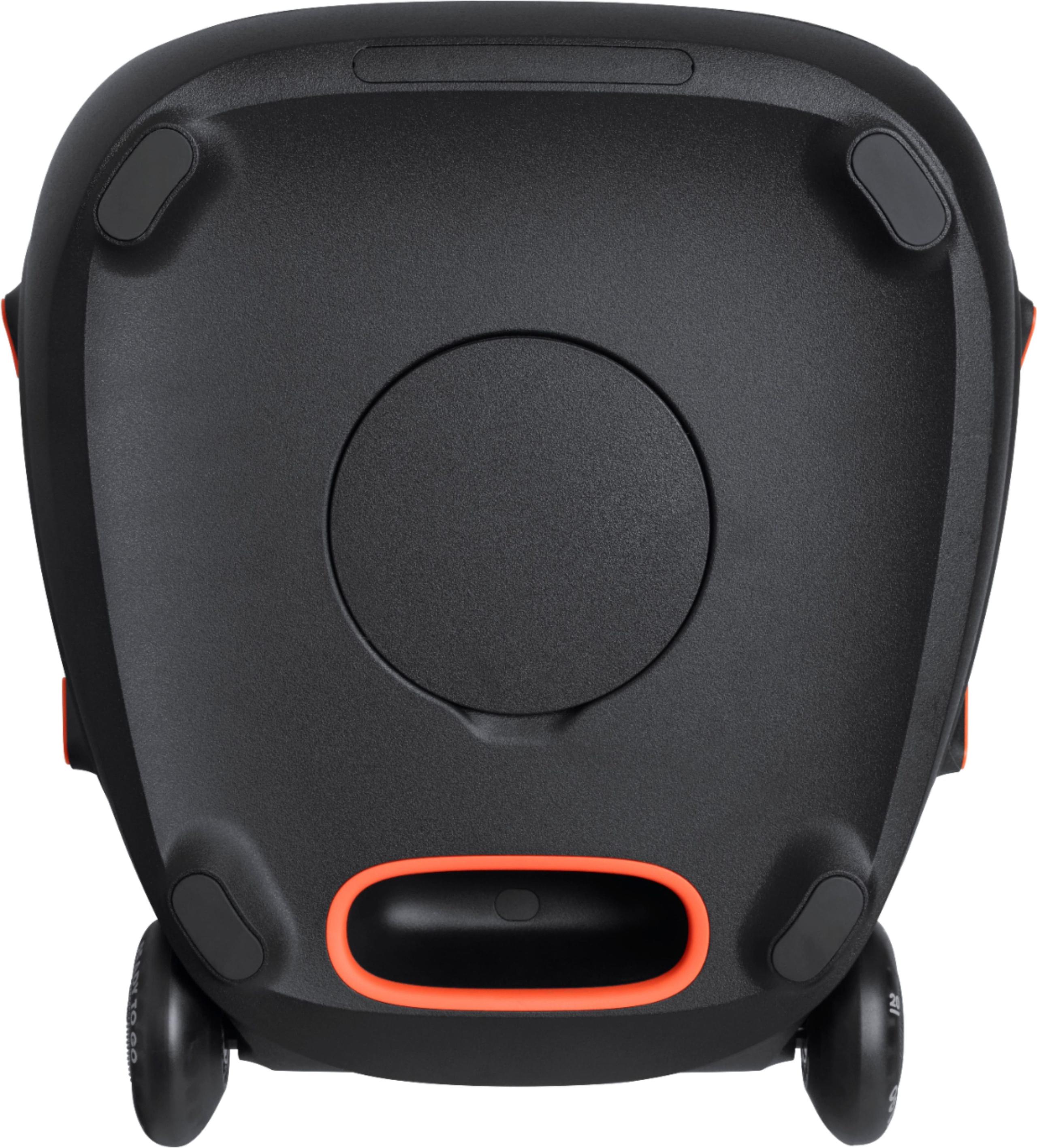
Introduced in 2021, the PartyBox 310 takes a completely different approach to portable audio. At 38 pounds, it's significantly heavier than the EON ONE Compact, but that weight serves a purpose—housing the components needed for serious volume and bass output.
The PartyBox 310's dual 6.5-inch woofer configuration produces the kind of bass impact that single-driver systems simply cannot match. While the EON ONE Compact impresses with its extended low-frequency response, the PartyBox 310 delivers bass you feel in your chest. This physical impact is crucial for dance music genres like EDM, hip-hop, and reggae, where bass isn't just heard—it's experienced.
The 240W RMS power rating (when connected to AC power) represents genuine amplifier output, not peak marketing numbers. This substantial power reserve means the PartyBox 310 maintains clean sound even at party-level volumes where lesser speakers would distort heavily. The dual tweeter arrangement helps maintain clarity in the critical midrange frequencies where vocals and lead instruments live.
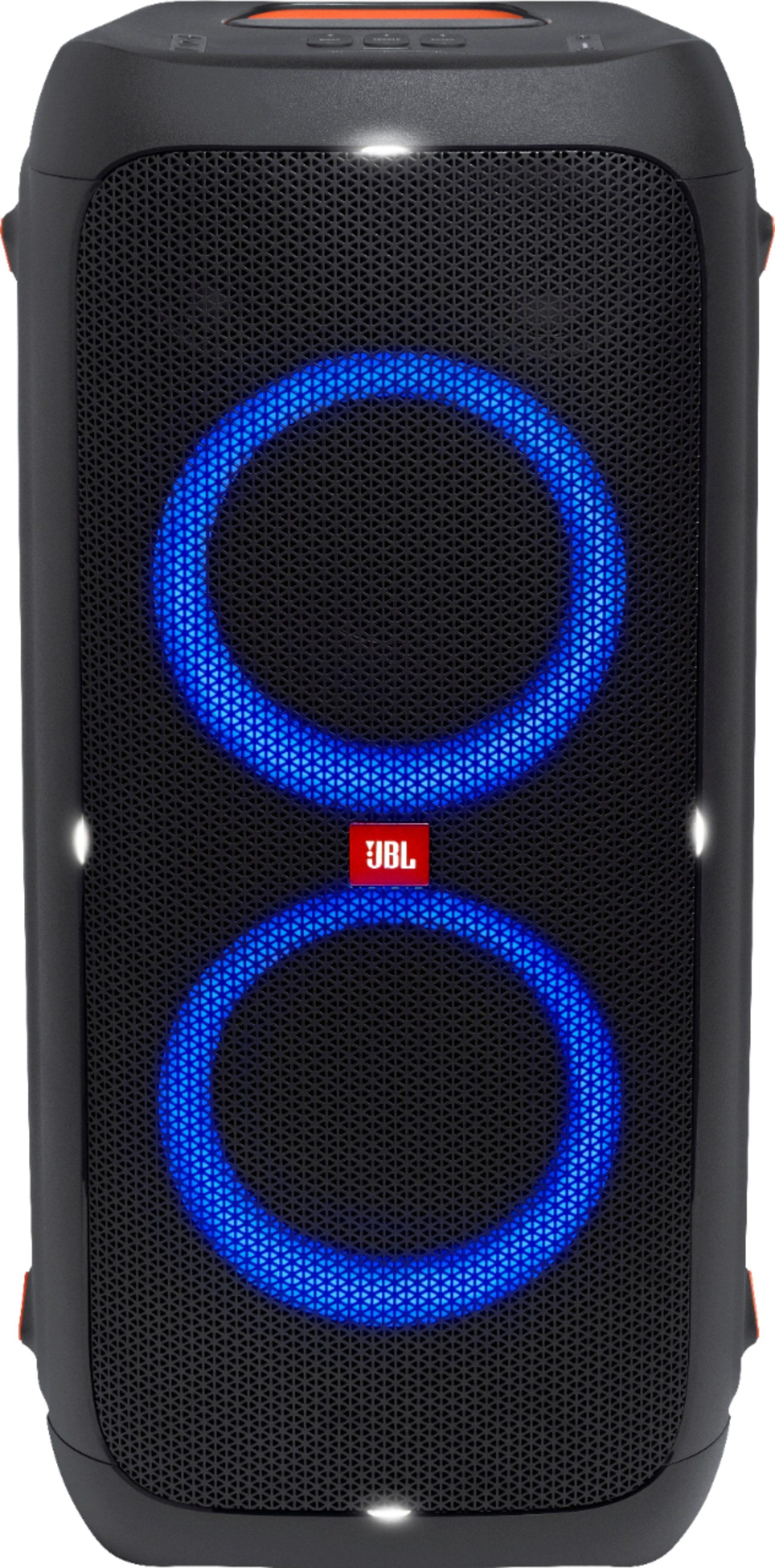
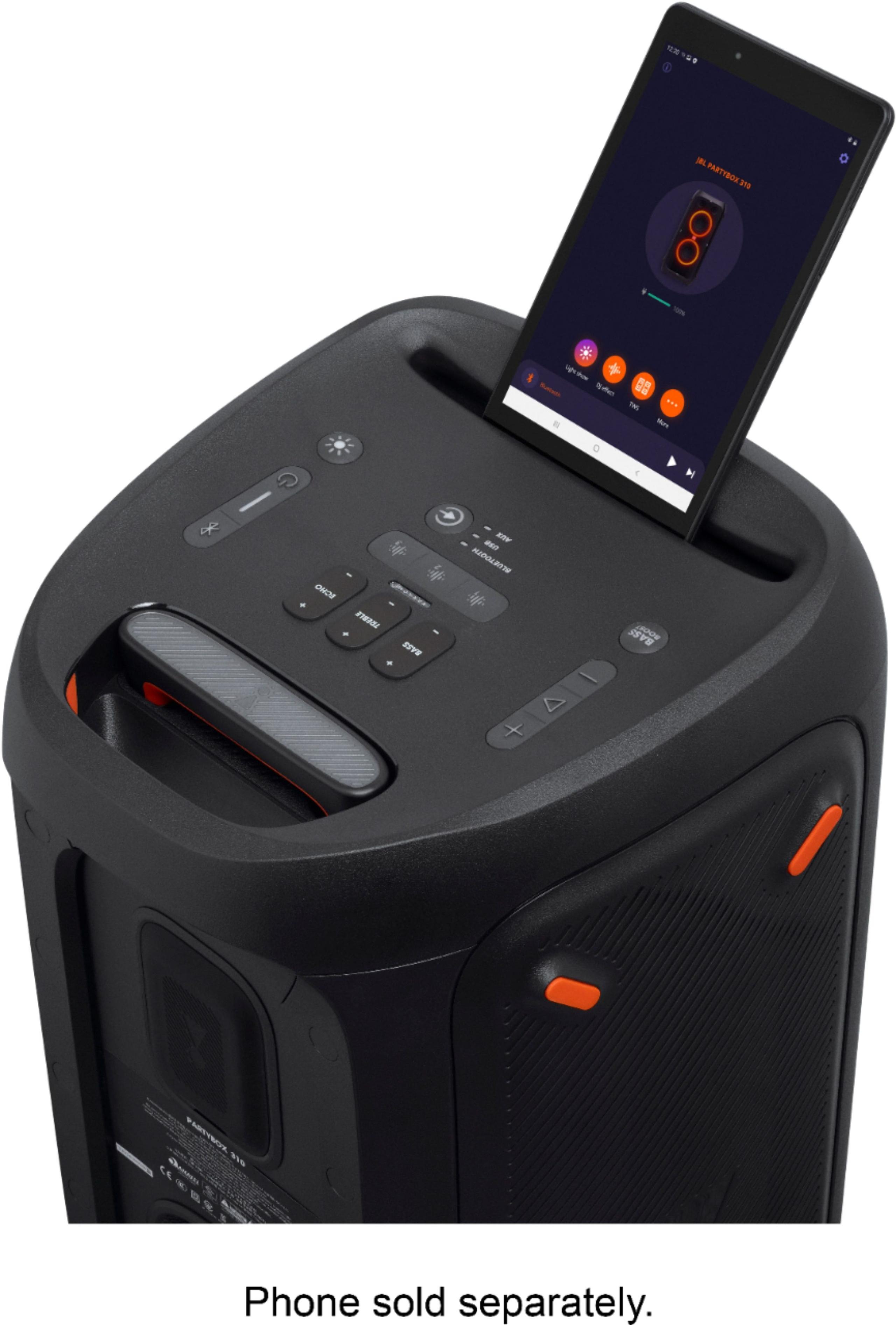
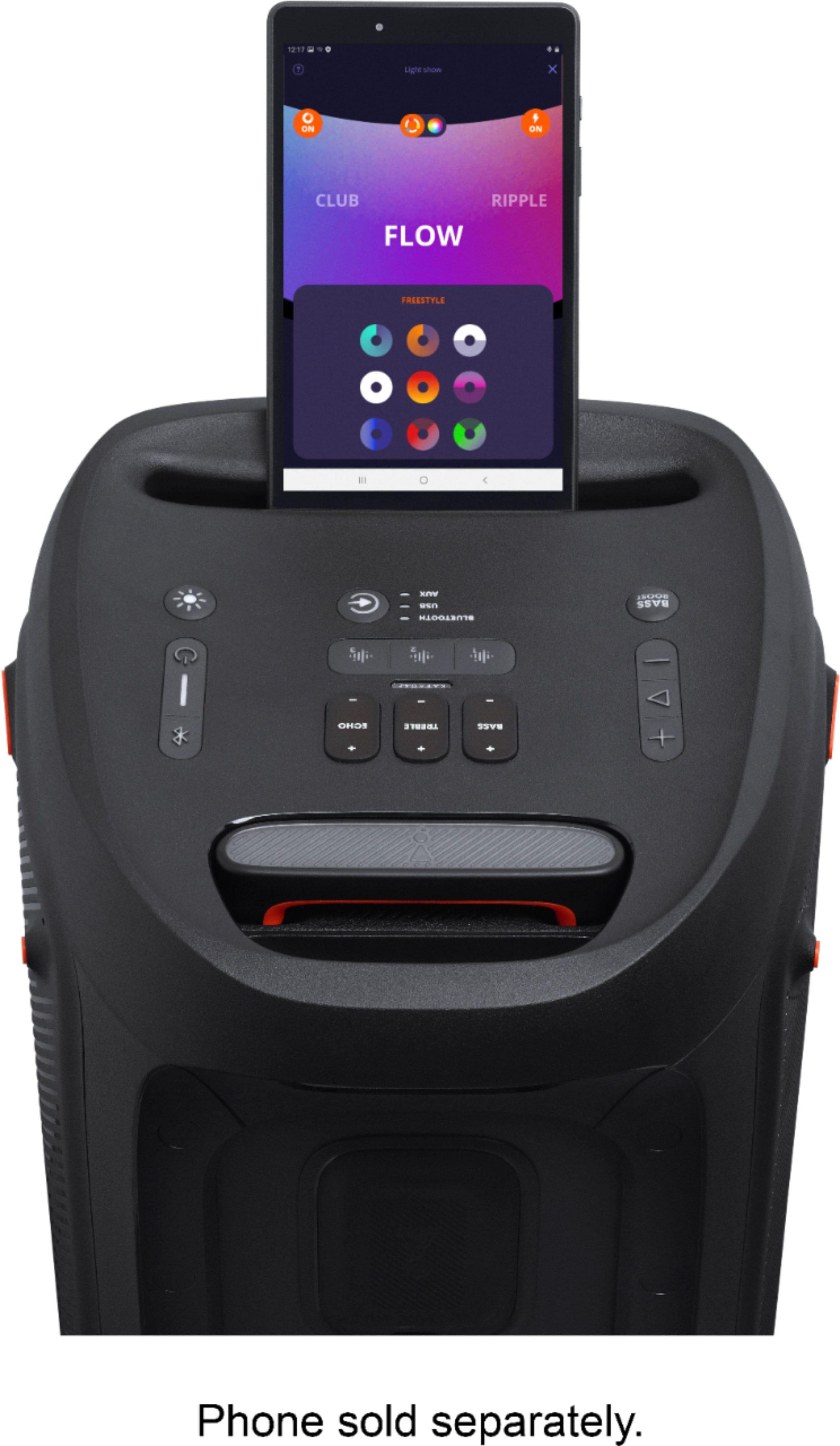
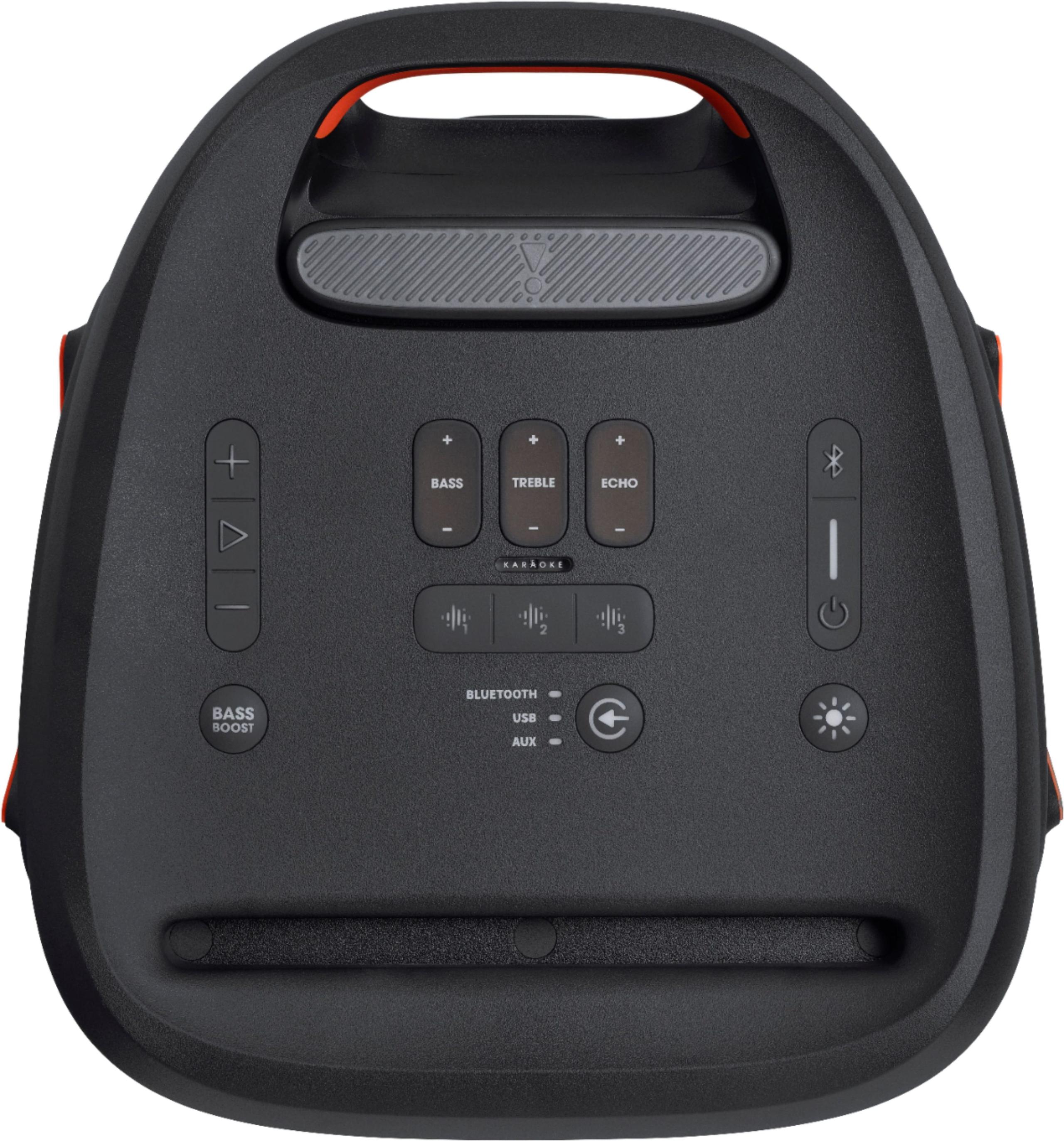
The PartyBox 310's synchronized RGB lighting system isn't just a gimmick—it's a core part of the party experience. The lights respond dynamically to music, creating visual excitement that transforms any gathering. Five different lighting modes let users match the visual presentation to their event style, from subtle ambient lighting to full club-like strobing.
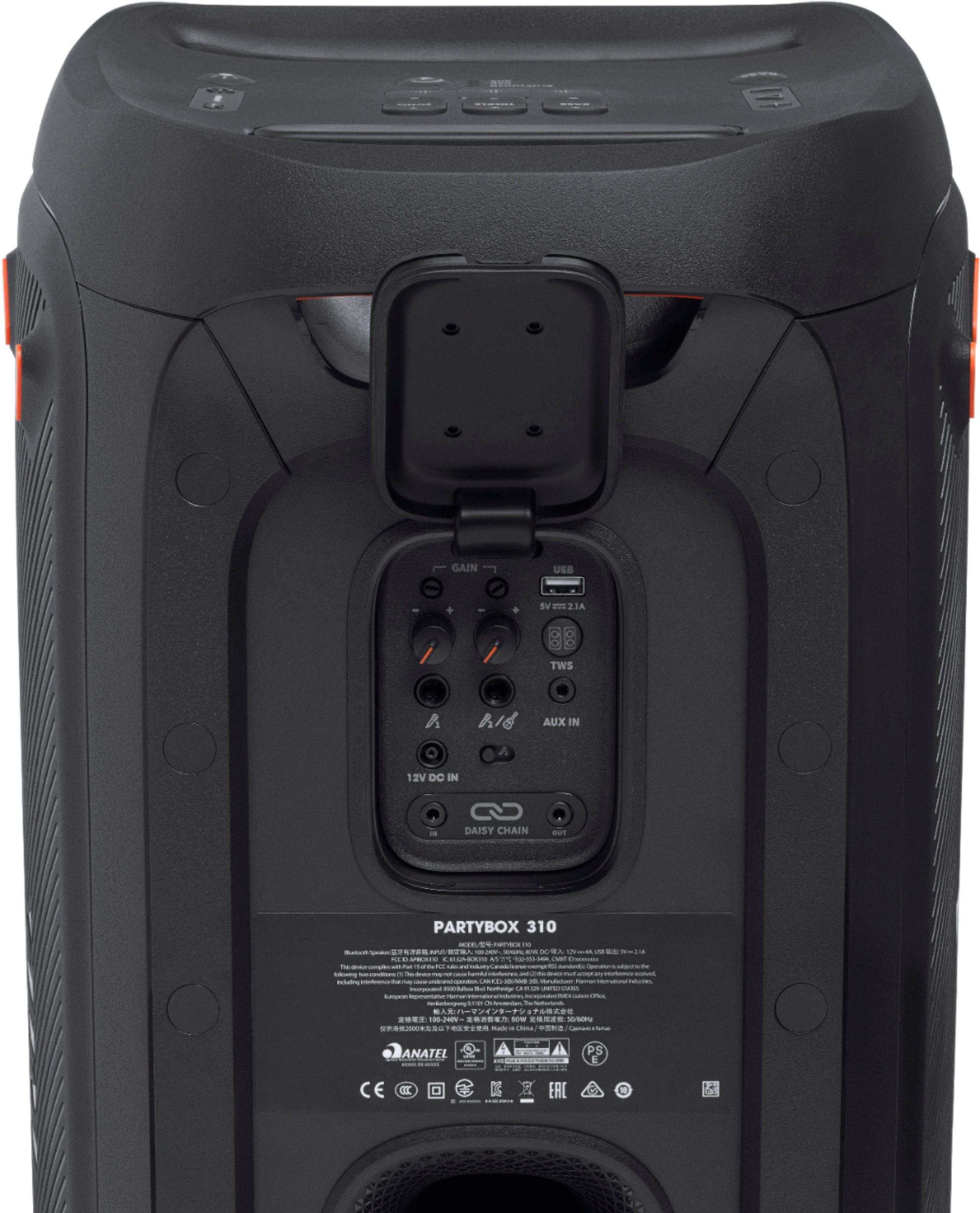
The karaoke functionality includes vocal effects and pitch correction, turning any gathering into an impromptu performance venue. While not as sophisticated as the EON ONE Compact's professional mixing capabilities, these features serve their recreational purpose effectively.
The IPX4 splashproof rating provides confidence for poolside or beach use—something the EON ONE Compact cannot offer. This weather resistance, combined with the robust build quality, makes the PartyBox 310 suitable for outdoor events where equipment might face moisture challenges.
When it comes to raw volume output, the PartyBox 310 wins decisively. Its 240W amplification and dual-woofer design simply move more air than the EON ONE Compact's single 8-inch driver setup. For outdoor events or large indoor spaces, this power advantage is immediately audible.
However, the EON ONE Compact's 112 dB maximum output shouldn't be underestimated. This is genuinely loud—enough for audiences of 50-75 people in most environments. The difference lies in headroom (unused power capacity) and distortion characteristics. The PartyBox 310 maintains clean sound at higher absolute volumes, while the EON ONE Compact offers more controlled, professional-grade output.
These speakers represent two different philosophies of sound reproduction. The EON ONE Compact aims for accuracy—reproducing source material as faithfully as possible. This approach serves musicians, presenters, and anyone who needs natural sound reproduction. Vocals sound like voices, acoustic instruments maintain their woody character, and electric instruments preserve their tonal qualities.
The PartyBox 310 embraces coloration—intentionally emphasizing certain frequencies to create excitement. The bass boost function and inherently bass-heavy tuning make dance music more impactful, but might overwhelm delicate acoustic material. This isn't a flaw—it's a design choice that serves party applications perfectly.
The EON ONE Compact's professional input array provides genuine mixing flexibility. The combination of XLR/TRS inputs, dedicated instrument input, and comprehensive effects processing creates opportunities that the PartyBox 310 simply cannot match. Need to mix two microphones, an acoustic guitar, and background music simultaneously? The EON ONE Compact handles this easily.
The ability to wirelessly link up to four EON ONE Compact units transforms the system from a single speaker into a distributed PA system. This scalability means your initial investment can grow with your needs—a crucial consideration for users whose requirements might expand over time.
The PartyBox 310 offers more basic connectivity focused on party applications. The dual 1/4-inch inputs work fine for karaoke or simple guitar accompaniment, but lack the phantom power and signal processing needed for professional applications.
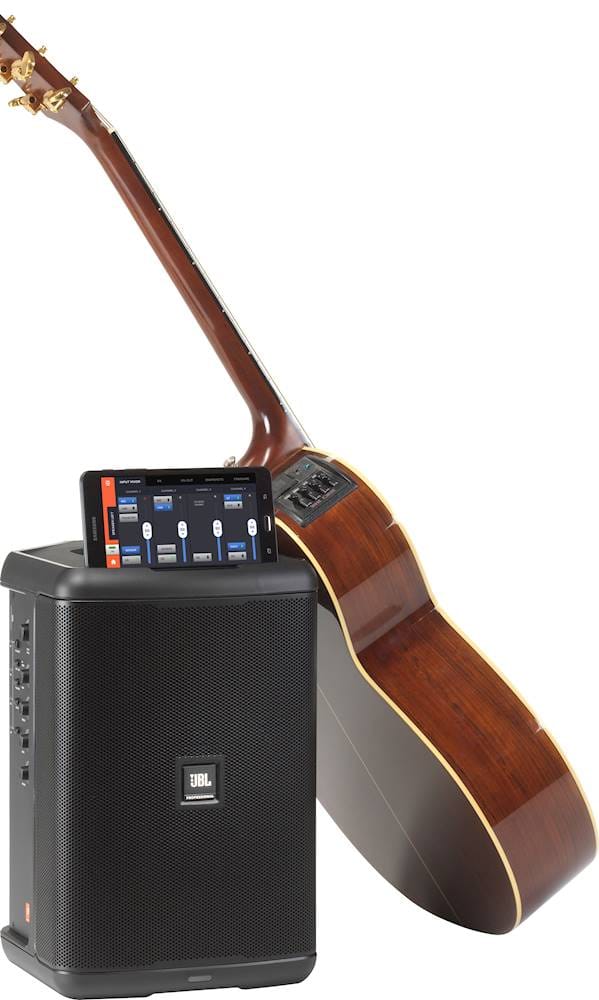
Singer-songwriters, acoustic duos, and small bands will find the EON ONE Compact invaluable. Its balanced sound reproduction doesn't artificially color acoustic instruments, while the professional mixing capabilities handle complex setups without requiring additional equipment. The swappable battery system means reliable power for outdoor gigs or venues with limited electrical access.
The PartyBox 310 works for musicians focused on high-energy performances, particularly those playing bass-heavy music styles. However, the lack of phantom power limits microphone options, and the bass-heavy tuning might overwhelm subtle musical details.
The EON ONE Compact's speech-optimized sound reproduction and ducking technology make it ideal for corporate presentations, educational settings, and conferences. The professional appearance and reliable performance inspire confidence in business environments where audio failures have serious consequences.
The PartyBox 310 would be inappropriate for most professional presentation contexts, both sonically and visually.
Neither speaker was designed specifically for home theater use, but both can serve this purpose with caveats. The EON ONE Compact's balanced sound reproduction works well for dialogue-heavy content, though its single-point source design doesn't create the soundstage width that dedicated home theater systems provide.
The PartyBox 310's bass-heavy tuning enhances action movies and music-focused content, but might muddy dialogue clarity. Its larger size and party-focused aesthetic might not suit living room environments.
This is where the PartyBox 310 truly shines. The combination of powerful bass, high volume output, synchronized lighting, and weather resistance creates the complete party package. The 18-hour battery life supports all-day events, while the wheeled design makes setup and breakdown manageable despite the substantial weight.
The EON ONE Compact can certainly handle party duties, particularly for more sophisticated gatherings where speech and music mixing is important. However, it lacks the visual impact and bass authority that many party applications demand.
At the time of writing, these speakers occupy different price tiers that reflect their targeted markets. The EON ONE Compact commands a premium that's justified by its professional features—the built-in mixer alone would cost several hundred dollars as a separate component. For users who need its capabilities, the integrated approach provides excellent value.
The PartyBox 310 offers remarkable value in the party speaker category, delivering features and performance typically found in more expensive competitors. The combination of power, bass impact, lighting effects, and build quality represents strong value for recreational users.
Both speakers remain technologically current despite being several years old. The EON ONE Compact's 2020 introduction coincided with improvements in battery technology and digital signal processing that make its feature set possible in such a compact package. Subsequent firmware updates have enhanced app functionality and system reliability.
The PartyBox 310's 2021 release incorporated lessons learned from earlier PartyBox models, particularly regarding battery life optimization and build quality. The IPX4 rating and robust construction reflect maturity in portable speaker design.
Since their introduction, competitors have emerged with similar feature sets, but both JBL models remain competitive through continued software support and the reliability that comes from mature product designs.
The decision between the EON ONE Compact and PartyBox 310 ultimately comes down to intended use and priorities.
Choose the EON ONE Compact if you need genuine versatility. Musicians who perform both solo acoustic sets and full band shows, presenters who require reliable speech reproduction, or anyone who values the ability to handle diverse audio sources professionally will find its capabilities invaluable. The premium price is justified by features that would otherwise require multiple pieces of equipment.
Choose the PartyBox 310 if maximum party impact is your priority. The combination of powerful bass, high volume output, entertainment features, and weather resistance creates experiences that the EON ONE Compact cannot match in party environments. For recreational users who prioritize fun over flexibility, it offers exceptional value.
Both speakers represent successful executions of their respective design philosophies. Neither is objectively "better"—they're tools optimized for different purposes. Understanding your primary use case, being honest about your feature priorities, and considering your budget constraints will lead you to the right choice.
The EON ONE Compact excels as a professional tool that happens to be portable, while the PartyBox 310 succeeds as a party machine that happens to handle basic mixing. Choose based on which description better matches your needs, and you'll be satisfied with either investment.
| JBL EON ONE Compact | JBL PartyBox 310 |
|---|---|
| Speaker Category - Determines primary use case and feature set | |
| Professional portable PA system with integrated mixer | Party speaker optimized for entertainment and bass impact |
| Maximum Output Power - Critical for venue size and volume needs | |
| 150W peak, 112 dB max SPL (suitable for 50-75 people) | 240W RMS AC/140W battery, significantly louder output |
| Driver Configuration - Affects sound character and bass response | |
| Single 8" woofer + 1" tweeter (balanced, accurate sound) | Dual 6.5" woofers + dual 2.5" tweeters (bass-heavy, party tuning) |
| Frequency Response - Shows bass extension and overall sound range | |
| 37.5Hz - 20kHz (exceptional low-end for size) | 45Hz - 20kHz (good range, less bass extension) |
| Weight and Portability - Major factor for frequent transport | |
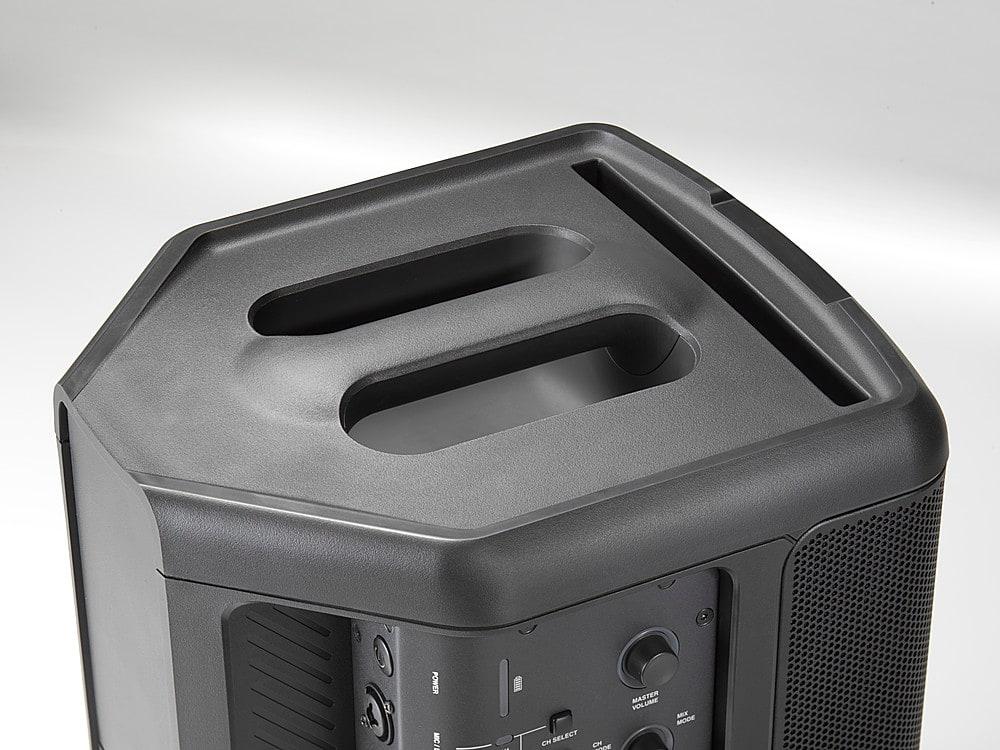
| 17.6 lbs with integrated handle (truly portable) | 38.4 lbs with telescoping handle and wheels (manageable but substantial) |
| Battery Life - Critical for untethered events | |
| 12 hours with tool-free swappable battery | 18 hours with non-removable internal battery |
| Input Flexibility - Determines mixing capabilities | |
| 4-channel digital mixer: 2×XLR/TRS, Hi-Z instrument, aux/Bluetooth | Basic inputs: 2×1/4" mic/guitar, aux, USB, Bluetooth |
| Professional Features - Important for live performance and presentations | |
| Phantom power, Lexicon effects, ducking, wireless linking up to 4 units | Basic tone controls, karaoke mode, built-in sound effects |
| Weather Resistance - Matters for outdoor use | |
| No weather rating (indoor/covered use only) | IPX4 splashproof (poolside and light rain safe) |
| Entertainment Features - Adds party atmosphere | |
| None (focused on professional audio quality) | RGB light show with 5 modes, party-optimized sound tuning |
| App Control - Affects ease of use and customization | |
| JBL Compact Connect: Full mixer control, EQ, effects, multi-unit sync | JBL PartyBox: Basic controls, light customization, simple EQ |
| Price Range - Value consideration at time of writing | |
| Premium pricing reflecting professional features and build quality | Mid-range pricing offering strong value for party-focused features |
The JBL PartyBox 310 is significantly louder than the JBL EON ONE Compact. The PartyBox 310 delivers 240W RMS power with dual woofers, while the EON ONE Compact outputs 150W peak with a single driver configuration. For large outdoor parties or events requiring maximum volume, the PartyBox 310 is the clear winner.
The primary difference is their intended purpose: the JBL EON ONE Compact is a professional PA system with a built-in 4-channel mixer designed for musicians and presenters, while the JBL PartyBox 310 is an entertainment-focused party speaker with RGB lighting and bass-heavy sound tuning optimized for recreational use.
The JBL PartyBox 310 produces more impactful bass due to its dual 6.5-inch woofers and party-tuned sound profile. However, the EON ONE Compact extends deeper into low frequencies (down to 37.5Hz vs 45Hz) and offers more balanced bass reproduction suitable for live music and speech applications.
Yes, but with different capabilities. The JBL EON ONE Compact offers professional XLR/TRS inputs with phantom power for condenser microphones, plus comprehensive mixing controls. The PartyBox 310 has basic 1/4-inch microphone inputs suitable for karaoke and simple vocal applications, but lacks phantom power and advanced mixing features.
The JBL EON ONE Compact is much more portable at 17.6 pounds with a compact design and integrated handle. The PartyBox 310 weighs 38.4 pounds but includes a telescoping handle and wheels for easier transport despite its larger size.
The JBL PartyBox 310 offers longer battery life at up to 18 hours, while the EON ONE Compact provides 12 hours. However, the EON ONE Compact features a unique tool-free swappable battery system, allowing you to extend playtime indefinitely with spare batteries.
Both work outdoors, but the JBL PartyBox 310 is better suited for outdoor parties due to its IPX4 splashproof rating, higher volume output, RGB lighting effects, and weather-resistant construction. The EON ONE Compact lacks weather protection and is better for covered outdoor venues.
The JBL EON ONE Compact is specifically designed for live music with its professional mixing capabilities, balanced sound reproduction, phantom power for condenser microphones, and ability to link multiple units wirelessly. The PartyBox 310 lacks the input flexibility and professional features needed for serious musical performances.
Yes, both the JBL EON ONE Compact and JBL PartyBox 310 support Bluetooth audio streaming. The EON ONE Compact integrates Bluetooth as one channel in its 4-channel mixer, while the PartyBox 310 offers standard Bluetooth connectivity with basic playback controls.
Value depends on your needs: the JBL PartyBox 310 offers excellent value for recreational users seeking maximum party impact, powerful bass, and entertainment features. The EON ONE Compact provides superior value for professionals needing mixing capabilities, as its integrated features would cost significantly more if purchased separately.
Neither is specifically designed for home theater, but the JBL EON ONE Compact works better for this purpose due to its balanced sound reproduction and clear dialogue presentation. The PartyBox 310 might overwhelm dialogue with its bass-heavy tuning, though it could enhance action movies and music content.
The JBL PartyBox 310 is better for karaoke with its dedicated karaoke mode, vocal effects, RGB lighting that enhances the party atmosphere, and dual microphone inputs. While the EON ONE Compact can handle karaoke with superior audio quality, it lacks the entertainment features that make karaoke fun.
We've done our best to create useful and informative comparisons to help you decide what product to buy. Our research uses advanced automated methods to create this comparison and perfection is not possible - please contact us for corrections or questions. These are the sites we've researched in the creation of this article: bestbuy.com - crutchfield.com - noisegate.com.au - zzounds.com - jblpro.com - youtube.com - soundonsound.com - jblpro.com - youtube.com - youtube.com - jbl.com - samash.com - sweetwater.com - avnow.com - soundonsound.com - youtube.com - kh.jbl.com - talkbass.com - techradar.com - proav.com - gearspace.com - jazzguitar.be - sweetwater.com - youtube.com - crutchfield.com - forums.musicplayer.com - adn.harmanpro.com - device.report - bgs.cc - youtube.com - rtings.com - comparisontabl.es - crutchfield.com - youtube.com - bestbuy.com - rtings.com - youtube.com - versus.com - youtube.com - youtube.com - jbl.com - youtube.com - crutchfield.com - manuals.plus - in.jbl.com - jbl.com.tw - mm.jbl.com - bestbuy.com - jbl.com - onward.ph - youtube.com - manuals.plus - harmanaudio.com - support.jbl.com - youtube.com - kh.jbl.com - bestbuy.com

Privacy Policy
Terms and Conditions - Affiliate Policy
Home Security
© Copyright 2008-2026.
11816 Inwood Rd #1211, Dallas, TX 75244