

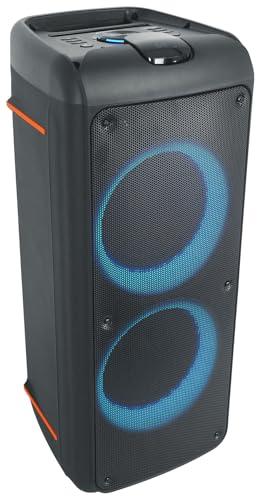
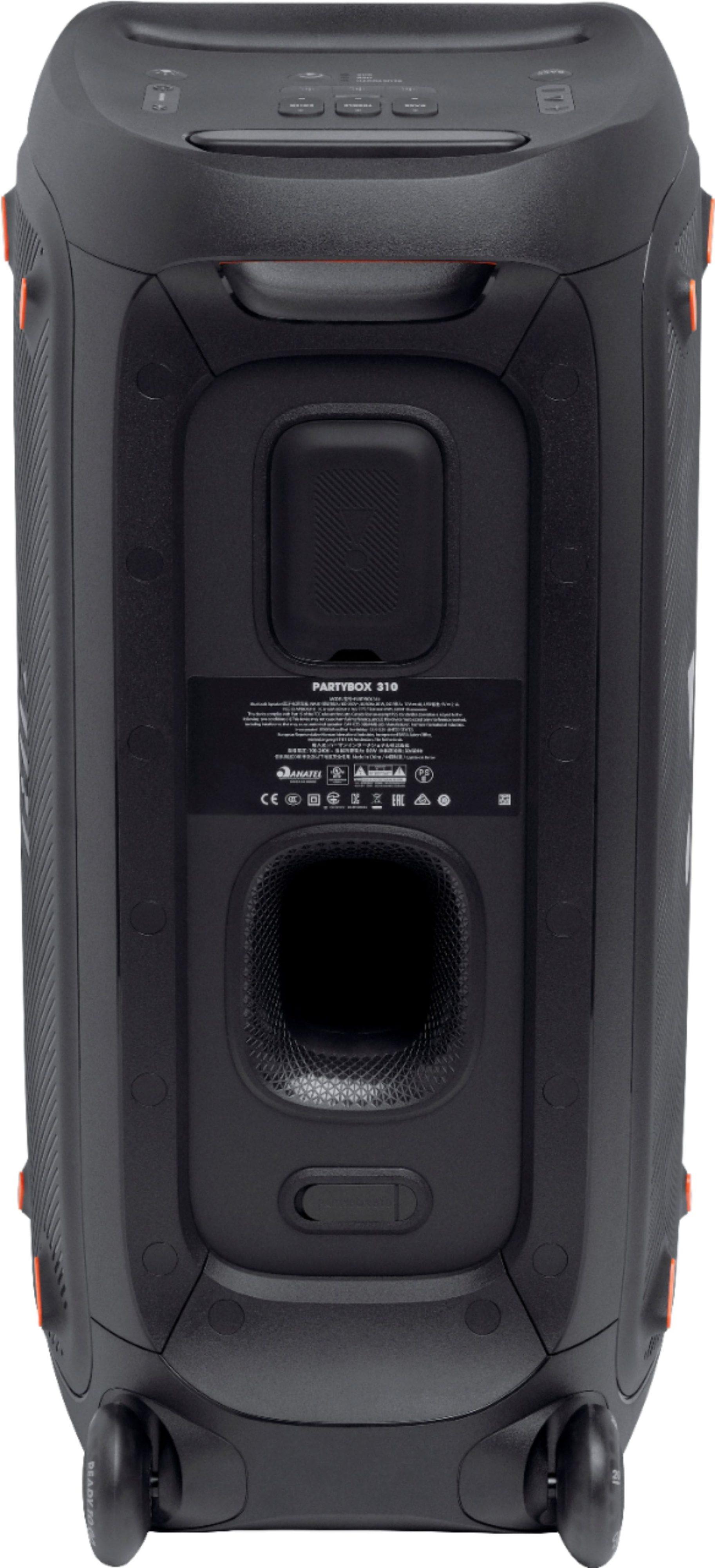
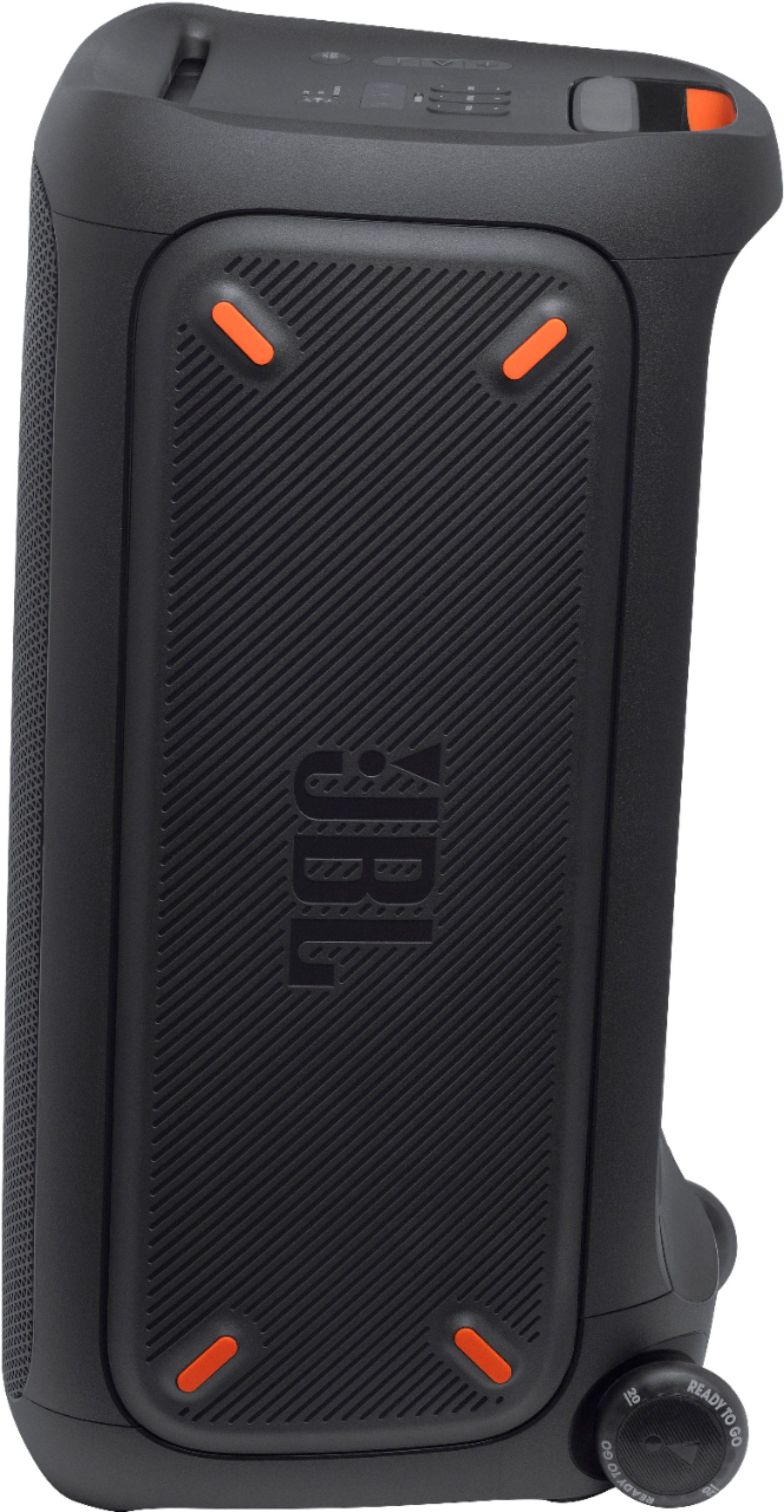
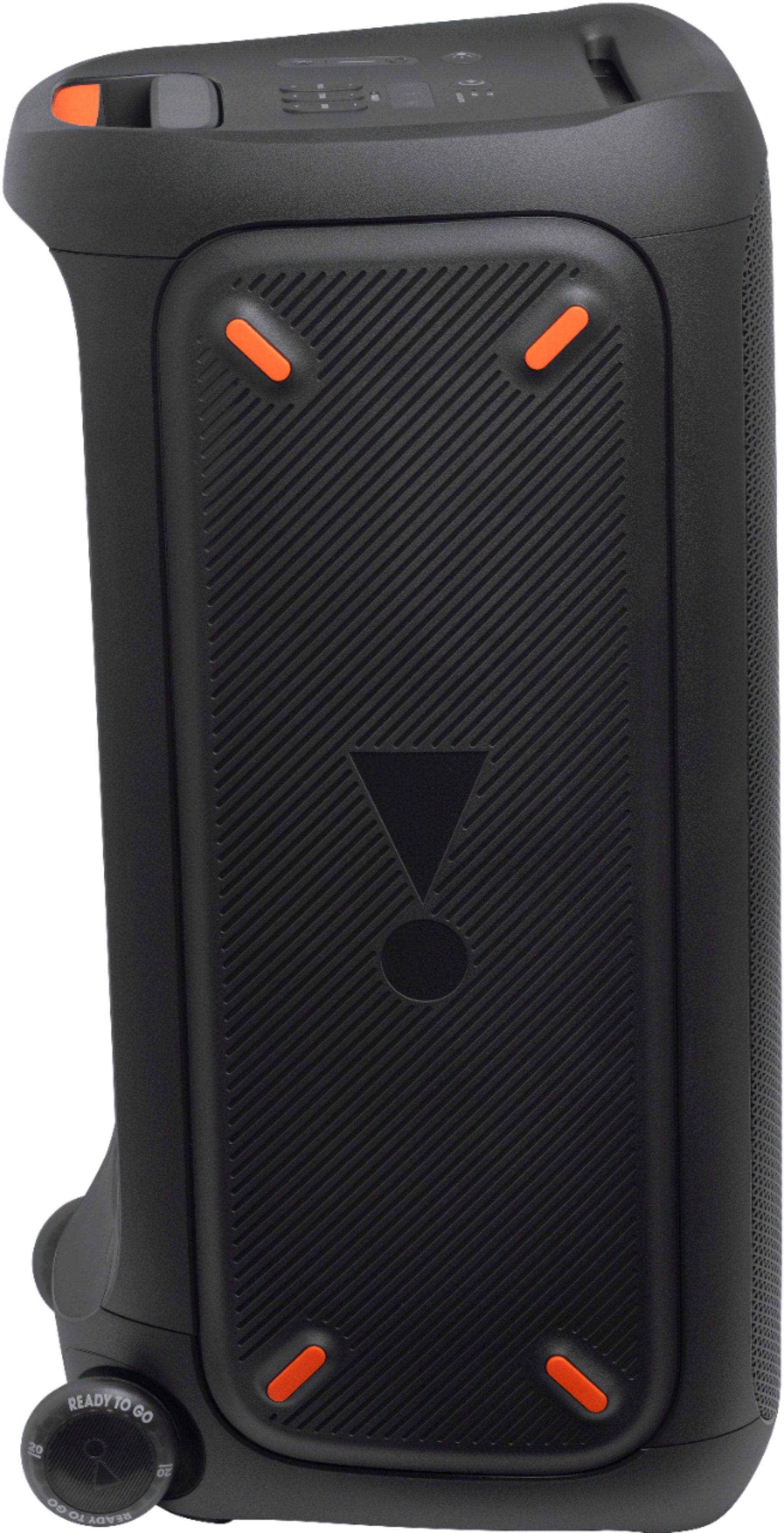
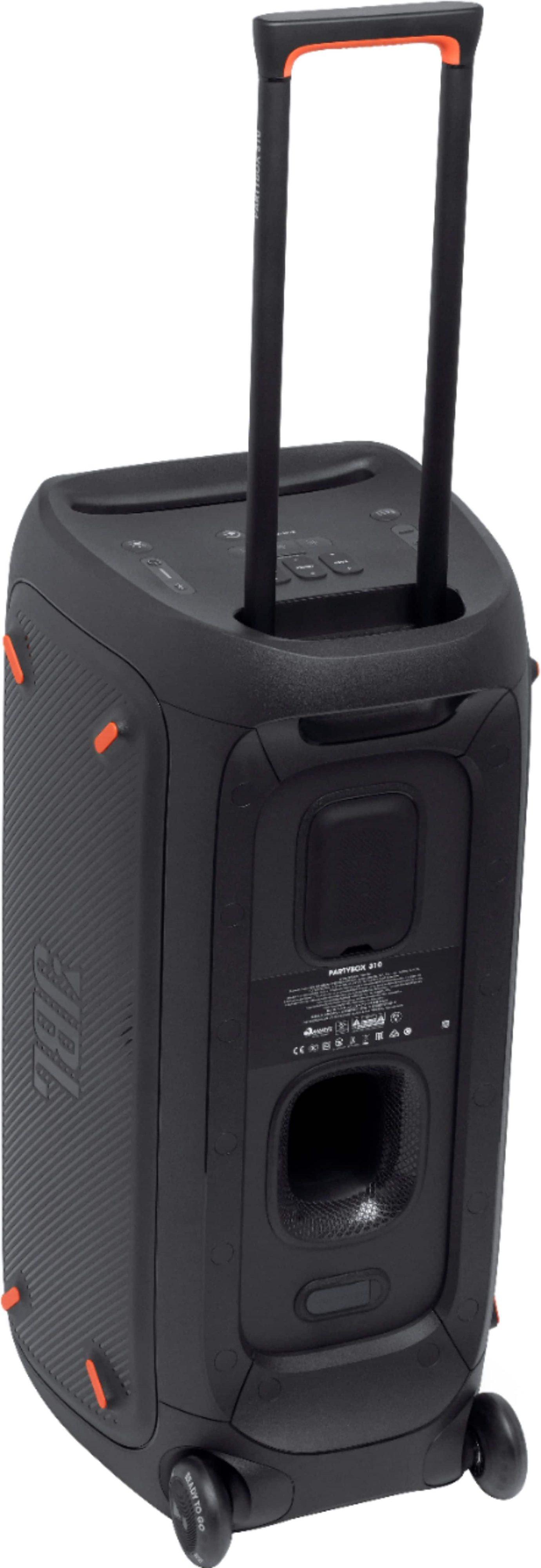
If you're in the market for a portable party speaker that can actually fill a backyard with sound, you've probably come across two popular options: the Rockville Rock Party 9 and the JBL PartyBox 310. Both promise to bring the party wherever you go, but they take notably different approaches to get there. After diving deep into the specs, user reviews, and real-world performance data, here's what you need to know to make the right choice.
Portable party speakers occupy a unique space in the audio world. They're designed to prioritize volume, bass impact, and entertainment features over the kind of precise sound reproduction you'd want from studio monitors. Think of them as the musical equivalent of a sports car – built for excitement and impact rather than subtle refinement.
The key considerations when shopping in this category boil down to a few critical factors. Power output determines how loud your speaker can get and how well it fills large spaces. Battery life affects how long the party can last without hunting for an outlet. Portability features like handles and wheels matter when you're hauling 20-40 pounds of speaker gear. And increasingly, entertainment features like LED light shows and karaoke capabilities separate the party speakers from basic Bluetooth speakers.
Weather resistance has become increasingly important as manufacturers recognize these speakers often end up poolside or at beach gatherings. Finally, the sound quality – while not the primary focus – still matters because nobody wants their music to sound terrible, even at a party.
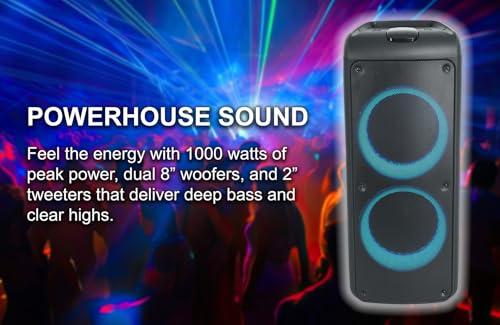
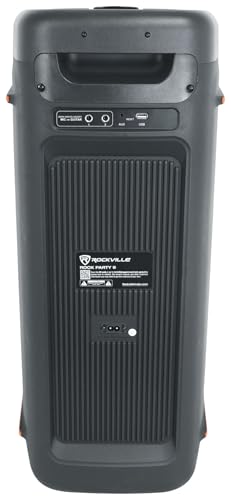
When it comes to raw power, the Rockville Rock Party 9 takes the lead on paper. It delivers 1000 watts of peak power with 250 watts RMS (Root Mean Square – the more realistic measure of continuous power output). More importantly, it packs dual 8-inch woofers, which are the drivers responsible for producing bass frequencies. Larger woofers can move more air, creating deeper bass and generally louder output.
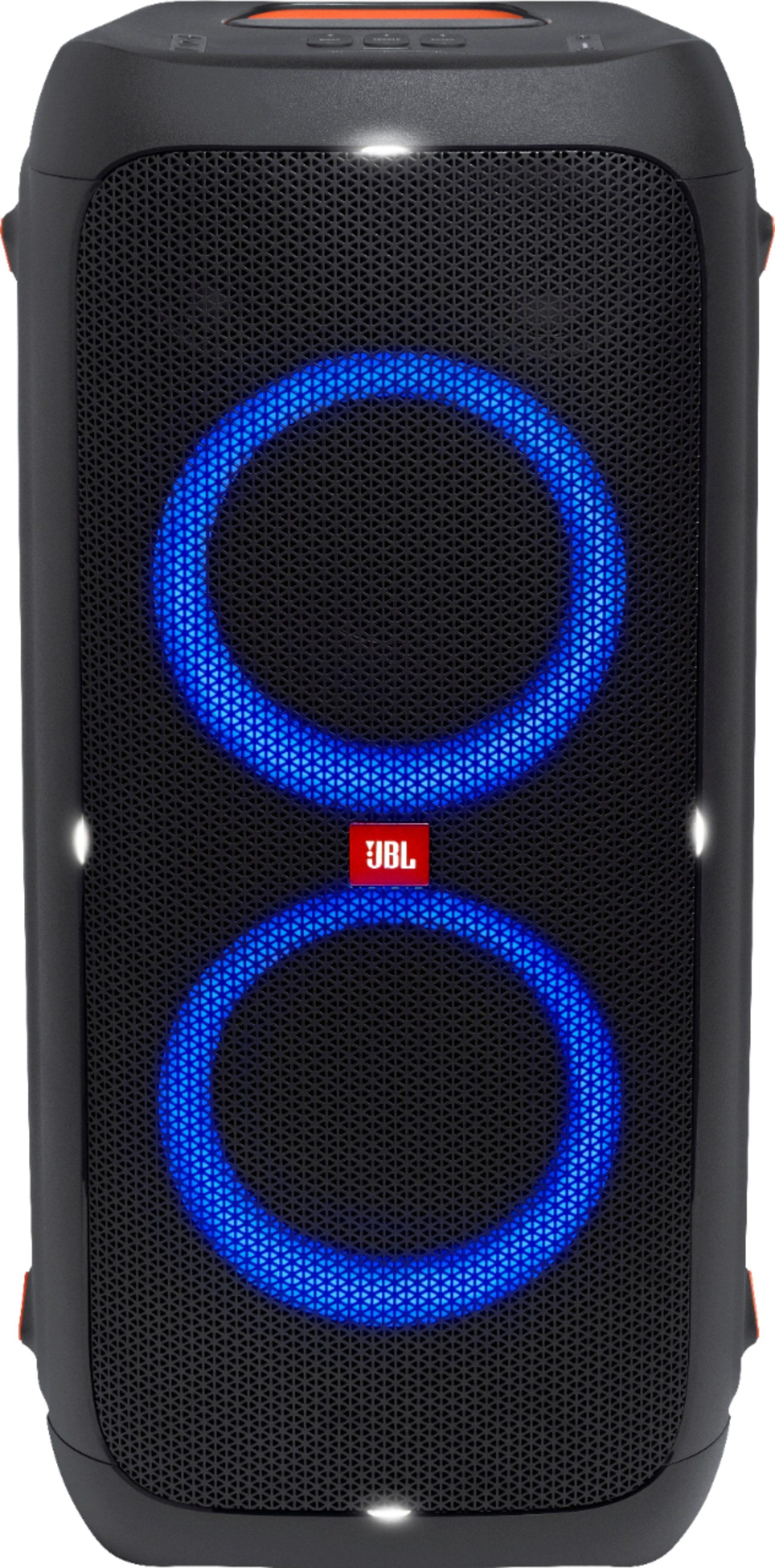
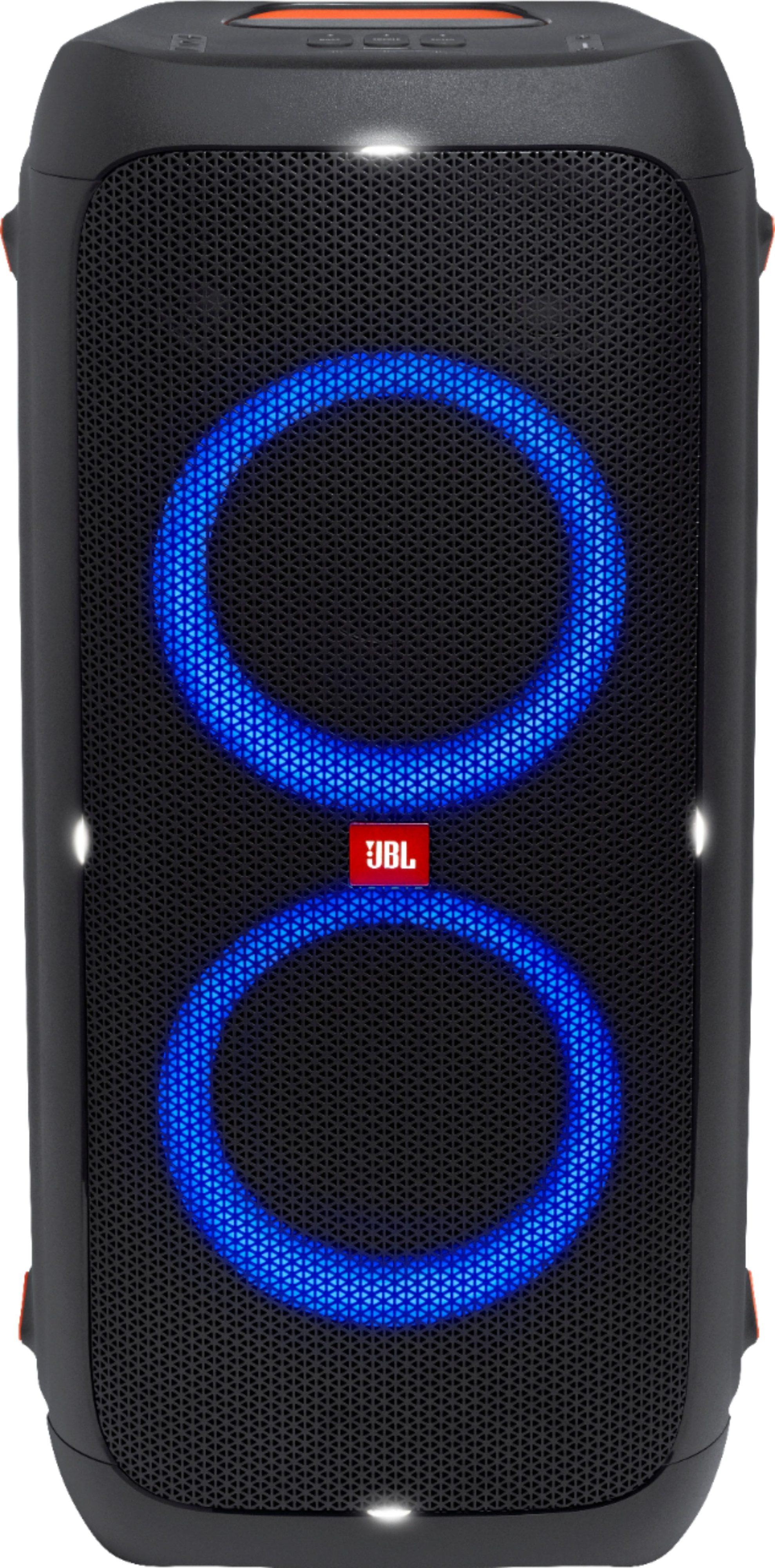
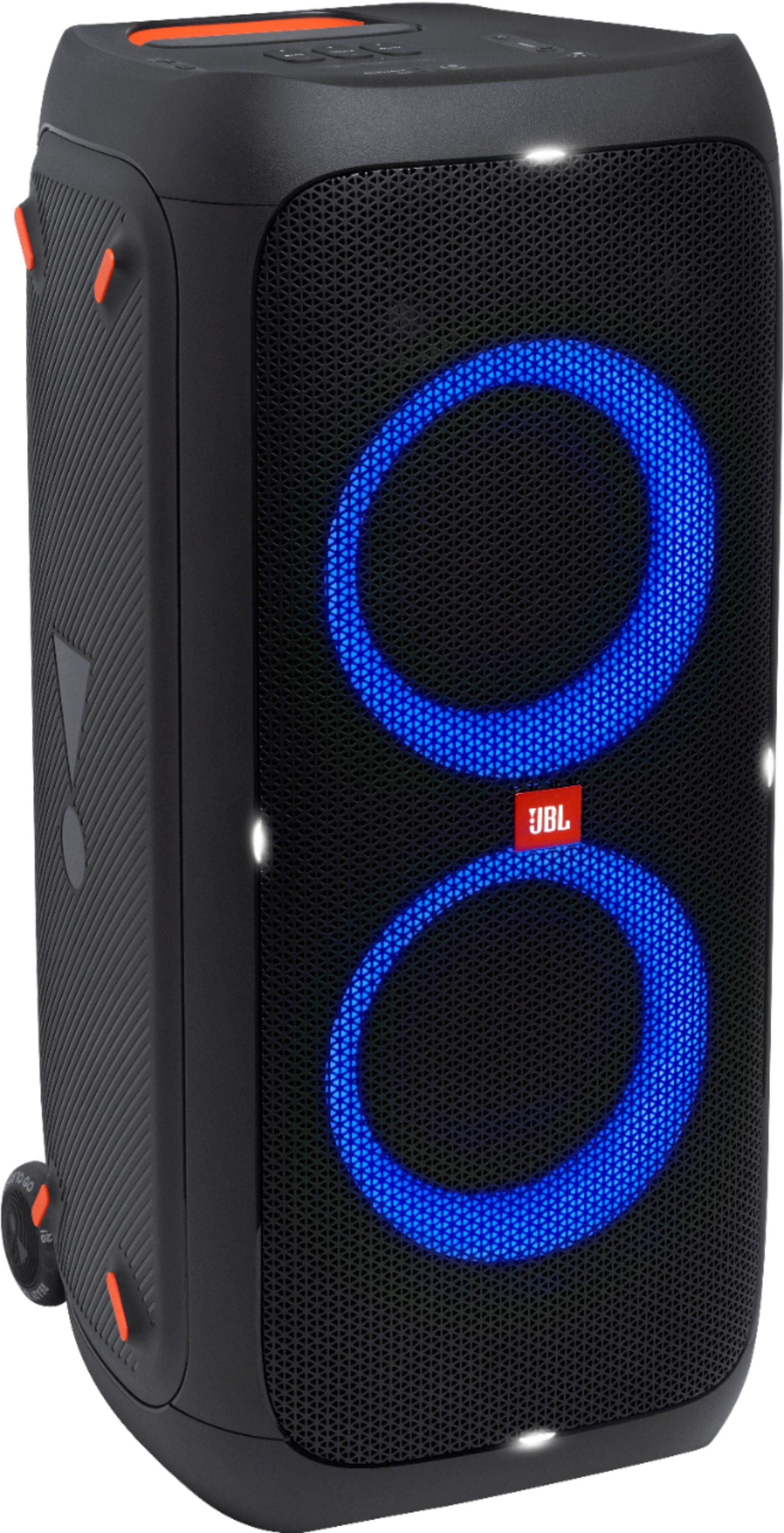
The JBL PartyBox 310, released in 2024, delivers 240 watts RMS when plugged into AC power, dropping to 140 watts on battery power. It uses dual 6.5-inch woofers paired with 2.5-inch tweeters (the smaller drivers that handle high frequencies). While the power ratings are similar, the smaller woofers suggest the JBL might not match the Rockville's ultimate volume or bass depth.
However, power specifications don't tell the complete story. The JBL benefits from more sophisticated tuning and processing. Our research into user reviews consistently shows the PartyBox 310 delivers cleaner, more balanced sound across different volume levels. The frequency response extends slightly lower (45Hz vs 50Hz), meaning it can reproduce deeper bass notes, even with smaller drivers. This is likely due to better port tuning and digital signal processing.
The Rockville's Class D amplifier provides efficient power delivery, but user reports suggest the sound can become harsh or shrill at maximum volumes. The JBL maintains better composure when pushed hard, though it does exhibit some compression artifacts – essentially, the sound gets slightly squashed when you really crank it up.
For most practical applications, both speakers can easily fill a backyard or large room. The Rockville Rock Party 9 has the edge for absolute volume and bass impact, making it better for EDM, hip-hop, or any genre where earth-shaking bass is the priority. The PartyBox 310 offers more refined sound that works better across different musical styles, from rock to jazz to podcasts.
This is where we see the most significant differences between these speakers. The JBL PartyBox 310 absolutely dominates battery life with up to 18 hours of playback. In real-world use, you're looking at 12-15 hours at moderate volumes with lights on – enough for most all-day events without needing to plan around charging.
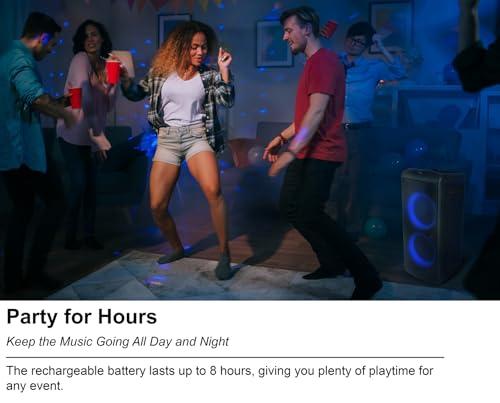
The Rockville Rock Party 9 offers 6-8 hours at 25% volume, dropping to just 2-3 hours at maximum volume. This is pretty typical for high-power portable speakers – that big sound comes at the cost of battery drain. For shorter events or situations where AC power is available, this isn't a dealbreaker, but it's something to consider for all-day festivals or camping trips.
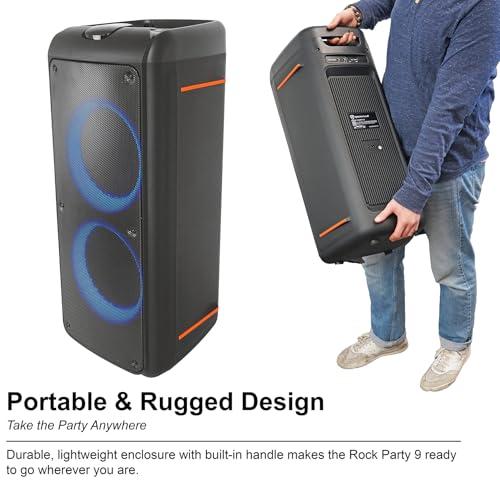
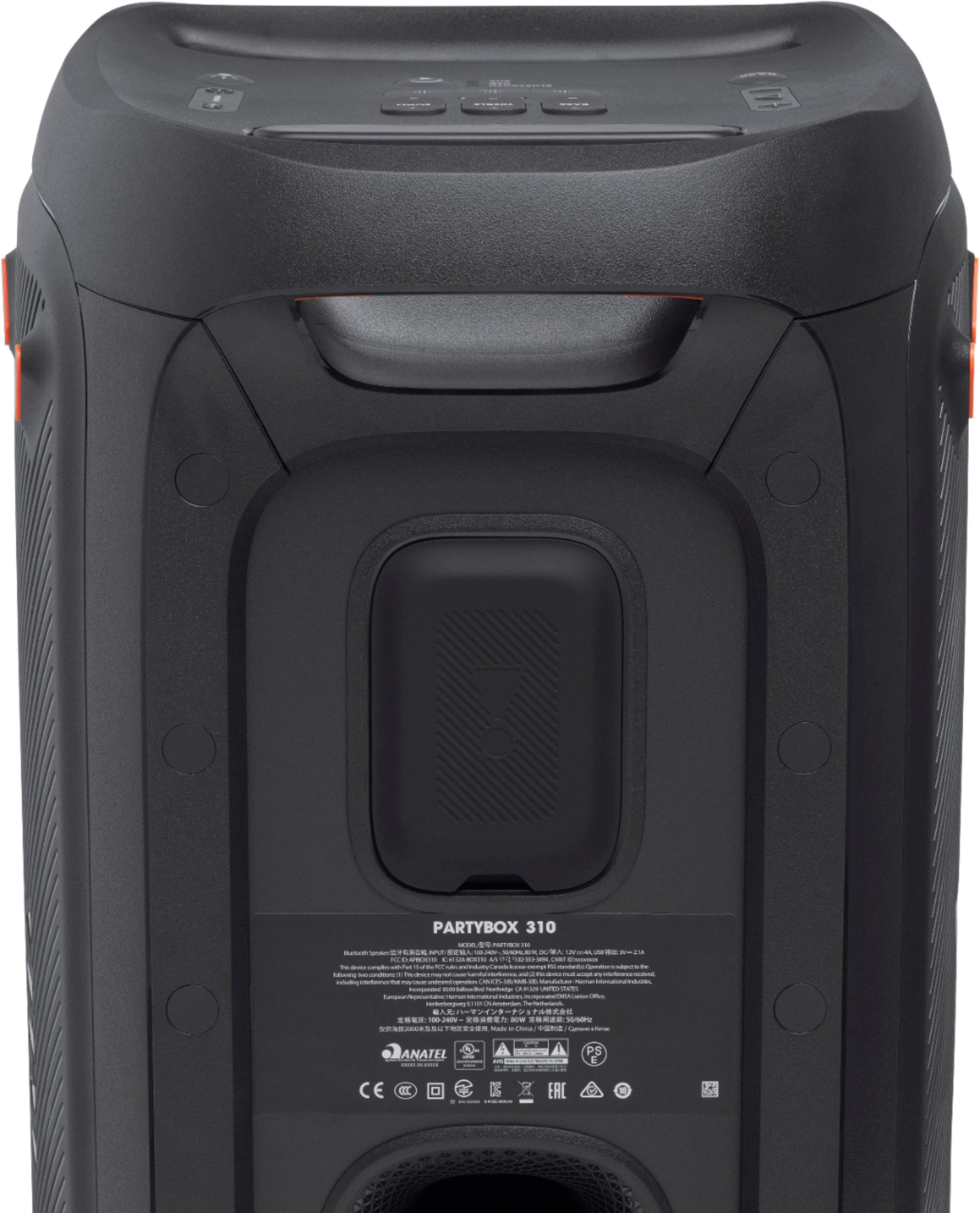
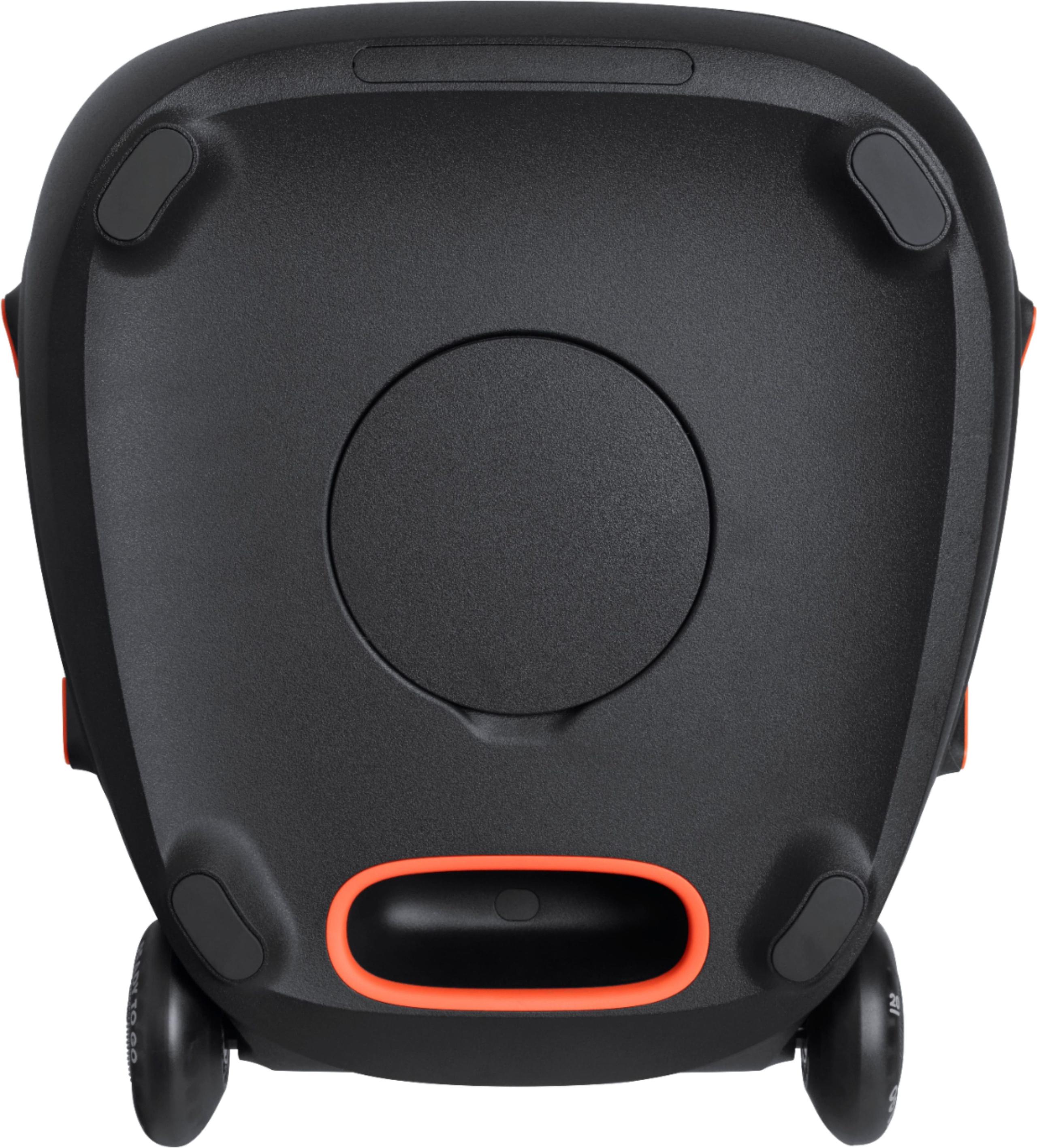
Weight tells an interesting story about design priorities. The Rockville weighs 19.64 pounds – still substantial but manageable for most people to carry. The JBL weighs nearly double at 38.4 pounds, but it compensates with a telescoping handle and smooth-rolling wheels. It's essentially a rolling suitcase approach to portable audio.
The portability winner depends on your use case. For occasional transport and lighter weight, the Rock Party 9 makes sense. For frequent transport or longer distances, the JBL's wheels and handle system actually make it easier to manage despite the extra weight.
Here's where the JBL PartyBox 310 shows its premium positioning. It carries an IPX4 rating, meaning it can handle splashing water from any direction – perfect for poolside parties or light rain. The rating system runs from IPX0 (no protection) to IPX8 (submersible), so IPX4 represents solid splash protection without full waterproofing.
The Rockville Rock Party 9 lacks any official water resistance rating. Its polypropylene enclosure provides basic durability, but you'll want to keep it under cover during outdoor events. For indoor parties or covered patios, this isn't an issue, but it limits versatility for true outdoor adventures.
This difference reflects broader design philosophies. JBL positioned the PartyBox 310 as a premium outdoor entertainment system, while Rockville focused on delivering maximum audio performance at a more accessible price point.
Both speakers recognize that party audio is about more than just sound reproduction – it's about creating an experience. The lighting systems represent different approaches to visual entertainment.
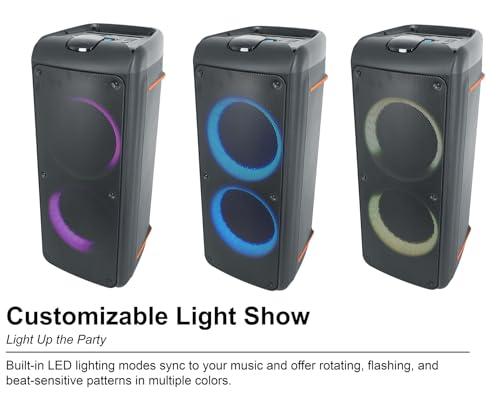
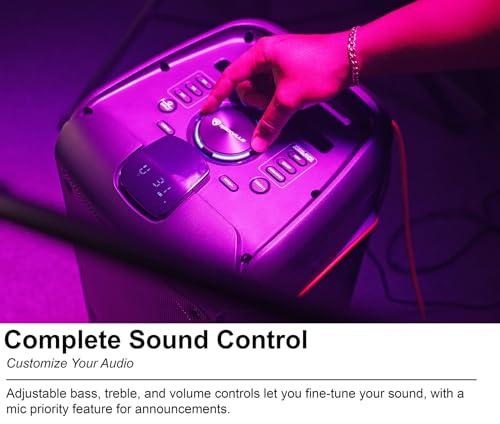
The Rockville Rock Party 9 surrounds its woofers with customizable LED lights offering rotating, flashing, and beat-syncing modes. You control everything via the top panel or included remote control. It's a straightforward system that gets the job done without requiring smartphone apps or complex setup.
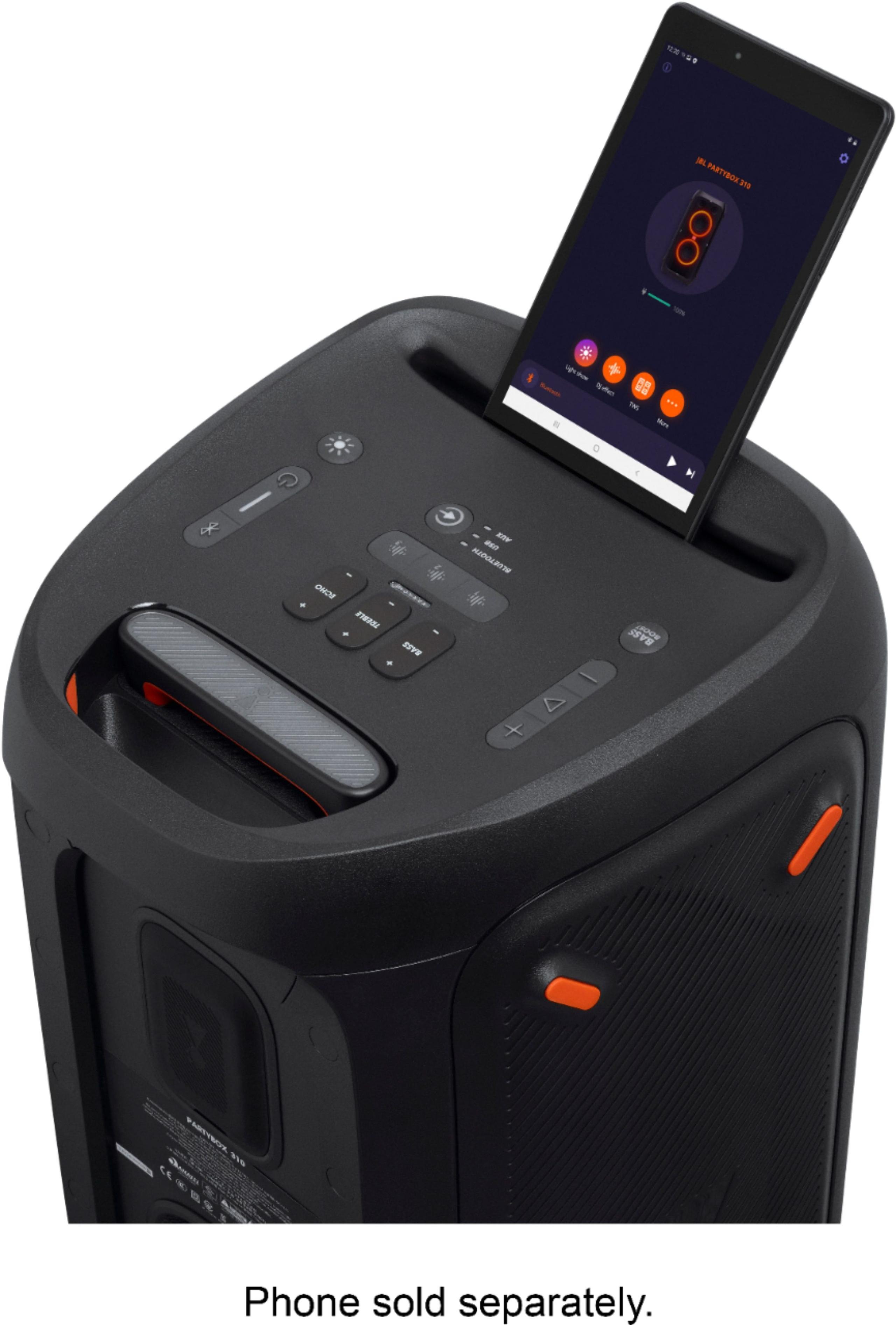
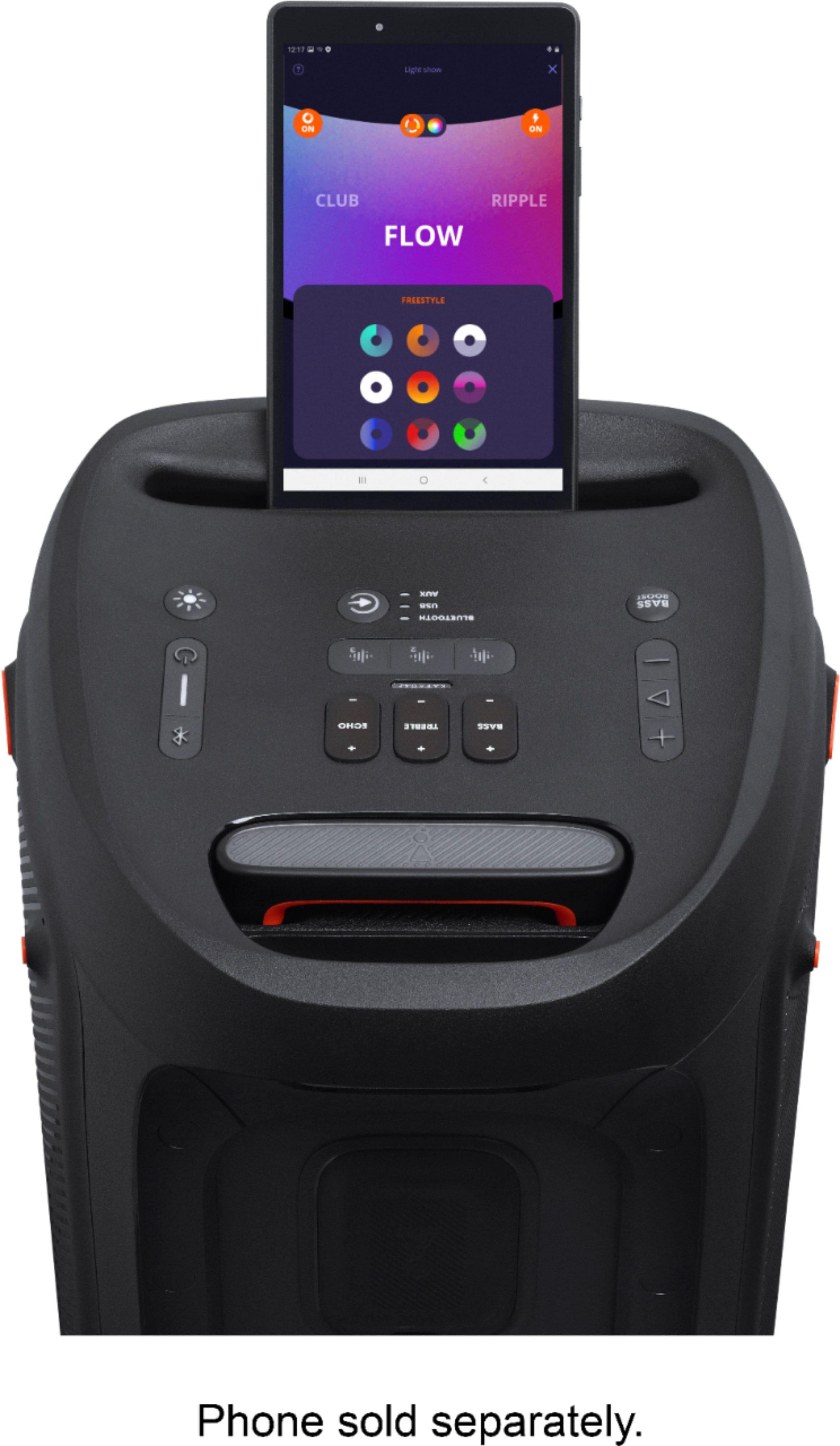
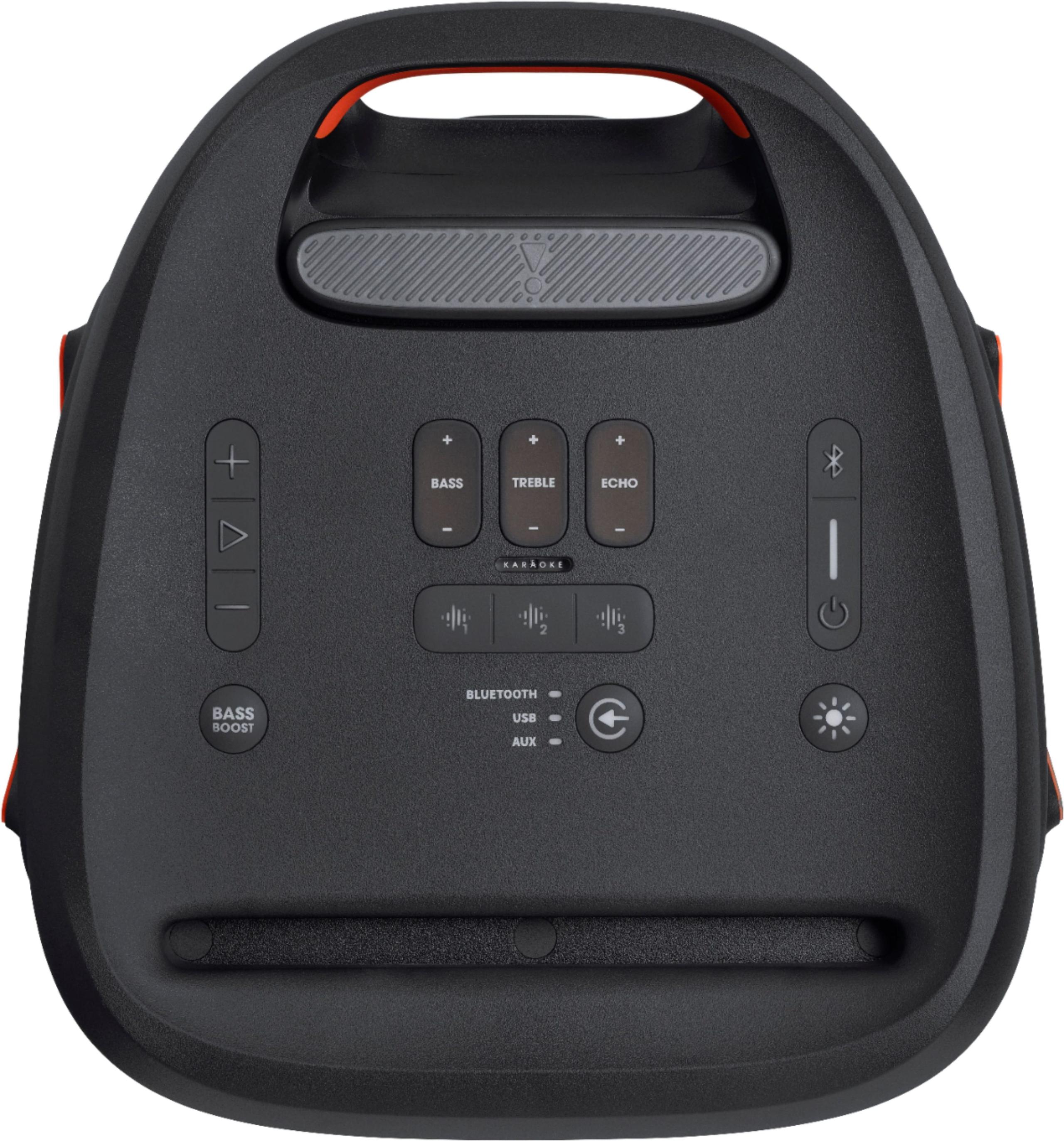
The JBL PartyBox 310 offers five lighting modes plus strobe effects, all controllable through the JBL PartyBox app. The app integration allows for more sophisticated control and customization, but it also means you need your phone nearby and the app working properly to access full functionality.
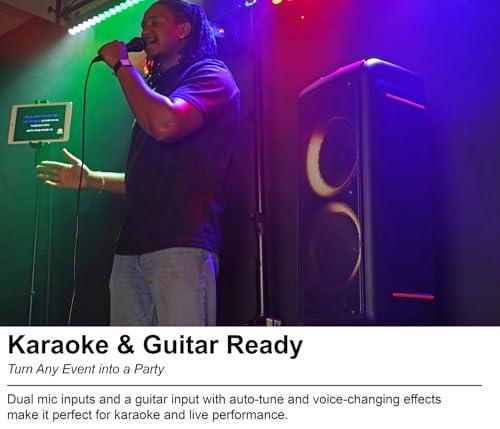
For karaoke capabilities, the Rock Party 9 goes all-out with features that rival dedicated karaoke machines. It includes auto-tune, voice-changing effects, echo control, and a mic priority function that automatically reduces music volume when someone speaks into the microphone. These features turn any gathering into a potential karaoke night with just a YouTube connection on your phone.
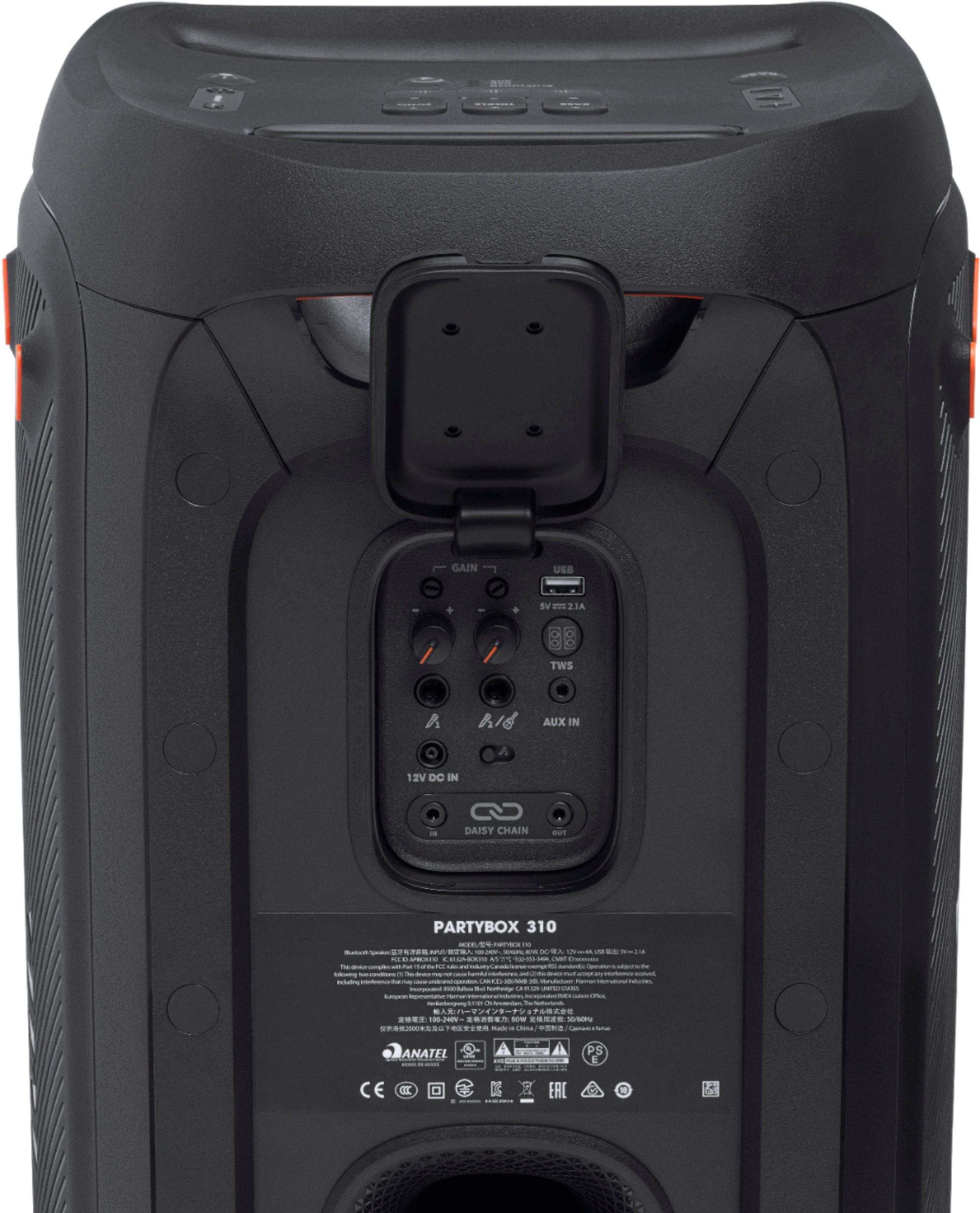
The PartyBox 310 offers more basic karaoke functionality with two quarter-inch inputs for mics and guitars, plus vocal tuning capabilities. It's functional but not as feature-rich as the Rockville's implementation.
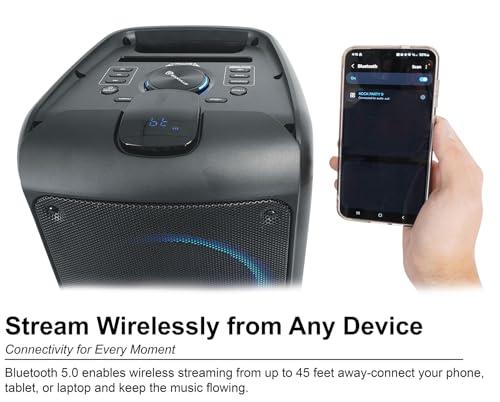
Both speakers embrace the reality that modern audio sources are diverse. The Rockville Rock Party 9 covers nearly every connection you might need: Bluetooth 5.0 with a 45-foot range, USB input supporting up to 128GB drives, TF/MicroSD card slot, and 3.5mm auxiliary input. This comprehensive approach means you can play music from virtually any source without adapters or converters.
The JBL PartyBox 310 focuses on the most common connections: Bluetooth 5.1, USB Type-A for playback and device charging, and 3.5mm input and output. The output jack is particularly useful – you can connect the speaker to a PA system or daisy-chain additional speakers. The True Wireless Stereo feature lets you pair two PartyBox 310s for genuine stereo separation, creating a much wider soundstage.
Bluetooth 5.1 in the JBL offers technical improvements over 5.0, including better power efficiency and connection stability, though both versions work reliably in practice. The Rockville's longer 45-foot range versus the JBL's 33-foot range gives you more flexibility in speaker placement.
At the time of writing, these speakers occupy different price tiers, reflecting their different approaches to the market. The Rockville Rock Party 9 positions itself as a value champion – delivering impressive power output, comprehensive connectivity, and advanced karaoke features at a competitive price point. For users primarily concerned with getting the most volume and bass per dollar, it's hard to beat.
The JBL PartyBox 310 commands a premium price that reflects superior build quality, weather resistance, longer battery life, and brand reputation. JBL's established presence in professional audio translates to better long-term reliability and support, but you pay for these advantages.
The value equation depends heavily on your priorities. If you want maximum audio impact and comprehensive features for the lowest cost, the Rockville delivers exceptional performance per dollar. If you're willing to pay more for refined sound quality, weather protection, and longer battery life, the JBL justifies its premium positioning.
For backyard barbecues and casual parties, both speakers excel, but the Rock Party 9 might be the better choice for most people. Its lighter weight makes setup easier, the comprehensive karaoke features add entertainment value, and the powerful bass response works great for party music. The shorter battery life isn't usually an issue when you're near the house.
Outdoor enthusiasts and frequent travelers should lean toward the PartyBox 310. The IPX4 rating provides peace of mind around water, the extended battery life supports all-day events, and the wheeled design makes transport much easier despite the extra weight. Beach trips, camping, or pool parties all favor the JBL's weather resistance and longevity.
Mobile entertainers and aspiring DJs will find the Rockville Rock Party 9 more appealing. The advanced karaoke features, multiple input options, and high power output create a versatile performance platform. The ability to connect TF cards, USB drives, microphones, and guitars simultaneously makes it a capable mobile entertainment system.
Audiophiles who prioritize sound quality should choose the JBL PartyBox 310 despite its party speaker categorization. The more balanced frequency response, better high-volume clarity, and refined tuning deliver superior musical reproduction. While neither speaker offers reference-quality sound, the JBL comes closer to hi-fi standards.
While neither speaker is designed primarily for home theater use, both can serve double duty for casual movie watching or gaming. The PartyBox 310 works better in this role thanks to its clearer dialogue reproduction and more balanced sound signature. The 3.5mm output jack also allows connection to a subwoofer or additional speakers for expanded systems.
The Rock Party 9's bass-heavy tuning can make dialogue muddy in movie soundtracks, though it excels for action sequences and gaming where impact matters more than clarity. Its multiple inputs could theoretically connect to game consoles, streaming devices, and other sources simultaneously.
For serious home theater applications, dedicated speakers or soundbars remain better choices, but either party speaker can enhance casual viewing experiences significantly compared to TV speakers.
Both speakers represent current-generation technology as of 2024, incorporating modern Bluetooth standards, efficient Class D amplification, and smartphone integration. The JBL PartyBox 310 benefits from more recent development, including improved battery chemistry and more sophisticated digital signal processing.
The app-based control in the JBL suggests better long-term feature updates through software, while the Rockville Rock Party 9's hardware-based controls ensure functionality regardless of smartphone compatibility changes.
Choose the Rockville Rock Party 9 if you want maximum musical impact per dollar, comprehensive karaoke features, and don't mind planning around shorter battery life. It's perfect for users who prioritize power, bass response, and entertainment features over refinement.
Choose the JBL PartyBox 310 if you value sound quality, need weather resistance, want all-day battery life, and don't mind paying more for premium build quality. It's ideal for frequent outdoor use and situations where reliability matters most.
Both speakers successfully deliver party-worthy sound, but they achieve it through different philosophies. The Rockville maximizes performance and features per dollar, while the JBL focuses on refinement, durability, and user experience. Your choice should depend on which approach better matches your specific needs and budget priorities.
| Rockville Rock Party 9 | JBL PartyBox 310 |
|---|---|
| Peak Power Output - Determines maximum volume and bass impact | |
| 1000W Peak / 250W RMS (consistently high output) | 240W RMS AC / 140W RMS battery (power drops on battery) |
| Driver Configuration - Larger drivers typically produce deeper bass | |
| Dual 8" woofers + dual 2" tweeters (bigger bass drivers) | Dual 6.5" woofers + dual 2.5" tweeters (more balanced sound) |
| Battery Life - Critical for all-day events without power access | |
| 6-8 hours at 25% volume, 2-3 hours at max volume | Up to 18 hours (significantly longer for extended use) |
| Weight and Portability - Affects ease of transport | |
| 19.6 lbs with carry handle (lighter but manual carry) | 38.4 lbs with telescoping handle and wheels (heavier but easier transport) |
| Weather Resistance - Important for poolside and outdoor parties | |
| None (indoor/covered outdoor use only) | IPX4 splashproof (handles light rain and pool splashes) |
| Karaoke Features - For users who want entertainment beyond music | |
| Auto-tune, voice-changing effects, echo, mic priority function | Basic vocal tuning and mic inputs (less comprehensive) |
| Connectivity Options - More inputs mean greater flexibility | |
| Bluetooth 5.0, USB, TF card, AUX, dual mic/guitar inputs | Bluetooth 5.1, USB, AUX in/out, True Wireless Stereo pairing |
| Bluetooth Range - Affects speaker placement flexibility | |
| 45 feet (longer range for placement freedom) | 33 feet (standard range, still adequate for most uses) |
| LED Light System - Adds visual entertainment for parties | |
| Customizable modes around woofers, remote control | 5 modes + strobe, app-controlled (more sophisticated control) |
| Sound Quality Character - Different tuning approaches | |
| Bass-heavy, powerful but can get harsh at max volume | More balanced, cleaner at high volumes, slight bass boost available |
| Build Quality and Brand - Affects long-term reliability | |
| Value-focused construction, newer brand | Premium build quality, established professional audio brand |
| App Integration - Modern control and customization features | |
| Hardware controls only (always works, no phone needed) | JBL PartyBox app for advanced lighting and EQ control |
The Rockville Rock Party 9 delivers higher peak power at 1000W with dual 8-inch woofers, making it capable of producing more raw volume and deeper bass. However, the JBL PartyBox 310 maintains cleaner sound quality at high volumes with less distortion. For maximum loudness, the Rockville Rock Party 9 has the edge, while the JBL PartyBox 310 offers better clarity when cranked up.
The JBL PartyBox 310 significantly outperforms the Rockville Rock Party 9 in battery life, offering up to 18 hours of playback compared to 6-8 hours at moderate volume. The Rockville Rock Party 9 drops to just 2-3 hours at maximum volume, while the JBL PartyBox 310 maintains much longer runtime even at higher volumes.
Both speakers support karaoke, but the Rockville Rock Party 9 offers more advanced features including auto-tune, voice-changing effects, echo control, and mic priority function. The JBL PartyBox 310 provides basic karaoke capabilities with dual microphone inputs and vocal tuning. For serious karaoke enthusiasts, the Rockville Rock Party 9 is the better choice.
The JBL PartyBox 310 is superior for pool parties due to its IPX4 splashproof rating that protects against water splashes and light rain. The Rockville Rock Party 9 lacks weather resistance and should be kept away from water. The JBL PartyBox 310 also offers 18-hour battery life for all-day poolside entertainment.
Both speakers feature customizable LED lighting systems. The Rockville Rock Party 9 offers LED modes around the woofers with rotating, flashing, and beat-syncing options controlled by remote. The JBL PartyBox 310 provides five lighting modes plus strobe effects controllable through the JBL PartyBox app, offering more sophisticated customization options.
The Rockville Rock Party 9 weighs less at 19.6 pounds with a carry handle, making it easier to lift and carry manually. The JBL PartyBox 310 weighs 38.4 pounds but features a telescoping handle and smooth-rolling wheels, making it easier to transport despite the extra weight. Choose based on whether you prefer lighter weight or wheeled convenience.
Neither speaker is designed primarily for home theater, but the JBL PartyBox 310 works better for movies due to clearer dialogue reproduction and more balanced sound. The Rockville Rock Party 9's bass-heavy tuning can make dialogue muddy but excels for action movies and gaming. Both are better suited for parties than serious home theater applications.
The JBL PartyBox 310 delivers more refined sound quality with better balance across frequencies and cleaner performance at high volumes. The Rockville Rock Party 9 emphasizes powerful bass and volume but can become harsh at maximum levels. For overall sound quality, the JBL PartyBox 310 is the superior choice.
The Rockville Rock Party 9 offers more input variety including Bluetooth 5.0, USB, TF/MicroSD card, AUX, and dual microphone/guitar inputs with a 45-foot Bluetooth range. The JBL PartyBox 310 provides Bluetooth 5.1, USB, AUX input/output, and True Wireless Stereo pairing with a 33-foot range. The Rockville Rock Party 9 offers more connection flexibility.
The Rockville Rock Party 9 typically offers better value for buyers prioritizing maximum power and features at a lower cost. The JBL PartyBox 310 commands a premium but justifies it with superior build quality, weather resistance, and longer battery life. Choose the Rockville Rock Party 9 for budget-conscious power or the JBL PartyBox 310 for premium reliability.
The Rockville Rock Party 9 uses Bluetooth 5.0 with a 45-foot range, while the JBL PartyBox 310 features newer Bluetooth 5.1 with a 33-foot range. The JBL PartyBox 310 offers True Wireless Stereo pairing to connect two units for stereo sound. Both provide reliable wireless connectivity, with the Rockville Rock Party 9 offering longer range and the JBL PartyBox 310 providing more advanced pairing features.
The Rockville Rock Party 9 is better suited for mobile entertainment with its comprehensive karaoke features, multiple input options, higher power output, and lighter weight for easier transport between venues. The JBL PartyBox 310 offers longer battery life and weather resistance but lacks the advanced entertainment features. Mobile entertainers will find more value in the Rockville Rock Party 9's versatile feature set.
We've done our best to create useful and informative comparisons to help you decide what product to buy. Our research uses advanced automated methods to create this comparison and perfection is not possible - please contact us for corrections or questions. These are the sites we've researched in the creation of this article: youtube.com - wiki.ezvid.com - youtube.com - youtube.com - walmart.com - soundcore.com - youtube.com - rtings.com - rockvilleaudio.com - youtube.com - youtube.com - youtube.com - review-rating.com - manuals.plus - support.rockvilleaudio.com - reverb.com - rockvilleaudio.com - privacy.we-conect.com - audiosavings.com - youtube.com - youtube.com - rtings.com - comparisontabl.es - crutchfield.com - youtube.com - bestbuy.com - youtube.com - versus.com - youtube.com - youtube.com - jbl.com - youtube.com - crutchfield.com - manuals.plus - in.jbl.com - jbl.com.tw - mm.jbl.com - bestbuy.com - jbl.com - onward.ph - youtube.com - manuals.plus - harmanaudio.com - support.jbl.com - youtube.com - kh.jbl.com - bestbuy.com

Privacy Policy
Terms and Conditions - Affiliate Policy
Home Security
© Copyright 2008-2026.
11816 Inwood Rd #1211, Dallas, TX 75244