

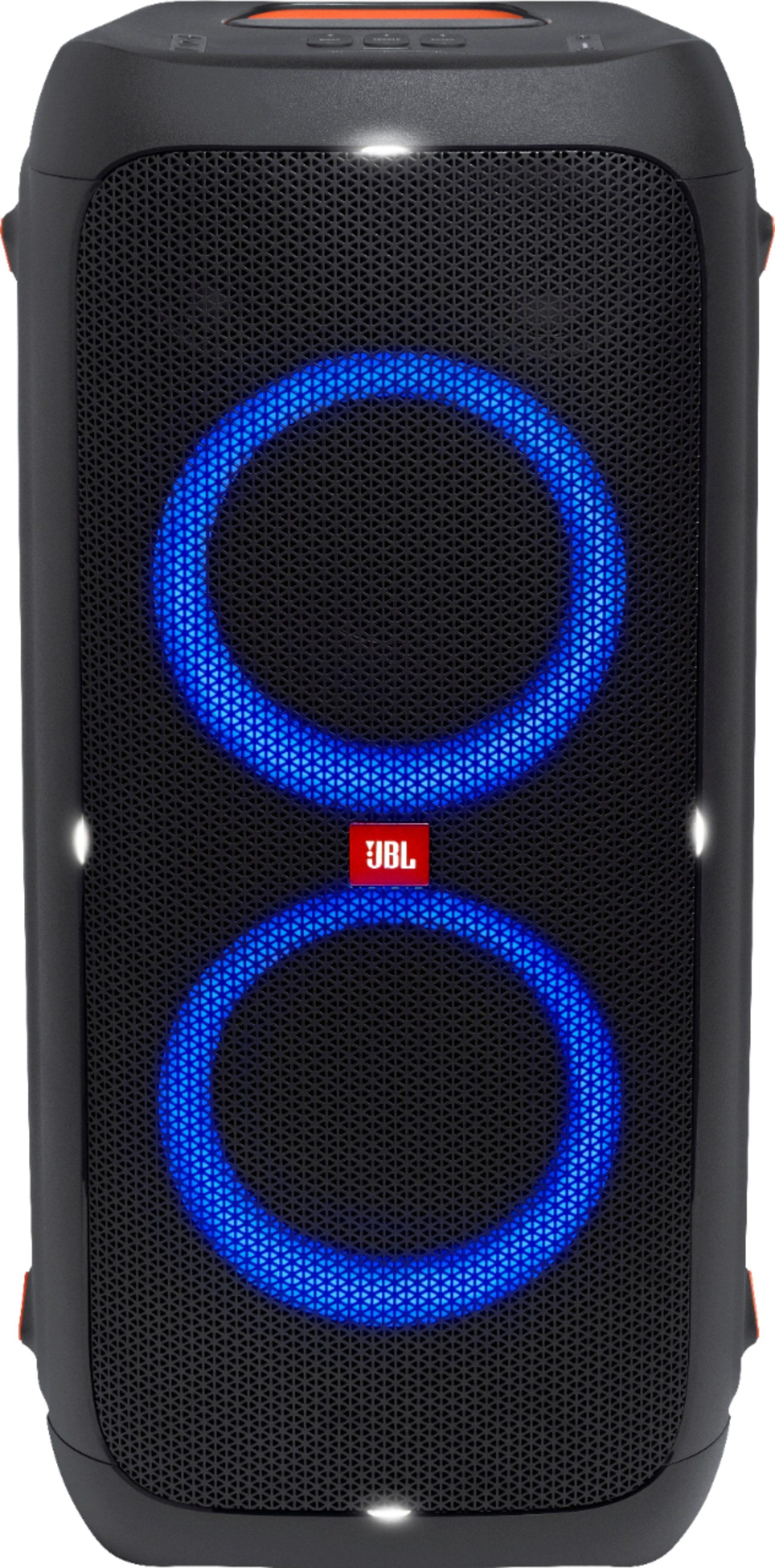
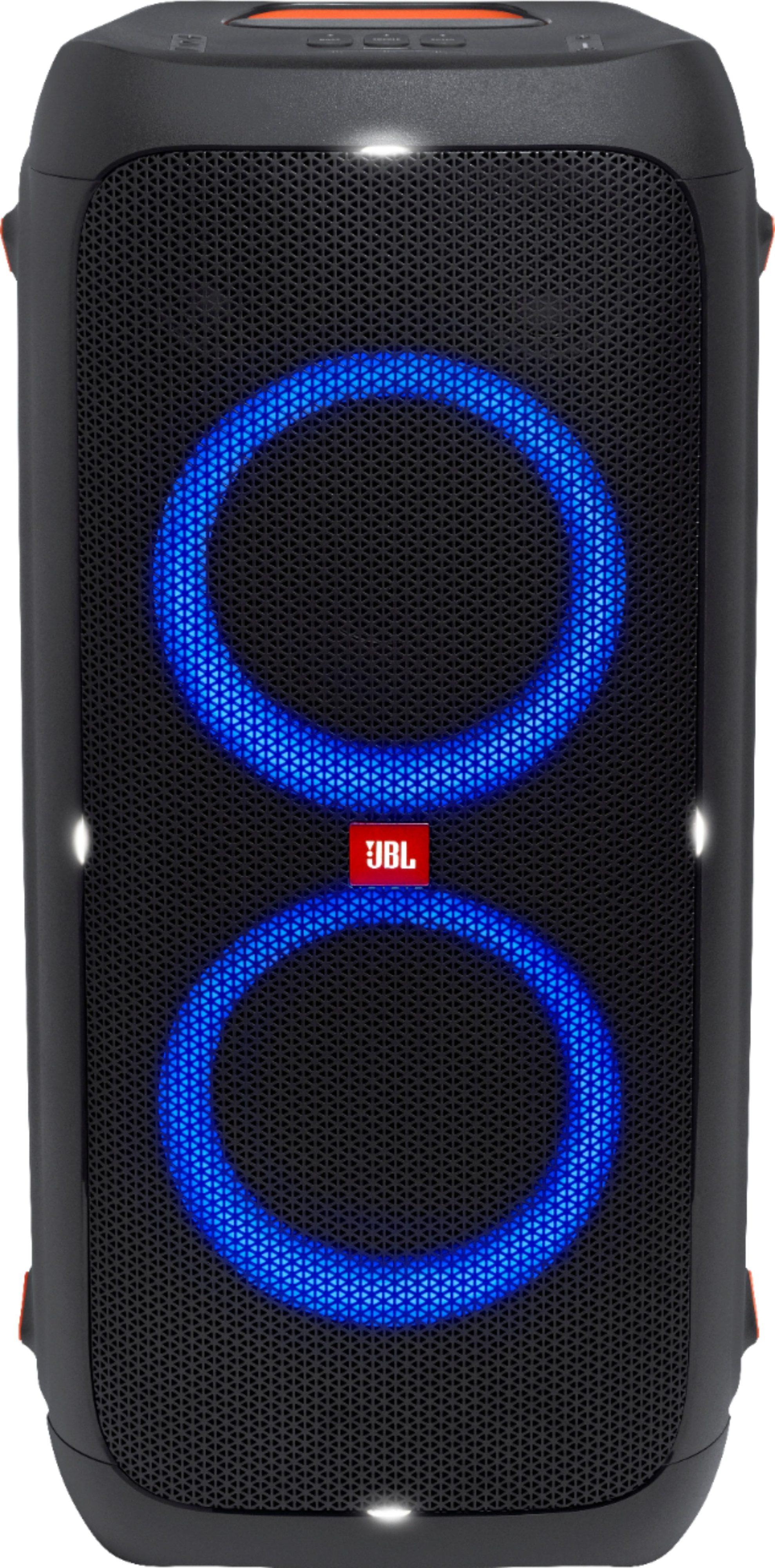
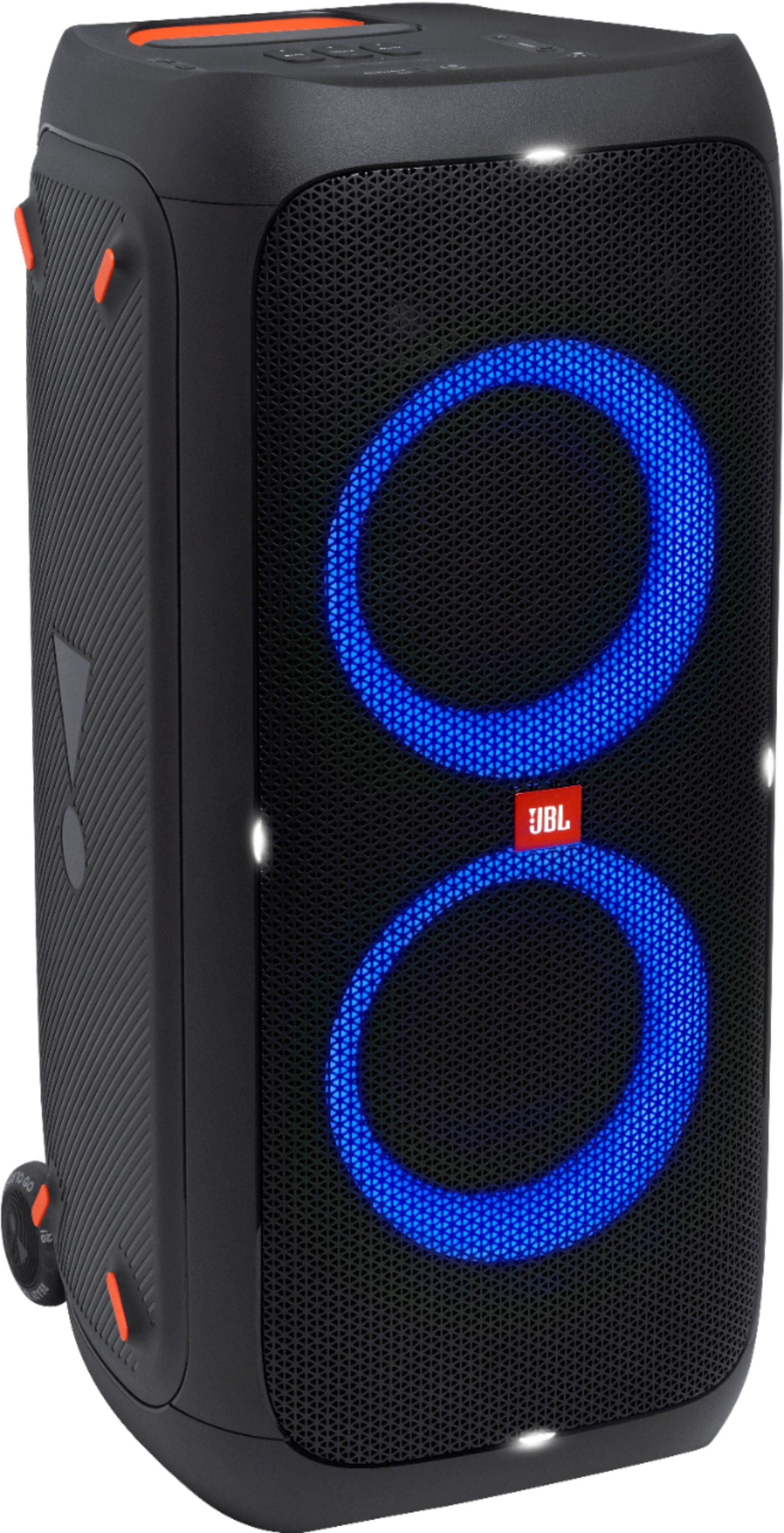
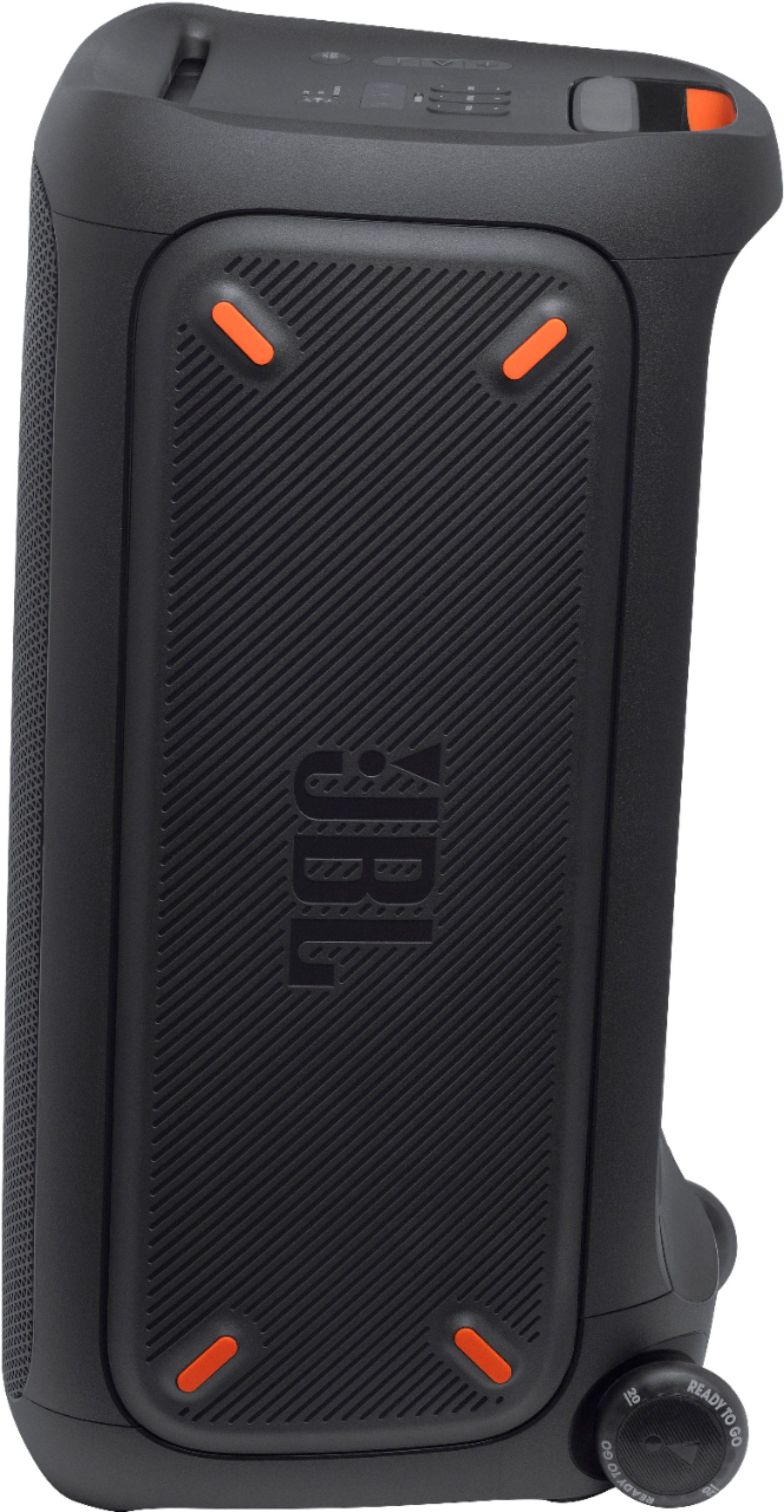
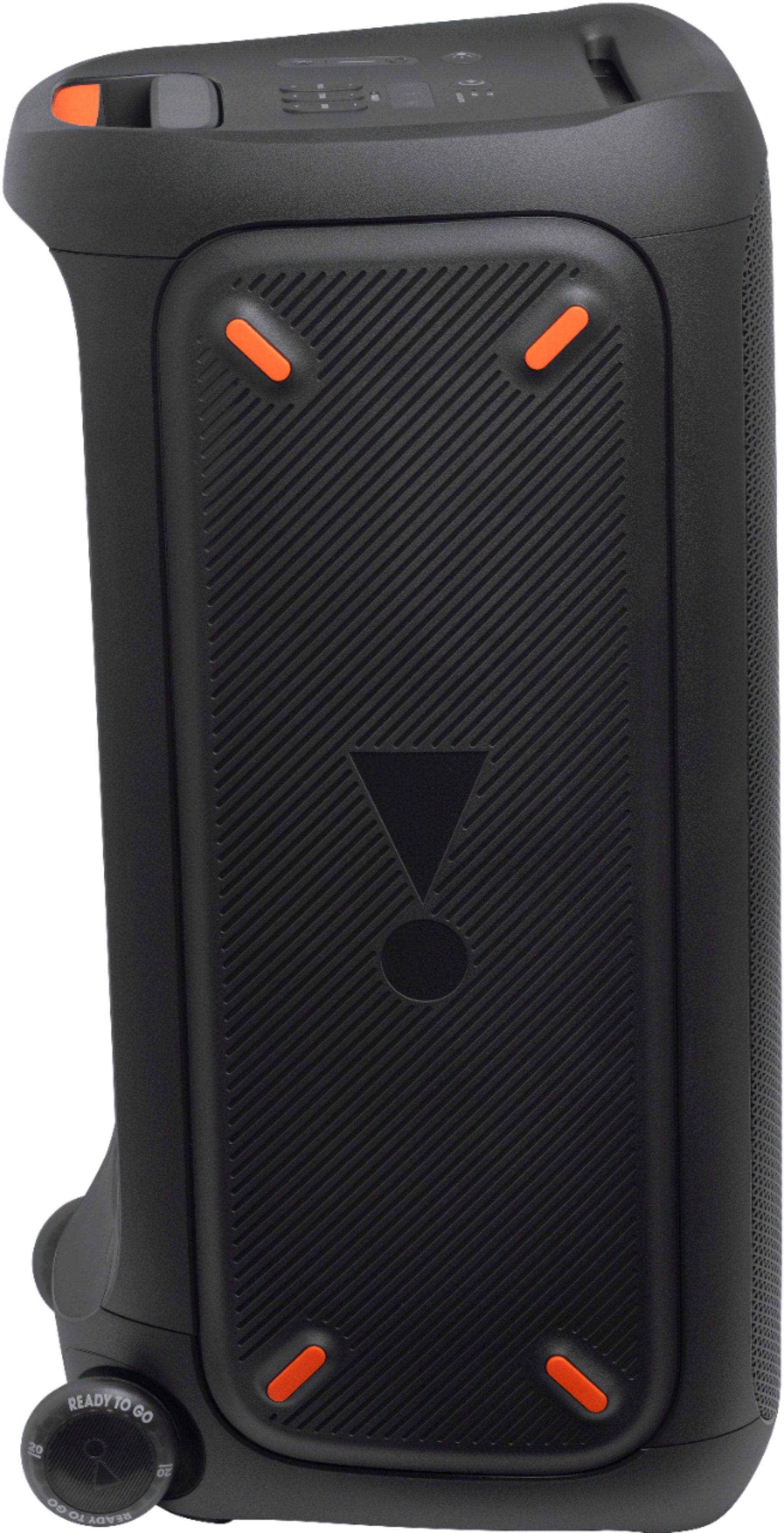
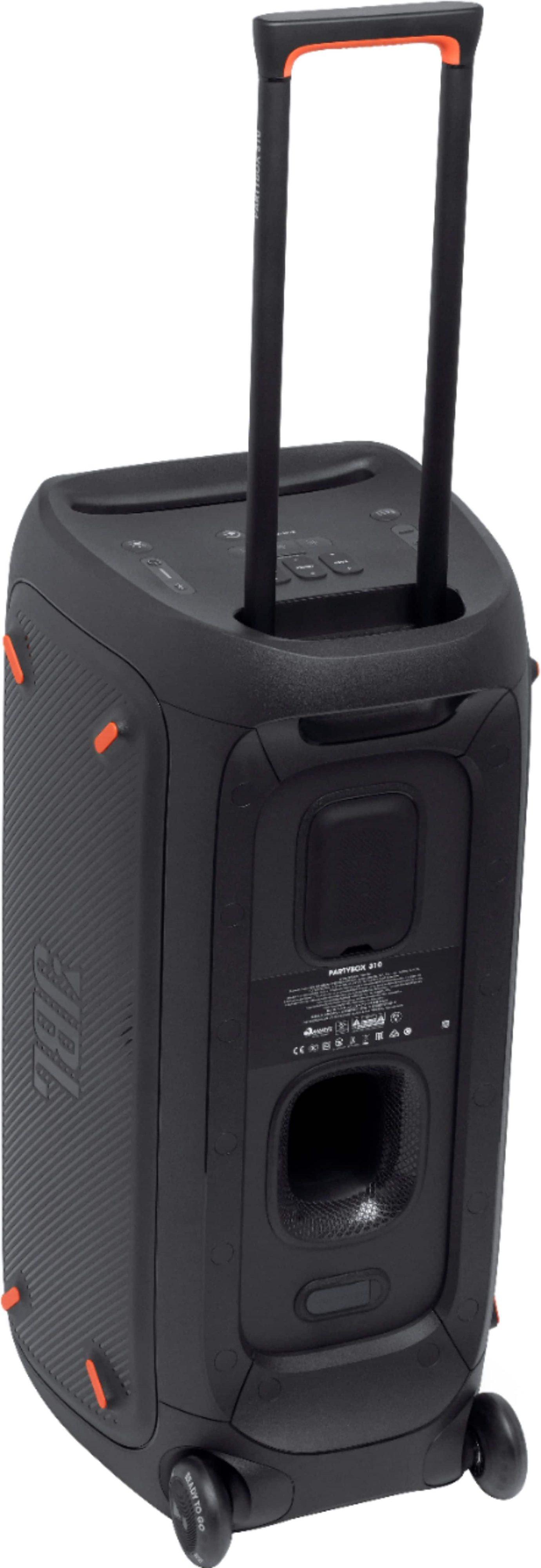
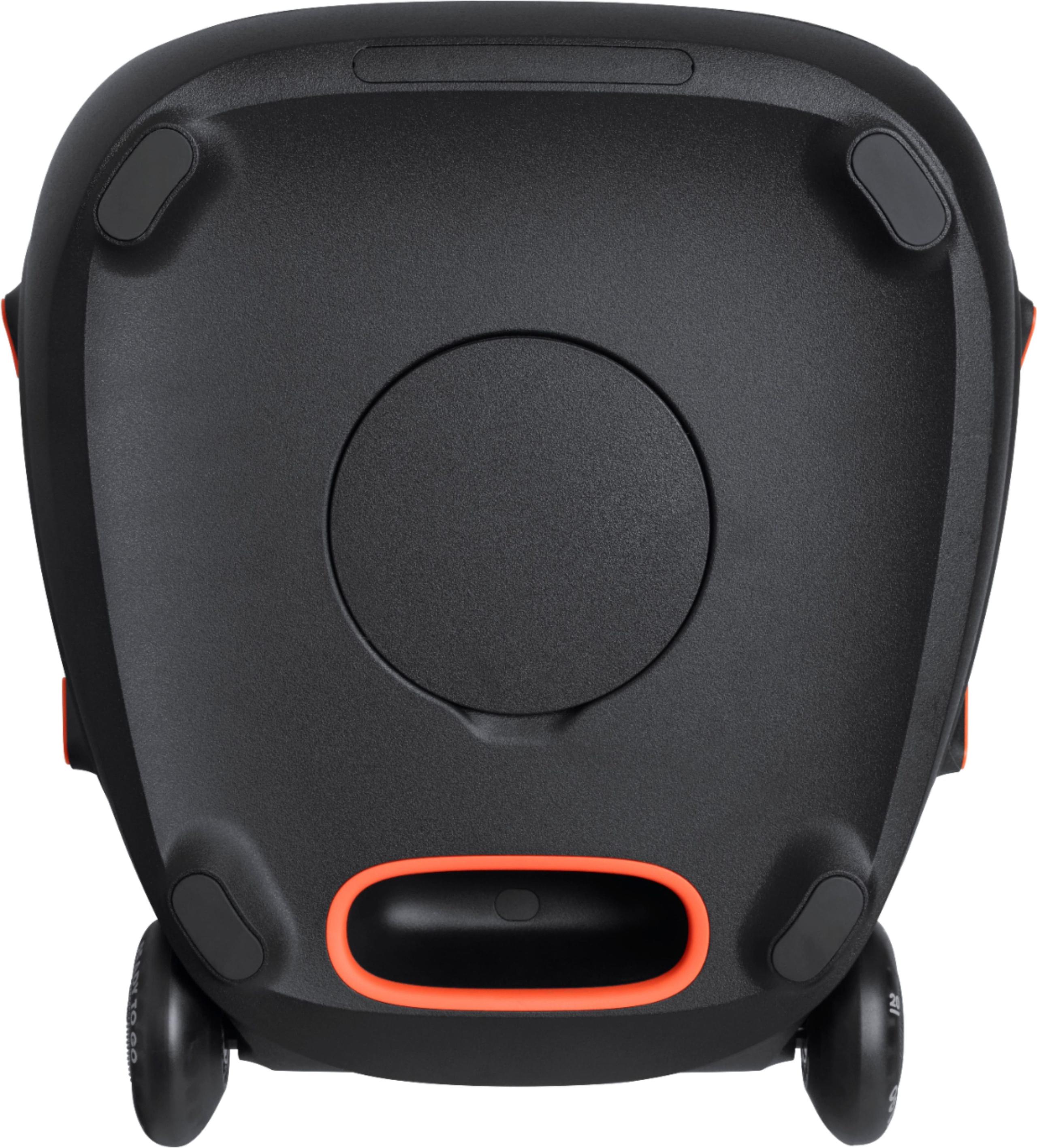

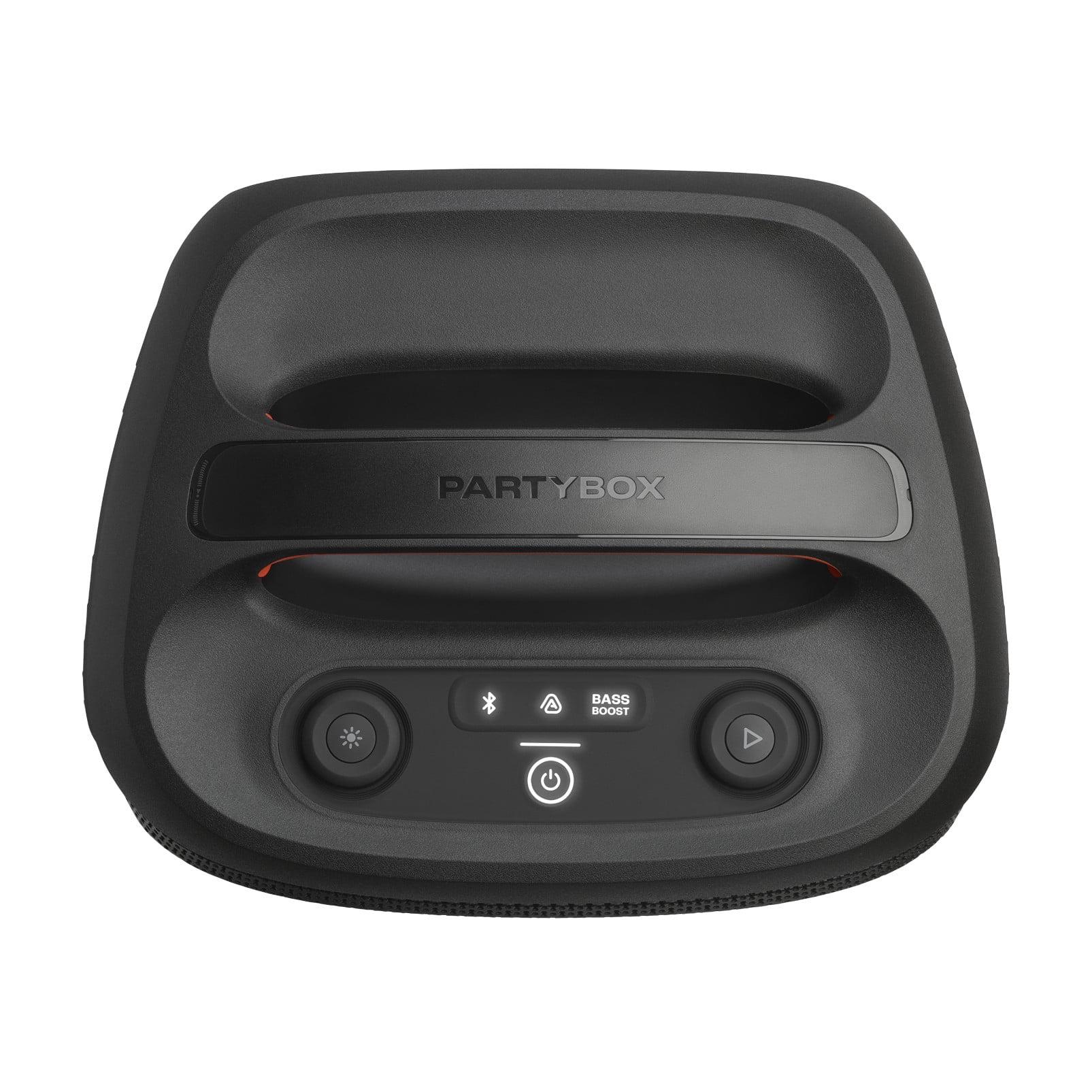
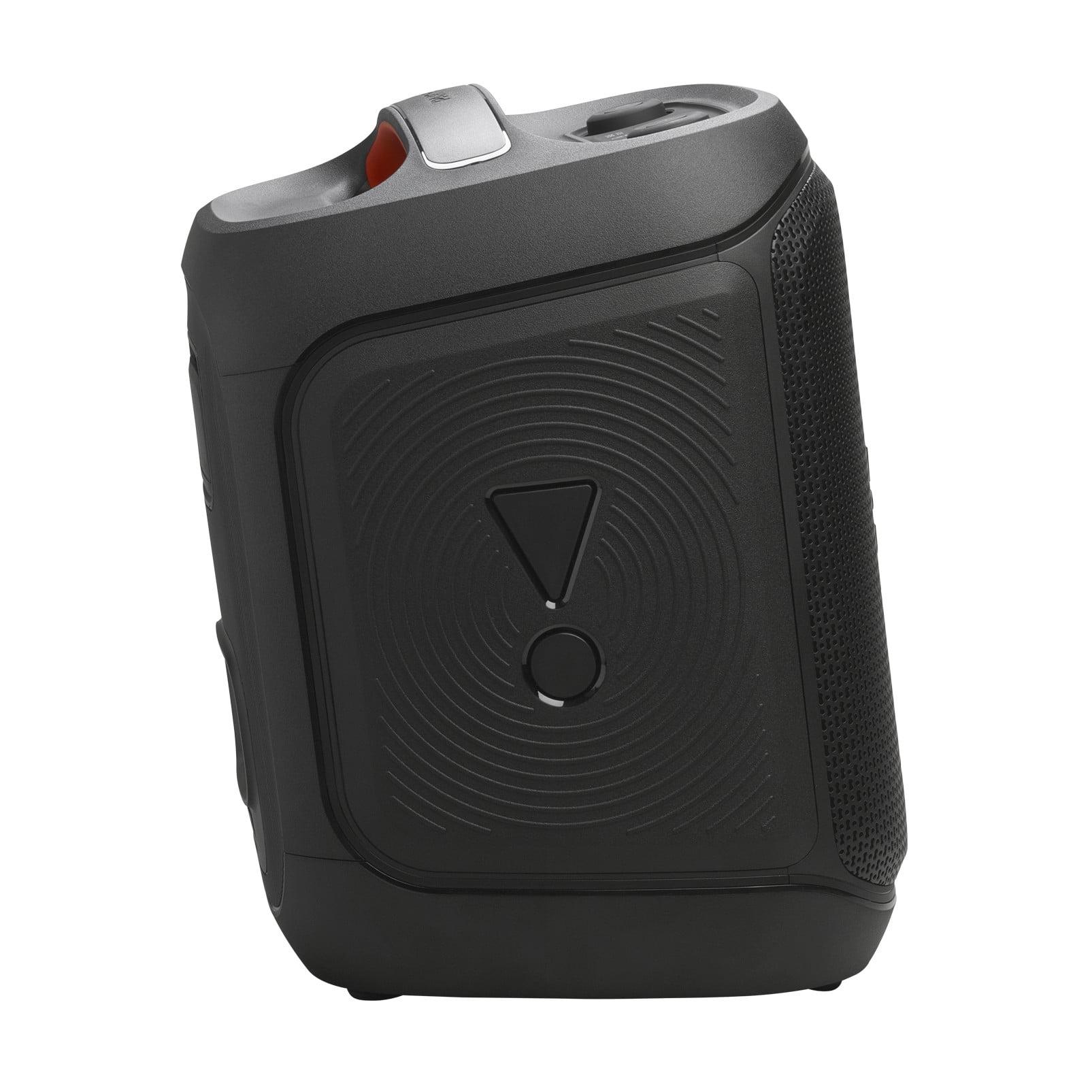
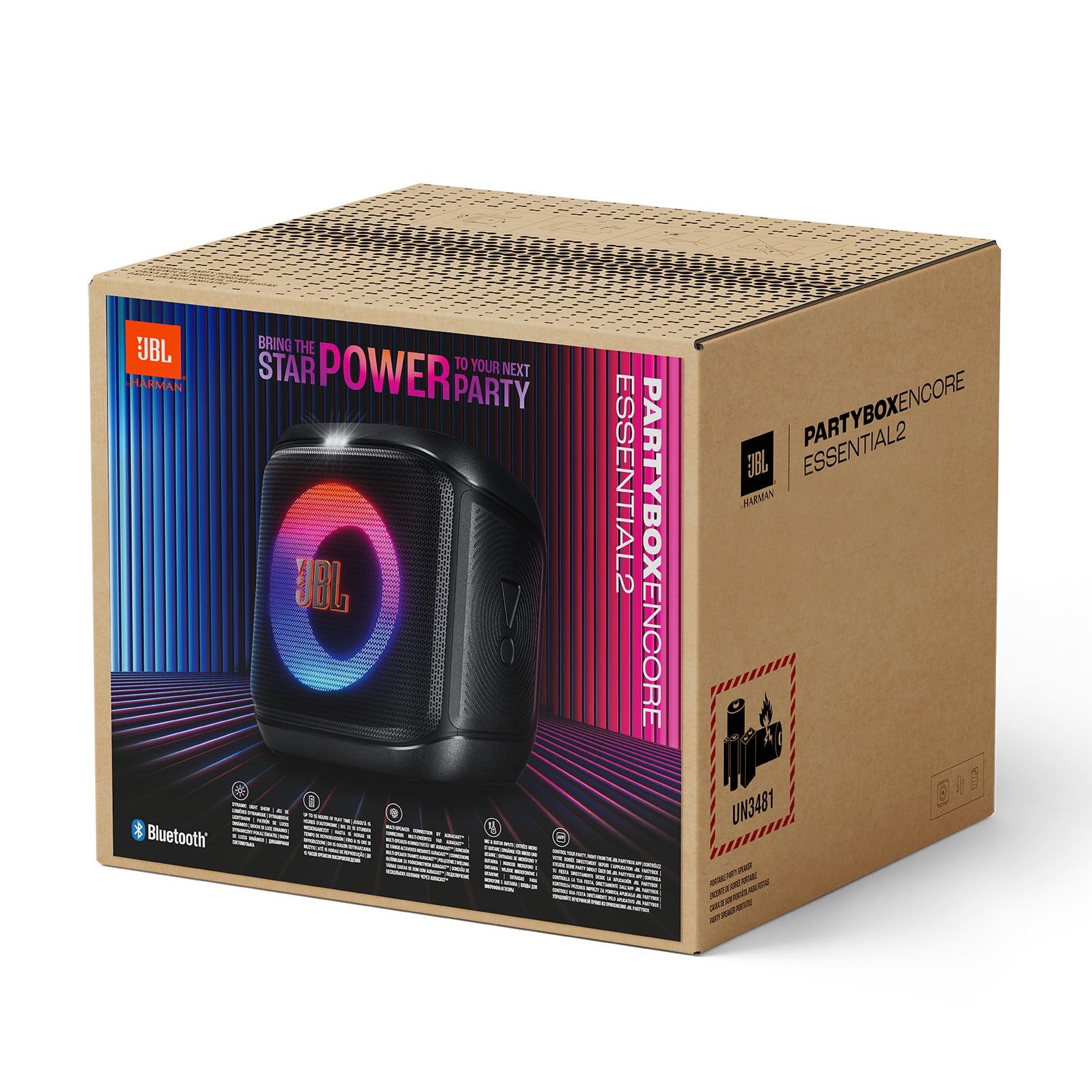
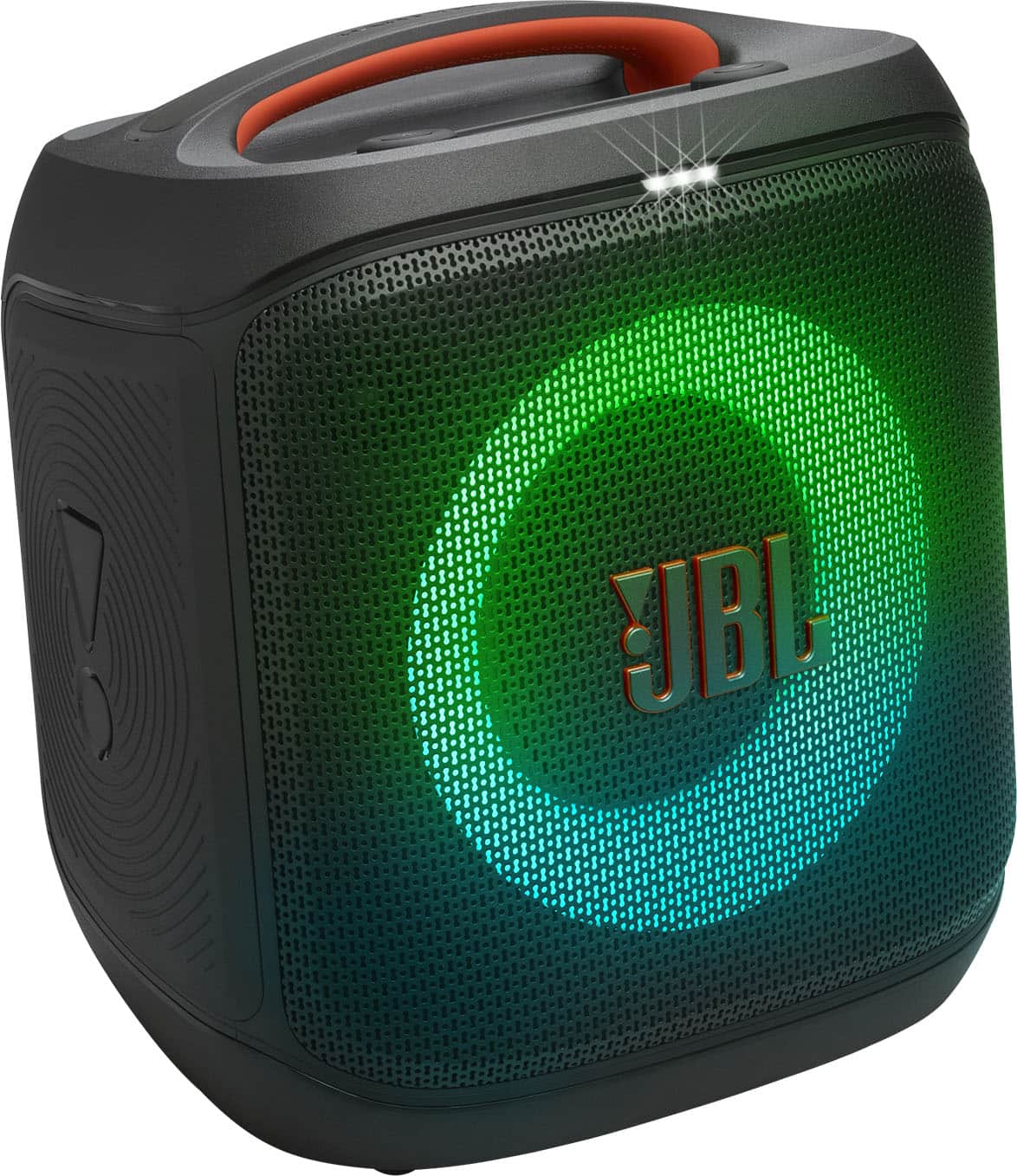
When you're shopping for a speaker that can turn any gathering into a proper party, JBL's PartyBox lineup offers some compelling options. Today we're diving deep into two very different approaches to portable party audio: the heavyweight JBL PartyBox 310 and the nimble JBL PartyBox Encore Essential 2. Both promise to bring the energy, but they take fundamentally different paths to get there.
Before we jump into the nitty-gritty, let's talk about what actually matters when you're choosing a portable party speaker. It's not just about being loud—though that certainly helps when you're competing with conversation and outdoor ambient noise.
The most critical factor is power output, measured in watts RMS (Root Mean Square). RMS gives you the continuous power the speaker can handle, not just peak bursts. This directly translates to how loud the speaker can get and how well it fills a space. For context, a typical home stereo might put out 20-50 watts per channel, while party speakers need to push 100+ watts to really command attention.
Bass response is equally crucial. Modern music—from hip-hop to electronic dance music—relies heavily on deep, punchy low-end frequencies. The size and design of the woofer (the large driver that produces bass) determines how much air the speaker can move and how deep those frequencies can go. Frequency response measurements tell you the range of sounds a speaker can reproduce, typically from around 40Hz (deep bass) up to 20,000Hz (high treble).
Battery life becomes make-or-break for outdoor events. There's nothing worse than your speaker dying mid-party. The lithium-ion batteries in these speakers need to power not just the amplifiers but also LED light shows and wireless connectivity, so manufacturers have to balance power consumption carefully.
Portability involves more than just weight. Features like wheels, telescoping handles, and overall form factor determine whether you'll actually want to haul your speaker to different locations. Water resistance, rated by IP codes, protects against spills and weather—IPX4 means protection against water splashes from any direction.
The JBL PartyBox 310 launched around 2021 as part of JBL's push into serious portable party audio. It represented their flagship approach: maximum power in a still-transportable package. Since then, the party speaker market has evolved significantly, with manufacturers focusing on smarter features, better battery technology, and more sophisticated sound processing.
The JBL PartyBox Encore Essential 2, released in 2025, embodies this newer philosophy. Instead of just cramming in bigger drivers and more watts, JBL incorporated AI-powered sound processing and modern connectivity features like Auracast—a new Bluetooth standard that lets you broadcast audio to multiple speakers simultaneously without the traditional pairing limitations.
This four-year technology gap shows in several ways. The newer Encore Essential 2 uses Bluetooth 5.4 versus the 310's older Bluetooth implementation, offering better range and connection stability. The AI Sound Boost feature in the Encore Essential 2 uses digital signal processing to prevent distortion and maintain clarity at high volumes—something the 310 handles purely through brute-force amplification.
Here's where these speakers diverge most dramatically. The JBL PartyBox 310 delivers 240 watts RMS when plugged in (140 watts on battery), while the JBL PartyBox Encore Essential 2 puts out 100 watts RMS. On paper, that's a massive difference—the 310 has more than double the raw power.
But raw power doesn't tell the whole story. Based on our research into user experiences and technical reviews, the 310 reaches approximately 105 decibels at maximum volume, while the Encore Essential 2 hits around 99 decibels. Six decibels might not sound like much, but it's actually a significant difference—roughly equivalent to doubling the perceived loudness.
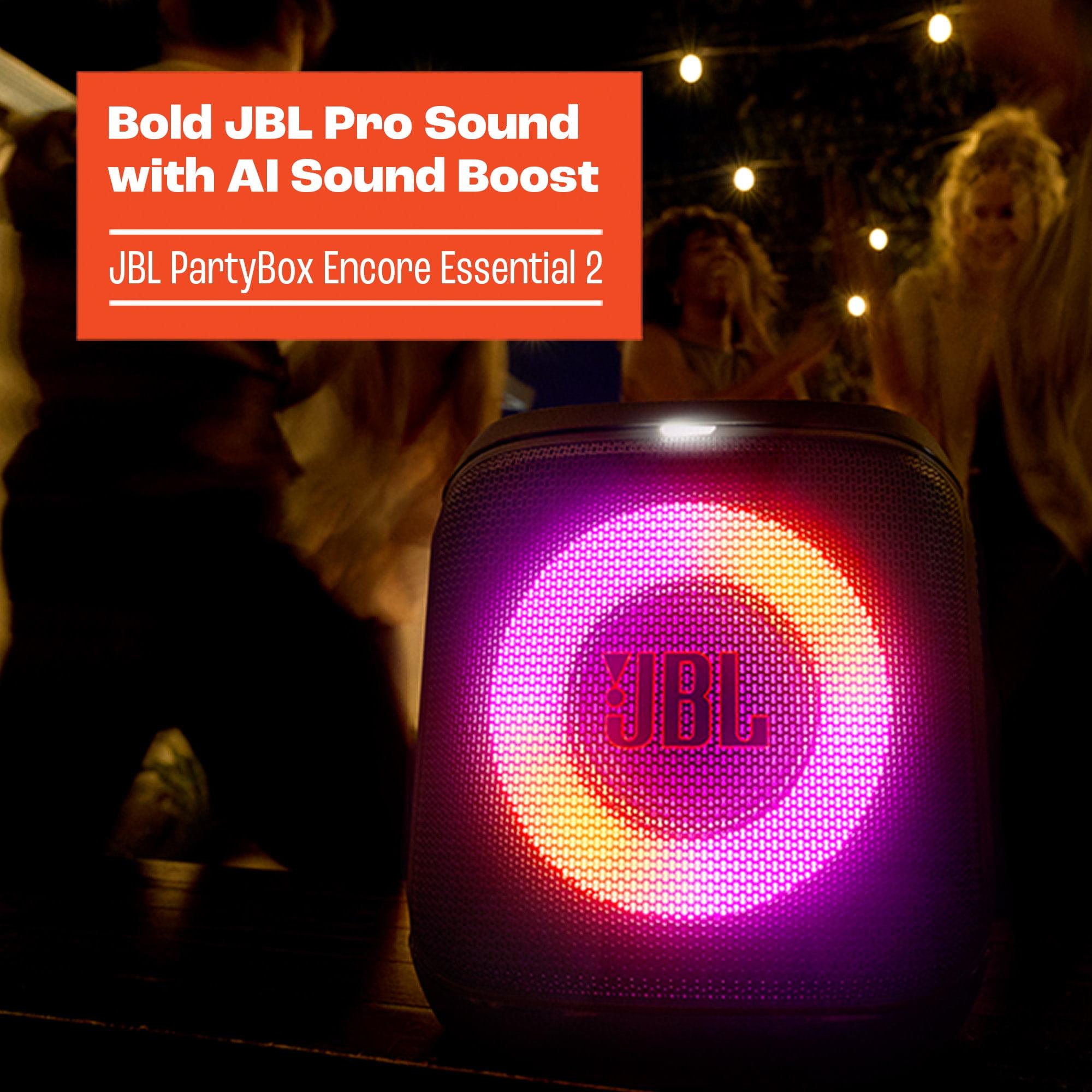
However, the Encore Essential 2's AI Sound Boost technology changes the game at high volumes. Traditional speakers, including the 310, start to compress and distort when you push them to their limits. The amplifier can't cleanly reproduce all the frequencies, leading to muddy bass and harsh treble. The AI processing in the Encore Essential 2 analyzes the incoming audio in real-time and adjusts the signal to prevent these artifacts. Users consistently report cleaner, more controlled sound even when cranked up.
For practical purposes, the PartyBox 310 wins hands-down for large outdoor gatherings—think 50+ people at a backyard barbecue or beach party. That extra power cuts through ambient noise and conversation much better. But for smaller gatherings of 20-30 people, the Encore Essential 2 often sounds better due to its smarter processing, even at lower absolute volume levels.
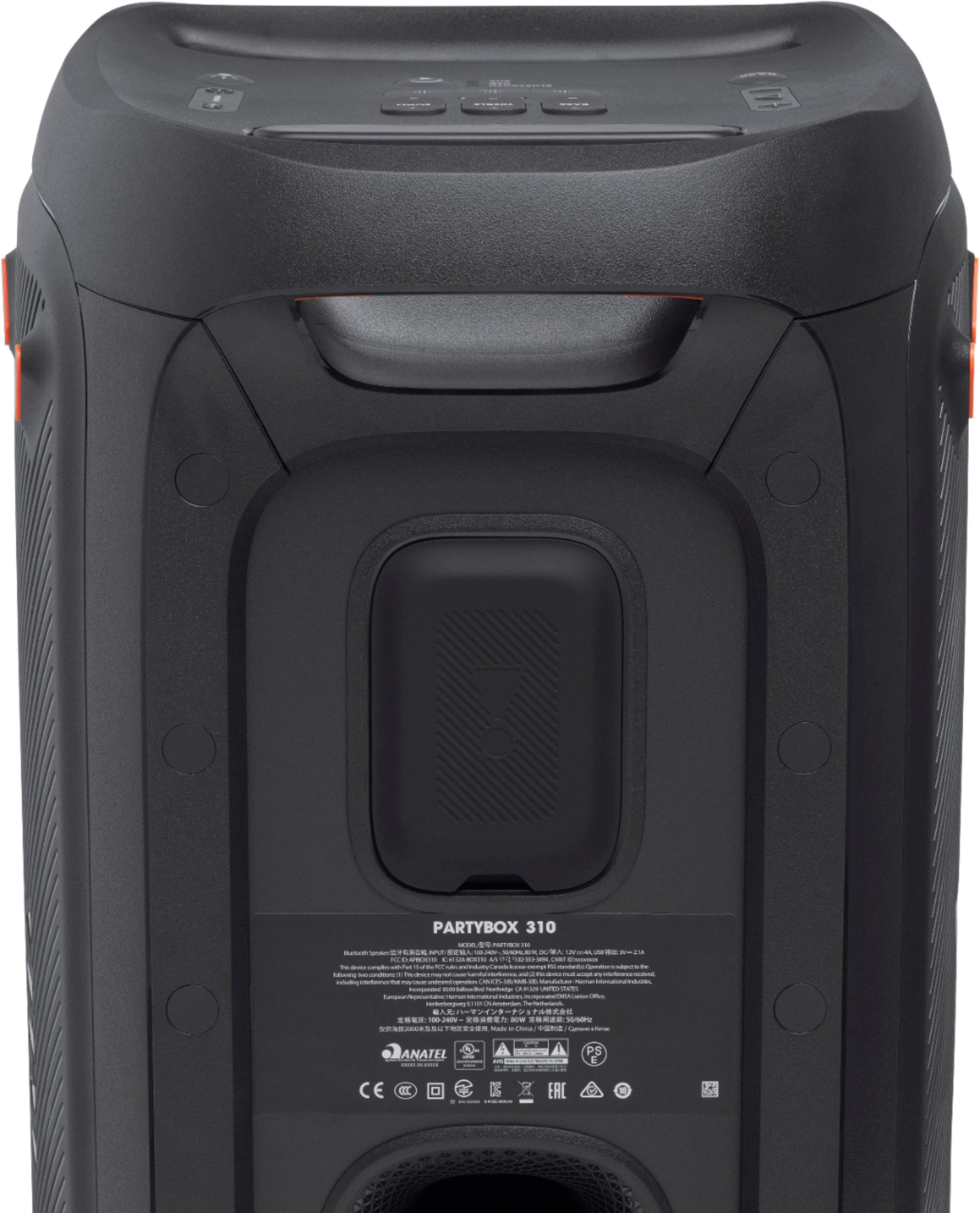
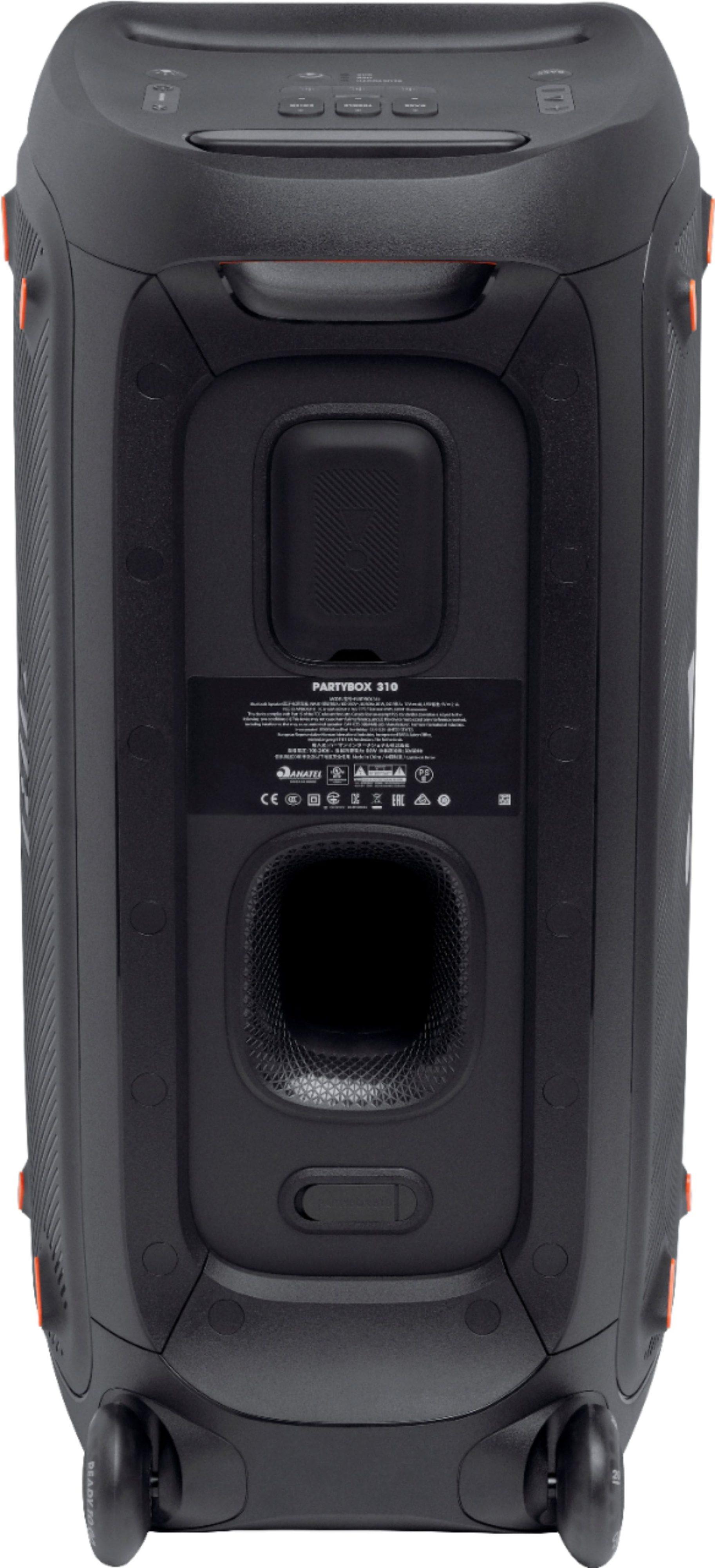
The bass comparison reveals another fundamental difference in approach. The PartyBox 310 uses two 6.5-inch woofers with a rear-firing bass port design. This setup moves significantly more air than a single smaller driver, creating that chest-thumping physical sensation that really sells modern bass-heavy music. The frequency response extends down to 45Hz, which covers most of the bass content in popular music.
The JBL PartyBox Encore Essential 2 takes a different approach with a single 5.25-inch woofer that technically reaches lower (down to 40Hz according to specifications), but with less physical impact. The smaller driver simply can't move as much air, so while it reproduces bass frequencies accurately, it lacks the room-shaking presence of larger speakers.
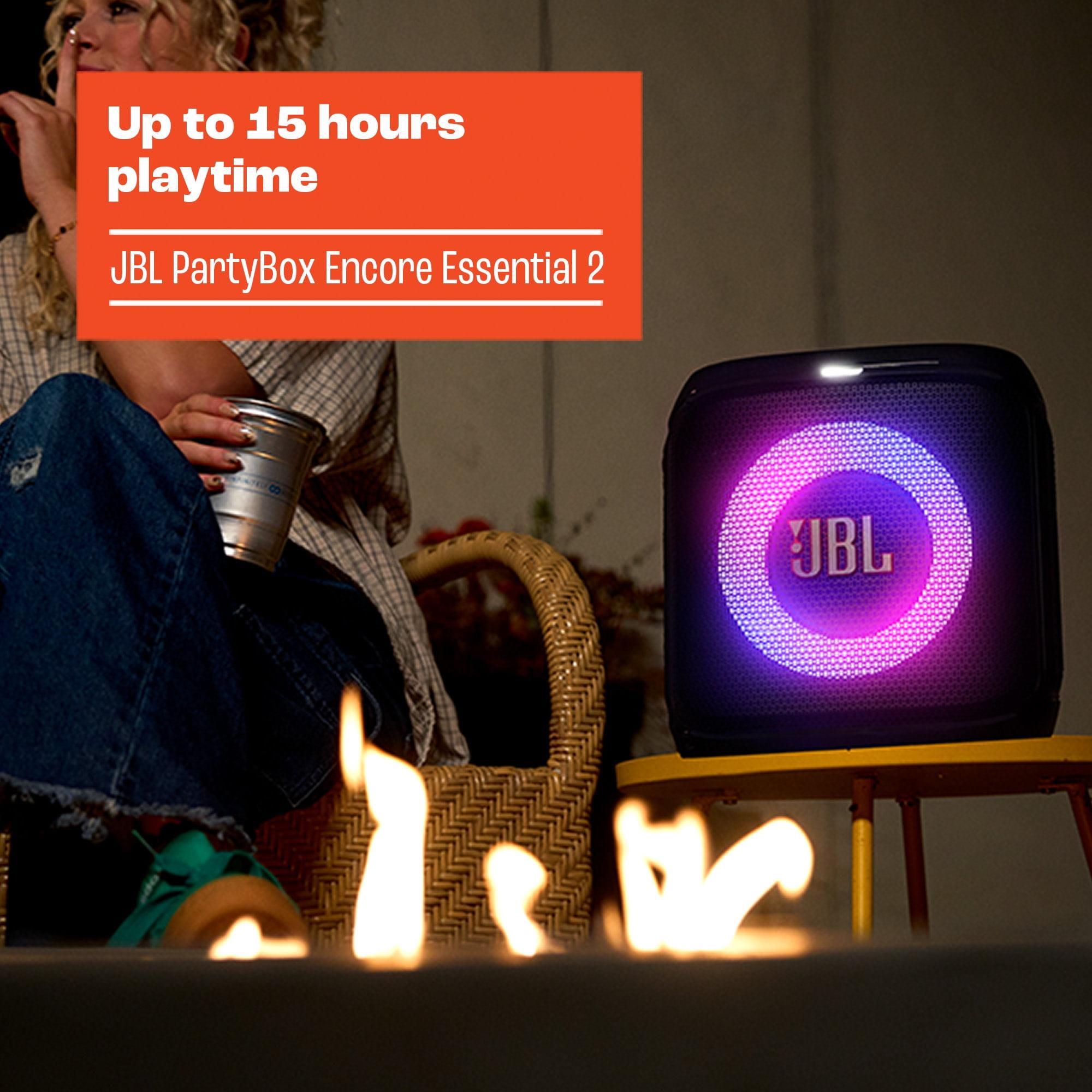
This difference becomes especially apparent with genres like hip-hop, electronic dance music, or modern pop that rely heavily on sub-bass frequencies. The 310's dual woofer setup delivers the kind of bass that makes people unconsciously start moving to the beat. The Encore Essential 2's bass is tight and controlled—great for clarity but not necessarily for getting the party started.
However, in smaller indoor spaces, the 310's bass can actually become overwhelming, booming off walls and drowning out vocals. The Encore Essential 2's more restrained bass response often works better in living rooms or covered patios where bass buildup becomes an issue.
Battery technology has improved significantly since 2021, and it shows in these speakers' designs. The PartyBox 310 delivers impressive 18-hour battery life, but that's with a non-removable battery that takes about 3.5 hours to charge. When that battery eventually degrades after a few years of use, you're looking at a service repair or replacement speaker.
The JBL PartyBox Encore Essential 2 offers 12-15 hours of battery life (depending on volume and light usage), but with a user-replaceable battery design. This might seem like less endurance, but the practical advantages are significant. You can carry spare batteries for truly extended events, and when the original battery starts holding less charge after repeated cycles, you can simply swap in a new one with a screwdriver.
Both speakers can operate while charging, but the 310's higher power draw means it charges more slowly during use. The Encore Essential 2's lower power consumption allows it to charge faster and maintain battery health better during simultaneous use and charging.
This is where personal experience becomes crucial. I've moved plenty of speakers over the years, and the weight difference between these models creates entirely different use cases. The PartyBox 310 at 38.4 pounds requires its wheels and telescoping handle just to be practical. You'll want to drive right up to your destination and minimize the distance you're hauling it.
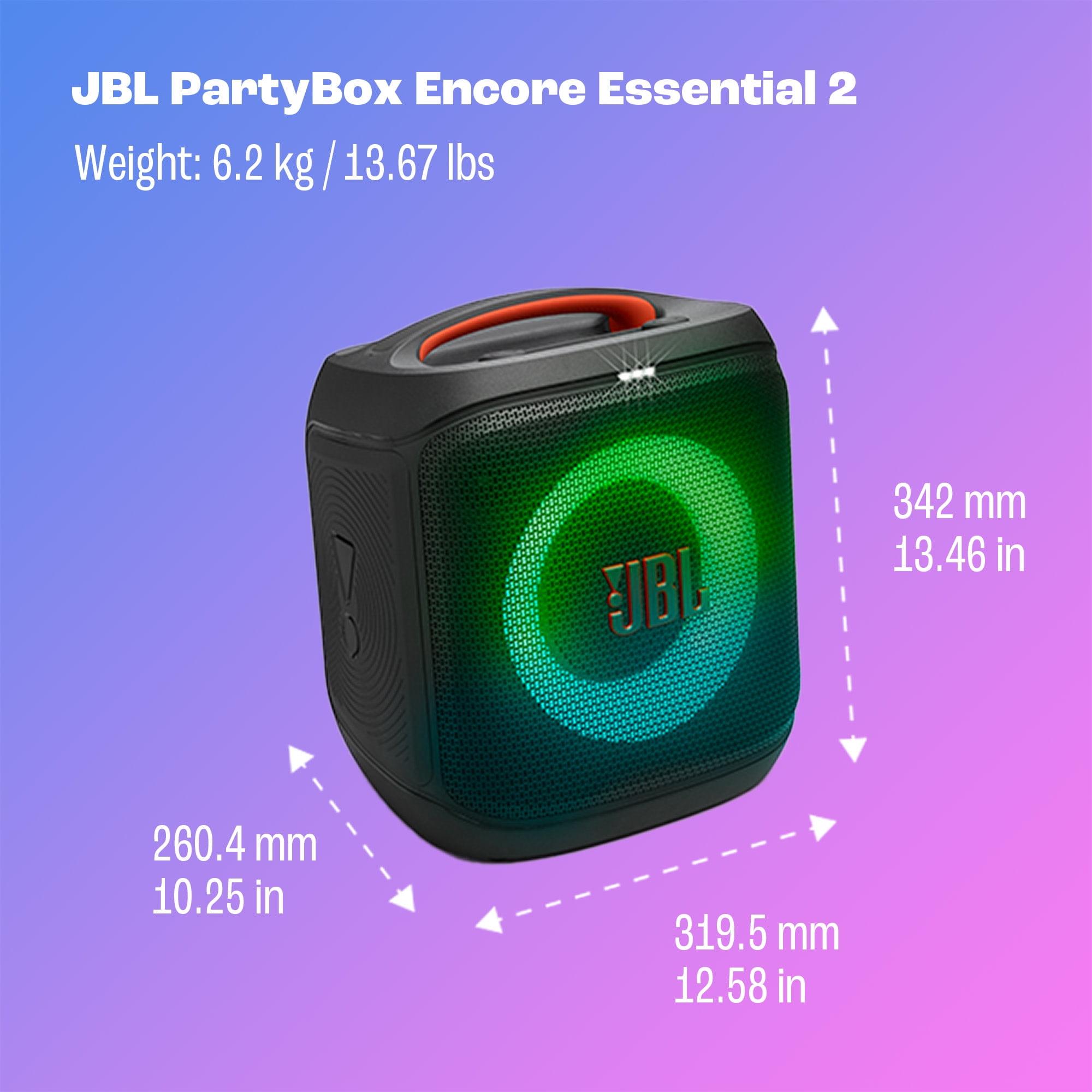
The Encore Essential 2 at 13.7 pounds changes the entire equation. That's light enough to grab with one hand and carry to a friend's apartment, toss in a car trunk without planning, or take on a camping trip without dedicating significant space and weight budget. This portability difference often determines which speaker actually gets used regularly versus which one sits in a closet.
The 310 works best as a "destination speaker"—you set it up somewhere and the party happens around it. The Encore Essential 2 encourages spontaneous use because the barrier to transport is so low.
The four-year technology gap becomes obvious when comparing smart features. The PartyBox Encore Essential 2 supports Auracast, which is essentially Bluetooth broadcasting. Instead of traditional speaker pairing that requires each device to connect individually, Auracast lets you broadcast your audio to any number of compatible speakers simultaneously. It's like having your own radio station that other speakers can tune into.
This matters more than you might think. Traditional TWS (True Wireless Stereo) pairing, which the PartyBox 310 uses, requires speakers to be the same model and limits you to two units. With Auracast, you can mix and match different JBL speakers and scale up your sound system organically as your needs grow.
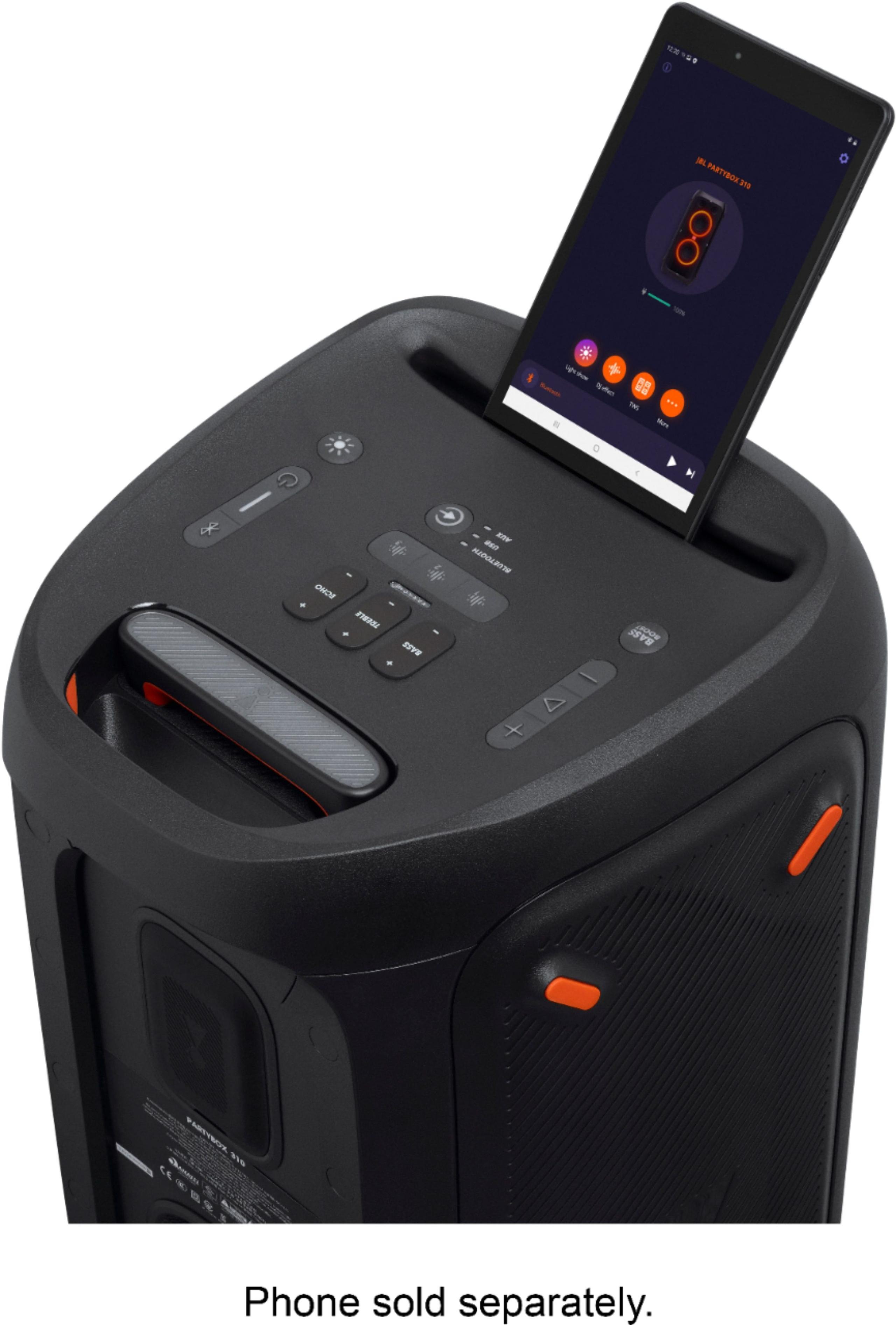
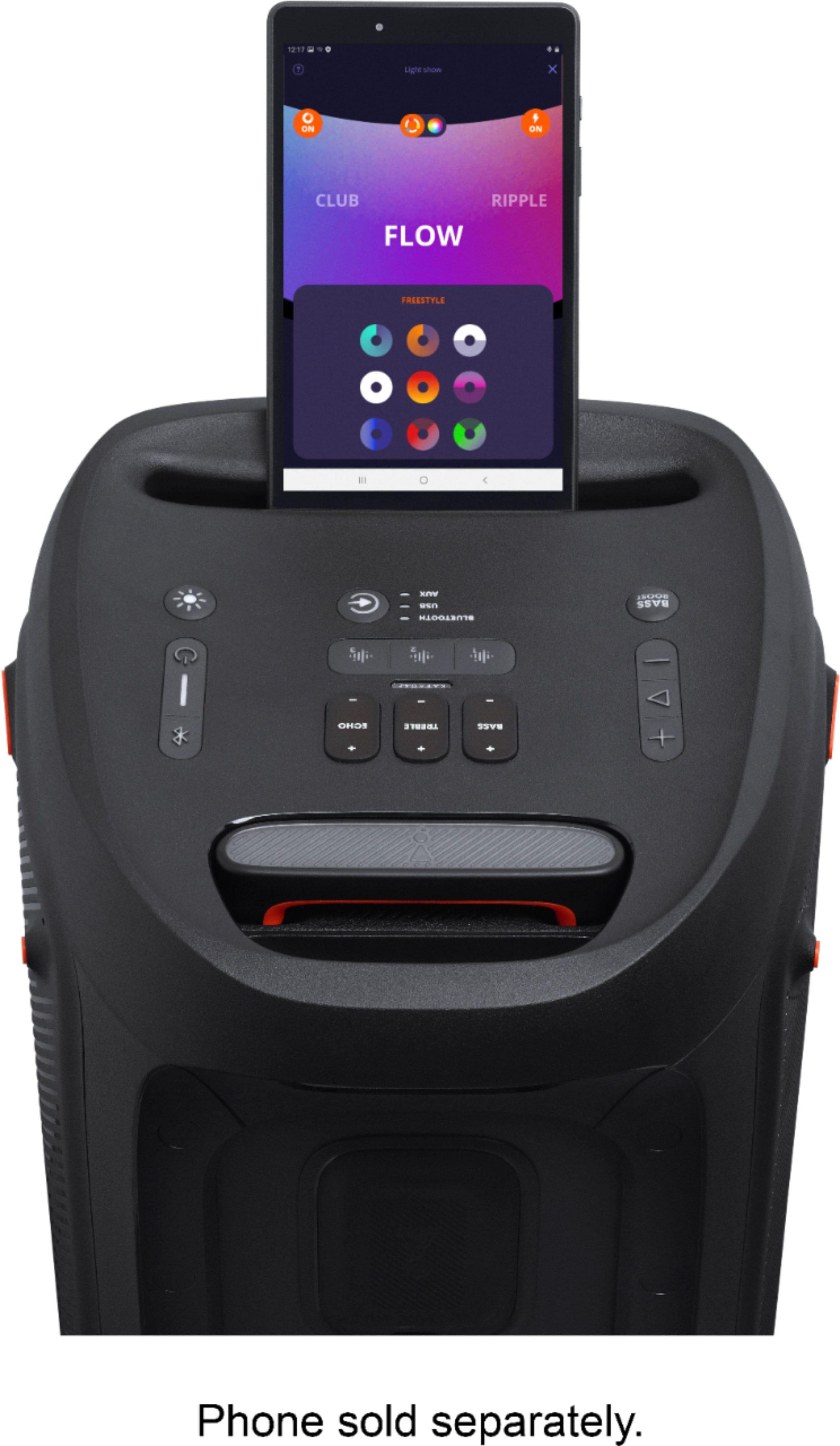
The JBL PartyBox app integration is also more sophisticated on the Encore Essential 2, offering detailed EQ control, light show customization, and sound effect management. The app works with the 310 too, but with fewer options and less refined control.
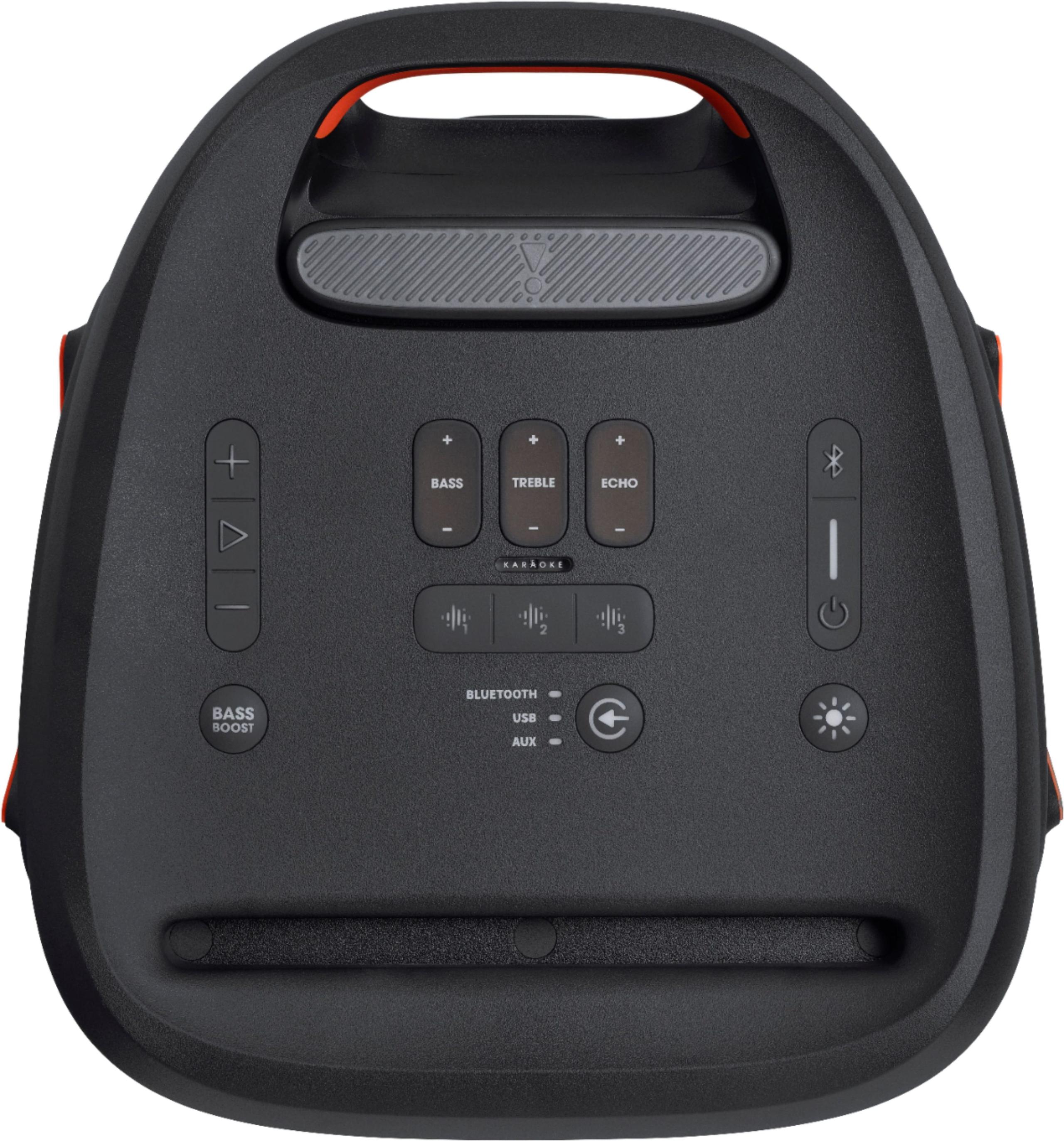
Both speakers feature LED light shows, but they serve different purposes. The PartyBox 310 has simpler lighting integrated into the woofer design—it's functional party lighting that adds atmosphere without being distracting.
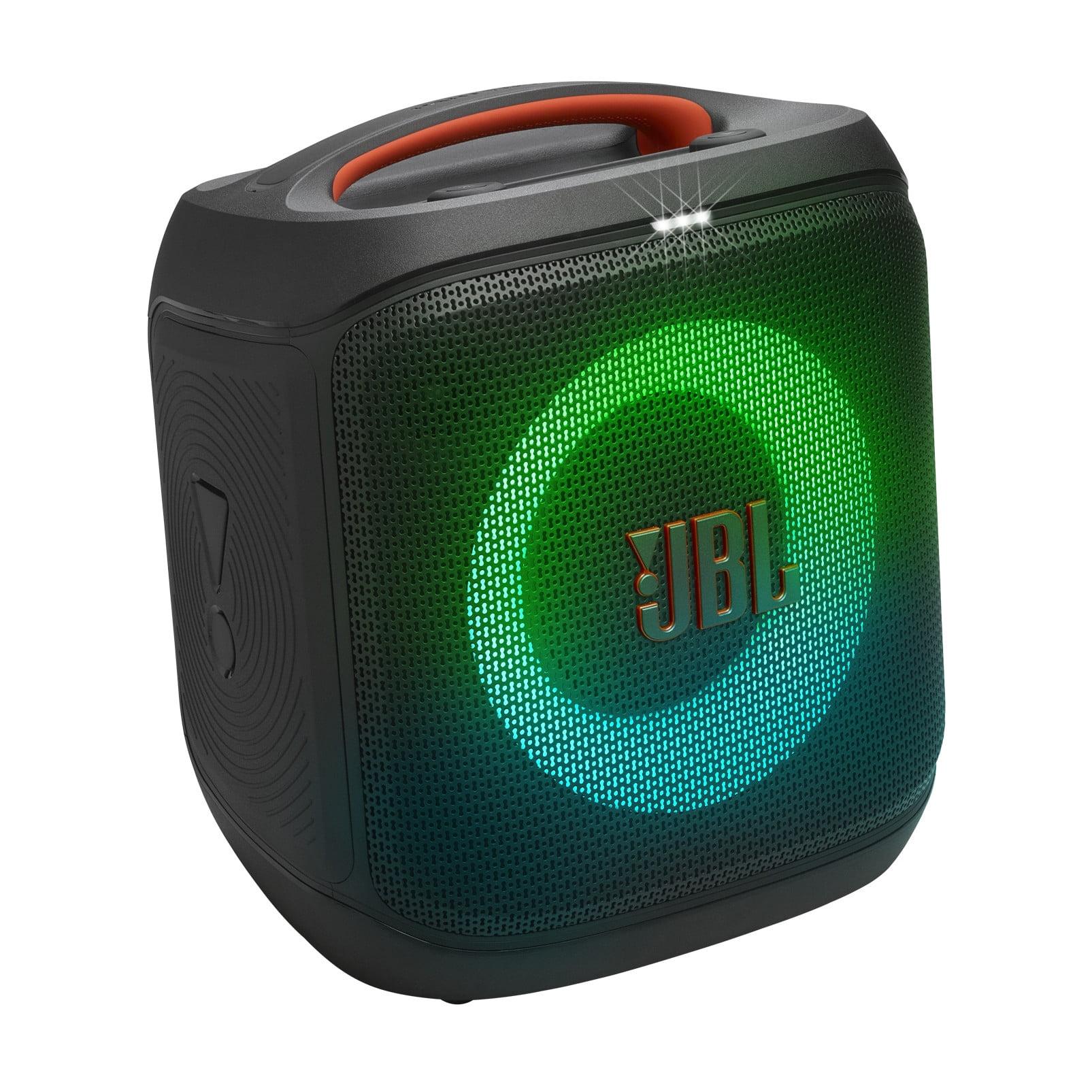
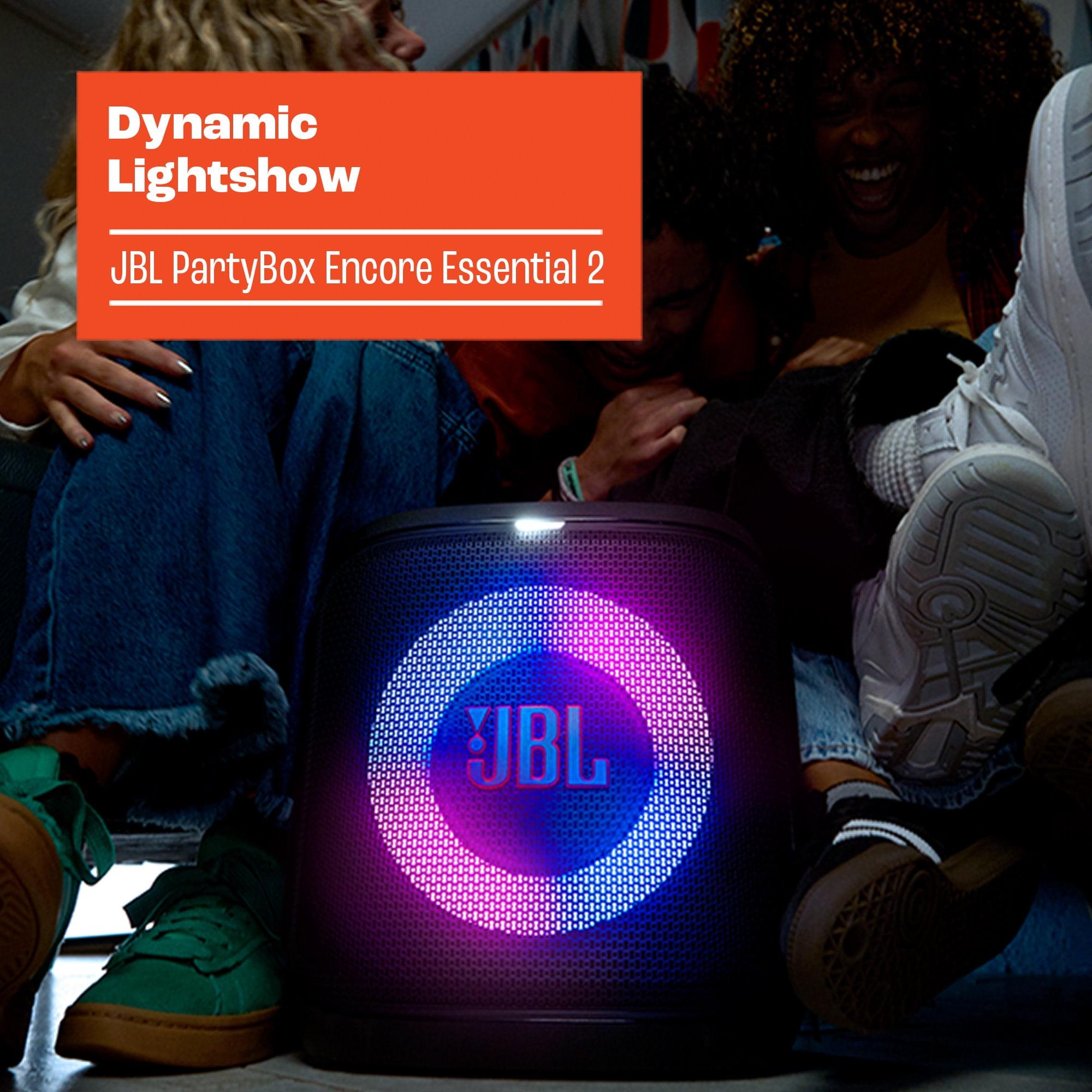
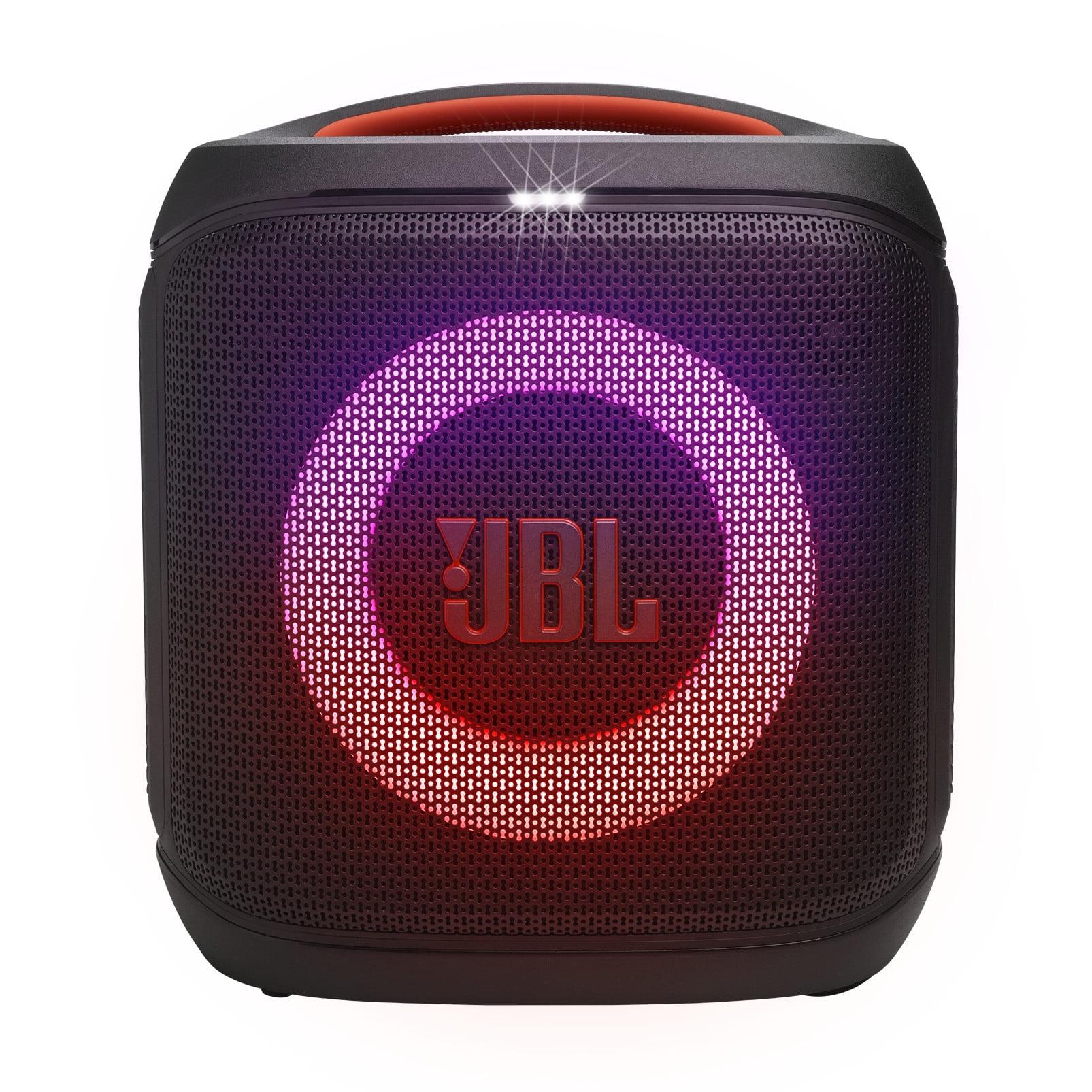
The Encore Essential 2 treats lighting as a primary feature, with dynamic ring lighting and strobe effects that can be customized through the app. You can sync colors to music, create specific moods, or turn the speaker into a light show centerpiece. For smaller gatherings where the speaker is more visible, these advanced lighting effects add significant entertainment value.
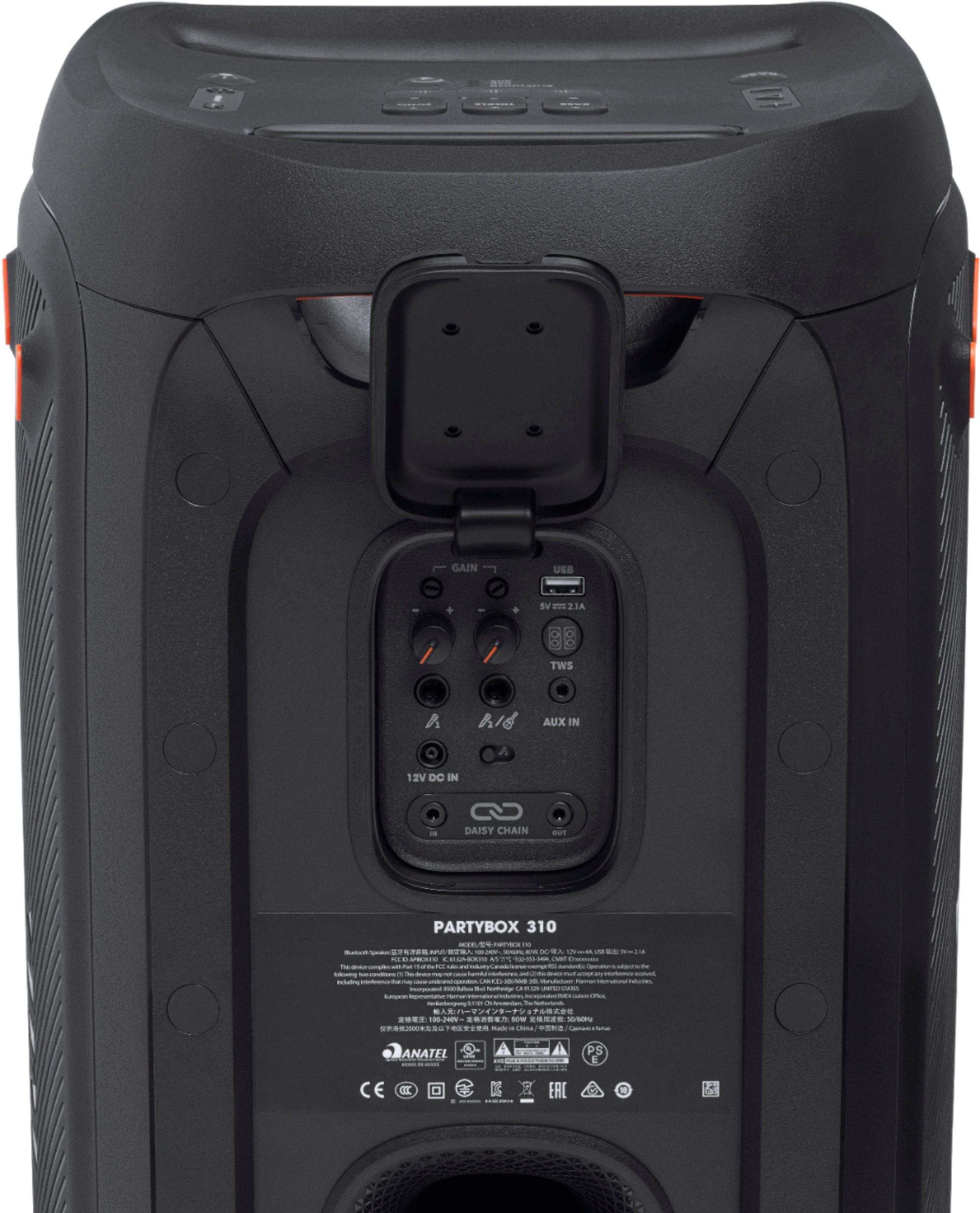
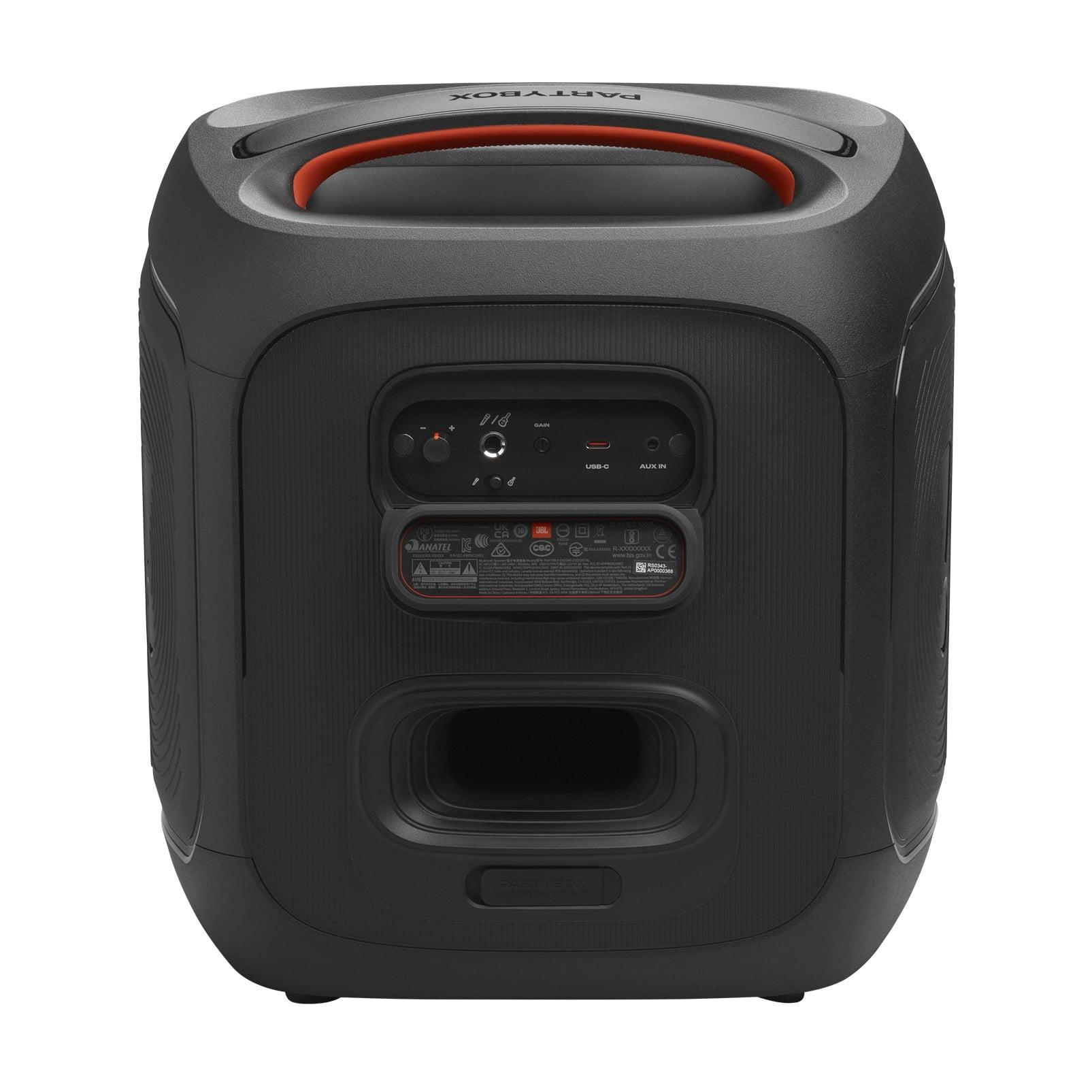
Both speakers include microphone and guitar inputs, but they approach live performance differently. The PartyBox 310 offers straightforward 1/4-inch inputs with basic volume and echo controls—simple but effective for occasional karaoke or acoustic performances.
The Encore Essential 2 includes dedicated karaoke EQ that optimizes vocal processing, making singers sound more polished even without professional microphones. The speaker also supports wireless microphones, eliminating cable management for performers. For regular karaoke use or live acoustic performances, these refinements make a noticeable difference in both sound quality and convenience.
Both speakers carry IPX4 water resistance ratings, meaning they can handle splashes and light rain but shouldn't be submerged. However, the practical durability differs significantly. The PartyBox 310's larger size and more complex design with wheels and telescoping components create more potential failure points over time.
The Encore Essential 2's simpler, more compact construction typically proves more durable through regular transport and use. Its smaller profile is also less likely to get knocked over or damaged at crowded events.
Technical specifications only tell part of the story. Based on consensus from user reviews and expert evaluations, the PartyBox 310 delivers a more traditional "party speaker" sound signature—emphasized bass, present mids for vocal clarity, and enough treble brightness to cut through noise without being harsh. It's tuned for maximum energy and excitement.
The Encore Essential 2 offers a more balanced, refined sound profile that works better for a wider variety of music genres. Jazz, acoustic music, and vocals sound more natural, while still maintaining enough bass impact for electronic and hip-hop. The AI Sound Boost processing maintains this balance even at high volumes, where the 310 starts to show strain.
For pure party energy and maximum bass impact, the 310 wins. For versatility across different music styles and listening scenarios, the Encore Essential 2 takes the lead.
While neither speaker is designed primarily for home theater use, they can serve as temporary solutions or outdoor movie setups. The PartyBox 310's higher power output works better for larger viewing areas, but both speakers suffer from relatively high audio latency over Bluetooth, which can cause lip-sync issues with video content.
For dedicated home theater use, you'd want to use the wired auxiliary inputs to minimize delay, though this defeats the purpose of having portable wireless speakers. Both work acceptably for occasional outdoor movie nights where perfect lip-sync isn't critical.
At the time of writing, there's a significant price gap between these speakers, with the PartyBox 310 commanding a premium for its higher power output and longer battery life. The Encore Essential 2 offers substantially better value for most users, delivering modern features and good performance at a more accessible price point.
The 310's premium makes sense if you specifically need maximum volume and bass output. But for the majority of users hosting typical house parties, backyard gatherings, or small outdoor events, the Encore Essential 2's combination of portability, smart features, and solid performance provides better overall value.
Choose the PartyBox 310 if you regularly host large outdoor events, need maximum volume to overcome ambient noise, prioritize deep bass impact above all else, or don't mind the transport limitations in exchange for maximum performance. It's the speaker for people who want to be the house on the block where the party happens.
Choose the Encore Essential 2 if you value portability and convenience, want modern smart features like Auracast connectivity, prefer balanced sound quality over maximum bass, plan to use karaoke features regularly, or simply want a speaker you'll actually use frequently because it's easy to move around.
The fundamental choice comes down to whether you prioritize maximum acoustic performance or balanced convenience with modern features. Both deliver quality JBL sound, but they serve distinctly different needs within the portable party speaker category. The Encore Essential 2 represents where the category is heading—smarter, more versatile, and more user-friendly—while the PartyBox 310 delivers on the traditional promise of maximum power in a portable package.
| JBL PartyBox 310 | JBL PartyBox Encore Essential 2 |
|---|---|
| Power Output - Determines maximum volume and room-filling capability | |
| 240W RMS (140W on battery) - Professional-grade power for large venues | 100W RMS - Sufficient for house parties and medium gatherings |
| Maximum Volume Level - How loud it gets for competing with ambient noise | |
| ~105 dB - Can overpower outdoor ambient noise and large crowds | ~99 dB - Adequate for most indoor/outdoor parties up to 30 people |
| Bass Performance - Critical for modern music genres and dance energy | |
| Dual 6.5" woofers, 45Hz response - Deep, room-shaking bass impact | Single 5.25" woofer, 40Hz response - Controlled bass, less physical impact |
| Weight & Portability - Affects how often you'll actually use the speaker | |
| 38.4 lbs with wheels/handle - Requires planning to transport | 13.7 lbs with carry handle - Grab-and-go convenience |
| Battery Life - Runtime for extended outdoor events | |
| Up to 18 hours - All-day event capability | Up to 15 hours - Sufficient for most gatherings |
| Battery Design - Long-term ownership considerations | |
| Non-removable battery - Eventual service/replacement needed | User-replaceable battery - Extend product lifespan easily |
| Smart Features - Modern conveniences and connectivity | |
| Basic TWS pairing, manual controls - Traditional approach | AI Sound Boost, Auracast broadcasting, advanced app control - 2025 technology |
| Lighting Effects - Visual entertainment value | |
| Basic LED lights on woofers - Functional party atmosphere | Dynamic ring lighting with strobe effects - Customizable light show |
| Karaoke Capabilities - Live performance and entertainment features | |
| Two 1/4" inputs with basic controls - Straightforward karaoke setup | Karaoke EQ, wireless mic support - Optimized vocal processing |
| Water Resistance - Protection for outdoor use | |
| IPX4 splashproof - Protected against light rain and spills | IPX4 splashproof - Same protection in more portable package |
| Release Year - Technology generation and feature sophistication | |
| 2021 design - Proven reliability, older feature set | 2025 design - Latest connectivity and processing technology |
The JBL PartyBox 310 is significantly louder, delivering 240W RMS power compared to the JBL PartyBox Encore Essential 2's 100W RMS. The 310 reaches approximately 105 decibels maximum volume versus 99 decibels for the Encore Essential 2, making it better suited for large outdoor events and venues with 50+ people.
The JBL PartyBox 310 produces deeper, more powerful bass thanks to its dual 6.5-inch woofers compared to the single 5.25-inch woofer in the Encore Essential 2. While both reach similar low frequencies on paper, the 310's larger drivers move more air, creating that chest-thumping bass impact essential for dance music and hip-hop.
The JBL PartyBox Encore Essential 2 is dramatically more portable at 13.7 pounds with a simple carry handle, while the JBL PartyBox 310 weighs 38.4 pounds and requires wheels and a telescoping handle for transport. The Encore Essential 2 encourages frequent use due to its grab-and-go convenience.
The JBL PartyBox 310 offers longer battery life with up to 18 hours of playtime compared to the Encore Essential 2's 12-15 hours. However, the Encore Essential 2 features a user-replaceable battery design, allowing you to swap batteries for extended events or replace degraded batteries over time.
The JBL PartyBox Encore Essential 2 includes more advanced smart features like AI Sound Boost technology, Auracast multi-speaker broadcasting, and sophisticated app control. The PartyBox 310 uses older technology with basic TWS pairing and manual controls, focusing on core functionality over smart features.
Both the JBL PartyBox 310 and Encore Essential 2 feature IPX4 water resistance, meaning they're splashproof and can handle light rain or poolside use. Neither is fully waterproof for submersion, but both provide adequate protection for typical outdoor party scenarios.
The JBL PartyBox Encore Essential 2 offers superior karaoke capabilities with dedicated karaoke EQ tuning, wireless microphone support, and vocal processing features. While the PartyBox 310 includes microphone inputs, it lacks the specialized vocal optimization found in the newer Encore Essential 2.
The JBL PartyBox Encore Essential 2 typically offers better value for most users, providing modern features, good sound quality, and excellent portability at a lower price point. The PartyBox 310 justifies its premium pricing only if you specifically need maximum volume and bass output for large events.
Neither the JBL PartyBox 310 nor Encore Essential 2 is optimized for home theater use due to relatively high Bluetooth audio latency that can cause lip-sync issues. For occasional outdoor movie nights, both work acceptably using wired connections, with the 310's higher power output better suited for larger viewing areas.
The JBL PartyBox Encore Essential 2 maintains better sound quality at high volumes thanks to its AI Sound Boost technology, which prevents distortion and compression artifacts. The PartyBox 310 delivers more raw power but can show strain and distortion when pushed to maximum volume levels.
The JBL PartyBox Encore Essential 2 features more sophisticated lighting with dynamic ring lighting, customizable strobe effects, and app-controlled light shows. The PartyBox 310 includes basic LED lighting integrated into the woofer design that provides functional party atmosphere but with less customization options.
Choose the JBL PartyBox 310 if you regularly host large outdoor events requiring maximum volume and bass impact, and don't mind the transport limitations. Select the Encore Essential 2 if you prioritize portability, modern smart features, balanced sound quality, and plan to move the speaker frequently between different locations.
We've done our best to create useful and informative comparisons to help you decide what product to buy. Our research uses advanced automated methods to create this comparison and perfection is not possible - please contact us for corrections or questions. These are the sites we've researched in the creation of this article: rtings.com - comparisontabl.es - crutchfield.com - youtube.com - bestbuy.com - rtings.com - youtube.com - versus.com - youtube.com - youtube.com - jbl.com - youtube.com - crutchfield.com - manuals.plus - in.jbl.com - jbl.com.tw - mm.jbl.com - bestbuy.com - jbl.com - onward.ph - youtube.com - manuals.plus - harmanaudio.com - support.jbl.com - youtube.com - kh.jbl.com - bestbuy.com - rtings.com - rtings.com - global.jbl.com - armorsound.com - rtings.com - soundguys.com - youtube.com - versus.com - manuals.plus - jbl.com - youtube.com - bestbuy.com - crutchfield.com - youtube.com - bestbuy.com - audioadvice.com - youtube.com - comparisontabl.es - manuals.plus - ggelectronics.com - gzhls.at - jbl.com - th.jbl.com - manuals.plus - cdwg.com - th.jbl.com - creativeaudio.net - bestbuy.com - samsung.com - bestbuy.com - crutchfield.com - manuals.plus - guidefitter.com - static.pcrichard.com

Privacy Policy
Terms and Conditions - Affiliate Policy
Home Security
© Copyright 2008-2026.
11816 Inwood Rd #1211, Dallas, TX 75244